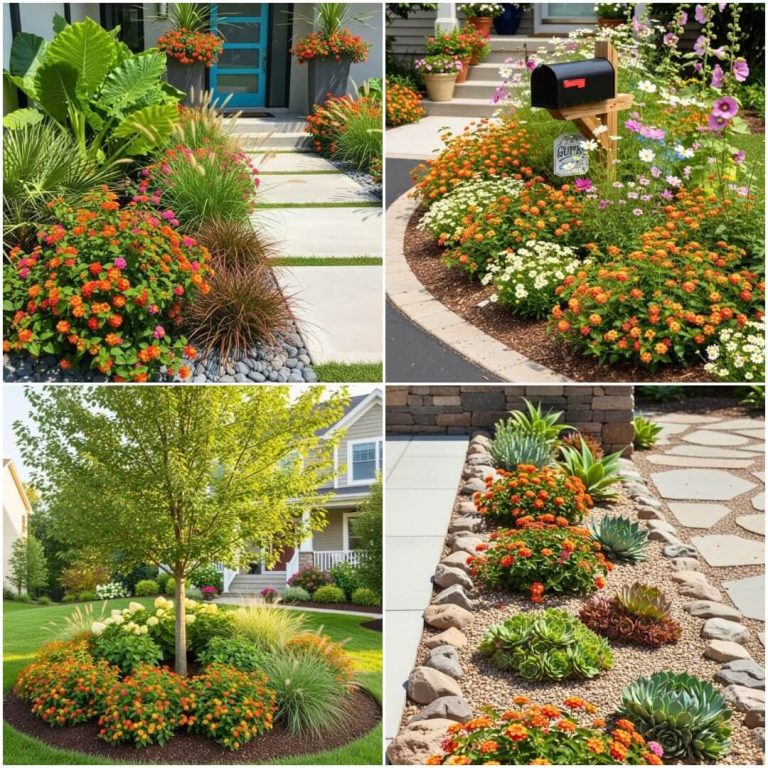
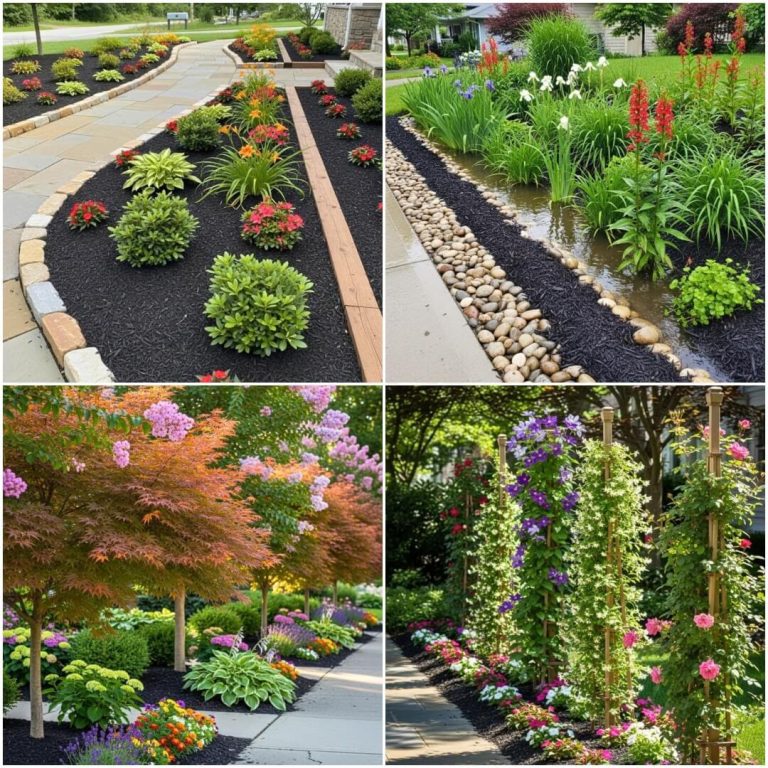
16 Front Yard Tree Stump Ideas To Boost Your Curb Appeal
That stump in your front yard isn’t a problem — it’s a $400 design opportunity hiding in plain sight. Most homeowners assume the only fix is calling a grinder, paying for the cleanup, and waiting a year for the bald patch to recover. There’s a better way. With a weekend of work, the right plants, and a little imagination, even the ugliest stump can become the feature your neighbors actually stop to admire.
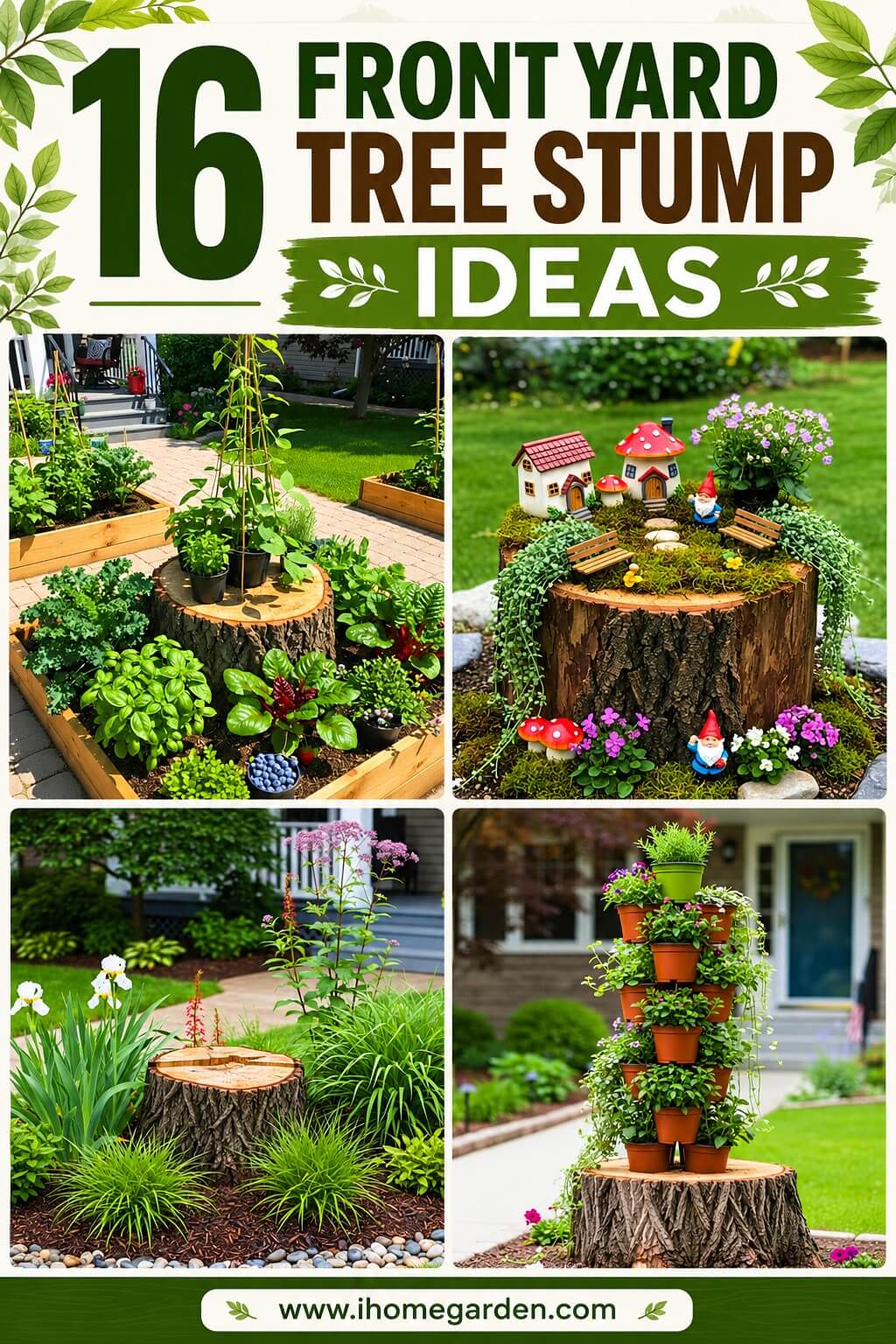
I’ve spent years watching friends and family transform tired front yards, and the same lesson keeps showing up: stumps make incredible anchors. They add height, texture, and a kind of weathered character that brand-new landscaping can’t fake. These 16 eye-opening front yard tree stump ideas include every style and budget — cottage gardens, modern minimalism, edible plantings, fairy scenes, succulent displays, and more. Pick the one that fits your home, and let that stubborn stump finally earn its place.
1. Cottage Garden Tree Stump Idea
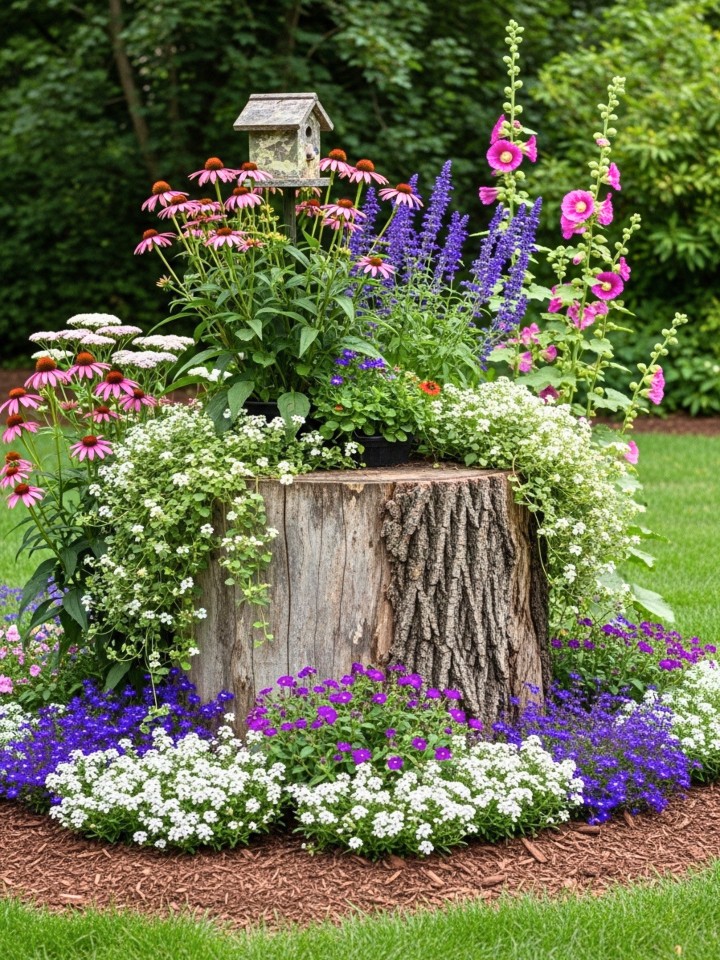
My aunt has a maple stump in her front yard that she nearly paid $400 to grind out. She didn’t. Instead, she planted hollyhocks behind it, coneflowers and salvia around the sides, and let sweet alyssum spill across the front like sea foam. Two summers later, it was the prettiest corner on her block.
That’s the whole philosophy of a cottage garden: layered heights, soft colors, controlled chaos. Add yarrow, lobelia, English lavender, and a few self-seeding cosmos so the bed refills itself each year. Top the stump with a weathered enamel pitcher or a small birdhouse.
Budget around $60–$120. Best in zones 4–8 with morning sun.
2. Minimalist Modern Tree Stump Design
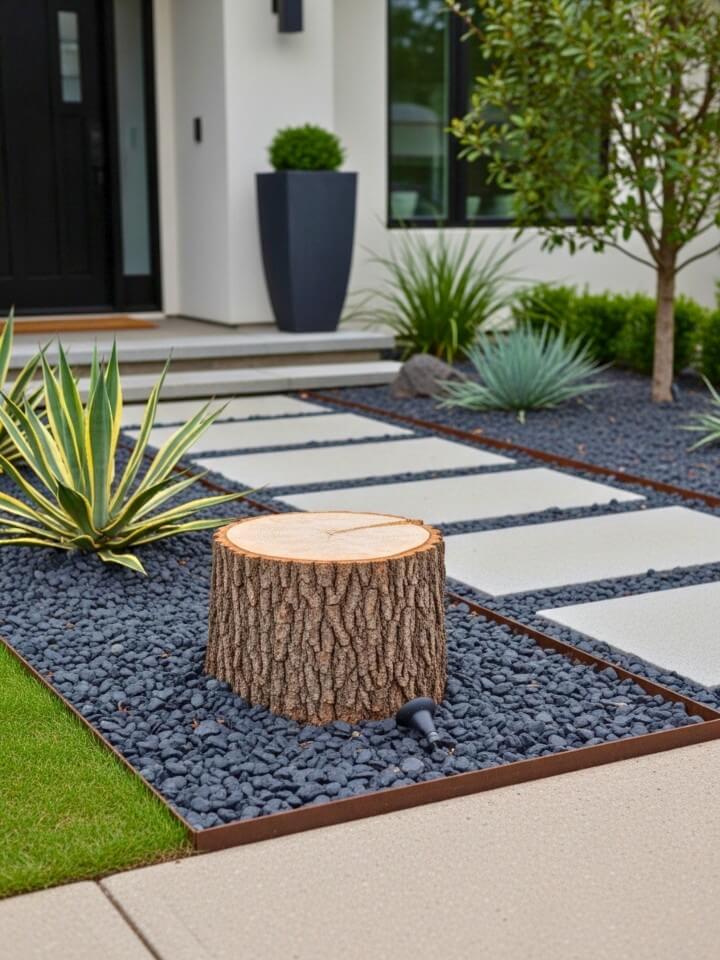
Here’s the rule for modern landscapes: stop apologizing for the stump. It is the sculpture.
Sand the top flat. Brush on a matte black exterior sealer or dark walnut stain. Ring the base with black lava rock or crushed granite, held in place with crisp metal edging. Now stop. Add one plant — a single blue agave, or a tight clump of feather reed grass, or a dwarf Hinoki cypress. That’s it.
The whole installation runs $80–$150. Re-seal every two years or the wood fades to gray.
3. Edible Landscaping Around a Tree Stump
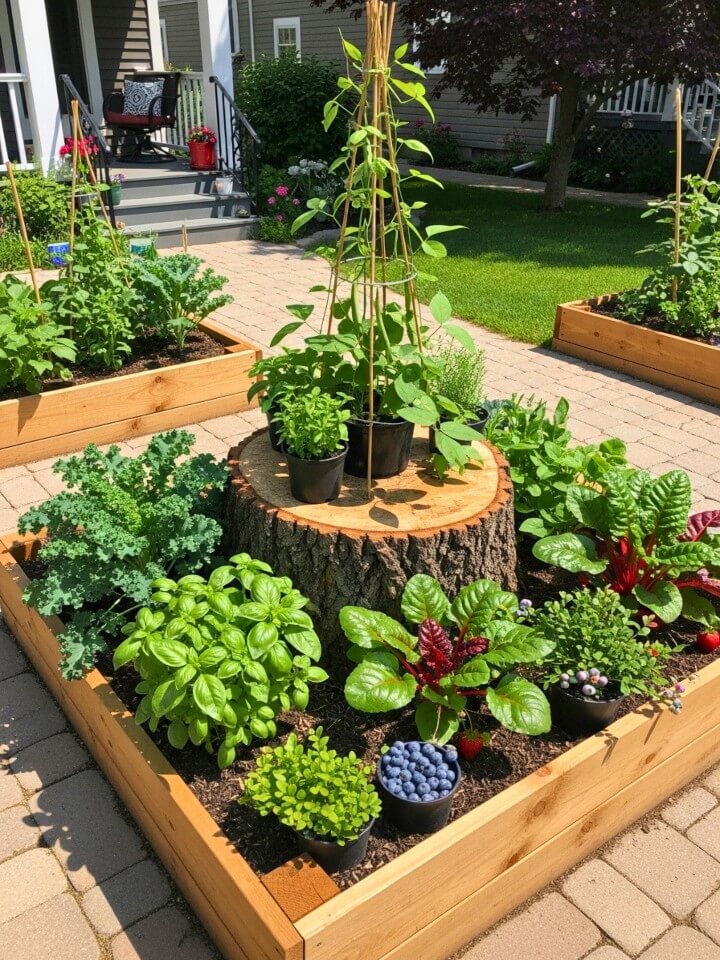
Can a stump grow you dinner? Sort of, yes.
Set terra cotta pots of basil, oregano, and thyme on top. Hollow a shallow basin into the wood and tuck in a strawberry plant that drapes over the edge. Around the base, plant rainbow chard (the stems are gorgeous), curly kale, and a compact blueberry like Top Hat for some vertical interest.
A Few Things to Keep in Mind
You’ll need at least six hours of direct sun, or leafy greens turn leggy and herbs lose their flavor. Rotate annual crops each spring so pests don’t get comfortable. And if you live in an HOA neighborhood, peek at the rules first — boards rarely complain about leafy greens, but tomatoes and squash sometimes raise eyebrows.
Starter cost: $50–$100.
4. Drought-Tolerant Xeriscape Stump Garden
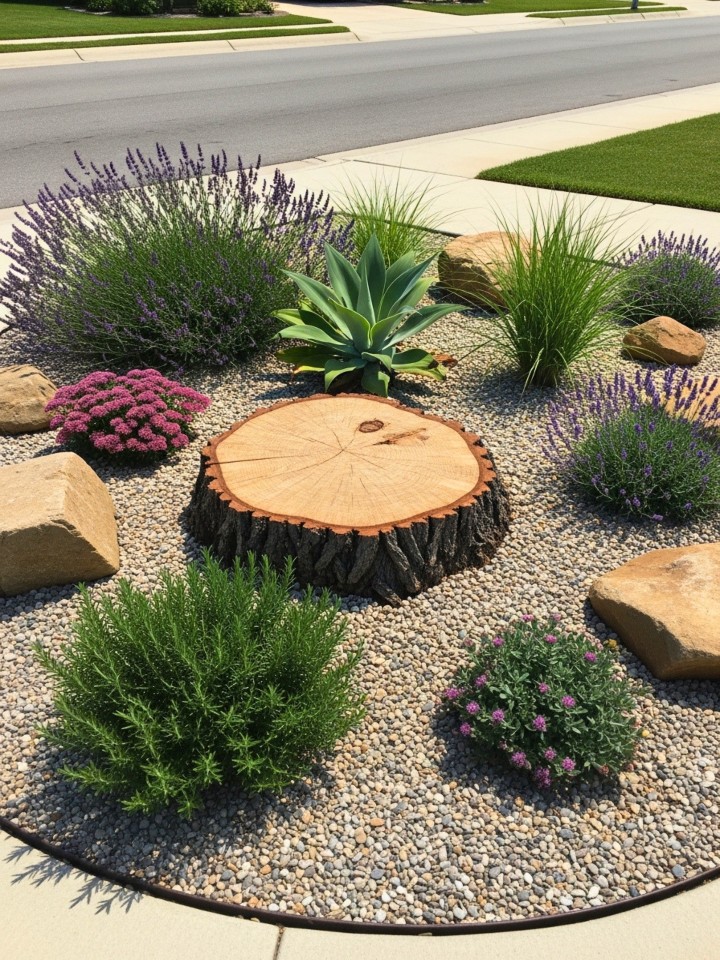
Transform your landscape with stunning front yard tree stump ideas that wow every passerby. For anyone who’s tired of dragging hoses through the yard in August.
Lay landscape fabric around the stump, cover it with two to three inches of decomposed granite or river rock, then plant species that genuinely thrive on neglect: lavender, Russian sage, blue fescue, sedum, yucca. The single most important detail people skip is the boulders — drop two or three football-sized rocks into the bed. Without them, gravel gardens look like parking lots.
After one growing season, you’ll barely water this design. Initial cost: $150–$300. Zones 7–10, full sun.
5. Shade Garden Tree Stump Feature
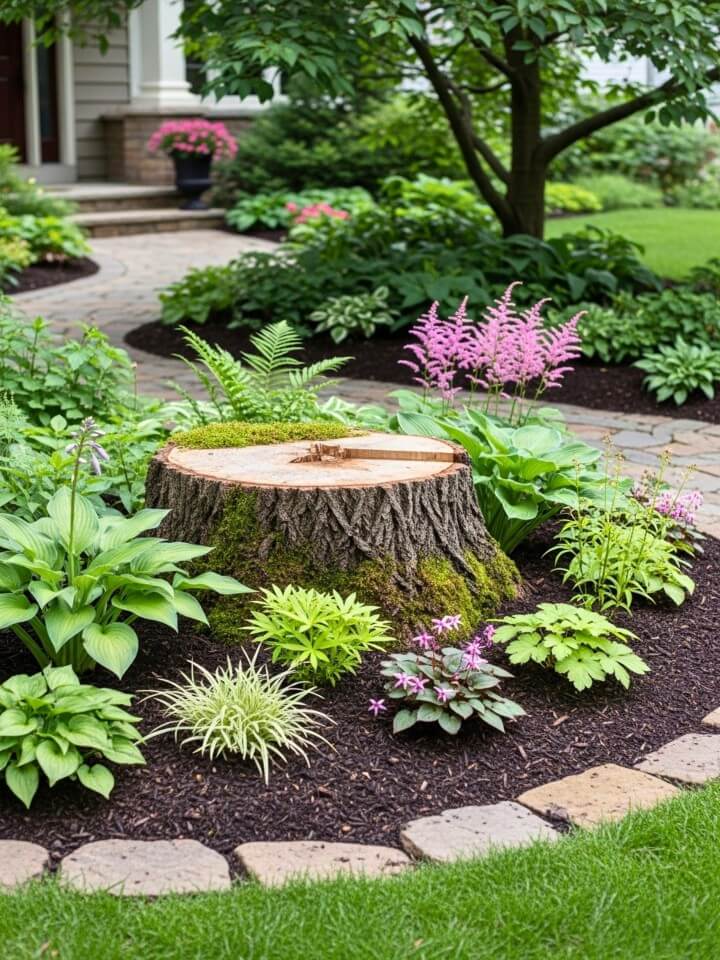
If your stump sits under a big oak or maple where grass has surrendered, stop fighting it. Build a woodland scene instead.
Start with ferns — ostrich ferns for height in the back, Japanese painted ferns for that silvery shimmer in the middle, autumn ferns for warm copper tones in spring. Layer in blue-leafed hostas like ‘Halcyon’ (they almost glow against dark mulch), astilbe for soft pink plumes in early summer, and sweet woodruff as groundcover.
Don’t scrub the moss off the stump. Let it spread. A small cast iron lantern or shallow stone bowl on top finishes everything.
$80–$150. Mulch heavily with shredded bark. Zones 3–8.
6. Curb Appeal Focal Point Tree Stump
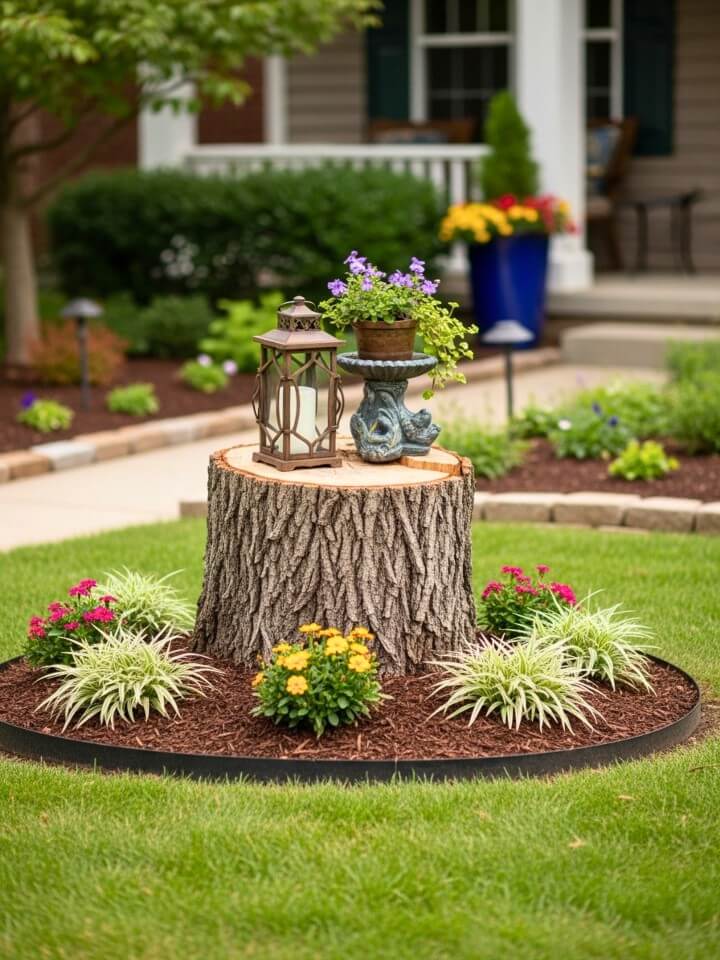
The simplest design in this entire guide, and often the most effective.
Lay a 3-foot ring of dark mulch around the stump. Plant a low border of impatiens, sweet potato vine, or creeping Jenny at the base. On top, place one statement piece — a glazed ceramic planter with a trailing fuchsia, a copper lantern, or a concrete birdbath.
Then comes the part that makes this design punch above its weight: two or three solar uplights aimed at the stump from the ground. At night, the whole feature glows from below. Strangers will compliment it.
About $75–$150 total. The lighting is non-negotiable.
7. Seasonal Color Tree Stump Display
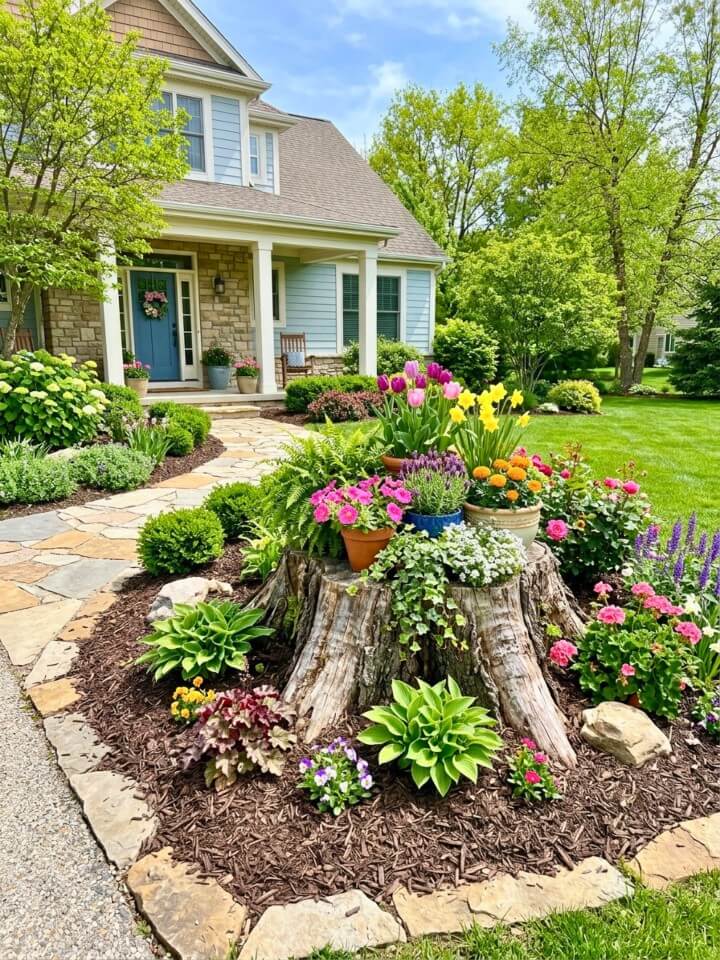
Most stump designs you set up once and walk away. This one is the opposite — and that’s the appeal.
Think of the stump as a small stage that gets a new performance every few months:
- Spring brings tulips and daffodils around the base, with forced hyacinths in a pot on top.
- Summer is for bright zinnias, marigolds, and a big terra cotta planter overflowing with trailing petunias.
- Fall means deep burgundy mums, a couple of pie pumpkins, and ornamental kale.
- Winter is cut evergreen branches, pinecones, and a battery-operated lantern that glows on dark evenings.
You’ll spend roughly $100–$200 across the year. The trade-off is more work — but your front yard never feels stale.
8. Rain Garden Around a Tree Stump
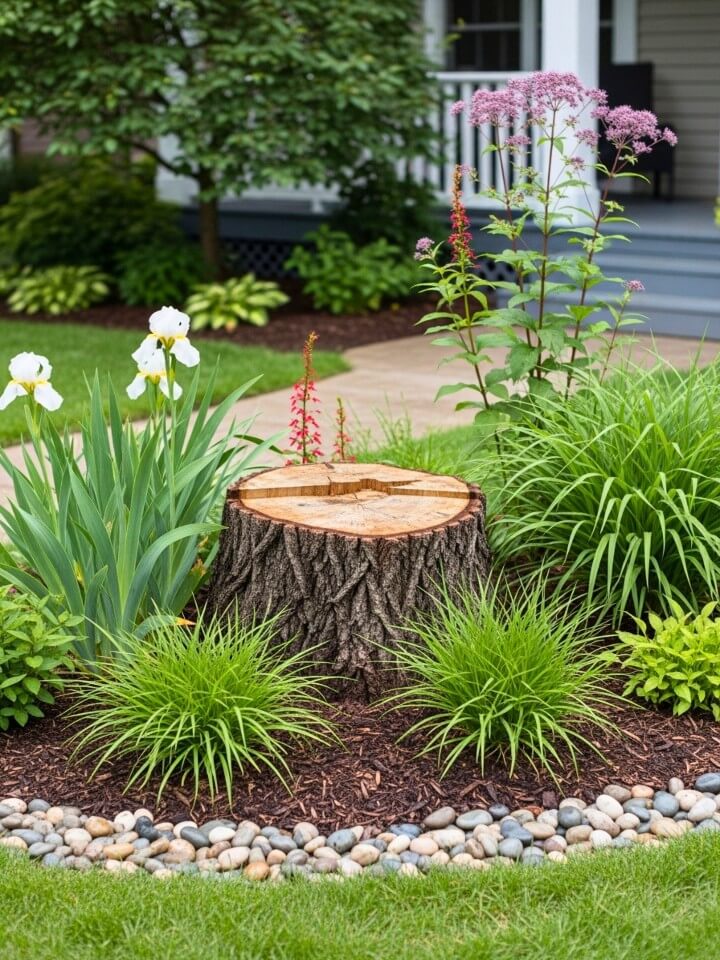
Does water pool around your stump after every storm? Most people see that as a problem. It’s actually an opportunity.
Dig a shallow basin 4–8 inches deep around the stump and amend the soil with compost. Then plant species that can handle both wet feet and dry stretches: blue flag iris, cardinal flower (hummingbirds love it), swamp milkweed, Joe Pye weed, and ornamental sedges. Edge the basin with river stones to prevent erosion and keep the whole thing looking deliberate rather than swampy.
Why This Works Better than You’d Think
Rain gardens absorb runoff that would otherwise pool on your lawn or run into the street. They support pollinators. And they turn the boggiest spot in your yard into the most alive one. Cost: $100–$200.
9. Symmetrical Formal Tree Stump Garden
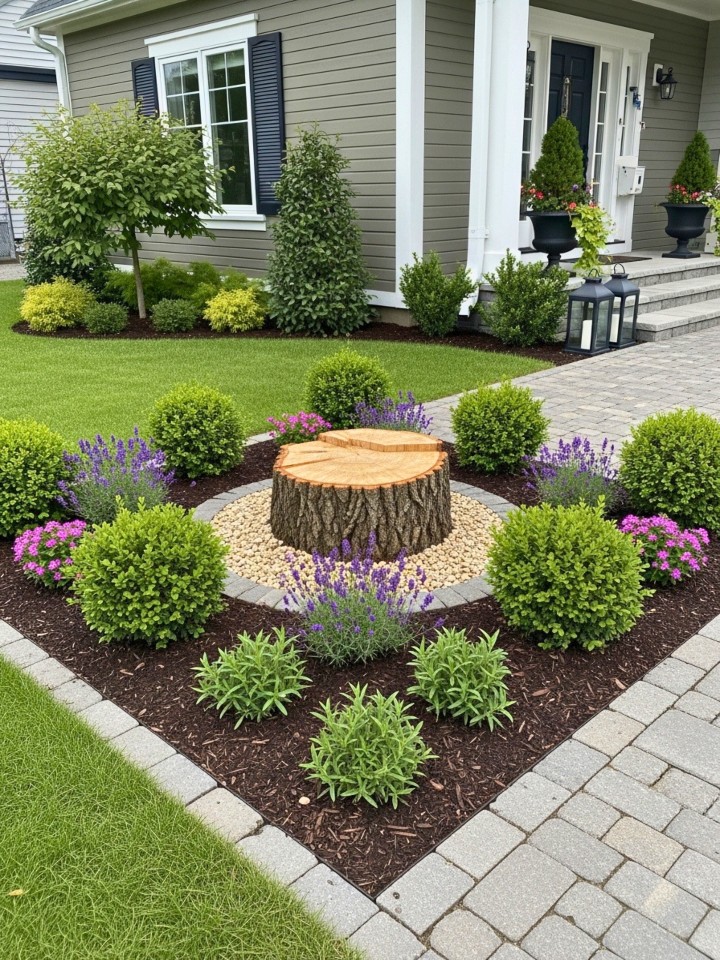
Symmetry is the shortcut to “this looks expensive.”
Treat the stump as the dead center of a circle or square bed. Mirror everything: matching boxwoods on the left and right, two identical lavender clumps, a pair of dwarf Alberta spruces flanking the back. Define the bed with clean steel edging or a tight ring of brick. Place two matching planters or lanterns on either side for balance.
The discipline of this design is what makes it work. The moment you add one “extra” plant that doesn’t have a partner on the other side, the whole effect collapses. For tricky front-yard spaces where symmetry helps create order, jaw-dropping corner landscaping ideas can offer more layout inspiration. Budget $200–$400 since matching plants in matching sizes cost more than mixed beds.
10. Wildflower Meadow Tree Stump Idea
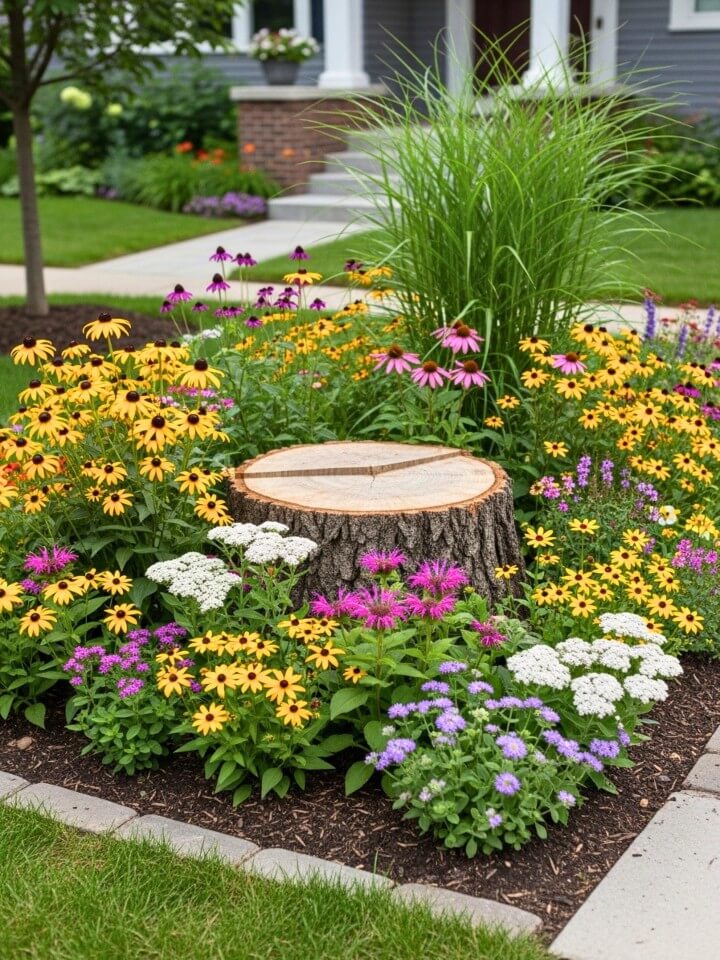
A meadow garden looks effortless. It isn’t — but it’s close.
Surround the stump with a generous planting of black-eyed Susans, purple coneflowers, coreopsis, bee balm, yarrow, and native asters. Add little bluestem or switchgrass for movement when the wind picks up. The key is don’t plant in straight lines or tight groups — scatter species in drifts of 5–7 plants so it looks like nature did it.
The mistake most people make is letting the edges go wild too. A meadow without a neat border just reads as “yard I forgot about.” Mow a 2-foot strip around the bed, or run stone edging along the perimeter. That single crisp line is what tells the neighbors this was intentional.
Pollinators will find it within weeks. Cost: $120–$250. Zones vary by plant — pick natives for your region.
11. Fairy or Gnome Garden Stump
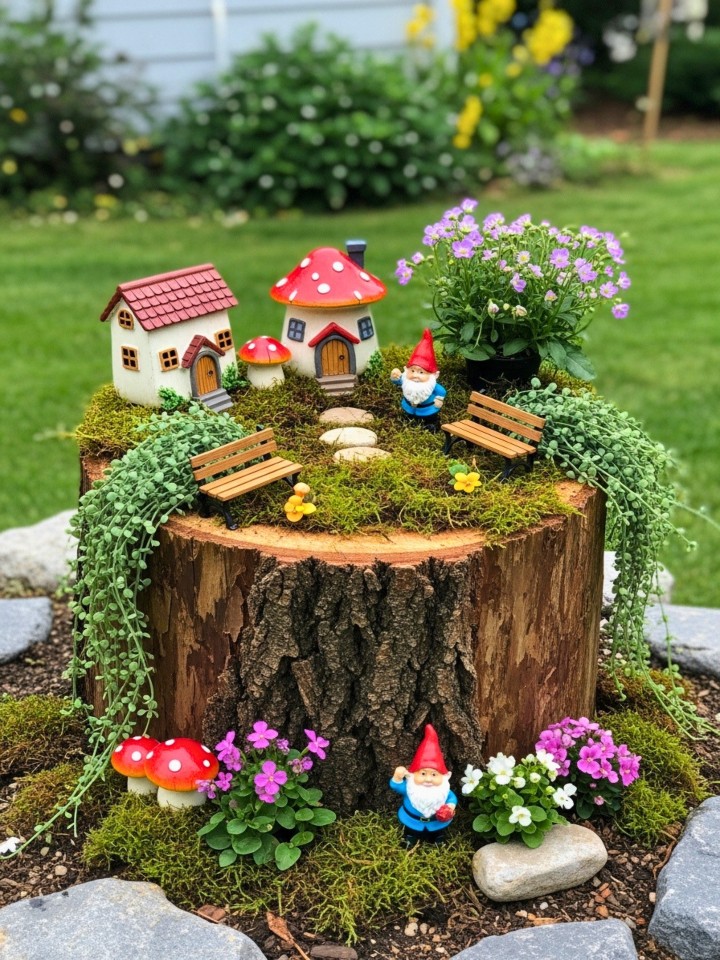
Discover clever tricks on how to hide a tree stump and turn an eyesore into pure elegance. Ask any kid what should go on a tree stump and you’ll get the same answer: fairies.
This is the most fun you can have with a stump, and honestly, plenty of adults secretly love it too. Glue or screw a tiny wooden door onto the side of the stump so it looks like someone lives inside. Add a winding pebble path leading up to the door. Scatter miniature furniture — a tiny bench, a mushroom stool, a fairy-sized clothesline strung between two twigs.
For planting, stick to small-scale: Irish moss, baby tears, miniature hostas, dwarf mondo grass, and creeping thyme. Anything that looks oversized in a 6-inch world. A few polished glass pebbles as a “pond” complete the scene.
The whole project costs $40–$80 and takes one afternoon. Kids will rearrange the figurines constantly. Let them.
12. Moss & Fern Woodland Feature
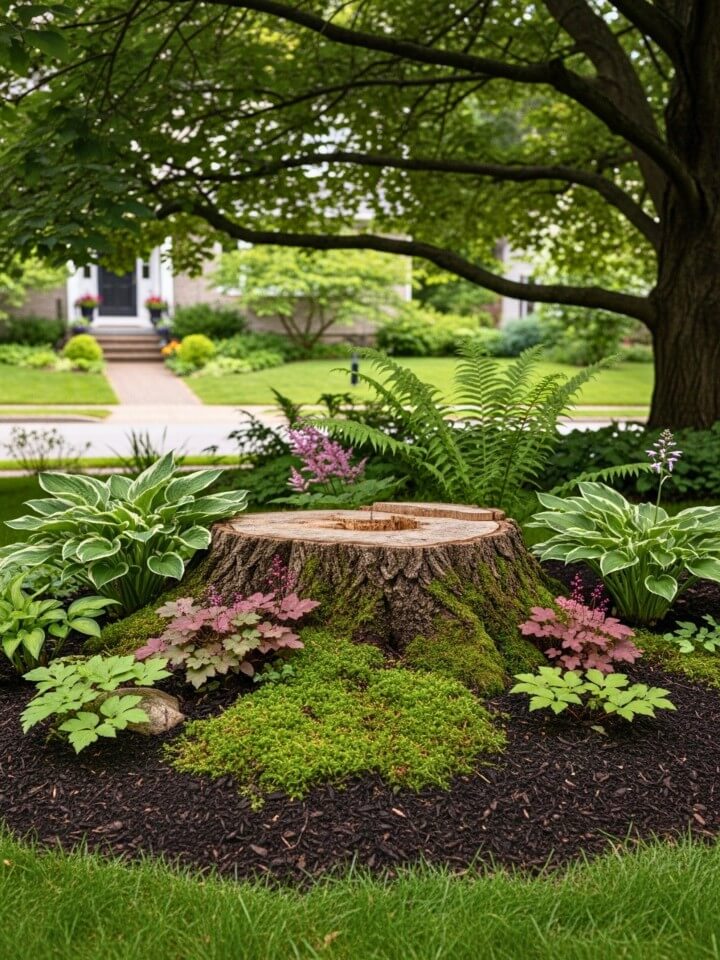
Some stumps want to be wild. Don’t fight that instinct — amplify it.
If your yard already has shade and humidity, you’ve got the perfect conditions for a moss-heavy design that feels like you stumbled across it in a forest. Transplant sheets of moss directly onto the stump (a buttermilk-and-moss slurry painted on helps it establish faster). Surround the base with ostrich ferns, maidenhair ferns, and a few clumps of foamflower for delicate white spring blooms.
The trick is restraint. No bright flowers. No decorative pots. No lanterns. The whole point is that this corner of your yard looks like it’s been there since before the house was built.
Budget around $60–$120. Water consistently for the first season while the moss takes hold.
13. Succulent Display Stump
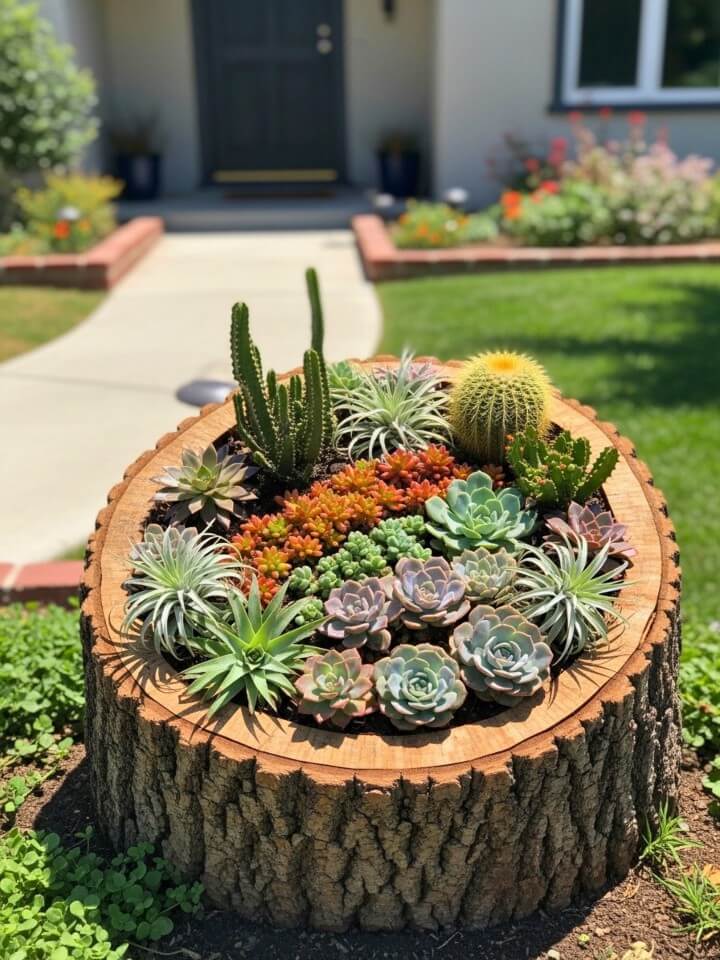
For sunny yards in warmer zones, a stump can become a living mosaic.
Hollow out a shallow basin in the top of the stump (a chisel and a drill with a spade bit will do it in about 30 minutes). Fill with cactus mix. Plant a tight arrangement of echeveria rosettes, sempervivum, sedum ‘Angelina’ for chartreuse contrast, and a few trailing string-of-pearls or burro’s tail spilling over the edges.
What people get wrong
Two things kill succulent stumps faster than anything else: poor drainage and overwatering. Drill drainage holes through the bottom of the basin before you plant. Water once a week at most, and skip it entirely if it rained. In zones 9–10, this design lives for years. In colder zones, bring the succulents indoors for winter.
Cost: $50–$100.
14. Bird Bath or Feeder Base
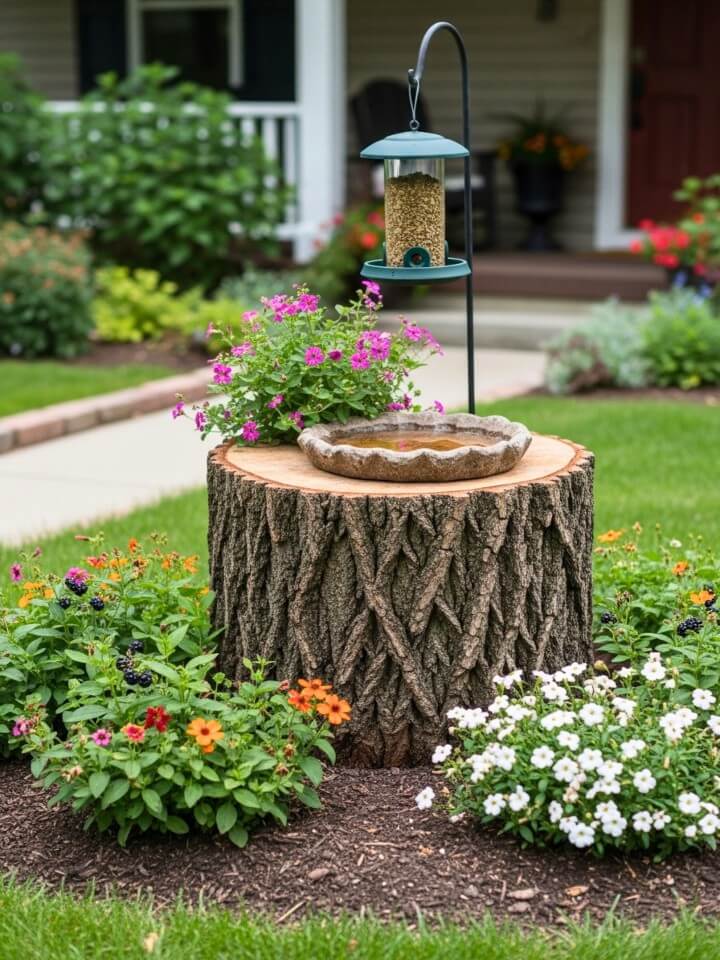
A stump is already a pedestal. You just need to put something on it.
Sand the top flat and level (use a small level — birds won’t drink from tilted water). Secure a shallow ceramic dish, copper bowl, or pre-made bird bath basin to the top with exterior construction adhesive. Keep the water 1–2 inches deep, no more. Around the base, plant berry-producing shrubs and pollinator favorites: serviceberry, elderberry, bee balm, coneflower, black-eyed Susan.
Within a week, you’ll have regulars. Within a month, you’ll know which cardinal owns the yard.
Two practical notes: change the water every 2–3 days to prevent mosquitoes, and place the bath within about 10 feet of a shrub or tree so songbirds have an escape route from hawks. Total cost: $40–$90.
15. Planter Tower Stump
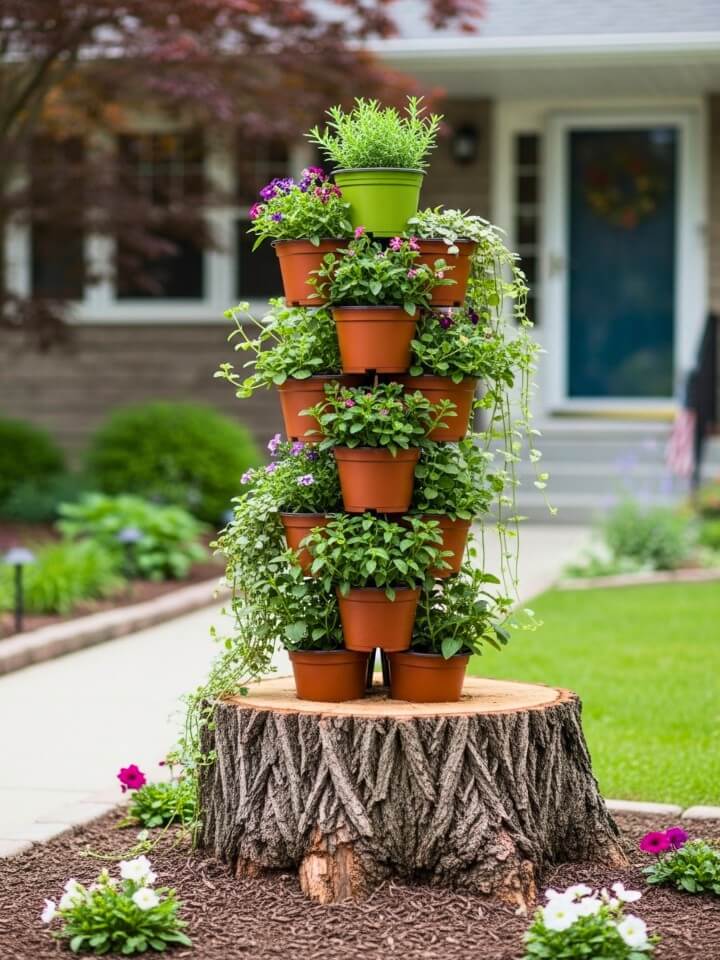
What if the stump went up instead of just sitting there?
Stack graduated pots on top — largest on the bottom, smallest on top — and offset them so each one leaves a planting crescent visible in the pot below. Three or four tiers is the sweet spot. Plant trailing flowers and herbs that cascade down: trailing petunias, sweet potato vine, creeping rosemary, oregano, strawberries, nasturtiums.
Wrap the stump itself in burlap or twine for texture, or leave the bark exposed if it’s still in good shape.
This design is perfect for small yards where horizontal space is tight but you still want big visual impact. The vertical layering also doubles your planting area without doubling your footprint. Budget $60–$130 for pots, soil, and starter plants. Water more often than ground beds — stacked pots dry out fast.
16. Outdoor Sculpture Stand
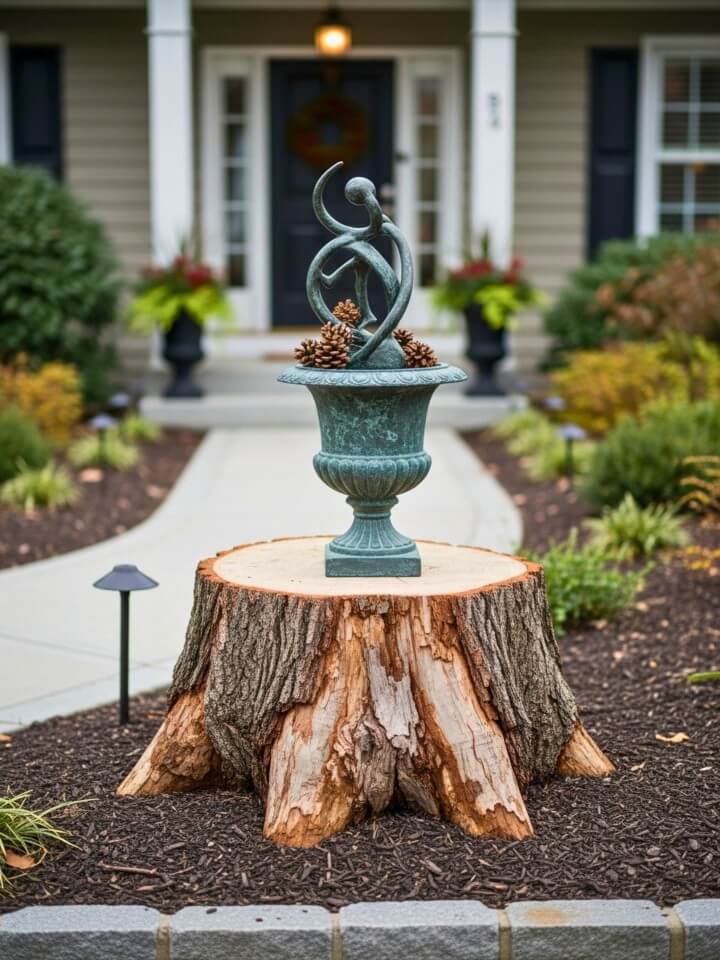
Explore creative ways to hide a tree stump and give your garden a gorgeous, polished new look. The most sophisticated use of a stump is also the simplest: turn it into a pedestal and let one beautiful object do all the talking.
Sand the top smooth. Seal it with a clear exterior polyurethane so it’ll survive rain and sun for years. Then choose your piece — a weathered concrete urn, a bronze garden sculpture, a hand-thrown ceramic vessel, a vintage sundial, even a single oversized geode. The stump elevates whatever you put on it, both literally and visually.
The reason this design works so well is the contrast: rough natural wood underneath, refined object on top. That tension is what draws the eye.
Swap the object out seasonally if you want — a lantern in winter, a planted urn in summer. For a more dramatic evening setup, noticeable outdoor tree lighting ideas can help you make the stump and sculpture visible after sunset. Cost varies entirely on what you choose, but expect $50 on the low end and the sky on the high end.
FAQs About Front Yard Tree Stumps
Once you start planning around a tree stump, the same practical questions tend to come up — and most online guides barely touch them. The five answers below cover pests, permits, regrowth, and planting safety in plain terms.
Will Leaving a Tree Stump in My Yard Attract Termites or Carpenter Ants?
Yes, decaying stumps can draw termites, carpenter ants, and beetles within a few years. To reduce risk, keep the stump at least 20 feet from your house, treat it with borate-based wood preservative annually, and inspect for sawdust piles or hollow spots each spring.
How Long Does It Take for A Tree Stump to Naturally Rot Away?
Most stumps take 5 to 10 years to fully decompose, depending on wood density, climate, and moisture. Softwoods like pine break down faster, while oak and maple can linger 15+ years. Drilling holes and adding nitrogen-rich fertilizer speeds the process considerably.
Can a Tree Stump Regrow Into a New Tree?
Absolutely — species like maple, elm, willow, and poplar often send up suckers from the stump or roots for years after cutting. To stop regrowth, paint fresh-cut surfaces with concentrated glyphosate immediately, or persistently snip new shoots until the root reserves exhaust themselves.
Do I Need a Permit to Remove or Decorate a Tree Stump in My Front Yard?
Decorating rarely requires permits, but removal sometimes does — especially for protected species, heritage trees, or properties in historic districts. Always check your municipal code and HOA guidelines first. Fines for unauthorized removal can reach $500 to $5,000 in stricter jurisdictions.
Is It Safe to Plant Flowers Directly on Top of A Tree Stump?
It’s safe but tricky. The stump offers little soil depth and drains poorly, stressing most plants. Hollow a 4–6 inch basin, fill with quality potting mix, add drainage holes, and stick to shallow-rooted picks like succulents, sedum, moss, or annual flowers.
Conclusion:
A tree stump only looks like a problem until you decide it isn’t. The same chunk of wood that frustrated you last spring can hold a copper lantern by fall, anchor a wildflower patch by next summer, or quietly become the spot where cardinals show up every morning.
None of these projects demand a landscaper or a big budget — just a Saturday, a few plants, and the willingness to see what’s already there a little differently. So before you book the grinder, walk outside and really look at that stump. It might be the most interesting thing in your yard, just waiting for permission.