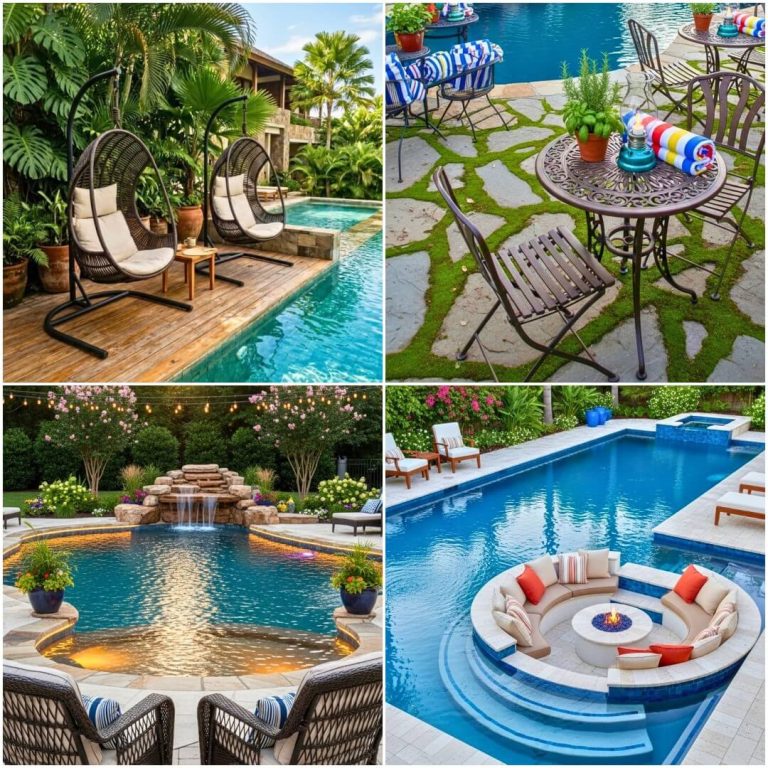
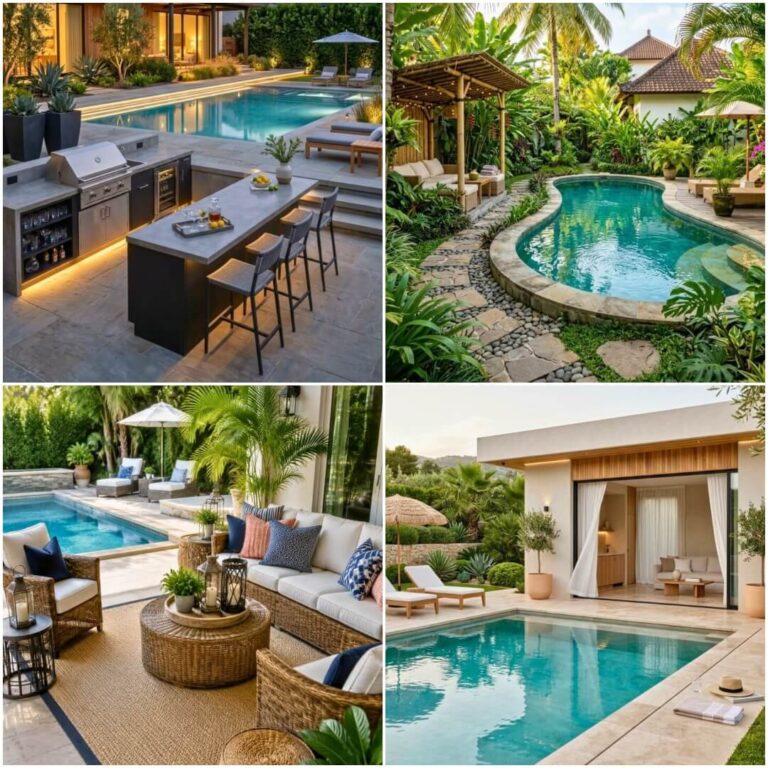
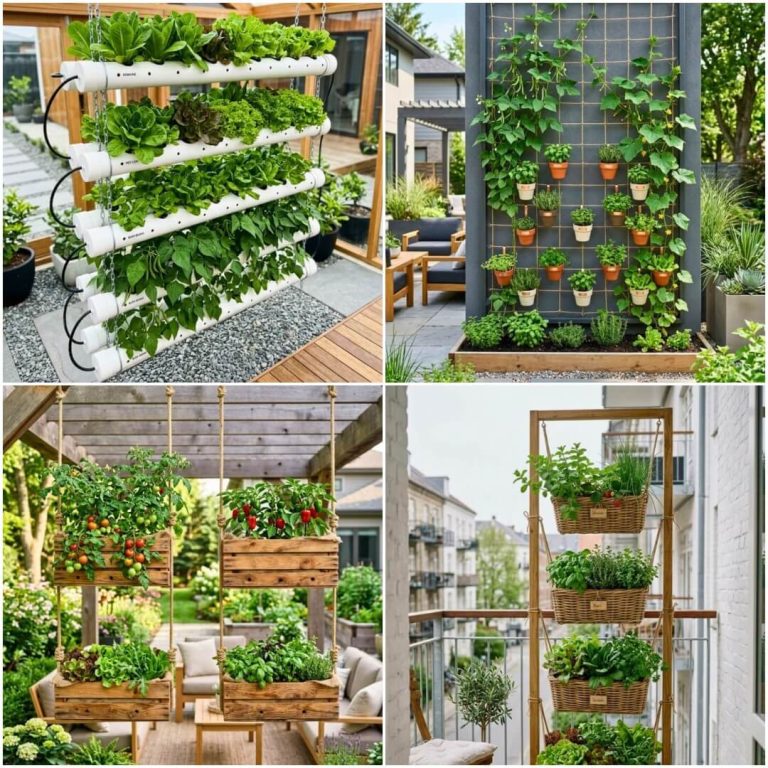
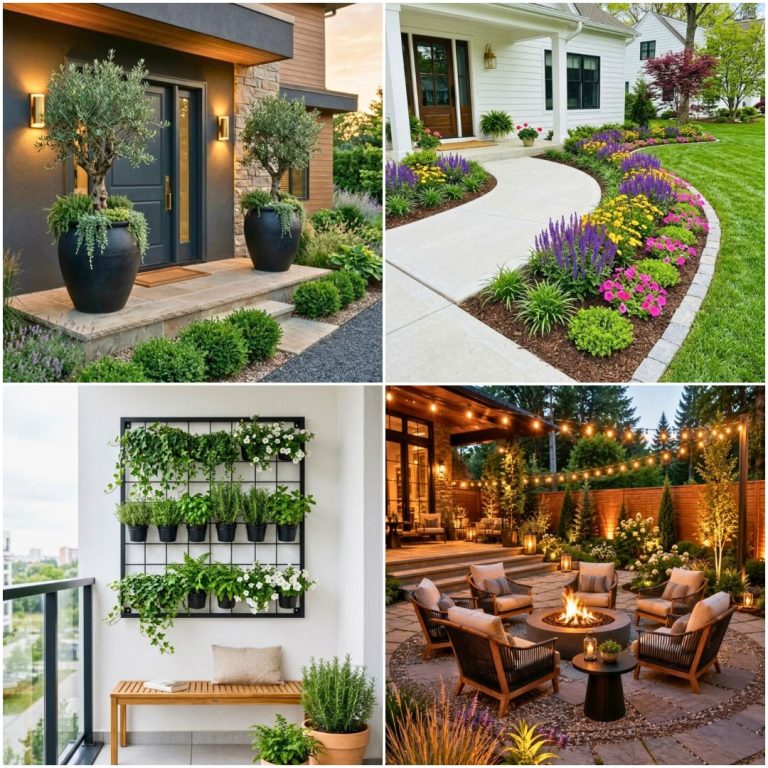
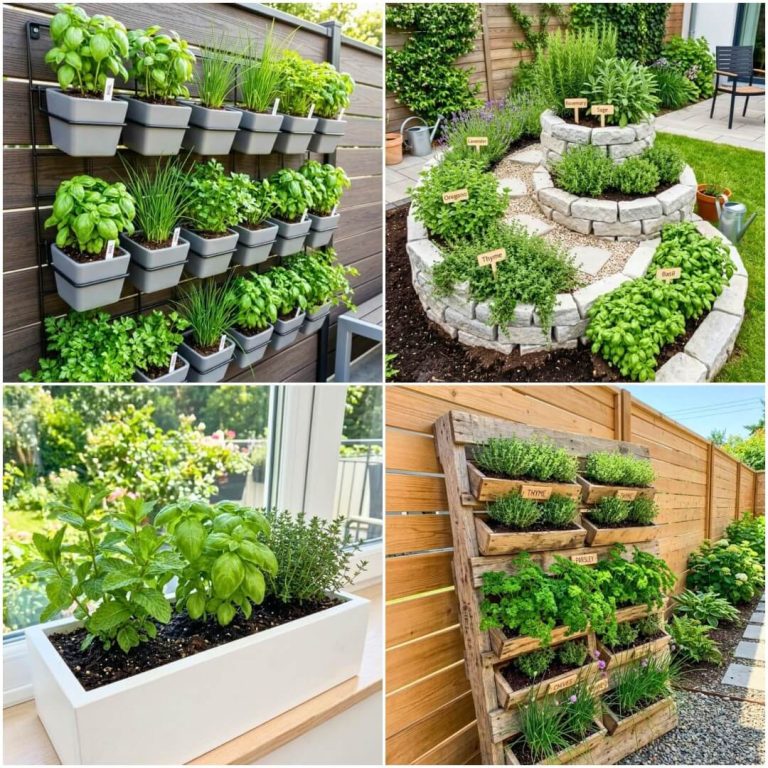
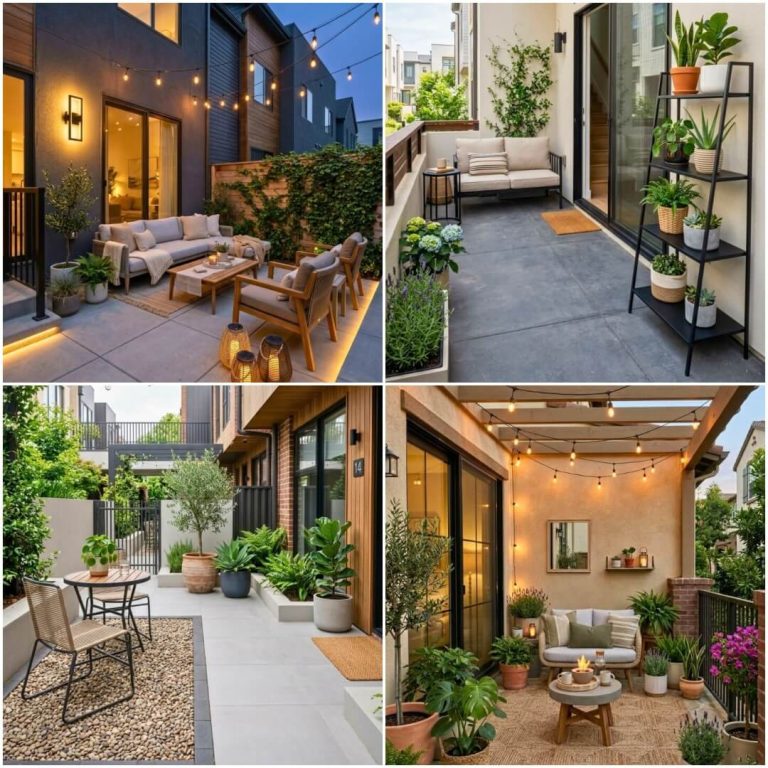
23 Corner Landscaping Concepts That Add Value and Beauty To Any Yard
That awkward corner where the fence meets the garden wall — the one collecting dead leaves and good intentions — is actually some of the most workable space in your entire yard. These 23 wonderful corner landscaping ideas exist precisely because corners are not wasted space, they are waiting space.
Most yards have at least two or three of them, and most homeowners walk past every single day without a plan. The right treatment can turn a neglected angle into the best-looking spot on the property — whether that means a shaded seating nook, a low-maintenance rock planting, or a climbing rose that stops people at the gate.
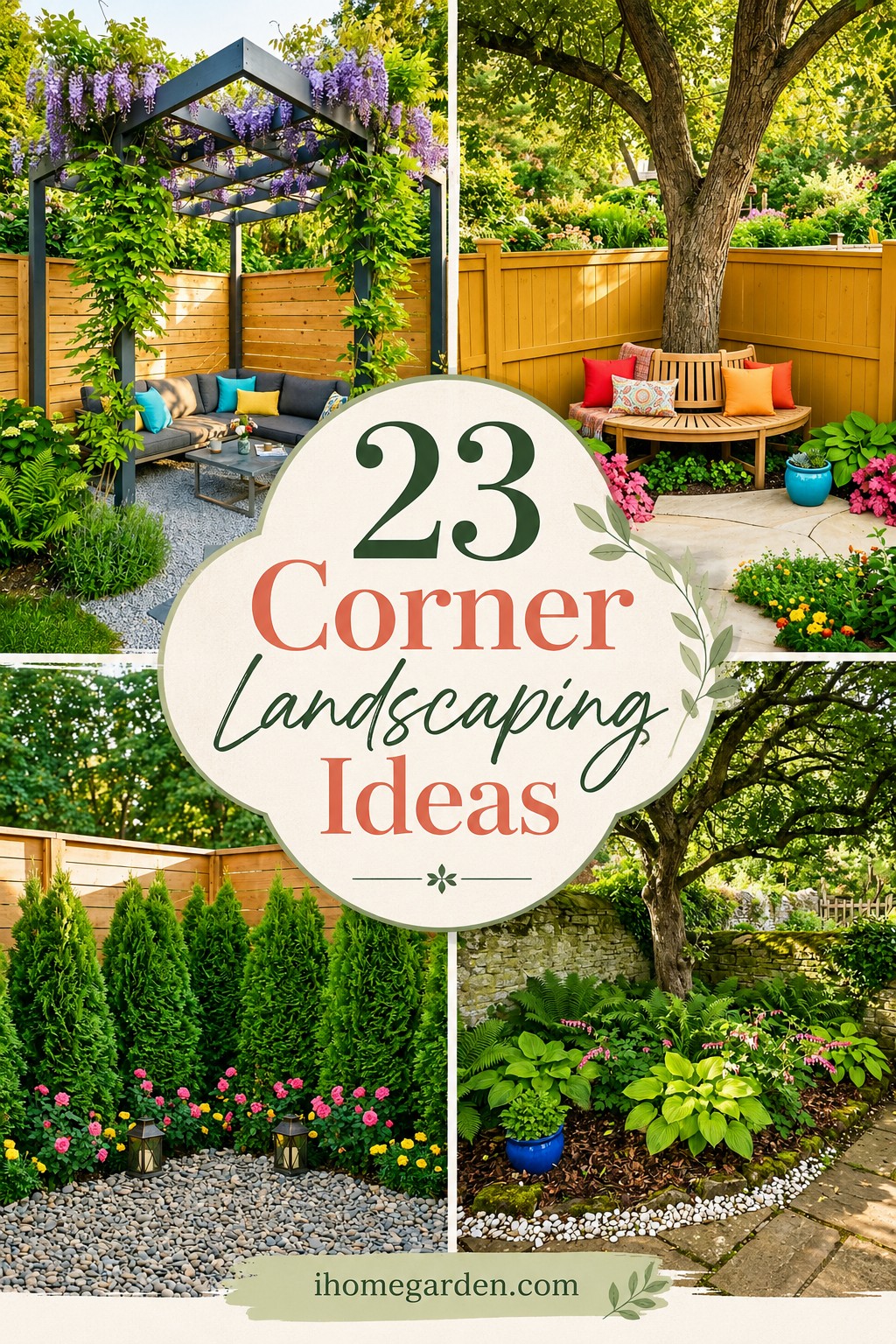
From a gravel bed with three well-placed boulders to a pergola that turns a sunny corner into a proper outdoor room, the range here covers shaded spots, dry zones, small patios, and sprawling backyards. Pick one that matches what your corner is actually doing wrong — too bare, too exposed, too ignored — and the fix becomes obvious.
1. Corner Pergola for Shade and Focal Point
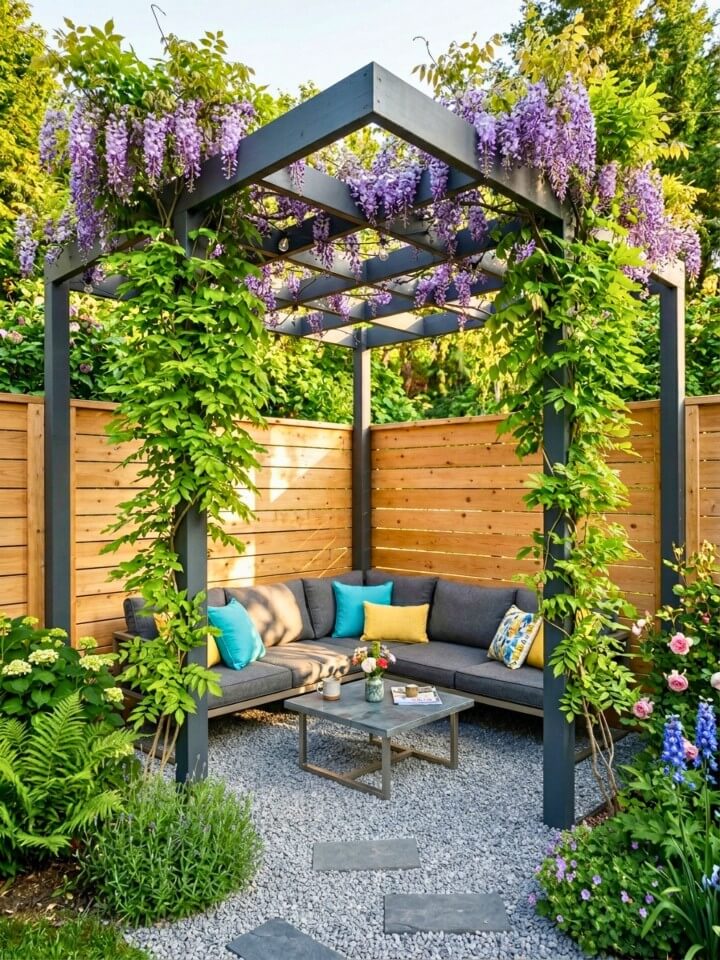
A corner pergola anchors an outdoor seating area in a way that no amount of planting or furniture alone can replicate. Set posts at least two feet into concrete footings for stability, and size the structure to cover the seating comfortably — a 10×10 foot footprint handles a small table and four chairs with room to move. Cedar and pressure-treated pine are the most common lumber choices; cedar costs more but resists insects and rot without chemical treatment. Add a climbing vine like wisteria or Virginia creeper across the top beams within the first season to build shade gradually as the structure settles.
Choosing the Right Vine
Wisteria is heavy at maturity and needs a pergola built to handle the weight — use 4×6 beams minimum if planting it. Lighter options like clematis or climbing hydrangea suit standard 4×4 construction without structural concerns.
2. Curved Flower Bed Around a Fence Corner
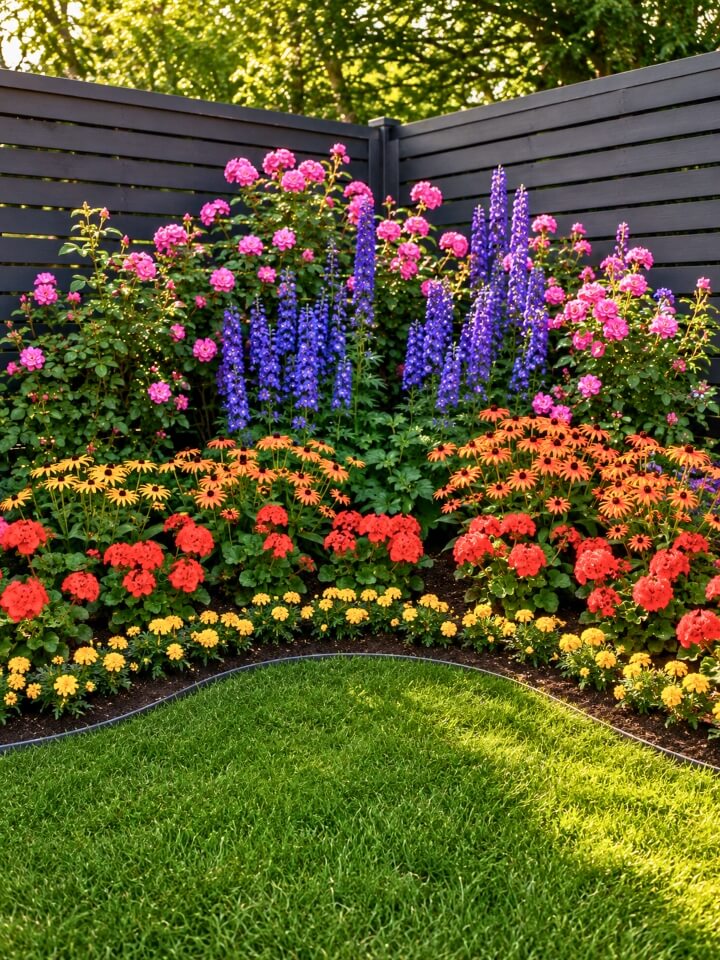
A curved flower bed with stones and shrubs can bring fresh corner landscaping ideas to any outdoor space. Sharp fence corners feel unfinished in most yards — a curved bed is one of the simplest fixes available. Mark the curve with a garden hose first, adjust until the line looks natural from multiple angles, then cut the edge cleanly with a half-moon spade.
Fill with compost-enriched soil and plant in layers: foxglove, delphinium, or ornamental grasses at the back, mid-height rudbeckia or catmint through the center, and low-growing dianthus or creeping thyme along the front edge. Staggering bloom times keeps the bed colorful from spring through early fall.
Edging Material Options
Steel edging holds curves sharper over time than plastic, while natural stone edging shifts slightly each season but suits informal cottage-style plantings better than rigid borders.
3. Shaded Fern Garden Beneath a Tree Corner
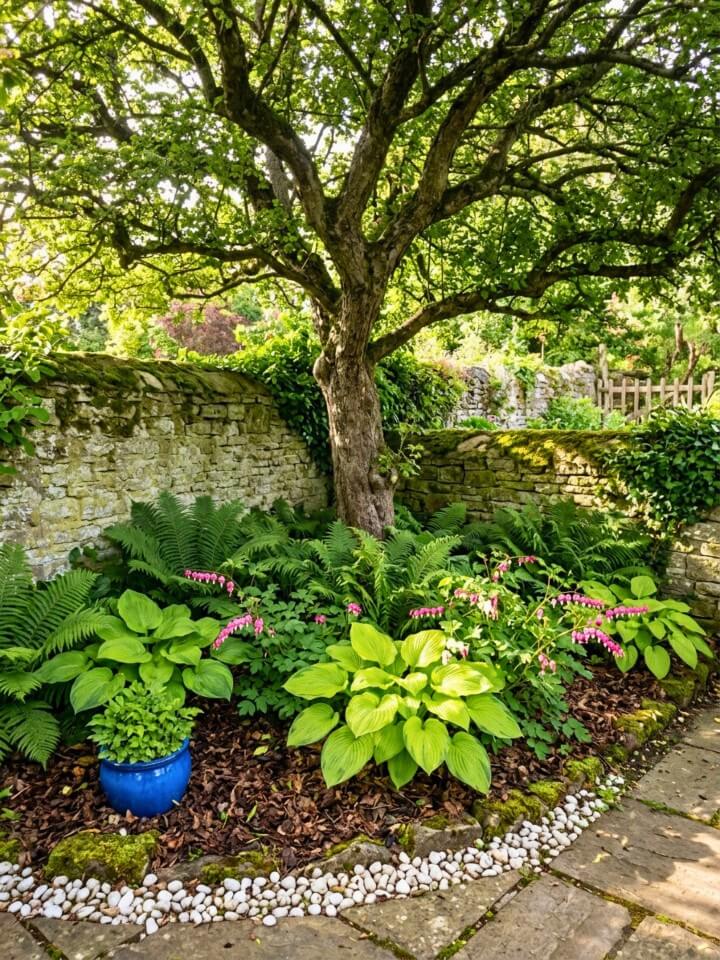
Corners under mature trees are among the hardest spots to plant well — dry shade, competing roots, and poor soil combine to defeat most conventional choices. Ferns are one of the few plant families genuinely suited to these conditions. Autumn fern and Japanese painted fern both handle dry shade once established, while ostrich fern prefers more consistent moisture. Mix in hostas for broad leaf contrast and hellebores for late winter interest when almost nothing else is flowering. Amend the soil with generous compost before planting, working it in between surface roots without cutting them, and top-dress with shredded leaf mulch each fall to slowly rebuild organic matter.
Watering Newly Planted Ferns
Even shade-tolerant ferns need consistent moisture through their first full summer to establish root systems beneath competing tree roots. Water deeply twice a week rather than lightly every day — shallow watering keeps roots near the surface where they dry out fastest.
4. Gravel Garden With Grouped Container Plants
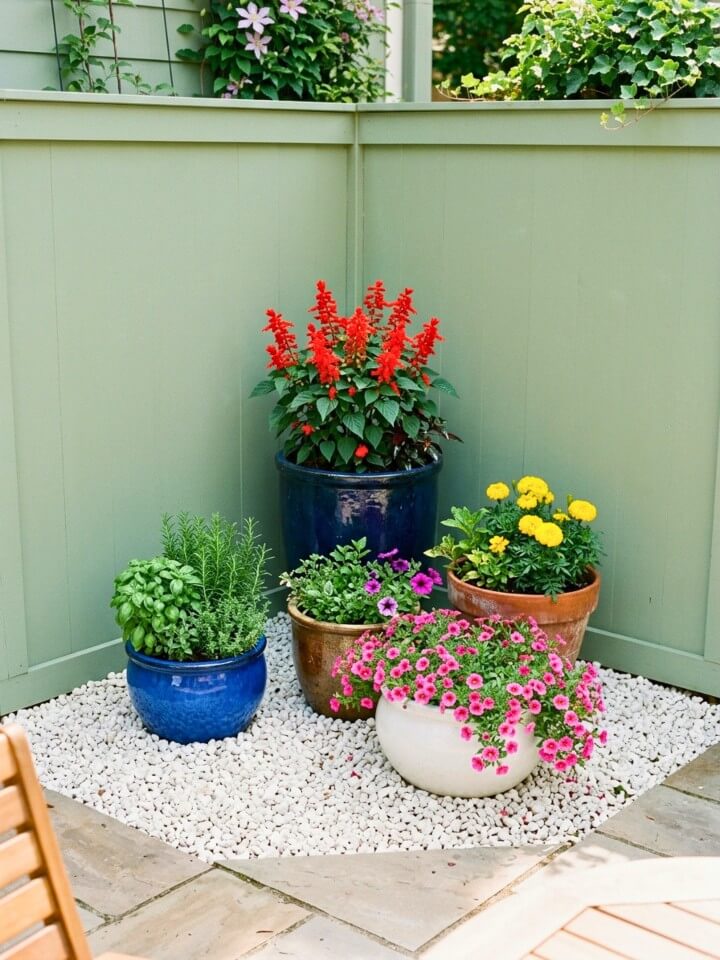
Gravel corners work particularly well in rental properties, on solid surfaces, or in spots where digging is impractical. Lay heavy-duty landscape fabric first to block weeds, then spread pea gravel or crushed slate two to three inches deep across the area. Group containers in odd numbers — three or five pots in varying heights create more visual interest than even pairs. Mix textures: one tall ornamental grass, one trailing plant, and one compact flowering shrub covers the vertical range well. Choose pots in the same material or finish so the grouping reads as intentional rather than collected randomly over time.
Keeping Gravel Tidy
Edge the gravel area with steel or aluminum edging pressed two inches into the soil — this prevents the stones from migrating into the lawn and keeps the border crisp through winter freeze-thaw cycles.
5. Tree Bench Corner With Shade Planting
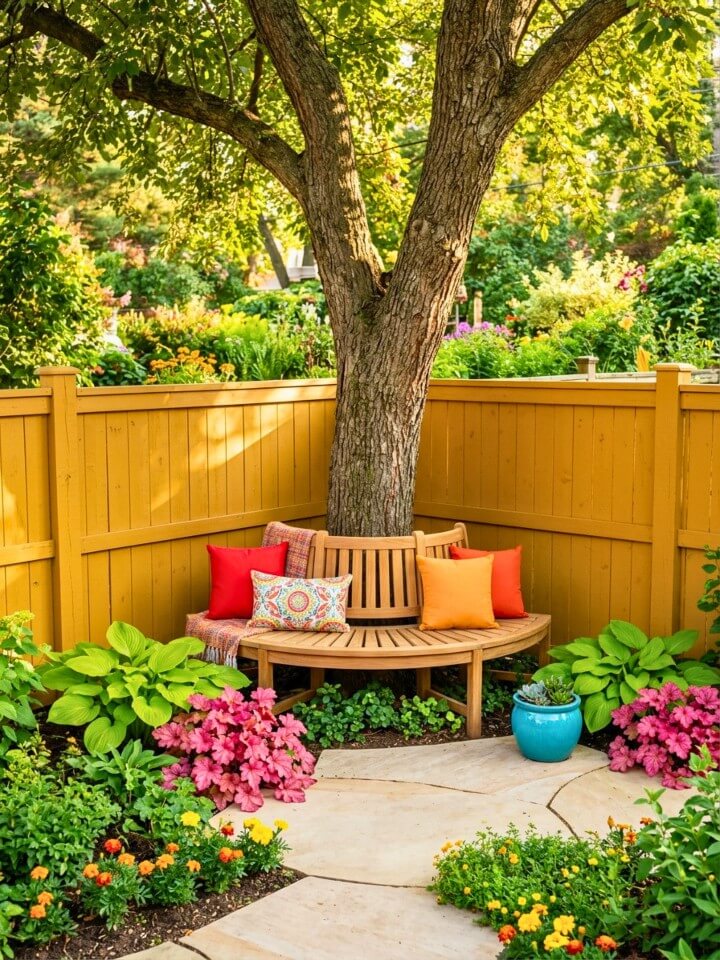
Adding a small bench, plants, and decorative lighting can make corner yard landscaping ideas feel cozy and useful. A wraparound bench built beneath a mature tree gives a shaded corner genuine purpose rather than leaving it as wasted space beneath the canopy. Build the bench frame from pressure-treated lumber and finish with cedar boards on top — cedar stays cooler underfoot in summer and resists splitting better than pine over time. Keep the bench at least eight inches away from the trunk on all sides to allow for natural trunk expansion over years. Plant hostas, coral bells, or soft shield ferns around the outer bench edge where they soften the structure and fill in the bare soil that grass rarely covers well under heavy shade.
Building Around the Root Zone
Avoid digging post holes within the drip line of the tree. Use surface-mounted post brackets bolted to concrete pads instead — this keeps structural roots undisturbed and prevents long-term damage to the tree.
6. Corner Water Feature With Surrounding Greenery
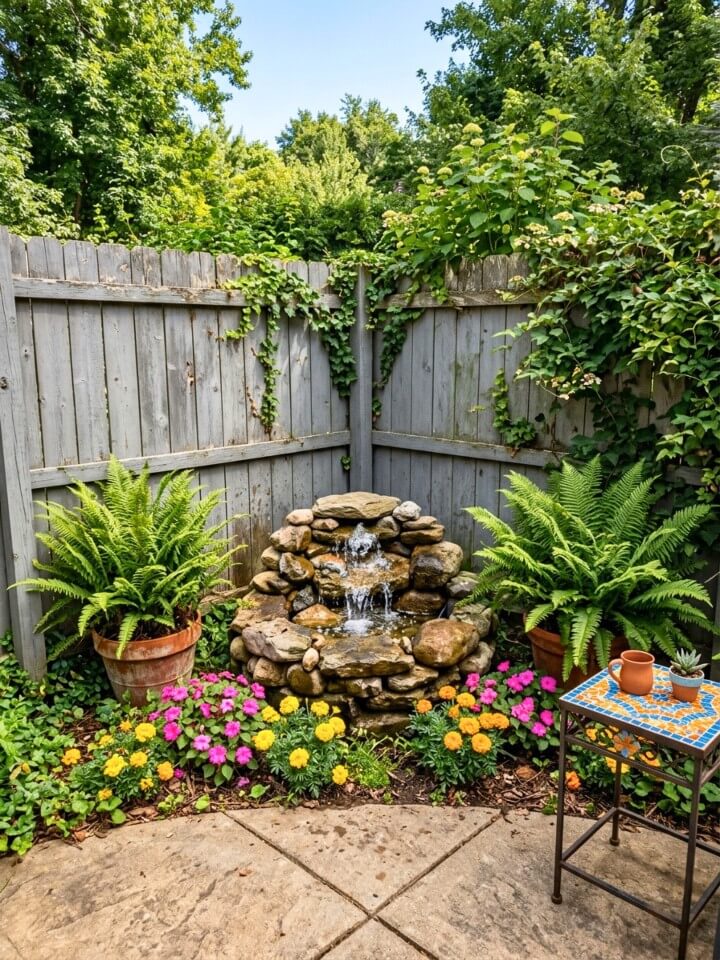
Sound is one of the most underused tools in garden design. A compact bubbling urn or small tiered fountain installed in a corner near seating does two things at once — it draws the eye to a spot that might otherwise feel forgotten, and the moving water muffles nearby street or neighbor noise. Surround the base with moisture-tolerant plants: hostas, astilbe, sedge grass, or ligularia all work well and grow full enough to hide the reservoir. Keep at least 12 inches of clearance around the feature for access.
Selecting a Pump Size
For small urns under 18 inches, a 80–120 GPH submersible pump keeps water moving without producing too much splash. Clean the filter every four to six weeks to prevent mineral buildup in hard-water areas.
7. Cozy Corner Seating With Layered Plants
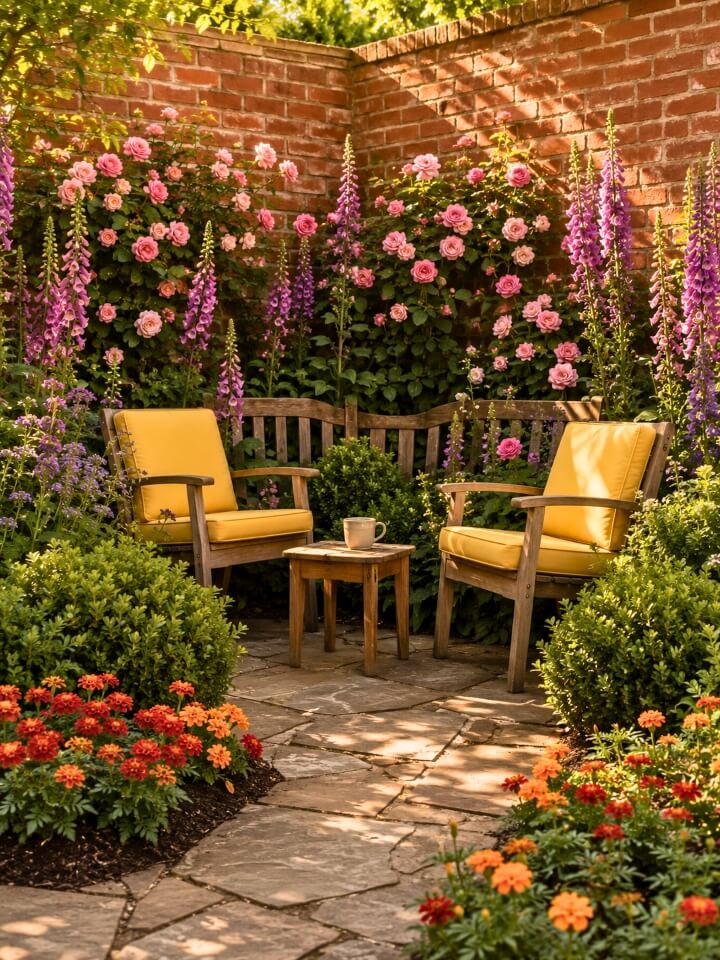
A quiet corner with layered planting gives the yard a sense of depth that flat beds never quite achieve. Position a small bench or two low-backed chairs where the fence provides natural shelter, then work the planting in tiers — tall shrubs like viburnum or dwarf holly near the back, mid-height perennials like coneflowers or salvia through the middle, and creeping phlox or alyssum spilling along the front edge.
Toss down cedar mulch to tie the beds together and add two or three potted plants beside the seating for easy seasonal swaps. If the corner feels exposed, borrow from these notable privacy landscaping ideas to make the seating area feel more enclosed without building a full wall.
Picking the Right Seating Material
Teak and powder-coated aluminum both hold up well in outdoor corners where moisture collects near plant beds. Choose slimmer profiles — chairs under 24 inches wide — so the planting stays the main focus rather than the furniture.
8. Low-Maintenance Rock Garden for Dry Corners
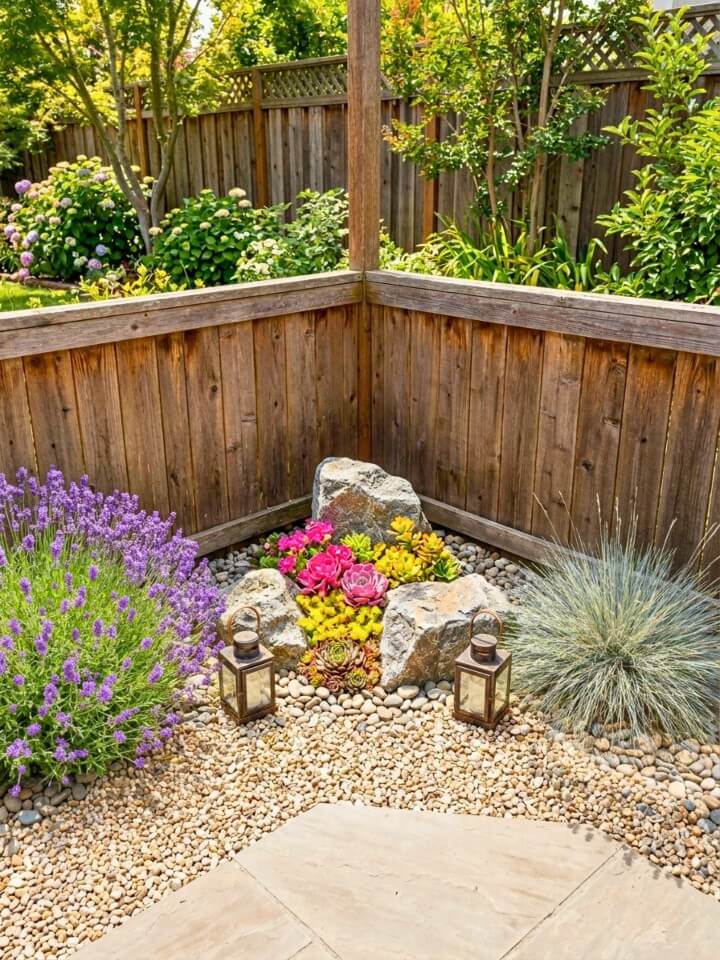
Bare corners near walkways or driveways often get little water and patchy sun, which makes traditional planting a constant struggle. Lay a base of crushed gravel or river pebbles, place two or three larger anchor stones off-center, then tuck drought-tolerant plants like sedum, lavender, or blue fescue grass into the gaps. The rocks hold heat, which most of these plants appreciate. Keep spacing generous — crowding kills the clean look that makes rock gardens work in the first place.
Choosing Your Gravel Base
Decomposed granite packs firm and resists washout better than loose pea gravel, making it the smarter pick near sloped corners or lawn edges where rain can carry lighter stones into the grass.
9. Raised Planter Box for a Neat Patio Corner
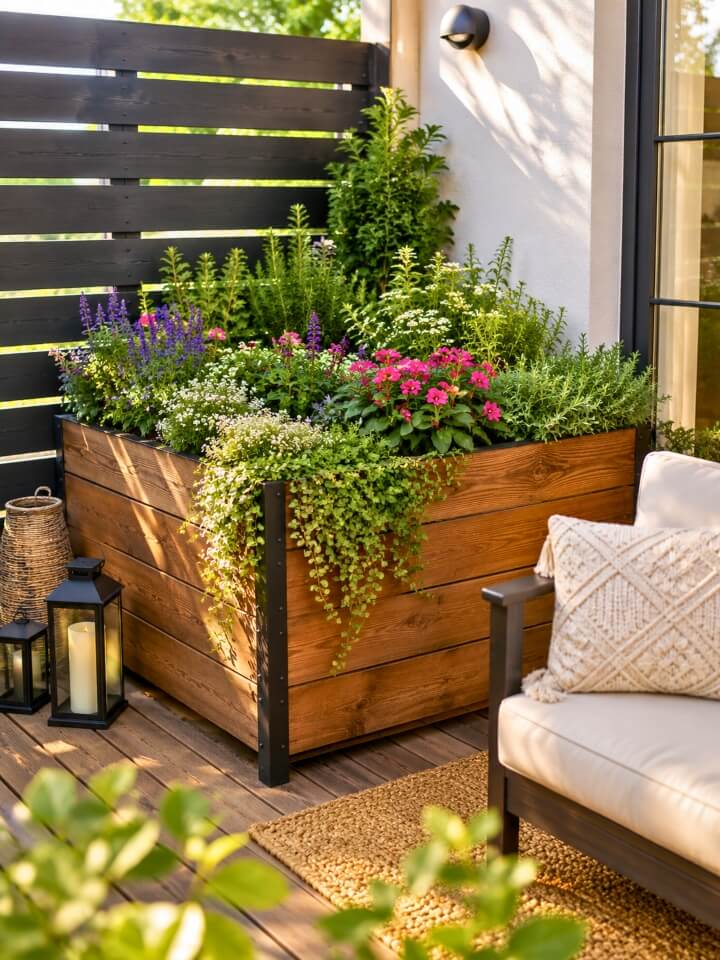
A well-built planter box solves the problem of patio corners that feel visually empty but have no ground access for digging. Cedar and Douglas fir both resist rot for six to ten years without treatment; powder-coated steel planters last longer but cost more upfront. Build or buy at a height between 24 and 30 inches — that range puts the soil at a comfortable working level and gives the corner enough visual weight. Plant trailing rosemary, cascading petunias, or sweet potato vine along the front edges so the greenery softens the hard lines of the box.
Drainage Planning
Drill at least four half-inch holes across the base and add a two-inch layer of coarse gravel before filling with potting mix — skipping this step leads to waterlogged roots within a single rainy season.
10. Privacy Shrubs That Double as Garden Structure
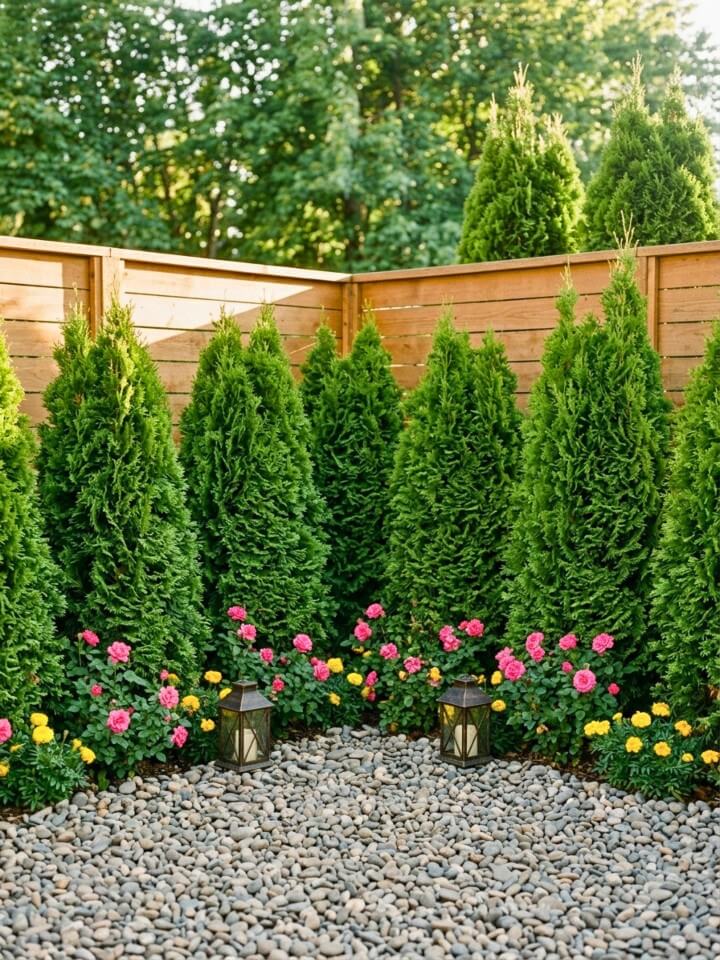
An open corner beside a patio or seating area loses its comfort quickly when neighbors or passing traffic are visible. Planting a layered shrub screen fixes this without the expense or permanence of a fence extension. Arborvitae ‘Green Giant’ works well for taller screens, growing about two feet per year once established.
For more texture, alternate with viburnum or inkberry holly, which fill in at mid-height and add seasonal interest. Lay mulch four inches deep at the base to retain moisture and reduce the watering needed during the first growing season while roots settle in. For a softer flowering screen, alluring lilac bush landscaping ideas can also work beautifully where there is enough sun and room for mature growth.
Spacing for Full Coverage
Plant arborvitae three to four feet apart for a dense screen within two seasons. Wider spacing looks sparse longer but allows better airflow, which reduces fungal issues in humid climates.
11. Corner Fire Pit With Wraparound Seating
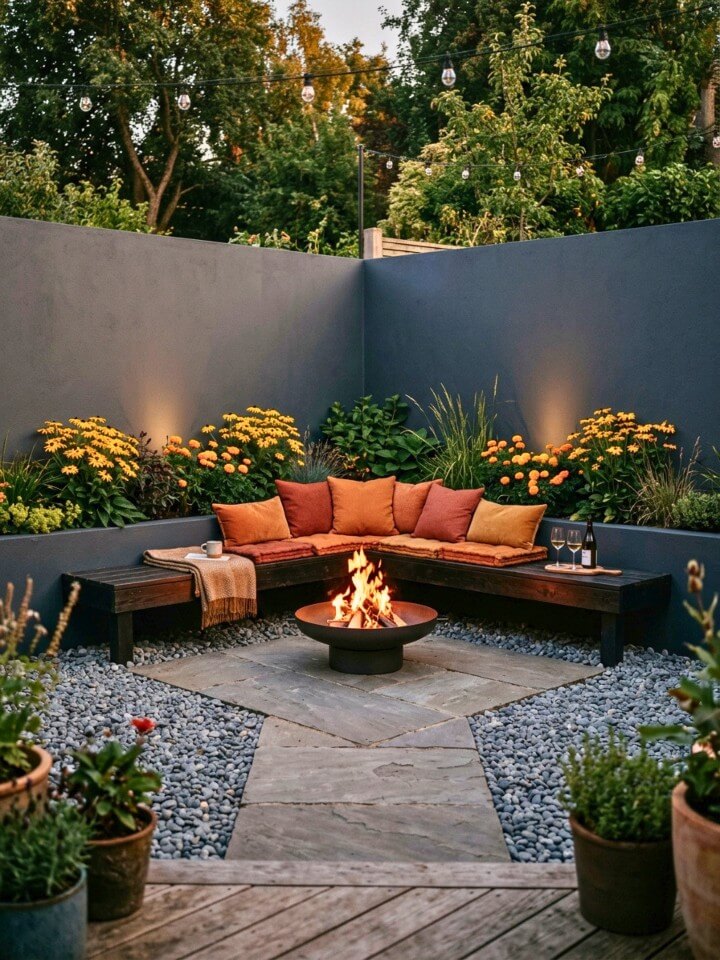
A fire pit placed in a backyard corner uses space that usually collects leaves and sits ignored for most of the year. Set the pit at least ten feet from fencing, overhanging branches, or walls, and define the area underfoot with compacted gravel, flagstone, or concrete pavers — loose mulch near open flame is a safety risk. Built-in bench seating along two sides of the corner maximizes the space efficiently and eliminates the need to store chairs. Keep the bench depth around 18 inches and the seat height at 17 to 18 inches for comfortable use without cushions.
Fire Pit Material Comparison
Cast iron retains heat longer and suits colder evenings well, while steel bowls are lighter and easier to reposition. In-ground stone or brick builds are permanent but give the strongest visual anchor to the corner.
12. Cottage-Style Corner With Trellis and Climbers
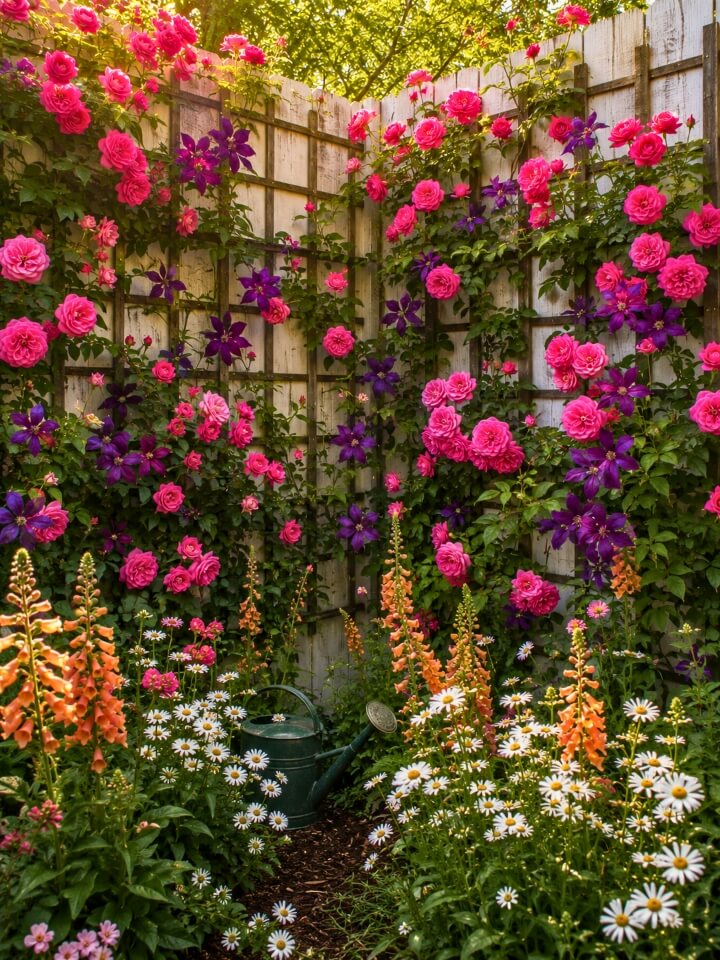
The classic cottage corner works because it layers height, texture, and color in a way that feels relaxed rather than designed. Attach a wood or powder-coated metal trellis to the fence corner — freestanding versions work where wall attachment is not possible. Train clematis, jasmine, or climbing roses upward by loosely tying new growth with soft garden twine every few weeks through spring. Below the trellis, plant foxglove, salvia, or daisies in loose drifts rather than straight rows. The slight disorder is intentional — perfectly even spacing kills the informal charm this style depends on.
Training Climbers Correctly
Tie stems to the trellis loosely in a figure-eight loop so the twine contacts the support, not the stem directly. Check ties every six weeks as stems thicken to prevent girdling.
13. Corner Herb Garden Near the Back Door
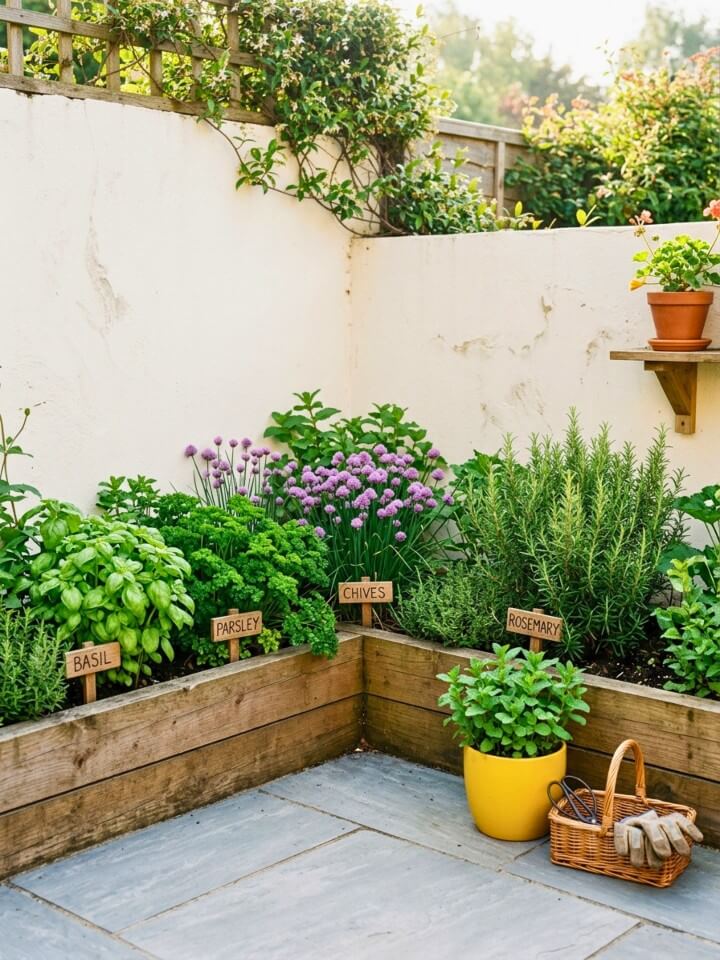
Herbs planted close to the kitchen entrance get used far more often than those tucked away in a distant bed — convenience is the whole point of a kitchen garden. A corner near the back door or patio edge is ideal. Use three raised cedar beds arranged in an L-shape, or group eight to ten terracotta pots in graduating heights if the corner sits on hardscape. Plant rosemary and sage toward the back since both grow tall and woody over time, basil and parsley in the middle, and creeping thyme along the front edge where it handles foot traffic without complaint. Gravel between containers keeps the area tidy and reduces mud splash onto lower leaves.
Soil Mix for Productive Herbs
Fill raised herb beds with two parts quality potting mix, one part coarse perlite, and a handful of slow-release granular fertilizer. This ratio drains fast enough for rosemary and thyme while still retaining enough moisture for basil through hot weeks.
14. Tall Ornamental Grass for a Natural Corner Screen
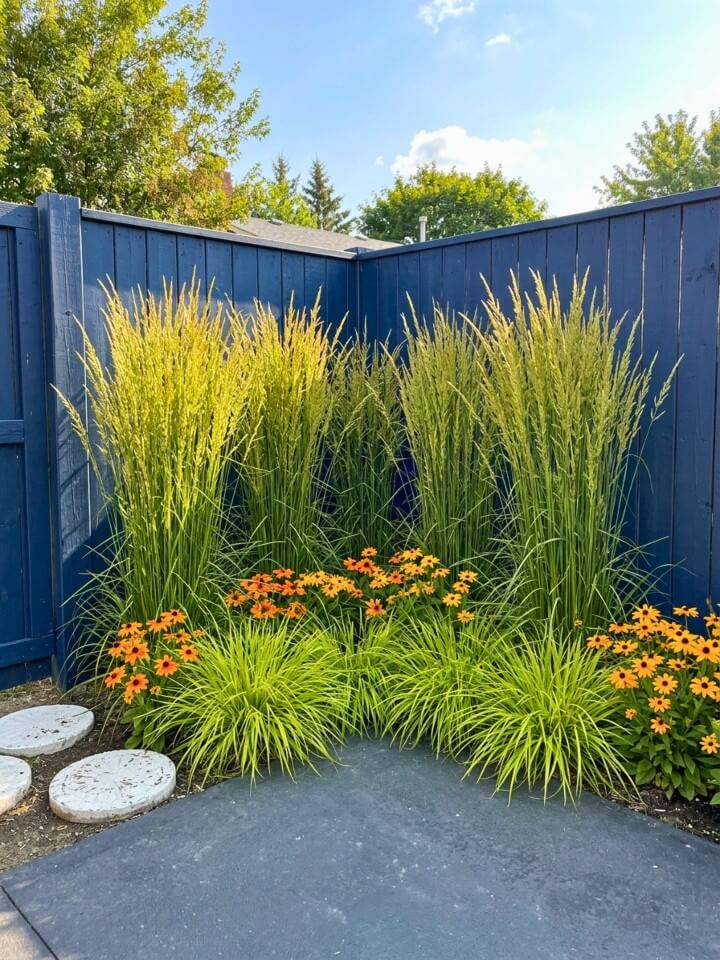
Ornamental grasses solve a specific problem that shrubs and fences cannot — they move. The way feather reed grass or maiden grass catches a breeze and shifts in slow, quiet waves adds genuine life to a corner that would otherwise just sit there. Plant in groups of three or five rather than a single specimen; odd-numbered clusters look natural while even pairs read as formal and stiff. Space clumps 30 to 36 inches apart to allow full spread without overcrowding. Underplant with low sedums or black-eyed Susans to cover bare soil at the base during the first season before the grass fills in completely.
Cutting Back at the Right Time
Leave grasses standing through winter — the dried stems add structure and provide habitat for beneficial insects. Cut back to six inches above ground in late winter before new growth begins, using hedge shears rather than a string trimmer to avoid shredding the crown.
15. Corner Pathway With Stepping Stones
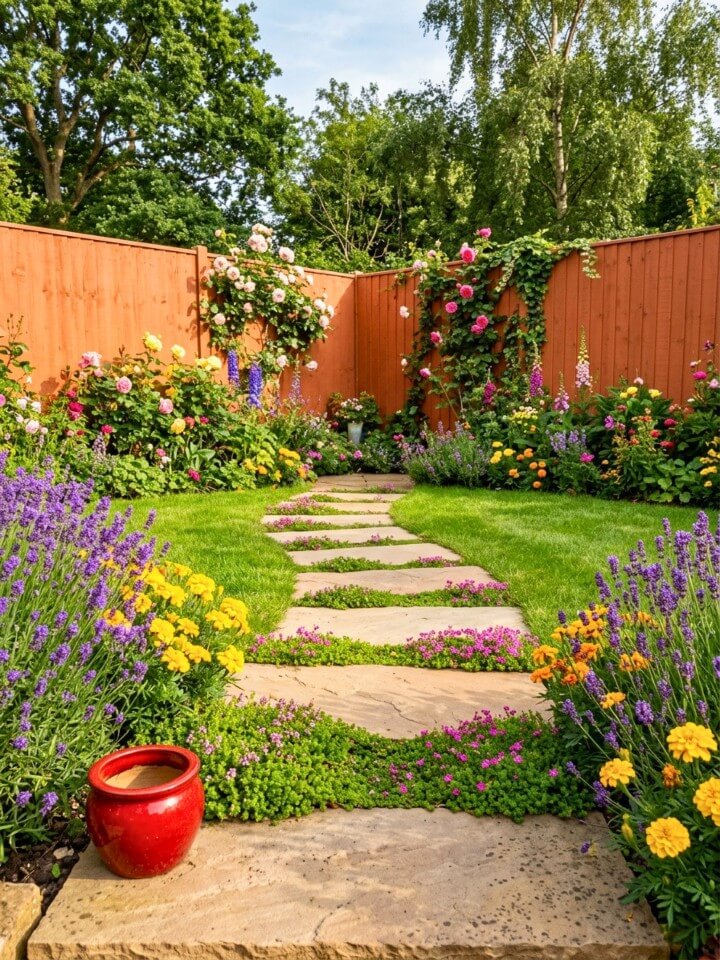
A stepping stone path through a corner does more than direct foot traffic — it makes the space feel considered and deliberate rather than leftover. Lay stones in a gentle arc rather than a straight line, keeping spacing between 18 and 24 inches for a comfortable walking stride. Sink each stone one inch below the surrounding soil level so lawn mowers pass over cleanly without catching edges. Fill gaps between stones with creeping thyme, elfin thyme, or Irish moss, all of which tolerate light foot traffic and release a faint scent when brushed. Finish the path edges with low ferns, coral bells, or dwarf ornamental grass to frame the route naturally.
Setting Stones to Prevent Shifting
Bed each stone on two inches of coarse sand rather than directly on soil. Sand allows minor leveling adjustments and drains quickly, preventing frost heave from tilting stones out of alignment over winter.
16. Modern Corner Planter With Sculptural Plants
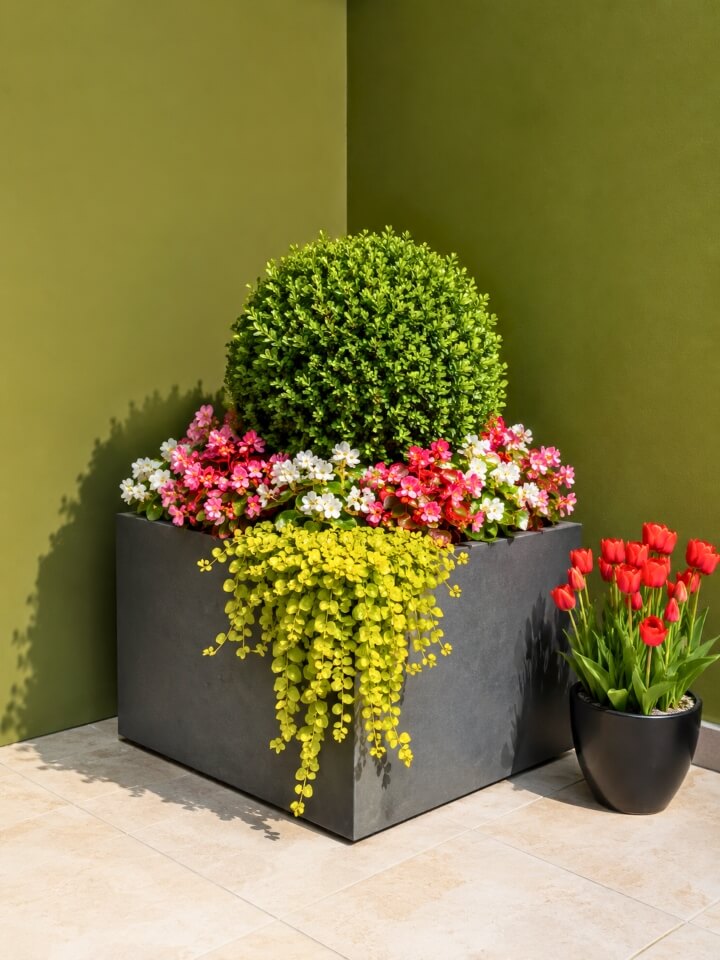
Clean-lined planters in concrete, weathering steel, or dark powder-coated metal suit corners on contemporary patios and courtyard spaces where traditional flower beds would feel out of place. Choose rectangular or square forms rather than round — angular planters hold the corner geometry better and look intentional against straight fence lines. Plant selection matters as much as the container: olive trees, phormium, snake plant, or architectural grasses like blue oat grass give the arrangement height and structure without softness. Keep the plant palette to two or three species maximum — restraint is what separates modern planting design from everything else.
Sizing the Planter Correctly
A planter under 18 inches wide reads as a decoration rather than a design statement in most corners. Aim for at least 24 inches in width and 20 inches in depth, which also gives plant roots enough room to establish without constant watering.
17. Desert-Style Corner With Gravel and Succulents
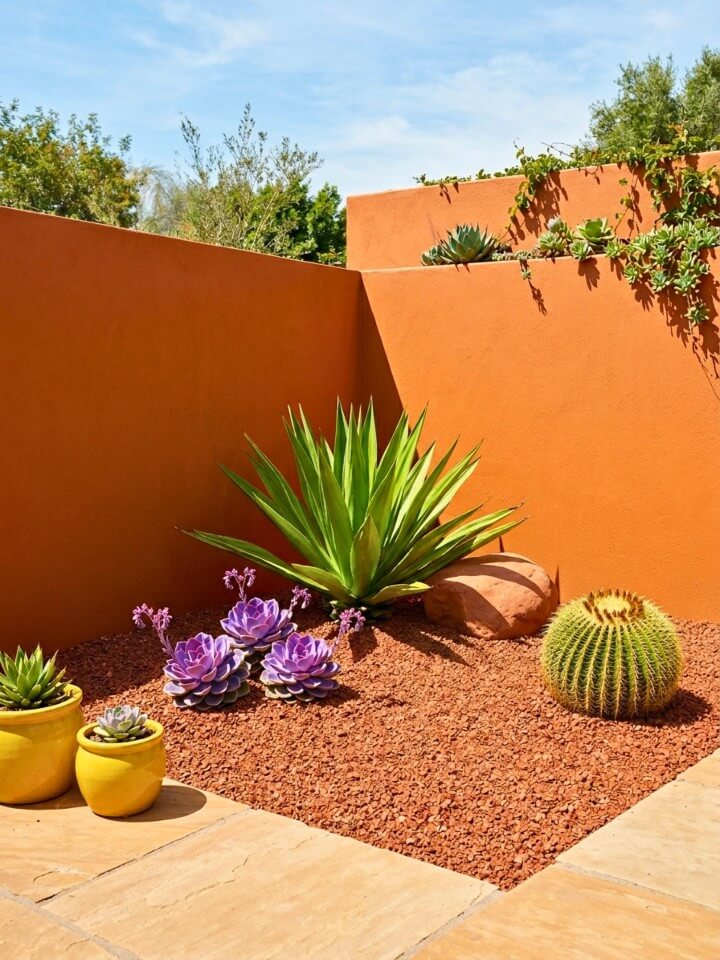
Hot, dry corners near south or west-facing walls are genuinely difficult to plant with conventional choices — most perennials struggle, lawns burn out, and annuals need constant replacement. A desert-style planting solves all three problems at once. Spread decomposed granite or sand-colored crushed stone two to three inches deep, then place one or two larger boulders as anchor points before adding plants. Agave, yucca, sedum, and low-growing ice plant all establish quickly in these conditions. Space plants generously — the open gravel between them is part of the design, not a gap waiting to be filled.
Selecting Succulents for Cold Winters
Not all succulents handle frost. Sedum ‘Autumn Joy’ and sempervivum are reliably cold-hardy down to USDA zone 4, while agave and yucca vary significantly by species. Check hardiness ratings before purchasing rather than assuming all succulents behave the same way in winter.
18. Corner Trellis With Climbing Roses
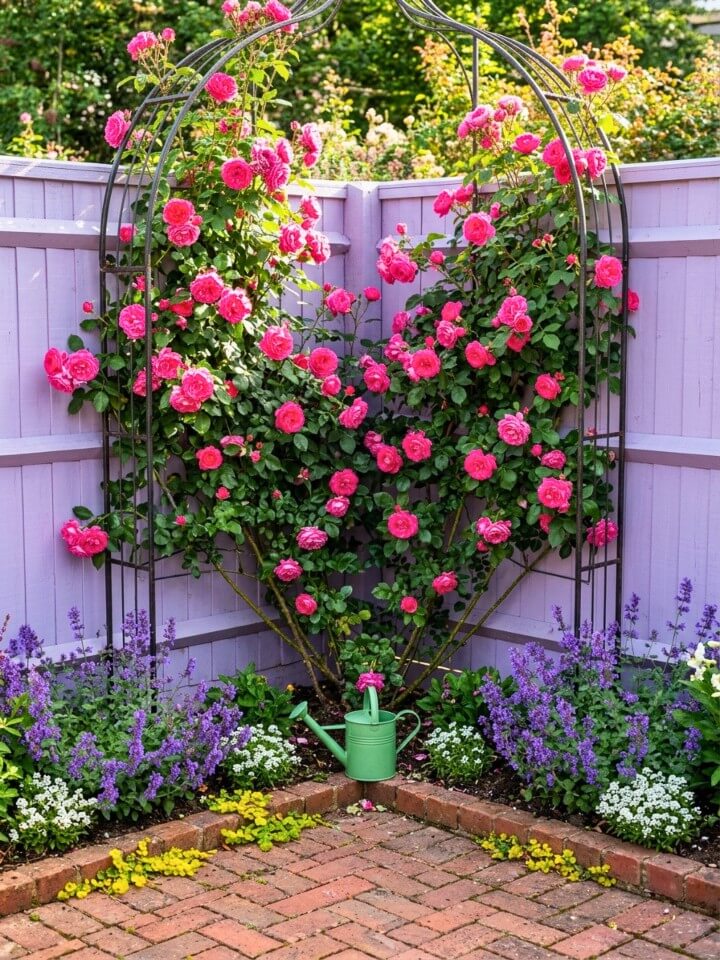
Few plants use vertical space as effectively as a well-trained climbing rose on a corner trellis. Set a sturdy wood or galvanized metal trellis against the fence, anchoring it firmly — a mature climbing rose carries considerable weight, especially after rain. Choose a repeat-blooming variety like ‘New Dawn’, ‘Zephirine Drouhin’, or ‘Cl. Iceberg’ for flowers from late spring through autumn rather than a single summer flush. Train the main canes horizontally along the lower trellis rails rather than straight up — horizontal training triggers more lateral shoots, which produce significantly more blooms per plant each season.
Feeding and Pruning Schedule
Apply a balanced rose fertilizer in early spring as new growth emerges, then switch to a low-nitrogen feed after the first bloom flush to encourage repeat flowering without excessive leafy growth at the expense of buds.
19. Layered Evergreen Corner for Year-Round Structure
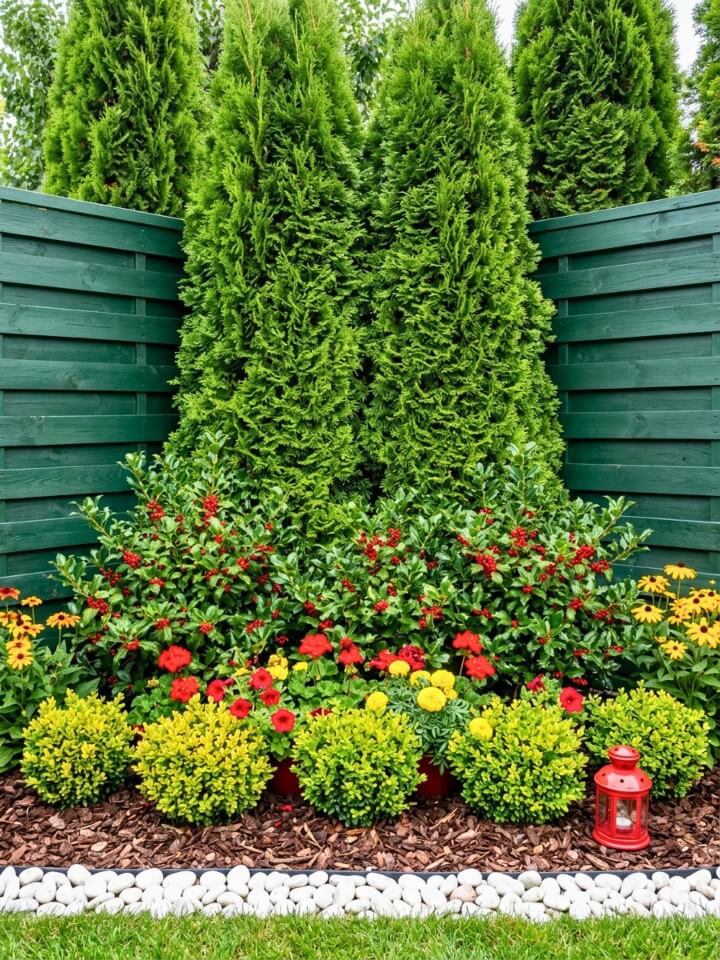
Deciduous plantings look their best for six months and spend the other six looking bare — an evergreen corner solves this by keeping the yard structured through winter when everything else fades. Layer height carefully: arborvitae or skip laurel at the back reaching six to eight feet, mid-height boxwood or inkberry holly through the center, and low-growing dwarf juniper or creeping euonymus along the front edge. This tiered arrangement gives the corner depth and density without any single plant overwhelming the space. Mulch heavily between plants to suppress weeds and retain moisture during summer dry spells.
Preventing Winter Burn on Evergreens
Broadleaf evergreens like boxwood and laurel lose moisture through their leaves on cold windy days when frozen ground prevents roots from replacing it. Apply an anti-desiccant spray in late autumn and again in January to reduce foliage damage through the coldest months.
20. Birdbath Garden With Native Plantings
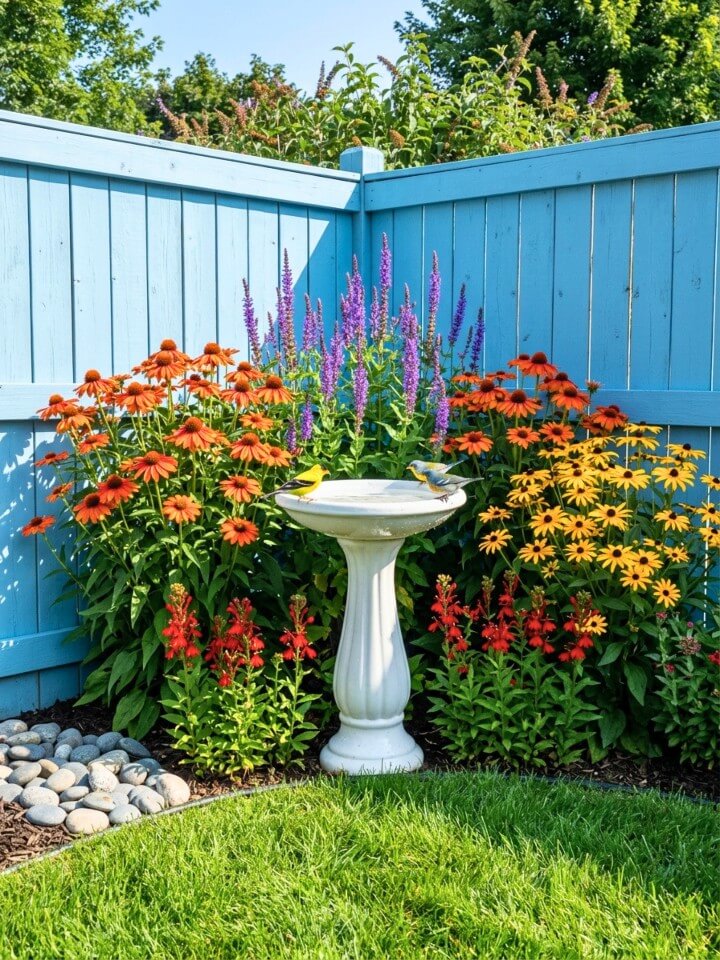
A birdbath placed in a quiet corner away from heavy foot traffic attracts far more visitors than one positioned in the middle of an open lawn where birds feel exposed. Set the bath on a stable pedestal at 24 to 30 inches height, and surround it with native plants that provide both food and cover — coneflower, black-eyed Susan, native aster, and switchgrass all support local bird and pollinator populations through different seasons. Keep a two-foot clearance around the bath itself so visiting birds have sight lines in every direction. Change the water every two to three days to prevent mosquito breeding and algae buildup.
Choosing the Right Basin Depth
Birds bathe most comfortably in water one to two inches deep. Basins deeper than three inches discourage smaller songbirds entirely — add a flat stone to the center of a deep bowl to create a shallower wading area without replacing the bath.
21. Corner Pond With Natural Stone Edging
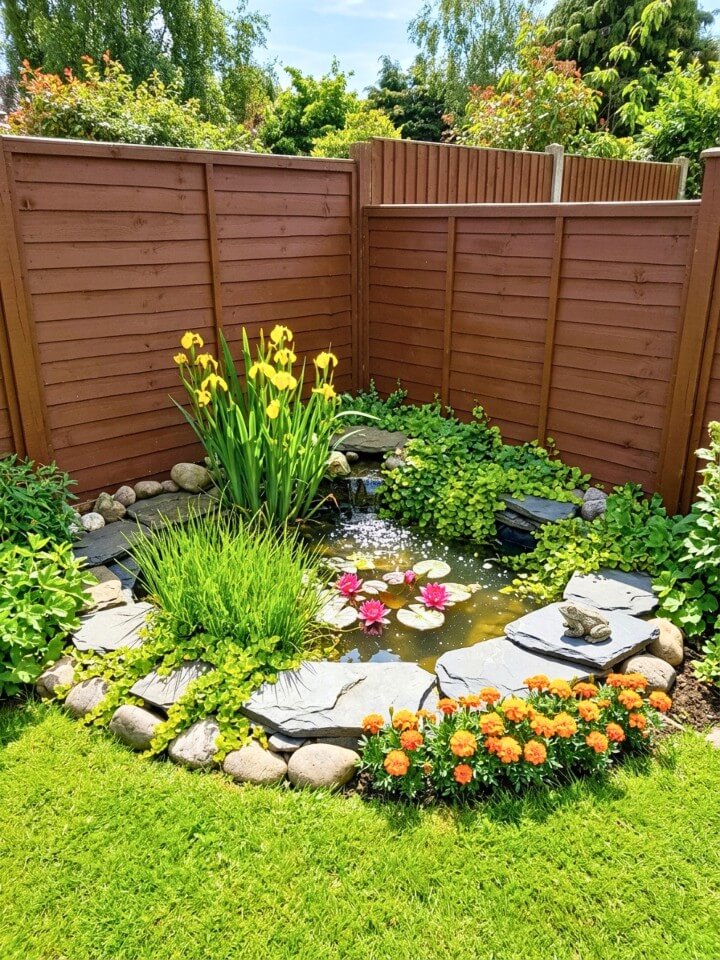
Even a tiny space can look beautiful with small corner landscaping ideas like potted plants and gravel borders. A small pond in a backyard corner creates the kind of stillness that no other garden feature quite replicates. Use a preformed rigid basin or flexible pond liner — rigid basins are simpler to install while liners allow more shape flexibility.
Dig the hole six inches deeper than the basin depth and bed it on a layer of compacted sand to prevent settling and cracking over time. Edge with flat fieldstone or irregular flagstone, overlapping the water by two to three inches so the liner stays completely hidden. Plant iris, pickerel rush, or dwarf cattail in shallow marginal shelves, and add creeping Jenny or water forget-me-not along the outer stone edge to blend the pond into the surrounding garden.
Installing a Small Pump
Even a modest 150 GPH pump keeps water moving enough to prevent stagnation and mosquito breeding without disturbing the calm surface appearance a corner pond depends on. Run the power cable through flexible conduit buried four inches underground to the nearest outdoor outlet.
22. Mulch Bed With Statement Boulders
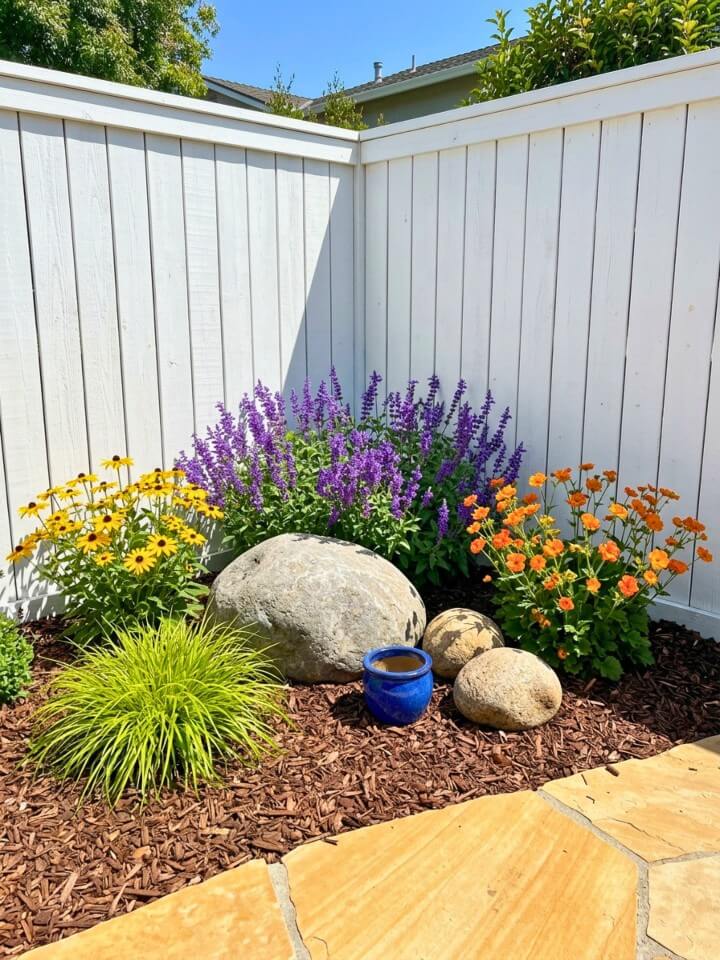
A well-placed boulder does something that plants alone cannot — it gives a corner immediate visual weight from the first day without waiting a season for anything to establish. Select one large anchor boulder between 18 and 30 inches across, or arrange three smaller stones in an irregular cluster, keeping the tallest at the back.
Bury each boulder one-third of its height into the ground so it reads as settled rather than dropped. Spread dark hardwood mulch four inches deep across the bed, then add low ornamental grasses, dwarf shrubs, or drought-tolerant perennials around the stones in loose groupings rather than symmetrical rows. For a sharper contrast, mind-blowing black mulch landscaping can help the stones and foliage stand out even more.
Sourcing and Moving Heavy Stone
Landscape supply yards sell boulders by weight — budgeting around 150 to 200 dollars per ton covers most residential-grade fieldstone. For stones over 200 pounds, ask the supplier about delivery placement directly into the bed rather than attempting to move them after delivery.
23. Corner Dining Nook With Container Plants
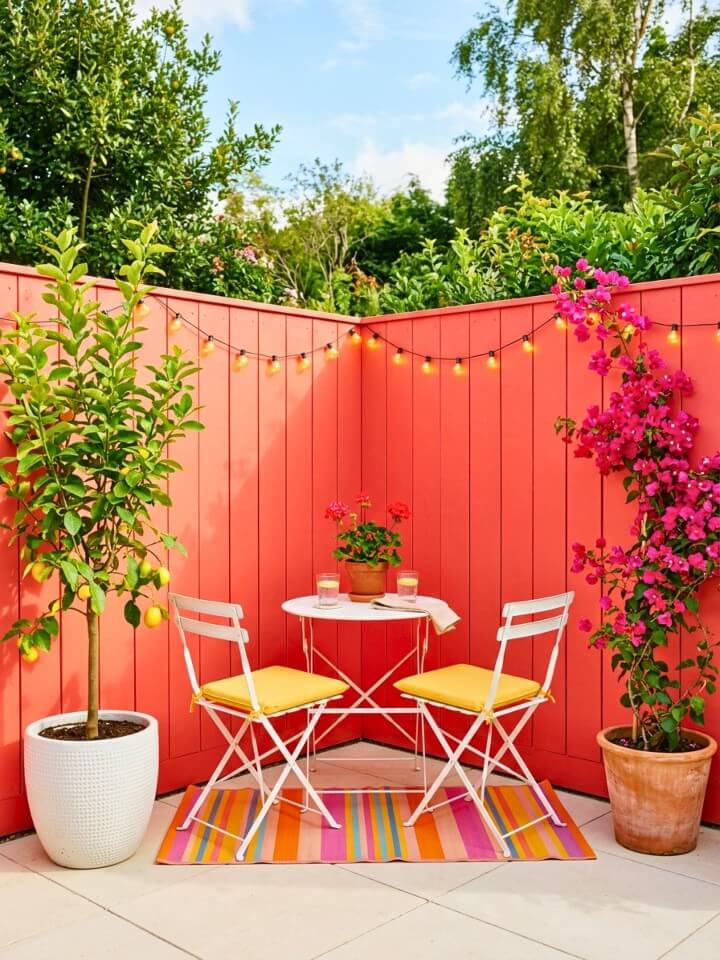
An outdoor dining nook works best when the corner itself does the work of enclosing the space — two fence or wall faces meeting at 90 degrees already provide shelter on two sides, which is more than most patio furniture arrangements manage in the open yard. Place a round or square table no larger than 36 inches across with two to four chairs, keeping at least 36 inches of clearance behind each chair for comfortable movement. Surround the nook with tall container plants: standard-form rosemary, dwarf olive, or columnar boxwood in matching pots create a sense of enclosure without blocking airflow. Hang a simple string light across the corner overhead to extend the space usefully into evening.
Table Surface Materials
Powder-coated steel and cast aluminum both handle weather without seasonal storage, but teak and eucalyptus wood tops are warmer to the touch and more comfortable for longer meals. Avoid glass tops in corners near trees where debris and branches drop frequently.
FAQs About Corner Landscaping
Corners throw up some specific problems that general gardening advice never quite covers — tricky soil, awkward sizing, shade where you want sun. These five questions tackle the details worth knowing before you pick up a shovel.
What Is the Cheapest Way to Landscape a Corner?
Mulch and a few well-placed native plants are the lowest-cost starting point. A bag of cedar mulch runs three to five dollars, and native perennials need far less water and replacement than annuals. Skipping professional installation and doing the edging and planting yourself keeps the total cost under fifty dollars for most corners.
How Do I Landscape a Corner with No Sunlight?
Deep shade corners respond best to ferns, hostas, hellebores, and mossy ground cover. Skip grass entirely — it never recovers in true shade. Improve the soil with compost before planting, mulch heavily to retain moisture, and choose plants labeled for full shade rather than partial, since the difference in performance is significant.
How Do I Stop Weeds from Taking Over a Landscaped Corner?
Lay landscape fabric beneath gravel or mulch before planting, and maintain a four-inch mulch depth across the bed. Thinner layers let light reach weed seeds and they germinate quickly. Pull any new growth within the first week before roots establish — weeds cleared early take less than a minute each.
Can I Landscape a Corner without Digging Into the Ground?
Yes. Raised planters, container groupings on gravel, and surface-laid stepping stones all work without breaking ground. This approach suits renters, corners with buried utility lines, and paved or compacted surfaces where digging is impractical. Container-based corners are also the easiest to update seasonally without starting the whole project over.
How Do I Make a Small Corner Look Bigger than It Is?
Vertical planting is the most effective technique — a trellis with climbers or a narrow columnar shrub draws the eye upward rather than across, which makes tight corners feel taller and less cramped. Light-colored gravel and mirrors mounted on fence panels also add perceived depth without using any additional ground space.
Conclusion:
These corner landscaping ideas prove that the least-used parts of a yard are often the easiest to improve — they just need a direction. A corner does not require a large budget or a complete redesign to earn its place in the overall layout. One well-chosen planter, a small water feature, or three ornamental grasses planted in the right spot can shift how the entire yard feels. The projects that get done are always the simple ones started on a quiet Saturday morning. Pick the corner that bothers you most, and begin there.