22 Mobile Home Siding Ideas for Stylish, Long-Lasting Curb Appeal
Mobile home siding does more than cover the exterior — it determines how the structure reads from the street, how much maintenance the next decade demands, and how the home holds value if it ever goes on the market. The wrong choice can sit there reminding the owner of the decision every time they pull into the driveway. The right one disappears into the design and quietly does its job for 30 years.
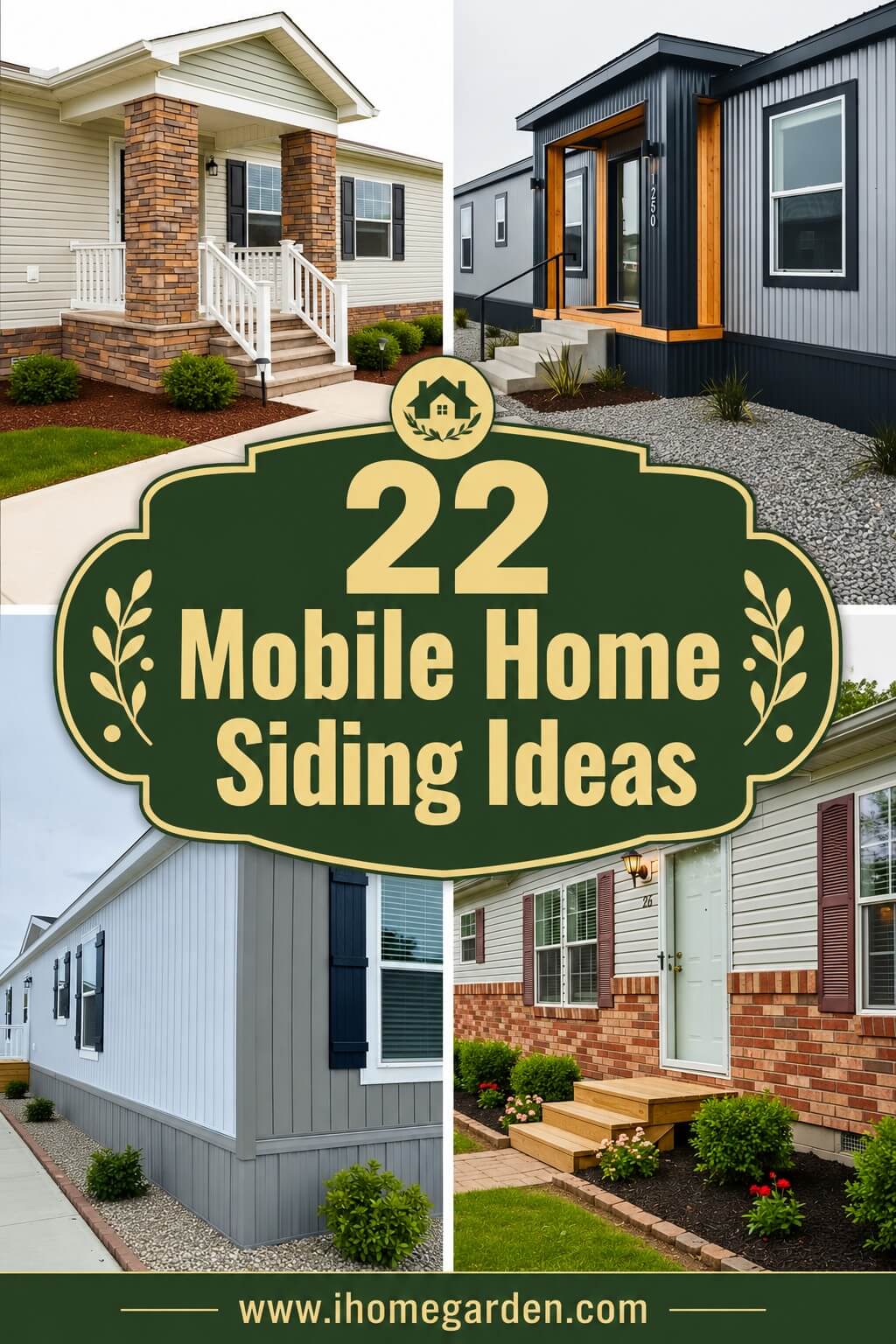
Find these 22 proven mobile home siding ideas that actually work on mobile and manufactured homes, with honest notes on what each material costs, how long it lasts, where it shines, and where it falls short. Some options suit budget renovations under $5,000; others fit full exterior remodels closer to $20,000. The ideas range from clean traditional looks that quietly raise resale value to bold modern combinations that transform the home’s entire identity from the curb.
Siding Comparison at a Glance
| Material | Cost per sq ft (installed) | Lifespan | Maintenance Level | Best Suited For |
|---|---|---|---|---|
| Vinyl lap | $3 – $7 | 20 – 30 years | Very low | Budget renovations, mild climates |
| Textured vinyl | $4 – $8 | 25 – 30 years | Very low | Curb-appeal upgrades on a budget |
| Vinyl shake/shingle | $4 – $7 | 20 – 30 years | Very low | Cottage and coastal looks |
| Wood-look vinyl | $5 – $8 | 25 – 30 years | Very low | Rustic aesthetic without upkeep |
| Engineered wood | $6 – $9 | 20 – 30 years | Moderate | Authentic grain, moderate budgets |
| Fiber cement | $6 – $11 | 30 – 50 years | Low | Long-term ownership, fire-prone areas |
| Real cedar plank | $8 – $14 | 20 – 40 years | High | High-end natural finish |
| Corrugated metal | $4 – $8 | 40 – 60 years | Low | Dry climates, modern/rural styles |
| Standing seam metal | $9 – $14 | 40 – 60 years | Very low | Contemporary architectural builds |
| Stone veneer (accent) | $12 – $18 | 50+ years | Very low | Foundation wraps, column accents |
| Stucco (traditional) | $7 – $12 | 50+ years | Low (in dry climates) | Hot, dry regions |
| Faux brick panels | $5 – $10 | 25 – 40 years | Very low | Accent walls, wainscoting |
1. Horizontal Lap Siding in Neutral Tones
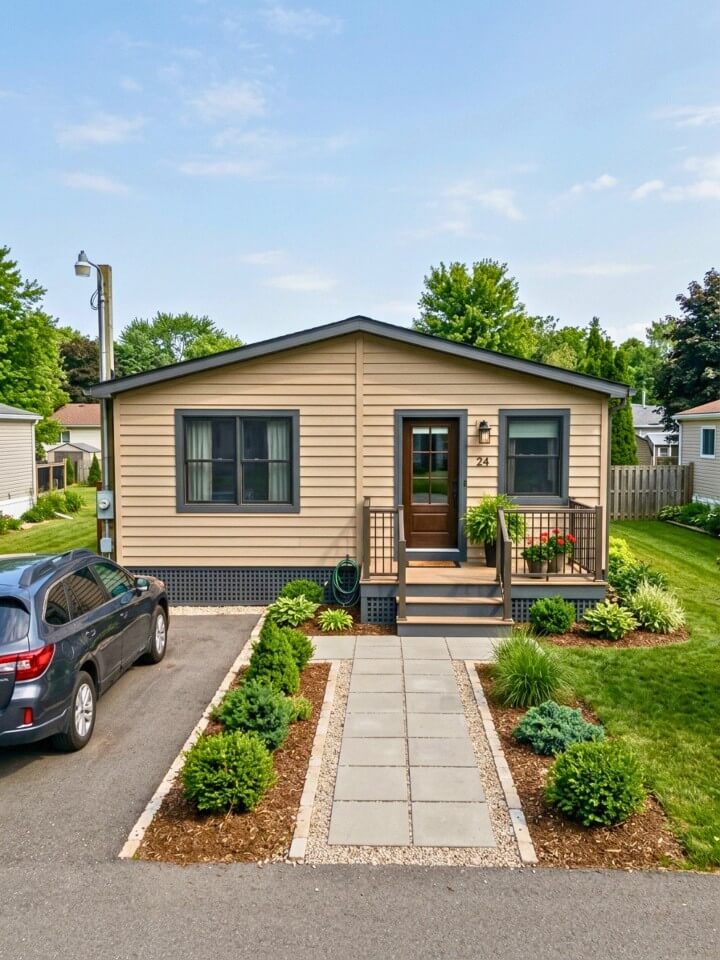
Mobile homes tend to read long and low from the street, and lap siding leans into that proportion instead of fighting it. The horizontal lines pull the eye sideways, which makes the structure feel settled rather than boxy and disconnected from its footprint.
Picking a Color That Ages Well
Pure white turns chalky and shows every streak after one wet season. Deep grays absorb heat and fade unevenly on south-facing walls. Greige, oyster, and warm taupe hold their tone for eight to ten years. A four-inch reveal flatters single-wides best.
2. Board and Batten Modern Contrast Siding
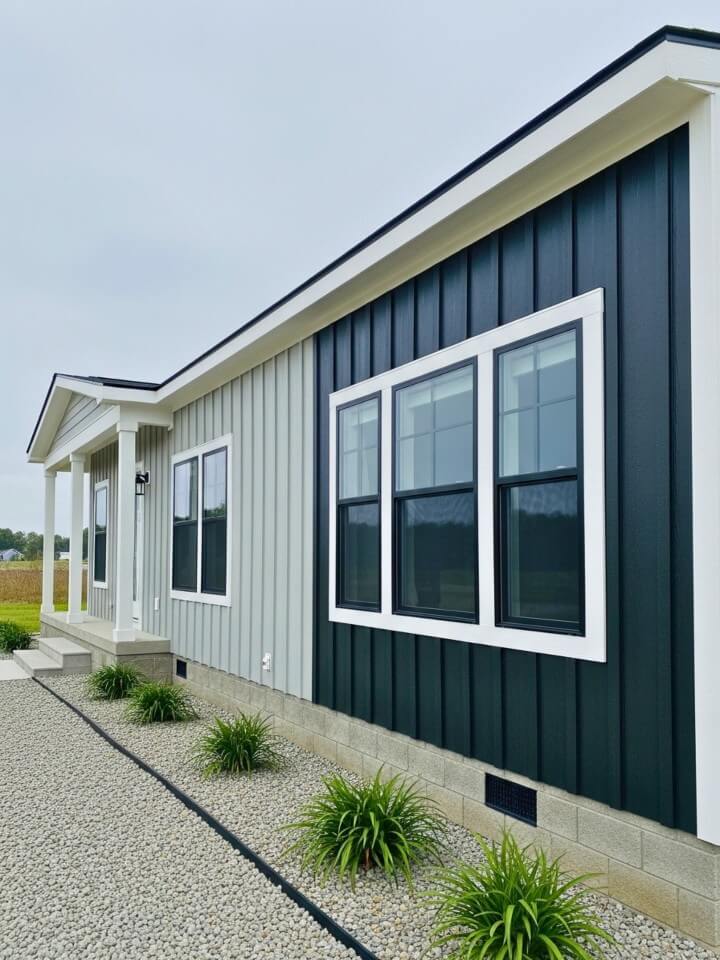
The biggest error with board and batten siding on a manufactured home is using it everywhere. Vertical lines wrapped around the entire exterior end up looking heavy, almost like a barn that wandered into a residential lot by accident.
Where to Actually Use It
Treat it as a front-facade feature instead. Run it across the entry wall and any gable peak, then drop back to smooth lap on the side walls. Twelve to sixteen inch batten spacing reads modern; eight inches feels rustic. Warm white with charcoal battens ages well.
3. Stone Veneer Base with Vinyl Upper Siding
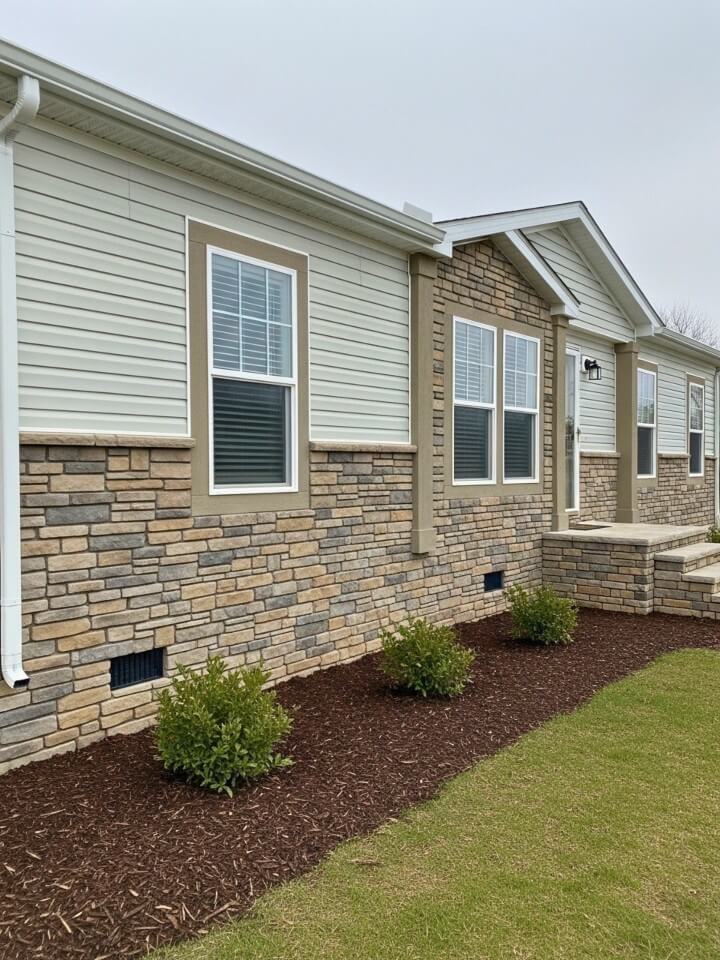
Discover stunning mobile home siding ideas that boost curb appeal and transform your space affordably. Skirting is the single feature that gives most mobile homes away from the street. A stone veneer wrap from the ground up to roughly waist height fixes that instantly, making the lower band look like a permanent foundation and the structure read like a small site-built home.
Cost and Installation Notes
Manufactured stone runs around $12 to $18 per square foot installed, light enough that no extra footing work is required. Tumbled limestone pairs cleanly with beige or sage upper siding. Always wrap stone around corners by at least 18 inches, never stop it flat.
4. Wood-Look Vinyl Siding Rustic Cabin Feel
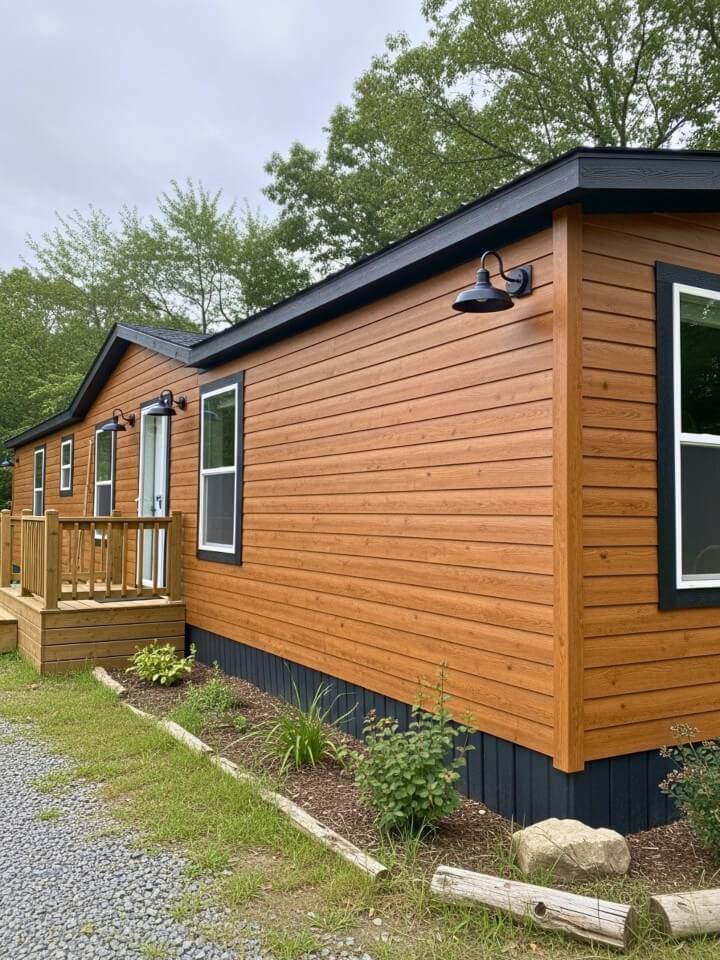
Anyone who has owned a cedar-sided home knows the truth — it looks incredible for about two summers, then becomes a staining and resealing schedule that never really ends. Wood-look vinyl skips that maintenance cycle while delivering convincing grain texture from any normal viewing distance.
What Separates Good from Cheap
The finish makes the difference. Matte panels read like real wood; glossy ones look unmistakably plastic from across the yard. Budget $5 to $8 per square foot installed, with premium lines carrying 25-year color warranties. Cedar tones suit wooded lots, driftwood works on open ones.
5. Metal Corrugated Siding Industrial Style Finish
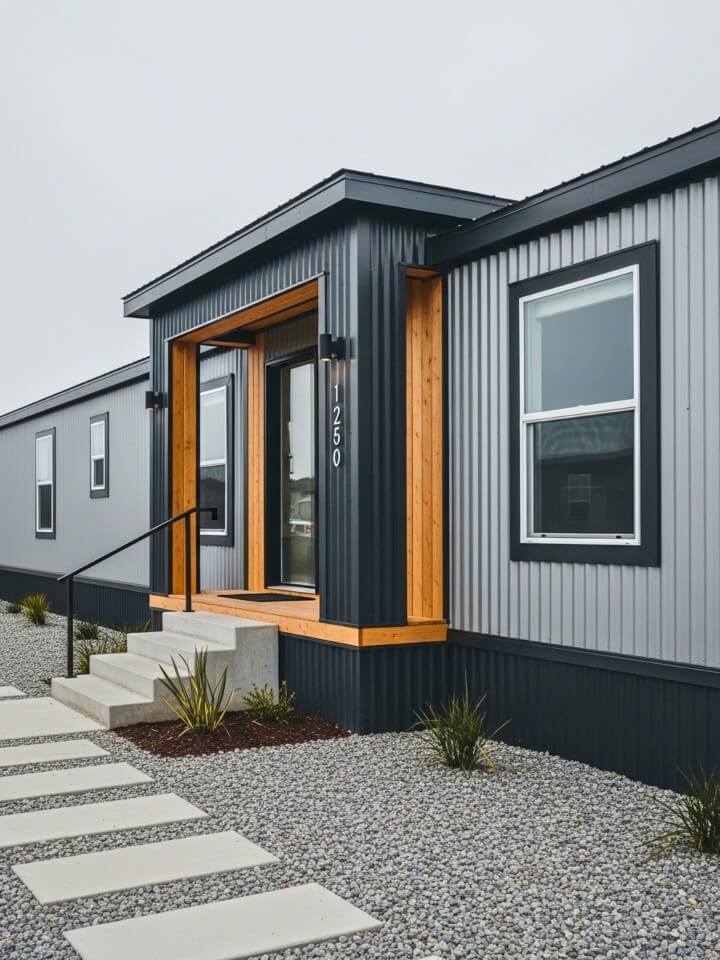
Corrugated metal divides people sharply. Some see a modern statement, others see a storage shed sitting on a residential lot — there isn’t much middle ground. The look only works when the rest of the design commits to it with intent.
Weighing the Trade-offs
Steel panels last 40 to 60 years, handle hail better than vinyl, and material runs $4 to $8 per square foot. The downsides: metal conducts heat aggressively, requiring strong insulation, and dents stay visible forever. Mixing metal with cedar on one or two walls usually beats wrapping the entire exterior.
6. Cedar Shake Accent Siding for Natural Texture
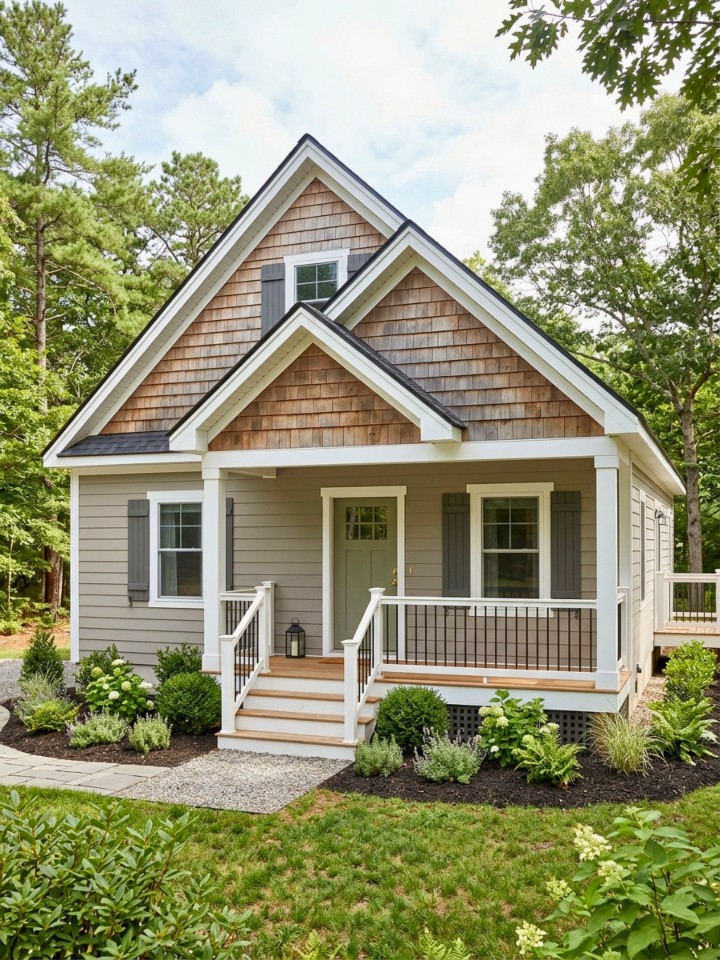
Cedar shake brings a hand-cut texture that no flat panel can replicate, but the material punishes overuse. Wrapping a full exterior in shake on a mobile home is expensive, maintenance-heavy, and visually overwhelming — the eye has nowhere to rest. The real value of shake is as a textural accent layered against a smoother base material.
Best Placement Strategy
Gables, dormers, and the upper third of a front-facing wall are the spots where shake earns its keep. Pair it with lap siding below, separated by a clean horizontal trim band, so the textures stay distinct. Stained cedar tones outperform painted finishes here because paint flakes between the shakes within a few years.
7. Vertical Vinyl Panels for Clean Modern Lines
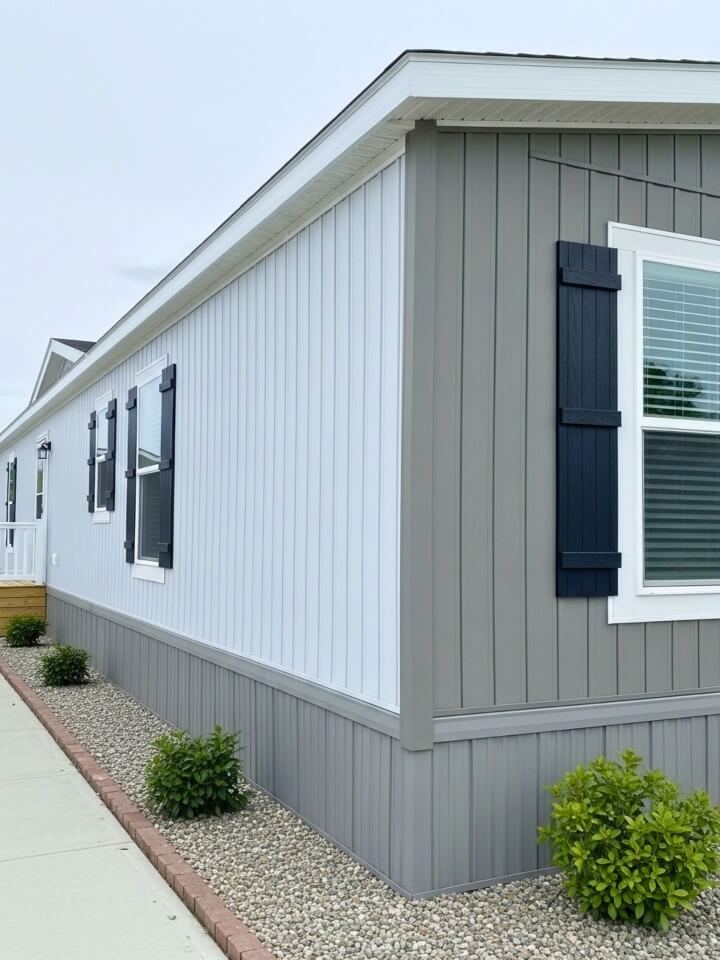
Trendy exterior mobile home siding ideas to upgrade curb appeal, weather protection, and resale value. Perception is the whole point of vertical siding. A mobile home naturally reads as horizontal because the footprint is long and the roofline is shallow, so anything that breaks that emphasis adds visual height the structure didn’t have before. Vertical panels accomplish exactly that without any actual change to the building.
Panel Width Changes Everything
Narrow panels, around six to eight inches wide, read sharp and contemporary. Wider 12-inch panels drift into industrial territory and can flatten the effect entirely. Lighter colors amplify the height illusion; darker tones ground the home more firmly into its lot. Skip heavy ornamental trim — vertical siding lives or dies by its clean lines.
8. Mixed Material Siding with Wood and Stone Combo
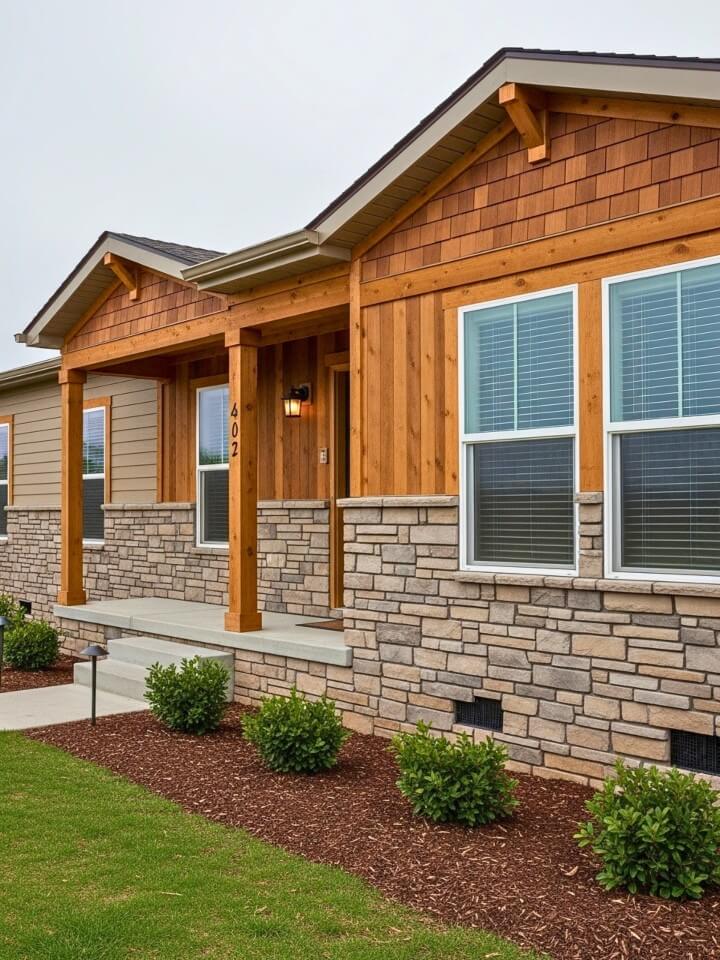
Combining materials is a confidence move. When it works, the home reads custom-built. When it fails, the exterior looks like a sample board from a builder’s showroom. The difference comes down to one principle borrowed from interior design: no more than three materials, and one must clearly dominate the others.
Tying It Together with Color
Stone at the base, lap or wood on the main field, and a single accent material on one feature wall is the workable formula. The trap is treating each material as its own color story. Pull undertones from the stone — the warm browns, cool grays, whatever runs through it — and echo those in the siding and trim. Without that thread, the materials argue. The same undertone discipline matters in surrounding beds too, where gorgeous black mulch landscaping ideas can either sharpen the contrast or make the exterior feel heavier than intended.
9. Smooth Fiber Cement Siding for Low Maintenance Look
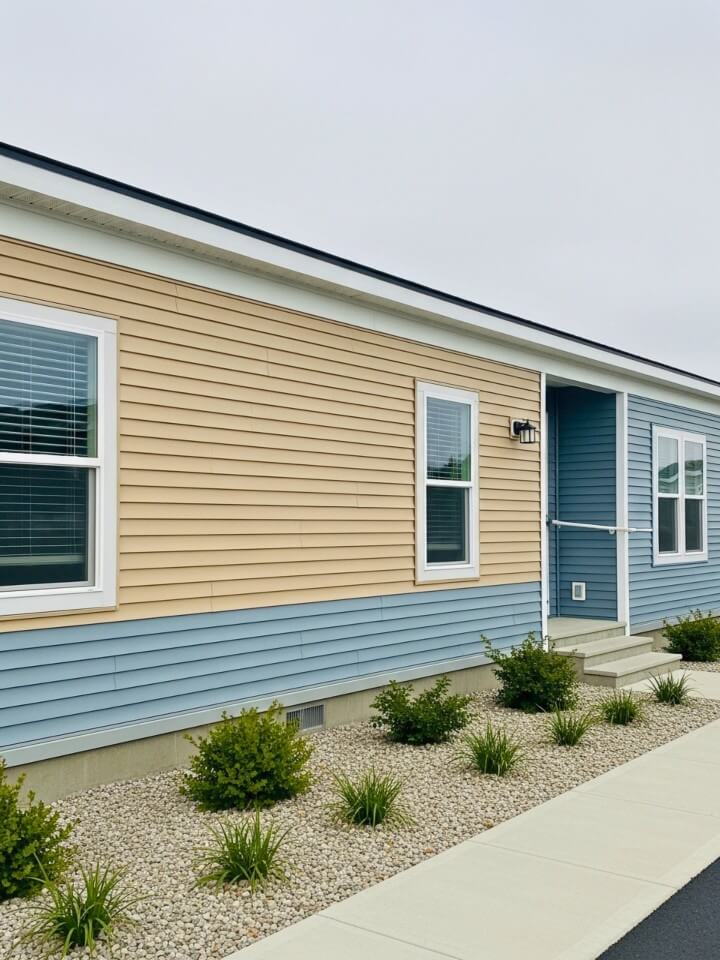
Fiber cement sits between vinyl and real wood in nearly every category that matters. It costs more upfront — roughly $6 to $11 per square foot installed — but it doesn’t melt near grills, doesn’t crack in deep cold the way vinyl can, and holds paint for around 15 years before any touch-up becomes necessary.
Worth Knowing Before Installing
The material is heavy. A typical fiber cement install on a mobile home requires careful attention to wall framing capacity, and the cuts release silica dust that demands proper protective gear. Hire a crew that has installed it before — botched fastening leads to wavy lines that no amount of paint can hide later.
10. Two-Tone Siding with Trim Contrast Design
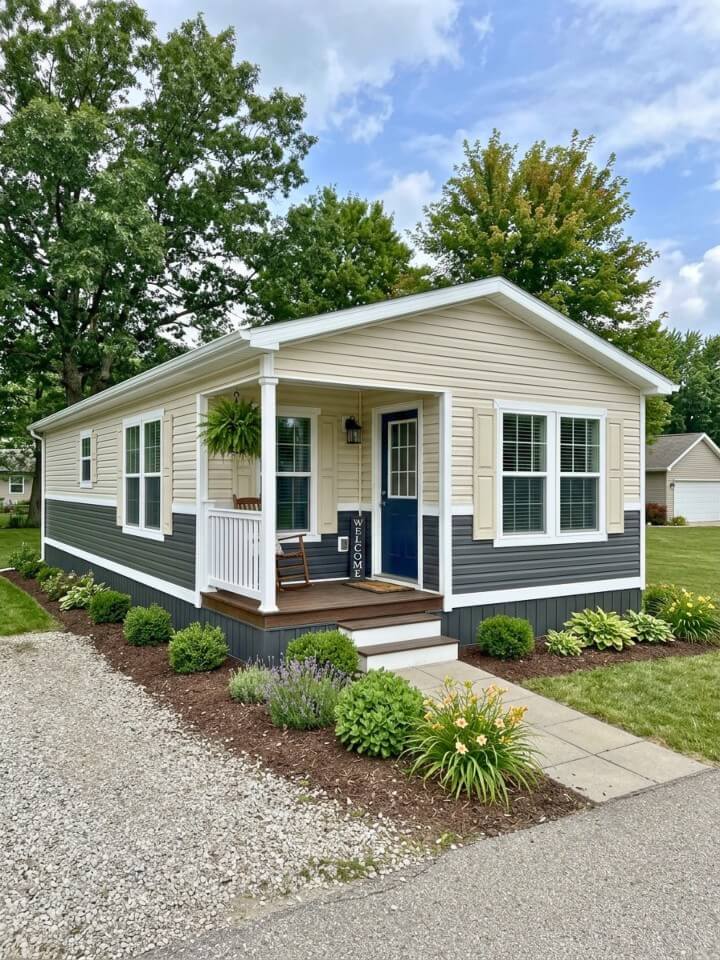
Where the two tones meet matters more than the colors themselves. Splitting the exterior dead-center is the most common mistake — it cuts the home in half and emphasizes the short vertical dimension that manufactured homes already struggle with. The break needs to sit higher or lower than the middle to actually flatter the structure.
The One-Third Rule
Place the color break at roughly the lower third of the wall height for a grounded look, or at the upper third for a lighter, lifted feel. Anything between reads accidental. Trim color should match across both tones to tie the design together. Black trim with a light field above and medium tone below remains the most reliably handsome combination.
11. Shake Shingle Vinyl Siding for Cottage Charm
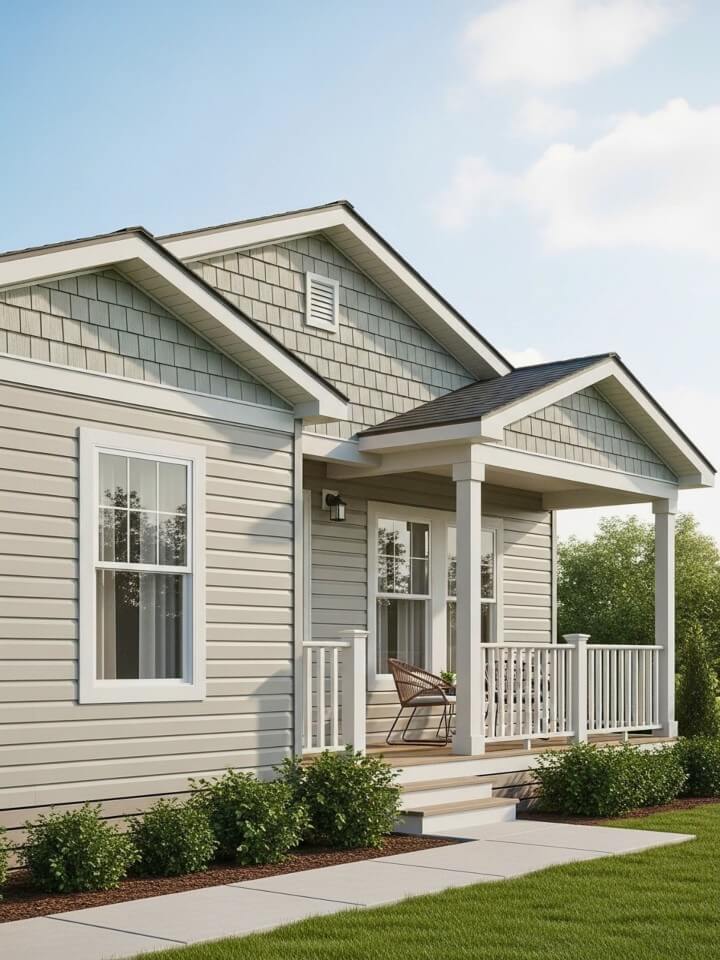
Vinyl shake gives mobile home owners the cottage look without the budget commitment real cedar demands. A full cedar shake install can run $12 to $16 per square foot; the vinyl equivalent lands around $4 to $7 and never needs sealing. The look has become a default for coastal-inspired homes, but it works equally well in inland settings when the rest of the palette stays restrained.
Choosing Between Scallop and Straight Edge
Scallop-edge shakes lean traditional and read softer from the curb. Straight-edge shakes look modern and crisp. Mixing both on the same wall almost never works — the eye reads it as a manufacturing error. Pick one profile and commit to it across the entire accent zone.
12. Faux Brick Siding Panels for Classic Appeal
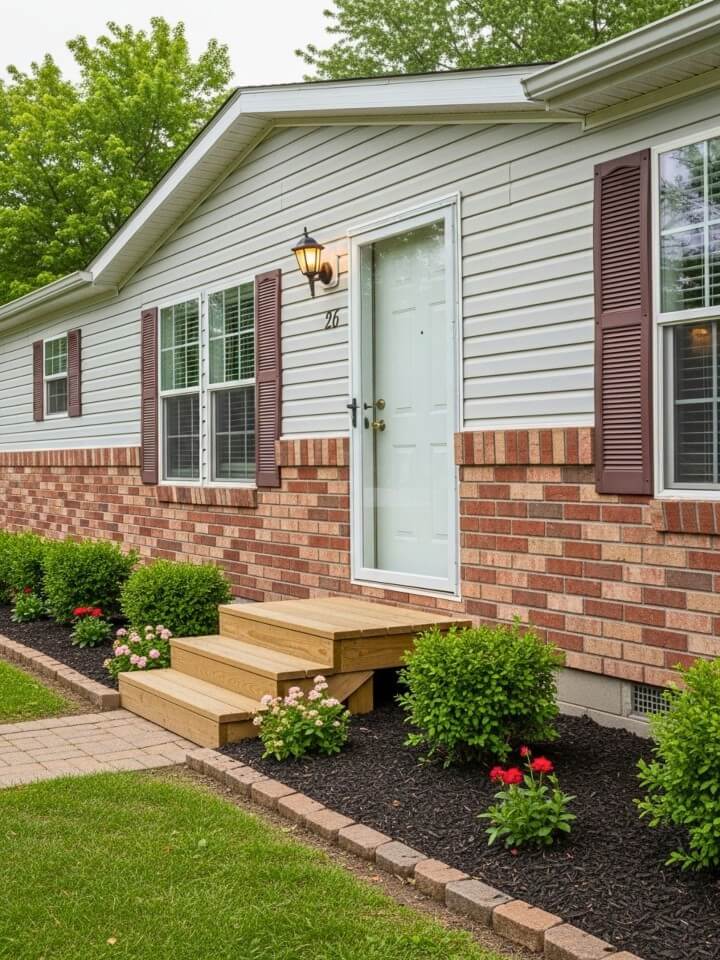
The single question that decides whether faux brick works: does it pass the ten-foot test? Premium polyurethane panels with deep mortar lines and irregular face texture do. Cheap thin-profile panels with repeating patterns don’t, and no amount of distance hides the seams. Quality here isn’t optional — it’s the entire game.
Where It Pays Off Most
Faux brick performs best on the lower half of an entryway wall, around porch columns, or as a wainscot below windows. Avoid using it as a full exterior wrap because the repetition becomes obvious across long runs. Mortar color matters too. Aged ivory mortar reads authentic, while bright white mortar exposes the panel pattern almost immediately.
13. Earth-Toned Stucco Finish for Soft Natural Look
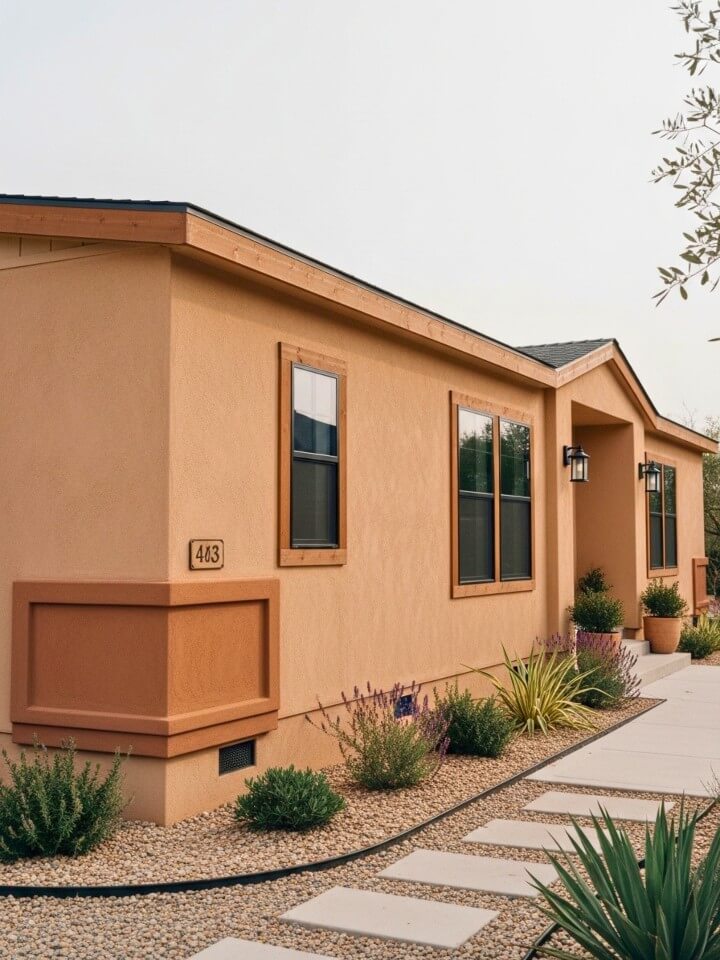
Stucco is regional in a way most siding materials aren’t. In hot dry climates it can outlast the home itself. In wet, freeze-thaw conditions it cracks, traps moisture, and turns into a repair project every other spring. Knowing whether your area actually suits stucco is the first decision, not the color.
Application Method Matters More Than Color
Traditional three-coat stucco lasts 50-plus years but requires skilled labor and adds significant weight. Synthetic stucco systems (EIFS) install faster and weigh less, fitting mobile homes better, though they need careful sealing around windows or moisture problems follow within a few years. Tan, sand, and weathered terracotta age more gracefully than gray-based earth tones.
14. Dark Trim with Light Siding High Contrast Style
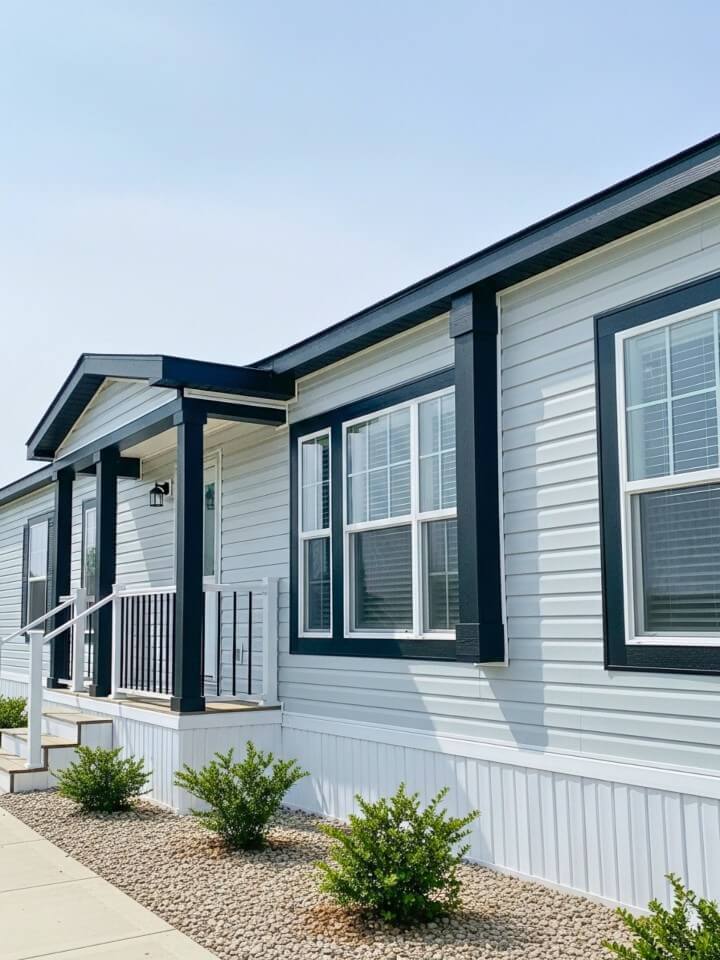
Creative trailer house siding ideas to modernize your exterior, lift curb appeal, and stay budget-smart. This combination shows up in nearly every remodel-of-the-year feature for one reason — it photographs well and ages slowly. The contrast outlines every architectural feature the home has, even on a basic rectangular footprint, making the structure look intentional rather than builder-grade or generic.
Getting the Ratio Right
Trim should account for roughly 10 to 15 percent of the visible exterior. Less than that and the contrast disappears at curb distance; more and the home starts looking like a coloring book outline. Charcoal and matte black both work, but charcoal is more forgiving when paired with off-white or cream fields. Pure black against pure white reads stark on smaller homes.
15. Half Stone Cladding with Upper Vinyl Panels
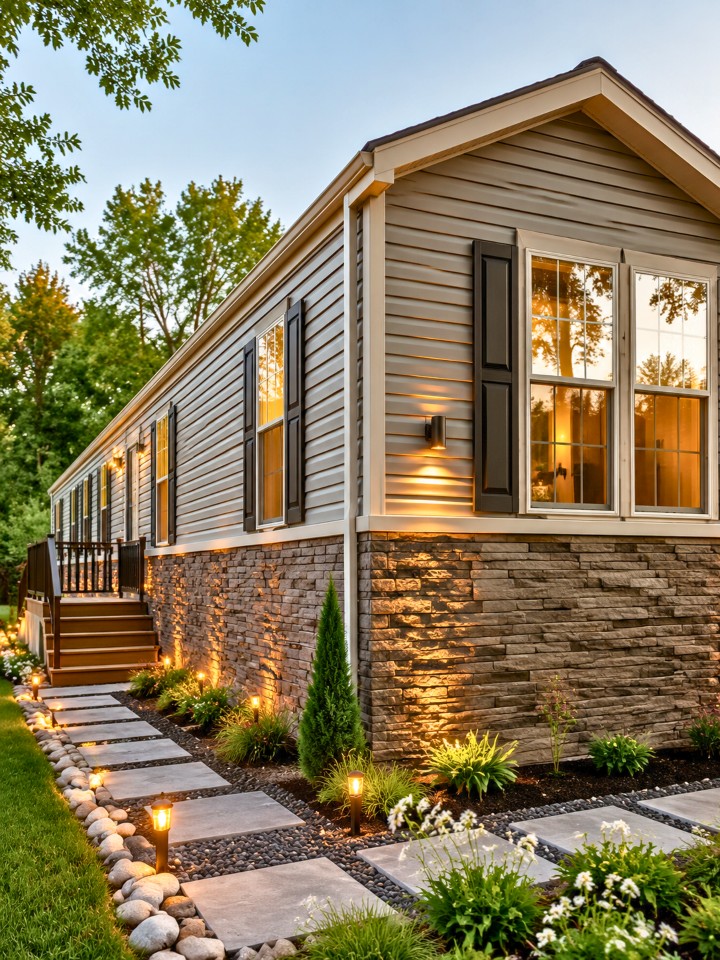
A true 50/50 split between stone and siding takes the foundation-wrap idea further than the typical waist-high band. The lower half becomes a deliberate architectural statement rather than a skirting cover, and the proportions echo Craftsman bungalows from the early 1900s — a style that still drives strong resale numbers in remodel markets.
Making the Transition Line Work
The horizontal break should align with the bottom of the windows, never above or below them. Misalignment here is the single biggest tell of a poorly planned installation. A flat stone cap or 2-inch trim band marks the transition cleanly. Stick with one stone style — mixing river rock with ledgestone in the same elevation creates visual noise that’s hard to undo.
16. White Clapboard Siding for Clean Traditional Look
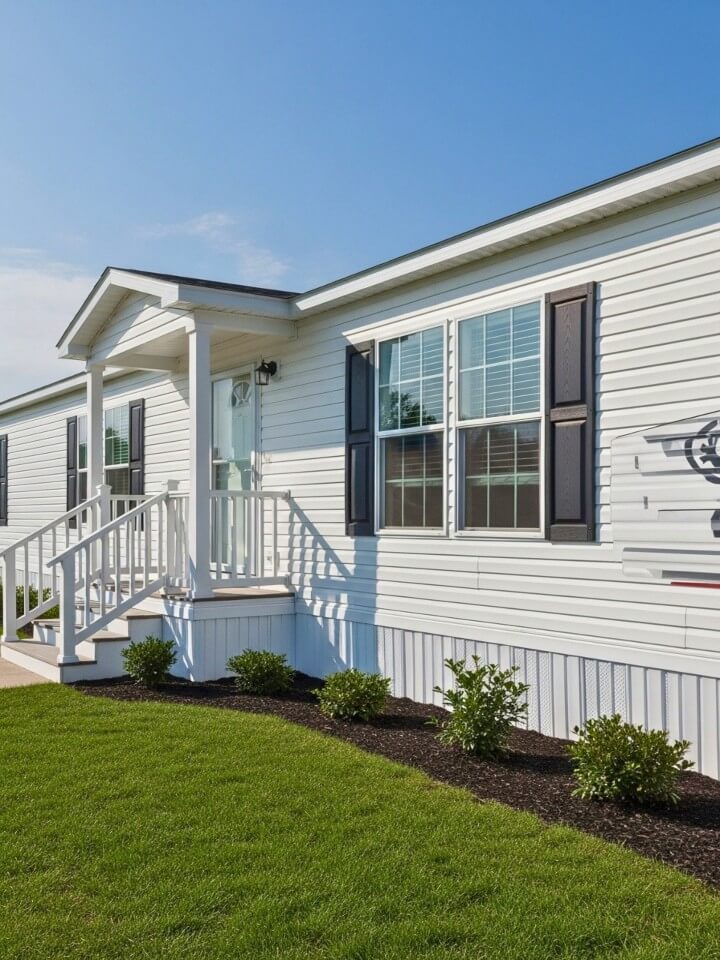
White exteriors consistently outperform every other color in resale data — appraisers and agents have tracked this for decades. The reason is simple: white doesn’t lock the home into a trend cycle, doesn’t fight the buyer’s imagination, and reads well in every photograph regardless of season or lighting conditions.
The Maintenance Honesty
White isn’t truly low-maintenance though. Pollen seasons leave a yellow film, lawn mower clippings stain the lower courses, and any chimney soot becomes visible immediately. Plan on a hose-and-soft-brush wash twice a year minimum. Choose an off-white with a slight warm undertone (think alabaster or soft linen) rather than pure brilliant white — the contrast against landscaping looks natural and forgives weathering better.
17. Wood Plank Siding with Natural Stain Finish
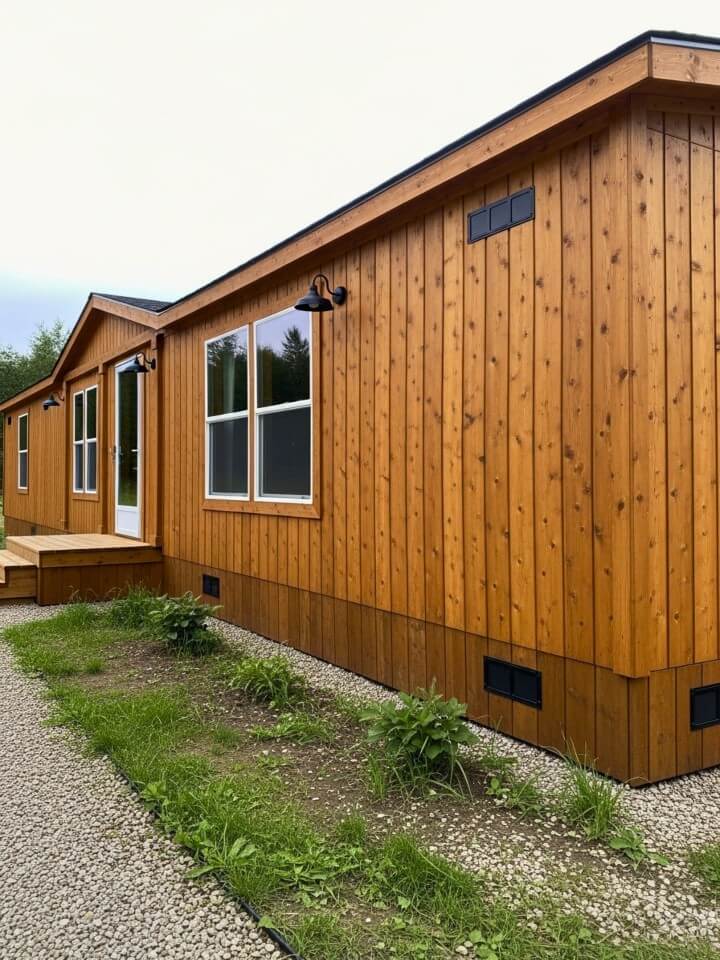
The stain-versus-paint debate has a clear winner once a homeowner has lived through one full cycle of each. Stain penetrates wood and weathers gradually, requiring a recoat every 3 to 5 years but never peeling or flaking. Paint forms a surface film that eventually cracks, lifts, and demands full scraping before any new coat can go on.
Species Matters Almost as Much as Stain
Cedar, cypress, and redwood handle stain beautifully and resist rot naturally. Pine takes stain unevenly and rots faster without aggressive sealing. Semi-transparent stains showcase grain best; solid stains hide it and edge closer to paint behavior. A southern exposure burns through any finish faster, so plan an earlier recoat on those walls.
18. Vertical Metal Siding for Sleek Contemporary Homes
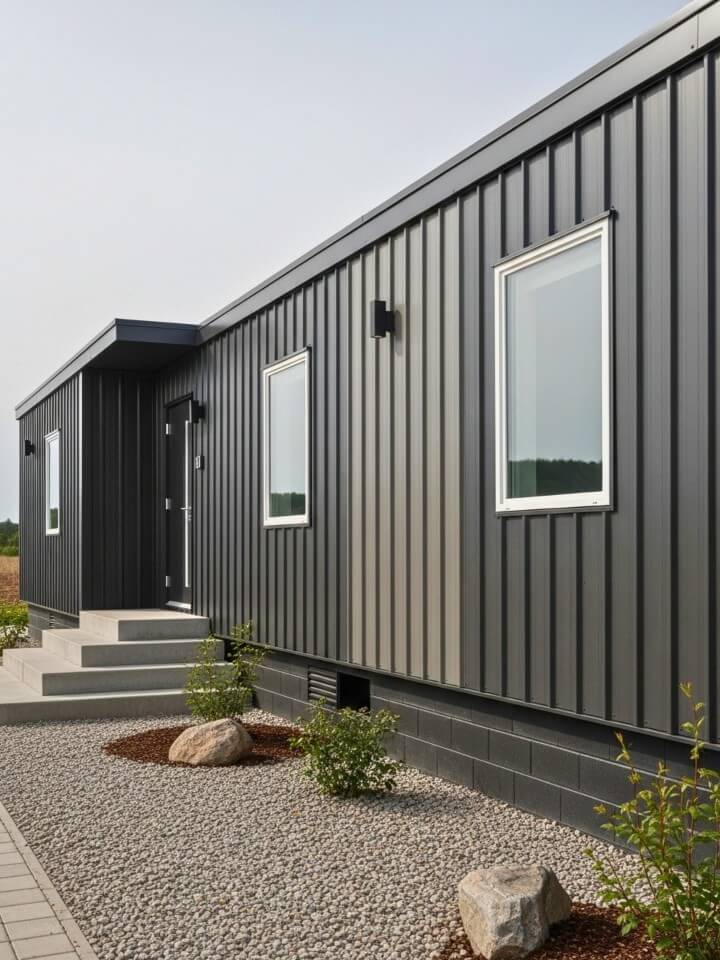
Inspiring siding ideas for mobile homes that blend style, durability, and standout curb appeal cheaply. Standing seam and snap-lock vertical metal sit in a completely different category from corrugated. The panels are flat, the seams are crisp, and the overall finish reads architectural rather than agricultural. This is the metal siding seen on modern infill builds in expensive neighborhoods, not on barns or sheds.
Cost and Sourcing Considerations
The premium look comes at a premium price — usually $9 to $14 per square foot installed once a qualified crew is involved. Off-the-shelf hardware store panels won’t deliver this look; the install requires concealed fastener systems and proper clip spacing. Done correctly, the panels carry 40-year finish warranties. Matte dark bronze and weathered zinc age into the look better than glossy painted options.
19. Textured Vinyl Siding for Subtle Depth and Shadow
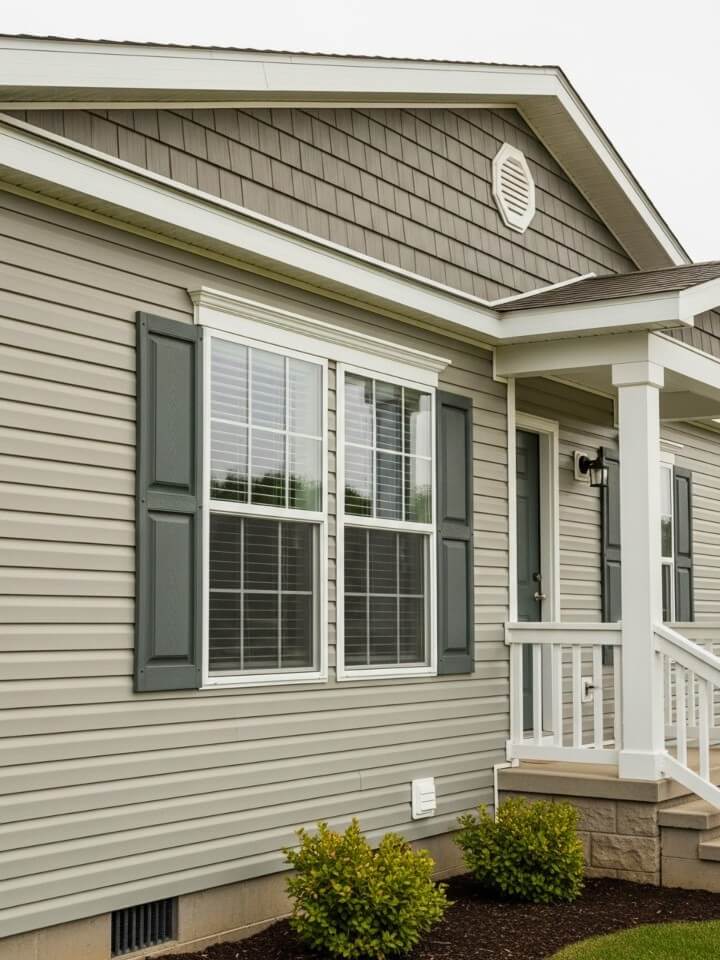
Standard vinyl reads plastic at certain angles, especially in direct sunlight. Textured vinyl addresses that by mimicking wood grain or rough-sawn surfaces deeply enough that shadows form across the face, which fools the eye into reading the material as more substantial than it actually is.
Is the Upgrade Worth It
The upcharge runs roughly 15 to 25 percent over smooth vinyl, which translates to maybe $1.50 extra per square foot. On a typical mobile home that’s a $400 to $800 difference for the entire exterior — generally worth it for the visual upgrade. The texture also hides minor wall imperfections and fades more gracefully because UV breakdown reads as natural weathering rather than dullness.
20. Mixed Width Plank Siding for Custom Pattern Effect
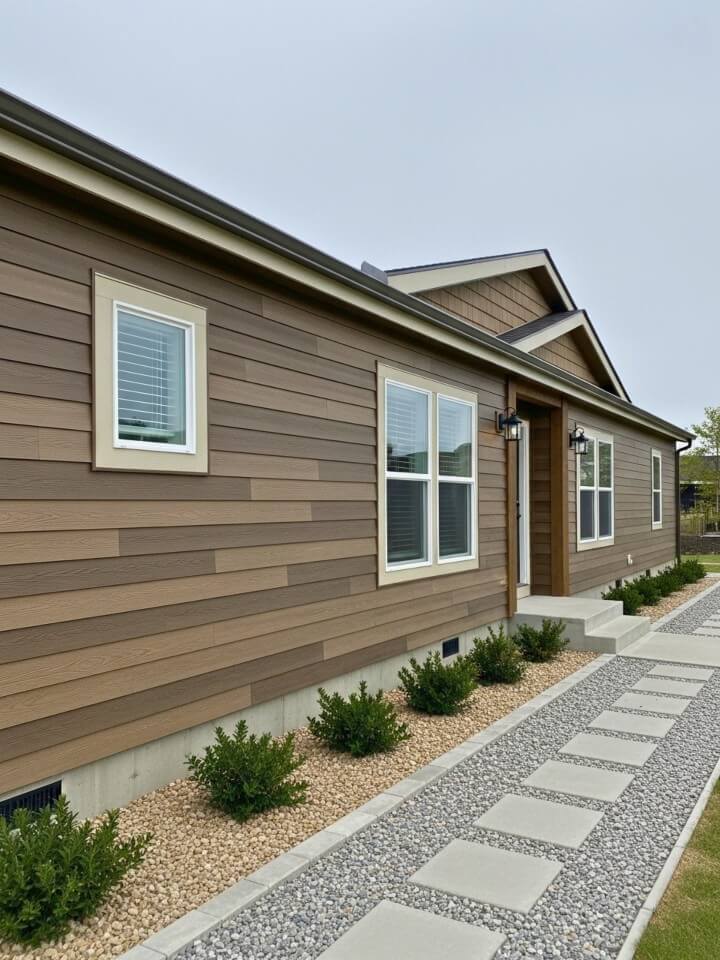
Intentional irregularity is harder to pull off than uniform repetition. Three or four random plank widths thrown across a wall looks like a mistake. Three widths arranged in a planned ratio looks designed. The principle borrowed from luxury flooring installations applies directly to siding here.
A Workable Width Formula
Try a 5-inch, 7-inch, and 10-inch rotation in roughly a 3:2:1 ratio — narrower planks most common, widest planks least common. Stagger seams generously between courses. The pattern reads custom without looking random. This treatment performs best on a single accent wall or front-facing facade. Wrapping it across an entire home dilutes the effect and adds installation complexity that rarely pays back.
21. Stone Column Accents with Vinyl Siding Balance
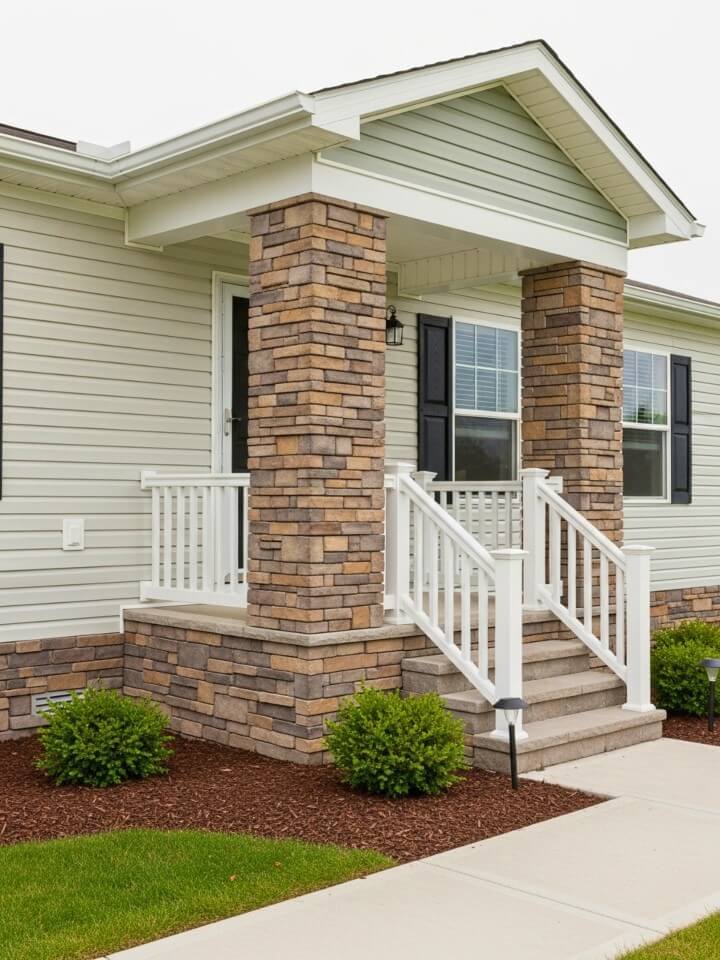
Columns are the most underused feature on mobile home porches. A standard 4×4 post wrapped in stone veneer instantly upgrades the entry from afterthought to focal point — and column treatments cost less than redoing an entire wall because the surface area involved is so small.
Proportions Make or Break the Look
A column wrap should be at least 12 inches wide on each face to read substantial; anything narrower looks like a sleeve over the original post. Taper the stone slightly toward the top if the porch ceiling is low, since perfectly cylindrical stone columns can feel heavy on smaller structures. Match the stone tone to any existing skirting work so the foundation reads continuous around the home, then use related porch siding ideas to make the entry feel connected instead of patched on.
22. Vertical Board and Metal Hybrid Siding Design
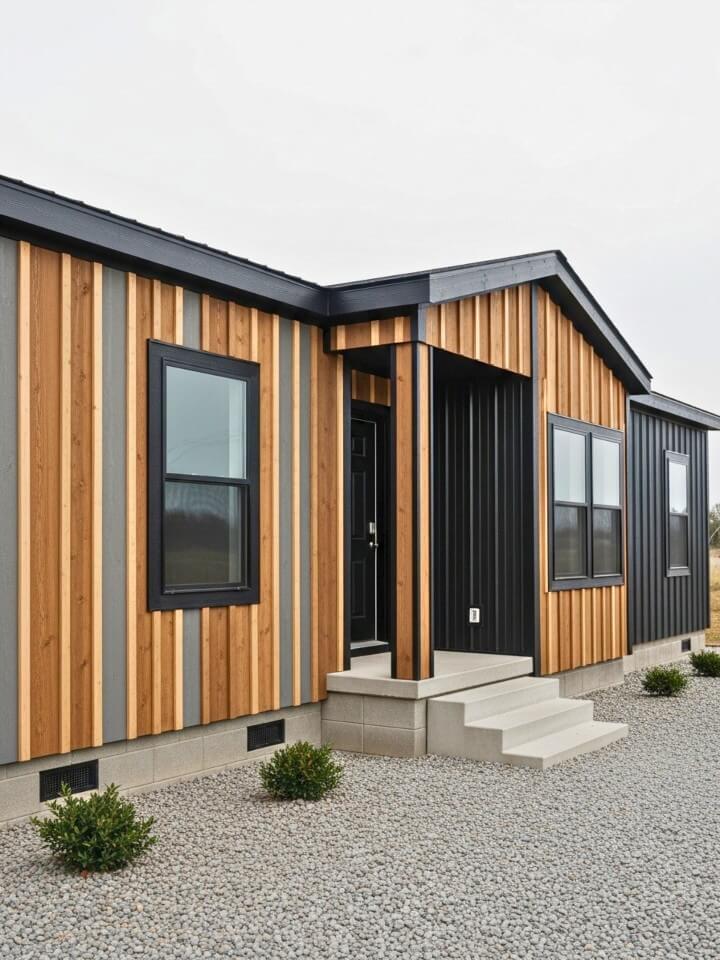
Hybrid material walls work because they exploit a perceptual quirk — the eye reads two textures as more architecturally interesting than one, even when the overall color palette stays restrained. Vertical wood board paired with smooth metal panels has become the signature of modern-rustic builds for exactly this reason.
Where to Place the Seam
The transition between materials should land at a natural break point — under a window line, at a roof eave shadow, or at a porch ceiling height. Random horizontal seams in the middle of a wall look unfinished. Use a slim metal Z-flashing to mark the transition cleanly; this prevents water intrusion and gives the eye a visible boundary that reads as design intent rather than oversight.
FAQs About Mobile Home Siding Ideas
Practical answers homeowners actually search for before choosing siding — budget picks, climate fit, durability timelines, and DIY feasibility.
What Is the Cheapest Siding Option for A Mobile Home?
Standard vinyl lap siding is the lowest-cost choice that still performs well, typically running $3 to $7 per square foot installed. For a single-wide exterior, total project costs often land between $4,000 and $7,000. Avoid the very cheapest builder-grade vinyl though — the thin gauge dents easily and fades within five to seven years, which erases the savings quickly.
Which Siding Holds up Best in Freezing Climates?
Fiber cement and metal both outperform vinyl in deep cold. Vinyl becomes brittle below roughly 20°F and can crack on impact during winter months. Fiber cement handles freeze-thaw cycles without issue, and metal siding flexes slightly with temperature shifts. Stucco generally struggles in freezing climates unless installed as part of a properly drained EIFS system.
Can New Siding Be Installed Over Existing Siding?
Sometimes, but it’s usually a mistake. Layering new siding over old hides moisture damage, traps potential rot, and adds weight that mobile home walls weren’t designed to carry. The better approach is full removal, inspection of the sheathing, and fresh installation. This costs more upfront but avoids structural problems that surface years later.
How Much Value Does New Siding Add to A Mobile Home?
National remodeling data shows siding replacement returns roughly 60 to 80 percent of project cost at resale. The bigger impact on mobile homes specifically is marketability — homes with dated or damaged siding sit on the market significantly longer regardless of asking price. Fresh siding is often the single highest-impact exterior change available.
Is DIY Siding Installation Realistic for A Homeowner?
Vinyl lap is the most DIY-friendly material, and many homeowners with basic tool experience can install it successfully on a single-wide over a few weekends. Stone veneer, fiber cement, metal panel systems, and stucco realistically require professional installation. Botched installs on these materials are visible forever and often cost more to fix than the original install would have.
What Siding Works Best in Hot, Humid Climates?
Fiber cement, stucco (in dry-humid zones), and quality vinyl all perform well in heat. Avoid dark colors regardless of material — they absorb heat, accelerate fading, and raise cooling costs noticeably. Light and medium tones with UV-stable pigments hold up best across long hot seasons.
How Long Should a Quality Siding Job Last?
Vinyl runs 20 to 30 years, fiber cement 30 to 50, metal 40 to 60, and stone veneer essentially the lifetime of the home. Real wood depends entirely on maintenance — properly stained cedar can last 40 years; neglected pine fails in 10. Warranty length is a reasonable proxy for expected lifespan when comparing products at purchase.
Final Thoughts
Siding is one of those decisions that quietly shapes how a home feels every single day — not just how it photographs on a sunny afternoon. The right material settles into the structure and disappears. The wrong one becomes a small frustration you notice every time you pull into the driveway. Before locking in a choice, walk past the house at dusk, in rain, after a long week. That’s when honest taste shows up. A mobile home doesn’t need to look like anything other than what it is. It just needs to look like it was chosen carefully, by someone who actually lives there.