18 Scalloped Siding Ideas That Instantly Elevate Any Home’s Exterior
Scalloped siding has quietly become one of the most requested exterior details in recent years, and it’s easy to see why. Those rounded, fish-scale edges break up flat walls, catch the light in interesting ways, and give a home the kind of character that flat panels simply can’t match. Whether you’re planning a full renovation, refreshing a single gable, or just adding a small accent near the entry, scalloped shingles offer a surprising amount of flexibility for the budget you have in mind.
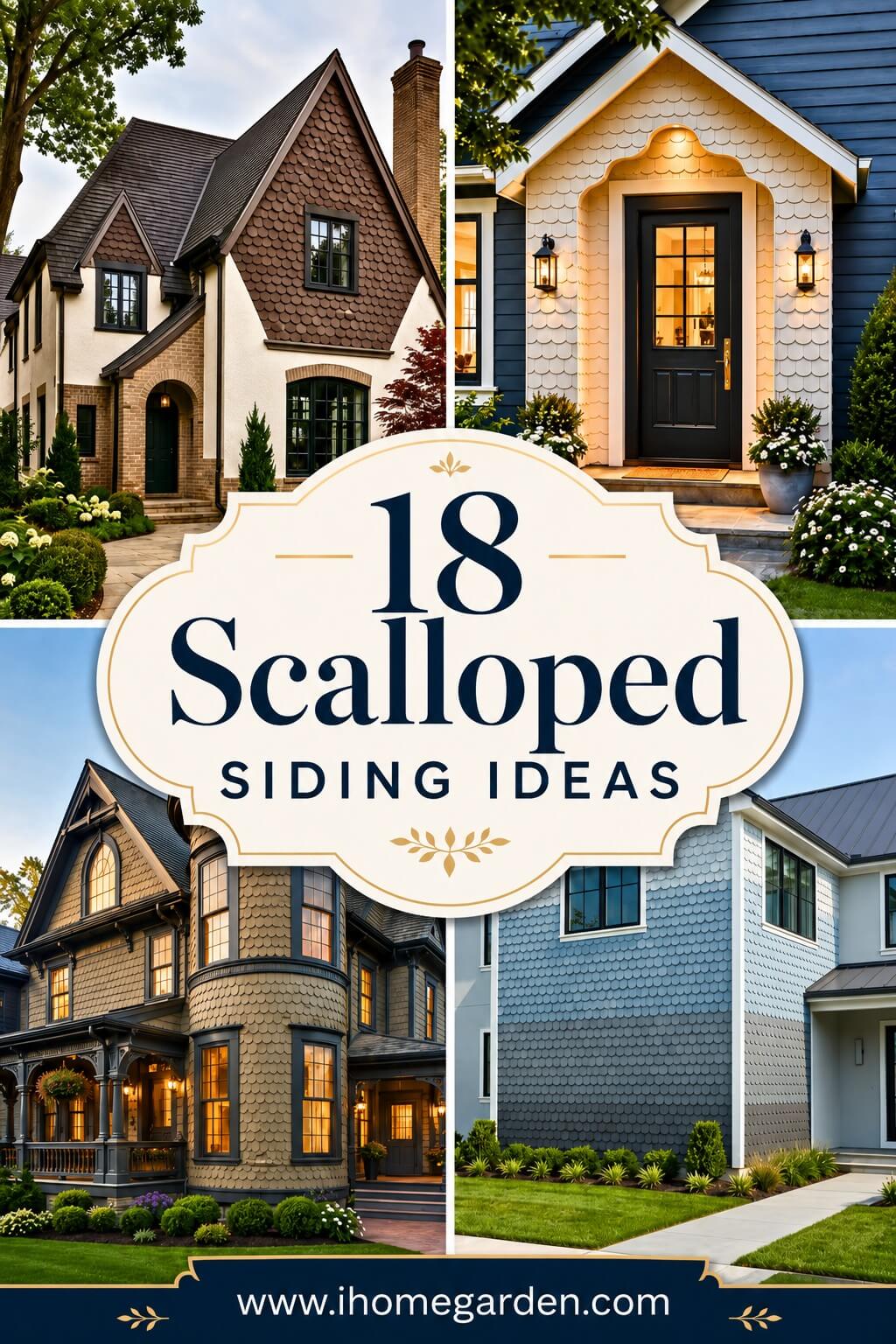
These 18 awesome scalloped siding Ideas cover a wide range of styles, materials, and price points. Some are weekend-friendly accents, others are full-facade commitments. Each entry pulls out the details that actually matter when you’re deciding, so let’s get into it.
1. Classic Cedar Shake Scallops
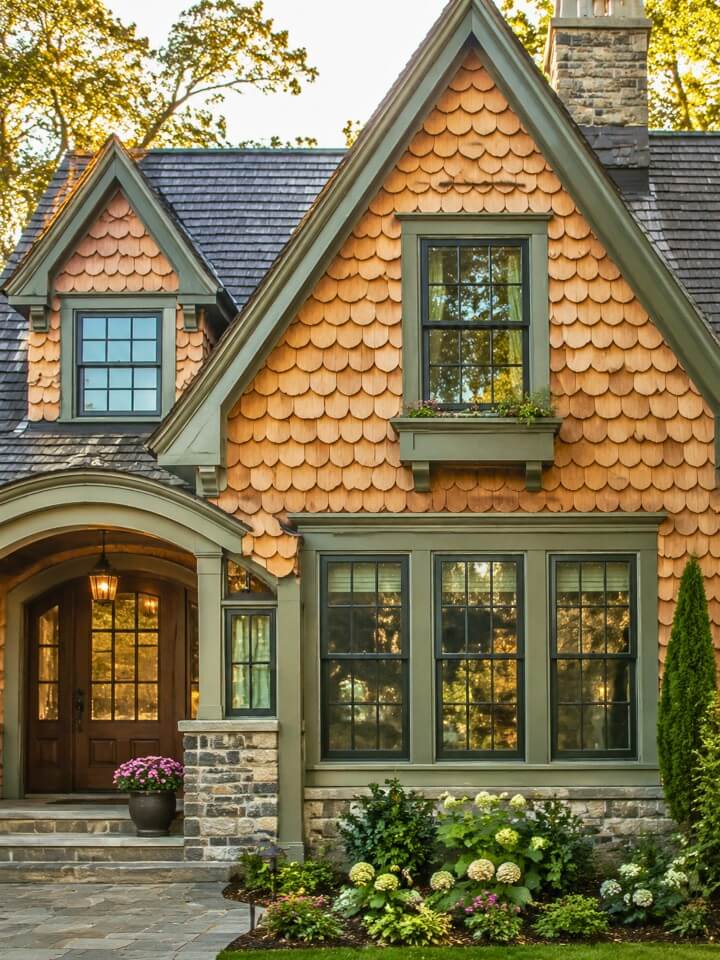
There’s a reason cedar shake scallops have stayed popular for over a century. They age beautifully and feel instantly familiar on cottages, bungalows, and homes tucked into wooded lots. Real cedar develops a soft silver-gray patina over time if left unstained, or you can seal it to hold the warm honey tone longer. The natural grain shows through every shingle, so no two walls look exactly alike, which is exactly what gives cedar its lived-in charm.
- Best for: Coastal cottages, craftsman bungalows, wooded lots
- Approximate cost: $7–$12 per square foot installed
- Maintenance tip: Reseal every 3–5 years to prevent splitting, or skip the seal entirely if you want that weathered gray look
2. Tudor-Inspired Dark Scallops
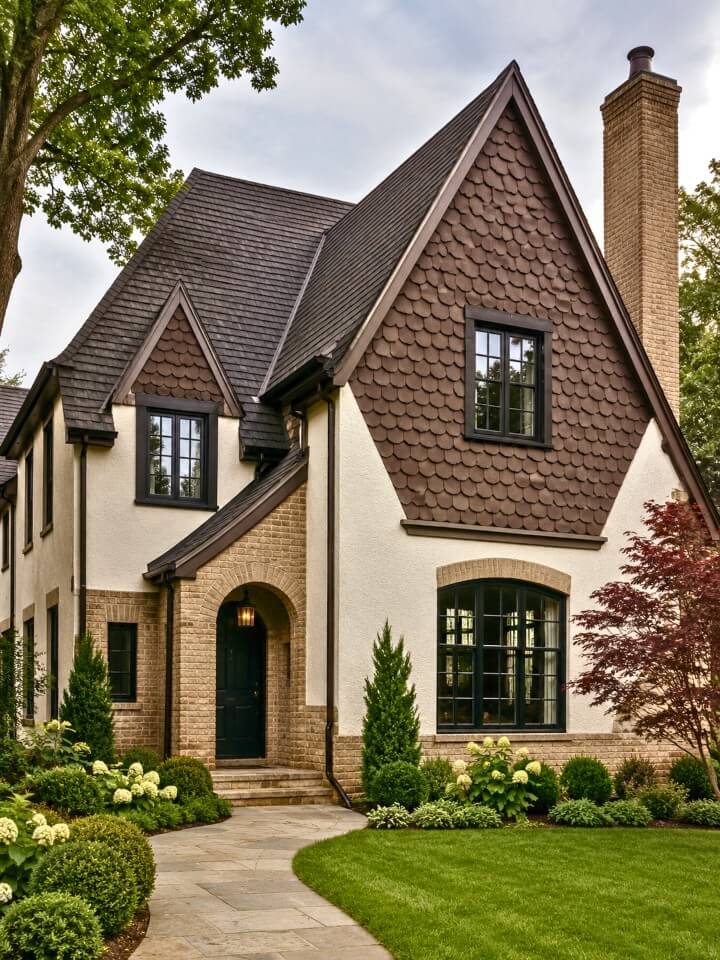
Dark scallops on steep gables pull a home straight into storybook Tudor territory, especially alongside cream stucco, exposed timber, or warm-toned brick. The trick is going almost-black rather than true black. Deep espresso, charcoal, or blackened brown reads much richer in daylight and doesn’t flatten out under cloudy skies. Keep the scallops tight and evenly spaced along the gable ends so the pattern feels crafted rather than casual, and let the rest of the exterior stay quiet so the roofline does the talking.
Why homeowners love it: the drama is concentrated up top, so you get major visual impact without committing to dark siding across the whole house. It’s also forgiving on older homes where the ground-floor walls aren’t perfectly plumb, since the eye travels straight to the gable.
3. Scalloped Entry Surround
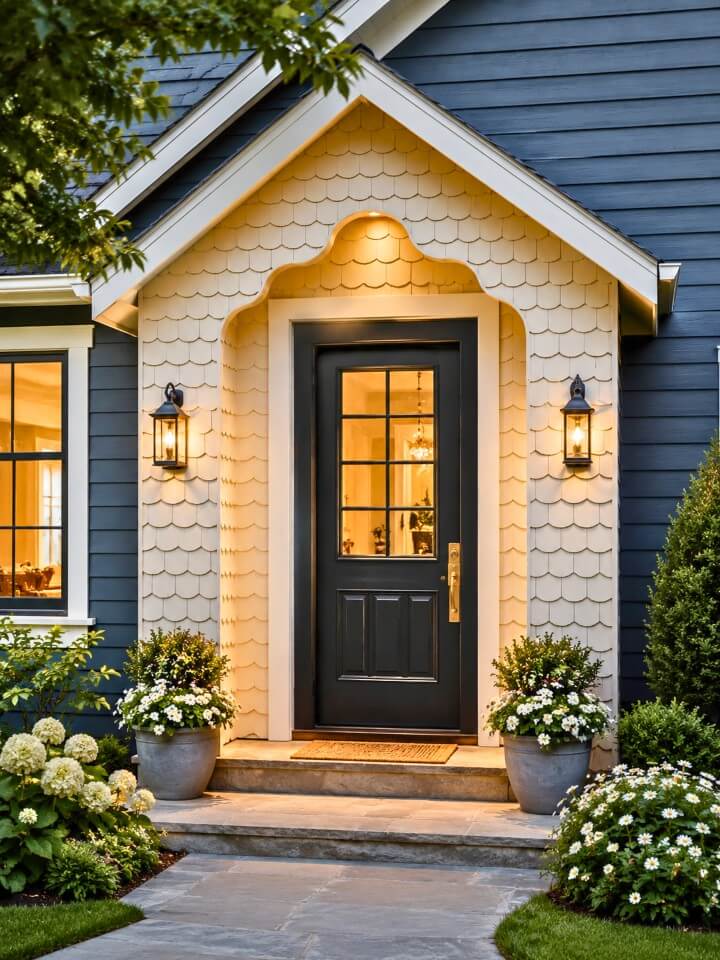
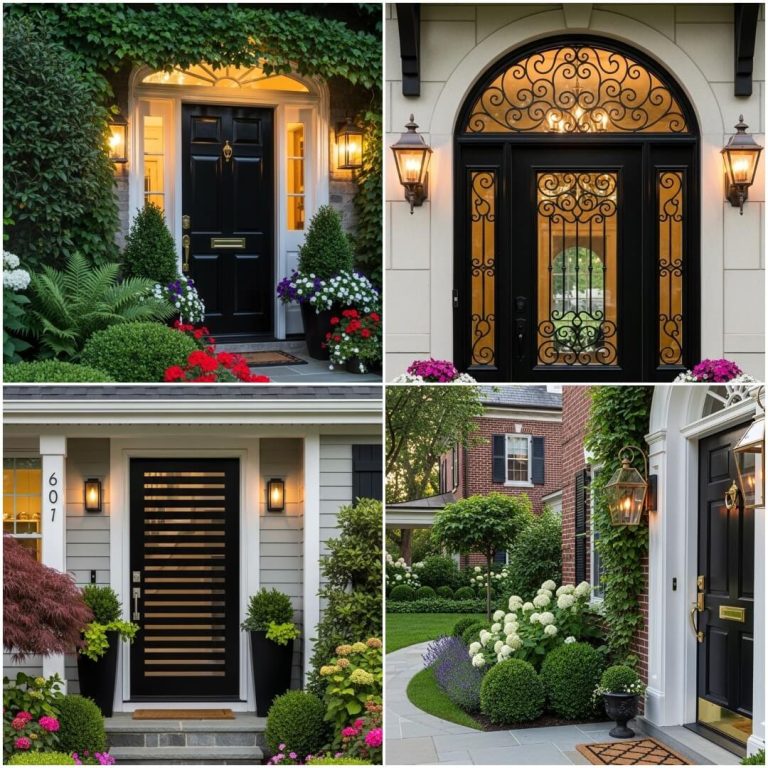
Scallop siding gives your home a charming, decorative edge built to withstand every season’s wear. Framing the front door with a band of scalloped shingles is one of the easiest ways to add curb appeal without touching the rest of the siding. The curved edges naturally pull the eye toward the entry, making the whole approach feel intentional and welcoming, especially if you’re pairing the surround with one of these breathtaking black front door ideas.
A Few Things Worth Knowing Before You Commit:
- Covered porches are ideal since the scallops stay protected from direct rain and hold their finish much longer.
- Painting the surround one or two shades off the main body color creates just enough contrast without feeling loud.
- Warm evening lighting mounted above or beside the door will cast soft shadows across the curves, which is honestly when this detail looks its best.
Budget-wise, this is a weekend-scale project for most contractors, usually landing between $400 and $1,200 depending on the surround size and material choice.
4. Painted Gable Accent
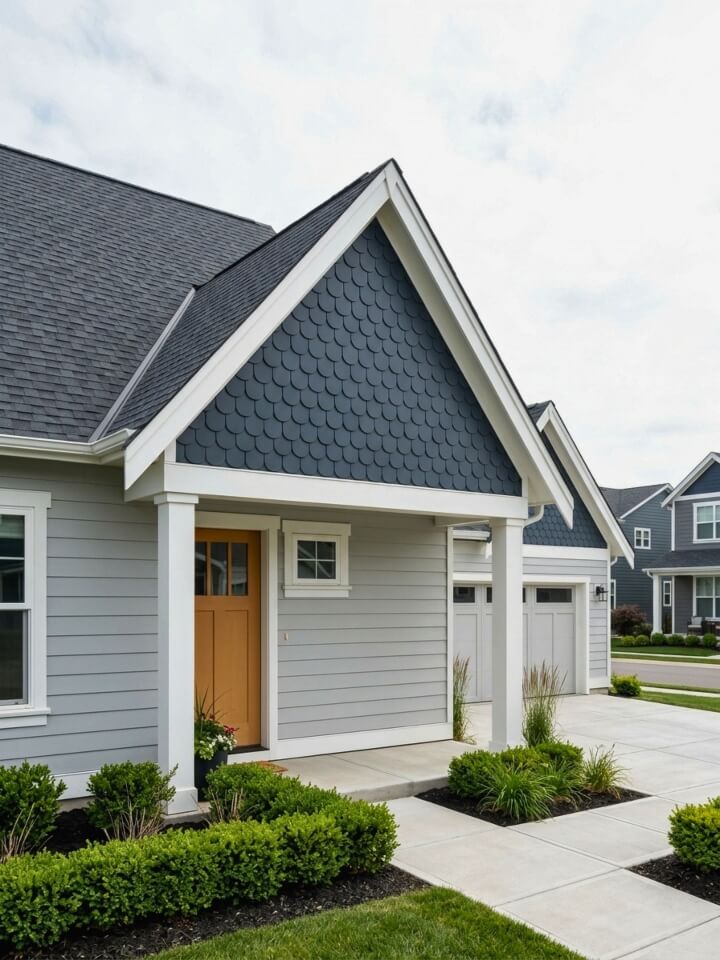
A single painted gable filled with scalloped shingles is the design equivalent of a well-chosen accessory. Small, deliberate, and enough to change how the whole outfit reads. You’re not repainting the house or replacing siding across every wall, you’re just picking one high-visibility spot and giving it a personality.
Color choice matters more here than almost anywhere else on the exterior. Sage green, dusty blue, terracotta, and mustard have all been having a moment, but a classic move is picking a shade already present somewhere on the house (the door, the shutters, a porch ceiling) and echoing it up in the gable. That repetition ties the whole facade together and makes the accent feel planned rather than random.
Install over a proper weather barrier, keep the edges tight against the trim, and this detail can easily last 15–20 years before needing a refresh.
5. Fish Scale Pattern in Fiber Cement
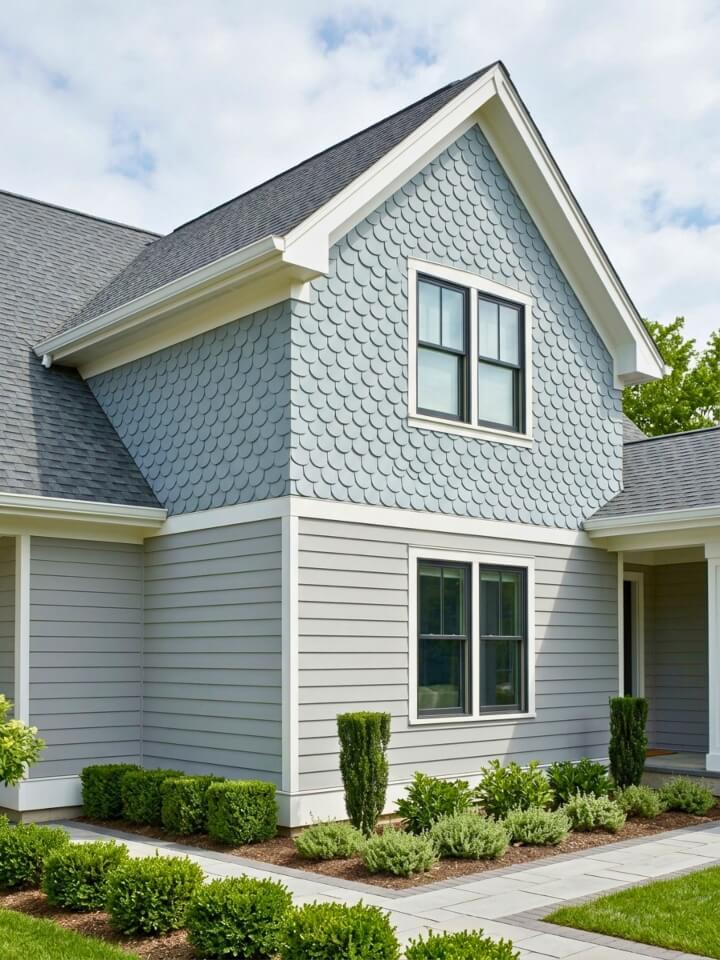
Fiber cement is the practical answer for homeowners who love the fish scale look but don’t want to think about their siding every spring. It won’t rot, insects ignore it, and it holds paint for 10–15 years without fading badly, which is genuinely hard to beat.
The material comes pre-primed from major manufacturers like James Hardie and Allura, and the scallop shapes are cut cleanly enough that the pattern reads sharp from the curb. Soft blues, warm grays, and earthy greens tend to look best because the slightly chalky finish of fiber cement suits muted tones better than bright ones.
One thing worth flagging: fiber cement is heavier and more brittle than wood, so installation takes longer and usually costs more upfront, roughly $9–$15 per square foot. The tradeoff is that you’ll likely never touch it again for decades.
6. Two-Tone Layered Scallops
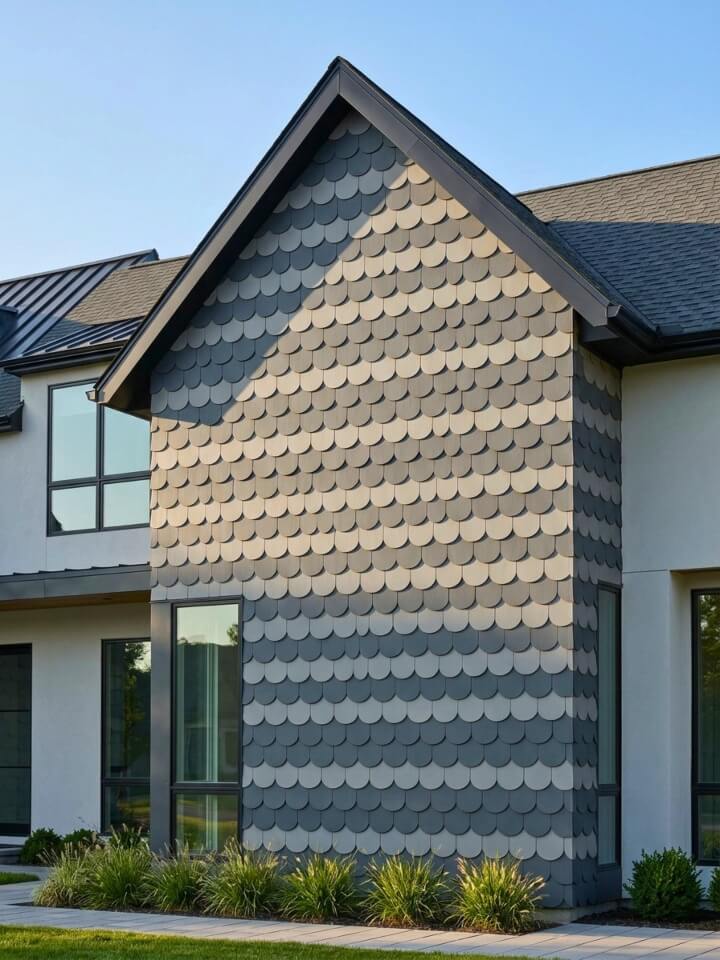
Alternating two shades across a scalloped wall creates a rhythm that flat siding just can’t produce. As sunlight shifts through the day, the shadows between rows deepen the contrast, and the wall almost seems to breathe.
The most reliable approach is picking two colors from the same family, one a few shades lighter or darker than the other. Think fog gray with slate, or sand with warm taupe. High-contrast pairings (navy with white, for example) can look striking in photos but often feel busy in person, especially on larger walls. When in doubt, stay quiet with the palette and let the pattern do the work.
This idea shines on focal walls, upper stories, and the sunny side of the house where light angles keep changing the look throughout the day.
7. Scalloped Porch Skirting
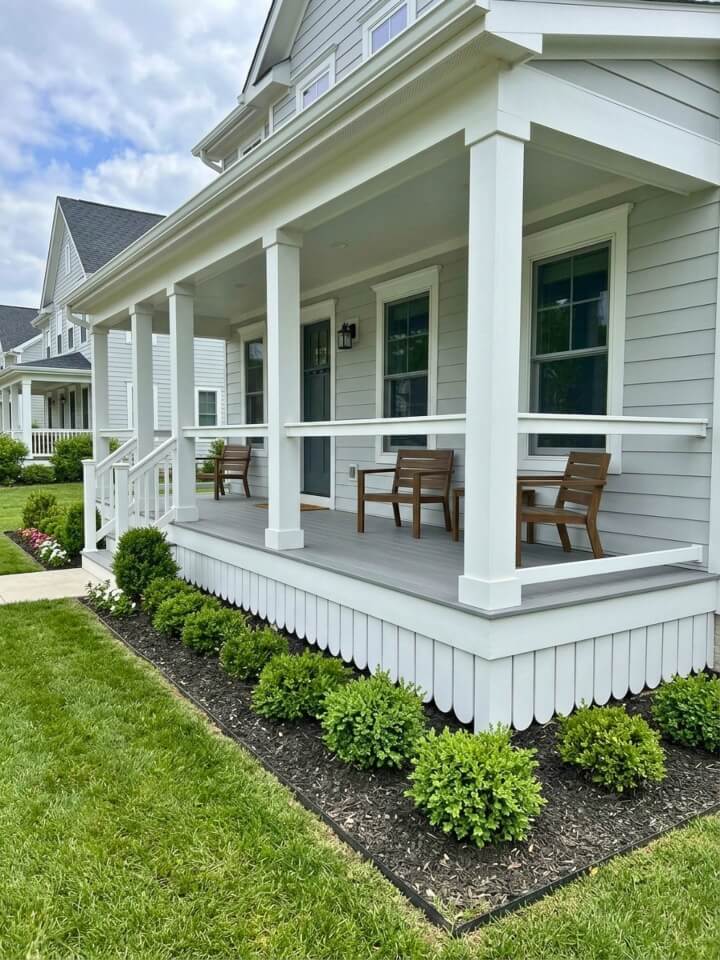
The space between a raised porch and the ground is usually an afterthought, plain lattice, or worse, nothing at all. Swapping that in for scalloped skirting turns a purely functional area into something that actually contributes to the porch’s character. It also works well alongside other magnificent porch siding ideas when you want the whole front elevation to feel more finished.
What Makes It Work:
- Ventilation stays intact. Good skirting still needs airflow underneath to prevent moisture buildup, so scallops with slight gaps (or a vented panel behind them) keep things breathing.
- Material matters. Treated wood, PVC, and fiber cement all handle ground-level exposure well. Untreated wood will rot within a few years no matter how pretty it looks the first summer.
- Height is everything. Skirting that’s too tall swallows the porch visually. Aim to cover the framing without touching the ground, leaving a small shadow gap for drainage and clean lines.
For older homes with generous wraparound porches, this small detail can genuinely change how the whole front of the house reads from the sidewalk.
8. Ombre Gradient Scallops
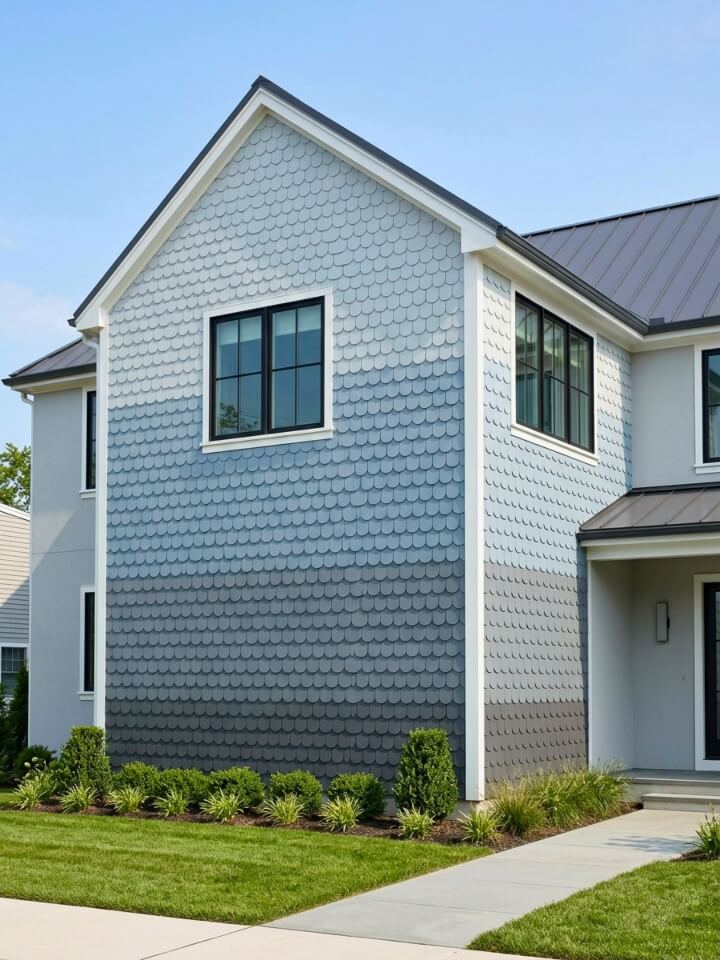
An ombre wall is the kind of design choice that sounds risky on paper and then completely works in person, provided you plan it carefully. The idea is simple: start with the darkest shade at the bottom and gradually fade to the lightest at the top (or the reverse, which reads more sunset-like).
Three shades is the sweet spot. Four can work on tall walls. Anything more starts to look striped rather than blended. Stick to one color family, warm neutrals, ocean blues, and misty greens tend to translate best, and lay the shingles out on the ground first to check the transition before nailing anything up. You’ll want a clear plan for where each color ends and the next begins, otherwise the middle section can end up muddled.
Because the effect depends on distance to read properly, this works best on tall walls, two-story gables, or any facade you’ll see from across the yard rather than up close.
9. Scalloped Dormer Detail
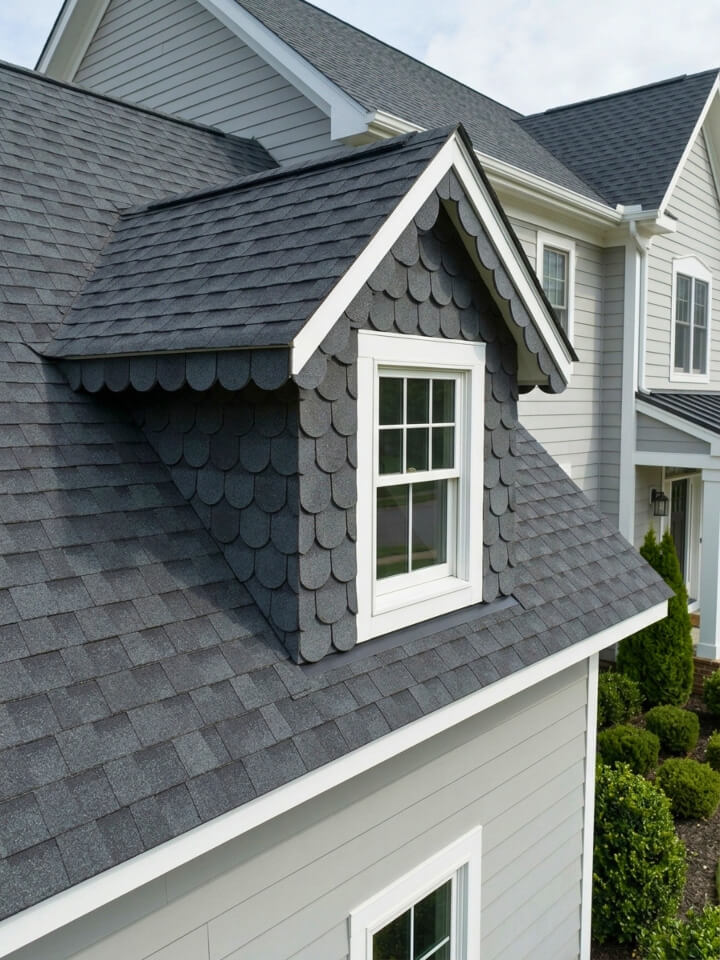
Scalloped shingle siding blends vintage craftsmanship with modern durability for stunning curb appeal. Dormers already do a lot of visual work on a roof, they add height, bring light into upper rooms, and break up long roofline stretches. Wrapping them in scalloped shingles takes that architectural moment and turns it into something you actually notice from the street.
There are two schools of thought here. The first is matching: use the same shingle color and material as the main roof, so the dormer feels integrated and quietly detailed. The second is contrasting: pick a slightly darker or lighter shade to make each dormer pop as its own little feature. Both look good, they just tell different stories. Matching reads as craftsmanship, contrast reads as personality.
Whichever way you go, precise alignment around the dormer windows is what separates a beautiful result from a distracting one. This is not the spot to rush the installer.
10. Board-and-Batten Meets Scallop
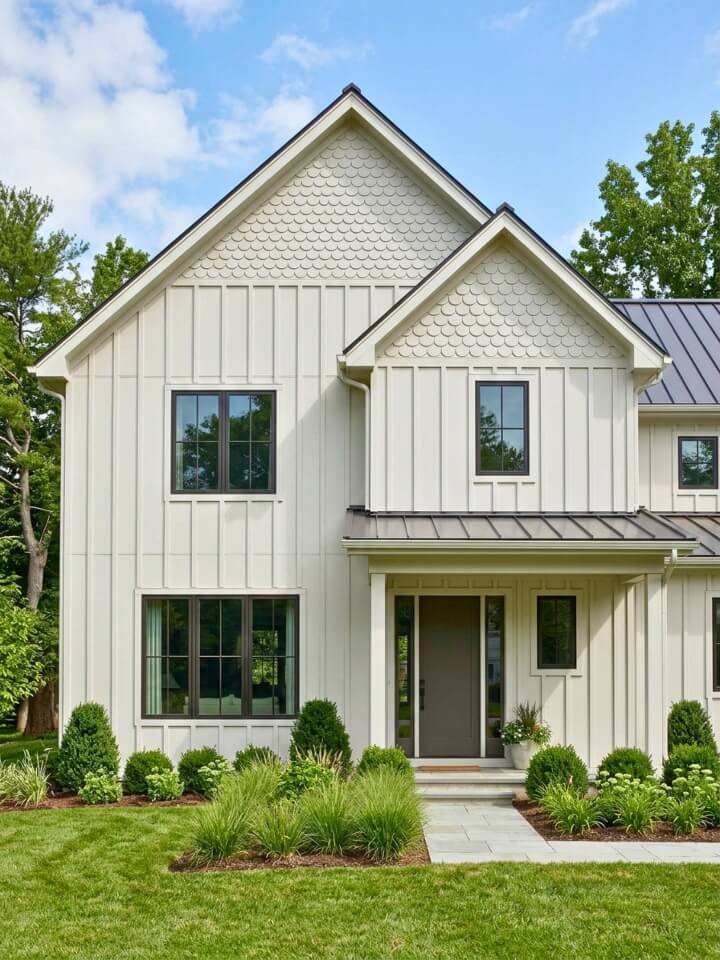
Pairing vertical board-and-batten siding with scalloped accents is a bit like mixing denim with lace. Two very different textures that end up flattering each other exactly because they’re so different. The straight, tall lines of board-and-batten ground the house, and the scallops soften the edges wherever they appear.
The most common placement is board-and-batten across the main body of the house with scallops filling the upper gables or wrapping a covered entry. That contrast has become a signature move on modern farmhouse builds, and there’s a reason it keeps showing up: it hits the sweet spot between clean and characterful.
A few pointers to keep it looking intentional rather than busy:
- Stick to one or two colors across both materials
- Match the paint sheen so nothing looks patched together
- Use scallops sparingly, they should feel like a highlight, not the main event
Done right, this combination ages well and photographs beautifully, which is probably why real estate listings can’t get enough of it.
11. Vintage Pastel Palette
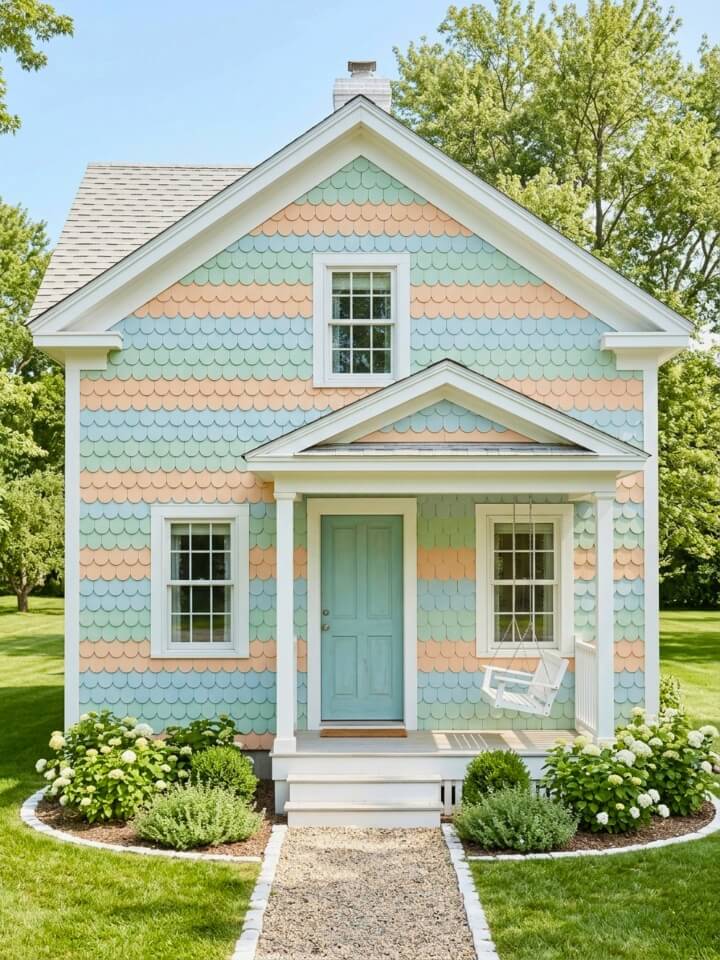
Soft mint, faded peach, buttery yellow, powder blue, these are the colors that make a house look like it belongs in a storybook, and scalloped siding is the perfect canvas for them. Pastels have a way of feeling nostalgic without tipping into kitsch, especially when paired with crisp white trim and a bit of garden greenery out front.
The key with any pastel palette is picking a shade that holds up in bright sun. Colors that look perfect on the paint chip can wash out completely on a south-facing wall by noon, so it’s worth painting a small test section and watching how it reads across a full day. Go one shade deeper than your instinct suggests, sunlight will do the softening for you.
Cottages, garden studios, and small guest houses wear this palette best. On larger homes, pastels can feel diluted unless you commit to strong trim contrast to keep the edges defined.
12. Modern Matte Black Scallops
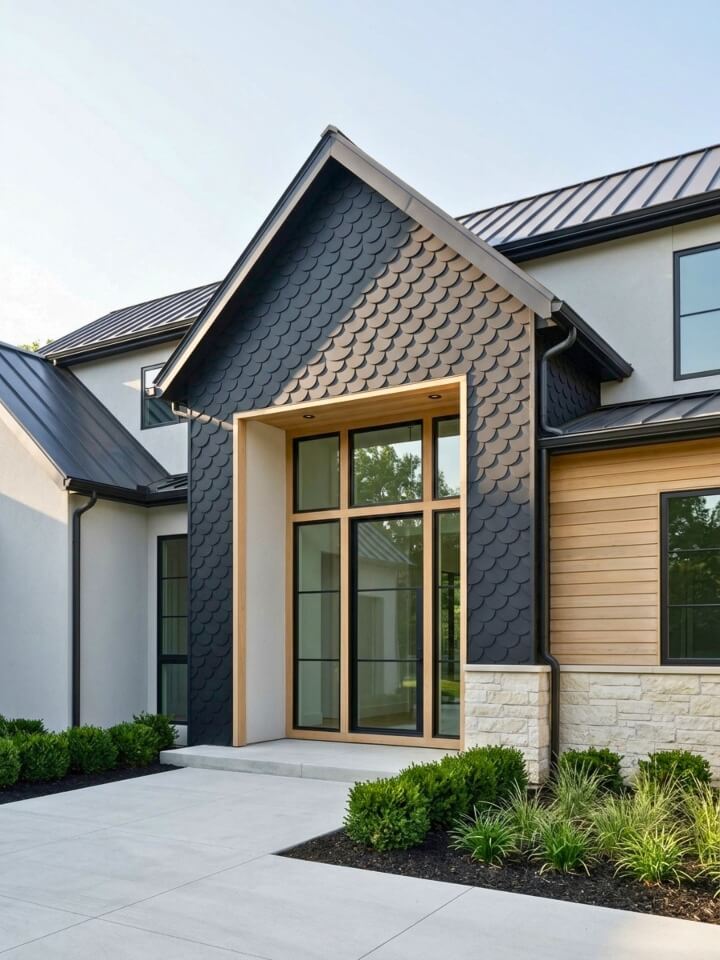
Scalloped vinyl siding transforms plain walls into elegant, wave-textured architectural statements. Matte black siding is having a real moment right now, and scallops are what keep it from feeling flat or severe. The curved shapes catch light differently than flat panels do, which means a wall that could otherwise read as one solid dark shape instead shows subtle depth and shadow all day long.
Pair Matte Black Scallops With:
- Warm wood accents (cedar soffits, oak doors) to soften the contrast
- Natural stone or brick at the base for grounding
- Bright white or brass hardware to sharpen the details
Skip the glossy finishes. A true flat or eggshell paint is what gives this style its architectural quality, and it hides minor imperfections in older siding far better than any sheen. Expect to repaint sooner than lighter colors, roughly every 8–10 years, since dark exteriors take more UV punishment than most homeowners realize.
13. Scalloped Garden Shed or Outbuilding
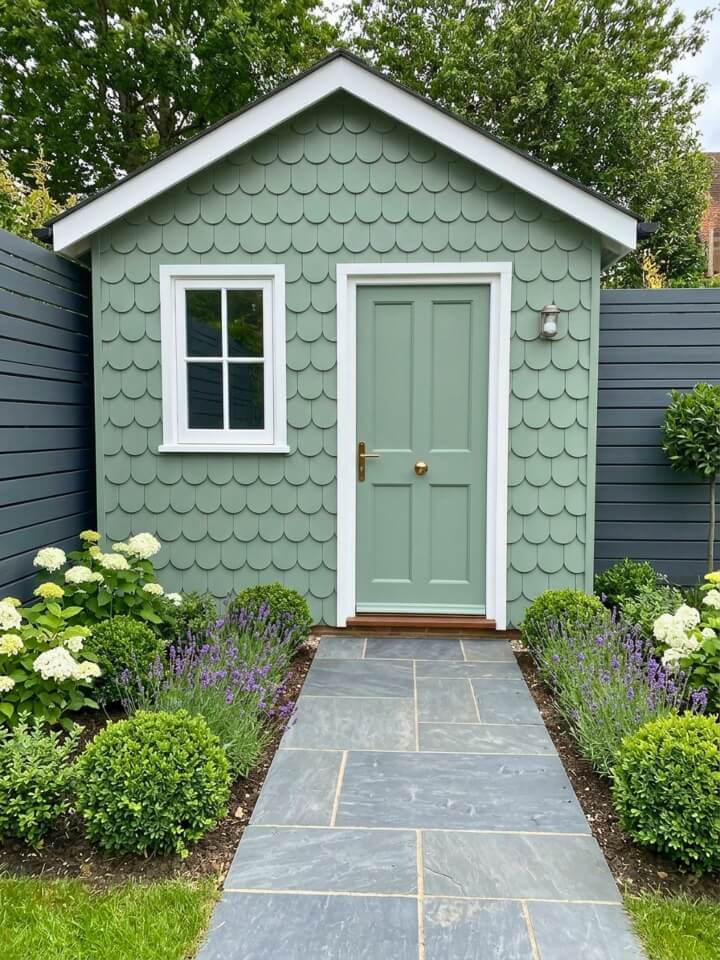
Not every scalloped siding project needs to be attached to the main house. A shed, pool house, or backyard studio dressed in scalloped shingles becomes something between architecture and garden ornament, the kind of small structure that draws people over to take a closer look.
This is also the ideal low-stakes way to try a bold color or unusual finish before committing to it on the whole house. Coral pink might feel like a lot on a full facade, but on a garden shed tucked behind hydrangeas? It’s charming. The scale is forgiving, the budget is manageable (usually under $2,000 for a small structure), and if you decide you hate it in three years, repainting a shed is a Saturday project rather than a renovation.
Match or coordinate with fencing and trim colors around the yard to help the shed feel like part of a larger landscape plan rather than a random object dropped into it.
14. Mixed Shingle Shapes
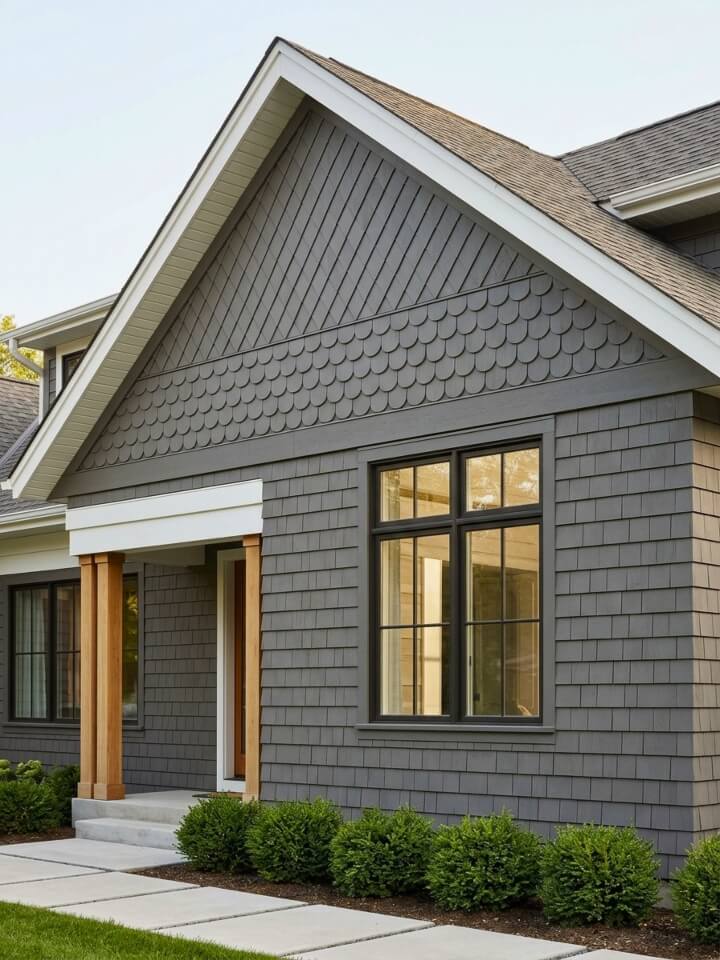
Combining scallops with straight-edge or diamond-cut shingles is a classic Victorian move that’s quietly working its way into contemporary builds too. The trick is treating each shape like its own zone rather than scattering them together, so the eye can actually follow the pattern instead of getting confused by it.
A typical layout might use straight shingles across the main wall, a band of scallops along a decorative belt course, and diamonds up in the gable peak. Each shape gets its own architectural role, and the transitions between them read as intentional design rather than a decorating accident.
Keep the palette tight, ideally one or two colors, since introducing multiple shapes already gives the exterior plenty of visual activity. Historic homes handle this style effortlessly, but it can also give a plain builder-grade house real personality when applied thoughtfully.
15. Coastal White-on-White
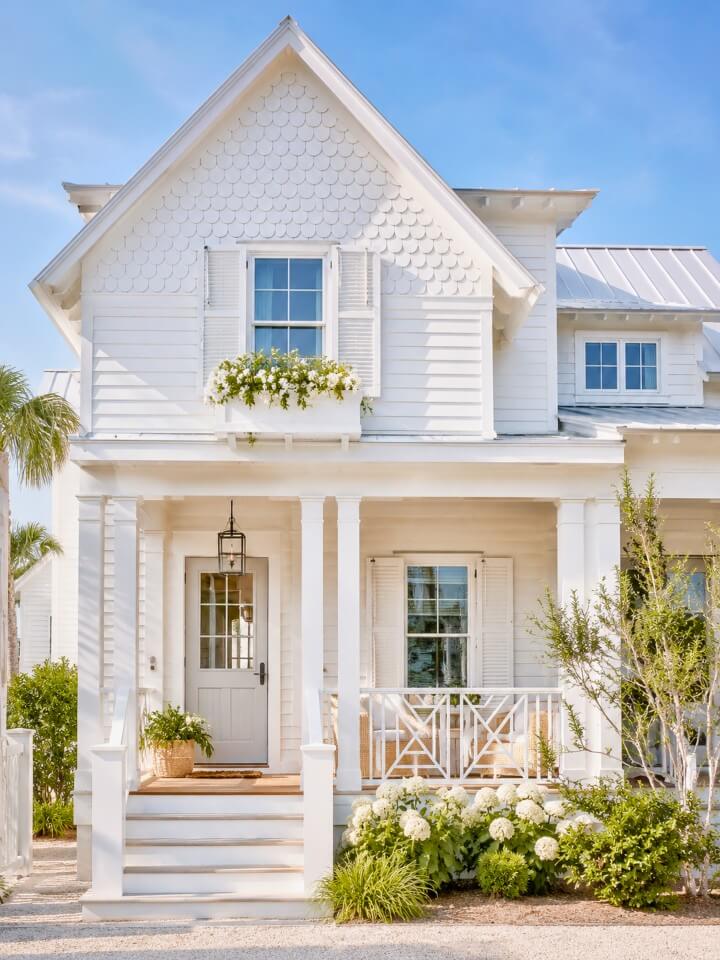
There’s a certain kind of light-filled, sea-air coziness that only white siding can pull off, and layering different textures of white is what keeps the look from going flat. Smooth horizontal panels on the lower walls, scalloped shingles above, maybe some beadboard on a porch ceiling, all the same color, all playing off each other through shadow rather than contrast.
This style thrives in bright locations near water or in gardens where reflected light bounces around. In darker climates or heavily shaded lots, the same all-white exterior can look cold or washed out, so it’s worth honestly assessing your light before committing.
Two practical things to keep in mind: warm whites (with a hint of cream or oatmeal) age better than stark whites, which tend to look dingy the moment they collect any dust. And white siding of any kind will need cleaning more often than darker colors, plan on a gentle wash once or twice a year to keep it looking fresh.
16. Scalloped Bay Window Accent
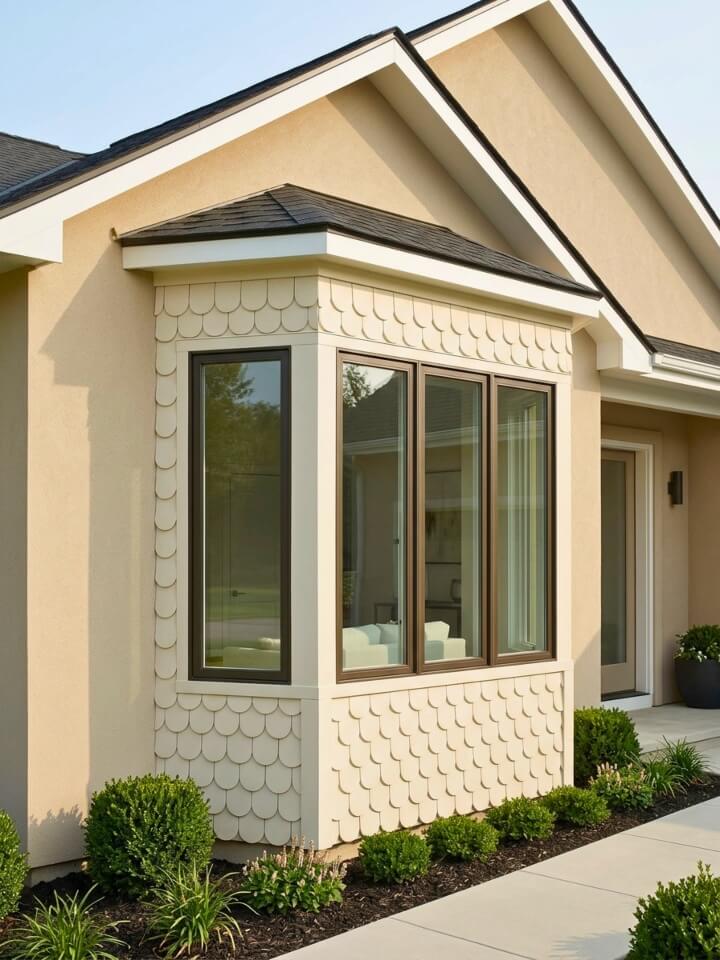
Bay windows already break up a flat wall by pushing outward, so wrapping them in scalloped siding takes what’s essentially a small architectural bump-out and turns it into a full-blown focal point. The curves of the scallops soften the sharp angles where the bay meets the main wall, which is exactly the kind of visual friction that makes older bays feel a little awkward when left in plain siding.
Color-wise, you have two solid options. Match the scallops to the main body color for a subtle, textural effect that reads mostly through shadow. Or shift one or two shades cooler or warmer to make the bay stand out as its own moment. Both work. The mistake is going too high-contrast, which cheapens the effect and makes the bay look glued on rather than built in.
Front-facing bays that catch afternoon sun show this detail off best, since the changing light across the day keeps the texture interesting.
17. Scalloped Wainscoting Accent
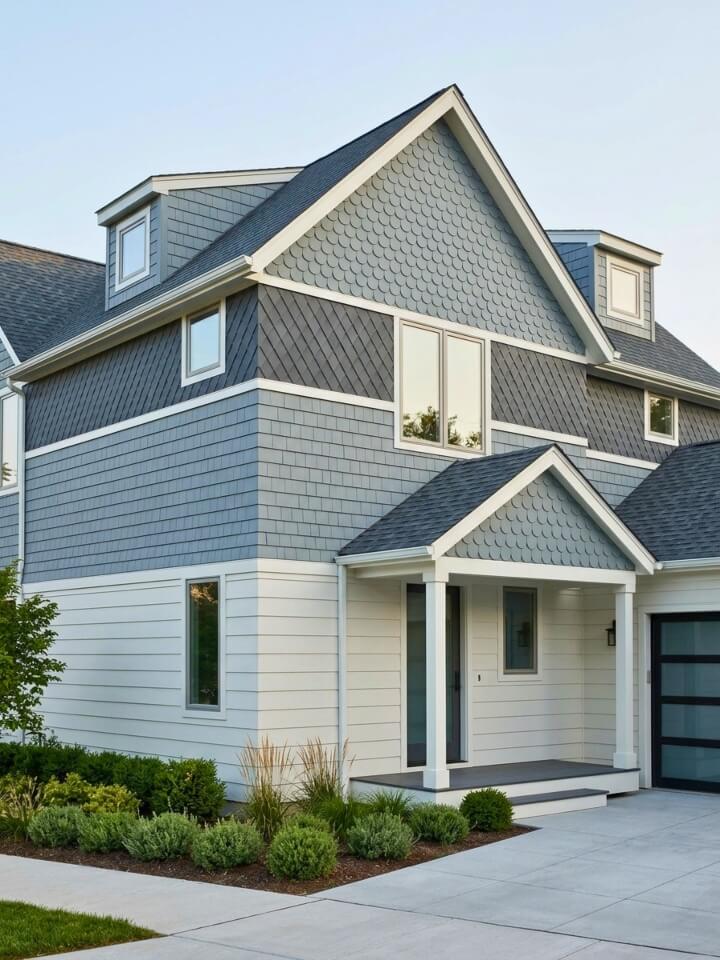
Wainscoting is usually thought of as an interior detail, but scalloped shingles applied to the lower third of an exterior wall pull the same trick outside. You get a defined horizontal band that visually shortens tall walls, protects the lower portion from splash-back and lawn equipment scuffs, and adds a layer of texture right at eye level where people actually notice it.
A trim board or shadow reveal separates the wainscoting from the siding above, and this transition line is what makes or breaks the look. Sloppy trim will make the whole effect feel like a mistake, while a clean, deliberate reveal reads as considered architecture.
This Works Especially Well On:
- Ranch homes that need more vertical interest
- Two-story facades where the lower level otherwise feels bare
- Front porches with tall skirt walls that could use breaking up
Cost stays reasonable since you’re only siding a portion of the wall, typically $3–$6 per linear foot of wall length depending on materials.
18. Scalloped Tower or Turret
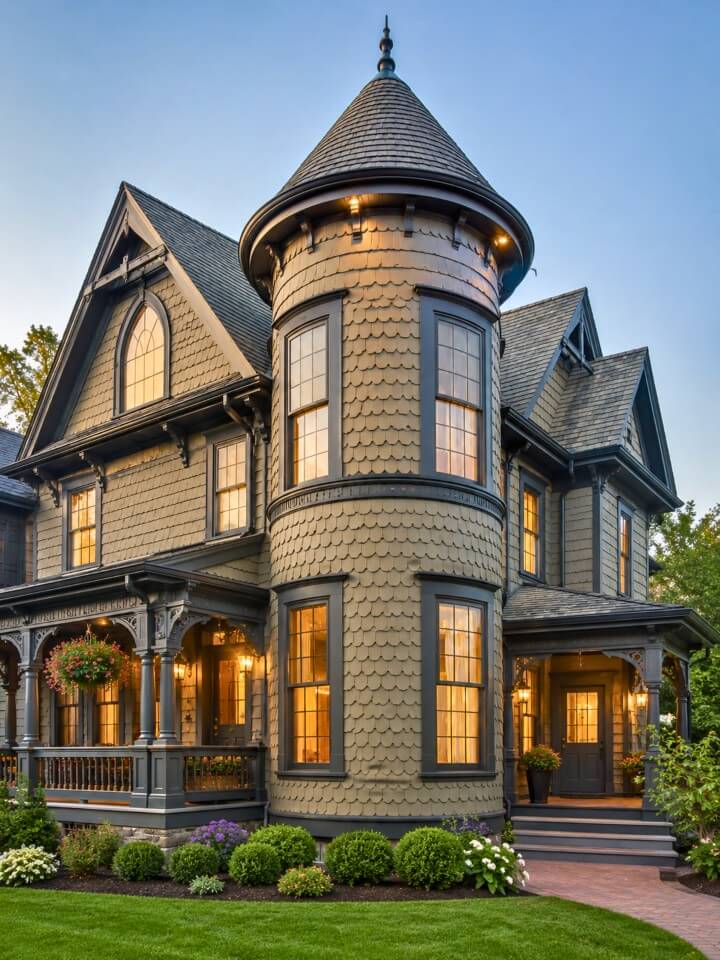
If your home has a tower, turret, or rounded architectural feature, wrapping it in scalloped shingles is almost obligatory, that’s what these shapes were designed for. The way the curved shingles follow a round surface, each row slightly offset from the last, produces a visual rhythm that flat siding literally cannot achieve on curved geometry.
Victorian homes made this pairing famous, but you’ll also see it on newer custom builds that borrowed the tower idea and ran with it. The details that separate a good installation from a great one are mostly about the transitions: how the shingles meet the roof, how they wrap around windows, and how the trim defines the corners where the tower connects to the main house.
Because towers sit high and get hammered by weather from every direction, material choice matters a lot here. Cedar looks the most authentic but needs upkeep. Fiber cement lasts longer with less fuss. Composite shingles split the difference. Whichever route you pick, budget for a skilled installer, this is not a DIY situation, and the labor is usually where most of the cost lands.
FAQs About Scalloped Siding
Homeowners planning a scalloped siding project often have practical questions beyond design inspiration. Below are clear answers to the most common concerns about cost, durability, installation, and long-term care.
How Long Does Scalloped Siding Typically Last?
Lifespan depends heavily on material. Cedar shingles last 20–30 years with regular sealing, fiber cement holds up 40–50 years, and vinyl scallops generally reach 20–25 years before fading or cracking becomes noticeable.
Can Scalloped Siding Be Installed Over Existing Siding?
In most cases, yes, but only if the underlying wall is flat, dry, and structurally sound. Adding a fresh weather barrier and furring strips first is strongly recommended to prevent trapped moisture and uneven shingle alignment.
Is Scalloped Siding a Good Choice for Cold or Snowy Climates?
Absolutely, provided the material suits the weather. Fiber cement and properly sealed cedar handle freeze-thaw cycles well, while vinyl can become brittle in extreme cold. Proper flashing around each row prevents ice damage.
How Much Does Scalloped Siding Cost Compared to Regular Siding?
Expect to pay roughly 20–40% more than standard lap siding. The premium reflects extra labor, since each shingle is installed individually, plus higher material costs for specialty shapes and decorative-grade finishes.
Do I Need to Reseal or Repaint Scalloped Siding Regularly?
Cedar needs resealing every 3–5 years, painted wood scallops typically want a fresh coat every 7–10 years, and fiber cement holds paint for 12–15 years. Vinyl requires no repainting, just occasional cleaning.
Choosing the Right Scalloped Siding for Your Home
The best scalloped design isn’t necessarily the most dramatic one, it’s the one that fits your home’s architecture, your climate, and honestly, how much maintenance you’re actually willing to keep up with. A cedar shake facade looks stunning in photos but asks for attention every few years. Fiber cement will look good for decades with almost no effort but costs more upfront.
If you’re just testing the waters, start small. A single gable, an entry surround, or a garden shed lets you try the look, live with it through a few seasons, and figure out whether you want to go bigger later. Most of the homeowners who end up scalloping their whole house started with one small accent and worked up from there.
Whatever direction you go, take the time to see samples in person before ordering, colors and textures shift dramatically between a small chip and a full wall in daylight. And if you’re hiring out the work, ask to see recent scalloped installations the contractor has completed. This detail lives or dies on clean installation, and experience with the pattern matters more than almost anything else.