Board and Batten Siding Ideas: 19 Looks That Actually Work
Walk past a row of houses and notice which ones make you slow down. Often it’s the vertical lines of board and batten siding doing the quiet work. These 19 incredible board and batten siding ideas show just how much range this simple style has, from crisp white farmhouses to moody charcoal modern builds.
What I love about it is how flexible it is. You don’t need to redo your whole exterior to get the effect. A single gable, a porch wall, or the space around your front door can shift the entire feel of your home. Color changes everything too, soft sage settles into a garden, coastal blue feels open and easy, and stone or brick at the base adds real weight.
Whether you’re planning a full reclad or just one accent, there’s something here worth stealing. Let’s get into the ideas.
1. Classic White Board and Batten Siding
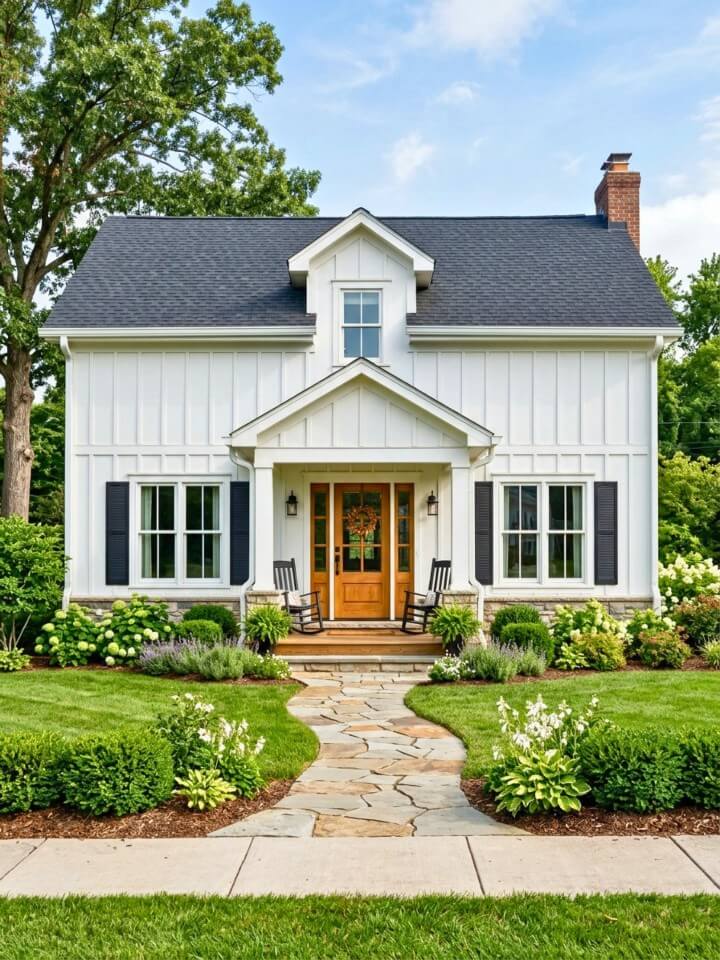
White board and batten siding never really goes out of style. It gives a home that clean, put-together look without feeling overdone. The crisp vertical lines work especially well on farmhouses, cottages, and traditional builds with simple rooflines.
Pair it with black shutters for contrast. A warm wood front door softens the sharpness of the white. Simple porch lights in a bronze or matte black finish complete the entry without cluttering it.
Fiber cement is the most popular material for this look. It holds paint well and resists moisture better than raw wood. Vinyl is a lower-cost option that still delivers clean lines. Paint costs typically run $30–$60 per gallon for exterior-grade formulas.
How to Nail the Classic White Farmhouse Look
- Use bright white on siding with a slightly warmer white on trim – this adds subtle depth
- Space battens 12 to 16 inches apart for traditional proportion
- Choose a flat or low-sheen finish to avoid glare on sunny walls
- Add black door hardware and matching light fixtures for a finished entry
- Keep landscaping simple – boxwoods or lavender borders work well
- Look for fiber cement siding panels at home improvement stores or local lumber yards
2. Modern Black Board and Batten Siding
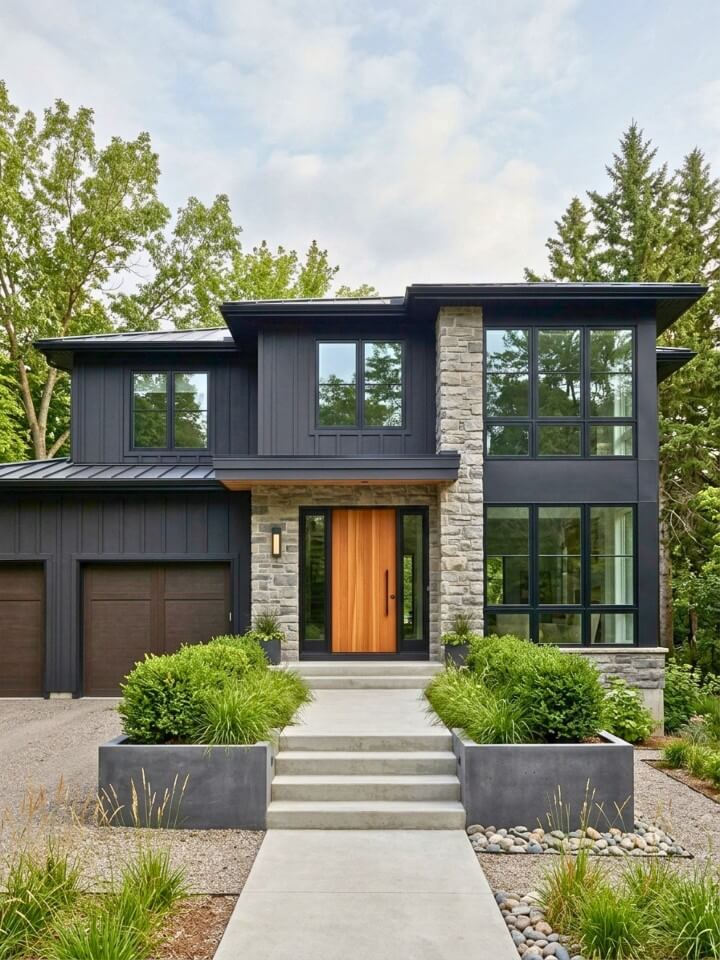
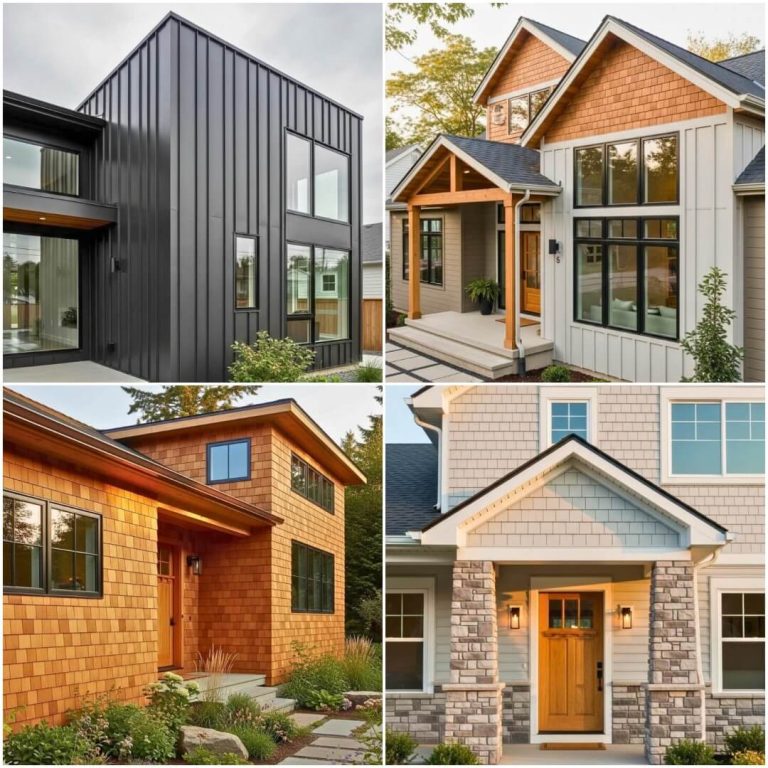
Black siding makes a strong statement. It defines the shape of a house in a way that lighter colors simply cannot. When paired with large windows and a clean roofline, black board and batten turns a plain exterior into something that feels intentional and sharp. It works especially well on contemporary builds, mountain homes, and modern farmhouses with minimal trim detail.
Getting the Bold Black Exterior Right
- Go matte or satin finish – gloss tends to highlight surface flaws
- Keep batten width slim, around 1.5 to 2 inches, for a modern proportion
- Use black on the front facade first if you are unsure about full coverage
- Pair with natural wood accents like cedar planters or a stained porch beam
- Metal house numbers and simple sconces complete the look without overcrowding it
- Find dark exterior paints and fiber cement materials at building supply stores or siding specialty dealers
3. Farmhouse Board and Batten with Warm Wood Accents
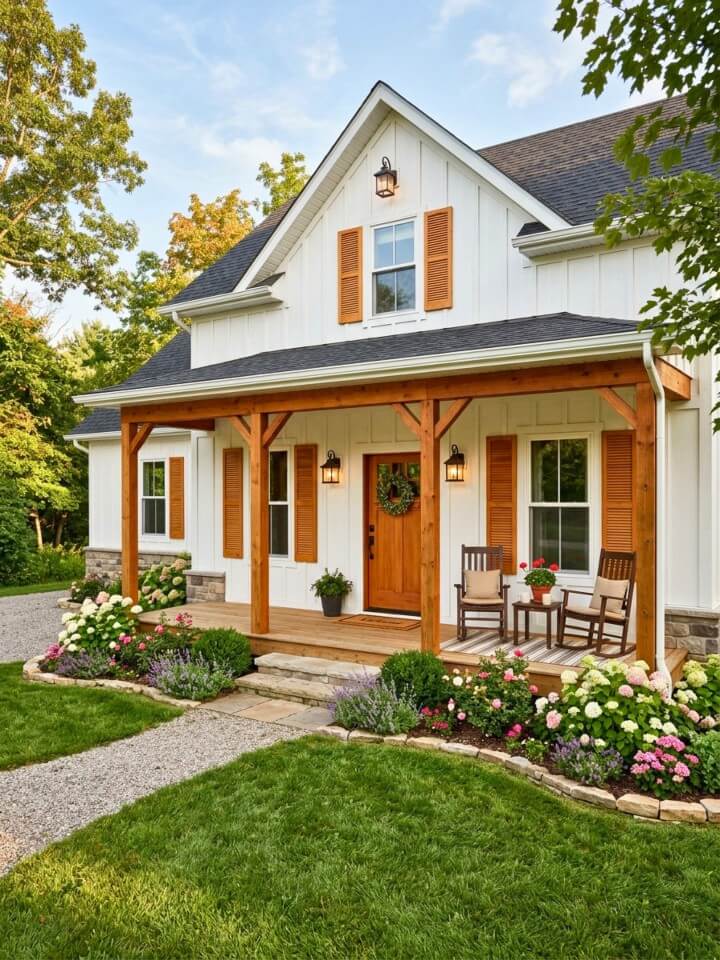
There is something honest about a farmhouse exterior that mixes painted siding with real wood. White or cream board and batten forms the base. Then cedar posts, a stained front door, or natural wood shutters bring in warmth that paint alone cannot deliver.
This combination works best around covered porches and wide front entries. Those are the spots where texture matters most because people slow down there. A painted wall behind a cedar post creates a quiet interplay of materials that feels genuinely crafted.
Mixing Wood and Paint the Farmhouse Way
- Choose warm-toned stains like honey oak or weathered brown for cedar accents
- Use cream or off-white siding instead of bright white for a softer farmhouse feel
- Add wood corbels under porch overhangs for an authentic detail
- Keep window trim painted white so wood accents stand out naturally
- Natural wood shutters can be sourced at millwork shops or salvage yards
- Local lumber yards often carry cedar posts and trim boards ready to stain
4. Board and Batten Siding on a Front Porch
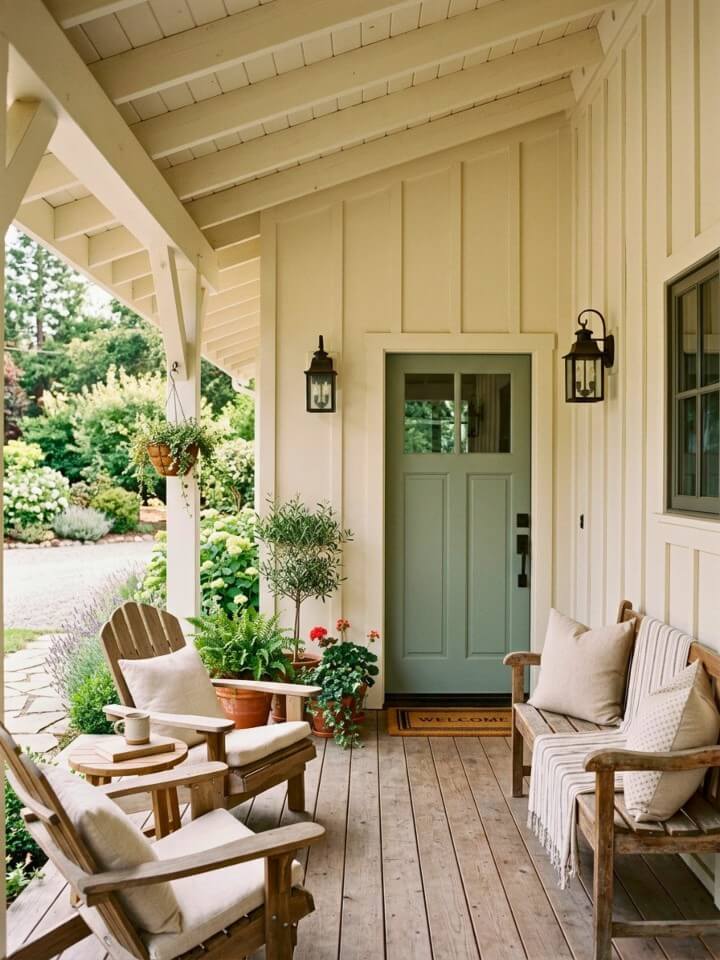
The front porch wall is often overlooked. Most people focus on the main facade and forget that the porch backing is one of the first things guests actually, face. Board and batten on that wall changes everything. It frames the seating area, gives the space a sense of enclosure, and makes the porch feel like a real room rather than a transition zone.
A soft neutral color keeps the mood calm and easy. Warm white, pale greige, or light sage all work well depending on the surrounding materials. To make the area feel more finished from the ground up, you can borrow simple planting and edging cues from notable small patio landscaping ideas and adapt them to the porch perimeter.
This approach costs less than a full exterior reclad. You are working with a smaller surface area, so material costs stay manageable.
Turning Your Porch Wall Into a Feature
- Use the same color as your main siding for a seamless look, or go one shade deeper for definition
- Install battens vertically all the way to the porch ceiling to make ceilings feel taller
- Choose tongue-and-groove or bead board for the ceiling to complement the wall
- Add simple black lantern sconces at eye level, not too high
- A single row of potted plants along the porch edge softens the structured wall behind
- Porch-grade exterior paint and trim boards are widely available at hardware stores
5. Two-Tone Board and Batten Exterior
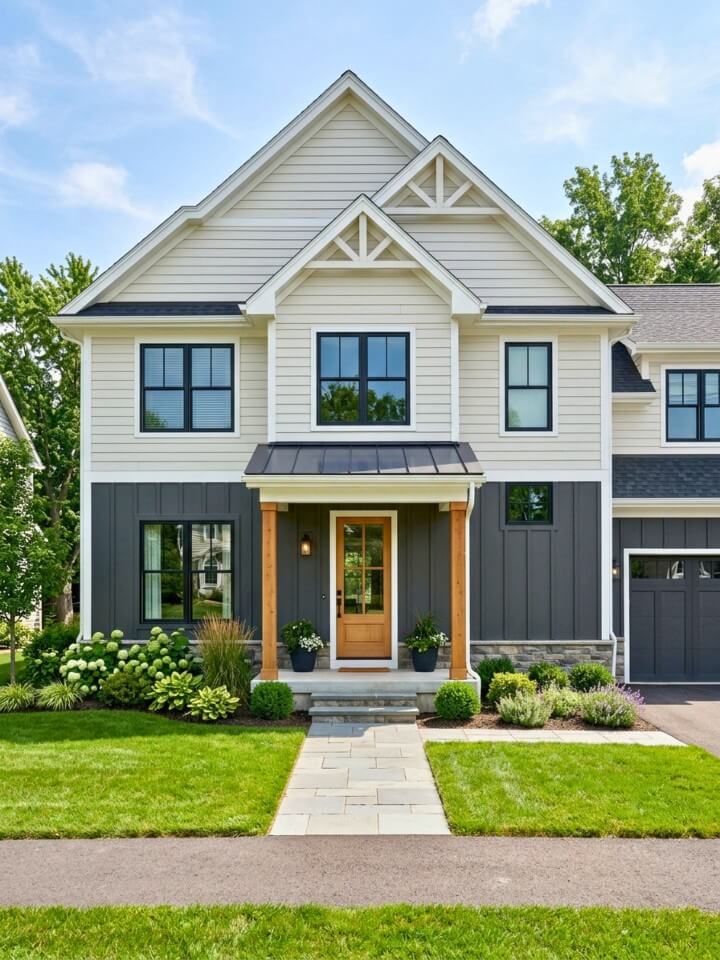
A two-tone exterior adds visual interest without creating chaos. The trick is contrast with control. A darker lower level grounding the home and a lighter upper story lifting it is a formula that has worked for decades. The eye reads the separation naturally. It also makes large homes feel less imposing and smaller homes feel more intentional.
Board and batten does not have to cover both zones. Sometimes vertical siding on just one section – a gable, an entry wing, or the garage face – is enough. Paired with horizontal lap siding on the main body, it creates texture that feels purposeful.
Keep trim color consistent across both tones. That single decision holds the whole design together.
Pulling Off a Two-Tone Exterior Without Overdoing It
- Stick to colors within two or three shades of each other for a subtle split
- Use the darker tone on the bottom half to visually anchor the foundation
- A trim color that sits between both shades ties the palette together cleanly
- Reserve board and batten for gables or the entry section if you want contrast without full commitment
- Test paint swatches on the actual wall before committing — lighting changes everything
- Most paint counters at hardware stores can color-match any shade you find online
6. Soft Gray Board and Batten Siding
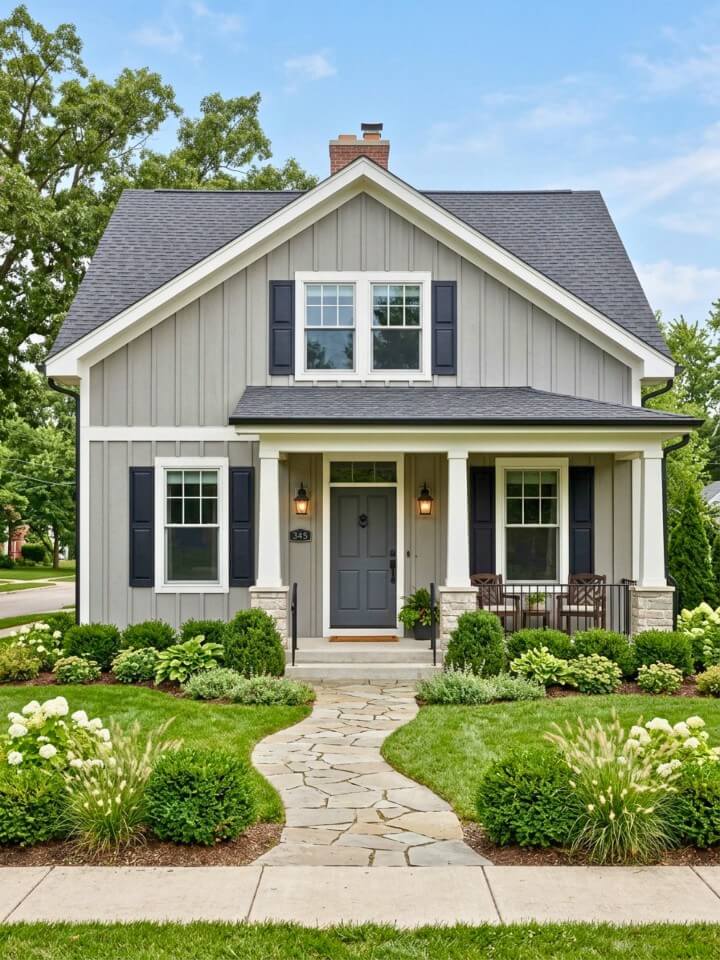
Gray sits in a comfortable middle ground. It is not as stark as white and not as bold as dark charcoal. Soft gray board and batten gives a home a polished, settled look that ages gracefully. It reads as neutral but it is not boring. The vertical lines give it enough texture to hold attention.
This color works particularly well on ranch homes and cottages where the goal is quiet curb appeal. White trim sharpens the edges. Black hardware — door handles, house numbers, light fixtures — adds a precise finish.
Soft gray paint in exterior formulas typically runs $35–$65 per gallon depending on brand and finish.
Why Soft Gray Works on Almost Any Home Style
- Choose a warm gray with slight beige undertones rather than a cool blue-gray for a friendlier look
- Wide battens, around 2 to 3 inches, give a more traditional proportion on ranch-style homes
- White trim should be crisp — avoid ivory or cream trim with gray siding as it can look dingy
- Black door hardware and matching fixtures are the quickest upgrade for this palette
- Boxwoods, lavender, or Karl Foerster grass pair naturally with gray exteriors
7. Board and Batten Gable Accent
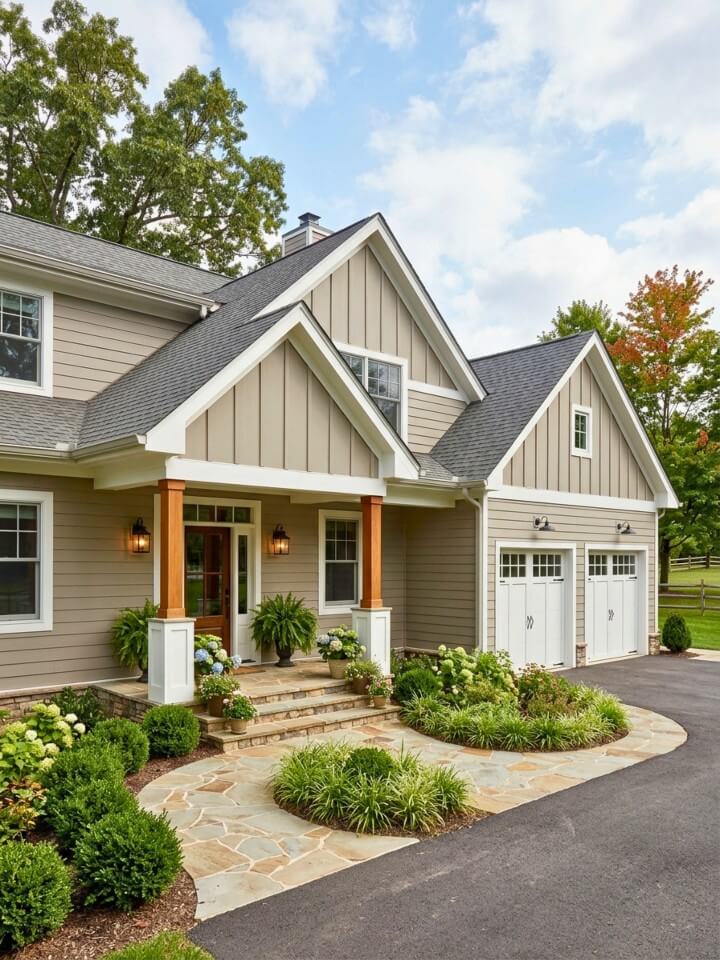
Not every exterior needs a full makeover. Sometimes one well-placed detail does more than a complete reclad. A board and batten gable accent is exactly that kind of detail. It draws the eye to the roofline, adds texture to what is often a flat, blank triangle, and gives the whole front elevation more visual structure.
Gables above garages, covered porches, or dormers are ideal candidates. The area is defined and contained, so the installation is manageable. Color choice matters here. A close match to the main siding creates a quiet layered effect. A gentle contrast pulls the gable forward and gives it more presence.
This is one of the most cost-effective ways to add exterior character.
Adding a Gable Accent Without Overcomplicating the Exterior
- Use the same siding material as the rest of the house for visual consistency
- A color that is two shades darker than the main wall creates subtle definition
- Keep battens evenly spaced — odd spacing in a triangular gable looks unintentional
- Metal flashing at the gable edges protects the installation from water intrusion
- This is a good DIY-friendly project if you are comfortable working at height
- Trim boards, battens, and gable vent covers are available at any lumber yard or home center
8. Sage Green Board and Batten Exterior
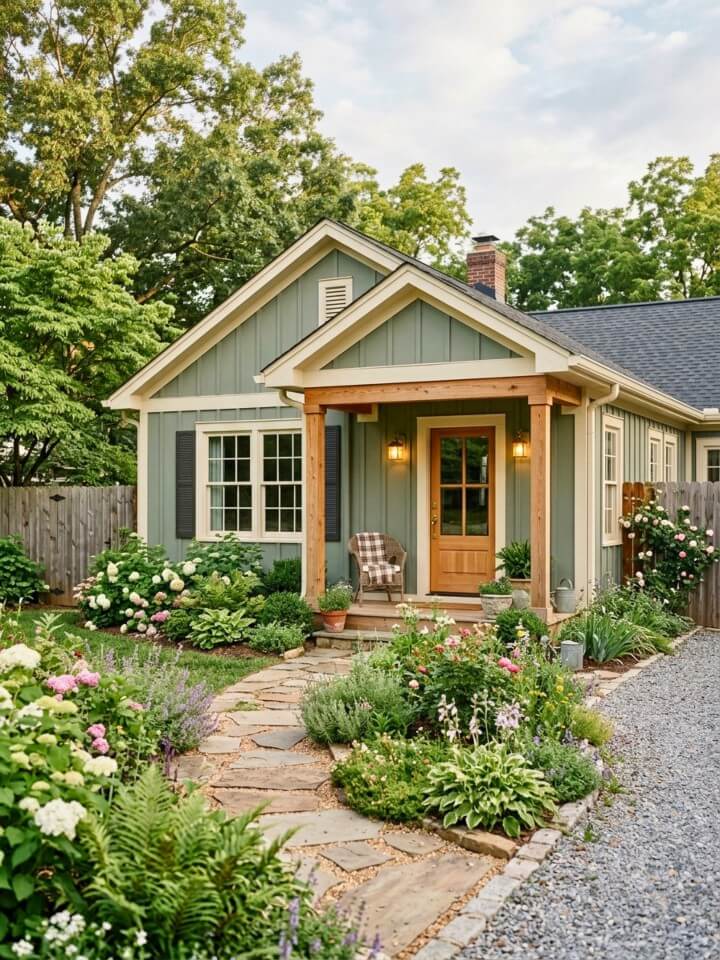
Sage green has a way of settling into a yard rather than shouting from it. It reads as natural and calm, especially on homes surrounded by mature trees, garden beds, or open lawn. The color shifts subtly in different light — cooler on overcast days, warmer in afternoon sun. That quality makes it feel alive in a way that static neutrals do not.
Cream trim pulls out the warmth in the green. Brass or antique bronze light fixtures add a quiet richness. Cedar accents — a front door, window boxes, or porch posts — tie the whole palette back to nature. The overall effect is unhurried and grounded.
This palette fits cottage, farmhouse, and garden-adjacent homes particularly well.
Making Sage Green Siding Feel Natural, Not Trendy
- Test multiple sage swatches — some lean gray, some lean yellow, some lean blue. Choose based on your yard’s dominant tones
- Cream or warm white trim flatters sage better than bright white
- Brass or bronze hardware keeps the palette organic rather than industrial
- Window boxes with trailing greenery or seasonal flowers reinforce the garden connection
- Avoid overly polished landscaping — loose, naturalistic plantings suit this color better
- Exterior paint in sage tones and fiber cement panels are available at paint specialty stores and home improvement centers
9. Board and Batten with Stone Skirting
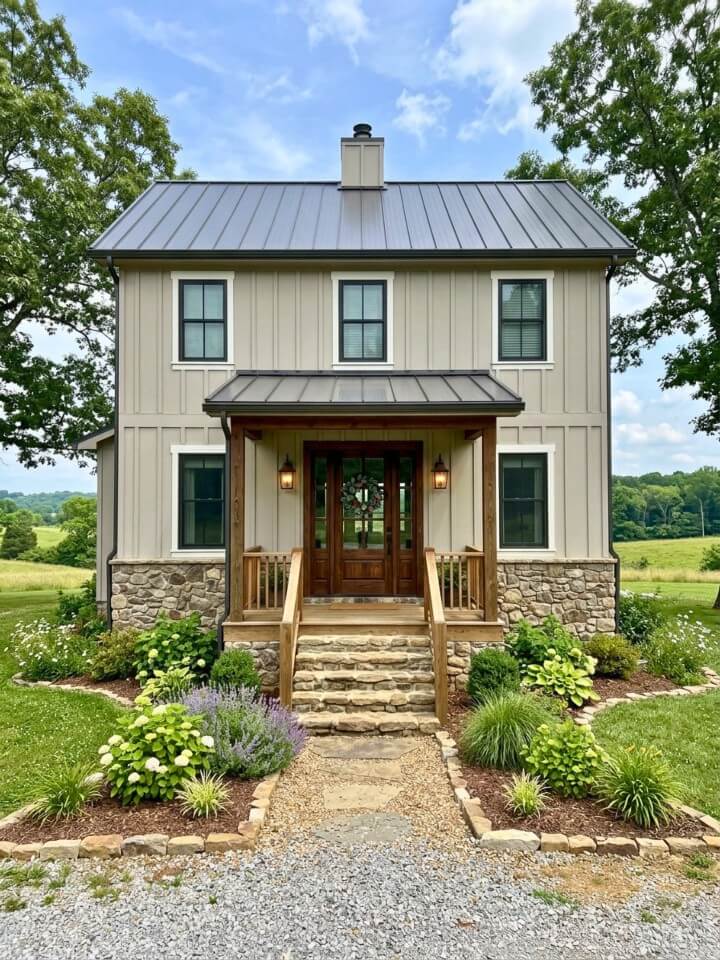
Stone at the base of a home does something no paint can replicate. It grounds the structure. It signals permanence. When combined with board and batten siding above, the two materials work together in a way that feels both rugged and refined. The stone handles the base. The vertical siding lifts the eye upward. Together they give a home a layered, well-built quality.
Fieldstone, stacked ledger stone, and manufactured stone veneer are all workable options at different price points. Manufactured stone veneer typically runs $10–$30 per square foot installed. The siding color above should complement the stone tones rather than compete. White, soft gray, warm beige, and sage green all pair naturally with most stone palettes.
Combining Stone and Siding for a Grounded Exterior Look
- Run the stone at least 18 to 24 inches above grade for visual weight and water protection
- Match stone tones to your driveway, walkway, or porch steps for a unified hardscape
- Use a drip edge or Z-flashing between the stone top and the siding above to prevent moisture issues
- Keep mortar joints consistent — irregular joints draw attention away from the materials themselves
- Manufactured stone veneer is widely available at masonry supply stores and home improvement centers
- Natural fieldstone is often sourced through local quarries or landscape supply yards
10. Narrow Board and Batten for a Clean Modern Look
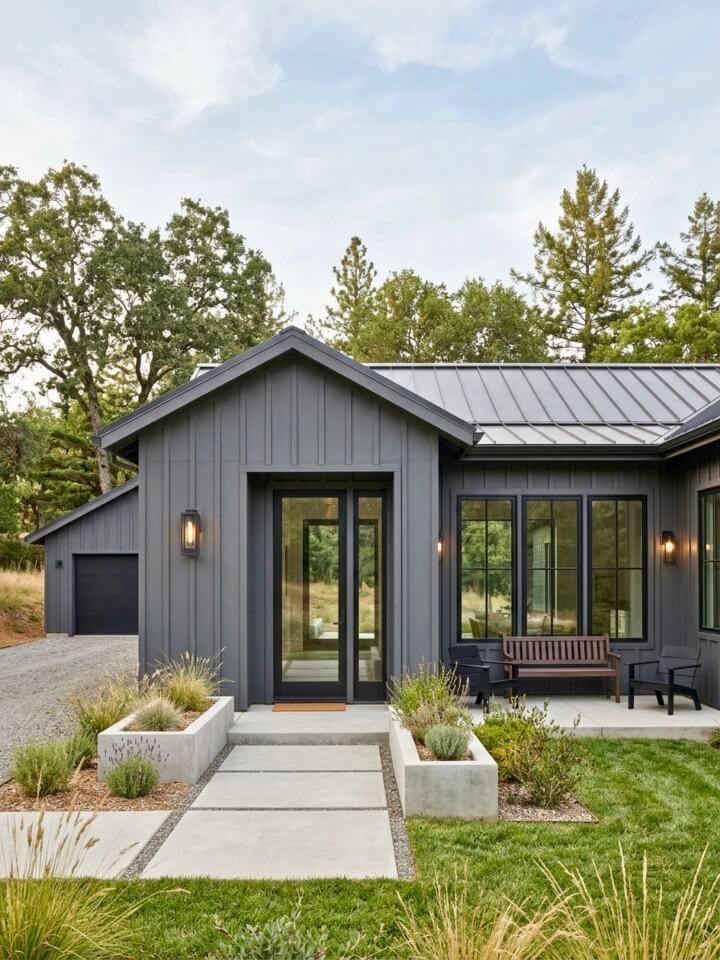
Spacing matters. Wider battens feel traditional and casual. Narrow battens feel precise and contemporary. On a tall wall or a two-story entry, slim vertical lines create a texture that reads as refined rather than rustic. That single shift in proportion can move a home from farmhouse to modern without changing the color or the material.
This approach works well on city homes and smaller lots where the exterior needs to do a lot visually in a limited footprint. Charcoal, black, warm white, and deep navy all work well with narrow batten profiles.
Restraint is the rule here. Less trim, fewer decorative details, sharper lines.
Why Narrow Battens Change the Whole Feel of a Facade
- Use 1 to 1.5 inch battens spaced 8 to 10 inches apart for a sharp modern profile
- Taller walls benefit most — the narrow lines emphasize height effectively
- Avoid wide window casings or ornate trim that conflicts with the minimal intent
- Concrete or metal planters suit this style better than terracotta or wood boxes
- Painted fiber cement or smooth engineered wood hold narrow batten profiles cleanly
- Specialty siding suppliers and millwork dealers typically carry narrow batten profiles
11. Coastal Blue Board and Batten Siding
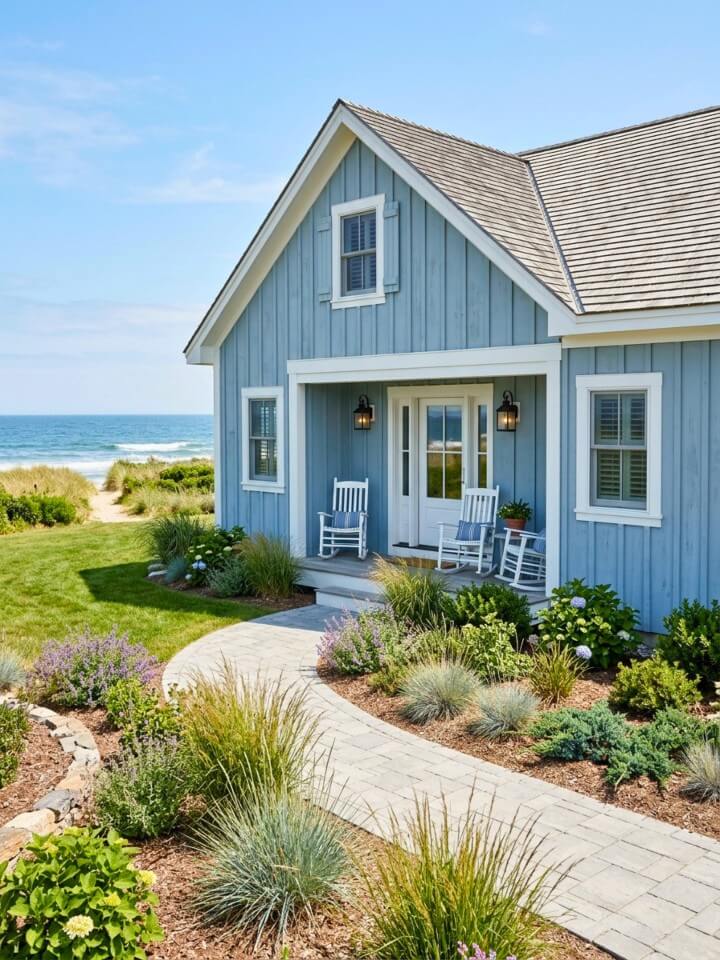
Coastal blue siding carries a mood with it. It feels open, breezy, and unhurried in a way that most colors simply do not. On a home near water, it makes complete sense. But it works just as well inland — on a sunny corner lot, beside a garden with white flowering shrubs, or anywhere the yard has an open, relaxed quality. The color does not need an ocean to earn its place.
Exterior paint in coastal blue tones typically runs $35–$65 per gallon.
Bringing a Coastal Blue Exterior Together
- Choose a muted, dusty blue rather than a bright or saturated tone for a more refined look
- White trim should be clean and crisp — warm ivory can make the blue look faded
- Light gray or white porch flooring keeps the base palette from getting heavy
- Simple rope or black lantern fixtures suit this style without leaning too nautical
- Flowering white or cream plants along the foundation reinforce the palette naturally, and noticeable lilac bush landscaping ideas can work beautifully when you want soft blooms near a blue exterior
12. Board and Batten Around Large Windows
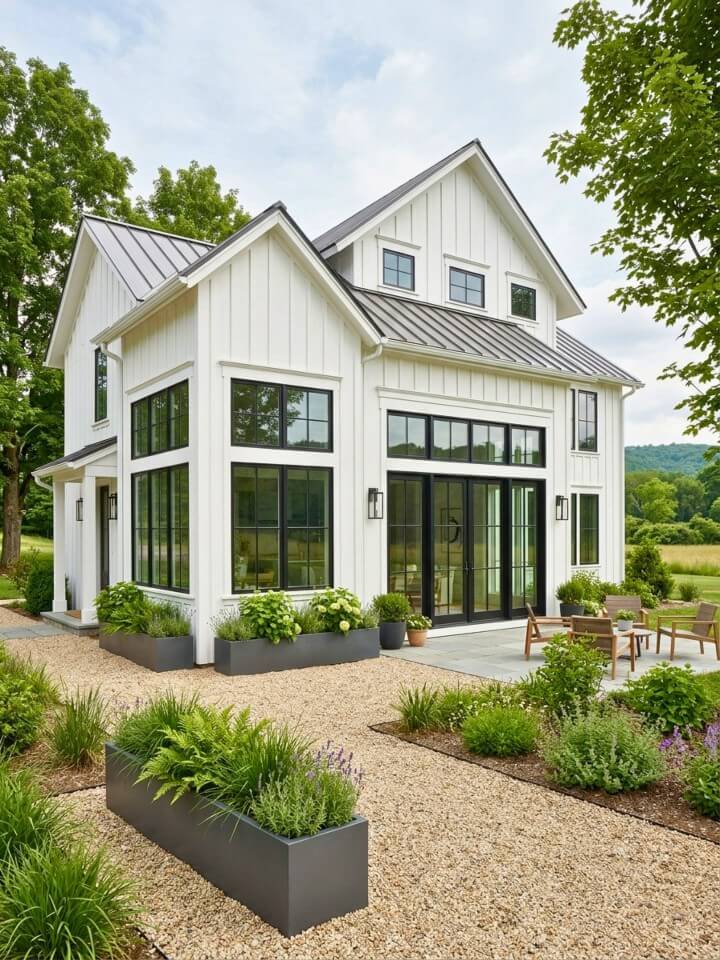
Large windows deserve a proper frame. Without it, they can feel like openings punched into a flat wall. Board and batten siding around oversized glass changes that dynamic completely. The vertical lines guide the eye upward and around the window, giving the glazing a context that makes it feel designed rather than just functional.
This works especially well on picture windows, floor-to-ceiling patio doors, and tall front windows where the glass is already a feature. Wide trim casing around the window itself adds to the effect. The siding handles the broad wall. The trim handles the detail. Together they make the window feel like the centerpiece it is meant to be.
Keep the ground-level treatment simple. Low gravel beds or structured planters below the glass let the window breathe.
Framing Large Windows With Vertical Siding
- Use trim casing that is at least 4 to 5 inches wide around large window openings
- Run battens continuously from the roofline down past the window for uninterrupted vertical movement
- Avoid busy landscaping directly below large windows — it competes with the glass
- A recessed window depth of even a few inches adds shadow and dimension to the frame
- Choose a siding color that recedes slightly so windows remain the visual focal point
13. Rustic Board and Batten with Natural Wood Stain
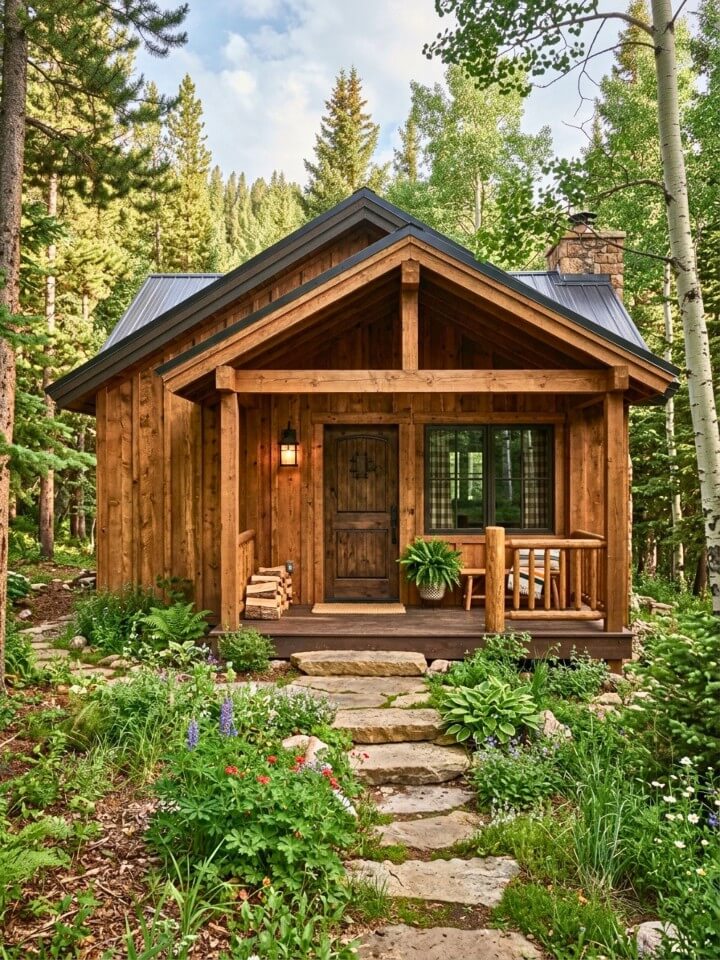
Stained wood siding occupies a different emotional register than painted siding. It feels handmade. It ages with character rather than showing wear. On a cabin, a backyard guest house, or even a single accent wall near a covered porch, natural wood board and batten brings a warmth that no paint formula can fully replicate.
Black metal light fixtures, stone steps, and native plantings complete the look. The goal is to feel like the house belongs to its setting rather than sitting on top of it.
Getting the Rustic Stained Wood Look Right
- Use a penetrating oil-based stain rather than a film-forming one — it allows wood to breathe and age naturally
- Reapply stain every 3 to 5 years depending on sun and rain exposure in your area
- Pair darker stains with lighter stone or gravel accents to avoid a heavy, shadowed look
- Black metal hardware — hinges, door handles, light brackets — suits stained wood well
- Native or low-maintenance plants like ferns, ornamental grasses, or hostas suit this aesthetic
14. Mixed Horizontal Siding and Board and Batten
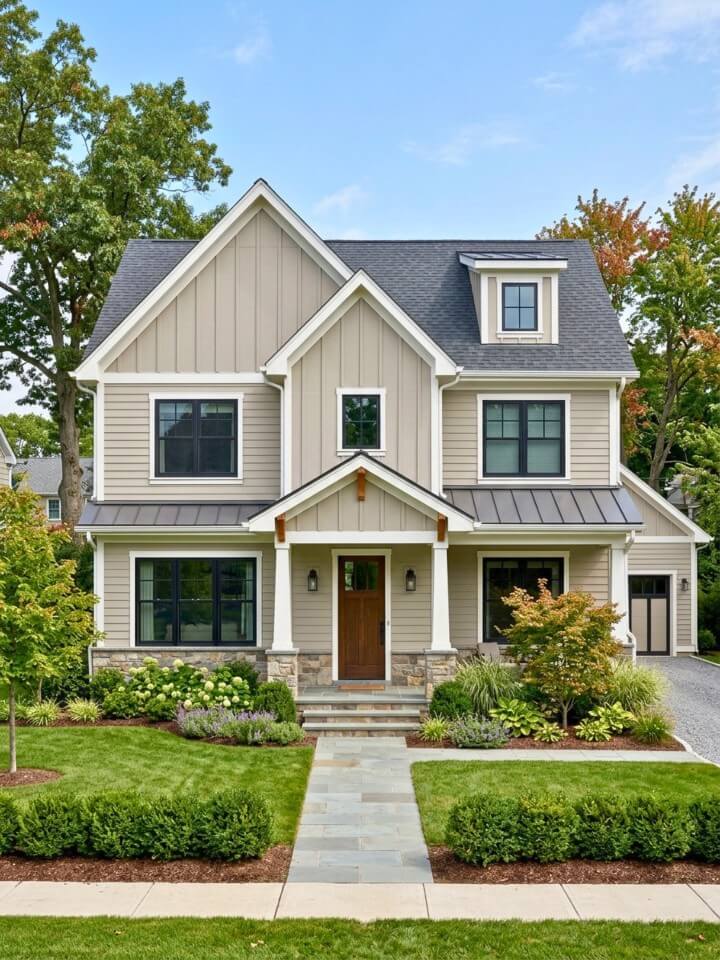
Using two siding styles on the same exterior sounds risky. Done right, it reads as confident and layered. The key is giving each material a clear zone. Horizontal lap siding on the main body of the house. Board and batten on gables, an entry section, or an upper story. The distinction between zones should be obvious — not blurry or accidental-looking.
This approach suits craftsman, transitional, and modern farmhouse styles particularly well.
Using Two Siding Styles Without Confusing the Eye
- Assign each siding type a distinct architectural zone — gable, entry, or upper story works cleanly
- Use a single trim color across both materials to visually tie the exterior together
- If using two colors, keep them within three shades of each other on the same tonal family
- A clear horizontal band or trim board between the two siding zones prevents a muddled transition
- Board and batten on the entry section draws attention to the front door naturally
- Both lap siding and board and batten panels are stocked at most siding dealers and home improvement centers
15. Charcoal Board and Batten with White Trim
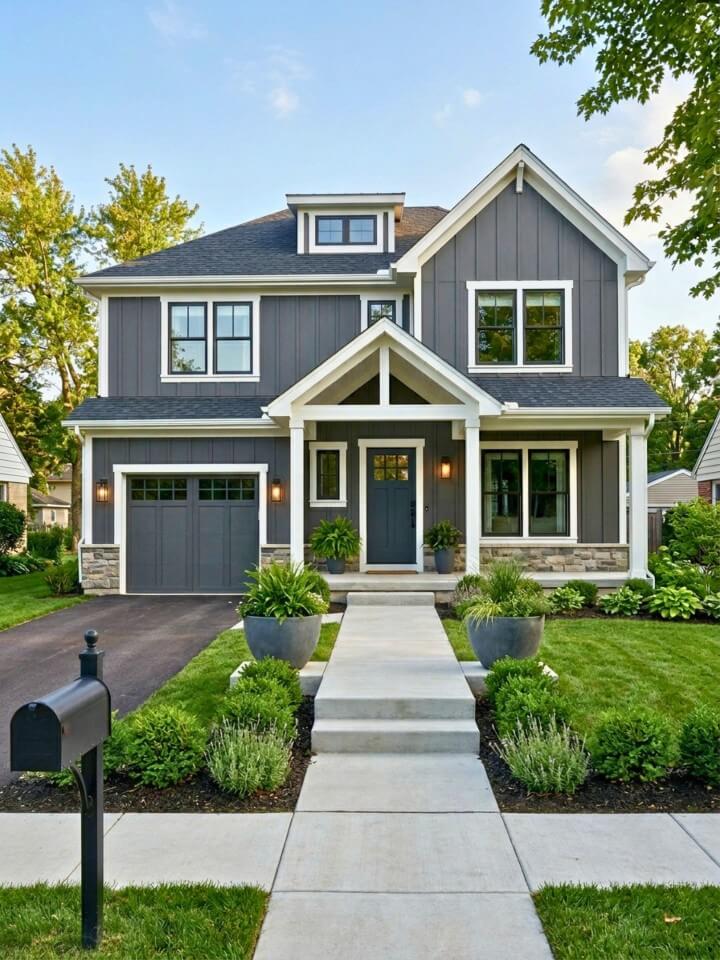
Charcoal and white is one of those exterior combinations that photographs well and reads even better in person. The dark siding gives the house a strong, grounded presence. The white trim lifts and defines every edge — windows, corners, rooflines, door frames. Nothing looks accidental. The contrast is doing real design work.
This palette performs best on homes with clean architecture. Unnecessary ornamental detail gets lost against charcoal. Simple, well-proportioned window casings and a clean fascia line are all it needs. A black front door disappears into the siding in a satisfying way. A wood-stained door adds warmth against the dark wall.
Concrete planters, low green shrubs, and metal light fixtures keep the ground-level detail sharp and minimal.
Making Charcoal and White Work on Your Exterior
- Choose a true charcoal — avoid shades that read as dark brown or muddy gray in outdoor light
- White trim should be bright, not creamy — warm whites soften the contrast too much
- A wood-stained front door adds warmth that a black door cannot provide against dark siding
- Keep window casing profiles simple — overly ornate trim details get lost against charcoal
- Low, structured plantings like dwarf evergreens or ornamental grasses suit this palette well
16. Board and Batten Entryway Accent
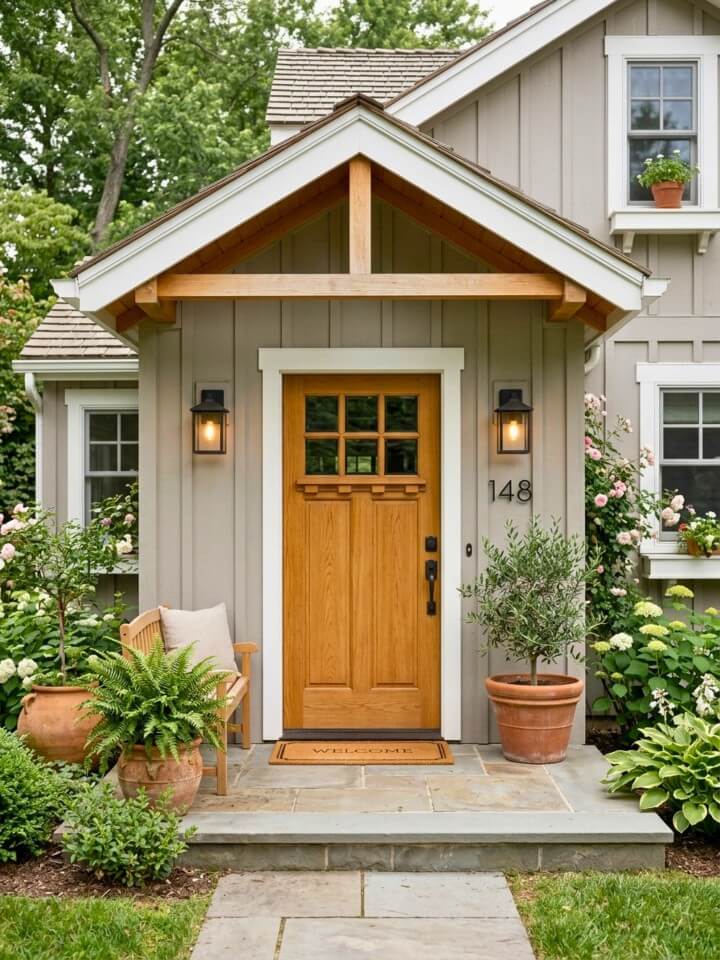
The entry is the one part of a home every visitor sees up close. It deserves more attention than it usually gets. Board and batten on the entryway wall — behind the door, inside a covered porch, or flanking sidelights — turns an ordinary threshold into something that feels considered and welcoming.
House numbers, a quality door knocker, and matching sconces are small additions that complete the picture without requiring a renovation. The curbside approach matters too, so cool low-maintenance mailbox landscaping ideas can help carry the entry style all the way to the street.
Designing an Entry That Makes a Strong First Impression
- Use vertical board and batten from floor to ceiling on the entry wall for the fullest effect
- A darker paint color on the entry wall than the main exterior creates a natural focal point
- Wide battens around 2.5 to 3 inches suit entryway scale better than very narrow profiles
- Pair sconces at eye level rather than high on the wall — lower placement feels more welcoming
- A quality door mat and simple potted plants on either side frame the door without cluttering the entry
17. Cream Board and Batten for a Soft Cottage Look
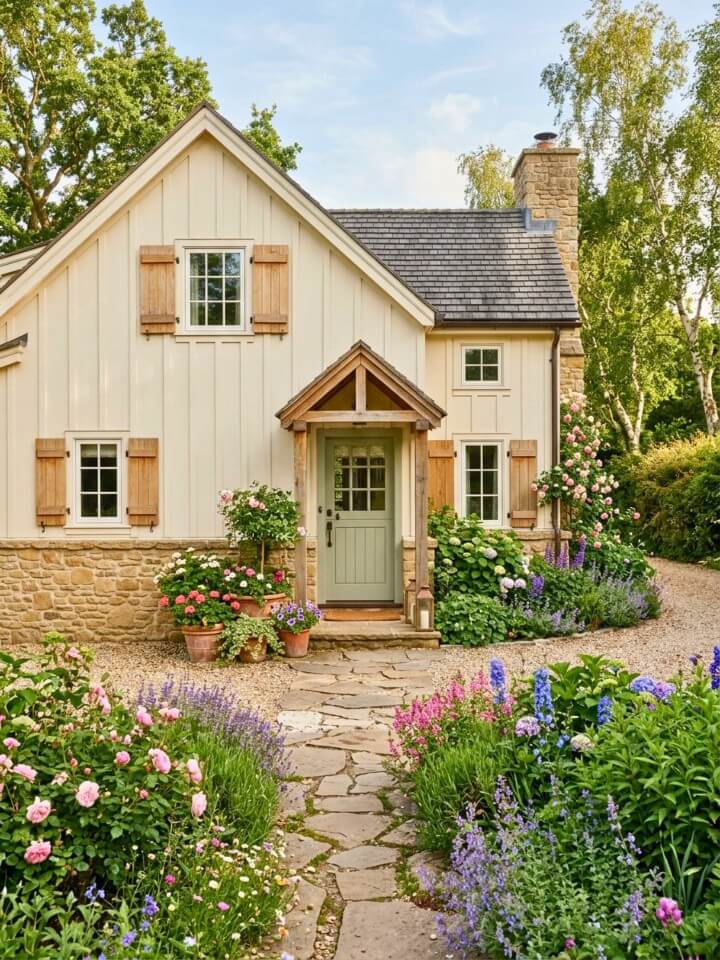
Cream sits between white and beige in a way that feels genuinely warm. It catches sunlight differently than white — softer, quieter, more relaxed. On a cottage exterior, that quality matters. The home should feel approachable rather than sharp. Cream board and batten delivers that mood without looking dated or washed out.
Tan or buff-colored stone at the foundation pairs naturally with cream siding. Wood shutters in a warm walnut or weathered gray add texture without disrupting the palette. Clay pots, flowering window boxes, and loose garden plantings reinforce the cottage feeling at ground level.
This color also hides minor surface imperfections better than bright white, which is a practical advantage on older homes with less-than-perfect wall surfaces.
Creating a Warm Cottage Exterior with Cream Siding
- Choose a cream with yellow or peach undertones rather than a gray-based one for true warmth
- Tan or buff stone at the base reads as naturally connected to cream siding
- Wood shutters in weathered gray or warm walnut complement cream without competing
- Flowering window boxes in soft pink, white, or peach reinforce the cottage palette
- Slightly wider battens around 2.5 inches suit the relaxed cottage scale better than slim modern profiles
- Cream exterior paint and complementary trim boards are available at paint stores and home improvement centers
18. Board and Batten with Brick Details
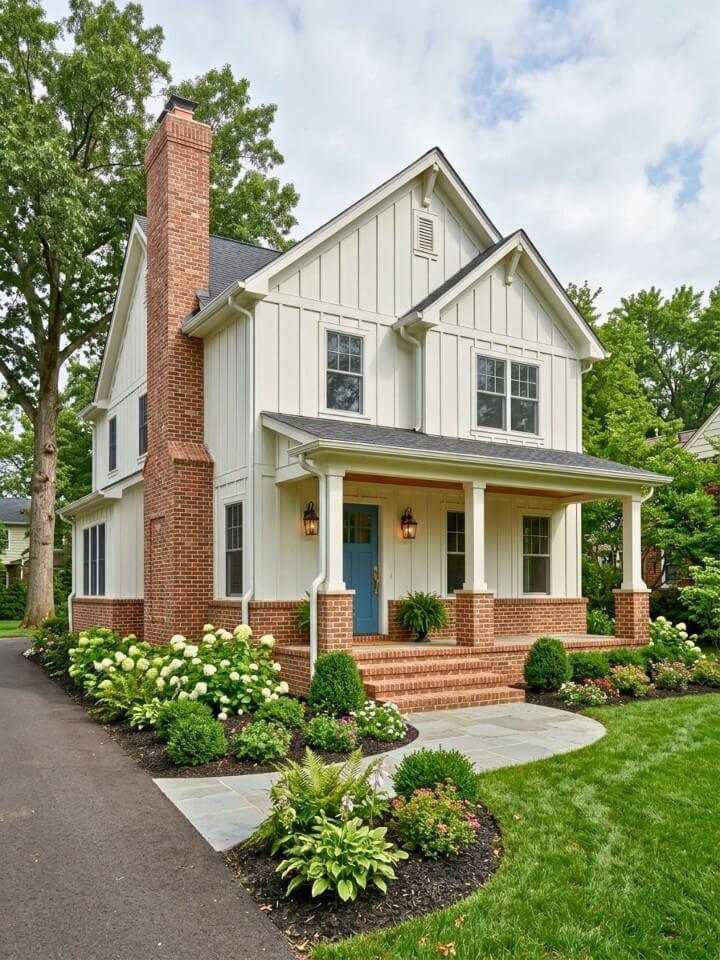
Brick and board and batten have been sharing exteriors for a long time. The combination works because the two materials occupy different roles clearly. Brick handles the base — foundation, porch steps, chimney, or lower wall. Board and batten takes over above it, carrying the wall upward with clean vertical lines. Each material is doing what it does best.
Color coordination between the two requires some thought. Warm red brick pairs naturally with cream, soft white, and warm gray siding. Darker or cooler brick tones suit charcoal, slate blue, or sage green above. The goal is harmony, not matching. The siding should complement the brick, not disappear into it.
White or cream trim provides a clean boundary between the two materials and holds the whole composition together.
Pairing Brick and Board and Batten Without Clashing
- Use a horizontal trim band or Z-flashing as a visual break between the brick and siding zones
- Warm red or tan brick suits cream, warm white, or soft beige siding above it
- Cooler or darker brick tones pair well with sage green, charcoal, or slate blue siding
- Keep mortar color consistent with brick tone — contrasting mortar competes with the siding above
- White or cream window trim ties brick and siding together across both zones effectively
19. Board and Batten with Metal Roof Accents
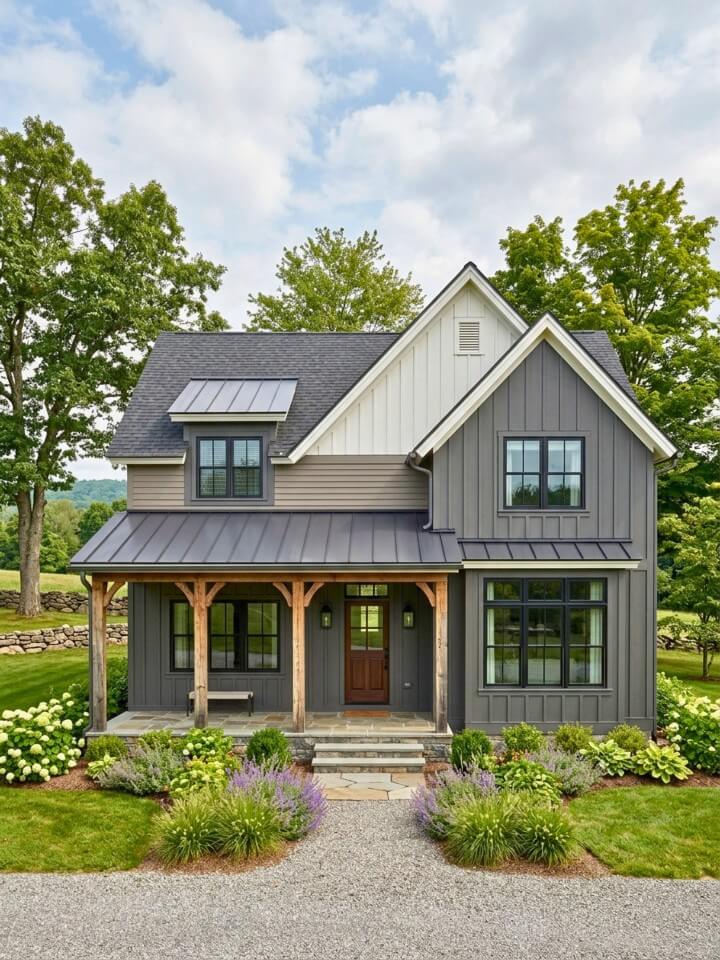
Metal roofing and board and batten siding share a practical, weather-ready quality. Together they give a home a country-modern character that feels durable rather than decorative. A standing seam metal roof over a porch, dormer, or main roofline is not just a visual choice. It handles rain, snow, and heat better than most other roofing materials while adding a clean, linear texture that complements vertical siding naturally.
Color coordination matters here. Charcoal or dark gray metal roofing suits white, sage, or warm gray siding. Weathered copper or brown metal panels pair well with cream, tan, or natural wood siding tones. The roof does not need to match the siding — it needs to work alongside it.
Standing seam metal roofing typically runs $10–$16 per square foot installed, making it a meaningful investment worth planning carefully.
Pairing Metal Roofing with Board and Batten Siding
- Choose a standing seam profile rather than corrugated for a cleaner, more modern result
- Dark charcoal roofing suits white, green, and gray siding tones particularly well
- A metal porch roof is a lower-cost way to introduce the material before committing to the full roofline
- Keep fascia and soffit colors consistent with the main trim for a connected finish
- Avoid mixing multiple metal tones — gutters, flashing, and roofing should coordinate
FAQs About Board and Batten Siding
A board and batten project always sparks the same handful of questions once the inspiration fades and the planning starts. These answers tackle the practical stuff the ideas above skipped over, the things you actually need to know before you call a contractor or pick up a paintbrush.
How long does board and batten siding last?
It depends on the material. Fiber cement can last 30 to 50 years with basic care, while engineered wood runs 20 to 30 years. Vinyl falls somewhere in between, and real wood needs the most attention.
Can I install board and batten siding over existing siding?
Sometimes, but it’s not always wise. Going over old siding can trap moisture and hide rot underneath. Most contractors recommend removing the old layer first so you can inspect the sheathing and add proper weather barriers.
How much does board and batten siding cost to install?
Expect roughly $4 to $9 per square foot installed for most materials, including labor. Fiber cement sits at the higher end, while vinyl is cheaper. Full-house projects vary widely based on size and prep work.
Does board and batten siding need a lot of maintenance?
Not much, but some. Plan to wash it once a year and check the caulking around joints and trim. Painted surfaces may need a fresh coat every 7 to 10 years, depending on sun and weather exposure.
What’s the best time of year to install board and batten siding?
Late spring through early fall usually works best. Mild, dry weather helps paint and caulk cure properly. Avoid installing in heavy rain or freezing temperatures, since moisture and cold can affect adhesion and finish quality.
Conclusion:
The best thing about board and batten is that it meets you where you are. Big budget or small, full reclad or a single weekend gable, the style bends to fit. You don’t have to commit to the whole house to get that pulled-together look.
So before you start, walk your own street again. Notice what catches your eye on other homes, then picture it on yours. Maybe it’s charcoal with crisp white trim, maybe it’s sage tucked into your garden beds.
Pick the one idea you keep coming back to, and start there. The rest tends to follow on its own.