28 Black Mulch Landscaping Layouts To Recreate
If you have been looking for a simple way to make your yard look more designed and put-together, these 28 mind-blowing black mulch landscaping ideas are a good place to start. Black mulch does something that most other materials cannot — it makes everything around it look better. Plants appear more vibrant, stone paths look more defined, and garden beds look cleaner and more intentional without requiring major construction or a large budget.
The dark color works as a natural frame. It pulls the eye toward your plants, shrubs, and flowers rather than the ground beneath them. Whether your yard is large or small, shaded or sunny, formal or relaxed, dark mulch adapts to the setting without fighting it.
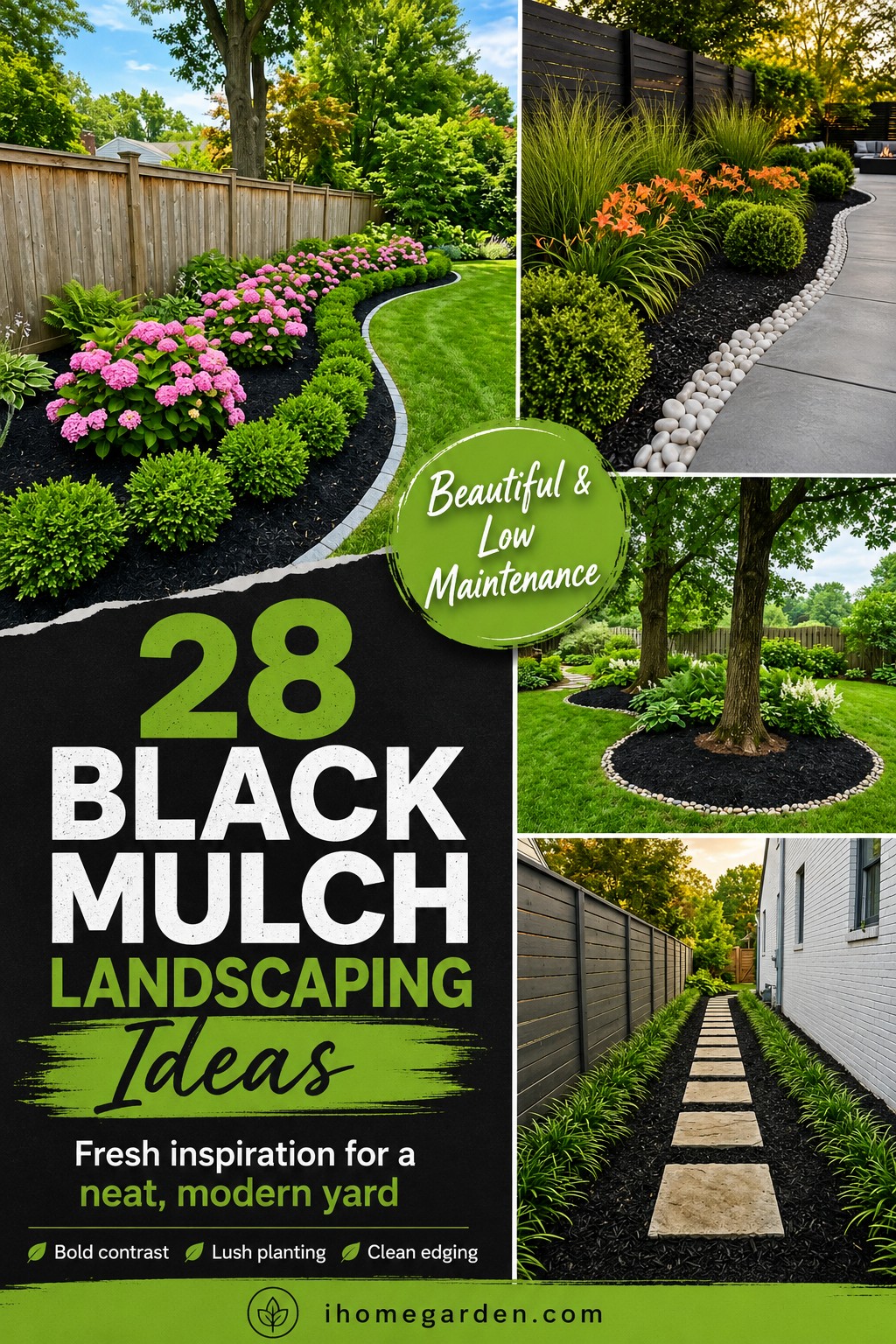
Some projects here take a single afternoon. Others are better saved for a free weekend. Either way, your yard will look noticeably different when you are done.
1. Curb Appeal Borders with Dark Mulch

A clean border of dark mulch along your walkway, driveway, or front garden bed instantly sharpens your home’s curb appeal. The dark color acts like a frame — it separates your lawn from your planting beds and makes everything look more intentional.
This works best when you pair the mulch with plants that have a different texture or color. Bright perennials, low ornamental grasses, or even river rocks create natural contrast against the dark background. The result looks expensive but costs very little.
Pro tip: Apply black mulch at 2 to 3 inches deep. Too thin and it dries out fast; too thick and it prevents water from reaching roots. Refresh it once a year to keep the color dark and bold.
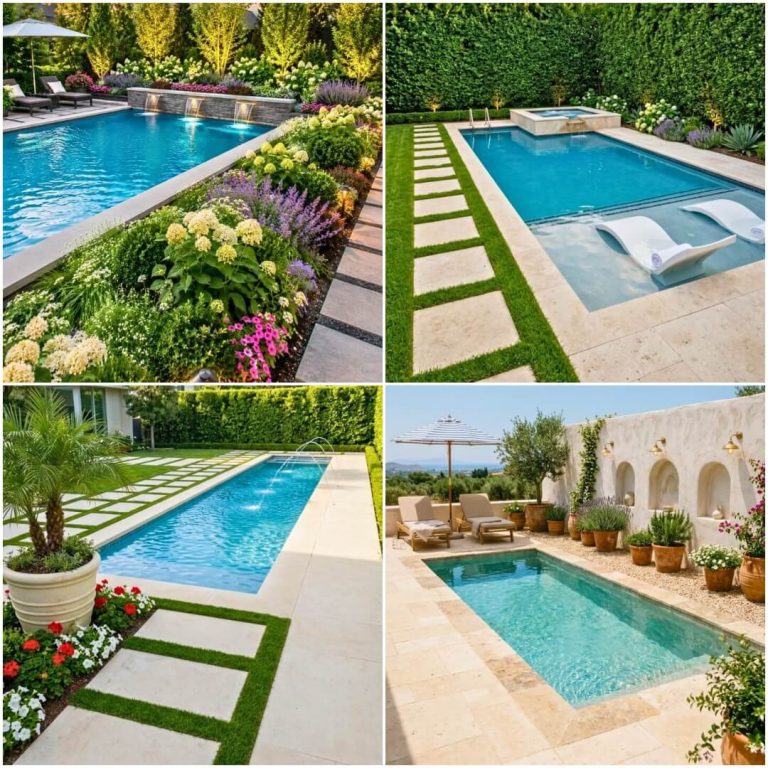
2. Tropical Plants Around a Poolside Landscape

A pool surrounded by plain grass or bare concrete looks unfinished. Dark mulch with tropical plants around the pool edge creates a lush, resort-style setting that makes the whole backyard feel like a destination.
Canna lilies, elephant ears, hibiscus, and bird of paradise all bring bold color and dramatic leaf shapes that stand out against the dark mulch background. Mix tall varieties at the back with medium and low plants at the front to create layered depth around the pool perimeter.
Keep Mulch Away from The Water
Place mulch beds at least 12 to 18 inches back from the pool coping. Mulch that sits too close to the edge gets kicked or blown into the water, clogs filters, and creates extra maintenance. A strip of stone or pavers between the mulch bed and pool edge solves this cleanly.
3. Flowering Shrubs Along the Backyard Border
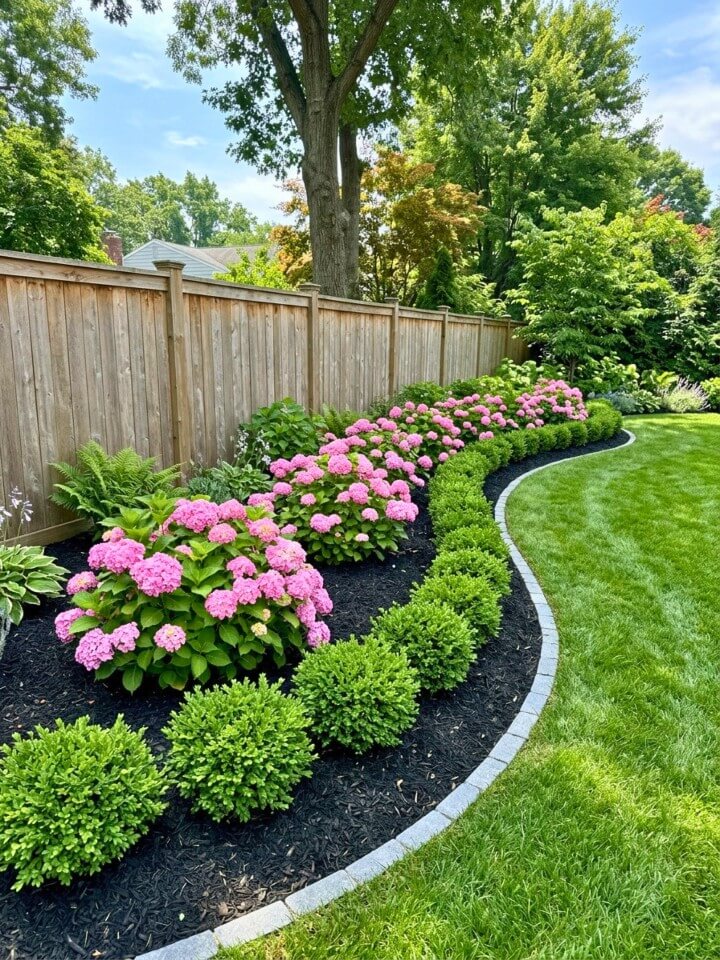
Black mulch landscaping ideas can make garden beds look clean, bold, and stylish. A backyard border planted with flowering shrubs and dark mulch adds color, privacy, and structure to what is often the most underdesigned part of a yard. The back border is visible from your seating area, your kitchen window, and your neighbor’s yard — so it deserves the same attention as the front.
Hydrangeas, azaleas, knockout roses, and viburnum are all reliable choices that bloom heavily and return year after year with minimal care. Plant them in a continuous bed rather than scattered individually across the yard — a connected border reads as a deliberate design decision while isolated plants look random. Use gentle curves along the front edge of the bed to soften the boundary between lawn and planting area.
Bloom Time Matters
Choose at least two varieties that bloom at different times so the border has color from late spring through early fall. A border that only blooms for three weeks in June looks bare and unfinished for the rest of the season.
4. Black Mulch Around a Backyard Seating Area
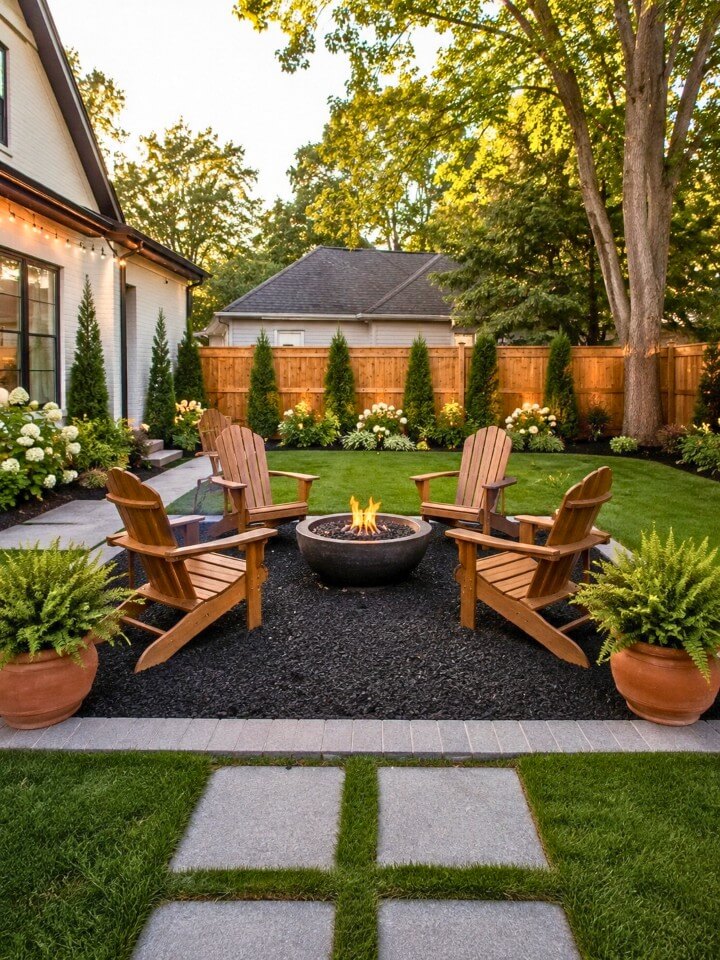
Adding flowers and shrubs can make black mulch landscaping stand out beautifully. Dark mulch around an outdoor seating area defines the space and gives it a sense of purpose. Instead of chairs and a fire pit sitting on bare grass, the mulched zone creates a clear boundary that makes the area feel like a proper outdoor room.
Pair the mulch border with flat pavers or a gravel path leading into the seating area. Add simple planters with seasonal flowers or small shrubs at the corners to anchor the space visually. String lights overhead complete the look and make the area usable after dark.
Fire pit clearance: Keep mulch at least 3 feet away from any open flame. Use gravel or pavers as a buffer zone directly around the pit and reserve the mulch for the outer border of the seating area.
5. Stone Pavers and Mulch Along a Walkway
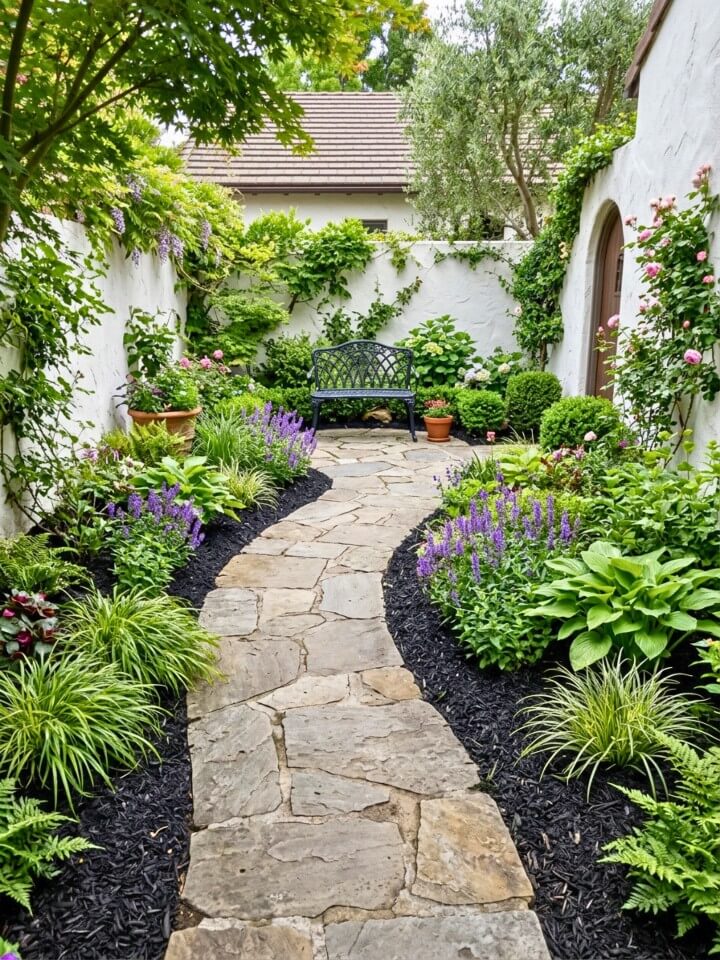
Lining a walkway with dark mulch on one or both sides transforms a plain path into a designed entry. The mulch acts as a border, making the pavers stand out and naturally guiding visitors toward your front door.
Gray flagstone, tan concrete pavers, and irregular stepping stones all look sharp because the dark background highlights each stone’s shape and texture. For a softer look, plant hostas, ornamental grasses, or creeping thyme along the edge so greenery gently spills over the border.
Practical tip: Place a landscape fabric layer under the mulch to suppress weeds along the walkway. This saves significant maintenance time during the growing season.
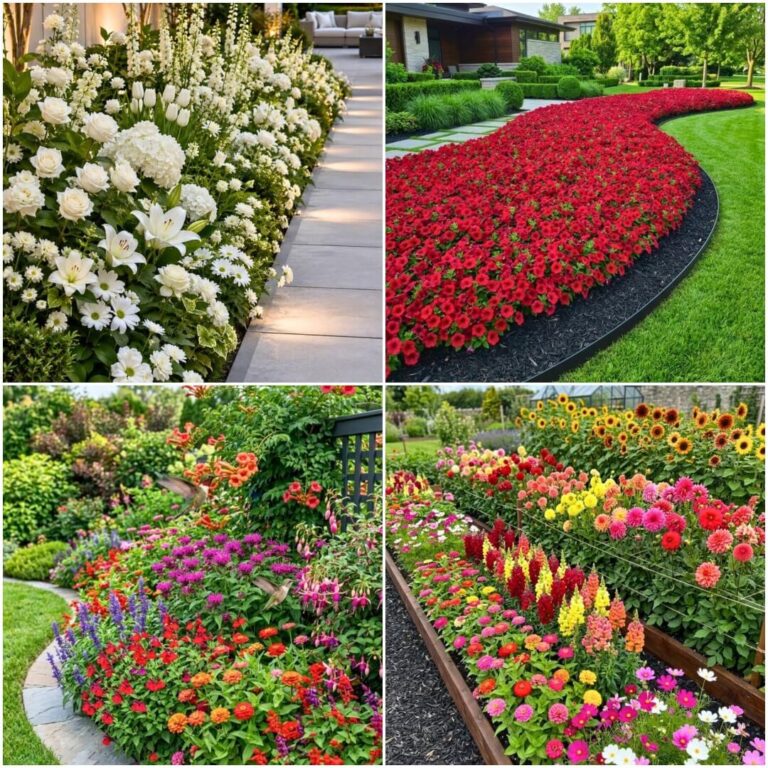
6. Bright Annual Flowers in Dark Mulch Beds
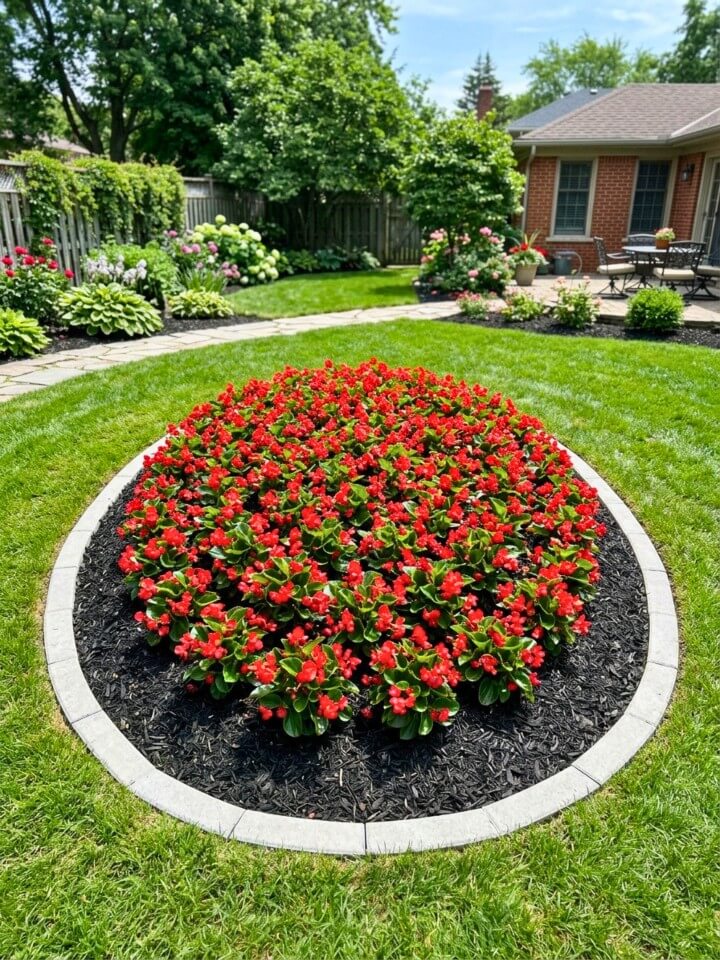
If you want bold seasonal color without a complicated garden design, plant bright annual flowers in a dark mulch bed. The contrast between the dark background and vivid blooms is immediate and eye-catching.
Marigolds, zinnias, begonias, and impatiens all perform well in this setup. Marigolds and zinnias work best in full sun beds, while impatiens and begonias thrive in shadier spots. Mix two or three colors for a lively look, or stick to one color for something cleaner and more modern.
Before you plant: Annuals need replacing each season, so keep the bed size manageable. A smaller, well-maintained bed always looks better than a large neglected one.
7. White Flowers on a Dark Background
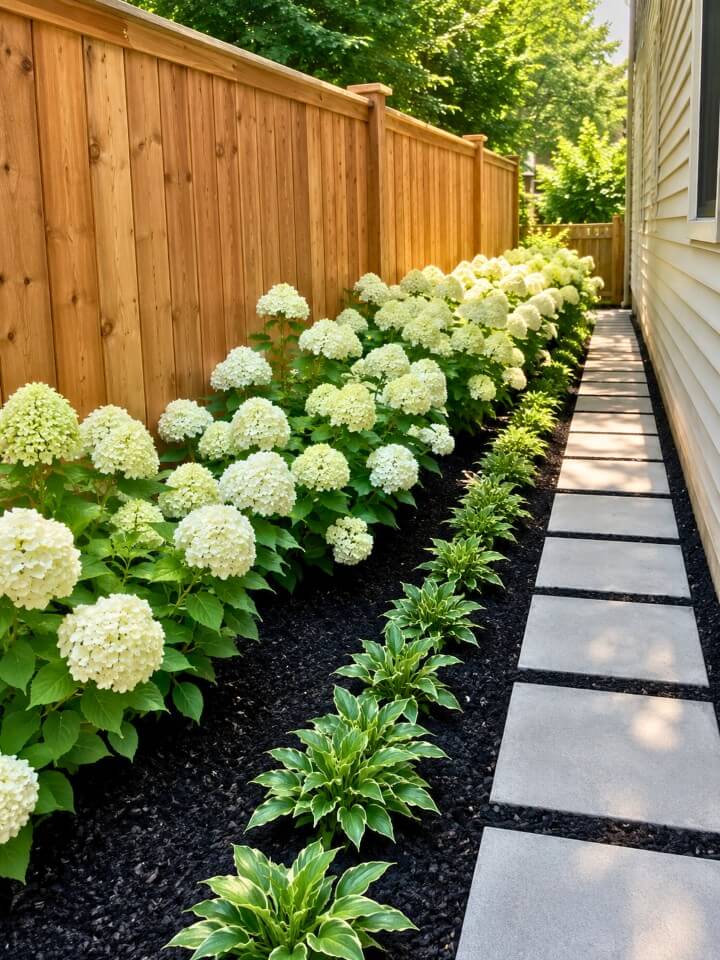
Landscaping with black mulch is a great way to create contrast around green plants. If you want an elegant garden bed without using many colors, try pairing dark mulch with white flowers. The contrast is clean and striking — the dark mulch makes white blooms look almost luminous, especially on cloudy days or in the evening.
Good choices include hydrangeas, shasta daisies, white petunias, alyssum, and iceberg roses. For a longer blooming season, combine a spring variety like white tulips with a summer bloomer like white coneflower so something is always in bloom.
Design tip: Add simple metal or stone edging to keep the bed tidy. A clean edge adds structure and prevents mulch from spreading onto the lawn.
8. Seasonal Blooms Under Front Windows
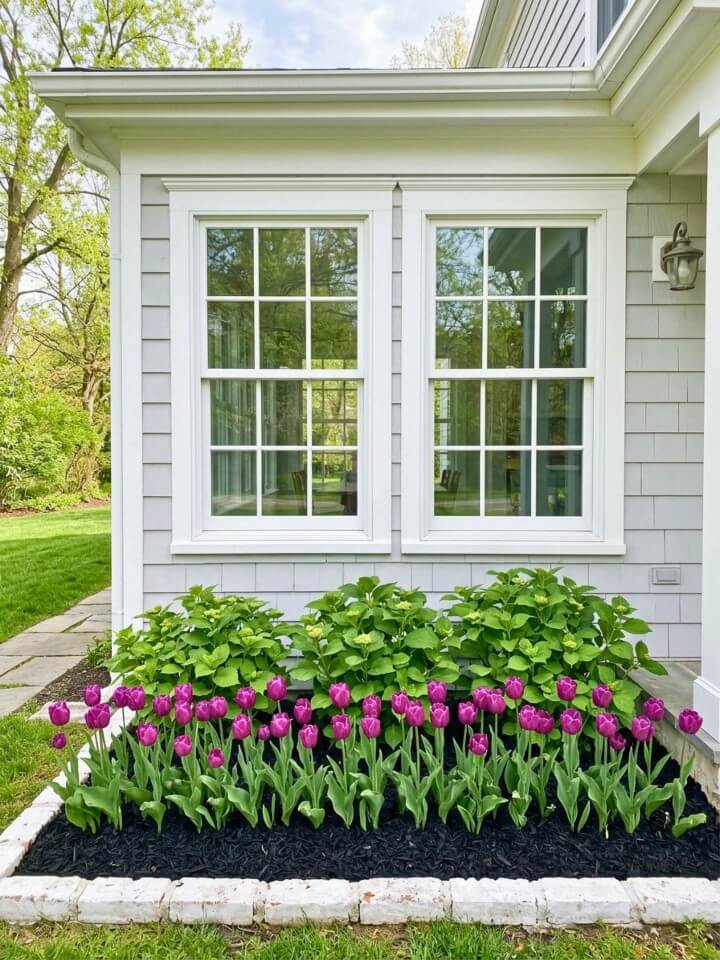
A flower bed directly under your front windows is one of the most visible spots in the entire yard. Dark mulch in this bed gives every seasonal bloom a rich backdrop that makes colors appear more vibrant and the overall bed look more polished than plain soil ever could.
Layer the planting so taller varieties sit closest to the wall and shorter flowers fill the front edge. This keeps the bed visible from the street without plants blocking natural light through the windows. Spring bulbs like tulips and daffodils can be followed by summer annuals like begonias or petunias, then fall mums to carry color through the end of the season.
Mind the window height: Keep all plants in this bed below the windowsill. Plants that grow taller than the window frame block light inside the home, make the windows feel smaller from the street, and eventually require aggressive cutting back that damages their natural shape.
9. Layered Foundation Planting with Dark Mulch
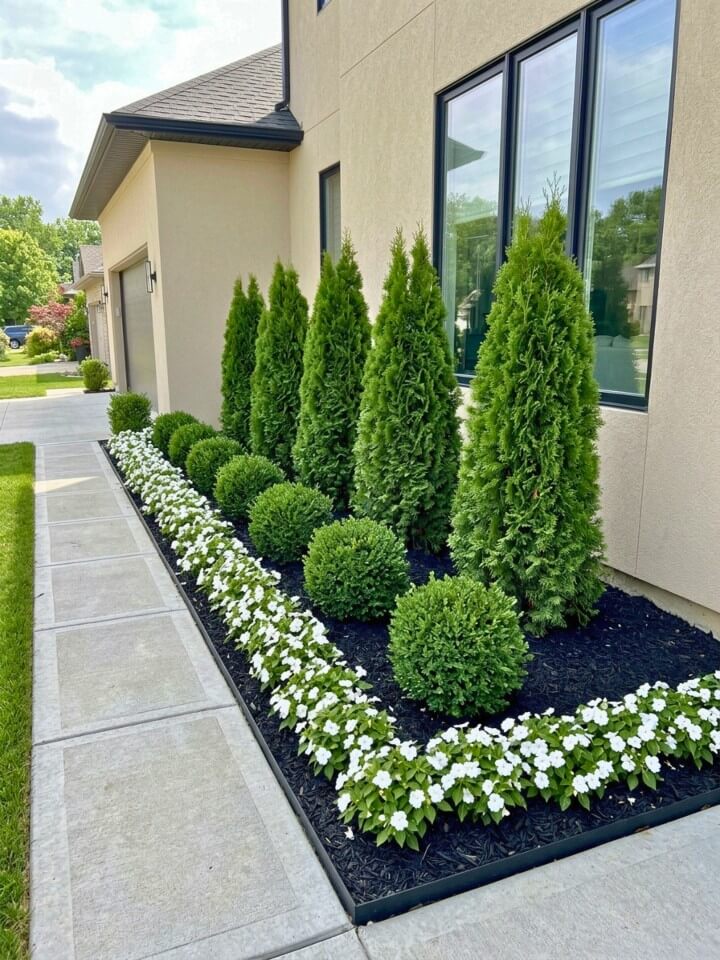
Foundation planting is the landscaping that runs along the base of your home, and dark mulch is one of the best ways to tie it together. A well-layered bed frames your house and gives the front yard a structured, finished appearance.
The key is to plant in layers. Place taller shrubs like arborvitae or viburnum at the back near the wall, medium plants like spirea or knockout roses in the middle, and low ground covers or compact flowers at the front edge. This creates depth and makes the bed look professionally designed rather than randomly planted.
Keep it away from the wall: Maintain at least 6 inches of clearance between mulch and your home’s foundation. Mulch sitting against the wall traps moisture and can lead to rot, pests, and structural damage over time.
10. Boxwood Shrubs and Black Mulch for a Classic Front Yard
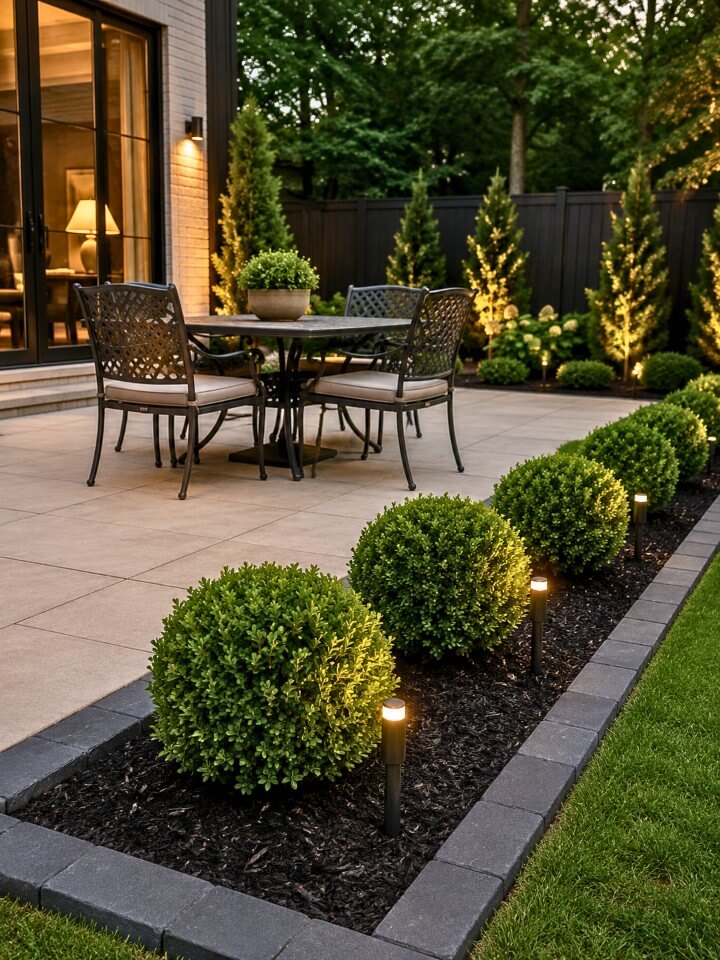
Boxwood shrubs are a reliable landscaping choice — they hold their shape well, stay green in every season, and need very little care once established. Paired with dark mulch, the result is a front yard that looks polished throughout the year.
Place boxwoods symmetrically near your front door, along the porch edge, or below windows. The dark mulch fills the space between shrubs and gives the entire bed a cohesive, finished look. Small landscape lights add visibility and a welcoming feel at night.
Maintenance note: Keep mulch 2 to 3 inches away from boxwood stems to prevent root rot. Boxwoods prefer slightly moist soil, so mulch also helps retain moisture and reduce watering frequency.
11. Refreshing the Mailbox Area with Color
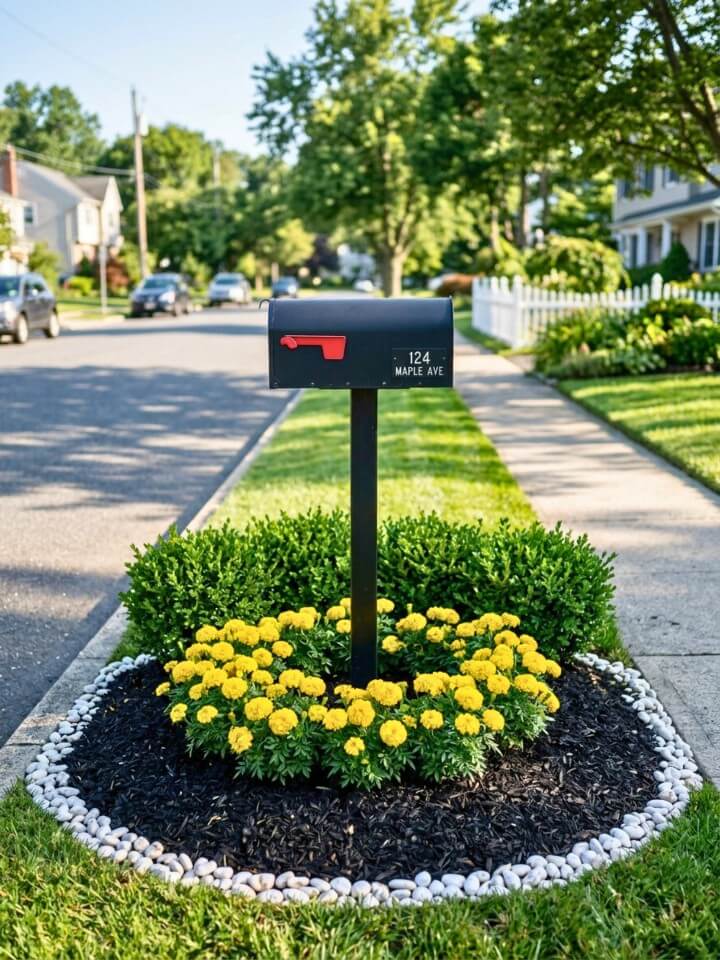
The mailbox area is one of the first things people notice when they arrive at your home, yet most homeowners leave it as bare grass or plain soil. A small bed of dark mulch with a few colorful plants around the base of the mailbox post transforms this overlooked spot into a welcoming focal point.
Use compact plants that stay low and tidy — dwarf knockout roses, lavender, salvia, or ornamental grasses all work well here. Choose varieties that bloom at different times so the bed looks alive throughout the growing season. A simple stone border around the bed keeps the mulch contained and gives the area a finished edge.
Keep access clear: Whatever you plant, make sure it does not block the mailbox door or grow tall enough to obstruct the path for mail delivery. Compact varieties under 18 inches tall are the safest choice for this spot.
12. Mulch Rings Around Backyard Trees
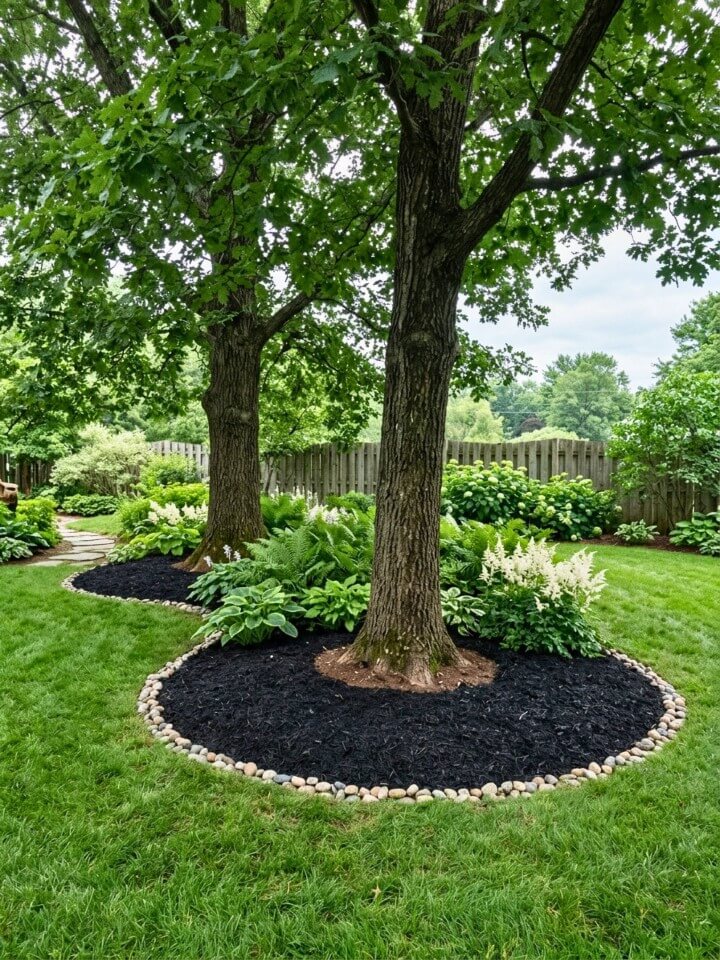
Adding a mulch ring around a backyard tree is one of the easiest and most effective landscaping moves you can make. It gives each tree a clean, defined space, protects the root zone from lawn equipment, and removes the need to trim grass right against the trunk.
A good ring is 3 to 4 feet in diameter for smaller trees and up to 6 feet for larger ones. Bigger rings look more intentional and hold moisture better. Add hostas or ferns around the outer edge to soften the look further.
Important: Never pile mulch directly against the trunk. This is called volcano mulching and it traps moisture that causes bark decay and disease. Keep the mulch flat and 2 to 3 inches away from the base of the trunk.
13. Black Mulch and Ground Covers on a Sloped Yard
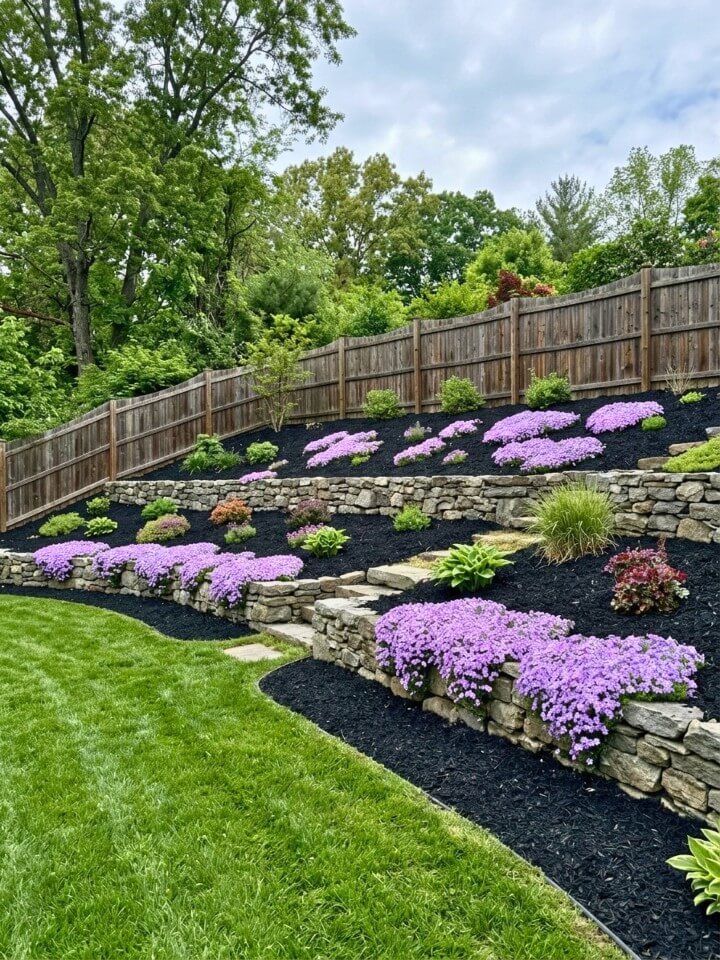
Sloped yards are notoriously difficult to maintain. Grass grows unevenly, mowing becomes dangerous on steep grades, and bare soil erodes quickly after rain. Dark mulch paired with the right ground covers solves all three problems at once.
Plants like creeping phlox, ajuga, liriope, and creeping juniper spread naturally across slopes and anchor the soil with their root systems. The dark mulch fills the spaces between plants, suppresses weeds, and gives the slope a neat, finished appearance even before the ground covers fully fill in.
Prevent washout: On steeper slopes, apply mulch no deeper than 2 inches and consider using a biodegradable erosion control mat underneath. This holds the mulch in place during heavy rain while the ground covers establish their roots.
14. Concrete Edging for a Sleek Modern Border
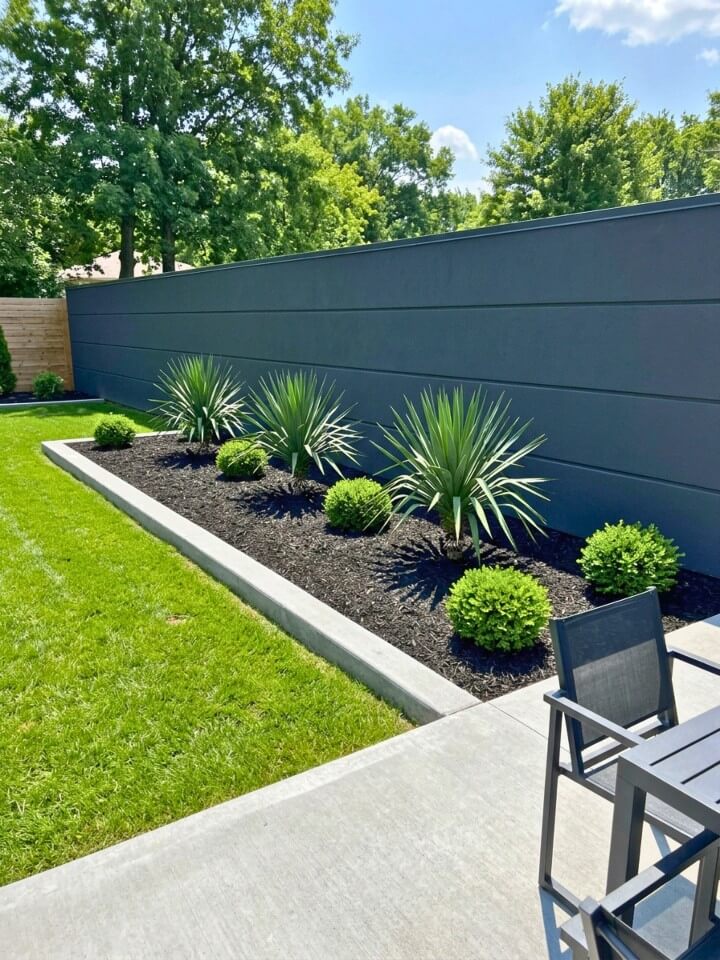
Simple plants, stone borders, and clean lines work well for modern black mulch landscaping. Dark mulch looks even sharper when it is contained by clean concrete edging. The crisp border keeps mulch in place, prevents it from spilling onto the lawn, and gives garden beds a built-in architectural look that feels intentional and modern.
This combination works especially well in front yards where clean lines matter most. Pair it with simple shrubs like dwarf boxwood, compact holly, or low ornamental grasses to keep the overall design calm and uncluttered. Avoid mixing too many plant varieties in one bed — the simpler the planting, the more the clean edging stands out.
Worth the investment: Concrete edging costs more upfront than plastic or metal alternatives, but it lasts for years without shifting, cracking, or fading. For a permanent front yard upgrade, it is one of the best things you can add.
15. Privacy Plants Along a Fence Line
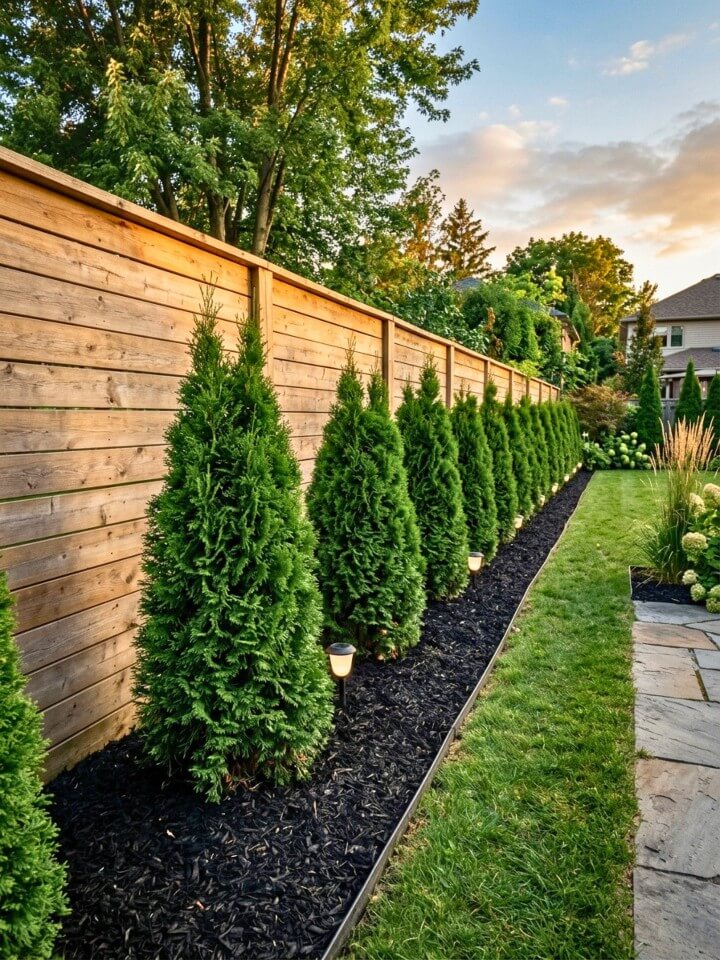
A fence alone rarely looks finished. Adding a planting bed of dark mulch with privacy plants along the fence line softens the hard edge, adds natural texture, and makes the boundary feel like a deliberate part of the landscape rather than just a barrier.
Arborvitae, tall ornamental grasses, rose of sharon, and climbing hydrangea all work well in this setting. Space plants evenly for a formal look, or vary the spacing slightly for something more natural and relaxed. Solar lights placed between plants add a warm glow in the evening and make the fence line visible and attractive after dark.
Spacing tip: Most privacy shrubs and tall grasses need 3 to 5 feet between each plant at maturity. Check the mature spread on the label before planting to avoid overcrowding, which leads to poor airflow and disease.
16. Layered Planters at the Front Entryway
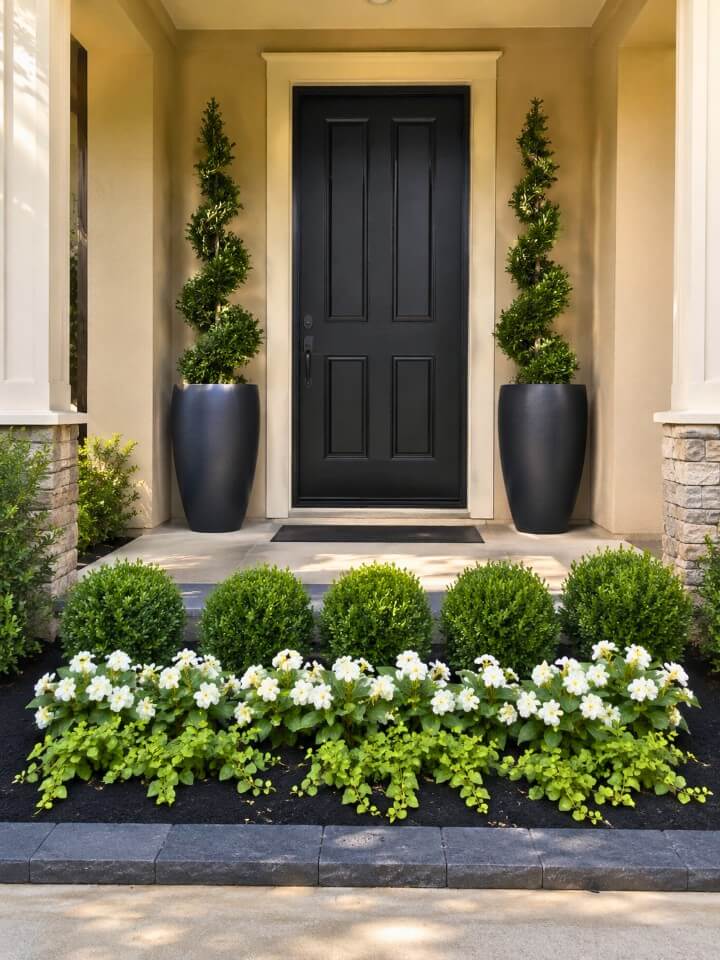
Front house black mulch landscaping can improve curb appeal and give your home a polished look. The area around your front door sets the tone for the entire home. Dark mulch around the entryway with layered planters on either side creates a welcoming first impression that feels both polished and personal.
Use planters of varying heights — a taller pot with a small evergreen shrub or ornamental grass, a medium pot with seasonal flowers, and a low trailing plant that spills over the edge. The combination of heights draws the eye upward toward the door and makes the entry feel larger and more intentional. Match the pot material to your home’s exterior — terra cotta for a warm traditional look, concrete or metal for something more modern.
Seasonal refresh: Swap out the flowering plants in your planters two or three times a year to keep the entryway looking fresh. The evergreen anchor plant stays year-round while the seasonal flowers change around it.
17. Garden Path with Solar Lights
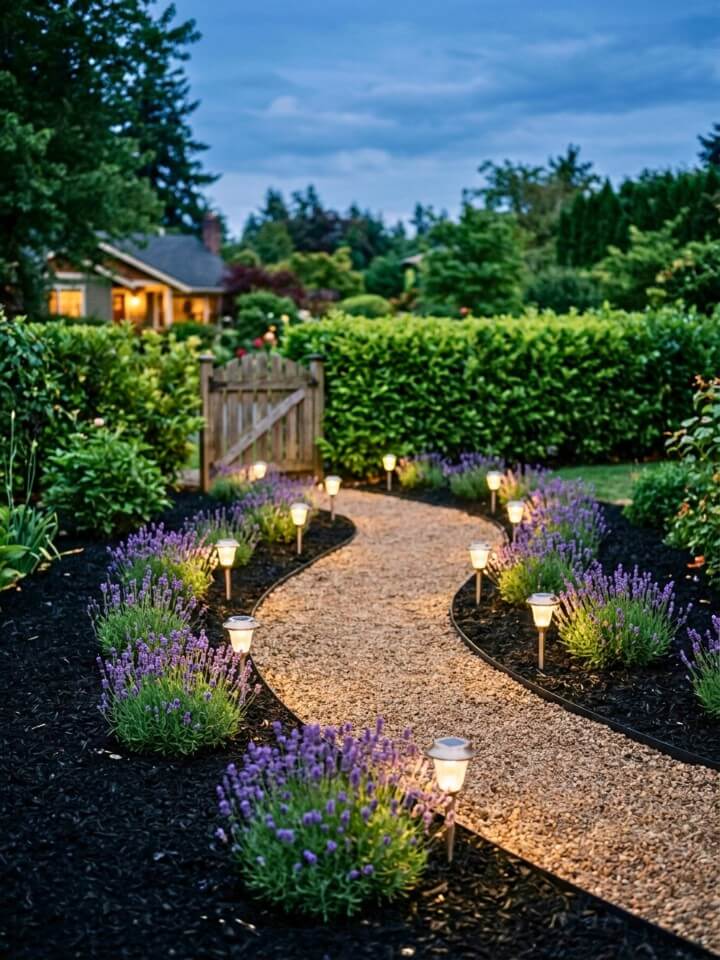
A garden path lined with dark mulch and solar lights serves two purposes at once — it looks attractive during the day and becomes functional and atmospheric after dark. The mulch creates a clean border that defines the path, while the lights add warmth and guide visitors safely toward the door.
Choose low-profile solar stake lights and place them every 3 to 4 feet along the path edge for an even glow without overcrowding. Pair the lights with low-growing plants like compact lavender, ornamental grasses, or rounded boxwoods along the mulch border to give the path structure and softness at the same time.
Getting the Most from Solar Lights
Place them where they receive at least 6 hours of direct sunlight during the day. Lights installed in shaded spots charge poorly and produce a dim, inconsistent glow at night.
18. Black Mulch Around Raised Garden Beds
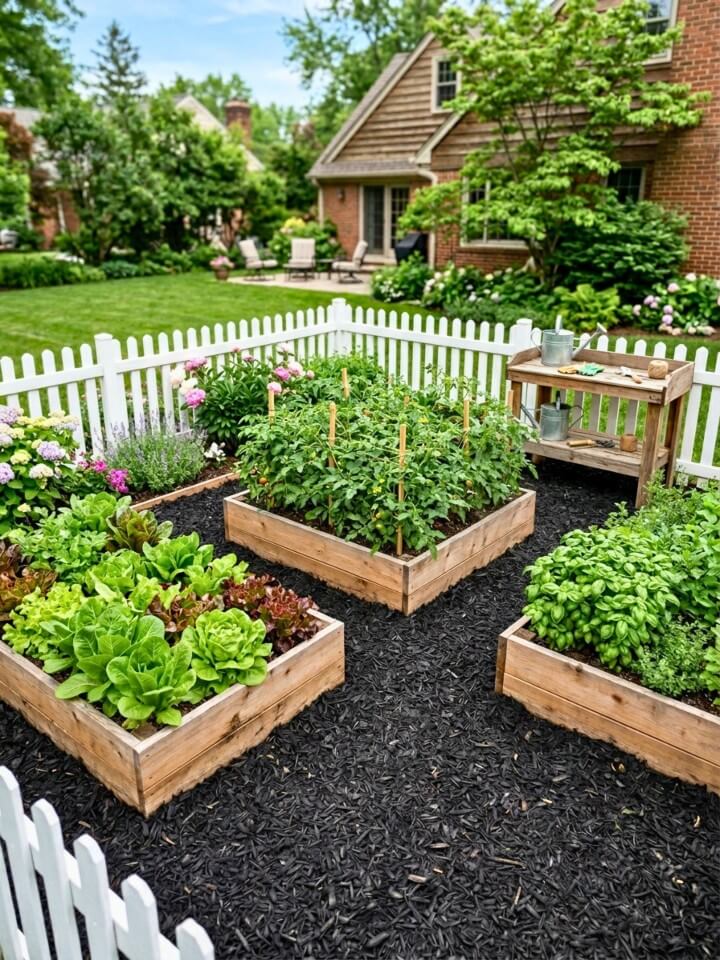
Raised garden beds become significantly easier to manage when the surrounding ground is covered with dark mulch. The mulch eliminates the grass and weeds that would otherwise grow between and around the beds, keeps pathways clean underfoot, and gives the entire vegetable garden a tidy, organized appearance.
Wooden, metal, and stone raised beds all look sharp against dark mulch. Keep the pathways between beds at least 18 to 24 inches wide so you can move comfortably while carrying tools or harvesting. If you have multiple beds, consistent mulch throughout the entire garden area ties everything together visually.
Avoid Dyed Mulch Near Edibles
Some black mulch is made from recycled wood and dyed with carbon-based colorants, which are generally considered safe. However, if you prefer to be cautious around food crops, look for natural undyed hardwood mulch that has simply been aged to a darker color.
19. Low Shrubs Along the Driveway Border
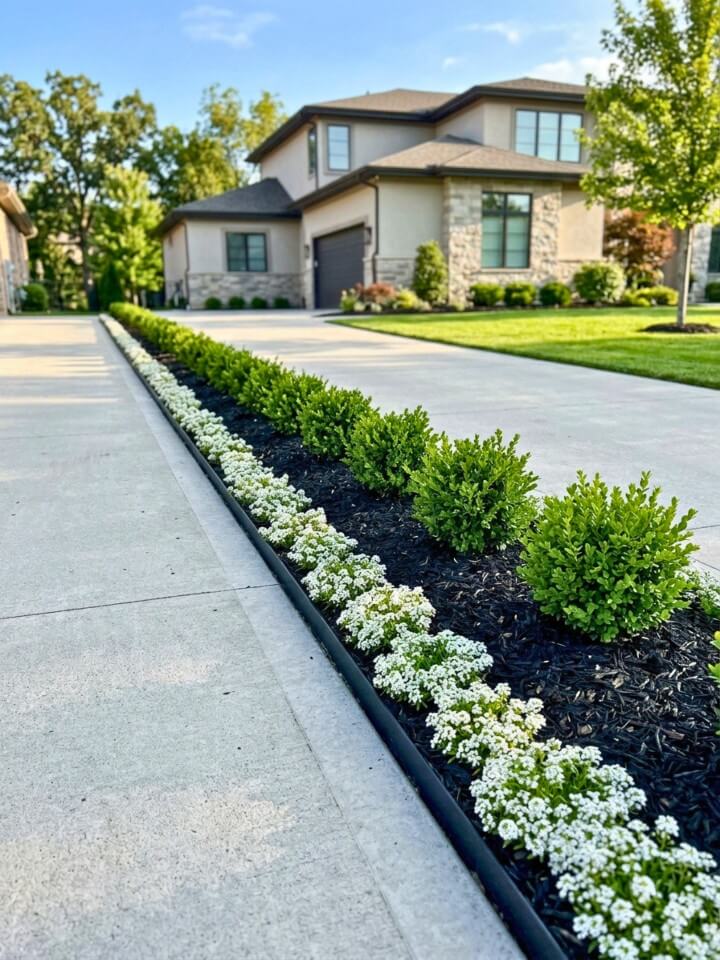
A driveway border planted with low shrubs and dark mulch gives your home a sharp, well-maintained appearance from the street. The mulch creates strong contrast against the concrete or asphalt surface, while the shrubs soften the hard edge and add living texture to what is otherwise a purely functional area.
Dwarf boxwood, spirea, compact holly, and low-growing juniper are all reliable choices here. They stay tidy with minimal pruning, handle the heat that radiates off paved surfaces, and look good in every season. For a touch of seasonal color, add a few flowering perennials like salvia or coreopsis between the shrubs.
Mind the sight lines: Keep shrubs near the end of the driveway trimmed below 24 inches so they never block your view when pulling in or out. Safety always comes before aesthetics in this particular spot.
20. Statement Plants in a Corner Garden
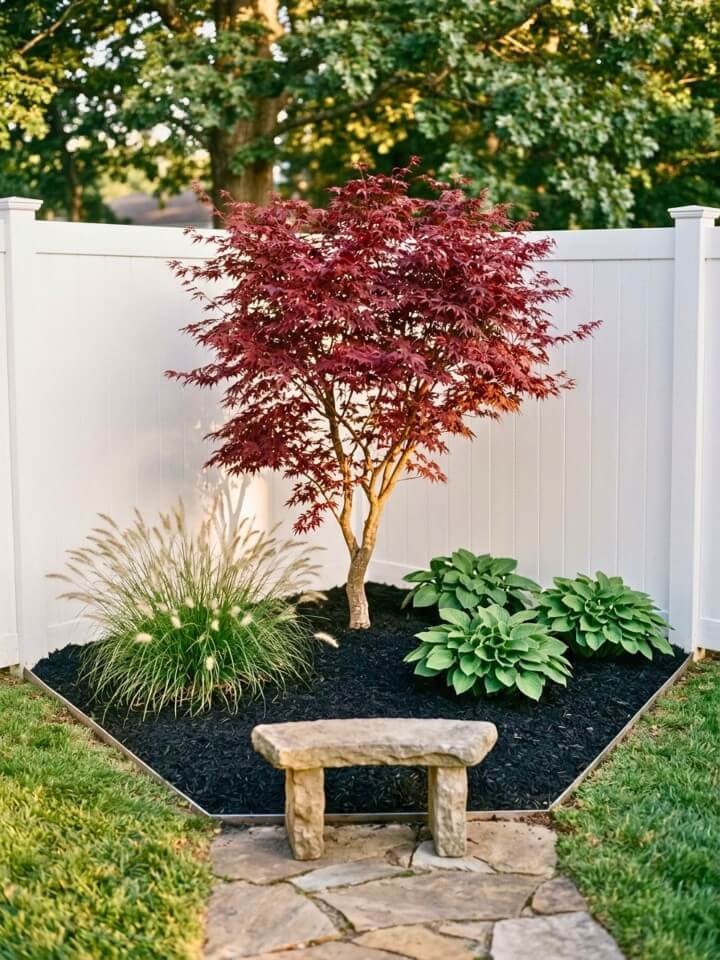
An empty yard corner is wasted space in most homes. A bed of dark mulch with one or two statement plants turns it into a focal point that draws the eye and gives the yard a sense of intentional design.
Bold plants work best here because the corner needs something with presence. Japanese maple, hydrangea, yucca, or large ornamental grasses all have strong enough shape and color to anchor the space on their own. Keep the rest of the bed simple — a clean mulch surface with maybe one low ground cover at the base — so the statement plant remains the clear centerpiece.
Start with one plant: It is tempting to fill a corner bed immediately, but planting one strong focal point and waiting to see how it grows gives you a better result than overcrowding the space from the beginning. You can always add more later.
21. Evergreen Shrubs Around the Front Porch
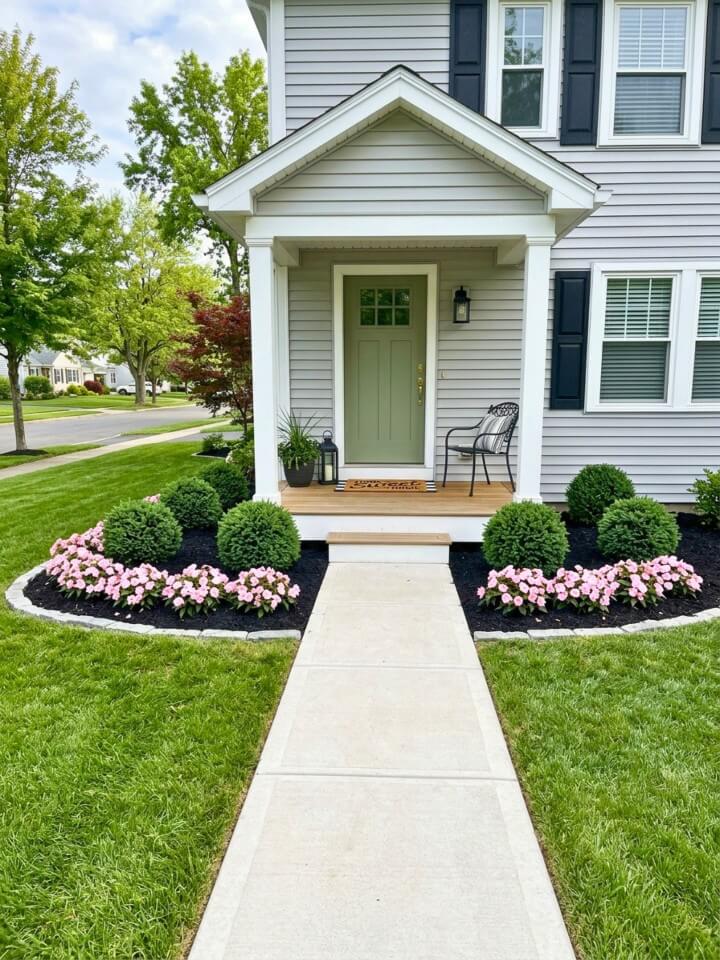
A front porch framed with evergreen shrubs and dark mulch looks welcoming in every season — not just when flowers are blooming. Evergreens provide consistent color and structure throughout the year, which means your porch always looks maintained and intentional even in the middle of winter.
Rounded boxwoods, compact hollies, and dwarf Alberta spruce are three of the most reliable choices for porch framing. Place one on each side of the steps for a symmetrical look, or arrange a small grouping along the porch railing for something slightly more relaxed. The dark mulch below ties the planting together and makes the green foliage stand out cleanly against the ground.
Scale matters: Choose shrub varieties whose mature size fits the space. A dwarf variety that reaches 3 feet at maturity looks intentional next to a porch. A shrub that eventually reaches 8 feet will overpower the entry and require constant heavy pruning to keep it manageable.
22. Fire Pit Seating with Stone Accents
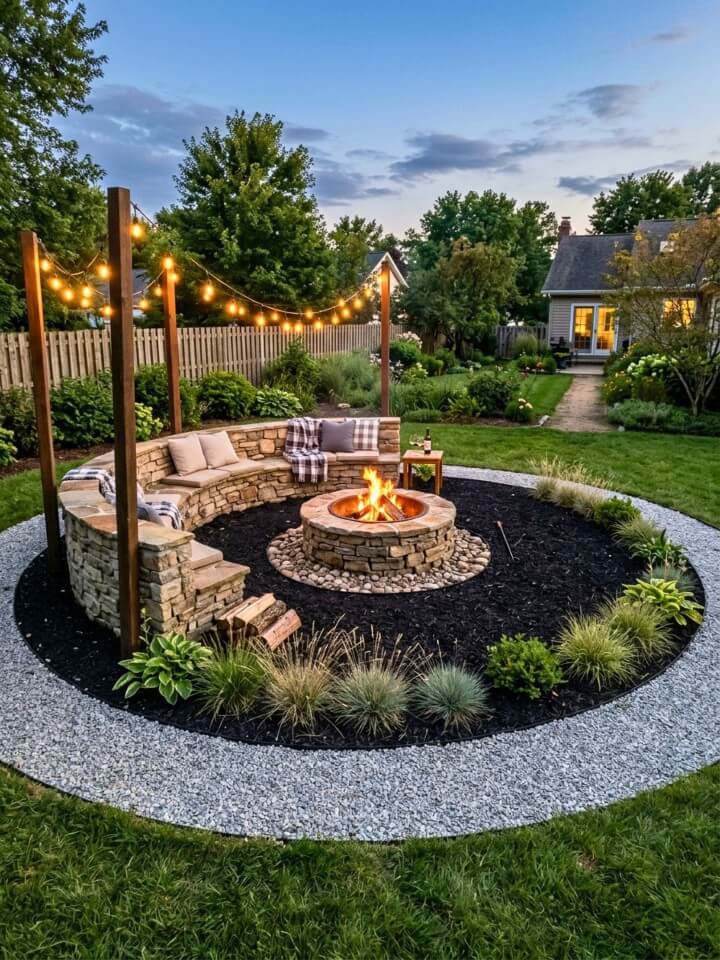
A backyard fire pit becomes a proper outdoor gathering space when it is surrounded by dark mulch, stone accents, and defined seating. Without this kind of structure, a fire pit can feel like it is just sitting in the middle of the yard with no real sense of place.
Use flat stone pavers or a gravel ring directly around the fire pit as a nonflammable buffer zone, then bring in the dark mulch for the outer seating area. Low stone walls, large boulders, or simple paver edging work well as seating accents that also reinforce the boundary of the space. Add a few low shrubs or ornamental grasses at the outer edge to give the area a softer, more finished perimeter.
Nonflammable buffer first: Dark mulch should never be placed directly around a fire pit. Always use gravel, stone, or pavers for at least 3 feet in every direction from the pit before transitioning to mulch.
23. Black Mulch Ideas for a Small Yard
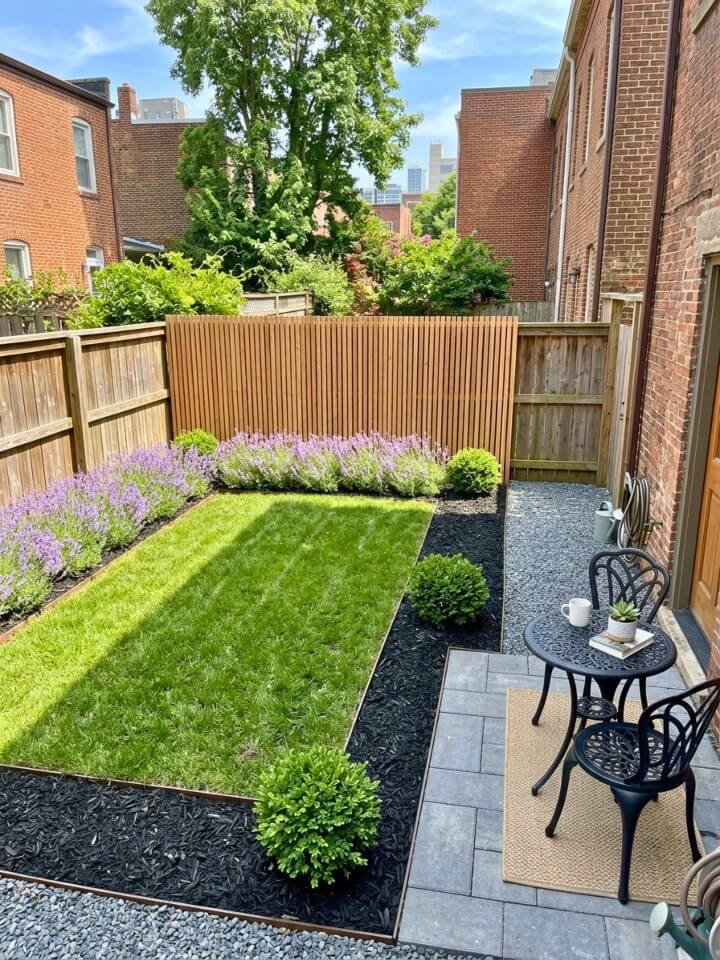
In a small yard, every planting decision carries more visual weight than it would in a larger space. Dark mulch helps here because it creates a clean, unified ground surface that makes the yard feel organized rather than cluttered, even when the overall square footage is limited.
The key is choosing plants that stay compact at maturity. Dwarf hostas, low-growing ornamental grasses, compact lavender, and small hydrangea varieties like Incrediball Blush or Bobo all bring color and texture without overwhelming a small bed. Use curved bed edges rather than straight lines — gentle curves make a small yard feel larger and more natural than rigid geometric shapes. A compact layout also benefits from a clear small-yard landscaping plan before you start digging.
Resist the urge to fill: A small yard with a few well-chosen plants and clean dark mulch always looks better than the same space packed with too many varieties. Empty mulch space is not wasted space — it is part of the design.
24. Stepping Stones Through a Side Yard
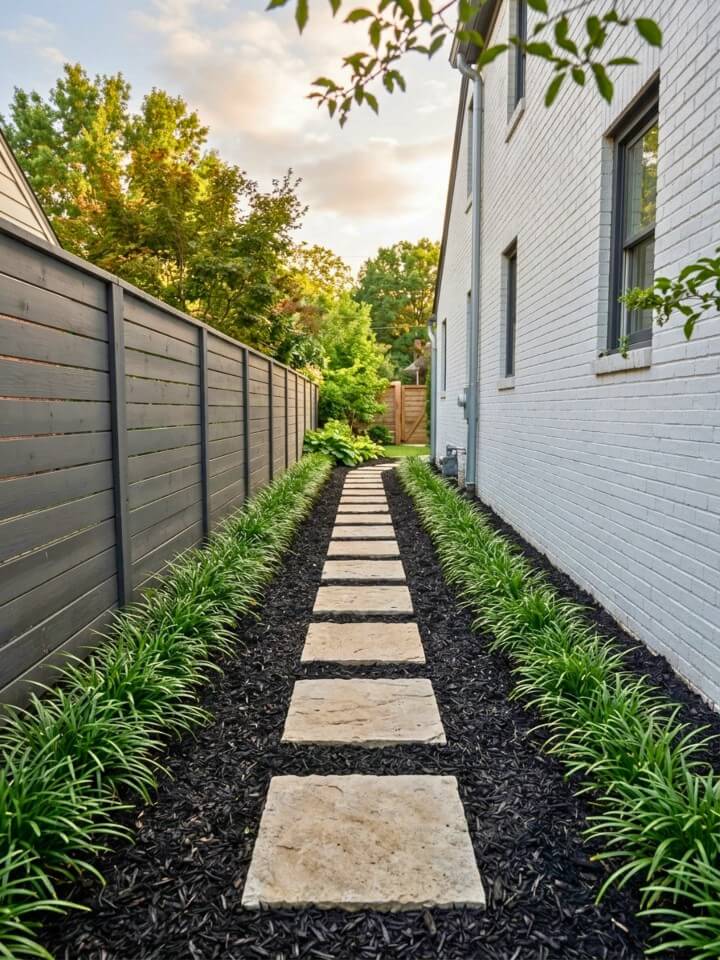
A plain side yard is one of the most overlooked spaces in any home. Laying stepping stones through dark mulch turns it into a functional and attractive path that connects the front yard to the back.
Use flat stones, concrete pavers, or irregular flagstone spaced comfortably apart for easy walking. Fill the area around the stones with dark mulch and add low-growing plants like liriope, creeping thyme, or dwarf hostas along the edges to soften the hard lines of the stones.
Choosing the right stone size: A width of 16 to 18 inches works well in most side yards. Wide enough to walk on comfortably, but not so large that the stones dominate the narrow space.
25. Natural Stones in a Rock Garden
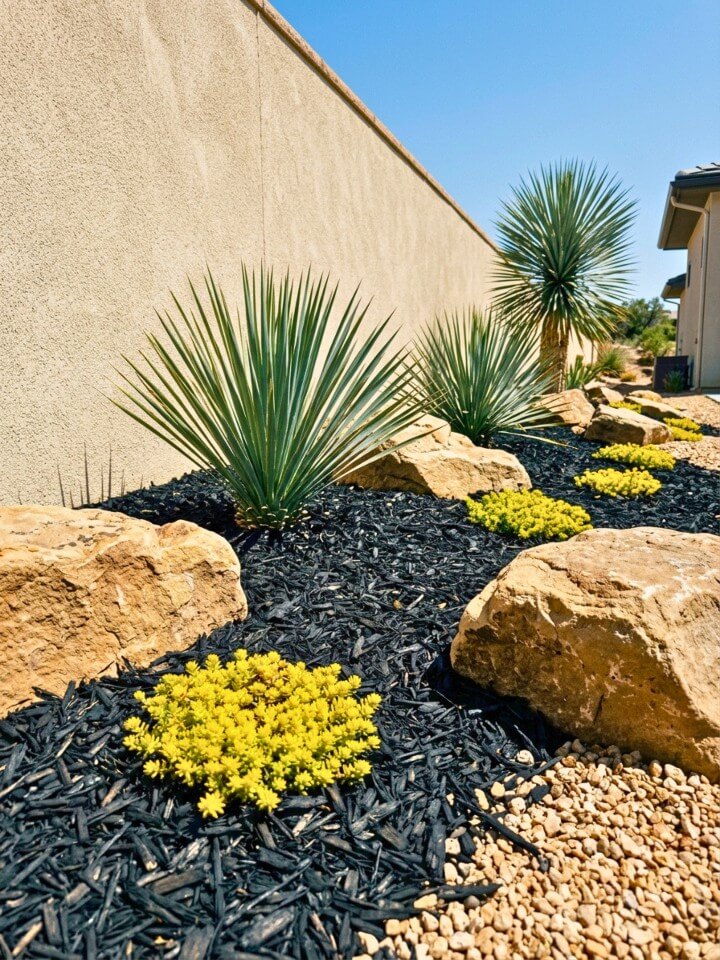
A rock garden that combines dark mulch with natural stones creates a low-maintenance landscape that looks intentional and earthy at the same time. The mulch adds softness and fills the ground between stones, while the rocks bring permanent structure and texture that never needs replacing.
Choose stones of varying sizes and place them at slightly different angles rather than positioning them all flat and even. Stones that look partially buried appear more natural than ones that sit on top of the ground. Fill the spaces between rocks with drought-tolerant plants like sedum, lavender, yucca, or ornamental grasses that thrive in well-drained, sunny conditions.
Odd numbers look better: Group stones in threes or fives rather than pairs or even numbers. This is a basic principle of natural garden design — odd-numbered groupings feel organic and balanced while even numbers tend to look arranged and stiff.
27. Minimalist Courtyard with Dark Mulch
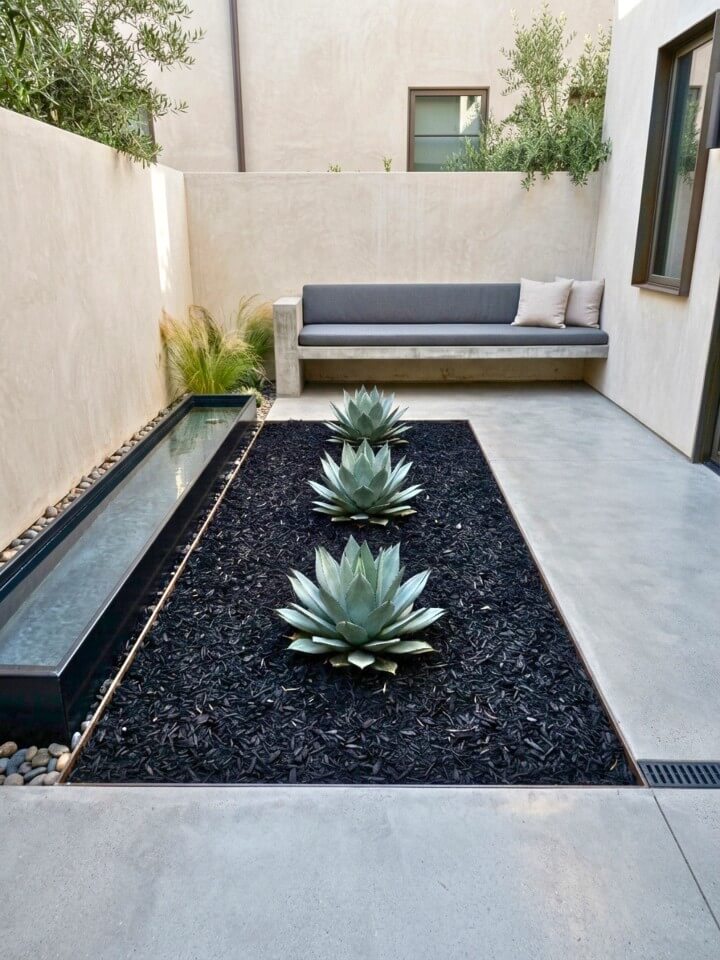
A courtyard or enclosed patio space benefits from restraint more than any other area in the yard. Because the space is small and surrounded on multiple sides, every element is visible at once — which means clutter and competing colors become overwhelming very quickly.
Dark mulch works perfectly in this setting because it creates a calm, unified ground surface that lets a small number of carefully chosen plants become the focus. Pair it with agave, boxwood, structural ferns, or a single ornamental grass for a clean and modern result. Add one simple element for texture — a stone water feature, a large ceramic planter, or a few flat pavers — and leave the rest as open mulch.
Less is more here: A courtyard with three well-placed plants and clean dark mulch looks intentional and sophisticated. The same space filled with ten different plant varieties looks busy and small. Commit to simplicity and the space will feel larger and more relaxing.
28. Mixed Textures for a Layered Landscape
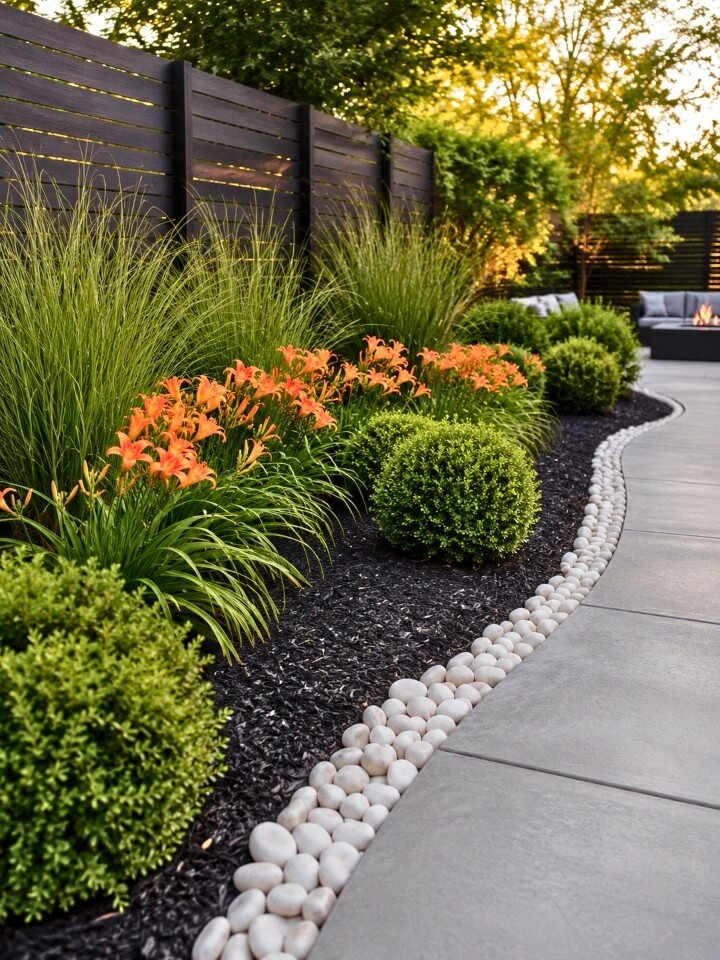
The most visually interesting yards are rarely the ones with the most plants — they are the ones where different textures, shapes, and heights are combined thoughtfully. Dark mulch is the unifying element that holds a mixed landscape together without competing with the plants around it.
Combine smooth river rocks with leafy shrubs, add tall ornamental grasses behind low flowering perennials, and use simple metal or stone edging to define the bed boundaries. The dark mulch fills the ground between every element and gives the entire composition a cohesive, polished base. This approach works in front yards, backyards, and side yards of any size because the principle is the same regardless of scale — variety in the plants, unity in the ground cover.
Start with a plan: Before adding mixed textures to an existing bed, sketch a rough layout on paper first. Note the mature height and spread of each plant, and make sure taller elements are placed where they will not eventually block shorter ones. Ten minutes of planning prevents years of frustration.
29. Ornamental Grasses Along the Patio Edge
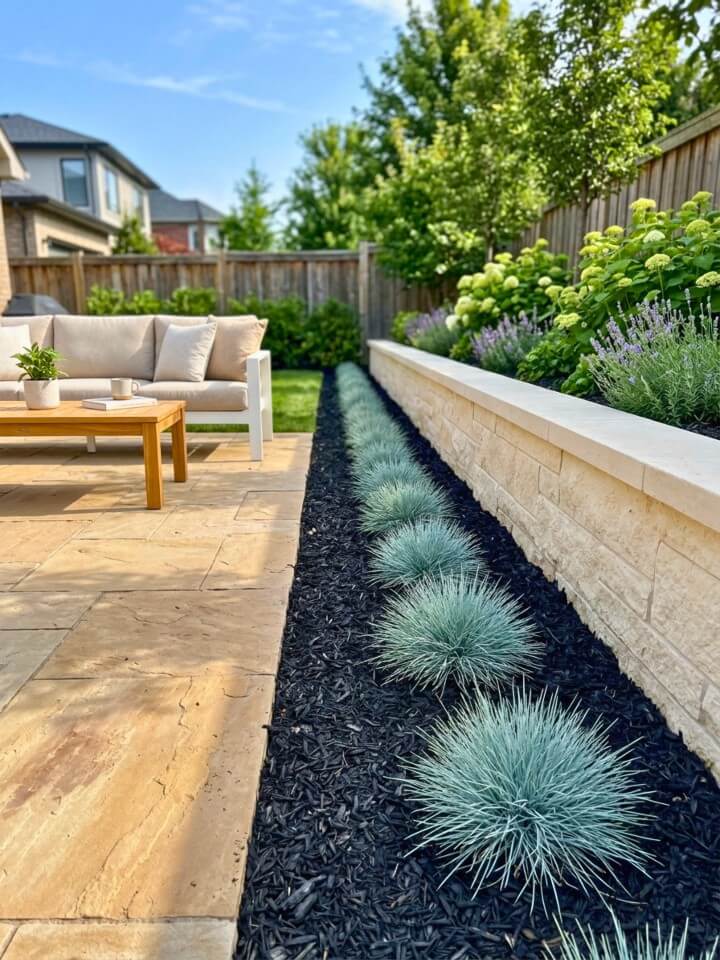
Dark mulch along the edge of a patio creates a clean, defined border that separates your outdoor seating area from the rest of the yard. It gives the space a finished look without adding complicated design elements.
Pair the mulch with ornamental grasses like fountain grass, blue fescue, or Karl Foerster for soft movement and year-round texture. The grasses sway naturally in the breeze, which adds a relaxed, organic feel to an otherwise hard surface like concrete or pavers.
Keep it proportional: A mulch bed 12 to 18 inches wide along the patio edge looks intentional. Too narrow and it looks like an afterthought; too wide and it takes over the yard.
FAQs About Black Mulch Landscaping
Most homeowners have a few lingering questions before they commit to black mulch. Here are honest answers to the ones that come up most often.
Does Black Mulch Fade Over Time and How Do You Fix It?
Yes, black mulch fades to gray or brown within one season, especially in direct sunlight. The easiest fix is to rake the existing layer, remove any matted pieces, and add a fresh thin layer on top. This restores the dark color without fully replacing what is already there.
Is Black Mulch Safe for Vegetable Gardens and Edible Plants?
Most black mulch is colored with carbon-based dye that is considered safe around edible plants. However, avoid mulch made from recycled pallets or treated lumber, as these may contain chemicals. When in doubt, choose natural undyed hardwood mulch that has aged to a darker color on its own.
How Much Black Mulch Do I Need for A Garden Bed?
Calculate your bed’s square footage and aim for 2 to 3 inches of depth. One cubic yard of mulch covers approximately 100 square feet at 3 inches deep. Most home improvement stores sell mulch by the bag or cubic yard, so knowing your square footage saves both money and trips.
Does Black Mulch Attract Termites or Other Pests?
Mulch itself does not attract termites, but moisture retention near your home’s foundation can create favorable conditions for them. Keep mulch at least 6 inches away from your foundation wall and inspect the area once a season. Dry, well-ventilated mulch beds are rarely a significant pest problem.
What Is the Best Time of Year to Apply Black Mulch?
Late spring is ideal — soil has warmed up after winter and weeds have not yet taken hold. A second light application in early fall helps insulate plant roots before cold weather arrives. Avoid applying mulch in the middle of summer when soil is already dry and compacted.
Conclusion:
Transforming your yard does not always require expensive materials or professional help. A bag of dark mulch, a weekend afternoon, and a clear plan are often all it takes to make a noticeable difference. These black mulch landscaping ideas work because the concept behind them is simple — dark contrast makes everything around it look sharper, cleaner, and more intentional.
Start with one area that bothers you most. Get that right before moving to the next. Small improvements made consistently add up to a yard that looks genuinely well-designed, not just occasionally maintained.