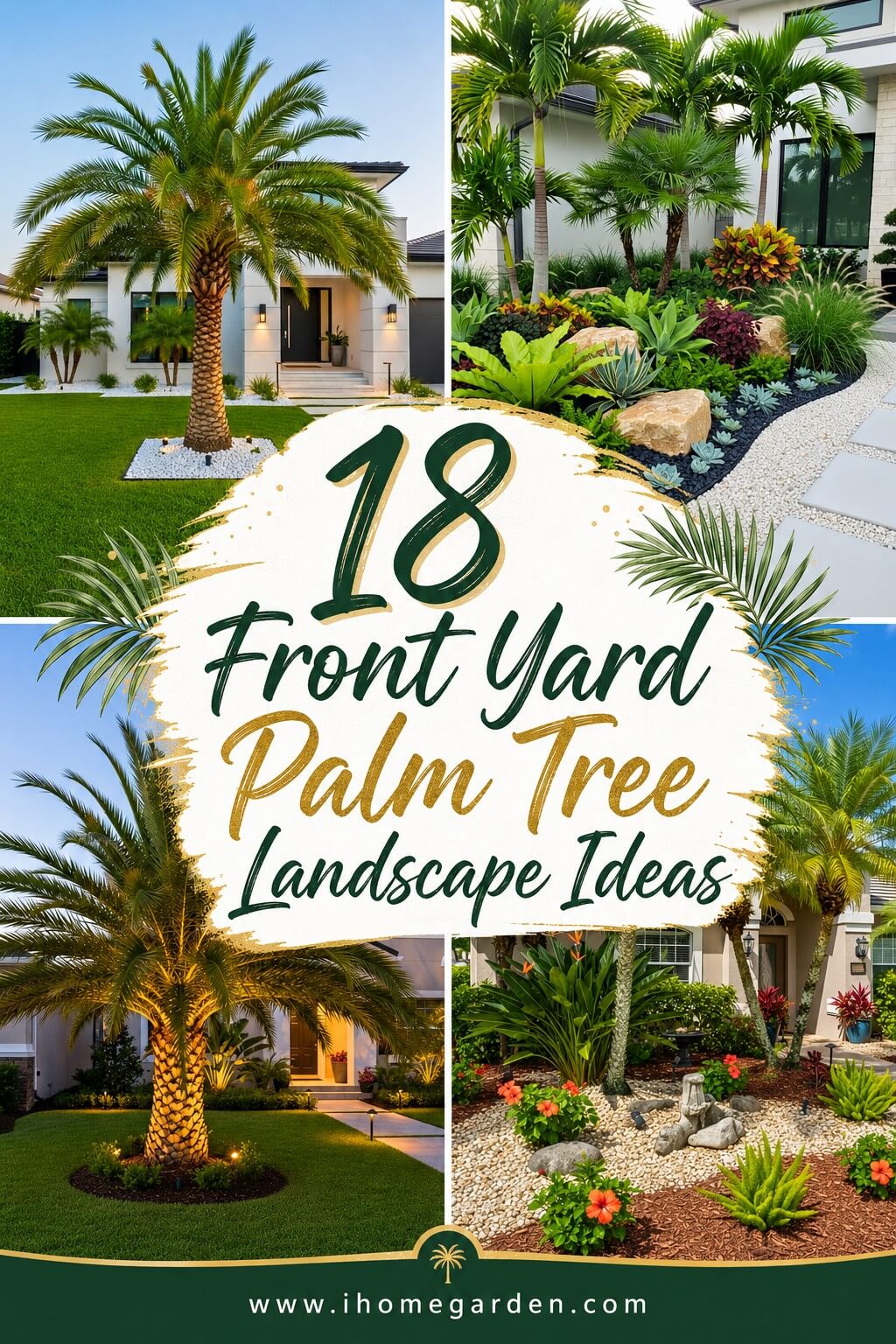
18 Front Yard Palm Tree Landscape Ideas for A Resort-Worthy Home
Drive through any neighborhood with palm trees out front, and you’ll notice something — those houses just look more put-together. There’s something about a palm that quietly tells the street, “someone here cares.” That’s the real power behind these 18 awesome front yard palm tree landscape design ideas: they’re not about copying a resort or spending a fortune. They’re about using one of the most striking plants you can grow to make your home feel finished.
Maybe you’ve got a bare patch of lawn that’s been bugging you for years. Maybe you just bought a place and the front yard feels like an empty stage. Either way, a palm — or a few — can change everything. What follows isn’t a list of complicated projects. It’s a collection of honest, doable ideas you can actually pull off this season, whether you’re working with a corner bed or the whole front yard.
1. Single Statement Palm For Your Front Yard
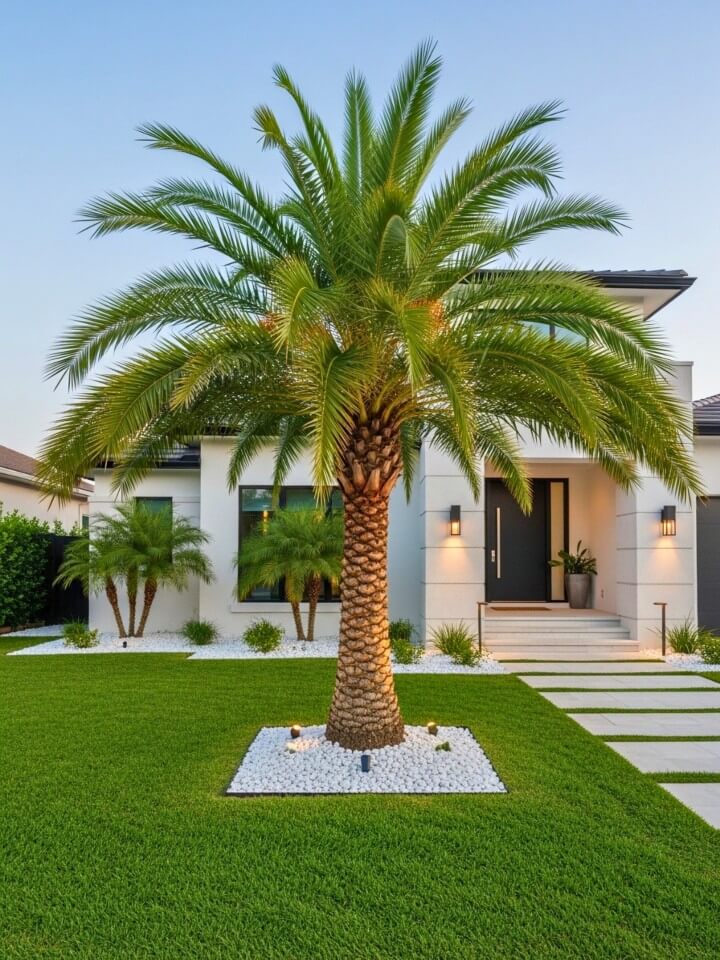
Sometimes one tree says more than a dozen. A solitary palm planted near the center of the lawn or just off the entry path creates an architectural anchor that needs nothing else to feel complete. This approach works especially well for modern and minimalist homes where restraint is the design language.
Best Palm Varieties for This Look
Queen Palm, Foxtail Palm, and Bismarck Palm all carry enough visual weight to stand alone. For smaller yards, a Pygmy Date Palm delivers the same effect at a manageable scale.
Finishing Touch
Wrap the base in a clean ring of river rock or dark mulch, and install a single warm-toned uplight to highlight the trunk after dark.
2. Palm Tree with Flower Bed
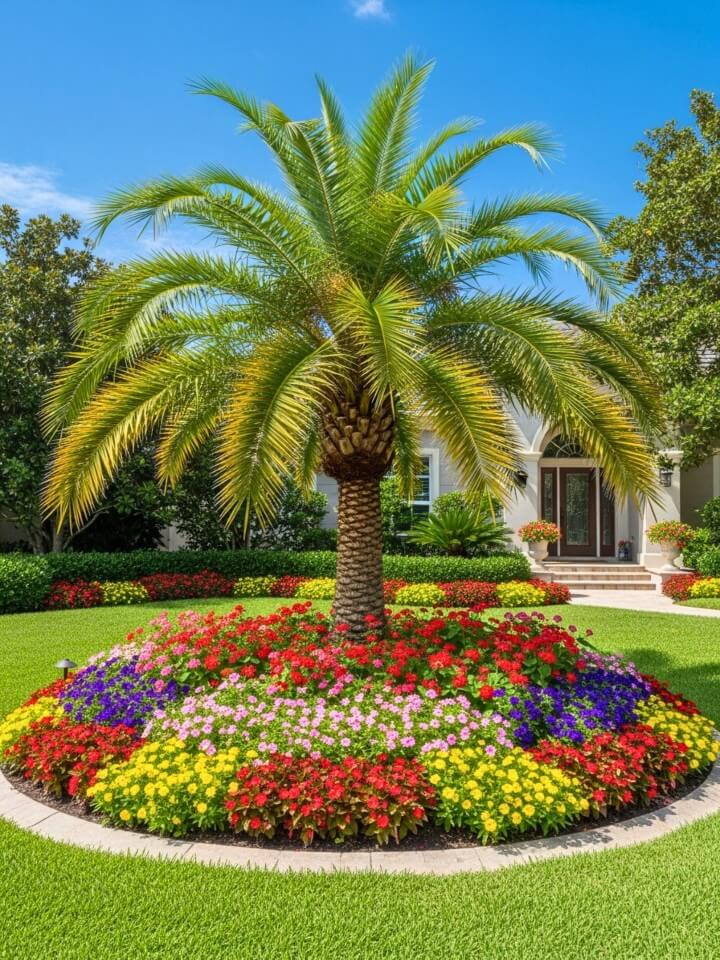
Bringing color down to ground level while the canopy works overhead — that’s the magic of pairing a palm with a flower bed. The contrast between tall fronds and low blooms gives the yard depth without overcrowding it, and the same layering logic works beautifully in other garden bed ideas around the property.
Build the bed in a kidney or circular shape extending three to four feet from the trunk. Match your bloom palette to the house: coral and white read coastal, deep purples and golds feel warm and traditional. Reliable performers include lantana, salvia, daylilies, vinca, and dwarf gardenia.
Quick Tip: Edge the bed with steel or stone to stop grass from invading, and refresh mulch twice a year to keep things looking crisp.
3. Tropical Rock Garden
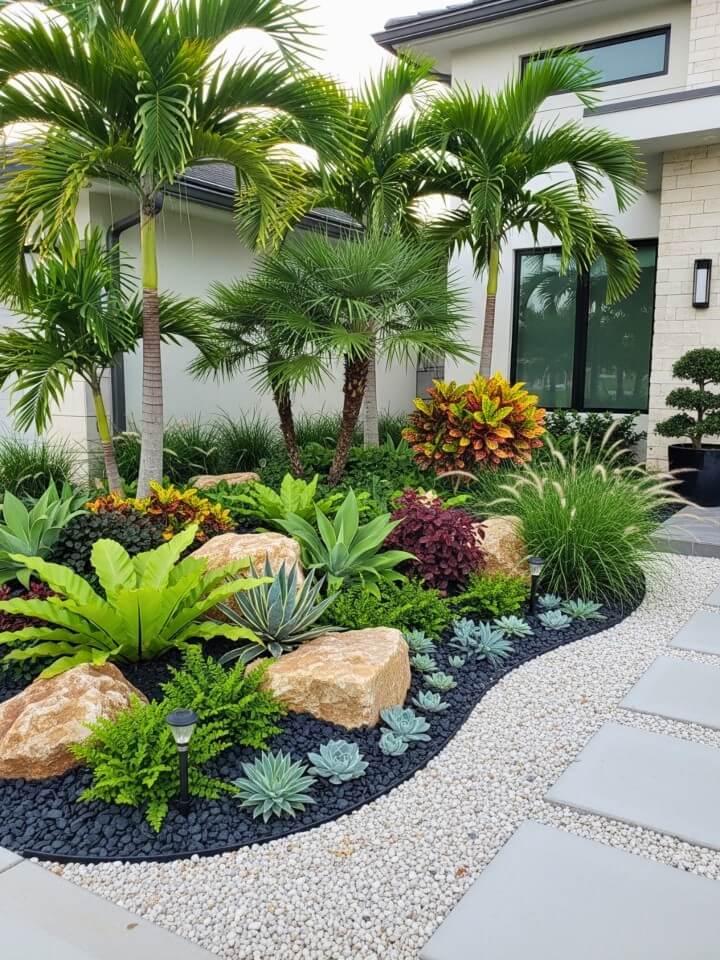
Elevate your home’s exterior with a bold front yard palm tree landscape design that turns heads. Low maintenance doesn’t have to mean low style. A rock garden built around a palm trades thirsty turf for texture — gravel, boulders, decorative stones, and a handful of drought-tolerant companions.
Start by laying landscape fabric, then layer rocks of varying sizes for a natural, undesigned feel. Mix in agave, yucca, blue fescue, or trailing rosemary between the stones. Avoid the common mistake of using one uniform gravel color; two or three tones add far more visual interest.
This style earns its keep in hot, dry climates and rewards homeowners who’d rather spend weekends relaxing than mowing.
4. Front Yard Palm-Lined Walkway Landscaping
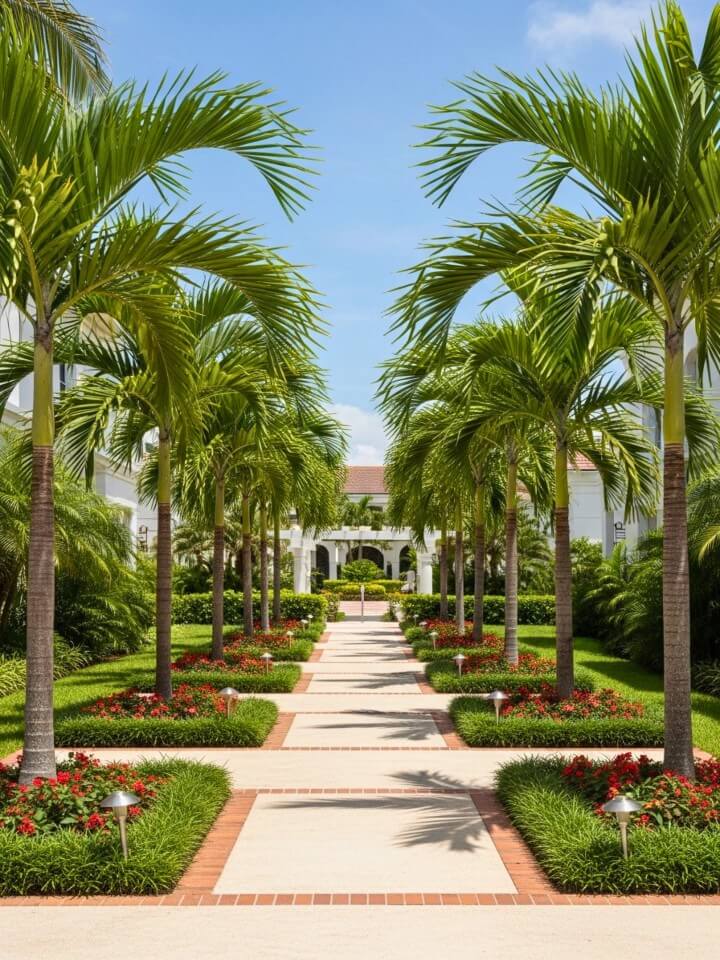
There’s a reason resorts use this trick — a path flanked by palms feels like an arrival. Even a short front yard walkway from driveway to front door can be transformed by lining it with matched palms spaced six to eight feet apart.
Choosing the Right Scale
Avoid towering varieties here. Pygmy Date Palms, Areca Palms, or European Fan Palms keep the proportions friendly and won’t overwhelm a standard suburban path.
Layering the Edges
Tuck dwarf mondo grass, liriope, or flowering annuals along the base of each palm. Add low path lights between them — the cross-lighting at night is genuinely dramatic.
5. Modern Minimalist Palm Design
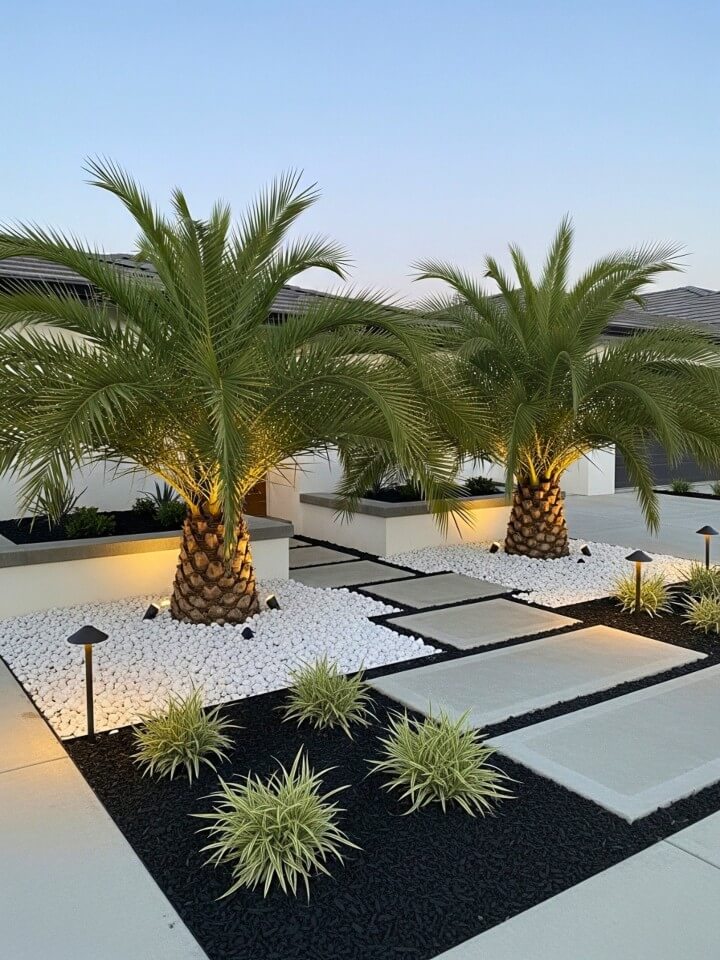
Restraint reads as luxury. A minimalist palm layout leans on negative space, geometric lines, and a tight material palette to create something that feels considered rather than busy.
Stick to two or three materials maximum: think white pea gravel paired with charcoal mulch, or smooth concrete pavers running through a bed of black lava rock. One or two palms — never a forest — serve as the vertical accent. Skip flowering plants entirely; if you want greenery at ground level, use a single species of ornamental grass repeated in a clean pattern.
The discipline pays off. The yard looks like a gallery, not a garden.
6. Palm Tree with Landscape Lighting
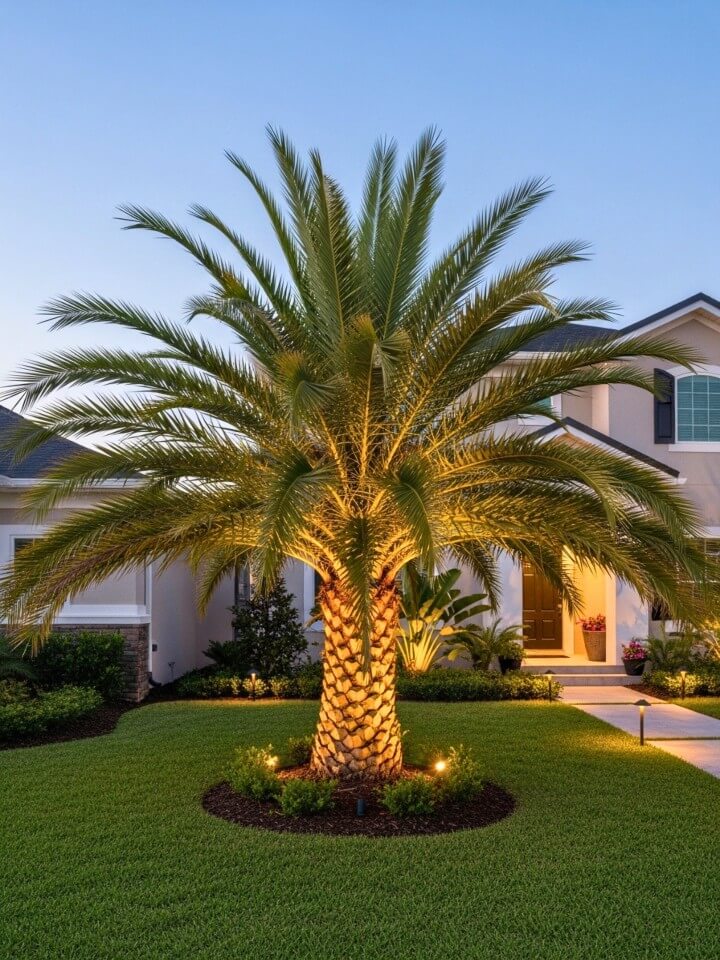
A palm tree at night, properly lit, is one of the most underrated curb appeal upgrades in residential landscaping. The trunk casts long shadows, the fronds throw lacy patterns on the house, and the whole property suddenly looks worth twice as much. These surprising outdoor tree lighting ideas are a helpful next step if you want to refine beam angles, bulb warmth, and fixture placement.
The standard approach is two uplights angled into the canopy from opposite sides of the trunk. For shorter palms, a single light at the base does the job. Use warm white bulbs (2700K-3000K) — anything cooler reads clinical.
Bonus Idea: Add a moonlight effect by mounting a downlight high in the canopy of taller palms. The dappled shadow it casts on the lawn below is unforgettable.
7. Front Yard Desert Palm Landscape
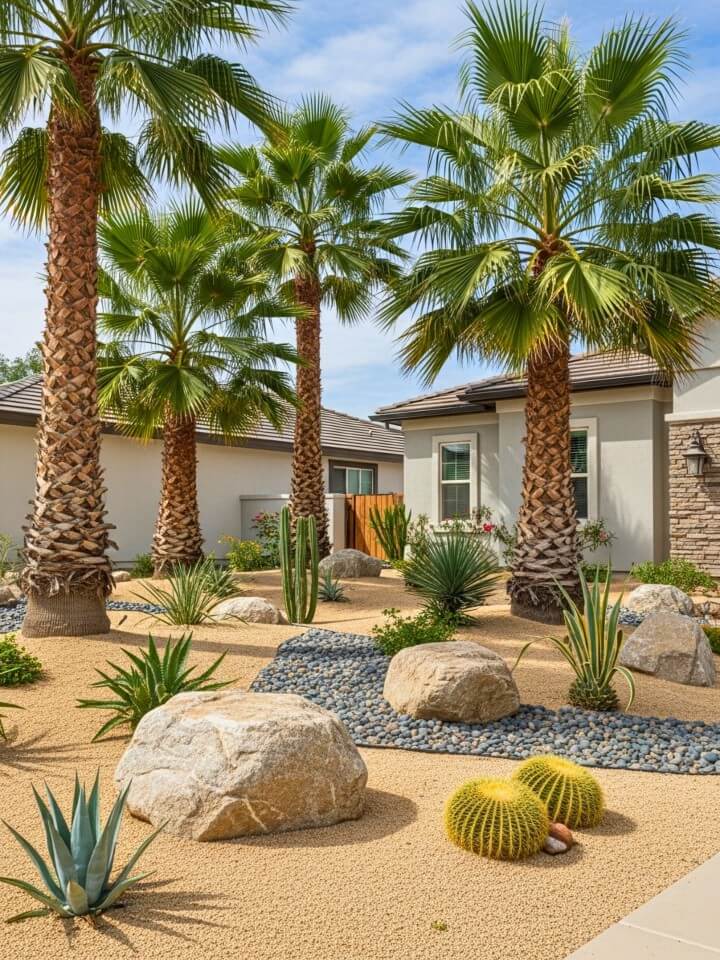
Palms and desert plants aren’t an obvious pair until you see them together — then it’s hard to imagine anything else. The contrast between soft fronds and rigid succulents creates a landscape with real personality.
Build the foundation with decomposed granite or tan gravel as the ground layer. Drop in two or three large boulders for weight and structure. Then plant: agave, barrel cactus, golden barrel, ocotillo, and trailing ice plant all earn their spot. Choose hardy palms like Mediterranean Fan or Date Palm that genuinely belong in arid conditions.
The result is a yard that thrives on neglect and looks better the longer it’s left alone.
8. Palm Tree Island Bed
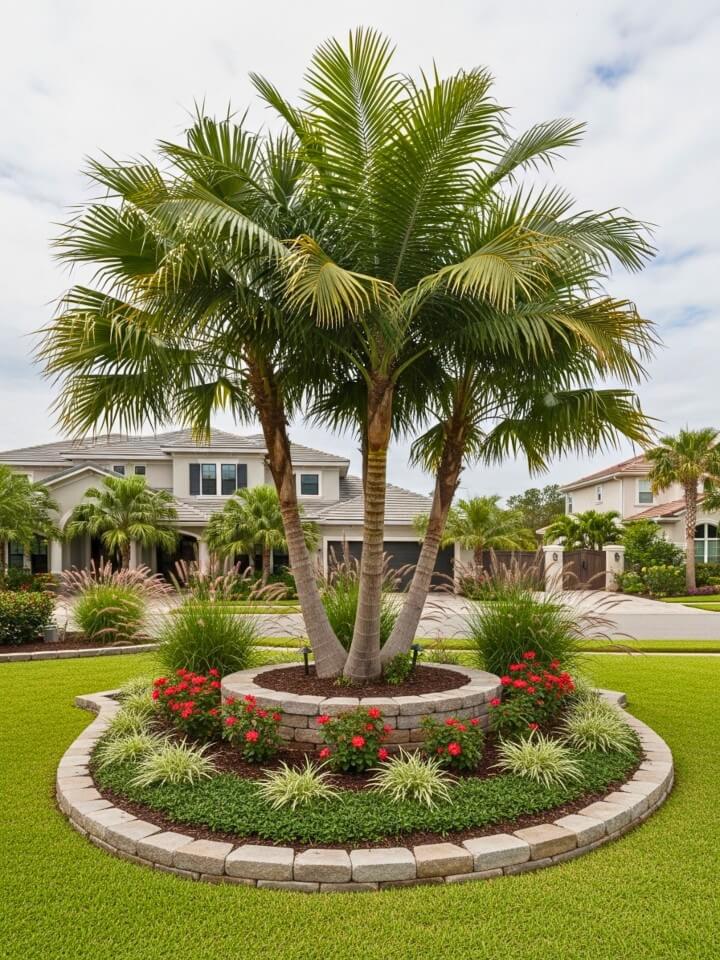
An island bed is the easiest way to give a flat, featureless lawn some shape. Carve out an oval or freeform section of turf, raise it slightly if drainage allows, and use a palm as the vertical centerpiece.
Border Materials That Work
Belgian block, weathered brick, or natural fieldstone all hold up well and improve with age. Avoid plastic edging — it always looks plastic.
Filling the Bed
Layer with intention. Place the palm slightly off-center, add two or three flowering shrubs like hibiscus or knockout roses around it, then fill the gaps with mounding perennials and a clean mulch finish. The off-center placement looks more natural than dead-center symmetry.
9. Resort-Style Front Yard Landscape
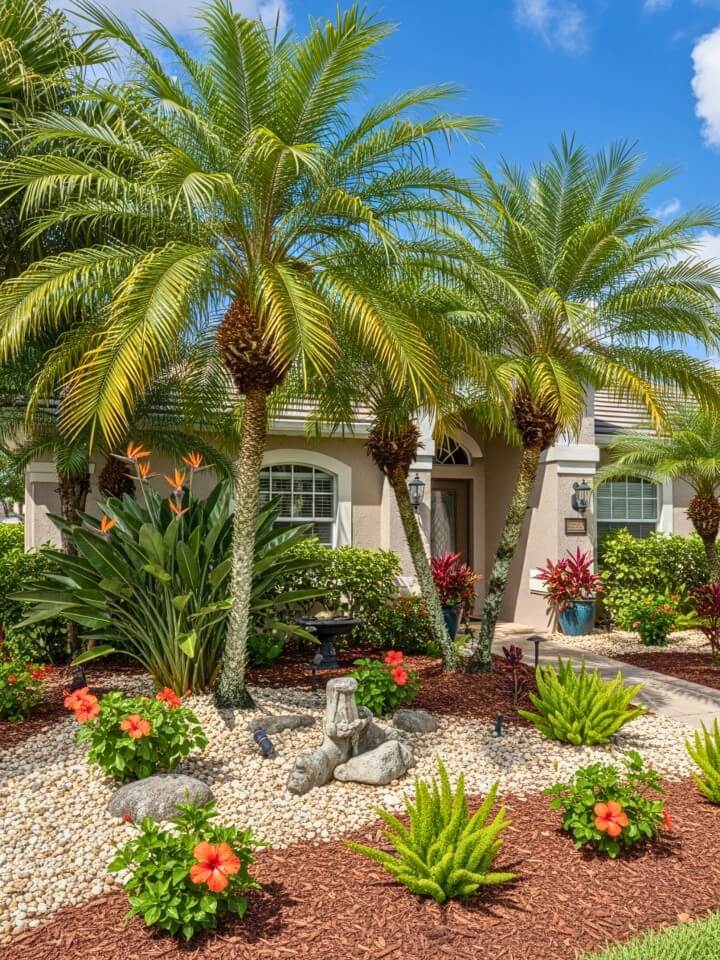
If your dream is pulling into your driveway and feeling like you’ve just checked into somewhere expensive, this is the look. Resort-style landscaping layers multiple palms with bold tropical foliage to create a sense of immersion rather than decoration.
Plant palms in odd-numbered groupings — threes and fives look natural, while pairs feel staged. Build around them with bird of paradise, philodendron, croton, and elephant ear for that lush, layered effect. A small fountain or stone water bowl tucked into the planting completes the atmosphere.
This idea needs space to breathe, so it suits larger front yards. On smaller lots it tips quickly from lush to overgrown.
10. Palm with Water Feature
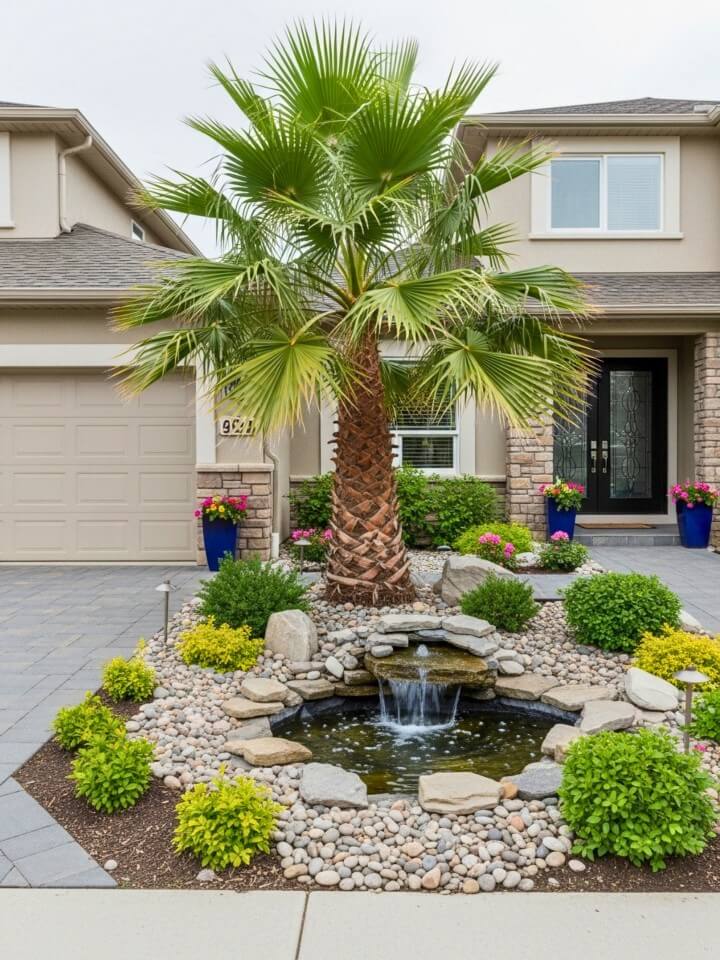
Unlock stunning curb appeal palm tree landscaping ideas front yard to make neighbors stop and stare. Sound is the most overlooked element in landscape design. Adding even a small water feature near a palm changes how the entire front yard feels — calmer, more deliberate, more like a place than a yard.
You don’t need a koi pond. A bubbling boulder, ceramic urn fountain, or compact pondless waterfall all deliver the audio without the maintenance headaches. Position it within four to six feet of the palm so they read as one composition rather than two separate features.
Practical Note: Run the electrical and water lines before planting anything substantial. Retrofitting around an established palm is a job nobody enjoys.
11. Palm Tree with Curved Garden Edging
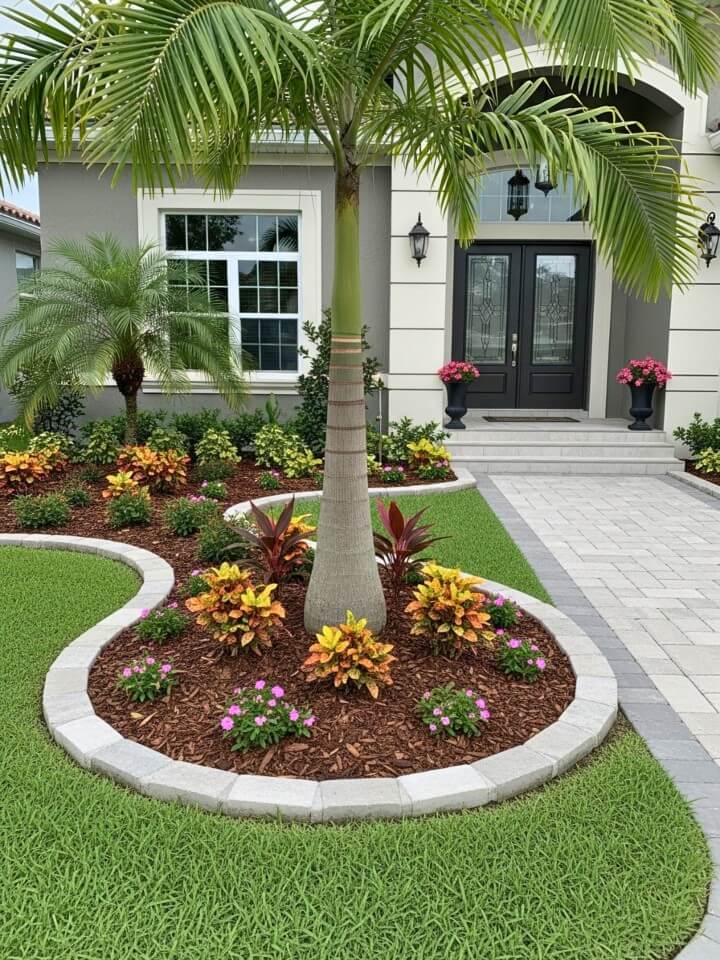
Straight lines have their place, but curves are what make a yard feel inviting. Sweeping the bed around a palm with a soft, flowing border softens the entire front landscape and draws the eye naturally toward the tree.
Use materials that bend without looking forced — flexible steel edging, cobblestone, or poured concrete curves all hold their shape over the years. Inside the curve, fill with two or three textures: bark mulch closest to the trunk, a band of low groundcover beyond that, and seasonal color along the outer edge.
The trick is keeping the curve gentle. Tight, fussy bends look amateur; long, lazy arcs look professional.
12. Small Palm Cluster Design
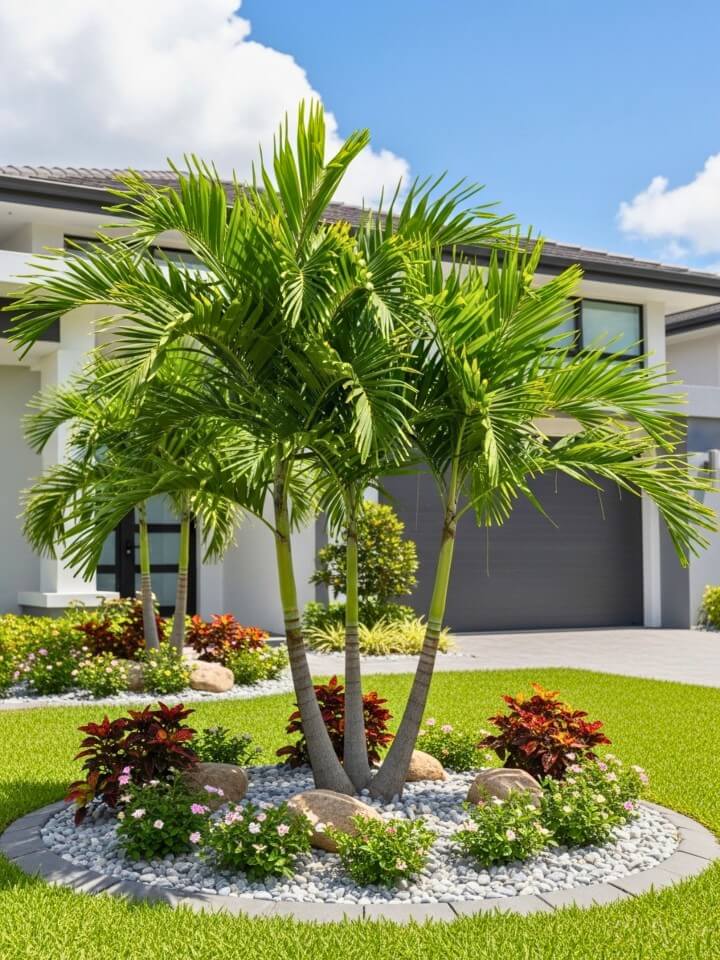
A single palm can sometimes feel lonely on a wide lawn. Grouping two or three shorter palms together fills the visual space and creates the dense, layered look you see in well-designed neighborhoods.
How to Arrange the Cluster
Stagger the heights — one taller specimen flanked by two shorter ones reads more natural than three matching trees. Plant them within three to five feet of each other so the canopies eventually merge into one shape.
What to Plant Around Them
Keep the underplanting simple. A continuous bed of liriope, mondo grass, or trailing lantana ties the cluster together and prevents that “three trees stuck in grass” look.
13. Front Yard Palm Tree Landscape with Mulch Bed
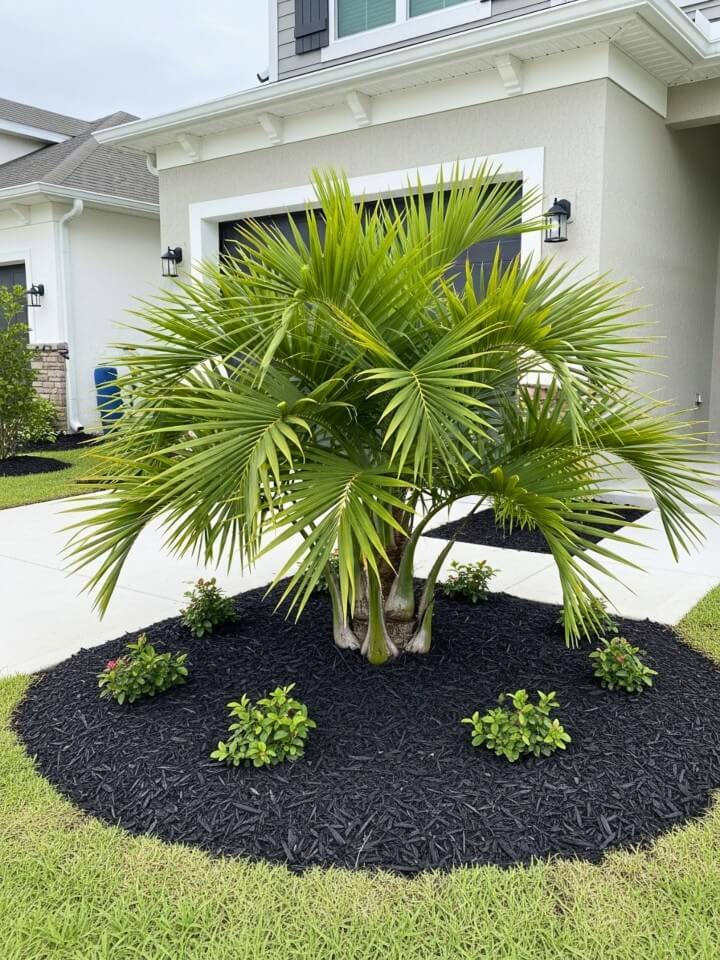
Discover charming small palm tree landscaping ideas front yard that pack big tropical style anywhere. Not every front yard needs to be a botanical showcase. Sometimes the smartest design is the simplest one — a palm, a clean bed of mulch, and nothing else fighting for attention.
Choose dark hardwood or pine bark mulch; both make the green of the fronds practically glow. Shape the bed as a generous circle or oval extending at least four feet from the trunk in every direction. Crisp edges matter more than fancy plants here, so cut a clean trench border or install discreet edging.
Refresh the mulch once a year, pull weeds when they appear, and the look stays sharp with almost no effort.
14. Front Yard Coastal Palm Landscape
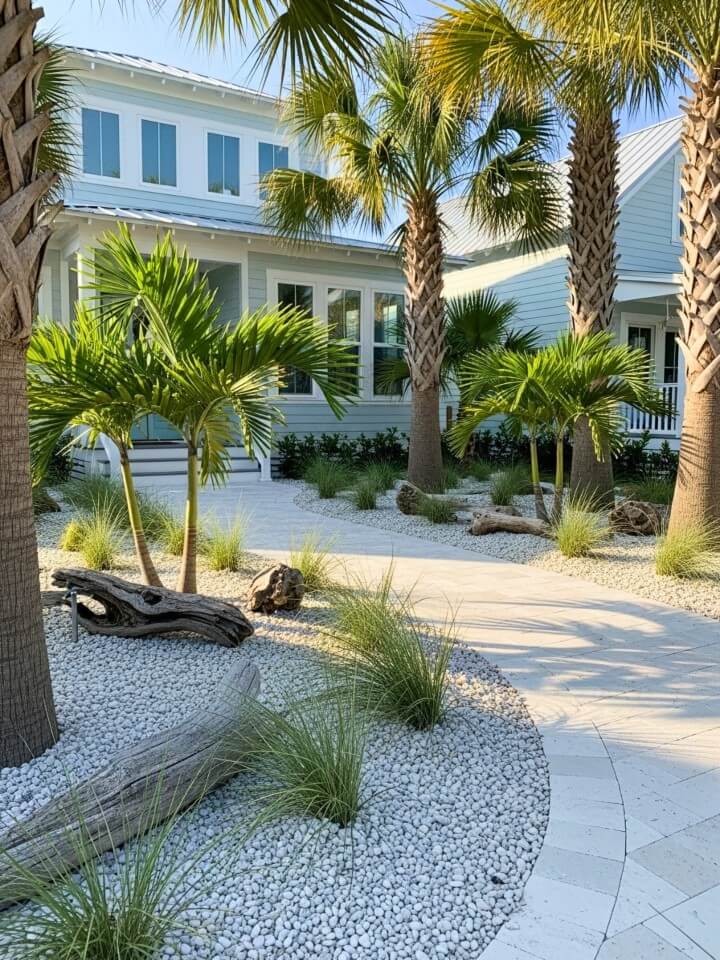
You don’t need an ocean view to bring the coast home. A coastal-inspired palm landscape leans into pale colors, soft textures, and materials that feel weathered by salt air.
Swap dark mulch for crushed white shell or pale beach pebbles. Add ornamental grasses like muhly grass or blue fescue that move in the breeze the way dune grass does. A few pieces of driftwood placed casually — never arranged — sell the illusion. Pair with palms that suit the look: Sabal, Coconut where climate allows, or Sylvester Date.
Finish with light-colored stepping stones or bleached wood timbers, and the whole yard takes on that easy, vacation-house feel.
15. Palm Trees with Driveway Border
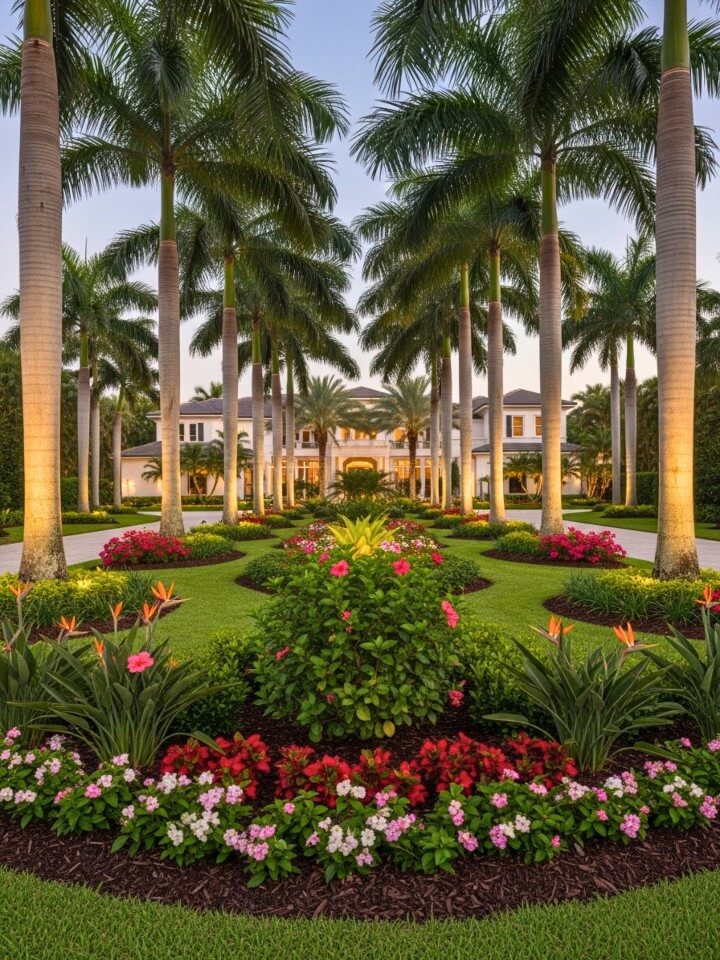
A row of palms running along the driveway is one of the few landscaping moves that genuinely changes how a property is perceived from the street. It signals intention, scale, and care before anyone reaches the front door.
Spacing matters more than people realize. Plant palms ten to fifteen feet apart depending on mature canopy spread — too close and they crowd each other, too far and the rhythm breaks. Symmetrical rows on both sides of the driveway look formal; a single row on one side feels more relaxed.
Worth Knowing: Skip varieties that drop heavy fruit or large fronds. Cleanup near vehicles gets old fast.
16. Palm Tree with Seating Area
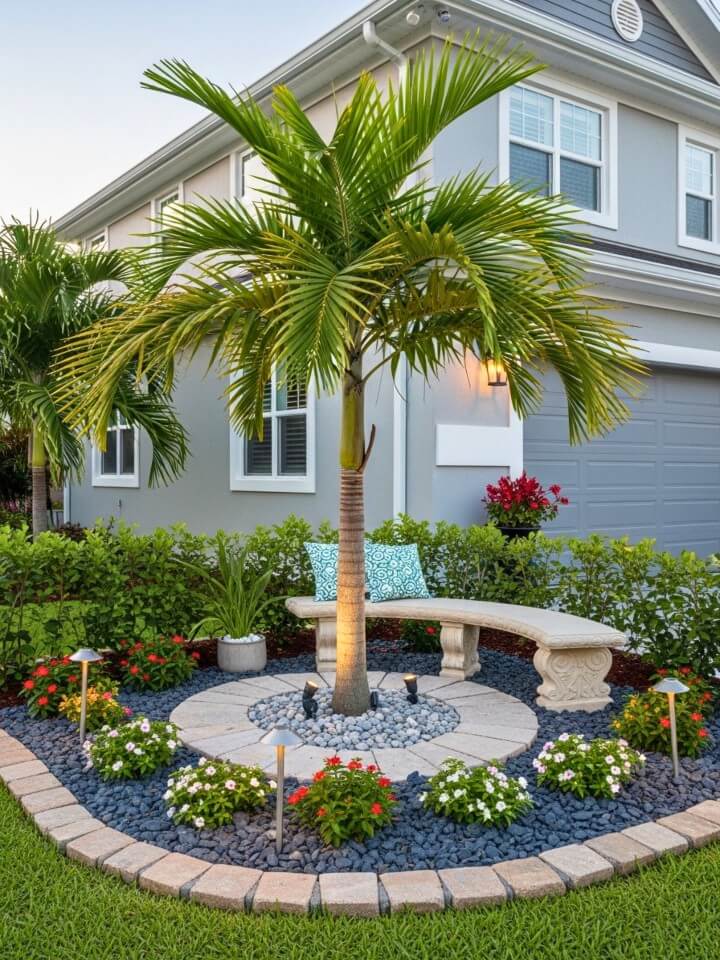
Most front yards exist to be looked at, not used. Carving out a small seating nook beneath a palm changes that — suddenly the yard becomes somewhere to drink coffee, wave to neighbors, or actually enjoy the landscape you’ve invested in.
Keep the footprint modest. A pair of weather-resistant chairs and a small side table on a circle of flagstone or gravel is all it takes. Position the seating just outside the palm’s drip line so you get filtered shade without dropping fronds in your lap.
String lights overhead or a single lantern on the table extends the space into evening hours, when it tends to get the most use anyway.
17. Layered Tropical Front Yard
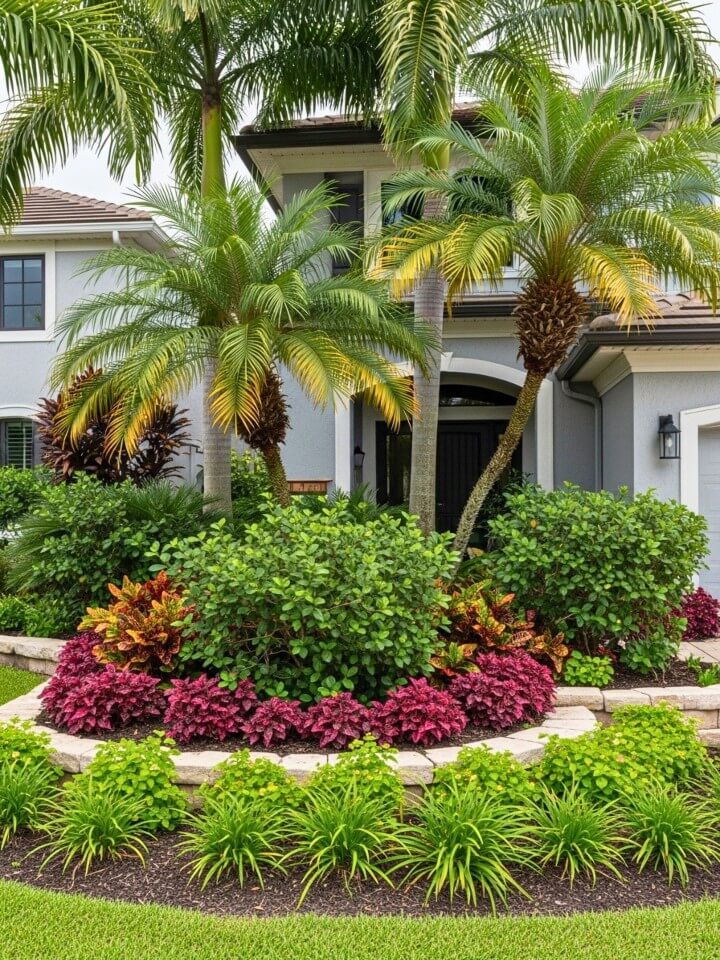
Create a lush, resort-worthy look with front yard landscaping around palm trees using native plants. The fullest, most luxurious-looking palm landscapes almost always follow the same rule: three layers of height, planted in that order from the house outward.
Building the Back Layer
Start with your tallest palms positioned closest to the house or along the property line. Royal Palm, Queen Palm, or Date Palm all work depending on climate.
The Middle Layer
Fill the next zone with shoulder-height plants — bird of paradise, dwarf banana, oleander, or large crotons. This layer carries most of the visual weight.
The Front Layer
Edge everything with low growers like impatiens, dwarf agapanthus, or sweet potato vine. The descending heights guide the eye smoothly from canopy to curb.
18. Front Yard Palm Tree with Decorative Pathway
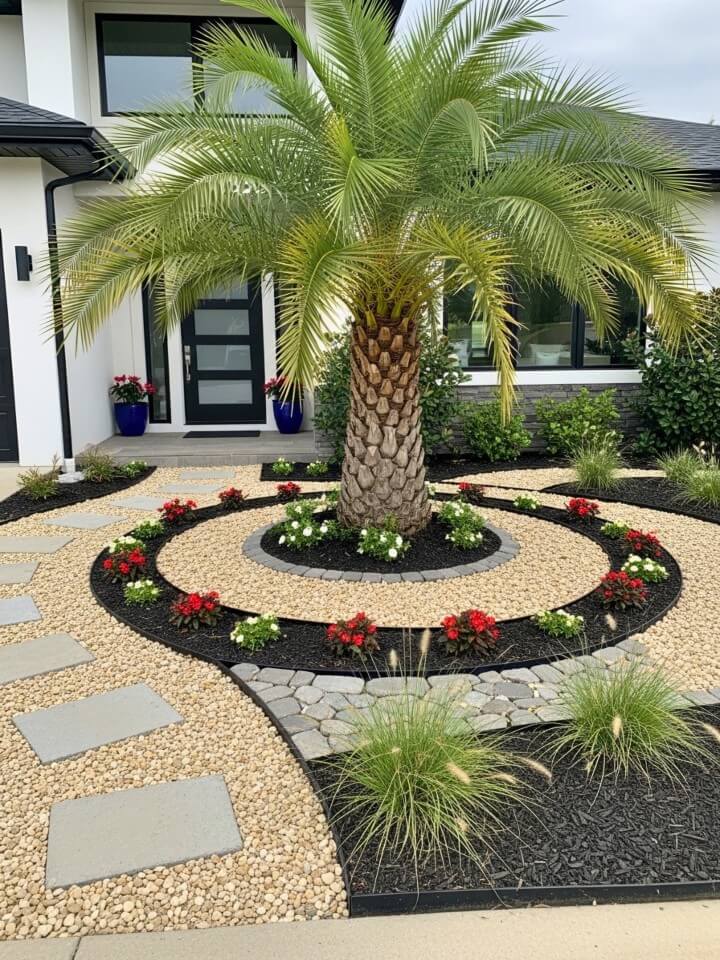
A pathway leading past or curving around a palm gives the front yard a sense of direction. Even if the path doesn’t go anywhere particularly useful, the visual journey it creates makes the whole landscape feel more designed.
Material choice sets the tone. Irregular flagstone reads natural and aged; cut bluestone or large-format pavers feel modern and architectural. Wide-set stepping stones with gravel or groundcover between them split the difference and drain beautifully.
Curve the path slightly as it passes the palm rather than running it straight by — the gentle bend creates a moment, almost like the path is acknowledging the tree. Small mushroom lights along the edge handle nighttime navigation and add quiet ambiance.
How to Choose the Right Palm Tree for Your Yard
Before falling in love with a particular look, match the palm to your conditions. Check your USDA hardiness zone first — a Coconut Palm in zone 7 won’t survive its first winter, while a Windmill Palm handles snow without complaint. Consider mature size honestly: the cute six-foot palm at the nursery may hit forty feet in a decade. Factor in maintenance too. Some varieties self-clean their old fronds; others need annual trimming that means hiring a climber.
Soil drainage, sun exposure, and proximity to foundations or power lines all matter. A little homework upfront prevents expensive replanting later.
FAQs About Front Yard Palm Tree Landscaping
Explore expert answers to the most common questions about designing, planting, and maintaining front yard palm trees.
How Fast Do Palm Trees Grow?
It varies widely. Queen Palms can add two to three feet per year, while Bismarck and Date Palms grow much slower — sometimes under a foot annually. Slower growth usually means stronger, more wind-resistant trunks.
Can Palm Trees Survive Cold Winters?
Some can. Windmill, Needle, and European Fan palms tolerate freezing temperatures and even occasional snow. For zones 7 and colder, stick to these cold-hardy varieties.
How Much Does Palm Tree Landscaping Cost?
Small palms (4-6 feet) typically run $50-$200 installed. Mature specimen palms can reach $500-$2,000 or more depending on species and size. Full landscape projects with multiple palms, lighting, and beds usually start around $3,000.
Do Palm Trees Damage Foundations or Pipes?
Generally no. Palm roots grow as a dense fibrous ball rather than spreading aggressively like oak or maple roots, making them one of the safer large trees to plant near structures.
How Often Should Palm Trees Be Trimmed?
Once a year is usually enough, ideally in late spring. Avoid over-trimming — removing green fronds stresses the tree. Only remove fronds that are fully brown or hanging below horizontal.
What’s the Best Mulch for Palm Trees?
Organic mulches like pine bark or shredded hardwood work well. Apply two to three inches deep, keeping it a few inches away from the trunk to prevent rot.
Final Thoughts
Palm trees offer something most landscape plants can’t — instant character. Whether you choose a single statement palm, a lush tropical layering, or a clean minimalist arrangement, the right design transforms a forgettable front yard into something memorable. Start with one idea from this list that fits your home’s style and climate, then build outward from there. The best landscapes aren’t planted in a weekend; they’re shaped over seasons, with small additions that compound into something genuinely beautiful.