23 Porch Siding Ideas To Refresh Your Home’s Curb Appeal
A porch is the first thing guests see and the last thing you pass through on the way home — which is exactly why its siding deserves more thought than it usually gets. The right material can make a low ceiling feel taller, turn a plain entry into a focal point, or quietly hold up against decades of rain, sun, and humidity without complaint. The wrong one peels, warps, or simply looks dated within a few years.
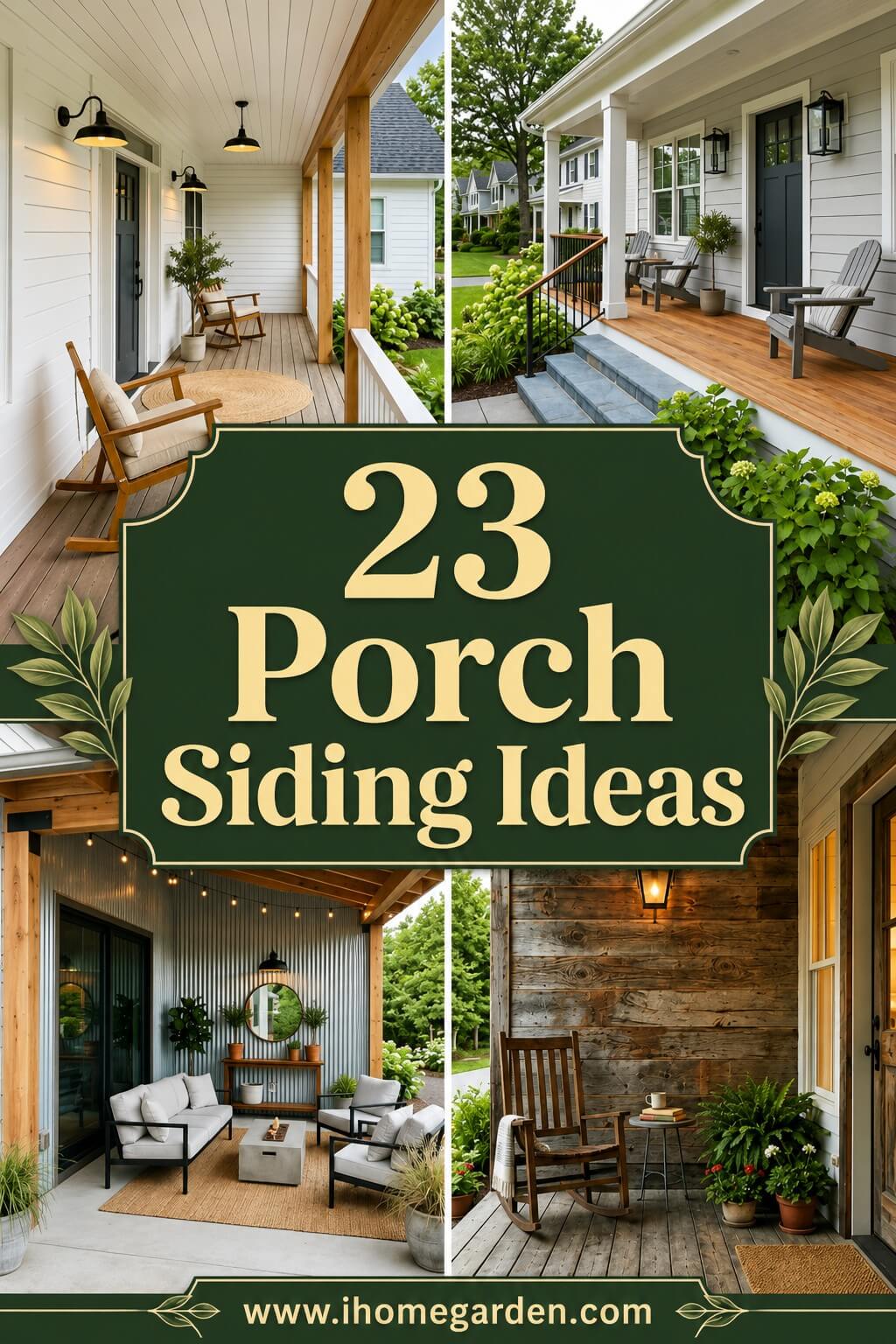
Find these 23 captivating porch siding ideas worth considering, from budget-friendly classics like vinyl lap and painted cinder block to high-end choices like stone veneer and weathered Corten steel. Each option includes realistic costs, lifespan expectations, climate considerations, and the design styles it complements best — so by the end, you’ll know exactly which material fits your porch, your home, and your long-term plans.
1. Vertical Shiplap for Added Height
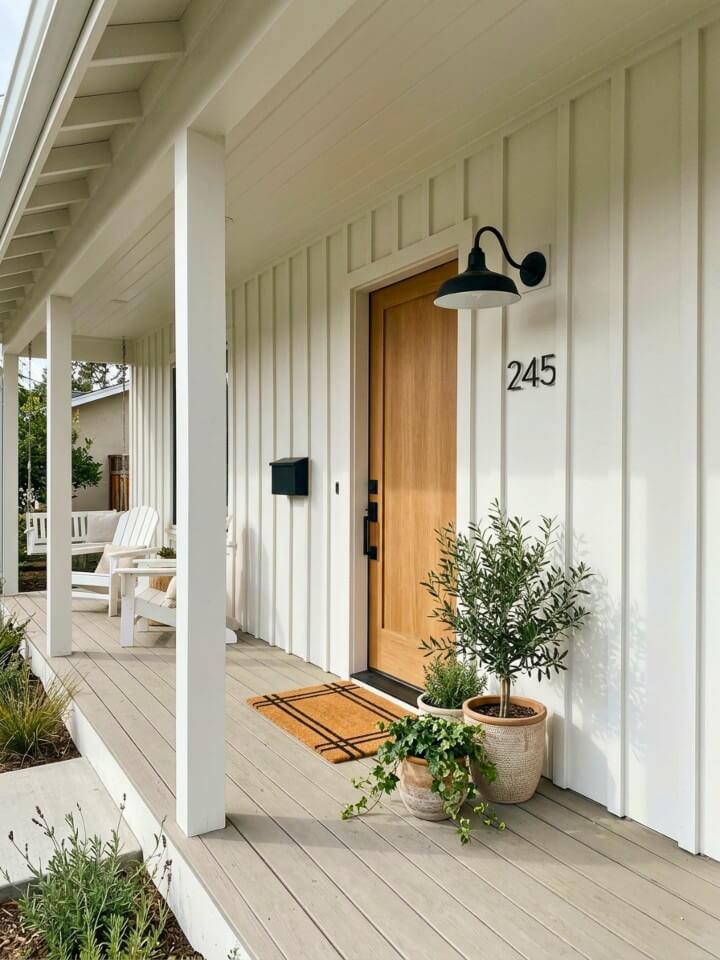
Picture a low front stoop that always felt cramped — vertical shiplap is the trick that fixes it. By running narrow boards upright instead of sideways, the eye travels up the wall, and suddenly the ceiling feels higher than it actually is. It’s become a signature move in modern farmhouse design, especially on entries painted in soft white, warm greige, or stormy gray. Budget-wise, you’re looking at roughly $3 to $7 per square foot, and a quality painted finish holds up well for close to a decade. One underrated bonus: vertical grooves shed rainwater faster than horizontal seams, so it performs quietly well in wetter climates too.
2. Board and Batten Farmhouse Charm
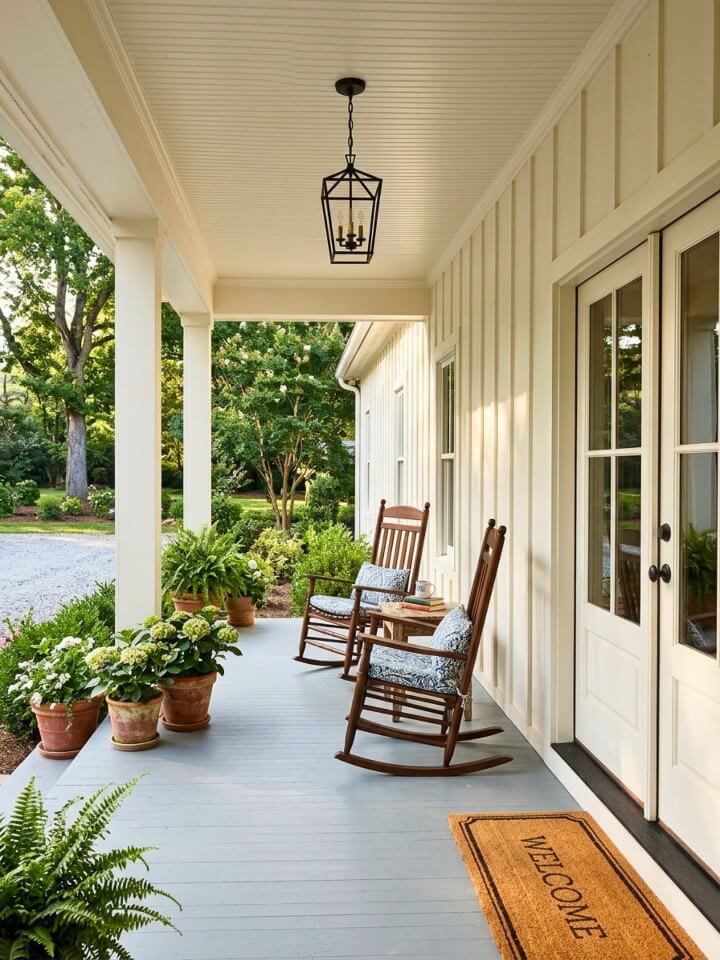
Best For: wraparound porches, gable entries, and homes that feel a little too flat from the curb.
Board and batten works because of shadow. Wide planks sit flush against the wall, then slim battens cover every seam, and the result is a rhythmic texture that catches light differently throughout the day. Engineered wood versions run about $4 to $6 per square foot; fiber cement climbs to $7 to $9 but rewards you with 30+ years of low maintenance. Real cedar looks the warmest but needs repainting every 5 to 8 years. Sage green has overtaken classic white as the trending color choice, though deep charcoal with white trim still photographs beautifully. Skip it on ultra-modern homes — the texture reads too cottagey there.
3. Cedar Shake Shingles for Natural Porch Warmth
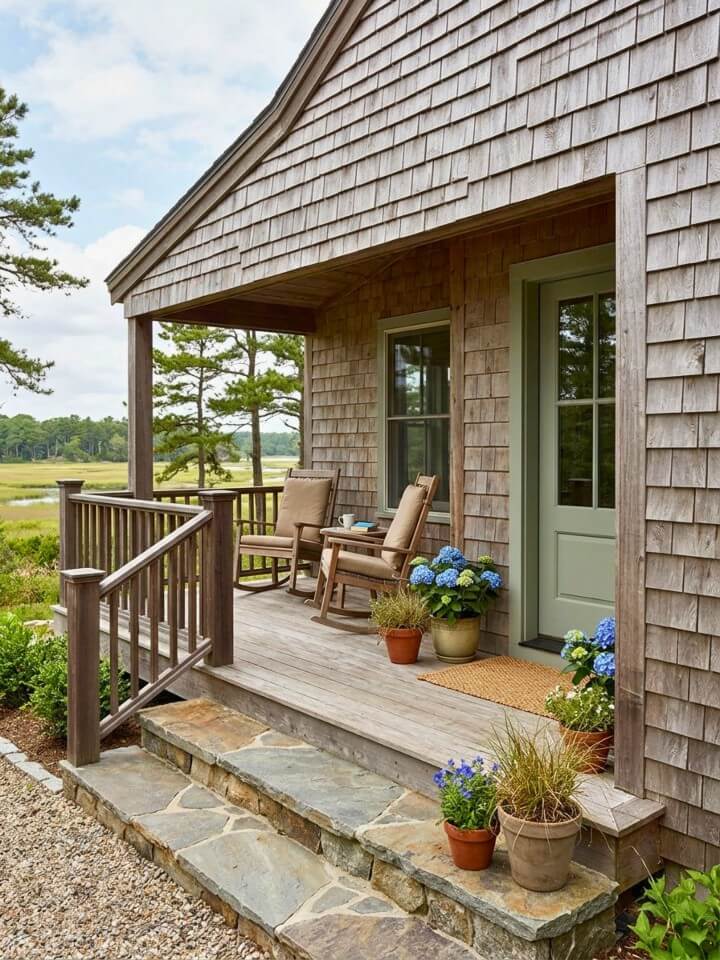
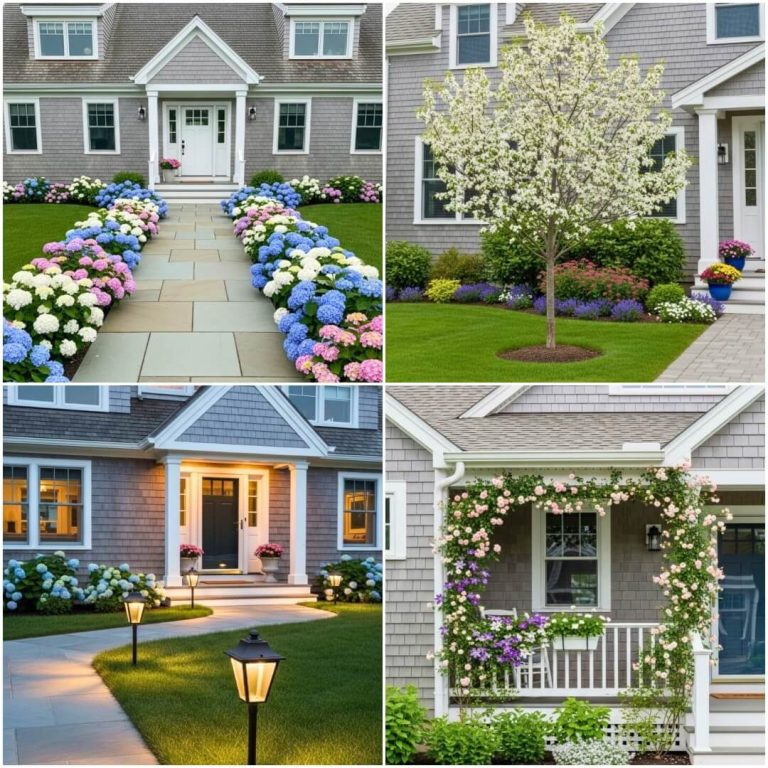
There’s a reason cedar shake keeps showing up on coastal homes a century later: it ages into something better than when it was installed. Within two to five years, the honey-amber tone fades into a driftwood gray patina that costs nothing and looks expensive. Hand-split shakes carry deeper texture than machine-sawn shingles, though both run roughly $6 to $12 per square foot installed.
A Few Things Worth Knowing Before You Commit:
- Cedar naturally resists insects and rot, but humid regions need a mildew treatment every few years
- Lifespan reaches 30 to 50 years with basic sealing
- It pairs almost perfectly with stone steps and aged copper fixtures
4. Brick Veneer with Traditional Appeal
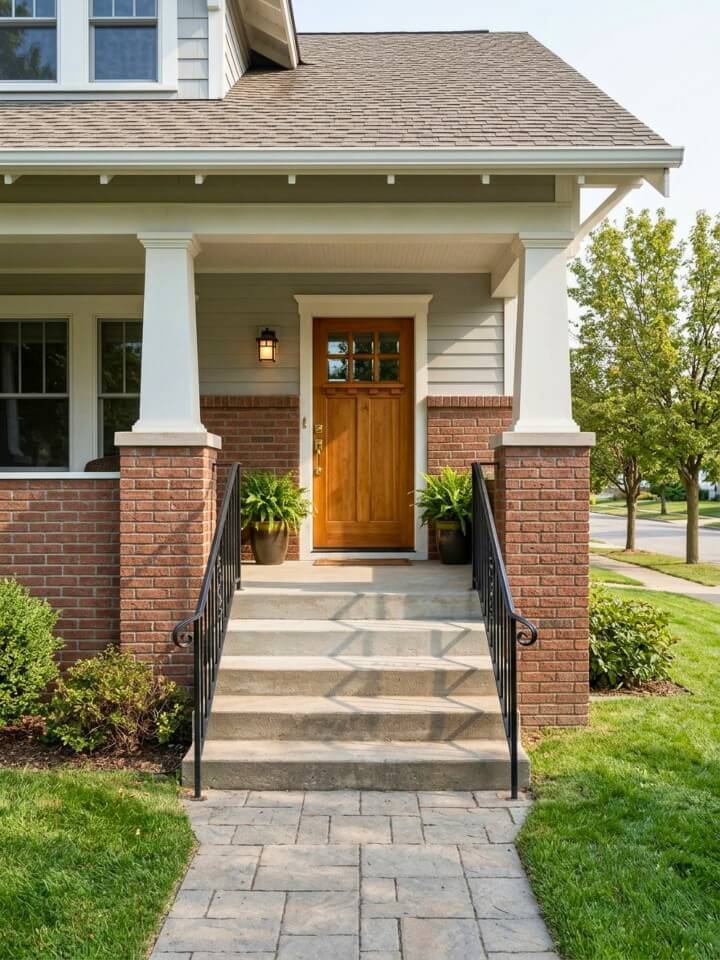
Full brick masonry is heavy, slow to install, and expensive — brick veneer solves all three problems while keeping the look almost identical from the sidewalk. The panels attach to a backing wall and typically cost $8 to $15 per square foot installed, compared to $20+ for full brick. Where it shines is on porch columns, knee walls, and the skirting around raised foundations of Colonial, Craftsman, and Georgian homes.
Lifespan stretches past 50 years with nothing more than an occasional power wash. Color choice matters more than people realize: soft red blends feel traditional, whitewashed tones lean modern-cottage, and tumbled antique brick gives that “always been here” character, especially when nearby garden walls or a brick fence repeats the same masonry tone. Black iron railings finish the look.
5. Classic Horizontal Lap Siding
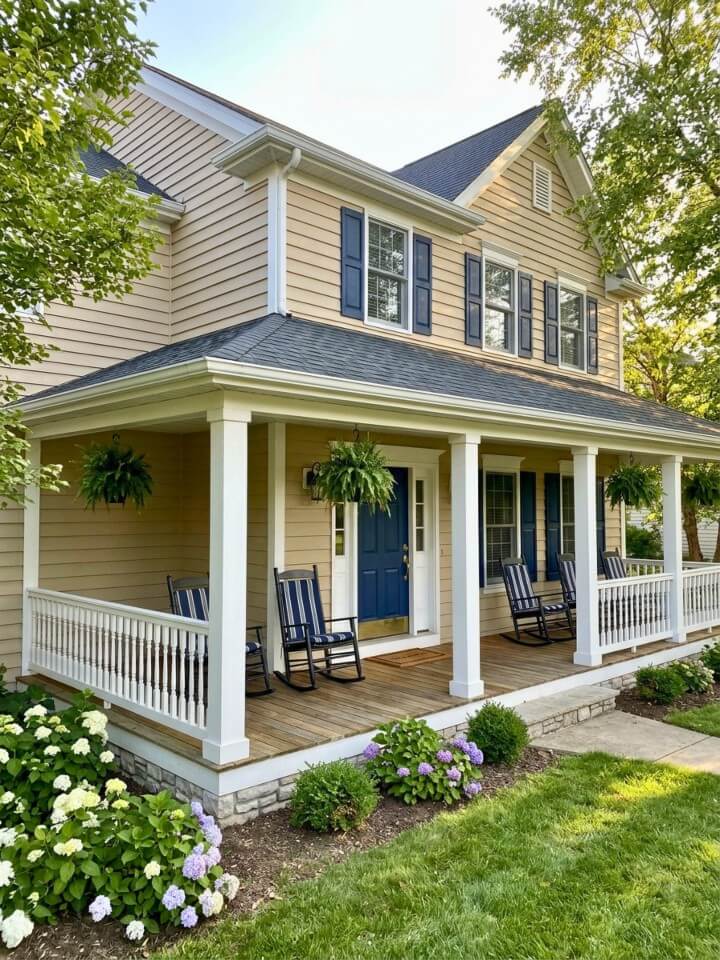
Discover stunning front porch siding ideas that blend timeless charm with modern curb appeal magic. Why has horizontal lap siding stayed the default for over a century? Because it disappears into the background in the best way — letting trim, shutters, and landscaping carry the personality. It also visually widens narrow porches, which is a quiet design win most people never notice consciously.
The material choice matters more than the style itself:
| Material | Cost/sq ft | Lifespan |
|---|---|---|
| Vinyl | $2 – $4 | 20 – 30 yrs |
| Engineered wood | $4 – $7 | 20 – 30 yrs |
| Fiber cement | $5 – $10 | 30 – 50 yrs |
Fiber cement handles humidity, salt air, and freeze-thaw cycles best, making it the go-to for anyone who’d rather not repaint every few years.
6. Tongue and Groove Wood Walls
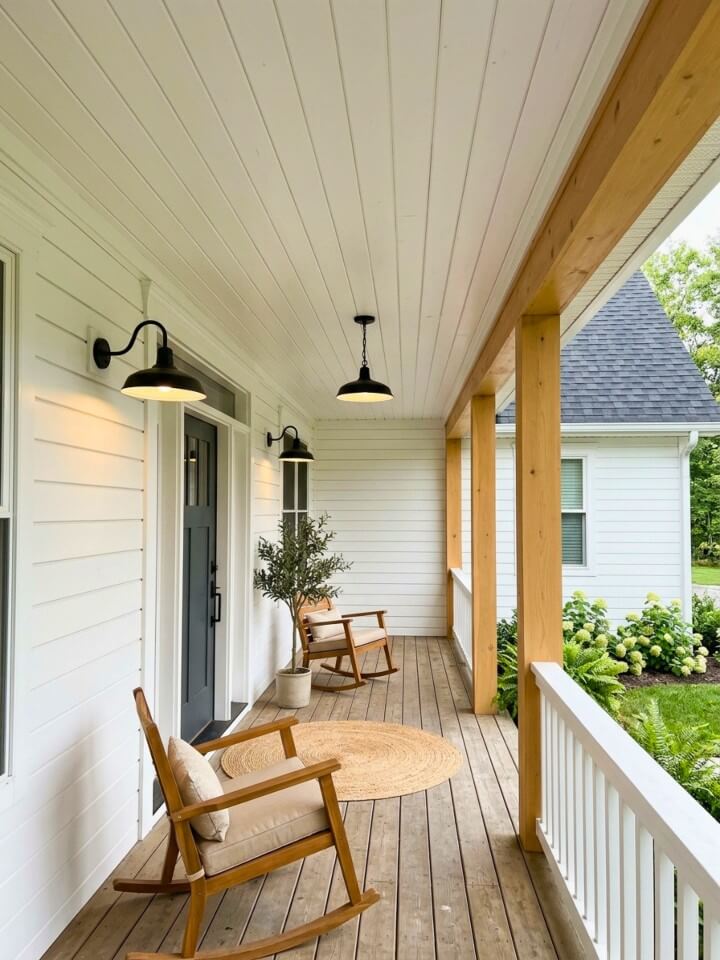
Most people think of tongue and groove as a ceiling material, but running it down the walls of a covered porch is one of the most underrated moves in exterior design. The interlocking edges create a seamless, gap-free surface that feels custom-built rather than assembled. Pine runs around $3 to $5 per square foot, while cedar or mahogany climbs to $7 to $12 for noticeably better moisture resistance. The catch? It only works under a roof — direct rain exposure shortens its life dramatically. Painted bright white delivers that crisp Charleston-porch look; a clear stain keeps the grain visible and warm. Pair it with a beadboard ceiling for a fully wrapped, cohesive feel.
7. Durable Fiber Cement Cladding
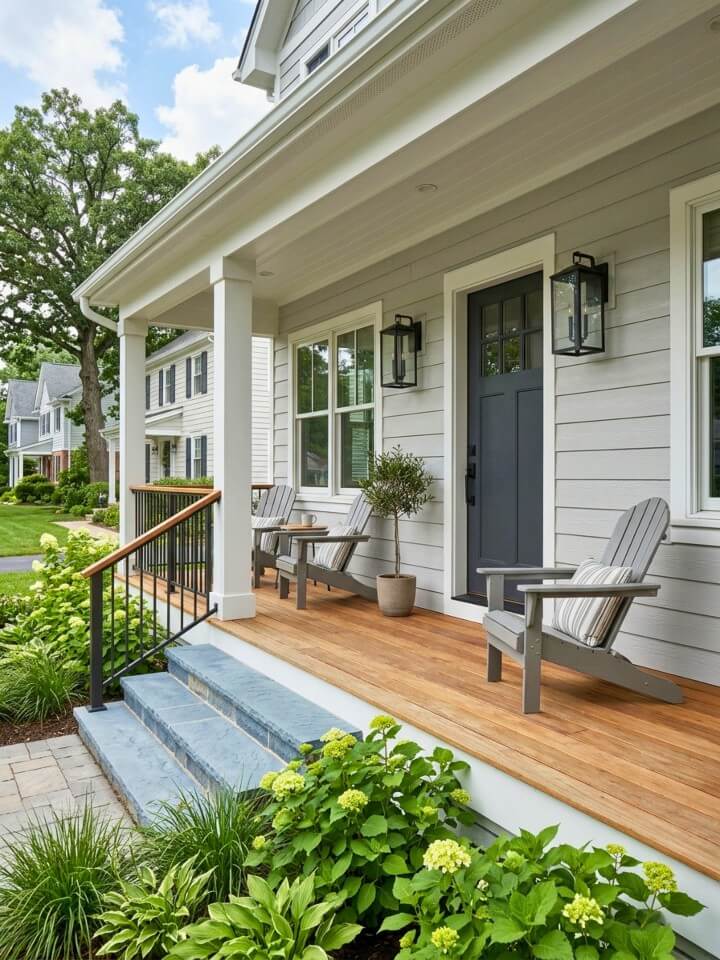
If you had to pick one siding material based purely on the numbers, fiber cement would win most arguments. It mimics wood grain convincingly, resists rot, won’t burn, ignores termites, and shrugs off hail that would dent vinyl. Expect $5 to $10 per square foot installed and a 30 to 50 year lifespan with one repaint somewhere in the middle.
What makes it work especially well on porches:
- Holds paint roughly twice as long as real wood
- Handles humidity and salt air without warping
- Comes pre-primed in lap, shingle, panel, and board-and-batten profiles
The one honest downside: it’s heavy, and installation is harder on the DIY crowd than vinyl or engineered wood.
8. Stone Veneer Foundation Accent
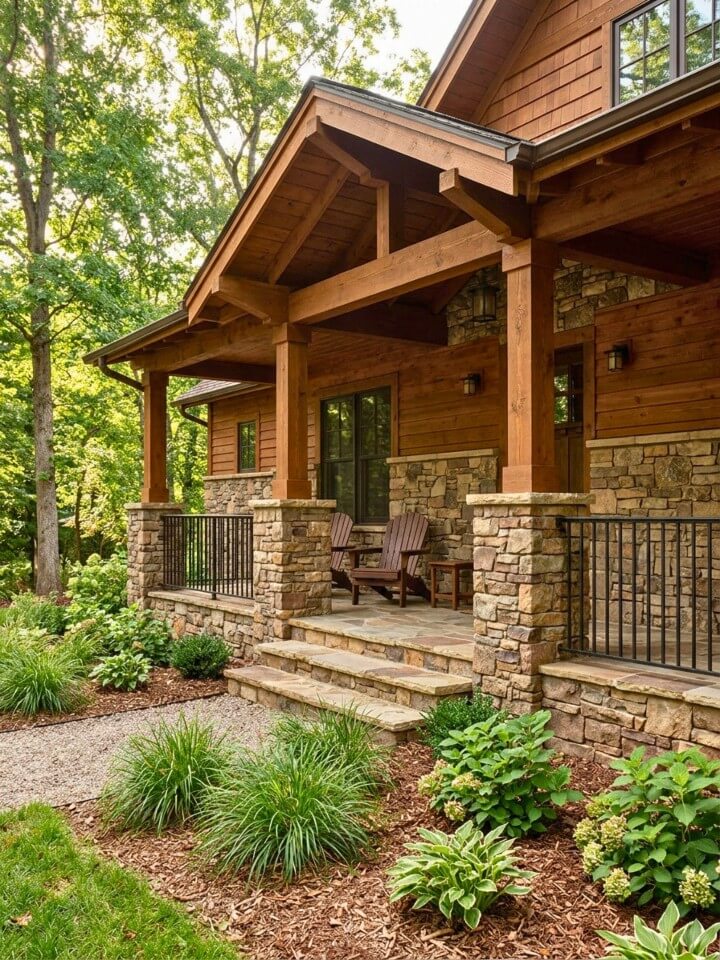
Stone is a material that asks to be used selectively. Wrapping an entire porch in it usually feels like too much — but applying it to the lower third of the walls, the column bases, or the foundation skirt gives a home visual weight that nothing else matches. Manufactured stone veneer runs $10 to $20 per square foot installed and lasts essentially forever with no maintenance beyond an occasional rinse. Natural stone doubles that price but rewards you with irregularities no mold can replicate. Earth-toned ledgestone reads rustic, while stacked limestone leans modern. The design rule worth remembering: stone needs at least one softer material nearby — wood siding, painted trim, or planted greenery — to feel intentional rather than fortress-like.
9. Corrugated Metal Accent Walls
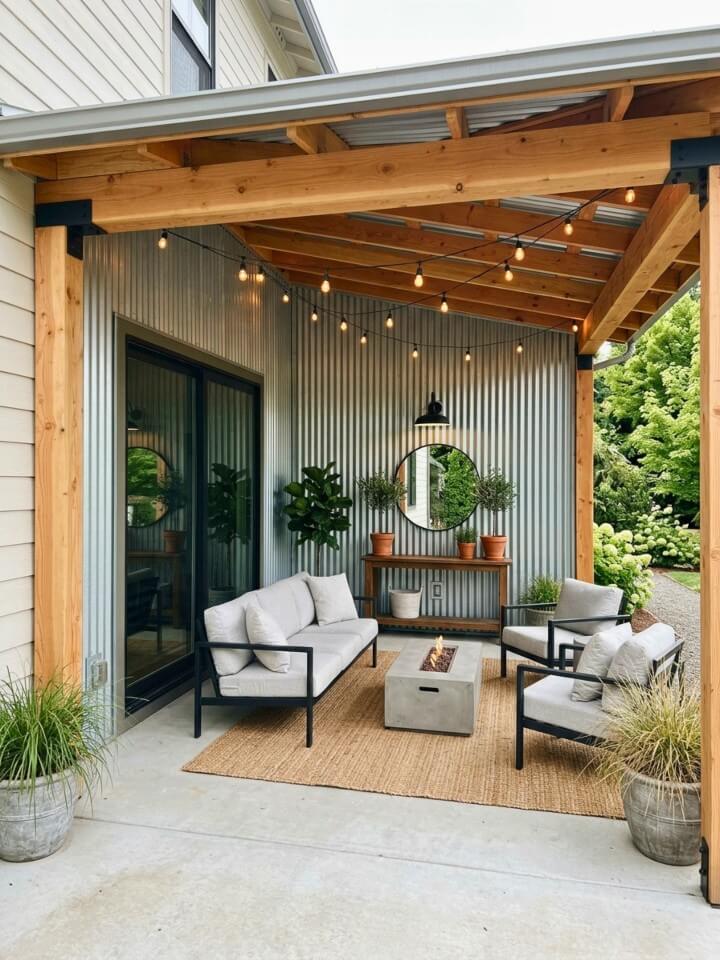
Transform your outdoor space with durable porch siding that beautifully balances style and weather. Corrugated metal carries an unfair reputation. People still associate it with barns and sheds, but the same ribbed panels have become a favorite of architects working on farmhouse-modern and industrial-leaning homes. The trick is restraint — using it as one accent wall or beneath a porch rail rather than the entire envelope.
Galvanized panels cost roughly $4 to $8 per square foot and last 40 to 60 years without rust if properly coated. Matte black, weathered zinc, and natural galvanized are the three finishes that consistently look intentional rather than utilitarian. The material genuinely shines when paired with rough-sawn timber posts, a concrete porch floor, and warm Edison-bulb lighting overhead.
10. Beadboard for Cozy Southern Style
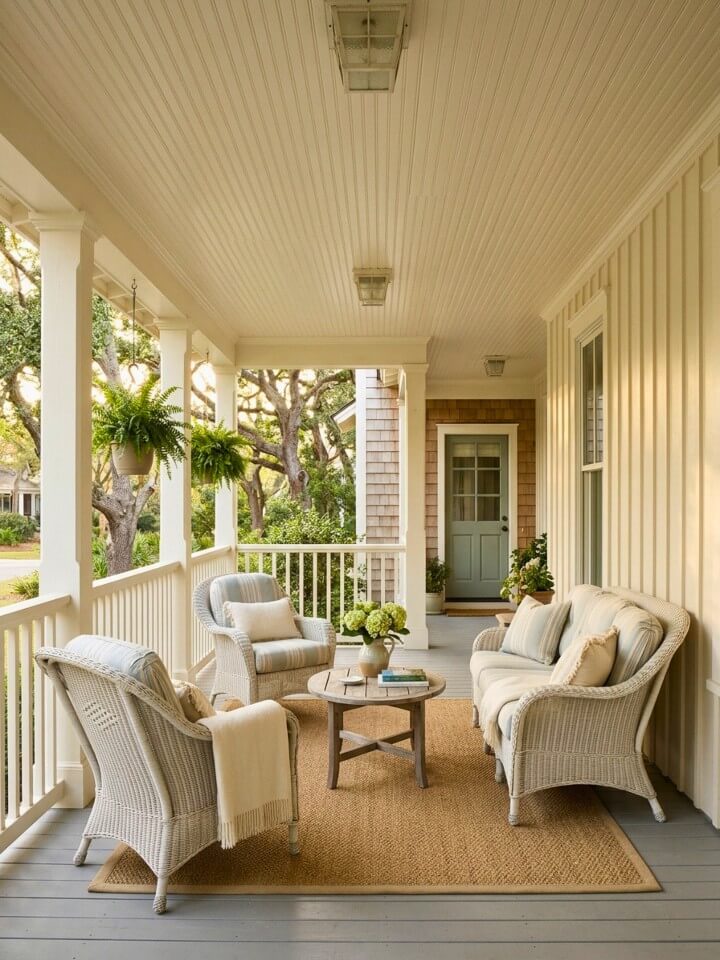
Beadboard became a Southern porch staple in the 1800s for a practical reason — those narrow vertical grooves helped hide warping in humid coastal air, and the painted finish reflected light into shaded sitting areas. That charm still translates today. Modern PVC beadboard solves the moisture problem entirely and runs about $2 to $5 per square foot; real wood costs slightly more and brings a softer surface. Haint blue ceilings with bright white beadboard walls remain the most-photographed pairing for a reason — the contrast feels timeless rather than dated, and it is easy to refresh with seasonal touches from spring home decor ideas. Skip it on contemporary or industrial homes, though; the cottage personality is hard to neutralize once it’s installed.
11. Smooth Stucco Exterior Finish
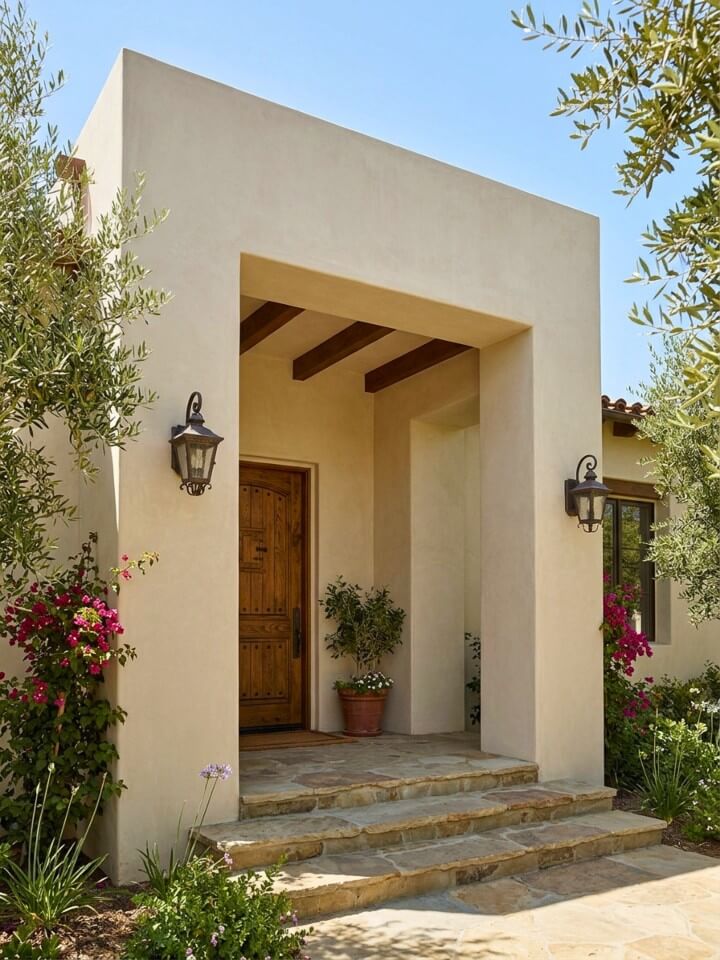
Hot, dry climates have always favored this material for good reason — the thick mineral surface reflects heat, breathes in humidity, and ages slowly rather than peeling. Traditional three-coat stucco runs about $7 to $10 per square foot installed and lasts 50 to 80 years with only minor patchwork along the way. Synthetic EIFS systems cost less but don’t hold up as gracefully. Mediterranean, Southwest, and adobe-inspired homes wear it best, especially in warm off-whites, sand, and terracotta tones. The smooth-troweled finish photographs cleaner; a light sand texture hides imperfections better. Pair it with dark wood beams overhead, wrought iron sconces, and saltillo tile underfoot for a porch that feels permanent.
12. Reclaimed Wood with Rustic Texture
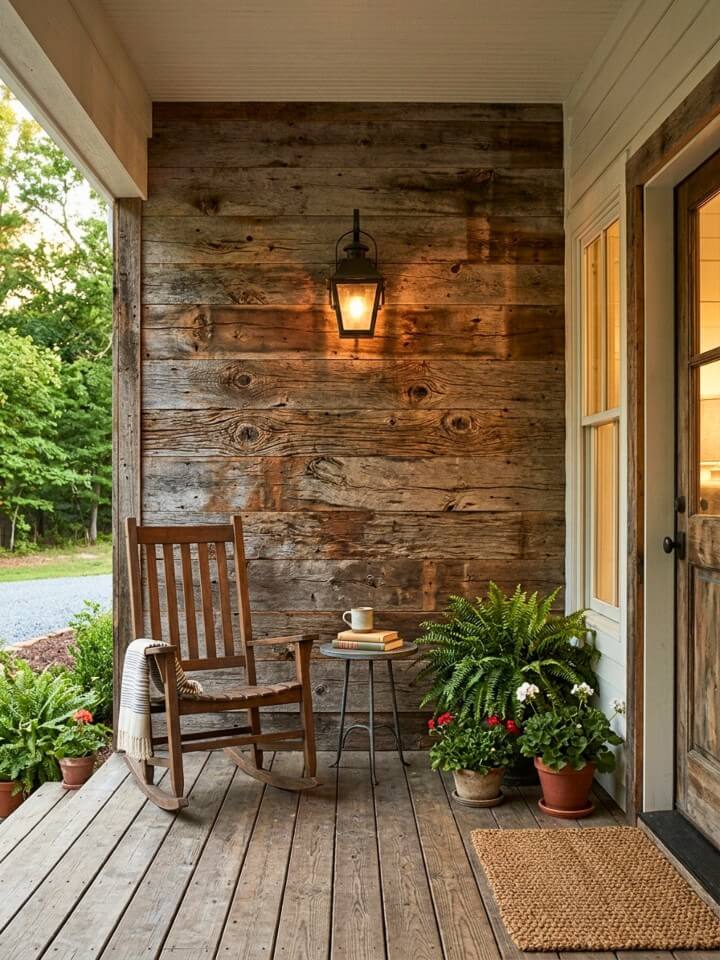
Every board carries a small history — knots, nail holes, old paint flecks, weathered grain — and that’s exactly what makes this material impossible to fake with new lumber. Salvaged barn siding, factory flooring, and snow-fence boards typically run $8 to $20 per square foot depending on species and origin. Oak and chestnut hold up longest outdoors; pine softens faster but ages beautifully under cover.
A Few Practical Notes Worth Knowing:
- Always seal with a UV-protective oil to slow further graying
- Inspect for old fasteners before installation
- Best used on accent walls rather than full porch wraps to control costs
The result feels collected over time rather than purchased.
13. Weatherproof PVC Trim Details
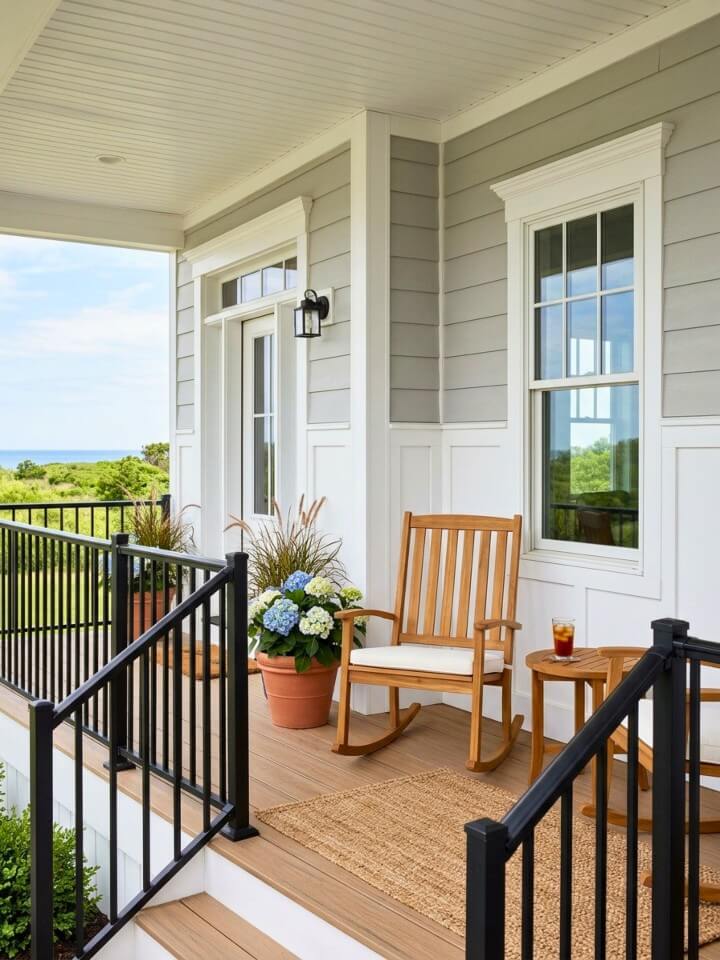
Wood trim near porch floors rots first, usually within 8 to 12 years — that’s the problem cellular PVC quietly solves. The material looks nearly identical to painted wood from arm’s length, but it shrugs off moisture, insects, and freeze-thaw cycles for 50+ years without splitting. Pricing lands around $4 to $8 per linear foot for standard profiles. Where it earns its keep: column wraps, baseboard trim, fascia along porch ceilings, and skirting that sits close to splash zones. It paints beautifully in any color and won’t blister underneath. The honest downside is expansion — the boards move slightly with temperature, so installers need to leave proper gaps at the joints.
14. Bamboo Panels for Tropical Vibes
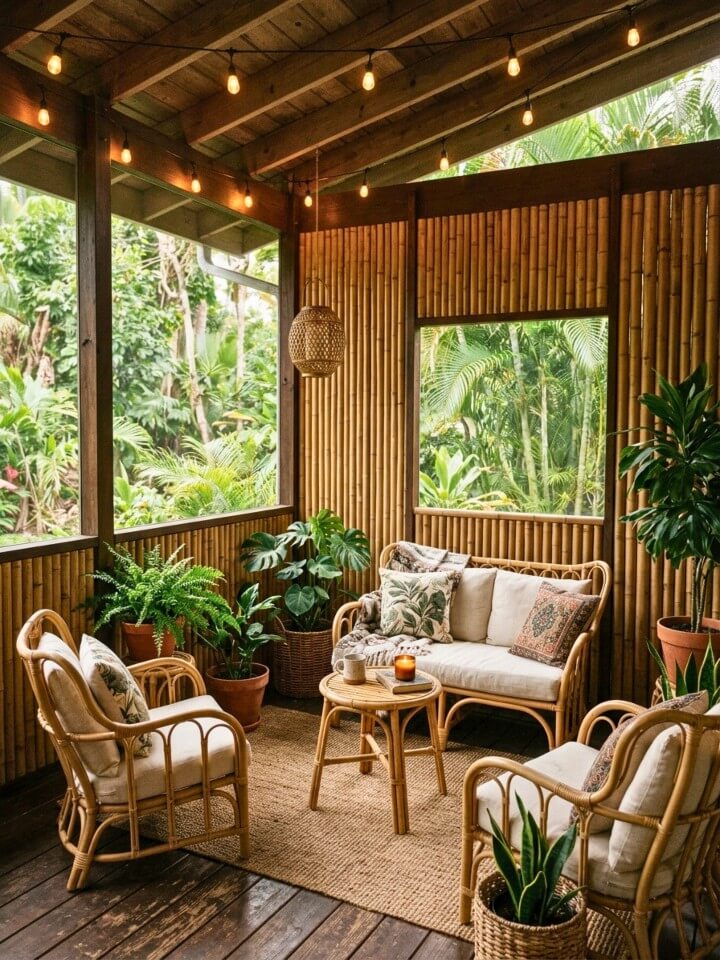
Few materials soften a porch the way woven bamboo does. The thin, layered reeds filter sunlight into dappled patterns, dampen street noise, and create a quiet sense of enclosure without blocking the breeze. Natural bamboo panels cost roughly $3 to $8 per square foot, while higher-grade carbonized versions climb to $10 to $15 and resist weathering longer. Lifespan varies widely — anywhere from 5 to 15 years depending on sun exposure and sealing schedule. The look belongs on tropical, bohemian, and garden-style porches rather than formal entries. Layer it behind hanging ferns, rattan seating, and warm string lighting, and the space starts to feel more like a retreat than an exterior wall.
15. Split-Face Block for Modern Weight
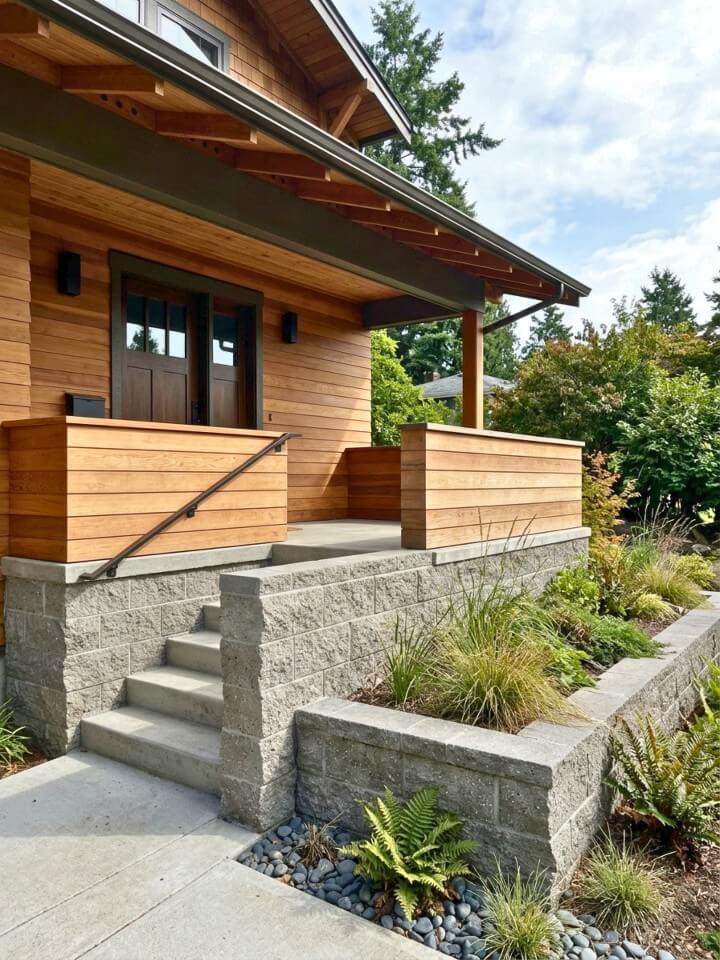
Elevate your home’s entrance with stylish front porch siding designed to impress every single guest. Architects reach for this material when a porch needs visual weight without leaning into traditional brick or stone. The rough, fractured face is created by splitting the block during manufacturing, which exposes the aggregate inside and produces a texture closer to natural stone than smooth CMU.
Installed cost runs roughly $9 to $15 per square foot, and the lifespan crosses 75 years with essentially zero maintenance. It performs best on lower walls, column bases, retaining edges along porch steps, and foundation skirting where mass actually serves the design. Warm gray, charcoal, and tan blends look most intentional. Soften the heaviness with cedar posts, steel railings, or trailing greenery spilling from raised planters.
16. Painted Cinder Block on a Budget
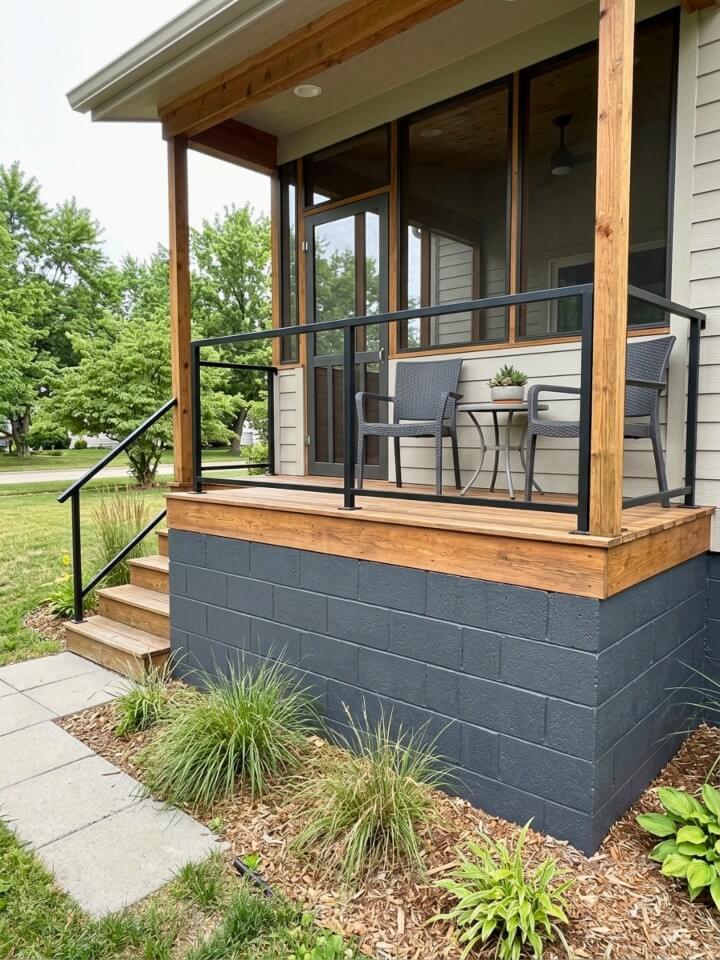
Few materials deliver structure this cheaply. Standard CMU runs roughly $2 to $4 per square foot installed, and a quality exterior paint job transforms the utilitarian gray into something genuinely intentional. The look works best on side porch walls, garden-facing enclosures, and lower foundations where you’d rather not spend on stone or brick. Smooth-faced blocks paint cleanest; split-face versions add texture but use more paint. Charcoal, warm white, and clay tones consistently photograph best — bright primary colors tend to age poorly. Lifespan stretches past 50 years, though repainting every 8 to 10 years keeps the finish crisp. A simple cedar cap rail along the top instantly upgrades the perceived quality.
17. Low-Maintenance Vinyl Lap Siding
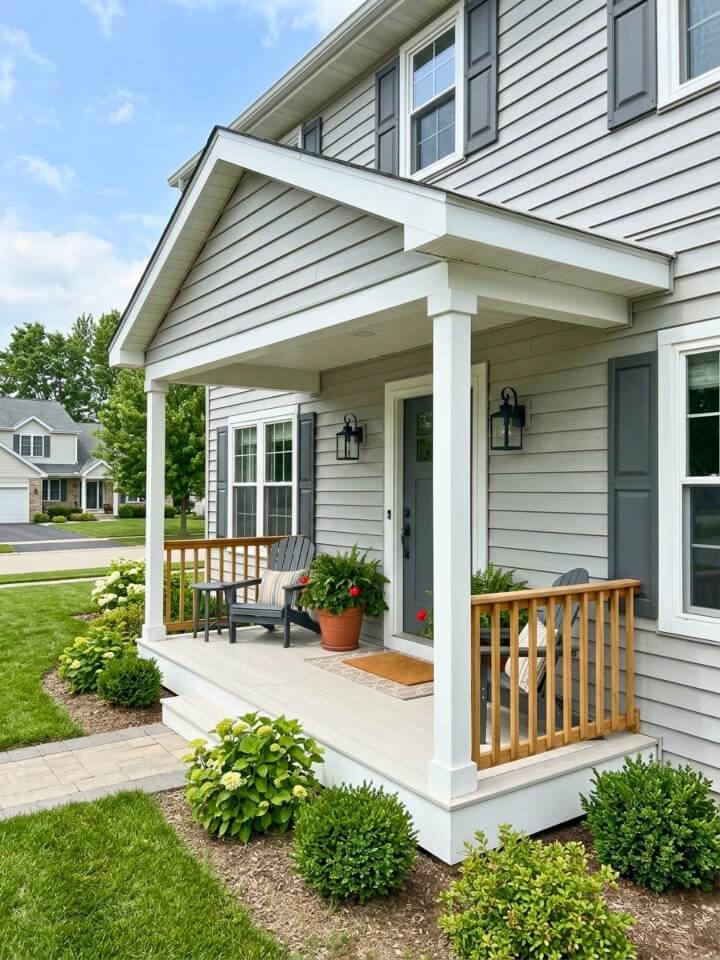
This material gets unfairly dismissed. Modern vinyl looks dramatically better than the warped, faded panels people remember from the 1990s, and the price-to-performance ratio still beats almost everything else.
The Honest Breakdown:
| Factor | Reality |
|---|---|
| Cost | $2 – $4 per sq ft installed |
| Lifespan | 20 – 30 years |
| Maintenance | Hose-down once a year |
| Paintable | Not traditionally, but possible with vinyl-safe paint |
The newer insulated profiles add R-value and feel more substantial when you knock on them. Skip glossy finishes — matte and low-sheen options read closer to painted wood. Where it falls short is heat resistance; dark colors near a south-facing grill or fire pit can warp.
18. Log Slab Siding for a Strong Rustic Porch Feel
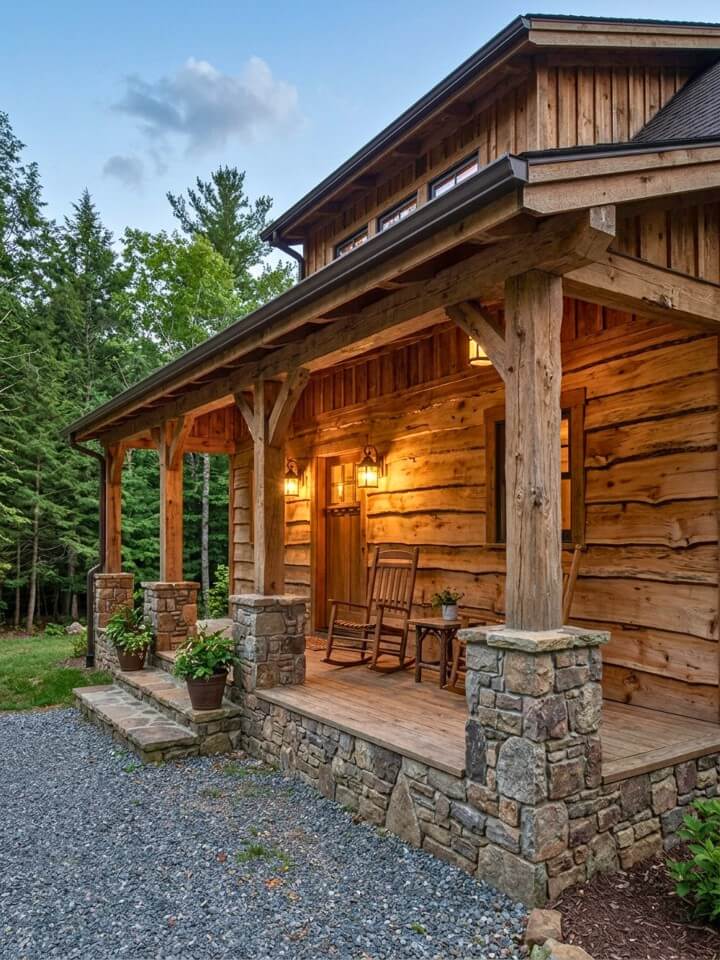
Close your eyes and picture a porch wrapped in this material — the deep grain, the irregular edges, the smell of cedar after rain. That sensory weight is exactly the point. Half-log slabs are cut from real timber and installed flat-back against the wall, delivering the look of full log construction at roughly a quarter of the cost: about $6 to $12 per square foot installed. Cedar, pine, and cypress are the common species, each aging into a slightly different gray. Lifespan reaches 30 to 40 years with regular staining every 3 to 5 years. The material belongs on mountain cabins, lake homes, and lodge-style porches with stone chimneys, oversized timber posts, and lantern-style lighting.
19. Glass Panels for Natural Light
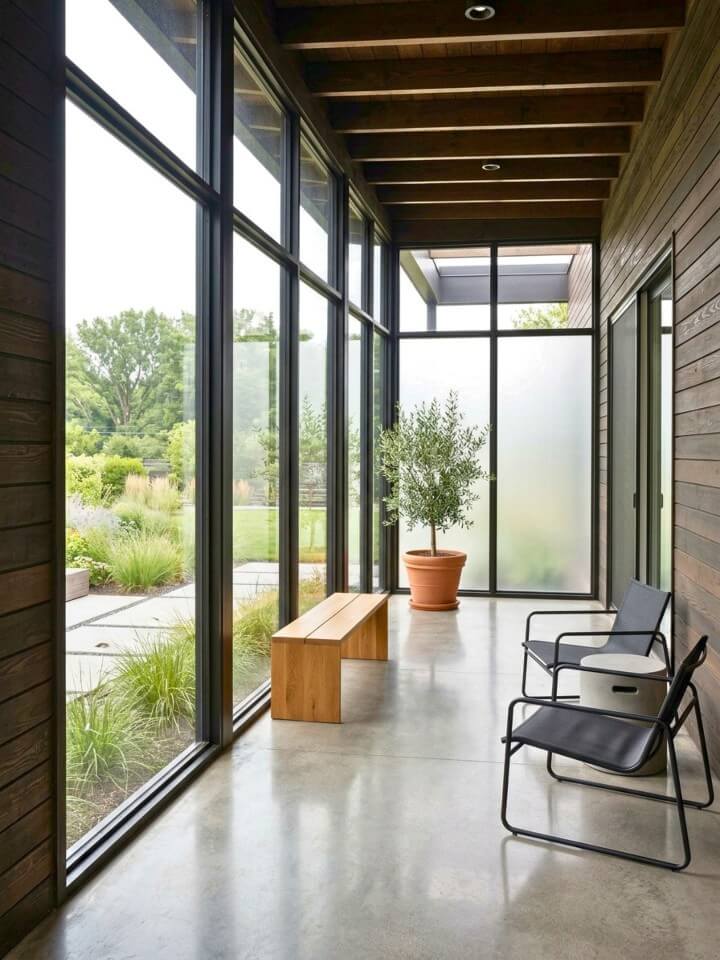
A north-facing porch can feel like a cave by mid-afternoon — that’s the problem this solution quietly fixes. By replacing portions of solid siding with tempered or laminated glass panels, natural light reaches deeper into the space without sacrificing privacy or structure. Frosted, reeded, and bronze-tinted finishes each filter light differently while obscuring sightlines. Installed costs run $30 to $80 per square foot depending on framing and glass spec, which sounds steep until you compare it to skylights or wall removals. The look belongs on contemporary, minimalist, and architectural homes rather than traditional ones. Pair the panels with blackened steel framing and a concrete floor for a sharp, gallery-like restraint.
20. Corten Steel as a Bold Accent
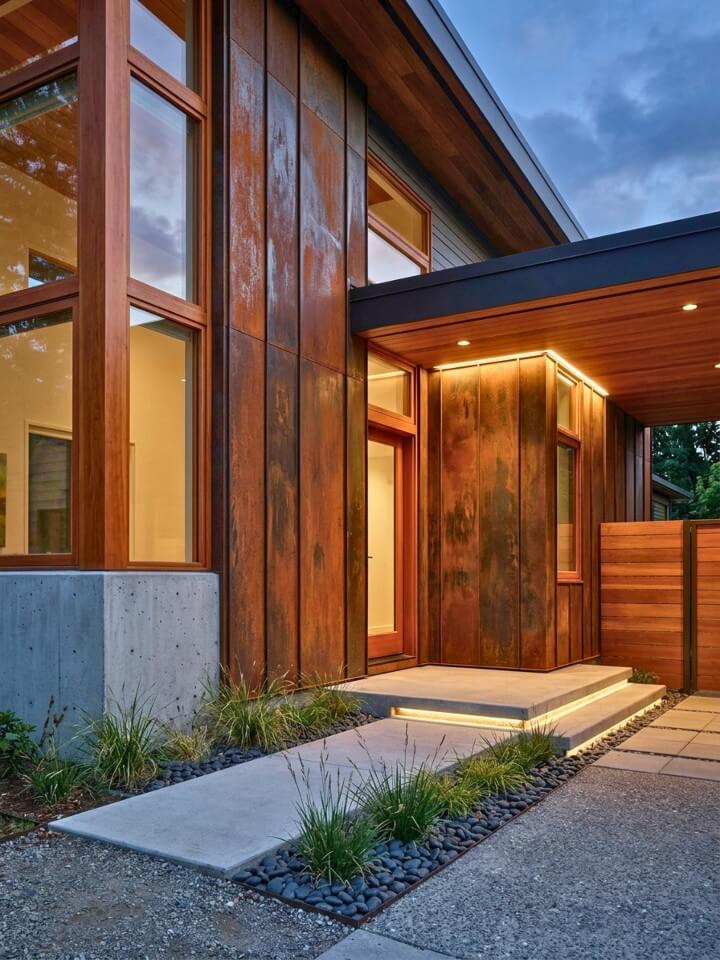
The rust is the point. When this steel oxidizes, it forms a stable protective layer that actually shields the metal underneath, meaning the surface keeps deepening in color for 6 to 18 months and then stops. After that, it stays essentially maintenance-free for 80+ years. Material costs run $15 to $40 per square foot, which is why it usually appears as a single feature wall, a planter face, or a screen behind seating rather than full siding. Modern, architectural, and industrial homes wear it best. One practical warning: the runoff during the first rainy season can stain concrete, stone, and lighter pavers below — plan drainage and ground material accordingly before installation.
21. Woven Reed Screens for Privacy
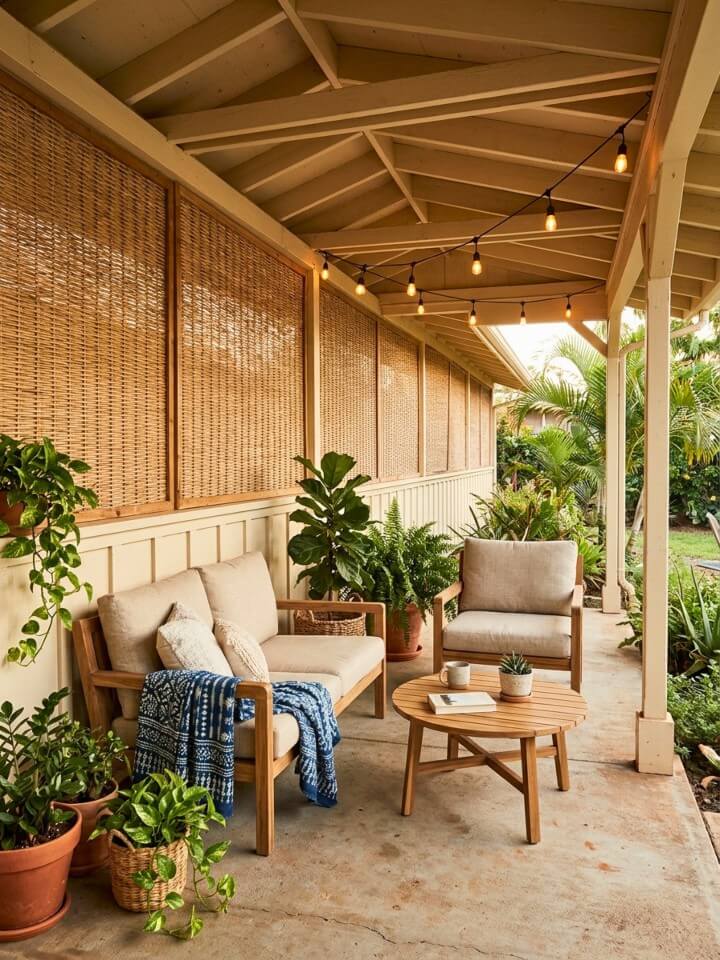
Think of this as the lighter, breezier cousin of solid bamboo paneling. The hand-woven texture lets air pass through, casts soft shadow patterns, and gives a porch that filtered-light quality you find in tropical resorts. Rolls and panels typically cost $1 to $4 per square foot, making it one of the most affordable screening options available.
The trade-off is lifespan — expect 3 to 7 years outdoors depending on sun and rain exposure, less if left untreated. Marine-grade UV sealant roughly doubles that. It works best on covered side porches, pergola walls, and shaded sitting areas where privacy matters more than permanence. Rattan furniture, linen cushions, and trailing pothos — the same relaxed pieces often found in superb gazebo furniture ideas — complete the mood.
22. Painted OSB with Vertical Battens
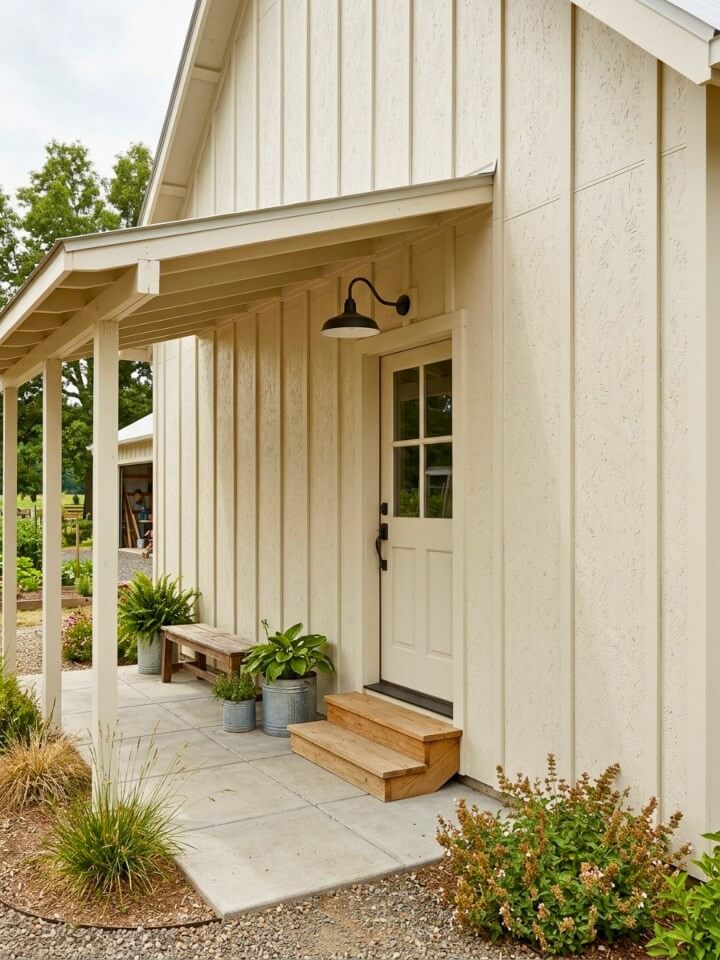
Real talk first — this is a budget solution, not a luxury one, and that’s okay. Oriented strand board with vertical battens delivers the visual rhythm of true board-and-batten at roughly $1.50 to $3 per square foot in materials, making it useful for outbuilding porches, workshop entries, and secondary structures where every dollar counts.
A few things to get right or skip it entirely:
- Use exterior-grade OSB, never interior-rated panels
- Prime all edges before installation
- Repaint every 4 to 6 years to prevent moisture damage
- Keep it under a generous roof overhang
Done properly, it lasts 15 to 20 years. Done lazily, it swells within two winters.
23. Mixed Material Cladding for a Layered Custom Porch Design
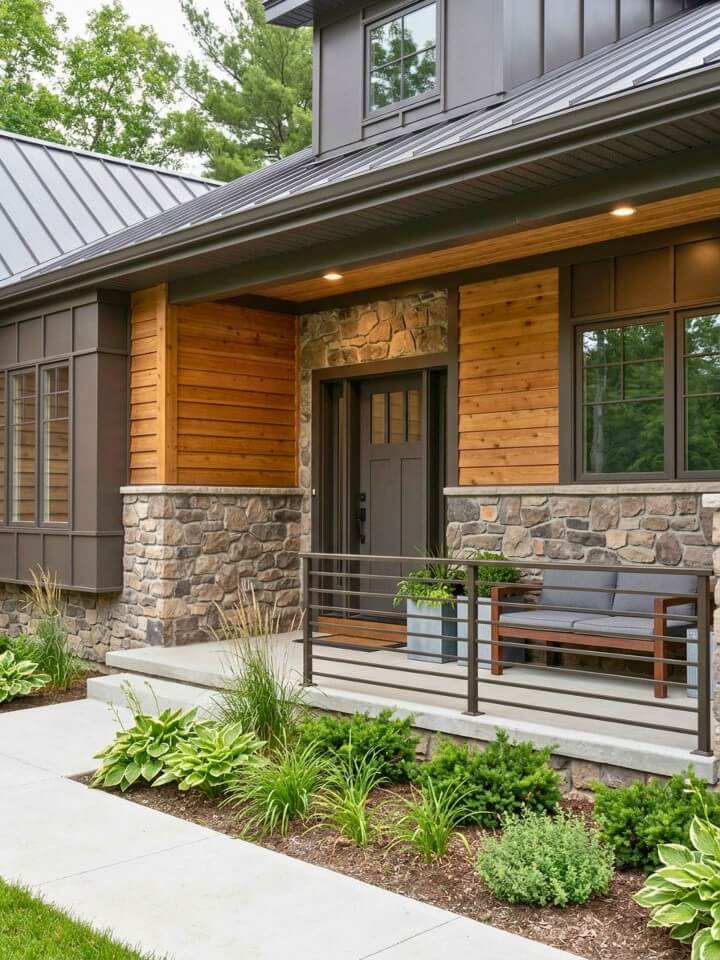
The best porches rarely use just one material. Layering two or three — stone at the base, cedar through the middle, painted lap above — creates depth that single-material designs simply can’t match. The principle is balance, not variety: heavy materials belong low, lighter ones up high, and the color palette should stay within three coordinated tones to avoid visual noise. Costs vary widely, typically $12 to $25 per square foot installed depending on the mix. Transitions matter most. A clean horizontal break line between materials always reads more intentional than a vertical or diagonal seam. Done right, the porch looks custom-designed rather than assembled, and the layered texture only grows more interesting as it ages.
Frequently Asked Questions About Porch Siding
A few practical questions tend to come up after homeowners narrow down their material choice — here are the ones worth answering before buying.
What Is the Cheapest Porch Siding that Still Looks Good?
Vinyl lap siding and painted cinder block sit at the bottom of the price range, both around $2 to $4 per square foot installed. Painted OSB with battens runs even cheaper for covered porches.
Which Porch Siding Lasts the Longest with The Least Maintenance?
Fiber cement and brick veneer easily cross 50 years with minimal upkeep. Corten steel and manufactured stone veneer reach similar lifespans, though all four cost more upfront than vinyl or engineered wood.
Can I Install Porch Siding Myself or Do I Need a Contractor?
Vinyl lap, PVC trim, painted OSB, and bamboo screening are realistic DIY projects with basic tools. Fiber cement, stone veneer, brick panels, and stucco genuinely need a contractor for safe, lasting results.
How Do I Choose Porch Siding for A Humid or Coastal Climate?
Salt air and constant moisture punish wood-based materials fastest. Fiber cement, PVC trim, vinyl, brick veneer, and stone perform best near coastlines, while cedar shake works only with regular sealing every few years.
Should Porch Siding Match the Rest of The House Exterior?
Not necessarily. Matching feels seamless, but intentional contrast — like stone veneer on the porch against lap siding elsewhere — often reads as more custom and adds visual depth without looking mismatched when colors stay coordinated.
Conclusion:
Porch siding rarely makes a homeowner’s highlight reel, yet it quietly shapes how a house is read from the curb every single day. The smartest choice isn’t always the most expensive or the most photographed — it’s the one that matches your climate, your maintenance patience, and the architectural bones already standing in front of you. Cedar shake ages into character. Fiber cement protects without asking for attention. Mixed materials reward the eye for years. Walk outside tomorrow morning, stand at the edge of your driveway, and look at your porch the way a stranger would. That honest glance usually tells you everything.