23 Sidewalk Landscaping Ideas You’ll Want To Steal
There is something quietly satisfying about walking up to a house where every plant beside the path looks like it belongs there. The flowers lean just enough, the shrubs sit at the right distance, and nothing feels overgrown or forgotten. That kind of entry does not happen by accident. It comes from picking the right plants for the spot, knowing how much room each one actually needs, and skipping the trends that look great in catalogs but fall apart by August. These 23 awesome sidewalk landscaping ideas are the ones that hold up after the first season, the first heatwave, and the first winter.

Some landscaping ideas cost almost nothing. Others take a weekend. A few work even if your thumb is more beige than green. Whatever your front walk looks like right now, there is a version of it on this list worth trying this year.
1. Line the Walkway with Low Boxwood Borders
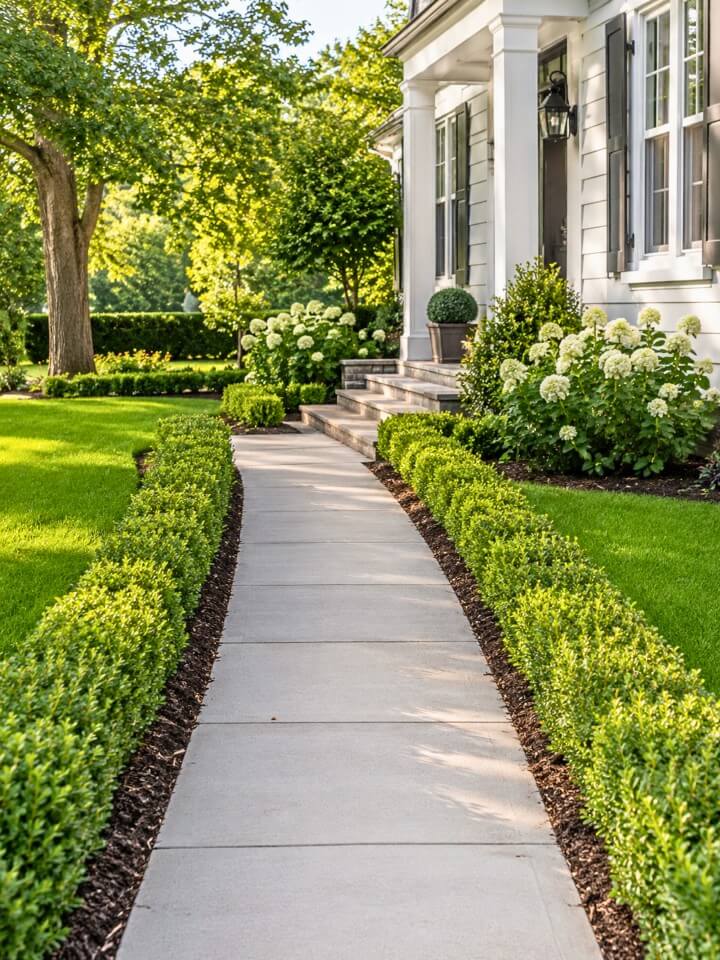
Boxwood is the classic choice when you want a crisp, evergreen line that holds its shape through all four seasons. Stick with compact cultivars like ‘Green Velvet’, ‘Wintergreen’, or ‘Green Mountain’ since they top out around 2 to 3 feet and resist the blight that wipes out older English boxwood. Plant young shrubs 18 inches apart and at least 12 inches back from the concrete so roots have room and winter salt spray does not scorch the leaves. Expect $15 to $25 per shrub at most garden centers.
Mistake to Avoid
Planting in soggy soil is the fastest way to kill a boxwood hedge. Roots rot within a season. Test drainage first by filling the planting hole with water; if it does not drain within an hour, pick another spot or amend heavily with coarse sand and compost.
2. Use Mulch Beds for a Clean, Finished Edge
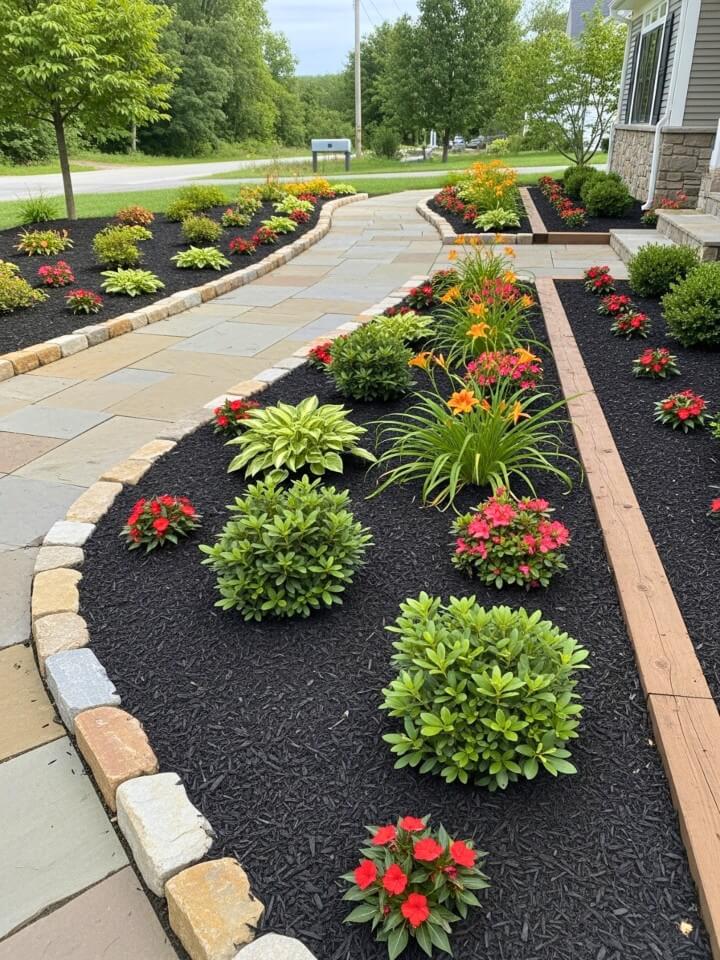
A simple mulch band is the cheapest upgrade that makes a path look intentional rather than ignored. It suppresses weeds, locks in moisture, and feeds the soil as it breaks down. Hardwood mulch is the most forgiving everyday pick, dyed black mulch gives a modern contrast against gray concrete, and pine bark nuggets last longest around acid-loving shrubs. Skip cocoa hull mulch if pets roam the yard since it is toxic to dogs.
How Much You Actually Need
Aim for a 2 to 3 inch layer, never thicker, and pull mulch back an inch from every stem to prevent collar rot. A standard 2 cubic foot bag covers roughly 8 square feet at proper depth and runs $4 to $7. For a 40-foot path with a 2-foot border on each side, plan on about 20 bags. Refresh the top inch once a year in spring instead of piling new mulch over old.
3. Add a Narrow Rain Garden Beside the Path
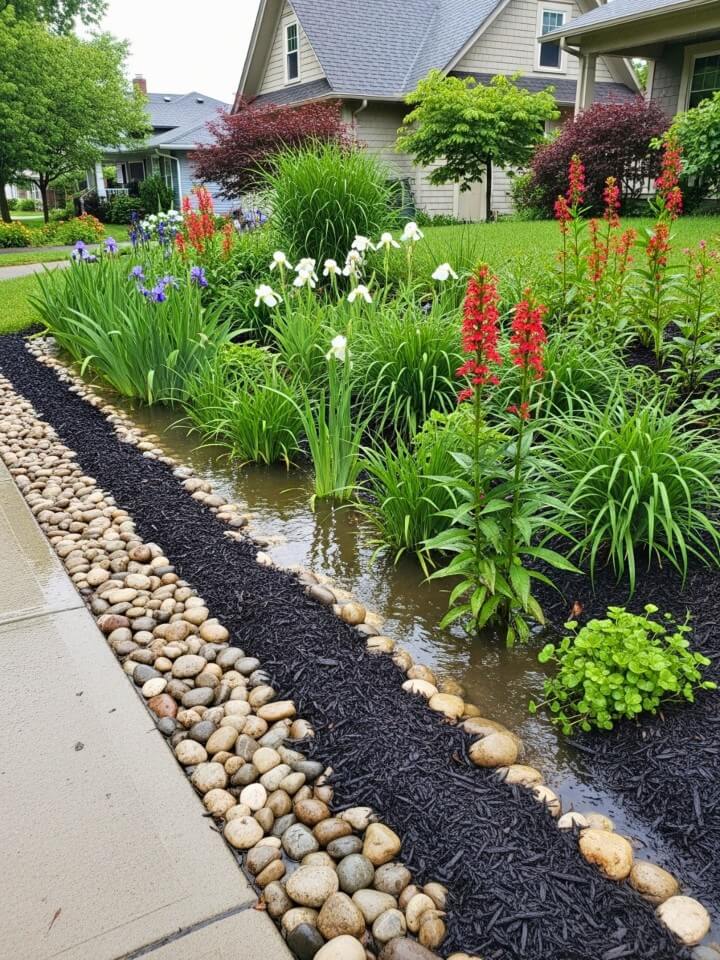
Find smart sidewalk landscaping ideas that survive the first heatwave and still look sharp by fall. If water pools near the walkway after every storm, a rain garden solves the drainage problem and looks far better than a gravel trench. Place the bed at least 10 feet from the foundation and dig 6 to 8 inches deep with gently sloped sides so water spreads evenly. Size the basin to roughly 20 to 30 percent of the area draining into it. Blue flag iris, swamp milkweed, and switchgrass thrive in the wet center, while black-eyed Susan and little bluestem handle the drier outer edge.
Soil Check Before You Dig
Clay-heavy ground holds water far too long and drowns roots. Pour a bucket of water into a test hole; if it sits longer than 24 hours, you need to mix in roughly one part coarse sand and one part compost to every two parts native soil before planting. Skip this step and the rain garden becomes a stagnant puddle within a month.
4. Soften Concrete Edges with Flowering Perennials
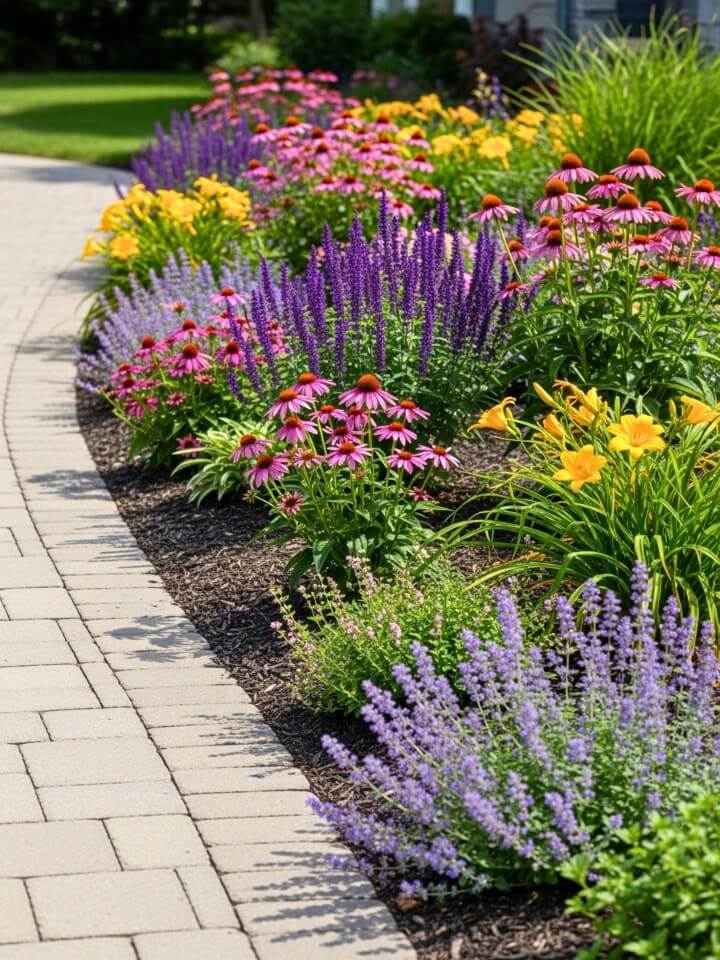
Perennials are the smart middle ground between high-effort annual beds and bare mulch strips. The trick is picking three reliable bloomers and repeating them in loose drifts of five or seven plants, rather than dotting one of every variety across the bed. A dependable full-sun combination is ‘May Night’ salvia, ‘Moonbeam’ coreopsis, and ‘Walker’s Low’ catmint. All three bloom in waves from late spring into fall and shrug off dry spells once established. Space most varieties 12 to 18 inches apart so the bed fills in by year two without crowding.
When to Cut Them Back
Resist the urge to tidy everything in autumn. Leave dried stems standing through winter since they shelter beneficial insects and add texture to a bare yard. Cut back to about 4 inches in early spring just as new green growth appears at the base. This single timing change protects pollinators and gives the bed a cleaner spring flush of blooms.
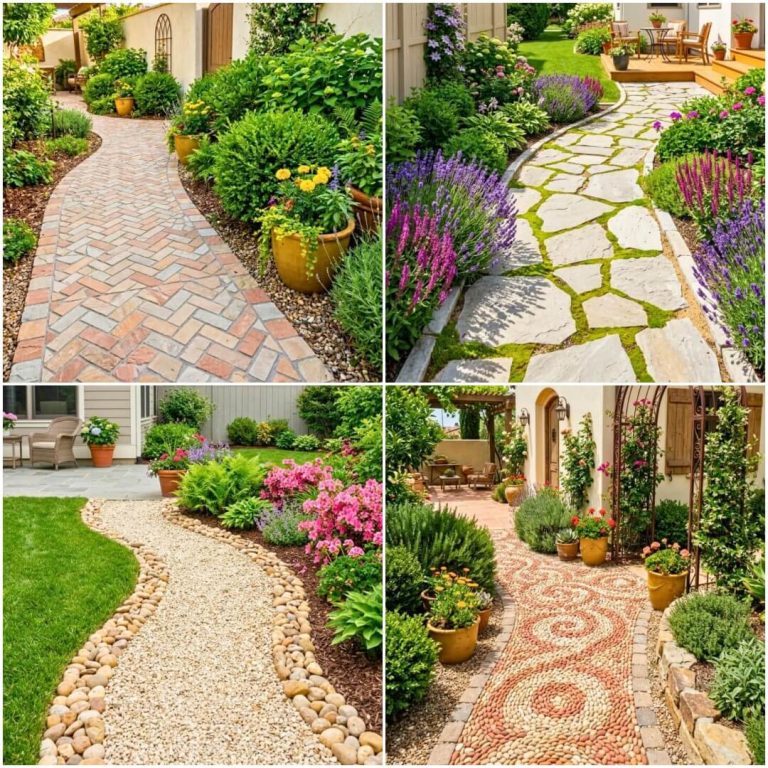
5. Frame the Sidewalk with Gravel Edging
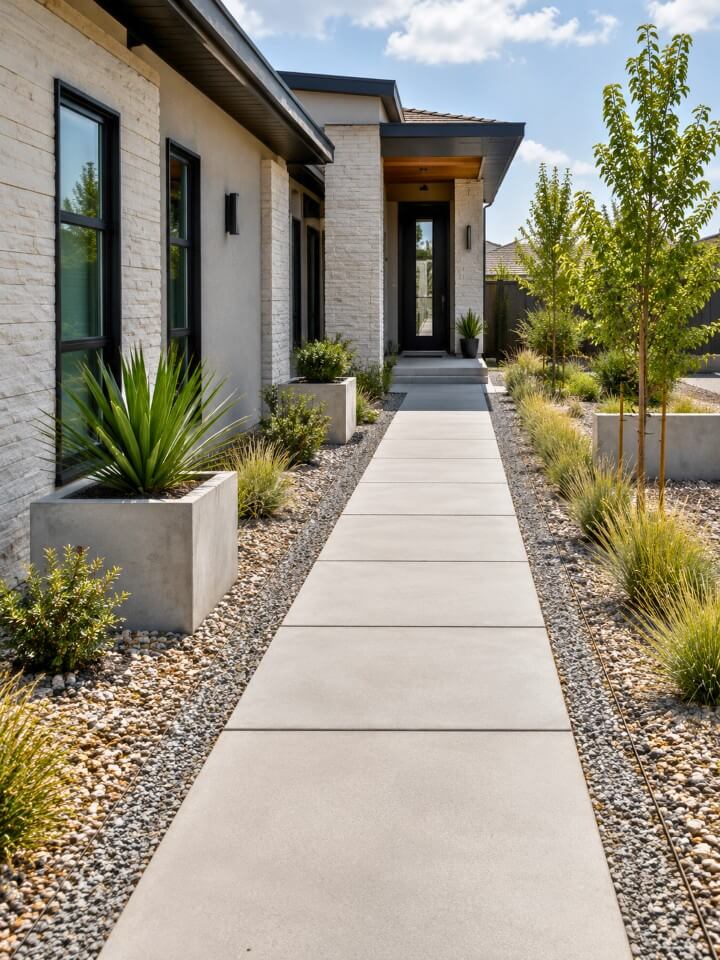
Gravel edging delivers a sharp, contemporary border and solves the constant problem of mulch washing onto concrete after rain. Pea gravel feels softer underfoot and has a warmer tone, while crushed granite gives a more architectural look that pairs well with modern homes. Keep the strip 4 to 6 inches wide on each side and 2 to 3 inches deep. One 0.5 cubic foot bag covers about 2 square feet at that depth, which makes budgeting easy.
Two Things Most People Skip
First, lay heavy commercial-grade landscape fabric underneath, not the thin household roll. Cheap fabric tears within a season and weeds push straight through. Second, install a metal or stone edge restraint along the lawn side. Without it, gravel slowly migrates into the grass every time you mow and the border disappears within two years. These two steps separate a gravel edge that lasts a decade from one you redo every spring.
6. Plant Ornamental Grasses Along the Path
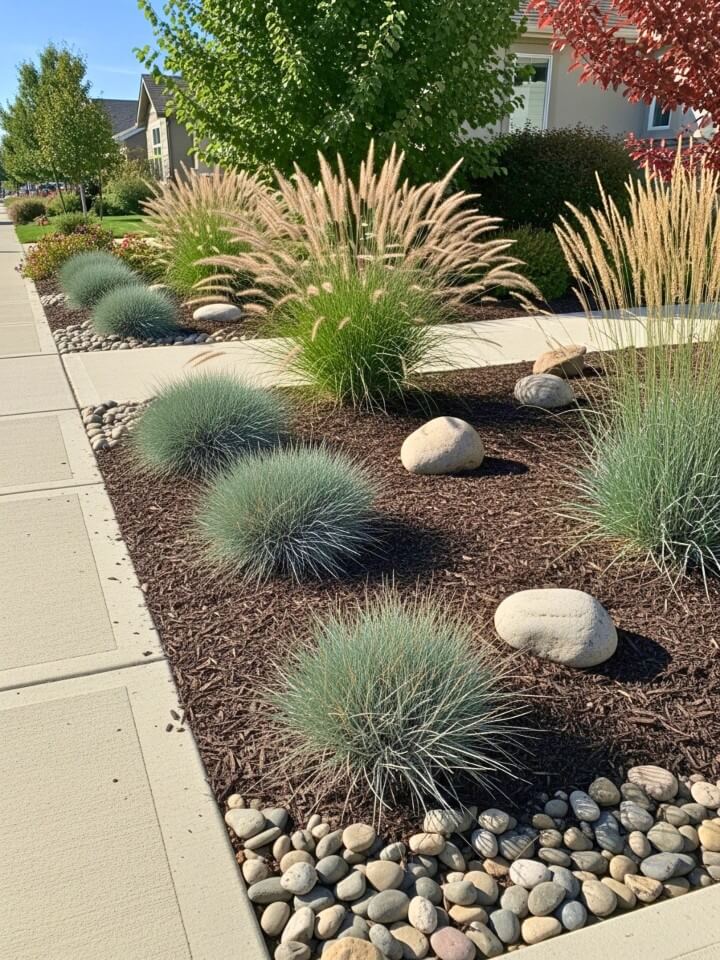
Ornamental grasses bring height, movement, and a soft rustling sound to a walkway that pure flower beds cannot match. They also stay attractive in winter when most perennials have collapsed. Stick with compact, clump-forming types since spreading varieties take over fast. Blue fescue stays under a foot and forms tidy silver-blue mounds, ‘Hameln’ fountain grass tops out around 2 feet with arching plumes, and little bluestem turns a coppery red in fall. Plant in groups of three or five, spaced about 18 to 24 inches apart depending on mature size. Avoid maiden grass and miscanthus near sidewalks since both grow 5 to 6 feet tall and crowd the path within two seasons.
One Cut Per Year
Grasses need almost no maintenance except a single hard cut in late winter, just before new growth emerges. Use hedge shears or a string trimmer to chop the entire clump down to about 4 inches. Doing it any later risks slicing off fresh green blades, leaving brown stubs that take all summer to hide.
7. Frame the Walkway with Small Garden Beds
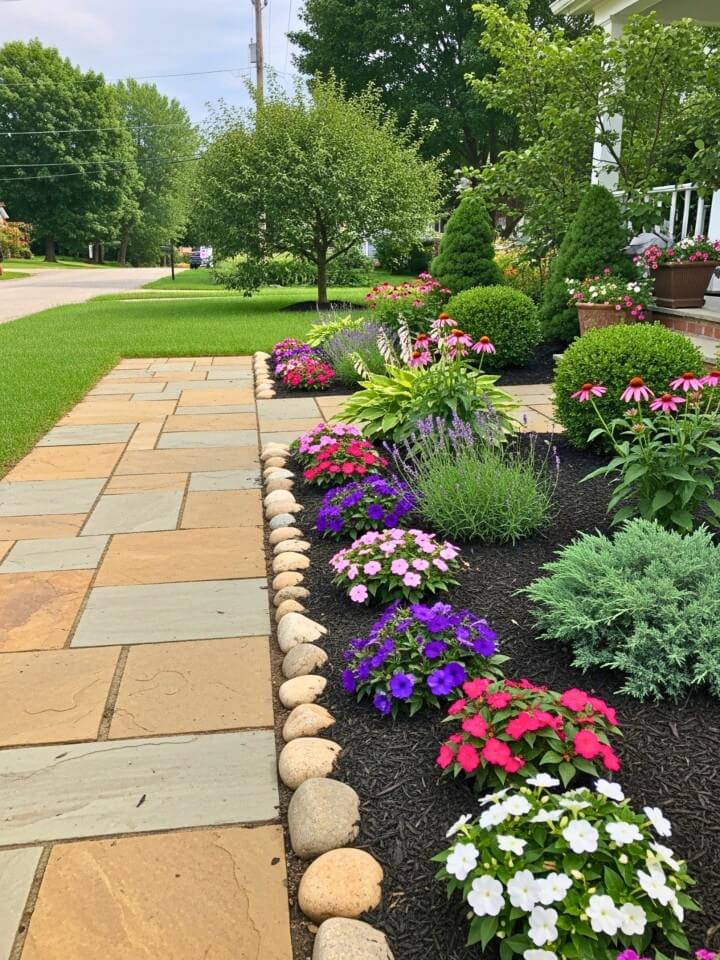
A layered garden bed on each side turns a plain concrete path into a proper entry feature. The rule that makes it work is simple: shortest plants nearest the edge, mid-height behind them, and one taller anchor shrub at the back. A reliable layout uses creeping phlox or sweet alyssum in front, daylilies or salvia in the middle, and a single dwarf hydrangea or compact spirea anchoring each end. Keep beds at least 3 feet wide. Anything narrower and the layers collapse into a single crowded row.
Curve Beats Straight
A gently curved bed edge looks more natural and is actually easier to mow around than a straight line. Lay a garden hose on the ground first to test the shape before cutting any edges. Walk the path a few times and look from the front door before committing. Once the curve feels right, cut the edge with a flat spade and finish with steel edging or a clean trench to keep grass from creeping in.
8. Mix Evergreens and Seasonal Flowers for Year-Round Interest
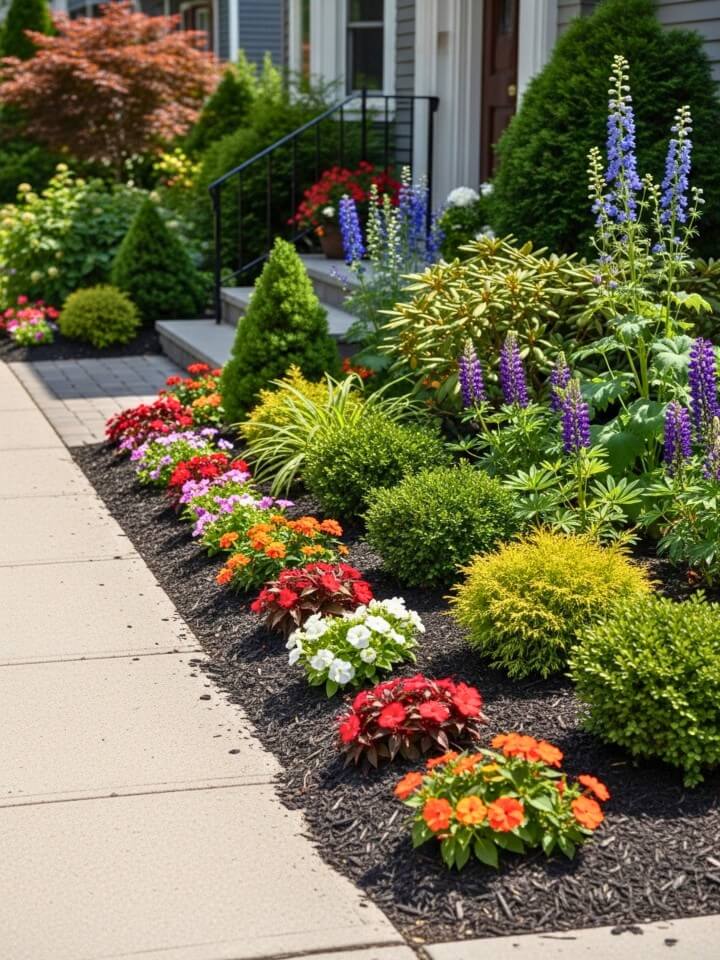
A border that only looks good in June is doing half its job. The fix is layering evergreens with plants that take turns blooming through the year, so the walkway never goes fully bare. Use small evergreens like dwarf boxwood, inkberry holly, or ‘Blue Star’ juniper as the permanent backbone, spaced 3 to 4 feet apart. Then weave in seasonal performers: daffodil and crocus bulbs for early spring, salvia and coreopsis for summer, sedum ‘Autumn Joy’ for fall, and red-twig dogwood or winterberry for cold months.
A Sample Four-Season Combo
For a 15-foot stretch of sidewalk, try three dwarf boxwoods spaced evenly, with a cluster of ‘Stella d’Oro’ daylilies between each pair and a drift of about 25 daffodil bulbs tucked toward the front. Add a single ‘Autumn Joy’ sedum at each end. That single planting carries color from March through November and keeps green structure all winter, with no replacement digging needed year to year.
9. Install Solar Path Lights Between Plants
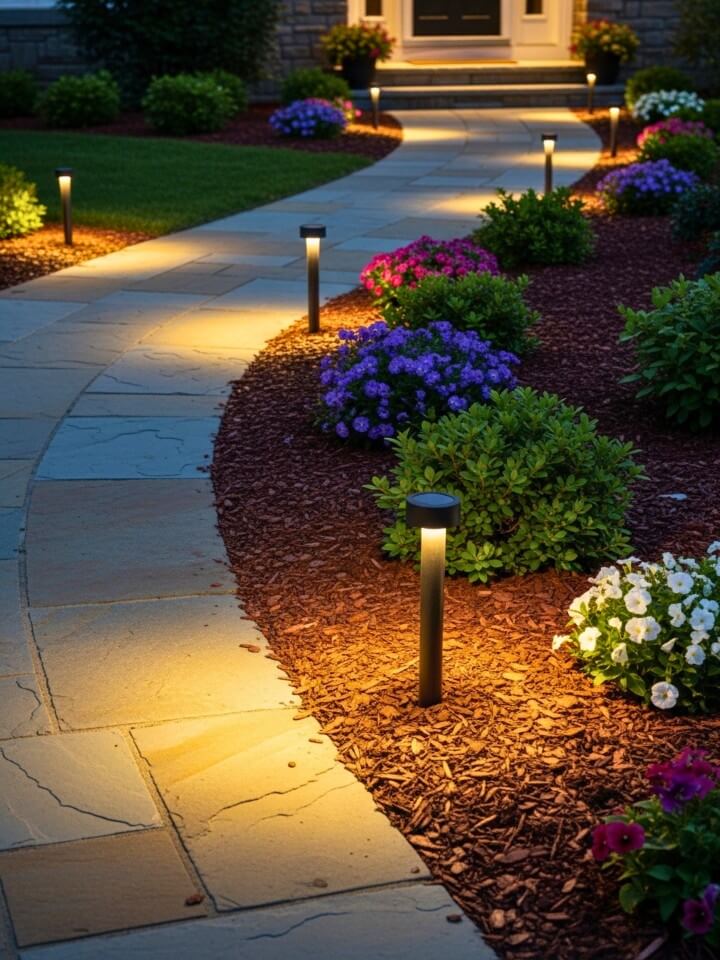
Explore pictures of sidewalks that turn plain concrete paths into the best part of the front yard. Path lighting changes how a walkway feels after sunset and makes evening arrivals safer for guests. Solar fixtures are the easiest option since there is no wiring, no electrician, and no monthly cost. Spacing matters more than light count. Place fixtures 6 to 8 feet apart in a staggered pattern on alternating sides rather than lining them up directly across from each other. Too close together and the path looks like a runway. Too far apart and dark patches defeat the purpose. Push stakes at least 4 inches into the soil so the lights stay vertical after the first heavy rain.
What to Actually Spend
Skip the $3 dollar-store fixtures. They fail within one season because the solar panels are too small to fully charge the batteries. Mid-range lights at $15 to $25 each, with replaceable AA batteries and panels at least 2 inches square, last three to five years. Look for an IP44 or higher waterproof rating and warm white LEDs around 2700K, since cool white reads harsh and clinical against natural landscaping.
10. Create a Rock Garden Border Along the Sidewalk
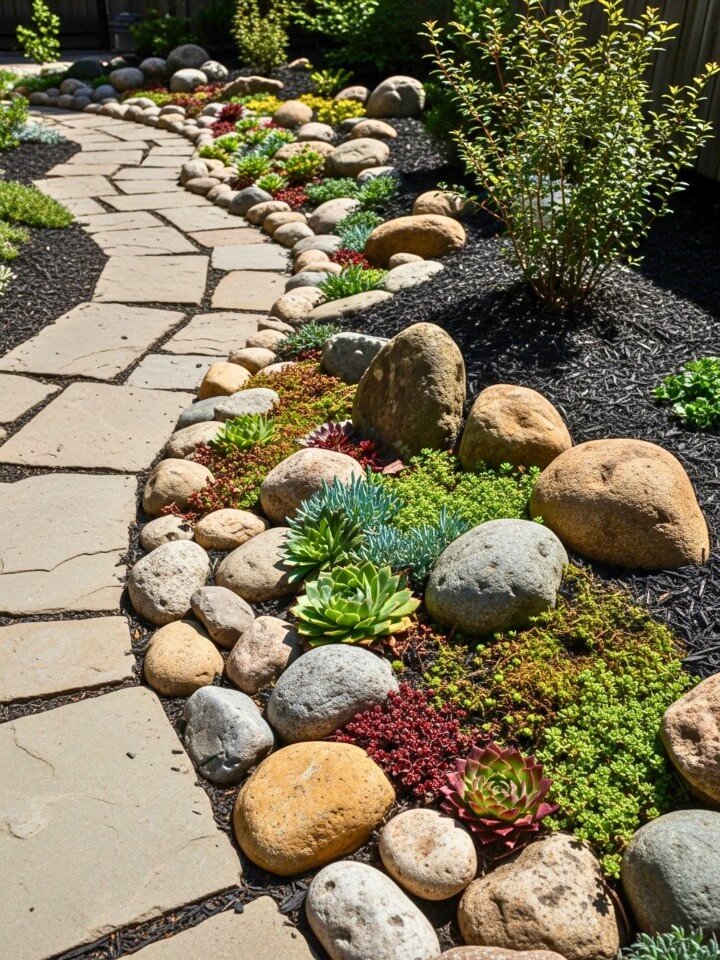
A rock garden border is the answer for sunny, dry, hard-to-mow strips where grass never thrives. It needs almost no water once established and the structure looks intentional even in winter. Start with three to five larger anchor stones, roughly basketball-sized, partially buried so about two-thirds shows above ground. Anything sitting fully on top of the soil looks dropped rather than placed. Fill gaps with smaller cobbles and pea gravel, then tuck in low, drought-tolerant plants like creeping thyme, hens-and-chicks, ice plant, and dwarf sedum.
Match Stone to House Color
The fastest way to make a rock garden look amateur is mixing too many stone colors. Pick one dominant tone that complements the house or trim, then use a single accent. Warm sandstone and tan river rock pair well with brick or beige siding. Cool gray basalt suits white, black, or modern gray exteriors. Avoid bright white marble chips entirely since they glare in summer sun and stain green from algae within a year or two.
11. Add Colorful Groundcovers for a Low-Maintenance Option
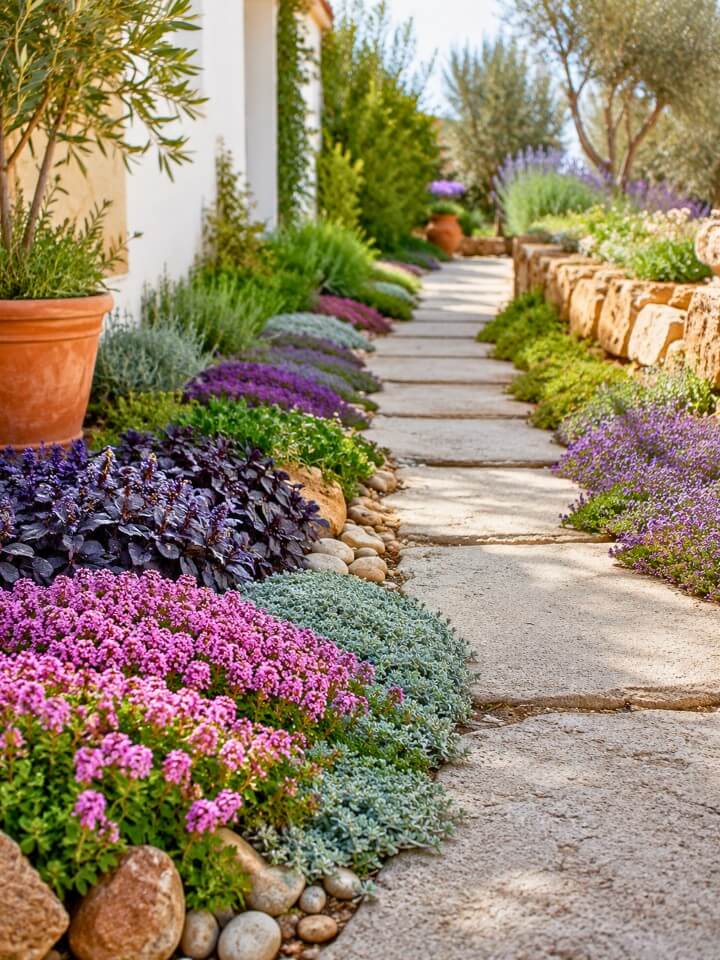
Groundcovers fill bare strips, choke out weeds, and stay attractive with almost no input once established. Creeping thyme handles light foot traffic and releases a soft scent when stepped on. Ajuga ‘Black Scallop’ brings deep purple foliage for shady stretches, and sedum ‘Angelina’ glows chartreuse in summer before turning orange-red after the first frost.
The Patience Rule
Plant plugs 8 to 12 inches apart and resist cramming them closer for instant coverage. Tightly packed groundcovers compete and develop weak roots. Water deeply once a week through the first summer, then let them fend for themselves. By season three, the border looks like it has always been there.
12. Use Small Shrubs to Guide the Path
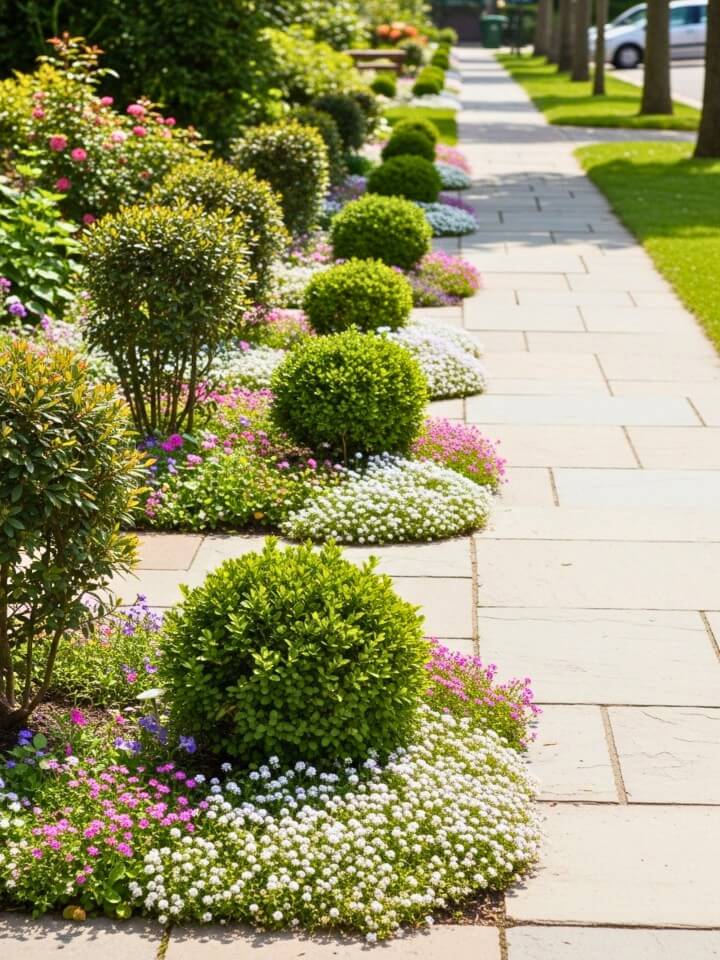
Small shrubs give a walkway visual rhythm and quietly direct visitors without needing fences or signs. Stagger them in an alternating pattern on each side rather than planting straight across, which creates a stiff, military feel. Good compact picks include ‘Little Lime’ hydrangea, dwarf burning bush, ‘Goldmound’ spirea, and inkberry holly. All stay under 4 feet and rarely need more than a yearly trim.
Spacing That Actually Works
For shrubs reaching 3 feet wide at maturity, place centers 4 feet apart and set them back 18 to 24 inches from the concrete. Check the mature width on the tag, not the pot size, before deciding placement.
13. Plant Lavender Along the Edge
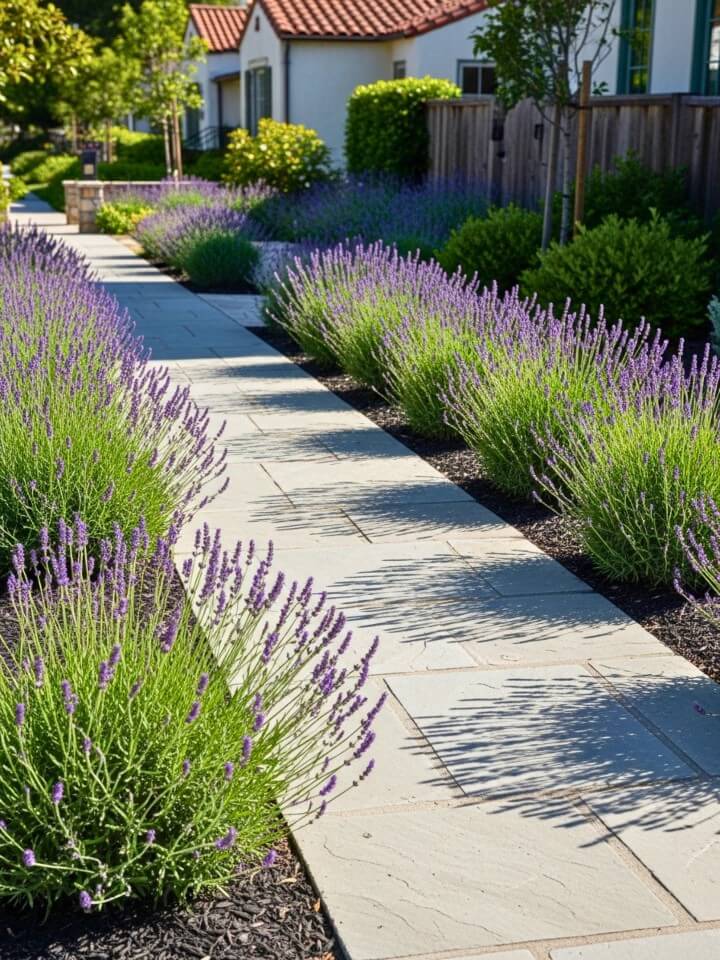
Few plants reward you the way lavender does. A single brush against the foliage releases that unmistakable scent, silver leaves stay attractive even out of bloom, and pollinators arrive within days of the first purple spikes opening. ‘Hidcote’ and ‘Munstead’ are the most reliable English varieties, both staying around 18 inches tall. ‘Phenomenal’ is a newer hybrid bred specifically for humid summers, which is where most lavender plantings fail.
What Lavender Actually Wants
Lavender dies from kindness more than neglect. Mix coarse sand into the planting hole at one part grit to two parts soil, skip mulch around the crown, and prune by one third every spring.
14. Plant Native Species for an Easy-Care Border
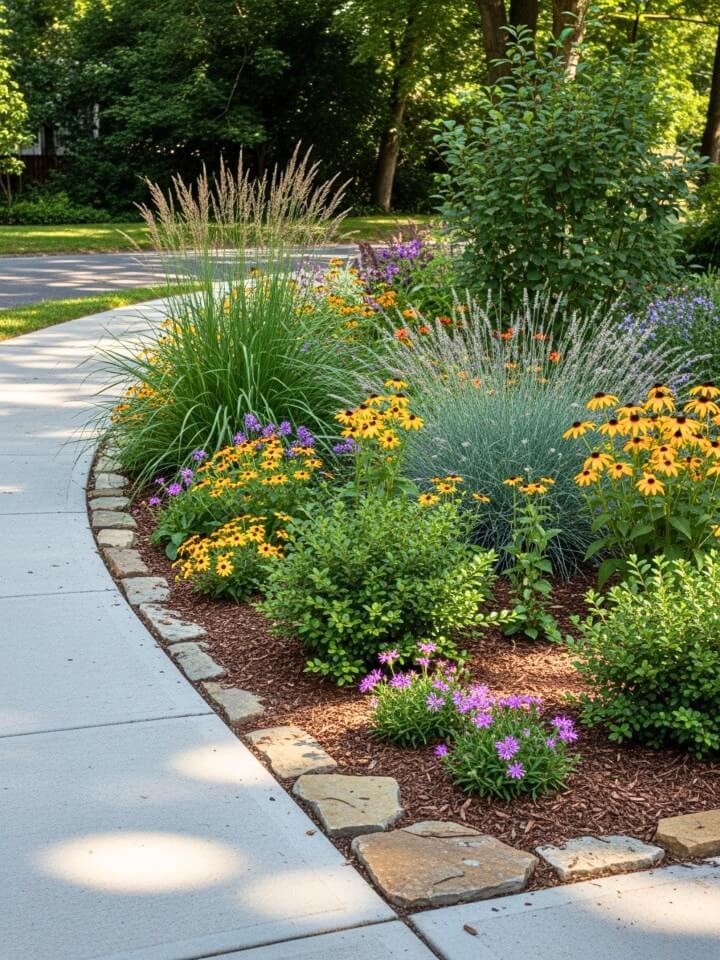
Discover landscaping along sidewalk strips that hides cracks and lifts curb appeal in one weekend. Natives are the smartest long-term choice for any walkway border. They evolved with local rainfall, soil, and pests, which means less watering, no fertilizer, and far fewer replacement plants. Once established, most native perennials need a fraction of the care that imported nursery favorites demand. They also feed pollinators in a way exotic plants simply cannot match, drawing bees, butterflies, and hummingbirds straight to the front entry.
Where to Buy
Skip big-box garden centers and find a nursery that specializes in regional natives. The plants will be locally sourced, properly hardened to the climate, and far more likely to thrive their first season without coddling or replacement.
15. Build a Cottage-Style Flower Strip
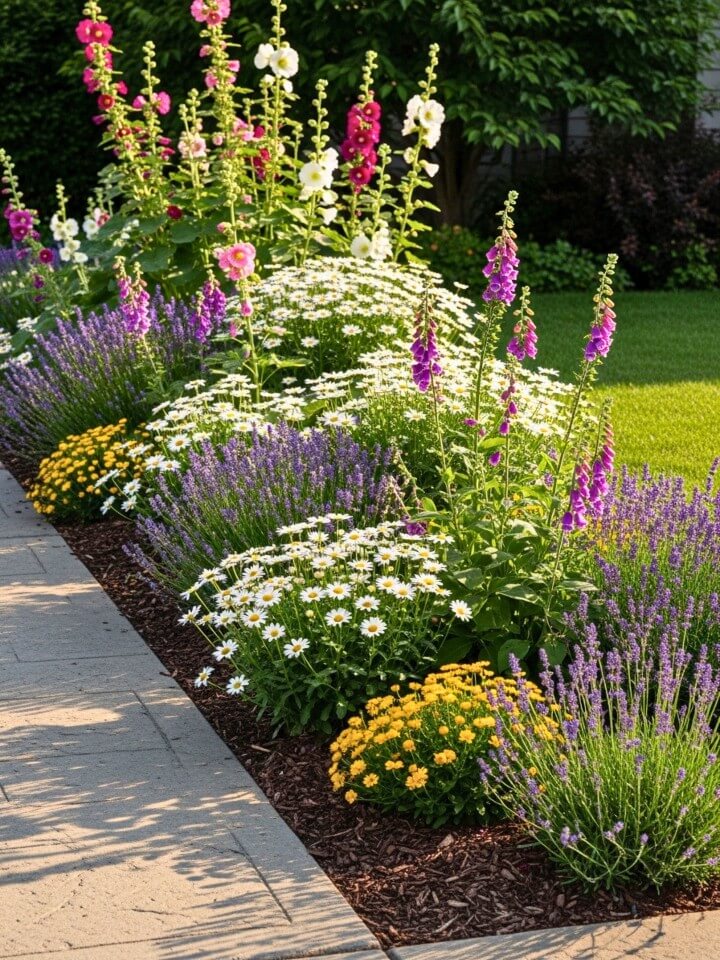
A cottage flower border is the opposite of a manicured hedge. It is messy in the best way, full of overlapping colors and heights, with plants jostling for room. The look only works if you commit to abundance. Sparse planting reads as neglected rather than romantic. Pack hollyhocks at the back, foxgloves and delphinium in the middle, and daisies, catmint, and lady’s mantle spilling onto the path edge.
The Color Repeat Trick
Pick one primary color and repeat it every 4 to 6 feet using different plants. The repetition pulls the eye along the walkway and ties the whole bed together, even when 15 species share the space.
16. Place Decorative Stones Around Small Plantings
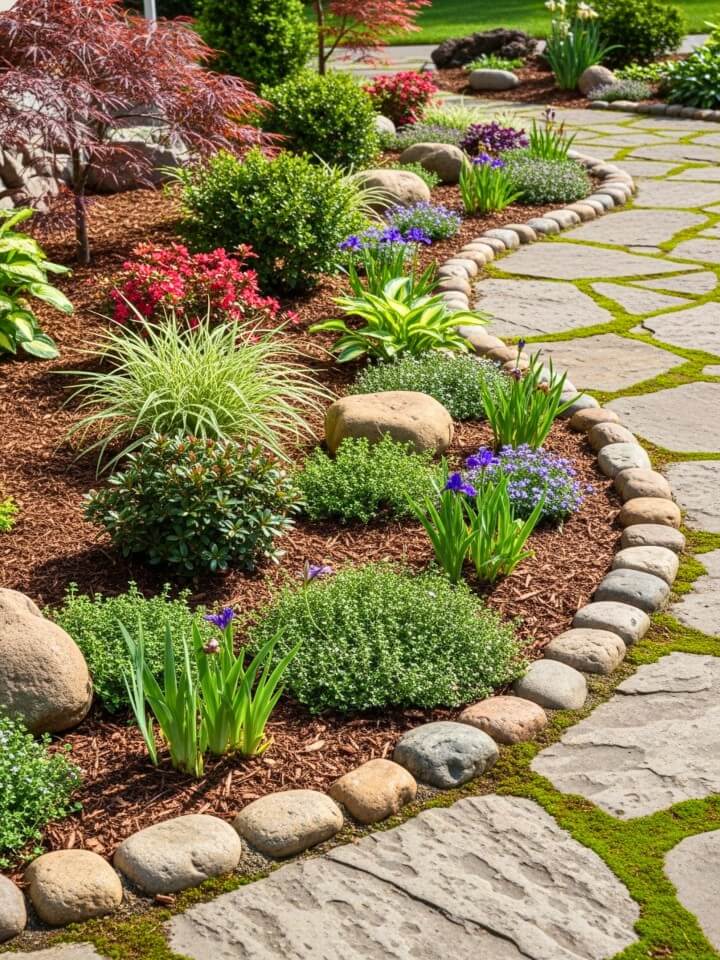
Decorative stones add texture, hold mulch in place, and frame individual plants so a border looks designed rather than scattered. River rock works for softer, naturalistic beds, while flat flagstone pieces suit modern layouts. Group stones in odd numbers, three or five, and vary the sizes within each cluster. Matching stones lined up evenly read as artificial.
Burying Is the Secret
Stones sitting fully on top of the soil always look dropped. Bury each one a third of the way into the ground so it appears anchored, the way rocks naturally settle outdoors. This single trick separates a thoughtful border from a landscape that looks like bagged stones were dumped from the car.
17. Add Stepping Stones Beside the Sidewalk
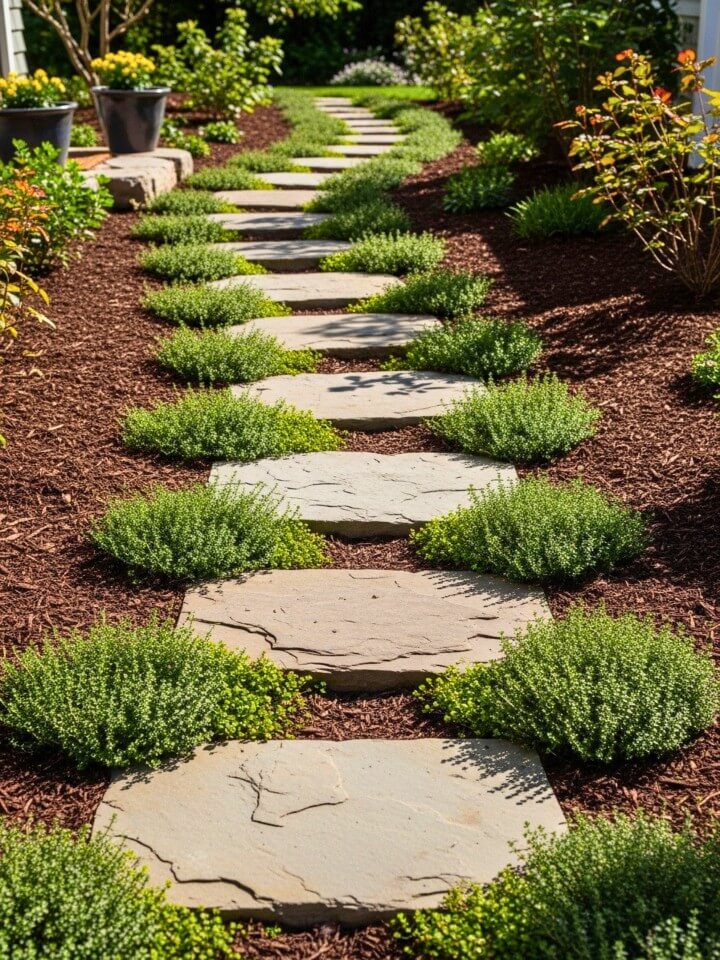
A parallel run of stepping stones gives a second informal path for kids, pets, or anyone wanting to wander off the main walkway. It also breaks up wide mulch beds that otherwise feel empty. Use natural flagstone, bluestone, or thick concrete pavers at least 16 inches across so feet land comfortably without slipping off the edge.
Spacing for an Average Stride
Center each stone 20 to 24 inches apart, measured from middle to middle. Closer than that forces shuffling, farther and the path feels disconnected. Set each stone flush with the soil so a lawn mower can pass over without catching the edge.
18. Plant Dwarf Trees for Gentle Shade
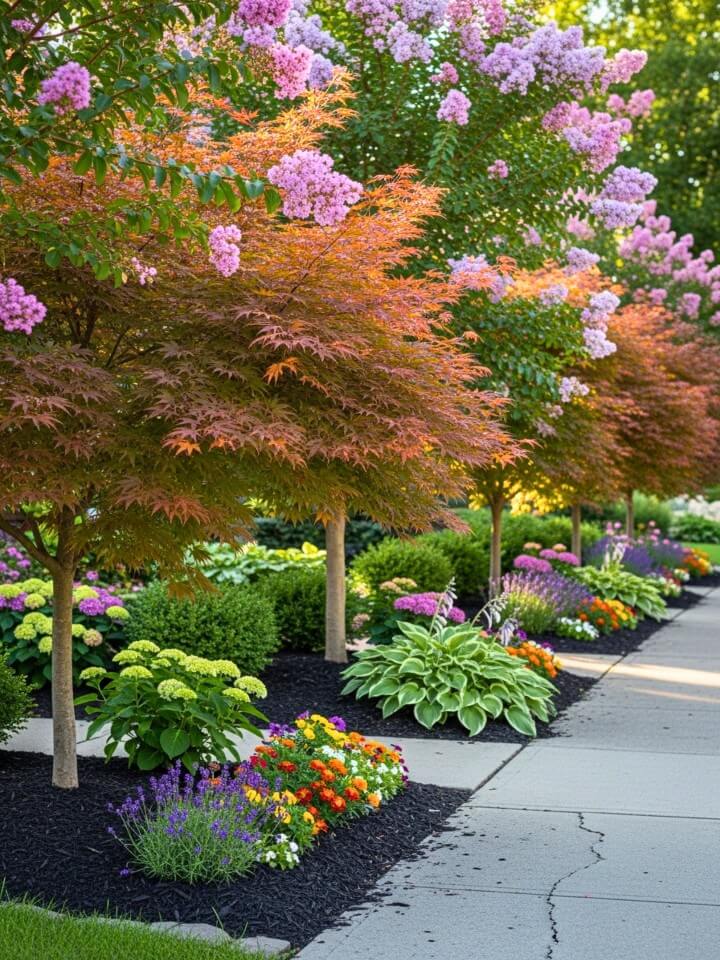
Explore front sidewalk landscaping ideas that work on tight budgets, small yards, and busy weekends. A small tree near the walkway adds vertical interest and softens the harsh midday sun on the entry. Dwarf varieties stay manageable and rarely need pruning at maturity. Japanese maples like ‘Crimson Queen’ offer year-round color, crape myrtle delivers summer blooms and peeling bark, and serviceberry provides spring flowers, edible berries, and fiery fall foliage in a single compact tree.
For more color-forward planting near the street side of the home, these striking front yard lantana landscaping ideas can add another sunny option.
Mind the Setback
Plant trees at least 6 feet from the concrete edge. Roots from anything closer eventually lift and crack the walkway, turning a $50 sapling into a $3,000 repair bill ten years later. Check the mature canopy width on the tag before digging.
19. Use Raised Edging to Define the Walkway
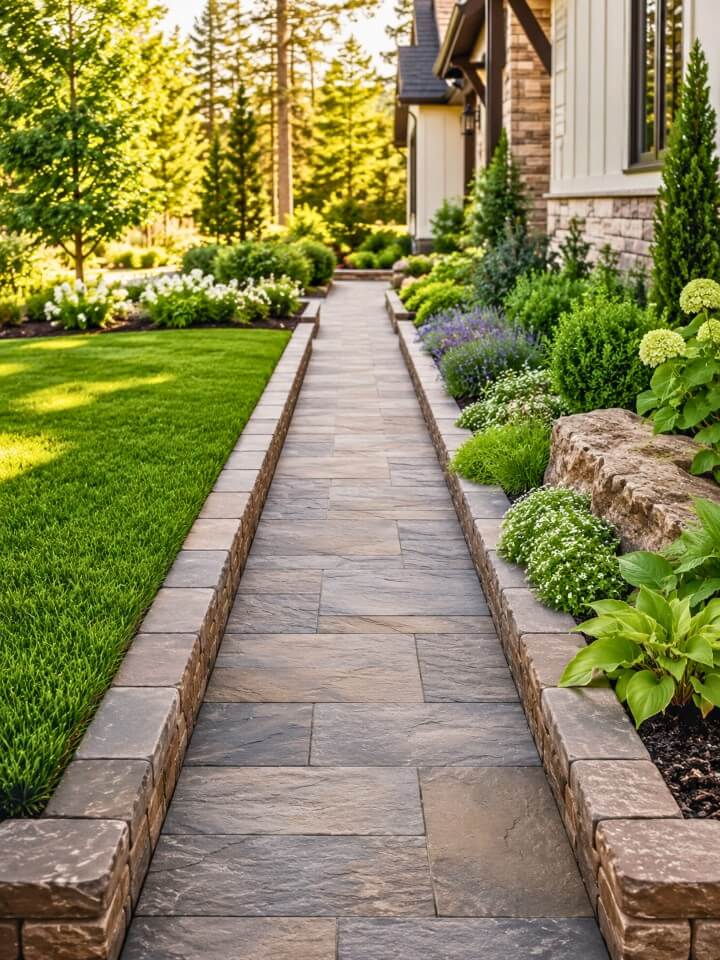
Raised edging creates a clean visual break between path and planting and physically holds back soil, mulch, or gravel. Brick laid on edge gives a traditional look, weathered steel suits modern homes, and natural stone fits cottage or rustic styles. Skip thin plastic edging since it heaves out of the ground after the first freeze and starts looking cheap within a season.
Installation Depth Matters
Set edging so at least half its height sits below grade. Anything shallower tips, lifts, and wanders out of line within a year. Dig a trench, tamp the base flat, and backfill tightly on both sides before planting.
20. Create a Succulent Border for Sunny Spots
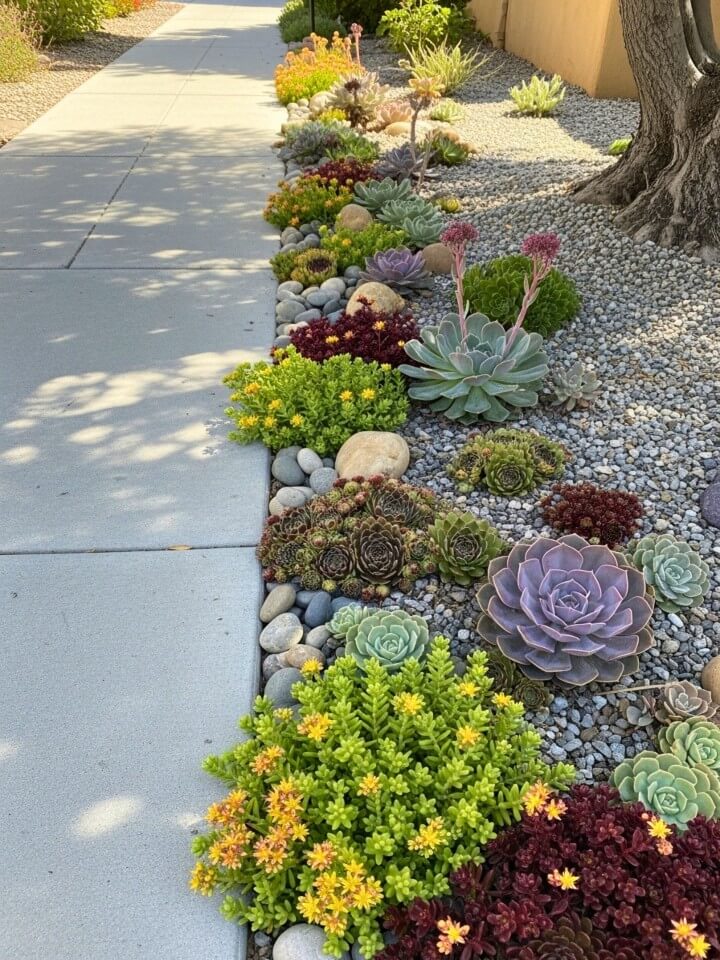
Succulents thrive where most plants give up: hot, dry, reflected-heat strips beside concrete. They store water in their leaves, need almost no irrigation, and offer wild variation in color and shape. Hens-and-chicks form tidy rosettes that multiply each year, sedum ‘Angelina’ spreads as a chartreuse carpet, and ‘Autumn Joy’ delivers pink fall blooms that age to copper.
Drainage Is Everything
More succulents die from wet feet than cold winters. Mix coarse sand and small gravel into the soil at roughly equal parts before planting, and slope the bed slightly so water runs off rather than pooling. Skip organic mulch entirely and top-dress with pea gravel instead.
21. Line the Walkway with Seasonal Bulbs
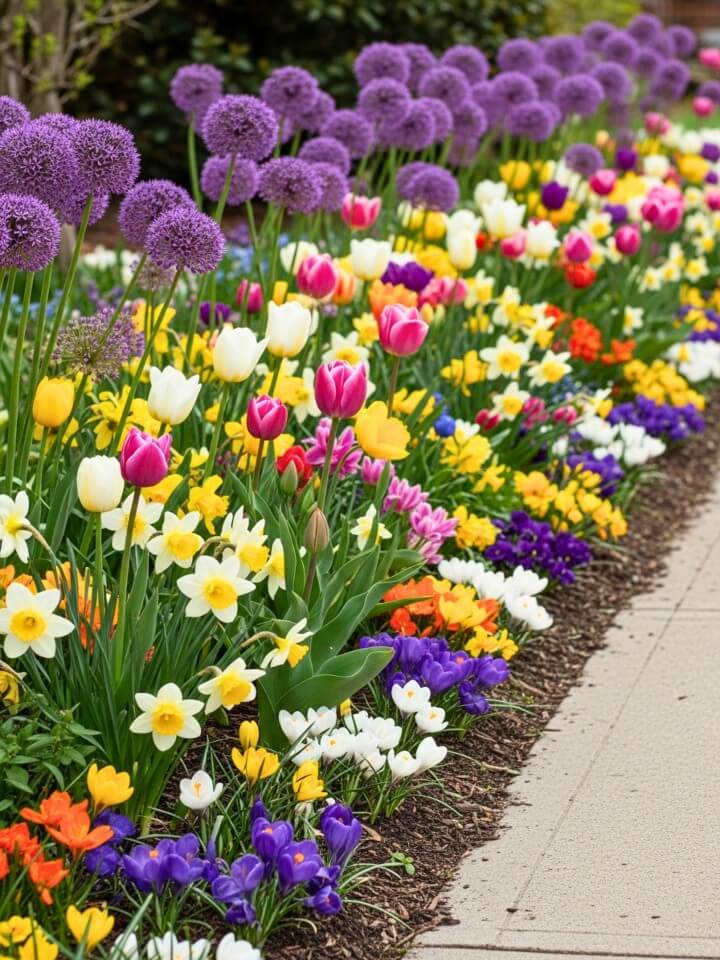
Bulbs deliver maximum color for minimum effort. Plant once in fall and enjoy fresh blooms every spring for years without replanting. Crocus opens first in late winter, daffodils follow in early spring, tulips peak in mid-spring, and alliums finish the show in early summer with tall purple globes. Layer different bloom times in the same area for two months of continuous color.
The Three-Times-Deep Rule
Plant each bulb at a depth roughly three times its height, pointed end up. Too shallow and they freeze or get eaten, too deep and they rot or fail to emerge. Tuck them behind perennials whose leaves will hide the fading bulb foliage.
22. Add Climbing Vines on Trellises Nearby
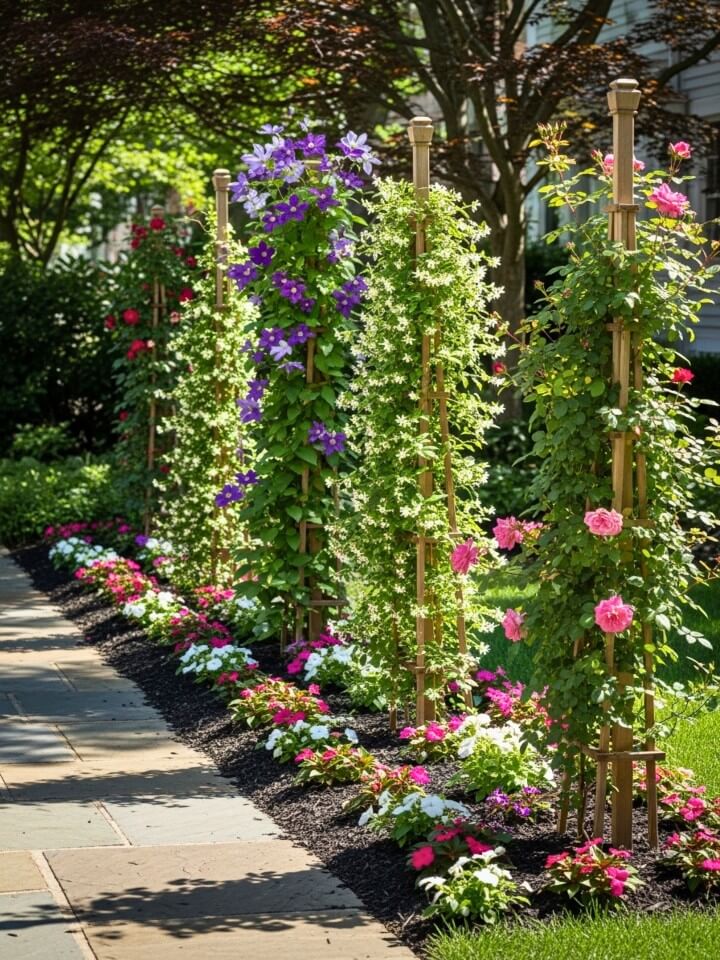
A trellis with climbing vines adds vertical drama beside an otherwise flat walkway. Clematis comes in dozens of bloom colors, climbing hydrangea handles shade and clings without support, and native trumpet honeysuckle pulls hummingbirds straight to the entry. Skip wisteria and English ivy since both grow aggressively and damage siding, gutters, and brick mortar within a few seasons.
Set the Trellis Back
Anchor the trellis at least 2 feet from the walkway edge so mature foliage does not brush passing shoulders or catch sleeves. Sink posts 18 inches deep in concrete to handle wind load once the vine fills in.
23. Mix Textured Foliage for Visual Interest
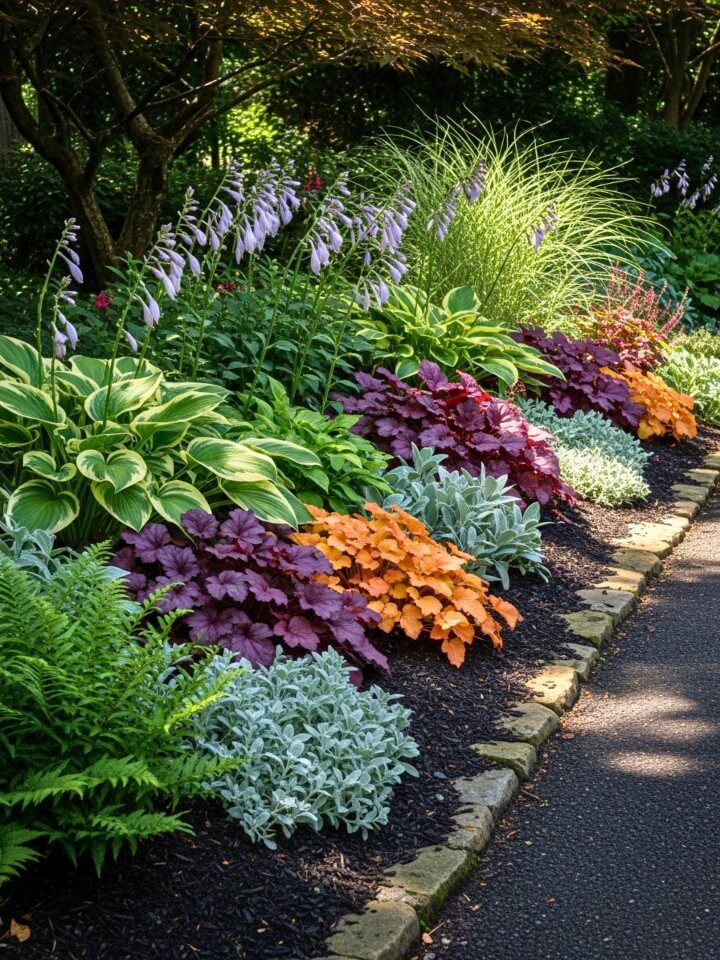
Foliage carries a border far longer than flowers ever will. Bloom seasons last weeks; leaves work all year. Combine bold leaves with fine ones for contrast: hosta paired with Japanese forest grass, heuchera beside ferns, or lamb’s ear next to sedum. Repeat each texture two or three times along the path so the eye sees pattern rather than chaos.
The 60-30-10 Mix
Use one dominant foliage type covering about 60 percent of the bed, a secondary texture filling 30 percent, and a bold accent making up the final 10 percent. This ratio creates rhythm without monotony and works in any style of garden, from formal to cottage.
More Sidewalk Landscaping Questions Answered
These follow-up answers cover the practical details most guides skip, from utility safety to deer-resistant picks and weekly upkeep time.
Do I Need to Call Before Digging Near a Sidewalk?
Yes. Call 811 at least three business days before any digging deeper than a few inches. Utility companies mark gas, water, electric, and cable lines for free, protecting both your project and personal safety.
How Much Weekly Maintenance Does a Sidewalk Border Need?
Expect 15 to 30 minutes weekly during the growing season for watering, deadheading, and light weeding. Mulched beds with native or drought-tolerant plants drop closer to 10 minutes once roots establish after the second year.
Which Sidewalk Plants Are Deer and Rabbit Resistant?
Lavender, catmint, salvia, ornamental grasses, boxwood, daffodils, and most herbs are rarely browsed. Avoid hostas, daylilies, tulips, and young hydrangeas in areas with heavy deer pressure unless you plan to spray repellent regularly.
How Do I Protect Plants from Winter Salt Damage?
Choose salt-tolerant species like daylily, sedum, juniper, and switchgrass for the first 3 feet beside the path. Rinse foliage with water in early spring and add compost to flush accumulated sodium from the soil.
Will Dog Urine Kill Plants Along the Walkway?
Yes, repeat exposure burns most perennials and lawns. Plant tougher choices like ornamental grasses, lavender, or junipers in pet-prone spots, and rinse the area with water after each incident to dilute the nitrogen and salts.
Final Thoughts
The best front walks are not the ones packed with the most plants. They are the ones where every choice has a reason, every plant has room to grow into itself, and the whole picture feels calm rather than busy. Start with one idea from these sidewalk landscaping ideas, get the spacing and soil right, and let the bed settle before reaching for the next. A year from now, the path you walk every day will quietly do something most home upgrades never manage. It will keep getting better while you are not looking.