20 Front Yard Lantana Landscaping Ideas That Wow All Season
Lantana is one of the easiest flowering plants you can grow in a sunny front yard. It blooms from late spring until the first frost, handles heat without complaint, and rarely needs more than a weekly soak once established. Butterflies and hummingbirds love it, deer usually leave it alone, and a single plant can spread into a colorful mound that fills empty space fast.
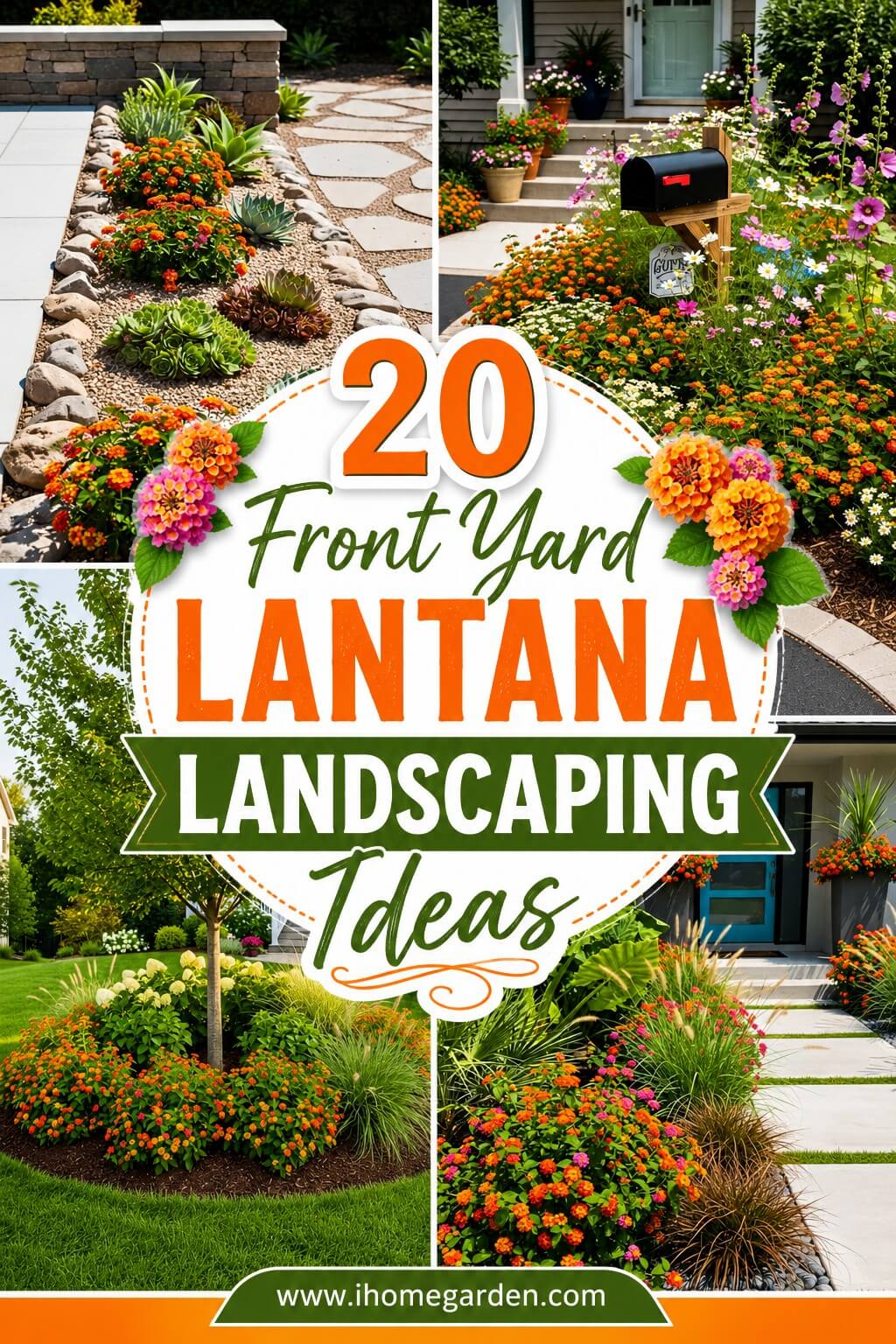
You’ll find 20 practical front yard lantana landscaping ideas, each with planting tips, spacing guidance, and design suggestions you can actually use this weekend.
Quick Lantana Facts
- Sun: 6+ hours of direct sunlight daily
- Water: Drought-tolerant once established; deep soak once a week
- Spacing: 18 to 36 inches apart, depending on variety
- Hardiness: Perennial in zones 9–11, annual elsewhere
- Warning: Berries and leaves are toxic to pets and children
1. Colorful Lantana Borders Along Walkways
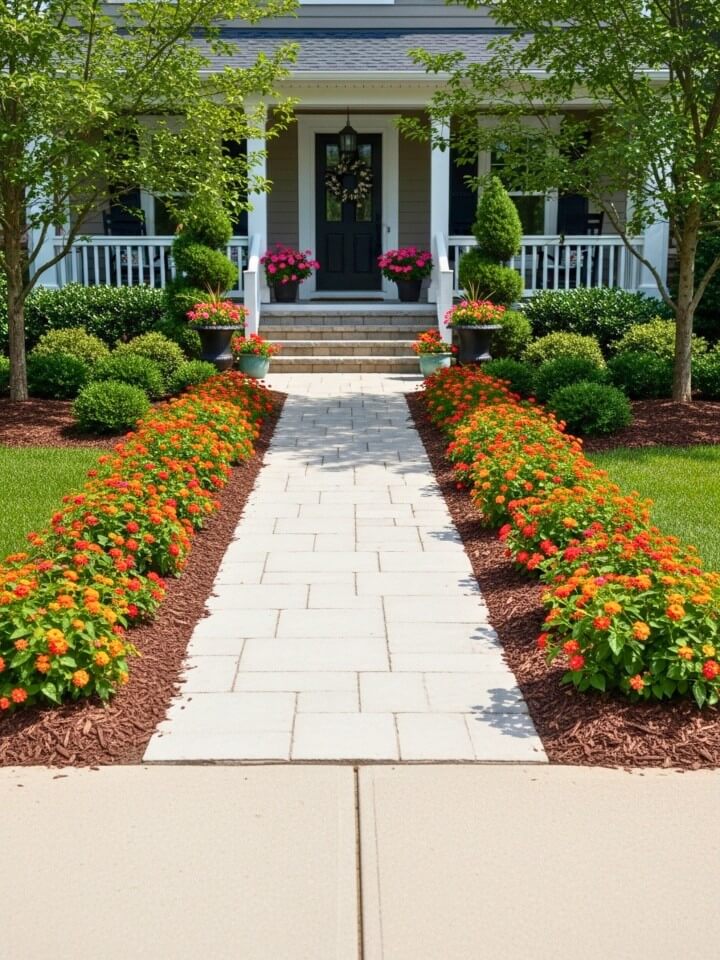
A walkway lined with lantana turns an ordinary path into something guests notice the moment they step out of the car. The trick is choosing a low-spreading variety so blooms hug the ground instead of flopping over the pavers.
Best Varieties for This Look
- ‘New Gold’ — stays under 18 inches, blooms nonstop
- ‘Trailing Lavender’ — soft purple, cascading habit
- ‘White Lightnin” — clean, modern feel
Space plants 18 to 24 inches apart and set them 6 inches back from the edge. Finish with 2 inches of bark mulch. Stick to two bloom colors maximum, or the path starts to feel chaotic instead of welcoming.
2. Layered Lantana Beds Around Trees
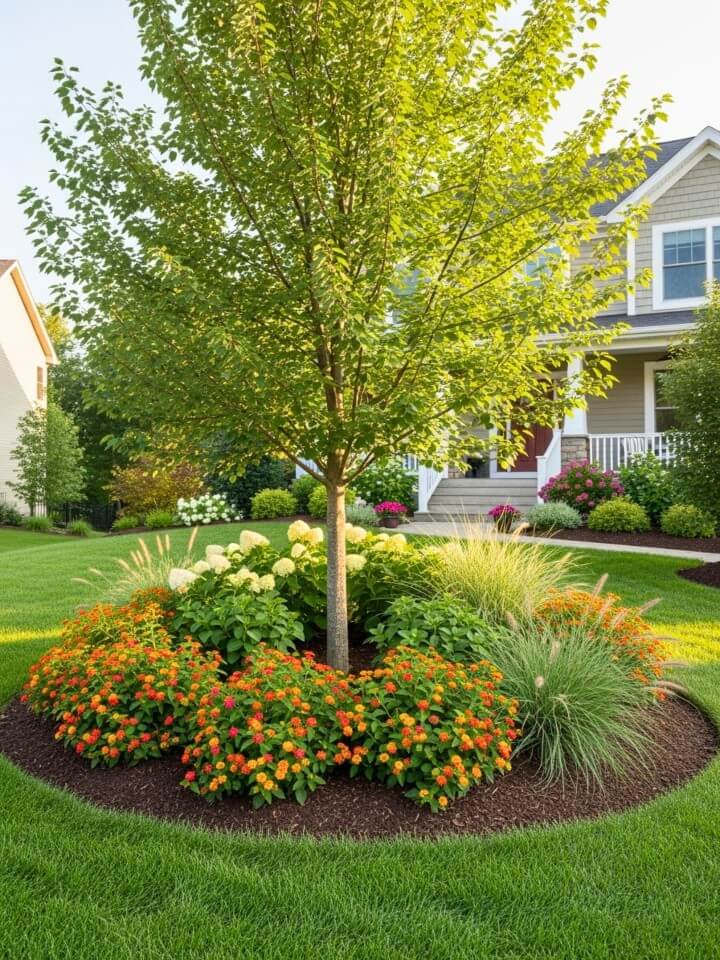
Bare soil under a front yard tree always looks unfinished, and a simple three-layer planting fixes the problem in one afternoon. Build the layers from the trunk outward: a tall ornamental grass or dwarf shrub near the center, mid-height perennials like coneflower or salvia in the middle ring, then mounding lantana along the outer edge where the blooms can spill toward the lawn.
Important: Keep every plant at least 12 inches away from the trunk. Piling soil or mulch against bark traps moisture and invites rot — a mistake that kills more trees than drought does.
Trailing varieties suit open-canopy trees; upright types handle denser shade better.
3. Lantana Accents in Rock Gardens
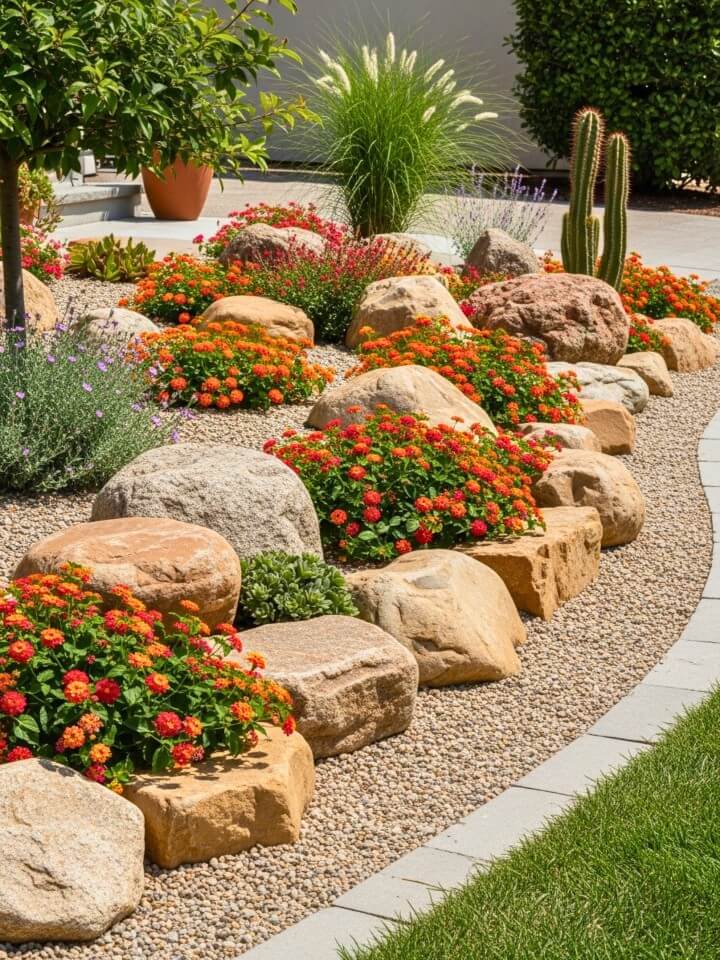
Rock gardens give lantana exactly what it wants — heat, sharp drainage, and lean soil. The colder and richer your dirt, the worse it performs, so this pairing punches above its weight.
- Soil prep: Mix coarse sand or fine gravel into heavy clay before planting. Skip fertilizer entirely; rich soil grows leafy plants with fewer flowers.
- Design tip: Tuck clusters of three plants between boulders. Single scattered plants look spotty and incomplete.
Two Color Combinations that Work
- Desert-style — warm ‘Bandana Cherry’ + tan decomposed granite + barrel cactus
- Cool modern — purple ‘Trailing Lavender’ + gray river rock + silver artemisia
Water weekly the first summer, then almost never.
4. Cottage-Style Lantana Clusters by the Driveway
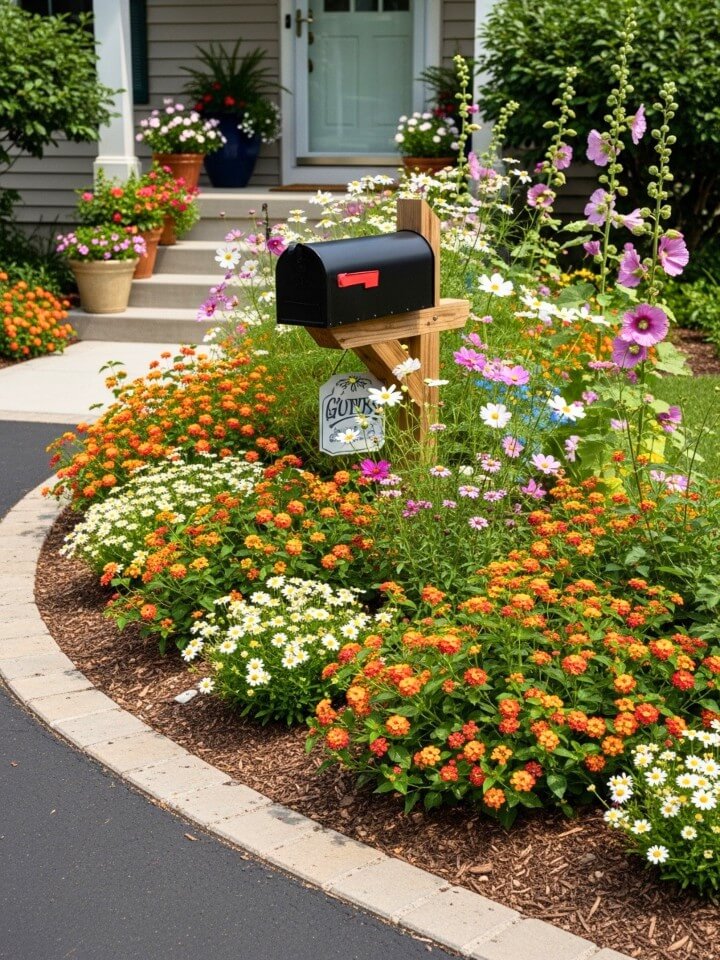
Bright, low-maintenance front yard lantana landscaping ideas that turn dull entries into bold curb appeal. Driveway edges feel like wasted space until you fill them with something that softens the asphalt. Loose clusters of lantana — never straight rows — pull off this look best.
Plant in odd-numbered groups of three or five. Pair with shasta daisies, lavender, or creeping thyme for a relaxed, lived-in feel. Set everything 18 inches back from the driving surface so tires don’t crush foliage and car doors don’t scrape blooms.
When branches start leaning into the path, cut them back hard. Lantana shrugs off aggressive pruning and reblooms within two weeks. A mailbox post wrapped in pink lantana and white alyssum is a quick, charming win.
5. Low Lantana Hedges for Modern Minimal Front Yards
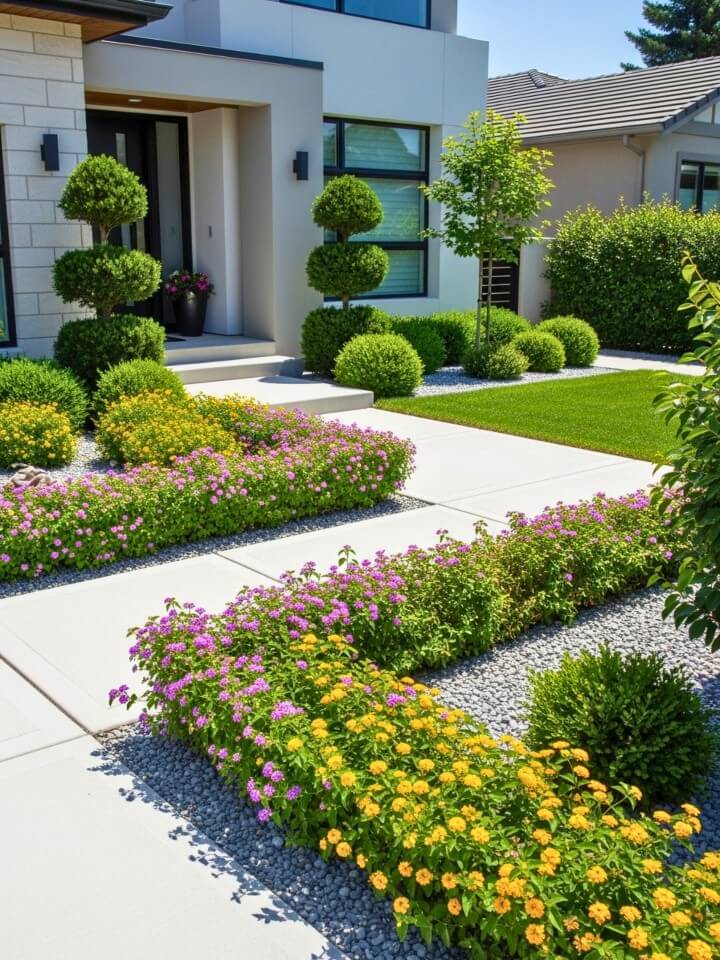
Most flowering plants look too busy for modern architecture. Lantana works only if you commit to restraint.
The Three-Rule Formula
- One variety — mixing types breaks the clean line
- One color — yellow or white reads sharpest against modern materials
- One straight line — spaced exactly 24 inches apart
‘New Gold’ is the default choice here. It tops out under 18 inches, never needs deadheading, and holds its shape between trims.
Use a sharp steel or concrete edge between the hedge and any gravel or turf — soft mulch lines visually undercut the geometry modern yards depend on. Trim lightly every six weeks with hedge shears.
6. Lantana in Raised Front Yard Planters
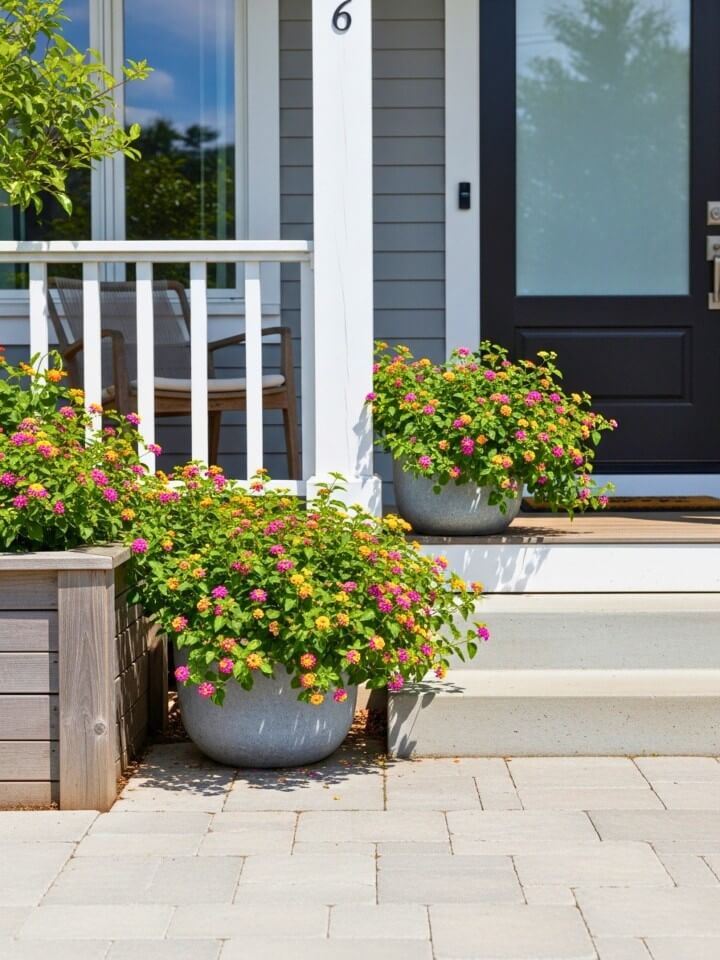
Raised planters solve two problems at once: they lift color to eye level and they let you grow lantana in spots where the ground soil is too wet, too compacted, or too shaded by overhangs.
Container Checklist Before You Plant
- Minimum 14-inch diameter (smaller pots dry out by lunchtime)
- At least two drainage holes
- Lightweight potting mix — never garden soil
- One slow-release fertilizer pellet at planting
Combine one upright lantana in the center with a trailing variety around the edge for the classic “thriller and spiller” look. ‘Luscious Citrus Blend’ spills beautifully over terracotta, while ‘Bandana Pink’ holds its shape in tall ceramic pots. Water when the top inch feels dry — usually every two to three days in peak summer.
7. Curved Lantana Pathway Edging
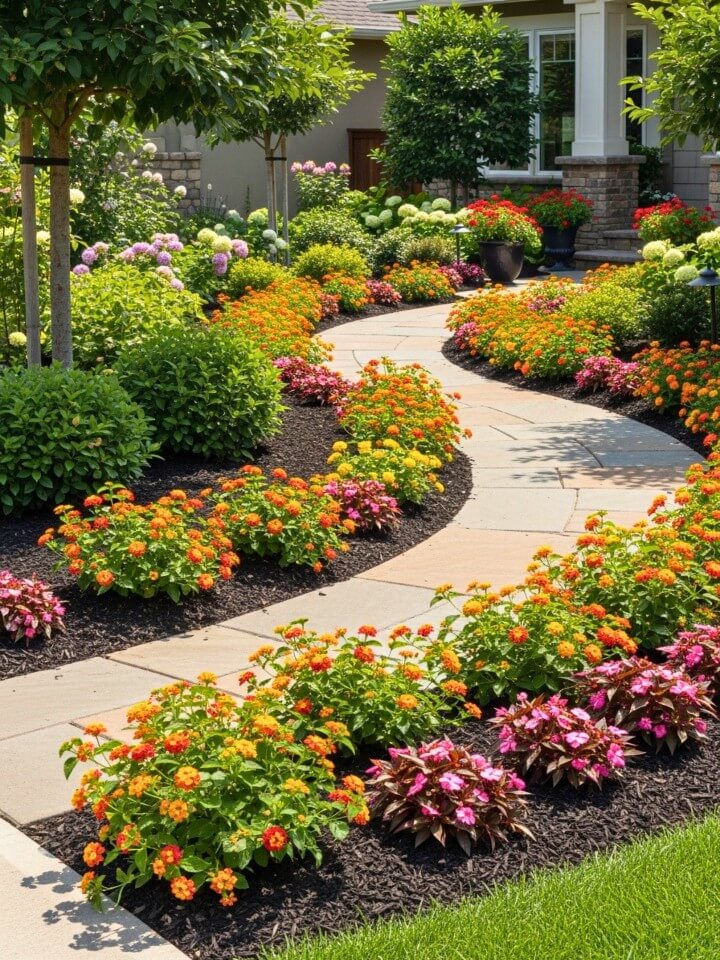
Curved paths need plants that flow with the bend, not fight against it. Lantana’s natural mounding habit does this work for you when planted correctly.
Step-By-Step Planting
- Mark the curve with a garden hose laid on the ground
- Plant 6 to 8 inches back from the inner edge of the curve
- Stagger plants in a slight zigzag rather than a single straight line
- Space tighter on tight curves (16 inches) and wider on gentle ones (24 inches)
The staggered placement is what makes the difference. A single-file row exaggerates every imperfection in the curve, while a zigzag reads as intentional fullness. Mulch lightly between plants and resist the urge to shear them flat — gentle pinching keeps the natural shape that the curve needs.
8. Mixed Flower Lantana Corners
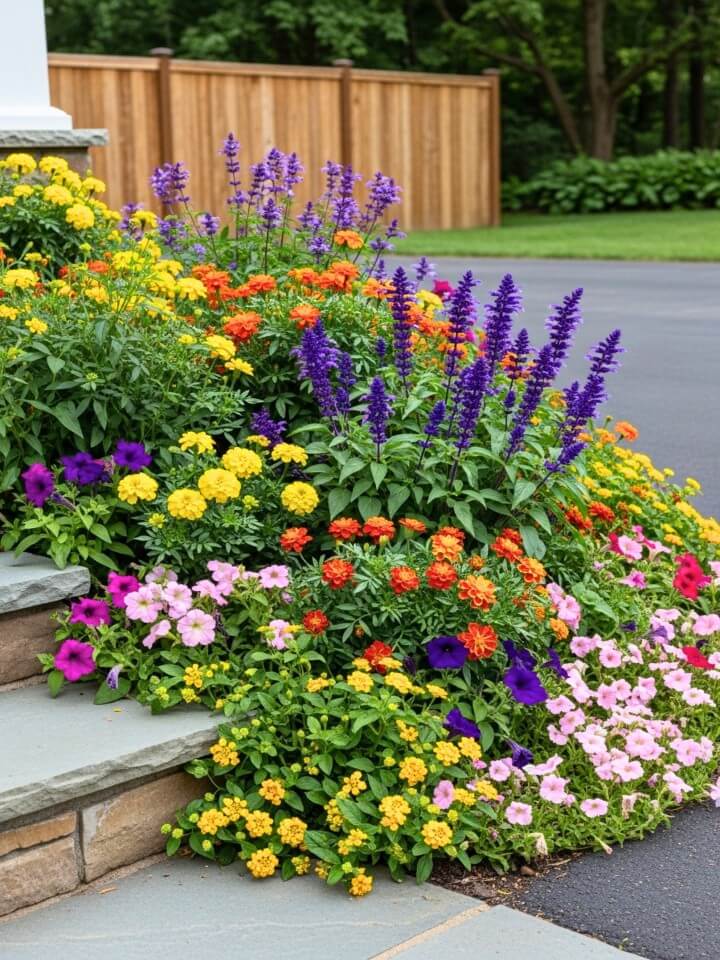
Front yard corners are easy to ignore and even easier to get wrong. The fix is a layered bed that gives the eye something to climb.
| Layer | Height | Plant suggestions |
|---|---|---|
| Back | 24–36 in | Salvia, dwarf canna, ornamental grass |
| Middle | 12–18 in | Lantana (upright variety) |
| Front | Under 8 in | Marigold, sweet alyssum, creeping zinnia |
Anchor the corner with one taller “thriller” — a single canna or a tall salvia clump — then let lantana fill the working space below. The front row exists to hide bare stems and soften the bed’s edge against the lawn.
Rotate the front row seasonally. Pansies in spring, marigolds in summer, ornamental kale in fall.
9. Tropical Lantana Statements Near Entryways
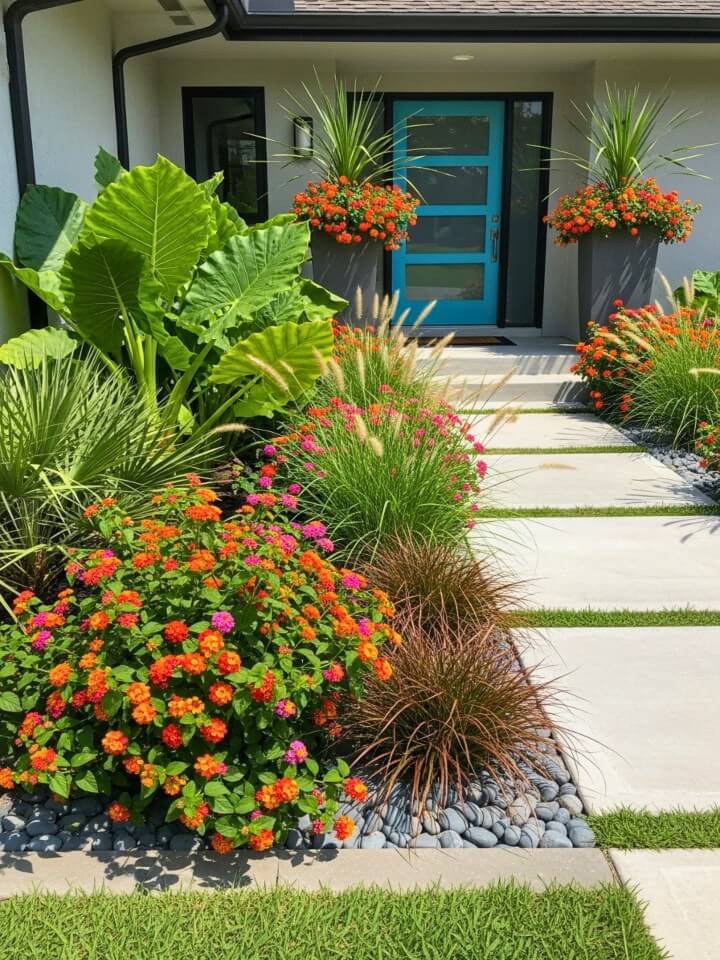
Your front door deserves more than a tired potted geranium. A tropical-style planting built around bold lantana turns the entry into a focal point you’ll see from the street.
Pick saturated colors — orange, red, or hot pink. Pastels disappear against most home exteriors and won’t carry the visual weight an entryway needs.
Companion Plants that Sell the Tropical Look
- Elephant ear (Colocasia) — dramatic broad leaves
- Dwarf banana — surprising height in zone 8 and warmer
- Cordyline — burgundy spikes for contrast
- Sweet potato vine — chartreuse trailer at ground level
Plant tightly. Tropical beds look wrong with bare soil showing between plants, so set everything closer than the tag recommends and accept that you’ll thin some out next year.
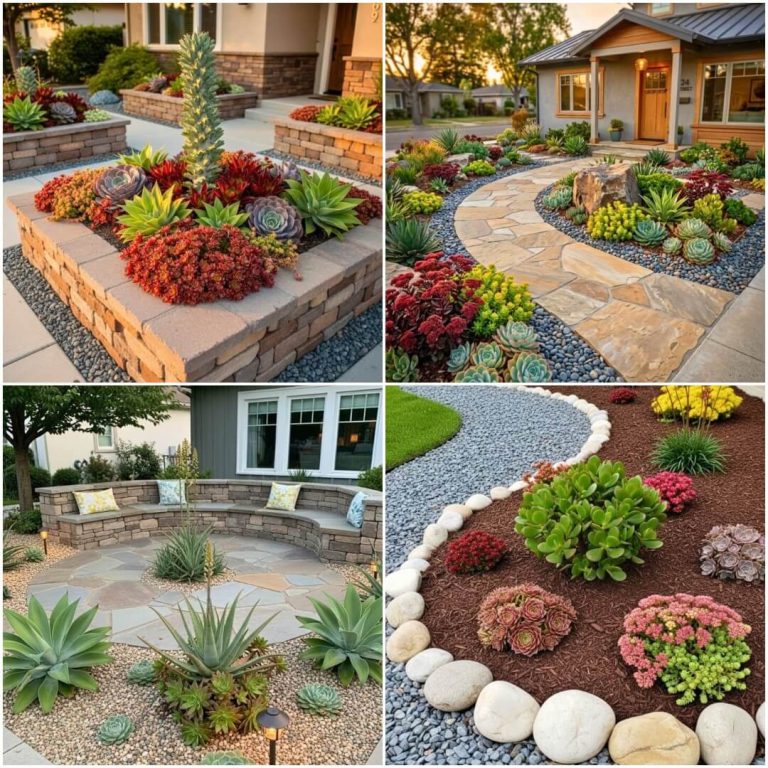
10. Lantana and Succulent Combination Beds
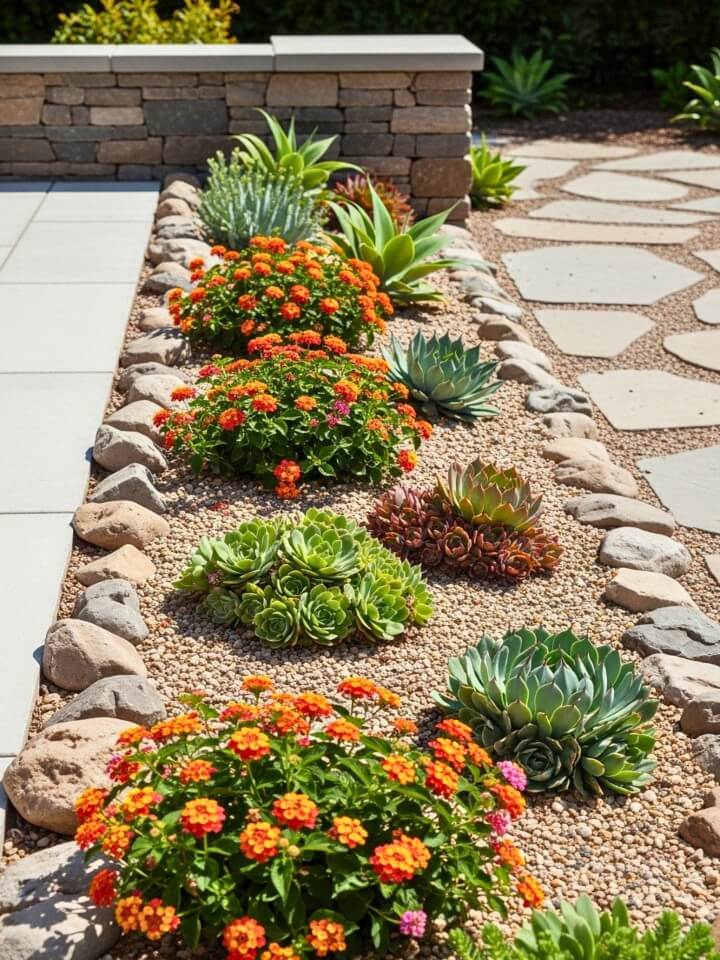
Discover how front yard lantana in flower beds adds nonstop color, soft texture, and effortless charm. This pairing looks effortless but only works when both plants get what they need — which, conveniently, is almost the same thing.
Why It Works
Both crave full sun, sharp drainage, and infrequent water. Both struggle in rich, moist soil. Plant them together and you’re not juggling two watering schedules.
Where It Fails
Heavy clay. Afternoon irrigation runoff. Any spot that stays damp after rain.
Build the bed on a slight mound if your yard sits flat — even 4 inches of elevation makes a measurable difference in root health. Use ‘New Gold’ or ‘Trailing Lavender’ as the flowering layer, and pair with hens-and-chicks, blue chalk sticks, or paddle plant for foliage contrast.
Top-dress with pea gravel instead of bark mulch. Wood mulch holds moisture against succulent crowns and rots them from the base up.
11. Lantana Around Decorative Boulders
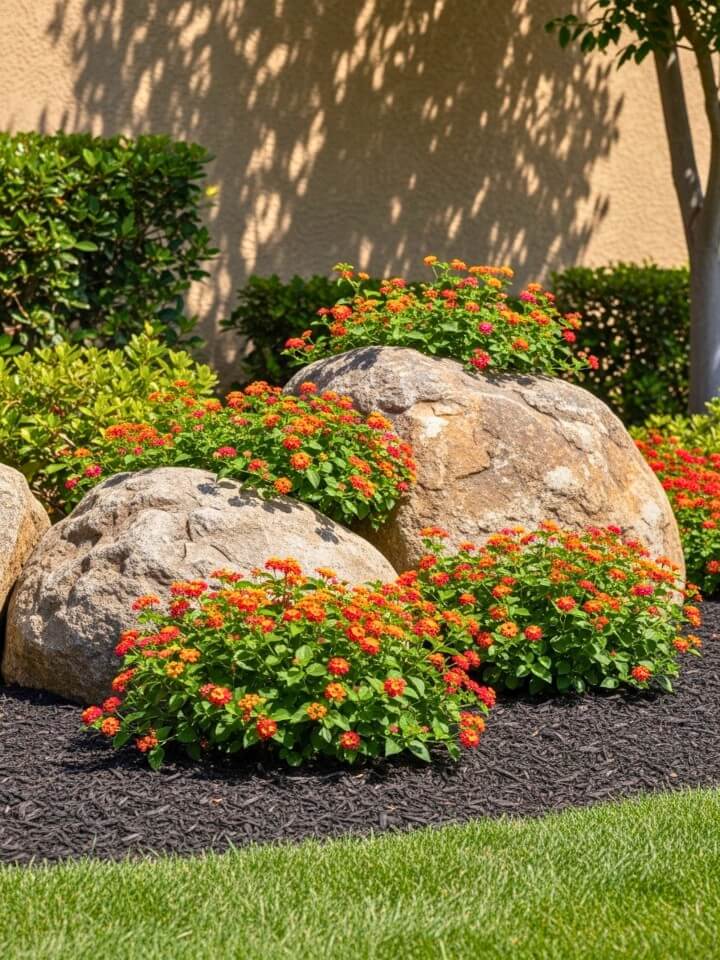
Boulders look stranded when they sit on bare mulch with nothing growing nearby. Lantana fixes this by tying the stone into the surrounding landscape with soft, spilling color.
Do this
- Plant on the sunny side of the boulder where heat reflection helps blooms
- Use one or two plants per boulder, not a full ring
- Let foliage touch the rock — that contact is what makes it look settled
- Choose warm colors against light stone, cool colors against dark basalt
Skip this
- Don’t plant on the north-facing shaded side; lantana sulks without sun
- Don’t surround the rock completely — it starts looking like a costume
- Don’t use trailing varieties on tall boulders; they can’t reach up
A single ‘Bandana Cherry’ tucked against a weathered limestone boulder does more visual work than a dozen plants scattered across the bed. Restraint is the whole technique here.
12. Lantana on Front Yard Slopes
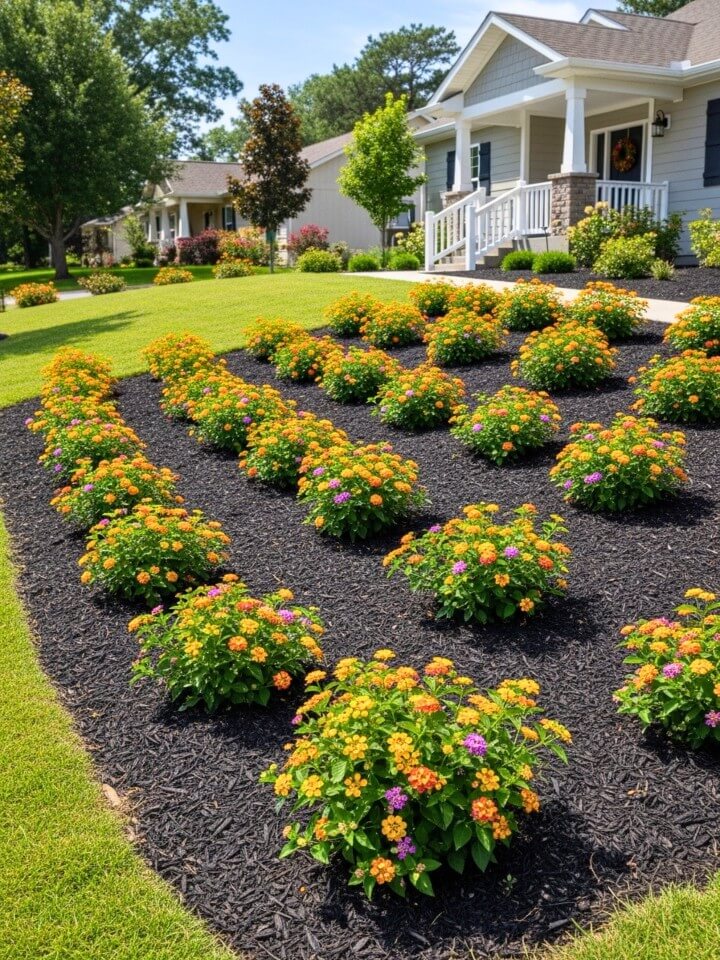
Slopes are tough because water runs off before roots can drink and soil washes away during heavy rain. Lantana handles both problems once it’s established, but the first season matters.
Planting on A Slope, the Right Way:
Cut a small flat shelf into the slope for each plant — about 8 inches wide. The shelf catches water long enough for roots to absorb it instead of letting everything sheet downhill. Set the plant on the shelf, backfill, and build a small berm on the downhill side to hold the next rain.
Space plants closer than you would on flat ground (16 inches instead of 24). Tight spacing gets you erosion-blocking coverage faster, usually by mid-summer of year one. Add jute netting over the bed until plants fill in if rain is heavy in your area.
13. Seasonal Lantana Planters by the Porch
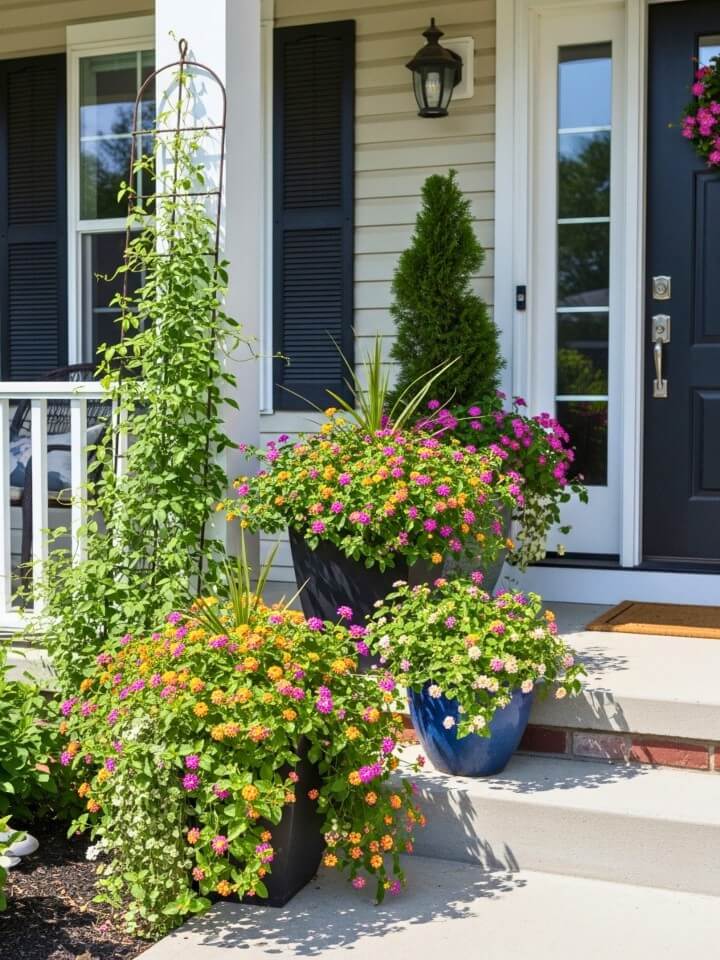
Porch planters lose their punch by August in most yards because nobody refreshes them. Lantana solves the mid-summer slump and pairs differently each season for year-round interest.
Spring (March–May)
Plant young lantana plugs with pansies and snapdragons. The cool-season flowers carry the pot until lantana wakes up and takes over.
Summer (June–August)
Lantana hits its peak. Pull the spent spring flowers and add a trailing sweet potato vine. This is when the planter earns its space and supports brighter summer home decor ideas outside the front door.
Fall (September–November)
Lantana keeps blooming through the first light frost. Tuck in ornamental kale or pumpkins around the base for seasonal color without ripping anything out.
Use the largest planter you can lift when full. Small pots dry out too fast and stress every plant inside.
14. Lantana Borders for Driveway Islands
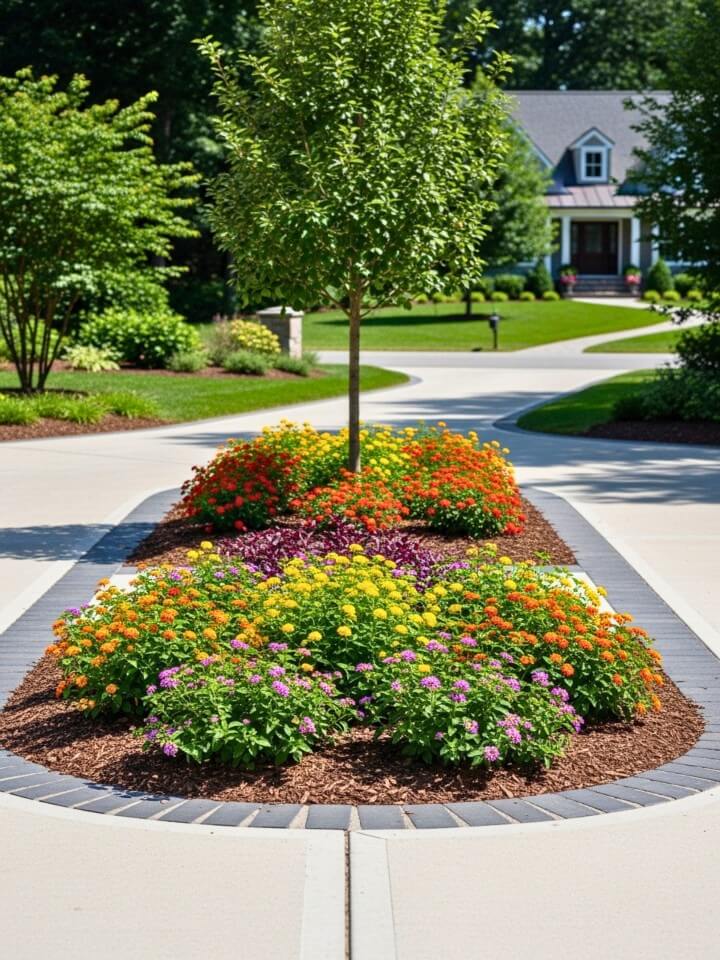
Driveway islands are awkward — too small for trees, too exposed for delicate plants, and visible from every angle including the second-story bedroom window. Lantana fits because it looks finished from any direction.
Scale the Planting to The Island Size:
- Under 4 feet wide: One lantana variety, single color, ring around the edge
- 4 to 8 feet wide: Lantana border + one upright accent like dwarf fountain grass in the center
- Over 8 feet wide: Three-layer planting with a small tree, mid-height shrubs, and lantana along the curb edge
Keep all foliage 18 inches back from the curb. Cars drift, snowplows scrape, and delivery trucks cut corners — anything closer gets damaged repeatedly. A tidy gravel or river-rock border between the plants and the curb absorbs the wear.
15. Lantana Corners with Native Grasses
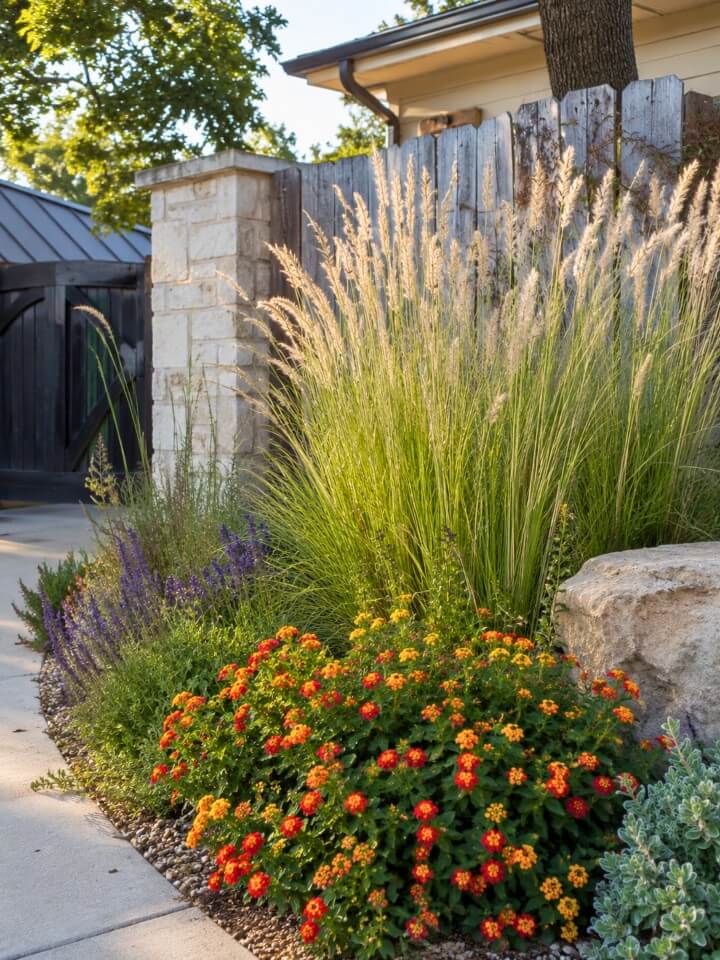
Native grasses bring movement that flowering plants can’t match — they sway in wind, catch low afternoon light, and add winter structure long after lantana has died back. Pairing the two gives you a corner bed that performs in every season.
Grasses that Pair Well with Lantana
- Little bluestem — 3 feet tall, blue-green summer foliage, copper in fall
- Pink muhly grass — pink cloud blooms in autumn, dramatic backdrop
- Switchgrass ‘Shenandoah’ — burgundy tips, upright form
- Mexican feather grass — fine texture, constant gentle motion
Place grasses at the back of the corner with lantana stepping down toward the lawn. Plant grasses in groups of three minimum — single specimens look lonely and underdressed. Cut grasses back to 4 inches in late winter, just before new growth starts. Lantana gets the same hard prune at the same time.
16. Lantana Along Fence Lines
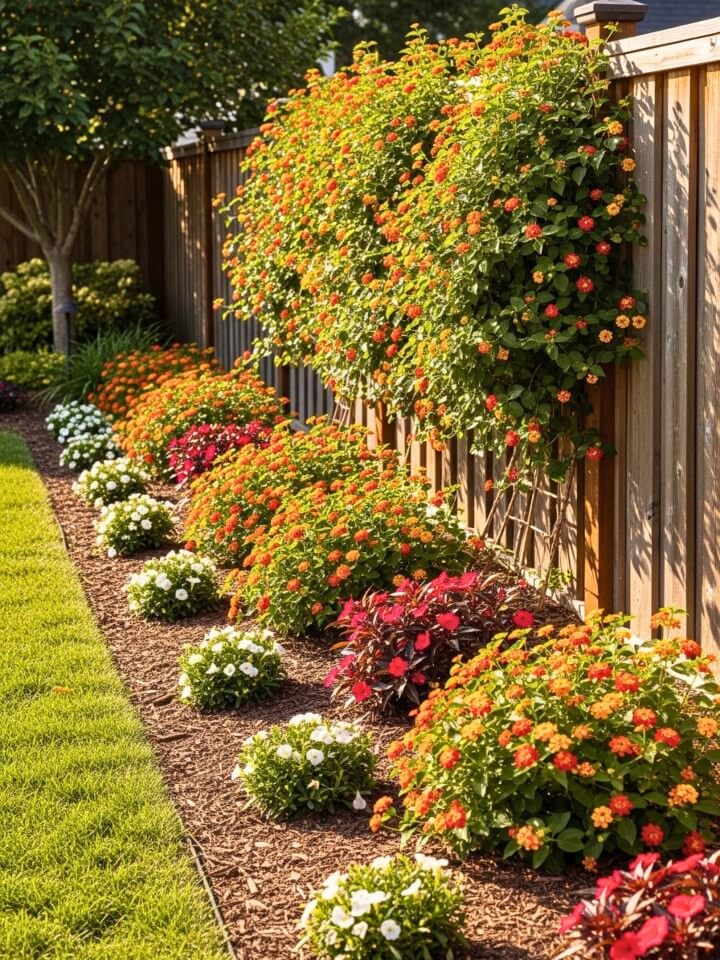
Fences create a long, flat plane that begs for something to break the monotony. Lantana works here because it fills the lower third with color without growing tall enough to obscure the fence itself.
The right lantana depends entirely on what kind of fence you’re working with.
- Picket fence (white or painted): Plant ‘Trailing Lavender’ or ‘Bandana Pink’ — soft colors that don’t fight the fence for attention.
- Privacy fence (wood or vinyl): Go bold. ‘Bandana Cherry’ or ‘Luscious Citrus Blend’ read as intentional color blocks against the flat backdrop.
- Chain link: Lantana hides the bottom 18 inches beautifully. Skip the fancy varieties and plant common yellow lantana for full coverage on a budget.
Set plants 12 inches off the fence so air can move behind them and you can reach the panels for maintenance. Mulch the gap to keep weeds from creeping under the fence from the neighbor’s side.
17. Lantana in Small Front Yard Containers
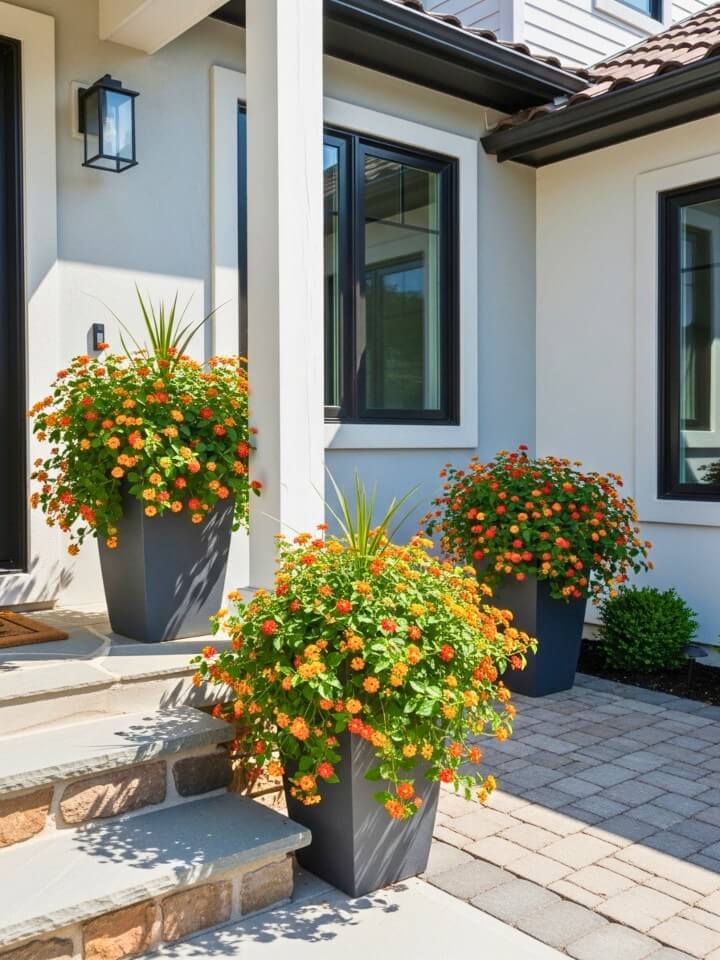
Small yards force creative solutions, and a few well-placed containers can do more work than a full bed. The constraint isn’t space — it’s choosing the right pot and resisting the temptation to overplant it.
What Actually Fits in A Small Container
- 10–12 inch pot: One compact lantana, nothing else
- 14–16 inch pot: One lantana + one trailing companion
- 18+ inch pot: Full thriller-filler-spiller arrangement
Most homeowners overestimate how much fits. A single ‘New Gold’ lantana fills a 12-inch pot completely by mid-July, and adding a “just one more” plant in spring leads to a crowded, stressed mess by August.
Group three pots of varying heights near the front steps instead of lining up matching pots across the porch. Odd numbers and varied heights look intentional; even rows look like a hardware store display.
18. Butterfly-Friendly Lantana Beds
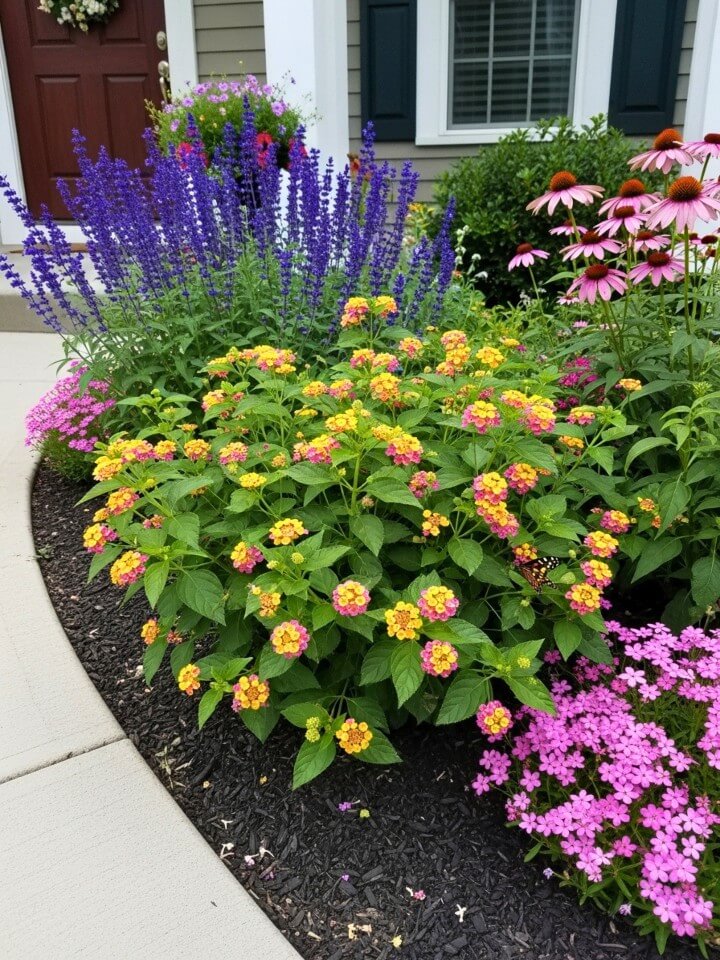
Smart lantana landscaping ideas that mix bold blooms with easy care for a yard that turns heads daily. Lantana is one of the top five butterfly plants you can grow, and a properly designed bed turns a front yard into a small wildlife stop. The key is planting for the whole life cycle, not just the adult butterflies you see flying.
What You’ll Attract
Painted ladies, swallowtails, gulf fritillaries, monarchs, and skippers all visit lantana regularly. Hummingbirds work the same flowers from dawn to mid-morning.
Design Rules that Bring Them In
Clump plants in groups of five or more — single plants don’t register as a food source from above. Mix lantana with milkweed for monarch caterpillars, parsley or dill for swallowtail larvae, and pentas for additional nectar.
Skip the Pesticides Entirely. Even organic neem oil kills caterpillars on contact, and a butterfly garden sprayed with insecticide is just a colorful trap.
19. Lantana Accents Near Garden Statues
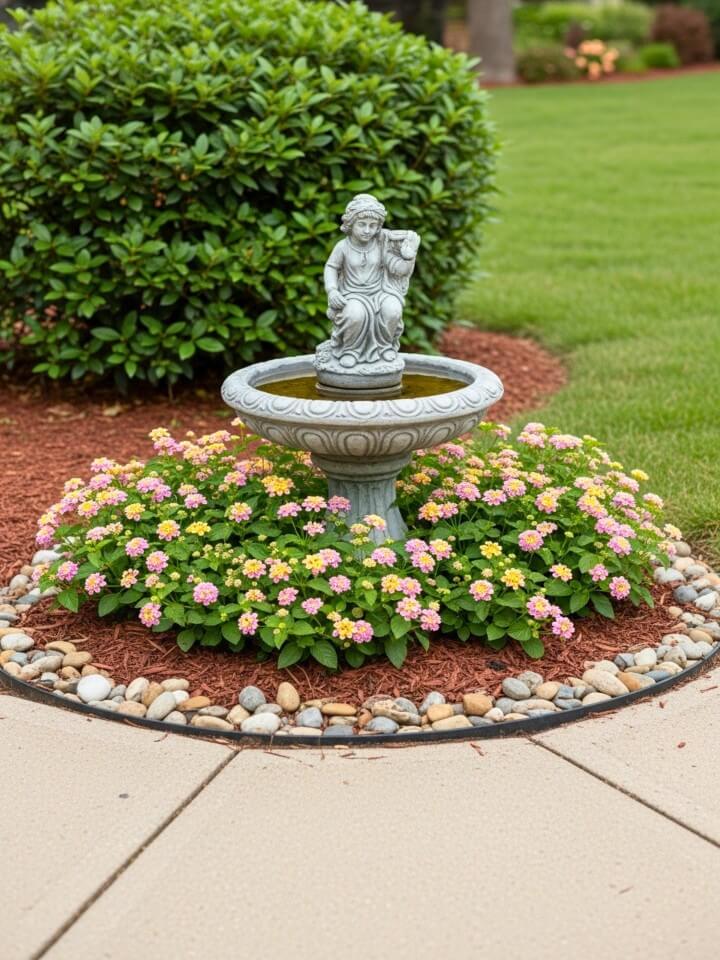
A statue, birdbath, or fountain becomes a focal point only when the planting around it supports rather than competes. Lantana sits in the supporting role beautifully because it stays low and soft.
The composition follows one rule: the feature should rise above the planting by at least twice the plant’s height. A 2-foot birdbath needs lantana under 12 inches around it. A 4-foot statue can handle 18-inch mounds.
White or pale yellow lantana works best around aged stone and bronze statues. The soft tones make the patina and texture of the feature stand out instead of getting lost in busy color.
Plant in a half-moon shape facing the viewing direction — usually from the walkway or front door. A full ring around the base looks like a costume; a half-moon looks composed.
20. Lantana with Ornamental Grasses for Texture
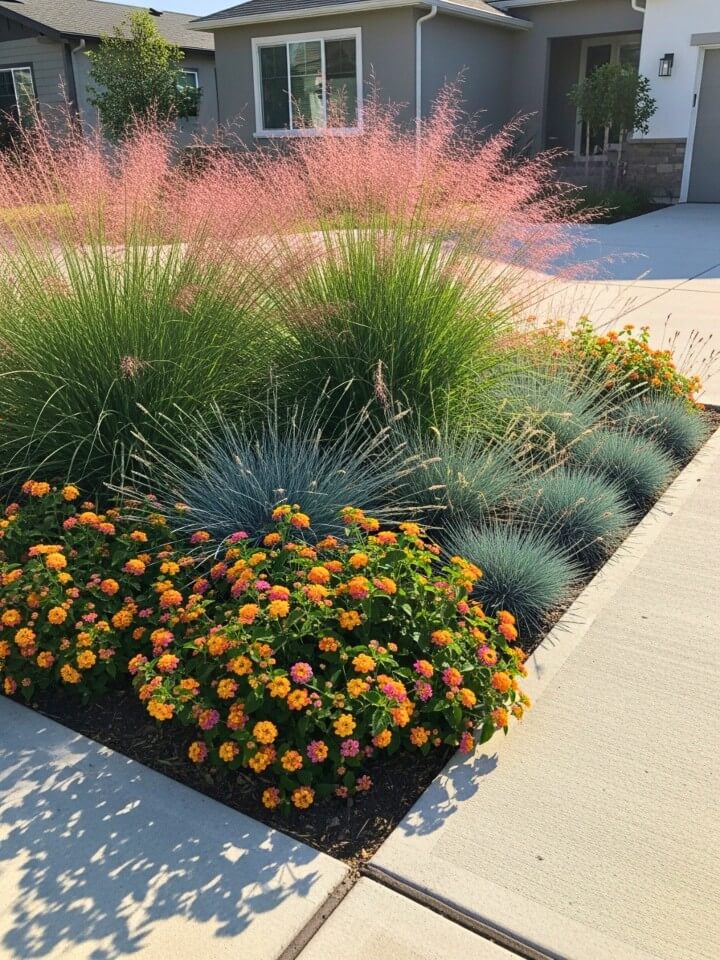
Texture is what separates a planting that looks finished from one that looks like a plant collection. Lantana brings dense, rounded mounds; grasses bring fine, vertical movement. Together they create the kind of layered look professional designers charge thousands to install.
Texture Pairings that Work Anywhere
- Fine + bold: Mexican feather grass with ‘Luscious Citrus Blend’ lantana
- Vertical + mounding: Purple fountain grass with ‘New Gold’ lantana
- Soft + structured: Pink muhly with ‘Bandana Pink’ lantana
Place grasses on the north or east side of the bed so they don’t shade out the lantana. Lantana refuses to bloom in dappled light, and tall grasses cast more shadow than people expect by late summer.
Cut both plants back hard in late winter, fertilize lightly when new growth shows, and the bed essentially runs itself from there.
Conclusion:
Lantana rewards the gardener who plants with intent rather than enthusiasm. The yards that stop people mid-stroll aren’t the ones overflowing with every color the nursery carried in May — they’re the ones where a single variety repeats along a curve, where a boulder finally looks like it belongs, where a tired driveway edge suddenly hums with butterflies by July. Pick two ideas from this list, commit to them fully, and let restraint do the heavy lifting. A front yard doesn’t need more plants. It needs the right ones, placed where the afternoon sun can turn them into something the neighbors quietly envy.
FAQs About Front Yard Lantana
Once the design is set, the real questions begin — when to plant, why blooms stall, what to do about pests, and how lantana handles winter. The answers below clear up the issues that catch new growers off guard.
Does Lantana Come Back Every Year in Cold Climates?
Lantana returns reliably only in zones 9 through 11. In zones 7 and 8, hard varieties like ‘Miss Huff’ may survive a heavy mulch layer, but most homeowners north of zone 8 treat it as an annual.
When Is the Best Time to Plant Lantana in The Front Yard?
Plant lantana after the last frost date, once nighttime temperatures stay above 55°F consistently. Late spring through early summer gives roots enough warm soil to establish before peak heat, leading to stronger blooms and healthier growth.
Why Is My Lantana Not Blooming Even Though It Looks Healthy?
Lush green foliage with few flowers usually means too much nitrogen or not enough sun. Stop fertilizing, confirm the plant gets at least six hours of direct light, and reduce watering — stressed lantana blooms harder.
How Do I Deal with Lace Bugs and Whiteflies on Lantana?
Spray the undersides of leaves with insecticidal soap or a strong water jet every three days for two weeks. Encourage ladybugs and lacewings naturally instead of using chemical pesticides, which kill beneficial pollinators along with the pests.
Is Lantana Invasive, and Will It Spread Into My Lawn?
Common lantana self-seeds aggressively in warm zones and is considered invasive in several southern regions. Choose sterile cultivars like ‘New Gold’, ‘Bandana’, or ‘Luscious’ series — they bloom heavily without producing viable seeds that escape into surrounding areas.