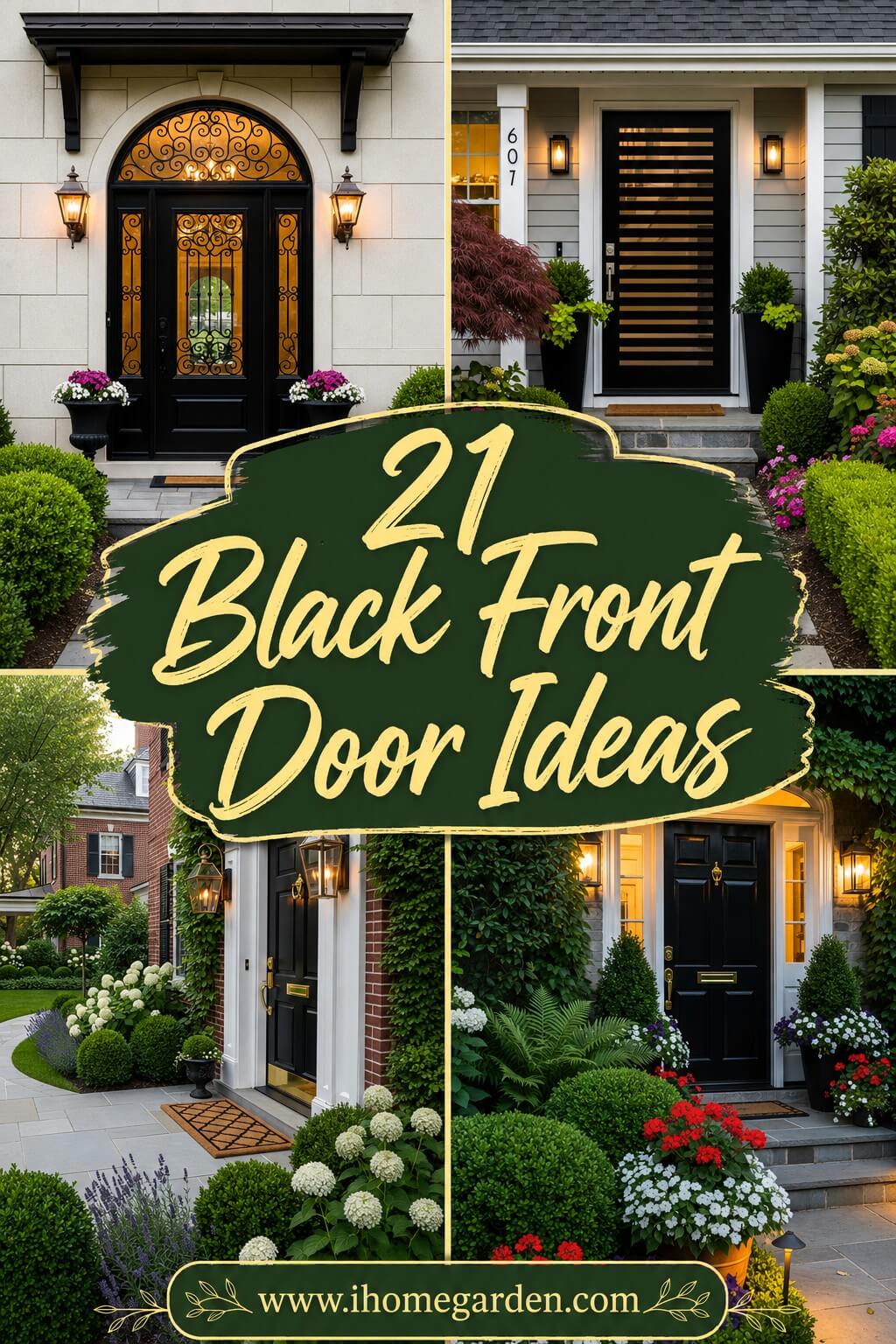
21 Ways a Black Front Door Makes Your Home Look More Expensive
Your neighbor repainted their front door last spring and suddenly their house looked like it belonged in an architecture magazine — same siding, same windows, just a different door. That’s the quiet power of black. These 21 wonderful black front door ideas dig into what actually makes each pairing work, because slapping black paint on wood and calling it done misses the whole picture. The hardware finish, the trim color, what’s growing beside the steps – every detail either sells the look or quietly kills it. Some of these combinations take a weekend and a trip to the hardware store. Others just need a couple of well-placed plants. Either way, your front entry is about to look like a decision you made on purpose – not something that just happened.
1. Classic Matte Black Door with Brass Hardware
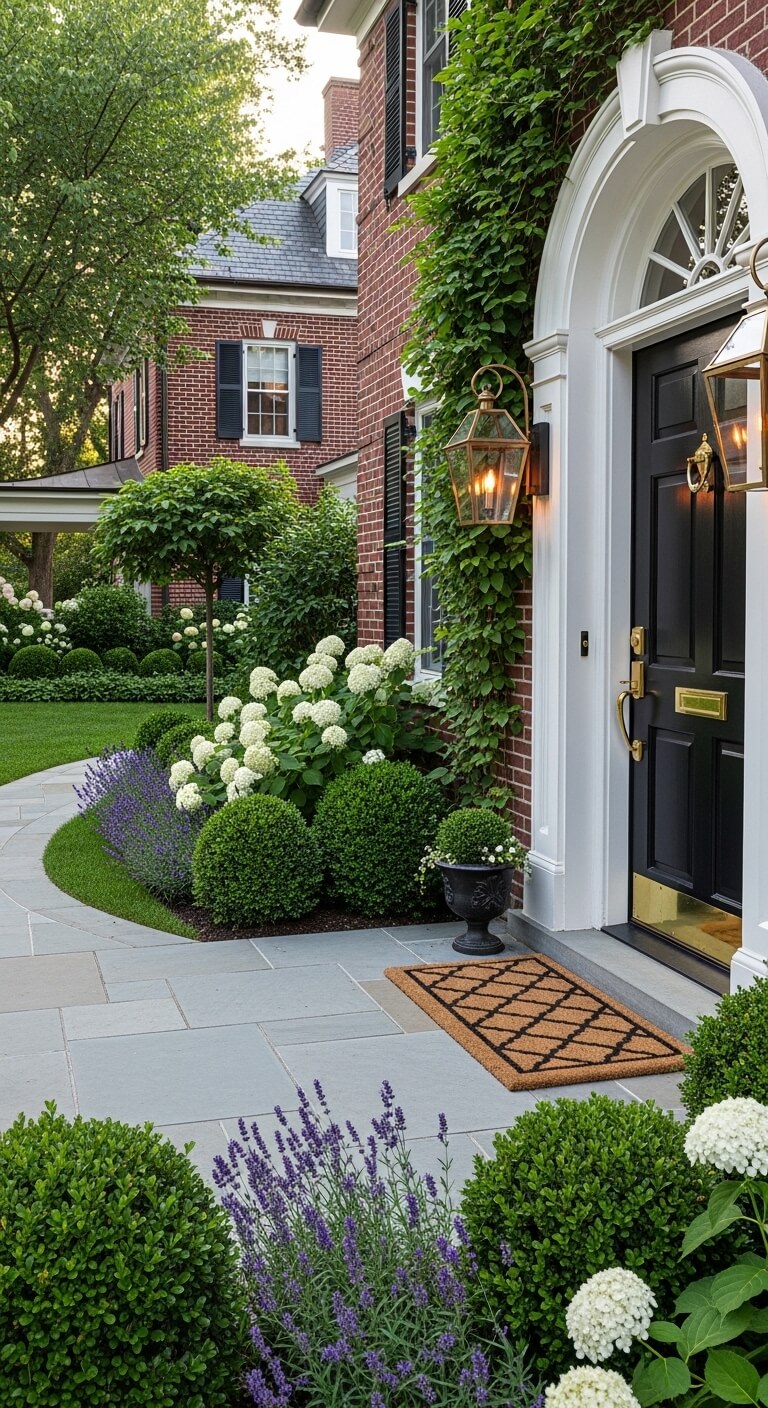
Matte black and brass is the interior design equivalent of a perfect handshake — confident, warm, and immediately trustworthy. Unlike glossy finishes that show every fingerprint, matte black stays looking clean with minimal upkeep. The real magic happens with the brass. Over time, brass hardware develops a natural patina that no factory finish can replicate.
If your home has warm-toned brick, tan siding, or wood accents, this combination will feel like it was always meant to be there. Go oversized with the knocker. It makes a statement before anyone even rings the bell.
2. How Glass Insets Make a Glossy Black Door Feel Bright and Modern
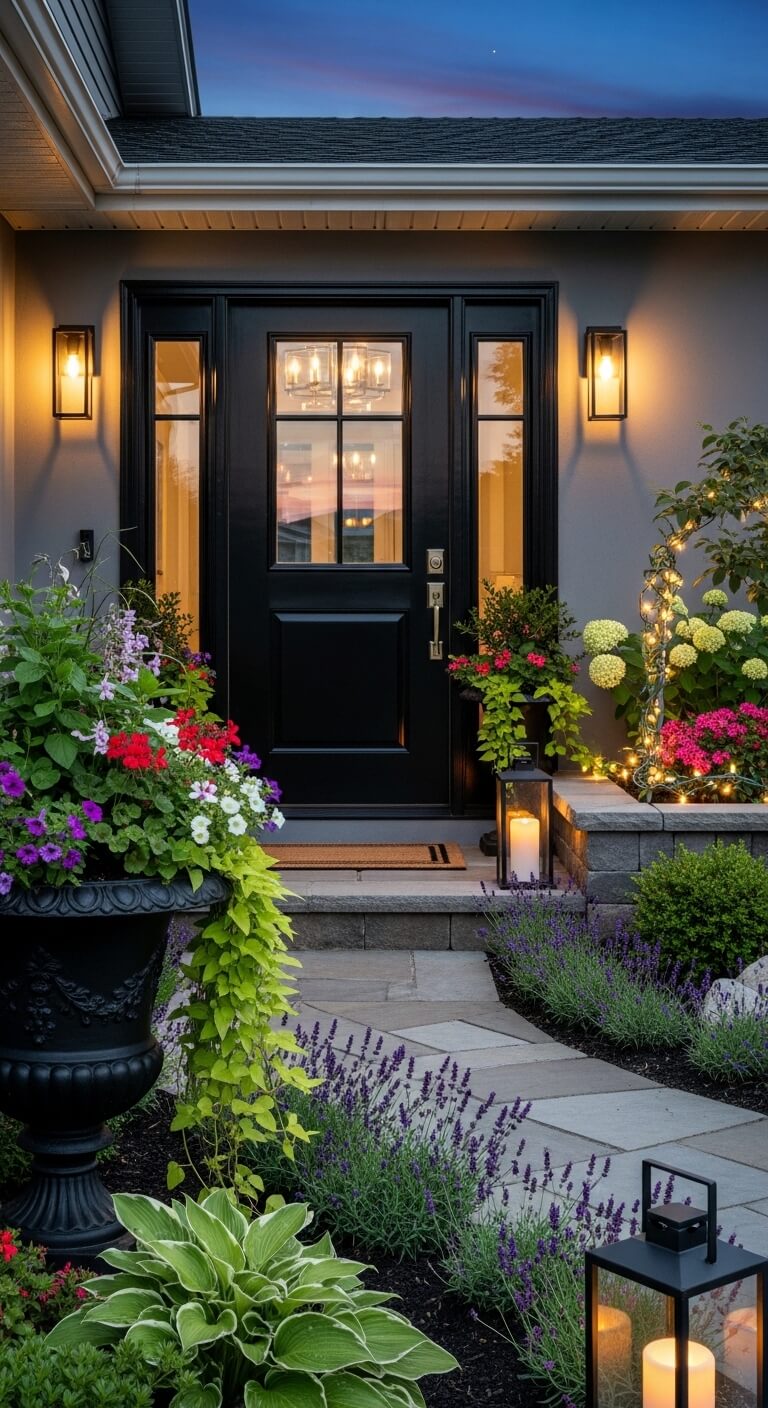
Does your entryway feel dark and closed off? A glossy black door with glass insets solves that problem immediately. The reflective finish bounces light around the porch, while the glass panels pull natural light directly into the foyer. Clear glass works best when you have an attractive interior entryway worth showing. Frosted or reeded glass is the smarter choice for privacy without blocking brightness.
This style fits modern and transitional homes particularly well. One practical tip: choose tempered or laminated glass for safety and durability, especially in high-traffic entryways with kids or pets nearby.
3. The Paneled Door Style That Makes Any Facade Look More Expensive
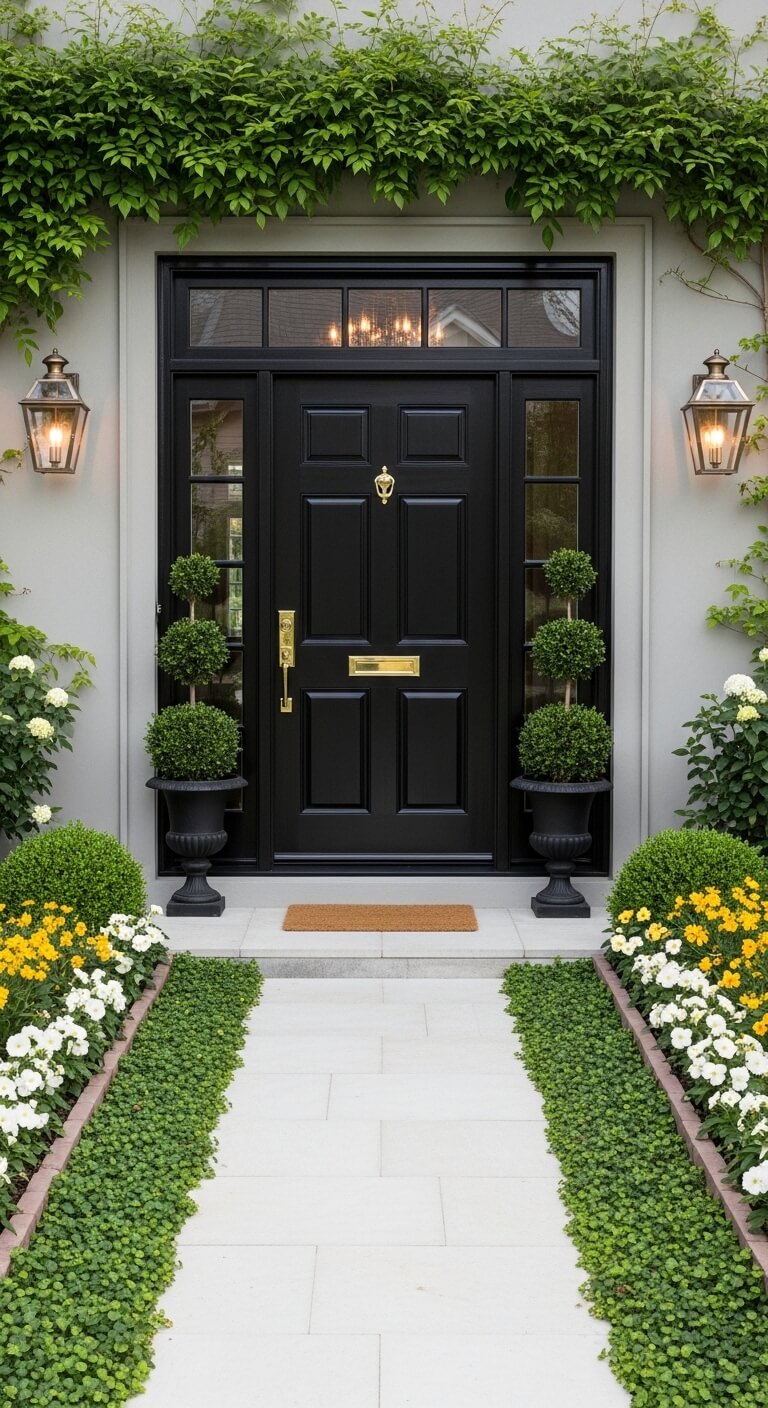
There is a reason paneled doors have been used on homes for centuries — they work. The raised sections create shadow lines that give the door visual depth, making it look far more expensive than a flat slab.
A symmetrical six-panel or eight-panel black door suits formal and traditional facades best. The key to pulling this off is consistency: same finish on every panel, same hardware style throughout, same trim color on both sides. Pair with matching shutters if your home has them. Symmetry at the front entry signals that the rest of the home is just as well considered.
4. Black Door with Contrasting White Trim
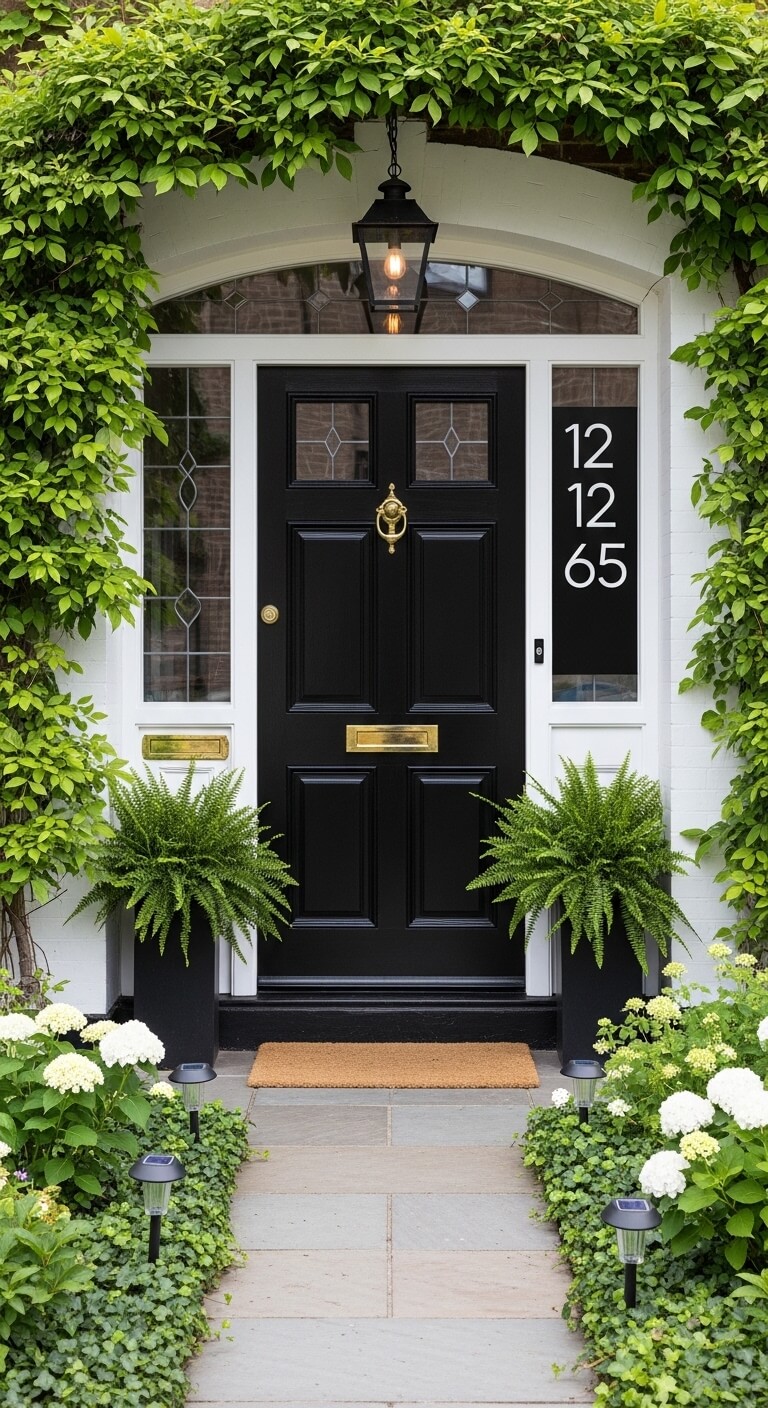
Think of white trim as the frame around a painting. Without it, even a beautiful black door can get lost against busy siding or a cluttered facade. With it, the door becomes the undeniable focal point.
This contrast works on almost any home style — farmhouse, craftsman, colonial, even modern. The trick is keeping the white trim crisp and freshly painted. Dingy or yellowing trim actually makes the black look worse, not better. Small matching details like a black mailbox, black house numbers, and black light fixtures tie the whole entry together without requiring a full exterior renovation.
5. Modern Black Door with Minimalist Handle
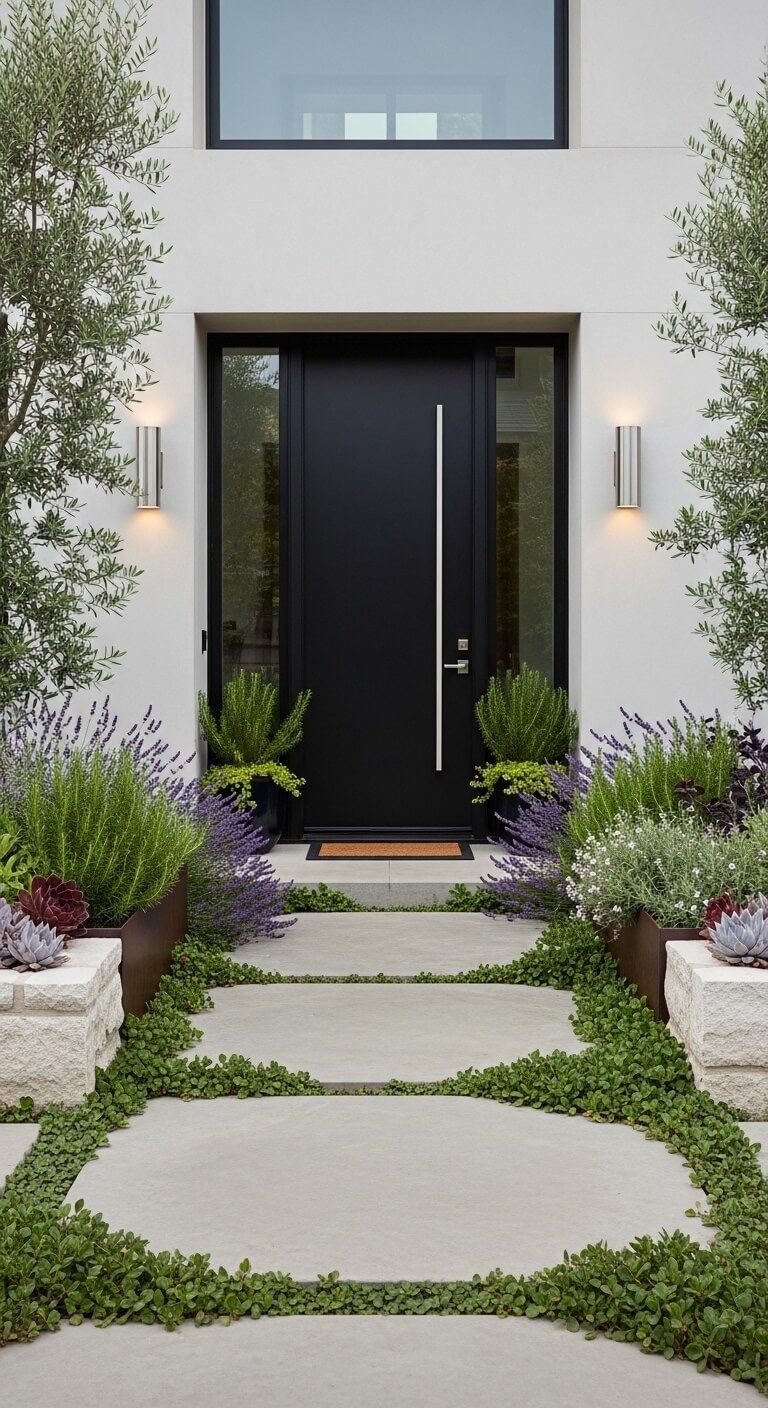
Less is genuinely more here. A flat black door with a single long bar handle or a slim lever is the kind of design choice that looks effortless but takes real confidence to commit to. No panels, no glass, no decorative elements — just the door and one clean piece of hardware.
This works best on homes with modern or contemporary architecture where the facade itself is already doing the heavy lifting. Concrete pathways, simple stone planters, and hidden drainage details complement this look well. If your home tends toward the ornate, this door style will feel jarring rather than refined.
6. How Decorative Ironwork Gives a Black Door Old-World Character
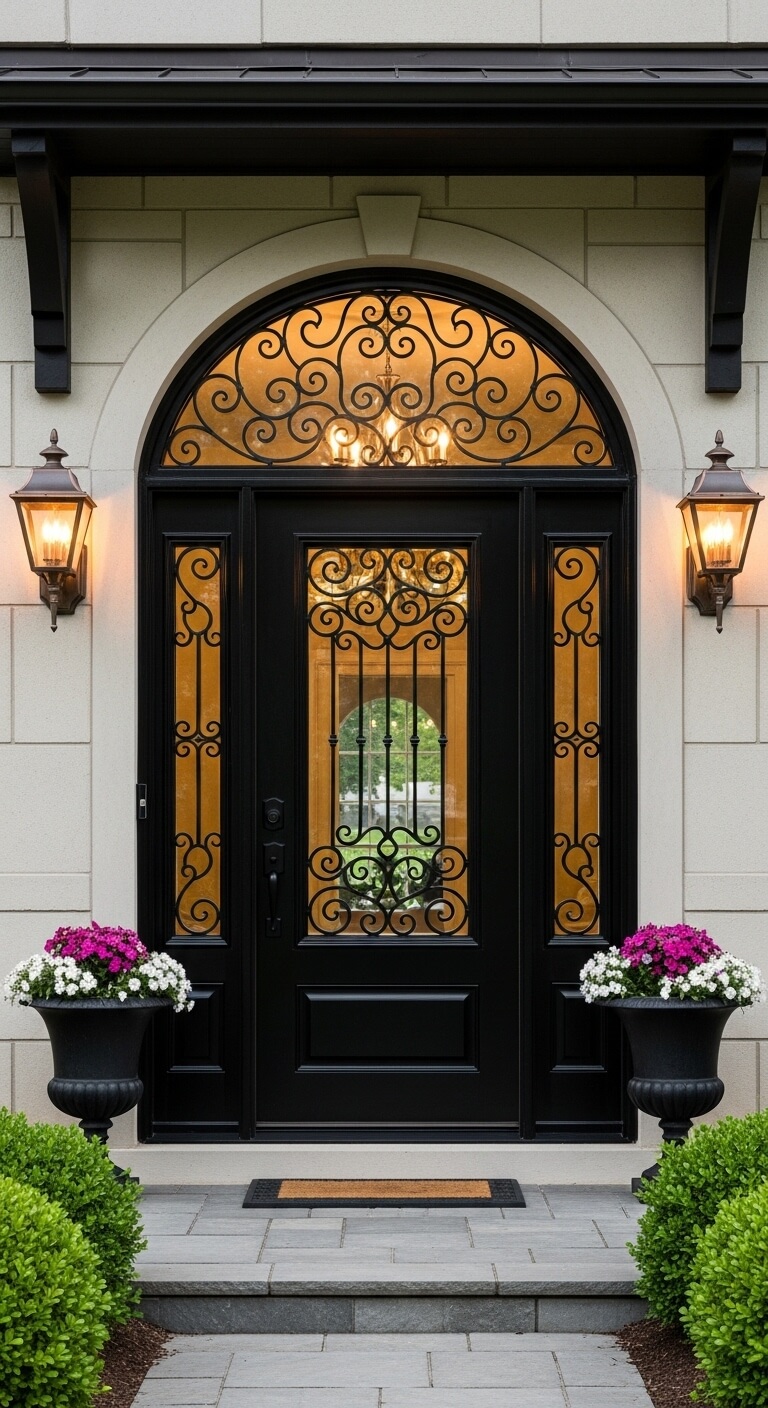
Wrought iron and black paint share the same visual language — both are bold, durable, and rooted in craftsmanship. Adding decorative ironwork, whether as a grille inset, hinges, or a scrollwork knocker, gives a black door a handmade quality that factory hardware simply cannot replicate.
This style has strong ties to Spanish Colonial, Mediterranean, and historic American architecture. Brick and stone facades are the natural backdrop for it. One word of caution: ironwork can tip into overdone territory quickly. Choose one or two iron details and let them breathe rather than covering every surface with decoration.
7. Black Door Surrounded by Lush Greenery
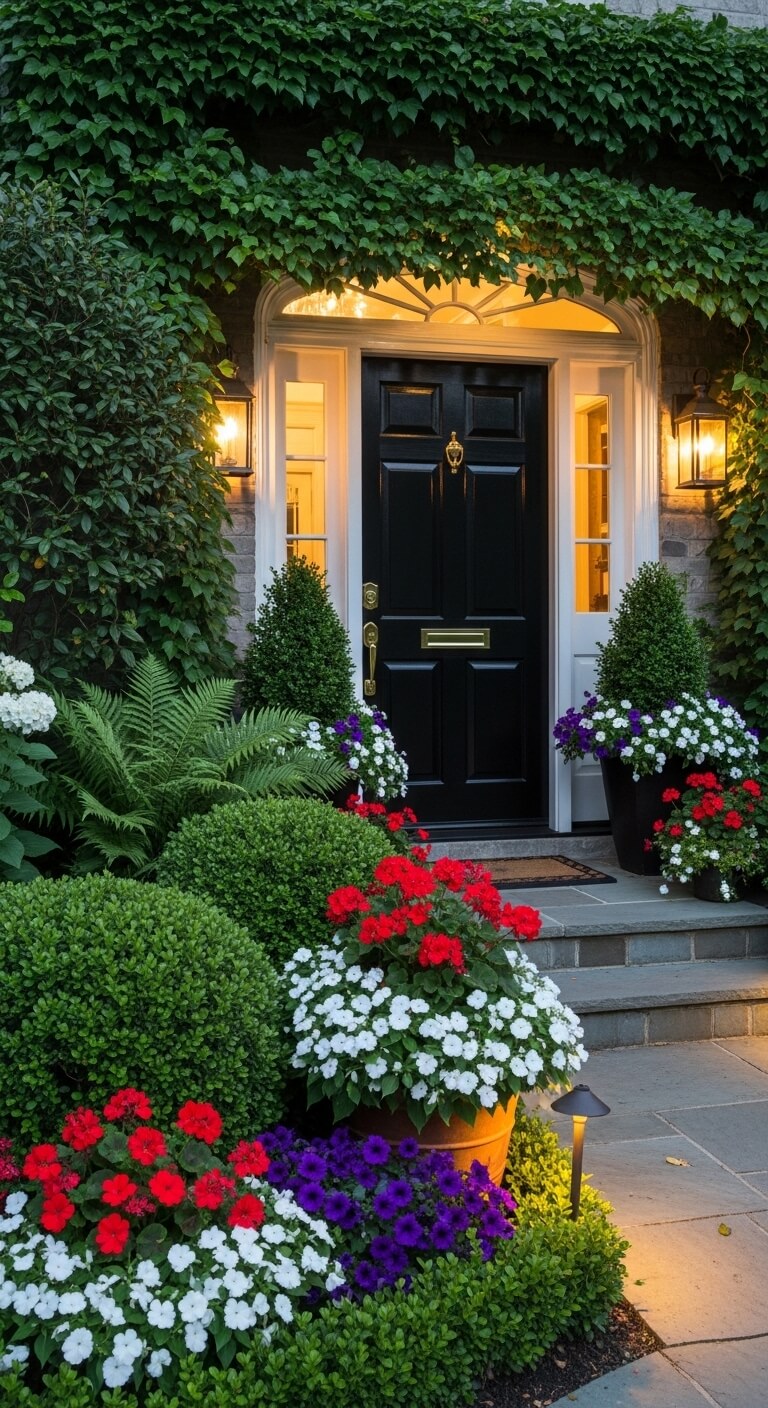
A black door does not need expensive landscaping to look stunning — it just needs green. The contrast between deep black paint and living plants is one of the most naturally appealing combinations in exterior design.
Climbing vines soften a flat facade. Boxwood hedges add structure. Potted ferns bring texture at eye level. The best part is that this approach works on almost any budget. You are not buying new hardware or repainting trim — you are planting. Seasonal flowers in the pots, or even a fragrant lilac bush near the walkway, add rotating color throughout the year, keeping the entry looking intentional and cared for without constant effort.
8. How Natural Wood Accents Warm Up a Bold Black Front Door
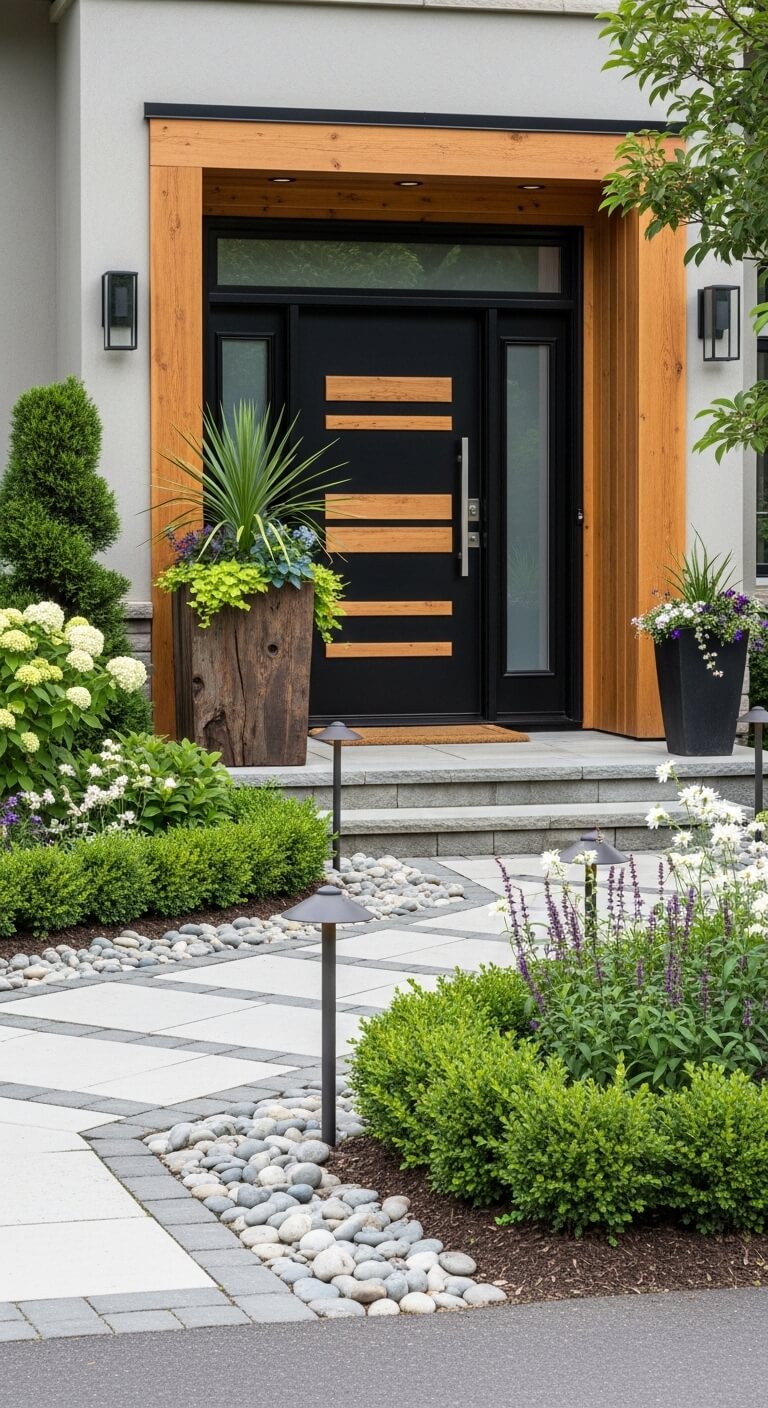
Black and natural wood is a combination borrowed from Scandinavian and Japanese design traditions — two cultures that take residential architecture very seriously. The warmth of raw or stained wood offsets the intensity of black, preventing the entry from feeling harsh or cold. This works especially well when wood elements already exist on the home — exposed beams, a covered porch ceiling, or cedar siding nearby. A wooden bench beside the door, a wood-framed planter, or even a wood threshold adds enough warmth to make the entry feel genuinely welcoming rather than just stylish.
9. Why a Black Dutch Door Is the Most Charming Entry You Can Choose
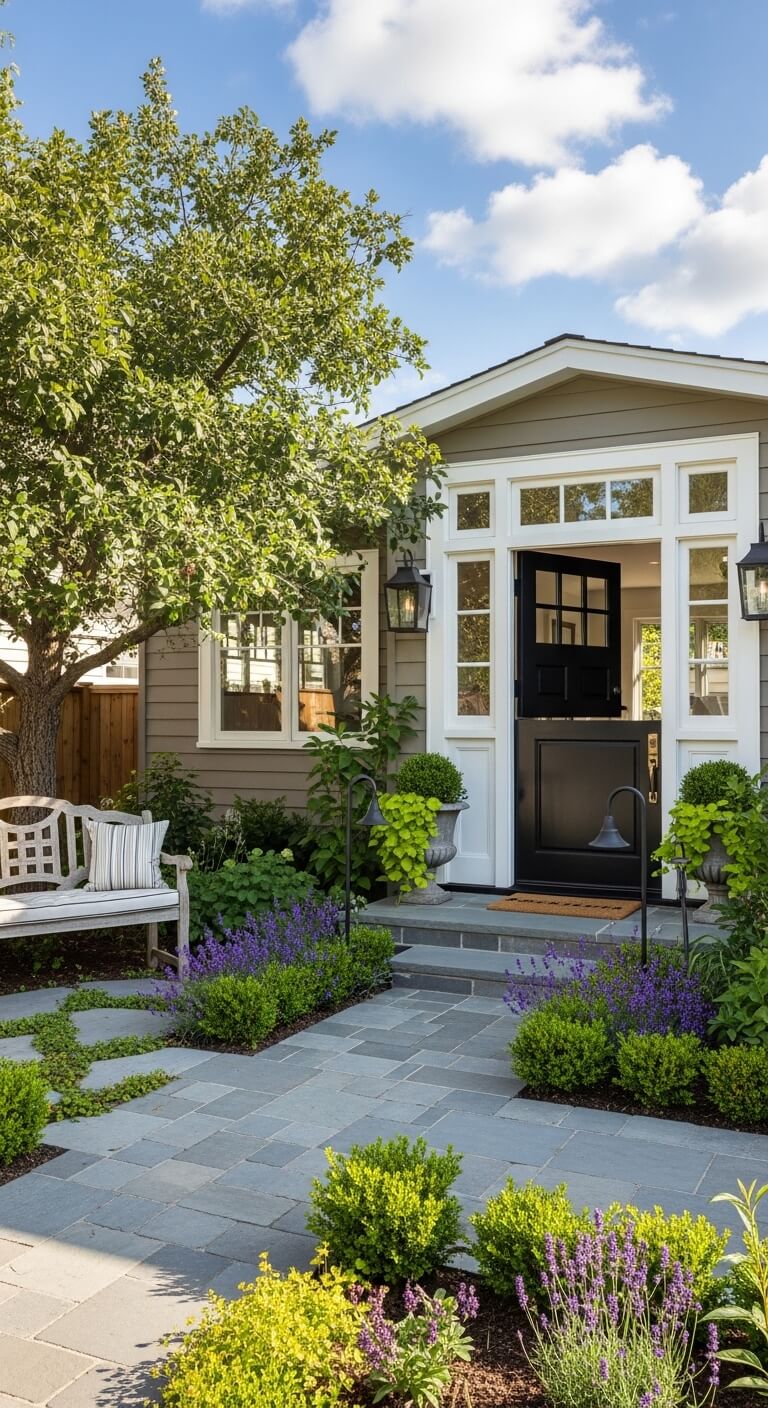
A Dutch door is one of those design choices that is both completely practical and unexpectedly charming. The split design lets you open the top half for fresh air and light while keeping the bottom half closed for pets, toddlers, or simply a bit of separation from the outside world.
Adding a window panel to the upper half enhances that brightness even further. In black, a Dutch door loses the overly rustic look it sometimes carries in other colors and instead feels considered and intentional. Cottage-style and farmhouse homes benefit most, but it adds character to almost any relaxed, informal exterior.
10. Black Door with Geometric Glass Patterns
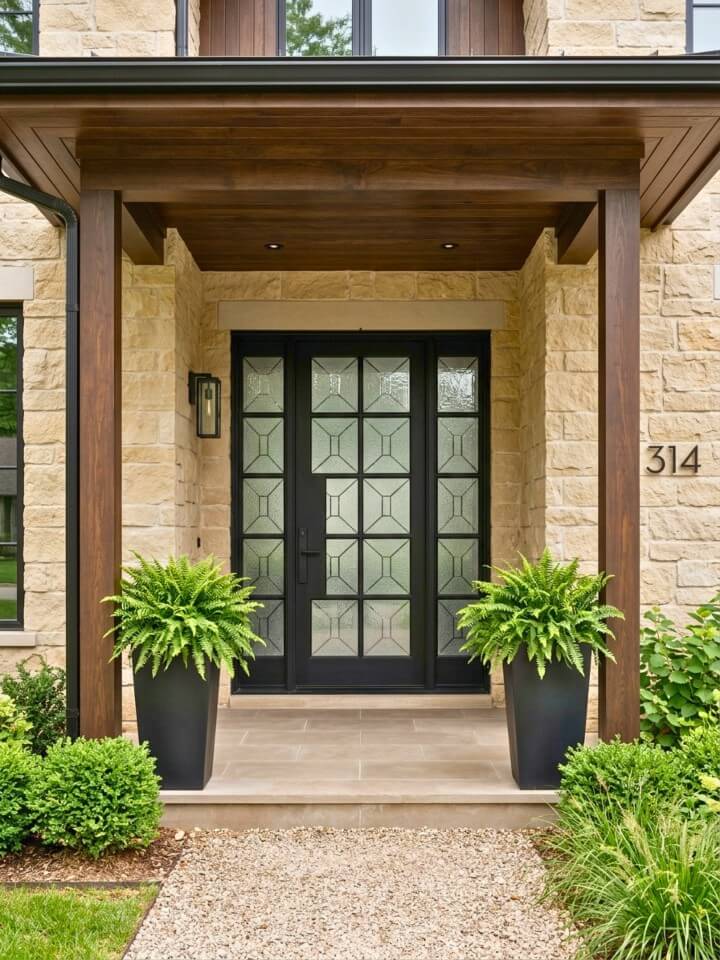
Geometric glass is where function meets genuine artistic expression on a front door. Diamond grids, narrow rectangles, or asymmetric modern patterns catch light differently throughout the day, meaning the door actually looks different in the morning than it does at dusk. This dynamic quality is something solid doors simply cannot offer.
Mid-century modern homes are the ideal backdrop, but any home with strong architectural lines can carry this look. Keep everything else simple — plain trim, minimal hardware, clean pathway — so the glass pattern remains the clear focus. Cluttering the surroundings undermines the whole effect.
11. Black Door Framed by Brick or Stone
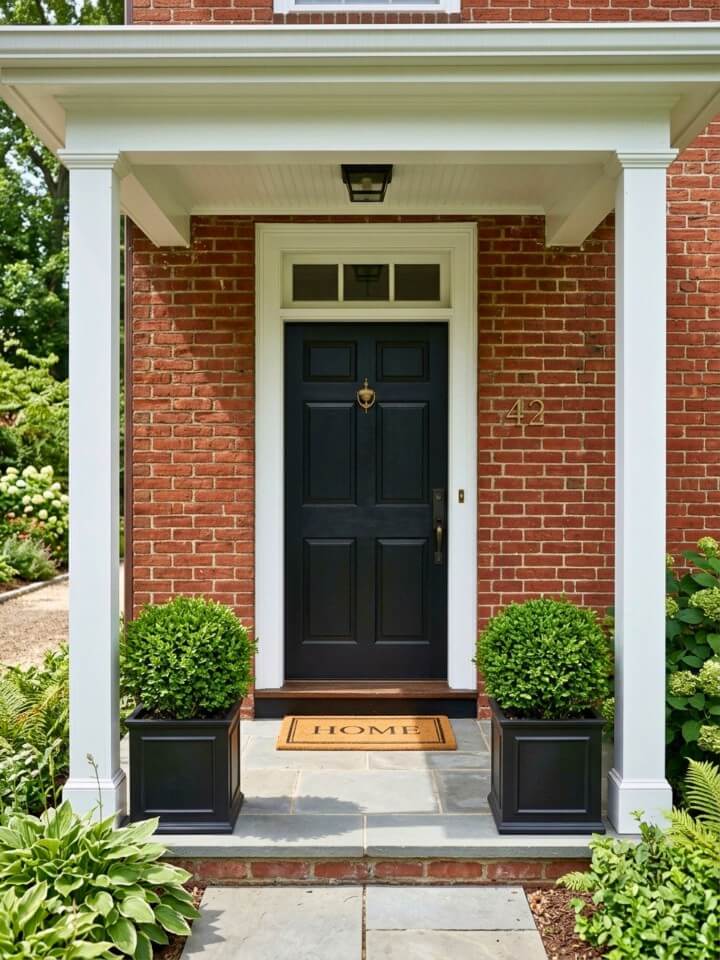
Brick and stone have natural texture, color variation, and depth. Black paint has none of those things — and that contrast is exactly what makes them work so well together. The smoothness of a black door against rough masonry creates a tactile opposition that photographs beautifully and looks even better in person.
Recessed entries framed by stone are particularly effective because the depth adds shadow and dimension that flat facades lack. Keep lighting simple and low-profile. The materials themselves are doing enough visual work that additional decoration often takes away rather than adds.
12. How Colorful Pots Transform a Black Door Into a Welcoming Entry
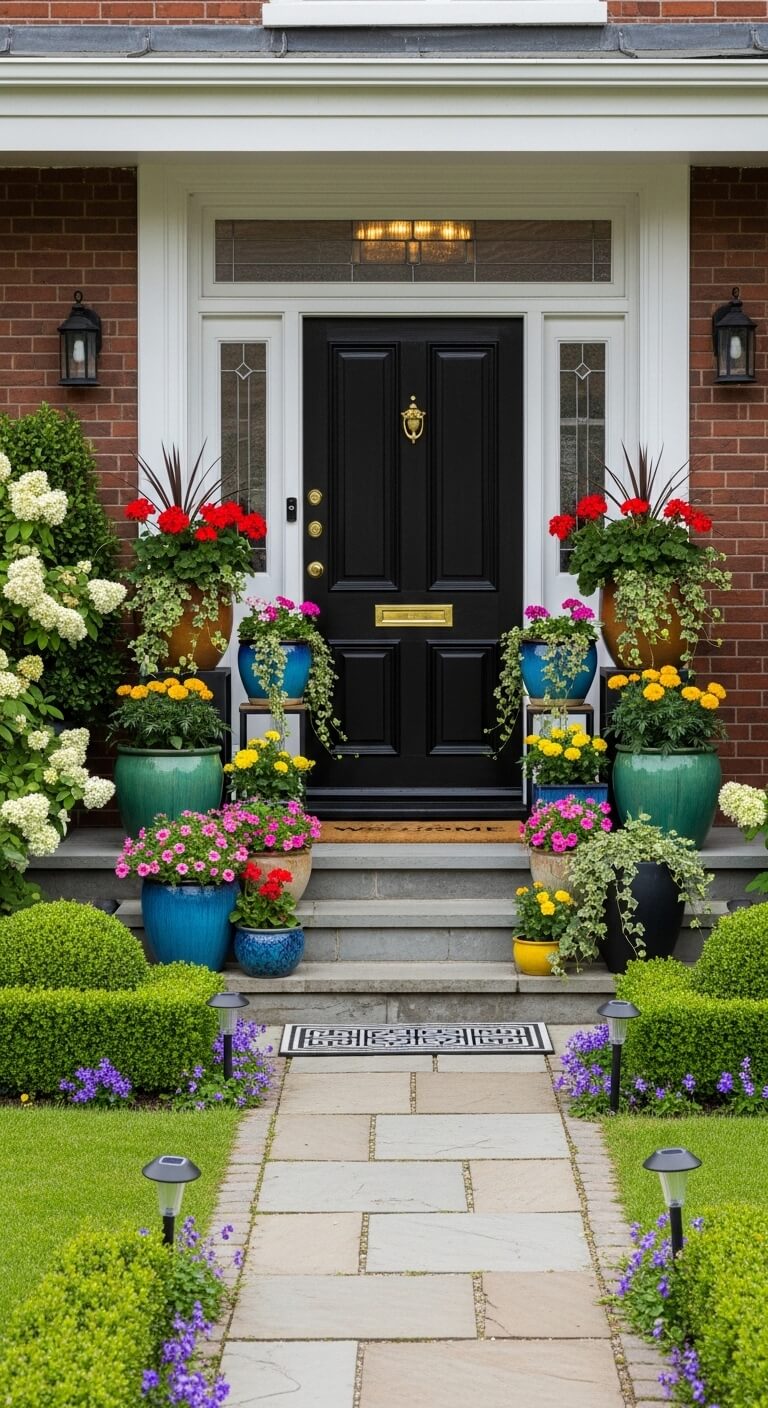
Color theory works in your favor here. Black sits opposite warm colors on the visual spectrum, which means reds, oranges, yellows, and bright pinks pop with unusual intensity against a black door. A pair of terracotta pots with orange marigolds or deep red geraniums will look more vibrant against black than against any other door color.
This is a genuinely low-cost way to add serious curb appeal. Swap the plantings seasonally — tulips in spring, sunflowers in summer, mums in fall, evergreen boughs in winter — and the entry stays fresh and lively throughout the entire year.
13. Black Door with Horizontal Wood Slats
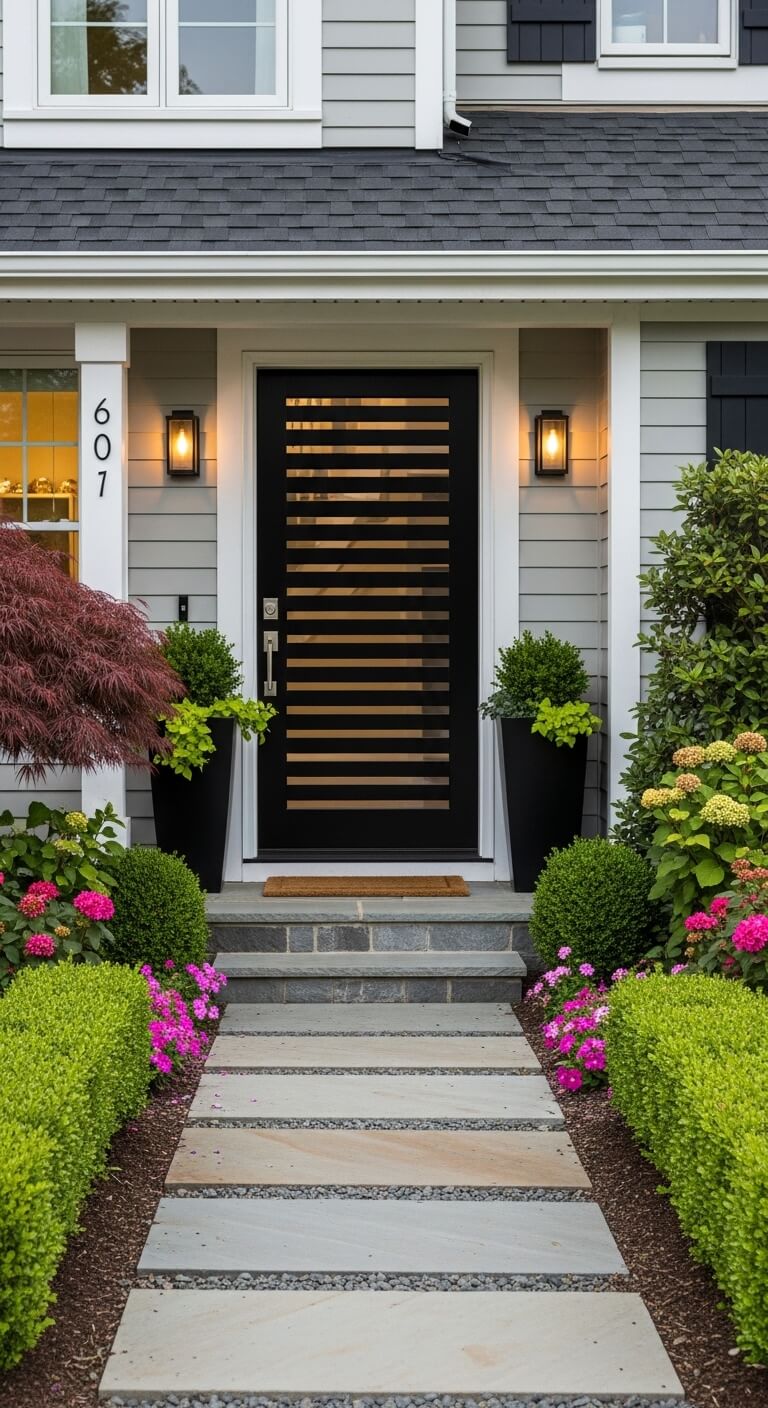
Horizontal wood slats on a black door represent a specific design philosophy: natural warmth should always temper bold choices. The slats — whether applied as decorative inserts or built into the door’s construction — run counter to the vertical emphasis most doors create. That horizontal movement feels calm, grounded, and distinctly modern. Cedar, teak, and ipe are popular choices for outdoor wood applications because they resist moisture and warping. This style is most at home on contemporary or modern farmhouse exteriors. Seal the wood annually to maintain the color contrast that makes the combination so visually effective.
14. Why an Arched Black Door Makes Even a Simple Home Look Grand
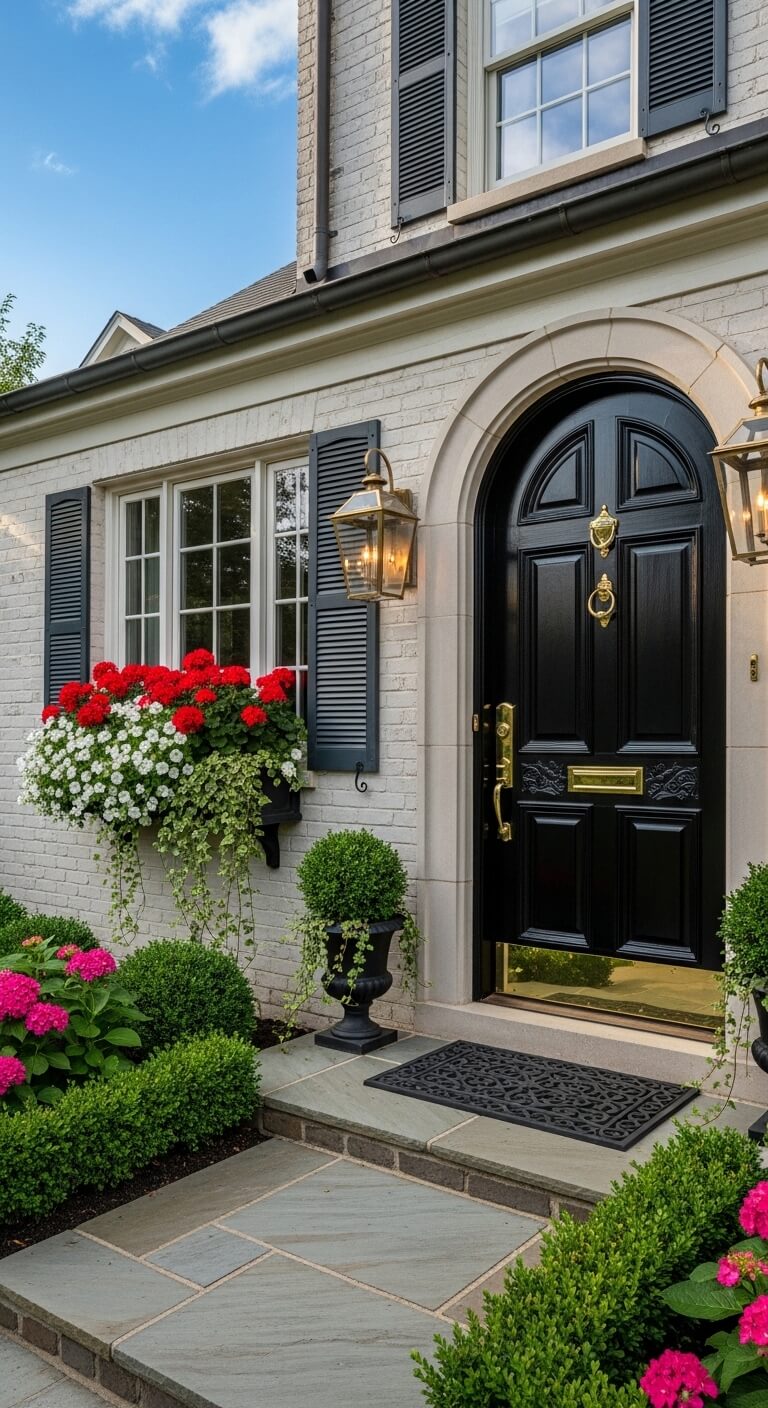
Arched doors are relatively rare in residential construction today, which is exactly why they stand out. The curved top adds an architectural element that flat-topped doors simply cannot achieve — it draws the eye upward and creates a sense of grandeur even on modest homes.
In black, the arch feels sophisticated rather than fussy. This works best when the surrounding architecture supports the curve: a brick arch overhead, a rounded porch opening, or Mediterranean-influenced exterior details. Do not force an arched door onto a rigid, rectangular facade — it will look like a mismatch rather than a design statement.
15. Black Door with Bold Contrasting Hardware
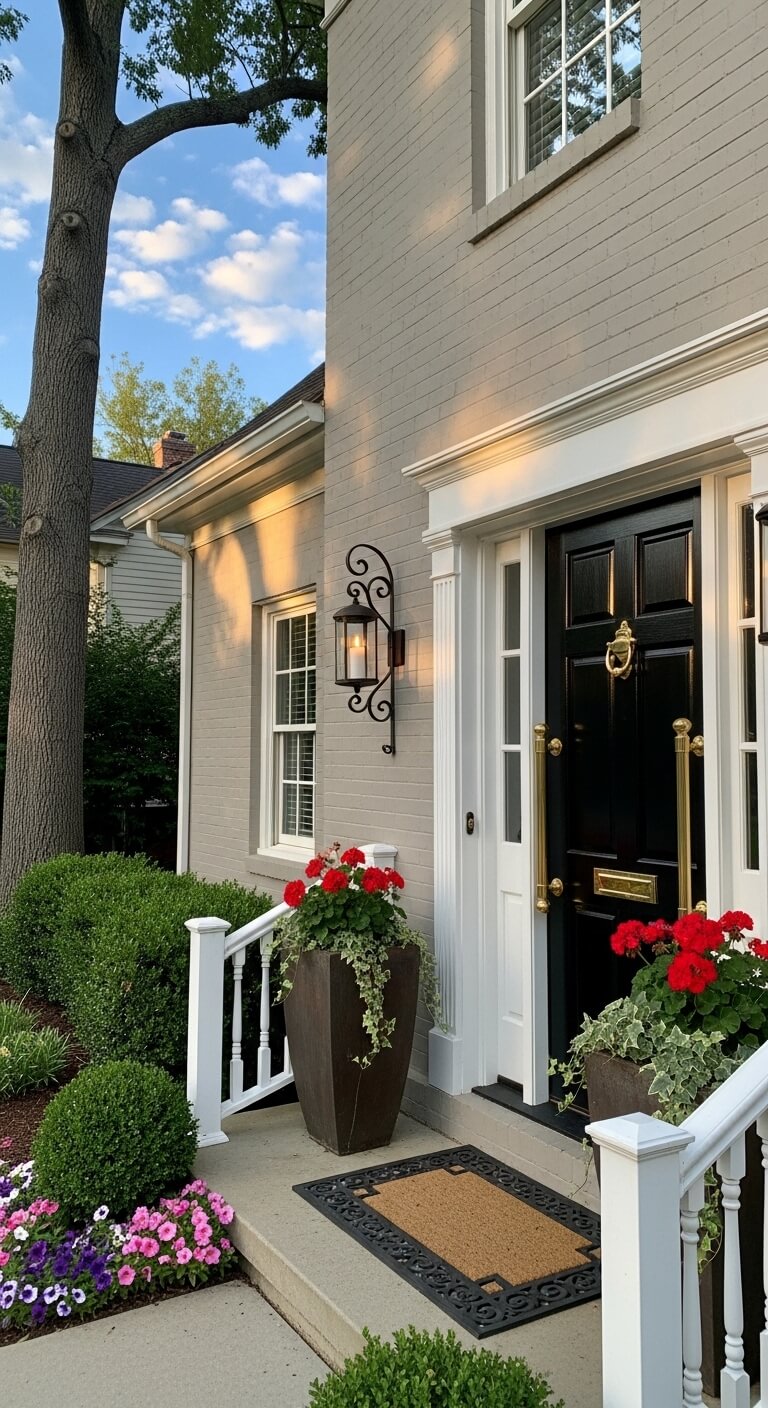
Hardware is the jewelry of a front door. Most homeowners choose it last and spend the least on it — which is exactly backwards. Bold, contrasting hardware on a black door draws the eye in a way that no amount of paint or trim work can replicate. Polished brass, unlacquered bronze, or satin nickel all create strong contrast against matte or satin black.
Consider going beyond just the handle: a substantial knocker, visible hinges, a decorative escutcheon plate, and house numbers in the same finish create a unified, intentional look. Spend more on hardware than you think you need to. It always shows.
16. Black Door with Frosted Glass Panels
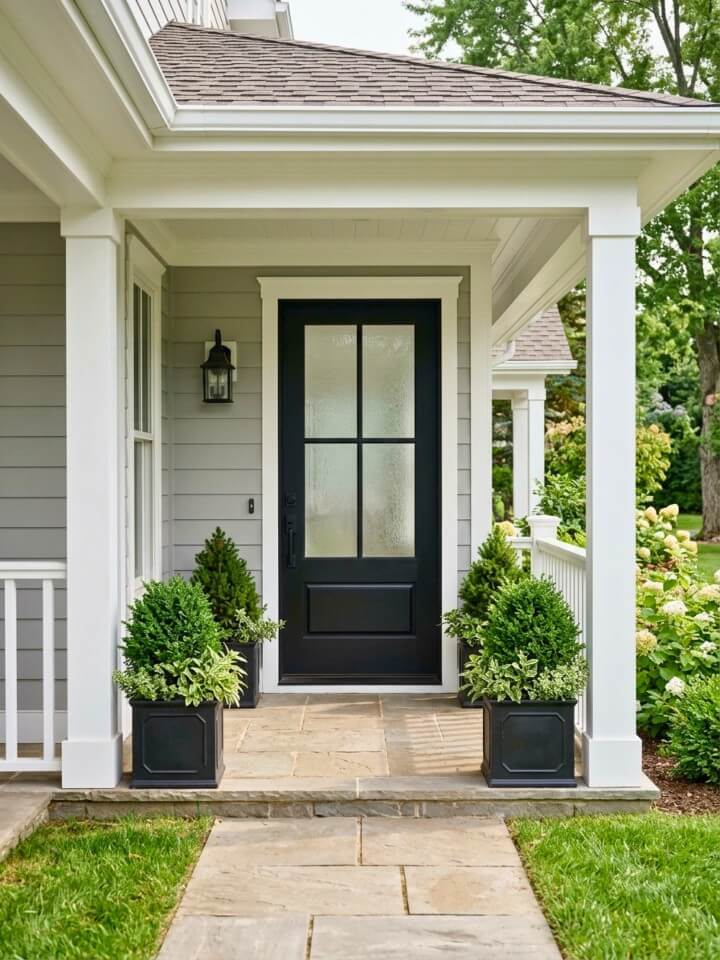
Privacy and light are usually treated as opposites in door design — you can have one or the other. Frosted glass panels reject that trade-off entirely. The obscured surface diffuses light beautifully, filling the entry with a soft, even glow that clear glass cannot produce.
It also eliminates the fishbowl effect of being visible from the street every time someone approaches. Reeded glass, which has a linear texture, is a popular frosted alternative that adds subtle pattern while maintaining the same privacy benefits. This style suits narrow town homes, closely spaced suburban lots, and any entry where visibility from the street is a real concern.
17. The Simple Shrub Trick That Makes a Black Door Look Professionally Designed
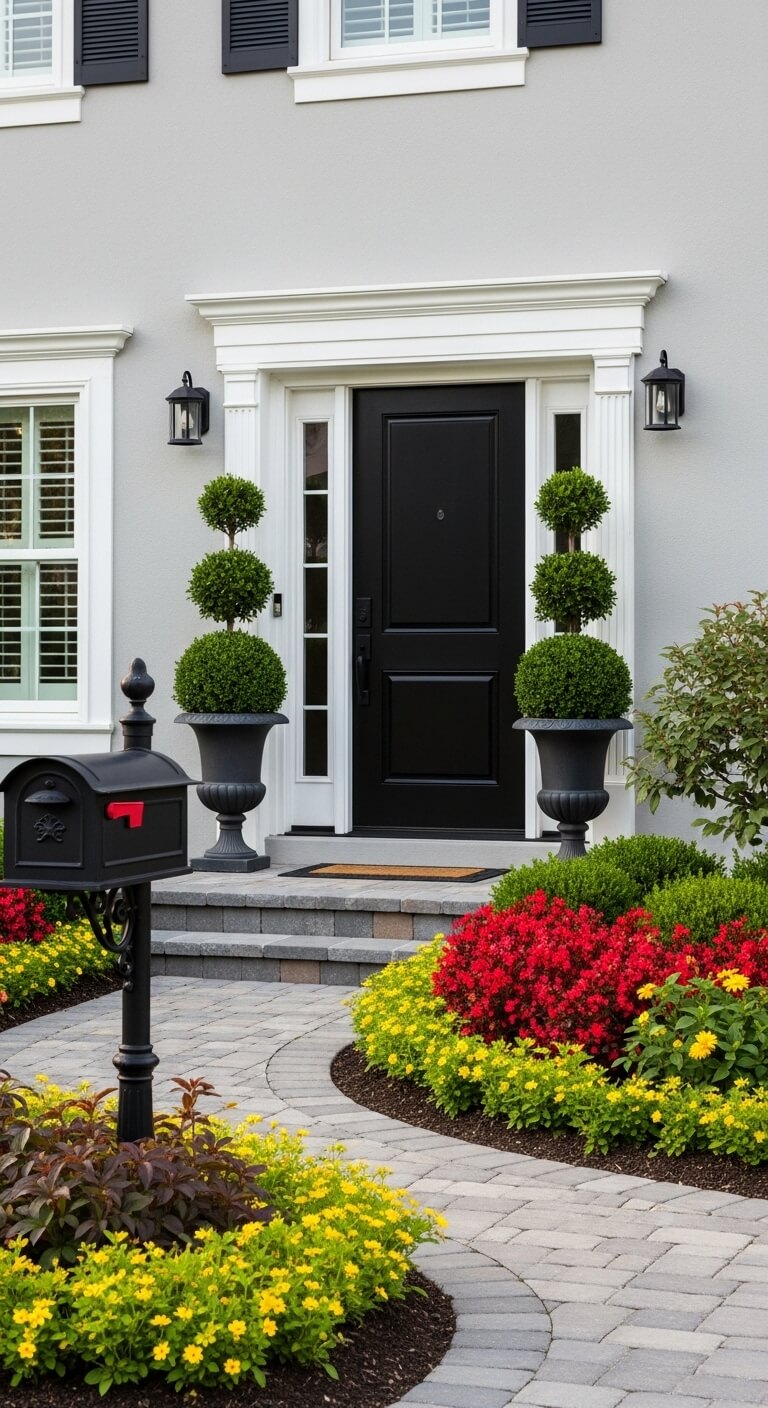
Symmetry communicates care. Two identical shrubs flanking a black door send an immediate signal that the property is maintained and the design choices are deliberate. Boxwoods are the most popular choice because they hold their shape year-round with minimal pruning. Japanese holly and dwarf yew are excellent lower-maintenance alternatives.
The containers matter as much as the plants — matching concrete, black metal, or terracotta planters reinforce the symmetry without drawing attention away from the door. This look works across nearly every architectural style, from formal colonial to relaxed craftsman, because the underlying principle of balance is universally appealing.
18. Black Door with Painted Accent Surround
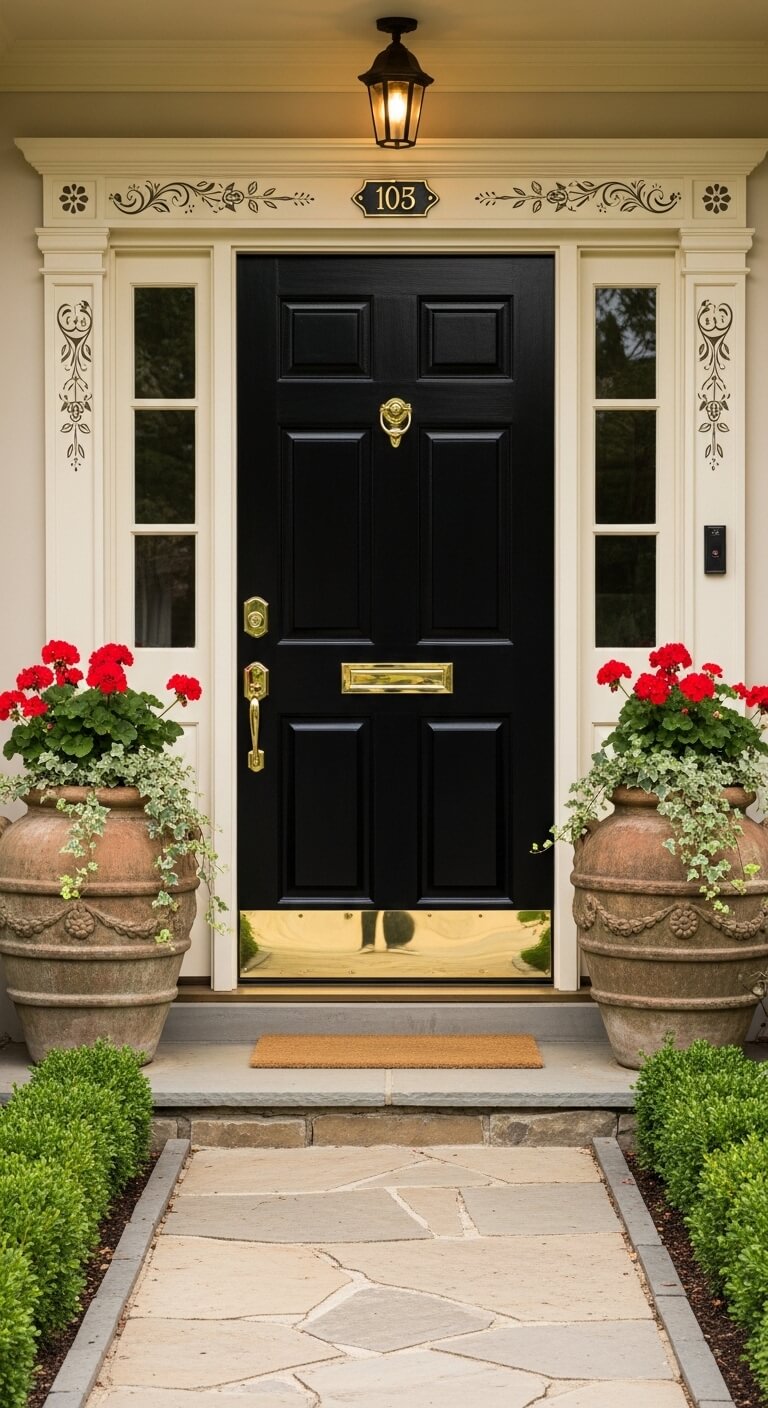
Most homeowners treat the area immediately surrounding the door as an afterthought — same color as the rest of the trim, nothing special. A painted accent surround challenges that assumption. By painting the immediate door frame in a contrasting color — deep navy, forest green, warm charcoal, or even a rich terracotta — you create a layered entry that feels designed rather than default.
The black door anchors the composition while the accent color adds depth and personality. This approach works especially well on homes with neutral or light-colored siding where a single accent detail can completely transform the front elevation.
19. Black Door with Stone Step Entry
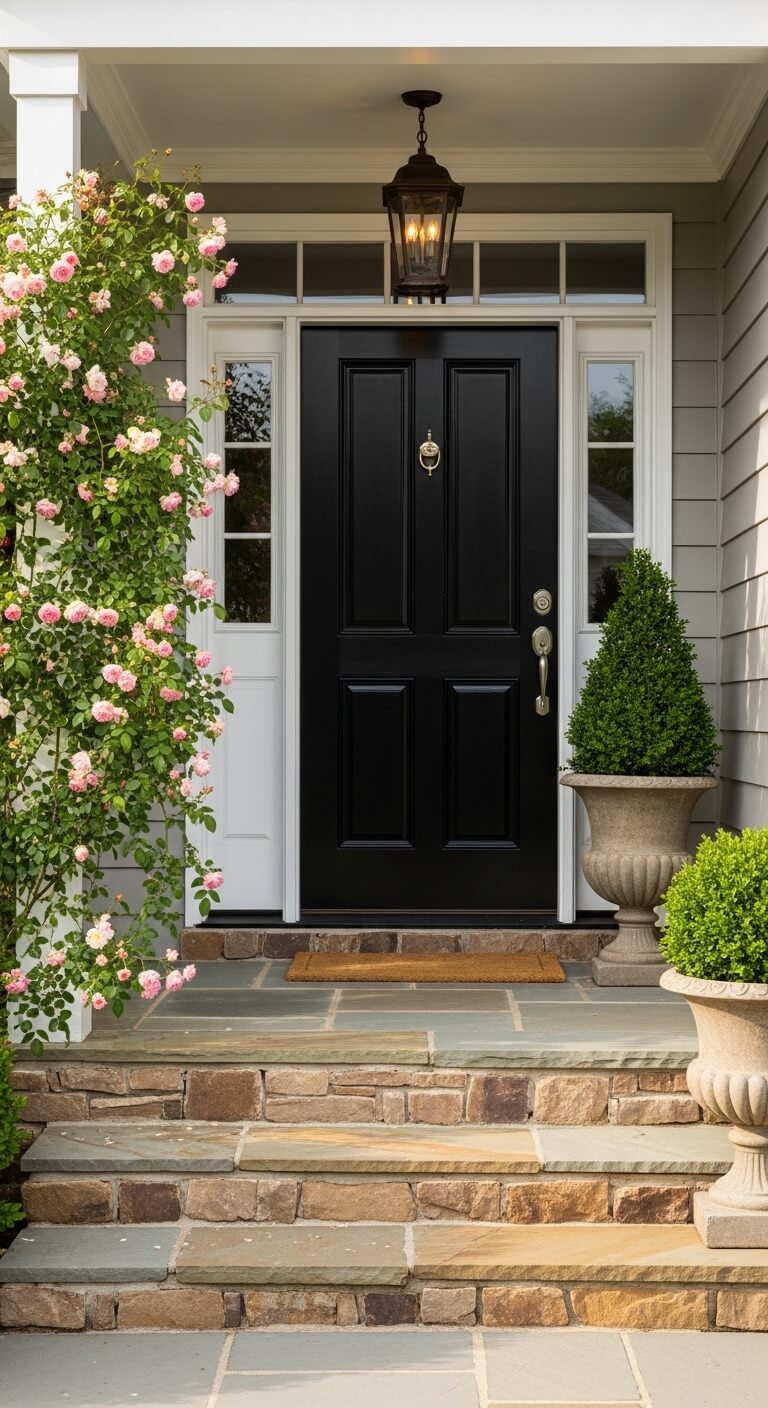
Stone steps are one of the most durable and visually grounding investments you can make at a front entry. Bluestone, limestone, and granite each bring different tones and textures, but all of them create a sense of permanence that poured concrete rarely achieves.
Against a black door, natural stone feels especially right — both materials have weight, substance, and an absence of pretension. The transition from pathway to step to door should feel seamless and intentional. Keep the landing clear of clutter. The simplicity of stone and black paint together is the statement — additional decoration usually weakens it.
20. Black Door with Seasonal Wreath Display
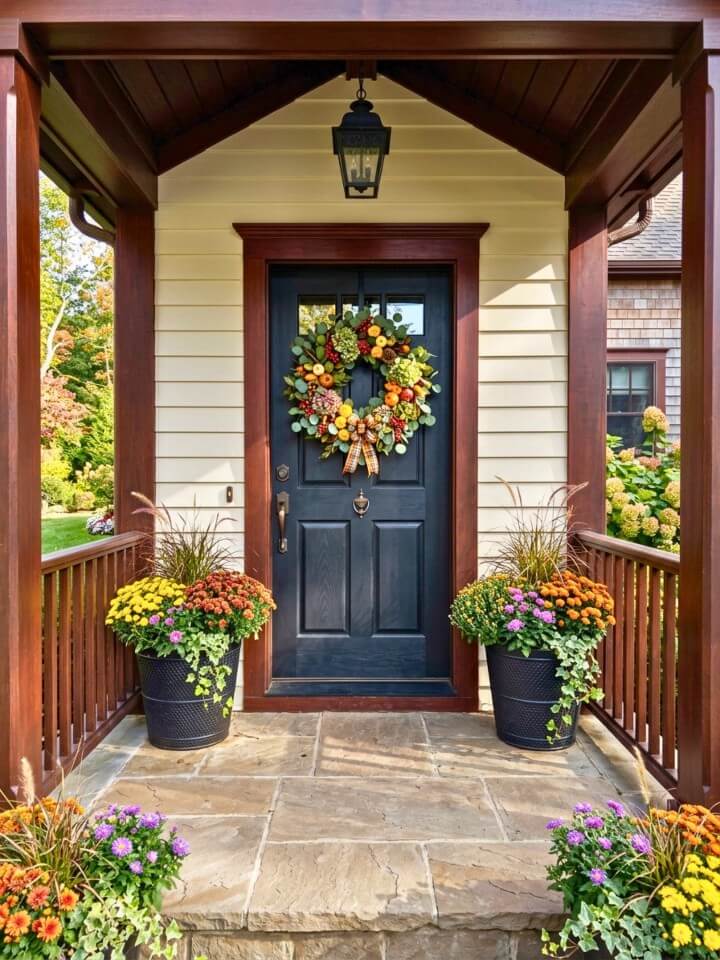
A wreath does something no hardware or paint color can do — it signals that someone lives here and cares about it. On a black door, wreaths stand out with unusual clarity because the dark background eliminates visual competition. Natural materials work especially well: eucalyptus, magnolia leaves, dried cotton stems, or fresh evergreen boughs all photograph beautifully against black. Avoid overly themed or artificial wreaths, which can cheapen an otherwise strong entry. The goal is organic texture and natural color. Change the wreath four times a year and the front entry always looks current, seasonal, and genuinely welcoming.
21. Black Door with Lanterns on Either Side
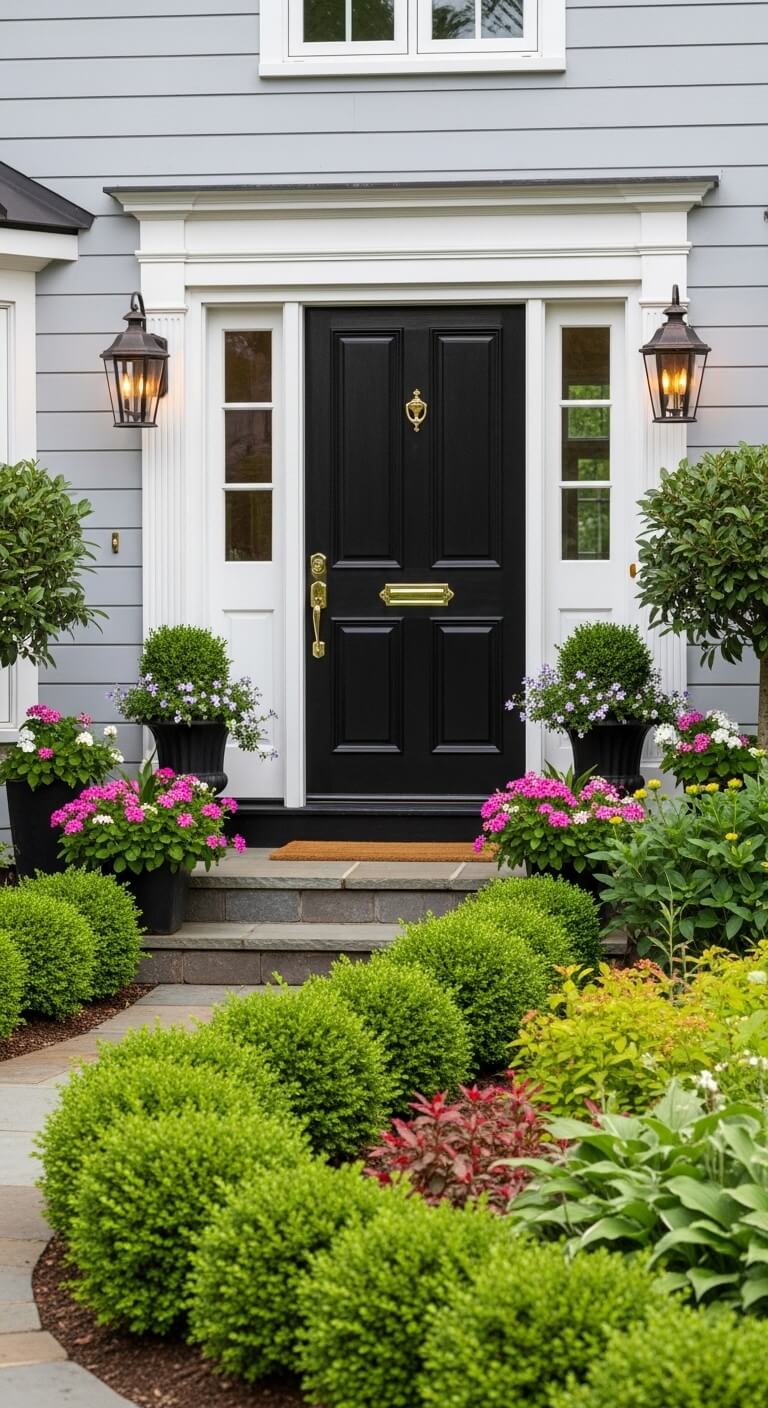
Two lanterns flanking a black door is one of the oldest and most reliable entry compositions in residential design — and it remains popular because it genuinely works. The symmetrical placement creates a formal sense of arrival, the warm light flatters the black paint, and the fixture style can be adjusted to suit almost any architectural period. Traditional carriage-style lanterns suit colonial and craftsman homes. Cleaner, cage-style fixtures work better on modern or transitional exteriors. The one rule: both lanterns must match exactly. Mixed fixtures on either side of a door undermine the entire composition, no matter how nice the individual pieces are.
FAQs About Black Front Doors
These are the practical things most people wonder about before committing to a black front door – the stuff the pretty pictures don’t always tell you.
Does a Black Front Door Make a Home Hotter in Summer?
Yes, black absorbs more heat than lighter colors, but modern exterior paints contain heat-reflective pigments that significantly reduce this effect. A quality exterior paint with UV resistance keeps both the door temperature and fading concerns largely manageable.
What Sheen Level Works Best for a Black Front Door?
Satin or semi-gloss finishes are the most practical choices. They’re durable enough to handle daily contact, easy to wipe clean, and reflect just enough light to make the color feel rich rather than flat and chalky.
How Often Does a Black Front Door Need Repainting?
A properly primed and painted black door typically lasts four to six years before needing a refresh. South-facing doors exposed to direct sunlight daily may need attention sooner due to accelerated UV fading and surface chalking.
Can a Black Front Door Work on a Dark Brick or Dark Siding Home?
Absolutely – contrast comes from texture, not just color. A matte black door against dark brick reads differently because the smooth paint surface sits opposite the rough masonry. Hardware finish and trim color create the separation that makes it work.
Is Black a Good Front Door Color for Resale Value?
Studies and real estate surveys consistently show black front doors positively influence buyer perception and curb appeal. It signals a maintained, design-conscious home. It’s one of the few exterior updates that costs little but genuinely shapes first impressions.
Conclusion:
A black front door doesn’t ask for much – a good hardware choice, a little attention to what surrounds it, and the confidence to commit. What’s interesting is how personal it becomes once it’s up. The same black paint looks completely different on a brick colonial than it does on a modern concrete facade, which means there’s genuinely no wrong starting point here. Pick the combination that fits how your home already feels, not just what looks good in someone else’s photo. The door people remember isn’t always the most expensive one – it’s the one that looks like somebody actually thought about it.