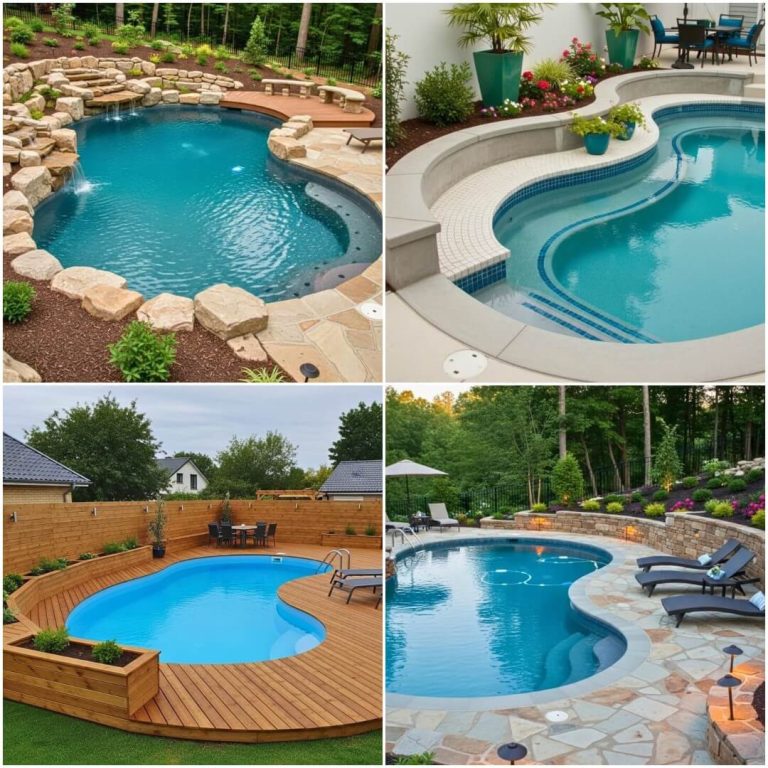
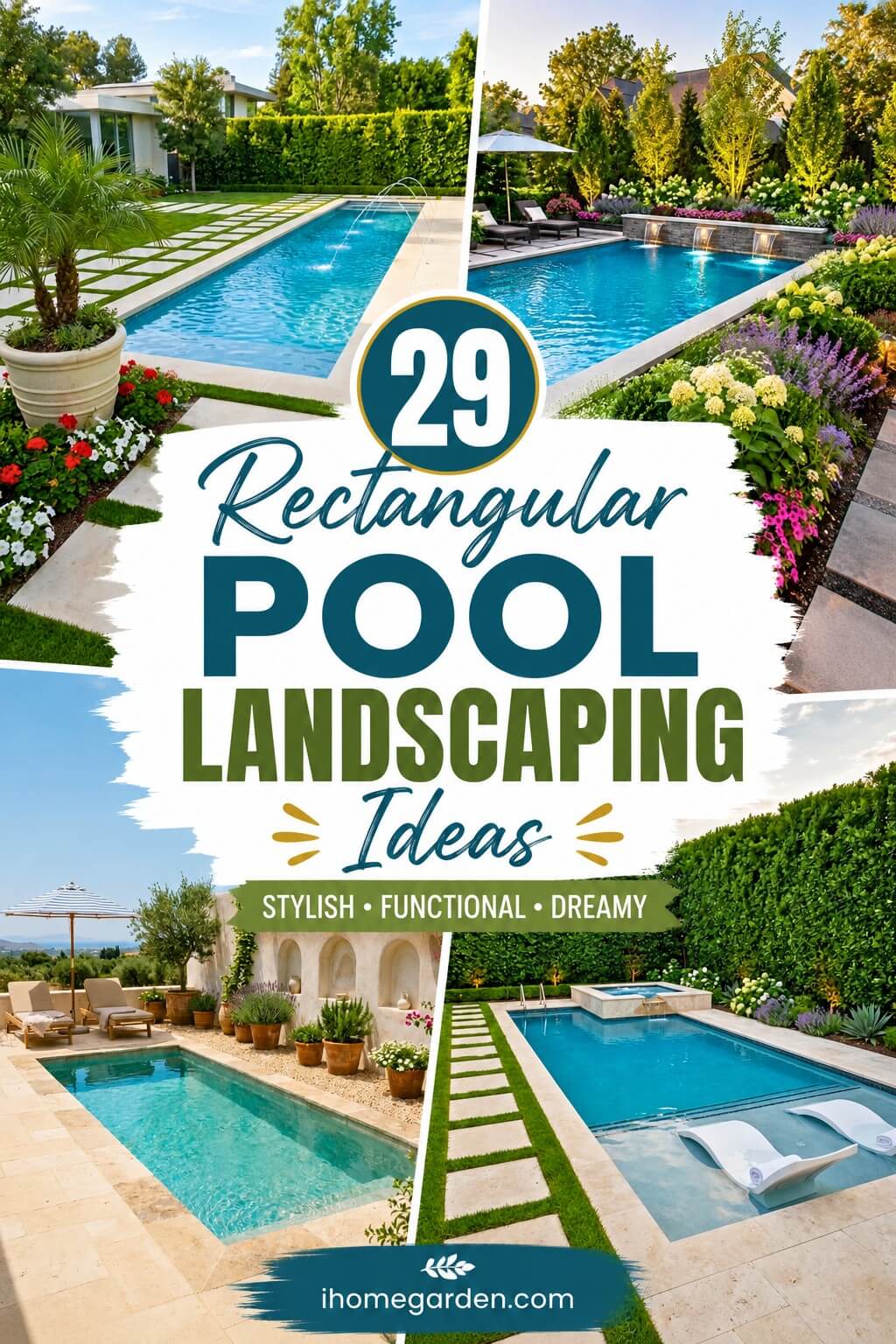
29 Rectangular Pool Landscaping Ideas To Discover
Most people spend months choosing the right pool shape and then run out of ideas the moment construction ends. If that sounds familiar, these 29 amazing rectangular pool landscaping ideas are exactly what you need. The deck gets poured, a couple of chairs get dragged out, and suddenly that beautiful rectangular pool feels more like a construction site than a backyard retreat.
The good news is that the shape working against you is actually your biggest advantage. Rectangular pools have clean, straight edges that respond beautifully to almost every landscaping style — stone borders, tropical plants, fire pits, pergolas, and more. The geometry does half the design work for you.
Each idea of rectangular pool landscaping is practical, achievable, and chosen to help you turn empty deck space into something your family actually uses. Whether you are starting fresh or upgrading what you already have, there is something here worth trying.
1. Minimalist Concrete Deck for a Modern Backyard
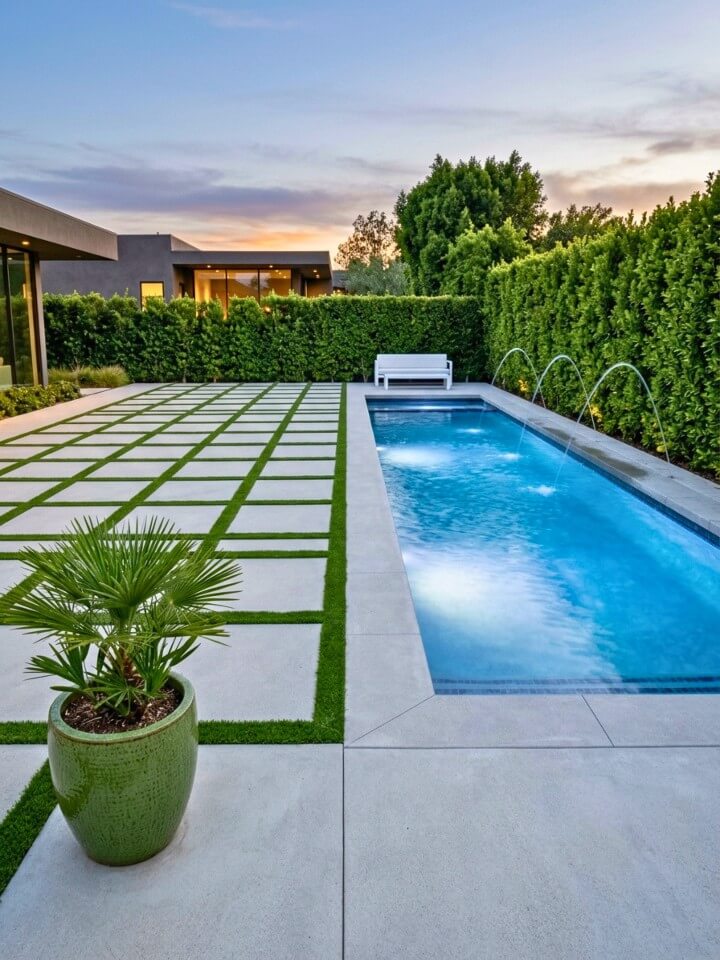
Concrete suits a rectangular pool better than most materials because its clean surface echoes the pool’s straight geometry. Large poured slabs or oversized pavers with fewer seams look the most refined. A broom or exposed aggregate finish adds grip without sacrificing appearance. Light gray, sandy beige, or warm white tones keep the deck bright and cool underfoot. Pair it with black metal furniture and slim planters holding ornamental grass. The result is a low-maintenance, high-impact design that holds up beautifully over time.
Choosing the Right Concrete Finish
Get quotes from at least two concrete contractors and ask to see finished project photos before committing. Request a sample board showing your preferred color and finish option. For the cleanest modern look, specify large monolithic pours with control joints placed intentionally rather than random cracking cuts — a skilled contractor will know exactly what this means.
2. Sleek Stone Border for a Clean Pool Edge
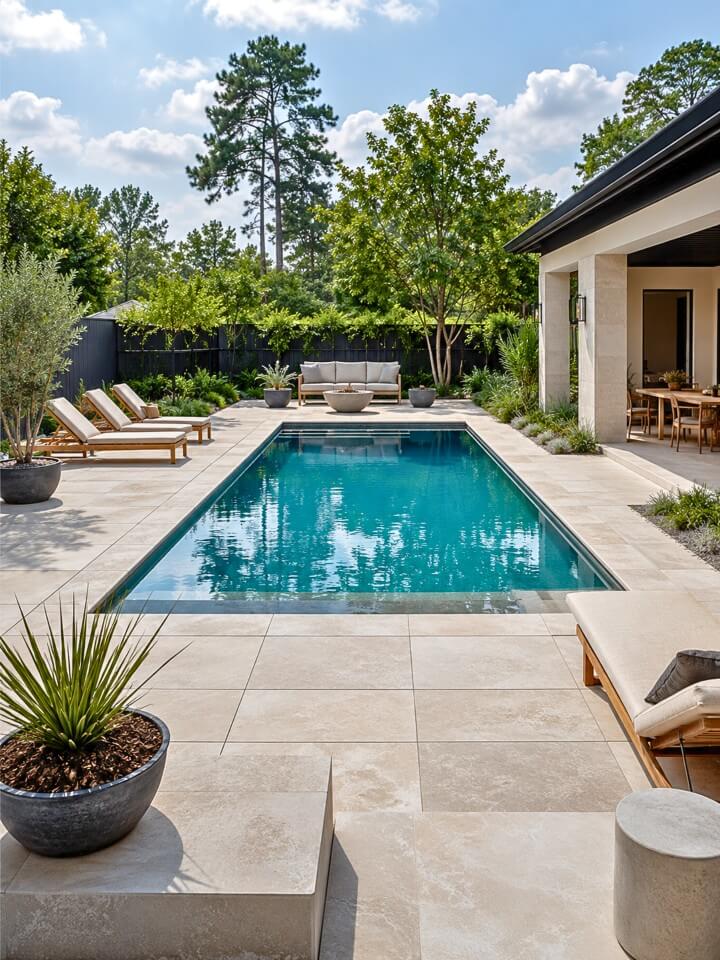
Large-format stone pavers are a smart choice for finishing a pool deck because they stay flat, look uniform, and hold up well against water and weather. Travertine works especially well in sunny climates since it stays cool underfoot. Limestone offers a softer, more natural appearance, while concrete pavers suit tighter budgets without sacrificing style. Stick to gray, beige, or ivory tones. Keep furniture minimal — a few lounge chairs and simple planters complete the look without overwhelming the clean lines of the stone.
Sealing and Sizing Your Stone Deck
Order 24×24 or 24×48 inch pavers for the cleanest finish with fewest seam lines. Ask your supplier for a brushed or tumbled surface finish rather than polished — it grips better when wet. Have the stone professionally sealed before first use and reseal every 12 months to protect against pool chemicals and staining.
3. Tropical Plants That Give Your Pool a Resort Feel
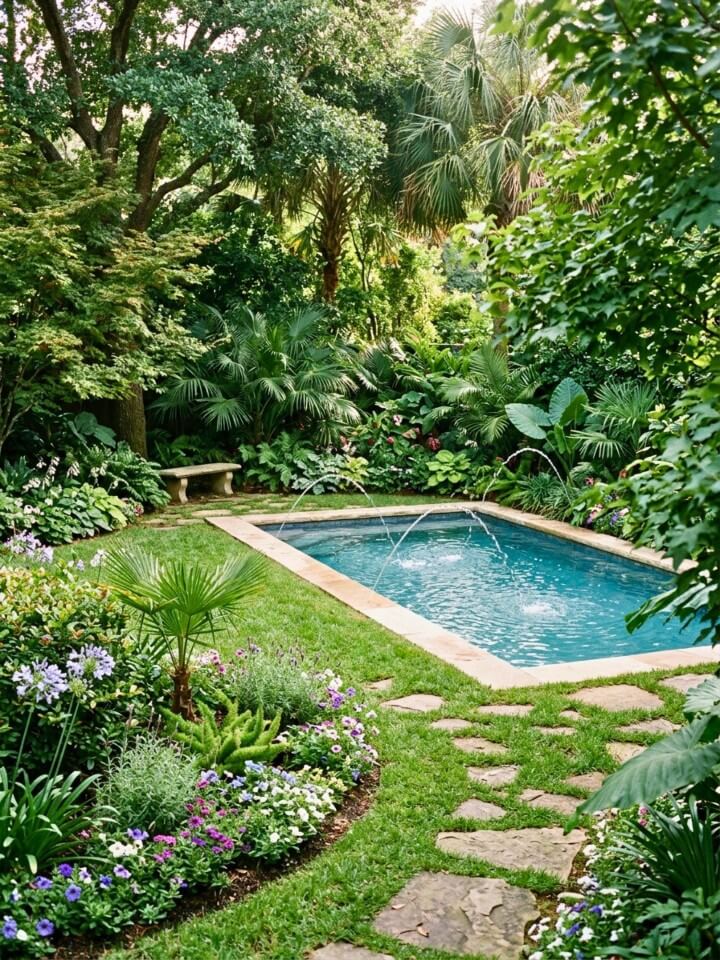
Homeowners often choose inground rectangular pool landscaping ideas to create a sleek, resort-style backyard. The right tropical planting turns a plain backyard pool into something that feels like a vacation. Queen palms, bird of paradise, elephant ear, and ornamental banana all add height and lush texture without dropping heavy debris into the water. Place taller plants at corners or along back fences to frame the space naturally. Use ferns or liriope as low-layer fill. Pair the greenery with warm wood furniture and earthy ceramic pots to pull the whole look together without it feeling overdone or busy.
Building Your Tropical Plant Layout
Start with two or three tall anchor plants at the back corners, then fill inward with mid-height and low ground cover varieties. Visit a local nursery and ask specifically for low-shedding tropical species suited to your climate zone. If winters get cold, keep key statement plants in large movable pots so they can come indoors without disrupting the overall design.
4. Cozy Fire Pit Beside the Rectangular Pool
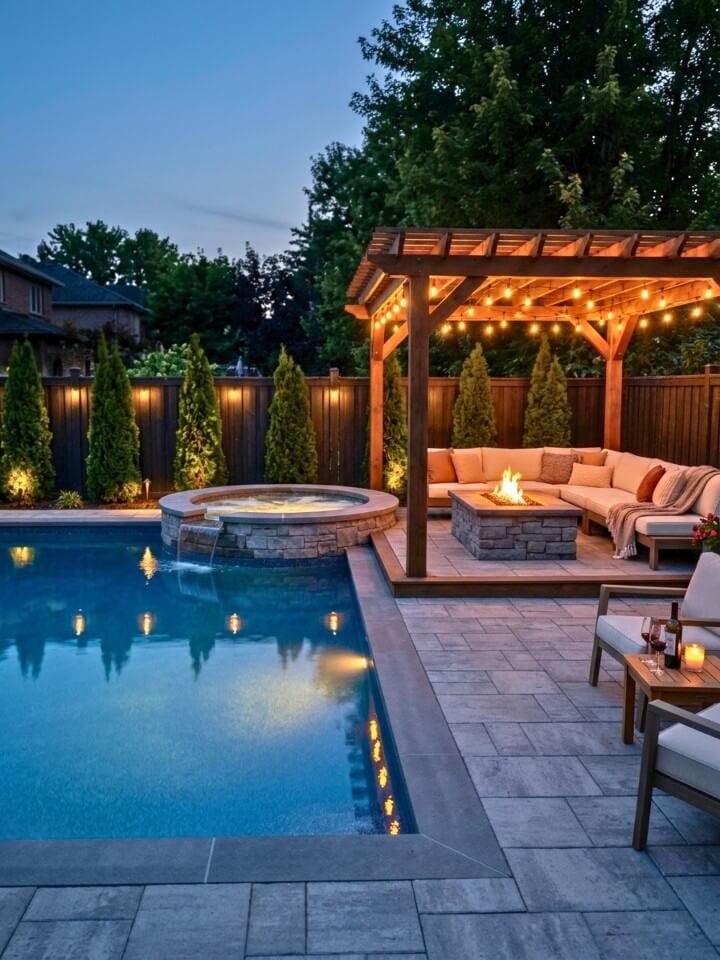
A fire pit beside the pool creates a second gathering zone that stays useful after dark. Position it at least 10 feet from the water’s edge to meet most local fire codes — always verify requirements in your area before building. A square concrete or stone fire pit complements the pool’s geometry well. Gas burns cleaner than wood and eliminates ash cleanup. Surround it with deep outdoor sofas and a low coffee table in neutral tones. Leave one side open toward the pool so both areas feel connected.
Planning Your Fire Pit Zone
Check HOA rules and local permits before purchasing materials. For a built-in gas fire pit, hire a licensed plumber to run the gas line — this is not a DIY step. Choose a burner pan size that matches your seating circle so the flame feels proportionate rather than undersized for the space around it.
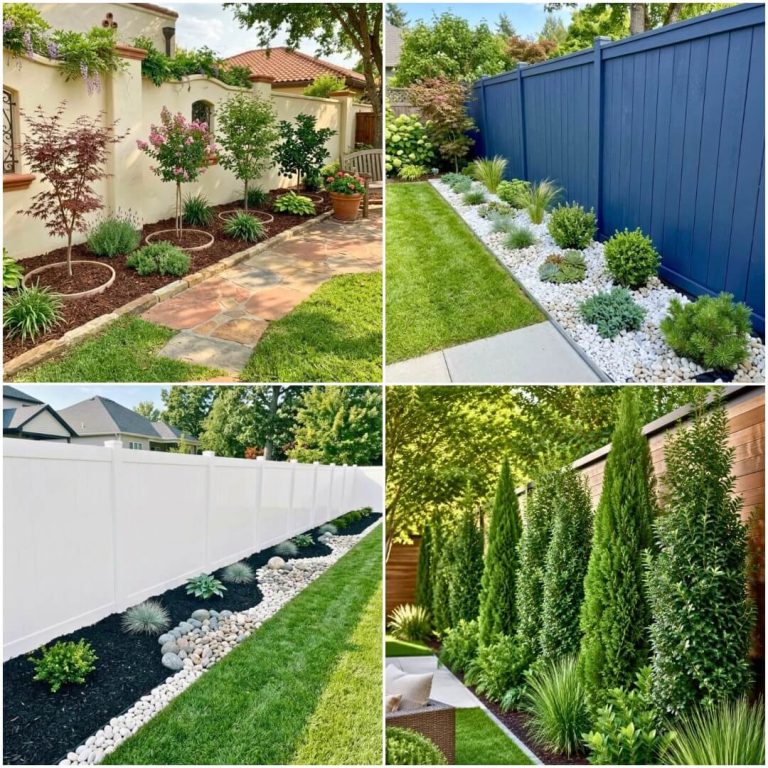
5. Privacy Hedge Ideas for a More Relaxing Pool Space
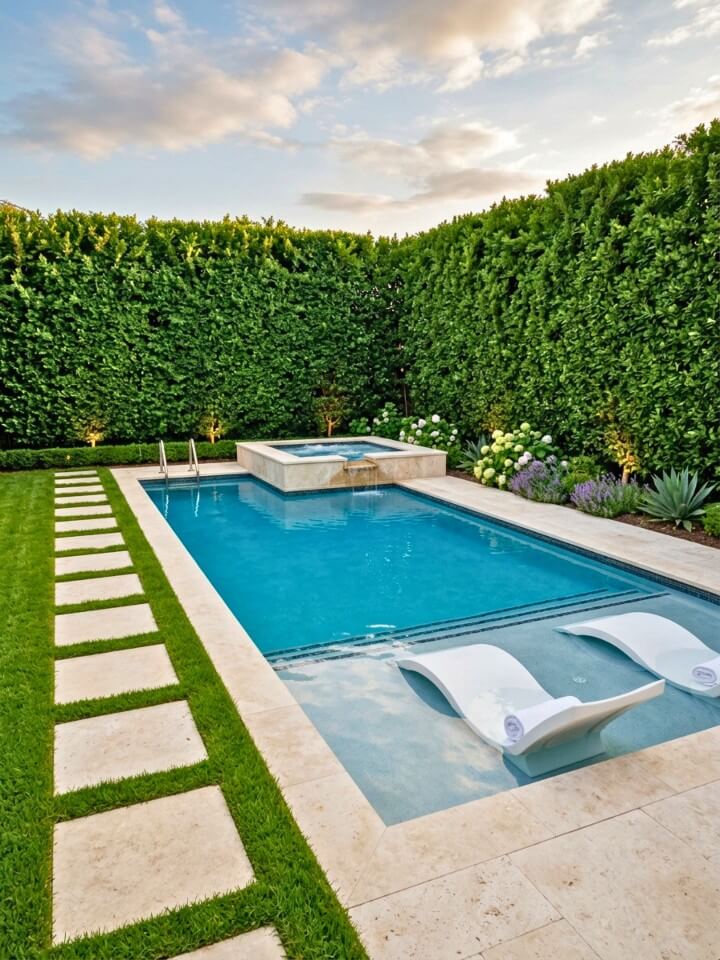
A dense evergreen hedge gives a pool area something a fence cannot — softness, sound absorption, and natural beauty. Arborvitae grows quickly and stays full year-round, making it one of the most reliable choices across most climates. Italian cypress suits formal or Mediterranean-style yards. Plant the hedge at least 3 to 4 feet back from the deck so falling leaves stay out of the water. If privacy is your main concern, these dazzling privacy landscaping ideas can help you combine hedges, screens, and layered planting without making the yard feel closed in. Add low-voltage uplighting at the base to turn the hedge into a glowing backdrop once the sun goes down.
Planting and Spacing Your Hedge
Space arborvitae 3 to 4 feet apart for a solid screen within two to three growing seasons. Dig each hole twice as wide as the root ball and amend heavy clay soil with compost before planting. Water deeply twice a week for the first full summer — skipping this step is the most common reason new hedges fail to establish properly.
6. Natural Wood Decking Around a Rectangular Pool
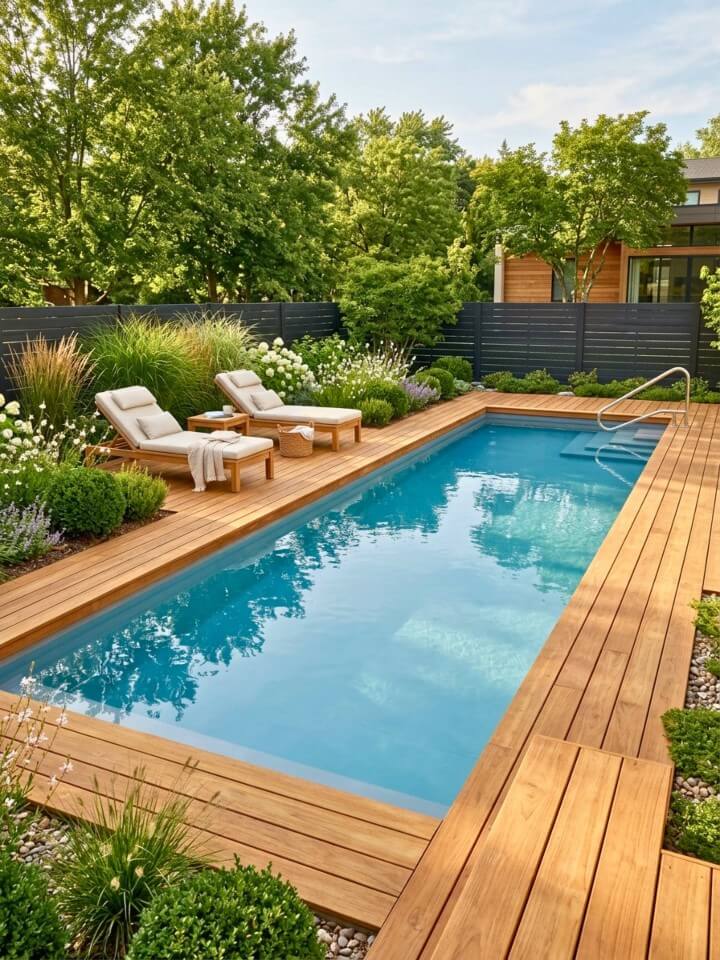
Wood decking brings warmth to a pool area that concrete and stone simply cannot replicate. Teak, ipe, and cedar are all strong options — naturally resistant to moisture, insects, and heavy foot traffic. Composite decking is a lower-maintenance alternative that mimics real wood without the need for regular sealing. Honey brown and deep walnut tones pair particularly well with blue water and surrounding greenery. Keep furniture simple with white umbrellas and linen cushions to let the wood remain the main visual element.
Selecting and Maintaining Your Deck Material
If budget allows, ipe is worth the investment — it outlasts most other wood species around water by a significant margin. For composite, choose a capped board rather than uncapped; the protective outer layer resists fading and staining far better near a pool. Whichever material you choose, leave a small gap between boards during installation for proper drainage and expansion.
7. Built-In Planters That Frame the Pool Edge Neatly
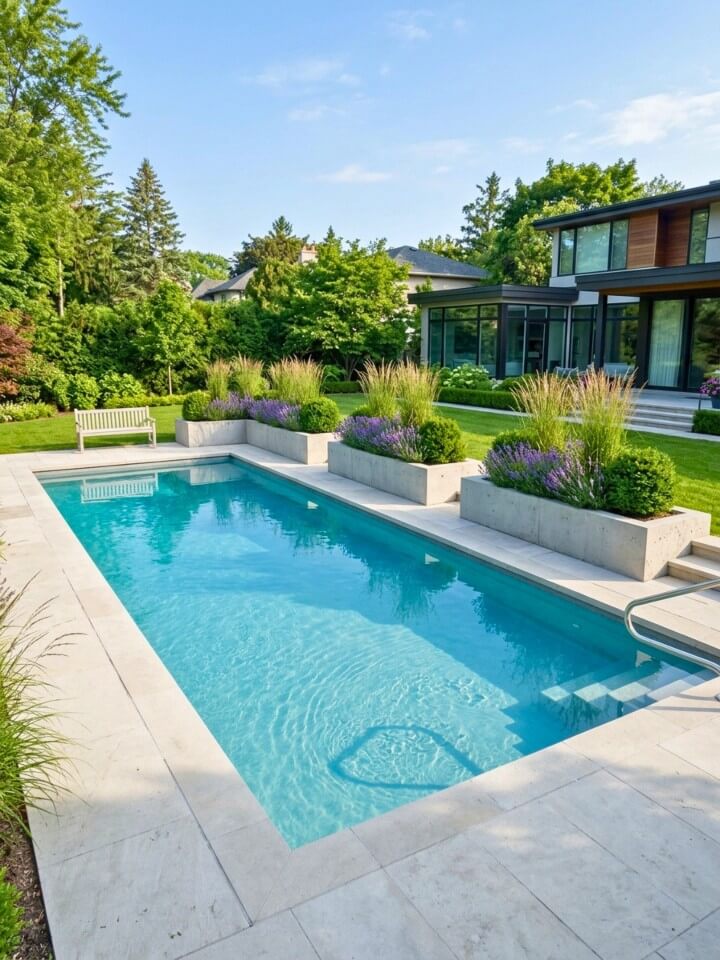
A simple backyard rectangular pool landscape design can combine greenery, seating, and privacy features for a relaxing outdoor space. Built-in planters solve a common landscaping problem — how to add greenery without cluttering the deck or fighting for floor space. Raised concrete or stone planters along one side of the pool create a defined border that looks intentional and permanent. Fill them with ornamental grasses, lavender, succulents, or compact shrubs for a low-maintenance display. The raised height adds visual interest and a sense of enclosure without making the space feel boxed in. This detail works especially well in modern or contemporary backyard designs.
Designing and Filling Your Built-In Planters
Cap the top of each planter with the same stone or concrete used on the deck so everything reads as one cohesive material palette. Install a proper drainage layer — gravel at the base, quality potting mix above — before adding plants. Choose species that share similar water needs so a single irrigation line can serve the entire planter without overwatering some plants and neglecting others.
8. Poolside Dining Setup for Outdoor Entertaining
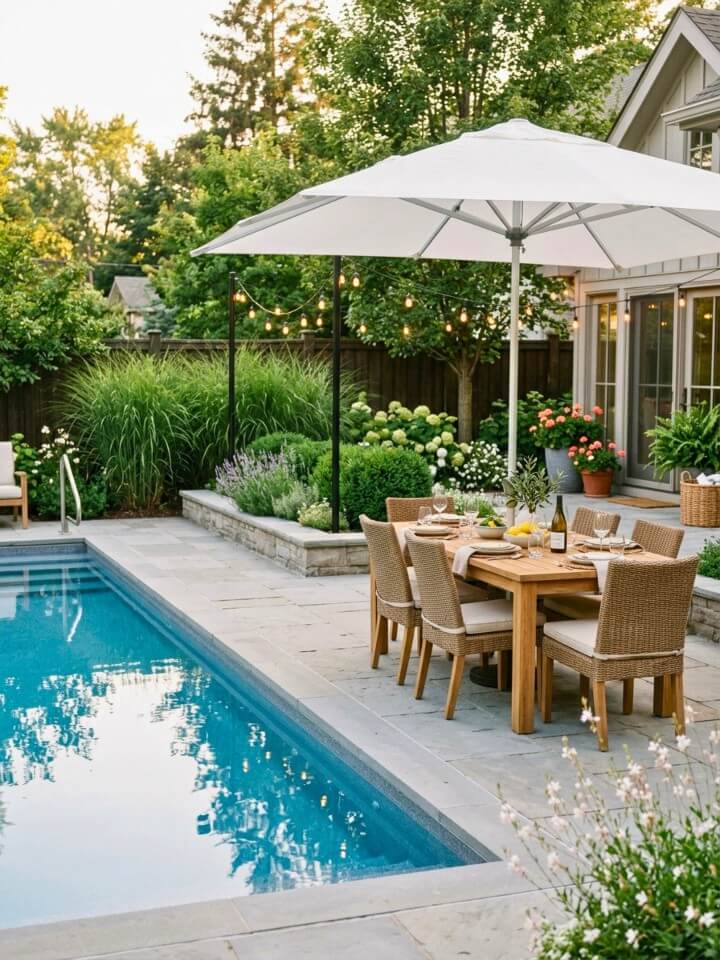
A modern patio can look more elegant with rectangular pool landscaping ideas that include clean stone borders and soft lighting. A dining area beside the pool makes the backyard genuinely functional for hosting, not just swimming. Choose a weather-resistant table with four to six chairs in wood, rattan, or powder-coated metal. Position it close enough to the pool to feel connected but with enough clearance for safe movement around the deck. A large shade umbrella handles afternoon sun. String lights overhead shift the mood after dark, turning a simple patio table into a proper outdoor dining experience guests will actually want to linger at.
Setting Up a Functional Outdoor Dining Zone
Anchor the dining area with an outdoor rug to define the space visually and make it feel more intentional. Choose a table with a built-in umbrella hole or purchase a weighted freestanding base rated for wind — lightweight bases tip over easily in open backyard settings. If the area gets strong afternoon sun, a sail shade or wood pergola overhead is a more permanent and effective solution than an umbrella alone.
9. Gravel Landscaping for a Low-Maintenance Poolside Look
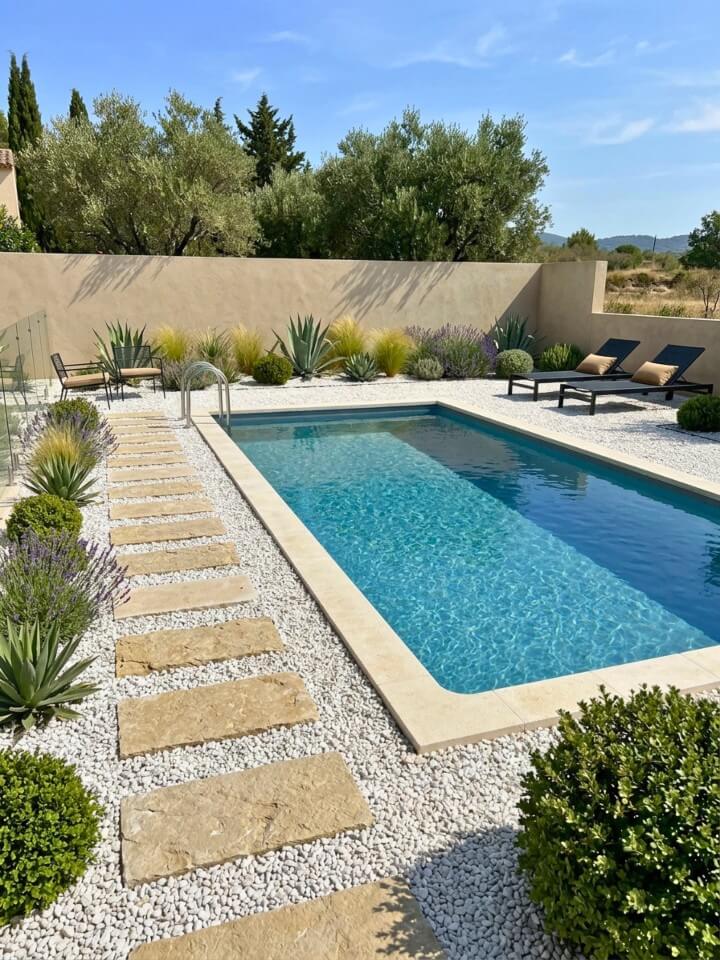
Gravel is one of the most practical landscaping materials available for a pool surround. Pea gravel, white crushed stone, and decomposed granite all drain quickly, suppress weeds, and need almost no upkeep once installed. Use gravel to fill planting beds, define walkways, or create a buffer zone between the deck and garden areas. Pair it with stepping stones, drought-tolerant plants, and clean-lined outdoor furniture for a cohesive look. The texture gravel adds keeps the yard from feeling flat or overly manicured.
Installing Gravel the Right Way
Lay a high-quality landscape fabric beneath the gravel before spreading to block weed growth from below — skipping this step leads to constant weeding within one season. Apply at least 3 inches of depth for proper coverage and weed suppression. Use edging strips along borders where gravel meets the lawn or deck to keep stones from migrating and creating a messy, unfinished look over time.
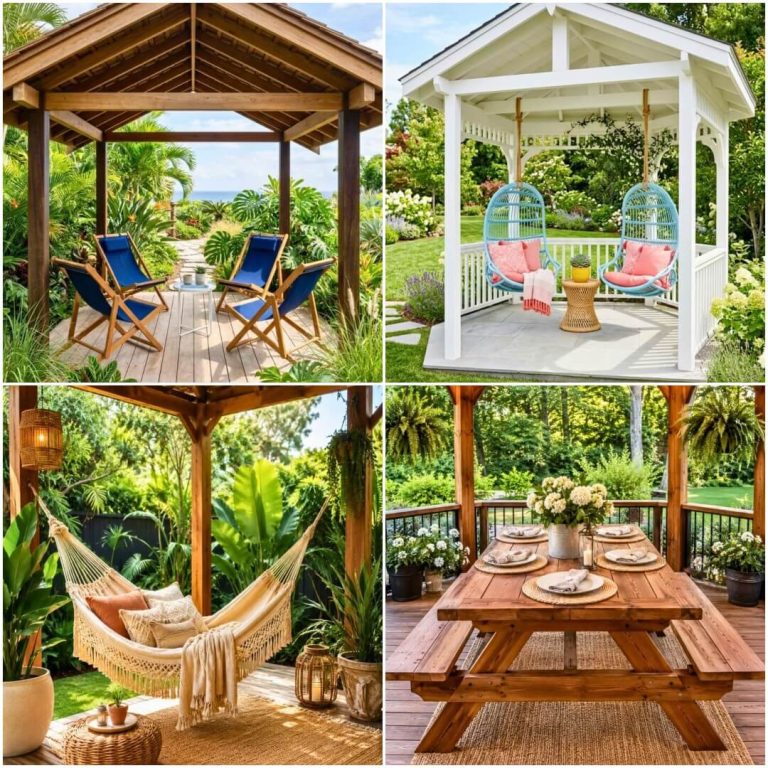
10. Poolside Pergola for Shade and Style
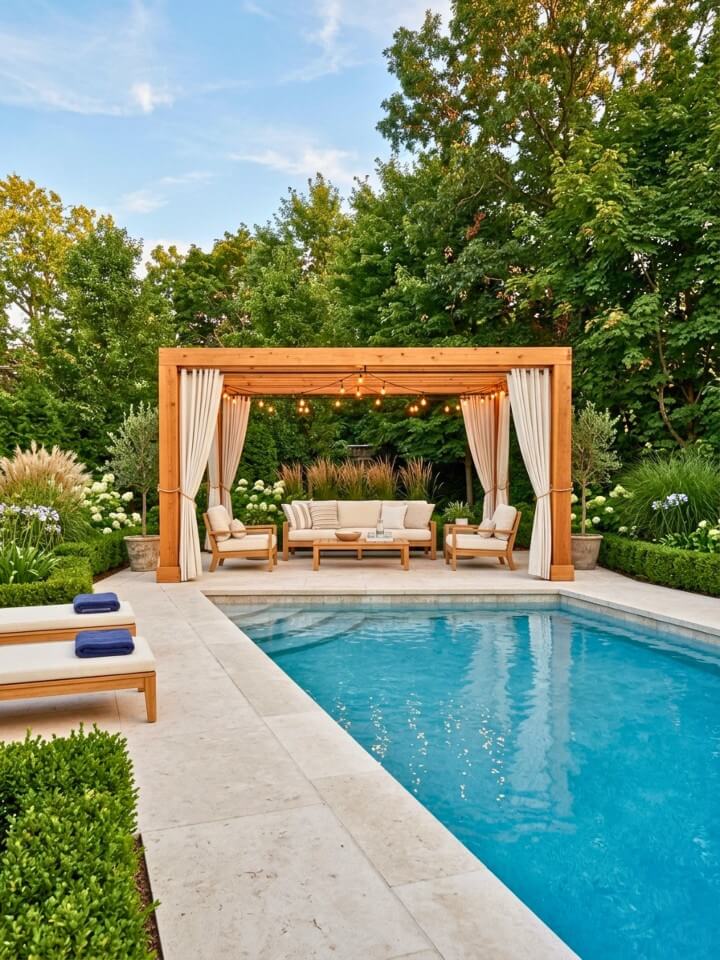
A pergola beside the pool does two things at once — it provides real shade for lounging and gives the backyard a strong architectural anchor. Wood beams create a warm, natural feel. Steel or aluminum framing suits modern designs and requires less maintenance over time. Position the pergola over a seating or dining area rather than directly over the water. Add climbing vines, outdoor curtains, or string lights to make the space feel more enclosed and intentional. Even a simple open-beam structure changes how the entire backyard reads visually.
Building or Buying the Right Pergola
Freestanding pergola kits are widely available and can be assembled over a weekend without professional help — measure your space carefully before ordering so proportions feel right. For a permanent built-in structure, hire a licensed contractor and pull the necessary permit. A pergola attached to the house requires proper ledger board installation to meet building code, so DIY is not advisable for attached versions.
11. Modern Water Feature to Elevate Your Pool Design
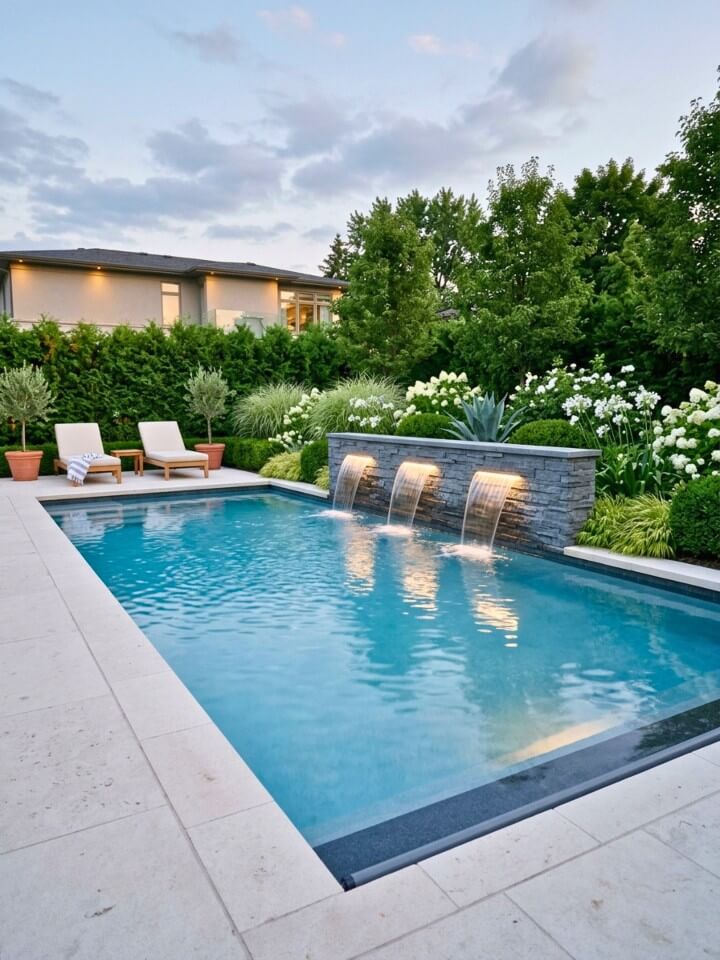
A well-placed water feature adds sound, movement, and a custom feel that plain pool decking cannot achieve. Spillways mounted flush into a raised wall create a sleek sheet of falling water. Scupper spouts work well on contemporary designs where clean geometry matters. Deck jets that arc water into the pool from the surrounding surface are another popular option. Match the finish — stone, tile, or concrete — to whatever material surrounds the pool so the feature feels built-in rather than added as an afterthought.
Choosing and Installing Your Water Feature
Spillways and scuppers require proper waterproofing behind the wall and a correctly sized pump to maintain consistent flow. Have a pool contractor size the pump based on the number of features and total water volume — undersized pumps create weak, unimpressive flow that defeats the purpose entirely.
12. Outdoor Lighting Ideas for a Stunning Nighttime Pool
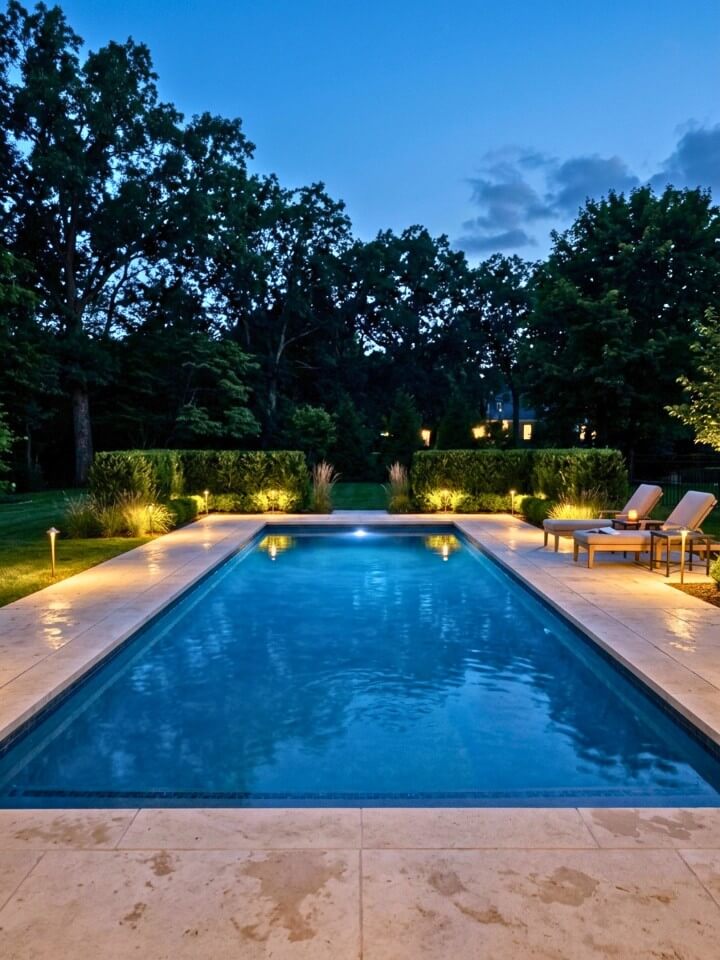
Good lighting transforms a daytime pool area into something that feels completely different after dark. Path lights along walkways improve safety and guide movement naturally. Step lights recessed into pool stairs or deck edges add a polished, built-in look. Uplights aimed at nearby trees or hedges create dramatic depth behind the pool. For the water itself, submersible LED pool lights in warm white give a cleaner, more sophisticated result than colored options in most backyard settings.
Planning Your Poolside Lighting Layout
Hire a licensed electrician for any wiring near water — this is non-negotiable for safety and code compliance. Use a timer or smart controller to automate on and off times. LED fixtures rated for wet or submersible use last significantly longer near pools than standard outdoor fixtures and draw far less power over time.
13. Desert-Inspired Landscaping for a Drought-Tolerant Yard
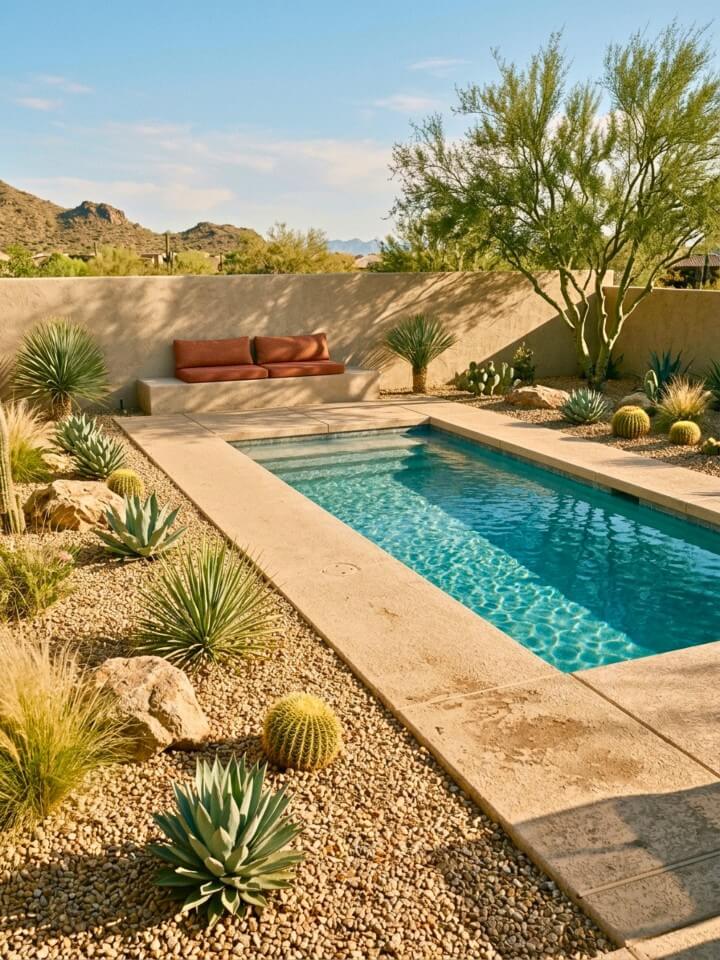
Desert landscaping works beautifully around a pool because it requires almost no irrigation once established, which offsets the water the pool itself uses. Agave, yucca, prickly pear, and ornamental grasses create bold sculptural shapes that photograph well and hold interest through every season. Use smooth river rock, decomposed granite, or pale gravel as the ground layer. Warm beige, rust, and tan tones in the hardscape complement blue pool water far better than cool gray palettes in this style.
Building a Desert Landscape That Lasts
Space agave and large succulents generously — they grow wider than most people expect. Avoid planting spiky varieties like agave directly beside the pool deck where bare feet pass regularly. Choose a drip irrigation system on a timer for the establishment period, then reduce watering gradually as plants root in over the first two seasons. For more plant and material choices that thrive with less upkeep, these gorgeous low-maintenance Florida landscaping ideas are also useful for hot, sunny pool areas even outside Florida.
14. Raised Spa Beside a Rectangular Pool
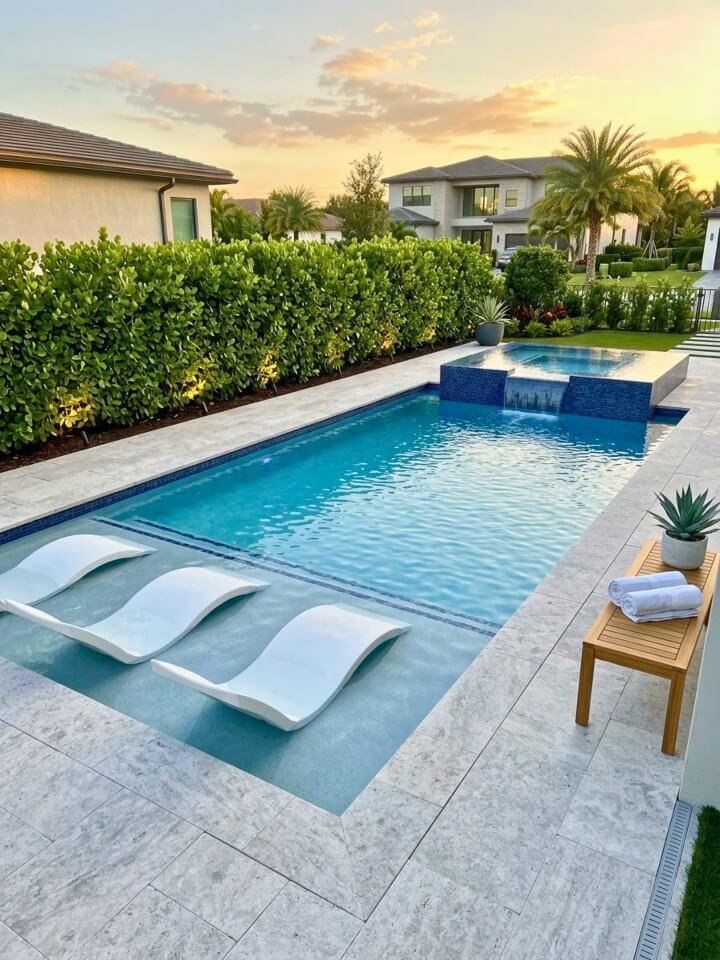
A raised spa attached to the pool creates an elevated water feature and a practical relaxation zone in one. Positioning it at the far end of the pool allows water to spill over the edge into the main pool, adding gentle sound and visual movement. Matching the spa’s tile, coping, and finish to the pool creates a seamless, unified look rather than two separate water features sitting beside each other. The raised height also makes the spa easier to enter and exit comfortably. If you are comparing different spa layouts before committing, these above-ground swim spa landscaping ideas can offer additional inspiration for surrounding decks, privacy, and planting.
Planning Your Spa and Pool Combination
Work with your pool builder from the earliest design phase so plumbing, electrical, and equipment sizing account for both the pool and spa simultaneously. Adding a spa after the pool is already built is significantly more expensive than designing them together. Confirm whether your existing pool equipment can handle the added load before committing to the project.
15. Lawn Strips Between Pavers for a Fresh Poolside Look
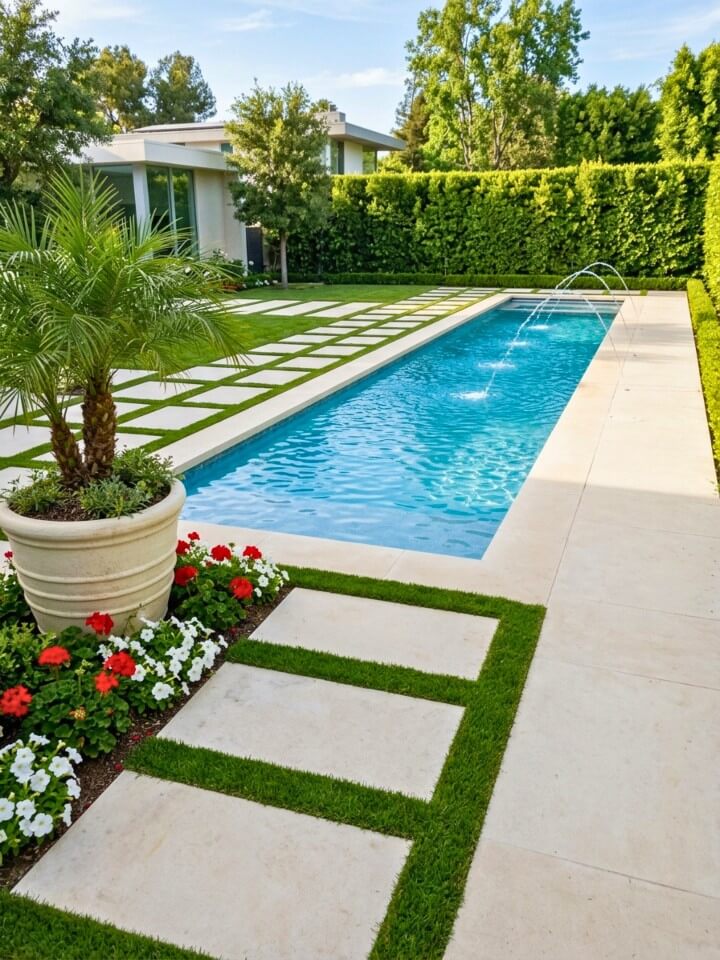
Narrow strips of grass between concrete pavers or along the pool deck edge add softness and color to what can otherwise feel like a hard, flat surface. The contrast between green lawn and pale stone creates a crisp, well-considered pattern that looks intentional rather than accidental. Real grass stays cooler underfoot than paving on hot days, which is a genuine comfort benefit in direct sun. Artificial turf eliminates irrigation and mowing while delivering a consistent appearance throughout the year.
Installing Lawn Strips That Stay Looking Good
For real grass, choose a heat and drought-tolerant variety suited to full sun — zoysia and bermuda both handle pool environments well. Keep strips at least 6 inches wide so the grass receives enough soil volume to stay healthy. For artificial turf, use a product with a realistic blade shape and invest in proper infill material to prevent the surface from compacting and flattening over time.
16. Glass Pool Fence for an Open and Modern Backyard
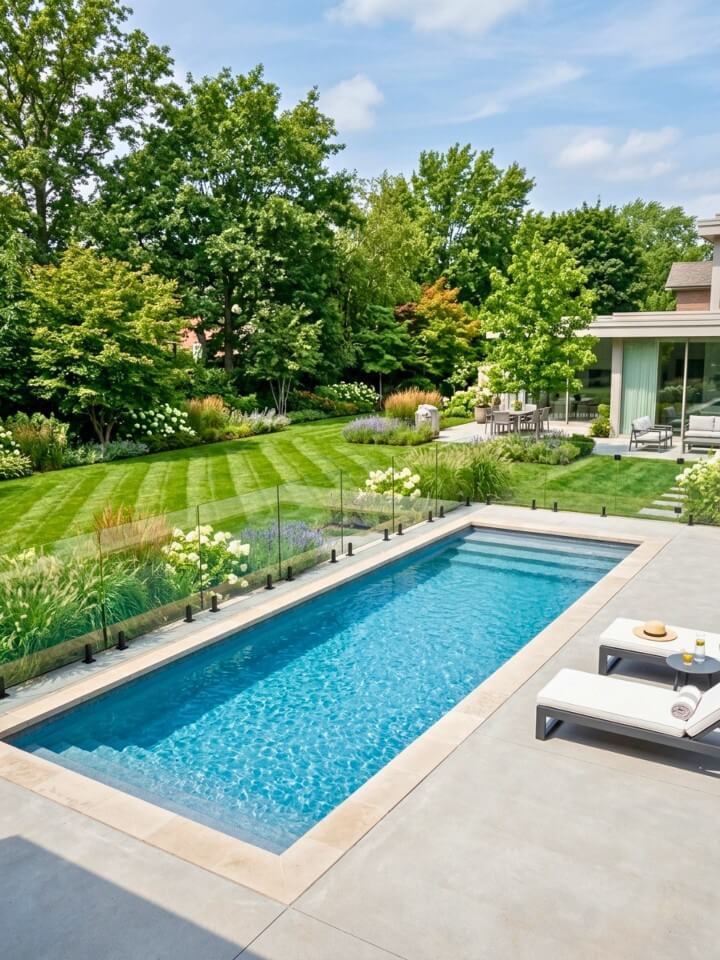
A glass fence keeps the pool area safe without creating a visual barrier that cuts the yard in half. Frameless panels made from toughened safety glass give the cleanest result — no posts interrupting the sightline, just clear panels that disappear into the background. Semi-frameless versions with slim metal posts at intervals cost less while still maintaining most of the open feel. Both options pair well with stone pavers, wood decking, or concrete surfaces without competing visually with the surrounding landscape.
Buying and Installing a Glass Pool Fence
Frameless glass fencing must meet local pool barrier codes — gate latches, panel height, and gap spacing all have specific requirements that vary by state. Hire an installer familiar with local regulations rather than treating this as a standard DIY project. Clean glass panels monthly with a non-abrasive cleaner to prevent mineral deposits from pool splash building up and etching the surface permanently.
17. Poolside Cabana for a True Outdoor Living Space
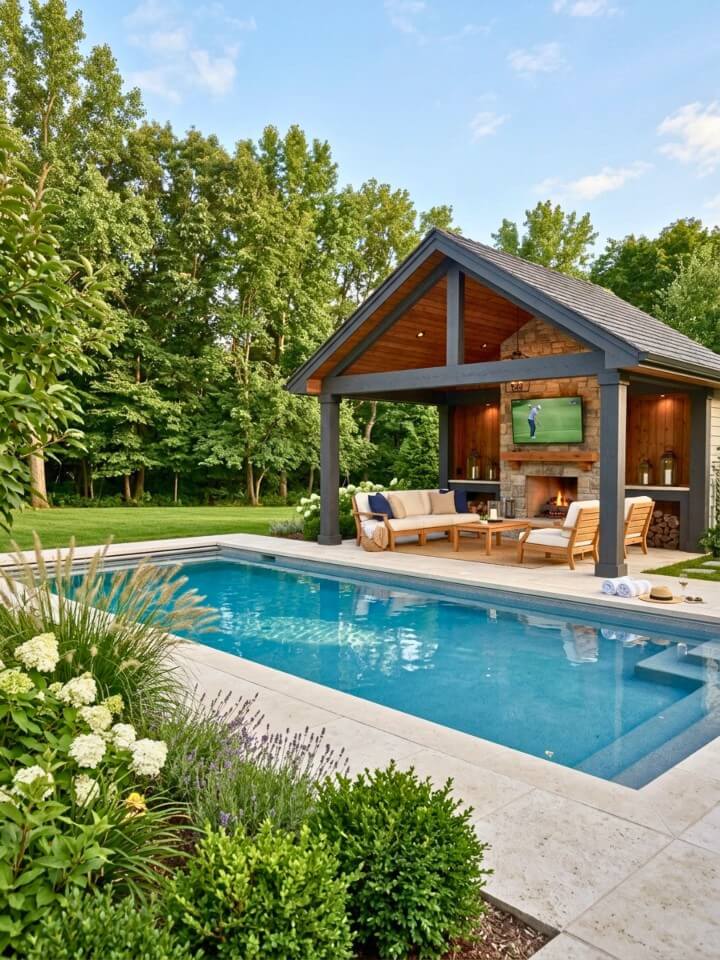
A cabana beside the pool creates a shaded retreat that makes the backyard usable even on the hottest days. It functions as a changing room, a shaded lounge, and a storage spot for towels and pool supplies all at once. Simple open-sided structures with a solid roof are the most versatile — they provide shade without making the space feel enclosed. Add an outdoor daybed or two chaise lounges inside, a small side table, and weather-resistant curtains that can be drawn for privacy when needed.
Designing and Building Your Cabana
Decide early whether you want a permanent structure or a freestanding kit. Permanent cabanas require a building permit in most areas and should be professionally constructed. Prefabricated kits are more affordable and can be assembled without permits in many jurisdictions — check your local rules first. Use materials that match the existing pool deck to make the cabana feel like a planned part of the design rather than a later addition.
18. Layered Garden Beds for a Lush Poolside Landscape
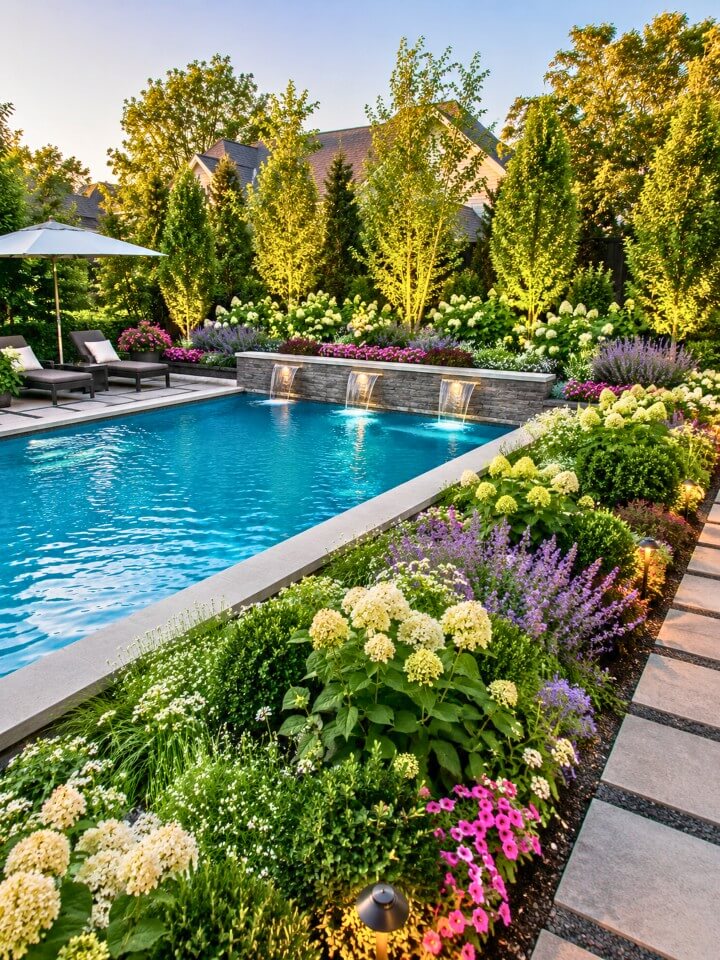
Layered planting gives a pool area depth and visual richness without making the space feel overgrown. The principle is straightforward — taller shrubs or ornamental trees at the back, medium-height plants in the middle, and low ground cover or flowering plants at the front edge. This arrangement creates a full, professional look that fills the eye naturally. Choose low-shedding varieties throughout to minimize leaf and petal debris falling into the water, which reduces cleaning time and keeps the pool looking maintained.
Planning a Layered Garden Around Your Pool
Map the sun exposure along each side of the pool before selecting plants — south-facing beds get significantly more sun than north-facing ones and need different species to thrive. Install a drip irrigation system beneath a mulch layer to keep moisture consistent without overwatering. Revisit the planting plan each spring and remove any species that shed heavily or spread aggressively toward the pool edge.
19. Black and White Color Scheme for a Bold Pool Area
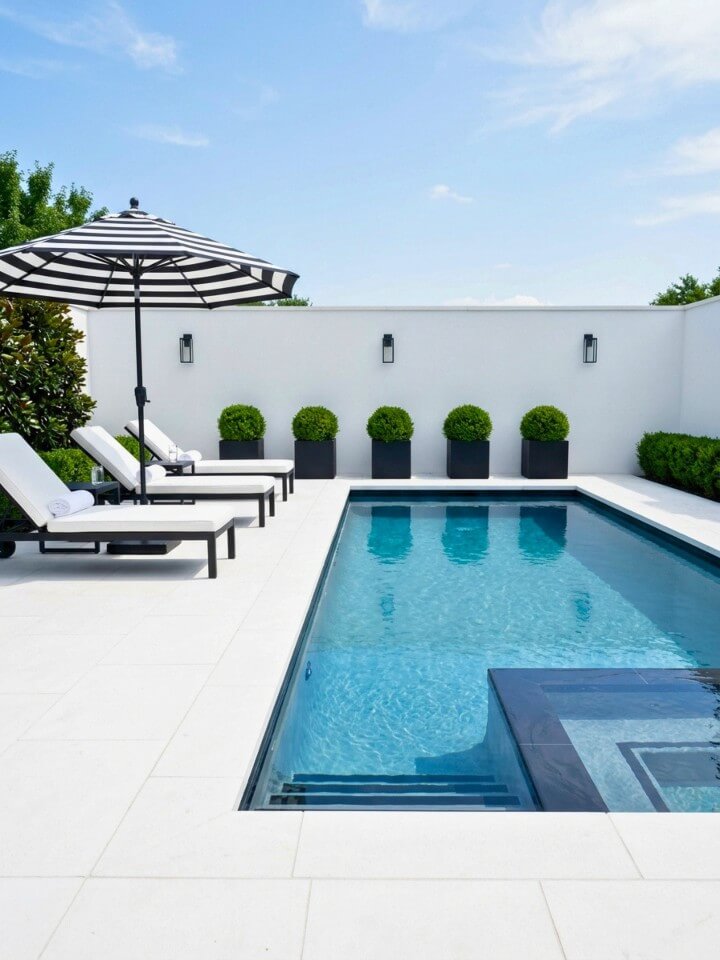
A black and white poolside palette creates strong visual contrast that looks intentional and design-forward without relying on color trends that date quickly. White pavers or concrete against black metal furniture frames the blue water naturally and makes the whole yard feel cohesive. Striped outdoor cushions in black and white add pattern without introducing competing colors. The key to making this scheme work is green plants — without them, the contrast becomes harsh and the space loses warmth entirely.
Pulling Off a Black and White Outdoor Palette
Choose matte black fixtures and furniture rather than gloss — matte finishes show fewer fingerprints and water marks in an outdoor setting. White pavers show dirt and algae growth more visibly than beige or gray, so factor in regular pressure washing to maintain the clean appearance this scheme depends on. Use green plants generously throughout to prevent the yard from feeling cold or overly graphic.
20. Stepping Stone Path Leading to the Pool
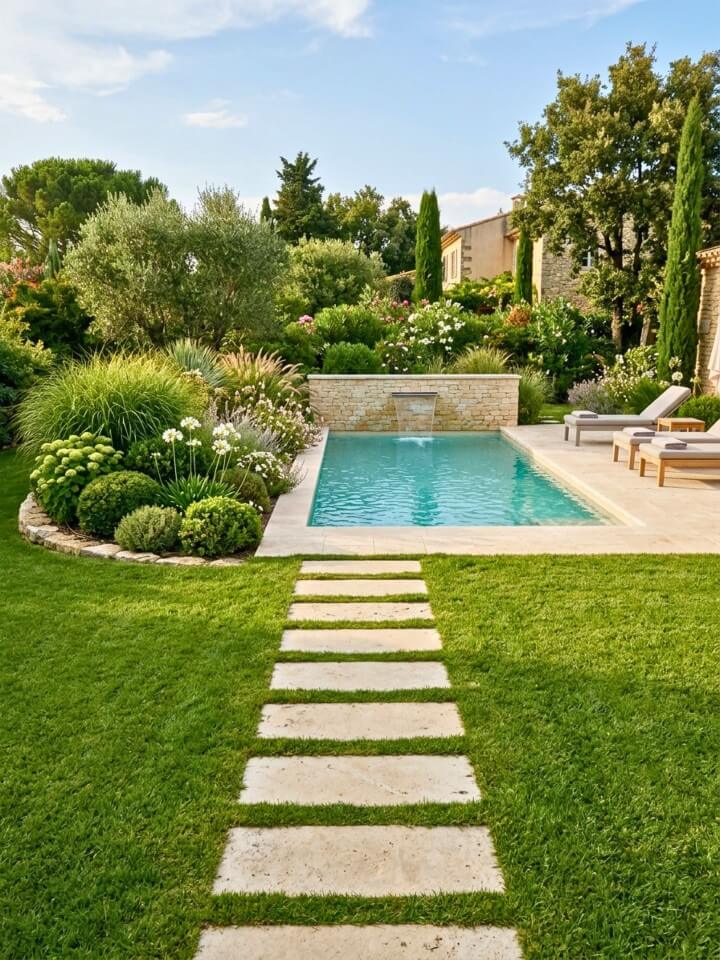
A stepping stone path does more than guide foot traffic — it adds structure and visual direction to the yard, drawing the eye naturally toward the water. Large concrete slabs, natural flagstone, or porcelain pavers set into gravel or ground cover all work well. Spacing stones at a comfortable stride length makes the path feel natural to walk rather than awkward. A straight path that runs parallel to the pool’s edge reinforces the geometric layout and gives the backyard a planned, finished quality.
Installing a Stepping Stone Path That Lasts
Set each stone on a compacted gravel base with a thin layer of sand on top — stones placed directly on bare soil shift and sink unevenly within one season. Keep the top surface of each stone level and slightly above grade so water drains away rather than pooling around the edges. Fill gaps between stones with gravel, creeping thyme, or artificial turf depending on the overall style of the yard.
21. Retaining Wall with Built-In Seating Along the Pool
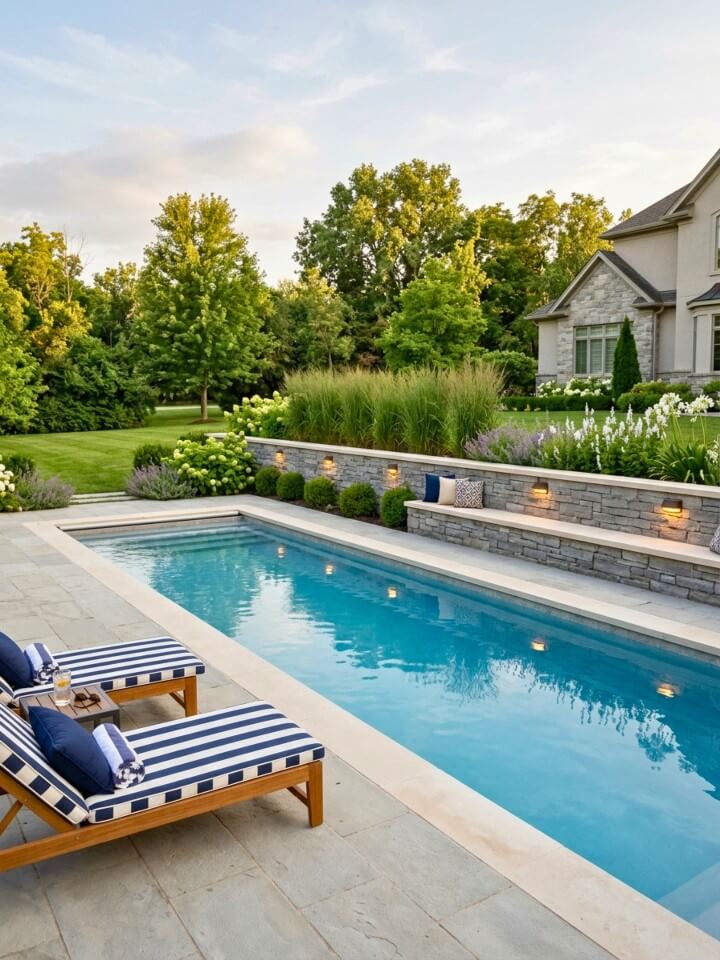
A retaining wall that doubles as seating solves two problems at once — it manages a sloped yard and adds permanent guest seating without crowding the deck with extra furniture. Wide flat caps in stone or concrete create a comfortable bench surface along the pool’s edge or back boundary. The wall also works as a strong visual backdrop, especially when paired with uplighting or climbing plants. This feature suits yards with any grade change and adds a sense of permanence that freestanding furniture simply cannot replicate.
Building a Retaining Wall with Seating
Hire a structural engineer or experienced contractor if the wall needs to hold back significant soil — this is not a decision to make based on aesthetics alone. Cap width matters for comfort; aim for at least 18 inches of flat surface for practical seating. Use the same coping material as the pool edge so the wall reads as part of one unified design rather than a separate project added later.
22. Mediterranean Style Landscaping for a Warm Poolside Mood
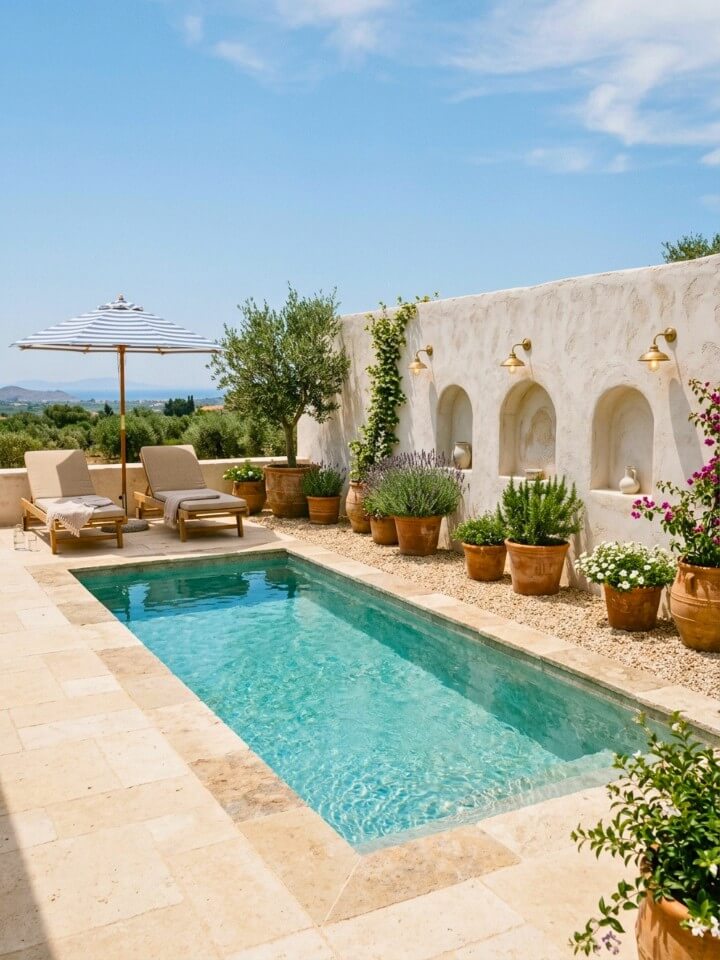
Mediterranean landscaping creates a relaxed, sun-soaked atmosphere that feels genuinely timeless rather than trend-dependent. Olive trees, lavender, rosemary, and ornamental grasses are the backbone of this style — all drought-tolerant, fragrant, and visually rich. Light limestone or travertine pavers, terracotta pots, and creamy stucco walls reinforce the regional feel without requiring expensive materials. The palette stays warm throughout — cream, sand, terracotta, and soft green — which complements blue pool water in a way that cooler palettes rarely achieve.
Creating a Mediterranean Poolside Garden
Source terracotta pots in varying heights and cluster them near the pool entrance or along a wall for an effortless, layered look. Lavender and rosemary thrive in full sun with minimal water once established, making them genuinely low-maintenance border plants. For the hardscape, choose tumbled rather than cut-edge pavers — the slightly worn, irregular finish is what gives Mediterranean designs their characteristic warmth and authenticity.
23. Floating Lounge Deck for a Stylish Poolside Retreat
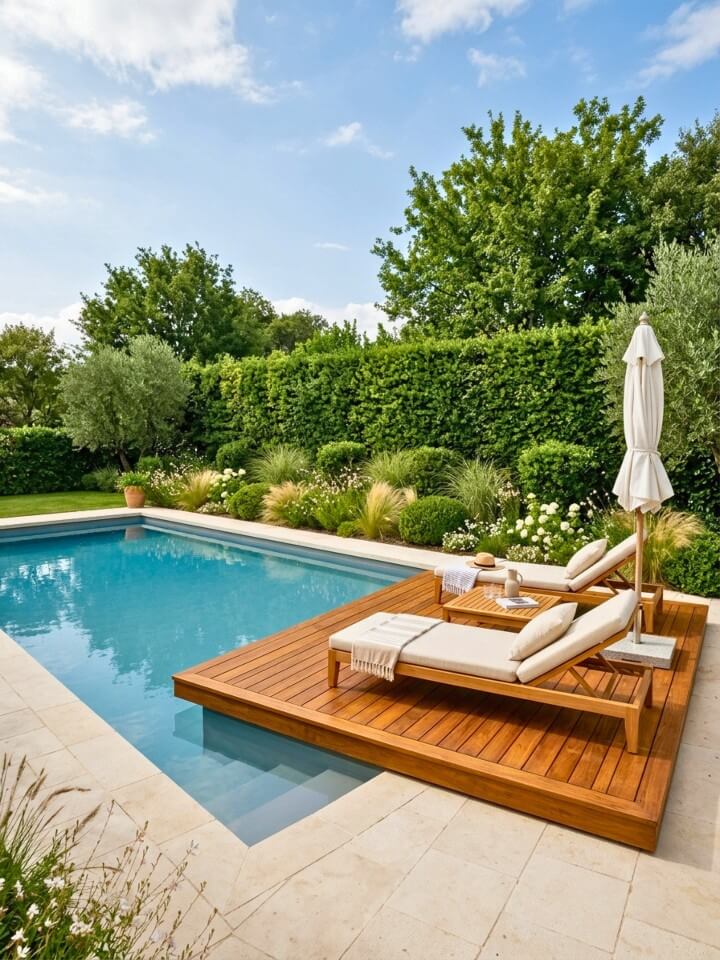
A slightly raised lounge deck beside the pool creates a defined relaxation zone without requiring a full pergola or cabana structure. The elevation — even just a few inches above the main deck — gives the seating area its own identity and makes the overall layout feel more considered. Composite or hardwood decking in warm brown tones works well here because it contrasts naturally with surrounding stone or concrete. Add two to four chaise lounges, a side table, and a freestanding umbrella to complete the zone without overcrowding it.
Building a Floating Deck Beside Your Pool
Keep the platform low to the ground — 8 to 12 inches above grade — so it does not require railings under most local building codes, which simplifies both permitting and construction. Use hidden fasteners between deck boards for a clean, screw-free surface. Composite materials require less ongoing maintenance than real wood in a wet pool environment and hold their color without annual sealing or staining.
24. Rock Garden Around the Pool for Natural Texture
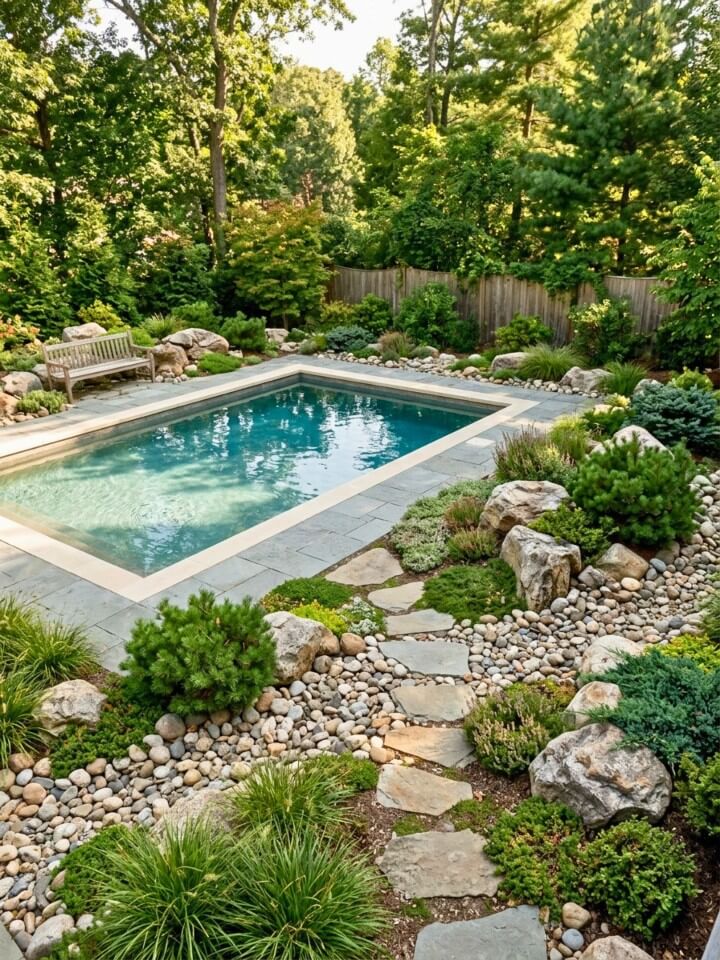
A rock garden brings organic texture and a grounded, natural quality to a pool area without requiring irrigation or seasonal replanting. Smooth river rocks, large boulders, and fine gravel can be arranged in layers to create depth and visual interest on otherwise flat ground. Pair the stonework with drought-tolerant plants like ornamental grasses, sedums, or low-growing junipers to soften the hard surfaces. The overall effect is calm and considered — a design that looks intentional without feeling overly manicured or high-maintenance.
Designing a Rock Garden That Looks Natural
Odd numbers of boulders always look more natural than even groupings — place three or five large stones together rather than two or four. Bury the base of each large boulder slightly into the ground so it appears settled rather than placed on top of the surface. Use varying stone sizes throughout; uniform gravel with no larger accent rocks reads as flat and unfinished rather than designed.
25. Outdoor Shower to Complete Your Pool Experience
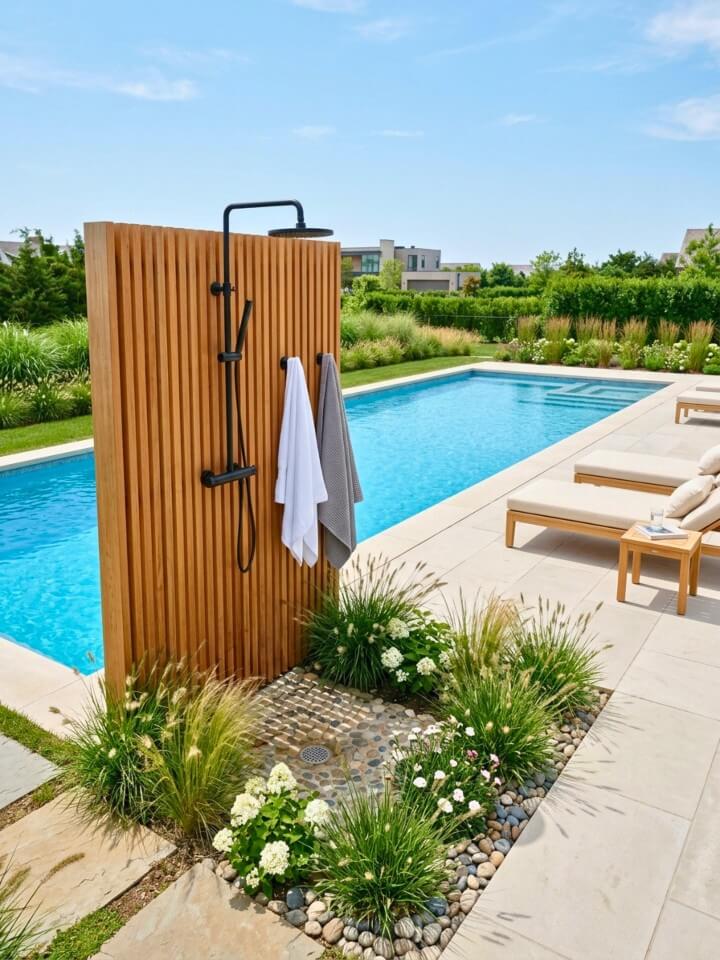
An outdoor shower near the pool serves a practical purpose — rinsing off before entering keeps the water cleaner, and showering afterward removes chlorine from skin and hair. Beyond function, a well-designed outdoor shower adds a spa-like quality to the backyard that elevates the overall feel of the space. Matte black fixtures against wood slats, stone tile floors with a teak mat, or a simple concrete wall with a rain showerhead all create a finished look that feels intentional rather than purely utilitarian.
Installing an Outdoor Shower Near Your Pool
Connect the shower to an existing outdoor water line where possible to keep installation costs reasonable. A cold-water-only connection is the simplest and least expensive option — most pool users prefer a cool rinse anyway. Use a small gravel drainage pit beneath the shower area rather than connecting to the main drainage system, which requires permits and additional plumbing work in most jurisdictions.
26. Outdoor Kitchen Beside the Pool for Easy Hosting
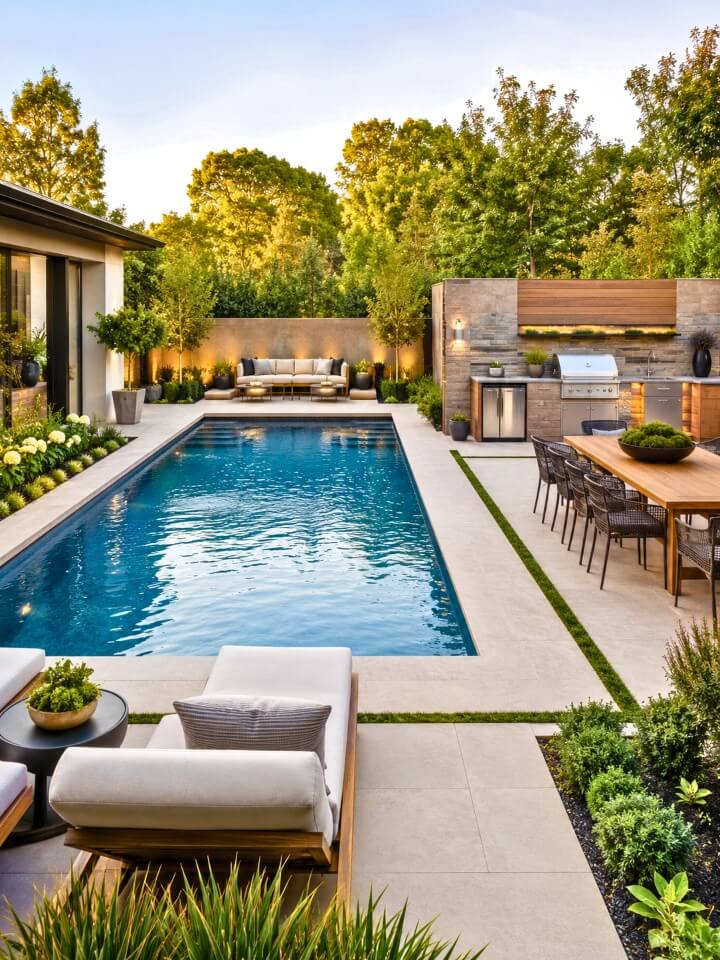
An outdoor kitchen beside the pool removes the constant back-and-forth between indoors and outdoors that interrupts gatherings. A built-in grill, a stretch of weather-resistant counter space, and a small refrigerator cover most hosting needs without requiring a fully equipped kitchen outside. Stone, concrete, or stainless steel finishes hold up well against pool splash and weather. Position the kitchen near the dining area but far enough from the water’s edge that cooking and foot traffic do not create safety hazards around the pool.
Planning Your Outdoor Kitchen Layout
Run gas, electrical, and plumbing lines before any countertop or cabinetry work begins — retrofitting utilities into a finished outdoor kitchen is expensive and disruptive. Choose stainless steel or marine-grade polymer cabinet bases rather than wood, which warps and deteriorates quickly in outdoor environments near water. Include at least 18 inches of counter space on each side of the grill for safe food preparation and plating.
27. Colorful Flower Beds to Brighten the Pool Area
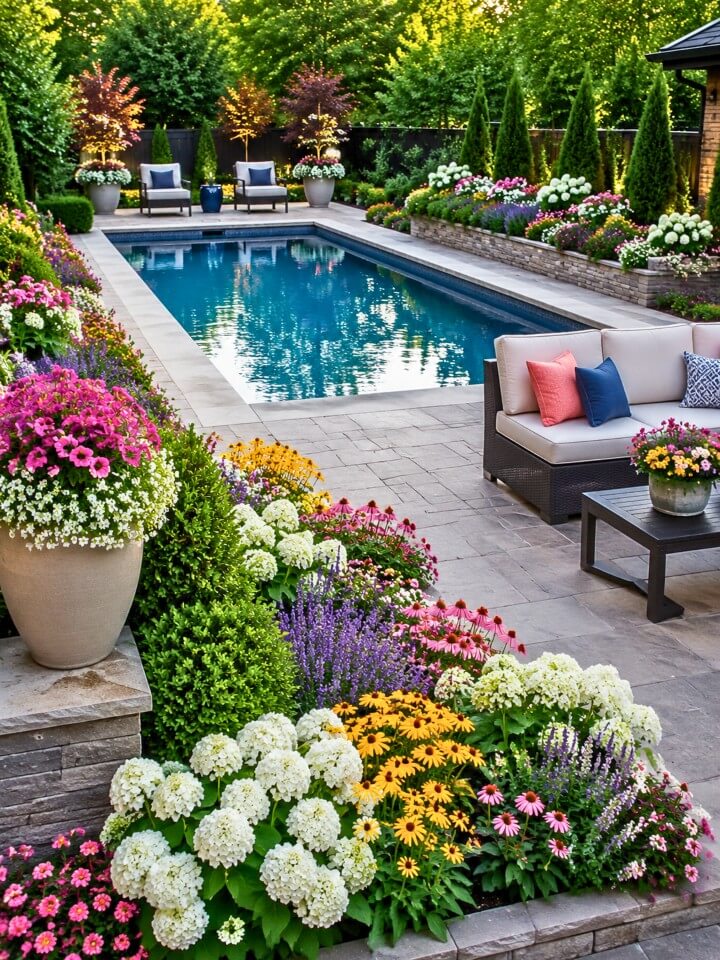
Flower beds add seasonal color and a welcoming, lived-in quality that purely structural landscaping often lacks. Placing them in raised borders or defined garden beds keeps the color organized without making the pool area feel cluttered. White, lavender, soft pink, and yellow blooms pair well with most pool deck materials and look fresh against green foliage.
Mixing flowers with evergreen shrubs ensures the beds have structure and interest year-round, not just during peak bloom season when annuals are at their most colorful. For a softer flowering shrub option in the right climate, these impressive lilac bush landscaping ideas can help you think through placement, color, and seasonal interest.
Choosing and Maintaining Poolside Flower Beds
Select low-shedding varieties wherever possible — heavy petal drop near the water creates extra cleaning work and can affect pool chemistry over time. Deadhead spent blooms regularly to encourage continuous flowering through the growing season. Raised bed construction using stone or timber edging keeps mulch and soil contained, which protects the pool deck surface from staining and reduces the amount of debris that blows into the water.
28. Tile Accent Wall Behind the Pool for a Custom Look
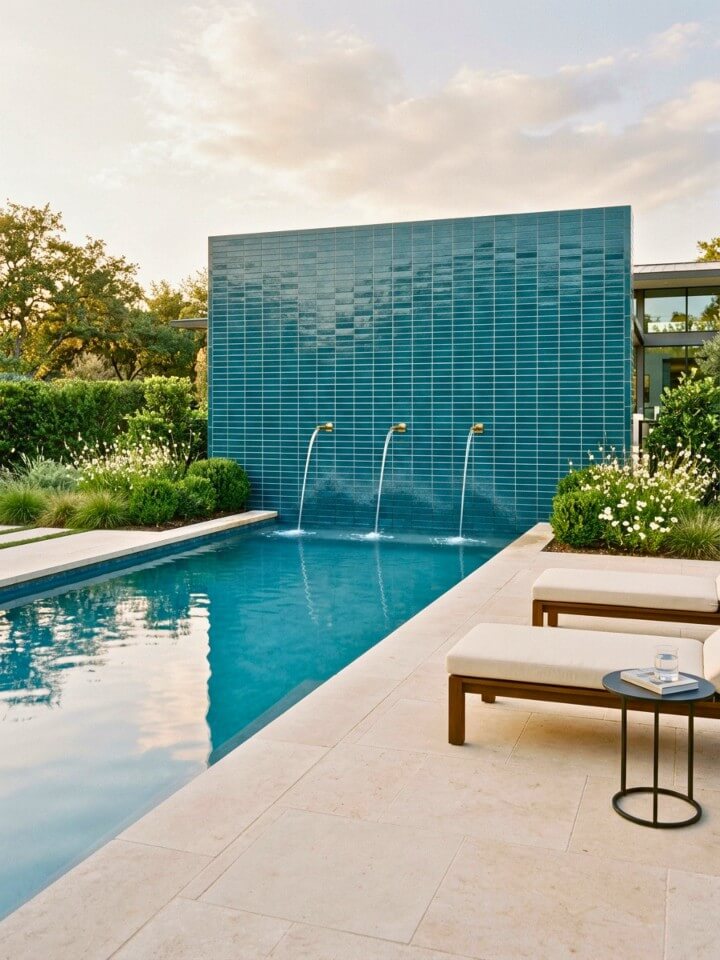
A tiled accent wall behind the pool creates a focal point that makes the entire backyard feel custom-designed. The wall draws the eye from every angle and gives the pool a sense of framing that an open fence line or plain hedge cannot achieve. Deep charcoal, slate blue, warm terracotta, or soft sage tile all work well depending on the surrounding palette. The wall can also support built-in water spouts, recessed lighting, or mounted planters, turning a single surface into a multi-functional design element.
Choosing Tile and Building Your Accent Wall
Use frost-resistant porcelain or natural stone tile rated for exterior wet areas — standard interior tile cracks when exposed to freezing temperatures and constant moisture. Hire a professional tile setter for this project; large format tiles on a vertical exterior surface require specific substrate preparation and adhesive that most DIY installations get wrong. Keep the grout color close to the tile color for a seamless, high-end result rather than a grid-heavy appearance.
29. Zen Garden Around the Pool for a Peaceful Backyard
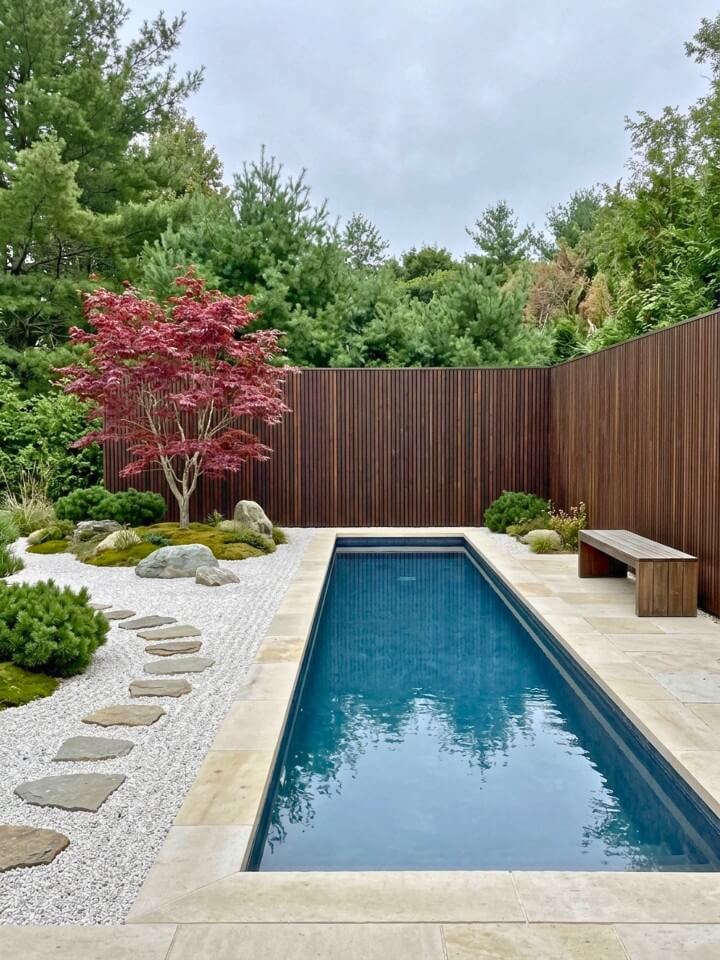
A Zen-inspired garden brings stillness and intentional simplicity to a pool area that might otherwise feel busy or overly designed. Smooth gravel raked into gentle patterns, stepping stones, clumping bamboo, and carefully placed rocks create a meditative quality that makes the backyard genuinely relaxing to spend time in. The straight lines of a rectangular pool actually complement Zen design principles well — both share a preference for clean geometry, open space, and nothing placed without reason.
Creating a Zen Garden Around Your Pool
Keep the plant palette very limited — two or three species maximum looks far more considered than a mixed collection. Japanese forest grass, dwarf mondo grass, and clumping bamboo are all reliable choices that stay tidy with minimal intervention. Rake gravel patterns away from the pool edge so loose stone does not migrate onto the deck or into the water, and use solid edging strips to keep the gravel boundary crisp and defined year-round.
FAQs About Rectangular Pool Landscaping
Picking a style is the easy part. These questions tackle the details most homeowners only think about once the project is already underway.
How Much Does It Typically Cost to Landscape Around a Rectangular Pool?
Costs vary widely depending on materials, size, and how much professional labor is involved. A basic concrete deck with simple plantings can start around $5,000 to $10,000. A fully designed space with natural stone, a pergola, built-in planters, and landscape lighting can reach $30,000 or more. The smartest approach is to prioritize the deck surface and privacy first, then add features like fire pits or outdoor kitchens over time as budget allows.
What Plants Work Best Near a Pool without Making a Mess?
Low-shedding plants are the key. Ornamental grasses, agave, lavender, rosemary, dwarf boxwood, and bird of paradise are all reliable choices because they do not drop heavy leaves, petals, or seed pods into the water. Avoid deciduous trees, palms that shed fronds heavily, and flowering plants with small petals that clog filters. The closer a plant is to the water’s edge, the more important its shedding habits become.
How Do I Keep the Pool Deck from Getting Too Hot Underfoot in Summer?
Material choice matters most here. Travertine and light-colored limestone stay significantly cooler than dark concrete or porcelain tile in direct sun. Textured or brushed finishes also absorb slightly less heat than smooth polished surfaces. If you already have a darker deck, outdoor rugs rated for wet areas can help in high-traffic zones. A pergola or shade sail overhead reduces direct sun exposure on the deck surface and makes the whole area more comfortable during peak afternoon heat.
Do I Need a Permit to Add a Fire Pit, Pergola, or Outdoor Kitchen Near My Pool?
In most cases, yes — at least for permanent structures. Built-in fire pits connected to a gas line, attached pergolas, and outdoor kitchens with plumbing or electrical work typically require permits. Freestanding fire pits and prefabricated pergola kits often fall under different rules and may not require one. Requirements vary by city and county, so checking with your local building department before purchasing materials saves time, money, and the hassle of undoing completed work.
What Is the Best Way to Add Privacy to A Pool Area without Building a Solid Fence?
Layered landscaping is the most visually appealing solution. A combination of tall evergreen hedges at the back, mid-height shrubs along the sides, and potted plants near the deck creates depth and blocks sightlines without the hard, closed-in feeling of a solid fence. Pergolas with outdoor curtains, privacy screens made from wood slats or metal panels, and strategically placed cabanas all add privacy while keeping the space feeling open and designed rather than blocked off.
Conclusion:
A rectangular pool gives you one of the most flexible outdoor canvases a backyard can offer. The straight lines do not limit your design choices — they actually make every material, plant, and feature you add look more intentional. Stone or wood, tropical or minimal, a fire pit or a pergola — the geometry holds it all together. The hardest part is not finding ideas. It is narrowing them down. Pick one or two that genuinely fit how your family uses the backyard, build from there, and let the space grow into something that actually gets used rather than just admired from inside the house.