24 Cattle Panel Trellis Ideas To Grow More Food in Less Space
Cattle panels are the best-kept secret in backyard gardening. Sold at farm stores for around $25, each one measures 16 feet long and 50 inches tall — enough steel to build an arch, a tunnel, or a full privacy wall in a single afternoon. These 24 cool cattle panel trellis ideas show exactly what’s possible when you stop seeing them as livestock fencing and start seeing them as garden gold.
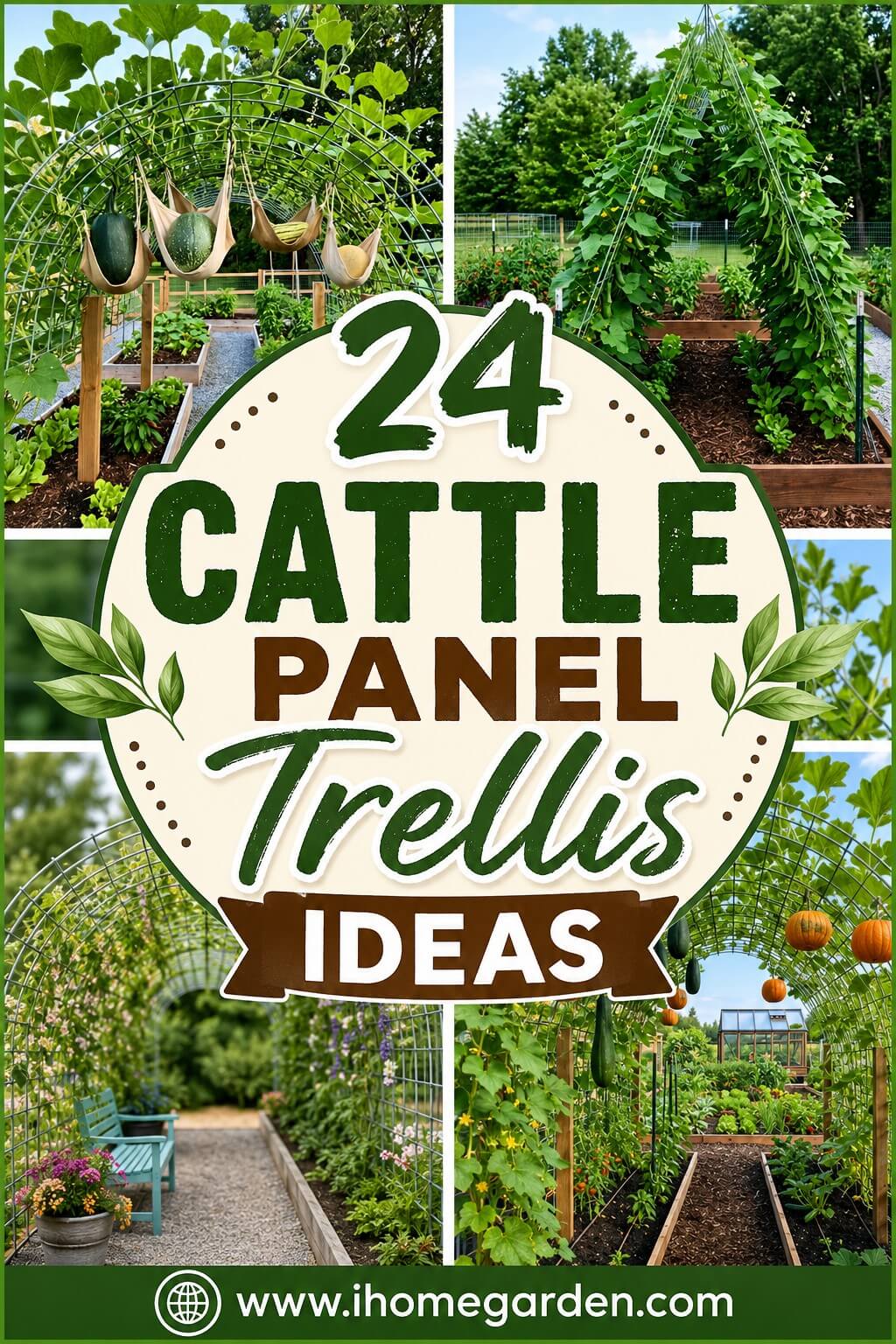
Inside, you’ll find arches dripping with climbing roses, A-frames doubling your tomato harvest, and hammock trellises cradling watermelons in mid-air. There are hoop houses that stretch the growing season by months, obelisks that turn flower beds into showpieces, and even a bean teepee kids actually want to play in.
Every idea uses the same basic panel. The only thing that changes is your imagination.
1. Classic Garden Arch
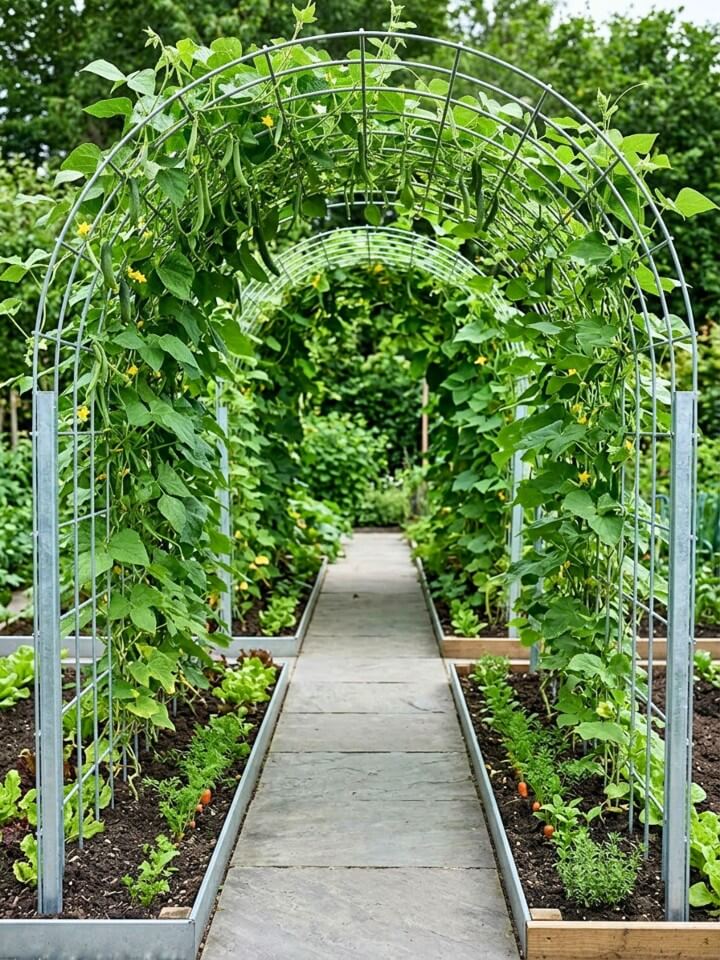
Walk into any well-designed backyard and you’ll notice one thing right away — vertical elements pull the whole space together. A cattle panel arch does exactly that, and it takes maybe two hours to install on a Saturday morning.
Here’s the quick version: grab one 16-foot panel, four pieces of rebar (three feet long each), and a helper. Drive the rebar 18 inches into the ground on either side of your path, roughly four to five feet apart. Bend the panel into an arch and slide the corners over the rebar. Done.
The magic happens when plants take over. Scarlet runner beans bloom bright red and attract hummingbirds all summer. Morning glories open fresh every dawn. For something edible and beautiful, try malabar spinach — the deep purple stems look stunning against green leaves.
2. A-Frame Trellis
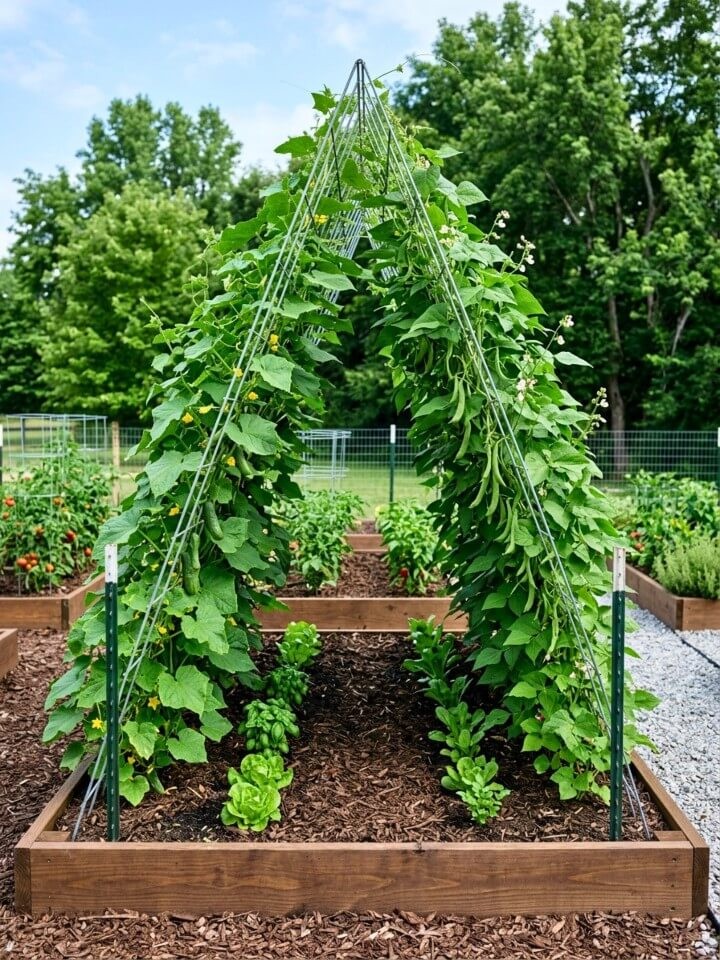
Two panels. One triangle. Double the harvest.
That’s the whole idea behind the A-frame trellis, and it’s why so many market gardeners swear by this design. The shape gives you outer surfaces for climbing crops and a shaded interior tunnel underneath — prime real estate for cool-season greens that would otherwise bolt in summer heat.
What Grows on Top:
- Pole beans (Kentucky Wonder is a classic)
- Pickling cucumbers
- Small watermelon varieties like Sugar Baby
- Luffa gourds
What Grows Underneath:
- Lettuce and arugula
- Spinach
- Cilantro
- Bush basil
Set the base of each panel about six feet apart, lean them together, and lash the top ridge with baling wire wrapped tight in three or four places. A t-post at each corner locks everything down against wind. This structure has survived hurricane-force gusts in coastal gardens when properly anchored.
3. Flat Vertical Wall Trellis
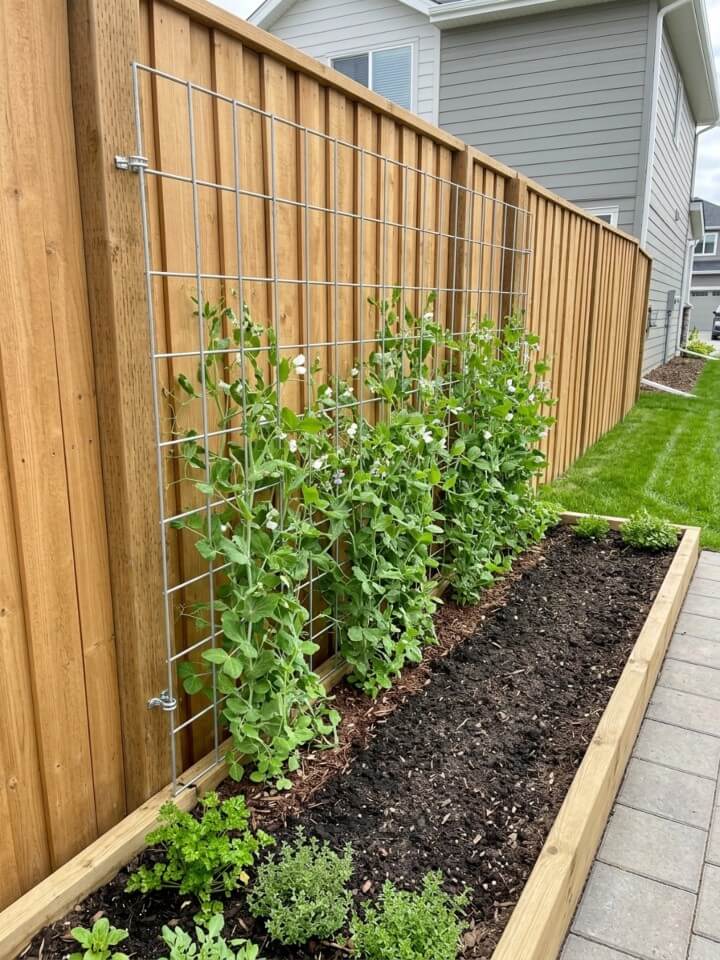
Transform your backyard into a lush paradise with a sturdy cattle panel trellis built to last decades.
Got an ugly fence? A blank shed wall staring at you every time you step outside? This project fixes both problems while doubling as productive garden space.
The trick most people miss is the spacer. Don’t screw the panel flat against the wall. Use scrap 2×4 blocks — even wine corks work in a pinch — to hold the panel two or three inches off the surface. That gap lets air move behind the vines, which prevents powdery mildew and keeps the wall itself from rotting where moisture would otherwise collect.
Screws should go through the panel wire directly into studs or fence posts, not just siding. Six anchor points minimum for a full panel.
4. Cucumber Lean-To
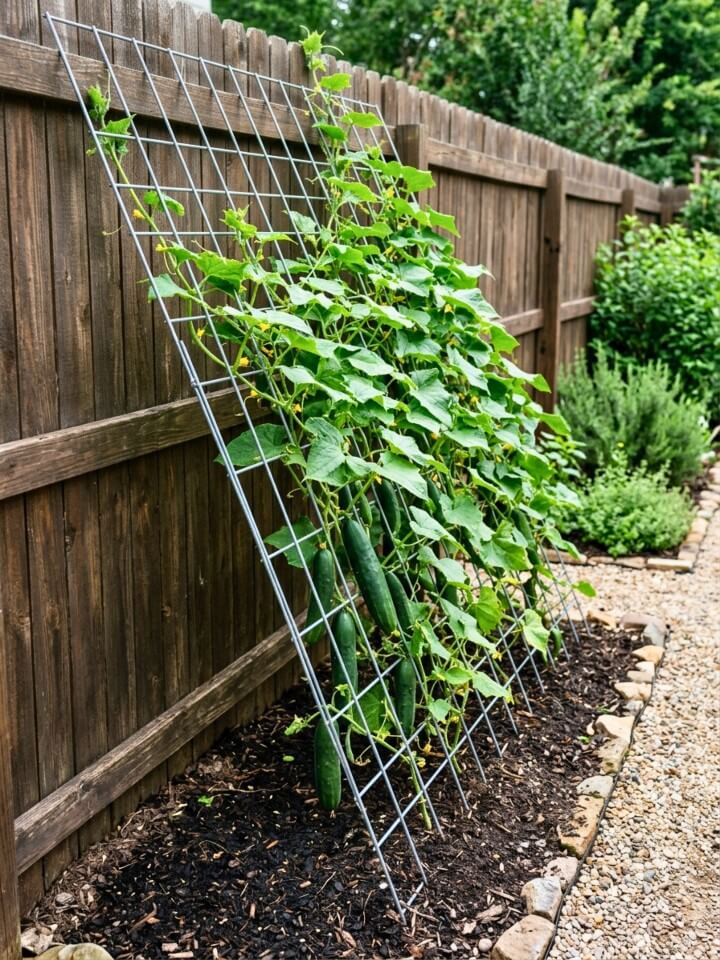
Ever pulled a curly, ground-grown cucumber out of a tangled mess of leaves and thought there had to be a better way? There is.
Lean a cattle panel against your fence at roughly a 60-degree angle. Anchor the bottom with two t-posts driven at a matching angle so the panel can’t kick out under vine weight. That’s it. That’s the setup.
Why this works so well: cucumbers grow straight when they hang. Air circulates freely around the leaves, which cuts powdery mildew dramatically. Harvesting takes seconds because every cucumber is visible at eye level — no crawling, no digging through foliage, no missed fruit turning yellow underneath.
Space seedlings about 10 inches apart along the base. Guide the first few tendrils onto the panel by hand, and after that the plant does all the work. Expect roughly 30% higher yields compared to ground-grown vines on the same square footage.
5. Rose or Climbing Flower Arbor

Late June, warm evening, and you’re walking through an arch dripping with pale pink roses while jasmine perfumes the air. If you already love fragrance-forward borders, this is the kind of structure that turns a simple walkway into a destination. That’s the payoff for one afternoon of work and a couple of growing seasons of patience.
Building the arbor itself follows the same basic method as the garden arch, but with one critical upgrade — depth. Roses get heavy. A mature New Dawn climber can easily weigh 40 pounds when soaked from rain. Skimpy rebar won’t hold it. Drive supports at least 24 inches deep, or better, sink them in concrete footings if you’re planting long-lived perennial vines.
Best pairings for maximum impact:
| Plant | Bloom Season | Notes |
|---|---|---|
| New Dawn Rose | Late spring to fall | Reliable repeat bloomer, disease-resistant |
| Zephirine Drouhin | Summer | Thornless, fragrant, works in partial shade |
| Clematis (Jackmanii) | Midsummer | Layers gorgeously with roses |
| Star Jasmine | Late spring | Evening fragrance, evergreen in mild zones |
Tie new canes horizontally during the first year. Roses bloom on lateral shoots, and horizontal training multiplies those shoots dramatically. Skip this step and you’ll have a tall, leggy plant with flowers only at the very top.
6. Tomato Cage Tunnel
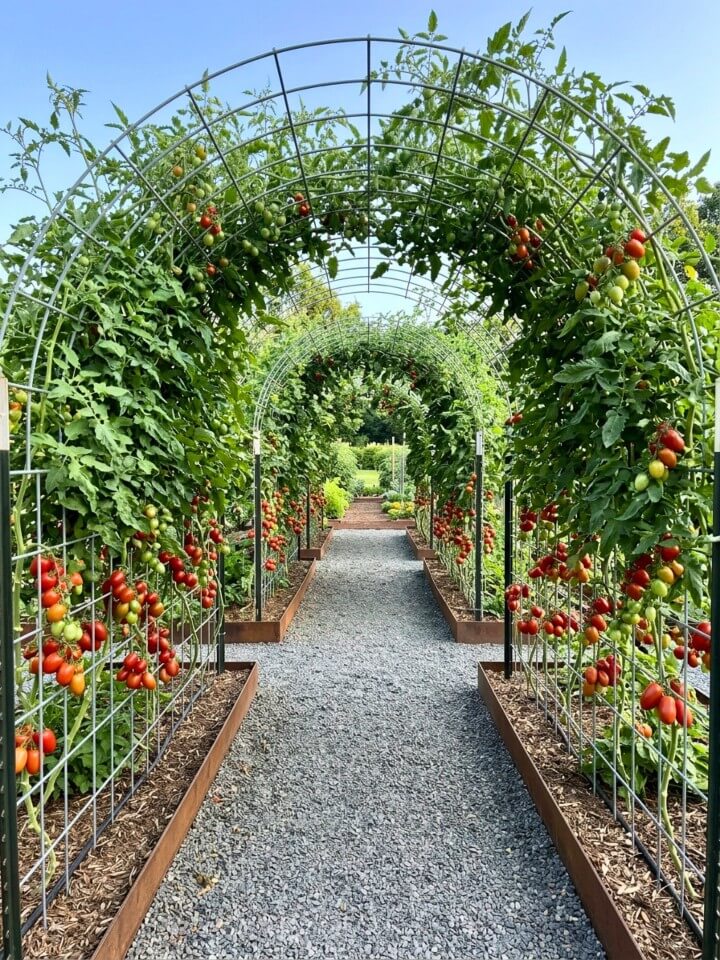
Forget those flimsy wire cages that collapse by August. A cattle panel tunnel handles indeterminate tomatoes that grow eight, ten, even twelve feet tall without breaking a sweat.
Bend two panels into a tunnel shape about four feet wide and lash them at the top. Anchor every corner with t-posts sunk 18 inches deep. Plant tomatoes along both outer sides — Cherokee Purple, Sungold, San Marzano all work beautifully — and let them climb the walls of the tunnel.
The real bonus is walking underneath during harvest. No bending, no reaching through tangled foliage. Tomatoes hang at eye level, ripen evenly because air moves freely, and picking a bowl full takes maybe five minutes.
7. Pumpkin and Winter Squash Arch
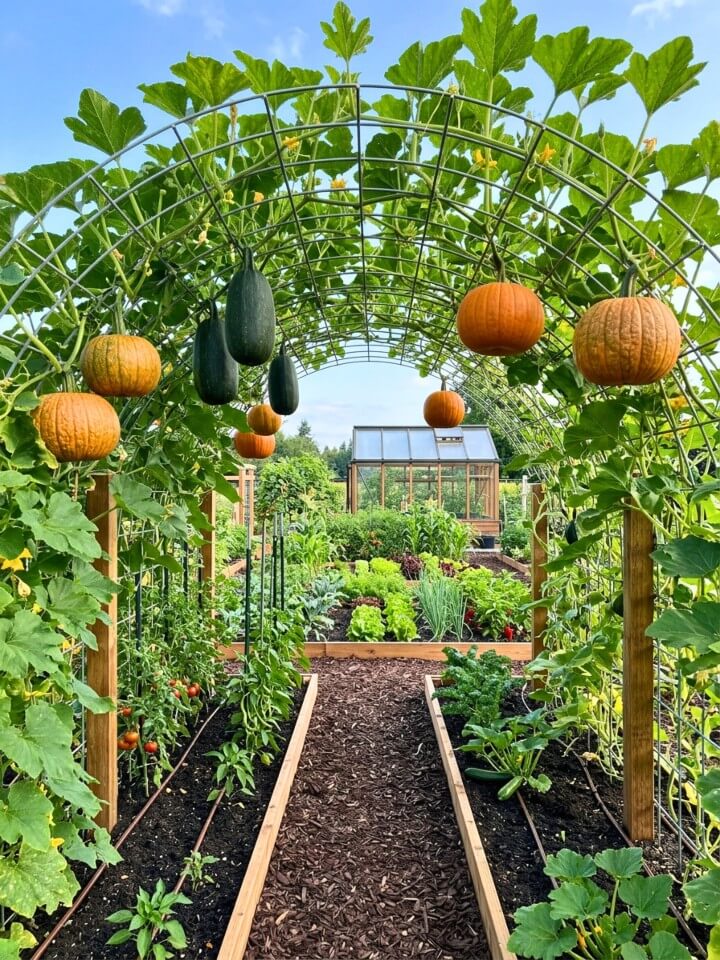
Heavy fruit + tall arch = questions from every neighbor who walks by.
Winter squash and pie pumpkins can absolutely grow overhead, but the arch has to be built for the weight. Use double rebar anchors — two stakes per corner, driven 24 inches down — and choose smaller varieties like Sugar Pie, Delicata, or Butternut rather than 40-pound giants.
Train vines up the sides during the first three weeks. Once fruit forms, support each squash with a sling made from old t-shirts or pantyhose tied to the panel. The stem stays intact, the fruit ripens with airflow on all sides, and you avoid the flat, rotted underside that ground-grown squash always develops.
8. Pea and Sweet Pea Fence
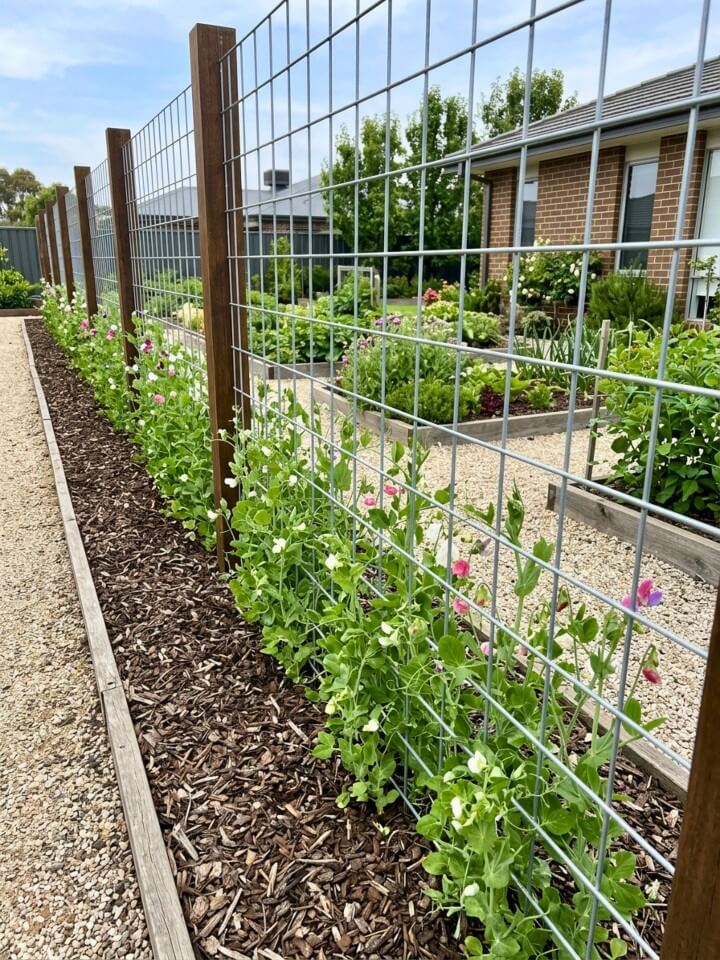
Explore stunning cattle panel trellis ideas that turn ordinary gardens into vertical growing masterpieces. Peas are the easiest crop on this entire list, and they practically climb themselves once given something to grab.
Stand a cattle panel upright between two t-posts, roughly six feet tall once installed. Sow shelling peas, snap peas, or fragrant sweet peas along the base in early spring — peas love cool weather and germinate in soil as cold as 40°F.
Within two weeks, tendrils reach out searching for anything to hold. The panel’s grid pattern is perfect. No tying, no training, no fuss.
Harvest stays quick because pods hang at chest height instead of hiding under leaves at ankle level. One panel produces enough peas for weekly meals through the entire spring.
9. Grape or Kiwi Vine Trellis
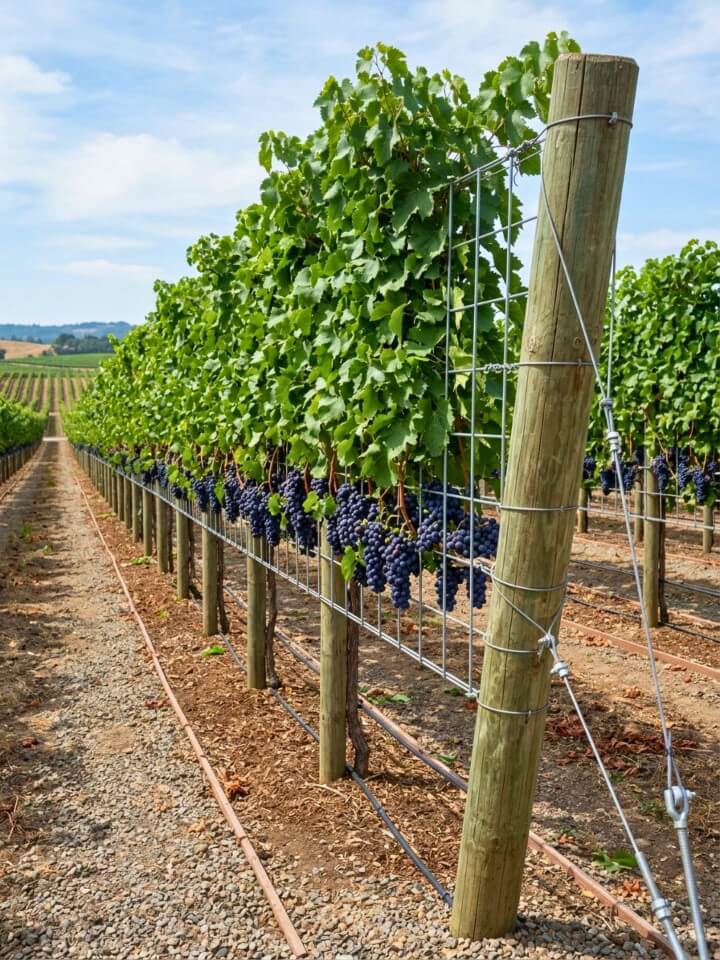
Woody perennial vines need serious infrastructure. This isn’t a one-season project — it’s a twenty-year commitment, so build it right the first time.
Sink 4×4 cedar or pressure-treated posts three feet into the ground, ideally in concrete, spaced about eight feet apart. Attach cattle panels horizontally along the posts to create a strong training wall. Concord grapes, muscadines, or hardy kiwi (Actinidia arguta needs both male and female plants) all work beautifully here.
Prune aggressively every winter. Grape vines produce fruit on one-year-old wood, so last year’s growth becomes this year’s harvest. Cut back roughly 80% of the previous season’s growth to keep production high and prevent an overgrown mess.
10. Hops Trellis Tower
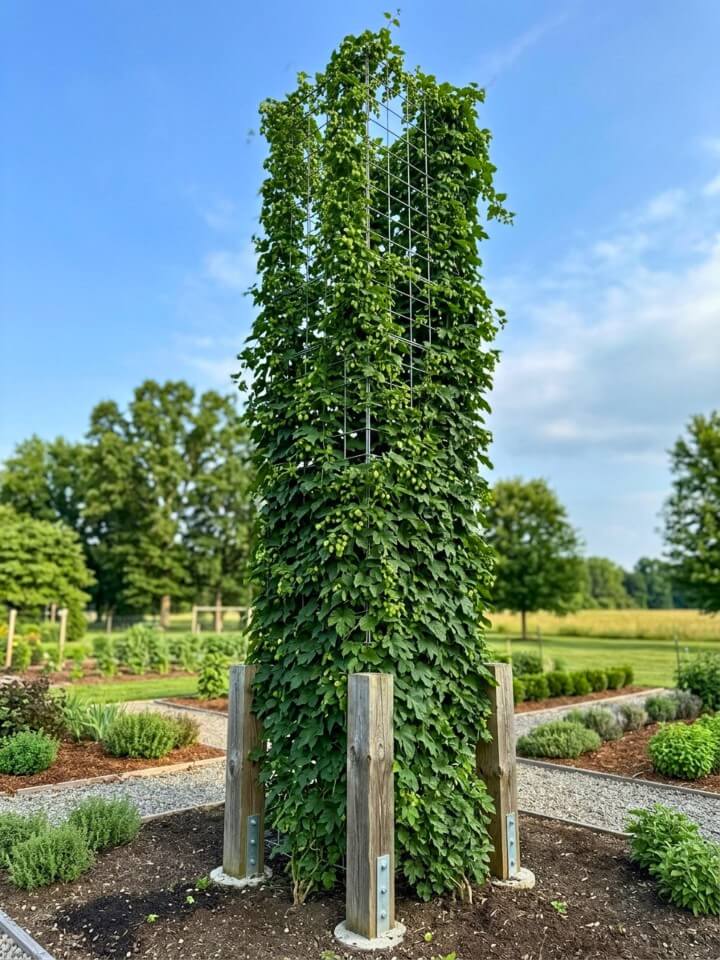
Home brewers, this one’s for you.
Hops grow fast — up to a foot per day during peak summer — and they need serious vertical space. A standard tower reaches 12 to 16 feet, which means sinking two 4×4 posts deep and stretching cattle panels vertically between them.
Cascade, Centennial, and Chinook are reliable varieties for backyard growers. Plant rhizomes in early spring about three feet apart, and expect a light harvest the first year followed by explosive growth in year two.
Train the bines clockwise around twine or directly through the panel grid during the first month. After that, they take off on their own and produce enough cones for a full brewing season.
11. Raspberry and Blackberry Support
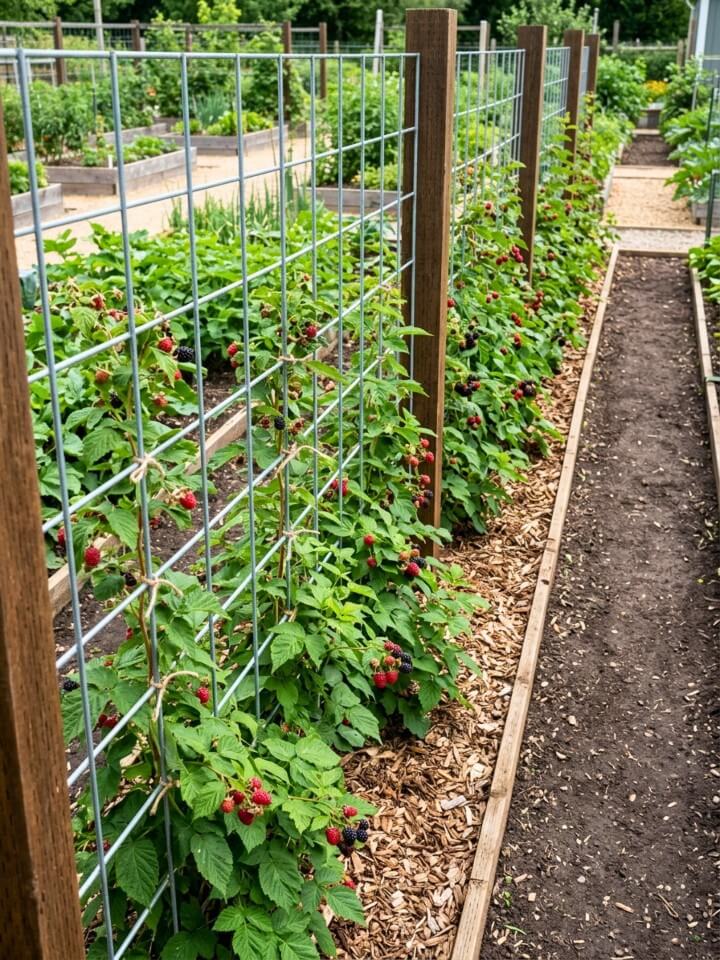
Anyone who’s grown brambles knows the problem — canes flop, tangle into pathways, and turn harvest into a thorny wrestling match.
Solution: a simple two-panel wall running along the row. Set 4×4 posts every eight feet, attach cattle panels horizontally between them at about waist height, and let canes grow up through the grid. The wire holds fruiting canes upright without any tying required.
Prune second-year canes to the ground right after harvest — brambles fruit on two-year-old wood, then die. Cutting them out immediately opens space for this year’s new canes to mature properly.
Triple Crown blackberries, Heritage raspberries, and Boysenberries all thrive on this system with dramatically cleaner harvests.
12. Cut Flower Trellis Wall
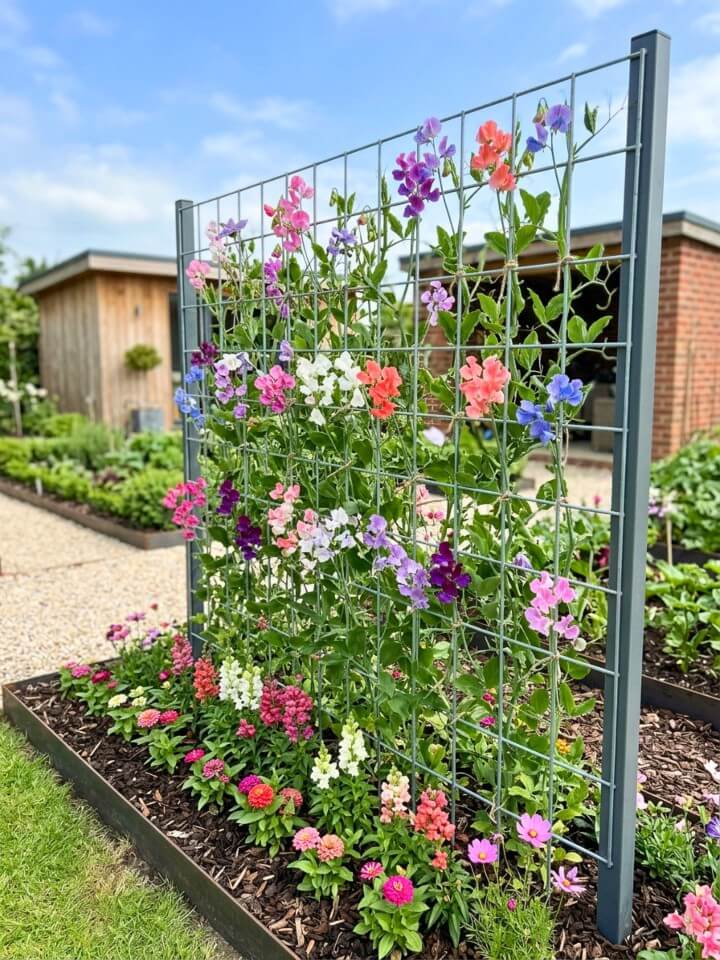
Backyard flower farmers, listen up. If you’re growing long-stem blooms for bouquets, weddings, or farmers market sales, weak stems are killing your profit margins.
A vertical cattle panel wall solves this instantly. The grid supports stems as they grow, forcing them straight and tall instead of bending toward the light. Result? Florist-quality stems from your own garden.
Best Crops for This Setup:
- Sweet peas (spring)
- Snapdragons (spring and fall)
- Climbing nasturtiums (summer)
- Amaranth (late summer)
- Cosmos (all summer, tie loosely)
Install the panel along a north-south axis when possible so both sides get roughly equal sun. Harvest early morning when stems are fully hydrated for the longest vase life.
13. Chicken Run Roof or Tunnel
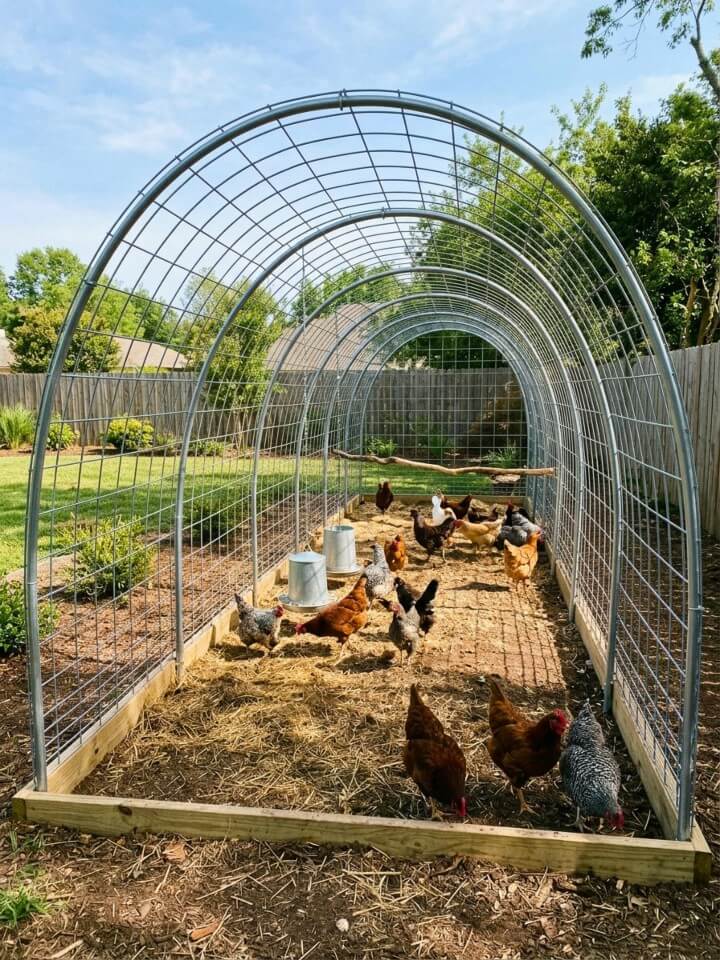
Boost harvests and save space with a cattle panel cucumber trellis that keeps vines healthy and disease-free. Hawks are patient predators. They’ll watch a flock for weeks before making a move, and a single attack can wipe out multiple birds in minutes.
An arched cattle panel roof over your chicken run stops that cold. Bend panels across the top of the existing run walls and secure them with fence staples or heavy zip ties every 12 inches. Overhead protection also blocks climbing predators like raccoons that would otherwise drop in from trees.
Bonus feature — plant cucumbers, gourds, or grapes along the outside edges. The vines climb across the arched top, creating natural shade that drops summer temperatures inside the run by 10 to 15 degrees while keeping the flock cooler and calmer.
14. Compost Bin Walls
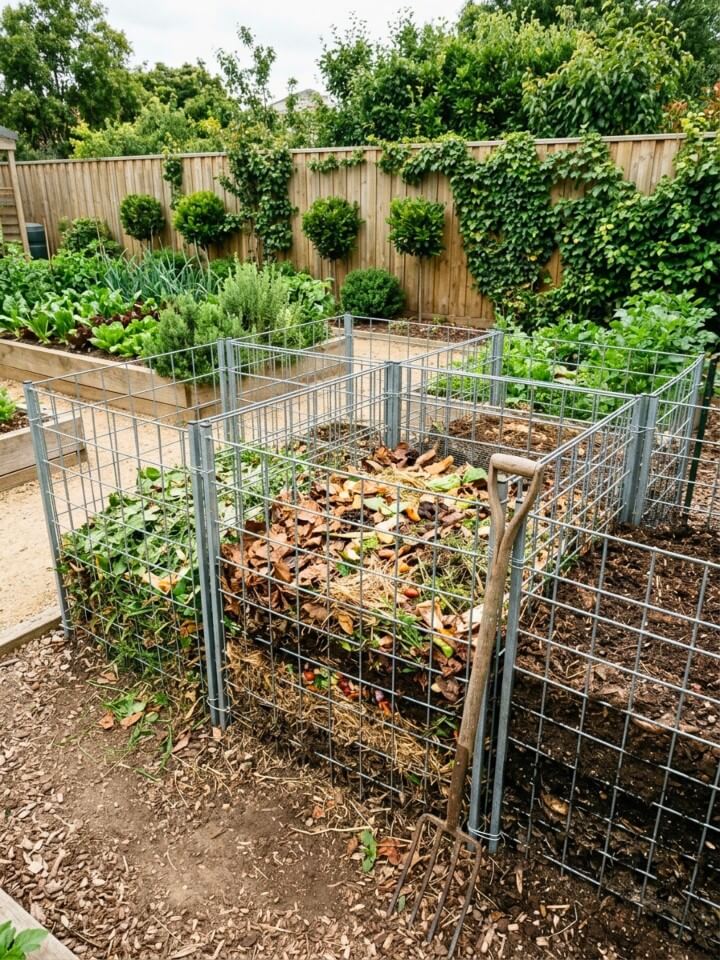
Grow climbing veggies vertically using a cattle panel for trellis support that’s affordable and rust-proof. Store-bought compost bins cost anywhere from $80 to $300, and most of them are ugly plastic boxes with poor airflow.
Skip that. Cut one cattle panel into three roughly five-foot sections using bolt cutters. Bend each section into a circular ring about four feet across, and wire the ends together. Done. Three compost bins for under $30 total.
The open grid is the entire point. Compost needs oxygen to break down properly, and these bins provide it on all sides. Turning becomes ridiculously easy — just lift the ring off the pile, set it beside the pile, and fork material back into the ring.
Kitchen scraps become finished compost in roughly three months during warm weather.
15. Living Privacy Screen
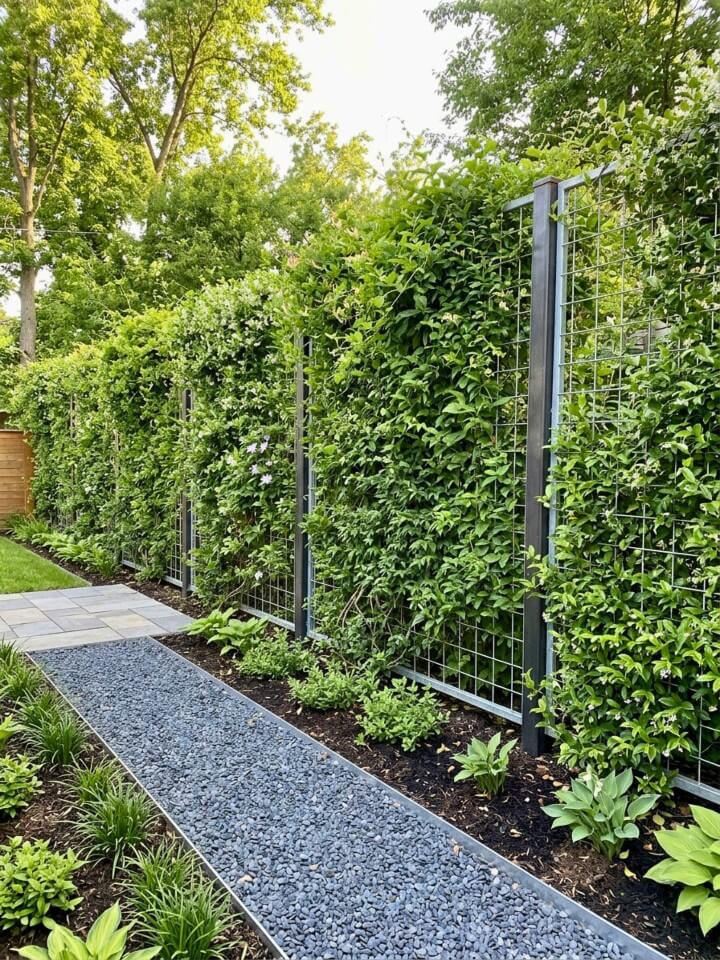
Wooden fences cost thousands. Vinyl fencing looks fake. Concrete walls feel like a prison.
A living privacy screen costs a fraction of any of those options and actually gets more beautiful every year.
Install cattle panels between 4×4 posts along the property line where you need coverage — maybe 20 feet blocking a neighbor’s second-story window, or 40 feet along a patio. Anchor posts three feet deep for wind resistance since a fully vined panel catches serious wind load.
Fast Climbers Fill in Quickly:
- Hops — 20 feet in one season, dies back each winter
- Hardy kiwi — permanent, dense summer coverage
- Trumpet vine — attracts hummingbirds constantly
- Climbing hydrangea — slower start, spectacular payoff
Full coverage typically arrives by year two or three depending on the climber chosen.
16. Greenhouse or Hoop House Frame
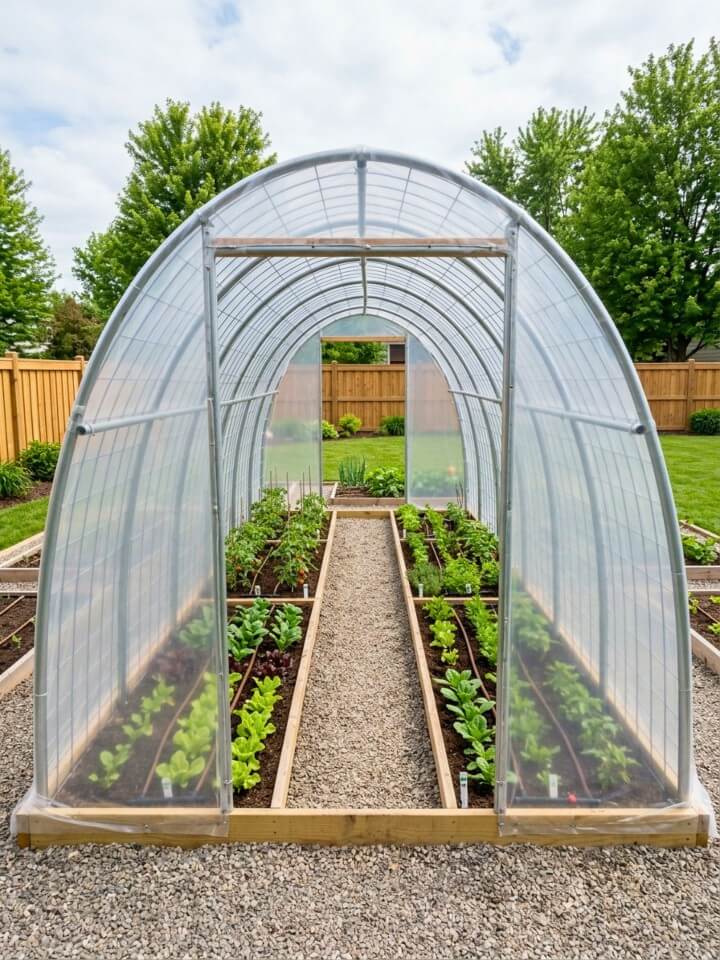
Season extension is where cattle panels really shine. A simple hoop house frame lets you start tomatoes in March, harvest lettuce in December, and grow through frost that would kill an unprotected garden.
Bend three or four panels into arches over a raised bed roughly four feet wide. Anchor each side onto rebar driven deep, then connect the panels along the ridge with a length of PVC or a wooden 2×4 to lock the shape.
Cover with 6-mil greenhouse plastic, secure the edges with wiggle wire or wooden lath strips, and add roll-up sides for ventilation. On sunny 40-degree days, interior temperatures easily hit 70°F, giving cool-season crops a huge head start.
17. Espalier Fruit Tree Trainer
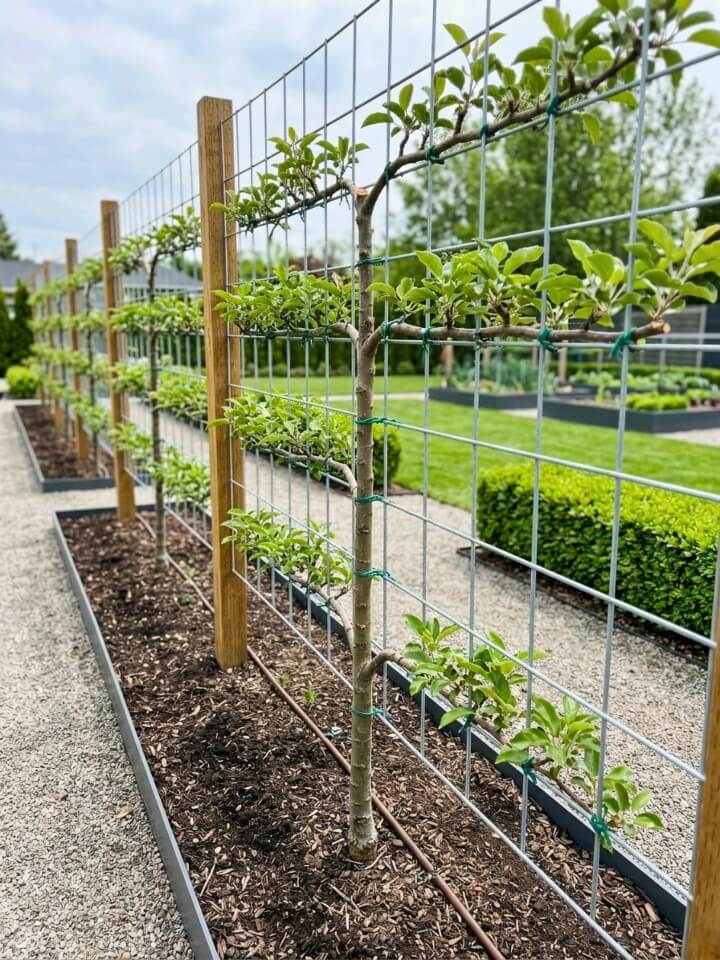
Espalier sounds fancy — it’s really just training a fruit tree to grow flat against a wall or trellis. Cattle panels make the geometry ridiculously easy because the grid pattern gives you built-in horizontal lines to train branches along.
Attach a panel vertically to a sunny south-facing fence, leaving a few inches of gap for airflow. Plant a young dwarf apple, pear, or Asian pear directly in front, and select four to six main branches to train sideways along the wires.
The payoff comes in year three. A properly espaliered tree produces full-sized fruit in about three square feet of ground space, making orchard-quality harvests possible in even the smallest suburban yards.
18. Sweet Potato Vine Trellis
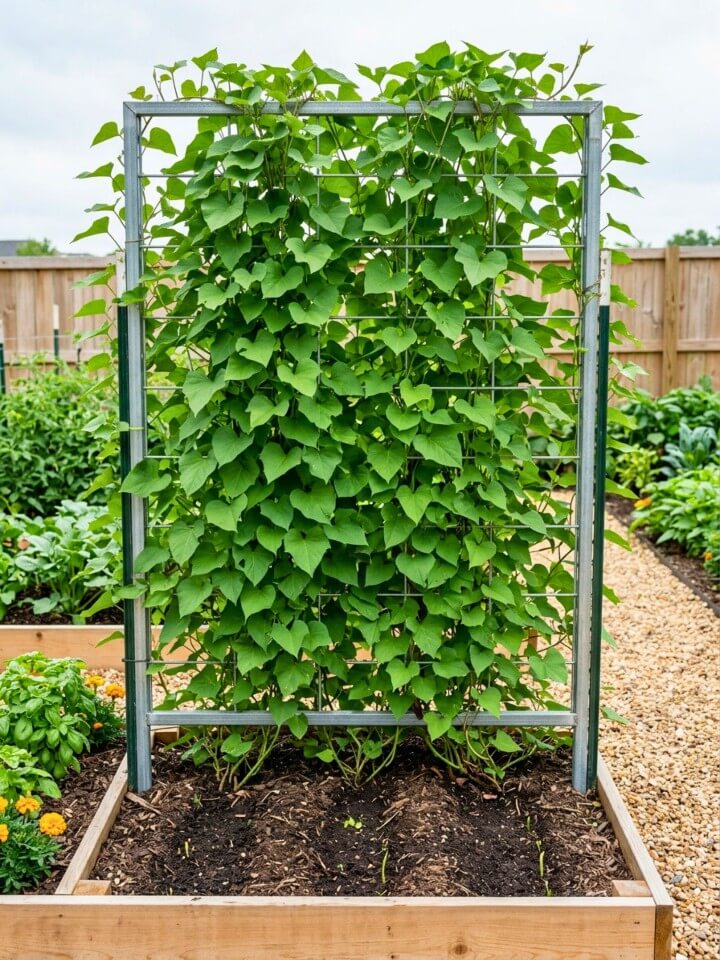
Most gardeners let sweet potato vines sprawl across the ground where they root at every node, tangle into a jungle, and steal energy from the tubers you actually want to harvest.
Send them up instead.
Stand a cattle panel vertically along one edge of the bed, plant slips at the base, and gently thread young vines through the grid openings during the first three weeks. Once trained upward, the plant channels its energy into root production instead of endless side-vining.
Beauregard, Georgia Jet, and purple-fleshed varieties like Okinawan all respond well. Harvest yields typically increase 20 to 40% compared to sprawling vines, and digging tubers becomes far easier without a mat of stems in the way.
19. Dog or Garden Fence
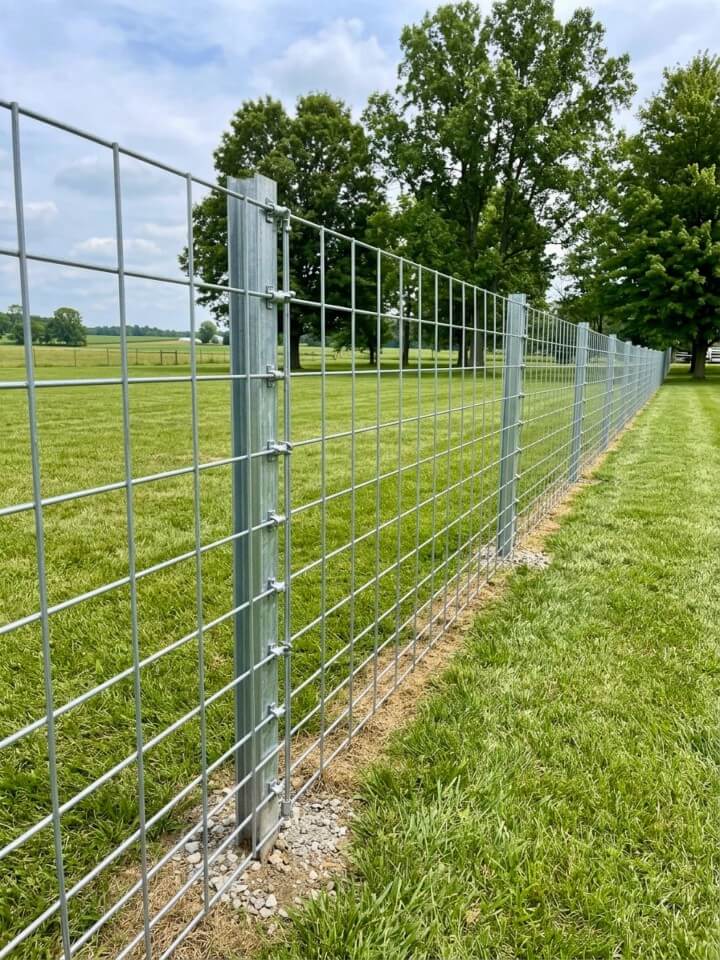
Chain link is expensive and looks industrial. Wooden fences rot. Chicken wire sags within a season.
A cattle panel fence solves all three problems for around $2 per linear foot in materials.
Set 4×4 or metal t-posts every eight feet along the fence line. Attach panels using fence staples, wire, or heavy-duty zip ties at six points per panel. The result is a fence that stays perfectly rigid for decades, resists digging because the wire extends to ground level, and doesn’t block airflow or sightlines through the yard.
For large dogs, add a strand of hot wire along the top. For small dogs or rabbits, run hardware cloth along the bottom two feet to prevent squeeze-throughs.
20. Malabar Spinach or Vining Greens Tower
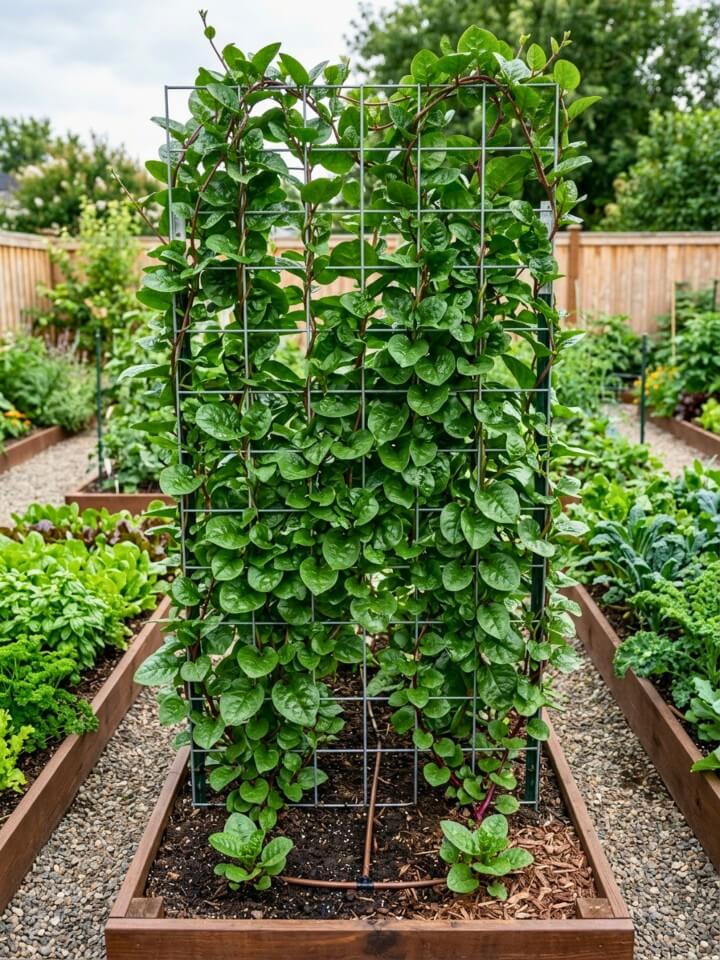
Regular spinach hates summer. First heatwave hits and it bolts, turns bitter, and dies within a week.
Malabar spinach does the opposite — it loves heat, produces continuously through August humidity, and tastes remarkably similar to real spinach when cooked. The catch is that it grows as an aggressive vine that needs vertical support.
A single cattle panel bent into a cylinder about three feet across creates a perfect tower. Plant four to six seedlings around the base, thread young vines through the grid, and harvest leaves continuously from July through first frost.
Red-stemmed varieties are particularly striking as ornamentals. Neighbors constantly ask what the beautiful vine is, and most are shocked to learn it’s edible.
21. Strawberry Vertical Wall
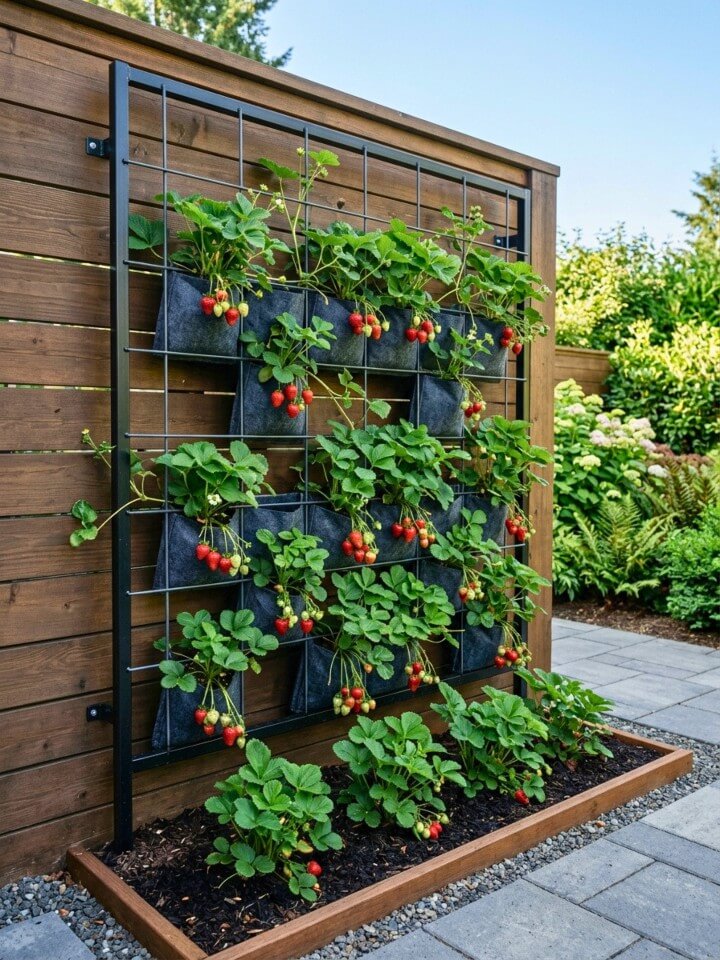
Create a magical entryway using a garden arch with cattle panel design perfect for roses, beans, or gourds. Slugs. That’s the word every strawberry grower dreads. Ground-grown berries mean sharing half your harvest with slugs, pill bugs, and whatever else crawls through the mulch overnight.
Going vertical changes everything.
Mount a cattle panel upright against a sunny fence and attach fabric grow pockets or small plastic planters along the grid at staggered heights. Fill each pocket with quality potting mix and tuck in ever-bearing varieties like Albion, Seascape, or Tristar that produce fruit throughout the season rather than a single June flush.
Berries hang cleanly in open air where they ripen evenly, stay dry, and become nearly impossible for ground pests to reach. Watering takes about two minutes with a wand, and picking becomes a stand-up activity instead of a knee-destroying crawl.
22. Kids Bean Teepee or Playhouse
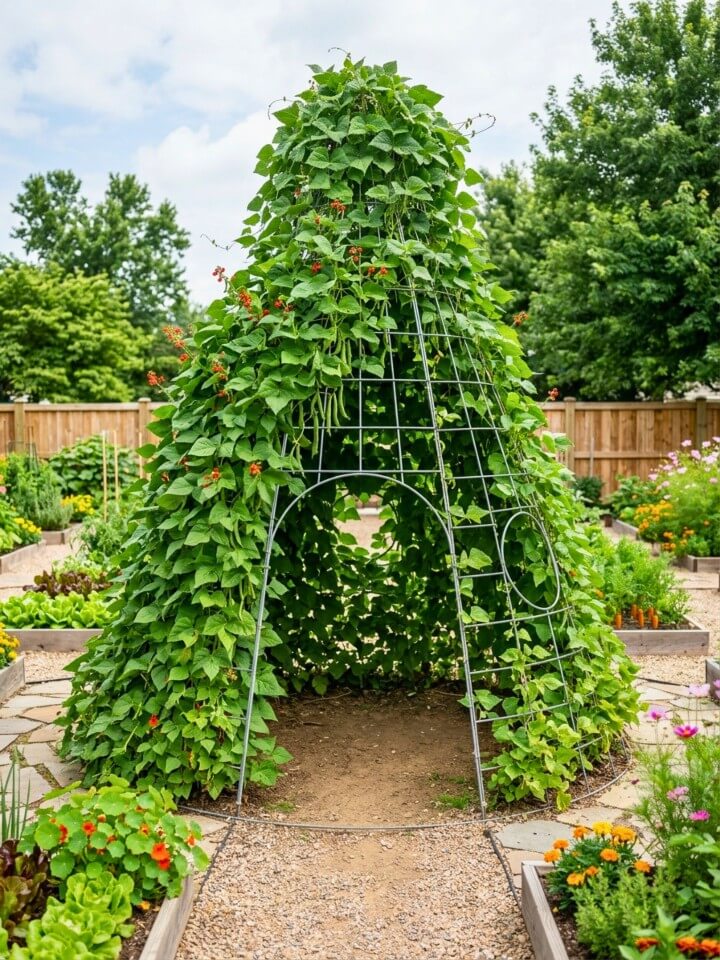
Want kids off screens and into the garden? Build them a fort that grows.
Bend a cattle panel into a rough cone shape, roughly six feet tall and four feet across at the base, leaving one section open as a doorway. Anchor the base with landscape staples or short rebar so it stays put during rowdy play.
Plant scarlet runner beans, hyacinth beans, or morning glories in a ring around the outside. Within six weeks, the whole structure disappears under a canopy of leaves and flowers — a private green hideout with dappled light inside.
Kids water it, watch it grow, chase pollinators around it, and eventually harvest beans right off the walls of their own playhouse. Screen time drops noticeably.
23. Squash and Melon Hammock Trellis
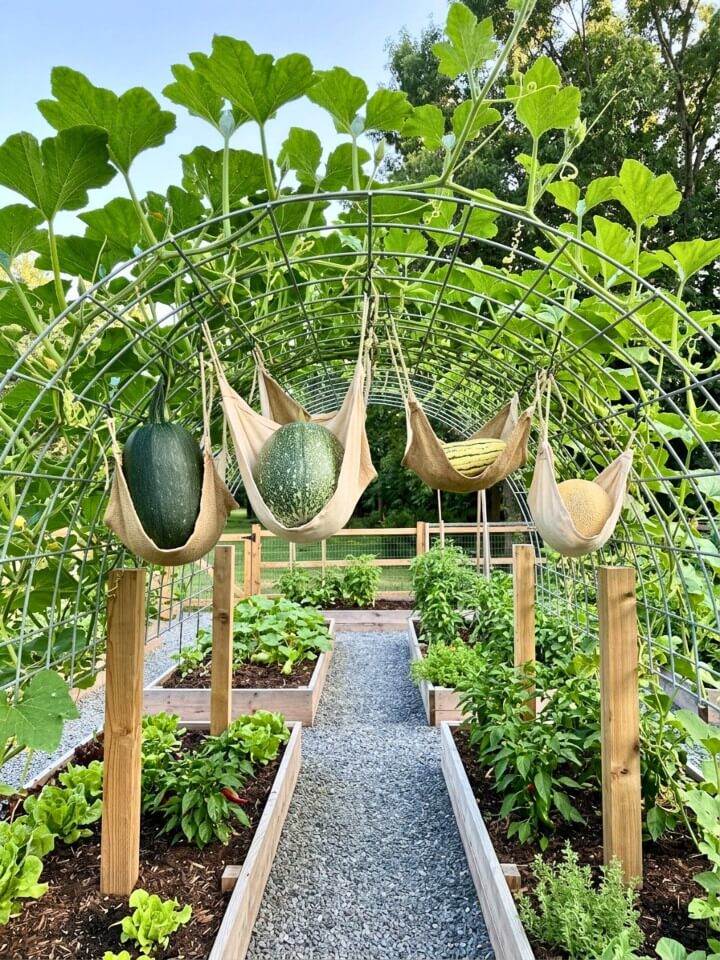
Growing cantaloupe or watermelon vertically sounds impossible until you see it work. The secret is the hammock.
Set up an arched or A-frame panel structure and plant melons at the base. As young fruits form and reach about tennis-ball size, cradle each one in a sling made from old pantyhose, mesh produce bags, or strips of stretchy t-shirt fabric tied to the panel above.
The sling stretches as the melon grows, supporting the full weight without stressing the stem. Sugar Baby watermelons, Minnesota Midget cantaloupes, and Charentais melons all work beautifully in this system.
Fruit ripens with airflow on every side, develops sweeter flavor from full sun exposure, and never touches soggy ground where rot usually starts.
24. Decorative Garden Obelisk
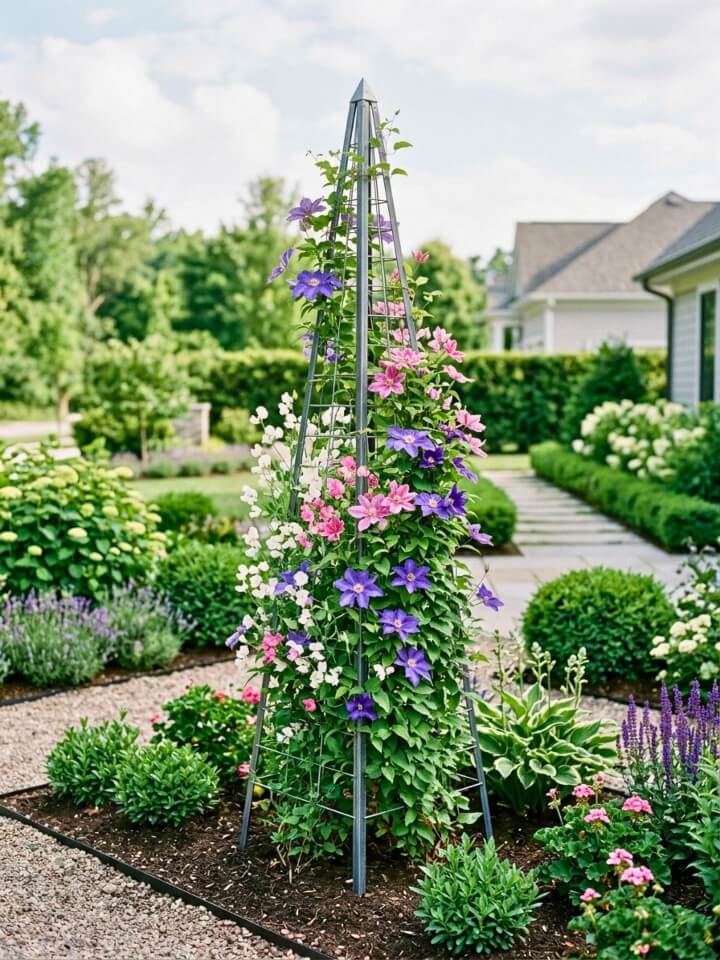
Not every cattle panel project needs to feed you. Sometimes structure exists purely for beauty.
Cut a panel into a four-foot by six-foot section, then bend and wire it into a tapered four-sided tower — wider at the base, narrower at the top. Anchor with a single rebar stake through the center and tuck the whole thing into the middle of a perennial bed or large container.
Clematis wrapping upward. Sweet peas spilling out sideways. Black-eyed Susan vine adding pops of orange all summer. The obelisk becomes the visual anchor that pulls a mixed border together and adds the vertical drama most home gardens desperately need.
Paint it matte black for a modern look, or leave the galvanized finish to weather into a soft silver-gray over time.
FAQs on Cattle Panel Trellises
Smart gardeners always have follow-up questions after the basics. These five answers cover the practical details most tutorials skip, saving you time and costly setup mistakes.
Do Cattle Panel Trellises Need Concrete Footings for Stability?
Most projects skip concrete entirely. T-posts or rebar driven 18 to 24 inches deep hold arches, tunnels, and fences firmly. Concrete footings only make sense for permanent grape arbors or heavy espalier walls expected to last decades.
Can Cattle Panels Handle Heavy Snow Loads in Winter?
Yes, but shape matters. Arched panels shed snow naturally as it slides down the curve. Flat horizontal sections collect snow and can bow under heavy accumulation. Brush off buildup after major storms to prevent stress on anchor points.
How Much Weight Can a Single Cattle Panel Actually Support?
A properly anchored 4-gauge cattle panel holds roughly 200 to 400 pounds of vine and fruit weight when arched or vertically installed. Doubling panels or reinforcing with additional t-posts easily doubles that capacity for heavier crops like pumpkins.
Will Cattle Panels Harm Plant Roots or Soil Chemistry?
Not at all. The galvanized coating stays stable in soil and does not release harmful compounds into growing beds. Roots grow freely around anchor points, and long-term soil tests near installed panels show no measurable changes in pH or mineral content.
What’s the Best Way to Store Cattle Panels During Off-Season?
Lay them flat against a shed wall or stack horizontally on scrap lumber to keep them off wet ground. Avoid leaning single panels upright unsupported since they slowly warp. Covered storage extends the galvanized finish by several extra years.
Conclusion
Cattle panels prove that the best garden solutions often come from the simplest materials. For under $30 per panel, a home gardener can build structures that last decades, support hundreds of pounds of produce, and make backyard growing genuinely productive instead of just decorative.
Start with one project that solves a real problem in your current setup — maybe the tomatoes that always flop, the cucumbers curling on the ground, or the neighbor’s window you’d rather not see. Master that build, learn how the panels behave, and the other 23 cattle panel trellis ideas become progressively easier.
The tools stay simple throughout: bolt cutters, rebar or t-posts, heavy gloves, and a helper for the bigger arches. Every project on this list can be finished in an afternoon.