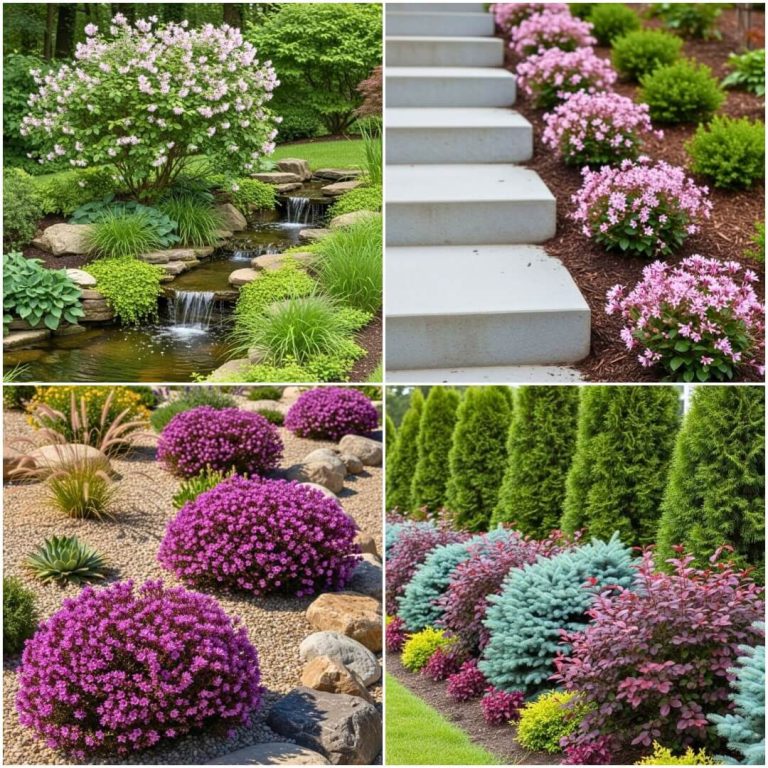
18 Plumbago Landscaping Ideas for A Blue-Flowering Garden
Few shrubs deliver six straight months of sky-blue flowers with as little fuss as Cape plumbago (Plumbago auriculata), the South African native sometimes sold under the older name leadwort. From late spring through the first hard frost, fresh clusters of phlox-blue blooms open in waves across arching, semi-evergreen canes — feeding bees, hummingbirds, and the long-tailed skipper butterfly that uses it as a host plant. It shrugs off heat, deer, salt spray, and weeks without water once roots are settled, which explains why it shows up in coastal cottage gardens, dry succulent beds, and formal poolside landscapes alike.

These 18 gorgeous plumbago landscaping ideas cover front yards, backyards, containers, and tight problem spots, with spacing, companion plants, and pruning notes for each. Whether you’re working with a single sunny corner or rethinking an entire fence line, there’s a layout here that will fit the space without taking over your weekends.
1. Bordering Walkways with Plumbago
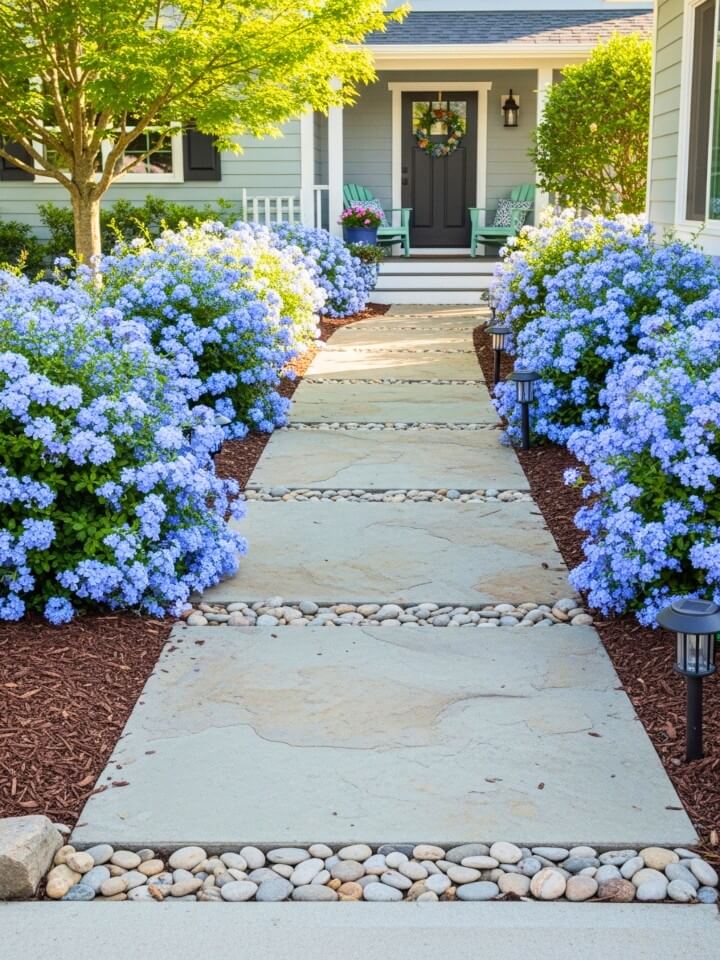
A front walkway feels instantly more inviting when lined with Plumbago auriculata ‘Imperial Blue,’ a compact selection that holds at roughly 3 to 4 feet without heavy shaping. Set each plant about 3 feet apart along the path, leaving 18 inches of clearance from the edge so visitors aren’t brushed by wet branches after a rain. A shallow border of cobblestones or steel edging keeps mulch off the pavers and gives the planting a finished line. Underplant with liriope or dwarf mondo grass for a dark green base that makes the sky-blue clusters pop. One light pruning in late winter, before new buds form, is usually all this border needs.
2. A Loose Flowering Hedge for Year-Round Privacy
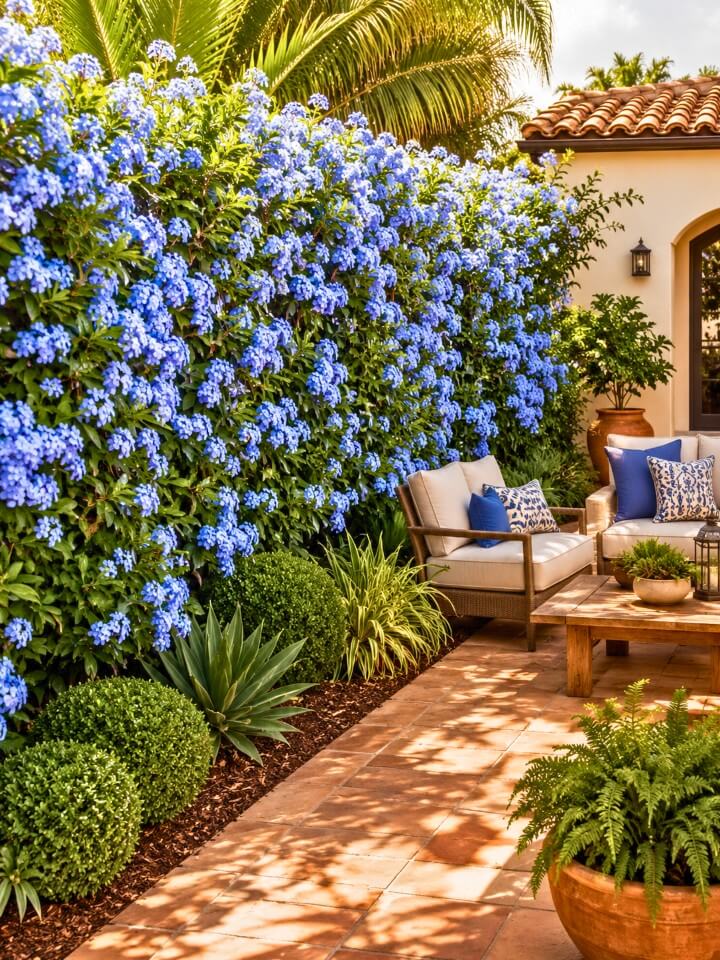
A loose flowering hedge of plumbago softens a fence line or screens a patio far better than a clipped boxwood ever could. Standard Plumbago auriculata reaches 8 to 10 feet at maturity, so set rows 4 to 5 feet on center and expect a continuous wall of sky blue by the second or third summer.
For homeowners comparing different eye-catching privacy landscaping ideas, plumbago is a strong choice because it adds color as well as screening. Skip the hedge trimmer and shape it by hand with bypass pruners, removing the longest canes at their base each February. The looser silhouette flowers far more heavily, and it doubles as a host plant for long-tailed skipper butterflies. In Zones 9 through 11 it stays semi-evergreen; colder gardens treat it as a die-back perennial.
3. Accent Corners with Blue Blossoms
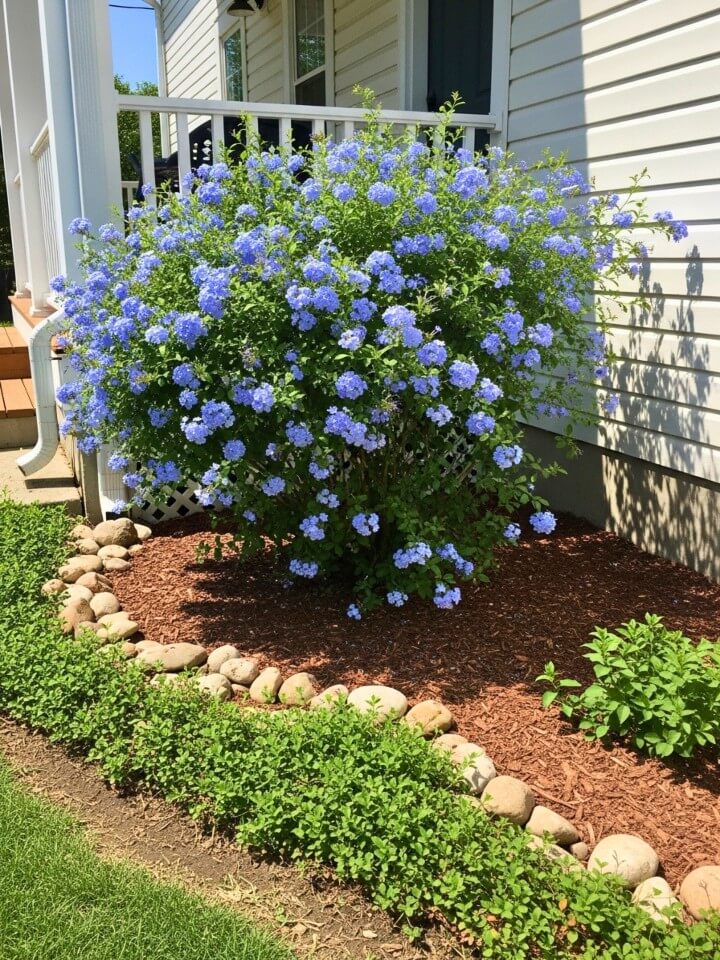
Refresh your garden with plumbago landscaping ideas that blend blue blooms and easy charm. Blank corners near a porch step, garage wall, or back fence usually need one strong plant rather than a crowded mix.
A single Plumbago auriculata set 3 to 4 feet out from the corner fills the gap by its second season, reaching about 5 feet tall and wide if pruned annually. Skirt the base with lower companions like ‘Blue Daze’ evolvulus, dwarf agapanthus, or trailing lantana to hide the bare lower stems that develop on older plants. Spread 2 to 3 inches of pine bark mulch out to the drip line, keeping it pulled back an inch from the main trunk. Once roots establish, deep watering every 10 to 14 days is plenty.
4. Container Plumbago on Patios
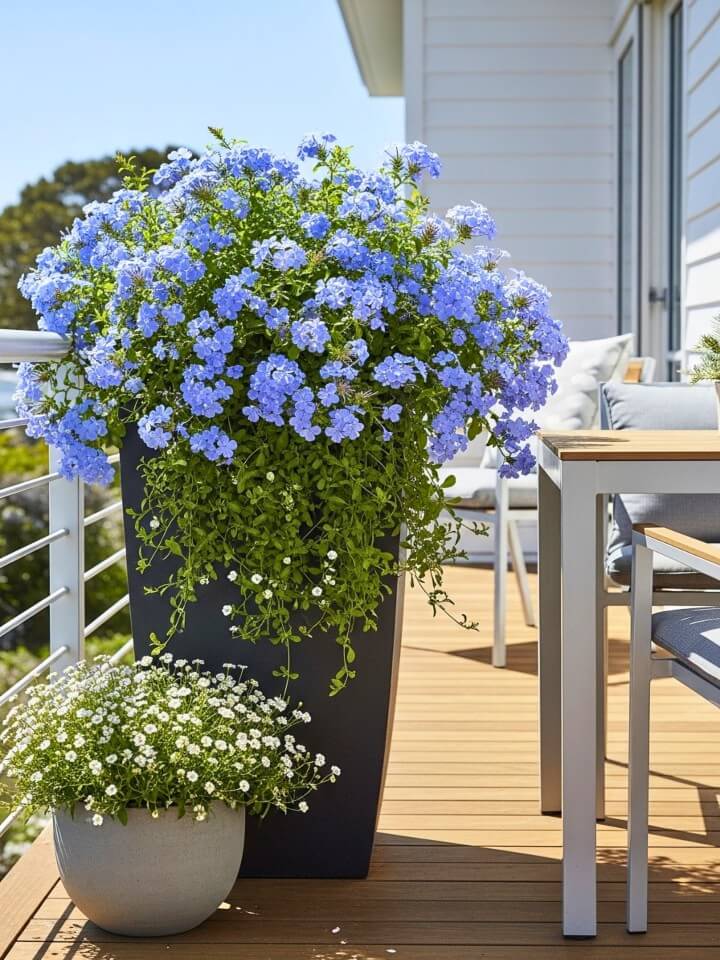
Patios, balconies, and rented yards can still showcase plumbago with the right container setup. Choose a glazed or resin pot at least 18 to 24 inches across with multiple drainage holes — anything smaller dries out by midafternoon in summer heat. Fill with a 70/30 mix of quality potting soil and coarse perlite, and feed monthly with a balanced 10-10-10 fertilizer from April through September. The dwarf ‘Imperial Blue’ selection handles container life best, staying around 3 feet without aggressive pruning. Pair it with trailing white bacopa or silvery dichondra for contrast that doesn’t compete for attention. Outside Zone 9, wheel the pot into a bright garage or sunroom once nights drop below 40°F.
5. A Low-Water Bed Combining Blue Flowers and Succulents
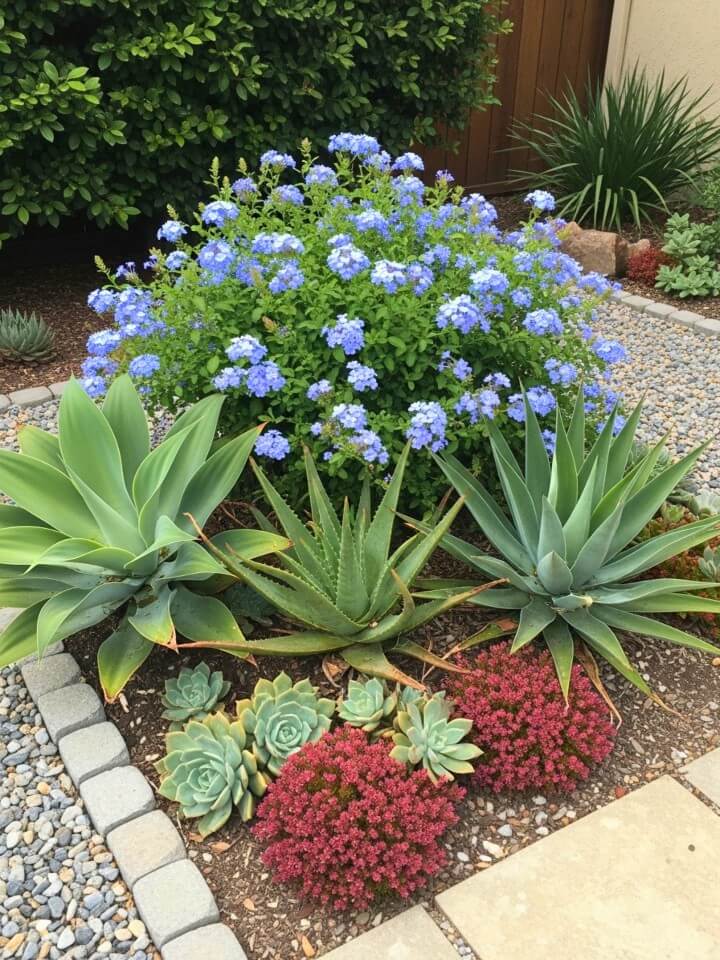
Few combinations highlight plumbago’s airy texture better than the bold rosettes of succulents in the same bed. Position one or two plumbago shrubs as the soft, vertical layer at 4 to 5 feet tall, then anchor the foreground with Agave parryi, Aloe ‘Blue Elf,’ and clumps of Echeveria ‘Afterglow’ at staggered heights. Both groups share a love of full sun and tolerate long stretches between waterings, so a single drip line on a deep but infrequent cycle supports the whole planting. Skip the bark mulch here — a 2-inch layer of decomposed granite or pea gravel keeps succulent crowns dry and reflects light up into the blue flowers. Leave about 24 inches between each shrub and its succulent neighbors.
6. Plumbago Ground Cover for Slopes
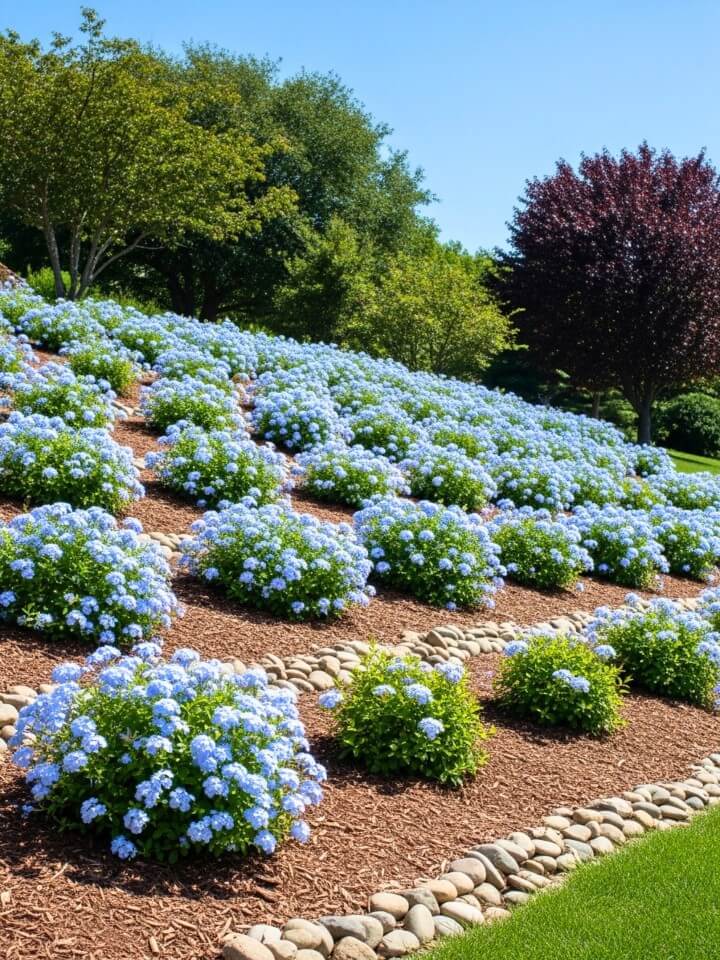
Gentle slopes that erode after every heavy rain benefit from plumbago’s spreading, woody root system, which knits soil together within two seasons. Plant 1-gallon shrubs on a staggered grid, 3 feet apart in each direction, so coverage closes uniformly rather than in stripes. On grades steeper than 20 percent, dig individual planting pockets and back them with small flat stones to slow runoff while roots take hold. Pin landscape fabric only at the upslope edges; plumbago resents being smothered. A single shearing in early spring at 12 inches tall forces dense branching low to the ground, exactly where erosion control matters most. Pair with creeping rosemary or trailing lantana for layered texture.
7. Cottage-Style Garden Beds with Plumbago
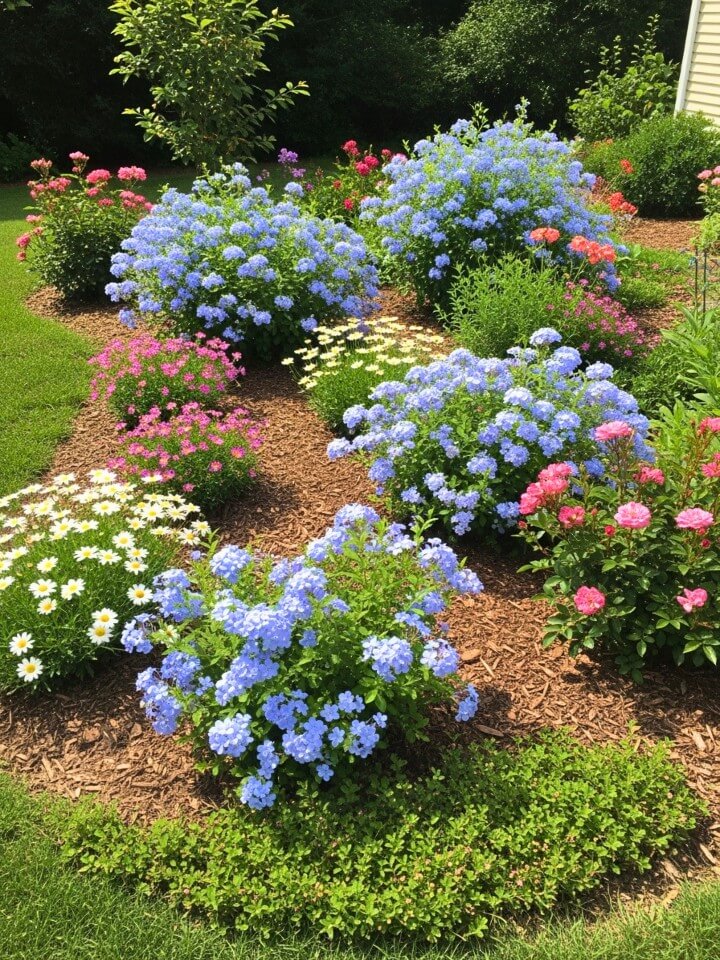
Cottage beds rely on overlapping bloom times, and plumbago carries the blue palette from late spring straight through first frost — a window few perennials match. Plant clusters of three shrubs in a triangle, 30 inches apart, behind a foreground of ‘Becky’ Shasta daisies, ‘Walker’s Low’ catmint, and pale pink David Austin roses.
For a fuller mixed-shrub look, plumbago can also sit near softer flowering shrubs used in elegant hydrangea landscaping ideas, as long as each plant gets the sun and spacing it needs. Leave at least 18 inches of breathing room between plumbago and any rose; powdery mildew spreads quickly when airflow stalls. Mulch with shredded leaves rather than bark for a softer cottage feel, refreshing every spring after pruning. Deadheading isn’t needed — spent flowers shatter cleanly on their own, and the seed pods feed goldfinches into late autumn.
8. Training Long Canes Over a Garden Arch
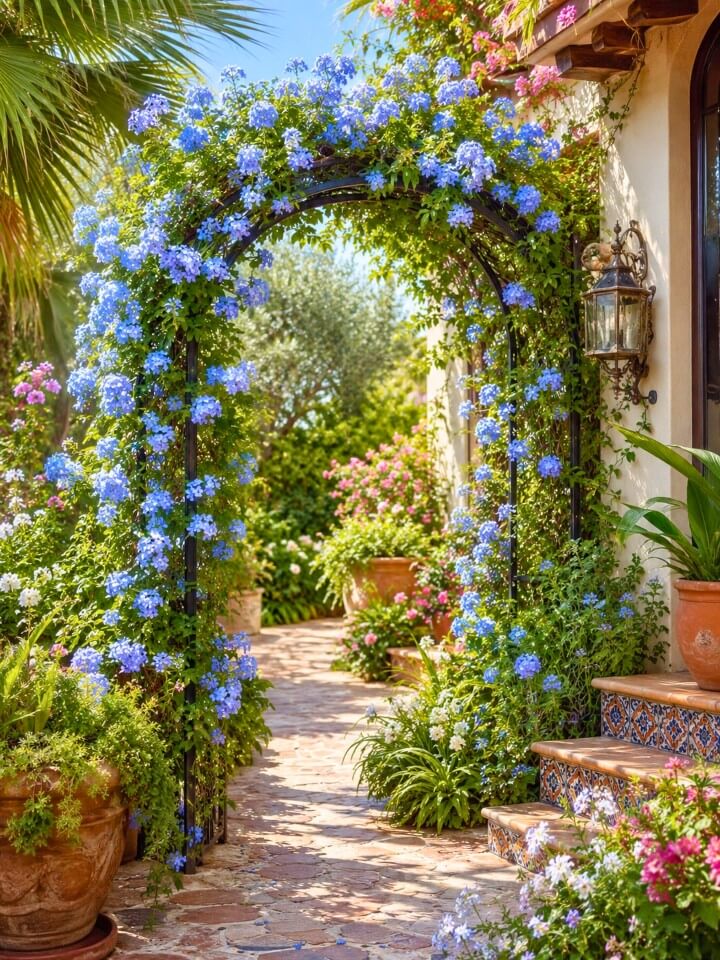
Plumbago isn’t a true vine, but its long, flexible canes can be trained against a trellis or low arch with surprising effect. Choose a sturdy iron or cedar structure at least 6 feet tall and anchor it deeply before planting — once stems are tied in, moving it isn’t practical. Set one shrub on each side of the arch, 12 inches from the legs, and weave new canes through the framework every few weeks during the growing season using soft jute twine. Pinch the tips at the desired height to encourage side shoots heavy with bloom clusters. Expect full coverage by the third year, with a flowering canopy from May to November.
9. Poolside Plumbago Plantings
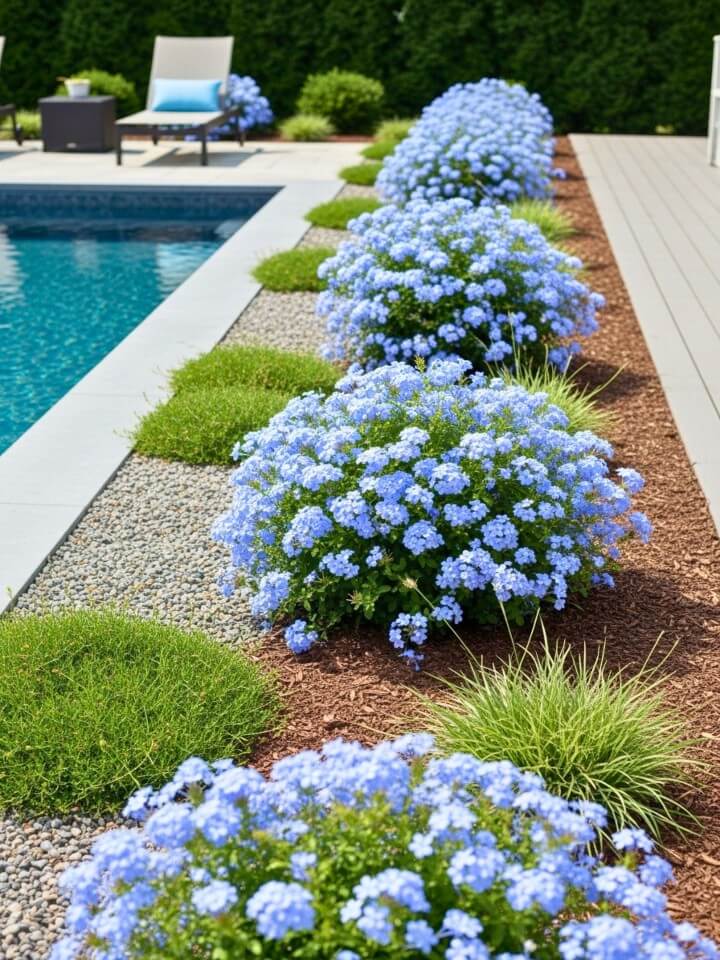
Bring softness to borders with plumbago in landscaping for airy color and year-round appeal. Plumbago earns its spot beside a pool for two practical reasons most ornamentals can’t claim: the flowers don’t drop messy petals into the water, and the foliage shrugs off splashed chlorine far better than hibiscus or bougainvillea. Plant shrubs 4 feet back from the coping and 3 feet apart, giving roots room away from concrete heat.
A gravel mulch instead of bark prevents the bits-in-the-skimmer problem entirely. Mix in dwarf oleander ‘Petite Salmon’ or variegated flax lily behind the plumbago for height layering without breaking sightlines from a lounge chair. Drip irrigation buried under the gravel keeps foliage dry, which discourages the sooty mold that humid pool air sometimes invites.
10. Seasonal Color Contrast with Plumbago
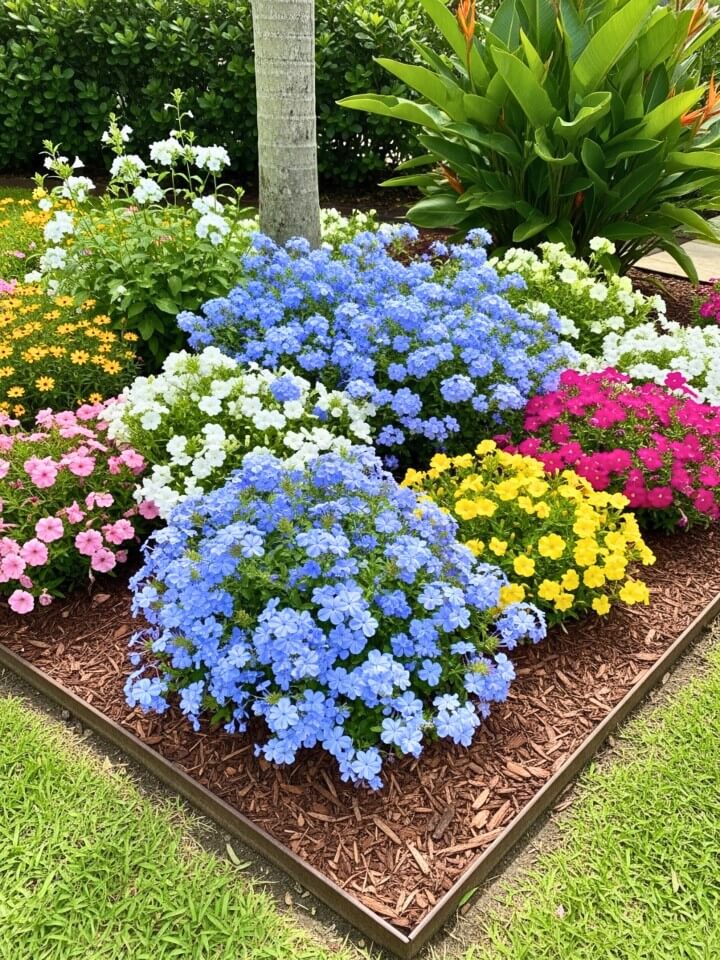
Pairing plumbago with warm-tone bloomers turns a quiet bed into a true focal point from June through October. The phlox-blue flowers sit directly opposite orange on the color wheel, so ‘Profusion Orange’ zinnias, ‘Lemon Symphony’ osteospermum, or yellow lantana create the strongest visual snap. Stagger heights deliberately: plumbago in the middle at 4 feet, zinnias at 18 inches in front, and a taller backdrop like Salvia guaranitica ‘Black and Blue’ at 5 feet behind. Refresh the front annuals each spring while the plumbago anchors the bed year after year. A 3-inch ring of dark hardwood mulch around each plant amplifies the color contrast and keeps soil moisture even through summer heat.
11. Plumbago Along Garden Fences
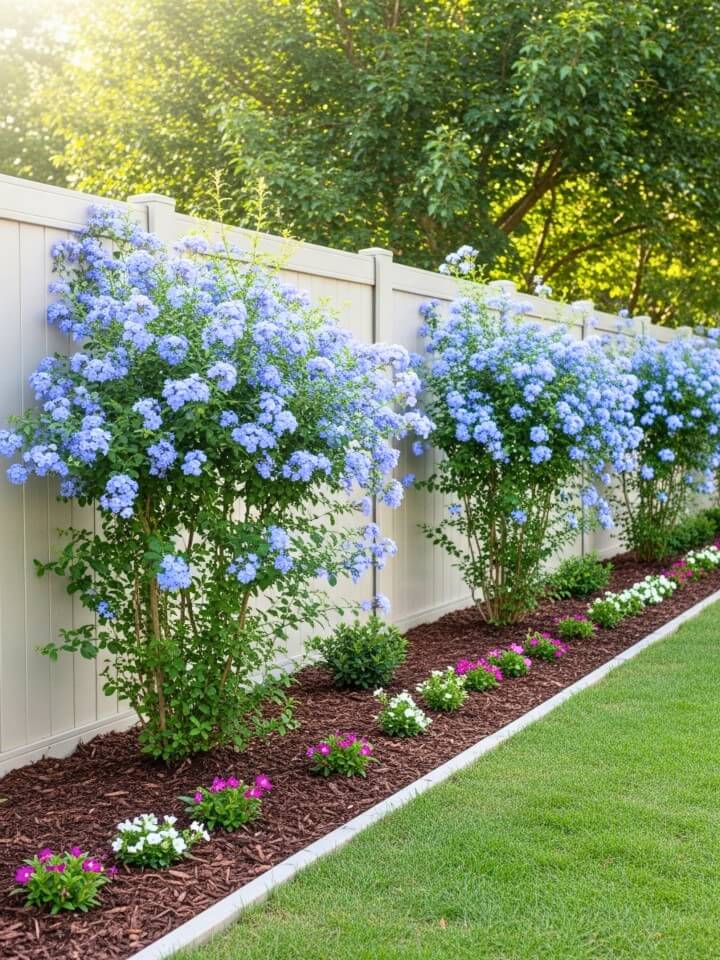
A plain wood or chain-link fence turns into a soft, blue-flecked backdrop when plumbago is planted along its base. Set shrubs 30 inches off the fence so air circulates behind the canes — crowding against the boards traps moisture and invites scale insects. Space plants 4 feet apart along the run, and stake new shrubs loosely during their first year if a strong prevailing wind pushes branches into the fence. A front row of dwarf liriope or ‘Evergreen Giant’ liriope creates a clean two-tier look. For wood fences, paint or seal the surface before planting; you won’t get easy access once the shrubs reach 5 feet of width.
12. A Low-Maintenance Mailbox Bed That Blooms All Summer
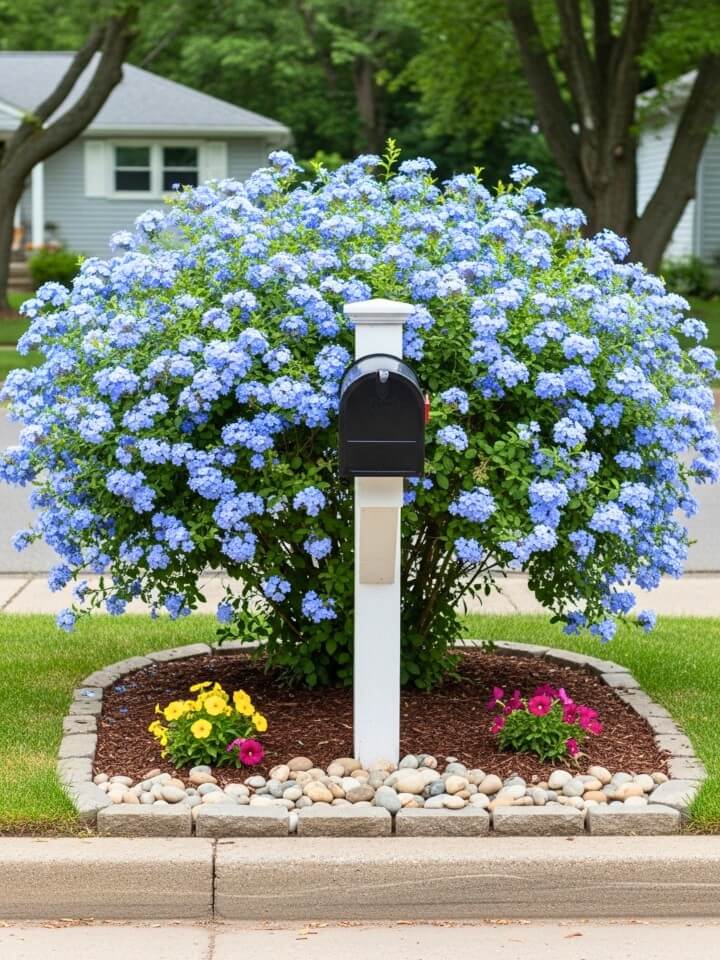
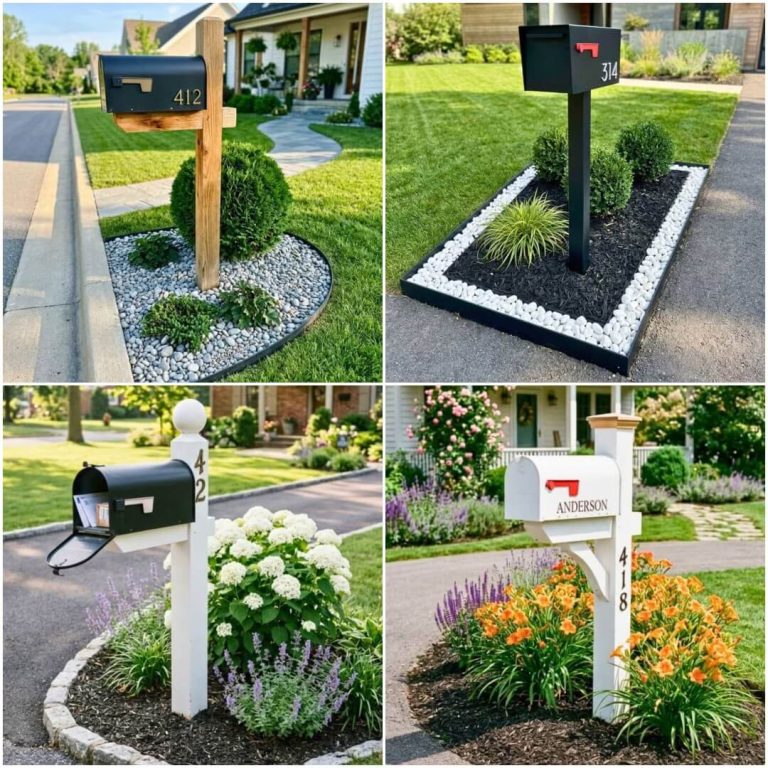
Mailbox beds get baked by reflected pavement heat and ignored by most gardeners by July, which makes plumbago an obvious fit — it thrives on neglect once roots are down. Plant one shrub 12 inches behind the post and a second 18 inches to one side, leaving the carrier’s approach side fully clear. A ring of river rock 24 inches out from the post handles weed control and looks intentional rather than fussy. Tuck in a few ‘Profusion’ zinnias each spring for low color in front. Prune any cane that reaches above the mailbox flag every six weeks during summer so the postal worker never has to push branches aside to deliver.
13. White Plumbago for Soft Contrast
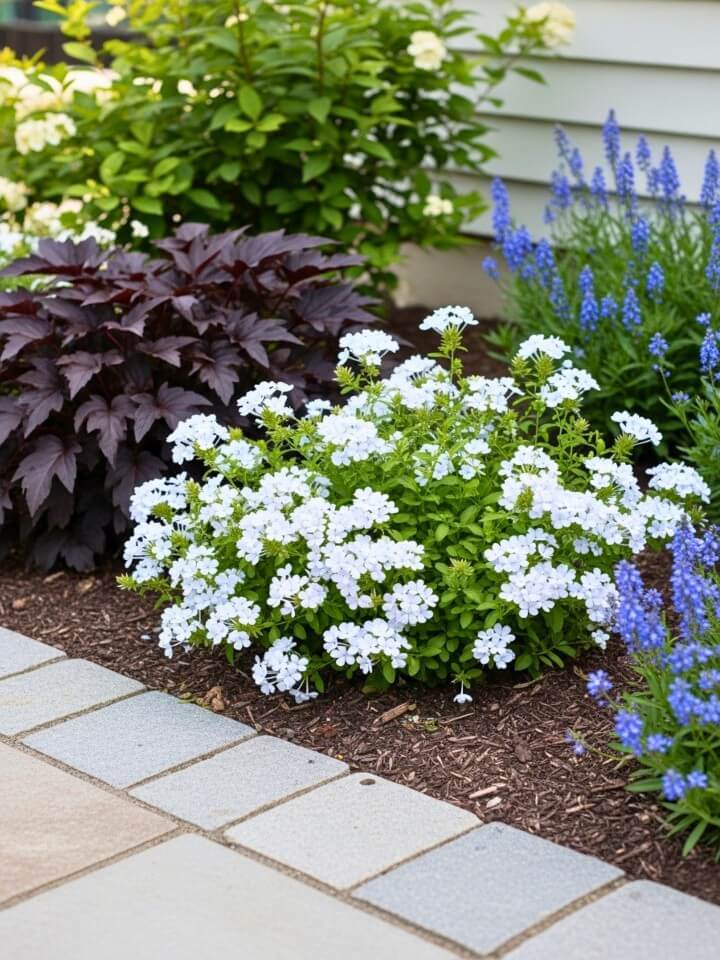
The white-flowered cultivar ‘Alba’ offers the same easy habit as classic blue plumbago with a cooler, more formal presence in the bed. It pairs unusually well with deep purple foliage — ‘Black Lace’ elderberry, ‘Diabolo’ ninebark, or even a backdrop of purple fountain grass make the white clusters glow at dusk. Plant ‘Alba’ 3 to 4 feet apart in groups of three rather than singly; one white shrub alone tends to disappear against light-colored siding or fences. Soil and care match the blue species exactly, though ‘Alba’ blooms slightly less heavily and benefits from a spring feeding of slow-release 14-14-14 fertilizer to push flower production through the long season.
14. Plumbago Mixed with Ornamental Grasses
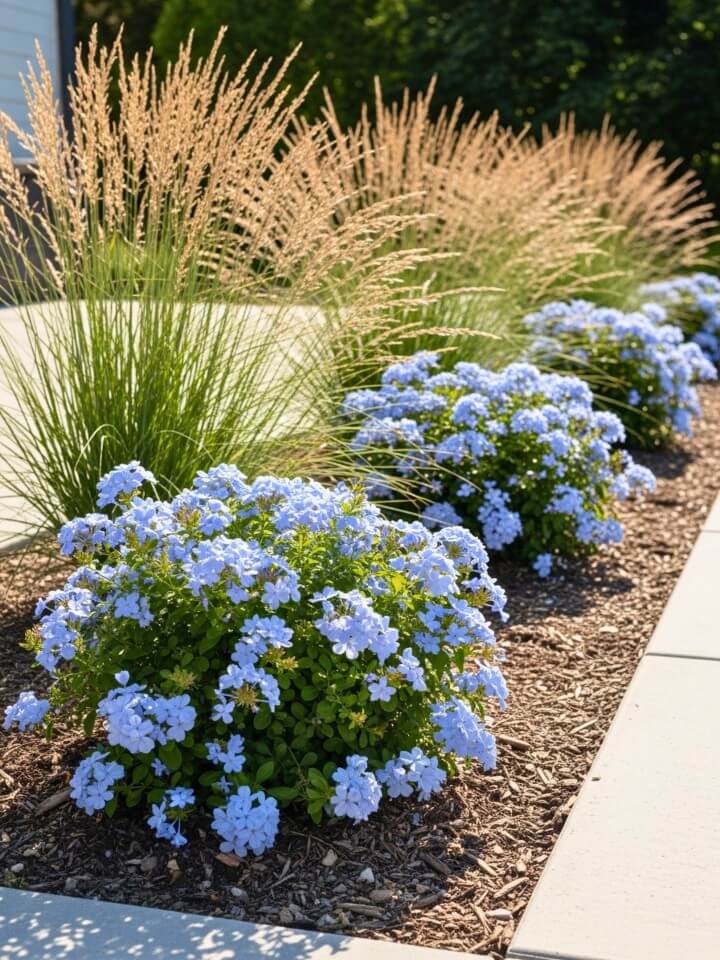
Grasses give plumbago what it lacks — vertical lines and winter structure — while plumbago returns the favor with color the grasses can’t produce. Set ‘Karl Foerster’ feather reed grass or ‘Hameln’ dwarf fountain grass 36 inches behind a row of plumbago shrubs spaced 4 feet apart. The grass plumes catch afternoon light just as plumbago hits peak bloom in late summer. Cut grasses back to 6 inches in February, then prune the plumbago two weeks later so each plant has clear space to emerge. A 2-inch layer of pea gravel between the rows reduces weeding to almost zero and gives the planting a modern, intentional finish that pure mulch can’t match.
15. A Living Backdrop for an Outdoor Dining Area

A 6-foot stretch of plumbago behind a dining table or fire pit creates an outdoor room without the cost of a privacy wall or pergola. Plant the standard species 4 feet apart and 24 inches from any patio edge, allowing for the mature 8-foot spread without overhanging chairs. String café lights through the upper branches in summer — the canes are flexible enough to support light strands but strong enough not to sag.
For evening use, position the planting on the west side of the patio so it screens late sun rather than blocking morning coffee light. To make the whole area feel more polished after dark, coordinate the shrub backdrop with practical deck lighting ideas around steps, railings, or nearby seating. A pair of large terracotta pots flanking the seating echoes the planting and frames the view.
16. Plumbago Around Outdoor Seating Areas
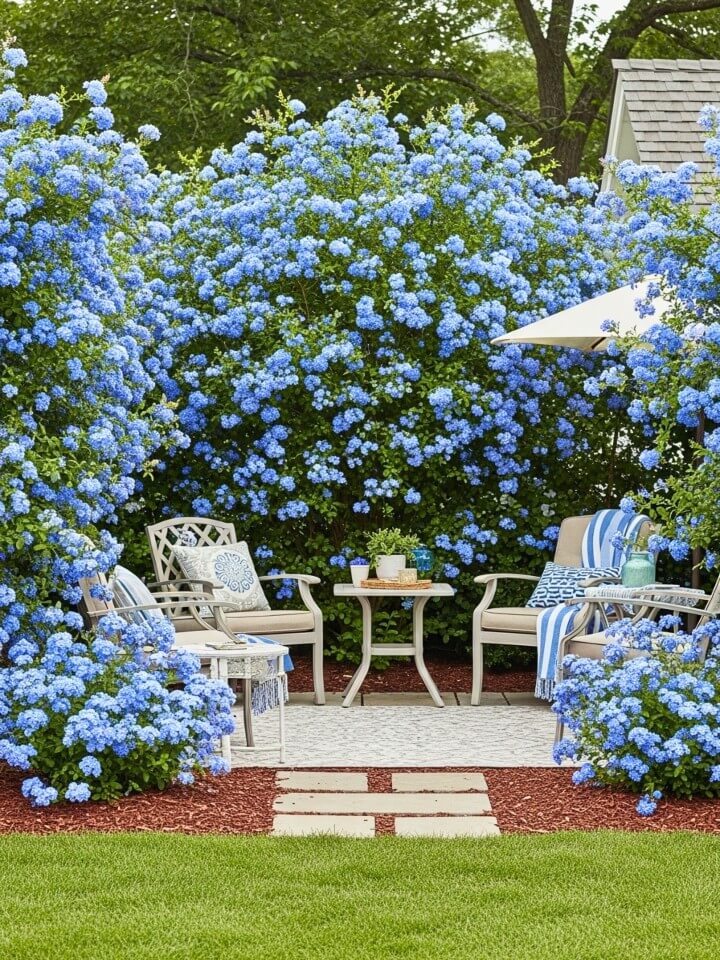
Create a coastal garden mood with landscaping blue plumbago for dreamy, low-care curb appeal. A curved bed of plumbago wrapping a fire pit or conversation circle gives the space a defined edge without walling it off. Lay out the bed in a gentle arc 5 to 6 feet beyond the seating, then plant shrubs 36 inches apart along the curve so the row reads as one continuous sweep rather than separate plants.
Keep mature height around 4 feet by tip-pruning twice each summer — once in late May and again in mid-July — so seated guests still see over the planting. Tuck solar path lights every 4 feet at the front edge for evening glow. Avoid planting directly downwind of a fire pit; smoke residue accumulates on the foliage and dulls flower color.
17. Edging a Flagstone Path with Dwarf Cape Plumbago
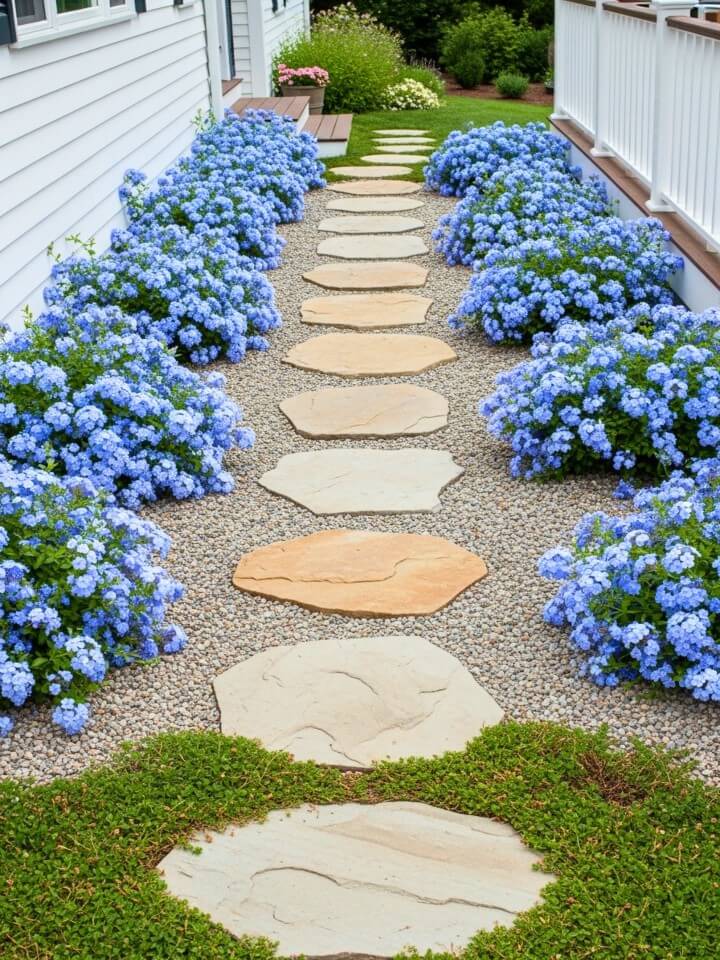
Flagstone or stepping-stone paths gain a soft, informal frame when plumbago is planted along the shoulders. Set shrubs 18 inches from the stone edge and 30 inches apart, choosing the dwarf ‘Imperial Blue’ to avoid encroachment on the walking surface. Fill the gaps between stones with creeping thyme or Irish moss for a low, fragrant contrast to the plumbago above. A 1-inch layer of crushed granite on either side of the path catches stray mulch and gives the planting bed a crisp boundary. Twice a year — early spring and again after the first flush of bloom — trim any cane growing across the stones, cutting back to a leaf node rather than mid-stem.
18. Plumbago in Tropical Garden Borders
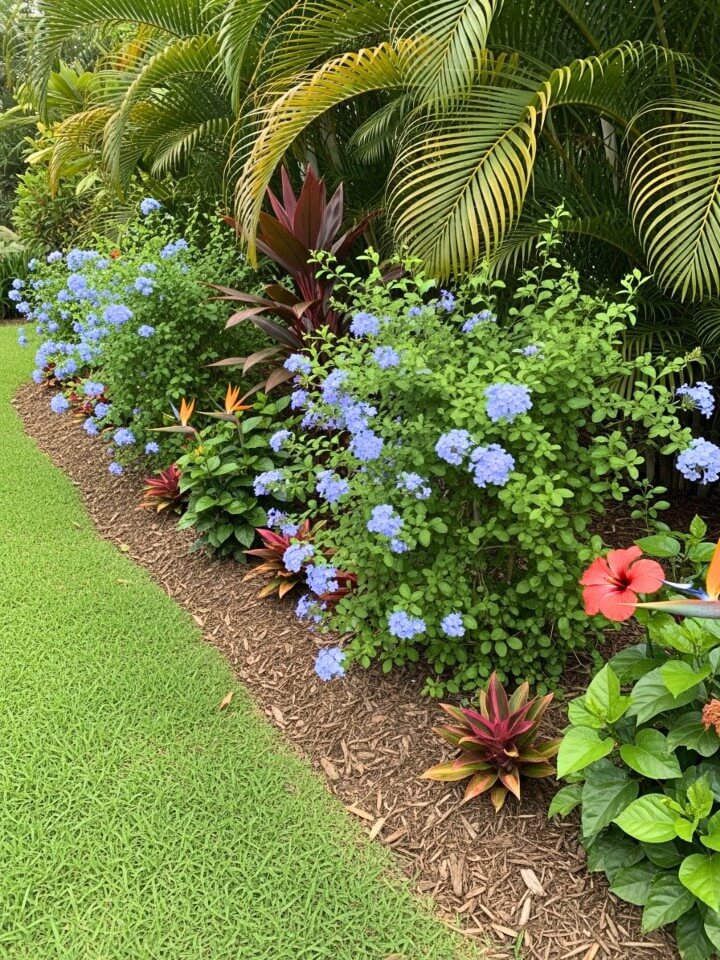
Tropical borders need a mid-layer plant that flowers continuously without competing with the bold leaves around it, and plumbago fills that role precisely. Plant it between taller anchors like ‘Sunshine’ hibiscus, dwarf bird of paradise, or red banana, set 4 to 5 feet apart so the airy blue clusters weave between larger foliage. Layer the front with bromeliads, caladiums, or Persian shield for foliage interest at knee height. Water this combination more frequently than a typical plumbago planting — once a week in summer — since the surrounding tropicals demand it and plumbago tolerates the extra moisture in well-drained beds. A 3-inch mulch of pine straw holds humidity around roots.
Quick Care Guide
| Detail | What to Know |
|---|---|
| Botanical Name | Plumbago auriculata (also sold as P. capensis) |
| Hardiness Zones | 9–11 as perennial; Zones 7–8 die back and return; colder zones grow as annual or overwintered container |
| Mature Size | 6–10 ft tall × 8–10 ft wide; dwarf cultivars 3–4 ft |
| Sun | Full sun, 6+ hours; tolerates light afternoon shade |
| Water | Weekly for the first season, then every 10–14 days once established |
| Soil | Well-drained; tolerates sandy and slightly alkaline conditions |
| Bloom Time | Late spring through first frost; nearly year-round in Zone 10+ |
| Pruning | Late winter, before new growth; light shaping after each bloom flush |
| Pollinators | Bees, butterflies (long-tailed skipper host plant), hummingbirds |
| Pet Safety | Mildly toxic — sap can irritate skin and digestive tract in dogs and cats |
| Deer Resistance | High |
Frequently Asked Questions About Plumbago Landscaping Ideas
Short, practical answers covering the everyday questions homeowners ask before adding this blue-flowering shrub to their yard.
Is Cape Plumbago Deer Resistant?
Yes. The slightly sticky leaves and mild toxicity make it one of the more reliable deer-resistant flowering shrubs, though hungry deer in winter may still nibble new growth. Pairing it with strongly scented companions like rosemary or lavender adds another layer of protection.
Does Plumbago Come Back Every Year?
In Zones 9 through 11 it stays semi-evergreen and blooms continuously. In Zones 7 and 8 the top growth dies back in winter but roots survive and resprout in spring. In Zone 6 and colder, treat it as an annual or grow it in a container moved indoors before frost.
How Fast Does Plumbago Grow?
A 1-gallon shrub typically reaches 3 to 4 feet by the end of its first full season and full mature size by year three. Growth slows dramatically below 60°F and accelerates again once nights stay above 65°F.
Can Plumbago Grow in Shade?
It tolerates light shade but produces far fewer flowers. Plan for at least six hours of direct sun for full bloom — beds with morning sun and dappled afternoon light work, while north-facing or heavily wooded spots do not.
When Should I Prune Cape Plumbago?
The main pruning happens in late winter, roughly six weeks before the average last frost, cutting the oldest canes to the ground and shortening remaining stems by about one-third. Light tip-pruning after each bloom flush keeps the shape tidy and encourages more flowers.
Is Plumbago Toxic to Pets?
Yes, mildly. The sap can cause skin irritation, drooling, and mild stomach upset in dogs and cats if chewed. It’s not life-threatening at typical exposure, but place plantings away from areas where pets dig or graze, and wear gloves when pruning.
Conclusion
Cape plumbago earns its place in almost any sunny landscape because it solves several common problems at once — long bloom season, low water needs, deer resistance, and a flower color that pairs cleanly with nearly everything else in the garden. Whether you use it as a hedge, a slope cover, a container centerpiece, or a quiet accent in a cottage bed, the same handful of care rules apply: full sun, well-drained soil, a late-winter pruning, and patience through the first season. Start with one of the plumbago landscaping ideas above that matches your space, get the spacing right, and the shrub will reward that small effort with years of sky-blue color.