21 Outdoor Pizza Oven Ideas for Homeowners Who Love to Host
Something changes in a backyard the moment a wood fire crackles inside a pizza oven. The smell pulls people in. Conversations slow down. Dinner stretches into dessert, and nobody checks their phone. Which brings us to these 21 dazzling outdoor pizza oven ideas — each one built around a different way of living outside.. Some homeowners want a full brick dome that anchors the whole patio. Others just need a small steel model that fires up in twenty minutes. Both work. What matters is picking the version that fits your space, your budget, and how often you’ll cook on it.

A tiny balcony calls for something different than a half-acre yard. A weekend cook needs less than a serious host. The ideas ahead cover every style, price range, and skill level. Read through, save your favorites, and picture the one that belongs in your yard.
1. Classic Brick Dome Oven
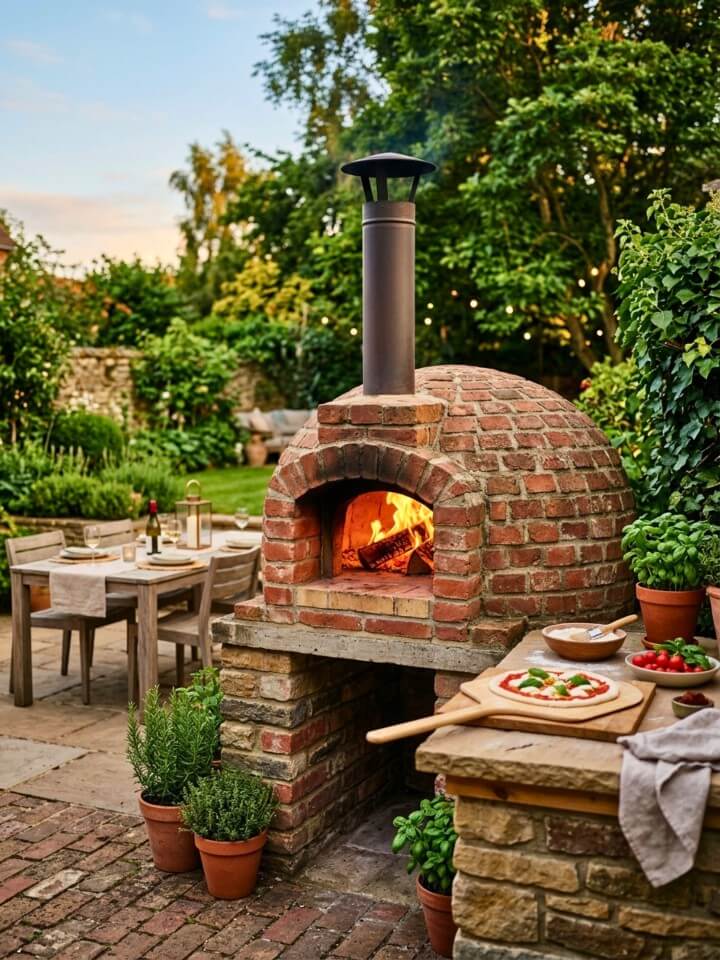
Why has the brick dome survived for centuries while cooking trends come and go? Physics. That rounded shape bounces heat back onto the cooking floor from every angle, holding 800°F+ temperatures steady enough to cook a Neapolitan pie in 90 seconds flat.
What a Solid Build Looks Like:
- Inner dome: Fire brick rated 2,000°F+
- Outer shell: Red or tan exterior brick matched to your hardscape
- Base: Reinforced concrete pad, minimum 4×4 feet
- Total cost: $2,500–$6,000 DIY, $8,000+ installed
One thing most guides skip — leave at least 36 inches of counter space to the right of the opening. You’ll thank yourself the first time you’re stretching dough while a pie cooks. This oven rewards homeowners who host often and want something their grandkids will still use.
2. Rustic Stone Pizza Oven with Chimney
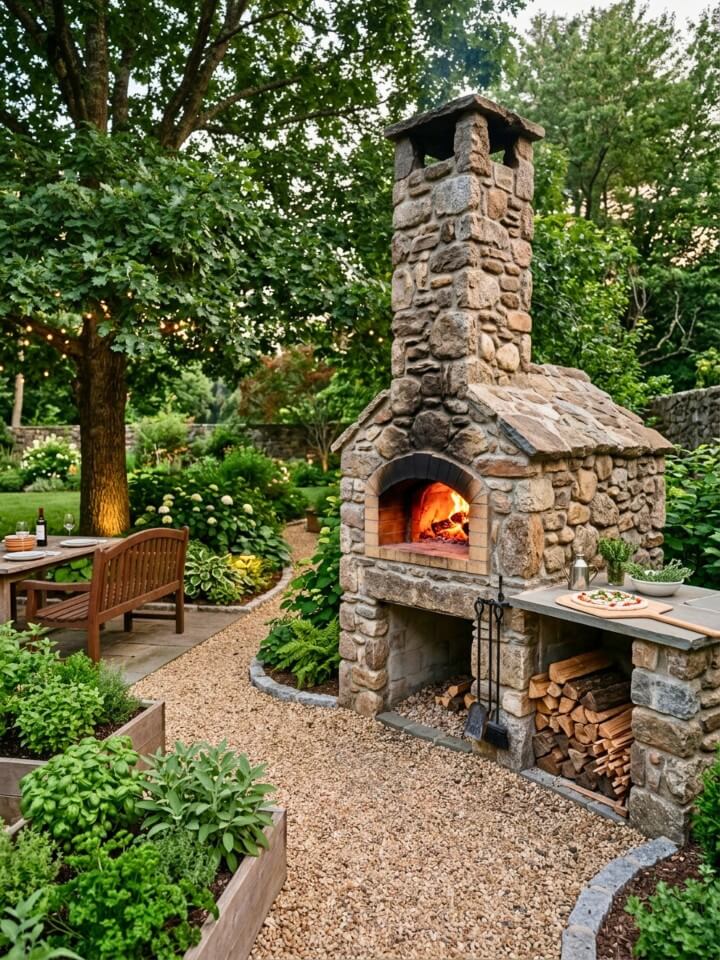
A cool October evening, smoke curling up through a stone chimney, the smell of oak and rosemary drifting across the yard. That’s the appeal here.
The chimney isn’t decoration. It’s the difference between smoke in your eyes and smoke rising harmlessly overhead — critical if you plan to cook for more than 20 minutes at a stretch. Fieldstone gives the most rugged look and often costs the least if you can source it locally. River rock reads softer and works beautifully near water features. Stacked ledger stone leans more refined.
A word of warning: stone is heavy. A finished oven can weigh 3,000+ pounds, so your base needs proper footings below the frost line. Skipping this step is the single most common reason stone ovens crack within a few years. Budget $3,000–$7,000 for materials and plan on professional help for the foundation.
3. Portable Countertop Gas Oven
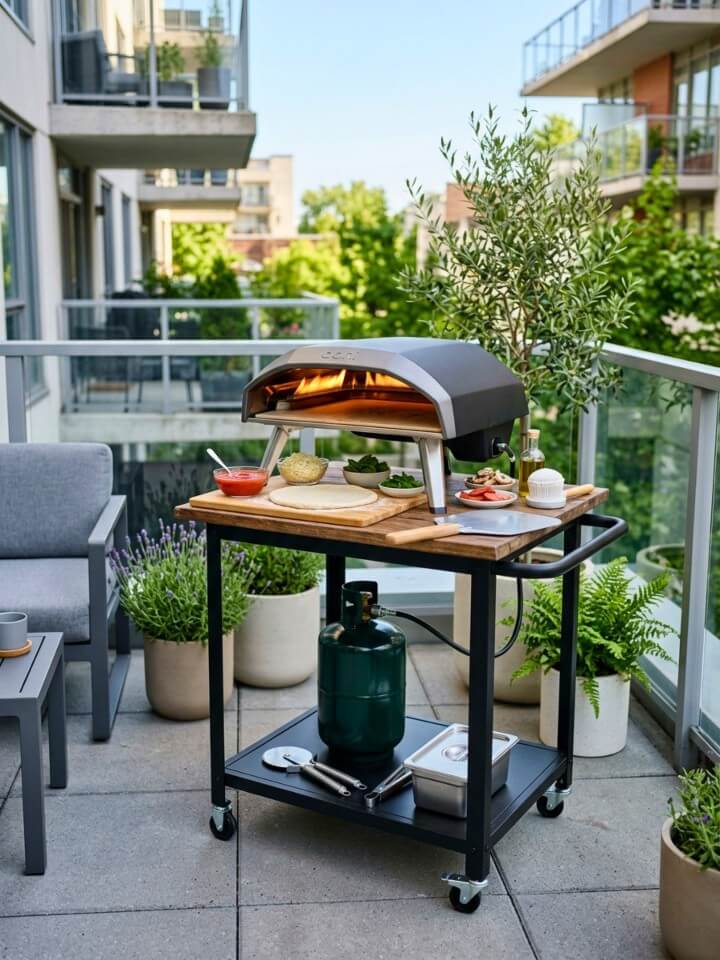
Not everyone wants to pour a concrete pad and haul 500 bricks across the yard. If that’s you, the portable gas oven is genuinely one of the best kitchen purchases of the last decade.
Ooni, Gozney, and Solo Stove all make solid units in the $300–$700 range. They hit 950°F in about 20 minutes and cook pizzas in 60 seconds — actually faster than most masonry ovens because there’s no thermal mass to heat up first.
What Makes Portable Gas so Practical:
- No permits, no permanent installation
- Fits on a 2-foot counter or dedicated stand
- Store it indoors during winter
- Move it to the deck, the campsite, or a friend’s house
- Ready to cook while wood-fired ovens are still warming up
Trade-off? You lose some of that smoky wood-fired character. For weeknight pizzas though, most people don’t miss it.
4. Built-In Outdoor Kitchen Oven
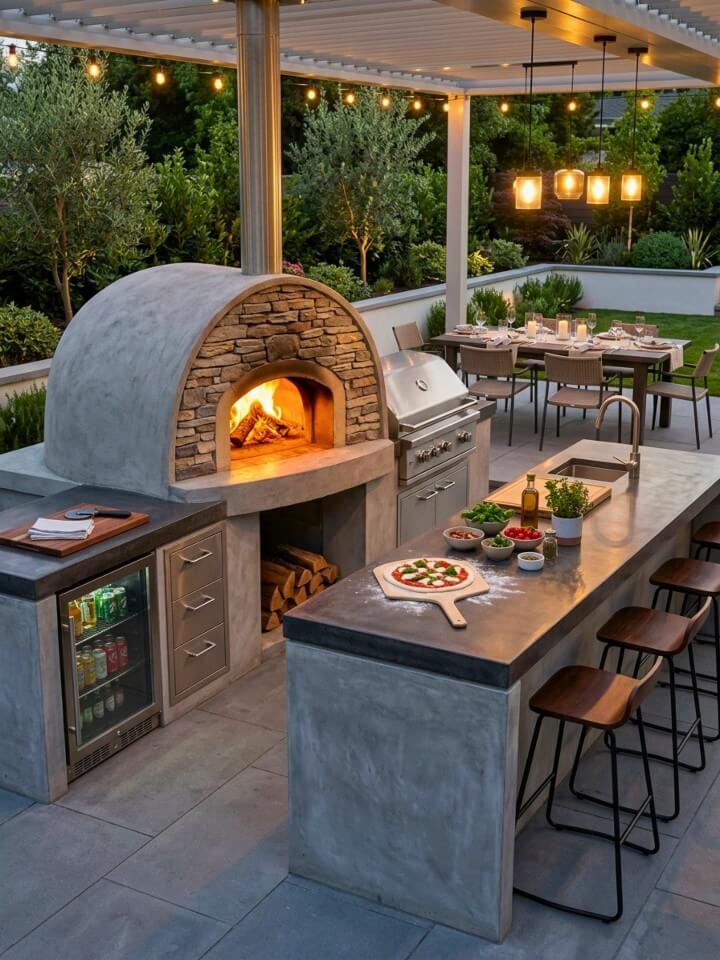
Discover stunning outdoor pizza oven ideas that transform backyards into wood-fired culinary paradises. Building a pizza oven into a full outdoor kitchen changes how you cook outside — you stop making one thing and start hosting real meals.
The secret is workflow. Think about how you actually cook: grab ingredients, prep, cook, plate, serve. Your outdoor kitchen should follow that same left-to-right flow. Refrigerator on one end, prep sink and counter in the middle, grill and pizza oven on the other end, serving counter closest to the dining table.
Match the oven surround to whatever finish you’re using elsewhere — stone veneer, stucco, or poured concrete all hold up outdoors for decades. Two details worth splurging on: a covered outlet within reach (for stand mixers, blenders, phone chargers) and dedicated task lighting above the prep counter.
If your oven sits near a deck or raised entertaining zone, strong deck lighting ideas can make late-night prep feel intentional instead of improvised. Cooking pizza in the dark is no fun.
5. Cob or Clay Earthen Oven
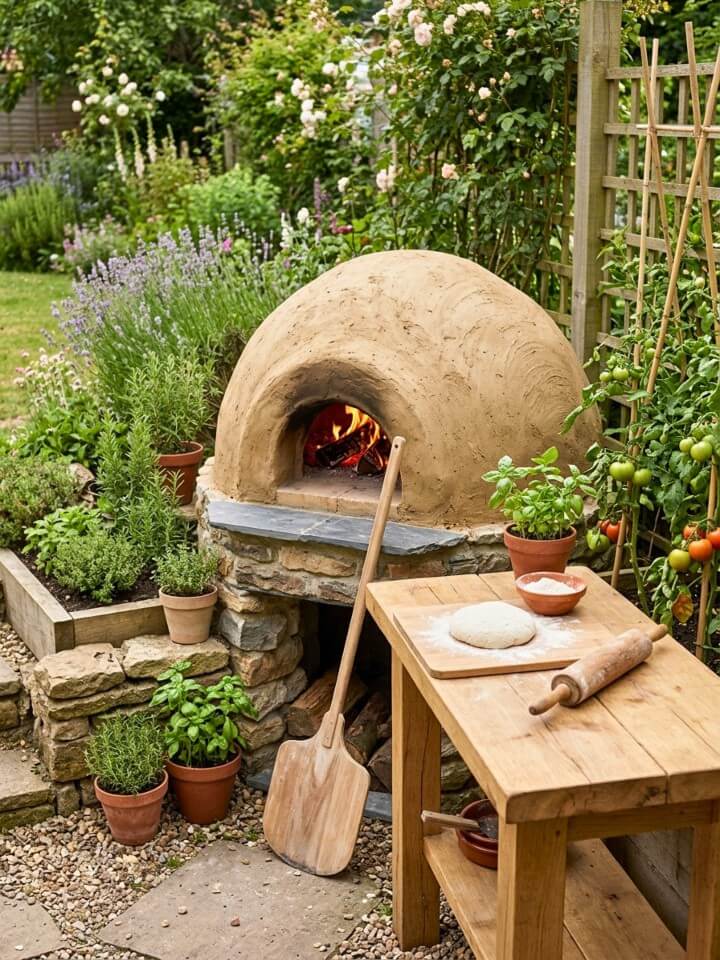
If the price tags above made you wince, meet your new favorite project. A cob oven can be built for under $200 in materials, uses ingredients you might literally dig out of your own yard, and produces some of the best pizza you’ll ever eat.
Cob is an ancient building material: clay, sand, and straw mixed by foot (kids love this part) and shaped by hand over a sand form. Once it dries and the sand form is scooped out, you’re left with a thermal mass oven that holds heat for six or seven hours — long enough for pizza, then bread, then a slow-roasted chicken, then beans overnight.
A rainy climate means you’ll need a small roof or gazebo to keep the oven dry, since untreated cob softens in prolonged wet weather. A coat of lime plaster helps too. Otherwise, this is genuinely the most beginner-friendly build on the list, and it’s the one that connects you most directly to how humans have been baking for the last 6,000 years.
6. Wood-Fired Barrel Oven
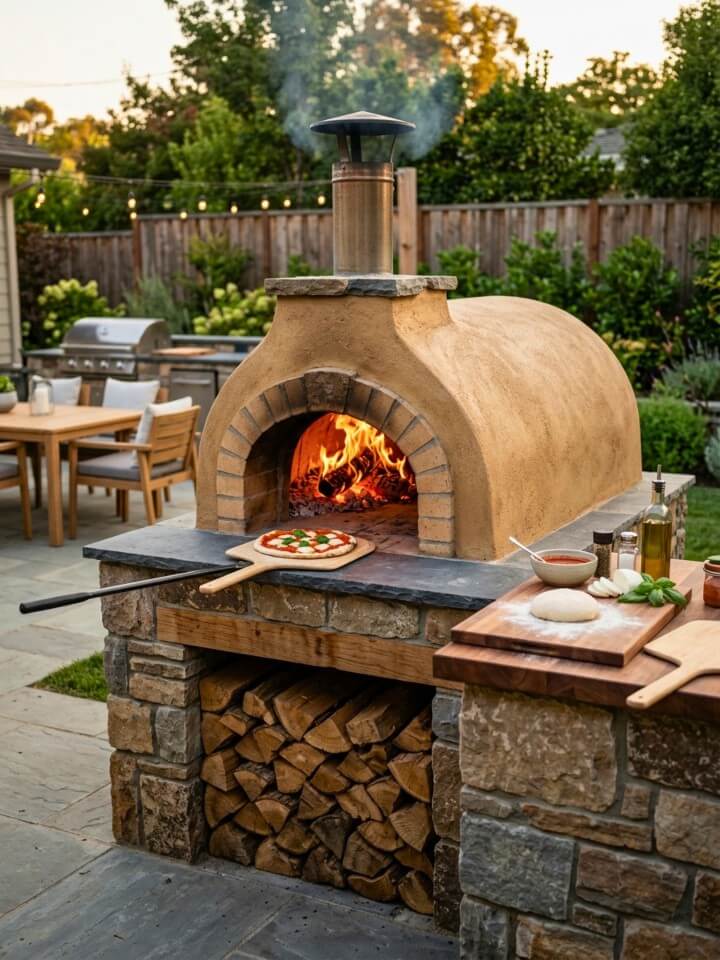
Forget the dome for a minute. What if your oven looked more like a tunnel?
That’s the barrel oven — a long, rectangular cooking chamber roughly 24 by 36 inches, and it changes what you can actually cook out there. Two pizzas at once. A full sheet pan of roasted vegetables. Four loaves of sourdough in a single firing. The dome oven is a soloist; the barrel is a full band.
More thermal mass means longer heat retention too, so one fire can carry you through dinner and into next-morning breakfast bread. Budget $3,500–$7,000. Worth it if you cook for a crowd or bake seriously.
7. Tiled Mosaic Pizza Oven
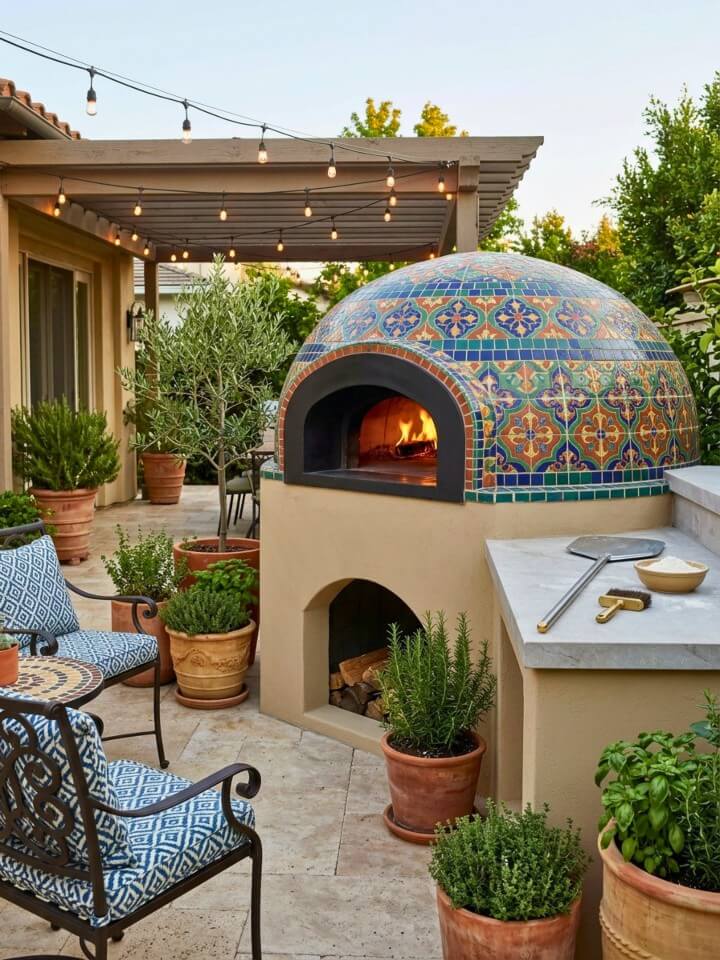
Standard fire brick dome, insulated shell, concrete base. Everything you do to the outside.
Mosaic tile turns a functional oven into backyard sculpture. Weather-rated ceramic, tumbled glass, hand-painted talavera — all of it survives outdoor temperature swings when installed with proper thinset and sanded grout.
Popular Directions:
- Mediterranean blue and white for coastal yards
- Warm terracotta and gold for desert-inspired patios
- Single-color gradient (dark at base, light at top) for modern minimalist spaces
- Broken plate mosaic for eclectic gardens
Add roughly $400–$1,500 to a standard oven build for quality tile and labor. Grout needs resealing every 2–3 years to stay looking sharp.
8. Pizza Oven with Pergola Cover
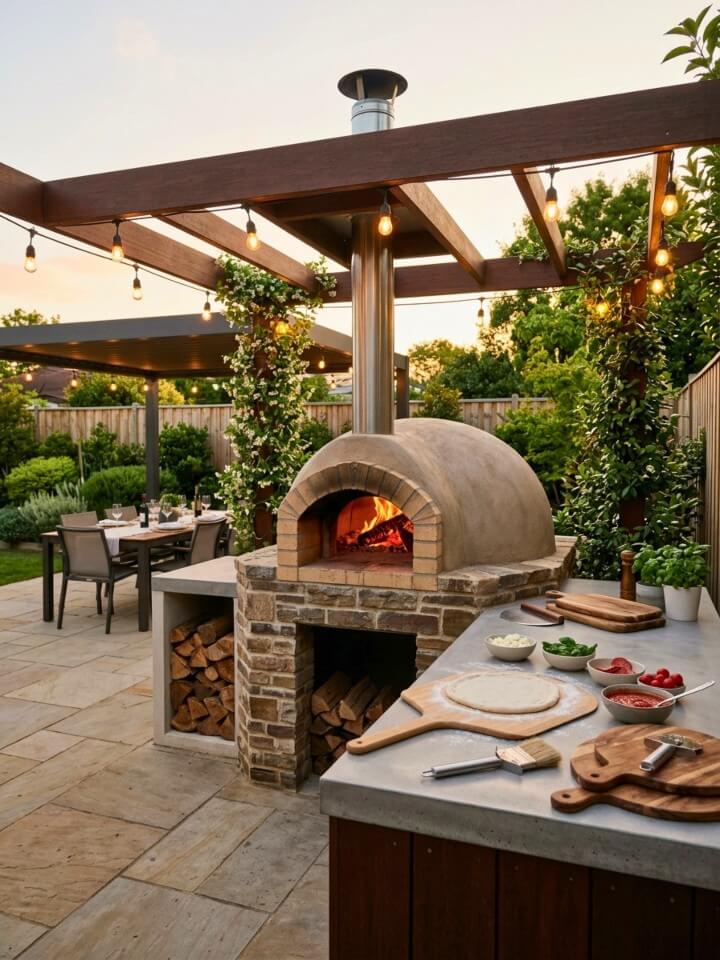
Browse breathtaking pictures of outdoor pizza ovens showcasing brick, stone, and modern stucco designs. Late June, 4 p.m., the sun is directly overhead and you’re trying to launch pizzas into a 900°F oven. Your face is already melting. Now imagine the same scene with dappled shade from a pergola overhead — completely different experience.
What to Plan For:
Beam height matters. Sit them at least 8 feet above the oven opening, and never build a pergola around a wood-fired oven without a proper chimney routing smoke up and out. That’s a fire code issue, not just a comfort one.
Wisteria and grape vines climbing the posts look incredible but keep growth trimmed 3+ feet from any heat source. String lights woven through the rafters extend the season well into October. Suddenly you have an outdoor room, not just a patio.
9. Repurposed Half Barrel or Drum Oven
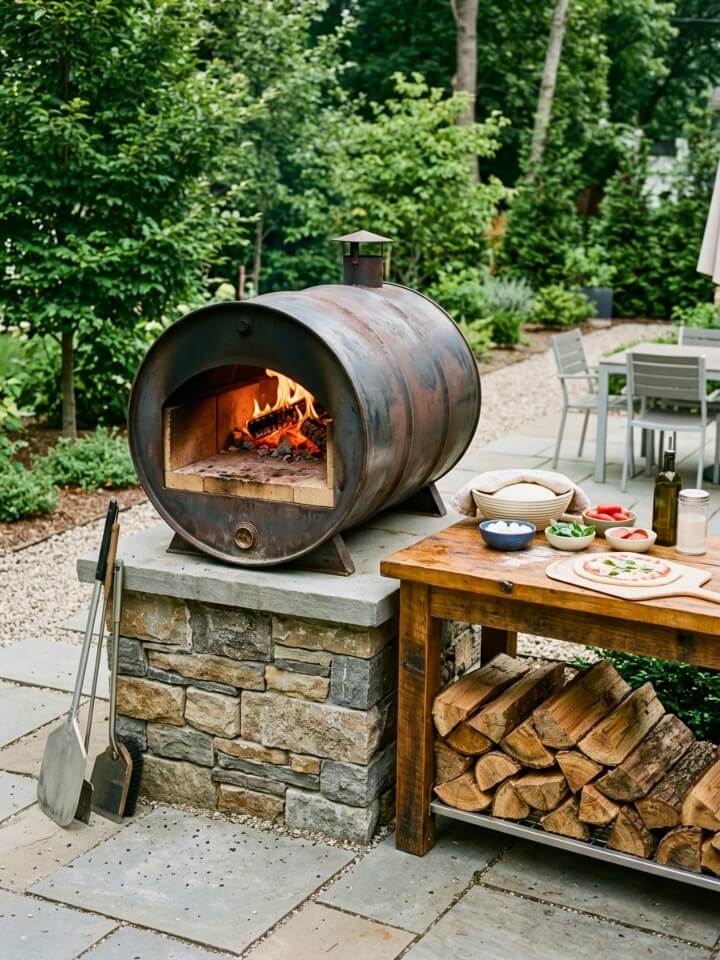
Some people want polished. Others want to build something with their hands, from stuff they already have, and end up with an oven that has a story.
If you’re in the second camp, the drum oven is calling.
Take a clean 55-gallon steel drum (never one that held chemicals — food-grade only) or a halved oak wine barrel. That becomes your outer shell. Line the interior with fire brick and refractory cement so it can actually handle 800°F+ cooking temperatures without warping or off-gassing. Mount the whole thing on a welded steel frame or a simple cinder block base.
Total damage: $400–$900 if you’re resourceful. The look is honest, industrial, unapologetically DIY — perfect for farmhouse yards, workshop patios, and anyone who’d rather build than buy.
10. Corner Patio Pizza Oven Station
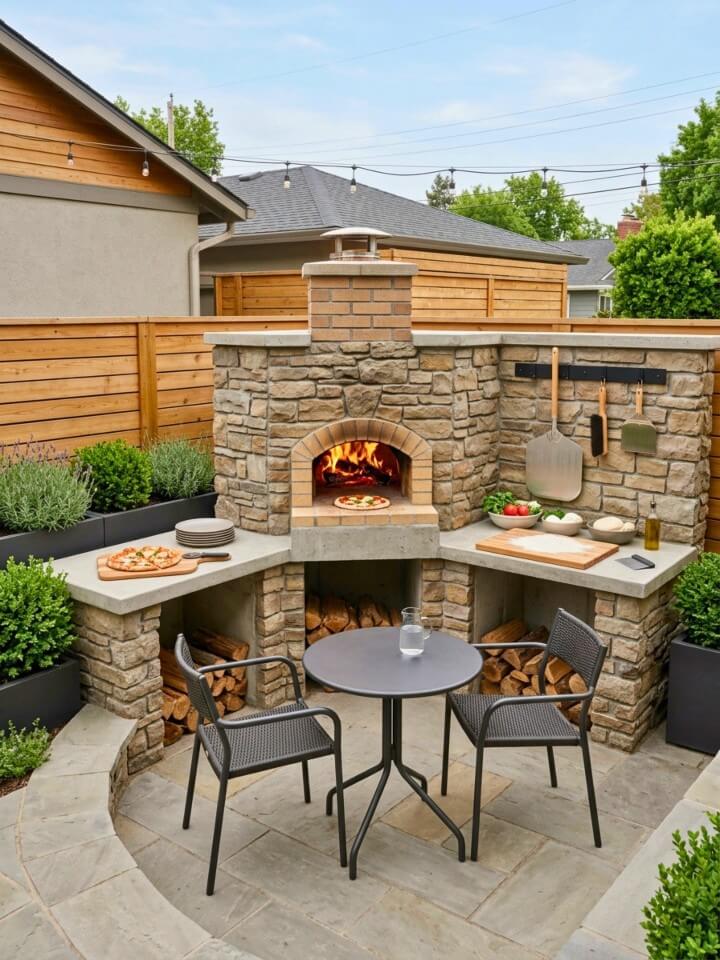
Ask any small-patio owner what they’d change and they’ll point to the same spot: that awkward corner where nothing quite fits.
Put the oven there.
An L-shaped counter wrapping into the corner turns unused square footage into your hardest-working zone. The oven sits at the angle. One leg of the L becomes prep space — dough, toppings, cutting boards. The other leg becomes serving — hot pizzas landing here, plates stacked, guests grabbing slices without crowding the cook.
Total footprint can be as tight as 5 by 5 feet. That’s roughly the space a single lounge chair would occupy, and you’re getting a full outdoor kitchen instead. Match counter finishes to your existing pavers so the whole station reads built-in rather than added-on. Wall hooks above hold peels and tools so the counter stays clear.
For anyone working with a 200 square foot patio or less, this is the single best layout on the list.
11. Modern Minimalist Concrete Oven
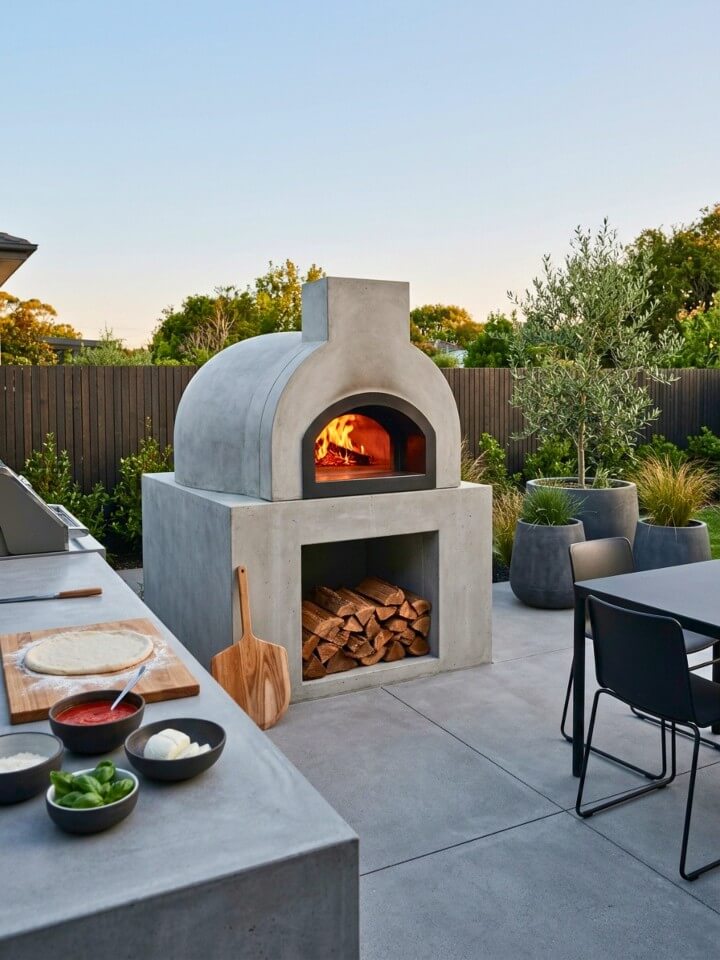
Strip away everything unnecessary. That’s the whole idea.
Concrete as a finish material has quietly taken over modern outdoor design, and for good reason — it reads clean, ages beautifully, and pairs with almost anything. A minimalist concrete oven leans into that aesthetic hard: rectangular base, smooth troweled surfaces, dark oven opening for contrast, zero ornamentation.
The discipline is in what you leave out. No decorative tile. No stacked stone. Also no visible hardware. Just form and function sitting side by side.
Keep the surrounding counter equally spare — a peel, a cutting board, three matching containers for toppings, nothing else. Pair with large-format pavers, board-formed concrete planters, and slim black metal furniture. Budget $4,000–$8,000. Best for homeowners drawn to Japanese, Scandinavian, or modernist design.
12. Pizza Oven with Built-In Wood Storage
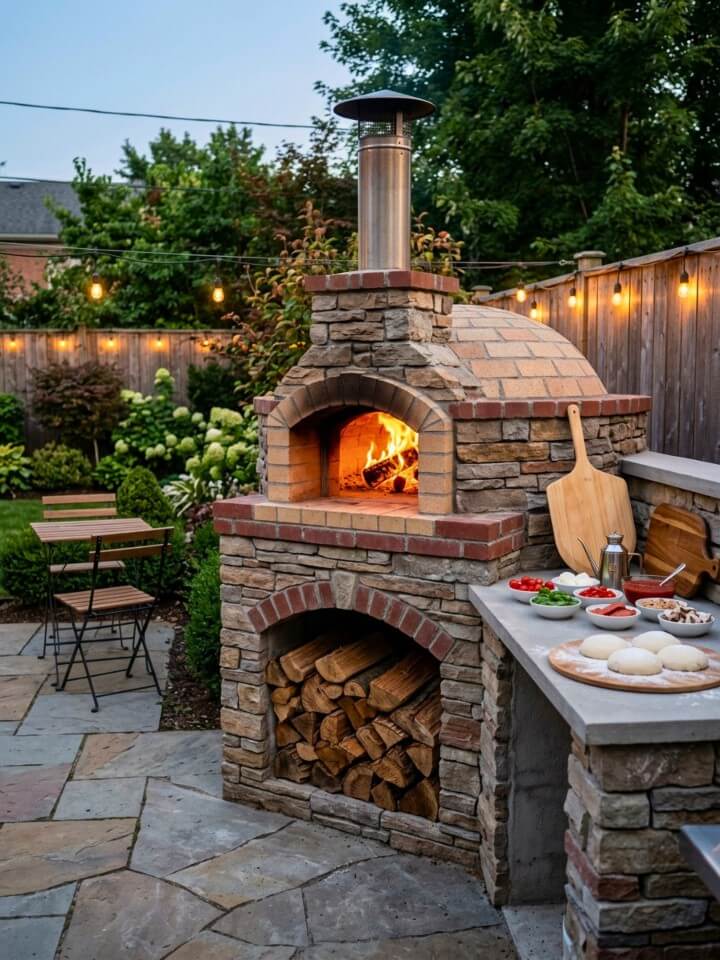
Wood-fired cooking has one unglamorous logistics problem: where do you keep the wood?
Solve it at the design stage and everything downstream gets easier.
The move is to build storage directly into the oven base. Options:
- Open cubby underneath — quick access, keeps split wood dry, doubles as visual texture
- Side stack — a taller vertical column beside the oven, holds 2–3 weeks of wood
- Wraparound — storage on both sides plus underneath, for households that cook multiple times per week
Whatever you choose, keep wood at least 12 inches off the ground for airflow, and cover the top if the storage is exposed to rain.
13. Garden-Integrated Pizza Oven
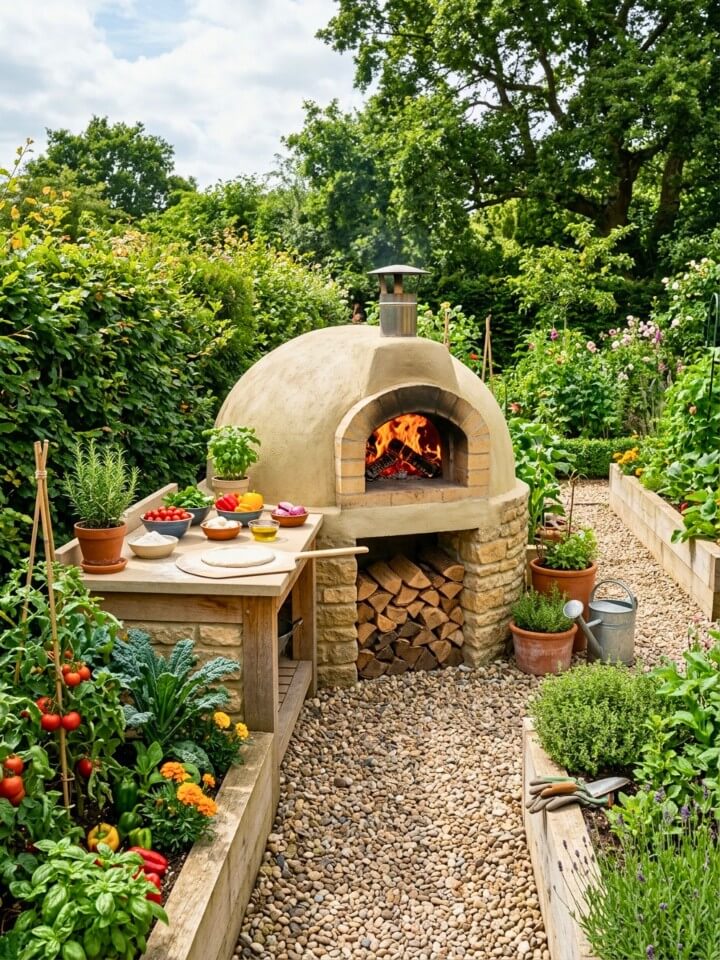
Design a dream outdoor pizza kitchen that blends rustic charm with gourmet functionality year-round. Imagine walking three steps from your oven, snipping fresh basil, plucking a ripe tomato off the vine, and having both on a pizza inside 90 seconds.
That’s what happens when you stop treating the oven and the garden as separate zones.
Site the oven at the edge of your kitchen garden rather than across the yard from it. Raised beds within arm’s reach should hold basil, oregano, rosemary, thyme, and chives at minimum, and a few elegant herb garden ideas can help you keep those essentials close to the cooking zone. Add cherry tomatoes, sweet peppers, and arugula if you have the space.
Connect the oven to the garden with stone edging, a gravel path, or stepping stones so the two spaces read as one composition rather than two separate features. This idea shines brightest from June through September, when the garden is at peak production and dinner comes together in minutes.
14. Trailer-Mounted Mobile Pizza Oven
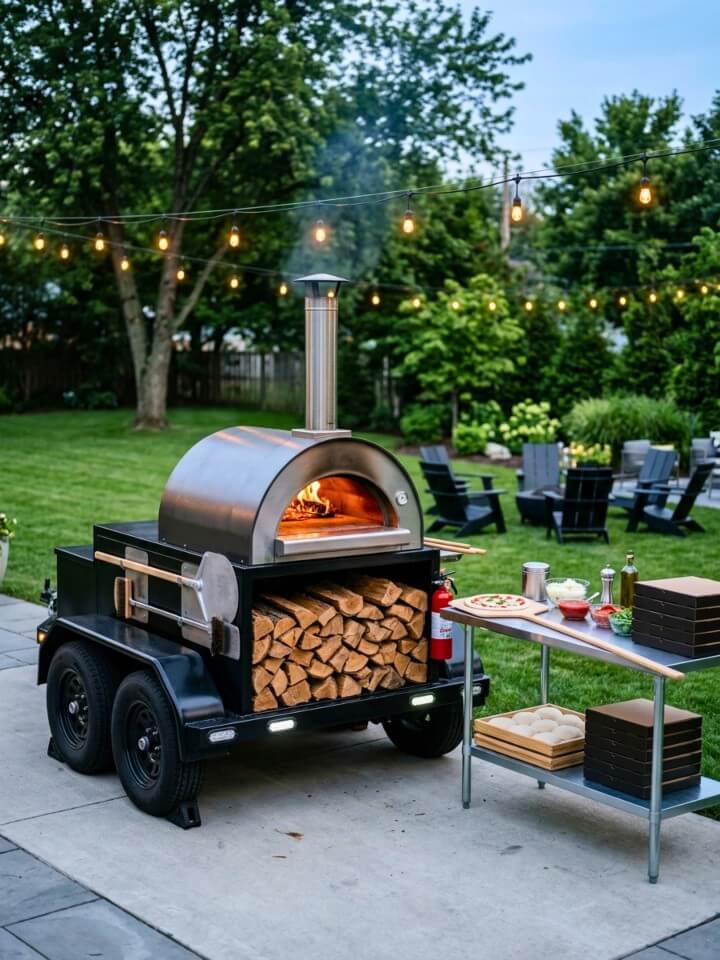
Homeowners with large properties, serial entertainers, and anyone who’s ever thought “I wish I could bring the oven to the party.”
A fully functional wood-fired or gas oven mounted on a road-legal trailer frame, complete with wheels, a hitch, storage compartments for tools and wood, and a locking cover.
Your patio stays open and uncluttered day to day. When friends come over — or when you’re hauling out for a neighborhood block party, tailgate, or family reunion — you roll the oven into position, level it, fire it up, and become the most popular person there.
Weight matters. A commercial-grade trailer oven can hit 1,500+ pounds, which means you need a vehicle rated to tow it. Registration and insurance rules vary by state. And parking it long-term requires either a dedicated pad or a covered spot to protect the trailer from weather.
15. Adobe-Style Southwest Oven (Horno)
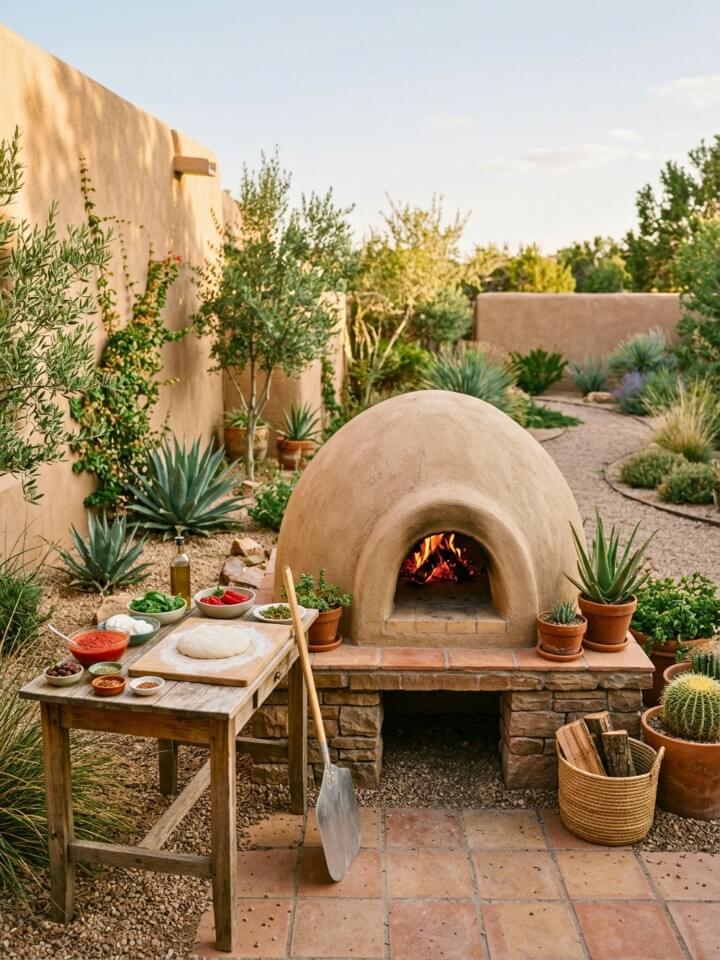
The horno predates most cooking structures you’ll see in any American backyard. Pueblo communities across New Mexico, Arizona, and northern Mexico have been building and using these ovens for over 400 years, and the design has barely needed to change.
Its signature is the soft beehive silhouette — a smooth rounded dome coated in earthen plaster, usually in warm tones ranging from pale sand to deep terracotta. There’s no chimney. Wood burns inside until the walls are saturated with heat, coals get raked out, and then bread, meat, or pizza goes in to cook on stored radiant heat alone.
That single-firing rhythm gives the horno a slower, more intentional feel than a continuously-fed dome oven. You plan the meal around the firing schedule instead of the other way around.
Aesthetically, nothing else looks quite like it. Pair with gravel groundcover, terracotta pots, agave and yucca, and low masonry walls in matching earthen tones. The horno feels less like an appliance and more like a small building — a permanent architectural presence that gives the whole yard a sense of place.
16. Pizza Oven with Outdoor Bar Seating
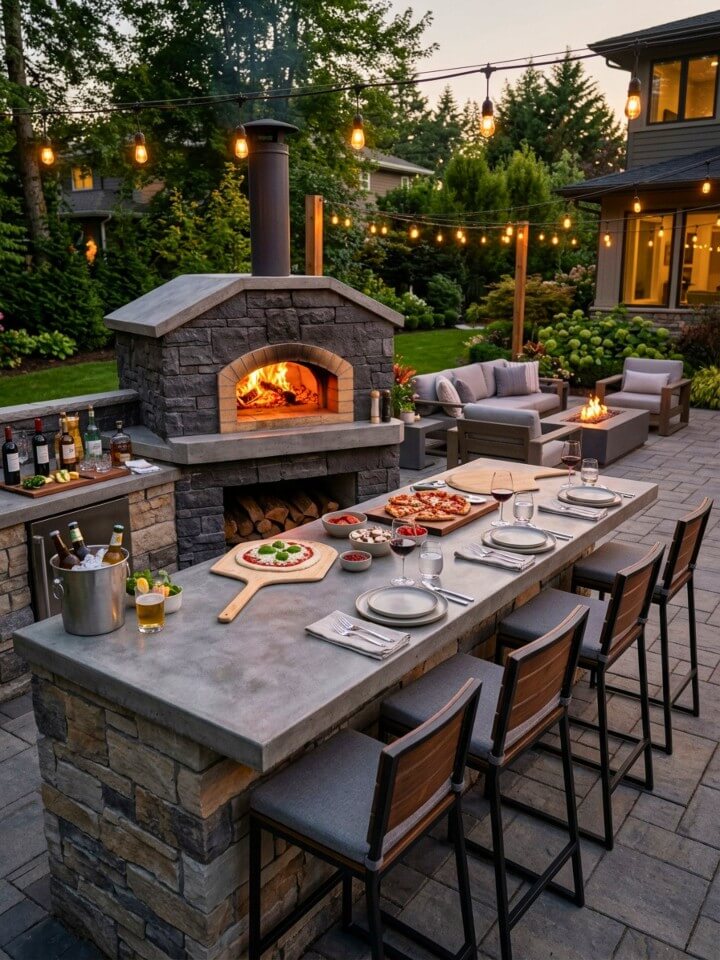
Explore inspiring outdoor kitchen ideas with pizza oven setups that elevate every backyard gathering. The best parties always end up in the kitchen. Why fight it outside too?
Building a bar counter facing your oven flips the whole social dynamic. Instead of the cook being isolated at the hot end of the patio while everyone else clusters around the drinks, guests pull up stools and become part of the show. Someone’s telling a story. Someone else is watching dough get stretched. A cold drink sits in front of every seat. The pizza lands on the counter and disappears in three minutes.
Practical notes: bar-height counters run 42 inches, standard counters 36. Weather-rated stools with drainage holes in the seat outlast cheaper alternatives by years. Leave at least 24 inches of counter per seat so elbows aren’t touching. Stone, concrete, or porcelain tile handle heat and spills equally well.
The oven stops being an appliance and becomes the entertainment.
17. Hobbit-Style Earth-Bermed Oven
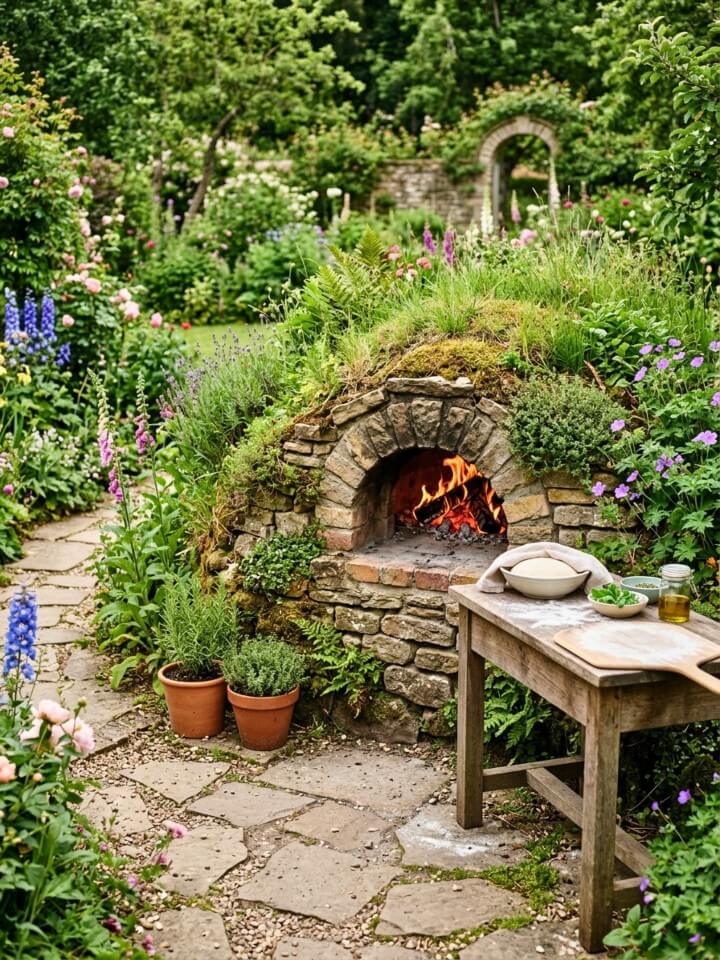
Some backyards want playful. This one delivers.
An earth-bermed oven gets partially buried into a small mound of soil, with only the arched opening and a bit of chimney visible above ground. The rest disappears into the landscape under a blanket of moss, creeping thyme, sedum, or wildflowers.
The magic isn’t just visual. Earth is one of the best insulators on the planet, so a bermed oven holds heat longer than an exposed one — often 8+ hours after a proper firing. You get pizza for dinner, bread the next morning, all from a single burn.
Build the interior with fire brick and refractory cement exactly like any other masonry oven. The berm is finish work, not structure. A curving stepping-stone path leading up to the opening completes the storybook effect, and works especially well in cottage gardens, shaded woodland lots, or any yard where whimsy is the goal.
18. Black Steel Modern Oven on Stand
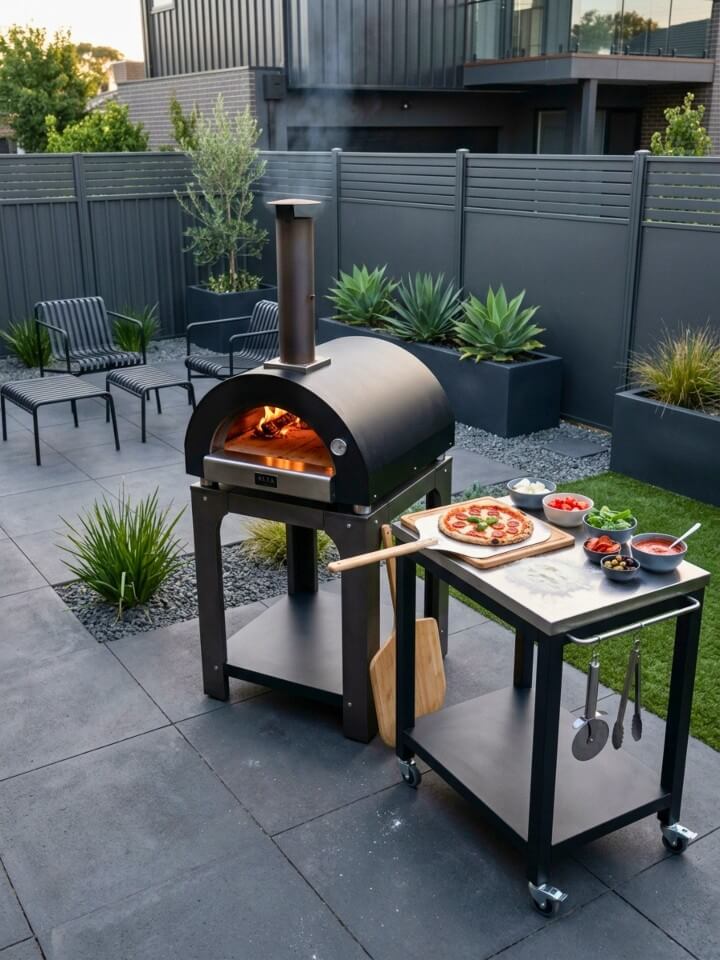
Not every homeowner wants to pour concrete, haul brick, or wait three months for a build. Some just want great pizza tonight, on a small deck, with a setup that looks intentional rather than improvised.
Enter the black steel modern oven.
Powder-coated or heat-rated steel construction. Sleek matte finish. Purpose-built stand with wheels or fixed legs. Ready to cook in under 30 minutes from delivery.
What Makes This Style Work:
- Compact footprint — most units fit in 3×3 feet
- Cook temperatures of 900°F+ despite the small size
- Runs on wood, pellets, gas, or hybrid depending on model
- Moves with you if you rent, remodel, or relocate
- Price range: $600–$2,500 depending on size and fuel
Pair with slim black metal chairs, a matching prep cart, and dark planters holding architectural grasses. On a small deck or rooftop terrace, the whole setup reads as deliberately designed rather than crammed in.
Modern doesn’t have to mean expensive. It just means everything earns its place.
19. Pizza Oven Inside a Gazebo or Pavilion
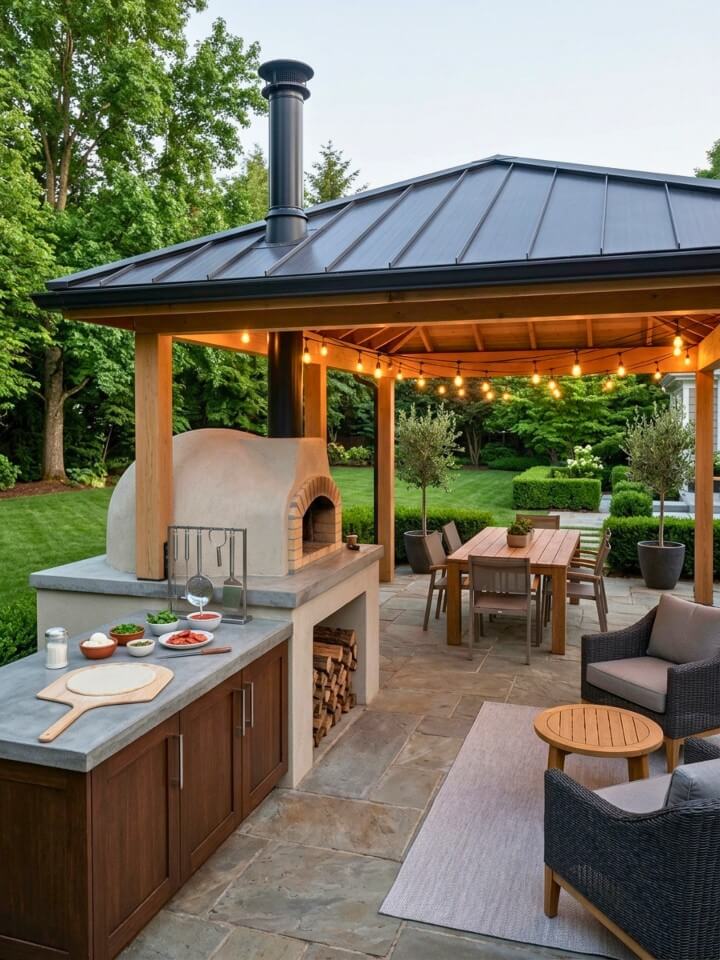
Weather is the enemy of outdoor cooking. A pavilion is the answer.
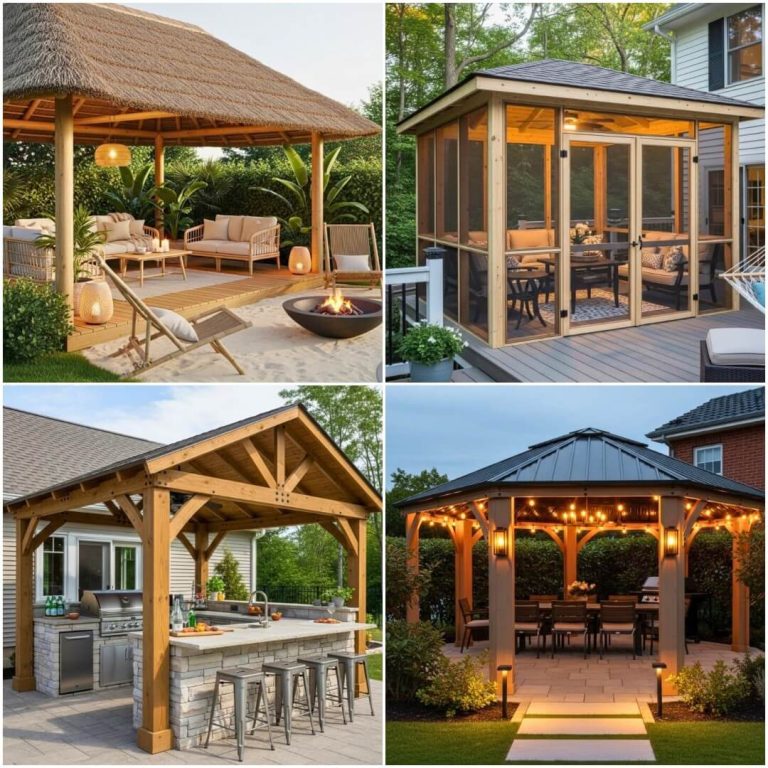
Putting your oven under a permanent roof structure transforms it from a fair-weather feature into a year-round asset. Light rain, autumn wind, harsh summer sun — none of it ends the evening anymore. You cook when you want to cook. If you’re still deciding what kind of covered structure makes sense, these cool backyard pavilion ideas can help you compare open-air options before committing.
Non-Negotiable Requirements:
- Fire-safe base and hearth clearance rated for the oven’s output
- Roof height of at least 10 feet above the oven opening
- Proper chimney routing smoke up and out through the roof, not into the rafters
- Fire-rated ceiling material near the flue penetration
- Cross-ventilation to prevent smoke buildup during longer cooks
Structures range from simple 12×12 cedar pavilions ($4,000–$8,000) to elaborate timber-frame buildings with cathedral ceilings and full electrical ($20,000+). Local building codes almost always require permits for permanent roofed structures, so factor that timeline into planning.
20. Poolside Pizza Oven Lounge
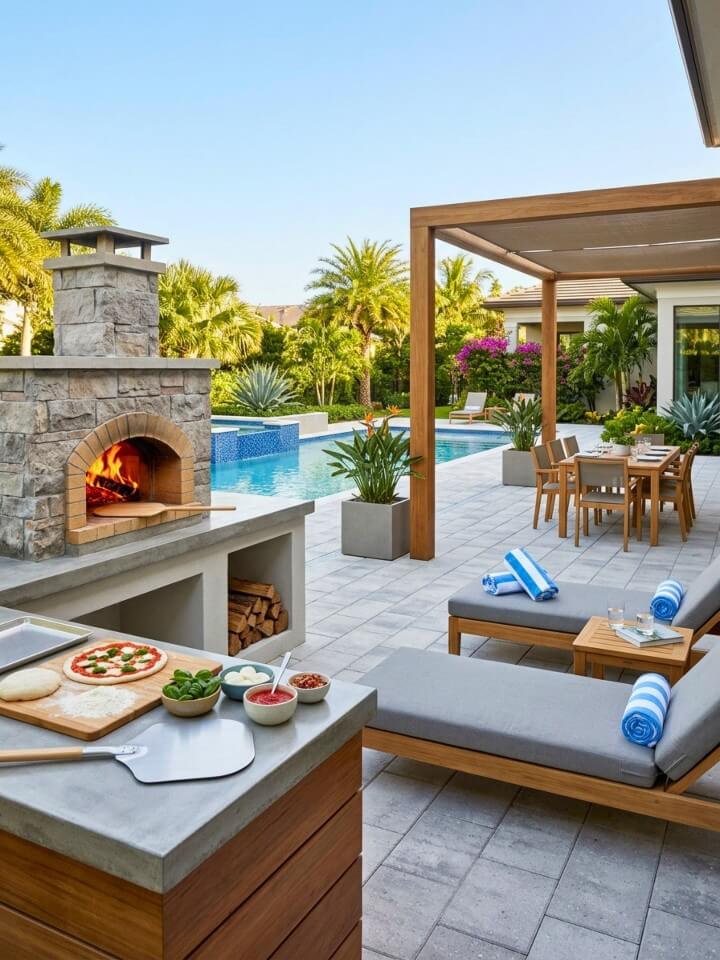
Pool days already run long. Add pizza to the equation and they run all day.
The vision is simple: swim, snack, swim again, dry off, eat, back in the water. The oven, seating, and pool all live within a few steps of each other, and nobody ever has to leave the zone to keep the fun going.
Siting matters more here than almost anywhere else. Keep the oven at least 10 feet from the pool edge — far enough that splashing doesn’t reach hot surfaces, close enough that swimmers can grab slices without dripping across the whole patio. Use slip-resistant pavers underfoot. Choose counters that shrug off wet swimsuits and dropped sunscreen bottles: sealed concrete, porcelain, or quartzite all work.
Round out the zone with a shaded dining table for meals, lounge chairs oriented toward the pool, a towel storage cabinet, and a small drinks fridge if the budget allows. String lights overhead extend the day well past sunset.
21. Vintage Repurposed Oven
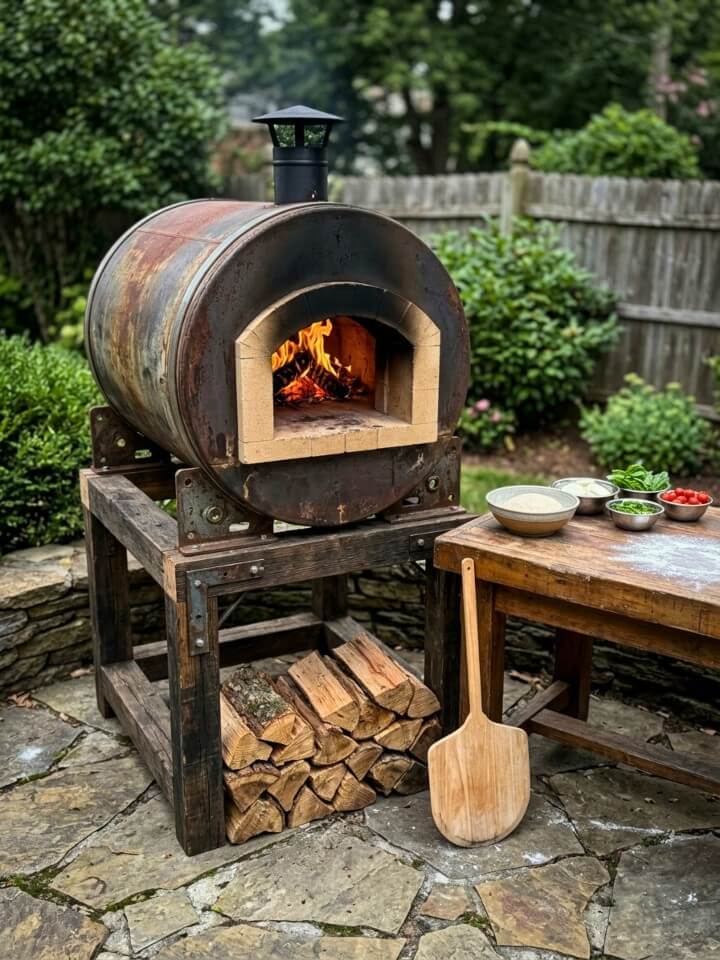
Build a cozy rustic outdoor kitchen with pizza oven featuring reclaimed wood, stone, and warm textures. Character can’t be manufactured. It has to be found.
Building an oven around a salvaged piece with a past life. An old kiln shell from a shuttered pottery studio. A cast iron train wheel base rescued from a rail yard. A copper wash basin from a demolished farmhouse. A vintage wine barrel that spent 40 years in a Napa cellar. Each piece brings a story the oven inherits.
The critical rule: the cooking chamber itself must always be built with proper refractory materials. Fire brick, refractory cement, ceramic insulation. Non-negotiable, for both safety and cooking performance. The salvaged piece is finish work — the beautiful shell wrapped around a properly engineered core.
More Questions Homeowners Ask Before Building an Outdoor Pizza Oven
Planning goes deeper than picking a style. Get straight answers on insurance, cure times, winterizing, insulation, and resale value before your first brick is laid.
Does an Outdoor Pizza Oven Increase Home Value?
Yes, a well-built permanent pizza oven typically adds $3,000–$10,000 in perceived value, especially when integrated into a full outdoor kitchen. Real estate agents in warmer regions report faster sales on homes featuring quality outdoor cooking spaces.
How Long Does a New Masonry Oven Need to Cure Before First Use?
Fresh masonry ovens need 7–14 days of slow curing to release trapped moisture safely. Start with small, low fires around 200°F and gradually increase temperature daily. Skipping this step causes cracking, spalling, and permanent structural damage to the dome.
Will My Homeowners Insurance Cover an Outdoor Pizza Oven?
Most standard policies cover permanent masonry ovens as part of your dwelling, but portable and DIY builds often need separate riders. Call your insurer before building, especially for wood-fired units near structures, to confirm coverage and clearance requirements.
What Insulation Should Go Between the Fire Brick Dome and Outer Shell?
Ceramic fiber blanket rated for 2,300°F is the industry standard, typically installed in two 1-inch layers. Add vermiculite concrete or perlite mix over the blanket for extra thermal mass. Proper insulation dramatically improves heat retention and fuel efficiency.
How Do I Winterize My Outdoor Pizza Oven?
Cover the oven opening with a fitted door or weatherproof cover to block moisture, rodents, and debris. Drain any attached water lines, sweep out ash completely, and inspect mortar joints for hairline cracks. A breathable cover prevents trapped condensation during freeze-thaw cycles.
Conclusion
An outdoor pizza oven isn’t really about pizza. It’s about the reason people linger — the pull of a warm fire, the smell of something cooking slowly, the excuse to pour one more glass and stay outside a little longer. Whether you build a hand-shaped cob dome, roll out a portable steel model, or anchor your patio with a full stone oven and chimney, the payoff is the same shift in how your family uses the yard. Pick the version that fits your life today, not the one that photographs best. The right oven earns its space by being used.