40 Flower Bed Ideas That Make Any Yard Look Expensive
Last spring I stood barefoot in my backyard holding a cup of coffee, staring at a strip of dirt that had defeated me three summers in a row. Nothing worked there. Not the marigolds, not the hostas, not the expensive shrubs the garden center guy swore would thrive. Turns out I kept planting the wrong style of bed for that spot, and these 40 breathtaking flower bed ideas is basically everything I wish someone had handed me back then.
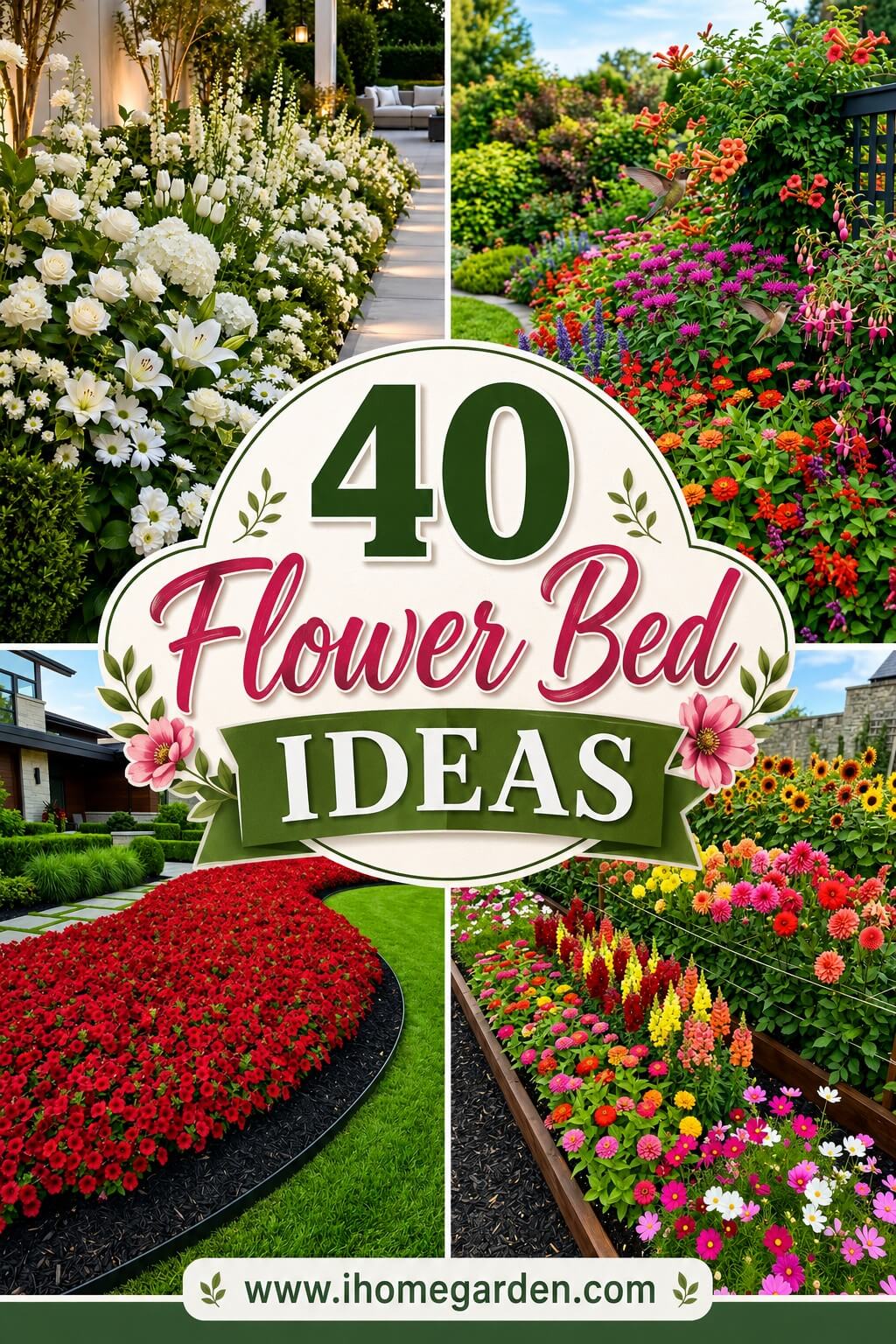
Your yard has its own personality. Sunny corners, shady pockets, that one weird slope where water pools after every storm. Each spot needs a different approach, and picking the right bed style matters way more than picking the right flowers.
Some flower bed ideas here take a weekend. Others take a season. A few will change how you see your whole yard. Grab your coffee and scroll through, one of these is meant for that stubborn corner you’ve been ignoring.
1. All-White Flower Garden Design
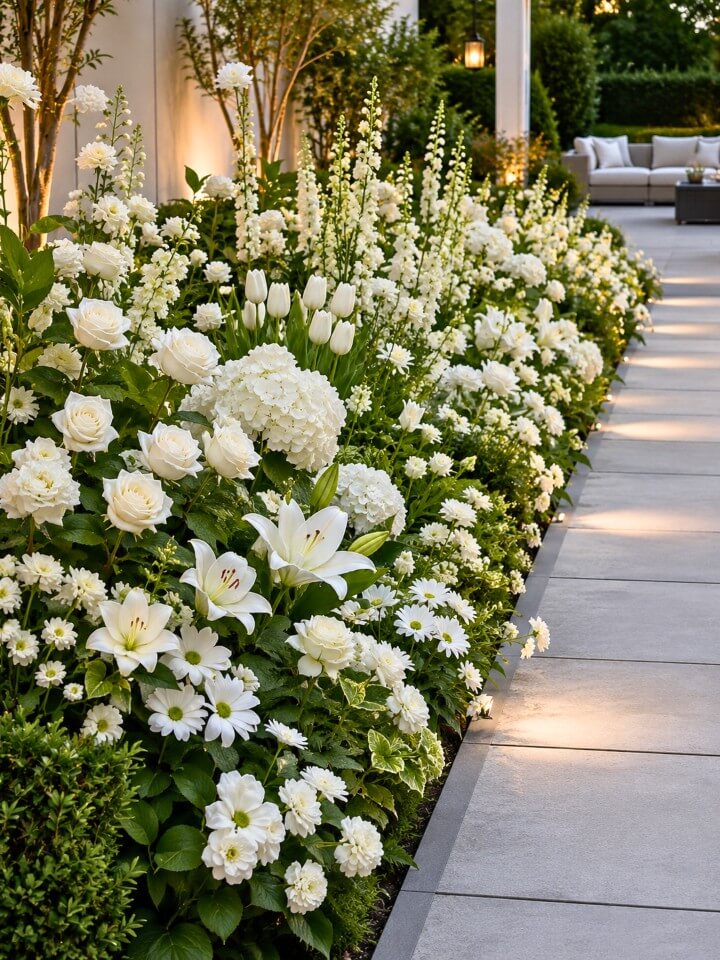
Strip a garden of color and something strange happens, you finally see it. The ruffle of a peony petal. The starburst of phlox. The way lamb’s ear catches morning light like brushed silver. White gardens force your eye to notice shape and texture instead of chasing color.
Reliable picks include ‘Iceberg’ roses, Shasta daisies, Casablanca lilies, white coneflowers, and sweet alyssum spilling over edges. For evening magic, add moonflower vines that open after sunset and seem to glow under porch lights.
One rule matters most: mix flower shapes aggressively. Round beside spiky beside feathery. A bed of all daisy-shaped whites looks oddly flat.
Zones 3-9. Budget $80-$150.
2. Mass-Planted Single Color Bed
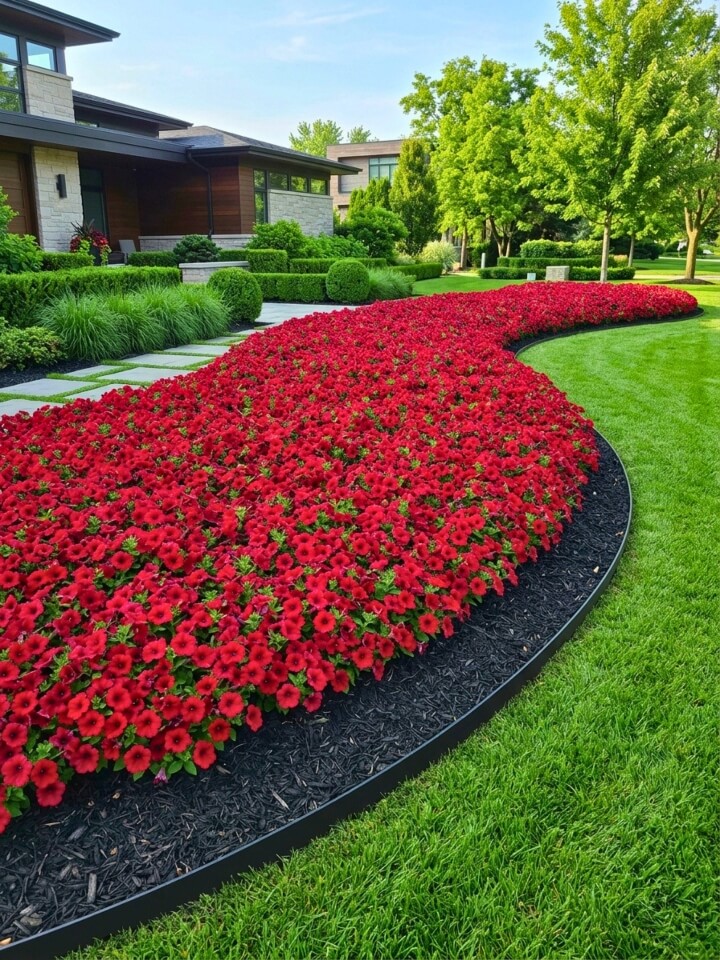
Drive through any well-designed neighborhood and count the gardens that stop you mid-sentence. Most use this exact trick: one flower, planted in massive repetition, nothing else fighting for attention.
Purple ‘May Night’ salvia running a 25-foot driveway. Fifty yellow black-eyed Susans blanketing a slope. Red ‘Knock Out’ roses hedging a walkway. The impact comes from commitment, not complexity.
My neighbor did this last April with 40 blue ‘Rozanne’ geraniums along her front path. Three people asked for her landscaper’s number. She didn’t have one.
Biggest mistake: following nursery spacing tags. Plant 20% closer together. Gaps kill this style faster than anything else.
3. Rain Garden for Wet Spots
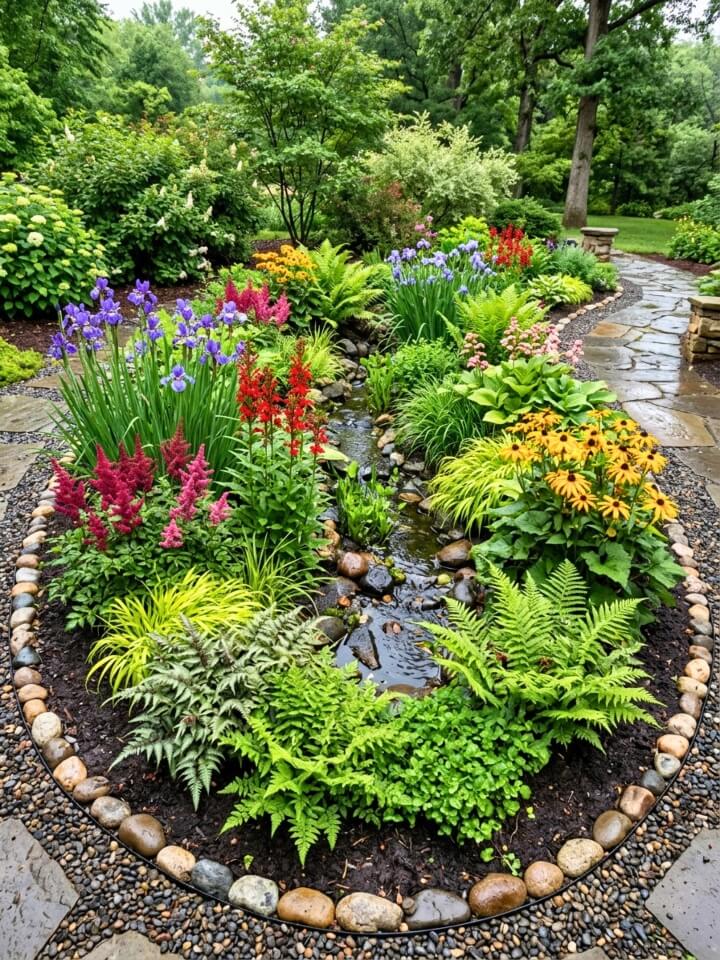
Transform your garden with stunning flower bed ideas that bloom beauty into every corner year-round. Every yard has that patch. Perpetually soggy, grass keeps dying, mosquitoes throw parties. Most homeowners fight it with topsoil and drainage pipes. All of that fails eventually.
Here’s the shift that changes everything: wet spots are gifts, not problems.
Plants that actually thrive in standing water:
- Japanese iris (stunning June blooms)
- Cardinal flower (hummingbirds love it)
- Swamp milkweed (essential for monarchs)
- Marsh marigold (early spring gold)
- Blue flag iris (native, tough)
Beyond looks, bog gardens filter runoff before it hits storm drains and support pollinators struggling in dry beds.
Zones 3-8. Almost zero maintenance once established. The plants basically raise themselves.
4. English Cottage Garden Border
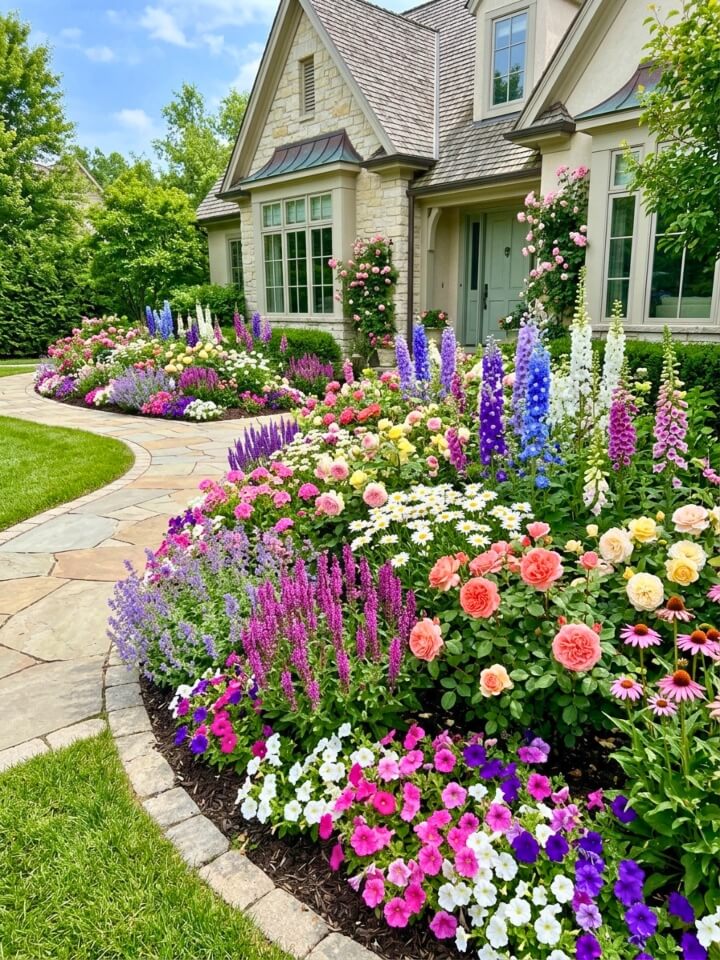
Forget everything about “proper” garden design. Cottage borders break every rule on purpose, and that’s exactly why they feel alive.
Picture hollyhocks towering seven feet behind billowing catmint. Foxgloves poking through delphinium spikes. Old roses tangled with clematis. Everything spilling, leaning, self-seeding. It looks accidental. It’s actually the hardest style to pull off well.
The trick is controlled chaos. Plant in odd numbers, threes and fives, never fours. Let some plants seed themselves for that lived-in feel, but ruthlessly pull anything overstepping.
Staples: peonies, lupines, larkspur, David Austin roses, hardy geraniums. Fill early gaps with cosmos and nicotiana.
For a softer, old-garden look near fences or property edges, stunning lilac bush landscaping ideas pair beautifully with this relaxed cottage style.
5. Warm or Cool Color-Themed Bed
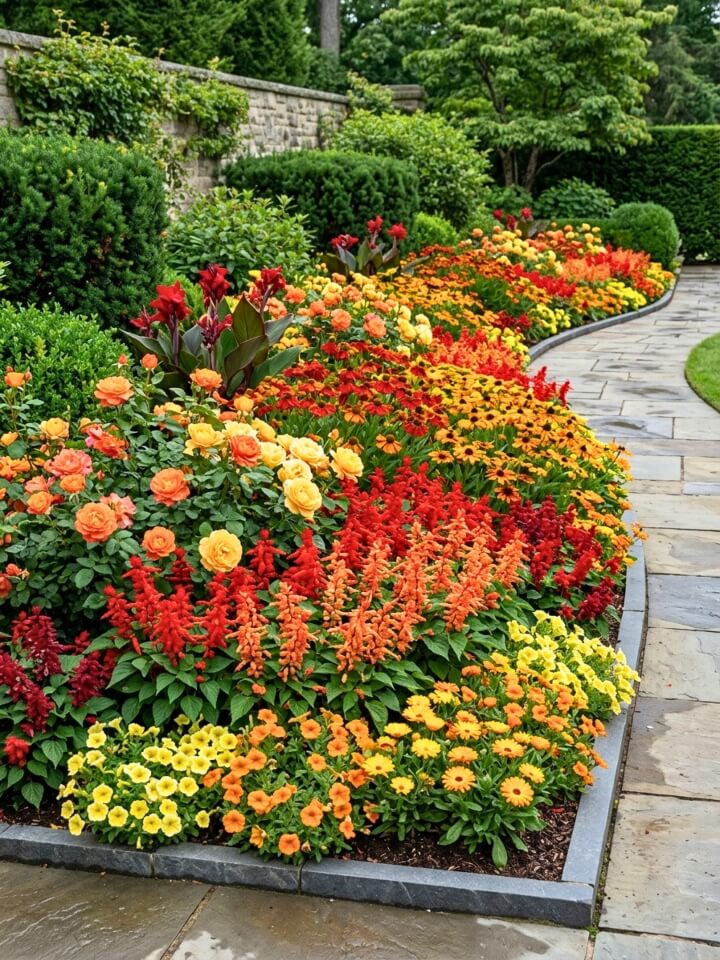
Color theory sounds intimidating until you realize it comes down to one decision: fire or ice?
Warm beds burn with reds, oranges, yellows, and hot pinks. They feel energetic and welcoming, perfect for entry gardens. Try red bee balm, orange rudbeckia, and hot pink cosmos together.
Cool beds whisper with blues, purples, and silvers. They calm the eye and expand small spaces visually. Russian sage, catmint, lavender, and ‘Blue Fortune’ agastache create a bed that feels like an exhale.
What separates good from great: repetition. Pick three or four core plants and repeat them throughout instead of using ten varieties once each.
Never mix warm and cool in one bed. Pick a temperature. Commit.
Zones 3-10. Budget $100-$250.
6. Tropical Foliage Garden Design
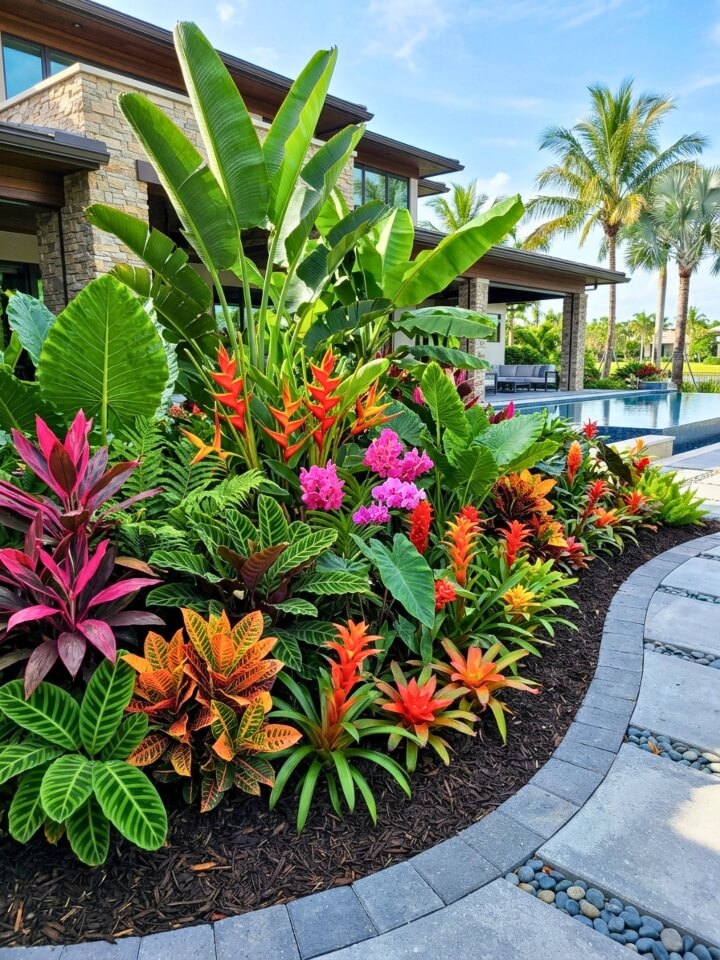
Define your garden’s beauty with flower bed edging ideas that add polish, structure, and lasting style. You don’t need to live somewhere hot to fake a jungle. Even in colder zones, the tropical look comes down to one thing: oversized leaves that make everything else feel small.
Elephant ears are the anchor plant. Nothing else creates that instant vacation feeling. Pair them with canna lilies for vertical drama, banana plants (yes, they grow surprisingly far north as annuals), coleus for wild leaf patterns, and caladiums for the shady spots.
The secret most homeowners miss: overplant deliberately. Tropical beds should feel almost claustrophobic with foliage. Sparse planting kills the whole illusion.
Zones 7-11 for permanent plants. Colder zones treat most as annuals or dig up tubers before frost.
Budget $150-$300 seasonally.
7. Backyard Cutting Garden Layout
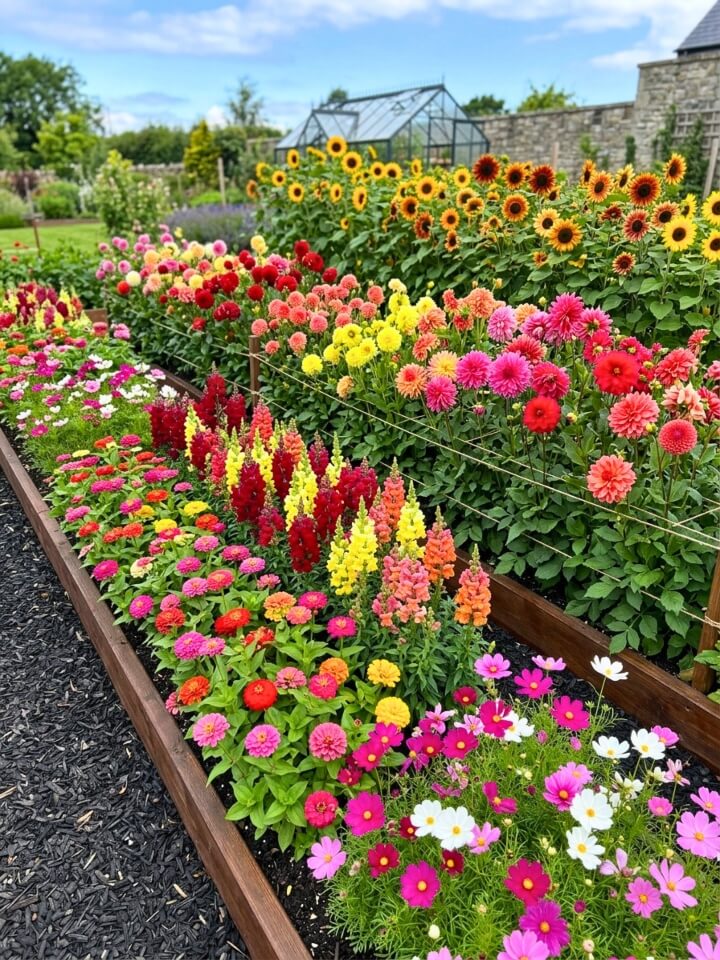
This is the bed that pays you back. Every Sunday morning during summer, I walk out with scissors and come back with an armful of blooms for the kitchen table. No florist bill, no wilted grocery store bouquets.
Design it like a vegetable garden, not a flower garden. Rows or blocks, easy access from both sides, function over prettiness. It won’t win beauty contests from the street, and that’s fine.
Best performers for cutting: zinnias (unstoppable all summer), dahlias, cosmos, snapdragons, lisianthus, and celosia. Sunflowers add drama but hog space.
Rule that changes everything: cut aggressively, even when you don’t need flowers. The more you harvest, the more the plants produce.
Zones 3-10. Budget $60-$120 for seeds.
8. Pollinator Habitat Flower Bed
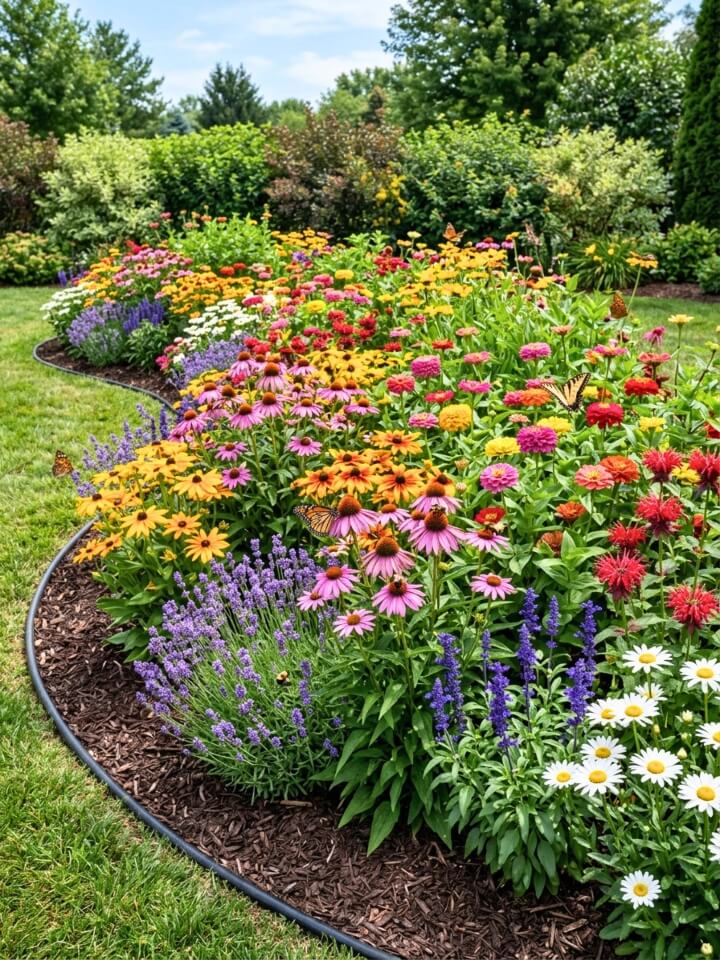
Here’s a statistic worth sitting with: bee populations have dropped roughly 40% in the last decade. Butterfly numbers are worse. Your garden can actually do something about this, and honestly, watching a bed hum with life beats any Netflix show.
The formula is simple. Plant natives whenever possible. Skip pesticides entirely. Provide bloom coverage from March through October.
Early bloomers: crocus, hellebores, virginia bluebells. Mid-season workhorses: coneflowers, bee balm, milkweed, black-eyed Susans. Late-season heroes: asters, goldenrod, sedum ‘Autumn Joy’.
Add a shallow water dish with pebbles. Bees drown in deep water, but they’ll drink from stones sticking above the surface all day long.
Zones 3-9. Budget $100-$250. Maintenance drops dramatically after year two.
9. Sunken Garden Bed
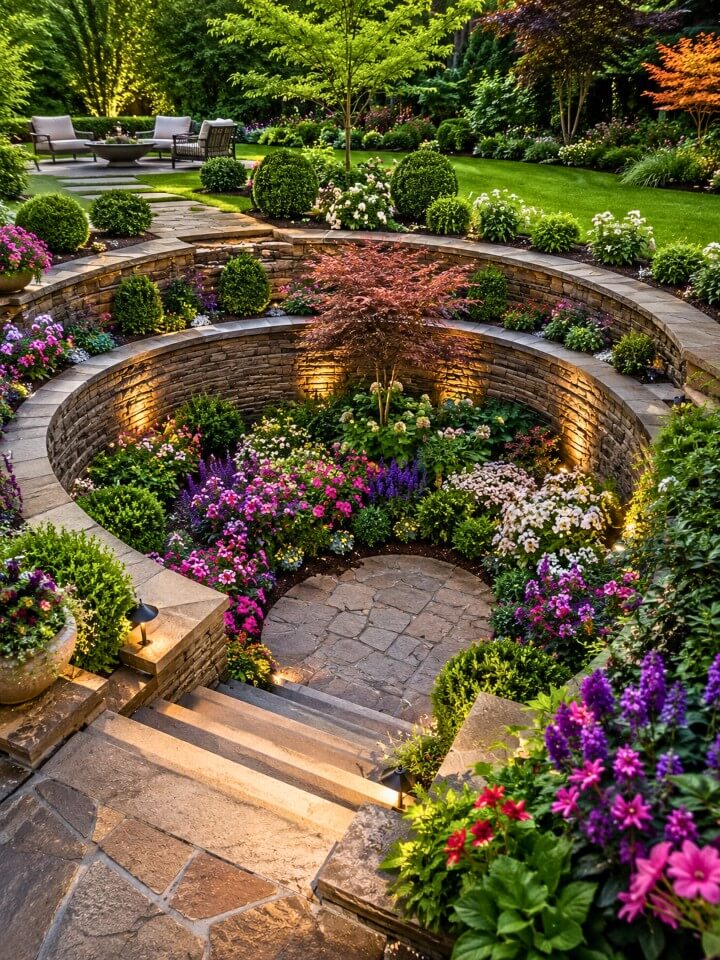
Most gardens sit above ground. Sunken beds do the opposite, dropping planting areas 12 to 18 inches below the surrounding lawn or patio. The effect is unexpected and honestly kind of magical, like stepping into a secret pocket of the yard.
Wind can’t reach the plants. Sound softens. The whole space feels protected, almost meditative.
Structural requirements matter here. You need proper drainage at the bottom, gravel base minimum four inches deep, and retaining walls in stone, brick, or concrete block. Drainage failure turns a sunken garden into a pond fast.
Best plants: hostas, ferns, astilbe, hydrangeas, hellebores. Anything that appreciates cooler, sheltered conditions.
Zones 3-9. Budget $500-$1,500 depending on materials and size.
10. Herb Spiral and Geometric Beds
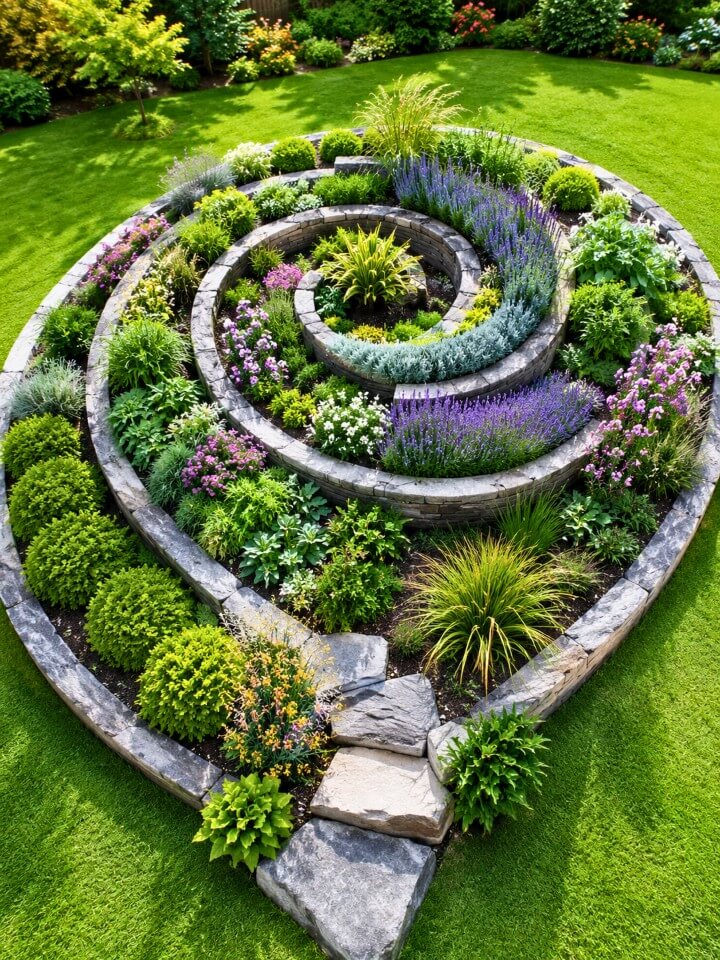
Straight lines are boring. So are circles. But a spiral bed? That’s the kind of design that makes people stop walking to figure out what they’re looking at.
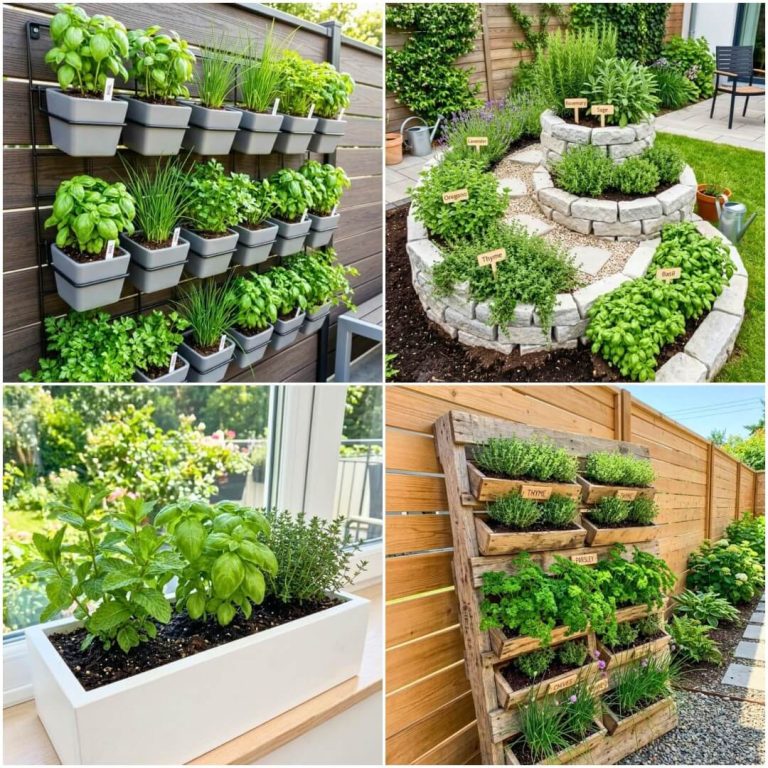
Herb spirals are the classic version. Build a stone spiral roughly six feet across and three feet tall at the center, then plant Mediterranean herbs at the top (rosemary, thyme, oregano) transitioning to moisture-loving ones at the bottom (mint, parsley, chives).
Geometric flower beds work similarly. Triangles, hexagons, keyhole shapes. The structure carries the design even before anything blooms.
Mark shapes precisely with rope or garden hose before digging. Freehanded curves always look wonky.
11. Raised Stone or Brick Bed
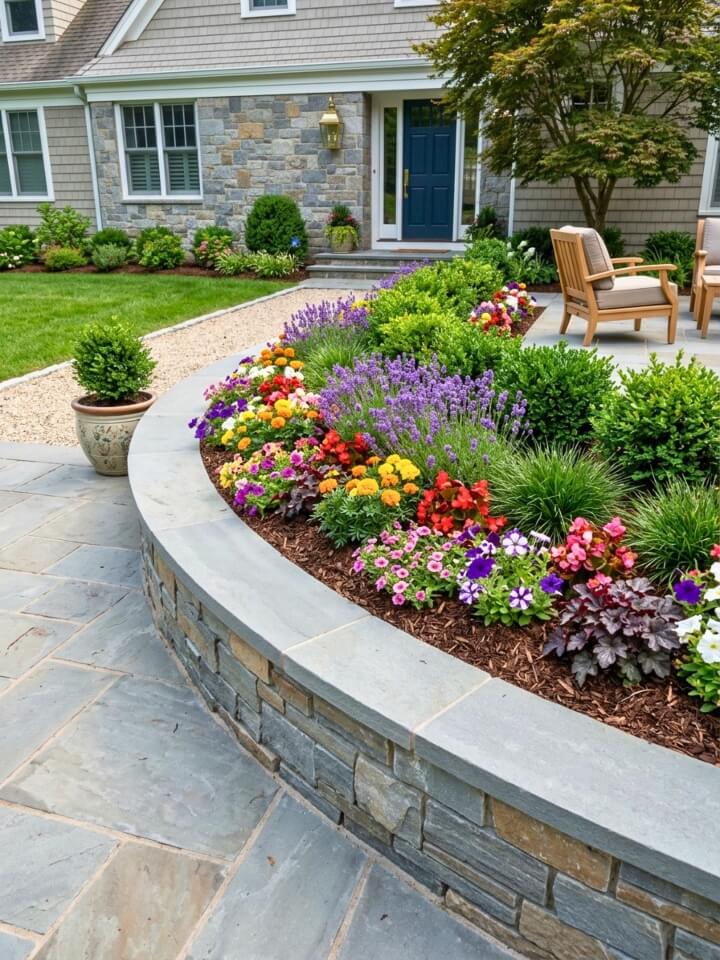
Elevate your gardening game with raised flower bed ideas that combine easy access and bold design. Bending over to weed used to wreck my back every Sunday. Then I built my first raised stone bed and realized I’d been gardening the hard way for years.
Raised beds solve three problems at once: terrible soil, poor drainage, and knee pain. Building 18 to 24 inches tall means you can weed while sitting on the edge, which changes gardening from chore to hobby real fast.
Material choices shape the whole vibe. Fieldstone reads rustic and farmhouse. Clean red brick feels traditional. Concrete blocks look modern when stacked cleanly. Cedar timbers work too but rot within a decade.
Fill with quality topsoil mixed with compost, roughly 60/40. Cheap fill dirt disappoints every time.
12. Ornamental Grass Perennial Border
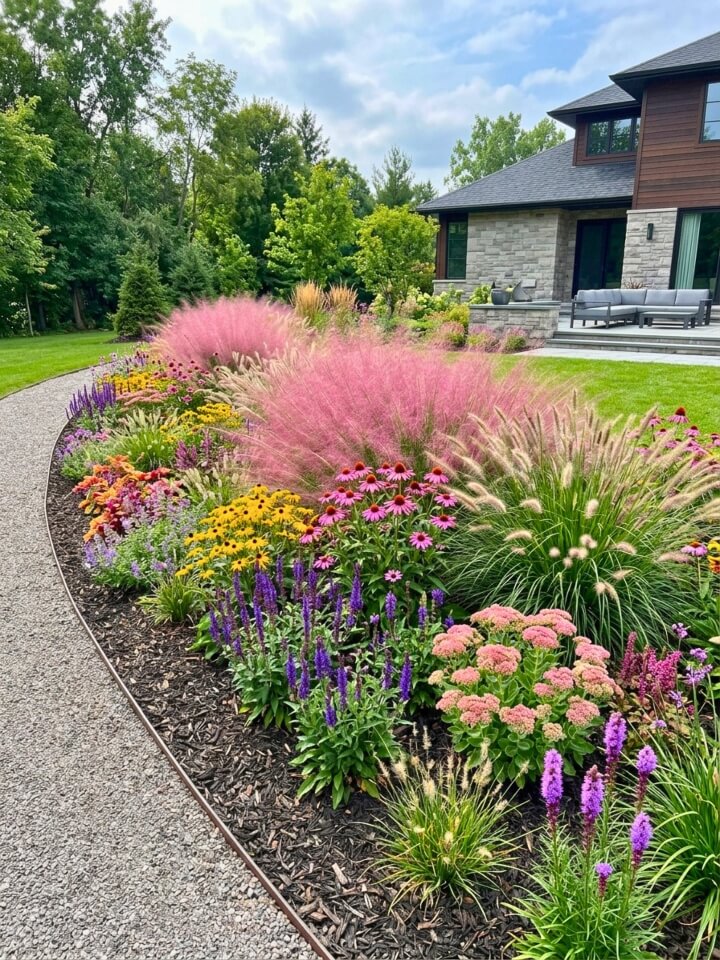
Wind turns this bed into art. Miscanthus swaying six feet tall. Feather reed grass catching afternoon light. Little bluestem shifting from blue-green to copper as fall approaches. Nothing else in the garden moves like grasses do.
The magic happens when you pair grasses with structured perennials. Try ‘Karl Foerster’ feather reed grass behind coneflowers. Fountain grass beside black-eyed Susans. Blue oat grass anchoring sedum groupings.
Winter is where this bed earns its keep. While flower gardens go bare, grass seed heads catch snow and frost, keeping the yard visually alive through January and February.
Cut everything back once in early March. That’s basically the entire maintenance calendar.
13. Low-Light Shade Garden Design
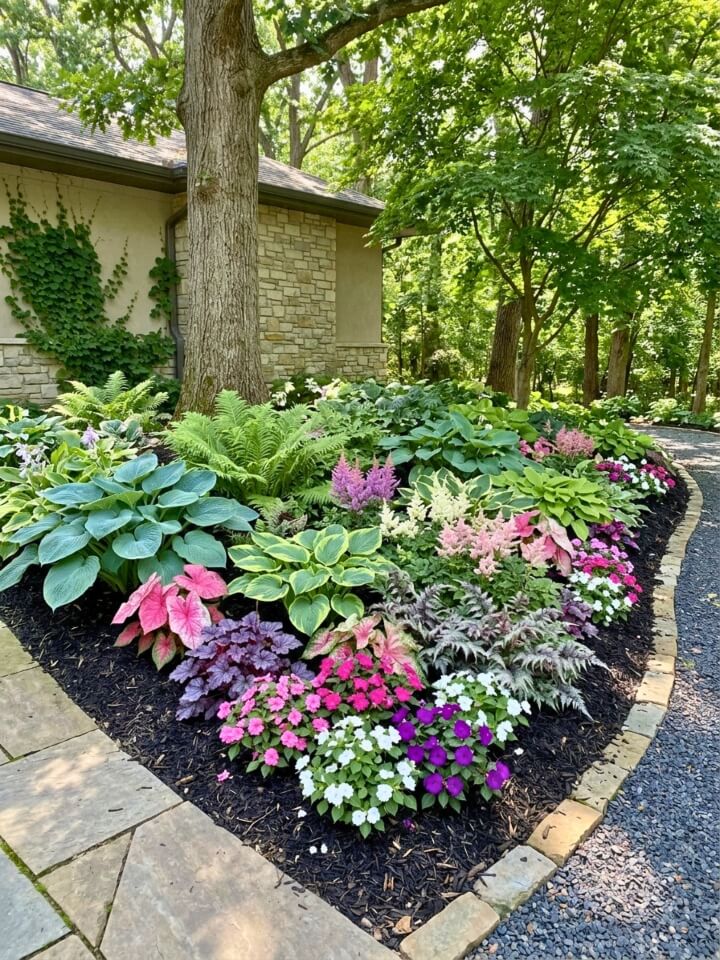
Most homeowners treat shade like a curse. That’s a mistake. Some of the most sophisticated gardens I’ve ever seen exist entirely under tree canopy, and they require far less watering than sun beds.
Hostas do the heavy lifting here. Blue ‘Halcyon’, chartreuse ‘Sum and Substance’, variegated ‘Patriot’, each offers different leaf drama. Layer them with ferns (Japanese painted fern is stunning), astilbe for feathery blooms, heuchera for burgundy foliage color, and bleeding hearts for spring romance.
The one enemy: slugs. They devastate shade beds if ignored. Copper tape around beds works. Beer traps work. Iron phosphate pellets work and stay pet-safe.
Zones 3-9. Budget $120-$280. Minimal watering once established.
14. Drought-Tolerant Xeriscape Bed
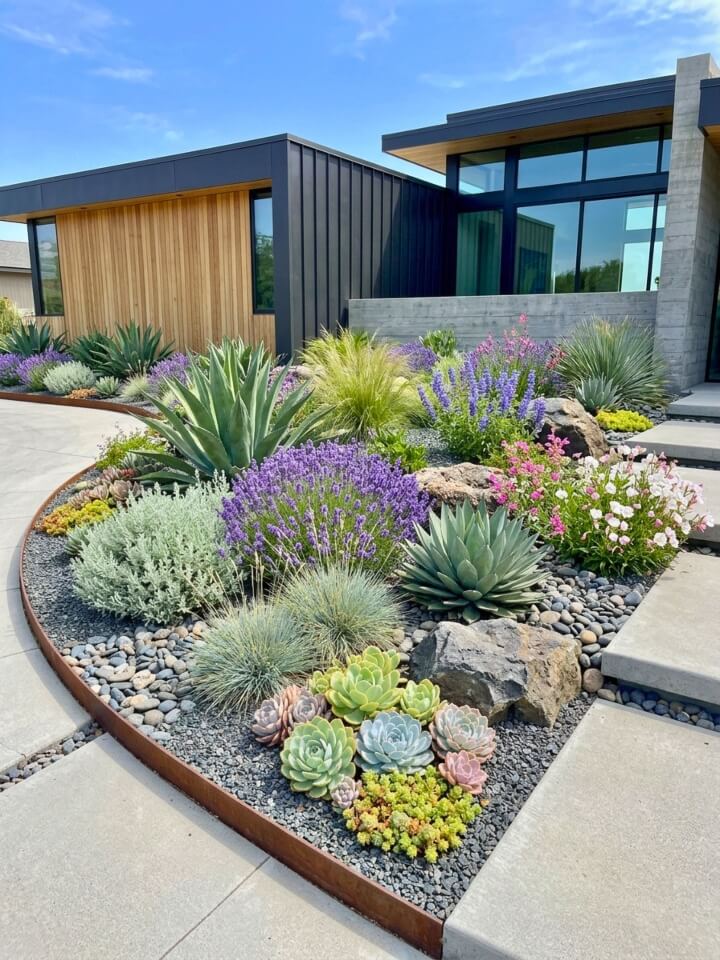
Enjoy low-maintenance flower bed ideas front of house owners love for beauty without the weekend work. Water bills climb every summer. Restrictions get stricter each drought year. Meanwhile, some gardens barely notice, because they were designed for exactly these conditions.
Xeriscaping isn’t about cactus and gravel. Done well, it looks lush, colorful, and thoroughly designed.
Anchor plants: lavender, Russian sage, yucca, agave, blue fescue, sedum varieties.
Flowering additions: coneflowers, blanket flower, yarrow, penstemon, salvias.
Groundcover: creeping thyme, ice plant, sedum ‘Angelina’.
Three design rules make the difference between beautiful and dead-looking:
Group plants by water needs, never mix thirsty and drought-tolerant in one bed. Mulch with two inches of gravel or bark to lock in moisture. Water deeply but infrequently, encouraging deep roots that survive dry spells. For a bolder contrast around drought-tolerant plants, striking black mulch landscaping ideas can make silver foliage, grasses, and bright blooms pop.
Zones 4-10. Budget $200-$450.
15. Edible Flower Kitchen Garden
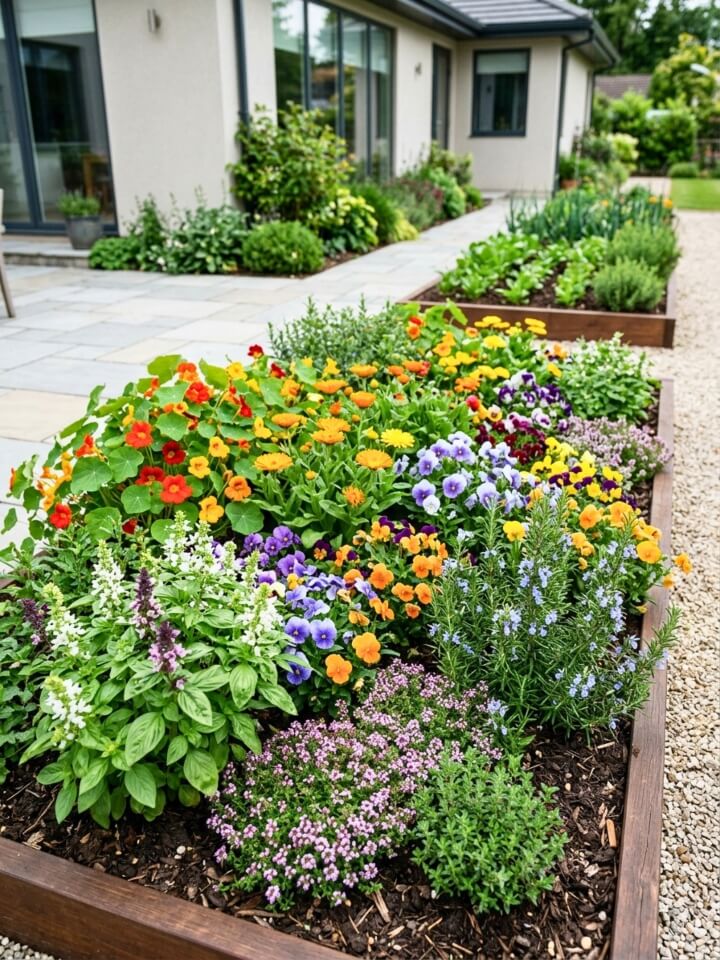
Nasturtiums on a summer salad taste like peppery watermelon. Calendula petals turn plain rice golden. Borage flowers freeze beautifully into ice cubes for cocktails. Once you start cooking with garden flowers, grocery store bouquets feel weirdly pointless.
Design this bed near the kitchen door. Fifty feet away is too far, you’ll stop harvesting within two weeks.
Reliable edible bloomers include nasturtiums, calendula, borage, violets, chive flowers, bee balm, pineapple sage, and lavender. Roses too, if grown without pesticides.
Non-negotiable rule: zero chemicals. No systemic pesticides, no synthetic fertilizers, nothing that ends up in your food. Compost and neem oil handle most problems fine.
16. Island Bed
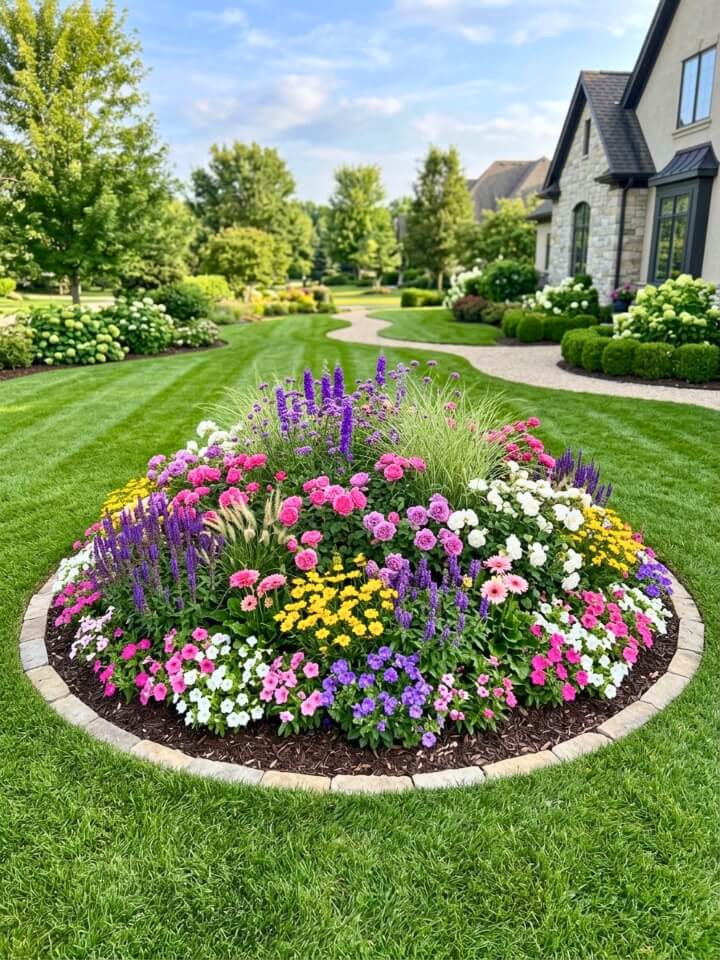
Most flower beds hug edges. Island beds do the opposite, floating in the middle of a lawn like a design statement you can walk completely around. That 360-degree visibility changes everything about how you plan them.
No back row exists. Every side is the front. This means tall plants belong dead center with heights descending outward in every direction, like a gentle mound of color.
Anchor the middle with something structural, a small ornamental tree, tall grasses, or a Japanese maple. Layer mid-height perennials around it: hydrangeas, coneflowers, daylilies. Finish edges with low sprawlers like creeping phlox or hardy geraniums.
Curved edges beat straight ones every time. Sharp corners look stiff and unnatural in the middle of a lawn.
17. Four-Season Interest Bed
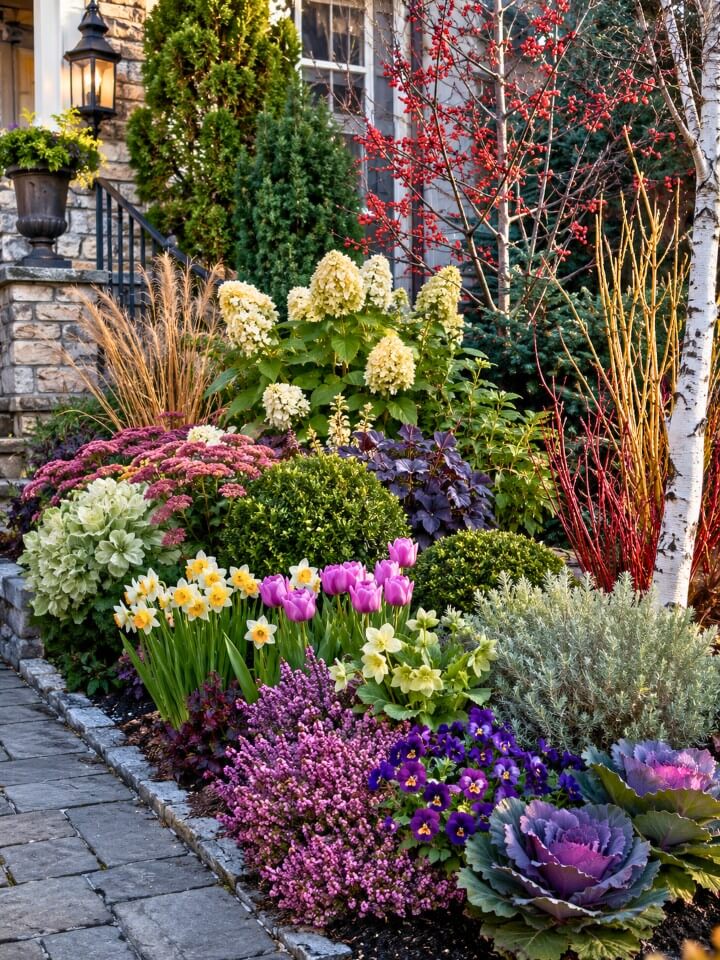
Frame every bloom perfectly with flower bed border ideas that turn ordinary gardens into masterpieces. Most gardens peak in June and look depressing by November. This one refuses that fate.
The planning trick is simple but underused: assign every plant a season, then make sure all four are covered before you buy anything.
- Spring performers: tulips, daffodils, hellebores, bleeding hearts, creeping phlox.
- Summer stars: roses, daylilies, coneflowers, phlox, black-eyed Susans.
- Fall drama: asters, sedum ‘Autumn Joy’, ornamental grasses, mums, Japanese anemone.
- Winter structure: red twig dogwood, evergreen boxwood, hellebores (yes, again, they bloom in snow), ornamental grass seed heads.
Layering evergreens throughout provides the skeleton that holds everything together during transitions.
Zones 3-9. Budget $300-$700. Higher upfront investment, but you never replant.
18. Vertical Climbing Garden Trellis
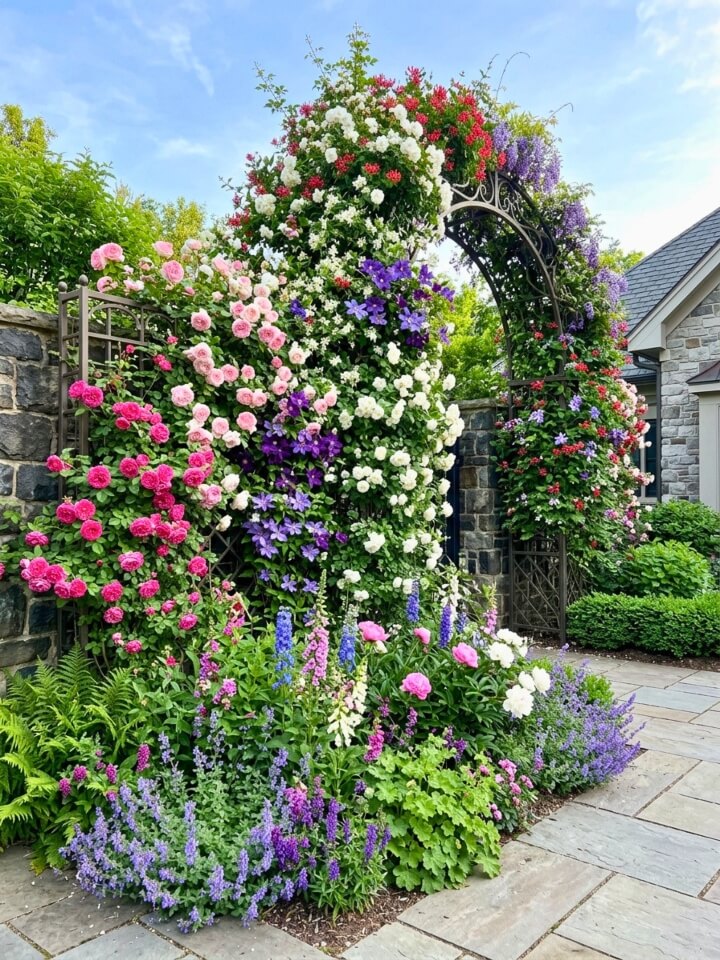
Small yards have a secret weapon most homeowners ignore: the sky. When ground space runs out, growing upward multiplies your garden without stealing another square foot.
Climbing roses on an arbor. Clematis winding through a trellis. Morning glories racing up a string wall. Sweet peas cascading from a tuteur.
Support structures matter as much as the plants. Cheap plastic trellises collapse under mature vines within two seasons. Invest once in cedar, wrought iron, or powder-coated steel that lasts twenty years.
Train young vines early and often. Once they choose their own direction, redirecting them means broken stems and lost blooms. Weekly guidance during the first month sets everything up right.
Zones vary widely by plant choice. Budget $150-$400.
19. Alpine Rock Garden Design
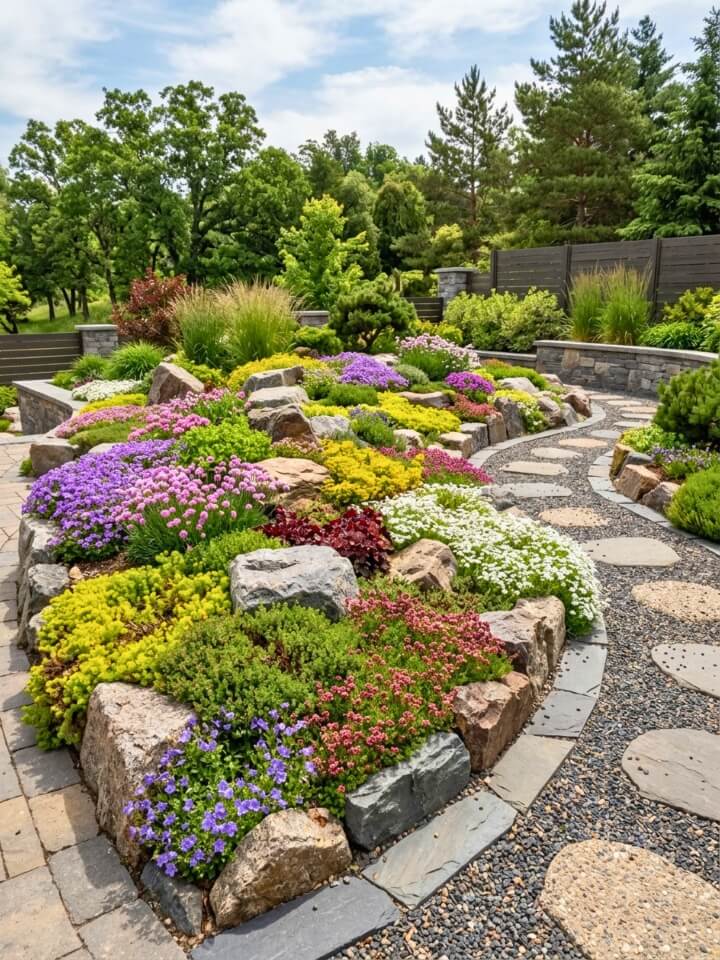
Rocky soil, dry slopes, brutal sun, most gardeners consider these problems. Alpine plants consider them home.
The genius of rock gardens is turning hostile conditions into design assets. Boulders provide thermal mass that moderates root temperatures. Gravel mulch reflects light and prevents crown rot. Sharp drainage keeps finicky specialties alive that would drown in regular beds.
Place large stones first, burying at least one-third of each so they look settled, not scattered. Then tuck plants into pockets between rocks.
Reliable choices include creeping thyme, hens and chicks, dwarf iris, sedum varieties, ice plant, dianthus, and alpine phlox. All love neglect.
Once established, watering becomes basically optional.
Zones 3-9. Budget $200-$500.
20. Moon Garden Bed
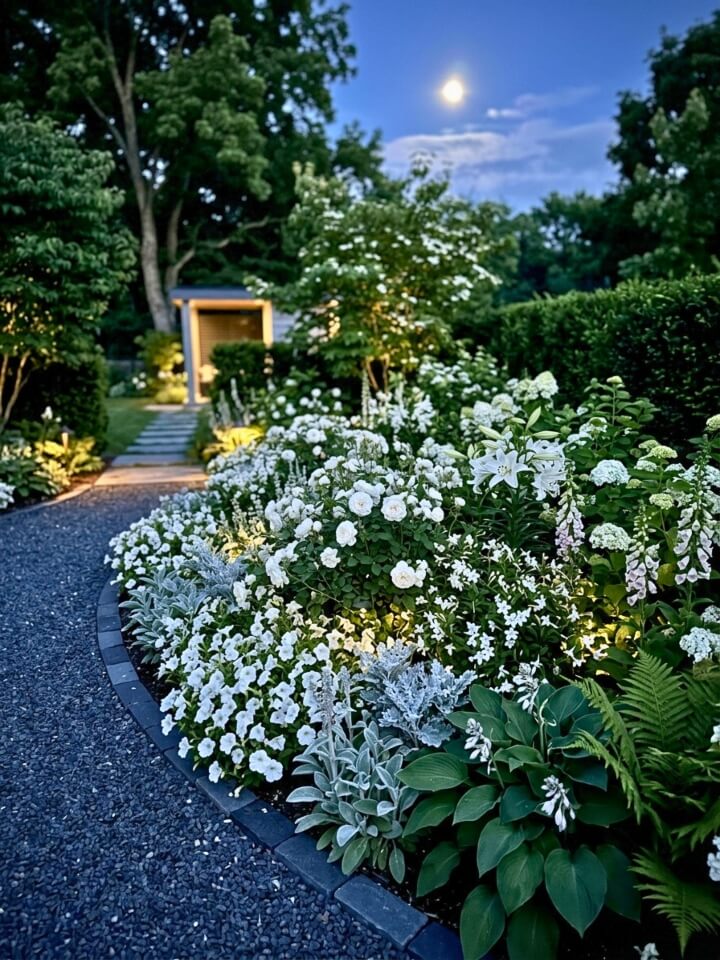
Gardens designed for daylight ignore half the day. Moon gardens flip the assumption, coming alive precisely when everyone else’s yard disappears into darkness.
The science is real. White flowers and silver foliage reflect available moonlight far better than any other color, appearing to glow faintly on clear nights. Add a full moon and the bed practically radiates.
Fragrance matters as much as visibility. Night-blooming plants evolved to attract moths, which means intense scent after sunset.
Best performers: moonflower vines (open at dusk, close by morning), evening primrose, night-blooming jasmine, angel’s trumpet, white nicotiana, and dusty miller for silver texture.
Position near patios, decks, or bedroom windows where you’ll actually experience it. Otherwise the whole concept is wasted.
Zones 4-10. Budget $100-$220.
21. Native Wildflower Meadow Garden
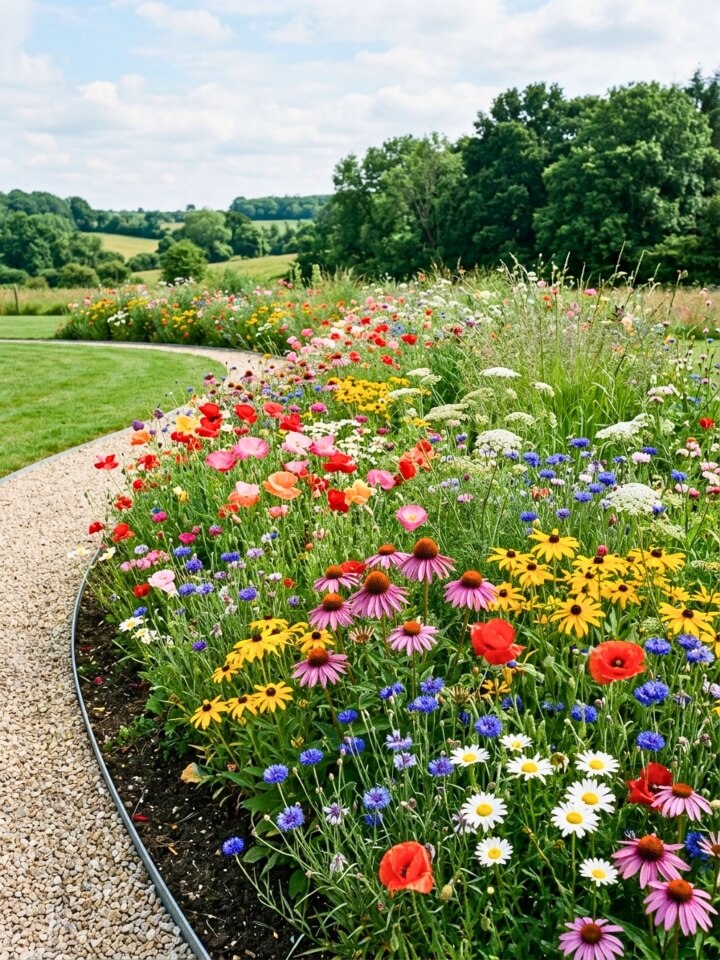
Perfect lawns are exhausting. Watering, mowing, fertilizing, weeding, all for grass nobody actually uses. Wildflower meadows offer the opposite deal: minimal work, maximum life, and beauty that shifts constantly from spring through frost.
The catch nobody mentions upfront? Meadows take three years to look right. Year one looks scraggly. 2nd Year shows promise. Year three finally delivers the postcard.
Skip the cheap wildflower seed mixes from big box stores. Half is filler, and most won’t return next year. Buy region-specific native seed from specialty suppliers instead. Cost more, worth every penny.
Reliable performers: black-eyed Susans, purple coneflowers, bee balm, milkweed, blazing star, coreopsis, and native grasses mixed throughout for structure.
Mow once yearly in late winter. That’s it.
Zones 3-9. Budget $80-$200.
22. Formal Symmetrical Bed
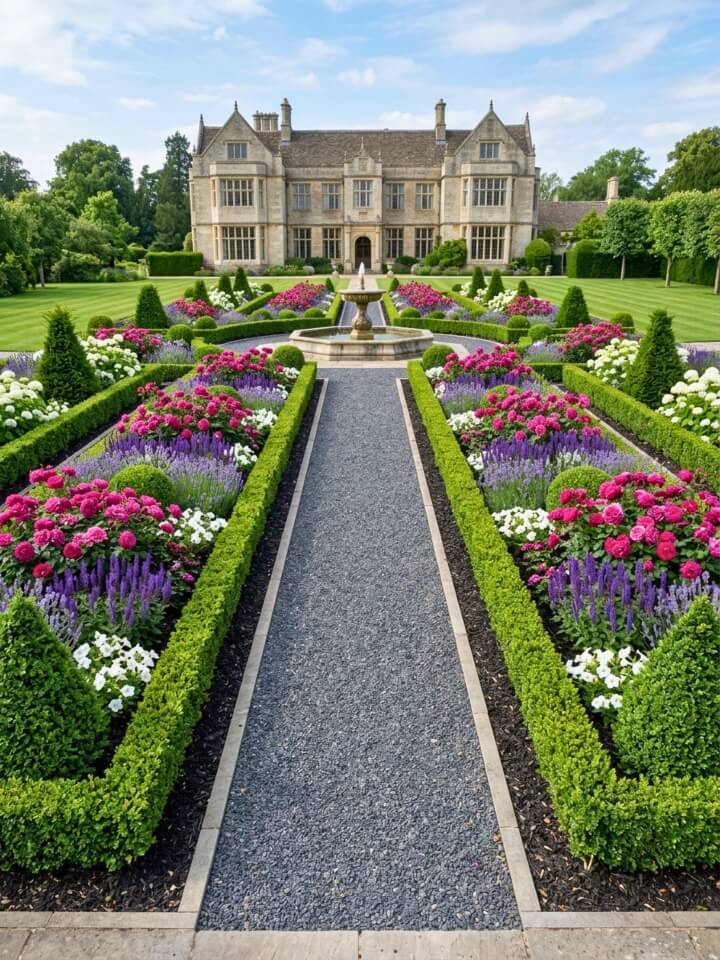
Some homes demand order. Colonial architecture, brick facades, tall columns flanking a front door, these houses look wrong with cottage chaos out front. They want mirror-image precision.
Symmetrical beds work by pairing everything. If a boxwood sits left of the walkway, an identical boxwood mirrors it on the right. Same plants, same spacing, same heights. Repetition creates the calm that formal design depends on.
Central axis is everything. Usually the front door or a walkway. Everything reflects across that invisible line.
Classic plant choices: boxwood hedging, standard roses, lavender edging, tulip drifts for spring, alliums for early summer sculpture.
Maintenance runs high. Boxwood needs shaping twice yearly. Any asymmetry looks like a mistake.
Zones 5-9. Budget $400-$900.
23. Herb and Flower Mixed Bed
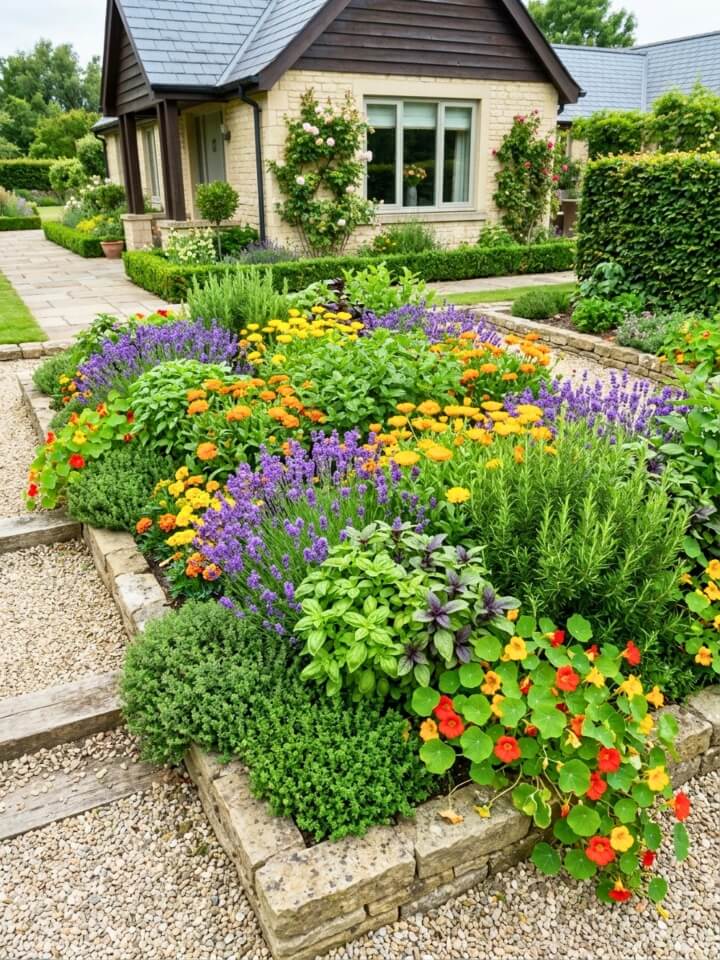
Rosemary next to roses. Basil beside marigolds. Chives blooming purple pom-poms among salvias. This bed refuses to choose between beautiful and useful, delivering both from the same square footage.
Beyond looks, there’s a practical bonus called companion planting. Basil actually improves nearby tomato flavor. Marigolds repel garden pests. Chives deter aphids from roses.
Design around bloom timing so something’s always flowering and something’s always harvestable. Perennial herbs anchor the bed year to year (rosemary, thyme, oregano, sage), while annuals fill gaps seasonally (basil, cilantro, dill).
Position within twenty steps of the kitchen. Farther than that, harvesting becomes a chore instead of a habit.
Snip herbs constantly, they get bushier and more productive with regular cutting.
Zones 4-10. Budget $100-$220.
24. Patio Container Garden Grouping
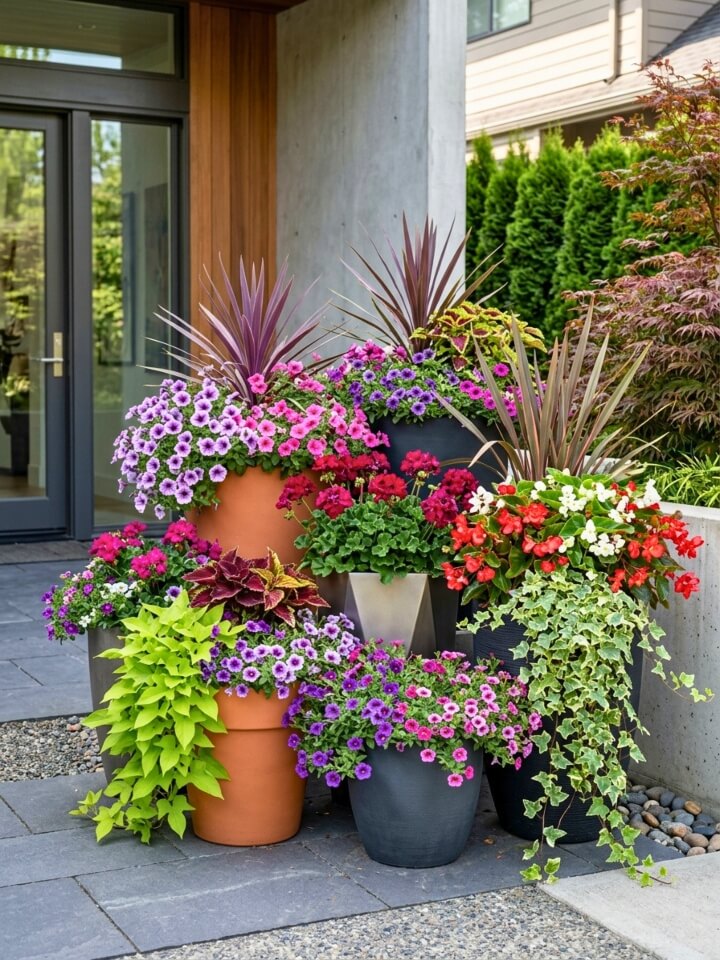
Renters, apartment dwellers, patio-only gardeners, this one’s yours. No dirt required, just pots grouped intentionally instead of scattered randomly.
The rookie mistake is buying five pots of identical size and lining them up like soldiers. That reads as afterthought. Instead, group odd numbers (threes, fives) of varying heights, materials, and shapes. Tall ceramic beside squat terracotta beside a metal galvanized bucket.
Fillers, spillers, thrillers, that’s the classic combo. One tall dramatic plant per pot (thriller), rounded fillers hugging the middle, trailers cascading over the edges (spillers).
Winter tip that saves money: bring frost-tender containers into a garage or basement rather than replacing them yearly. Even unheated shelter buys you an extra zone or two.
Zones anywhere with sunlight. Budget $150-$400.
25. Butterfly Host Plant Garden
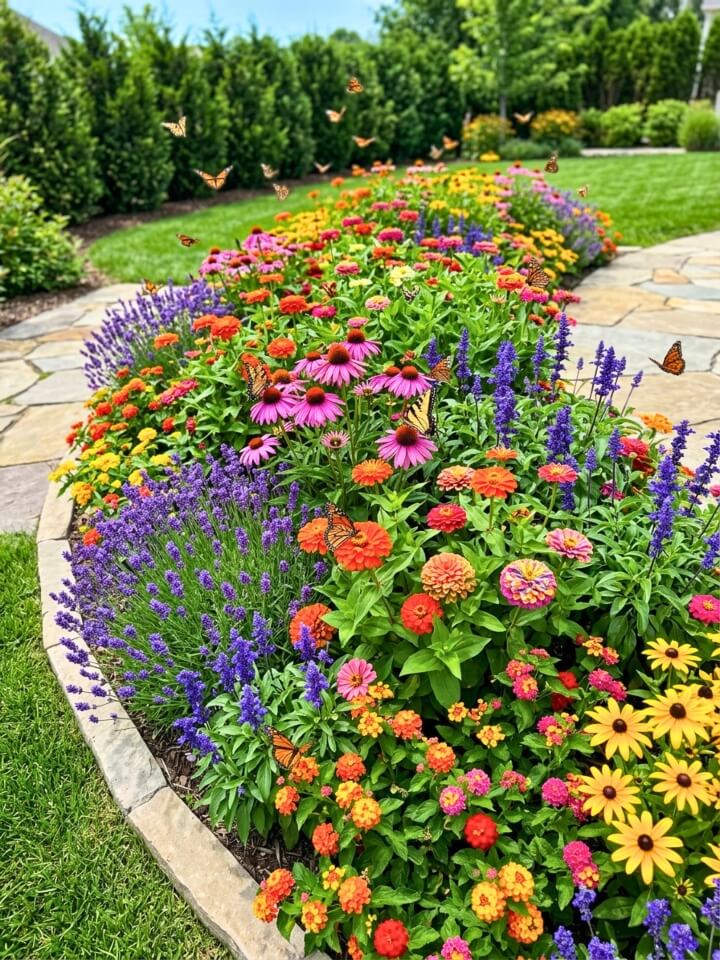
Butterflies are pickier than most gardeners realize. Adult butterflies drink nectar from flowers, but caterpillars only eat specific host plants. Ignore host plants and you’re running a butterfly bar, not a butterfly nursery.
Monarchs need milkweed. Only milkweed. No milkweed, no monarchs, no exceptions.
Black swallowtails need parsley, dill, or fennel. Painted ladies need thistles and hollyhocks. Fritillaries need violets. Fold these host plants into the bed even though they’re not always showy.
Nectar sources butterflies flock to: zinnias, cosmos, coneflowers, bee balm, lantana, verbena, butterfly bush, phlox, joe-pye weed.
Add a flat rock in full sun. Butterflies bask on warm stones to regulate body temperature.
Skip pesticides entirely. Even organic ones kill caterpillars.
Zones 3-10. Budget $120-$280.
26. Modern Foundation Planting Ideas
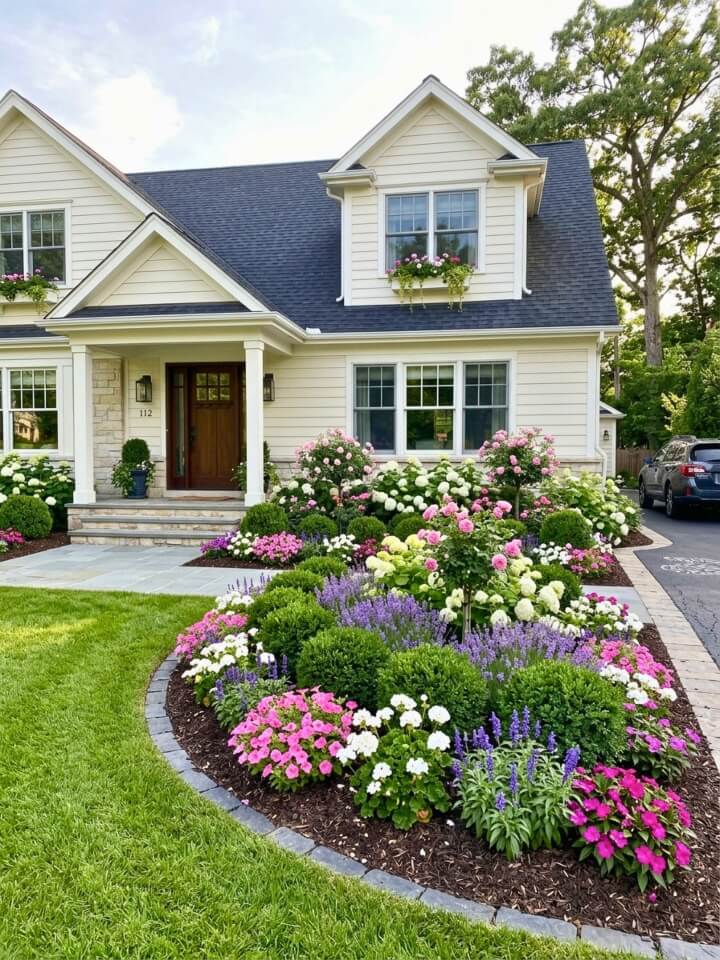
Boost curb appeal instantly with front yard flower bed ideas that welcome guests with vibrant charm. The strip of dirt hugging your house foundation is either your home’s best friend or its worst enemy. Done well, it softens harsh architectural lines and boosts curb appeal instantly. Done badly, it looks like the 1985 landscaping nobody ever updated.
The dated version? Round shrubs spaced evenly like green meatballs against the wall. Skip it.
Modern foundation beds mix evergreen structure with flowering perennials and vary heights deliberately. Try boxwood or dwarf holly as anchors, then weave in hydrangeas, catmint, ornamental grasses, and seasonal annuals.
Keep plants at least two feet from the foundation. Roots pressed against siding cause moisture problems, and shrubs need airflow to stay disease-free.
Zones 3-9. Budget $250-$600.
27. Japanese-Inspired Bed
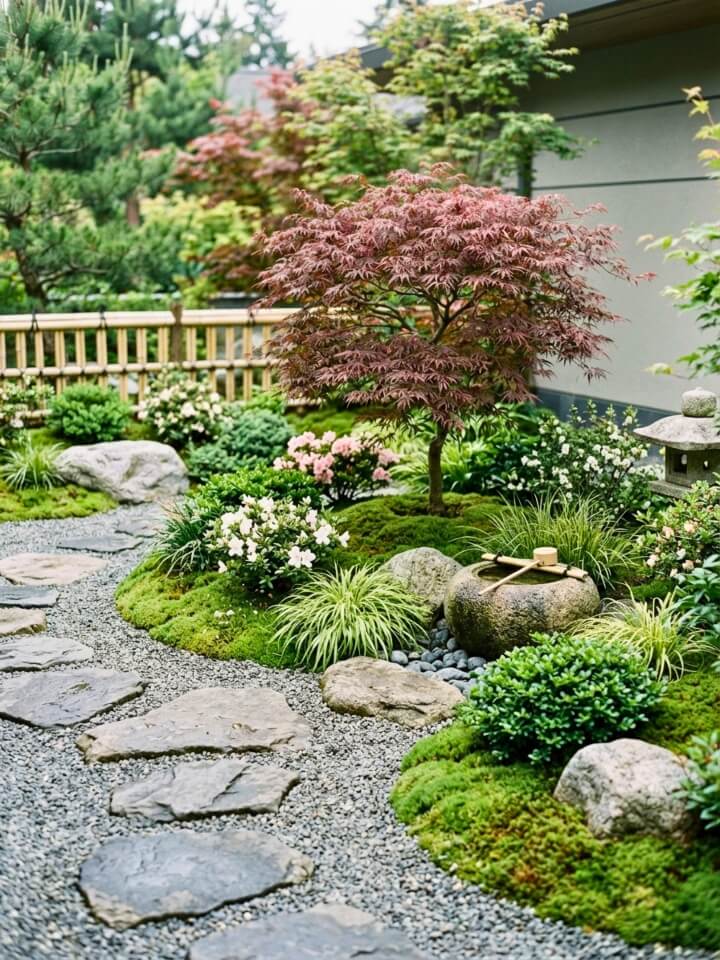
Grow a gorgeous garden on a budget with cheap flower bed ideas that prove beauty doesn’t cost a fortune. Restraint is the whole philosophy here. Where cottage gardens celebrate abundance, Japanese-inspired beds worship empty space. Every element has room to breathe, and that breathing room is exactly what creates the sense of calm.
Three plants placed thoughtfully will outperform thirty plants crammed together, every single time.
The classic palette leans on Japanese maples for structure, mounding azaleas for spring color, hostas and ferns for texture, mosses filling in ground cover, and irises near water. Add carefully positioned boulders and gravel raked into gentle patterns.
Asymmetry matters. Triangular arrangements always beat symmetrical ones in this style. Odd numbers only, three stones, five plants, seven stepping stones.
Zones 5-9. Budget $400-$1,200.
28. Mailbox or Lamppost Bed
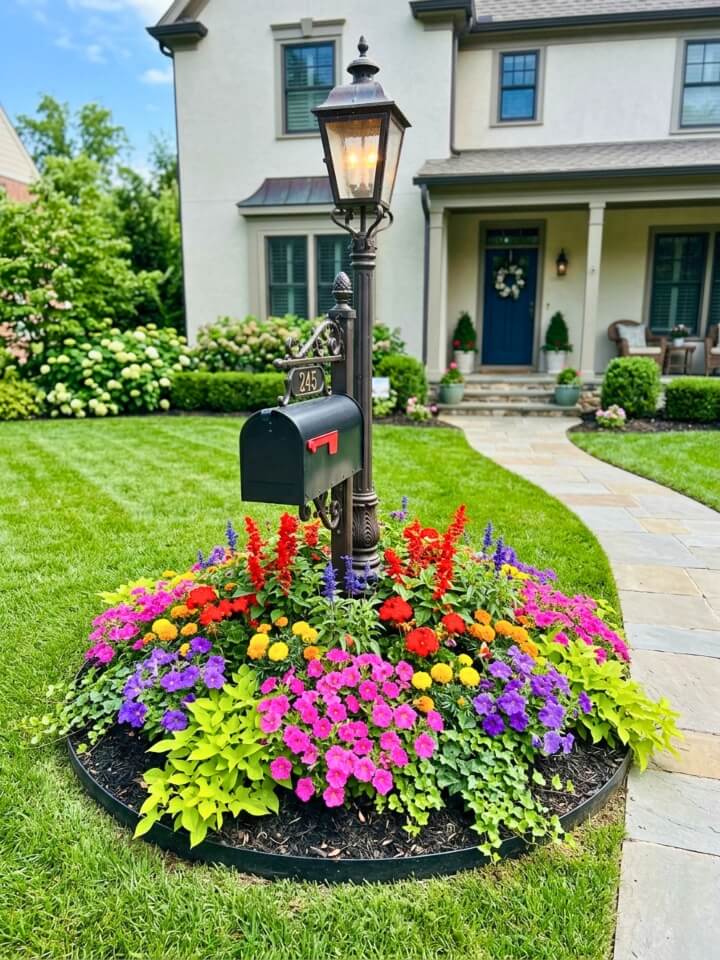
This tiny bed does more work per square foot than any other garden feature you’ll ever plant. It’s the first thing visitors see, the last thing delivery drivers notice, and honestly, the small detail that separates a cared-for home from a neglected one.
The whole design lives in a three-foot circle. That’s your entire canvas.
Best approach: one climbing plant for the post itself, then layers radiating outward. Clematis or climbing roses scaling the mailbox. Mid-height perennials like daylilies or coneflowers in the middle ring. Low-growing sweet alyssum or creeping phlox spilling over the edges.
Warning worth heeding: check local regulations. Some neighborhoods restrict mailbox plantings, and postal carriers hate thorny climbers blocking access.
Zones 3-9. Budget $60-$140.
29. Berm Bed
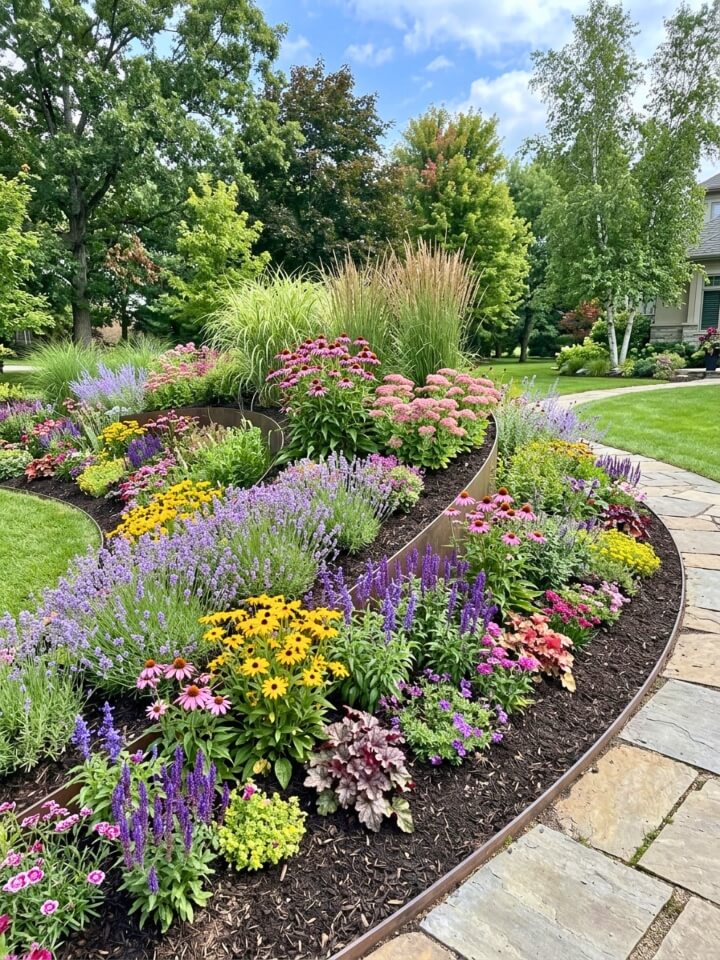
Flat yards feel finished but boring. Berms fix that by adding subtle elevation, mounded soil rising 18 to 36 inches above surrounding grade, creating visual interest where nothing existed before.
Beyond aesthetics, berms solve real problems. They improve drainage in soggy spots, block unwanted sightlines from neighbors, muffle road noise, and provide better growing conditions for plants that hate wet feet.
Shape matters enormously. Long, gentle slopes look natural. Short, steep mounds look like dirt piles somebody forgot to remove. Aim for length roughly four times the height, minimum.
Plant tap-rooted species along slopes: yarrow, coneflowers, ornamental grasses, sedums. They’ll stabilize soil while roots establish.
Zones 3-10. Budget $300-$900 depending on size.
30. Regional Native Plant Garden
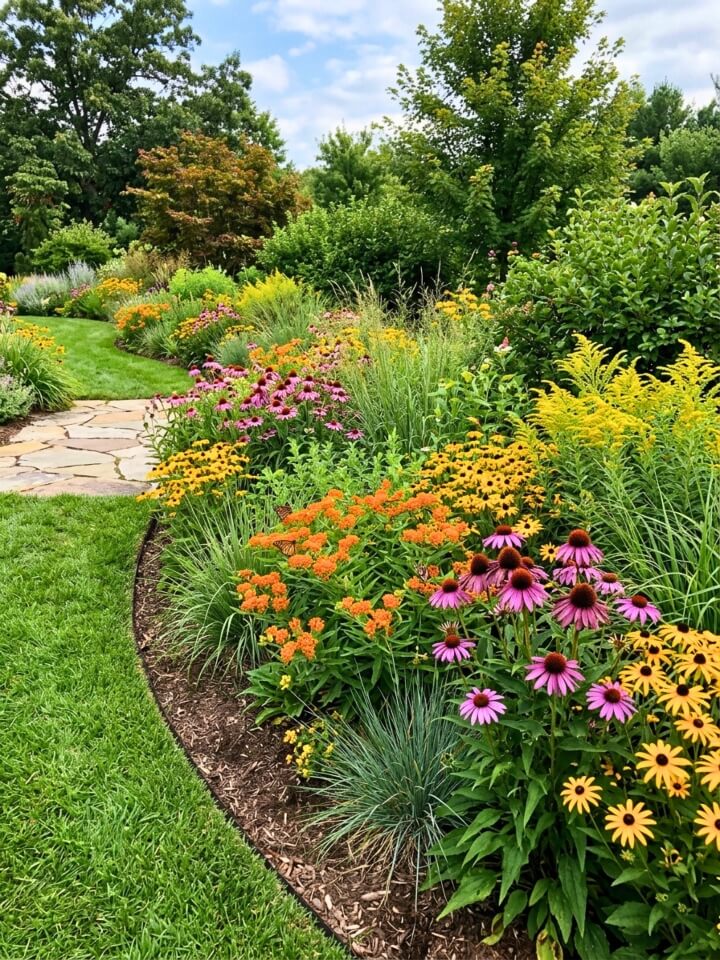
Every region evolved its own perfect plants over thousands of years. Then landscape designers ignored all of them in favor of imported ornamentals that need constant water, fertilizer, and pest control to survive.
Native beds return to what actually works.
The benefits stack up fast. Zero fertilizer needed, native plants evolved for local soil. Minimal watering after establishment. Deep root systems that survive drought and improve soil structure. Wildlife support that non-natives can’t match, native bees literally cannot feed from many exotic flowers.
Regional workhorses vary widely: purple coneflower, milkweed varieties, goldenrod, wild bergamot, native asters, switchgrass, little bluestem. In hot, humid climates, spectacular low-maintenance Florida landscaping ideas can help narrow the plant list to choices that actually tolerate the conditions.
Regional workhorses vary widely: purple coneflower, milkweed varieties, goldenrod, wild bergamot, native asters, switchgrass, little bluestem.
31. Traditional Knot Garden Pattern
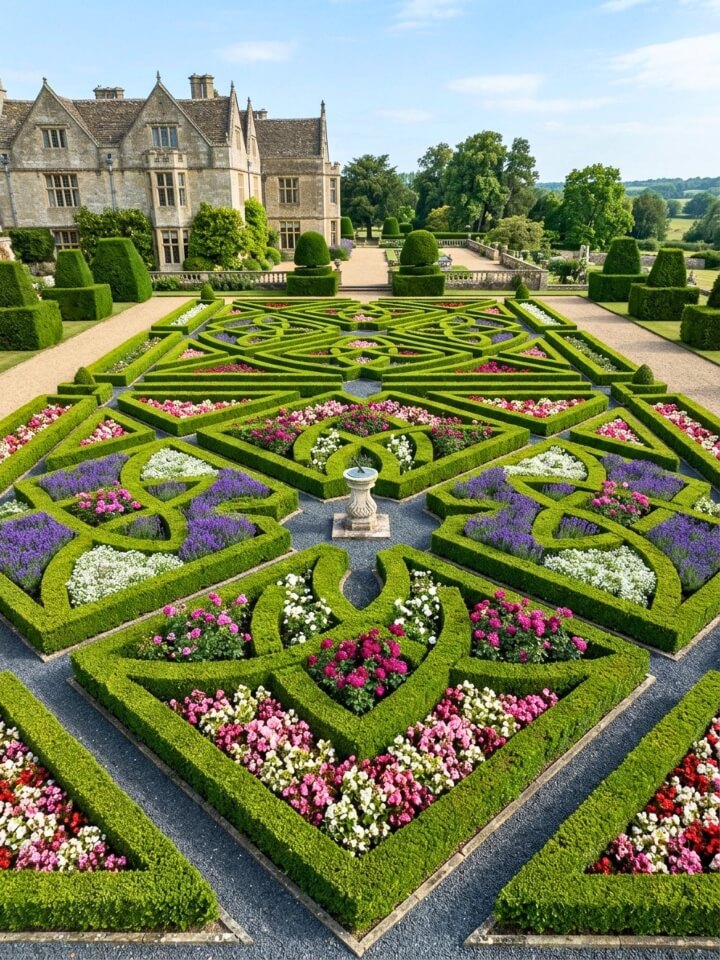
Knot gardens are the ancient Persian and Renaissance European tradition of turning plants into living embroidery. Low hedges woven into intricate patterns, geometric shapes intersecting like Celtic knots, the whole design readable from a second-story window.
Yes, it takes work. Yes, it’s absolutely worth it if you love precision.
The traditional palette uses boxwood, dwarf germander, dwarf lavender, and santolina, each with distinct foliage colors that emphasize the pattern. Fill negative spaces with colored gravel or contrasting groundcover like creeping thyme.
Trimming frequency separates success from disaster. Plan on shaping hedges every three to four weeks during growing season. Miss a month and the pattern blurs into shrubbery.
Sketch the design on graph paper first. Freehanding never works.
Zones 5-9. Budget $500-$1,500.
32. Sensory Garden Bed
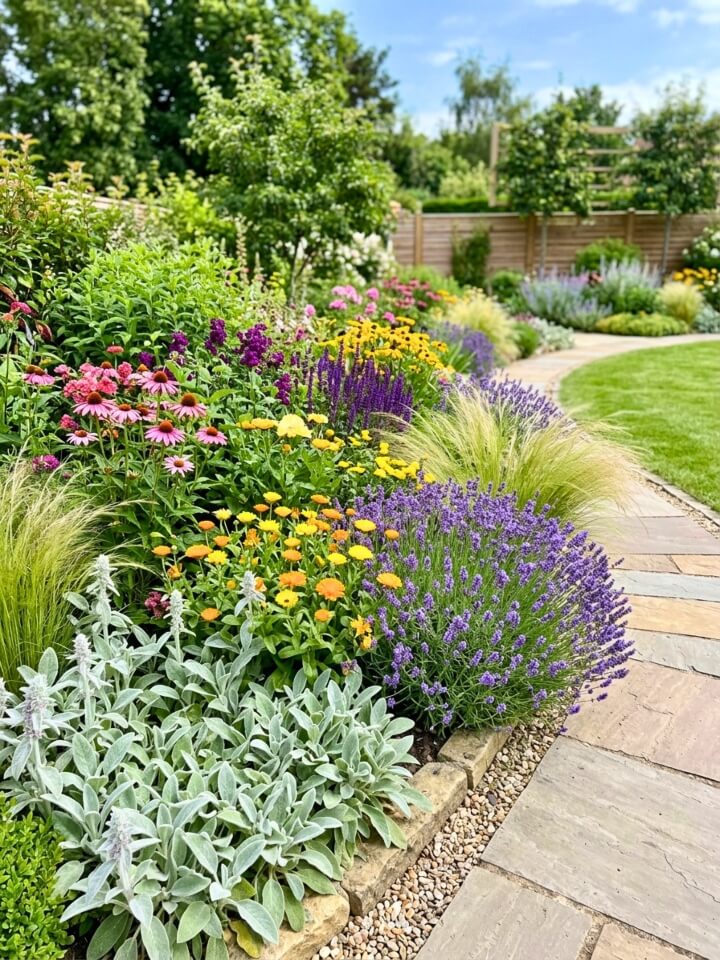
Traditional gardens engage sight. Sensory beds engage everything, touch, smell, sound, even taste. The result is a space that pulls you in physically instead of just visually.
Think about what each sense wants.
Touch: lamb’s ear (unbelievably soft), silver mound artemisia, ornamental grasses that beg to be run through fingers.
Smell: lavender, rosemary, chocolate cosmos (yes, they actually smell like chocolate), night-blooming jasmine, sweet alyssum.
Sound: tall grasses rustling in wind, seed pods that rattle when dry, bamboo where climate allows.
Sight: high-contrast foliage colors, movement from butterflies and bees, seasonal shifts.
Taste: edible flowers and herbs woven throughout.
Position plants along pathway edges within easy reach. A sensory garden viewed from ten feet away misses the entire point.
Zones 4-10. Budget $180-$400.
33. Hummingbird Bed
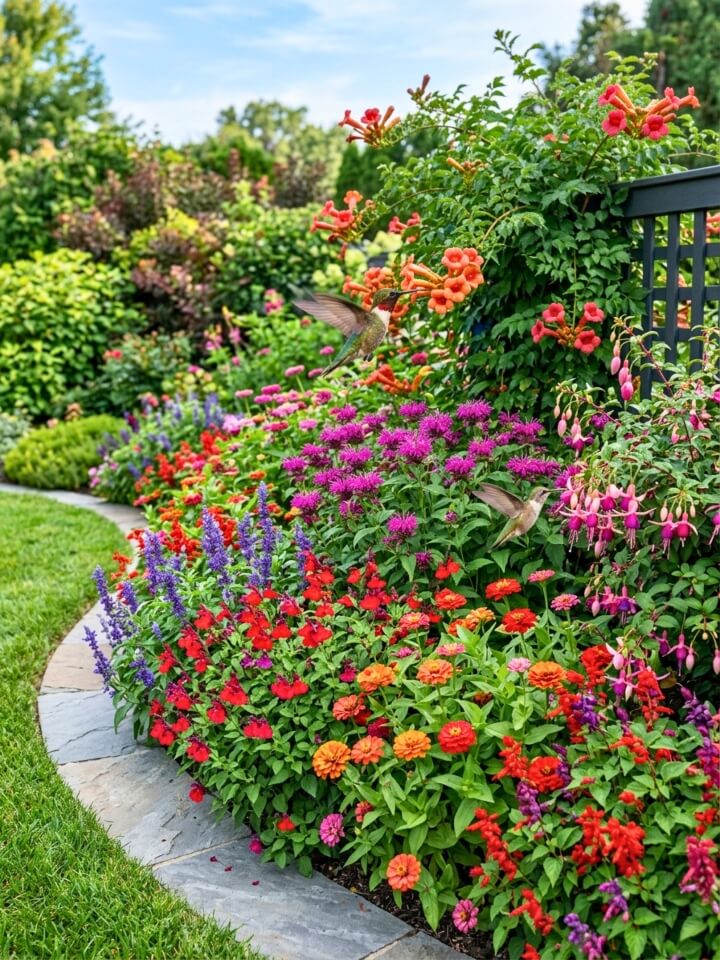
Discover simple flower bed ideas front of house lovers adore for effortless charm and instant appeal. Ruby-throated hummingbirds beat their wings 53 times per second. Watching that in your own garden, three feet from your coffee cup, changes how you feel about mornings.
The bed design is dictated by biology. Hummingbirds see red and orange first, tubular flowers accommodate their long beaks, and they need constant nectar because their metabolism runs impossibly hot.
Top performers include cardinal flower (hummingbird magnet, no exceptions), bee balm, salvias, penstemon, trumpet vine, coral honeysuckle, and fuchsia. Red tubular flowers are gold-standard.
Skip anything with double blooms. Nurseries breed those for looks, but doubled petals block nectar access. Simpler flower structures always win here.
Add a small water mister for bathing. Hummingbirds absolutely love it and return daily once they find it.
Zones 4-10. Budget $120-$280.
34. Terraced Bed on a Slope
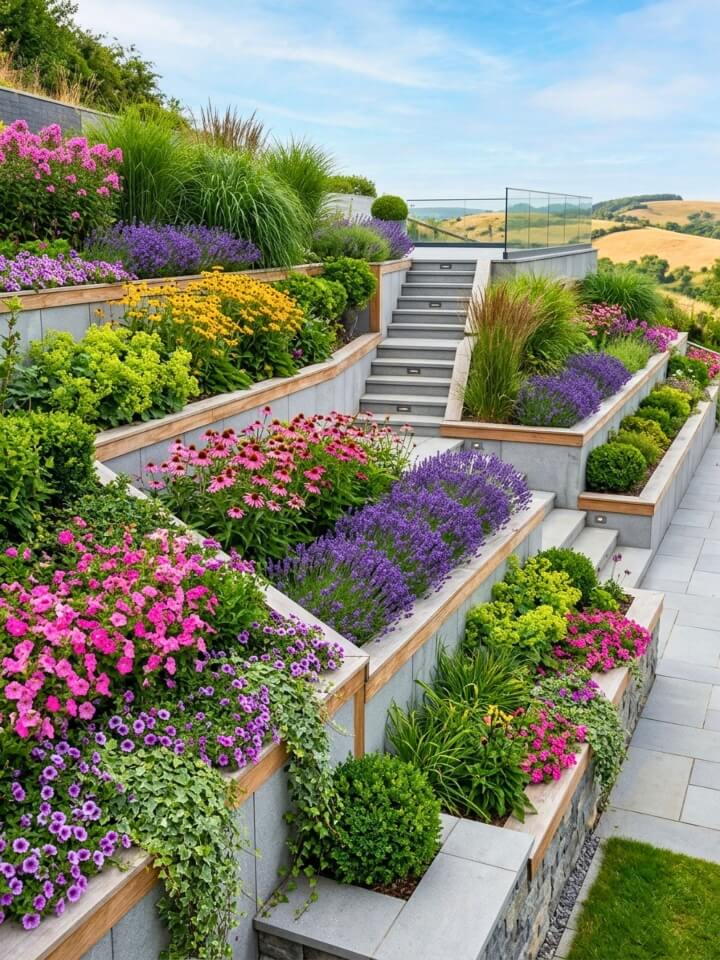
Steep slopes defeat most homeowners. Mowing becomes dangerous, erosion strips topsoil after every heavy rain, and nothing wants to grow on the harsh angle. Terracing solves all three problems by converting one impossible slope into multiple flat planting levels.
Each terrace becomes its own microclimate. Upper levels drain faster and stay drier, suiting Mediterranean plants. Lower levels catch runoff and stay moister, perfect for lush perennials.
Retaining wall materials shape the aesthetic completely. Natural stone reads timeless and expensive. Concrete blocks work modern. Timber suits rustic settings but rots within fifteen years.
The critical detail nobody mentions: drainage behind walls. Water pressure destroys retaining walls faster than gravity. Install gravel backfill and perforated drain pipe during construction.
Zones 3-10. Budget $800-$3,000+.
35. Mediterranean Bed
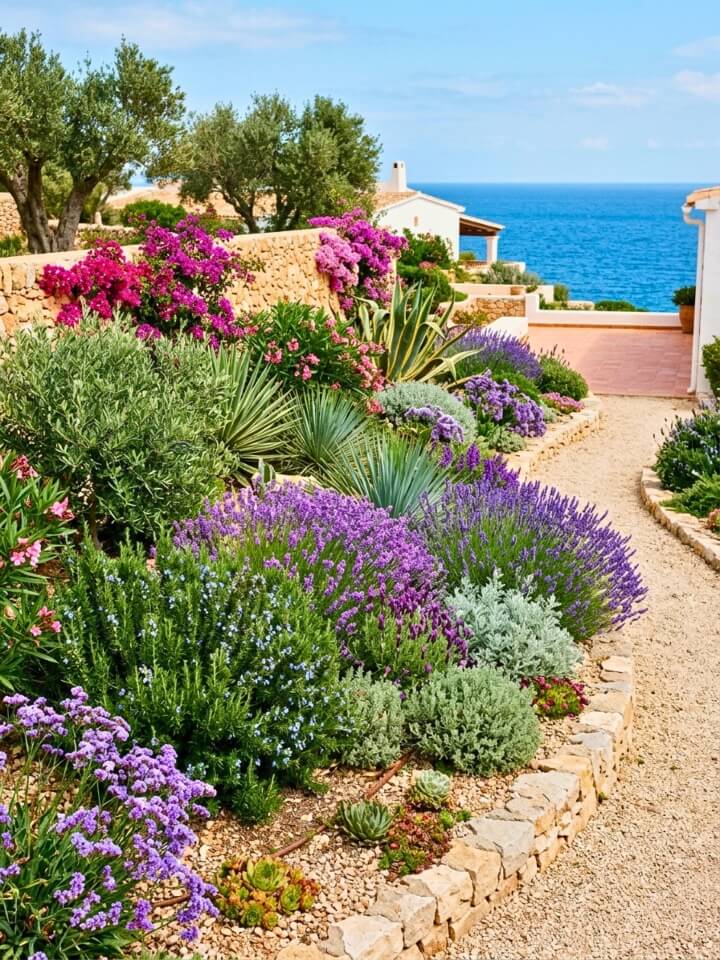
Warm, dry, breezy, this bed style borrows from coastal Greece, southern Italy, and Provence. The look feels sun-baked and effortless, but that effortlessness requires specific conditions to actually work.
Full sun. Sharp drainage. Lean soil. Wet feet or rich compost kills Mediterranean plants faster than any pest.
Plant palette leans heavily on aromatics: lavender, rosemary, sage, oregano, and thyme, all doubling as culinary herbs. Add olive trees where hardiness allows, cypress for vertical drama, and cistus or oleander for flowering shrubs. Silver foliage plants like Russian sage and artemisia complete the palette.
Gravel mulch instead of bark. Bark holds moisture and rots crowns, gravel reflects light and keeps roots dry, mimicking natural Mediterranean hillsides.
Zones 6-10. Budget $200-$500.
36. Heirloom or Old-Fashioned Bed
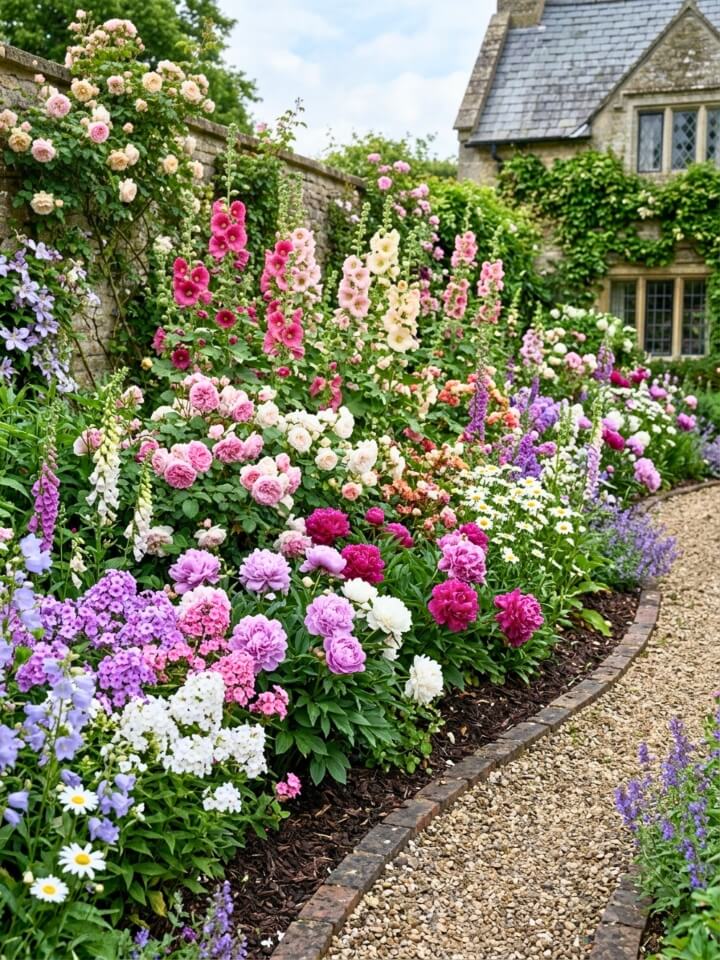
Grandmother gardens carry something modern landscapes lost somewhere along the way. Fragrance so strong you smell the bed before you see it. Flower forms that predate hybridization. Varieties passed between neighbors for generations because everyone wanted cuttings.
Modern nursery flowers optimized for shipping and shelf life, sacrificing scent and character along the way. Heirlooms keep what was traded away.
Signature plants include old garden roses (damasks, gallicas, albas), hollyhocks, foxgloves, peonies, lily of the valley, sweet William, phlox, and bearded iris. Bonus points for varieties documented before 1900.
Source matters here. Big-box stores won’t stock these. Look for heritage nurseries, seed exchanges, or garden clubs where members divide and share.
Zones 3-9. Budget $180-$400.
37. Winter Interest Bed
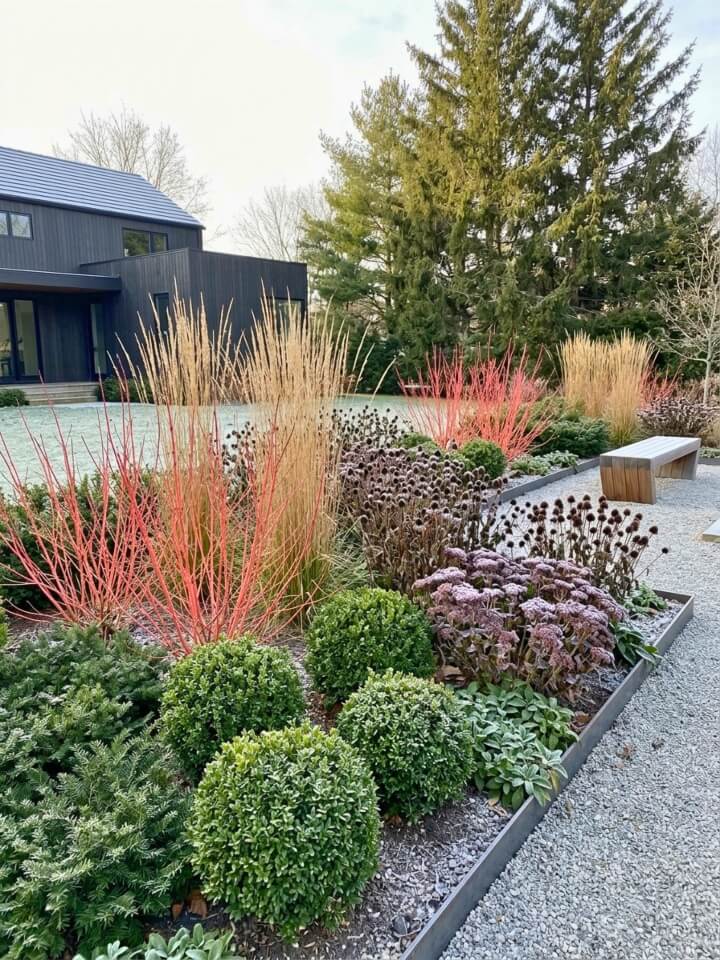
November through March is when most gardens die visually. Sticks, mulch, and mud for five straight months. Winter interest beds refuse to accept that timeline, staying beautiful when everything else surrenders.
The design thinks in silhouettes rather than blooms.
Red twig dogwood glowing crimson against snow. Ornamental grass seed heads catching frost. Evergreen structure from boxwood, holly, or dwarf spruce. Hellebores actually blooming through January. Winterberry holly loaded with bright red berries into February. Ornamental kale surviving repeated freezes.
Position this bed where you’ll see it from indoor windows. Kitchen views, home office sightlines, living room glass doors. A gorgeous winter bed hidden behind the garage helps nobody.
Add landscape lighting for dramatic evening impact when winter darkness arrives at 4:30 PM.
Zones 3-8. Budget $250-$550.
38. Black and Dramatic Bed
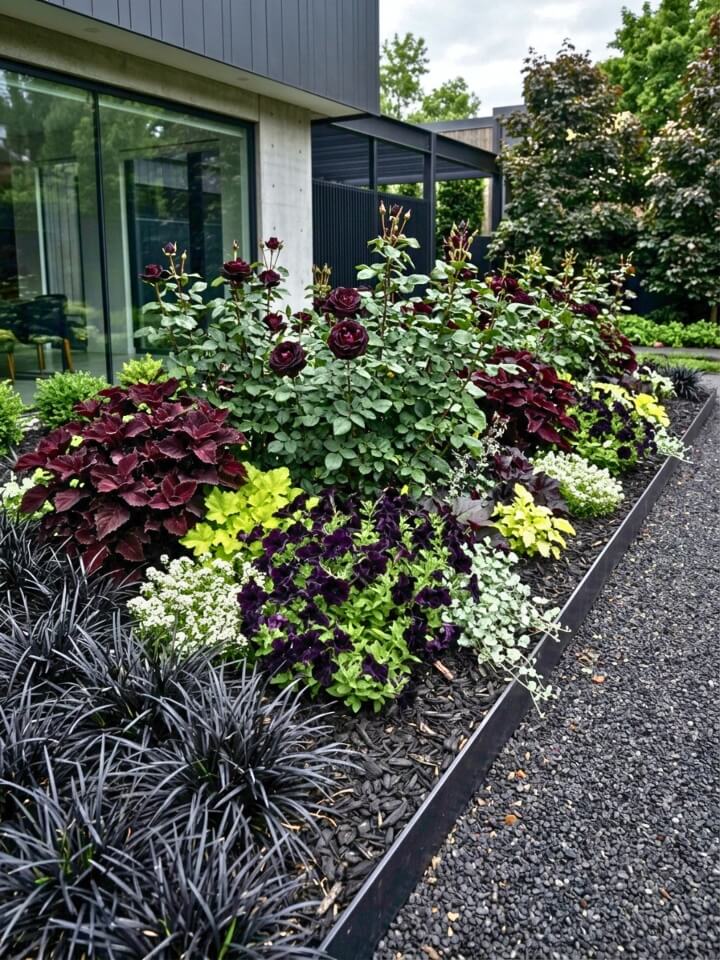
Skip pastels entirely. Skip cheerful entirely. This bed embraces moody, gothic, almost theatrical planting that reads sophisticated rather than saccharine.
True black doesn’t exist in flowers, but deep burgundy, near-black purple, and dark maroon come close enough that our eyes fill in the rest.
Stars of the show: ‘Queen of Night’ tulips, ‘Black Barlow’ columbine, black petunias, dark burgundy dahlias, ‘Chocolate’ cosmos, ‘Molly Sanderson’ viola, black mondo grass, and ‘Obsidian’ heuchera.
Contrast makes this bed work. Pure black plantings look muddy and depressing. Adding chartreuse foliage (creeping Jenny, golden hostas) or silver accents (dusty miller, artemisia) creates the tension that makes darkness dramatic instead of dull.
Position against pale walls or light-colored gravel for maximum visual punch.
Zones 4-9. Budget $200-$450.
39. Layered Tiered Bed
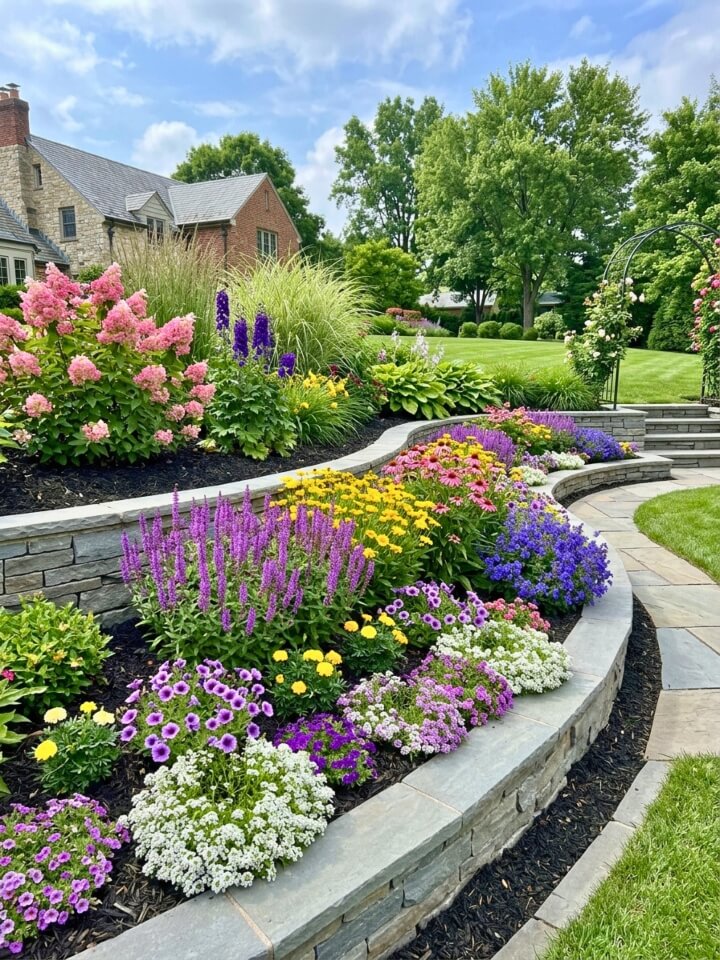
Every bed benefits from height variation, but tiered beds turn that principle into the entire design philosophy. Think stadium seating for plants, every layer visible, nothing hidden behind anything else.
The classic formula follows three tiers.
Back row: 4-6 feet tall. Hollyhocks, tall grasses like miscanthus, delphiniums, joe pye weed, sunflowers.
Middle row: 2-3 feet tall. Coneflowers, phlox, shasta daisies, salvias, black-eyed Susans.
Front row: under 12 inches. Sweet alyssum, creeping phlox, hardy geraniums, dwarf catmint, lamb’s ear.
Depth matters more than length. Beds shallower than four feet can’t accommodate proper layering. If space is tight, cheat by using a fence or wall as the visual back layer instead of tall plants.
Zones 3-9. Budget $200-$500.
40. Mixed Bulb Succession Bed
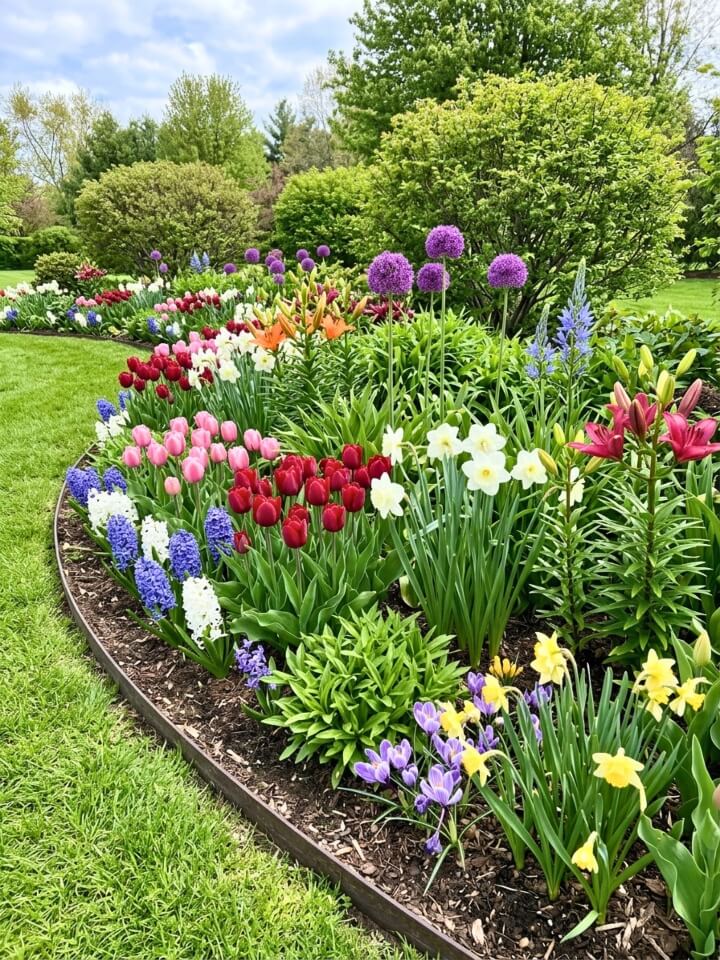
One bed. Six months of continuous bloom. Zero replanting between seasons. Bulb succession beds pull off what seems impossible through careful timing rather than magic.
The strategy layers bulbs by bloom time and planting depth, creating a relay race of color from late winter through fall.
February and March: snowdrops, crocus, winter aconite.
April: daffodils, hyacinths, early tulips, grape hyacinths.
May: late tulips, alliums, Dutch iris.
June through August: lilies (Asiatic, then Oriental), gladiolus.
September and October: colchicum, autumn crocus, nerine.
Plant everything in fall, single project, done for years. Bulbs multiply annually, meaning the display strengthens rather than fades over time.
Interplant with perennials that fill gaps as bulb foliage dies back naturally.
Zones 3-9. Budget $150-$350 initial investment.
FAQs About Flower Bed Ideas
Every flower bed project raises the same handful of questions. Here’s what you need to know before spending money at the garden center this weekend.
What’s the Cheapest Flower Bed to Start With?
Native plant beds and wildflower meadows offer the lowest entry cost, often under $100 for a small area. Native plants require no soil amendments, minimal water after establishment, and multiply on their own within a few seasons.
When Is the Best Time to Plant a New Flower Bed?
Fall planting beats spring planting for perennials and shrubs, cooler temperatures reduce transplant stress and roots establish before summer heat arrives. Annuals go in after your last frost date. Bulbs get planted in fall for spring bloom.
How Do I Know My Hardiness Zone?
Check the USDA Plant Hardiness Zone Map online using your zip code. Zones range from 1 (coldest) to 13 (warmest) and determine which perennial plants survive winter in your specific location.
Do Flower Beds Increase Home Value?
Well-maintained landscaping increases home value by 5-15% on average, according to multiple real estate studies. Foundation plantings and front yard beds deliver the highest return by improving curb appeal instantly.
How Much Sun Does My Flower Bed Actually Get?
Track sunlight hours over one full day during summer. Full sun means 6+ hours of direct light. Part sun means 4-6 hours. Part shade means 2-4 hours. Full shade means less than 2 hours. Guessing wrong kills plants faster than any other mistake.
Should I Use Mulch in Flower Beds?
Yes, always. Two to three inches of organic mulch retains moisture, suppresses weeds, moderates soil temperature, and gradually improves soil as it breaks down. Refresh annually in spring.
How Do I Stop Weeds without Chemicals?
Dense planting eliminates most weed problems, weeds need bare soil and sunlight to establish. Combine tight spacing with thick mulch layers and hand-pull any escapees before they seed.
Conclusion:
These flower bed ideas is a lot to process. Nobody expects you to tackle all of them, or honestly, even more than two or three across an entire yard.
Start with one bed. Pick the style that solves your actual problem, the soggy spot, the boring foundation strip, the shady corner where nothing grows. Master that space before expanding. Gardens fail from overambition far more often than from lack of enthusiasm.
Every experienced gardener I know killed dozens of plants learning what works in their specific yard. That’s not failure, that’s tuition. Soil varies block by block. Microclimates shift within a single property. What thrives for your neighbor might sulk in your yard for reasons nobody fully understands.
Give plants a full growing season before judging them. Perennials famously “sleep, creep, then leap” across three years. Patience rewards you in ways instant gratification never will.
Now stop reading and go dig something.