19 Septic Tank Landscaping Ideas That Are Safe, Smart, and Beautiful
Landscaping around a septic tank isn’t like decorating the rest of your yard. The drain field needs oxygen, sunlight, and shallow root activity to function properly, while the tank itself requires clear access for pumping every 3–5 years. Choose the wrong plant or place something heavy in the wrong spot, and you could face a repair bill running into thousands of dollars.
The good news? You don’t have to leave the area bare. With shallow-rooted plants, lightweight features, and a thoughtful layout, the septic zone can blend right into the rest of your landscape. Below are 19 practical septic tank landscaping ideas, along with the safety rules that matter most.

Quick Rule of Thumb Before You Start: Never plant trees or woody shrubs within 30 feet of the tank or drain lines. Avoid raised beds, patios, sheds, and water features directly above the system. Keep lids accessible, and skip any plant that demands deep watering.
1. Plant a Soft Grass Border Around the Septic Area
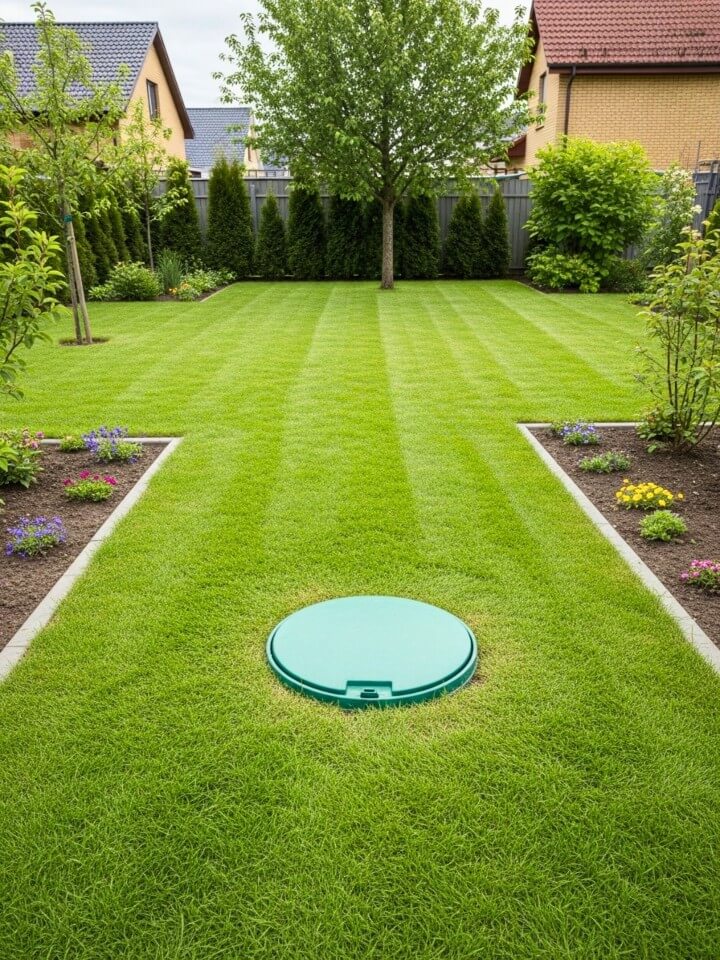
Turf grass is the gold standard cover for any septic zone, and there’s a simple reason: fibrous roots stay in the top 6 inches of soil and never threaten the pipes below. Grass also absorbs excess moisture, which is exactly what the drain field needs to function efficiently.
Fine fescues, Kentucky bluegrass, and buffalo grass are all strong picks. Buffalo grass is especially low-maintenance and drought-tolerant.
Mowing and Care Tip
Keep your blade set between 3 and 4 inches. Taller grass shades the soil, encourages deeper surface coverage, and reduces evaporation. Skip fertilizer-heavy programs here — excess nitrogen disrupts the bacterial balance the system depends on.
2. Use Shallow-Rooted Perennials for Easy Color
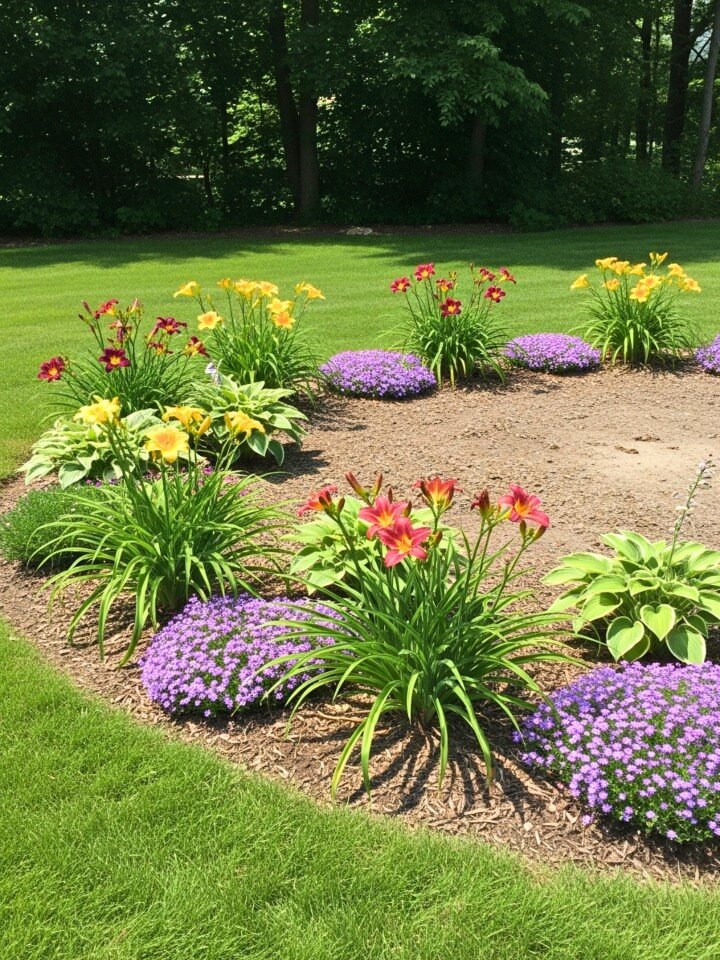
Want flowers without risking your drain field? The trick is picking perennials whose roots stay under 12 inches deep. Daylilies, coral bells, creeping phlox, salvia, and hostas all fit that rule and come back stronger every spring.
Plant them in loose drifts of three or five — straight rows look forced and don’t help the soil breathe.
Skip anything you plan to eat. Vegetables, berries, and herbs grown directly above the system carry a real contamination risk. Also avoid plants that need deep, frequent watering, since saturated soil ruins the drain field.
Quick Mulch Rule
Two inches of light bark mulch is enough. Anything thicker traps moisture and starves the soil of oxygen.
3. Add a Gravel Path for Simple Access
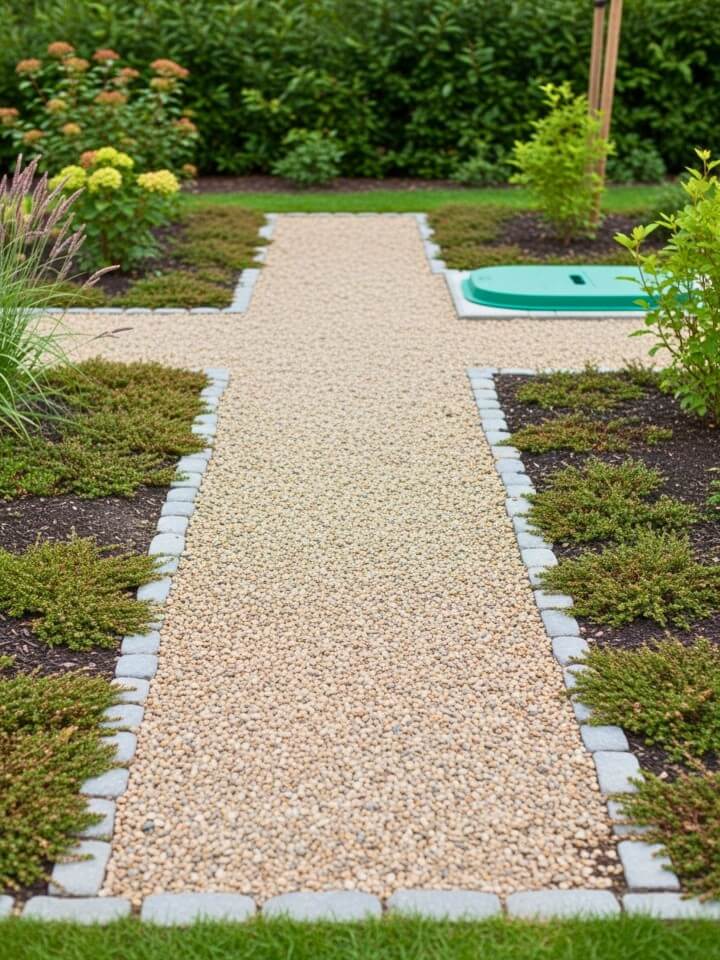
Discover stunning septic tank landscaping ideas that blend beauty, function, and yard-safe plants. Here’s the problem most homeowners don’t think about until pumping day: the service truck operator needs a clear route to your tank lids. A gravel path solves that and protects the soil over your drain lines from compaction at the same time.
Use pea gravel or ¾-inch crushed stone over a 3-inch compacted base. Path width should be 3 to 4 feet — wide enough for equipment, narrow enough to look natural. Steel or composite edging keeps stones from drifting into the lawn, much like the clean border techniques used in driveway landscaping design ideas.
What Not to Do
Never lay heavy pavers or poured concrete directly above the tank. The weight can crack lids during freeze-thaw cycles and turn a simple service call into a costly repair.
4. Create a Natural Meadow Look Over the Drain Field
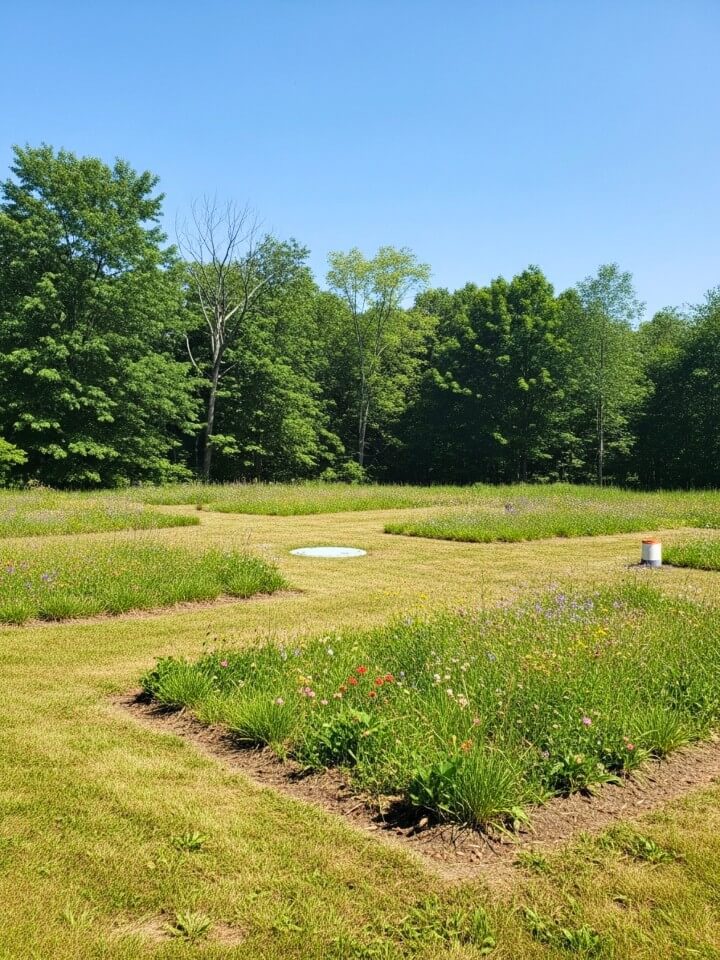
Native grasses and wildflowers evolved with shallow, fibrous root systems — which makes a meadow one of the most septic-friendly landscapes you can grow. Bonus: it attracts pollinators, needs zero irrigation once established, and pulls excess moisture from the soil naturally.
Aim for roughly 60% native grasses and 40% flowering forbs. Little bluestem, blue grama, black-eyed Susan, and purple coneflower form a balanced, sturdy mix.
Yearly Maintenance
Mow once in late winter at a 4-inch height. This single annual cut keeps woody plants from establishing without disturbing the meadow’s natural rhythm. Mark tank lids with a low decorative stone so you can find them quickly when service is due.
5. Frame the Space With Decorative Mulch Beds
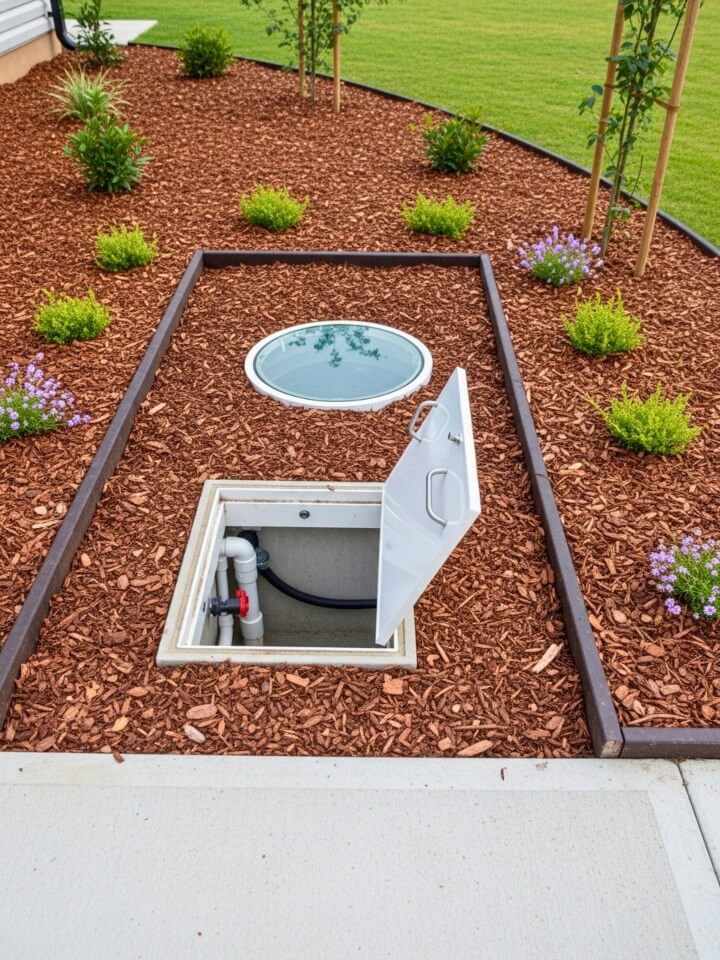
Mulch borders are an easy way to define the septic zone visually without adding weight, deep roots, or hardscape over the system. The key is restraint — more mulch isn’t better here.
Mulch Types Worth Using
Shredded hardwood, pine bark, and cedar chips all work well. Apply them in a layer no thicker than 2 inches.
Mistakes to Skip
- Rubber mulch — sheds chemicals into the soil over time
- Piling new mulch on old — builds up and suffocates roots
- Mulching directly over tank lids — buries access points you’ll need later
Refresh the top layer each spring instead of stacking new material, and keep beds along the perimeter rather than dead center over the drain field.
6. Install Raised Planter Boxes for Flexible Gardening
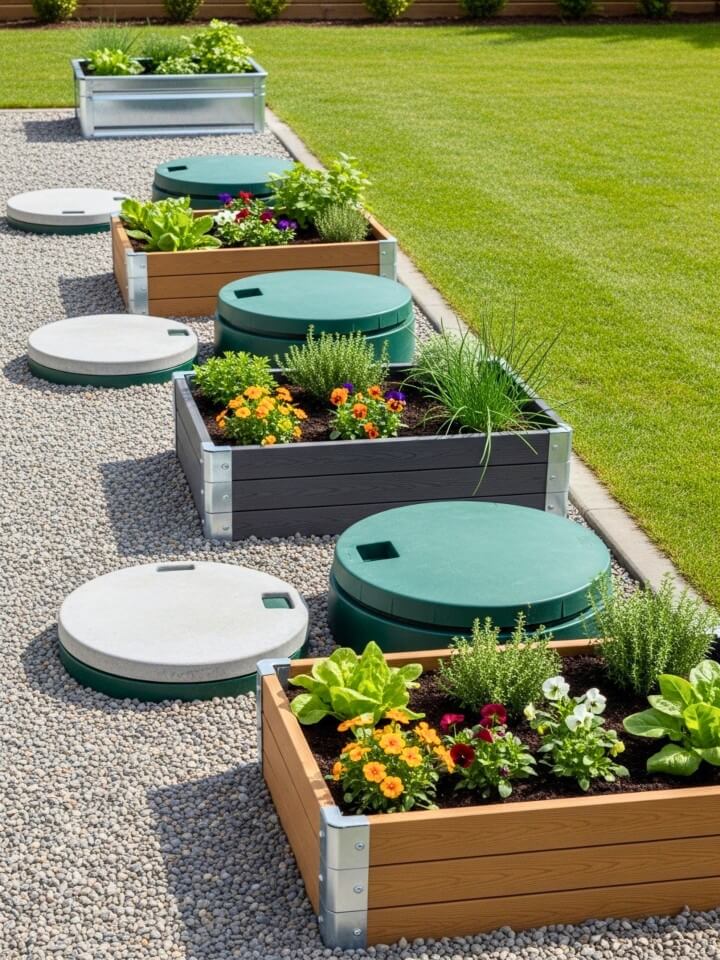
Raised beds are the smart workaround when you want a real garden near the septic zone but can’t dig into the soil safely. The trick is keeping the boxes beside the system, not directly above it. Lightweight designs inspired by pallet raised garden bed ideas can work especially well when placed safely away from the tank and drain field.
Why Placement Matters
Heavy soil-filled beds add compaction pressure on drain lines and block oxygen flow. Set boxes on a patio, gravel pad, or lawn edge at least 10 feet from access lids.
What to Plant
Stick to shallow-rooted edibles and ornamentals:
- Lettuce, basil, parsley, chives
- Pansies, marigolds, petunias
- Strawberries (in a contained box only)
Use a lightweight potting mix rather than heavy garden soil, and keep box depth under 18 inches. This setup gives you fresh herbs and color without ever touching the drain field below.
7. Screen the Tank With Tall Ornamental Grasses
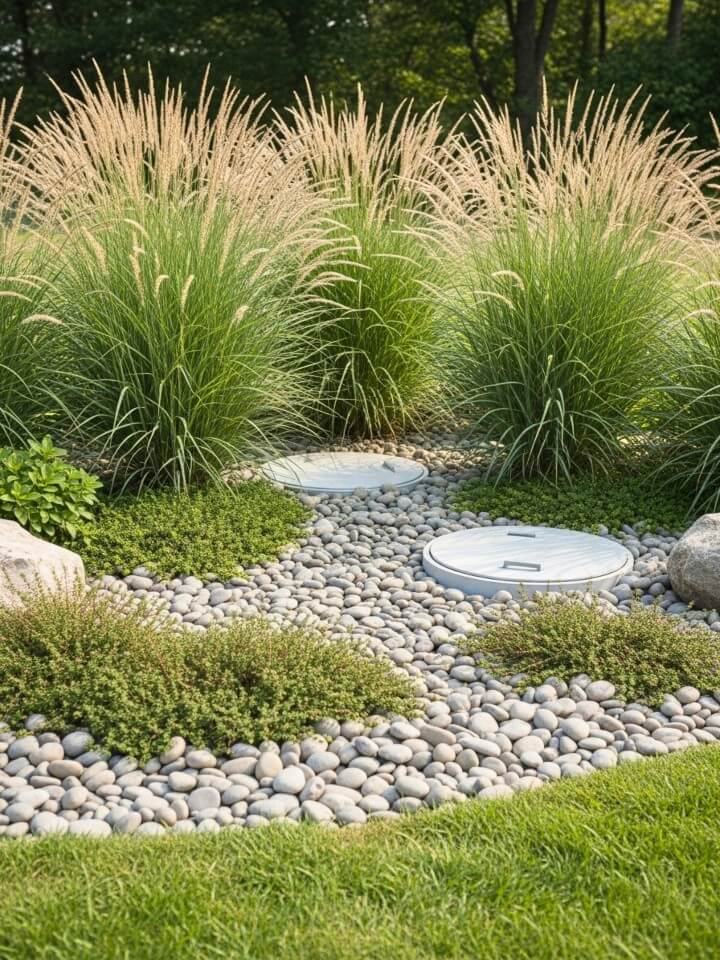
Exposed tank lids and inspection risers can be an eyesore, but planting tall grasses nearby creates a soft visual screen without sending roots near the pipes. The grasses sway, catch light, and draw the eye away from the hardware.
Plant clumps at least 5 feet away from any lid — close enough to soften the view, far enough that roots stay out of trouble.
Strong Choices for Screening
- Little bluestem — turns copper in fall, 2–4 feet tall
- Fountain grass — graceful arch shape, easy to maintain
- Switchgrass — taller option for bigger screens, 3–6 feet
- Feather reed grass — upright and tidy, great for narrow spots
Cut everything back to 4 inches in early spring before new growth begins.
8. Build a Low Wooden Fence to Define the Area
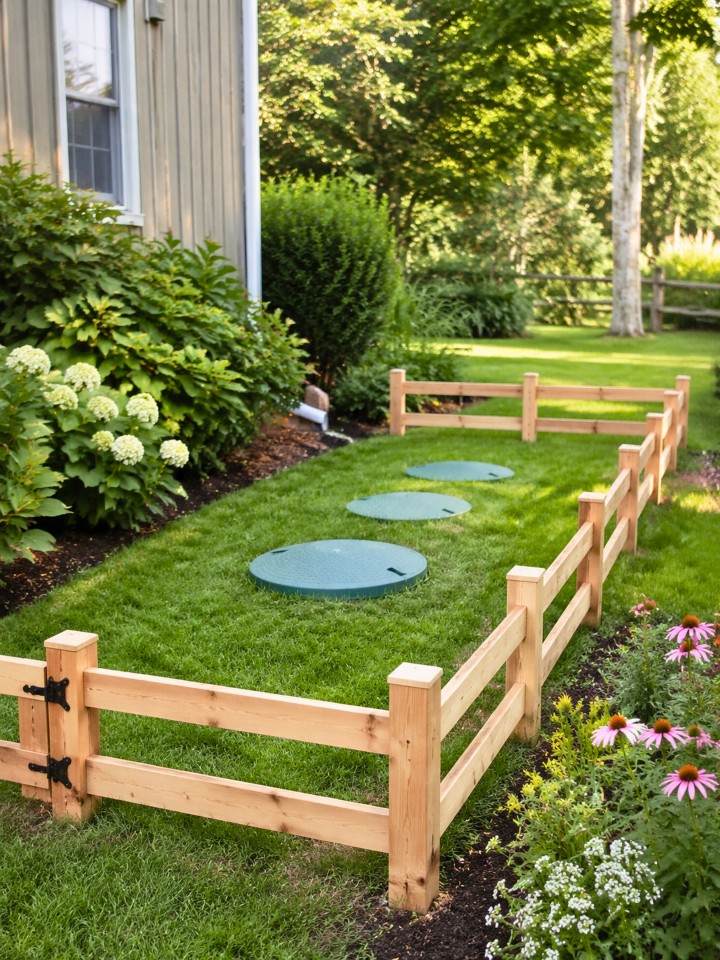
A short, simple fence gives the septic zone a clean visual boundary without locking it away. The goal isn’t security — it’s signaling where the system sits so guests, kids, and contractors stay aware.
Keep the height between 18 and 30 inches. Anything taller starts feeling like a barrier instead of a border.
Materials that Hold Up
Cedar and redwood resist rot naturally and weather to a soft gray over the years. Pressure-treated pine works too but needs sealing every few seasons. For a cottage look, paint it white or soft sage.
Critical Placement Note
Build the fence so at least one section lifts out or swings open near tank lids. Sinking permanent posts directly over the system is a mistake that costs real money during pumping.
9. Plant Flowering Shrubs at a Safe Distance
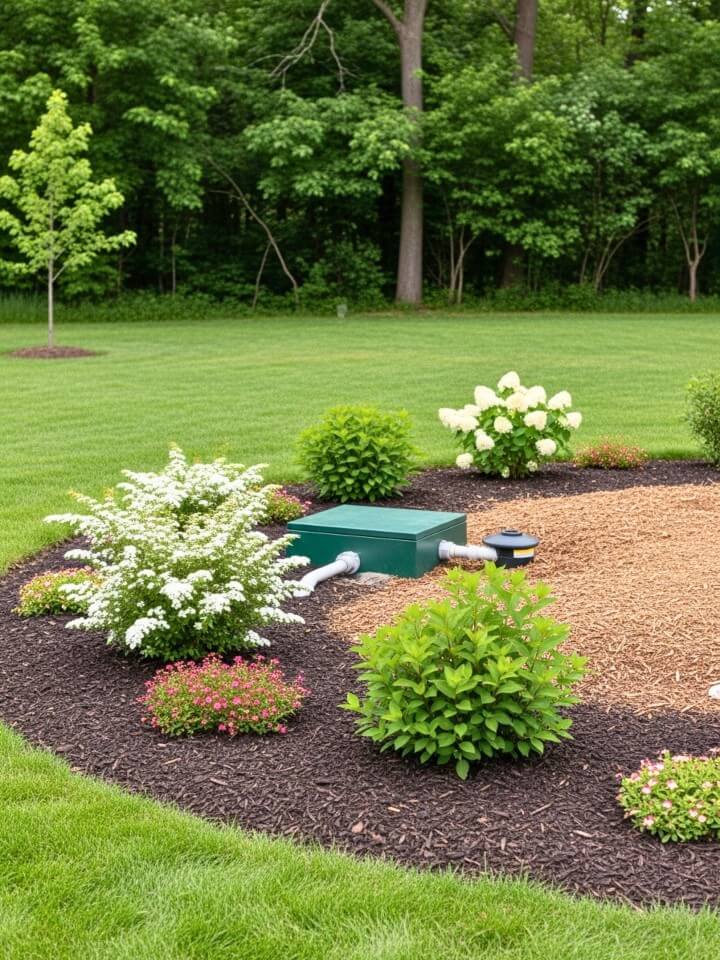
Use hide septic landscaping around septic tank covers with low-growing blooms and decorative stone. Before reaching for the shovel, remember the distance rule: woody shrubs belong at least 10 feet from drain lines and 30 feet from the tank itself. Roots from even compact shrubs will hunt for water and eventually crack pipes if they get too close.
That said, shrubs add structure and color that perennials can’t match — just place them at the outer edge of the septic zone.
Septic-Friendly Options at A Safe Distance
- Spirea — compact, low-water, white or pink blooms
- Potentilla — shallow roots, blooms all summer
- Dwarf hydrangea — manageable size, dramatic flowers
- Boxwood (dwarf varieties) — evergreen structure year-round
Avoid willows, poplars, maples, and any fast-growing shrubs known for aggressive roots.
10. Incorporate Rock Gardens With Succulents for Texture
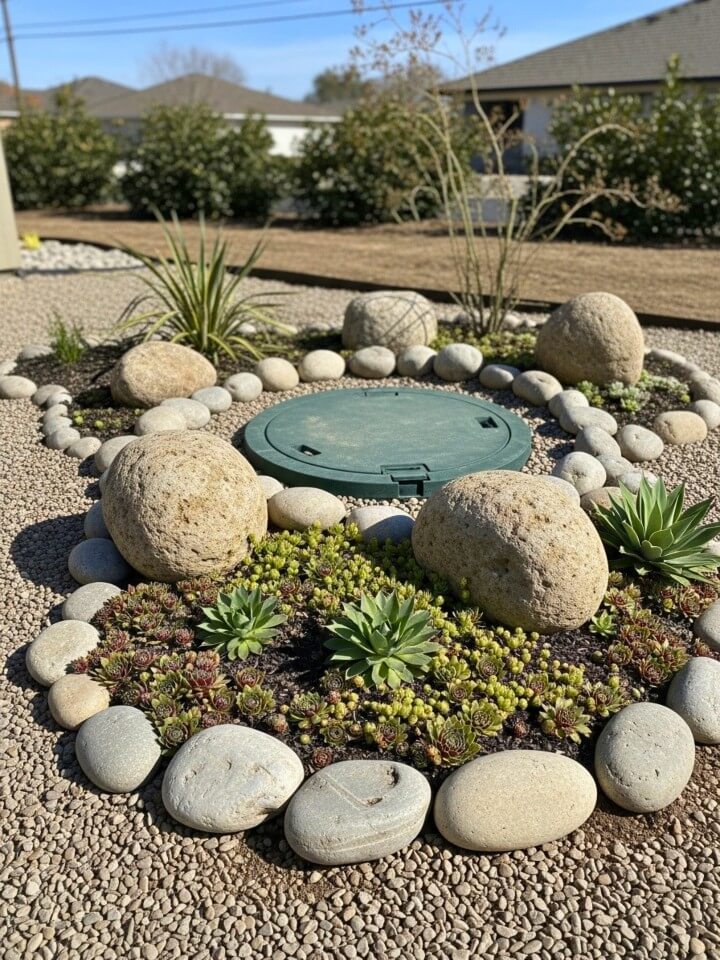
Rock gardens shine in the septic zone because they need almost no water — which is exactly what the drain field wants. Dry conditions above ground keep the soil below working as designed.
Layout Tip
Stay around the edges, not over the lids. Use a mix of three sizes: small river stones for filler, mid-size cobbles for shape, and one or two larger anchor boulders for visual weight. Avoid building tall stone stacks above the tank — anything heavy enough to stay put is heavy enough to stress the system.
Plants that Thrive Here
Sedum, hens and chicks, ice plant, and creeping thyme all spread shallowly and tolerate poor soil. Skip cacti with deep taproots; opt for low-mounding succulents that stay surface-level.
11. Use Native Wildflowers for Low-Maintenance Beauty
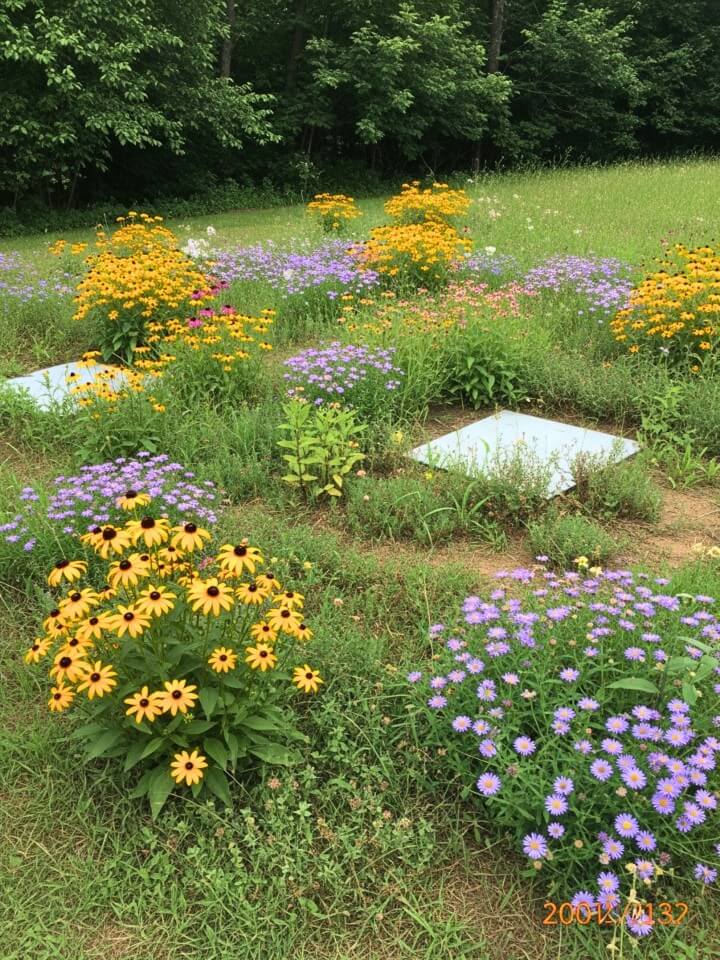
Unlike a full meadow conversion (idea #4), this approach uses wildflowers as accent plantings around the septic zone — clusters of color rather than a sweeping field. It’s the right choice when you want native benefits without committing your whole yard to a wild look.
Native species have shallow root systems adapted to local soil, need no irrigation once established, and don’t require fertilizer that could disrupt the system’s bacteria.
Reliable Shallow-Rooted Picks
Black-eyed Susan, purple coneflower, butterfly weed, blanket flower, and wild bergamot all stay under 12 inches deep. Group them in clusters of 5–7 plants for impact rather than scattering single specimens. A light 1-inch mulch layer keeps weeds down without smothering the soil’s oxygen exchange.
12. Add a Small Seating Nook Nearby
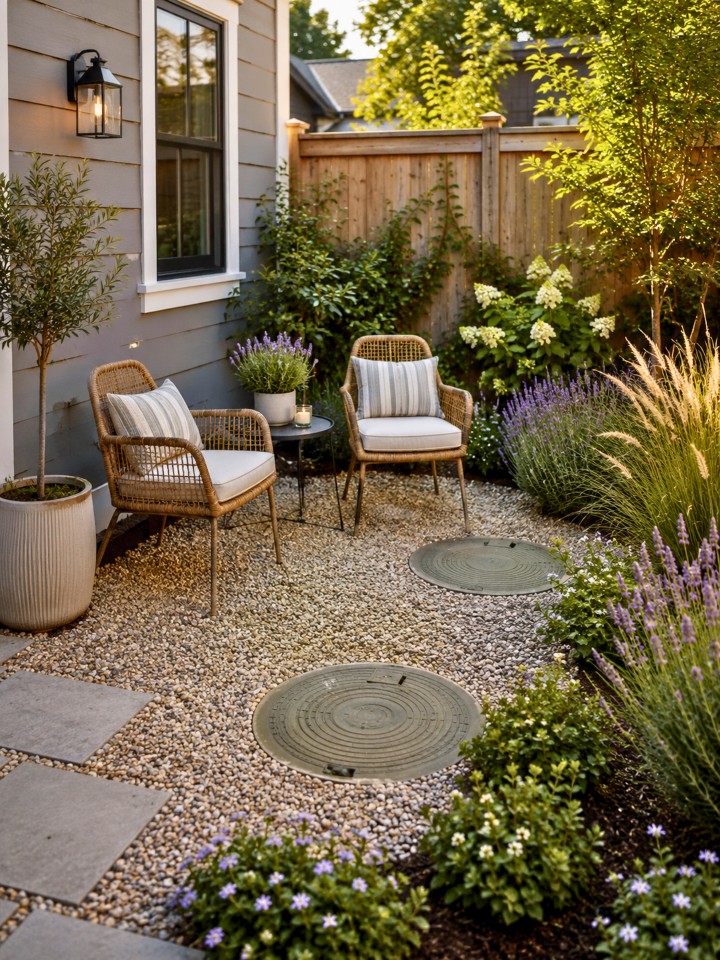
That awkward space near the septic area doesn’t have to feel like dead yard. Place a bench or two lightweight chairs along the perimeter — never directly above lids — and suddenly the zone becomes a quiet sitting spot.
The whole arrangement should be light enough to relocate in under five minutes when the pumping truck arrives.
What Works for The Setup
- Iron or aluminum bench — light, weather-resistant, easy to move
- Adirondack chairs — cedar versions stay light enough to drag
- Gravel or flagstone base — better than a poured patio because it lifts and resets
Skip built-in benches, stone seating walls, fire pits, or anything you’d need a contractor to install. Those features turn a future repair into a demolition project.
13. Place Potted Plants on a Gravel Pad
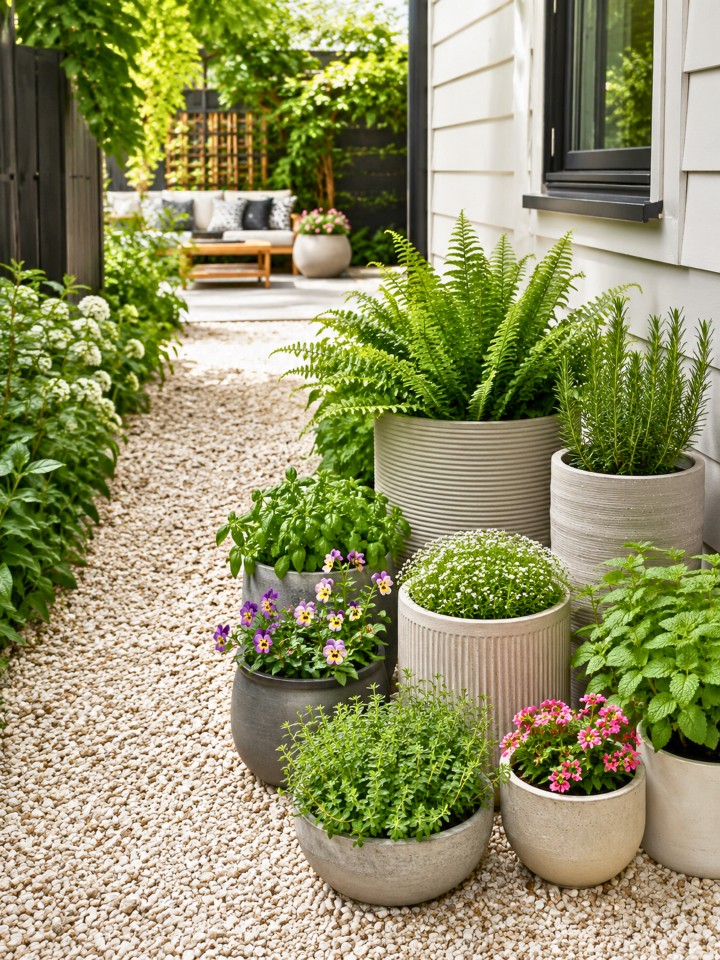
Containers give you full creative control without ever putting roots near the drain field. The whole arrangement lifts away in minutes when service is needed — try doing that with a permanent flower bed.
How to Build the Pad
Lay landscape fabric over leveled soil, then spread 2 inches of pea gravel on top. A 6×6 or 8×8 foot pad fits most setups and stays well outside the tank’s footprint.
Container Tips that Matter
Use plastic, fiberglass, or resin pots instead of heavy ceramic or concrete — weight matters when lids need clearing. Group three to five pots of varying heights for visual interest. Rotate seasonal plants (pansies in spring, geraniums in summer, mums in fall) without ever disturbing what’s underground.
14. Integrate Path Lighting for Safety and Ambiance
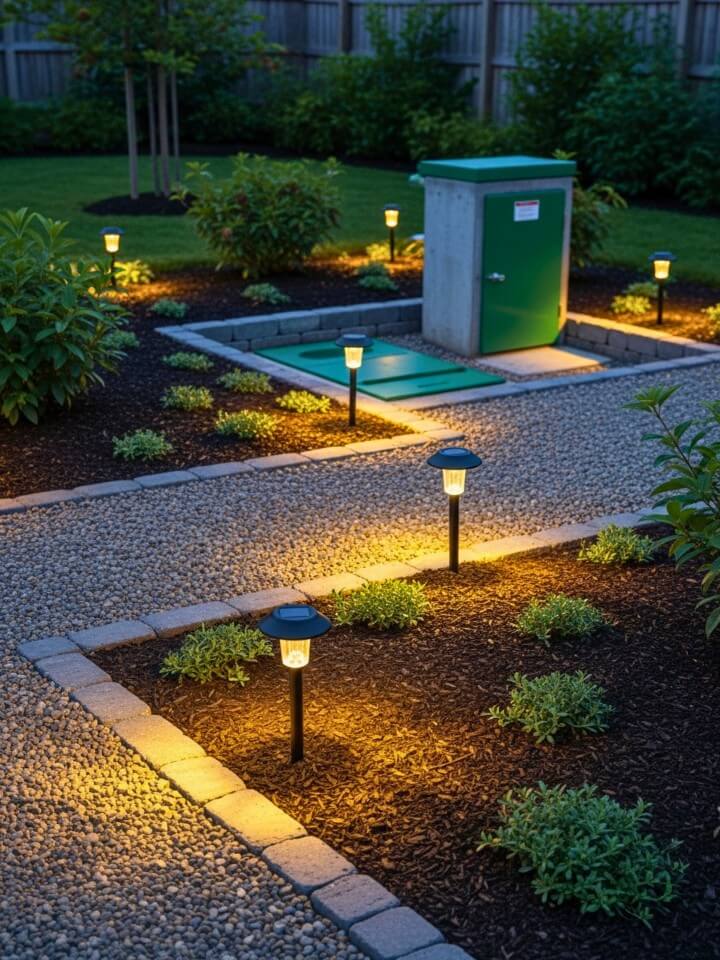
Master landscaping around septic lids using shallow-rooted plants that protect and beautify your yard. Nighttime navigation around the septic zone matters more than people realize — service appointments sometimes run late, and you don’t want anyone tripping over a raised lid in the dark. Solar path lights solve the safety issue while adding genuine charm.
Pick stake-style fixtures rather than anything that requires digging trenches for wiring.
Where to Position Them
Space lights every 4–6 feet along gravel paths or bed edges. Keep them at least 2 feet back from tank lids so removal stays unobstructed. Lighting the perimeter — not the center — creates a soft glow without highlighting the hardware.
Why Solar Beats Hardwired
No trenching, no electrician, no buried cables to dodge during future repairs. Replace batteries every 2–3 years and the system runs itself.
15. Blend in Evergreen Groundcovers for Year-Round Greenery
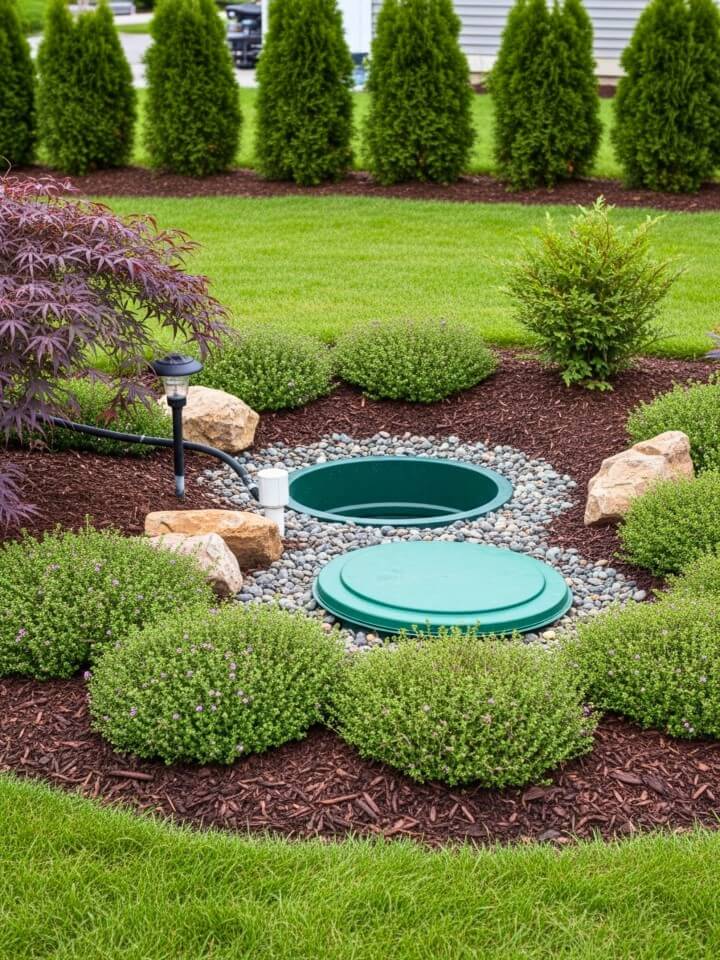
Winter is when most septic landscapes look bare and obvious. Evergreen groundcovers fix that by keeping the area green even in January — a small detail that makes the whole yard read as intentional rather than utilitarian.
Top Performers with Shallow Roots
- Creeping thyme — releases scent when stepped on, grows 2–4 inches tall
- Sedum (low varieties) — drought-tolerant, spreads steadily
- Creeping juniper — woody but stays under 12 inches, tough in cold
- Vinca minor — fast-spreading with spring blooms
Planting Approach
Space starter plugs 12 inches apart and they’ll knit together within two seasons. Combine two or three varieties for texture contrast. Avoid English ivy and pachysandra near the system — both develop denser, deeper root mats than they appear to from above.
16. Create a Decorative Stepping Stone Path
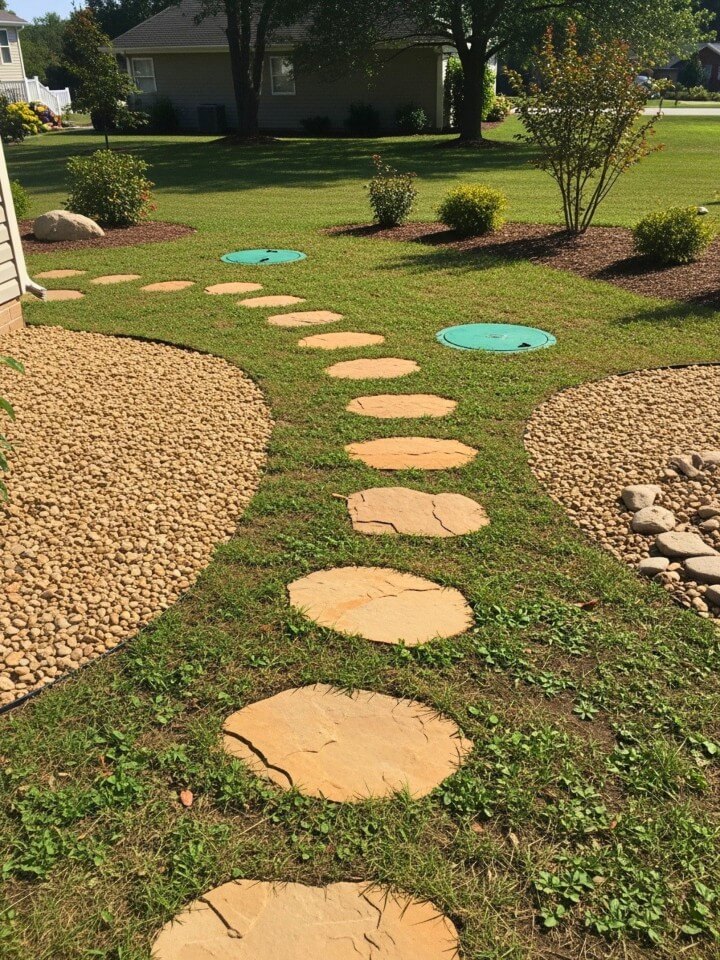
Where a gravel path (idea #3) handles heavy service access, stepping stones do something different — they invite casual foot traffic across the lawn without compacting the soil into bare patches. Think of them as gentle suggestion rather than full pathway.
Stone Selection and Spacing
Flat flagstone, bluestone, or large slate pieces work best. Size each stone 16–18 inches across and space them by stride length — usually 22–24 inches center to center.
The Placement Rule Everyone Forgets
Route the path around tank lids, never directly over them. Stones sitting on lids look fine until pumping day, when each one has to be lifted, marked, and reset. Curve the path naturally between perennial groups or along a bed edge so it reads as part of the landscape, not a straight line cutting across it.
17. Hide Access Lids With Lightweight Faux Rocks
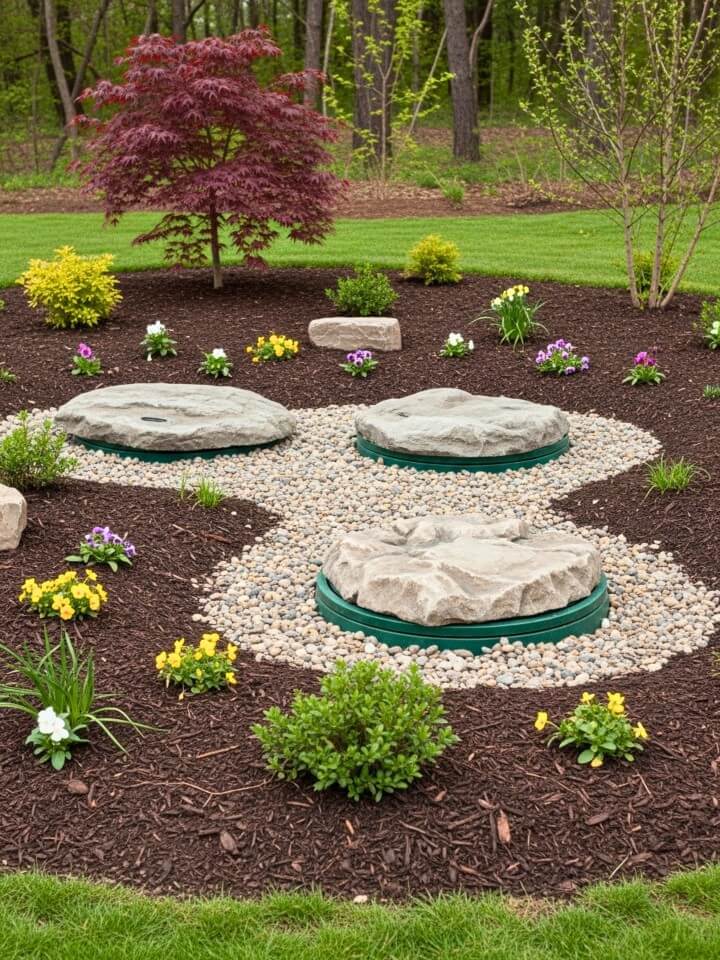
Plain green or black tank lids stand out against any landscape. Faux rock covers solve the eyesore while keeping access genuinely fast — a real concern, since real boulders weigh hundreds of pounds and never come off without equipment.
What to Look for When Buying
- Lightweight polyethylene or fiberglass construction (under 10 pounds)
- UV-stabilized finish so it doesn’t fade or chalk in two seasons
- No tools required to lift — just hands
- Sized correctly for your lid diameter, with at least 2 inches of overhang
Blending It In
Set the cover among real stones of similar tone, surround it with creeping thyme or sedum, and the eye stops noticing it within a week. Avoid bright artificial colors — natural granite and sandstone tones disappear best.
18. Edge the Drain Field With Low Native Plants
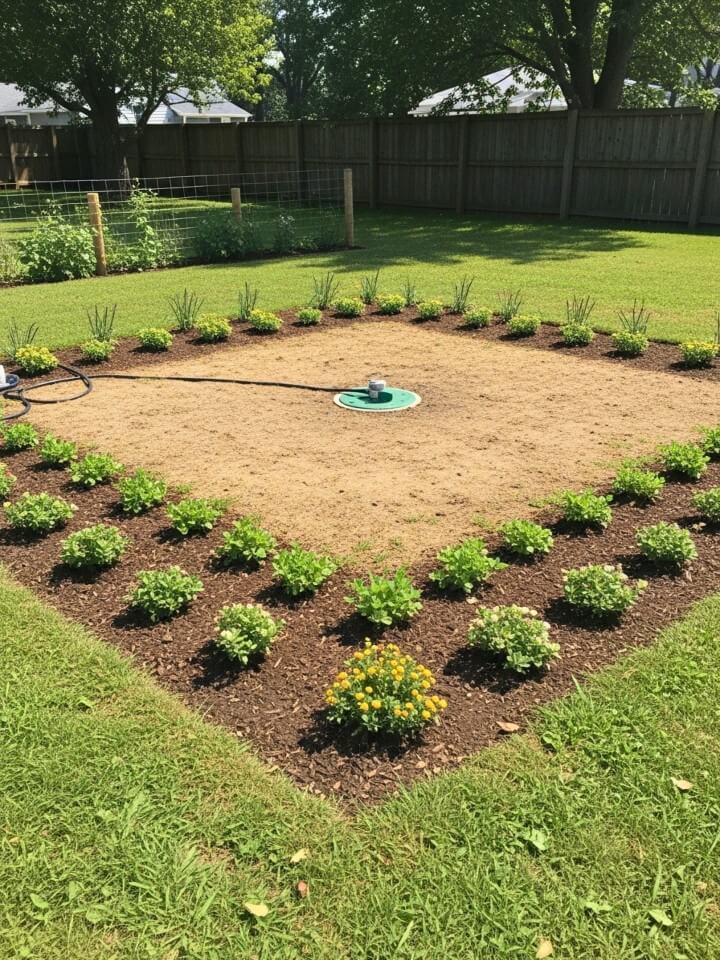
Marking the drain field boundary serves two purposes: it tells you exactly where the system ends, and it keeps future projects (a new shed, a swing set, a fire pit) from accidentally encroaching on protected ground.
The edge plantings act as a living “do not build here” reminder.
Plants that Handle the Job
Pick natives adapted to your climate zone. Good candidates across most regions include little bluestem, prairie dropseed, blue grama, and pussytoes. All stay under 18 inches tall and root shallowly.
How to Plant for Effect
Run a single row along the drain field perimeter, spacing plants 12–18 inches apart. Repeat the same species the whole length rather than mixing — repetition creates a calm, deliberate look that signals planning instead of randomness.
19. Keep a Clean Lawn Design With Simple Curved Borders
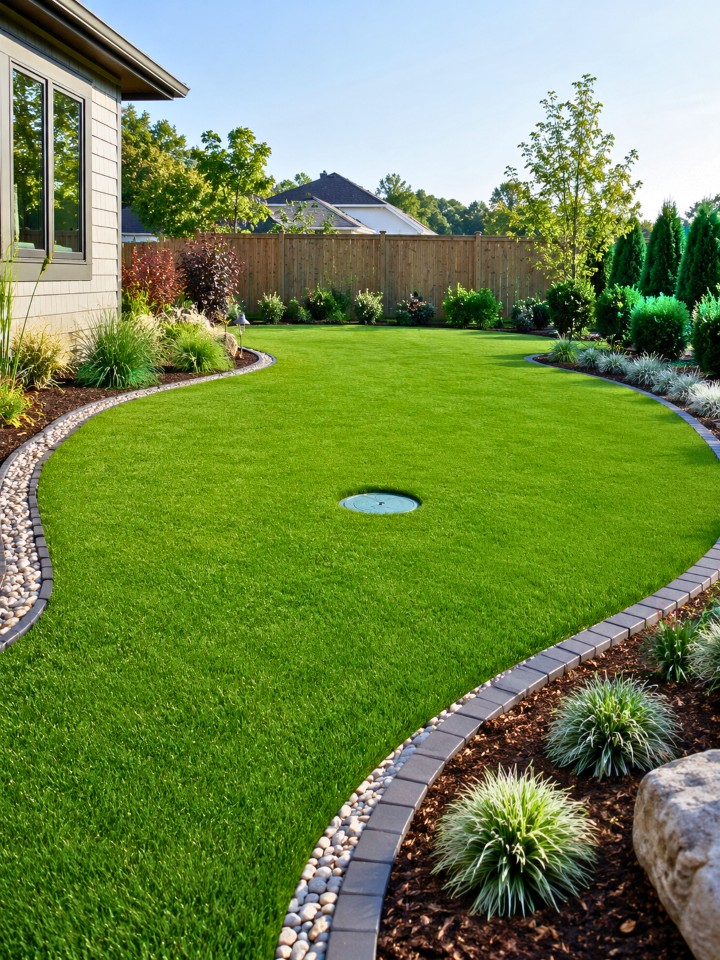
Sometimes the best septic landscape is the simplest one: open lawn with a softly curved edge defining where it ends. No shrubs, no beds, no features over the system — just grass and a clean line.
Open turf gives service crews complete access, dries quickly after rain, and never traps moisture against the drain field. The curved border (rather than a sharp rectangle) keeps the look intentional instead of utilitarian.
Edging Materials that Hold Their Shape
- Steel edging — disappears visually, lasts 20+ years
- Brick set flush — classic, easy to mow over
- Natural stone cobbles — best for rustic yards
Mow weekly during growing season at 3.5 inches, and the whole area stays polished without a single planted bed to maintain.
Frequently Asked Questions About Septic Tank Landscaping
Get clear answers to the most common questions homeowners ask before planting, building, or designing around their septic system safely.
Can I Plant a Tree Near My Septic Tank?
Keep trees at least 30 feet from the tank and drain lines, and further for fast-growing species. Willows, poplars, maples, and birches have aggressive water-seeking roots and should stay 50+ feet away.
Is It Safe to Grow Vegetables Above a Septic System?
No. Edibles grown directly above the drain field carry a real contamination risk from system bacteria. Grow vegetables in raised beds placed at least 10 feet from the system instead.
How Deep Can Roots Safely Go Above a Drain Field?
Stay with plants whose roots remain in the top 12 inches of soil. Anything deeper risks invading drain lines, where roots will eventually clog or crack the pipes.
Can I Put Mulch Directly Over My Septic Tank?
A thin 2-inch layer of organic mulch is fine around the area, but never pile it over tank lids or risers. Heavy mulch also reduces oxygen flow, which the drain field needs.
What Plants Should I Never Use Near a Septic System?
Avoid willows, poplars, silver maples, elms, beeches, sycamores, and any tree or shrub known for aggressive roots. Also skip bamboo, English ivy, and pachysandra — they spread and root more deeply than they appear.
How Often Does a Septic Tank Need Pumping?
Most residential tanks need pumping every 3 to 5 years, depending on household size and tank capacity. Mark your lids so service crews can find them quickly.
Can I Build a Patio or Deck Over My Septic Tank?
No. Permanent hardscape blocks access and adds compaction stress. Keep patios, decks, sheds, and pools well away from both the tank and the drain field.
Final Thoughts:
A septic system can sit beneath a beautiful yard — the two aren’t in conflict. What matters is respecting the rules underneath: shallow roots, lightweight features, clear access, and no edibles directly above the drain field. Get those right, and the design choices open up considerably.
Start with one or two septic tank landscaping ideas that fit your space rather than overhauling everything at once. A grass cover with a gravel access path is enough for many homeowners. Others will want the meadow, the rock garden, or the seating nook. Whichever direction you pick, mark your tank lids before you plant anything, and keep a simple sketch of the system layout for future reference.