24 Above Ground Pool Steps Ideas To Upgrade Your Pool This Summer
Most people spend weeks picking out the perfect above ground pool, then grab the cheapest ladder off a clearance shelf and call it done. Three months later, that ladder is wobbling, rusting, or already replaced. The steps are the one part of your setup you touch every single time you swim, yet they’re almost always an afterthought. These 24 brilliant above ground pool steps ideas are here to flip that thinking — because the right entry can quietly become the best feature of your whole backyard.
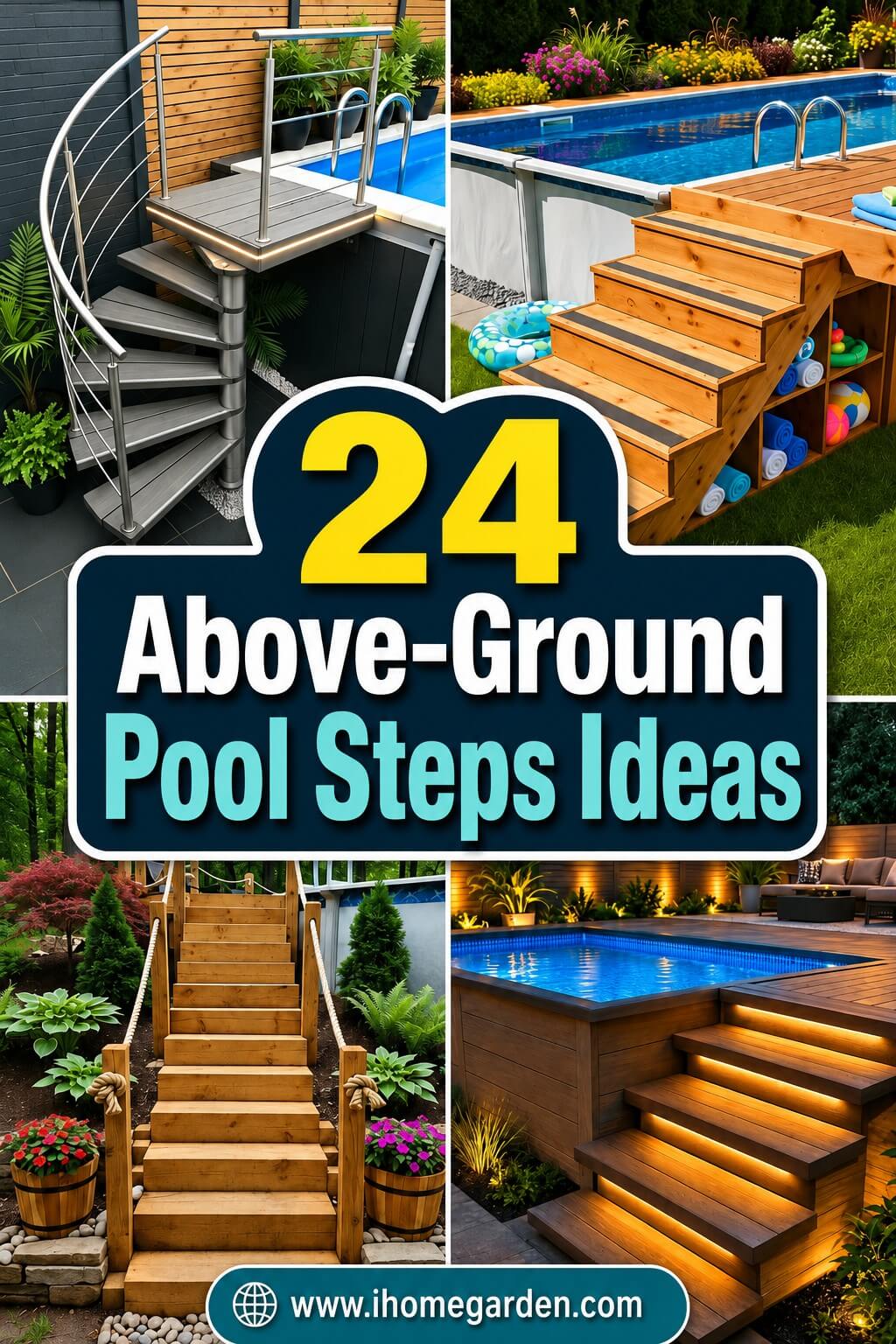
I’ve grouped together designs that range from $200 weekend builds to custom pieces with built-in seating, planters, and even soft lighting for night swims. Some lean rustic, some lean modern, and a few do clever things with small spaces.
Whatever your yard looks like right now, one of these will feel like the missing piece. Let’s get started.
1. Wooden Deck Steps with Built-In Storage
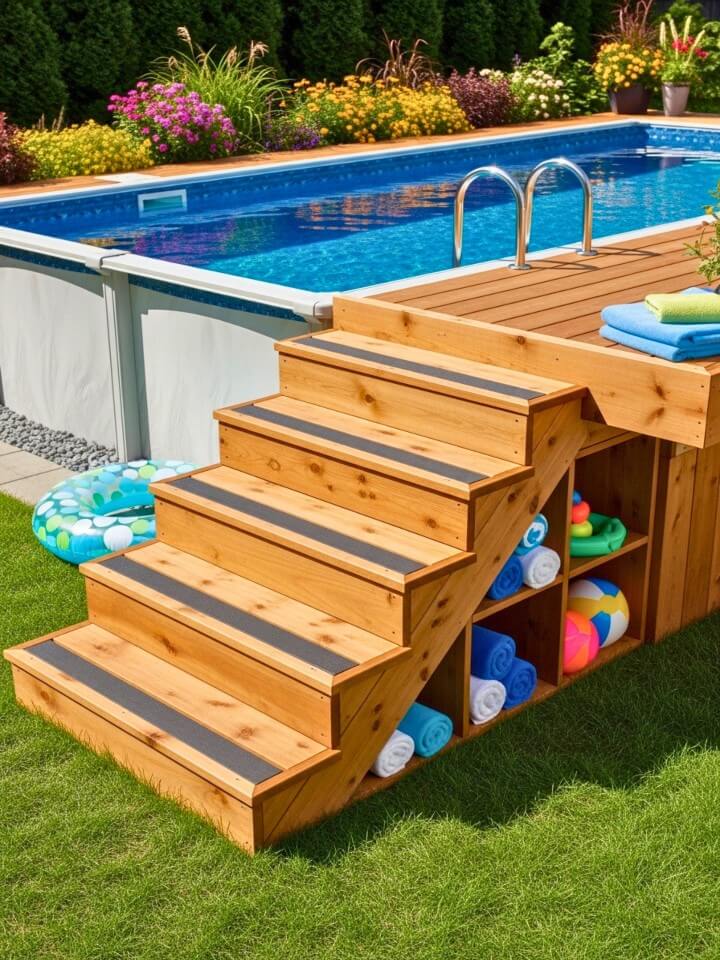
Tired of tripping over pool noodles every time you walk outside? Wooden deck steps with hidden storage solve that problem in one move. The trick is to build pull-out drawers under each tread, or use lift-top compartments if you prefer a cleaner look.
Why Homeowners Love This Design
It hides clutter without adding another shed to your yard. Kids can grab their goggles themselves, and towels stay dry inside the cubbies even when it rains.
Material and Cost Snapshot
Cedar runs cheaper but needs yearly sealing. Composite costs more upfront (around $1,200–$1,800) but lasts 25+ years with zero maintenance.
2. Stone and Concrete Tiered Steps
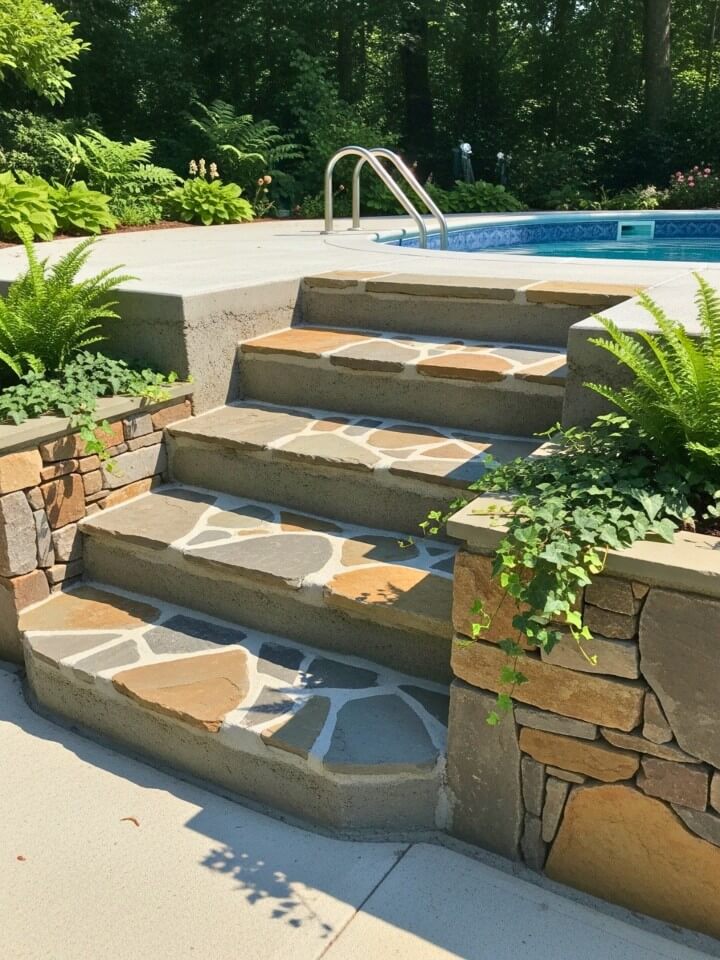
If you want something that outlasts the pool itself, tiered stone and concrete steps are hard to beat. These aren’t a weekend project — they need a proper footing, drainage planning, and usually a mason — but the payoff is a permanent feature that adds real value to your property.
Best Layout Tips
Place them at a corner where two sides of the pool meet, so the steps double as a sitting ledge. Flagstone tops paired with a poured concrete base give you texture without sacrificing a flat, safe walking surface.
Watch Out For
Wet stone gets slippery fast. A penetrating sealer with grit additive is non-negotiable here.
Budget range: $1,800–$4,000 installed
3. Floating Platform Steps with Planters
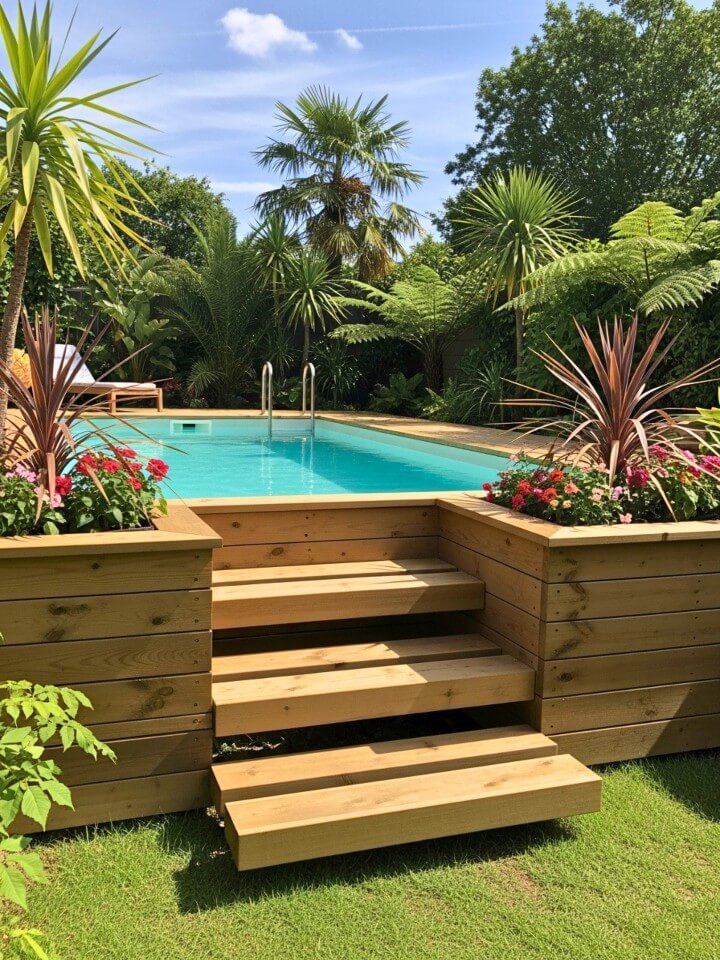
Floating platforms are the design choice for homeowners who want their pool area to feel like a magazine spread. Each tread appears to hover thanks to hidden steel brackets or concrete piers underneath.
The Planter Trick That Pulls It Together
Skip the standard pots. Build narrow planter boxes directly into the side of each platform and fill them with low-water plants — succulents, dwarf boxwood, or trailing rosemary work especially well near chlorinated water. The greenery softens the modern lines without blocking the floating effect.
A Quick Heads-Up
This look only works if your yard is fairly level. Sloped ground breaks the illusion.
4. Compact Spiral Staircase for Tight Spaces
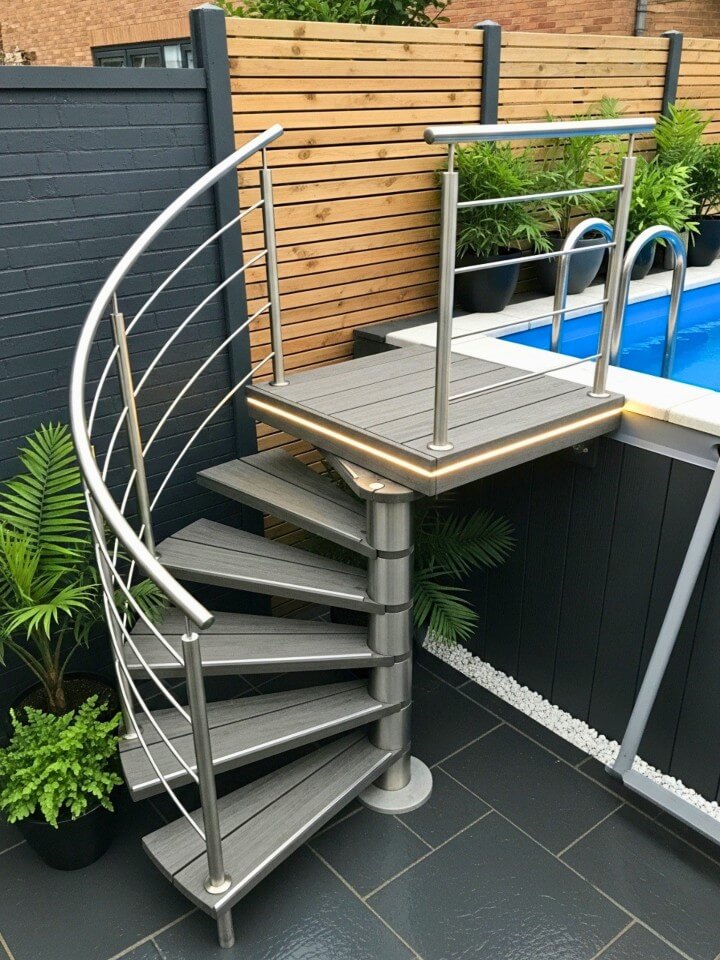
Transform your backyard oasis with pool stairs above ground — safe, sleek, and summer-ready. When your pool is wedged into a corner or your yard is more “cozy” than “spacious,” a spiral staircase saves the day. The footprint can be as small as 4 feet in diameter, yet you still get safe, full-height access.
What to Look For When Shopping
Powder-coated steel frames hold up best against pool chemicals and weather. Anti-slip treads are a must — smooth metal becomes a hazard the moment someone climbs up dripping wet.
Pro tip: Pair the spiral staircase with a small landing deck at the top. It gives swimmers a stable spot to dry their feet before stepping down.
Industrial and modern backyards love this style, and it’s surprisingly affordable at $600–$1,400 for prefab kits.
5. Wide, Low-Rise Steps with Non-Slip Surface
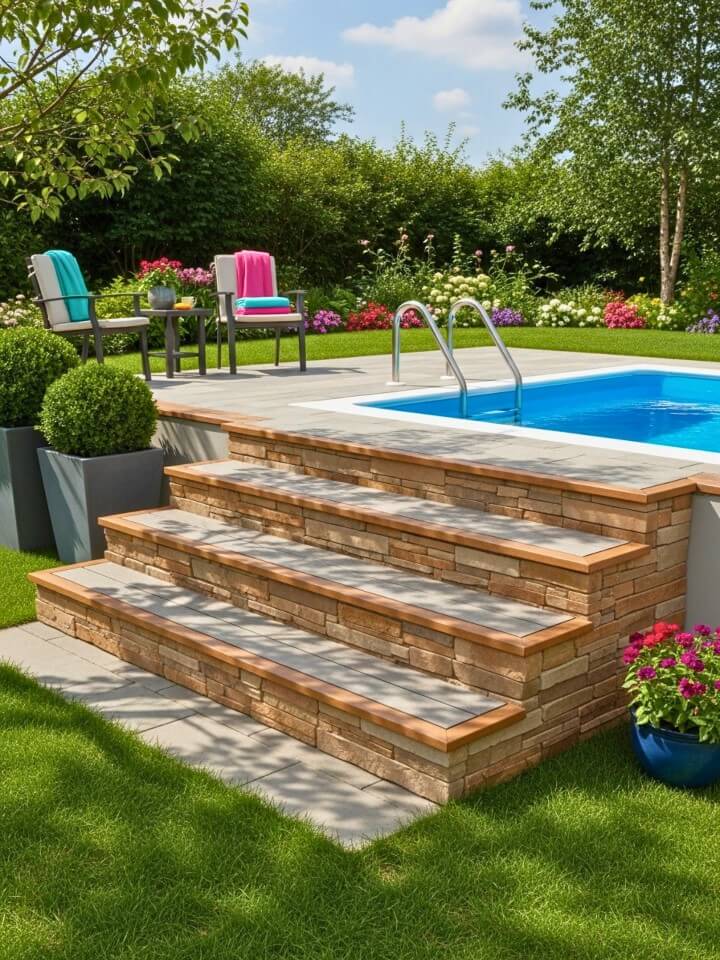
Got young kids, older parents, or anyone who’s a little unsteady on stairs? Wide low-rise steps are the safest entry option you can build. The lower rise (around 5–6 inches per step instead of the usual 7–8) means less effort and far fewer slips.
Where to Position Them
Always at the main entry point — typically the side closest to your patio or back door. Width matters too: aim for at least 48 inches across so two people can pass comfortably, or one person can sit and dangle their feet without blocking traffic.
Finishing Touches Worth the Extra Effort
A textured rubberized coating beats paint for grip. Tuck low-voltage strip lighting under the lip of each tread for safe nighttime use, especially if you’re already exploring elegant deck lighting ideas to make your outdoor space safer after dark.
6. Curved Wraparound Pool Steps
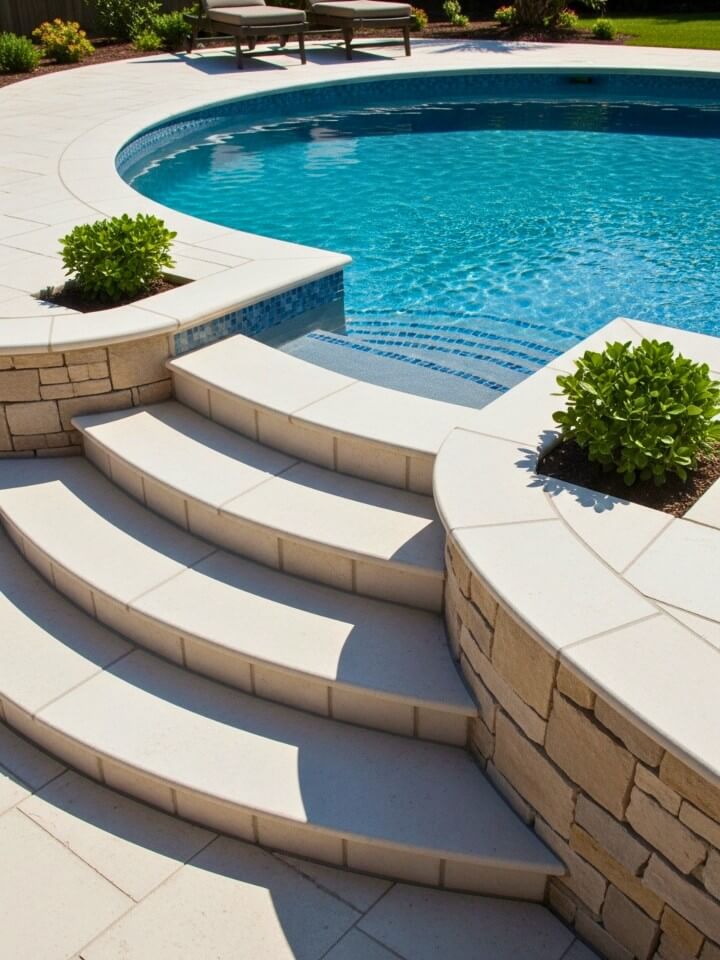
There’s something about a gentle curve that makes a pool feel less like a backyard accessory and more like a resort feature. Wraparound steps hug the corner or edge of your pool, giving swimmers a graceful entry and you a generous spot to sit, sunbathe, or set down drinks.
Why the Curve Matters
Straight steps force people into single file. A curve naturally widens the entry, which means two adults can step in side by side, and kids have room to ease in without bumping each other.
Material Pairings That Work
Poured concrete handles curves better than stone or wood — fewer seams, smoother flow. If you prefer a softer look, stamped concrete can mimic flagstone at roughly half the price of real stone.
Best paired with: Mediterranean villas, classic backyards, kidney-shaped pools
7. Simple Ladder Steps with a Landing
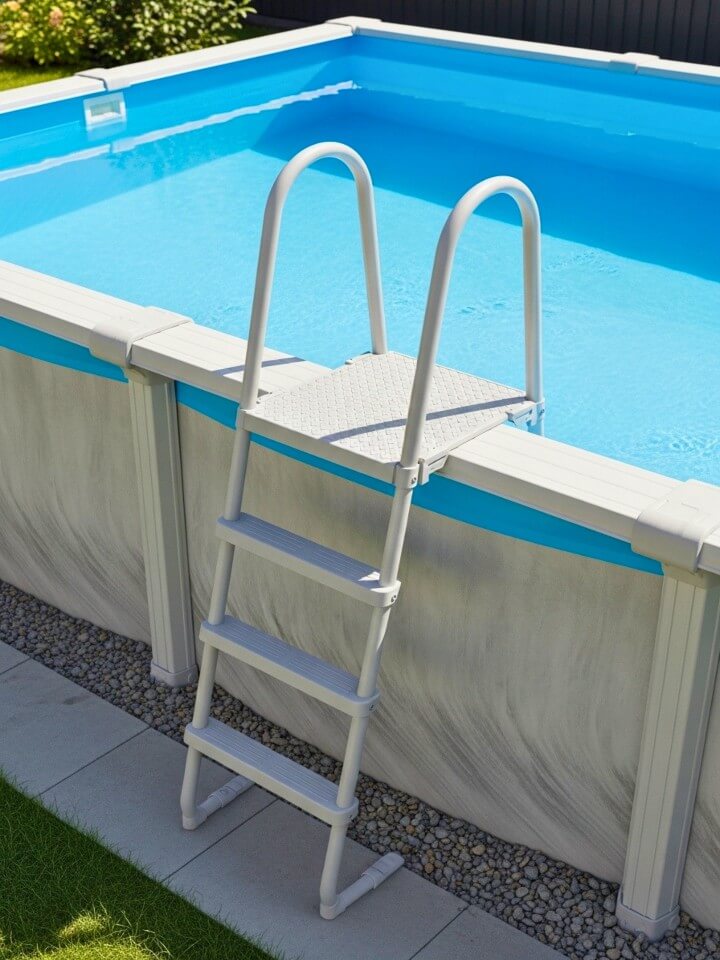
Not every pool needs an elaborate setup. Sometimes a sturdy ladder with a small landing at the top is all you need, and there’s no shame in keeping things straightforward.
When This Beats Fancier Options
- You’re renting or might move within a few years
- The pool is seasonal and gets stored each winter
- Your budget is tight (most kits run $200–$500)
- You want something installable in an afternoon
The Landing Makes All the Difference
A bare ladder is fine for getting in. A ladder with a flat landing platform at the top is what makes it actually pleasant to use — somewhere to pause, grip a handrail, and step down with confidence instead of climbing rung-by-rung like you’re boarding a boat.
Resin ladders won’t rust. Aluminum is lighter. Either works.
8. Rustic Timber Steps with Rope Railings
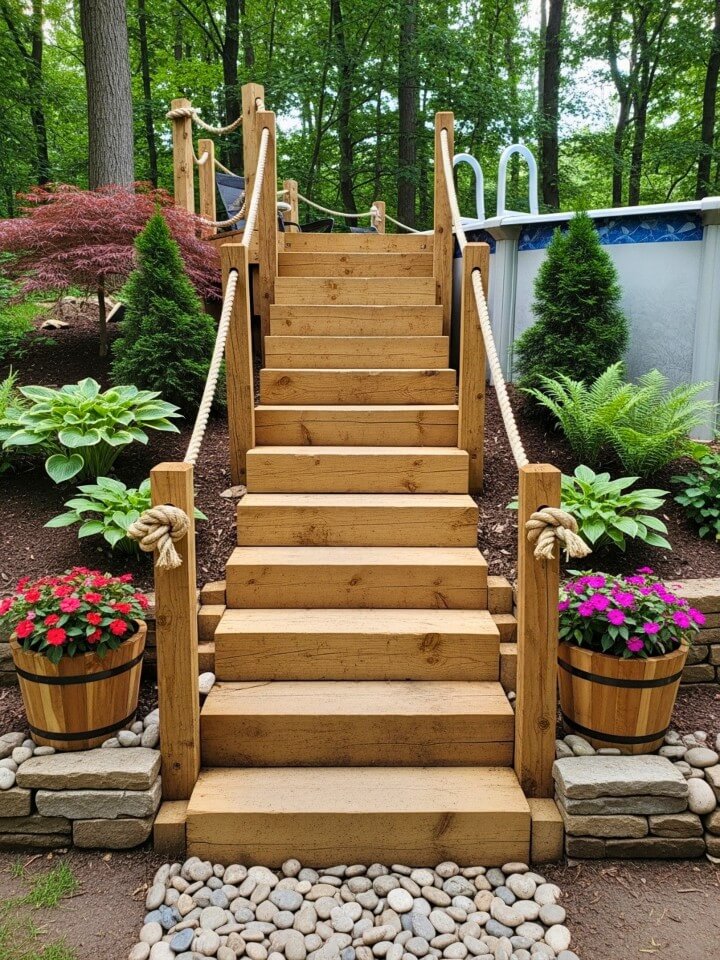
Find the perfect stairs for above ground pool setups that blend safety, style, and easy access. Picture this: you walk through your garden, brush past some tall grasses, and arrive at pool steps that look like they belong on a lakeside cabin dock. That’s the mood rustic timber and rope railings create.
Building This Look Right
Use pressure-treated 6×6 posts for the frame and thick 1-inch marine-grade rope for the handrails. The rope should be taut but not stretched bowstring-tight — a slight natural sag is what gives this style its charm.
The Detail Most People Skip
Char the timber lightly with a torch (shou sugi ban technique) before sealing it. You get a darker, weather-resistant finish that looks intentional rather than just “old wood.”
This design ties in beautifully with woodland yards, sloped landscaping, or anywhere wildflowers and ornamental grasses dominate the planting.
9. Modern Metal Frame Steps with Wood Treads
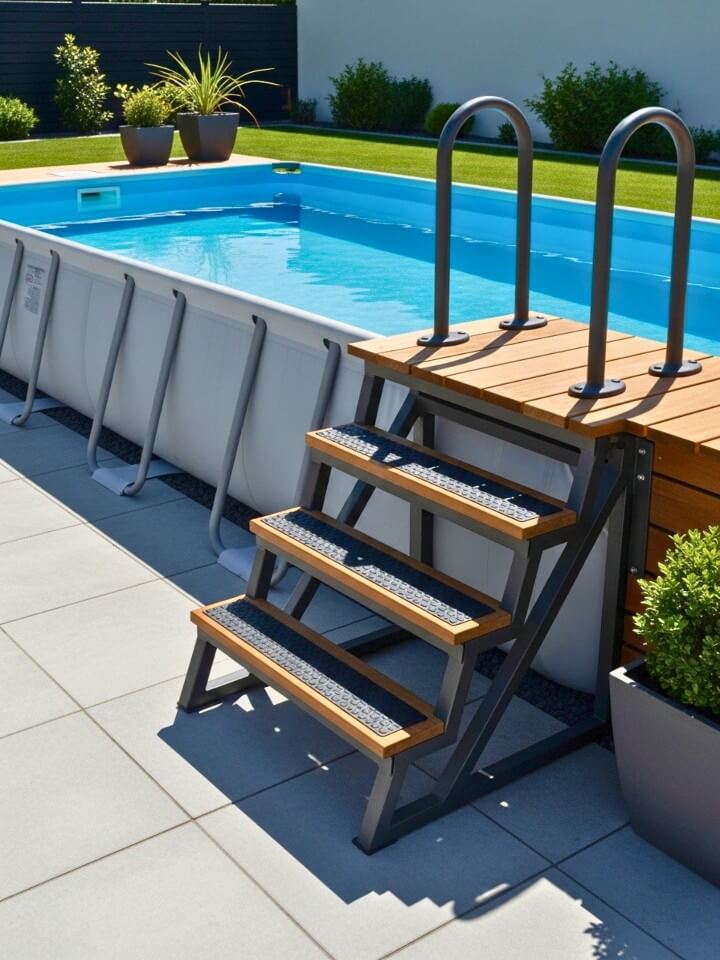
This is the design for homeowners who can’t decide between warm and cool aesthetics — and shouldn’t have to. A powder-coated black or charcoal metal frame holds wooden treads, giving you industrial structure with natural softness on top.
Why It Photographs So Well
The contrast. Dark metal disappears into shadow, making the wood treads look like they’re floating. Pair it with a glass railing if you want to push the modern factor even further.
Wood Choices Ranked by Durability
- Ipe — extremely dense, lasts 40+ years, premium price
- Thermally modified ash — strong and affordable middle ground
- Composite (Trex, TimberTech) — zero maintenance, looks like wood from a few feet away
- Cedar — budget-friendly but needs annual sealing
Skip pine. It splinters and warps within a couple of seasons of pool use.
10. Garden Path Steps Leading to the Pool
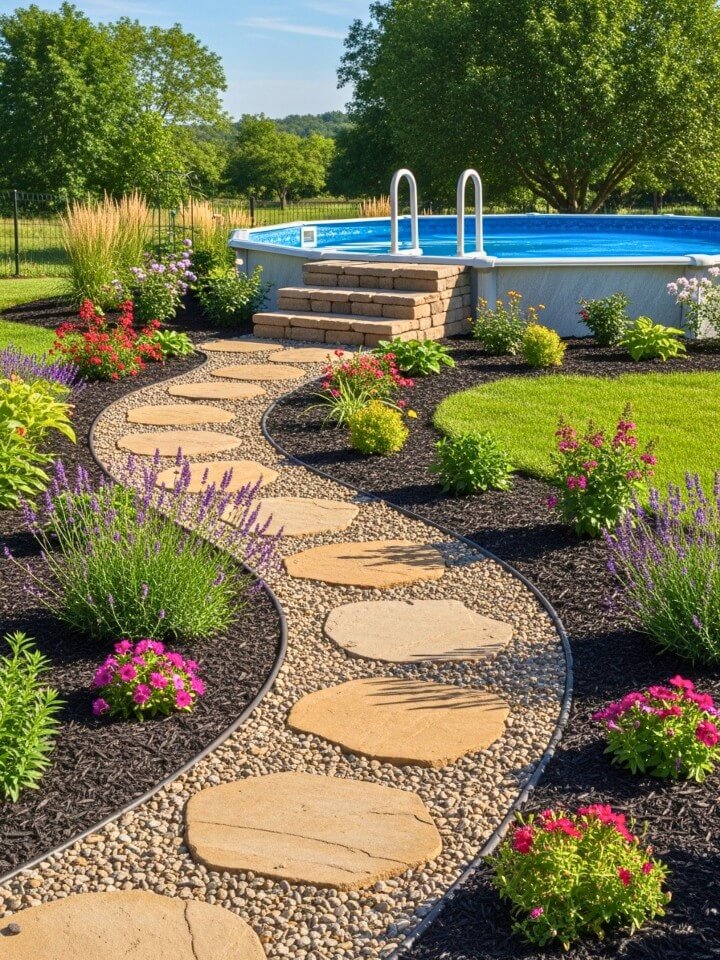
Why should your pool entry start at the pool? A garden path with low stepping stones or flagstone slabs can guide guests from the back door, through plantings, and right up to the water — turning the walk itself into part of the experience. If you like the idea of making the approach feel intentional, similar principles from fascinating driveway landscaping ideas can help you shape a more polished transition from one outdoor zone to the next.
Designing the Path
- Keep stones spaced at a natural walking stride (about 24 inches center to center for adults)
- Mix sizes for visual interest, but keep tops level
- Edge with mondo grass, creeping thyme, or river rock to define the path
The Functional Win
Wet feet and indoor floors don’t mix. A defined path with absorbent ground cover (like decomposed granite or pea gravel) on either side gives swimmers somewhere to dry off before they reach the house.
This idea pairs especially well with cottage gardens, English-style landscaping, or yards where the pool sits a bit removed from the main patio.
11. Floating Deck Steps with LED Lighting
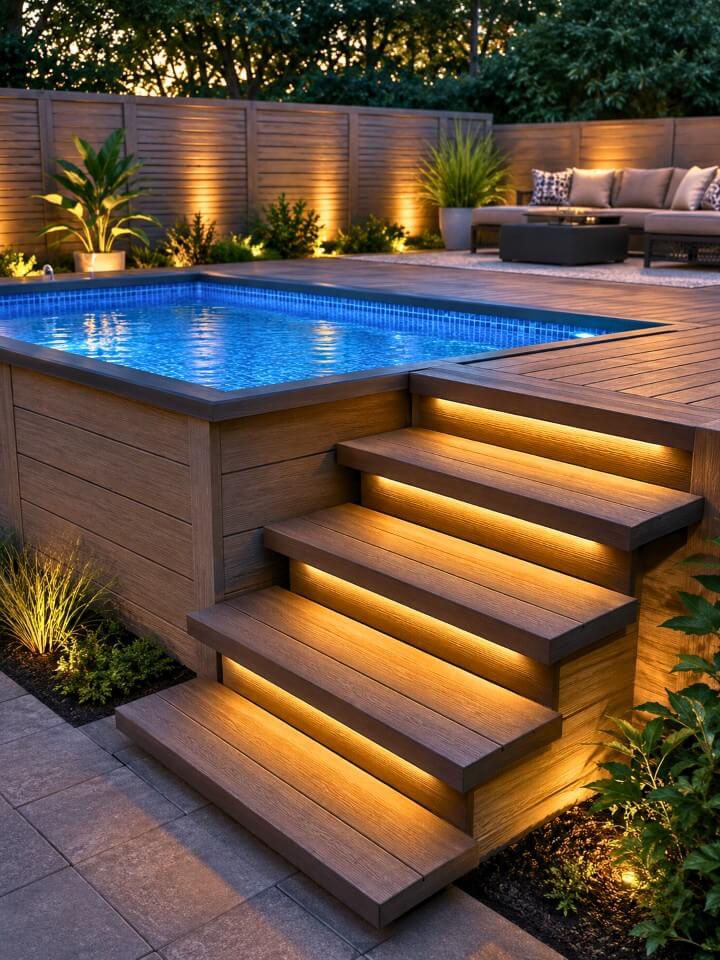
Evening swims hit differently when the steps glow. Floating deck steps with integrated LED lighting turn a basic pool entry into the centerpiece of your backyard after sundown — and they solve a real safety problem at the same time.
Where to Put the Lights
The best placement isn’t on top of the steps. It’s underneath the lip of each tread, pointing downward. This casts a soft glow on the step below without blinding anyone climbing up or down. Stick to warm white (around 2700K–3000K) — cool blue LEDs look harsh and dated within a year.
Wiring Without the Headache
Low-voltage LED strips run off a 12V transformer plugged into a standard GFCI outlet. No electrician required for most setups, though you should still bury the cables in conduit if they cross walkways.
Battery-powered solar puck lights are a no-wiring alternative, but they fade by midnight. Go wired if you actually plan to swim late.
12. Corner Steps with Integrated Seating
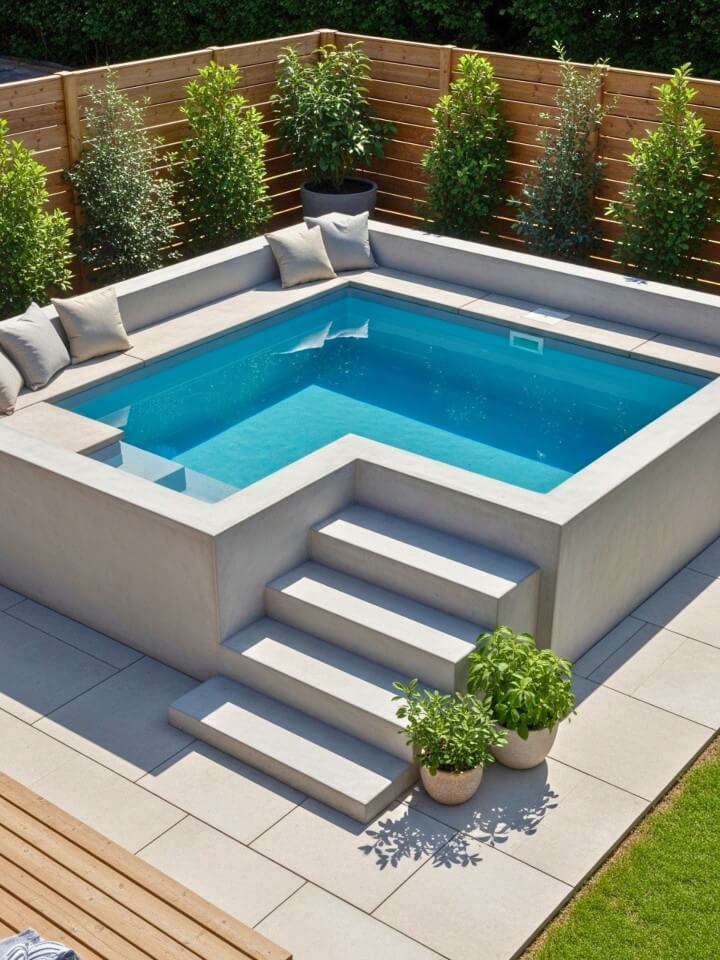
What if your pool steps could double as a bench, a side table, and a place to keep an eye on the kids — all at once? Corner steps with built-in seating do exactly that, and they cost less than buying separate poolside furniture.
The Layout That Maximizes Use
The top step doubles as the seat, set at standard chair height (about 18 inches). The step below becomes a footrest or a perch for younger kids. A flat ledge along the back can hold drinks, sunscreen, or a Bluetooth speaker.
Materials That Stay Comfortable
- Composite decking — doesn’t get scorching hot like dark stone
- Light-colored concrete — affordable, but add cushions for comfort
- Cedar — naturally cool to the touch, but needs sealing
Avoid metal seats. They turn into frying pans in afternoon sun.
13. Stone Paver Steps with Surrounding Landscaping
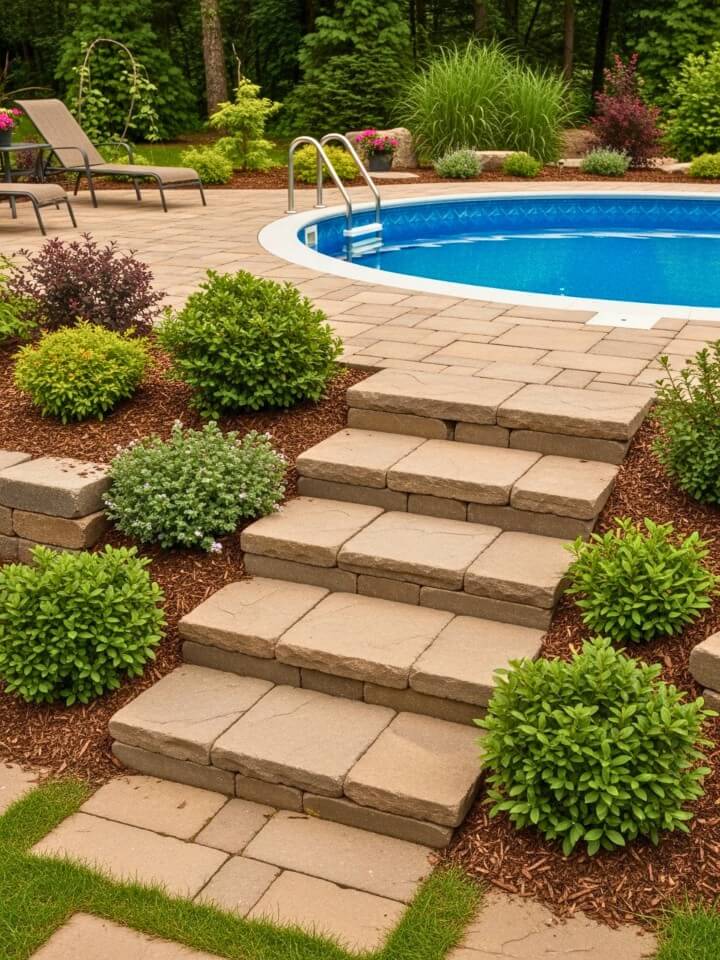
Stone pavers are the chameleons of pool steps — they shift to match whatever landscape you give them. Drop them into a manicured yard and they read as formal. Set them among native plants and gravel and they look like they grew there naturally.
Picking the Right Paver
Travertine stays cooler than most stones under direct sun, which makes a real difference for bare feet in July. Bluestone is denser and handles heavy foot traffic without chipping. Sandstone is the cheapest but absorbs water and can flake over time near a pool.
The Landscaping Layer That Sells the Look
Don’t just lay pavers and walk away. The space between and around them is where the design comes alive:
- Creeping thyme between joints (smells incredible when stepped on)
- Mexican feather grass along the edges for movement
- A few river rocks scattered to break up the symmetry
This is one of those step designs that actually looks better as it ages.
14. Wide Step Platform for Multiple Users
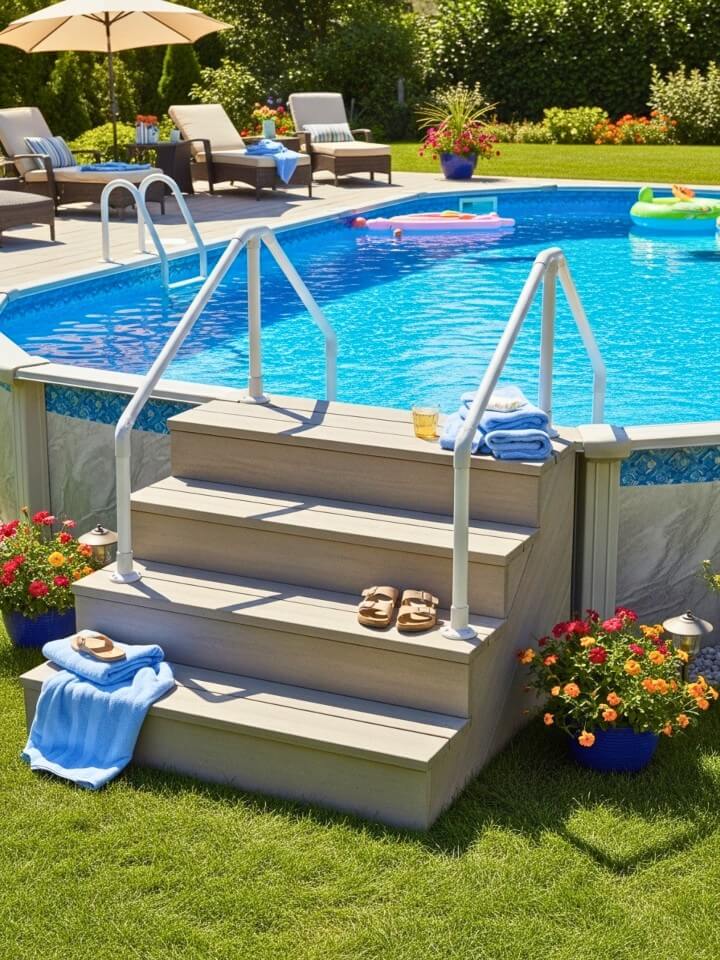
If you host pool parties or have a big family, narrow steps become a bottleneck fast. A wide platform — think 6 to 8 feet across — fixes that immediately and changes how people use the pool area.
Beyond Just Entry
A platform this size becomes a gathering spot. Kids sit on it to play with pool toys. Adults perch on the edge with their feet in the water. Grandparents who don’t want to fully swim can still be part of the action without committing to laps.
Quick build math: A 6’x4′ wooden platform with two step risers typically uses about 24 linear feet of decking and 12 framing boards. Material cost lands around $350–$600 for treated lumber, double that for composite.
One Often-Missed Detail
Slope the platform very slightly (about 1/8 inch per foot) away from the pool. It keeps splashed water from pooling on top and rotting the wood or growing algae on composite.
15. Step Bench Combo for Sunbathing and Access
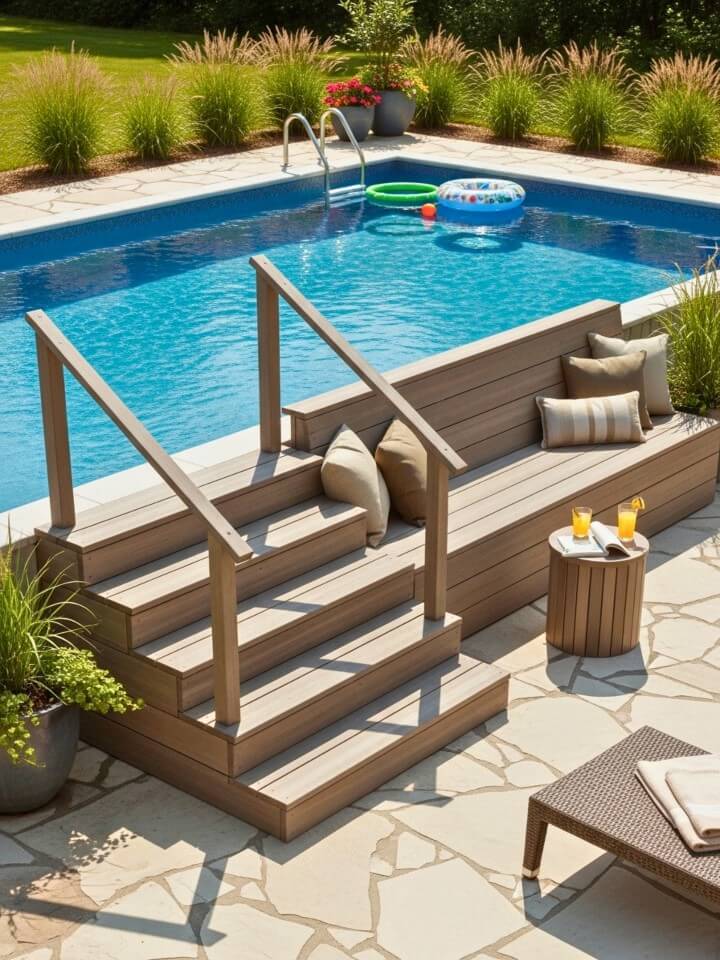
A step bench combo blurs the line between pool entry and lounge furniture. Picture a low, wide bench that runs along the side of your pool — the top works as a sunbathing spot, and shorter steps built into one end let swimmers get in and out.
Why It Works So Well
You stop needing a separate chaise lounge. The bench itself becomes the relaxation spot, and you’re already at the pool’s edge so dipping in takes one step.
Build It for the Sun
Position the long side facing south or west (depending on where afternoon sun hits your yard). Use light-colored composite or sealed wood — dark surfaces hit 140°F+ in summer and burn skin instantly.
Add These for Comfort
- Outdoor cushions with quick-dry foam (Sunbrella fabric is the standard)
- A small built-in cup holder routed into the bench top
- A roll-up shade or umbrella sleeve at one end for breaks from direct sun
This design rewards homeowners who actually use their pool area rather than just look at it.
16. Modular Stackable Steps for Easy Adjustment
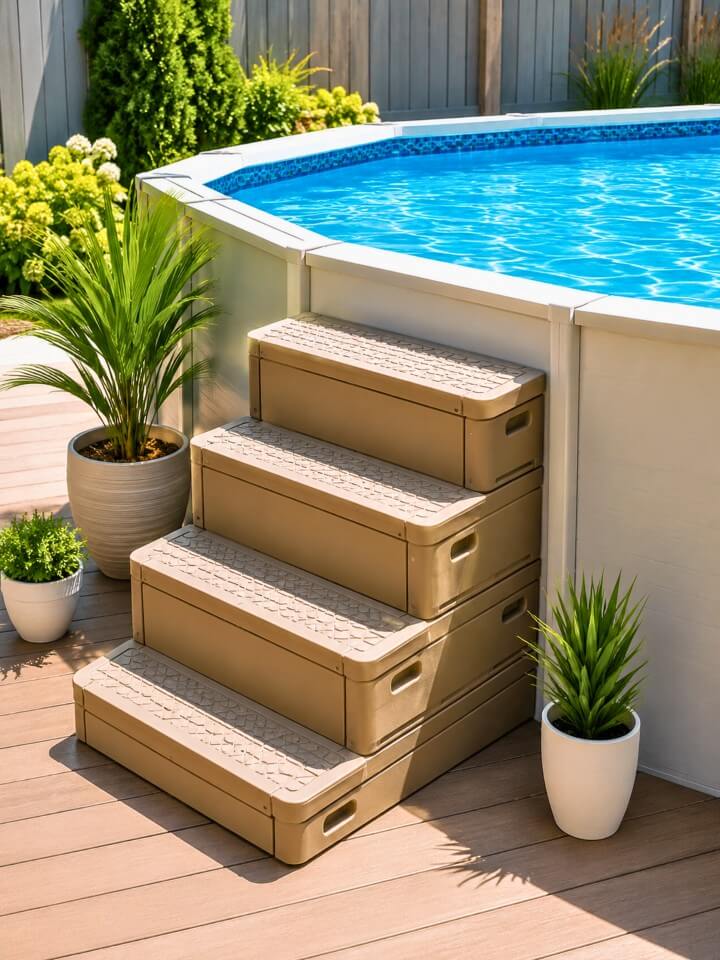
Life changes, and sometimes your pool setup needs to change with it. Modular stackable steps are built around that reality — each unit locks into the one below, so you can add height, reduce it, or completely relocate the steps without rebuilding anything.
Who Actually Benefits from Modular
- Renters who can’t make permanent modifications
- Homeowners with pools that get partially drained for winter
- Anyone in a region where the ground shifts seasonally (freeze-thaw cycles, clay soil)
- Families with growing kids who need lower steps now, higher access later
What to Look for in a Quality Set
The connection points are what separates the good kits from the flimsy ones. Look for steel reinforcement at the locking joints, not just plastic-on-plastic clips. UV-stabilized resin holds up to sun exposure without turning chalky after one summer.
Most decent modular kits land between $250 and $700 depending on height and tread width.
17. Step Ladder with Safety Handrails
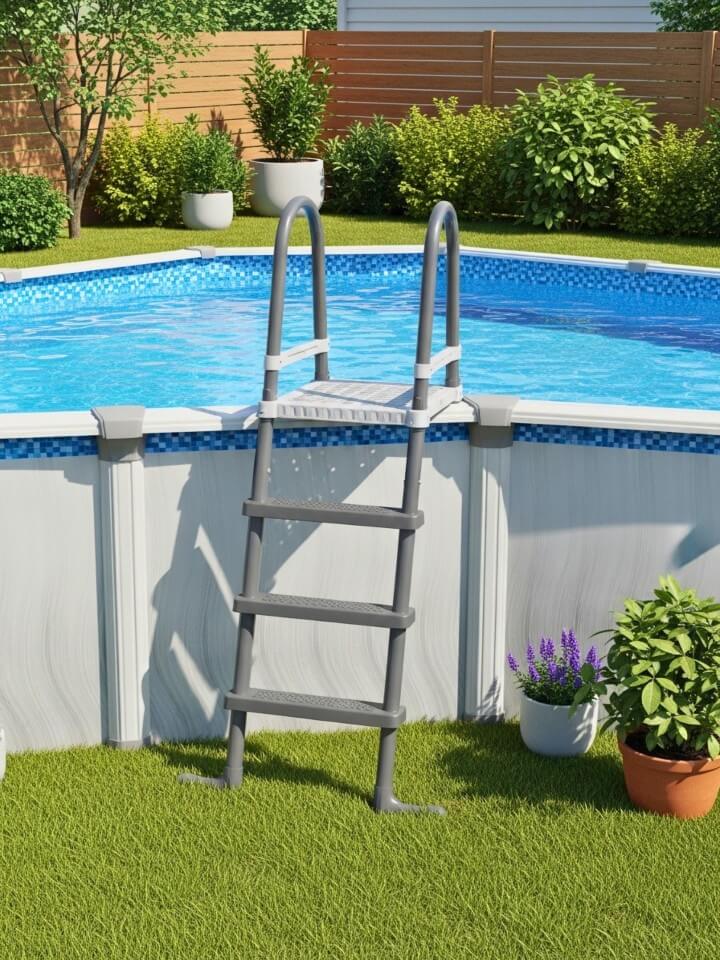
Handrails aren’t just for grandparents and toddlers. Anyone who’s slipped while climbing out of a pool with wet, soapy-feeling feet knows why grab points matter. A step ladder with proper handrails on both sides turns a basic entry into something genuinely safe.
The Three Handrail Mistakes Most People Make
- Mounting them too low — handrails should sit around 34–38 inches above the top step, not waist-high on the ladder itself
- Choosing thin tubing — anything under 1.25 inches in diameter is hard to grip with wet hands
- Skipping the textured grip — smooth chrome looks nice but offers zero traction when soaked
Material Recommendation
Marine-grade stainless steel (316 grade specifically) resists pool chemicals far better than the cheaper 304 stainless you’ll find on bargain ladders. The price difference is maybe $80–$150 for the full ladder, and you’ll never have to replace it from rust.
18. Curved Wooden Steps with Planter Boxes
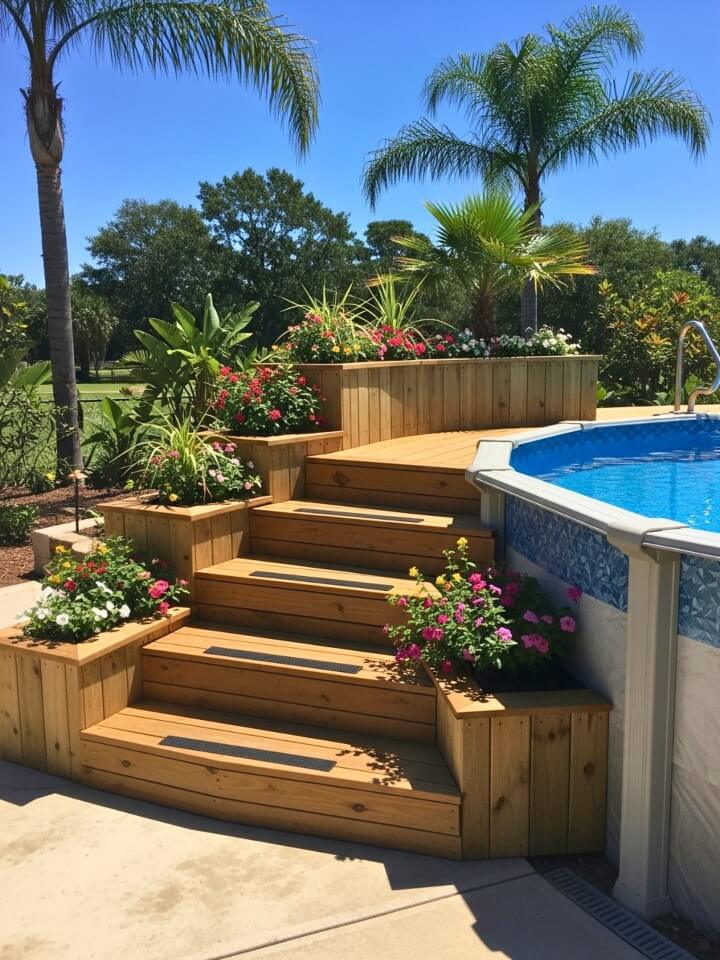
Build DIY homemade above ground pool steps and dive into summer savings with your own two hands. There’s a reason curved wooden steps with planter boxes show up in so many backyard inspiration photos — they manage to feel handcrafted and intentional without being over-the-top. The curve naturally draws people toward the water, and the planters bring the garden right up to the pool edge.
Plant Choices That Actually Survive Poolside
Chlorinated splash water is rough on most plants. These handle it:
- Lavender — loves sun, tolerates dry conditions, smells incredible
- Ornamental grasses (Karl Foerster, blue fescue) — wave in the breeze, ignore splashes
- Trailing rosemary — drapes over planter edges, doubles as a kitchen herb
- Sedum varieties — basically indestructible
Skip ferns, hostas, and anything with delicate leaves. They’ll scorch by July.
Construction Tip
Line the planter boxes with heavy-duty pond liner before adding soil. Untreated wood will rot from the inside within two seasons otherwise. Drainage holes at the bottom are non-negotiable.
19. Concrete Steps with Textured Finish
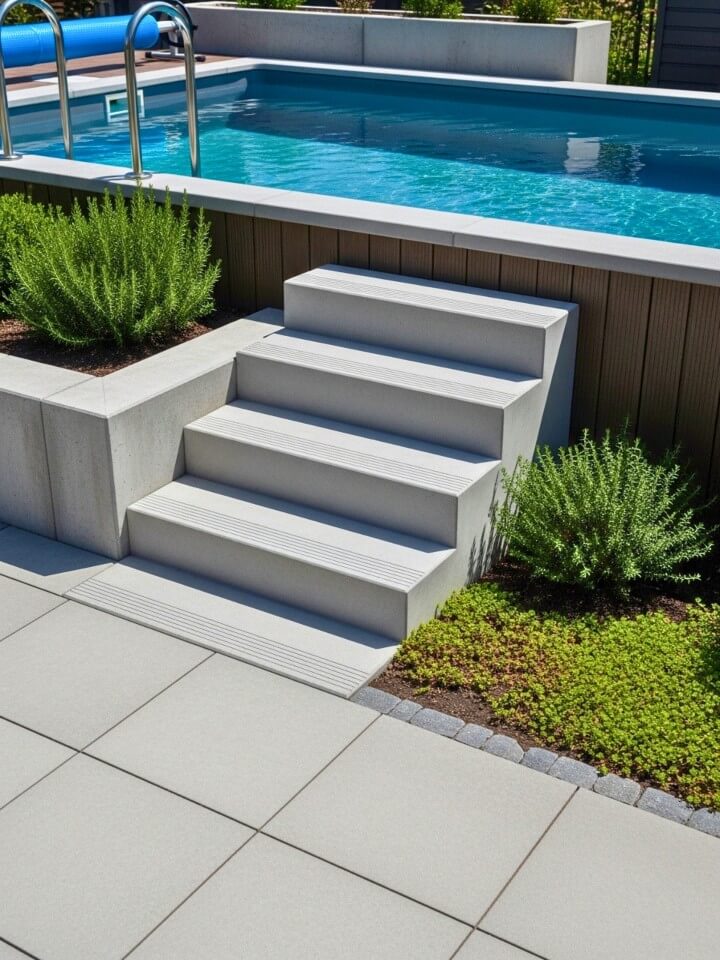
Smooth concrete looks clean in catalogs and behaves like an ice rink in real life. A textured finish — applied right when the concrete is still curing — solves the slip problem and adds visual character at the same time.
Finish Types Compared
- Broom finish is the workhorse: drag a stiff-bristled broom across wet concrete in one direction, and you get fine parallel ridges that grip wet feet beautifully. Cheap, fast, and surprisingly attractive.
- Stamped finish mimics stone, brick, or wood planks using rubber mats pressed into curing concrete. Costs more (around $12–$18 per square foot installed versus $6–$10 for plain) but gives you the look of premium materials at half the price.
- Exposed aggregate reveals the small stones in the concrete mix, creating a pebble-like surface that’s naturally non-slip and ages well.
The Sealing Question
Yes, you still need to seal textured concrete. Use a penetrating sealer rather than a surface coating — surface coatings can actually become slippery when wet, defeating the entire purpose of the texture.
20. Multi-Level Steps with Hidden Storage Compartments
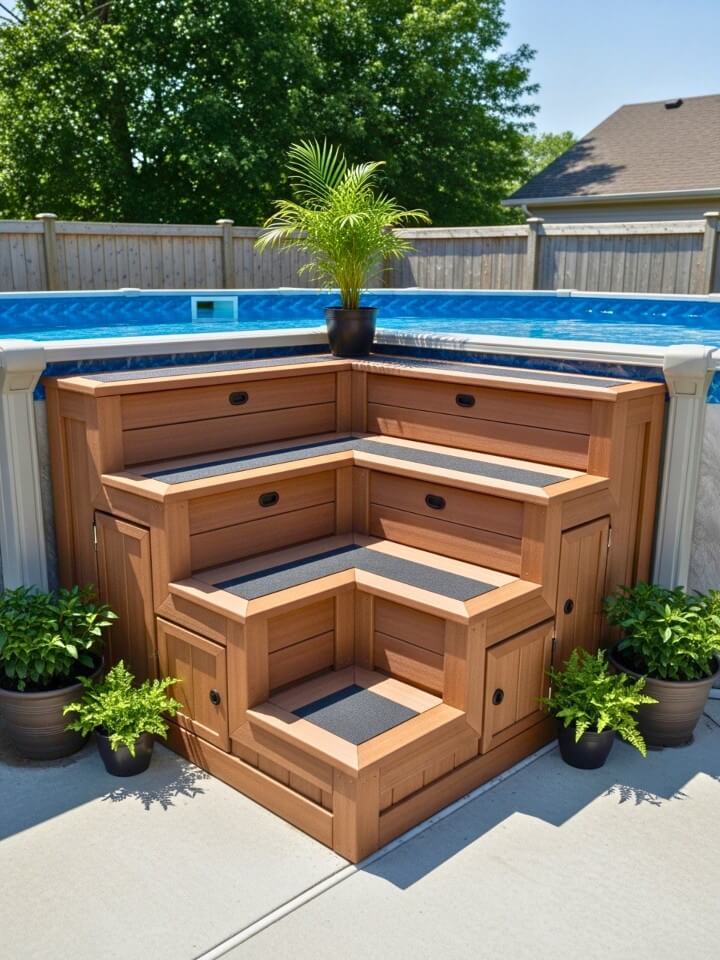
Take the storage idea from #1, add a few more tiers, and you’ve got a setup that quietly absorbs every piece of pool gear you own — without a single shed or visible bin.
Smart Compartment Layout
Different tiers should hold different things:
- Top step — quick-grab items: goggles, sunscreen, phone (in a waterproof case)
- Middle step — towels and dry clothes
- Bottom step — pool cleaning supplies, chemicals, vacuum hoses
Hinged lids with gas struts (the same kind used on car trunks) keep compartments open while you’re rummaging, then close softly without slamming.
Keeping Storage Actually Usable
Add ventilation holes at the back of each compartment. Without airflow, wet towels turn musty within a day, and chlorine fumes from stored chemicals can build up to unsafe levels in sealed boxes.
A small silica gel pack in each compartment (the kind that comes with shoes and electronics) keeps moisture in check between uses.
21. Floating Rope Steps for a Nautical Look
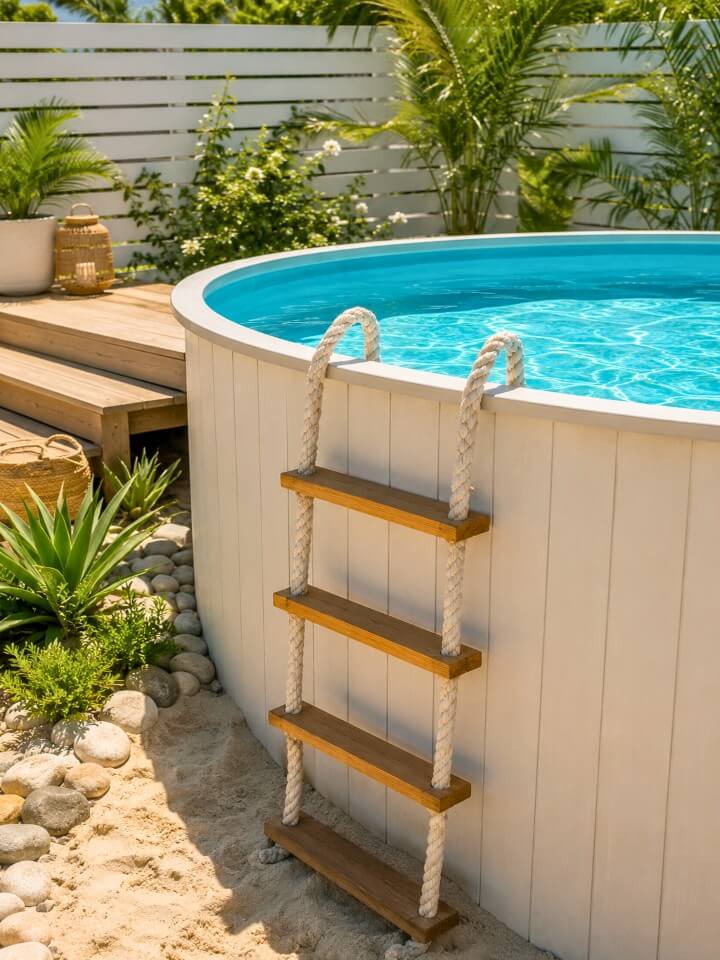
If your backyard leans coastal — think weathered wood, blue cushions, maybe a piece of driftwood as decor — floating rope steps fit right in. They borrow their design language from boat docks and ship ladders, but scaled and reinforced for actual pool use.
Getting the Rope Right
Not all rope belongs near a pool. Cotton rots, nylon stretches under load, and cheap polypropylene degrades in UV light within months.
- Marine-grade manila is the traditional choice — it has that classic tan, hand-twisted look but needs replacement every few years.
- Synthetic rope that mimics manila (sold as “ProManila” or “unmanila”) gives you the same look without the rotting issue, and it shrugs off chlorine and sun exposure.
For load-bearing applications, go with at least 1-inch diameter. Anything thinner looks decorative but won’t take real weight.
The Detail That Sells the Look
Wrap the rope around the side posts with proper sailor’s knots — a clove hitch or a fisherman’s bend — rather than just tying it off in a loop. The knots become part of the design.
22. Wide Entry Steps with Integrated Lighting
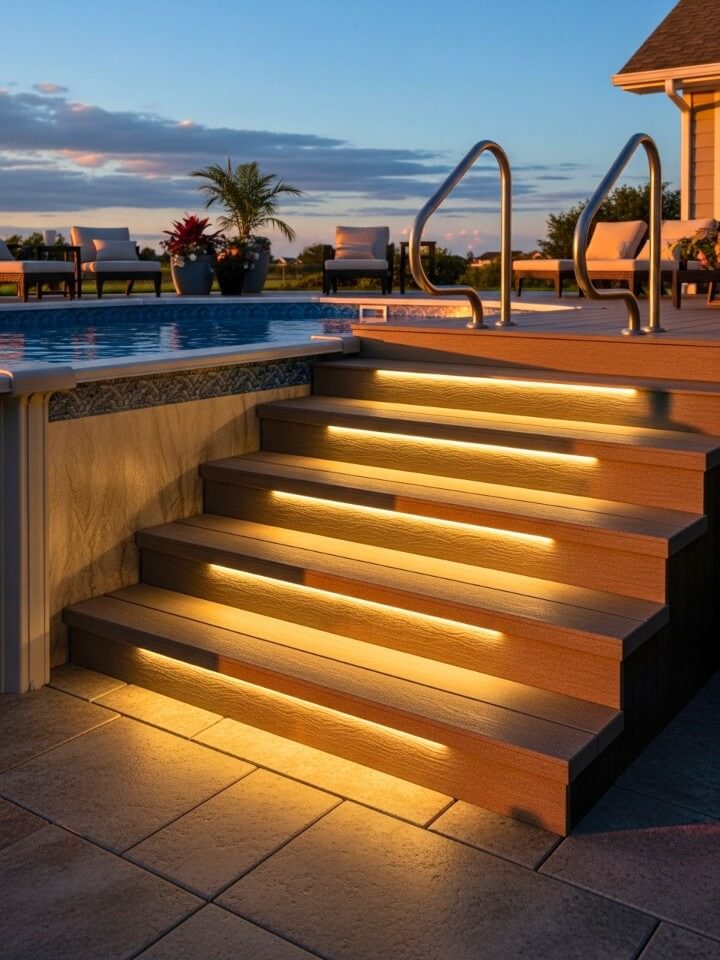
Wide steps are already a good idea on their own. Add lighting that’s built into the structure rather than stuck on after the fact, and you’ve got something that genuinely improves how you use the pool after sunset.
Where Built-In Beats Add-On Lighting
Stick-on solar lights and clip-on fixtures always look like afterthoughts. They also tend to fail, get knocked off, or end up dimmer than expected within a season.
Built-in lighting hides inside the step structure during the day and reveals itself only when needed. Common placement options:
| Location | Effect | Best For |
|---|---|---|
| Under the tread lip | Soft downward glow | Highlighting each step edge |
| Recessed in the riser | Direct forward light | Spaces with low ambient lighting |
| Along the handrail | Subtle ambient glow | Modern, minimalist looks |
Color Temperature Matters
Stick with 2700K to 3000K (warm white). Cool white and blue LEDs make a beautiful pool area feel like a parking garage after dark.
23. Rustic Log Steps Blending with Nature
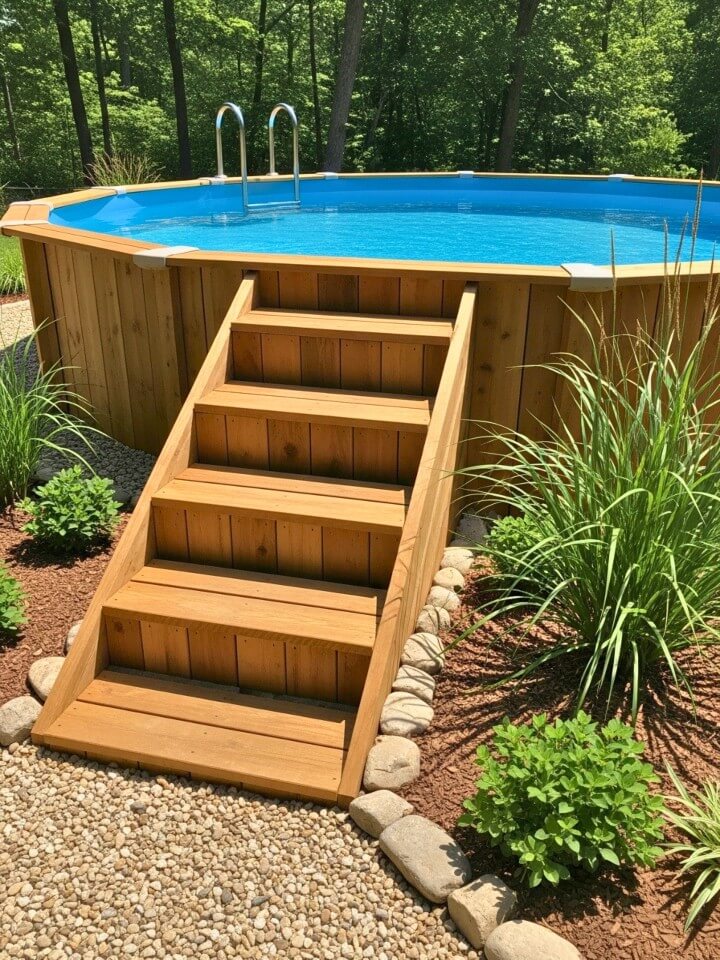
Upgrade your swim experience with sturdy pool steps for above ground pool that everyone can enjoy. Log steps work when your pool sits somewhere that doesn’t feel suburban — a wooded lot, a yard backing onto open land, or a property with mature trees and natural plantings. In a manicured backyard, they look out of place. In the right setting, they look inevitable.
The Log Selection Process
Round logs split as they dry, which is a problem for steps. The fix is either:
- Buy kiln-dried logs that have already done their major moisture loss
- Use half-logs (split lengthwise) with the flat side up — more stable underfoot anyway
- Choose naturally rot-resistant species like black locust, white oak, or cedar
Why Black Locust Deserves a Mention
It’s not the most common choice, but black locust outlasts almost every other untreated wood — some installations have lasted 50+ years in ground contact. If you can source it locally, it’s worth the extra effort.
Anchoring Logs Properly
Logs roll. Even big ones. Set each one on a gravel base for drainage, then pin them in place with rebar driven through pre-drilled holes into the ground below.
24. Compact Corner Steps with Built-In Seating
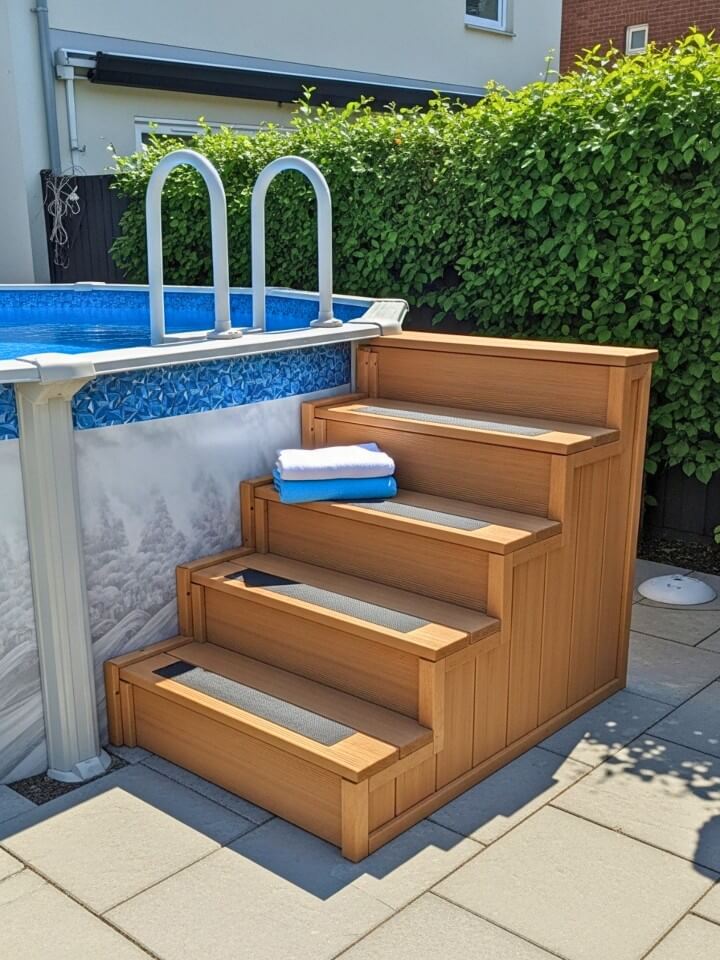
We’re closing the list with a design that works hardest in the smallest space. Compact corner steps with seating tuck into spots where you’d normally just have an awkward, unused gap — turning dead space into one of the most functional parts of your pool area.
Why Corners Are Underrated
Most homeowners think of pool entries as something that needs a long, straight side. Corners get ignored. But a corner gives you a 90-degree wrap that naturally creates an L-shaped seating area along two sides of the steps — more bench space than you’d ever fit on a single straight edge.
Smart Sizing for Small Yards
You can build a fully functional corner step-and-seat combo in as little as 5×5 feet of footprint. The breakdown:
- 2 feet for the step treads
- 18 inches for the bench depth
- Remaining space for a small corner ledge (drinks, plants, towels)
The Build Approach
For a project this small, treated lumber is your best friend — affordable, available everywhere, and easy to work with hand tools. A weekend is usually enough time from cut list to finished steps if you have basic carpentry skills.
Add a hinged lid to the bench seat and you’ve got hidden storage on top of everything else.
FAQs About Above Ground Pool Steps
Before you start building or buying, a few practical questions usually come up — the kind that aren’t always covered in design guides but matter once you’re standing in the yard with a tape measure. Here are clear answers to the ones homeowners ask most often.
How Much Weight Should Pool Steps Safely Support?
Quality pool steps should hold at least 300–400 pounds per step to safely accommodate adults, kids climbing together, and anyone pausing to sit. Always check the manufacturer’s weight rating, and reinforce DIY builds with proper bracing.
Do I Need a Permit to Install Permanent Pool Steps?
Permanent structures like concrete or anchored deck steps often require a permit, depending on your municipality. Portable ladders and modular kits typically don’t. Always check with your local building department before pouring footings or attaching anything to existing structures.
How Do I Keep Pool Steps from Getting Slippery Over Time?
Reapply a non-slip sealer once a year, especially on wood and concrete. Scrub away algae and chlorine residue monthly using a stiff brush and mild cleaner. Adding adhesive grip strips or textured mats also helps maintain traction during heavy use.
Can Pool Steps Be Left Outside During Winter?
Composite, resin, and treated wood steps generally handle winter fine if properly sealed. Remove and store metal ladders to prevent rust, and cover stone or concrete steps to protect against freeze-thaw cracking. Modular plastic units usually stack and store easily.
What’s the Safest Step Height for Kids and Seniors?
Aim for a rise of 5 to 6 inches per step, instead of the standard 7 to 8 inches. Lower rises reduce slip risk, ease joint strain, and make climbing in or out feel natural for both young children and older adults.
Conclusion
Picking the right pool steps comes down to three honest questions: how much space you’re working with, who’s going to use them most, and how much time or money you want to put in. A young family probably needs wide, low-rise steps with a non-slip surface. Someone styling a modern backyard might lean toward floating platforms or metal frames with wood treads. If your yard is tight, modular or spiral options save the day without sacrificing safety.
Whatever you choose, focus on three non-negotiables: a slip-resistant surface, secure anchoring, and materials that handle constant moisture and pool chemicals. Get those right, and your steps will look good and stay safe for years.