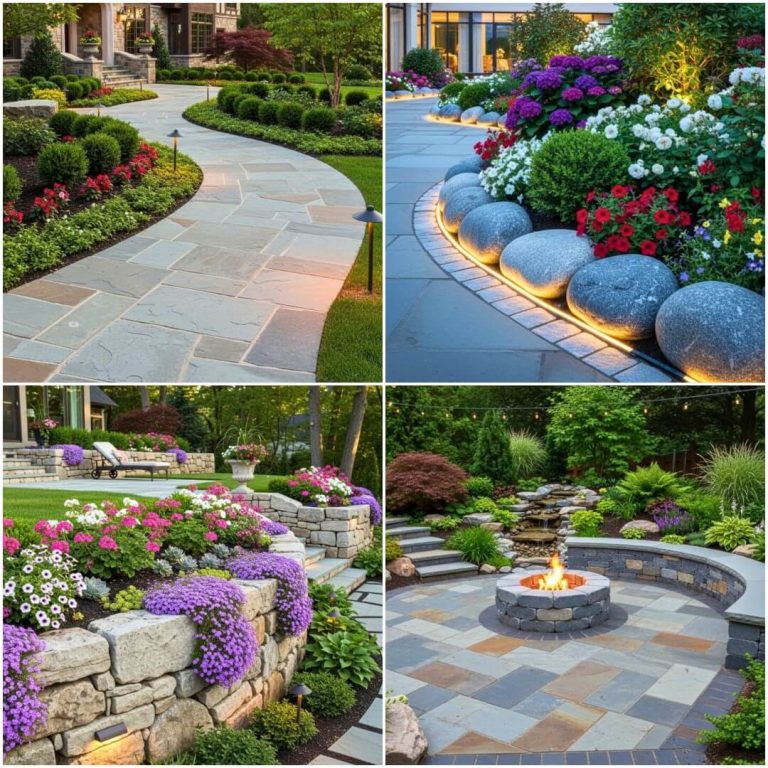
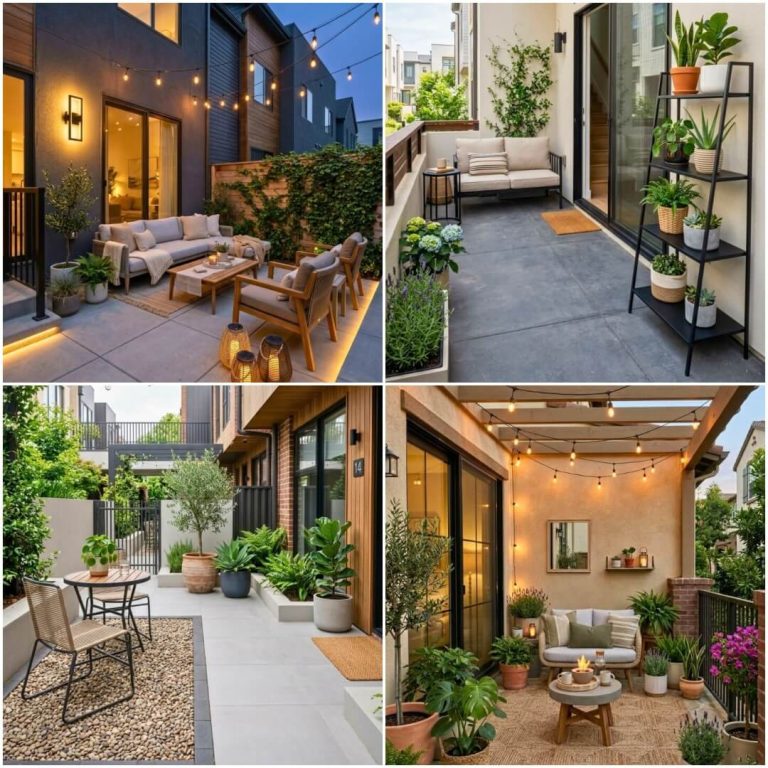
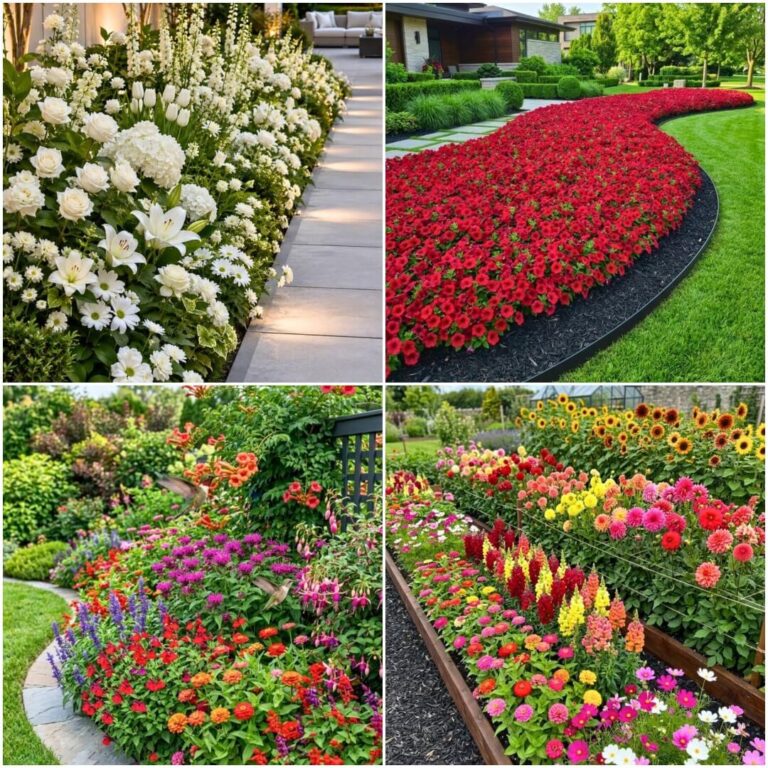
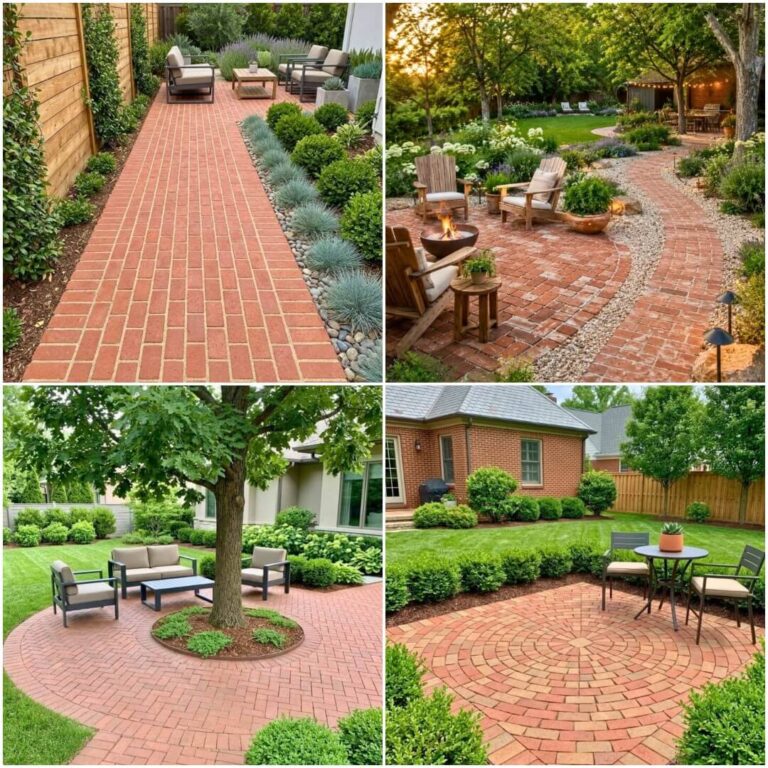
27 Low Maintenance Florida Landscaping Designs Worth Stealing
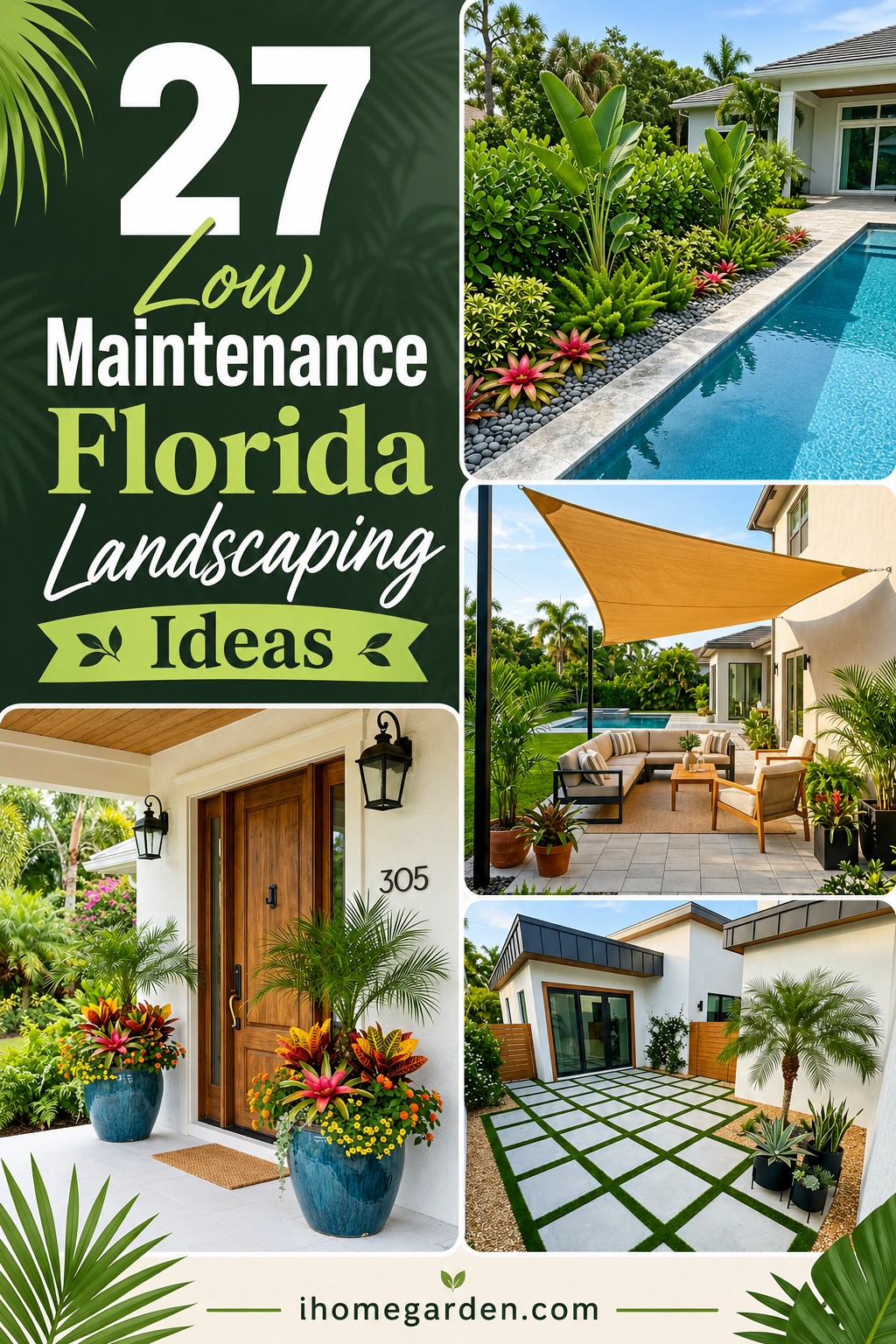
Keeping a yard looking good without spending every weekend maintaining it comes down to smarter plant choices and a few well-placed design decisions. These 27 incredible low maintenance Florida landscaping ideas are built around one simple principle — work with the climate, not against it.
Florida’s heat, sandy soil, and unpredictable rainfall make standard landscaping advice unreliable. Plants that thrive elsewhere struggle here, and designs that look beautiful in spring can become a maintenance burden by midsummer. Every idea in this list accounts for those realities — recommending specific materials, measurements, and plant varieties that perform consistently without demanding constant attention.
Whether you’re dealing with a patchy lawn, a bare side yard, or a front entry that needs structure, there’s a starting point here that fits your space, your schedule, and the conditions you’re actually working with.
1. Container Gardens for Entries and Patios
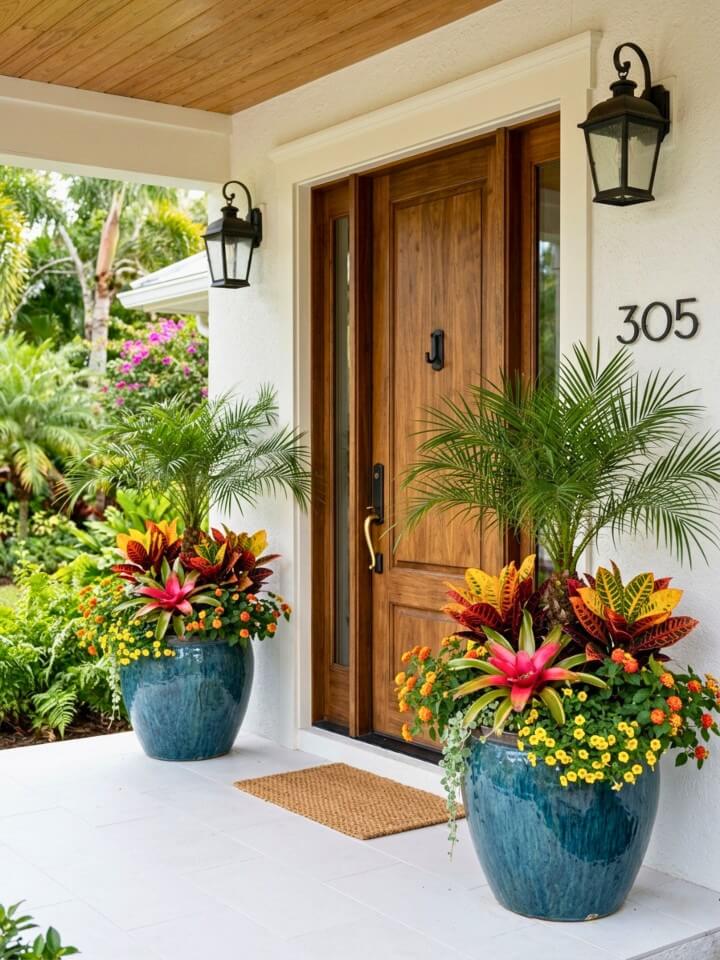
Crotons, bromeliads, dwarf palms, and snake plants handle container life well because their root systems stay compact and they tolerate the heat that builds up in pots during warmer months. Use containers with drainage holes and a well-draining potting mix rather than garden soil, which compacts quickly and suffocates roots in confined spaces. Group pots in sets of two or three near front doors, patio corners, or pool decks for a layered, intentional look. Ceramic and concrete planters hold moisture longer than thin plastic, which reduces how frequently you need to water during dry stretches between rain.
Choosing the Right Pot Size: A container that feels slightly too large usually works better than one that fits snugly. Tight pots dry out faster, restrict root growth, and need replacing sooner as plants mature.
2. Native Florida Plants for a Low-Effort Yard
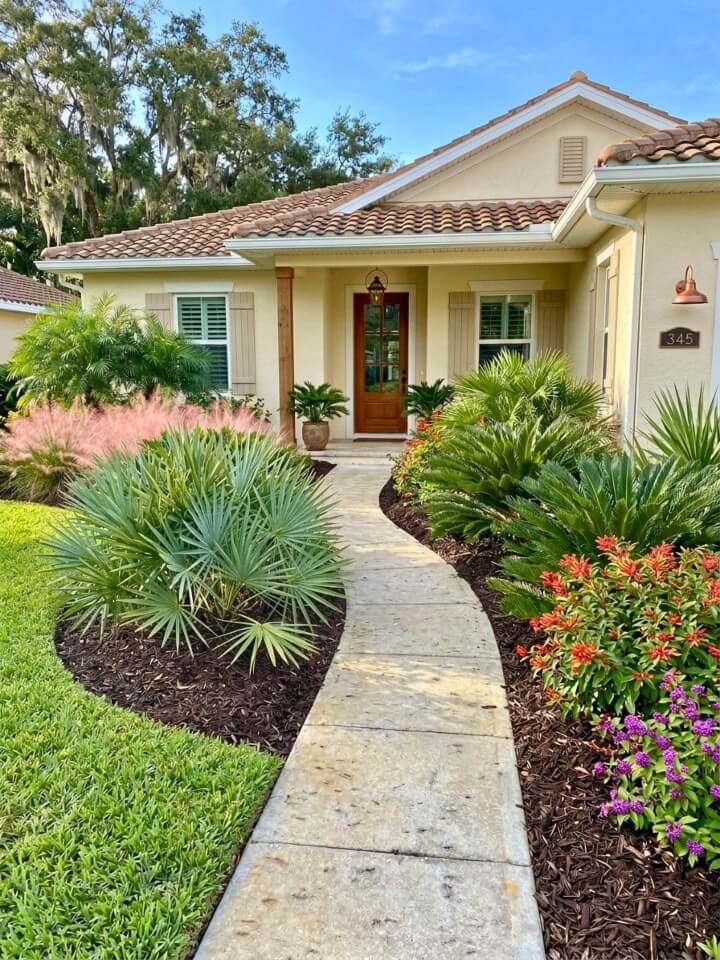
Muhly grass, coontie, firebush, and beautyberry are smart choices for any yard in this climate. These plants handle heat, humidity, and sandy soil without much help from you. Once established, they need minimal watering and almost no fertilizer. Their natural growth habits mean less trimming too. Firebush draws hummingbirds and butterflies through warmer months, while beautyberry adds purple clusters in fall. Grouping natives together also encourages a small ecosystem that largely takes care of itself, reducing how often you need to intervene.
Best Planting Combination: Mix one taller shrub like firebush with low-growing coontie at the front. Add muhly grass along the edge for movement and texture without crowding other plants.
3. Low-Maintenance Plants Around Pool Edges
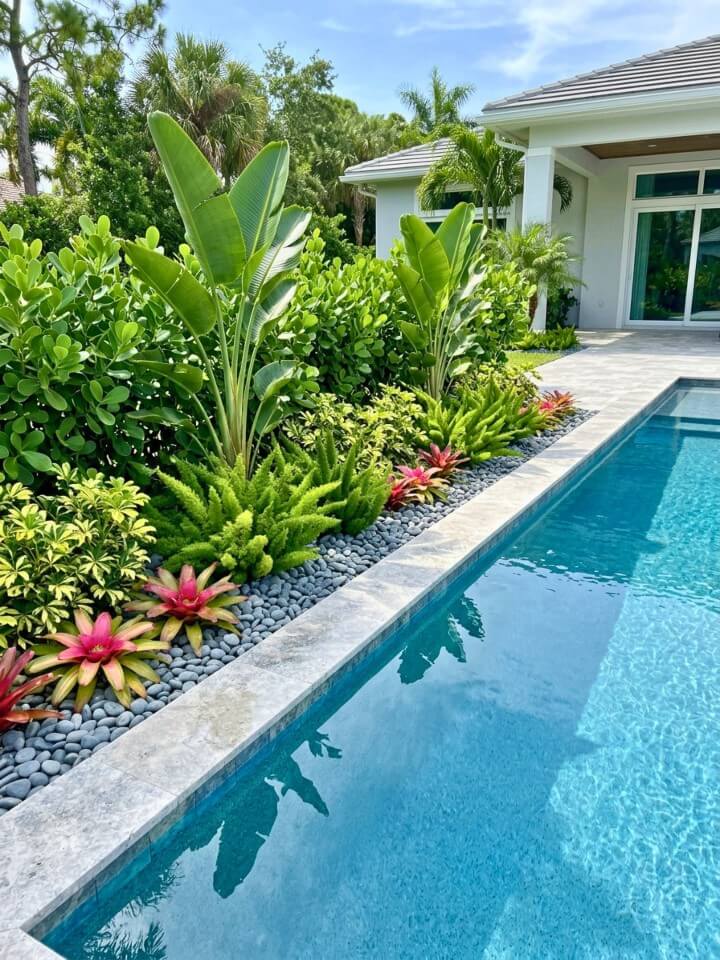
Foxtail fern, bird of paradise, dwarf schefflera, and clusia all produce minimal leaf litter compared to most flowering plants, which matters considerably when poolside debris means constant skimming. Keep planting beds at least 3 feet back from the pool coping to reduce the amount of organic material, soil, and mulch that splashes or blows into the water during wind and rain.
Use decorative gravel rather than mulch in the immediate poolside zone — it stays put, drains instantly, and doesn’t break down into fine particles that clog filters over time. Strong architectural shapes from bird of paradise or agave create visual impact near water without overwhelming the surrounding space.
Managing Growth Near Water: Trim poolside plants at the start of each season before new growth pushes outward. Getting ahead of this once a year takes far less time than managing overgrown branches that drop debris into the water through summer.
4. Artificial Turf for Specific Problem Areas
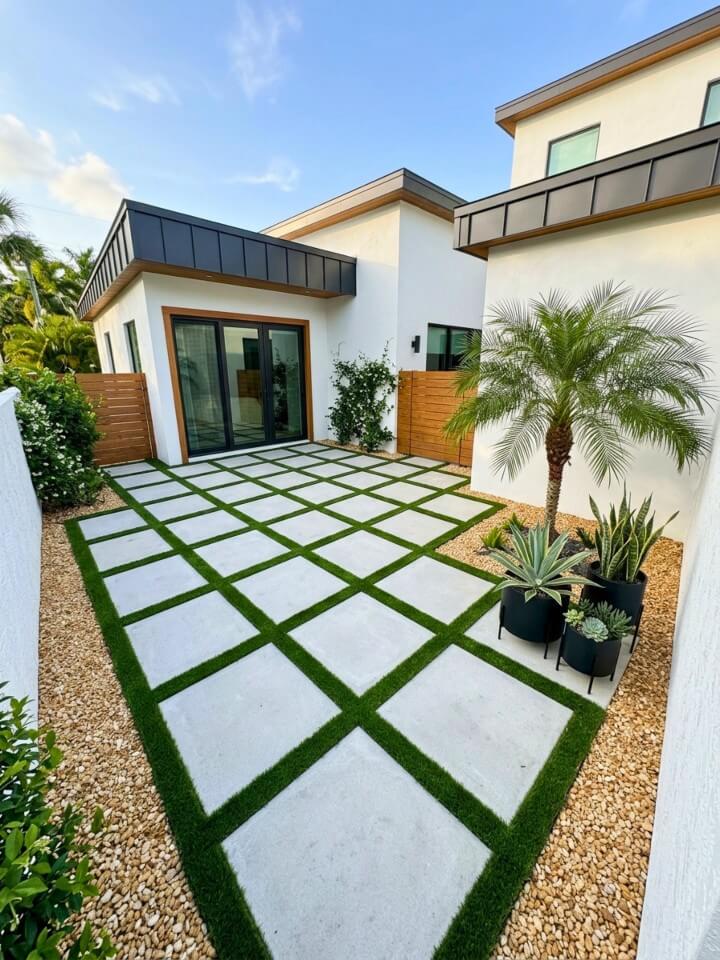
Compacted side yards, shaded runs beside the house, and pet zones where natural grass wears thin are the situations where artificial turf makes the most practical sense. Rather than covering the entire yard, using it in targeted patches keeps the look balanced and avoids the uniform flatness that makes large turf installations feel artificial from a distance. Choose a product with a pile height between 1.5 and 2 inches — shorter than that looks sparse, and longer pile tends to flatten under regular foot traffic within a season. Install infill material such as crumb rubber or silica sand between the blades to support upright pile and improve drainage through the backing layer.
Preparing the Base Properly: Remove existing soil to a depth of 3 to 4 inches before laying crushed aggregate base material. Skipping this step leads to uneven settling, poor drainage, and visible bumps across the surface within the first year.
5. River Rock Borders That Actually Stay Neat
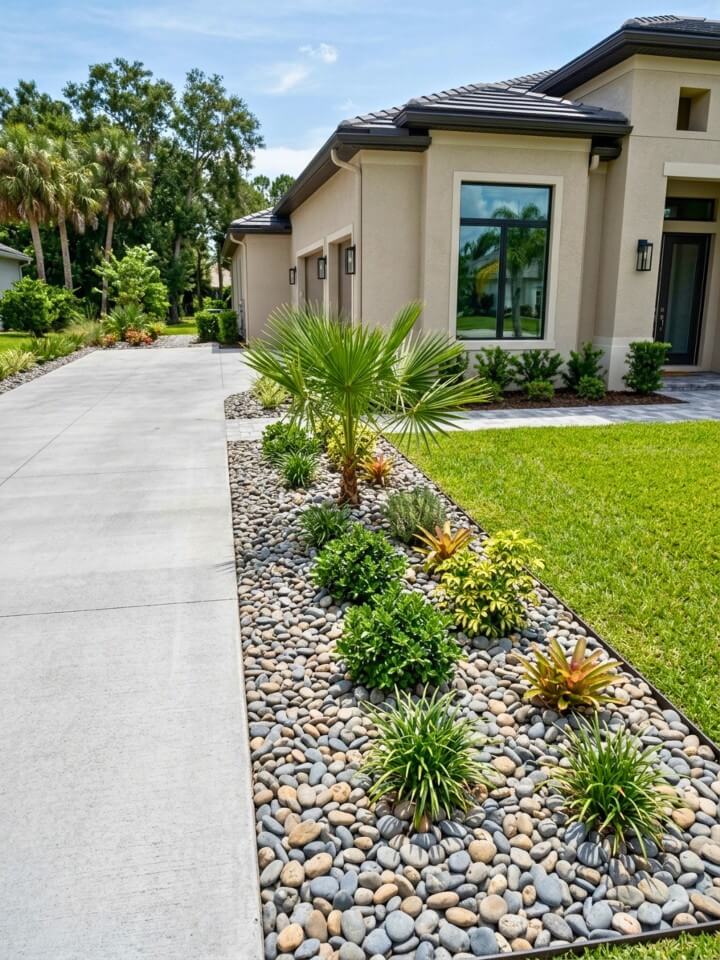
Many homeowners prefer low maintenance florida landscaping ideas that include native plants, mulch, and drought-tolerant greenery. River rock works well around flower beds, palm bases, and garden paths because it doesn’t shift during heavy rain the way mulch sometimes does. Choose stones between 1 and 3 inches for the best coverage without looking cluttered. Gray and tan tones blend naturally with most exterior paint colors. Lay landscape fabric underneath before placing rock to block weeds without chemicals. A 2-inch depth is enough to suppress growth and hold the border shape. It also improves drainage in low spots where water tends to collect after storms.
Getting the Depth Right: Two inches of rock is the practical minimum. Less than that and weeds push through gaps quickly. More than three inches makes the bed look heavy and unnatural.
6. Drought-Tolerant Palms for Shade and Height
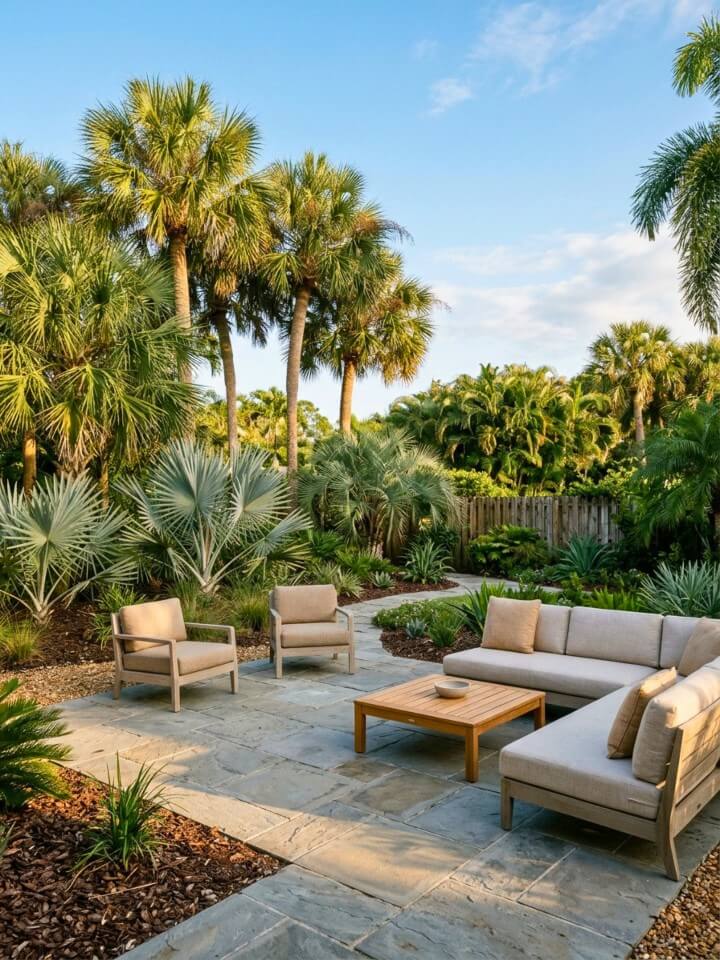
Sabal palms, windmill palms, and silver saw palmetto bring vertical structure to open yard areas without demanding frequent care. These varieties establish well in sandy soil and handle dry spells once their root systems settle, usually within the first year. Plant them away from roof overhangs to give fronds space to spread naturally. Near a patio or seating area, a single tall palm creates useful shade without blocking breezes. Mulching around the base with a 3-inch ring keeps moisture in and competing grass out during the first growing season.
Choosing the Right Spacing: Windmill palms stay narrower and suit tighter spaces well. Sabal palms need at least 8 feet between them to grow without crowding each other or nearby structures.
7. Heat-Loving Perennials That Return Each Season
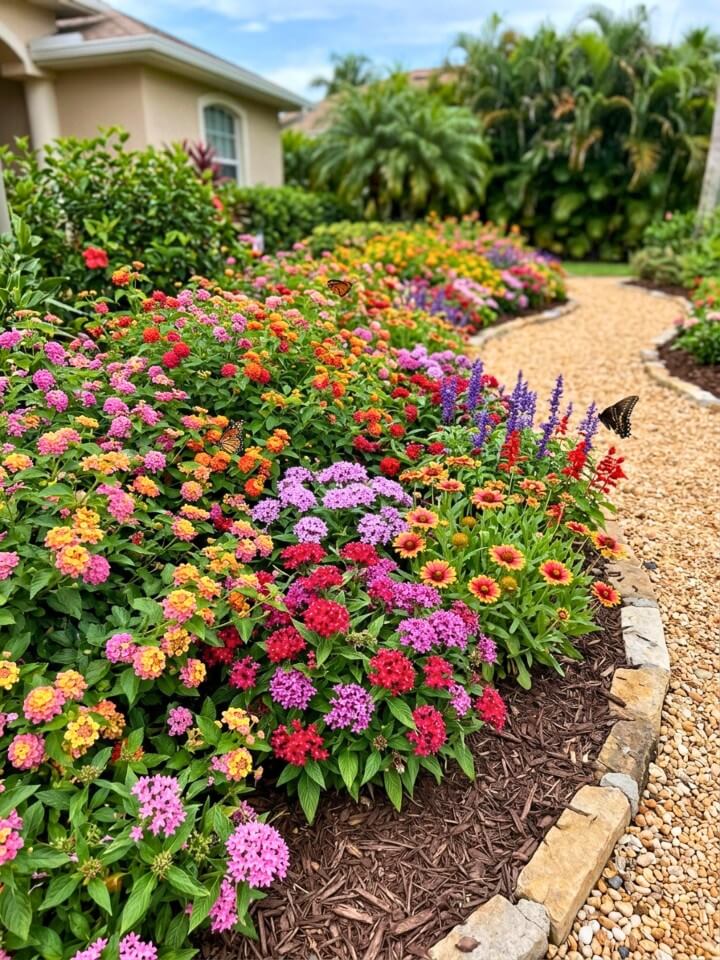
Blanket flower, pentas, salvia, and lantana handle full sun without wilting and come back reliably each year in warmer climates. They attract pollinators from early spring through late fall, which keeps the garden lively without extra effort. Plant them in clusters of three or five rather than single rows — odd-numbered groupings look more natural and fill in faster. Deadheading spent blooms every few weeks encourages fresh flowering and keeps beds looking tidy. These plants also stay relatively compact, so they fit neatly along walkways, mailbox areas, and front garden borders.
Spacing for Fuller Growth: Lantana and pentas spread outward as they mature. Give each plant at least 18 inches of space so they fill in properly without overcrowding or blocking airflow between stems.
8. Mulch Beds for Moisture and Weed Control
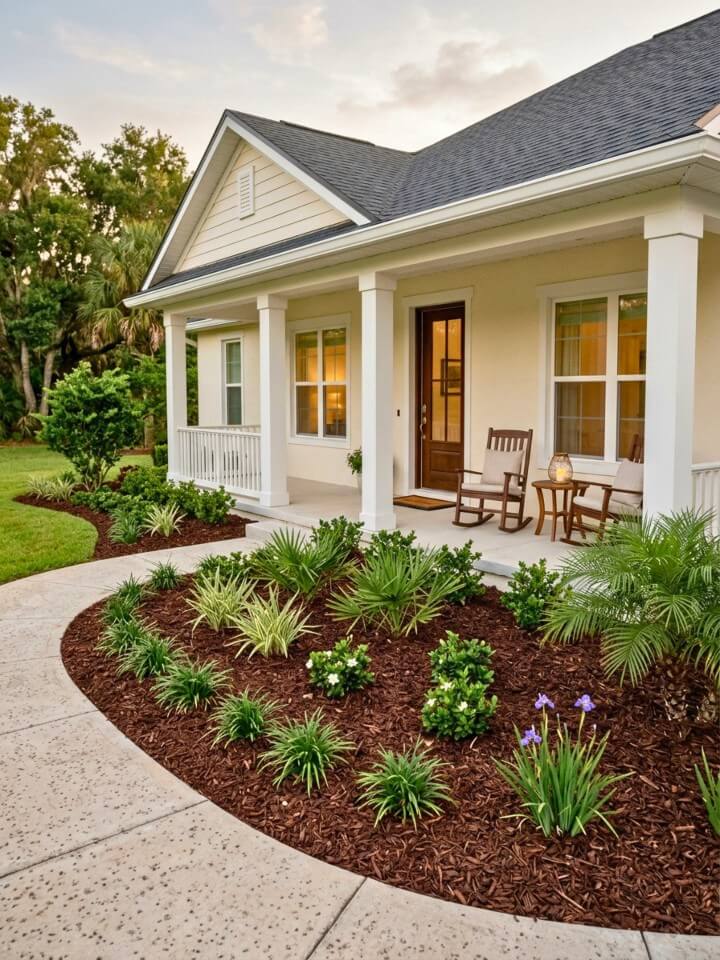
Pine bark and eucalyptus mulch both perform well in humid conditions, breaking down slowly and improving soil quality over time. Spread a fresh 3-inch layer around shrubs, trees, and garden borders at the start of each season. This depth retains moisture long enough to reduce how often you need to water during dry stretches. Dark-colored mulch makes green foliage and flowering plants stand out more clearly. Avoid piling mulch directly against plant stems or tree trunks, as trapped moisture there encourages rot and attracts insects that damage root systems over time.
When to Refresh: Mulch fades and compacts after 4 to 6 months. Rake the existing layer lightly before adding new material on top rather than replacing everything each time.
9. Ornamental Grasses That Shape Your Yard Naturally
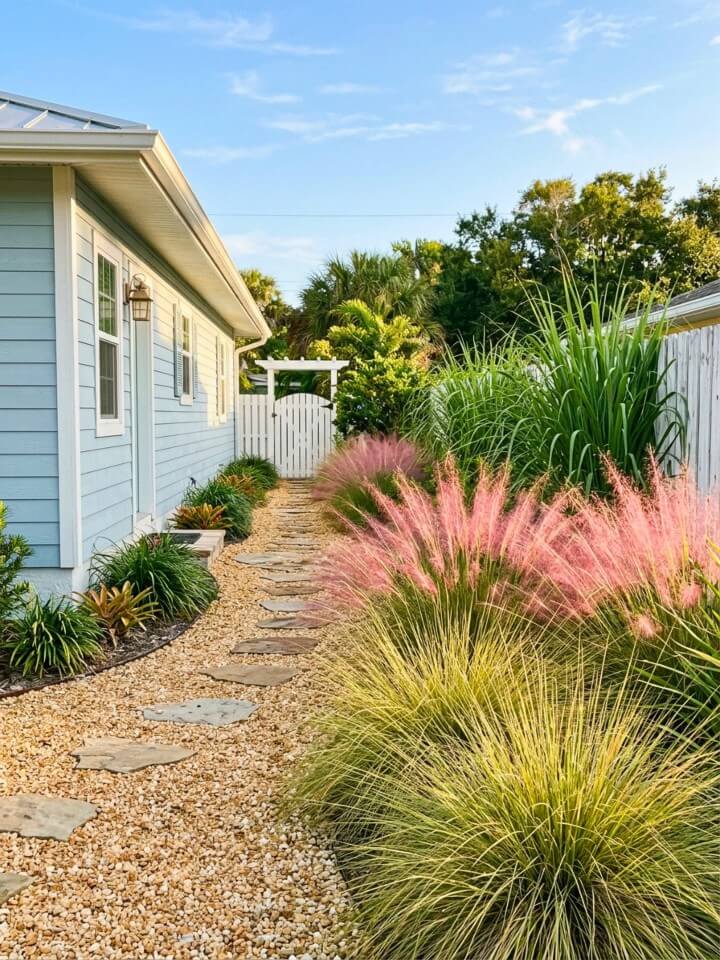
Muhly grass, fakahatchee grass, and cordgrass add height and soft movement to open yard areas without needing regular pruning or shaping. These clumping varieties stay contained, so they won’t spread into beds or pathways over time. Plant them in groups of three along fences, pool edges, or walkways for a natural, layered effect. Their feathery tops catch light in the afternoon and create gentle visual interest through multiple seasons. In late winter, cut them back to about 4 inches to encourage fresh, dense growth in spring.
Grouping for Best Results: Odd-numbered clusters of three or five look more balanced than straight rows. Space each plant 2 to 3 feet apart so they fill in properly without merging into one shapeless mass.
10. Stepping Stones Through Mulch or Ground Cover
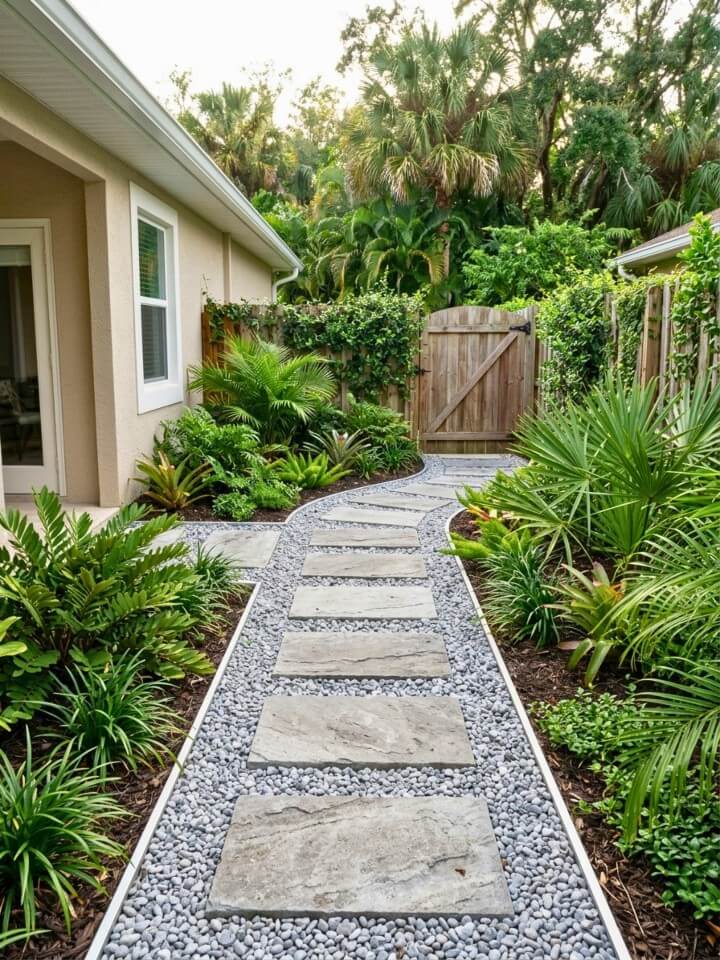
You can create a relaxing outdoor space with low maintenance florida backyard ideas such as paver patios, palm trees, and simple garden beds. Limestone, concrete, and natural stone pavers handle heat and heavy foot traffic well when set into mulch, gravel, or low ground cover. Space each stone roughly 18 to 24 inches apart, measured center to center, to match a comfortable walking stride. This creates a clear path without wearing out the surrounding plants or leaving muddy tracks after rain. A slight dig-in of about 1 inch keeps stones level and prevents rocking underfoot. Use irregular shapes for a relaxed garden feel, or uniform squares for a cleaner, more structured look near patios and entries.
Choosing the Right Stone Thickness: Pavers less than 1.5 inches thick tend to crack under regular foot traffic within a season or two. Aim for at least 2 inches of thickness for paths that get daily use.
11. Evergreen Shrubs for Year-Round Structure
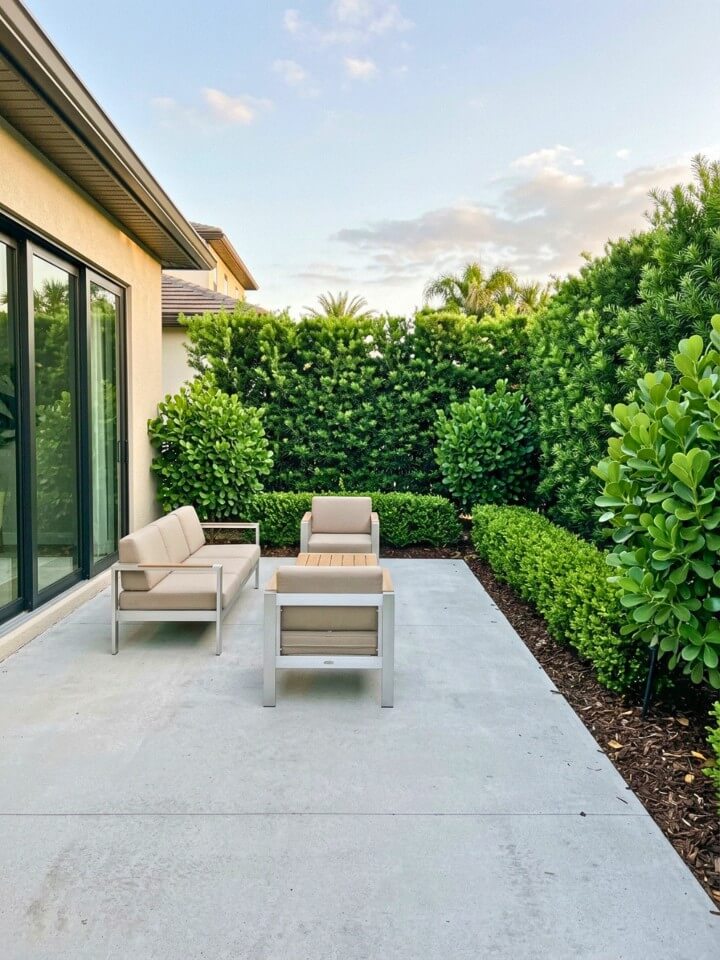
Dwarf yaupon holly, podocarpus, clusia, and viburnum hold their shape and color through every season without shedding leaves or going dormant. They work well along property edges, beside entryways, or as soft screens around patios and outdoor seating areas. For yards where screening is the main goal, these remarkable privacy landscaping ideas can help you choose plants that block views without turning the border into a pruning project.
Choose varieties that match your available space at maturity so trimming stays minimal. Podocarpus, for example, grows slowly and responds well to light shaping twice a year. Clusia handles salt air and compacted soil better than most options, making it reliable near driveways and road-facing borders where conditions tend to be harder on plants.
Spacing to Reduce Trimming: Check the mature width of each variety before planting. Placing shrubs 6 inches closer than their mature spread creates a fuller hedge but doubles your pruning workload over time.
12. Gravel Ground Cover for Low-Maintenance Areas
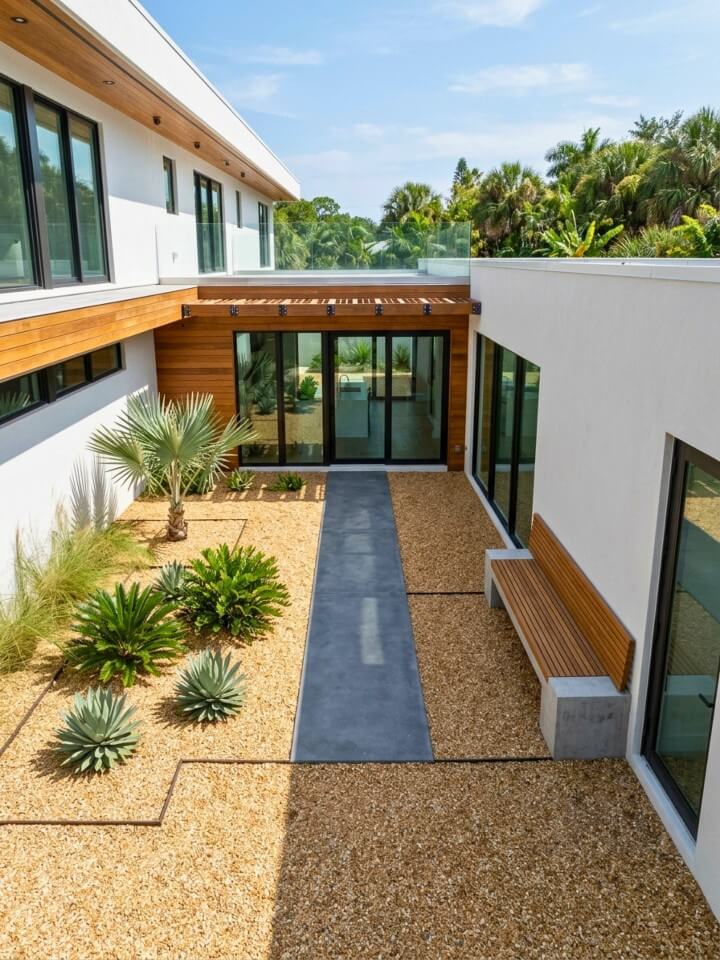
Pea gravel and crushed granite both drain quickly after heavy rain and stay in place better than lighter decorative stones. Use them in side yards, around fire pits, between garden beds, or beneath outdoor seating where grass struggles without shade. Lay a layer of landscape fabric first, then spread 2 to 3 inches of gravel on top for effective weed suppression. Warm beige and gray tones blend with most exterior colors without drawing too much attention. Avoid white or bright stones near seating areas, as they reflect heat and glare noticeably during midday sun in warmer months.
Keeping Gravel in Place: Install a steel or aluminum edging border around the perimeter before adding gravel. Without it, stones migrate onto grass and pathways within a few months, especially after heavy rain.
13. Bromeliads for Color in Shady Corners
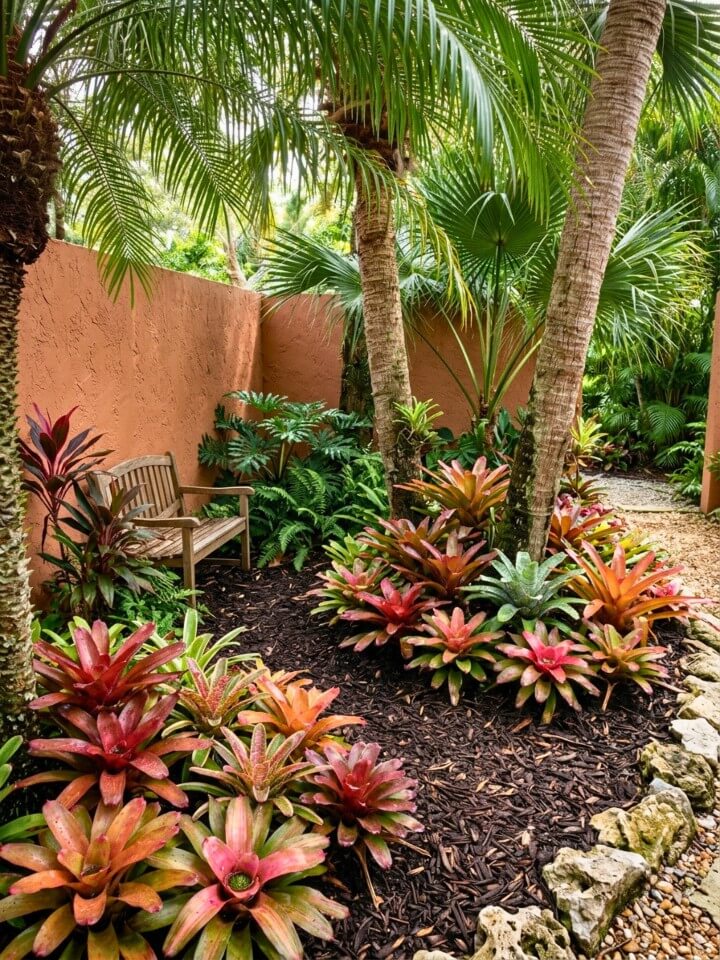
Bromeliads thrive in spots where most flowering plants struggle — under palms, along shaded fences, or beside covered patios where light stays filtered. Most varieties need watering only once a week during dry periods, and many collect moisture naturally in their central cups. Mix red, orange, green, and pink varieties together for a layered, tropical effect without the maintenance that usually comes with it. They grow well in containers too, which makes rearranging easy when you want a fresh look. Remove the mother plant after it finishes flowering, as offsets called pups will replace it within a few months.
Feeding Without Overcomplicating It: A diluted liquid fertilizer applied to the central cup every 4 to 6 weeks during the growing season is enough. Avoid fertilizing the soil directly, as bromeliads absorb most nutrients through their leaves and cup.
14. Curved Garden Edges for a Softer Yard
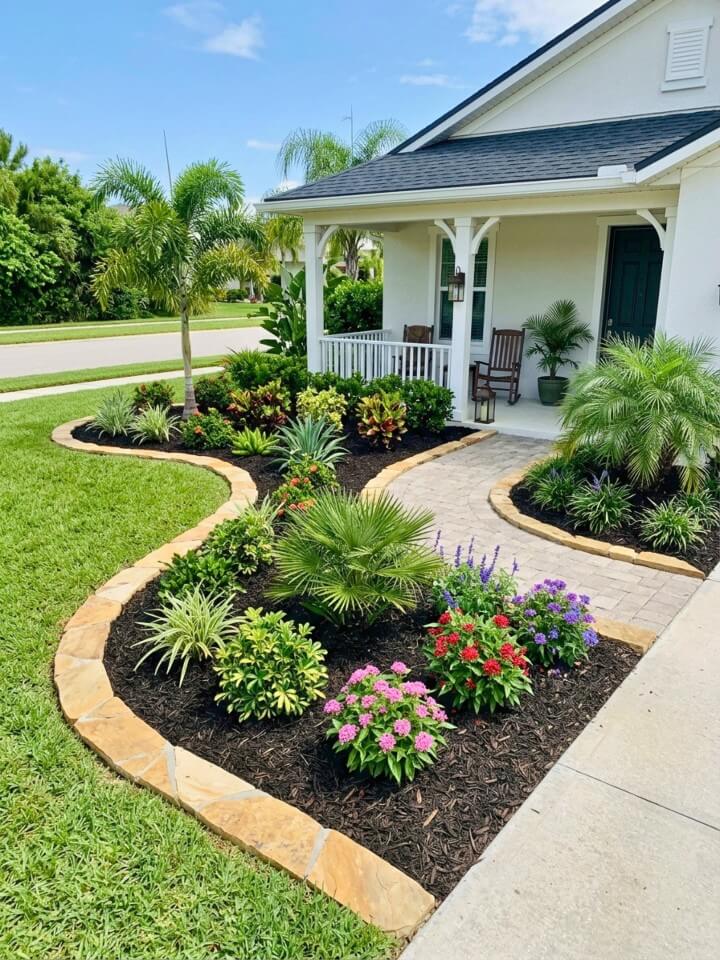
Straight borders suit formal designs, but gentle curves make smaller yards feel more open and relaxed by guiding the eye around the space rather than across it. Use a garden hose laid on the ground to sketch a curve before cutting or placing any edging material — adjust it until the line looks natural from multiple angles before committing. Steel and aluminum edging hold curves cleanly over time without shifting, while brick and stone create a slightly softer, more irregular edge that suits cottage-style planting. Recut trench edges at the start of each season to keep the line crisp, as grass rhizomes creep across the boundary steadily through warmer months.
Getting Curves to Look Intentional: Avoid tight S-bends in short runs of edging — they look restless rather than graceful. One broad, sweeping curve across a bed reads as deliberate design, while multiple small curves in the same space tend to look accidental.
15. Ground Covers That Replace Difficult Lawn Areas
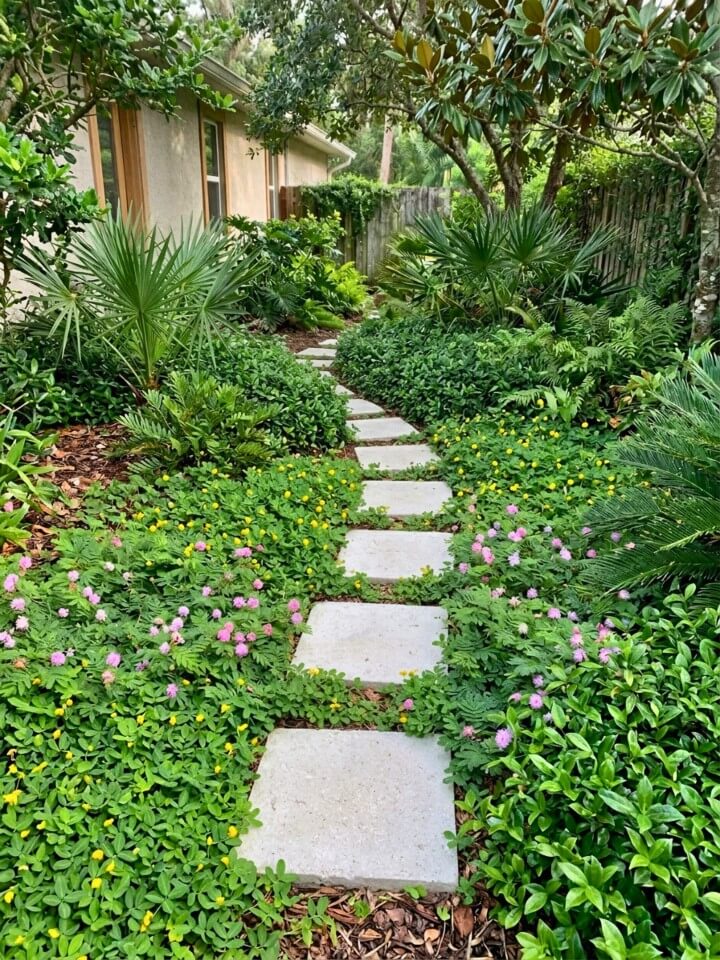
Perennial peanut, sunshine mimosa, and Asiatic jasmine fill bare or patchy areas where grass thins out under trees, along slopes, or beside structures where mowing becomes awkward. These low-growing plants spread gradually to form a dense mat that crowds out weeds without chemical help. Perennial peanut produces small yellow flowers through warm months, adding quiet color at ground level. Sunshine mimosa folds its leaves when touched, which makes it a genuinely interesting addition near walkways. Establish them during the rainy season when soil stays moist and root systems develop faster with less irrigation needed from you.
Speeding Up Coverage: Plant plugs 6 to 8 inches apart rather than wider spacing to get full ground coverage within one growing season. Wider gaps take noticeably longer to fill and leave more room for weeds to establish first.
16. Privacy Hedges Without the Constant Upkeep
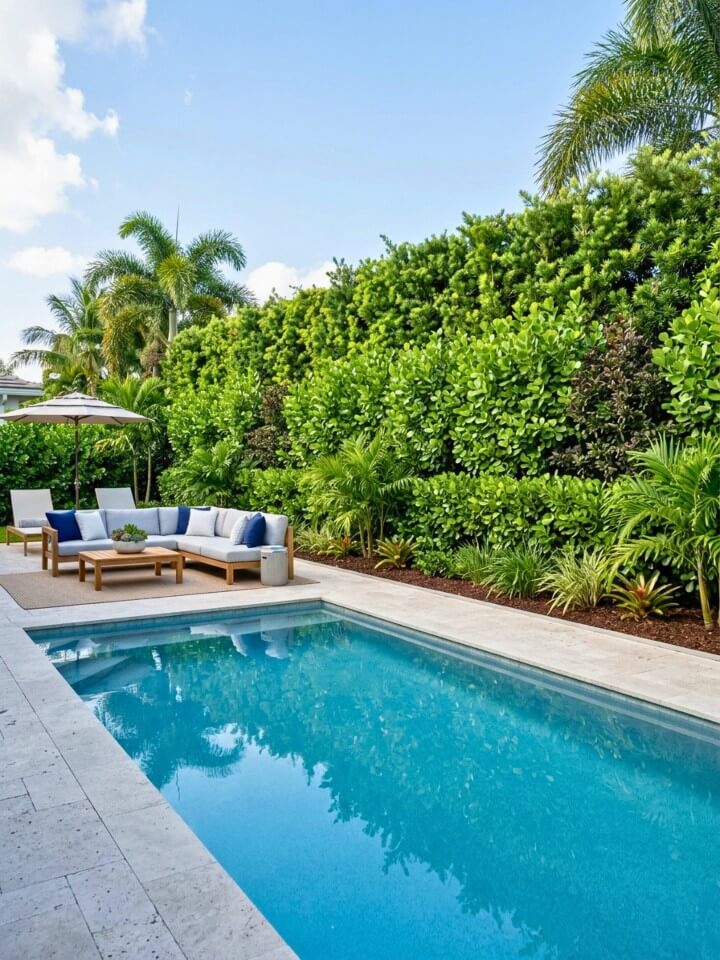
Clusia, cocoplum, podocarpus, and Simpson’s stopper all grow into dense natural screens that block sightlines without demanding weekly attention. Each has a different mature size, so matching the right variety to your available space reduces how often you need to trim. Cocoplum works well in tighter borders and produces small edible fruit that attracts birds. Simpson’s stopper stays relatively narrow and handles dry spells without dropping foliage. For a hedge that reaches 6 feet, plant starts roughly 3 feet apart and allow two full growing seasons before the screen fills in completely along its length.
Getting Uniform Height Early: Trim the tops lightly during the first year even before the hedge reaches your target height. This encourages lateral branching lower down, which prevents bare patches at the base as the plants mature.
17. Patio Extensions That Reduce Lawn Area
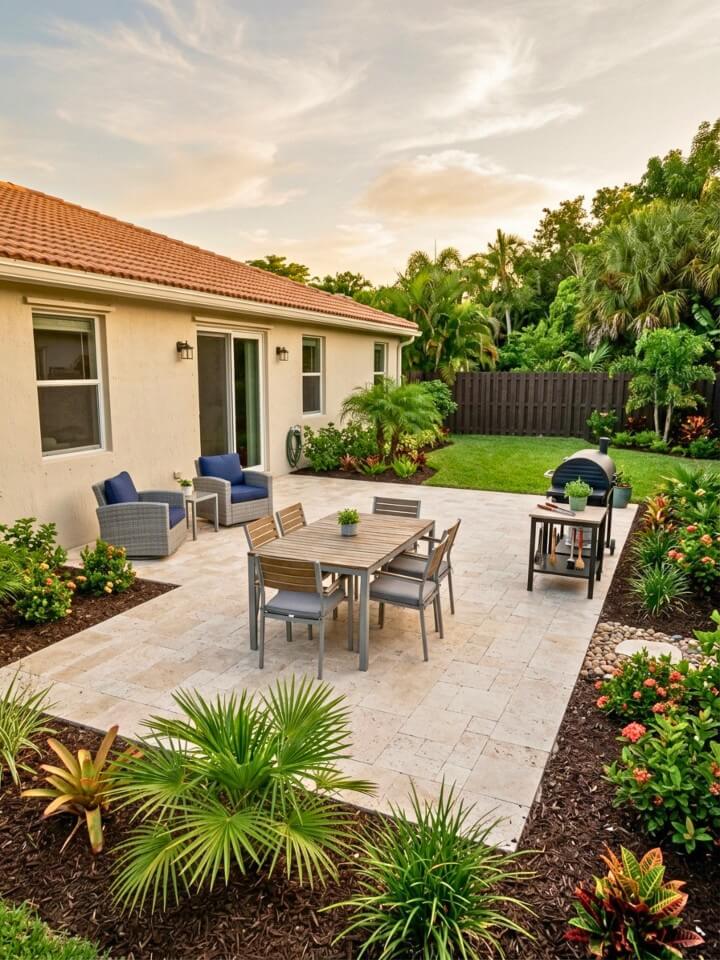
Concrete pavers, natural limestone slabs, and flagstone all handle outdoor conditions without cracking or fading over a few seasons. Extending an existing patio by even 4 to 6 feet creates noticeably more usable space while cutting down the square footage of grass you need to mow and water regularly. Fill joints between pavers with polymeric sand rather than regular sand — it hardens slightly after wetting and resists both weed growth and ant activity beneath the surface. Add a few low-maintenance plants along the outer edge to soften the transition between hardscape and lawn without creating another high-effort garden bed.
Planning Around Drainage: Slope the patio surface very slightly away from your home’s foundation — about a quarter inch per foot is enough to direct rainwater outward and prevent pooling against walls or doorways.
18. Solar Lights Along Paths and Garden Beds
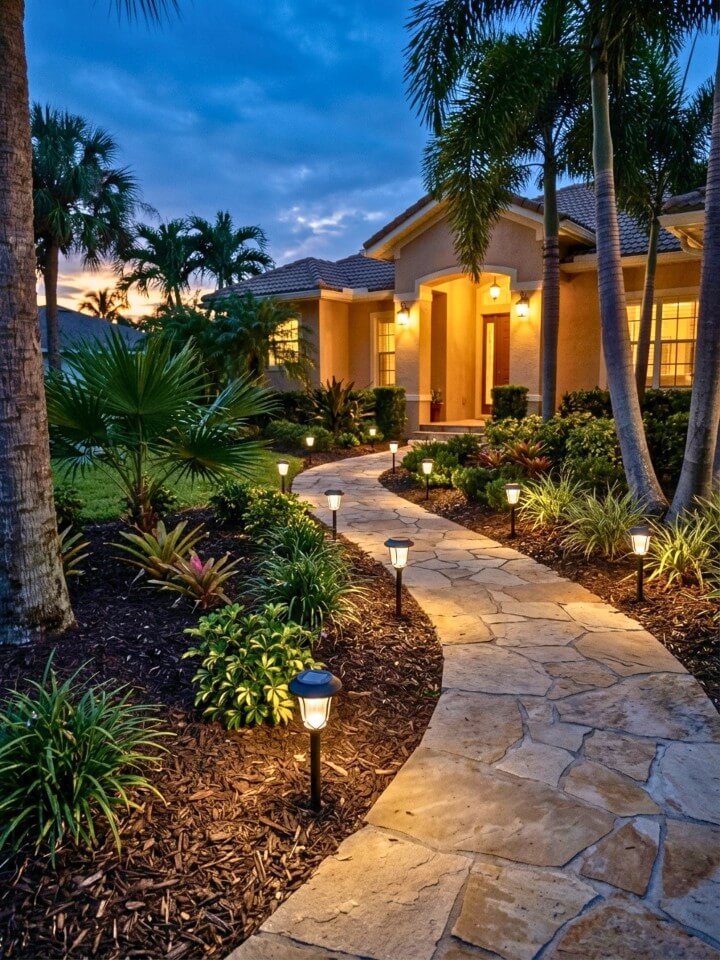
Stake-style solar lights work well along walkways and garden borders because installation takes minutes and requires no wiring or electrical work. Choose fixtures with a separate solar panel rather than an integrated panel on top — they charge more efficiently when angled toward direct sun even if the stake itself sits in a shaded spot. Warm white bulbs at 2700K to 3000K create a soft, even glow that feels welcoming without washing out the surrounding plants or landscape. Space lights roughly 6 to 8 feet apart for consistent coverage without overlapping pools of light that flatten the visual depth of your garden at night.
Extending Battery Life: Clear the solar panel surface every few weeks with a damp cloth. Dust and debris reduce charging efficiency noticeably over time, which shortens how many hours the lights stay on after sunset.
19. Rock Gardens for Sunny, Dry Spots
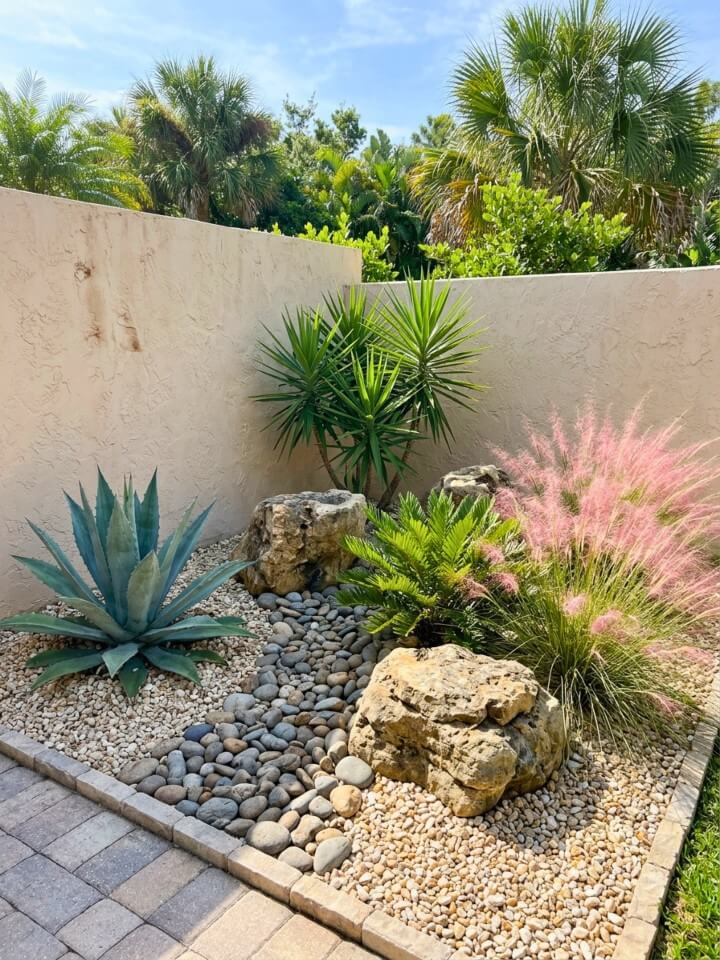
These simple florida landscape ideas can help make your yard attractive, practical, and easy to care for. Agave, yucca, coontie, and muhly grass all sit comfortably among stones without needing the regular moisture that most garden plants require. Start with a base layer of coarse gravel or crushed granite for drainage, then arrange larger boulders first before filling gaps with smaller river rock. Odd numbers of boulders in varying sizes look more natural than evenly matched pairs placed symmetrically. Leave deliberate pockets of open soil between stones for planting, with each pocket roughly 12 inches wide to give root systems enough room to establish properly. A finished rock garden needs almost no intervention once plants settle in after their first season.
Selecting Stone That Lasts: Avoid soft limestone in areas where sprinklers run regularly — it erodes and discolors faster than granite or river rock under consistent moisture exposure. Harder stones hold their appearance for years without treatment.
20. Raised Garden Beds for Better Drainage and Control
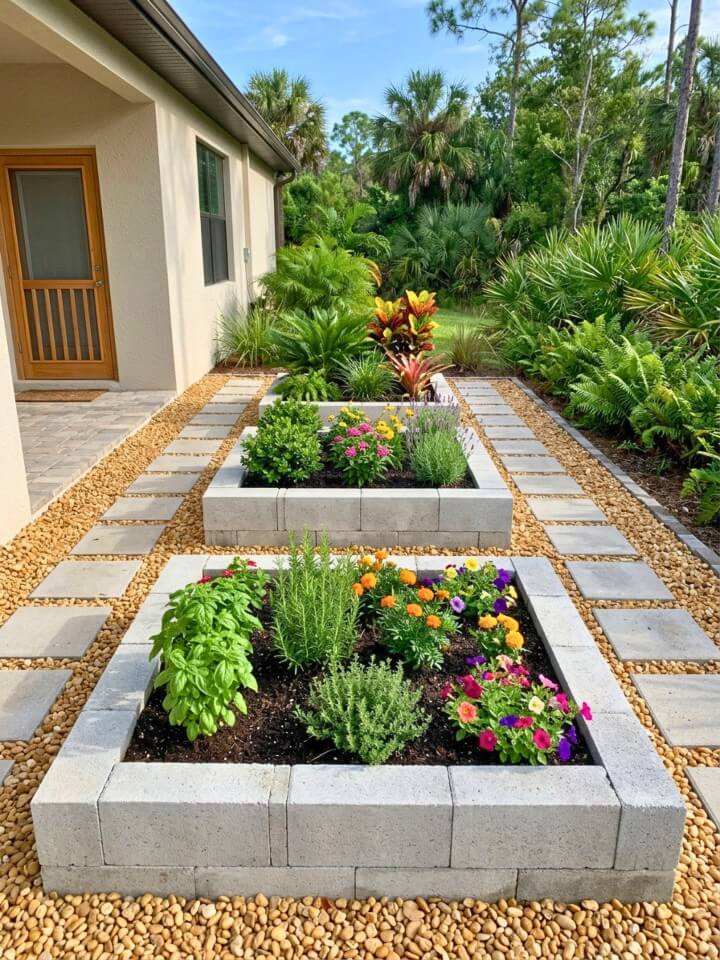
Sandy soil drains too quickly for many plants to absorb enough nutrients before water moves past the root zone. A raised bed filled with quality garden mix — typically a blend of topsoil, compost, and perlite — holds moisture longer and gives roots a more consistent environment to work with. Build walls at least 10 to 12 inches tall for shrubs and perennials, and 6 to 8 inches for herbs and smaller flowering plants. Cedar and composite lumber both resist moisture and insects better than standard pine, which tends to break down within two to three seasons in humid outdoor conditions.
Filling Without Overspending: Use the hugelkultur method for deep beds — fill the bottom third with logs, branches, and woody debris before adding soil on top. This breaks down slowly, improves moisture retention, and reduces how much quality soil mix you need to purchase.
21. No-Mow Alternatives for Tired Lawn Sections
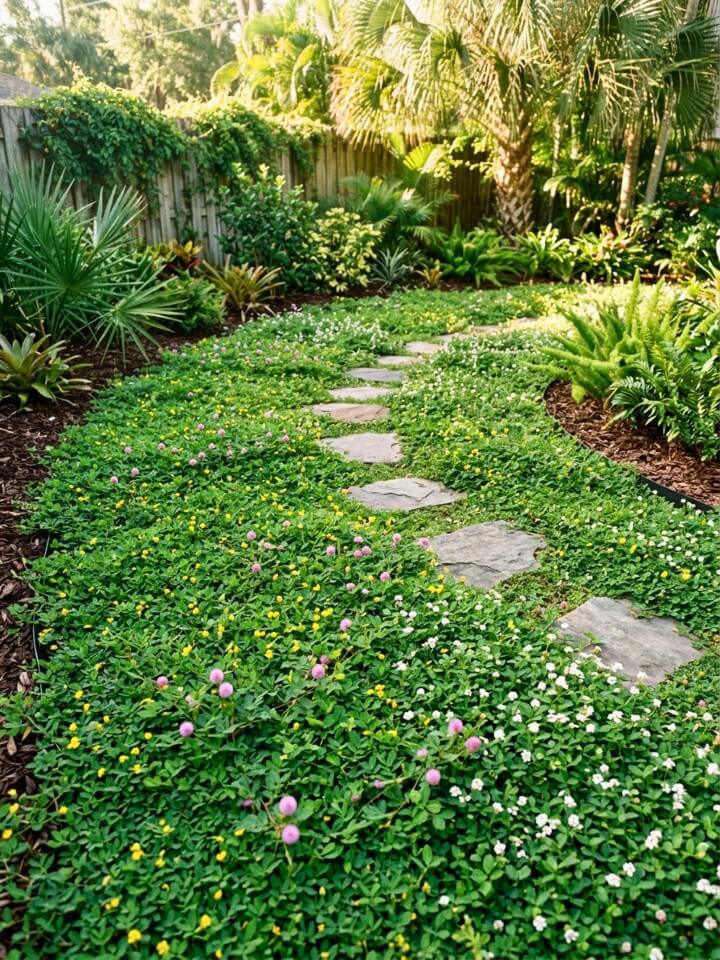
Frogfruit, perennial peanut, and sunshine mimosa stay low enough that mowing becomes unnecessary once they fill in completely. These plants handle foot traffic better than most ground covers, making them practical for open areas rather than just decorative borders. Replace struggling lawn sections gradually rather than all at once — remove a patch, install ground cover, and let it establish before moving to the next area. This approach spreads cost and effort across several seasons while giving you a chance to see how each variety performs in your specific soil and light conditions before committing to a larger conversion.
Managing the Transition Period: Expect some bare spots and uneven growth during the first few months. Hand-pull weeds during this window rather than using herbicide, which can set back young ground cover plants significantly.
22. Shell Mulch for a Coastal, Bright Finish
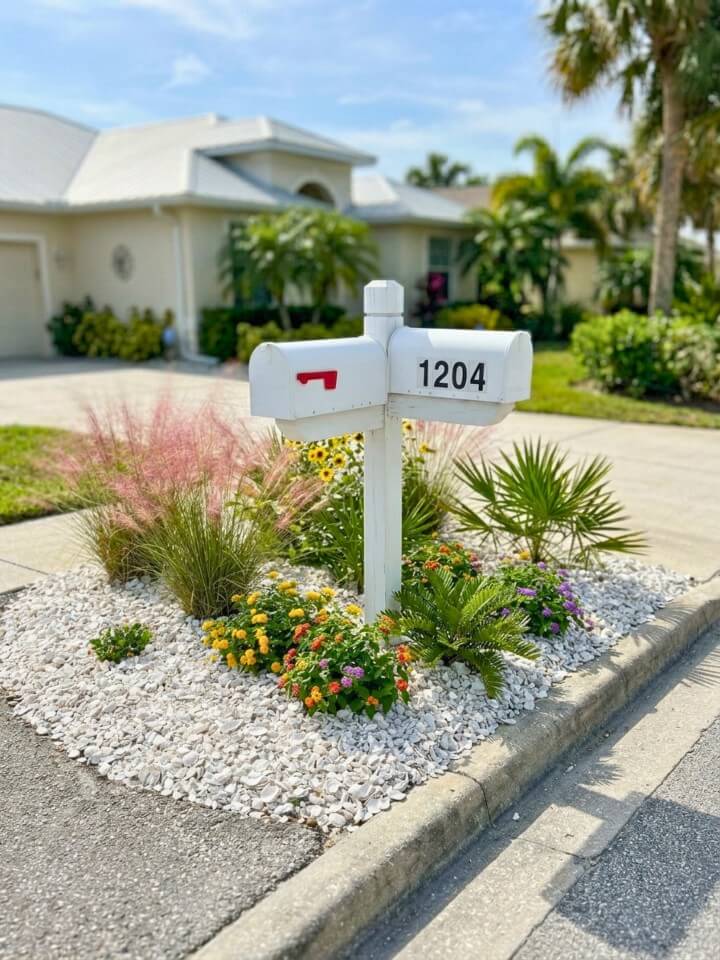
Crushed shell mulch reflects more light than dark organic mulch, which keeps soil temperatures slightly cooler during the hottest months and reduces moisture loss between watering sessions. It works particularly well around palms, tropical shrubs, and native grasses where a lighter, beige-toned ground surface complements the planting style. Apply it at a 2-inch depth around plant bases, keeping shells a few inches back from stems to allow airflow at soil level. Shell mulch breaks down more slowly than wood-based options, so it holds its appearance longer before needing a refresh. Avoid using it in areas where soil pH is already high, as shells gradually raise alkalinity over time.
Where It Works Best: Shell mulch suits open, sunny garden beds better than shaded areas. In shaded spots, the reflective surface can look stark and draws attention to bare ground rather than softening it.
23. Statement Planters as Outdoor Focal Points
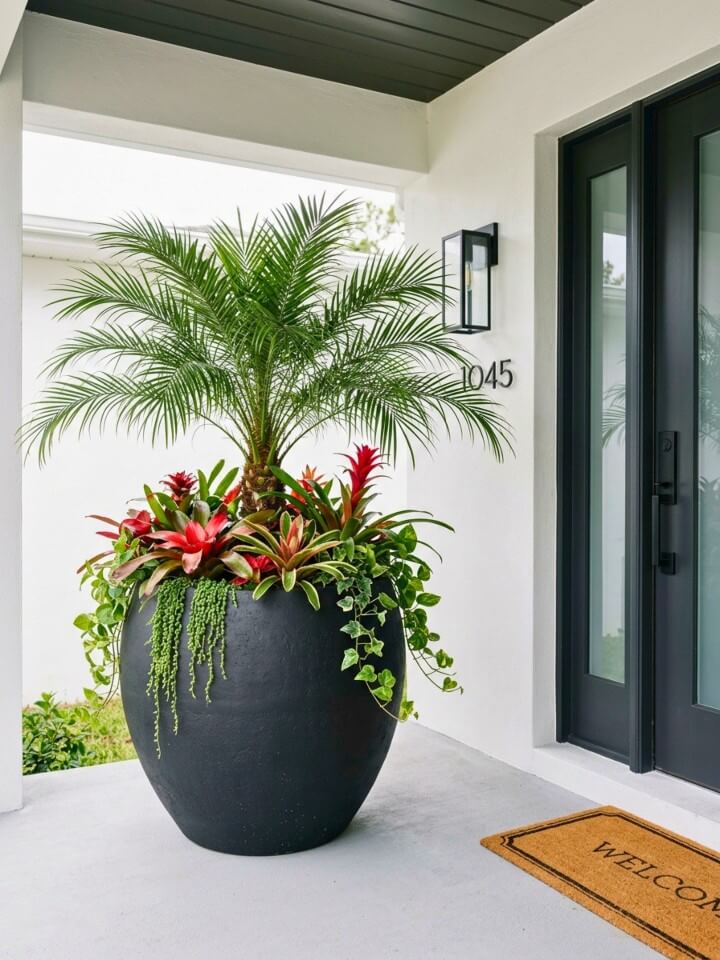
A single large planter positioned near a front entry, patio corner, or pool deck edge draws the eye and anchors the surrounding space without requiring any ground preparation or digging. Concrete and resin planters handle outdoor temperature changes better than ceramic in most conditions — ceramic can crack during cold snaps if water trapped inside the walls freezes overnight. Fill them with a mix of heights: one taller plant like a dwarf palm or snake plant at the center, mid-height crotons or bromeliads around it, and a trailing plant such as sweet potato vine along the outer edge to soften the rim visually. Rotate the planter quarterly so all sides receive even sun exposure and growth stays balanced.
Preventing Root-Bound Problems: Check the drainage hole every few months. Roots can block it from the inside as plants grow, causing water to pool at the base and rot the lower root system before any visible symptoms appear above soil level.
24. Succulent Beds for Modern, Water-Wise Yards
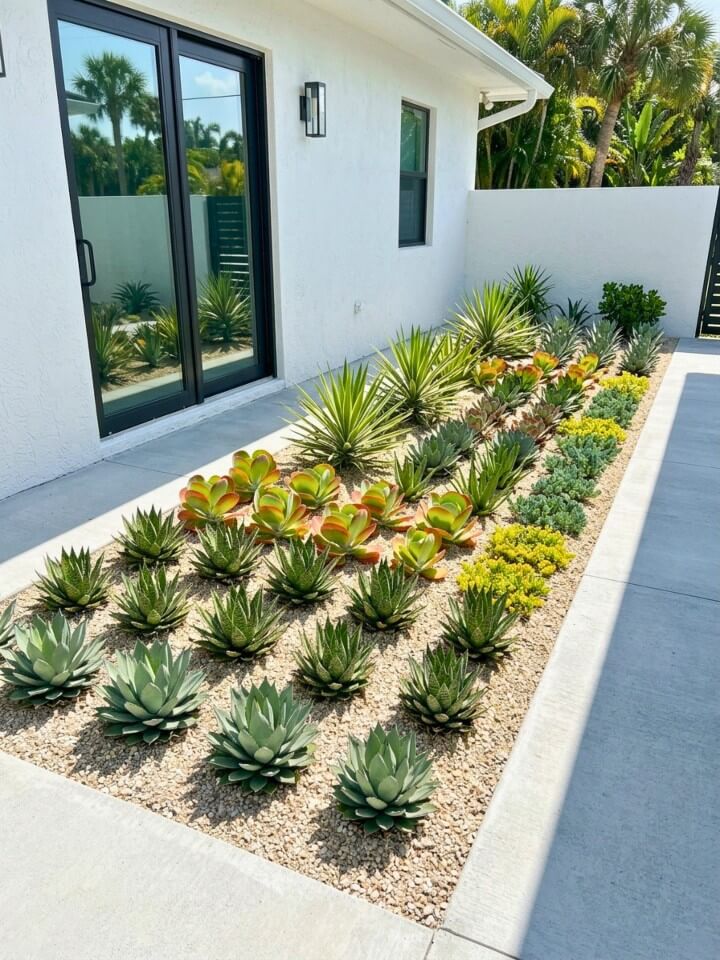
Agave, aloe, kalanchoe, and sedum handle extended dry periods without any decline in appearance, making them practical for sunny beds that receive little irrigation. Mix varieties with contrasting leaf shapes — broad rosettes beside narrow upright forms — to create visual interest without relying on flowers alone. Amend sandy soil with coarse perlite before planting to improve drainage further, as standing moisture around succulent roots causes rot faster than drought ever would. A top dressing of small gravel or crushed granite around each plant discourages soil splash during rain, keeps the bed looking tidy, and reduces weed germination between established plants.
Avoiding the Most Common Mistake: Overwatering kills succulents far more often than underwatering. During rainy months, most established beds need no supplemental irrigation at all — natural rainfall is typically sufficient for healthy growth.
25. Dry Creek Beds for Drainage and Visual Interest
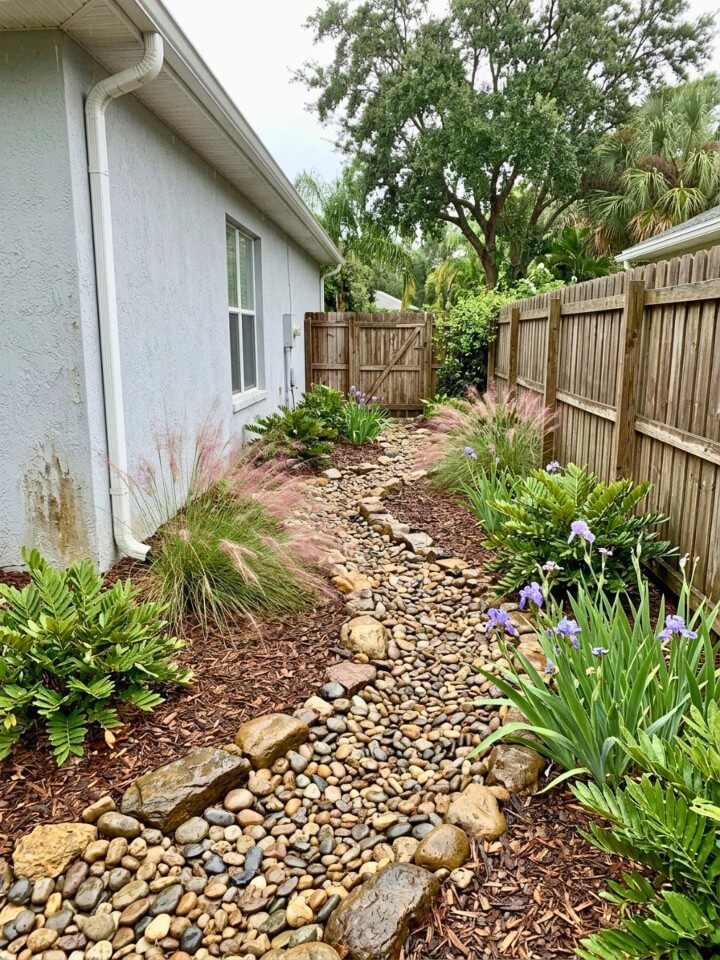
A dry creek bed moves rainwater away from low spots, foundations, and compacted areas by giving it a defined path to follow rather than pooling where it lands. Dig a shallow channel roughly 6 to 8 inches deep and 12 to 18 inches wide, following the natural slope of your yard. Line the base with landscape fabric before adding a layer of smaller pea gravel, then place larger river rocks along the sides to define the edges and hold everything in position. Native plants like muhly grass, blue-eyed grass, or Louisiana iris planted beside the channel soften its edges and make the feature look like a natural element rather than a drainage solution.
Sizing the Channel Correctly: A channel that is too narrow fills and overflows during heavy downpours, which defeats its purpose entirely. For most residential yards, 18 inches wide handles typical storm runoff without needing to be any deeper than 8 inches.
26. Shade Sails Over Patios and Seating Areas
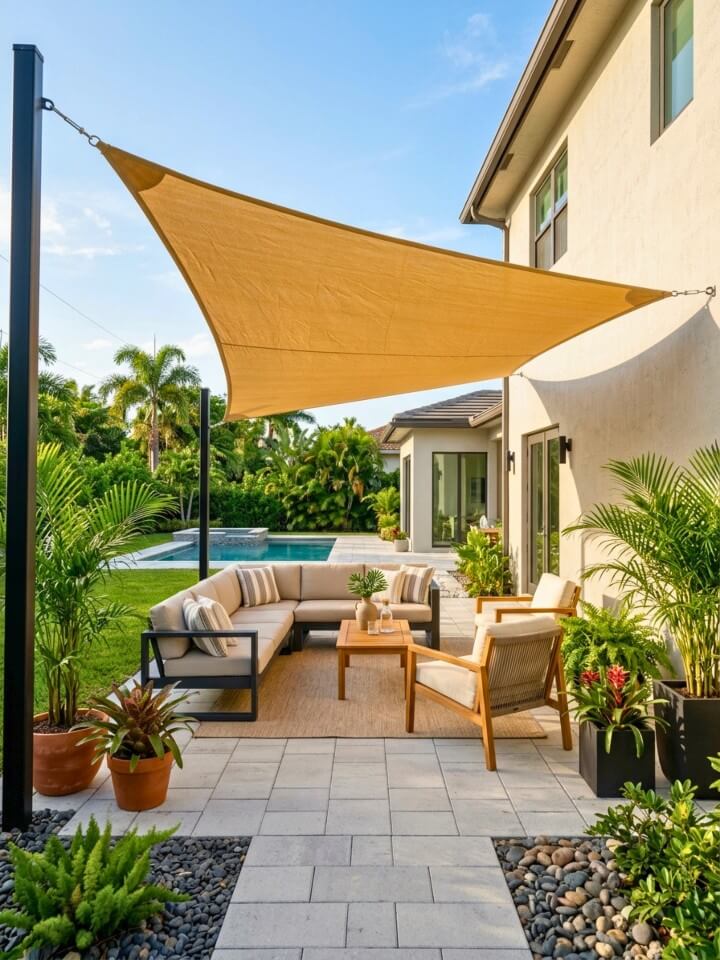
A single shade sail reduces surface temperature on a patio deck by up to 30 degrees during peak afternoon hours, which makes outdoor seating genuinely comfortable rather than something you tolerate briefly. Choose HDPE fabric rated for UV resistance — cheaper polyester alternatives fade, stretch, and lose their tension within one season of direct sun exposure. Mount attachment points into masonry or structural posts rather than into fence boards, which lack the holding strength needed when wind loads the sail during storms. Leave a slight diagonal slope across the sail so rainwater runs off rather than pooling at the center, which causes permanent fabric sag over time.
Choosing the Right Size: Measure the area you want shaded at 2 pm when sun angle is highest. A sail sized for that coverage provides meaningful relief throughout the afternoon rather than only partial shade during the hottest window of the day.
27. A Simple Front Yard Plan With Lasting Appeal
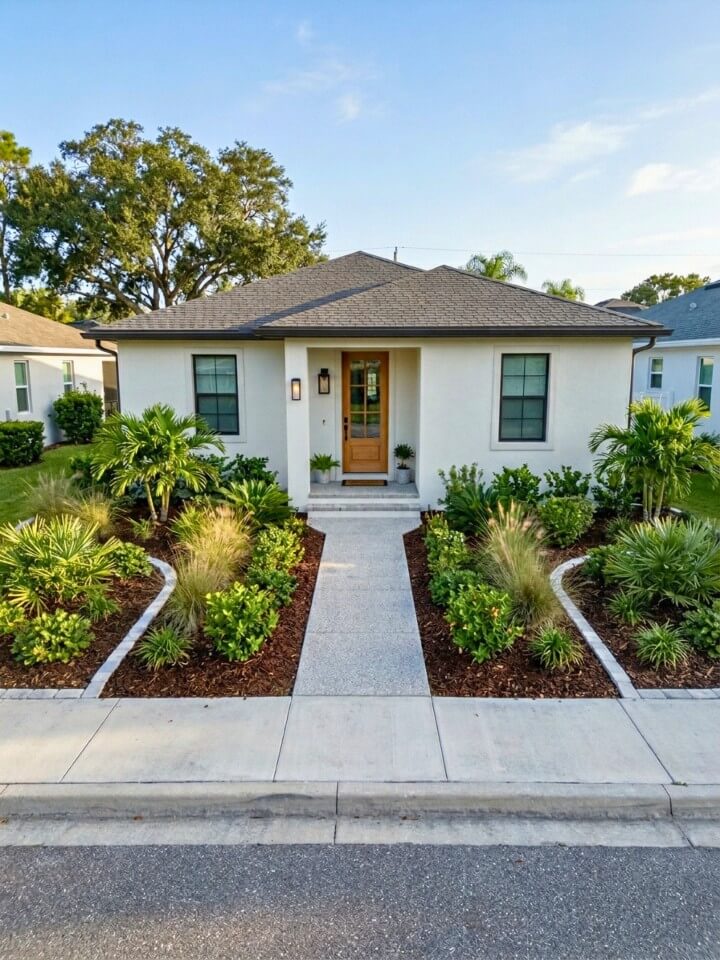
Start with one or two native shrubs anchoring each side of the walkway, then fill the space between with a consistent mulch or gravel ground cover that ties the bed together visually. Add a single ornamental grass or small palm for height without crowding the entry. Keep the plant palette to three or four species total — restraint here makes the design look considered rather than assembled gradually over time. Edge the beds cleanly along the lawn line and maintain that edge at the start of each season. A yard that uses fewer species, maintained well, reads as more intentional and polished than a busier design that gets away from you through the warmer months.
Starting Without Overwhelming Yourself: Tackle one section at a time rather than replanting the entire front yard at once. Completing the walkway border first gives you a visible improvement quickly and helps you refine the approach before committing to the full plan.
FAQs About Low-Maintenance Florida Landscaping
Still have questions? These five answers cover what most Florida homeowners overlook before transforming their yard.
Can I Landscape a Florida Yard on A Tight Budget?
Yes. Start with native plants like coontie or muhly grass — they’re affordable, widely available, and need minimal care after planting. Repurpose old bricks for edging, use pine bark mulch, and expand gradually each season rather than overhauling everything at once.
What Is the Best Time of Year to Plant in Florida?
Fall and early spring are ideal. Cooler temperatures reduce transplant stress, and Florida’s rainy season helps new root systems establish without heavy irrigation. Avoid planting during peak summer heat, as young plants struggle to settle in without constant watering support.
How Do I Stop Weeds From Taking Over My Florida Garden Beds?
Lay landscape fabric before adding mulch or gravel, maintain a consistent 3-inch mulch depth, and recut bed edges every season. Hand-pull weeds early before they seed. Dense ground covers like perennial peanut also naturally crowd out weeds once fully established.
Are There Pet-Safe Low-Maintenance Plants for Florida Yards?
Yes. Muhly grass, coontie, and pentas are generally considered pet-safe and perform well in Florida’s climate. Always verify with ASPCA’s plant database before planting. Avoid sago palm and lantana, both common in Florida landscapes but toxic to dogs and cats.
How Do I Maintain a Low-Maintenance Florida Yard During Hurricane Season?
Trim shrubs and palms before storm season to reduce wind resistance. Secure or store container plants when storms approach. Choose flexible, deep-rooted natives that bend without snapping. Remove dead branches proactively, as these become dangerous projectiles during high winds.
Conclusion:
Not every yard needs a complete overhaul to look and function better. The best low maintenance Florida landscaping ideas work because they respect the climate, suit the soil, and leave you with less to manage each season — not more.
Pick two or three ideas from this list that address your most frustrating problem areas first. A gravel border here, a native shrub grouping there, one well-placed statement planter — small decisions compound into a yard that genuinely works for you.
The goal was never a perfect yard. It was a yard that stays manageable, looks intentional, and holds up through every season without consuming your weekends.