25 Vegetable Garden Layout Ideas To Grow More in Less Space
Walk down any suburban street in early July, and you’ll spot them — the yards that grew something this year. A tomato cage peeking over a fence. Basil crowding a front porch pot. Kale where petunias used to be. There’s a quiet movement happening, and it’s less about saving money at the grocery store than about the small thrill of eating something you actually grew. If your yard has been sitting there unused, these 25 alluring vegetable garden layout ideas will help you figure out what to build and where. Some work on a shady balcony. Others transform a sloped backyard, nobody thought was usable.
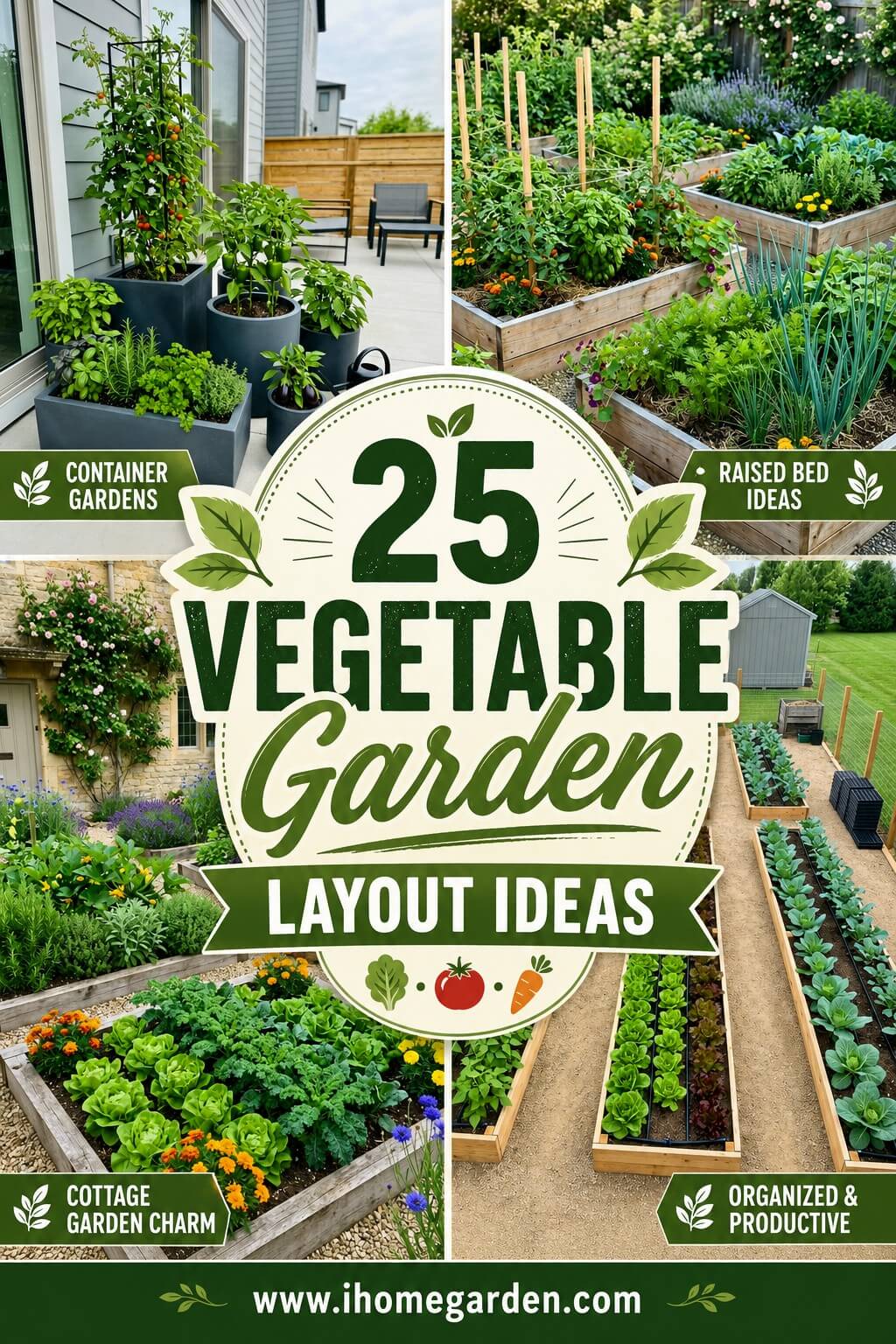
A few take one afternoon and forty dollars; others become the kind of project you tinker with for years. Big yard, small patio, rocky soil, no soil at all — there’s a design here that fits what you’re working with and what you actually want to grow.
1. Classic Row Planting Layout
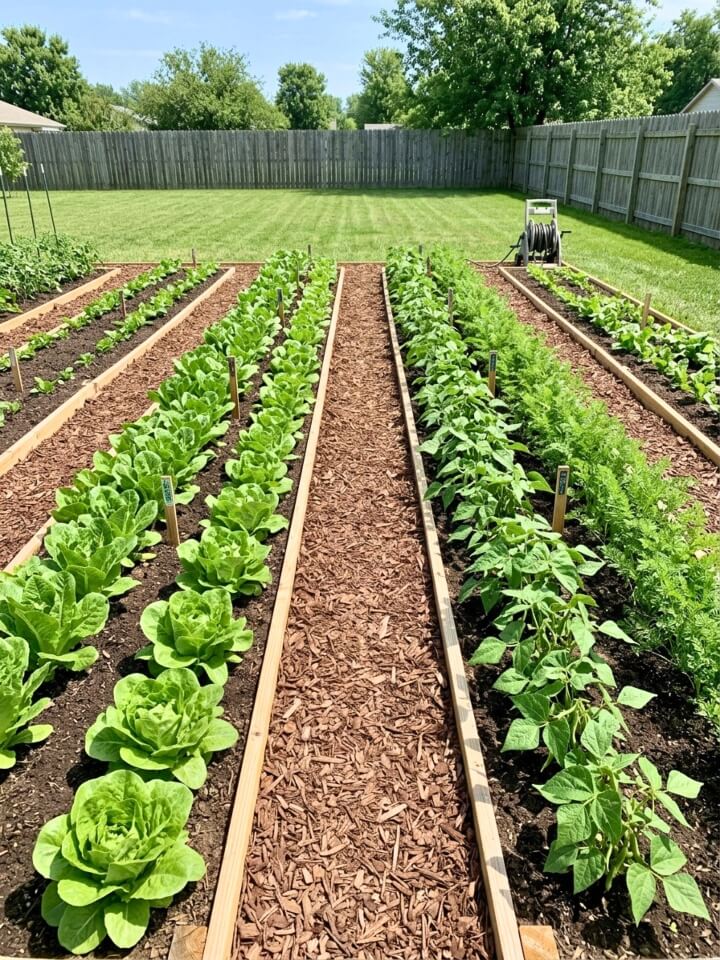
Ask any grandparent who fed a family from the backyard, and they’ll describe straight rows. There’s a reason this method refuses to go out of style. The rules are refreshingly few: pick a sunny patch, mark parallel lines 24 to 36 inches apart, and plant. What makes rows quietly brilliant is failure tolerance. Lose a row of lettuce to slugs? The beans two feet over don’t care. Carrots, beets, potatoes, and sweet corn practically demand this setup because their roots want room to travel downward without hitting a neighbor. Total investment? A rake, a hoe, some seed packets, and roughly $40. That’s it.
2. Raised Bed Vegetable Design
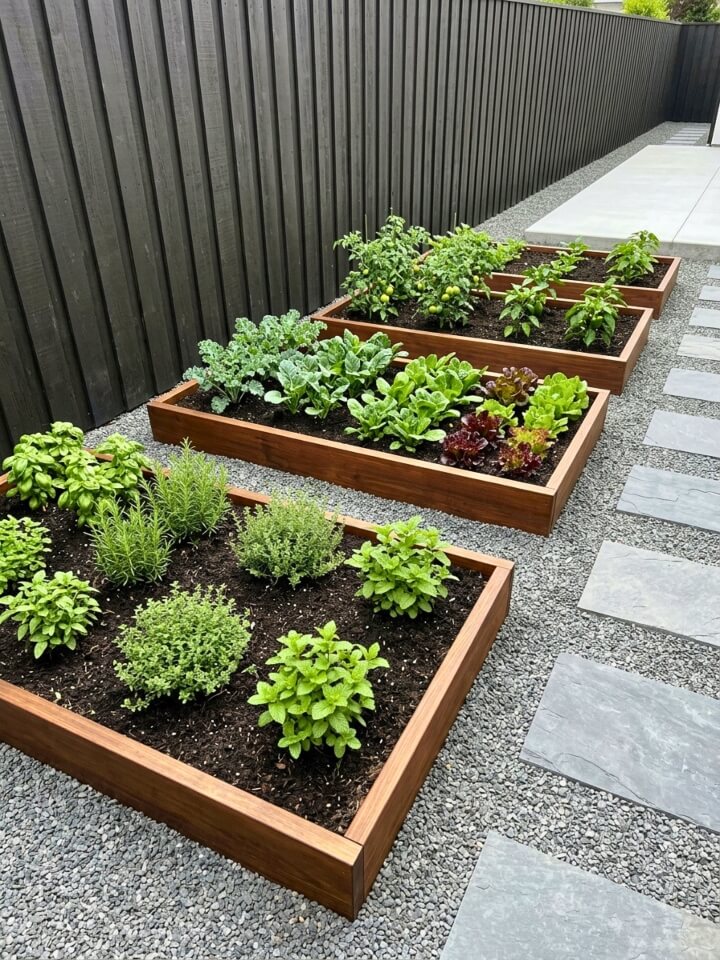
Your backyard soil is clay, rocks, or compacted lifeless dirt.
Stop fighting it. Build on top.
A wooden frame — cedar if the budget allows, pine if it doesn’t — measuring 4 feet across and 8 feet long is the gold standard. That 4-foot width isn’t arbitrary; it’s the maximum distance most adults can reach comfortably from either side, meaning nobody ever compacts the soil by stepping in.
Fill it with roughly a cubic yard of compost mixed with topsoil. Expect $80 to $200 in lumber, plus another $60 to $120 for soil delivery. First harvest usually arrives faster than in-ground beds because the elevated soil warms sooner in spring.
3. Square Foot Planting Method
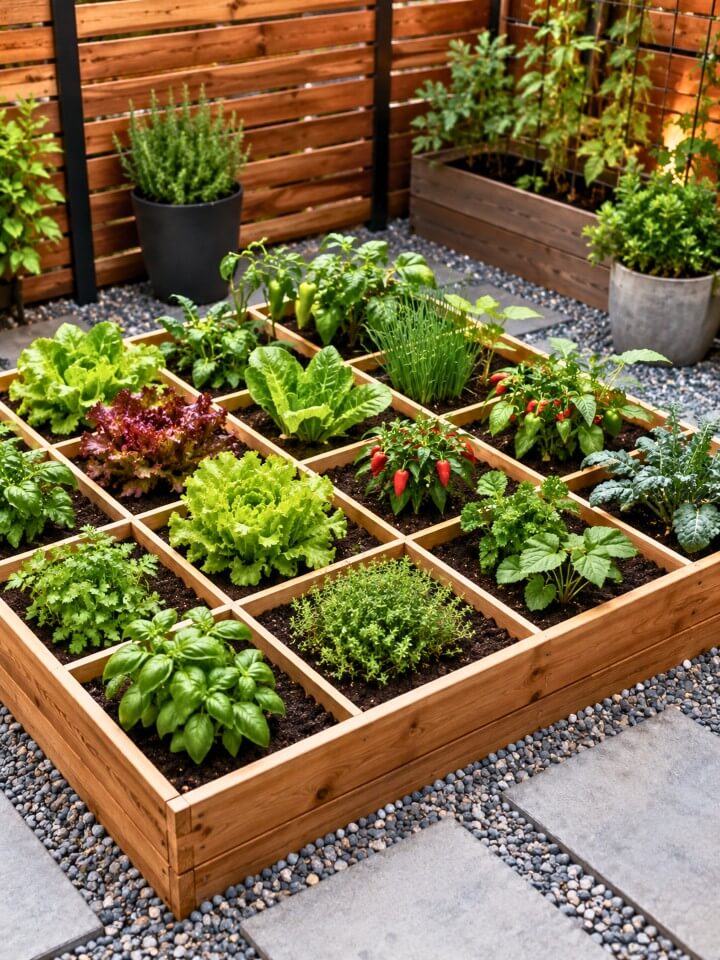
Design a thriving vegetable garden layout that maximizes sunlight, space, and harvest yield. Mel Bartholomew wrote a book in 1981 that changed backyard gardening forever, and his idea was almost embarrassingly simple: divide a raised bed into one-foot squares using string, wood strips, or even painted lines.
Each Square Becomes a Self-Contained Mini-Garden:
- 1 tomato per square
- 4 lettuces per square
- 9 bush beans per square
- 16 radishes per square
The visible grid does something psychological — it stops beginners from overcrowding, which is the single most common reason first-time gardens flop. A 4×4 setup gives sixteen squares, feeds a couple through summer, and costs between $100 and $180 all-in.
4. Water-Saving Keyhole Garden
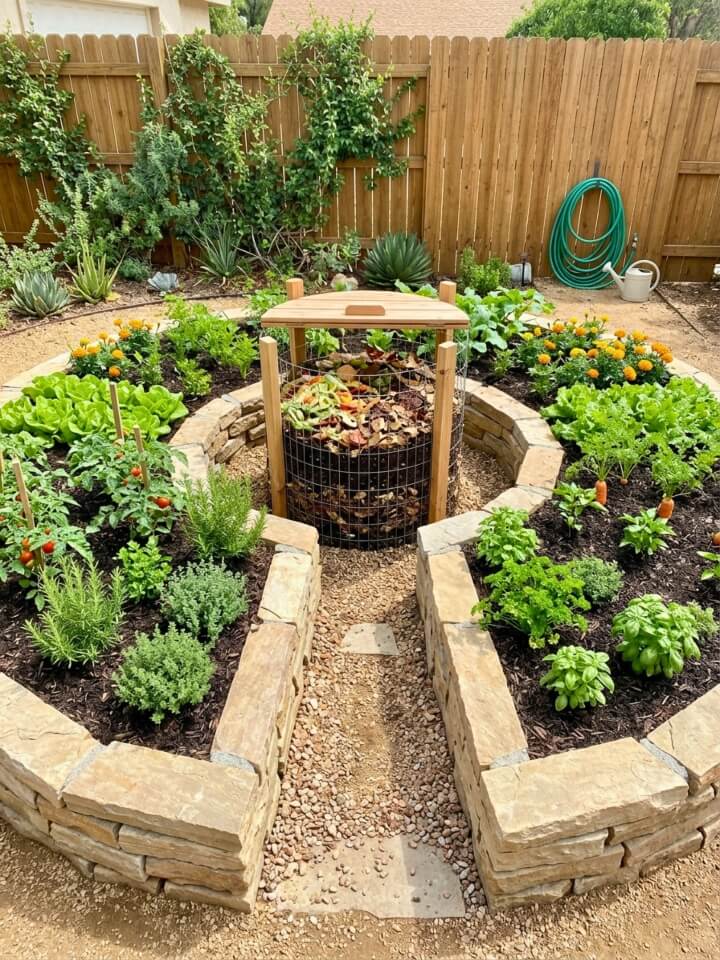
This design came out of drought-stricken regions of Africa in the 1990s, and it solved a brutal problem: how to grow food when water is scarce and soil is exhausted. The answer was elegant.
Build a circular stone wall, roughly 6 feet across and waist-high. Cut a narrow path into one side leading to the center. At that center, install a cylindrical basket made of wire mesh. Every kitchen scrap, every bucket of graywater, every handful of compost goes into that basket. Nutrients and moisture radiate outward through the soil like ripples in a pond.
The payoff: water use drops by nearly half, and you never bend down once. Homeowners in Arizona, Nevada, and West Texas particularly love this design.
5. Potager Style Kitchen Plot
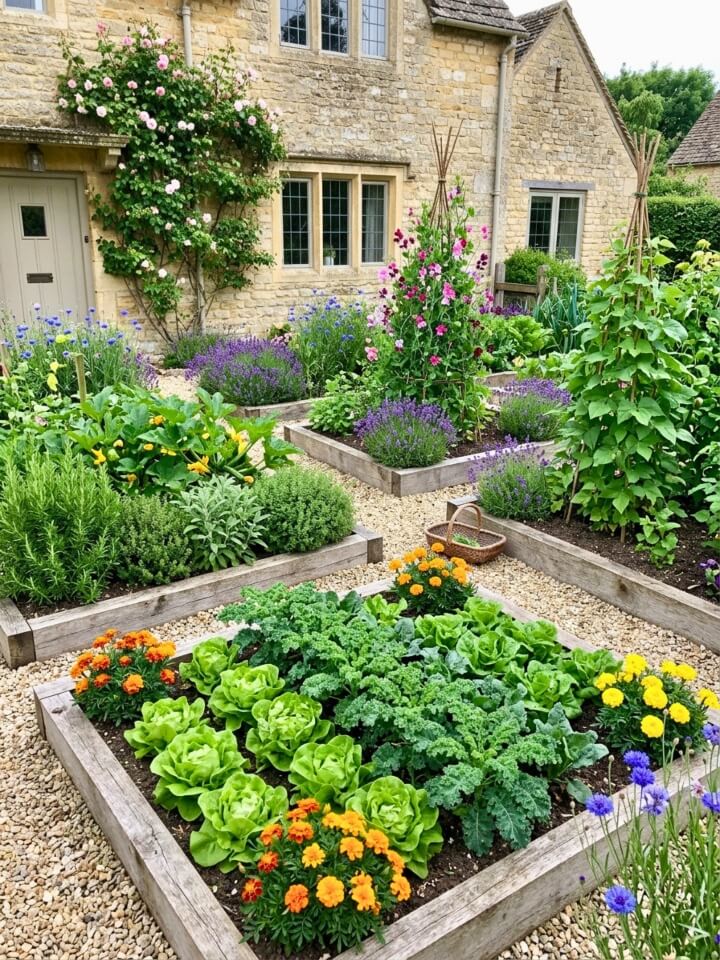
Imagine stepping outside barefoot on a Sunday morning with a coffee in one hand and kitchen scissors in the other. You clip basil for eggs, snip chives for the potatoes, grab a handful of cherry tomatoes still warm from the sun, and pluck a nasturtium blossom because it looks pretty on the plate. That’s a potager.
The French figured out centuries ago that vegetables don’t have to hide behind the garage. Rainbow chard is more striking than most ornamentals. Purple basil rivals any coleus. Curly kale reads as sculpture in the right light.
Keep this garden within 30 feet of your kitchen door — proximity is the entire point. Interplant marigolds and nasturtiums to repel aphids and cabbage moths without spraying anything. Start with 100 to 200 square feet; you can always expand once the addiction sets in.
For cooks who want the most-used ingredients closest to the door, a dedicated herb garden layout makes the potager even more useful.
6. Space-Saving Vertical Growing
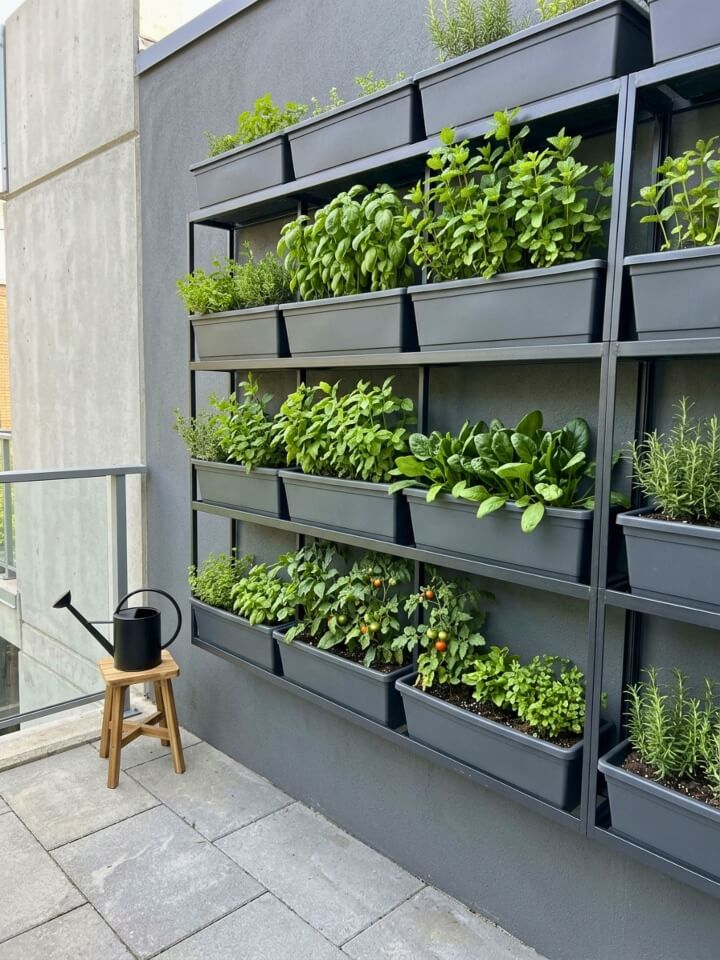
Look up. That blank fence, that bare wall behind your grill, that sun-baked side of the garage — every one of those surfaces is wasted real estate. Vertical gardening reclaims it.
The engineering is straightforward. Wall-mounted pockets, stacked planters, hanging shoe organizers filled with soil, repurposed pallets standing upright — anything that holds dirt and drains properly works. What matters is orientation: south and west-facing walls capture the most sunlight and radiate stored heat back to the plants after sunset, extending your growing season by weeks.
Strawberries dangle beautifully from upper pockets. Lettuce, spinach, and arugula stay clean because they never touch the ground. Cherry tomatoes and pole beans climb happily given a trellis. Skip anything heavy like watermelons or pumpkins — physics wins that argument every time.
7. Backyard Container Setup
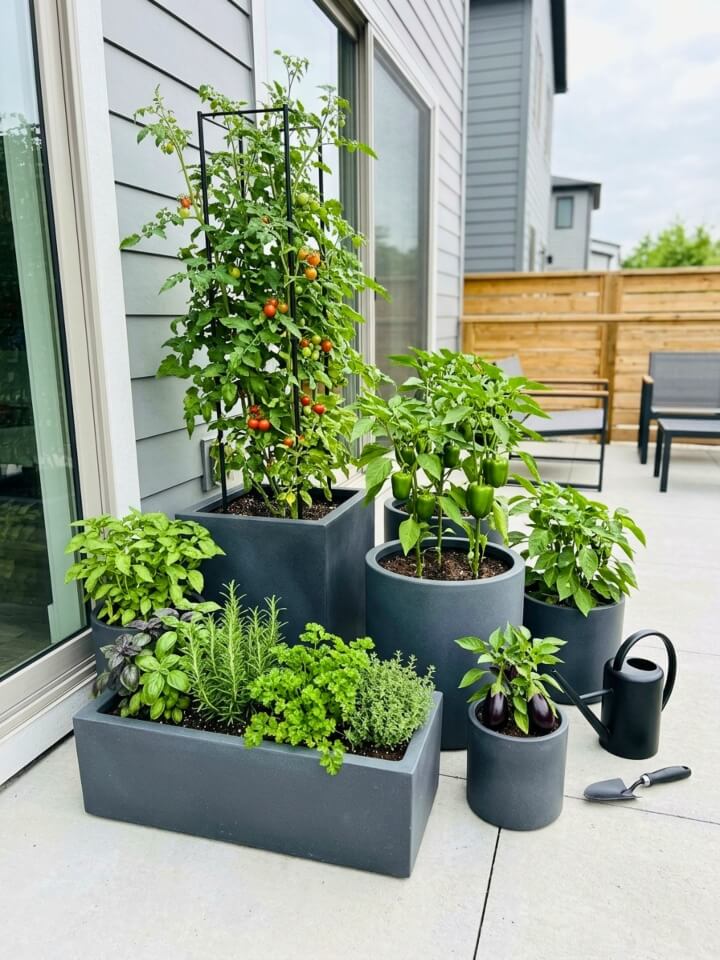
Explore fresh vegetable garden ideas to transform your outdoor space into a productive oasis. Renting? Moving next year? Working with a concrete patio and zero soil? Containers were invented for you.
The freedom here is total. Chase the sunlight throughout the day by wheeling pots around. Bring tender herbs indoors before the first frost. Rearrange the whole setup on a Saturday afternoon because you felt like it. A container garden can also double as part of your small patio landscaping when you mix edible plants with flowers, textured foliage, and compact shrubs.
A Few Rules Earn Their Keep:
- Size matters more than style. Tomatoes need at least 5 gallons per plant. Peppers want 3 gallons minimum. Herbs are content with 1-gallon pots.
- Drainage is non-negotiable. Every container needs holes at the bottom. Every single one.
- Terra cotta breathes but dries fast. Plastic and glazed ceramic hold moisture longer.
Water more often than you think — sometimes twice daily in July heat, since exposed pot walls dry out faster than ground soil ever could.
8. Companion Planting Layout
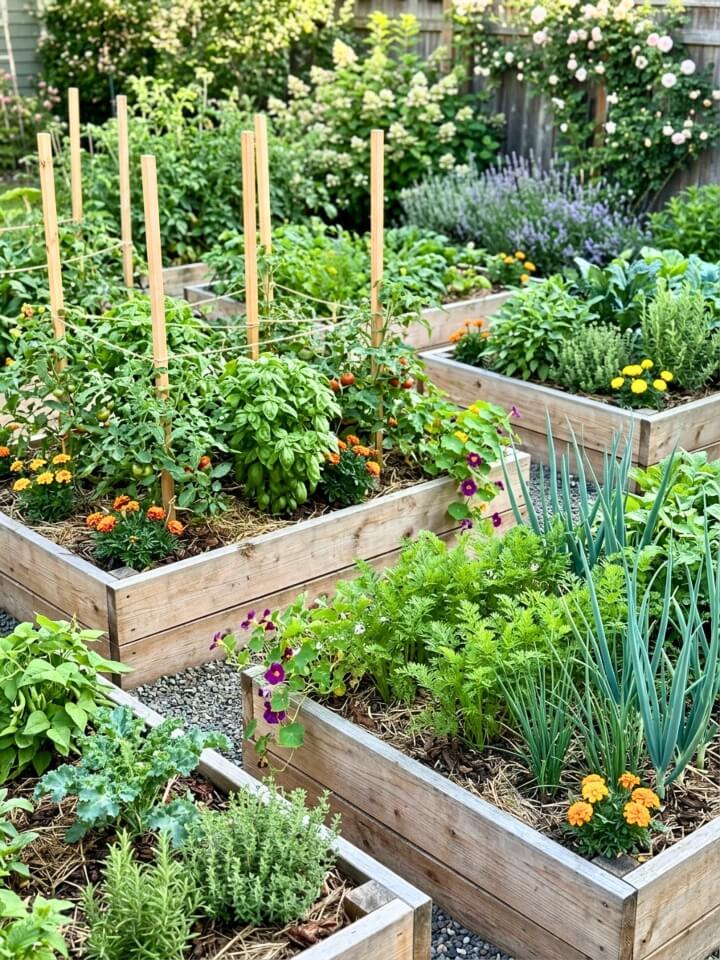
Some plants are friends. Some are enemies. Ignoring this fact is like seating feuding relatives next to each other at Thanksgiving dinner and hoping for the best.
Here’s what centuries of gardeners have figured out through trial, error, and stubborn observation:
| Grow together | Why it works |
|---|---|
| Tomatoes + basil | Basil repels tomato hornworms and flavors nearby fruit |
| Carrots + onions | Onion smell confuses the carrot fly |
| Corn + beans + squash | The classic “Three Sisters” — corn supports beans, beans fix nitrogen, squash shades the soil |
| Cucumbers + nasturtiums | Nasturtiums lure aphids away as sacrificial decoys |
And a few pairings to permanently avoid: beans hate onions, tomatoes despise brassicas, and fennel gets along with almost nothing. Plan the layout on paper before planting — a companion garden that’s been thought through outperforms a random one by wide margins.
9. Circular Mandala Garden Bed Layout
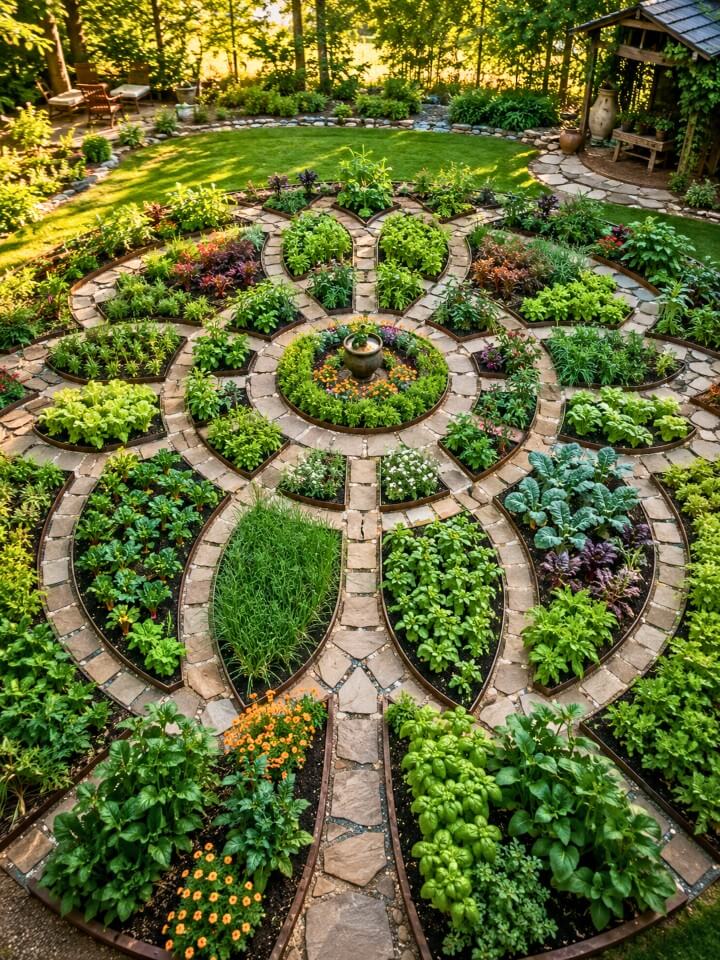
Draw a circle. Draw another circle inside it. Add paths radiating from the center like spokes on a wheel. Congratulations, you’ve sketched a mandala garden.
This layout treats the vegetable patch as living artwork. Curved beds replace the rigid geometry of squares and rectangles. Every path leads inward, meaning no plant is ever more than an arm’s reach away. Symmetry does something quietly satisfying to the human brain — walking through one of these gardens feels closer to meditation than chores.
Diameter typically runs 15 to 25 feet, so this design needs open backyard space to breathe. Anchor the center with something meaningful: a small tree, a bird bath, a compost bin, a seating stone. Plant in repeating circular bands, working outward from tallest to shortest, so nothing shades its neighbor unfairly.
10. Herb Spiral
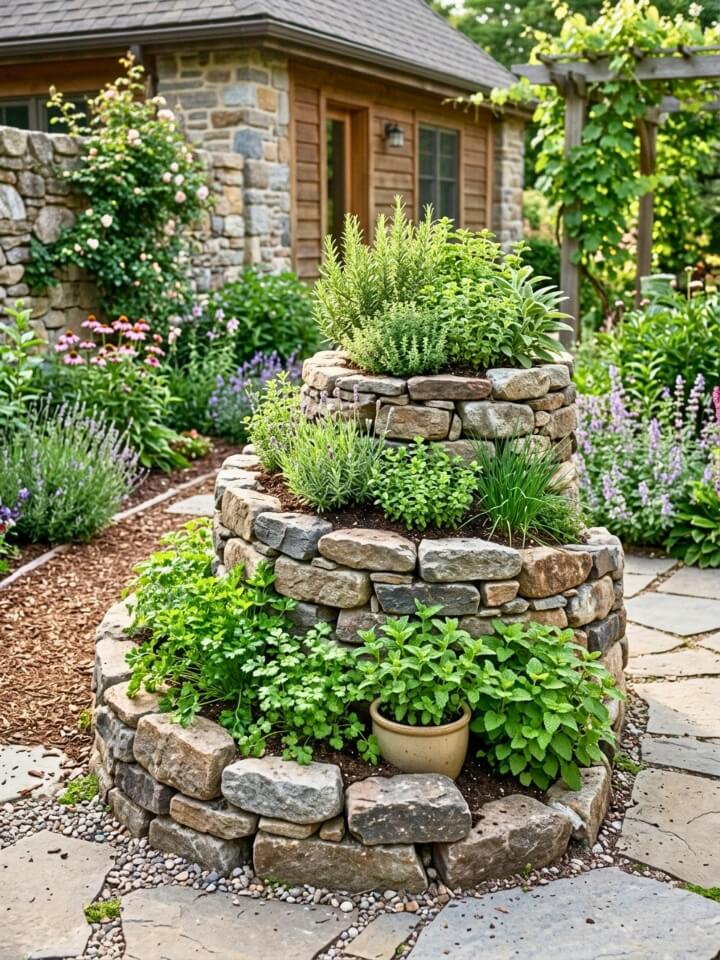
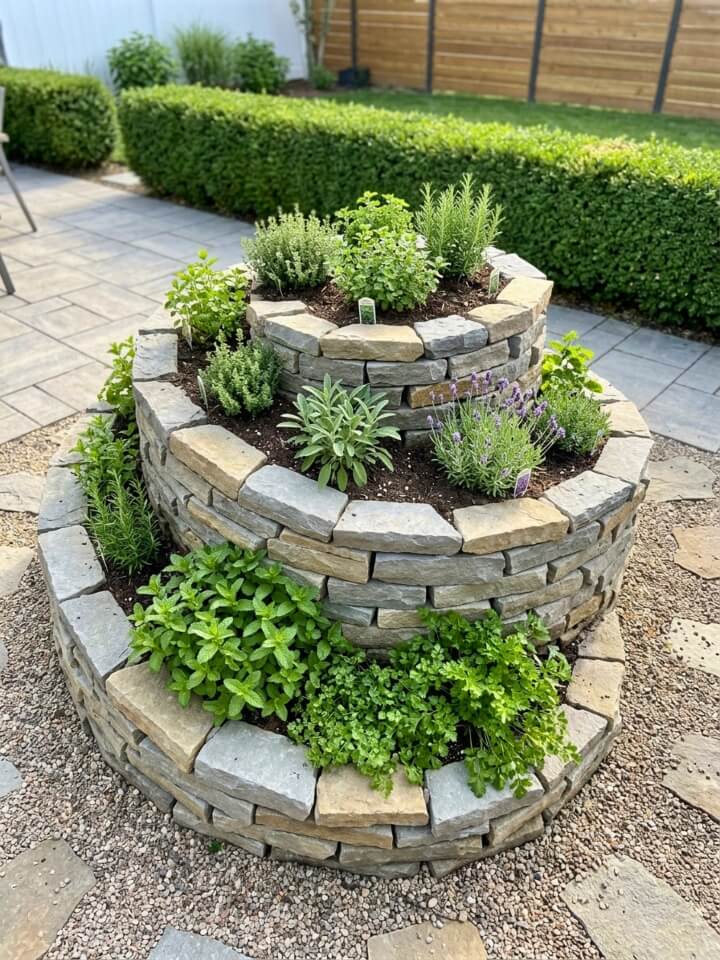
A herb spiral is a three-dimensional trick that creates four microclimates inside a footprint smaller than most bathrooms.
Build a stone or brick spiral rising 3 feet at its peak and coiling downward to ground level, roughly 6 feet in diameter. As the spiral descends, growing conditions shift:
- Top of the spiral: Dry, sunny, well-drained. Rosemary, thyme, oregano, sage.
- Middle sunny side: Moderate moisture. Basil, cilantro, chives.
- Middle shady side: Cooler, damper. Parsley, chervil, tarragon.
- Base: Wet feet, partial shade. Mint (contain it — mint spreads like gossip), watercress.
One structure. Every culinary herb your kitchen actually uses. Positioned near the back door for midnight recipe rescues.
Build cost runs $80 to $250 depending on whether you scavenge stones or buy them.
11. Hügelkultur Bed
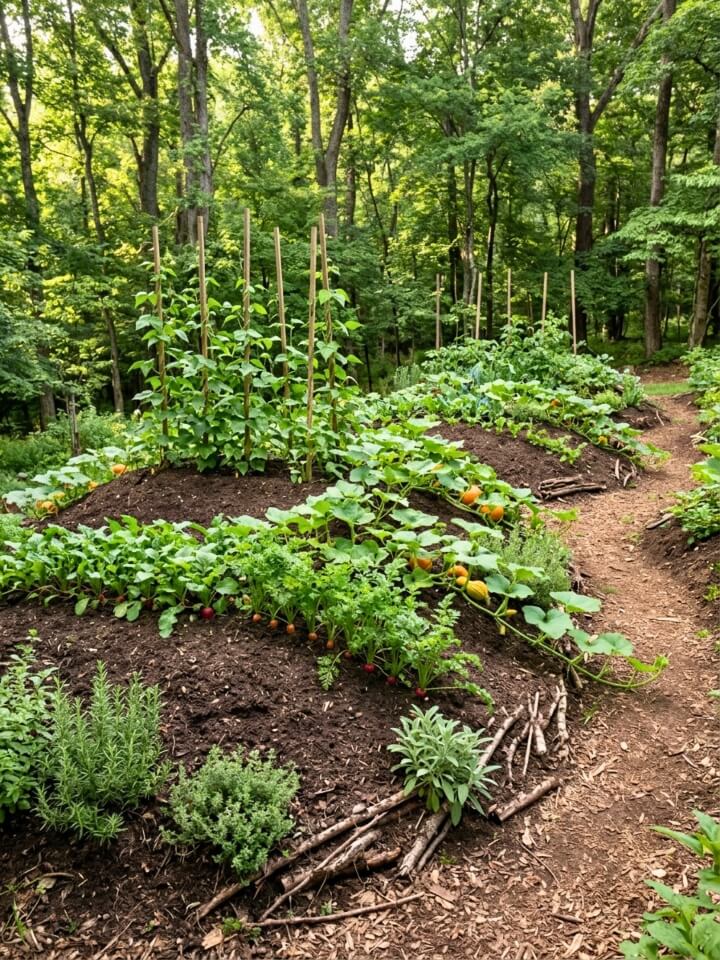
Deep in the forests of Germany and Eastern Europe, farmers noticed something: wherever a tree fell and slowly rotted, the ground nearby grew extraordinarily fertile. So they started building mounds on purpose.
Hügelkultur (pronounced HOO-gul-culture, meaning “hill culture”) stacks decomposing wood at the base, covered with branches, then leaves and grass clippings, then compost, then a thick topsoil cap. The mound rises 3 to 6 feet tall and can stretch as long as you want.
What happens next is quiet magic. The buried wood acts as a sponge, absorbing rainfall and slowly releasing it over years. Decomposition generates gentle warmth. Fungal networks colonize the interior. Nutrients trickle upward continuously.
12. Lasagna Garden
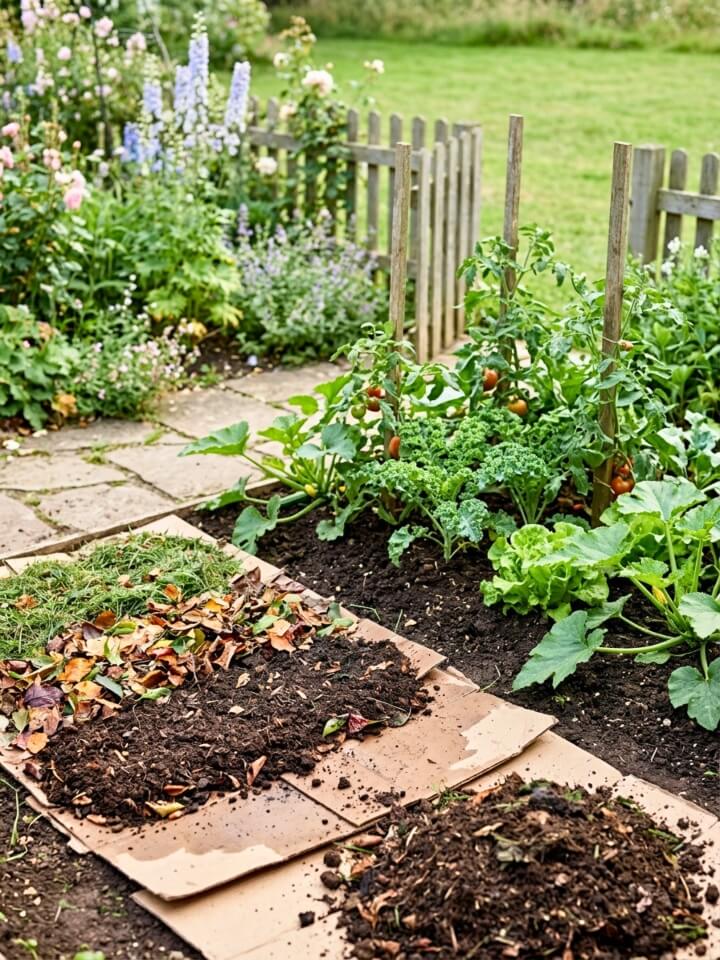
The name is literal — you’re building the garden the way you’d build a lasagna, in layers, without ever digging.
Start with cardboard or thick newspaper directly on top of grass or weeds. This smothers everything underneath. From there, alternate:
- Brown layer: dry leaves, straw, shredded paper
- Green layer: grass clippings, kitchen scraps, coffee grounds
- Brown layer again
- Green layer again
- Repeat until the pile reaches 18 to 24 inches tall
Cap the whole thing with 4 inches of finished compost or topsoil, and you can plant into that top layer immediately.
Underneath, worms and microbes convert the layers into black gold over 3 to 6 months. By next season, you have some of the richest soil possible without breaking a sweat or a shovel. Total cost approaches zero if you use yard waste you already have.
13. Straw Bale Growing Setup
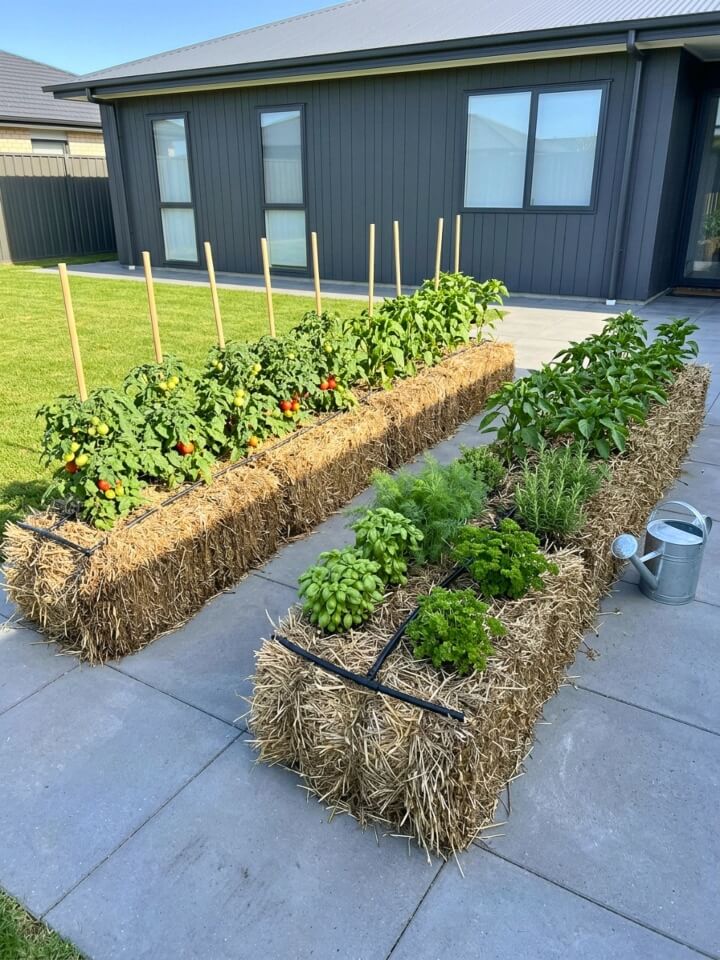
Where the soil is too poor to fix, too rocky to dig, or too contaminated to trust, straw bales step in as instant garden beds.
The Process Runs on A Schedule:
- Days 1–3: Soak the bales daily with water
- Days 4–9: Add nitrogen fertilizer and keep watering — the interior will heat up dramatically as bacteria begin decomposing the straw
- Day 10: Once the bales cool to below 100°F, they’re ready to plant
Cut small pockets into the top, fill with a bit of potting mix, and tuck in seedlings. Tomatoes, peppers, zucchini, and cucumbers absolutely love this environment because the decomposing interior provides constant warmth to the roots.
14. No-Dig Garden
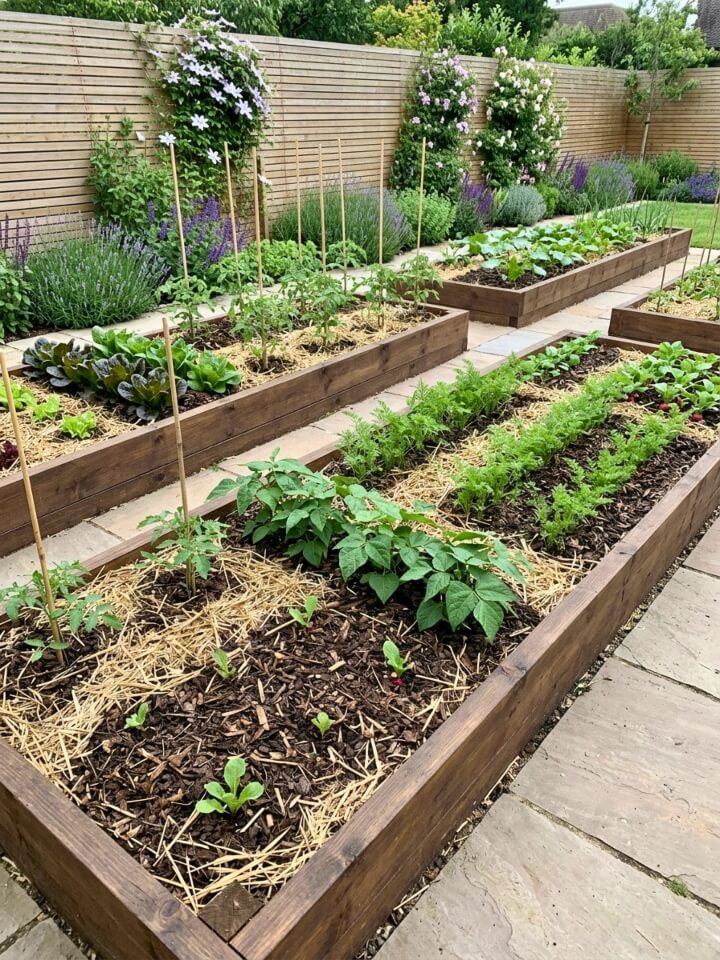
Turn your backyard vegetable garden into a bountiful haven of fresh, homegrown produce daily. Charles Dowding, a British gardener, spent decades proving something the tool industry didn’t want to hear: digging actually harms soil more than it helps.
Every shovel turn destroys fungal networks, kills earthworms, brings buried weed seeds to the surface, and disrupts the layered ecosystem microbes spent months building. The no-dig approach flips the script entirely.
Instead of tilling, you smother weeds with cardboard, top with 4 to 6 inches of quality compost, and plant directly into that. Each year, add another 1 to 2 inches of compost on top. That’s the whole method.
Weeds practically vanish after year two. Water retention improves. Soil structure becomes crumbly and alive. Yields often exceed traditional dug gardens by 20 to 30% once the system matures. Startup cost is mostly compost — plan on $80 to $150 for a decent-sized bed.
15. Traditional Four-Square Layout
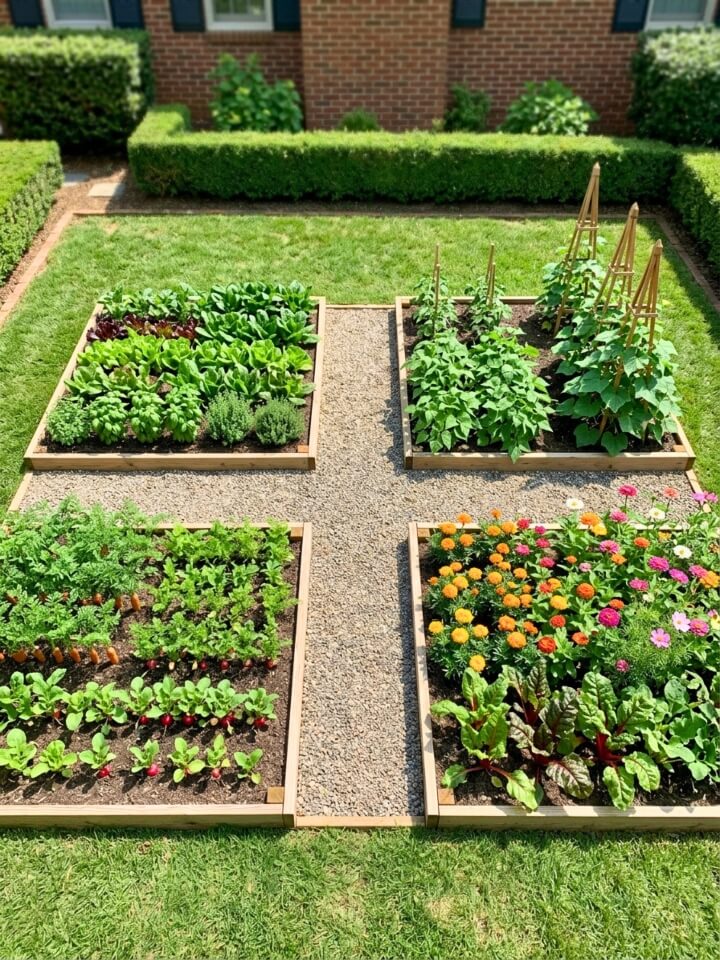
Trace this design back to medieval monastery gardens, colonial American estates, and formal English kitchen plots. The concept has survived 500 years because it works.
Divide a square growing space into four equal quadrants using crossing paths — brick, gravel, stepping stones, or simple mown grass. Anchor the center where the paths meet with something focal: a sundial, a birdbath, a rose obelisk, or a single striking herb like a bay laurel.
Now the practical genius reveals itself. Each quadrant hosts one crop family per year, rotating clockwise every season:
- Quadrant 1: Leafy greens (lettuce, spinach, kale)
- Quadrant 2: Fruiting crops (tomatoes, peppers, squash)
- Quadrant 3: Root crops (carrots, beets, onions)
- Quadrant 4: Legumes (beans, peas)
Rotating prevents soil-borne diseases, balances nutrient demand, and keeps pests guessing. Aim for a total footprint of 16×16 feet or larger to give each quadrant enough breathing room.
If the garden sits near a visible side yard or walkway, surrounding it with privacy landscaping can make the space feel more secluded without hiding the harvest completely.
16. Terraced Hillside Planting
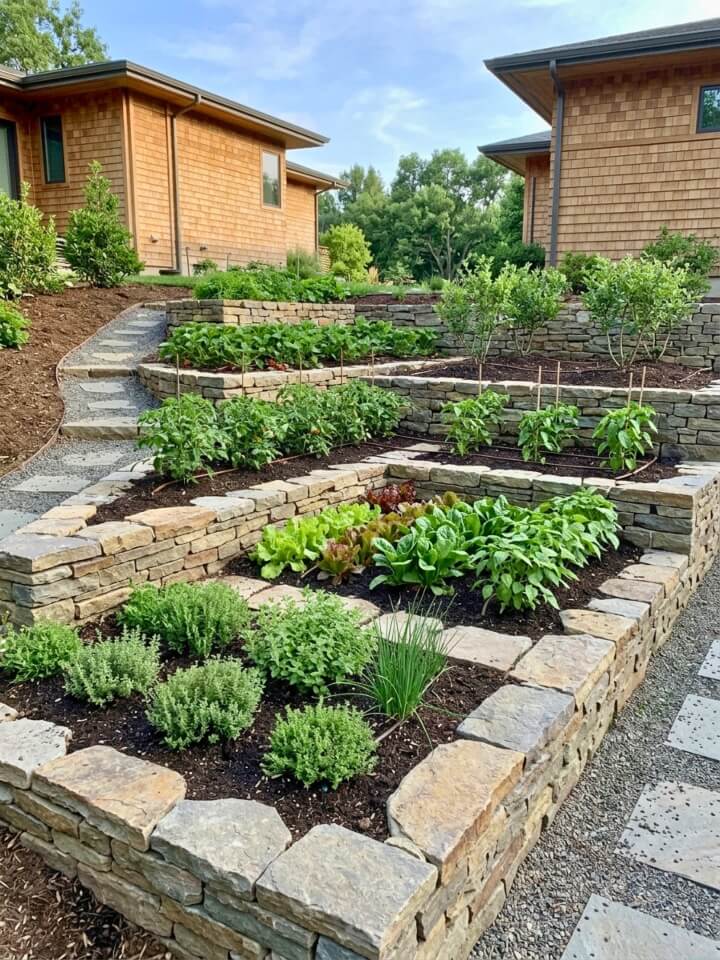
Slopes intimidate most homeowners. Water runs off before it soaks in, topsoil washes downhill after every storm, and mowing becomes an annual sprained ankle waiting to happen. Terracing solves all three problems at once by carving the hillside into flat steps.
Each terrace becomes its own miniature growing zone, held in place by retaining walls of stacked stone, pressure-treated timber, or concrete blocks. Wall height typically ranges from 18 inches to 4 feet, with anything taller requiring engineering approval in most municipalities.
The design trick worth knowing: angle each terrace surface to tilt very slightly backward, toward the uphill wall. Water then pools against the wall and soaks downward rather than spilling over the front edge.
17. Mittleider Garden
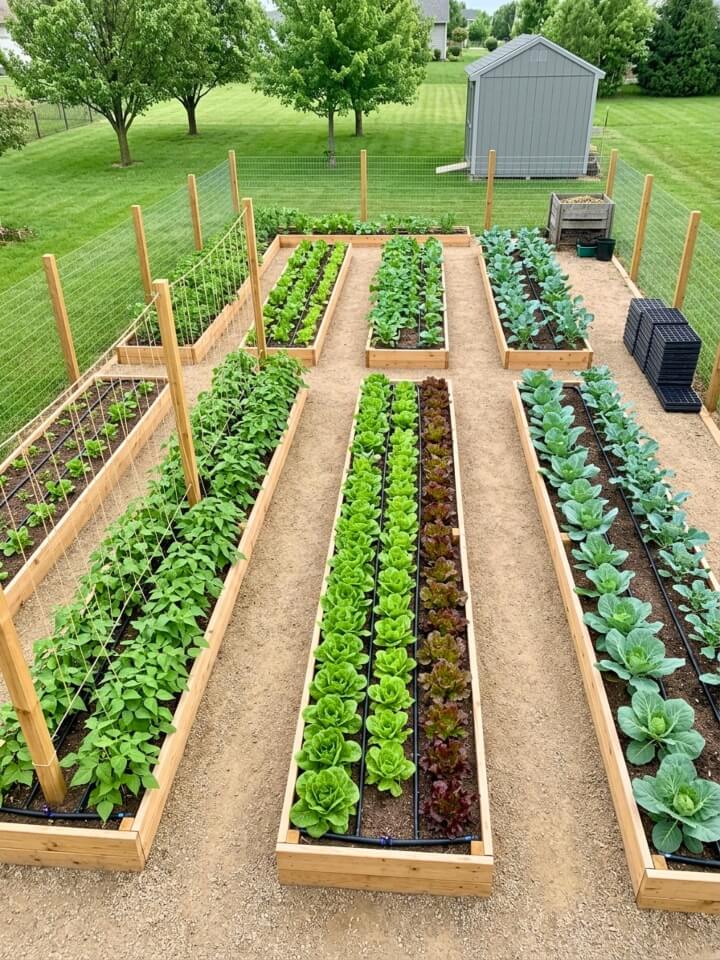
Dr. Jacob Mittleider was an agronomist who spent decades traveling the world teaching subsistence farmers how to maximize output from tiny plots. His method looks unusual at first glance but produces staggering yields.
Beds measure exactly 18 inches wide and any length you want, separated by generous 3.5-foot aisles. That aisle width seems wasteful until you realize it’s doing serious work:
- Full sunlight reaches every leaf from every angle
- Air circulation prevents fungal disease
- No plant ever competes with another for root space
- You can kneel, harvest, and prune without ever crushing a stem
Plants grow in two tight rows down each narrow bed and receive precisely measured weekly feedings of a balanced mineral mix. Soil quality matters less than usual because nutrients arrive on schedule regardless.
Reported yields run 3 to 5 times higher per square foot than conventional gardens. The tradeoff is discipline — miss a feeding, and productivity drops noticeably.
18. Soil-Free Hydroponic Setup
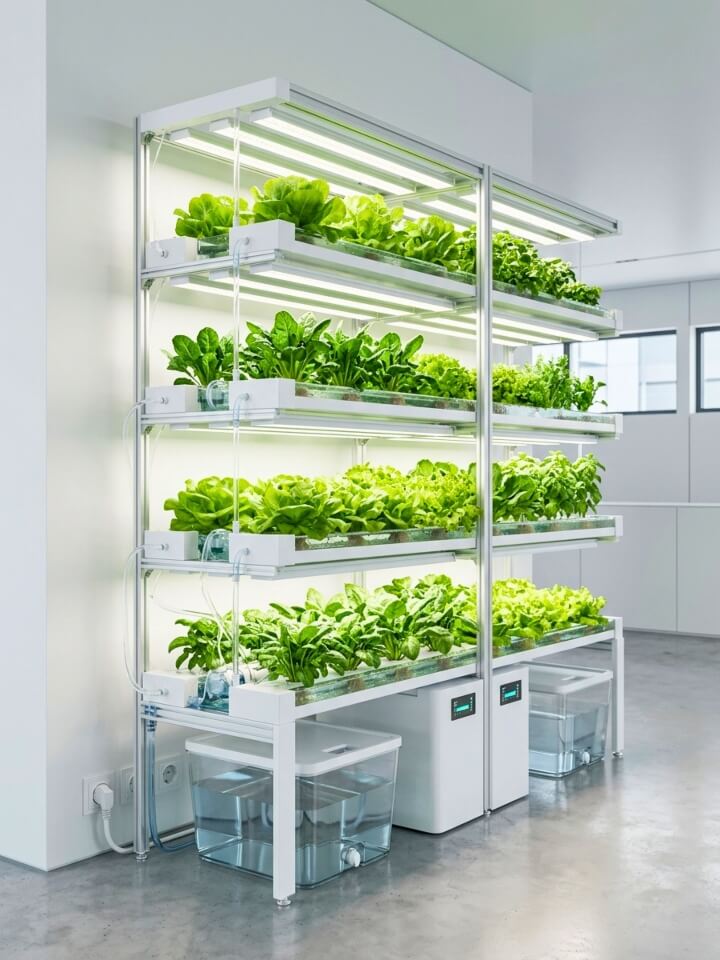
Roots don’t actually need soil. What they need is water, oxygen, and dissolved nutrients. Hydroponics delivers all three directly and skips the dirt entirely.
Several System Styles Exist, Each with Tradeoffs:
- Deep Water Culture (DWC): Roots dangle in oxygenated nutrient water. Simplest to build, cheapest to run.
- Nutrient Film Technique (NFT): A thin stream of nutrient solution flows continuously past root tips inside sloped channels. Excellent for lettuce and herbs.
- Ebb and Flow: Growing trays flood and drain on a timer. Versatile but requires more equipment.
- Aeroponics: Roots hang in air and get misted with nutrients. Highest yields, most technically demanding.
Growth rates typically run 30 to 50% faster than soil, and water use drops by roughly 90% because the system recirculates instead of draining.
19. Aquaponic Garden
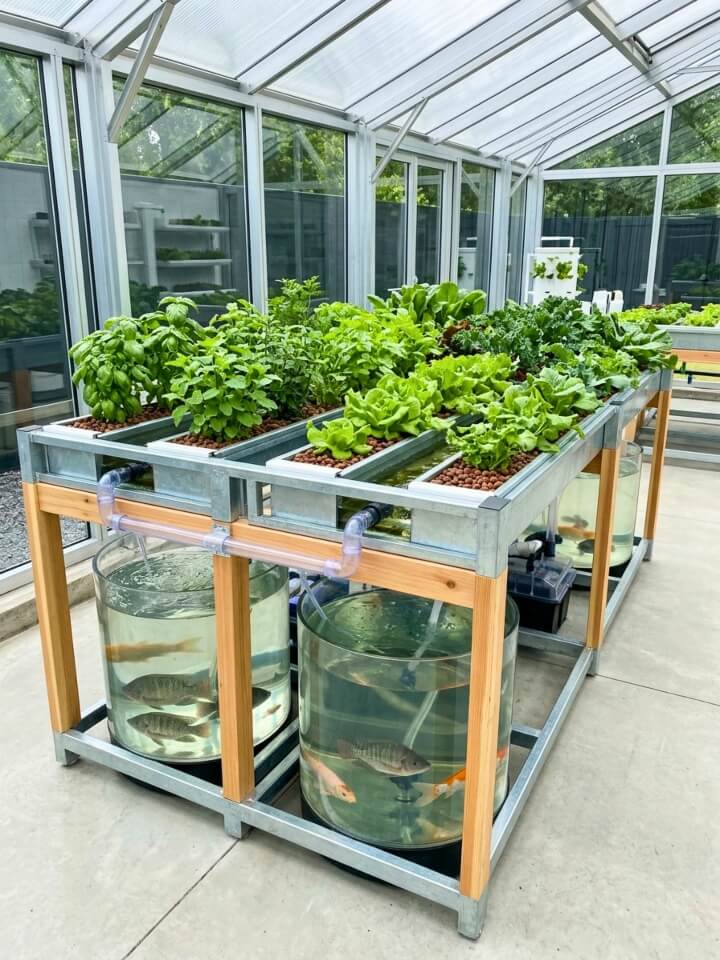
Combine hydroponics with fish farming and something remarkable happens: the two systems feed each other in a closed loop that mimics natural pond ecosystems.
Here’s the Cycle:
- Fish live in a tank and produce ammonia-rich waste
- Beneficial bacteria convert that ammonia into nitrates
- Nitrate-rich water pumps up to grow beds
- Plant roots absorb the nitrates as fertilizer
- Clean, filtered water flows back to the fish tank
Tilapia, catfish, koi, and goldfish all work as the fish component. Goldfish are ornamental only; tilapia and catfish become dinner if that appeals. Leafy greens, herbs, and strawberries thrive in the grow beds. Heavy-feeding crops like corn or tomatoes strain the system unless it’s scaled large.
The learning curve is real. Water pH, ammonia levels, temperature, and dissolved oxygen all need weekly monitoring for the first few months. Once balanced, the system runs remarkably steady with only occasional adjustments.
20. Greenhouse / Polytunnel Garden
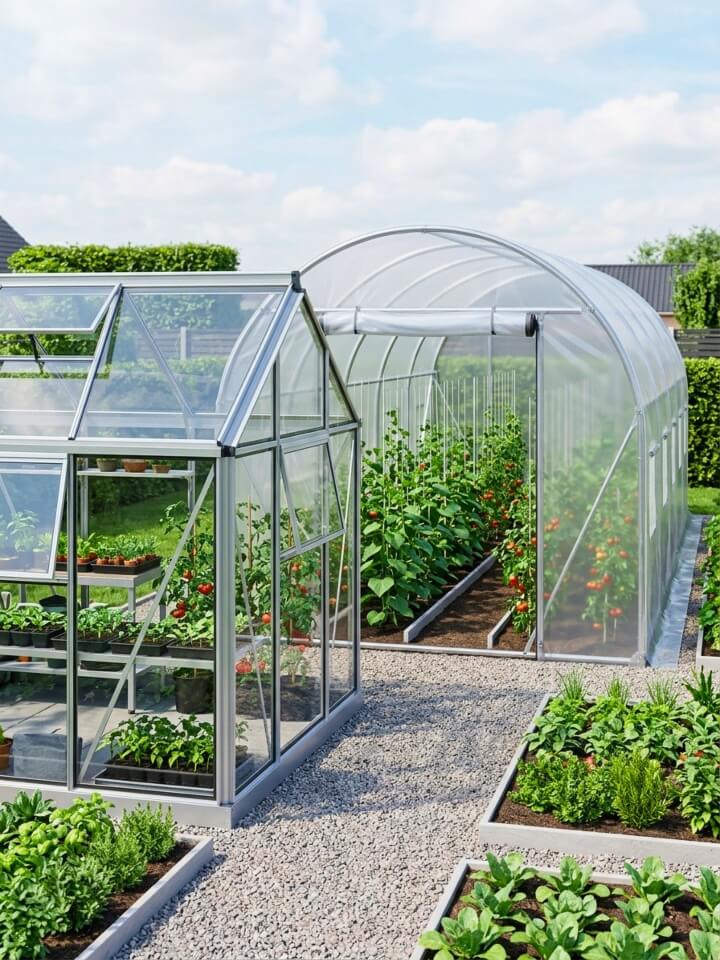
March feels endless when everyone else is still snowed in and you’re already harvesting spinach. A greenhouse buys you weeks of growing on both ends of the season, and in warmer regions, essentially year-round production.
Greenhouses are permanent glass or polycarbonate structures on solid foundations. Higher upfront cost, longer lifespan, better appearance, sometimes requiring building permits.
Polytunnels (also called hoop houses) use curved metal pipe frames covered in UV-stable polyethylene film. Much cheaper, faster to erect, easier to relocate, film needs replacement every 4 to 6 years.
Both extend the growing season by 6 to 10 weeks. Also allow starting seedlings in February for May transplanting. Both let you grow tomatoes and peppers reliably in regions where outdoor summers are too short or too cool.
21. Spiral Vegetable Bed Garden
Follow this beginner basic vegetable garden layout to plant your first successful garden today. Not to be confused with the herb spiral covered earlier — this design takes the spiral concept and scales it up for vegetables and mixed plantings.
Picture a flat spiral pathway winding inward across a circular area 15 to 20 feet in diameter. Planting beds curve alongside the path, following the same spiral logic. Every plant sits within arm’s reach of the walkway. There are no dead corners, no wasted center, no bed you can’t tend without stepping on soil.
The walking experience matters more than most gardeners expect. A spiral path invites slow strolling, checking on plants you might otherwise ignore, noticing pests early. Straight rows encourage marching. Spirals encourage attention.
22. Window Box / Balcony Garden
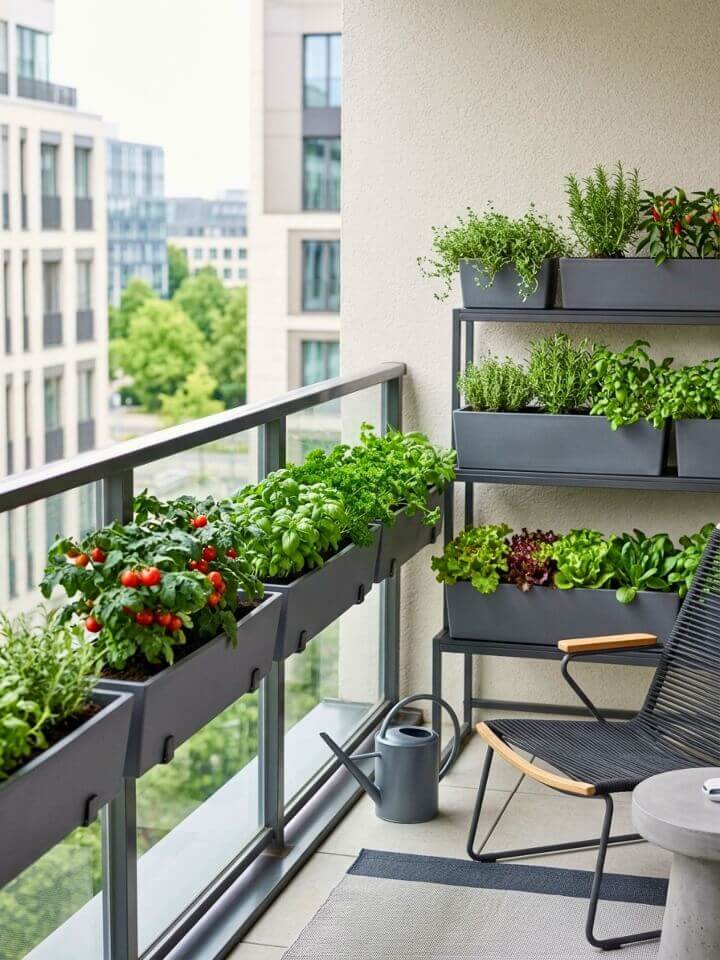
Living in an apartment doesn’t disqualify you from growing food. It just changes the scale.
Window boxes attach directly beneath sunny windows using metal brackets rated for at least 50 pounds when wet. South-facing windows produce the most, east-facing works for greens and herbs, north-facing windows really only support shade-tolerant lettuce.
Balcony gardens open up dramatically more possibilities. Railing planters, floor-standing pots, wall-mounted pockets, and vertical towers can transform even a 40-square-foot balcony into a productive space.
What Actually Grows Well in These Tight Quarters:
- Cherry tomatoes (compact determinate varieties)
- Loose-leaf lettuce and arugula
- Basil, thyme, chives, parsley, mint
- Strawberries in hanging baskets
- Peppers in 3-gallon pots
- Bush beans and dwarf peas
Wind is the sneaky enemy on upper-floor balconies. Anchor everything securely, avoid tall top-heavy plants, and choose windbreak-tolerant varieties. Also verify your lease permits balcony gardening — some buildings prohibit it entirely.
23. Multi-Layer Forest Design
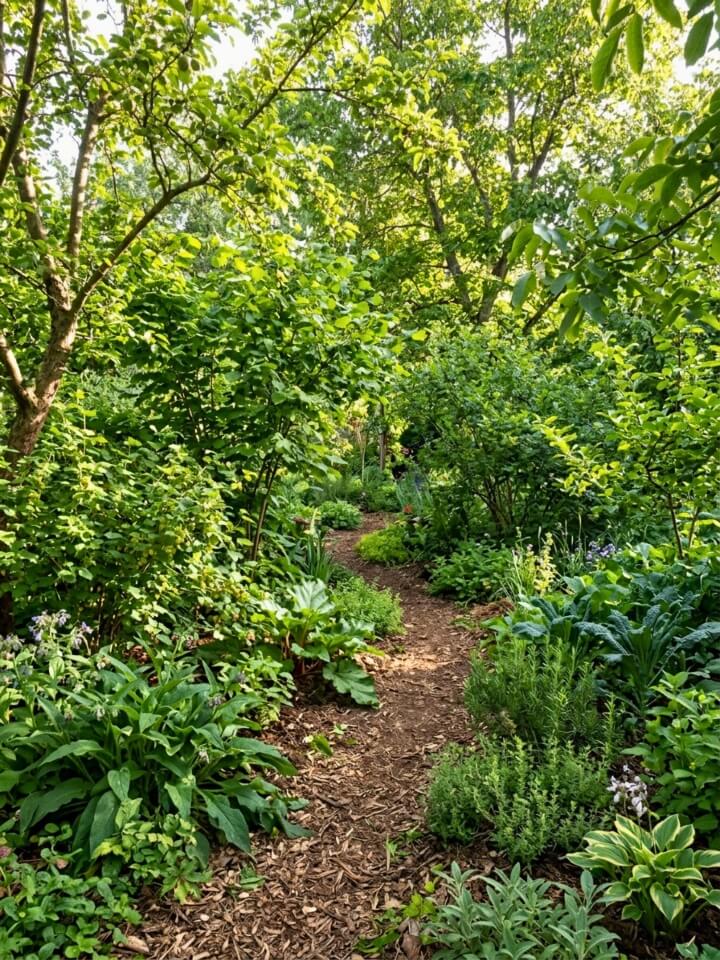
Robert Hart, a British horticulturist, spent the 1960s and 70s watching how food forests functioned in temperate climates. He identified seven vertical layers, each occupying a different vertical zone and rarely competing with the others:
- Canopy: Full-sized fruit and nut trees (apple, pear, walnut, chestnut)
- Understory: Dwarf fruit trees (peach, plum, cherry)
- Shrub layer: Berry bushes (blueberry, currant, gooseberry, raspberry)
- Herbaceous layer: Perennial vegetables and herbs (asparagus, rhubarb, chives, oregano)
- Ground cover: Low-spreading plants (strawberries, creeping thyme, wild ginger)
- Root layer: Underground crops (garlic, potatoes, sunchokes)
- Vertical layer: Climbing plants (grapes, kiwi, hardy passionfruit)
The magic emerges over time. After year three or four, the system essentially runs itself. Fallen leaves feed the soil. Deep-rooted plants pull minerals upward. Nitrogen-fixing species enrich neighbors. Pest populations stabilize as beneficial insects take up residence.
24. Hexagonal / Honeycomb Bed Layout
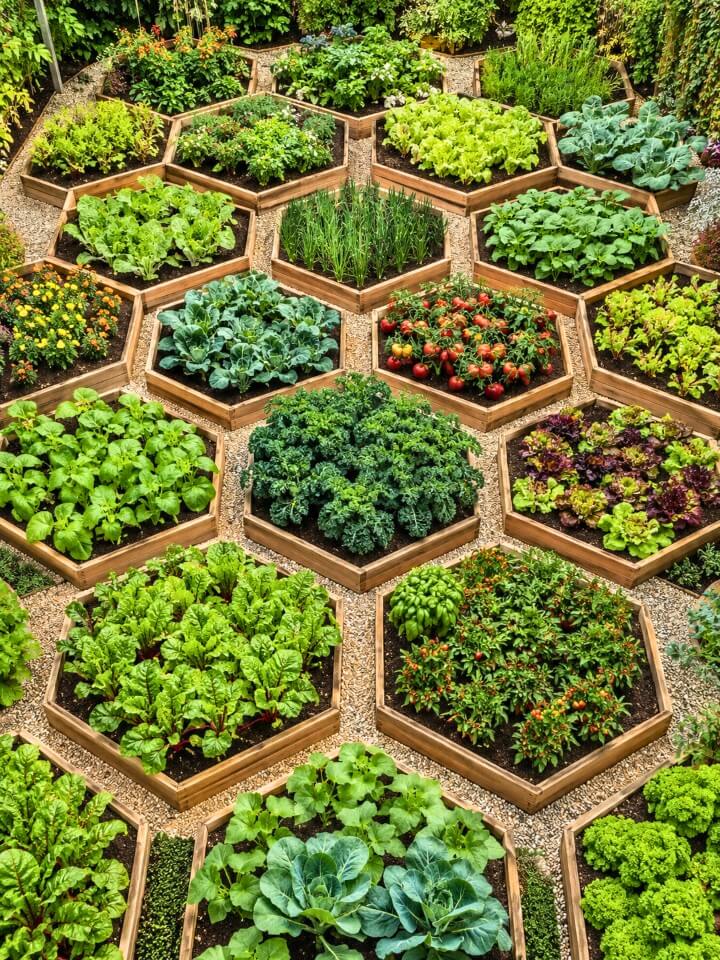
Bees figured this out millions of years ago: hexagons pack together perfectly with zero wasted space, distributing structural stress evenly across every wall. What works for honeycomb works for garden beds.
Each hexagonal bed typically measures 4 to 5 feet across at its widest point, meaning every planting area within it sits within comfortable reach. The six-sided geometry lets beds nest against each other along shared edges, creating flowing patterns that feel organic despite being rigidly mathematical.
Practical Advantages Emerge Quickly:
- Path length drops by roughly 15% compared to rectangular beds covering equal area
- Each bed can host a different crop family, making rotation intuitive
- The visual pattern looks striking from second-story windows or drone photos
- Corner plants suffer less than in square beds because there are no sharp corners
25. Mixed Border / Edible Landscape
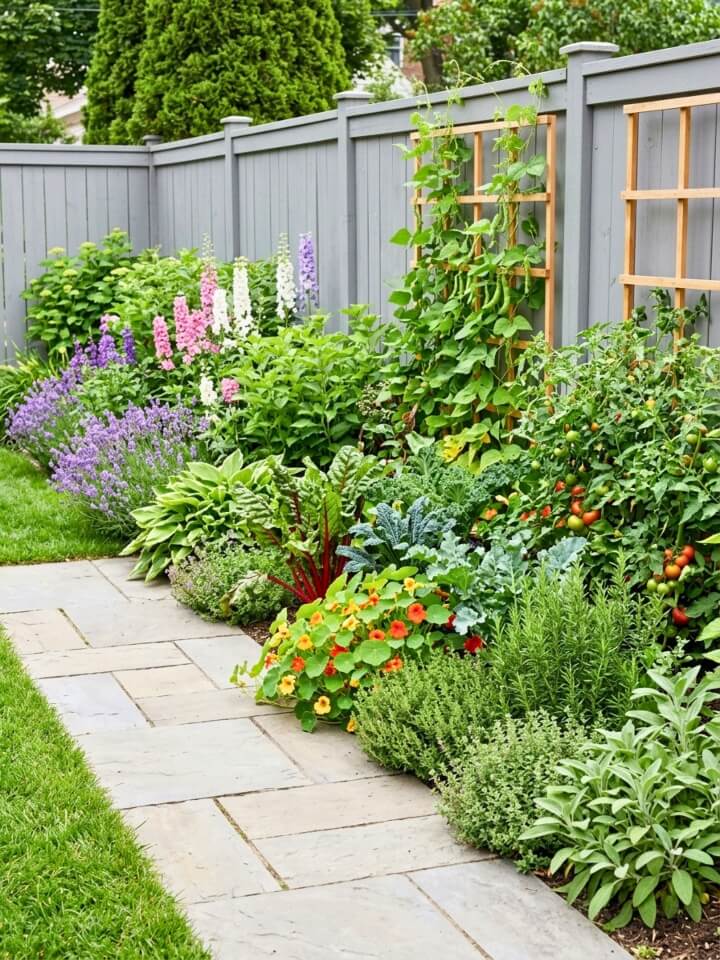
The lawn wars are heating up in American suburbs. Homeowners are increasingly rejecting the idea that a front yard must be nothing but grass, and edible landscaping is leading that quiet rebellion.
The strategy: weave food-producing plants into ornamental borders so seamlessly that neighbors don’t immediately register they’re looking at dinner.
Plants that Pull Double Duty as Beautiful and Productive:
- Blueberry bushes: Spring flowers, summer fruit, blazing red fall foliage
- Rainbow chard: Neon stems glow from twenty feet away
- Purple kale and cabbage: Rival any ornamental in cool weather
- Rosemary: Evergreen shrub that also seasons your roasts
- Fig trees: Sculptural bare branches in winter, tropical-looking leaves in summer
- Artichokes: Silver-gray architectural foliage that reads as pure ornamental
- Nasturtiums: Edible flowers spilling over borders in fiery colors
- Serviceberry: Small tree with white spring flowers and edible berries
FAQs About Vegetable Garden Layouts
These quick answers cover the practical details most first-time growers wish someone had told them upfront.
How Much Sunlight Does a Vegetable Garden Actually Need?
Most vegetables need at least six hours of direct sun daily, while fruiting crops like tomatoes and peppers prefer eight or more. Leafy greens and herbs tolerate partial shade with four to five hours.
When Is the Best Time to Start a Vegetable Garden?
Cool-season crops like lettuce, peas, and spinach go in 2 to 4 weeks before the last frost. Warm-season plants like tomatoes and peppers wait until soil temperatures reach 60°F consistently, usually mid to late spring.
How Do I Keep Pests Away without Using Chemicals?
Interplant marigolds, basil, and nasturtiums as natural repellents. Hand-pick larger insects early morning. Attract ladybugs and lacewings with dill and yarrow. Row covers protect young seedlings until plants grow strong enough to handle minor damage.
What Vegetables Should Beginners Grow First?
Start with zucchini, bush beans, cherry tomatoes, leaf lettuce, radishes, and cucumbers. These forgive watering mistakes, produce quickly, and rarely disappoint. Skip finicky crops like cauliflower, celery, and head lettuce until your second or third season.
How Often Should I Water My Vegetable Garden?
Deep watering twice weekly beats daily light sprinkling. Aim for one inch of water per week, delivered at soil level early morning. Containers and raised beds dry faster, sometimes needing daily attention during summer heat waves.
Conclusion:
The best vegetable plot isn’t the biggest or the prettiest — it’s the one you’ll actually walk out to on a Tuesday evening after work. Start smaller than you think. One raised bed, three tomato plants, a handful of basil. See what survives your schedule, your soil, and your attention span. Next year, expand what worked and quietly forget what didn’t. Somewhere between the first sprout and the first ripe tomato, something clicks. You stop seeing your yard as decoration and start seeing it as dinner. That shift is the real harvest, and it costs almost nothing to start.