26 Entryway Tile Ideas To Elevate Your Foyer
Your entryway floor takes more abuse than almost any other spot in your home. Wet boots, dropped keys, muddy paw prints, the constant in-and-out of daily life. That’s exactly why these 26 outstanding entryway tile ideas matter so much. The right tile doesn’t just look good when guests walk in, it stands up to years of real use without showing the wear.
Here’s the thing most people miss: your entryway is the first impression of your whole house. A floor that’s both gorgeous and tough sets the tone for everything beyond it.
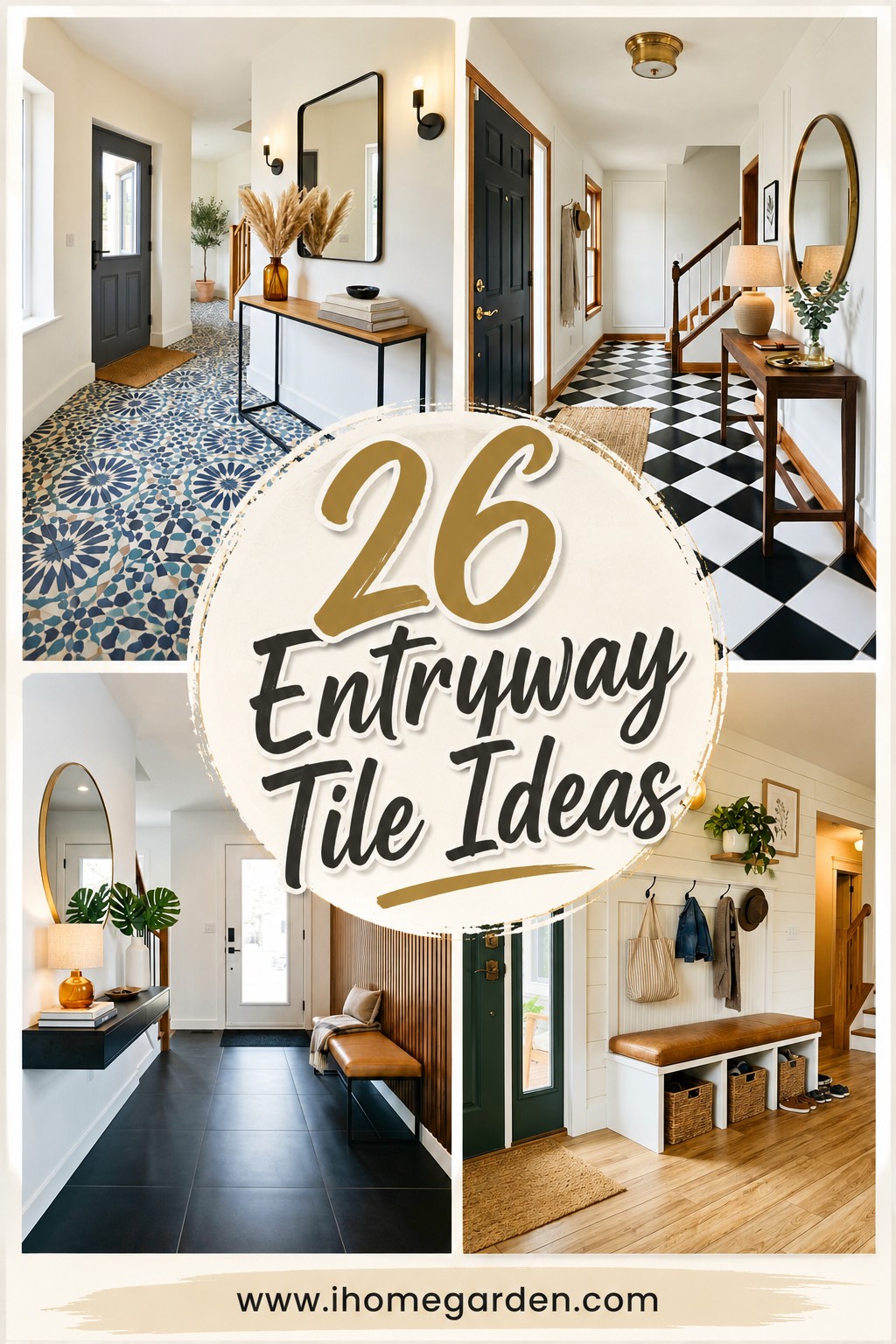
Whether you love the timeless pull of black and white checkerboard, the warmth of terracotta, or the clean drama of matte black, there’s an option here for every style and budget. Some cost a few dollars per square foot, others splurge into luxury territory.
Let’s walk through tile ideas that work as hard as they look good.
1. Classic Black and White Checkerboard Tile
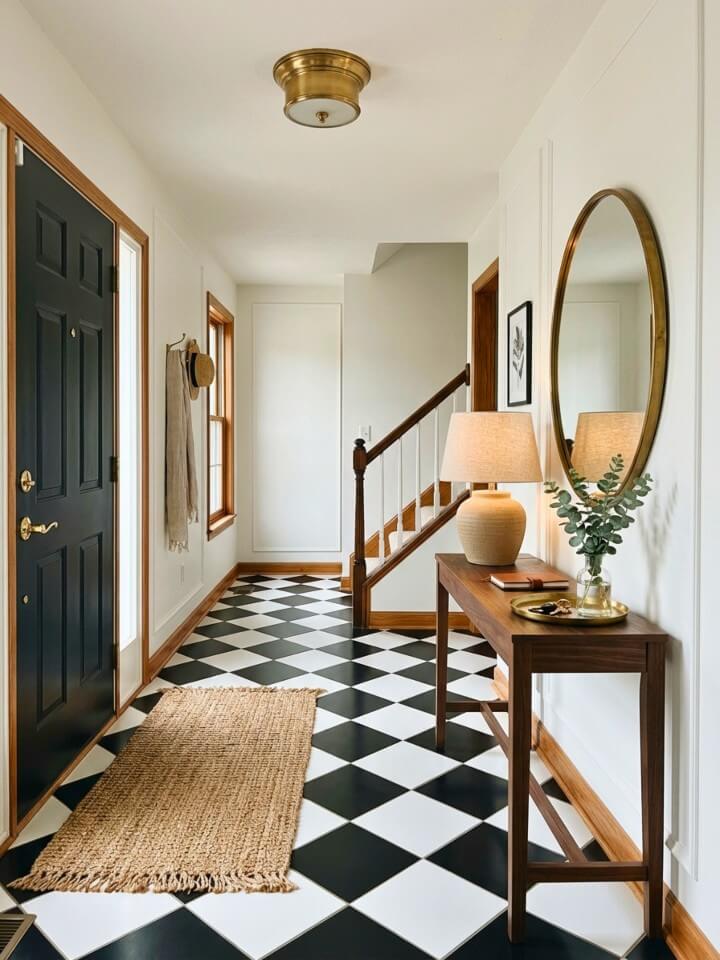
Nothing says timeless quite like a black and white checkerboard floor. This pattern has been used in American homes since the early 1900s and still feels fresh today. It works beautifully in colonial, farmhouse, and traditional homes, and surprisingly well in modern spaces too. It also pairs beautifully with strong exterior choices, especially homes using bold black front door ideas to create a polished first impression.
For best results, choose 12×12 inch porcelain tiles with a PEI rating of 4 or 5 for high-traffic durability. Expect to spend $4 to $9 per square foot for quality porcelain, with installation adding another $7 to $14. The dark tiles hide dirt while the white tiles brighten the space. Use a darker grout on the white squares to reduce visible stains over time.
2. Warm Terracotta Tile for a Mediterranean Feel
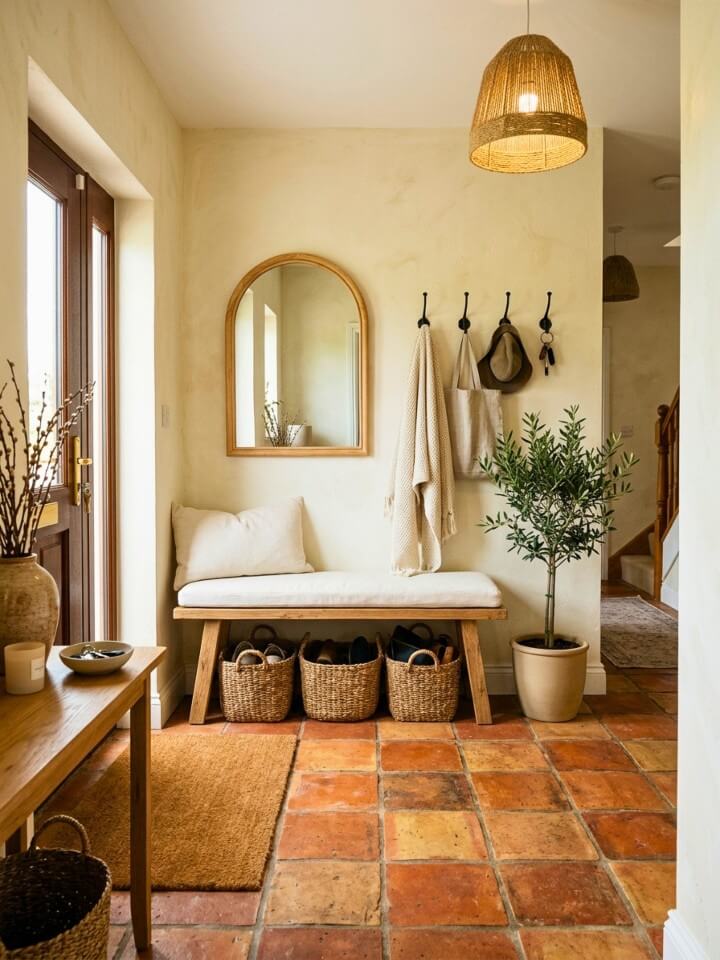
If your home leans toward Tuscan, Spanish Revival, or southwestern style, terracotta delivers a warmth that no other material can match. The natural clay tones range from soft peach to deep burnt orange, and each tile has subtle variations that make the floor feel handcrafted.
Sealed terracotta costs roughly $5 to $12 per square foot. You will need to reseal every 1 to 2 years to prevent staining from water, salt, and food spills. Mexican Saltillo tiles are a popular budget-friendly option, while Italian terracotta sits at the higher end. Pair with cream walls, wrought iron hardware, and woven jute rugs. Skip terracotta if your entryway gets heavy snow exposure since the porous surface can be damaged by ice melt.
3. Marble-Look Porcelain for Luxury Without the Upkeep
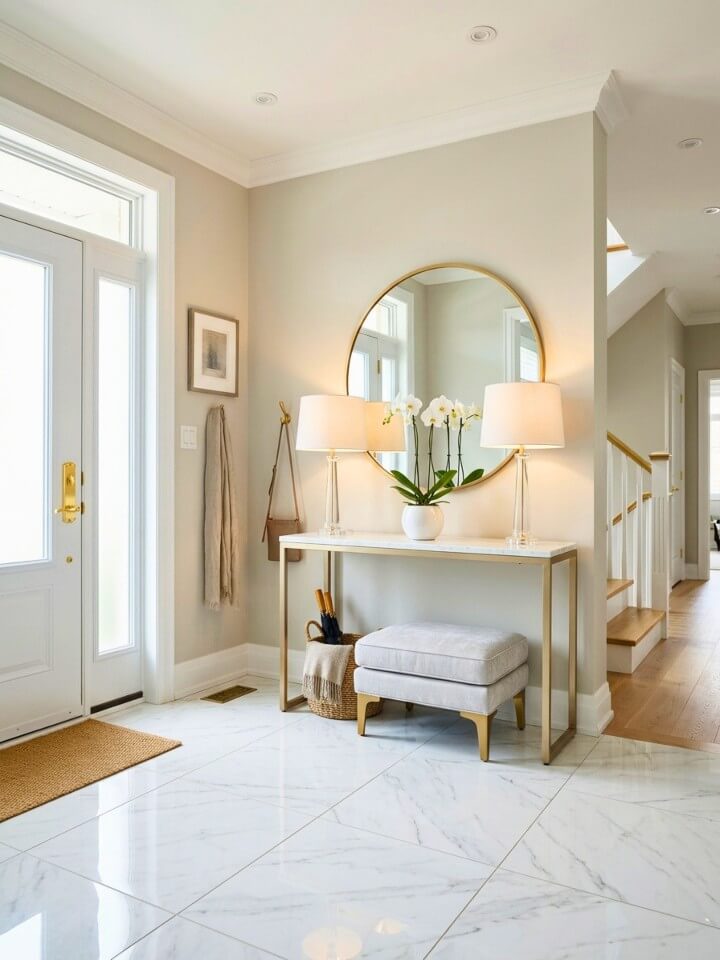
Real Carrara or Calacatta marble looks stunning but stains easily and needs frequent resealing. Marble-look porcelain gives you the same elegant veining at a fraction of the maintenance. Modern printing technology now produces tiles so realistic that even professionals have to look twice.
Budget around $3 to $8 per square foot for quality marble-look porcelain, far less than the $15 to $40 real marble costs. Large 24×48 inch slabs create a seamless luxury look, while 12×24 tiles work well in smaller foyers. The non-porous surface resists stains from wine, coffee, and salt without sealing. This is one of the most practical luxury choices for families with kids or pets.
4. Bold Patterned Cement Tiles for Statement Style
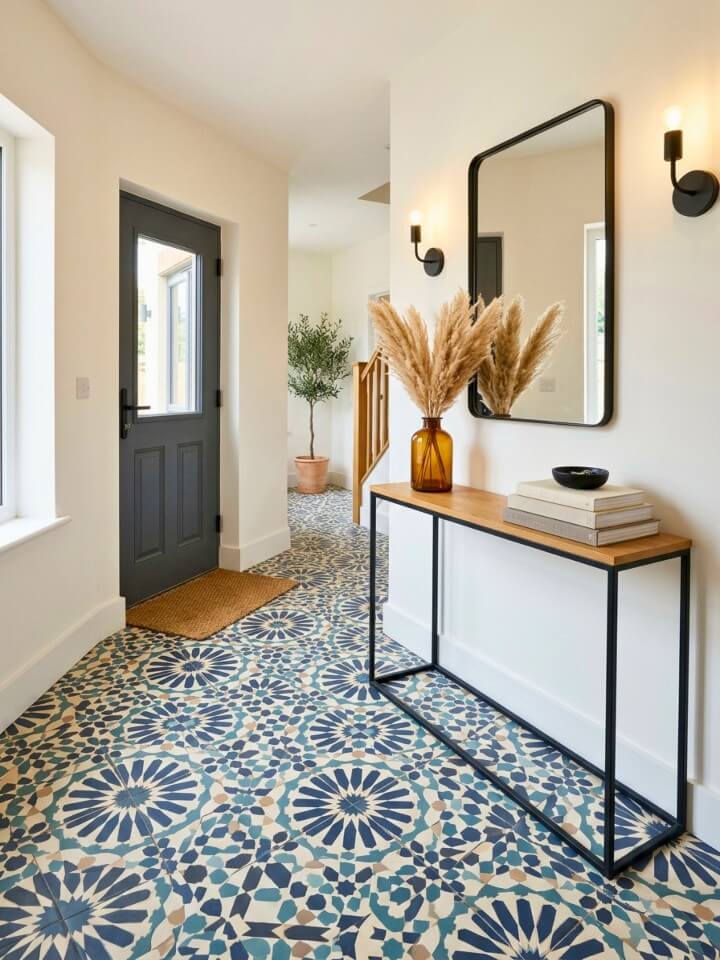
When you want your entryway to be unforgettable, patterned cement tiles deliver. Inspired by Moroccan, Portuguese, and Cuban design traditions, these tiles turn the floor into wearable art. Popular patterns include star motifs, geometric shapes, and floral medallions in colors ranging from cobalt blue to mustard yellow.
Authentic encaustic cement tiles run $10 to $30 per square foot, though porcelain replicas start around $4. Real cement tiles must be sealed before grouting and resealed annually. The bold pattern works best when surrounding walls stay white or cream, furniture is simple, and lighting is warm. Choose patterns in 8×8 inch sizes for small foyers and 12×12 for larger entries to maintain proper scale.
5. Sleek Slate Flooring for Texture and Strength
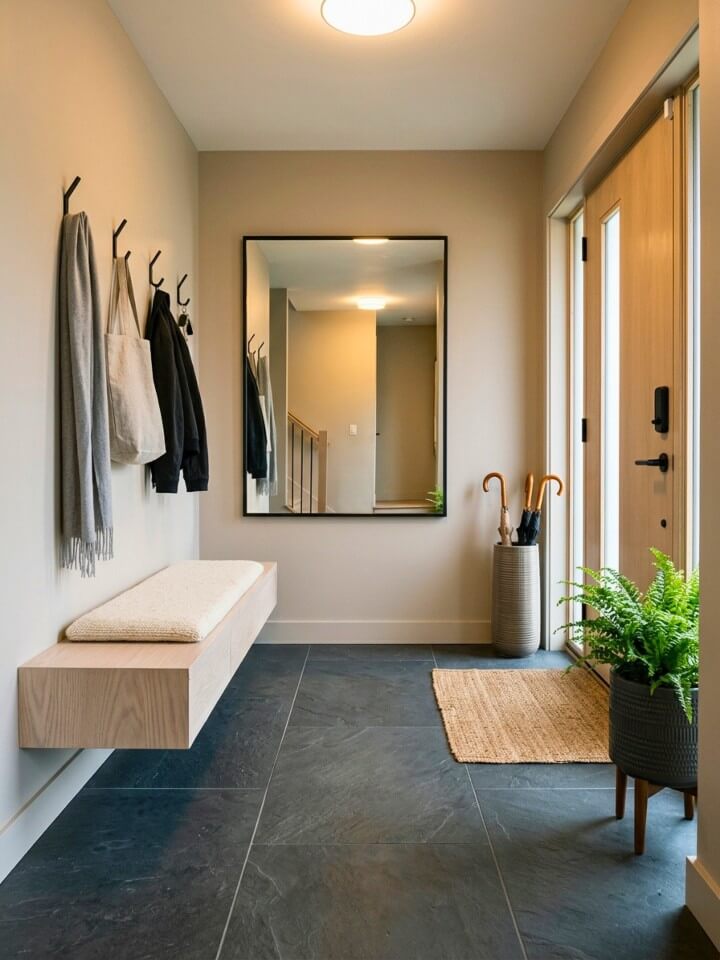
Slate is one of the toughest natural stones you can put on an entryway floor. Its natural cleft surface provides built-in slip resistance, which matters when wet shoes hit the floor in winter. Colors range from deep charcoal to multicolor blends with rust, green, and gold flecks.
Slate runs $5 to $15 per square foot before installation. Brazilian slate is the most affordable and consistent, while Vermont slate sits at the premium end. Seal slate every 2 to 3 years to maintain its color depth. The dark surface hides dirt and footprints between cleanings, which is a real advantage in busy households. Avoid honed slate for entryways since the smooth finish becomes slippery when wet.
6. Herringbone Layout for Subtle Sophistication
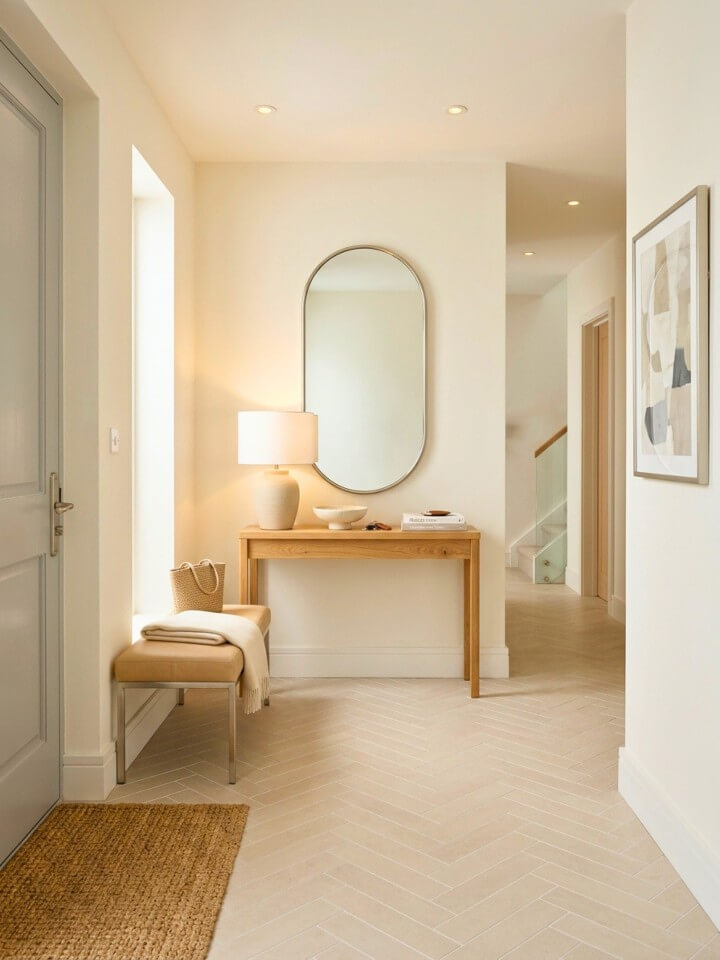
A herringbone pattern takes ordinary rectangular tiles and turns them into a custom-looking floor. The interlocking V-shape draws the eye forward and visually lengthens narrow foyers, making it perfect for the tight entry hallways common in older homes and townhouses.
Use 4×12 or 6×24 inch rectangular tiles in porcelain, ceramic, or natural stone. Expect to pay 15 to 25 percent more for installation since the angled cuts require more labor and produce more waste. Light beige, soft gray, and ivory tones keep the look modern, while wood-look tiles in herringbone give the elegance of European parquet flooring without the moisture worries. This pattern pairs beautifully with traditional, transitional, and modern farmhouse interiors.
7. Hexagon Tiles for Geometric Modern Appeal
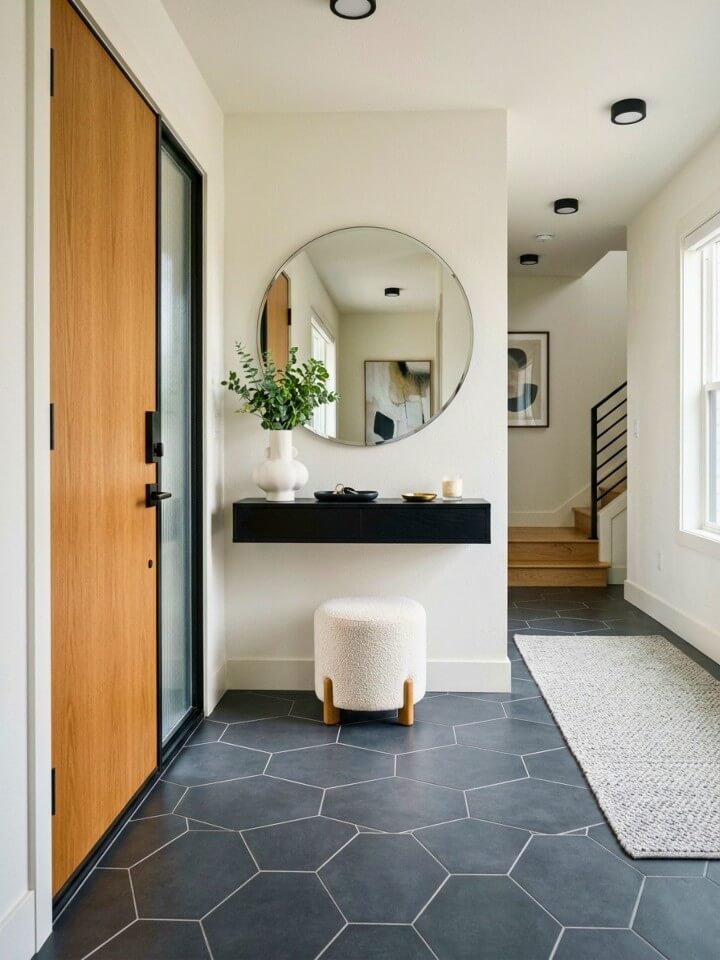
Hexagon tiles have moved from kitchens and bathrooms into entryways, where their honeycomb shape creates instant visual interest. The six-sided geometry feels both contemporary and timeless, with roots going back to ancient Greek and Roman mosaics.
Small 2 inch hex tiles work well for vintage-inspired foyers and cost around $5 to $10 per square foot. Large 8 to 12 inch hex tiles feel more modern and run $7 to $15. Matte finishes in charcoal, greige, or matte white are the most popular choices because they hide scuffs better than glossy options. Hexagon tiles pair beautifully with simple round mirrors and modern lighting. For added drama, try a transitional border where hex tiles fade into rectangular tiles in adjoining rooms.
8. Wood-Look Tile for Hardwood Style Without the Worry
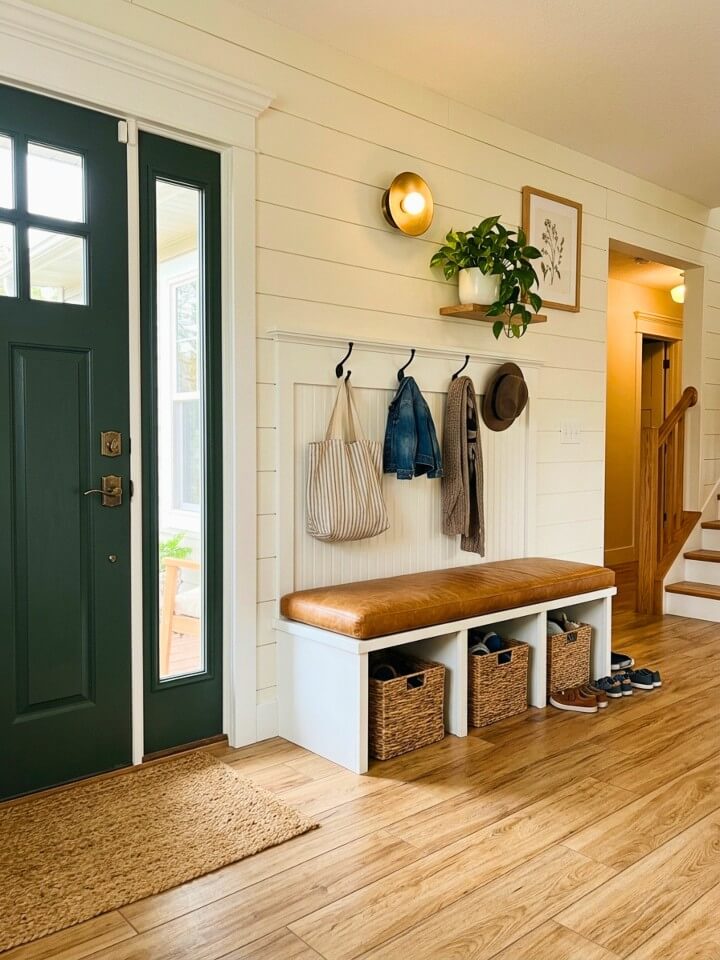
Real hardwood in an entryway is risky because water from snow, rain, and tracked-in slush warps planks and ruins finishes. Wood-look porcelain plank tiles solve this problem completely while looking remarkably authentic, especially when installed with thin grout lines in a matching color.
Quality wood-look porcelain costs $3 to $9 per square foot, less than half the price of real hardwood. Choose planks in 6×36 or 8×48 inch sizes for the most realistic effect. Light oak and white-washed finishes brighten dark entries, while walnut and weathered gray tones add warmth and depth. If you are coordinating the foyer with adjoining spaces, deeper plank tones can tie into sublime dark brown floor living room ideas for a cohesive whole-home palette. These tiles work with any decor style from coastal to industrial and are nearly indestructible against pet claws, high heels, and dropped keys.
9. Penny Round Tiles for Vintage Charm
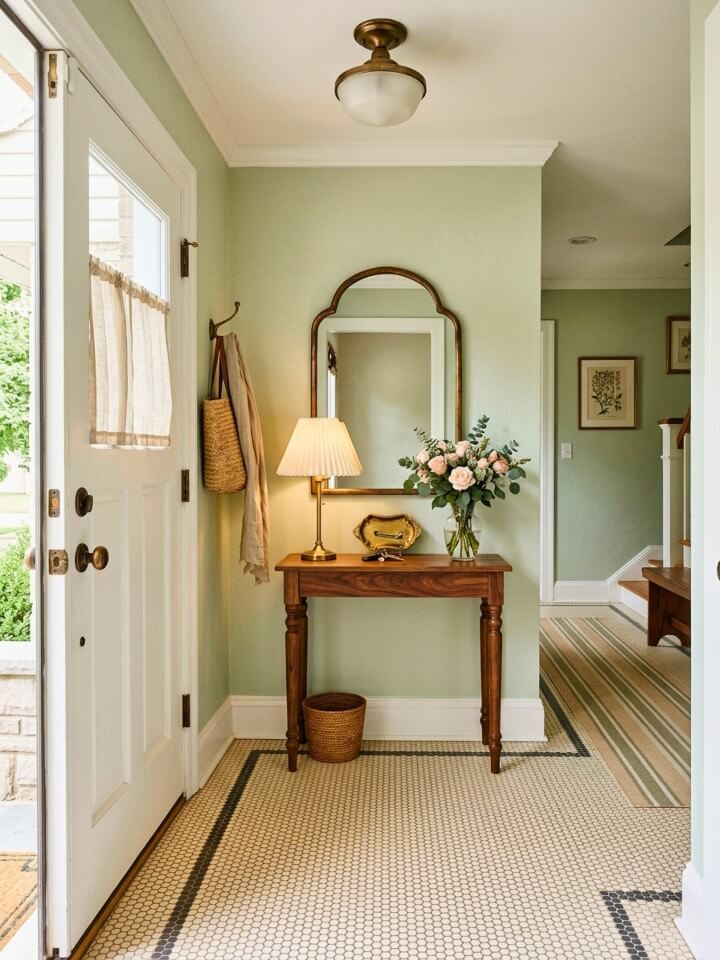
Tiny penny tiles, named for their resemblance to a penny coin, create a textured floor that feels straight out of a 1920s bungalow. The small scale works beautifully in compact foyers where larger tiles can look out of proportion.
Penny tiles typically come on 12×12 inch mesh sheets for easier installation and cost $8 to $20 per square foot. Classic options include all white, white with a single black accent dot, or a custom pattern like a border or central medallion.
The many grout lines provide excellent slip resistance, which is a major safety benefit in entryways and useful inspiration if you are also comparing tile-heavy spaces like cool small bathroom curbless shower ideas. The trade-off is that grout requires sealing and more careful cleaning. Use epoxy grout to minimize maintenance and prevent staining over time.
10. Large-Format Tiles for an Open, Seamless Look
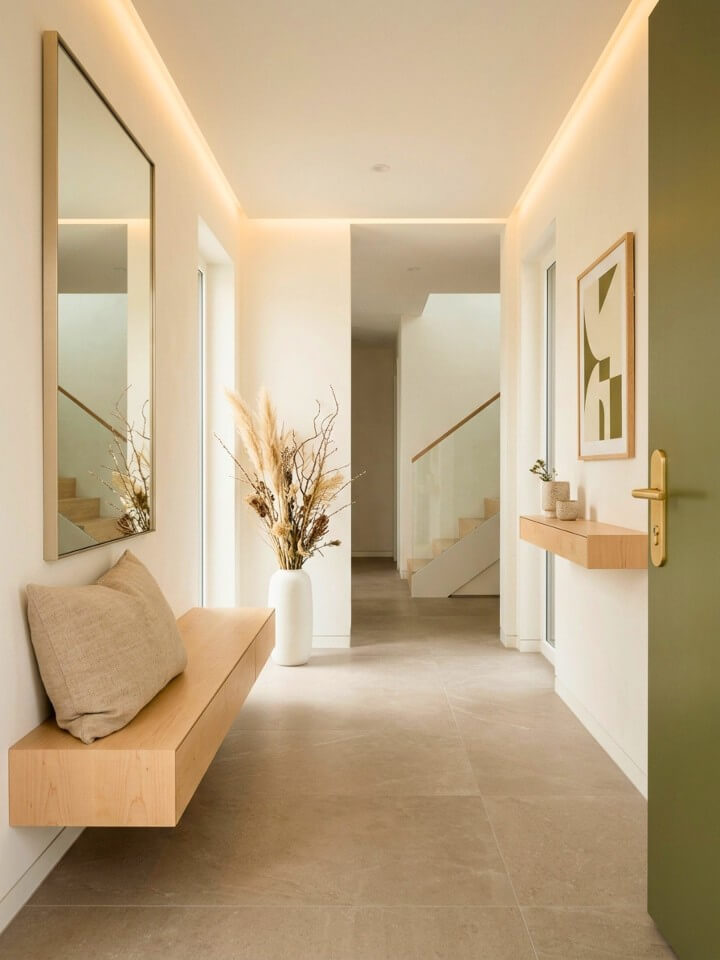
Large-format tiles, defined as anything 16×16 inches or bigger, have become the go-to choice for modern entryways. Fewer grout lines mean fewer dirt traps and a cleaner visual flow, especially valuable in open-concept homes where the entry connects directly to living spaces.
Sizes range from 24×24 up to massive 48×96 inch porcelain slabs. Expect $5 to $15 per square foot for quality large-format porcelain, plus higher installation costs because two installers are usually needed to handle each tile. The subfloor must be perfectly level, so budget for prep work in older homes. Stone-look options in travertine beige, limestone gray, and concrete tones provide a polished but relaxed feel that suits contemporary, transitional, and minimalist interiors equally well.
11. Basketweave Pattern for Quiet Elegance
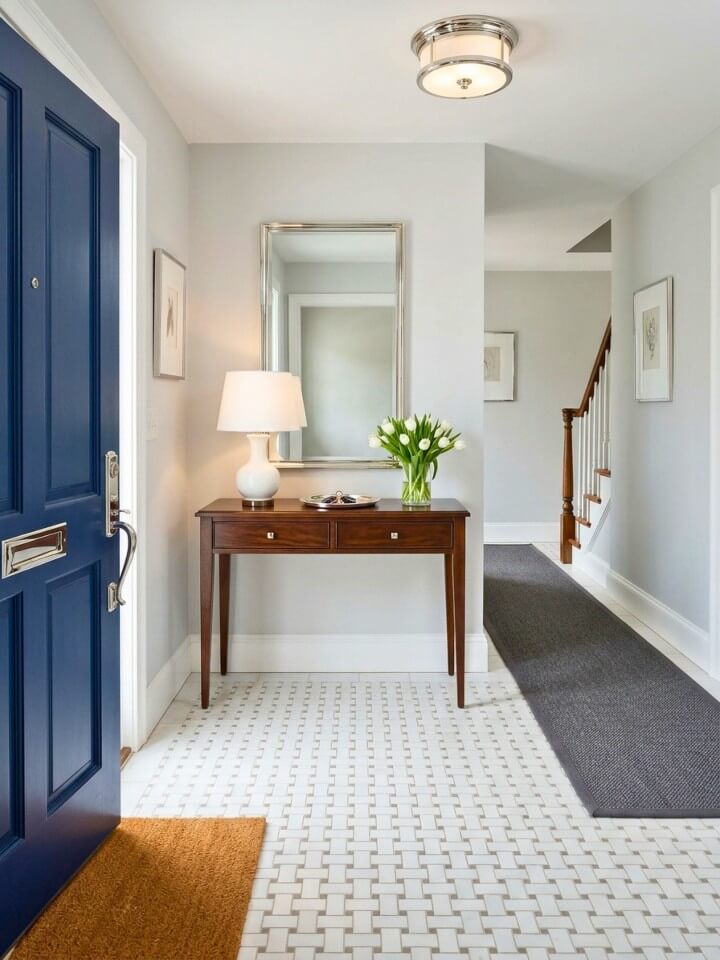
The basketweave pattern arranges rectangular tiles in pairs that alternate direction, creating a woven appearance reminiscent of fine textiles. This subtle pattern adds visual interest without competing with furniture or decor, making it ideal for homeowners who want detail without drama.
Marble basketweave with small contrasting dots at intersection points is the most iconic version, costing $15 to $35 per square foot installed. Porcelain versions start around $6 per square foot. The pattern works in both small foyers, where the detail rewards a close look, and grand entries, where it provides texture against tall ceilings. Pair with traditional console tables, framed botanical prints, and brass or oil-rubbed bronze hardware for a classic American center-hall colonial feel.
12. Cement-Look Porcelain Tiles for Industrial Style
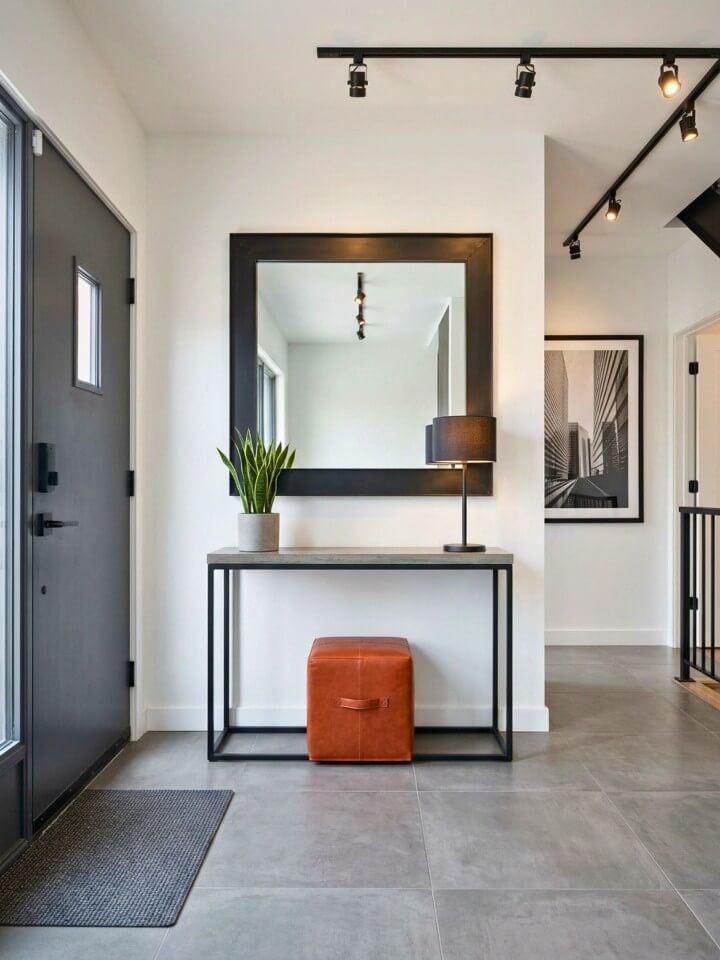
Real concrete floors are heavy, prone to cracking, and need professional sealing. Cement-look porcelain tiles give you the same urban loft aesthetic without any of those problems. The flat, slightly mottled surface feels grounded and architectural, perfect for modern and industrial homes.
Expect $4 to $10 per square foot for quality cement-look porcelain. Common sizes include 24×24 and 24×48, which enhance the seamless concrete illusion. Colors range from light dove gray to deep charcoal, with some options featuring subtle warm undertones to prevent a cold feeling. Warm up the look with a wool runner, a leather bench, brass coat hooks, and a few houseplants. This style works particularly well in lofts, converted warehouses, and contemporary new construction homes.
13. Mosaic Tile Borders for a Custom-Designed Look
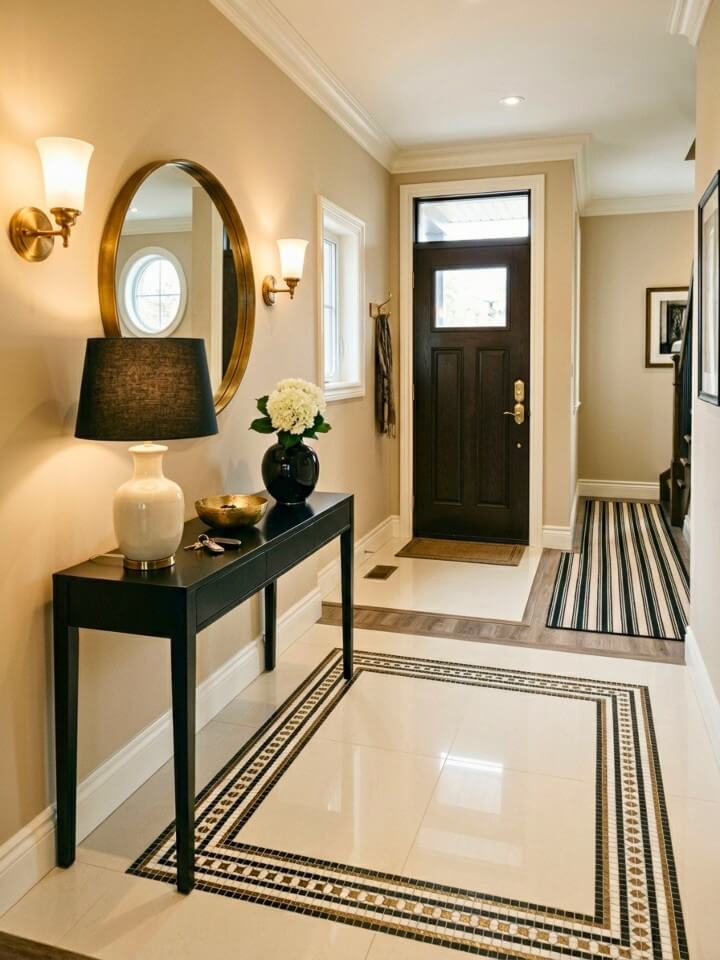
Why choose between simple and decorative when you can have both? A mosaic border frames the main entryway floor like a beautiful welcome mat built right into the design. This approach delivers high visual impact while keeping costs manageable since only the border uses pricier tiles.
Mosaic borders typically run 4 to 12 inches wide and cost $20 to $60 per linear foot installed. Popular border styles include Greek key patterns, simple chain links, floral medallions, and geometric repeats in marble, glass, or porcelain. Pair a detailed border with simple field tiles like large neutral squares so the border clearly stands out. This idea works beautifully in foyers with defined boundaries, especially homes built before 1940 where decorative tile borders were common.
14. Travertine Tiles for Natural, Earthy Beauty
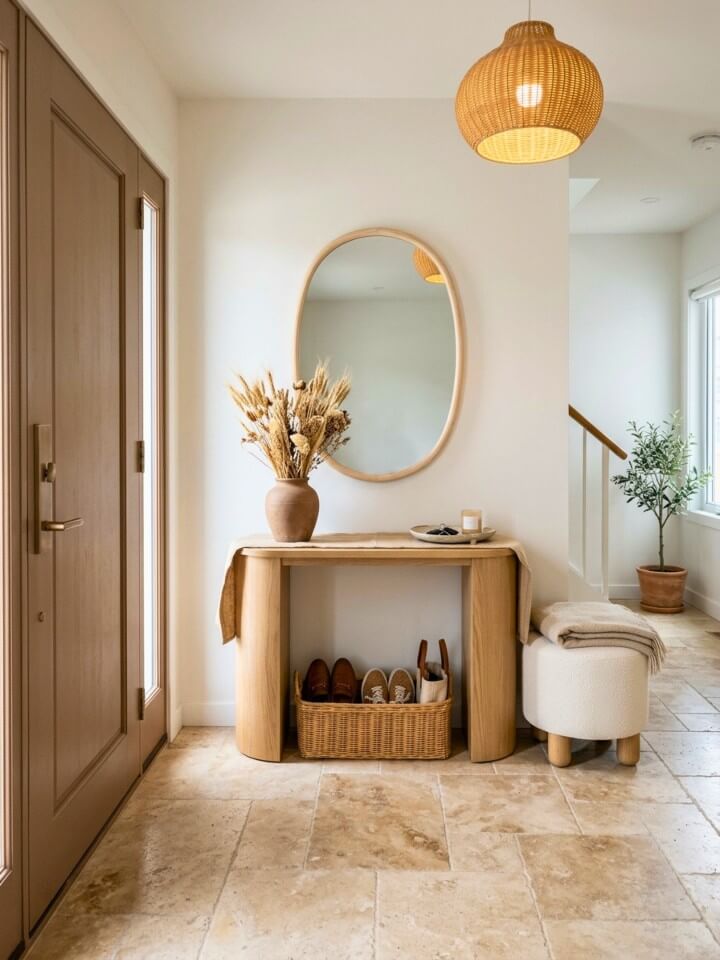
Travertine has been used in architecture since ancient Rome, and its warm, sun-baked color palette still feels relevant in modern American homes. The natural pitting and movement in each tile means no two pieces look exactly alike, giving floors an organic character that manufactured tiles cannot match.
Travertine ranges from $5 to $15 per square foot depending on finish and grade. Honed and filled travertine offers the smoothest surface and is best for entryways, while tumbled travertine adds rustic texture but collects more dirt. Seal every 2 to 3 years to protect against staining from salt, water, and oils. The cream, beige, and golden tones work beautifully with Mediterranean, Tuscan, transitional, and modern farmhouse interiors. Pair with iron light fixtures and natural wood for the strongest effect.
15. Diagonal Tile Layout to Visually Expand Small Spaces
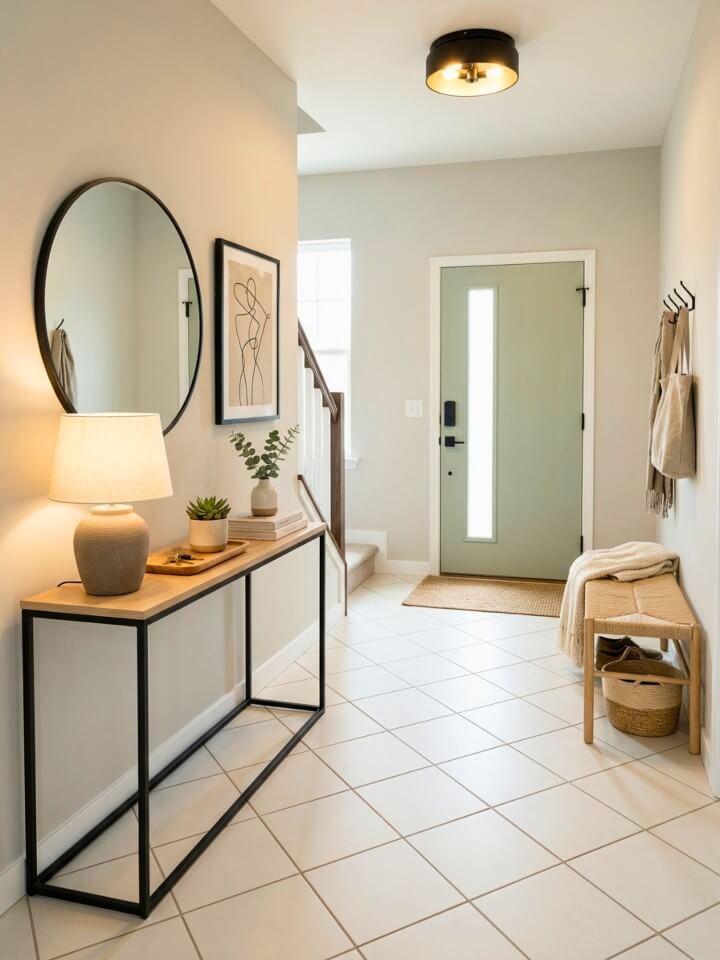
When square tiles are installed at a 45-degree angle, the diagonal lines trick the eye into perceiving more floor space. This simple installation choice is one of the cheapest ways to make a small foyer feel significantly larger without changing the tile itself.
Diagonal installation adds about 10 to 15 percent to labor costs and produces more waste, so order 15 to 20 percent extra material. The technique works with any square tile from 12×12 up to 24×24 inches but is most effective with medium sizes around 16×16 or 18×18. Light colors like ivory, greige, and soft taupe maximize the space-expanding illusion. This approach pairs especially well with narrow entries in row houses, condos, and older bungalows where every visual trick to gain space helps.
16. Chevron Pattern for Dynamic Forward Motion
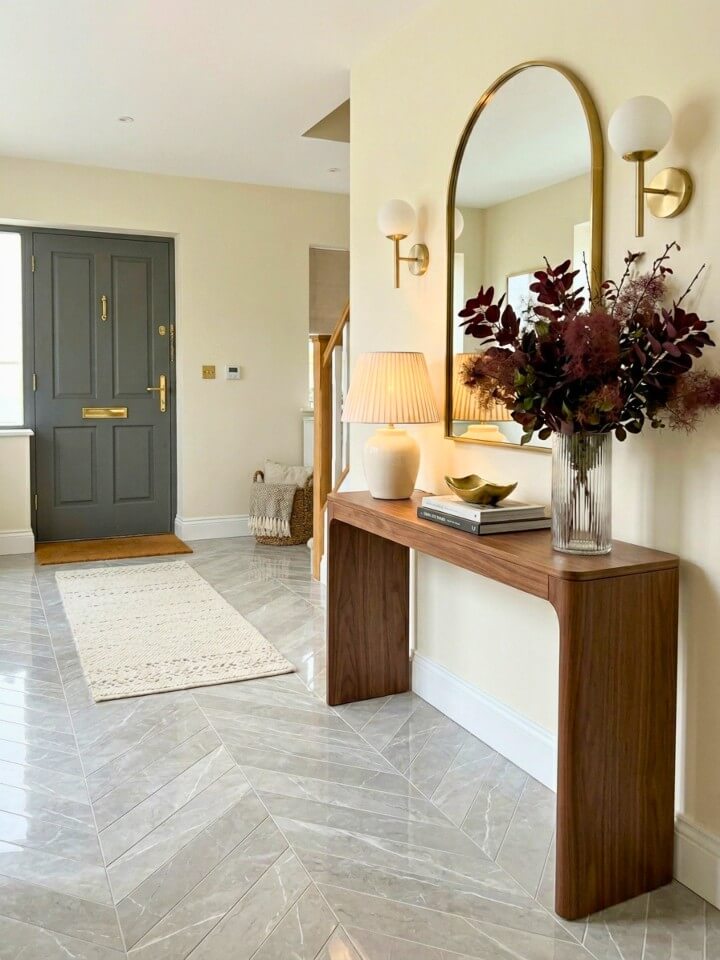
Often confused with herringbone, chevron features tiles cut at an angle so the ends meet in a perfect point, creating sharp V-shapes that march down the floor. The result feels more formal and tailored than herringbone, with cleaner lines that suit luxury and contemporary interiors.
Chevron tiles come pre-cut from manufacturers, eliminating the angled cuts installers would need to make on site. Expect $8 to $20 per square foot for the tile alone, with installation running $8 to $15 on top of that. Marble-look porcelain, real marble, and wood-look options all come in chevron format. The strong directional pattern works best in narrow entries where the V-shapes point toward the main living space, drawing guests naturally into the home.
17. Pebble Tiles for a Spa-Inspired Entry
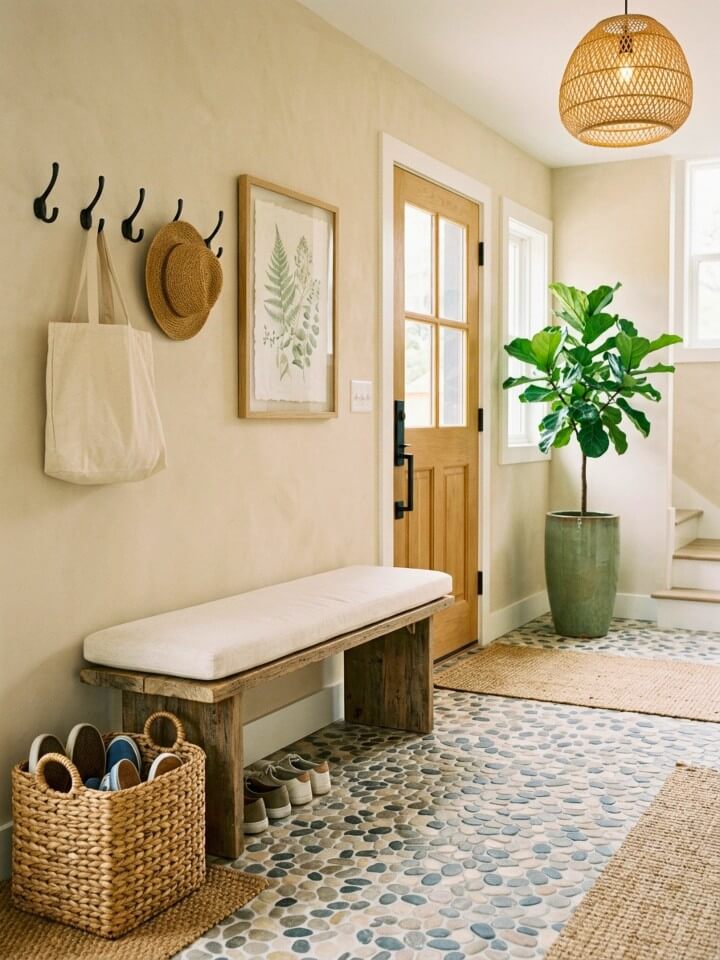
Pebble tiles use real smooth river stones attached to mesh backing, creating a textured floor that feels like walking on a stream bed. The natural shape and varied stone colors bring a calming, outdoor-inspired quality to the entry, perfect for homes near the coast or in mountain settings.
Pebble tile sheets cost $8 to $20 per square foot, with installation running higher than flat tile because of the irregular surface. The many crevices between stones require extensive grout, sealing, and ongoing maintenance, so this is not the easiest entryway option. However, the slip resistance is excellent, and tracked-in dirt tends to hide in the texture between cleanings. Best paired with spa-style decor including a teak bench, neutral walls, and floor-to-ceiling natural fiber rugs nearby.
18. Terrazzo Flooring for Playful Modern Style
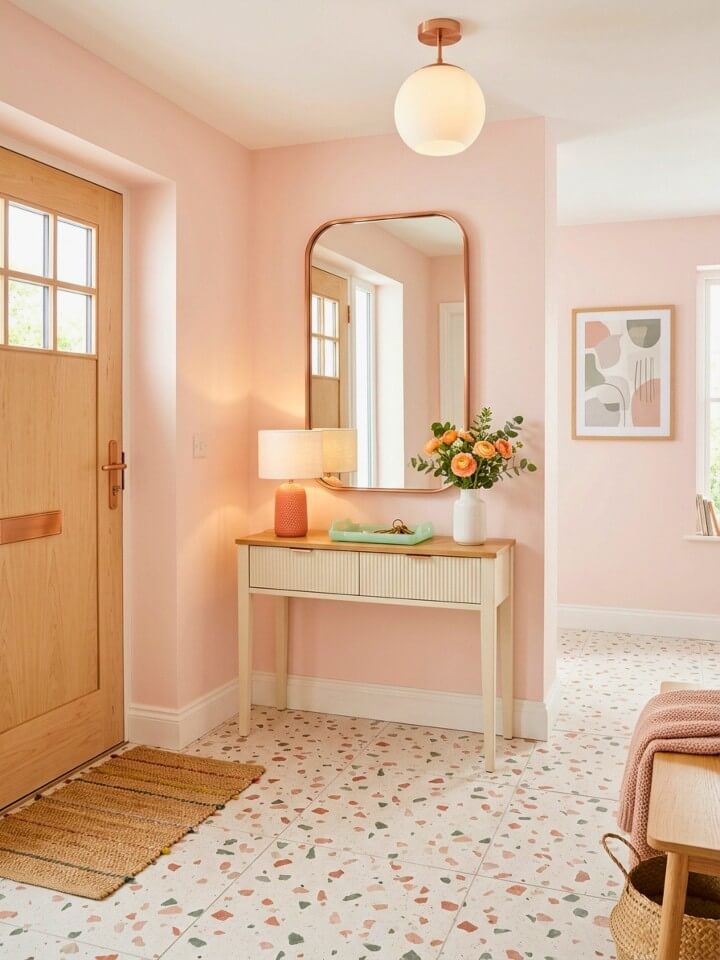
Terrazzo, made by setting chips of marble, glass, granite, or quartz into a binder, has staged a major comeback in American interior design. The speckled surface adds visual interest while remaining surprisingly versatile, working with mid-century modern, eclectic, contemporary, and even bohemian styles.
Pre-made terrazzo tiles cost $10 to $30 per square foot and install like regular tile. True poured terrazzo runs $25 to $90 per square foot but creates a completely seamless surface. Neutral terrazzo with subtle white and gray chips reads as classic, while bolder versions with pink, green, or blue flecks bring personality. The hard, polished surface is incredibly durable, often lasting 75 years or more, which makes the higher initial cost easier to justify for forever homes.
19. Continuous Tile Flow Into Adjoining Rooms
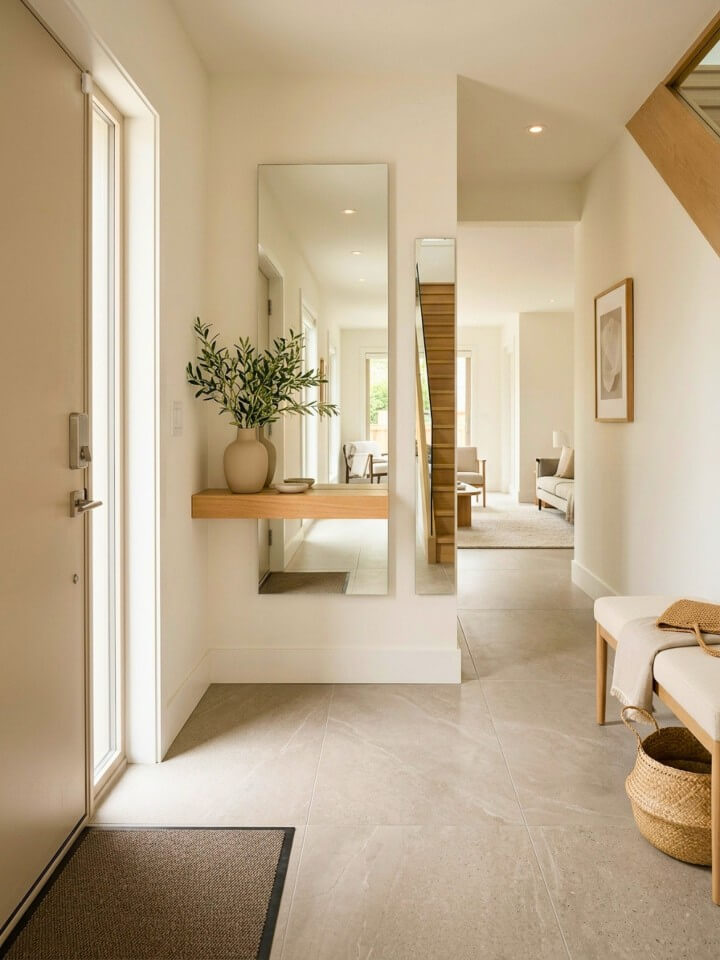
Instead of stopping the entryway tile at an obvious threshold, carry the same tile into the hallway, kitchen, or open living space. This approach makes the entire main floor feel larger, more cohesive, and intentionally designed rather than chopped up into small zones.
This technique works best with large-format porcelain in neutral stone-look or wood-look finishes. Use the same tile throughout the high-traffic zones and define the entry visually with a runner rug, a console table, or a change in ceiling treatment. Budget accordingly since you will need tile for a much larger area. The flow approach is particularly effective in open-concept new construction and ranch homes built from the 1960s onward, where dividing walls have been removed.
20. Matte Black Tiles for Dramatic Modern Foyers
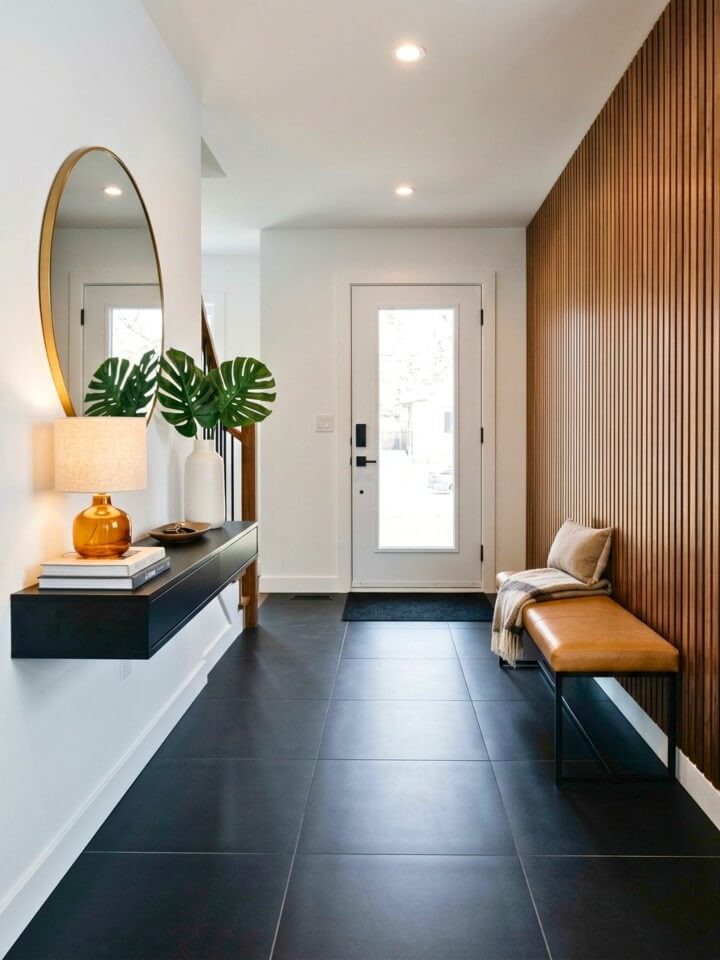
Black floors take confidence, but the payoff is a foyer that feels designed, sophisticated, and unforgettable. Matte black porcelain delivers the drama without the high-maintenance shine that shows every smudge and footprint, making it more practical than glossy black for entryways.
Matte black porcelain ranges from $4 to $12 per square foot. Choose tiles with a slight texture or subtle pattern to hide dust between cleanings. Pair with bright white walls, brass or warm gold hardware, and plenty of layered lighting since the dark floor absorbs light. Add warmth with a wood console, a large mirror to bounce light around, and a single statement plant. This look suits modern, art deco revival, and high-contrast traditional homes equally well.
21. Glossy White Tiles to Brighten Dark Entries
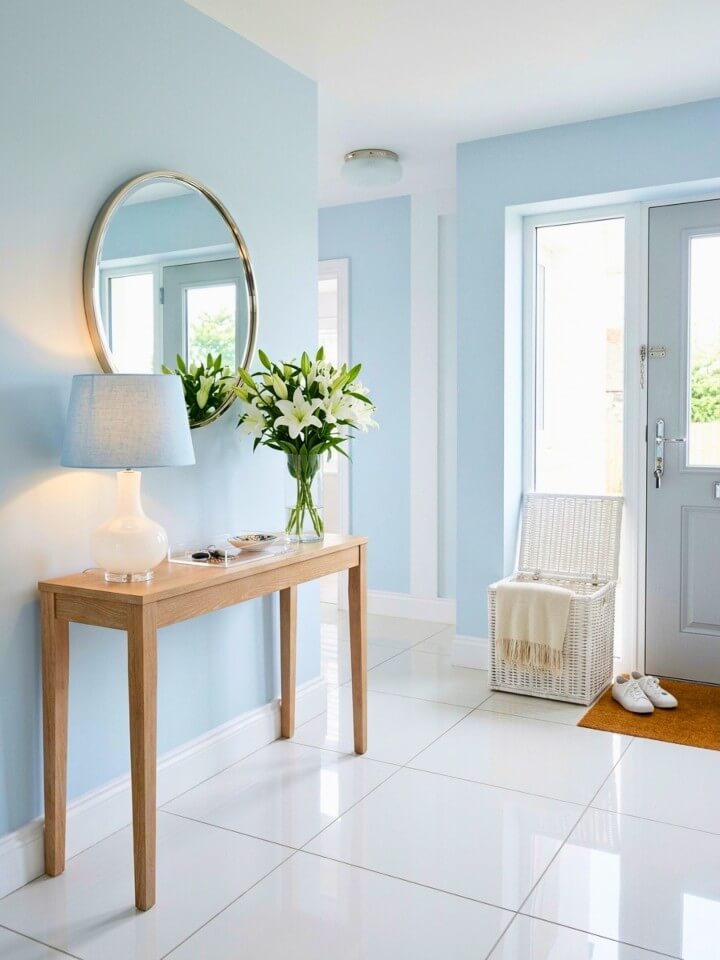
Some foyers get almost no natural light, especially in townhouses, row homes, and older houses with small windows. Glossy white tiles reflect every bit of available light, instantly making dark entries feel brighter and more welcoming without major renovation.
Glossy white porcelain costs $3 to $8 per square foot. Large 24×24 inch tiles maximize the light-reflecting effect, while smaller subway-style tiles work better in tight spaces. The downside is that glossy white shows every footprint and dust speck, so plan on more frequent cleaning. Choose tiles with a slight gray or warm undertone to soften the look and hide marks better than pure stark white. Pair with light wood furniture, woven natural baskets, and a soft runner rug for warmth and texture.
22. Brick-Look Tiles for Rustic Farmhouse Warmth
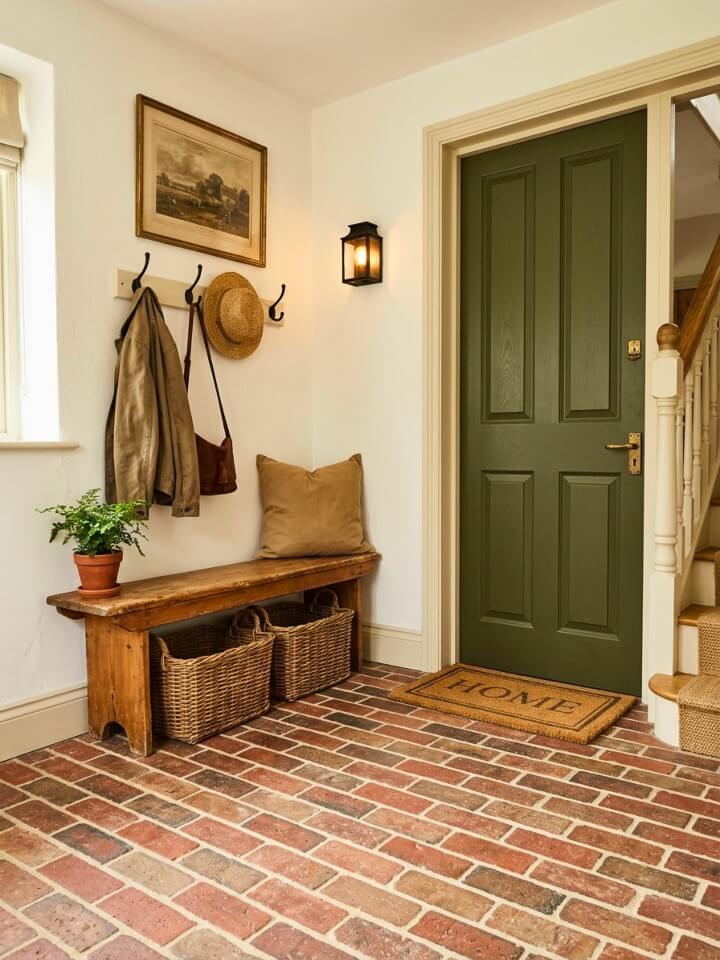
Brick-look porcelain captures the cozy, time-worn appeal of vintage brick floors without the maintenance, cold feeling, or moisture issues real brick brings to interior spaces. This style has exploded in popularity with the modern farmhouse trend and works beautifully in country, cottage, and rustic homes.
Expect $4 to $10 per square foot for quality brick-look porcelain in sizes like 2.5×10 or 4×12 inches. Color options range from classic red Chicago brick to whitewashed, weathered gray, and antique cream. A herringbone or running bond layout enhances the authentic effect. Use matching colored grout for a seamless appearance or contrasting grout to emphasize each tile shape. Pair with black metal coat hooks, a wood bench, and galvanized accents for the strongest farmhouse statement.
23. Blue and White Patterned Tiles for Coastal Charm
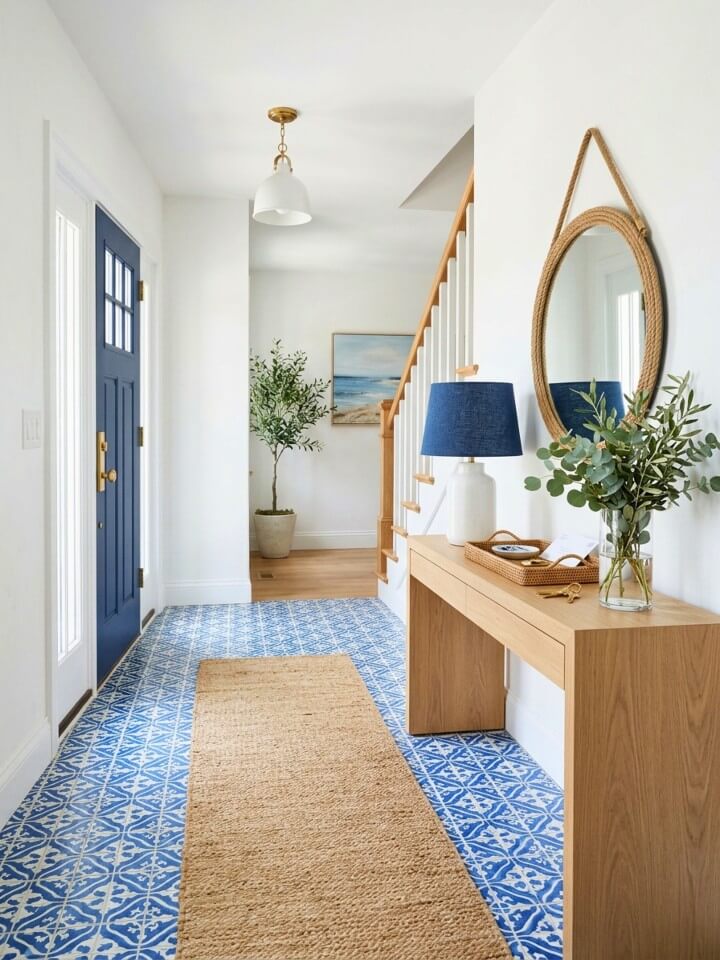
Few color combinations feel as fresh and timeless as blue and white. Inspired by Portuguese azulejos, Dutch Delft pottery, and Greek island design, blue and white patterned tiles bring instant character to entryways without feeling trendy or dated.
Patterned blue and white porcelain costs $6 to $18 per square foot, while authentic hand-painted ceramic tiles can run $30 or more. Common patterns include simple geometric repeats, ornate medallions, and Moorish star designs. The white background keeps the look bright and prevents the blue from feeling heavy. This style works wonderfully in coastal homes, Cape Cods, and homes with traditional or grandmillennial decor. Pair with white wainscoting, a natural wood bench, woven baskets, and a vintage-style runner for an effortlessly charming entry.
24. Contrasting Grout for Pattern Without Patterned Tile
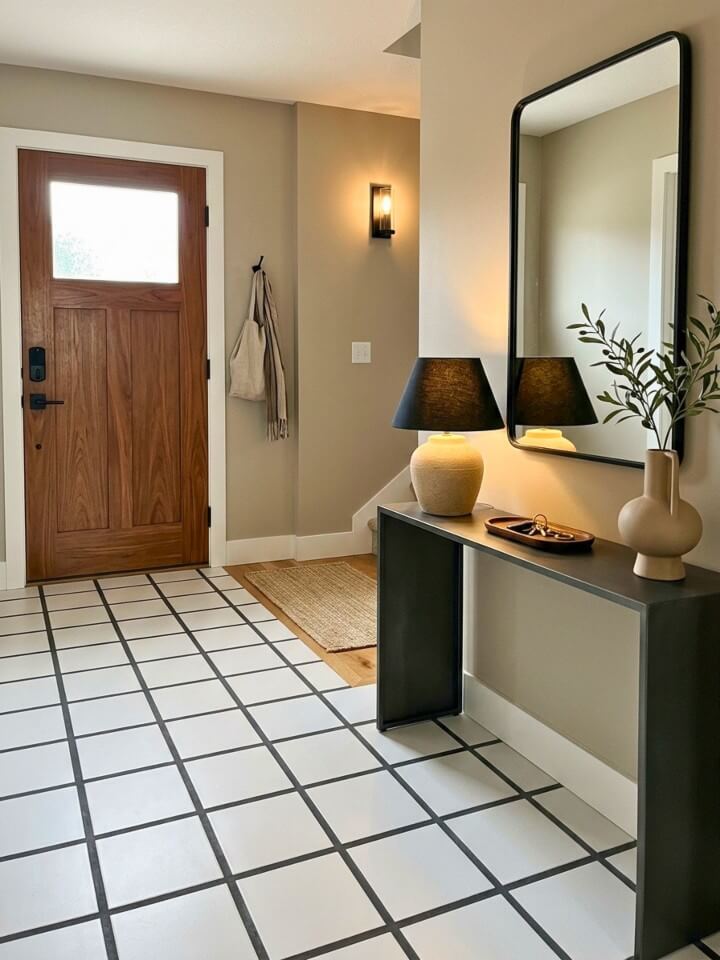
Want bold visual impact without committing to patterned tiles? The grout color you choose dramatically changes how plain tiles look. Dark grout with white tiles creates a graphic, modern grid effect, while light grout with dark tiles produces a softer, more open feeling.
Grout color choice costs nothing extra, making this one of the highest-impact design decisions you can make. Use epoxy grout, which costs about $8 to $12 per square foot installed versus $3 to $5 for standard grout, to prevent staining and color fading over time. Dark gray or charcoal grout is more forgiving than pure black, which can look harsh against bright white tile. This approach works with any tile shape from hexagons to large squares and suits modern, industrial, and contemporary farmhouse interiors.
25. Floral Pattern Tiles for Welcoming Personality
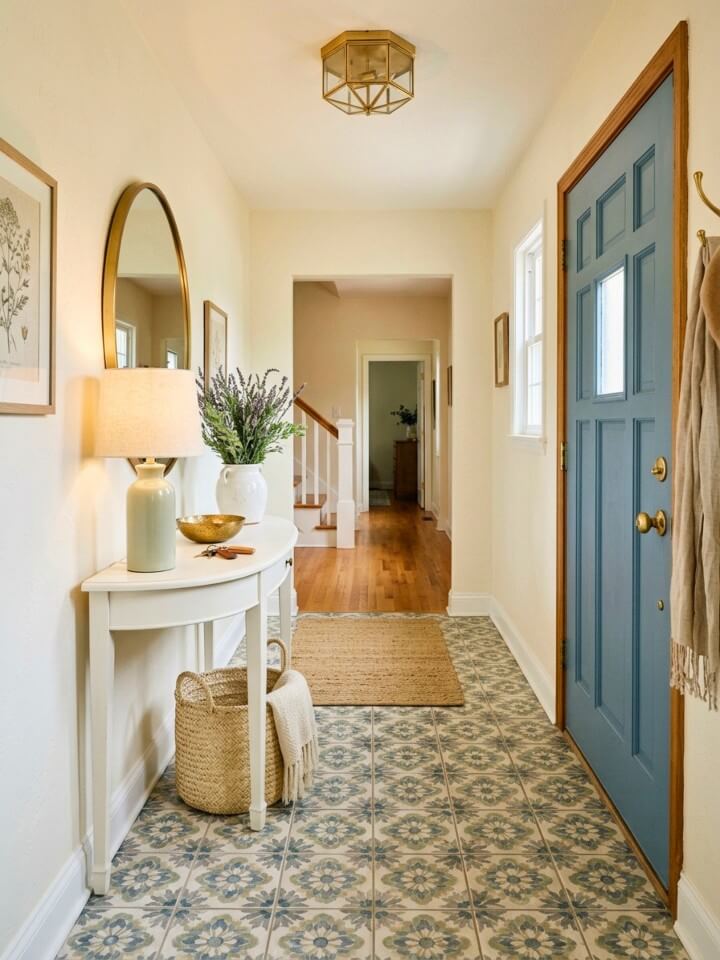
Floral patterned tiles bring a sense of warmth and beauty that few other materials can match. From delicate vine motifs to bold botanical designs, these tiles turn the foyer floor into a piece of decorative art that welcomes guests with charm and character.
Patterned floral porcelain typically costs $7 to $20 per square foot, with hand-painted ceramic options running considerably higher. Muted color palettes featuring sage green, dusty rose, cream, and soft gray feel sophisticated rather than overly sweet. Use floral tiles across the entire entry floor for maximum impact, or as a centered medallion with plain field tiles around them for a more restrained look. Pair with simple white walls, a natural wood console, and fresh greenery to let the floor remain the star of the room.
26. Mixed Tile Sizes for a Custom Architectural Floor
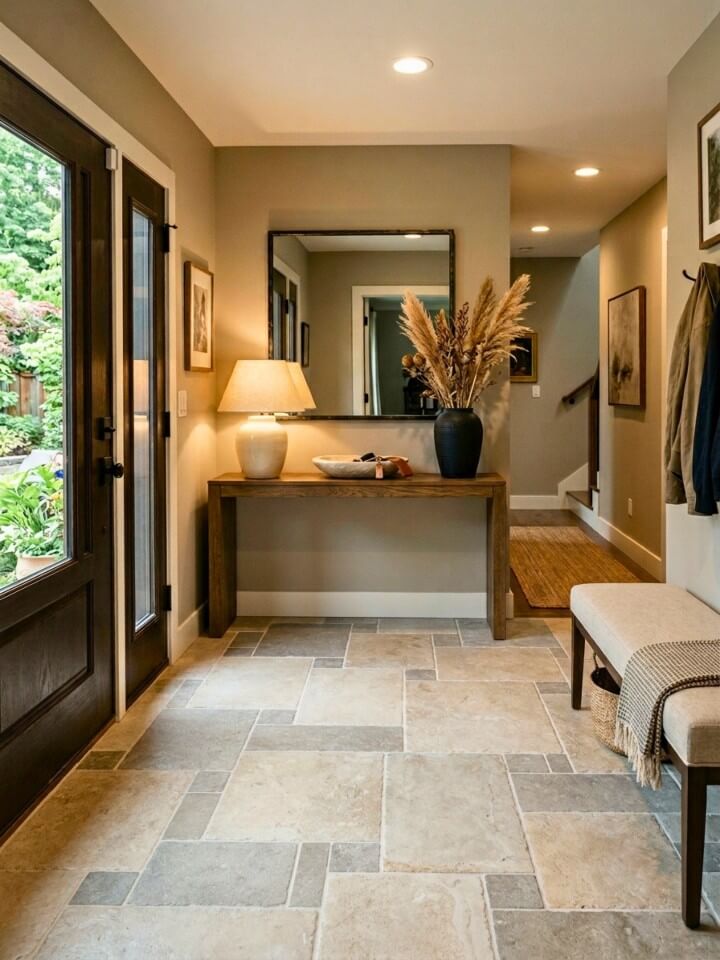
For a truly one-of-a-kind entryway floor, combine tiles of different sizes into a coordinated pattern. Often called a Versailles or French pattern when using stone, this approach mixes squares and rectangles of varying dimensions into a repeating module that looks custom-designed.
Pre-bundled multi-size sets are available from most tile manufacturers, typically costing $8 to $25 per square foot. Installation runs higher because of the more complex layout planning required, so expect $10 to $18 in labor per square foot. Travertine, limestone, and porcelain stone-look tiles all come in Versailles patterns. Keep the color palette tight, using one stone color in different sizes rather than mixing colors, so the pattern reads as intentional rather than chaotic. This look suits traditional, French country, and Mediterranean homes beautifully.
FAQs About Entryway Tile
The article above covers styles, costs, and durability, but a few practical questions still come up when people actually start their tile project. Here are five more answers to help you plan, install, and maintain your entryway floor with confidence.
What Size Tile Is Best for A Small Entryway?
For foyers under 50 square feet, 12×12 or 16×16 inch tiles work best. Larger tiles can overwhelm small spaces, while very small tiles create too many busy grout lines. Diagonal installation can also help small entries feel bigger.
What Is the Most Durable Tile for An Entryway?
Porcelain tile with a PEI rating of 4 or 5 is the most durable choice for entryways. It resists chips, scratches, water, and stains better than ceramic, natural stone, or vinyl options. Slate is the toughest natural stone for entryways.
How Much Does It Cost to Tile an Entryway?
Most homeowners spend $800 to $3,000 to tile an average 40 to 60 square foot entryway. Material costs run $4 to $15 per square foot, and installation adds $7 to $14 per square foot. Complex patterns and large-format tiles cost more.
What Is the Best Tile Color to Hide Dirt?
Mid-tone colors like greige, warm beige, and medium gray hide dirt better than pure white or pure black. Tiles with subtle patterns, variation, or speckling disguise dust and footprints best between cleanings.
Should Entryway Tile Match the Rest of The Floor?
You can either match for a seamless flow or contrast to define the entry as its own zone. Matching works best in open-concept homes, while contrasting works well in homes with defined rooms and clear thresholds.
Is Tile or Hardwood Better for Entryways?
Tile is the better choice for most American climates because it handles moisture from rain and snow without warping. Wood-look porcelain offers the appearance of hardwood with the durability of tile, making it an ideal compromise.
Choosing the Right Entryway Tile for Your Home
The best entryway tile balances three things: how it looks, how well it handles daily wear, and how easy it is to maintain. Before you buy, take measurements of your space, gather samples to view in your actual lighting, and think honestly about your household. Families with young kids, pets, or snowy winters need different tiles than empty nesters in mild climates.
Whatever style you choose, invest in quality installation. Even the most beautiful tile looks bad with poor grout lines or uneven cuts. A skilled installer is worth the higher labor cost and will make your entryway floor look polished for decades to come.