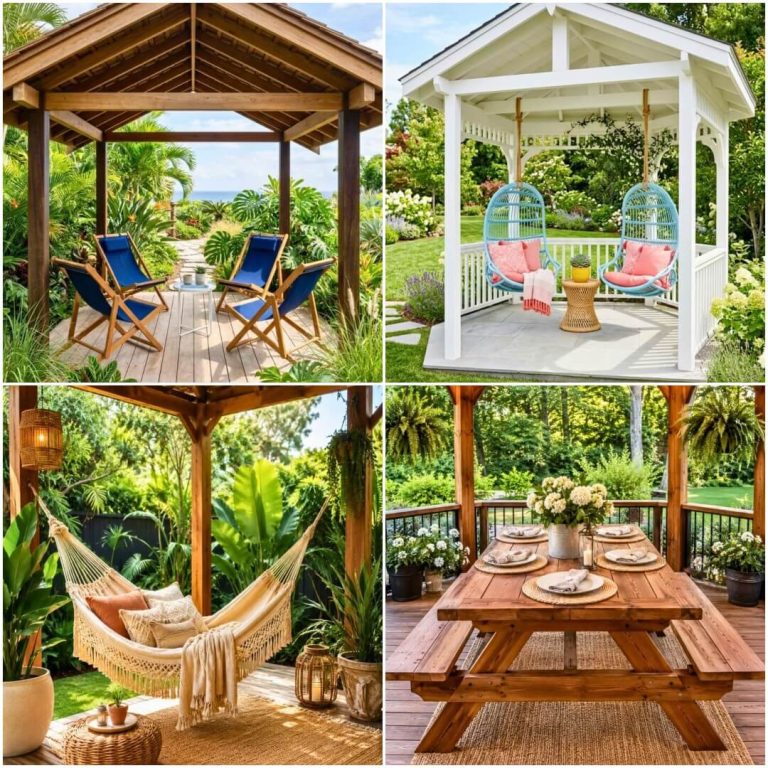
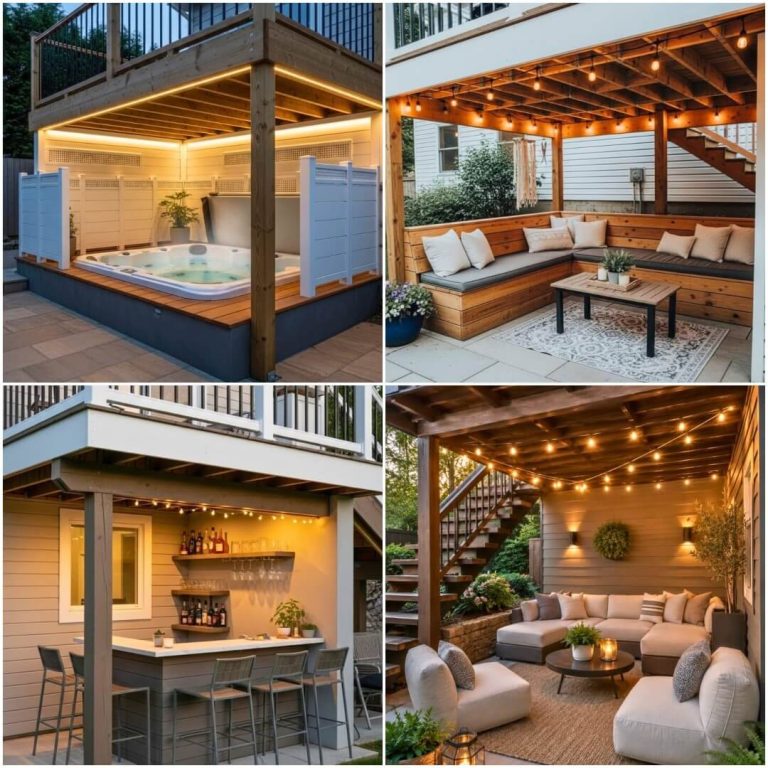
19 Townhouse Patio Ideas That Make Small Spaces Feel Bigger
Owning a townhouse usually means working with a patio that’s tighter than you’d like — often somewhere between 100 and 200 square feet, boxed in by shared walls, a back fence, or close neighbors. The good news? A small footprint doesn’t mean small possibilities. With the right layout, smart furniture choices, and a few clever upgrades, even a narrow concrete slab can become your favorite spot for morning coffee, weekend grilling, or quiet evenings under string lights.
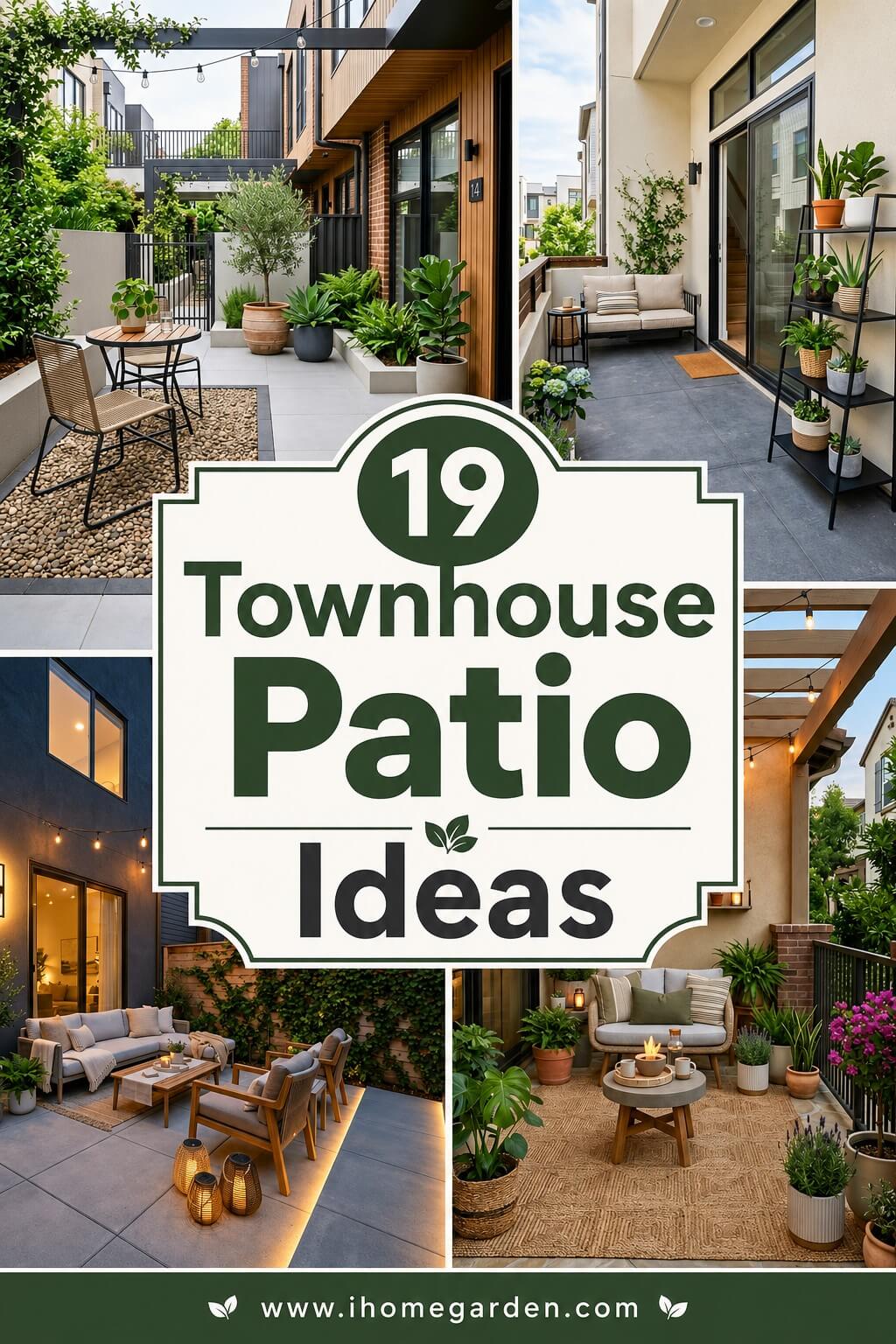
Before diving in, two quick things worth checking: your HOA guidelines (many communities have rules about fire pits, pergolas, paint colors, and fence heights) and your climate zone, since what thrives on a sunny Phoenix patio won’t survive a damp Seattle one. Once those are sorted, these 19 smart townhouse patio ideas will help you stretch every square foot — covering greenery, seating, dining, lighting, privacy, and a few personality touches that make the space genuinely yours.
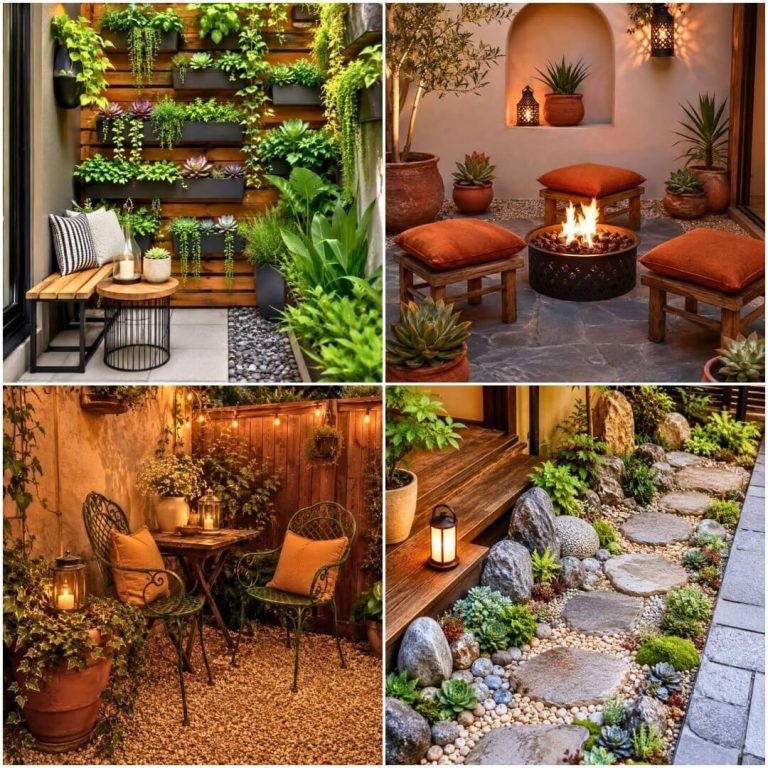
1. Vertical Garden Wall
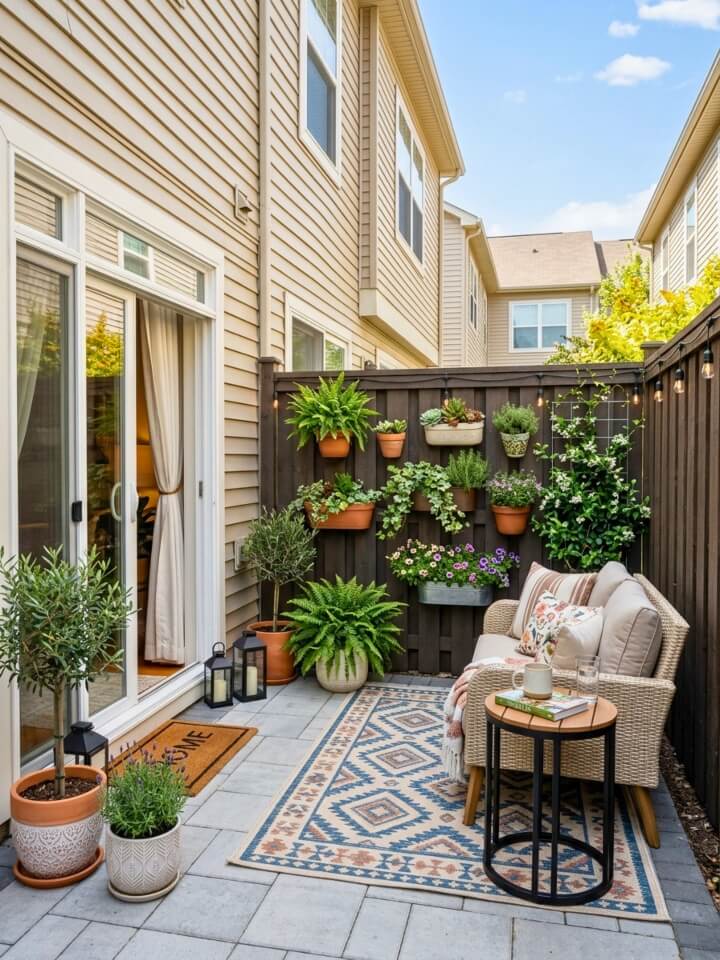
Blank fences and bare exterior walls are wasted real estate on a townhouse patio. Going vertical with your greenery solves that — and it frees up the floor for actual living.
A vertical garden can be as simple as a $40 felt pocket planter from Amazon or as polished as a custom-built cedar trellis system pushing $600. Most homeowners land somewhere in the middle with modular options from brands like Florafelt or WallyGro.
What Grows Well on A Vertical Wall
- Trailing plants: pothos, string of pearls, ivy
- Edibles: thyme, oregano, strawberries, lettuce
- Flowering: petunias, begonias, nasturtiums
Stick to plants that share similar light and water needs — mixing a succulent with a fern on the same wall is a fast way to lose both. And before you drill into anything, double-check whether that fence is yours, shared, or fully your neighbor’s. HOAs in many planned communities have opinions on this too.
2. Built-in Bench Seating with Storage
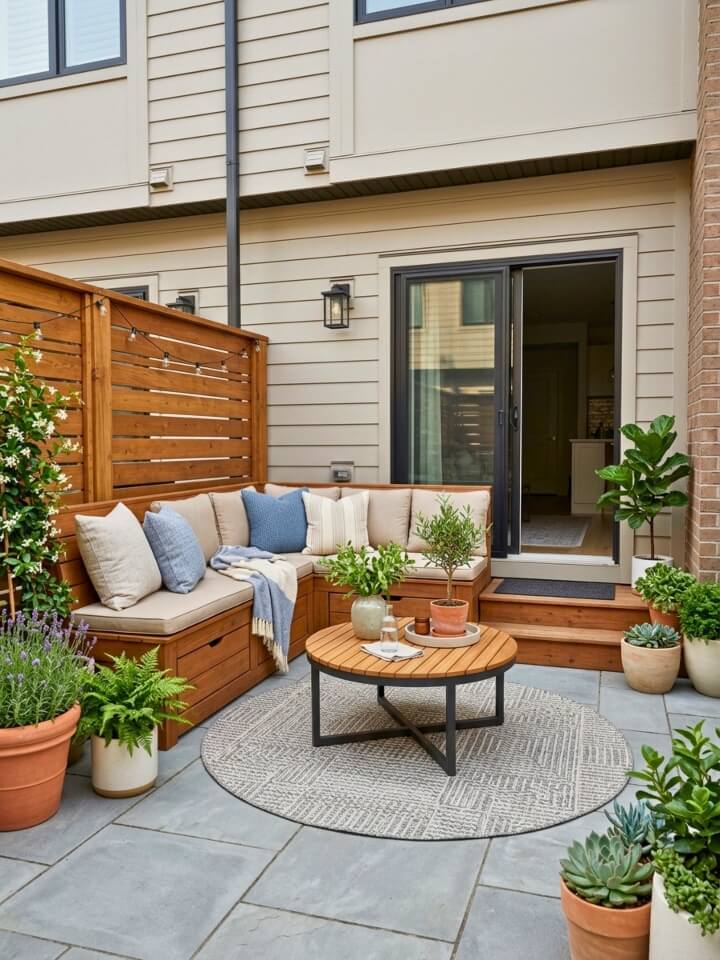
Here’s the math on small patios: every piece of furniture should do at least two jobs. A built-in bench does three — seating, storage, and structure.
An L-shaped bench running along two walls typically seats four to five people and hides a surprising amount underneath: cushions, garden tools, charcoal bags, kids’ outdoor toys, even a folded umbrella. DIY builds in cedar or pressure-treated pine cost roughly $200–$500 in materials over a weekend. A carpenter-built version with proper drainage and gas-strut hinges runs $1,500–$3,500 installed.
A few details that separate a good bench from a great one: keep the seat 17–18 inches off the ground so it works with standard outdoor tables, slope the lid slightly so rainwater drains off, and line the storage cavity with a waterproof membrane. Cushions should be made with quick-dry foam and Sunbrella-grade fabric — anything less turns into a mildew sponge by August.
3. Cozy Outdoor Lounge Nook
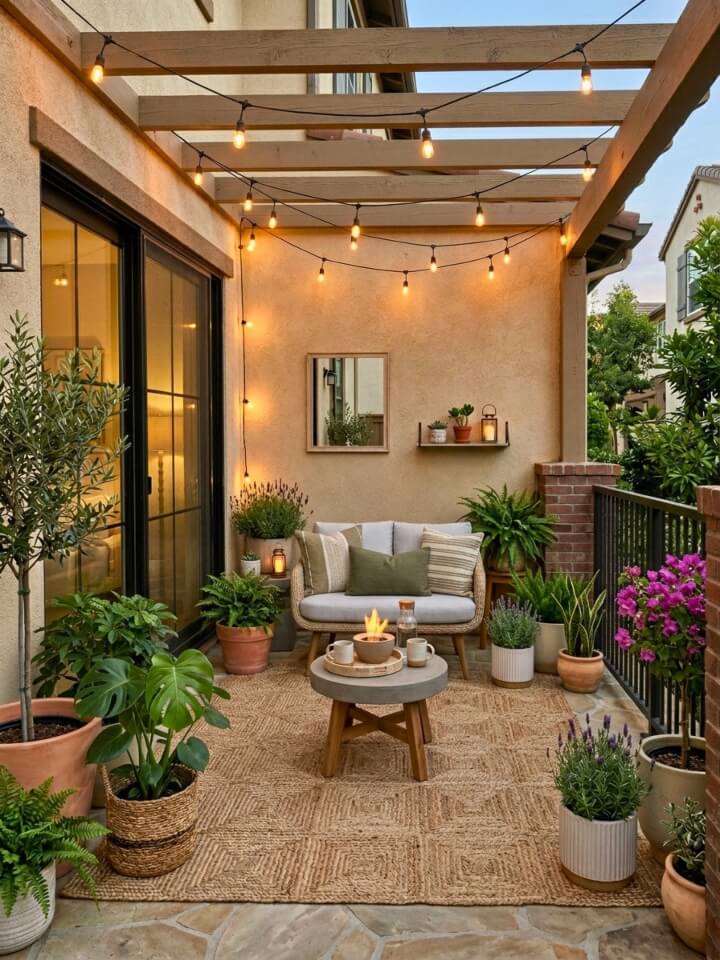
Discover stylish townhouse patio ideas that transform tight outdoor spaces into cozy retreats.
“I had a patio for three years and barely used it. Then I added two chairs, a side table, and a rug — now I’m out there every evening.”
That’s the thing about lounge nooks. They’re less about furniture and more about creating a reason to sit down.
The recipe is simple. Pick the corner of your patio closest to the back door — it usually has the best wind protection and feels like an extension of indoors. Drop in a loveseat or two swivel chairs (Article, Yardbird, and Polywood all carry compact options in the $400–$1,200 range). Add a 24–30 inch side table between them, an outdoor rug to anchor the zone, and a lantern for evening light. That’s it.
Skip the matching furniture sets if you want it to feel collected rather than catalog-ordered. One rattan chair, one upholstered, a vintage side table — that mix reads warmer than anything bought in a box. For more seating inspiration, you can borrow scaled-down arrangement tricks from engaging gazebo furniture ideas and adapt them to your patio’s smaller footprint.
4. Compact Bistro Dining Set
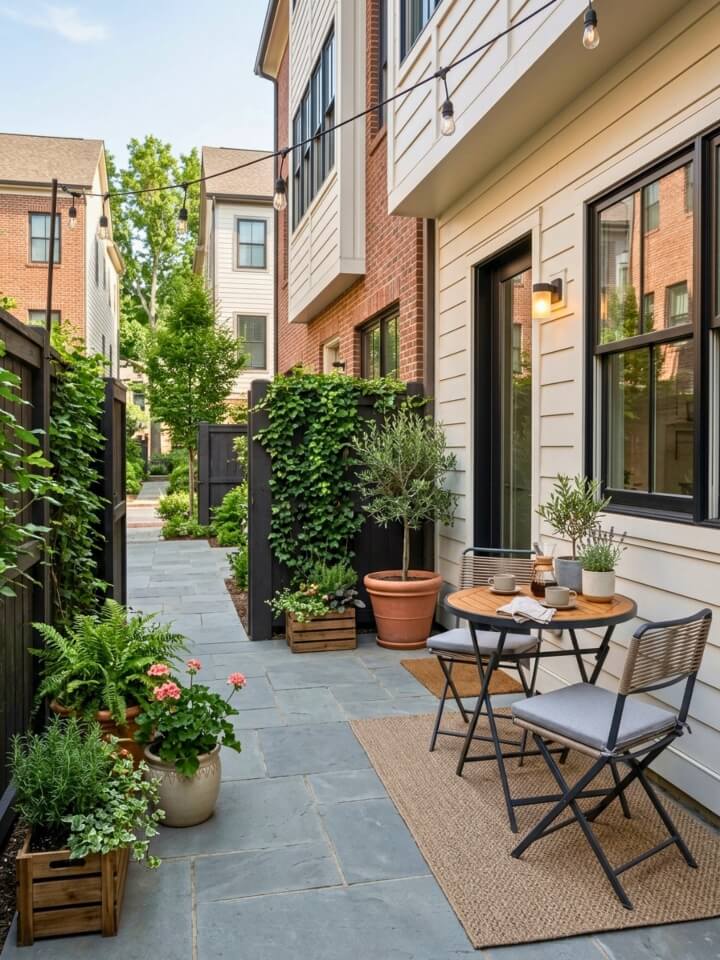
Sometimes a full outdoor dining table is the wrong tool for the job. A bistro set is the right one.
When a Bistro Set Wins Over a Dining Set:
| Situation | Bistro Set | Full Dining Set |
|---|---|---|
| Patio under 150 sq ft | ✅ | ❌ |
| Daily coffee for two | ✅ | ❌ |
| Hosting 6+ people | ❌ | ✅ |
| Need to fold and store | ✅ | ❌ |
| Budget under $300 | ✅ | ❌ |
Look for round tables in the 24–32 inch range — round shapes circulate better than square in tight spaces because there are no corners to bump into. Powder-coated aluminum and stainless steel handle rain far better than untreated wood, and folding versions from IKEA, Target’s Threshold line, or Crate & Barrel typically cost $120–$400.
Leave about 36 inches of clearance behind each chair so people can actually pull out and sit down without scraping the wall.
5. Privacy Screen with Climbing Plants
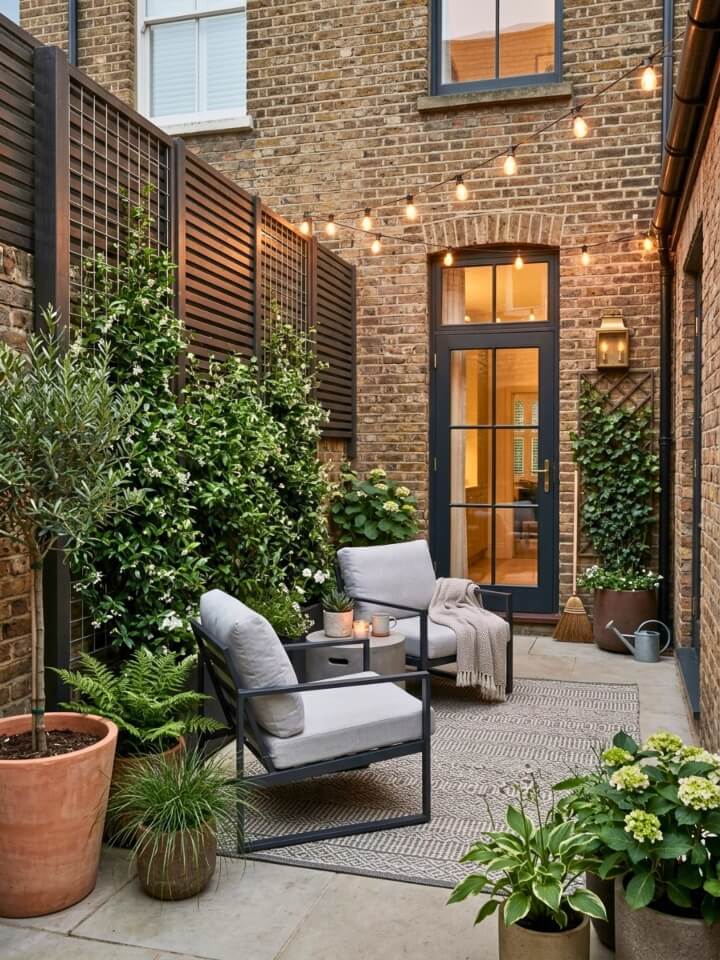
The fastest way to make a townhouse patio feel like yours instead of a fishbowl is to soften the sightlines from neighboring windows and balconies. A privacy screen with climbing plants does it without the harsh look of a tall solid fence.
How to Build One in Three Steps
- Install the framework first. Cedar lattice panels ($30–$80 each at Home Depot), horizontal slat screens, or a metal trellis grid all work. Anchor them into the ground with post spikes or attach to existing fence posts. Aim for 6–7 feet tall.
- Choose climbers that match your light. Full sun gets jasmine, clematis, or climbing roses. Partial shade does better with English ivy, climbing hydrangea, or akebia. Skip wisteria unless you have serious structural support — it tears apart anything flimsy.
- Train and prune the first two seasons. Tie new growth loosely with garden twine to guide it horizontally, which encourages fuller coverage instead of bare legs at the bottom.
By year two, the screen does the work on its own. By year three, you’ll forget there was ever a sightline problem.
6. String Light Canopy
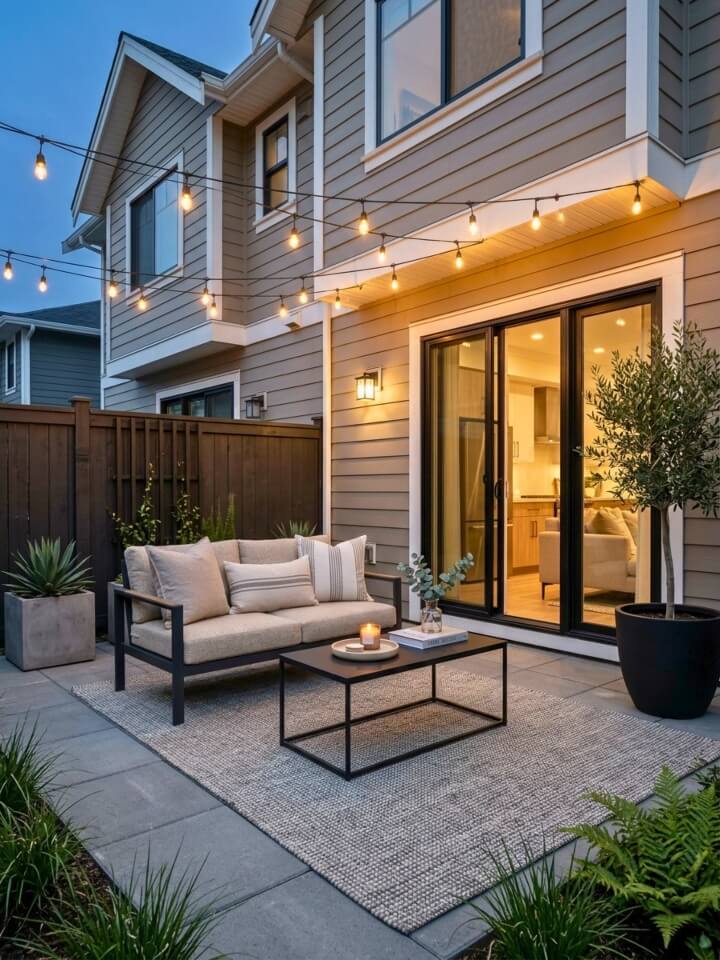
Nothing transforms a patio after sunset like overhead lighting. A string light canopy — warm Edison bulbs crisscrossed between the house, fence, or two planter-anchored poles — creates the kind of glow that makes people linger an extra hour.
For a 150 square foot patio, you’ll need roughly 48 feet of commercial-grade string lights (Brightech and Enbrighten are reliable picks at $40–$80 per strand). Hang them slightly loose in a zigzag or parallel pattern, anchored with eye hooks or guy wire for tension.
Quick Setup Checklist
- Use outdoor-rated bulbs (look for “wet” or “damp” rating)
- Plug into a GFCI outlet
- Add a smart plug for sunset auto-on
7. Foldable Wall-Mounted Table
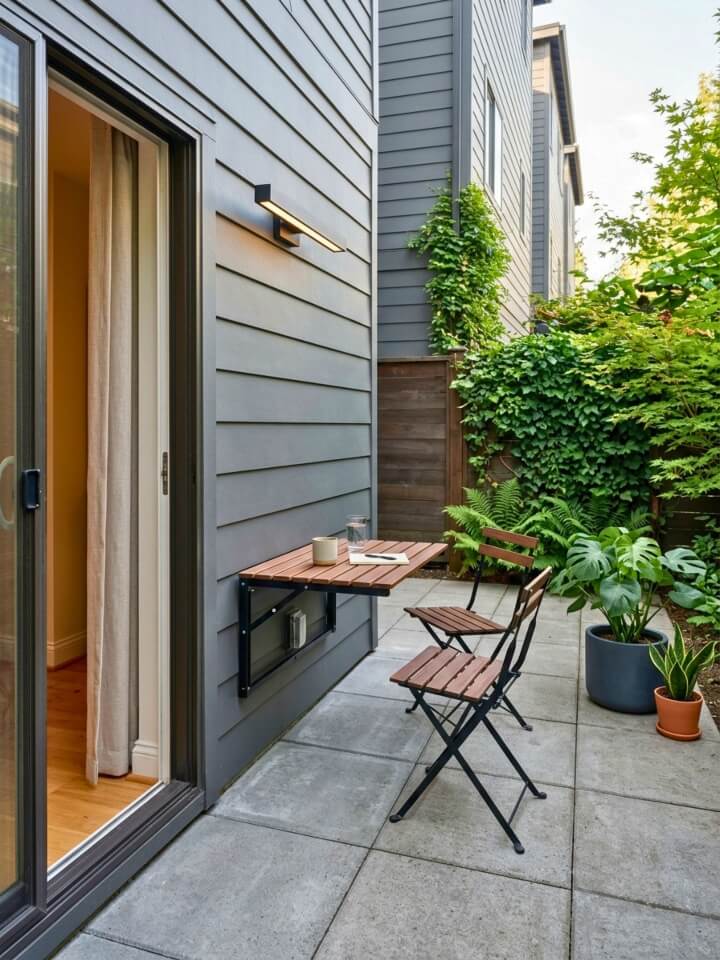
Wall-mounted drop-leaf tables are the unsung hero of small patios. Open, you have a workspace for morning coffee, potting plants, or serving snacks. Folded, the patio reclaims its full floor.
Most models measure 24–36 inches wide and project 18–24 inches when open — enough for two people. IKEA’s NORBERG and Amazon’s various cedar versions run $60–$180. Install it at standard counter height (36 inches) if you’ll stand at it, or 30 inches for seated use.
One Non-Negotiable: anchor the brackets into wall studs or masonry anchors rated for at least 50 pounds. A loaded table with two coffee mugs and a laptop tests cheap hardware fast.
8. Container Herb & Veggie Garden
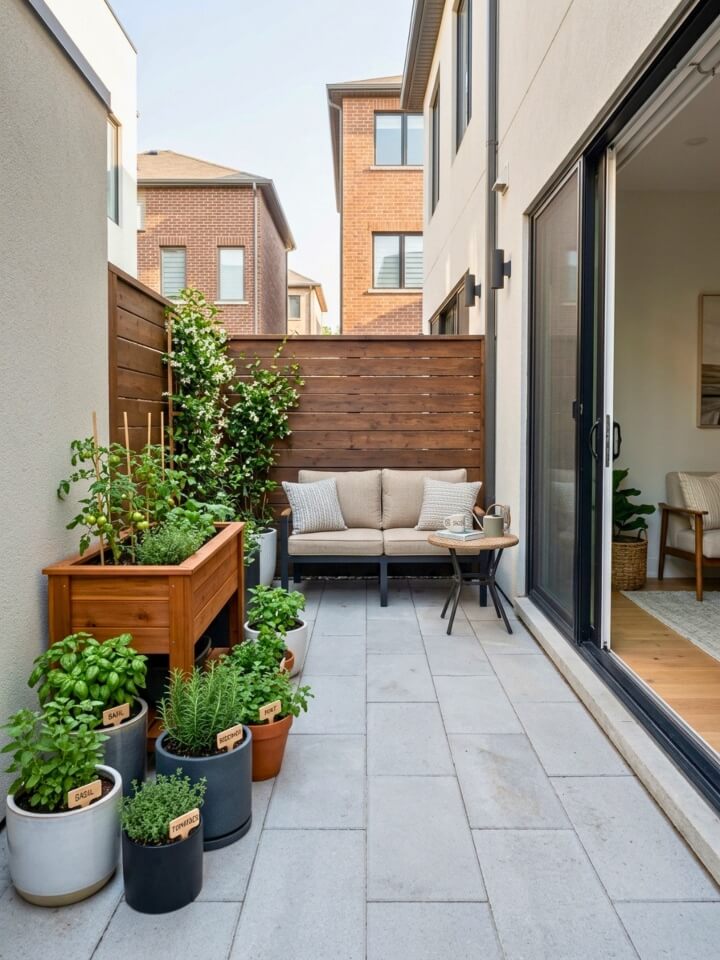
Explore small townhouse patio decorating ideas to craft a charming, functional outdoor escape.
Fresh basil that traveled six feet from pot to plate beats anything from a grocery store clamshell.
Container gardens belong on patios because they’re flexible, beginner-friendly, and productive. The trick is matching the container to the plant.
| Plant | Pot Size | Sun Needed |
|---|---|---|
| Basil, mint, parsley | 6–10 inch | 4–6 hrs |
| Cherry tomatoes | 5 gallon | 6–8 hrs |
| Peppers | 3–5 gallon | 6+ hrs |
| Lettuce, spinach | 8 inch wide | 3–5 hrs |
| Strawberries | Hanging or 10 inch | 6+ hrs |
Self-watering containers from Bloem or Gardener’s Supply ($25–$60) cut your watering schedule in half during summer heat.
For beginners, a few compact containers can give you the same satisfaction as larger pretty herb garden ideas without taking over the patio.
9. Outdoor Rug + Layered Textiles
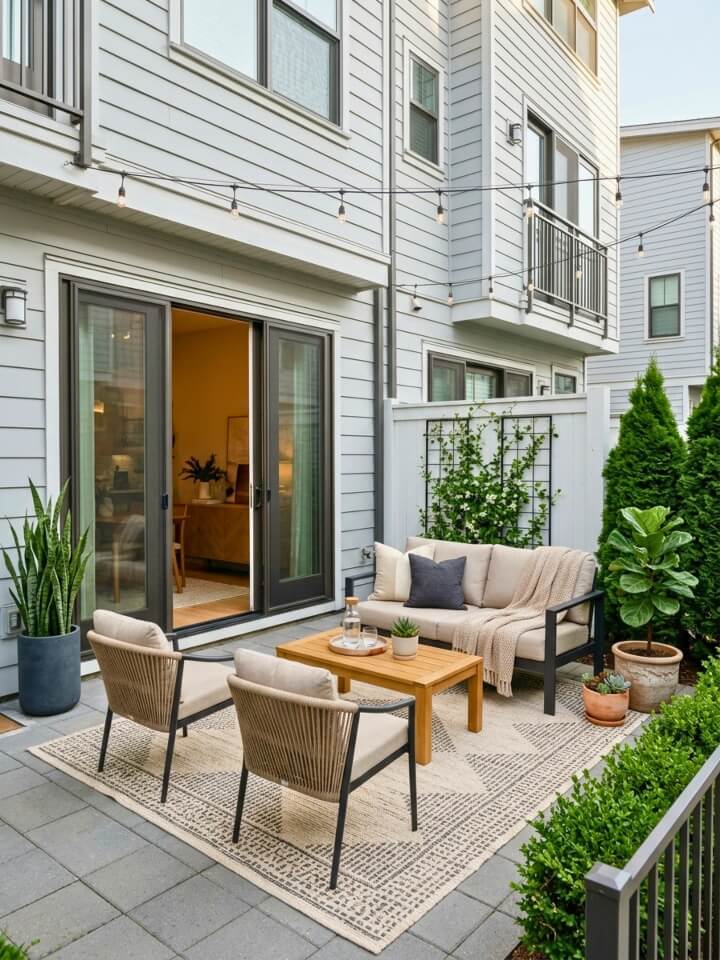
Concrete and pavers are practical but visually cold. A weatherproof outdoor rug instantly warms the space and defines a zone — say, dining versus lounging — without building anything.
Polypropylene rugs from Ruggable, Wayfair, or Lowe’s ($80–$300) handle rain, fade slowly, and hose off clean. Size matters more than pattern: under a bistro set, go 5×7; under a lounge grouping, 8×10 minimum so front chair legs sit on the rug. Anything smaller looks like a postage stamp floating in space.
Layer from there with two or three throw pillows in mixed textures — woven, canvas, a single bold print — and a lightweight throw draped over one chair arm.
10. Corner Fire Pit or Tabletop Fire Bowl
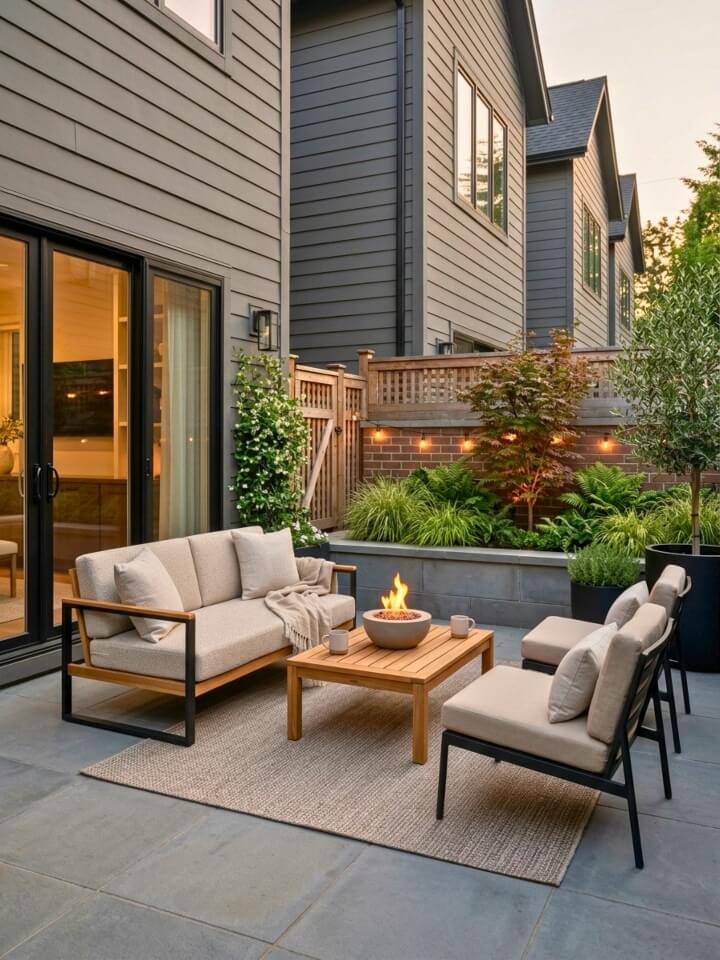
Before buying anything that burns, check two things: your HOA’s open-flame policy and your patio’s overhead clearance. Many townhouse communities ban wood-burning pits outright but allow propane or gel-fuel alternatives.
Three Options by Space and Budget
- Tabletop fire bowl ($40–$150): Gel fuel or bioethanol, no smoke, fits on any sturdy surface. Best for patios under 120 sq ft.
- Propane corner fire pit ($200–$600): Real flame, instant on/off, no smoke or ash. Solo Stove Mesa XL and Outland Living models are HOA-friendly favorites.
- Built-in gas fire feature ($1,500–$4,000): Permanent, gorgeous, requires gas line and permits in most areas.
Keep 3 feet of clearance from any wall, fabric, or overhead structure regardless of which option you choose.
11. Pergola or Shade Sail
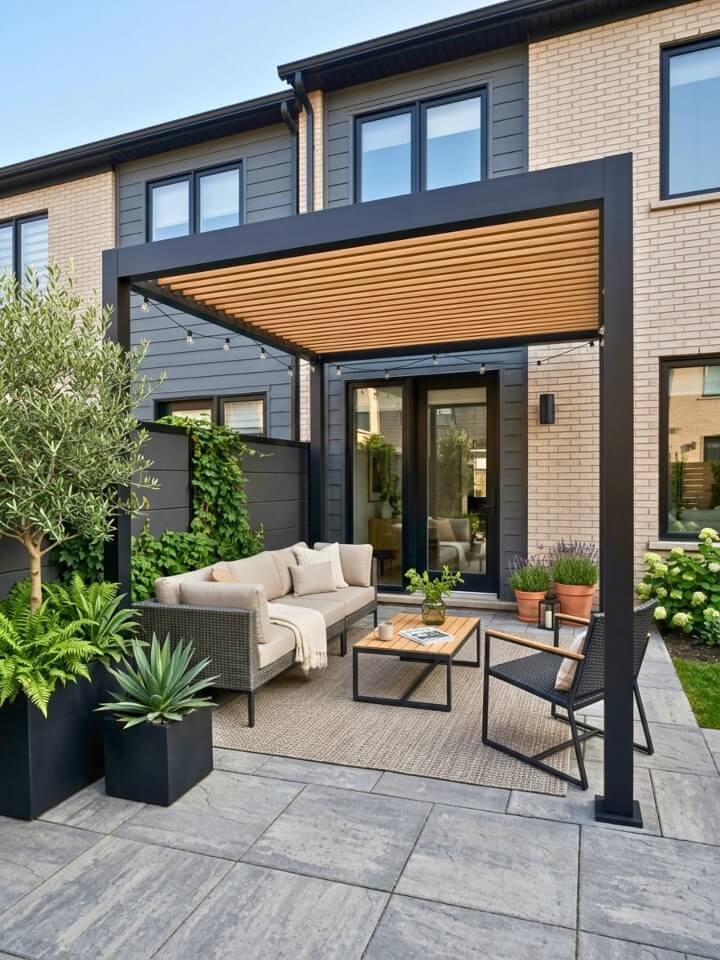
Overhead structure changes how a patio feels more than any other single upgrade. Suddenly there’s a “ceiling,” and the space reads as a real outdoor room instead of an exposed slab.
Pergola vs. Shade Sail — Which Fits Your Patio?
- Pergola: Permanent, $1,500–$6,000 installed, supports climbing plants and string lights, may need HOA approval and a permit
- Shade sail: Semi-permanent, $80–$400, installs in an afternoon with eye bolts, easy to take down before storms or winter
For townhouses under 200 sq ft, a 10×10 shade sail anchored to the house, fence, and one freestanding post usually covers the main seating zone without overwhelming the space. Angle it slightly so rain runs off one corner.
12. Water Feature for Ambiance
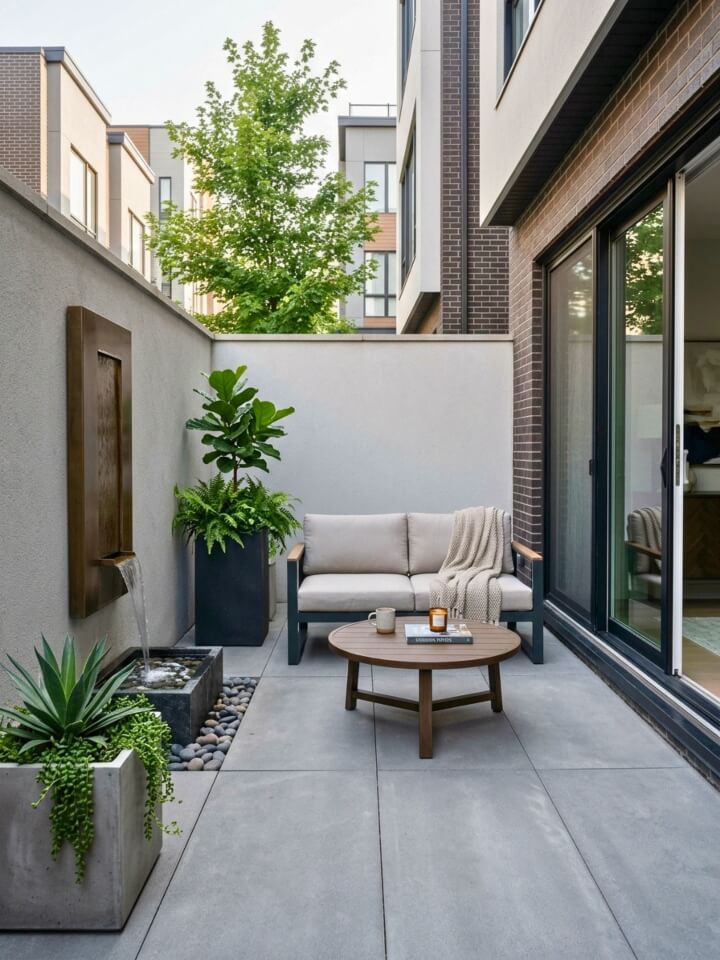
The sound of moving water masks neighbor noise better than almost anything else — a real consideration when your patio shares walls on two sides.
Small recirculating fountains plug into a standard outlet and use the same gallon of water for weeks. A tabletop ceramic bubbler runs $50–$150, a freestanding column fountain $200–$600, and a wall-mounted basin with hidden reservoir $400–$1,200 depending on materials.
Place it close to seating so you actually hear it, but tucked against a wall so the splash zone stays contained. Bring the pump indoors before the first hard freeze — a cracked ceramic basin in spring is a sad way to learn that lesson.
For more inspiration on how water changes the mood of an outdoor space, browse these charming pool fountain ideas and scale the concept down for patio use.
13. Hammock or Hanging Chair
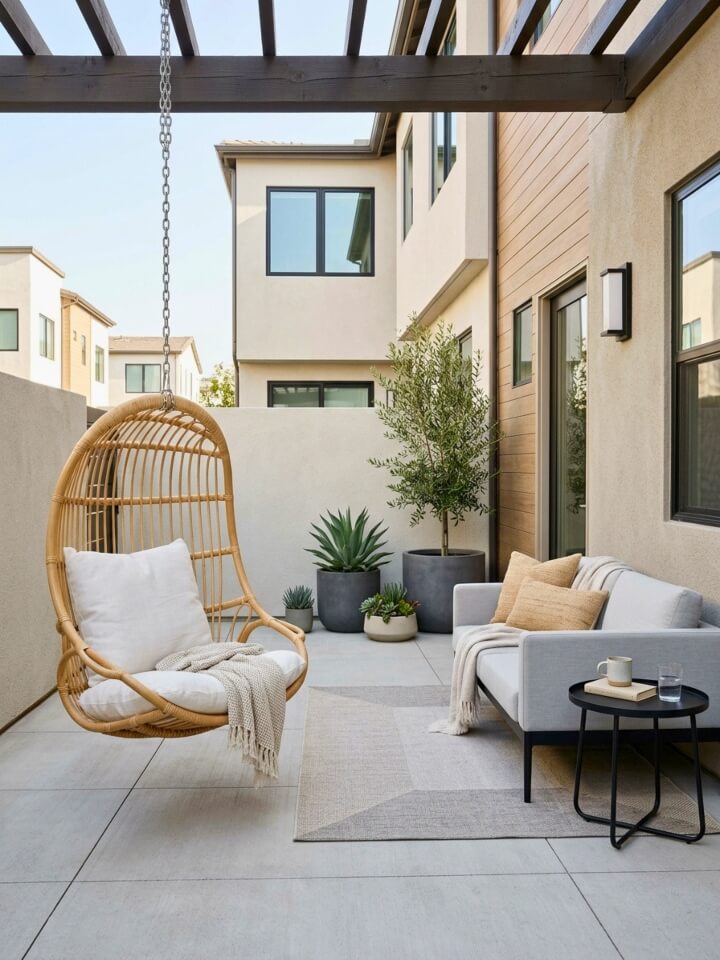
There’s a specific kind of relaxation that only happens when your feet leave the ground. Hanging seating delivers it in a footprint smaller than a regular chair.
Mounting Options Ranked by Ease
- Freestanding stand ($120–$350): Zero installation, moves anywhere, great for renters. Vivere and Best Choice Products make solid versions.
- Pergola beam mount ($30 hardware): Clean look if you already have overhead structure. Requires a 4×4 or thicker beam.
- Ceiling joist mount ($25 hardware): For covered patios only. Must hit a structural joist — drywall anchors will fail, sometimes dramatically.
Weight capacity matters. Look for hardware rated to at least 300 pounds, and add a swivel hook so the chair doesn’t twist your rope into knots.
14. Tiered Plant Stand Display
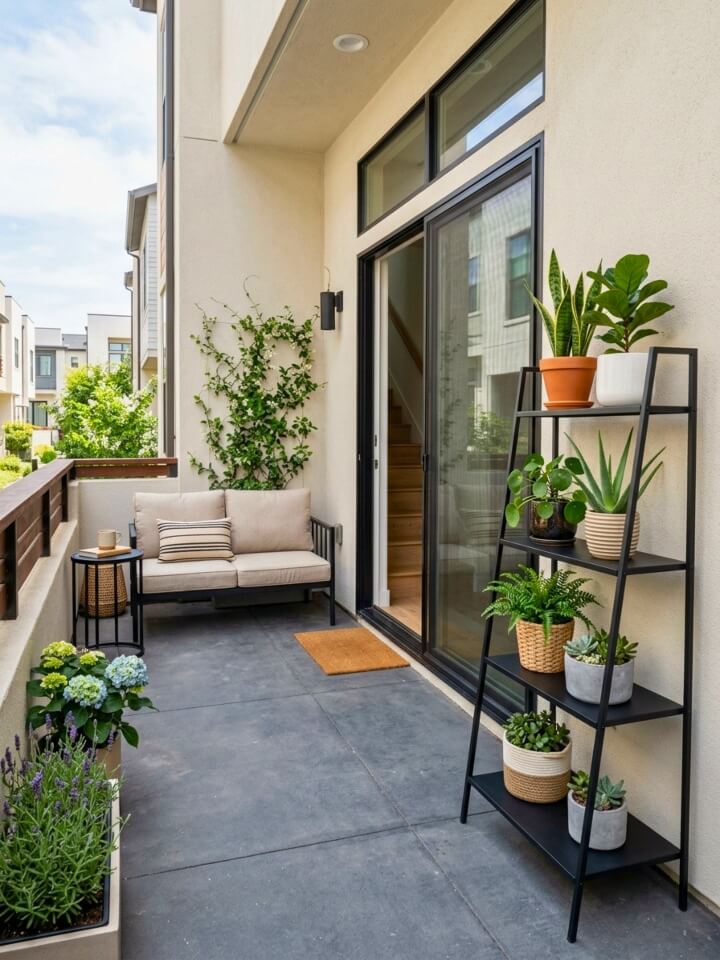
When your patio can’t grow outward, it grows upward. A tiered plant stand stacks six to twelve pots in the footprint of two, turning a single corner into a layered green wall.
Wooden ladder shelves, metal etagere stands, and corner step displays each have their moment. Ladder styles ($60–$180) lean against a wall and lend themselves to trailing plants on top tiers. Freestanding metal tiers ($40–$120) work better in open corners.
Group plants by water needs on each shelf — top tier dries out fastest, so put your sun-lovers and drought-tolerant plants up there. Shade-preferring ferns and pothos belong on lower shelves where light and moisture linger longer.
15. Privacy Curtains on a Track
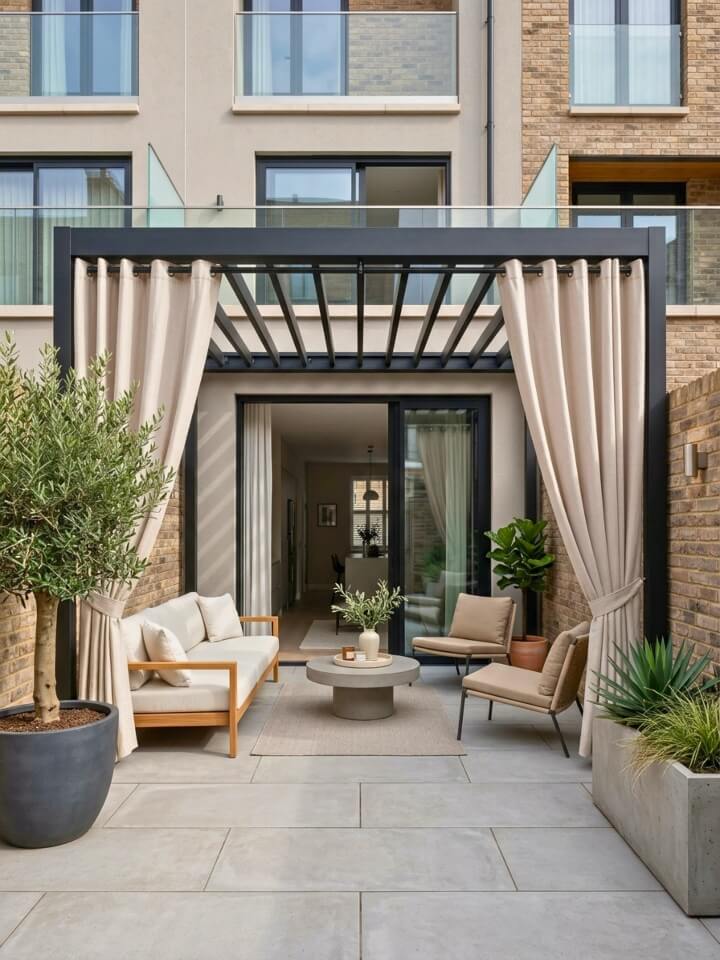
Sometimes a permanent screen is too much commitment. Outdoor curtains give you privacy on demand — closed when neighbors are grilling, open when you want the breeze.
The difference between indoor and outdoor curtain fabric is everything. Use the wrong one and you’ll be replacing moldy panels every spring.
Look for fabric labeled “solution-dyed acrylic” or “outdoor polyester” — both resist mildew, fading, and the slow yellowing that cheap canvas develops by month three. Sunbrella panels run $80–$200 each; budget alternatives from RYB Home or NICETOWN start around $30.
Mount the track on a pergola beam, an exterior wall, or a tension wire stretched between two posts. Weight the bottom hem with a sewn-in rod pocket so wind doesn’t turn them into sails.
16. Built-in Grill Station or Mini Outdoor Kitchen
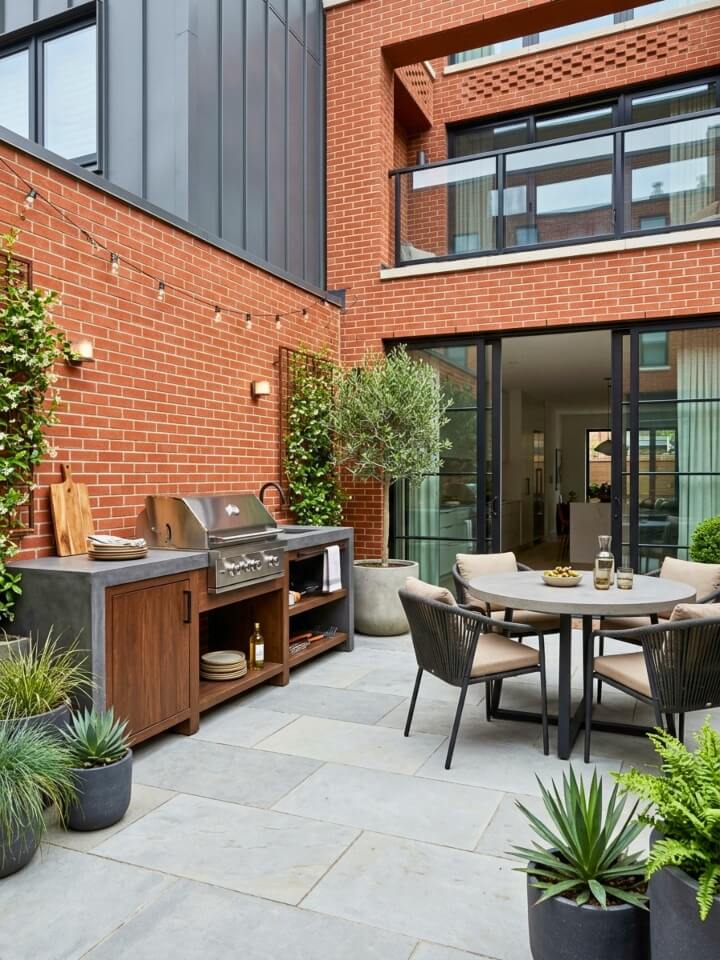
A dedicated grill zone keeps cooking out of the seating area and the smoke away from the cushions. Even in a tight patio, a 4-foot-wide setup along one wall gets the job done.
Three Build Levels by Budget
- Cart-based ($300–$800): A rolling grill plus a separate prep cart. Zero installation, fully portable, perfect for renters.
- Modular built-in look ($1,200–$3,500): Pre-fab cabinets from NewAge or TrueFlame that bolt together in a weekend. Looks custom without the custom price.
- Full custom kitchen ($6,000–$15,000+): Stone or stucco surround, built-in gas grill, side burner, mini fridge, gas line run from the house.
Whatever level you pick, keep the grill at least 10 feet from the house siding and any overhead structure. Vinyl siding warps fast under direct heat.
17. Gravel or Pebble Accent Zone
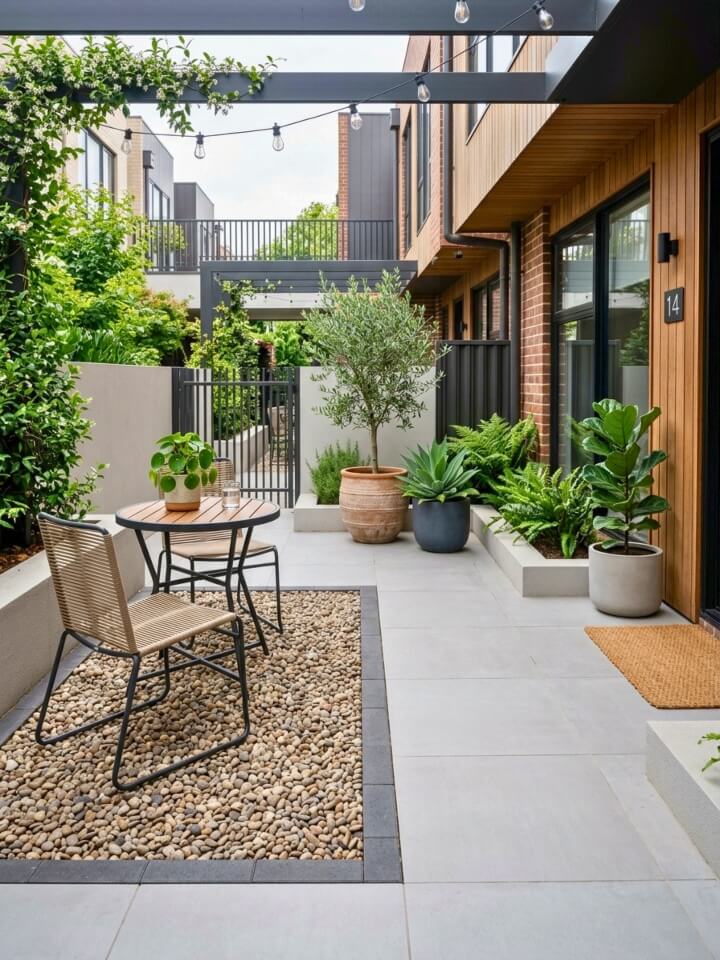
Unlock creative small townhouse patio ideas perfect for maximizing every inch of outdoor space. A flat concrete slab reads as a parking pad. Break up that uniformity with a gravel or pebble zone and suddenly the patio has texture, depth, and a designed feel.
The simplest application: cut a rectangle along one edge of the slab, frame it with steel landscape edging or paver blocks, lay down weed fabric, and pour in 2 inches of decorative stone. Mexican beach pebbles look upscale at $0.40–$0.80 per pound. Pea gravel runs cheaper at $5–$10 per bag and crunches satisfyingly underfoot.
Drop a few large planters or a single architectural element — a stone lantern, a weathered jar, a sculptural shrub — into the gravel zone so it reads intentional, not unfinished.
18. Multi-Functional Storage Bench Deck Box
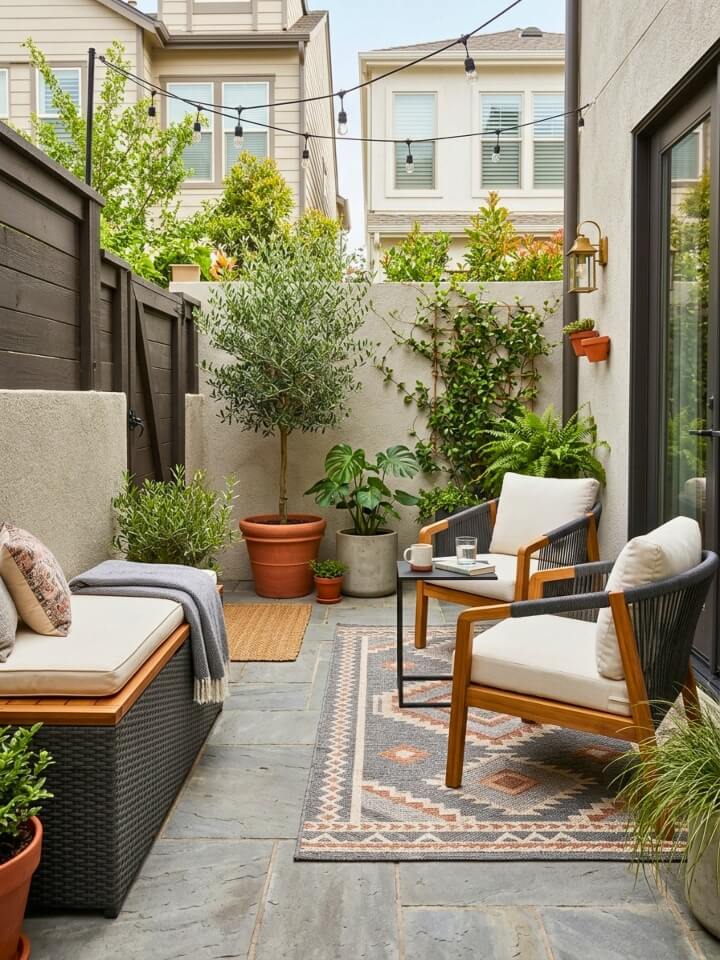
Storage is the invisible upgrade that makes a patio feel calm instead of cluttered. A deck box doubles as a bench, hides everything you don’t want to look at, and disappears against a wall when you don’t need it.
| Capacity | Best For | Price Range |
|---|---|---|
| 50–80 gallon | Cushions for two chairs | $80–$150 |
| 100–150 gallon | Cushions + tools + grill cover | $150–$300 |
| 200+ gallon | Kids’ toys, full patio kit | $250–$500 |
Resin construction from Keter, Suncast, or Lifetime survives weather better than wood and weighs less when you need to drag it. Look for hydraulic lid supports — slamming lids pinch fingers and crack hinges within a season.
19. Statement Lighting Beyond String Lights
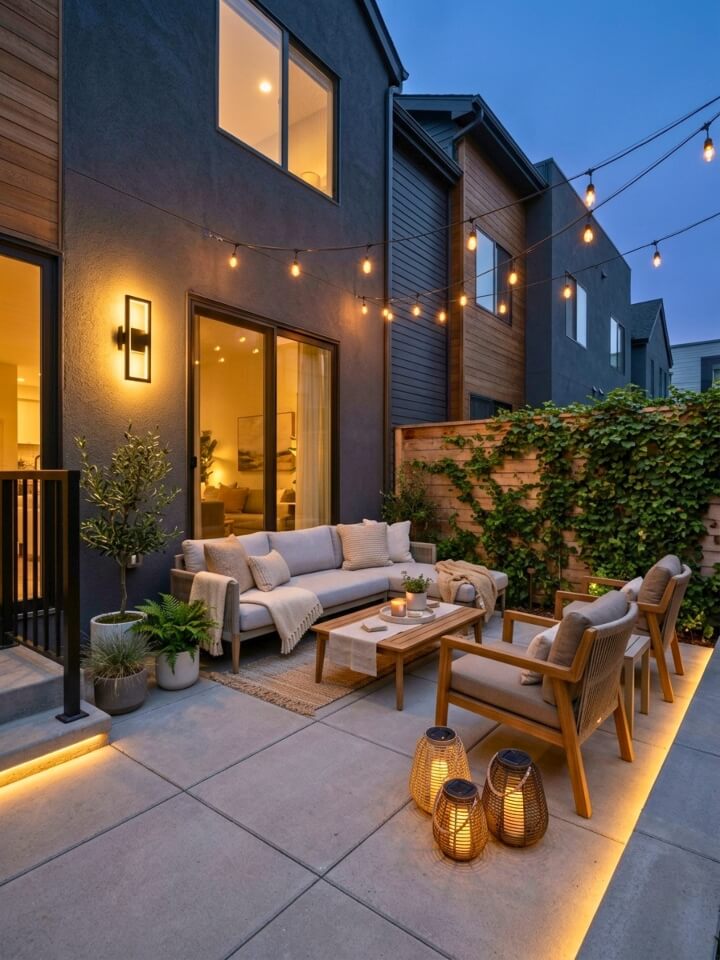
String lights handle the ambient layer beautifully, but a fully lit patio needs more. Layered lighting — the same principle that makes interior rooms feel finished — works just as well outside.
A patio with one light source feels like a stage. A patio with three layers feels like a room.
The Three Layers Worth Adding:
- Wall sconces flanking the back door ($40–$200 per fixture) give the entry definition and provide task light for grilling or reading.
- Solar path lights or low-voltage LEDs along the patio edge ($30–$120 for a set) prevent missed steps after dark and outline the space’s shape.
- An accent uplight or two at the base of a tree, large planter, or sculptural piece ($25–$80 each) creates the kind of depth a single overhead source can never produce.
Put the whole system on a smart plug or dusk-to-dawn sensor so it runs itself.
FAQs About Townhouse Patio Design
These quick answers cover the practical details most homeowners ask after planning their patio — permits, costs, drainage, plants, and seasonal care.
Do I Need a Permit to Renovate My Townhouse Patio?
It depends on the project. Cosmetic upgrades like furniture, planters, or string lights need nothing. Permanent structures — pergolas, gas lines, electrical work, or anything attached to the building — usually require both a city permit and HOA approval.
How Much Does a Complete Townhouse Patio Makeover Cost?
Most homeowners spend between $1,500 and $8,000 for a full refresh, depending on furniture quality, lighting, and whether structures like pergolas are added. Budget builds stay under $800; custom outdoor kitchens push past $15,000.
What Flooring Works Best Over an Old, Stained Concrete Patio?
Interlocking deck tiles are the easiest fix — wood, composite, or stone-look options snap together over existing concrete in a weekend. Outdoor rugs, painted concrete, or stained sealers also work without removing the original slab underneath.
How Do I Handle Drainage on A Small Patio that Pools Water?
First, check the slope away from the house — it should drop a quarter inch per foot. Adding a French drain, channel drain, or simply raising furniture on deck tiles solves most minor pooling without major construction work.
Which Plants Survive a Shaded Patio Between Tall Buildings?
Ferns, hostas, heuchera, Japanese forest grass, and impatiens thrive in low light. For containers, pothos, snake plants, and cast iron plants handle dim corners beautifully. Skip sun-lovers like lavender, tomatoes, or rosemary — they’ll stretch and weaken fast.
Final Thoughts
A townhouse patio doesn’t reward big gestures — it rewards smart ones. The owners who end up loving their outdoor space aren’t the ones who spent the most; they’re the ones who picked three or four ideas from a list like this, layered them well, and stopped there. A vertical garden against one wall, a bench that hides the clutter, warm light overhead, and something green within arm’s reach is genuinely all it takes. Start with the corner you avoid most right now. Fix that one spot first. The rest of the patio tends to follow on its own.