26 Gazebo Furniture Ideas Everyone Is Copying
Most people build a gazebo and then stall. The structure goes up, it looks great from the kitchen window, and then three months later it’s still empty — or worse, it’s become a place to store the things that don’t fit in the garage.
The furniture is where a gazebo either becomes a space you actually use or stays a yard feature you admire from a distance.
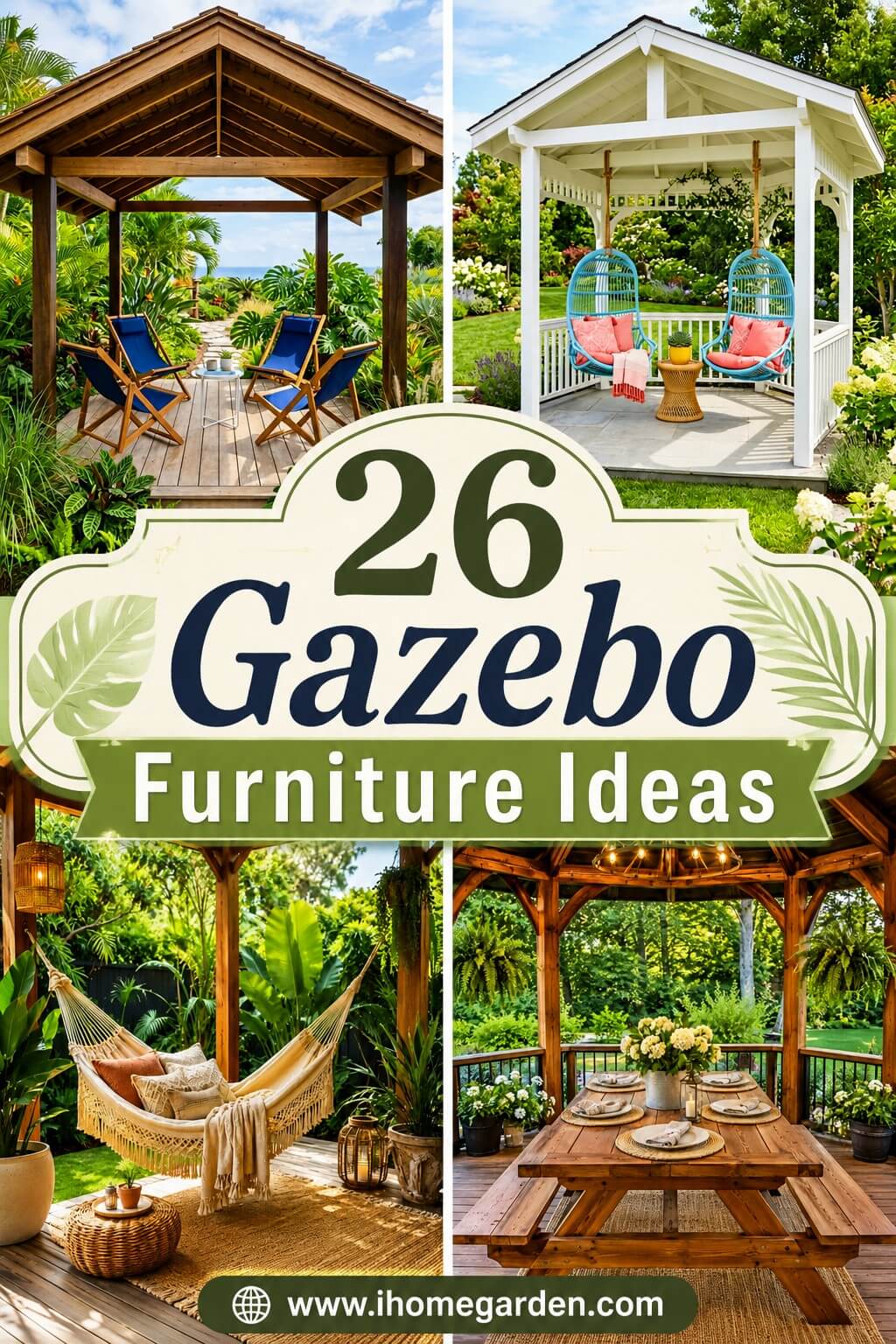
I’ve spent a lot of time thinking about what makes outdoor spaces work – not just look good in photos, but genuinely get used on a Tuesday evening or a slow Sunday morning. These 26 gorgeous gazebo furniture ideas sound straightforward until you’re standing in the space, realizing a sofa won’t fit, a hammock needs more clearance than you have, or the table you bought seats six, but your gazebo only comfortably holds four.
From hammocks with tricky clearance requirements to bar sets that change how a space gets used in the evening — these gazebo furniture ideas are the ones worth knowing before you buy anything.
1. Cozy Rattan Gazebo Seating for Relaxed Evenings
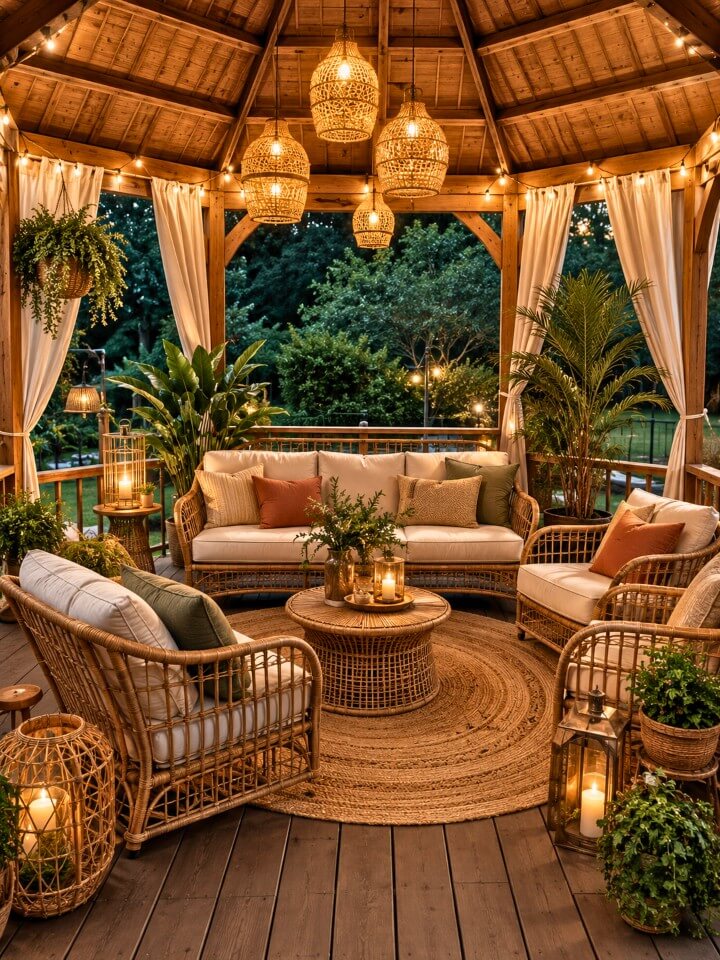
Skip natural rattan — it loosens, bends, and breaks down fast outdoors. What actually holds up is synthetic resin wicker over a powder-coated aluminum frame. It looks nearly identical to natural rattan but survives rain and sun far better. If a seller can’t tell you the frame material, move on.
For sizing: a 10×10 gazebo fits a loveseat and one chair comfortably. A 12×12 lets you add a second chair without crowding. For cushions, choose solution-dyed acrylic fabric — it resists fading significantly longer than polyester. Darker colors hide stains; light neutrals show wear faster. Budget $300–$900 depending on size and quality.
2. Wooden Picnic Tables for Family Meals
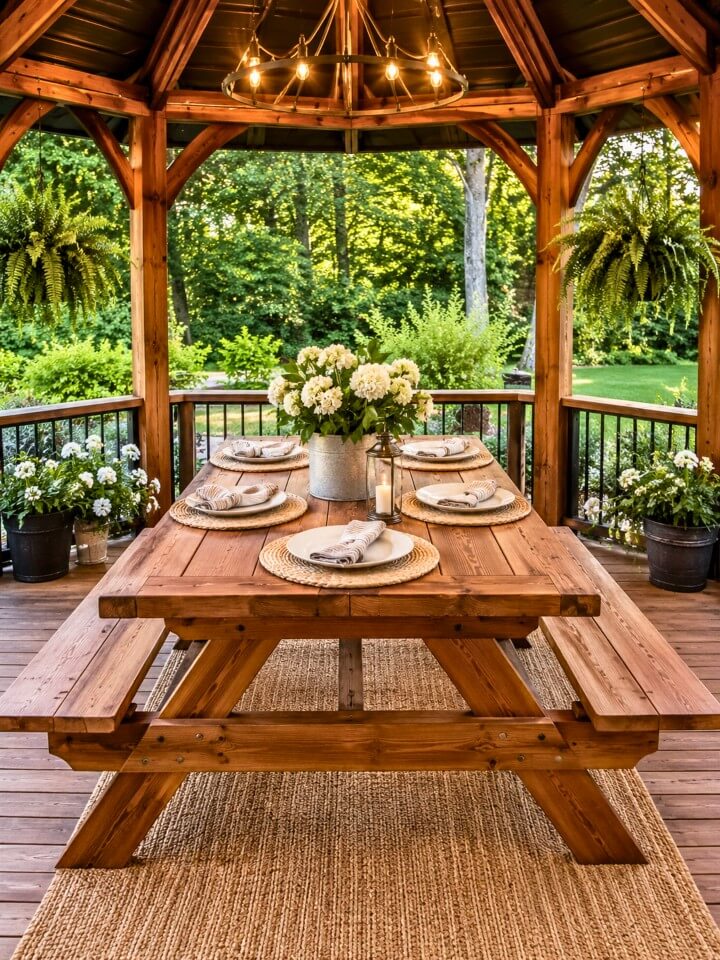
Match the table to actual usage. Families with kids need something easy to refinish — cedar or pressure-treated pine handles spills and scratches well. For occasional hosting where looks matter, teak is worth the premium; it weathers beautifully with minimal upkeep.
Attached benches are space-efficient but awkward for older guests. For mixed-age gatherings, use separate chairs on at least one side. Critical sizing note: measure interior clearance, not just floor space. A 6-foot table needs roughly a 12×12 gazebo interior to allow 3 feet of clearance on each side for comfortable seating and movement.
3. Hanging Chairs for a Playful Touch
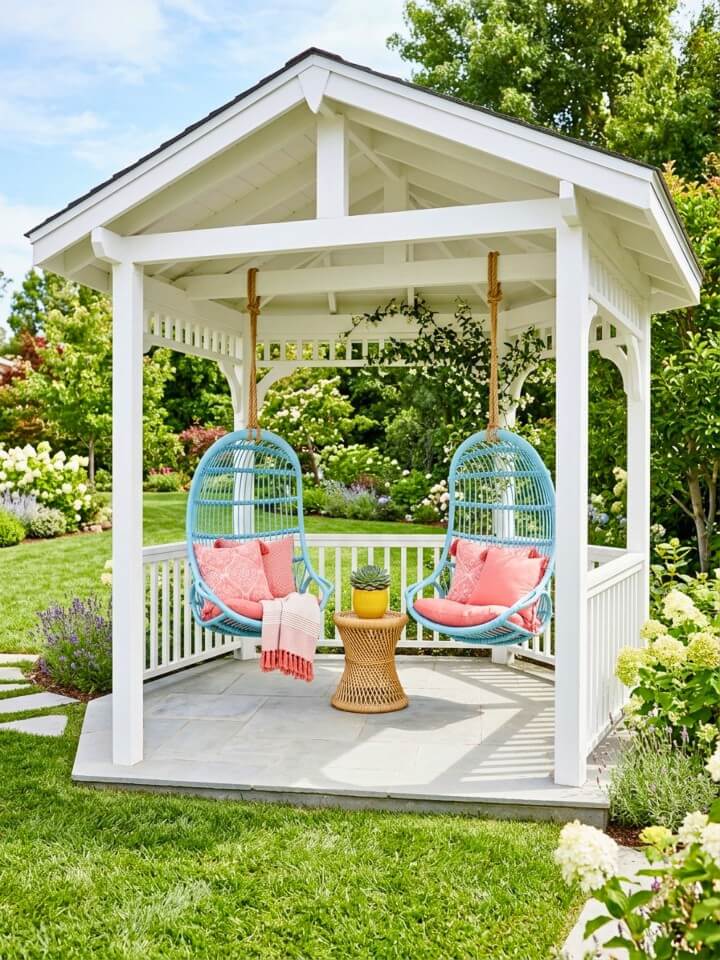
Before buying, check your gazebo’s beam load rating. Hanging chairs create 250–400 lbs of dynamic load on a single point — many gazebo kits can’t handle that. If you’re unsure, a freestanding hanging chair frame is safer and removes the question entirely.
Corner placement works best. A hanging chair in the center blocks foot traffic; in a corner, it becomes its own zone. For hardware, use a rated swivel hook with a stainless steel anchor. Galvanized hardware corrodes faster in humid or coastal climates. Style-wise, pod chairs suit modern spaces; rope hammock chairs lean coastal or boho.
For open-sided gazebos, pairing a hanging chair with smart privacy landscaping ideas can make the corner feel more tucked away without closing in the whole structure.
4. Gazebo Sofas with Weatherproof Cushions
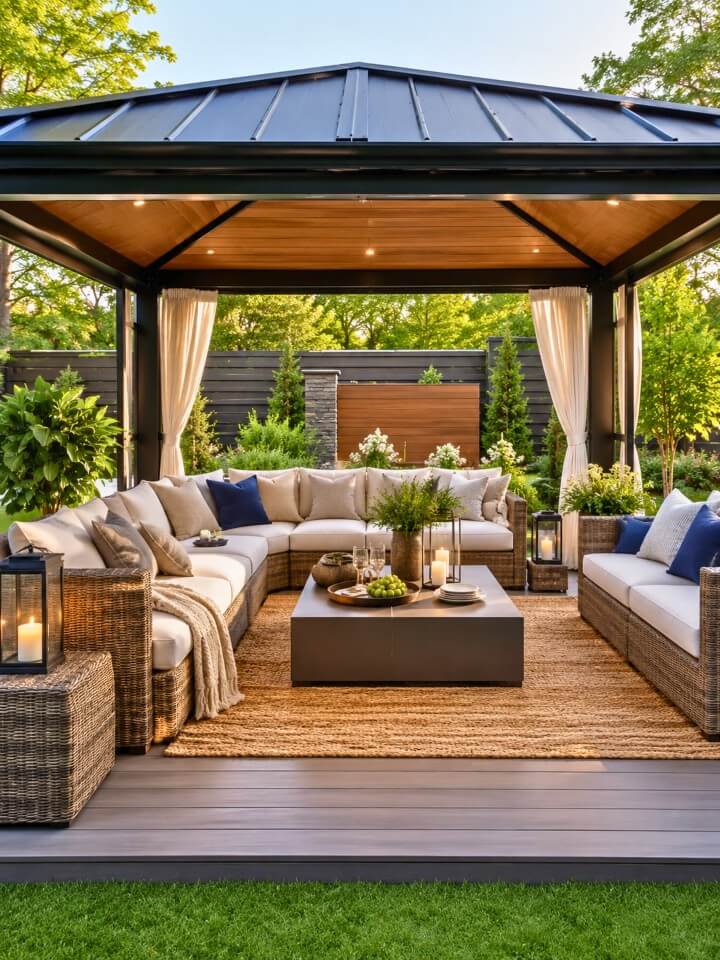
Cushions fail before the frame does — plan for it. Standard outdoor foam absorbs moisture, stays damp for days, and develops mildew. Quick-dry open-cell foam drains fast and dries within hours. It costs more but lasts significantly longer.
Before buying, verify three things: solution-dyed acrylic cover fabric, rust-resistant zipper, and removable covers for washing. For frames, powder-coated aluminum is the most practical — lightweight, rust-proof, and climate-resilient. Avoid any wood frame not explicitly rated for outdoor use. A two-seater fits a 10×10 gazebo well. Budget $500–$1,200 for the sofa alone.
5. Minimalist Metal Bistro Sets
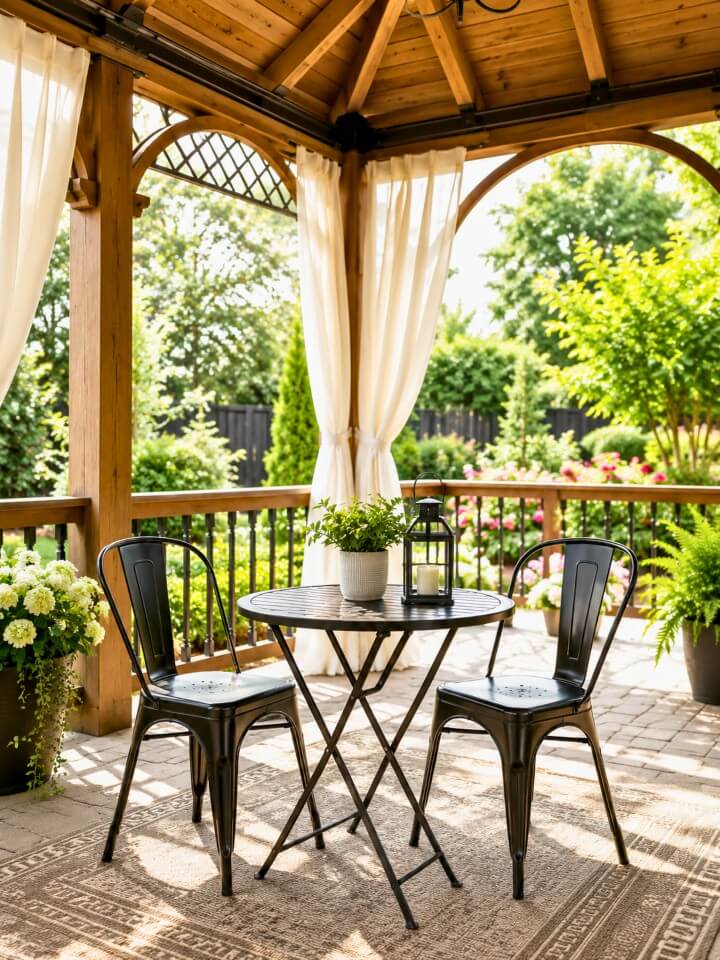
The coating determines everything. Powder coating protects the metal from moisture — where it chips, rust begins. Always inspect edges, joints, and screw holes on a floor model before buying. Thin or uneven coating there means failure within a season.
Aluminum doesn’t rust at all — genuinely low maintenance. Steel is heavier and more rigid but depends entirely on intact coating. Cast iron is durable but difficult to move. For comfort, check seat depth in person: look for at least 16 inches and a slightly reclined back, not straight upright. These sets work best in 8×10 to 10×10 gazebos. Prices run $80–$250.
6. Built-In Corner Benches for Extra Seating
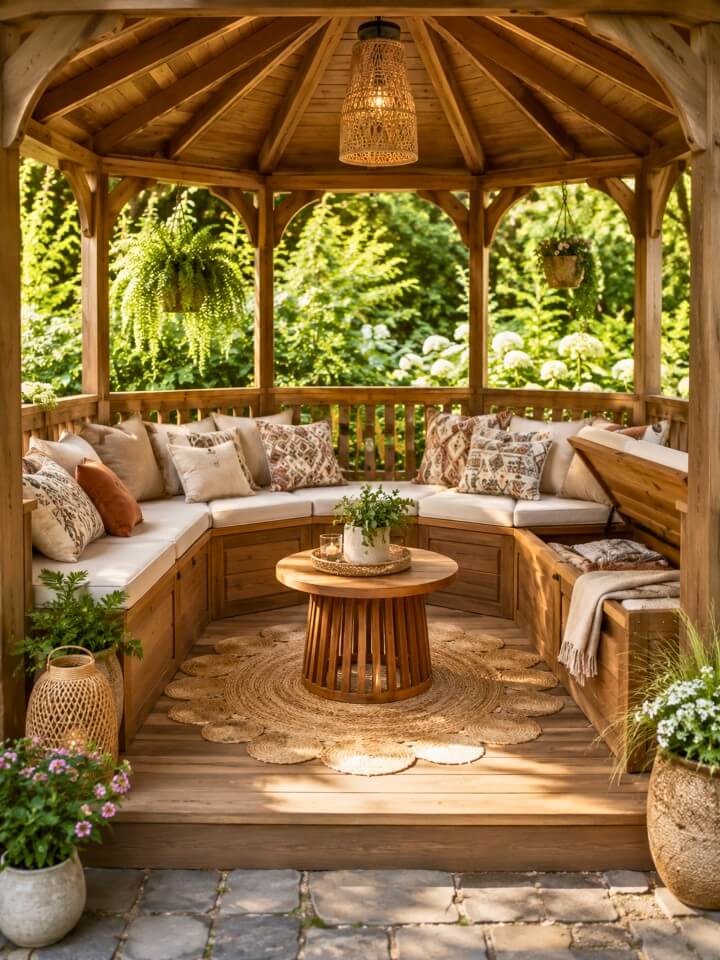
Corner benches solve a real problem: gazebo corners are too awkward for chairs but wasted as empty space. A built-in bench seats two or three people there without reducing center clearance at all.
Material matters more here than with freestanding furniture since you can’t easily replace it. Cedar and teak hold up outdoors without rotting. Pressure-treated pine needs annual sealing or it splinters. Add storage underneath during the build — retrofitting it later is more complicated. For cushions, go at least 4 inches thick. Anything under 3 inches compresses quickly and becomes uncomfortable within an hour of sitting.
7. Daybeds for Lounging in the Shade
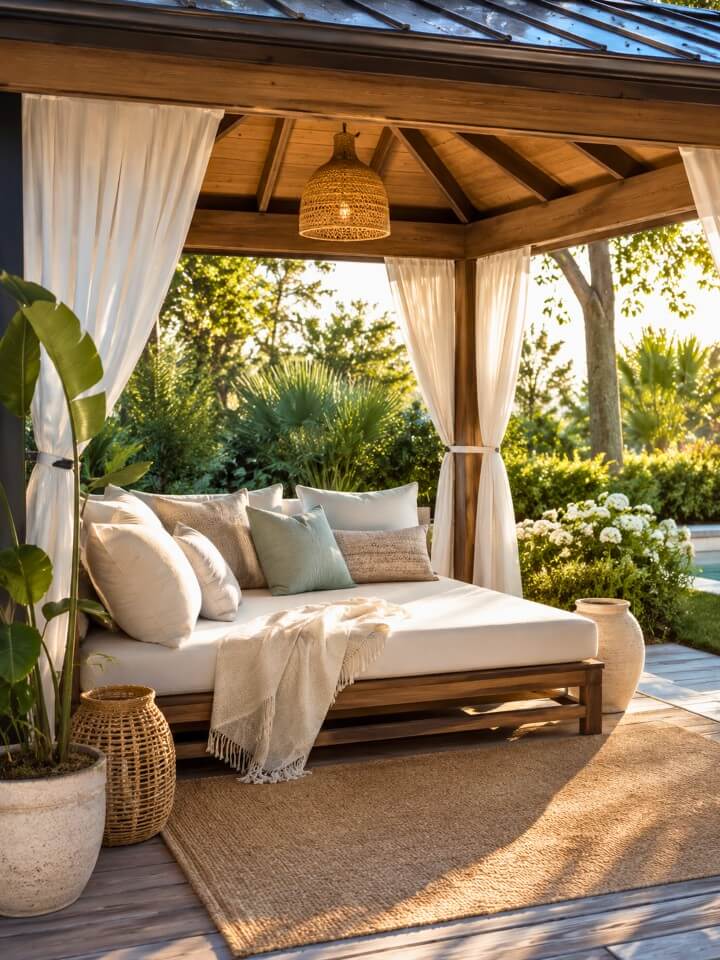
Position before you buy. A daybed along the back wall facing the garden gives shade and a view without blocking traffic. Centered in the gazebo almost never works unless the space is very large.
For cushions, minimum 5–6 inches with a quick-dry foam core. A thin pad on a piece designed for lounging is a daily disappointment. Measure carefully: outdoor daybeds range 60–80 inches long and 30–40 inches wide — two inches too long looks permanently wrong. Some models include canopy attachments, which add useful shade and privacy if your gazebo has open sides. Frame-wise, aluminum and teak are the reliable choices.
8. Folding Adirondack Chairs for Gazebo
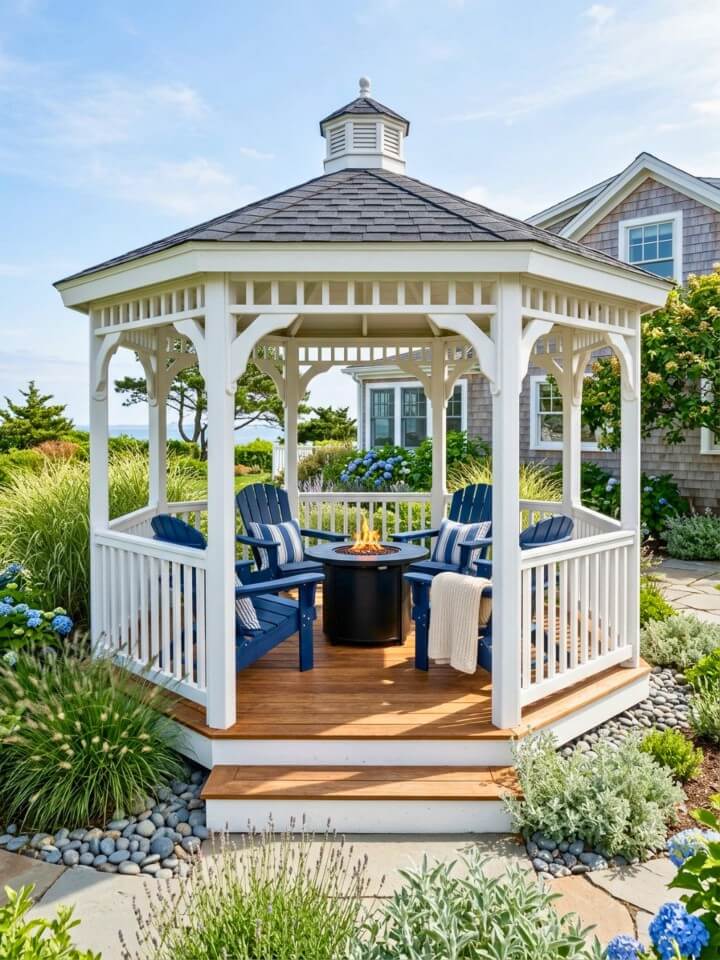
Adirondack chairs have stayed popular for over a century because the ergonomics genuinely work — reclined angle, wide armrests, low seat, designed specifically for outdoor relaxation. The folding version adds one key advantage: store them in winter and avoid months of unnecessary weather exposure that shortens furniture life.
Material split: cedar or teak looks beautiful and feels warm. HDPE poly lumber (recycled plastic) needs almost zero maintenance and won’t crack or splinter — less traditional-looking but more durable long-term. Sizing note: a standard Adirondack is 28–33 inches wide. Two chairs plus a side table fits comfortably; three chairs need at least a 12-foot wide gazebo.
9. Wicker Loveseats with Cozy Throws
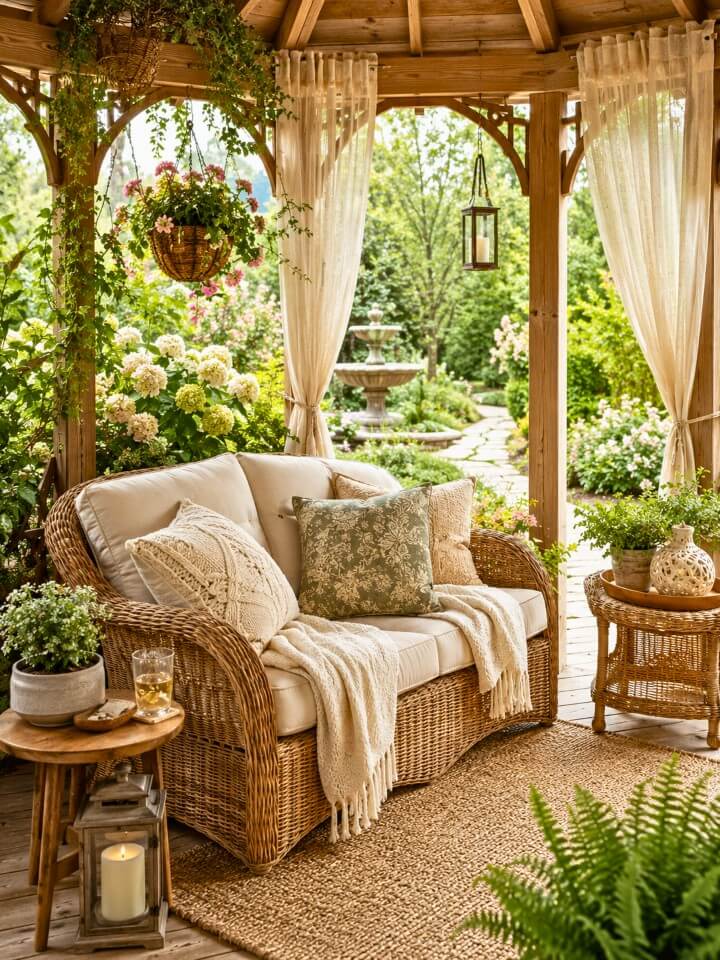
A loveseat creates a more intimate arrangement than a full sofa — better for a couple’s corner, a reading nook, or a quieter zone in a larger gazebo. Synthetic resin wicker over aluminum is the practical choice for most climates; it looks close enough to natural wicker that the difference rarely matters in person, and it handles sun and moisture far better.
For throws, outdoor-rated cotton blends or acrylic knit dry faster and resist mildew better than indoor throws. Keep one on the arm — it actually gets used. Pair with a low coffee table rather than a side table for a more complete, intentional arrangement. Loveseats typically run 45–55 inches wide.
10. Low Coffee Tables for Drinks and Snacks
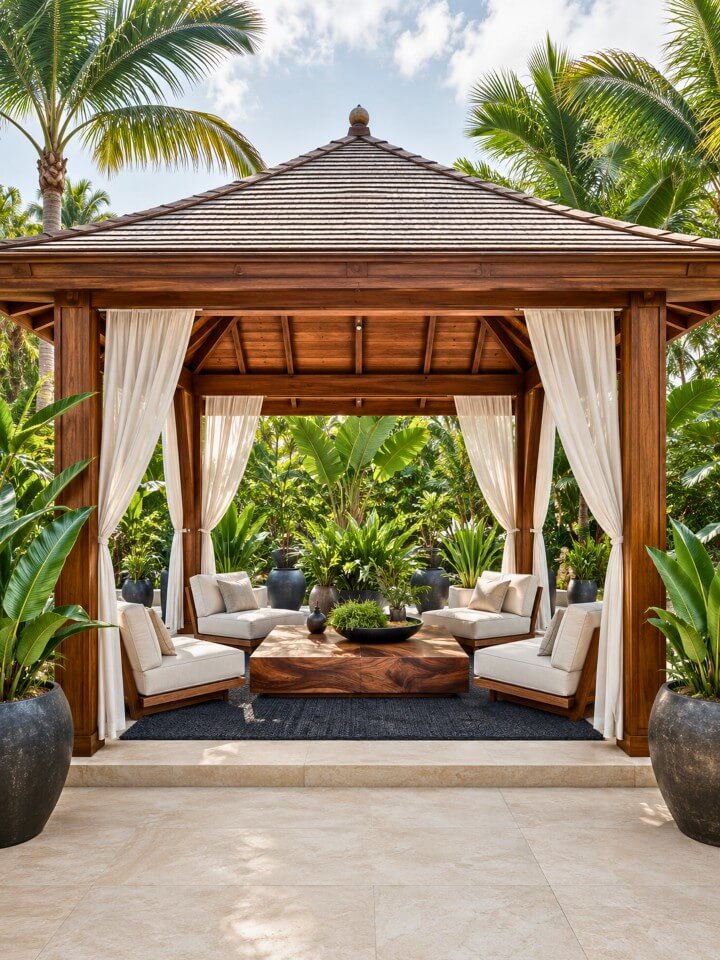
A coffee table anchors the seating area. Without one, gazebo arrangements feel unresolved — people hold drinks, nothing has a surface, the space doesn’t come together. Add a low table and the whole layout clicks.
Keep height at 16–18 inches. Lower feels like floor seating; higher starts functioning like a dining surface, which changes the whole dynamic. Shape matters: rectangular works between two facing sofas; round or square suits clustered casual arrangements and keeps everyone at equal reach. Material-wise, powder-coated aluminum requires almost no maintenance. Teak looks excellent but needs seasonal care. Measure your seating layout first, then buy to fit — not the other way around.
11. Gazebo Hammock for Gentle Swaying Comfort
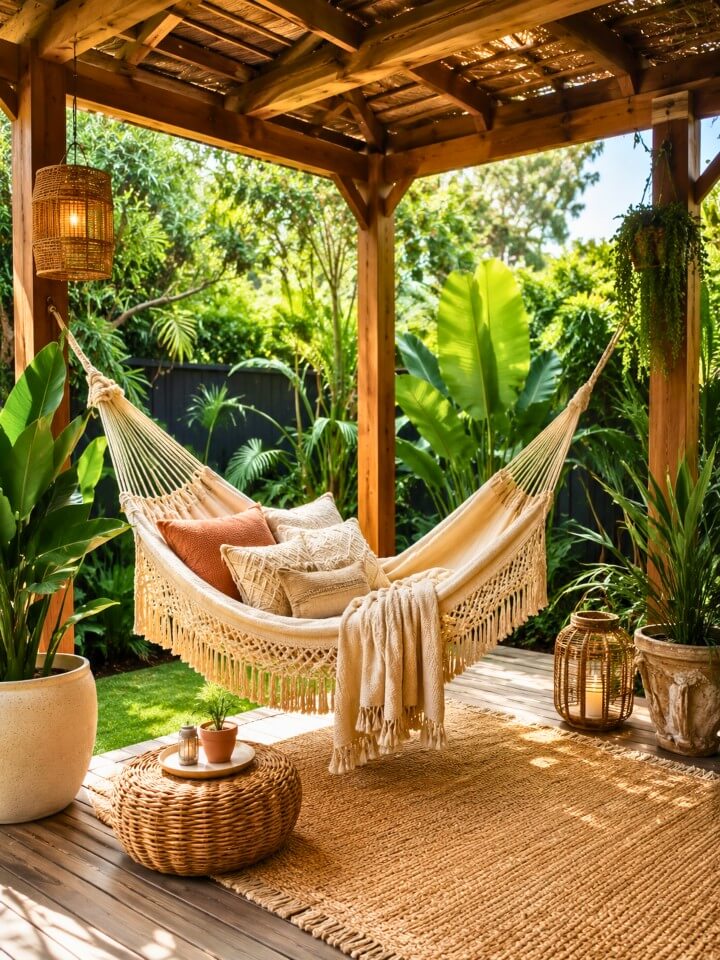
A hammock needs 12–15 feet between anchor points. Most 10×10 or 12×12 gazebos only allow a diagonal hang, which usually crosses the main walkway — awkward in practice. A 14×14 or larger gazebo gives you real placement options.
Hang angle matters: aim for roughly 30 degrees from horizontal. Too tight stresses anchor points and is actually less comfortable. Use eye bolts rated for the load screwed into structural posts — never wrap rope around decorative posts. If you’re unsure which posts are structural, a freestanding hammock stand eliminates the guesswork. For fabric: rope hammocks have the best airflow; woven fabric is easier to get in and out of.
12. Modular Sectionals for Custom Layouts
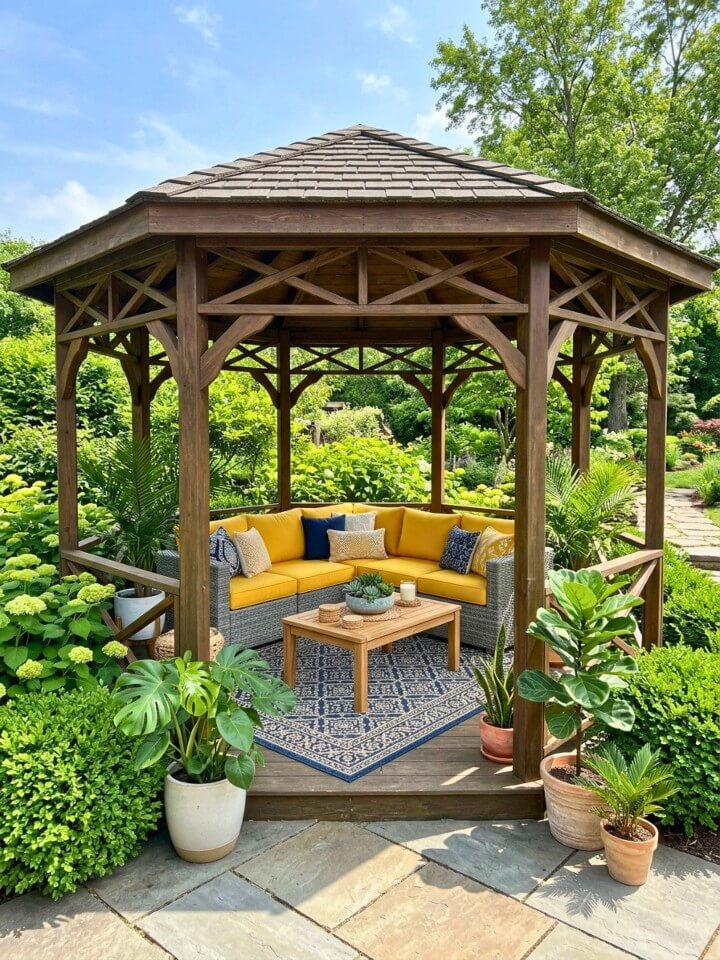
Modular furniture earns its value only if your gatherings vary in size. For groups that shift between two people and twelve, the flexibility is genuinely useful. If your gazebo gets used the same way consistently, a fixed sofa and chairs costs less and involves fewer pieces.
Best configuration for gazebos: L-shape. It seats five or six while keeping one side open for foot traffic. U-shape fills the space entirely — good for large gatherings, limiting for everything else. Map your configuration on paper before buying; what looks like it fits often doesn’t once you account for clearance. Check that cushions have ties or non-slip backing — unsecured cushions end up on the ground constantly.
13. Teak Dining Sets for Classic Appeal
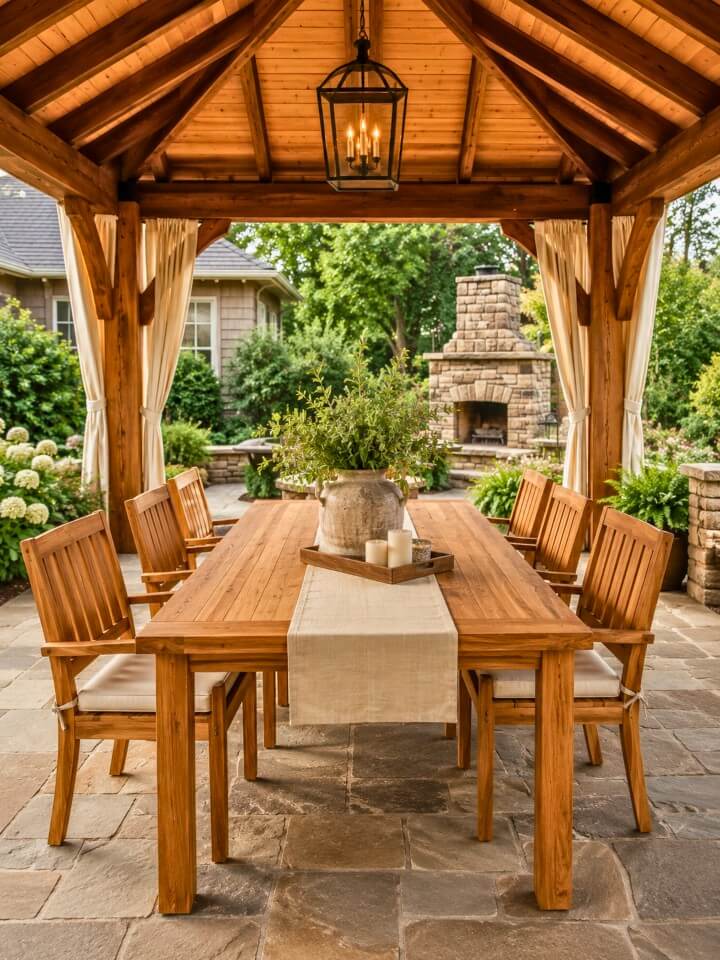
Teak quality varies significantly. Grade A comes from the dense, oil-rich heartwood of mature trees — that’s what gives teak its weather resistance. Grade B and C come from outer sections with less oil and degrade faster. Ask sellers directly which grade they carry; not all disclose it.
For dining clearance, plan 3 feet behind each chair for comfortable seating and standing. A 4-person table runs roughly 36×48 inches; a 6-person about 36×72 inches. For chairs, two armchairs at the ends with side chairs along the sides is a practical combination — comfortable for long meals without sacrificing too much space. Teak weathers to silver-gray naturally or stays honey-toned with seasonal oiling — both are fine.
14. Poufs and Ottomans for Casual Seating
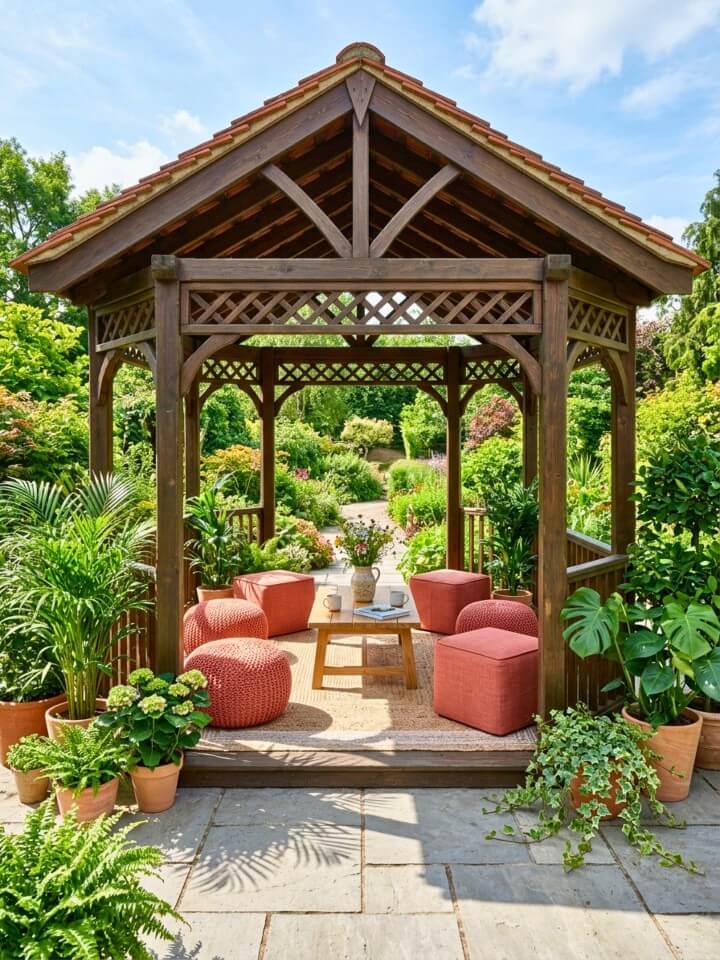
Poufs and ottomans solve one specific problem: what happens when more people show up than your fixed seating handles. They tuck under tables or stack when not needed, pull out instantly when someone extra arrives, and double as footrests or impromptu side tables.
For outdoor use: resin or wicker ottomans handle weather well but need a cushion for comfort. Fabric poufs are more comfortable but should be covered or brought in during extended rain. Height guide — 12–14 inches works as a footrest; 16–18 inches functions better as standalone seating; 15 inches does both adequately. A large square ottoman with a tray becomes a functional coffee table that also seats two people in tighter spaces.
15. Swing Benches for a Relaxing Vibe
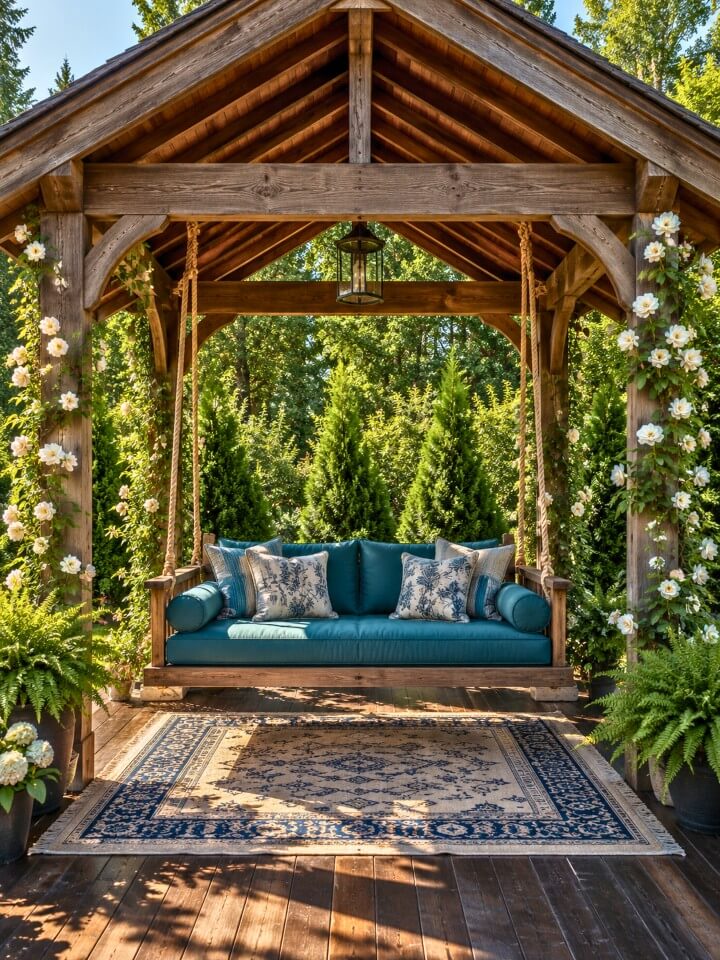
A swing bench holding two adults generates over 500 lbs of dynamic load on mounting points — significantly more than a hanging chair. The beams must be structural, not decorative, and all hardware must be load-rated accordingly.
Use stainless steel or galvanized chains rather than rope — chains outlast UV exposure far better. Chain length determines swing arc: longer chains give a wider, gentler motion; shorter chains feel more compact. Best placement is along a front or side opening facing outward — the swing arc has room and the view is there. Against a back wall, motion feels constrained. Seat width runs 48–60 inches. A weatherproof cushion makes a significant comfort difference. For evening use, the swing feels even better when nearby paths or steps include subtle deck lighting ideas.
16. Barrel Chairs for Rustic Charm
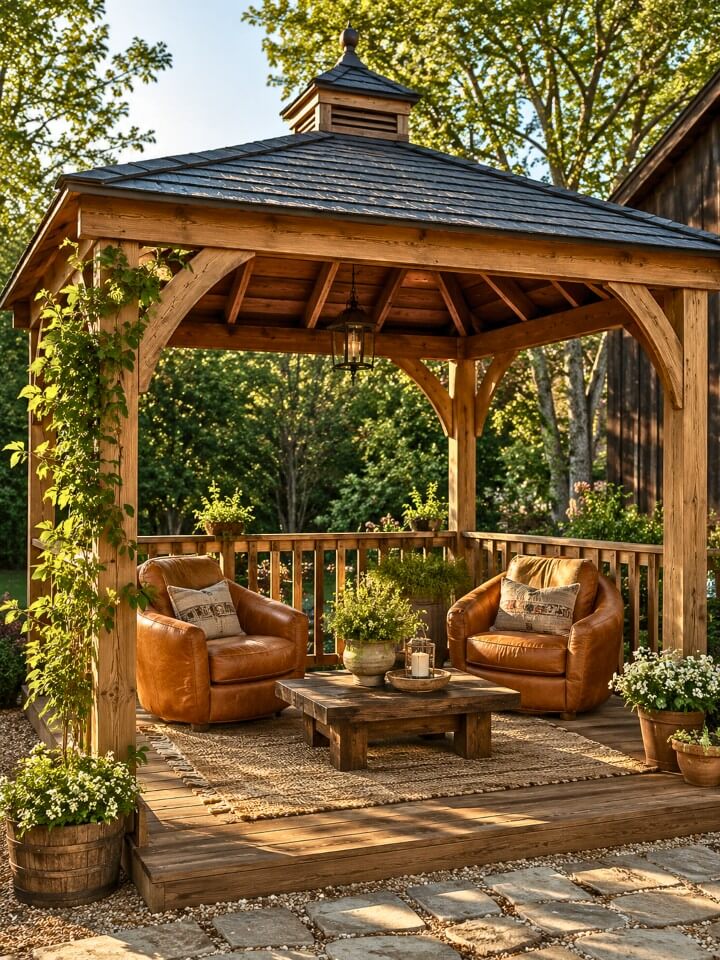
The curved back of a barrel chair wraps around the sitter rather than just supporting the lower back — noticeably more comfortable for extended sitting than a standard straight-backed chair. That’s why they’ve stayed in outdoor furniture catalogs despite changing trends.
They’re wider than they look in photos: a single chair runs 30–34 inches wide. Two side by side take up nearly 6 feet. Wicker and rattan versions handle weather well in covered gazebo settings. Solid teak or eucalyptus versions are heavier but suit traditional settings better. Note on seat depth: at 22–26 inches, shorter adults may find their feet don’t reach the floor comfortably. Keep a small footrest nearby if buying for mixed heights.
17. Folding Wooden Tables for Easy Storage
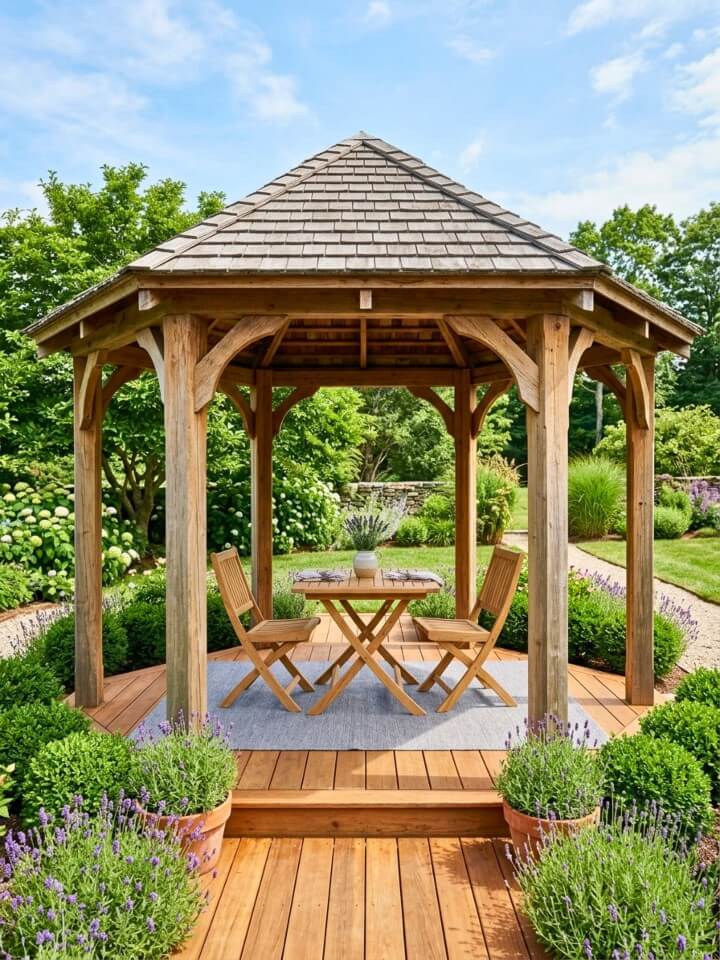
Before committing to a permanent table, use a folding table for a season first. Pay attention to when you wish you had a surface and where you’d want it placed. That real usage information is more useful than guessing upfront — and you may find the folding table works well enough that permanent never becomes necessary.
For outdoor durability, teak and bamboo hold up well. Pine and MDF absorb moisture at the edges over time, causing warping and stiff fold mechanisms. Check the hinge hardware — metal over plastic, and the leg lock should click firmly into place, not just rely on friction. Standard sizes: 48 inches seats four; 60–72 inches seats six but needs a 12×14 gazebo minimum.
18. Canopy Daybeds for Private Retreats
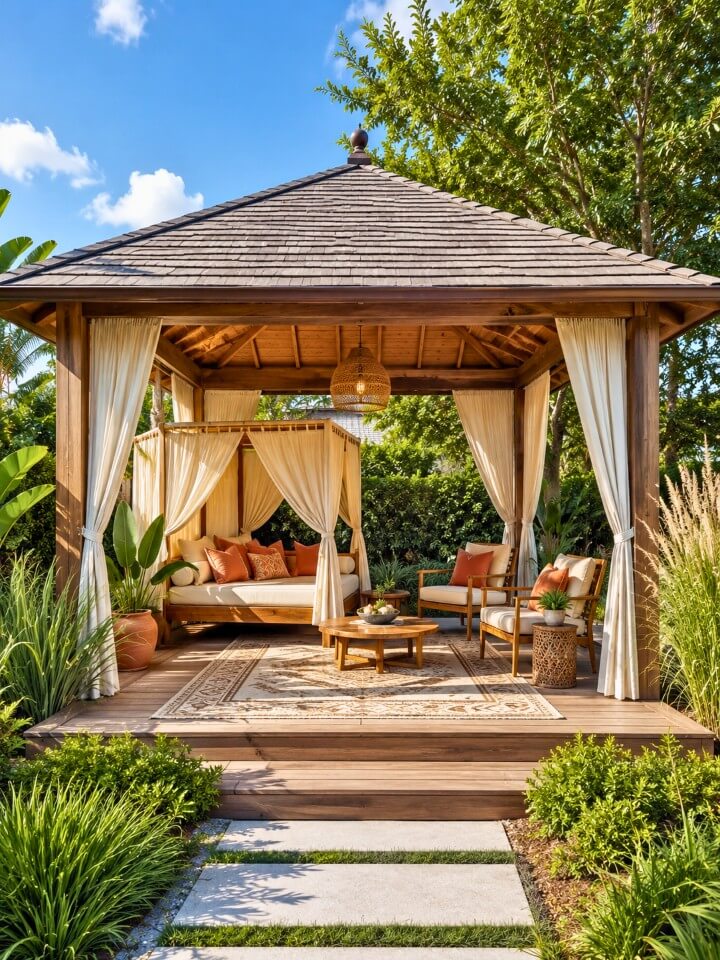
The canopy creates a sense of enclosure within the gazebo — useful if the goal is a private reading or napping corner. If the gazebo is primarily social, the canopy can feel like visual clutter rather than an asset.
Avoid thin polyester canopy fabric — it fades and frays within two seasons. Solution-dyed acrylic or canvas-weight polyester lasts significantly longer. Check that the canopy frame doesn’t flex or wobble in wind; unstable frames get removed and defeat the purpose. Footprint is large: expect 80–85 inches long and 40–47 inches wide. A 12×12 gazebo can fit one, but it dominates the space. Cushion depth should be at minimum 5–6 inches with quick-dry foam.
19. Bistro Bar Gazebo Sets for Evening Drinks
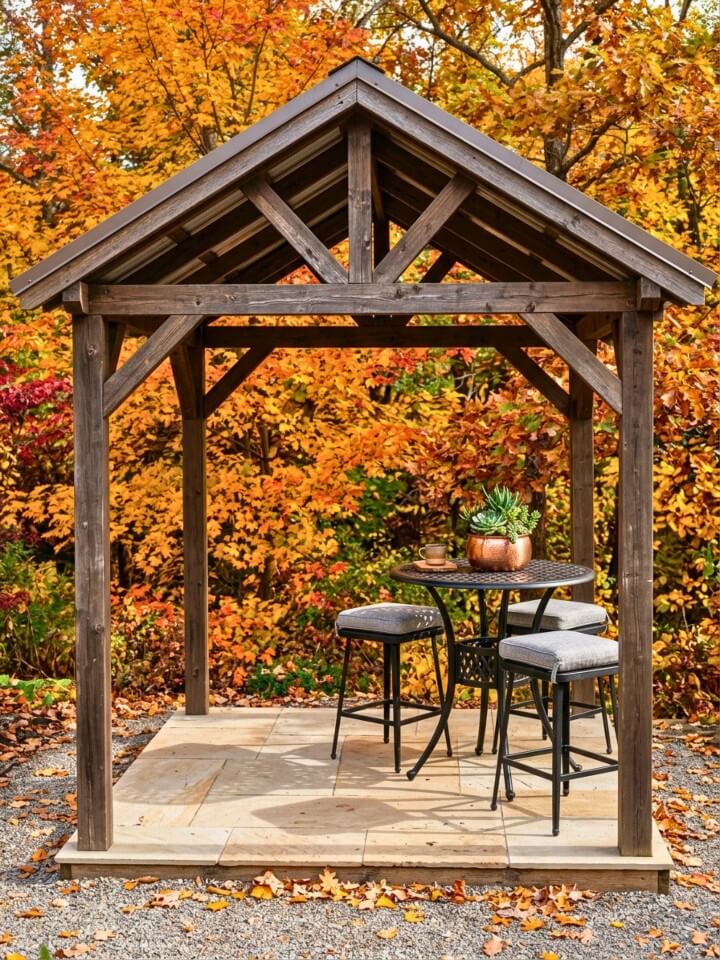
Counter-height seating (34–36 inch table surface) creates an upright, engaged posture — appropriate for drinks before dinner or casual conversations, not for long relaxed evenings. If your gazebo handles both scenarios, consider one bar set in a corner alongside standard seating as the main arrangement.
For stools, backless options are compact but uncomfortable after 30–45 minutes. Low-back stools extend that comfortably. Swivel stools are convenient but add mechanical parts that corrode if hardware isn’t fully weather-rated. For the table, avoid single-pedestal bases — a taller table with a narrow base catches wind significantly. Look for a weighted base or cross-brace design, especially in open-sided gazebos.
20. Cushion-Topped Storage Benches for Dual Use
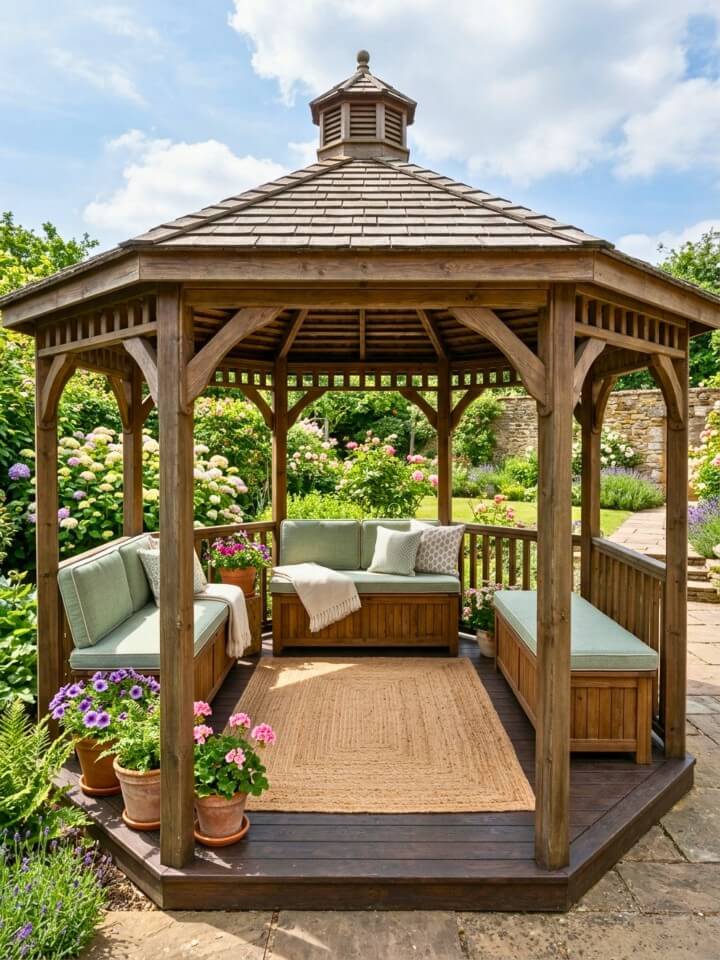
The real value of a storage bench in a gazebo: cushions, throws, and outdoor items stay accessible without requiring a trip indoors. That convenience determines whether things actually come out and get used.
Two distinct construction types exist. Storage-primary benches have a lid hinge that limits how far back you can lean — fine for short sits. Seating-primary benches feel like furniture with storage underneath — better for extended use. Before buying, check interior capacity carefully: some benches that look spacious externally have structural supports running through the storage cavity that limit what actually fits. For materials, teak, eucalyptus, or powder-coated aluminum holds up outdoors. Cushion top should use solution-dyed acrylic fabric and quick-dry foam.
21. Outdoor Bean Bags for Casual Gazebo Comfort
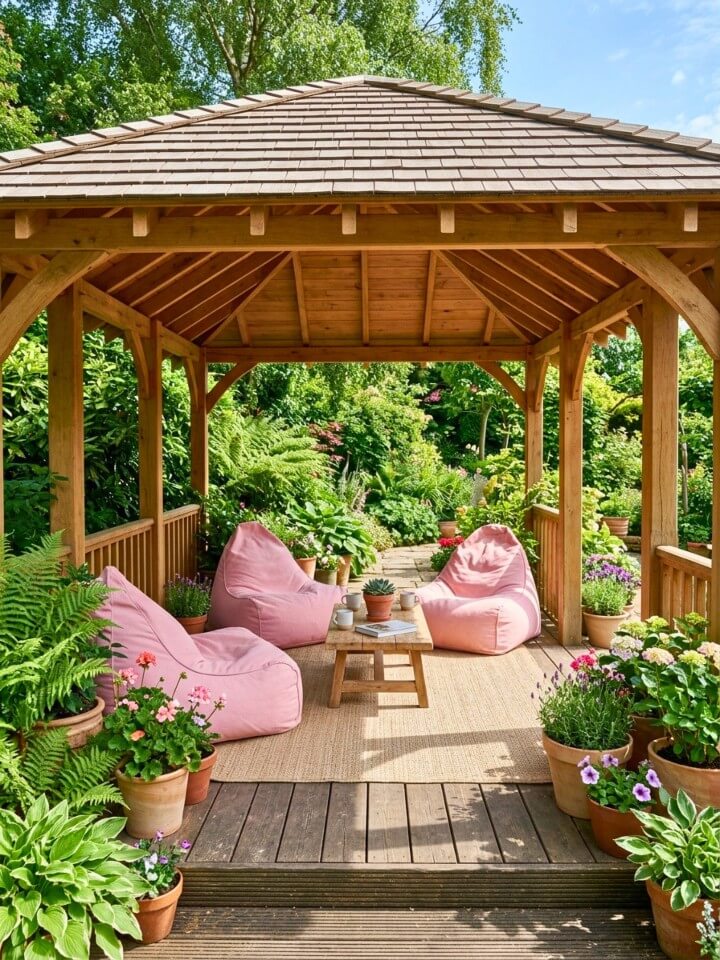
Bean bags aren’t the most comfortable seating option, but they’re the most mobile — dragged to whatever corner catches the shade, pulled near a fire pit, reconfigured entirely when kids take over. That flexibility has real practical value.
Two types: water-resistant fabric with EPS fill (fine for covered gazebos with minimal wind exposure) and fully waterproof sealed shells (necessary for open-sided structures in rainy climates). EPS bead fill compresses over time — budget for a small bag of replacement beads annually to maintain support rather than replacing the whole bag. Standard size is roughly 4 feet in diameter; oversized lounger versions sit lower and work better in gazebos with limited ceiling height.
22. Wrought Iron Chairs for Vintage Style
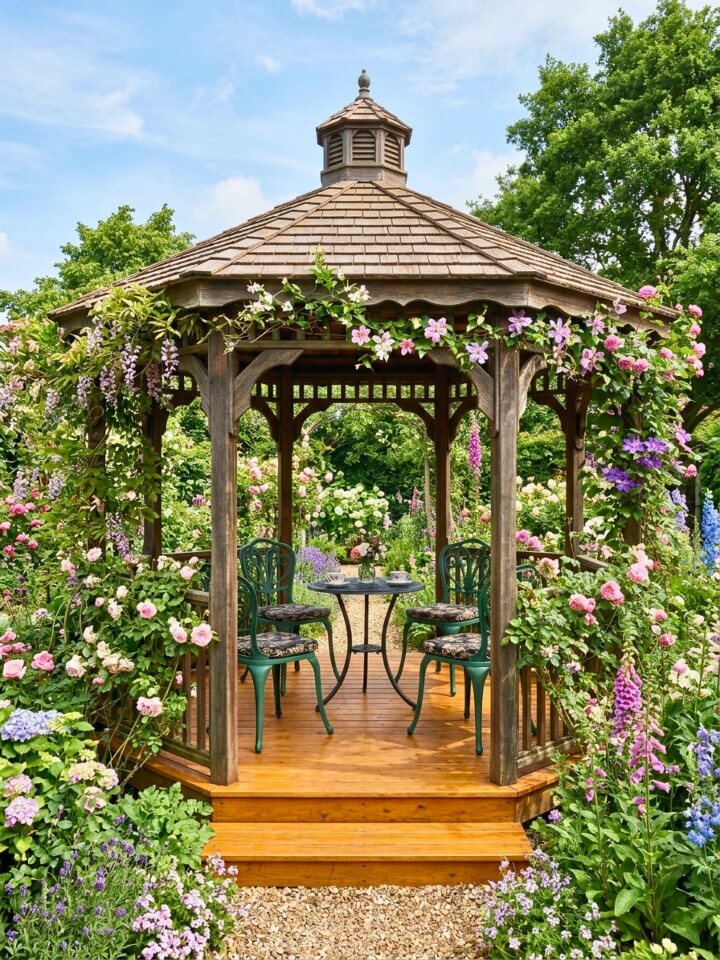
Quality wrought iron is among the most durable outdoor furniture available. The problem is most furniture marketed as wrought iron is actually steel with a decorative finish. True wrought iron is worked while hot — denser and more impact-resistant. Cast iron is poured into molds — heavier and more brittle. Knowing which you’re buying sets realistic maintenance expectations.
Coating quality is everything. A thick powder coat over rust-inhibiting primer holds for years. A thin coat over bare metal shows rust within one wet season. Always inspect the underside of the seat and joints — that’s where cheap coating fails first. Without cushions, extended sitting becomes uncomfortable. A 2-inch seat pad tied securely to the frame makes a significant difference.
23. Round Conversation Tables for Social Gatherings
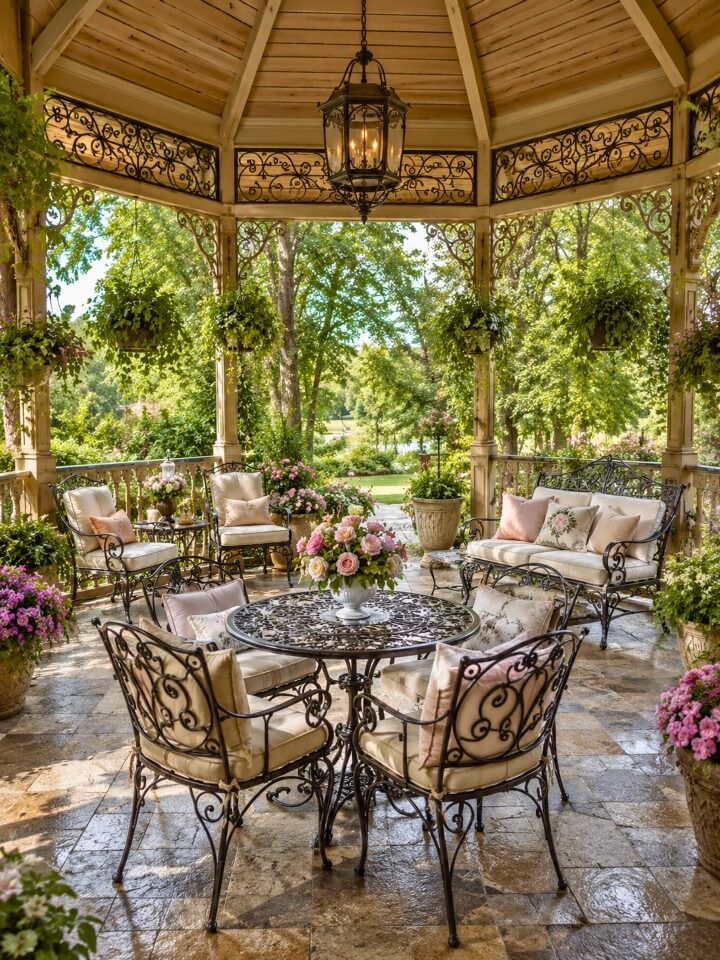
Round tables eliminate the head of the table — everyone sits at equal distance from each other, which makes conversation naturally more inclusive. That quality suits gazebo settings well, where the goal is relaxed gathering rather than formal dining.
A 36-inch round seats four comfortably. A 48-inch seats five or six — add a lazy susan if you’re serving food, since reaching the center becomes awkward. Beyond 48 inches, the conversational benefit disappears; at 60 inches, people across from each other are far enough apart that conversation splits into pairs. For bases, pedestal designs keep the floor clear and allow more flexible chair placement than four-leg bases. Avoid glass tops outdoors — water spots accumulate constantly and wiping becomes a recurring chore.
24. Folding Lounge Chairs for Gazebo
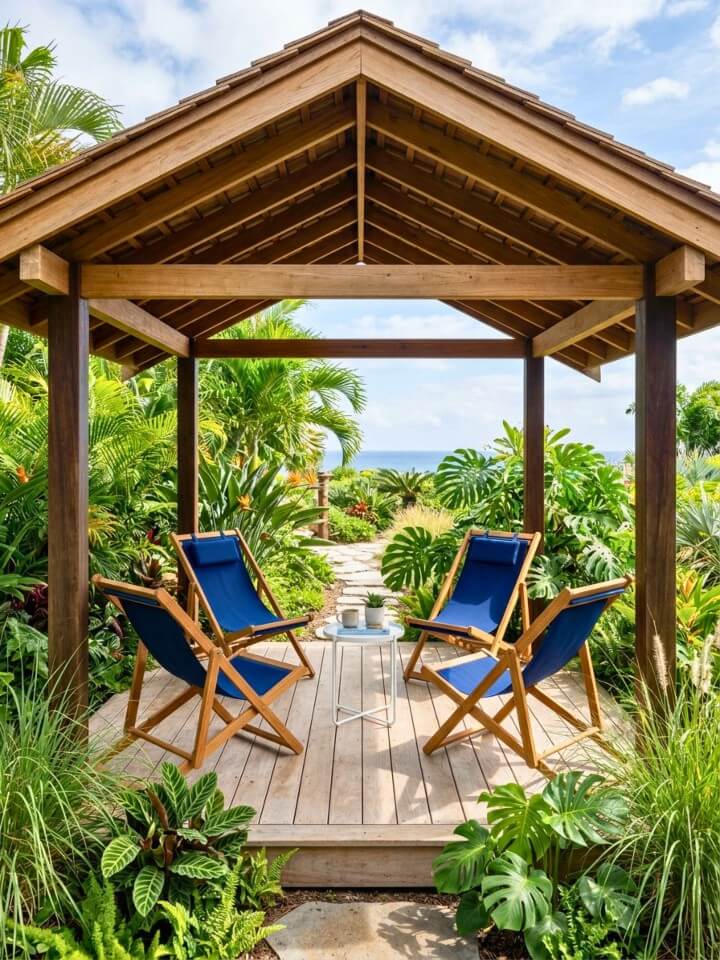
In a gazebo, a lounge chair fills a specific gap: nearly-flat relaxation with legs extended — something a sofa doesn’t quite achieve. Backrest adjustability is the most important feature. Look for five or more positions; two or three fixed positions force you to compromise. Infinitely adjustable models exist but the mechanisms tend to fail faster outdoors.
Aluminum frames weigh 15–20 lbs — one person can reposition easily. Steel frames run 25–35 lbs, which matters when rearranging for guests. Sling fabric (woven mesh) outperforms cushion-based loungers outdoors — dries instantly, stays cooler, requires no storage when rain comes. The tradeoff is less padding; a removable cushion solves that. Test the fold mechanism in store — a 2-minute wrestling match in daily use means the chair stays folded.
25. Corner Shelving Units for Decor and Plants
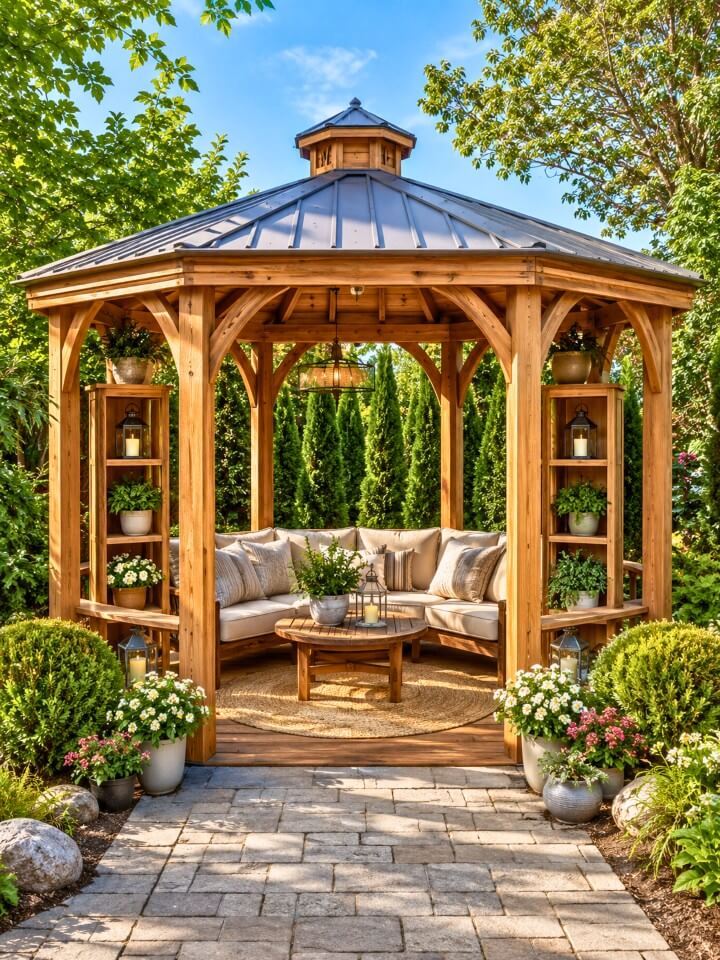
Outdoor corner shelving isn’t about storage — it’s about vertical layering. A gazebo with all furniture at seat height looks visually flat even when fully furnished. A corner shelf reaching 5–6 feet draws the eye upward and makes the space feel more intentional.
For plants, tiered shelving works better than individual floor pots: trailing plants at the top, mid-height foliage in the middle, compact plants or lanterns at the base. Avoid all indoor shelving materials outdoors — MDF, particleboard, and untreated pine fail within a season. Use teak, powder-coated steel, or aluminum. Critical: check weight rating per shelf before buying. A medium ceramic pot can weigh 15–25 lbs. Three on an under-rated shelf is a real problem.
26. Portable Picnic Carts for Easy Entertaining
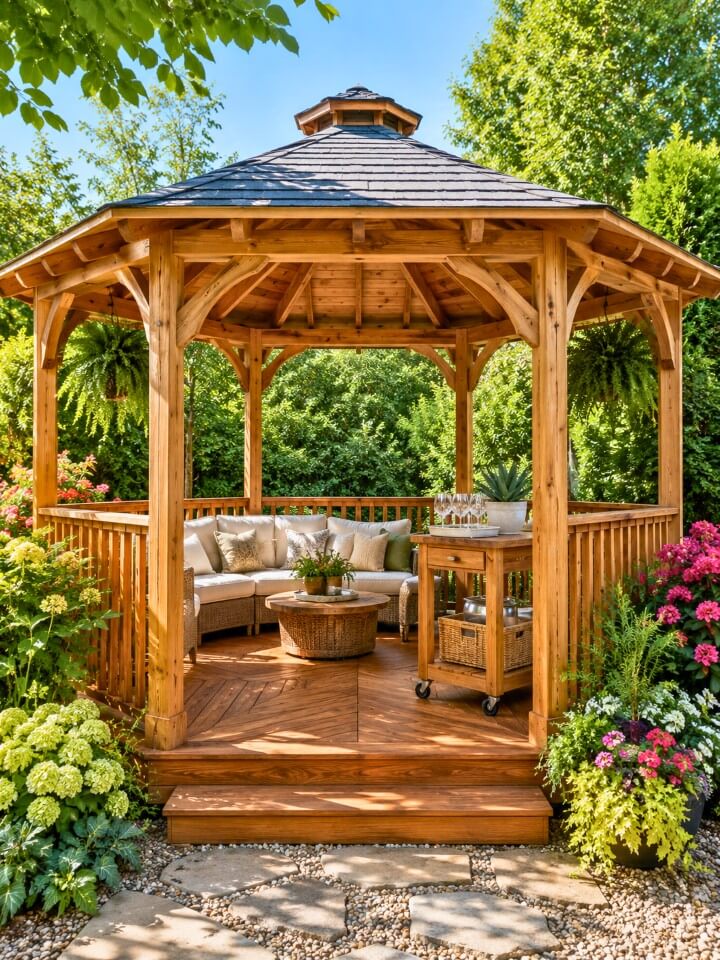
A picnic cart eliminates the repeated trips back to the kitchen during outdoor gatherings. Glasses, drinks, napkins, a cutting board — everything lives on the cart and rolls out with it. It’s a simple workflow change that noticeably improves how hosting actually feels.
For wheels, larger diameter (4 inches or more) handles grass and uneven ground far better than small hard-plastic wheels. Locking casters prevent drift when someone leans on the cart. For the surface, powder-coated metal is the most durable and easiest to clean after spills. Teak and bamboo look better but require more care. Match storage configuration to your use case — wine slots and hooks serve a drinks setup; drawer and cabinet space serves food service. The two aren’t interchangeable.
FAQs About Gazebo Furniture
A few things didn’t fit naturally into the furniture ideas above, but come up almost every time someone sets up a gazebo for the first time.
What Is the Best Flooring to Pair with Gazebo Furniture?
Flooring affects how furniture sits, moves, and wears over time. Composite decking and stone pavers are the most practical choices — both are level, durable, and easy to clean. Gravel shifts under chair legs and becomes frustrating quickly. Bare grass works temporarily but gets muddy and uneven with regular foot traffic, which shortens furniture life faster than weather does.
How Do I Protect Gazebo Furniture During Winter?
The most effective approach is a combination of covers and storage. Cushions should always come indoors — even weatherproof ones degrade faster through repeated freeze-thaw cycles. Hard furniture frames can stay outside under breathable covers that prevent moisture buildup. Metal furniture benefits from a light coat of protective wax before covering. Folding pieces are worth storing inside entirely if space allows.
Can I Use Indoor Furniture in A Covered Gazebo?
Occasionally, yes — but it’s not a long-term solution. A fully covered gazebo with solid walls reduces weather exposure significantly, but humidity, temperature swings, and indirect moisture still affect indoor materials over time. Wood warps, fabric mildews, and metal rusts faster than most people expect. If the piece matters to you, keep it inside. If it’s already worn, a season outside under cover won’t hurt it.
How Much Weight Can a Typical Gazebo Floor Hold?
This depends entirely on the gazebo construction. A professionally installed permanent gazebo with a concrete or reinforced deck foundation handles standard patio furniture without concern. Kit gazebos with wooden or gravel bases have more variable load limits. As a general guideline, avoid concentrating heavy furniture — like stone-top tables or large teak sets — in a single area without confirming the floor structure can support it.
How Do I Keep Gazebo Furniture from Blowing Away in Wind?
Lightweight furniture is the most vulnerable. Anchor strategies include furniture weights that clip onto chair legs, ground anchors for larger pieces, and anti-tip straps that connect furniture to gazebo posts. Storing cushions inside when storms are forecast is the single most effective habit. For permanent setups in consistently windy areas, heavier materials like wrought iron or teak are worth the added cost, specifically for this reason.
Conclusion:
A gazebo without the right furniture is just a roof in your backyard. The structure gives you the space — the furniture is what gives it a reason to exist.
What works best is rarely the most expensive option or the one that looks great in a catalog photo. It’s the piece that fits your actual gazebo dimensions, holds up through a few seasons without constant maintenance, and gets used regularly rather than admired occasionally.
Start with one area. A seating corner, a dining setup, a single hanging chair in a spot that gets good afternoon shade. See how you use it before filling the entire space. Most people who over-furnish a gazebo in the first season end up moving half of it within a year anyway.
The best gazebo setups tend to grow gradually — one good piece at a time, based on how the space actually gets used rat