28 Stone Landscaping Ideas That Actually Last (No Guesswork Required)
The first time I helped a friend lay a flagstone path, we skipped the base layer to save an afternoon. By spring, half the stones had tilted sideways like crooked teeth. That weekend taught me what years of garden magazines hadn’t: stone rewards patience and punishes shortcuts, but get it right once, and it outlasts almost everything else in your yard.
That’s the quiet appeal behind these 26 impressive stone landscaping ideas. A wood deck rots, mulch fades by August, and grass needs constant babying — but a well-set stone wall or gravel path just keeps doing its job, year after year, looking better as it weathers.
Whether you’re tired of mowing a sloped patch that refuses to grow, want a fire pit corner for slow evenings, or just need a path that doesn’t turn to mud, there’s something here worth borrowing. Let’s dig in.
1. Flagstone Pathway
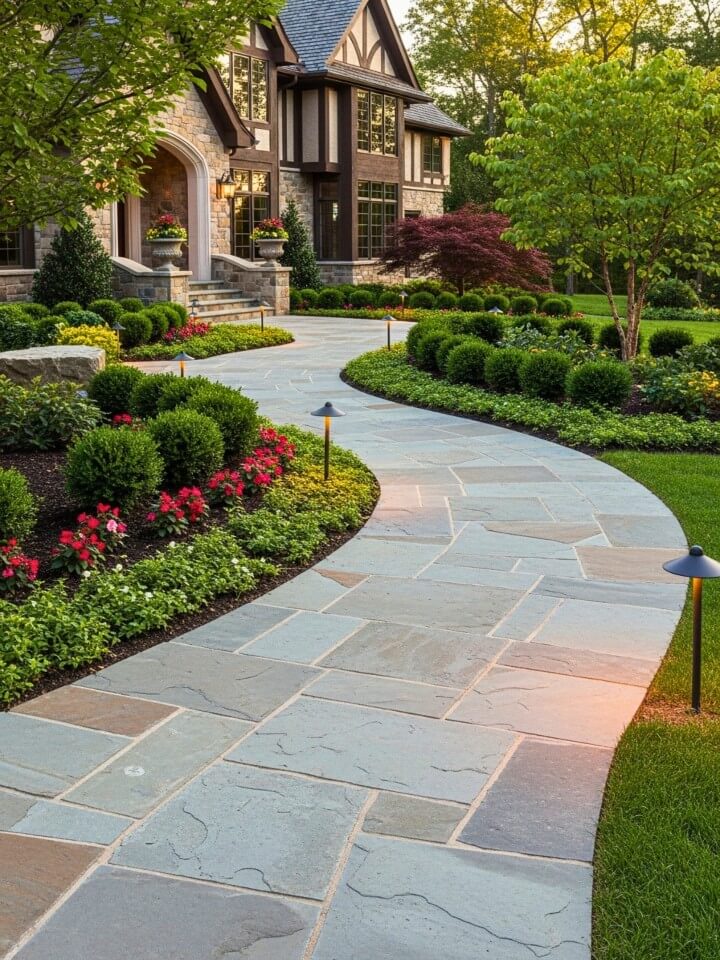
A flagstone walk forgives a lot of beginner mistakes — but not a skipped base layer.
The Base Does the Real Work
Pick irregular pieces 1.5 to 2 inches thick (thinner stones crack within a few seasons), then set them on a 3-inch bed of paver base topped with coarse sand. Leave 1 to 2 inches of gap between stones for polymeric sand or creeping thyme.
What You’ll Spend
Around $15 to $25 per square foot DIY, roughly double with a contractor.
Where Most Projects Fail
Laying stones directly on bare dirt. By the second winter, frost heave has tilted half of them. One extra afternoon on the base saves the entire path.
2. Stone-Edged Garden Beds
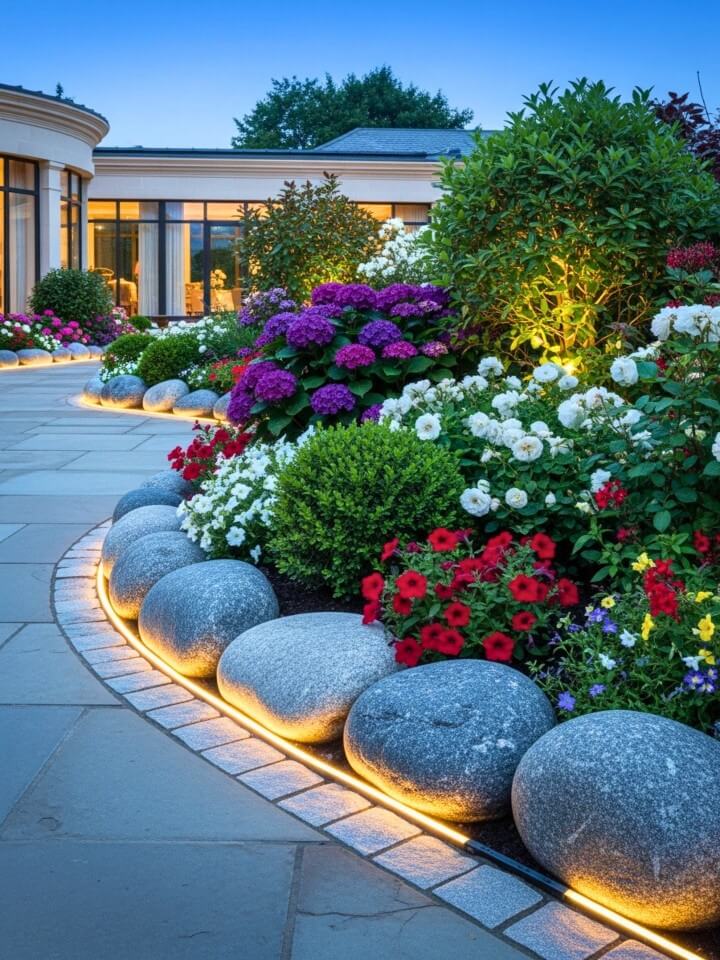
Borders aren’t really about looks — they’re a physical barrier that stops mulch from washing into the lawn and keeps grass roots from creeping into the bed. Cobblestones, fieldstone, or split granite all do the job equally well; what actually matters is weight.
Anything light enough to kick out of place will end up out of place by August. Sink the first row an inch or two into the soil so the mower wheel rides cleanly over the edge, and you’ve eliminated string-trimming around the bed forever. A 30-foot border runs $150 to $400. Skip the small bagged “river pebbles” from big box stores — they scatter within a season.
3. Layered Stone Retaining Wall
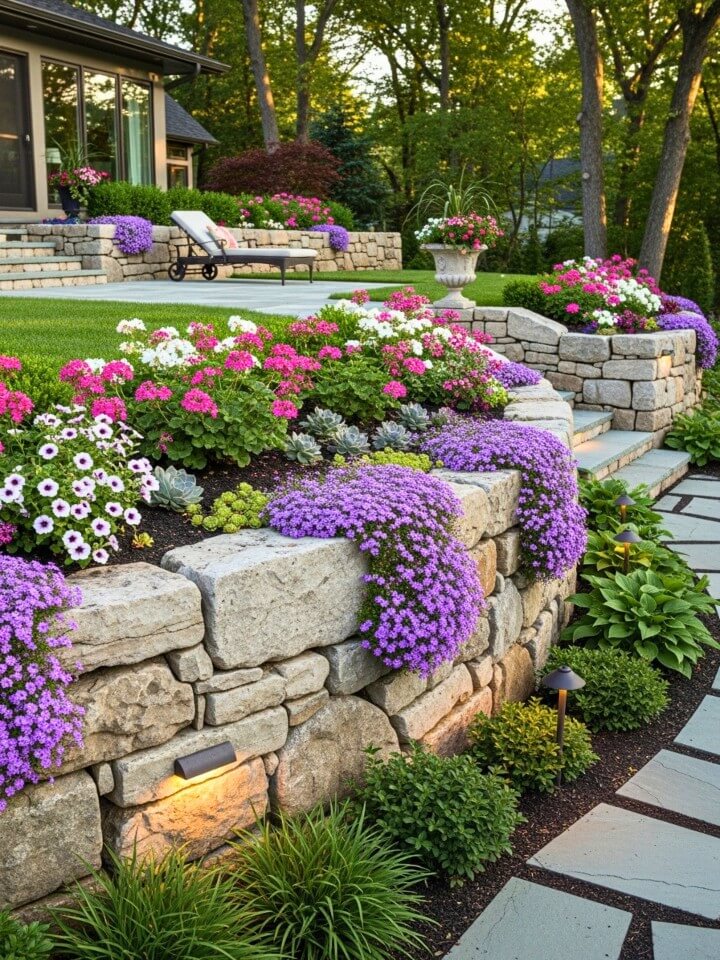
Under three feet, a dry-stacked wall is a doable weekend project. Above that, hire someone with engineering credentials, or you’ll be rebuilding after the first wet spring.
Drainage Matters More than The Stones Do
Behind the wall: a perforated pipe wrapped in landscape fabric, surrounded by crushed gravel. Without it, water builds up behind the structure and pushes it outward — slowly, then all at once. I’ve seen beautifully built walls fail in three years because the homeowner skipped this step entirely.
Wallstone costs $4 to $12 per square face foot. Rough-cut limestone and weathered fieldstone age into the landscape better than uniform manufactured blocks, which somehow look newer and more out of place every year.
4. Natural Stone Patio
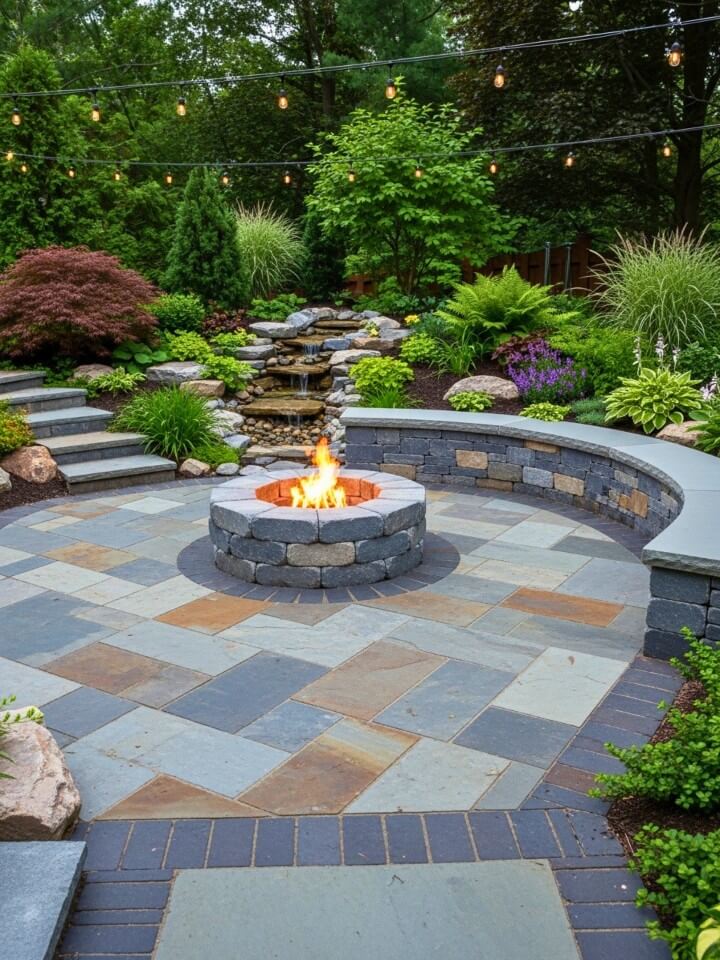
Explore stone landscaping ideas that outlast every trend, survive every season, and never need replacing. Of every hardscape project, this is the one that returns the most actual living space per dollar spent.
Bluestone weathers to a soft gray and shrugs off freeze-thaw cycles. Flagstone runs warmer in tone — buff, rust, gold — and feels more casual underfoot. Travertine stays noticeably cooler in July, which matters more than people expect on a south-facing patio.
A 200-square-foot installation runs $3,500 to $7,000 with a contractor, less than half that DIY. The mistake nearly everyone makes is undersizing. A round table with four chairs needs a 12-foot clear diameter, not 8. Chalk it out on the lawn before ordering stone, then add two feet for breathing room. For tighter yards, shocking small patio landscaping ideas can help you scale the same stone concept without overwhelming the space.
5. Rock Garden with Succulents
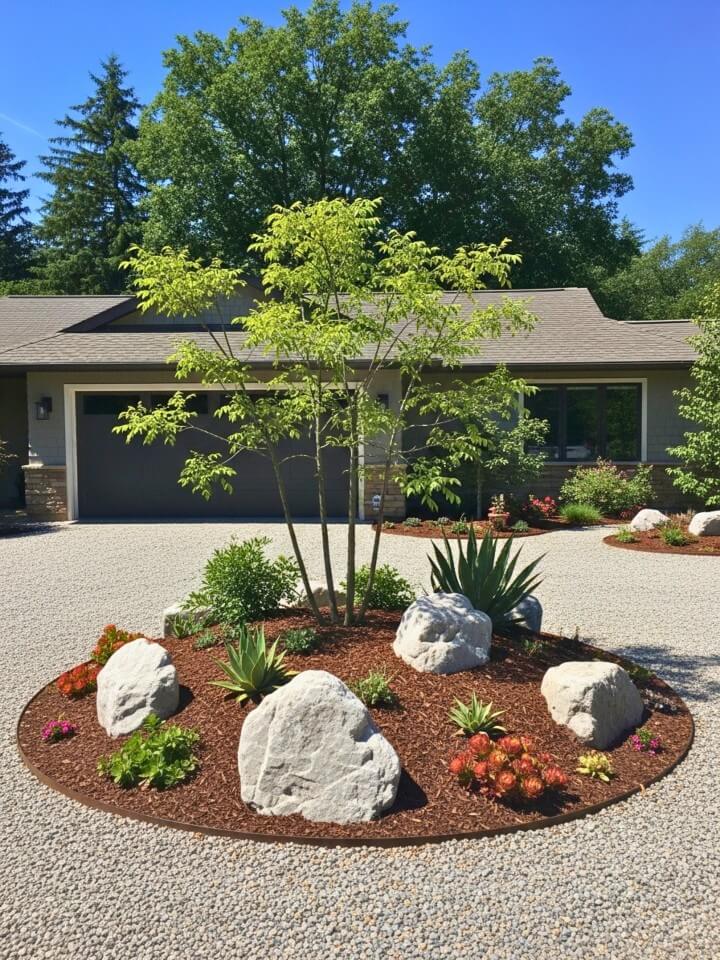
A succulent rock garden is about as close to set-and-forget as landscaping gets — provided you nail the drainage. Mound the soil six to twelve inches above grade and amend it heavily with coarse sand and pumice. Succulents tolerate drought; they don’t tolerate wet feet.
Cold-Hardy Plants Worth Trying
Sedum, hens-and-chicks, certain agaves, and several yucca species handle winters down to zone 4 or 5. Always check the specific cultivar’s rating rather than trusting the general species name.
A 100-square-foot bed costs $300 to $800 in materials. Group plants in threes and fives with one architectural focal point, and leave at least 60 percent of the surface as visible stone — over-planting kills the whole effect.
6. Dry Creek Bed
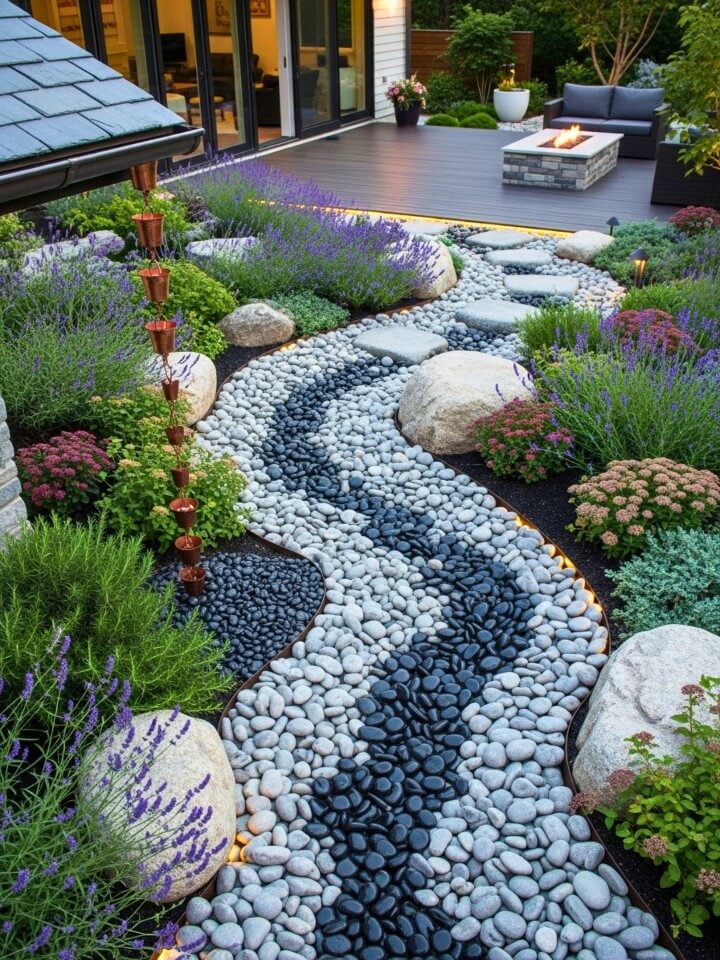
This is one of the rare landscape features that solves a real drainage problem and looks good doing it. If you’ve got a low spot that puddles, or a downspout dumping onto bare soil, build one of these instead of regrading.
The Rough Sequence:
- Dig a shallow, meandering trench — never straight — following the natural water flow.
- Line it with landscape fabric to block weed growth.
- Edge the banks with larger rounded river rock, 3 to 8 inches across.
- Fill the center channel with smaller pea gravel.
- Drop in a few boulders as visual anchors.
Mix at least three different stone sizes. Uniform rock is the dead giveaway of an amateur installation.
7. Bold Boulder Accents
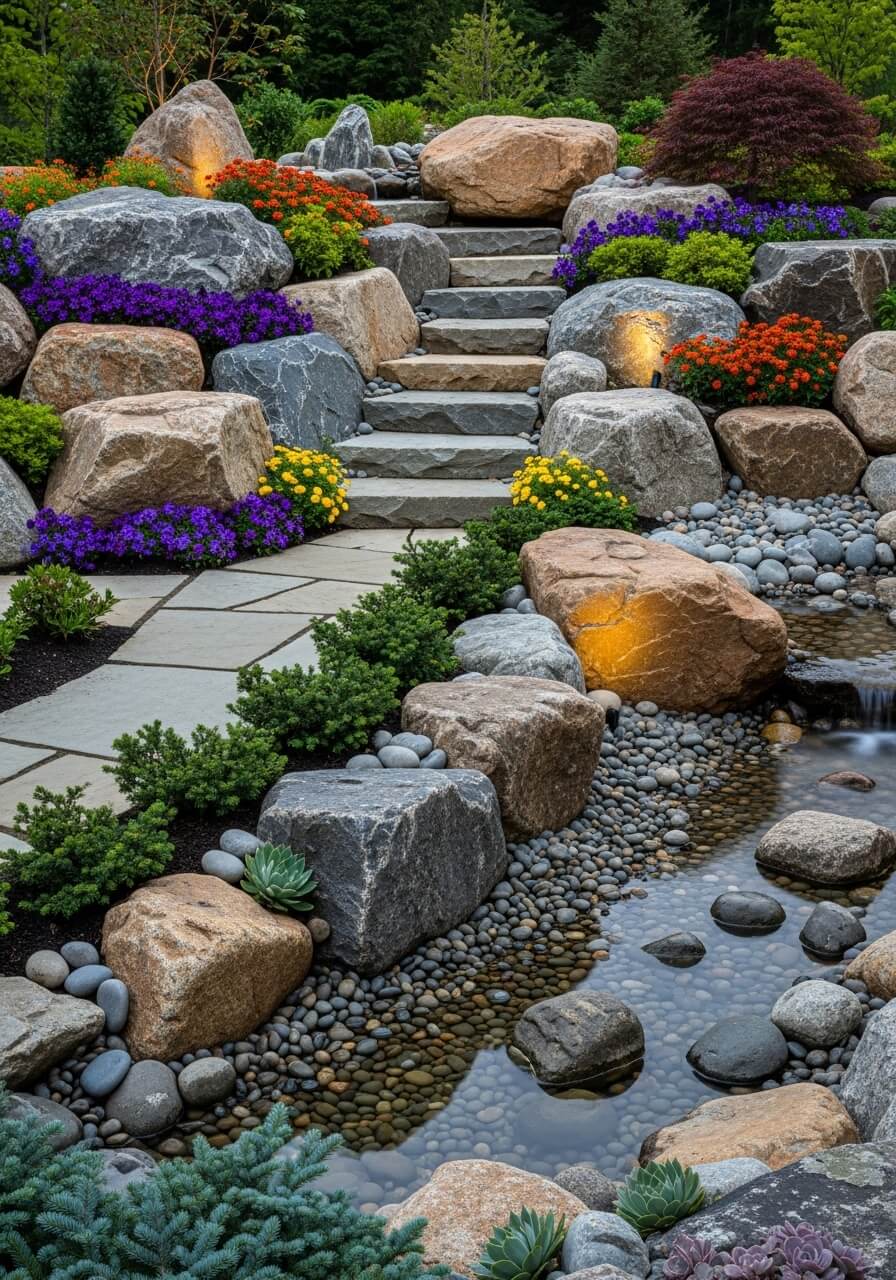
I once spent an entire Saturday wrestling a 500-pound boulder three feet to the left of where the delivery driver had set it down. I’d told him “just put it anywhere on the lawn.” That was the lesson — boulders go exactly where the equipment puts them, no negotiations afterward.
The other thing nobody tells you: bury at least a third of the stone below grade. Boulders sitting fully on top of the soil look dropped from a truck (because they were). Half-buried ones look like they’ve been there since the Pleistocene.
Delivered cost runs $100 to $400 depending on size and travel distance. Cluster them in odd numbers — three or five — with varied heights.
8. Stone Fire Pit Area
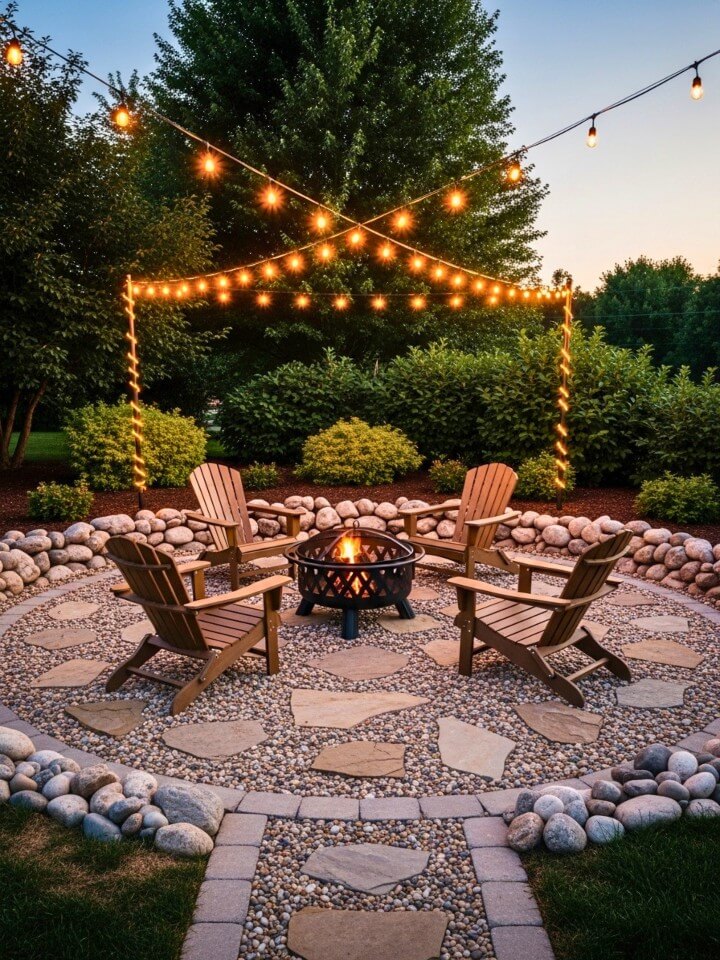
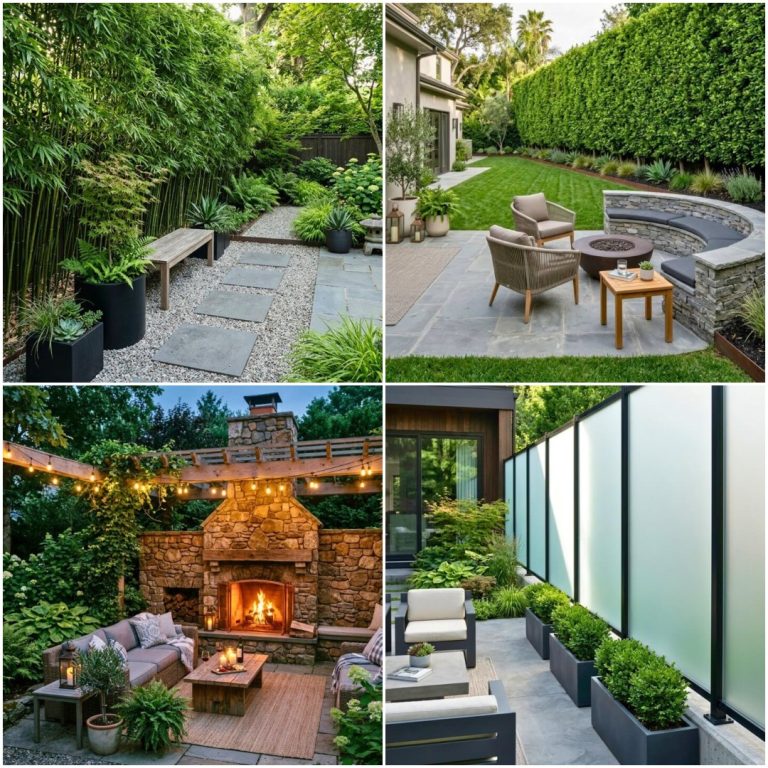
A fire pit turns a backyard from a place you mow into a place you actually spend evenings. The pit itself is the cheap part — a basic kit runs $200, a custom stone build maybe $2,000.
Clearances You Genuinely Can’t Skip
- 10 feet minimum from fences, sheds, and the house
- Nothing flammable directly overhead — tree branches, pergola fabric, unrated string lights
- Noncombustible ground (gravel or flagstone) extending at least 4 feet past where the chairs sit
Most homeowners insurance policies require these even when local code stays silent. Adirondack chairs beat cushioned outdoor furniture here — cushions inevitably get singed within the first season. If the fire pit is tucked into an unused edge of the yard, these astonishing corner landscaping ideas can help turn that forgotten spot into a proper destination.
9. Gravel Mulch Around Plants
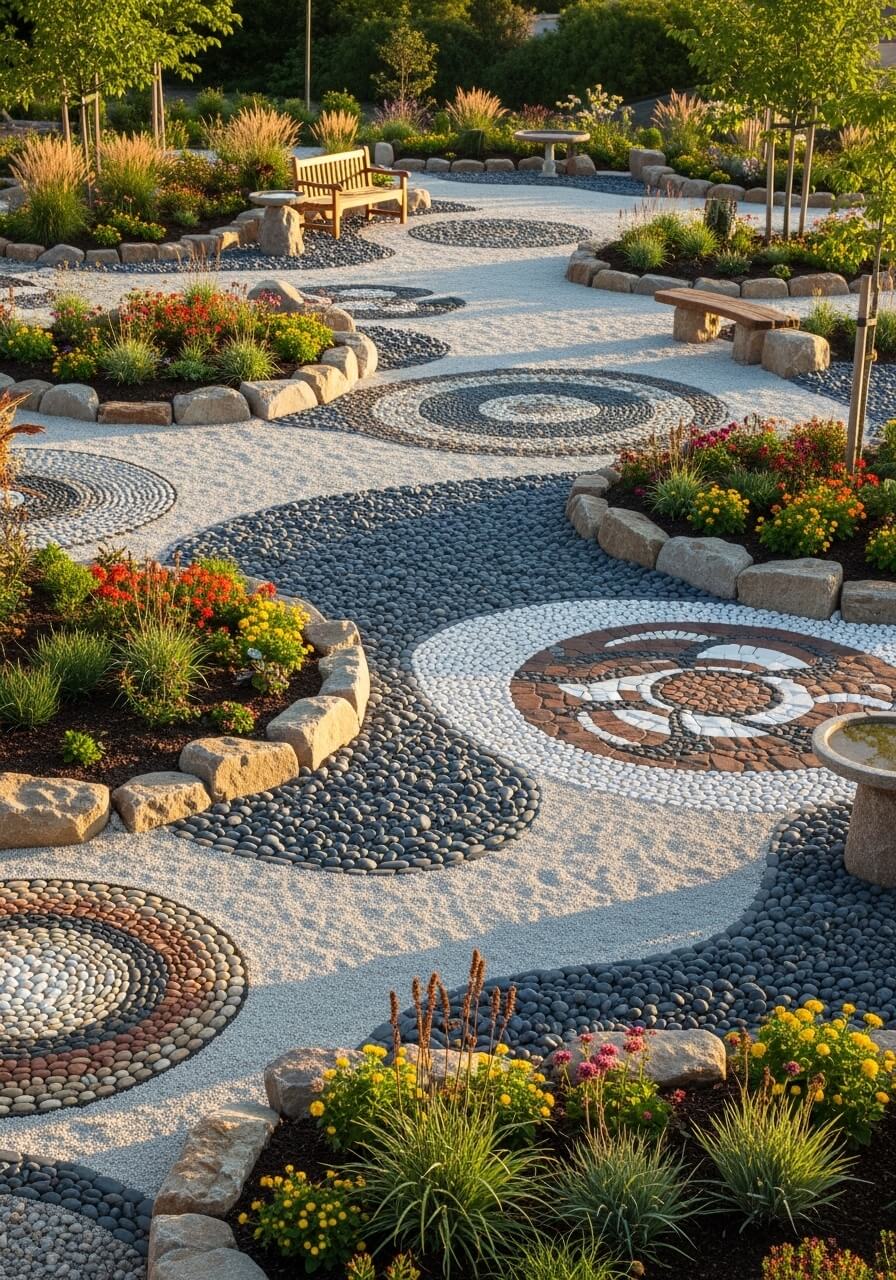
Quarter-inch crushed stone over landscape fabric is the closest thing to permanent mulch that exists. One application can last a decade. Wood mulch needs replacing every spring.
Where It Works: mature beds with shrubs and perennials you’re not planning to move. Around foundation plantings. Dry-climate borders where moisture retention matters.
Where It Doesn’t: annual beds, vegetable gardens, anywhere you’ll be digging regularly. Once gravel is down, it migrates into every shovelful of soil from then on.
Budget $80 to $150 per cubic yard delivered, plus fabric and edging to keep stones from drifting into the lawn. The decision is essentially permanent, so settle the bed design first.
10. Zen Stone Garden
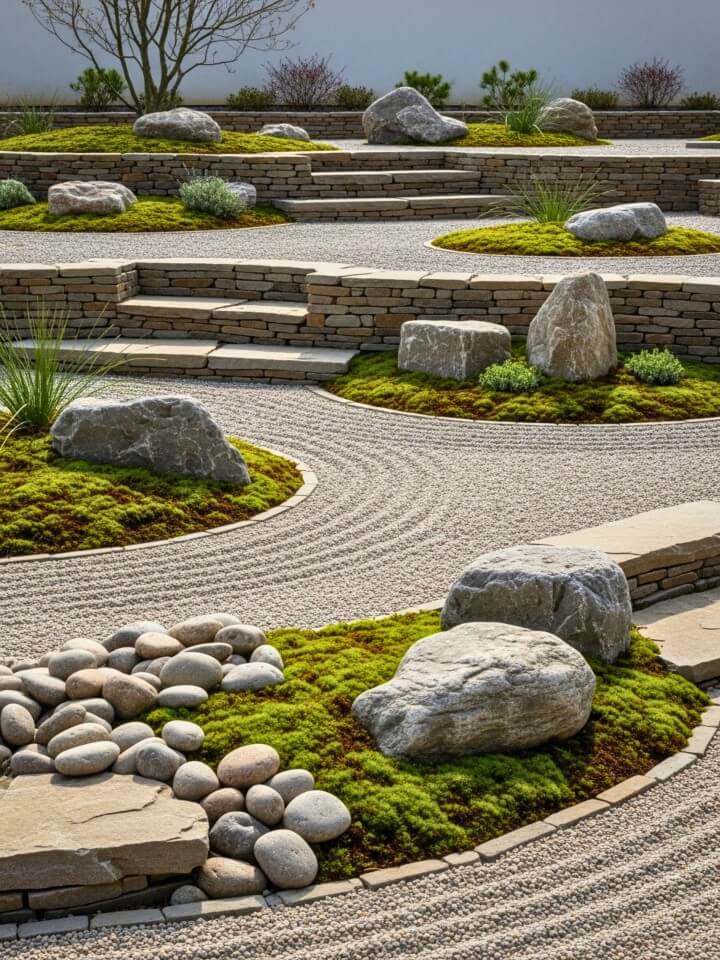
The mistake people make with these is treating them as decorative. They aren’t — they’re contemplative. A Zen garden in the wrong spot just reads as a bare patch of gravel that the owner forgot to plant.
The right spot is small and enclosed: a side yard, a fenced corner, somewhere visually quiet. The vocabulary is deliberately limited — a few carefully placed rocks with their grain aligned, raked gravel or fine pea stone around them, maybe one moss patch or a single low evergreen. That’s it. Adding more is the opposite of the point. If the area also needs screening from neighbors, awesome privacy landscaping ideas can help you frame the space without ruining the quiet feel.
The raking isn’t maintenance, it’s the practice. If you don’t want to rake weekly, build something else. Budget $400 to $1,200 for 100 square feet.
11. Stepping Stones Through Ground Cover
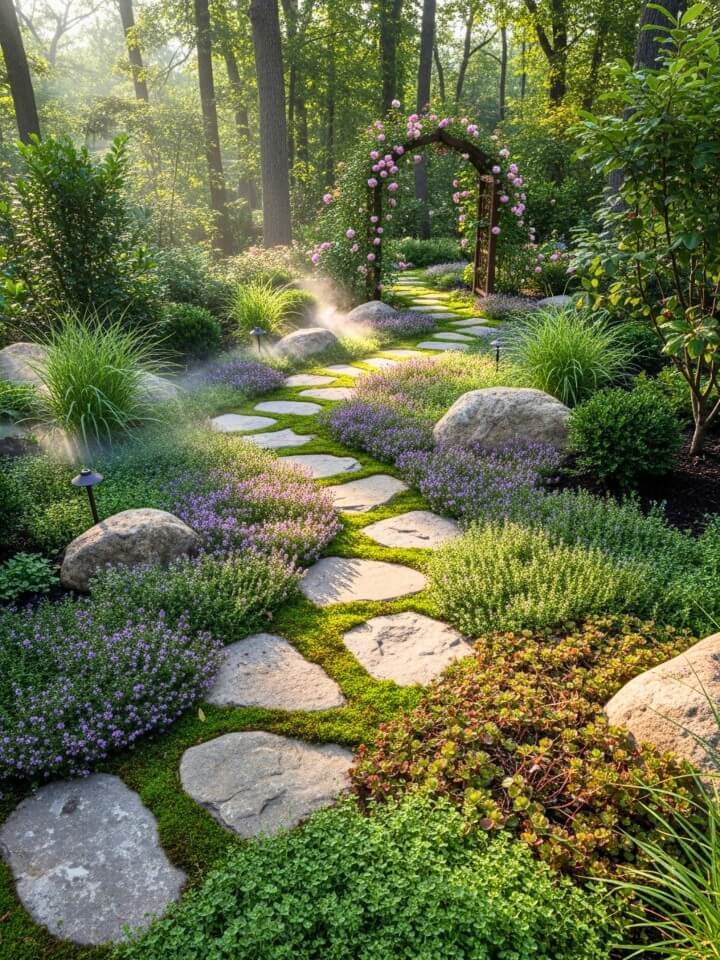
Skip the seasonal replanting — stone garden ideas give you year-round beauty with none of the hassle. Stepping stones set into low ground cover read as secret-garden charm when done right and as a tripping hazard when done wrong. The difference is spacing and height.
Spacing should match your natural stride — measure it. Most adults walk comfortably with stone centers 24 to 26 inches apart. Set each stone flush with the soil surface, never proud of it; ground cover will grow up to the edge but never over a raised stone.
What to Plant Between Them
Creeping thyme handles foot traffic and smells incredible when stepped on. Irish moss prefers shade and stays low. Blue star creeper fills in fast but needs consistent moisture. Avoid anything taller than two inches — it’ll flop over the stones and obscure them.
12. Stone Water Feature
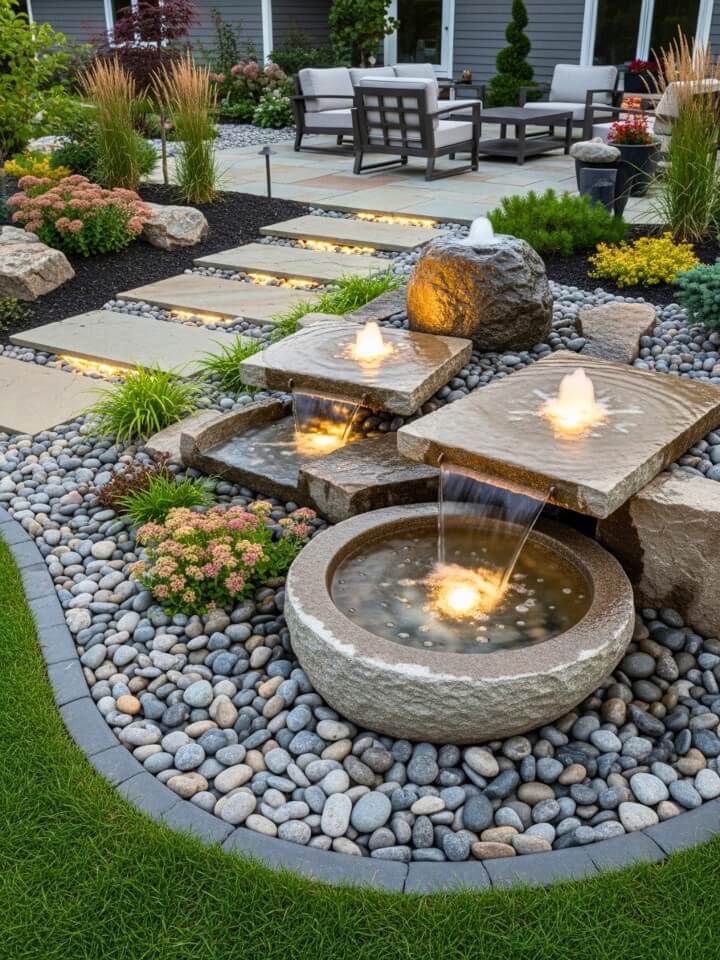
The first water feature I installed for a client was a $1,400 disaster — a tiered fountain that algae took over within six weeks. The replacement was a $180 disappearing bubbler: a single drilled basalt column over a hidden reservoir, water cycling up through the center and trickling back down through gravel. Three years later it’s still running, and she’s never cleaned it.
The lesson stuck. Open-water features look elegant in catalogs and become maintenance burdens in real yards. Anything with a visible pool needs weekly attention through the warm months. Disappearing fountains — where the water vanishes into a gravel bed — give you the sound of moving water with almost none of the upkeep.
13. Gravel Driveway
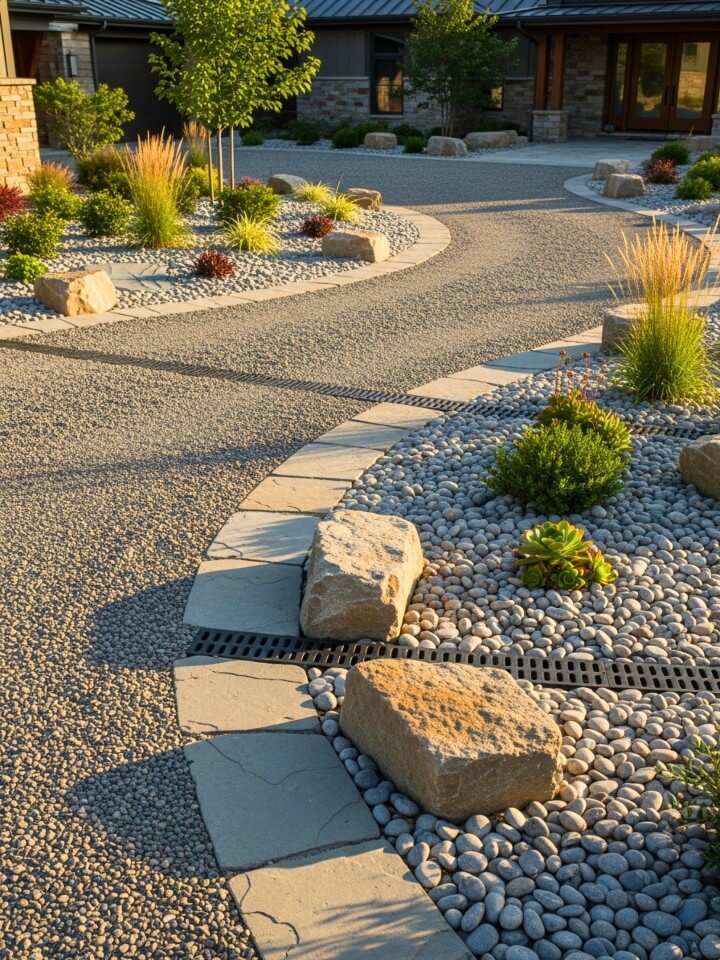
Done right, landscape stone ideas fix drainage, stop erosion, and make your outdoor space look intentional. Gravel handles drainage better than any paved surface and costs a fraction of asphalt — but the type of gravel matters enormously.
Pea gravel looks beautiful and is awful for driveways. It shifts under tires, scatters into the lawn, and creates ruts within a season.
Crushed stone with fines (often sold as “21A” or “crusher run”) locks together under compaction and stays put. This is what you want.
Decomposed granite works in dry climates but turns to mud in wet ones.
Budget around $1 to $3 per square foot installed. Plan to top-dress with fresh material every 3 to 5 years as the surface settles, and edge the driveway with timber or steel to keep stones from migrating outward.
14. Sloped Yard Erosion Control with Stone
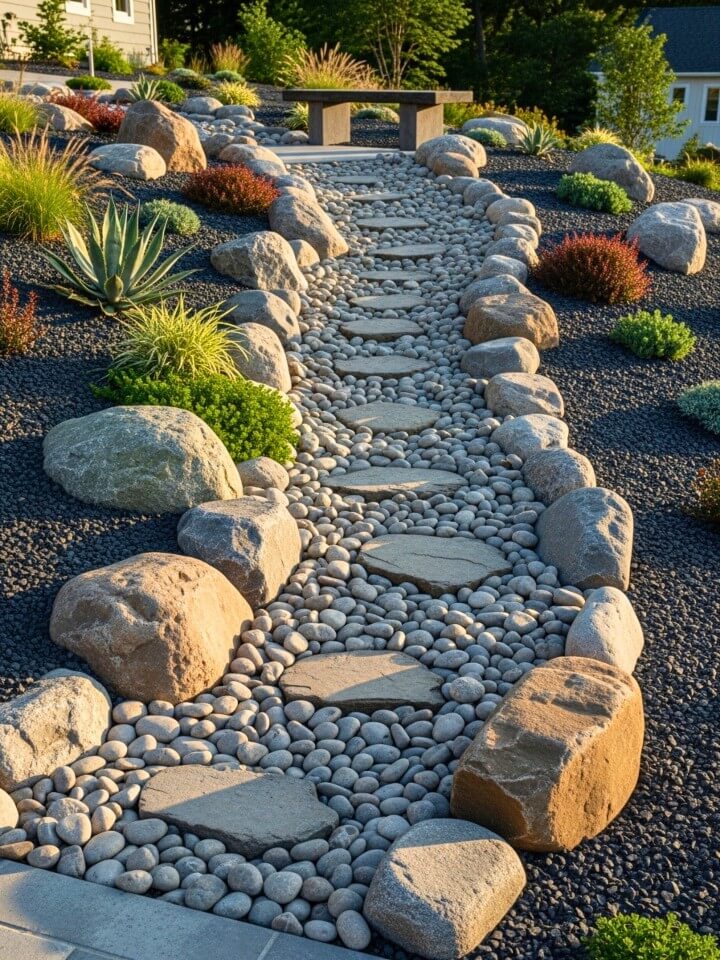
A bare slope is a problem in slow motion. Every heavy rain carries soil downhill, mulch washes into the street, and eventually you’re staring at exposed roots and bare patches that won’t take seed.
The fix isn’t grass — grass roots are too shallow to hold a real slope. It’s a combination of larger rocks (6 to 12 inches) anchoring the lower third of the grade, a layer of smaller river rock above that to slow water flow, and deep-rooted plants like juniper, prairie dropseed, or sedum sandwiched between the stones to bind the soil.
Done right, the slope stabilizes within a single growing season and stops needing attention entirely after the second.
15. Two-Tone Stone Color Contrast
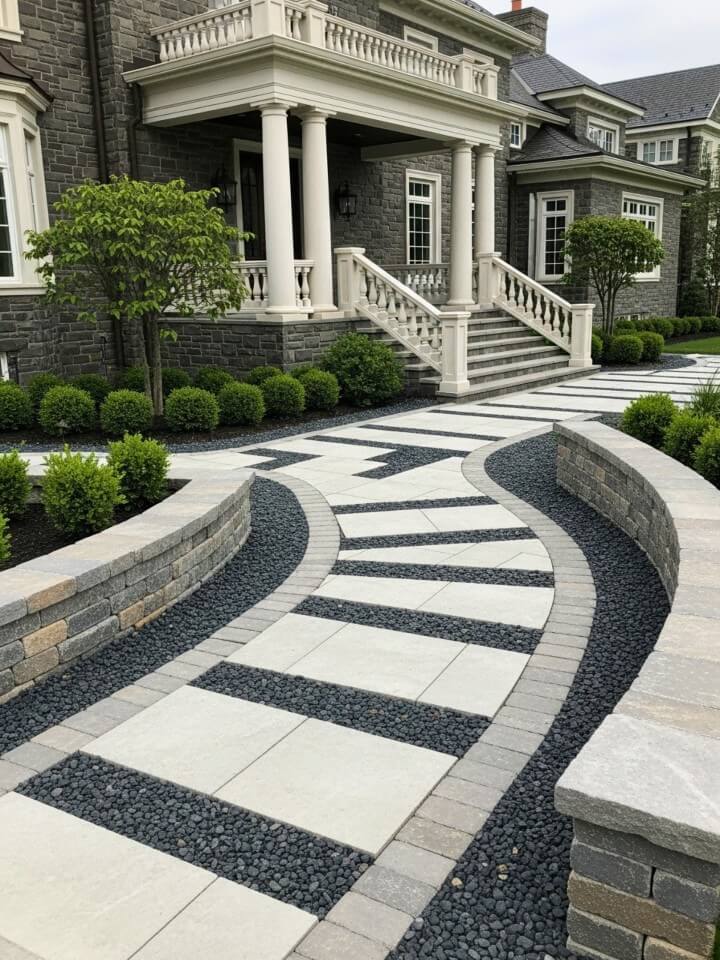
The cheapest way to make stone landscaping look intentional rather than accidental is to commit to exactly two stone colors and use them everywhere.
Pick one light and one dark. Light gravel with dark boulders. Dark pavers with light gravel borders. White marble chips against charcoal slate. Pick the pairing once, then repeat it across the front bed, the side path, and the backyard — and the whole property suddenly looks designed instead of assembled.
The mistake is using three or four stone colors because each individual purchase looked nice at the store. The result reads as visual noise. Walk through any well-designed garden and count the stone colors — you’ll rarely find more than two.
16. Stacked Stone Columns & Pillars
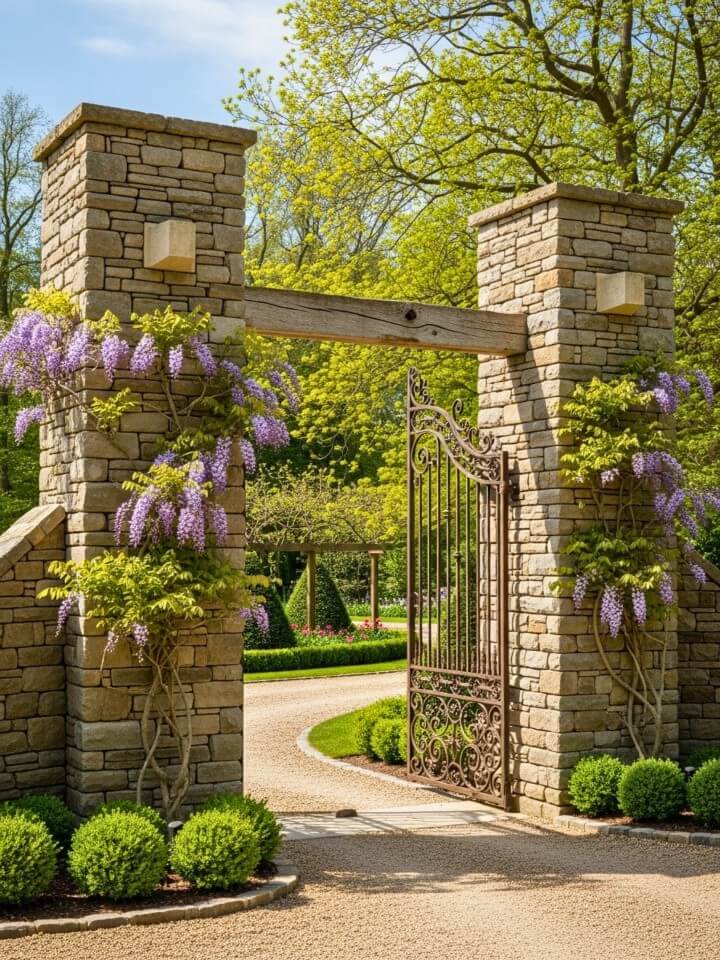
Stacked stone columns at a driveway entrance or garden gate do something no plant can: they make the space feel arrived at.
Construction Reality
These look traditional but most modern installations are stone veneer over a concrete block core. A solid stacked-stone column 4 feet tall and 2 feet square would weigh close to a ton and require footings most homeowners aren’t prepared to dig. Veneer gets you the same appearance for roughly a quarter the cost and effort.
What You’ll Pay
Expect $800 to $2,500 per column installed, depending on stone type and height.
Pair them with iron gates, heavy timber, or climbing vines. Anything delicate looks dwarfed beside them.
17. Raised Stone Planter Beds
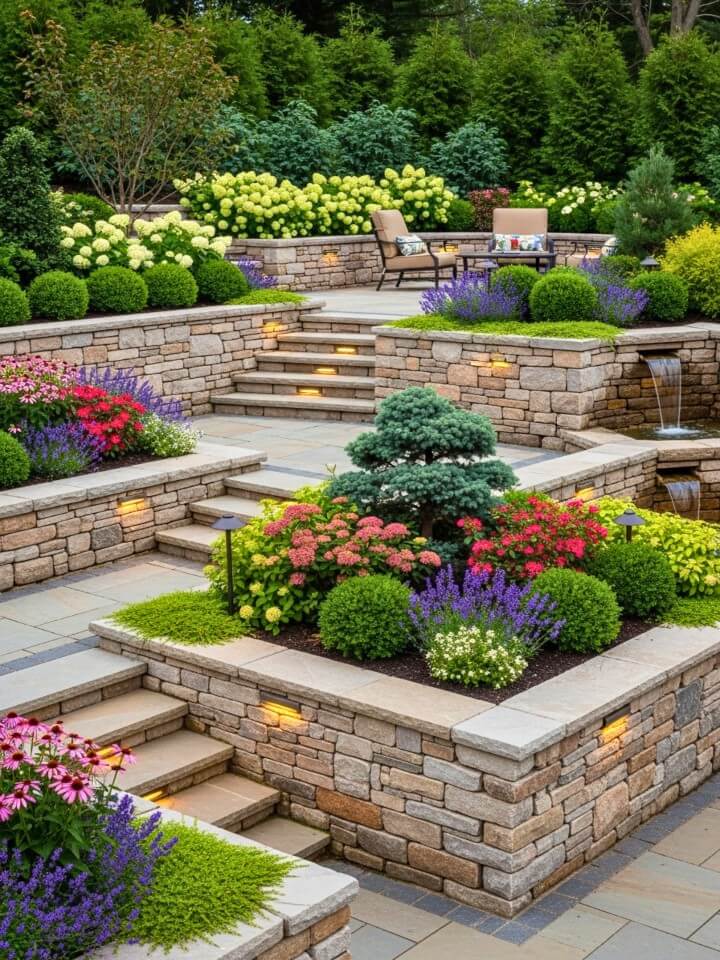
A stone-walled raised bed does three things at once: it warms the soil faster in spring (extending the growing season by two to three weeks), it eliminates bending for anyone with a bad back, and it physically excludes most burrowing pests.
The walls need to be at least 18 inches tall to make a real difference for ergonomics, and ideally 24. Dry-stack fieldstone works for decorative beds, but anything you’re planning to grow vegetables in benefits from mortared construction — the gaps in dry-stacked walls become highways for slugs and voles. For edible planting inspiration once the beds are built, these cool herb garden ideas fit especially well with compact raised stone borders.
Budget roughly $30 to $60 per linear foot for the stonework. Fill with a mix of topsoil, compost, and a bit of perlite.
18. Stone Pathway with Landscape Lighting
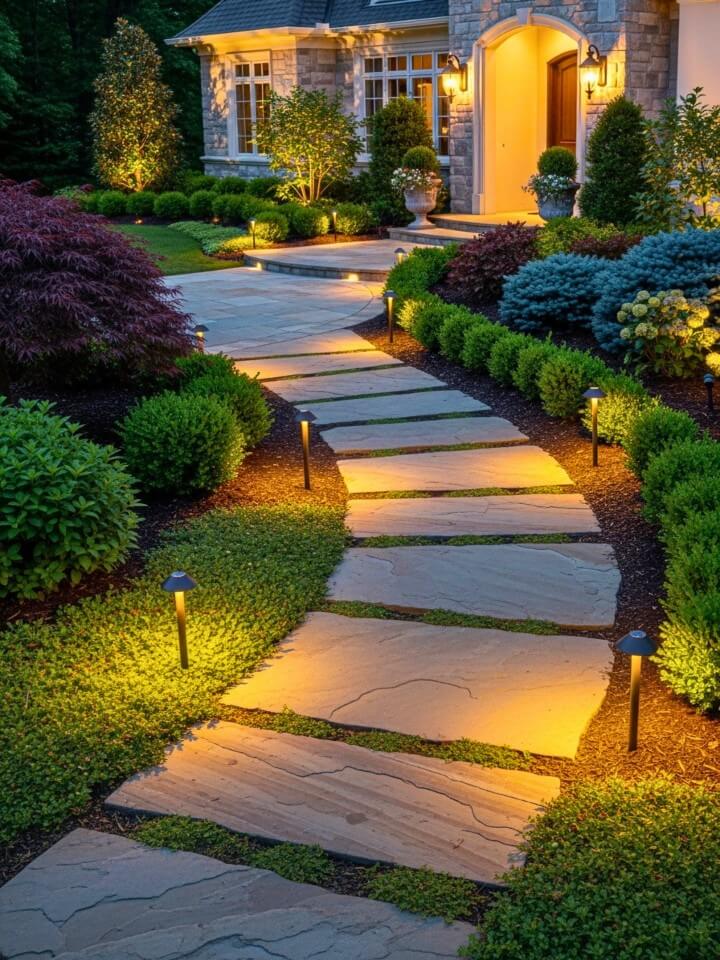
A lit stone path is the single highest-ROI curb appeal project I know. It costs $400 to $1,200 depending on fixture count and quality, and it transforms how the house presents itself from the moment headlights hit the driveway.
The Trick Is Restraint. Two Principles:
- Light the path, not the fixtures. If you can see the bulb, the fixture is too bright or aimed wrong. You want pools of light on the stones with the fixtures themselves disappearing into the shadows.
- Space them further apart than you think. One fixture every 8 to 10 feet, alternating sides. Closer spacing creates runway-strip lighting that reads as commercial.
Hardwired LED fixtures last 20+ years. Solar stake lights last about two.
19. Pea Gravel Seating Area
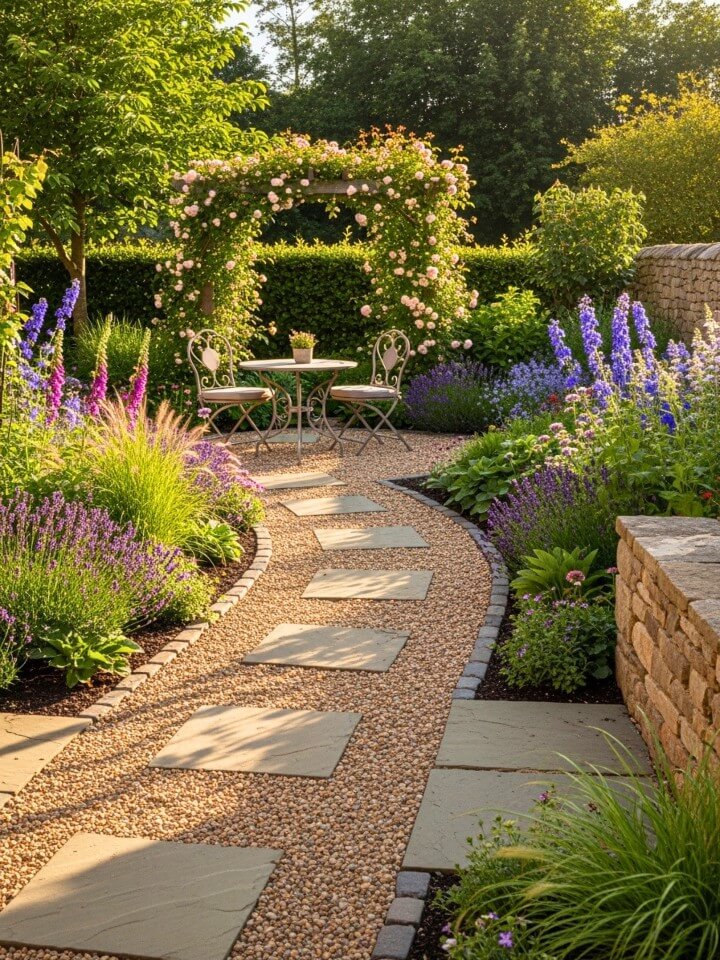
A pea gravel patio is the cottage-garden answer to the formal flagstone patio — softer, more casual, and roughly a third the cost.
What You Need:
- A 4-inch depth of pea gravel over compacted crusher-run base
- Solid edging (steel, stone, or 4×6 timber) to contain the gravel
- Landscape fabric underneath to suppress weeds
The wobble factor is real — chair legs sink slightly, tables aren’t perfectly stable. This is part of the charm for some people and a dealbreaker for others. Bistro chairs and small round tables work fine; dining sets meant for hard surfaces don’t.
A 12-by-12 area runs $400 to $900 in materials. Plan to rake the gravel level once or twice a year.
20. Moss Rock Retaining Wall
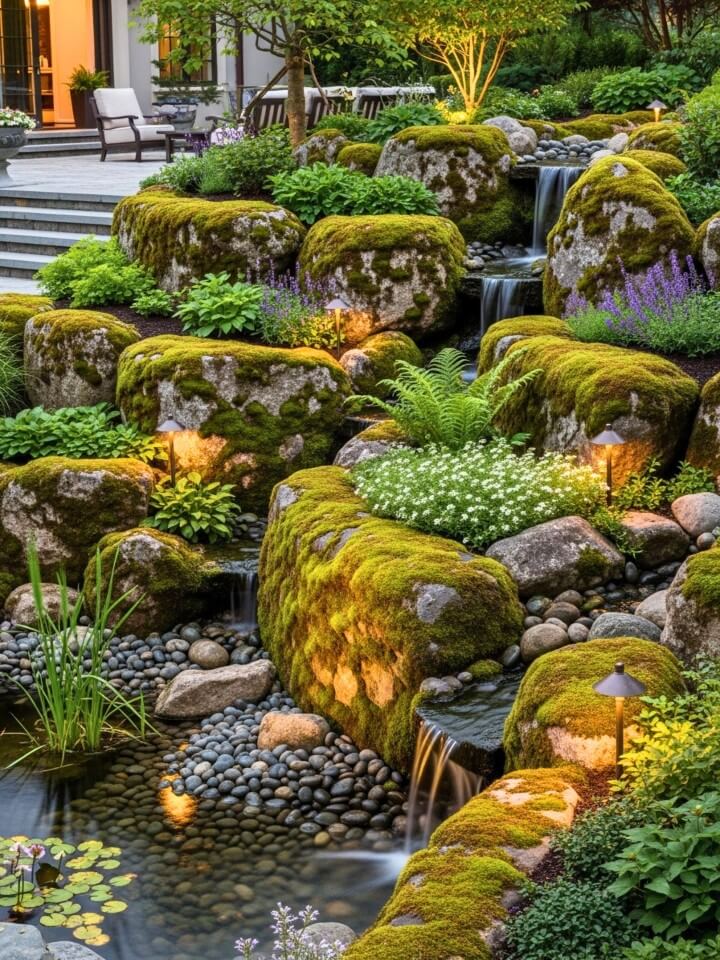
Moss rock isn’t a different type of stone — it’s fieldstone or sandstone that’s been sitting in damp shade long enough to develop lichen and moss on its weathered face. The result is a wall that looks ancient the day it’s built.
The catch: you can’t manufacture this. Moss rock is collected, not produced, which is why it runs $300 to $600 per ton — roughly twice the price of fresh quarried stone of the same size. Supply is genuinely limited, and good pieces sell fast.
Used as retaining wall material, it integrates into wooded or shaded landscapes in a way that no other stone can match. In full sun, the moss eventually dies back and you’ve paid premium prices for ordinary fieldstone — so site matters.
21. River Rock Pebble Mosaic
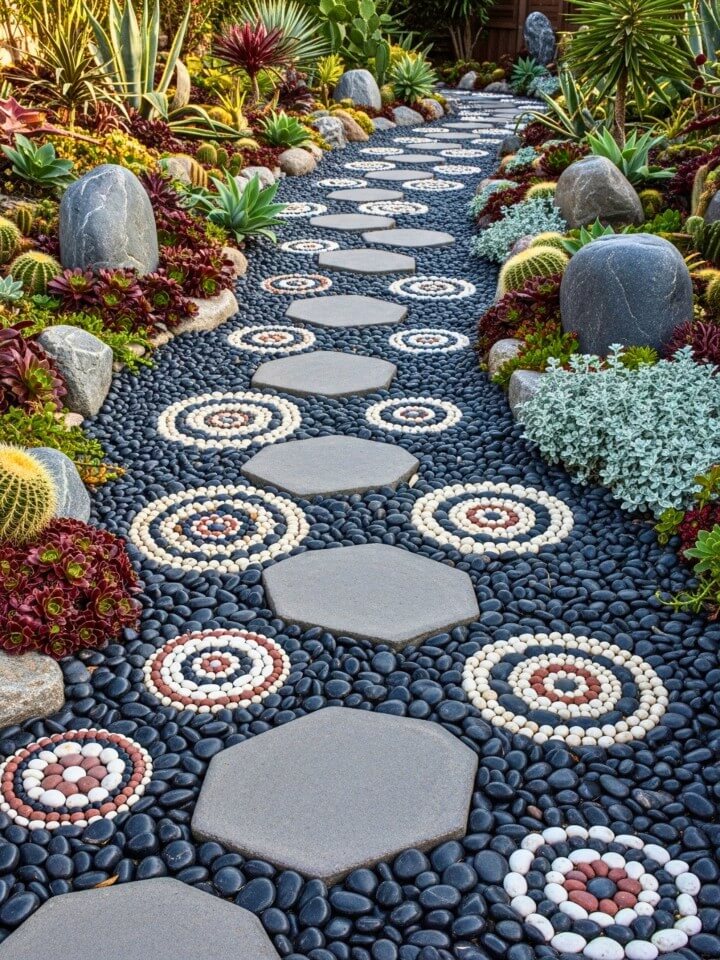
A pebble mosaic turns an ordinary path or patio inset into something genuinely artistic — the kind of detail neighbors stop and ask about. It’s also one of the few stone projects where small budgets produce dramatic results, because most of the cost is your time.
The process is slower than people expect. Pebbles are set on edge (not flat) into a mortar bed, which means a 4-square-foot panel can take a full weekend. Sort your stones by size and color before you start, because hunting for the right piece mid-installation breaks the rhythm.
Black and white pebbles produce the strongest contrast. Wave patterns and concentric circles are forgiving for beginners; figurative designs require a sketch and a lot more patience.
22. Stone Mulch Xeriscape Garden
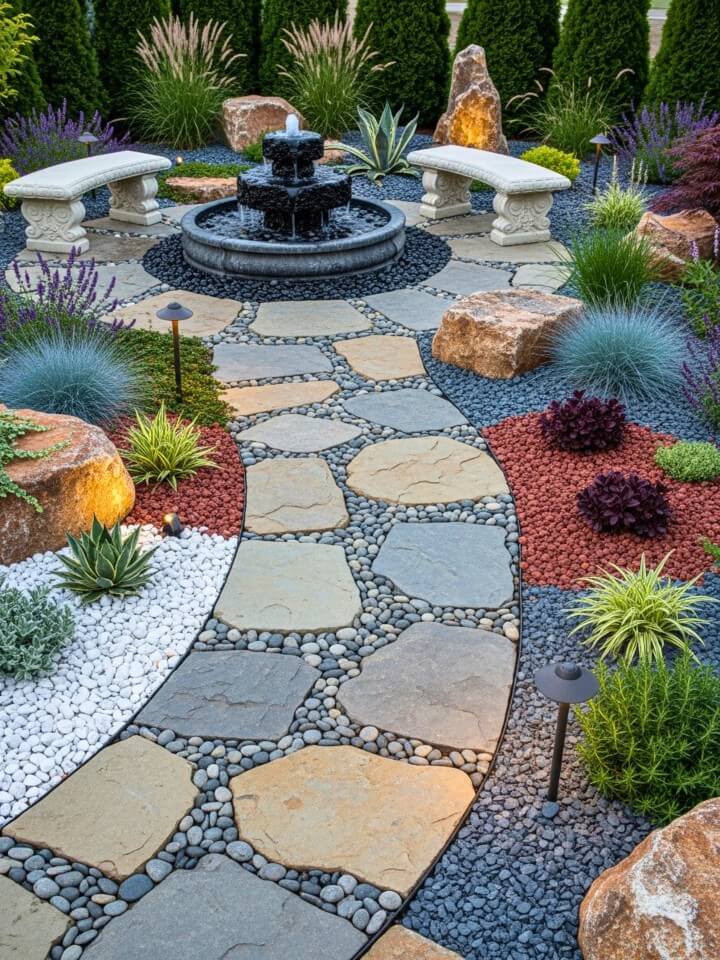
A xeriscape isn’t a desert garden — it’s any landscape designed to need almost no supplemental watering once established. Stone mulch is what makes it work.
A 2-inch layer of crushed stone over the entire planted area reduces soil evaporation by 60 to 70 percent compared to bare earth, and unlike wood mulch, it doesn’t break down and need replacing. Combined with drought-tolerant plants (lavender, Russian sage, yarrow, native grasses), you get a landscape that survives a hot dry July on rainfall alone.
The water savings are real: a properly designed xeriscape uses about a fifth of the water of a comparable lawn. Over a decade, that pays for the conversion costs several times over.
23. Naturalistic Boulder Cluster
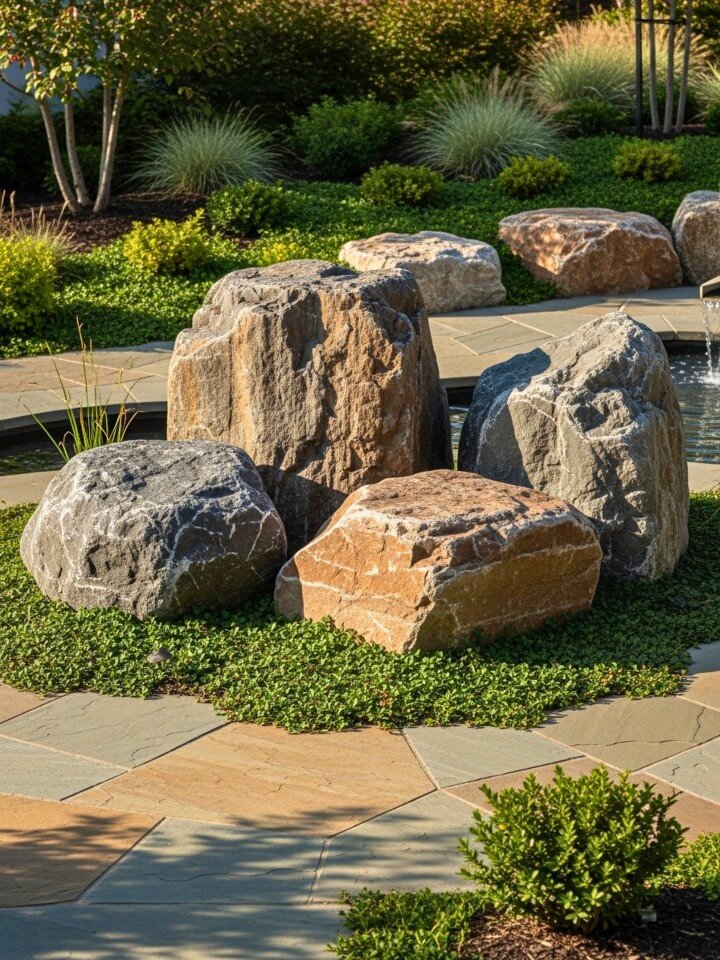
There’s a specific reason boulder arrangements in good gardens look effortless and the ones at strip malls look like they were dropped from a forklift: composition follows rules borrowed from Japanese stone-setting tradition, even when nobody involved knows it.
The Rules Are Simple:
- Odd numbers only. Three or five stones, never four. Even-numbered groupings read as decorative; odd ones read as natural.
- Vary heights aggressively. The tallest stone should be at least twice the height of the shortest.
- One stone leads, others support. Pick the most interesting boulder as the focal point and let the others defer to it.
- Bury the bases. A third underground, minimum.
Follow these and an arrangement of three rocks from a local quarry will outperform an expensive curated set placed wrong.
24. Decomposed Granite Pathway
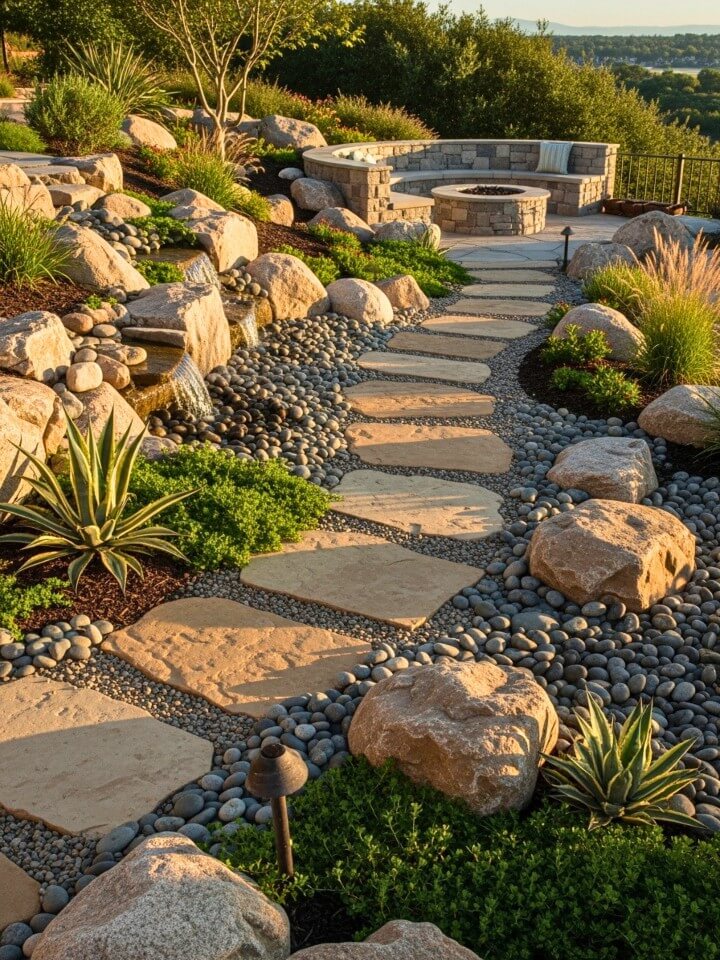
Decomposed granite — DG to people who work with it — is crushed granite worn down to a coarse sand with fine binding particles mixed in. Compacted properly, it forms a surface nearly as firm as concrete at a fraction of the price.
A DG path runs $1 to $3 per square foot installed, compared to $15+ for flagstone. It drains beautifully, never freezes into ice sheets, and the color ages from fresh gold to a softer weathered tan over a year or two.
The honest downsides: it tracks into the house on shoes. In heavy rain, the fines can wash out, leaving the larger granite chips behind. Both issues are manageable with proper edging and the occasional top-dress, but worth knowing before you commit.
25. Stone Edging with Contrasting Gravel Colors
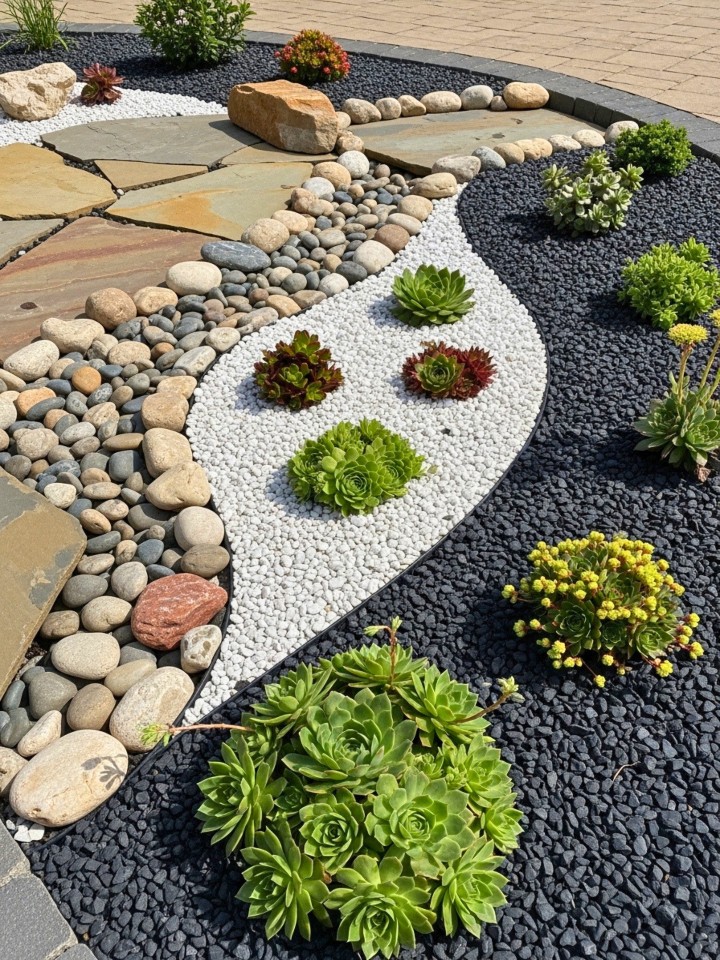
This is a designer’s trick that costs almost nothing and elevates the look of any planted bed: use edging stone and fill gravel in deliberately contrasting colors.
The Combinations that Consistently Work:
- Black lava rock with white quartz gravel — high contrast, modern
- Charcoal slate edging with warm gold pea gravel — softer, more traditional
- Light limestone borders with dark river rock fill — reverses the usual hierarchy and draws the eye downward
The principle is that contrast at the edge defines the bed shape from a distance. Same-tone edging and fill blur into each other and the bed loses its outline by twenty feet away. A small budget bump on the edging stone pays back enormously in how finished the bed looks.
26. Full Stone Front Yard Transformation
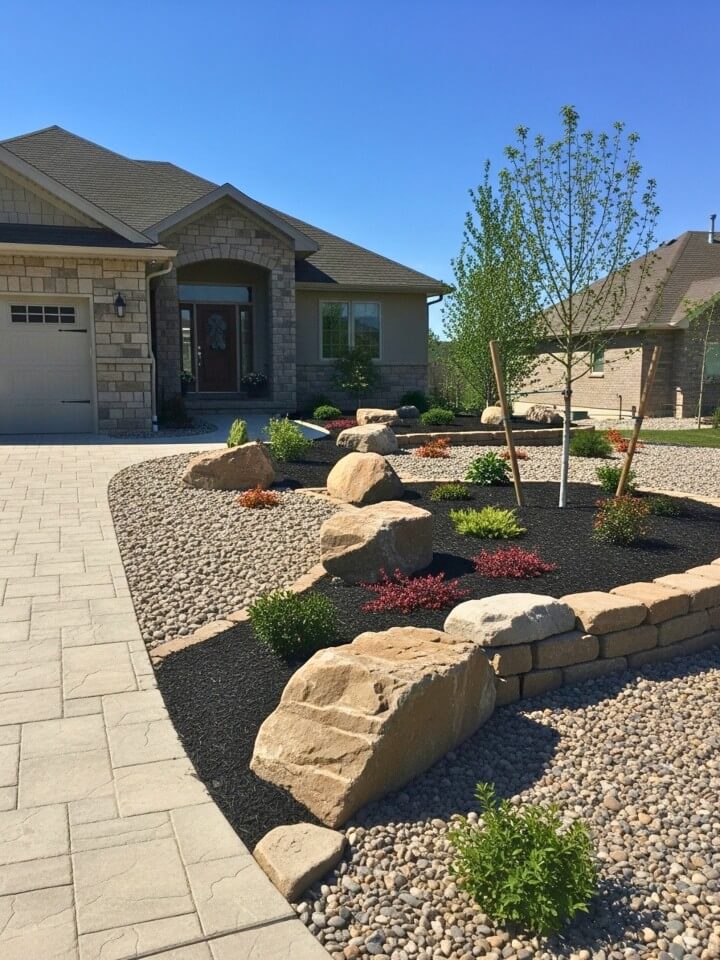
First impressions stick, and front yard stone landscaping makes yours impossible to walk past and forget. At some point — usually after the third summer of watering, mowing, fertilizing, and reseeding patchy lawn — a homeowner has the realization: what if I just didn’t have grass?
A full stone front yard combines almost every idea on this list. A flagstone walk from driveway to door. Gravel mulch where the lawn used to be. Boulder clusters as focal points. Drought-tolerant plantings between the rocks. Maybe a dry creek bed handling roof runoff. Around the curb, eye-opening low-maintenance mailbox landscaping ideas can help the stone treatment feel connected instead of stopping abruptly at the lawn edge.
The upfront cost is real — $8,000 to $25,000 for a typical suburban front yard, depending on size and material choice. But the math turns favorable fast: no mowing, no watering, no fertilizing, no annual mulch refresh. Most homeowners hit payback inside seven years and a yard that looks dialed in every month of the calendar.
FAQs About Stone Landscaping Ideas
Have questions about stone landscaping? Our expert FAQ guide covers everything.
What’s the Cheapest Stone Landscaping Project for A Beginner?
A stone-edged garden bed or a small pea gravel seating area. Both run under $300 in materials for a modest size and require no specialized tools beyond a shovel and a tamper. Start there before committing to a flagstone patio or retaining wall.
How Much Does a Typical Stone Landscaping Project Add to Home Value?
Real estate appraisers generally credit well-executed hardscape at roughly 75 percent of its installed cost, with stone projects holding their value better than wood decks or vinyl features. A $5,000 flagstone patio typically appraises at $3,500 to $4,000 of added value at resale.
Will Landscape Stone Damage My Soil Over Time?
No — stone is inert. The legitimate concern is heat. Light-colored gravel in full sun can raise nearby soil temperature several degrees, which stresses heat-sensitive plants. Match plant choice to the microclimate the stone creates.
How Do I Keep Weeds from Growing Through Gravel?
Landscape fabric beneath the gravel blocks most weed seeds from below. The harder problem is windblown seeds that land on top and germinate in the dust that accumulates over time. An annual application of pre-emergent herbicide in early spring handles this.
What’s the Difference Between River Rock, Pea Gravel, and Crushed Stone?
River rock is smooth, rounded, and typically 1 to 3 inches across — decorative but loose underfoot. Pea gravel is small (3/8 inch), rounded, and shifts easily. Crushed stone has angular edges that lock together under compaction, making it the right choice for paths and driveways that need a firm surface.
Do I Need a Permit for Stone Landscaping?
Most decorative projects don’t require permits. Retaining walls over 3 to 4 feet (rules vary locally) almost always do, as do any structures involving drainage changes that affect neighboring properties. Check with your local building department before starting anything substantial.
Bringing It All Together
Stone is the rare landscape material that gets better with age instead of worse. A wood deck rots, a lawn struggles, mulch turns gray and needs replacing — but a flagstone path laid carefully today will still look right in 2050.
The common thread across every project above is that the prep work matters more than the stone itself. A great base layer, proper drainage, honest math on what a project actually costs — these determine whether a project ages into something beautiful or becomes the next homeowner’s renovation problem.
Start with one idea. Pick the project that solves a real problem in your yard — drainage, erosion, a worn-out path, a stretch of lawn you’re tired of fighting — and execute it properly. Then move to the next.