20 Coolest Backyard Pools With Slides for This Summer
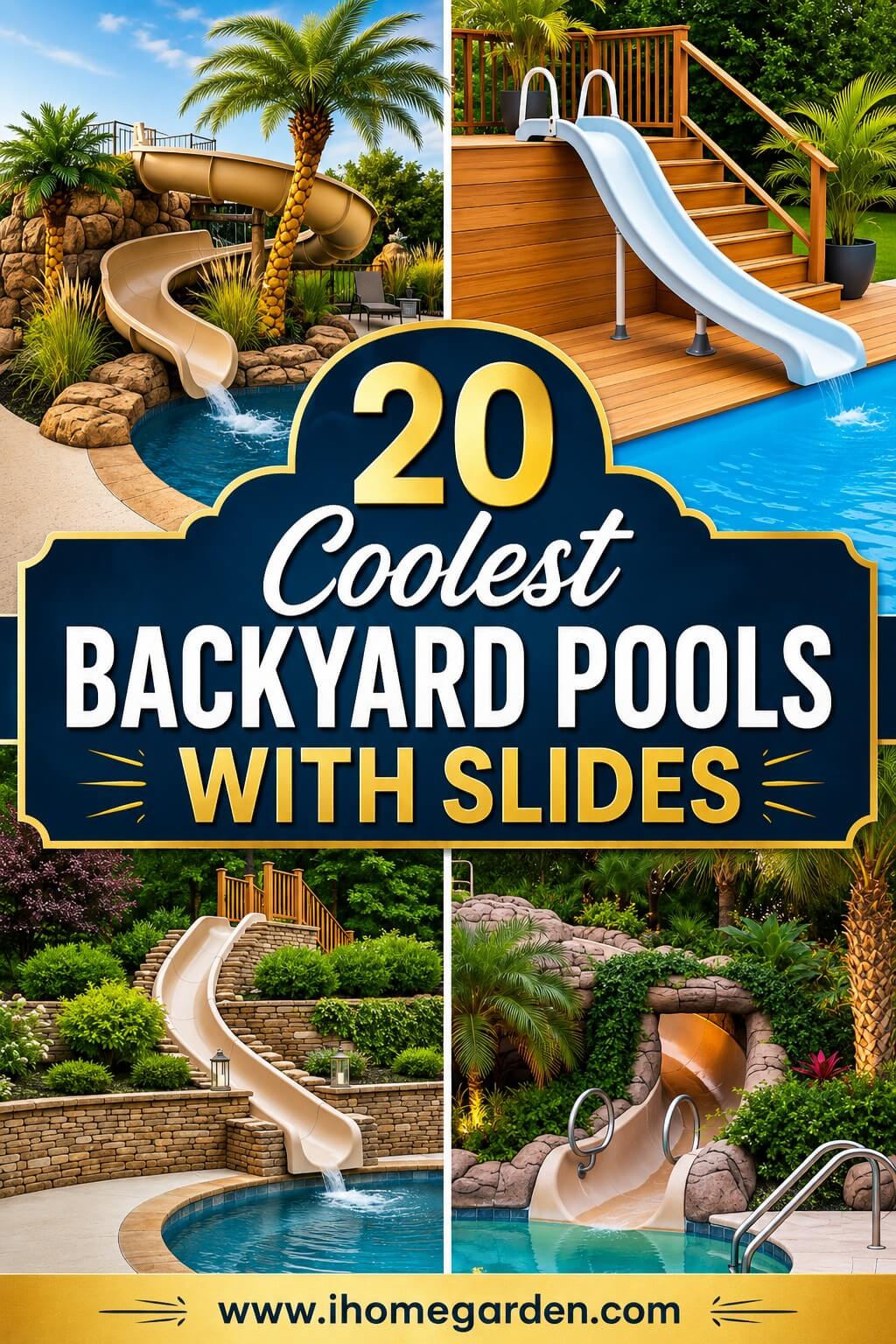
A pool slide changes the whole feel of a backyard. It takes a quiet swim space and turns it into the spot everyone wants to be. Kids race up the stairs, adults find an excuse to be in the water again, and weekends suddenly have a built-in plan. That’s the real appeal behind the 20 coolest backyard pools with slides you’ll see below.
Some pool slide ideas lean playful, with bright colors and gentle curves. Others stay quiet and architectural, blending into stone, wood, or poured concrete. A few hide in plants or wrap around a palm tree for a tucked-away resort feel.
You don’t need a huge yard or a giant budget to make one work. Small pools, sloped lots, and tight patios all have options here. Pick the style that fits your space, your family, and the mood you want by the water.
1. Curved Pool Slide Beside a Rock Waterfall
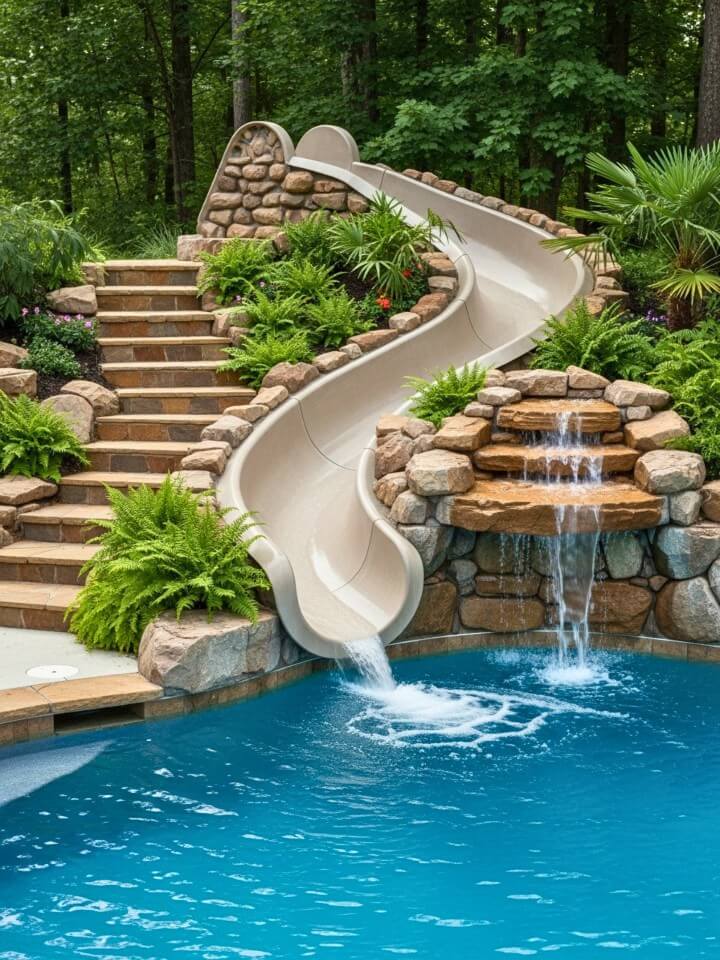
Picture stepping out on a warm afternoon to the soft rush of water tumbling over stacked boulders, with a sweeping slide curling down beside it. That’s the appeal of this pairing. The bend softens the ride for younger swimmers, while the falls mask street noise and keep the water gently moving.
Where It Works Best
Medium to large pools with at least one corner free for a boulder cluster. Aim for a 5 to 6 foot drop for a comfortable splash.
Finishing Touches
Ferns, bird-of-paradise, and textured stepping stones leading to the platform keep wet feet steady and the look cohesive.
2. Modern Straight Slide for a Sleek Pool Patio
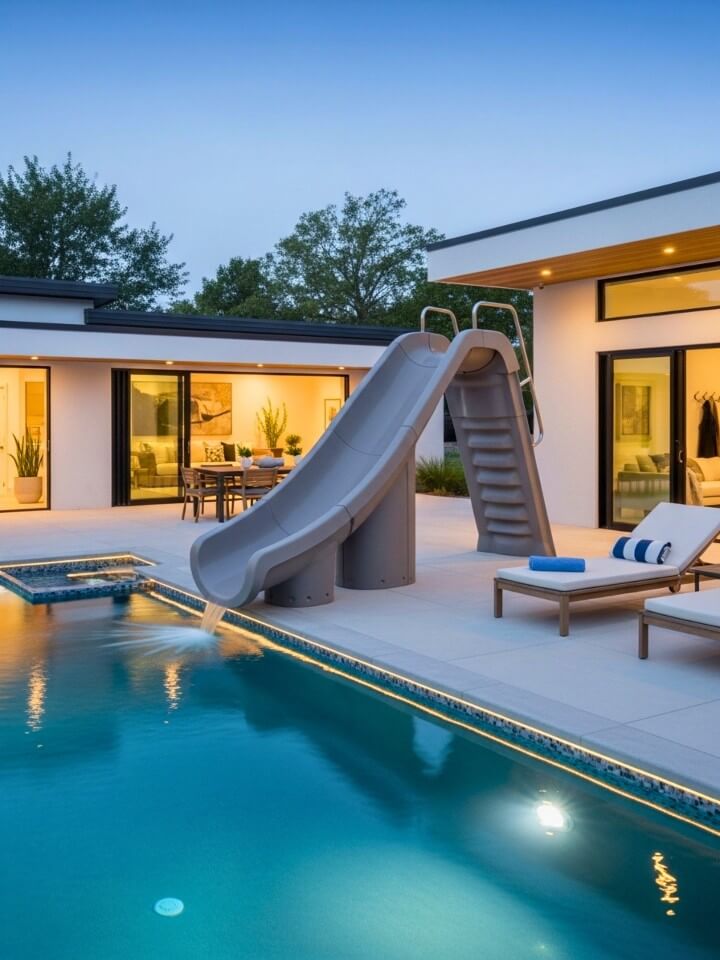
Homeowners chasing an architectural look — not a playground vibe — tend to land on the straight slide. Its narrow footprint hugs one long edge of a rectangular pool, leaving the opposite side open for loungers, a dining table, or a linear fire feature. Fiberglass in matte white, graphite, or sand reads more like a sculpture than a toy, especially against concrete decking and porcelain pavers. Budget roughly $1,500 to $4,000 for a quality residential model before installation. Tuck a recessed LED strip beneath the rail and the whole feature shifts into quiet evening art. Keep surrounding furniture low so the slide stays the visual anchor.
3. Tropical Lagoon Pool With a Hidden Slide
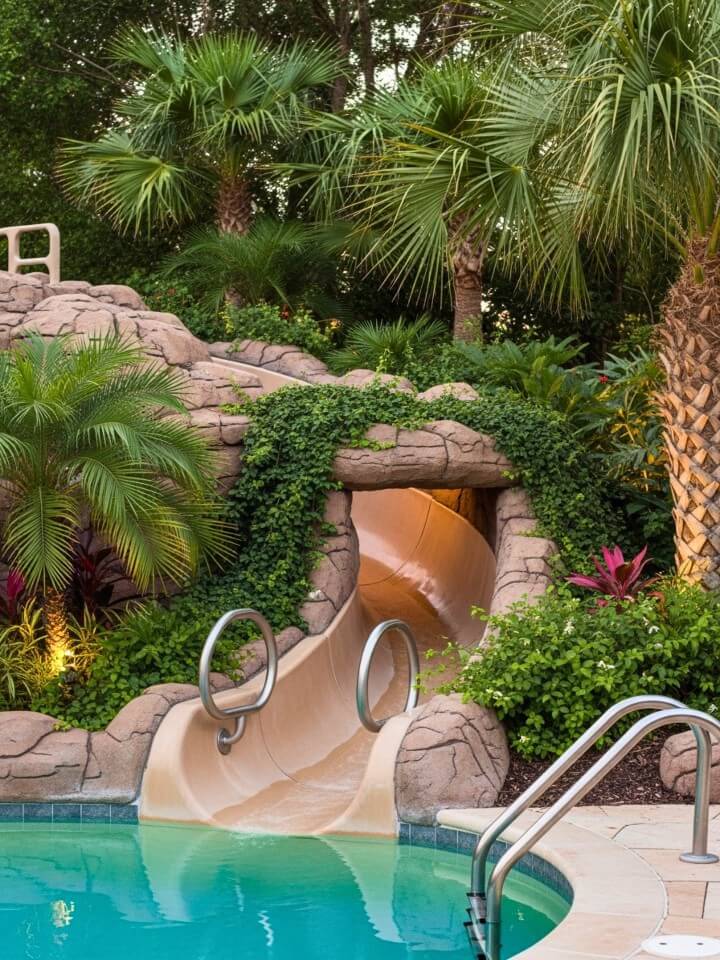
Transform your summer with the coolest backyard pools with slides that wow guests every time. Why settle for a slide that announces itself when it could feel like a secret? Tucking the structure behind dense foliage or a faux boulder wall turns a routine swim into a resort-island moment guests rarely see coming.
This idea suits larger lots where the slide can curve through plantings before spilling into a freeform lagoon. Build the climb behind areca palms, banana leaves, or tall ornamental grasses, with a winding flagstone path leading up. A handrail recessed inside the greenery keeps the natural look intact, and ankle-high path lighting extends use after sunset. Pebble decking at the landing zone prevents slips when swimmers head toward the lounge area.
4. Kid-Friendly Pool Slide With a Shallow Landing Zone
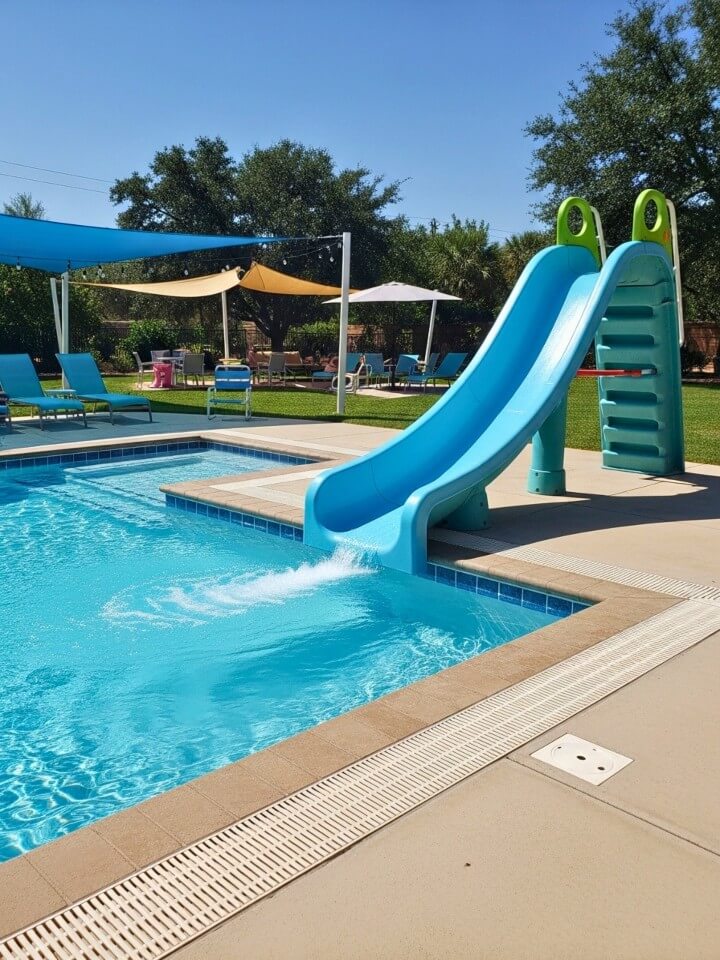
For families with little ones, the safest setup pairs a gentle slope with a shallow splash area instead of dropping straight into deep water. A tanning ledge around 9 to 12 inches deep lets toddlers land softly while a parent stands right beside them. Bright primary colors, soft curves, and a low overall height keep the feature inviting rather than intimidating to first-time sliders. Cushioned outdoor flooring around the stairs adds an extra margin of safety, and a shade sail overhead protects sensitive skin during long afternoons. Build the climb with deep treads and a double-rail design. Pool toys belong stored away from the landing path.
5. Rustic Backyard Pool Slide Built Into a Stone Wall
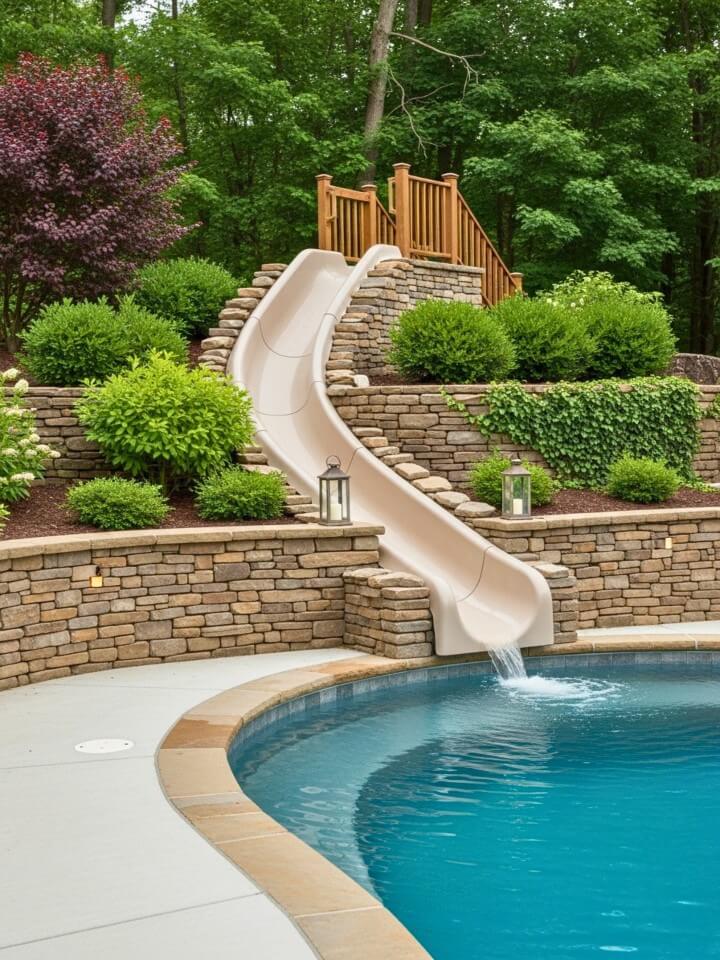
Set into a natural stone wall, a slide stops looking like equipment and starts feeling like part of the landscape — something that grew with the property rather than arriving on a delivery truck.
Best Site Conditions
Sloped lots are ideal. The wall can double as a retaining structure, which often offsets the cost of separate framing.
Material Pairings
Fieldstone, limestone, or weathered fieldrock works beautifully alongside cedar accents and aged bronze fixtures. Moss or creeping thyme between the joints blurs the edge between hardscape and garden.
Care Tip
Reseal the stone every two to three years to keep the surface safe, stain-free, and showing its natural color.
6. Compact Pool Slide for a Small Backyard
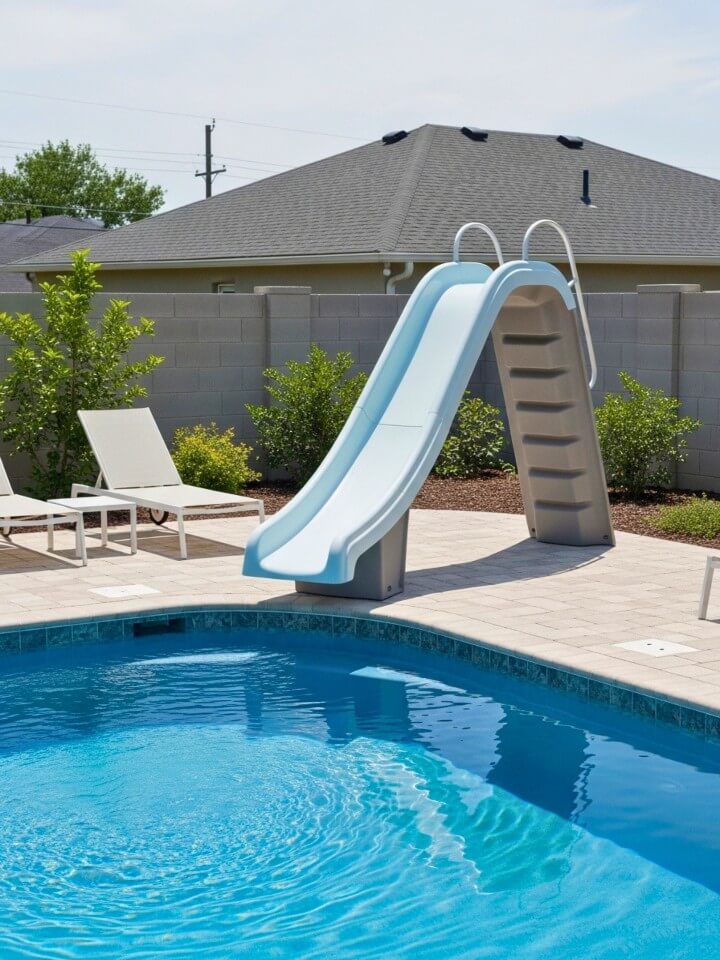
Maximize fun in tight spaces with small backyard pools with slides designed for compact yards. Limited square footage doesn’t mean giving up on a slide — it just means choosing one that respects the space instead of swallowing it. A low-profile fiberglass model along the short end of a plunge pool or narrow lap pool delivers the fun without crowding out steps or seating. White, pale gray, and soft blue finishes recede visually, making the yard feel larger than it measures.
Curved shapes soften the footprint in family-friendly setups, while straight runs suit minimalist patios. Slim outdoor furniture, non-slip pavers, and at least 30 inches of walking clearance around the slide keep traffic flowing safely from the door to the water’s edge.
7. Infinity Edge Pool With a Side Slide
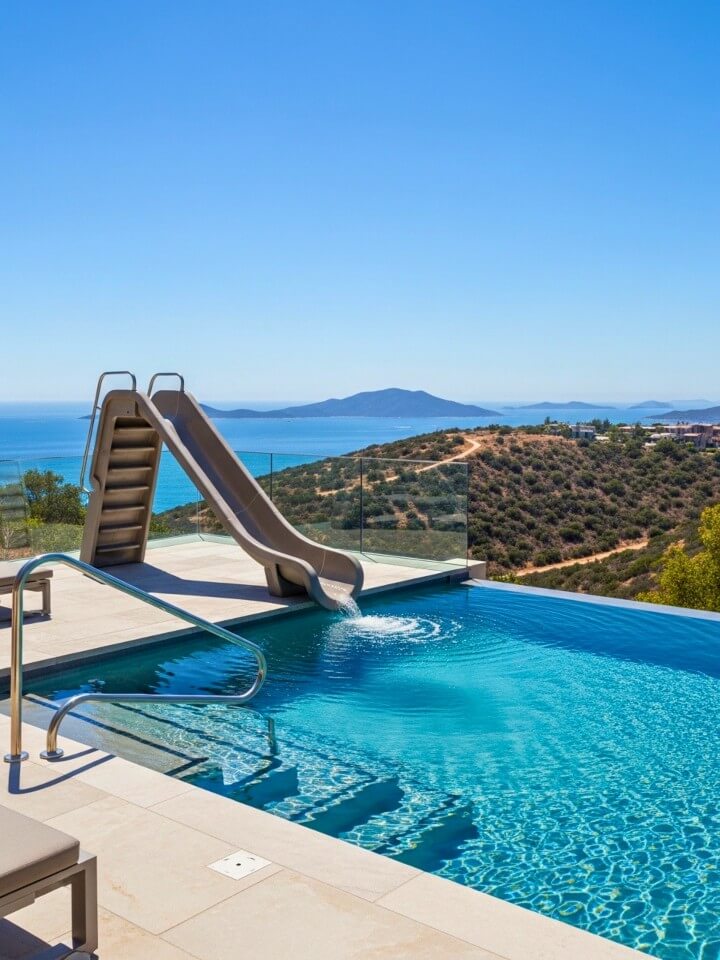
An infinity edge is all about the view. Drop a slide in the wrong spot and the whole illusion breaks.
Position the slide near the deeper end, well away from the vanishing edge, so swimmers land safely without crowding the sightline. A muted slide color — bone, charcoal, or warm taupe — keeps the eye traveling toward the horizon instead of stopping at the structure.
Surroundings that Work
Glass railings, honed stone decking, and low-slung outdoor seating preserve the open feeling. Skip tall planters near the edge. They compete with the view and undercut the reason for choosing an infinity design in the first place.
8. Wooden Deck Pool Slide for a Resort Feel
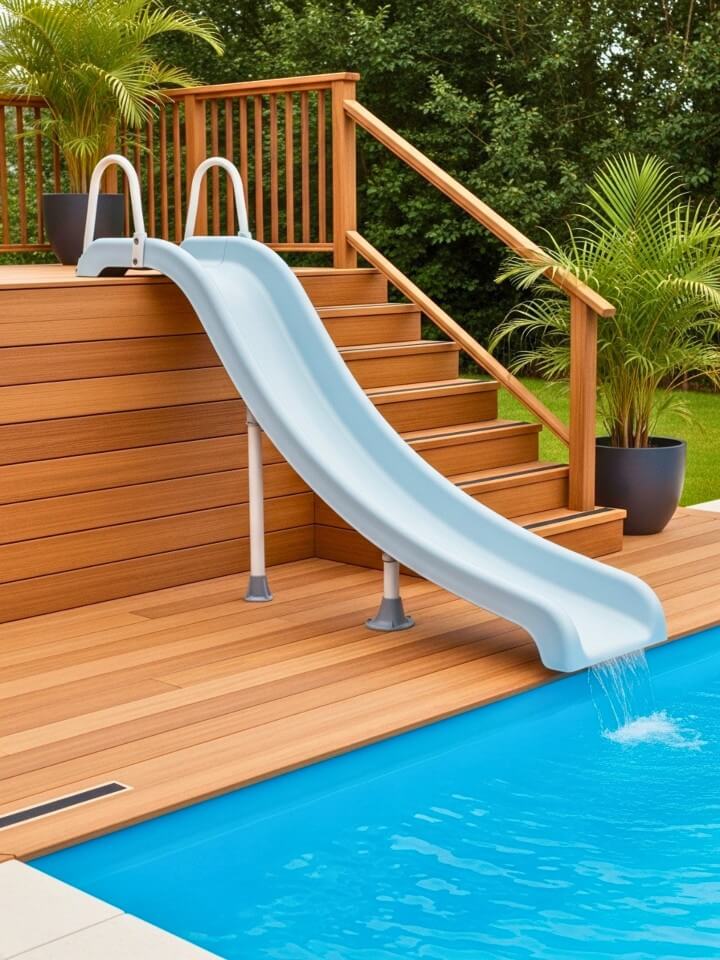
There’s something about warm timber underfoot that turns an afternoon swim into a small vacation. A slide rising from a raised wooden deck plays into that mood, with the platform doubling as a sunset perch when the pool isn’t in use.
Teak, cedar, and high-grade composite boards all hold up well around chlorinated water, though composite typically asks for the least upkeep. Position the slide so it ends in the deeper section, not the shallow shelf. Add textured grip strips along each tread, a single clean handrail, and a few potted palms or olive trees at the corners. The result feels less like a backyard and more like a private retreat.
9. Freeform Pool Slide Wrapped in Garden Plants
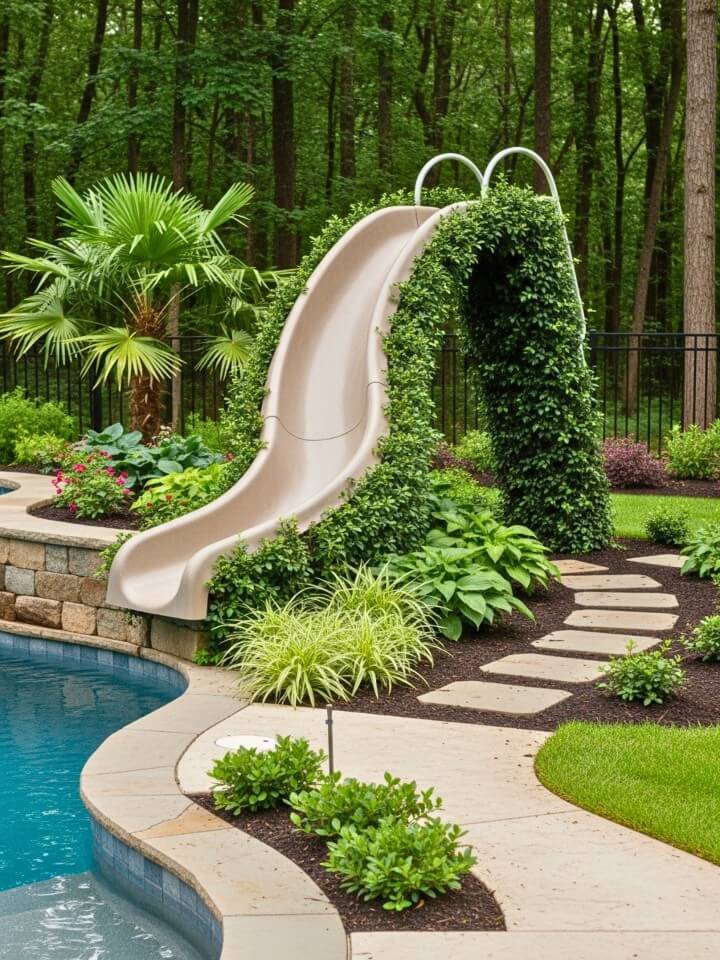
Surrounding a slide with layered planting is one of the simplest ways to make it disappear into the landscape. The structure stops reading as equipment and starts feeling like a natural part of the garden — particularly along a curved pool edge where rigid lines would clash.
Planting Layers that Work Well:
- Low at the landing: mondo grass, creeping jenny, dwarf mondo
- Mid-height beside the slide: dwarf pittosporum, loropetalum, compact hydrangea
- Tall behind the structure: ornamental grasses, bamboo in containers, or upright junipers
A flagstone or decomposed granite path keeps guests off the soil and protects the roots from foot traffic. This works especially well in cottage, tropical, and naturalistic yards.
10. Concrete Pool Slide With a Modern Smooth Finish
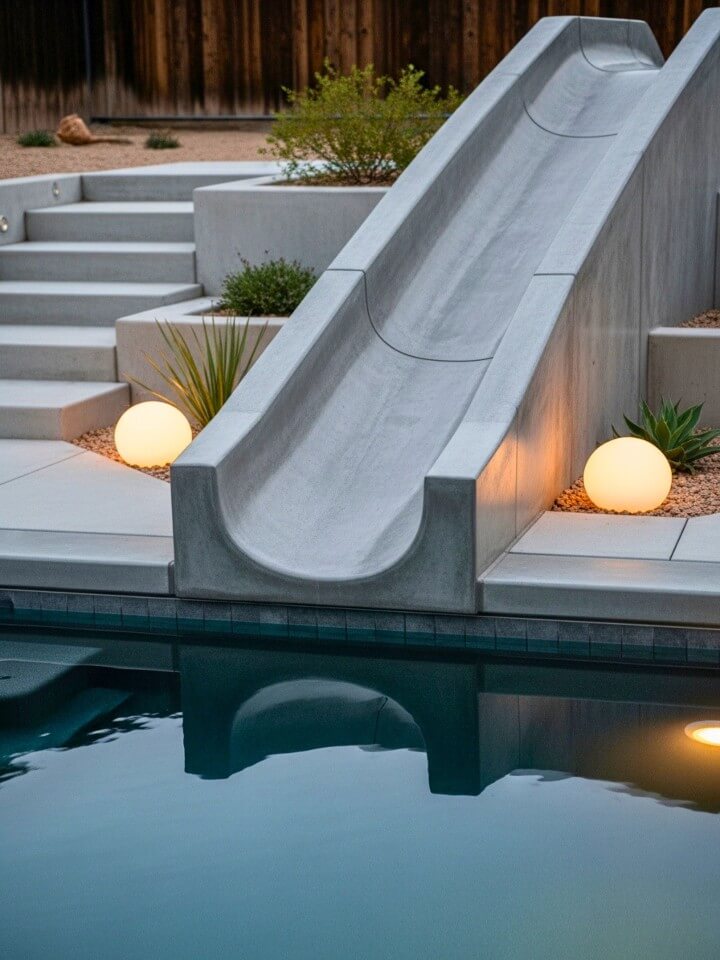
Cast-in-place concrete gives a slide the kind of permanence that bolt-on fiberglass models simply can’t match — it reads as architecture, not accessory. The form follows the patio, the retaining wall, or the pool coping, so everything looks intentional from day one. Pale concrete brightens shaded yards and reflects evening light, while charcoal or pigmented finishes add weight to minimalist or desert-style spaces. Specify a polished surface for skin comfort but request a light broom or sandblasted texture on the ride path so swimmers stay in control. Soft ground-level uplighting and a few sculptural planters — agave, yucca, or boxwood spheres — complete the composition without softening the geometry.
11. Spiral Slide Twisting Over a Kidney-Shaped Pool
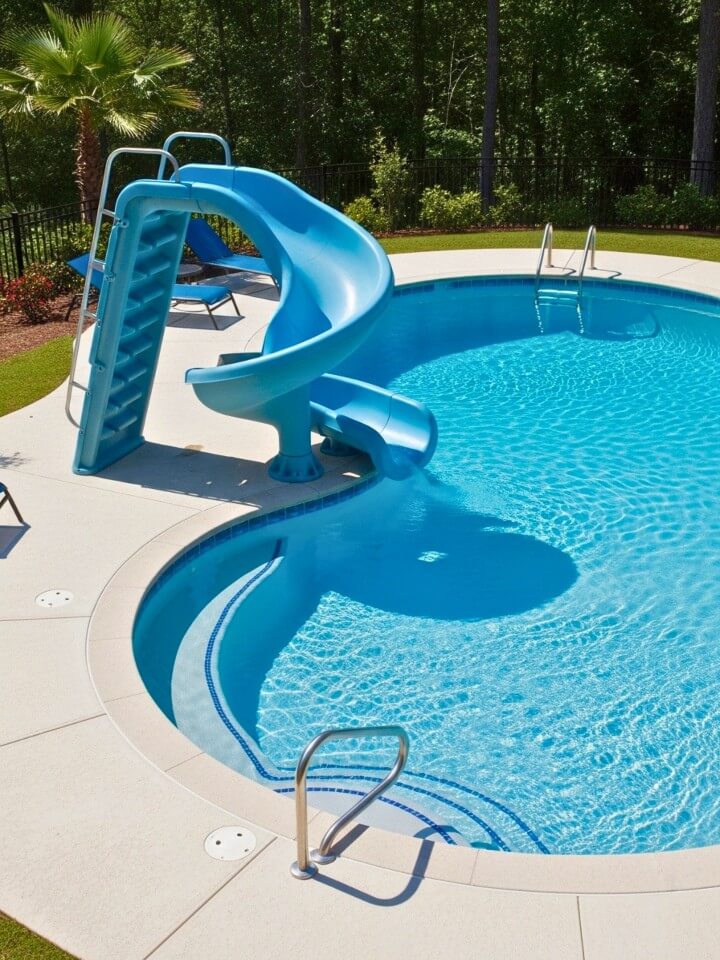
A spiral slide brings rotation into the picture, and that single twist changes how the whole pool area feels. Instead of a straight drop, swimmers get a few seconds of motion before hitting the water — enough to draw laughter from kids and a second look from guests.
The kidney shape works in its favor. The wider lobe gives the spiral room to turn without forcing the landing into a tight corner, and the curved coping echoes the slide’s geometry. Smooth fiberglass keeps the ride fast, while a single sturdy handrail running up the climb prevents wobbling at the top. Keep the base footprint clear so swimmers can circle around without bumping into ladders.
12. Slide Integrated Into a Multi-Level Pool Deck
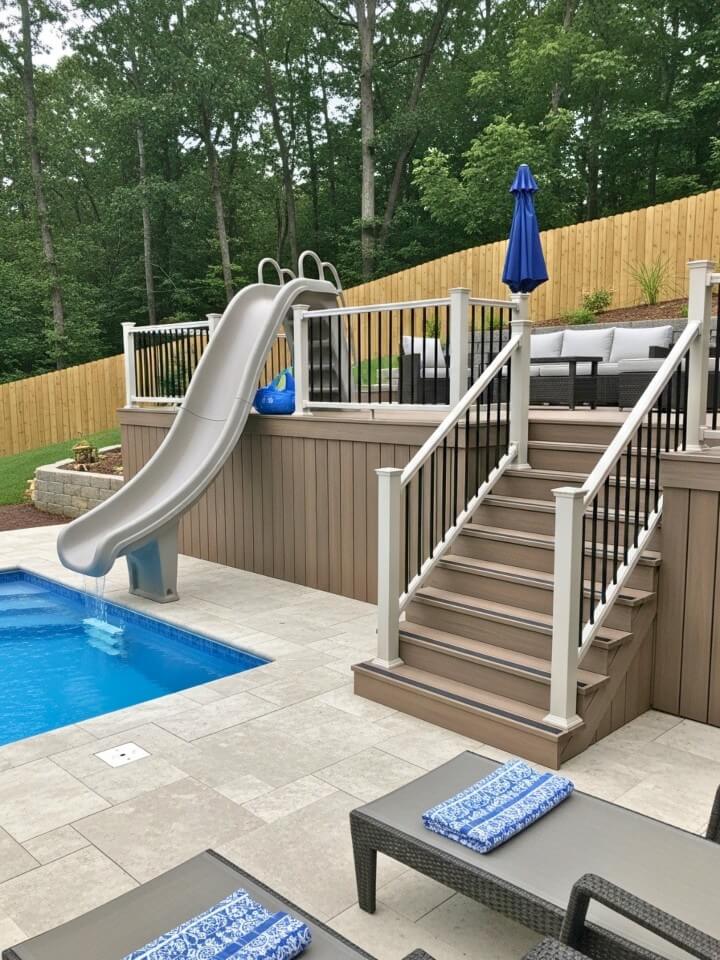
Sloped lots and tiered patios already supply the height a slide needs. Working with that terrain — instead of building a separate platform — usually costs less and looks more intentional.
Material Picks
Composite boards handle splash zones without warping and skip the yearly sealing routine that real wood demands. Porcelain pavers work too, especially with anti-slip ratings of R11 or higher.
Layout that Works
Place the slide at the deep end, set seating on the lower tier with a clear sightline upward, and tuck towel storage near the stairs. Adults relax below, kids climb above, and the whole arrangement feels like a single connected space rather than two stacked levels.
13. Natural Stone Slide Blending With a Rock Garden
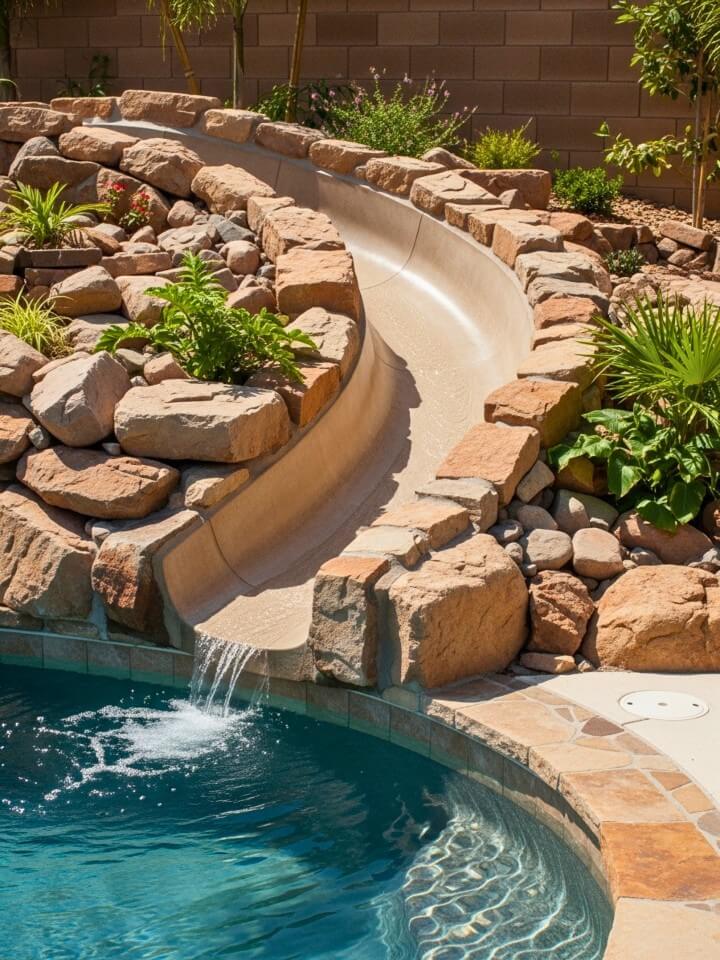
A slide carved from — or carefully framed by — natural stone reads as part of the geology of the yard, not something dropped in last week. The trick is matching the stone to existing hardscape. Pull color cues from nearby walkways, retaining walls, or the home’s foundation, and the slide settles in immediately. Boulder clusters at the base hide the structural shell, while a gentle sheet of water flowing across the ride surface keeps it smooth and skin-friendly. Drought-tolerant companions — sedum, blue fescue, agave, and creeping juniper — thrive in the warm microclimate beside the pool and need minimal attention through the summer.
14. Colorful Fiberglass Slide for a Fun Family Spot
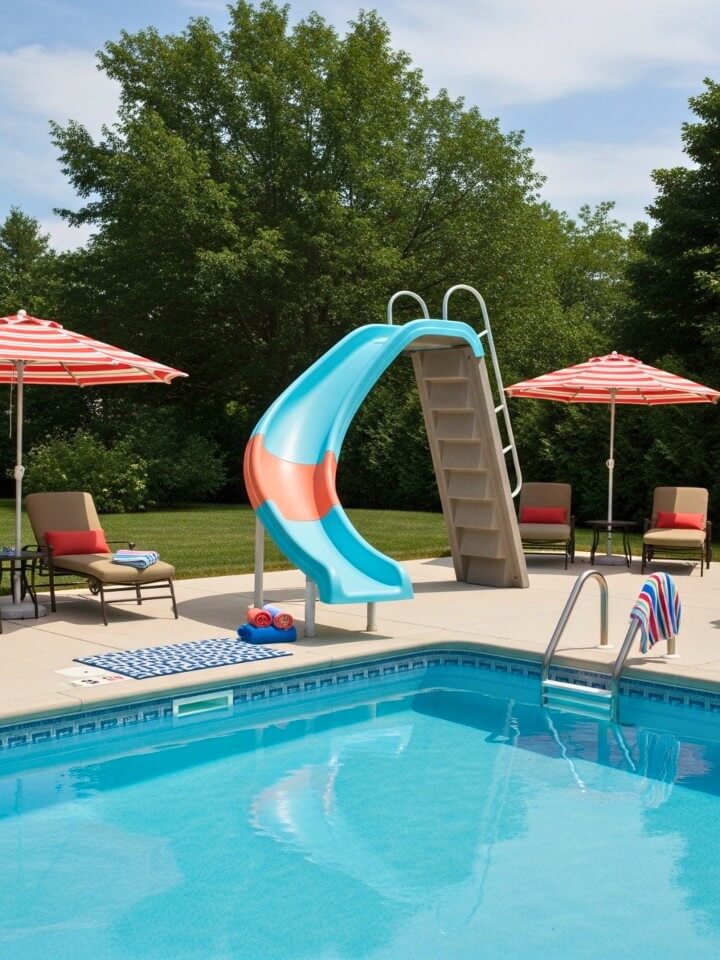
Sometimes the right move is to stop being subtle. A bold fiberglass slide in coral, turquoise, or sunshine yellow tells visitors exactly what kind of backyard they’ve walked into — relaxed, playful, made for splashing.
The trick to keeping it looking pulled-together: pick one accent color and let it repeat. If the slide is turquoise, echo it in cushions, umbrella stripes, or a single planter glaze. If it’s yellow, match it to towels and pool floats. That single thread of color turns “loud” into “designed,” especially when the rest of the patio follows the same easy seasonal rhythm as cheerful summer home decor ideas.
Position the slide near the deeper end, well clear of tanning ledges and pool steps. A textured mat at the base of the climb catches drips and keeps the stairs grippy.
15. Pool Slide With a Curved Landing Into a Lounge Area
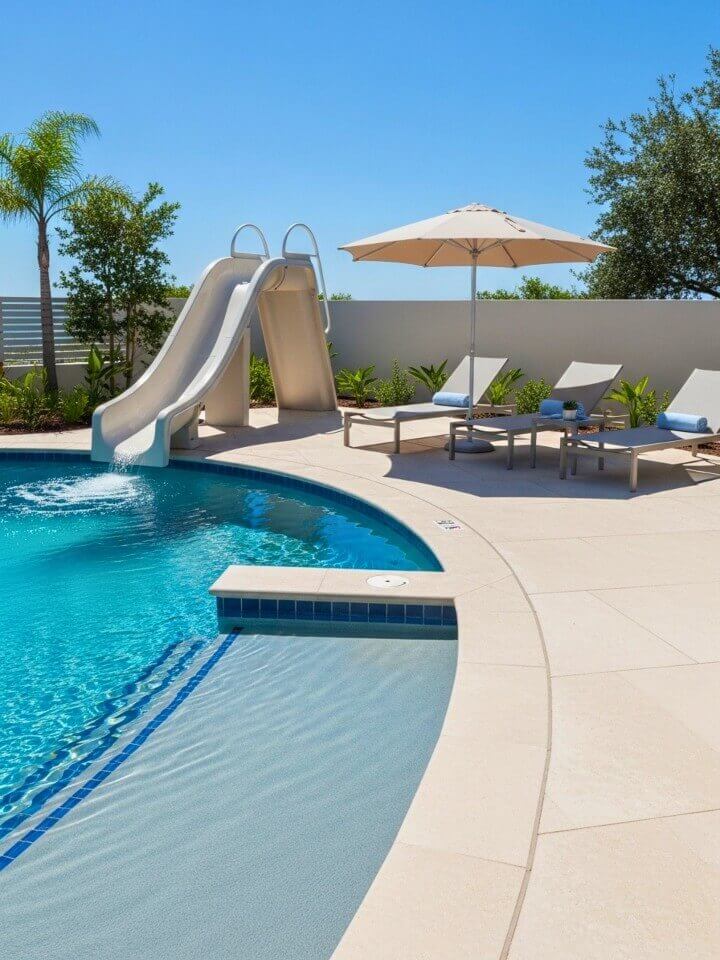
This layout treats the slide as a transition between play and rest. The curve guides swimmers toward a designated lounge corner, so the moment after the splash flows naturally into towel-drying, snacks, or a long afternoon under a shade umbrella.
Aim the landing toward a deep corner that has at least 6 feet of clear water, then arrange a low conversation set — two sun loungers, a side table, maybe a small drinks cart — within easy reach but outside the splash zone. Decking that stays cool on bare feet matters here; travertine, light-toned porcelain, and shell-stone all perform well. A clear walking lane between the slide exit and the seating prevents wet collisions.
16. Slide Emerging From a Raised Pool Platform
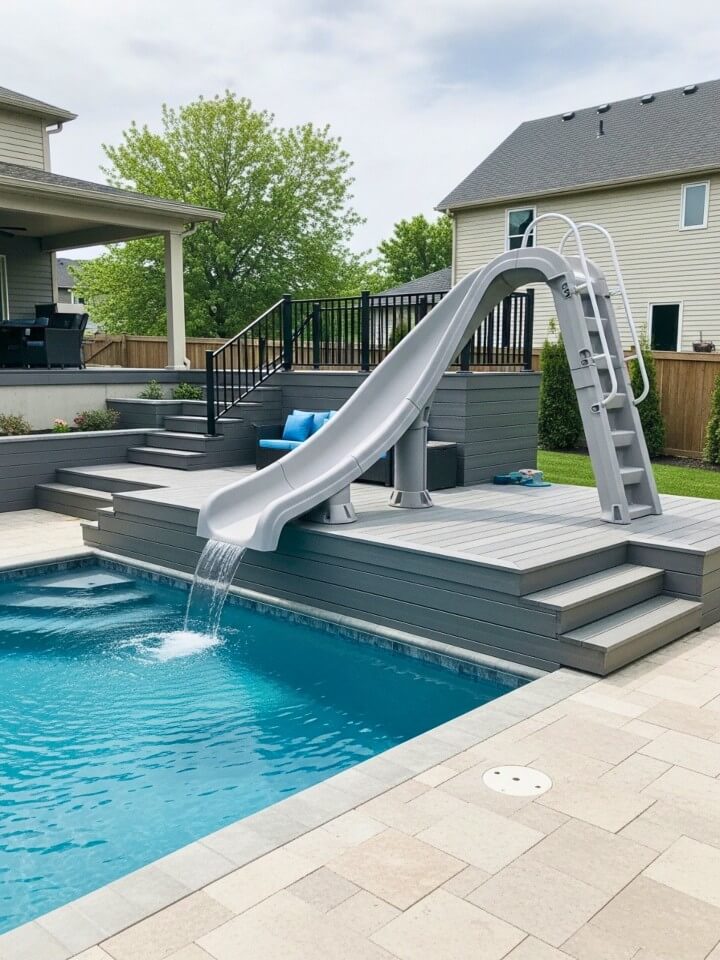
Raising the launch point above deck level does two useful things: it gives the slide a longer, smoother ride, and it organizes the rest of the yard around a clear focal point. The platform itself becomes prime real estate — a spot for a sunset drink, a perch for watching kids swim, or a quiet reading nook in the off-season.
Build Details Worth Getting Right
Wide stair treads, a continuous handrail on both sides, and non-slip decking on the upper level all matter once wet feet enter the picture.
Making It Feel Built-In
Surround the base with low benches or planters filled with rosemary, lavender, or dwarf olive. The structure stops looking added-on and starts looking planned.
17. Mini Slide for a Plunge Pool in a Tight Space
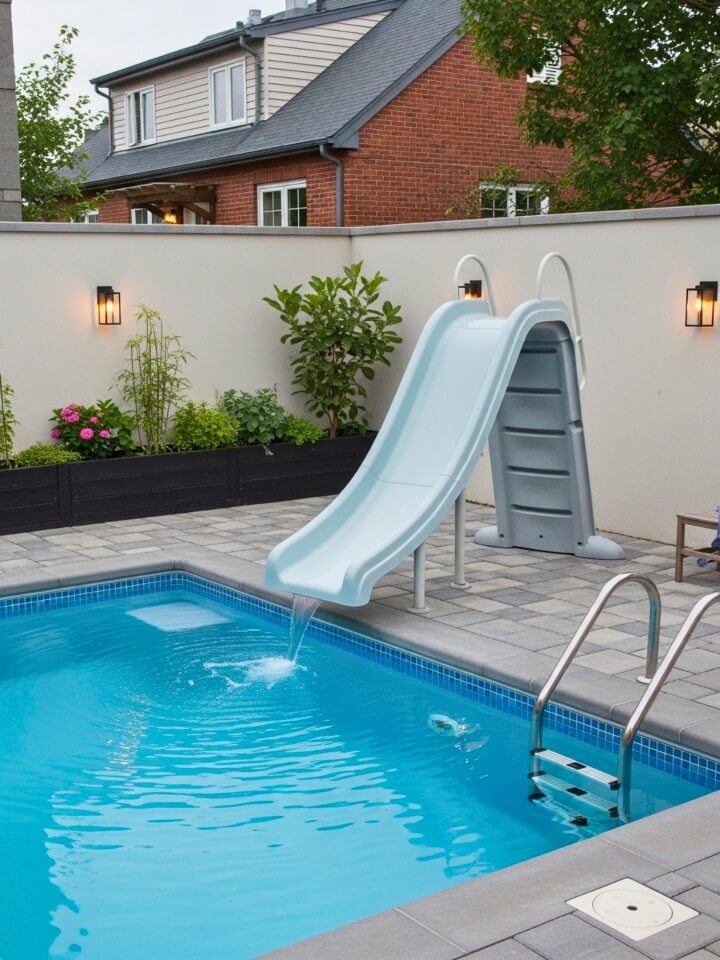
Add thrilling adventure to your home oasis by installing a stunning backyard pool with slide now. Urban lots and townhome courtyards rarely have room for a full-size slide, but a mini version solves that without sacrificing the fun. Set it along the short edge of the plunge pool with the landing aimed at the deepest open patch of water. A gentle slope — under 4 feet of drop — keeps the splash contained, which matters when neighbors share a fence line.
Lean into the small footprint instead of fighting it. Narrow pavers in a single tone make the patio feel longer, wall-mounted sconces free up floor space, and slim outdoor seating keeps sightlines open. Pots and raised planters belong against the perimeter so the central walking area stays unobstructed.
18. Slide That Wraps Around a Palm Tree Feature
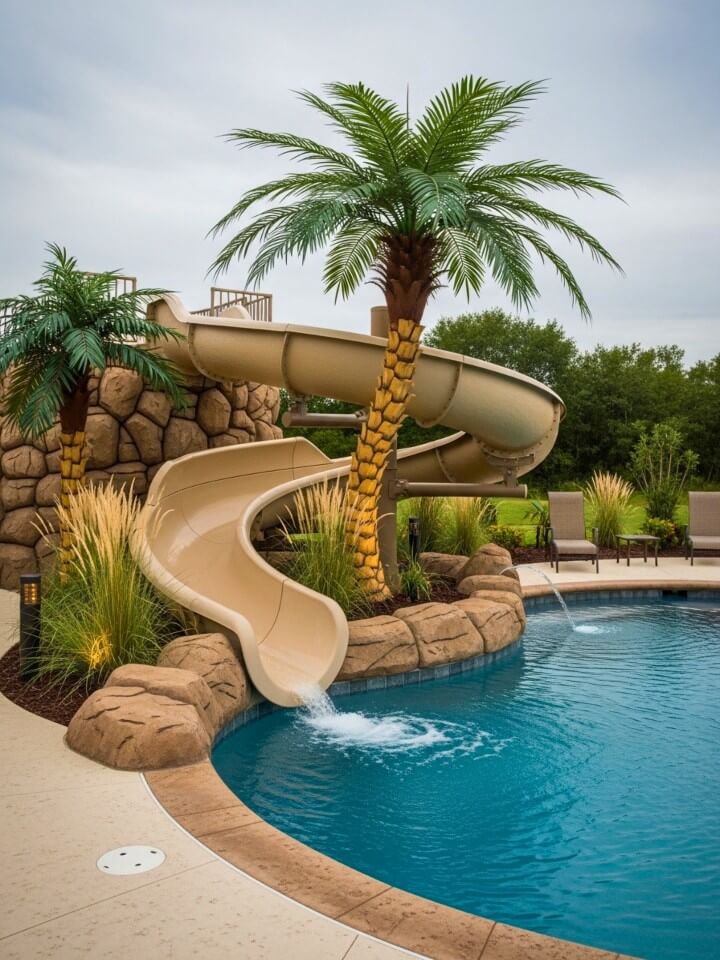
Wrapping a slide around a central palm — real or artificial — adds vertical drama and turns a flat backyard into something that feels three-dimensional. The trunk anchors the composition; the slide spirals around it; the whole arrangement reads as a single sculpted feature instead of two separate pieces.
This works best in lagoon-style or beach-inspired setups, where coconut palms, queen palms, or pygmy date palms suit the climate. Surround the base with textured concrete or artificial rock to hide the structural shell, then layer in ornamental grasses and soft uplighting at the trunk. For nighttime impact, adapt ideas from astonishing outdoor tree lighting ideas so the palm becomes a feature after sunset without overwhelming the pool. Keep the palm well-pruned so dropping fronds never threaten the slide path, and confirm there are no sharp edges within reach of the climb.
19. Modern Metal Slide for a Contemporary Backyard
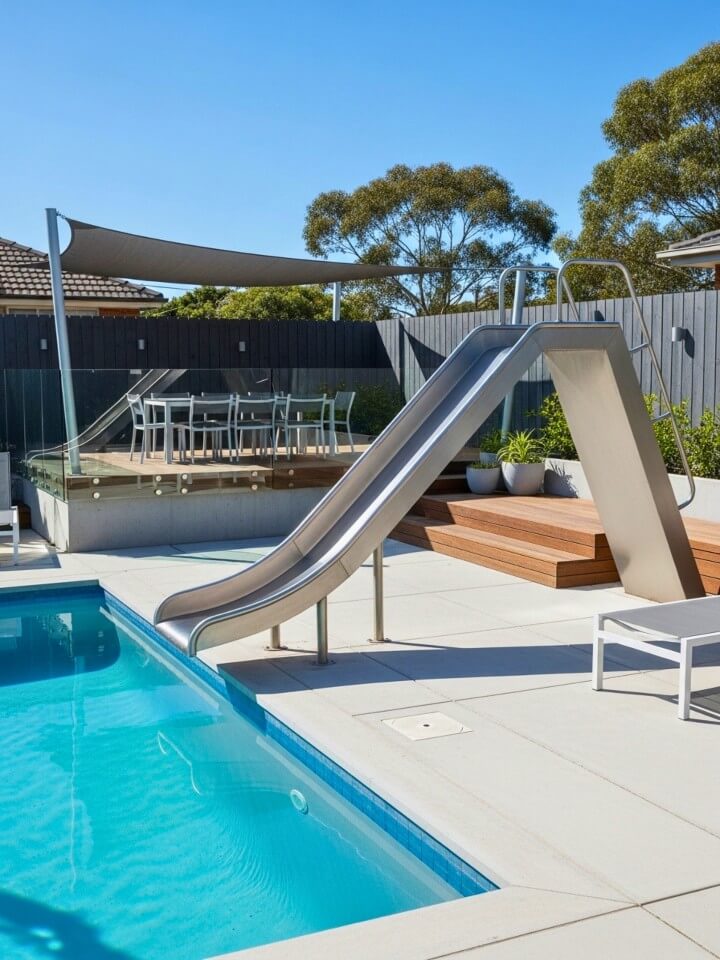
Stainless steel slides bring an almost industrial honesty to a pool — exposed material, clean welds, nothing pretending to be something else. The look pairs naturally with poured concrete decking, glass panel fencing, and architectural furniture in steel, teak, or powder-coated aluminum.
A Few Practical Notes Before Committing:
- Polished stainless can heat up under direct sun; partial shade or a pergola overhead keeps it comfortable
- Brushed finishes hide water spots better than mirror polish
- Marine-grade 316 stainless resists chlorine corrosion far better than standard 304
Keep the surrounding deck uncluttered. Two or three large planters with architectural species — agave, sansevieria, fiddle-leaf fig — say more than a scattered collection of small pots ever could.
20. Slide With Built-In Water Sprayers for Extra Splash
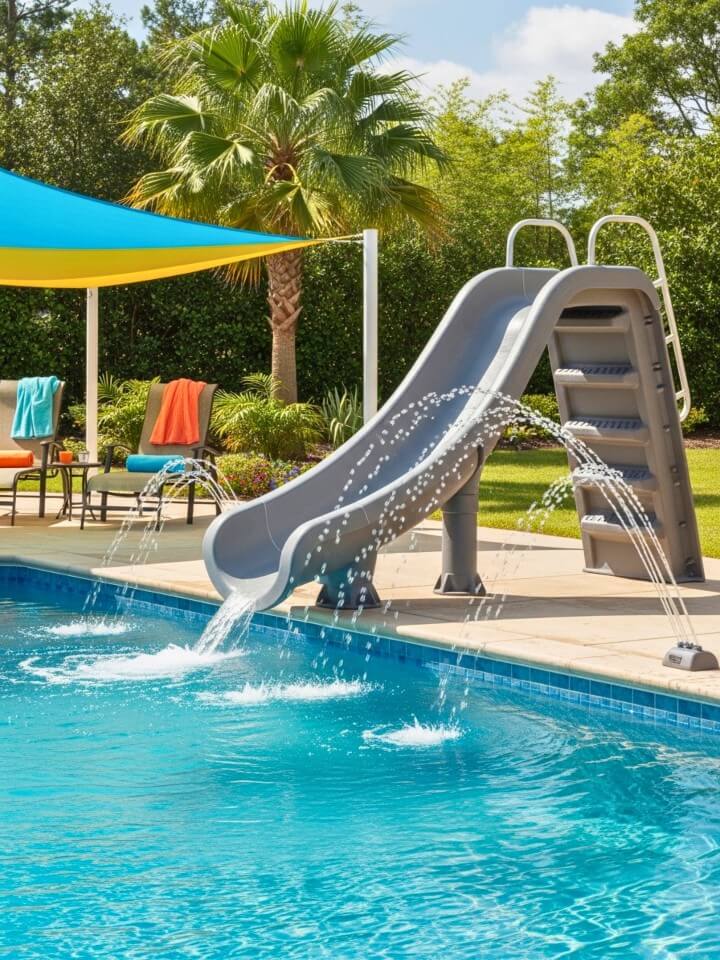
Integrated sprayers solve a small but real problem: dry slides squeak, grab, and slow the ride. A built-in water line along the rails keeps the surface continuously wet, which means a smoother descent and a bigger splash at the bottom — no separate waterfall pump required.
Position the slide so spray drains back into the pool rather than soaking the surrounding patio. An adjustable flow valve lets the household dial intensity up for kids and down for quieter adult evenings, and a simple shutoff makes winterizing straightforward. Textured climbing steps stay grippy even with overspray. Bright towels stored in a nearby weatherproof cabinet, plus a shaded chair or two, complete the setup.
FAQs About Backyard Pools With Slides
Still weighing the details before adding a slide to your pool? These quick answers cover the practical questions most homeowners ask before buying.
How Much Does a Backyard Pool Slide Cost to Install?
Residential slides typically run $1,500 to $8,000 for the unit itself, with installation adding $500 to $2,500. Custom stone, concrete, or integrated designs can climb past $15,000 depending on materials and site work.
Can I Add a Slide to An Existing Pool?
Yes, in most cases. The deck needs enough clear space, the landing area requires adequate water depth — usually 3.5 feet minimum — and the surrounding surface must support anchoring. A pool professional should assess structural fit first.
What Pool Depth Is Safe for A Slide?
Most residential slides need at least 3 to 4 feet of water at the landing zone. Taller or steeper slides may require deeper sections. Always follow the manufacturer’s specifications, since insurance coverage often depends on meeting them.
Do Pool Slides Need a Separate Water Pump?
Slides with built-in sprayers or waterfall features usually need a dedicated low-flow pump, though some tie into the existing pool circulation system. Dry slides need no plumbing at all and rely on swimmers splashing water up the surface.
How Long Does a Fiberglass Pool Slide Last?
A quality fiberglass slide lasts 15 to 25 years with basic care. UV exposure, harsh chemicals, and freeze-thaw cycles shorten that range. Annual cleaning, occasional gel-coat polishing, and winter covers extend the life considerably.
Final Thoughts
The right slide does more than add a feature to your pool. It shapes how the backyard gets used — who shows up, how long they stay, and what kind of memories collect there over the years. A quiet curve of concrete asks for slow afternoons. A bright spiral pulls in birthday parties and cannonball contests. Stone and timber lean into something closer to a private retreat.
Walk your yard before you decide. Notice where the sun lands, where the kids already gather, where you’d want to sit with a cold drink. The best slide is the one that fits the life already happening there.