Shed Gym Inspiration: 17 Backyard Home Shed Gyms You Can Build
A shed gym solves a problem most home workouts can’t: it gives you a dedicated training space that isn’t shared with the laundry, the kids, or whatever’s currently piled in the garage. Step inside, close the door, and the only thing that exists for the next hour is your workout.
These 17 stunning shed gym ideas cover every style of training, from heavy barbell work to yoga, climbing, boxing, and recovery. Some setups fit into an 8 ft x 8 ft garden shed. Others need 12 ft of length, reinforced floors, or extra ceiling height. Each idea includes the equipment that actually matters, the shed size it works in, and the practical details (flooring, power, ventilation) that most posts skip over.
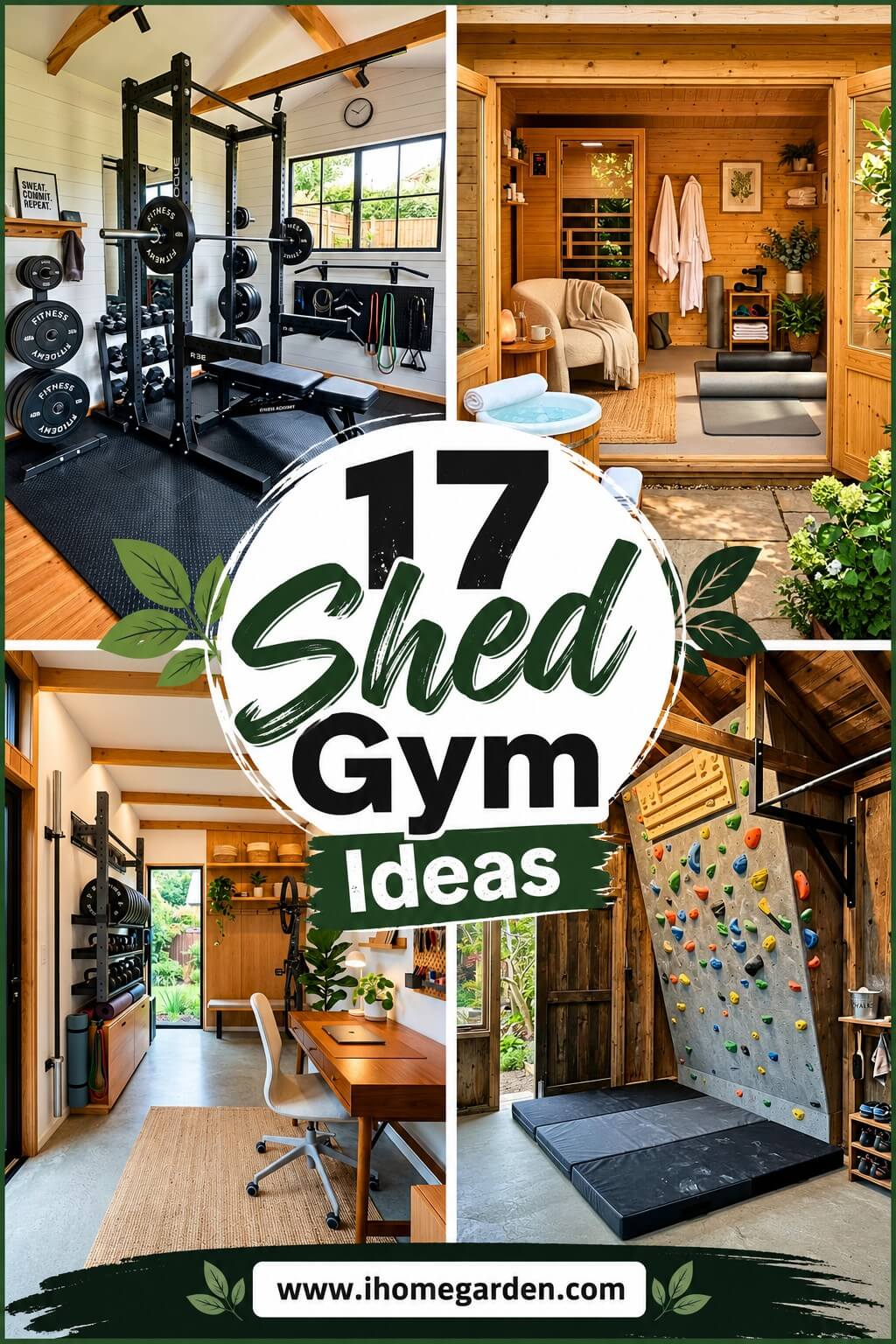
Pick the shed gym setup that matches how you actually train, not how you wish you trained. The best shed gym is the one you’ll walk into five days a week.
1. Power Rack Home Shed Gym
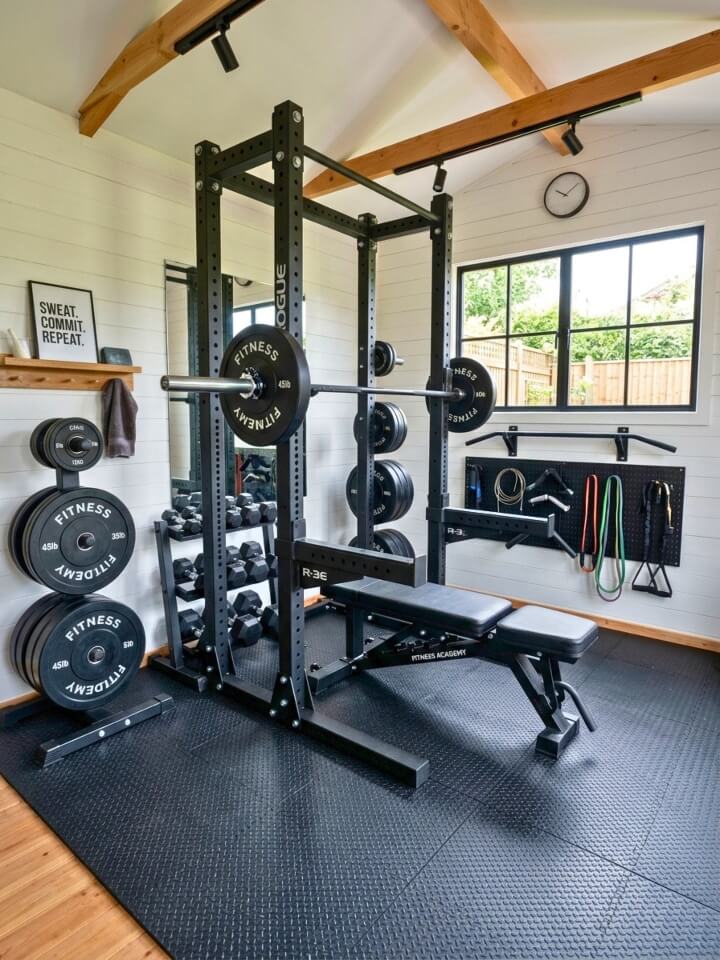
If barbell training is your main focus, a power rack is the smartest investment you can make for a shed gym. Choose a four-post rack with safety arms rated for at least 1,000 lbs, since you’ll be squatting and benching alone most of the time. Pair it with a 7-foot Olympic barbell, bumper plates, and an adjustable bench that folds flat for storage.
Shed size needed: Minimum 8 ft x 10 ft with at least 8 ft ceiling clearance for overhead presses. Flooring tip: Lay 3/4-inch horse stall mats under the rack to protect both the floor joists and your plates. Best for: Lifters who care about progressive overload over variety.
2. Functional Fitness Box
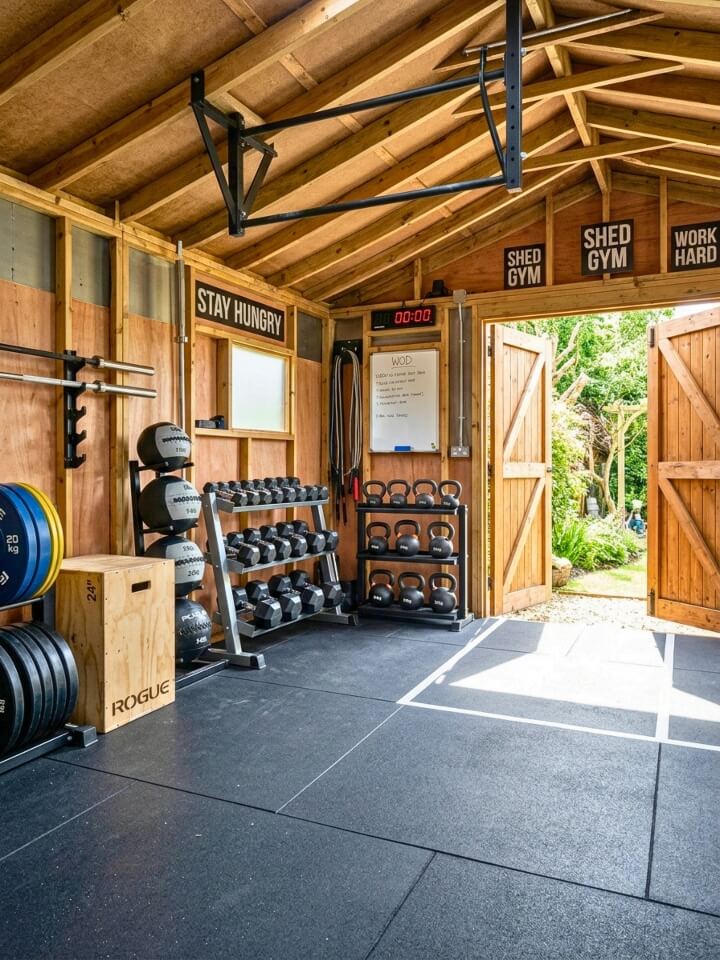
Forget bulky machines. This setup is built around free movement, mixed modal training, and the kind of sweat session you’d get at a small CrossFit affiliate. The goal is to keep the middle of the room completely empty so you can drop into burpees, swing kettlebells, or throw a wall ball without worrying about hitting equipment.
A practical kit looks something like this: two or three kettlebells in increasing weights (35, 53, 70 lbs), a single pair of adjustable dumbbells, a 20-inch plyo box, a jump rope, and one wall-mounted pull-up bar bolted into ceiling joists, not drywall. Add a rower along the wall if budget allows. Wider sheds (10 ft+) handle this layout best.
3. Cardio Studio
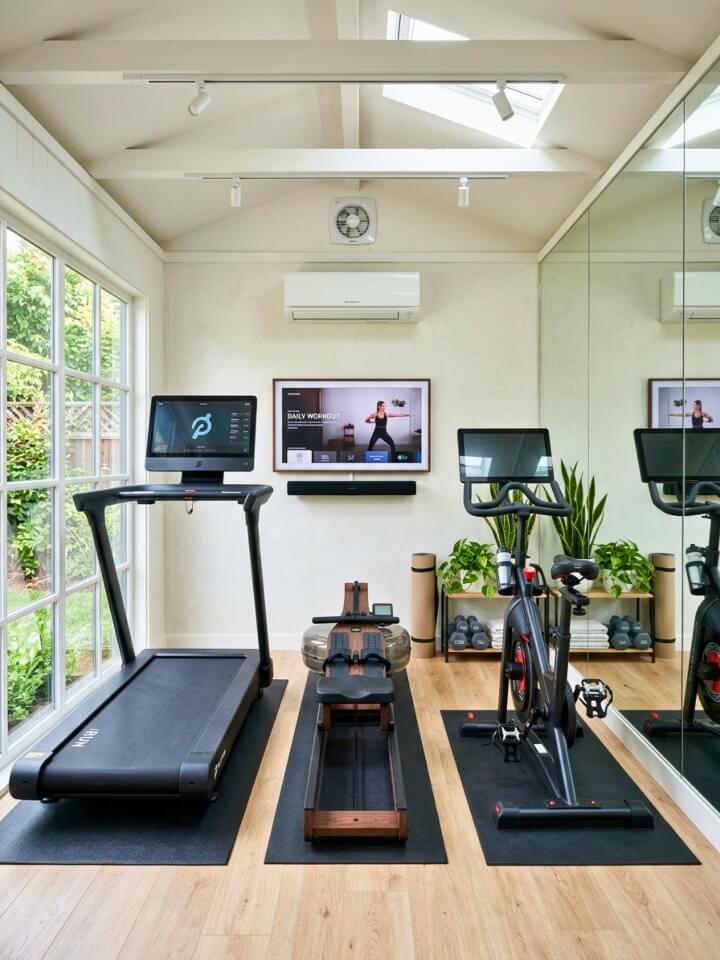
Transform your backyard into a powerhouse — your shed gym is where discipline meets dedication. A cardio-focused shed works on one principle: remove every reason to skip the session. That means putting the machine in front of something you actually want to look at, whether that’s a mounted TV, a window facing the yard, or a full-length mirror that opens up the room.
Pick one primary machine based on your joints and goals. A treadmill suits runners, a magnetic rower is easier on the knees, and an air bike delivers the hardest conditioning workout in the smallest footprint. Add a ceiling fan or portable AC, because cardio sheds heat up fast. Rubber roll flooring works better than thick mats here, since machines need a stable, flat base. Narrow sheds around 6 ft x 10 ft handle this setup well.
4. Yoga and Mobility Space
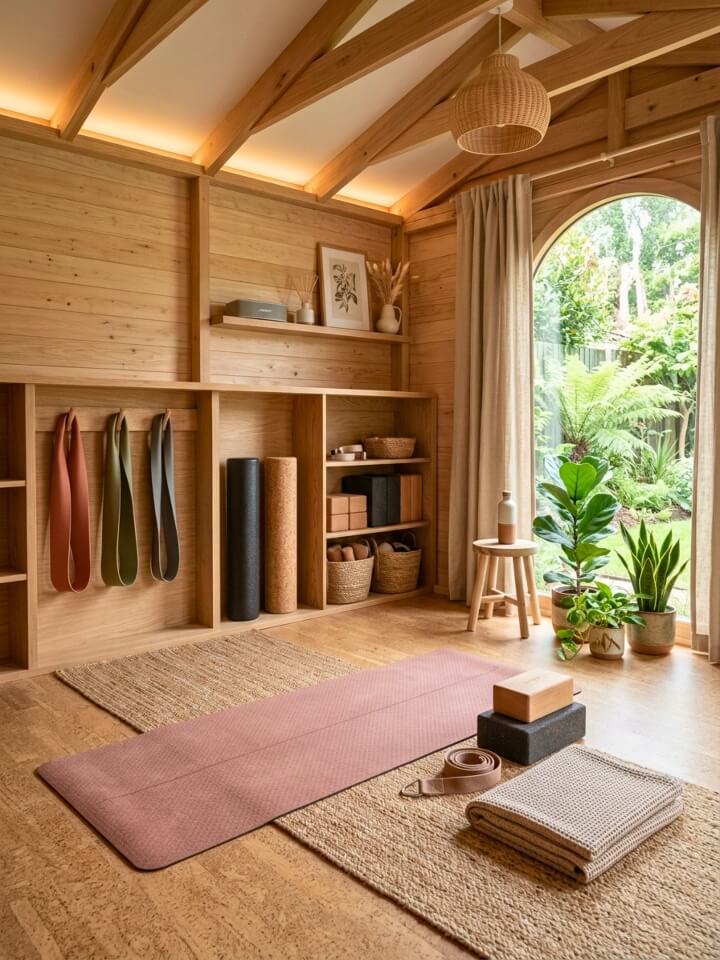
This one isn’t about equipment, it’s about atmosphere. The fewer hard objects in the room, the better the practice feels. Start with 1/2-inch cork or bamboo flooring, which feels warmer underfoot than rubber and looks far more inviting. Keep walls a soft neutral, add a single floor lamp with a warm bulb, and bring in two or three low-maintenance plants like snake plants or pothos.
Your Gear List Stays Short on Purpose:
- One high-density yoga mat (6mm or thicker)
- A bolster and two cork blocks
- Resistance bands for mobility work
- A foam roller stored upright in the corner
Even a 6 ft x 8 ft shed is enough, since you’re working within the footprint of your mat.
5. Boxing and Combat Shed Gym
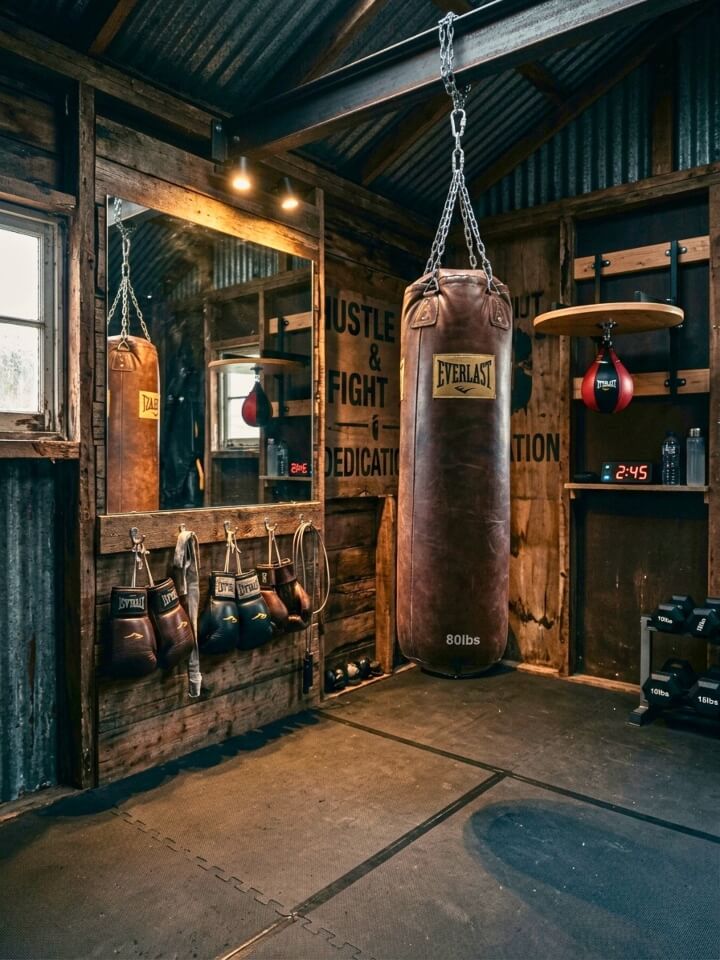
Hanging a heavy bag from a shed ceiling is where most people get this wrong. Standard shed rafters aren’t built for 100+ lbs of swinging load, so you’ll need to either install a dedicated ceiling mount with a joist reinforcement bracket, or go with a free-standing bag like a Century Wavemaster if your structure is light.
Once the bag is sorted, the rest is straightforward. Cover the floor with 1-inch interlocking EVA mats so footwork stays light and falls stay safe. Mount a full-length mirror on the longest wall to check your guard and stance. Keep two pairs of gloves (heavy bag and sparring), hand wraps, and a jump rope on a simple wall hook. An 8 ft x 8 ft shed gives enough room to circle the bag without backing into walls.
6. Garage-Style Strength Gym
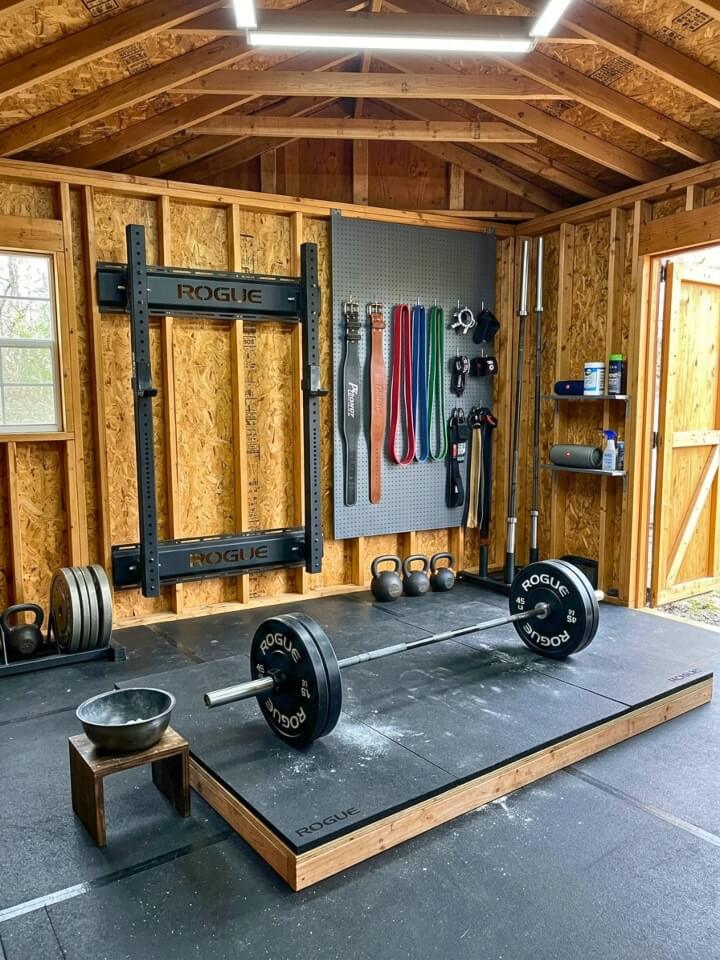
There’s a specific feeling to a no-frills strength gym, and it comes down to one thing: nothing in the room exists unless it helps you lift heavier. Skip the mirrors, skip the decor, and put your money into equipment that lasts twenty years.
The anchor here is a deadlift platform built from two sheets of 3/4-inch plywood topped with horse stall mats on the outer thirds. This protects both your shed floor and your bumper plates from the impact of dropped weights. Around it, you want a competition-spec barbell (28mm shaft, 190k+ PSI), calibrated bumpers, and a chalk bowl mounted to the wall.
Minimum Shed Size: 10 ft x 12 ft with reinforced floor joists, since loaded deadlifts transfer serious force into the subfloor.
7. Bodyweight and Calisthenics Setup
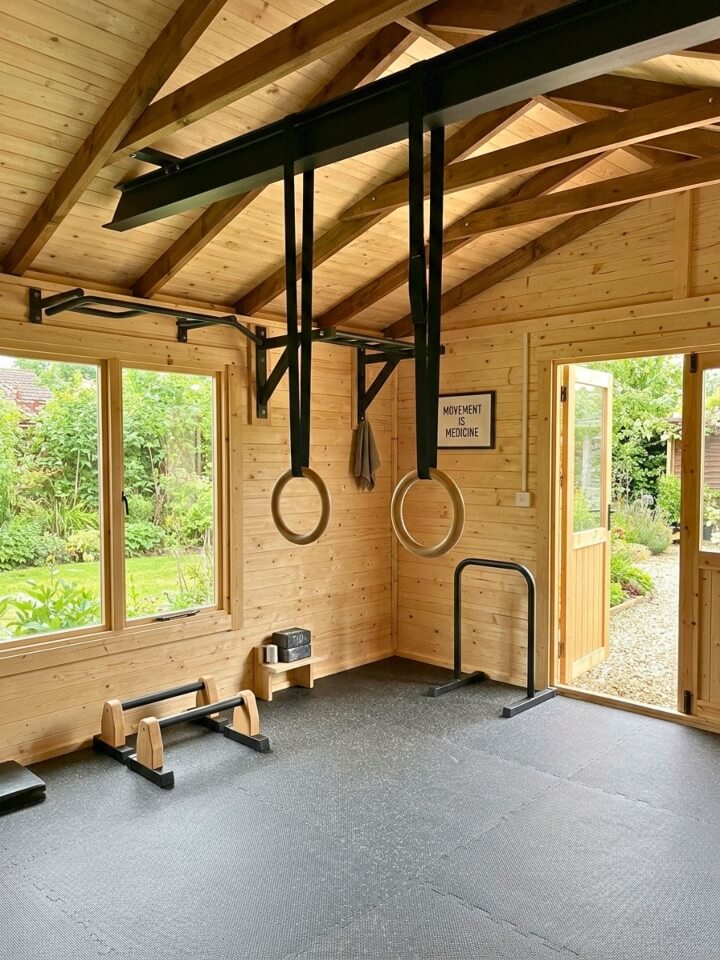
The biggest mistake people make with calisthenics sheds is treating them like regular gyms and filling them with stuff. The whole point of this discipline is that your body is the equipment, so the room should reflect that.
What You Actually Need Fits on One Wall:
- Wooden gymnastic rings on adjustable straps, hung from a reinforced ceiling beam
- A pair of parallettes for L-sits, handstand work, and planche progressions
- A wall-mounted pull-up bar at standard grip width
- A thick exercise mat for floor work and skill practice
Ceiling height matters more than floor space here. You need at least 9 ft of clearance for ring work, and ideally a clear path from one wall to the other for handstand walks. Compact 8 ft x 10 ft sheds work fine if the ceiling cooperates.
8. Garden-View Hybrid Gym
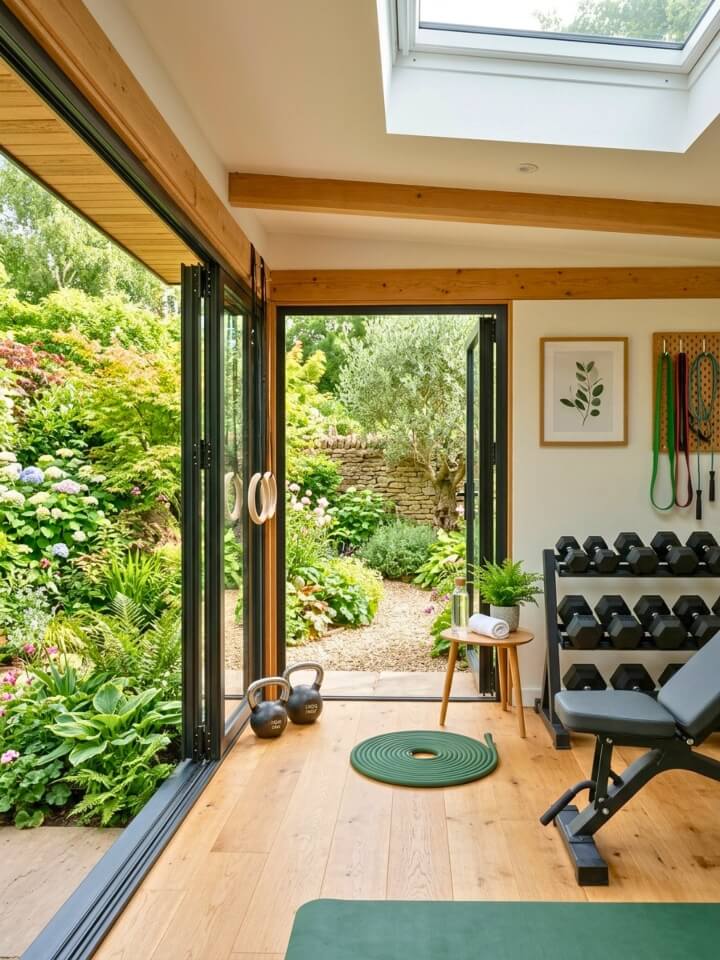
The point of this setup is to stop treating workouts as an indoor activity. By installing French doors or a large sliding window on the wall facing your garden, the shed becomes a transition space rather than a sealed box.
Keep equipment portable so you can train inside on cold days and drag everything onto the patio when the weather turns. A pair of adjustable dumbbells (5–50 lbs each) replaces a full rack. A folding bench tucks against the wall. Resistance bands hang on hooks, and a single kettlebell handles swings and goblet squats.
Flooring should match the climate. If your shed sees humidity, go with sealed bamboo or PVC tiles rather than rubber, which can trap moisture against the subfloor.
Best Suited For: Sheds positioned with a clear sightline to landscaped yards or patios.
9. Compact All-in-One Machine Shed Gym
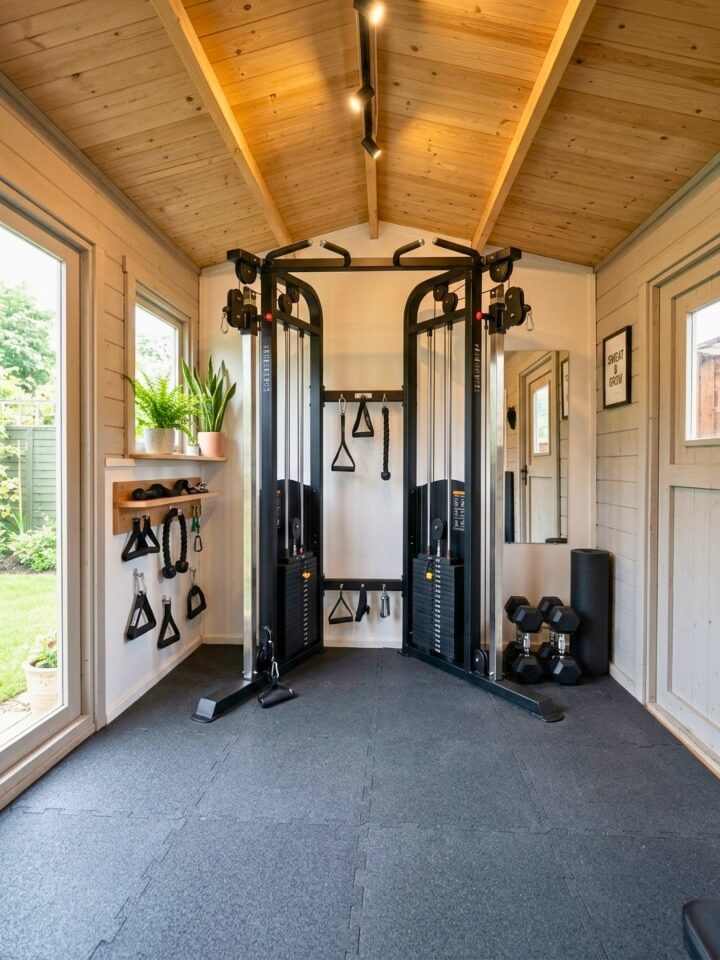
Build strength on your own terms with a home gym shed that fits your lifestyle and backyard. A multi-station home gym solves a specific problem: you want structured strength training but don’t want to deal with loading plates, finding spotters, or storing a dozen accessories. One machine handles chest press, lat pulldown, low row, leg extension, and cable work without ever changing positions.
Before buying, measure twice. Most multi-gyms need a footprint of around 7 ft x 4 ft, but the weight stack extends the actual usable space to roughly 8 ft x 7 ft once you account for cable travel and a seat behind the unit. Ceiling clearance of 7.5 ft is the minimum, and 8 ft is more comfortable.
Look for models with a 200+ lb weight stack and pulley-based resistance rather than rod-and-bushing systems, which wear out within a few years of regular use.
10. Recovery and Wellness Studio
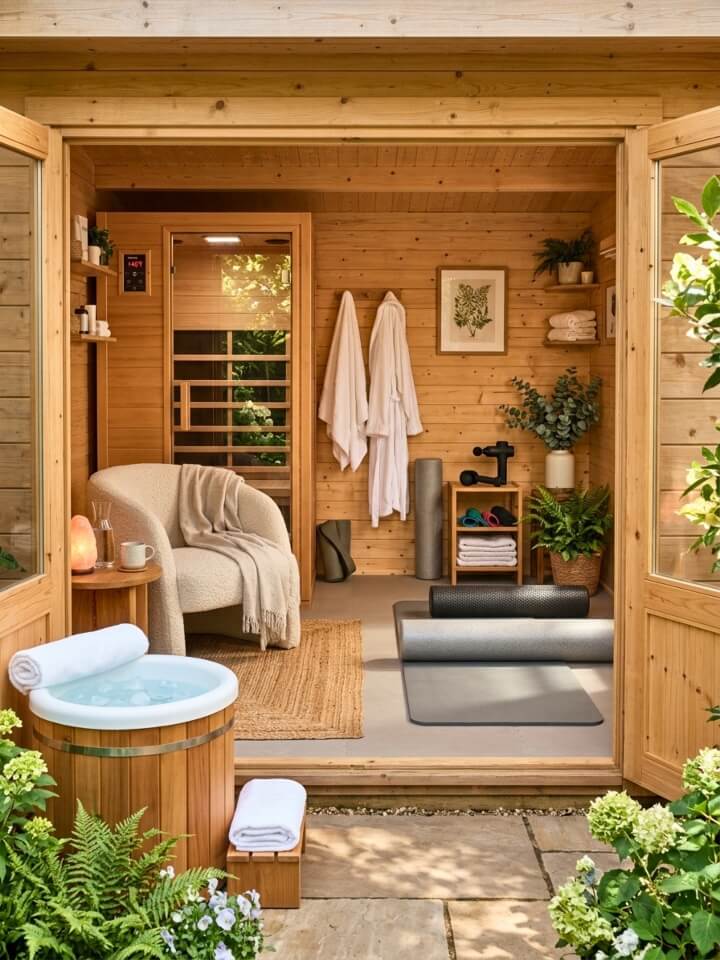
This is the shed you build after you already have a gym somewhere else. The purpose isn’t training, it’s everything that supports training, which most people skip and then wonder why they’re constantly sore or injured.
Build the space around three zones. A mobility corner holds a foam roller, lacrosse balls, a massage gun, and a stretching strap. A heat zone features either a one-person infrared sauna (around $1,500–$2,500) or a portable infrared panel if budget is tight. A rest zone needs a comfortable chair or chaise, soft lighting, and a small side table for water and a journal.
Insulation matters more here than in any other shed gym, since you want the room to hold heat and stay quiet. Spray foam in the walls and ceiling pays off within a season.
11. Rustic Timber Shed Gym
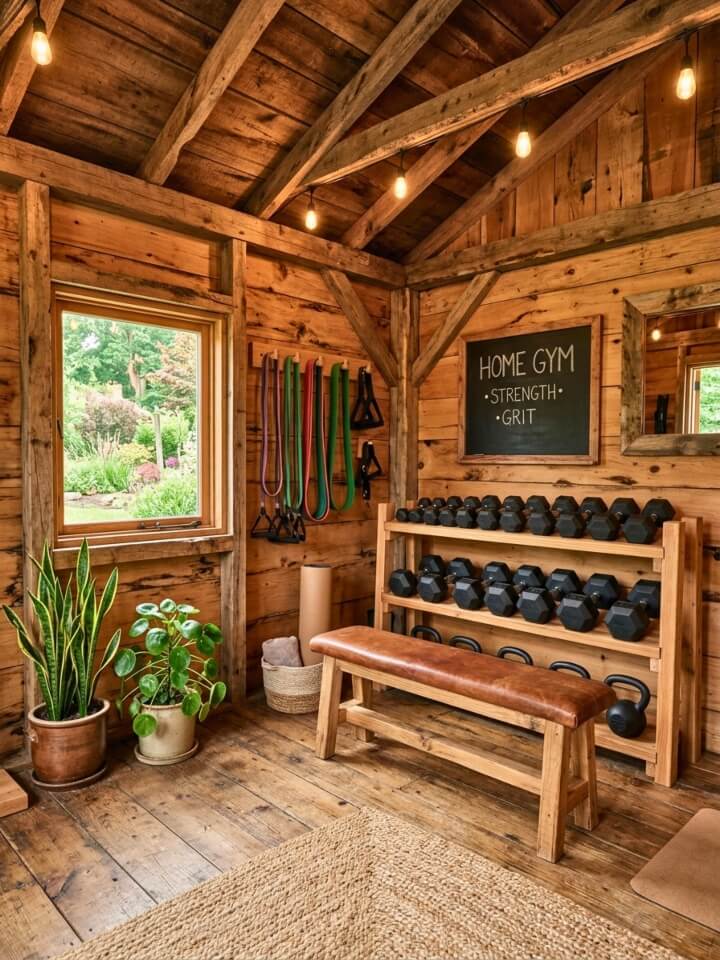
Cedar or pine plank walls completely change how a workout space feels. Instead of the cold, echoey atmosphere of a typical home gym, you get something closer to a mountain cabin, and that small shift in environment makes early morning sessions far easier to commit to.
Match the warmth of the wood with equipment that doesn’t fight it. Hex dumbbells with rubber heads, a wooden plyo box, and a leather-wrapped jump rope all look intentional in this setting. Steel-and-chrome machines look out of place, so save those for a different style of shed.
Lighting is what pulls the whole look together. Skip overhead fluorescents entirely. Instead, run two or three Edison-bulb wall sconces at eye level, which throws warm shadows and gives the wood grain depth after sunset.
12. Tech-Smart Connected Gym
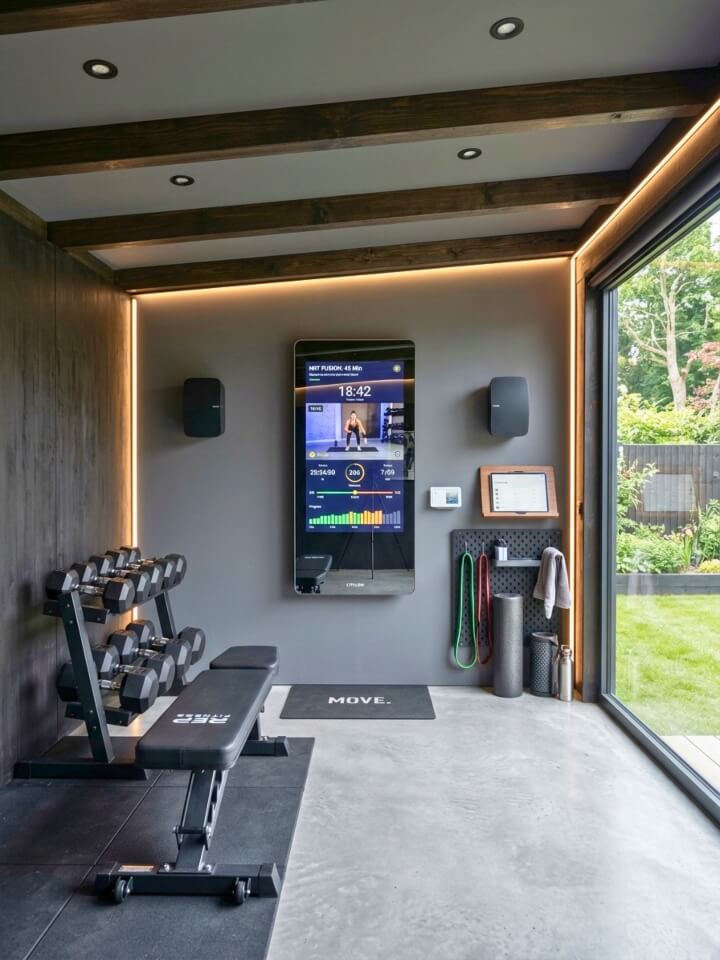
The hardware list for this setup is shorter than people expect:
- A 43-inch wall-mounted TV or smart mirror (Tonal, Mirror, or a budget alternative using a regular TV plus a tablet)
- Bluetooth ceiling speakers wired through a single amplifier
- Smart bulbs that shift color temperature, cool white for lifting and warm amber for cooldowns
- A reliable mesh Wi-Fi node, since most sheds sit at the edge of home network range
The catch is power. Streaming workouts, charging devices, and running smart lighting pulls more electricity than people plan for, and most sheds are wired with a single 15-amp circuit meant for a light bulb and a lawnmower charger. Get an electrician to run a dedicated 20-amp line before installing anything else, or you’ll trip the breaker mid-workout every few sessions.
13. Two-Zone Split Gym
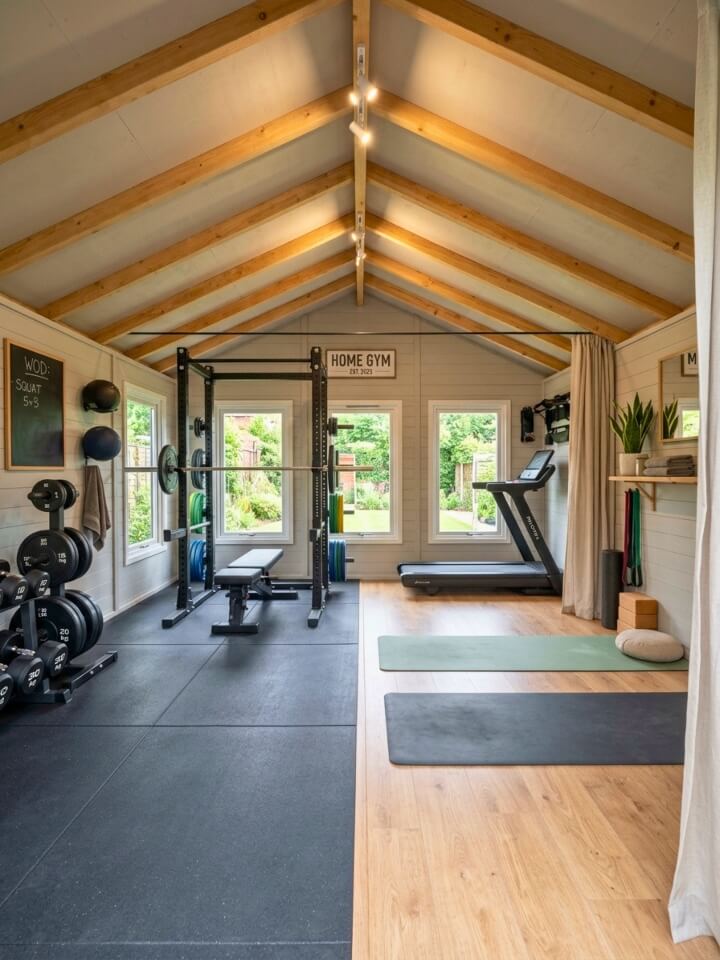
Splitting a long shed into two distinct training areas works because it forces you to actually use the second zone. When everything sits in one big room, the foam roller and mat get pushed into a corner and ignored. A physical divider changes that behavior.
The lifting side gets rubber flooring, a half rack against the back wall, a bench, and a small dumbbell tree. The mobility side gets cork or foam tiles, a wall-mounted mirror, and storage cubbies for bands, blocks, and a yoga mat.
Separate the two with whatever fits your budget. A floor-to-ceiling curtain on a track works for around $100. A half-wall partition with built-in shelving runs higher but adds storage. Even a shift in flooring material creates enough visual separation to make each zone feel purposeful.
Minimum Shed Length: 16 ft, since each zone needs roughly 8 ft to function.
14. Climbing and Grip Shed
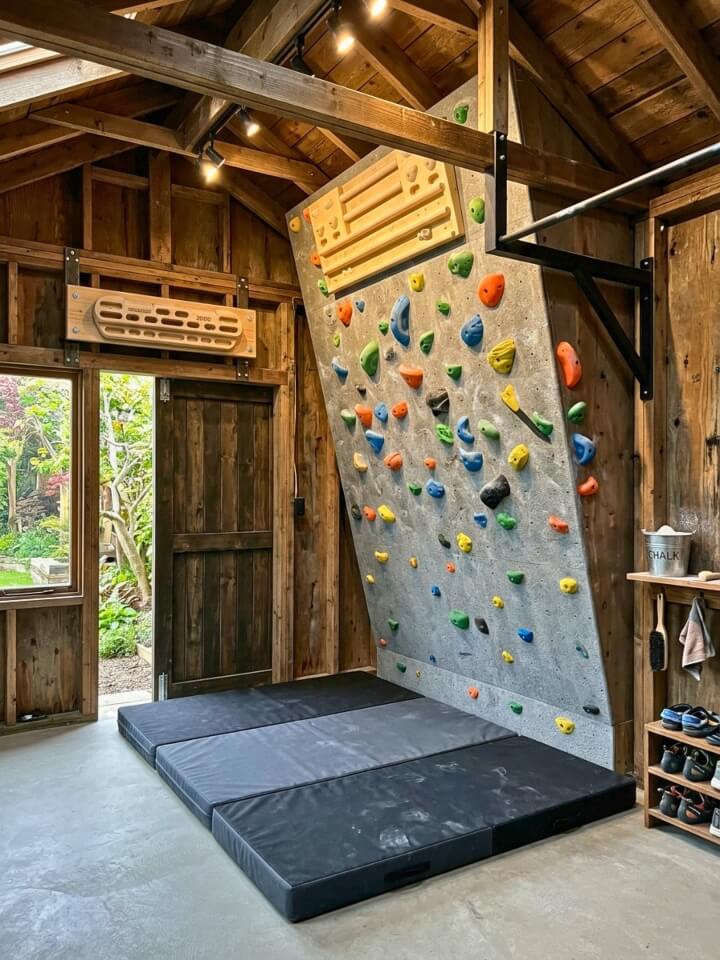
A home climbing wall is one of the few shed gym ideas that genuinely requires a contractor unless you have framing experience. The wall needs to anchor into the shed’s structural studs, not just the interior plywood, and a typical 8 ft x 8 ft training panel pulls hundreds of pounds of dynamic load every time you climb on it.
Once the wall is built, the rest of the room comes together quickly. T-nut holes spaced on a 20-cm grid let you reset routes whenever you want. A hangboard mounts above the door for fingerboard sessions. Three-inch crash pads cover the landing zone, since even a 6-foot fall onto a hard floor ends sessions early.
Add a kilter board or moonboard if your ceiling height allows for the 40-degree overhang, which needs at least 10 ft of vertical clearance.
15. Vintage Iron Room
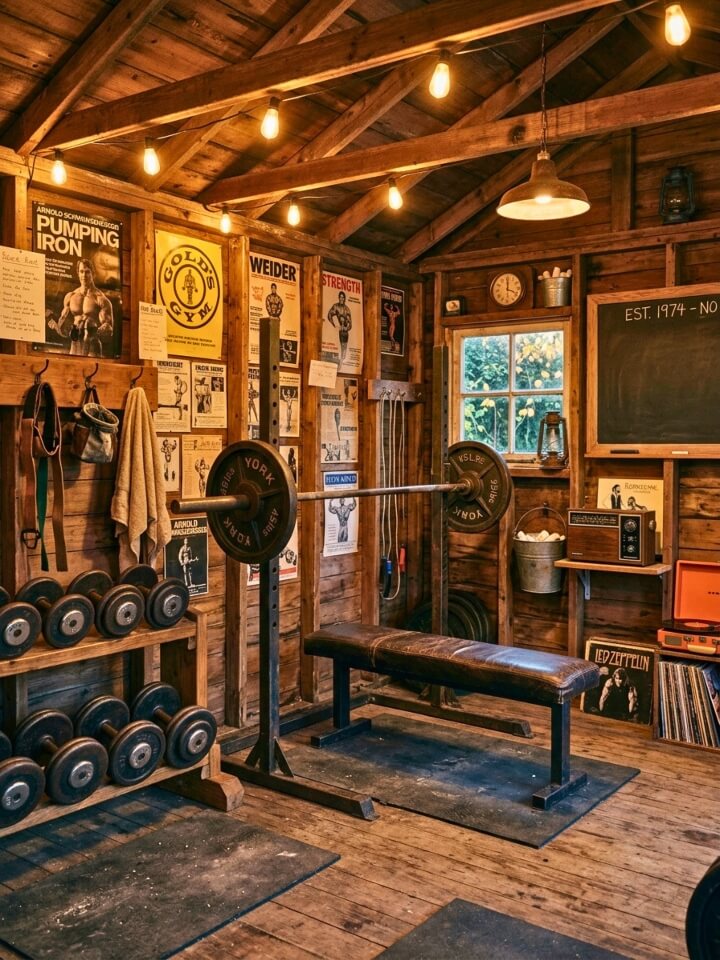
Every rep, every set, every goal crushed — your gym shed is the ultimate personal fitness haven. This style works because everything in it has weight, history, and a specific look. The vibe lands somewhere between a 1970s York Barbell catalog and a back-alley boxing gym in Philadelphia, and the equipment you choose has to honor that.
Start with cast iron plates (the round, painted kind with raised lettering) instead of modern bumpers. A York or Eleiko-style barbell with knurled center markings sets the tone. Round it out with a leather-topped flat bench, a globe dumbbell or two on display, and a wooden Indian club for shoulder warmups.
Decor matters as much as equipment here. Hang framed black-and-white posters of old strongmen, run a string of warm-tone bulbs along the ceiling, and put a vintage radio on a corner shelf. A chalkboard for tracking PRs completes the room better than any whiteboard. A traditional exterior with details pulled from desirable porch siding ideas makes the vintage theme feel deliberate before you even open the door.
16. Convertible Indoor-Outdoor Shed Gym
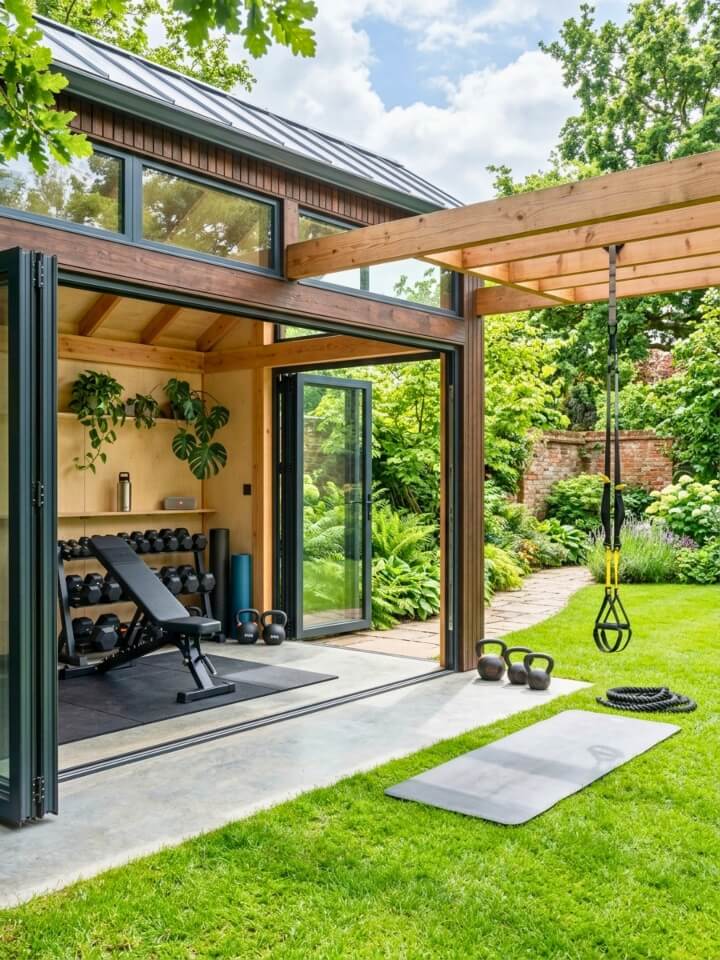
Bi-fold or accordion doors along one full wall change how a shed feels during the warmer months. Closed, the space functions as a normal gym. Opened, the entire room becomes part of the patio, and your workout footprint doubles without taking up extra ground.
The equipment has to earn its place under these conditions. Anything left near the door needs to handle humidity, sun, and the occasional rain splash, so avoid bare steel and pick coated dumbbells, vinyl-covered weights, or stainless kettlebells. A folding bench on casters rolls outside for sled work or outdoor sets, then tucks back against the wall by evening.
Important Detail: Bi-fold doors need a level concrete pad or threshold on both sides, which often means pouring a small patio extension before installation. Factor that into the budget. For a smoother indoor-outdoor transition, use engaging small patio landscaping ideas to shape the space directly outside the doors, or take cues from stunning backyard pavilion ideas if you want a covered training zone beyond the shed.
17. Multi-Purpose Gym and Hobby Room
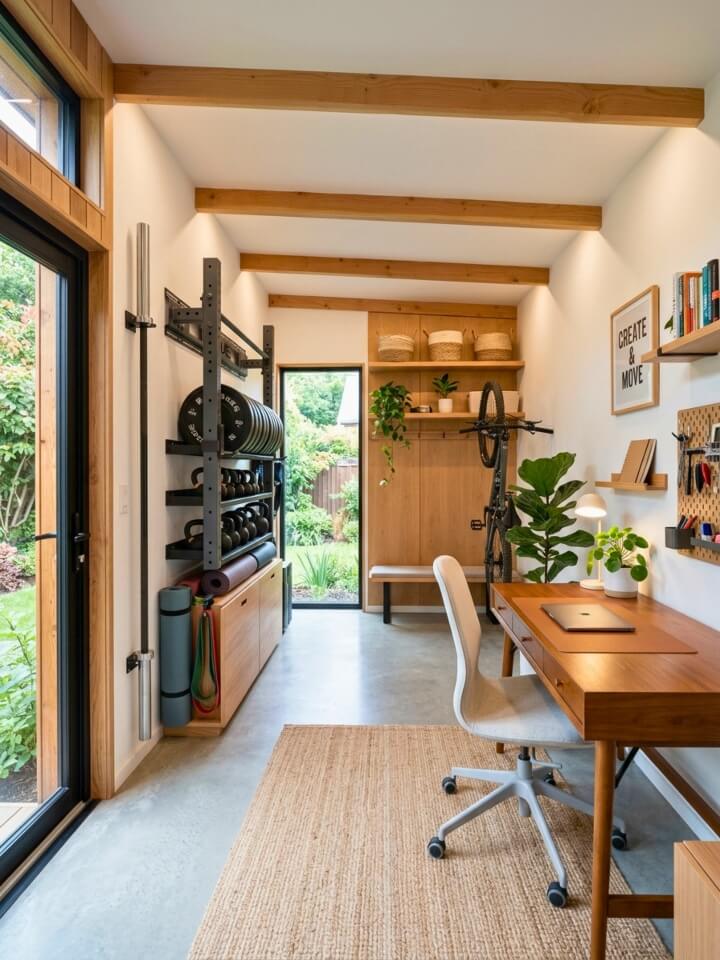
Most shed gyms get used four hours a week. The other 164 hours, they sit empty. A dual-purpose layout fixes that by giving the room a second identity, whether that’s a workshop, home office, music space, or art studio.
The trick is making transitions take under five minutes. Wall-mounted folding racks hold your barbell and plates flat against the wall when not in use. Adjustable dumbbells replace a full set and live in a single cabinet. A rubber-topped rolling cart serves as a bench for lifting and a worktable for everything else. Pegboard walls handle storage for both gym accessories and hobby tools.
Lighting needs to flex too. Install dimmable overheads on one switch and bright task lighting on another, so the room shifts mood depending on what you’re doing in it.
Frequently Asked Questions About Shed Gyms
These quick answers cover the practical details most shed gym guides skip — insulation, year-round use, permits, resale value, and safety basics.
Do I Need a Permit to Convert My Shed Into a Home Gym?
Most sheds under 200 sq ft don’t require a permit, but rules vary by county and HOA. Always check local zoning before adding electrical wiring, plumbing, or structural reinforcements like deadlift platforms.
How Do I Insulate a Shed Gym for Year-Round Workouts?
Spray foam offers the best R-value in tight spaces, but rigid foam boards work well on a tighter budget. Insulate walls, ceiling, and floor, then seal gaps around doors and windows to prevent drafts and moisture buildup.
Will Heavy Lifting Damage My Shed’s Floor or Foundation?
Standard shed floors aren’t built for dropped deadlifts. Reinforce floor joists with extra blocking, then layer 3/4-inch plywood under horse stall mats. For serious lifting, pour a concrete pad beneath the shed before installation.
How Do I Keep a Shed Gym Cool in Summer and Warm in Winter?
A mini-split heat pump handles both temperatures efficiently and runs on a single 20-amp circuit. Pair it with a ceiling fan for airflow and blackout curtains to block direct afternoon sun through windows.
Does a Shed Gym Add Value to My Home?
A well-built, insulated shed with electrical and flooring upgrades can add usable square footage and appeal to fitness-minded buyers. However, treat it as a personal investment first — resale return depends heavily on local market demand.
Final Thoughts:
The best shed gym isn’t the one with the most equipment or the cleanest Instagram shot. It’s the one that matches how you actually move. A climber needs ceiling height. A lifter needs a solid floor. Someone chasing calm needs warm light and cork underfoot, not chrome and mirrors.
Before you order a single dumbbell, stand inside your empty shed and notice what the space wants to be. The walls, the light, the way sound carries — they’re already telling you. Build with that, and your shed stops being a project. It becomes the part of the day you protect.