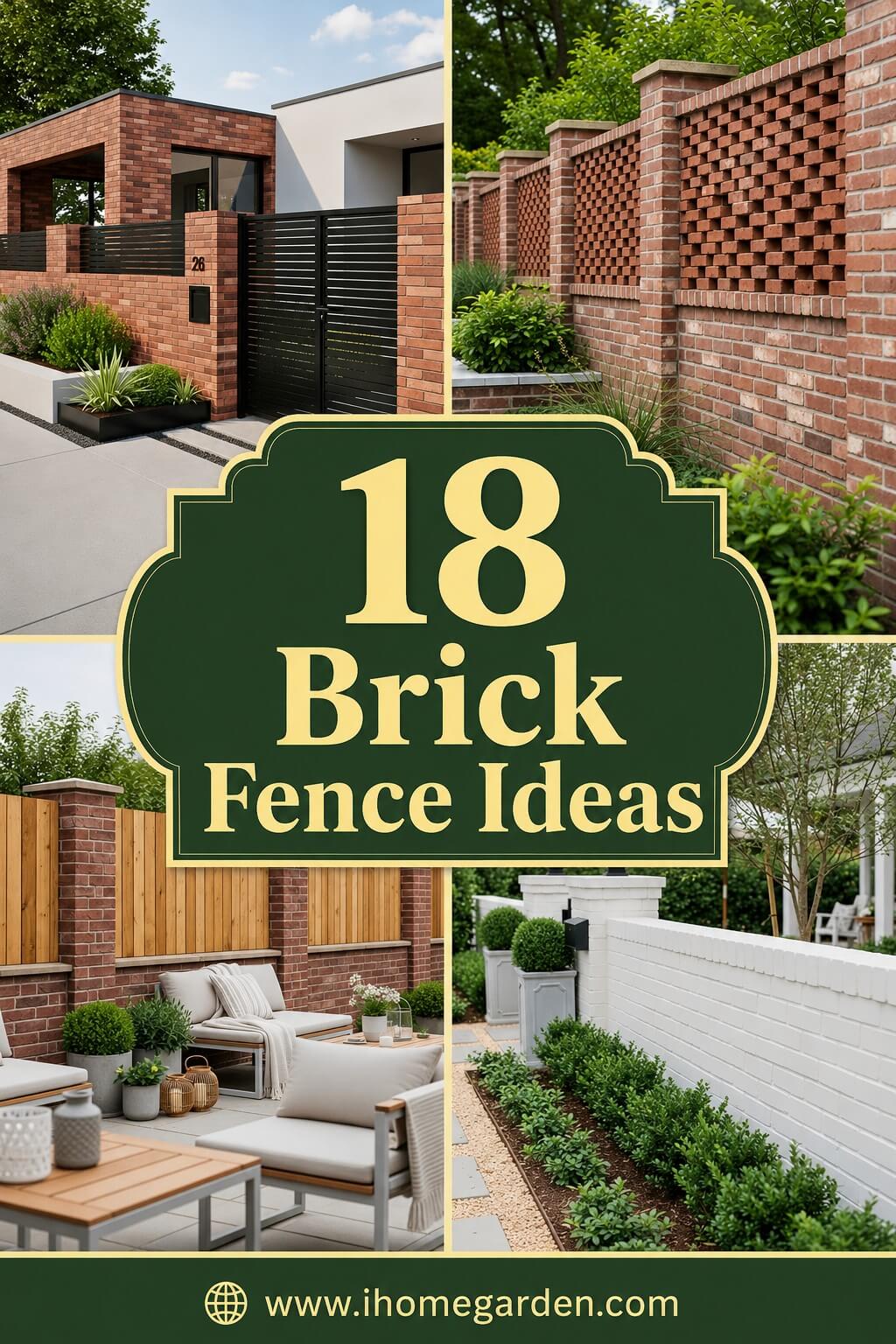
18 Brick Fence Ideas Most Homeowners Wish They Knew Sooner
Your fence is the first thing visitors notice and the last thing they remember. That’s why choosing the right one matters more than most homeowners realize. These 18 perfect brick fence ideas include every style, budget, and yard situation you might be working with. Whether you’re updating a tired front boundary or starting from scratch in a new backyard, there’s something here worth borrowing.
Brick holds up where wood rots and metal rusts. It handles harsh winters, hot summers, and decades of weather without losing its character. But not every brick fence fits every home. A tall security wall belongs on a different property than a low garden border. A curved Mediterranean design feels out of place next to a craftsman bungalow.
Each brick fence idea below includes practical details on cost, upkeep, and where it works best. Pick what fits your space, then build to last.
1. Classic Red Brick Privacy Fence with Caps
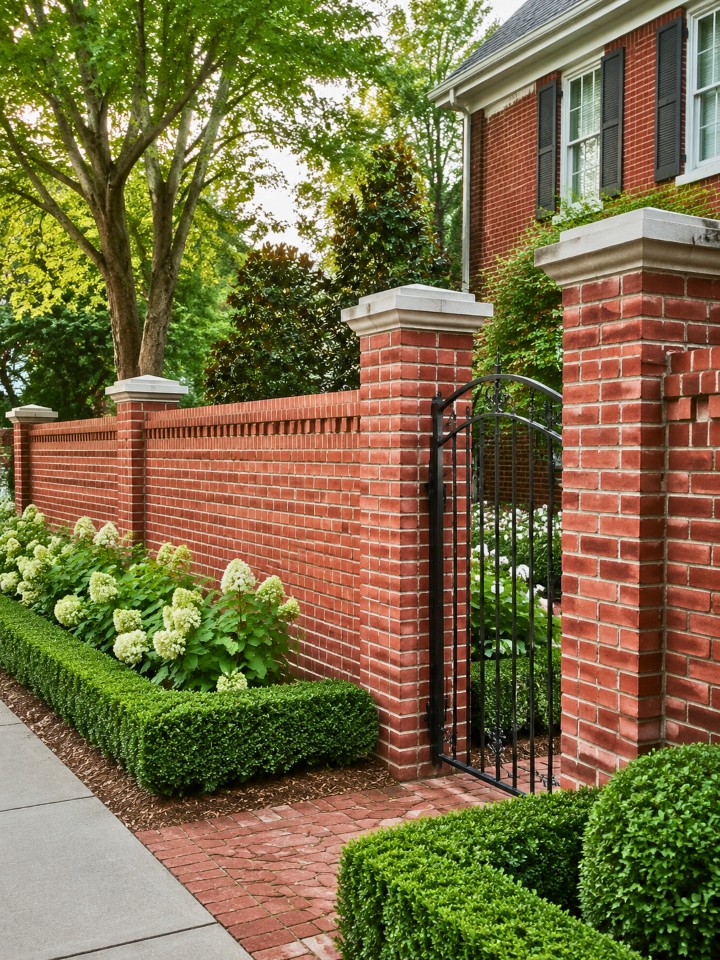
Red brick privacy fences have stuck around for a reason. At 6 to 7 feet tall, they block neighbor sightlines and dampen street noise, making them a smart pick for busy suburban lots or corner properties. The concrete or stone caps along the top aren’t just for looks. They direct rainwater away from mortar joints and slow down freeze-thaw damage in colder regions.
Budget around $35 to $60 per linear foot installed. With proper repointing every 20 to 25 years, the structure can easily outlast 75 years.
Colonial, Georgian, and traditional brick homes pair most naturally with this look.
2. Modern Horizontal Brick and Metal Fence
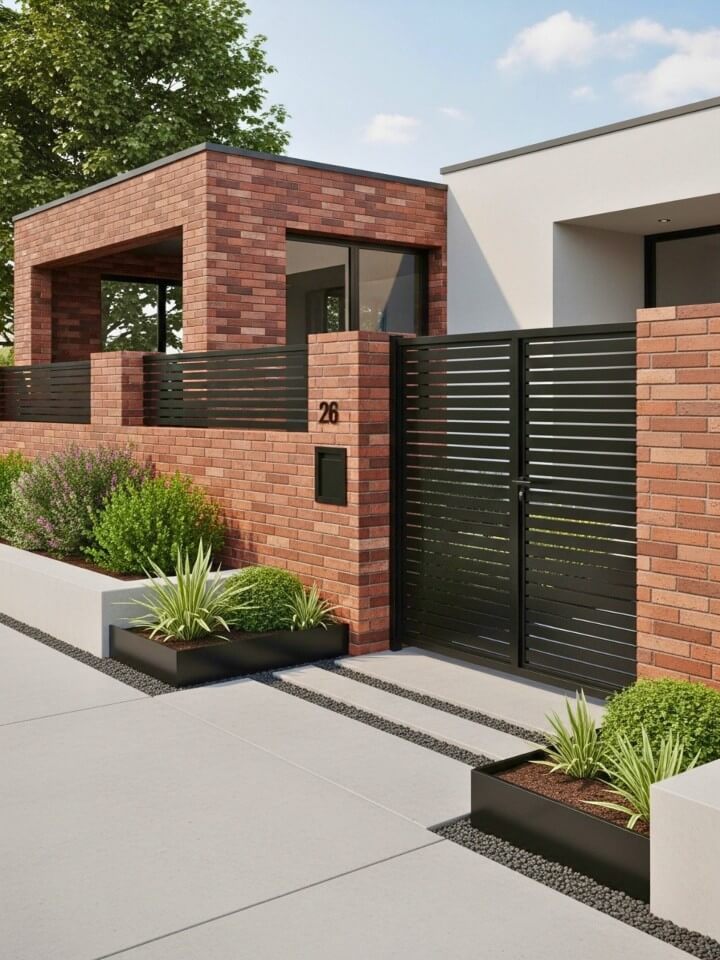
Homeowners with modern, industrial, or minimalist architecture who want privacy without the visual heaviness of a full masonry wall.
A low brick base, usually 2 to 3 feet tall, supports horizontal steel or aluminum slats above it. The horizontal lines visually stretch the yard, which helps narrow side spaces feel wider.
Expect $55 to $85 per linear foot. Higher than pure brick, but metal panels need almost no upkeep beyond an occasional rinse.
Slat spacing matters. Tighter gaps mean more privacy, wider gaps reduce wind load and let air move through.
3. Rustic Weathered Brick Garden Boundary
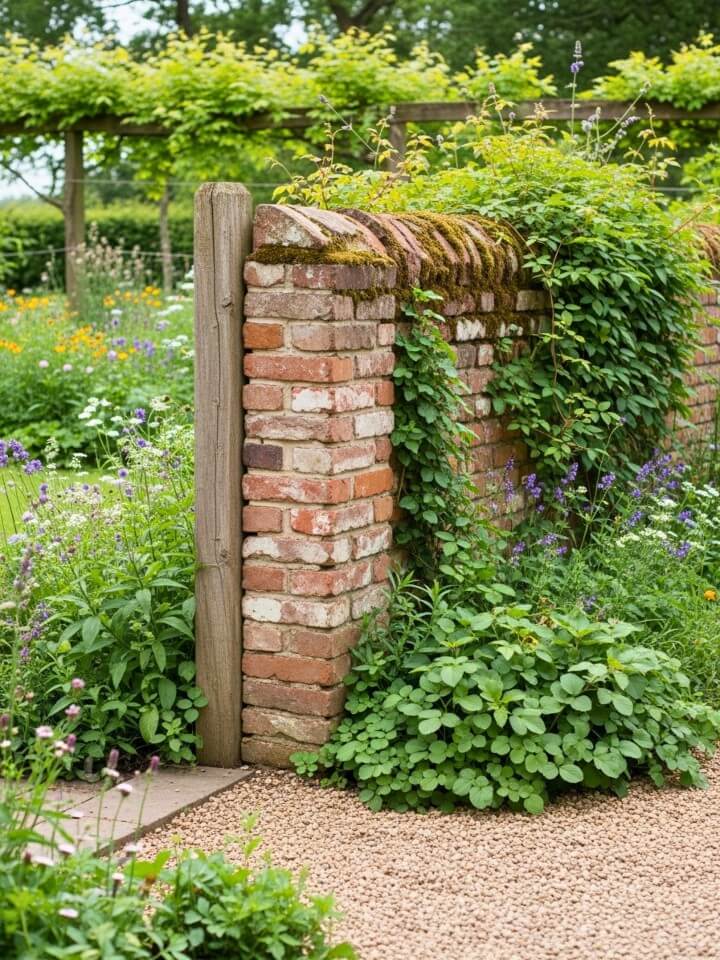
Upgrade your boundary with a brick wall fence built for beauty, strength, and lasting value. A weathered brick boundary feels less like a fence and more like something the garden grew around. Reclaimed bricks in mismatched earth tones suit cottage gardens, raised vegetable beds, and winding pathways where sharp, uniform lines would feel forced.
Climbing roses, ivy, and creeping thyme cling to the rough surface and deepen the aged character over the years. Reclaimed brick often runs $0.50 to $2 per brick, sometimes cheaper than new, but the labor takes longer because each piece needs hand-sorting. One care note worth remembering: skip the pressure washer. The soft, aged surface chips easily, so a stiff brush and mild soap handle cleaning better.
4. Brick and Wood Mixed Fence Design
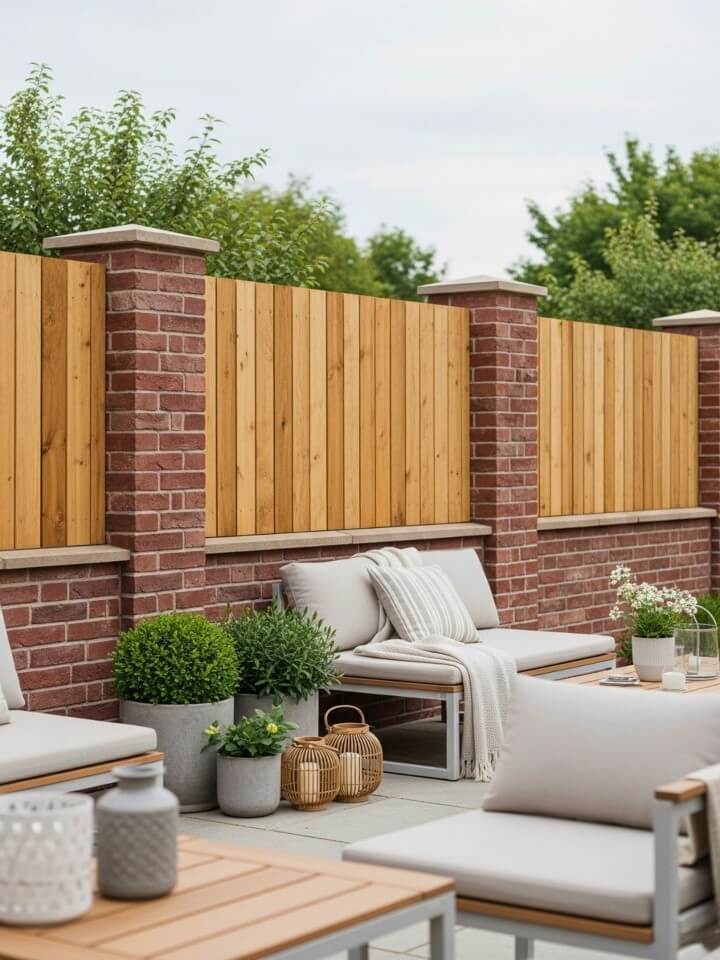
This hybrid pairs brick piers with wood infill panels, giving you masonry strength at a lower price point than an all-brick wall.
Why Homeowners Choose It
- Costs roughly 20 to 30 percent less than solid brick
- Wood panels can be replaced one section at a time as they age
- Fits transitional, craftsman, and modern farmhouse exteriors
Wood Lifespan to Plan For
- Cedar: 15 to 20 years with regular sealing
- Redwood: 20 to 25 years
- Pressure-treated pine: 20 to 25 years, but warps more in humid climates
Brick piers are typically spaced 6 to 8 feet apart, with installed costs landing between $40 and $70 per linear foot.
5. Curved Brick Fence for Soft Landscaping
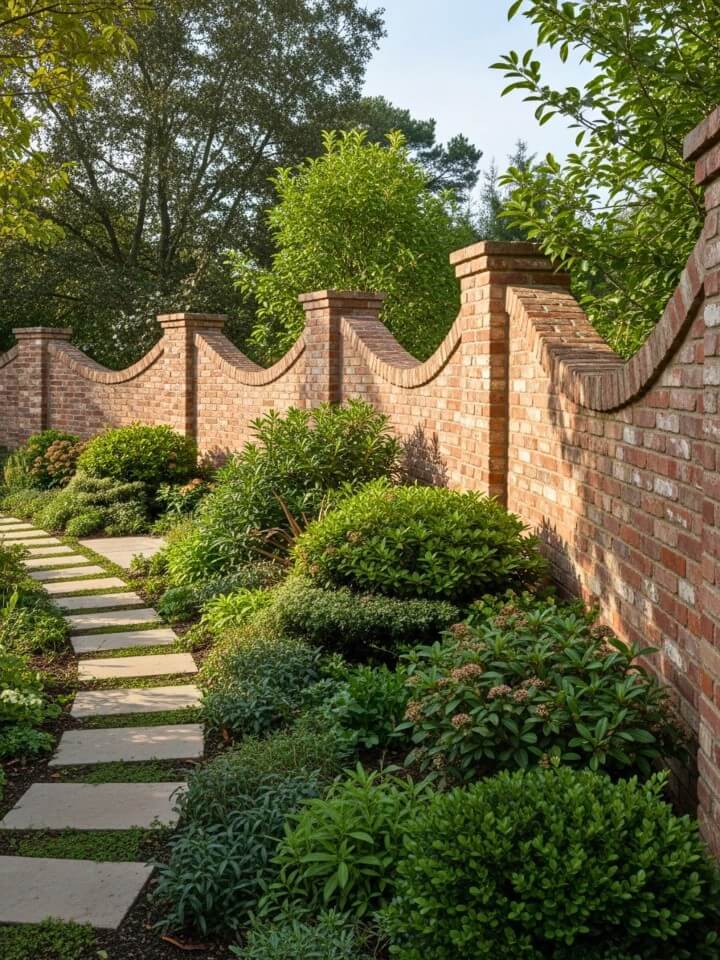
Curves change everything about how a brick fence feels, but they also change what it costs and who should build it.
A curved fence earns its keep when there’s a reason for the bend, like wrapping around a mature oak, edging a kidney-shaped pool, or guiding a walkway toward the front door. Mediterranean, Spanish revival, and organic modern homes wear this style naturally.
Tight DIY budgets and rookie masons should steer clear. Every brick along the curve needs cutting, and a miscalculated radius leaves uneven mortar joints that are nearly impossible to hide later. Expect 25 to 40 percent more than a straight run of the same length.
6. Brick Fence with Built-In Planter Boxes
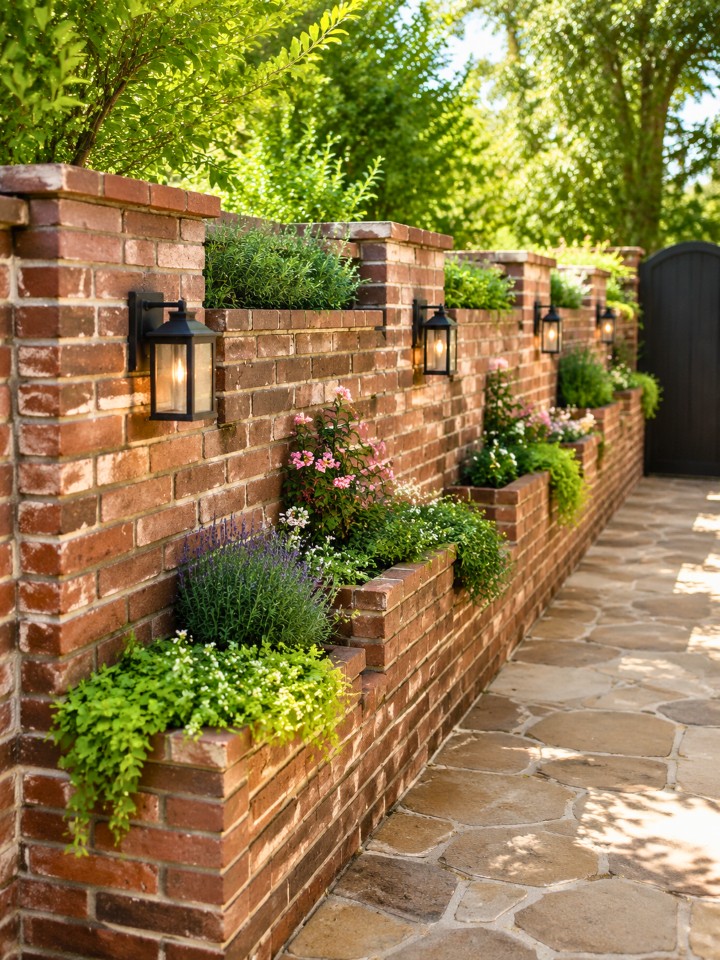
Planter boxes carved into the fence line let you bring greenery up to eye level without giving up boundary structure. The trick is planning drainage before laying the first brick, because trapped water will crack mortar joints within a few seasons.
Shallow-rooted plants handle the limited soil depth better than deep growers. Good picks include lavender, rosemary, succulents, trailing petunias, and ornamental grasses.
Skip anything with aggressive roots like mint or bamboo. They will push against the brick from the inside and eventually loosen the courses. Line each planter with a waterproof membrane to keep moisture from seeping back into the wall.
7. White Painted Brick Fence for Clean Cottage Style
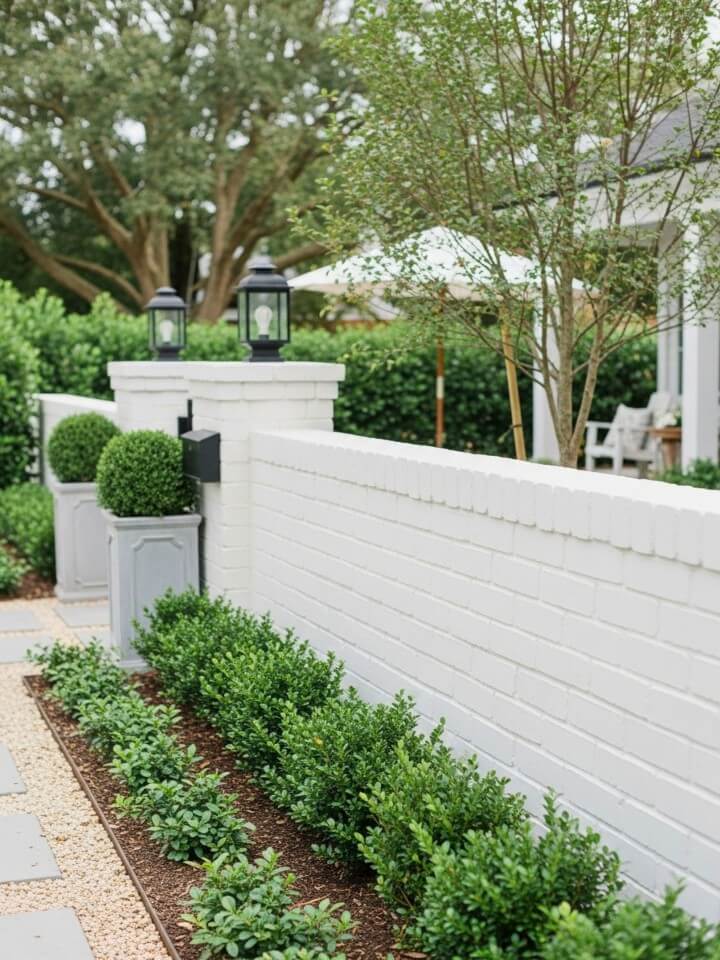
A coat of white paint transforms ordinary brick into something that feels coastal, cottage, or even Mediterranean depending on the surrounding landscaping. The look is bright and welcoming, but it comes with a tradeoff most homeowners underestimate: maintenance. White paint on brick shows every smudge, water stain, and lawn-clipping splash.
Expect to repaint or touch up every 5 to 7 years, more often in humid or tree-heavy yards where algae takes hold. Use a breathable mineral-based paint or limewash rather than standard latex, since trapped moisture behind sealed paint causes spalling, where the brick face flakes off entirely. The cottage charm is real, especially when paired with a strong entry feature like one of these photogenic black front door ideas, but plan for the upkeep.
8. Tall Security Brick Fence with Iron Accents
| Feature | Typical Spec |
|---|---|
| Recommended height | 7 to 8 feet |
| Brick column spacing | 8 to 10 feet apart |
| Iron panel material | Wrought iron or powder-coated steel |
| Installed cost | $80 to $130 per linear foot |
| Permit needed? | Usually yes, above 6 feet |
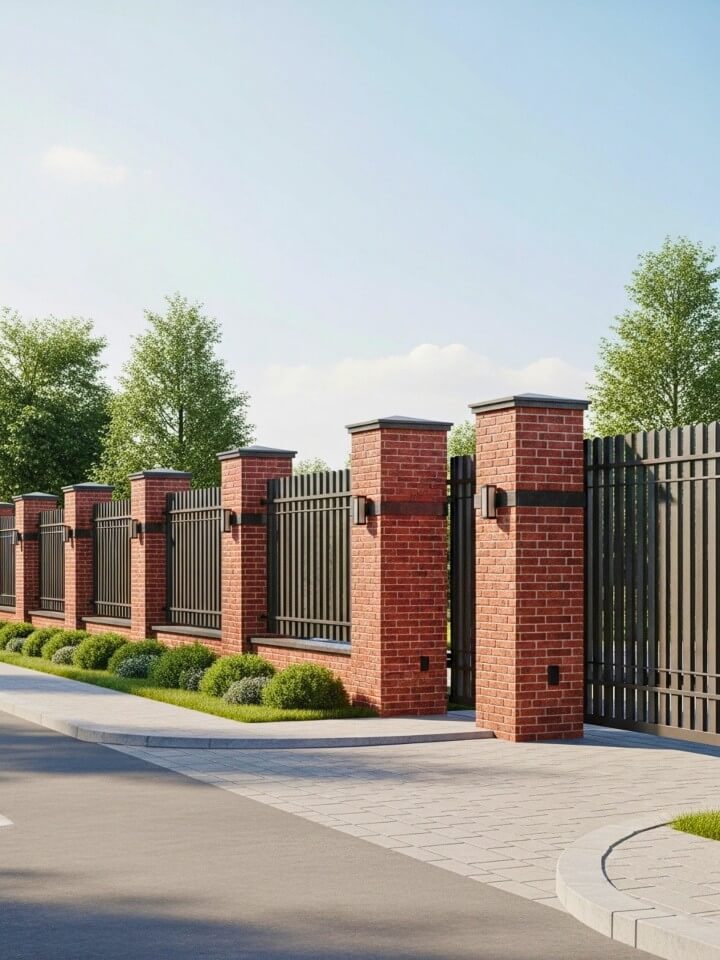
This combination delivers physical security and visual deterrence without feeling like a prison wall. Brick columns carry the structural load while iron panels between them allow visibility, which actually improves security since intruders prefer fences they can hide behind. Add motion-sensor lighting on the columns and the deterrent value doubles. Most municipalities require permits above 6 feet, so check local code before breaking ground.
9. Low Brick Border Fence for Front Yard Edging
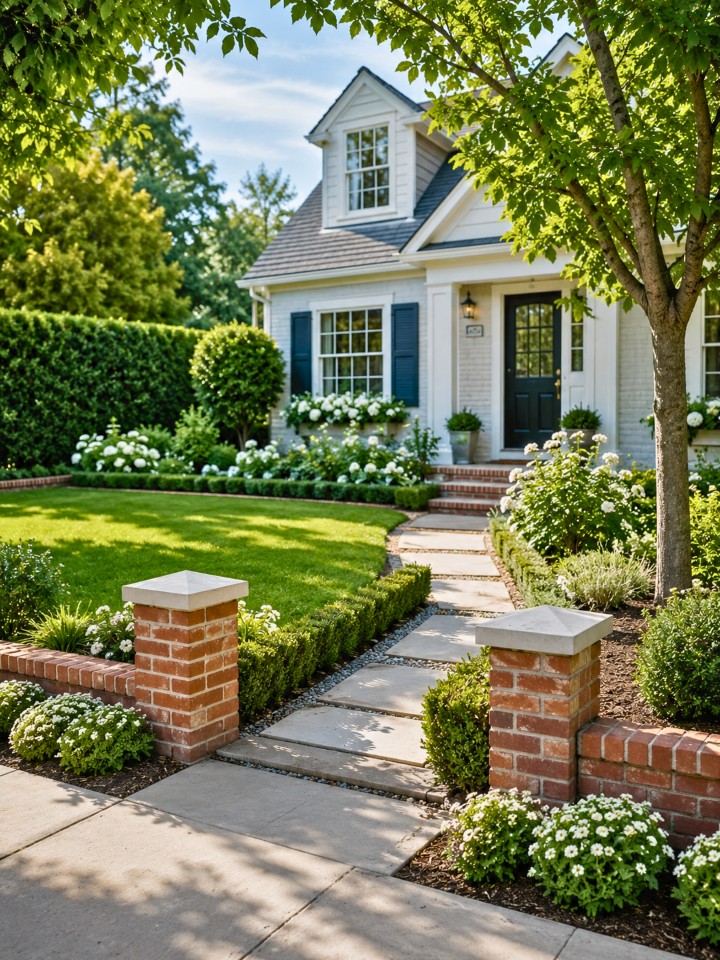
Build timeless curb appeal with a brick fence that adds classic charm, privacy, and value. Sometimes the goal isn’t privacy at all. A low brick border, usually 12 to 24 inches tall, defines the edge of a front lawn or flower bed without blocking the view of the house. The look reads neat, intentional, and friendly, which matters for curb appeal and resale. Two course rows of brick on a shallow concrete footing handle the job for most yards, and the project sits comfortably in DIY territory if you have a weekend and a level. Beyond appearance, the border also holds mulch and soil in place, cutting down on the time spent reshaping beds after heavy rain.
10. Textured Brick Fence with Decorative Patterns
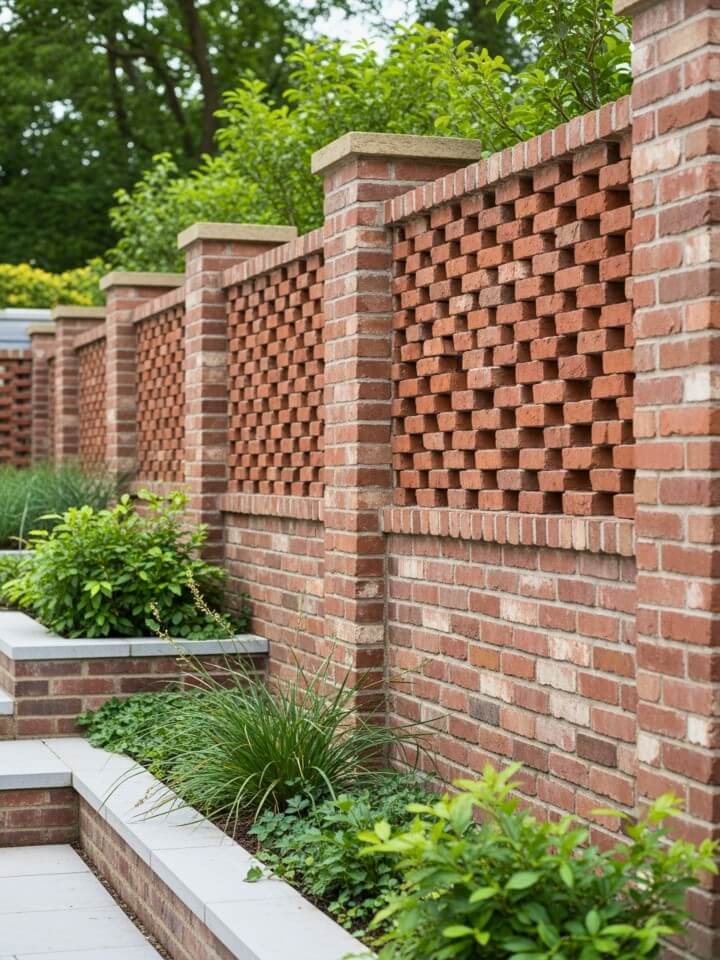
Pattern adds personality to brick without color or extra materials. The bond pattern, the way bricks are arranged relative to each other, does most of the visual work.
- Flemish bond: Alternates long and short brick faces in each row. Formal, classic look.
- Herringbone: Bricks angled at 45 degrees create a woven appearance. Best for accent panels.
- Basketweave: Pairs of bricks arranged in alternating directions. Strong cottage feel.
- Stack bond: Bricks aligned in straight vertical columns. Modern and minimal.
- Pierced lattice: Spaces left between bricks create ventilation patterns. Common in warm climates.
Pattern choice affects structural strength too. Running bond and Flemish bond are load-bearing friendly, while stack bond needs reinforcement since the joints align vertically.
11. Brick Fence with Stone Pillar Accents
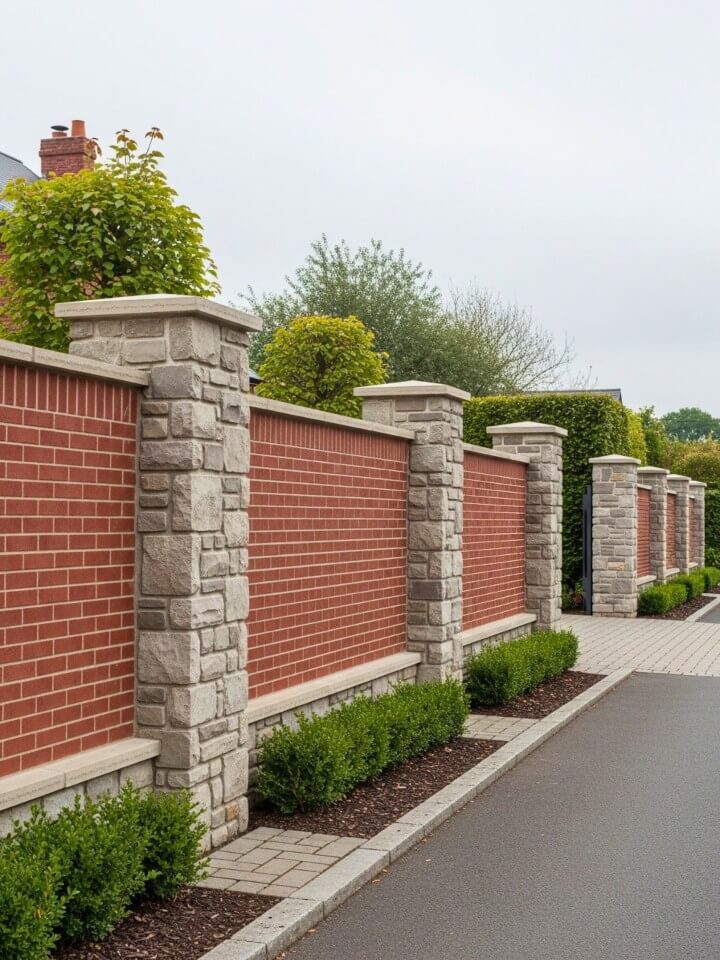
Long runs of solid brick start to feel monotonous past 40 or 50 feet. Stone pillars placed every 10 to 15 feet break the rhythm and give the eye a place to rest. The pillars also serve a practical purpose, since they anchor the fence at regular intervals and reduce the risk of long-section settling on uneven ground. Common stone choices include limestone, granite, and fieldstone, with limestone being the most affordable and granite the most durable. Cost ranges from $70 to $110 per linear foot depending on stone type and pillar size. This combination suits estate homes, Tuscan-style properties, and large rural lots especially well.
12. Split-Level Brick Fence for Sloped Yards
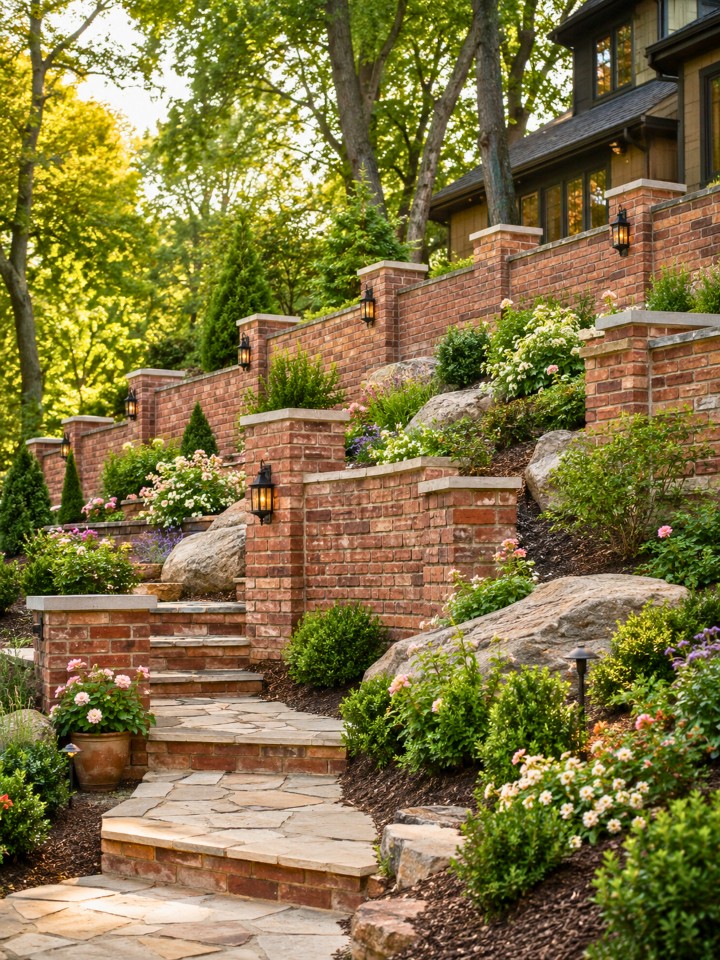
A standard fence on a slope either follows the ground and looks crooked, or stays level and leaves awkward gaps along the bottom.
A split-level brick fence breaks the run into stepped sections, with each panel sitting horizontally but at a different height than the next. Visually, the steps look intentional and architectural rather than improvised.
Measure the slope gradient before designing. A 1-foot drop every 10 feet works well with 8-foot panel sections stepped down by 6 to 12 inches each. Steeper slopes need shorter panels and more steps. Build proper drainage gaps at each step so water doesn’t pool behind the higher sections during heavy rain.
13. Decorative Lattice Top Brick Fence
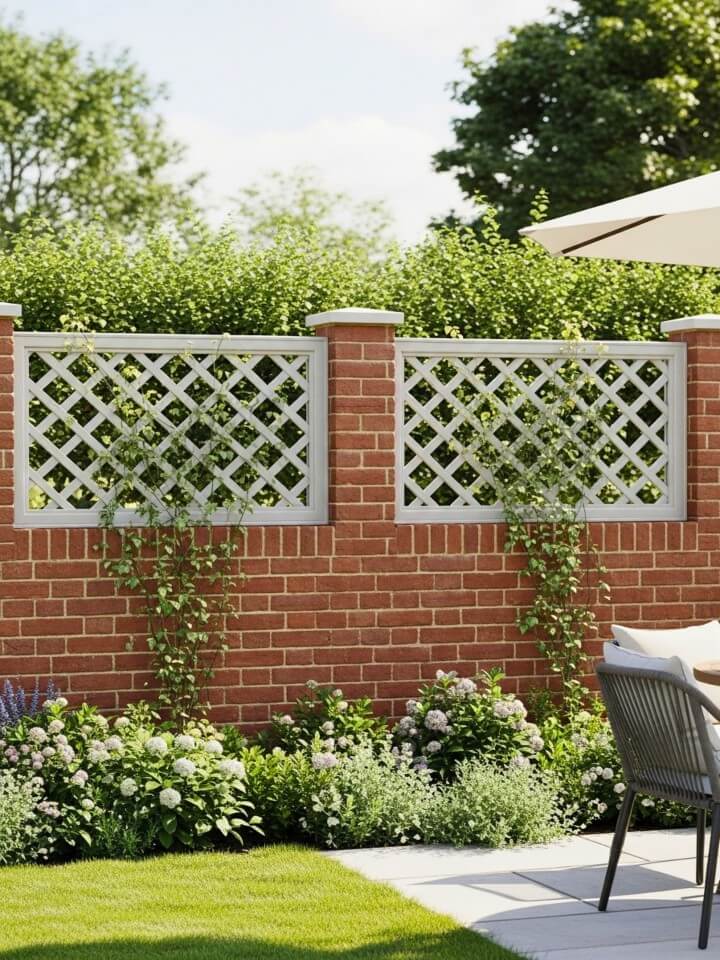
A solid brick wall feels closed. An open metal fence feels exposed. The lattice-top brick fence sits between the two, giving you privacy at sitting height and openness above. Typically the brick base runs 4 to 5 feet tall, with a wooden or wrought-iron lattice section adding another 1 to 2 feet on top. The lattice catches climbing plants beautifully. Jasmine, clematis, and climbing hydrangea grow into the gaps and soften the look within a single season. The lattice section also reduces wind pressure on the wall, which matters for long fence runs in exposed yards. Cottage, Mediterranean, and transitional homes wear this style most comfortably.
14. Mixed Color Brick Fence for Natural Variation
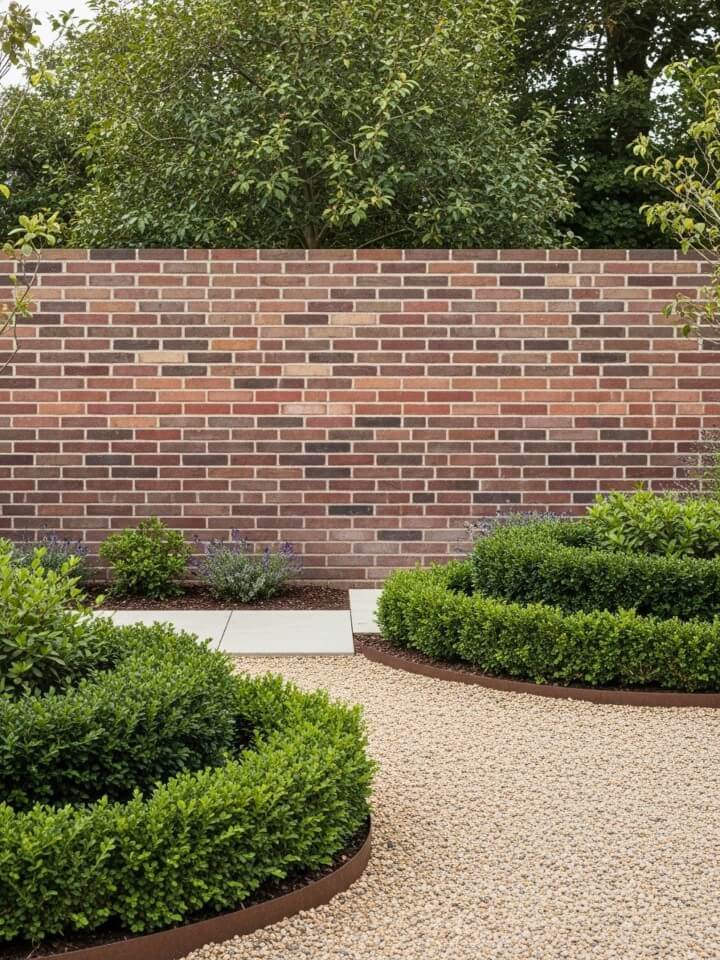
Choose brick fencing to frame your property with elegance, security, and enduring outdoor style. Uniform brick reads as manufactured. Mixed-tone brick reads as old, settled, and rooted in its surroundings, which is exactly the effect rustic and modern-organic homes are after.How the Mix Works
The variation usually comes from blending three to five brick shades from the same family. Common combinations include warm reds with browns and charcoals, or sandy buffs with cream and rust tones. The bricks are typically laid in a randomized pattern rather than in stripes or blocks, which keeps the eye moving across the wall instead of fixing on a single line. Reclaimed brick lots naturally come with this variation built in, which is why builders often source from demolition yards for this look.
15. Brick Fence with Outdoor Lighting Inserts
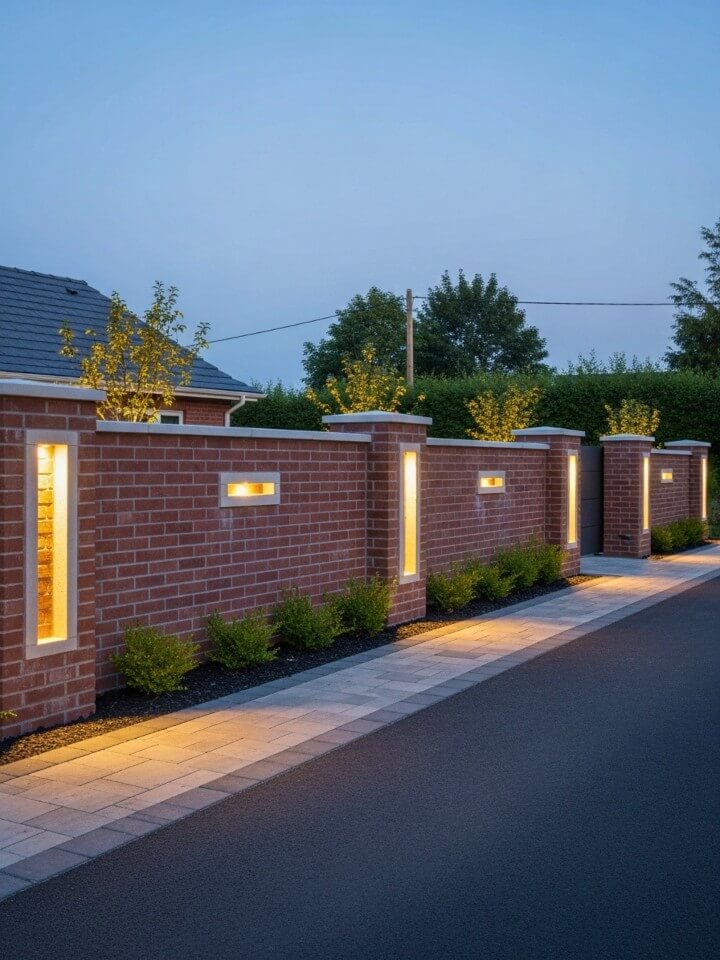
Lighting built directly into the fence does two jobs at once: it lights the path for safety and it turns the wall into an architectural feature after dark. The most common approach uses low-voltage LED fixtures recessed into the brick courses or set into the tops of pillars. Wiring needs to be planned during construction, not added later, since chasing channels into finished brick is messy and expensive. LED strips tucked under the cap stones create a soft wash of light downward, which suits modern homes. Lantern-style fixtures on pillars suit traditional homes. Budget an additional $300 to $800 in materials and electrical work for a typical residential fence run.
16. Arched Brick Fence Entry Design
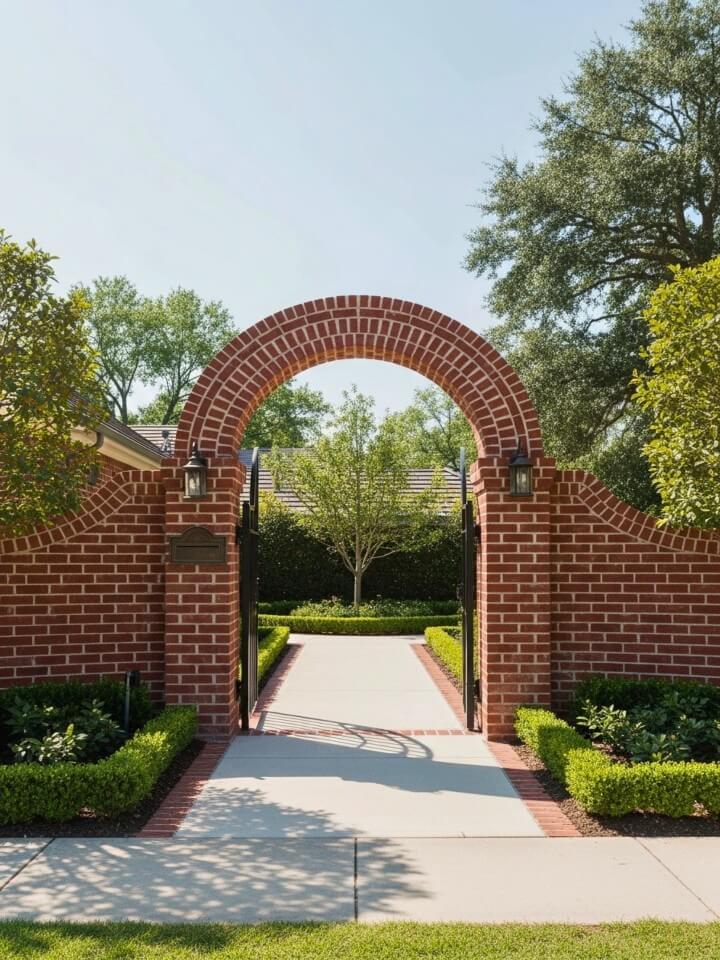
An arched entry turns a gap in the fence into a moment of arrival.
The curve draws the eye upward and inward, framing whatever lies beyond the gate. The structure also distributes weight outward through the curve, which is why arched entries have lasted in masonry construction for thousands of years.
Arches require formwork during construction, a temporary wooden frame that supports the bricks until the mortar fully cures. This adds 2 to 4 days to the build timeline. Clearance height matters too. Allow at least 7 feet at the highest point so adults can pass through comfortably and delivery items can be carried in without ducking.
17. Minimalist Low Brick Wall with Smooth Finish
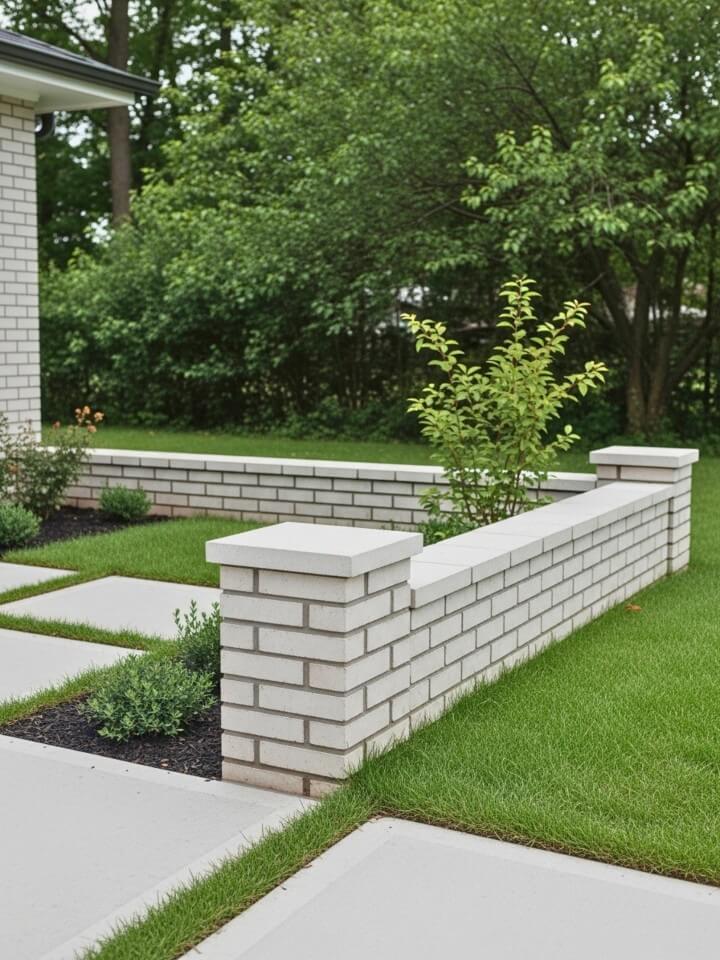
Restraint is the whole point here. The wall sits between 18 and 30 inches tall, the mortar is finished flush rather than recessed, and the cap is a single slab of concrete, basalt, or honed limestone. No decoration, no pattern, no texture. The effect feels intentional and calm, which is exactly what modern and contemporary homes are reaching for. A flush mortar finish takes more skill than a standard concave joint because every imperfection shows, so this is a project that rewards hiring an experienced mason. The payoff is a boundary that almost disappears visually, letting landscape elements like grasses, gravel, and architectural plants take center stage instead.
18. Brick Fence with Water Feature Integration
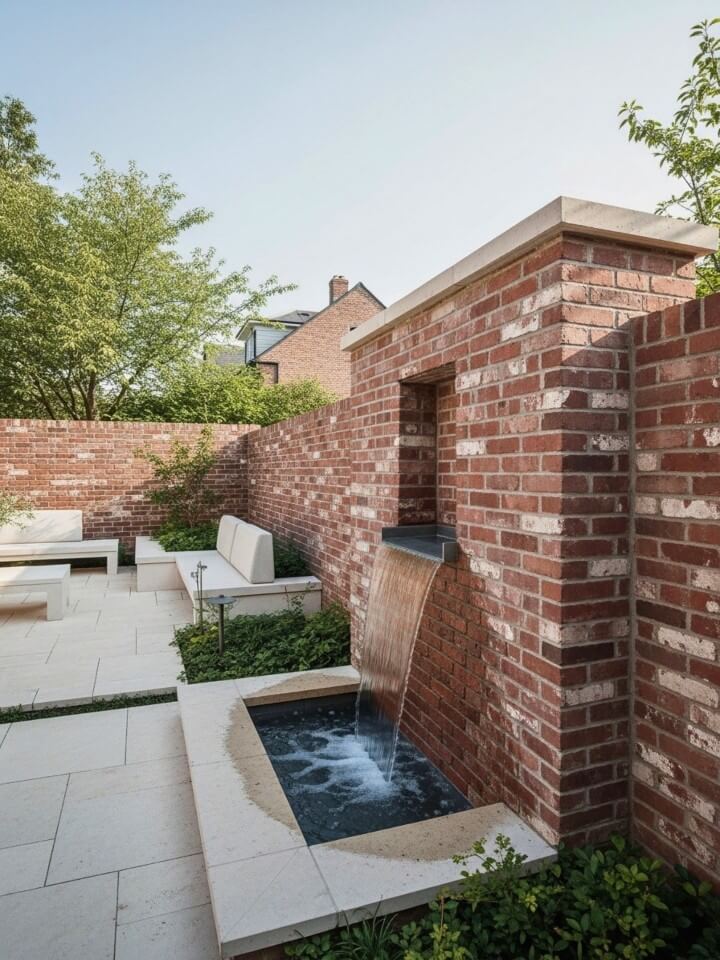
Explore brick wall fence designs that transform simple boundaries into standout outdoor features. Combining a brick fence with a built-in water feature creates one of the most ambitious projects on this list, but also one of the most rewarding. The sound of moving water masks neighborhood noise and turns an ordinary backyard into something closer to a private retreat.
Wall-mounted spouts, recirculating fountains, and cascading sheet falls are the most common designs. Each needs a water source, a pump, a reservoir, and proper waterproofing behind the brick face to prevent moisture damage.
Plan on $1,500 to $5,000 above the base fence cost, depending on complexity. Pumps need yearly servicing, and the reservoir needs draining before any hard freeze to prevent cracked plumbing.
Frequently Asked Questions
Before you call a mason or pick up a trowel, these are the questions worth getting clear answers on first.
Do I Need a Permit to Build a Brick Fence?
Most areas require a permit for fences taller than 6 feet, and some regulate front-yard heights as low as 3 feet. Check with your local building department before starting any work.
How Long Does a Brick Fence Actually Last?
A properly built brick fence lasts 75 to 100 years with basic care. Repointing the mortar joints every 20 to 25 years keeps the structure sound and prevents water damage from spreading.
Can I Build a Brick Fence Myself?
Short, low borders under 2 feet are realistic DIY projects for a patient weekend builder. Anything taller, load-bearing, or involving curves and arches should go to an experienced mason for safety and longevity.
What’s the Best Foundation for A Brick Fence?
Brick fences need a concrete footing that sits below the frost line in your area, typically 12 to 36 inches deep. A shallow footing causes heaving, cracked mortar, and leaning walls within a few seasons.
How Do I Clean a Brick Fence without Damaging It?
Use a soft-bristle brush, mild dish soap, and a garden hose for routine cleaning. Skip pressure washers on older or weathered brick since high pressure strips the surface and forces water into mortar joints.
Final Thoughts
A brick fence is one of the few home upgrades you build once and forget about for thirty years. That’s a rare thing in a world of constant repairs and replacements. The brick fence ideas above give you starting points, but the real choice comes down to how you want your yard to feel every morning when you step outside.
Quiet and private? Open and welcoming? Sculpted and intentional? There’s no wrong answer, only the one that fits your daily life. Pick the design that still makes sense to you ten years from now. That’s the one worth laying brick for.