20 Loropetalum Landscaping Ideas for Walkways, Patios, and Garden Beds
Loropetalum is one of those shrubs that quietly does the heavy lifting in a garden. The leaves stay rich burgundy or deep purple year-round. In spring, pink fringe flowers cover the branches like confetti. That mix of color and structure is why this plant shows up in so many smart landscape plans. These 20 fresh Loropetalum landscaping ideas show you exactly how to use it — along walkways, in foundation beds, around patios, and plenty of other spots.
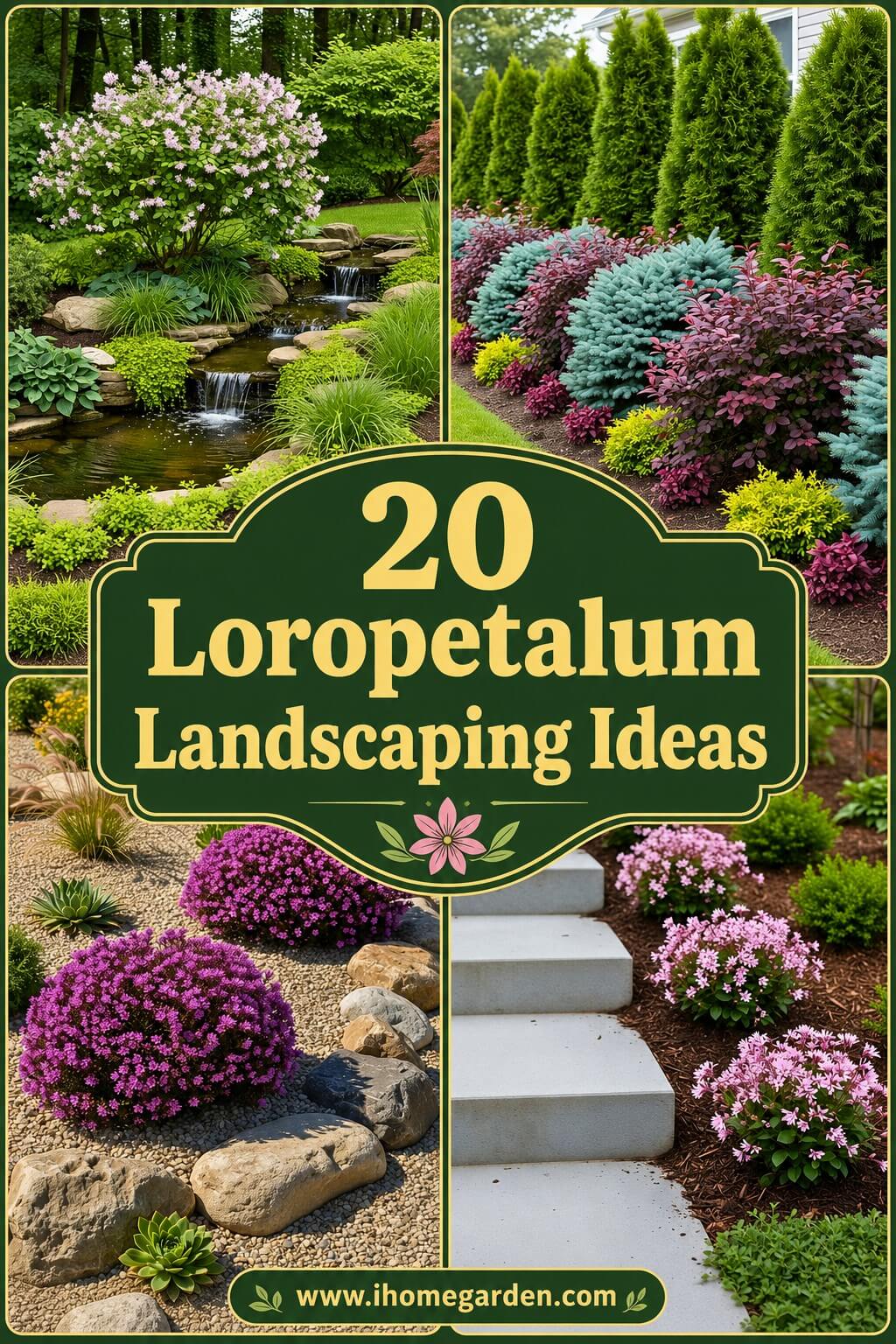
Each Landscaping idea pairs the right cultivar with the right spot. Some work better in full sun. Others handle dappled shade. A few even thrive in large containers on a patio or balcony.
You don’t need a designer or a big budget to pull any of this off. You just need to match the variety to the space and follow a few simple rules. The ideas below cover every common yard layout, so something here will fit yours.
1. Plant Loropetalum Along the Front Walkway
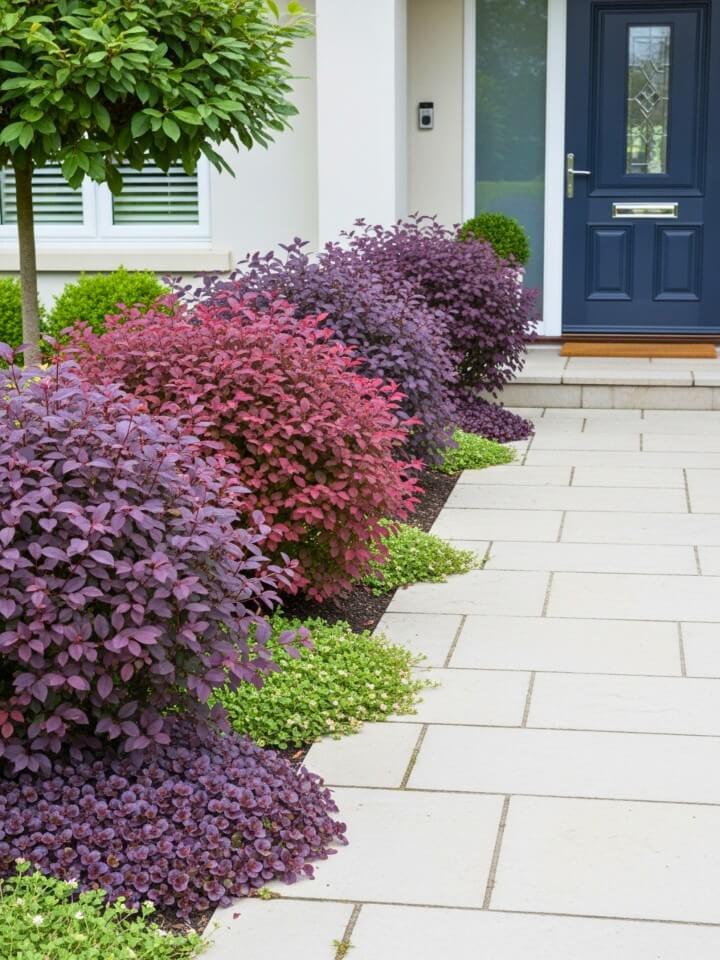
A walkway lined with burgundy Loropetalum instantly upgrades the approach to your front door. The color guides the eye toward the entrance and gives even a plain concrete path a custom feel.
‘Purple Diamond’ resists the summer fade older cultivars are known for, keeping its wine tone deep into August.
Spacing and Placement
Set plants 4 feet apart and pull them back about 18 inches from the pavement so mature growth doesn’t lean across walking space. Underplant with creeping thyme or dwarf mondo grass to soften the seam where shrub meets stone. Against warm brick the foliage reads jewel-toned; against gray pavers, almost regal.
2. Use Loropetalum as a Colorful Foundation Shrub
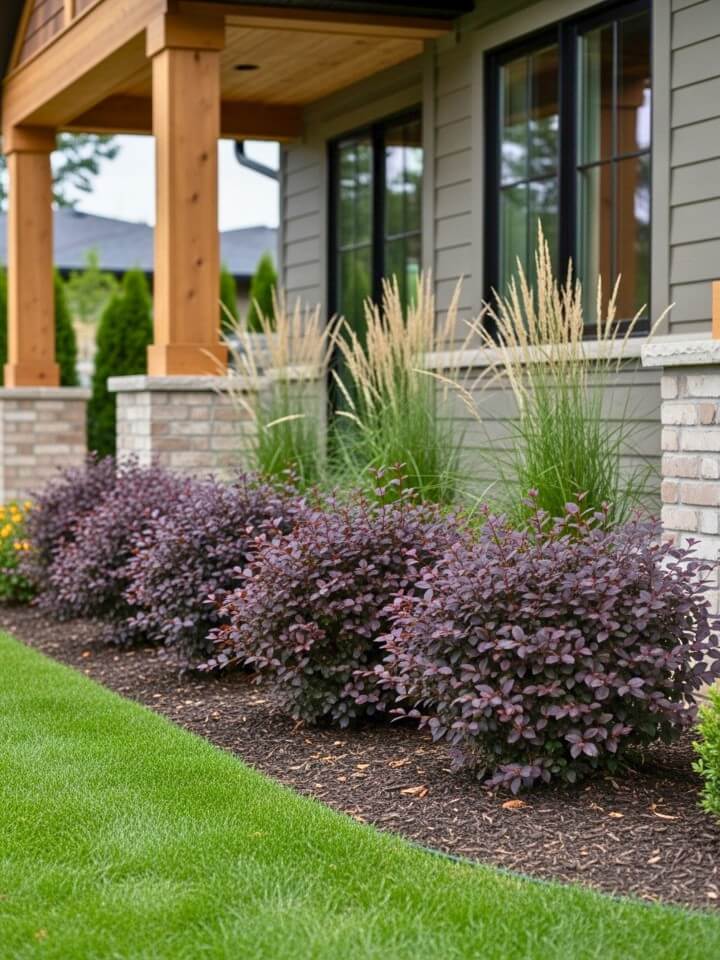
Foundation beds get repetitive fast — boxwood, holly, boxwood, holly. Loropetalum breaks that pattern with year-round burgundy that reads as intentional design rather than landscaper default.
‘Ever Red’ is the cultivar most worth knowing here. It tops out around 4 to 5 feet, which means it slides under most ground-floor windows without a constant pruning fight. Set it 3 feet off the foundation so siding stays dry and air keeps moving.
Pairings that Lift the Bed:
- Tall upright juniper as a vertical backbone
- Heuchera ‘Caramel’ for a warm-tone echo at the front
- Sweet potato vine spilling over the edge in summer
The look flatters brick, board-and-batten, and stucco facades equally.
3. Shape Loropetalum Into a Low Privacy Hedge
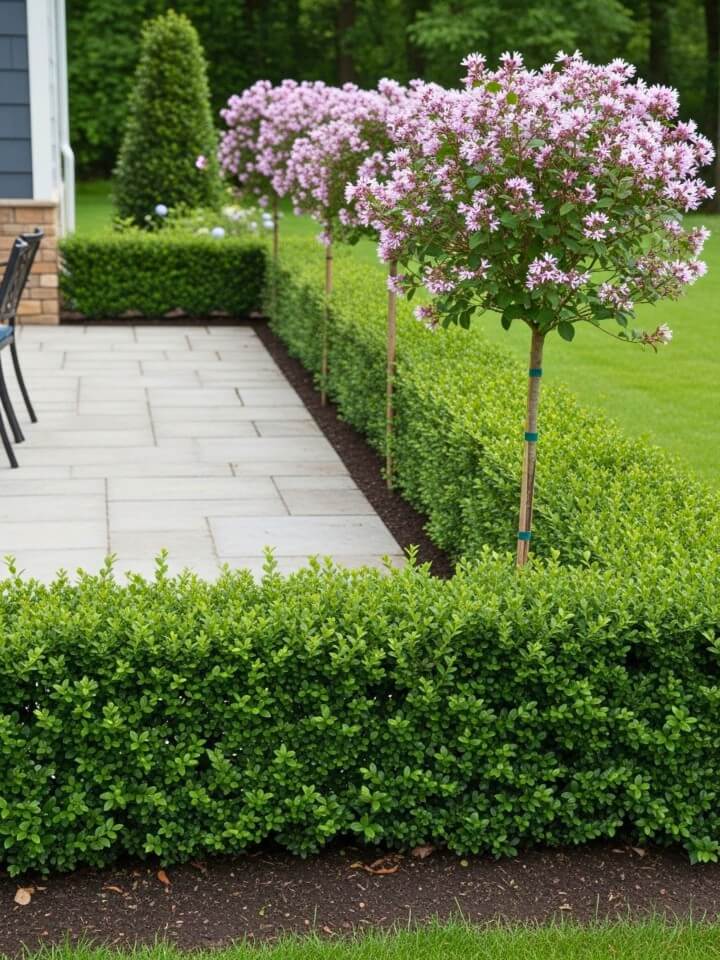
Discover loropetalum landscaping ideas that add bold color, texture, and year-round curb appeal. Most Loropetalum hedge failures trace back to one mistake: planting a full-size variety where a dwarf belongs. The shrub wants to be six or eight feet tall, and the homeowner spends every weekend fighting it back into shape.
‘Purple Pixie’ and ‘Crimson Fire’ naturally top out around 2 to 3 feet. No constant battle, no leggy gaps.
Pruning Rhythm that Actually Works
Shear once after the pink spring fringe flowers drop, then again in early fall. Skip late-fall cuts — fresh growth gets damaged by the first hard frost. Space young plants 30 to 36 inches apart and they’ll close ranks into a solid wall by year two.
4. Pair Loropetalum With Ornamental Grasses
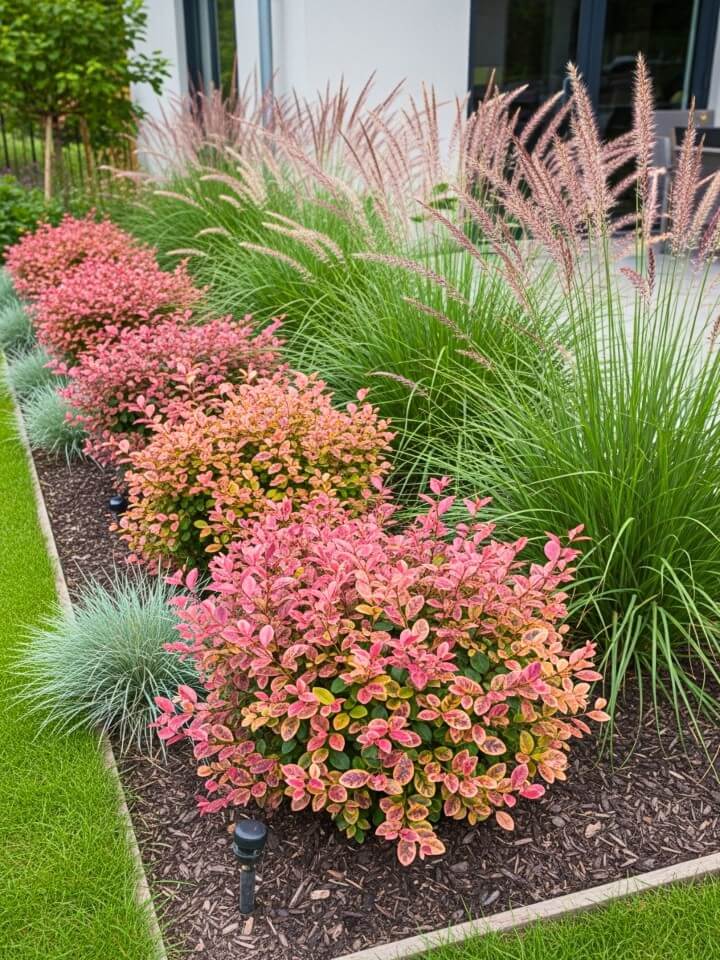
Burgundy foliage against the soft plumes of a warm-season grass is one of those combinations that looks expensive but isn’t. Scale is the whole game.
For a Large Bed
Run ‘Ruby’ Loropetalum (around 5 feet at maturity) behind a sweep of ‘Karl Foerster’ feather reed grass. Both reach a similar height, and the upright grass keeps the bed from going shapeless mid-summer.
For a Tight Border
Drop down to ‘Jazz Hands Mini’ with blue fescue or ‘Little Bunny’ fountain grass tucked alongside. Plant grasses in odd-numbered groups — threes or fives — so the texture reads intentional. Sun, well-drained soil, and one watering schedule cover the whole arrangement.
5. Add Loropetalum Around a Patio Corner
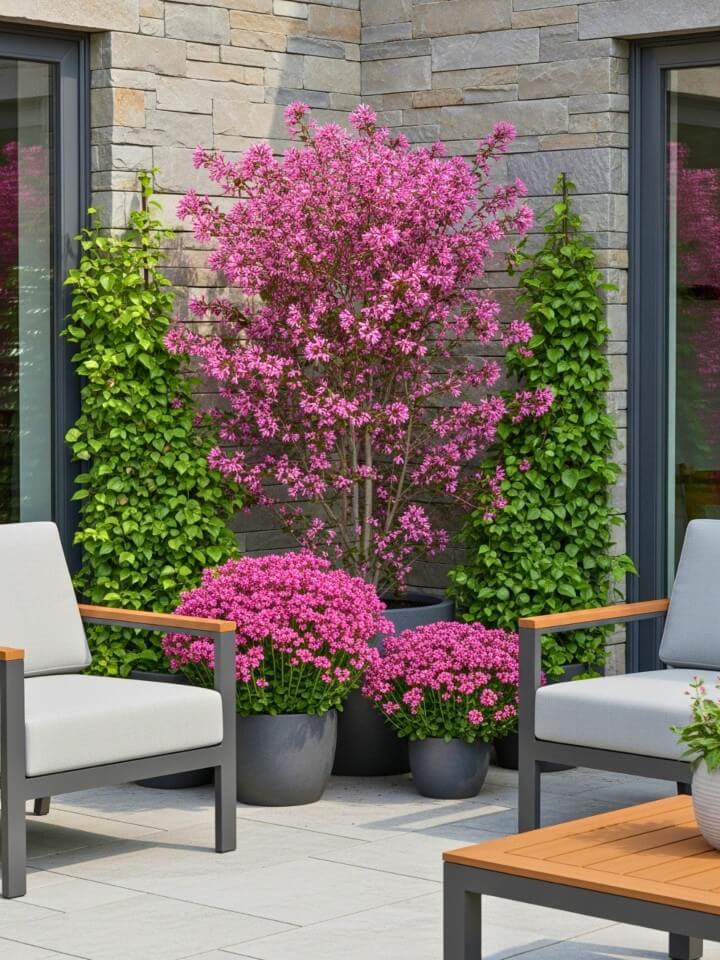
A sharp patio corner is the easiest place to lose visual flow in a yard. The fix doesn’t need a designer — just one well-placed shrub and a couple of supporting plants.
Wrap the angle with a single ‘Sizzling Pink’ anchoring the back point, then taper outward with two or three smaller plants: dwarf gardenia, a clump of liriope, or a low sedum mat near the edge. The result feels like the patio was always meant to sit there.
Quick Tip: Keep all plantings at least 18 inches off the paver edge. Chairs scoot back further than people remember, and snagged branches snap.
Morning sun keeps the spring pink flowers heaviest; afternoon shade pushes the leaf color toward deep plum.
6. Create a Layered Garden Bed with Loropetalum
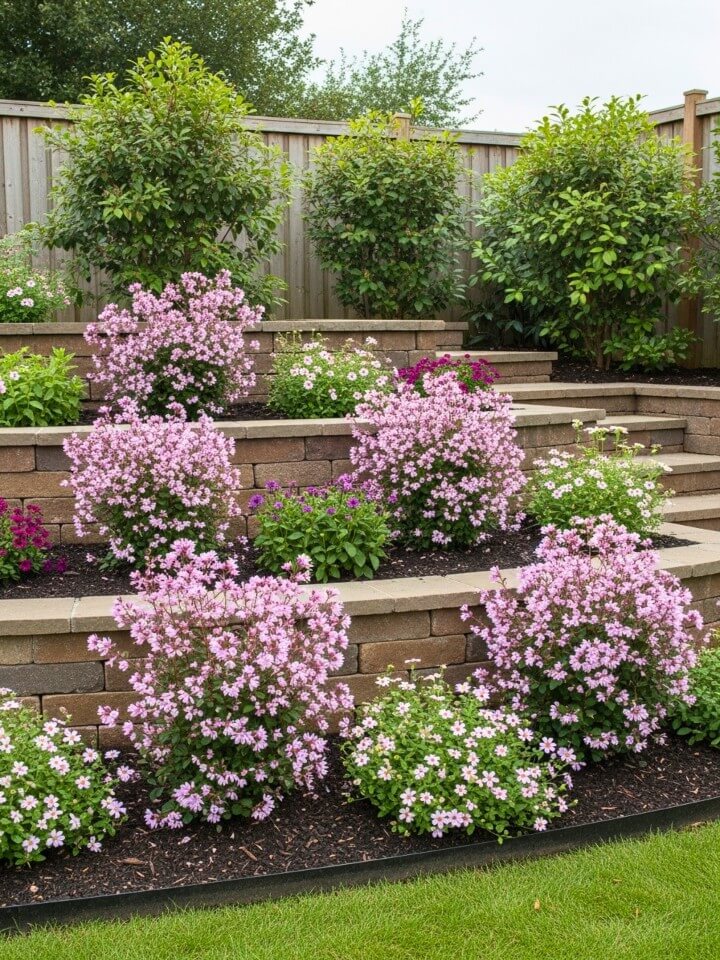
A flat row of identical shrubs feels like a parking lot. Layering changes everything by giving the eye three or four heights to travel through.
The 3-Tier Rule
Back tier: a full-size ‘Plum Delight’ or ‘Zhuzhou’ at 6 feet for structure. Middle tier: ‘Purple Diamond’ around 4 feet, planted in a staggered line rather than a straight row. Front tier: ‘Purple Pixie’ weeping forward at 18 inches, almost groundcover-like.
Tuck spring perennials — daffodils first, salvia later — into the front gaps so the bed never looks empty between flushes. Stagger spacing slightly and avoid grid planting; the whole arrangement starts reading like a designed border rather than a nursery lineup. You can also borrow companion-planting ideas from hydrangea landscaping layouts when you want bigger blooms behind or beside the Loropetalum.
7. Accent a Rock Garden with Purple Loropetalum
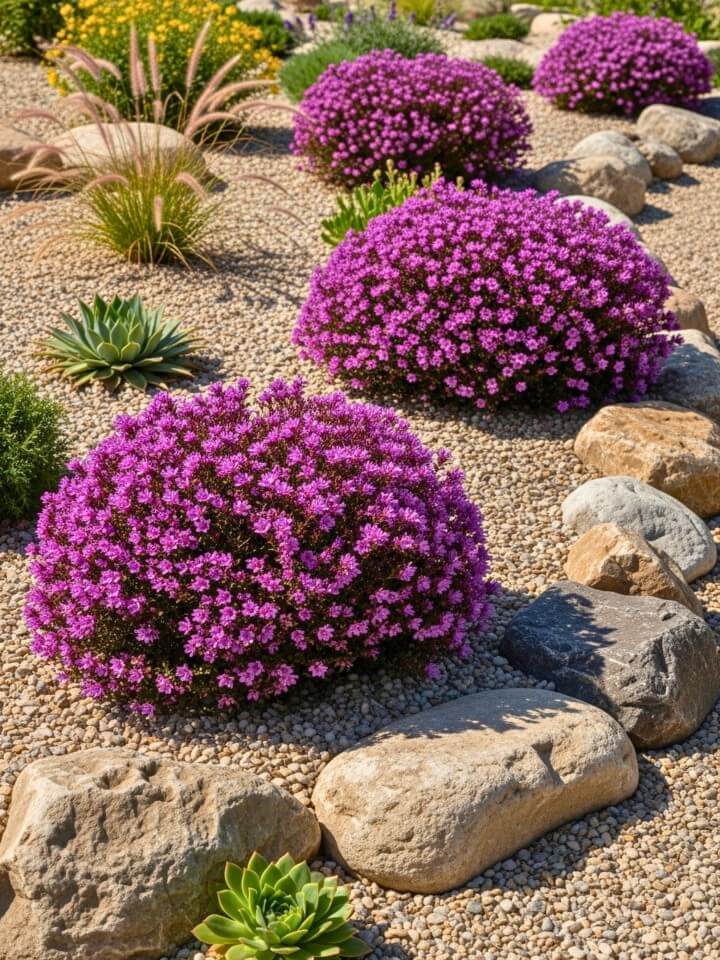
Try landscaping with loropetalum to frame paths, soften borders, and spark vibrant garden drama. Stone wants color contrast or it just looks like a pile of rocks. Purple foliage against gray granite or buff sandstone is one of the cleanest pairings in landscaping.
Why the Combination Works
Cool-toned stone reads even cooler when burgundy sits next to it — modern, gallery-clean. Warm stone like sandstone and river rock gets richer because the wine tone picks up its orange undertones.
Best Cultivars for Rocky Spots with Sharp Drainage:
- ‘Daruma’ — low and spreading, fills pockets between stones
- ‘Purple Pixie’ — weeps gracefully over ledges
- ‘Crimson Fire’ — compact, tolerant of lean soil
Skip the irrigation overkill. These spots dry fast, and Loropetalum prefers it that way once established.
8. Line a Driveway with Compact Loropetalum Varieties
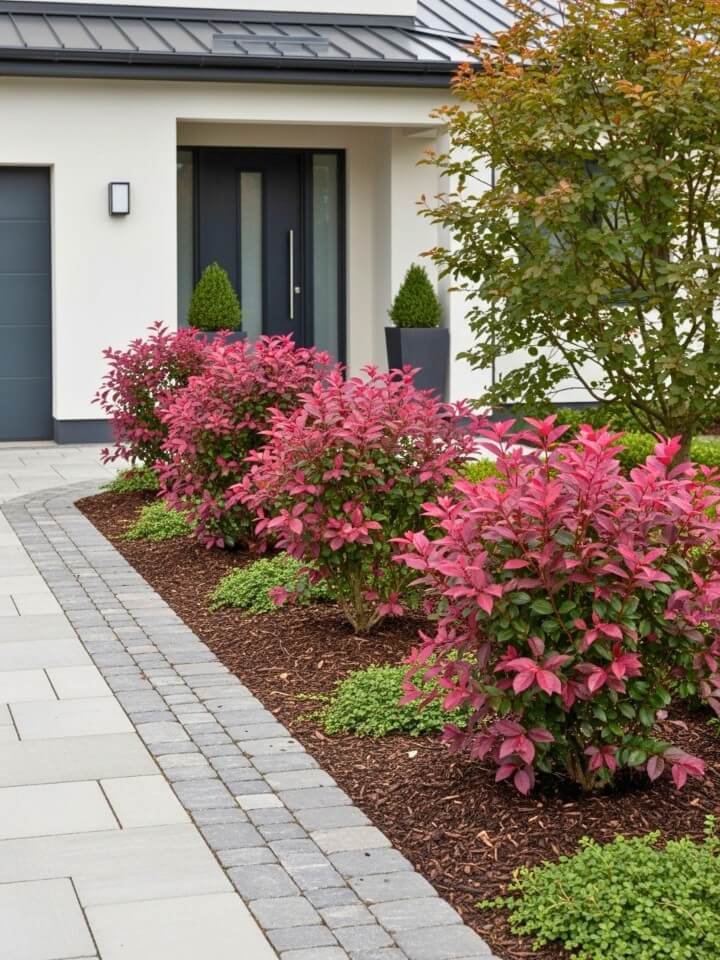
Driveway plantings get judged from a car window at 15 mph. The plants either register as deliberate or they blur into background mulch.
What to Plant
Compact cultivars are non-negotiable here. ‘Jazz Hands Bold’ and ‘Purple Pixie’ both stay under 3 feet wide, which keeps them off the driveway surface as they mature. Plant 30 inches on center along the edge, with a 24-inch buffer from pavement.
Common Mistake to Avoid
Don’t plant full-size Loropetalum thinking you’ll “just keep it trimmed.” Within four years you’ll be pruning monthly, and the shrub will start dying back from over-cutting. Pick the right size on day one.
9. Mix Loropetalum with Spring-Blooming Perennials
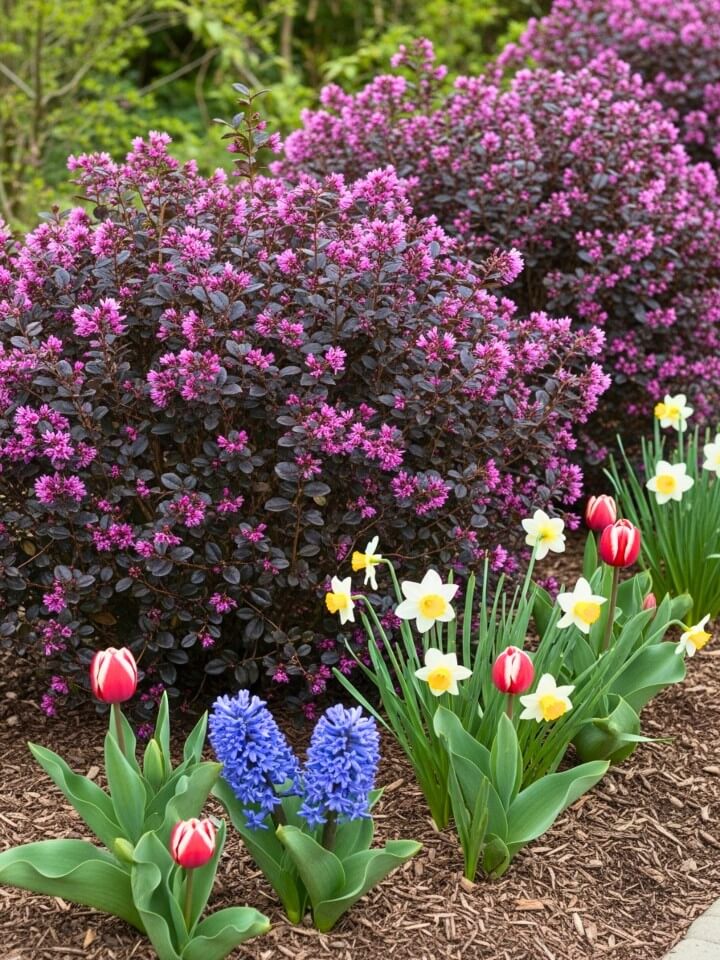
The pink fringe flowers on Loropetalum show up in March or April depending on your climate, and that timing is the whole design opportunity. Most spring perennials peak in the same window.
Bloom Timeline to Plan Around
- Early spring: Daffodils and grape hyacinth in front of ‘Purple Diamond’ — yellow and blue against burgundy is striking.
- Mid spring: Creeping phlox spilling forward, with the Loropetalum’s own pink fringe lighting up the back.
- Late spring: Catmint or salvia takes over as the fringe flowers fade, keeping the bed in color.
Plant bulbs in clusters of ten or more, never singles. Solo bulbs look like accidents.
10. Use Loropetalum to Frame a Water Feature
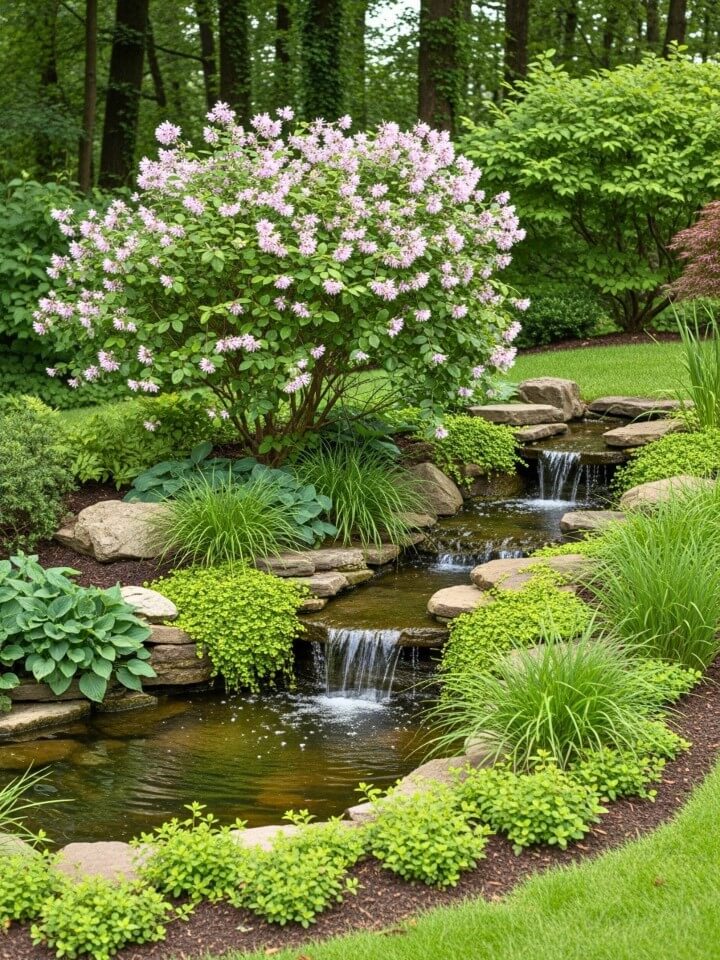
Water features need a soft frame or they look dropped-in. Loropetalum’s dense, slightly arching habit reads as a natural shoreline edge — closer to a wild pond bank than a manicured planting.
A Few Placement Notes Worth Getting Right:
- Keep root crowns 18 inches above the water line. Loropetalum hates wet feet.
- Use slightly raised soil pockets if the area collects runoff.
- Place ‘Ever Red’ on the back side and ‘Purple Pixie’ draping toward the water — the trailing form mimics how plants actually grow near streams.
Pair with hostas, ferns, or carex for the in-between zones where it’s damp but not waterlogged. Around pools or formal water features, Loropetalum also works as a color anchor beside pool fountain ideas where moving water needs a planted frame.
11. Plant Loropetalum Around a Fire Pit
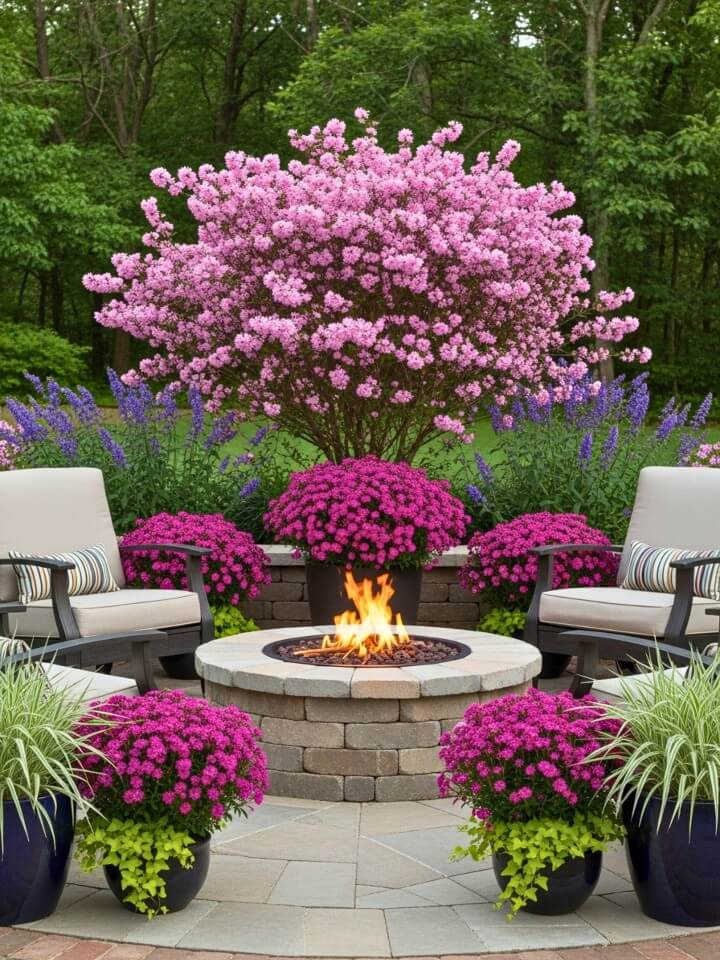
A fire pit area lives or dies on comfort. Plantings around it have to feel inviting without crowding seating or catching stray embers. Think of the space as three zones radiating outward.
- Zone 1 — Within 5 feet of the ring: Nothing. Period. Sparks and radiated heat will scorch foliage and dry roots within a season.
- Zone 2 — 5 to 8 feet out: Low, compact shrubs only. ‘Purple Pixie’ is ideal here at 18 inches tall, weeping slightly toward the seating.
- Zone 3 — Beyond 8 feet: Full-size Loropetalum like ‘Ever Red’ or ‘Ruby’ as the back wall, with warm-toned perennials (coneflower, rudbeckia) catching firelight in front.
12. Combine Loropetalum with Evergreens for Year-Round Interest
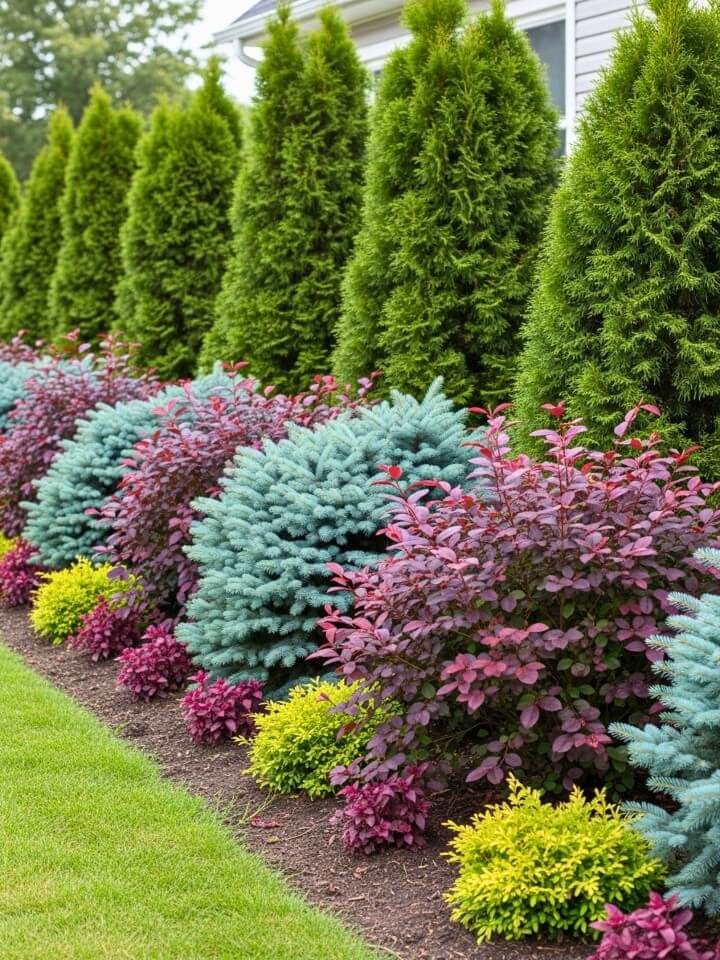
The point of mixing burgundy with evergreen isn’t just color. It’s about giving winter beds something to look at when perennials have given up and deciduous shrubs are bare sticks.
Some pairings carry their weight better than others:
| Evergreen | Why it works |
|---|---|
| Boxwood ‘Green Velvet’ | Classic green-burgundy contrast, formal feel |
| Dwarf nandina | Both shift color in cold weather, doubling the interest |
| Skip laurel | Tall glossy backdrop that pushes Loropetalum forward |
| Cryptomeria ‘Black Dragon’ | Deep green-black needles play off wine foliage dramatically |
Plant the evergreen first as the structural anchor, then place Loropetalum 3 to 4 feet away so branches don’t tangle into the neighbor as both mature.
13. Use Variegated Loropetalum to Brighten Shady Corners
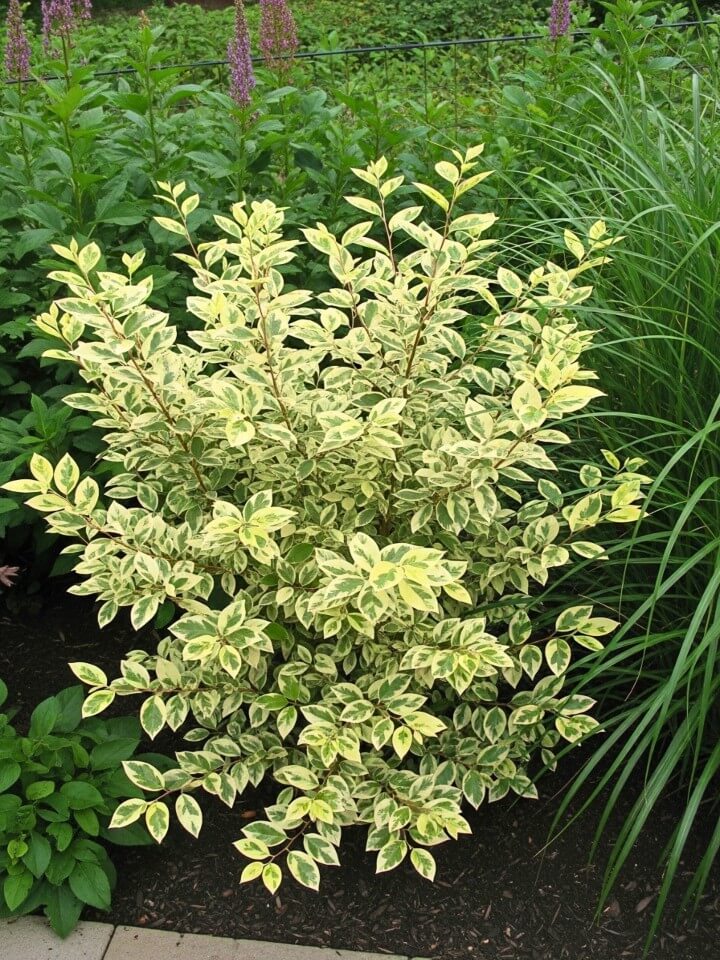
A myth worth busting: variegated Loropetalum isn’t a true shade plant. It tolerates dappled light better than the burgundy cultivars, but deep shade dulls the colors and leaves the shrub leggy.
What “Shade-Friendly” Actually Means Here
Look for spots with 3 to 4 hours of filtered or morning sun. North-facing foundation beds under high tree canopy work well. Corners under solid roof overhangs do not.
‘Jazz Hands Variegated’ is the go-to choice — pink, cream, and green leaves with the same hot-pink fringe flowers as its purple cousins. Plant it where the variegation catches indirect light, then surround with hostas and ferns to fill the lower, darker pockets.
14. Create a Curved Border with Multiple Loropetalum Colors
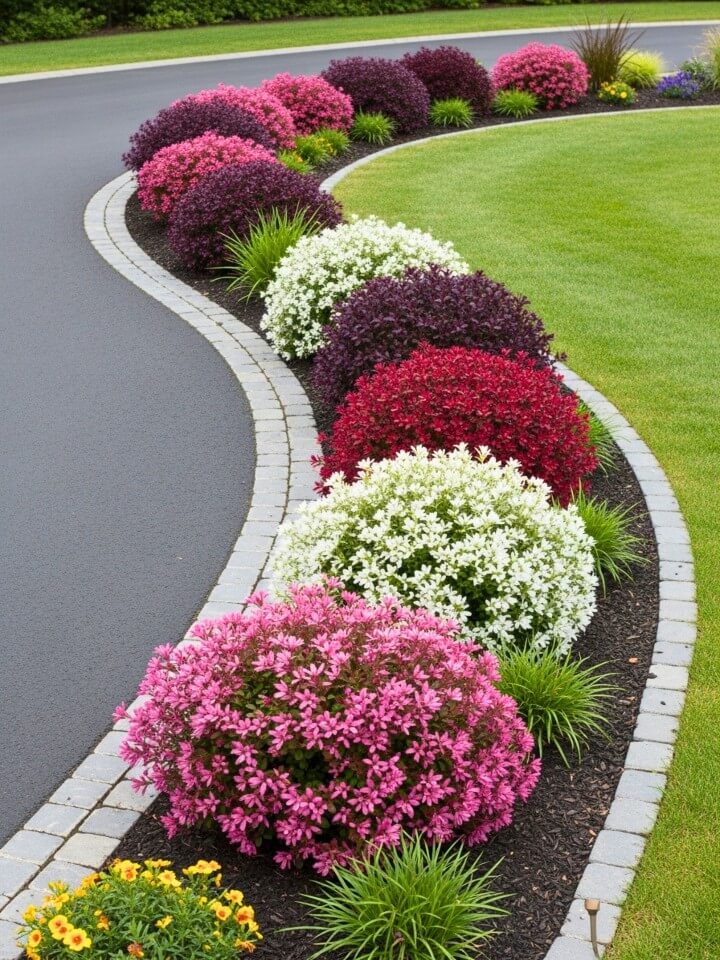
Know the purple diamond loropetalum size before planting for polished hedges and balanced beds. Straight rows of single-color shrubs are the easiest way to make a yard look generic. A curving border with two or three foliage tones reads as designed.
Color Theory, Kept Simple
Pair deep burgundy (‘Ever Red’) with a brighter wine (‘Ruby’) and a touch of variegation (‘Jazz Hands Variegated’) as highlight. Three values of the same color family — dark, medium, accent — is the formula most professional designers reach for.
Lay the curve out with a garden hose before digging. Walk past it from every angle, including from inside the house through the main window. Adjust until the line flows naturally, then plant in clusters of three rather than evenly spaced singles.
15. Accent Steps or Path Edges with Mini Loropetalum
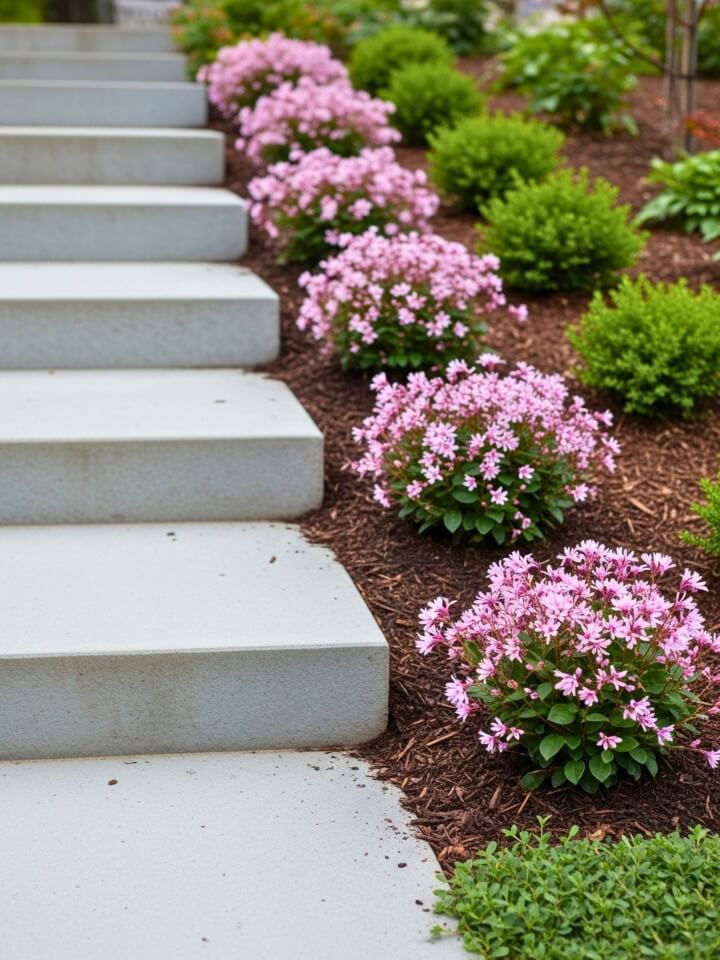
Path edges are where most landscaping plans run out of steam. Big shrubs don’t fit, bare mulch looks unfinished, and groundcovers can feel boring.
A Quick Checklist Before Planting:
- ☐ Pick a true dwarf — ‘Purple Pixie’ tops out at 18 inches and stays there
- ☐ Leave 12 inches of clearance between mature shrub and walking surface
- ☐ Space by mature width, not nursery-pot width (usually 24 to 30 inches apart)
- ☐ Mulch with shredded hardwood rather than dyed bark — the natural tone keeps focus on the foliage
- ☐ Add stepping-stone gaps where you’ll need to step in for weeding
The pink spring bloom against stepping stones is one of those small details visitors actually notice.
16. Add Loropetalum to a Zen or Minimalist Garden
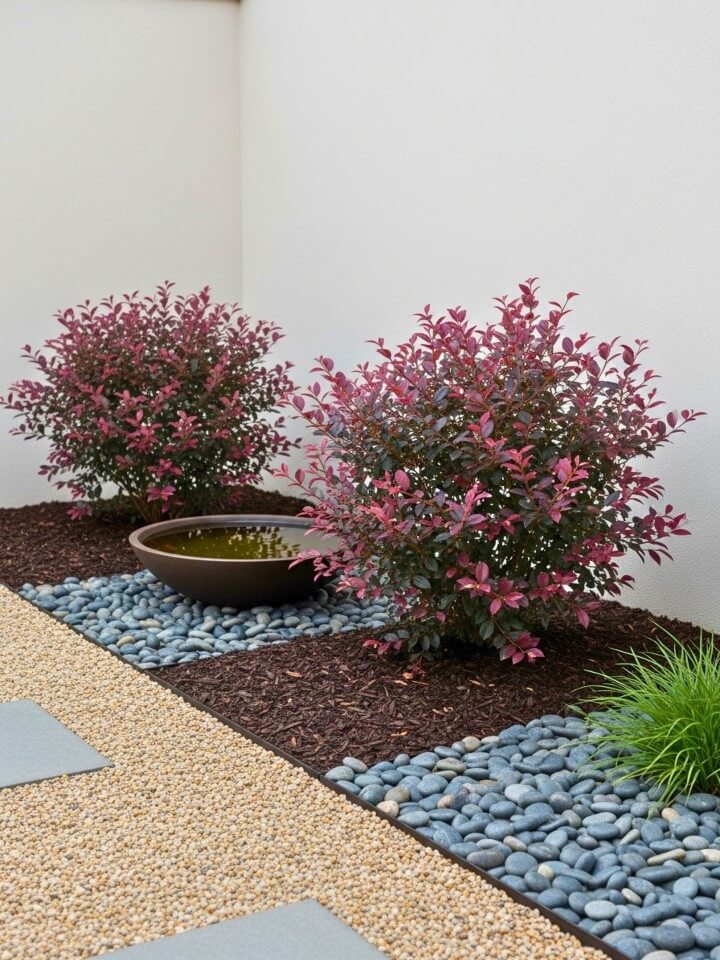
Minimalist gardens fail when people mistake “fewer plants” for “less thought.” The opposite is true. Each plant has to earn its spot.
Do this: Place a single ‘Ever Red’ as a focal anchor in a bed of raked gravel or river rock. Surround with one repeating element — three clipped boxwood spheres, or a strip of mondo grass running along the edge.
Not this: Don’t scatter five different shrubs across the same space hoping for variety. Restraint reads as intention; clutter reads as indecision.
The Loropetalum’s deep wine foliage gives the eye a single warm point to rest on, while gravel and stone do the work of negative space. Pruning once a year keeps the silhouette clean.
17. Use Loropetalum to Frame a Garden Bench or Seating Area
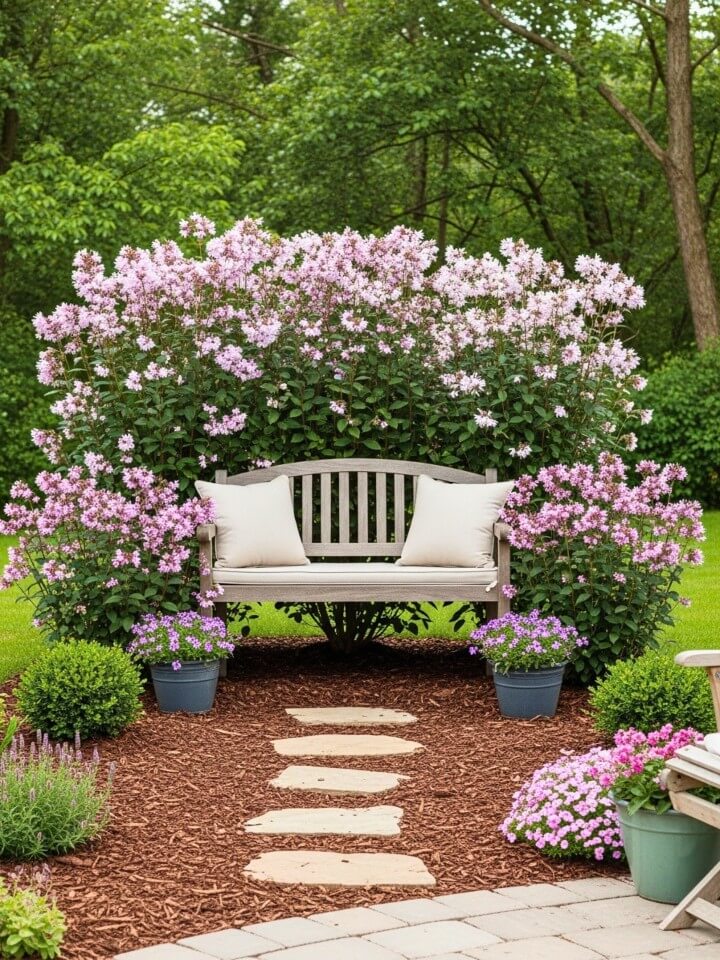
Picture a wooden bench tucked into a back corner of the yard. Without planting, it reads as forgotten. With the right frame behind and beside it, the bench becomes a destination.
Measurements that matter
- Behind the bench: shrubs 3 to 4 feet tall, planted 24 inches from the back so branches don’t snag clothing
- Flanking each side: 18 to 24 inches tall, placed 12 inches off the armrests
- In front: leave open or use groundcover only — never block the view from the seat
‘Purple Diamond’ behind, ‘Purple Pixie’ at the sides, and creeping jenny in front gives the bench instant gravity. Add a flat stepping stone for foot placement.
18. Plant Loropetalum Around a Small Tree for Layered Texture
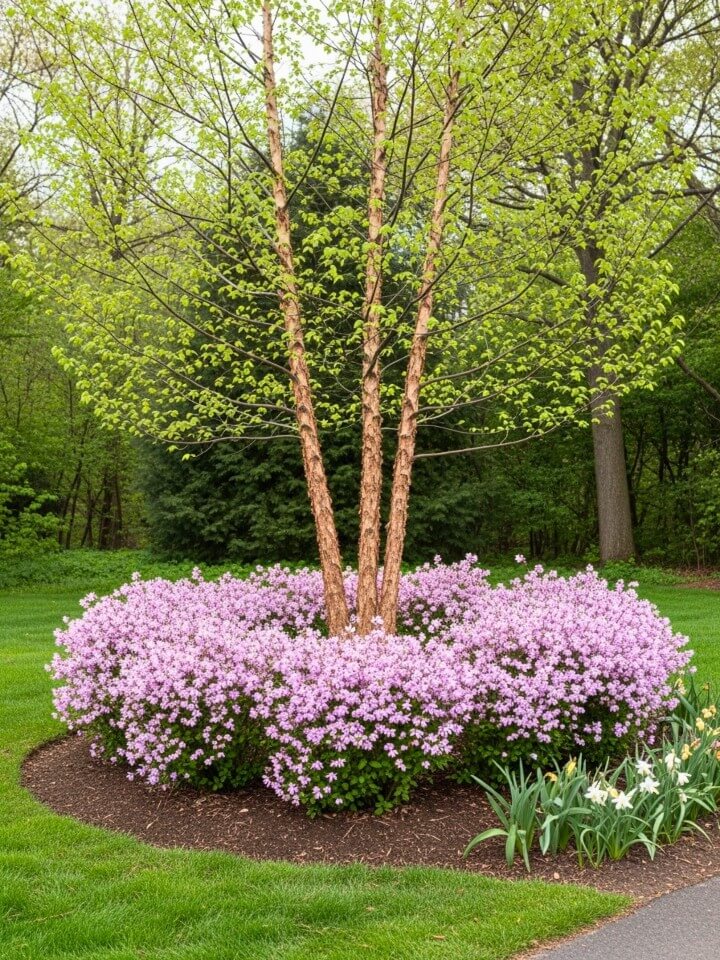
Q: Won’t the Shrubs Compete with The Tree’s Roots?
Yes, if you plant too close. Start the ring 3 feet out from the trunk for young trees, 5 feet for mature ones. Loropetalum has shallow, fibrous roots that share soil well at that distance.
Q: Which Tree Shapes Work Best?
Open-canopy trees with light bark — Japanese maple, river birch, crape myrtle. The contrast between pale trunk and burgundy understory is the whole point. Skip dense-shade trees like Norway maple; the Loropetalum will starve for light.
Plant the ring with ‘Crimson Fire’ for compact form, mulch with shredded leaves, and water deeply once a week through the first summer.
19. Combine Loropetalum with Seasonal Flowering Bulbs
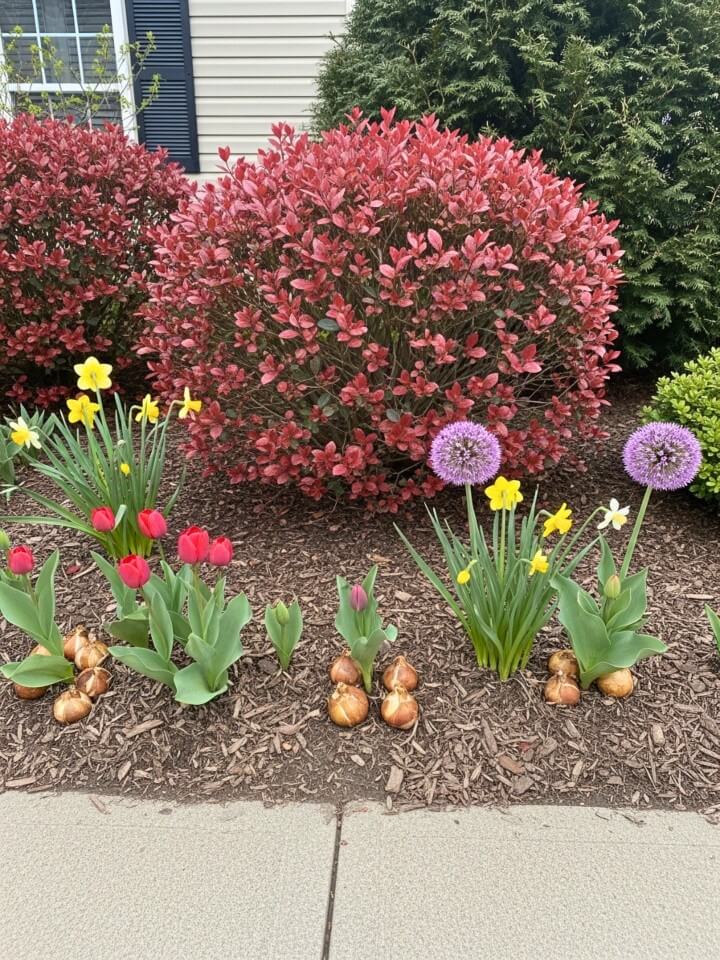
Bulbs and Loropetalum work because of timing. The fringe flowers peak just as most spring bulbs are finishing, extending the color show by weeks.
Best bulb partners, ranked by visual impact:
- Tulips — Single-color blocks of white or pale yellow in front of ‘Ever Red’ is the most photogenic combination. Plant 15 to 20 bulbs per cluster.
- Daffodils — More naturalizing-friendly than tulips, so they come back stronger each year. Yellow trumpets against burgundy is high contrast without being garish.
- Alliums — Late spring, after the Loropetalum flowers fade. The purple globes echo the foliage tone for a quiet monochrome moment.
Plant bulbs 6 inches deep in fall, with a thin layer of bone meal at the base.
20. Incorporate Loropetalum into a Container Garden on the Patio
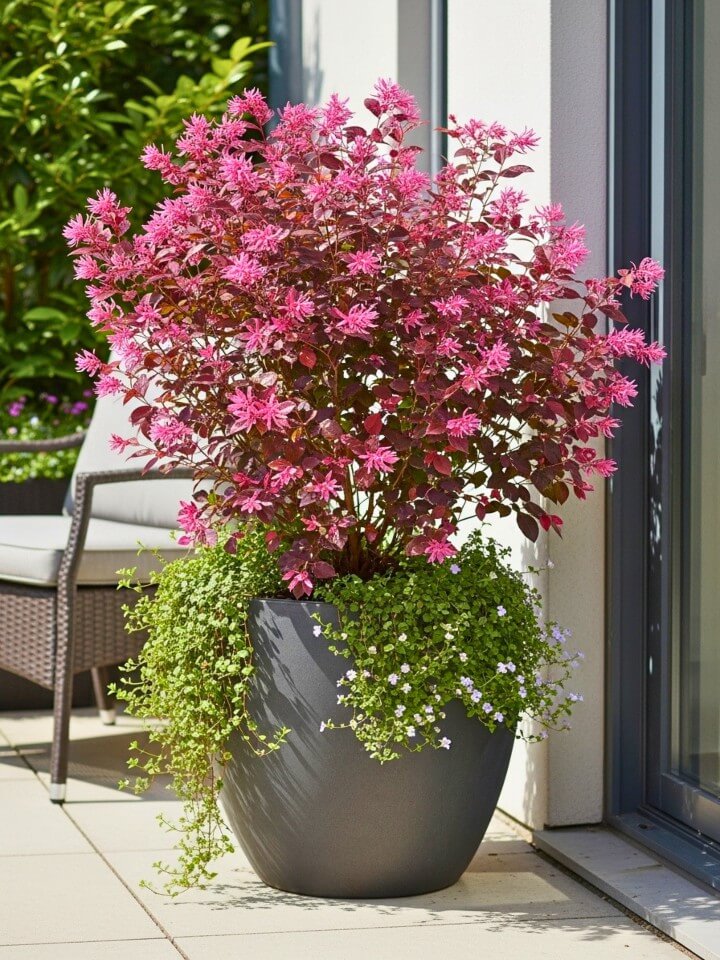
Container Loropetalum has different needs than in-ground. Root zones heat up faster, dry out faster, and freeze harder in winter. Set up correctly from the start.
You’ll Need:
- A glazed ceramic or thick fiberglass pot, minimum 18 inches across — terracotta cracks in freeze cycles
- Drainage holes, at least two and ideally three
- Quality potting mix with bark fines for drainage; skip moisture-retentive blends
- A dwarf cultivar — ‘Jazz Hands Mini’ or ‘Purple Pixie’ both handle container life well
Fill the bottom 2 inches with coarse mulch or lava rock, then add potting mix. Water when the top inch feels dry. Move pots against a sheltered wall through winter to buffer root-zone temperature swings.
Frequently Asked Questions About Loropetalum
Quick answers to the most common Loropetalum questions homeowners ask before, during, and after adding this shrub to their yard.
Is Loropetalum Deer Resistant?
Yes, Loropetalum ranks as one of the more deer-resistant landscape shrubs. The leathery leaves and bitter taste discourage browsing in most cases. Hungry deer may still nibble new growth in early spring, especially in suburbs with heavy deer pressure.
What Hardiness Zones Can Loropetalum Grow In?
Loropetalum thrives in hardiness zones 7 through 10. Some newer cold-hardy cultivars like ‘Ever Red’ tolerate zone 6 with winter protection. Below zone 6, treat it as a container plant and move pots indoors when temperatures drop below 20°F.
Why Are My Loropetalum Leaves Turning Green Instead of Purple?
Color fade usually means too much shade. Burgundy cultivars need 4 to 6 hours of direct sun daily to hold their deep tone. Move container plants to brighter spots, or thin overhead tree branches to let more light reach in-ground shrubs.
What Kind of Soil Does Loropetalum Need?
Loropetalum prefers slightly acidic, well-draining soil with a pH of 5.0 to 6.5. Heavy clay traps water and causes root rot. Amend the planting hole with compost and pine bark fines to improve drainage and lower pH naturally over time.
When Is the Best Time to Plant Loropetalum?
Early fall is ideal in most climates. Cooler air reduces transplant stress while warm soil keeps roots growing actively. Spring planting works too, if done before summer heat arrives. Avoid mid-summer planting unless you can water consistently for six weeks.
Conclusion:
The best gardens aren’t built in a weekend. They grow in small, deliberate choices — one shrub in the right spot, one color that pulls the whole bed together. Loropetalum makes those choices easier. Its burgundy stays loyal through every season. Its pink spring flush feels like a gift the yard gives back.
Pick one landscaping idea from these loropetalum landscaping ideas and try it this planting season. Don’t tackle all twenty. Watch how a single well-placed shrub shifts the way you see your own yard. That’s the moment landscaping stops feeling like a chore and starts feeling like design.