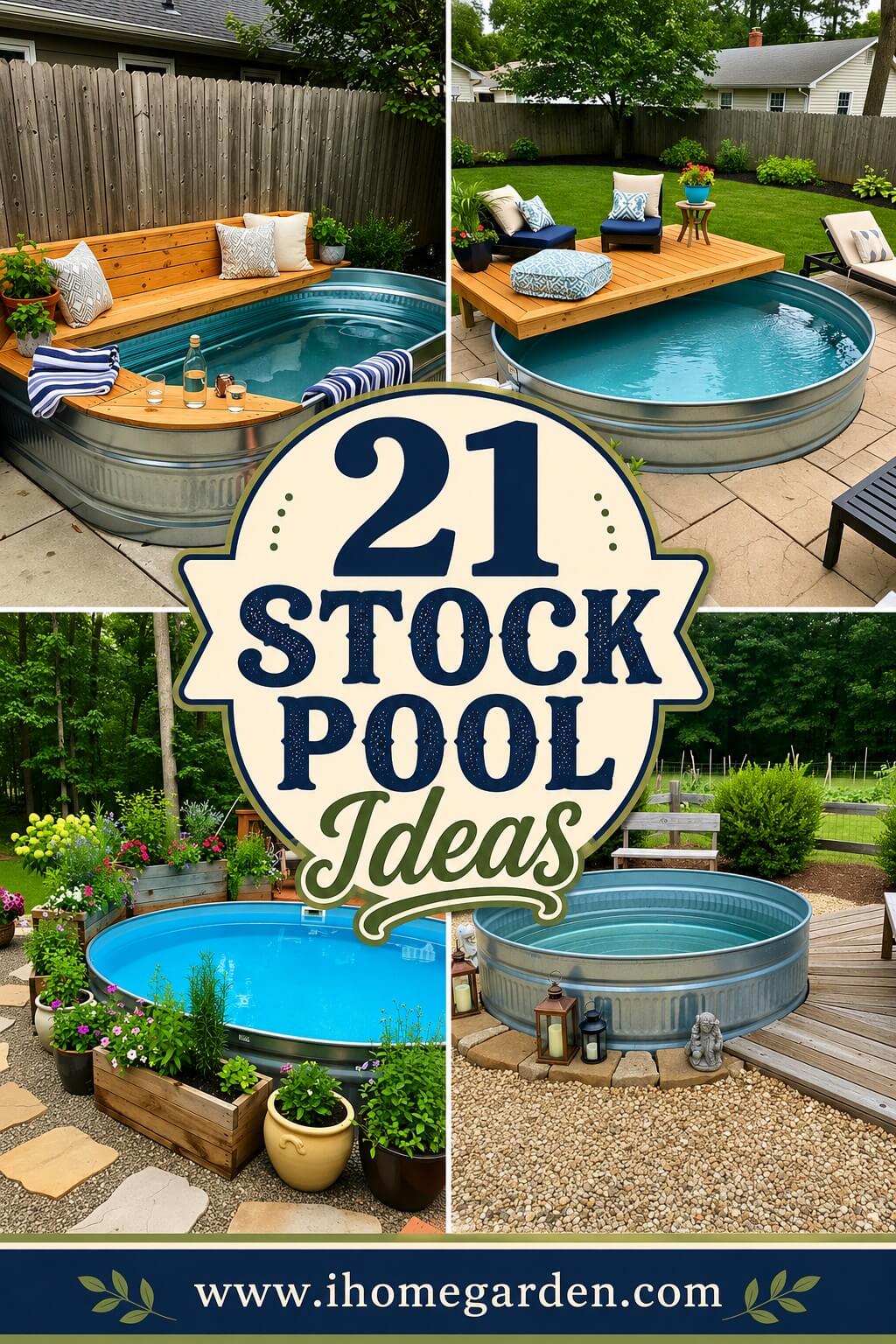
21 Stock Pool Ideas That Beat the Market Every Time
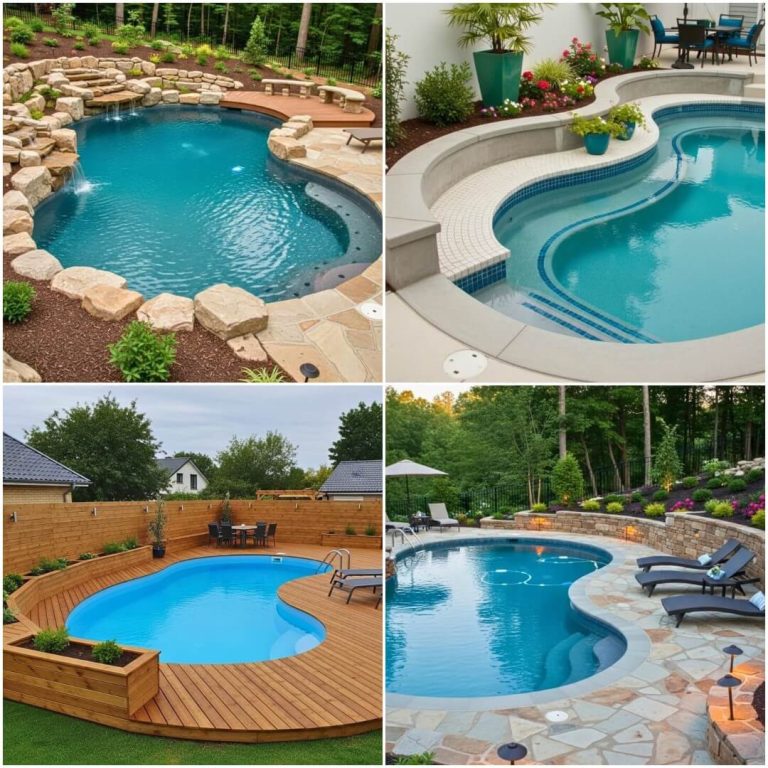
There’s something almost ridiculous about how good a metal trough full of water looks in a backyard. Farmers have been buying these things for cattle since forever, and somewhere along the way people figured out they make a pretty great pool too. That’s basically the whole story behind these 21 brilliant stock pool ideas — taking something built for a barn and turning it into the best seat in the yard on a hot afternoon.
What I like about them is the honesty. No fiberglass shell, no contractor quotes, no permit drama for most setups. You can have one filled and ready by Saturday afternoon for less than a decent grill costs. Some of the ideas below lean rustic, some lean almost spa-like, and a few solve real problems like shade, privacy, or keeping kids from fighting over the same water. Pick what fits your space.
1. Round Galvanized Stock Tank Pool
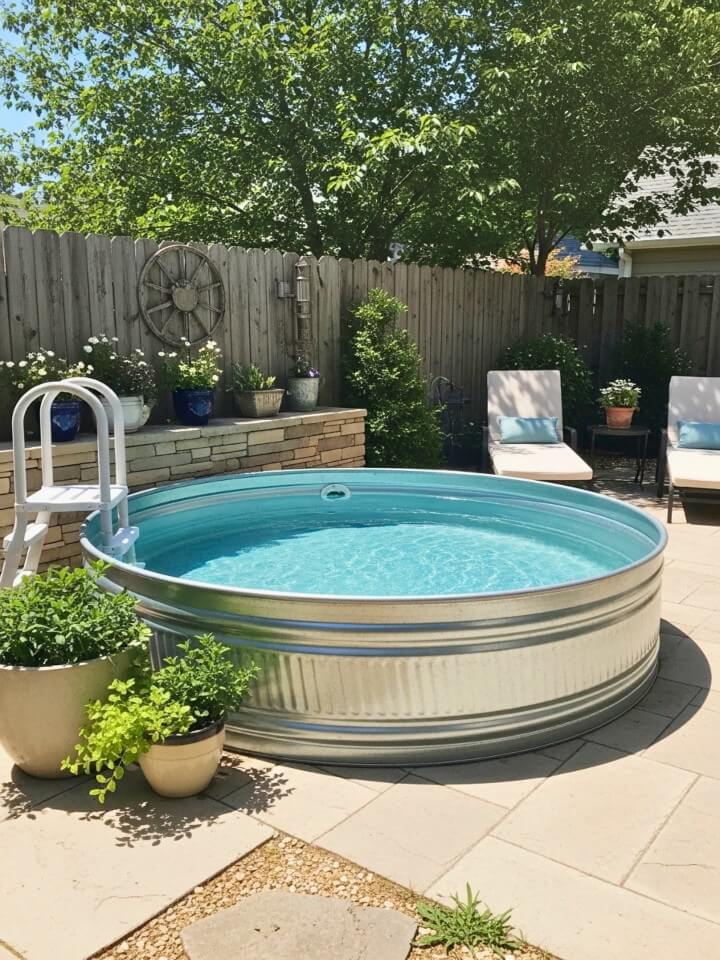
There’s a reason the 8-foot round galvanized tank shows up in nearly every backyard pool roundup: at roughly 700 gallons and $400 to $550 from a farm supply store, it hits the sweet spot between size, price, and that effortless rustic look people are chasing. The first summer it gleams; by the second, a soft patina settles in and the whole thing stops looking like equipment and starts looking like a feature. One detail homeowners miss — the ground prep. A compacted bed of decomposed granite under the tank keeps the seams from flexing as the water shifts, which is the single biggest factor in how long the tank lasts before any leak shows up.
2. A Compact Cowboy Pool for Small Patios
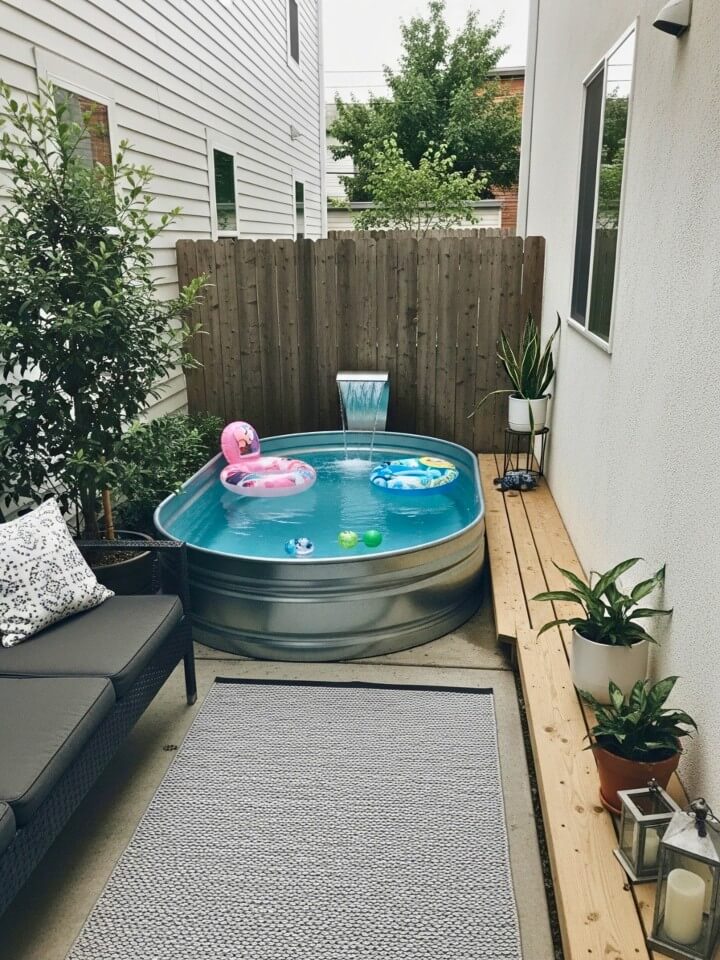
Tight on space? A 4-foot round tank holds about 150 gallons and tucks into corners where a full pool would never fit. Filled weight comes in around 1,250 pounds, so check your patio or balcony rating before committing — most concrete slabs handle it without issue, older wood balconies often don’t.
A few things change at this smaller scale:
- Water heats fast, sometimes uncomfortably so. A simple shade sail fixes it.
- Skip the big pump. A submersible filter rated for 100–300 gallons does the job at a fraction of the power draw.
- The metal edge feels harsh up close, so soften it with hanging pothos, a folded outdoor rug, and one low stool for a glass of something cold.
3. Farmhouse-Style Backyard Soak with Salvaged Wood
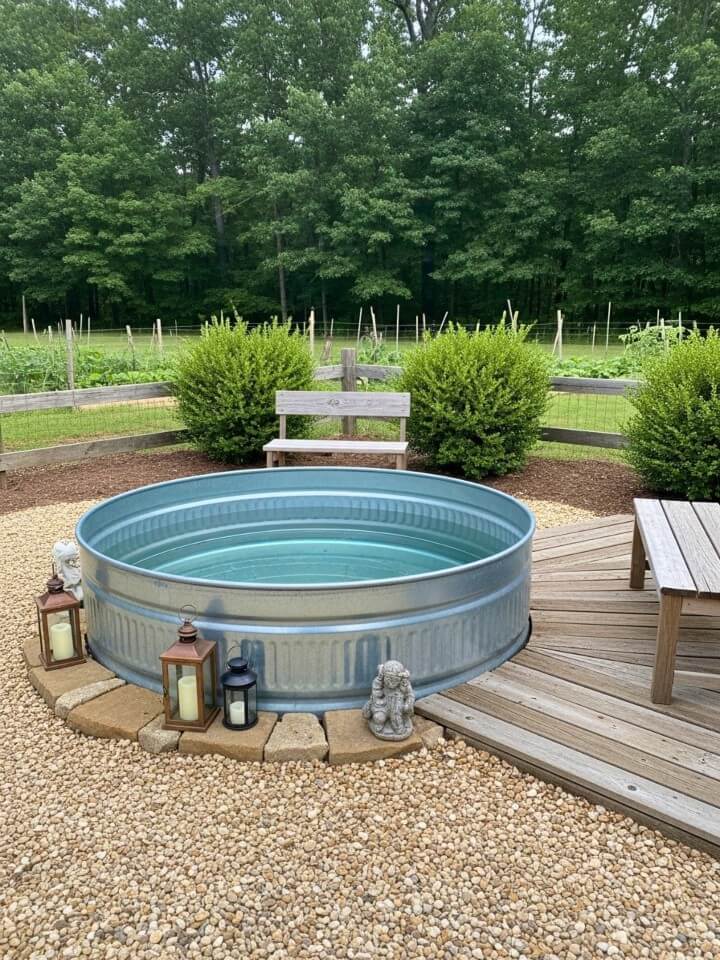
Splash into summer with creative stock pool ideas that transform any backyard into a rustic oasis. Picture a 6-foot oval tank sitting between a vegetable patch and a wildflower bed, reclaimed barn wood laid down on one side, pea gravel scattered around the base, and an old galvanized bucket holding rolled linen towels nearby. That’s the entire idea — and it costs under $700 if the wood comes from a salvage yard.
The pea gravel underneath earns its place by draining splash-out within minutes. This matters more than it sounds: water pooling against the lower seams is where rust takes hold first, usually in year two or three. Hang a couple of weathered lanterns from a shepherd’s hook for evening light, and let the metal catch the colors of whatever is growing nearby through the afternoon.
4. Cedar Decking Wrapped Around a Backyard Plunge
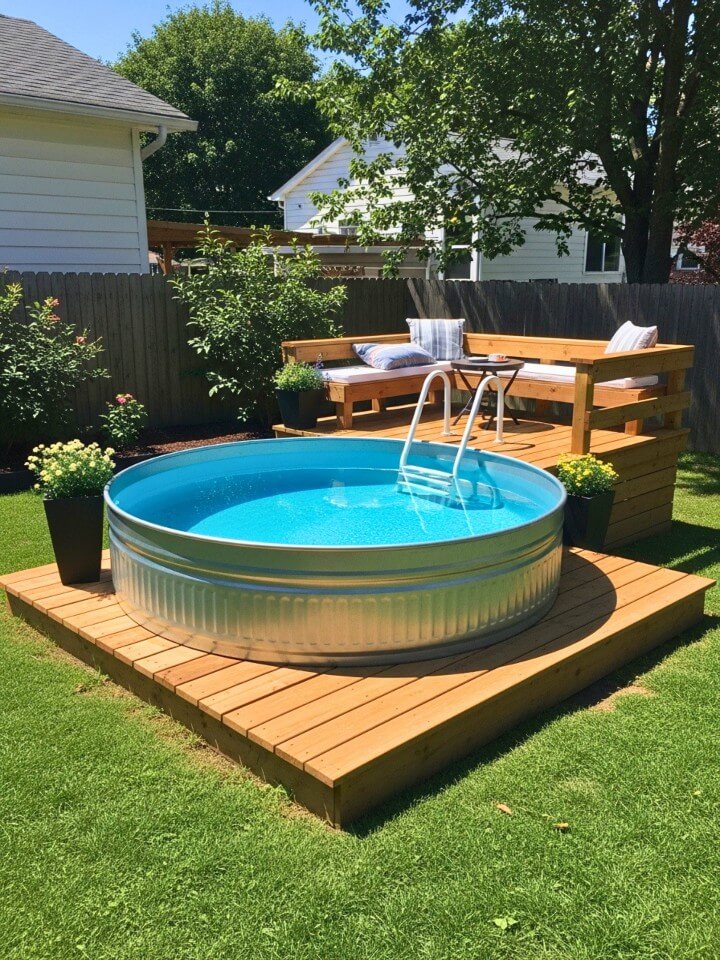
Is the deck worth building? For most people, yes — but only if the framing is done right.
A 10×10 cedar or pressure-treated deck with the tank set flush at one corner gives enough room for two loungers and a side table without the space feeling crowded. The framing details that separate a deck lasting fifteen years from one rotting in four:
Joist hangers rated for wet-zone exposure, not standard interior ones. A 1-inch gap between deck boards for drainage and airflow underneath. Penetrating oil finish on the wood, never a film-forming sealer that traps humidity.
Material budget runs $600 to $900. Add a weekend of labor for anyone already comfortable with basic carpentry — longer if it’s a first build.
5. Crushed Stone Surround on a Budget
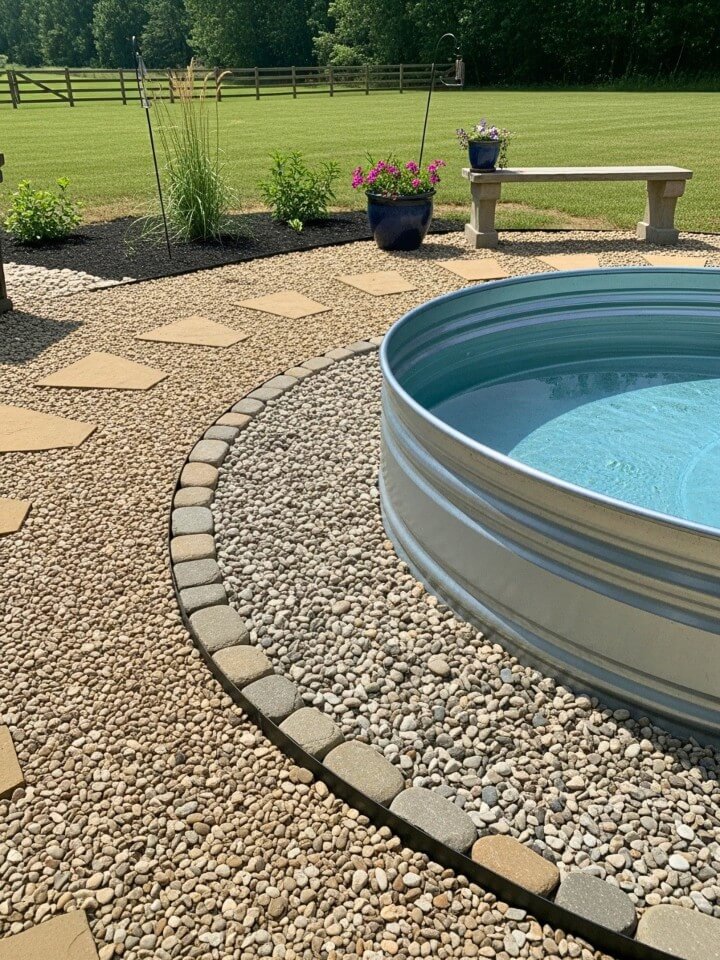
Pavers cost too much. Bare grass turns to mud. Full decking is a project. A gravel apron splits the difference for about $150 on a standard 8-foot tank setup.
Here’s the build, start to finish:
- Mark a 3-foot perimeter around the tank with spray paint or string.
- Strip the sod, lay landscape fabric across the whole zone.
- Edge it with steel landscape edging or a row of half-buried bricks.
- Pour 3 inches of crushed stone — 3/4-inch grade holds underfoot better than pea gravel once feet are wet.
A solar lantern at each compass point handles evening light without any wired electrical work. Total time: an afternoon, maybe two if the sod fights back.
6. A Built-In Bench for Easier Entry and Lounging
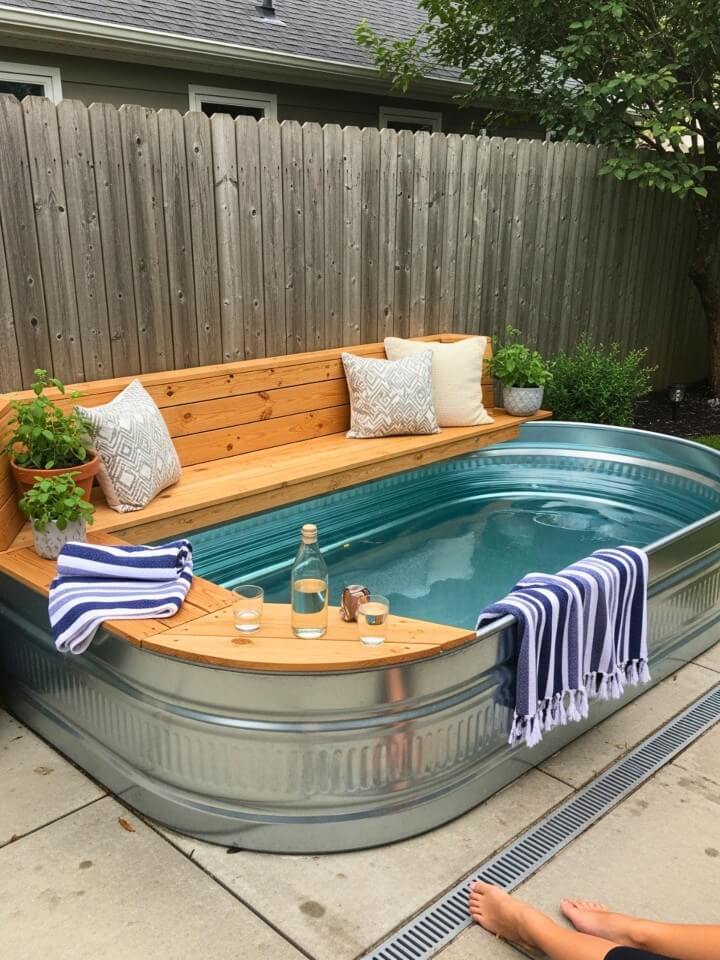
Climbing in and out of a 2-foot-tall metal rim gets old by the third weekend. A simple bench built along one side fixes the problem and changes how the whole pool gets used — suddenly there’s a place to sit with feet in the water, set down a drink, or hand a towel to a kid.
The cleanest version is a 16-inch-high cedar bench, 18 inches deep, running half the tank’s length and resting on its own footings (never bolted to the tank itself). Build it freestanding so the tank can still be drained, lifted, or replaced years down the line without tearing the seating out with it.
7. Recirculating Waterfall for Sound and Cooling
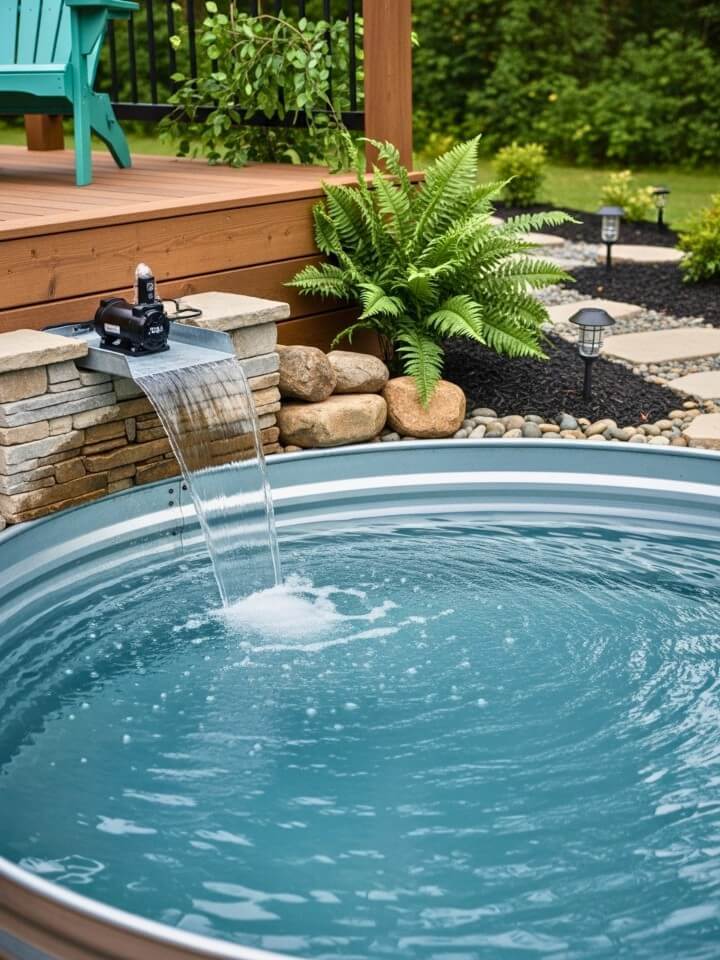
The sound is the point. A small recirculating waterfall masks street noise, drops the perceived temperature of the space by a few degrees on hot afternoons, and gives the eye something to follow.
The simplest setup uses a 400 GPH submersible pump dropped into the tank, a length of clear vinyl tubing run up the back of a vertical surface, and a copper or stone spillway that lets the water sheet back in. Total parts cost: roughly $80 to $120.
Two practical notes worth knowing:
- Splash needs to land inside the tank, not next to it, or evaporation drains the pool fast.
- Run the pump on a timer — 4 to 6 hours a day is plenty and saves electricity.
8. Elevated Stock Tank Pool on Deck
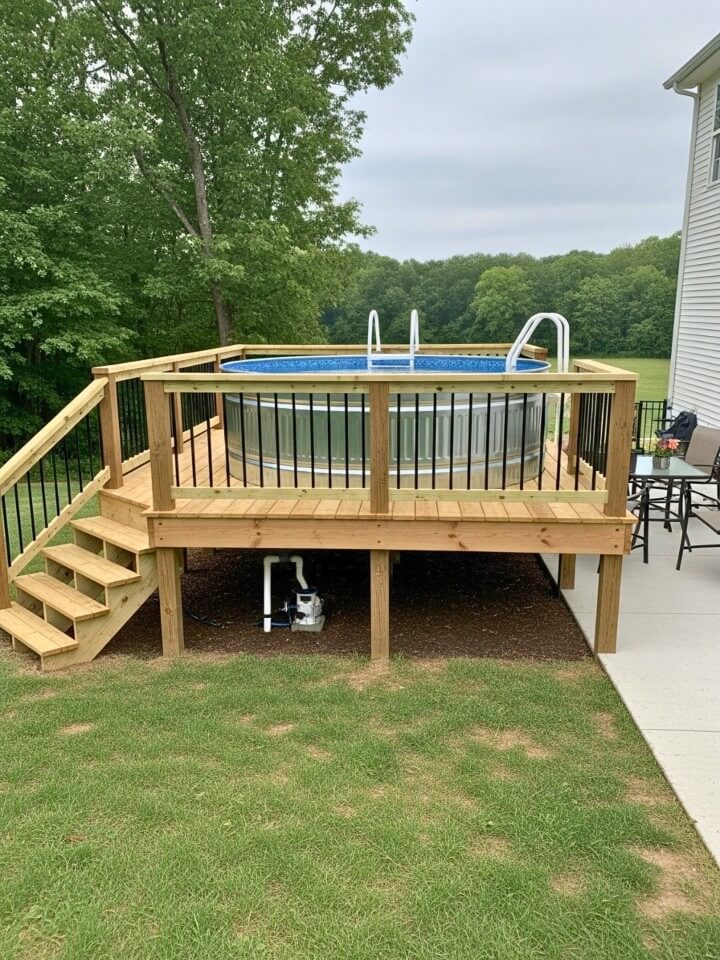
Before anything else: a full 8-foot stock tank weighs around 5,800 pounds with water in it. Standard residential deck framing is rated for 50 pounds per square foot of live load. Do the math on a 50-square-foot footprint and the numbers don’t line up without reinforcement.
The fix isn’t complicated, but it isn’t optional either. Doubled joists at 12-inch spacing directly under the tank’s footprint, supported by additional posts on concrete footings going below the frost line. Anyone unsure should run the plan past a structural engineer — a single visit costs less than rebuilding a collapsed deck.
Once the bones are right, an elevated tank looks dramatic and makes entry feel like stepping into a built-in spa.
9. Pergola Shade to Tame the Afternoon Heat
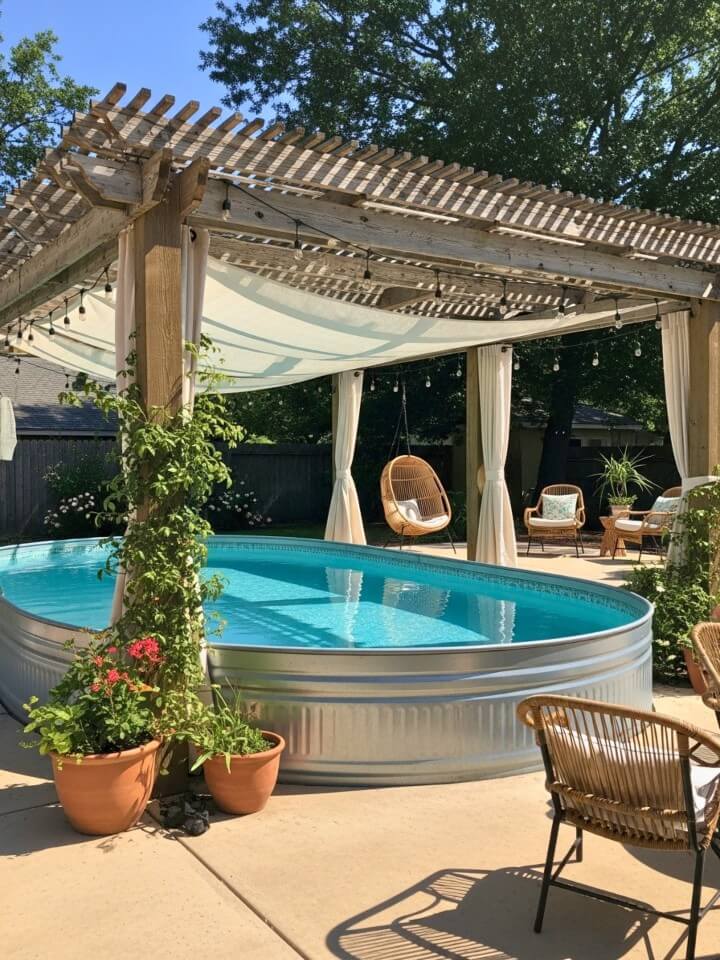
Discover trendy backyard stock tank pool ideas blending farmhouse charm with cool, refreshing vibes. The single biggest complaint about stock tank pools is heat — both the water and the metal rim cooking under afternoon sun. A pergola placed so it shades the pool from roughly 1 PM to 5 PM solves most of it.
A few options, ranked by effort:
- Cheapest: Two 4×4 posts and a stretched shade sail. Around $120, one afternoon.
- Mid-range: A simple cedar pergola kit with open slats. $400 to $700, a weekend.
- Best long-term: A custom-built structure with climbing wisteria or grape vines trained across the top. Years to fill in, but the result is a living roof that gets better every season.
Even partial shade — covering just half the pool — keeps the water 8 to 12 degrees cooler in peak summer.
10. Multi-Tank Pool Setup for Kids
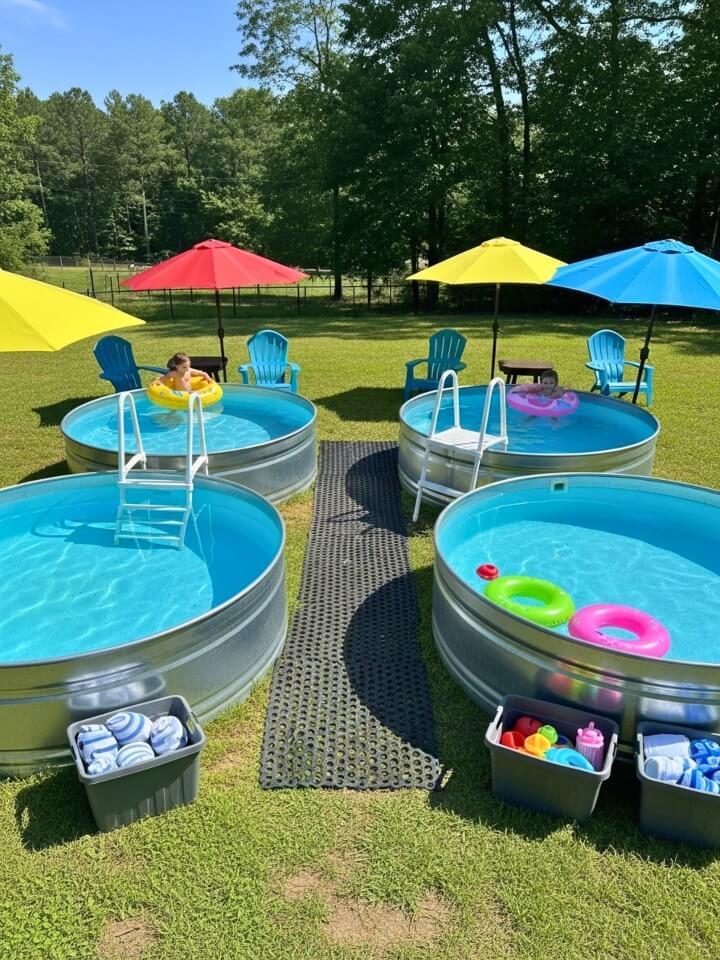
Parents with multiple kids in different age groups quickly discover one problem: a toddler and a nine-year-old don’t want to share the same water. The fix is two smaller tanks instead of one big one.
Pairing a 2-foot-deep, 4-foot-round tank for younger kids with a 6-foot oval for older ones gives each group their own zone. Total cost stays under $500 for both tanks combined.
A few things worth setting up from day one:
- Rubber play mats between the tanks to soften wet feet and falls.
- A shaded bin for towels, goggles, and pool toys so nothing bakes in the sun.
- Separate maintenance schedules — kid pools get dirtier faster and need draining more often, every 5 to 7 days in heavy use.
A single low chair positioned where both tanks are visible saves a lot of pacing.
11. Custom Paint Finishes That Actually Last
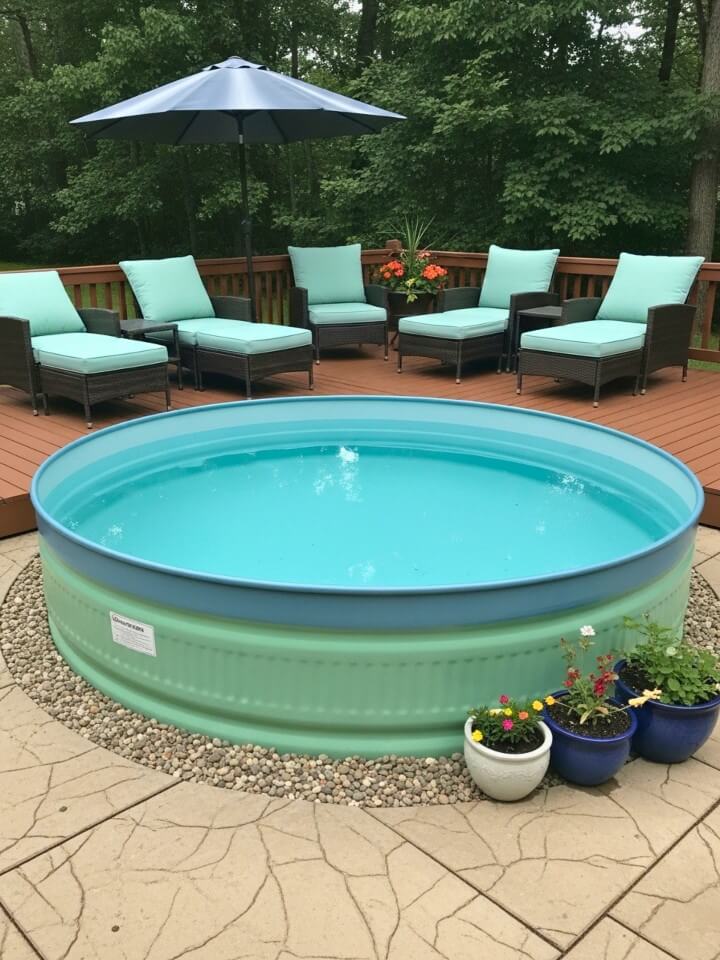
Why paint a perfectly good galvanized finish? Two reasons: to match a specific color scheme, or to slow down rust on a tank that’s already starting to show wear.
Color choices that hold up well outdoors:
- Matte black: Modern, hides water stains, but absorbs serious heat — water can hit 90°F by afternoon.
- Soft sage or olive: Blends into garden settings, reads intentional rather than decorative.
- Deep navy: Looks like a built-in plunge pool from a distance, especially with a stone surround.
Use a self-etching primer designed for galvanized metal, followed by two thin coats of exterior enamel. Skipping the primer is the most common mistake — paint peels off bare galvanizing within one summer. Total materials cost runs $50 to $80.
12. A Screened-Off Soaking Spot for Privacy
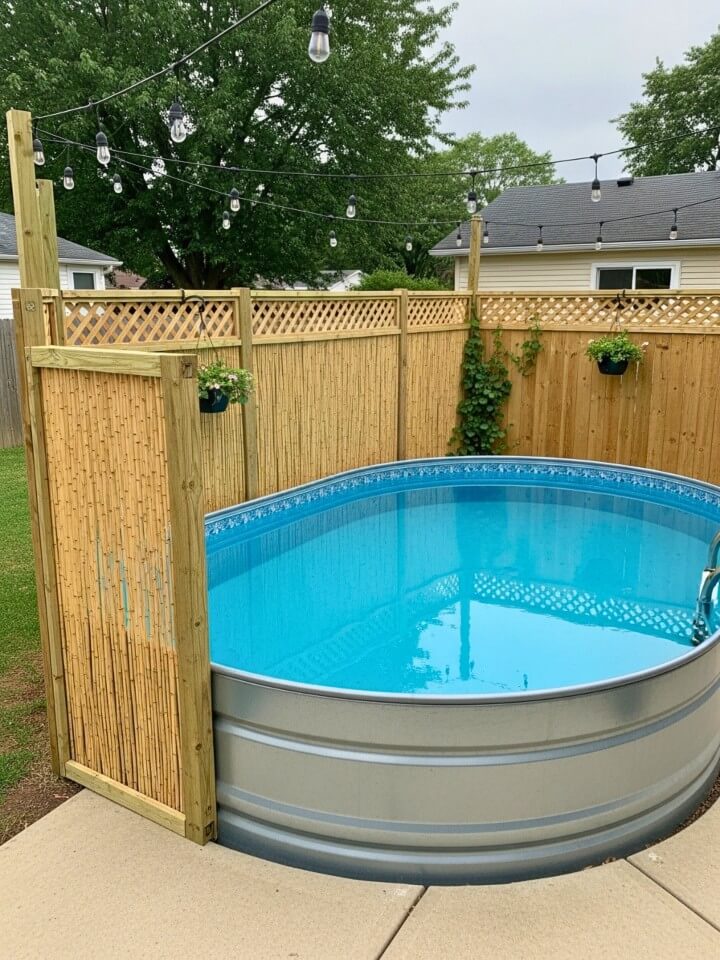
Nothing kills the mood faster than a neighbor’s upstairs window with a clear sightline into the pool. The fix depends on budget and how permanent the solution needs to be.
Fastest and cheapest is a roll of bamboo screening zip-tied to existing fence posts: roughly $60, installed in under an hour, lasts about three seasons before it weathers out.
A step up is cedar lattice panels mounted to 4×4 posts, around $250 for a 12-foot run, lasting 8 to 10 years with occasional staining.
The most finished look is full vertical board fencing — horizontal slat style currently looks the most modern — running $40 to $60 per linear foot installed.
Climbing jasmine or star jasmine trained along any of these adds scent and softens the visual barrier within two growing seasons.
13. Resort-Feel Greenery Around the Water
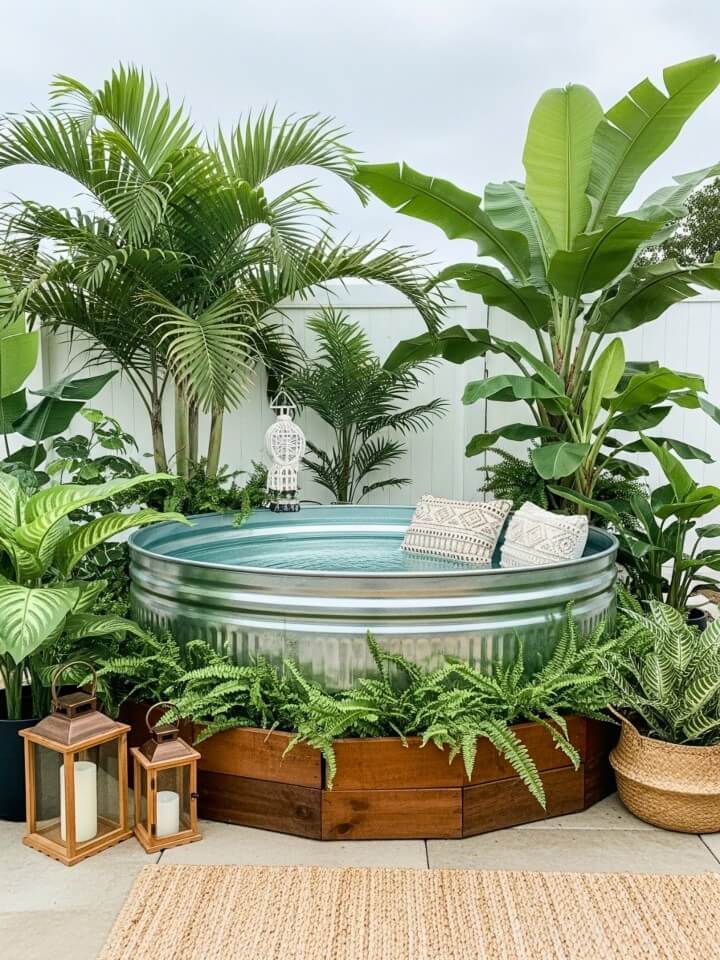
A stock tank pool turns ordinary yards into Pinterest-worthy retreats without breaking your budget. The right plants turn a metal tub into something that feels like it belongs in a resort. Wrong plants drop leaves into the water, attract bugs, or die the first cool night.
A few that actually work outside year-round in mild climates, or move easily indoors in cold ones:
- Banana plants (Musa basjoo): big dramatic leaves, hardy enough to come back from the roots after frost.
- Bird of Paradise: structural, almost architectural — works in a large pot near the tank.
- Boston ferns: soft fillers for shade-side hanging baskets.
- Bamboo in containers: vertical green wall without the spreading nightmare of in-ground bamboo.
Avoid anything that drops blooms, sheds heavily, or attracts bees in flowering season near a place where people are barefoot.
14. Bistro Lights for Evening Swims
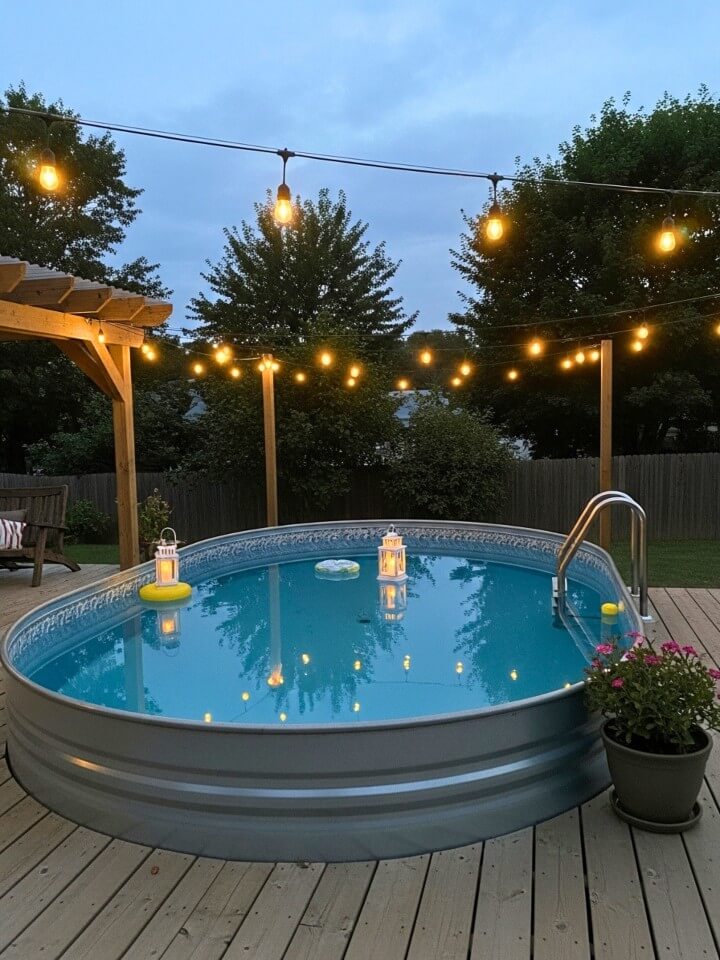
Evening swims need light, but not the harsh overhead kind. String lights handle it better than anything else, and the setup takes about 30 minutes.
The build: two 8-foot wood posts set in concrete footings or weighted bucket bases, positioned on opposite sides of the pool. Run warm-white commercial-grade string lights between them in a single line or a gentle zigzag. Plug into a nearby outdoor outlet with a GFCI protector — this matters near water, no shortcuts.
Bulb choice changes everything:
- G40 globe bulbs give the warm bistro look most people picture.
- Edison-style filament bulbs lean more rustic and industrial.
- Solar string lights skip the wiring entirely but dim noticeably by midnight.
A few floating LED orbs in the water finish the scene.
15. A Flagstone Patio Around the Plunge
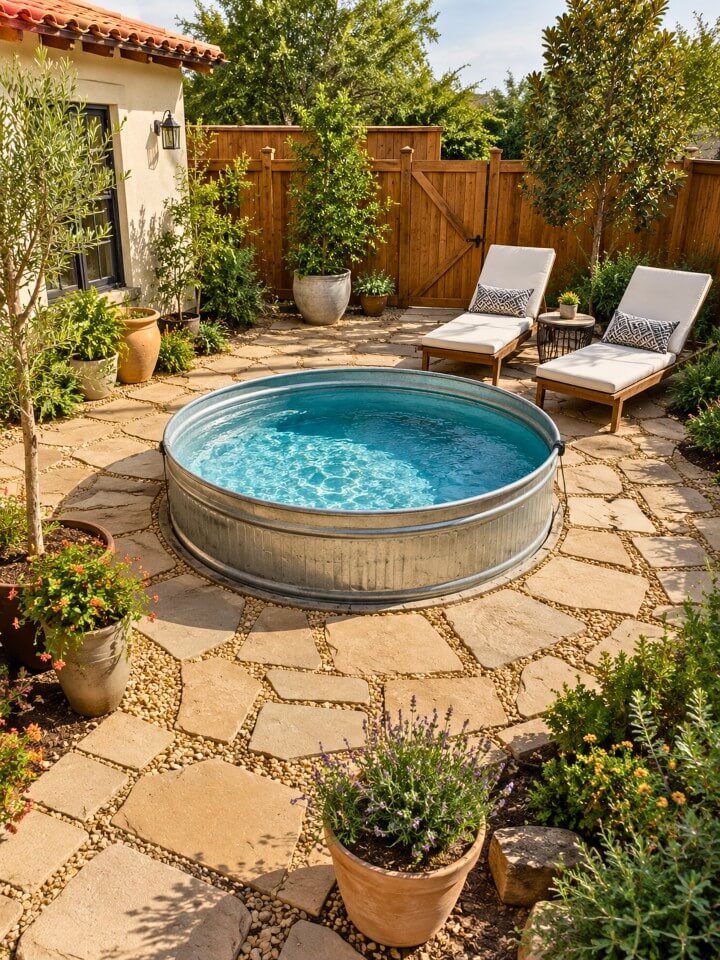
Where gravel feels casual and decking feels like a project, stone pavers land in the middle — finished, low-maintenance, and surprisingly DIY-friendly.
The basic build for an 8-foot tank with a 4-foot patio around it:
- Excavate 6 inches down across the full footprint.
- Lay 4 inches of compacted road base, tamped in two lifts.
- Add 1 inch of leveling sand, screeded flat.
- Set the pavers, joints tight, tap each one level.
- Sweep polymeric sand into the joints and mist with water to lock them in.
Material costs run $4 to $9 per square foot depending on whether the pavers are basic concrete or natural flagstone. Total time for the patio portion: a long weekend for two people.
16. Stock Tank Pool With Floating Deck
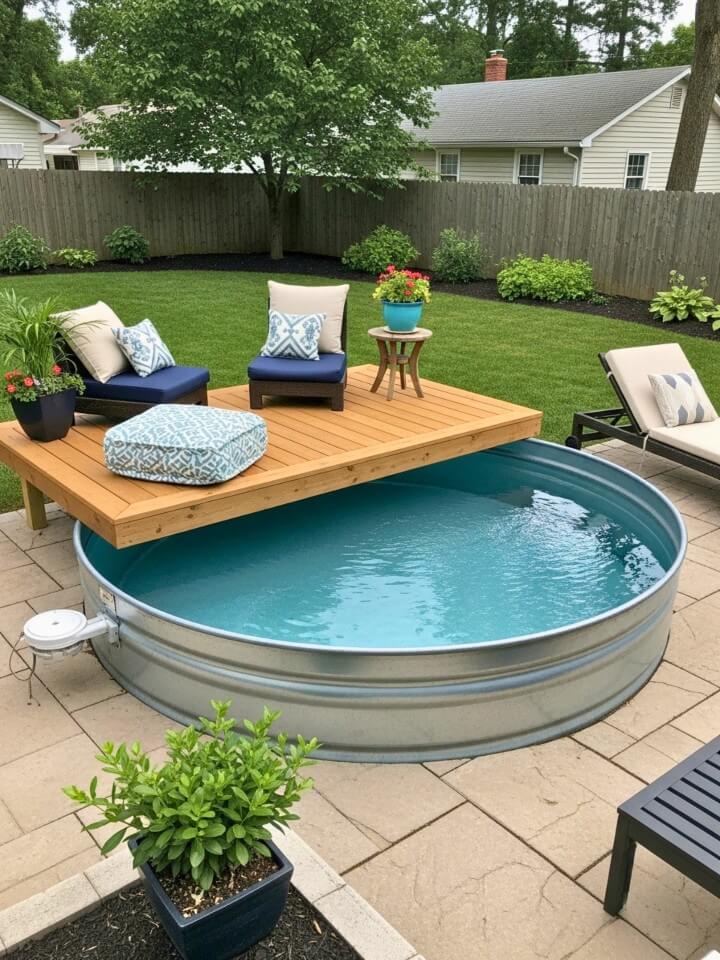
A floating deck isn’t actually floating — the name just means it isn’t attached to the house. That single difference matters more than people realize, because it skips the permit headache that comes with structurally attached decks in most areas.
The build sits on adjustable deck blocks rather than concrete footings, which makes it almost portable. A 12×8 platform set alongside the tank, with one corner cut to wrap the curve, gives a lounging surface without enclosing the pool entirely. Cedar runs about $700 in materials for this size, composite around $1,400.
One detail worth getting right: the deck surface should sit 4 to 6 inches below the tank’s rim, not flush with it. This keeps splash from soaking the boards constantly and lets the wood dry between uses.
17. Fire and Water, Side by Side
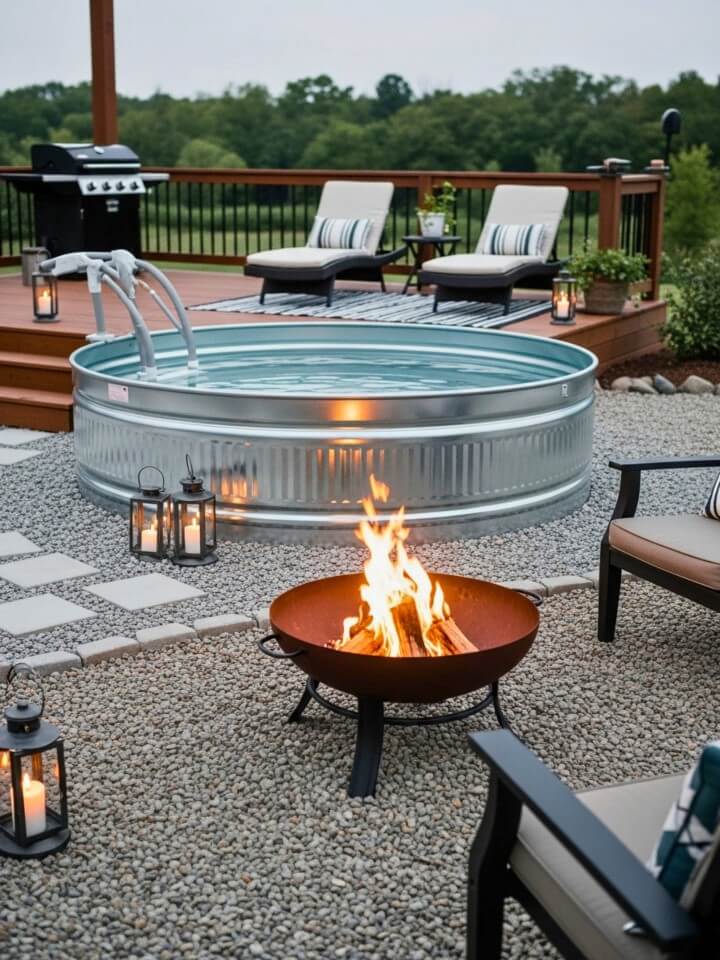
The combination sounds great — and it is — but distance matters more than most setups respect.
A wood-burning fire pit needs at least 10 feet of clearance from the tank. Sparks travel further than people expect, and a single ember in the water means draining and refilling. Propane or natural gas pits can sit closer, around 6 feet, since they throw no embers.
A practical layout for a medium backyard:
- Tank against one boundary, with seating arranged in a quarter-circle facing outward.
- Fire pit at the far end of the seating arc.
- Gravel or paver buffer between the two zones, never grass that can catch.
Adirondack chairs angled so people can pivot between water and flame work better than fixed benches. A small side table holds drinks for both directions.
18. DIY Stock Tank Pool With Slide
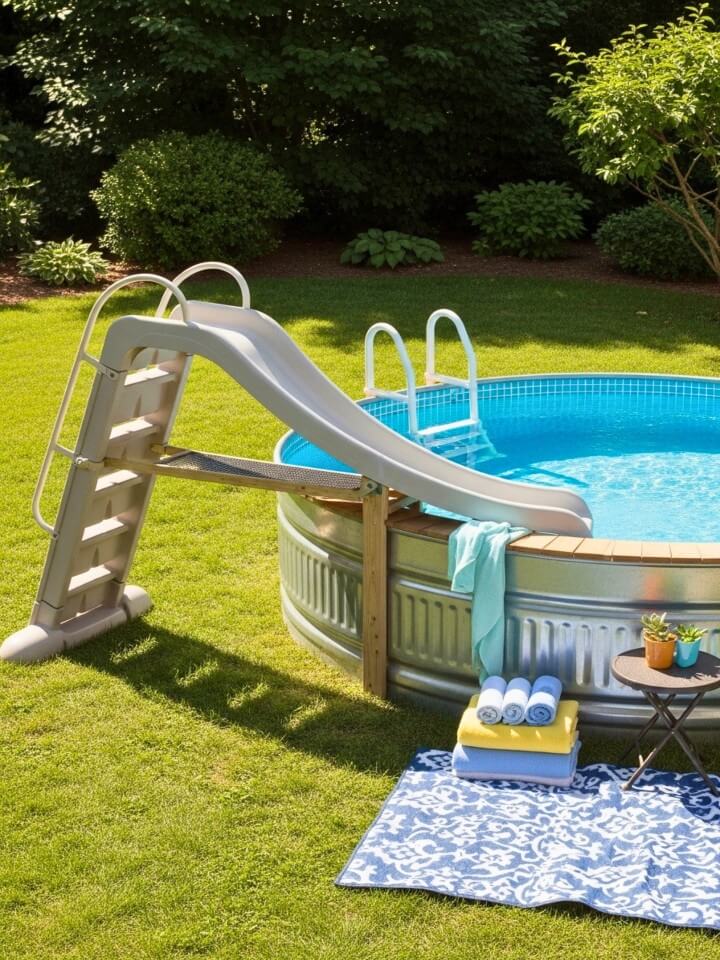
Slides on stock tanks are a frequent Pinterest idea and a frequent emergency room visit. Most failures come from the same handful of mistakes — all preventable.
The non-negotiables:
- The slide must be free-standing, with its own legs on level ground, never resting weight on the tank rim. Tanks bend.
- The exit point sits at least 6 inches above the water line, otherwise feet hit the bottom on the way down.
- The bottom of the tank needs a soft pad — a cut piece of EVA foam mat works — under the slide’s landing zone.
- An adult watches every single ride. Stock tank water depth is shallow; head-first entry isn’t survivable.
A small molded plastic kids’ slide from a backyard playset is the right scale. Adult-sized slides on a 2-foot-deep tank are the wrong tool.
19. Container Gardens as a Living Border
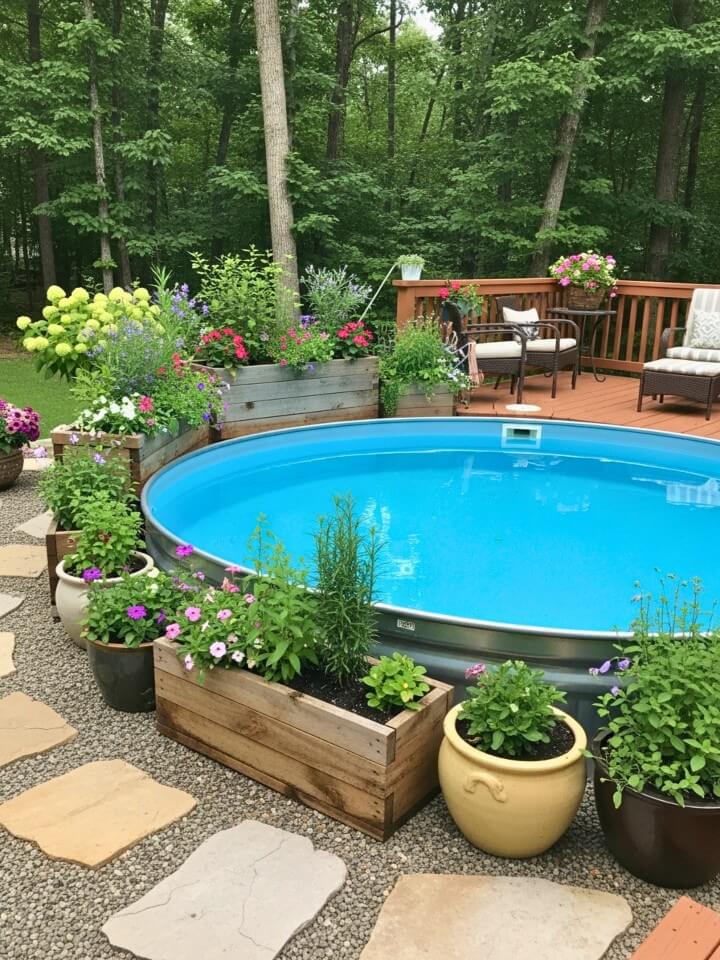
Saddle up summer with cowboy pool ideas featuring rustic decor, string lights, and western flair. Containers do something gravel and decking can’t: they let the landscaping change with the seasons. Spring tulips, summer herbs, fall ornamental grasses — same pots, different plants.
A working rotation for a tank surround:
| Container | Plant choice | Why it works |
|---|---|---|
| Three large terracotta (16″+) | Rosemary, lavender, sage | Drought-tolerant, smells good when brushed against |
| Two tall ceramic (20″+) | Ornamental grasses | Movement, soft sound, no maintenance |
| Trailing wall pots | Sweet potato vine, creeping jenny | Spills over the edges, softens hard lines |
Terracotta breathes and prevents root rot but cracks in hard freezes — move it under cover before winter. Glazed ceramic survives the cold but holds water longer, so drainage holes matter even more. Self-watering inserts make a real difference for anyone who travels in summer.
20. A Tiled Exterior for a Designer Look
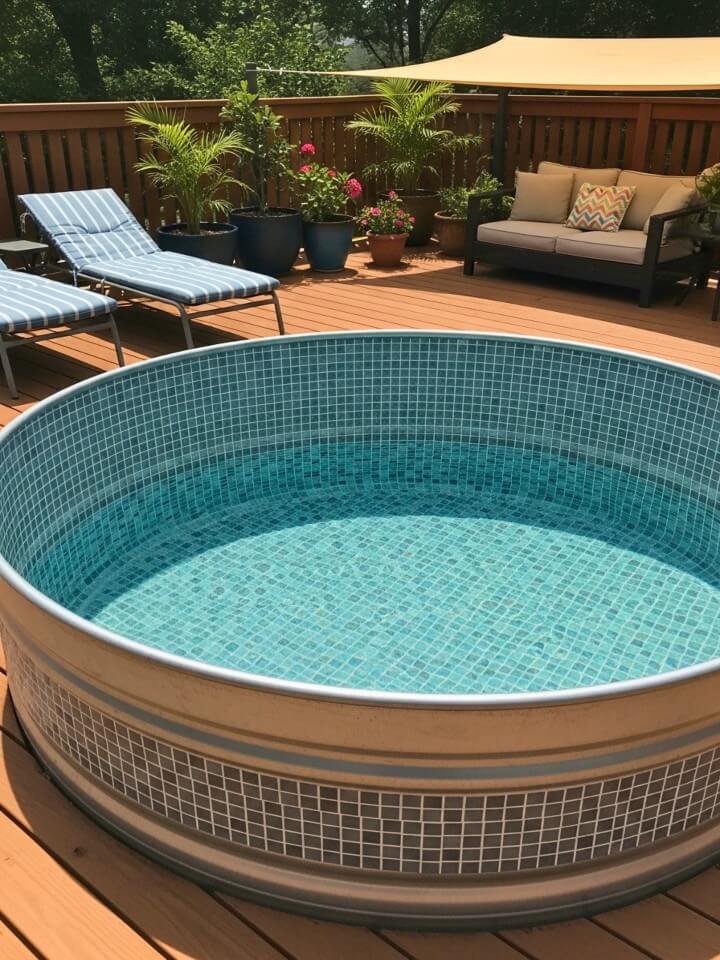
Tiling the outside of a stock tank turns it from utility object into a deliberate design piece. The inside is a different question — most stock tank interiors aren’t worth tiling because the curve fights against flat tile, and waterproofing failures become leak headaches.
The exterior process, simplified:
- Sand the galvanized surface lightly with 120-grit, then wipe with denatured alcohol.
- Apply a metal-bonding primer and let it cure 24 hours.
- Spread thinset mortar in small sections, no bigger than 2 square feet at a time.
- Press tiles in, working from the bottom up so gravity helps.
- Let it set for 48 hours, then grout with a flexible, exterior-grade product.
Penny tiles in a single color band around the upper third look modern. Moroccan-style mixed patterns lean Mediterranean. Material cost runs $3 to $12 per square foot depending on tile choice.
21. An Outdoor Rinse Station for Cleaner Water
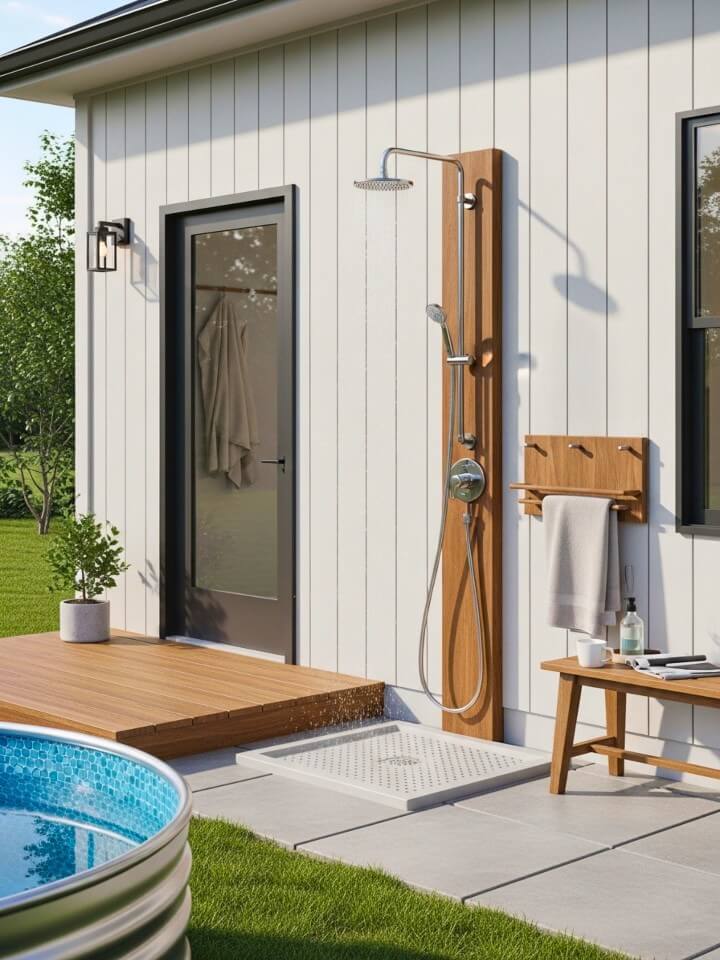
Rinsing off before climbing into the tank keeps the water clean for an extra week or two between drains — sunscreen and body oils are what cloud stock tank water faster than anything else.
Three setups, from simplest to most permanent:
- Garden hose with a shower head adapter: $25, ten minutes to install, cold water only. Works fine in summer heat.
- Freestanding solar shower: A 5-gallon black bag hung from a post, heated by sun. Around $50. Surprisingly warm by mid-afternoon.
- Hot and cold tapped from the house: Run PEX lines from an exterior wall to a mixing valve mounted on a cedar post. $300 to $500 in materials, half a day of plumbing. Pays back in actual comfort by the second week.
Whatever the setup, the ground underneath needs drainage — a 3-foot square of river stone over gravel keeps it from turning into a mud patch.
Frequently Asked Questions About Stock Tank Pools
Five things worth knowing before the tank arrives: keeping the water clear, getting through winter, dodging mosquitoes, handling insurance, and protecting resale value.
How Do I Keep the Water Clean without It Turning Green?
Add a small chlorine floater with 1-inch tablets and run a filter pump two to four hours daily. Test pH weekly with cheap strips, aiming between 7.2 and 7.6.
Can I Leave a Stock Tank Pool out During Winter?
In freezing climates, drain it completely before the first hard frost. Standing water expands and warps the seams. Flip the empty tank upside down or cover it to keep debris and snow out.
Do Stock Tank Pools Attract Mosquitoes?
Only stagnant ones do. Moving water from a pump or small fountain breaks the surface tension mosquitoes need to lay eggs. Running circulation just an hour each evening usually solves the problem entirely.
Will a Stock Tank Pool Affect My Homeowner’s Insurance?
Some carriers classify any water over 24 inches deep as a pool, which can raise premiums or require fencing. Call your agent before filling — a two-minute conversation prevents an awkward claim later.
Does Installing One Hurt or Help Resale Value?
Buyers rarely pay extra for a stock tank, but a tidy gravel pad or small deck around it reads as usable outdoor space. Keep installation reversible so future owners can repurpose the area.
Conclusion:
The best part about a stock tank pool isn’t the price tag or the easy setup — it’s how forgiving the whole thing is. Start with a bare tank on gravel this weekend, add a bench next month, maybe wrap it in cedar next summer. Nothing here demands a master plan or a contractor’s number. Pick one stock tank pool idea that fits your yard right now and let the rest wait. By the time August heat actually shows up, you’ll be the one with cold water in the backyard while everyone else is still pricing out something fancier. That’s the whole trick.