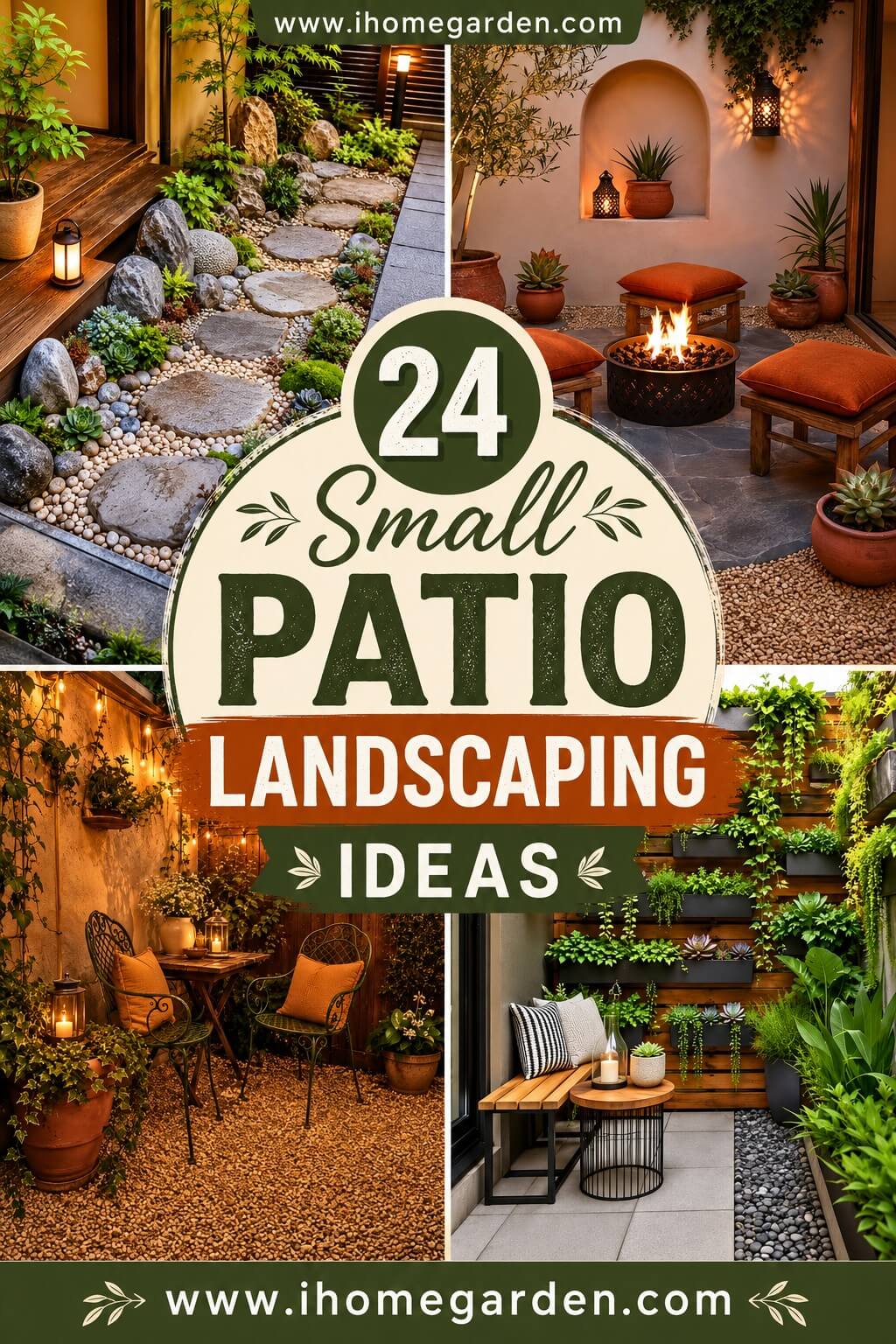
24 Small Patio Landscaping Ideas To Instantly Upgrade
You do not need a sprawling backyard to have an outdoor space worth loving. Some of the most thoughtfully designed patios are the smallest ones — a 10×12 concrete slab, a narrow side yard, a balcony just wide enough for two chairs. The constraint forces creativity in a way that unlimited space rarely does.
But small patios fail for one consistent reason: people treat them like leftover space. A random chair here, a forgotten pot there, and suddenly the whole thing feels like a storage area with some sunlight. That is exactly why we put together these 24 Jaw-dropping small patio landscaping ideas — because this topic deserves more than generic advice.
Each one is chosen specifically for tight spaces — practical, doable on a real budget, and designed to make your patio feel intentional rather than accidental. Whether you have an afternoon and $50 or a full weekend and a bigger budget, something on this list will change the way you use your outdoor space.
1. Cozy Corner with Potted Plants
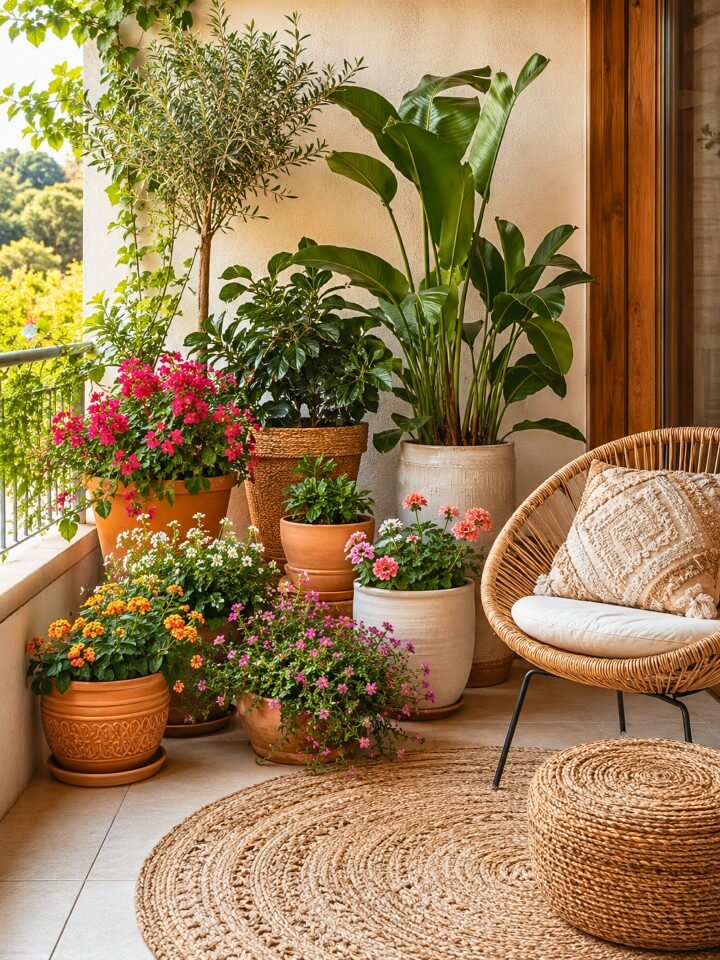
Height variation is the trick most people miss. Place the tallest plant at the back — a dwarf olive or arborvitae works well. Medium plants like lavender go in the middle. Trailing plants like sweet potato vine sit at the front and spill forward naturally.
For sunny spots, rosemary, geraniums, and succulents are nearly foolproof. For shade, ferns and pothos stay fresh all season with minimal care.
Stick to two pot materials maximum. Terracotta paired with charcoal ceramic looks curated — mixing five different styles looks like a clearance sale. Add a small chair beside the grouping and you have a genuine retreat, not just decoration.
Cost: $50–$200 | Difficulty: Beginner | Suits: Any patio style
2. Vertical Garden on a Wall
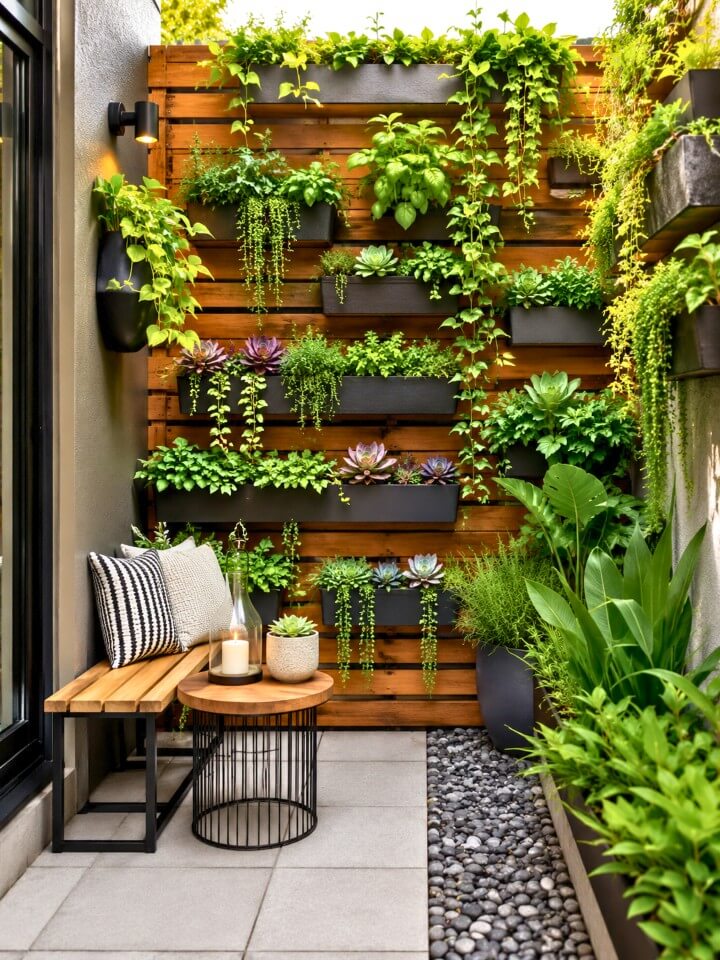
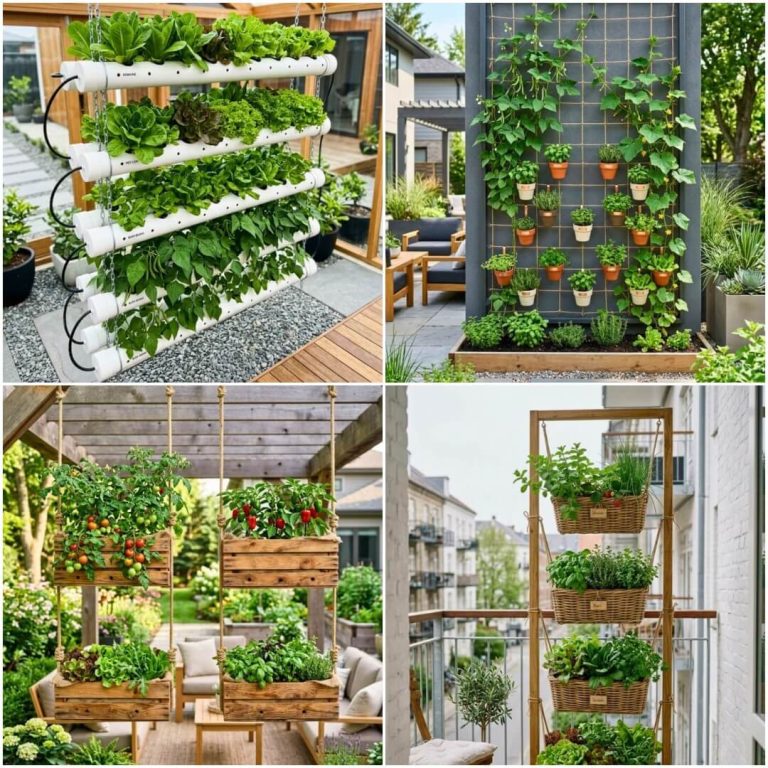
Match the setup to your situation. Renting? Fabric pocket planters hang from a single hook and remove in minutes — no wall damage. Want a polished look? Powder-coated metal tiered shelf planters at staggered heights look genuinely architectural. Want low maintenance? A trellis with climbing jasmine gives four to six square feet of living wall coverage within one season.
One warning: vertical gardens dry out much faster than ground pots because air circulates on all sides. Check moisture daily in summer. A basic drip irrigation kit — under $30 — solves this completely and installs in about 20 minutes at your outdoor hose bib.
If your patio backs up to a plain fence, the same vertical approach works beautifully with astonishing fence line landscaping ideas that soften hard edges without taking up valuable floor space.
Cost: $30–$250 | Difficulty: Beginner to Intermediate | Suits: Narrow patios, blank fences
3. Compact Water Feature
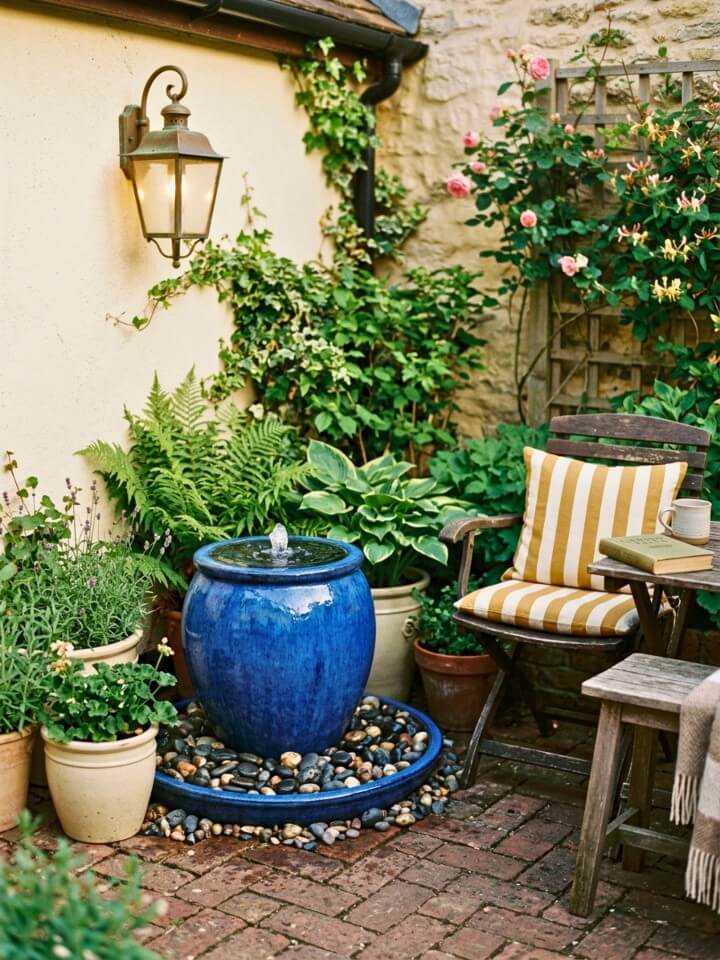
Moving water masks street noise, adds privacy, and transforms even a plain concrete slab. Self-contained plug-in fountains require no plumbing, no permits, and no contractor. Prices start around $60 — they’re ready to run the same day.
Place the fountain close enough to your seating that you hear it clearly, but far enough that mist isn’t an issue on windy days. Corner placement keeps walkways clear.
Maintenance is simple: top off the reservoir every few days, add a capful of white vinegar monthly to prevent mineral buildup, and drain the pump before the first freeze. That one step alone doubles pump lifespan.
Cost: $60–$300 | Difficulty: Beginner | Suits: Modern minimalist or natural garden styles
4. Decorative Gravel and Stepping Stones
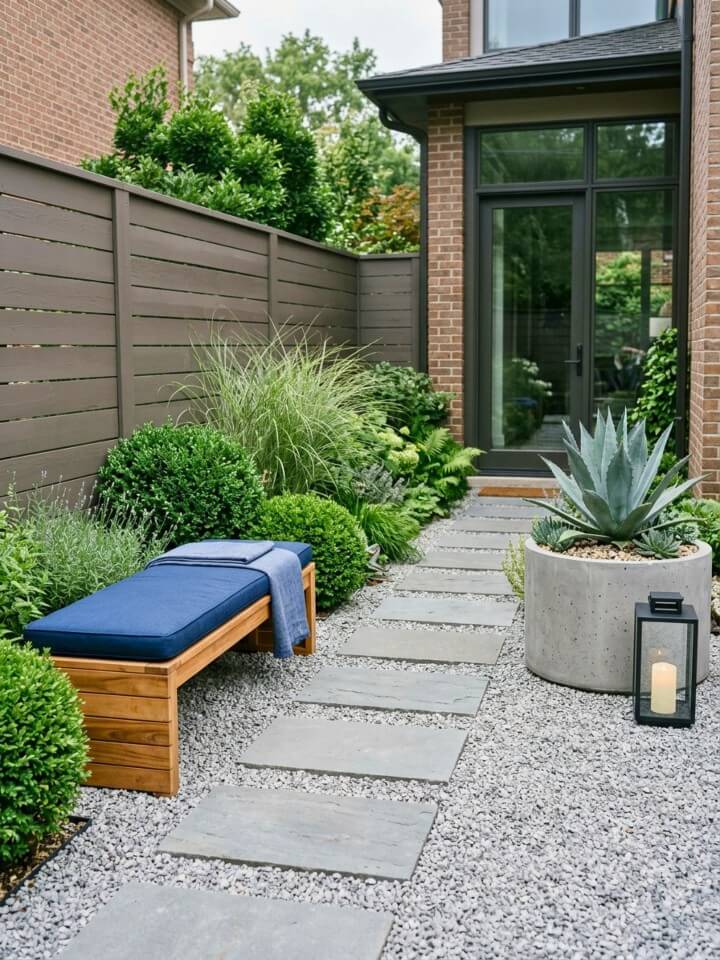
Pea gravel gives a clean contemporary look. Decomposed granite in amber tones pairs well with earthy planters and wood furniture. River rock works well as a border between planted beds and paved areas.
Space stepping stones 18 to 24 inches apart center-to-center. Closer feels choppy; farther forces an awkward hop. Material matters less than stability — every stone must sit level underfoot.
Always lay heavy-duty landscape fabric before adding gravel. Without it, weeds push through within one growing season and the entire area needs redoing. Overlap fabric edges by six inches at every seam and pin with landscape staples. This one step saves years of frustration.
Cost: $80–$400 | Difficulty: Beginner to Intermediate | Suits: Rustic or contemporary patios
5. Mini Herb Garden in Raised Beds
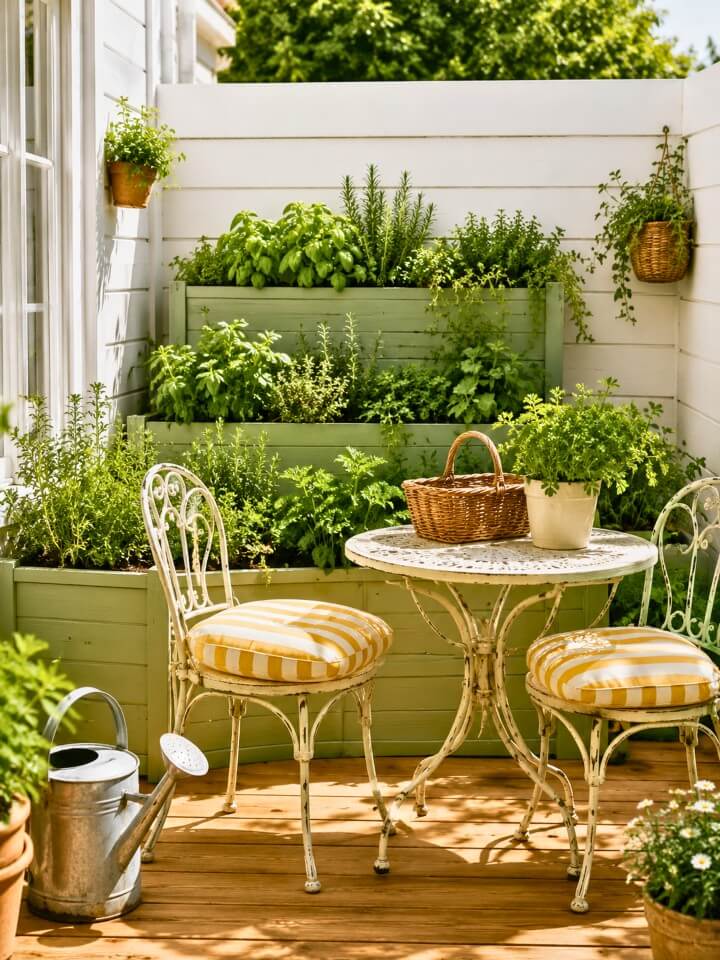
A 4×2-foot raised bed holds six to eight herb varieties comfortably. Even a 2×2-foot corner bed fits three or four herbs — roughly the footprint of a small end table.
Cedar is the gold standard — rot-resistant and lasts over ten years. Powder-coated steel kits ($60–$150) look sharp, warm up quickly in spring, and need zero maintenance long-term.
Always keep mint in its own pot sunk into the bed. It spreads aggressively underground and crowds out everything else within one season.
Fill with a 50/50 blend of potting mix and compost — not garden soil, which compacts poorly in containers. Most culinary herbs need at least six hours of direct sun daily.
Cost: $40–$200 | Difficulty: Beginner | Suits: Rustic or modern patios
6. Foldable Bistro Set for Small Spaces
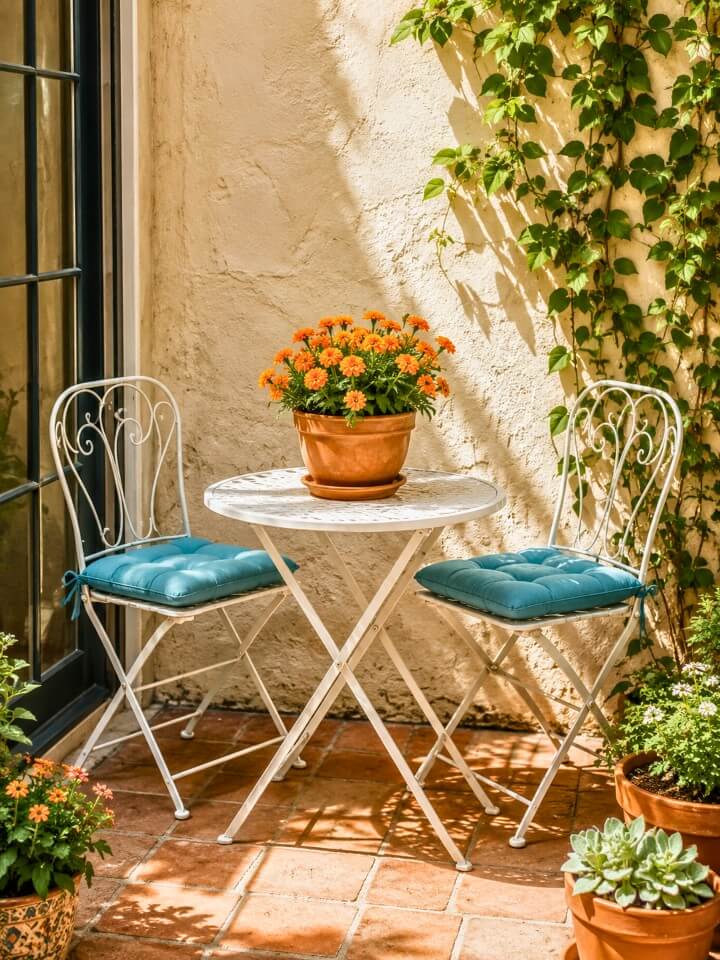
A standard dining set eats space even when unused. A bistro set folds flat in under two minutes — giving you an open lounge area most days and a proper dining spot whenever you want it.
Cast iron lasts decades but needs occasional rust treatment. Powder-coated steel is lighter and nearly as durable. Folding teak or acacia brings warmth — apply teak oil once a season to prevent graying. Avoid basic aluminum sets under $40; the legs flex underfoot quickly.
Position the set in your sunniest corner for morning coffee, or near a railing with a view. One small potted herb on the table shifts the entire feel.
Cost: $80–$350 | Difficulty: None — assembly only | Suits: Modern, rustic, and Mediterranean styles
7. Outdoor Rug to Define the Area
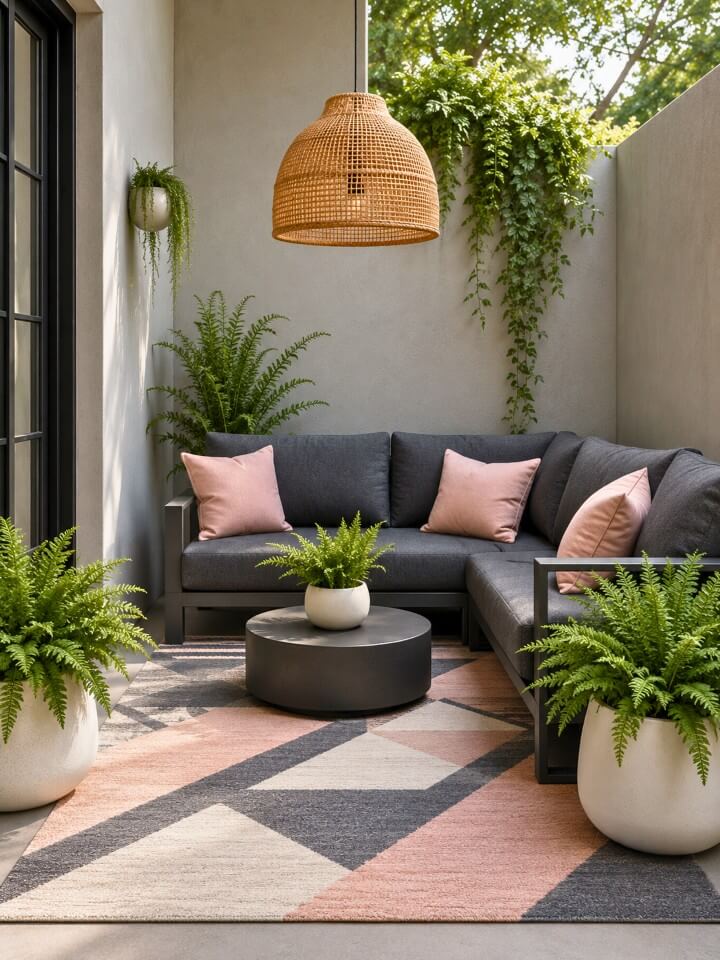
The most common mistake: buying a rug that’s too small. A rug that only fits under the coffee table makes the space feel smaller, not larger. For seating areas, size up so front legs of every chair sit on the rug. For dining setups, extend 12–18 inches beyond the table on all sides.
Polypropylene is the practical gold standard — UV-resistant, mold-resistant, and hoseable when dirty. Avoid jute or sisal outdoors regardless of labels; they mildew on the underside within one wet season.
A geometric or abstract pattern in two or three colors acts like an accent wall — giving the entire patio a design identity in one afternoon.
Cost: $40–$200 | Difficulty: None | Suits: Any patio style
8. String Lights for a Warm Glow
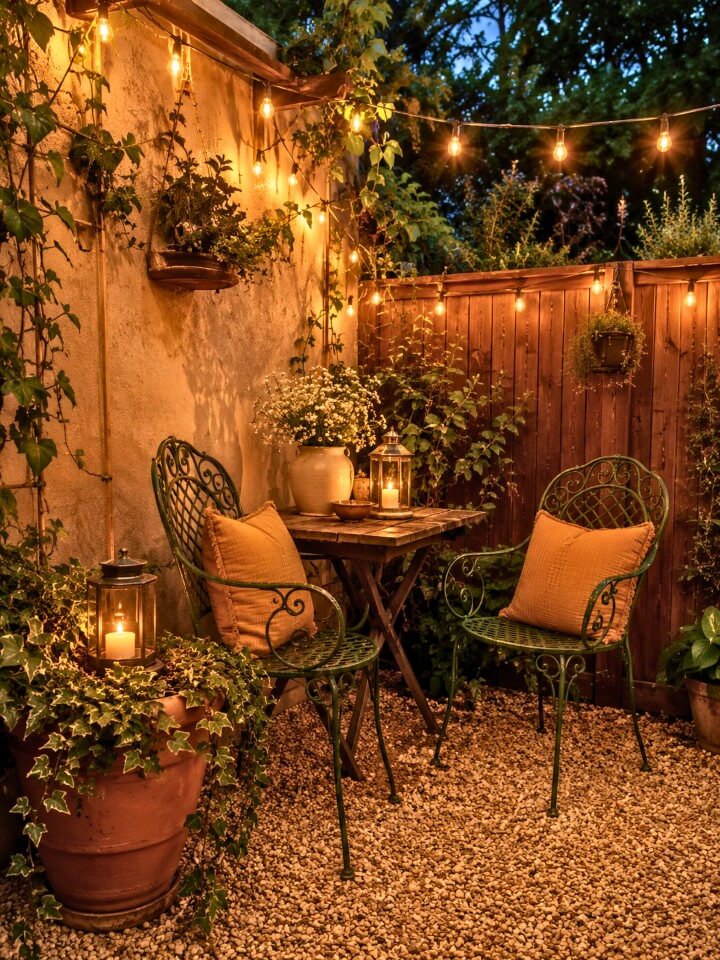
The difference between lights that look designed versus thrown up is entirely in the hang. A straight line reads as functional. A gentle catenary drape — soft curve dropping 12–18 inches at center — reads as atmosphere.
Use screw-in hooks on eaves or fence posts as anchor points. No permanent anchors? Two shepherd’s hooks in planters create a freestanding canopy with no drilling required.
Choose LED string lights at 2700K–3000K color temperature — they match incandescent warmth while lasting years longer. Avoid anything above 4000K; it turns blue and clinical, killing the ambiance entirely.
Edison bulbs suit rustic patios. G40 globes work across almost every style. Fairy lights are best for wrapping railings and trellises.
Cost: $20–$80 | Difficulty: Beginner | Suits: Every patio style
9. Trellis with Climbing Vines
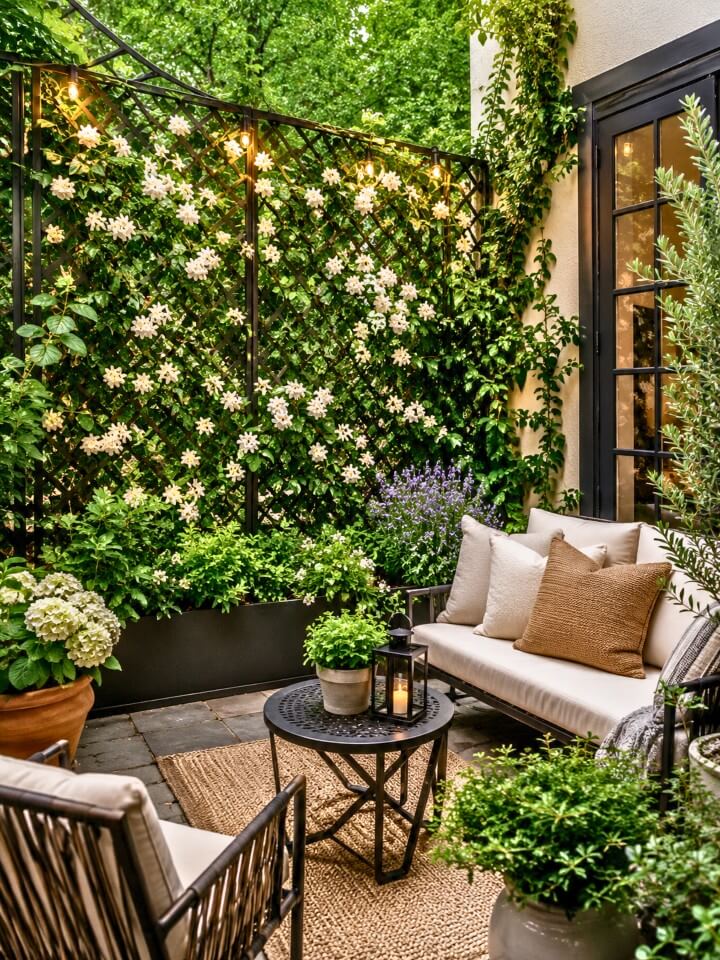
Choose the vine based on what you need it to do. To get fragrance, jasmine and honeysuckle are unmatched — the scent carries across the entire patio on warm evenings. For privacy, evergreen clematis fills in dense year-round. For flowers, clematis offers nearly as much visual impact as climbing roses with far less maintenance — no deadheading or spraying required.
You will need material, cedar weathers to an attractive silver-grey on rustic patios. Powder-coated steel grid panels in black read as architectural on modern spaces.
Attach the trellis a few inches away from the wall rather than flush against it. That air gap reduces moisture buildup behind the vine and keeps the plant healthier.
Cost: $30–$150 | Difficulty: Beginner | Suits: Rustic, cottage, and modern patios
10. Built-In Bench with Storage
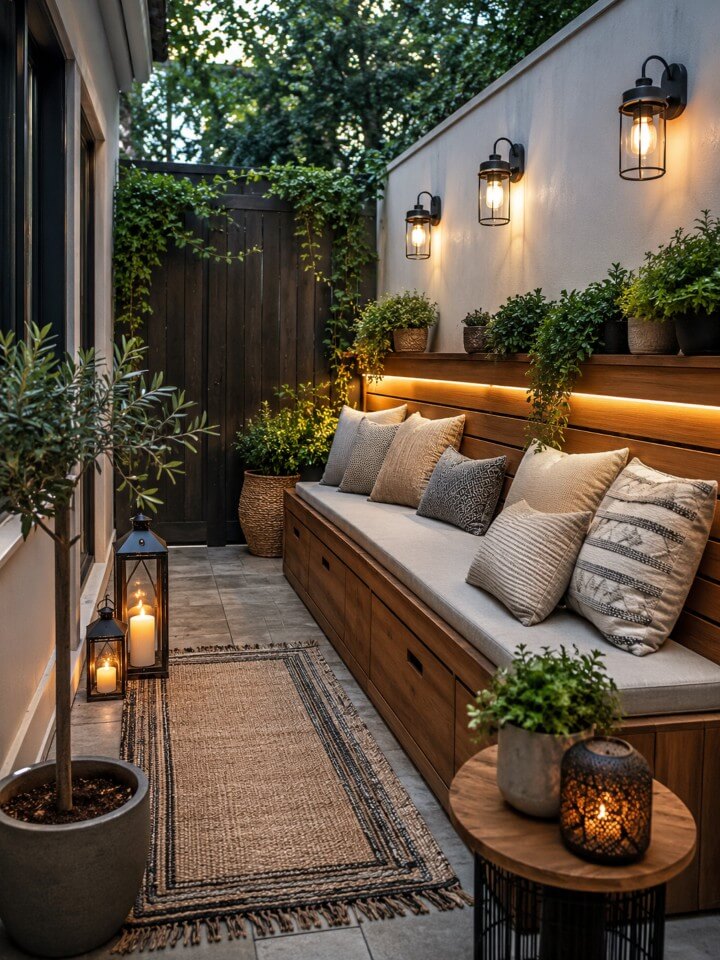
A built-in bench sits flush against a fence or wall, turns dead space into seating, and hides cushions and tools inside — all in an 18-inch-deep footprint.
Best placement: along a fence line where you currently have nothing. A bench running that full length makes the patio feel purposeful rather than cramped.
DIY with cedar framing, a plywood lid, and piano hinges runs $80–$200 in materials. Not handy? Freestanding storage benches that look built-in against a wall are available from Wayfair and Target for $120–$300.
Cushions are non-negotiable — at least four inches thick in weather-resistant fabric. Store them inside the bench when it rains to keep them fresh for years.
Cost: $80–$300 | Difficulty: Intermediate (DIY) or Beginner (pre-made) | Suits: Rustic or modern finishes
11. Small Fire Pit for Evening Gatherings
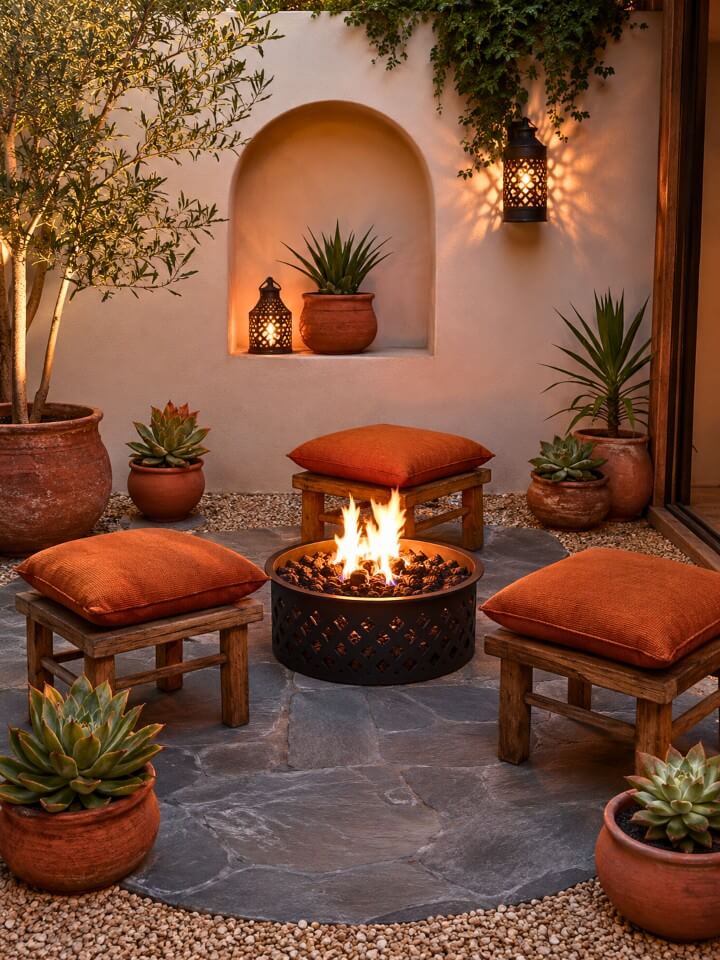
Wood-burning pits give authentic crackle but produce smoke that drifts toward neighbors — and many HOAs restrict open burning, so check local rules first.
Propane is the practical sweet spot for most small patios: clean-burning, adjustable flame, instant off. A 20-pound tank lasts roughly eight to ten hours. Tabletop ethanol burners work well where a floor-level pit feels too risky near plants or fencing.
Safety clearances are non-negotiable: keep any fire pit at least ten feet from exterior walls, eaves, fences, and wood structures. If you can’t maintain that clearance comfortably, a tabletop burner is the correct choice. Never place a fire pit on a wood deck without a heat-resistant mat underneath.
Cost: $60–$400 | Difficulty: Beginner | Suits: Rustic stone, modern metal, or minimalist tabletop styles
12. Colorful Container Flowers
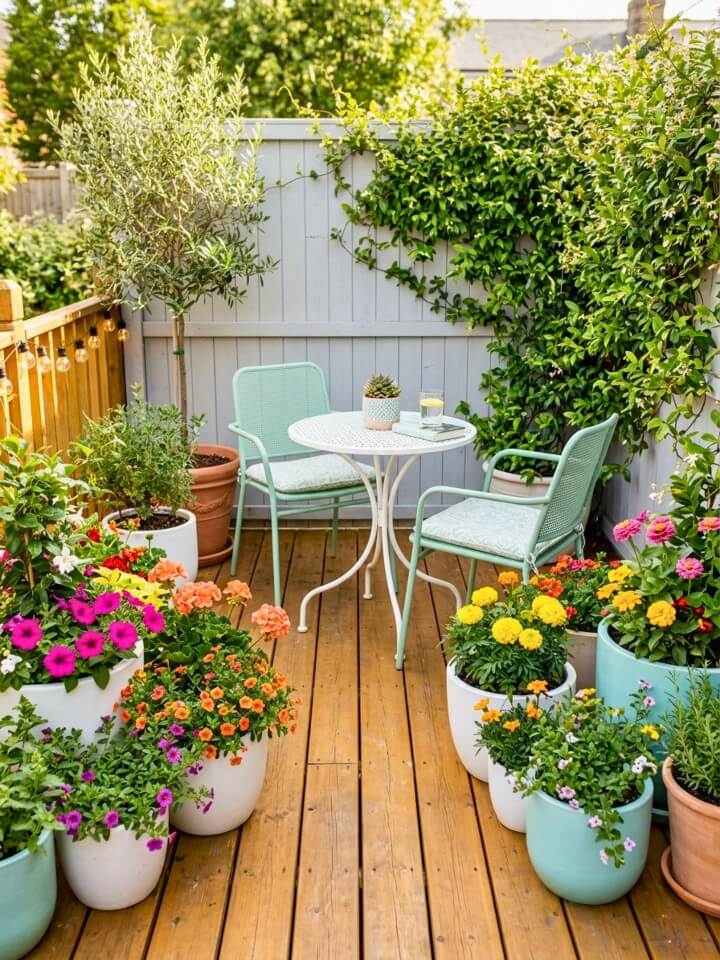
Single pots look like afterthoughts. Group five pots at varying heights and it looks like a designed garden. Use odd numbers, tallest pots at the back, trailing plants at the edges. For height variation without buying tall planters, hide an overturned pot or wooden crate underneath the back row.
Outdoors, bold colors read better because sunlight bleaches subtlety. Deep purple salvia, bright yellow marigolds, and white alyssum work almost universally. For shade, dusty rose geraniums with silver artemisia and soft blue lobelia is a reliable combination.
Swap plants seasonally — pansies in spring, petunias in summer, ornamental kale in fall. Each swap takes an hour and costs $20–$40.
Cost: $30–$150 per season | Difficulty: Beginner | Suits: Any patio style
13. Miniature Rock Garden
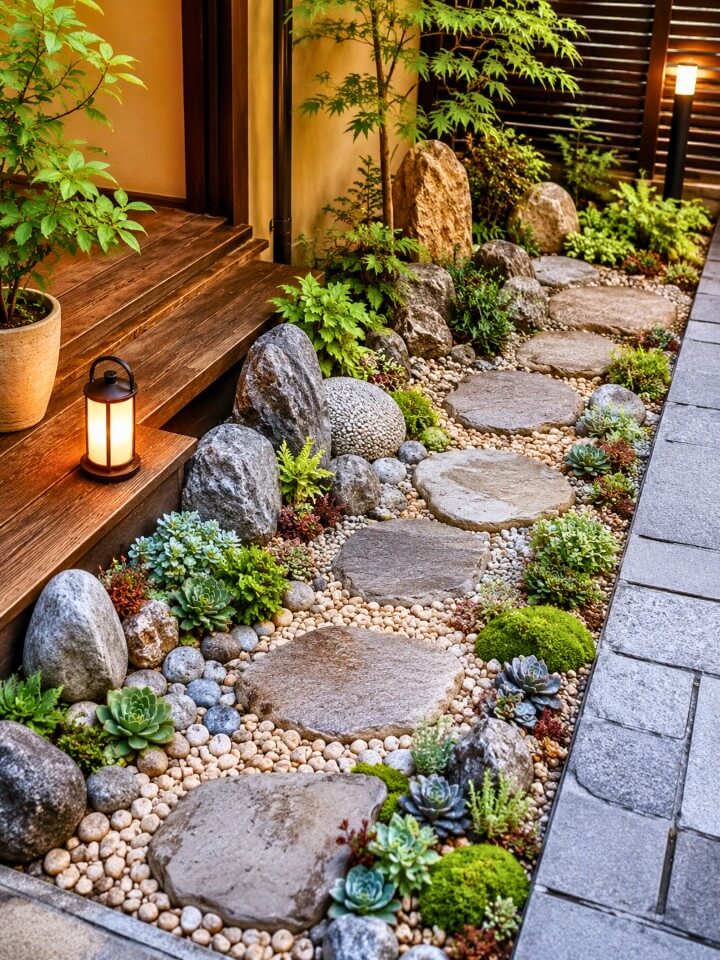
The most common mistake: mixing rocks from too many different sources. Pick one dominant rock type and use it consistently throughout. Use a fine gravel in a complementary tone as ground cover between pieces. Restraint is what makes it look intentional rather than random.
Low-growing sedums are the workhorses — drought-tolerant and available in colors from deep burgundy to chartreuse. Creeping thyme fills gaps and releases a faint herbal scent when stepped on. A single ornamental grass like blue fescue adds movement without overwhelming the composition.
Define the garden with a shallow raised border — even two courses of stacked flat stone. This containment separates a deliberate design feature from a pile of rocks in a corner.
Cost: $40–$180 | Difficulty: Beginner to Intermediate | Suits: Natural, minimalist, and Japanese-inspired styles
14. Compact Outdoor Bar Cart
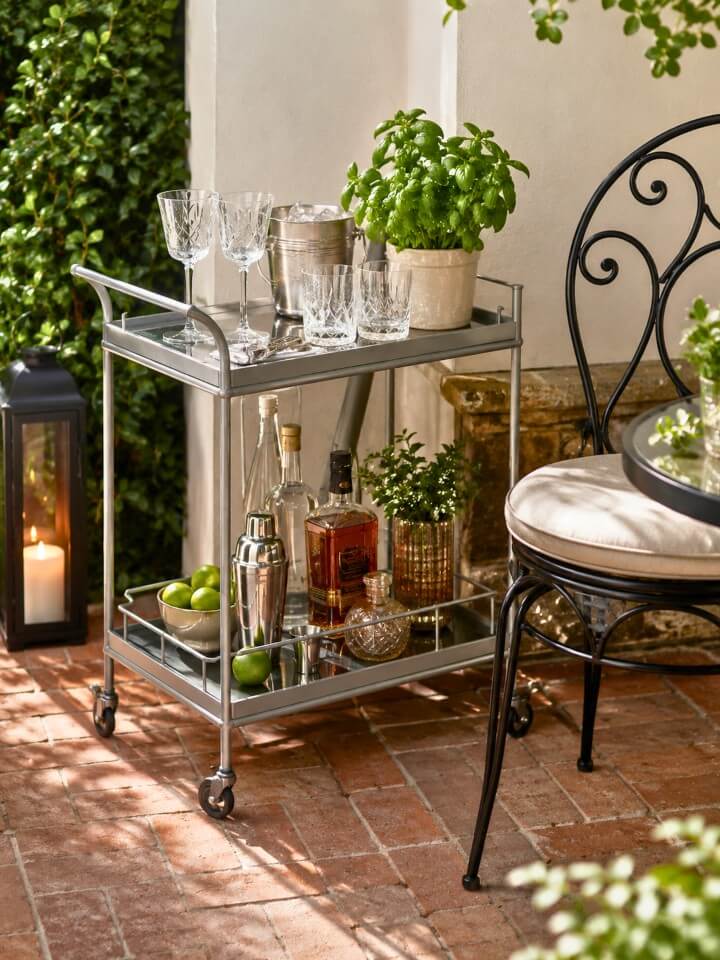
Wheels are non-negotiable — the ability to move or tuck the cart away is what makes it genuinely functional. Look for at least two locking casters so it stays put while in use.
Two open shelves plus a hanging glass rack covers almost every entertaining need. More elaborate configurations usually create clutter rather than convenience.
Black powder-coated steel suits modern and industrial spaces. Teak with brass fittings suits Mediterranean or coastal styles. Wicker works on rustic patios but must come indoors in wet climates to prevent deterioration.
Stock it simply — a few glasses, ice bucket, one or two bottles, a cutting board. An overcrowded cart looks like clutter on wheels.
Cost: $80–$300 | Difficulty: None — assembly only | Suits: Modern, rustic, coastal, and Mediterranean styles
15. Decorative Privacy Screen
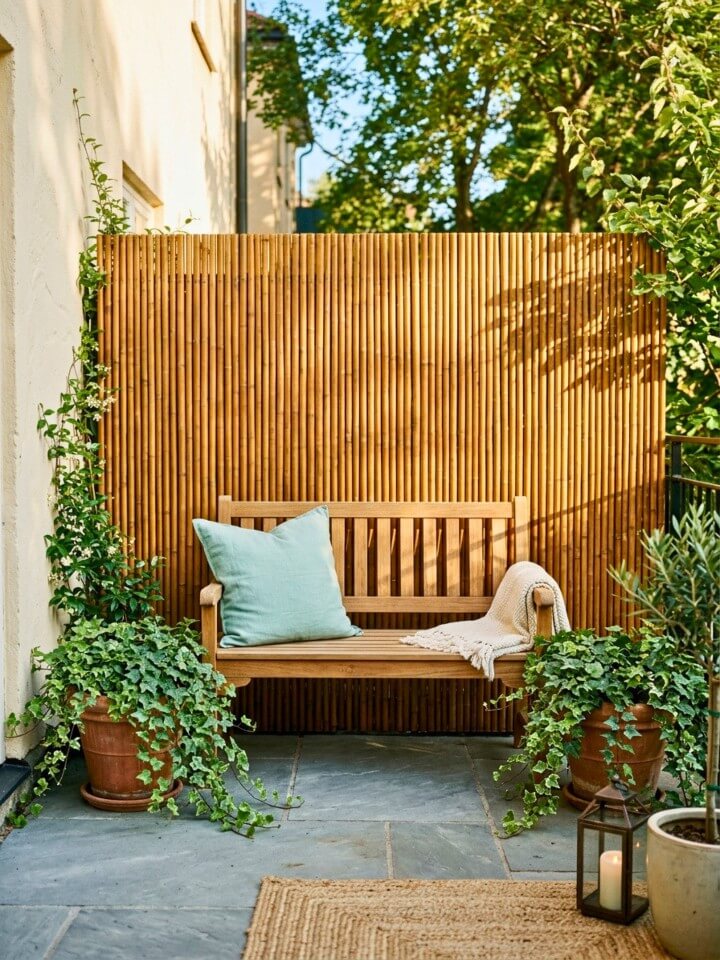
Freestanding screens work best if you rent, can’t drill into concrete, or want seasonal flexibility. In consistently windy locations they need heavy anchoring. Attached screens are more stable and look more permanent — better for homeowners who know exactly where they need coverage.
Horizontal cedar slat screens with deliberate gaps let air and light through while reading as modern and architectural. Bamboo is affordable and fast to install but weathers to pale tan within a couple of seasons unless sealed. Laser-cut metal panels cast beautiful shadows in afternoon light and suit contemporary spaces well.
Add a wire grid to the front face and let climbing jasmine or a climbing rose work up it — the result looks like a garden wall, not a barrier.
Cost: $60–$400 | Difficulty: Beginner to Intermediate | Suits: Modern, rustic, tropical, and contemporary styles
16. Raised Deck Platform
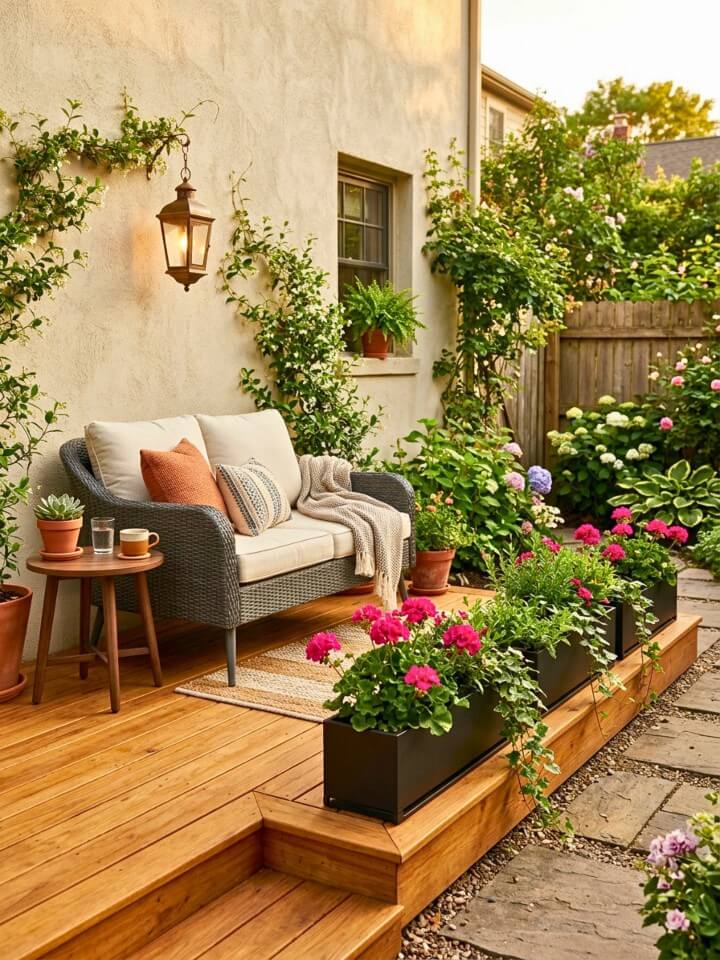
Even a platform rising just 8–12 inches creates enough visual separation to make a seating area feel genuinely distinct. Flat patios benefit too — a raised section immediately implies “this is the seating area” without a single piece of furniture placed yet.
Pressure-treated lumber is most affordable but needs sealing every few years. Cedar and redwood are naturally rot-resistant and weather attractively with no treatment. Composite decking costs more upfront but needs no maintenance and often works out cheaper over ten years.
Finish the edges with fascia boards along visible sides. Add a row of low potted plants along one or two edges and the platform reads as a landscape feature rather than a construction project.
Cost: $200–$800 | Difficulty: Intermediate | Suits: Modern, rustic, and transitional outdoor styles
17. Hanging Planters at Different Heights
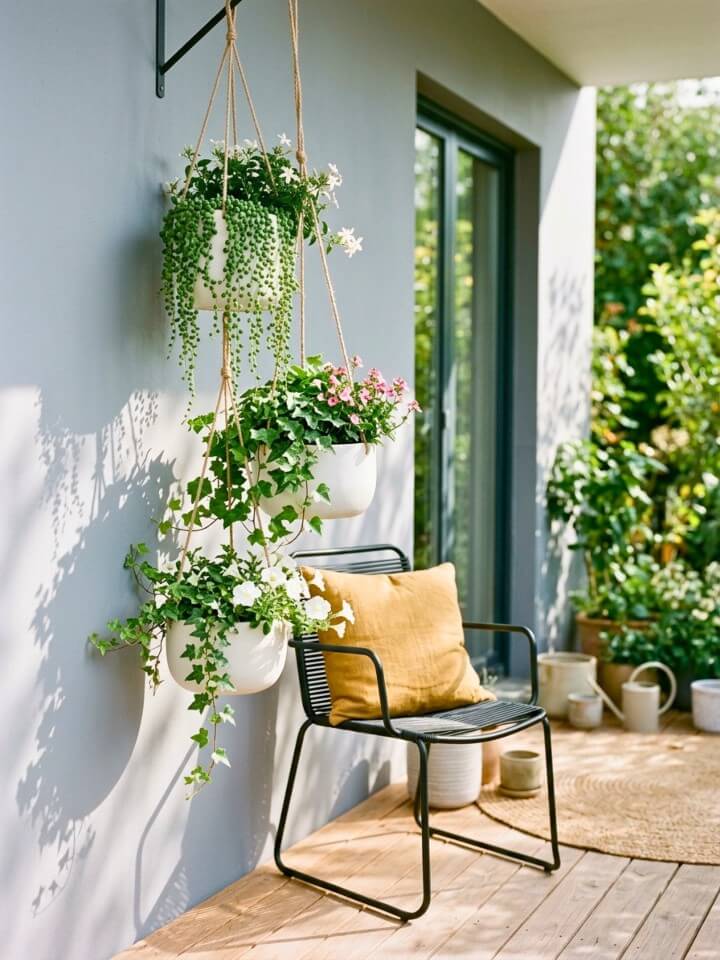
Avoid hanging everything at the same level — identical baskets in a row all at the same height looks tidy but completely flat. Instead, hang planters at three distinct heights: seated eye level, standing eye level, and overhead if your structure allows. The variation creates depth and draws the eye through the space.
Trailing plants perform best in hanging baskets — cascading strings of pearls, trailing nasturtiums, or ivy uses gravity as a natural design element. Million Bells flowers continuously from spring through frost with no deadheading needed.
On hot summer days, a hanging basket in full sun may need watering twice daily. Self-watering baskets with a built-in reservoir extend intervals to every two or three days.
Cost: $30–$120 | Difficulty: Beginner | Suits: Any patio style
18. Small Patio Fountain
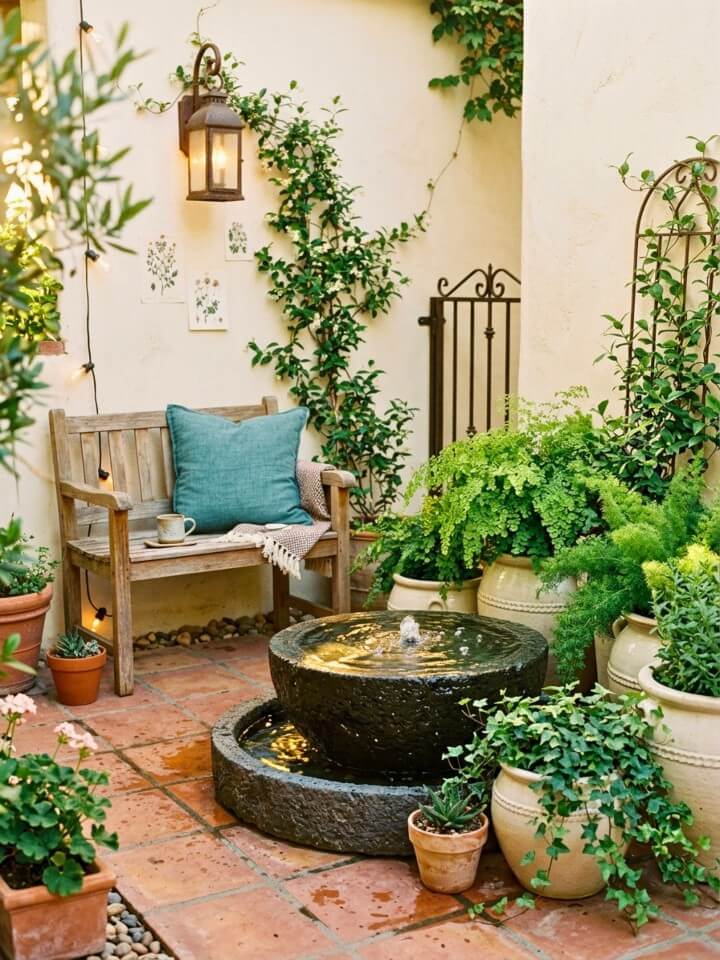
Wall-mounted fountains solve space problems elegantly — a decorative backplate with a spout flowing into a small basin below uses zero floor space and adds a vertical focal point to any plain wall or fence.
A glazed ceramic or cast concrete urn with a bubbler pump inside suits almost any design style. It reads as a planter from a distance and reveals itself as a water feature up close.
Sound character matters as much as appearance. A thin stream falling far creates a high trickling sound. A wide sheet falling a short distance masks background noise more effectively. A bubbling urn produces the quietest murmur — pleasant up close but unobtrusive when you step away.
Cost: $80–$500 | Difficulty: Beginner to Intermediate | Suits: Mediterranean, cottage, modern minimalist, and natural garden styles
19. Painted Accent Wall
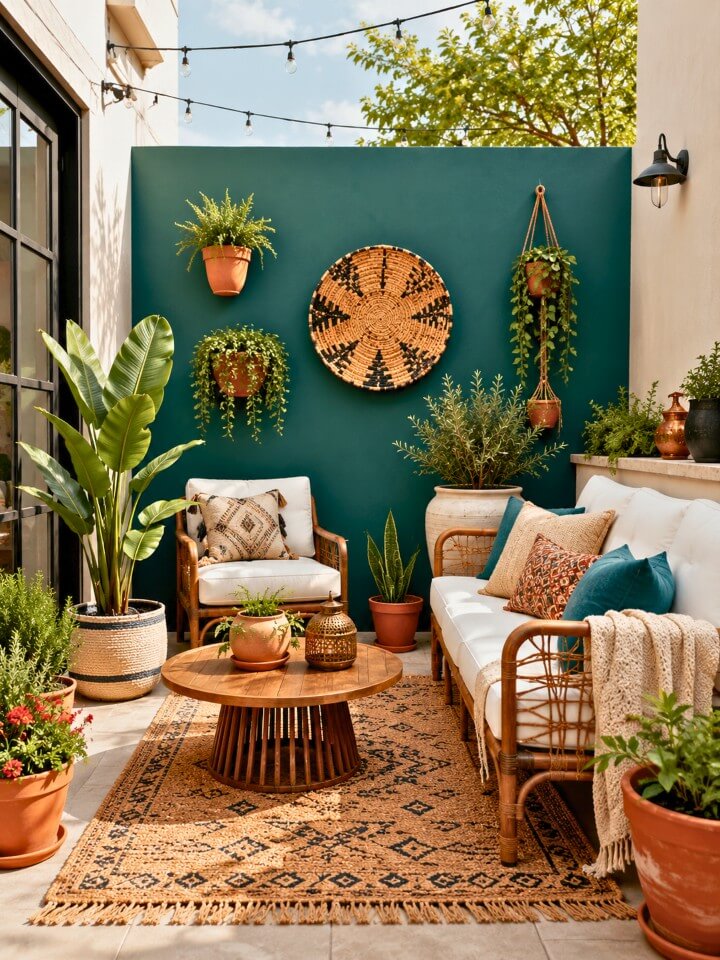
Paint the wall most visible from your primary seating position and leave the others neutral. Painting all walls the same bold color creates a tunnel effect that shrinks the space. One painted wall creates depth without closing anything in.
Direct sunlight washes out colors that look rich on a swatch card. Go one or two shades deeper than your instinct suggests. Deep forest green, terracotta, navy, and dusty sage all perform beautifully outdoors and make green plants look more vivid than white or beige ever will.
The paint is not the feature — it makes every other feature look better. A dark wall behind terracotta pots, or behind a bistro set, turns furniture into a scene.
Cost: $20–$80 | Difficulty: Beginner | Suits: Any patio style
20. Outdoor Storage Ottoman
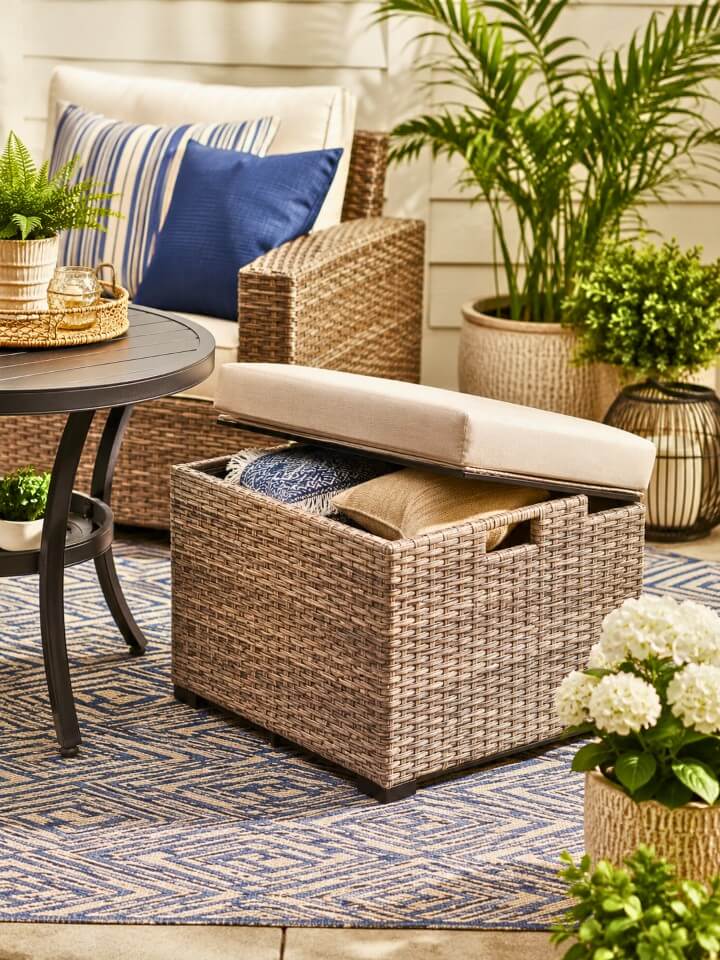
The most useful size is 18×18 to 24×24 inches — large enough to store meaningfully, small enough to tuck in front of a chair without blocking foot traffic. Use it as a footrest daily, pull it out as extra seating when guests arrive, and add a tray on top for drinks.
Look for solution-dyed acrylic fabric like Sunbrella, or hard-sided powder-coated steel and resin wicker with a waterproof interior liner. The interior liner matters as much as the exterior — without it, stored items come out damp after the first heavy rain.
Choose a color or pattern that picks up an accent already on your patio. That single decision moves it from functional to cohesive.
Cost: $60–$250 | Difficulty: None | Suits: Modern, coastal, rustic, and transitional styles
21. Compact Swing or Hammock Chair
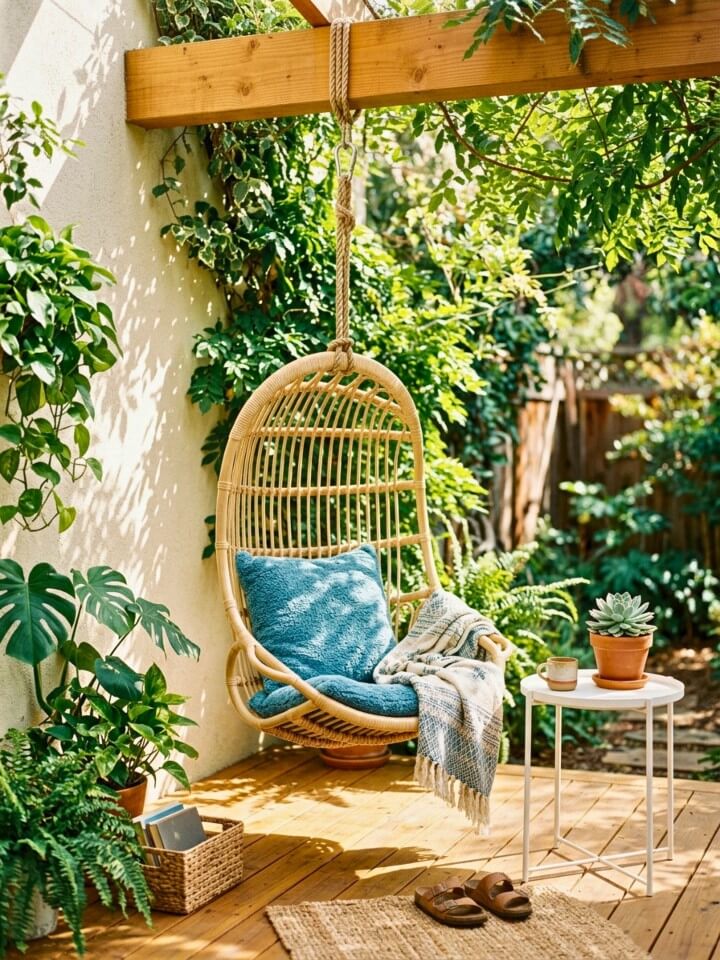
Before buying anything, identify your anchor point. A hanging chair puts concentrated dynamic load on a single point. A ceiling joist, heavy timber beam, or purpose-built freestanding frame can handle it. Thin aluminum patio covers, lightweight pergola rafters, and fence posts cannot. Verify the anchor holds at least 300 pounds of dynamic load. A freestanding stand removes the structural question entirely.
Woven cotton rope chairs conform beautifully to the body but must come indoors in wet weather. Synthetic rope chairs look nearly identical and last outdoors year-round. Hanging egg chairs with cushioned interiors are most comfortable for extended reading or napping.
Position it facing your best view — a plant corner, a water feature — never a blank fence.
Cost: $80–$400 | Difficulty: Beginner (with right anchor point) | Suits: Rustic, bohemian, coastal, and modern styles
22. Outdoor Chalkboard Wall
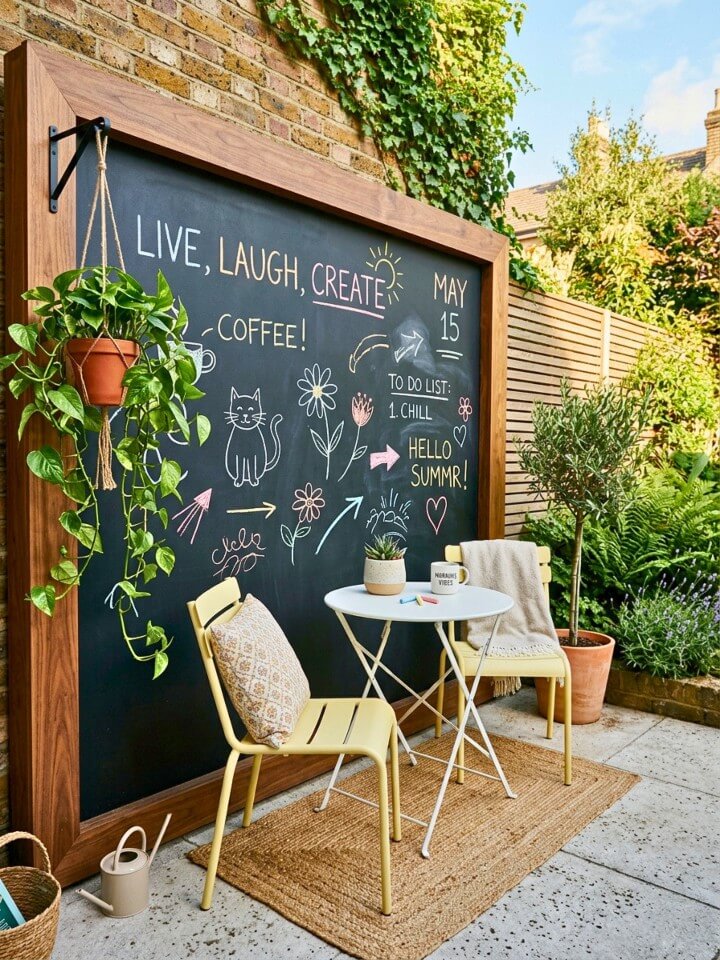
Position it where people naturally pause and gather — behind a bistro set, near the back door, or beside an outdoor dining area. It doesn’t work as a background feature viewed from a distance; chalkboard is a close-up experience meant to be read, touched, and written on.
Keep it out of direct rain. Even weather-resistant chalkboard paint degrades faster with repeated wetting and drying.
Used with intention, it becomes personal: a seasonal menu board beside the grill, a herb harvest tracker by the raised bed, or a monthly welcome message. Used this way, the wall reflects the household’s personality rather than just filling dead space.
Cost: $15–$60 | Difficulty: Beginner | Suits: Modern minimalist, playful, farmhouse, and family-oriented patios
23. Mini Zen Garden
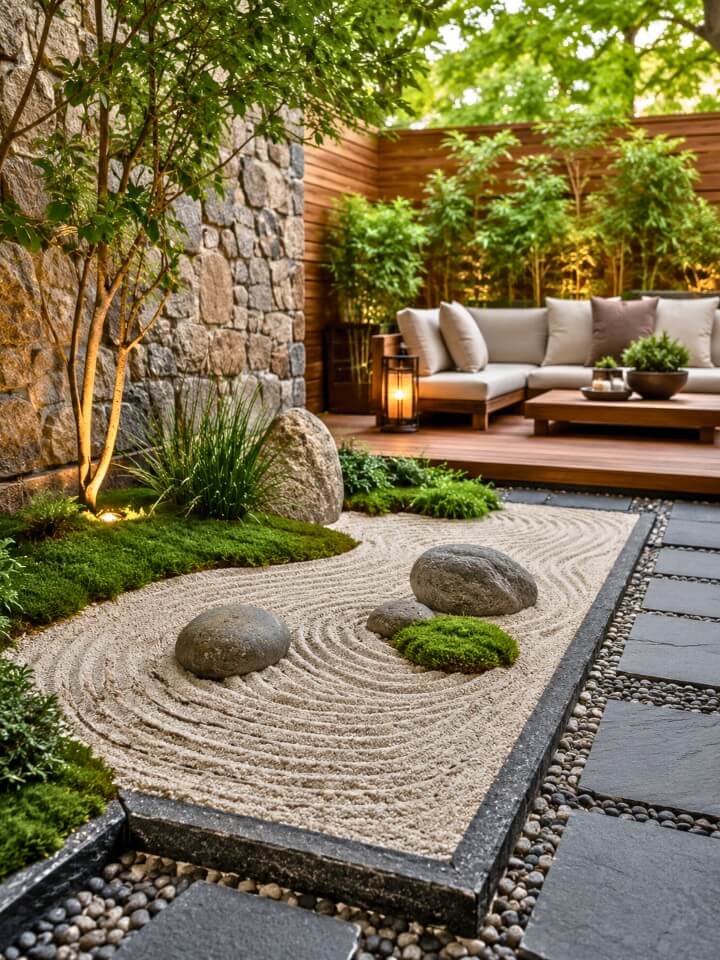
Best suited for people who value stillness and appreciate spare, deliberate design over lush color. For those people, it’s one of the most quietly rewarding things you can add to a patio.
Contain it within a shallow wooden tray, a low stone border, or a defined gravel corner. Ideal size is 18 inches square to 4 feet square — smaller looks like a souvenir, larger starts feeling like maintenance.
Fine pale grey or white sand is most authentic for the gravel. Use an odd number of rocks — one or three reads as intentional; seven reads as a random collection. Plants, if used at all, should be minimal: one sedum, black mondo grass, or a small moss patch.
Cost: $30–$120 | Difficulty: Beginner | Suits: Minimalist and Japanese-inspired garden styles
24. Mosaic Tile Table
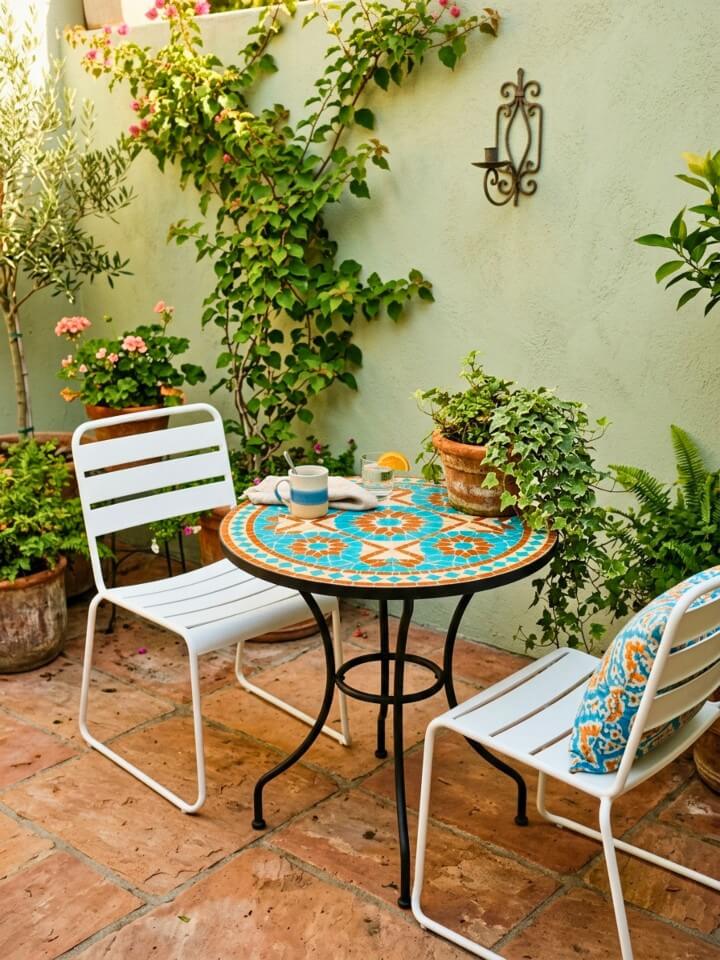
When buying, inspect three things: grout lines should be even and fully filled with no cracks; tiles should wrap cleanly around the edge rather than stopping abruptly at the rim; and the base must be completely stable — a beautiful top on a wobbly base is a daily frustration.
DIY mosaic is more accessible than it sounds. Broken ceramic dishes, hardware store tile samples, and pre-cut glass tiles all work on a basic tabletop. The skill required is patience and color sense, not technical expertise. A craft store kit produces a usable table in a weekend.
Place it as an accent — a side table, a surface in a plant corner. Its job is to reward close looking.
Cost: $80–$400 (bought) or $30–$80 (DIY) | Difficulty: Beginner (bought) or Intermediate (DIY) | Suits: Mediterranean, eclectic, rustic, and bohemian styles
FAQs About Small Patio Landscaping
These are the questions that come up most often once people start planning their patio — practical details that the main ideas above do not fully cover.
How do I make a small patio feel bigger than it actually is?
Vertical elements are your best tool here. Tall plants, wall-mounted planters, and trellises with climbing vines draw the eye upward and create a sense of height that expands the perceived space. Light-colored flooring, mirrors mounted on exterior walls, and keeping furniture legs visible rather than using bulky skirted pieces all contribute to an open, airy feeling even in very tight spaces.
What is the best low-maintenance landscaping option for a small patio?
Succulents in containers, a gravel and stepping stone layout, and a small rock garden are the three lowest-maintenance choices on this list. They need minimal watering, no seasonal replanting, and very little fertilizing. If you want greenery without a daily care commitment, a trellis with an established climbing vine like clematis also essentially maintains itself once it takes hold.
Can I landscape a small patio if I am renting?
Absolutely. Nearly everything on this list is renter-friendly. Freestanding raised beds, container plants, foldable furniture, portable fountains, and freestanding privacy screens require no drilling, no permanent changes, and move with you when you leave. The only ideas that require landlord permission are painted accent walls and any permanently anchored structures like built-in benches or attached trellises.
How much should I realistically budget for a small patio landscaping project?
A meaningful transformation is genuinely achievable for $150 to $300 if you prioritize strategically. An outdoor rug, a grouped plant corner, and string lights alone can completely change how a patio feels for under $200. Larger investments like a raised deck, built-in bench, or quality fire pit push the budget to $400 to $800 but also add the most permanent value to the space.
What should I do with a small patio that gets very little sunlight?
A shaded patio is actually an opportunity most people overlook. Shade-loving plants like ferns, hostas, impatiens, and caladiums thrive where sun-lovers struggle and bring rich texture and color. A compact water feature sounds particularly beautiful in a quiet shaded corner. String lights and candles become more impactful too — in a naturally dim space, warm lighting creates an intimate atmosphere that sunny patios can rarely replicate.
Conclusion:
A small patio does not need a makeover — it needs a point of view. Pick two or three ideas from this list that genuinely fit how you live, not how a showroom looks. The homeowners with the most inviting outdoor spaces are rarely the ones who spent the most. They are the ones who made deliberate choices — a plant corner here, a string of lights there, a bench that finally makes the fence line useful.
Start small. One change leads to another, and before long you are spending more time outside than you ever planned. That is exactly what a good patio is supposed to do.