30 Simple Fence Line Landscaping Ideas You Can’t Miss
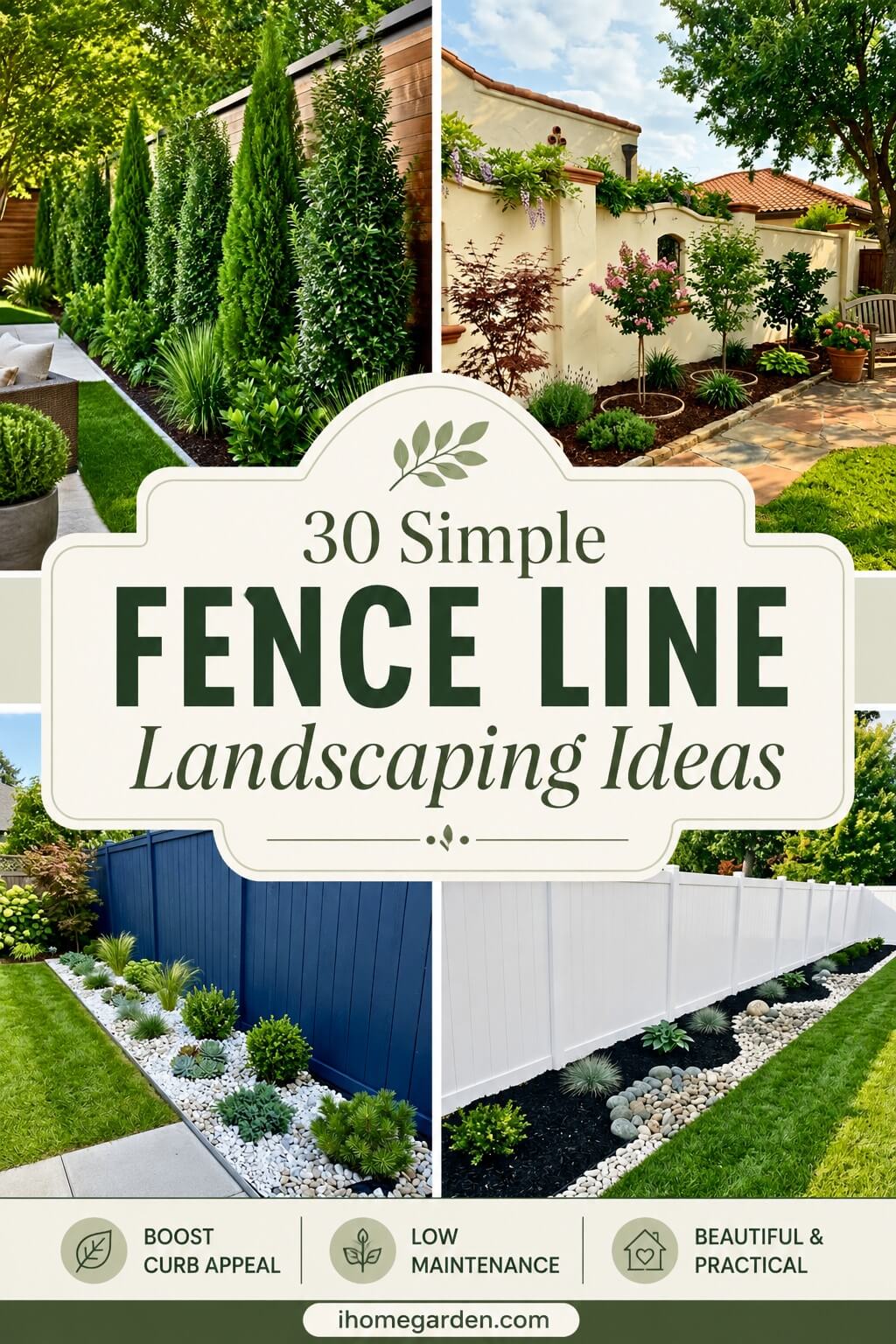
Most fence lines sit bare for years — functional, but doing nothing for the overall look of the yard. A plain boundary becomes something worth noticing when the right plants, materials, or lighting get placed alongside it. These 30 simple fence line landscaping ideas span flowering borders and gravel paths to raised beds and privacy plantings, so there is something useful here whether you are working with a narrow side yard or a long backyard border.
Some options take a single afternoon. Others develop over a season or two into something genuinely impressive. Each idea ahead includes specific plant names, measurements, and practical guidance rather than vague suggestions. No matter what your fence looks like right now — wood, vinyl, or metal — the right treatment alongside it changes how the entire outdoor space feels from the street and from inside the yard.
1. Vertical Planters on the Fence
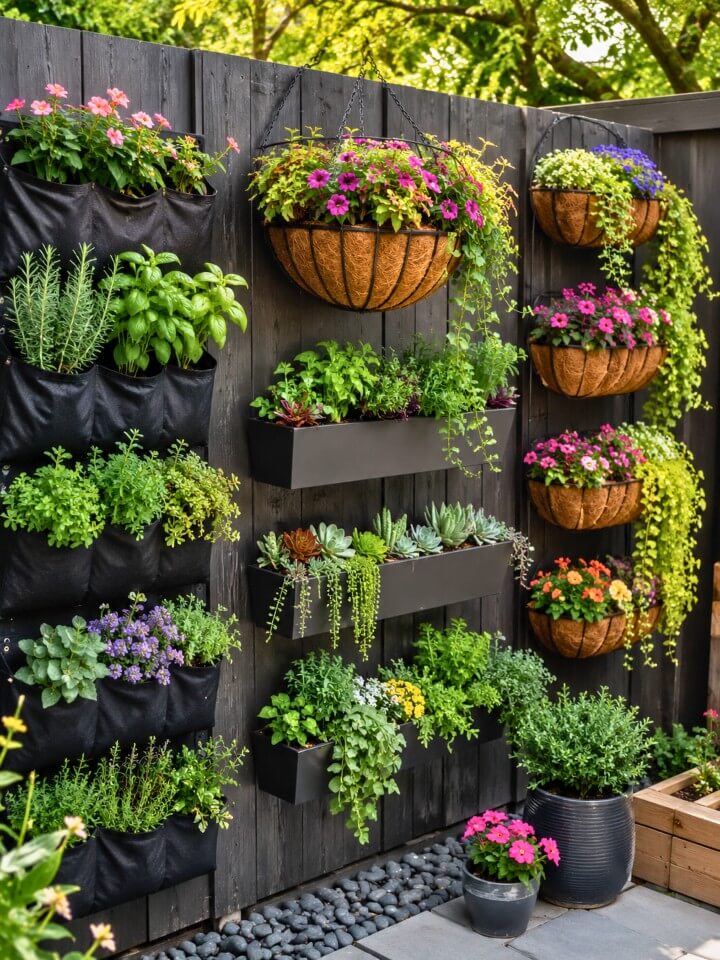
Wall-mounted planters on a fence work well in small yards where ground space is already spoken for. Slim cedar planter boxes attached directly to fence panels suit herbs and trailing annuals. Fabric wall pockets hold succulents or strawberries and drain well without adding much weight.
Group planters at slightly different heights rather than in a rigid grid — the varied arrangement looks more intentional. Check that fence panels can support the weight before mounting, especially when planters are full of damp soil. Wood fence boards typically handle lighter planters well, but heavier concrete or ceramic pots need a sturdier fixing point.
Watering Vertical Planters Without the Mess
Water slowly and in smaller amounts than you would for ground-level pots. Vertical planters drain quickly and water runs down the fence face if you pour too fast, which stains wood over time.
2. Small Trees for Height and Shade
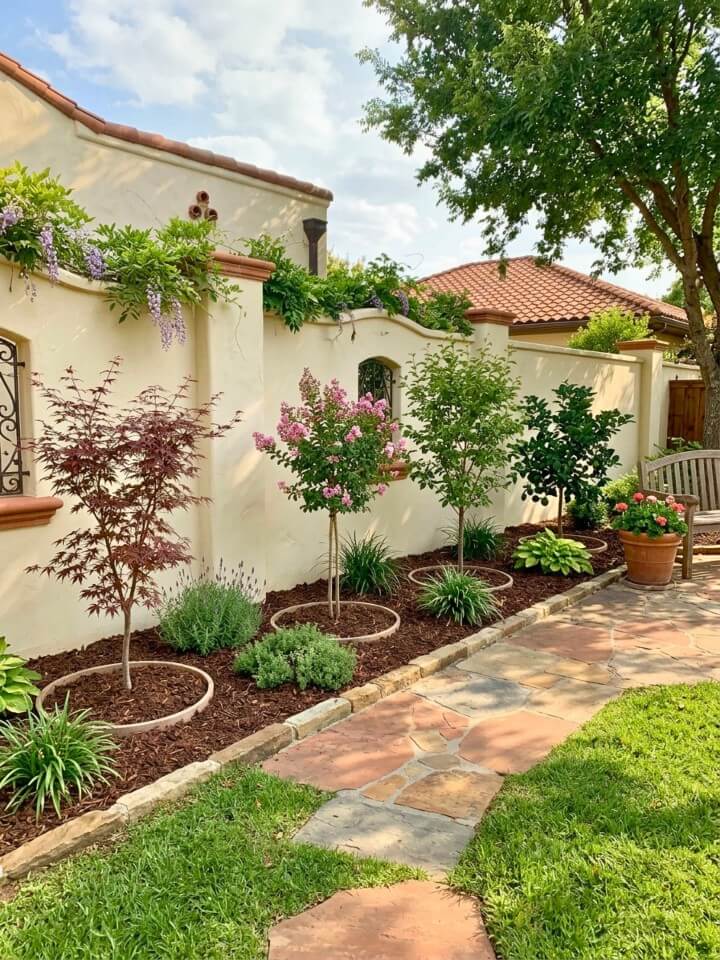
One or two compact trees along a fence line add a layer of height that shrubs and flowers can’t provide. Japanese maple stays manageable and suits partial shade well. Crepe myrtle handles heat and blooms through summer without much attention.
Serviceberry offers spring flowers, summer berries, and good fall color from a single plant. Leave at least three feet between the trunk and the fence so branches have room to develop without rubbing against panels. Mulch spread out to the drip line protects shallow roots and keeps grass from competing with young trees during establishment.
Choosing the Right Mature Size
Check both height and canopy spread at maturity, not just what the tree looks like at the nursery. A tree listed as 15 feet tall can easily spread 12 feet wide, which matters near a fence line with limited space.
3. Simple Flower Border Along the Fence Line
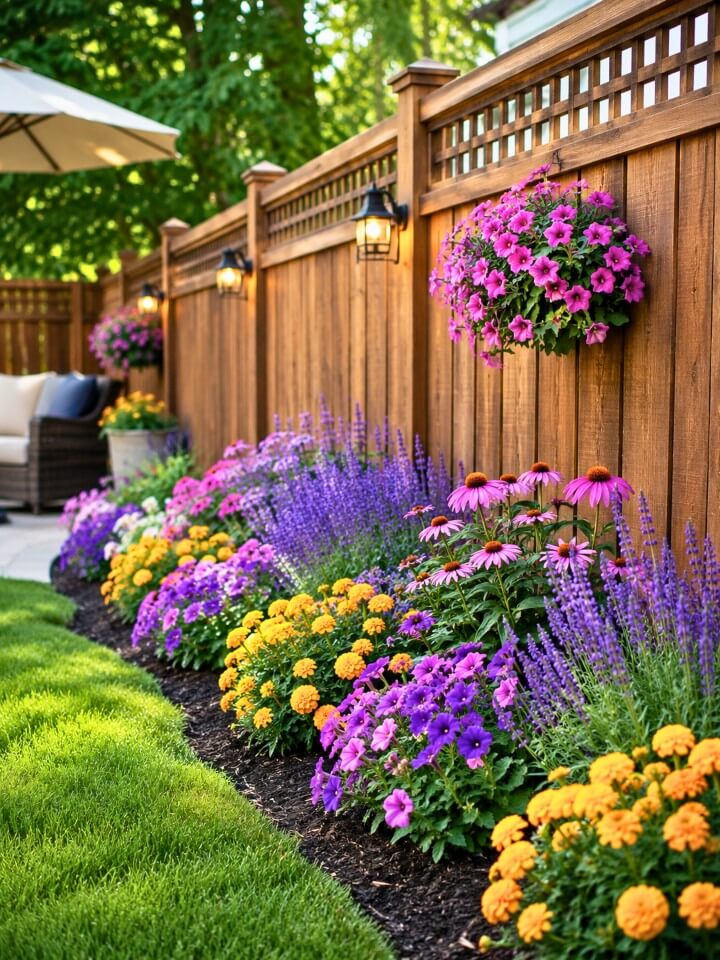
A row of flowers planted close to the fence softens the whole yard without requiring much effort to keep up. Marigolds and coneflowers handle heat well and come back reliably each season. Petunias fill gaps with color from late spring through fall. Plant them 8 to 10 inches apart, and they’ll grow into each other naturally within a few weeks. Two inches of mulch laid around the base holds moisture and cuts down on weeding through summer. Two coordinating colors tend to look cleaner than mixing five or six varieties together.
Best Plants for a Low-Maintenance Start
Marigolds and coneflowers are good picks because they reseed themselves and don’t need deadheading to keep blooming. Avoid plants that spread aggressively near fencing, like mint or bishop’s weed, unless they’re contained in buried pots.
4. White Stone Border for a Bright Fence Line
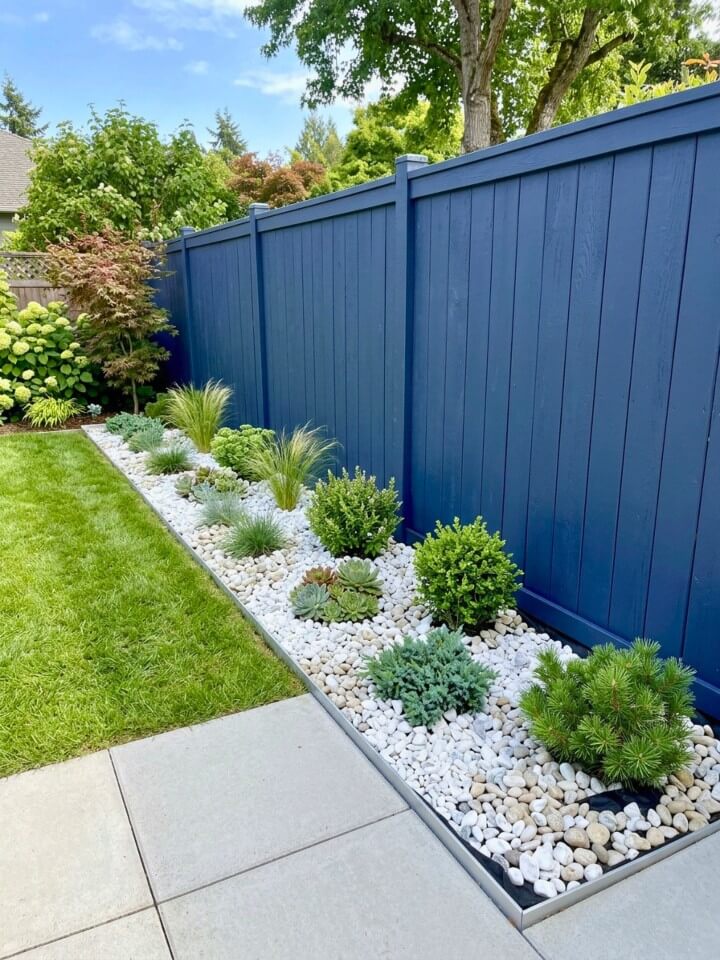
White gravel or marble chips along a fence line reflect light and make narrow or shaded areas feel more open. This works particularly well in side yards that don’t get much direct sun. Lay landscape fabric before spreading stone to prevent weeds from pushing through — white gravel makes dark weeds more visible than darker mulch would. Keep stone depth around two inches. Thicker than that and it becomes unstable underfoot. Pair white stone with dark green plantings like boxwood or mondo grass for sharp contrast, or use it on its own as a clean, low-maintenance border that needs almost no seasonal attention.
Keeping White Stone Looking Clean
Fallen leaves and debris show up quickly against light-colored stone. A leaf blower on a low setting clears the surface without scattering the gravel. Avoid using a rake, which drags soil to the surface and discolors the stones over time.
5. Evergreen Border for Year-Round Fence Line Beauty
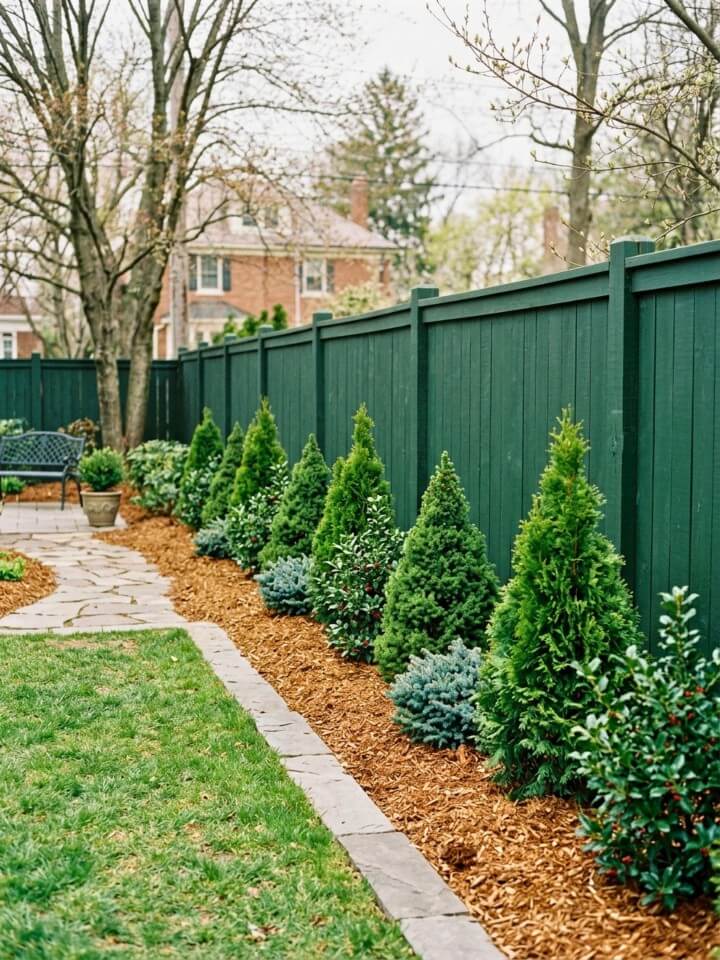
Compact arborvitae planted in a line gives a fence consistent coverage through every season without demanding much upkeep. Dwarf spruce stays dense and manageable. Holly adds structure plus small berries that carry color into winter.Juniper handles dry conditions well and comes in low-spreading varieties that work for shorter fence lines. Space each plant according to its mature width — not how it looks at planting — so the border fills in evenly without crowding. Mulch around the base controls weeds and keeps soil moisture stable through summer heat and winter cold.
Picking the Right Evergreen for Your Space
Arborvitae grows narrow and tall, making it better for privacy. Juniper spreads low and wide, suiting decorative borders more than screening. Match the growth habit to what you actually need before buying.
6. Rock Garden Along the Fence Line
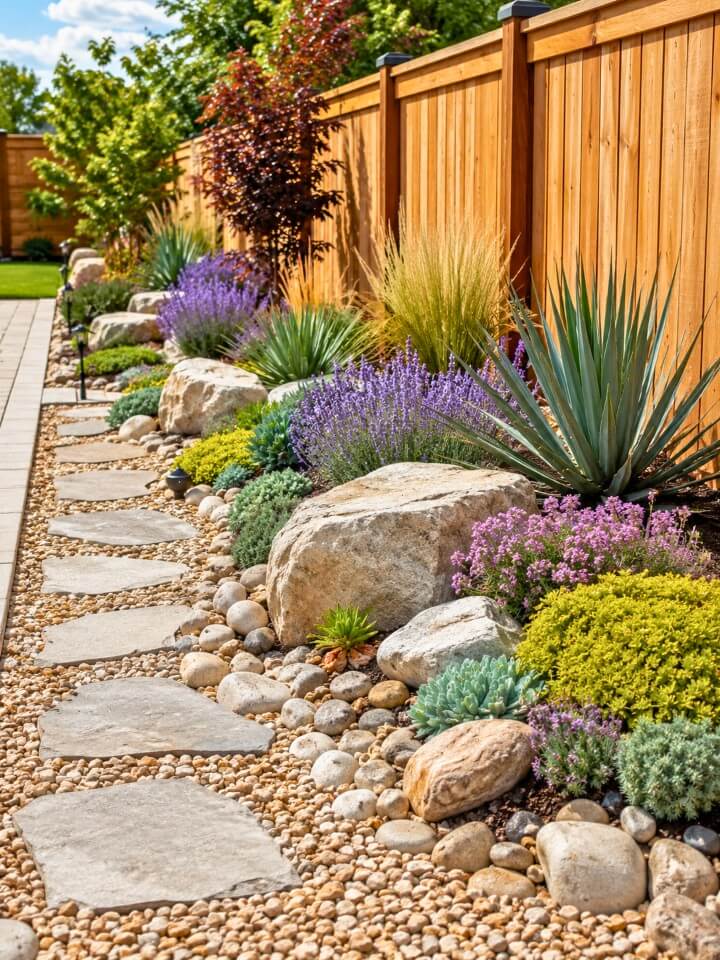
A rock garden works particularly well along sunny fence lines where grass struggles and watering is inconvenient. Start with larger anchor stones placed at irregular intervals, then fill gaps with pea gravel or decomposed granite. Sedum spreads between rocks and stays low. Yucca adds height and a bold outline. Lavender handles dry conditions and brings seasonal color. The key is varying the rock sizes so the layout looks natural rather than arranged. Avoid lining rocks up in a straight row — staggered placement with slightly different heights reads much better from any angle.
Sourcing Rocks Without Overspending
Local landscape suppliers sell rocks by the ton, which is far cheaper than buying bags at a garden center. River rock and fieldstone are usually the most affordable options and weather well outdoors over time.
7. Curved Garden Bed Along the Fence
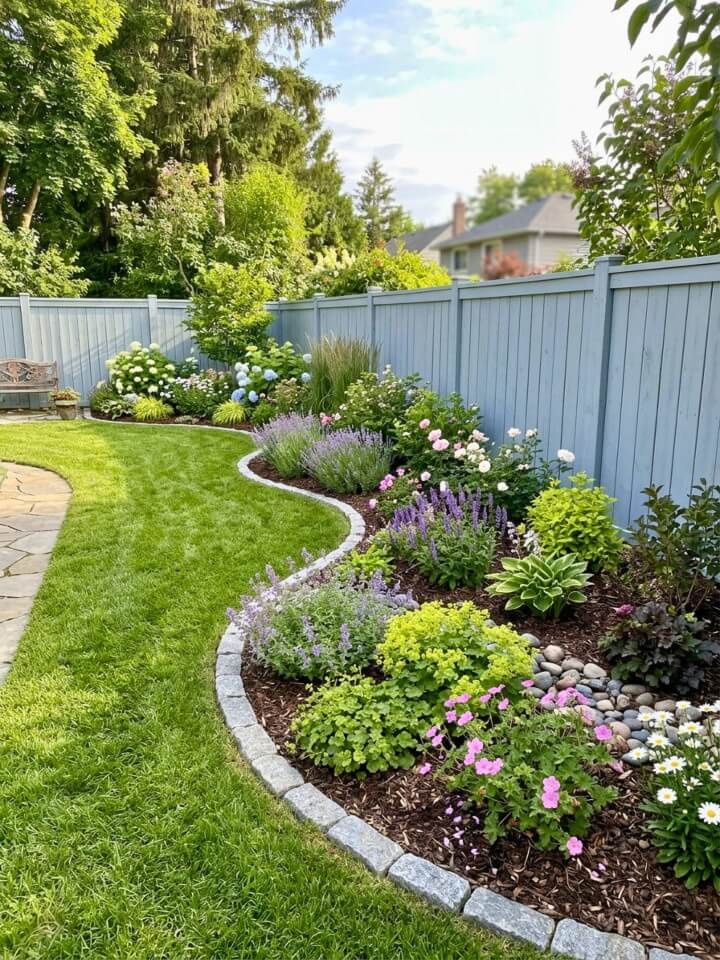
A gently curved front edge on a fence line bed makes the whole yard feel less rigid without much extra work. Use a garden hose laid on the ground to work out the curve before cutting anything — it’s easy to adjust until the shape looks right from a standing view. Fill the bed with a mix of shrubs, perennials, and mulch, varying plant heights so the border has depth rather than a flat profile. Even a slight curve on a bed that runs along a straight fence creates enough visual movement to make the space feel more designed and less utilitarian.
Cutting a Clean Edge on a Curve
Once the hose marks your line, cut along it with a half-moon edger rather than a spade. A half-moon gives a cleaner, more consistent cut on curves and is easier to control than a flat spade.
8. Privacy Screen Plants Near the Fence
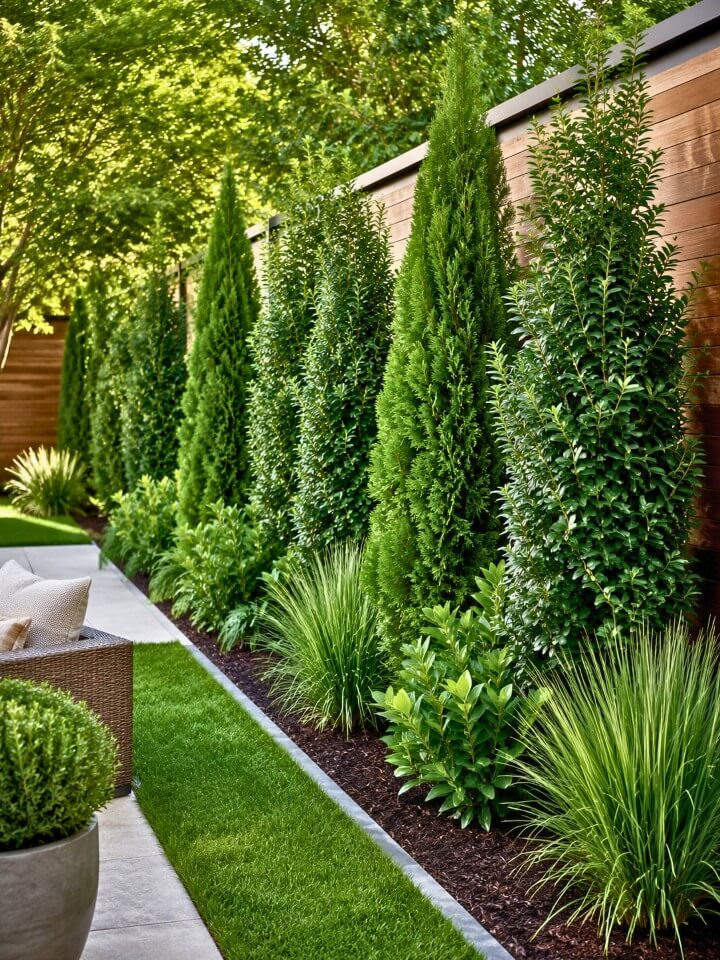
You can use simple fence line landscaping ideas like low shrubs, mulch, and solar lights to make your yard look neat. Clumping bamboo varieties — not running types — create a dense privacy screen without spreading uncontrollably. Wax myrtle grows quickly and handles both sun and part shade. Tall clumping grasses like miscanthus reach six feet or more and fill in faster than most shrubs.
Leave 18 to 24 inches between plants and the fence itself so air can circulate and stems don’t trap moisture against the panels. Mulch the ground between plants to suppress weeds while roots establish. Within two to three growing seasons, most of these plants fill in enough to block sightlines without needing any trimming.
Avoiding Invasive Varieties
Always confirm whether a plant spreads by runners before buying it for screening. Running bamboo and some ornamental grasses can travel far beyond their original spot and become very difficult to remove once established.
9. Mulch Bed with Decorative Stones
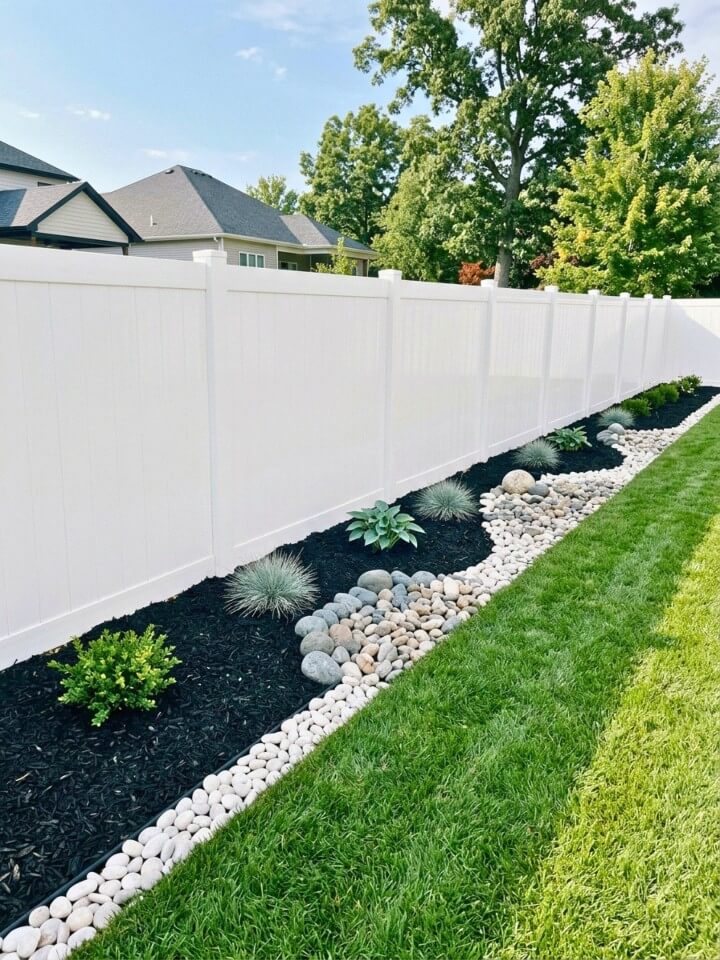
Black or cedar mulch paired with smooth river rocks gives a fence border a clean, finished look that holds up season after season. Lay landscape fabric down first to block weeds before spreading mulch two to three inches deep. River rocks or white gravel along the edge add contrast and keep the mulch from washing out after rain. This approach works well in narrow side yards where mowing is difficult. A few drought-tolerant plants tucked in here and there — sedum or ornamental grass — add texture without making the area harder to maintain.
Choosing the Right Mulch Color
Dark brown or black mulch tends to make green plants pop visually, while cedar mulch fades to silver-gray over time and needs refreshing annually. Match the mulch tone to your fence color for a more cohesive look.
10. Herb Garden Along the Fence
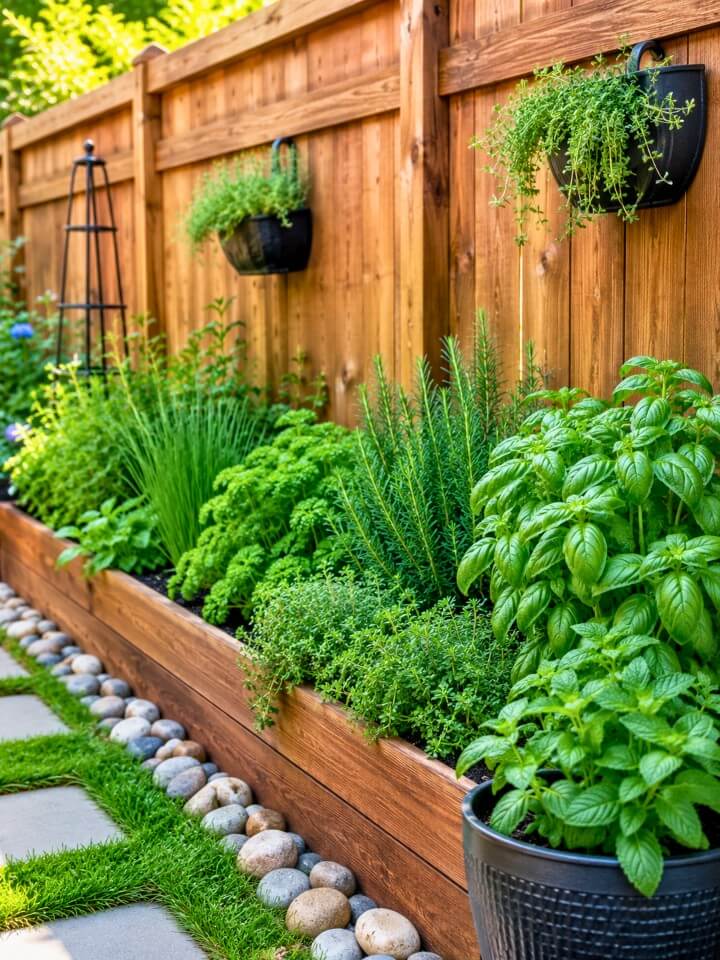
A narrow herb bed against the fence keeps frequently used plants close to the kitchen and makes an otherwise plain boundary productive. Rosemary grows into a tidy woody shrub over time and needs almost no attention once established. Thyme spreads low and handles dry spells well.
Basil does best in a warm, sheltered spot and appreciates the protection a fence provides from strong wind. Plant mint in a buried container rather than directly in the bed — it spreads aggressively through underground runners and can take over a border within a single season. Water consistently in the first few weeks until roots settle.
Harvesting to Encourage Growth
Cut herbs regularly rather than waiting until plants look overgrown. Frequent light harvesting from the top keeps most herbs bushy and productive. Letting them flower early — especially basil — causes leaf production to slow significantly.
More Backyard Landscaping Ideas to Inspire You
Transform your outdoor space with beautiful and creative backyard landscaping ideas.
27 Low Maintenance Florida Landscaping Designs Worth Stealing
31 Kdarchistyle Landscaping Layouts To Save for Later
29 Rectangular Pool Landscaping Ideas To Discover
11. Tall Ornamental Grasses for Soft Privacy
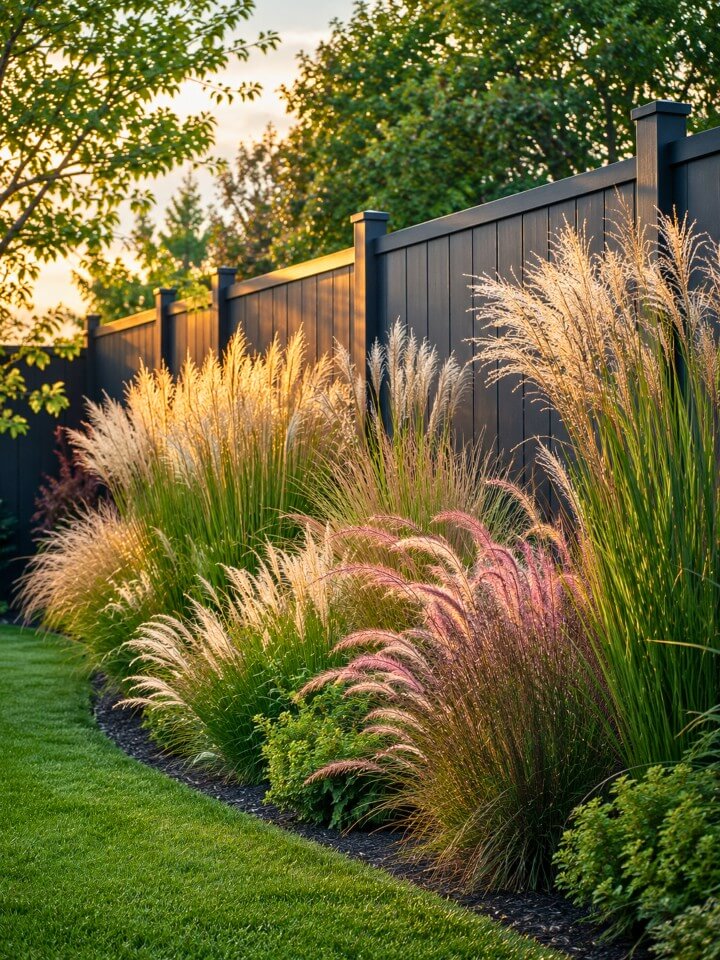
Many backyard fence line landscaping ideas include planting tall grasses, flowers, or small trees for extra privacy. Feather reed grass grows in tight, upright clumps that reach four to five feet and barely need any care once established. Fountain grass has a softer arching shape and moves well in a breeze, which makes the fence line feel less rigid.
Plant either variety in groups of three rather than a single-file line for a more natural result. Both handle full sun well and tolerate dry spells once their roots settle in. Cut them back to about four inches in late winter and they’ll fill back in quickly. A mulched strip underneath keeps the planting area defined.
Cutting Back at the Right Time
Wait until late winter — not fall — to cut ornamental grasses down. The dried foliage provides some insulation for the crown and looks good through the colder months if left standing.
12. Climbing Vines on a Fence Trellis
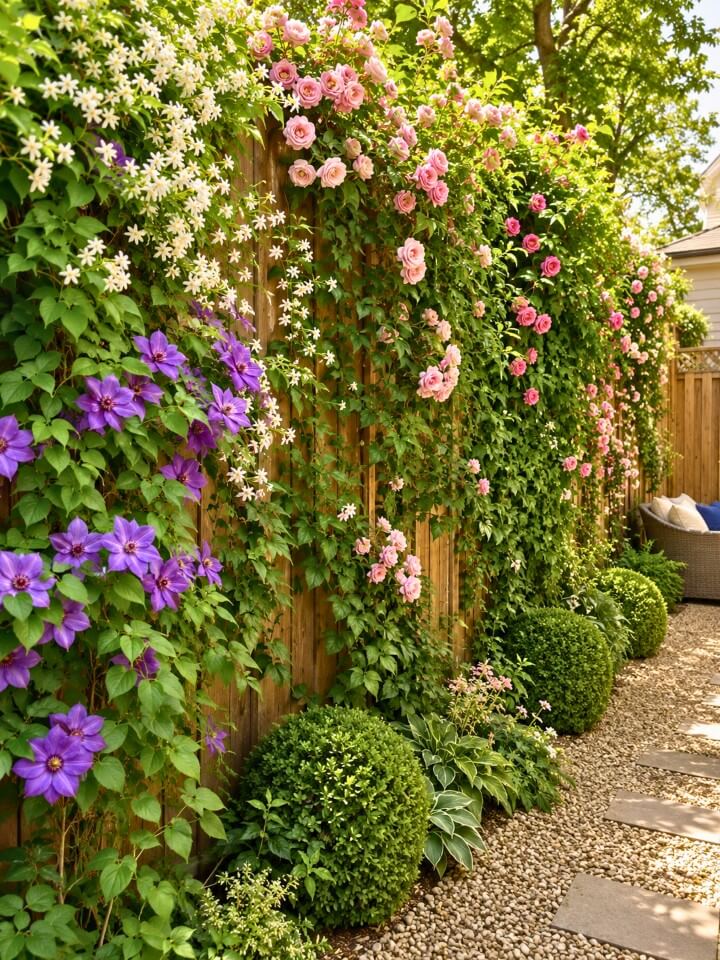
Clematis is one of the more rewarding climbers for a fence because it flowers generously and comes in colors from deep purple to pale pink. Jasmine adds fragrance along with coverage, which makes it a good choice near a seating area.
For spots that don’t get much direct sun, climbing hydrangea is slower to establish but eventually covers a fence panel beautifully. Attach wire or a wood trellis first so stems have something to grip — vines trained onto a surface from the start grow more evenly than ones left to find their own way.
Keeping Vines From Damaging the Fence
Check where stems attach to wood panels each season and trim back any growth creeping into gaps or joints. Moisture trapped between vine stems and wood fence boards can cause rot over several years.
13. Gravel Path Beside the Fence Line
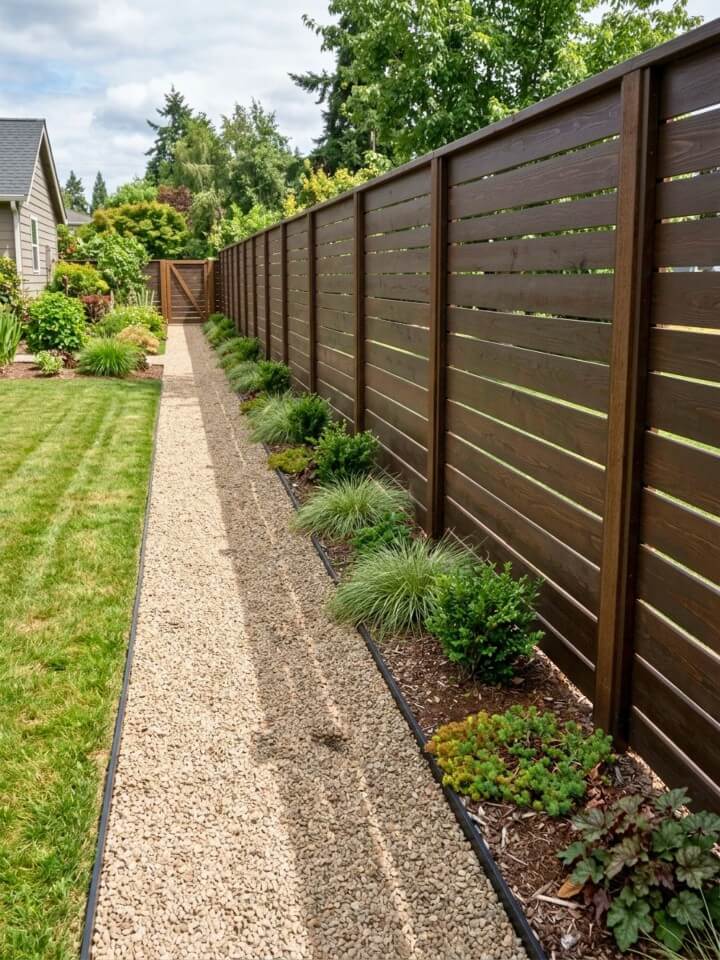
A gravel path along the fence eliminates the strip of lawn that’s awkward to mow near posts and gives a dry surface for yard maintenance tasks. Pea gravel is comfortable underfoot and easy to spread evenly. Crushed granite compacts slightly and stays in place better if the path gets heavy foot traffic. Set steel or brick edging along the garden-side edge to keep gravel from migrating into planting beds. For narrow side yards, even a two-foot-wide path makes the space feel more organized and usable rather than just a leftover strip between structures.
Getting the Depth Right
Two to three inches of gravel is enough for good coverage. Going deeper wastes material and makes walking on it feel unstable. Rake it level after heavy rain to prevent low spots from forming.
14. Raised Garden Bed Along the Fence
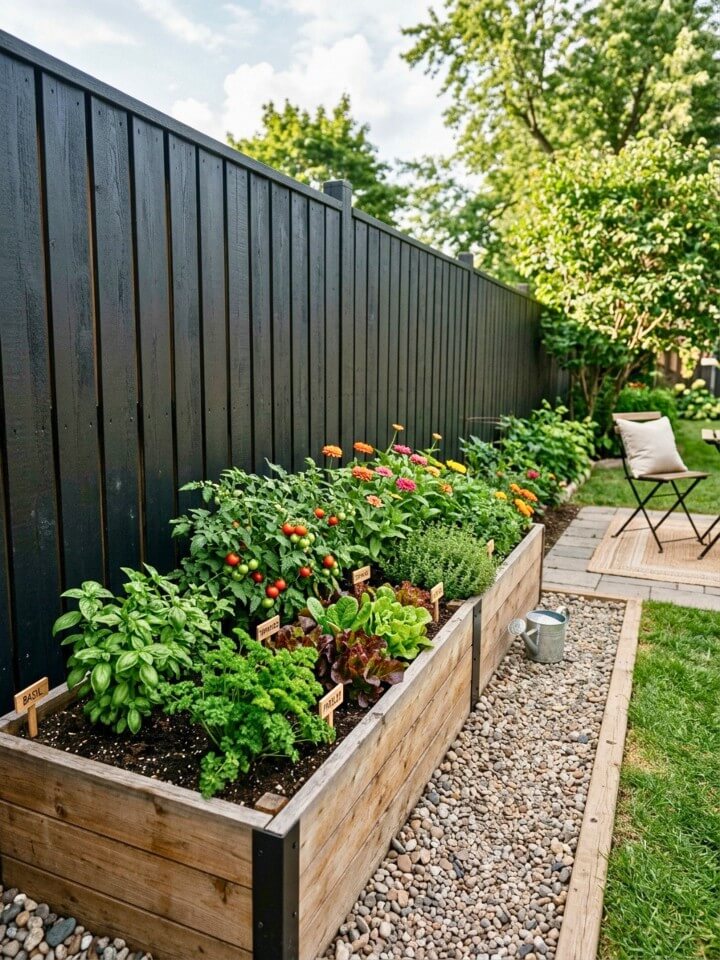
Landscaping along a fence ideas can help turn a plain fence into a beautiful garden feature. Cedar and galvanized steel are both solid choices for a raised bed that sits against a fence — cedar resists moisture naturally, and steel won’t warp or crack over years of weather.
Keep the bed about 18 to 24 inches wide so the far edge stays within reach without stepping inside. Fill it with a mix of topsoil and compost rather than straight garden soil, which compacts too easily in a contained space. South-facing fence lines get enough sun for tomatoes, basil, and zinnias. Shadier spots do better with lettuce, kale, and parsley.
Protecting the Fence Behind the Bed
Leave a few inches of clearance between the back of the raised bed and the fence panels. Soil pressed directly against wood causes moisture buildup and speeds up rot considerably.
15. Solar Lights Along the Fence Border
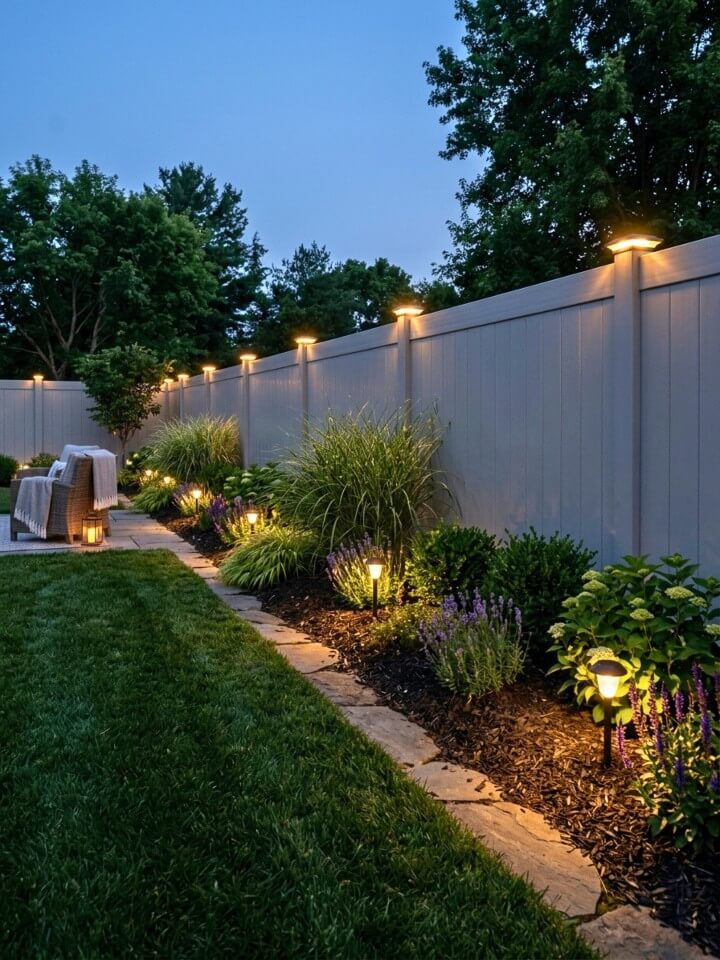
Lighting changes how a fence line reads after dark without adding complicated wiring. Solar stake lights placed every four to five feet between plants highlight the shapes of shrubs and grasses once the sun goes down. Post cap lights sit directly on fence post tops and give a more structured look. Warm white bulbs feel more natural in an outdoor setting than cool white, which can look harsh against plants. For a seating area nearby, a strand of solar string lights draped along the top fence rail adds an easy, relaxed atmosphere to evenings outside.
Placement for Best Solar Charging
Solar lights need direct sun for most of the day to charge fully. If your fence line sits in partial shade, look for models with a separate panel that can be staked in a sunnier spot nearby.
16. Low-Maintenance Shrubs for a Clean Fence Line
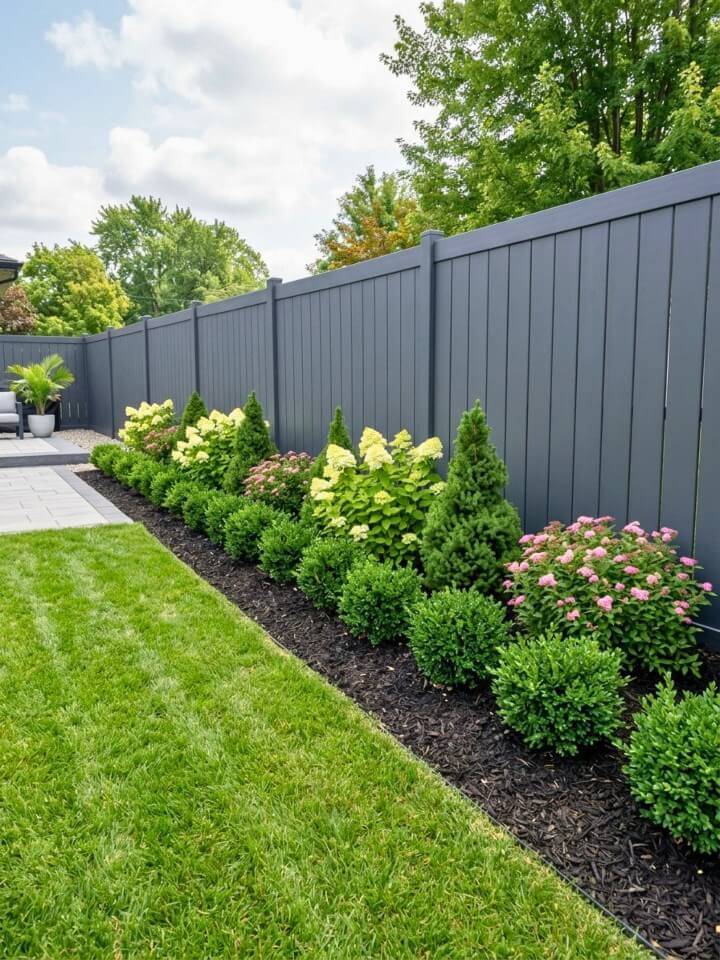
Shrubs give a fence line a sense of permanence that seasonal flowers can’t provide. Boxwood trims neatly and holds its shape through the year. Spirea blooms in spring without demanding much attention afterward. Dwarf arborvitae works well where you want something that stays evergreen without growing too wide. Space each shrub based on its mature width — crowding them causes poor airflow and leads to disease over time. A layer of dark mulch between plants keeps the ground tidy and reduces the need to weed every few weeks.
Spacing and Sizing to Get Right
Check the plant tag for mature spread before digging, not just mature height. A shrub labeled “dwarf” can still reach four feet wide, which affects how many you’ll need and how the finished border looks.
17. Mixed Plant Border for a Lush Fence Line
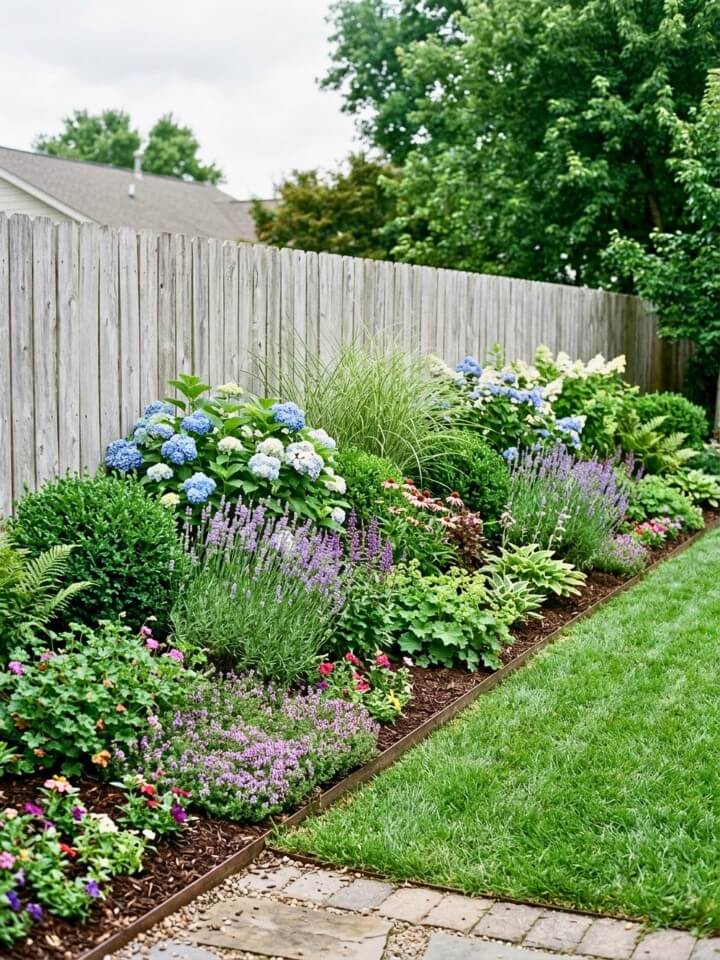
Layering plants by height creates depth that makes a fence line look considered rather than planted in a hurry. Taller shrubs go nearest the fence, mid-height perennials fill the center, and compact flowers or ground covers run along the front edge. Hydrangeas, ornamental grasses, lavender, and creeping thyme together cover different seasons and textures without competing visually. Group plants in odd numbers — threes and fives — rather than spacing them in an even row. That single adjustment makes the whole border feel more like a real garden and less like a lineup.
Planning for Seasonal Interest
Choose at least one plant that looks good in each season — spring blooms, summer foliage, fall color, and winter structure. Without that planning, a mixed border can look bare or tired for months at a time.
18. Potted Plants Lined Along the Fence
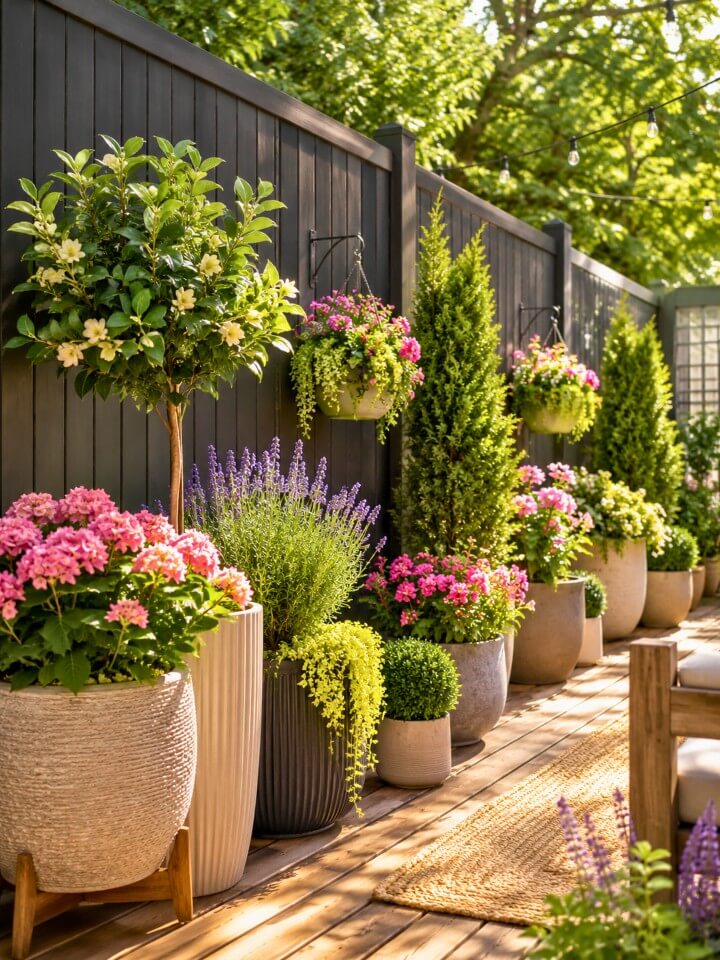
Containers along a fence work well for renters or anyone who wants flexibility without digging up the yard. Matching pots in the same material — terracotta, concrete, or matte black — keep the look cohesive even when the plants inside vary. Trailing plants like sweet potato vine or bacopa soften the pot edges and connect containers visually. Group pots in odd numbers and vary the heights slightly using overturned pots or simple risers underneath. Water consistently since containers dry out faster than in-ground beds, especially during warm months near a fence that reflects heat.
Preventing Pots From Damaging the Fence
Leave a few inches between pots and fence panels. Moisture from watering can stain or warp wood fencing over time if containers sit directly against it for an entire season.
19. Narrow Hedge for a Formal Fence Line
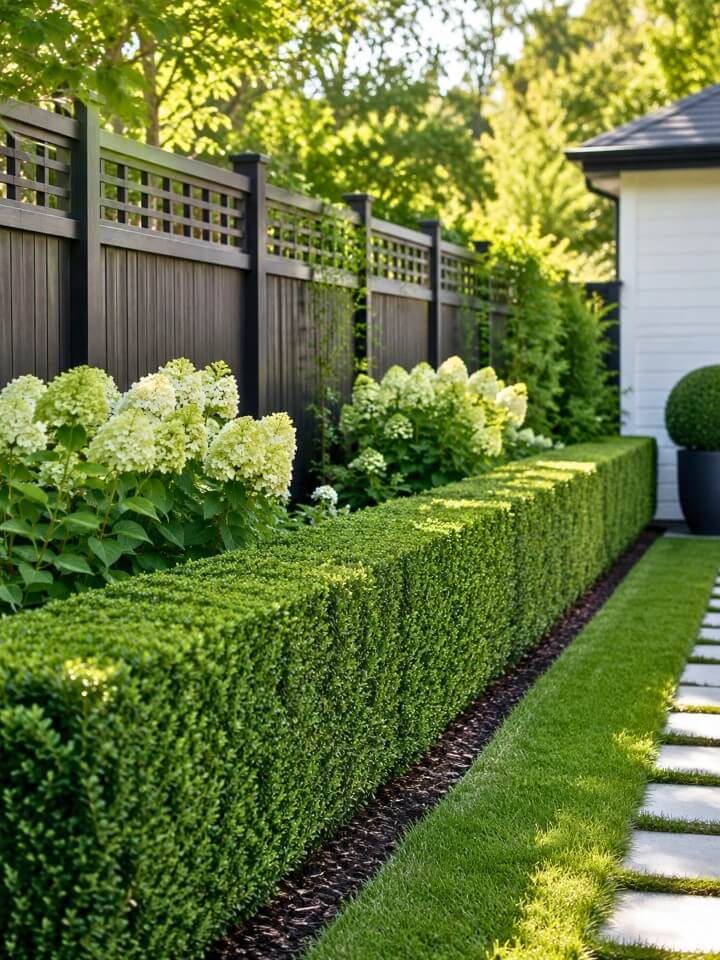
A clipped hedge running beside a fence creates a layered boundary that looks more finished than a fence on its own. Boxwood is the classic choice for a low, formal edge. Privet grows faster and suits taller hedges. Dwarf yaupon holly tolerates heat and drought better than most and stays tidy with one or two trims a year. Plant in a single row, spacing based on mature width, then let the plants fill in before doing any shaping. Starting to trim too early prevents the hedge from establishing a strong root system, which affects long-term density.
Keeping the Top Line Straight
Run a string line between two stakes at the desired height before trimming. Eyeballing a hedge top rarely ends well, especially on runs longer than six or eight feet.
20. Wildflower Strip for a Natural Fence Line
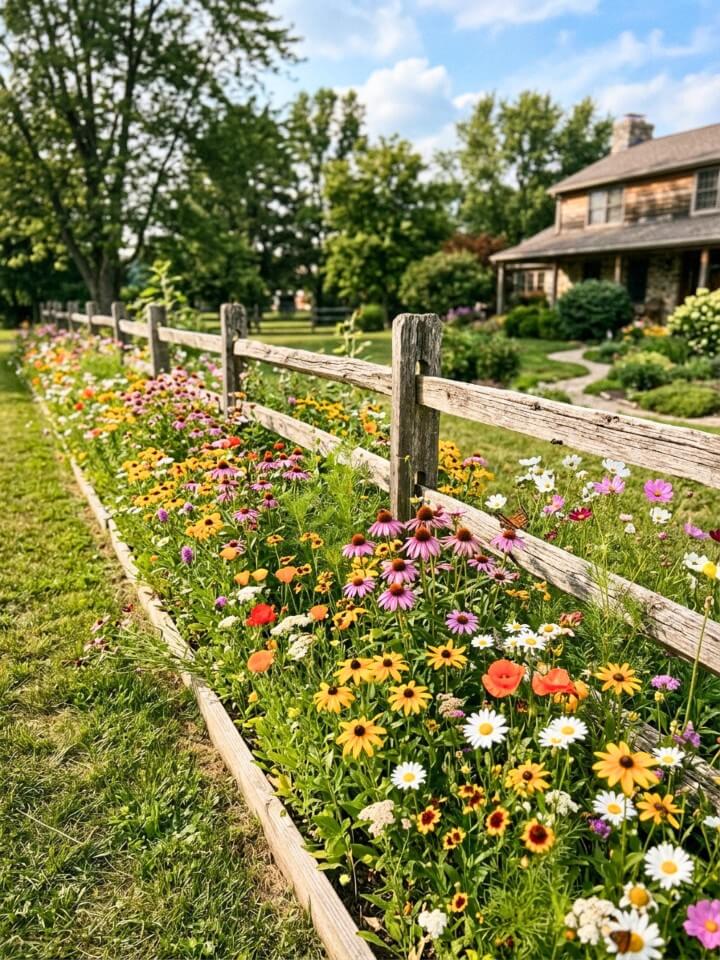
A wildflower strip along the fence suits yards where a relaxed, informal look fits better than clipped borders. Prepare the soil by loosening it and removing existing grass or weeds before scattering seed. Native wildflower mixes establish more reliably than non-native blends and support pollinators through the growing season. Simple edging along the front keeps the strip looking deliberate rather than neglected — that one detail makes a significant visual difference. Once established, most wildflower strips need little more than cutting back once in late fall and occasional watering during dry spells in the first year.
Choosing a Seed Mix That Actually Works
Buy seed mixes matched to your specific region and sun conditions rather than generic “meadow mix” bags. Region-specific mixes have far higher germination rates and include plants that return reliably each year.
21. Ground Cover Plants for a Soft Fence Line
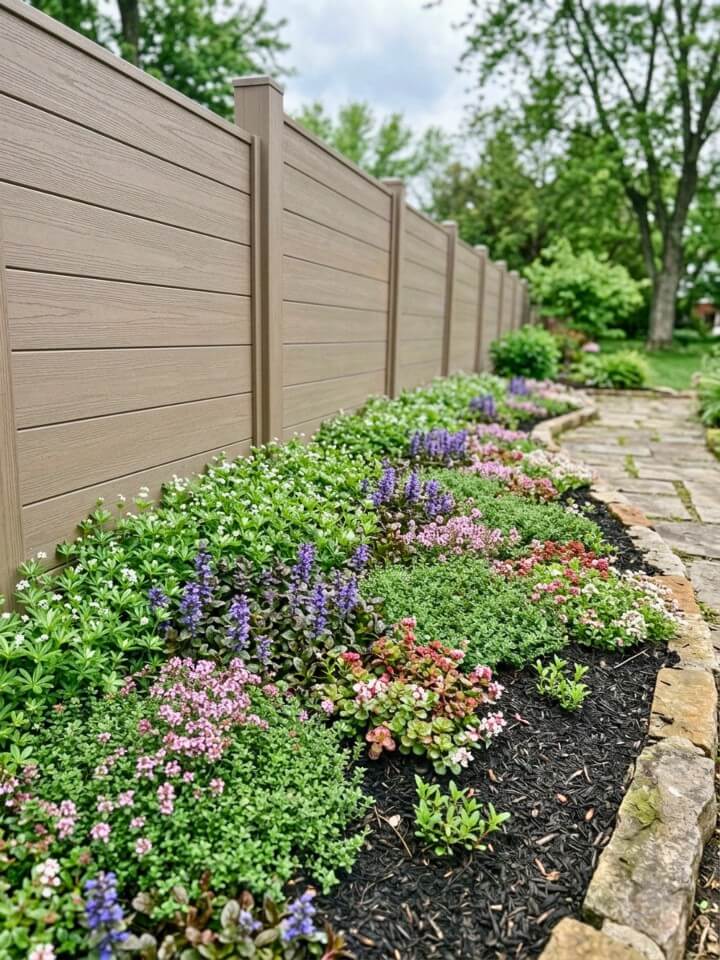
Ground covers handle the difficult narrow strips along fences where grass thins out and weeds take over. Creeping thyme tolerates foot traffic and releases fragrance when brushed. Ajuga spreads quickly in part shade and produces small purple flower spikes in spring. Sedum works well in dry, sunny spots and needs almost no maintenance once established.
Plant through landscape fabric with small cut openings to give each plant room while blocking weeds between them. These low-growing plants don’t compete with nearby fence panels or shrubs, making them a practical solution for edges that are hard to maintain any other way.
Managing Spread Over Time
Some ground covers, particularly ajuga and creeping Jenny, spread more aggressively than expected. Edge them back once a year in spring to keep them from overtaking adjacent lawn or garden areas.
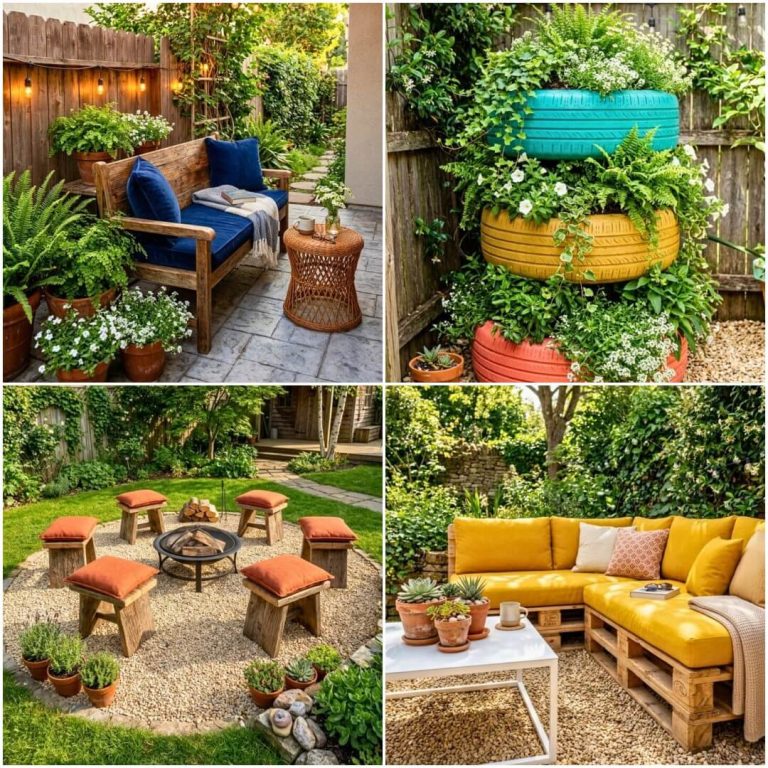
22. Bench Seating Beside the Fence
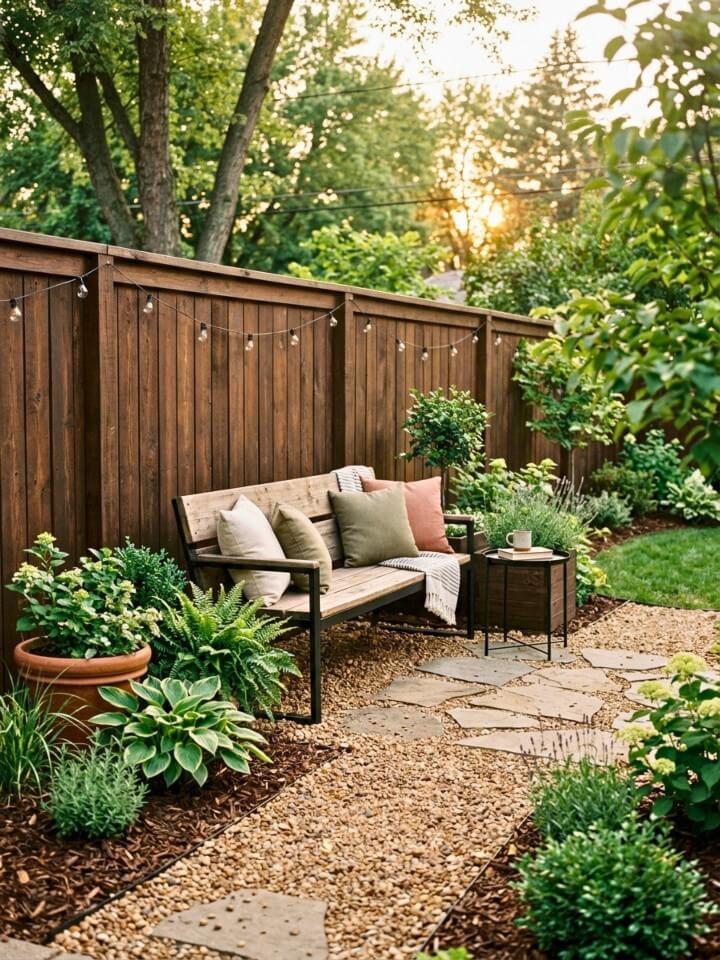
Homeowners often look for ideas fence line landscaping along fence to add color, texture, and style to outdoor spaces. A bench placed against the fence turns an empty boundary into a usable part of the yard. Teak and powder-coated steel both handle outdoor conditions without needing much seasonal maintenance. Frame the bench with a pair of planters or a small raised bed on either side to anchor it visually within the space. A gravel or flagstone pad underneath keeps the legs stable and prevents the ground from becoming muddy after rain. The fence behind acts as a natural backrest, which makes even a simple bench feel more comfortable than one sitting open in the middle of a lawn.
Sizing the Seating Area Correctly
Allow at least four feet of clear space in front of the bench so it doesn’t feel cramped. A tight clearance makes the spot feel like an obstacle rather than a place to actually sit.
23. Brick Edging Along the Fence Line
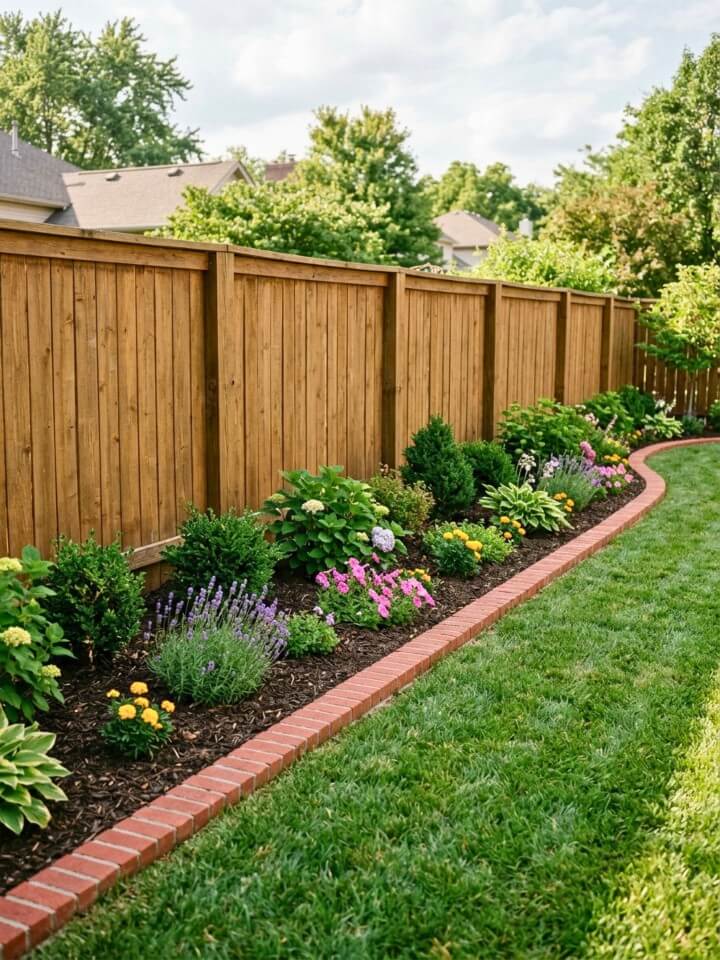
Running a clean boundary between lawn and garden bed makes the whole yard look more deliberate, and few materials do that job as reliably as brick. Standard red brick laid end-to-end creates a warm traditional look. Gray or charcoal pavers suit more contemporary yards. Set bricks at a slight angle — called a soldier course — for a cleaner edge that also locks them in place more securely than laying them flat. Dig a shallow trench first so the top of each brick sits just above soil level. This keeps lawn mower wheels from catching on them while still providing a clear visual boundary between grass and the garden bed.
Keeping Bricks Level Over Time
Frost and tree roots can shift bricks out of alignment over a season or two. Check the line each spring and reset any raised or sunken pieces before they become a tripping hazard or let grass creep through the gap.
24. Succulent Garden Beside the Fence
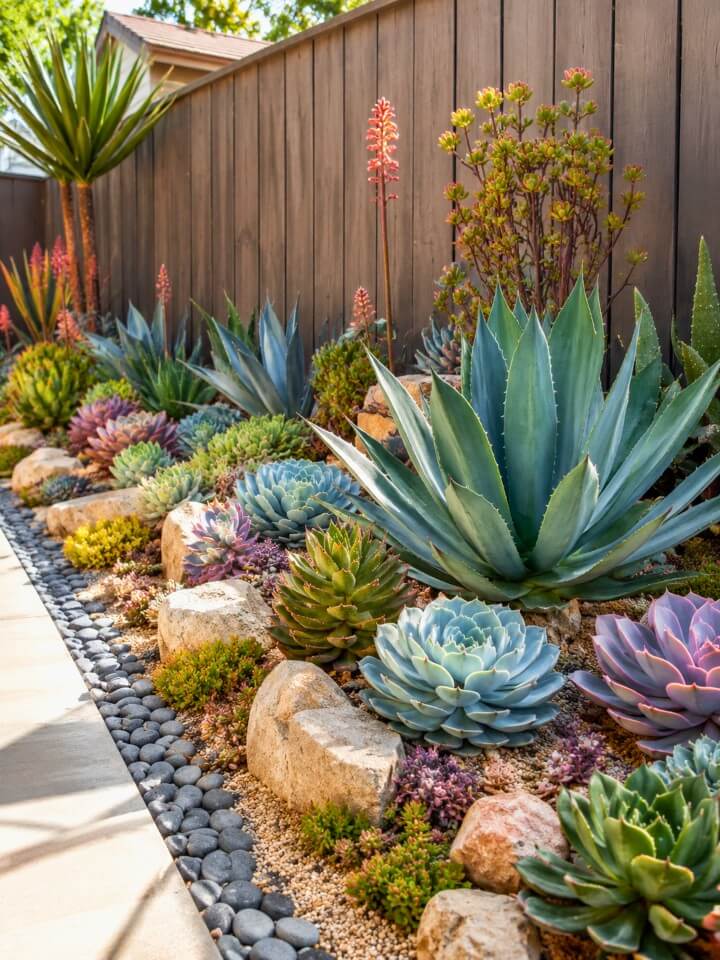
Hot, dry fence lines that bake in afternoon sun are exactly where these plants perform best. Echeveria forms tight rosettes in silvery greens and purples. Agave adds bold structure and grows slowly enough to stay manageable for years. Hens and chicks spread to fill gaps without becoming invasive. Mix in a layer of coarse gravel or decomposed granite at the soil surface to improve drainage and reduce rot at the plant base. Group plants by size — taller agave or yucca toward the fence, low rosettes along the front — so each plant stays visible and the planting has clear depth.
Soil Preparation for Succulents
Standard garden soil holds too much moisture for most succulents. Mix in at least 30 to 50 percent coarse sand or perlite before planting to improve drainage, particularly if your fence line sits in a low spot that collects water after rain.
25. Hydrangea Border for Soft Color
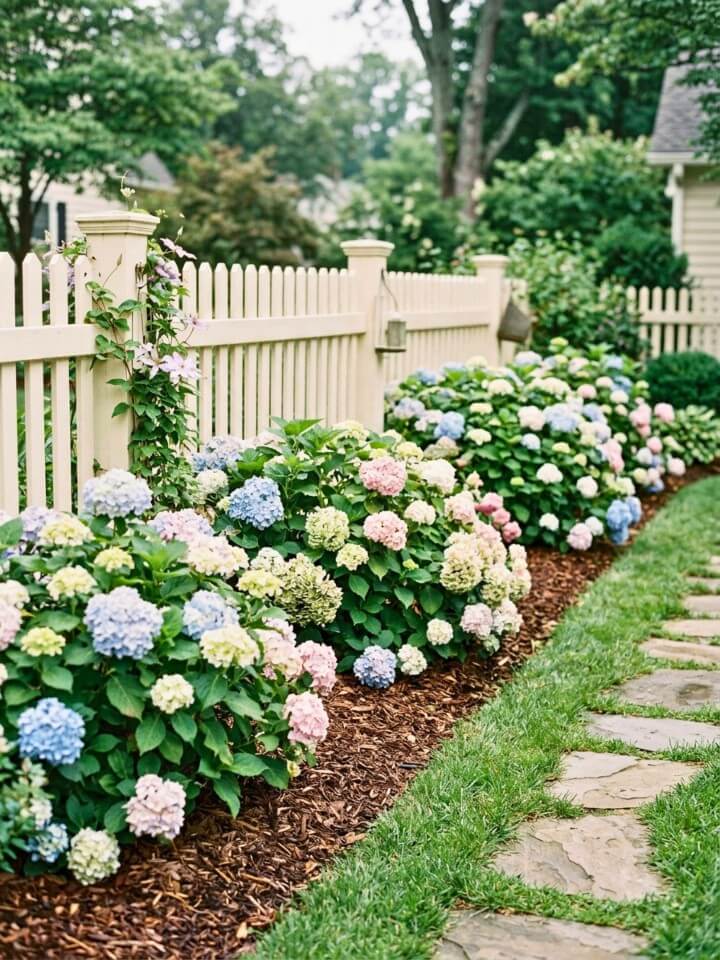
Few shrubs deliver the kind of volume and color that this plant brings to a fence line through the warmer months. Annabelle hydrangea blooms white and handles more sun than most varieties. Endless Summer types rebloom reliably through the season in pink or blue depending on soil pH. Morning sun with afternoon shade is the ideal position — too much direct afternoon sun causes wilting even in well-watered plants. Space each shrub three to four feet apart, add a thick mulch layer to retain moisture, and avoid pruning in fall since many varieties set next year’s buds on old wood.
Understanding Why Bloom Color Changes
Blue hydrangeas require acidic soil. In neutral or alkaline soil, the same plant produces pink flowers. Adding aluminum sulfate lowers pH and shifts blooms toward blue. This only applies to bigleaf varieties — white hydrangeas like Annabelle don’t change color regardless of soil conditions.
26. Stepping Stones Along the Fence
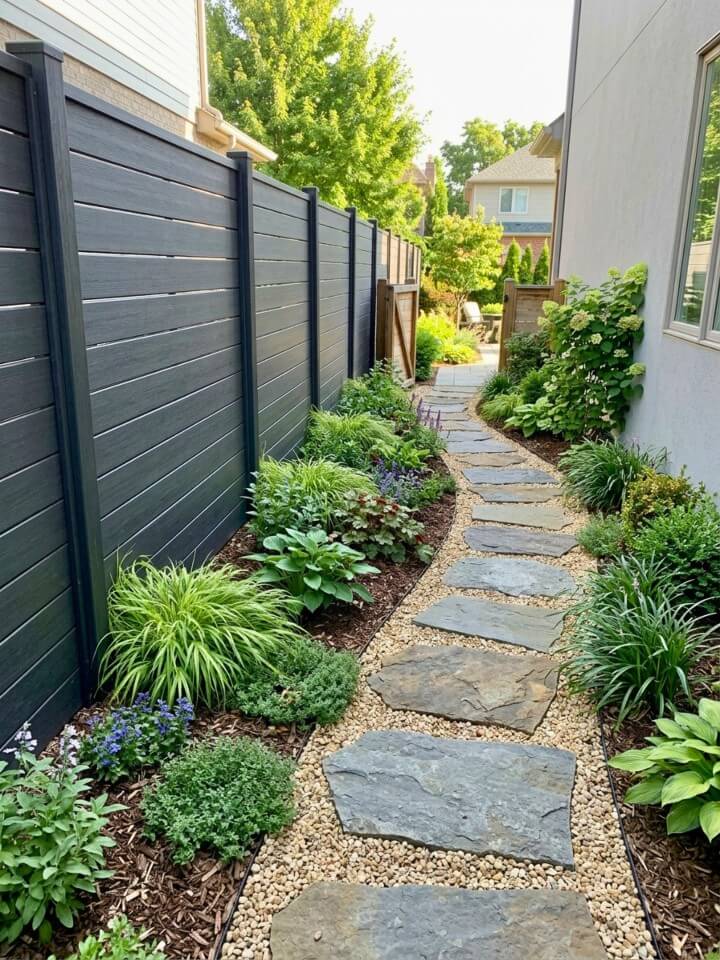
A simple stone path beside the fence makes routine yard tasks easier — watering, trimming, checking on plants — without wearing a muddy track through the grass. Flagstone sits naturally in garden settings and each piece varies slightly, which suits informal borders well. Concrete pavers give a more uniform look for cleaner, modern-style yards. Set each stone so the top surface sits level with or just slightly above the surrounding soil. Too high and they become a tripping hazard. Too low and they collect standing water. Fill gaps between stones with creeping thyme or gravel to prevent weeds from establishing.
Getting Stable Placement
Dig out the soil beneath each stone and add an inch of coarse sand before setting it down. Sand allows small adjustments and prevents rocking underfoot, which becomes noticeable quickly on stones that see regular foot traffic.
27. Cottage-Style Fence Line Garden
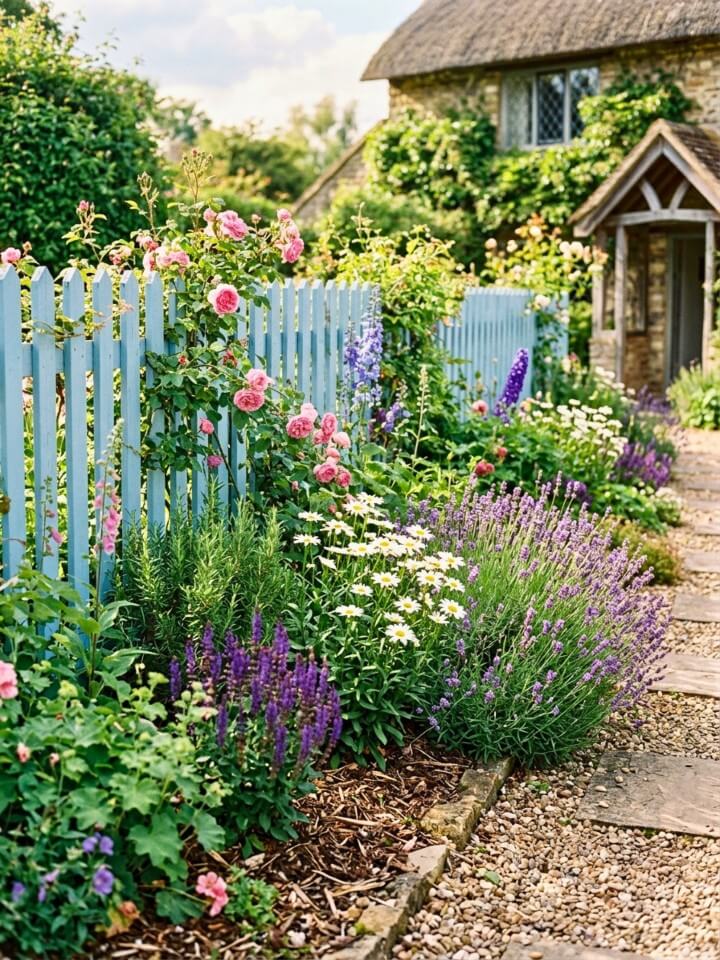
Creative fence line landscaping ideas can make your garden feel more attractive and organized. Cottage gardens along a fence work best when they look full but not chaotic. Lavender, salvia, and catmint form a reliable soft base layer that blooms through summer. Climbing roses trained on the fence behind add height and fragrance without taking up ground space. Foxglove fills vertical gaps in early summer. Daisies and coneflowers carry color into fall. Use mulch or a defined front edge to keep the border looking tended — a cottage planting without some structure reads as overgrown rather than charming. Replace spent annuals each season to keep the front of the bed colorful once perennials finish blooming.
Managing a Cottage Border Without Constant Work
Deadhead spent blooms every week or two during peak season to extend flowering. Beyond that, most cottage garden plants need little intervention — over-pruning actually reduces bloom production on many perennials.
28. Modern Black Mulch Fence Line
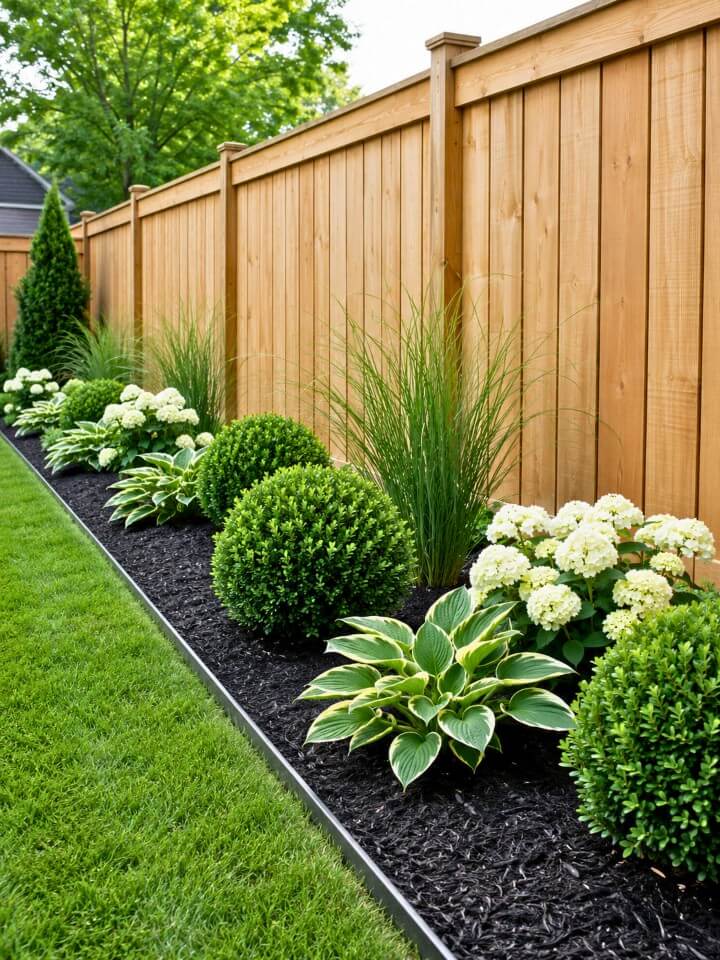
Black mulch against a light or natural wood fence creates a sharp contrast that makes even simple plantings look well-considered. Hostas with broad green leaves stand out clearly against a dark mulch background. White flowering shrubs — iceberg roses, white spirea, or white knock-out roses — read particularly well. Keep plant selection minimal in this kind of bed — three or four varieties at most — because the dark backdrop highlights everything and visual clutter becomes obvious quickly. Steel or black metal edging along the front continues the clean aesthetic and keeps the mulch from spreading onto the lawn.
How Often Black Mulch Needs Refreshing
Black mulch fades faster than brown or cedar because the dark dye breaks down in UV light. Expect to top it up once a year, typically in spring, to maintain the contrast that makes this style work.
29. Layered Shrubs and Flowers
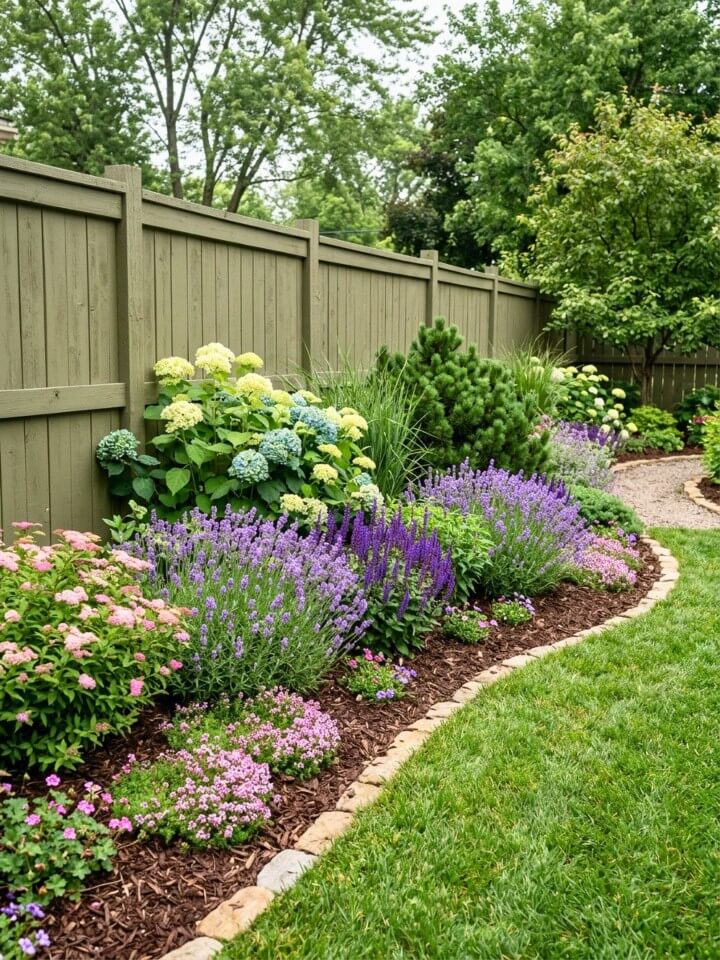
Building a border in layers — tall at the back near the fence, medium in the center, low at the front — creates a planting that looks full from a distance and interesting up close. Dwarf evergreens or hydrangeas handle the back layer well. Mid-height perennials like salvia, Russian sage, or coneflower fill the center.
Creeping thyme, sedum, or compact marigolds finish the front edge. Vary the spacing slightly rather than keeping uniform gaps — a small adjustment that makes the border look planted rather than arranged. Mulch between groups ties everything together and reduces maintenance considerably through the growing season.
Avoiding the Flat Profile Problem
If all your plants reach a similar height at maturity, the layered effect disappears. Check mature heights before planting and aim for at least a foot of difference between each layer for the depth to read clearly.
30. Minimalist Fence Line with One Plant Type
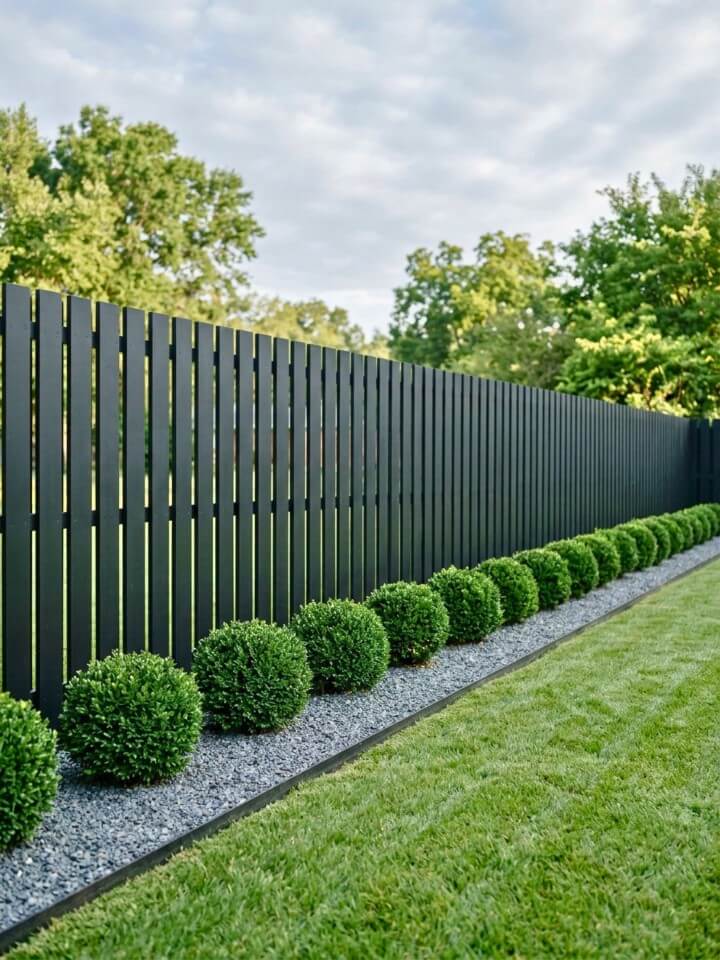
Repeating a single plant along the entire fence length creates a calm, cohesive look that feels intentional without requiring much design knowledge. Lavender spaced evenly produces a fragrant, silvery border through summer. Boxwood holds a consistent shape year-round with one annual trim. Liriope forms tidy grass-like clumps and handles shade better than most border plants.
The spacing between plants matters more here than in mixed borders — too close and the plants compete, too far apart and the repetition loses its effect. A consistent gap of 18 to 24 inches suits most medium-sized varieties and allows enough room for mature plants to develop properly.
When Uniformity Starts Looking Too Rigid
If a single-plant border feels too formal for the rest of the yard, vary the heights slightly or add one contrasting element — a different texture at the corner or a small focal point at the center — without breaking the overall repetition.
FAQs About Fence Line Landscaping
These questions come up often when planning a fence border — and the answers below cover the practical details that most gardening guides tend to skip over.
How Far from The Fence Should I Plant Shrubs or Trees?
Keep most shrubs at least 18 to 24 inches from the fence. Trees need three feet or more depending on mature canopy spread. This gap allows airflow, prevents moisture buildup against wood panels, and gives roots room to develop without lifting or warping fence posts over time.
Can I Landscape a Fence Line that Gets Very Little Sunlight?
Yes. Ajuga, hostas, sweet woodruff, and climbing hydrangea all perform well in low-light conditions. Avoid sun-dependent plants like lavender or succulents in shaded spots. Assess how many hours of direct light the fence line actually receives before selecting any plants for that area.
What Is the Cheapest Way to Landscape Along a Fence?
Mulch and edging alone make a significant visual difference at low cost. Dividing existing perennials from other garden areas and replanting them along the fence costs nothing. Wildflower seed mixes are also inexpensive and cover large stretches of bare fence line quickly with minimal effort.
How Do I Stop Weeds from Taking Over My Fence Line Border?
Lay landscape fabric before adding mulch or gravel. Keep mulch at two to three inches deep — thin coverage lets light reach weed seeds. Edge the border cleanly each spring to stop grass from creeping in. Avoid disturbing the soil unnecessarily, as this brings buried weed seeds to the surface.
Will Landscaping Along a Fence Cause It to Rot Faster?
It can, if done incorrectly. Soil or mulch piled directly against wood panels traps moisture and accelerates rot. Keep mulch and soil pulled back two to three inches from the fence base. Good airflow between plants and fence boards makes a considerable difference in how long the structure lasts.
Conclusion
A fence line rarely gets much attention, yet it runs the full length of the yard and shapes how the whole space feels. Working through these simple fence line landscaping ideas, a few things become clear — small changes alongside a fence add up quickly, and most of them require far less time and money than a full garden overhaul. Start with one section, one material, or one plant type. See how it settles in before adding more. The best outdoor spaces rarely happen all at once. They improve gradually, one well-considered decision at a time.