20 Dog Pool Ideas To Keep Your Pup Cool All Summer
Watch any retriever spot a puddle on a hot August afternoon and you understand something basic: dogs find water before we even think to offer it. The problem is that most backyards do not come with a built-in cooling spot, and a panting dog circling the shade does not exactly count as a solution. That is where these 20 unique dog pool ideas come in, ranging from a $30 plastic basin you fill with the garden hose to a custom in-ground build that becomes part of the landscape.

What works for a Chihuahua in a small patio yard will not suit a Labrador with energy to burn, so the goal here is matching the right setup to the right dog and the right space. Some options take an afternoon to assemble. Others need a contractor. A few you can build from materials already sitting in the garage. Pick what fits your yard, your budget, and your dog’s swimming style, then skip ahead to whichever idea pulls you in first.
1. Shallow Splash Pool for Small Dogs
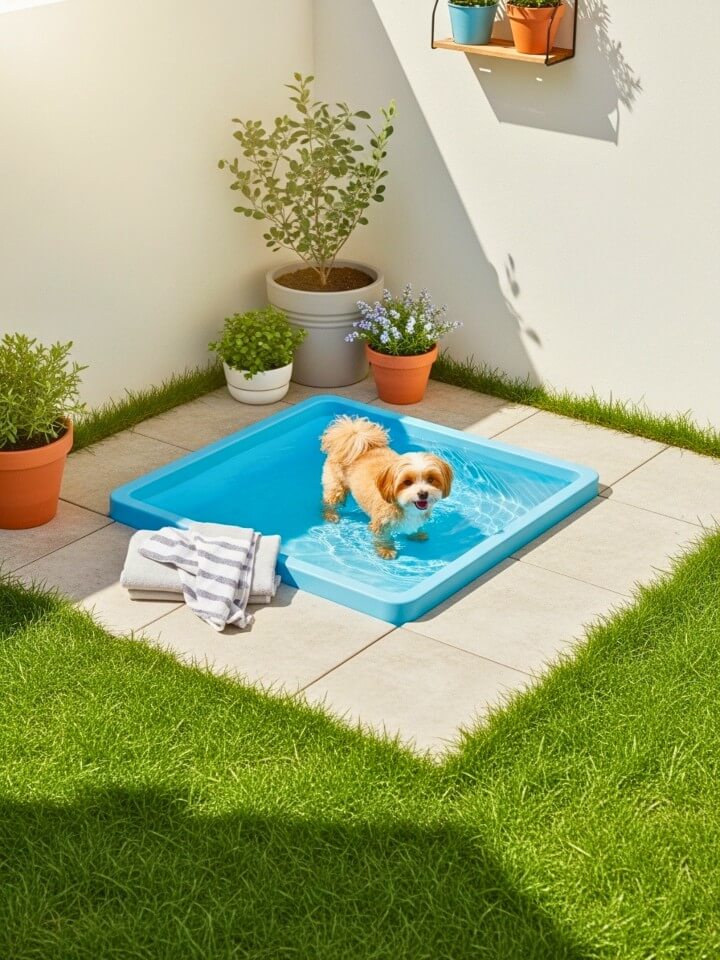
Small breeds, young puppies, and senior dogs need water that barely reaches their chest, not deep swimming space. A shallow splash pool sitting 6 to 10 inches deep solves this perfectly, giving them a safe cooling spot without any swimming pressure.
What to Look For:
- Hard plastic construction, not thin inflatable material
- Textured or ribbed base to prevent slipping
- Low rim (under 10 inches) so easy walk-in access works
- Drain plug for quick water changes
Expect to spend somewhere between $40 and $90 for a quality option that lasts multiple summers. Place it on level grass or a shaded patio corner with a non-slip mat under the rim. Drain every two to three days, since stagnant water grows algae quickly in warm weather.
2. Built-In Backyard Dog Pool
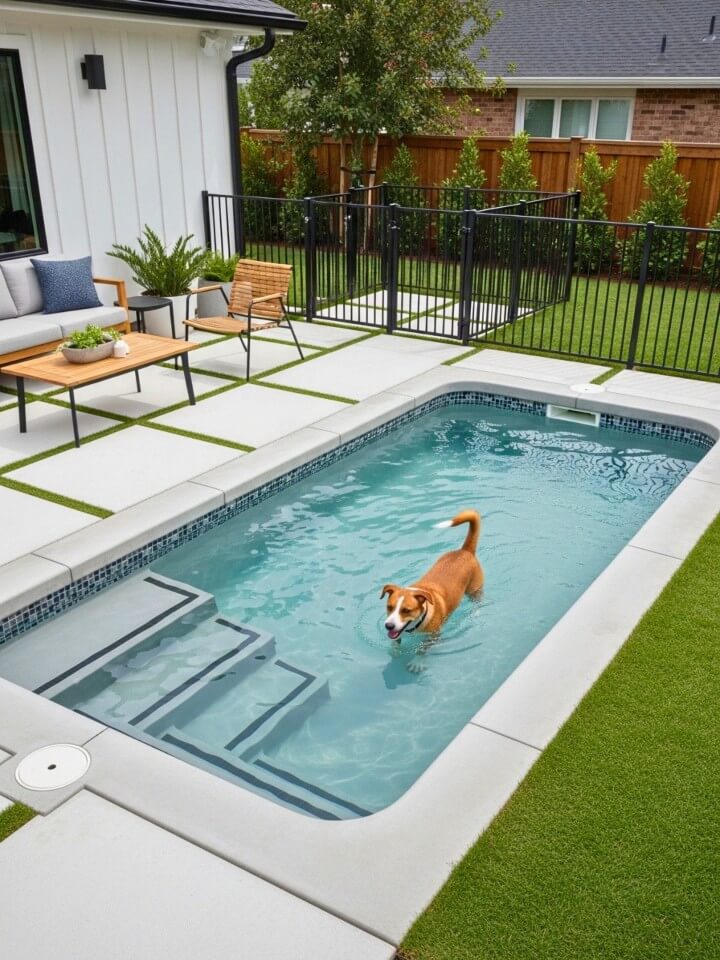
Imagine never having to drag a plastic pool out of storage again. A permanent in-ground pool designed specifically for dogs becomes a year-round feature of your landscape, and for households with active retrievers or multiple water-loving dogs, the investment often pays off in long-term convenience.
Typical builds measure around 8 by 12 feet with a depth between 2 and 3.5 feet, costing anywhere from $4,000 to $12,000 depending on materials and labor in your area. Skip traditional smooth tile finishes since they turn slippery the moment paws hit them. Instead, ask your contractor about pebble or aggregate finishes that give nails something to grip. Wide entry steps or a beach-style sloped entry beats vertical ladders every time, because most dogs refuse to climb rungs even after training. Position the pool near an outdoor rinse station to keep muddy paws away from your back door.
3. Stock Tank Dog Swimming Pool
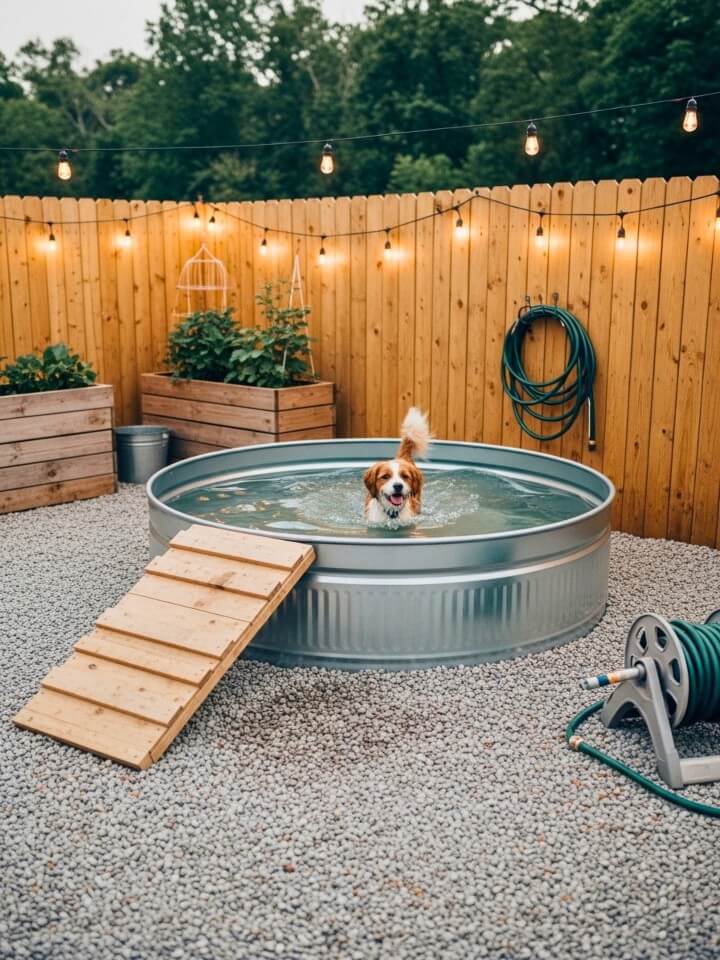
Discover the best pools for dogs to beat summer heat in style. Originally built to water livestock, galvanized stock tanks have quietly become one of the most popular dog pool solutions in suburban yards. The reason is simple: they cost a fraction of a built-in pool, survive enthusiastic claws, and last for decades with basic maintenance.
A 6-foot round tank typically runs $200 to $350 and holds enough water for medium-sized dogs to fully submerge. Since the sides stand about 2 feet high, your dog will need help getting in. A wooden ramp with grip tape or a sturdy two-step platform works well, and many owners build a simple frame from pressure-treated lumber for under $50.
One catch most people miss: galvanized metal heats up fast under direct sun, which means the water can warm beyond comfort by late afternoon. Position the tank under a tree, beside a tall fence, or under a shade sail to keep temperatures reasonable. Set it on pea gravel or pavers rather than directly on soil, since trapped moisture eventually causes rust along the base.
4. Natural Pond-Style Dog Pool
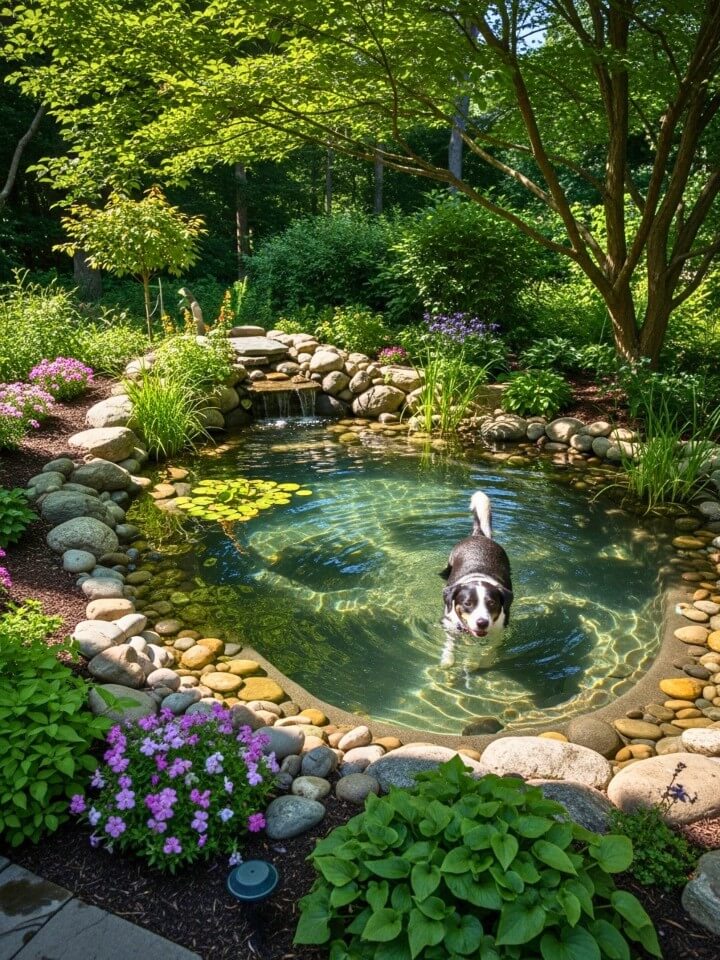
A pond-style pool blends so completely into a garden that visitors often mistake it for a landscape feature rather than something built for the dog. This approach suits homeowners who want their yard to feel cohesive instead of cluttered with obvious pet equipment.
Dig a shallow basin roughly 18 to 24 inches deep with one side gently sloping into the water at a 20- to 30-degree angle. This natural ramp eliminates the need for added steps and lets dogs walk in at their own pace. Line the basin with fish-safe pond liner, then border the edges with smooth river rocks rather than sharp landscape gravel that can cut paw pads.
A small recirculating pump keeps water moving, which prevents the stagnant smell and discourages mosquito breeding. Avoid planting toxic landscape favorites like azaleas, oleander, or sago palm anywhere nearby, since dogs often chew on leaves after swimming. Pet-safe ornamental grasses and creeping thyme make better neighbors. Expect more upkeep than a plastic pool, including seasonal draining and occasional skimming, but the visual payoff is significant.
5. Patio Plunge Pool for Hot Days
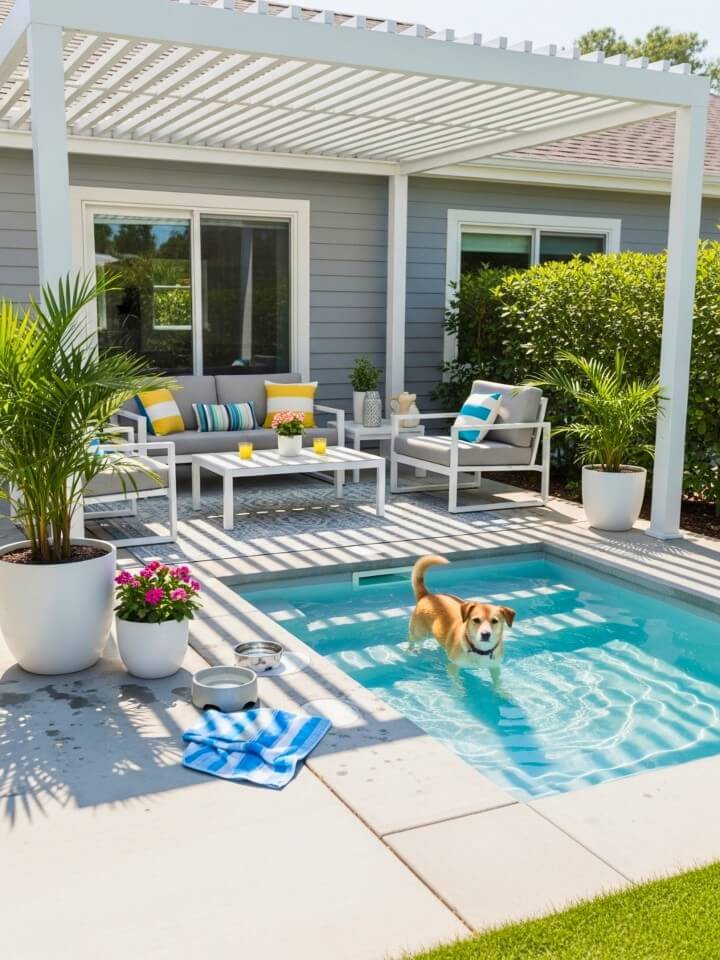
Heat waves push surface temperatures on concrete patios past 120°F, and dogs without quick cooling options suffer fast. A compact plunge pool sized for tight outdoor spaces solves this without taking over the patio.
These pools usually measure 4 to 5 feet across and sit 12 to 18 inches deep — just enough for a quick belly-cooling soak. Hard-sided foldable models in the $50 to $120 range strike the right balance between durability and easy off-season storage. Position the pool within reach of a garden hose for quick refills, and keep absorbent towels stacked nearby for post-swim cleanup.
One overlooked detail: dark patio surfaces transfer heat directly into shallow water, sometimes pushing it above 85°F within an hour. Always test the temperature with your hand before letting your dog in, and empty the pool after each session. Standing water on a patio invites bacteria and can stain certain stone surfaces over time.
6. Inflatable Dog Pool with Ramp
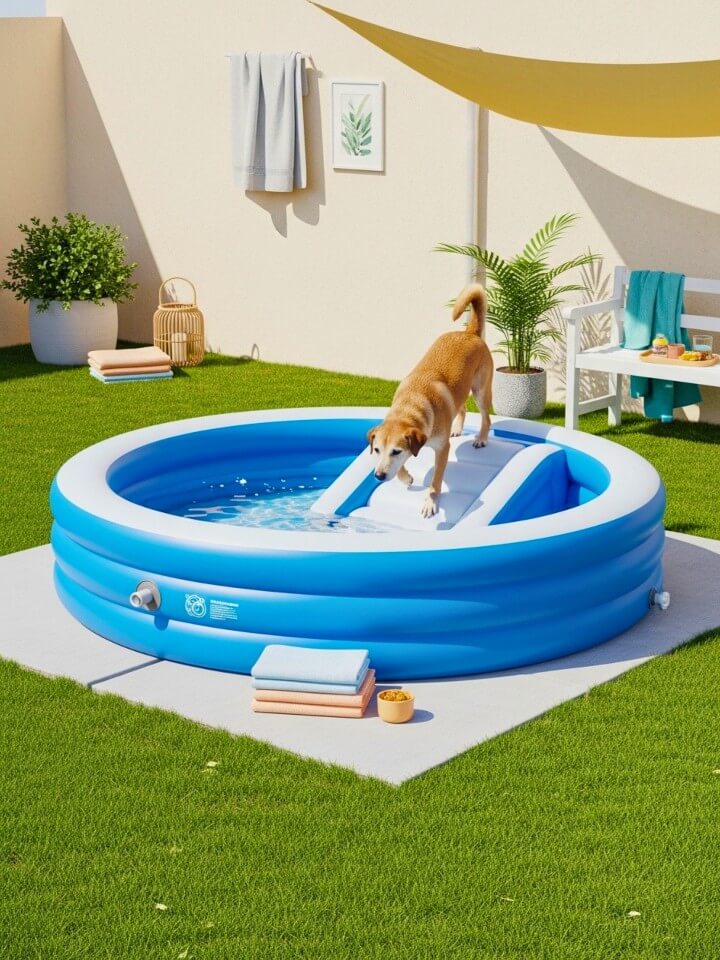
Older dogs with arthritis, short-legged breeds, and hesitant swimmers benefit enormously from a built-in ramp instead of a vertical wall to climb. Inflatable pools with integrated ramps remove that barrier completely, letting dogs walk in at ground level.
Look for puncture-resistant PVC rated at least 0.4mm thick, since thinner material tears within weeks under active claws. Pools in the $60 to $130 range generally hold up through a full season. Place yours on level grass or a tarp-covered patio, never directly on rough concrete. Check seam integrity before each use, and store deflated in a dry spot during off-months to extend its lifespan considerably.
7. Corner Space Dog Pool
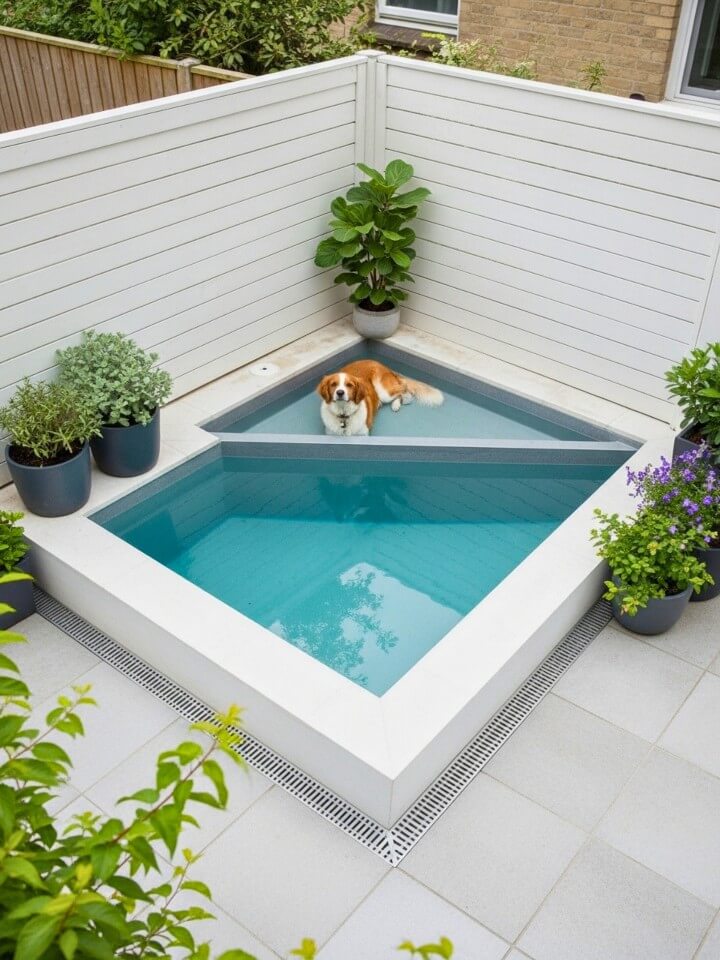
Tight urban yards and small patios often have one underused area: the corner where two fences meet. A triangular or wedge-shaped pool fits this space precisely, turning dead square footage into a functional cooling zone without crowding the rest of the yard.
Custom-fabricated fiberglass corner pools run $800 to $2,500, while DIY versions using cut stock tanks cost significantly less. Aim for dimensions around 4 feet on each side with a depth of 18 to 24 inches. Add a shallow ledge along one edge where smaller dogs can rest without fully submerging. Surround the corner with potted ornamental grasses to soften the angular look and create a finished, intentional appearance.
8. Raised Wooden Dog Pool
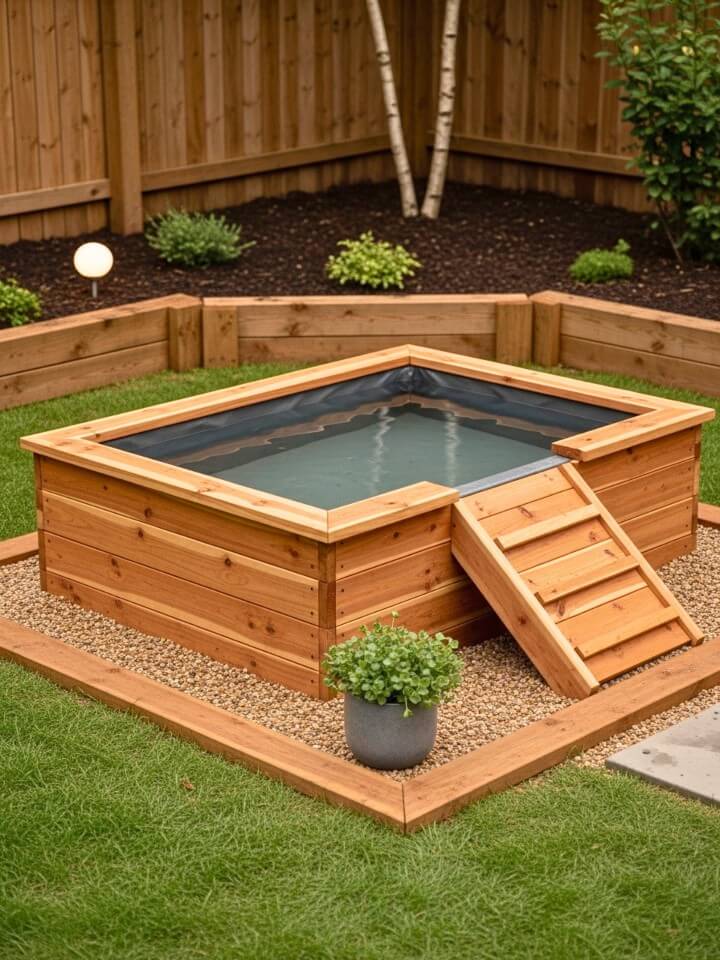
A raised wooden pool sits roughly 18 to 24 inches off the ground, which protects the structure from soil moisture and gives the yard a custom, handcrafted look. The elevation also makes cleaning easier since you do not have to bend completely to the floor.
Build the frame from cedar or pressure-treated lumber, both of which resist rot for 10 to 15 years outdoors. Line the interior with food-grade EPDM rubber rather than plastic sheeting, since EPDM resists punctures from claws and lasts decades. A gentle wooden ramp on one side allows safe entry. Total build cost typically lands between $300 and $700 for a 5-foot diameter design suitable for medium breeds.
9. Garden Tub Dog Pool
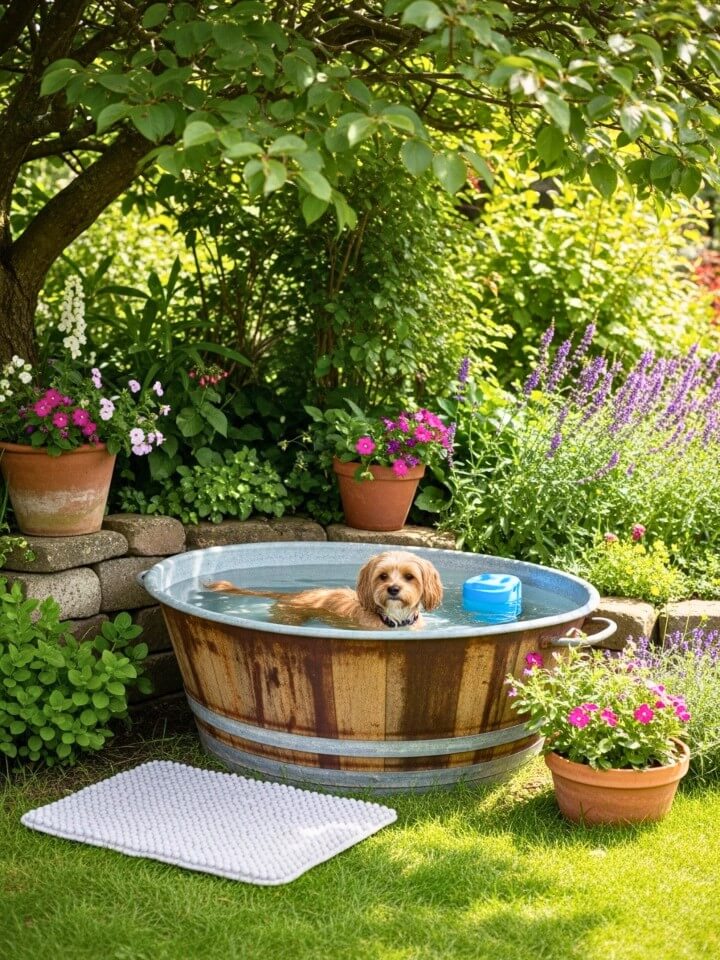
From bone-shaped to DIY digs, these dog pool ideas turn any backyard into a canine paradise! Compact and decorative, this option turns a soaking container into a cooling spot that doubles as garden decor. The trick is choosing the right vessel, since dimensions and material affect both safety and water temperature.
Suitable Containers Include:
- Half whiskey barrels lined with pond liner
- Large glazed ceramic planters with drainage holes plugged
- Repurposed cast iron or enamel tubs
- Galvanized wash tubs in the 30 to 50 gallon range
Position the container under partial shade so water stays cool through midday. Keep a soft mat nearby for drying paws, and refresh the water every two days. This setup works best for small breeds under 25 pounds, since deeper sides limit easy exits for larger dogs.
10. Kid’s Pool Repurposed for Dogs
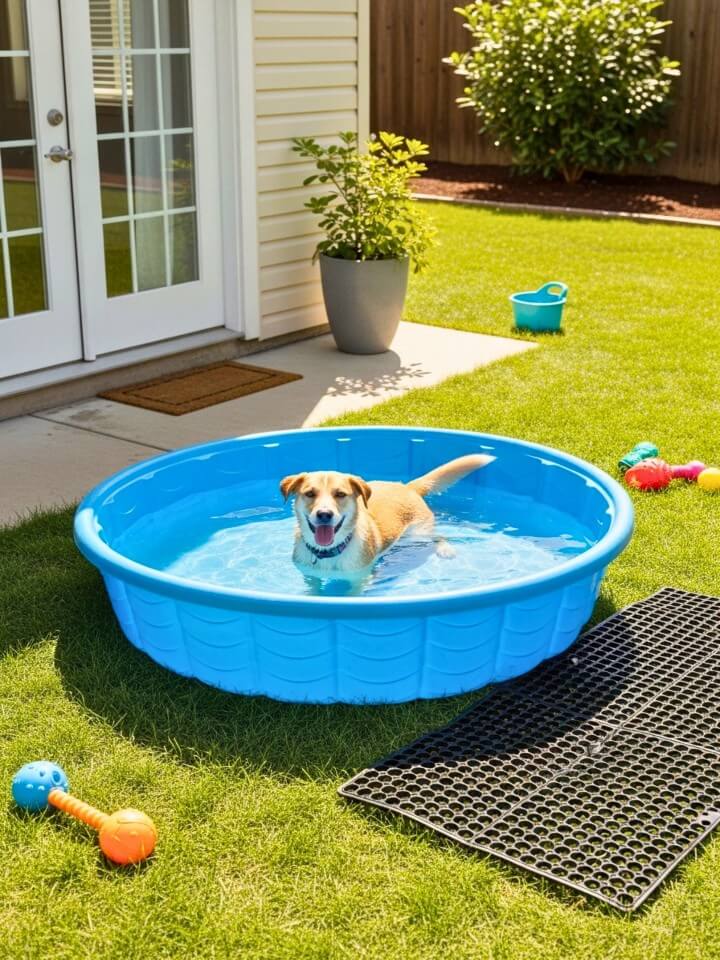
The classic plastic kiddie pool remains one of the most practical cooling solutions, mostly because it costs almost nothing and sets up in under a minute. The catch is material quality, since cheap thin-walled versions puncture within a single play session.
Choose hard molded plastic at least 1/4 inch thick rather than soft flexible plastic. Models in the $25 to $50 range usually offer the right durability for repeated use across a summer. Set the pool on level grass or a tarp, never on rough concrete that scrapes the bottom over time. Place a rubber mat outside the rim to catch dripping water and reduce muddy paw tracks heading back toward the house.
11. Concrete Lap Pool for Active Dogs
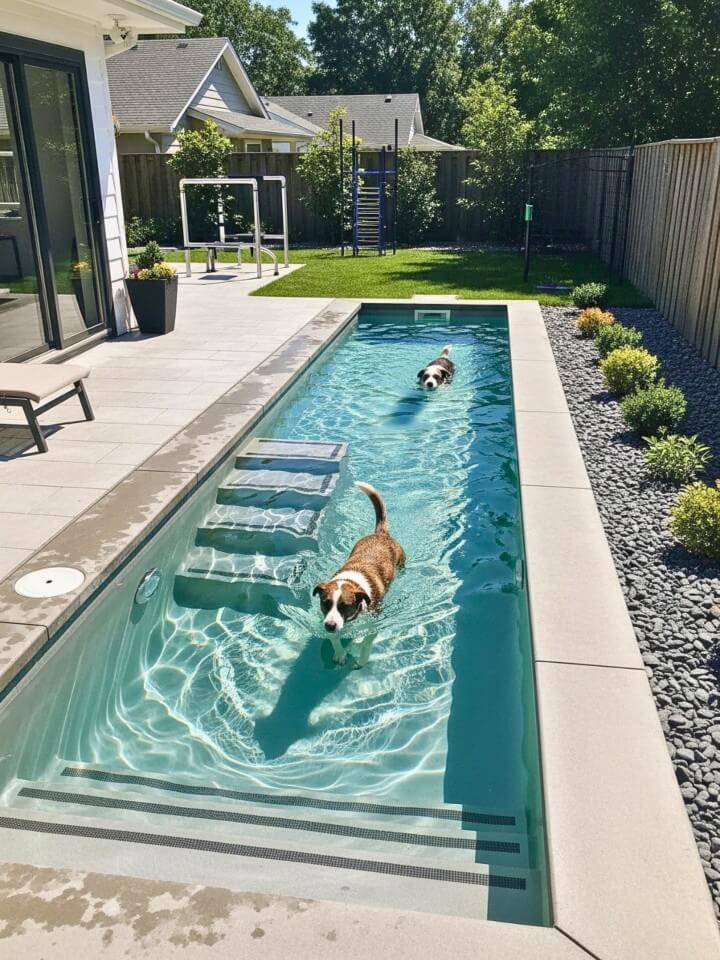
High-energy breeds like Labradors, Vizslas, and Border Collies need more than a quick splash. They need actual swimming distance to burn energy properly. A narrow concrete lap pool gives them exactly that without requiring the footprint of a traditional swimming pool.
Typical dimensions run 15 to 25 feet long, 4 to 6 feet wide, and 3 to 4 feet deep. Construction costs land between $8,000 and $18,000 depending on finish choices and regional labor rates. Specify a broom-finished or exposed aggregate surface rather than smooth troweled concrete, since dogs need texture to push off the bottom and exit safely.
Build wide steps along the shallow end at a 15-degree slope. This design works beautifully along the side yard of long, narrow lots where a square pool would feel awkward.
12. Modular Interlocking Dog Pool
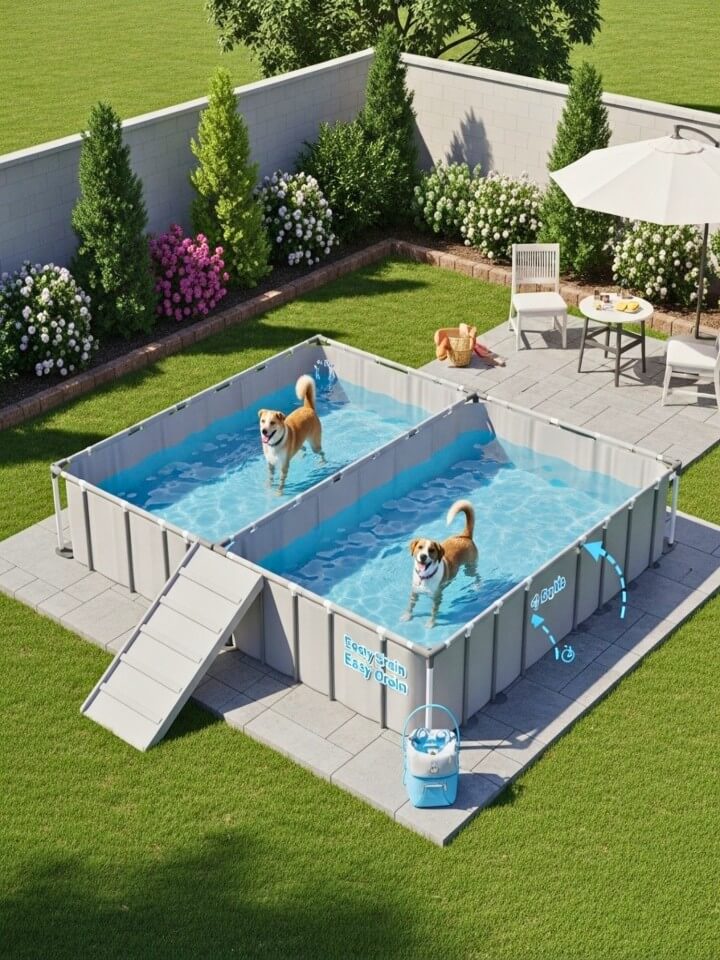
Renters, growing families, and households with changing pet situations benefit from a pool system that adapts over time. Modular interlocking pools snap together from individual panels, letting you adjust shape and size without buying a new unit each season.
Key Advantages of This Approach:
- Sections detach for storage during winter months
- Configurations expand as you add more dogs to the family
- Damaged panels swap out individually instead of replacing the whole pool
- Easier transport between homes if you relocate
Quality systems start around $400 for a basic setup and reach $1,200 for larger multi-section designs. Anchor the base panels firmly on level ground, since uneven placement causes leaks at the joint seals within a few uses.
13. Pool with Shade Canopy
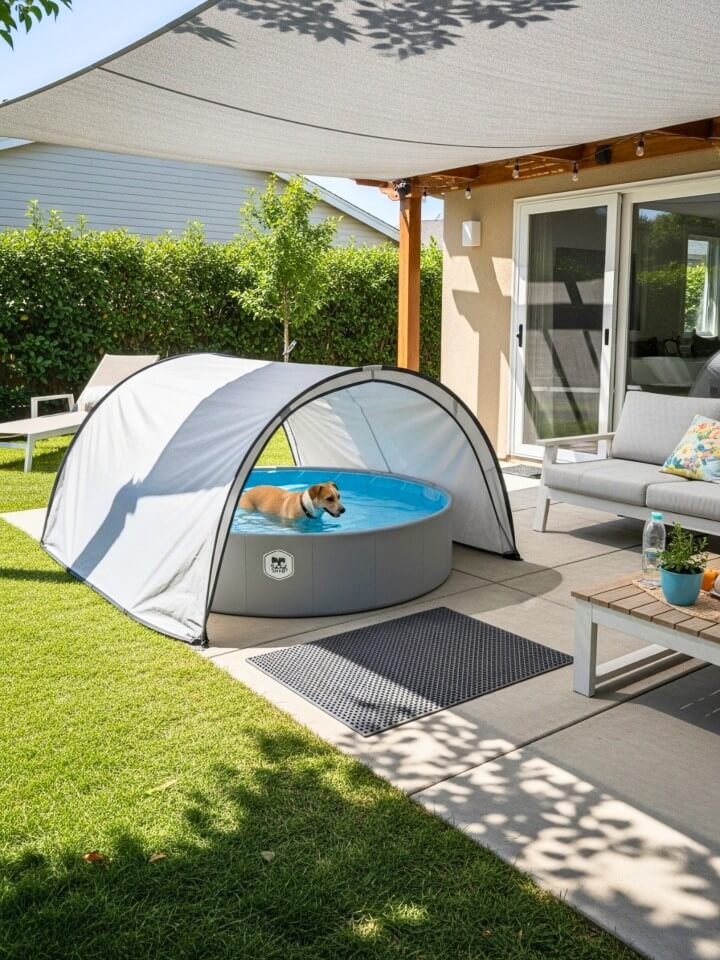
Direct afternoon sun heats shallow water uncomfortably fast, sometimes pushing it past 85°F within an hour. Adding overhead shade keeps the water 10 to 15 degrees cooler and makes the pool genuinely usable during peak summer hours rather than just early morning and evening.
A retractable shade sail anchored at three or four points costs $80 to $250 and adjusts based on the sun’s angle throughout the day. Permanent pergola structures cost more but add lasting value to the yard. Position the canopy so shade falls directly over the water between noon and 4 p.m., the hottest stretch of most summer days.
Secure all anchor points firmly, since sudden gusts can lift improperly tensioned fabric and damage nearby plants or furniture.
14. Dog-Friendly Hot Tub-Style Pool
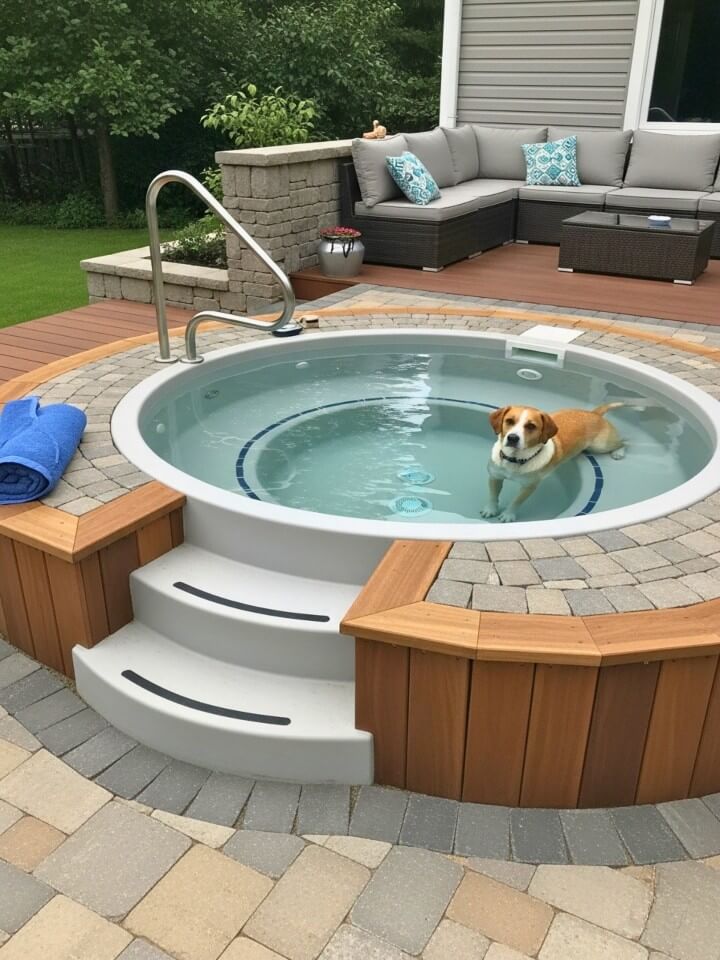
Explore pet friendly pools designed for safety, fun, and pure joy. Despite the name, this design has nothing to do with heated water. The shape and footprint resemble a hot tub, but the function is purely cooling. The compact circular or octagonal form fits neatly into deck cutouts and corner patio spaces where a rectangular pool would look out of place.
Standard dimensions sit around 5 to 6 feet across with a depth of 24 to 30 inches. Fiberglass shells designed for cold plunge use work well and cost $1,500 to $4,000 installed. Wrap the exterior in cedar planks or stacked stone to integrate it visually with surrounding hardscape. Build a single wide step along one side rather than vertical entry, since the deeper profile makes climbing in difficult for most breeds.
15. PVC Frame Foldable Pool
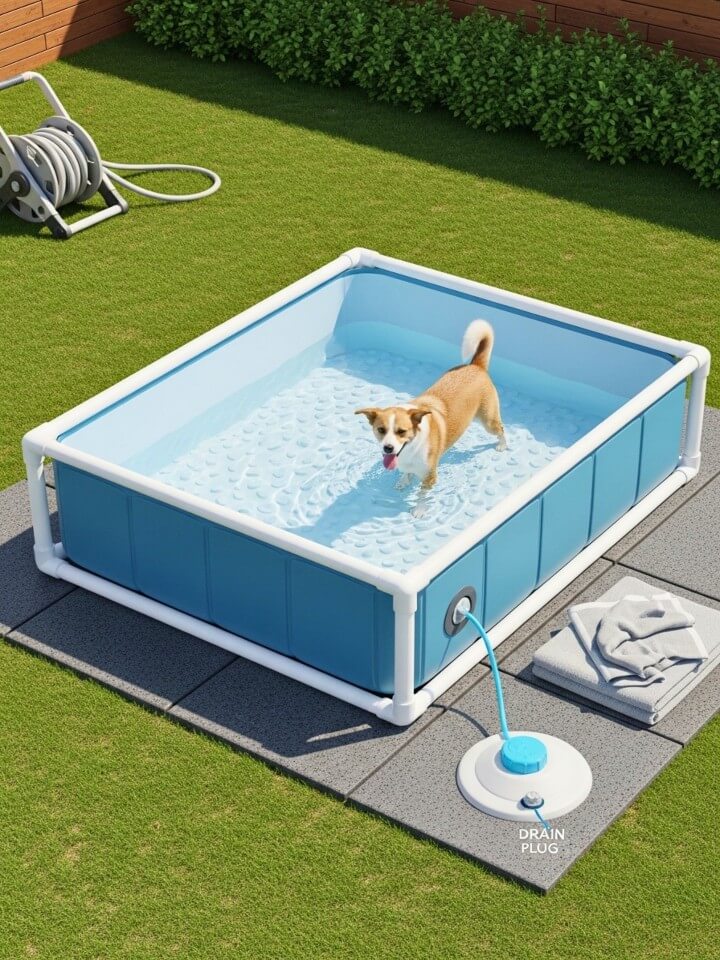
Bridging the gap between flimsy inflatables and permanent installations, PVC frame pools offer rigid sides without the commitment of a built-in structure. The metal-reinforced PVC frame holds shape under pressure from active dogs, which inflatable models cannot match.
Look for These Features Before Buying:
- Triple-layer side panels rated for outdoor UV exposure
- Frame poles with rust-resistant powder coating
- Integrated drain valve at the base
- Reinforced corners where panels meet the frame
Expect to spend $120 to $300 for sizes ranging from 5 to 8 feet across. Assembly takes about 20 minutes the first time and 10 minutes afterward. Disassemble and store under cover during winter, since prolonged freezing temperatures crack the PVC joints and shorten overall lifespan.
16. Recycled Barrel Dog Pool
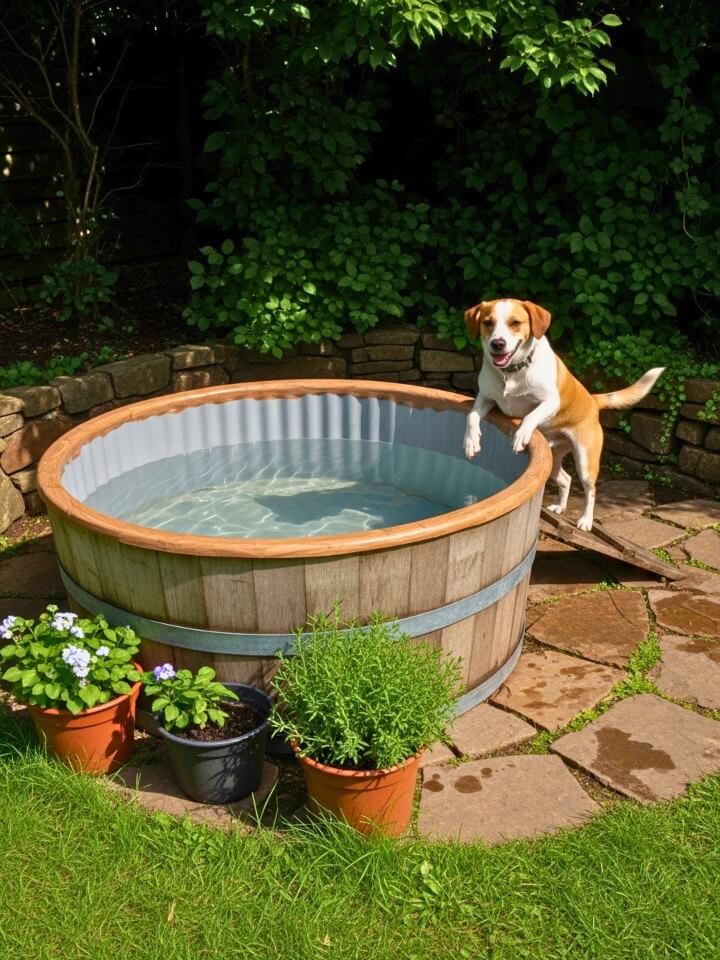
Sustainability-minded homeowners often look for ways to reuse materials instead of buying new equipment, and a repurposed barrel makes an excellent starting point. Wooden wine barrels, salvaged whiskey barrels, and food-grade plastic drums all work after proper preparation.
Cut the barrel in half horizontally using a circular saw, then sand the rim smooth to remove splinters and sharp edges. Seal the interior with non-toxic food-grade sealant, since untreated wood absorbs water and rots within a single season. Add a small drain hole near the base fitted with a rubber plug. Position the finished pool on a level gravel bed beside garden beds or under a fruit tree. This setup suits small breeds best, since most barrels measure only 3 feet across and offer limited swimming room.
17. Doggy Infinity Edge Pool
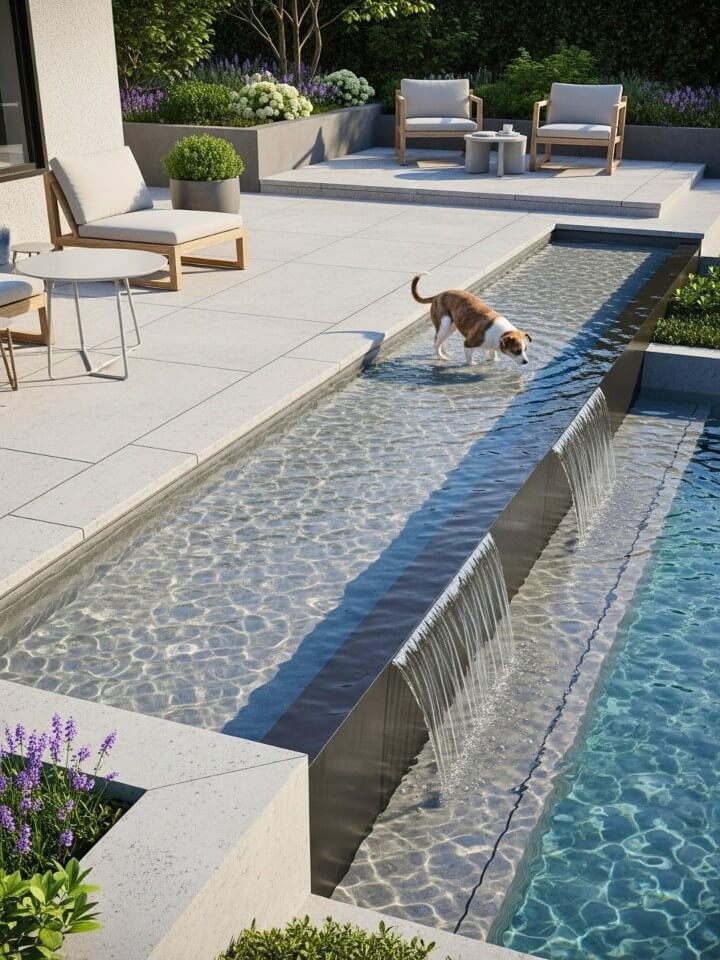
The infinity edge effect, where water appears to spill over an invisible boundary, brings architectural drama to backyard pools. Scaling the concept down for canine use creates a striking visual feature without the engineering complexity of a full-sized infinity pool.
Build the pool along the edge of a raised deck or terraced patio where the overflow side faces an open view. Water spills continuously over one wall into a hidden catch basin, then a small pump recirculates it back into the main pool. Keep depth between 18 and 30 inches with a textured floor finish. Total cost ranges from $5,000 to $15,000 depending on existing grade and drainage requirements. The constant water movement also keeps the surface cooler and reduces algae growth significantly.
18. Splash Pad Style Dog Pool
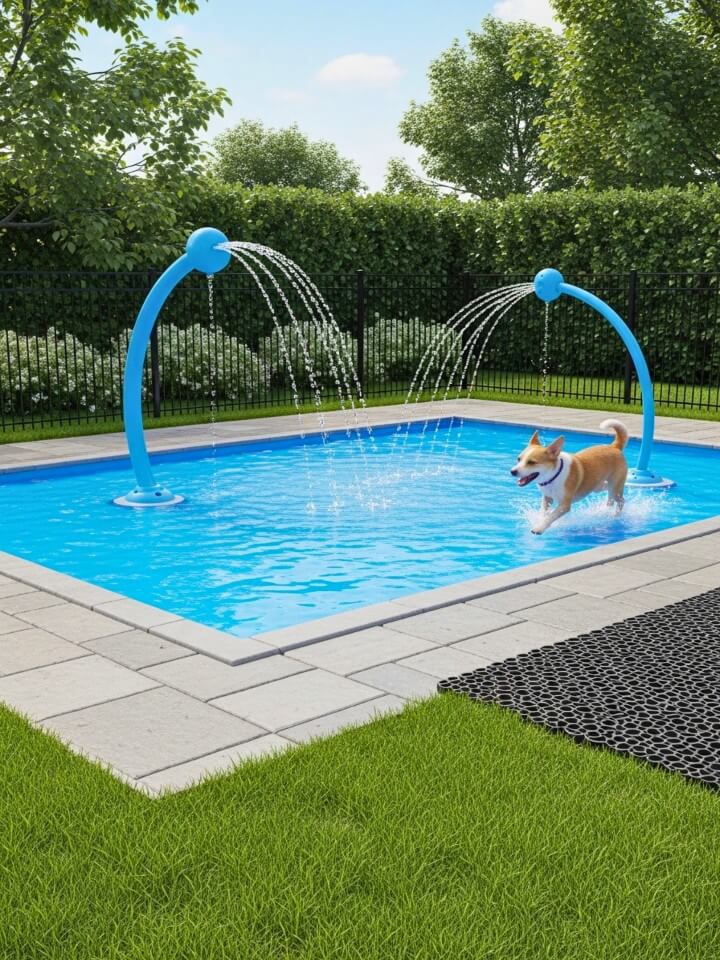
Some dogs love water but hate full submersion. For these pups, a splash pad delivers all the cooling fun without the swimming pressure, and the interactive element keeps high-energy breeds engaged longer than a still pool ever could.
Components Worth Including:
- Ground-level bubblers that shoot water 6 to 12 inches up
- Low-pressure misting jets along the perimeter
- A shallow pooled section, about 2 inches deep, in the center
- Anti-slip rubber surfacing rated for outdoor use
DIY versions cost $300 to $800 using basic plumbing supplies and a recirculating pump. Professional installations run $2,500 to $6,000. Connect the system to a timer or motion sensor so water flows only during active play rather than running continuously and wasting hundreds of gallons daily.
19. Backyard Stream with Mini Pool
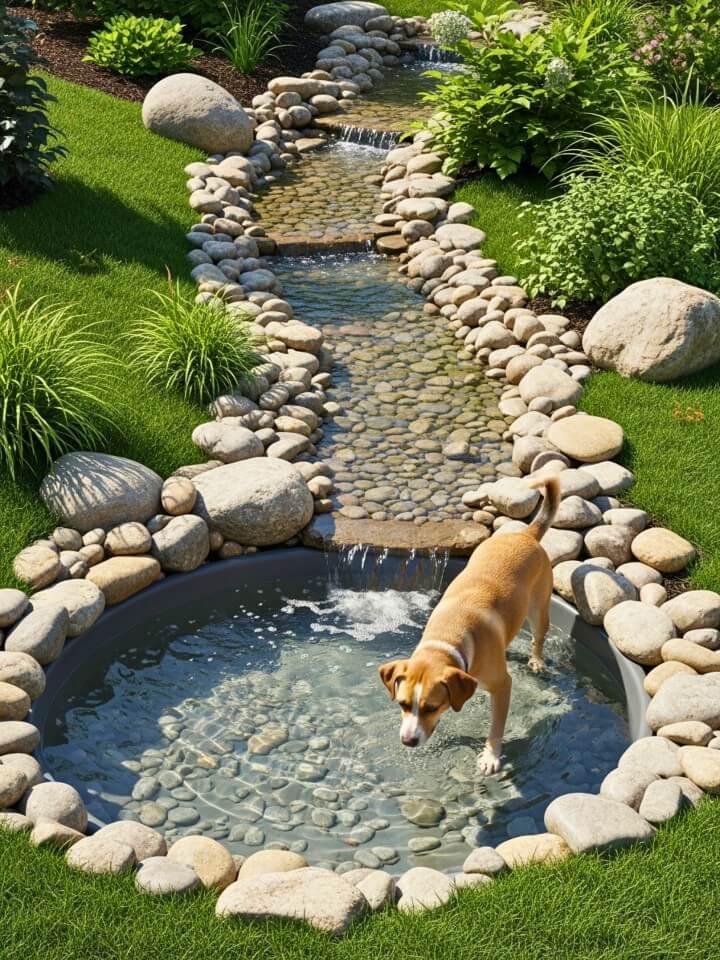
Cool paws, happy hearts — find the perfect doggie pool your furry best friend will dive into! Few yard features rival the calming effect of moving water, and combining a shallow stream with a small terminal pool gives dogs a multi-zone water experience. They can splash in the flowing section, then settle into the deeper pool to fully cool down.
Design the stream to run 10 to 20 feet long with a gentle 2 to 5 percent slope. The terminal pool sits at the lowest point, roughly 4 feet across and 18 inches deep. A submerged pump pulls water from the pool back to the stream’s origin, creating a continuous loop that uses surprisingly little electricity. Line both sections with pond-grade EPDM rubber, then disguise the edges with smooth river rock. Maintenance involves seasonal cleaning of the pump filter and occasional rock rearrangement after enthusiastic digging sessions.
20. Wooden Deck Inset Dog Pool
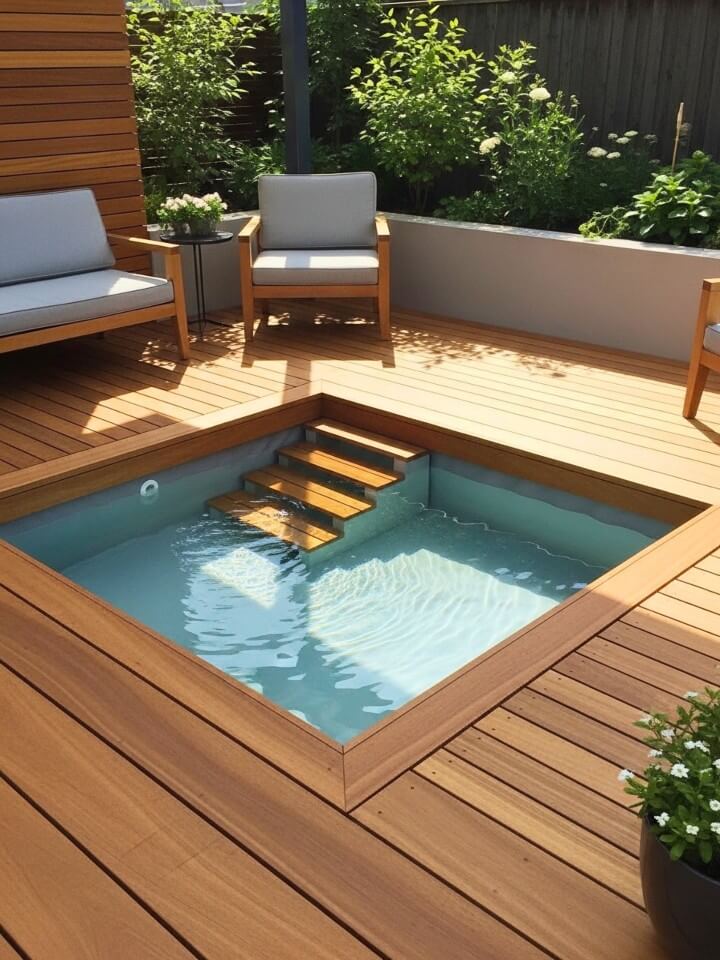
The cleanest integration between deck and pool happens when the water sits flush with the surrounding boards. A deck-inset design eliminates the bulky look of a standalone pool and creates a seamless flow across the outdoor living space.
Frame the opening within the deck joists during construction or careful retrofit, then drop in a pre-formed fiberglass or polyethylene shell. The shell rim sits flush with the deck surface, supported by the joist framework below. Build wide steps inside the shell at one end, finished in the same non-slip material as the rest of the interior.
Account for waterproofing carefully, since deck boards expand and contract with moisture. Apply marine-grade sealant along the rim and inspect annually for gaps. Total project cost generally falls between $3,000 and $7,000 for a 6-by-8-foot installation. Once the pool is in place, subtle stunning deck lighting ideas can make evening cleanup safer and keep the whole area usable after sunset.
Frequently Asked Questions About Dog Pools
Setting up the pool is only half the work. The other half involves the small daily questions that come up once your dog actually starts using it. Here are the answers most owners search for after the pool is already in the yard.
Is Chlorinated Pool Water Safe for Dogs to Drink?
Small amounts of chlorinated water rarely cause harm, but regular drinking can upset the stomach and irritate the eyes. Keep a separate fresh water bowl beside the pool and discourage gulping during play sessions.
How Often Should Dog Pool Water Be Changed?
Change the water every two to three days for small plastic pools, and weekly for larger setups with filters. Hot weather, multiple dogs, and visible debris all shorten that timeline significantly, so trust your nose over the calendar.
Can All Dog Breeds Actually Swim?
No. Bulldogs, Pugs, Dachshunds, and other heavy-chested or short-legged breeds struggle in deep water and tire quickly. Stick to shallow pools where they can stand comfortably, and never assume swimming ability based on size alone.
Should I Rinse My Dog After Every Pool Session?
Yes, especially with chlorinated or salt-treated water. Residue dries on the coat and causes itching, flaking, and dull fur over time. A quick rinse with the garden hose removes most of it in under a minute.
What Water Temperature Is Too Cold for Dogs?
Water below 60°F stresses most dogs and can trigger muscle cramping or hypothermia in small breeds. Aim for 70°F to 80°F during play, and always let your dog choose when to exit rather than forcing extended swims.
Conclusion:
The best dog pool is not the most expensive one or the one that looks sharpest in photos. It is the one your dog actually uses, the one that fits the corner of your yard, the one you can clean without dreading the task. A stock tank serves a working Lab just as well as a custom build serves a pampered Frenchie. Watch how your dog approaches water, measure the space you genuinely have, and pick the option that solves your real problem rather than an imagined one. Cool water on a hot day is the goal. Everything else is just packaging.