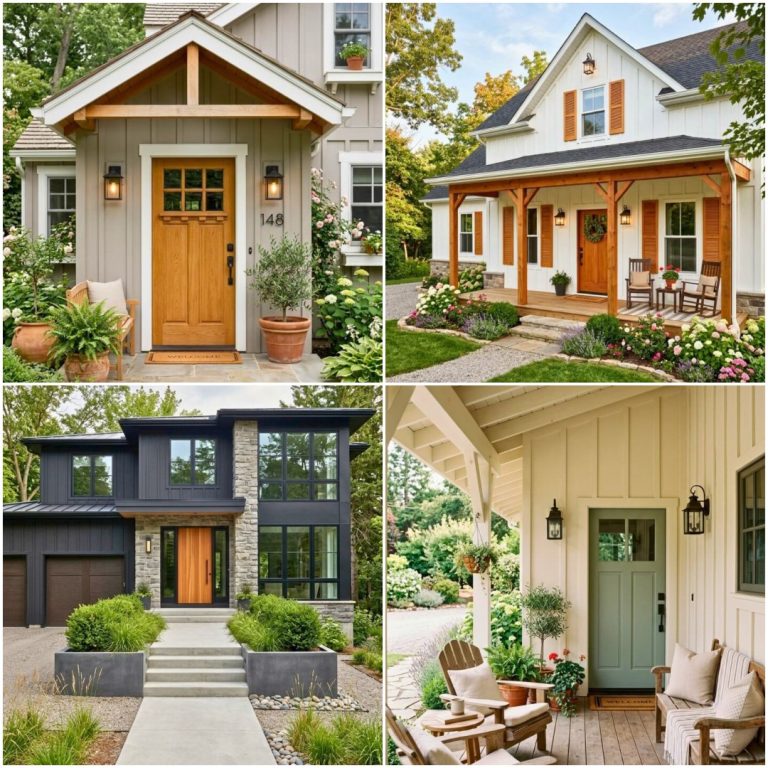
17 Cape Cod Front Yard Landscaping Ideas To Transform Your Home’s Entrance
There’s a certain kind of front yard that makes you slow down as you walk past it—soft hydrangeas spilling over a low fence, lavender swaying near the mailbox, a shell path winding toward a freshly painted door. That relaxed, salt-air charm is exactly what these 17 irresistible Cape Cod front yard landscaping ideas help you bring home. And here’s the good news: you don’t need to live near the coast or own a shingled cottage to make it work.
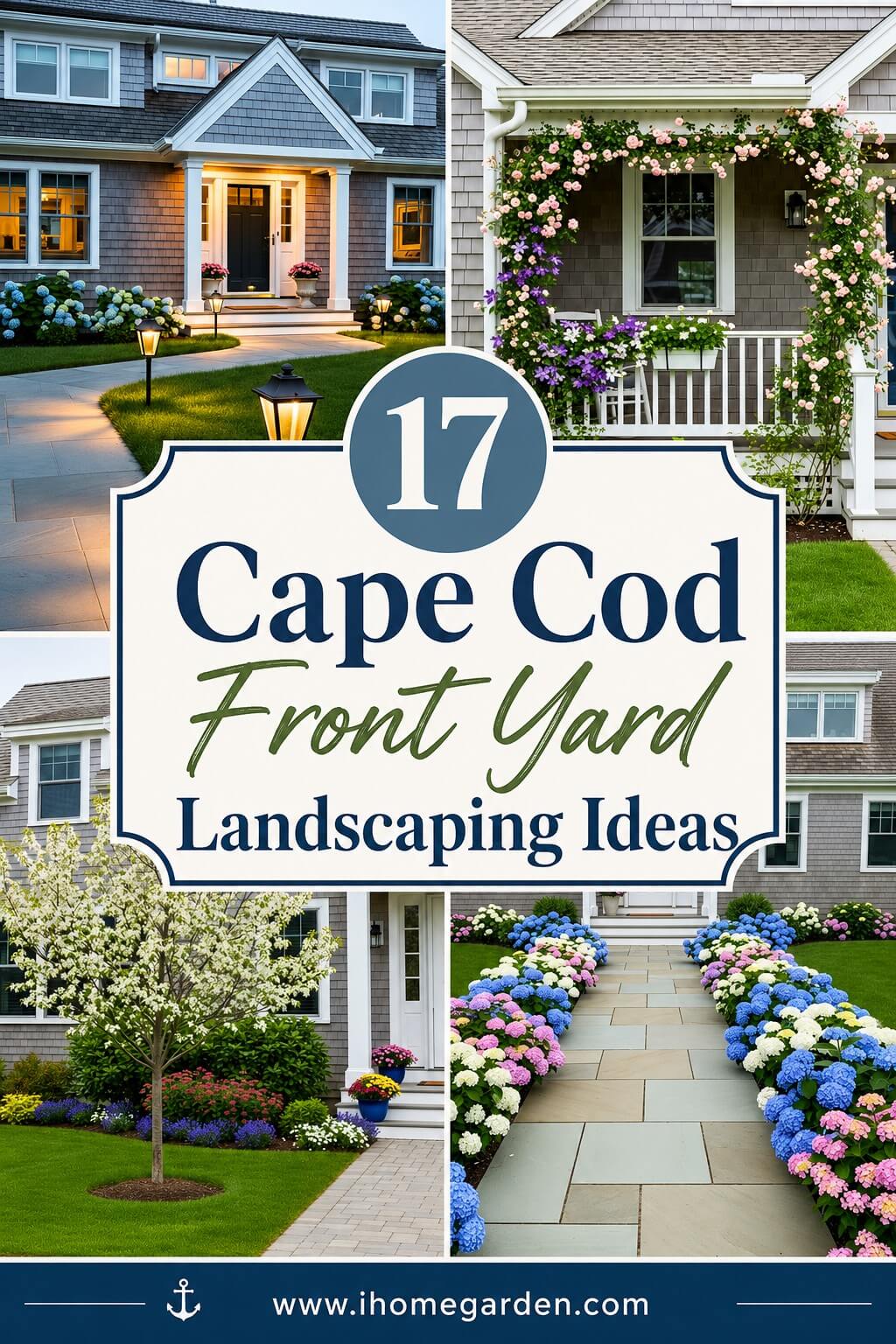
What makes this style so easy to love is how flexible it is. It rewards small efforts just as much as big ones. Swap stiff hedges for loose flower beds, add a weathered planter or two, line the walkway with something soft and fragrant—suddenly the whole yard feels different. The ideas ahead mix simple plant choices, smart layout tweaks, and budget-friendly upgrades that genuinely change how your home greets the world.
1. Classic White Picket Fence
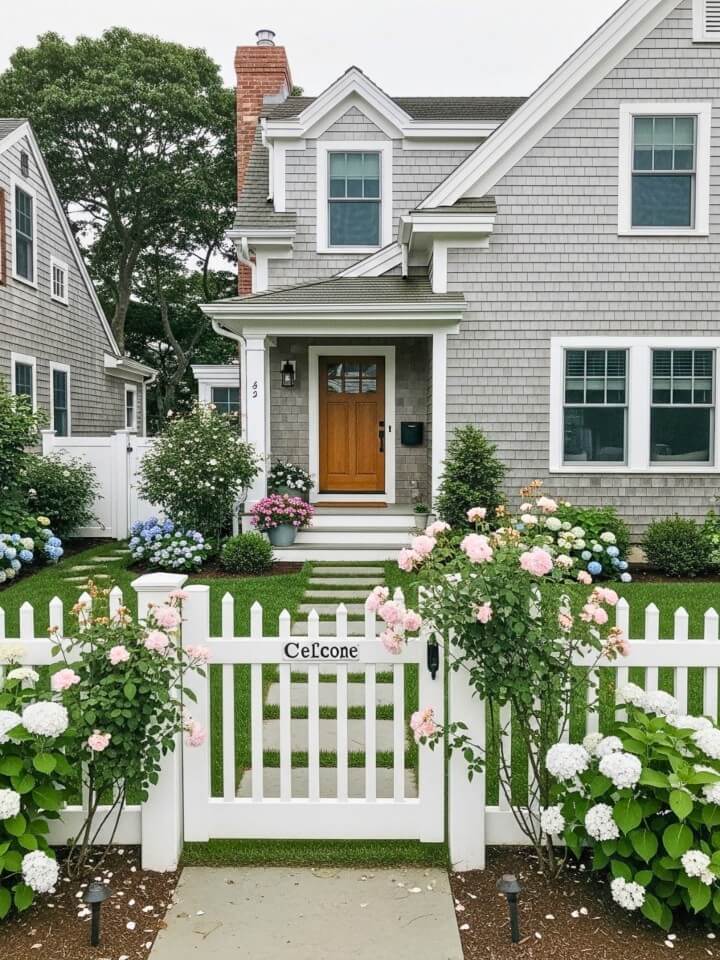
Nothing says coastal cottage quite like a crisp white picket fence wrapping around the front yard. It frames the property without closing it off, creating that welcoming, storybook feel everyone associates with seaside homes.
Materials That Hold Up Best
Cedar remains the gold standard because it naturally resists rot and weathers beautifully over time. Vinyl is the low-maintenance alternative—no painting, no warping, just an occasional rinse. Skip pressure-treated pine unless your budget is tight; it tends to twist and crack within a few years.
Quick Cost Breakdown
Professional installation typically runs $15–$30 per linear foot, while DIY kits from home improvement stores drop that to around $8–$12. Plant climbing roses or lavender at the base to soften the look.
2. Hydrangea-Lined Walkway
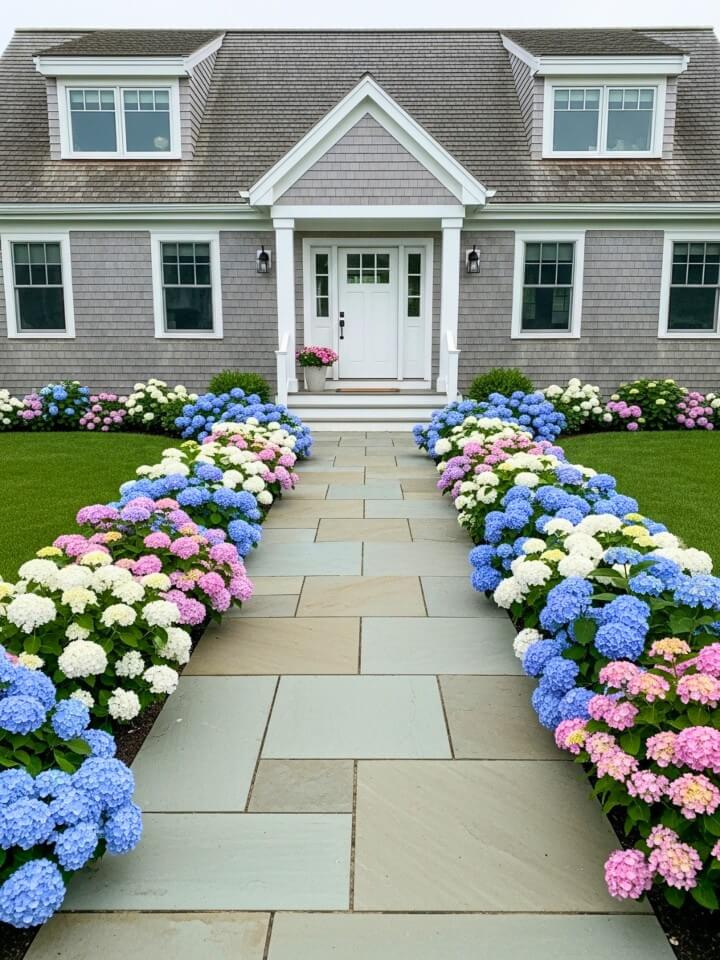
Few plants define this landscaping style more than the hydrangea. Their mophead blooms in soft blues, dusty pinks, and creamy whites create a dreamy approach to your front door, especially during peak summer months when they’re absolutely overflowing.
For most front yards, big-leaf hydrangeas are the classic pick—but if you live somewhere with harsh winters, panicle varieties like ‘Limelight’ are far more reliable. Space them about 3 to 5 feet apart along the path, giving each plant room to reach its full mature size without crowding its neighbor.
Here’s a fun trick most homeowners don’t know: you can actually change the bloom color by adjusting soil pH. Aluminum sulfate produces vivid blue flowers, while garden lime shifts them toward pink. Morning sun with afternoon shade keeps them happiest.
3. Shell or Gravel Path
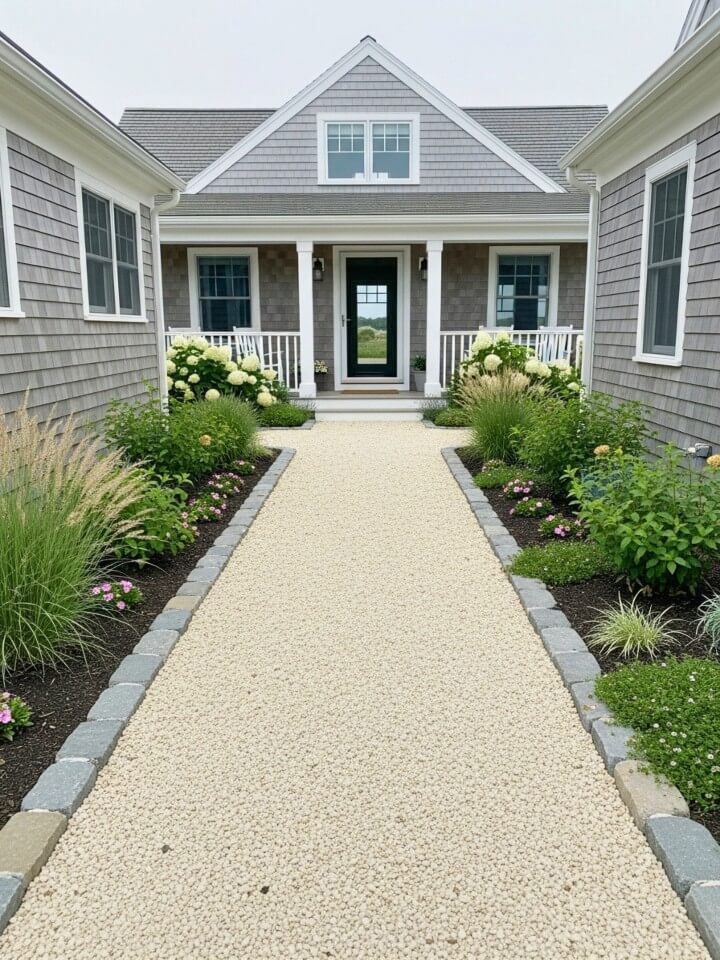
Explore cape cod front yard landscaping ideas that blend charm with low-maintenance beauty Crushed shells crunching softly underfoot—that’s the sound of summer at the shore, and it’s exactly the feeling this pathway choice brings to your front yard. It’s also one of the most affordable hardscape options you can install in a single weekend.
Best Material Options:
- Crushed white seashells — most authentic coastal look, around $40–$60 per cubic yard
- Pea gravel — smooth, comfortable to walk on, budget-friendly
- Light tan crushed stone — sturdier underfoot, holds shape better over time
Before laying anything down, put down quality landscape fabric to block weeds from pushing through. Edge the path with weathered brick or natural stone to keep your material contained. Plan to top it off with fresh gravel every couple of years.
4. Window Box Flowers
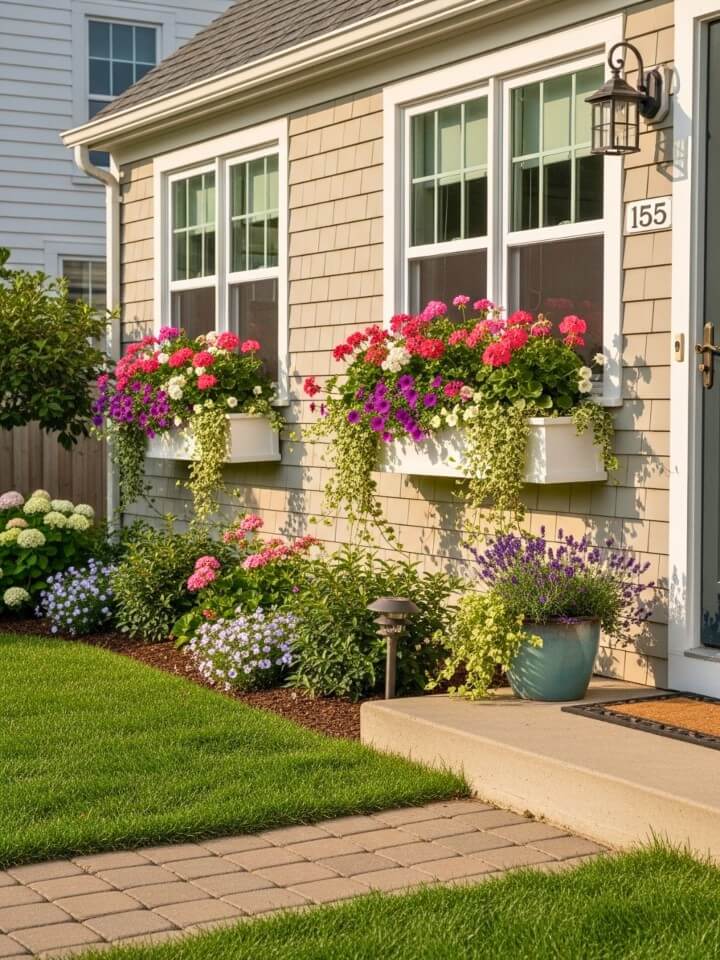
Window boxes are one of those small details that completely transform the front of a home. They bring the garden right up to the windows, blurring the line between house and yard in the loveliest way. Even a single box under a kitchen window can shift the entire mood of your facade, especially when it echoes the cozy coastal charm found in charming Cape Cod kitchen ideas inside the home.
For that authentic cottage spirit, fill them with a mix of trailing and upright bloomers: white geraniums for height, sweet alyssum spilling over the edges, and ivy or creeping jenny cascading down. Lavender works beautifully too, and brings a wonderful fragrance near open windows.
Wooden boxes painted soft white look most authentic, though copper and zinc develop a gorgeous patina over time. Self-watering inserts are genuinely worth the small extra cost—they save you from daily summer watering.
5. Simple Boxwood Borders
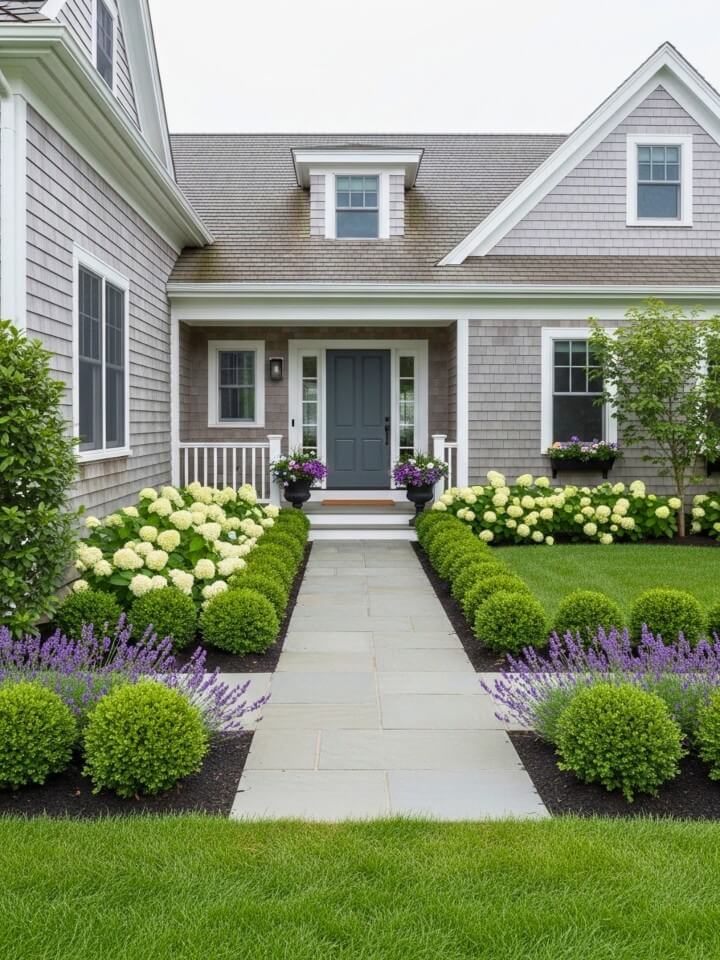
Boxwoods are the backbone of polished, classic landscaping. Their dense evergreen foliage holds shape beautifully year-round, giving your yard structure even in the middle of February when everything else looks bare. Plant them once, and they’ll quietly do their job for decades.
For low borders along walkways or flower beds, dwarf varieties like ‘Green Velvet’ or ‘Wintergem’ top out around 2 to 3 feet and rarely need heavy pruning. Space them roughly 18 to 24 inches apart for a solid hedge effect within two growing seasons.
One word of caution: boxwood blight has become a real problem in many regions. Ask your local nursery about resistant cultivars before buying, and avoid overhead watering—it spreads the disease quickly. A simple drip line keeps them healthy.
6. Cottage-Style Flower Beds
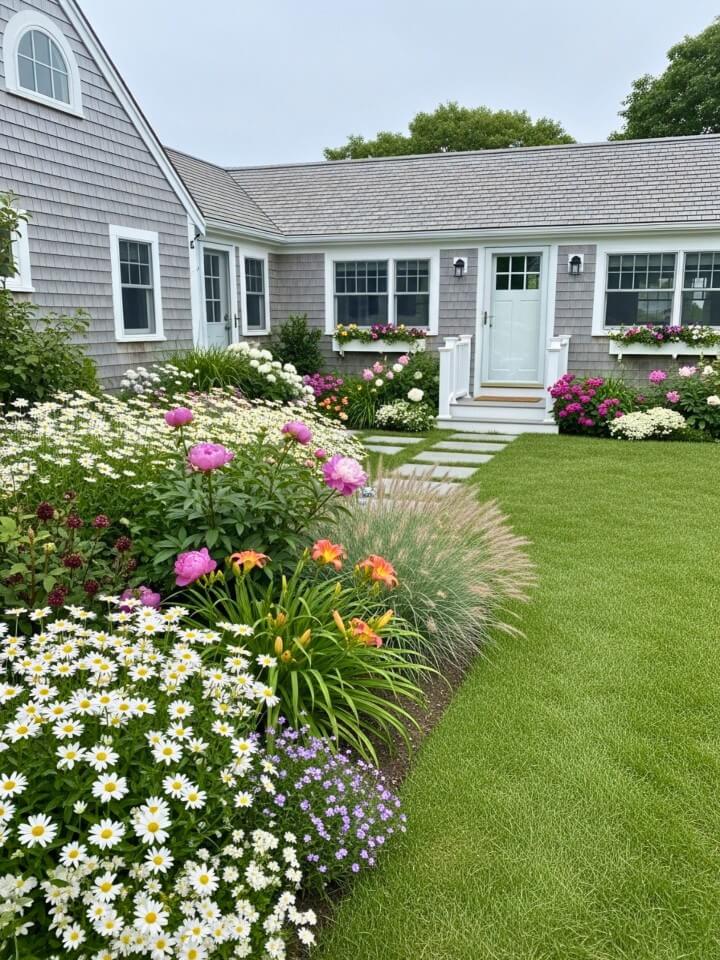
Forget rigid rows and perfectly spaced plants—cottage-style beds are all about that romantic, slightly untamed look where everything spills into everything else. Think of an English garden meeting the Atlantic coast, with blooms tumbling over one another in cheerful disarray.
The trick is layering by height. Tall anchors like delphiniums, foxgloves, or hollyhocks belong at the back. Mid-height perennials—peonies, Shasta daisies, daylilies, and coneflowers—fill the middle. Up front, tuck in low-growing creeping thyme, dianthus, or catmint to soften the edges.
Designer’s tip: Choose a loose color palette of three or four shades and repeat them throughout the bed. This keeps the “wild” look from tipping into chaos.
Plan for blooms in every season so something is always flowering from May through October.
7. Climbing Roses or Vines
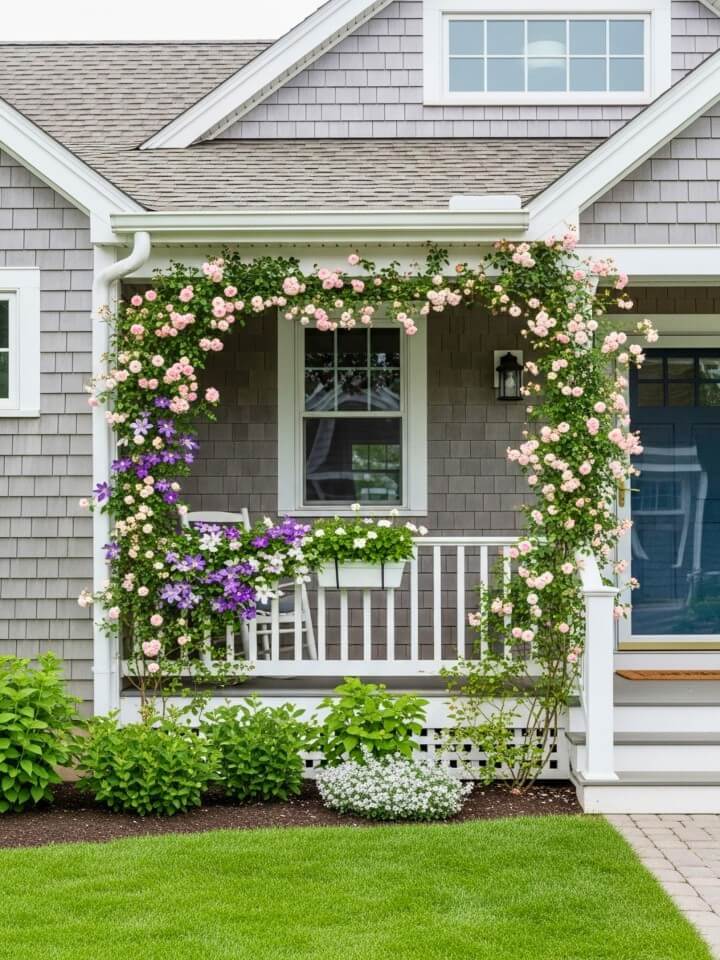
Vertical greenery changes everything. A bare porch column becomes a focal point, a plain trellis becomes architecture, and suddenly your front yard has that storybook romance you see in coastal magazines. Climbing plants add height where flat beds can’t reach.
Top Climbers for Cottage-Style Yards:
- New Dawn Rose — pale pink, disease-resistant, blooms repeatedly through summer
- Clematis ‘Nelly Moser’ — large pink and lavender flowers, thrives in part shade
- Climbing Hydrangea — perfect for shady north-facing walls
- Wisteria — dramatic spring blooms, though it needs sturdy support and firm pruning
Install your trellis or support structure before planting. Most climbers need 12 to 18 inches of breathing room from the house wall to prevent moisture damage to siding. Train new growth horizontally—it triggers more flowering shoots than vertical growth alone.
8. Coastal-Inspired Rock Garden
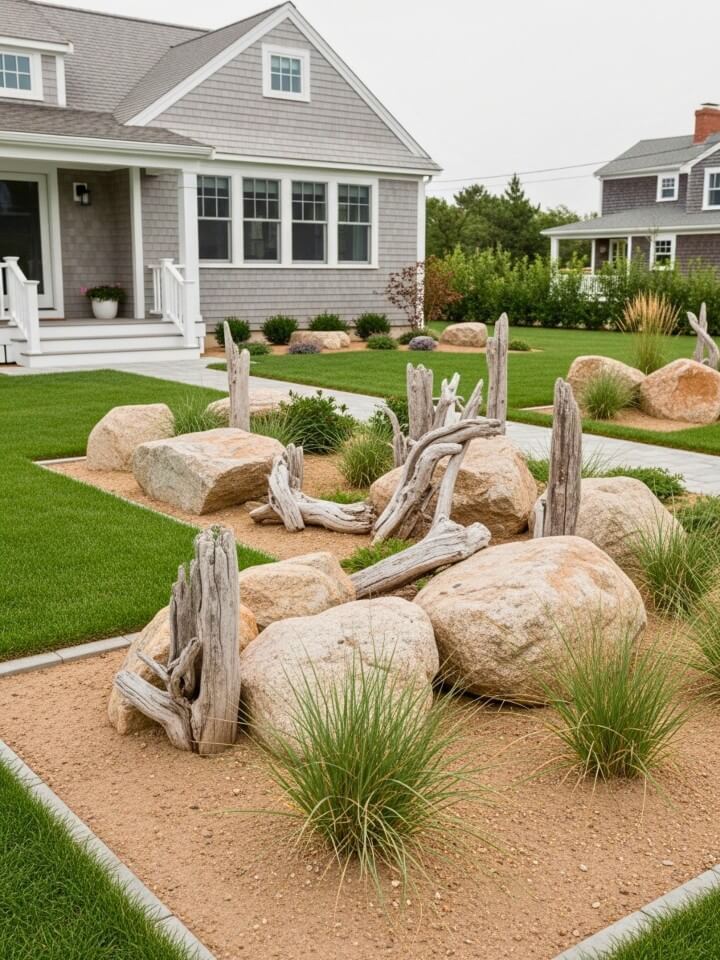
Rock gardens get a bad reputation as dry, lifeless patches of gravel, but done well they capture the windswept beauty of dune landscapes perfectly. They’re also a lifesaver for sandy soil and dry spots where regular plants struggle to survive.
Start with the bones: a few weathered boulders of varying sizes, partially buried so they look naturally settled rather than dropped on the surface. Driftwood pieces, smooth river stones, and bleached shells add authentic seaside character between them.
For planting, reach for tough beauties that actually prefer poor soil. Beach grass sways gracefully in any breeze. Sedum varieties spread into colorful mats. Russian sage adds silvery height and lavender-blue flower spikes from midsummer onward. Sea thrift produces darling pink pompom blooms in spring.
Best of all? Once established, this garden practically takes care of itself.
9. Small, Decorative Trees
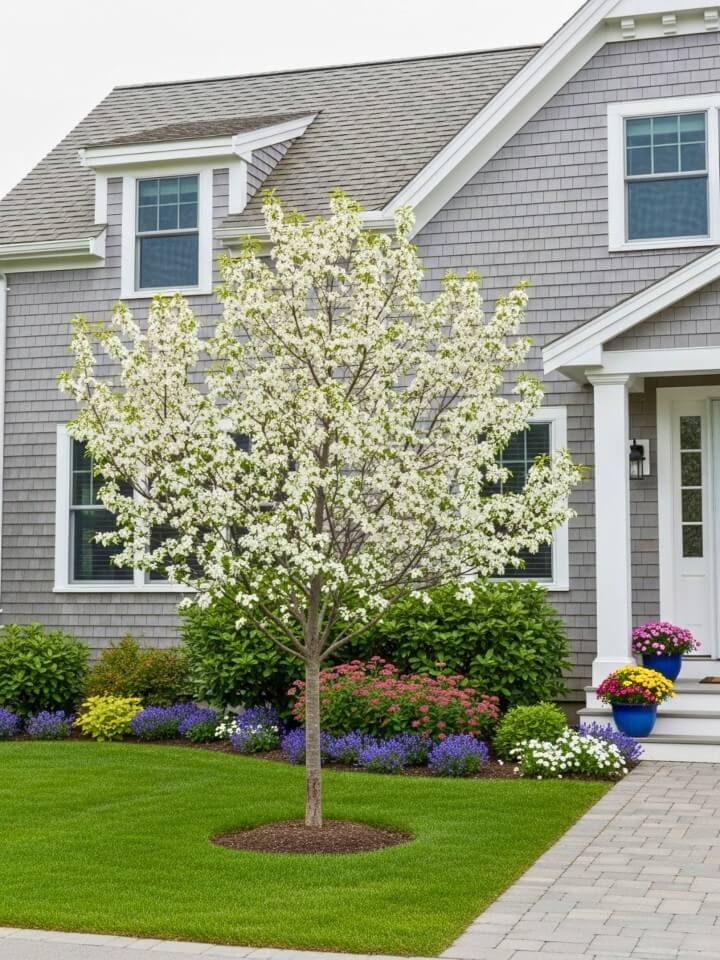
A well-placed ornamental tree gives your front yard something most landscapes lack: vertical drama at a human scale. You get seasonal interest, gentle shade, and a sense of permanence—all without the overwhelm of a massive oak or maple.
| Tree | Best Feature | Mature Height |
|---|---|---|
| Kousa Dogwood | Late spring white blooms, red fall berries | 15–25 ft |
| Crabapple ‘Prairifire’ | Pink spring flowers, disease-resistant | 15–20 ft |
| Japanese Maple | Year-round elegant form, fiery fall color | 8–15 ft |
| Serviceberry | Spring blooms, edible berries, bird-friendly | 15–20 ft |
Plant your tree at least 15 to 20 feet from the foundation to avoid future root problems. A single specimen tree often makes more impact than two or three crowded together. Stake young trees only for the first year—longer than that actually weakens the trunk.
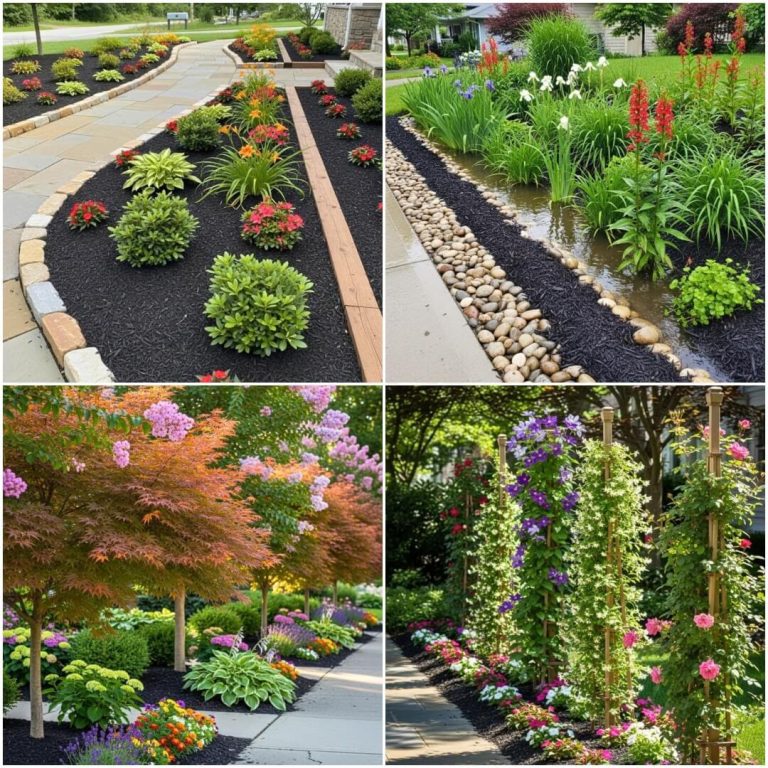
10. Mulched Beds with Perennial Accents
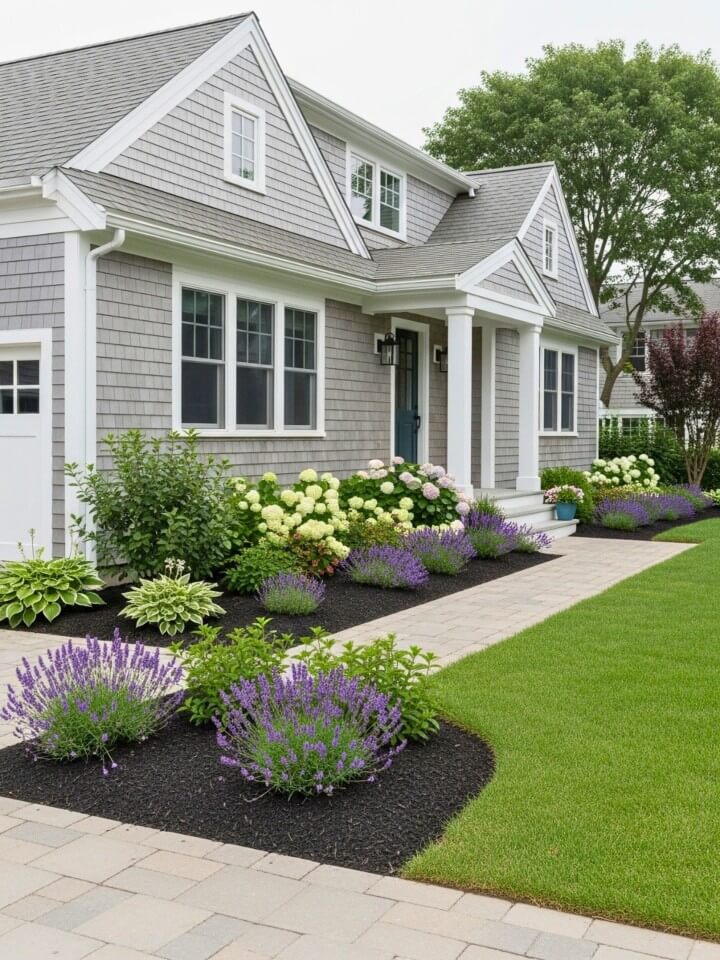
Fresh dark mulch does something almost magical to a front yard: it instantly makes everything look intentional, cared for, and pulled together. Even an average flower bed transforms when you frame it with rich brown or charcoal mulch.
Skip the dyed red and orange varieties—they fight the soft, natural palette of cottage and coastal styles. Shredded hardwood, pine bark fines, or aged dark brown mulch all blend beautifully into the landscape and break down over time to improve your soil.
Apply a consistent 2-to-3-inch layer, but pull it back a few inches from plant stems and tree trunks. Mulch piled against bark traps moisture and invites rot, pests, and fungal disease—those tall “volcano” mounds you see around trees are doing more harm than good.
Refresh once a year, usually in early spring after the soil warms.
11. Nantucket-Style Planters
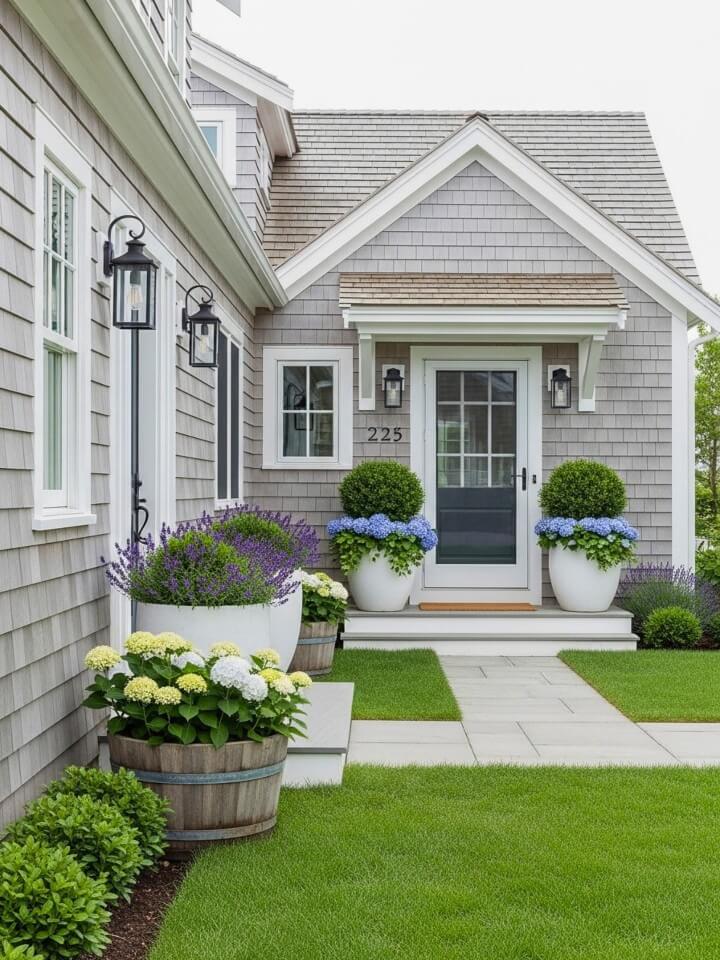
A timeless front yard cape cod landscape design starts with clean lines and native plants. Oversized planters flanking an entryway create that polished, magazine-worthy first impression with surprisingly little effort. The trick is going bigger than feels comfortable—small planters near a front door almost always look apologetic, while large ones feel confident and intentional.
Weathered teak boxes develop a beautiful silvery patina after a season or two outdoors. Painted wooden planters in soft white or pale gray offer that crisp coastal contrast against shingled siding. Galvanized metal containers work well too and age gracefully into something that looks almost antique.
What goes inside matters just as much as the container itself. A single dramatic hydrangea works beautifully as a standalone statement. For more variety, try the classic “thriller, filler, spiller” formula—a tall centerpiece, surrounding mid-height plants, and trailing greenery cascading over the edge.
12. Low-Maintenance Native Plants
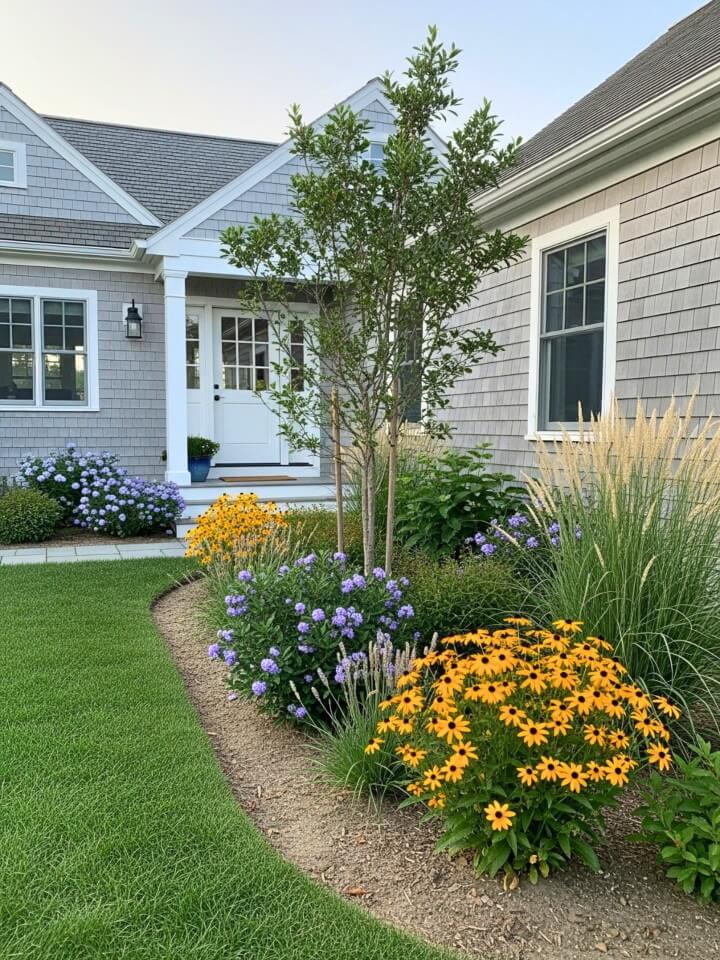
Native plants are the unsung heroes of effortless landscaping. They evolved in your local climate, which means they handle the weather extremes, resist regional pests, and rarely need supplemental watering once established. You spend less time fussing and more time enjoying the yard.
For coastal-inspired beds, these natives genuinely thrive:
- Bayberry — semi-evergreen shrub with aromatic foliage and waxy berries birds love
- Beach plum — produces white spring flowers followed by edible purple fruit in late summer
- Black-eyed Susan — cheerful golden blooms from midsummer through early fall
- Switchgrass — graceful ornamental grass that catches every breeze
- Little bluestem — turns gorgeous copper-orange shades in autumn
Beyond the practical benefits, native plantings support local pollinators and birds. You’ll notice more butterflies, bees, and songbirds within just one growing season.
Group plants with similar water needs together for the easiest possible maintenance.
13. Brick or Cobblestone Edging
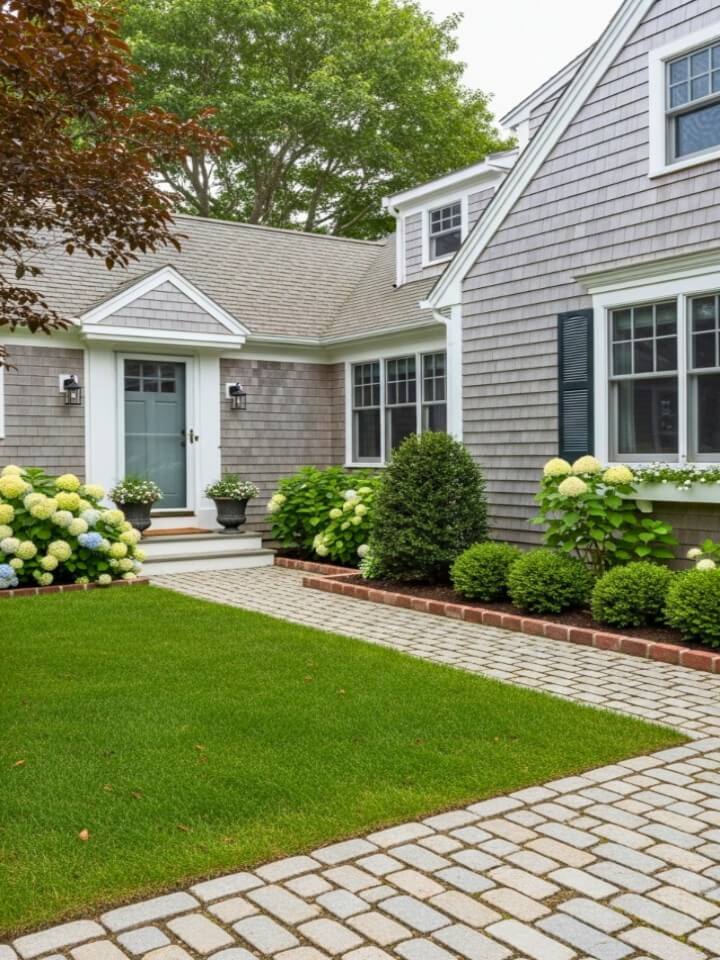
Edging is one of those small details most people skip, but it’s exactly what separates a yard that looks “nice” from one that looks finished. A clean border between lawn and flower bed instantly elevates everything else you’ve planted.
Reclaimed brick brings genuine character that brand-new materials can’t quite replicate. Look for weathered red bricks at architectural salvage yards or even Facebook Marketplace—they’re often dirt cheap and full of warmth. Belgian block (sometimes called cobblestone) offers a sturdier, more substantial feel that works especially well along driveways.
Set your edging on a 2-inch base of compacted sand or stone dust so it stays level through freeze-thaw cycles. Bury the bottom third below grade for stability. Done properly, brick edging lasts decades with essentially zero maintenance beyond an occasional rinse.
14. Lantern-Style Path Lighting
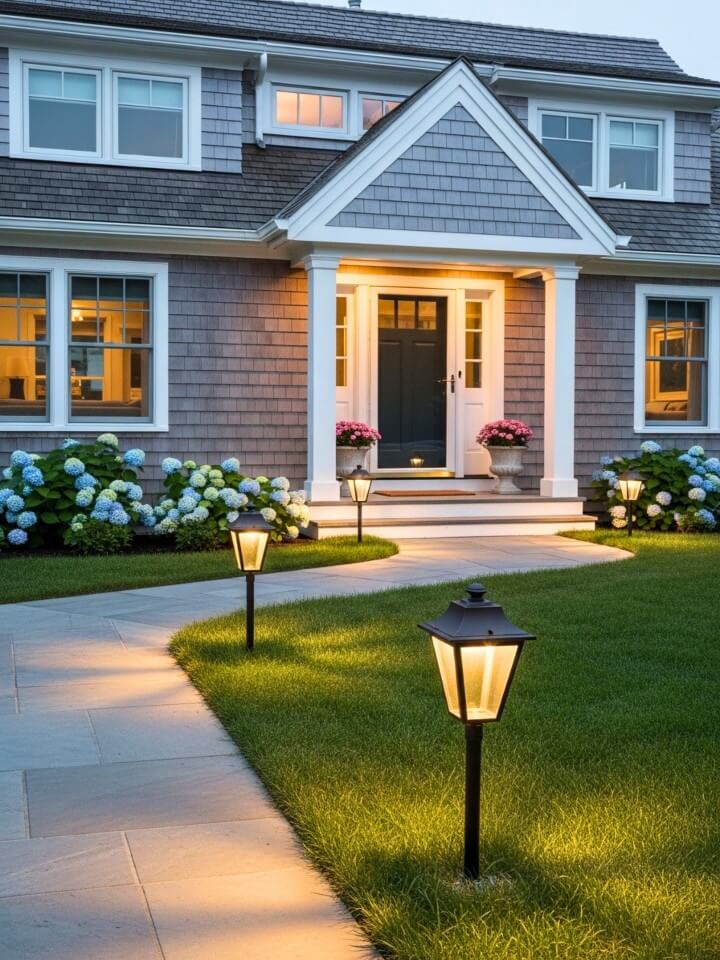
Good lighting transforms a front yard after sunset, turning it from invisible to inviting. Lantern-style fixtures bring that warm cottage glow that builder-grade landscape lights simply can’t match—they look like something you’d find guiding a path in a coastal village at dusk.
What to look for: Solid brass or copper fixtures patina beautifully and last decades. Powder-coated aluminum is the budget-friendly alternative. Avoid plastic—it yellows and cracks within a few seasons of sun exposure.
Solar options have improved dramatically and work well for most front walkways, especially if you can place them where they catch 6+ hours of daily sun. For brighter, more reliable light, low-voltage wired systems are worth the extra installation effort. Space fixtures 8 to 10 feet apart along paths—any closer reads as runway lighting, any farther creates dark gaps between pools of light.
Warm bulbs (2700K) always look more inviting than cool white.
15. Symmetrical Entry Landscaping
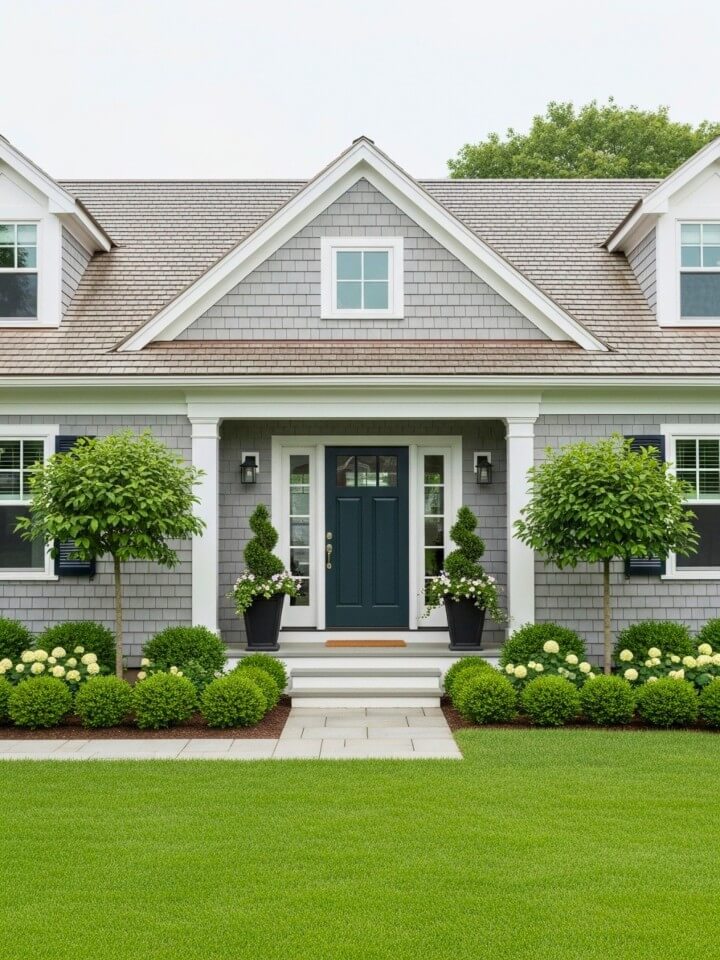
There’s a reason symmetry has anchored classic architecture for centuries—our eyes naturally find balanced compositions calming and beautiful. Framing your entryway with matched elements creates that immediate sense of order and welcome the moment someone arrives.
The pairs don’t need to be identical clones, just visually balanced. Two matching boxwood spheres flanking the front steps. A pair of weathered planters spilling with white petunias. Twin lanterns mounted on either side of the door. Even matched ornamental grasses can do the job beautifully.
Keep the front door itself as the clear focal point—symmetry should frame the entrance, not compete with it. Avoid placing anything tall directly in front of windows or blocking sightlines from inside. The eye should travel naturally from the street, along the walkway, through your symmetrical frame, and land squarely on the door.
This is the kind of detail neighbors notice without quite knowing why your house looks so put-together.
16. Seaside Grasses and Lavender
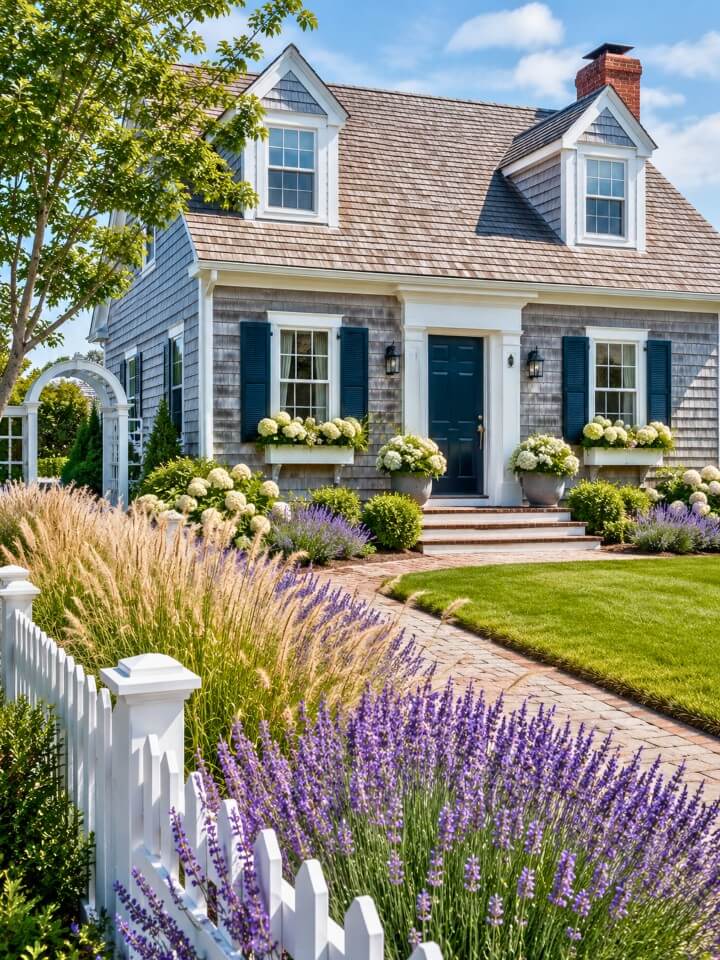
Pair ornamental grasses with lavender and you’ve captured the essence of a windswept coastal garden in one simple combination. The grasses bring constant gentle motion—even the lightest breeze sets them swaying—while lavender adds soft purple color and that unmistakable fragrance that drifts across the yard on warm afternoons.
For grasses, ‘Karl Foerster’ feather reed grass stays upright in even strong winds and reaches about 4 to 5 feet at maturity. Blue oat grass offers shorter blue-gray clumps that contrast beautifully against lavender’s silvery foliage. For something even more dramatic, ‘Northwind’ switchgrass holds its vertical form right through winter.
English lavender (‘Hidcote’ or ‘Munstead’) handles cold winters better than French varieties and produces the most fragrant blooms. Both grasses and lavender demand the same growing conditions: full sun and excellent drainage. Heavy clay or soggy spots will kill lavender within a single season, so amend with sand or gravel if needed.
17. Cozy Front Yard Sitting Area
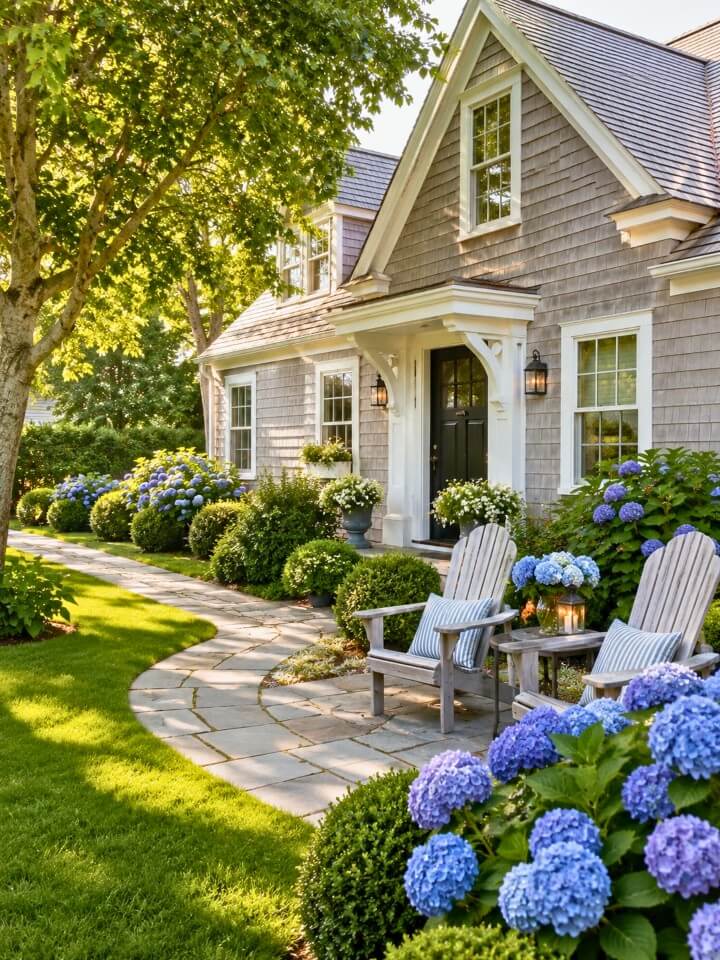
Boost curb appeal small cape cod house owners love with smart plantings and bold shutters. Most homeowners reserve seating exclusively for the backyard, which is honestly a missed opportunity. A small front yard sitting nook turns passive curb appeal into something you actually use—mornings with coffee, evenings chatting with neighbors who walk by, that perfect quiet hour before the day fully begins.
You don’t need much space at all. A pair of weathered Adirondack chairs angled toward each other. A simple wooden bench tucked beneath a flowering tree. A compact bistro set for two beside the front walkway. Any of these immediately makes a yard feel lived-in rather than just looked-at.
Position the spot for partial shade during peak afternoon hours, and surround it with fragrant plants like lavender, climbing roses, or jasmine to engage more than just the eyes. A small side table for setting down a mug or book makes the difference between a seating area that just looks nice and one that actually gets used every week.
FAQs About Cape Cod Landscaping
Still have a few questions before you start digging? You’re not alone. Below are some of the most common things homeowners wonder about when planning a coastal-cottage front yard—covering details the main guide didn’t fully unpack.
How Do I Protect Coastal-Style Plants from Harsh Winter Winds?
Wrap young shrubs in burlap screens, mulch heavily around root zones in late fall, and plant wind-sensitive varieties near fences or foundations. Anti-desiccant sprays on broadleaf evergreens like boxwoods also reduce winter burn significantly.
Can I Create This Look on A Small or Narrow Front Yard?
Absolutely. Focus on vertical elements like window boxes, climbing roses, and tall planters instead of sprawling beds. Choose dwarf hydrangea varieties, narrow ornamental grasses, and a single statement tree to keep proportions feeling balanced rather than crowded.
Which Cape Cod Landscaping Ideas Work Best for Sandy or Poor Soil?
Beach plum, bayberry, lavender, sedum, and ornamental grasses actually prefer lean, sandy conditions. Amend with compost only where you’re planting hydrangeas or roses. Most native coastal plants struggle in rich, heavy soil rather than poor soil.
How Long Does It Take for A New Cape Cod Front Yard to Look Established?
Expect noticeable results within one growing season and a truly settled look around year three. Hydrangeas, boxwoods, and climbing roses need that time to fill out, soften edges, and develop the relaxed, lived-in character.
Are Deer and Rabbits a Problem for These Plant Choices?
Lavender, boxwood, ornamental grasses, bayberry, and Russian sage are reliably deer-resistant. Hydrangeas and roses, unfortunately, are favorites. Use granular repellents seasonally or tuck vulnerable plants closer to the house where wildlife traffic tends to be lighter.
Conclusion:
Most front yards try too hard. The ones that stop you in your tracks usually don’t—they just feel honest, a little imperfect, and quietly alive. That’s the real win here. Plant the rose by the porch even if it takes three summers to climb. Let the lavender lean. Skip the urge to trim every grass into a tidy ball. A yard like this rewards patience more than perfection, and curiosity more than rules. One day you’ll glance out the kitchen window, notice a bee working the hydrangeas, and realize the place finally has a personality of its own.