19 Planter Box with Trellis Ideas Worth Copying This Year
Somewhere between a boring flower pot and a full garden makeover sits the sweet spot most homeowners miss entirely. A planter box with trellis is that missing piece — it grows upward instead of outward, which changes everything about how a small patio, narrow side yard, or bare fence line actually feels to stand in.
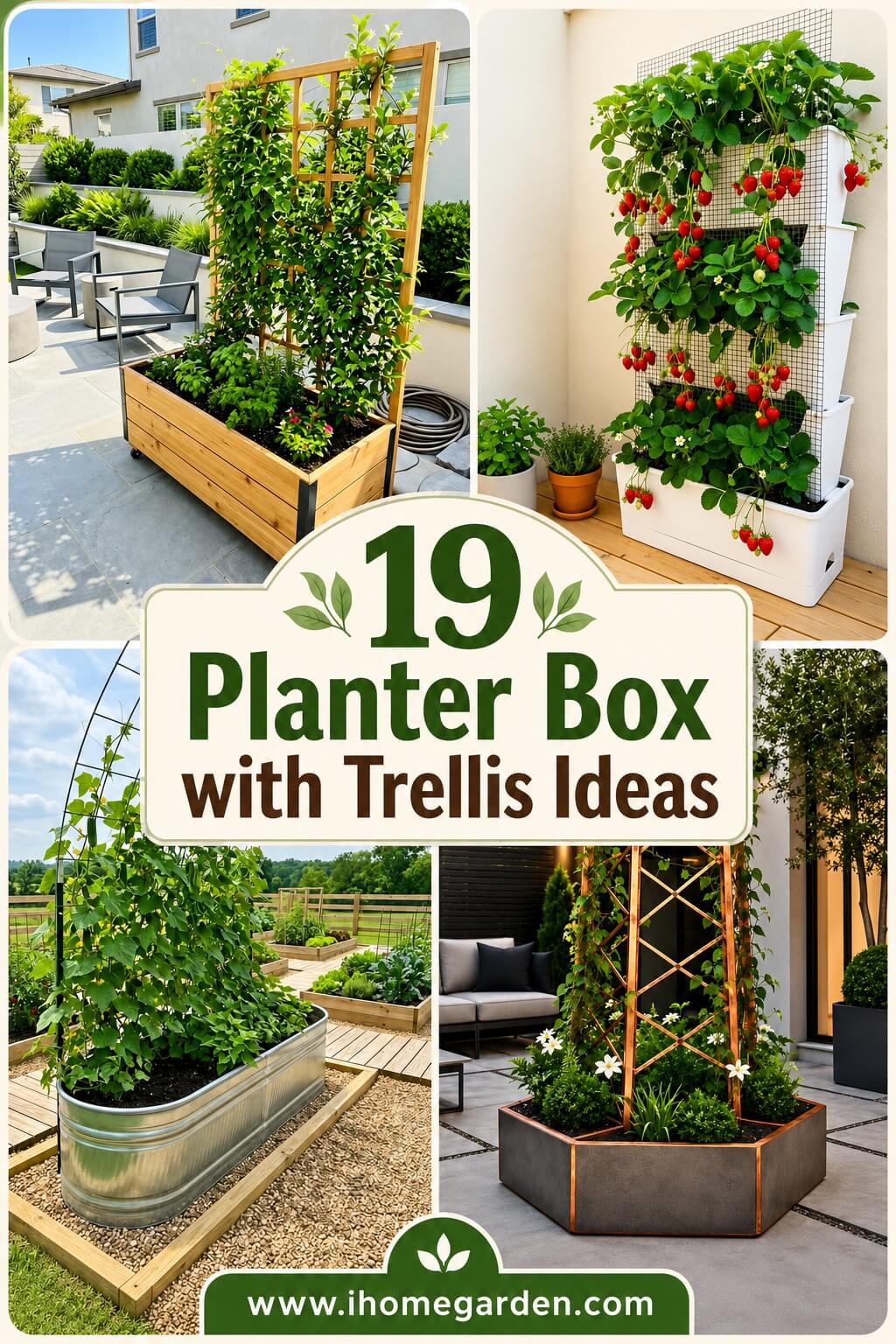
These 19 awesome planter box with trellis ideas pull from every direction: farmhouse, coastal, Japanese, industrial, cottage, mid-century. Some cost under $50 to build in a weekend. Others are investment pieces that outlast the house itself. A few solve specific problems like nosy neighbors, limited floor space, or a strawberry patch that keeps getting eaten by squirrels.
No two setups on this list feel alike, and that’s the point. Skim through with your own space in mind — the back corner that never gets used, the fence that stares back every morning, the balcony begging for something alive. One of these will click.
1. Classic Cedar Box with Lattice Trellis
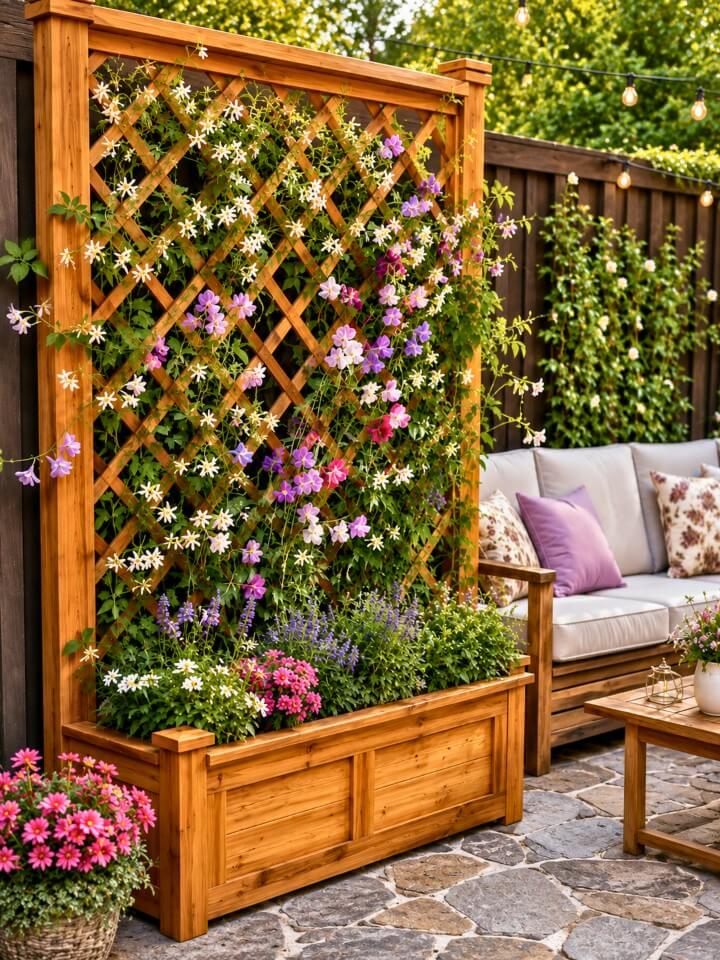
Cedar contains natural oils that fight rot without any chemical treatment, which is why this style has stayed a backyard favorite for over a century. Within two seasons, the reddish tone fades into soft driftwood gray that reads intentional, not neglected.
Clematis, climbing hydrangea, sweet peas, and jasmine all thread through lattice openings without needing extra ties.
Ready-made boxes run $130 to $290. A weekend DIY with rough-cut cedar boards costs around $55.
Staple landscape fabric along the inside walls before adding soil — it blocks direct soil-to-wood contact and adds roughly five extra years of life.
2. Whitewashed Coastal Planter with Rope Trellis
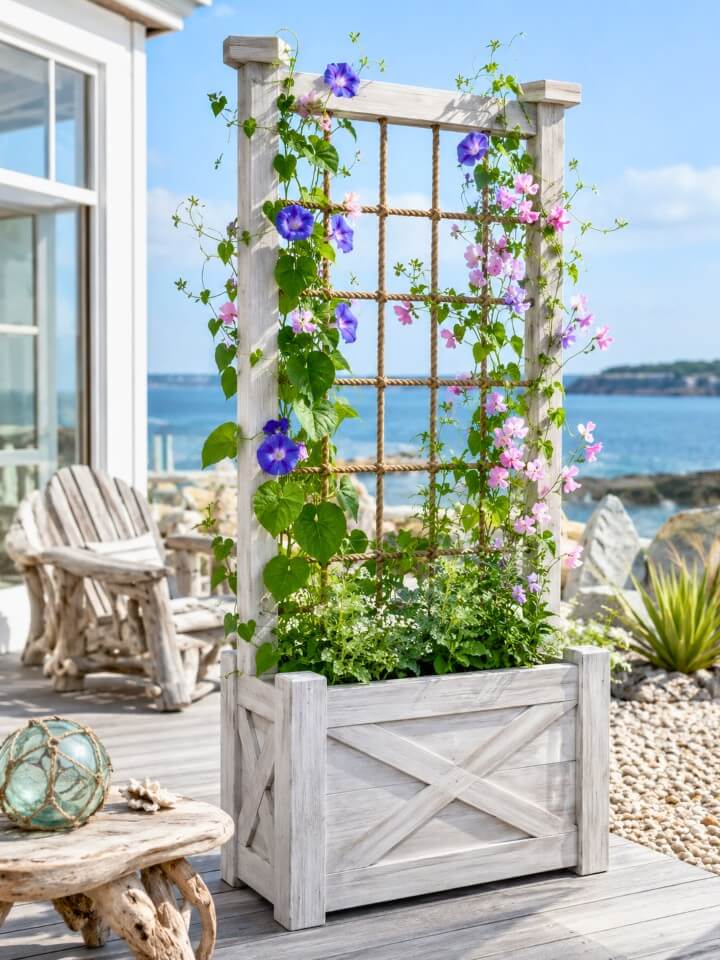
Picture a back porch where the salt-air feeling starts before you even see water. That’s the mood this planter creates. The pale finish also does something practical — light colors reflect roughly 80% of solar heat, keeping roots noticeably cooler through July heat waves.
Instead of stiff wooden slats, thick marine rope weaves between two upright posts. Morning glory, moonflower, and black-eyed Susan grip natural fibers easily, and the whole trellis sways slightly in the breeze.
Cost Range
Pre-built versions land between $95 and $240. A DIY build using pine, chalk paint, and sisal rope from any hardware store comes in under $50.
Reseal every 18 to 24 months to prevent yellowing.
3. Galvanized Steel Trough with Cattle Panel Trellis
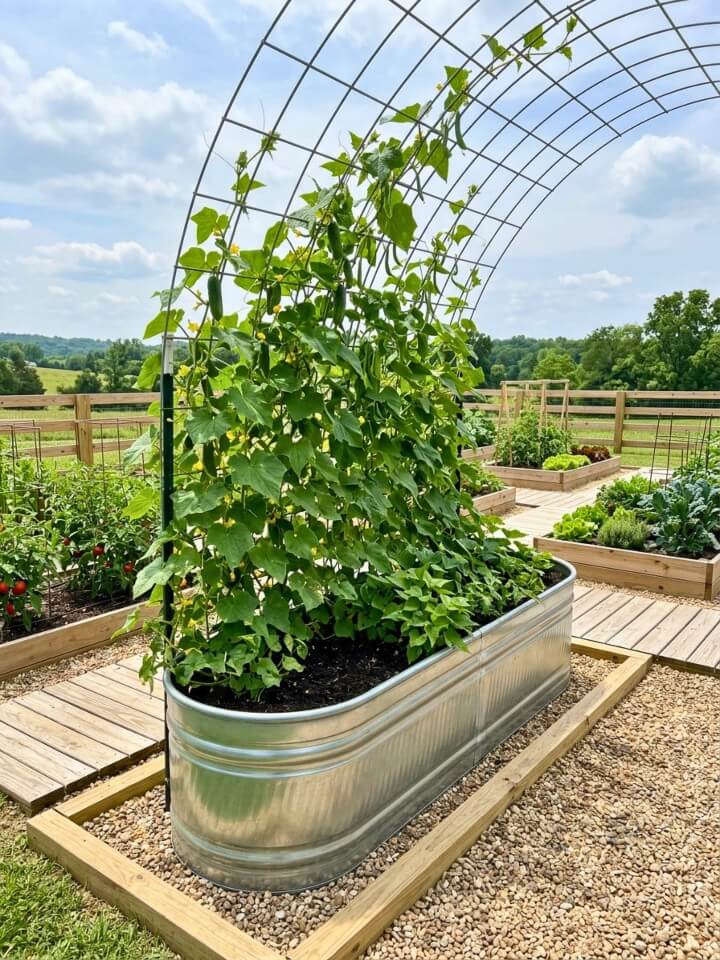
Add charm with a stylish planter box with trellis, perfect for climbing plants and vibrant blooms. Farmers figured this one out long before it hit design blogs. A standard livestock trough turns into an almost indestructible raised bed once drainage holes are drilled across the bottom. Steel warms faster than wood in spring, letting tomato and pepper transplants go in two weeks earlier than in-ground beds.
Bending a 16-foot cattle panel between two troughs creates an instant tunnel where pole beans, cucumbers, and sugar pumpkins climb freely. Harvesting becomes almost effortless since everything hangs at eye level.
Soil Mix That Actually Works
Use 60% topsoil, 30% compost, 10% coarse perlite. Skip the old rocks-at-the-bottom trick — research shows it worsens drainage instead of helping it.
4. Hexagonal Geometric Planter with Copper Trellis
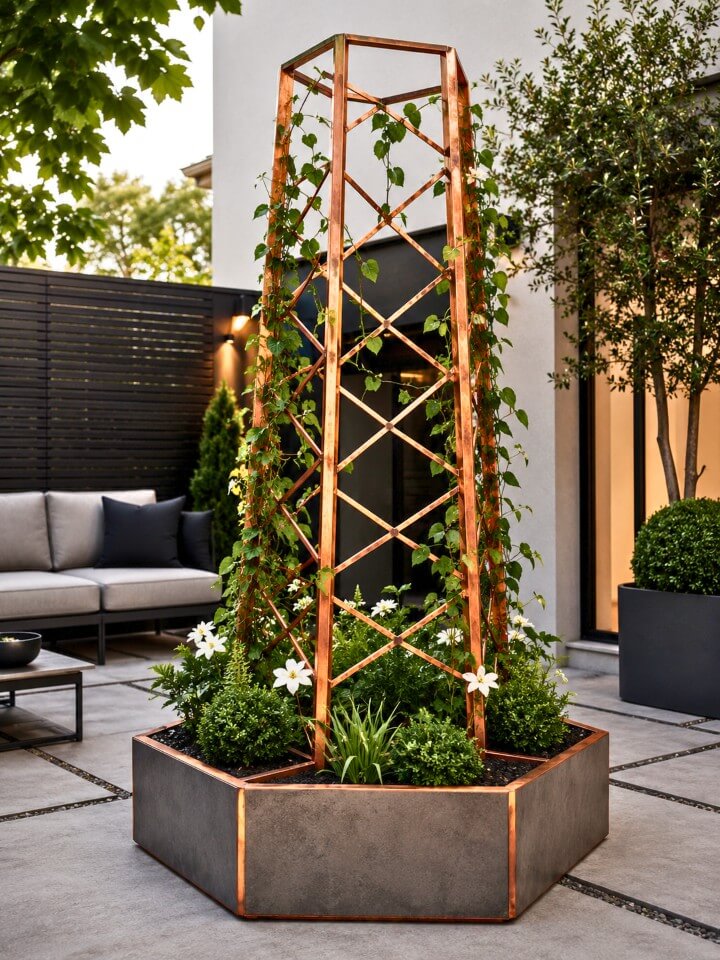
Some pieces earn their spot through pure sculpture. The six-sided base cuts through the straight lines that dominate most patios, while copper rods rise above it in matching angles.
Copper does something no other trellis material does outdoors: it starts penny-bright, shifts through warm bronze within a year, then settles into a famous blue-green patina after three to five seasons. Every stage looks deliberate.
Choose Delicate Climbers
Thunbergia, mandevilla, or a single trained passionflower vine. Aggressive climbers hide the copper entirely and cancel the whole design idea.
5. Victorian-Style Planter with Wrought Iron Trellis
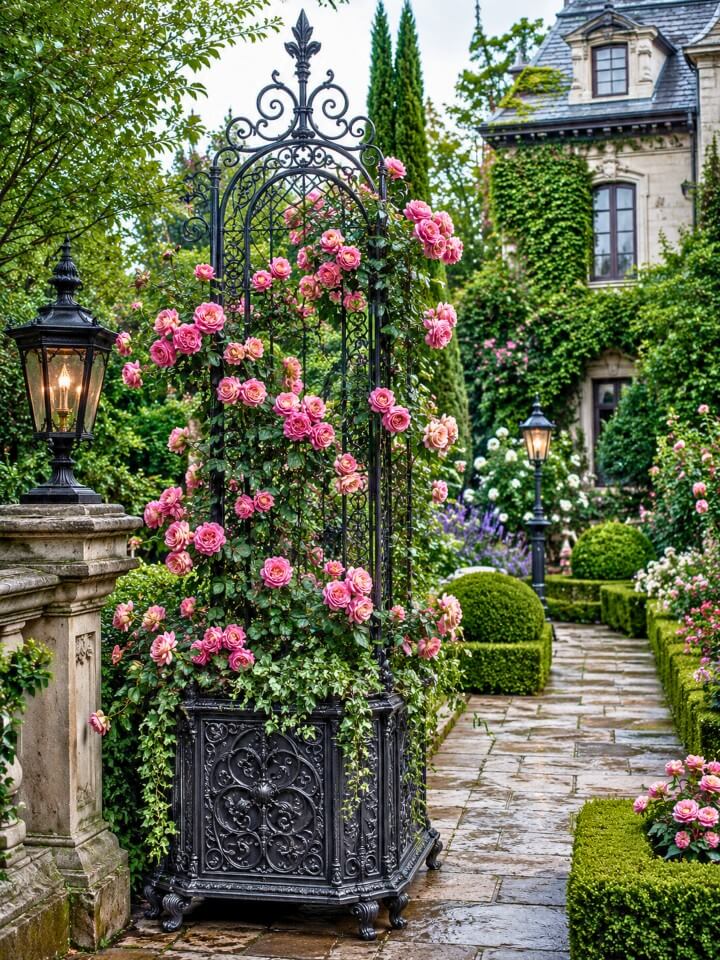
Walk through any historic district — Charleston, Savannah, Cape May — and these show up beside front steps and along garden walks. The scrollwork isn’t only decorative; those curls give climbing rose canes natural resting points, cutting down on tying and training as they mature.
Perfect Plant Pairings
- David Austin climbing roses
- English ivy for year-round green
- Sweet autumn clematis for late-season blooms
- Trailing lobelia spilling over the front
Cast iron pieces weigh 40 to 90 pounds — always place before filling with soil. Touch up rust spots with converter primer every spring; ten minutes saves the whole piece from serious corrosion.
6. Self-Watering Planter with Expandable Trellis
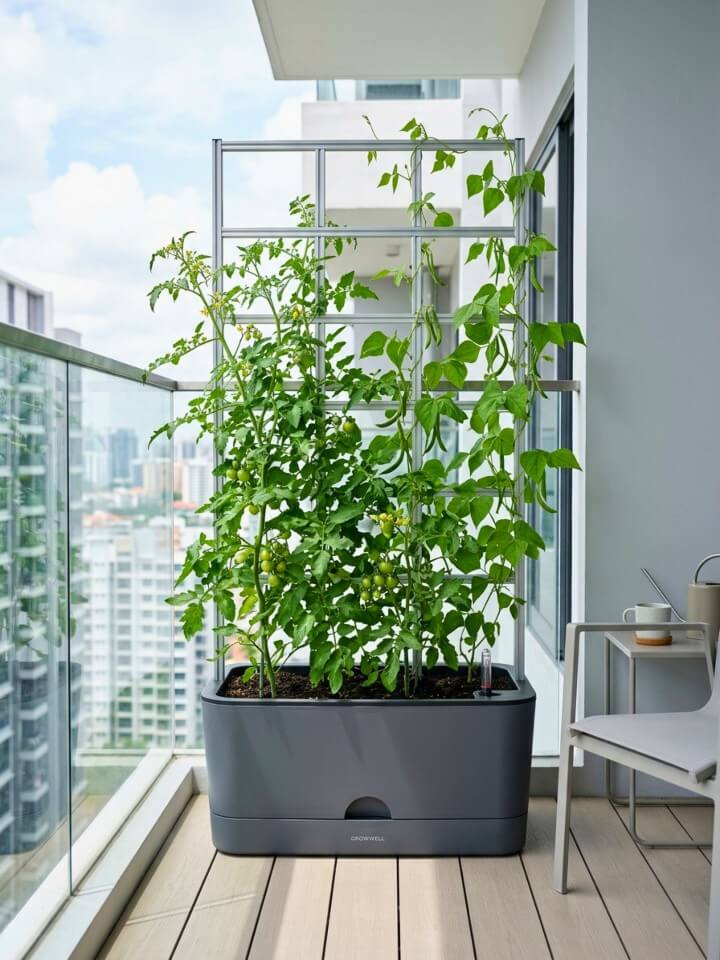
Forgetting to water for a weekend usually means coming home to droopy tomato plants and crispy basil. Self-watering planters solve that headache with a hidden reservoir at the base — soil pulls moisture upward through capillary action, giving roots steady hydration for seven to ten days between refills.
The expandable trellis is the second smart feature. It starts at around 24 inches for young seedlings, then extends to 60+ inches as tomatoes, peas, or cucumbers reach for the sky.
Who Benefits Most
Frequent travelers, apartment dwellers with balconies, and anyone juggling work with a small edible garden.
Price range sits between $75 and $220. Fill the reservoir once a week during peak summer and every 10 days in cooler months.
7. Mid-Century Modern Planter on Hairpin Legs
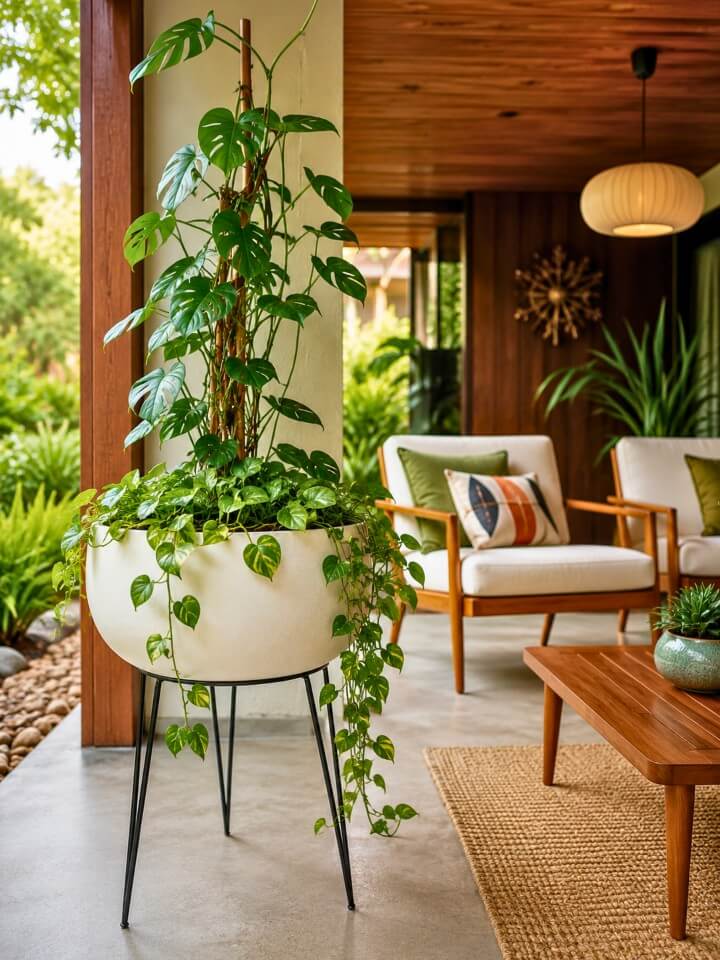
Elevate your garden decor with a space-saving trellis planter built for climbing vines and flowers. Hairpin legs first appeared in 1941, and something about those three thin steel rods still reads fresh eighty years later. Lifting a planter 12 to 18 inches off the ground creates breathing room underneath — patios instantly feel less cluttered, and small spaces look larger than they measure.
Elevation also protects against slugs, splash-back during heavy rain, and the constant moisture that rots wooden bases sitting directly on concrete.
Plants That Suit This Style
Trailing varieties steal the show here. String of pearls, sweet potato vine, and cascading petunias spill over the edges and soften the rigid geometry of the legs.
Expect to pay $110 to $260 for solid teak or walnut versions. Cheaper MDF lookalikes swell within one rainy season, so stick with real hardwood.
8. Convertible Planter with Removable Trellis
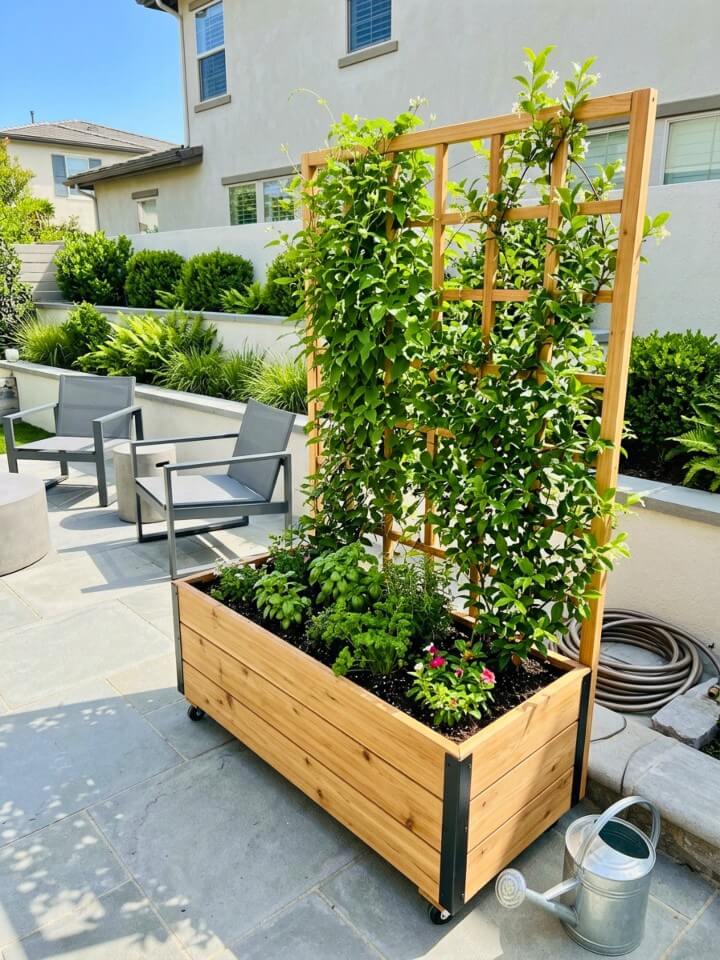
Gardens change. Last year’s tomato obsession becomes this year’s herb corner, and rigid setups make that shift frustrating. A convertible planter fixes the problem — the trellis panel slides into brackets along the back edge and lifts out in under a minute.
Two Setups From One Planter
- Trellis mode: Ideal for pole beans, snap peas, cucumbers, and indeterminate tomatoes during warm months.
- Open mode: Perfect for basil, cilantro, lettuce beds, or a mixed flower display when the growing season shifts.
This flexibility matters most for renters and anyone with limited storage — one planter handles multiple garden phases instead of collecting three separate boxes.
9. Mosaic Tile Planter with Mediterranean Trellis
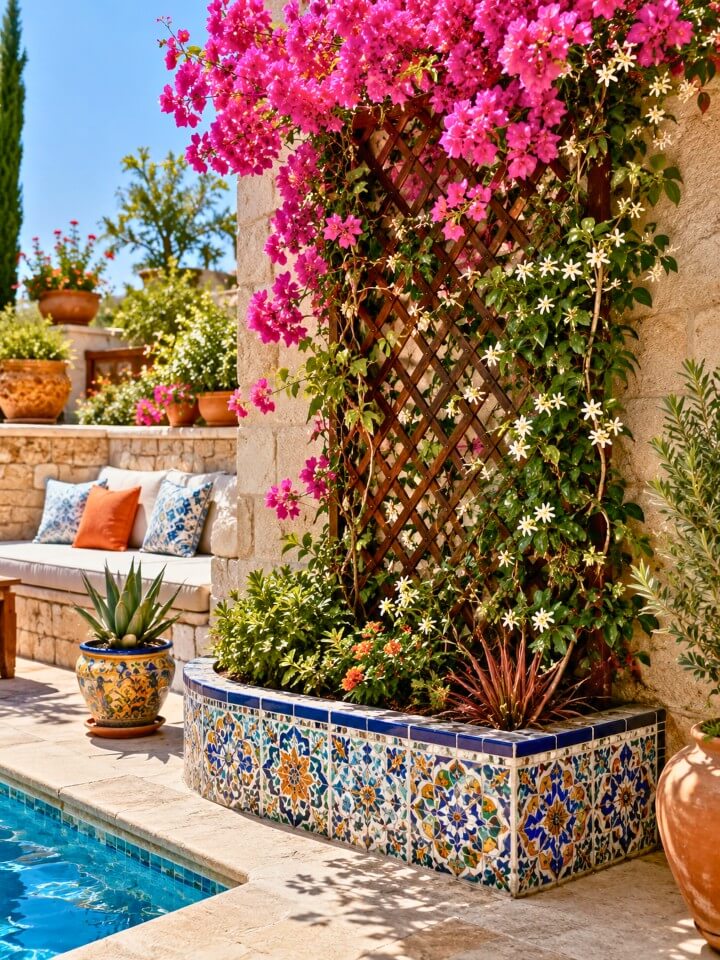
Sun hits a mosaic surface and something magical happens — hundreds of tiny reflections scatter across the surrounding patio like fragments of stained glass. This is the planter that turns a plain corner into a conversation piece.
Tile patterns usually pull from Moroccan, Andalusian, or Portuguese design traditions, with cobalt blue, terracotta orange, and warm yellow dominating the palette.
Bougainvillea leads the list — the magenta blooms echo the tile colors perfectly. Star jasmine adds evening fragrance, and honeysuckle brings hummingbirds by mid-summer.
Winter Warning
Ceramic tile cracks when trapped water freezes. In zones colder than 7, move the planter under cover or drain it completely before the first hard freeze.
10. Living Wall Planter with Integrated Trellis
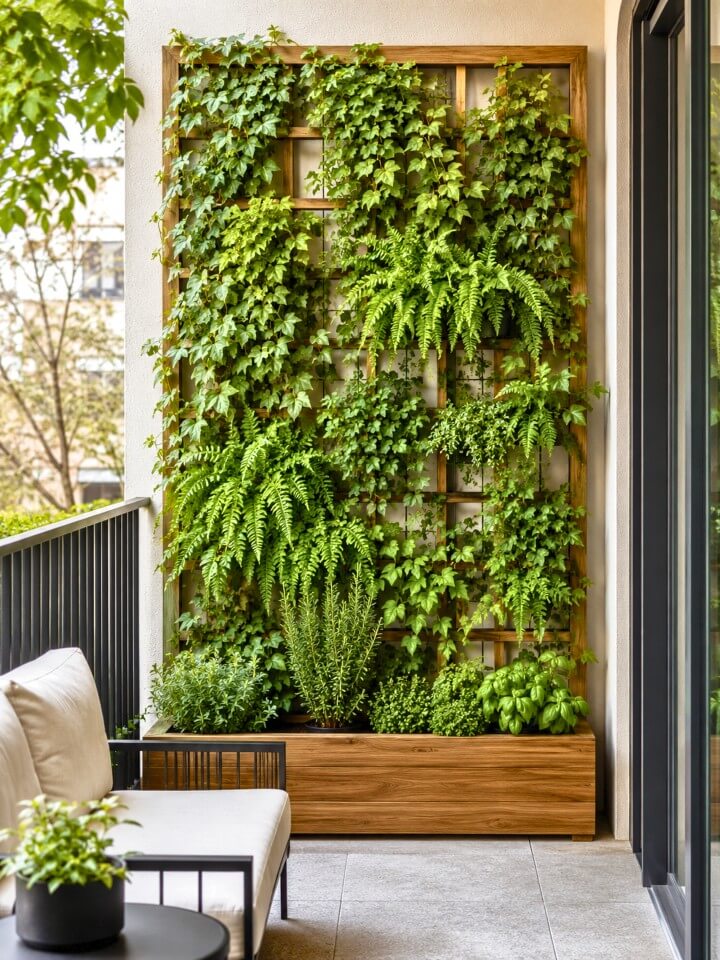
Vertical growing changed apartment gardening completely. A single 6-foot living wall packs the growing capacity of 15 to 20 traditional pots into roughly 8 square feet of floor space — enough to grow a full salad bar of lettuce, herbs, and small strawberries on a narrow balcony.
The integrated trellis running through the middle handles anything that wants to climb: peas, mini cucumbers, or ornamental ivy that fills in gaps between planted pockets.
Irrigation Reality
Drip lines built into the frame are worth the extra cost. Hand-watering vertical setups gets old fast, and the top pockets always dry out first while the bottom stays soggy.
11. Chevron Pattern Planter with Twig Trellis
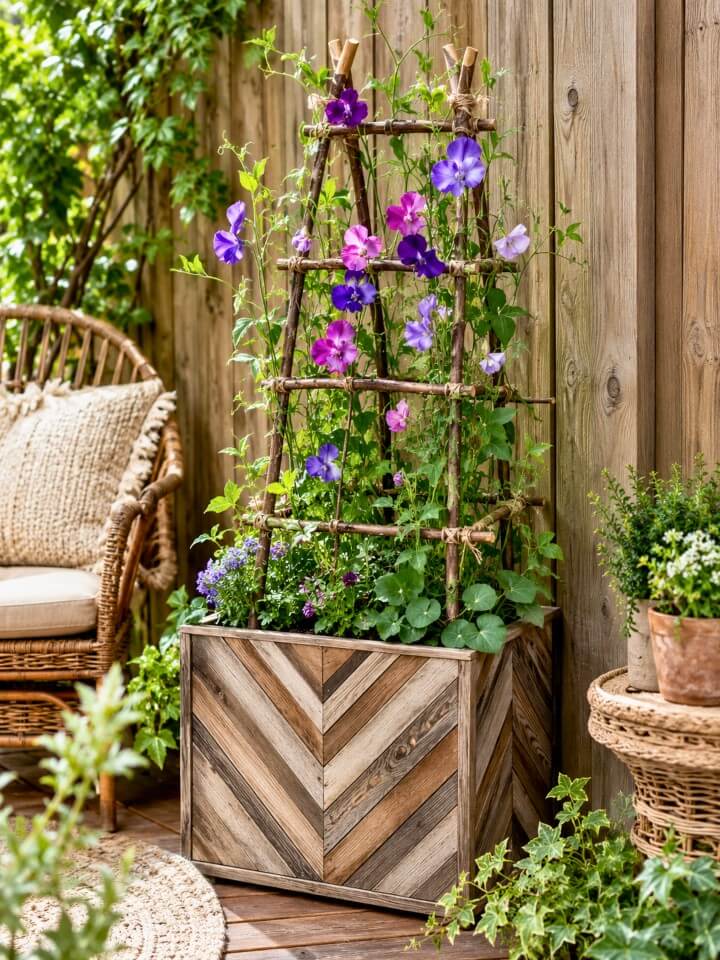
Handmade beats mass-produced every time when it comes to garden character, and this planter proves the point. Chevron slats angle inward at 45 degrees, creating that classic V-pattern that catches shadows differently as the sun moves across the sky.
The twig trellis is where personality really shows up. Bundled hazel, willow, or birch branches lashed together with jute twine give a wildcrafted look no factory can copy.
Lightweight Climbers Only
Twigs snap under heavy vines. Stick with sweet peas, morning glory, cup-and-saucer vine, or annual black-eyed Susan vine — all under 8 feet at maturity.
Store-bought chevron planters cost $120 to $240. Building one with fence pickets and foraged branches drops the total to about $35.
12. Rustic Reclaimed Wood Planter with Ladder Trellis
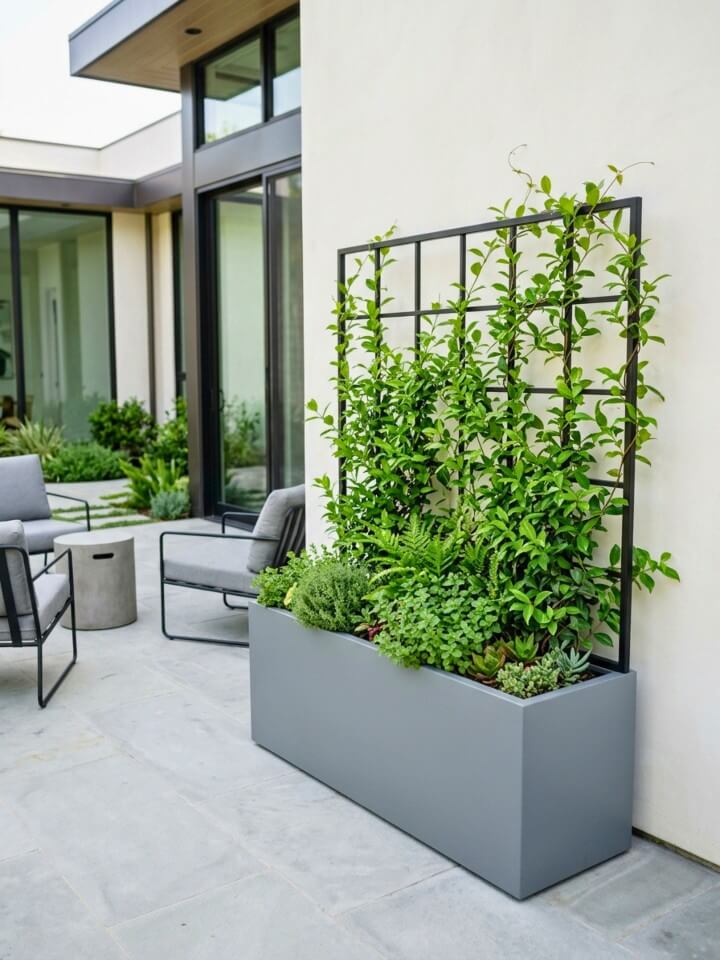
Style your patio with a durable planter with trellis, ideal for climbing plants and vertical growth. Every board in a reclaimed planter carries a small history — barn siding, old fencing, weathered pallets — and that texture is impossible to fake with new lumber. Nail holes, saw marks, and sun-bleached patches become features instead of flaws.
The ladder trellis rising behind the box is exactly what it sounds like: two vertical rails with horizontal rungs every 8 inches. Vines climb rung by rung, and the whole structure doubles as informal shelving for small hanging pots.
Sourcing Reclaimed Wood
Check local architectural salvage yards, Habitat for Humanity ReStores, and Facebook Marketplace listings for barn teardowns.
Safety Check
Test old boards for lead paint before using them near edible plants — kits cost $12 at any hardware store.
13. Cottage Picket Fence Planter
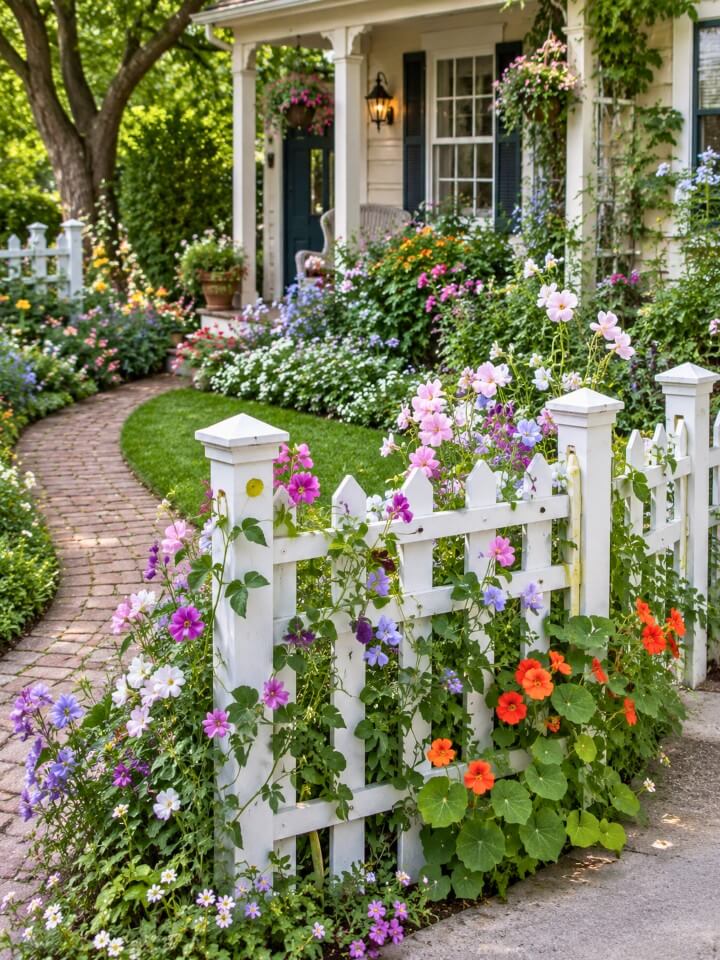
Something about a miniature picket fence framing a burst of flowers feels instantly welcoming. This design brings that storybook front-yard energy to porches, walkways, and mailbox borders without needing a full landscape overhaul.
The mini pickets stand 12 to 18 inches tall, tall enough to guide climbers like sweet peas and nasturtiums but short enough to keep sight lines open.
The Cottage Plant Formula
Mix three heights for authentic cottage garden layering:
- Tall backdrop: Foxglove or hollyhock
- Mid-layer: Cosmos, zinnias, or snapdragons
- Front spillers: Alyssum, lobelia, or trailing petunias
14. Modern Black Metal Planter with Grid Trellis
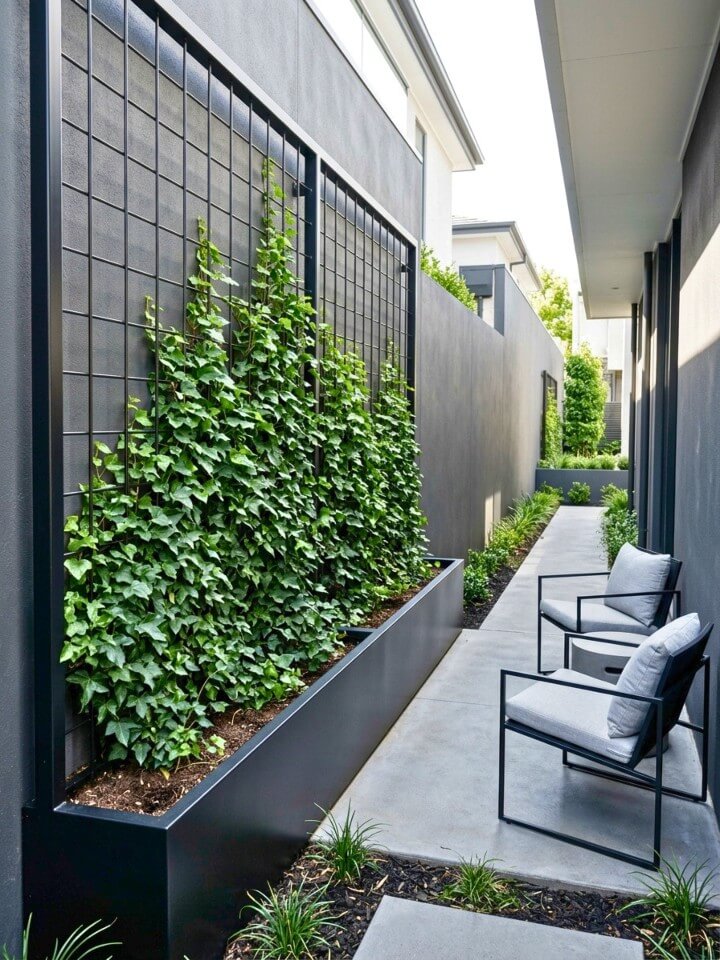
Matte black powder coating hides scratches, resists rust for 8 to 12 years, and creates a dramatic backdrop that makes green foliage appear more saturated. The grid trellis behind it — usually 4-inch squares of welded steel rod — brings the sharp geometry that defines contemporary landscape design.
This is the planter for anyone drawn to Scandinavian minimalism, Japandi interiors, or industrial-modern outdoor spaces.
Best Plant Matches
- English ivy: classic contrast against black
- Climbing hydrangea: slow but stunning at maturity
- Boston ivy: dramatic fall color change
- Star jasmine: evergreen with white summer blooms
Quality powder-coated steel runs $140 to $320. Skip the painted steel versions — paint chips within two seasons and rust bleeds through fast.
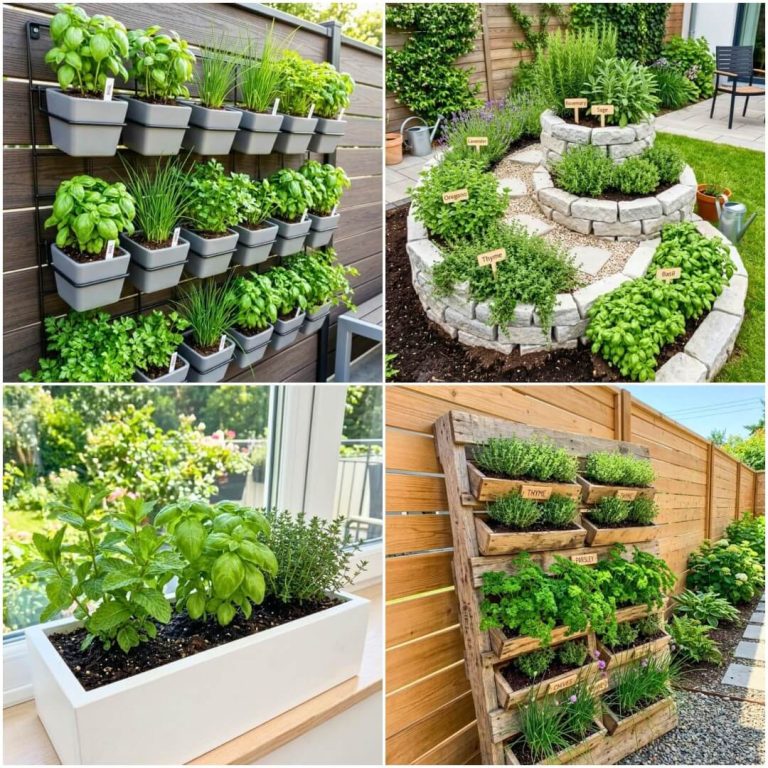
15. Tiered Herb Planter with Arched Trellis
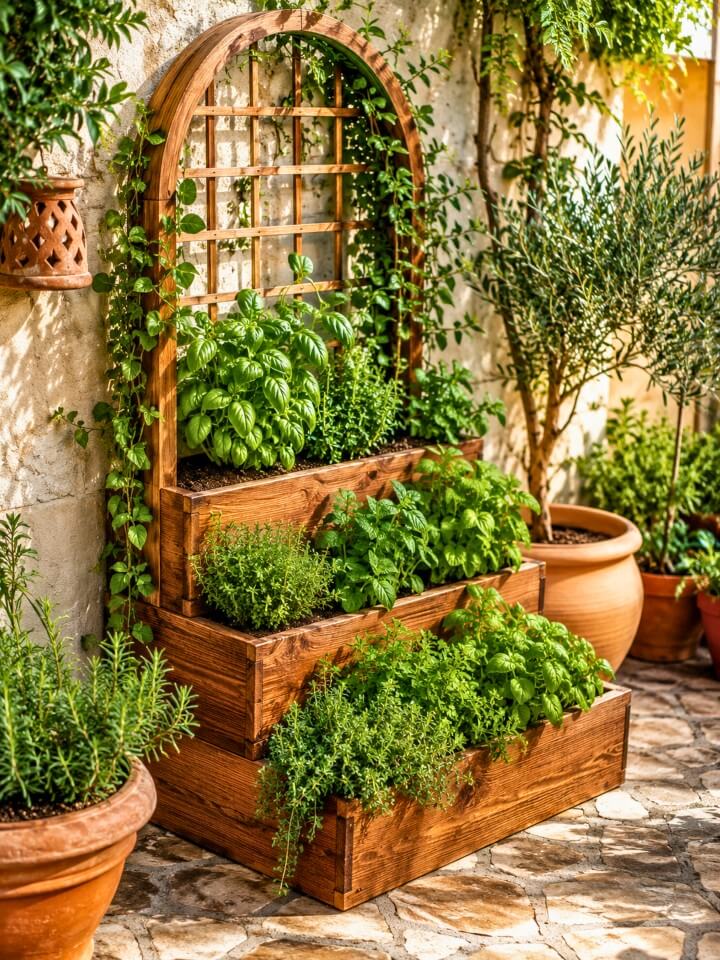
Growing herbs at three different heights solves the biggest problem in kitchen gardens: overcrowding. Each tier gets its own sun exposure and airflow, which cuts down on the mildew and root competition that plague single-level herb boxes.
The arched trellis rising over the top tier adds vertical growing space for light climbers like nasturtium or cucamelon.
Herb Placement Strategy
- Top tier (most sun): Rosemary, thyme, oregano — Mediterranean herbs that love heat and dry conditions.
- Middle tier: Basil, parsley, cilantro — steady moisture, moderate sun.
- Bottom tier (partial shade): Mint, chives, lemon balm — cooler roots keep them from bolting.
16. Privacy Screen Planter
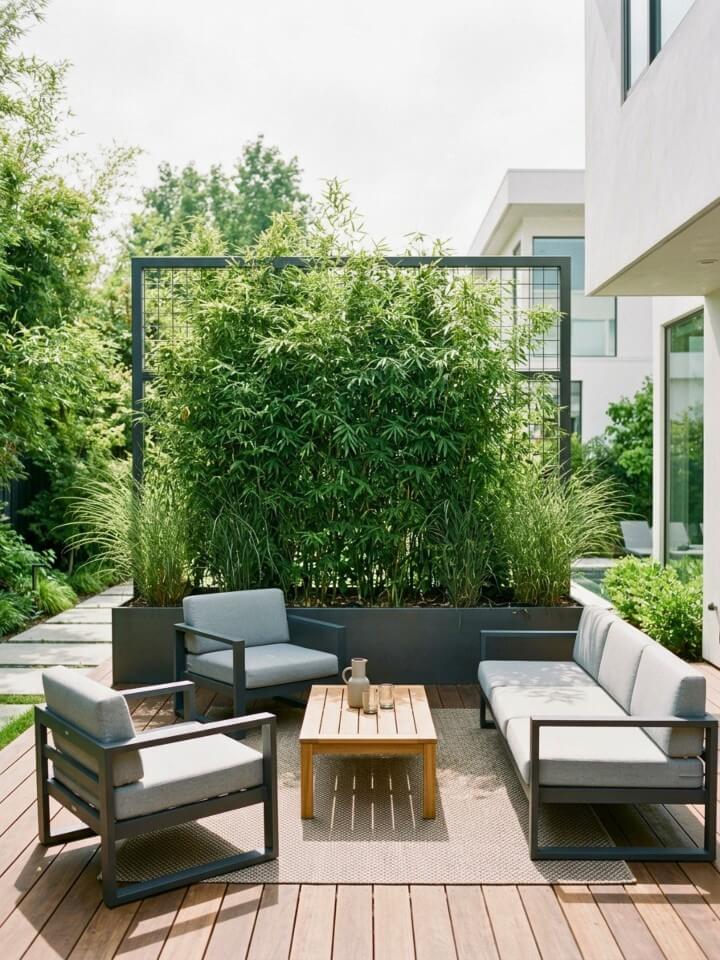
Fence panels feel permanent and unfriendly. A privacy screen planter delivers the same visual block with living greenery, and neighbors actually compliment it instead of resenting it.
Height is the whole point — the trellis section usually extends 5 to 7 feet above the planter base, which is enough to block sight lines from standing height on adjoining decks or patios.
Fast-Growing Screen Plants
- Clumping bamboo: dense coverage in one season, non-invasive varieties only
- Ornamental grasses: feather reed grass or maiden grass
- Boston ivy: full coverage by year two
- Climbing hydrangea: slower start, spectacular payoff
17. Japanese-Inspired Bamboo Planter
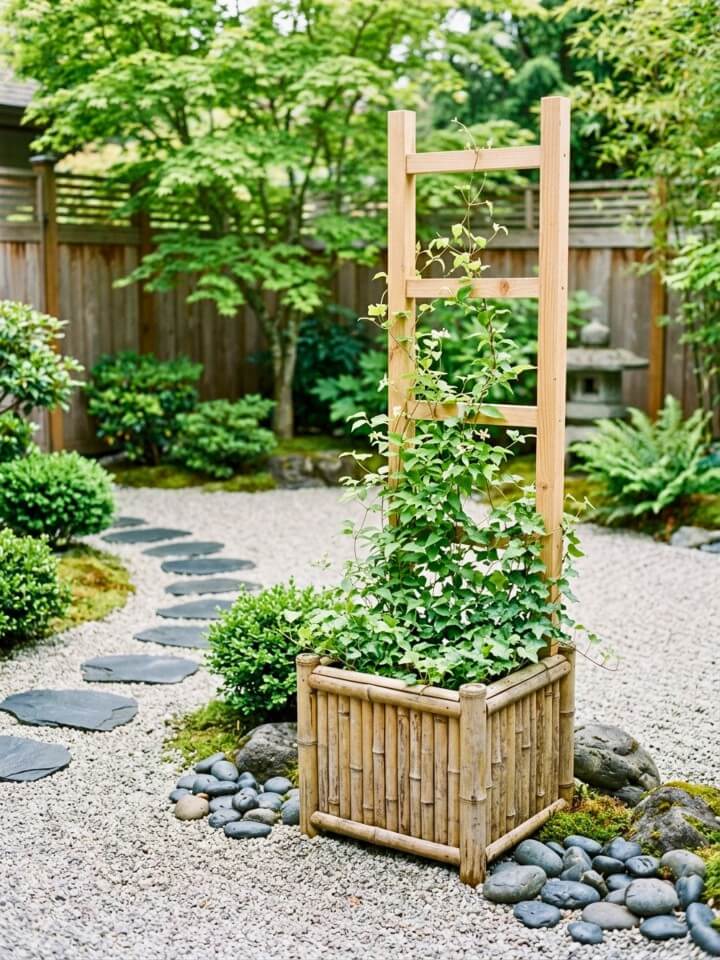
Design a charming garden using our versatile trellis with planter box for climbing vines and blooms. Japanese garden design follows a principle called ma — the deliberate use of empty space to create calm. A bamboo planter fits this philosophy perfectly because the material itself is quiet: warm tan tones, subtle grain, no sharp visual noise.
Bamboo also carries symbolic weight in Japanese culture, representing resilience and flexibility. The trellis section typically uses cross-lashed poles tied with black hemp cord — a technique called ibo musubi.
Plants That Honor the Style
Keep it restrained. One climber, one groundcover, one accent — that’s the entire planting formula. Japanese wisteria, star jasmine, or clematis armandii work beautifully.
Longevity Note
Untreated bamboo lasts 3 to 5 years outdoors. Applying tung oil twice yearly stretches that to 8 or more. Expect to pay $95 to $260 for authentic construction.
18. Vertical Strawberry Planter with Mesh Trellis
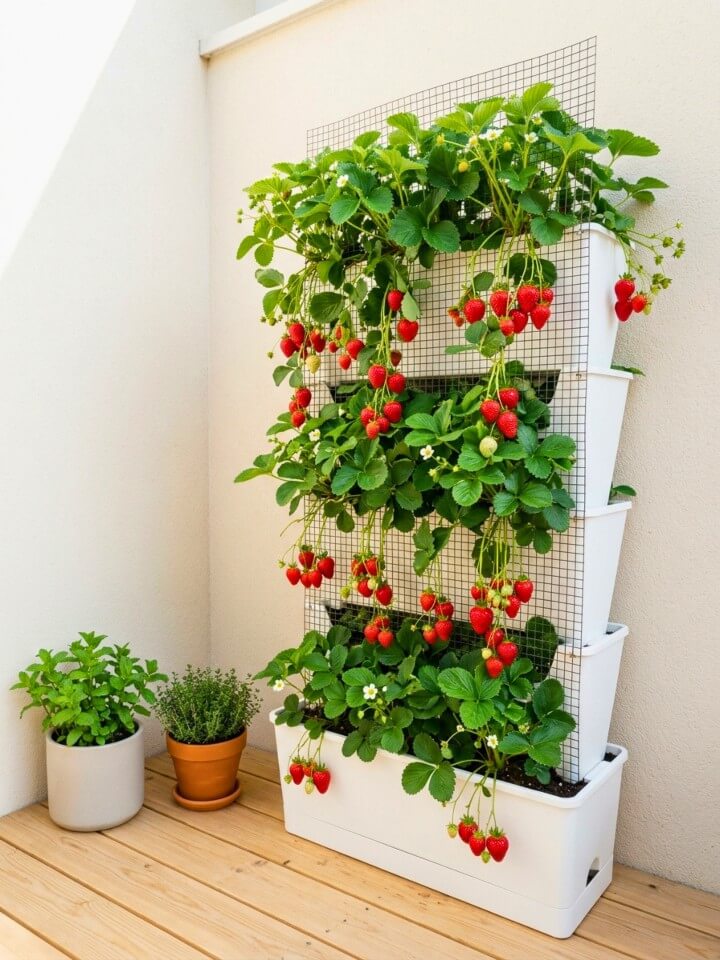
Ground-grown strawberries lose almost 40% of their harvest to slugs, birds, and soil rot. Vertical planters flip that math — berries hang in the open air, ripen evenly on all sides, and rinse clean instead of arriving covered in dirt.
The mesh trellis behind the planter isn’t decorative. Strawberry runners naturally reach outward looking for new rooting spots, and the mesh gives those runners something to grab so the whole plant stays upright and productive.
Variety Selection Matters
Everbearing types like Albion, Seascape, and Ozark Beauty produce from June through October — far better than June-bearing varieties in vertical setups.
19. Corten Steel Planter with Rusted Rebar Trellis
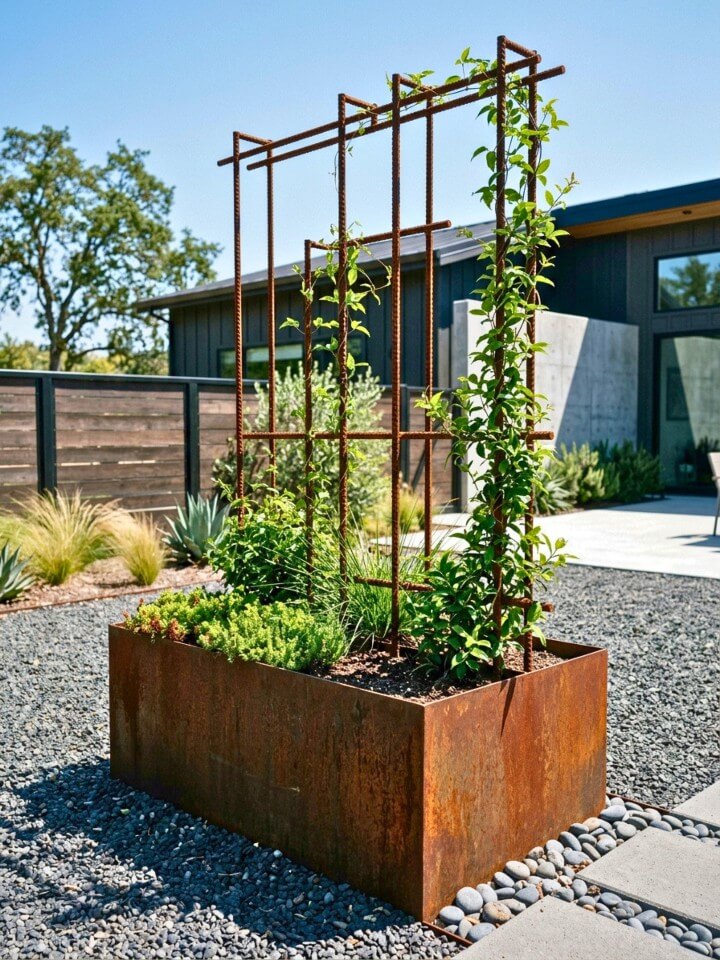
Corten looks broken to people seeing it for the first time. That rust isn’t damage — it’s the entire point. The steel forms a protective oxide layer within 6 to 12 months, then stops corroding entirely and stays stable for 40+ years.
Pairing corten with rusted rebar trellis creates a matched tonal palette: warm orange, deep amber, and reddish-brown that shifts with the light throughout the day.
Where Corten Shines
- Modern architectural homes with concrete and glass exteriors
- Sculptural garden focal points
- Driveway borders that need something bolder than boxwoods
- Xeriscape gardens with gravel, ornamental grasses, and succulents
Runoff Warning
Rust stains concrete and light-colored pavers during the first year. Place on gravel, dark stone, or grass to avoid permanent orange marks.
Here’s your FAQ section — questions focus on real gaps missed in the 19 ideas above:
FAQs About Planter Boxes with Trellis
Choosing the right setup often comes down to small details nobody mentions until something goes wrong. These answers clear up the ones that matter most.
How Deep Should a Planter Box Be for A Trellis to Stay Stable?
Aim for at least 12 inches deep for light climbers and 18 to 24 inches for heavy vines like wisteria or climbing roses. Deeper soil anchors roots properly and keeps the trellis from tipping in strong winds.
Can a Planter Box with Trellis Stay Outside During Winter?
Most wooden, metal, and corten steel versions handle winter fine. Ceramic, mosaic, and thin resin planters crack when trapped water freezes. Empty the soil, cover with a tarp, or move smaller units into a garage or shed.
What’s the Best Way to Anchor a Freestanding Trellis Planter?
Fill the base with dense soil mixed with a few flat stones for extra weight. For tall privacy screens, use L-brackets to attach the trellis to a nearby fence, wall, or deck railing to prevent wind damage.
Do Trellis Planters Need Drainage Holes if They Sit on A Deck?
Yes, always. Drill four to six holes across the bottom, then place the planter on pot feet or wooden shims. This lifts it slightly, protects deck boards from rot, and lets excess water drain freely after heavy rain.
How Often Should the Wood or Metal on A Trellis Planter Be Treated?
Reseal wooden planters with outdoor-grade oil or stain once every 12 to 18 months. Touch up rust spots on metal versions each spring with converter primer. Corten steel needs no treatment — the rust layer protects itself.
Conclusion:
Standing in the backyard after everything’s planted and climbing, there’s a small moment most people don’t expect — the space suddenly feels bigger, not smaller, even though something new was just added. That’s the quiet magic of building upward instead of outward.
Nineteen planter box with trellis ideas is a lot to sit with, so don’t try to love them all. Screenshot two. Sketch one on a napkin. Walk outside tomorrow morning with coffee and figure out which wall, corner, or fence line has been waiting for something alive against it. Gardens rarely get built in one big move — they start with one honest look at the space already there.