21 Cottage Vegetable Garden Ideas for A Beautiful, Productive Yard
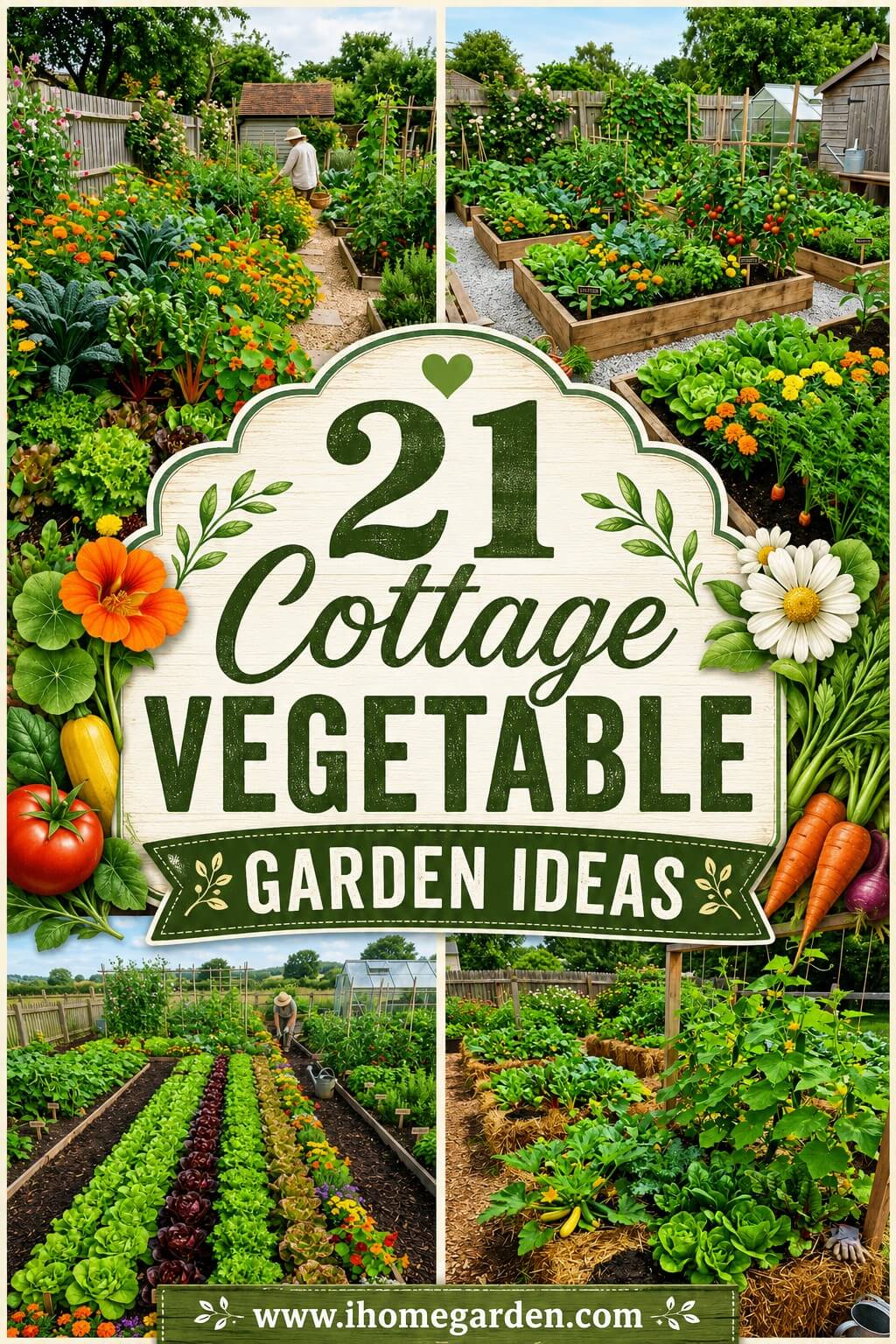
Pinch a tomato leaf between your fingers, and the smell stays on your skin for hours. That’s the small, honest pleasure a cottage vegetable garden delivers, and it’s why these 21 magnificent cottage vegetable garden ideas skip the polished magazine look in favor of something you can actually build. Think crooked bean teepees made from bamboo, lettuce planted next to nasturtiums because the colors look right together, an old brick path worn smooth by wet boots. This style breaks the rule that gardens must choose between pretty and productive.
A single 4-foot bed can hold dinner and a bouquet at the same time. The ideas ahead work for a full backyard, a narrow strip beside the driveway, or three pots on a sunny step. Each one includes specific plants, real measurements, and the kind of practical detail that turns a Saturday afternoon into a garden you’ll still love in five years.
1. Raised Wooden Beds With Cottage Charm
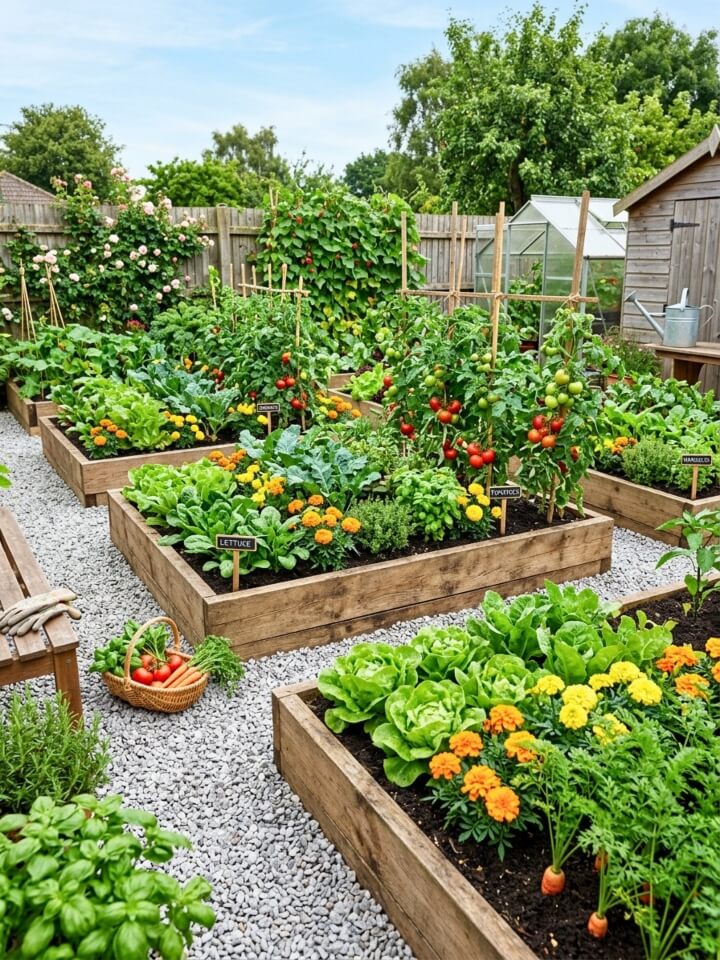
Ask any long-time gardener what they wish they’d built first, and raised wooden beds usually top the list. You control the soil from day one instead of fighting whatever’s already in the yard.
- Cedar or redwood frames last 10 to 15 years without chemical treatment
- 12 to 18 inches of height saves your back and improves drainage
- 4-foot width lets you reach the middle from either side
- Reclaimed barn wood gives an instant weathered look
Fill each bed with topsoil, finished compost, and aged manure in roughly equal parts. Then break the “neat rows” rule on purpose. Let alyssum tumble over the edges, tuck violas between the kale, and let a stray tomato seedling stay where it volunteered.
2. Climbing Beans On Rustic Trellises
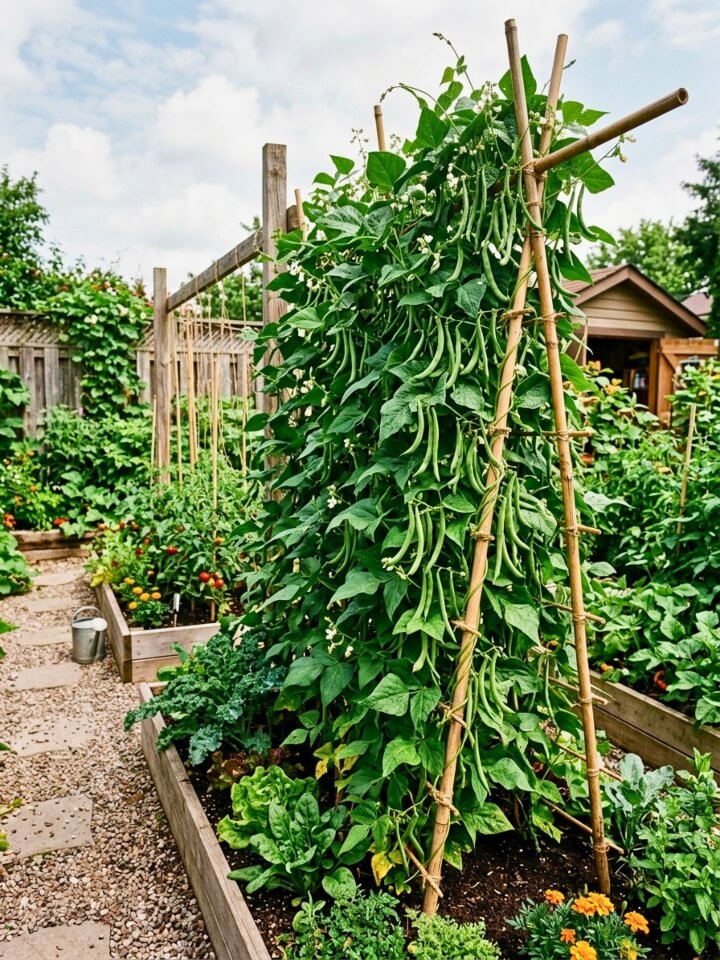
Growing up instead of out is the oldest trick in the small-garden book, and beans make it look effortless.
A single Kentucky Wonder or Scarlet Runner vine can reach eight feet by mid-July, turning a plain fence corner into a wall of green pods. Scarlet Runners add brilliant red-orange flowers that hummingbirds fight over. The ground beneath stays open for shade-tolerant crops like lettuce or spinach.
Skip plastic supports. Reach for bamboo poles lashed into a teepee, hazel branches woven into a panel, or three cedar posts joined at the top with baling twine.
One quiet tip: guide the first tendril by hand. Beans twine counterclockwise, and once you set that first curl, the plant does the rest.
3. Mixed Flower And Vegetable Borders
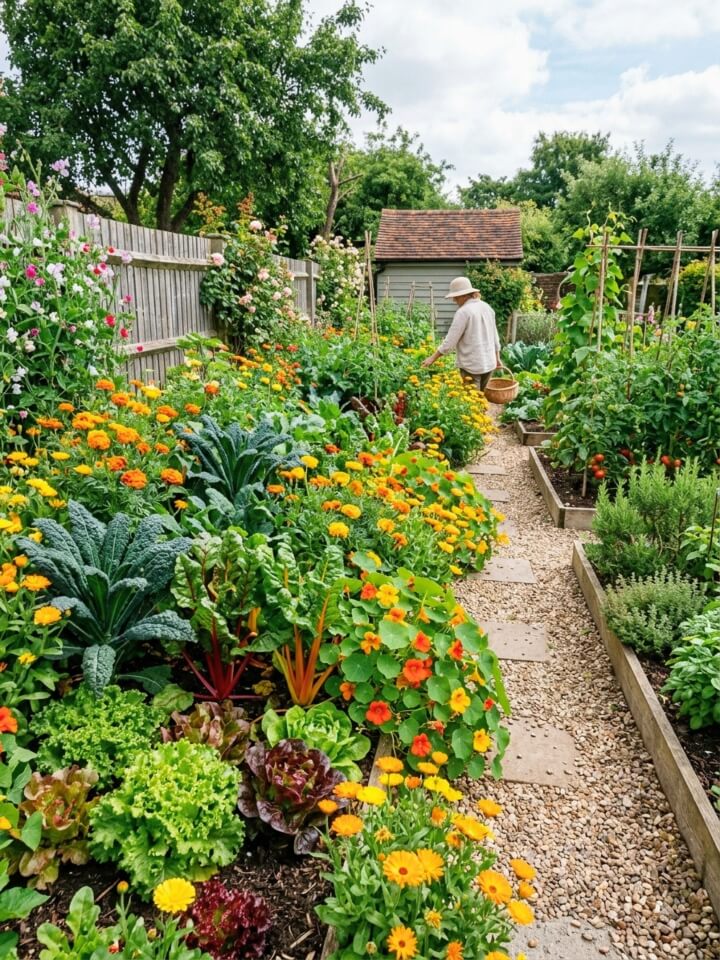
Grow beauty and bounty side by side in a charming cottage vegetable garden bursting with rustic magic. Picture deep purple kale beside orange calendula, rainbow chard next to sky-blue borage, and nasturtiums spilling onto the path in a puddle of red and gold. That’s the cottage border at its best.
Flowers earn their place by working. Calendula and borage pull in bees that pollinate squash and cucumbers. Nasturtiums draw aphids away from beans. Marigolds discourage root pests.
Think in three layers. Tall backbone plants like dill, sunflowers, or staked tomatoes hold the back edge. Medium fillers such as Swiss chard and cosmos take the middle. Low sprawlers like thyme, strawberries, and sweet alyssum finish the front. Sow something new every two or three weeks from spring through late summer.
4. Gravel Paths Between Garden Beds
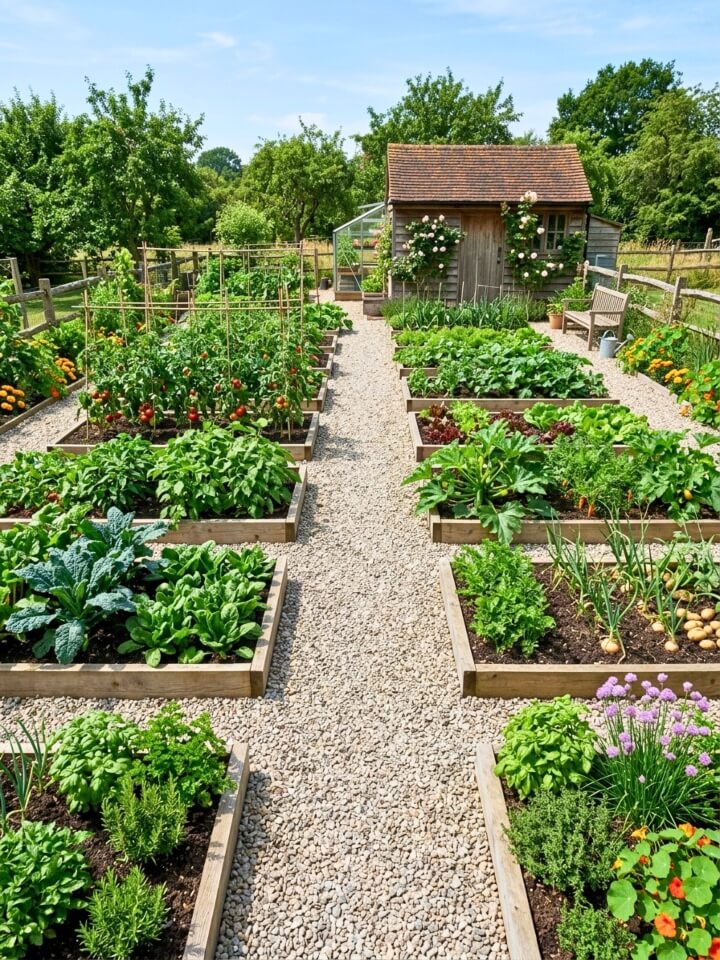
A good path is one you stop noticing. That’s the quiet job gravel does better than almost any other material.
It drains fast after rain, makes a soft crunch underfoot, ages beautifully into a weathered gray, and stops weeds when laid over proper fabric.
Dig down about two inches. Lay heavy-duty landscape fabric across the whole path. Pour crushed granite or pea gravel two inches deep on top and rake level. Edge the sides with old bricks, fieldstone, or salvaged 2×6 boards to keep gravel from wandering.
Make paths at least three feet wide, four if you use a garden cart. Rake and top up thin spots once a year.
5. Herb Corner Near The Kitchen Door
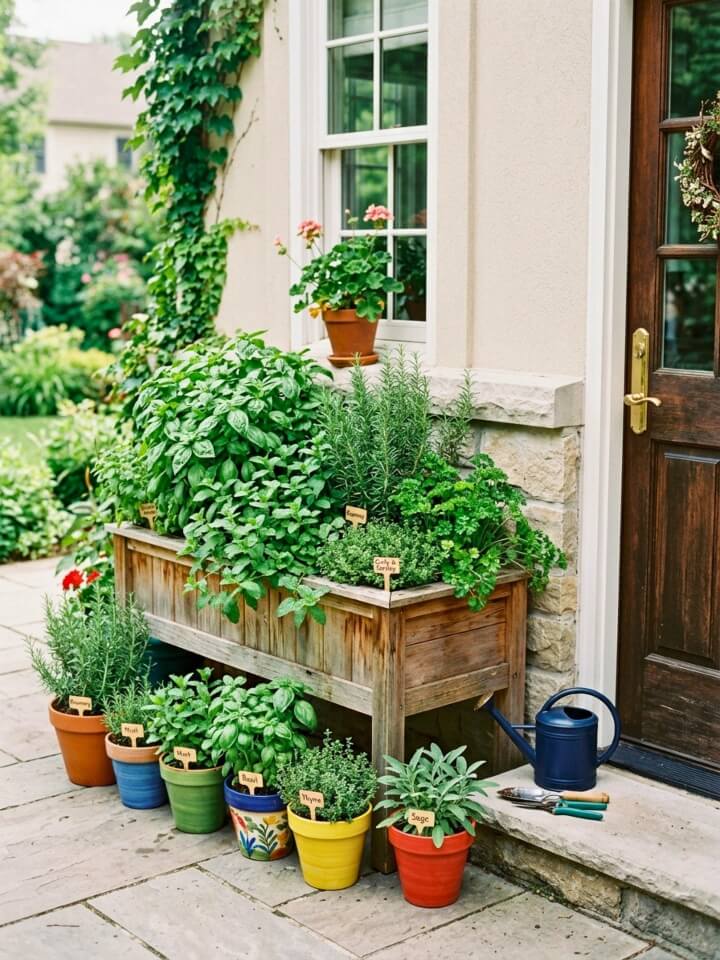
The math is honest: the farther your herbs grow from the stove, the less often you’ll use them. Ten steps is fine. Fifty steps and you’ll reach for the dried jar instead.
Build the herb corner where it belongs, right by the back door. A single square yard of sunny ground is enough, or three stacked terracotta pots on a step.
Start with the six herbs cooks actually reach for: basil, parsley, chives, thyme, rosemary, and mint. Keep mint in its own pot always, or it will strangle everything within a season. Group Mediterranean herbs together since they prefer leaner soil. Pinch, don’t snip, and the plants stay bushy right through fall.
6. Climbing Cucumber Arches Over Garden Paths
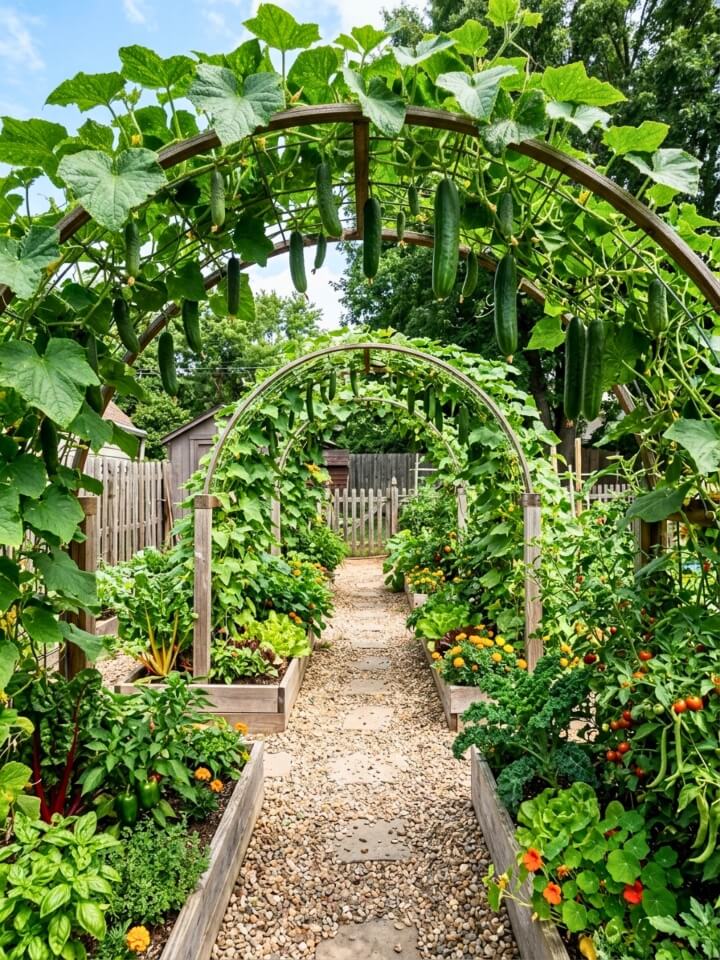
Walk under a cucumber arch in July and you’ll understand why gardeners keep building them. Fruits dangle straight down at eye level, perfectly straight from gravity, easier to spot and easier to pick than anything sprawling on the ground.
A sturdy metal arch or a bent cattle panel wired to two T-posts works for years. Plant two or three vines at each base. Varieties like Marketmore 76 or Suyo Long handle vertical growing well because their fruits stay slim and don’t snap the vine.
Water deeply at the roots twice a week, mulch the base with straw, and pinch off the first few flowers so the plant puts energy into climbing before fruiting. By August, you’ll harvest breakfast on the way to the coop.
7. Stone-Edged Raised Beds For A Natural Look
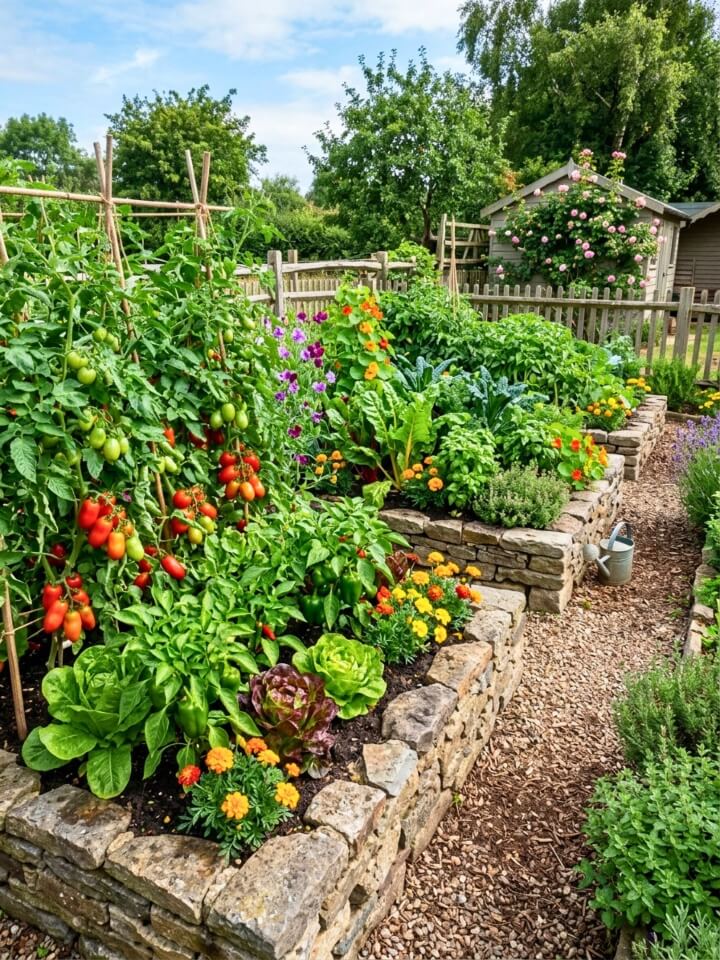
Wood eventually rots. Stone doesn’t.
That single fact is why some of the most beautiful old cottage gardens still have the same beds their grandparents built. Fieldstone, quarried limestone, or even chunks of broken concrete stacked with the rough side out all work. The look is heavier and more grounded than timber, which suits gardens set against older homes or uneven ground.
Dry-stack the stones without mortar for a handmade feel and easy repairs. Two courses gives you about 12 inches of depth, enough for most vegetables. Backfill with rich soil, then plant trailing thyme, oregano, or strawberries right along the edge so their runners drape over the stone. Within two seasons, moss and lichen soften every corner.
8. Companion Planting With Marigolds And Tomatoes
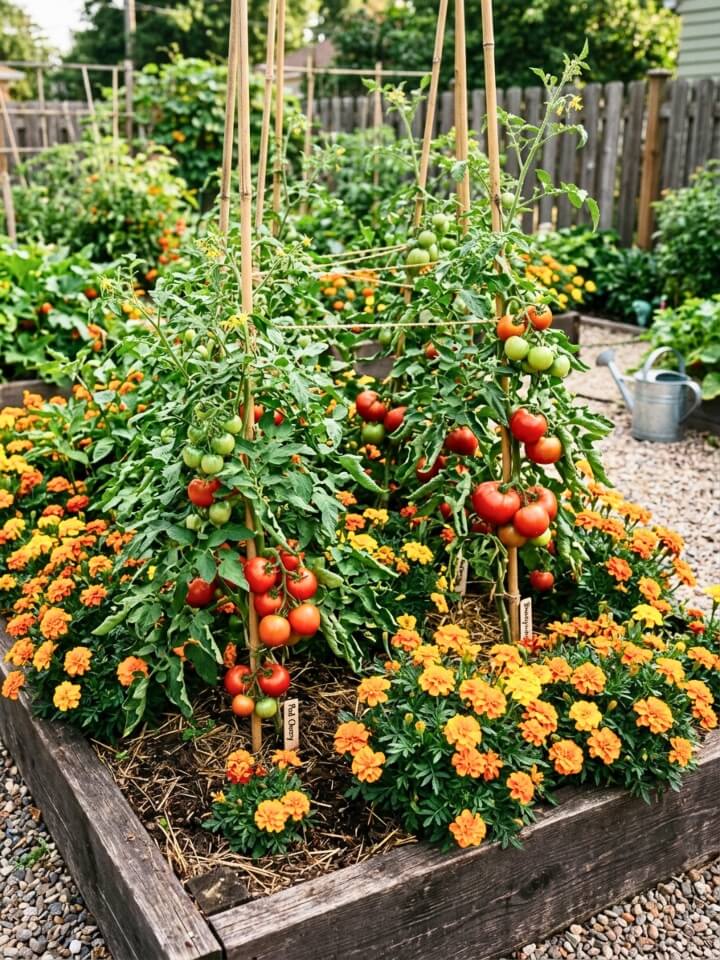
Old-timers swear by this pairing, and modern gardeners keep proving it works.
French marigolds release compounds from their roots that suppress certain soil nematodes, the microscopic worms that damage tomato roots. Above ground, their strong scent seems to confuse whiteflies and hornworms looking for a target. The bright orange and yellow blooms also pull in hoverflies, whose larvae eat aphids by the hundreds.
Plant one marigold every 18 inches around the base of each tomato, close enough to share the same watering. Skip the tall African marigolds for this job. Compact French varieties like Petite Orange or Naughty Marietta stay under a foot and won’t shade the tomato leaves. Water at soil level, never overhead, to keep both plants disease-free.
9. Wildflower Strips To Attract Pollinators
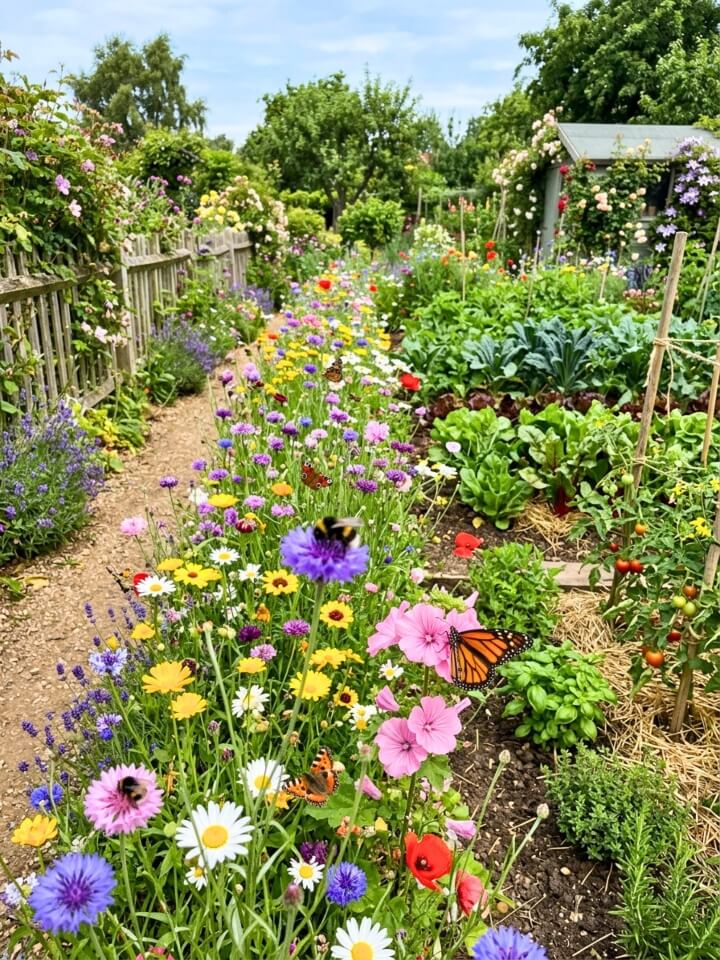
Discover dreamy cottage vegetable garden ideas that mix heirloom veggies, herbs, and blooms beautifully. A vegetable garden without pollinators is a lot of work for very little food. Every squash, cucumber, melon, and pumpkin depends on bees moving between flowers, and honeybee numbers alone aren’t enough anymore.
The fix is small and cheap: a strip of wildflowers three feet wide along one edge of the garden.
What to Sow:
- Cosmos, zinnias, and calendula for long summer bloom
- Bee balm and echinacea for native bees
- Phacelia and borage, two of the highest-nectar plants known
- Buckwheat as a fast-blooming filler between the taller flowers
Prepare the strip in early spring by loosening the top inch of soil, broadcasting a mixed seed packet, and pressing everything in with a rake. Water gently until seedlings appear, then leave it alone. Mow once in late fall, never during the growing season.
10. Container Vegetable Clusters For Small Spaces
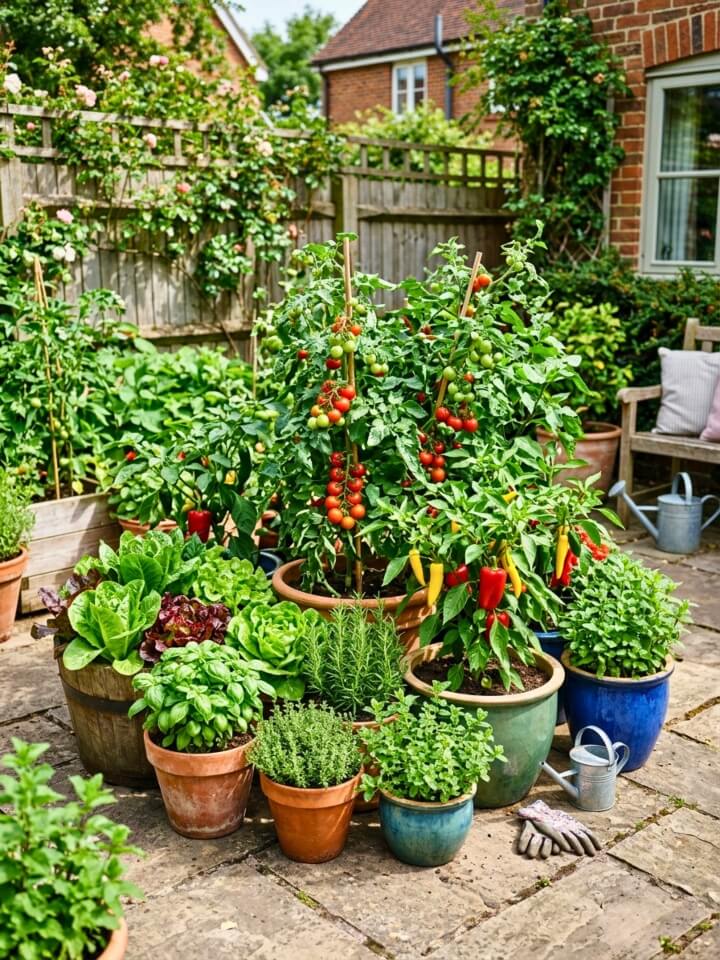
No yard? No problem. A sunny patio, balcony, or driveway edge can produce a surprising amount of food if you cluster the right containers together.
Grouping matters more than most people realize. Pots placed side by side shade each other’s soil, slow down evaporation, and create a small humid pocket that plants love in dry summer heat. A single lonely pot dries out twice as fast.
Aim for variety in size. A 15-gallon container holds a full-size tomato or pepper plant. A 5-gallon pot fits bush beans, chard, or a compact cucumber. Shallow window boxes handle lettuce, radishes, and herbs. Use a lightweight potting mix, not garden soil, and feed with liquid fertilizer every two weeks since nutrients wash out faster in containers.
11. Vertical Pallet Gardens For Leafy Greens
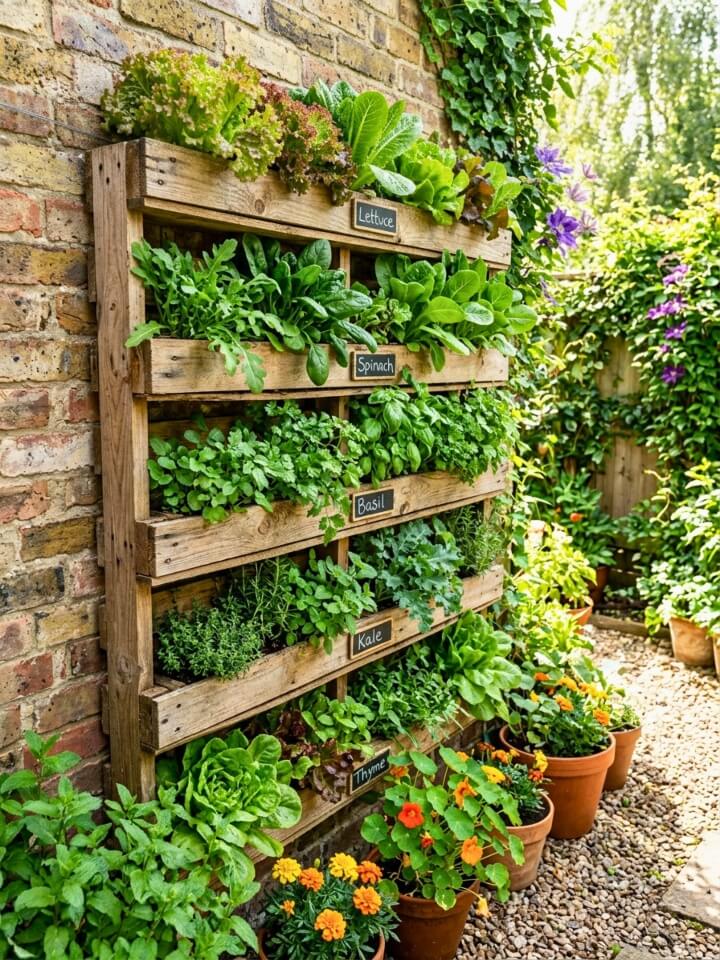
A leaning wooden pallet can hold more lettuce than a 4-foot row on the ground, and it costs almost nothing to build.
Start with a heat-treated pallet marked “HT” on the side. Chemically treated ones (marked “MB”) should never touch food crops. Staple landscape fabric across the back and both sides to hold soil in, then stand the pallet upright against a sunny fence at a slight lean.
Fill from the top with potting mix, packing firmly between the slats. Slip lettuce, spinach, arugula, and small herbs like parsley into each horizontal gap, roots pointed inward. Water slowly from the top and let gravity feed every level. In six weeks you’ll be cutting salads from what used to be a shipping platform.
12. Straw Bale Beds For Easy Seasonal Planting
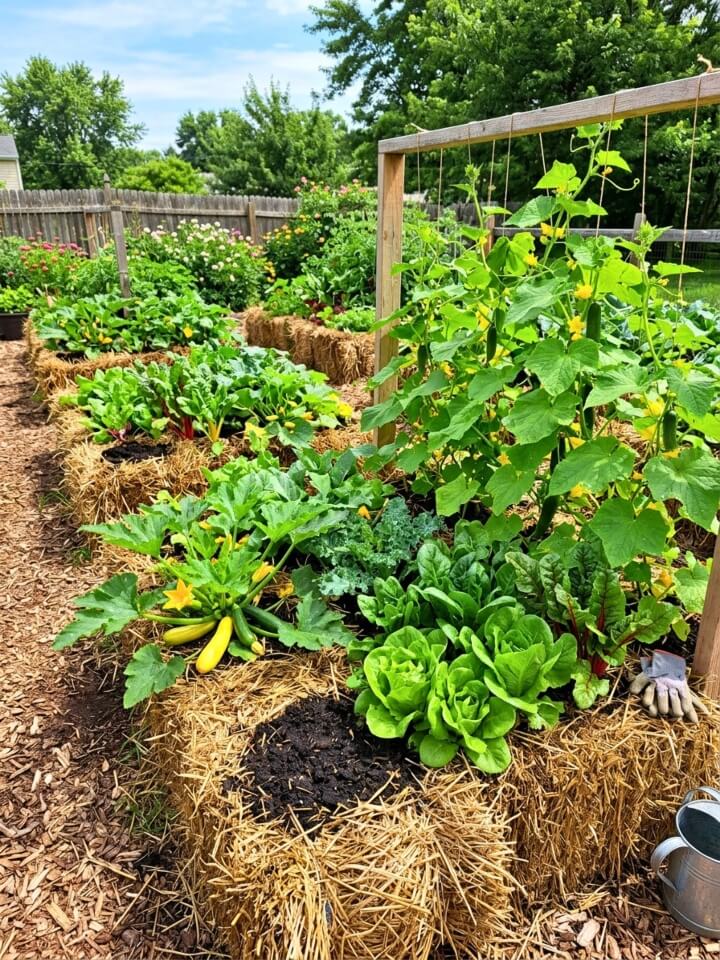
Straw bale gardening sounds strange until you see it working. The bale itself becomes the growing medium as it slowly decomposes from the inside out.
The trick is conditioning. For ten to fourteen days before planting, water each bale deeply every morning and sprinkle a handful of high-nitrogen fertilizer (blood meal or lawn feed without weed killer) on top every other day. The interior heats up, cools down, and turns into a warm, spongy nursery ready for roots.
Cucumbers, squash, zucchini, and determinate tomatoes thrive here. Poke holes into the top surface, add a scoop of compost to each hole, and plant. No digging, no weeds, no soil-borne disease. When the season ends, the spent bale becomes next year’s compost.
13. Rustic Fence Lines With Peas And Sweet Peas
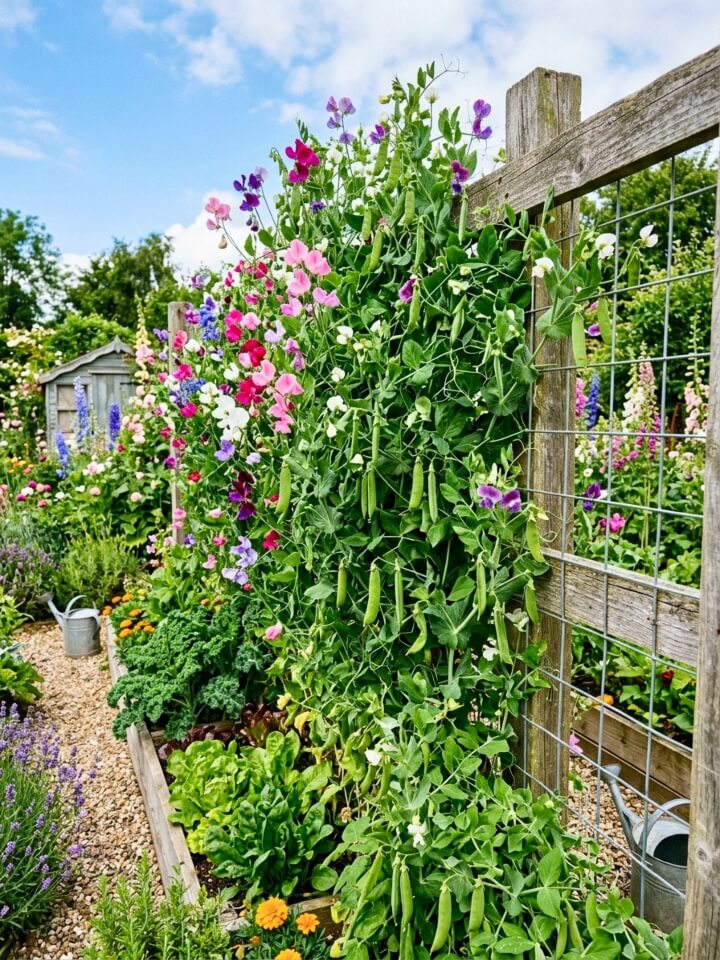
Two plants, one fence, and a partnership that produces both dinner and a bouquet.
Edible peas and ornamental sweet peas belong to the same family and grow the same way, so planting them together along a fence just makes sense. The edible varieties, sugar snap types like Cascadia or shelling peas like Green Arrow, give you weeks of crisp harvest. Sweet peas in old-fashioned colors like Cupani or Painted Lady bring fragrance you can smell from ten feet away.
Sow both directly into cool spring soil, about an inch deep and two inches apart, on the sunny side of a wooden or wire fence. Mix the seeds in the same trench. As they climb, the vines weave together, and by June the fence disappears under leaves, tendrils, blossoms, and pods.
14. Tiered Planter Boxes For Sloped Yards
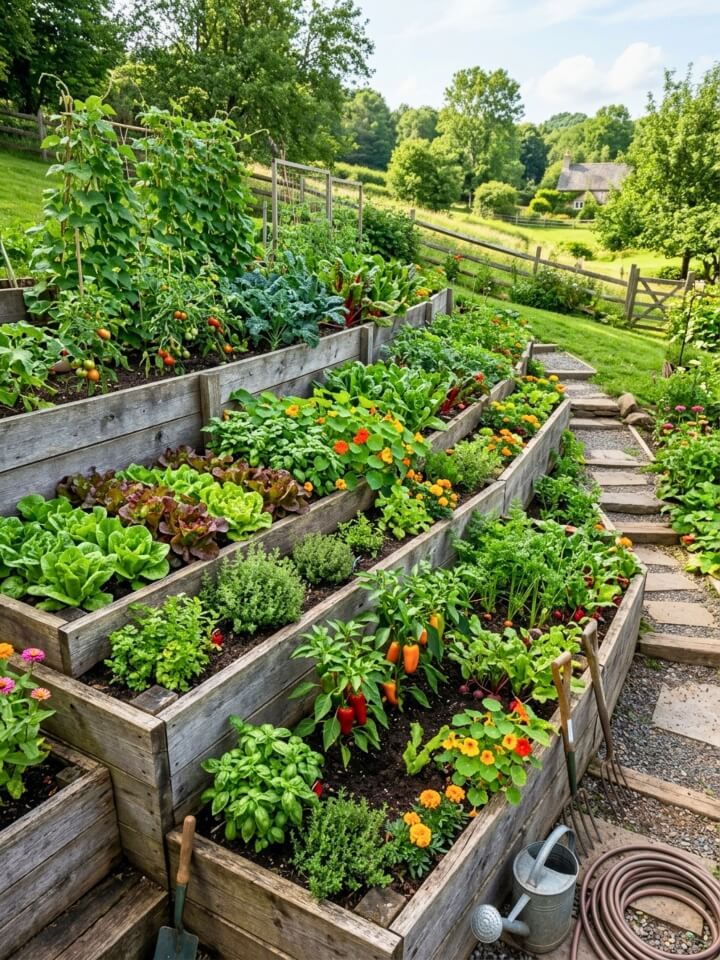
A slope isn’t a problem. It’s an invitation to build something more interesting than flat ground allows.
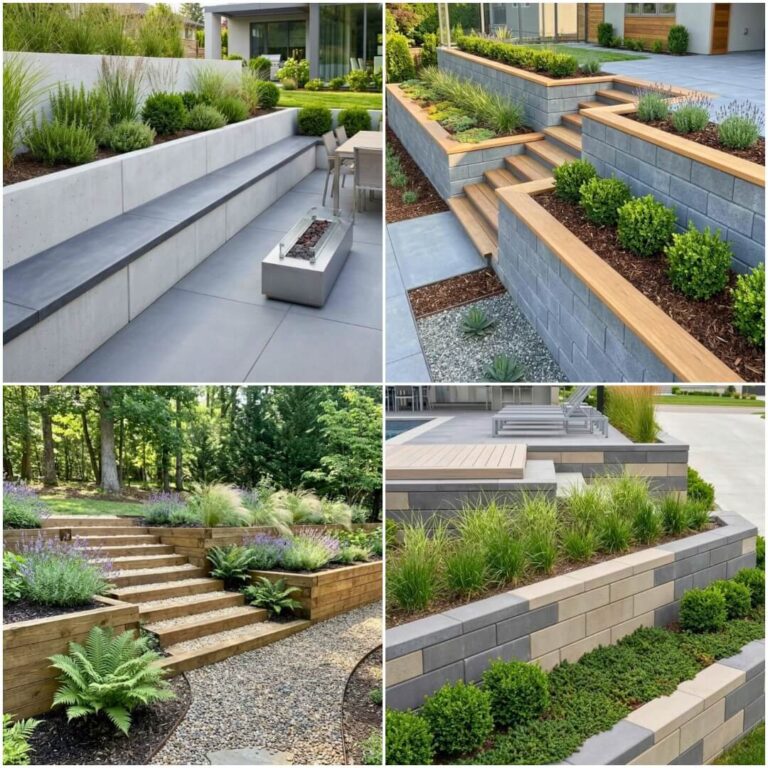
Terraced planter boxes turn awkward hillsides into a series of productive shelves, each catching rainwater as it moves downhill instead of losing it to runoff. Build the boxes with pressure-treated 4×4 posts for the corners and 2×8 cedar boards for the walls. Anchor each tier into the slope with rebar driven through the back edge.
Match the Crop to The Tier:
- Bottom tier (deepest soil, best moisture): potatoes, carrots, leeks
- Middle tier (balanced conditions): tomatoes, peppers, bush beans
- Top tier (fastest drainage, most sun): rosemary, thyme, oregano, strawberries
Water the top first and let each tier drink from what drains down.
15. Cottage-Style Compost Corner Near The Garden Edge
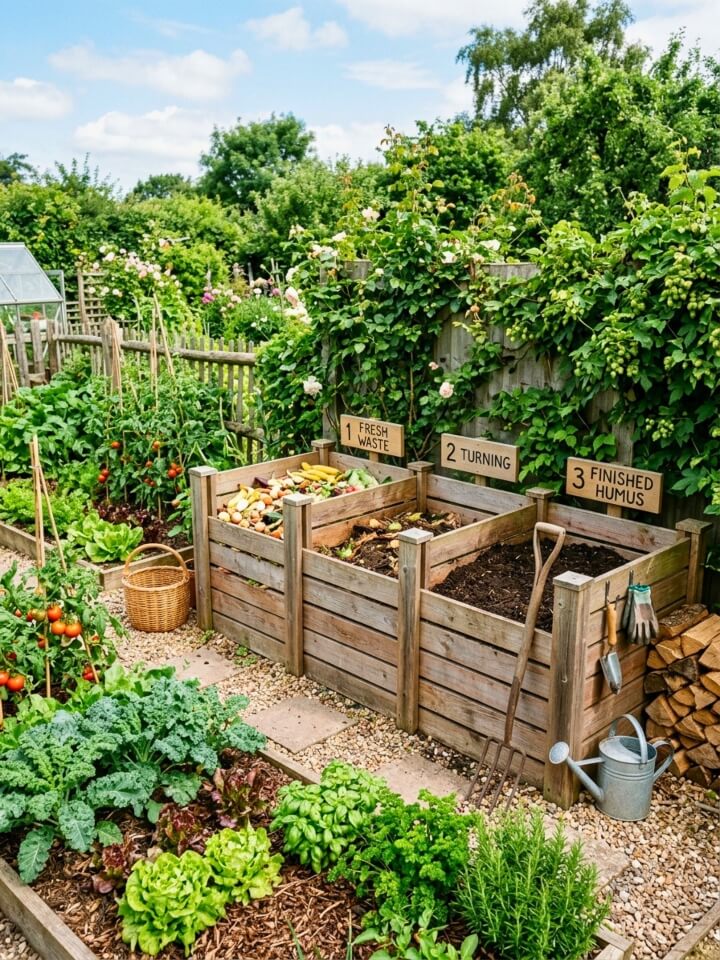
Transform your yard into a whimsical backyard cottage garden overflowing with color, scent, and charm. Every cottage garden needs a compost pile, and hiding it behind the shed is a mistake. Put it close to the beds where you’ll actually use it.
Three-bin systems work best for continuous gardeners. One bin holds fresh material you’re still adding to, one holds compost that’s actively breaking down, and one holds finished compost ready to spread. Build the frames from rough cedar, pallet wood, or woven willow branches for the most cottage-appropriate look. Keep the front slats removable so you can turn piles with a fork.
Layer greens (kitchen scraps, grass clippings) with browns (dried leaves, straw, shredded cardboard) at roughly one to three. Turn every couple of weeks. Finished compost should smell like forest floor, not garbage, and crumble easily in your hand.
16. Sunken Garden Beds For Moisture Retention
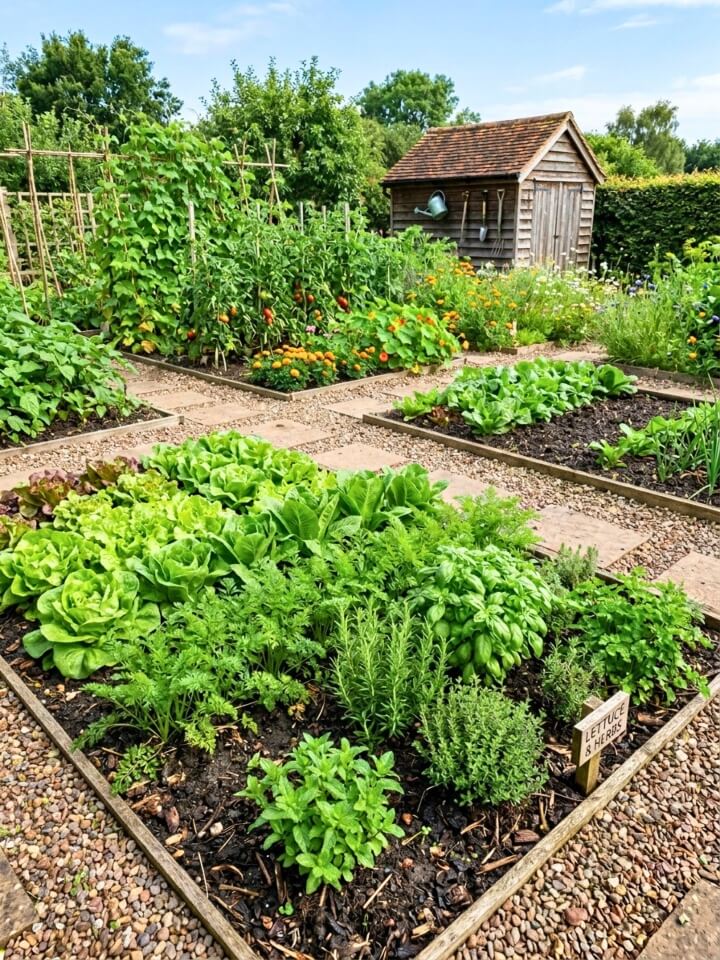
While everyone else builds up, sometimes the smarter move is to dig down.
Sunken beds sit six to twelve inches below ground level, and that small drop changes everything in a hot, dry summer. The surrounding soil shades the root zone, wind passes over the top instead of pulling moisture out, and every rainfall collects where you want it instead of running off. Native gardeners in the Southwest have used this method for centuries, calling them waffle gardens.
Dig a rectangle roughly 4 by 6 feet, saving the topsoil. Mix that soil back in with two or three inches of compost, then refill the depression, leaving the lip a few inches below the surrounding ground. Plant thirsty crops like carrots, beets, lettuce, and celery. One deep soak a week goes a long way.
17. Spiral Herb Garden With Stone Edging
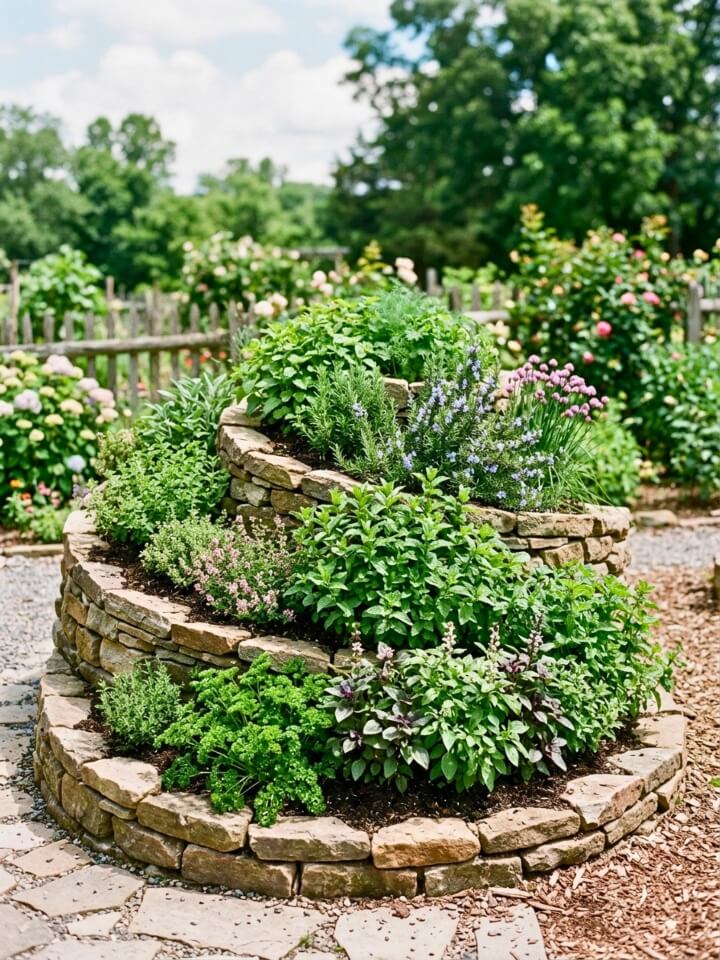
One structure, six microclimates, a dozen herbs. The spiral is one of those rare designs that works as well as it looks.
The shape creates different growing conditions at different points. The top drains fast and bakes in sun, perfect for rosemary, sage, and thyme. The middle levels hold balanced moisture for oregano, marjoram, and chives. The shaded base stays cool and damp, ideal for parsley, cilantro, and mint (still in its own buried pot).
Building It:
- Mark a circle about 6 feet across
- Stack fieldstone in a rising spiral, ending 3 feet high at the center
- Fill with a mix of topsoil, compost, and coarse sand
- Plant heat-lovers up top, moisture-lovers at the bottom
- Water only the top, letting gravity feed the rest
18. Mixed Lettuce Rows With Colorful Edges
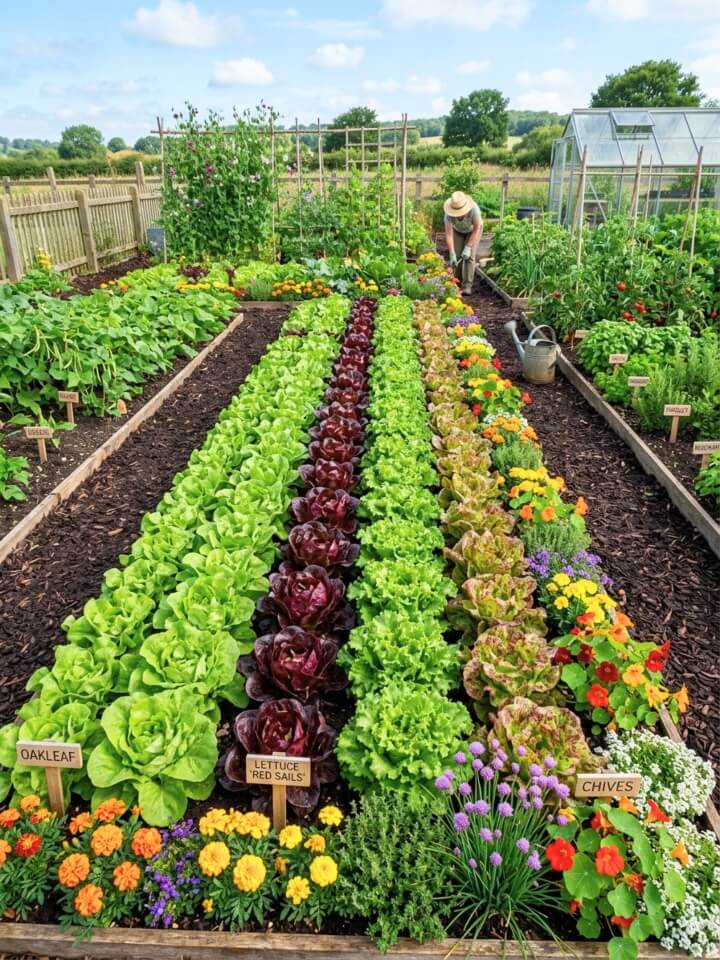
Lettuce doesn’t have to be boring green. Modern seed catalogs offer varieties in every shade from lime to bronze to burgundy, and mixing them in alternating rows creates a living quilt that produces salad for months.
Try Red Sails next to Buttercrunch next to Freckles next to Lollo Rossa. The contrast reads as intentional design rather than random planting, and the different maturity dates mean you’re always harvesting from somewhere in the bed.
Edge the whole planting with something functional. Chives keep aphids away and produce purple flower balls. Sweet alyssum draws hoverflies whose larvae eat pests. Compact French marigolds add gold and orange. Sow lettuce seed every ten days from early spring until the weather turns hot, then again in late summer for a fall crop.
19. Reclaimed Brick Beds For A Vintage Feel
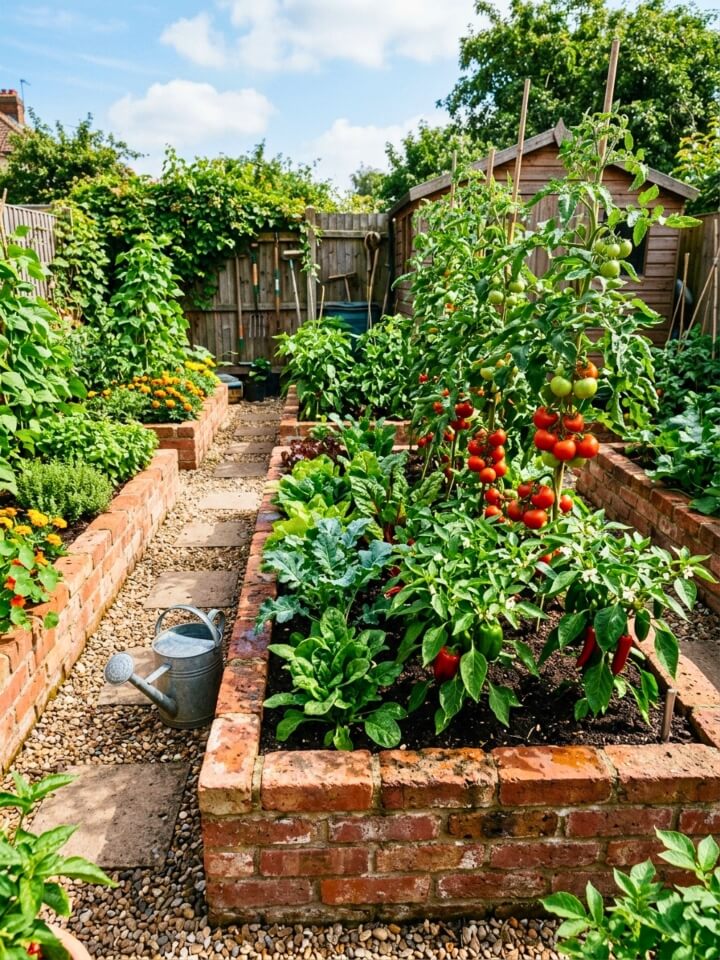
Old bricks have a warmth new materials can’t match. Salvaged from a chimney, a walkway, or a torn-down outbuilding, they carry decades of weathering that no product on a store shelf can fake.
Build brick beds two courses high for herbs and lettuce, four courses for deeper-rooted crops like tomatoes. Skip the mortar. Dry-laid bricks let you rearrange the layout later, and small gaps between them make homes for beneficial ground beetles that hunt slugs at night. If you like the aged masonry look beyond garden beds, these breathtaking brick fence ideas offer more ways to repeat that vintage material around the yard.
Line the inside with landscape fabric before filling with soil to slow moisture loss through the brick walls. Plant creeping thyme or Corsican mint in the small gaps between bricks along the top course. Their tiny leaves release scent every time you brush past.
20. Archway Entry Covered In Climbing Vegetables
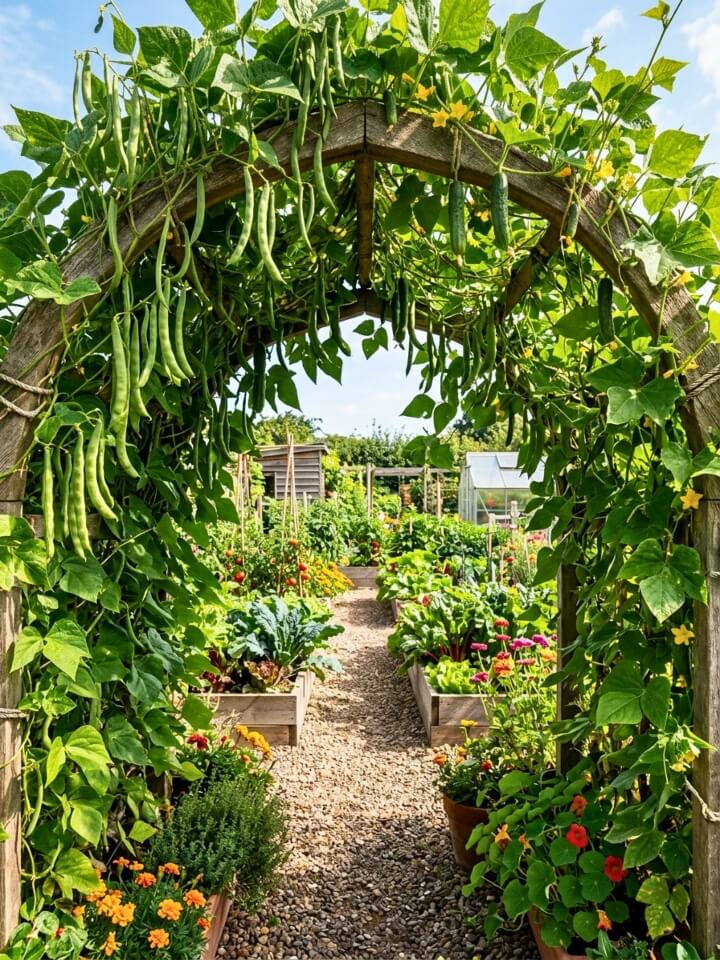
An archway turns the entrance into a moment. You step through it, and you’re somewhere else.
Sturdy is the only rule that matters. A mature bean vine plus late-season wind adds up to real weight, and flimsy arches collapse in August. Buy a heavy-gauge steel arch or build one from bent rebar welded into a frame. Six to seven feet tall and three feet wide is the sweet spot: tall enough to walk under comfortably, narrow enough for vines to meet at the top.
Best Climbers for Arches:
- Scarlet Runner beans (red flowers, edible pods)
- Malabar spinach (glossy leaves, edible greens all summer)
- Small-fruited winter squash like Delicata or Honey Nut
- Purple hyacinth beans (ornamental, dramatic dark pods)
Plant two vines on each side and train them upward for the first three weeks.
21. Pollinator-Friendly Border With Herbs And Edible Flowers
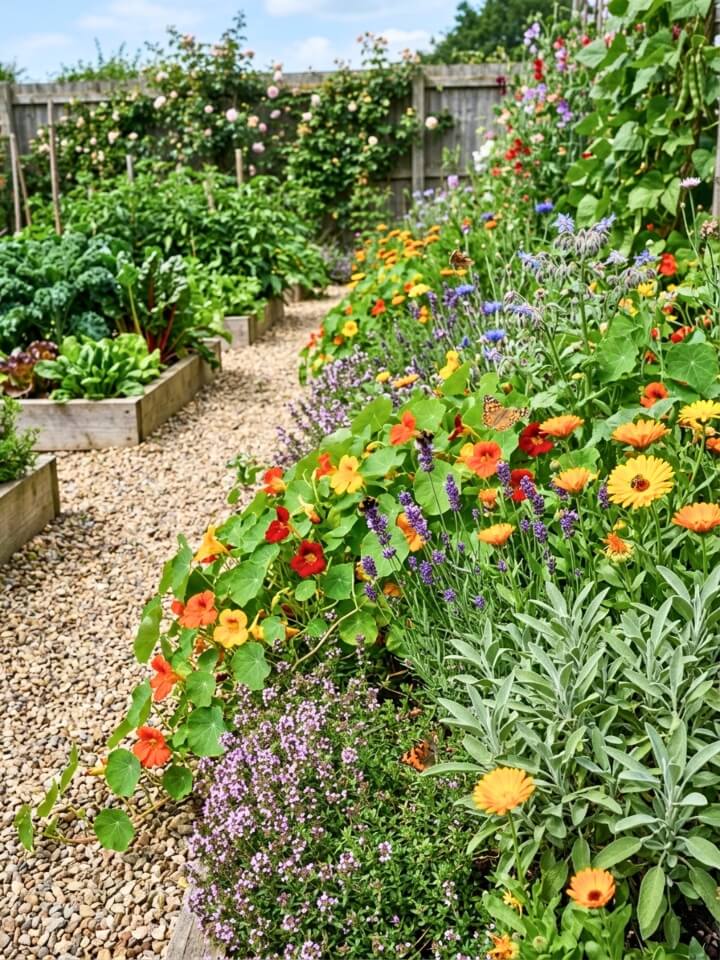
Learn how to design an english cottage garden with layered blooms, winding paths, and timeless romance. A border designed for bees is also a border designed for you. Almost every plant that draws pollinators is edible, medicinal, or both.
Thyme and sage flower in early summer with tiny purple blooms that native bees adore. Oregano blossoms follow in July, humming with honeybees from morning to dusk. Chive flowers open in May, borage from June onward, and nasturtiums keep going until frost. Interplant calendula, bee balm, and pineapple sage to stretch the bloom season from April to November.
Skip pesticides entirely in this border. Even organic sprays like neem harm bees during application. Let some herbs bolt on purpose instead of cutting every flower stem. The plants get a rest, the pollinators get a feast, and next year’s vegetables set fruit better than they ever have.
FAQs About Cottage Vegetable Gardens
Planning matters more than planting. These answers tackle the practical questions gardeners wish they had asked before the first seed went in the soil.
How Long Does It Take to Build a Cottage Vegetable Garden from Scratch?
A basic setup with two raised beds, a path, and starter plants takes one weekend. A fuller garden with arches, borders, and mixed plantings usually develops over two to three growing seasons as you add pieces.
What’s the Best Soil P H for A Cottage Vegetable Garden?
Most vegetables thrive between 6.0 and 7.0 on the pH scale. Test your soil with an inexpensive kit before planting. Add lime to raise pH or elemental sulfur to lower it, then retest after six weeks.
Are Cottage Vegetable Gardens Safe for Pets and Children?
Mostly yes, but skip toxic ornamentals like foxglove, monkshood, and castor bean. Rhubarb leaves and tomato foliage are also harmful if chewed. Fence off compost bins, and always rinse produce before eating from the garden.
How Do I Protect a Cottage Garden from Deer and Rabbits?
A four-foot fence stops rabbits, but deer need at least seven feet. Interplant strongly scented herbs like rosemary, lavender, and sage around the border. Motion-activated sprinklers work well as an added layer of defense.
Can I Grow a Cottage Vegetable Garden Year-Round?
In mild climates, yes. Rotate cool-season crops like kale, garlic, and spinach through fall and winter, then switch to warm-season vegetables in spring. Cold frames or low tunnels extend the season in colder regions significantly.
Conclusion
A cottage vegetable garden rewards the gardener who plants for both the plate and the eye. Start with one raised bed, one climbing arch, or one herb corner by the back door, then let the space grow at its own pace. Mix marigolds with tomatoes, edge lettuce rows with alyssum, and let a few volunteers stay where they land. The most memorable gardens aren’t the tidiest ones. They’re the spaces where basil scents the doorway, bees hum through borage flowers, and dinner starts with a walk outside. Build slowly, plant generously, and the garden will tell you what it wants to become.