19 Backyard Tiny House Ideas To Maximize Every Square Foot
A small structure in the backyard can change how the whole property feels. It adds a guest room, a quiet office, or a hangout spot without a major renovation. That’s the appeal behind these 19 inspiring backyard tiny house ideas — practical, good-looking builds that fit real yards and real budgets. Some are simple. Others are more involved. All of them solve a problem most homeowners actually have.
I’ve styled and edited dozens of small-space projects over the years, and the same pattern keeps showing up. People don’t need a bigger house. They need a smarter use of the yard.
Each tiny house idea below includes the kind of detail that matters before you build — typical size, materials worth choosing, where to place it on the lot, and the design touches that pull the look together. Pick the one that fits your space, your habits, and the way you actually want to use your backyard.
1. Backyard Guest Cottage With a Cozy Porch
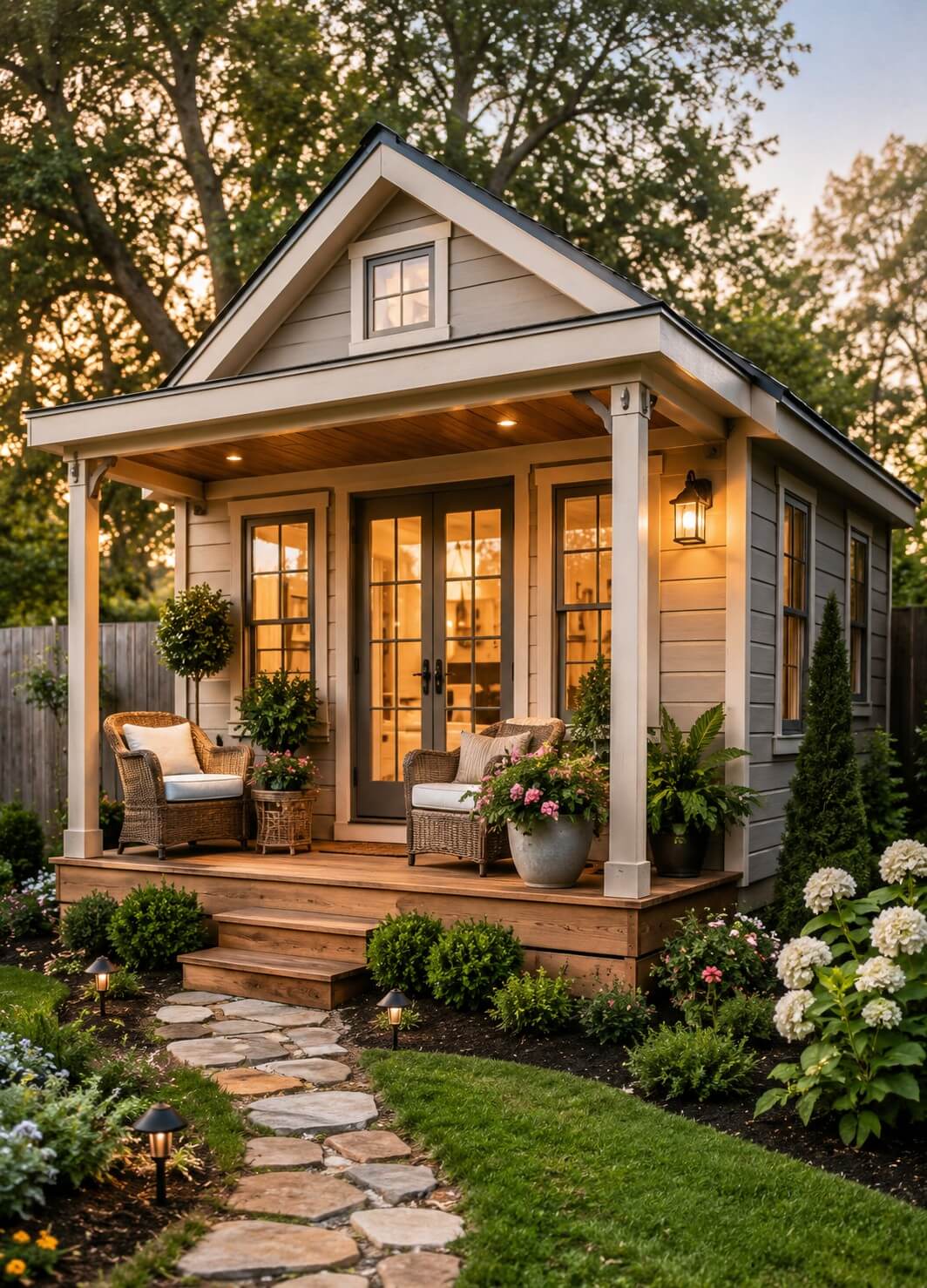
Hosting in-laws for a long weekend stops being stressful the moment guests have their own front door. A 200 to 400 square-foot cottage comfortably holds a queen bed, three-quarter bath, and a small sitting nook — enough independence for visitors, enough closeness for shared meals.
Position it near a side gate so guests can come and go on their own schedule. The porch is what sells the cottage, though: a 6-by-8-foot covered entry with two rockers, a sconce on either side of the door, and a pair of trailing pothos in hanging baskets.
Best Paired With: soft sage or buttercream siding, white trim, and a brick or pea-gravel walkway leading from the main house.
2. Modern Tiny Studio for Work or Hobbies
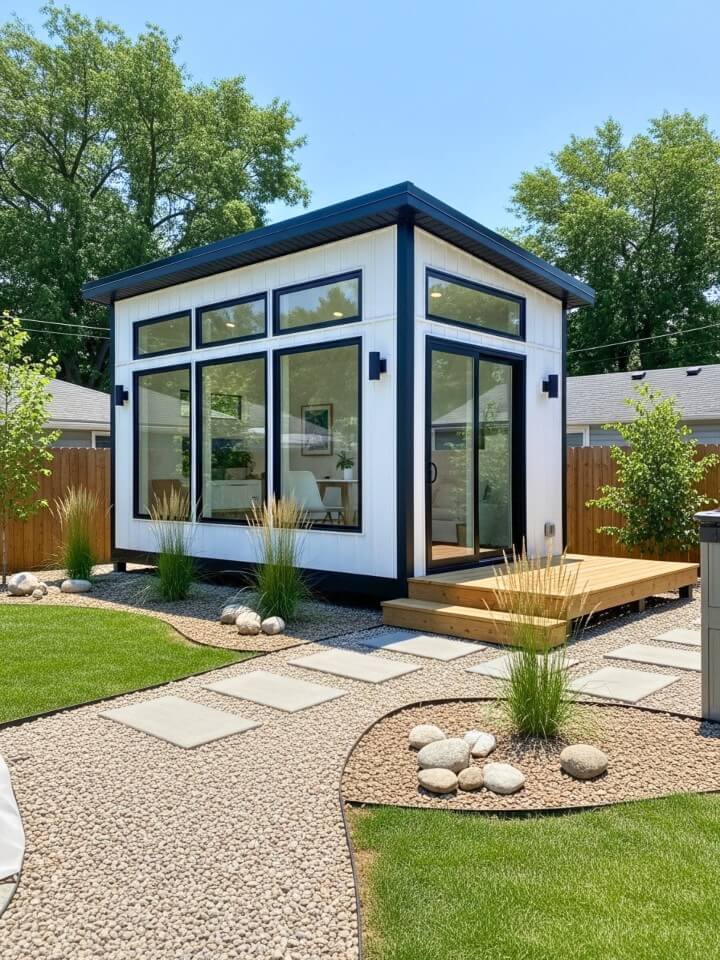
Remote work goes from tolerable to genuinely enjoyable when the commute is twelve steps across the lawn.
A studio in the 120 to 200 square-foot range fits a sit-stand desk, a tall storage wall, a reading chair, and not much else — which is the point. Choose a quieter back corner of the yard with north or east exposure; that softer daylight cuts screen glare and keeps the room cool through summer afternoons.
The exterior is where the modern character lives. Think floor-to-ceiling fixed windows, fiber-cement siding in charcoal or warm gray, black-framed doors, and a small ipe deck. Surround it with ornamental grasses, river rock, and three or four boxwoods. A recessed downlight above the door handles late evenings.
3. Rustic Cabin Tucked Beside the Garden
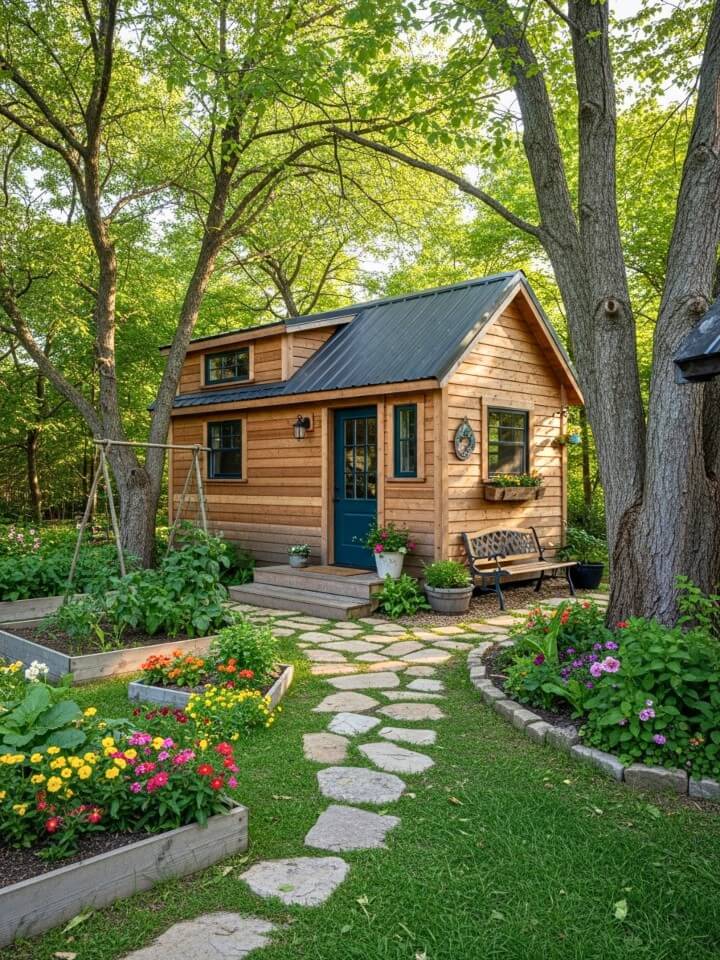
Transform your outdoor space with stunning backyard tiny house ideas that maximize every square foot. The best rustic cabins look like they were always there.
Reclaimed cedar siding weathers into silver-gray over a few seasons, and a standing-seam metal roof in dark bronze sheds rain and pine needles without complaint. Footprints between 100 and 250 square feet keep the build approachable — small enough to skip a full foundation in many cases, large enough for a potting bench or a daybed under a window.
Set it at the edge of a vegetable patch, a wildflower strip, or a fruit-tree line so the cabin earns its place in the landscape. A flagstone path, a weathered bench beside the door, a galvanized watering can leaning against the wall, and a single strand of café lights overhead finish the look without trying too hard.
For cabins placed near boundaries, fence line landscaping ideas can soften the edges and make the structure feel more settled.
4. Poolside Tiny House With Lounge Space
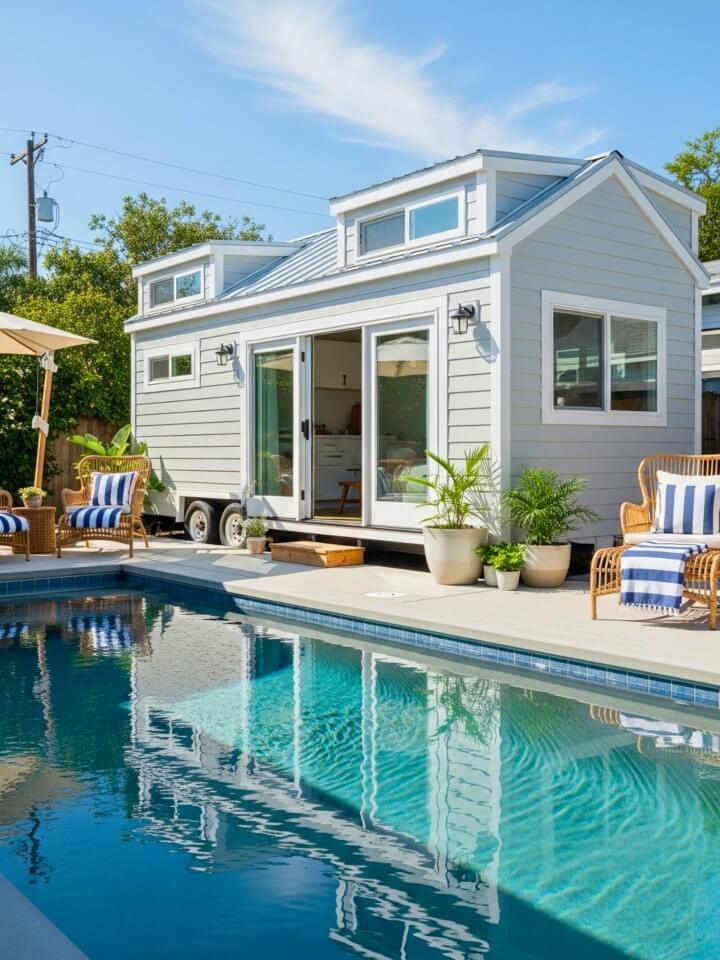
What’s the one thing that ruins a relaxed pool afternoon? Dripping wet feet tracking through the kitchen every time someone needs a snack or the bathroom.
A poolside tiny house solves that in 150 to 300 square feet. A typical layout includes:
- A changing room with hooks and a bench
- A compact half-bath with an outdoor shower attached to the exterior wall
- A mini fridge and counter for drinks
- A shaded lounge corner that doubles as a guest sleeping spot
Keep it 6 to 10 feet back from the pool coping so swimmers have a clear walking lane. Moisture-friendly materials matter here — fiber-cement siding, sealed concrete or porcelain tile floors, marine-grade hardware. Light siding, wide sliding doors, and dimmable Edison-bulb string lights stretched overhead turn the space into something resort-like once the sun drops.
5. Tiny Backyard Retreat With Big Windows
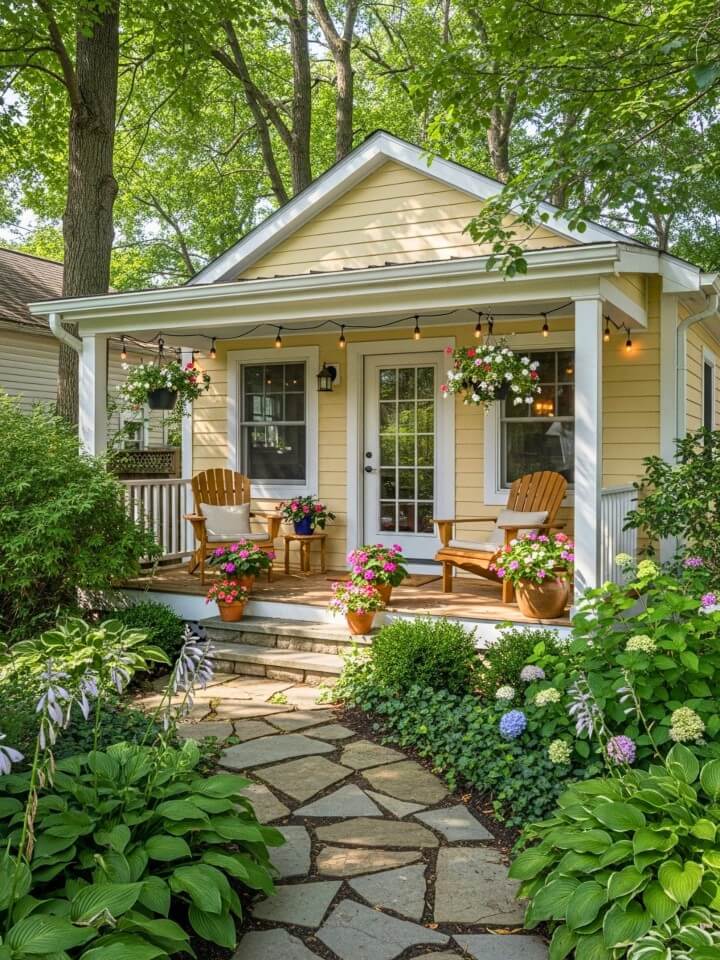
Not every backyard structure needs a job. Sometimes the whole purpose is quiet.
A 100 to 180 square-foot retreat built around oversized windows works for reading, journaling, meditation, or simply staring at the garden until the day resets. The view does most of the design work, so orientation matters more than square footage — point the largest pane toward a mature tree, a layered flower bed, or open lawn rather than a fence line or the neighbor’s siding.
Inside, restraint wins. A linen-covered daybed, one low oak side table, a small bookshelf, and sheer curtains for the rare moment privacy is needed. Outside, a 4-by-6-foot deck, irregular stepping stones set into creeping thyme, and a palette of warm white, pale oak, and stone gray keep the mood unmistakably calm.
6. Tiny House With a Rooftop Deck
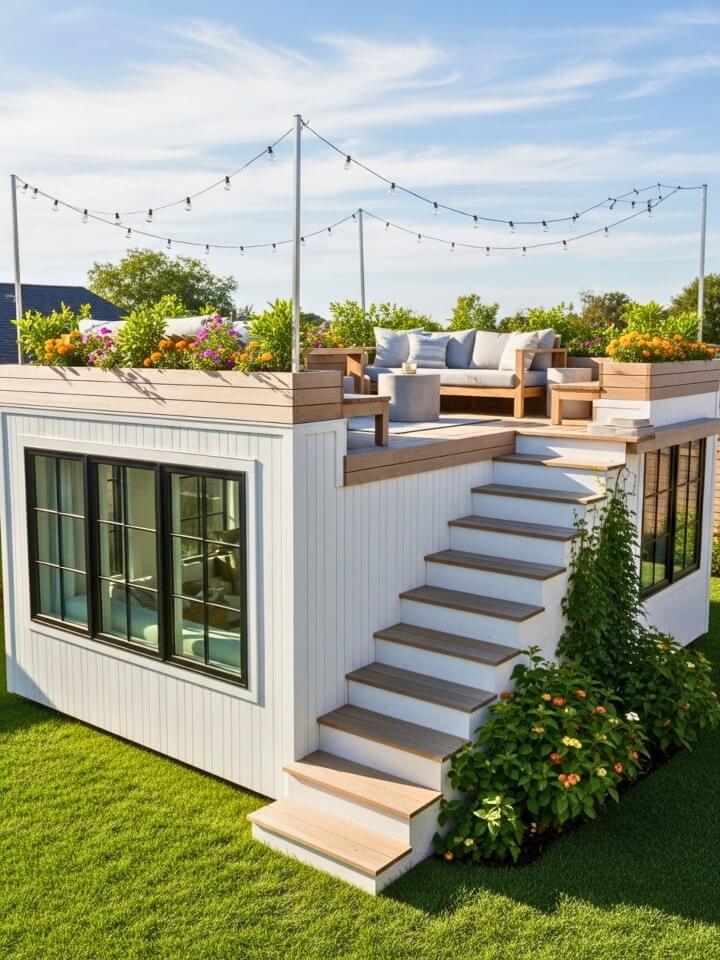
When the yard is small, the only direction left to build is up.
A rooftop deck doubles the usable footprint without taking another square foot of lawn. On a 10-by-14 base, that’s nearly 140 extra square feet of sunset-watching, container gardening, or weekend stargazing. The catch is structural — a roof rated for foot traffic and a properly engineered code-compliant railing aren’t optional, so factor an extra $3,000 to $6,000 into the build for the upgrade.
Up top, keep it simple: a built-in bench along one rail, two large planters with ornamental grasses for a windbreak, and warm string lights wrapped around the perimeter. Skip heavy furniture. Anything that needs to be dragged up a ladder won’t get moved often. For evenings, eye-catching deck lighting ideas make the rooftop safer and much more inviting.
7. Garden Office Tiny House With French Doors
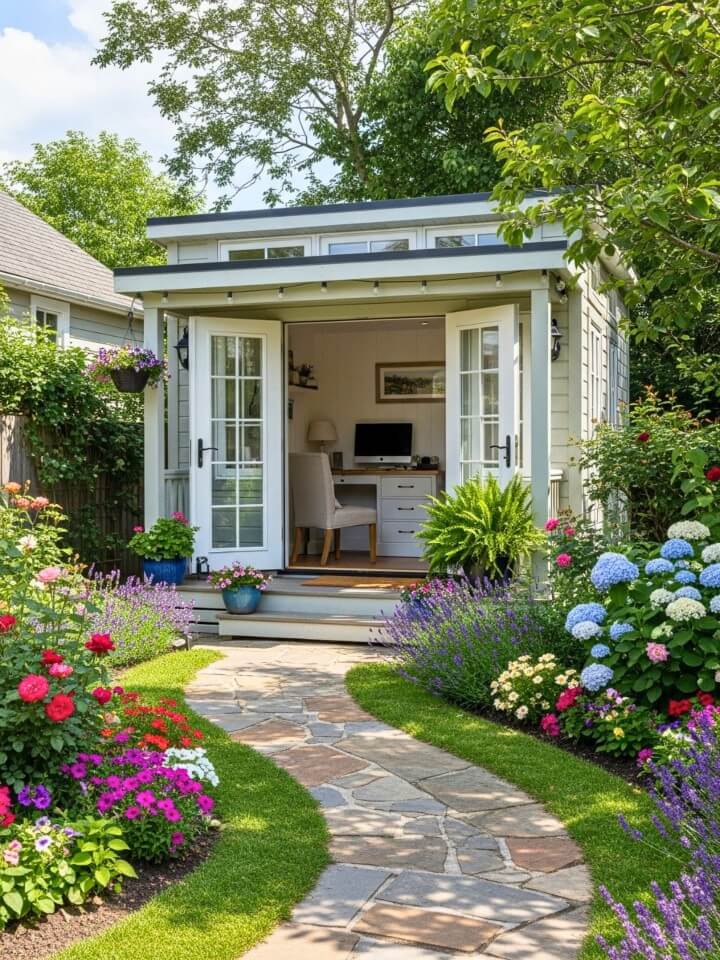
Sliding doors are efficient. French doors have personality — and for a garden office, personality is the entire point.
A pair of inswing French doors with divided lights opens the room to the yard on mild days and frames the garden like a painting when closed. Position the structure so the doors face a flower bed, a row of hydrangeas, or a small herb garden rather than the driveway. The view from your desk becomes the reason you actually want to sit down and work.
A 150 square-foot footprint handles a writing desk, a two-person meeting chair setup, and a narrow bookshelf. Cottage trim painted in dusty blue or sage, a stone or pavers walkway curving up to the entry, brass lever handles, and a lantern-style sconce above the door pull the whole look together.
8. Scandinavian Tiny House With Clean Lines
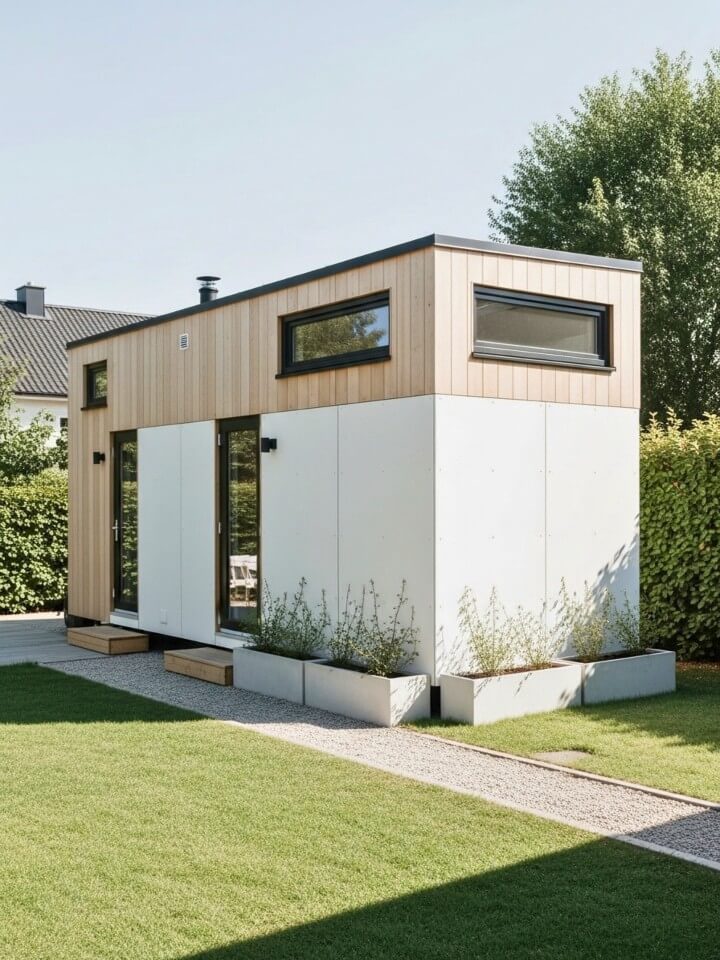
Scandinavian design isn’t about adding the right things. It’s about removing the wrong ones.
That principle keeps a tiny house from feeling cluttered, which matters more in 150 square feet than in 1,500. Stick to three exterior materials maximum: pale vertical pine siding, white-painted trim, and black window frames. A shallow-pitched gabled roof keeps the silhouette quiet. Skip the shutters, skip the decorative brackets, skip anything that exists only for visual noise.
Set the structure on a gravel pad with a single low wooden step rather than a deep porch. A few cylindrical concrete planters with dwarf evergreens or feather reed grass complete the exterior. Inside, light oak floors, a white interior, and one or two black fixtures — a pendant lamp, a slim wall hook — carry the same restraint indoors. The whole effect is calm, bright, and almost impossible to over-decorate by accident.
9. Farmhouse Tiny House Near the Patio
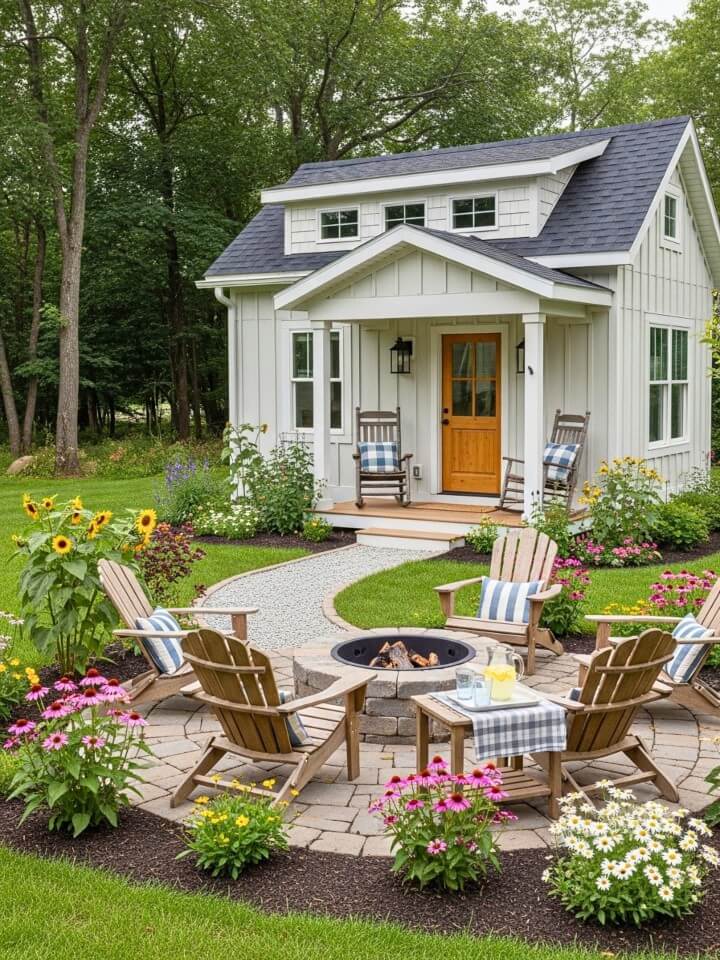
Picture a Sunday afternoon: kids running through the patio, two friends rocking on the tiny-house porch with iced tea, dinner prep happening between the grill and the kitchen window. That layout is the whole appeal of a farmhouse-style tiny house parked near the main outdoor living zone.
Place it 12 to 20 feet from the patio edge — close enough that it feels part of the gathering, far enough that the porch reads as its own space. Board-and-batten siding in white or warm putty, a steep gabled roof in matte black metal, and a pair of black gooseneck barn lights flanking the door deliver the farmhouse cue instantly.
Two cedar rocking chairs, a small enamel side table, a galvanized planter with trailing petunias, and a gravel path connecting porch to patio finish the picture. Inside, a daybed and a coffee station make it equally useful for guests or quiet afternoons.
10. Tiny House With a Covered Outdoor Kitchen
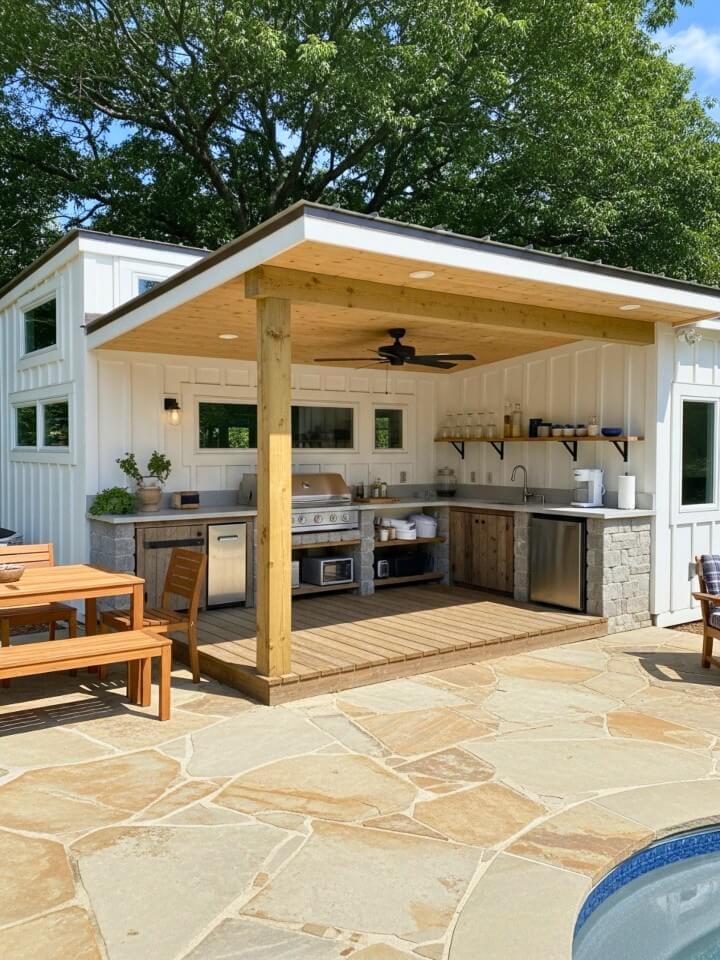
A grill on the patio is fine. A full outdoor kitchen tucked under the eaves of a tiny house is something else entirely.
The structure does double duty here — interior storage for serving ware and pantry items, exterior counter and cook space for actual entertaining. A 4-foot roof overhang along one long wall creates a covered cooking zone that stays usable in light rain and shoulder-season cool.
A Workable Build-Out Typically Includes:
- A 36-inch built-in gas grill or a Big Green Egg in a masonry surround
- 8 to 10 feet of weatherproof counter, ideally honed granite or sealed concrete
- A small bar fridge and an ice drawer under the counter
- Two pendant lights over the prep area, plus dimmable downlights in the soffit
Flooring should handle grease and dropped tongs — stamped concrete, large-format porcelain, or bluestone all work. Pair the kitchen with a long teak table 6 feet away, and the backyard turns into the place everyone wants to eat.
11. Boho Tiny House Surrounded by Plants
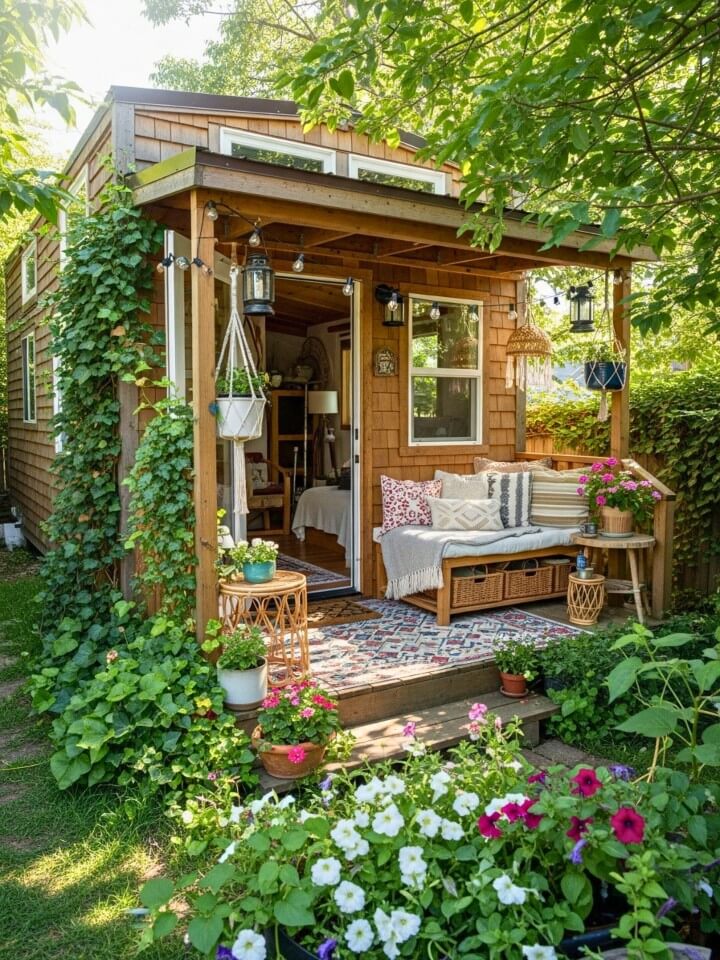
A backyard tiny house offers the perfect blend of cozy living and smart, sustainable design today. Bohemian style breaks one rule of small-space design on purpose: more is more.
Where a Scandinavian build strips everything back, a boho tiny house leans into layering — patterns, textures, plants stacked on plants, lanterns hung at three different heights. The structure itself can stay simple. A 140 to 200 square-foot box with natural cedar siding and a single wide door becomes a backdrop, not the main event.
The plants do the heavy lifting. Train a climbing jasmine or honeysuckle up one exterior wall, line the foundation with ferns and elephant ears, and let pothos trail from porch beams in macramé hangers. On the porch itself, layer a vintage Turkish runner over the deck boards, add a low rattan chair, scatter three or four floor cushions, and string Moroccan-style pierced metal lanterns overhead. The space should feel discovered, not decorated.
12. Minimalist Tiny House With Sliding Glass Walls
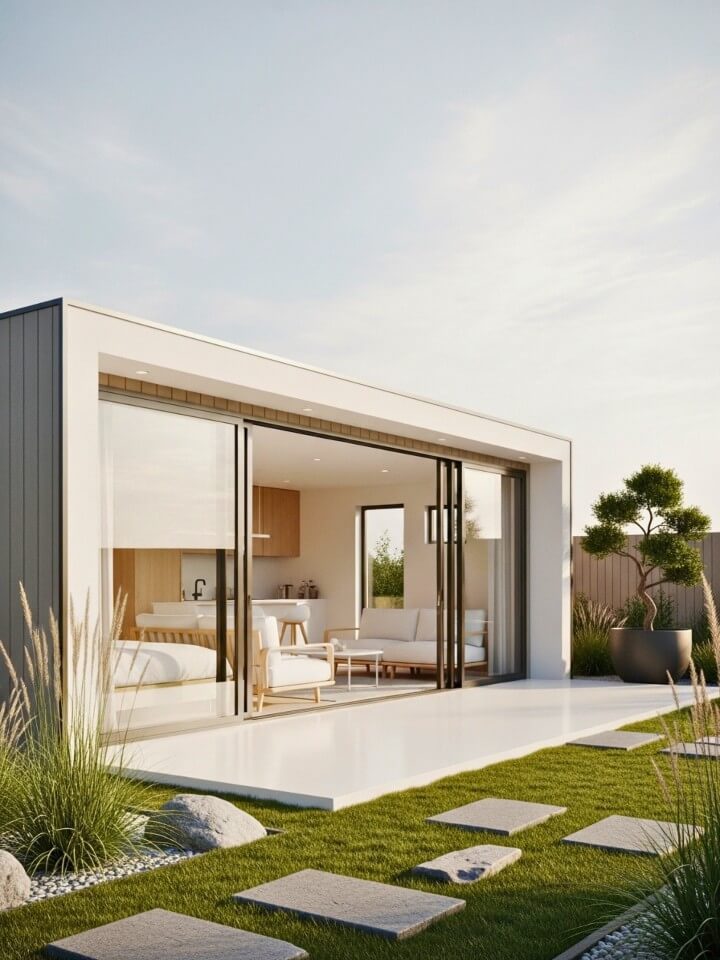
A 12-foot sliding glass wall changes how a small building behaves. Closed, the structure feels like a clean architectural object. Open, it stops being a building at all and becomes a covered extension of the yard.
That single design choice does more for a 160-square-foot interior than any layout trick. The trade-off is cost — a multi-panel sliding glass system runs $4,000 to $12,000 installed, and the framing has to be engineered to carry the load. Budget for it from the start rather than bolting it on later.
Inside, the rule is: nothing that fights the view. A built-in platform sofa along the back wall, one slim console, a single sculptural pendant. Outside, pour a flush concrete pad so the floor reads as continuous from interior to deck. A few large monolithic planters with Japanese maples or olive trees anchor the corners. The yard does the decorating.
13. Cottage-Style Tiny House With a Flower Garden
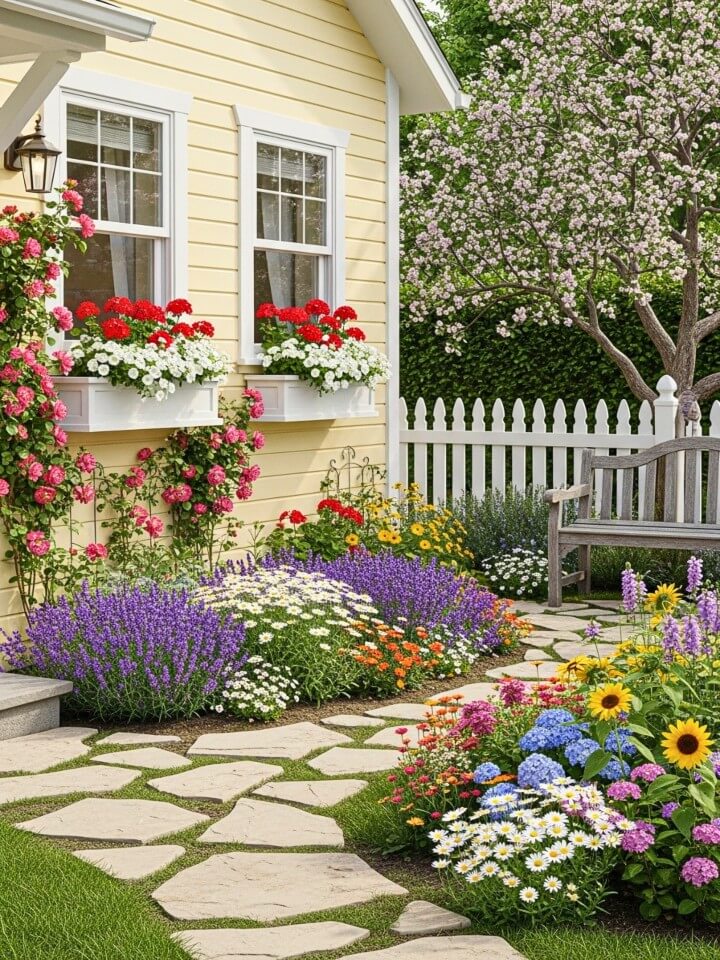
Some structures look better the longer they’ve been in place — and a cottage-style tiny house surrounded by a mature flower garden is one of them.
By year three, climbing roses should be reaching the eaves, foxgloves and delphiniums should be self-seeding along the path, and the picket fence should have just enough weathering to look honest. That kind of charm is hard to fake on day one, which is why this build pairs best with homeowners willing to play the long game.
A few details speed things up. Paint the siding in a soft, slightly chalky color — dusty rose, pale butter yellow, sage. Add window boxes filled with trailing lobelia and ivy geraniums. Use a Dutch door for the entry so the top half can swing open on warm afternoons. A small wooden bench under the front window, a stone or brick path edged with lavender, and two solar lantern stakes give the garden somewhere to start growing into.
14. Tiny House With a Wraparound Veranda
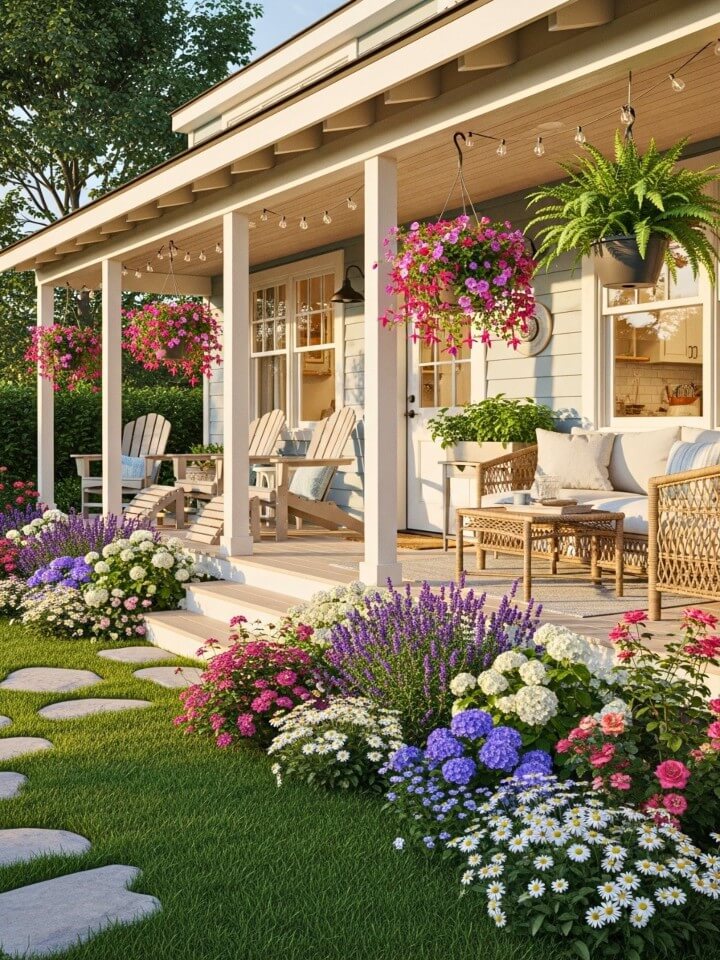
The veranda is bigger than the house, and that’s the point.
A 160 square-foot interior surrounded by an 8-foot-deep wraparound porch turns a small structure into a generous outdoor living room. Total roofed area can easily exceed 500 square feet, even though the actual conditioned space stays compact. For households that spend more time outside than in, the math works out better than a larger conventional build.
Three Details Make the Veranda Worth the Lumber:
- Sun-tracking layout — place rocking chairs on the east side for mornings, hammock hooks on the west for evenings, and a dining set wherever shade lasts longest in mid-afternoon
- Ceiling fans — two flush-mount outdoor-rated fans drop the perceived temperature by 6 to 8 degrees on humid days
- Bead-board ceiling painted haint blue — a Southern porch tradition that looks gorgeous and, by old custom, keeps wasps from nesting
Tongue-and-groove pine flooring, white turned columns, and a simple square railing keep the architecture friendly rather than formal.
15. Tiny House With a Fire Pit Lounge Area
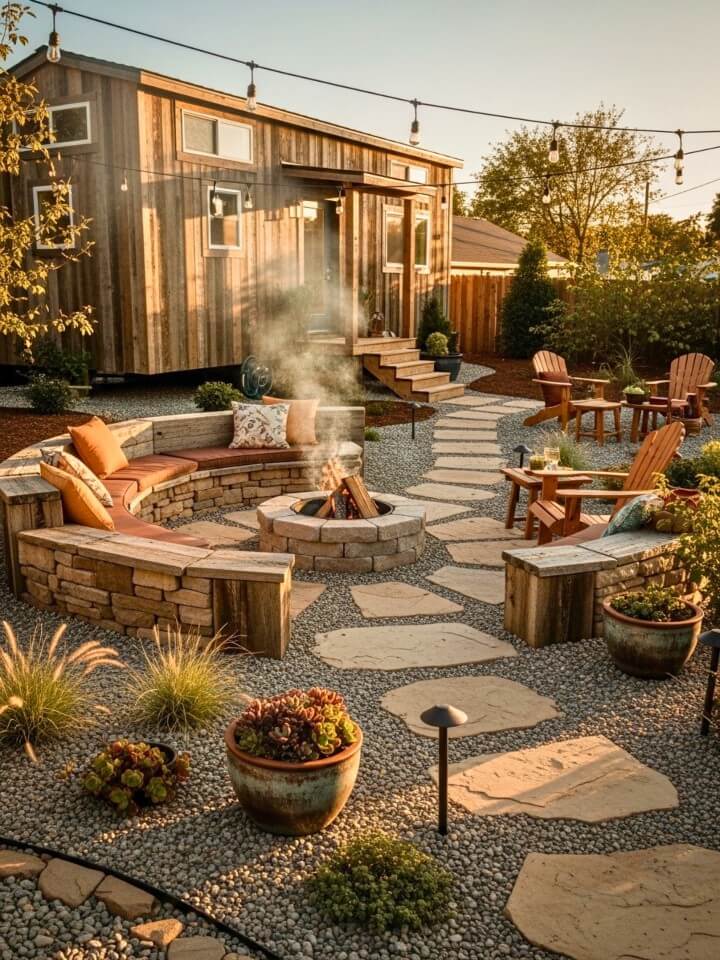
Cool evenings are when the backyard earns its keep, and a fire pit lounge anchored by a tiny house extends that season by months on either end.
Safety distance first: keep the pit at least 10 feet from the structure and any overhanging eaves, and 15 feet from fence lines or trees. A gas pit fed by a buried line is the cleaner option for nightly use; a wood-burning pit delivers the scent and crackle but means storing seasoned hardwood somewhere within reach.
Around the pit, build a low arc of seating — a curved concrete bench softened with weatherproof cushions works well, or four Adirondack chairs spaced with small side tables between them. The tiny house itself functions as the warming hut: hooks for blankets just inside the door, a small bar setup for hot toddies or cocoa, a Bluetooth speaker mounted under the eave. Pea gravel underfoot keeps embers from finding anything they shouldn’t.
16. Tiny House With a Green Roof
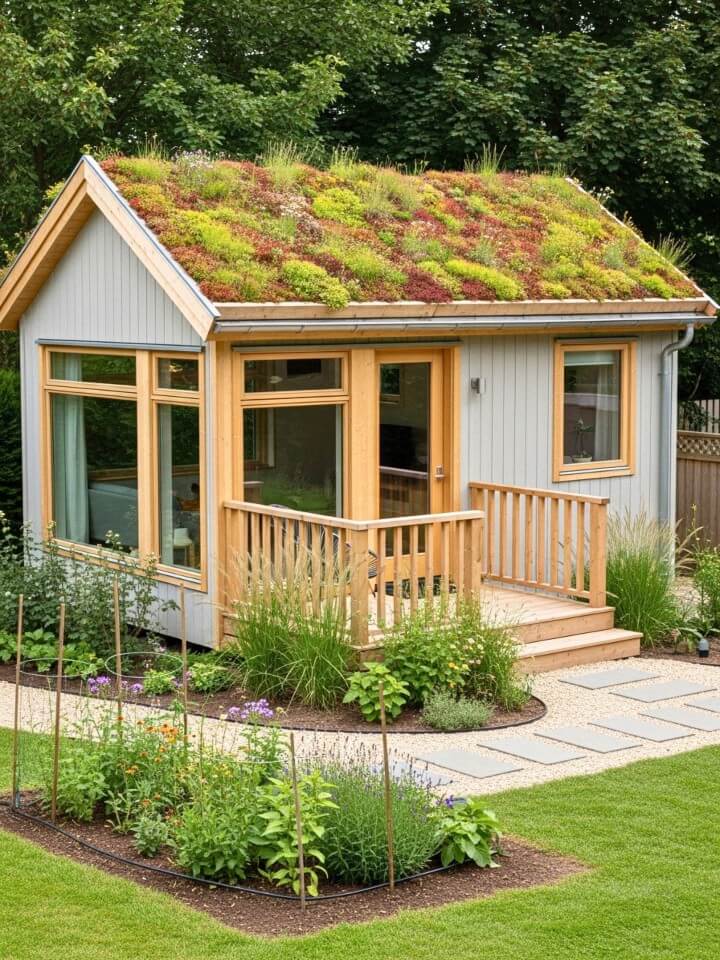
A planted roof isn’t just a Pinterest aesthetic. It’s a functional layer that drops attic temperatures by 10 to 20 degrees on hot afternoons, absorbs heavy downpours that would otherwise pound off a metal roof, and softens the structure into the surrounding landscape.
The build does require planning. A green roof assembly — waterproof membrane, root barrier, drainage layer, growing medium, plants — adds roughly 25 to 35 pounds per square foot when saturated. That’s not a load you can retrofit onto a stock shed. Engineer the framing for it from the start, or have a structural reinforcement done before any planting begins.
For the planting itself, low-water sedums are the workhorse. Mix three or four varieties — Sedum album, Sedum spurium, Sedum kamtschaticum — for color variation across the seasons. Add a few clumps of chives or creeping thyme for texture. A simple stainless gutter and downspout system handles runoff. Once established, the roof needs about two visits a year: a spring weed pull and a fall trim.
17. Backyard Sauna Tiny House
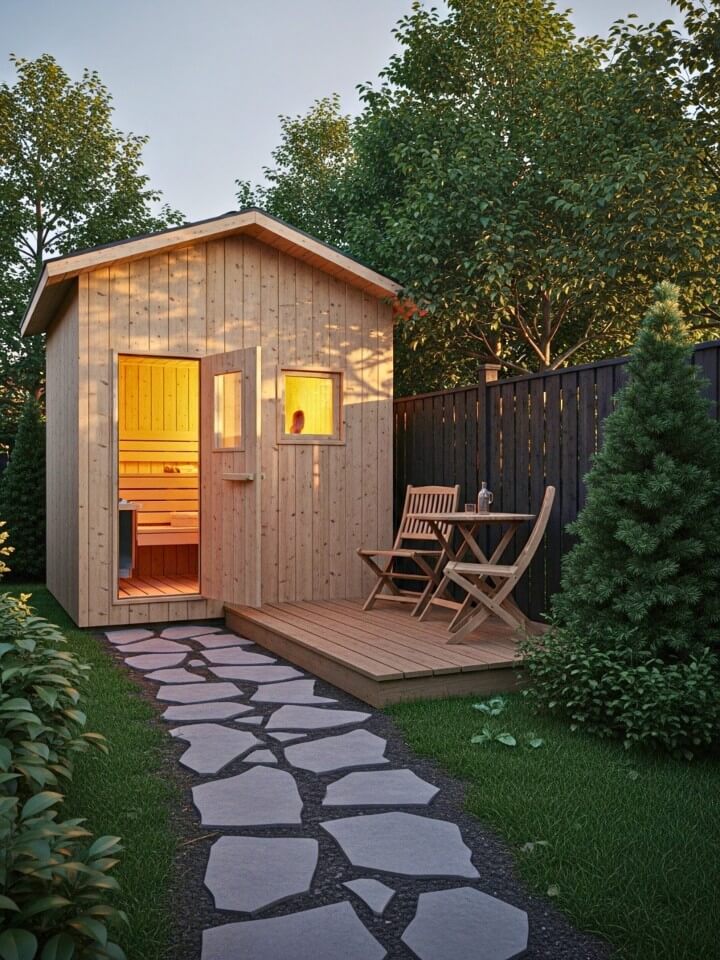
Build a charming tiny home in backyard spaces to create your own peaceful private retreat easily. A home sauna sounds like an indulgence until the first cold morning you use one. Then it sounds like an investment.
A traditional Finnish-style sauna fits comfortably in a 60 to 100 square-foot footprint, with room for two bench tiers and a wood-burning or electric heater. Cedar is the standard interior lining for good reason — it resists moisture, doesn’t scorch fingers at high temperatures, and develops a soft amber patina over years of use. On the exterior, charred shou sugi ban siding looks stunning and pairs naturally with the wellness theme.
Placement matters more than for almost any other tiny structure on this list. Set the sauna behind a privacy screen or hedge, ideally near a quiet corner where you can step outside between sessions without being on display. A cold plunge tub or even a simple outdoor shower a few feet from the door completes the contrast cycle. Inside, keep the lighting low and warm — a single dimmable fixture is plenty.
18. Tiny House Beside a Gravel Courtyard
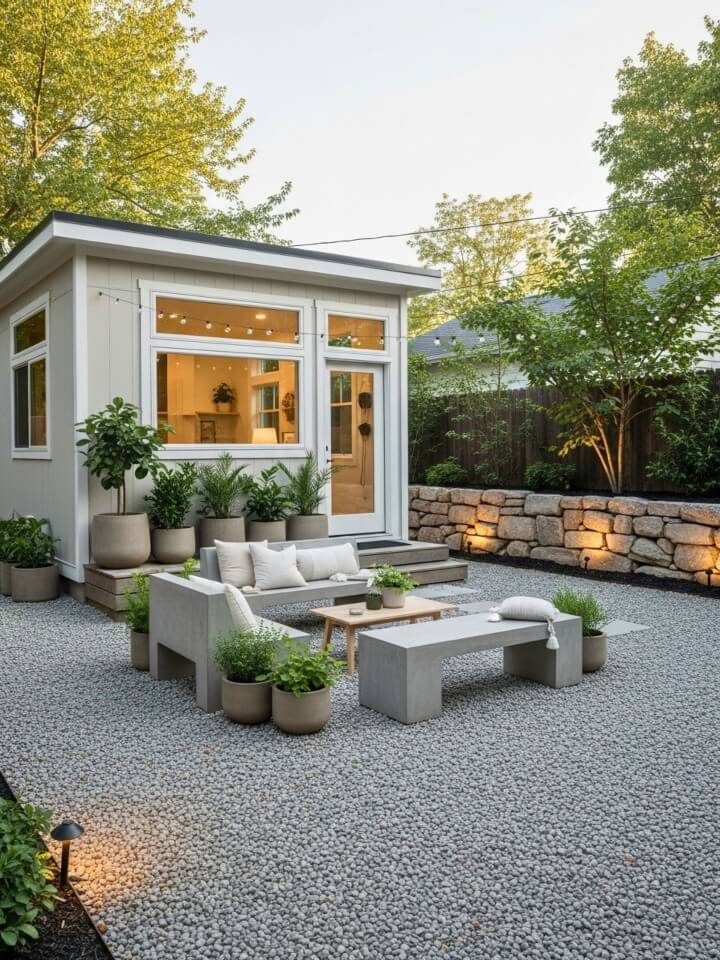
The Mediterranean and Japanese landscape traditions agree on one thing: gravel is one of the most underused surfaces in residential design.
It drains instantly, costs a fraction of pavers, crunches underfoot in a way that signals you’ve arrived somewhere, and forces a slower walking pace that suits the mood of a small contemplative yard. A tiny house set along the edge of a 12-by-16 gravel courtyard becomes the focal point without dominating, and the courtyard handles overflow for everything from morning coffee to a six-person dinner.
Use angular crushed stone rather than rounded pea gravel — angular pieces lock together and stay put underfoot. Edge the courtyard with steel landscape edging or a single course of cobblestones to keep the gravel contained. Three or four large terracotta pots with olive trees, rosemary, or boxwood balls give the space height. A weathered teak bistro table and two chairs in one corner, an iron lantern in another, and the courtyard is done.
For after-dark atmosphere, a few ideas from amazing outdoor tree lighting ideas can help nearby branches, trunks, and planting beds frame the space beautifully.
19. Tiny House With Built-In Storage Seating
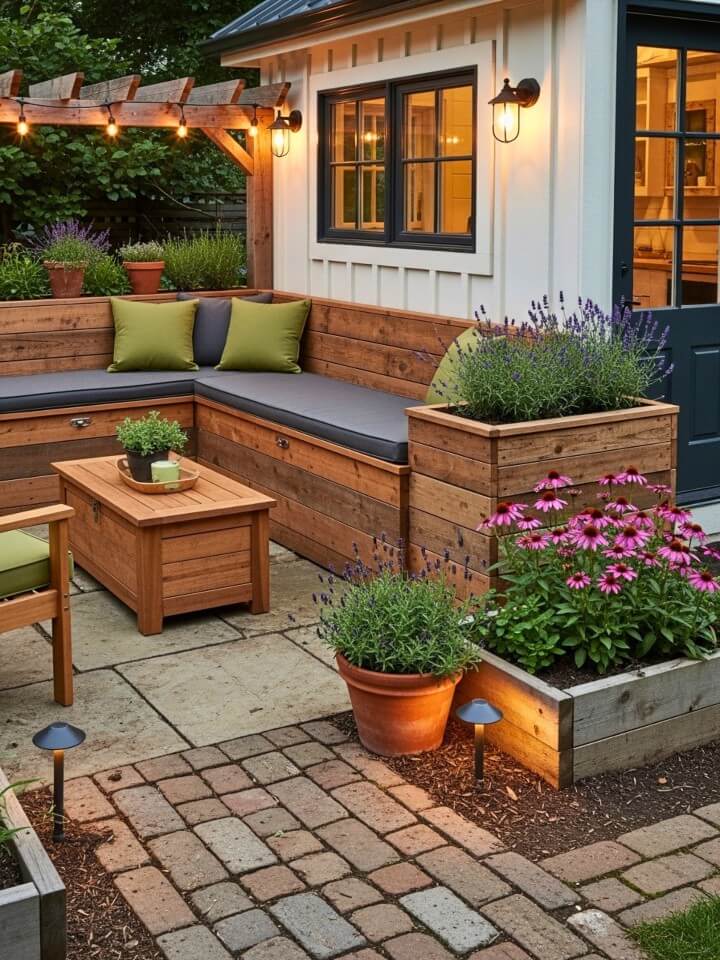
The honest problem with tiny structures is storage. Cushions need somewhere to go in a thunderstorm. Pool toys multiply. Garden tools need a home that isn’t a tarp behind the shed.
Built-in storage seating solves all of that without adding a single new piece of furniture.
A typical setup wraps an L-shaped bench around two sides of the porch or deck, with hinged seat lids opening into deep weatherproof compartments below. Each compartment can be dedicated:
- Cushions and outdoor pillows in one
- Pool floats and beach towels in another
- Garden gloves, hand tools, and twine in a third
- A small cooler nested into the fourth for drinks
Build the benches from rot-resistant cedar or composite decking, line the interiors with rubber gasket seals around the lids, and slope the floor of each compartment slightly so any water that sneaks in drains out. Add 3-inch sunbrella cushions on top and the seating disappears as storage entirely — guests see a comfortable bench, not a shed.
Frequently Asked Questions About Backyard Tiny Houses
Before breaking ground, most homeowners have the same practical questions. Here are clear answers to the ones the ideas above don’t cover.
How Much Does a Backyard Tiny House Actually Cost to Build?
Costs vary widely based on size and finish. A basic prefab shed conversion starts around $8,000 to $15,000. A fully built custom tiny house with plumbing and electrical typically runs $40,000 to $90,000.
Do I Need a Permit to Put a Tiny House in My Backyard?
Almost always, yes. Permit rules depend on your city and county, not just the size of the build. Check local zoning, ADU regulations, and setback requirements before buying materials or hiring a contractor.
Will Adding a Tiny House Increase My Property Taxes?
Usually, yes — anything with a permanent foundation, plumbing, or full electrical is treated as a habitable structure and reassessed. Portable units on skids or wheels often avoid reassessment, but rules vary by county.
Is It Better to Buy a Prefab Tiny House or Build One from Scratch?
Prefab saves time and offers predictable pricing, often delivered in four to eight weeks. Custom builds cost more and take longer, but they fit oddly shaped lots better and allow full control over layout, materials, and finishes.
Can a Backyard Tiny House Have Full Plumbing and Electricity?
Yes, if your lot allows it. Most builds tie into the main house’s existing water, sewer, and electrical lines. Long runs add cost, so place the structure within 30 to 50 feet of utility connections when possible.
Conclusion:
The best backyard builds aren’t the biggest ones. They’re the ones that get used every day — the office you actually walk to, the guest cottage your sister keeps asking to stay in, the sauna that turns a cold Tuesday into something to look forward to.
Start with how you want to spend time outside, then pick the structure that protects that habit. Square footage is easy. Intention is harder.
A tiny house in the backyard isn’t really about the building. It’s about giving a small piece of your property a job — and quietly getting more life out of the lot you already own.