21 Kidney-Shaped Pool Ideas for Every Yard Size and Budget
There’s a reason kidney-shaped pools have stuck around since your grandparents’ era while other trends came and went. That soft, asymmetric curve does something a rectangle simply can’t — it makes a tight yard feel roomier and a sprawling one feel intentional. If you’re sketching out backyard plans, these 21 jaw-dropping kidney-shaped pool ideas cover everything from tight urban lots to acreage builds, with real numbers and honest trade-offs mixed in.
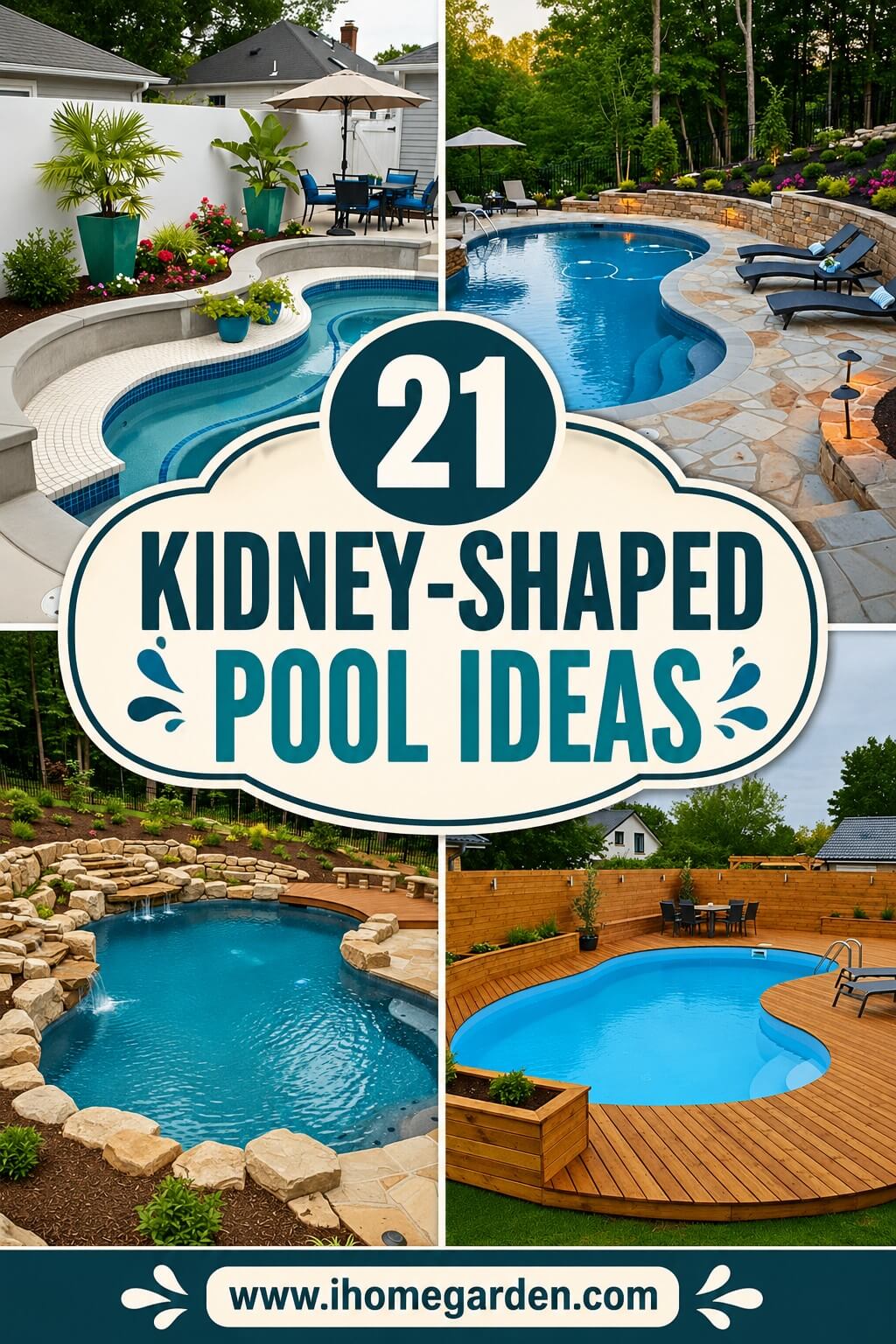
What you won’t find here is a parade of identical pools with different captions. Each idea below leans into something specific — a material choice, a layout trick, a feature worth the splurge, or one that quietly isn’t. Some suit families with young kids. Others lean modern, tropical, or low-maintenance. Skim for the ones that match your space and budget, then dig into the details. The right design is usually closer than you think.
1. Kidney-Shaped Pool With a Curved Stone Patio
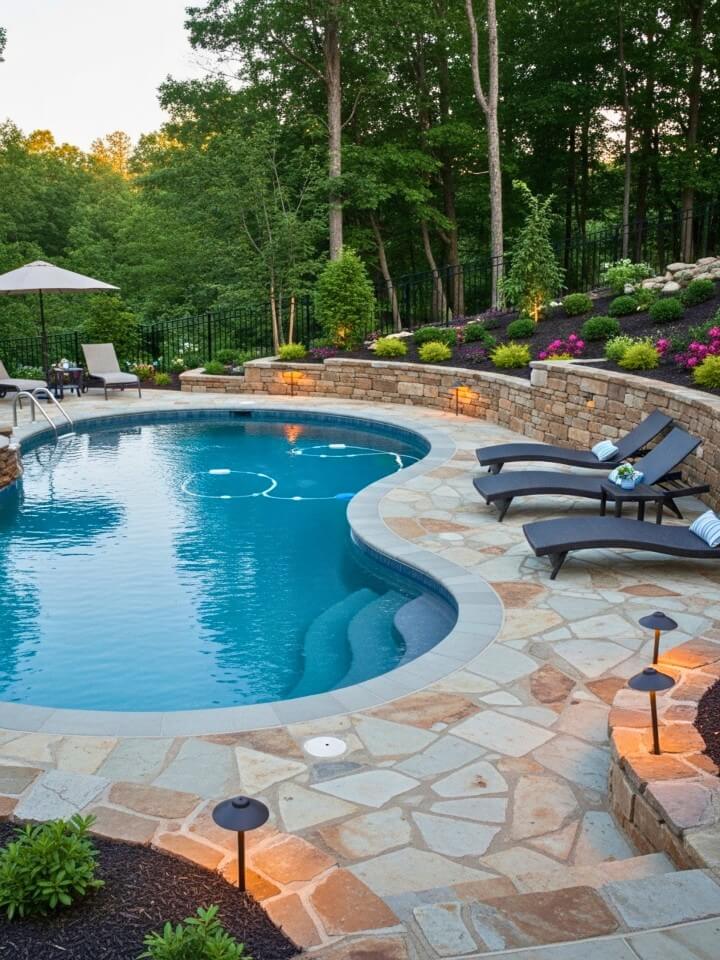
Flagstone or bluestone laid in a sweeping arc around the pool turns a basic build into something that feels custom. The curve of the patio mirrors the curve of the water, so the eye reads the whole space as one shape rather than a pool dropped onto a slab.
Best for: Yards 1,500 sq ft and up, traditional or transitional homes. Rough cost for the patio alone: $18–$35 per sq ft installed, depending on stone grade.
A small thing most homeowners miss: pick a stone with a honed or thermal finish, not polished. Polished stone gets dangerously slick when wet, and tumbled stone collects algae in the joints. Run a 6-inch coping band in a contrasting tone so the pool edge stays visually defined even when chairs and towels clutter the deck.
2. Resort-Style Tropical Planting Around the Pool
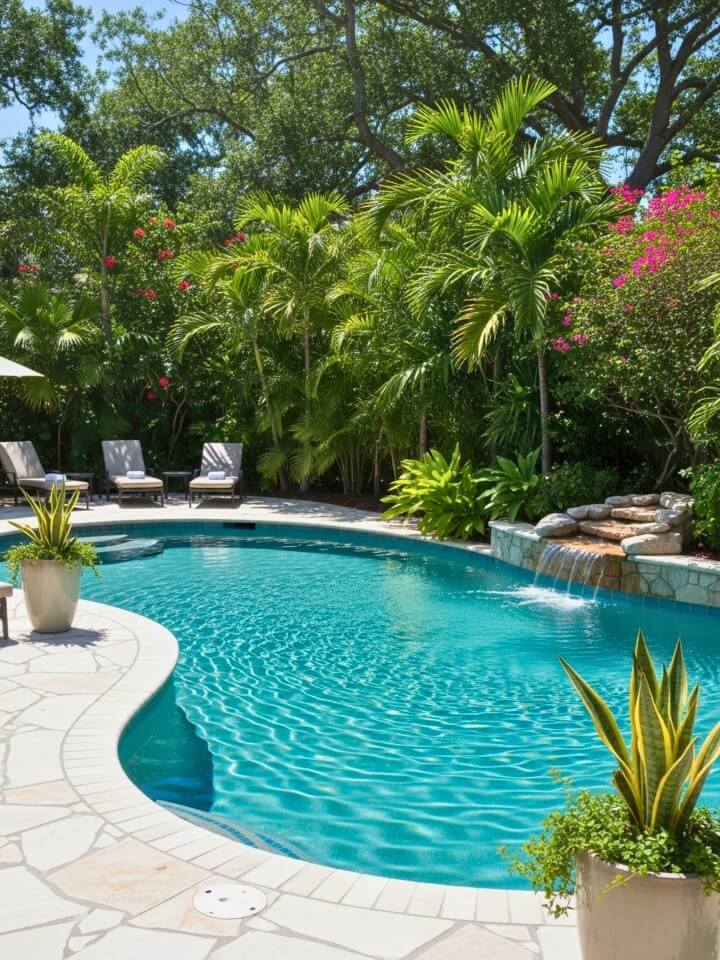
Layered planting is what separates a backyard pool from one that actually feels like a resort. The trick is height variation — tall canopy plants behind, mid-height shrubs in the middle, and groundcover spilling toward the coping.
Hardy choices that survive most climates: windmill palm, banana shrub, elephant ear, hardy hibiscus, and creeping jenny. In colder zones, swap the palm for a Japanese fiber banana, which dies back in winter and returns each spring.
Keep all plantings at least 4 feet from the waterline. Anything closer drops leaves directly into the skimmer and fights with root barriers under the deck. Budget around $1,200–$3,500 for a starter planting plan covering both long curves.
3. Sleek Concrete Edging for a Modern Backyard
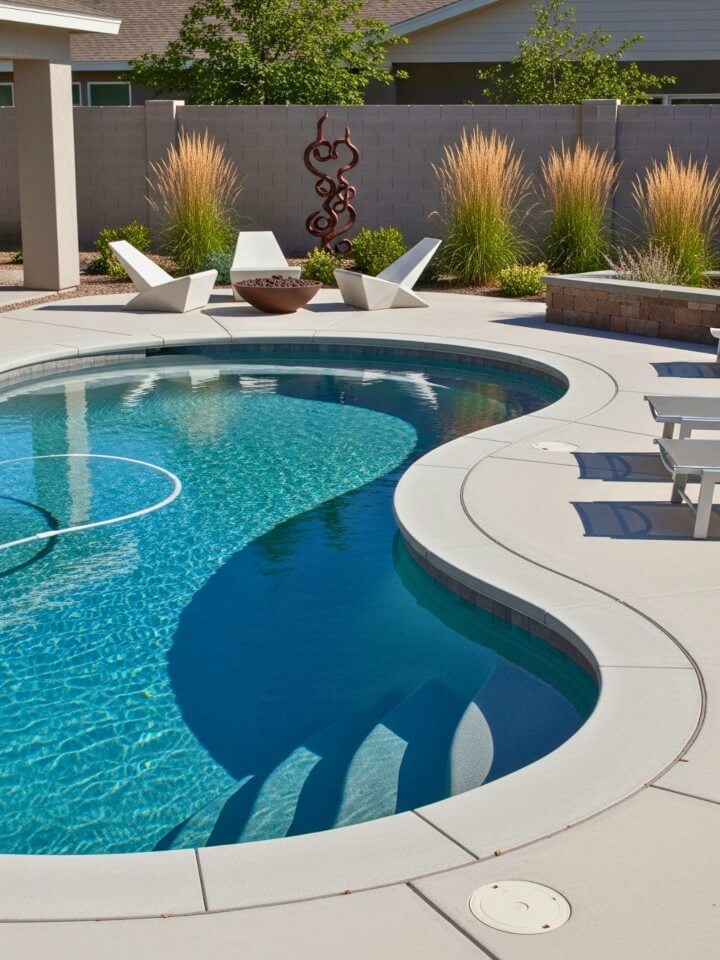
Dive into timeless elegance — a kidney pool transforms any yard into a curved luxury escape. Pairing a curved pool with sharp concrete sounds like a contradiction, and that tension is exactly what makes it work. A 12-inch poured cantilever edge with a smooth troweled finish reads as architectural rather than decorative.
This design suits flat lots and contemporary homes with stucco, board-and-batten, or dark-trim exteriors. Skip the textured stamps — they fight the minimalism. Instead, ask your installer about a salt-finish or light acid wash for slip resistance without visual noise.
One Honest Trade-Off: concrete shows everything. Sunscreen stains, leaf tannins, and pool chemicals all leave marks. Seal it every 18–24 months with a penetrating sealer (not a topical one, which clouds over time) and you’ll keep that crisp look for a decade.
4. Natural Boulder Accents for an Earthy Pool Setting
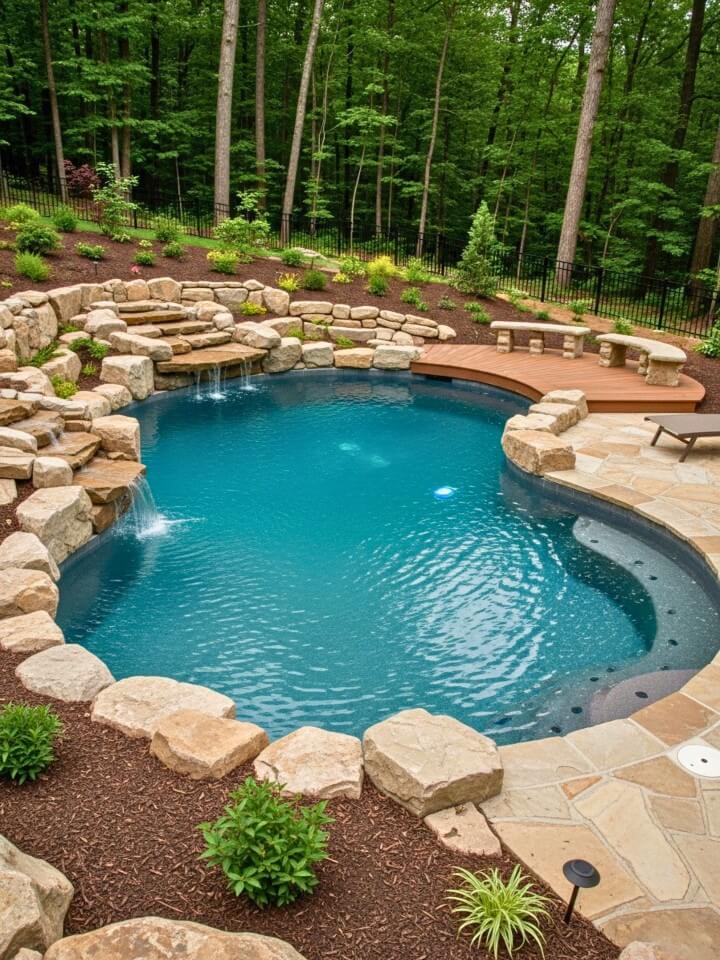
Moss rock and Pennsylvania fieldstone work better than uniform boulders for this look — irregular sizes feel like they belong there. Cluster three boulders together rather than spacing them evenly; nature never spaces things evenly, and the eye notices.
If your lot has even a 2-foot grade change, use it. Tucking the pool’s deep end into a slope and letting boulders form the upslope wall costs less than building retaining walls separately, and the result looks like the pool was carved out of existing rock.
Watch out For One Thing: large boulders settle. Insist your contractor compacts the base in 6-inch lifts and uses a geotextile fabric underneath. Skip this step and you’ll have shifting rocks within three years.
5. Small Backyard Kidney Pool With Built-In Seating
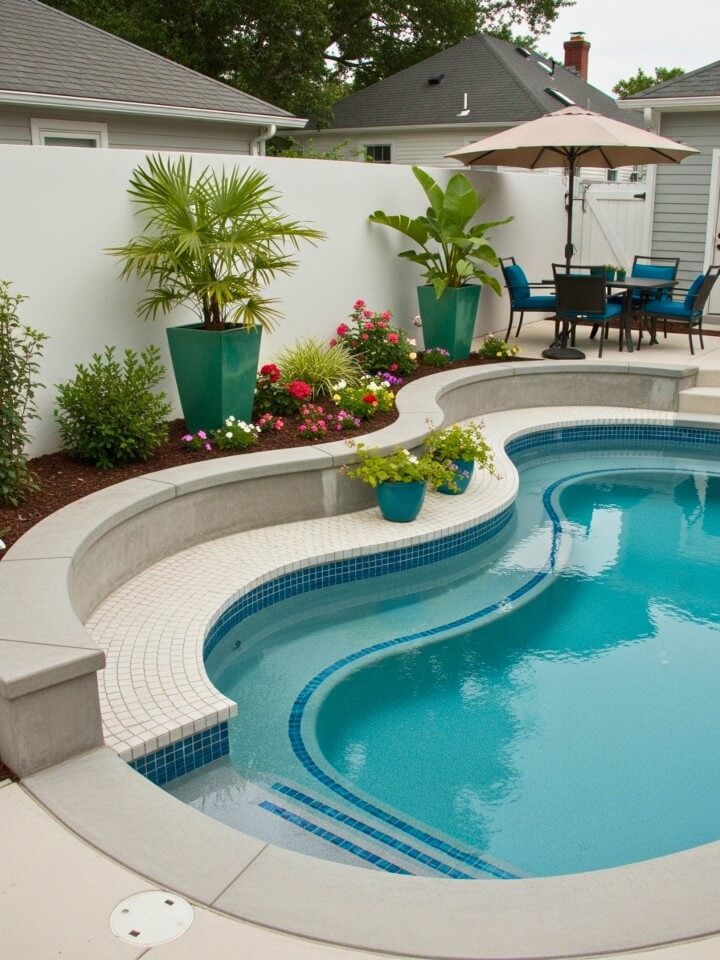
A bench running along the inside curve gives you a pool that functions like one twice its size. The standard build is 18 inches wide and 12 inches below water level — deep enough to sit comfortably with shoulders submerged, shallow enough to use as a step.
For yards under 600 sq ft, keep the pool itself between 10×20 and 12×24 feet. Anything smaller starts feeling like a plunge pool; anything larger eats your usable lawn.
Bubblers built into the bench are worth the extra $400–$800. They circulate water in the seating zone (which otherwise becomes stagnant), and at night with LED lighting they double as a quiet visual feature. Cover the bench in the same waterline tile as the pool to keep proportions feeling intentional.
6. Raised Spa With a Spillover for Year-Round Use
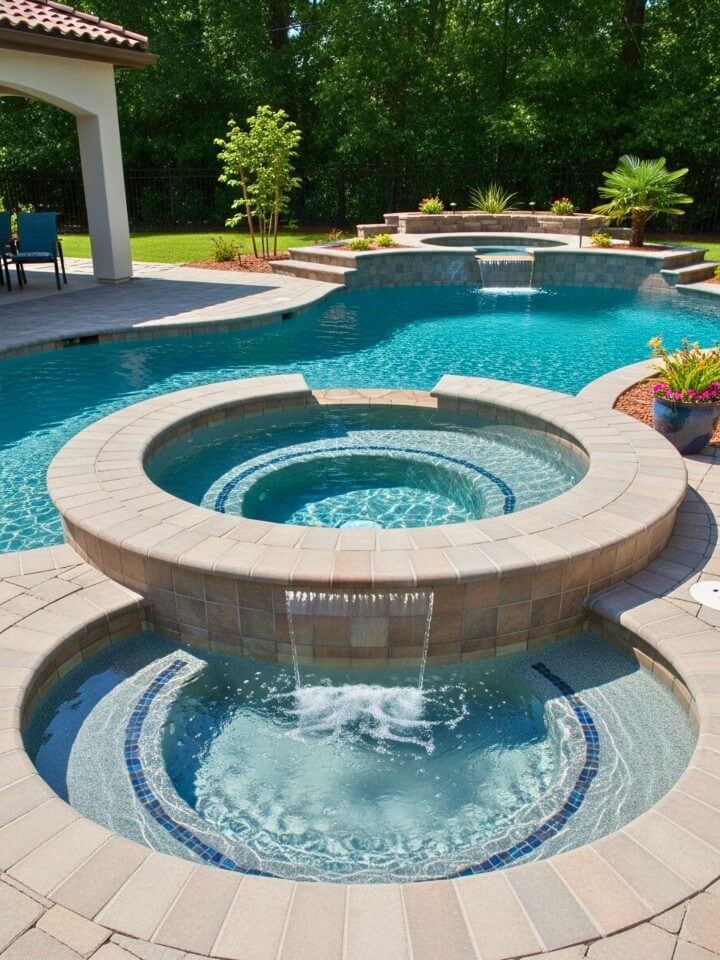
A spa raised 18–24 inches above the pool deck does two jobs at once. It gives you a year-round soaking option, and the spillover creates a soft sheet of moving water that catches light beautifully at dusk.
Position the spa at the wider lobe of the kidney, not the narrow end. The spillover then travels across the broadest part of the pool, spreading sound evenly instead of hitting one wall. Standard spa size runs 6×6 to 7×7 feet, seating 4–6 people.
Budget Reality: a built-in spa with shared plumbing adds $8,000–$15,000 to a pool build. Stand-alone hot tubs cost less upfront but never look integrated, and the resale value of an attached spa is noticeably higher. If you’re comparing spa layouts before committing, eye-opening above-ground swim spa landscaping ideas can offer useful inspiration for creating a more finished, intentional spa zone.
7. Drought-Tolerant Desert Landscaping Around the Pool
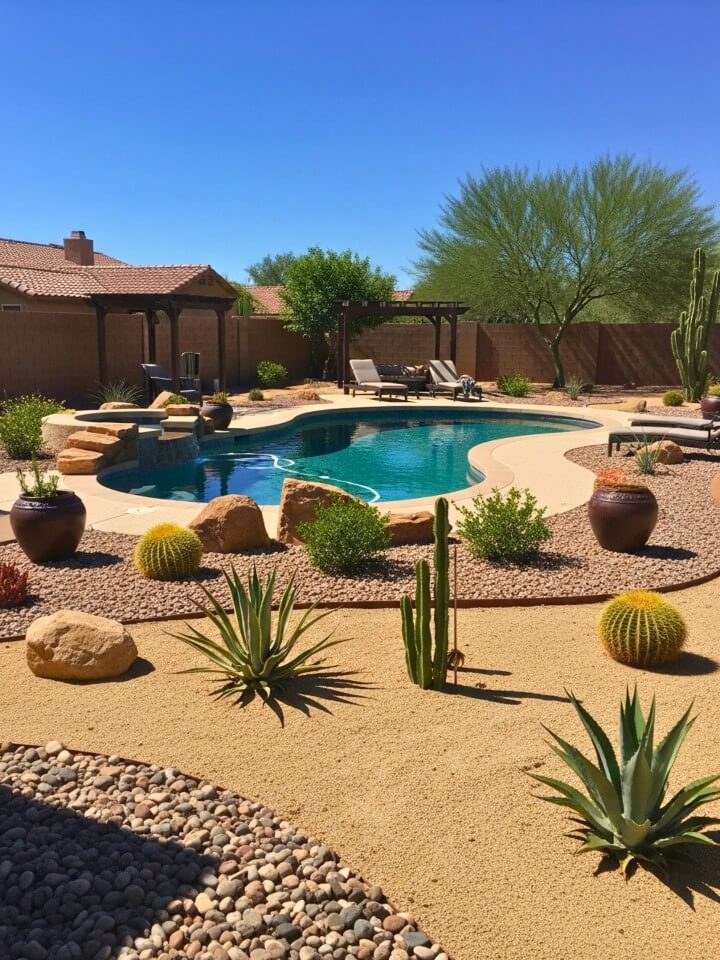
Decomposed granite in a warm tan tone reads better around pools than crushed gravel — the finer texture stays put when wind picks up, and it doesn’t track into the water on wet feet. Lay it 3 inches deep over a stabilizer to keep weeds down.
For plants, lean into structure rather than variety. Three blue agaves, a single ocotillo, and a drift of Mexican feather grass will look more intentional than fifteen scattered specimens. Keep all spiky plants at least 5 feet from the deck edge.
The maintenance payoff is real: this layout typically runs under 30 minutes of weekly garden work versus 2+ hours for tropical planting. Annual gravel top-up runs roughly $150–$300.
8. Hardwood Deck Surround for a Warm, Natural Edge
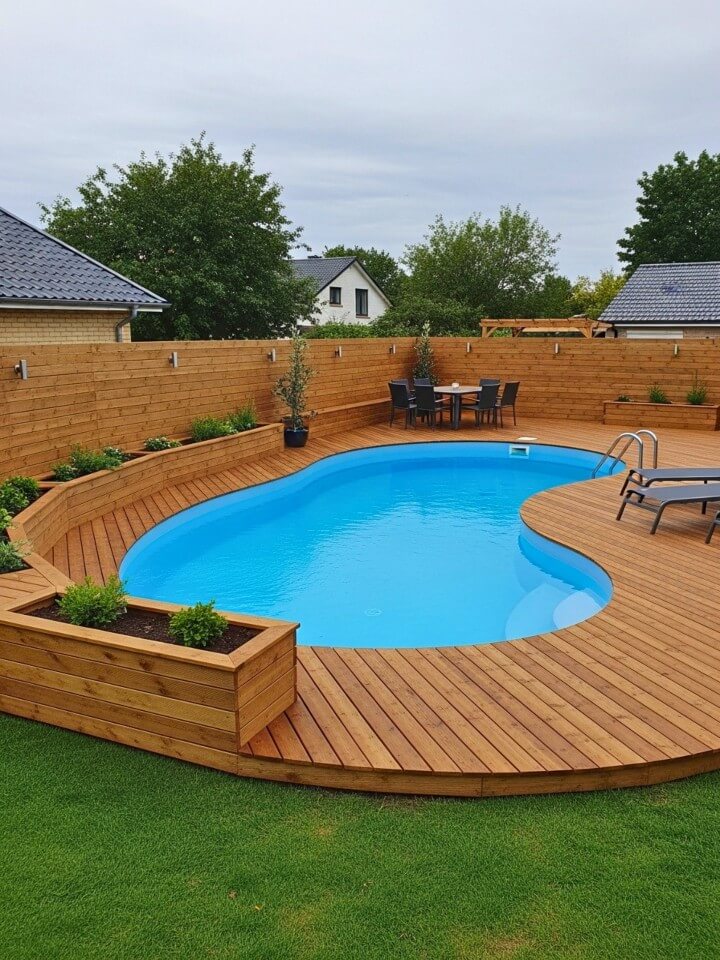
A kidney shaped pool blends organic curves with resort-style beauty for your dream outdoor haven. Ipe and thermally modified ash are the two woods worth considering near chlorinated water. Pressure-treated pine looks fine for a season, then warps. Composite decking handles moisture but heats up to uncomfortable temperatures in direct sun — test a sample at noon before committing.
Build the deck flush with the pool coping, not stepped down. The clean transition makes the deck feel like a continuation of the pool rather than a separate platform. Leave a 3/8-inch gap between boards for drainage and seasonal expansion.
Plan on refinishing every 2–3 years with a penetrating oil rather than a film-forming sealer. Films peel near water; oils weather gracefully. Expect $4–$7 per sq ft annually for upkeep on hardwood decking.
9. Family-Friendly Kidney Pool With a Shallow Lounge Area
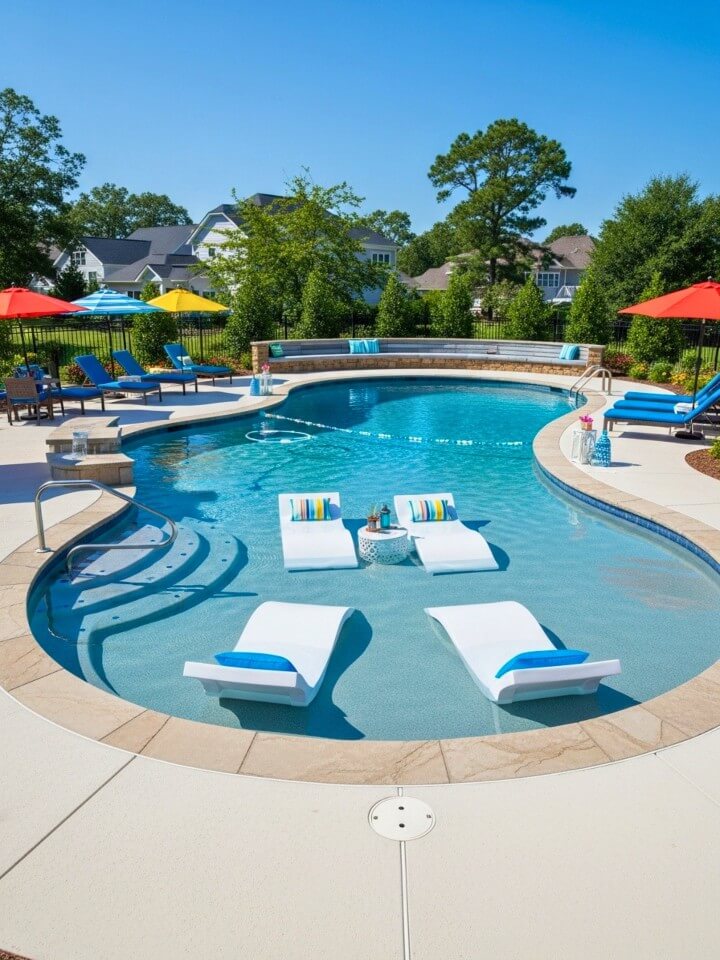
A Baja shelf (also called a tanning ledge) built into the wider curve gives kids a safe wading zone and adults a place to lie on a low chair half-submerged. The standard depth is 9 inches — deep enough to cool off, shallow enough that toddlers can stand.
Size matters here. A shelf under 6×8 feet feels cramped once two adults are on it; aim for 8×10 if your pool footprint allows. Add two umbrella sleeves cast directly into the shelf so you can shade it without dragging a base stand into the water.
The deeper end should reach 5 feet minimum for actual swimming. Anything shallower turns the pool into a glorified wading zone once kids outgrow the shelf.
10. Three-Season Flowering Borders Along the Curves
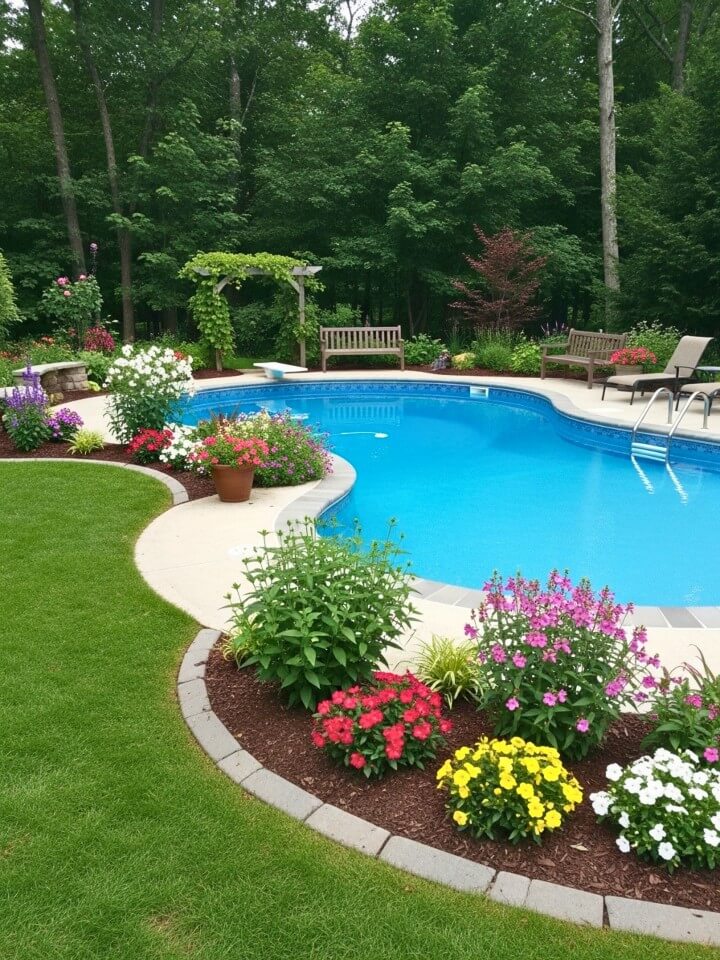
The mistake most people make is planting everything in one wave — a spring burst, then nothing. Stagger bloom times across three seasons: hellebores and creeping phlox for early spring, salvias and daylilies for summer, asters and Japanese anemones for fall.
Use a steel or aluminum edging strip between the planting bed and the pool deck. It keeps mulch from migrating onto the coping, holds the curve crisply, and disappears visually once the plants fill in. Budget around $4–$8 per linear foot installed.
Avoid anything with aggressive root systems within 6 feet of the pool shell — bamboo, willow, and silver maple are the worst offenders. Roots can crack a fiberglass shell and lift concrete coping within a few seasons. For softer seasonal color near borders and walkways, amazing lilac bush landscaping ideas can help you think through fragrance, bloom timing, and placement.
11. Rock Waterfall Feature for Sound and Movement
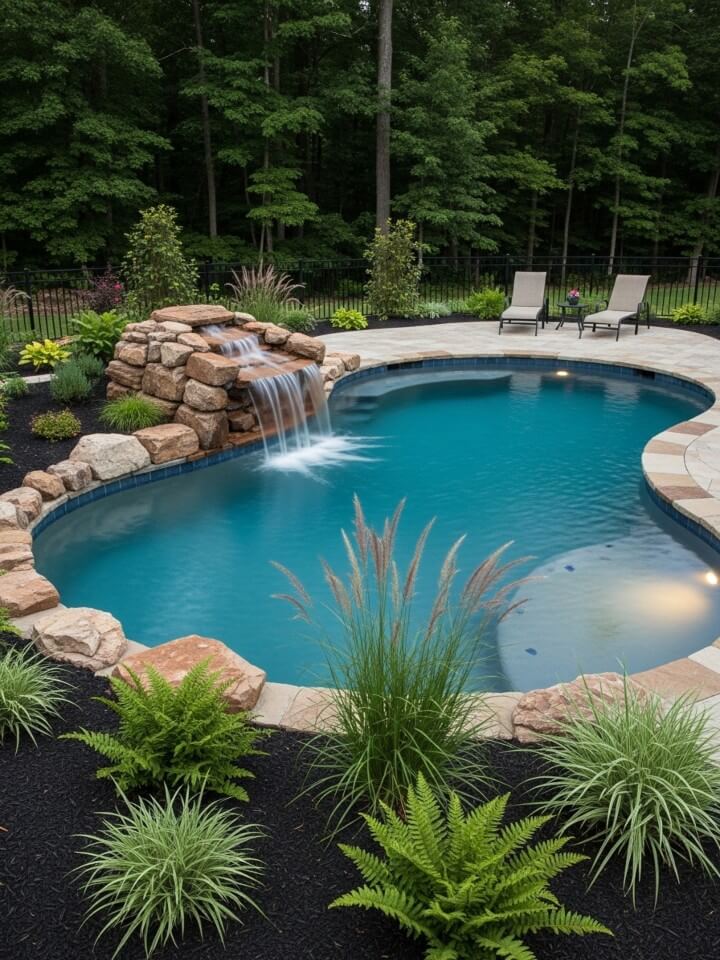
A waterfall lives or dies by its weir — the lip the water flows over. A rough, irregular weir creates that authentic “creek over rocks” sound; a smooth, level weir produces a quiet sheet of glass. Decide which you want before construction, because the stone selection follows from that choice.
Height matters more than width. A 24-inch drop produces noticeably better sound than 12 inches, and the splash zone stays manageable. Anything taller than 36 inches starts pulling chemicals out of the water faster through aeration.
Expect ongoing costs: a dedicated waterfall pump runs $35–$70 monthly in electricity if used daily. Most owners switch theirs to a timer that runs 4–6 hours in the evening, which cuts that cost in half without losing the enjoyment.
12. Mediterranean Kidney Pool With Terracotta Accents
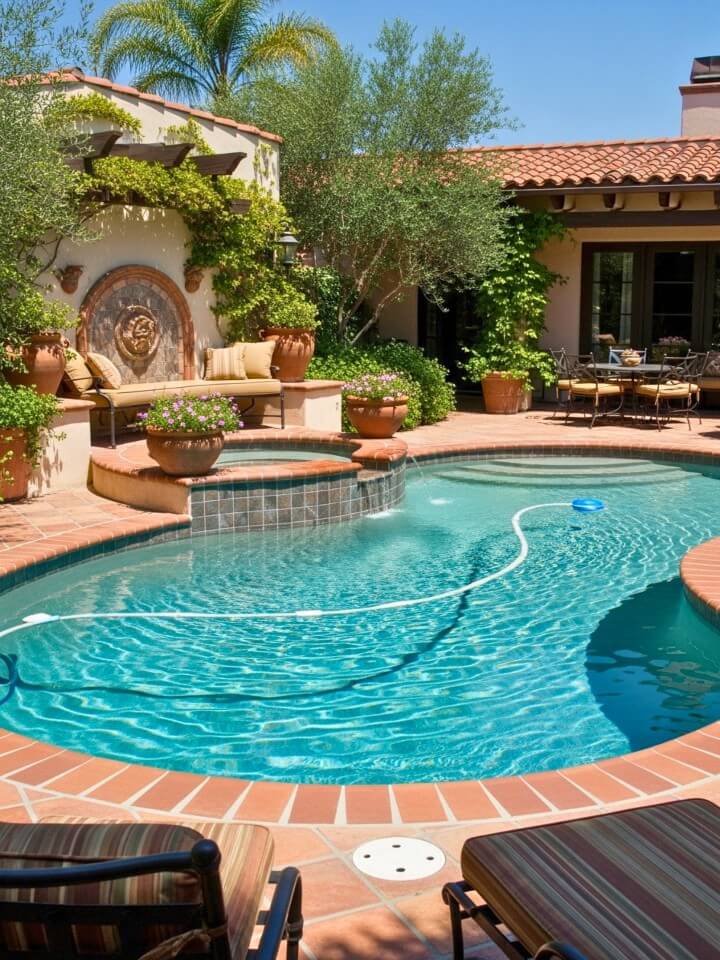
The detail that sells this look is the waterline tile. Hand-painted Talavera or Saltillo-style tiles in cobalt, ochre, and rust transform an ordinary pool into something that feels imported. Budget $25–$60 per linear foot for genuine hand-painted tile versus $8–$15 for printed ceramic that mimics the style.
Surround the deck with terracotta planters holding rosemary, lavender, dwarf olive, and trailing geranium. Use planters in three different heights for visual rhythm — matching sizes look like a furniture showroom.
One practical note: real terracotta cracks in freeze-thaw climates. If winters dip below freezing where you live, look for high-fired or frost-resistant terracotta, or commit to moving planters into a garage from November through March.
13. Built-In Fire Pit Lounge a Few Steps From the Water
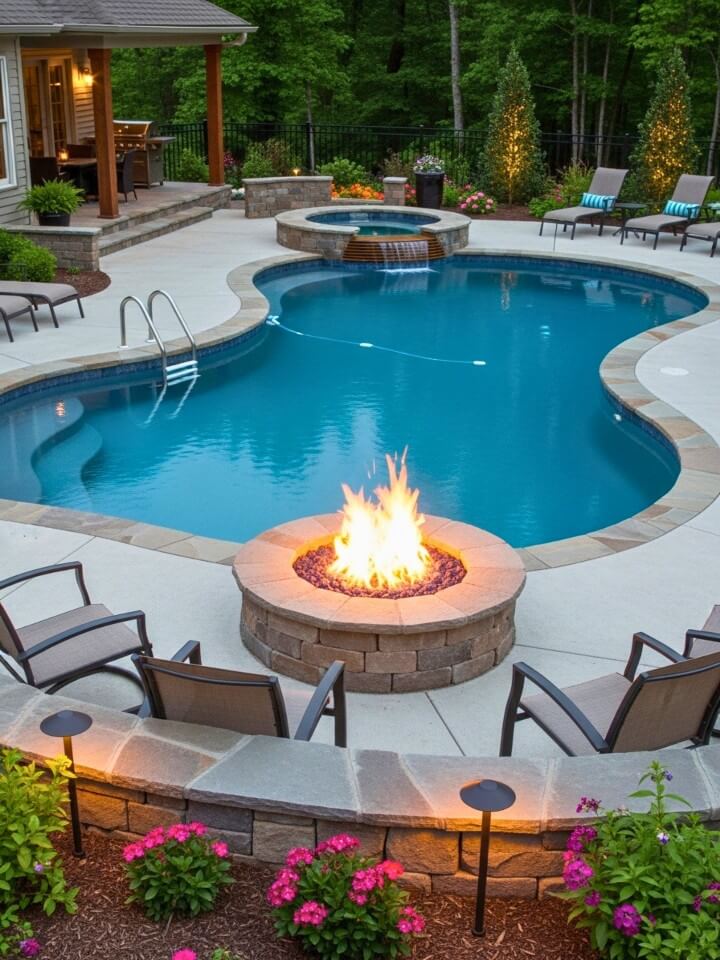
The sweet spot for fire-pit placement is 10–12 feet from the pool edge. Closer than that and smoke drifts over swimmers; farther and the two zones stop feeling connected.
Gas burns cleaner around a pool than wood. Wood smoke leaves soot on the water surface and acidic residue on the coping, which etches stone over time. A natural gas line install runs $500–$1,500 depending on the run from your meter, but you’ll never haul firewood or scrub soot off limestone.
Build the fire feature into a low seat wall rather than as a standalone pit. The wall doubles as casual seating for 6–8 people, frames the lounge zone visually, and shields the flame from wind. Cap it in the same stone as your pool coping for continuity.
14. Minimalist Kidney Pool With Grass Edging
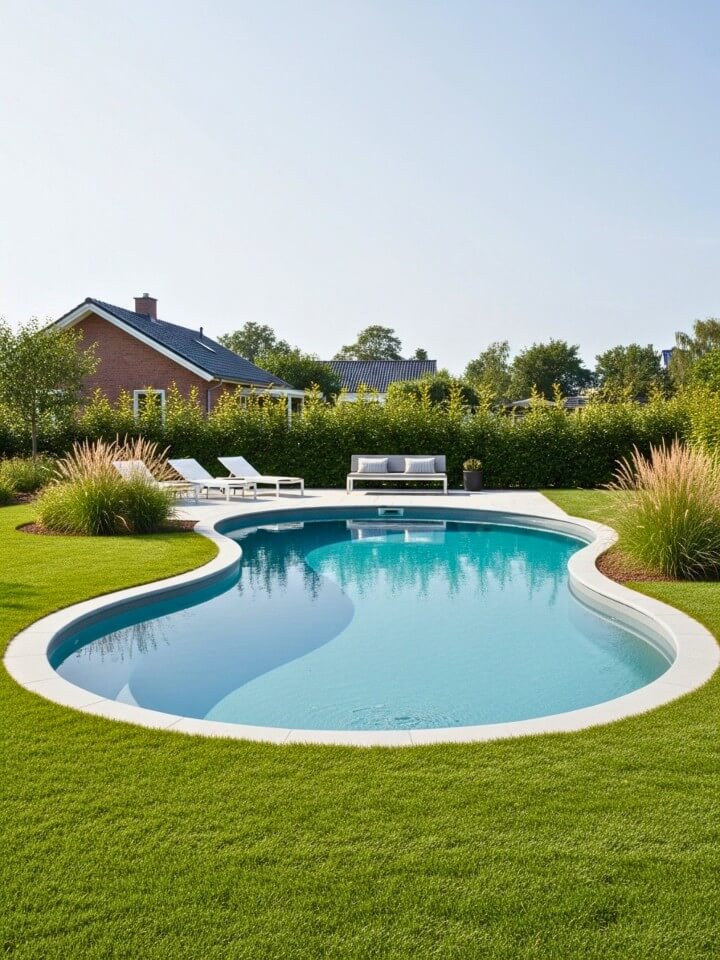
The iconic kidney pool shape maximizes space while delivering stunning, freeform visual appeal. Fescue blends and zoysia handle pool-side conditions best — both tolerate occasional chlorinated splash and bounce back from heavy foot traffic. Avoid Kentucky bluegrass; it struggles with the salt and chemical exposure.
The technical detail that makes this work is the mowing strip. A flush 4-inch concrete or steel band between the lawn and the coping lets the mower reach the edge cleanly, eliminates string-trimming, and stops grass from creeping into pool joints. Without it, you’ll fight an endless edging battle.
Keep the cut height at 3 inches or higher. Short grass next to a pool looks neat for two days, then yellows from chlorine spray. Longer blades shade their own roots and handle the chemical exposure far better.
15. Lagoon-Inspired Design With Pebble Finish and Jump Rock
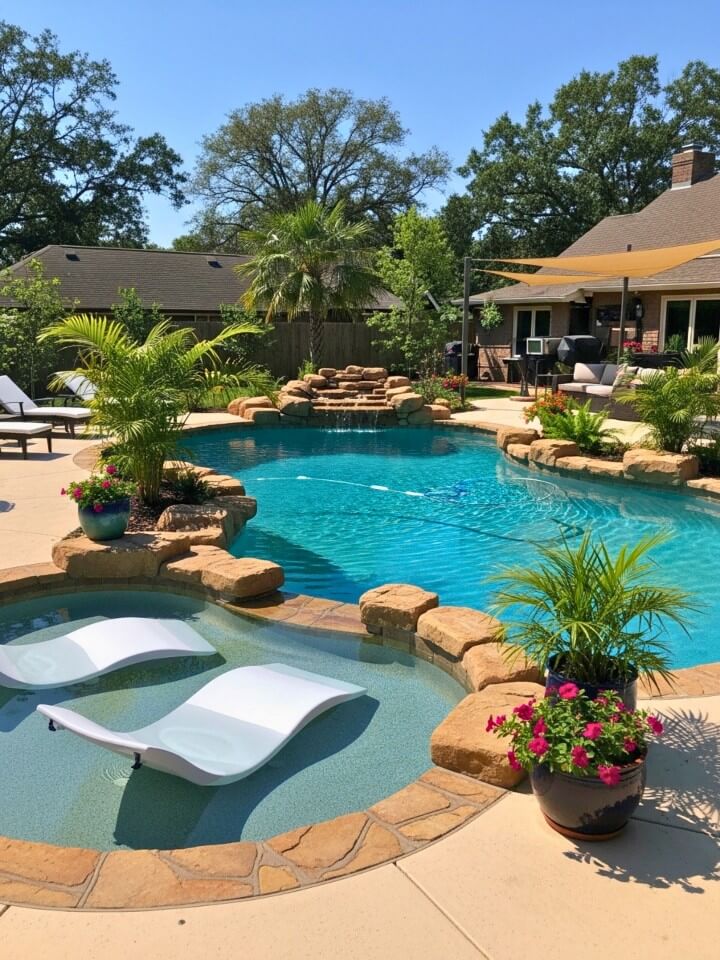
The signature element of a true lagoon look is a pebble-finish interior rather than plaster. Mini-pebble (3M or PebbleTec) in a dark blend reads like a natural pond bottom and disguises debris between cleanings. Expect to pay $1,500–$3,000 more than standard plaster, but the finish lasts 15–20 years versus 7–10.
Build at least one rock formation tall enough to function as a jump rock — typically 30–36 inches above water. It anchors the design and gives kids a feature they’ll actually use.
Skip the loose pebbles around the deck. They look natural in catalog photos and become a daily nuisance in real life, tracking into the pool and jamming skimmer baskets. Use larger fieldstone instead, with low groundcover filling the gaps.
16. Curved Vanishing Edge for Sloped Lots With a View
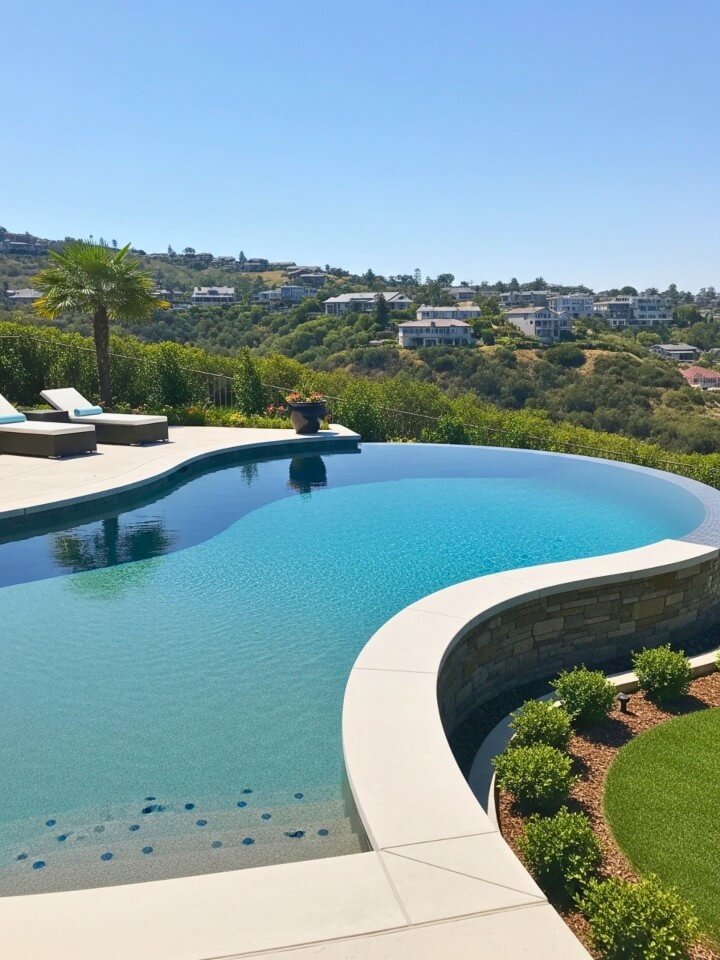
A curved vanishing edge is harder to build than a straight one — the weir has to be laser-leveled along the arc, and even a 1/16-inch variance creates an uneven sheet of water. Hire a builder who has done at least three before, and ask to see them in person.
The catch basin below the edge needs to hold roughly 8–10% of the pool’s total volume to handle displacement when swimmers enter. Undersize it and the edge stops flowing every time someone gets in.
Be Realistic About the Budget. A vanishing edge adds $25,000–$60,000 to a standard build, plus higher ongoing pump costs. The payoff only makes sense when there’s an actual view to vanish into — a treeline, a hillside, water. Aimed at a fence, it just looks expensive.
17. Integrated Hot Tub Tucked Into the Wider Curve
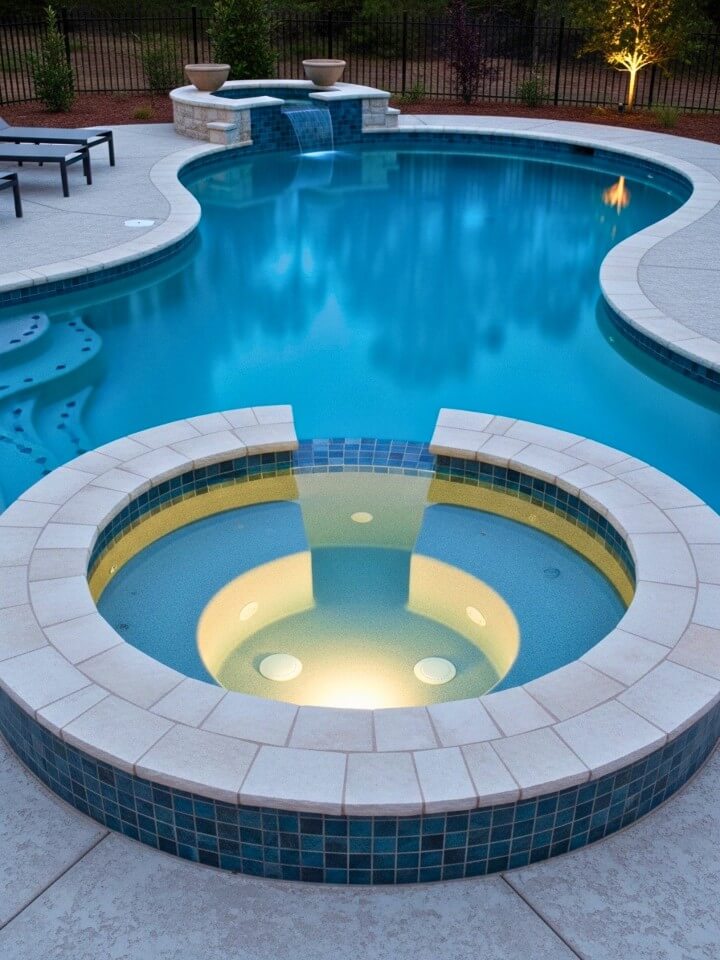
The decision worth thinking through early: shared water or separate? Shared systems are cheaper to build but mean the spa stays at pool temperature unless you fire up a powerful heater 30+ minutes in advance. Separate plumbing keeps the spa hot on demand at roughly 102°F year-round.
For families who’ll use the spa weekly in cooler months, separate is worth the extra $3,000–$5,000. For occasional summer use, shared makes sense.
Match the spa interior tile to the pool waterline tile, but consider a contrasting coping. A slightly darker stone around the spa subtly defines it as its own zone without breaking the visual flow. Add a perimeter overflow detail if budget allows — it eliminates the visible waterline ring entirely.
18. Naturalistic Kidney Pool With Stone Pathways
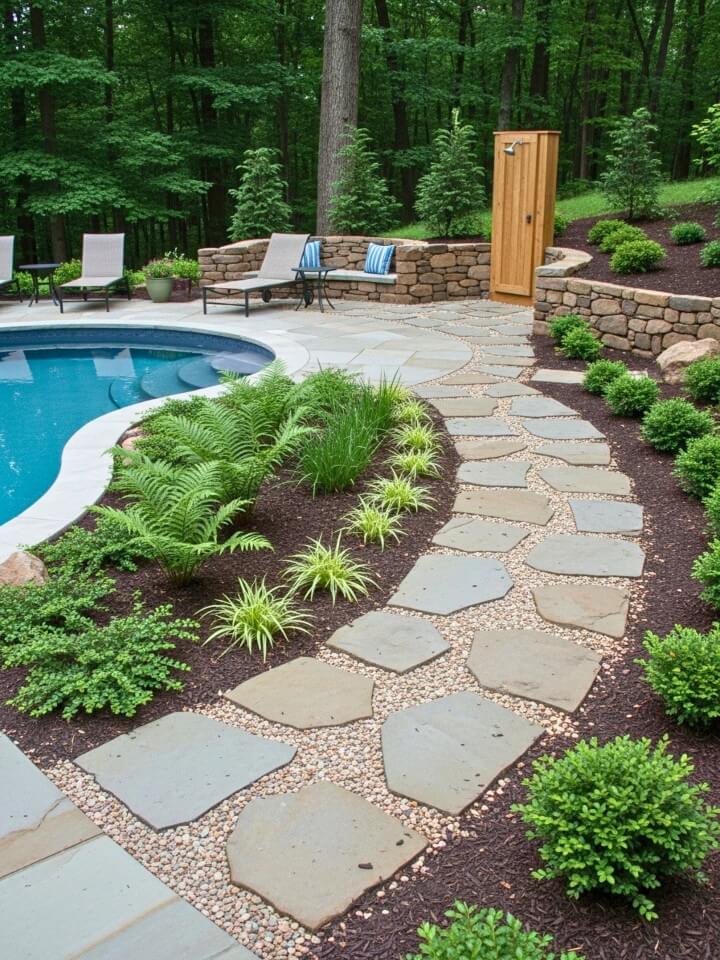
Irregular flagstone set with planted joints reads more natural than tight-fitted stone with mortar. Leave 1.5–2 inch gaps and fill them with creeping thyme, Irish moss, or dwarf mondo grass. The greenery softens the path and releases scent when stepped on (in the case of thyme).
Plan the path width at 36 inches minimum for comfortable walking, 48 inches if two people will walk side by side. Anything narrower forces single-file movement and feels like a service walkway.
Set the stones on a compacted gravel base, not directly on soil. Soil shifts seasonally and stones rock underfoot within a year. A 4-inch base of decomposed granite topped with sand stays stable for a decade with no resetting required. Similar principles from impressive driveway landscaping ideas can also help you think through durable stone, edging, and planted borders in high-traffic zones.
19. All-Glass-Tile Interior With Layered LED Lighting
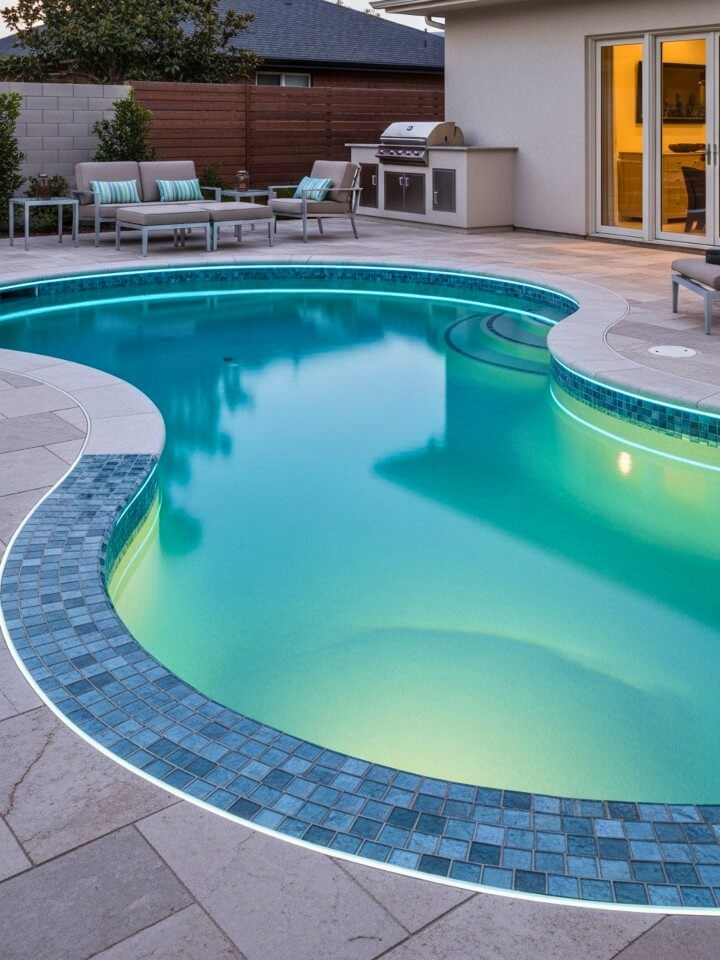
Your backyard kidney shaped pool awaits — where flowing curves meet relaxation, sun, and style. All-glass-tile interiors transform a pool, but the cost is significant — expect $30,000–$80,000 in tile alone for a mid-sized build, plus specialty installers. For a more accessible version, tile only the waterline band, the spa, and any raised wall faces. The pool floor stays in standard plaster.
Choose iridescent or color-shifting tiles in the 1-inch size; smaller mosaic tiles look busy underwater, and larger ones lose the shimmer effect.
Pair the tile with two LED lighting circuits — one for the pool, one for the tile-accent zones — on separate controls. Single-circuit setups flatten the effect. With dual circuits, you can dim the main pool light and let the tile glow take over after sunset. Color-changing fixtures from Pentair or Hayward run $400–$900 each.
20. Pergola-Covered Dining Zone Beside the Pool
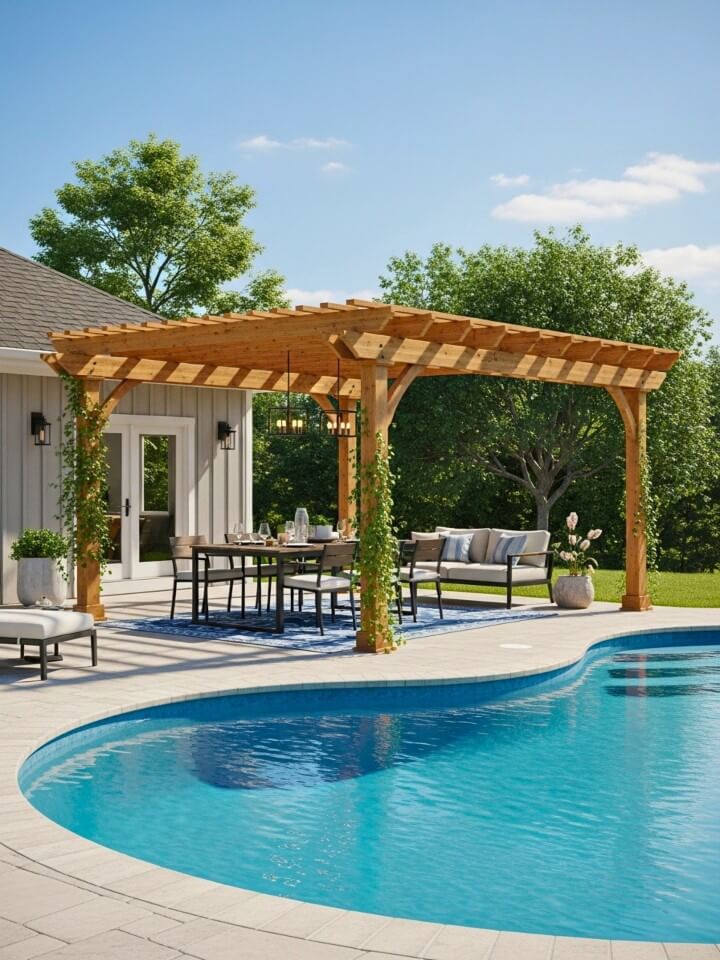
Position the pergola so its shadow falls across the seating zone between 1 and 5 PM — the hours people actually want shade. A common mistake is centering the pergola for visual symmetry, which leaves the table in full sun all afternoon.
Cedar and redwood pergolas develop a silvery patina if left untreated; if you want them to stay warm-toned, apply a UV-blocking penetrating finish annually. Powder-coated aluminum pergolas with louvered roofs cost more upfront ($8,000–$20,000 installed) but require zero maintenance and let you adjust shade by remote.
Run electrical to the pergola during construction, not after. String lights, ceiling fans, and outdoor speakers all become trivial to add if the wiring is already in place, and retrofitting later doubles the cost.
21. Compact Kidney Pool With Raised Planters
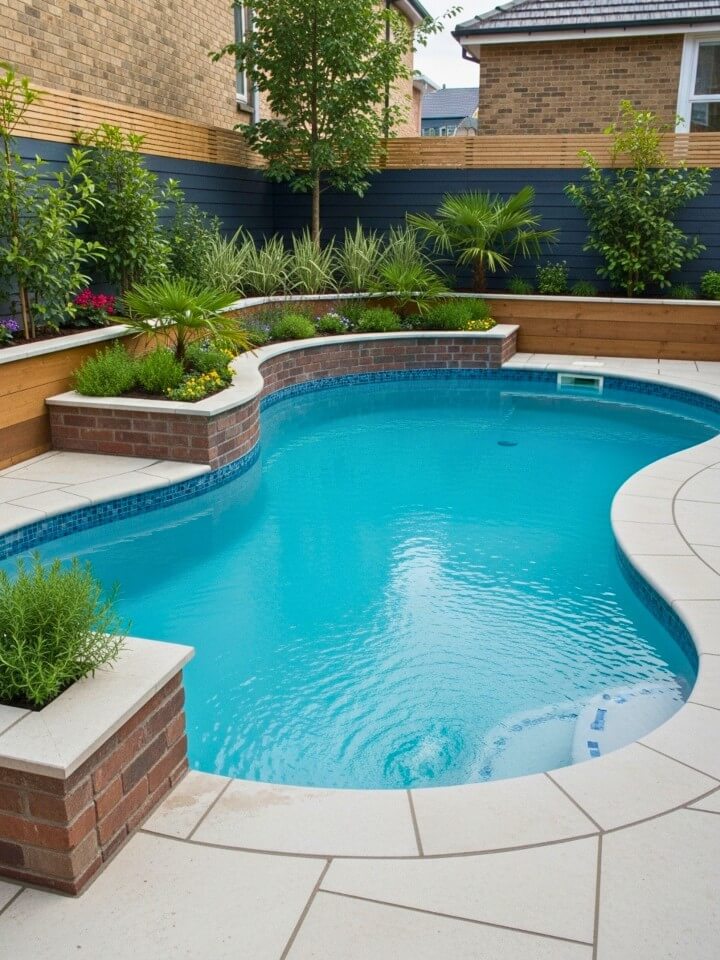
Raised planters double as casual seating when capped with a 14–16 inch wide stone or hardwood top. This gives small yards extra functionality without adding furniture that crowds the deck.
Build planters at least 18 inches deep for healthy root systems. Anything shallower limits you to annuals and shallow-rooted herbs, and the soil dries out fast in summer. Include drainage holes that drain away from the pool deck, not toward it — pooling near coping erodes joints and grows mildew.
Best plant choices for narrow planters near pools: dwarf olive, ornamental grasses (blue oat grass, Mexican feather grass), boxwood, lavender, and trailing rosemary. All tolerate splashing, stay tidy without heavy pruning, and read well year-round.
FAQs About Kidney-shaped Pool Ideas
Picking the right pool design brings up plenty of questions that go beyond looks and layout. These five cover the practical details — value, safety, soil, timing, and upkeep — that often get overlooked but matter most once construction actually begins.
Do Kidney-Shaped Pools Hurt or Help Home Resale Value?
Buyers generally respond well to kidney shapes when the design feels current. Outdated 1970s versions with dark plaster can drag value down, while updated builds with modern finishes typically add 5–8% to home value in pool-friendly markets.
Are Kidney Pools Safer for Young Children than Rectangular Pools?
The curved shape itself doesn’t change safety, but the design naturally allows for a wider shallow lobe and gentler entry slope. Pair that with a four-sided pool fence and a properly fitted safety cover for genuine peace of mind.
Can I Install a Kidney Pool in A Yard with Poor Drainage or Clay Soil?
Yes, but expect added costs. Clay-heavy soil needs deeper footings and a French drain system around the shell, typically adding $3,000–$8,000. Skipping this step leads to shifting decks and cracked coping within a few seasons.
When Is the Best Time of Year to Start Pool Construction?
Late fall through early winter is the sweet spot in most regions. Contractors have lighter schedules, permit offices move faster, and your pool finishes just in time for the first warm weekend rather than mid-summer.
How Often Do Kidney Pools Need Resurfacing Compared to Other Shapes?
Resurfacing timing depends on the interior finish, not the shape. Standard plaster lasts 7–10 years, quartz finishes stretch to 12–15, and pebble finishes hold up 15–20 years before needing attention, regardless of whether the pool is curved or rectangular.
Final Thoughts
The curve of a kidney pool has outlasted nearly every backyard trend of the past seventy years, and that staying power says something. It bends to small yards and large ones, formal homes and casual ones, tight budgets and ambitious ones.
Stand in your backyard at the hour you’d actually swim. Notice where the sun lands, where the wind cuts through, where your eye naturally rests. The design that fits your space is usually hiding in those small observations, not in a Pinterest board. Trust what the yard is already telling you, and the rest of the decisions get easier from there.