26 Pool Fence Ideas That Don’t Sacrifice Style for Safety
Walk into any backyard at 7 p.m. on a summer Saturday, and you can tell within ten seconds whether the pool fence was an afterthought. The chain-link sag, the gate that doesn’t quite latch, the white vinyl yellowing against a slate patio — small things, but they pull the whole yard down with them. A fence sits in your sightline every time you step outside, which means it deserves the same thought you gave the tile or the loungers. That’s what these 26 gorgeous pool fence ideas are built around.
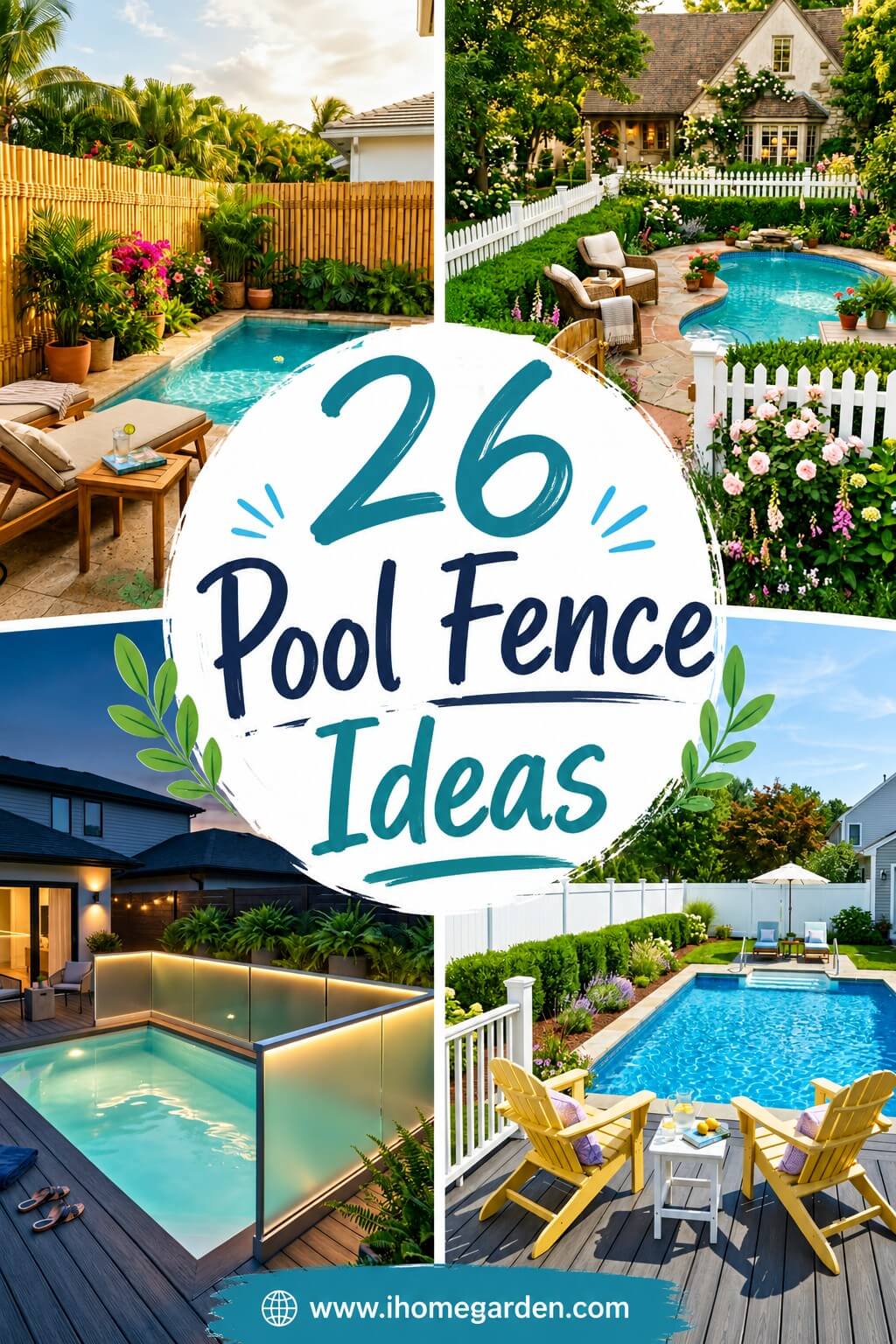
Some lean invisible, like frameless glass or tensioned cable that barely interrupts a hillside view. Others lean architectural — gabion cages packed with fieldstone, brick piers anchoring wrought iron, frosted panels glowing at the top rail after dark. A few cost less than a nice grill. Pick by how your yard actually lives, not by what photographs well.
1. Classic Picket Pool Fence
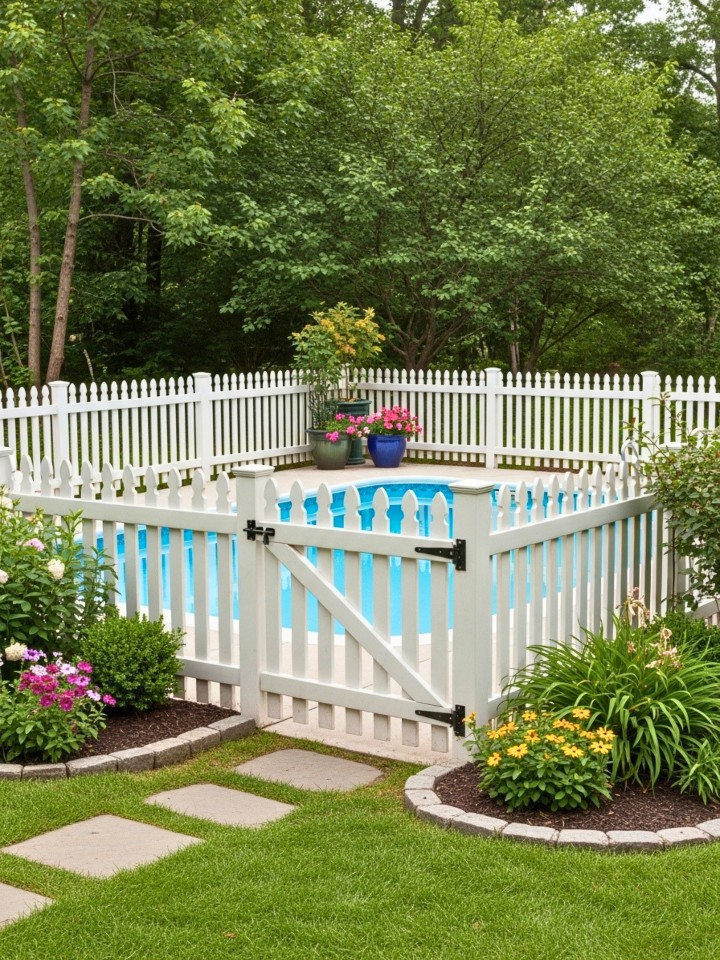
A beautifully crafted wood fence around pool areas adds warmth, privacy, and timeless natural elegance. A painted picket line carries a soft, storybook quality that suits cottage gardens, older homes, and smaller plunge pools where charm matters as much as compliance. Closely set pickets (gaps under 4 inches) keep small children out while feeling welcoming rather than fortified.
- Best for: Garden-style yards, traditional architecture
- Cost: ~$15–$30 per linear foot installed
- Maintenance: Repaint or reseal every 2–3 years
- Lifespan: 10–15 years for cedar; longer for composite
- Watch out for: Wood swelling near splash zones — choose rot-resistant species and elevate the bottom rail a few inches off grade
Pair with a tall self-latching gate and a magnetic catch positioned above child reach.
2. Glass Panel Pool Barrier
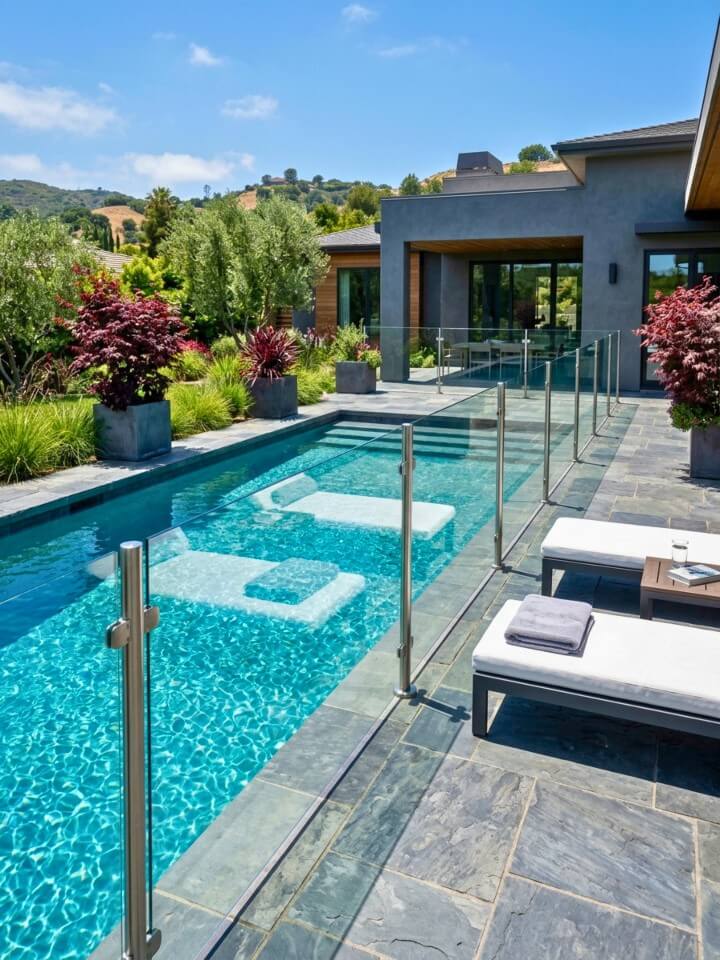
When the view is the whole point — a lake beyond the yard, a curated planting bed, kids playing on the deck — frameless tempered glass disappears better than any other barrier. Panels meet height and climbability rules without interrupting sightlines, which makes supervision from the kitchen window genuinely possible.
Expect to pay $150–$300 per linear foot, the steepest in this guide, but the trade-off is a near-zero visual footprint. Maintenance stays modest: a squeegee after pool parties and a glass-cleaner pass monthly. Specify 12mm tempered safety glass at minimum, and choose spigot mounts over channel mounts if you live somewhere dusty — channels trap grit and stain over time.
Related Article: 29 Breathtaking Rectangular Pool Landscaping Ideas
3. Horizontal Slat Wood Fence
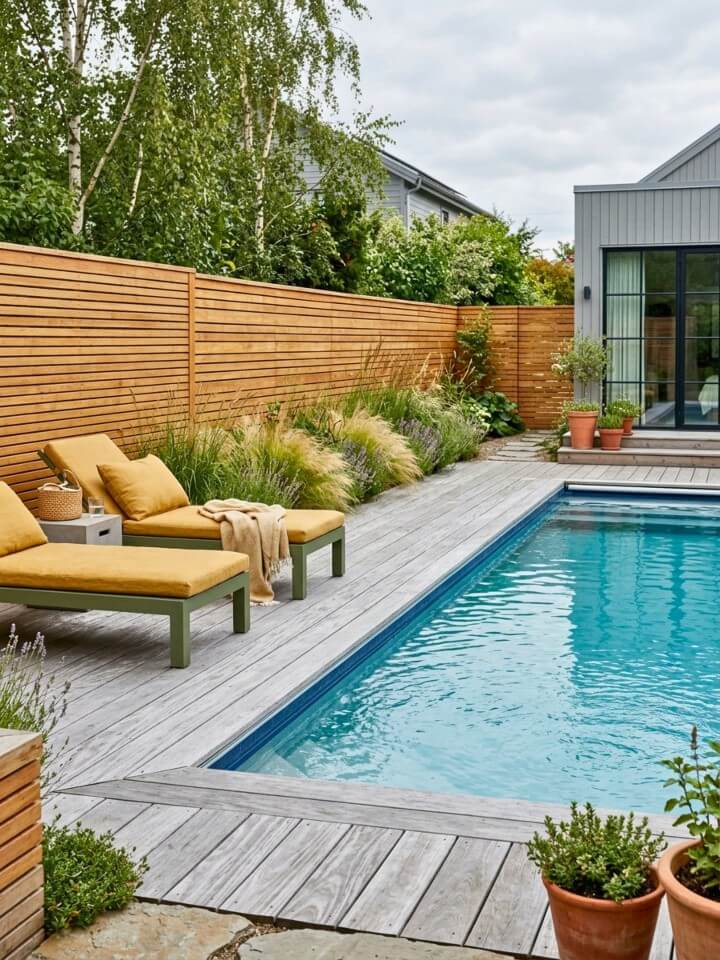
Rotating the boards 90 degrees from a traditional vertical fence instantly modernizes a yard. The horizontal lines pull the eye outward, making narrow lots feel wider and pairing beautifully with flat-roof architecture or Scandinavian-inspired landscaping.
| Quick read | Details |
|---|---|
| Cost | $25–$45 per linear foot |
| Maintenance | Re-stain every 3–4 years |
| Privacy | Adjustable by slat gap |
| Lifespan | 15–25 years (cedar/redwood) |
Leave a half-inch gap between slats for airflow and to prevent warping. If the fence catches strong afternoon sun, choose thermally modified wood or accoya — standard cedar can cup within two seasons. Use stainless or coated screws; pool chemistry rusts ordinary fasteners fast.
4. Wrought Iron Pool Enclosure
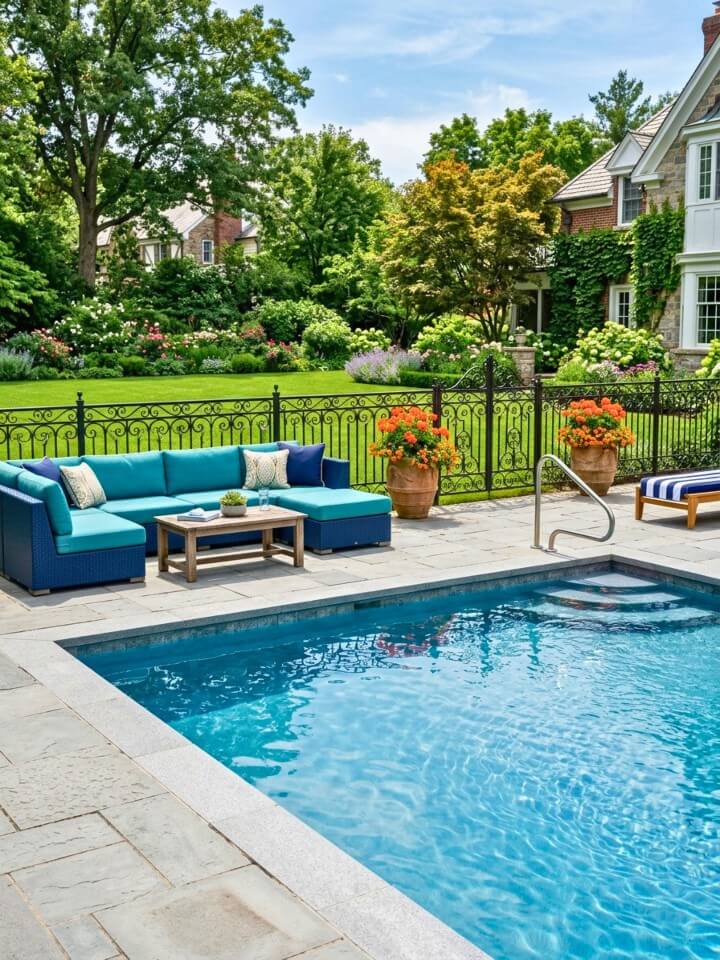
Discover stunning pool fence ideas that blend safety with style to transform your backyard oasis today. Real wrought iron — or its more common cousin, welded steel — gives a formal, estate-like presence that suits brick homes, manor-style landscaping, and pools set within structured garden rooms. Vertical bars spaced under 4 inches satisfy code while keeping the pool fully visible from patio seating.
- Strengths: Exceptional longevity (40+ years), unmatched curb appeal, fully transparent supervision.
- Weaknesses: Susceptible to rust in coastal or chlorine-heavy environments, heavier installation cost, periodic touch-up paint required where powder coating chips.
5. Cable Railing Pool Fence
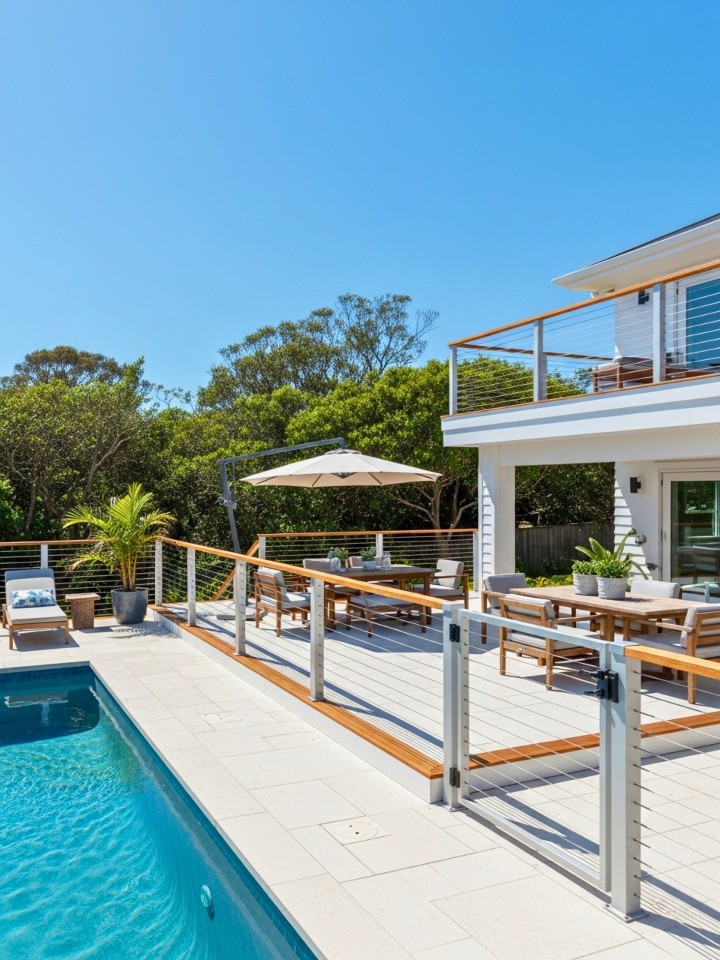
Tensioned stainless cables strung between substantial posts feel almost weightless — ideal when the pool sits on an elevated deck overlooking a view you don’t want to chop into ribbons. The visual lightness is real, but cable fences demand careful engineering: posts must resist 200+ pounds of accumulated tension without bowing inward.
- Cost: $60–$150 per linear foot
- Maintenance: Re-tension cables annually; wipe with marine polish
- Best for: Hillside lots, deck-level pools, modern architecture
Verify local code before specifying — some jurisdictions reject horizontal cables as climbable for young children. A workaround is tightening cable spacing at the bottom and pairing with a solid kick plate along the lower 18 inches.
6. Bamboo Pool Privacy Fence
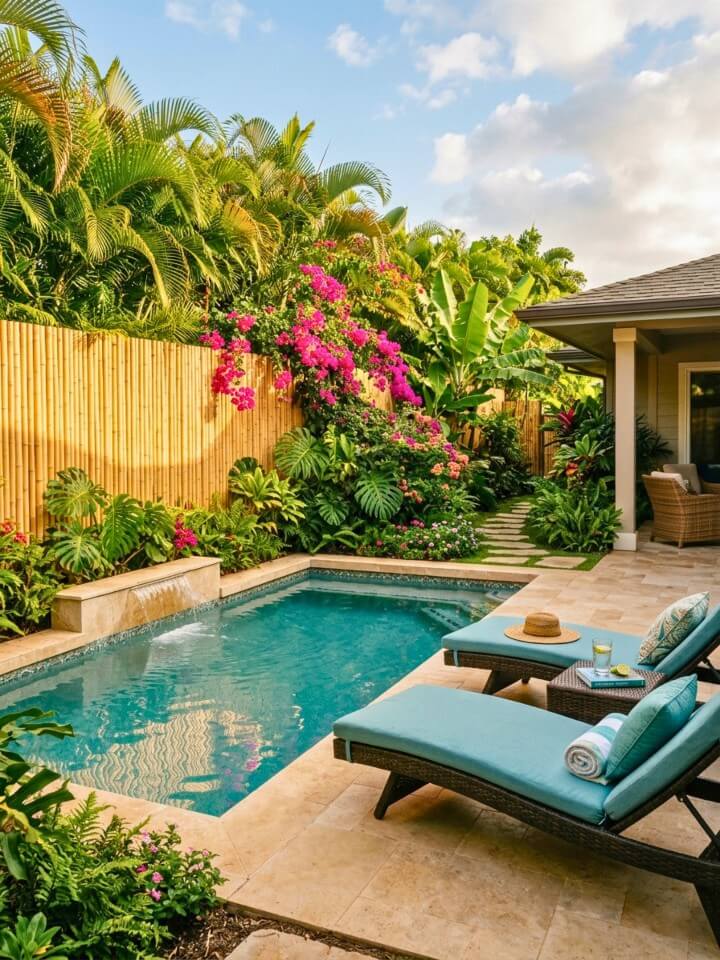
Few materials transform a backyard into a resort as quickly as bamboo. Rolled or paneled, it softens hard edges, muffles neighborhood noise, and pairs naturally with teak loungers and gravel walkways. The catch is honest: untreated bamboo weathers fast.
Pros: Cheapest privacy option at $8–$20 per linear foot; quick DIY install; renewable material; tropical aesthetic.
Cons: Realistic lifespan of 5–7 years even with sealing; splits in freeze-thaw climates; not always approved as a sole barrier under local pool codes.
Treat it as a decorative privacy screen mounted to a code-compliant aluminum or steel frame underneath. That hybrid approach passes inspection while keeping the look you actually want.
7. Stone and Mortar Pool Wall
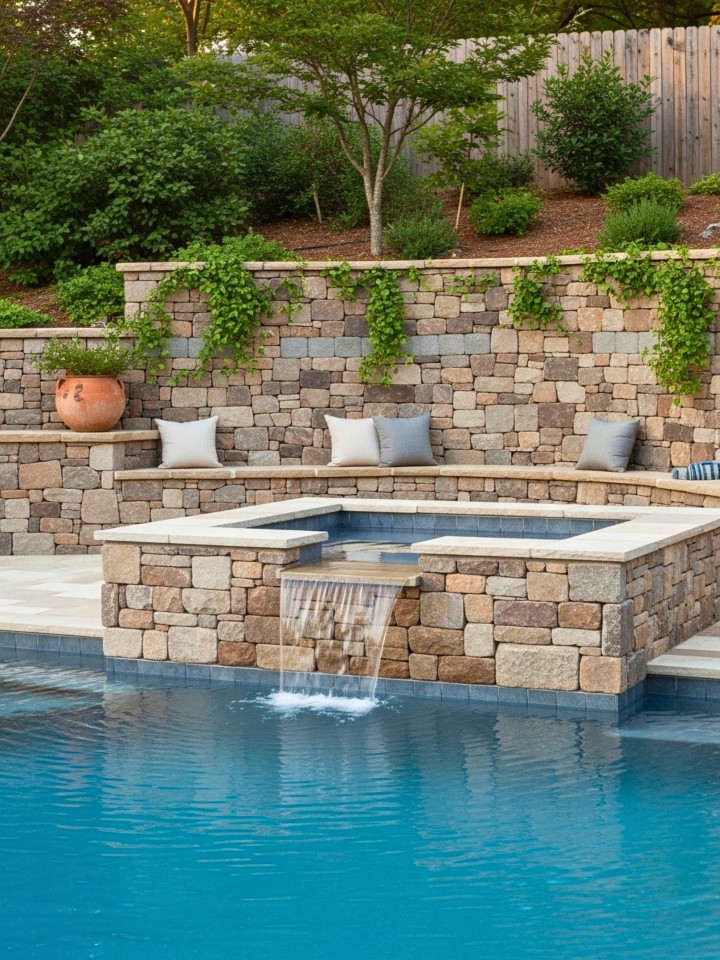
A masonry wall is less a fence than a piece of architecture — heavy, permanent, and capable of grounding a pool within the larger landscape. It works hardest on sloped sites, where a retaining function combines with enclosure, and in Mediterranean or hacienda-style settings where stucco, terracotta, and stone share a visual language.
The investment is significant: $40–$100 per linear foot for stone veneer, considerably more for full structural stone. Once built, maintenance drops to near zero for decades. Build in alcoves for planters, a recessed bench, or a wall-mounted spillway during construction — retrofitting these into finished masonry is painfully expensive.
8. Vinyl Privacy Pool Fence
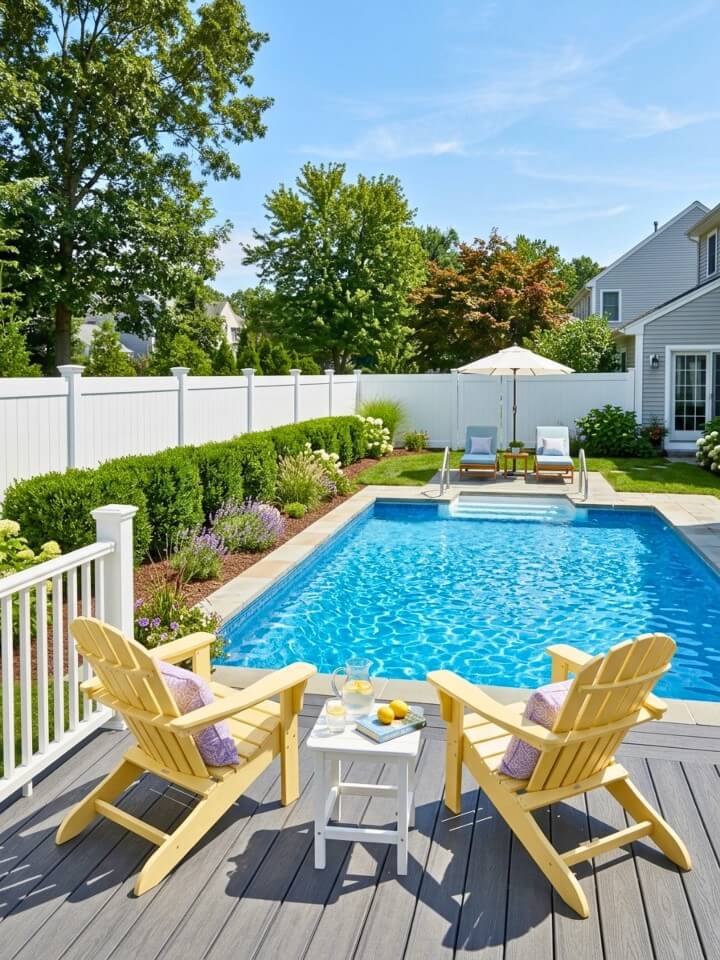
Vinyl earns its popularity honestly: it doesn’t rot, never needs painting, shrugs off chlorine splashes, and looks acceptable for decades. For families who’d rather spend Saturdays in the pool than maintaining the fence around it, the math is simple.
| Quick read | Details |
|---|---|
| Cost | $20–$40 per linear foot |
| Maintenance | Hose down twice a year |
| Lifespan | 20–30 years |
| Privacy | Full (solid panels) |
Specify thicker-walled panels (minimum 0.135-inch wall thickness) — thin vinyl fades, bows in heat, and cracks in cold snaps. Reinforced steel inserts in the bottom rail prevent the sag that plagues budget installs after a few seasons.
9. Lattice Top Pool Fence
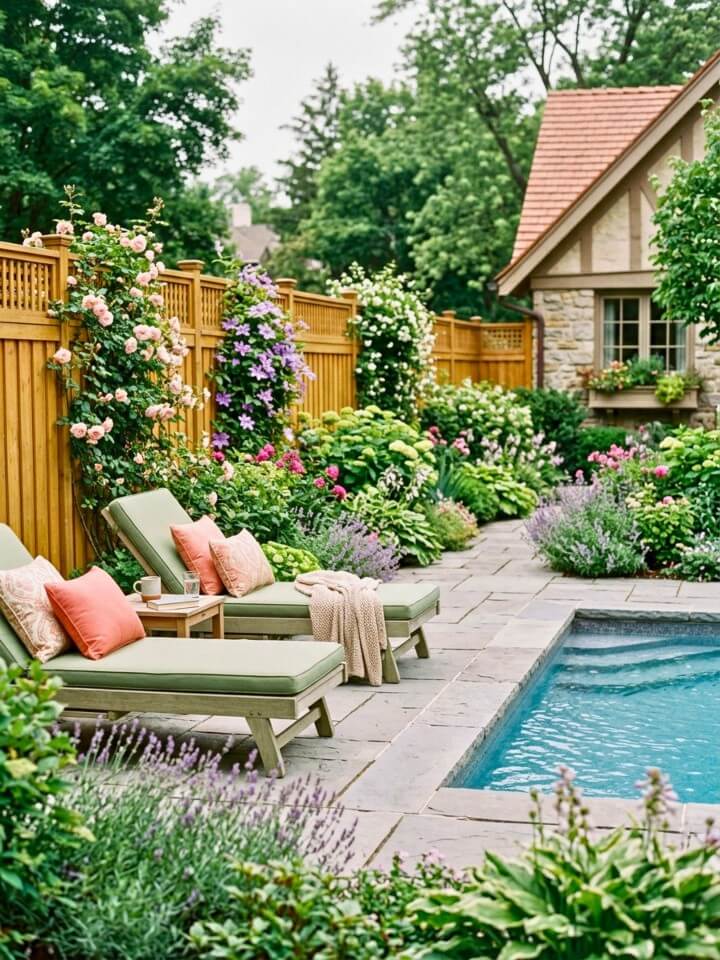
A solid panel base capped with diagonal lattice splits the difference between privacy and openness. The lower section blocks views into seating areas; the upper lattice lets breeze and dappled light through, preventing the boxed-in feeling that tall solid fences create.
- Pros: Soft, layered look; supports climbing plants without separate trellis work; affordable at $20–$35 per linear foot.
- Cons: Lattice fails first — plan to replace it every 8–10 years; thin slats break under impact; harder to clean than smooth panels.
Train star jasmine or climbing hydrangea up the lattice, or soften nearby beds with flowering shrubs inspired by radiant lilac bush landscaping ideas, and you’ll have living color across three seasons. Keep vines clear of gate hardware so the self-latching mechanism never jams.
10. Aluminum Pool Fence with Decorative Panels
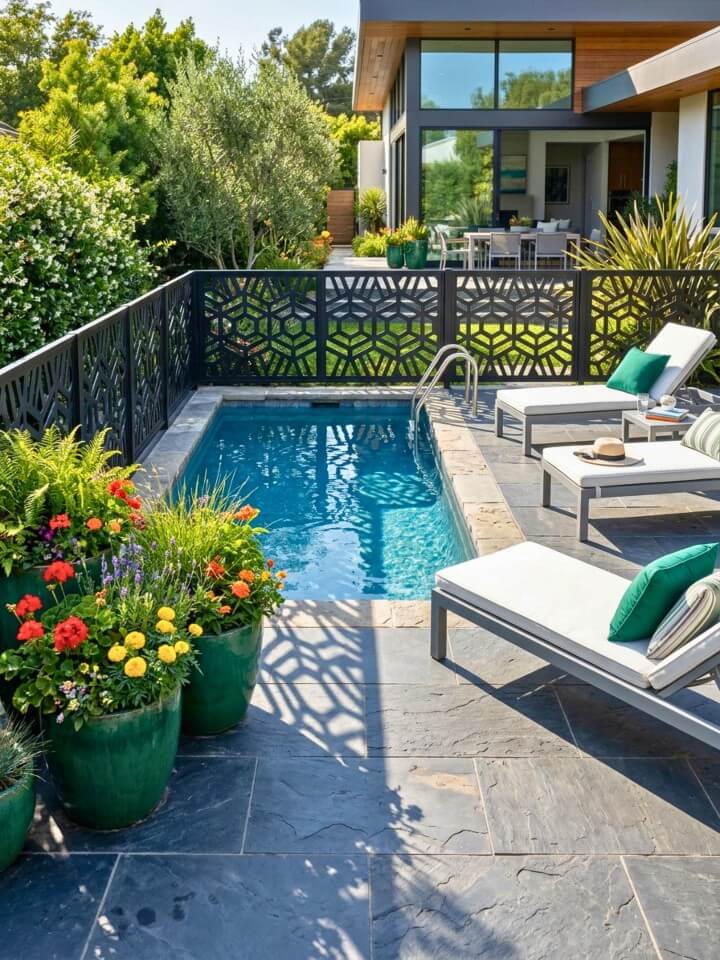
Aluminum is the quiet workhorse of pool fencing — it mimics wrought iron’s look at half the weight, never rusts, and arrives in pre-engineered sections that drop into place over a weekend. Powder-coated finishes hold color for 15+ years even under harsh sun and chlorine spray.
Geometric laser-cut inserts, ring tops, or flat-top profiles let the same material read traditional or sharply modern depending on selection. Budget $25–$50 per linear foot, with decorative panels at the upper end.
The one meaningful downside: aluminum dents on impact. If you have teenagers practicing soccer near the fence, choose a heavier-gauge “industrial” grade or accept that the occasional ding comes with the territory.
11. Frosted Acrylic Pool Fence
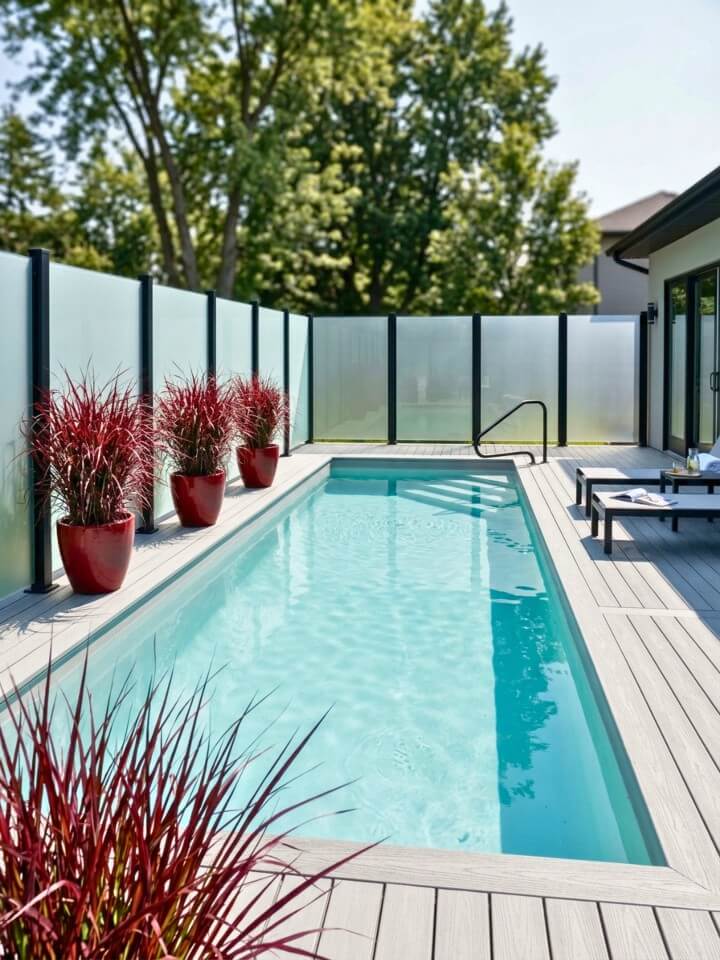
Acrylic looks like glass from across the yard but behaves very differently up close — lighter, more forgiving under impact, and noticeably cheaper. It’s the right call when kids and pets treat the barrier like part of the playground.
Three Things to Know Before You Spec It:
- UV degradation is the real enemy. Even premium cast acrylic yellows over time under intense sun — demand a written warranty against discoloration.
- Scratches are permanent. Clean with mild soap and a microfiber cloth only; abrasive sponges and pressure washers ruin the finish in one pass.
- Budget $60–$120 per linear foot, and plan to replace panels around year ten rather than expecting a forever solution.
12. Rope and Post Nautical Fence
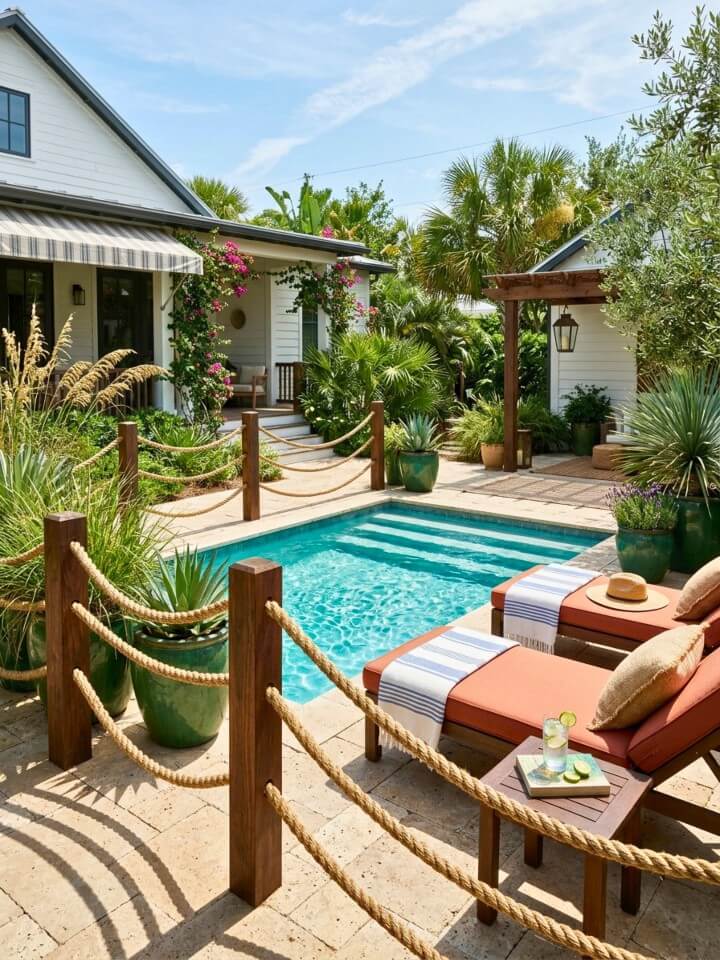
Picture arriving at a clapboard cottage where a thick manila rope sags gently between weathered cedar posts marking the path to the pool. That’s the entire appeal of this style — it doesn’t try to be a fortress. Plan on $15–$30 per linear foot and a quick weekend install, but understand upfront that horizontal rope is climbable and the gaps almost always fail pool barrier codes. Treat it strictly as a decorative perimeter inside or alongside a code-compliant primary fence, never as your child’s first line of safety. Replace the rope every four or five years, since UV slowly dismantles the fibers from the outside in.
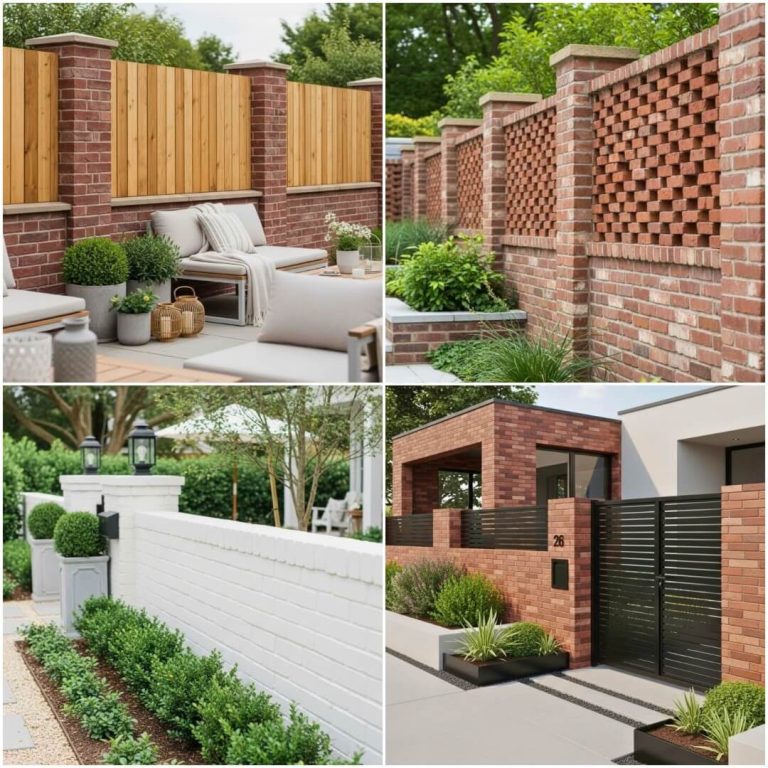
13. Brick and Iron Combo Fence
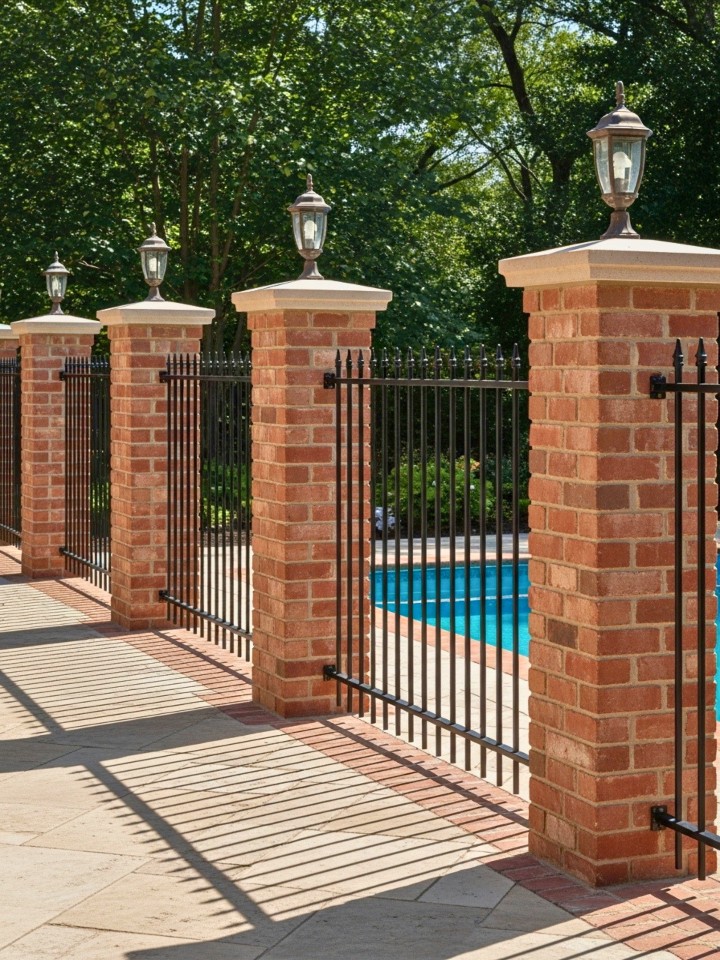
The Case for It: Brick piers anchored every eight to ten feet between wrought iron panels deliver a presence nothing else matches. The brick does real structural work — holding gate hinges and resisting wind load on long runs — while the iron panels keep the pool fully visible from the patio. Expect 50+ years from the brickwork.
The Case Against It: Cost lands at the top of the masonry category at $80–$180 per linear foot, footings must reach below frost depth (skipping this cracks the columns within a few winters), and later modifications — moving a gate, widening a run — are nearly impossible without rebuilding entire sections.
14. Vertical Garden Pool Fence
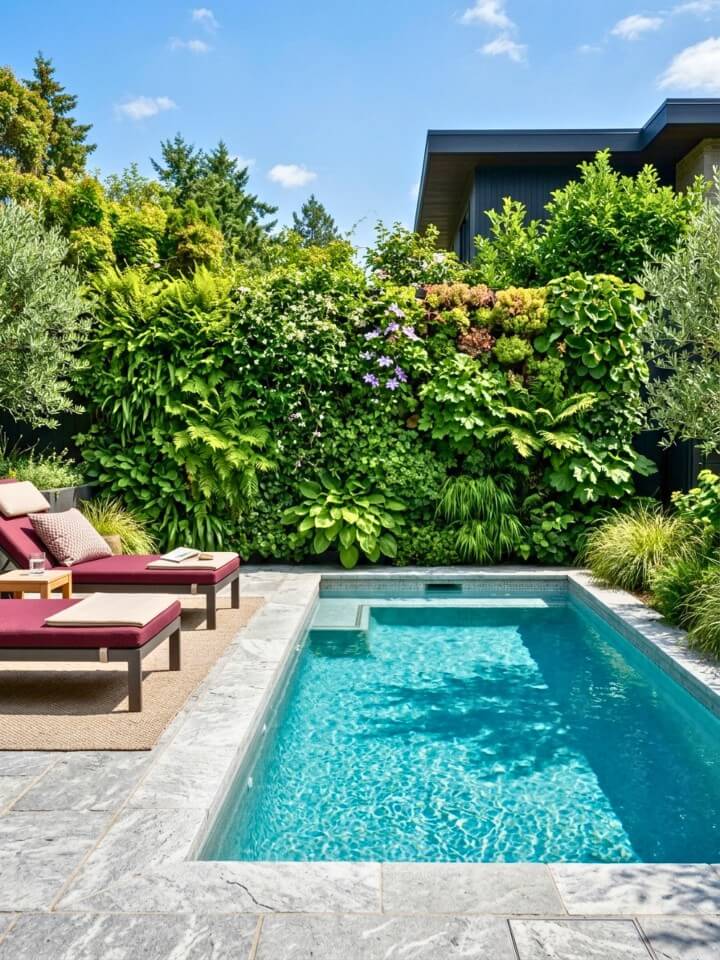
Explore creative pool fencing ideas that boost security, elevate curb appeal, and match any backyard vibe. A living wall lowers ambient temperature near the pool by several degrees, dampens neighborhood noise, and turns a maintenance task into the most visually alive surface in the yard.
What It Actually Takes: $50–$120 per linear foot up front including drip irrigation — which is non-negotiable, since hand-watering fails by July — plus an annual planting refresh budget of $200–$500 to replace whatever didn’t survive winter.
What to Plant: Evergreen vines like creeping fig and star jasmine for year-round coverage. Skip wisteria and other heavy woody climbers; their growth eventually torques the support frame out of true and damages the underlying code-compliant fence.
15. Clear Polycarbonate Pool Barrier
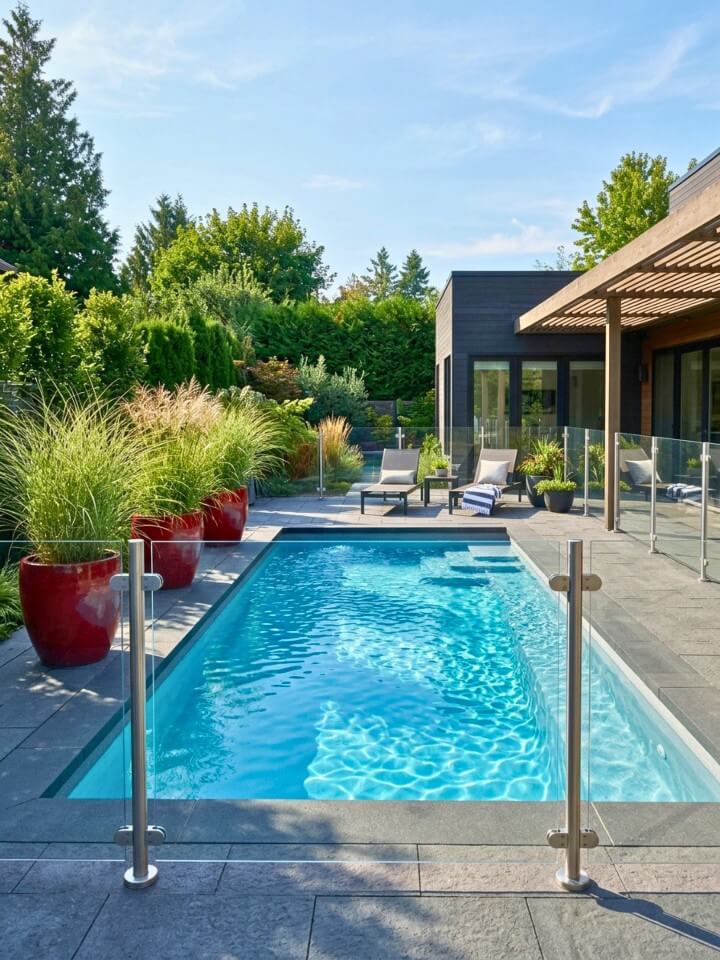
The honest question is glass or polycarbonate, and the answer turns on your climate and how the pool actually gets used. Glass wins on optical clarity and resale appeal; polycarbonate wins almost everywhere else. It’s roughly 250 times stronger under impact, lighter to install, and runs $40–$90 per linear foot against $150-plus for tempered glass. The real trade-off is scratch resistance — polycarbonate marks easier than glass, and lower grades yellow within a few summers. Specify a hard-coat anti-scratch finish on both faces and a 10-year UV warranty in writing. For homes with active kids, hailstorms, or overhanging tree limbs, polycarbonate is the smarter material every time.
16. Rustic Timber Fence
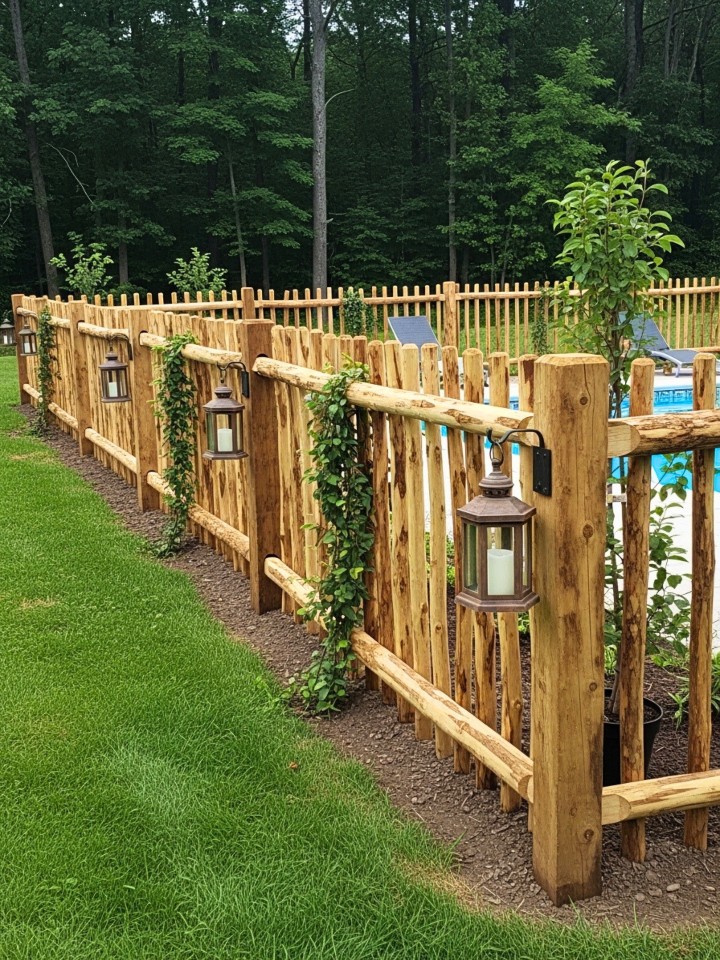
Charming rustic pool fence ideas using reclaimed wood and natural textures bring cozy countryside character. There’s a particular pleasure in arriving at a lake cabin where the pool is enclosed not by anything engineered but by split rails and hewn posts that look quarried from the surrounding woods. Heavy timber grounds a pool in its landscape rather than competing with it, and it can make awkward edges feel intentional when paired with smart corner landscaping ideas.
The aesthetic depends entirely on letting wood weather honestly — uniform stain reads false against rough lumber. Spot-treat only the ground-contact portions with copper-based preservative and accept the silvering on everything above. Reclaimed timber runs $40–$60 per linear foot, but the patina is the whole point. One catch: gaps between rough rails usually exceed code, so welded-wire mesh on the pool side becomes necessary.
17. Frosted Glass with Metal Frame Fence
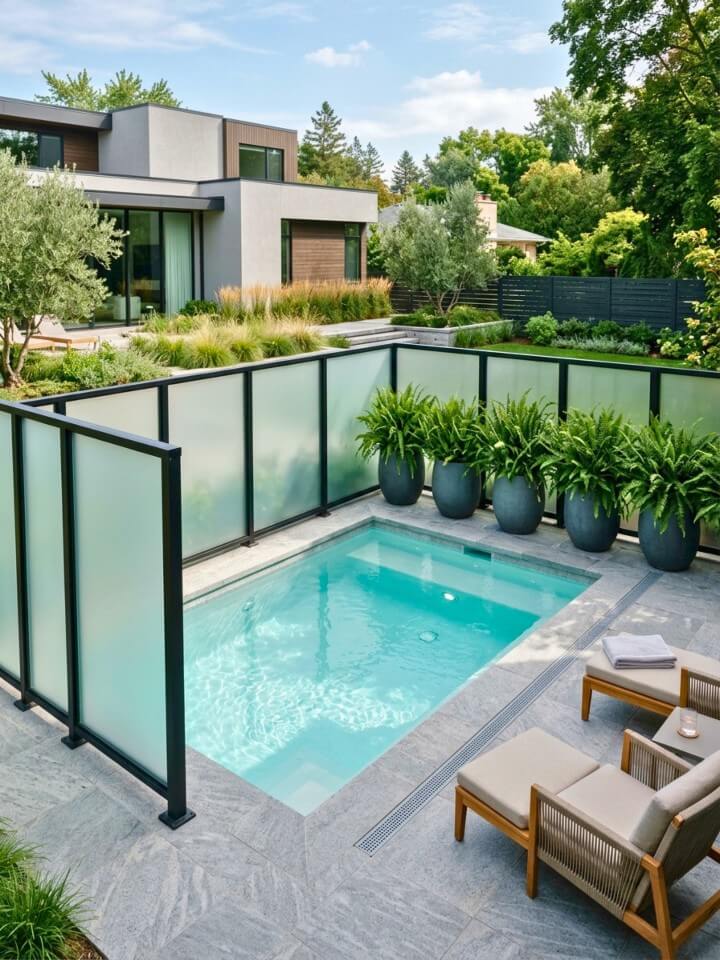
What you’re really paying for at $100–$200 per linear foot isn’t the glass — it’s the framing system and its weatherproofing. Black or bronze metal frames draw architectural lines around each panel, creating rhythm that ties the pool barrier visually to window mullions, pergola posts, and roof edges elsewhere on the property. The wear point is always where glass meets metal: water pools there, and inadequate drainage breeds corrosion you won’t notice until rust bleeds down the panel face. Specify thermally broken aluminum frames with weep holes drilled at the base, and inspect gasket seals every spring before pool season opens. Done right, this fence outlives the pool itself.
18. Decorative Concrete Panel Fence
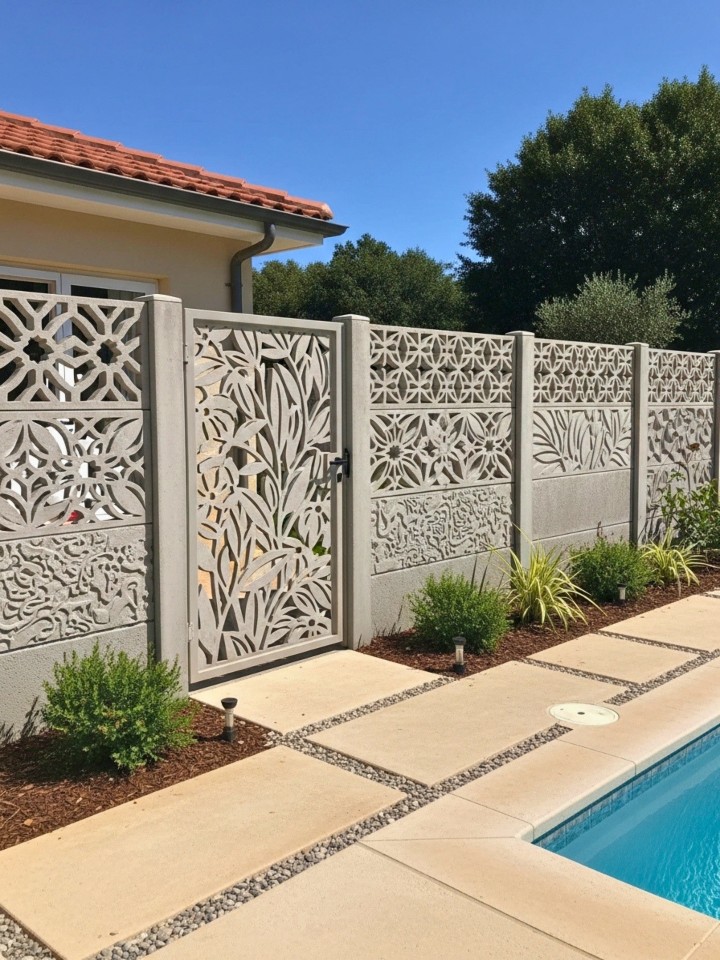
Sample one panel on site before committing to the full run. Concrete reads completely differently in person than in any catalog photo, and the hourly shift of light through cutout patterns changes the entire mood of the pool deck.
Precast concrete panels with geometric perforations or relief patterns deliver privacy, permanence, and serious design presence in a single decision. Patterns span mid-century starbursts, Moroccan arabesques, and clean contemporary grids — and they lock the aesthetic in for the building’s lifetime, since modification isn’t really possible once panels are set. Budget $50–$120 per linear foot plus reinforced footings to handle the weight. The reward is forty years of zero maintenance and excellent sound dampening.
19. Bamboo and Rope Hybrid Fence
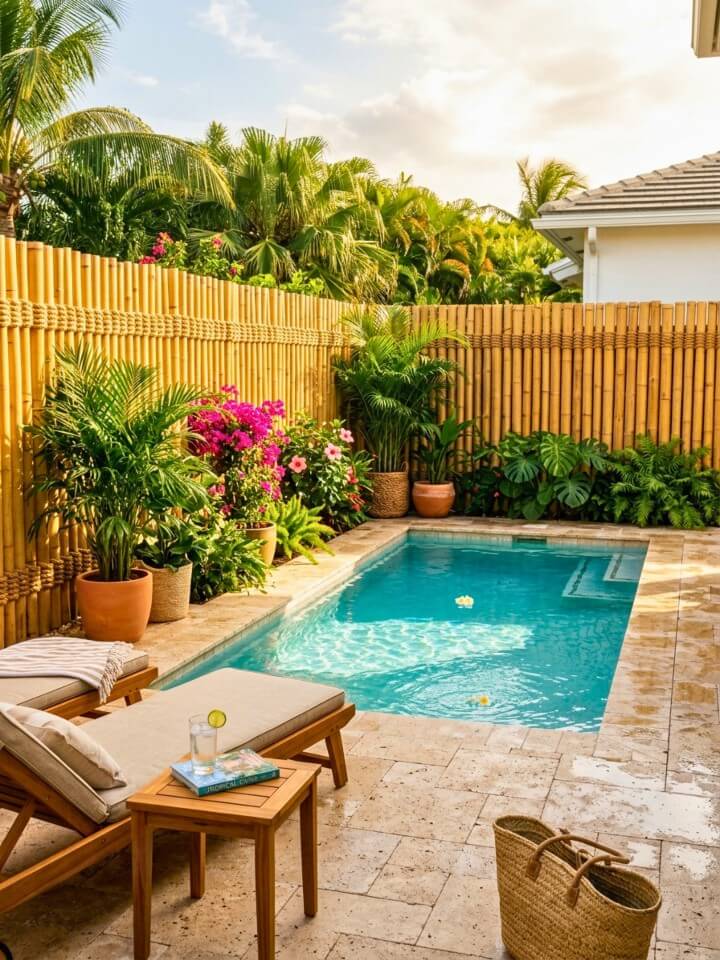
If you’re considering this as a weekend project, work through the checklist before buying materials:
- Confirm your jurisdiction will accept a separate code-compliant fence underneath — bamboo alone almost never passes inspection.
- Source genuine marine-grade manila or sisal rope. Nylon and polypropylene look plastic against natural bamboo and break the entire aesthetic.
- Choose bamboo poles of at least 1.5-inch diameter; thinner stock splits within two seasons.
- Plan for $20–$40 per linear foot and a realistic four-to-six-year lifespan before full replacement.
- Re-tension the rope every spring — humidity cycles loosen the weave more than most people expect.
20. Gabion Stone Pool Fence
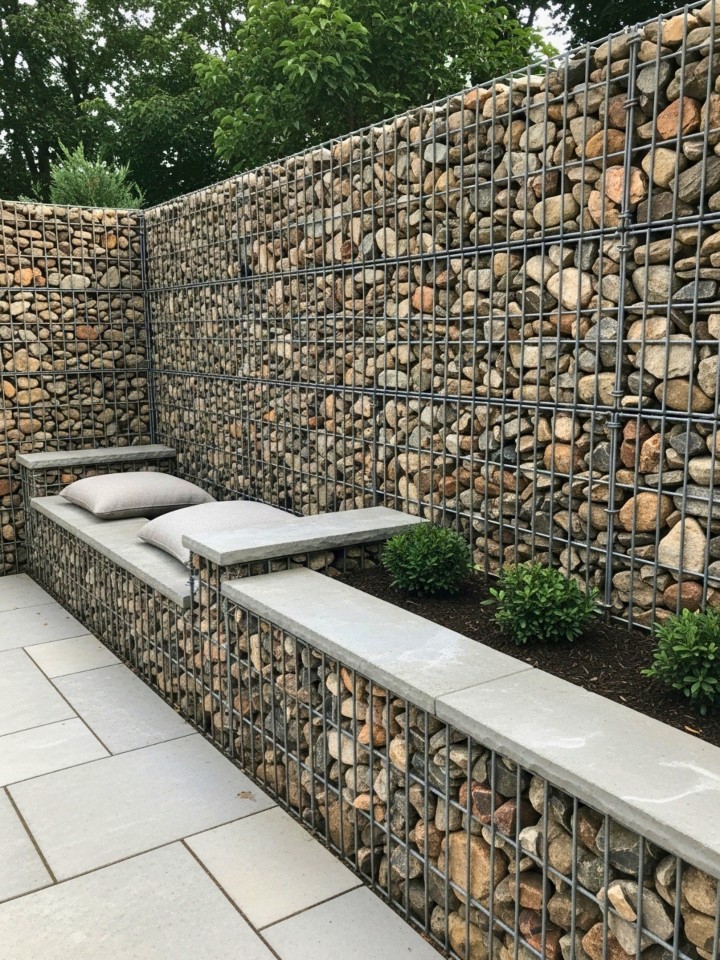
Verdict: the best pool barrier most homeowners have never seriously considered.
Steel mesh cages packed with loose stone bring serious mass, texture, and sound dampening to a pool perimeter at roughly half the cost of full masonry construction — typically $60–$120 per linear foot. The aesthetic shifts dramatically with fill choice: fist-sized crushed stone reads industrial, larger fieldstone reads naturalistic, recycled brick or slate reads architectural. Specify Class A galvanized or PVC-coated mesh, because bargain cages rust through within a decade in chlorine-rich air. The real design move is capping the top with a 16-inch flagstone slab, which converts the entire fence run into continuous bench seating.
21. Tempered Glass with Wood Frame
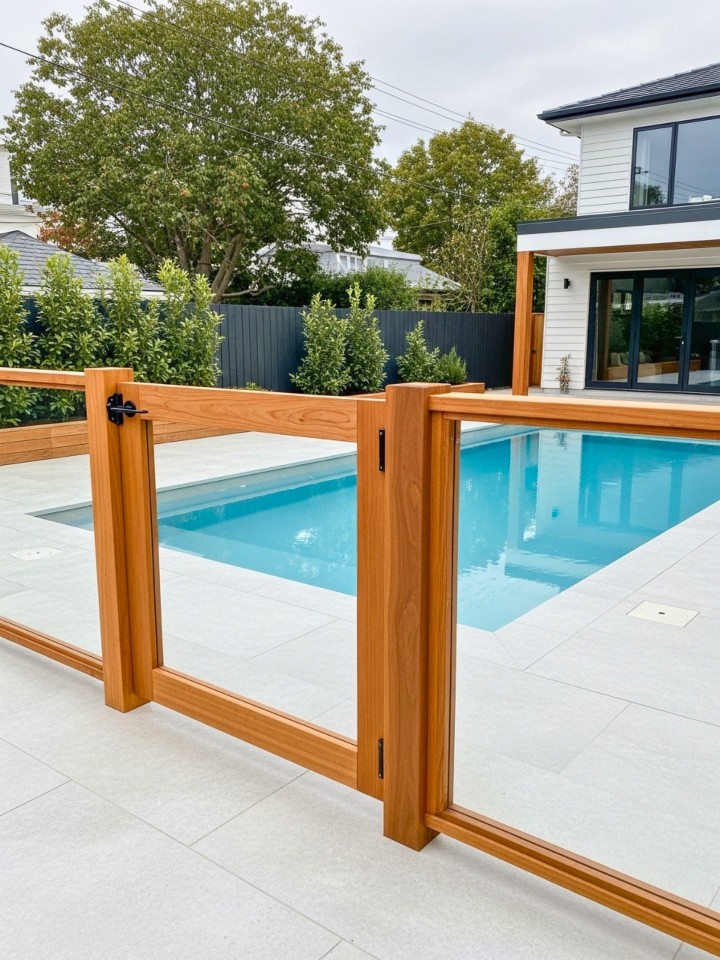
Tempered glass on its own can read clinical — beautiful at the architect’s desk, slightly cold in actual use. Wrapping the panels in a hardwood frame solves this without sacrificing the transparency that drew you to glass in the first place. Teak, ipe, or cedar frames warm the barrier visibly, and the wood gives the fence a tactile quality the all-glass version simply doesn’t have. Expect $130–$220 per linear foot. The frame is also where this design fails most often: untreated softwoods rot at the bottom rail within five years near a pool. Specify a tropical hardwood with proven splash-zone durability, or expect rebuilds before year ten.
22. Woven Willow Pool Fence
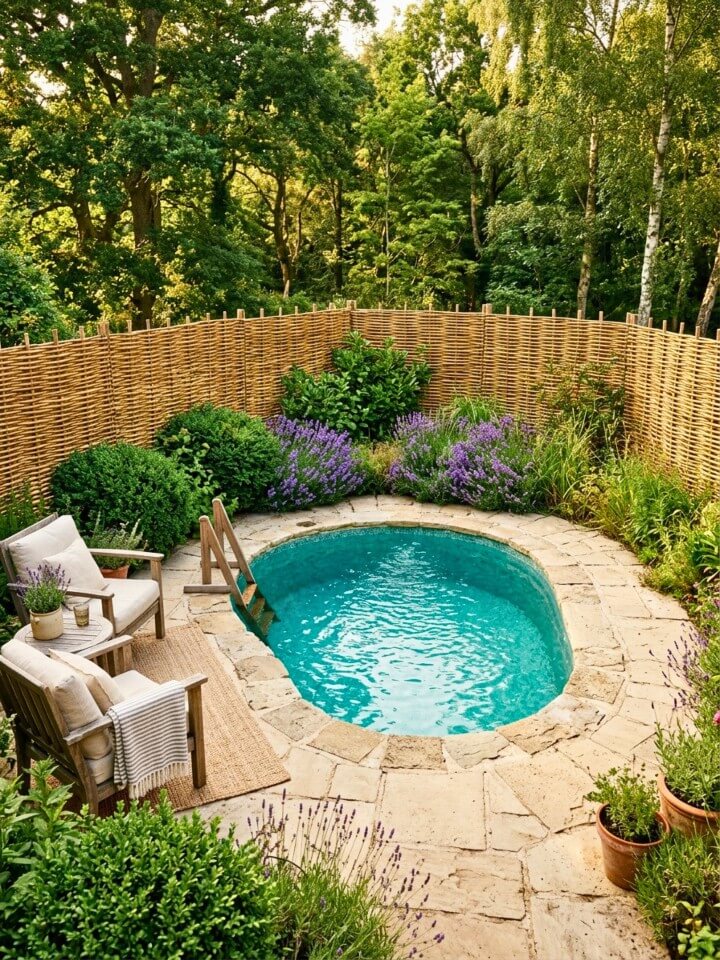
Willow weaving is one of the oldest fencing traditions in Europe, and the technique survives because nothing else produces quite the same hand-made texture along a perimeter. Flexible willow rods woven between vertical stakes form panels that read distinctly artisanal — perfect for cottage gardens, kitchen-garden pool areas, and properties where the rest of the landscape already leans rural. Expect $30–$60 per linear foot for quality panels and a realistic seven-to-ten-year lifespan with annual oiling. Willow alone won’t satisfy pool codes, so install it as a decorative skin over a hidden steel mesh frame. The combination keeps the craft visible and the inspection straightforward.
23. Concrete Block Fence with Niches
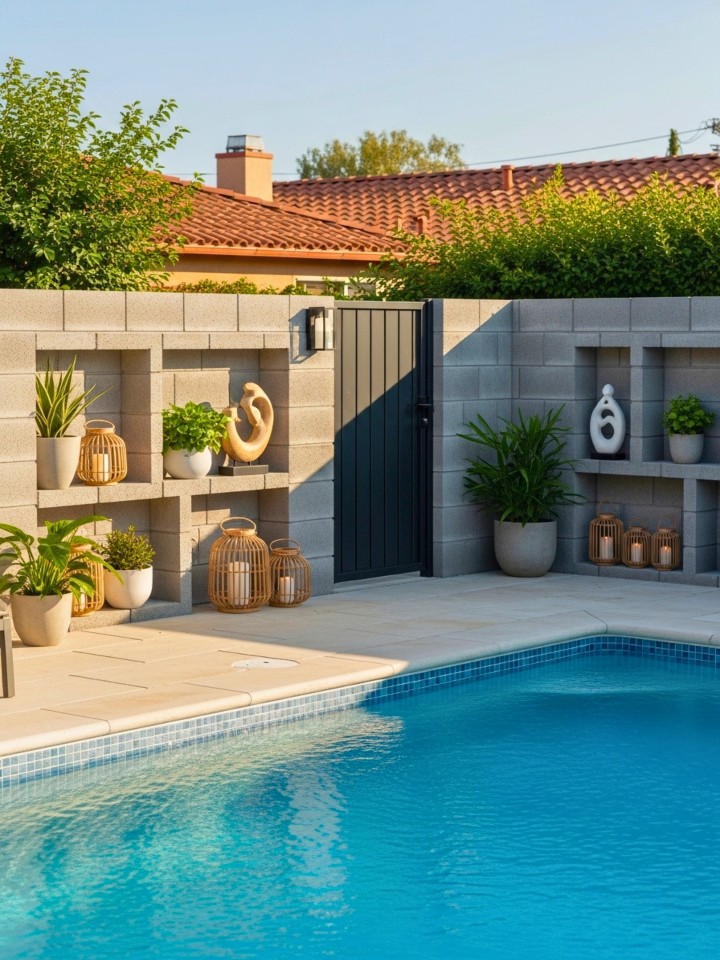
The hardest lesson with masonry pool walls is that everything decorative must be planned before the mortar sets. Retrofitting later costs roughly three times the original install.
Decide Before You Build:
- Niche dimensions and placement, since each requires a structural lintel poured in place
- Whether the wall will house water features, planters, or recessed lighting — all need conduit and plumbing run through the cores
- Final surface treatment (exposed block, stucco, stone veneer), because each pulls a different palette from the surrounding landscape
Total cost runs $70–$140 per linear foot, plus roughly 15% for every decorative niche. The investment makes sense only on permanent pool installations.
24. Frosted Glass with Top Rail Lighting
A single fence rarely changes character through the day. This one does, and that’s the entire point of integrating LED into the top rail.
- Morning — Frosted panels diffuse low sun into a soft glow across the deck, no glare on the water.
- Midday — The frost obscures pool activity from neighbors while letting full light through to swimmers.
- Evening — Top-rail LEDs ignite warm white, turning the fence line into ambient lighting without the harsh spill of traditional deck floods.
- Late night — Dimmed to 10%, the rail becomes a safety wayfinder around the pool perimeter.
Budget $180–$300 per linear foot installed, including the low-voltage driver and dimmer system.
25. Trellis-Style Pool Fence with Climbing Plants
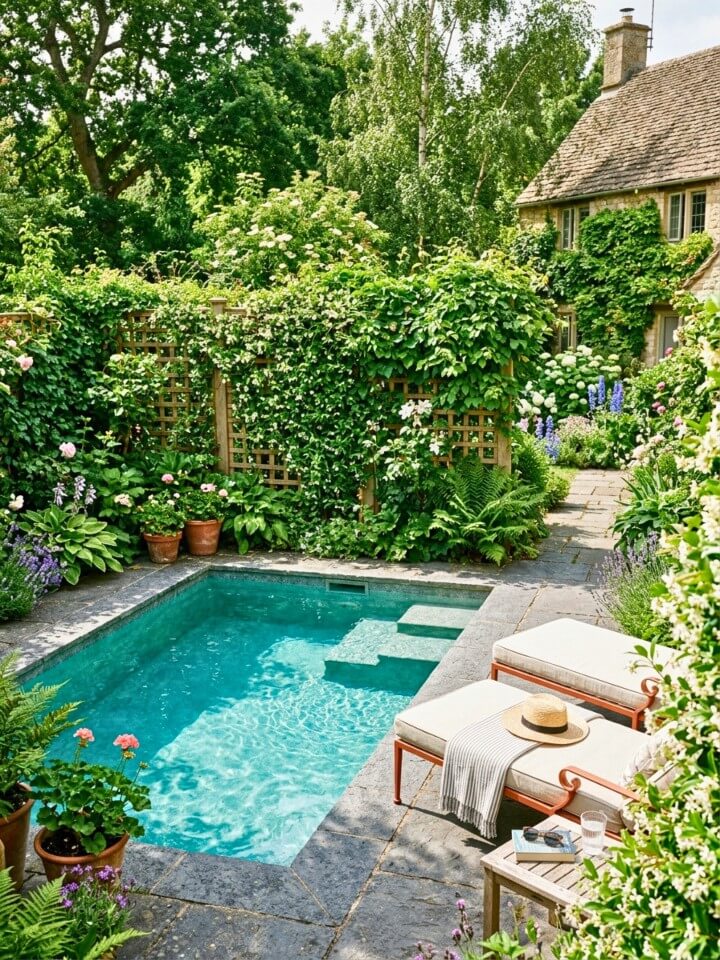
The framework itself runs $30–$60 per linear foot. The plants you choose determine whether you end up with a privacy screen, a flowering display, or a fragrance moment near the pool.
- Star jasmine — Evergreen, dense coverage within two seasons, intense fragrance in late spring. Best for pools used heavily after dark.
- Climbing hydrangea — Slow to establish (three to four years) but dramatic once mature. Deciduous, so plan for bare months in winter.
- Honeysuckle (Lonicera) — Fastest coverage of the three, but aggressive. Commit to twice-yearly pruning or it overwhelms the trellis and works its way into pool equipment.
Avoid wisteria, grape, and trumpet vine — all three eventually rip the trellis apart.
26. Industrial Pipe and Cable Fence
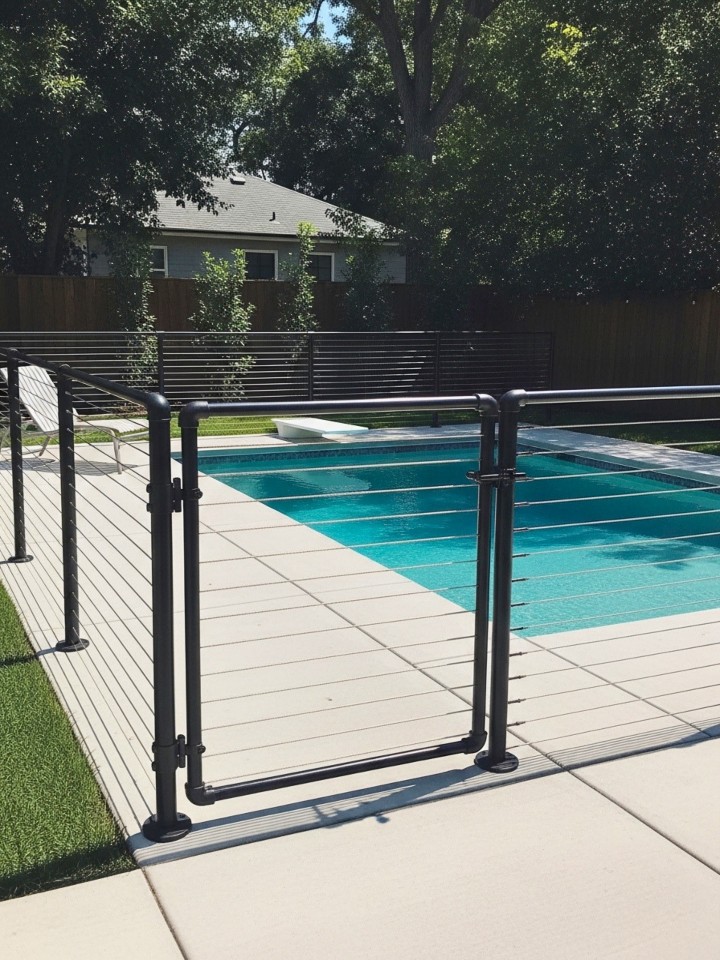
Industrial pipe-and-cable is the right answer when three conditions converge: a contemporary or warehouse-conversion home, a desire to preserve a long view, and ground conditions that allow posts to be sunk into structural concrete rather than soft topsoil.
Specifications that Actually Matter:
Schedule 40 steel pipe minimum, 2-inch outer diameter, with 1/4-inch 1×19 stainless cables tensioned to roughly 300 pounds. Posts spaced no more than 4 feet on center. Proper engineering lands at $80–$160 per linear foot — substantially less if you undersize the posts, but the entire run will eventually bow inward under cable tension.
The wrong choice for: traditional homes, soft soils, and jurisdictions that classify horizontal cables as climbable for young children.
FAQs About Pool Fences
Even after choosing a style, a few practical questions tend to surface once the planning gets real — about rules, timing, pets, and the small details that catch homeowners off guard.
How Tall Does a Pool Fence Legally Need to Be?
Most U.S. jurisdictions require a minimum height of 48 inches, though many coastal and family-dense areas mandate 60 inches. Always check your specific city code before ordering materials, since fines and forced rebuilds get expensive fast.
Can I Install a Pool Fence Myself or Do I Need a Professional?
Aluminum, vinyl, and bamboo panels are realistic weekend DIY projects with basic tools. Glass, masonry, cable, and gabion systems need professional engineering — improper tensioning or footing depth creates liability issues your homeowner’s insurance may not cover.
Will a Pool Fence Affect My Home Insurance Premiums?
Yes, and usually in your favor. Most insurers reduce liability premiums by 5–15% once a code-compliant barrier is documented. Skipping the fence entirely can void coverage altogether if an accident occurs, regardless of who’s at fault.
How Do I Keep Pets from Squeezing Through or Jumping Over?
Choose vertical pickets spaced under 3 inches for small dogs, and add a 6-inch kick plate at the base. For jumpers, aim for 60-inch height minimum and avoid horizontal rails that work like ladder rungs.
When Is the Best Time of Year to Install a Pool Fence?
Early spring or late fall, when contractors aren’t slammed with summer pool openings. You’ll get faster scheduling, sharper pricing, and the fence is ready before swim season — not halfway through it when supervision matters most.
Conclusion:
The best pool fence is the one you stop noticing — not because it disappears, but because it finally fits. Walk your yard at dusk this week and look at your current barrier honestly. Does it earn its place in the view? If the answer is no, you’ve already made the first decision. The rest is just choosing which of these pool fence ideas matches the life happening around your water.