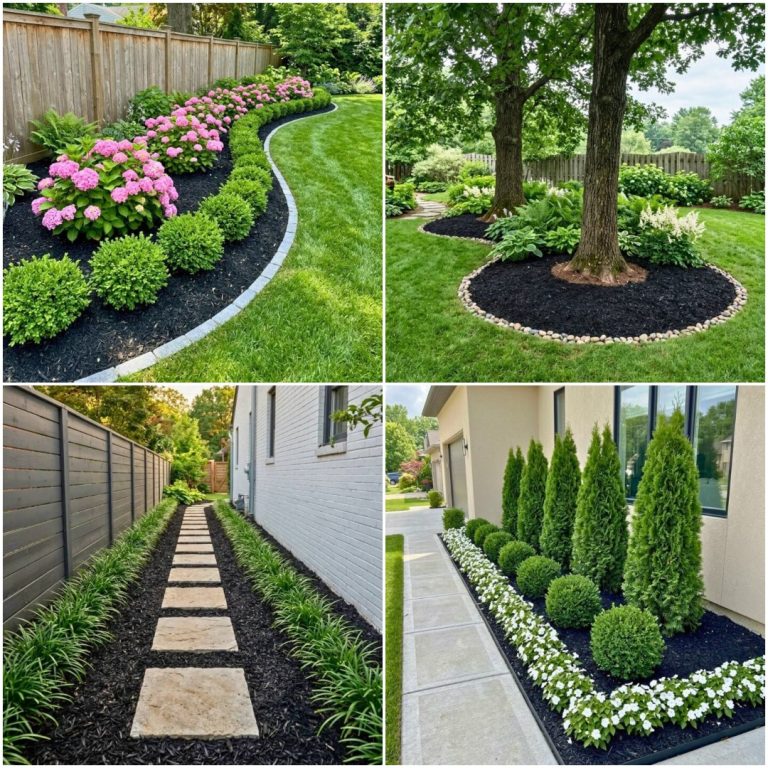
20 Lilac Bush Landscaping Concepts You Can’t Miss
Lilac bushes are one of the most rewarding shrubs you can add to your yard, and these 20 wonderful lilac bush landscaping ideas prove just how versatile they really are. From compact front yard plantings to full backyard privacy screens, lilacs work across nearly every property size, style, and budget. Their spring blooms, lasting fragrance, and ability to attract pollinators make them a practical choice as much as a beautiful one.
Before diving in, a few basics are worth knowing. Lilacs thrive in full sun — at least six hours daily — and prefer well-drained, slightly alkaline soil. Most common varieties are hardy in USDA Zones 3–7, with newer cultivars extending into Zone 8. Always prune right after flowering, never in fall, since lilacs set next year’s bloom buds shortly after the current season ends.

With those fundamentals covered, here are 20 ways to make lilac bushes work harder and look better in your landscape.
1. Build a Layered Shrub Bed With Lilac Bushes
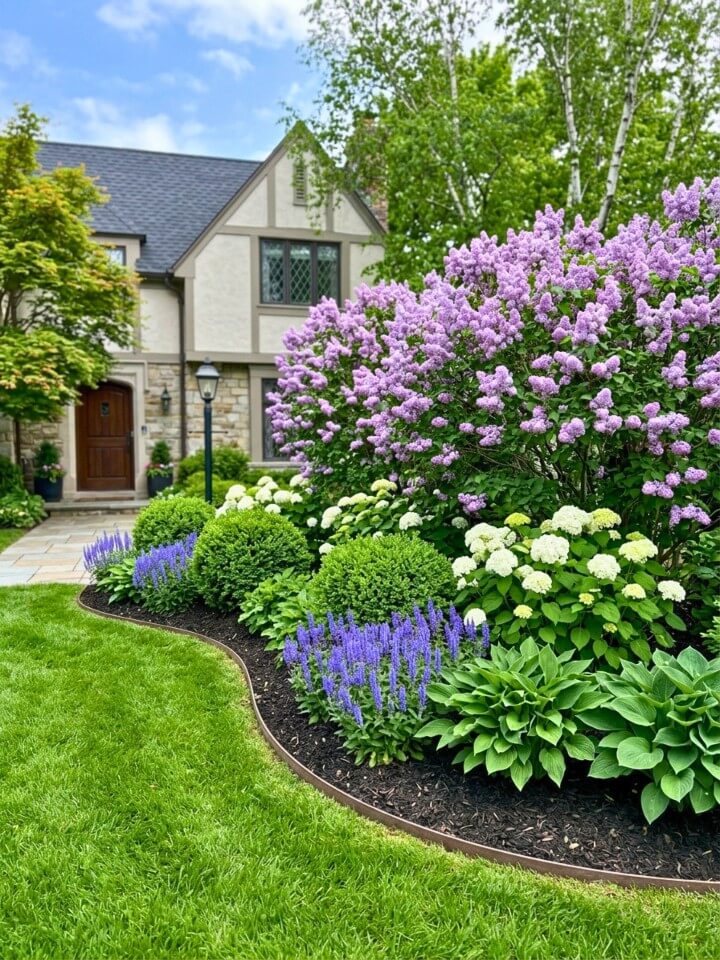
Place lilacs at the back of the bed, mid-height shrubs like dwarf hydrangeas or spirea in the middle, and low perennials like hostas or salvia at the front. This three-tier structure adds depth and ensures something is always in bloom. Prepare soil with compost before planting and apply dark mulch across the entire bed — it looks especially striking beneath pale blooms. Leave 3–4 feet between lilacs and neighboring shrubs to prevent crowding at maturity. Refresh mulch every spring to suppress weeds and keep the bed looking intentional.
2. Use Lilacs as a Natural Privacy Screen
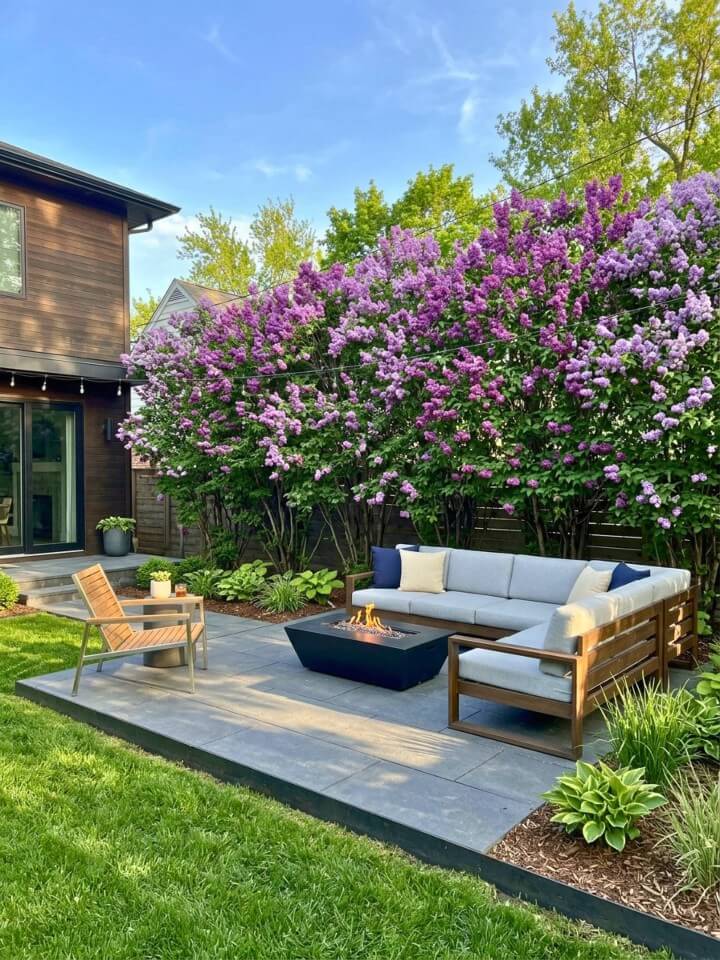
For a manageable screen, ‘Charles Joly’ or ‘Monge’ (Syringa vulgaris) reach 8–10 feet with regular pruning. Space plants 4–6 feet apart for a dense screen or 6–8 feet for an airier effect. Since lilacs are bare in winter, mix in arborvitae or inkberry holly between plants for year-round coverage. Avoid planting too close to walls or solid fences — good airflow is essential to prevent powdery mildew. Expect 3–5 years before the screen reaches full density; lilacs dislike being transplanted once established, so plan spacing carefully from the start.
3. Create a Spring Focal Point With Lilac Bushes

A single well-placed lilac anchors the entire yard during spring. Best positions include the far end of a garden path, the center of a lawn island bed, or directly across from a patio. ‘Sensation’ (white-edged purple petals) or ‘Charles Joly’ (deep wine-red double blooms) both create strong visual impact without much surrounding support. Keep base plantings simple — a clean ring of dark mulch edged with steel or stone, with a few hostas or ornamental grasses around the perimeter for greenery once bloom season ends. Consistent pruning maintains an attractive shape year-round.
4. Plant Lilac Bushes Near a Window View
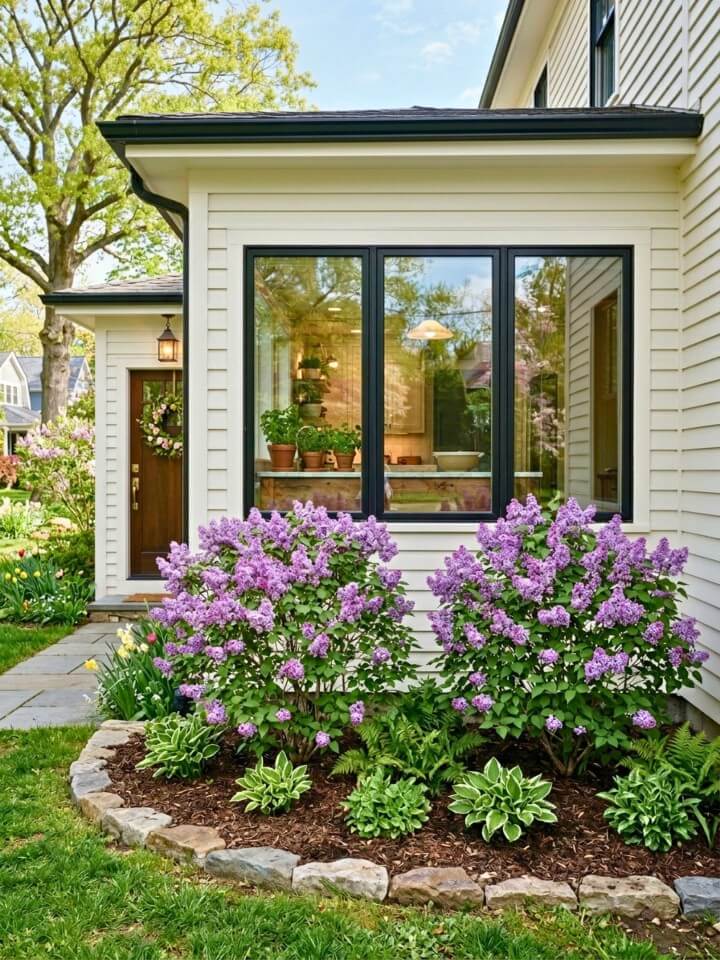
A lilac outside a main window turns an ordinary room into a seasonal showcase. Plant at least 3–4 feet from the foundation for airflow, but close enough that blooms are visible from a seated position inside. ‘Sensation’ or ‘Charles Joly’ deliver a full display each spring without elaborate surrounding design. Underplant with a clean ring of dark mulch and low ground covers like ajuga or sweet woodruff. Avoid tall nearby plants that compete with the view. Note: lilacs bloom reliably only on east, south, or west-facing sides — north-facing windows get too little light.
5. Create a Soft Garden Border With Lilac Bushes

For larger borders, common Syringa vulgaris works well; for narrower paths, Syringa meyeri ‘Palibin’ is better — it stays 4–5 feet tall and wide. Space plants 5–6 feet apart and layer low-growing perennials like catmint, creeping phlox, or lavender in front — these bloom around the same time as lilacs, creating a coordinated spring display. Finish with 2–3 inches of wood chip mulch to retain moisture and suppress weeds. If the border runs along a fence line, use consistent plant layering and spacing to make the entire edge feel designed rather than accidental.
6. Design a Romantic Backyard Corner

An unused corner can become a private, fragrant retreat without expensive hardscaping. Choose a spot with good morning sun and place a bench or bistro set 3–4 feet from where the lilac will mature — common lilacs spread 6–8 feet wide at full size. For tight corners, Syringa pubescens ‘Miss Kim’ tops out around 5 feet with notably strong fragrance. Use pea gravel or flagstone underfoot for low maintenance, and add hostas or astilbe around the seating to fill in after blooms fade. A small solar lantern adds ambiance without any wiring.
7. Frame Your Front Entry With Lilac Blooms

A matched pair of lilacs flanking a front door dramatically improves curb appeal during their mid-April through May bloom period. Choose compact varieties — ‘Palibin’ or ‘Miss Kim’ stay under 6 feet with minimal pruning. Plant at least 3 feet from the foundation for airflow. Pair with Karl Foerster ornamental grasses for vertical interest and hostas or hellebores to fill shaded foundation gaps. Avoid planting directly under roof eaves where water runoff compacts soil. ‘Palibin’ stays naturally rounded and needs very little pruning to remain proportional to most standard entryways.
8. Pair Lilacs With Stone Pathways

Stone and lilac is a classic combination — hard path geometry balanced by soft, billowing shrub forms. Plant lilacs 2–3 feet back from the path edge so branches can arch slightly over the walkway at maturity without blocking it. Fill between stones with creeping thyme or ajuga for texture. Color coordination matters: soft pink varieties like ‘Beauty of Moscow’ complement warm gray flagstone, while deep purple ‘Sensation’ contrasts boldly against light limestone. Install edging between the path and planting bed to keep grass from creeping in. Consider spring bulbs like allium or tulips near the path base for color before lilacs open.
9. Add Lilacs Around a Patio

Lilacs around a patio soften hard edges, add seasonal color, and create privacy that makes outdoor spaces feel more like rooms. Plant at least 4 feet from the patio edge, keeping mature spread in mind. For smaller patios, ‘Palibin’ or ‘Bloomerang Purple’ — a re-blooming variety that flowers again in late summer — are ideal. Between the patio edge and the lilac base, fill with salvia, black-eyed Susan, or ornamental grasses to maintain interest after bloom season.
These shrubs work especially well when paired with awe-inspiring small patio landscaping ideas that make compact outdoor areas feel lush without overcrowding them. Avoid planting directly against wood decking where fallen petals cause moisture buildup. Neutral furniture in gray, white, or natural wood lets bloom colors stand out.
10. Mix Lilacs With Cottage Garden Flowers

Lilacs anchor cottage gardens naturally — their scale, bloom timing, and soft colors pair with almost every traditional cottage plant. Place lilacs at the back as the tallest layer. In front, add foxglove, peonies, or tall garden phlox. At the front edge, use sweet alyssum, hardy geraniums, or lamb’s ear. Lilac’s purple tones pair especially well with blush pink peonies, creamy white foxglove, and deep blue salvia. For a warmer palette, soft yellow yarrow and peachy roses contrast beautifully against purple blooms. Peonies and lilacs bloom simultaneously — together they create one of the most reliable spring color combinations available.
11. Plant Dwarf Lilacs in Small Front Yards
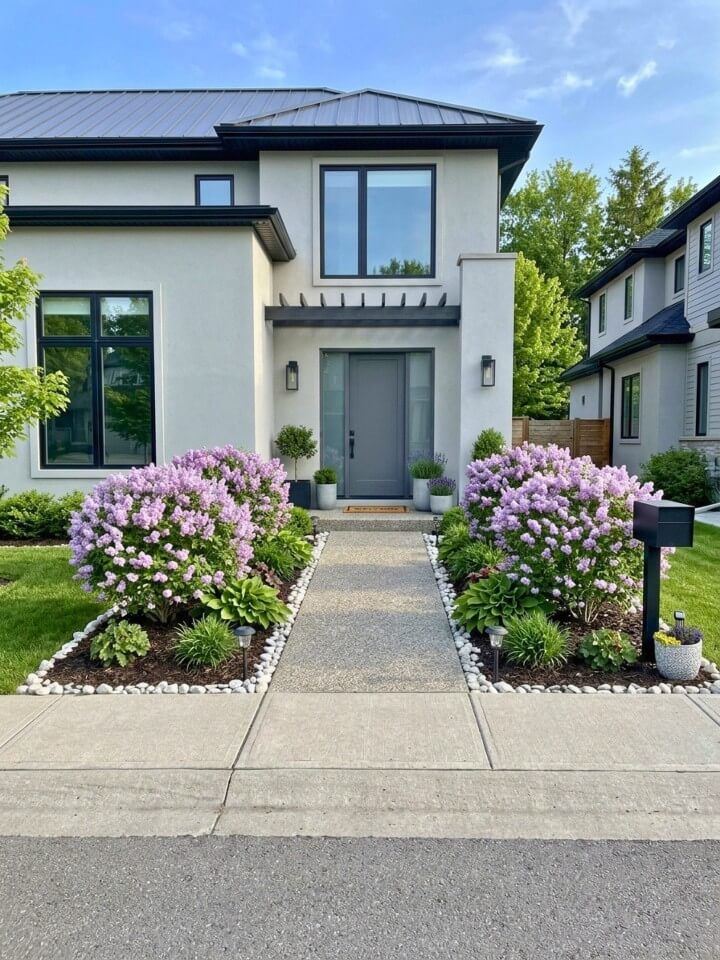
Small front yards don’t require giving up lilacs — just choosing the right variety. Syringa meyeri ‘Palibin’ grows slowly to 4–5 feet, has a naturally rounded shape, and rarely needs pruning. Syringa pubescens ‘Miss Kim’ stays around 5 feet with exceptional fragrance. Both perform well in Zones 3–8. Plant in a simple foundation bed with dark mulch and a neat edge; add creeping phlox or dwarf ornamental grasses to fill in without competing for attention. Always check the mature size on the plant tag — “dwarf” ranges from 3 to 8 feet depending on cultivar. Avoid high-nitrogen fertilizer, which produces foliage at the expense of flowers.
12. Line a Fence With Fragrant Lilacs
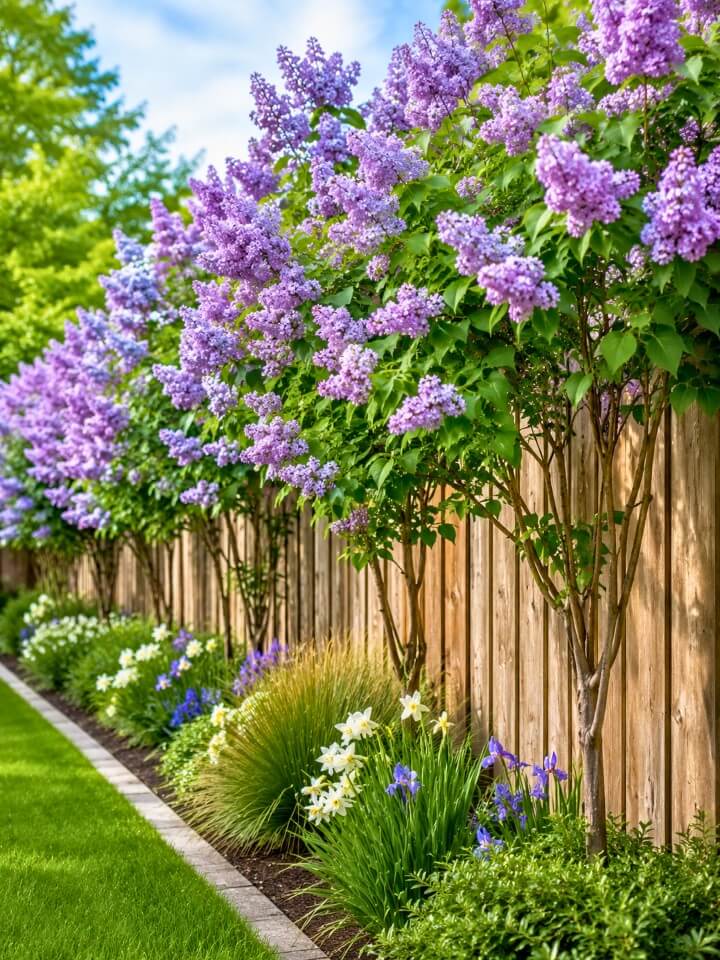
A row of lilacs transforms a plain fence — wood, vinyl, or chain link — into a planted garden boundary. Plant 2–3 feet away from the fence rather than against it; this gap allows airflow and access for pruning and fence maintenance. Space bushes 5–6 feet apart for a row that fills in within a few seasons. Mix in Karl Foerster or switchgrass between plants for texture, and plant spring bulbs like daffodils or allium at the base for color before lilacs open. Never plant in low spots where water collects — lilacs require well-drained soil. A consistent mulch line along the fence base ties the whole planting together visually.
13. Add Lilacs Near a Garden Gate
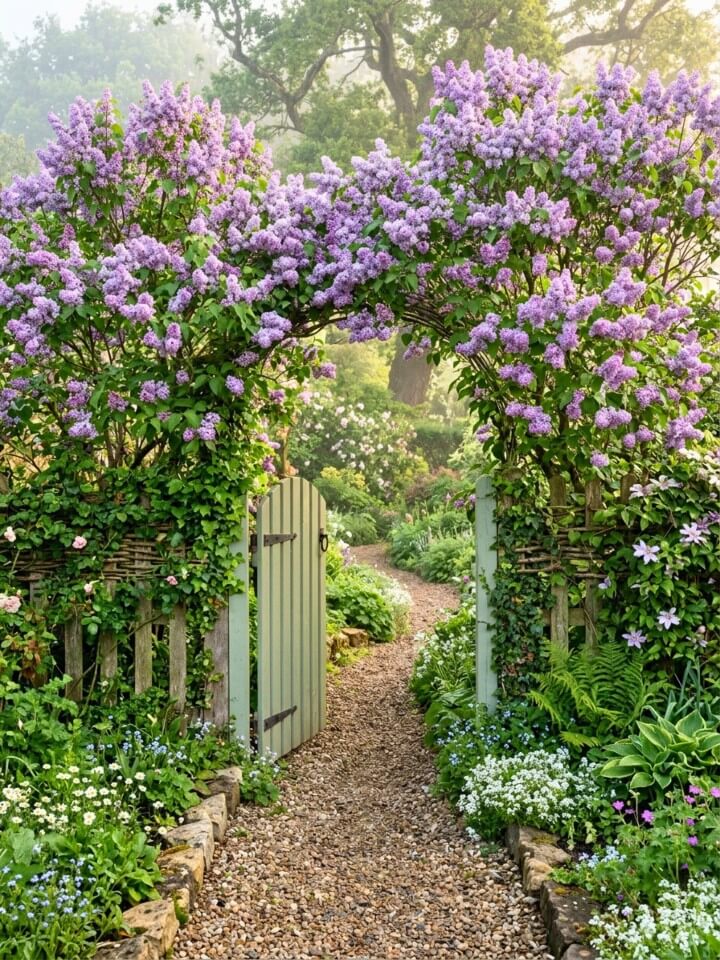
A garden gate creates a natural transition point — lilacs on one or both sides add fragrance, color, and character without complicated design. Choose a compact variety: ‘Palibin’ stays proportional to most standard gates without constant pruning. For a wider or more formal gate, a matched pair of Syringa vulgaris ‘Monge’ creates a symmetrical, dramatic entrance. Keep the ground around the base intentional — flat stepping stones, gravel, or brick edging signals the entrance was designed. Low pathway lighting near the gate base adds evening appeal. If the gate is on the north side of a structure, verify sun exposure first — lilacs need at least 6 hours of direct sun to bloom.
14. Combine Lilacs With Evergreen Plants
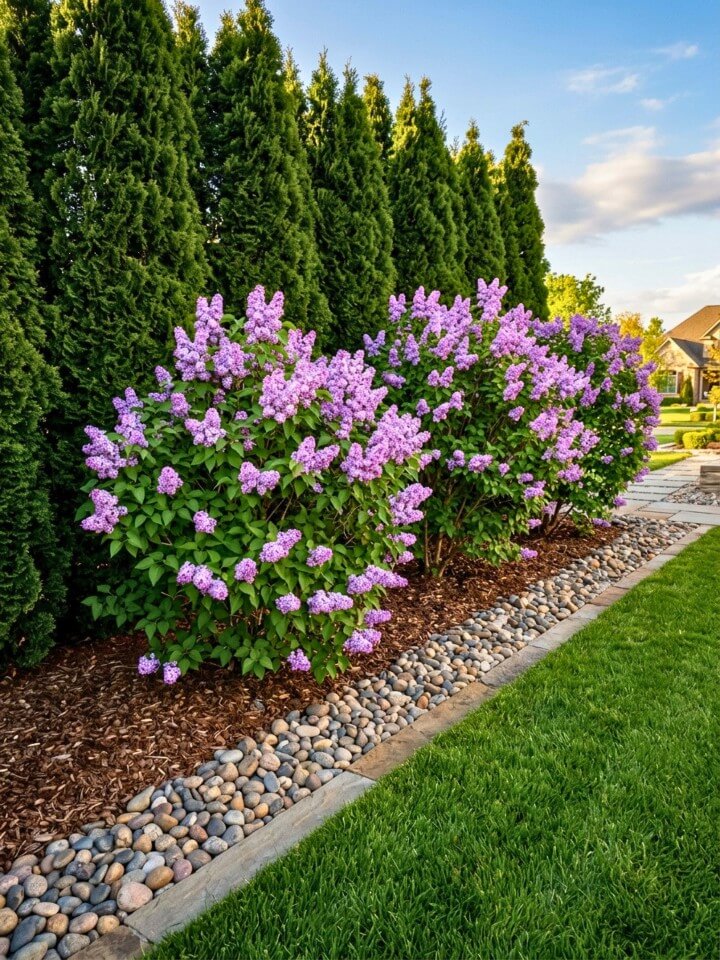
Lilacs look bare for most of the year — pairing them with evergreens solves this. Arborvitae, boxwood, inkberry holly, and yew all work well. Plant evergreens behind or beside the lilacs so their dense foliage acts as a backdrop that makes spring blooms stand out even more. In winter, the evergreens hold the landscape while lilac branches are bare. Dark green evergreens suit purple and deep pink lilac varieties best. For white-flowering types like ‘Mme. Lemoine’ or ‘Angel White,’ pair with blue-green evergreens like blue spruce for a cooler palette. This combination works especially well on corner lots visible from two directions year-round.
15. Use Lilacs Beside a Driveway
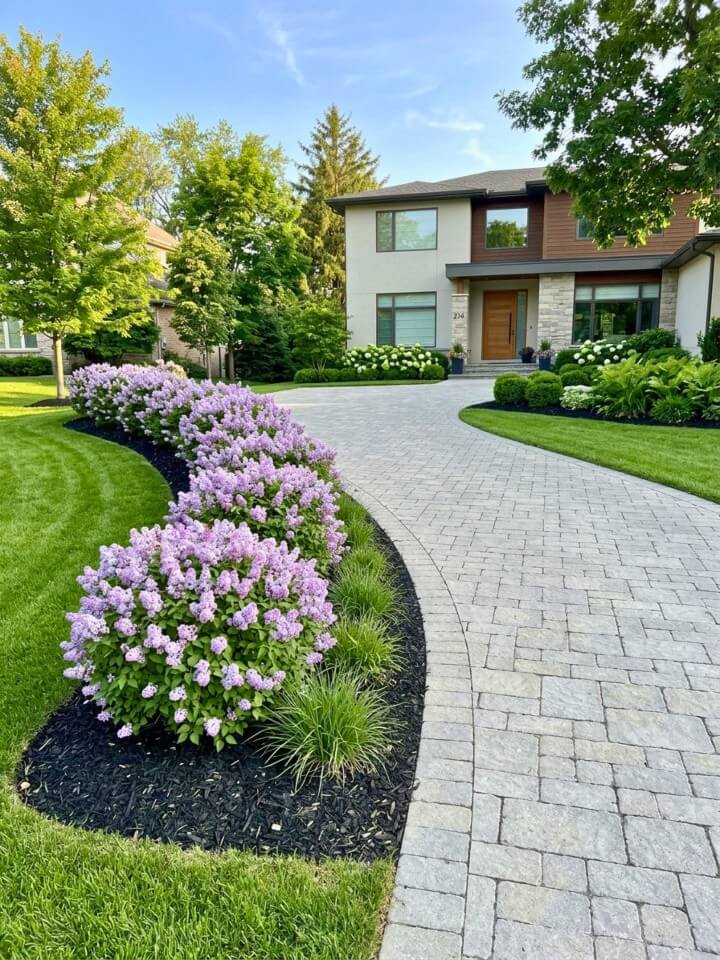
Driveway edges are high-visibility and often underplanted. Lilacs here improve curb appeal significantly. Plant at least 3–4 feet from the driveway edge so mature branches don’t overhang vehicles or block sightlines. ‘Palibin’ and ‘Bloomerang Purple’ are both well-suited — they stay manageable without heavy pruning. Fill between plants with low ornamental grasses or creeping juniper to keep the edge looking full when lilacs aren’t in bloom.
A continuous mulch line running the driveway length makes maintenance much easier, and it can tie into other wonderful driveway landscaping ideas for a more cohesive front yard. Always call 811 to check for underground utilities before digging along any driveway. Avoid varieties that produce heavy suckers, which can spread into the driveway surface.
16. Create a Fragrant Outdoor Reading Nook
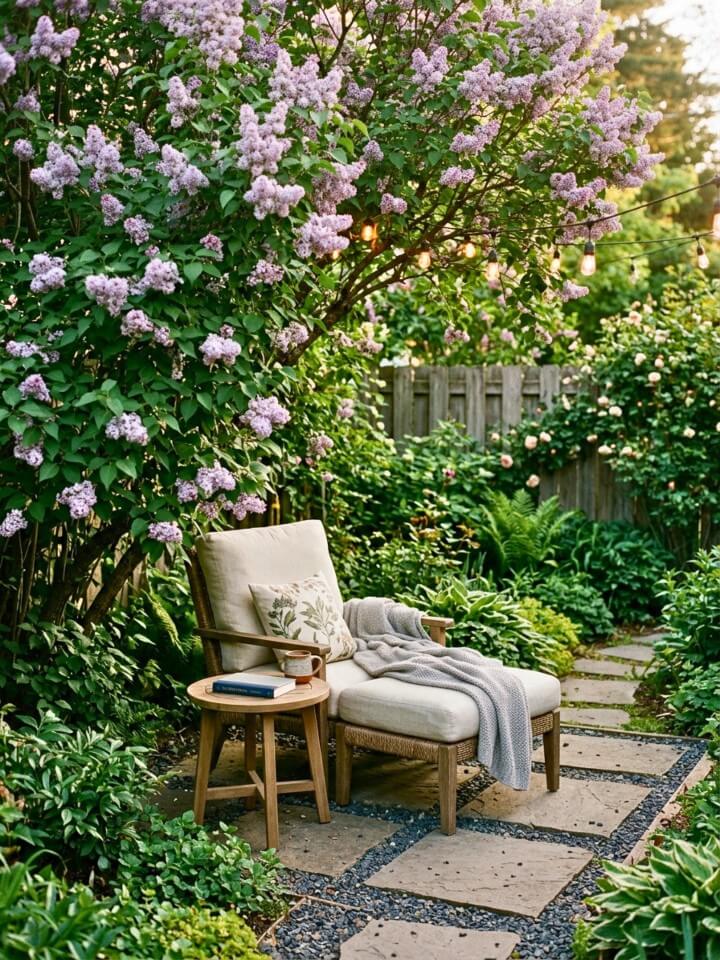
A reading nook near a lilac delivers fragrance, soft movement, and seasonal blooms — atmosphere no indoor space replicates. Choose a spot with morning sun and afternoon shade for comfort. Place weather-resistant seating within 4–6 feet of a fragrant variety like ‘Miss Kim,’ ‘Sensation,’ or common Syringa vulgaris. Use pea gravel, decomposed granite, or stepping stones underfoot.
Position the seating so prevailing breezes carry fragrance toward you rather than away. If strong scent is a priority, stick with Syringa vulgaris varieties — ‘Sensation’ has a noticeably lighter fragrance. A simple trellis behind the bench with climbing hydrangea adds backdrop without blocking light.
17. Create a Mixed Lilac Hedge

A single-variety hedge looks flat. Mixing two or three lilac cultivars creates a natural, layered effect. Good combinations: ‘Charles Joly’ (deep purple-red), ‘Beauty of Moscow’ (pale pink), and ‘Mme. Lemoine’ (double white) cover a romantic color range that suits most home exteriors. For a bolder look, mix ‘Sensation’ with ‘Primrose’ (pale yellow) for an unusual, eye-catching combination. Choose varieties with similar mature heights to keep the hedge balanced. Space plants 5–6 feet apart in a single row, or stagger two rows 4 feet apart for faster density. Intentionally stagger bloom times across early, mid, and late-season varieties to extend the color display by several weeks.
18. Highlight Lilacs With Garden Lighting

Most lilac blooms go unnoticed after sunset. Low-voltage uplights buried at the base and angled upward work best for mature plants with strong branch structure. For smaller shrubs, soft pathway lights placed 2–3 feet away cast a gentler wash across the whole bush. Solar spotlights work if the area gets enough daytime sun — but note that early spring (when lilacs bloom) has shorter daylight hours, so hardwired low-voltage lighting is more reliable for spring displays. Use warm white bulbs (2700K–3000K) to bring out the warmth in purple and pink blooms. Test light placement at night before permanently installing fixtures — adjustments are almost always needed.
19. Add Lilacs to a Pollinator Garden
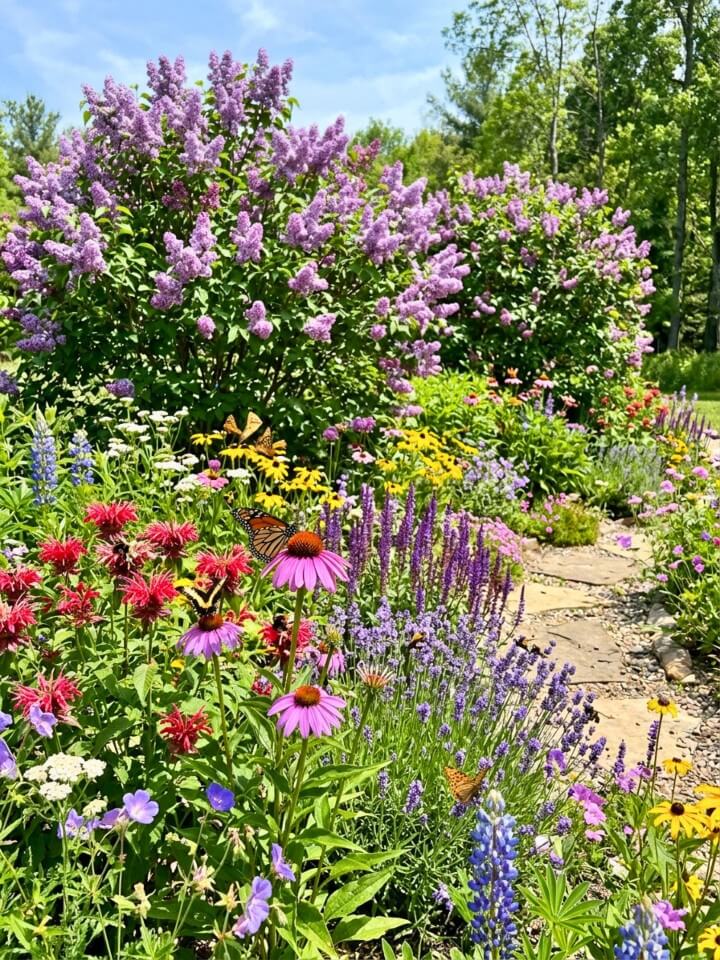
Lilacs are exceptionally productive for pollinators — dense flower clusters provide abundant nectar in early spring when few other plants have opened. Pair with coneflowers, bee balm, native salvias, catmint, and anise hyssop to create a bloom sequence that feeds pollinators from April through September. Choose a sunny, well-drained location. Avoid pesticides anywhere near the garden during bloom periods — even products marketed as safe can harm beneficial insects. Leave some bare soil patches near the planting for ground-nesting bees, which make up the majority of native bee species in most regions. A diverse plant mix attracts a wider range of native bee species than any single plant alone.
20. Feature Lilacs in a Backyard Island Bed
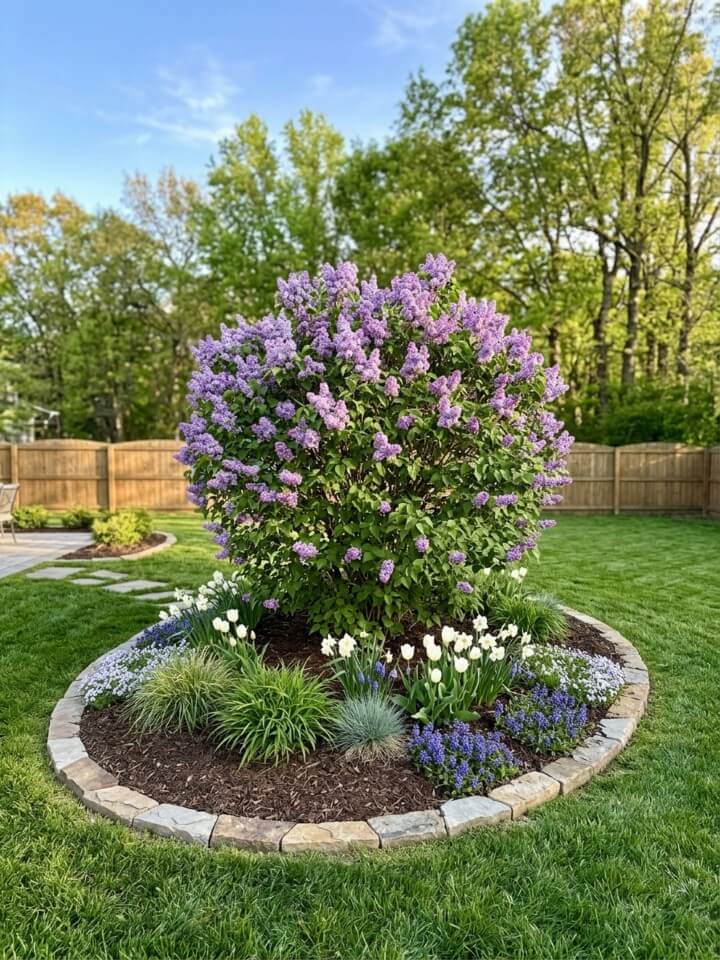
Island beds are visible from all sides, making plant selection and arrangement more critical than in standard border beds. Lilacs suit island beds well — their rounded, symmetrical shape looks attractive from every angle. Place a single large lilac or a group of three near the center as the main vertical element. Layer outward with peonies, Karl Foerster grass, or catmint in the middle ring, and creeping phlox, ajuga, or sedum at the outer edge. Define the bed with clean steel, stone, or brick edging — this is what separates a designed island bed from a random plant patch. Use odd numbers of lilacs (1, 3, or 5) for a more natural appearance.
FAQs About Lilac Bush Landscaping
Planning a lilac garden raises questions that go beyond basic planting advice. These answers cover the practical details most guides leave out — so you can plant with confidence and avoid the most common mistakes.
Do Lilac Bushes Grow Well in Clay Soil?
Clay soil holds too much moisture, which can cause root rot in lilacs. Before planting, mix in coarse sand and compost to improve drainage. Avoid low spots where water pools after rain. Slightly raised planting helps in areas where drainage is naturally slow.
Can Lilac Bushes Grow in Partial Shade?
Lilacs survive in partial shade but bloom poorly and become more prone to powdery mildew. They need at least six hours of direct sun daily for reliable flowering. If shade is unavoidable, prune nearby trees to open the canopy before planting lilacs underneath.
How Far Apart Should Lilac Bushes Be Planted?
Standard varieties need 6–8 feet between plants, while dwarf types like ‘Palibin’ can be spaced 3–4 feet apart. Always base spacing on mature spread, not nursery size. Crowded lilacs compete for light and airflow, which reduces blooms and increases disease pressure over time.
Why Are My Lilac Bushes Not Blooming?
The most common causes are pruning at the wrong time, too much shade, or over-fertilizing with high-nitrogen products. Young lilacs also take three to five years before blooming reliably. Check your pruning timing first — fall pruning removes next season’s buds completely.
How Do You Keep Lilac Bushes From Getting Too Tall?
Use renewal pruning every year immediately after flowering — remove the oldest tallest stems at the base, never more than one third at a time. Avoid topping the shrub, as it produces weak ugly regrowth. Consistent annual pruning from an early age prevents oversized plants.
Conclusion:
Lilacs are one of those rare shrubs that deliver on every level — seasonal color, lasting fragrance, wildlife value, and real landscaping function. Whether you use them to frame an entryway, soften a patio edge, or anchor a backyard island bed, they reward patient gardeners with decades of reliable beauty.
These lilac bush landscaping ideas are a starting point, not a checklist. Pick one or two that fit your space, choose the right variety for your zone, and plant with the long term in mind. A lilac planted well this season could still be blooming long after everything else in the garden has come and gone.