37 Privacy Landscaping Ideas That Actually Work
You step outside, sit down, and immediately feel watched. That familiar discomfort — a neighbor’s window facing your seating area, foot traffic beside your fence line, an upstairs view straight into your garden — is exactly what this guide to these 37 adorable privacy landscaping ideas is built to solve. The fix rarely requires a full renovation or a contractor.
Outdoor privacy works on two levels: what people can see and what they can hear. Addressing both changes how a space feels entirely — from somewhere you pass through to somewhere you actually want to stay. The ideas here range from fast-growing plant screens and permanent masonry walls to moveable containers and retractable canopies, covering every budget and timeline.
Some solutions deliver results within a single season. Others build slowly but last decades. A handful require no construction or planting at all — just a different way of arranging what you already have.
1. Bamboo Screen
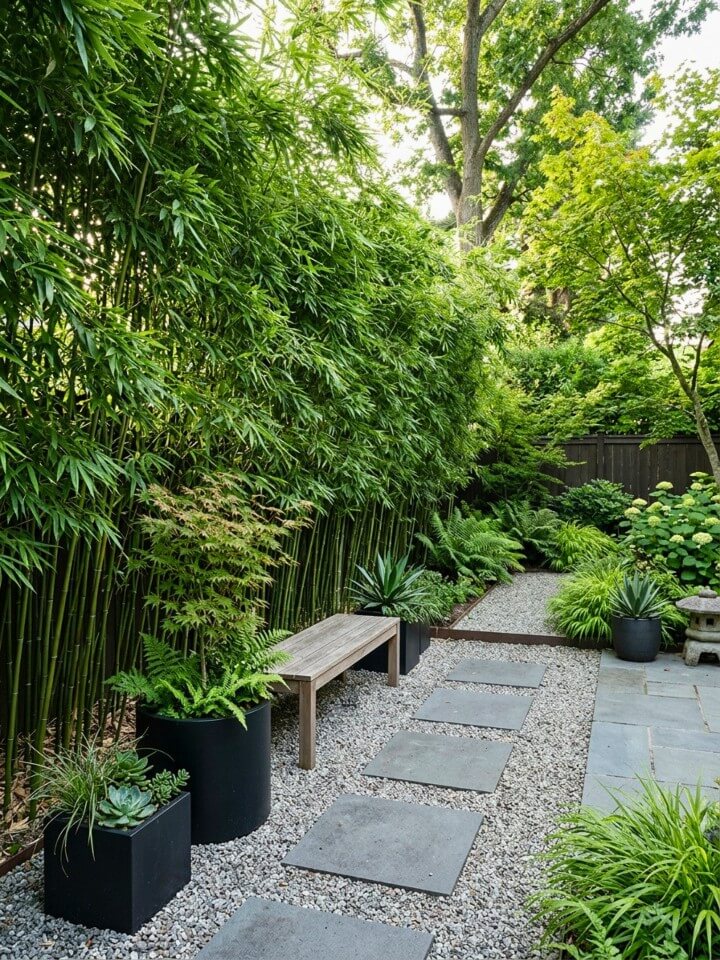
Fast growth and year-round greenery make bamboo a compelling option for homeowners who want results quickly. Clumping varieties like Fargesia stay contained without spreading into neighboring beds. Running bamboo grows more aggressively — up to 3 feet per month in warm, wet conditions — and requires a root barrier buried at least 18 inches deep. Both types create a dense, layered screen that moves in the breeze and softens the hard lines of fences. In mild climates, it stays green year-round with almost no upkeep once established.
Containment Before Planting
Install a solid HDPE root barrier around running bamboo before the first plant goes in — retrofitting one after the fact is far more difficult and expensive.
2. Tall Evergreen Hedges
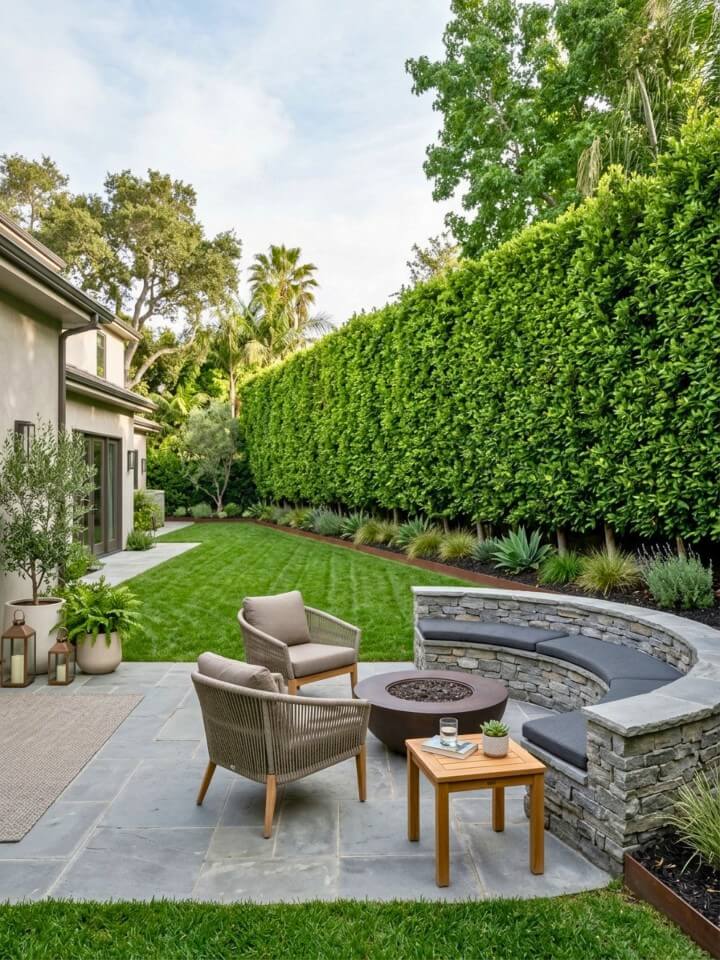
Adding evergreen trees is a practical choice when planning landscaping for privacy around your home. A solid row of evergreen shrubs gives you complete, year-round coverage without gaps or seasonal shedding. Pittosporum Silver Sheen works well in warmer climates, while Laurus nobilis and Ficus ‘Nitida’ are popular choices where space allows a wider footprint. These shrubs can be sheared into a clean, uniform wall or left slightly loose for a more relaxed appearance. Plant them 3–4 feet apart to encourage them to fill in quickly. Once established, they need little beyond occasional trimming to stay dense and tidy.
Spacing for Maximum Coverage
Plant in a single staggered row rather than a straight line — this fills gaps faster and creates a thicker screen within the first two growing seasons.
3. Arborvitae Trees
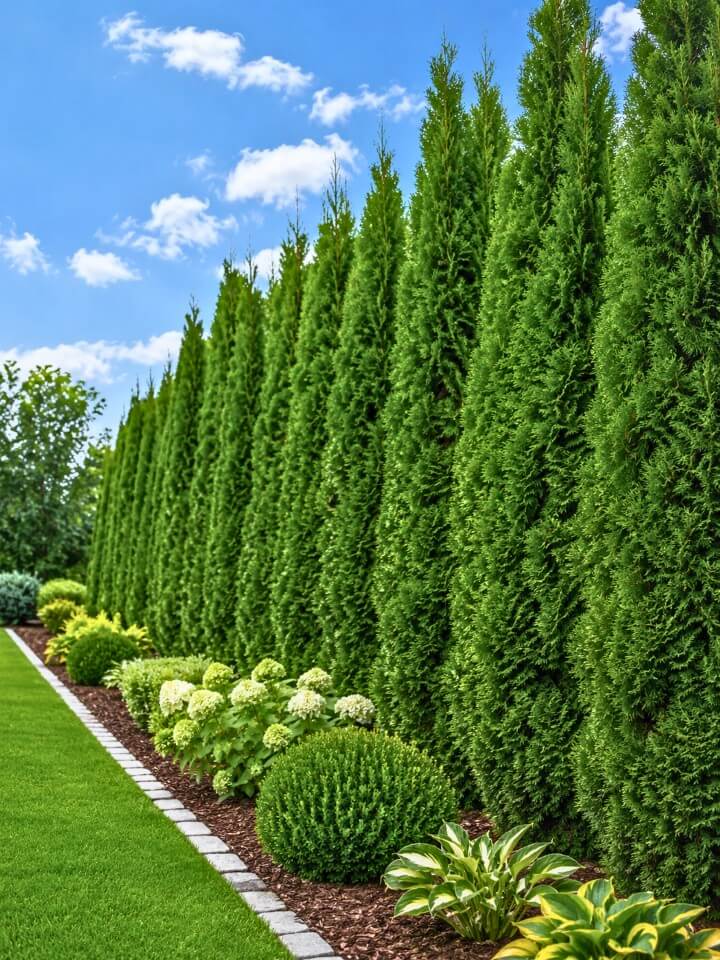
Thuja is one of the most reliable choices for a tall, narrow privacy barrier that holds its shape year-round. Green Giant can reach 30 feet or more but stays relatively slim, while Emerald Green tops out around 14 feet — better suited for smaller yards. Both grow quickly, putting on 2–3 feet annually under good conditions. Their dense, feathery foliage holds its color through winter without browning, which is a common complaint with cheaper alternatives. A single row planted 5–6 feet apart forms a living wall that blocks sight lines within a few years.
Variety Selection by Yard Size
For narrow side yards, Emerald Green is the safer choice — Green Giant needs more horizontal space as it matures and can crowd structures if planted too close.
4. Sunken Conversation Pit
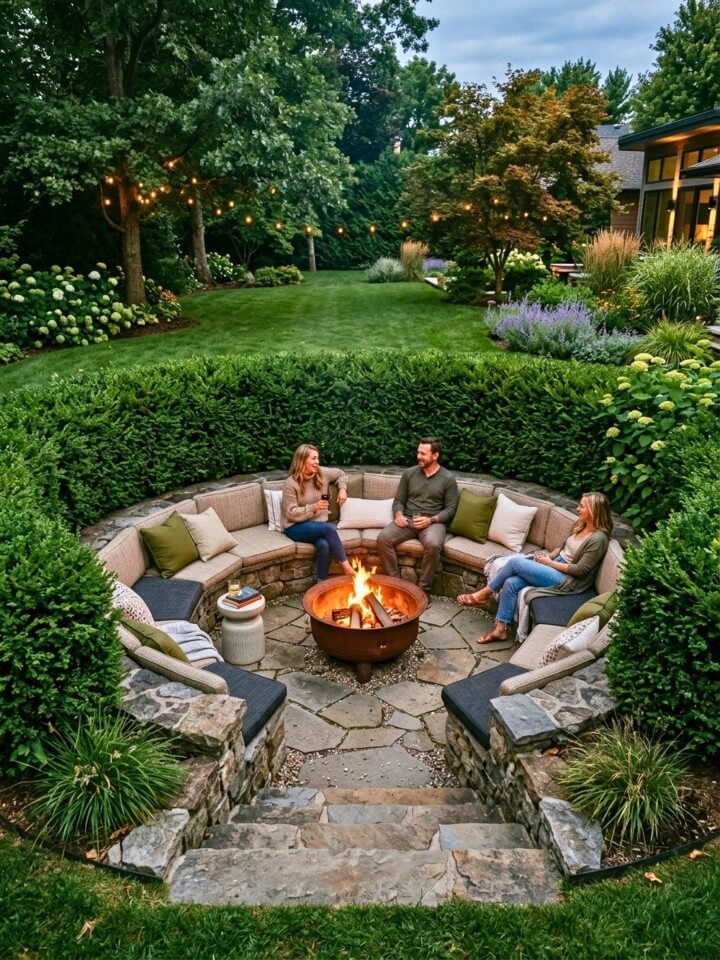
Dropping a seating area below ground level is one of the more dramatic ways to create privacy without adding a single plant or panel. The surrounding grade acts as a natural wall — once you are seated inside, fences and hedges that seemed modest at ground level suddenly feel much taller and more enclosing. A typical pit sits 18–24 inches below grade, with built-in bench seating along the perimeter and a fire pit or low table at the center. Concrete block, natural stone, and poured concrete are all used for the retaining walls. Drainage is the main engineering consideration — without a gravel base and perforated drain pipe, water collects at the lowest point after rain.
Drainage Before Anything Else
Lay a perforated drain pipe around the pit perimeter before finishing the floor — retrofitting drainage after the seating and paving are in place means tearing out finished work.
5. Trellis with Climbing Vines
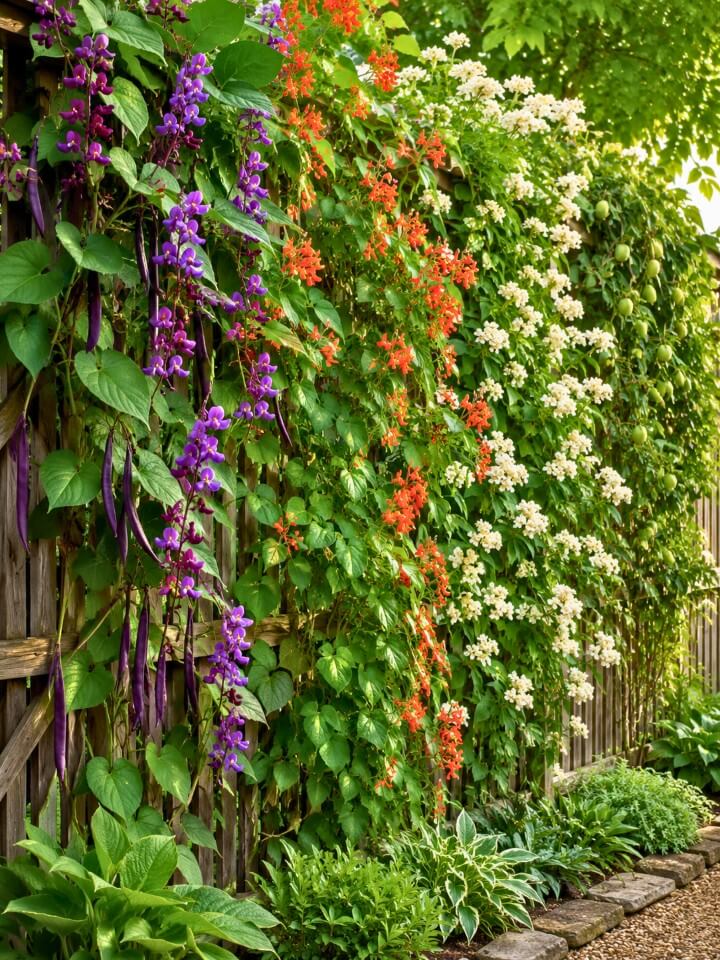
A mix of fences, vines, and shrubs can provide beautiful landscaping ideas for privacy in any yard. A wooden or metal trellis on its own offers very little privacy, but pair it with the right climbing vine and the story changes completely. Wisteria and Trumpet Vine are vigorous growers that cover a structure within a single season, while Clematis offers a slower, more controlled spread with showier blooms. Mounting a trellis extension on top of an existing fence adds 2–3 feet of extra height without replacing the fence entirely. For best results, choose a vine suited to your climate and give it a sturdy frame — lightweight trellises buckle under the weight of mature growth.
Frame Strength Matters
Use pressure-treated lumber or powder-coated steel for the trellis frame — untreated wood rots within 3–4 years once vines take hold and moisture gets trapped against the surface.
6. Frosted Glass Privacy Panels
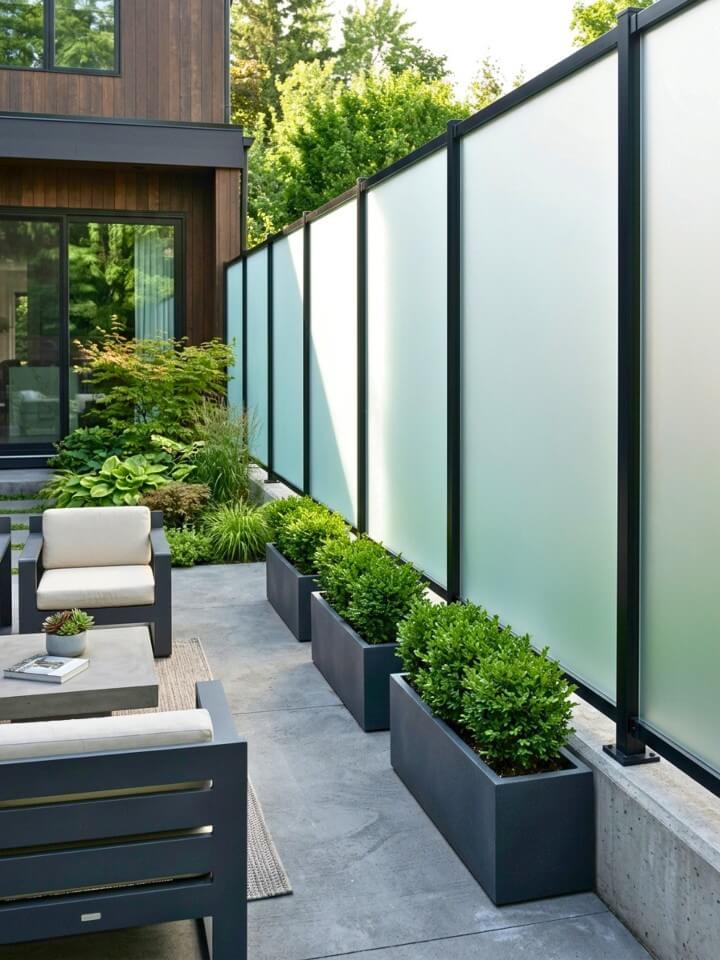
Glass is rarely the first material people consider for outdoor privacy, but frosted panels perform well in contemporary settings where plants and timber feel too casual. Light passes through freely while blocking any clear view from either side, which keeps the space from feeling boxed in. Tempered safety glass is the correct specification for outdoor panels — standard glass is a hazard if it shifts or cracks under wind load. Panels are typically mounted in aluminum or steel channel frames set into concrete footings. Adding low-voltage uplighting along the base creates a striking effect after dark, turning a functional screen into a visible design feature.
Panel Thickness for Structural Stability
Outdoor frosted glass panels should be at least 10mm tempered — thinner glass flexes under wind pressure and the constant movement eventually compromises the frame seals.
7. Bamboo Matting Panels
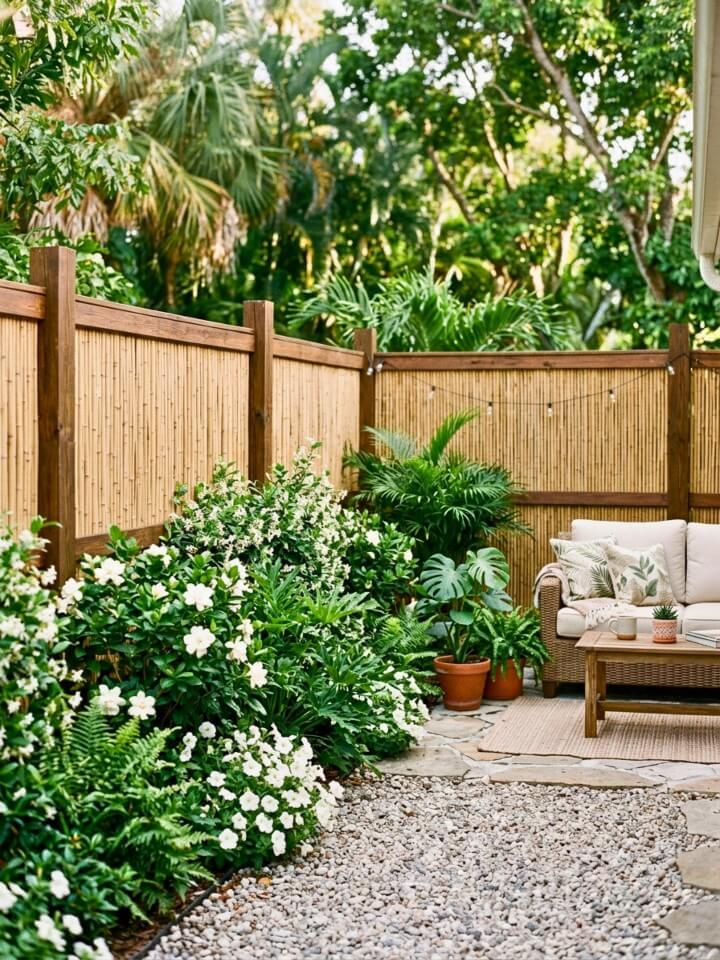
Where planting is not an option and a solid fence feels too heavy, bamboo matting offers a middle ground that installs quickly and costs relatively little. Rolls of weather-treated bamboo cane are fixed to a simple post-and-rail framework, creating a textured, natural-looking screen that works on its own or as a backdrop for planted borders. The matting itself lasts 5–8 years outdoors before UV exposure and moisture cause it to deteriorate, at which point replacement is straightforward. Planting ornamental grasses or low shrubs in front of the panels softens the look and extends the visual life of the screen considerably. It suits rental situations particularly well given the low installation cost and minimal commitment.
Post Spacing for Panel Stability
Set support posts no more than 6 feet apart — wider spans allow the matting to bow outward under wind pressure, which loosens the fixing ties and accelerates deterioration at the edges.
8. Pleached Trees for Elevated Screening
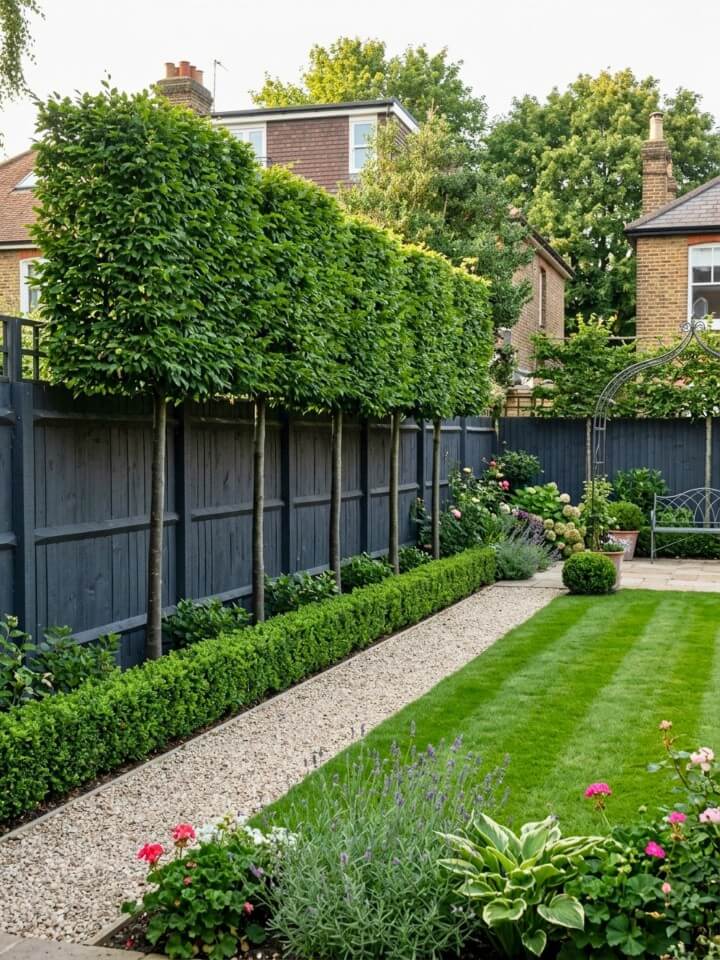
Pleaching involves training young trees so their lateral branches are woven and tied into a flat, horizontal plane — essentially creating a hedge raised on clear trunks. The result screens at exactly the height where privacy is needed, typically from 6 feet upward, without blocking ground-level views or light. Hornbeam and lime are the most commonly pleached species, both tolerating the hard pruning required to maintain the flat canopy. The clear trunks beneath give the planting an architectural quality that suits formal garden layouts particularly well. Expect 3–4 years before the canopy fills in enough to provide meaningful screening.
Staking During Early Training
Keep the main trunks staked for at least two full growing seasons — removing support too early allows wind movement that disrupts the lateral branch framework before it has set properly.
9. Laser-Cut Metal Screens
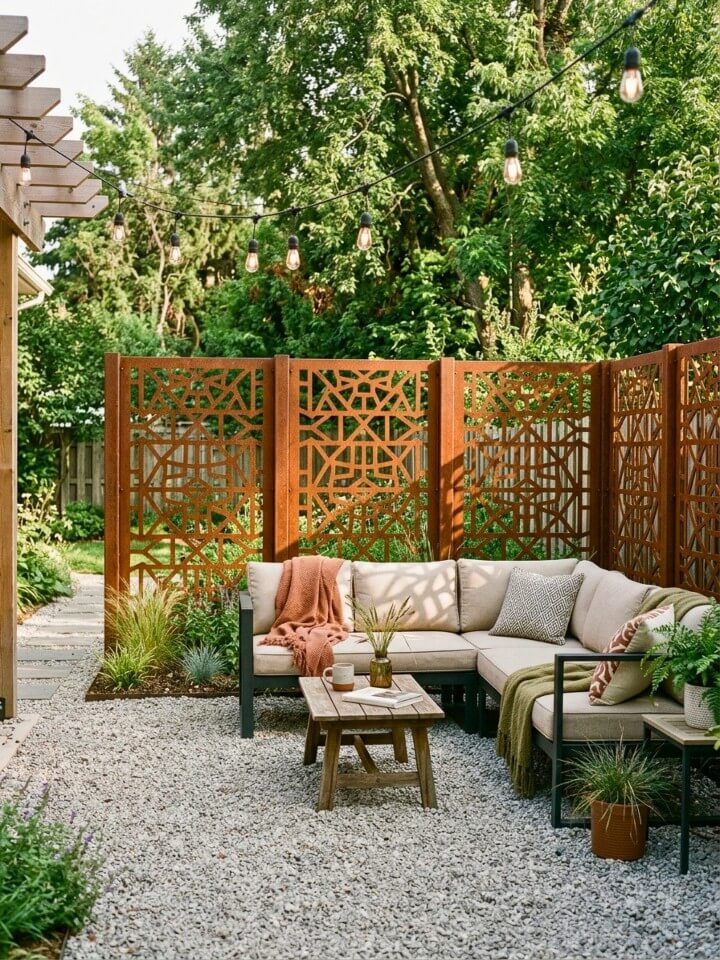
Powder-coated steel and Corten weathering steel have made decorative metal screens a practical outdoor option rather than purely an interior one. Laser-cutting allows for geometric, floral, or abstract patterns at any scale — the design itself becomes the feature rather than something to hide. Corten develops a rust-toned patina over time that many homeowners find appealing and that requires no sealing or repainting. Standard powder-coated steel needs touching up if the coating chips, but otherwise holds up well in most climates. Panels are typically custom-fabricated to fit specific openings and can be mounted on a timber or steel post system without major groundwork.
Choosing Between Corten and Powder Coat
Corten is better for low-maintenance situations but stains concrete and light-colored paving as it weathers — account for runoff when deciding where to position the panels.
10. Gazebo and Pergola Structures
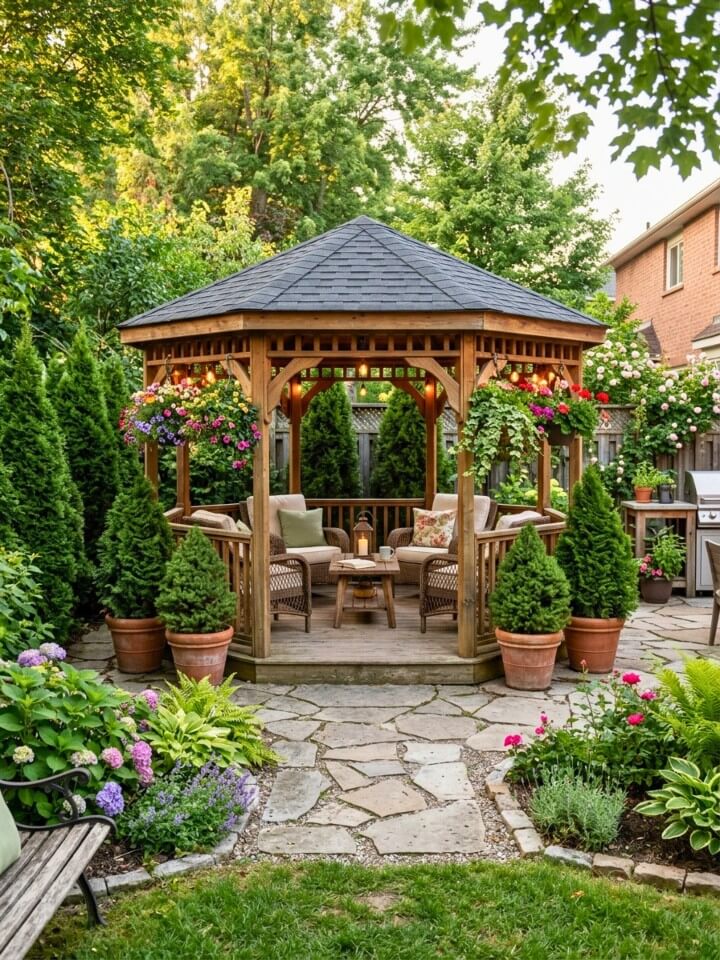
A well-placed structure does more for backyard privacy than most planted solutions, simply because it works immediately rather than over several growing seasons. Pergolas define an outdoor room without fully enclosing it — adding lattice side panels or training vines along the posts fills in the gaps over time. Gazebos offer more complete enclosure and pair well with tall potted plants or hanging baskets arranged around the perimeter. Both structures add usable square footage to the yard and tend to increase perceived home value. Cedar, redwood, and powder-coated aluminum are the most durable material options for outdoor use in variable weather.
Siting for Maximum Privacy Benefit
Position the structure so its solid roof or beams face the primary sight line — orientation matters more than size when the goal is blocking a specific neighbor’s window or elevated vantage point.
11. Layered Plantings
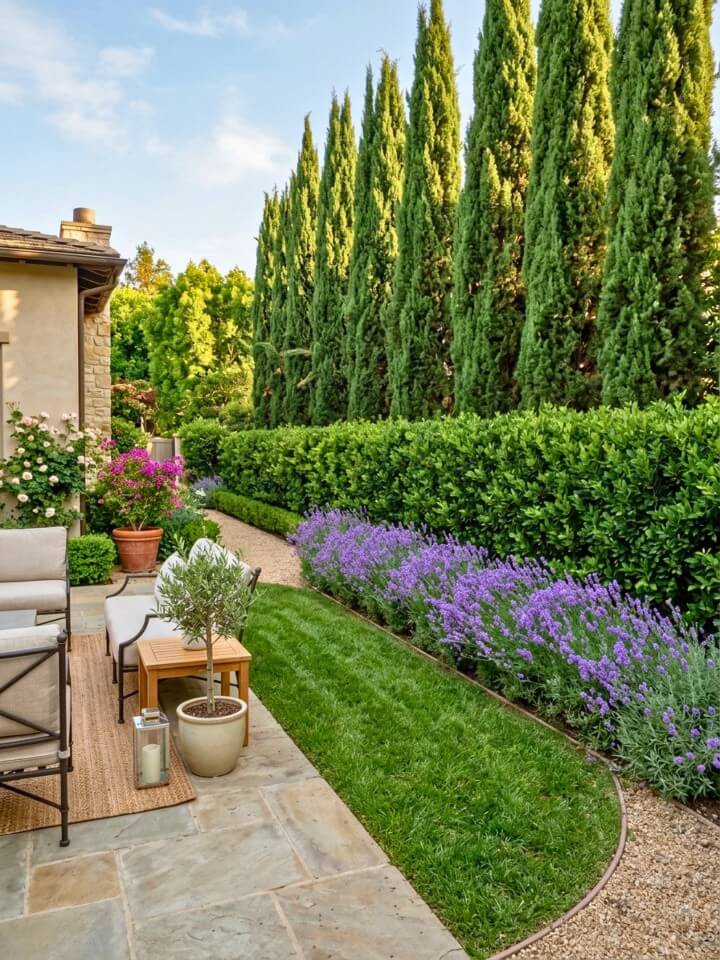
Stacking plants at different heights is one of the most effective ways to block sight lines without relying on a single row of tall shrubs. The approach typically uses canopy trees at the back for high-level screening, mid-sized shrubs in the middle, and low perennials or groundcover at the front. This creates depth, seasonal interest, and better noise buffering than a flat hedge ever could. It also gives you flexibility — if one plant struggles, the others compensate. A layered border 6–8 feet wide can screen a full fence line while looking like a considered garden rather than a barrier.
Planting Order for Best Results
Start with the tallest trees first and work forward — placing smaller plants before large ones makes it harder to judge spacing accurately and risks crowding as everything matures.
12. Ornamental Grasses
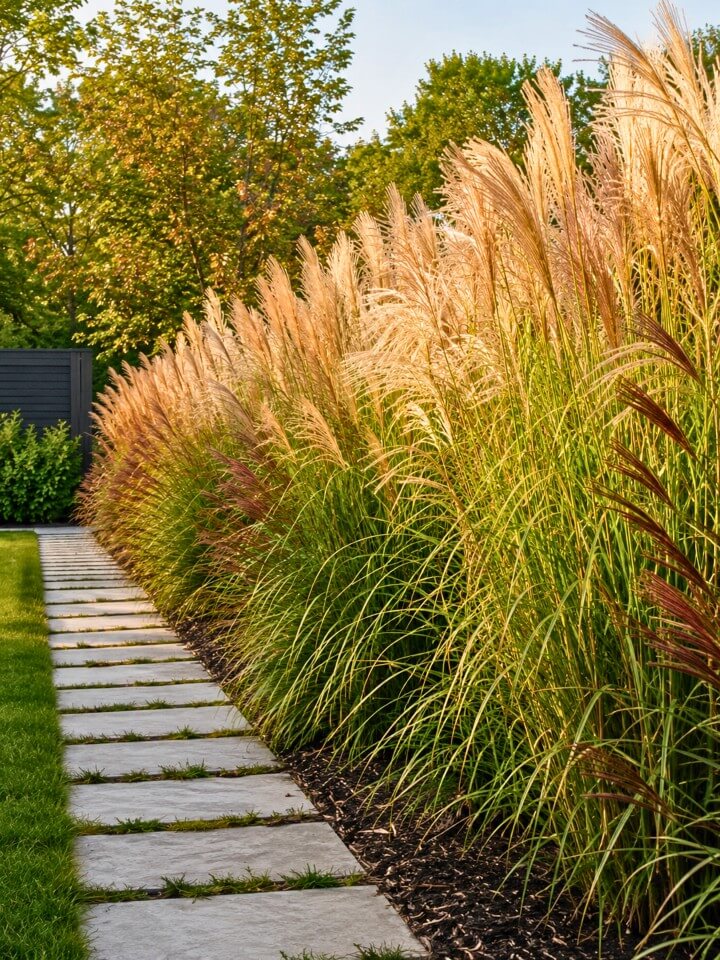
Tall ornamental grasses bring movement and texture to spaces where rigid fencing feels too harsh. Miscanthus sinensis can reach 6–8 feet, creating a soft, feathery wall that sways in the wind and catches evening light beautifully. Pampas Grass grows even taller but spreads aggressively, so give it room. Feather Reed Grass is narrower and more upright — a better fit for tighter spaces along a path or fence line. Most varieties go dormant in winter, so pairing them with a few evergreen shrubs maintains year-round coverage where it matters most.
Cutting Back at the Right Time
Cut ornamental grasses down to about 6 inches in late winter before new growth appears — doing it too early removes the structure that gives your yard visual interest through the cold months.
13. Pergola with Vines
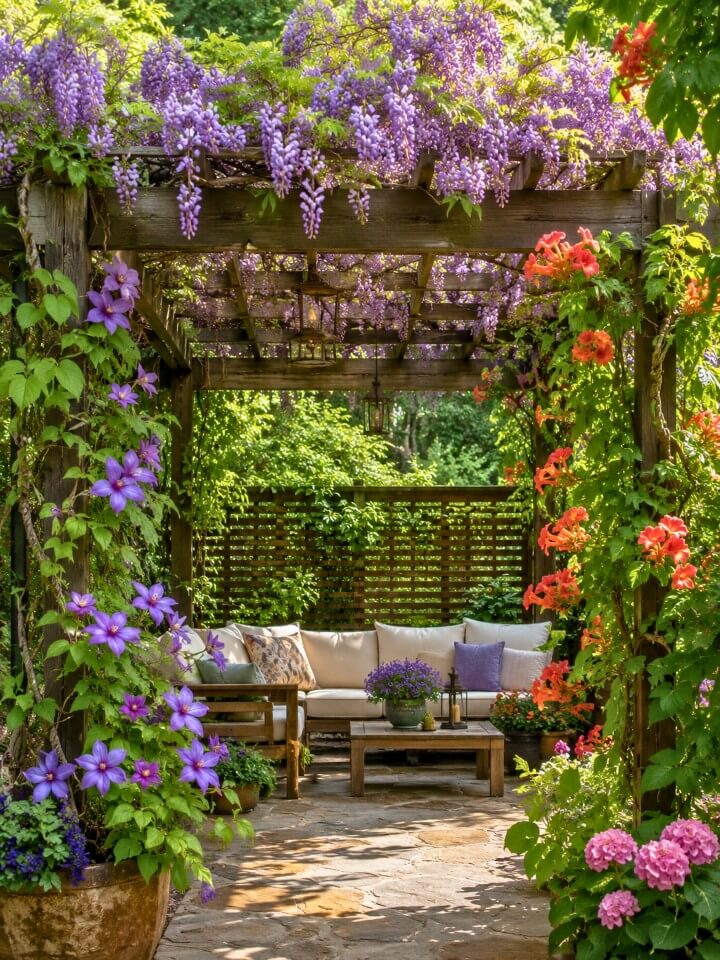
A pergola does something a fence cannot — it adds overhead coverage while defining an outdoor living space underneath. Wisteria draped across the beams creates a ceiling of hanging blooms in spring, while Trumpet Vine and Clematis fill in the sides as they mature. The structure itself filters light and breaks up sight lines from neighboring windows without making the space feel enclosed or dark. Cedar and pressure-treated pine are the most common lumber choices, both holding up well outdoors with minimal sealing. Most homeowners find that vines reach full coverage within two to three growing seasons.
Vine Pairing by Sun Exposure
Wisteria and Trumpet Vine need full sun to bloom well — in shadier yards, climbing hydrangea is a better option and still provides dense coverage along the posts and beams.
14. Lattice Fence
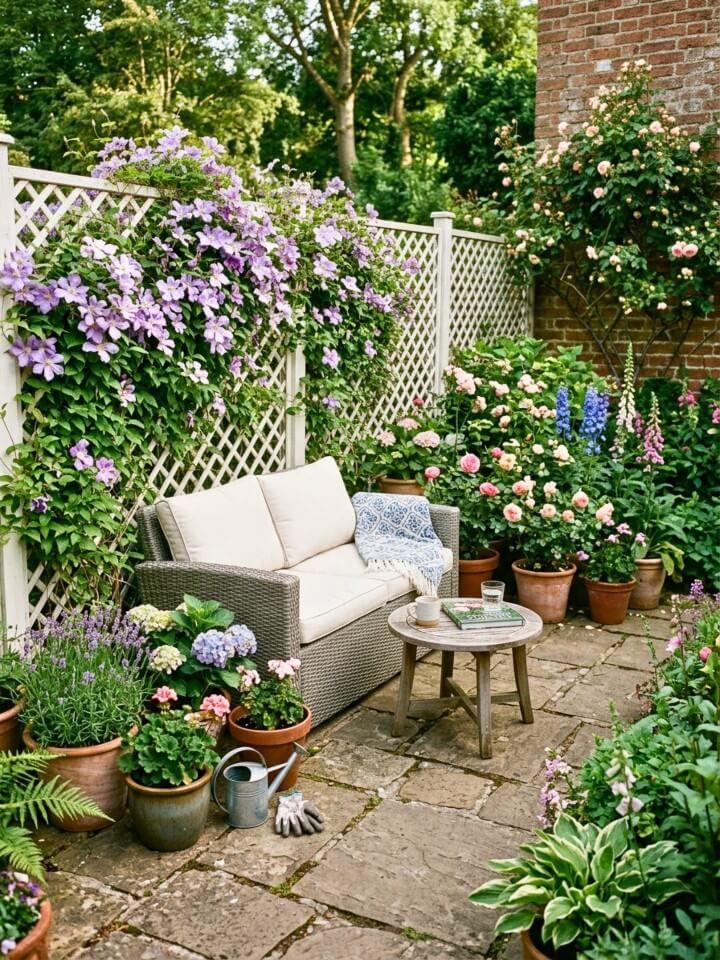
Unlike a solid panel fence, lattice lets air and light pass through while still breaking up direct sight lines from the street or neighboring yards. The open grid pattern also gives climbing plants something to grip, so you can gradually fill in coverage over time without replacing the structure. Cedar lattice weathers to an attractive silver-grey, while vinyl versions need almost no maintenance and won’t warp or splinter. Panel spacing can be adjusted — tighter diagonal grids offer more privacy, while wider squares keep the look open and decorative. Either way, it costs considerably less than a full solid fence.
Anchoring for Wind Resistance
Lattice panels have a large surface area and catch wind easily — secure them to posts set at least 2 feet deep in concrete to prevent shifting or panel damage during storms.
15. Stone or Wood Walls
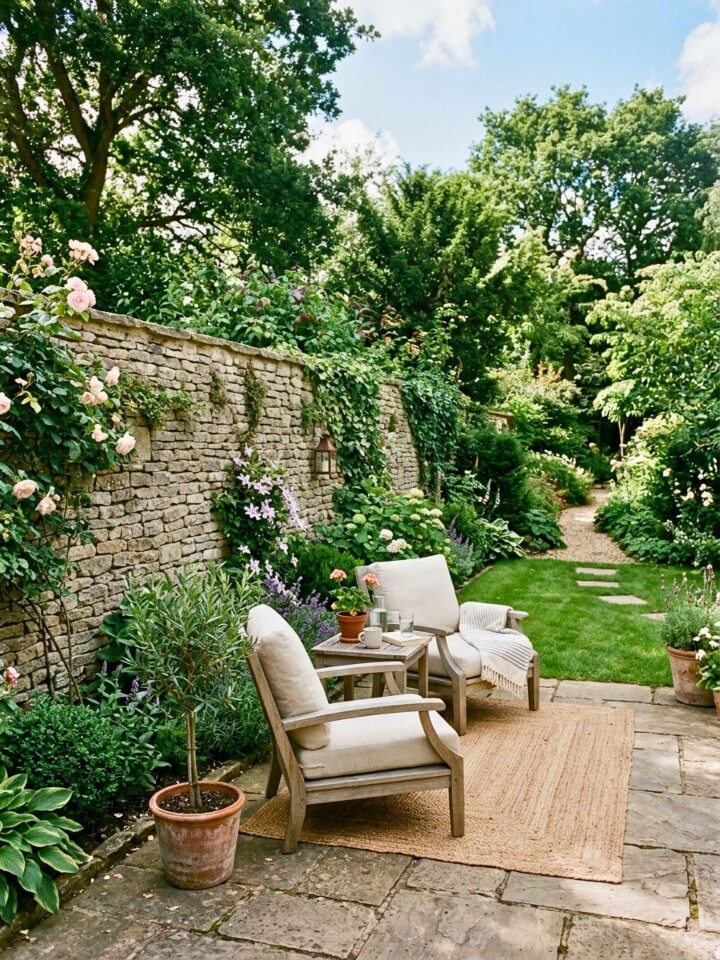
Solid masonry or timber walls offer a level of permanence that planted screens simply cannot match. A dry-stacked stone wall sits naturally in the landscape and needs no mortar, while mortared brick or block gives a cleaner, more architectural finish. Hardwood timber walls — built from cedar, redwood, or treated pine — are faster to construct and easier to modify if your layout changes. Either material blocks sound better than an open hedge and requires no watering or seasonal care. Height restrictions vary by location, so checking local regulations before building above 6 feet is worth doing early in the planning process.
Material Choice by Maintenance Preference
Stone walls are virtually maintenance-free once built, while timber walls need sealing or staining every 3–5 years to prevent moisture damage and keep the surface looking clean.
16. Outdoor Curtains
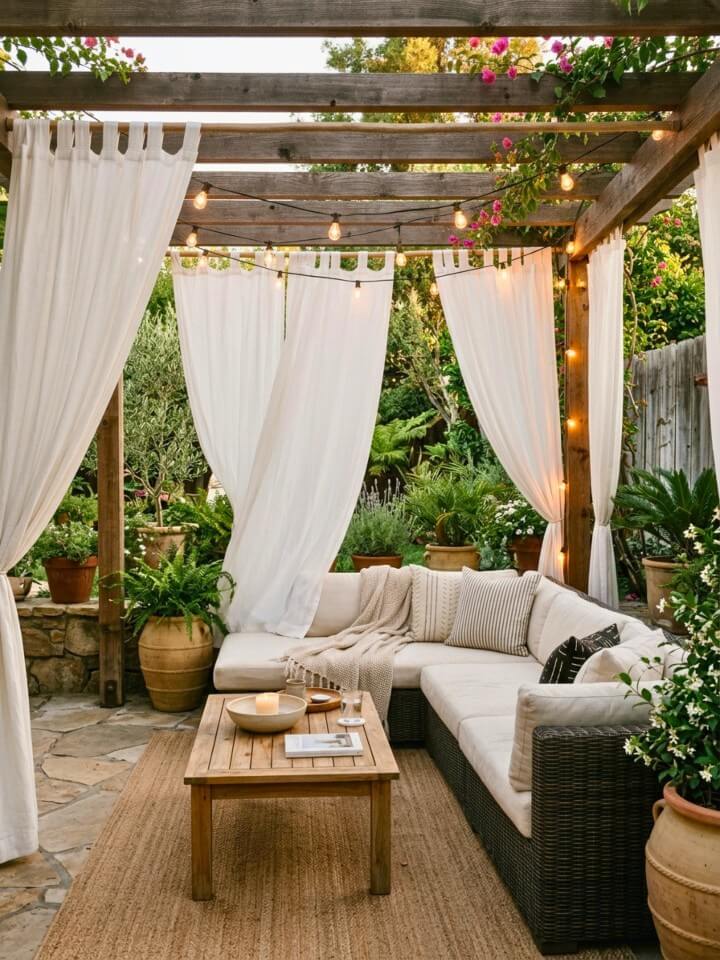
Curtains work well in situations where you want privacy on demand rather than a permanent screen. Hung from a pergola, stretched between posts, or attached to a covered patio beam, they can be drawn closed during gatherings and pulled back when not needed. Sunbrella and other solution-dyed acrylic fabrics hold their color outdoors for years without fading or growing mildew — a meaningful upgrade over standard canvas. Neutral tones like linen, stone, and charcoal blend into most garden settings without looking out of place. Pairing them with a simple rope-and-cleat system makes adjusting coverage quick and easy.
Fabric Weight for Wind Conditions
Lighter fabrics billow and tangle in even moderate wind — choose a heavier outdoor fabric (at least 9 oz per yard) if your space is exposed, and add bottom weights to keep panels hanging straight.
17. Espalier Fruit Trees
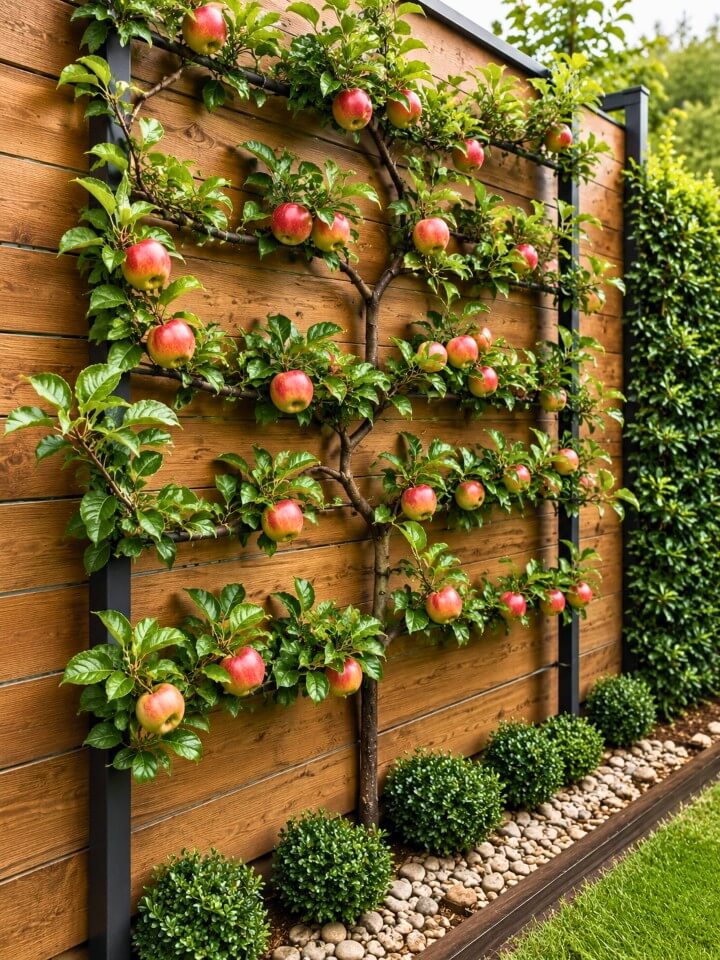
Training a fruit tree flat against a fence or wall takes patience, but the result is unlike anything else in a residential garden. Apples, pears, and figs respond well to the technique — their branches are pruned and tied horizontally along wires fixed to the surface, creating a living screen that stays surprisingly narrow. A mature espalier rarely extends more than 12–18 inches from the wall, making it ideal for tight spaces along a property line. Beyond the visual appeal, you get a working harvest from a plant that most people would never think to use as screening.
Getting the Framework Right
Fix horizontal wires every 18 inches up the fence or wall before planting — trying to add support after the branches have set their shape makes training far more difficult and often damages new growth.
18. Raised Planter Boxes Along the Property Line
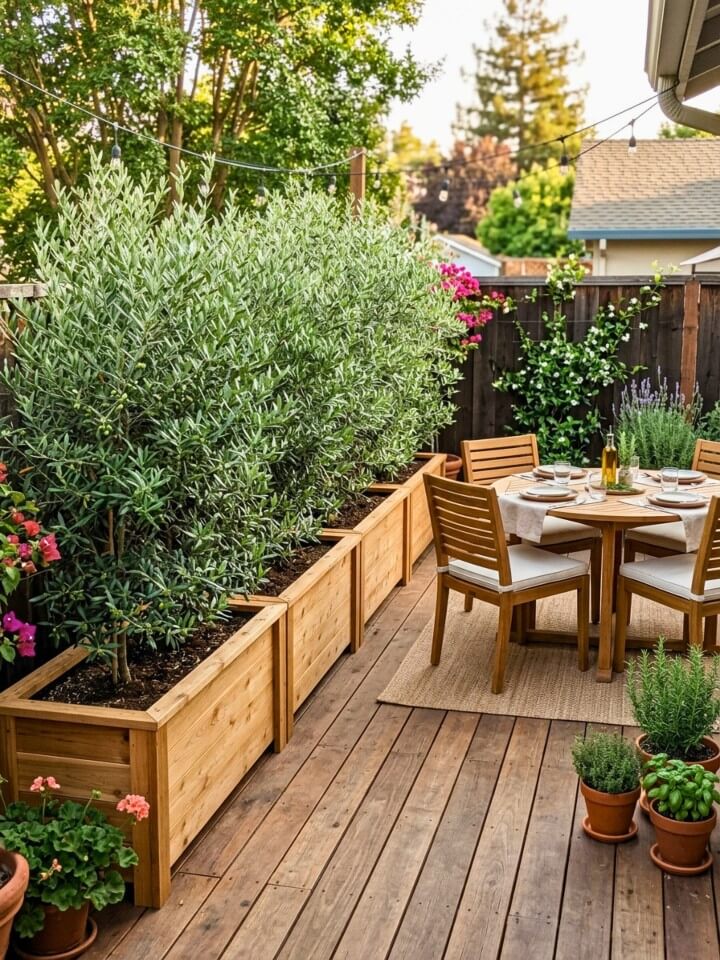
A quiet patio can feel more relaxing with simple backyard privacy ideas like tall shrubs or a wooden screen. Ground-level planting is not always an option — concrete patios, decks, and compacted soil all get in the way. Raised planter boxes solve this by elevating dense shrubs or small columnar trees above the surface, adding an extra 18–24 inches of screening height before the plant even begins. Cedar and composite lumber are the most common choices for the boxes themselves, both handling outdoor moisture well over time. Fill them with a quality mix of topsoil and compost rather than straight potting mix, which dries out too quickly in large containers. Boxwood, Sky Pencil holly, and dwarf arborvitae all perform well in this setup.
Load Considerations for Decks
Large planter boxes filled with soil are heavier than most people expect — check your deck’s weight rating before placing them near the edges, particularly on older or elevated structures.
19. Soil Berm for Sound and Visual Screening
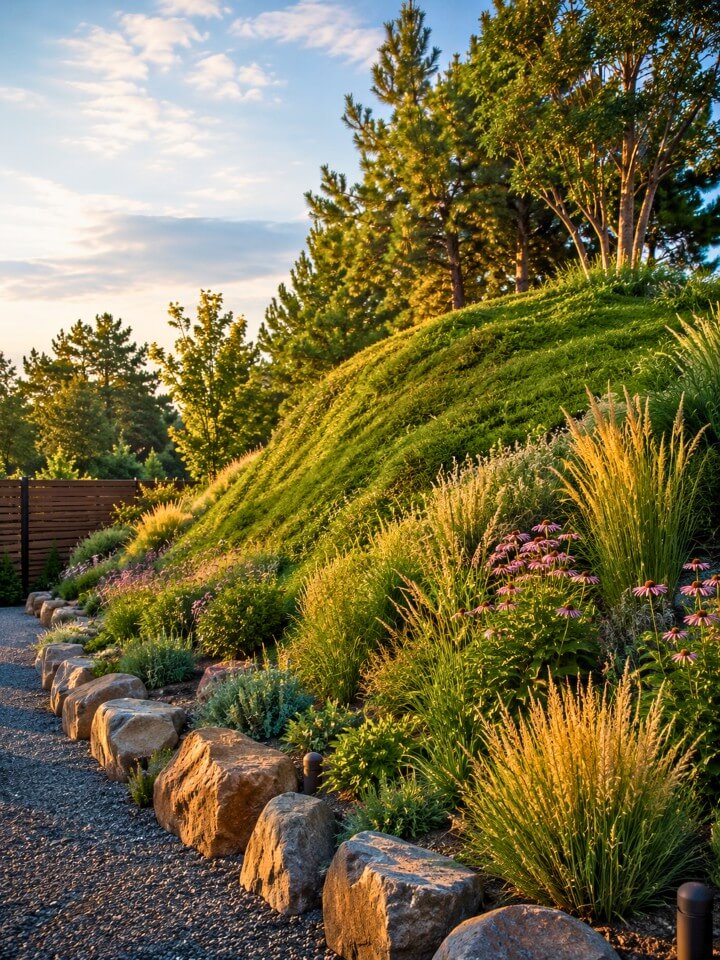
A berm is a sculpted mound of compacted soil built directly into the landscape, and it works differently from any plant or fence. The mass itself deflects sound waves upward rather than absorbing them, which makes berms particularly effective against low-frequency noise like traffic. A well-built berm should be at least twice as wide as it is tall to stay stable — a 3-foot-high mound needs a 6-foot base minimum. Planting shrubs or grasses on top adds height without extra earthwork. The finished result looks like a natural rise in the land rather than a constructed barrier, which suits informal garden styles well.
Soil Composition for Stability
Use a mix of subsoil at the core and topsoil on the outer layer — building entirely with topsoil causes settling and slumping after the first heavy rain.
20. Water Features That Mask Neighbor Noise
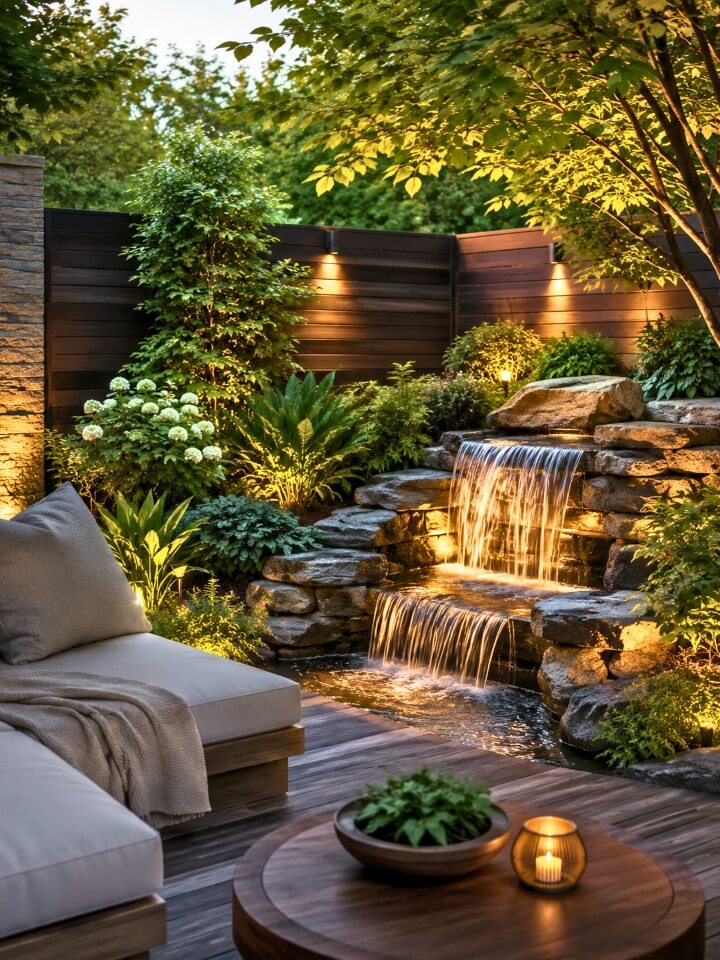
Visual screening handles what people can see, but sound is a separate problem entirely. A fountain or recirculating waterfall introduces consistent white noise that blurs out conversation, traffic, and other yard activity nearby. The masking effect improves with volume and proximity — a small tabletop fountain does very little, while a wall-mounted cascade or freestanding rock waterfall placed near the seating area makes a noticeable difference. Solar-powered pumps have become reliable enough for permanent installation, reducing wiring complexity. Natural stone finishes tend to age well outdoors, while cast concrete can be painted or stained to match surrounding hardscape.
Pump Sizing for Consistent Sound
Choose a pump rated for at least 1.5 times your actual water volume — undersized pumps strain to maintain flow, run louder mechanically, and tend to fail within a season or two.
21. Horizontal and Vertical Slat Panels
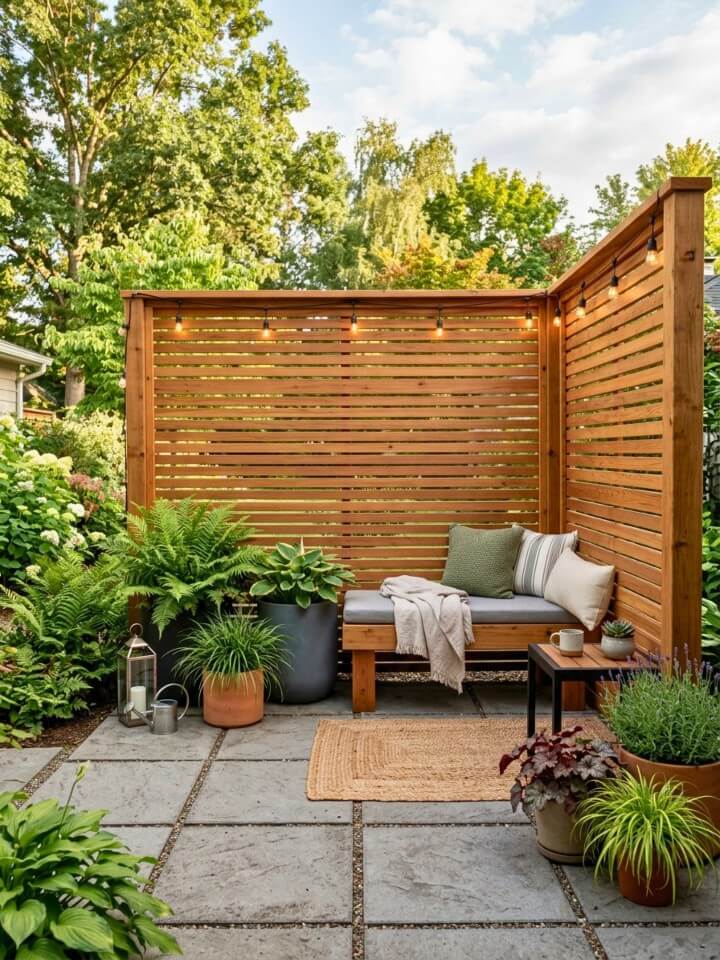
Slatted timber panels thread a line between solid fencing and open screening — they block direct views while still allowing airflow and filtered light through the gaps. Horizontal slats give a contemporary, low-profile look that suits modern architecture, while vertical arrangements feel more traditional and can make a shorter fence appear taller. Gap width is the main variable: 10mm spacing offers near-complete privacy, while 25–30mm gaps let in considerably more light and breeze. Western red cedar is the most popular timber choice for outdoor slats — it resists moisture and insect damage without requiring chemical treatment, and weathers to an even silver-grey if left unsealed.
Sealing for Long-Term Appearance
Apply a penetrating oil finish rather than a film-forming varnish — varnish peels and traps moisture once it starts to crack, while oil simply needs reapplying every couple of years.
22. Retractable Screens and Shade Sails
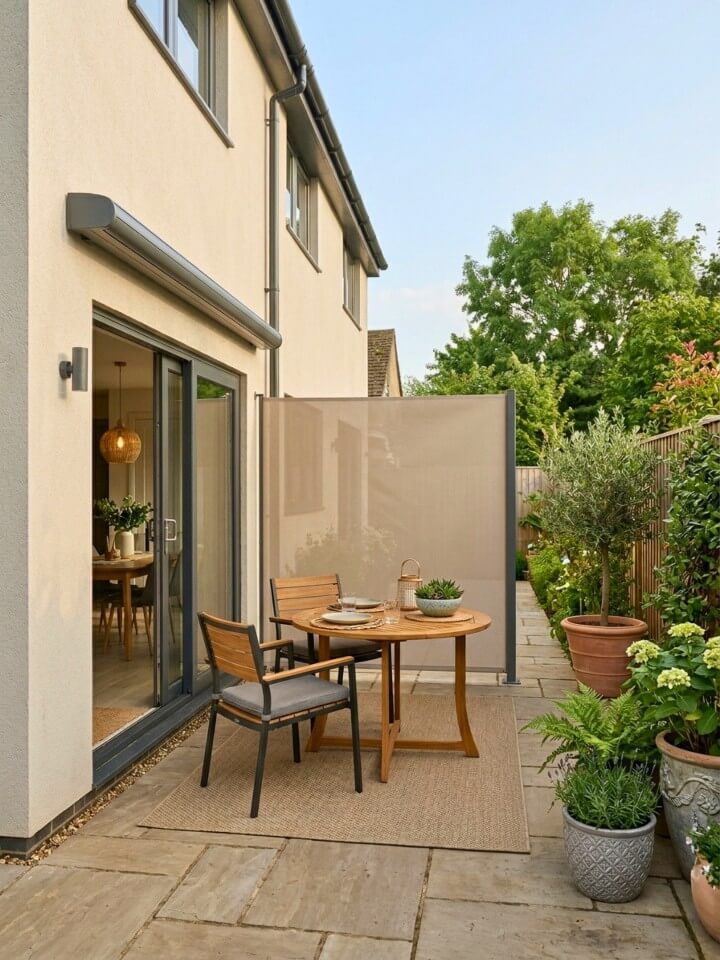
Not every yard needs full-time screening — sometimes the requirement is occasional privacy during specific activities. Retractable side awnings, roll-up mesh screens, and tensioned shade sails all address this without permanently altering the space. Shade sails in particular have improved significantly in recent years; high-density polyethylene fabric now blocks UV effectively while allowing enough airflow to avoid heat buildup underneath. Fixing points need to be substantial — a tensioned sail puts considerable lateral force on its anchor posts, especially in wind. Stainless steel hardware and UV-stabilized fabric are worth the extra cost over budget alternatives, which tend to fail at the fixings within a season or two.
Tensioning Shade Sails Correctly
Install anchor posts at a slight outward angle rather than vertical — this counteracts the inward pull of the tensioned fabric and keeps fixings from loosening over time.
23. Moveable Planters on Wheels
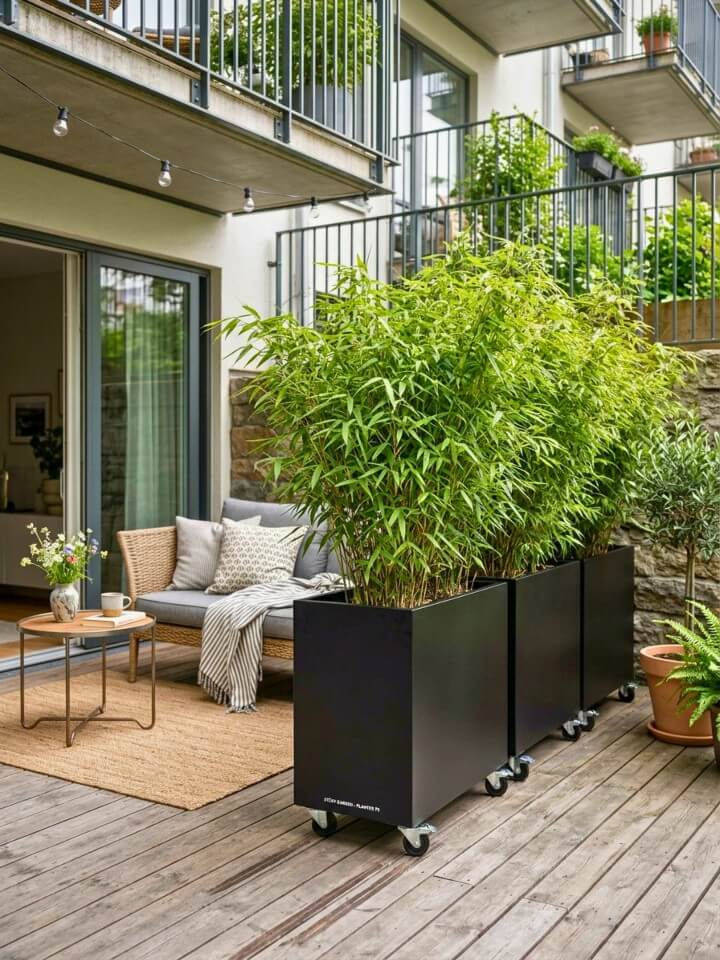
Large containers on locking casters give you screening that repositions as your needs change — something no fence or planted hedge can offer. A planter box 24 inches wide and 30 inches deep holds enough soil volume to support columnar shrubs, bamboo, or small ornamental trees at a meaningful height. Composite and cedar lumber both handle outdoor moisture well for this application. The real advantage shows up in rental properties or situations where permanent landscaping is restricted — the entire screen travels with you. Weight is the main practical limit; a fully planted and watered large container can exceed 200 pounds, so quality swivel casters rated for outdoor use matter considerably.
Soil Mix for Heavy Containers
Replace a third of the potting mix with perlite or coarse pumice — this cuts overall weight noticeably while maintaining drainage and root health in confined containers.
24. Mixed Species Hedge
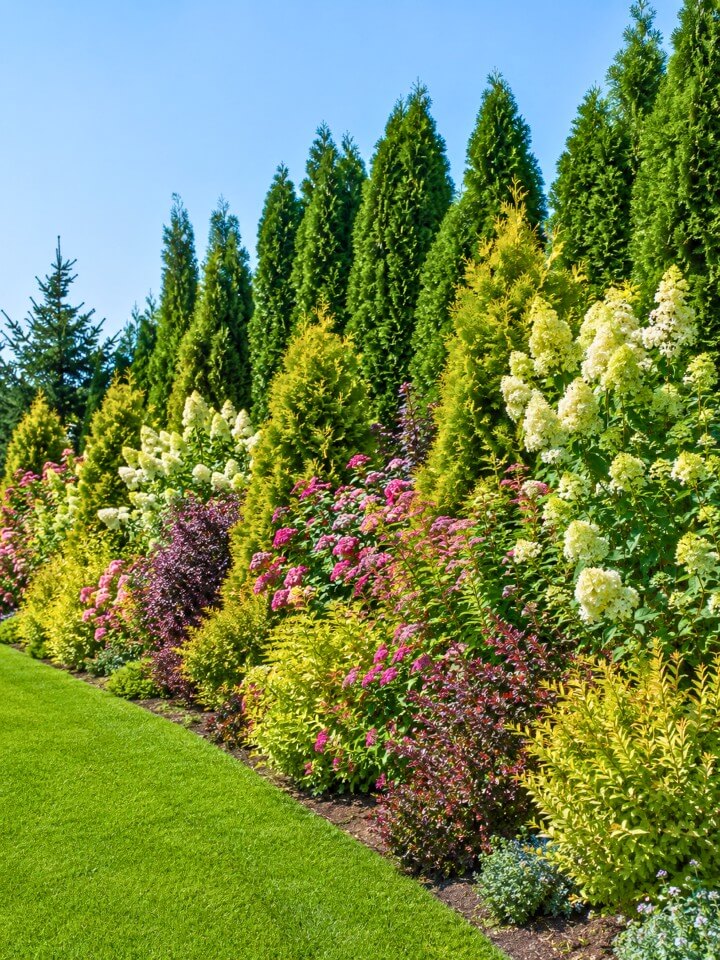
Tall hedges and layered greenery are popular privacy landscaping ideas for blocking unwanted views. Single-species hedges look uniform but carry real risk — one pest or disease outbreak can devastate an entire screen that took years to establish. Alternating two or three compatible species spreads that risk while adding seasonal variation in texture, color, and flowering time. A combination of a fast-growing evergreen like Viburnum tinus with a slower, denser option like Ilex creates a screen that fills in quickly and holds structure long-term. Spacing plants so that neighboring individuals just touch at maturity eliminates the need for heavy pruning while keeping the border tight. Wildlife benefit is a genuine bonus — mixed hedges support far more insects and birds than monoculture plantings.
Combining Growth Rates Strategically
Plant faster-growing species at slightly wider spacing than slower ones — this prevents the vigorous plants from crowding out their neighbors before the full hedge establishes.
25. Outbuildings as Natural View Blockers
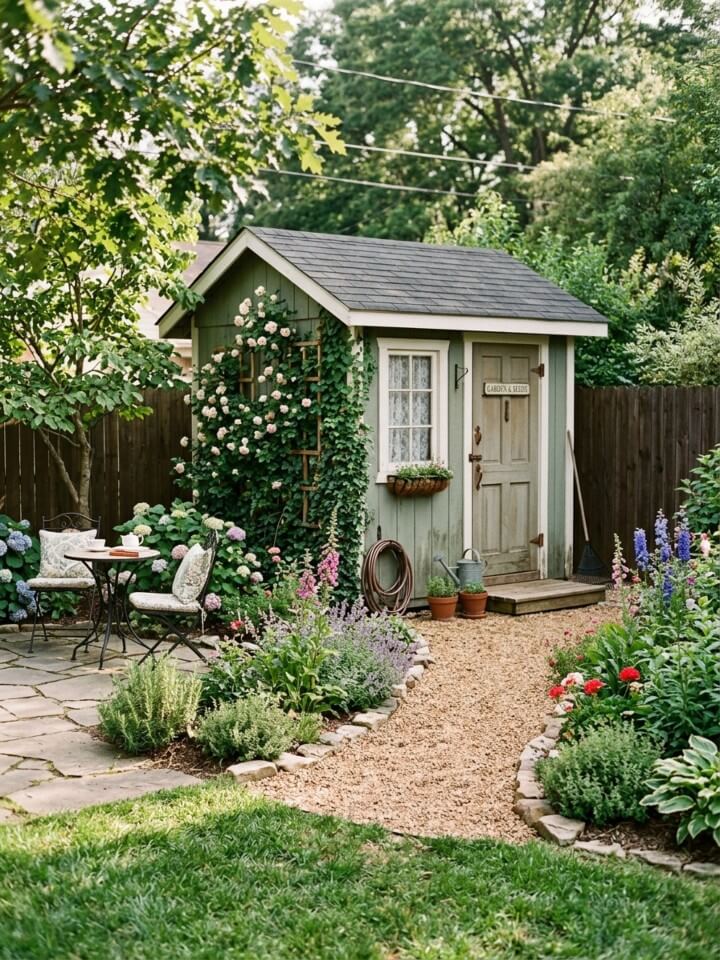
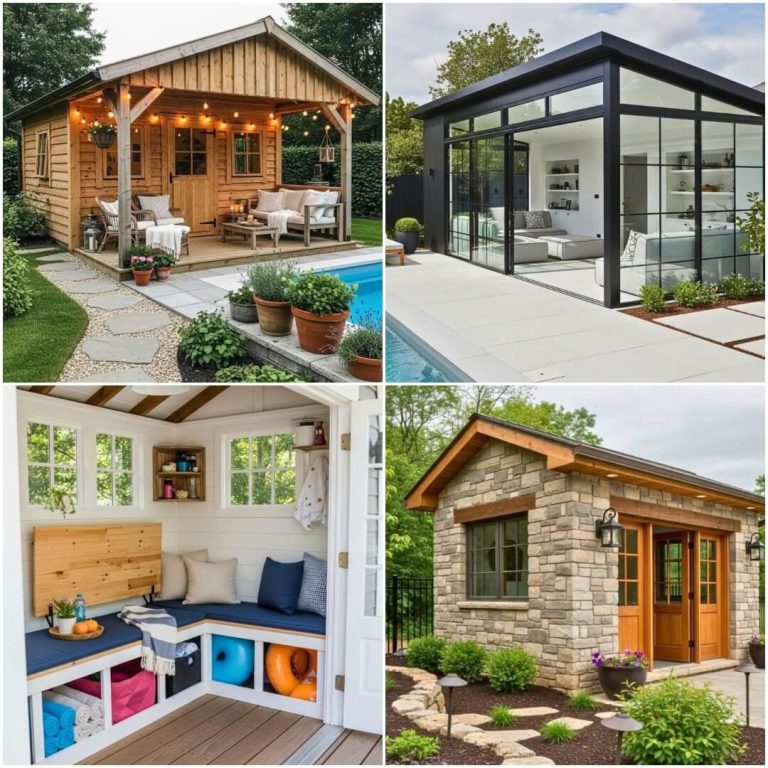
A shed, studio, or storage pavilion positioned deliberately along a property boundary does double duty — it provides useful space while physically blocking sight lines that plants alone might take years to fill. The structure works immediately, unlike any planted solution. Exterior cladding choices make a significant difference to how the building reads in the landscape: board-and-batten timber softens the look, while painted hardboard or metal sheeting suits contemporary settings. Adding a planted border along the outward-facing wall ties the structure into the surrounding garden rather than leaving it looking isolated. Most jurisdictions allow accessory structures up to a certain size without a permit, but checking local rules before building saves complications later.
Positioning for Maximum Screening Benefit
Set the longest wall parallel to the sight line you want to block rather than angling the structure — a longer surface covers more of the view from a single fixed position.
26. Masonry Walls With Character

Brick, stucco, and natural stone walls carry a solidity and permanence that timber or metal alternatives rarely match. Beyond their structural qualities, they offer significant design flexibility — a rendered stucco wall can be painted any color, while exposed brick develops character over time without any maintenance. Incorporating ornamental ironwork into openings within the wall allows controlled views and airflow without compromising privacy. A low retaining wall topped with a planted border combines hard and soft elements in a way that feels considered rather than purely functional. Mortar joints, coping stones, and wall caps all affect the finished appearance significantly, so detailing decisions deserve as much attention as the primary material choice.
Coping Stones Prevent Long-Term Damage
Always cap a masonry wall with a coping stone or angled brick course — without it, rainwater saturates the top courses and freeze-thaw cycles crack the mortar from the inside out.
27. Climbing Roses Along Fence Lines
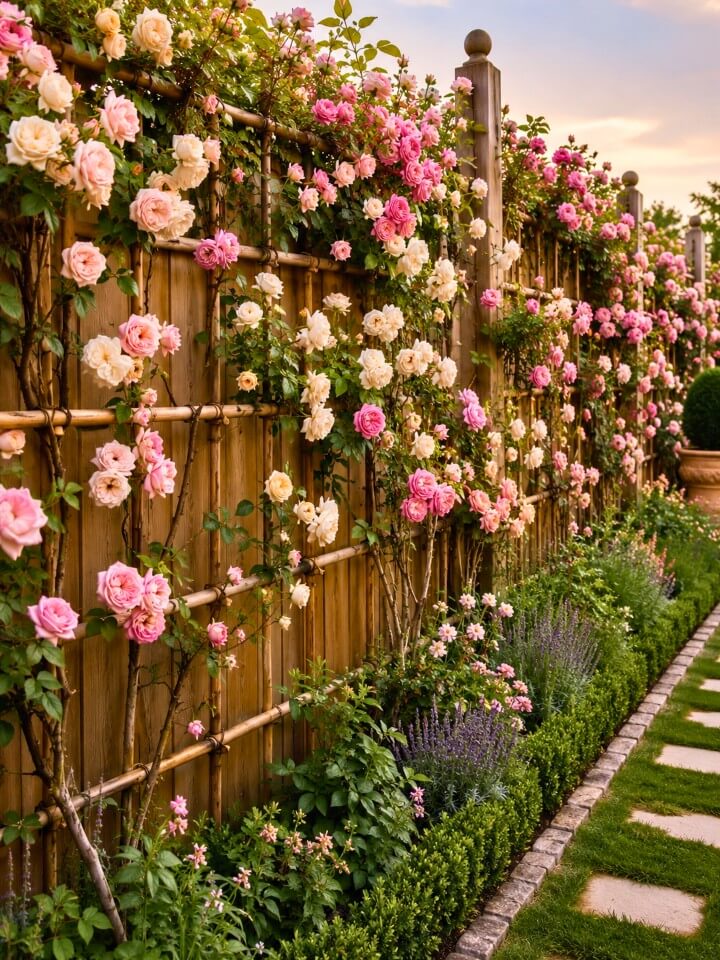
A fence covered in climbing roses offers something purely structural panels never can — seasonal fragrance, changing color through the year, and a softness that makes the boundary feel like part of the garden rather than an imposition on it. Zephirine Drouhin and New Dawn are two reliable climbing varieties with strong cane structure and repeat flowering. Training horizontal canes along wire supports fixed to the fence encourages more blooms than allowing the plant to grow straight upward. At full maturity, a well-trained climber adds 3–4 feet of coverage above the fence line. Annual pruning in late winter keeps the framework open and productive rather than congested with old wood.
Supporting Canes Before They Thicken
Tie new canes to wire supports while they are still flexible — once rose canes lignify and harden, bending them into horizontal position risks splitting at the base.
28. Fast-Growing Annual and Perennial Vines
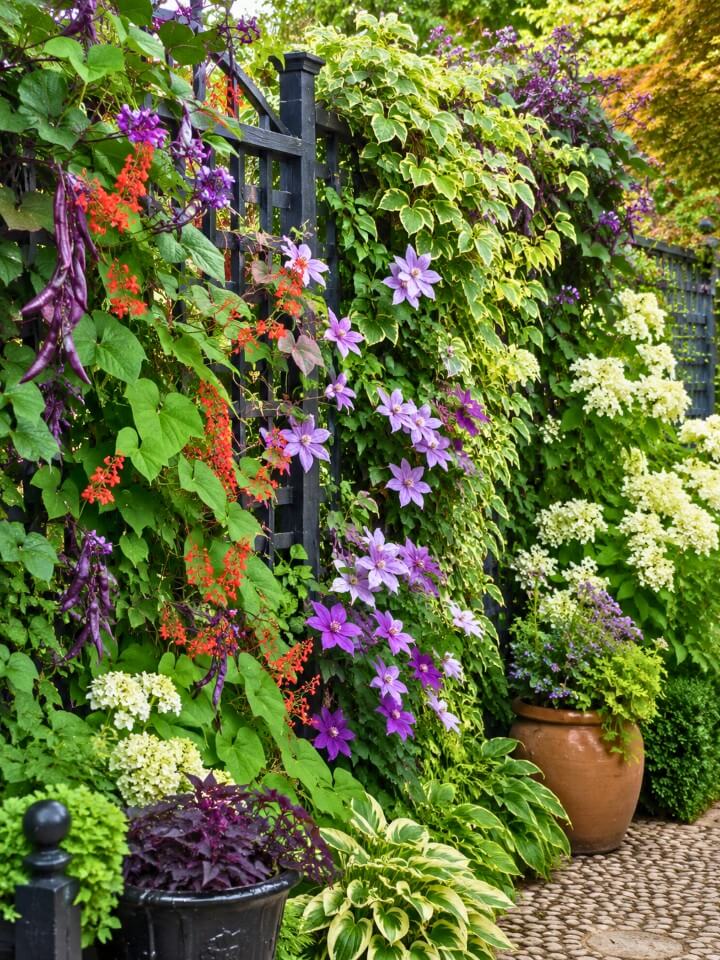
When a fence needs coverage within a single season, annual vines deliver faster than almost any other planted option. Purple hyacinth bean and scarlet runner bean both reach 6 feet or more by midsummer, covering a trellis or chain-link fence with dense, colorful growth. They die back with the first frost, which means replanting each spring — manageable for most gardeners but worth considering before committing. For permanent coverage, clematis and ornamental kiwi vine build woody frameworks over several years that require almost no intervention once established. Climbing hydrangea is worth mentioning separately — it is slower to establish than most vines but eventually covers large surfaces with exceptional density.
Directing New Vine Growth Early
Guide young stems onto their support structure weekly during the first month — left unguided, vines attach to themselves rather than the fence and create a tangled mass that is difficult to redirect later.
29. Flowering Shrubs for Seasonal Privacy
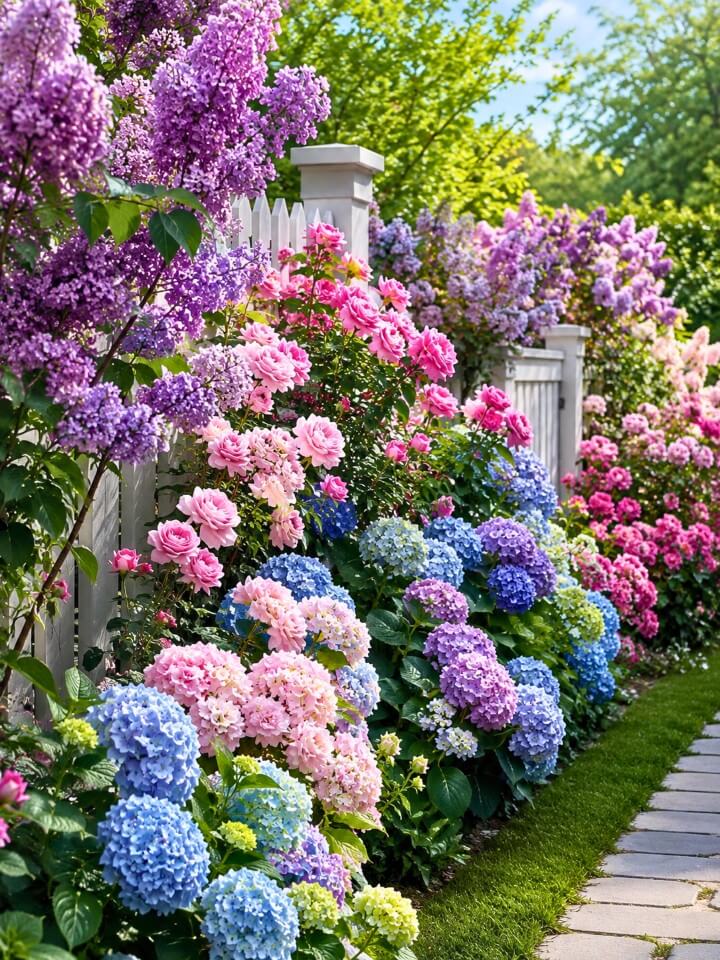
Lilacs, roses, and hydrangeas are most often chosen for their flowers, but at mature size they also function as effective soft screens along borders and fence lines. Lilac can reach 10–15 feet without pruning and forms a dense tangle of stems that blocks views even in winter after the leaves drop, making it a strong candidate for anyone exploring lilac bush landscaping ideas with privacy in mind.
Hydrangeas offer a shorter option at 4–6 feet, better suited to mid-level screening between seating areas. The seasonal dimension is worth considering — these shrubs look their best for a few weeks during peak bloom and reasonably good the rest of the growing season, but they do not provide year-round coverage the way evergreen alternatives do. Mixing them with one or two evergreen shrubs compensates for the winter gap.
Pruning Timing Affects Flowering
Hydrangeas and lilacs set next year’s flower buds shortly after blooming — pruning in late summer or autumn removes those buds and results in a season without flowers.
30. Overhead Canopy for Upper-Floor Privacy
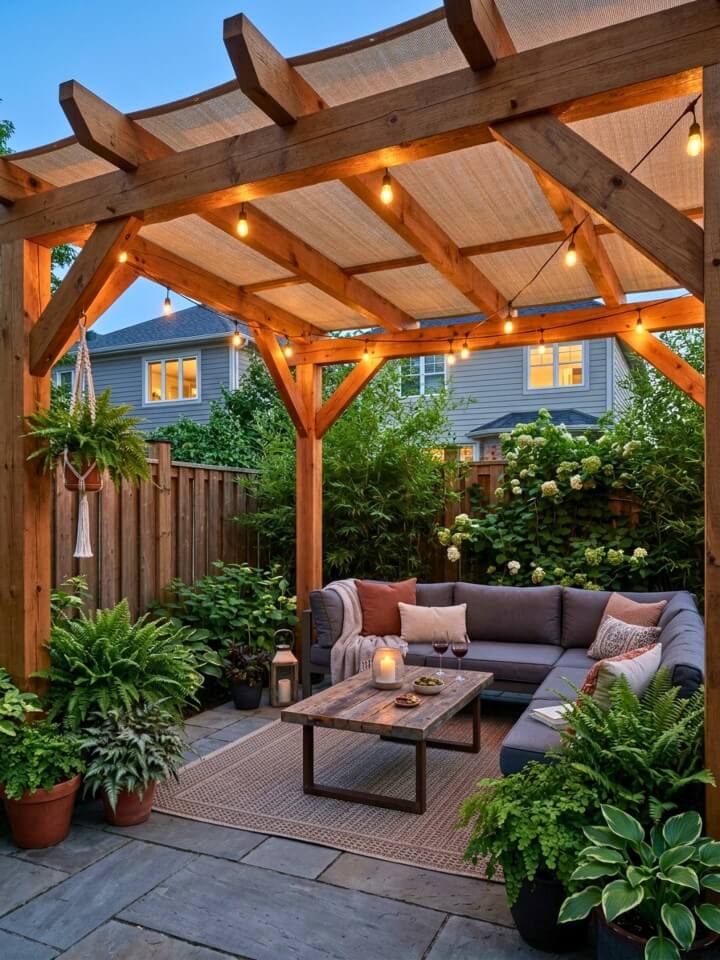
Neighbors in two-story homes or elevated positions have a direct sightline down into ground-floor outdoor spaces that vertical screening alone cannot address. A pergola fitted with a solid or semi-transparent roof panel resolves this completely. Polycarbonate roofing lets light through while blocking the view from above; timber or steel decking creates full shade and total coverage. Hanging plants, string lights, or slatted panels below the roofline add visual interest and reinforce the sense of enclosure. The structure also extends the usable season outdoors by providing rain shelter. Depending on design and materials, a covered pergola can function as an outdoor room for most of the year rather than just summer months.
Roof Pitch for Water Runoff
Build any solid pergola roof with a minimum 5-degree pitch toward one edge — flat roofs pool water, and standing moisture accelerates timber decay and causes polycarbonate panels to discolor.
31. Small Canopy Trees for Layered Overhead Cover
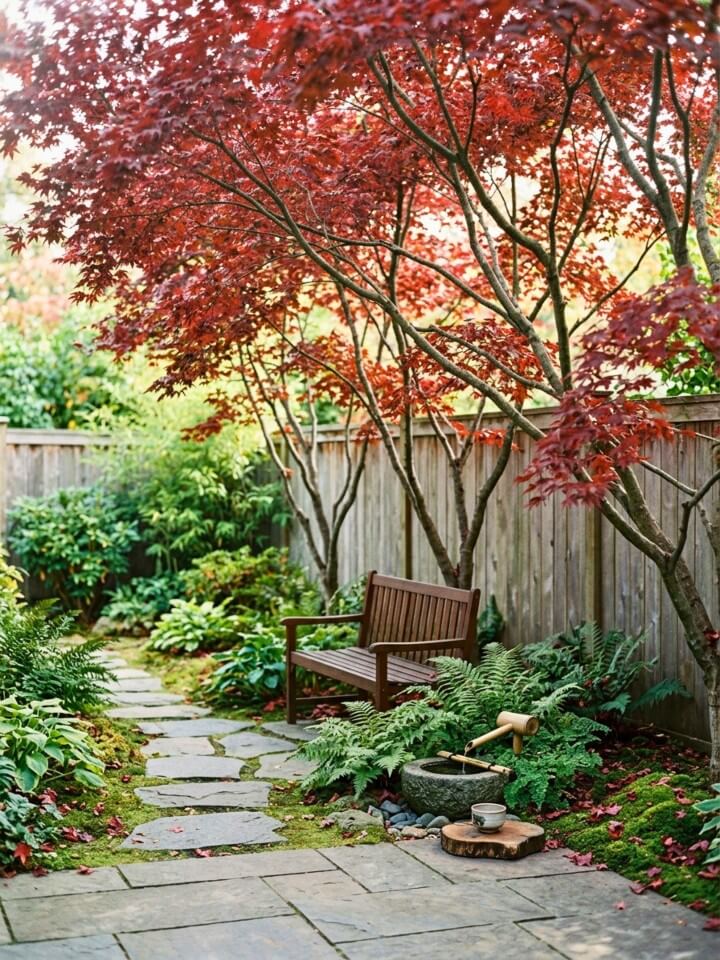
Japanese maples, olive trees, and Eastern redbuds occupy a useful middle ground that large shade trees cannot — their canopies spread wide enough to block elevated sight lines while their overall scale stays manageable in smaller yards. Unlike a solid fence or wall, the canopy filters rather than fully blocks, creating dappled shade and a sense of enclosure without making the space feel dark or closed in. Clear trunk heights of 5–6 feet mean ground-level views remain open, which works particularly well around seating areas. Underplanting with mid-height shrubs and perennials fills the gap between trunk level and canopy, giving you precise control over where coverage begins and ends.
Selecting for Your Soil Conditions
Japanese maples prefer slightly acidic, well-draining soil and struggle in heavy clay — amend the planting hole with grit and composted bark before planting rather than relying on the surrounding soil to drain adequately.
32. Louvred Pergola Roof Systems
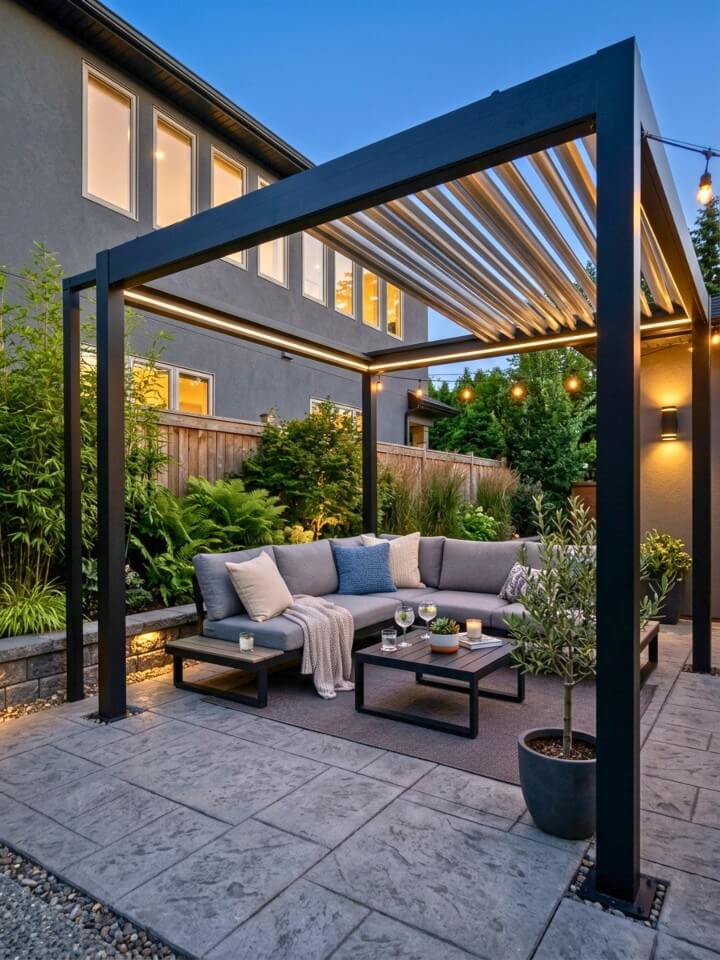
A motorized louvred roof addresses a specific problem that fixed pergola covers cannot — the ability to switch between open sky and full overhead privacy at will. When the louvres are open, the structure feels like any other pergola. Close them, and the space below becomes effectively hidden from upper-floor windows and elevated positions nearby. Most systems are powder-coated aluminum, which handles outdoor exposure without rusting or warping over time. Built-in drainage channels running through the louvre blades direct rainwater to the posts and away from the seating area below. The motor and control system add meaningful cost over a fixed roof, but the operational flexibility justifies it for spaces used across multiple seasons.
Wiring Before the Structure Goes Up
Run electrical conduit through the posts before installation is complete — threading wiring through finished aluminum posts after the fact is considerably more difficult and often requires drilling through factory joints.
33. Outdoor Fireplace as a Privacy Wall
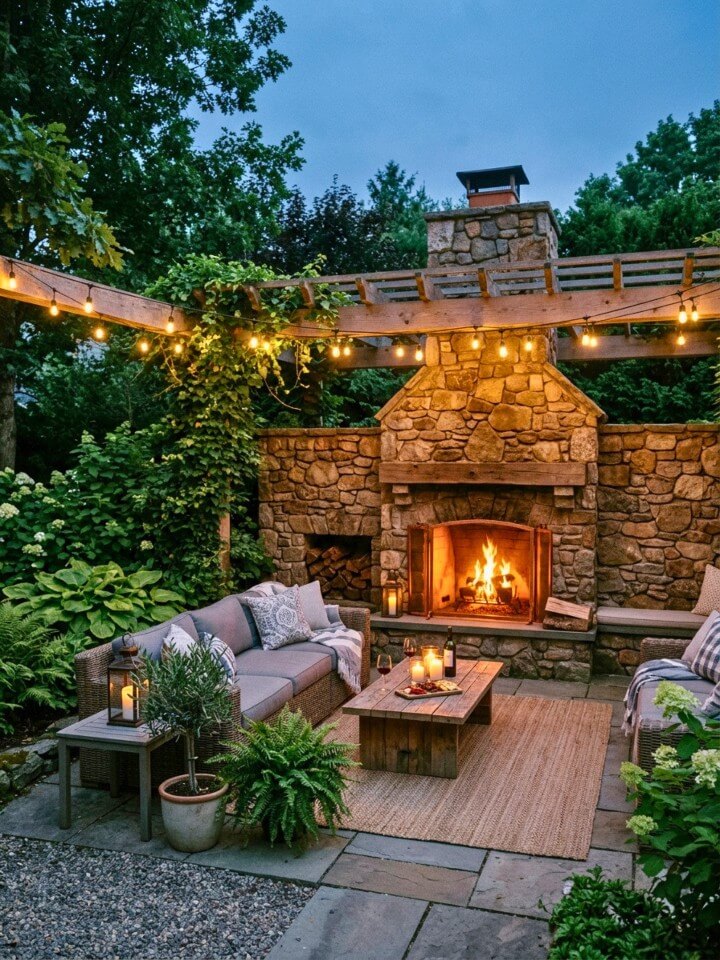
A fireplace built into a substantial masonry wall does something decorative panels and planted screens rarely achieve — it draws attention toward itself rather than toward the boundary it creates. The wall becomes a destination rather than a barrier, anchoring the outdoor living space and giving it a focal point that works day and night. Stone, brick, and board-formed concrete are all appropriate materials depending on the surrounding architecture. The chimney and firebox need to be properly engineered for outdoor use — proportions that work indoors do not automatically translate outside, where wind behavior is less predictable. A hearth-level seating ledge built into the wall on either side extends its usefulness beyond purely functional fire containment.
Firebox Opening Ratio for Draw
The firebox opening should be roughly one-tenth the area of the flue — too large an opening relative to the flue causes smoke to spill forward into the seating area rather than drawing upward cleanly.
34. Front Yard Screening With Layered Planting
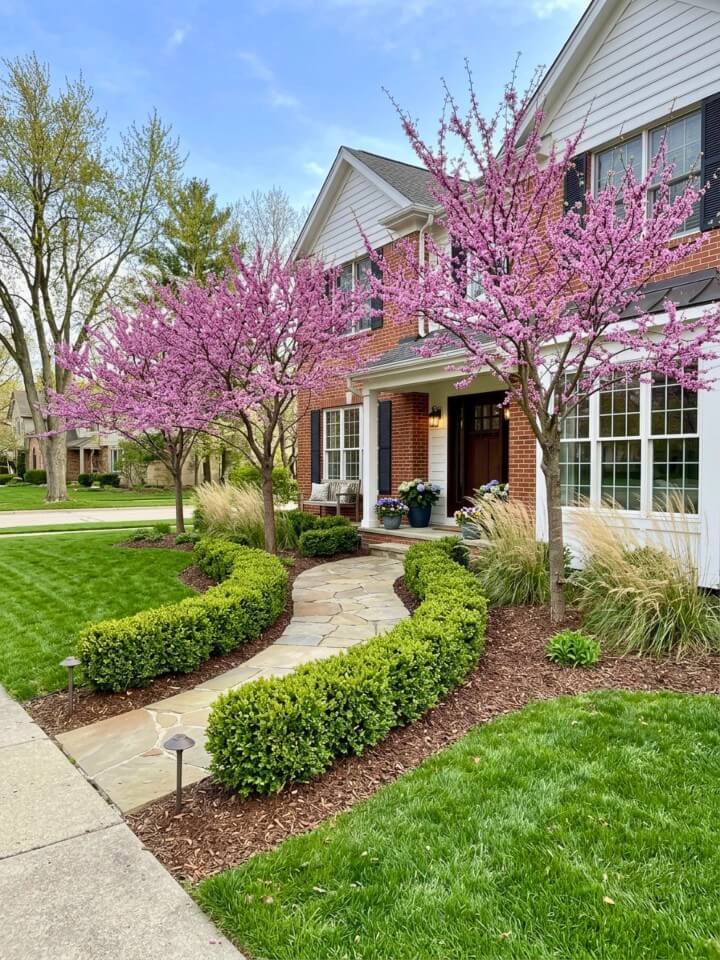
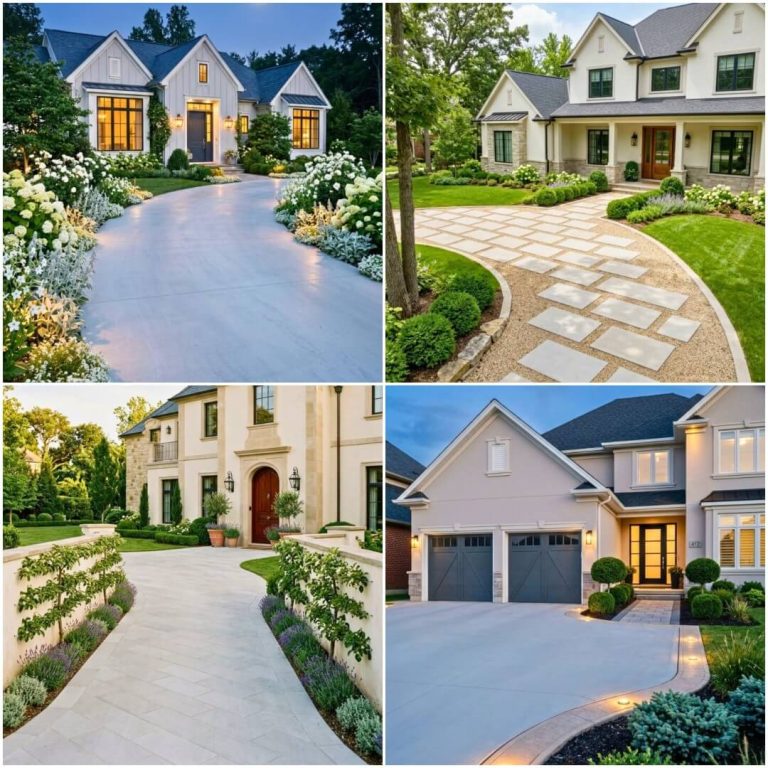
Decorative screens and small trees are useful front yard privacy ideas for homes near busy streets. Privacy landscaping in the front yard requires a different approach than the back — the goal is reducing visibility from the street and passing pedestrians without making the property look closed off or unwelcoming. Low picket fencing or a knee-high hedge along the boundary keeps the garden visible and maintains curb appeal, while taller box hedges or columnar trees positioned closer to the house screen the windows themselves.
Ornamental grasses planted along the path add mid-level texture that breaks up direct sight lines without feeling like a barrier. The layered effect works because each element addresses a different height and distance, rather than relying on a single tall screen that dominates the entire frontage. Around the entry area, mailbox landscaping ideas can also help connect the privacy planting to the rest of the front yard.
Hedge Height Near Driveways
Keep plantings within 10 feet of a driveway entrance below 3 feet in height — taller growth at corners creates blind spots that make reversing and pedestrian visibility genuinely hazardous.
35. Letting Plants Grow Without Intervention
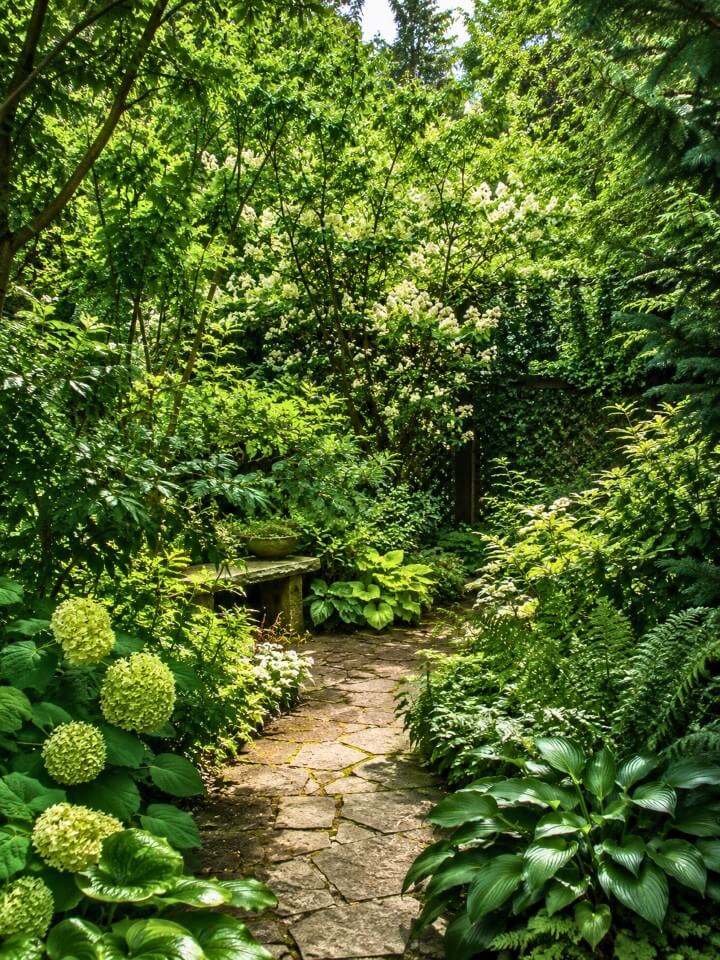
Consistent pruning is often the reason a garden never feels private — cutting plants back on a schedule prevents them from reaching the size and density that creates genuine enclosure. Allowing shrubs, climbers, and ornamental trees to develop their natural form over two or three seasons produces a layered, overgrown quality that no amount of deliberate planting can replicate quickly. The approach suits informal and cottage garden styles particularly well, where a wilder edge is an asset rather than a maintenance failure. Some editing is still worthwhile — removing dead wood, preventing truly invasive species from spreading, and keeping paths clear — but the overall intention shifts from controlling the garden to letting it establish on its own terms.
Identifying What to Keep and Remove
Before stepping back from pruning, identify any genuinely invasive species in the border and remove them entirely — a hands-off approach accelerates their spread as much as it benefits everything else.
36. Stone Fountain Wall Beside a Pool
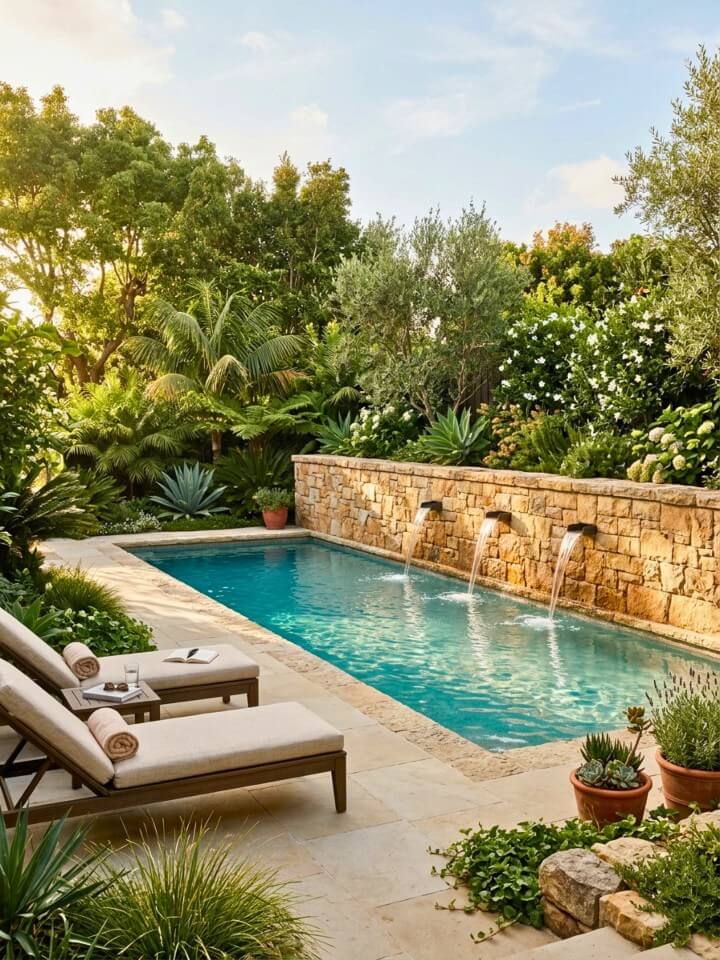
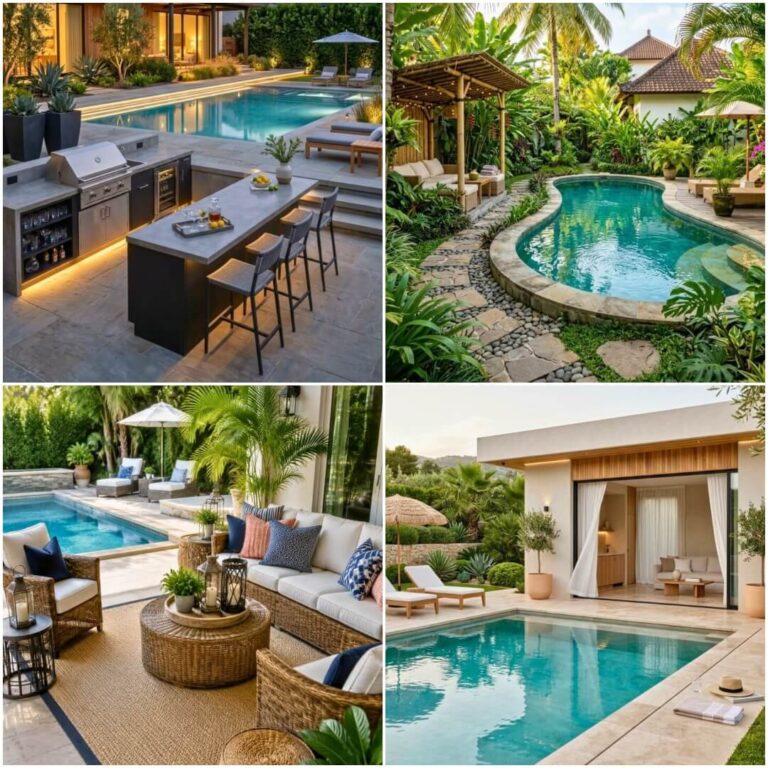
A low stone wall built along one edge of a pool with water sheeting down its face solves two problems at once — it screens the swimming area from outside views while introducing the kind of ambient sound that makes a pool garden feel genuinely removed from its surroundings. The wall does not need to be tall to be effective; because swimmers sit at water level, even a 3-foot structure significantly limits what neighboring properties can see.
Recirculating pumps push water from a concealed basin at the base back up through outlets at the top of the wall. Natural stone cladding — bluestone, travertine, and slate all perform well in wet environments — ages considerably better than painted render in constant contact with water and pool chemicals. For a more complete layout, pair this idea with rectangular pool landscaping ideas or adapt the same privacy principles to above-ground swim spa landscaping.
Stone Selection for Wet Environments
Avoid polished stone finishes on any surface near water — honed or brushed finishes provide grip underfoot and show water movement more attractively than a mirror surface that simply reflects glare.
37. Strategic Furniture Arrangement
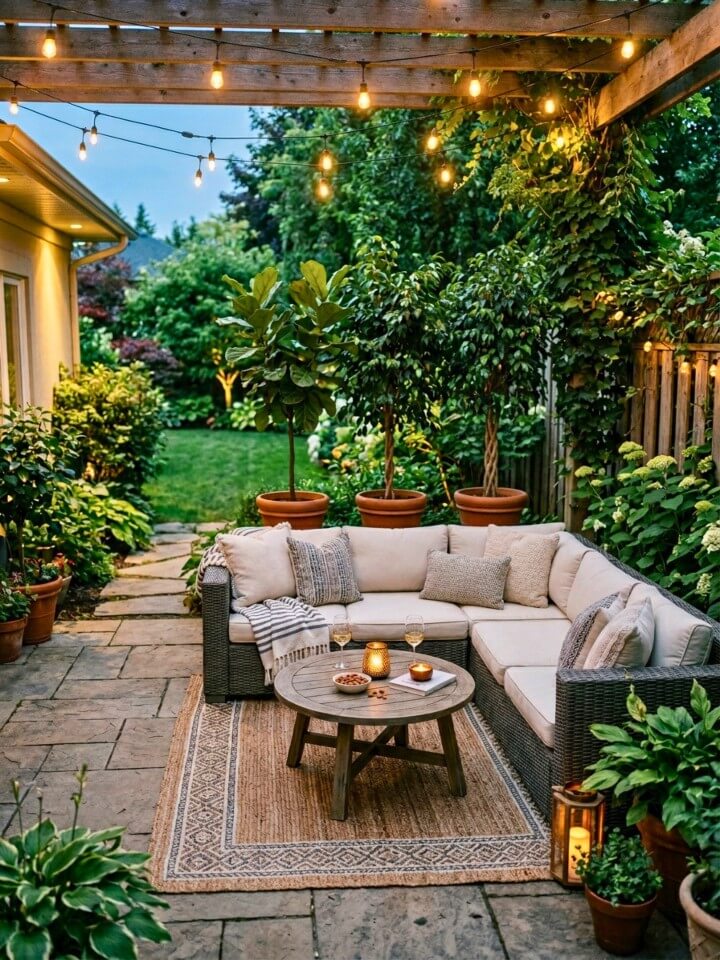
The layout of outdoor furniture shapes how private a space feels more than most people expect. Positioning a sofa or dining set with its back toward the primary sight line — a neighboring fence, a busy pathway, or a street-facing opening — creates an immediate psychological sense of enclosure even before any planting or screening is added. Tall-backed chairs, a well-placed daybed with a canopy, or a dining bench set against a wall all reduce exposure without requiring any construction. Combining furniture placement with a few large potted plants at key positions divides an open space into smaller, more intimate zones. The effect is less about blocking views completely and more about making the space feel intentionally arranged rather than exposed.
Anchoring Outdoor Rugs in Open Spaces
Use non-slip rug pads rated for outdoor use beneath any area rug — rugs that shift underfoot in a seating arrangement disrupt the cohesion of the space and become a trip hazard on hard paving surfaces.
FAQs About Privacy Landscaping
These questions come up regularly among homeowners working through their first privacy landscaping project — and the answers are not always obvious from the ideas alone.
How Long Does It Take for Privacy Plants to Fully Mature?
It depends heavily on the species. Fast-growing options like Green Giant arborvitae and clumping bamboo show meaningful results within 2–3 years, while slower choices like hornbeam hedges or pleached trees take 5–7 years to reach full screening height. If you need immediate coverage, pairing a fast-growing plant with a temporary bamboo matting panel or trellis buys time while the permanent solution establishes. Most landscapers recommend planting for long-term density rather than speed alone — plants pushed with heavy fertilizing grow quickly but often develop weak root systems that struggle in bad weather.
What Is the Best Privacy Solution for Renters?
Permanent planting and built structures are off the table for most renters, but moveable planters on wheels, freestanding trellis panels, retractable shade sails, and outdoor curtains all work without touching the ground permanently. Large containers planted with columnar shrubs or tall ornamental grasses can reach useful screening height within a single growing season and move with you when the lease ends. Always check your rental agreement before installing any anchor points — even temporary fixings into walls or fences can create issues at move-out.
Can Privacy Landscaping Actually Reduce Noise From the Street?
Yes, though the reduction is modest compared to solid construction. Dense evergreen hedges, soil berms, and masonry walls all absorb or deflect sound to some degree — a thick hedge can reduce perceived noise by 5–10 decibels, which is noticeable but not dramatic. The most effective approach combines a physical barrier with a water feature close to the seating area. The fountain or waterfall does not eliminate street noise but introduces competing white noise that makes the remaining sound far less intrusive. For significant traffic noise, a berm planted with dense shrubs on top offers the best combined result.
How Do I Get Privacy Without Losing Natural Light?
Solid fences and dense hedges block light along with views, which is a real tradeoff in smaller yards. Slatted timber panels with wider gaps, frosted glass, lattice with climbing vines, and pleached trees all provide meaningful screening while allowing light to pass through or around them. Positioning taller screening on the north side of the yard rather than the south preserves the most sunlight through the day. Canopy trees are particularly useful here — they screen elevated sight lines and upper-floor windows without casting the kind of ground-level shade that makes a small yard feel dark and enclosed.
Which Privacy Plants Work Best in Small or Narrow Yards?
Columnar plants are the obvious answer — Sky Pencil holly, Emerald Green arborvitae, and fastigiate hornbeam all grow tall without spreading wide, making them well suited to tight fence lines and narrow side passages. Espalier fruit trees trained flat against a wall take up as little as 12 inches of horizontal space while providing full vertical coverage. For the narrowest situations, a slatted timber panel or bamboo matting screen takes up almost no footprint at all and can be planted in front of with low-growing perennials to soften the hard edge without adding significant width
Conclusion:
The difference between a yard you avoid and one you actually live in often comes down to a single well-placed screen, a row of fast-growing shrubs, or a fountain that drowns out everything beyond the fence. None of these privacy landscaping ideas demand a perfect budget or a complete redesign — they ask only that you start somewhere. Discomfort in your own outdoor space is easy to ignore season after season, but it quietly shapes how little time you spend there. Fix the one thing that bothers you most, and everything else tends to follow.