30 Garden Fountain Ideas Your Backyard Has Been Quietly Asking For
There’s something about the sound of moving water in a garden that changes everything. You step outside, and the noise of traffic, neighbors, and your own racing thoughts just softens. That’s the quiet magic behind these 30 notable garden fountain ideas — small features that completely shift how a backyard feels.
But here’s what most blog posts won’t tell you upfront: a fountain is only as good as the planning behind it. A wagon wheel that wasn’t restored properly leaks by month two. A ceramic wall piece mounted into drywall pulls right out. A solar floater drifts into the pond edge every windy afternoon. The pretty photo is the easy part.

So this list goes beyond looks. You’ll get honest numbers on cost, weight, pump size, and the small details that decide whether a fountain lasts ten years or two. Pick the one that actually fits your space — then build it right.
1. Rustic Wagon Wheel Fountain
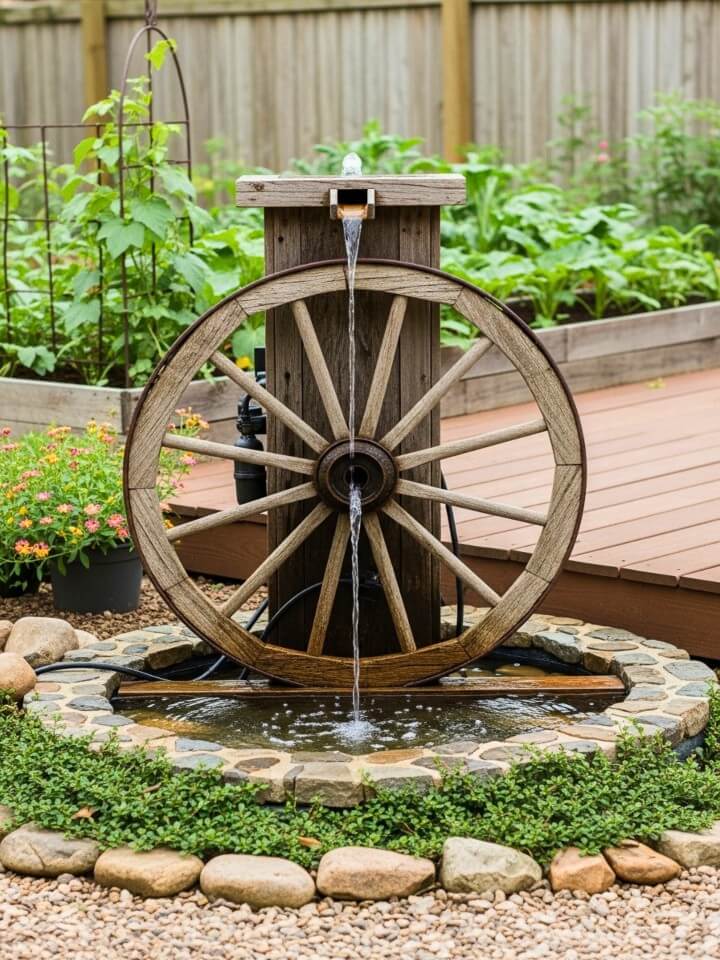
A salvaged wagon wheel is usually in worse shape than listing photos suggest. Expect three restoration jobs before installation:
- Rotted spokes. Original wheels rarely survive intact. Replacing one or two with reclaimed oak runs $30–$60 each at a wheelwright shop.
- Rust on the iron rim. Soak with white vinegar overnight, scrub with a wire brush, then seal with rust-converter primer and matte black outdoor paint.
- Loose hub assembly. Drive replacement wedges between hub and spokes, secure with marine epoxy.
Once functional, mount the wheel vertically against a wall or barn-board panel with water flowing from the hub into a shallow basin. A 50–80 GPH pump completes the build. Total project investment runs $200–$500 plus a weekend of restoration work.
2. Tiered Stone Fountain
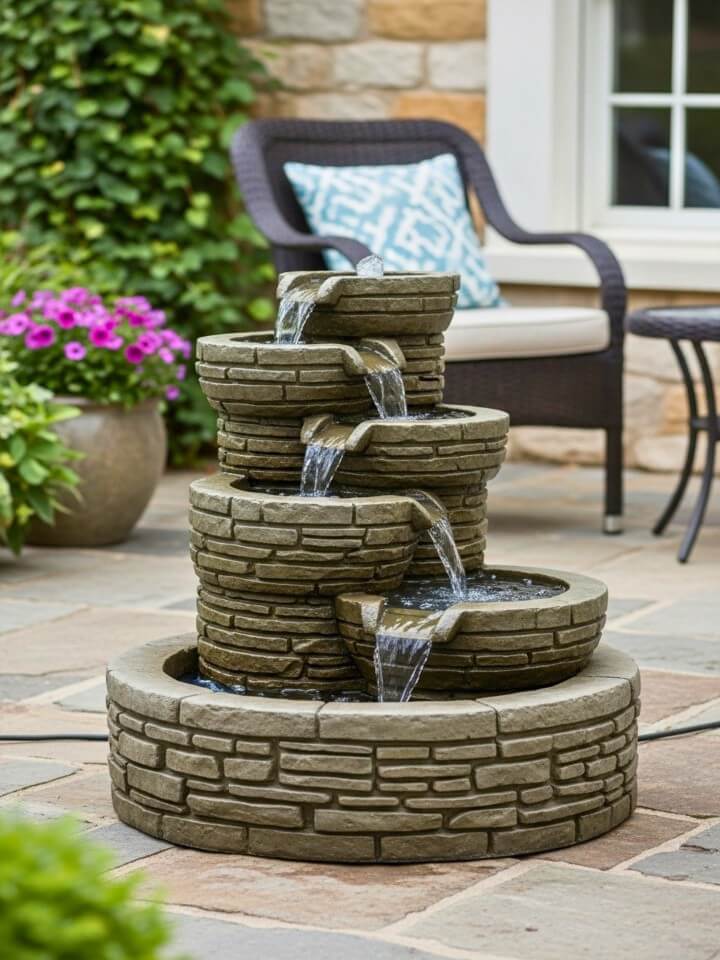
There’s a reason this design appears in every English manor photograph and every Italian villa courtyard ever published — the layered cascade pattern simply works at any scale. The hidden challenge is weight. A three-tier cast stone unit assembled weighs 200 to 400 pounds, which rules out wooden decks, balconies, and anywhere the ground isn’t already compacted.
A bed of pavers over packed gravel handles the load for decades. Quality pieces run $300 to $900, with pumps lasting two or three seasons before replacement at $40 to $80. Position it where sightlines converge — the end of a garden path, a patio corner, or dead center in a circular bed.
3. Modern Minimalist Water Column
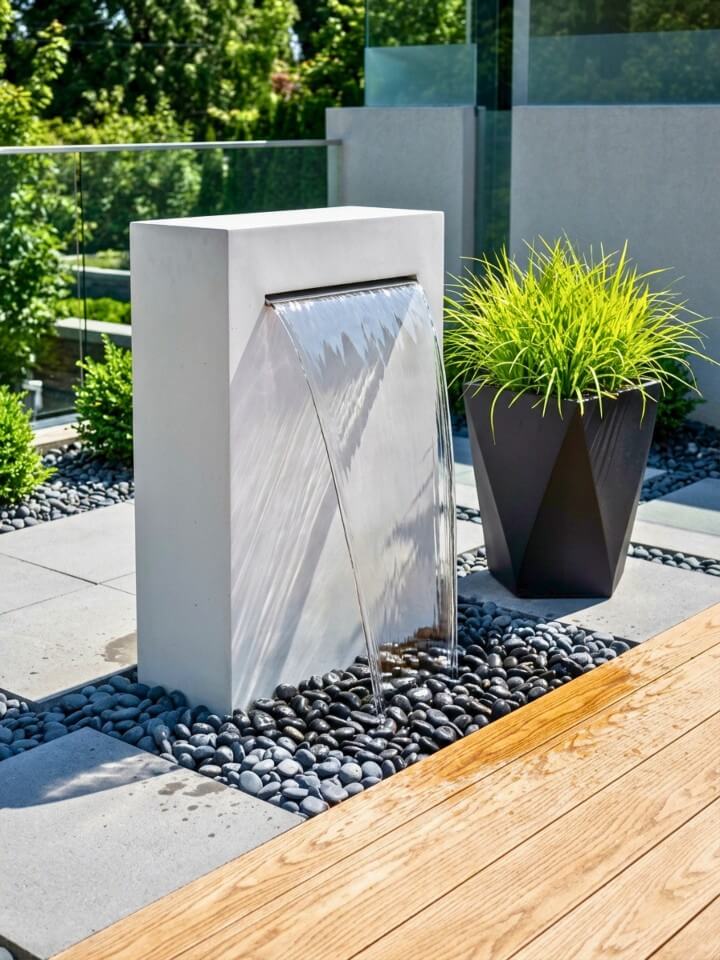
Transform your patio into a tranquil oasis with a stunning water fountain outdoor centerpiece. Three settings where a vertical water column genuinely belongs: rooftop terraces with limited floor area, poolside zones that benefit from sound but not clutter, and small enclosed courtyards needing height. Three where it falls flat: cottage gardens, anywhere with leaf litter from overhanging trees, and traditional landscapes built around curves rather than lines.
If your space fits the first list, budget $400 to $1,500 for the column itself and pair it with a 200–400 GPH pump to keep the sheet flow even across the face. Heights of 36 to 48 inches read best at standing eye level. The base must sit dead level — a half-inch tilt destroys the visual effect entirely.
4. Rustic Wooden Barrel Fountain
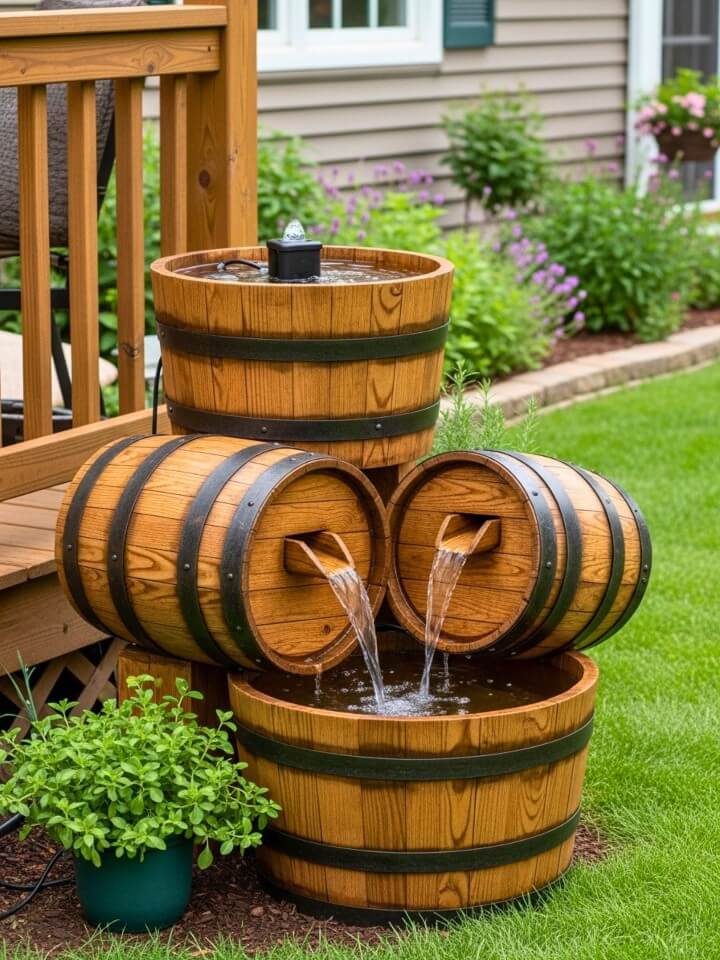
Most wooden barrel fountains fail by their second summer. Owners blame the pump, but the real culprit is the wood itself — untreated oak staves shrink as they dry, and once gaps open between them, no amount of swelling brings them back together. The fix is simple and rarely mentioned in tutorials: line the interior with 45-mil EPDM pond liner before installing the pump. That single $20 step extends the fountain’s life from two seasons to ten or more.
The barrel itself runs $60–$150 from cooperage suppliers or salvage sites. An 80–120 GPH submersible pump handles circulation between a smaller upper barrel and the main base. Drain fully every autumn.
5. Wall-Mounted Ceramic Fountain
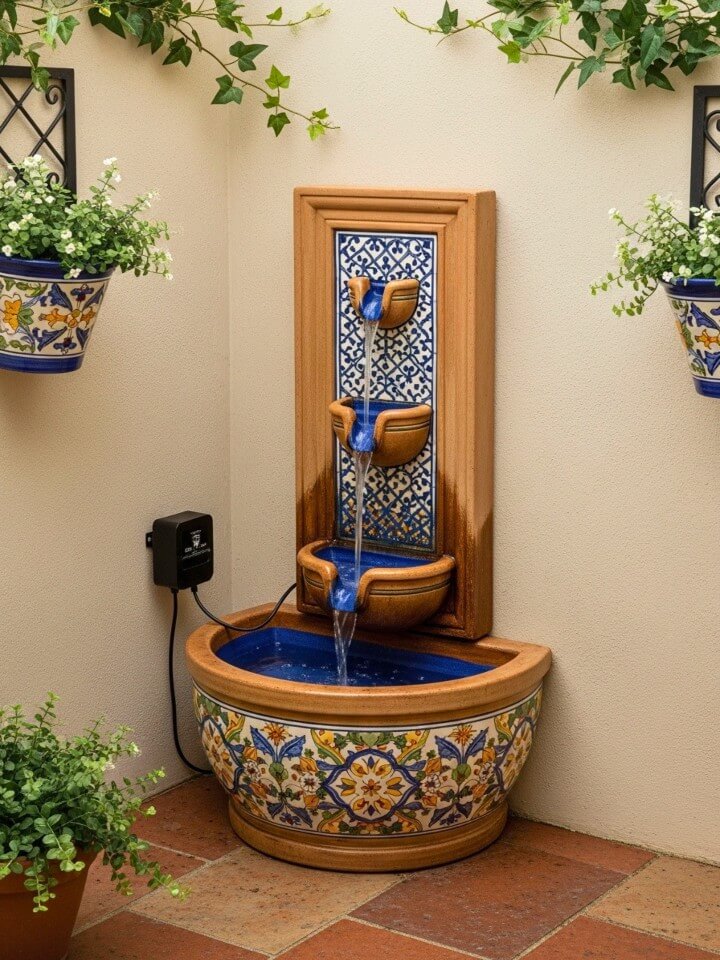
For a typical ceramic wall fountain, plan on 50–80 pounds once filled and running. That number rules out drywall anchors entirely — you need lag bolts driven into wall studs, or for masonry, sleeve anchors rated to triple the expected load.
An outdoor GFCI outlet within six feet is non-negotiable. Extension cords across patios are both a code violation and a genuine shock hazard.
Glazed terracotta and deep cobalt suit warm stucco walls; matte charcoal and slate look right against modern siding. Expect to spend $200–$600 for the fountain itself, plus mounting hardware.
6. Pebble and Basin Ground Fountain
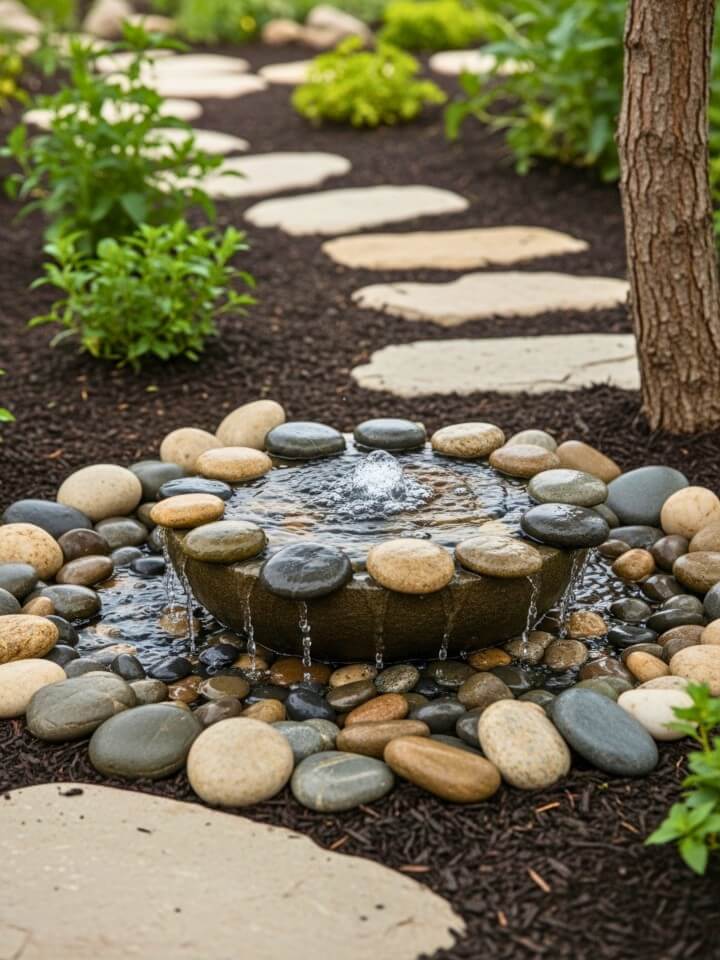
This build takes one weekend and under $150 in materials.
Saturday morning: dig a pit roughly 24 inches across and 18 deep, drop in a rigid plastic reservoir, and level it carefully with a torpedo level.
Saturday afternoon: set a 50–100 GPH submersible pump in the bottom, run the cord to a GFCI outlet, and cover the reservoir with a steel grate cut to size.
Sunday: arrange river rock across the grate in mixed sizes, with the largest stones hiding the pump outlet. Fill, plug in, and adjust the flow until water trickles rather than sprays. The setup disappears into garden beds. Refill weekly in summer; deep-clean the reservoir each spring.
7. Copper Bowl Fountain
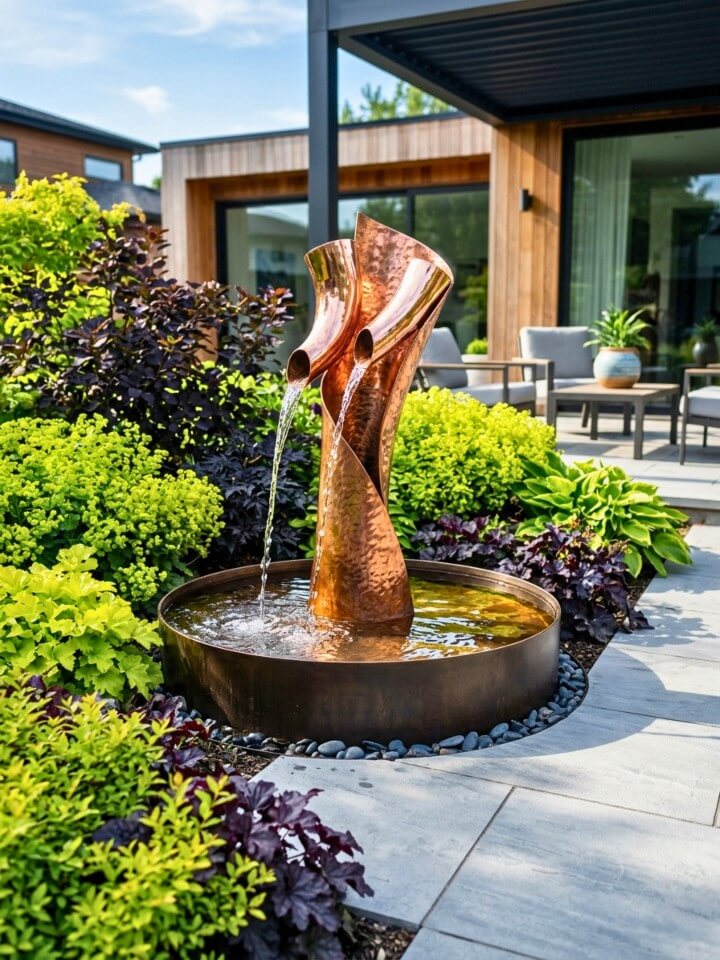
Discover breathtaking outdoor water fountains that turn ordinary spaces into serene backyard retreats. Two questions decide whether copper is right for your garden. First: do you want the metal to age, or stay bright? A new copper bowl moves from penny-shine through dull orange to brown, then settles into blue-green patina over three to four years. Lovers of patina do nothing.
Polished-finish loyalists scrub monthly with lemon and salt — there’s no middle path. Second: how shallow do you want the water? Bowls 3 to 5 inches deep produce the meditative trickle that makes copper worth buying. Anything deeper becomes a birdbath by default. Price runs $250 to $700 for hammered work. Set the bowl waist-high on a basalt pedestal so afternoon light catches the surface.
8. Mosaic Tile Fountain
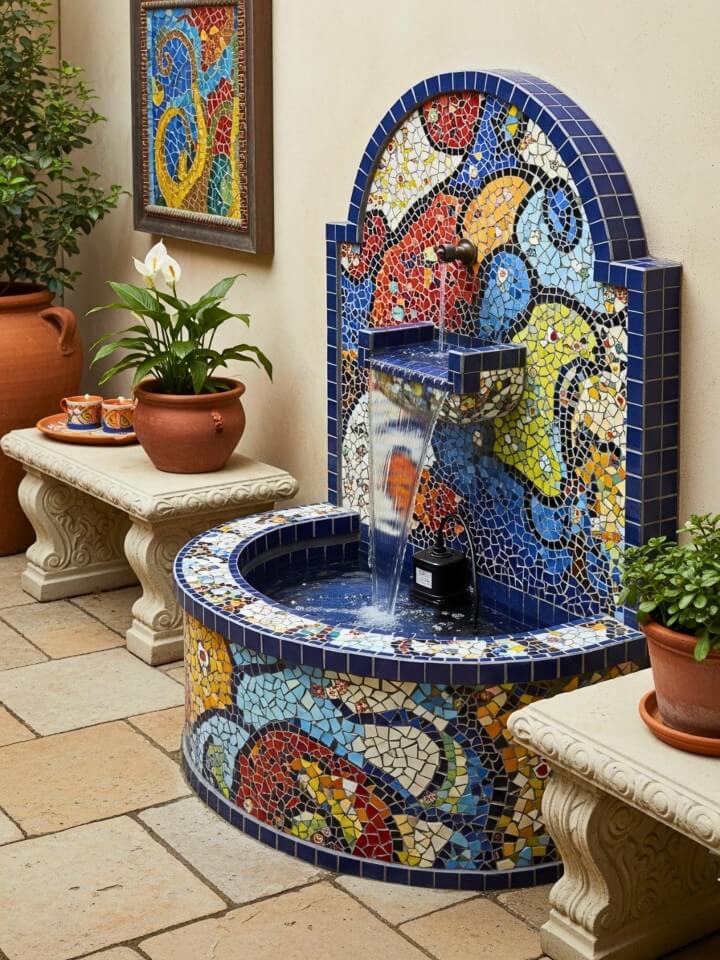
A mosaic fountain is essentially a labor-of-love project priced accordingly. Pre-made units start around $300 and climb past $2,000 for hand-tiled pieces.
The DIY route looks tempting until you price the materials: 1,000+ tesserae for a modest wall fountain, thinset mortar rated for constant water exposure, epoxy grout (not standard cement grout, which fails within a season), and a waterproofing membrane behind everything.
Total materials run $200–$400. Total time: 30–60 hours for a beginner. The skill ceiling matters too — uneven tile heights catch water unevenly and create dribbles instead of sheet flow. If the project sounds satisfying rather than tedious, the payoff is genuinely unique. Otherwise, buy pre-made.
9. Koi Pond Waterfall Fountain
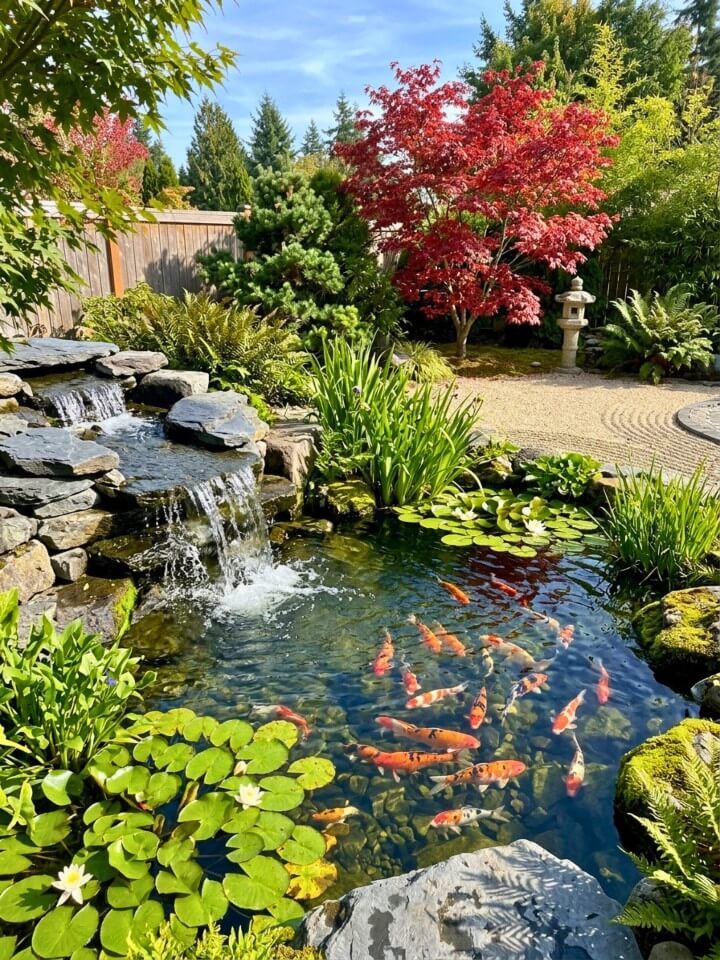
Honest accounting on what a koi pond actually costs, because the visible waterfall is the cheap part:
- Excavation plus 1,000-gallon EPDM liner with underlayment: $600–$1,200
- Skimmer, biological filter, UV clarifier: $700–$1,500
- Pump rated 2,000–3,500 GPH for waterfall feed: $300–$600
- Flagstone or boulders for waterfall structure and pond edge: $400–$900
- Healthy koi from reputable breeders: $50–$300 each (five fish per 1,000 gallons)
- Predator netting in heron country: $150–$400
Total range: $3,000–$8,000 for a competent DIY build, double that with professional installation. Three-foot minimum depth is required for winter fish survival in any freezing climate.
10. Glass Orb Bubbling Fountain
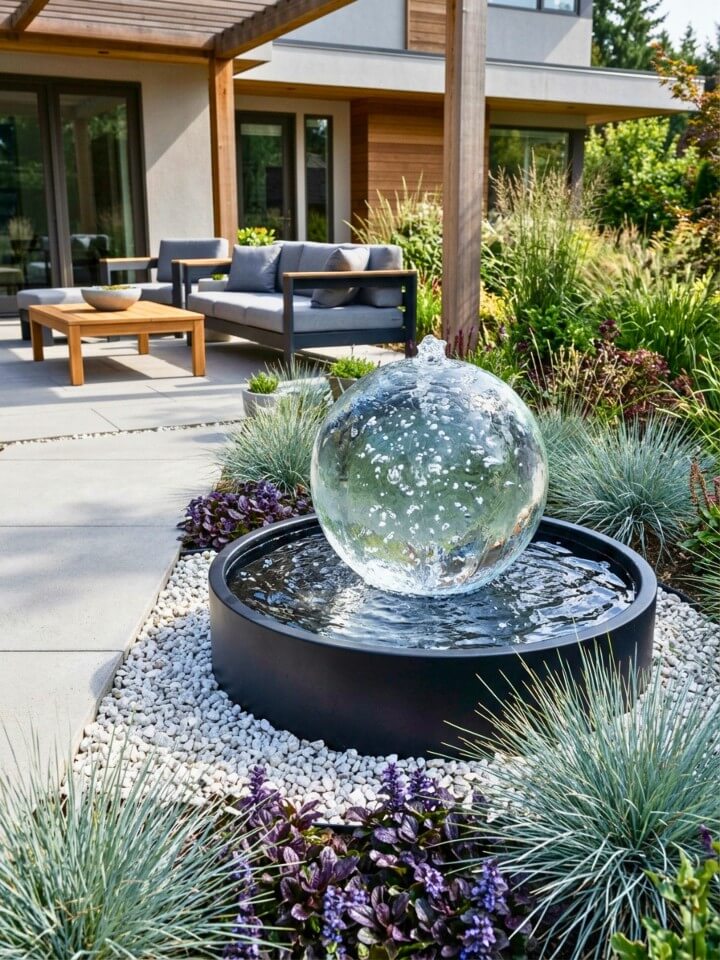
Watch one of these at 7 a.m. when low sun strikes the curve of the sphere — the entire orb lights up from inside, casting refracted patterns onto the patio that no other fountain creates. That early hour is what you’re paying for. Sizes start at 8-inch tabletop spheres ($80–$150) and climb to 18-inch garden showpieces ($300–$600). Specify tempered glass, not annealed; the difference matters when summer heat meets a sudden thunderstorm.
In any climate with hard freezes, drain the basin in fall and bring the orb indoors. Water trapped in surface grooves expands and splits the glass overnight. A 60–80 GPH pump produces the slow welling bubble these are designed for.
11. Vintage Birdbath Fountain
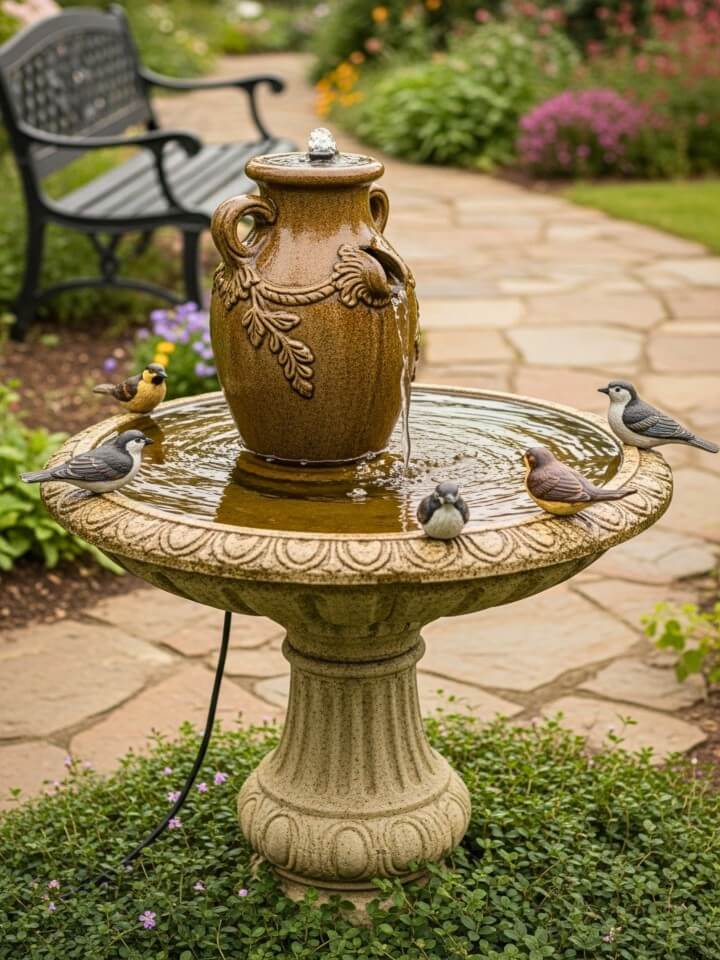
Chickadees, finches, and warblers refuse water deeper than two inches. This single fact decides whether a birdbath fountain succeeds as wildlife habitat or sits unused looking decorative. Build it with a basin that slopes gradually from a 1-inch edge to a 2-inch center, and bird activity multiplies within weeks of installation. Moving water amplifies the effect dramatically — songbirds hear and see ripples from far greater distances than still water announces itself. Cast stone outperforms concrete, which cracks in freeze-thaw cycles, and cast iron, which rusts through within five years. Budget $150–$400 for the bath itself, plus $30–$60 for a low-voltage or solar pump. Scrub weekly with a stiff brush — algae deters birds and breeds mosquitoes.
12. Reclaimed Stone Garden Fountain
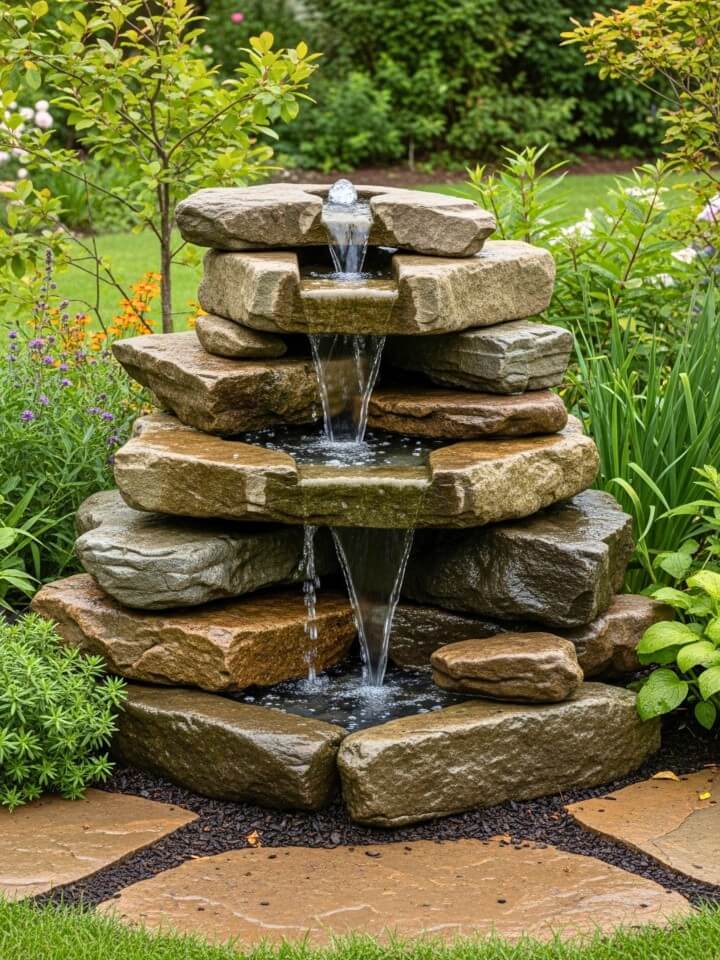
Where to actually find pieces worth buying:
Architectural salvage yards stock old millstones, carved troughs, and column fragments. Best inventory available, but pricing swings wildly — $200 for a small trough, four figures for genuine antiques.
Estate sales in older neighborhoods occasionally surface garden pieces from teardowns. Arrive at opening hour or earlier.
Online marketplaces work for sourcing but inspection becomes guesswork. Always request close-up photos of corners, joints, and the base.
When inspecting in person, watch for hairline cracks running across the grain, soft spots indicating frost damage, and chips along the base suggesting hidden structural issues. Seal any purchase with penetrating stone sealer — never topical, which peels within a year. Genuine weathering cannot be manufactured.
13. Bamboo Stack Fountain
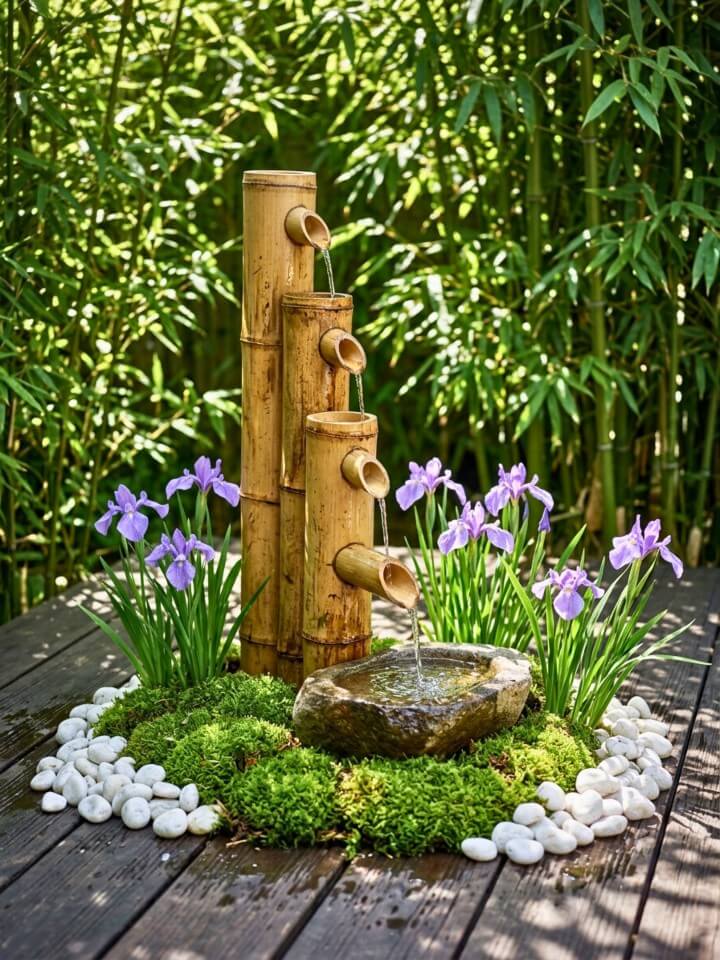
The reason bamboo sounds different from any other fountain material comes down to physics — hollow segments resonate at low frequencies, deepening each water drop into something closer to a wooden tone than a metallic splash. Authentic shishi-odoshi designs use this principle, where a tilting bamboo arm fills, drops, and strikes a stone for that distinctive periodic knock. Simpler stack versions skip the tilt mechanism and let water flow continuously through angled segments into a basin below.
Real bamboo lasts two to four years outdoors before splitting; synthetic resin versions look almost identical and last a decade. Budget $80–$300 for kits, $400+ for handcrafted pieces. Pair with a 40 GPH pump and surround with moss, river stones, or low edible plantings inspired by compact herb garden ideas.
14. Concrete Cube Fountain
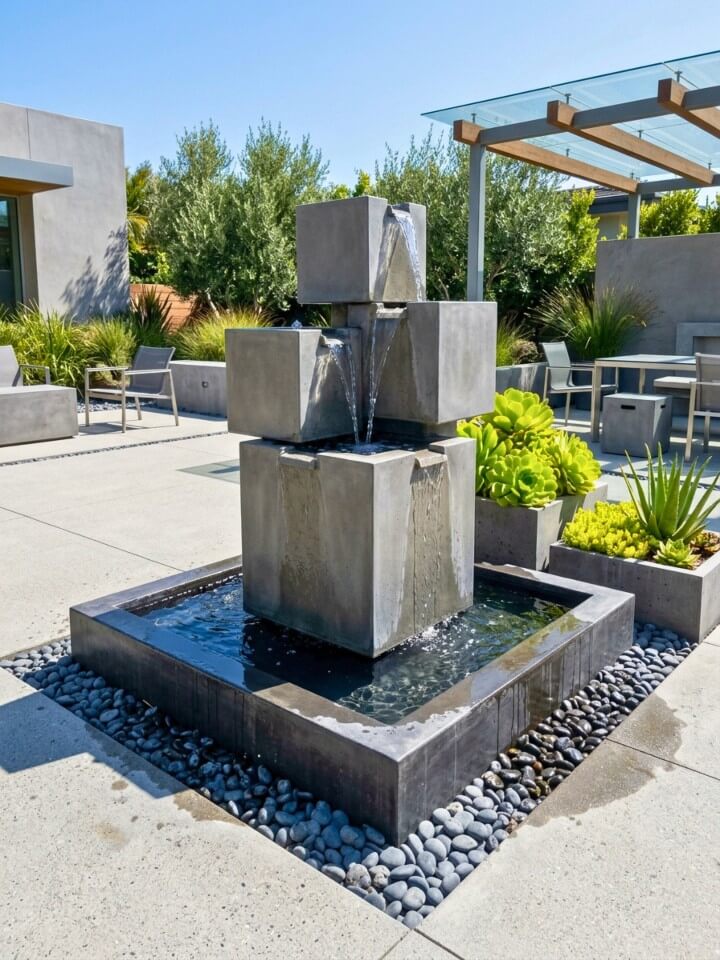
Three myths worth dismantling before buying one:
Myth: Concrete cracks in winter freezes. Reality — only poorly mixed or unsealed concrete cracks. Properly cured pieces sealed with a penetrating siloxane sealer handle freeze-thaw cycles indefinitely.
Myth: They’re too heavy for any patio. Reality — fiber-reinforced concrete weighs 40–60% less than solid cast versions. A 24-inch cube can come in under 80 pounds.
Myth: Minimalist looks mean low cost. Reality — quality concrete cubes run $400–$1,200, often more than ornate stone alternatives, because the smooth finish requires multiple hand-polishing passes.
A 100–150 GPH pump hidden inside the cube produces the trickle these are designed for. Texture options range from polished smooth to board-formed wood grain.
15. Solar-Powered Floating Fountain
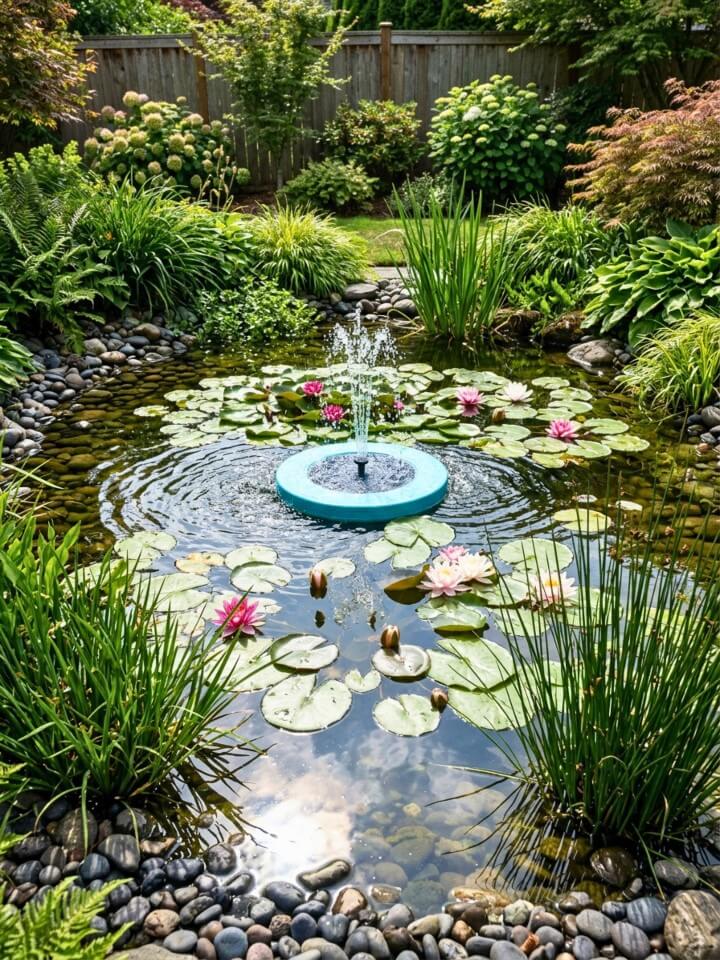
Before buying, run this quick compatibility check:
- Does the spot get at least 6 hours of direct sunlight daily? Solar units stop spraying within seconds of clouds passing.
- Is the water body at least 18 inches across and free of floating leaves? Smaller surfaces let the unit drift into the edge constantly.
- Do you need continuous operation, or are sunny hours fine? Battery-backed units run $100–$250; basic models run $25–$70.
- Will it sit in a pond with fish? Choose models with a low-flow setting; high-pressure sprays stress koi and goldfish.
Pass all four checks and a floating solar fountain becomes one of the easiest, lowest-commitment water features available — no wiring, no plumbing, no monthly electric cost.
16. Antique Urn Fountain
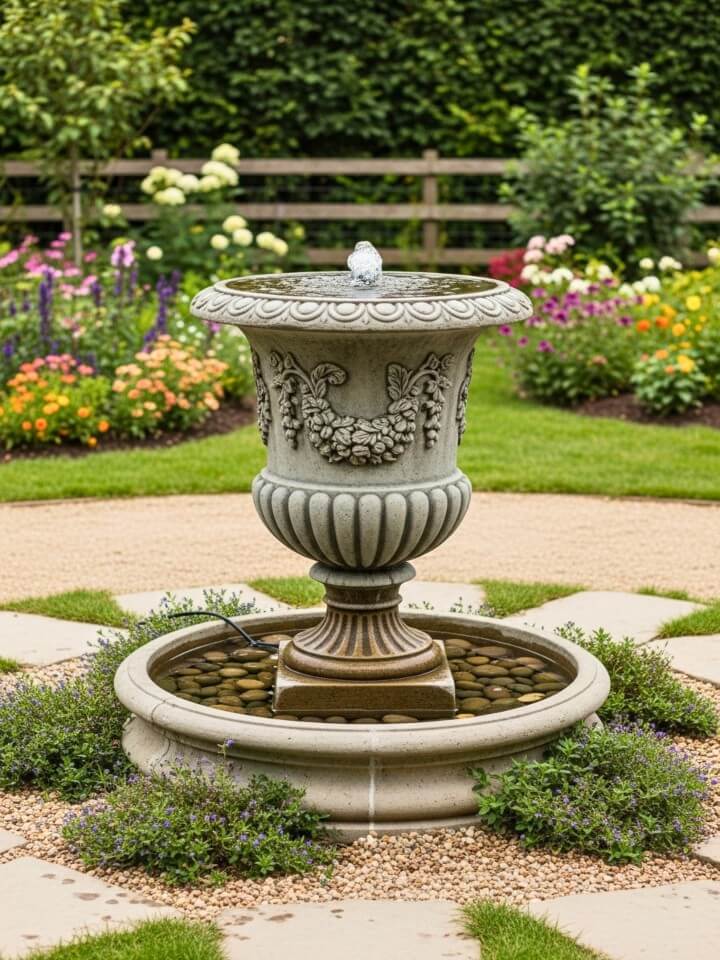
Explore creative fountain ideas that blend elegance, sound, and style into every corner of your home. How to tell a genuine antique urn from a recent reproduction, because the price gap runs $200 versus $4,000 for visually similar pieces:
Check the interior. Antique cast iron and stone show hand-tool marks, filed casting seams, and uneven thickness. Modern reproductions have uniform machine-finished interiors.
Look at patina depth. Real patina penetrates the surface and continues into recesses. Applied finishes sit on top and rub off at handling points.
Inspect the drainage hole. Original urns rarely had factory-drilled holes; antique pieces show crude holes added later. Repros come pre-drilled cleanly.
A converted antique urn fitted with a small 30–50 GPH pump becomes a true centerpiece that can’t be sourced from any garden catalog at any price.
17. Rock Cascade Fountain
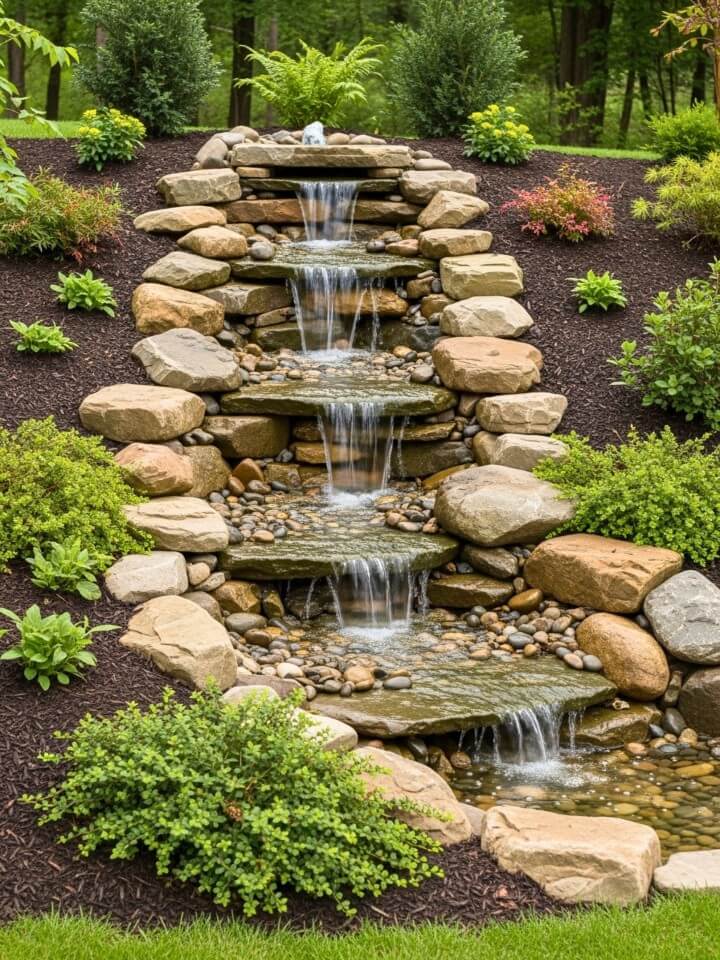
Most rock cascades fail aesthetically because they were designed forward — pick the spot, then add rocks. Working backward produces better results. Start by walking the property and identifying where water would flow naturally if it appeared: low points, slope transitions, the base of existing boulder clusters. Place the cascade there. Use rocks already present on the property when possible; imported stone reads as imported. Vary sizes dramatically — three large anchor stones, six medium supporting stones, dozens of small filler pieces. Single-size rock piles look manufactured immediately. A 1,500–2,500 GPH pump moves water convincingly down a three-foot drop. Surround with ferns, moss, and wildflowers that thrive in the wet zone the fountain creates.
18. Floating Sphere Fountain
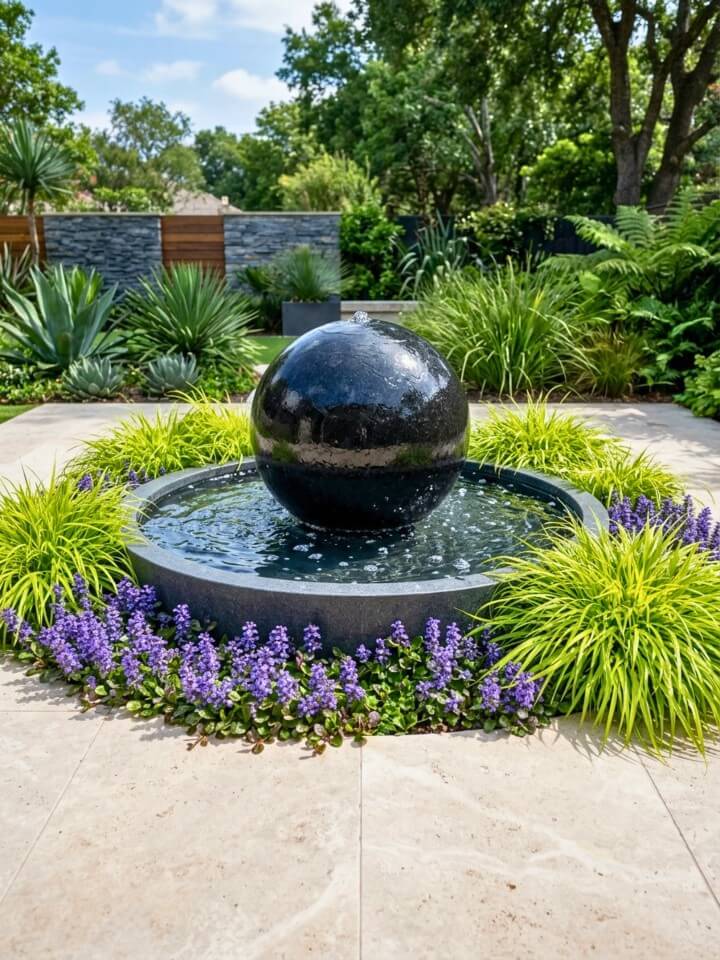
The wind problem nobody mentions in product listings. A 14-inch hollow sphere catches enough breeze to drift across a pond constantly, often ending up wedged against the liner edge where the pump intake clogs with debris. Three solutions, in order of effectiveness: anchor with monofilament line to a submerged brick (invisible from above), use weighted-base spheres that sit lower in the water with reduced wind profile, or accept the drift and place the pond against a natural windbreak. Stone spheres weigh too much to float and need a submerged stand. Glass and acrylic versions actually float. Prices range $150–$700 depending on material. An 80–120 GPH pump produces the welling surface effect these are designed for.
19. Stainless Steel Column Fountain
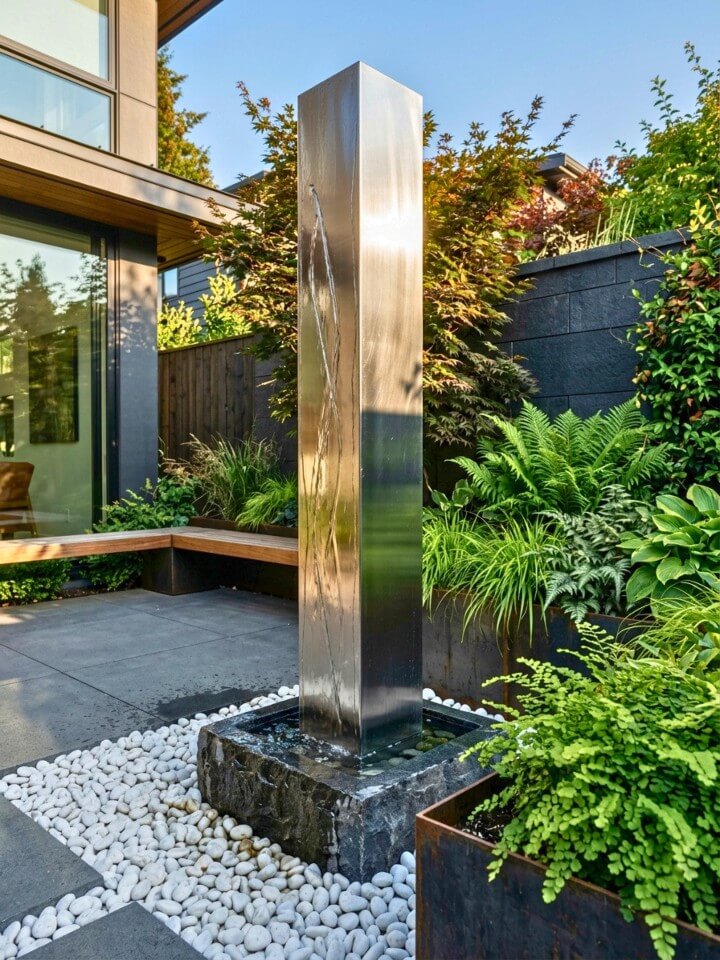
What product photos don’t show: stainless steel water-spots visibly within a week of installation. Hard water leaves white mineral deposits across the flowing surface that no amount of rinsing removes. Three options for managing this:
- Wipe down weekly with diluted white vinegar and a microfiber cloth — about five minutes.
- Install an inline water softener cartridge on the reservoir fill point, roughly $40–$80 annually.
- Use distilled water in the reservoir entirely, practical only for smaller columns under 10 gallons.
Beyond that maintenance reality, stainless delivers the cleanest modern aesthetic available — $500–$1,800 for quality units. Specify 304-grade steel for inland installations, 316-grade near coastal salt air. LED uplighting at the base transforms these after dark.
20. Natural Spring-Style Fountain
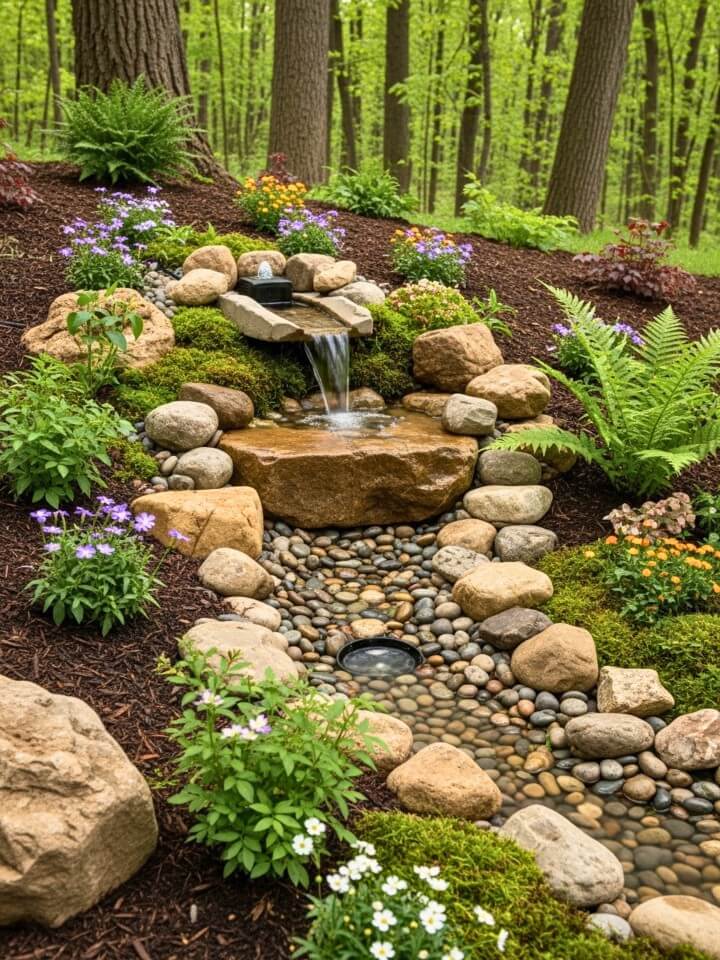
A landscape designer’s thought process for one of these:
First question — where does the property already feel “wet”? Low areas, drainage swales, the base of slopes. These spots are where a fake spring reads as real.
Second question — what stones already exist within a quarter mile? Granite country gets granite cascades; sandstone regions get sandstone. Imported rock breaks the illusion immediately.
Third question — how loud is too loud? Spring-style fountains should whisper, not announce themselves. Aim for a flow you can hear from 10 feet, not 40.
Fourth question — what’s growing nearby that thrives in moisture? Ferns, sedges, native irises. Surrounding the fountain with these completes the deception.
A 600–1,200 GPH pump hidden under the source rock handles the rest.
21. Lantern Fountain with Flowing Water
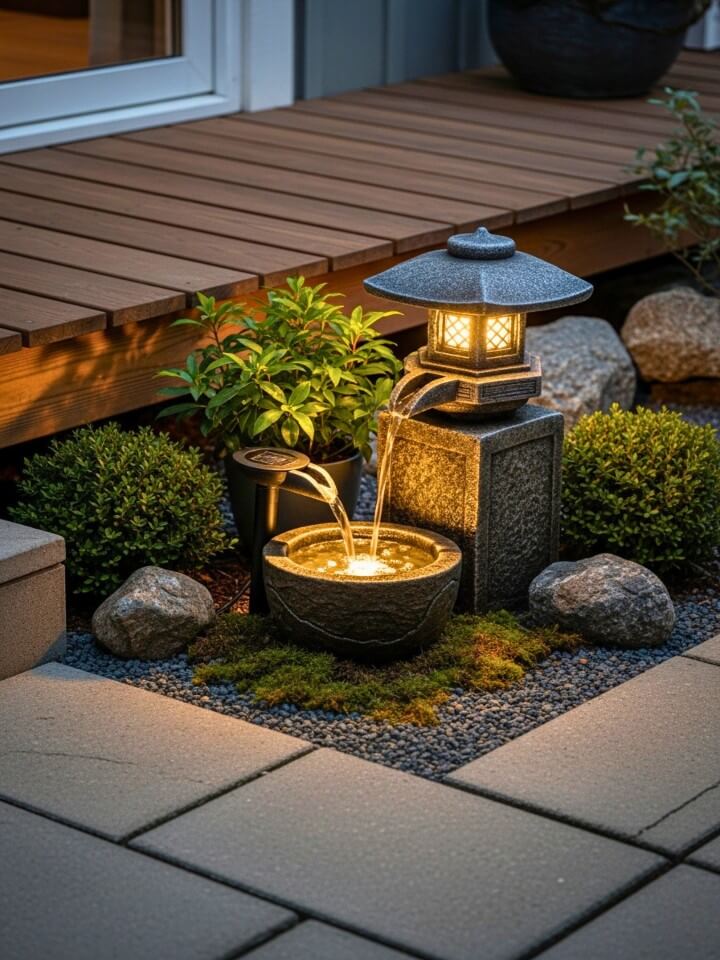
Unlock inspiring garden fountain ideas to add charm, calm, and character to your blooming green space. Run the math on a dual-purpose feature before deciding. A stone lantern fountain combines what would otherwise be two separate purchases — a garden lantern ($150–$500) and a small water feature ($200–$400) — into a single $300–$700 piece. Floor space saved: 4–8 square feet. The trade-off is brightness; integrated LED or solar lighting in lantern fountains stays soft, intended for ambiance rather than illumination.
If you need actual path lighting, buy separate fixtures and skip the lantern style. If evening atmosphere is the goal — gentle glow on plantings, water surface catching reflected light — these earn their place. Granite lanterns weather better than cast concrete imitations. A 30–50 GPH pump handles the typical top-to-basin flow.
22. Modern Geometric Tiered Fountain
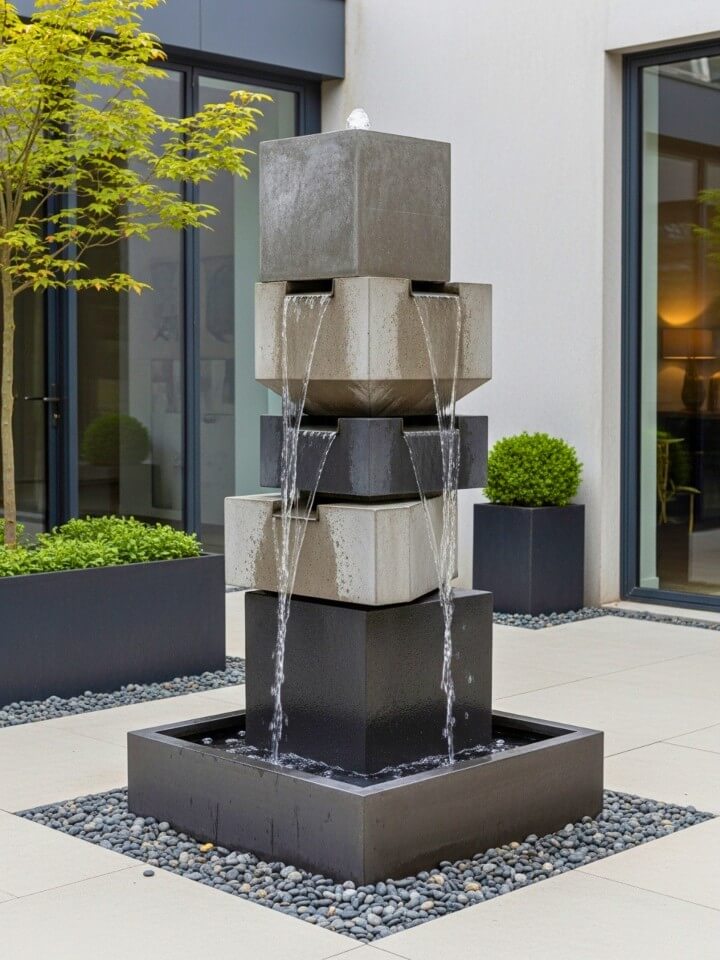
Quick specs before details:
- Footprint: typically 18–36 inches square
- Height: 24–48 inches across 2–4 stacked levels
- Weight assembled: 150–350 pounds (cast concrete) or 80–180 pounds (fiber composite)
- Pump: 200–400 GPH
- Price: $500–$2,000
Geometry matters more than material. A 3:2 proportion between tiers (each level 33% smaller than the one below) reads as intentional design; equal-sized tiers look stacked rather than composed. Asymmetric arrangements where one cube offsets a rectangle add visual tension that pure pyramidal stacks lack. These work best against backdrops of soft planting — ornamental grasses, low boxwood — where the hard geometry contrasts foliage rather than competing with other hardscape.
23. Wall Recess Fountain with Plants
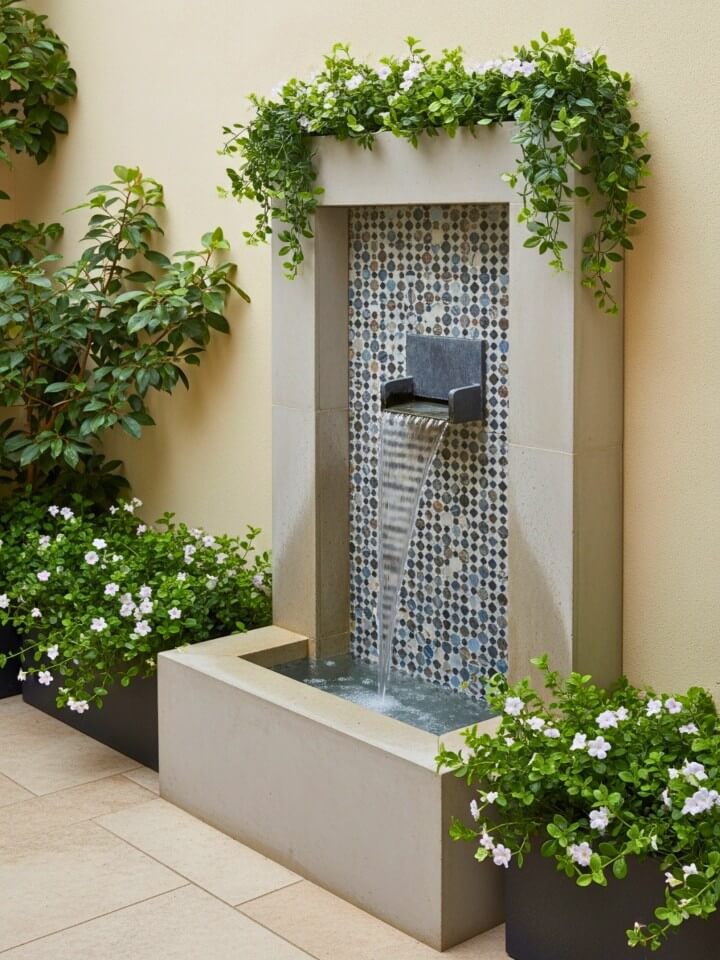
Plant selection makes or breaks this design. The constant humidity zone within 18 inches of flowing water rules out most standard outdoor plants — they rot or develop fungal issues within months. Species that actually thrive:
- Trailing options: creeping jenny, English ivy, string of pearls (in mild climates), variegated Algerian ivy.
- Upright fillers: maidenhair fern, autumn fern, Japanese forest grass, baby tears.
- Flowering accents: impatiens, fuchsia, begonias in shaded recesses.
Build integrated planters with drainage holes that empty into the fountain basin, creating a closed system. Total installation depth needs 12–18 inches behind the wall surface for the recess, plumbing, and root space. Budget $800–$2,500 depending on materials and whether you build or hire out.
24. Ceramic Pot Stack Fountain
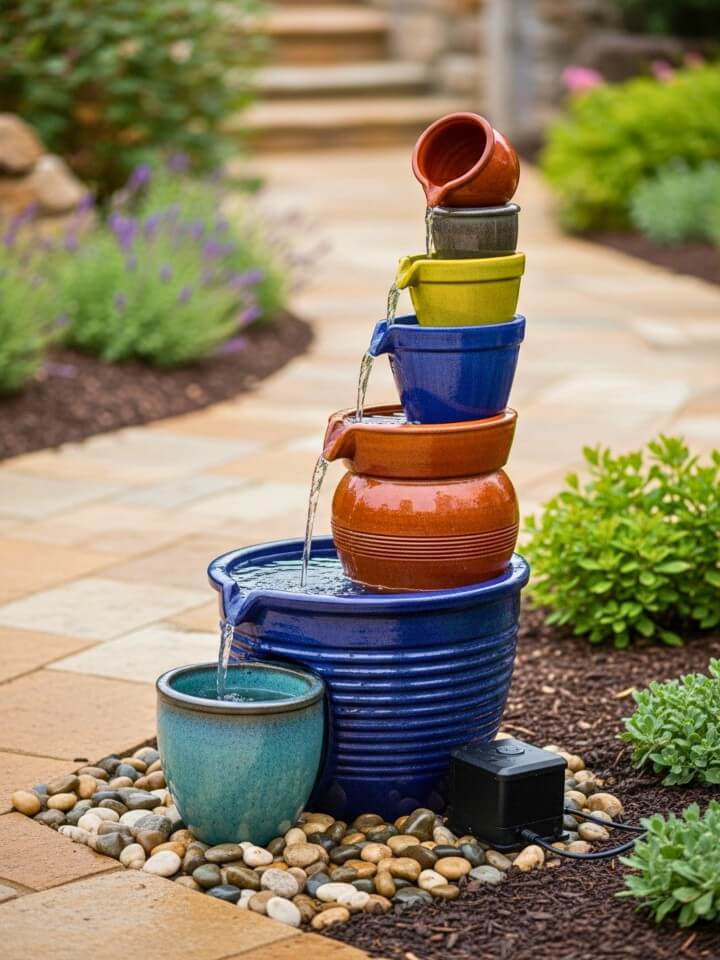
The same concept scales across three skill levels:
- Beginner ($75–$150): three terracotta pots in graduated sizes, drilled at the base with a masonry bit, stacked offset on a single basin. One 30 GPH pump. Assembly: 90 minutes.
- Intermediate ($200–$400): glazed ceramic vessels in coordinated colors, copper pipe internal plumbing, weighted base, decorative river rock concealing the basin. Assembly: half a day.
- Advanced ($500–$1,200): hand-thrown stoneware pots, integrated LED uplighting, automated reservoir refill from garden irrigation, decorative tile collar. Requires basic plumbing knowledge.
All three deliver the same cascading aesthetic, just with progressively cleaner execution. Even the beginner version looks expensive placed correctly — patio corner, beside a doorway, anchoring a planted bed.
25. Mirror Water Wall Fountain
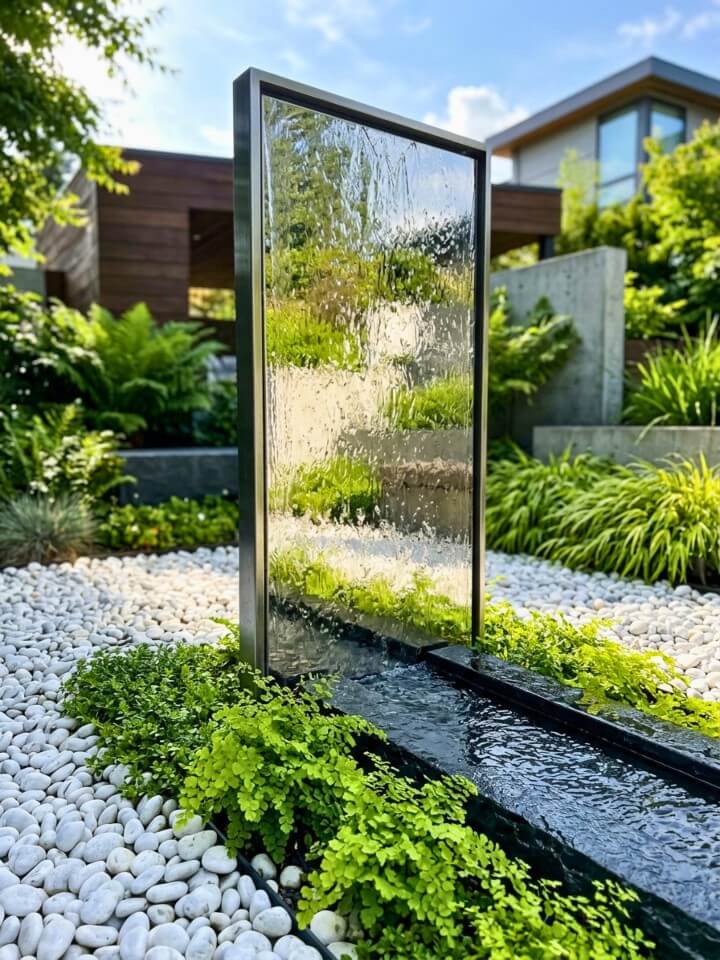
Create your dream escape with elegant backyard fountains designed to refresh, relax, and inspire daily. The optical effect is measurable, not just decorative. A 4-foot-wide mirror wall fountain visually extends a 10×10 patio to feel roughly 13×10 — the brain reads the reflected scene as continuous space. This makes mirror walls genuinely useful in cramped townhouse courtyards, narrow side yards, and balconies under 80 square feet.
Three installation requirements that matter:
The mirror must use marine-grade or stainless-backed glass; standard mirrors corrode along the silvering within a year of water exposure. Water flow must sheet evenly across the surface — uneven flow shows every imperfection. The reflected view must be worth doubling; mirrors reflecting a fence or HVAC unit defeat the purpose entirely.
Budget $800–$3,000 installed, depending on size and frame material.
26. Stone Sphere Bubbling Fountain
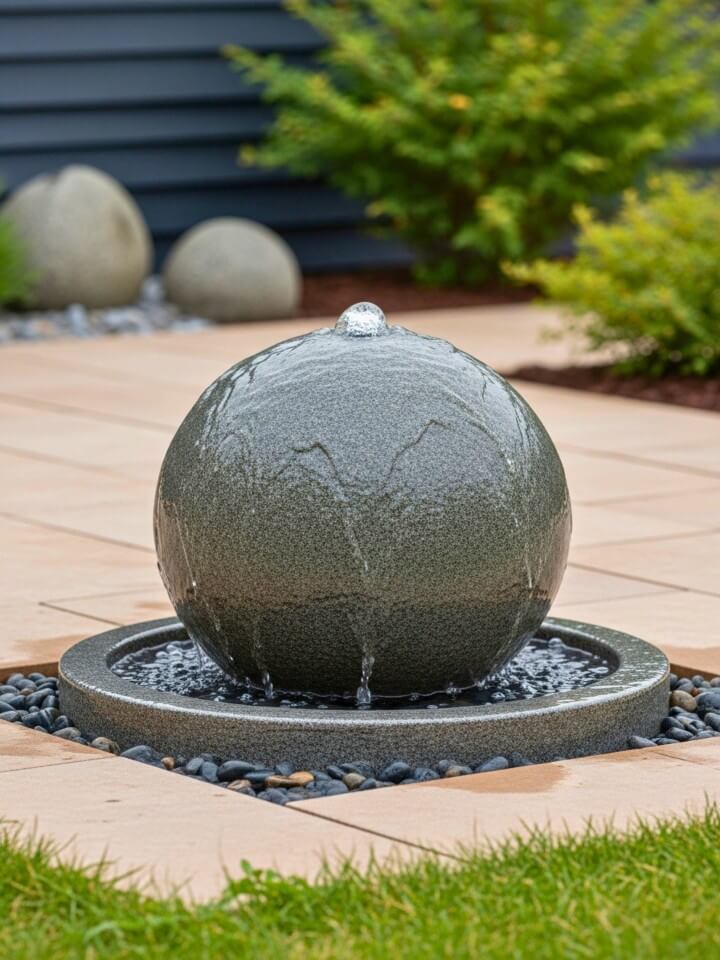
How it compares to the other sphere options on this list:
| Feature | Stone Sphere | Glass Orb (#8) | Floating Sphere (#17) |
|---|---|---|---|
| Weight | 80–400 lbs | 5–40 lbs | 1–8 lbs (floats) |
| Water effect | Welling over surface | Welling from base | Surface bubble |
| Wind sensitivity | None | Low | High |
| Freeze risk | None (drain basin) | High (must store) | Low |
| Price range | $400–$2,000 | $80–$600 | $150–$700 |
Stone spheres are the most permanent of the three — once placed, they stay for decades. Granite and basalt are standard; sandstone wears too quickly outdoors. Drilling for the central water channel is done by the supplier before delivery. A 100–200 GPH pump handles a typical 16-inch sphere.
27. Driftwood Waterfall Fountain
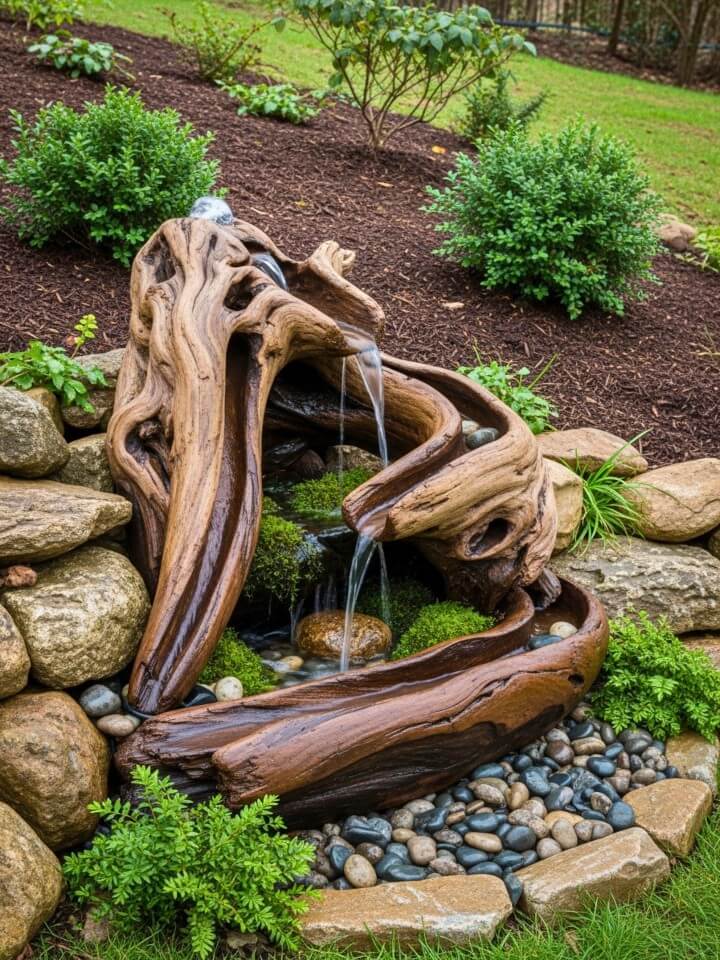
Sourcing driftwood ethically and safely takes more thought than “find piece on beach”:
- Beach driftwood from saltwater coasts holds embedded salt that leaches into fountain water for years, killing surrounding plants and corroding pumps. Avoid entirely.
- River and lake driftwood is the right source — already cured by freshwater exposure, structurally tested by current.
- Collection legality varies by location. Public waterways often allow personal-use gathering; protected shorelines and national parks prohibit it. Check before hauling.
Before installation, soak any piece in fresh water for two weeks, changing the water every three days, to leach tannins that would otherwise stain the basin brown. Seal with clear marine spar varnish. A 60–100 GPH pump handles typical cascade flows.
28. Minimalist Concrete Slab Fountain
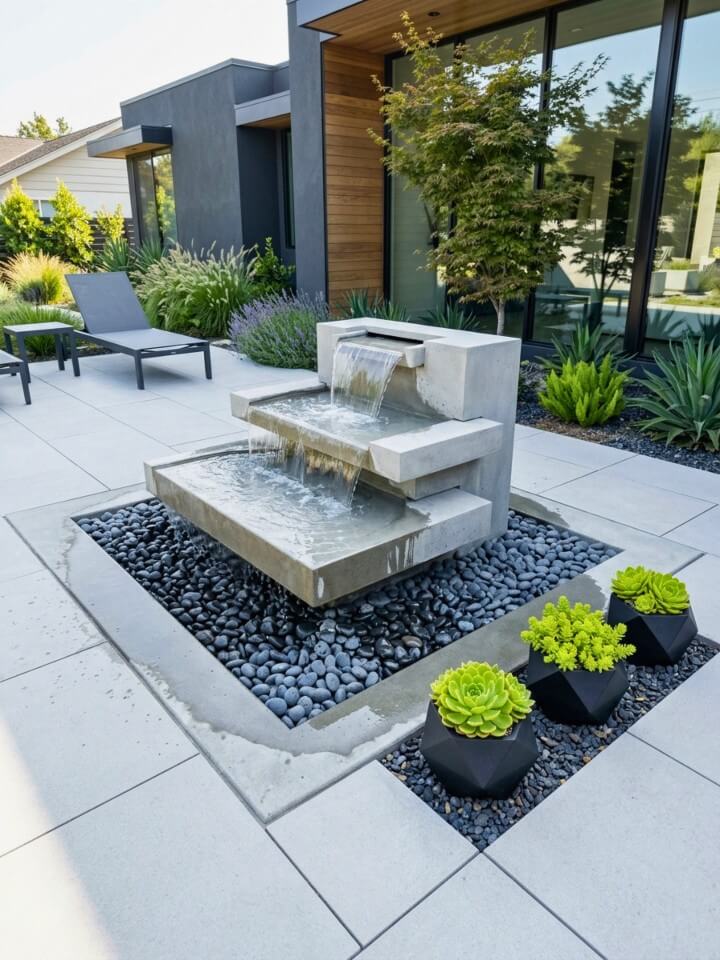
Style-matching matters more with this design than almost any other. The clean concrete plane reads as deliberate against certain architecture and out of place against others:
- Works with: mid-century modern homes, contemporary builds with horizontal lines, industrial conversions, Scandinavian landscapes, Japanese-inspired gardens with raked gravel.
- Clashes with: Victorian, Colonial Revival, Tudor, Mediterranean, cottage gardens, anything with heavy ornamentation or curved architecture.
The fountain itself is straightforward — a 3-to-5-foot vertical slab with water sheeting down the face into a narrow rectangular basin below. Cost runs $700–$2,500 depending on thickness and finish. Board-formed concrete (showing wood-grain texture) costs 20–40% more than smooth-finished but ages more interestingly. A 300–500 GPH pump maintains even sheet flow.
29. Lantern-Illuminated Pond Fountain
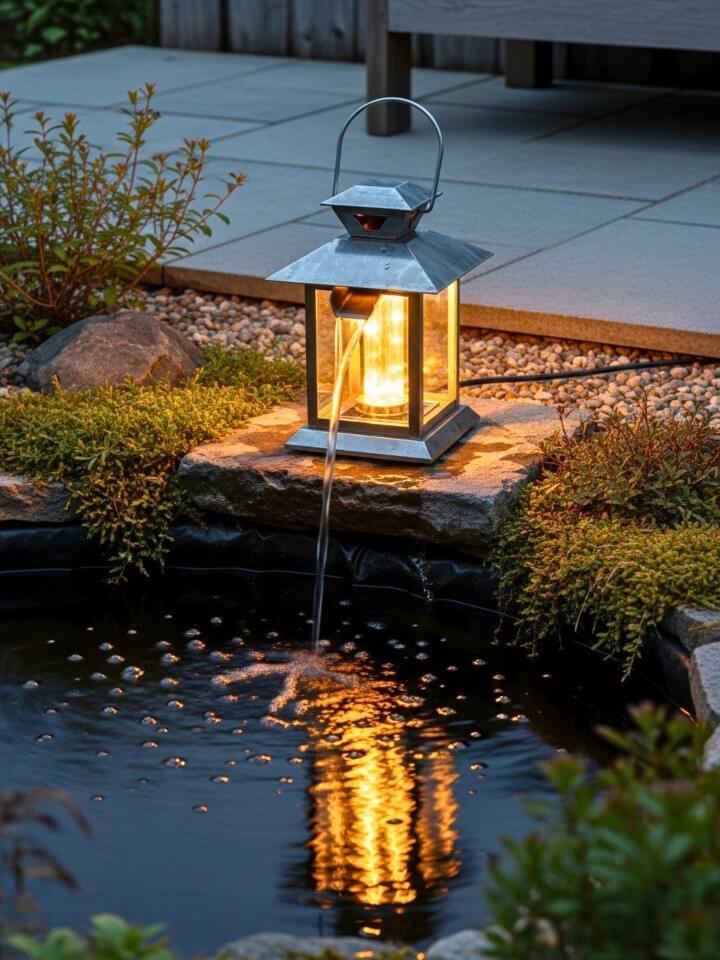
How one of these reads across the day:
- Dawn: lantern lights still glowing, low light catching ripples on the pond surface. The most photographed hour for these features.
- Midday: lighting invisible, focus shifts to the lantern’s sculptural form and the sound of water entering the pond. Best hour for watching fish.
- Dusk: the transition hour when the lantern starts visibly glowing against fading ambient light. The pond surface becomes a mirror for warm light.
- Night: the lantern becomes the garden’s primary light source, casting soft pools onto surrounding plantings.
Budget $400–$1,500 for a complete setup. A 200–400 GPH pump plus integrated solar or low-voltage LED lighting completes the build. Granite lanterns weather better outdoors than cast concrete reproductions.
30. Copper Spout Wall Fountain
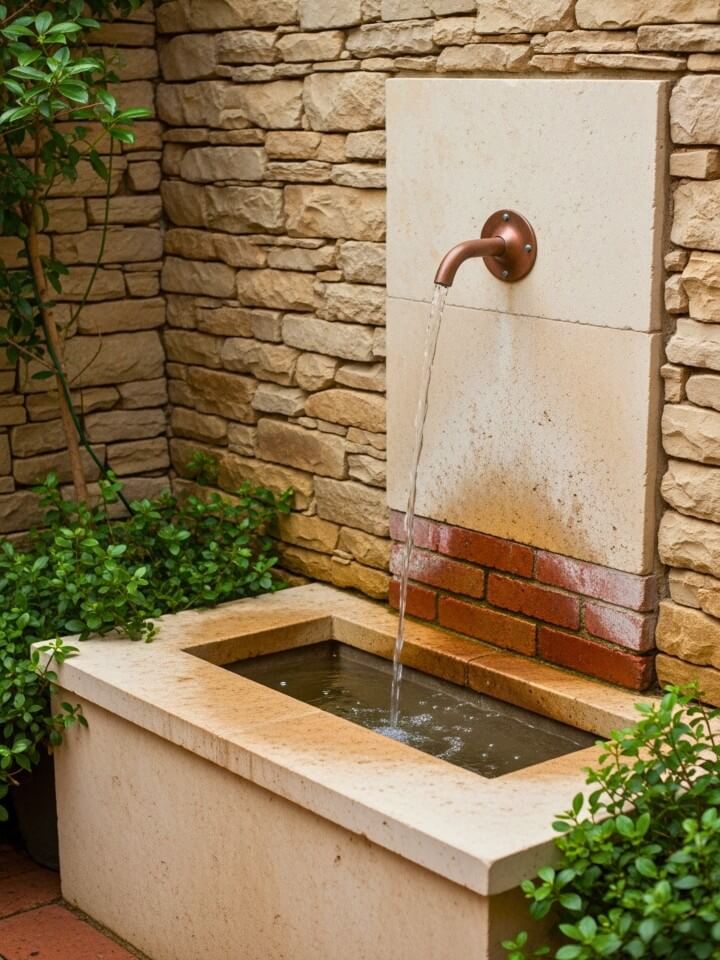
What to expect from copper across a decade of outdoor exposure:
- Year 1: bright penny finish, mirror-shine on flowing surfaces. High visual impact but inconsistent — fingerprints and water spots show daily.
- Year 2: dull orange-brown across the entire surface. The “new copper” look is officially gone.
- Year 3–4: brown deepens with first hints of dark patina in recesses. Most uneven phase aesthetically.
- Year 5–7: patina spreads, settling into the rich brown-green most people associate with quality copper architecture.
- Year 10+: full blue-green verdigris, uniform across the surface, requires nothing but occasional rinsing.
Budget $250–$900 for a wall-mounted copper spout with basin. A 50–100 GPH pump handles the typical flow. Polish or patina — decide before installation.
FAQs About Garden Fountains
Pretty pictures sell fountains. Reality builds them. Before the first shovel hits the ground, these five practical answers could save real time, money, and frustration.
How Much Electricity Does a Garden Fountain Actually Use?
Most small to mid-size pumps draw 10–40 watts, costing roughly $1–$5 monthly if run continuously. Larger waterfall and koi pond pumps at 2,000+ GPH can reach $15–$30 monthly. Timers cut that figure in half easily.
Will a Fountain Attract Mosquitoes to My Yard?
Moving water actually prevents mosquitoes — females need still surfaces to lay eggs. A working pump disrupts the surface enough to keep them away. Problems only start when pumps fail or fountains sit unused with standing water for several days.
Do I Need a Permit to Install a Garden Fountain?
Most plug-in fountains under 100 gallons need no permit. Hardwired electrical work, ponds deeper than 18–24 inches, and any feature near property lines often require approval. Check local codes before digging — fines run higher than most installation budgets.
How Do I Keep Fountain Water Clean without Harming Pets?
Skip chlorine and bleach entirely if pets drink from it. Use enzyme-based fountain cleaners labeled pet-safe, rinse the basin monthly, and add a small amount of barley straw extract to control algae naturally without chemicals reaching your animals.
Can Garden Fountains Run Through Winter in Freezing Climates?
Most cannot. Water expanding in pumps, basins, and tubing cracks everything by January. Drain fully each fall, store pumps indoors, and cover the basin. Heated options exist for koi ponds but tripleelectric costs during cold months.
Conclusion
The best fountain isn’t the most expensive one or the one trending on Pinterest this season. It’s the one that matches your space, your climate, and how much weekend time you actually want to spend on maintenance. A $75 pebble basin tucked into the right corner often beats a $2,000 tiered showpiece dropped in the wrong spot.
Walk your garden tomorrow morning with coffee in hand. Notice where your eye keeps landing, where you wish you had a reason to pause. That’s where your fountain belongs — not where the catalog photo suggested, but where your own garden has been quietly asking for water all along.