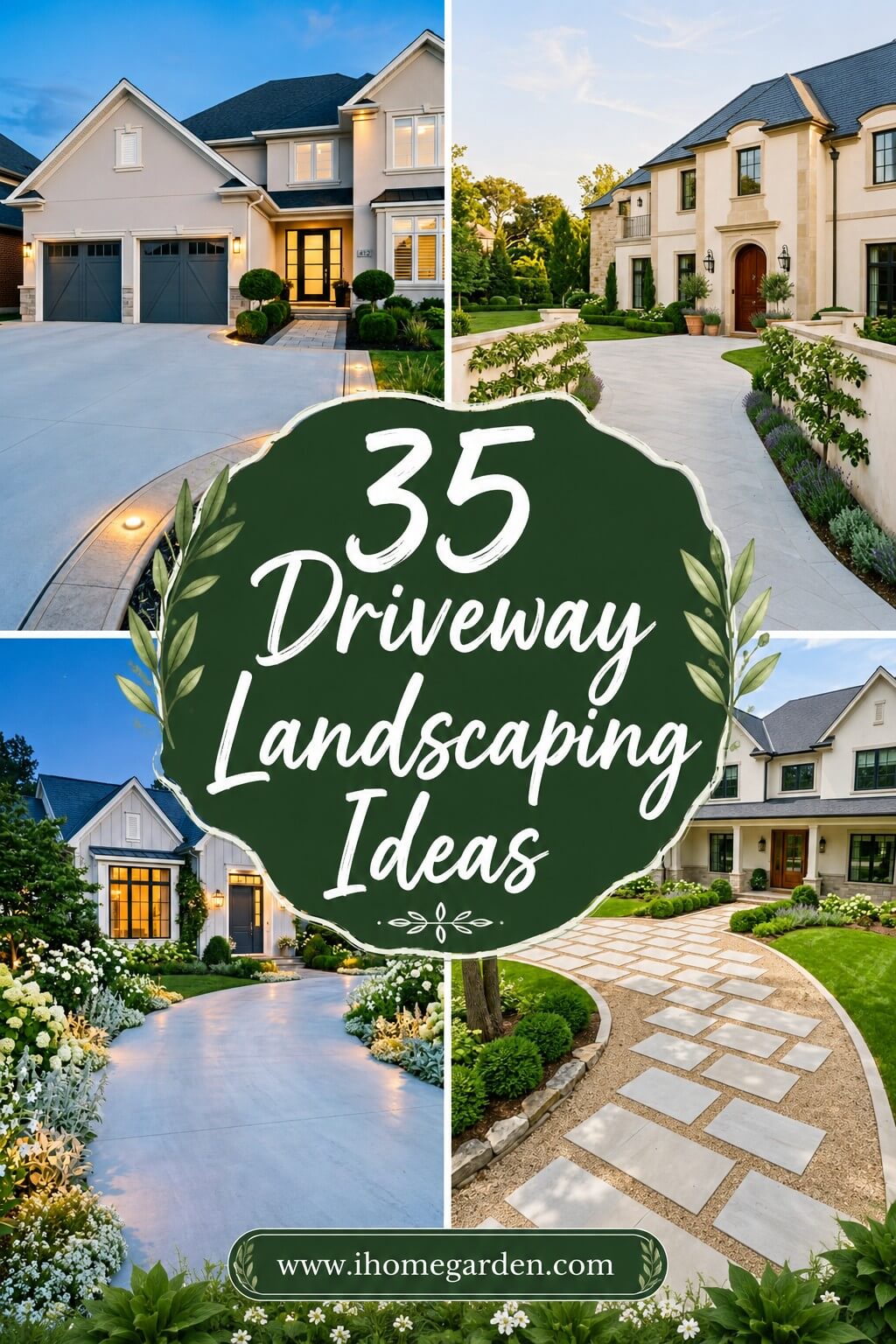
35 Driveway Landscaping Ideas for Stunning Curb Appeal
Nobody talks about driveways the way they talk about kitchens or living rooms — but walk down any street and you’ll instinctively know which homes have one that works. These 35 amazing driveway landscaping ideas exist because that feeling isn’t accidental — it’s created, often with less effort and money than you’d expect. There’s something about a well-considered entrance that makes a house feel genuinely lived-in and loved, before you’ve even knocked on the door.
The driveway is roughly 15% of your home’s visible exterior — most people leave it completely bare. That’s actually good news, because even small changes here create an outsized visual impact compared to renovating anything indoors.
These driveway landscaping ideas came from one simple question: what actually makes an entrance feel special? The answers ranged from a $15 bag of wildflower seeds pressed along a gravel edge, to tiered stone walls cascading down a sloped yard. Some landscaping ideas here will take your Saturday. A few will take your breath away.
1. Stepping Stone Driveway with Gravel Fill
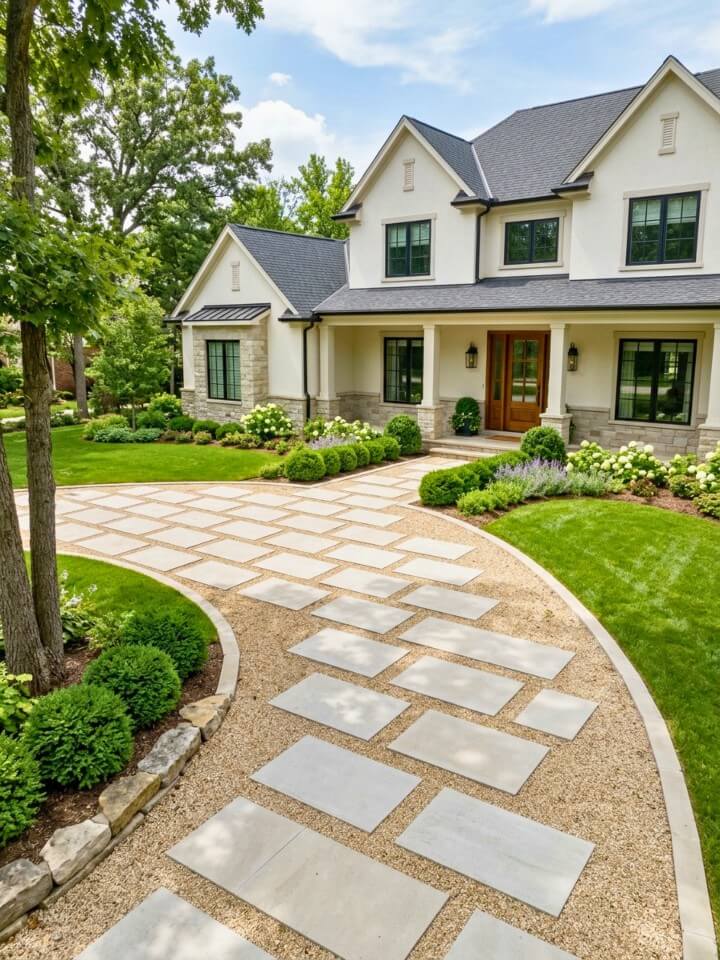
Large rectangular stone slabs set into fine gravel create a refined entrance without full paving costs. Ivory-gray slabs within warm beige gravel feel organized yet natural, while gravel improves drainage and keeps the surface breathable. Even a modest home feels polished and intentional with this simple treatment.
- Cost: $8–$15 per sq ft
- DIY: Yes, manageable weekend project
- Maintenance: Low — occasional raking, reset shifted slabs
- Climate: Most climates; avoid heavy freeze-thaw zones
Before You Buy Gravel: Polymeric sand under slabs locks them permanently in place and blocks weed growth — worth the small extra cost upfront.
2. Driveway with Japanese Maple Accents
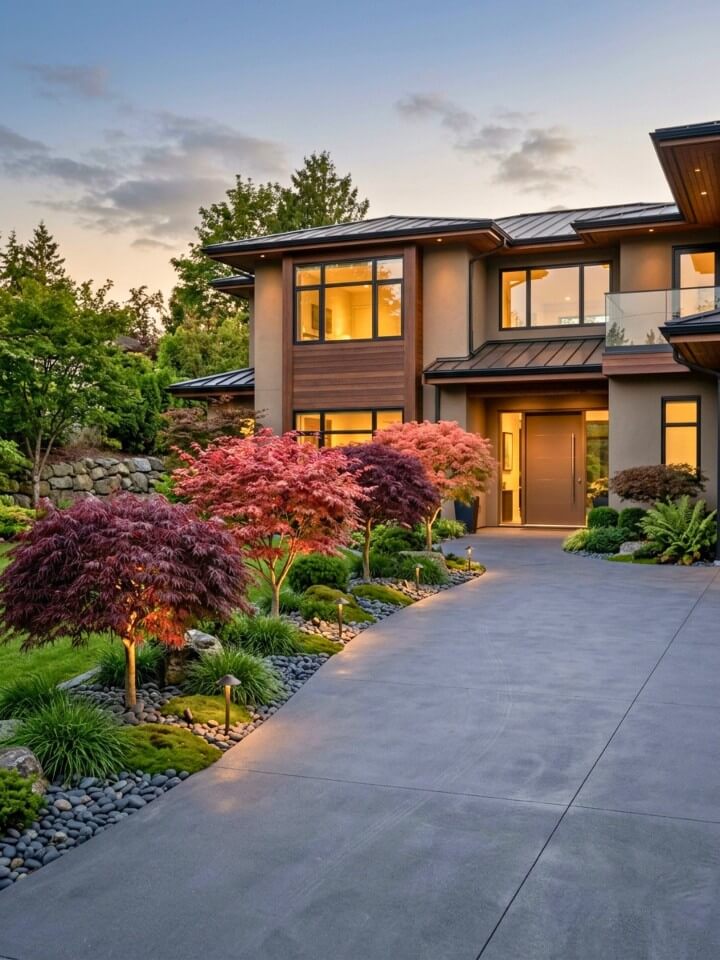
Two or three well-placed Japanese maples deliver year-round drama — fresh green in spring, fiery red or deep burgundy in autumn. Unlike large shade trees, they stay compact and never crowd the path. Once established, they need almost no attention while quietly becoming the most admired feature of your front yard.
| Factor | Details |
|---|---|
| Cost | $40–$150 per tree |
| DIY | Yes — careful placement matters most |
| Maintenance | Minimal pruning, very low effort |
| Climate | Zones 5–8; afternoon shade helps in hot regions |
Planting Mistake to Avoid: Never plant Japanese maples in low-lying spots where water collects — soggy roots kill them faster than any pest or disease.
3. Permeable Pavers with Groundcover Plants
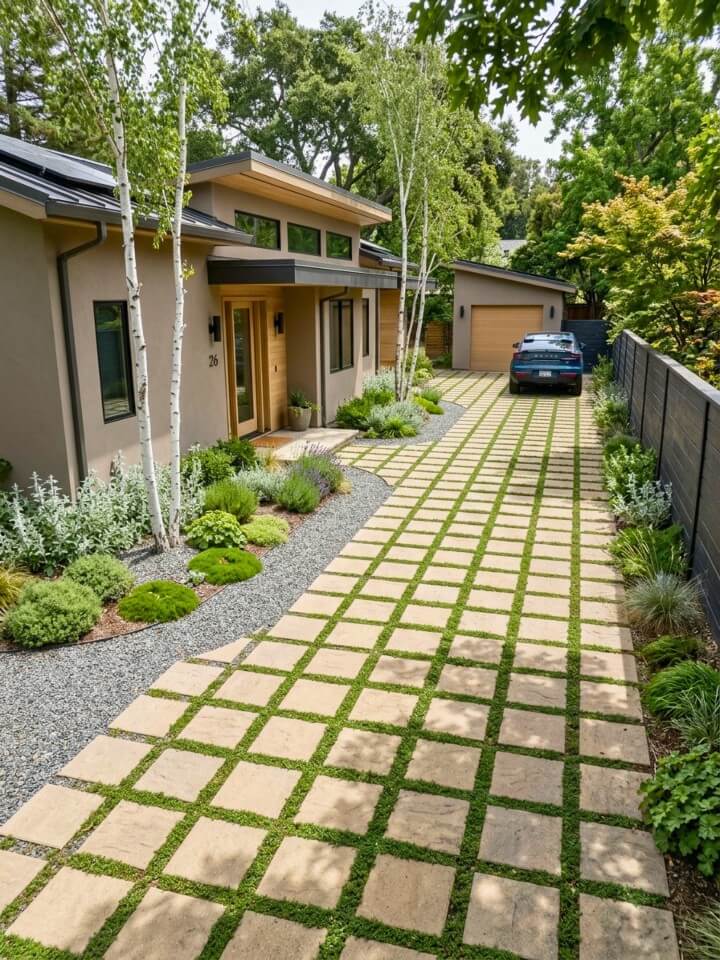
Rather than a hard sealed surface, permeable pavers let rainwater filter naturally into the ground while looking completely polished. Filling the joints with creeping thyme or moss slowly transforms the driveway into something resembling a garden path. Within two seasons the plants fill every gap, staying tidy without regular trimming.
💰 Budget: $10–$20 per sq ft installed 🔧 Installation: Hire a pro for proper base and drainage slope 🌿 Upkeep: Occasional weeding, replant bare gaps in spring ☀️ Climate: Excellent in rainy regions; thyme handles heat and drought well
Choosing Your Groundcover: Moss looks beautiful but dies in direct sun. If your driveway gets more than four hours of sunlight daily, creeping thyme is the smarter and more durable choice.
4. Patterned Stamped Concrete with Planters
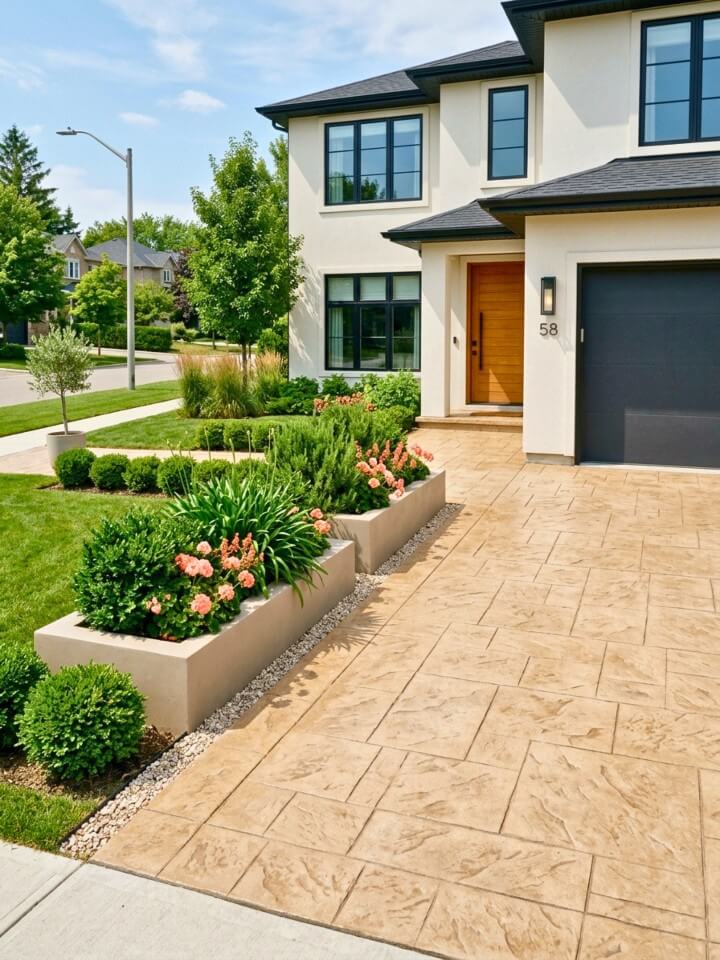
Stamped concrete delivers the look of natural stone or brick at significantly lower cost. Adding built-in planters along both edges prevents the surface from feeling cold or industrial, guides vehicles naturally, and lets you add seasonal color without any renovation work. A properly sealed stamped driveway can easily last 25–30 years.
Is this a DIY project? Honestly, no. Stamping requires speed and experience — hire a professional. Budget $8–$18 per sq ft for the concrete, plus $200–$800 for planters depending on size and material. Reseal every 2–3 years to protect the pattern. In colder regions ask your contractor about fiber-reinforced mix to resist freeze-thaw cracking.
Long-Term Care Tip: Avoid rock salt for winter ice removal on stamped concrete — it eats through the sealer and fades the pattern within a couple of seasons. Use sand instead.
5. Driveway with Boxwood Hedge Borders
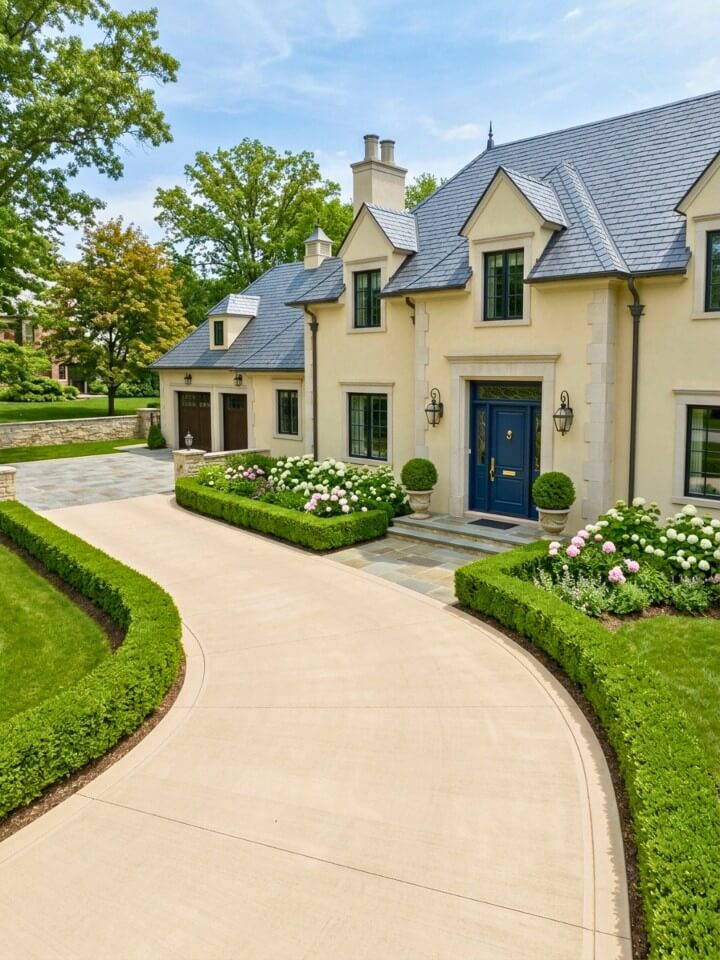
Boxwood has lined driveways for centuries for good reason — evergreen, structured, and maintenance-friendly. The dark green foliage against pale concrete or gravel creates a crisp contrast that feels formal without being cold. Even through winter when everything else goes bare, boxwood holds its shape and keeps the entrance looking sharp.
Budget: $15–$50 per plant; spaced 2–3 ft apart, they last for decades Trimming schedule: Twice yearly — spring and early summer only Best varieties for hot climates: ‘Green Velvet’ or ‘Wintergreen’ DIY friendly: Completely — basic hedge shears are all you need
Seasonal Warning: Late summer pruning triggers soft new growth that frost will damage before winter — always finish your last trim by mid-July at the latest.
6. Driveway with Topiary Spirals or Cones
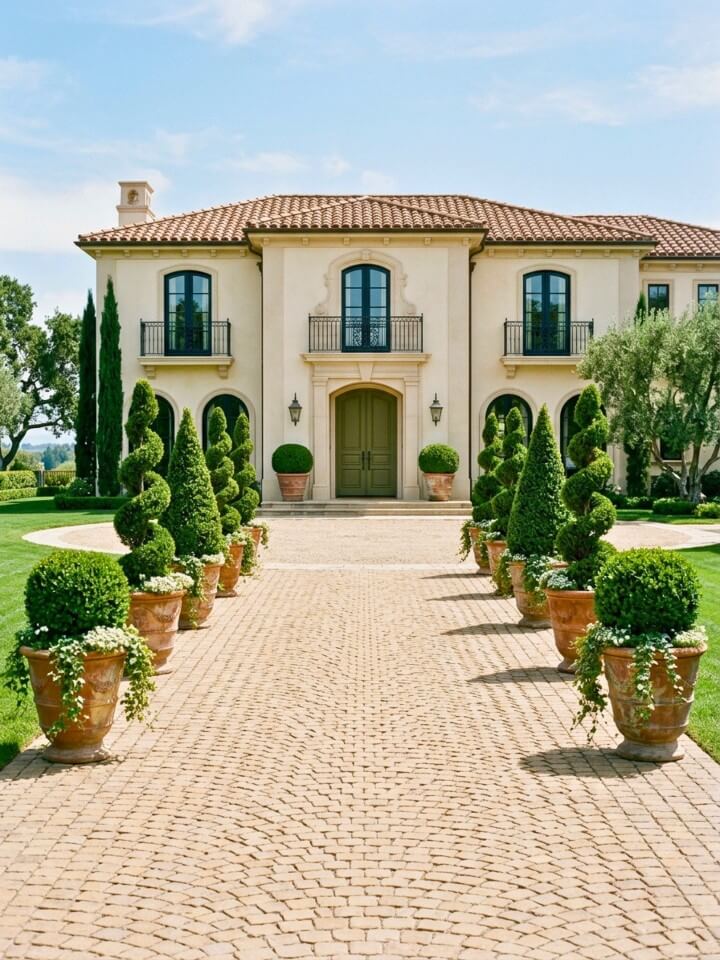
Matching topiary spirals or cones at the entrance create instant symmetry that flat plantings simply cannot achieve. Boxwood, yew, or juniper hold sculpted shapes well and stay evergreen year-round. Even a plain concrete driveway feels like a garden estate with two well-placed topiaries flanking the entry gate.
What to budget: $50–$200 per shaped plant Skill needed: Basic pruning twice yearly keeps shapes crisp Container vs ground: Containers add portability; ground planting gives permanence Climate note: Juniper handles heat and drought better than boxwood in southern states
Worth Knowing: Pre-shaped topiaries from nurseries cost more upfront but save years of training time — worth the premium if you want instant impact.
7. Driveway with Wildflower Meadow Edges
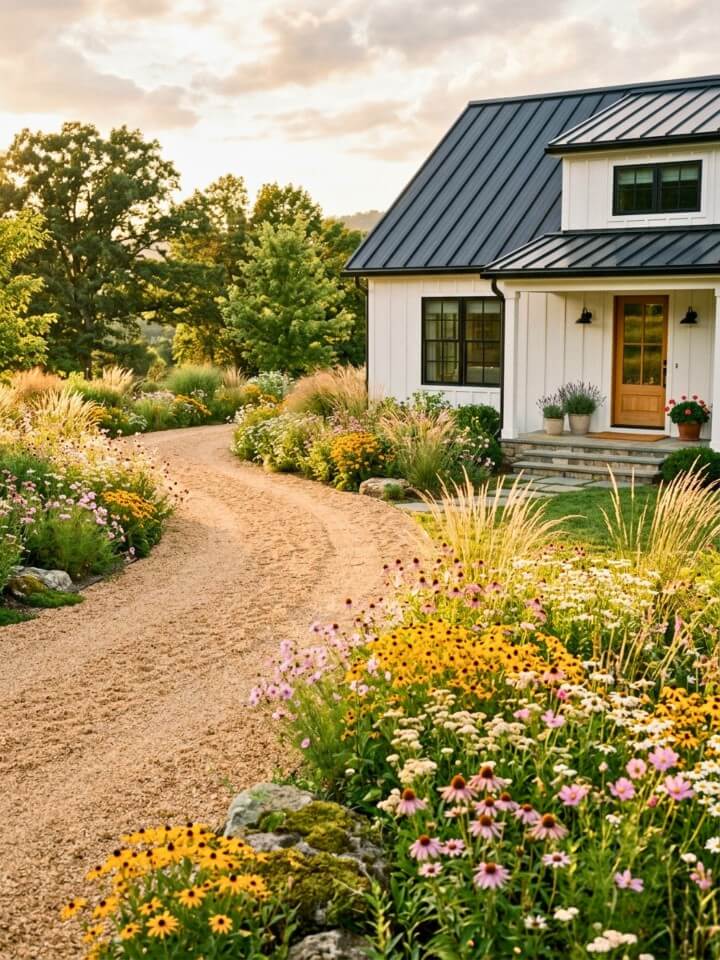
Wildflowers along the driveway edges create a soft, romantic border that practically manages itself after the first season. Native varieties like black-eyed Susans, coneflowers, and cosmos bloom continuously from late spring through fall, attracting butterflies and bees without any spraying or fertilizing. The meadow look feels intentional when edged cleanly with steel or stone.
- 🌸 Cost: Very budget-friendly — seed mixes run $15–$40 per bag
- 🌱 First season: Needs some watering to establish; largely self-sufficient after that
- ✂️ Maintenance: Cut back once yearly in late winter, nothing more
- 🌤️ Climate: Native mixes perform best — choose seeds matched to your region
First Year Reality Check: Wildflower meadows look sparse and weedy in year one. Commit through that awkward phase — by year two they fill in beautifully and reseed themselves naturally.
8. Circular Driveway with Center Island Garden
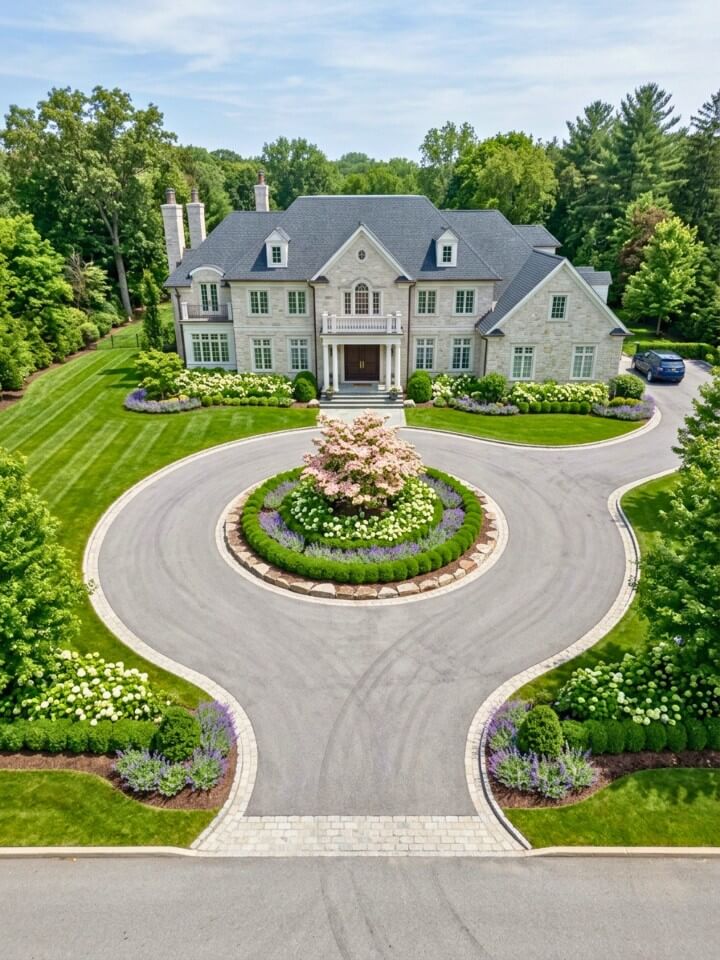
A circular driveway with a planted center island transforms a purely functional layout into an elegant focal point visible from the street. Flowering shrubs, ornamental grasses, or a small ornamental tree in the center add seasonal color while naturally guiding traffic flow. If you love big, fragrant shrubs, center islands can borrow inspiration from alluring lilac bush landscaping ideas while still staying proportionate to the driveway.
| Factor | Details |
|---|---|
| Cost | $3,000–$15,000+ depending on paving material and island size |
| DIY | Paving requires a professional; island planting is DIY-friendly |
| Maintenance | Moderate — seasonal pruning and mulching of center island |
| Best For | Large lots; looks cramped on small or narrow front yards |
Scale Warning: Measure your yard carefully before committing — a circular driveway needs at least 60–80 feet of width to look proportional rather than squeezed.
9. Driveway with Espalier Trees Along Walls
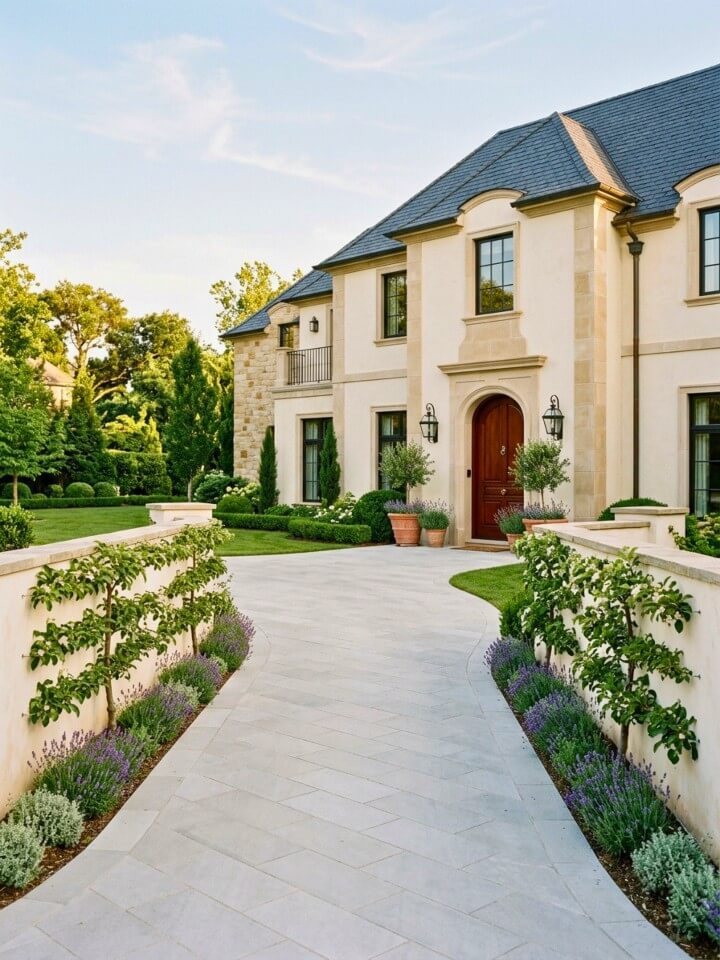
Espalier trees trained flat against a wall beside the driveway create living architecture that no other planting style can replicate. Apples, pears, or magnolias fanned into geometric patterns become genuine sculptural features that grow more impressive every year. They take up almost no ground space, making them perfect for narrow driveways flanked by walls or fences.
Training an espalier takes patience — expect two to three years before the shape really develops. The ongoing work involves tying new branches to guide wires and trimming anything that grows outward. Budget $30–$80 per young tree plus wire and anchor hardware. A professional consultation for the initial framework is worth it if you want clean results.
Best Starter Tree: Dwarf apple varieties respond to espalier training faster than most ornamentals and reward you with both flowers in spring and fruit in autumn.
10. Driveway with Decomposed Granite and Steel Edging
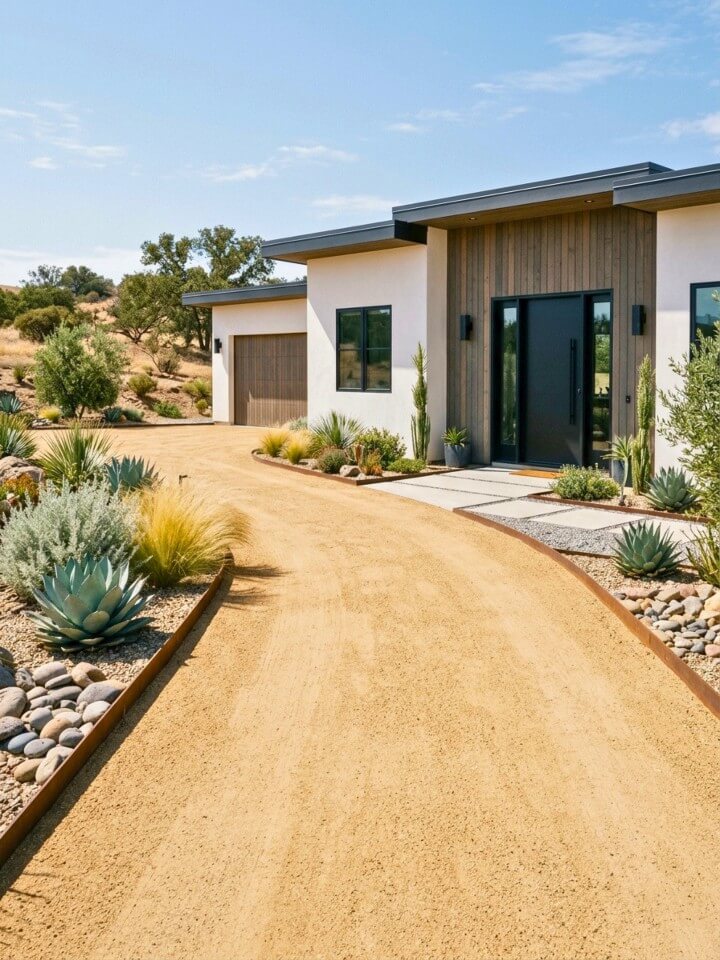
Decomposed granite compacts firmly underfoot, drains well, and comes in warm tones ranging from buttery beige to rich rust — far more interesting than plain asphalt or concrete. Paired with crisp steel edging, the soft earthy surface gets a clean modern frame that prevents spreading and keeps the whole driveway looking intentional year after year.
💰 Material cost: $1–$3 per sq ft for granite; steel edging adds $2–$5 per linear ft 🔧 Installation: DIY-friendly with proper compaction equipment rental 🌵 Perfect pairing: Drought-tolerant plants like agave, yucca, or ornamental grasses alongside ☔ Rainy climates: Add a stabilizing binder to prevent granite from washing away during heavy rain
Longevity Secret: Top up decomposed granite every two to three years with a fresh thin layer — it refreshes the color and re-firms the surface without any major work.
11. Driveway with Cantilevered Garden Walls
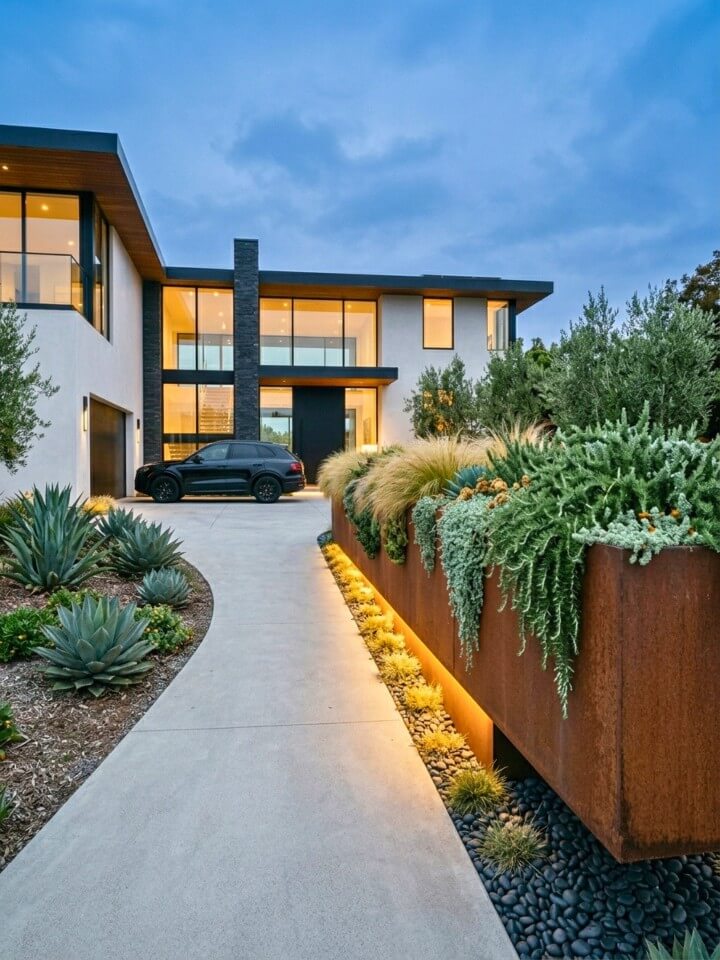
Low cantilevered walls running alongside a driveway add genuine architectural weight that plants alone cannot provide. Built from poured concrete, corten steel, or stacked stone, they define the path boldly while doubling as raised planters. Cascading rosemary or ornamental sedum spilling over the edges softens the hard lines without losing the sleek, designed feel.
Material costs: Corten steel runs $50–$100 per linear ft; stacked stone is more affordable at $20–$40 Installation: Professional required — proper footing and drainage behind walls is critical Best for: Modern, minimalist, or contemporary homes on flat or gently sloped lots
Night Impact: Lighting tucked underneath the cantilever overhang creates dramatic shadows after dark — a small detail that makes the whole driveway look significantly more expensive.
12. Driveway with Climbing Roses Over Arched Entry
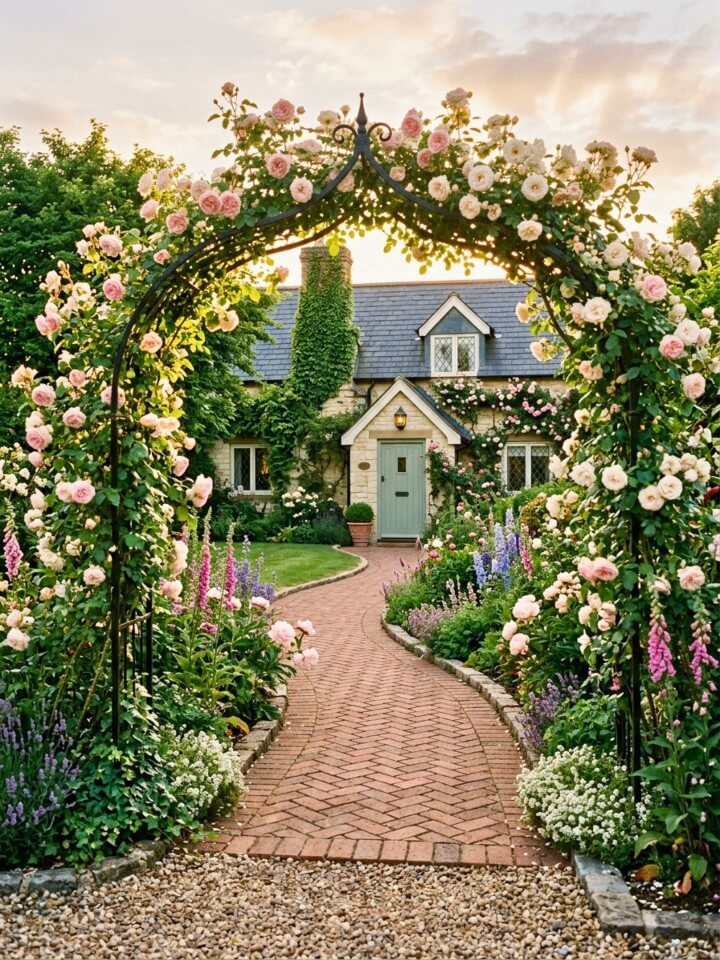
An arched entry draped in climbing roses stops people in their tracks. Install a sturdy iron or wooden arch at the driveway entrance and train varieties like ‘New Dawn’ or ‘Eden’ to drape naturally over the top. The arch frames your home beautifully from the street and creates a threshold that feels genuinely magical during peak bloom.
- 🌹 Arch cost: $150–$600 for iron; wooden arches start around $80
- 🌱 Rose cost: $25–$60 per climbing rose plant
- ✂️ Pruning: Once yearly after main bloom flush keeps growth controlled
- ⏳ Timeline: Full coverage typically takes two to three growing seasons
Underplanting with lavender adds fragrance at ground level while the roses climb — the combination of scent and color makes arriving home feel like a completely different experience.
Structure First: Never skimp on arch quality — a flimsy arch collapses under mature rose weight. Choose steel or pressure-treated hardwood rated for outdoor permanence.
13. Driveway with Tiered Retaining Wall Gardens
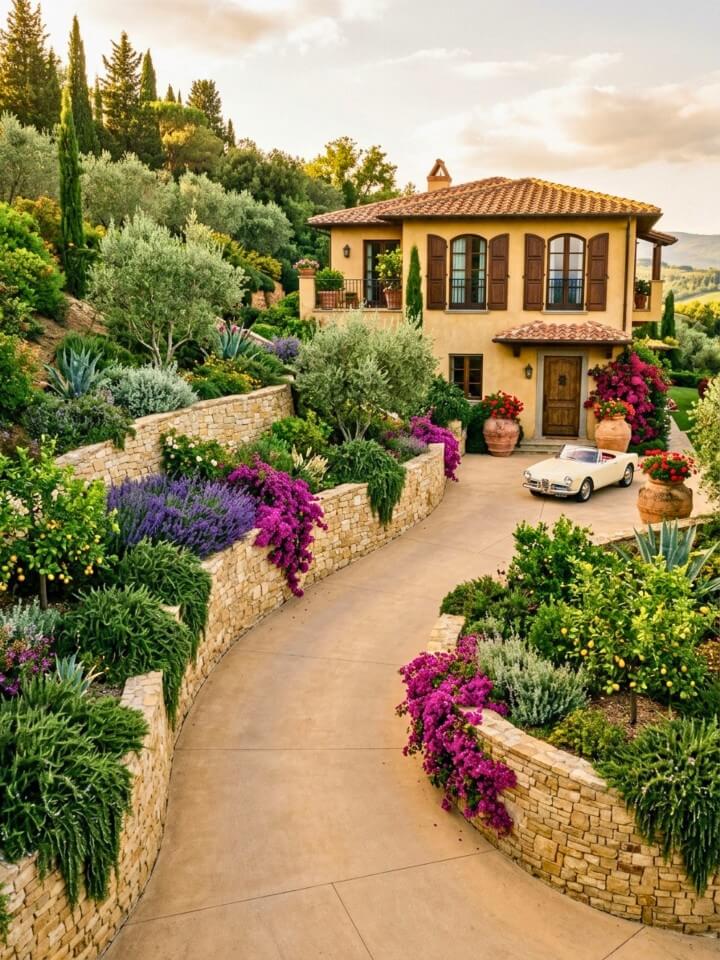
Sloped driveways often feel like a landscaping problem waiting to be solved. Tiered retaining walls flip that completely — turning grade changes into a layered garden feature that looks deliberately designed rather than compensated for. Each tier becomes its own planting opportunity, with trailing plants like creeping jenny or sweet potato vine spilling over edges and softening the hard construction lines.
| Factor | Details |
|---|---|
| Cost | $15–$40 per sq ft depending on material and wall height |
| DIY | Small walls under 3 ft are DIY-friendly; taller walls need engineering |
| Plant choices | Trailing perennials, flowering groundcovers, small flowering shrubs |
| Climate | Works everywhere — especially valuable on wet lots prone to erosion |
Proper drainage behind each wall is non-negotiable. Without it, water pressure builds up and eventually pushes walls outward regardless of how well they were built.
Material Tip: Natural stone walls cost more than concrete block but blend into garden settings far more naturally — worth the premium if the driveway is highly visible from the street.
14. Driveway with Moonlit White Garden Borders
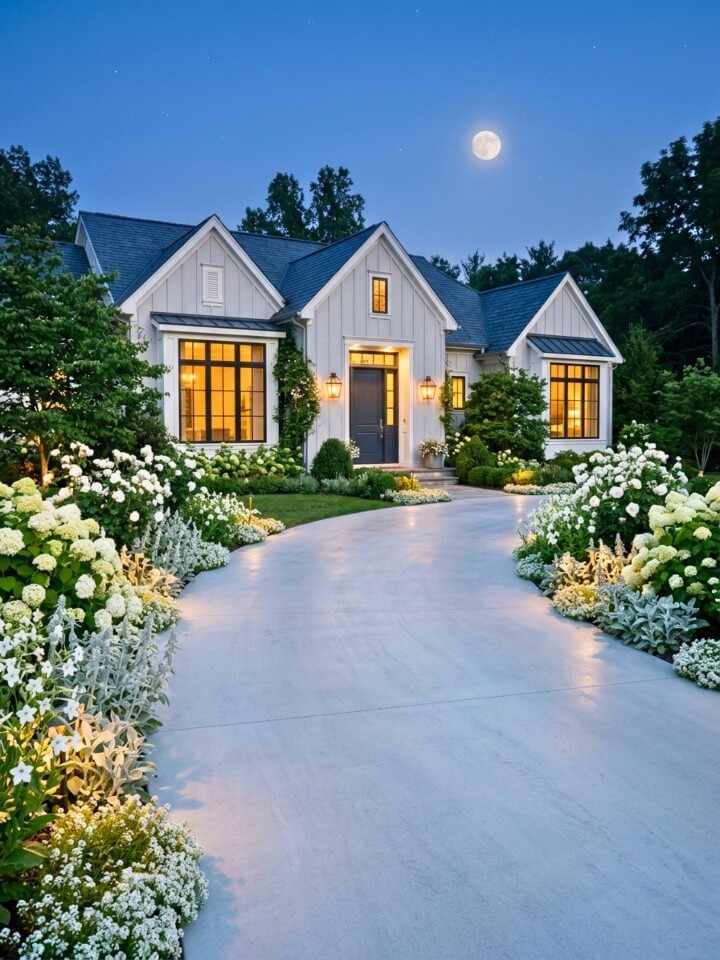
White-themed plantings along a driveway do something no other color scheme can — they glow softly after dark, reflecting ambient light and making the entrance feel luminous and serene without heavy lighting infrastructure. White hydrangeas, moonflowers, white roses, and silver-leaved dusty miller create a palette that looks elegant by day and almost ethereal at dusk.
This works particularly well for homeowners who arrive home after dark regularly. The pale foliage of lamb’s ear and artemisia keeps the border looking bright even between bloom cycles, ensuring the effect lasts all season rather than only during flowering weeks.
💐 Plant budget: $5–$20 per plant; a full border costs $200–$600 depending on length 🌙 Best effect: Blue hour and after dark when pale colors catch ambient light ✂️ Maintenance: Deadhead spent blooms regularly to keep white flowers looking fresh 🌧️ Climate: Most white flowering varieties are adaptable across a wide range of zones
Color Consistency: Avoid mixing cream or yellow-white varieties with pure white ones — the difference becomes obvious under evening light and disrupts the glowing effect entirely.
15. Curved Gravel Driveway with Flower Borders
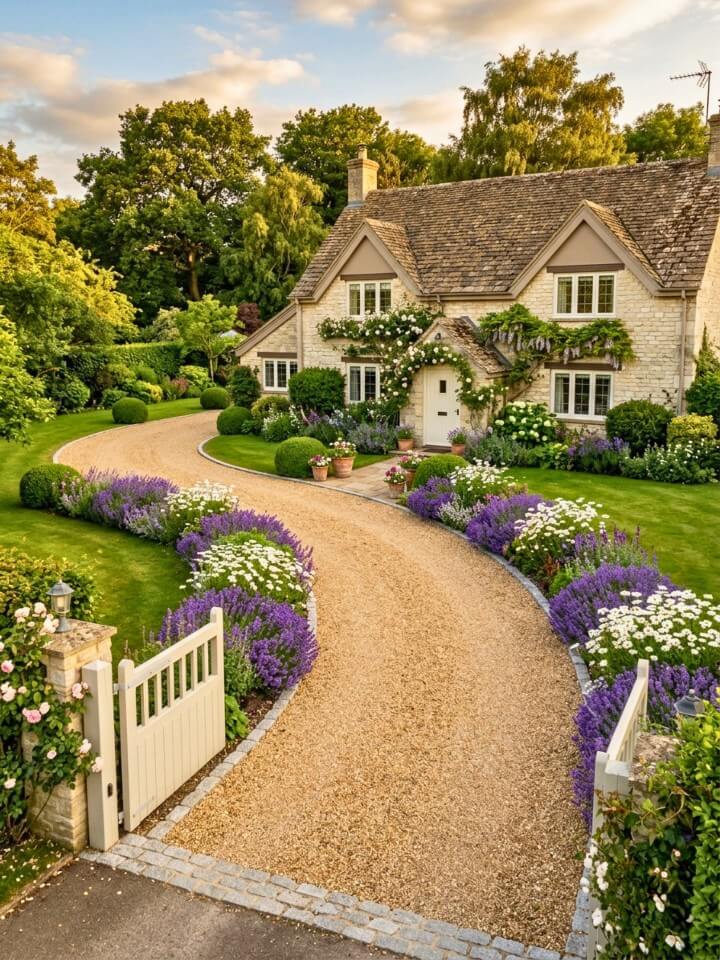
A curved gravel driveway immediately softens a yard that straight paving would make feel rigid and formal. The gentle arc adds movement and draws the eye naturally toward the entrance rather than pointing directly at the garage. Lavender, daisies, or ornamental grasses planted along the inner and outer curves reinforce the flowing shape while adding seasonal color.
Gravel is one of the most budget-friendly driveway surfaces available — material costs run just $1–$3 per sq ft, and installation is straightforward enough for confident DIYers. The key is edging. Without a firm border of steel, stone, or timber, gravel migrates onto the lawn within a single season and becomes a constant maintenance headache.
Edging Options Ranked by Durability:
- Steel edging — cleanest look, longest lasting
- Natural stone — most attractive, slightly higher cost
- Timber — affordable but needs replacing every 8–10 years
Drainage Reality: Curve the driveway away from the house foundation, not toward it — improper grading sends water straight to your basement during heavy rain.
16. Modern Concrete Slabs with Grass Infill
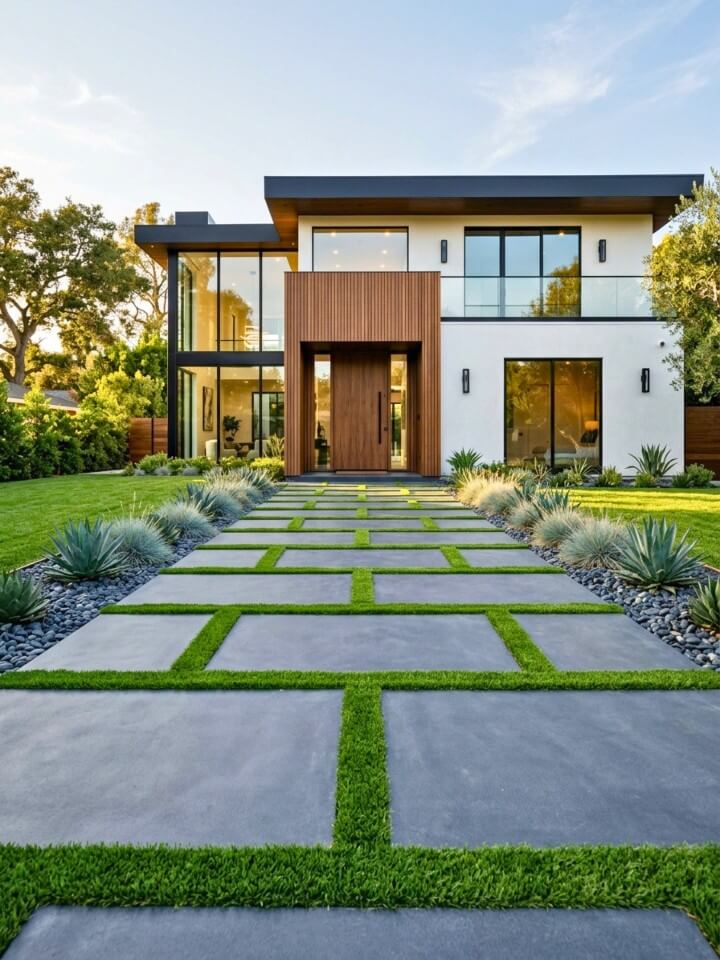
Spaced concrete slabs with grass strips between them deliver a contemporary look while keeping the surface environmentally friendly. The grass softens hard edges, improves drainage, and adds natural texture that pure concrete never achieves. Drought-tolerant turf varieties reduce watering significantly once established.
💰 Cost: $6–$12 per sq ft 🔧 Installation: Professional recommended for level slab placement 🌿 Upkeep: Mow grass strips regularly; reseed thin patches each spring ☀️ Climate: Avoid shaded driveways — grass strips need sunlight to stay healthy
Surface Warning: Choose a textured concrete finish rather than smooth — smooth slabs become dangerously slippery when wet grass clippings land on them.
17. Rustic Cobblestone Edging with Shrubs
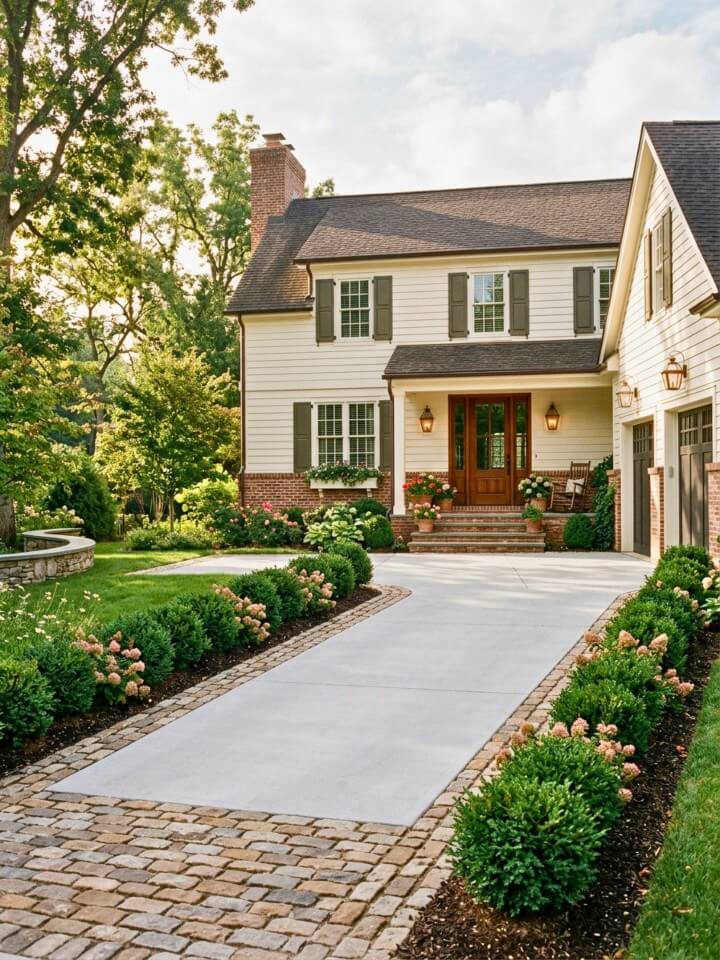
Cobblestone edging gives a driveway an instantly aged, European character that newer materials simply cannot replicate. The irregular stones create a natural visual boundary while anchoring flowering or evergreen shrubs planted just behind them. Together they frame the driveway without making it feel enclosed or narrow.
Material cost: $3–$8 per sq ft for reclaimed cobblestone DIY: Yes — no special tools required beyond a rubber mallet and sand base Shrub suggestions: Knock Out roses, spirea, or dwarf mugo pine for low maintenance Best pairing: Works beautifully alongside brick or aged concrete driveways
Sourcing Tip: Reclaimed cobblestones from salvage yards cost less than new and look far more authentically aged straight out of the bag.
18. Low-Maintenance Rock Garden Along the Drive
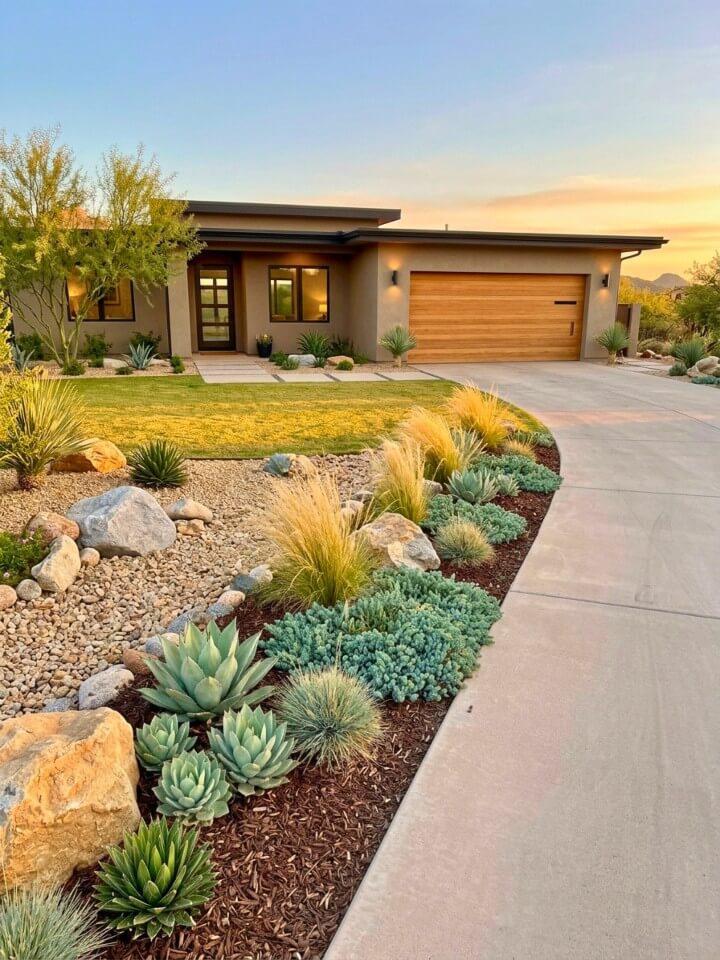
A rock garden alongside the driveway adds bold texture and visual interest without demanding constant attention. Mixing boulders, smaller stones, and drought-resistant plants like succulents or ornamental grasses creates a layered, naturalistic composition that looks intentional rather than neglected.
- 🪨 Cost: $5–$15 per sq ft depending on boulder size
- 🌵 Best plants: Sedum, agave, blue fescue, or dwarf ornamental grasses
- ✂️ Maintenance: Nearly zero once established — no mowing, no watering
- 🌞 Climate: Ideal for dry, sunny regions; succulents struggle in wet cold winters
For homeowners who want a dry-climate look with minimal upkeep, this style connects naturally with amazing low-maintenance Florida landscaping ideas because both rely on heat-tolerant plants, texture, and smart water use.
Arrangement Rule: Group rocks in odd numbers and vary sizes — even-numbered symmetrical arrangements look artificial rather than naturally occurring.
19. Brick Driveway with Climbing Vines
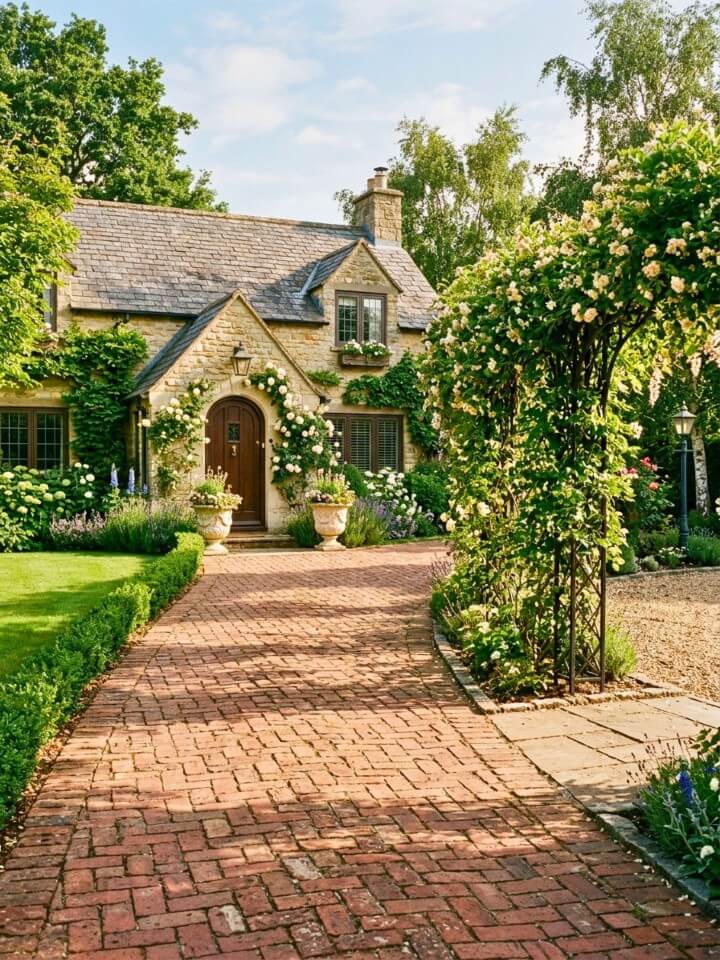
Brick driveways bring classic warmth that ages gracefully over decades, and pairing them with climbing vines on a nearby wall or trellis adds a softness that pure hardscape never achieves. Clematis or climbing roses weave color and greenery into the entrance without taking up any ground space.
Brick runs $10–$20 per sq ft installed and lasts 25+ years with minimal care. The surface provides excellent traction in wet conditions — a practical advantage over smooth concrete. Choose hardy vine varieties suited to your climate zone for reliable coverage season after season.
Vine Timing: Plant vines the same season as brick installation — they establish slowly and look sparse for two full years before filling in properly.
20. Driveway Lined with Ornamental Trees
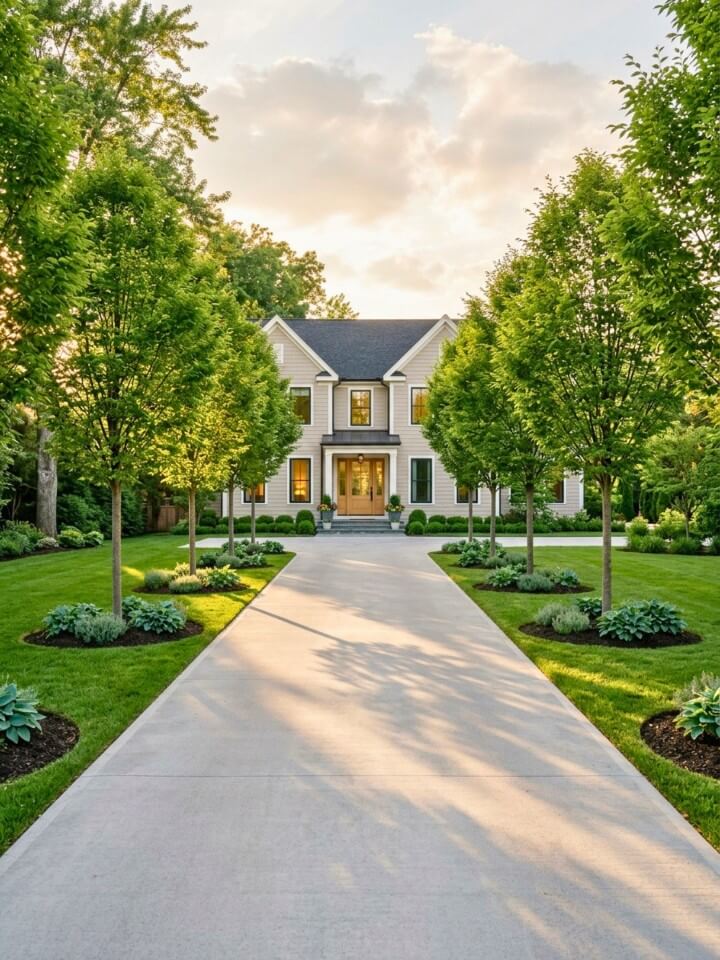
Evenly spaced ornamental trees create a canopy effect that transforms an ordinary driveway into a genuine arrival experience. Dogwood, cherry, or Japanese maple provide flowering interest in spring and rich color in autumn, giving the entrance year-round visual appeal without overwhelming maintenance demands.
| Factor | Details |
|---|---|
| Cost | $50–$150 per tree depending on variety and size |
| Spacing | 10–15 ft apart for canopy effect without overcrowding |
| Maintenance | Annual light pruning; mulch base to retain moisture |
| Best for | Straight driveways 30 ft or longer for full visual impact |
Root Warning: Choose non-invasive varieties — aggressive root systems crack paving within 5–10 years regardless of how well the driveway was installed.
21. Woodchip Pathway with Stone Accents
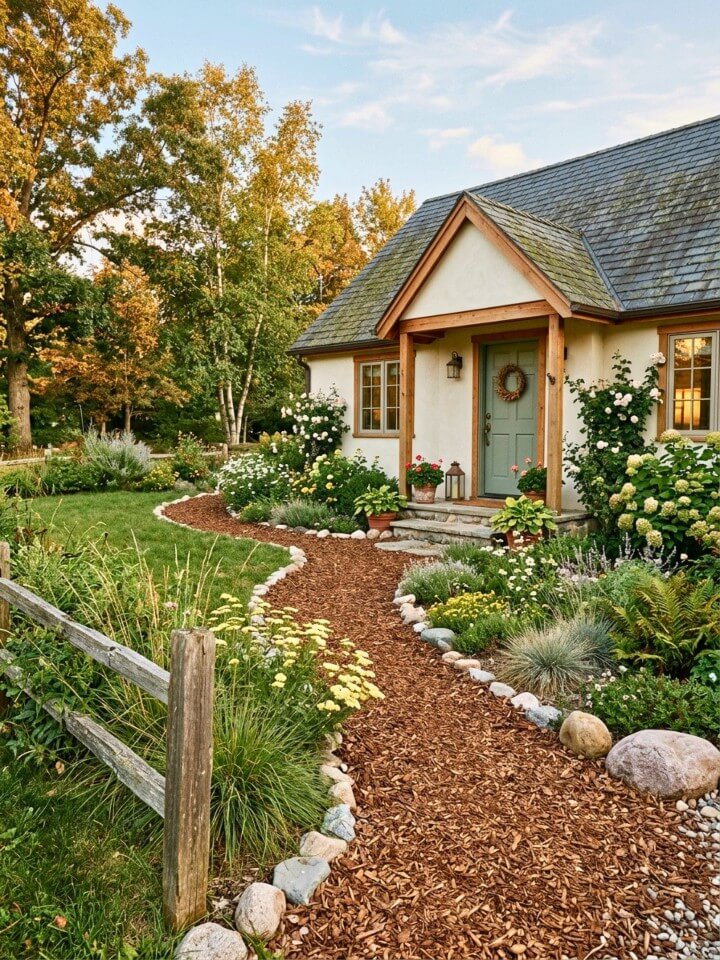
Woodchips alongside the driveway create a soft, earthy transition between hard paving and the surrounding garden. Intermittent stone accents or small boulders add structure and prevent the woodchip areas from looking unfinished. Together they guide the eye naturally from street to entrance without any formal edging required.
- 🪵 Cost: Very budget-friendly — bulk woodchips run $30–$60 per cubic yard
- 🔧 DIY: Completely — no special tools or skills needed
- 🌿 Upkeep: Top up woodchips every one to two years as they decompose
- 🌧️ Climate: Avoid steep slopes — heavy rain washes loose woodchips downhill quickly
Weed Control: Lay landscape fabric beneath woodchips before spreading — skipping this step means pulling weeds through the entire layer within one growing season.
22. Driveway Flanked by Tall Grasses
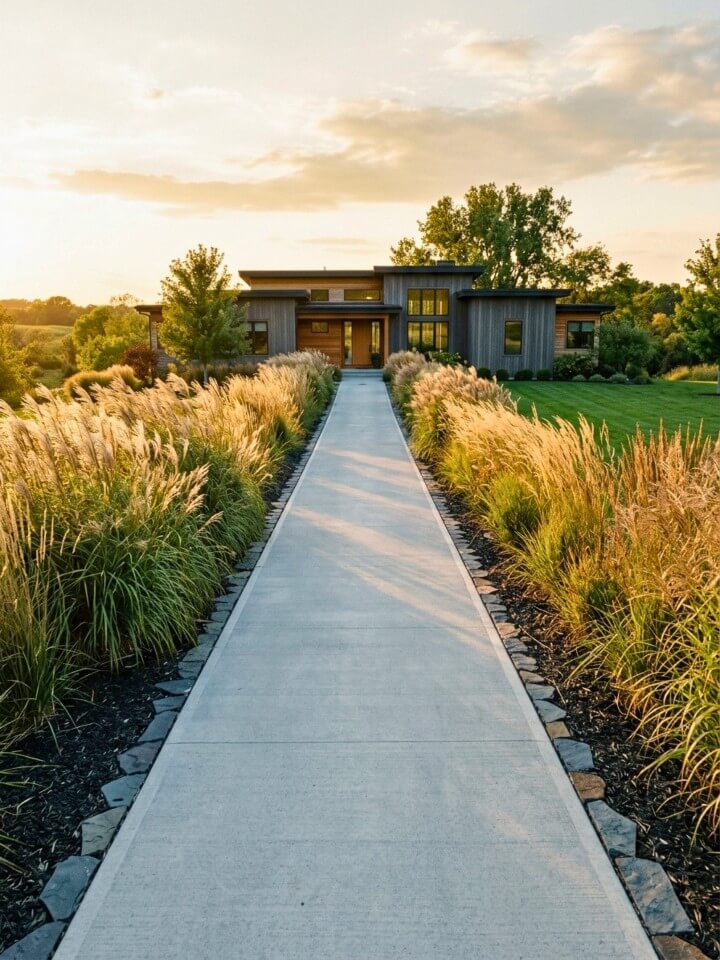
Tall ornamental grasses on both sides of a driveway create a dramatic, immersive entrance that feels simultaneously wild and architectural. Golden straw, olive green, and smoky beige tones shift with every breeze, adding movement that static plantings never provide. The effect is especially striking at golden hour when backlit grasses glow warmly along the entire length.
Best Varieties by Height:
- Tall: Miscanthus or pampas grass — 5 to 8 ft
- Medium: Karl Foerster feather reed grass — 4 to 5 ft
- Compact: Blue oat grass or little bluestem — 2 to 3 ft
Cost: $15–$40 per plant; spreads naturally over time reducing long-term costs Maintenance: Cut back hard once yearly in late winter before new growth emerges
Spacing Matters: Plant grasses 3–4 ft from the driveway edge — they spread outward significantly each season and will eventually overhang the surface if planted too close.
23. Decorative Concrete Borders with Lighting
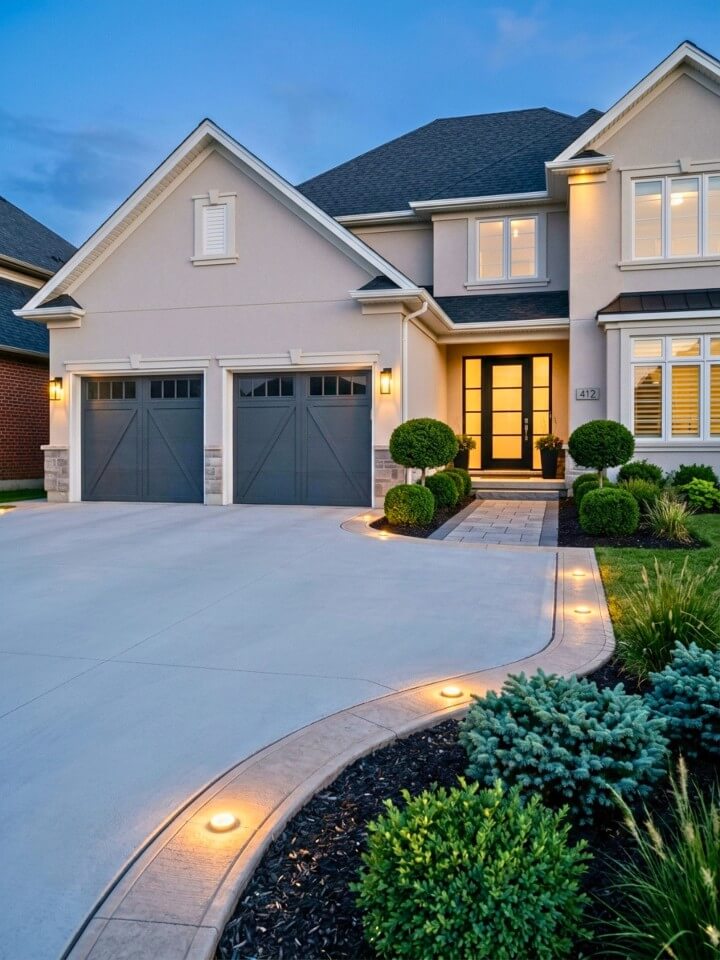
Concrete borders with integrated low-profile lighting turn a standard driveway into a polished nighttime feature. Warm amber light tucked along both edges makes the entrance feel safe, intentional, and genuinely upscale after dark — a detail that dramatically improves curb appeal during evening hours.
| Factor | Details |
|---|---|
| Border cost | $8–$15 per linear ft for cast concrete edging |
| Lighting cost | $20–$60 per fixture; hardwired looks cleaner than solar |
| Installation | Electrician needed for hardwired lighting; solar is DIY |
| Maintenance | Replace bulbs every 3–5 years; clean fixtures seasonally |
Color Temperature: Choose 2700K–3000K bulbs for warm amber light — cooler white light makes concrete look harsh and clinical rather than welcoming.
24. Mixed Stone Driveway with Herb Plantings
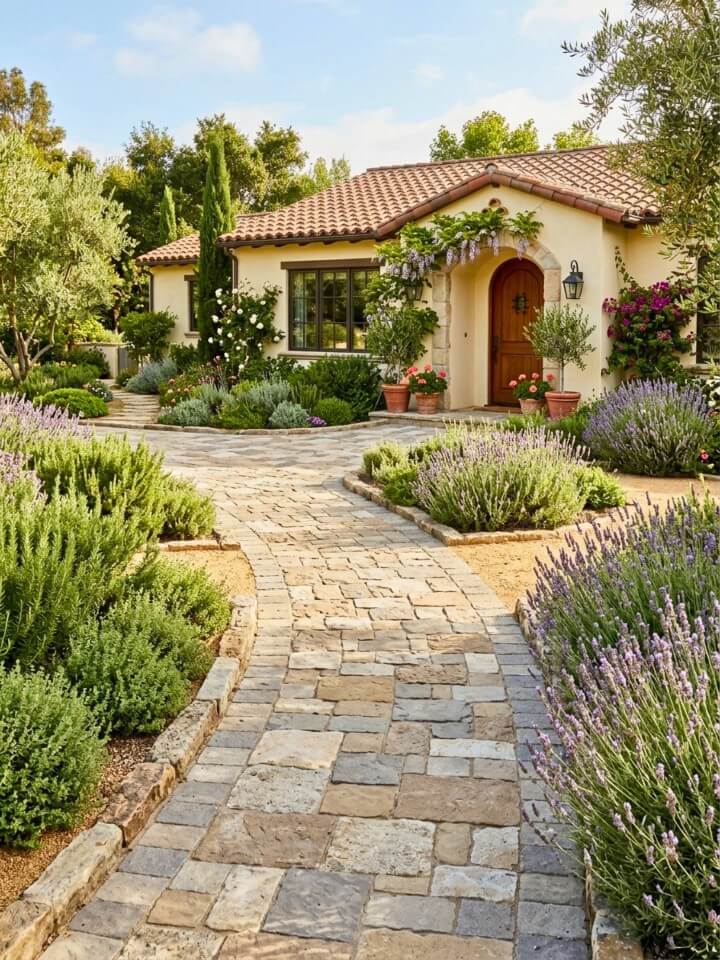
Weathered limestone, taupe stone, and soft gray pavers blended together create a surface full of natural color variation that uniform materials never achieve. Lining the edges with rosemary, thyme, and lavender adds fragrance and soft texture that makes arriving home feel genuinely pleasant rather than purely functional.
Expect to spend $12–$22 per sq ft for mixed stone installation. A professional lays the base correctly — improper compaction causes uneven settling within the first winter. Once established, herb borders need almost no watering and trim themselves naturally. The combination of old-world materials and fragrant planting feels effortlessly Mediterranean.
Fragrance Placement: Plant lavender nearest the walking path rather than the driveway edge — foot traffic brushing the blooms releases fragrance far more effectively than passing cars.
25. Driveway with Built-In Water Feature
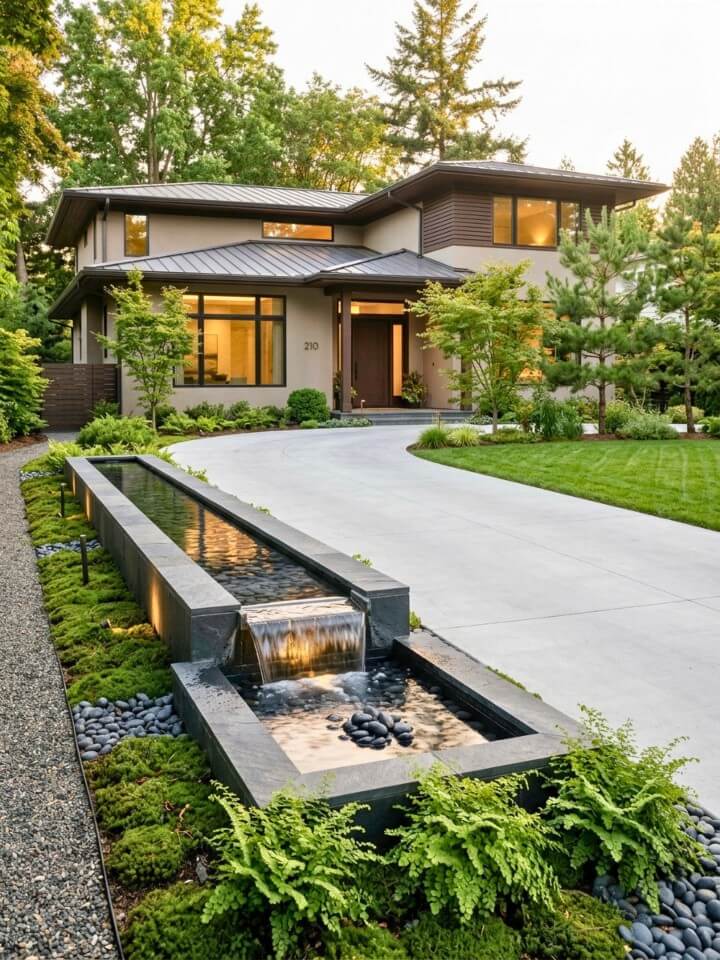
A sleek water feature running alongside the driveway adds genuine serenity to what is typically the most utilitarian part of a property. A charcoal stone basin with a gentle sheet of flowing water creates calm movement and soft sound that immediately shifts the mood of the entire entrance.
- 💧 Cost: $2,000–$8,000 depending on size and pump system complexity
- 🔧 Installation: Professional required — waterproofing and pump wiring need expertise
- 🍂 Maintenance: Clean basin seasonally; protect pump from freezing in cold climates
- 🌿 Best pairing: Ferns, river stones, and mossy groundcover enhance the natural feel
Sound Level: Request a pump with adjustable flow rate — water that sounds too loud becomes an irritation rather than a calming feature within the first week.
26. Driveway with Curved Brick Inlays
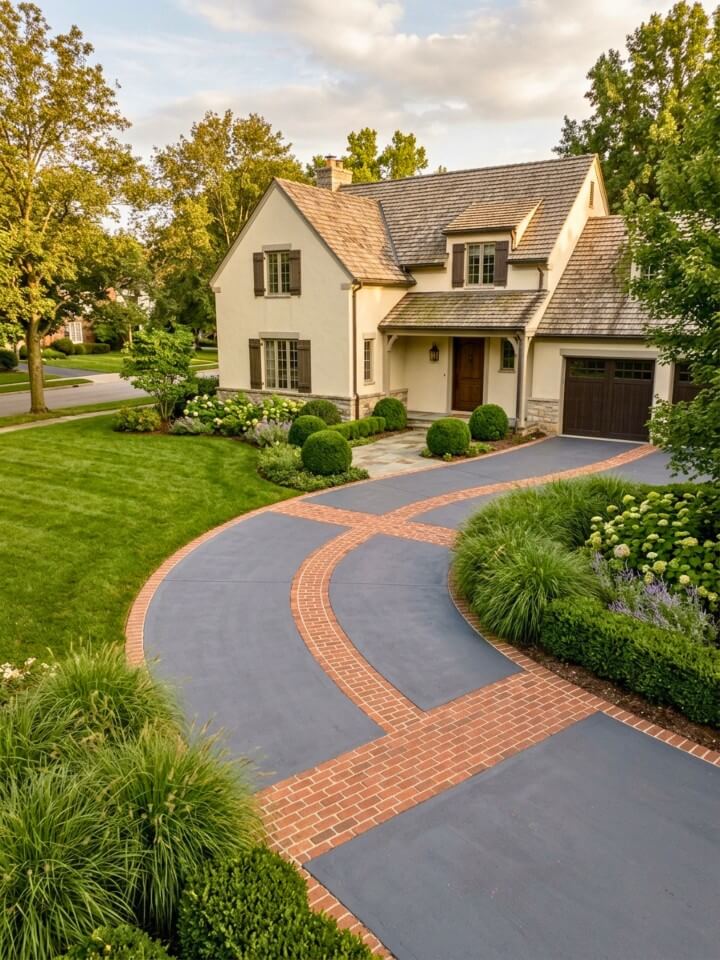
Curved brick inlays breaking up a plain concrete or paver surface add handcrafted character that manufactured materials alone never deliver. Contrasting brick tones highlight the curves naturally, creating subtle movement that guides both the eye and vehicles along the path without any signage or formal edging.
Material cost: $4–$9 per sq ft for brick inlay work Installation: Professional recommended — curves require precise cutting and fitting Pattern options: Fan, herringbone, or simple arc bands all work well Best pairing: Neutral concrete base makes brick color stand out most effectively
Color Advice: Warm red brick against gray concrete creates the sharpest contrast — matching tones too closely makes the inlay pattern nearly invisible from the street.
27. Driveway Flanked by Small Fruit Trees
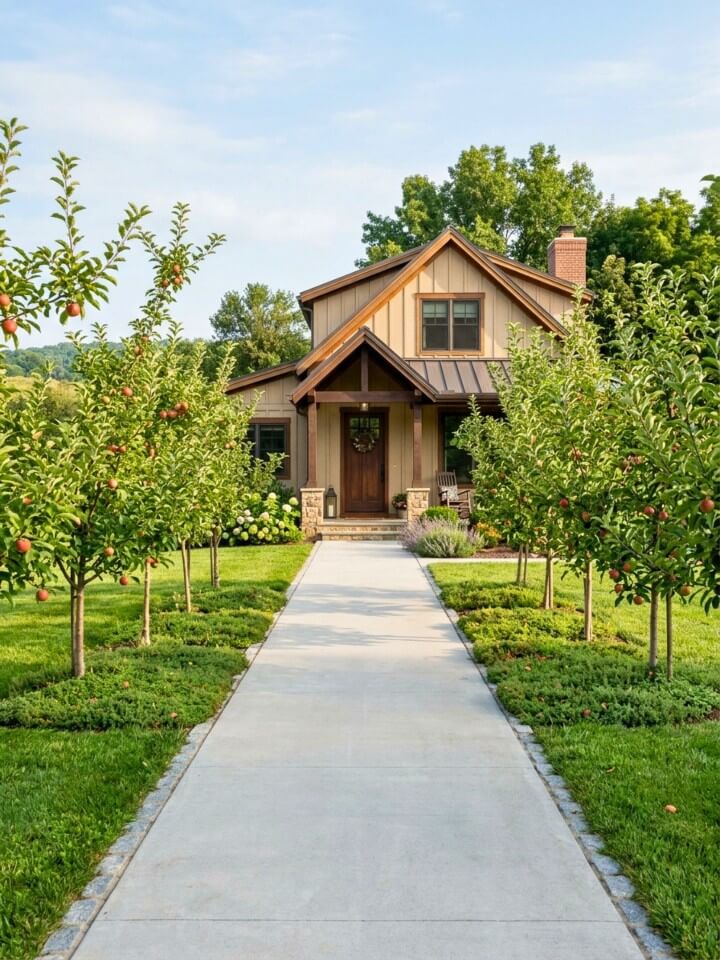
Dwarf or semi-dwarf fruit trees lining a driveway offer something purely ornamental trees cannot — spring blossoms, summer shade, and actual edible fruit by autumn. Apple, pear, or cherry varieties spaced evenly create natural symmetry while delivering three distinct seasons of visual interest from a single planting investment.
- 🌸 Spring: Fragrant blossoms rival any ornamental flowering tree
- 🍎 Autumn: Fruit adds color and genuine harvest value
- 💰 Cost: $40–$120 per dwarf tree; long-term value far exceeds ornamentals
- ✂️ Maintenance: Annual pruning required to maintain size and fruit production
Variety Selection: Choose self-pollinating varieties if planting fewer than four trees — most fruit trees need a compatible partner nearby to produce reliably.
28. Driveway with Integrated Planter Boxes
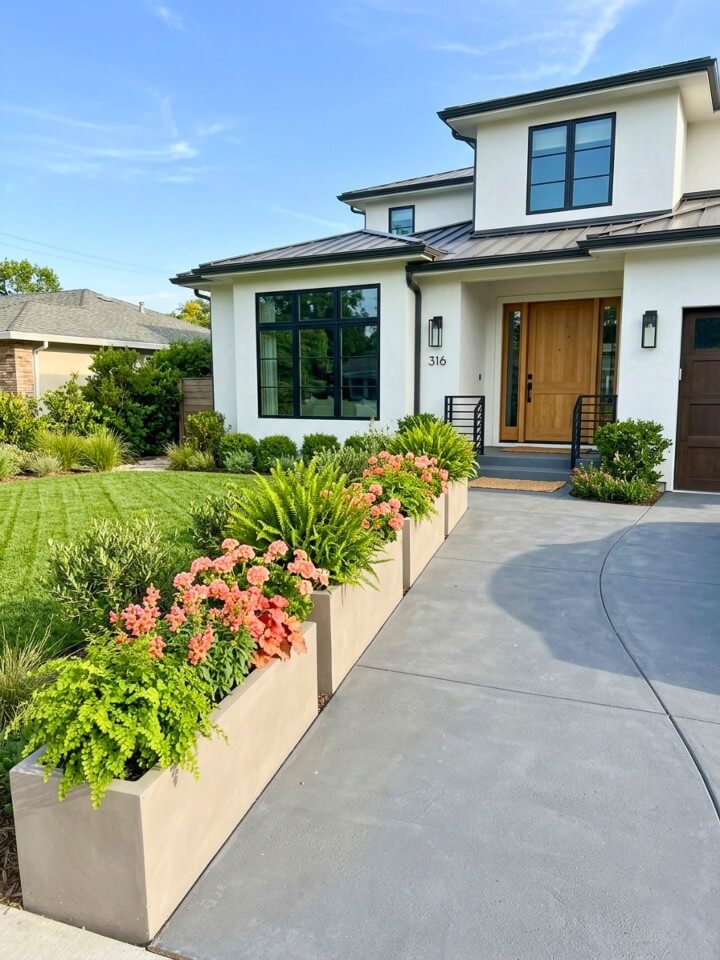
Built-in planter boxes along a narrow or urban driveway add greenery without sacrificing any usable yard space. Concrete, stone, or weathered wood boxes planted with ornamental grasses, low shrubs, or seasonal flowers soften hard edges while acting as a natural guide for vehicles entering and exiting.
| Factor | Details |
|---|---|
| Cost | $200–$800 per planter depending on material and size |
| DIY | Timber boxes are DIY-friendly; concrete requires professional forming |
| Plant choices | Dwarf grasses, lavender, or trailing sedum for low maintenance |
| Urban benefit | Defines driveway boundary without fencing or walls |
Varying planter heights along the length adds depth and prevents the border from looking monotonous — a single uniform height reads as a barrier rather than a designed feature.
Drainage Essential: Every planter box needs drainage holes — waterlogged roots kill plants faster than neglect, especially in timber boxes where rot follows closely behind.
29. Driveway Lined with Solar Path Lights
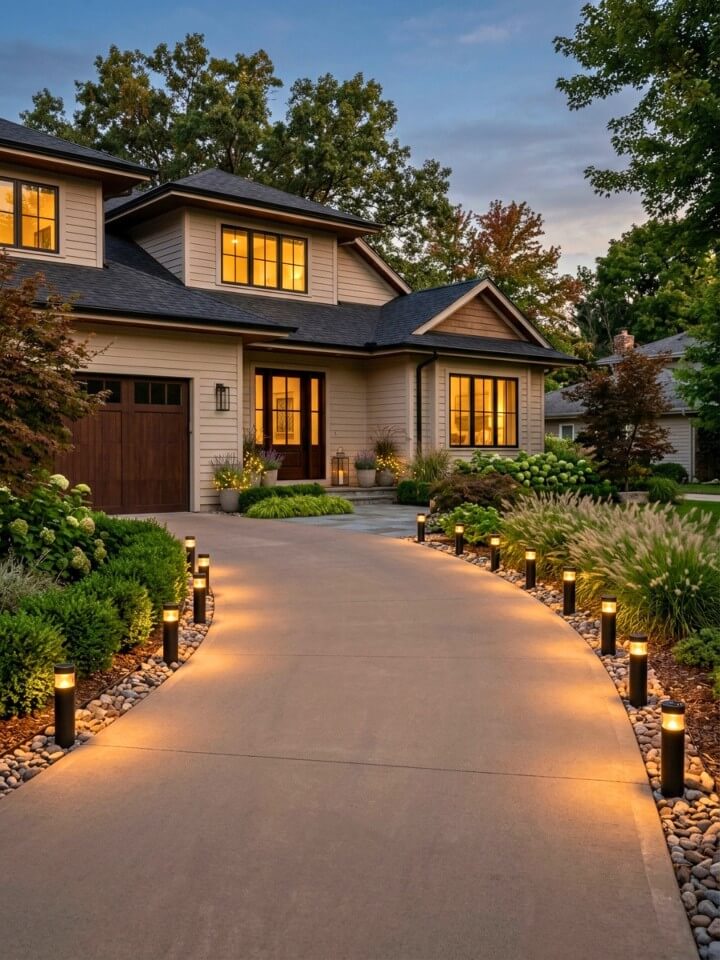
Solar path lights improve driveway safety after dark while adding a warm, welcoming glow that requires zero electrical work or ongoing energy costs. Placed at regular intervals along both edges, they define the path clearly for vehicles while giving the entrance a cared-for, intentional appearance even on the simplest driveway surface.
Modern solar lights have improved dramatically — quality fixtures from reputable brands now hold charge through cloudy stretches and last four to six years before needing replacement. Avoid the cheapest options — they fade within one season and create an inconsistent, patchy light line that looks worse than no lighting at all.
💡 Cost: $15–$60 per quality fixture ☀️ Placement: South-facing installation maximizes daily charging efficiency 🌧️ Cloudy climates: Choose fixtures with larger solar panels for better reserve capacity
Spacing Rule: Place lights every 6–8 ft for even illumination — wider spacing creates dark gaps that defeat the safety purpose entirely.
30. Driveway Surrounded by Rock and Moss Garden
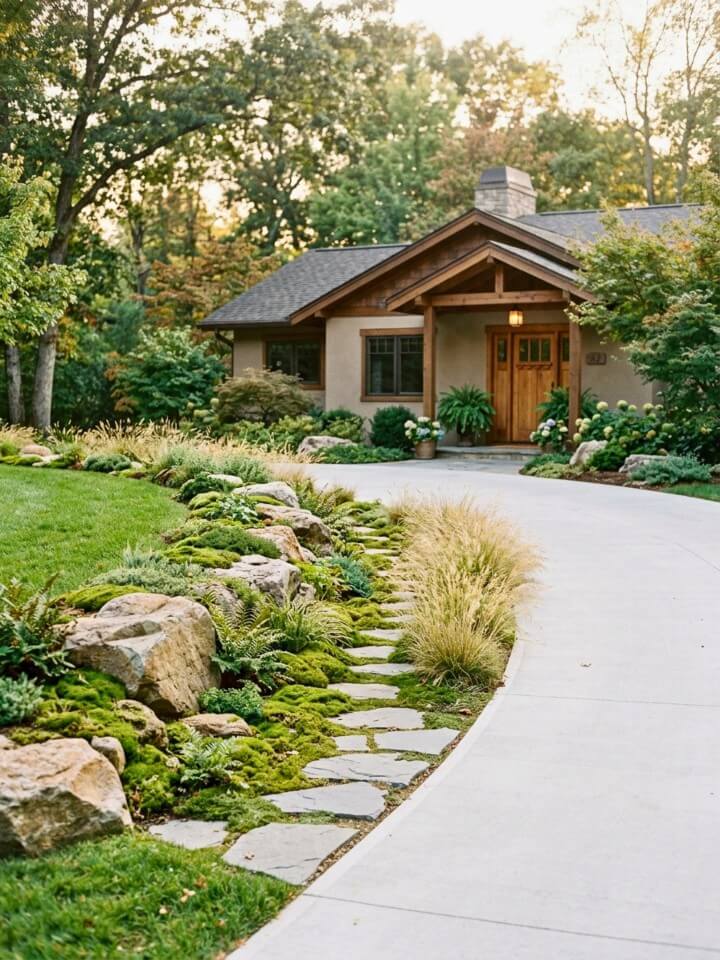
A rock and moss garden framing the driveway creates a quietly beautiful, low-maintenance landscape that feels genuinely serene rather than decorated. Layered boulders, smaller stones, and spreading moss build natural texture and depth that traditional planted borders take years to achieve.
- 🪨 Cost: $8–$18 per sq ft depending on rock size and sourcing
- 🌿 Moss establishment: Grows best in shade and consistent moisture; avoid full sun positions
- ✂️ Maintenance: Almost none — moss needs no mowing, feeding, or seasonal cutting
- 🍃 Best style match: Japanese-inspired, woodland, or naturalistic home landscapes
Introducing small shade-loving ferns between rock groupings adds a delicate vertical element without disrupting the calm, ground-level composition that makes this style work.
Moss Starter Trick: Blend fresh moss with buttermilk and paint the mixture onto rocks and soil — it establishes new moss growth significantly faster than transplanting chunks manually.
31. Driveway with Natural Stone Stepping Borders
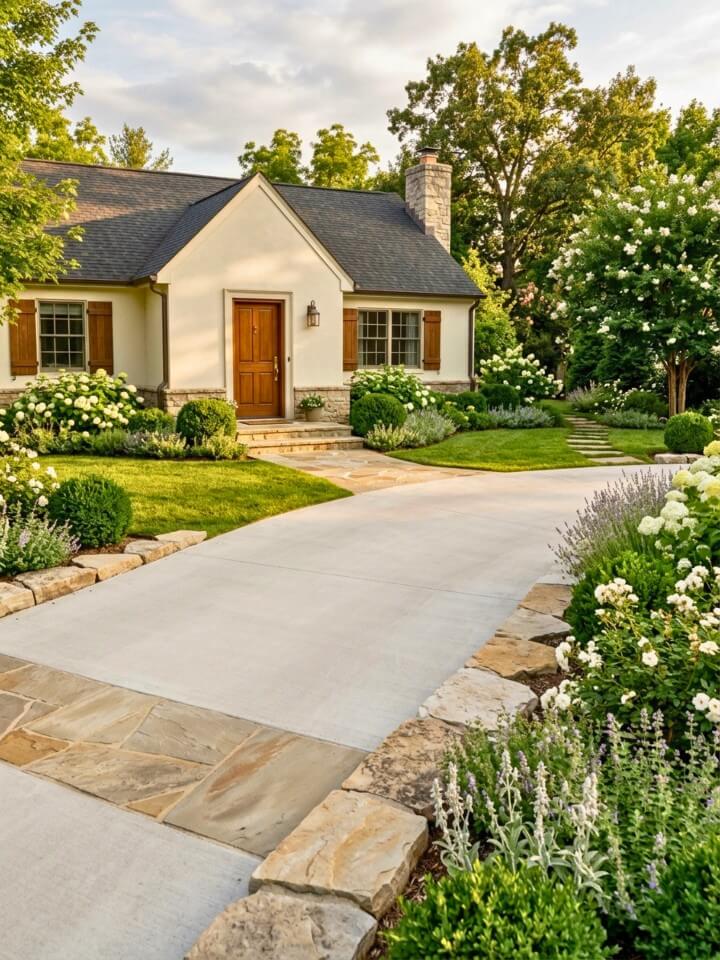
Natural stone borders arranged in irregular shapes and sizes give a driveway an organic, unhurried character that manufactured edging never achieves. Low groundcover like creeping thyme planted between stones softens the transition from driveway to garden while keeping edges naturally defined without formal structure.
- 🪨 Cost: $4–$10 per sq ft for natural fieldstone
- 🔧 DIY: Completely manageable — no cutting or special tools required
- 🌿 Groundcover: Creeping thyme or brass buttons fill gaps beautifully
- 🌧️ Drainage: Irregular stone placement naturally channels water away from paving
Stone borders can also help awkward side yards and front edges feel intentional, especially when combined with planting layouts inspired by awe-inspiring corner landscaping ideas.
Stone Selection: Mix two or three complementary stone colors rather than one uniform type — single-color borders look purchased rather than naturally gathered.
32. Driveway with Lavender or Scented Plants
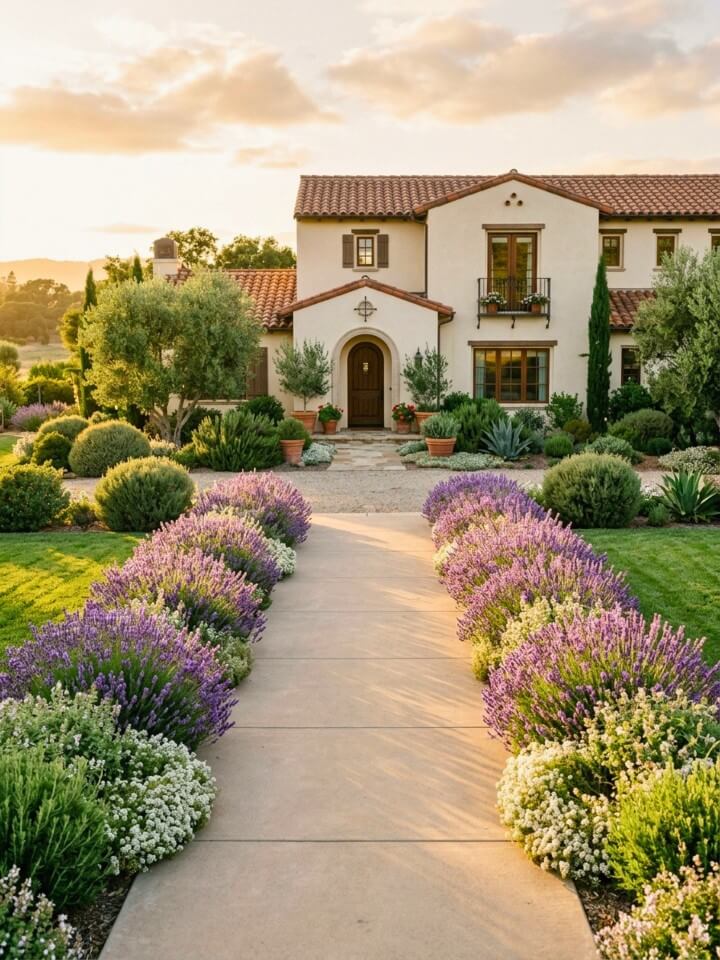
Few driveway borders make arriving home as genuinely pleasant as fragrant plantings. Lavender, rosemary, and sweet alyssum release scent as cars brush past, turning a routine arrival into something noticeably sensory. The soft purple and white blooms add color from late spring through summer with almost no intervention required.
Plant spacing: 18–24 inches apart for full, flowing coverage within two seasons Cost: $6–$15 per plant; a complete border runs $150–$400 Pruning: Cut back by one-third after flowering to encourage repeat blooms Climate: Lavender thrives in zones 5–9; struggles in humid, poorly drained soil
Soil Preparation: Lavender demands excellent drainage — amend heavy clay soil with coarse sand before planting or the roots rot within the first wet winter.
33. Driveway Featuring Minimalist Concrete Edges
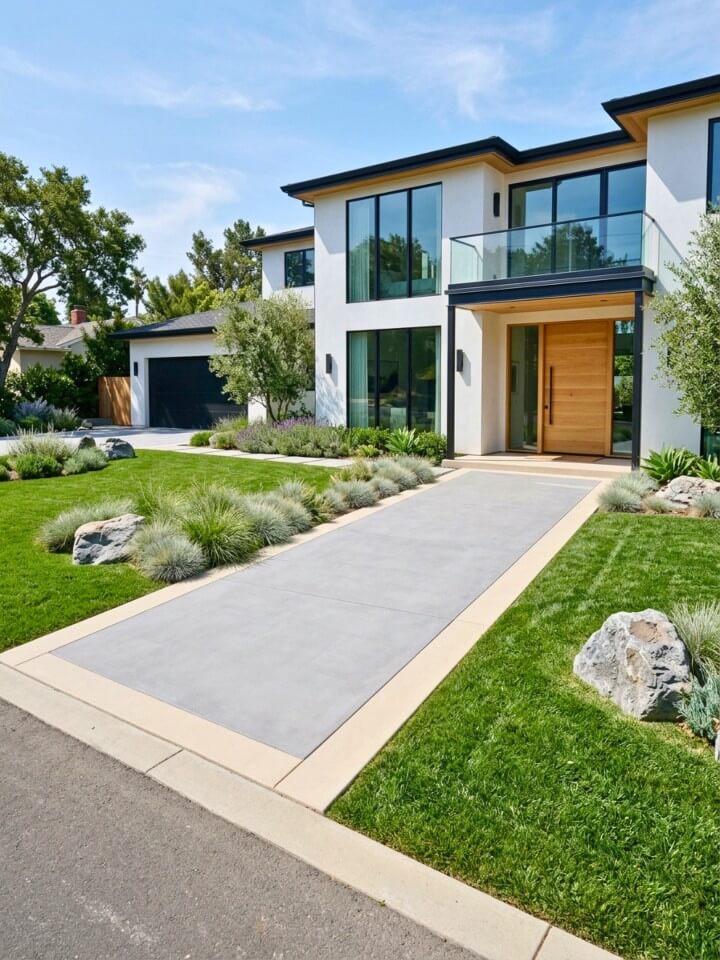
Clean concrete edges give a modern driveway a sharp, architectural frame that requires almost no ongoing attention. The crisp lines contrast beautifully against gravel, low groundcover, or mulched planting beds alongside, creating a polished boundary that looks deliberately designed rather than simply functional.
| Factor | Details |
|---|---|
| Cost | $5–$12 per linear ft installed |
| DIY | Pre-cast concrete edging is DIY-friendly; poured edges need a pro |
| Maintenance | Nearly zero — reset any shifted sections after hard frost |
| Best pairing | Gravel or dark mulch beds create the sharpest visual contrast |
Width Matters: Edges narrower than 4 inches crack easily under vehicle tire pressure — specify a minimum 4–6 inch width when ordering or pouring.
34. Driveway with Raised Flower Beds Alongside
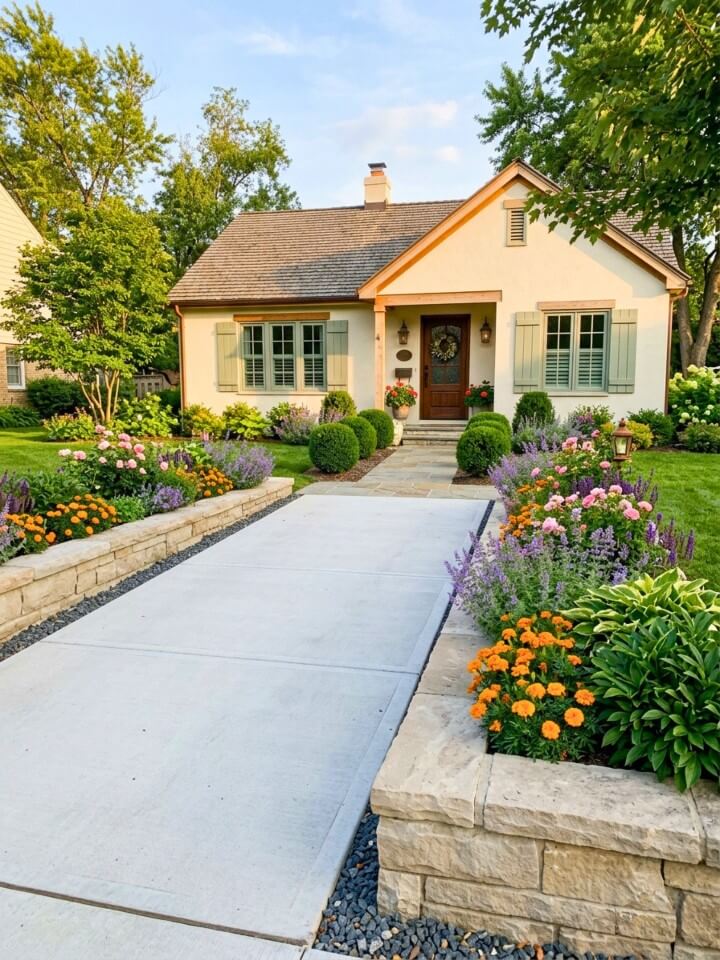
Raised beds alongside a driveway bring planting up to a more visible height, making borders far more noticeable from the street than ground-level plantings. Stone, brick, or timber construction adds its own visual weight while containing soil neatly and preventing any spillage onto the driveway surface.
A well-built raised bed costs $300–$900 depending on size and material. Fill with a mix of perennials and low shrubs for color across multiple seasons without replanting annually. The elevated soil also warms faster in spring, extending the growing season noticeably compared to ground-level borders.
Height Recommendation: Keep beds under 24 inches alongside driveways — taller structures obstruct sightlines when reversing out and create genuine blind spot hazards.
35. Driveway Incorporating Pebble Mosaic Patterns
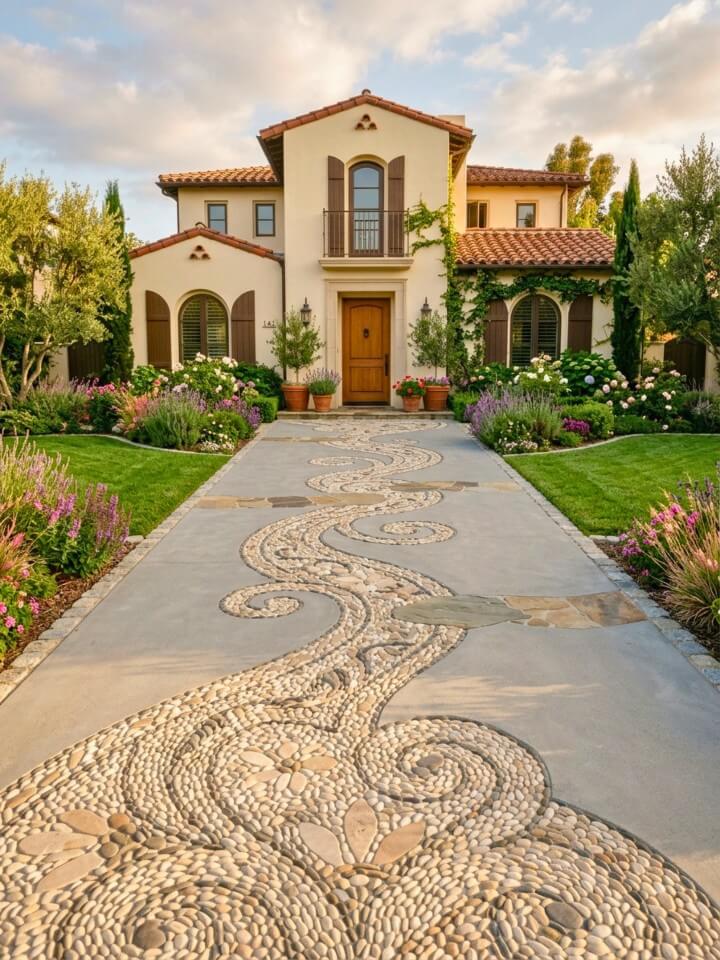
Pebble mosaics embedded into a driveway surface add artistry and personality that no other material achieves at comparable cost. Simple geometric designs or flowing organic patterns using contrasting pebble colors create focal points that make even a short driveway feel genuinely special and considered.
- 🪨 Cost: $10–$25 per sq ft depending on design complexity
- 🎨 Design tip: Simple bold patterns read better from a distance than intricate fine detail
- 🔧 Installation: Set pebbles in concrete for permanent stability — loose-laid shifts quickly
- ✂️ Maintenance: Virtually none once properly set in a solid base
Starting Point: Place the mosaic at the entrance rather than mid-driveway — the first impression point gets the most visibility and creates immediate impact before anything else.
FAQs About Driveway Landscaping
These are the real-world concerns most homeowners run into when planning their driveway landscaping – practical answers without the overwhelm.
How do I landscape a driveway on a very tight budget?
Start with edging and seeds — steel edging costs under $30 and wildflower seed mixes run $15–$40. These two changes alone sharpen any driveway dramatically. Impressive results don’t always require expensive materials, just deliberate placement and a little patience through the first season.
What driveway landscaping works best for homes with young children or pets?
Avoid thorny plants like roses near ground level and skip gravel in high-traffic play zones. Soft groundcovers like creeping thyme, raised planter boxes, and smooth stepping stones create safe, attractive borders that hold up well against daily activity without constant repairs.
How do I stop weeds from taking over my driveway borders permanently?
Lay landscape fabric before any gravel, woodchip, or groundcover installation — this single step prevents roughly 80% of weed problems long-term. Polymeric sand between pavers and stone edges seals gaps effectively, leaving almost nothing for opportunistic weeds to root into.
Can driveway landscaping actually increase my home’s resale value?
Yes — studies consistently show strong curb appeal adds 5–10% to perceived home value. A well-landscaped entrance signals care and maintenance to buyers before they step inside, often influencing offers more than equivalent money spent on interior upgrades.
What should I plant along a driveway that gets very little sunlight?
Shade-tolerant options like hostas, ferns, sweet woodruff, and mosses thrive without direct sun. Boxwood hedges also perform reliably in partial shade. Avoid lavender and most ornamental grasses — they need consistent sunlight and quietly struggle, then fail, in persistently shaded conditions.
Conclusion:
Most home improvements get noticed once — guests compliment the new kitchen, admire the fresh paint, then move on. A beautifully landscaped driveway does something quieter and more lasting. It changes how every single person feels approaching your home, including you, twice a day, every day. That kind of return on a weekend’s effort is genuinely hard to beat anywhere else on your property. You don’t need to tackle all driveway landscaping ideas — you need the one that makes you think why haven’t I done this yet. Start there. Everything else follows naturally.