20 Garage Siding Ideas To Transform Your Home’s Exterior
Most people spend weeks picking the perfect front door color and then forget the garage takes up half the front of the house. That blank wall facing the street does more for curb appeal than almost any other surface, and the material wrapping it sets the tone before anyone reaches the porch. The right finish can make a builder-grade structure look custom, while the wrong one drags down everything around it.
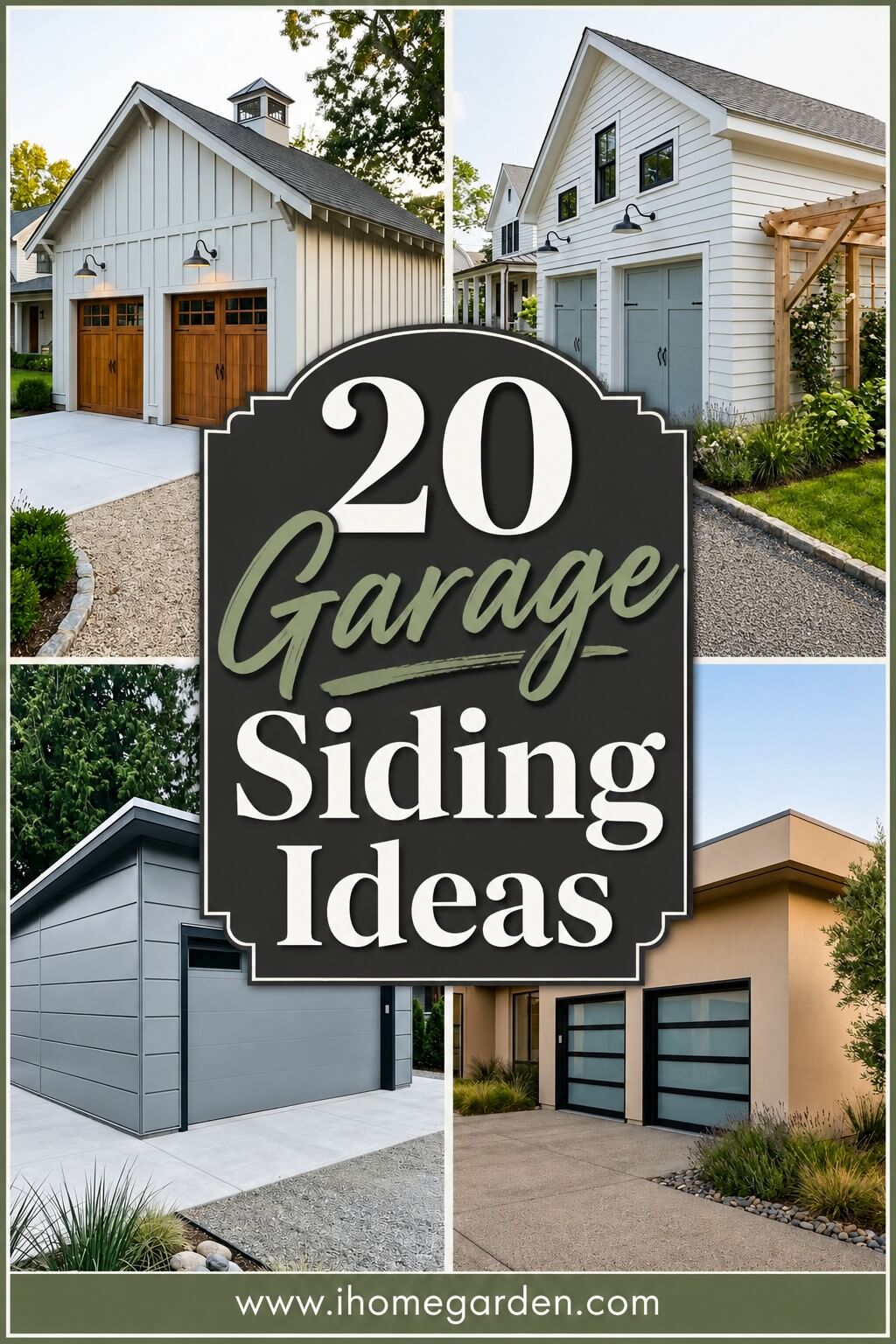
That’s why these 20 stylish garage siding ideas, worth considering before you commit. Some lean modern with metal and concrete. Others stay warm with cedar, reclaimed wood, or classic lap boards. A few mix materials in ways that feel designed rather than thrown together. You’ll find options for tight budgets and bigger remodels, low-maintenance picks for busy homeowners, and statement choices for anyone ready to make the garage the best-looking part of the property. Pick what fits your house, your climate, and your weekends.
1. Board and Batten Vertical Siding
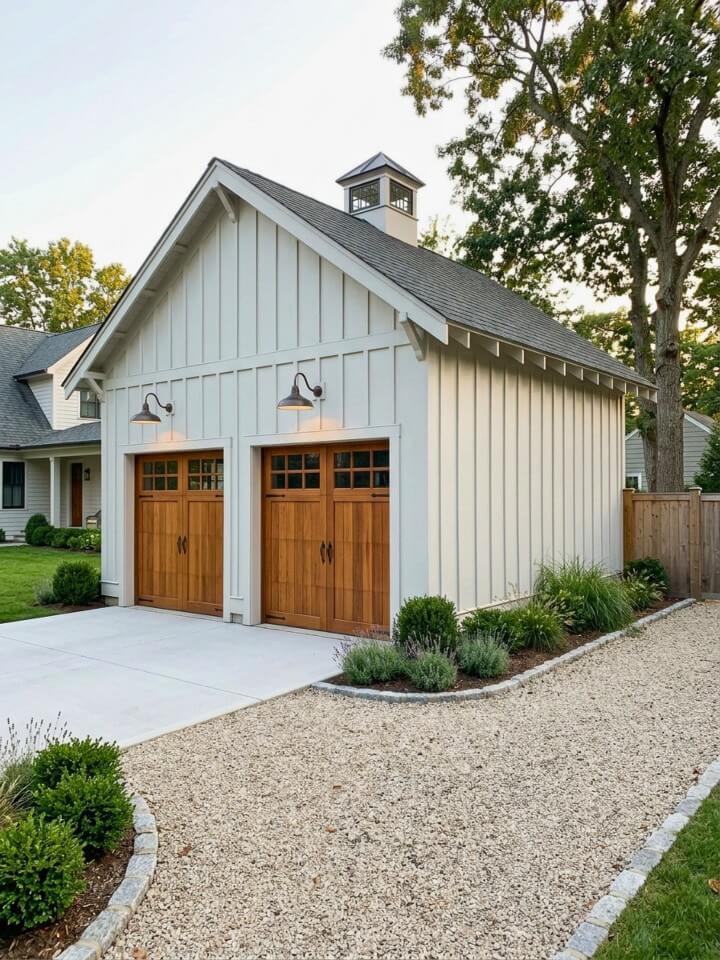
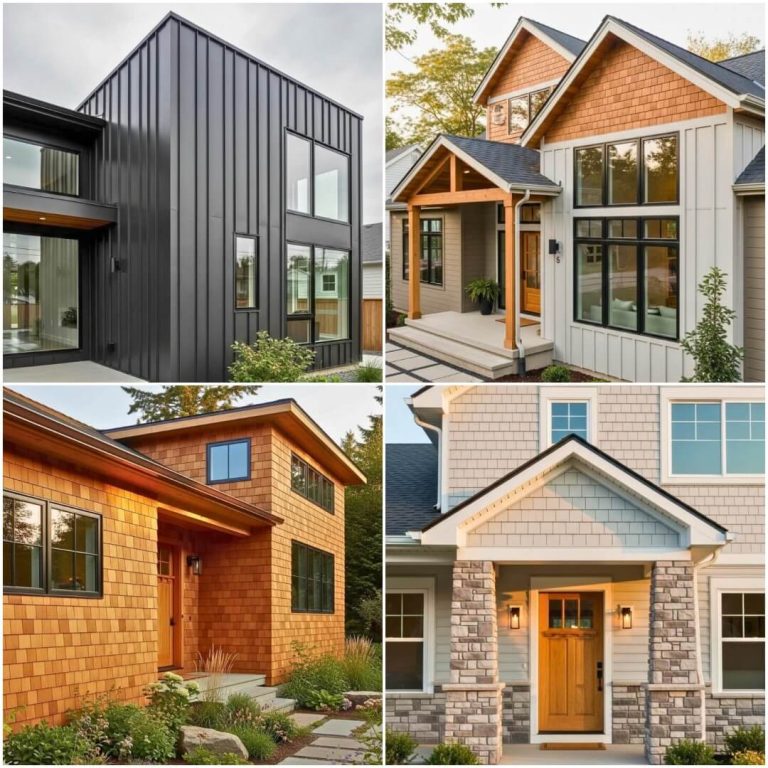
There’s a reason board and batten keeps showing up on Pinterest boards and farmhouse remodels — it just makes a garage look taller and more deliberate. The trick is in the proportions: wide vertical boards spaced evenly, with slim battens covering each seam. Get that ratio right and the whole structure reads as custom-built, even if it isn’t.
This treatment shines on detached garages sitting near a front driveway, where the building has room to breathe and act as a secondary focal point. Color matters more than people think here. Warm white reads classic, charcoal looks current, and a raw cedar stain leans into the craftsman side without trying too hard.
2. Classic Horizontal Lap Cladding
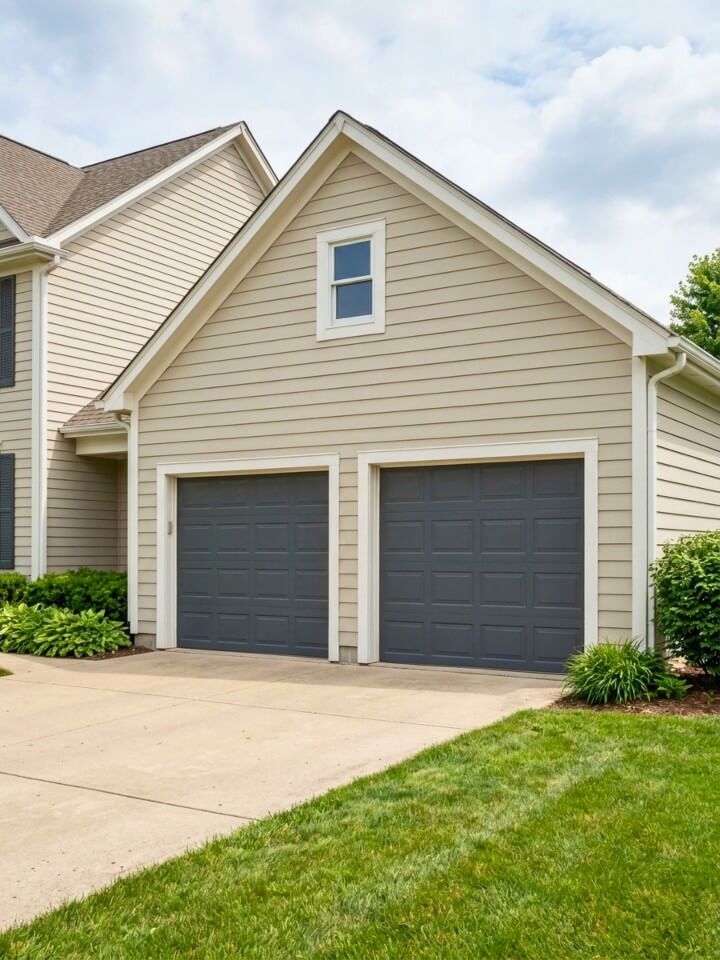
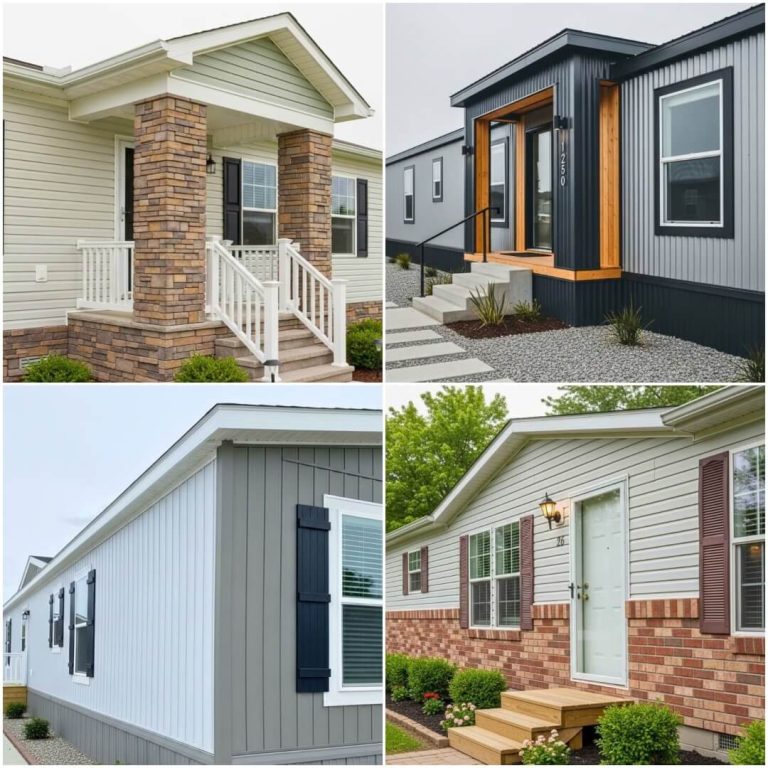
If board and batten is the statement choice, horizontal lap is the safe bet — and that’s not a bad thing. Overlapping rows running side to side create a steady rhythm that most buyers instantly recognize, which helps resale value on suburban streets where the garage faces the road.
Material Options Worth Comparing:
- Vinyl — lowest cost, lowest maintenance, but limited in premium looks
- Fiber cement — paintable, fire-resistant, lasts 30+ years
- Painted wood — best character, needs repainting every 5–7 years
- Engineered wood — middle ground in price and upkeep
Whatever material you pick, give the corners and door frames real trim. Skipping trim is what makes lap siding look cheap.
3. Brick Veneer Garage Exterior
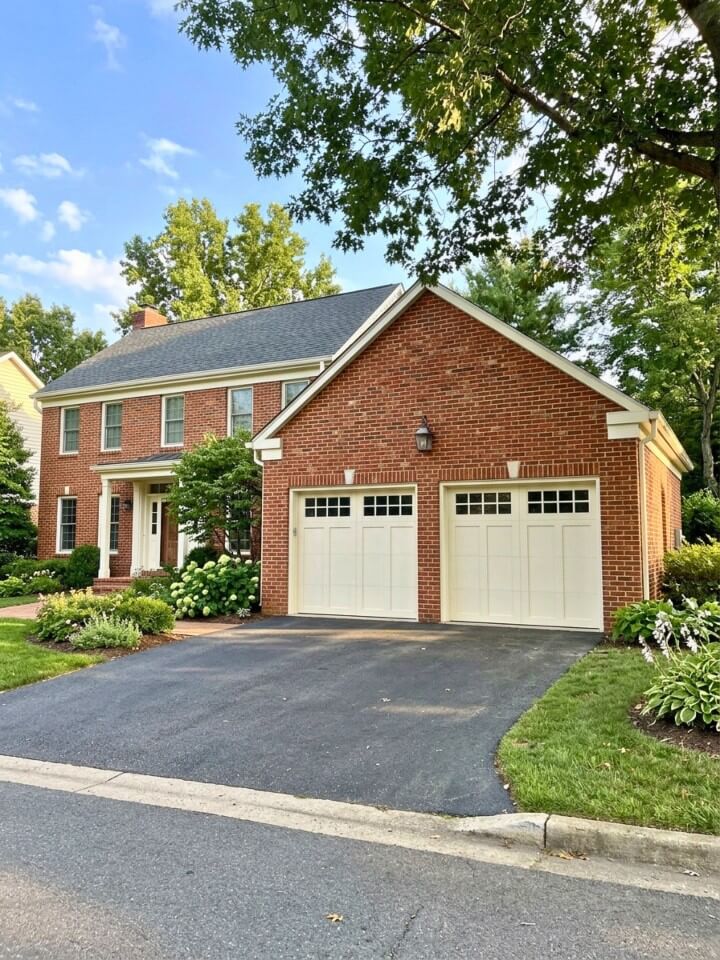
Explore stunning garage siding ideas that boost curb appeal, durability, and neighborhood envy instantly. Brick veneer solves a specific problem: you want the weight and permanence of full brick without tearing into the foundation or doubling the budget. It clips onto a backer system, weighs a fraction of the real thing, and from six feet away nobody can tell the difference.
It belongs on garages attached to brick houses. Putting it on a detached garage across the yard from a sided home almost always looks disconnected, like the building wandered over from a different lot.
Red brick still dominates, but lately whitewashed and German smear finishes have taken over remodel projects because they soften the look and pair better with black hardware, sconces, and modern carriage-style doors. If you want to repeat that masonry look elsewhere, an attractive brick fence can help tie the garage back into the rest of the property.
4. Metal Panel Siding
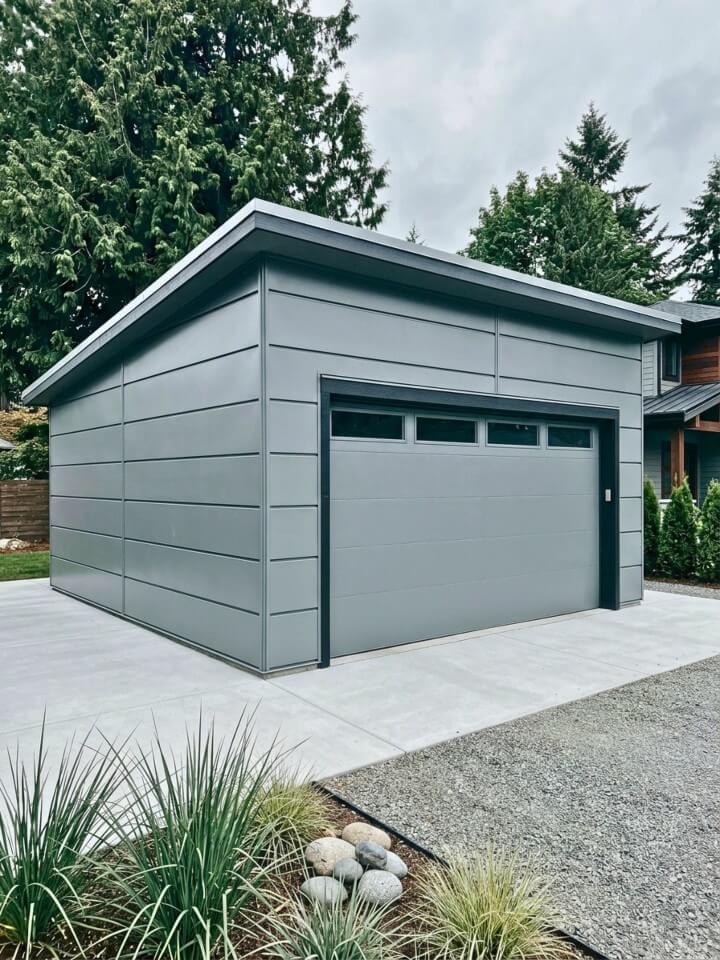
Metal panels used to belong on barns and shop buildings. Now they’re showing up on architect-designed homes, and for good reason — almost nothing else holds up the same way against hail, wind, fire, and time. A properly installed metal exterior can outlast the roof above it.
Corrugated steel gives you that ranch-and-workshop look. Flat standing-seam panels lean architectural and minimalist. Aluminum stays lighter and won’t rust, which matters near coastlines.
One thing the listicles never mention: noise. Metal amplifies rain. If the garage doubles as a home gym, office, or workshop, plan on insulation behind the panels. Otherwise every storm sounds like a drum solo inside.
5. Cedar Shake Shingles
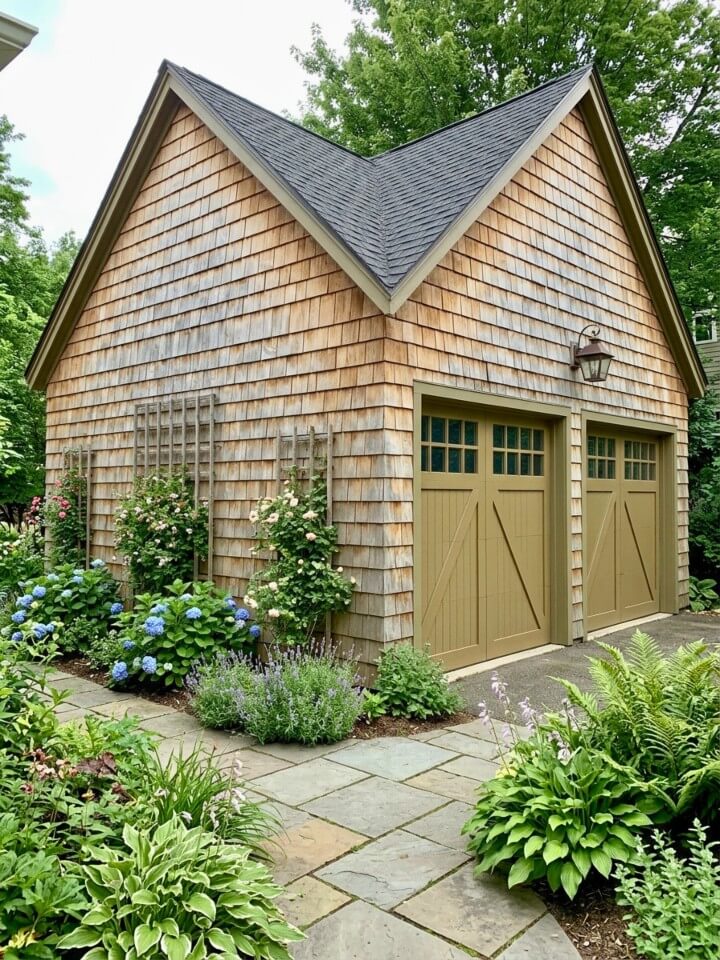
Cedar shakes age the way good leather does — slowly, unevenly, and beautifully. Fresh off the bundle they show warm amber tones. After a few seasons of sun and rain, they shift into the silvery gray that cottage and coastal homes are known for. Some owners seal them to hold the original color; most let nature do the work.
Expect to spend more time on upkeep than with any synthetic option. Shakes need occasional cleaning, the odd replacement shingle, and a fresh coat of preservative every few years in humid climates. The payoff is texture no manufactured product fully matches. On a garden-side garage tucked behind landscaping, that texture earns its keep.
6. Smooth Stucco Garage Finish
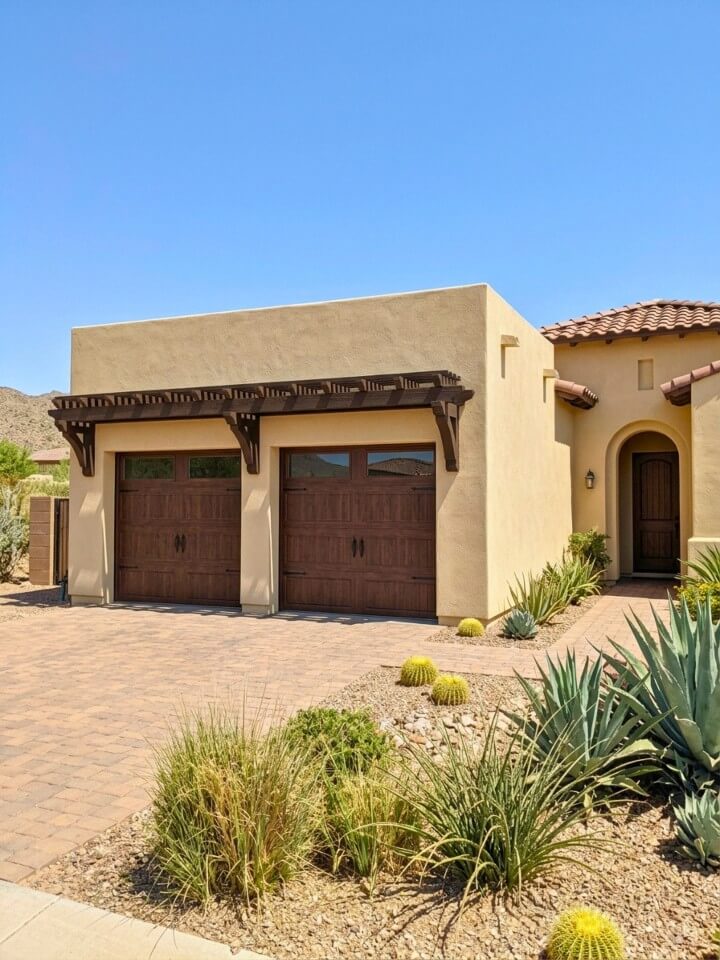
Stucco has been wrapping buildings for centuries, and the reason is simple — it works. A cement-based coating troweled directly onto a wire lath, it forms one continuous skin around the garage with no seams for water or pests to sneak through. In dry climates it can last 50 years with almost no attention.
The catch is moisture. In regions with heavy rain or freeze-thaw cycles, poorly installed stucco traps water behind the surface and rots whatever sits underneath. Hairline cracks are normal and easy to patch; bulging or staining is not, and usually means the wall behind it is already in trouble.
Smooth finishes lean modern. Sand or lace textures lean traditional Spanish and Mediterranean. Earth-toned pigments mixed into the final coat hold color far longer than paint applied on top.
7. Stone Veneer Accent Walls
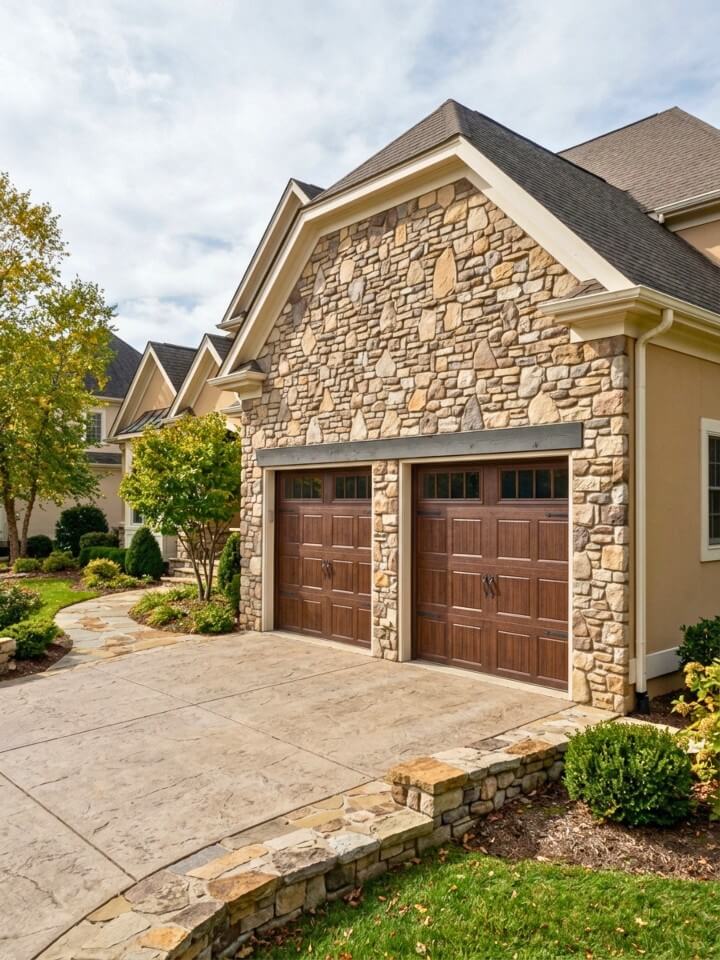
A few things to know before committing to stone veneer on a garage:
- It’s not all the same product. Natural thin-cut stone is real rock sliced to a lighter profile. Manufactured veneer is molded concrete colored to mimic stone. Natural costs more and looks unmistakably authentic up close. Manufactured costs less and works fine from the curb.
- Placement makes or breaks it. Stone reads best as an accent — the lower third of a wall, around the garage door opening, or framing a side entry. Wrapping an entire garage in stone almost always looks heavy and overdone.
- Installation is everything. Bad mortar joints, uniform stone sizing, and missing weep screeds are the giveaways that turn an upscale material into a budget mistake. Hire someone who’s done it before and can show you the work.
8. Fiber Cement (HardiePlank)
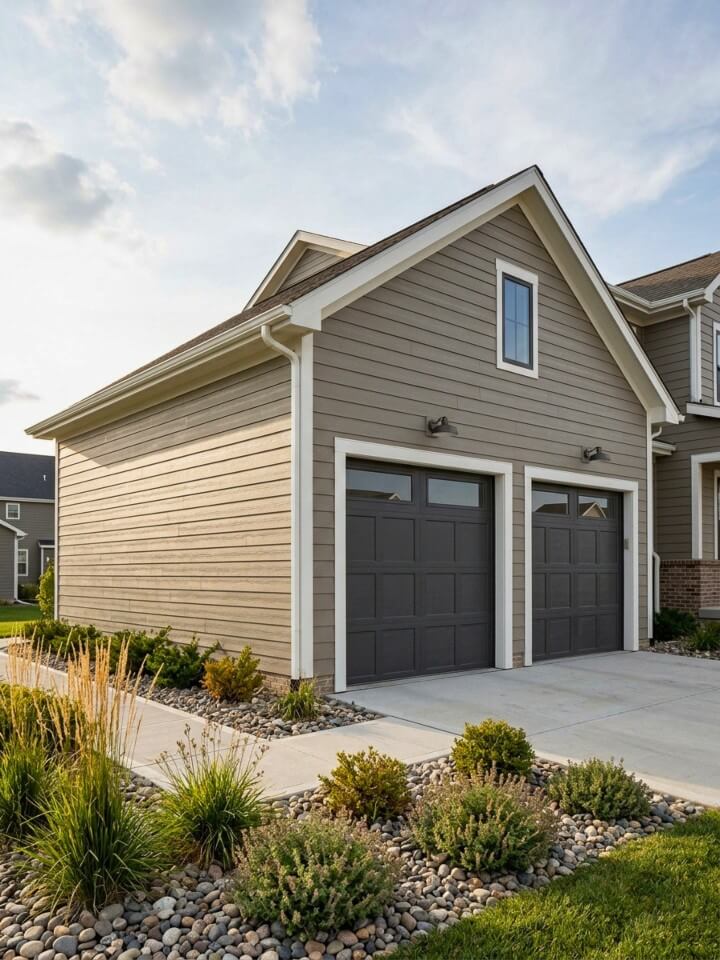
Fiber cement quietly became the default siding upgrade across most renovation markets, and HardiePlank is the name almost everyone reaches for first. The material is a mix of cement, sand, and cellulose fiber pressed into boards that look like wood but don’t behave like it — no rotting, no warping, no termite damage, no fire spread.
The performance numbers do most of the convincing. A 30-year product warranty is standard. Insurance companies often discount premiums for homes wrapped in it. Resale value tracks higher than vinyl or engineered wood in nearly every regional market.
What buyers underestimate is the weight and difficulty of installation. These boards are heavy, dusty to cut, and brutal on saw blades. DIY is possible but slow. Most homeowners come out ahead hiring a crew that installs it weekly and gets the nailing pattern, gap spacing, and caulking right the first time.
9. Vertical Metal Ribbed Panels
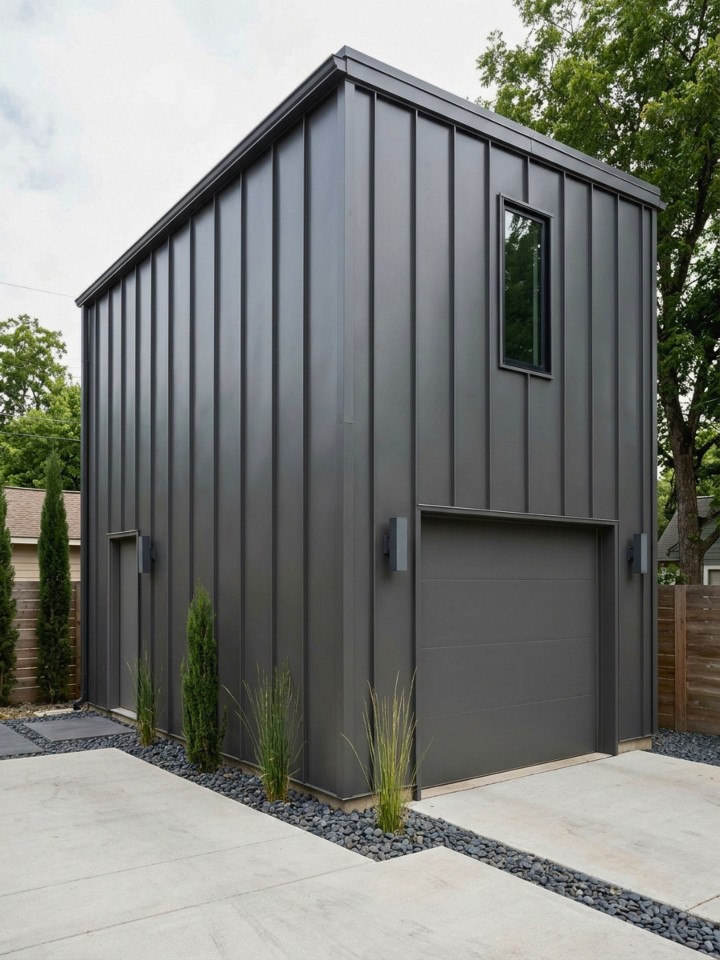
Choose the perfect siding for garage walls that withstand weather, time, and every season beautifully. Vertical ribs do something horizontal siding can’t — they pull the eye upward and make a short, wide garage look taller and more composed. Architects lean on this trick constantly on narrow lots and infill builds where the garage would otherwise feel squat against the house.
The visual effect comes from rhythm. Closely spaced ribs read refined and architectural. Widely spaced ribs read agricultural and rugged. Neither is wrong, but they belong on very different houses.
Matte finishes have largely replaced glossy ones in current design. Deep charcoal, bronze, and weathered black show up most often, paired with concrete pads, dark window frames, and minimal landscaping. The look depends on restraint. Add too many materials around it and the panels lose the clean geometry that made them worth choosing in the first place.
10. Painted Concrete Block
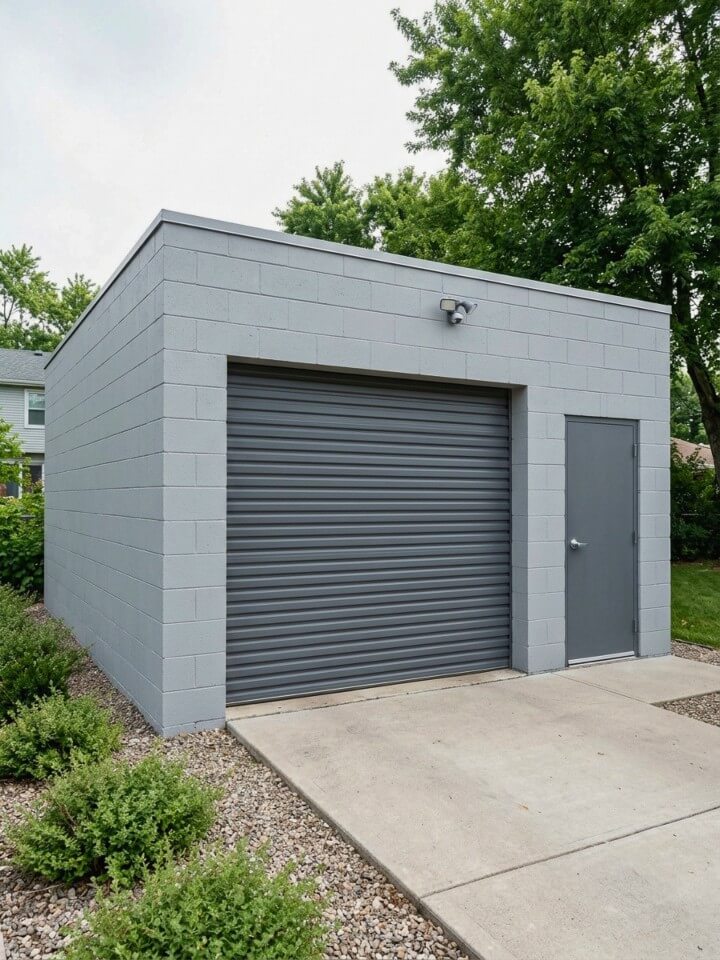
Concrete block isn’t trying to be elegant. It’s trying to be honest — a structural material left mostly visible, dressed up with paint instead of buried under a fancier finish. On detached garages, alley buildings, and backyard workshops, that honesty is the whole appeal, and the budget savings are significant.
Prep work decides whether the finish lasts two years or twenty. The block has to be clean, dry, and sealed with a masonry primer before any color goes on. Skip the primer and the paint will flake off in sheets the first winter.
Elastomeric paint is worth the upgrade over standard exterior latex. It stretches with the block as temperatures shift, bridges hairline cracks, and resists the chalking that turns light colors dull within a few seasons. Pair the finished walls with a simple steel door and outdoor sconces, and the building stops looking utilitarian and starts looking intentional.
11. Reclaimed Wood Planks
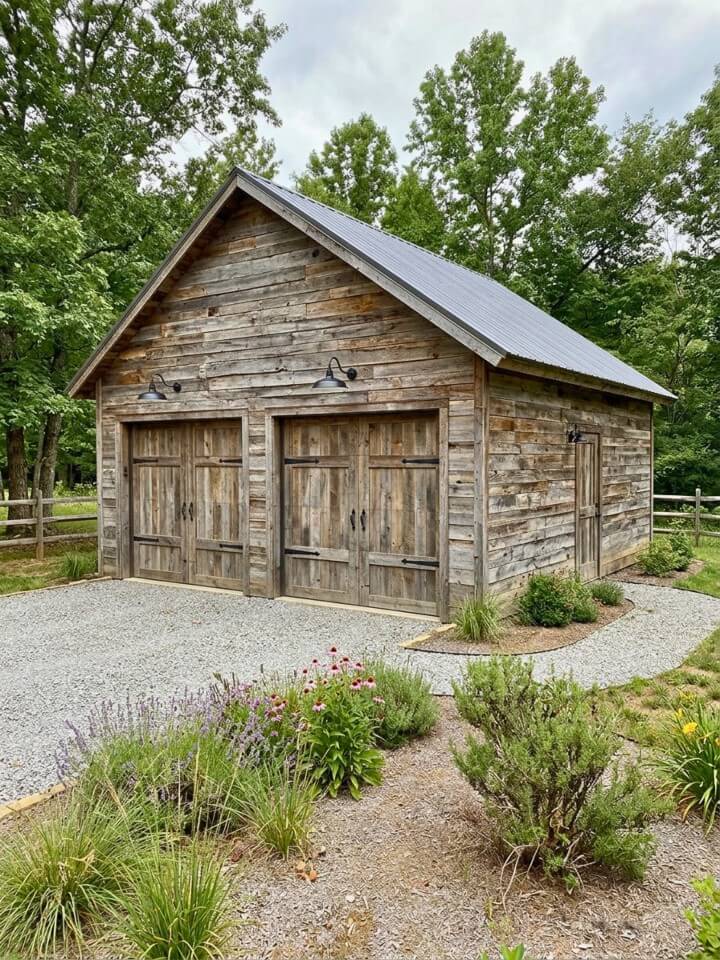
No two reclaimed wood projects ever look the same, and that’s the appeal. Old barn boards, salvaged fencing, and deconstructed warehouse lumber each carry their own grain, nail holes, and weathering patterns that give a garage real character from day one.
Sourcing matters more than styling. Reputable suppliers kiln-dry their stock to kill insects and stabilize moisture content. Boards pulled straight from a tear-down without that step will twist, crack, and sometimes bring pests along.
A clear penetrating sealer protects the surface without hiding the texture. Black iron hardware, a gravel apron, and simple landscaping let the wood stay the focal point on detached garages and backyard workshops. That same rustic approach can work beautifully beside small outbuildings or desirable backyard tiny house ideas where character matters as much as function.
12. Low-Maintenance Composite Wood Cladding
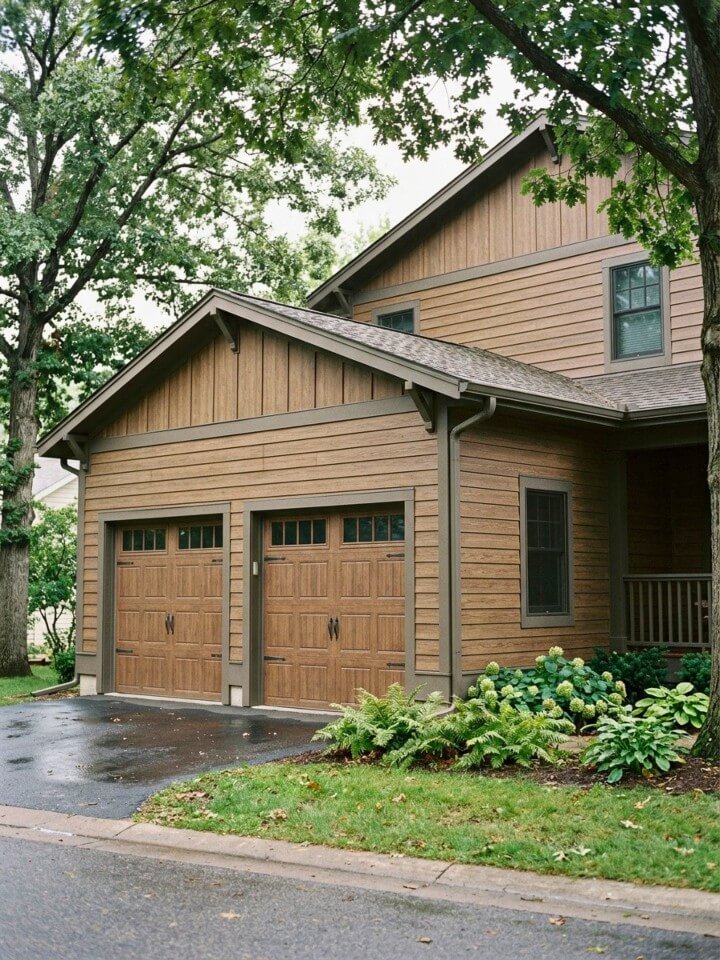
Composite siding answers a question homeowners have asked for decades — can you get the look of real wood without the maintenance? Boards built from wood fibers, resins, and binders come close.
Where Composites Outperform Real Wood:
- No swelling or warping in humid climates
- Resistant to termites and woodpeckers
- Holds paint and stain far longer
Where Real Wood Still Wins:
- Authentic grain variation up close
- Easier to repair locally if damaged
For most suburban garages, the trade-off lands firmly in favor of composite. Smooth panels give a clean contemporary look. Textured boards mimic rough-sawn cedar from the curb. Match the trim to the main house so the garage feels connected.
13. EIFS (Exterior Insulation Finish System)
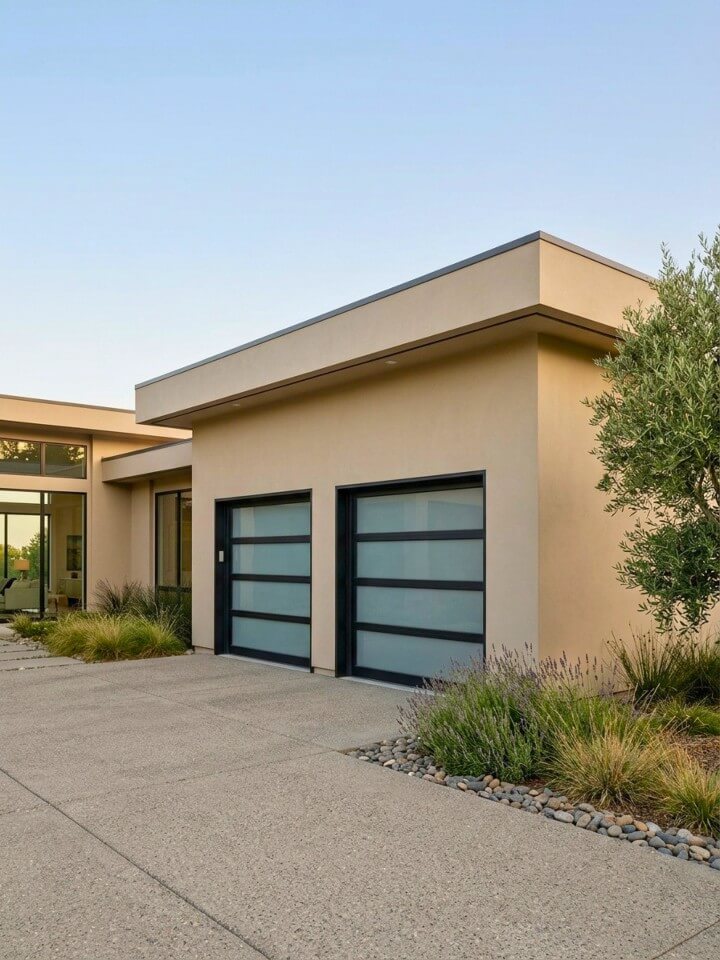
EIFS is often mistaken for stucco, and from ten feet away the two look nearly identical. The difference sits behind the surface. EIFS layers rigid foam insulation against the wall, then covers it with a reinforced base coat and a tinted finish layer.
That foam changes the math. An attached garage sharing walls with heated living space loses far less energy through EIFS than through plain stucco, and the temperature inside stays more stable year-round.
Early 1990s installations gave the system a moisture-damage reputation. Modern drainable EIFS solved that by adding a channel that lets trapped water escape. Ask specifically for a drainable system and verify the contractor’s prior work before signing.
14. Tongue and Groove Vertical Planks
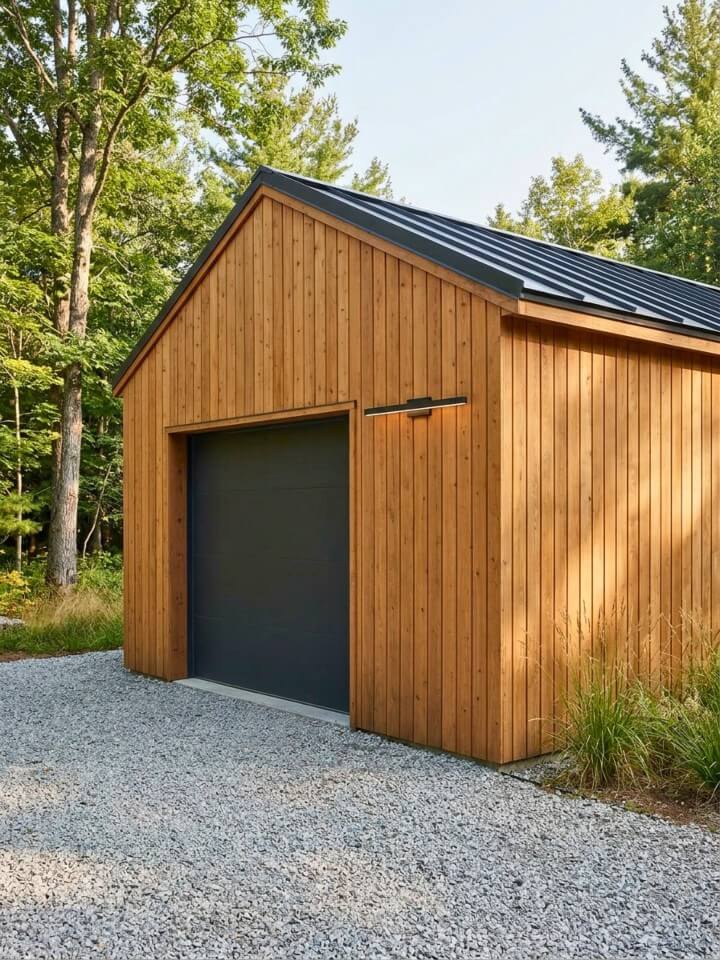
The appeal of tongue and groove comes from what you don’t see — the joinery. Each board has a tongue on one edge and a matching groove on the other, locking together into a tight, gapless surface that reads as one continuous panel from across the driveway.
Cedar remains the top choice for outdoor use because it resists moisture and insects naturally. Pine costs less but needs stain and sealer to last. Thermally modified wood has become a premium option, offering cedar-level durability at competitive pricing.
Stain choices set the mood. Clear coats keep things golden. Deep charcoal finishes lean architectural, paired with slim sconces and matte black hardware.
15. Polished Concrete Panels
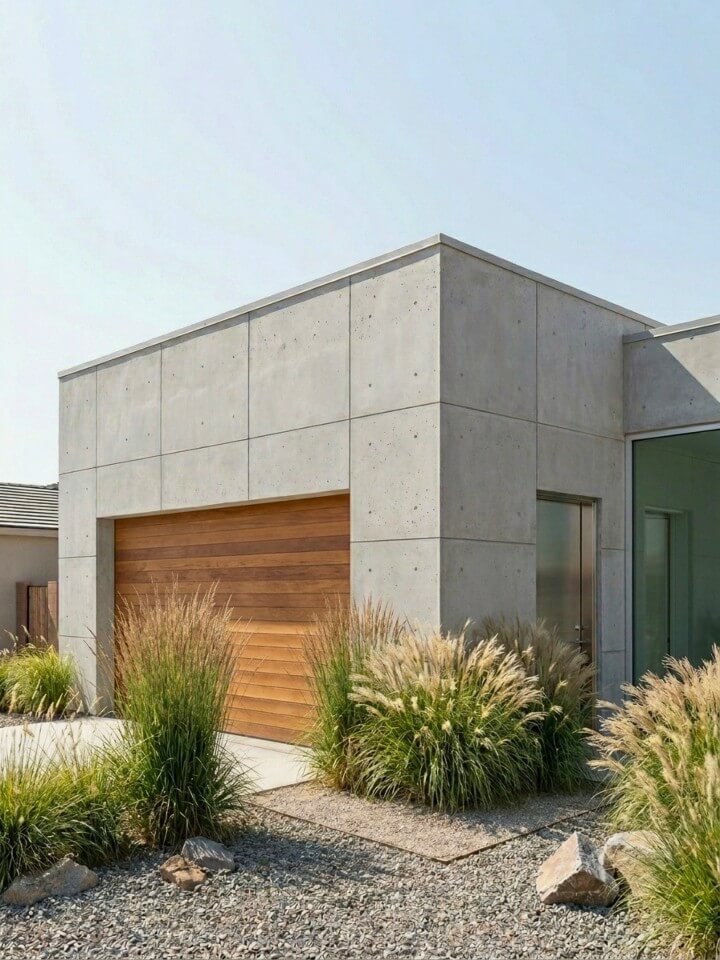
Transform how you siding garage exteriors using modern materials built for lasting protection and style. Precast concrete panels arrive on site already cured and finished — a different process from poured-in-place walls. Each panel is cast in a controlled factory, so the surface comes out smoother, the color stays consistent across the garage, and installation shrinks from weeks to days.
Large panels with deliberate reveal joints create a quiet grid pattern that pairs naturally with steel, glass, and wood. Smaller panels lose that effect and start to look busy.
Integral pigments mixed during casting produce charcoal, warm taupe, sand, and soft white finishes that never need repainting. The upfront cost runs higher, but the lifespan stretches past most other materials with almost zero maintenance beyond an occasional rinse.
16. Painted Shiplap Garage Walls
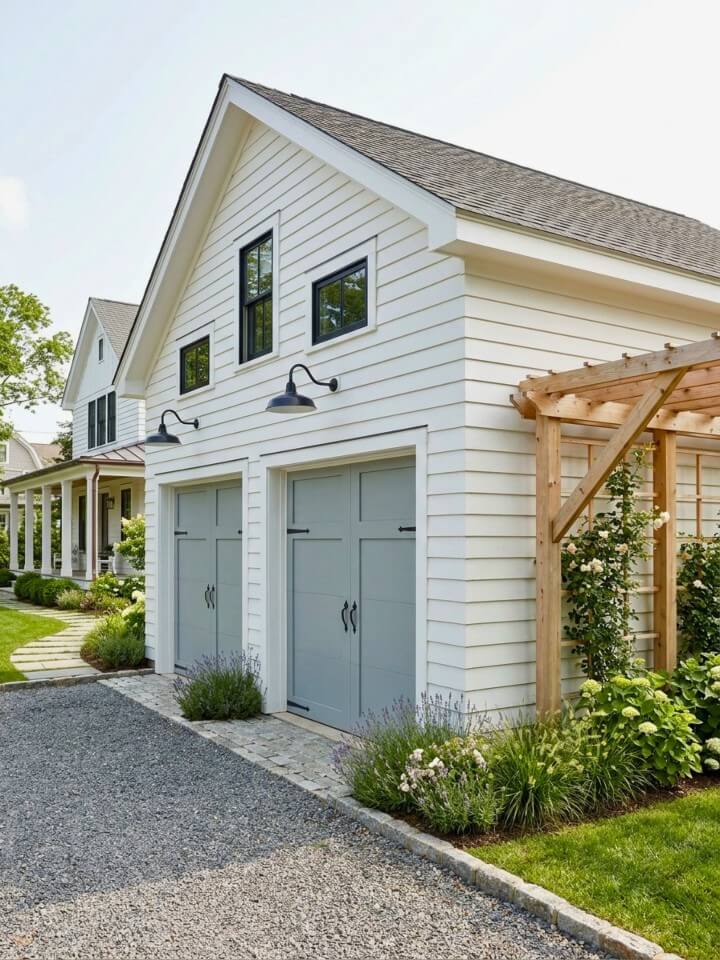
Shiplap gets confused with tongue and groove, but the joinery tells them apart. Shiplap boards overlap with an L-shaped notch that leaves a small, deliberate shadow line between each row. That shadow line is the entire design language — subtle, rhythmic, and instantly recognizable on farmhouse and coastal builds.
Painted finishes dominate this look. Crisp white reads classic. Soft sage and muted blue lean coastal. Deep charcoal turns the same boards into something modern and moody.
Installation direction matters more than people expect. Horizontal shiplap reads relaxed and traditional. Vertical shiplap reads taller and more current. Pair either with black gooseneck lighting and simple carriage-style garage doors for a finished look.
17. Glass Fiber Reinforced Concrete (GFRC) Panels
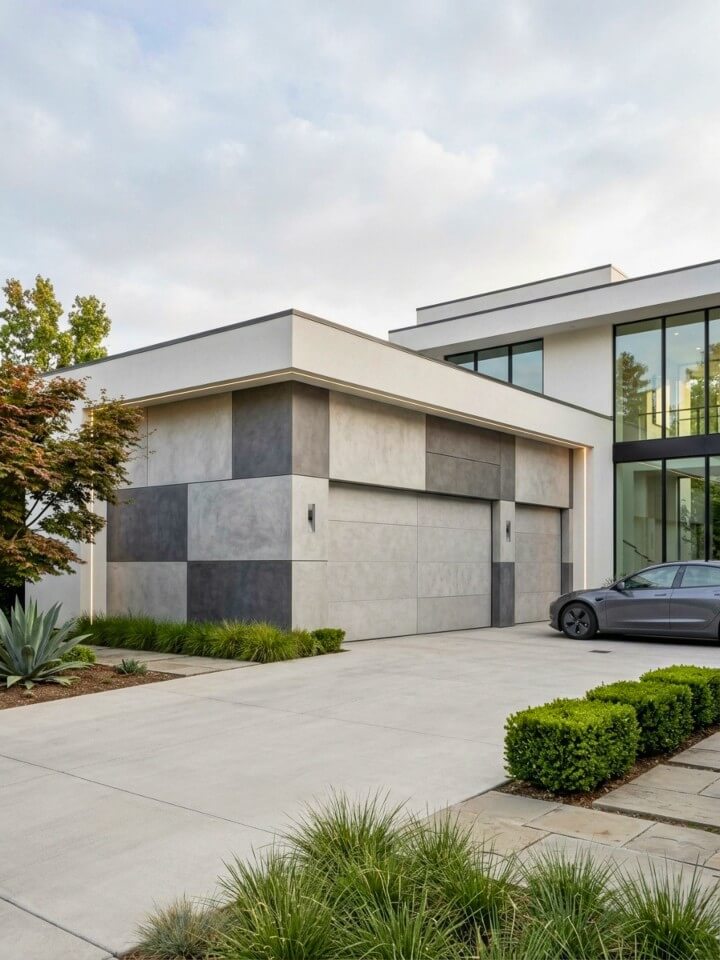
GFRC sits in a category most homeowners have never heard of, which is part of why architects love it. The material blends fine concrete with glass fibers, producing panels that are dramatically lighter than traditional precast while holding crisp edges and complex textures.
What sets GFRC apart:
- Mimics stone, wood grain, or smooth modern finishes convincingly
- Weighs roughly 75% less than standard concrete panels
- Allows larger panel sizes with fewer visible seams
- Holds custom pigment colors permanently
The cost reflects the craftsmanship. Expect to pay a premium over fiber cement or composite. The payoff is a garage exterior that looks designed rather than assembled, which matters most on contemporary builds where the architecture itself is meant to be noticed.
18. Corten Steel Panels
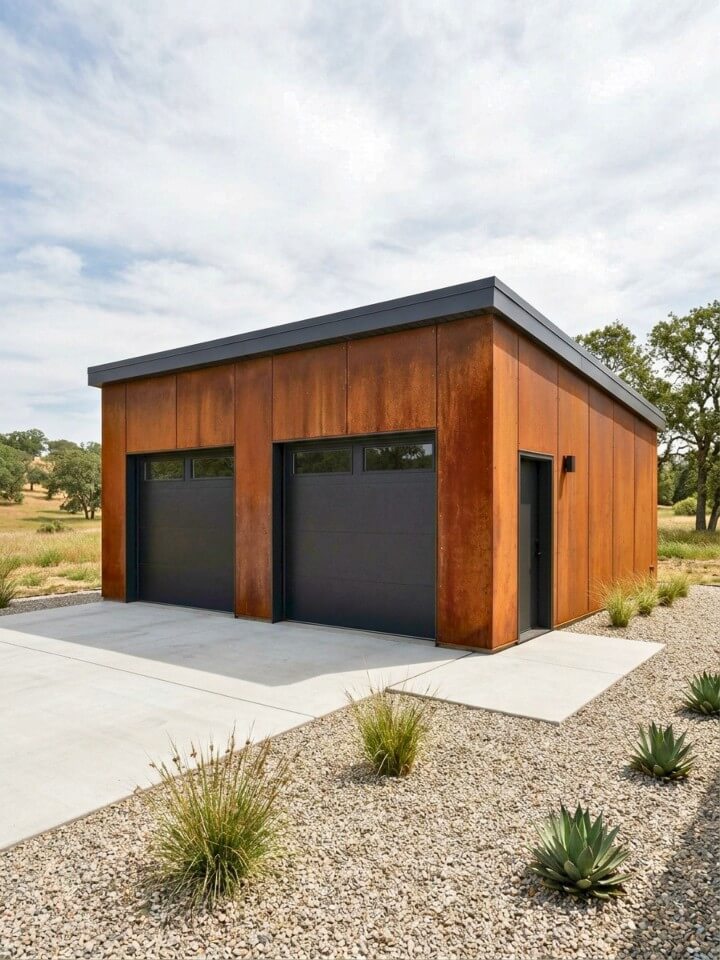
Corten was invented for railway cars and shipping containers, then quietly migrated into architecture once designers realized the rust was actually doing something useful. The outer layer oxidizes into a stable patina that seals the metal underneath, meaning the surface protects itself without paint or sealants.
The color shifts over time. Fresh panels arrive a muted silver-gray, deepen to orange within months, and settle into a rich rust-brown after a year or two outdoors.
One practical warning: the patina runoff stains concrete, brick, and light-colored stone during the first year. Plan the drainage around the garage carefully, or use gravel beds directly below the panels to absorb the runoff cleanly.
19. Vinyl Shake Siding
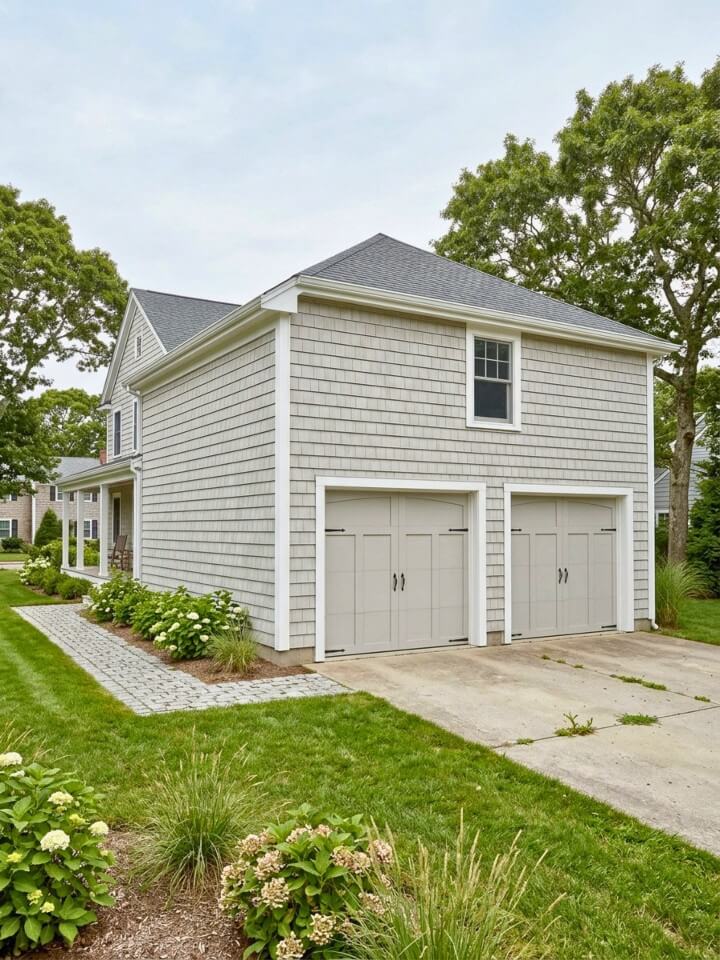
Discover versatile garage siding options ranging from classic wood to sleek metal for every budget. Vinyl shake delivers the texture of cedar at a fraction of the cost and almost none of the upkeep. Modern panels are molded from molds taken off actual hand-split shakes, so the surface variation looks convincing from the curb — only close inspection gives away the material.
The savings show up over decades, not days. Real cedar shakes need cleaning, replacement pieces, and preservative coatings every few years. Vinyl shakes need an occasional rinse with a garden hose.
Color is locked in during manufacturing rather than painted on, which means fading happens slowly and evenly. Weathered gray, sandy beige, and deep slate hold up best. Pair with simple white trim for a clean, low-effort finish.
20. Mixed Material Garage Facade
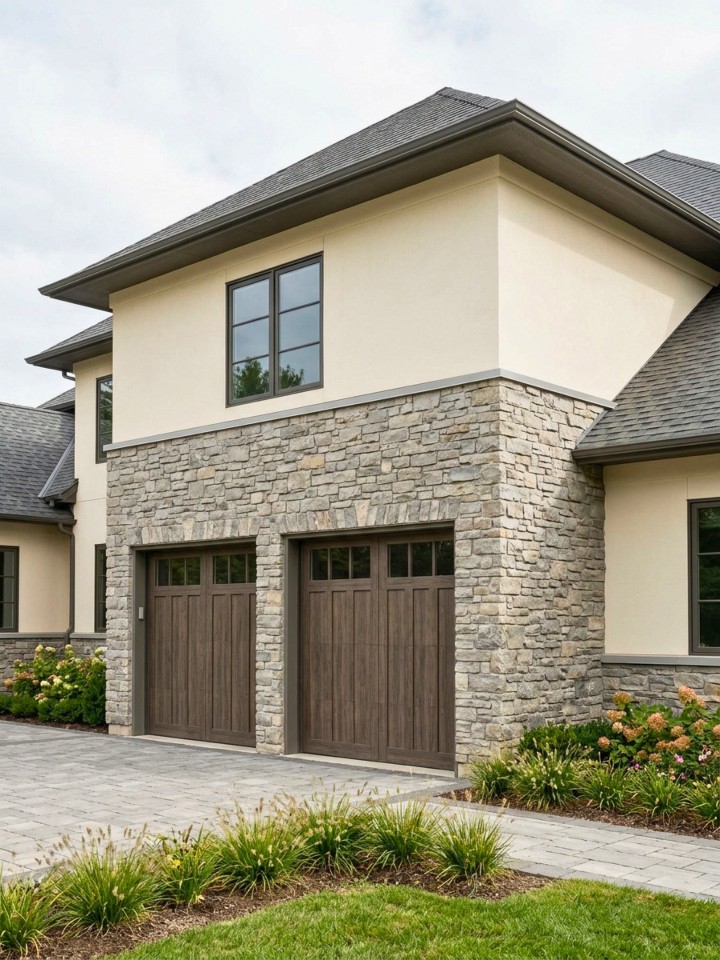
The best-looking garages on any street usually aren’t wrapped in a single material. They combine two or three finishes in deliberate proportions — brick on the lower third, board and batten above, a single metal accent panel framing the door.
The rule that separates great combinations from chaotic ones is restraint. Two materials almost always work. Three can work with careful planning. Four or more starts to look like indecision rather than design.
Color coordination matters more than material variety. Keep the palette within three tones, repeat at least one material somewhere else on the property, and let one finish dominate while the others act as supporting accents.
Frequently Asked Questions About Garage Siding
Cost, lifespan, DIY potential — these are the details that usually decide the final pick. Quick answers to the questions that matter most below.
How Much Does It Cost to Side a Garage?
Most projects fall between $3 and $15 per square foot installed, depending on material. Vinyl sits at the low end, while stone veneer, GFRC, and corten steel reach the higher range.
How Long Does Garage Siding Usually Last?
Lifespan varies by material. Vinyl lasts 20–30 years, fiber cement holds up 30–50 years, and metal or concrete panels often pass 50 years with very little maintenance along the way.
Can I Install Garage Siding Myself?
Lap vinyl, shiplap, and board and batten are realistic DIY projects with basic tools. Fiber cement, stone veneer, EIFS, and metal panels almost always require professional installation for proper results.
Should Garage Siding Match the House Exactly?
Matching looks safest, but a contrasting accent material often looks more intentional. Keep the color palette within the same tones so the garage feels connected rather than mismatched against the main structure.
Which Siding Works Best in Humid or Rainy Climates?
Fiber cement, composite wood, vinyl, and metal panels handle moisture best. Avoid untreated natural wood unless you’re committed to regular sealing, since constant dampness leads to rot, warping, and pest issues.
Conclusion:
Picking the right exterior comes down to honesty about how you live. A weekend woodworker will love cedar shakes that age and shift with the seasons. A busy family will get more out of fiber cement that asks for nothing. Someone chasing a modern look will find their match in corten, concrete, or ribbed metal.
Walk to the end of your driveway and actually look at your garage for a minute. That wall is the first thing guests see and the last thing you pass each night. Treat it like the front of the house, because it already is.