20 Farmhouse Lantern Decor Ideas That Cost Less Than You Think
Most people buy a lantern, set it on a surface, and call it done – and then wonder why it looks like it came straight off a store shelf. The difference between decor that feels collected and decor that feels purchased usually comes down to placement, scale, and one or two unexpected choices. These 20 gorgeous farmhouse lantern decor ideas get specific about all three. You’ll find out why hanging lanterns too high over a dining table kills the mood, why two mismatched lanterns beat a perfectly identical pair, and how a single oversized lantern in an empty patio corner does more work than a whole shelf of smaller ones.
1. Rustic Wooden Lanterns on the Porch
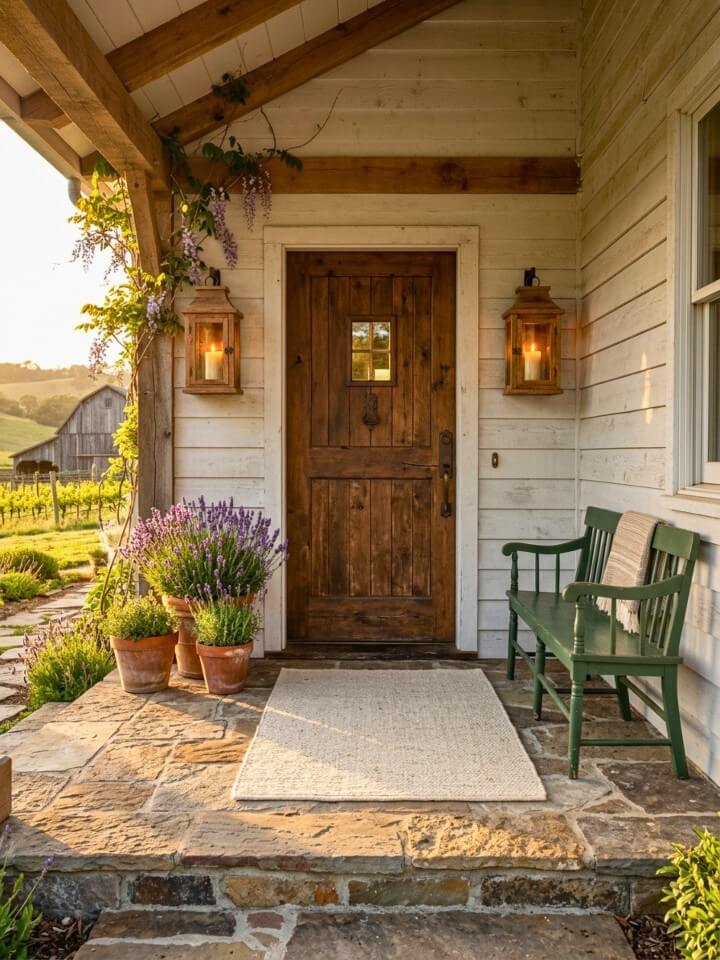
A pair of wooden lanterns flanking your front door signals warmth before anyone even knocks. Proportion matters more than style here. Wide porches need taller lanterns; narrow entries work better with slimmer silhouettes. Stick to unfinished or lightly stained wood – the natural grain is what makes them feel genuinely rustic rather than costume-y. Cedar and teak hold up well through rain and temperature swings. Skip perfectly matched sets if you can. Two lanterns that are similar but not identical feel more collected and less catalog-bought.
What Goes Into Pulling Off This Look
- Choose wood with visible grain, avoid smooth painted finishes
- Taller lanterns (18–24 inches) work best on wide porches
- Place on both sides of the door, not just one
- Sand or seal raw wood once a year to prevent weathering
2. Mason Jar Lanterns for Garden Paths
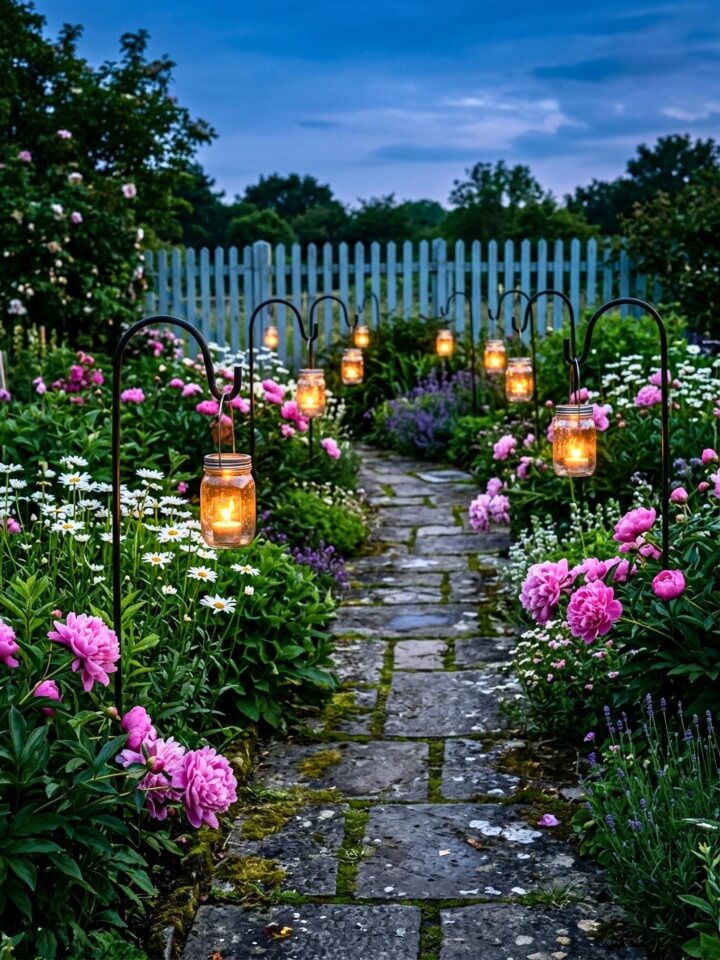
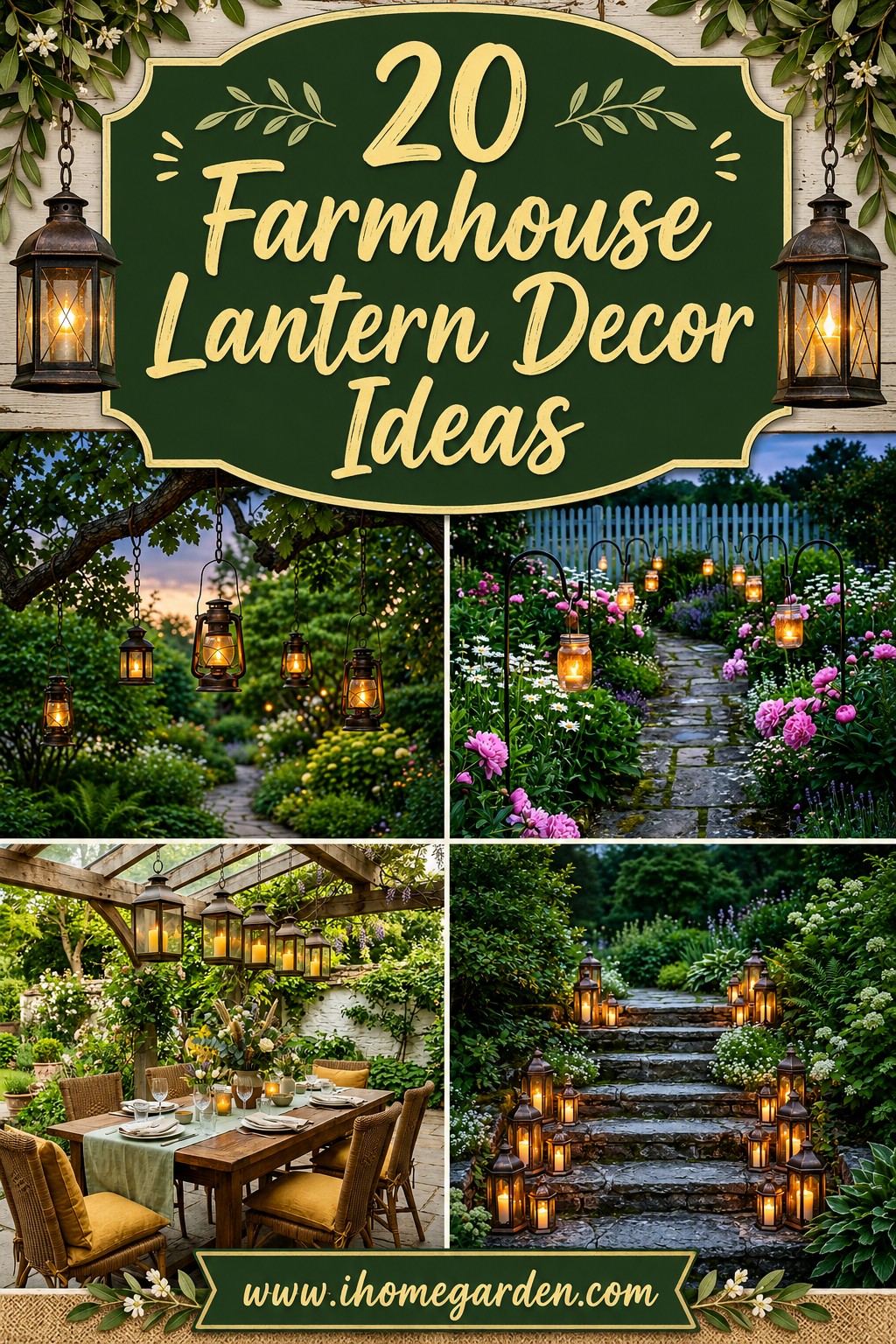
Most people hang mason jar lanterns too high, lighting nothing useful. Mount them at knee-to-hip height along a garden path – low enough to illuminate the ground, high enough to catch the eye. Shepherd hooks let you reposition as your garden changes. Fill the bottom inch with coarse sand before dropping in a tea light; it stabilizes the jar and acts as a heat buffer. Mix quart and pint sizes rather than lining up identical jars for a less matchy, more natural look.
Setting Up Your Jar Path the Right Way
- Space jars 3 to 4 feet apart for even coverage
- Mix sizes – alternating large and small breaks the monotony
- Use battery tea lights if the path gets wind
- Anchor shepherd hooks at least 8 inches into the ground
3. Hanging Lanterns Over a Farmhouse Table
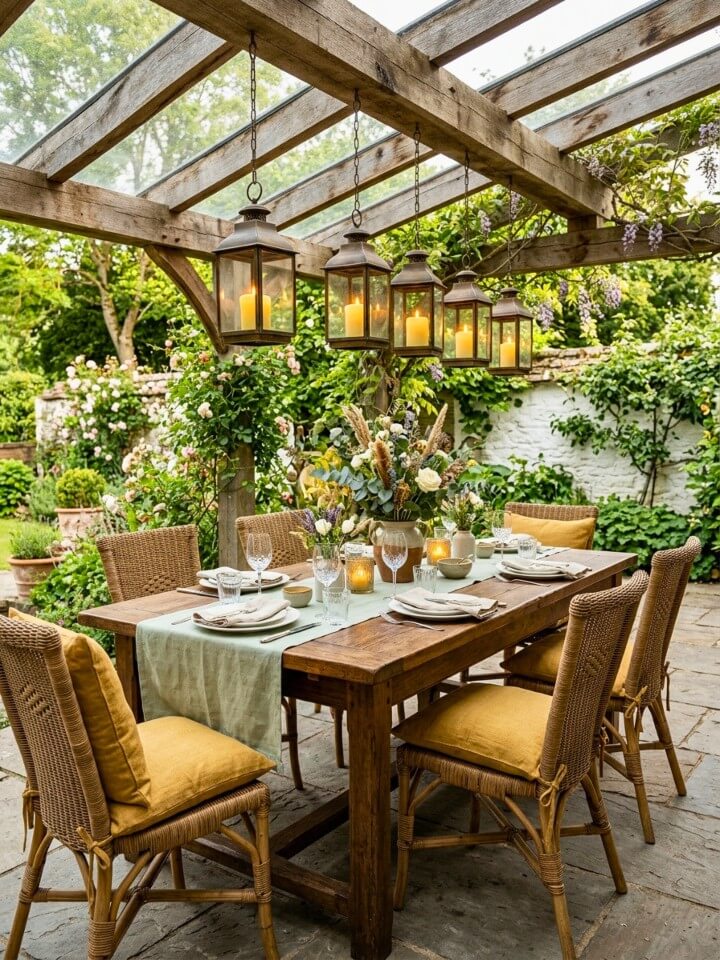
The biggest mistake here is hanging lanterns too high. Anything above 36 inches from tabletop to lantern bottom starts feeling disconnected. For a six-foot table, three lanterns spaced 18 inches apart hit the right visual rhythm. If the table sits under a covered structure, the same scale rules that apply to surprising gazebo furniture ideas also apply here: the lighting should feel connected to the seating, not floating above it. Weight matters outdoors — lightweight lanterns swing in a breeze and look restless.
Go for solid metal or thick-paned glass that holds steady. One detail most people overlook: bulb color. Warm white, 2700K, makes food look good and keeps the mood relaxed. Cool white kills both.
How to Hang Them Without Overthinking It
- Hang 30 to 36 inches above the tabletop
- Use S-hooks on pergola beams for adjustable height
- Three lanterns for long tables, one for round or small tables
- Stick to warm white bulbs – 2700K is the sweet spot
Lanterns suitable for overhead hanging range from $25 to $80 each. Hardware stores and outdoor living sections of larger home retailers carry the hooks and hardware you need.
4. Metal Cage Lanterns by the Entry – Honest and Unfussy
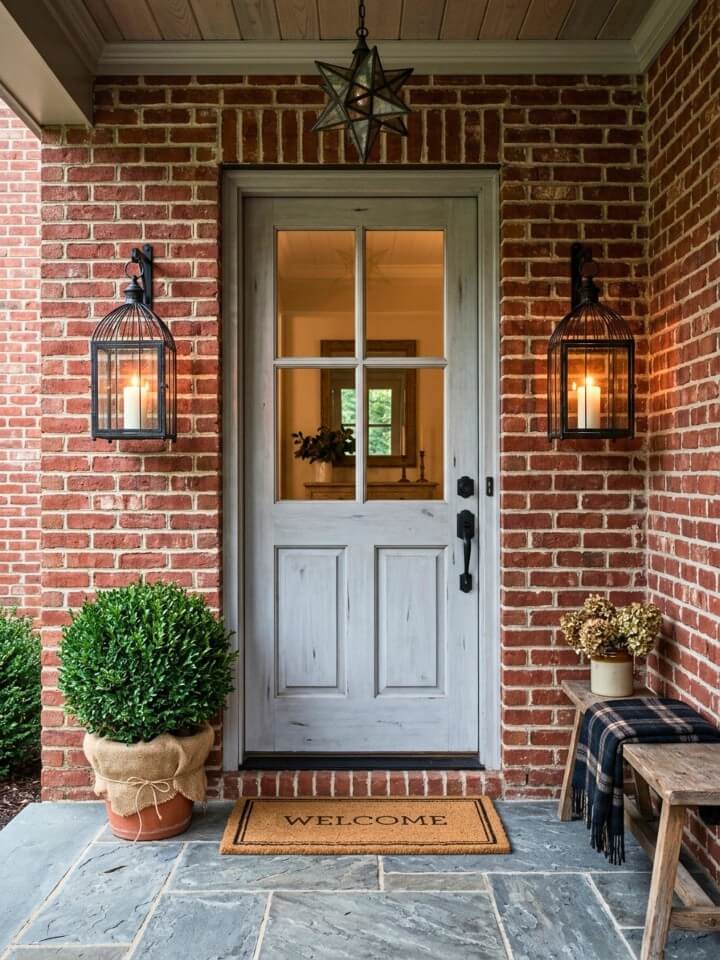
Metal cage lanterns work at an entryway because they’re transparent – no frosted glass, no hidden mechanics, just the flame and the frame. On a covered porch, real candles work fine and the flicker adds life. In an exposed entry, flameless candles with a realistic flicker setting are worth it. Finish matters more than most people think. Matte black reads modern-rustic, oil-rubbed bronze leans traditional, and raw iron is the most authentically farmhouse of the three. Size up from what feels right – entryway lanterns almost always look better slightly oversized.
Picking and Placing Your Cage Lantern
- Raw iron or matte black finishes age best outdoors
- Go one size larger than feels comfortable – it reads better
- Place on ground flanking the door, or on a low pedestal
- Use flameless candles in windy or uncovered entries
5. Lantern Centerpieces with Fresh Flowers
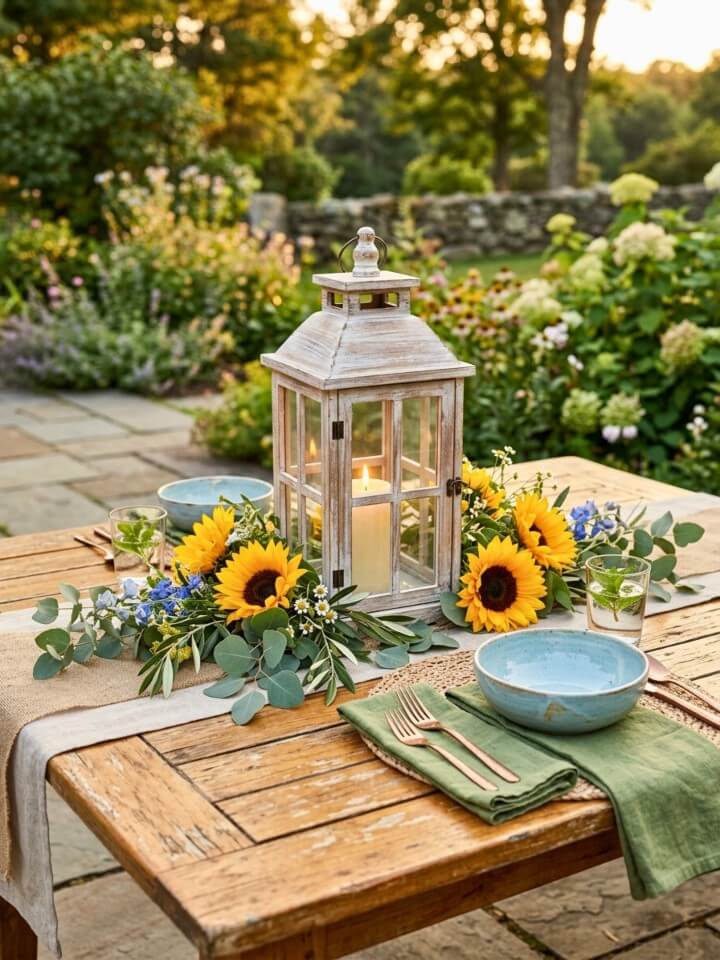
The lantern-and-flowers combination works because it layers structure against something loose and living. What makes it look intentional is height relationship. Blooms should sit at or slightly below the lantern’s midpoint — never competing for dominance. Loose, asymmetrical arrangements read better than tight formal ones outdoors. Herbs like rosemary and thyme add texture without needing water, which makes them practical for outdoor tables. One candle inside is enough. The goal is a warm focal point, not a lighting fixture.
Building a Centerpiece That Looks Natural
- Keep flowers at or below the lantern’s halfway point
- Use odd numbers – one lantern with three small bud vases works well
- Herbs hold up better than cut flowers on hot outdoor tables
- Swap florals seasonally; the lantern stays, the arrangement changes
6. Lanterns with Twine Handles – Texture on a Shelf
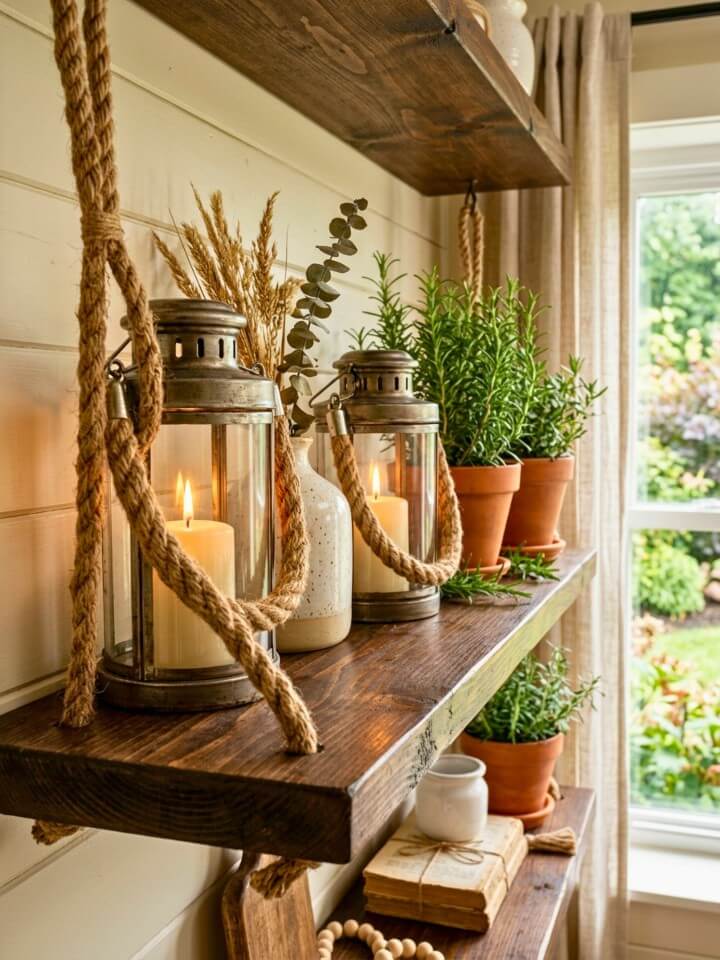
Twine-handled lanterns bring something mass-produced pieces rarely do – a handmade quality that makes a shelf feel lived-in. The rope adds texture that pairs naturally with wood, wicker, or aged metal. On a covered porch, group two or three at different heights rather than spacing them evenly. Inside, they work on open kitchen shelving or a bookcase corner. The compact size makes them easy to move around seasonally. A warm LED inside highlights nearby objects without flooding the space with light.
Styling Twine Lanterns Without Overdoing It
- Group in odd numbers at varying heights for natural asymmetry
- Mix with other textured objects — small baskets, ceramic pots, driftwood
- Hang from a ceiling hook or wall peg if shelf space is limited
- Use warm amber LEDs, not bright white, to keep the mood soft
7. Lantern Clusters on Steps – Guiding the Eye Upward
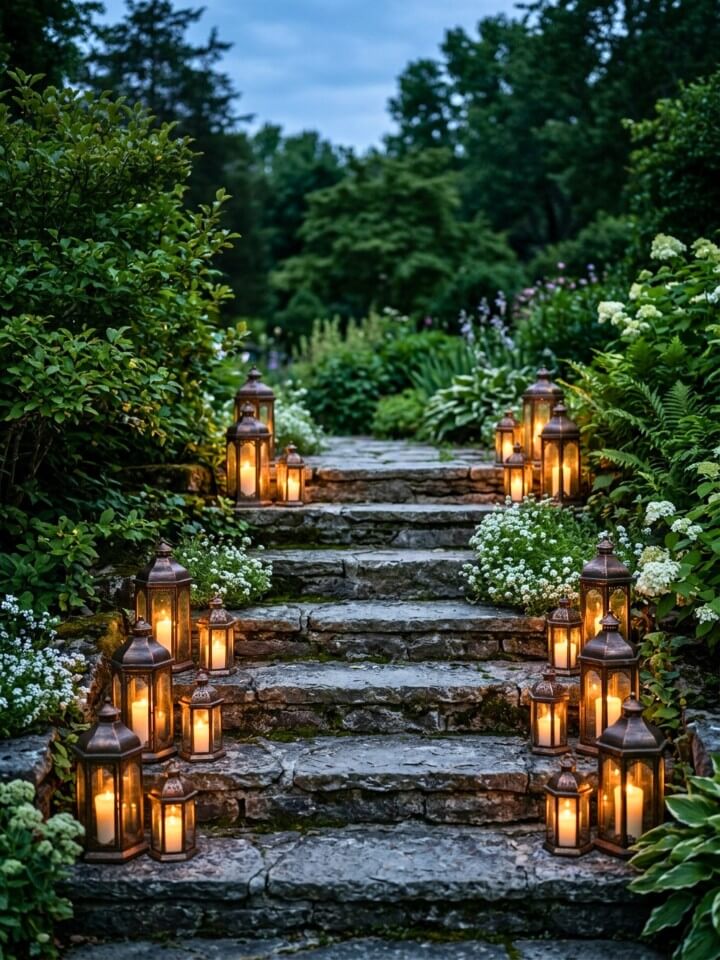
Grouping lanterns on outdoor steps adds depth without requiring any installation. The trick is mixing heights — larger lanterns on lower steps, smaller ones higher up. This creates a natural visual staircase that guides guests without looking staged. Stone or brick steps suit this best because the hard surfaces contrast well with warm candlelight.
On tighter outdoor spaces, the same grouped-light approach works beautifully with awesome small patio landscaping ideas because it gives the eye somewhere to land without adding bulky furniture. Flameless or solar lanterns keep it practical. You don’t want to manage open flames on a high-traffic entry.
How to Cluster Without Cluttering
- Use three to five lanterns — fewer looks sparse, more looks crowded
- Vary heights by at least 4 to 6 inches between pieces
- Keep one side of each step clear for safe foot traffic
- Stick to two finishes maximum — mixing too many looks chaotic
Lanterns for step clusters work best when bought as a mixed set. Sets of three to five pieces run $30 to $75 at garden retailers and home stores.
8. Lanterns with Candles Inside a Firewood Nook
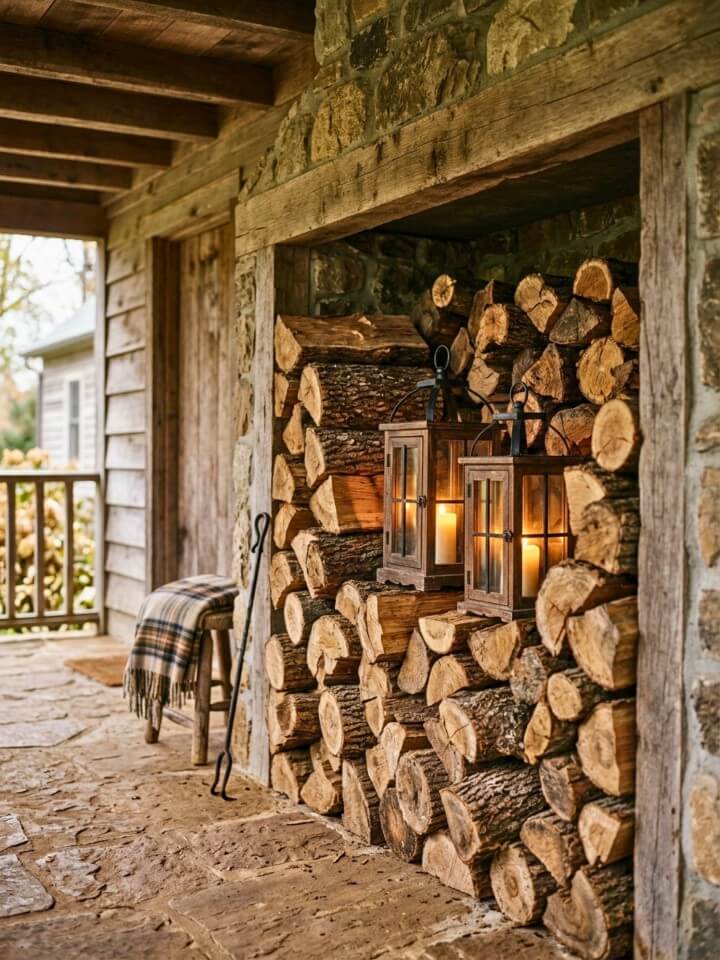
A firewood nook doesn’t have to look purely functional. Tuck one or two lanterns among stacked logs and the whole corner shifts – it feels intentional. Metal lanterns with glass panes work best here because they protect the flame from drafts while showing it off. The logs themselves become part of the display. Warm candlelight catches the texture of the bark and makes the nook look like something out of a mountain cabin rather than a storage corner.
Making the Nook Feel Designed
- Place lanterns at the front edge of the stack, not buried behind logs
- Use real candles here – the flicker against wood grain is worth it
- Keep a small tray or slate under the lanterns to catch wax drips
- One tall lantern reads better than two small ones in a tight nook
9. Painted Lanterns for Every Season – One Lantern, Four Looks
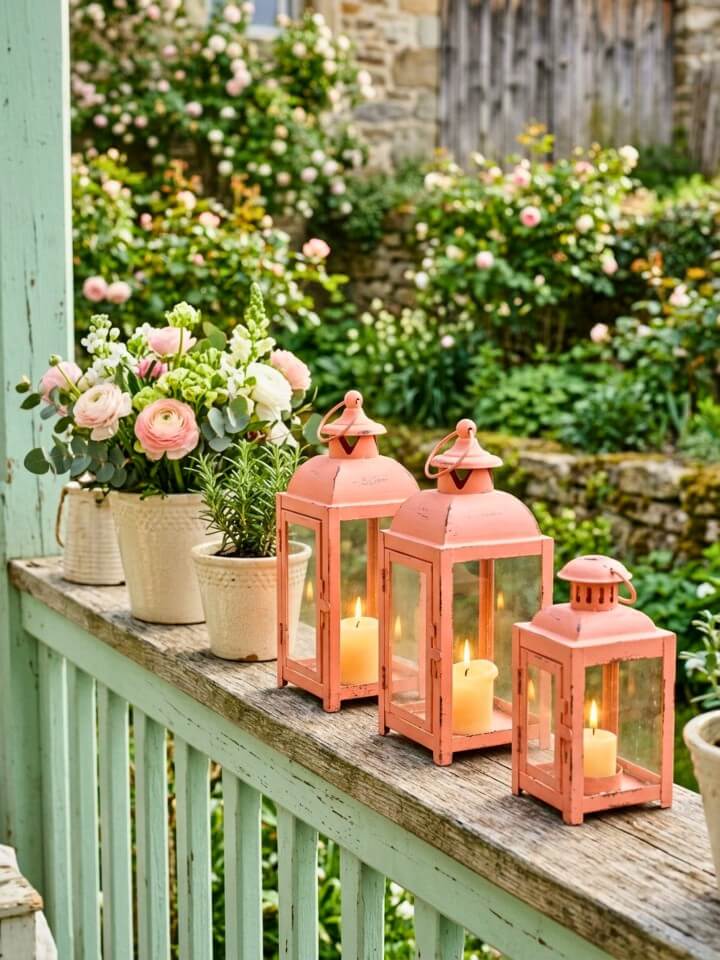
Painting lanterns lets you rotate your outdoor look without buying new pieces each year. Soft sage or blush for spring, terracotta or sunflower for summer, deep rust or mustard for fall. A matte finish is non-negotiable for a farmhouse feel – glossy paint immediately reads as cheap. Metal and wood both take chalk paint well, and it requires no primer on most surfaces. One coat is usually enough for a soft, weathered effect.
Getting a Clean Seasonal Paint Finish
- Use chalk paint for a matte, farmhouse-appropriate result
- Lightly sand between coats for a worn, aged effect
- Seal with a clear matte wax to protect against outdoor moisture
- Store unpainted spare lanterns so you always have a base ready to repaint
10. Lanterns Hanging from Tree Branches in the Yard
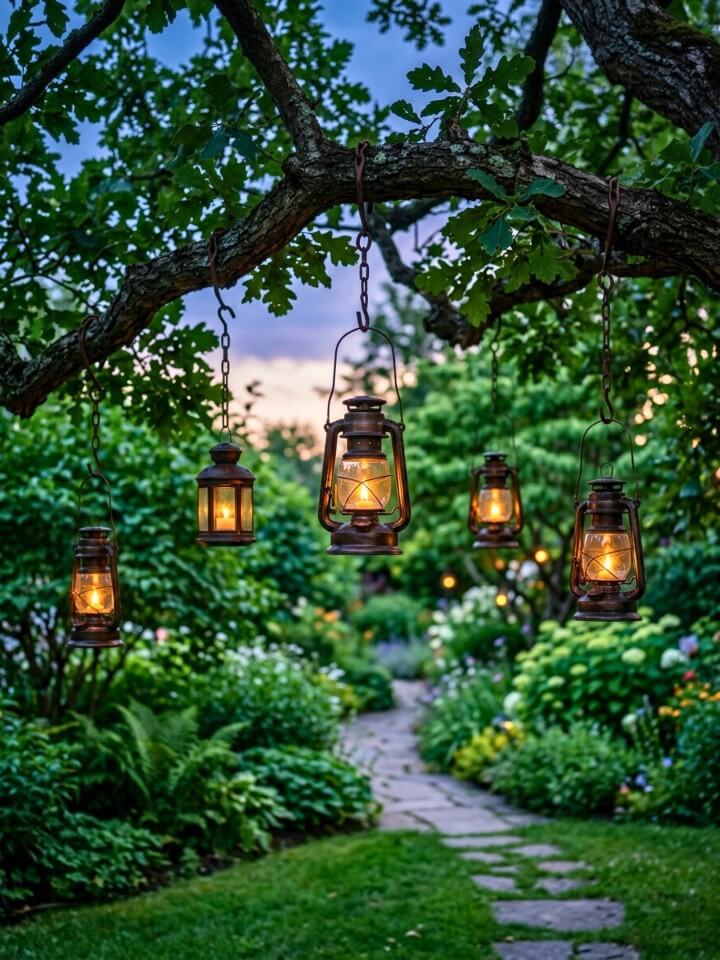
Hanging lanterns from tree branches creates something no ground-level arrangement can – light that comes from above and filters down through leaves. Use sturdy jute twine or a metal S-hook on branches thick enough to hold weight without swaying. Vary the hanging heights between 4 and 7 feet so the lanterns catch the eye at different levels. Solar lanterns make the most sense here since running cords through a yard is impractical. The effect after dark is genuinely worth the setup time.
Hanging Them So They Actually Stay Put
- Choose branches at least 2 inches thick — thinner ones sway too much
- Vary drop lengths between 12 and 36 inches for layered depth
- Use weatherproof jute or metal chain, not thin rope that degrades fast
- Solar lanterns with dusk-to-dawn sensors remove any maintenance effort
11. Lanterns Framed with Greenery on Windowsills
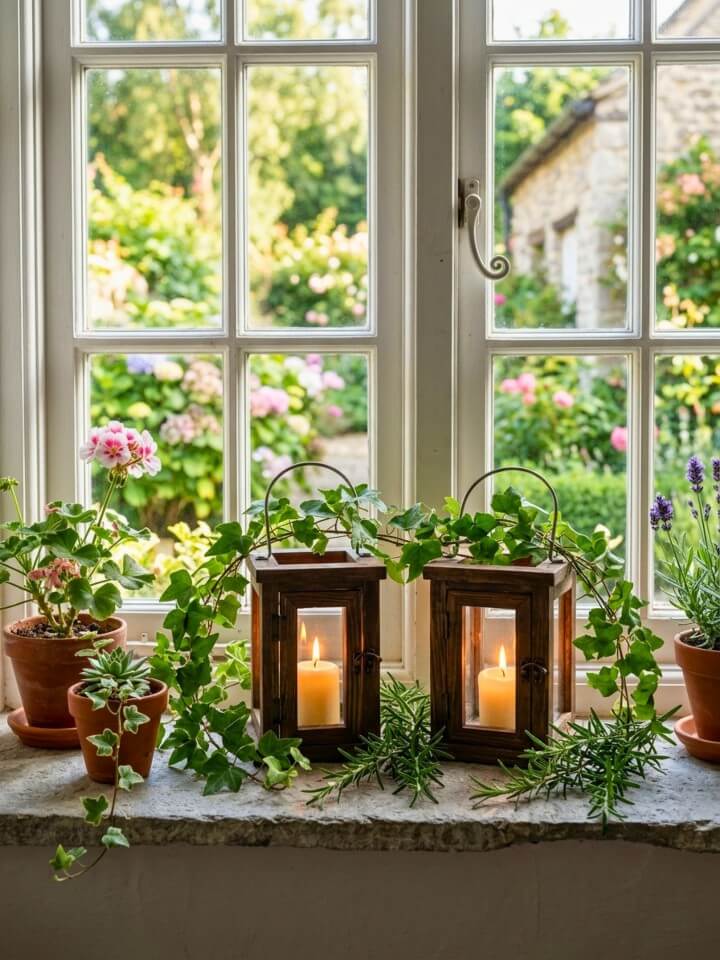
A lantern framed by greenery on a windowsill works because it gives the window a reason to be looked at. Center a small to medium lantern, then build outward with trailing vines, fresh herbs, or seasonal cuttings. Herbs like mint and basil serve double duty – they look good and smell better. The flameless candle inside reflects off the glass, doubling the visual effect from both inside and outside. Resist the urge to overcrowd the sill. Two or three plants around one lantern reads cleaner than a crowded collection.
Building the Windowsill Display Around Light
- Use a flameless candle with a warm amber glow, not bright white
- Trail ivy or pothos down the sill edge for a natural, relaxed look
- Rotate herbs seasonally – basil in summer, rosemary in winter
- Keep the lantern centered so greenery frames it, not hides it
12. Oversized Patio Corner Lanterns – Anchor the Space
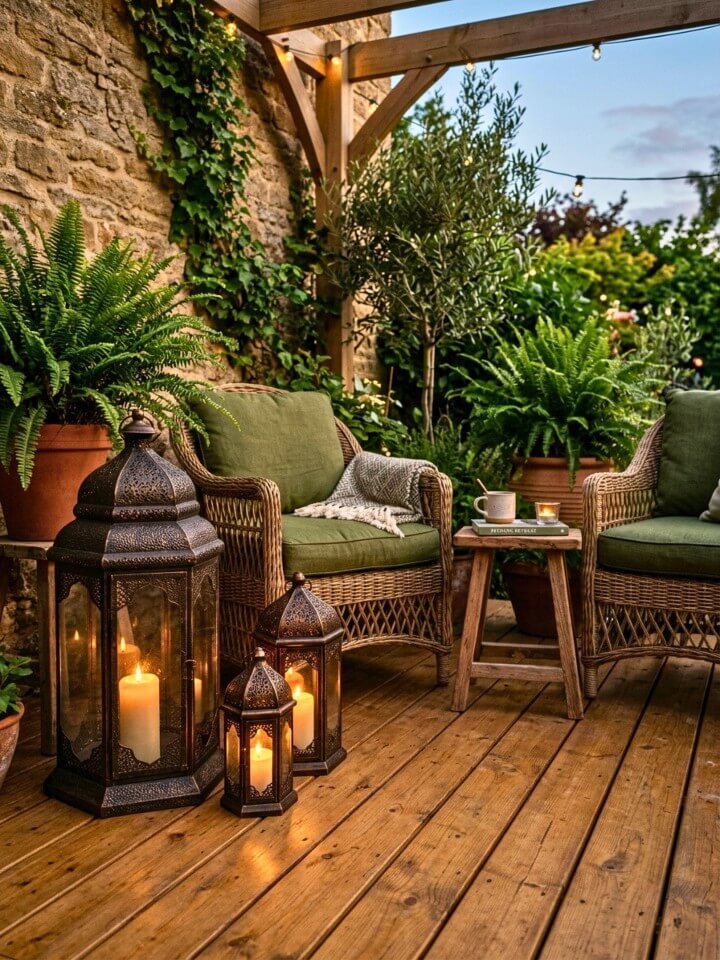
Empty patio corners are one of the most common decorating problems. An oversized lantern solves it without requiring furniture or installation. A large metal or wooden lantern with glass panes draws the eye and fills vertical space in a way smaller pieces simply can’t. Place it directly on the floor rather than on a table – the scale reads better at ground level. Use a large pillar candle inside rather than multiple small ones. One strong light source looks intentional; several small ones look like an afterthought.
Choosing the Right Scale for Your Corner
- Go for lanterns at least 20 to 24 inches tall for standard patio corners
- Matte black or weathered bronze finishes work on most patio materials
- Add a small tray or stone slab underneath to define the lantern’s footprint
- Pair with a tall potted plant nearby to balance the vertical weight
13. Lanterns with String Lights Inside for Soft Glow
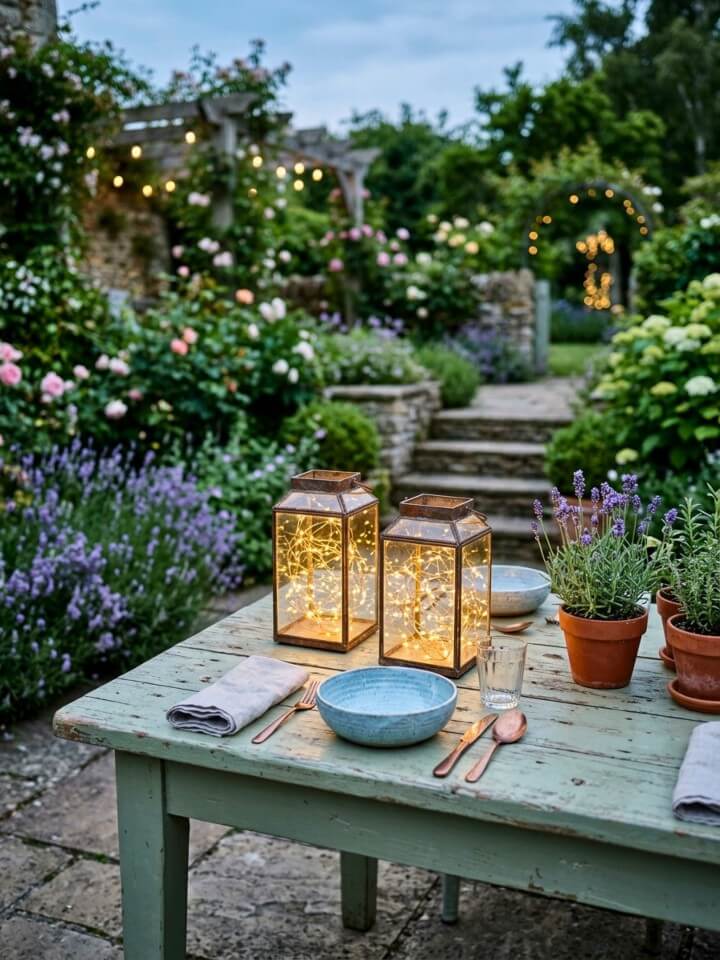
Filling a lantern with fairy lights sidesteps every candle-related inconvenience — no wax drips, no wind problems, no relighting after rain. Battery-operated strands with a timer function are the most practical choice. Stuff the lights loosely rather than arranging them carefully; the randomness creates a more natural twinkle. Grouping three lanterns of slightly different sizes together amplifies the effect without looking overdone. This works year-round, not just for special occasions.
Getting the Fairy Light Fill Right
- Use warm white lights – cool white or daylight LEDs kill the farmhouse mood
- Choose strands with thin copper wire, they disappear inside the lantern better
- Set the timer for dusk-on, midnight-off so you never have to manage them
- Mix lantern sizes – one tall, one medium, one short reads more natural than identical heights
Battery-operated fairy light strands run $8 to $20 for quality sets. Home goods stores and craft retailers carry them in the warm white tones that work best here.
14. Vintage Lanterns on a Farmhouse Mantel
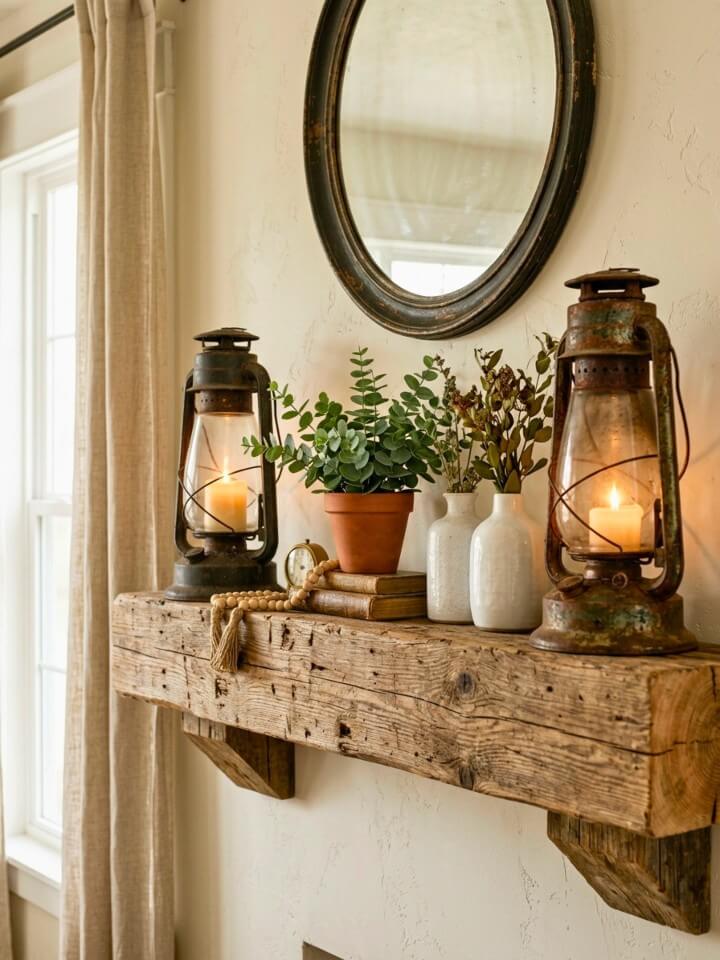
A vintage or distressed lantern on a mantel brings something new pieces rarely replicate — the sense that it belongs there. One or two metal or weathered wood lanterns sit naturally alongside framed photos, small plants, or stacked books without demanding attention. In rooms with heavier finishes, especially spaces built around amazing dark brown floor living room ideas, the warm glow helps keep the room from feeling too visually dense. The key is restraint. A mantel works best when nothing on it looks like it was placed for a photoshoot. Lean something against the lantern, let a plant trail slightly over the edge. Lived-in beats styled every time.
Arranging a Mantel That Feels Authentic
- Use one anchor lantern and one smaller companion, not a matched pair
- Layer objects at different depths – some forward, some pushed back
- Let a trailing plant or vine soften the lantern’s hard edges
- Flameless candles work best indoors – real candles on a mantel need watching
15. Fence Post Lanterns – Boundaries That Actually Look Good
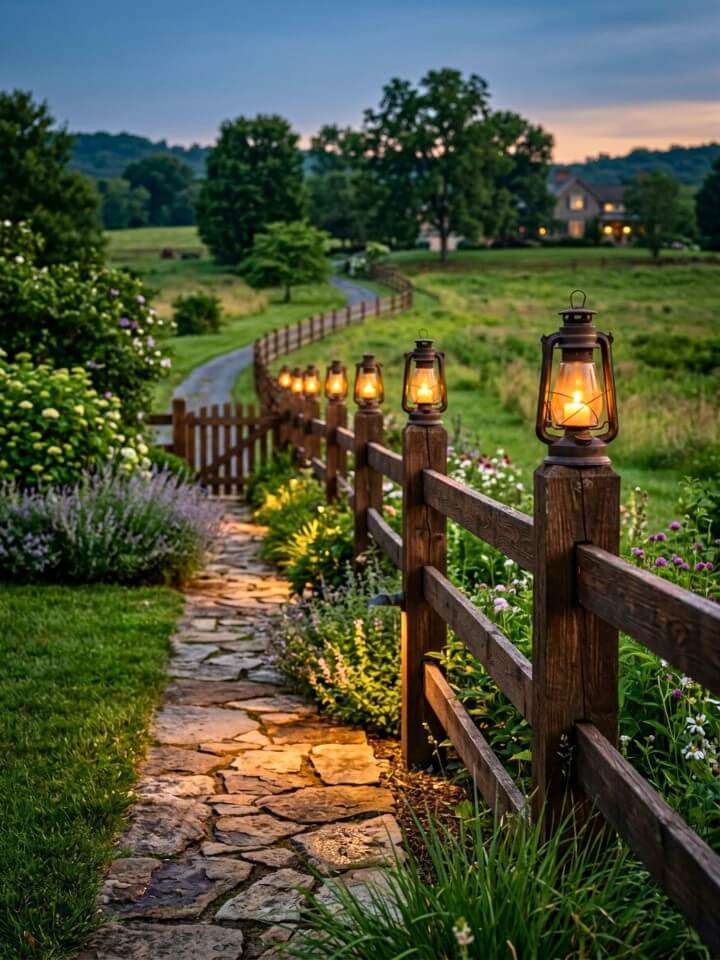
Most fences do their job and nothing else. Mounting lanterns on fence posts turns a boundary line into something worth looking at. Secure metal or wooden lanterns at roughly eye level from your main walkway or seating area. The light doesn’t need to be bright – a soft glow along a fence line is more about visual rhythm than illumination. Solar inserts make this entirely maintenance-free. Once they’re up, you genuinely forget about them until you notice how good the yard looks after dark.
Installing Fence Post Lanterns That Last
- Mount at 5 to 6 feet high for visibility without glare
- Use weather-sealed hardware to prevent rust at the attachment points
- Solar inserts with dusk sensors remove any ongoing effort
- Space lanterns evenly – every second or third post keeps it from looking busy
16. Lanterns with Seasonal Wreath Accents
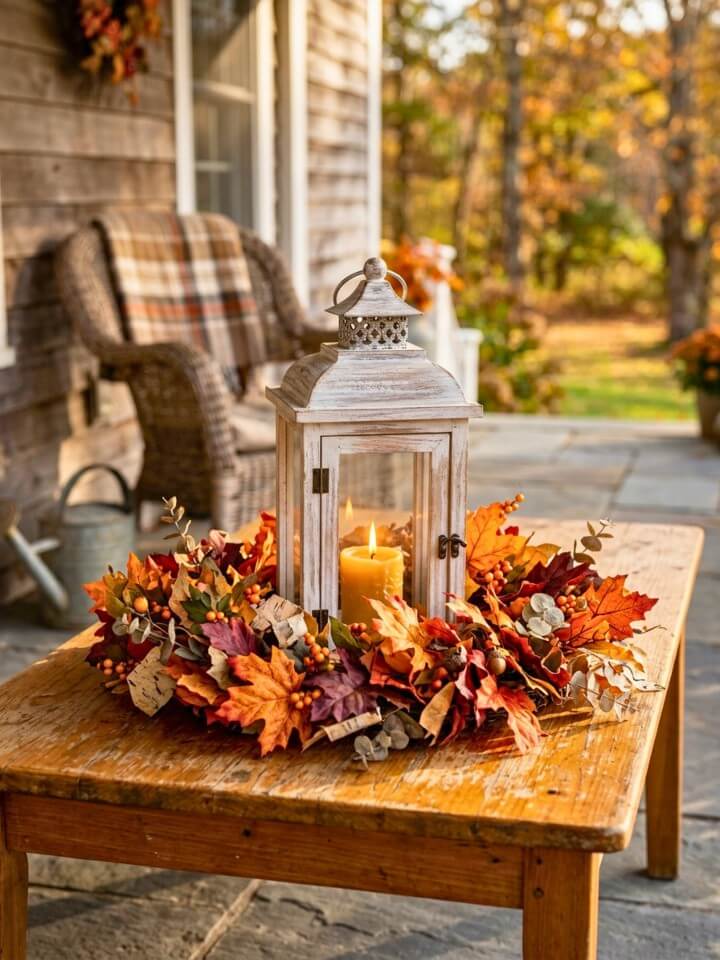
Pairing a lantern with a small wreath is one of the simplest ways to keep outdoor décor feeling current without rearranging anything. Hang or lean a wreath against the lantern base, or loop a smaller one over the top. The lantern stays put all year. Only the wreath changes. Spring calls for light greenery and small blooms, fall for dried leaves and berries, winter for evergreen and pinecone. The candle or LED inside highlights the wreath’s texture in a way ambient light alone never does.
Rotating Wreaths Through the Seasons
- Choose a neutral lantern finish – it needs to work with every seasonal wreath
- Hang small wreaths over the lantern top rather than placing them flat around the base
- Dried wreaths last longer outdoors than fresh ones in humid climates
- Store off-season wreaths flat in a dry place to keep their shape
17. Floating Lanterns in a Backyard Water Feature
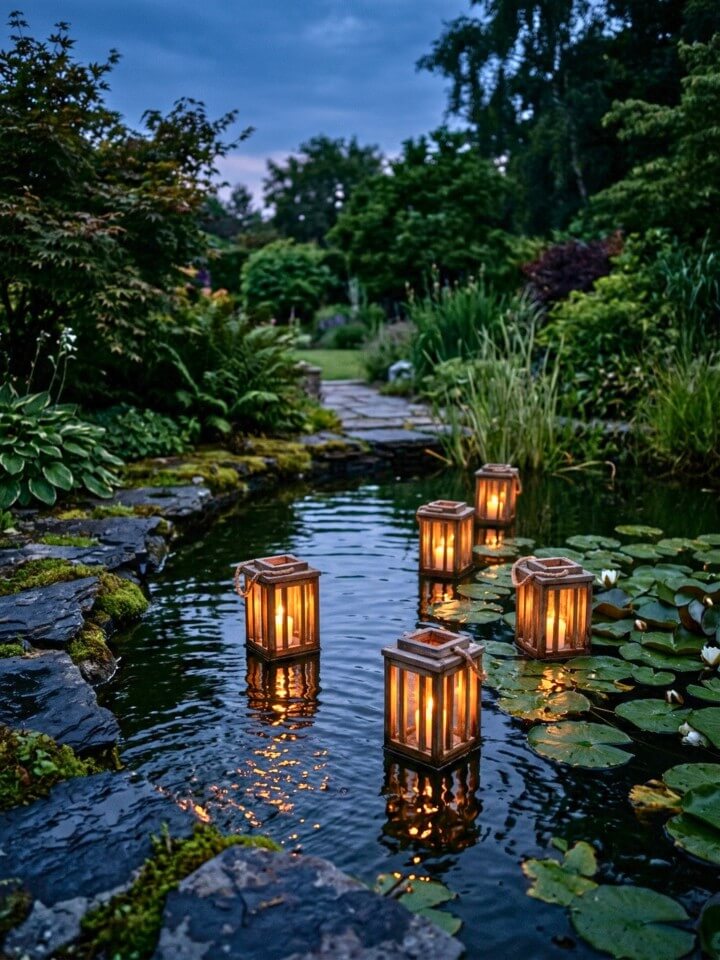
Still water doubles everything placed near it – that’s the entire logic behind floating lanterns in a pond or fountain. The reflection makes two lanterns look like four and adds movement even when there’s no breeze. Use lightweight waterproof lanterns designed for water contact, or place lanterns on a flat stone just at the water’s edge where the reflection still reads clearly. This works best at dusk when the surrounding light drops and the lantern glow becomes the focal point.
Making Water Feature Lighting Work
- Place lanterns at water’s edge if floating versions aren’t available
- Use battery or solar lights – no cords near water
- Cluster odd numbers – three reads more natural than two or four
- Clean waterproof lanterns monthly; algae buildup dulls the reflection effect
18. Garden Border Lanterns – Rhythm Along the Edge
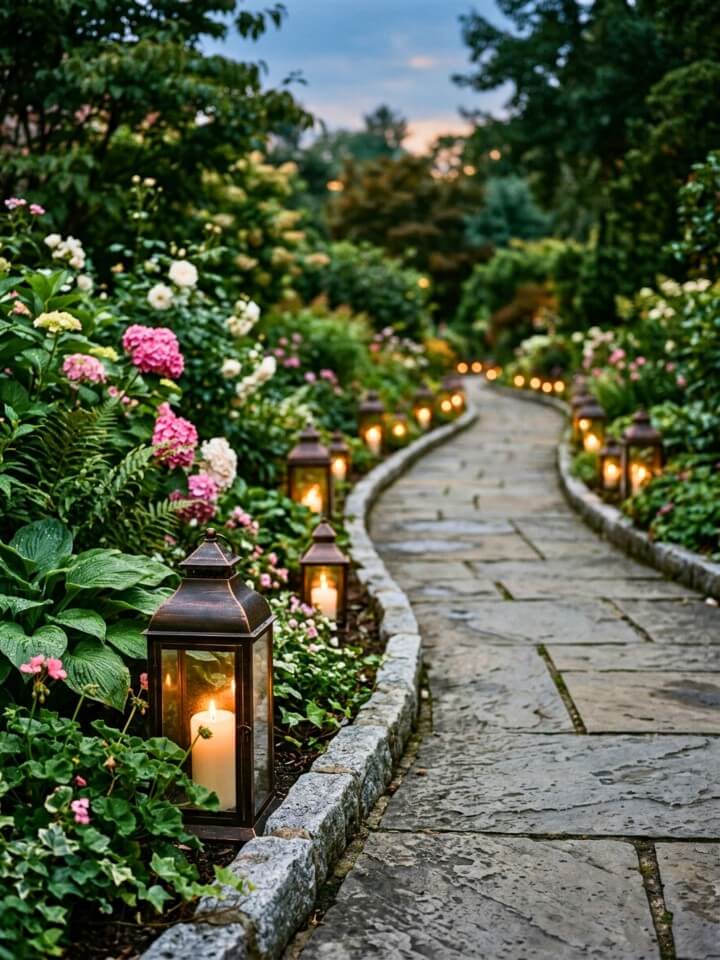
Lining a garden border with lanterns does two things at once – it guides movement through the yard and draws attention to the planting bed itself. The light catches leaf texture and flower color in ways that daylight doesn’t. Mix heights slightly rather than placing everything at the same level. A consistent height looks institutional; a little variation looks intentional. Flameless or solar options are practical here since access for relighting is inconvenient once plants fill in around them.
Laying Out a Border That Guides Without Overcrowding
- Space lanterns every 4 to 6 feet – closer looks cluttered, further loses the rhythm
- Vary heights by 3 to 4 inches between neighboring lanterns
- Push lanterns slightly into the border rather than placing them on the very edge
- Choose finishes that complement, not match, your garden stakes or edging
19. Lanterns with Chalkboard Labels for Personal Touch
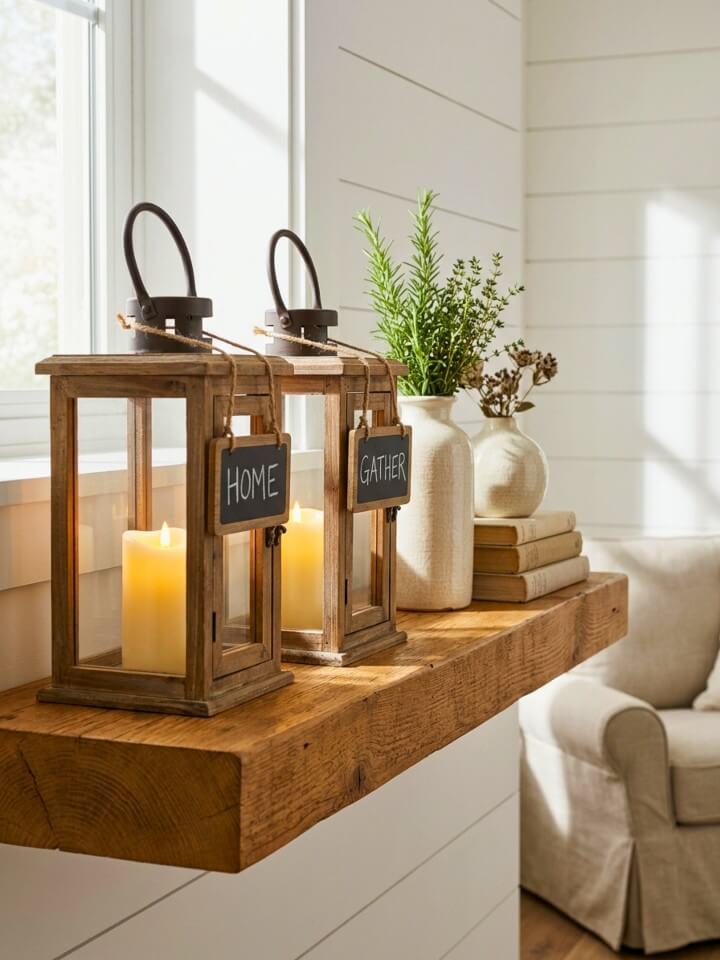
A small chalkboard label attached to a lantern turns a decorating piece into something interactive. Write a seasonal greeting, a table number for outdoor entertaining, or a short quote that fits the occasion. The handwritten element is what makes it feel personal rather than purchased. Metal or wooden lanterns take adhesive chalkboard labels easily. Change the message whenever the mood calls for it. This works especially well on a porch, an outdoor dining table, or an entry display where guests actually stop and read things.
Writing and Displaying Labels That Get Noticed
- Use a chalk marker rather than regular chalk – it stays legible outdoors longer
- Keep messages short – five words or fewer read best at a glance
- Attach labels at eye level when lanterns are placed on the ground
- Wipe clean with a damp cloth and redraw for each season or event
Adhesive chalkboard labels cost $5 to $12 for a pack. Craft stores carry both the labels and chalk markers. The lantern itself doesn’t need to be expensive – the label is the focal point.
20. Mini Lanterns on a Farmhouse Kitchen Counter
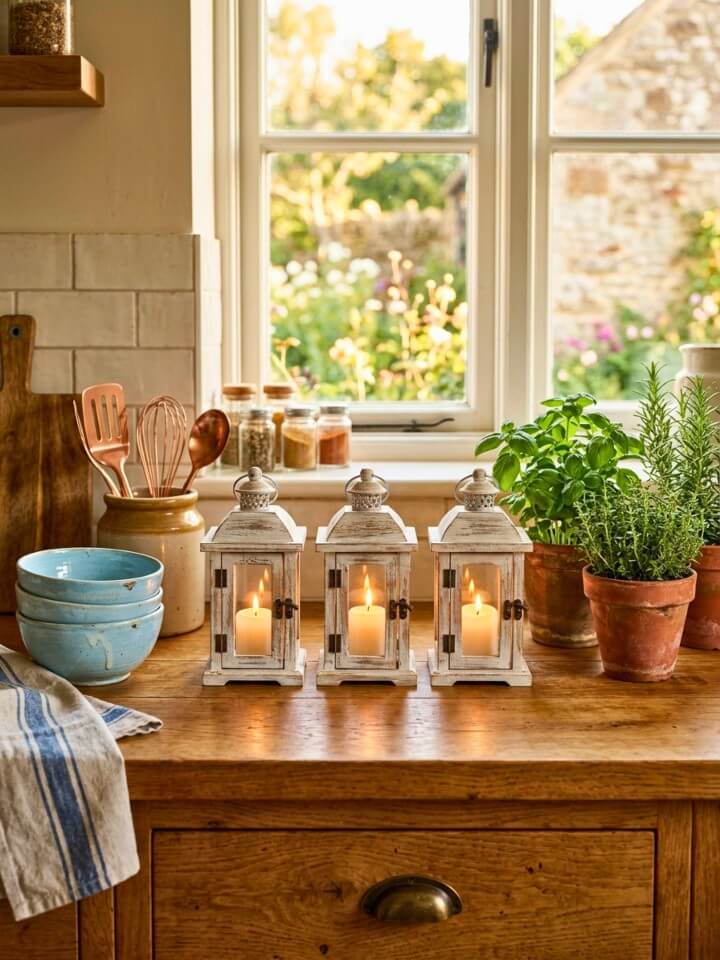
A farmhouse kitchen counter doesn’t need much to feel right – sometimes one small lantern tucked between the coffee maker and a jar of wooden spoons is enough. Mini lanterns work here because they fill negative space without taking over a working surface. Pair with a small potted herb or a stack of vintage cookbooks nearby. Flameless candles are the only sensible choice indoors on a counter. The warm glow in the morning before overhead lights go on is quietly one of the better small pleasures a kitchen can offer.
Fitting a Mini Lantern Into a Working Kitchen
- Keep lanterns under 10 inches tall so they don’t block sightlines across the counter
- Group two mismatched sizes rather than placing one centered lantern alone
- Place near a window so natural light during the day keeps the display visible
- Wipe down weekly – kitchen lanterns collect grease and dust faster than any other room
FAQs About Farmhouse Lantern Decor
The ideas are one thing — but the questions that come up after you’ve picked a lantern and are standing in your space wondering what to do next? Those matter more. Here’s what most guides quietly skip over.
Can I Use Farmhouse Lanterns Indoors and Outdoors?
Yes, but check the material first. Sealed metal and treated wood handle outdoor moisture well. Raw wood and certain painted finishes are better kept inside. Many lanterns work both ways — just move them in during heavy rain seasons.
What Candle Size Fits Best Inside a Standard Farmhouse Lantern?
A 3-inch diameter pillar candle fits most standard lanterns comfortably without touching the glass. For smaller lanterns, tea lights or votives work better. Always measure the interior base before buying — candle-to-glass contact is a fire risk worth avoiding.
How Do I Stop Outdoor Lanterns from Rusting Over Time?
Wipe metal lanterns dry after rain and apply a thin coat of clear outdoor sealant once a season. Matte black and oil-rubbed bronze finishes resist rust longer than raw iron. Storing lanterns under a covered porch extends their life significantly.
What’s the Best Way to Light a Lantern Without Using Real Candles?
Battery-operated flameless candles with a realistic flicker setting are the most practical swap. Look for ones with a timer function — dusk-on, midnight-off removes all maintenance. Copper-wire fairy light strands stuffed loosely inside work beautifully for a permanent, low-effort glow.
How Many Lanterns Are Too Many for One Space?
Three to five lanterns in one area is usually the upper limit before it starts feeling crowded. The fix is varying heights and sizes rather than adding more pieces. One strong focal lantern with one or two smaller companions almost always reads better than a large matching set.
Conclusion:
Lanterns have been lighting doorways and dinner tables for centuries — and the reason they still work in modern farmhouse spaces is simple: warm light makes people slow down. Pick one idea from this list that fits what you already have, not what you wish your space looked like. A mason jar on a shepherd hook costs almost nothing. An oversized corner lantern costs an afternoon. Either one, done right, changes how a room feels to be in — and that’s the whole point of decorating in the first place.