26 Dark Brown Floor Living Room Ideas To Inspire You
There’s a moment when you walk into a living room, and everything just feels right. The space feels grounded, warm, and somehow more intentional than rooms with lighter flooring. Yet most homeowners hesitate — worried dark floors will make a room feel small or gloomy. That hesitation is almost always wrong.
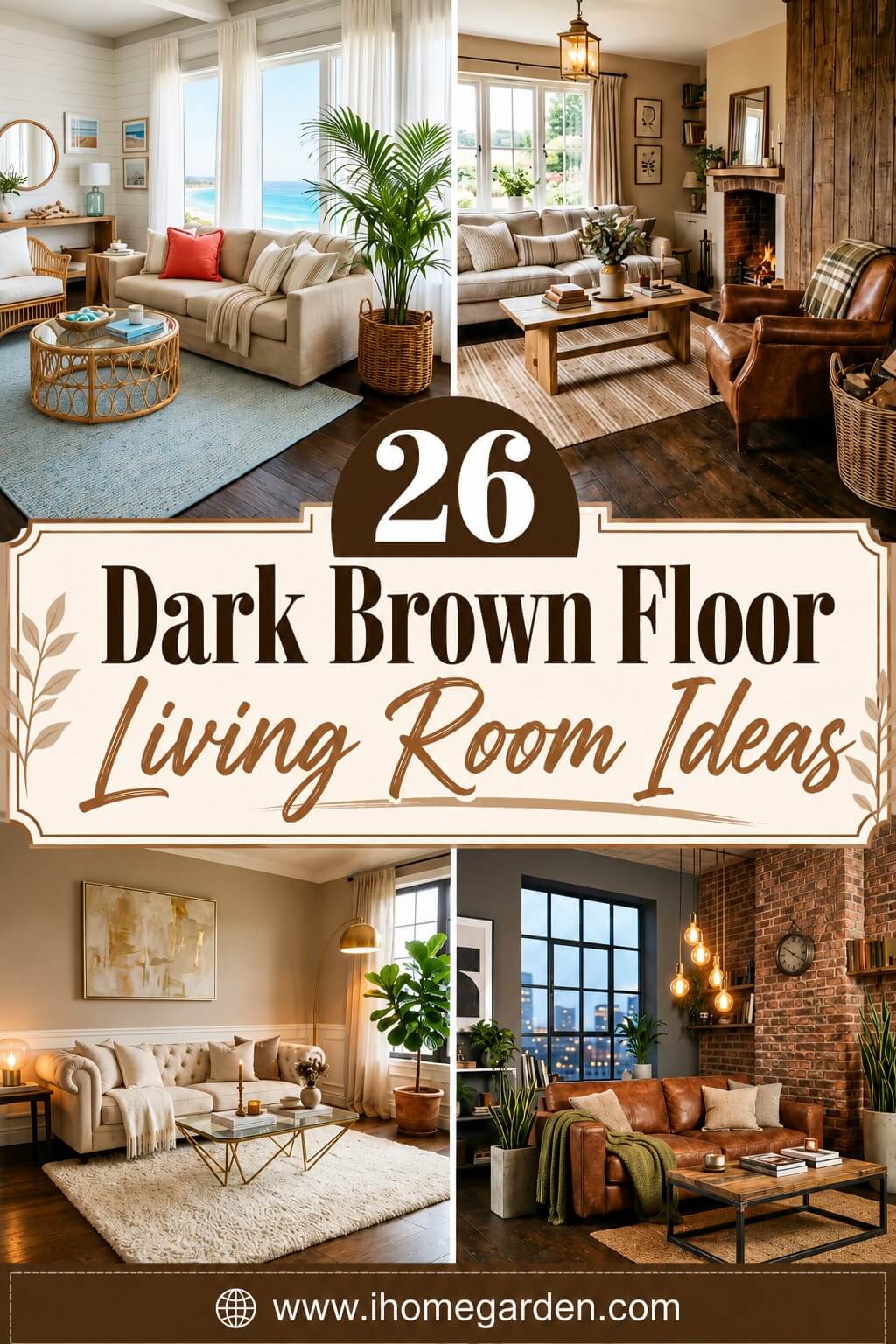
Dark brown floors are one of the most versatile design choices you can make for your living room. These 26 breathtaking dark brown floor living room ideas prove that this flooring works equally well beneath a cream minimalist sofa and a jewel-toned velvet sectional. They suit coastal breezy aesthetics just as comfortably as cozy cabin retreats. The floor essentially disappears into the background — letting everything above it take center stage.
1. Dark Brown Hardwood Floor in Your Living Room
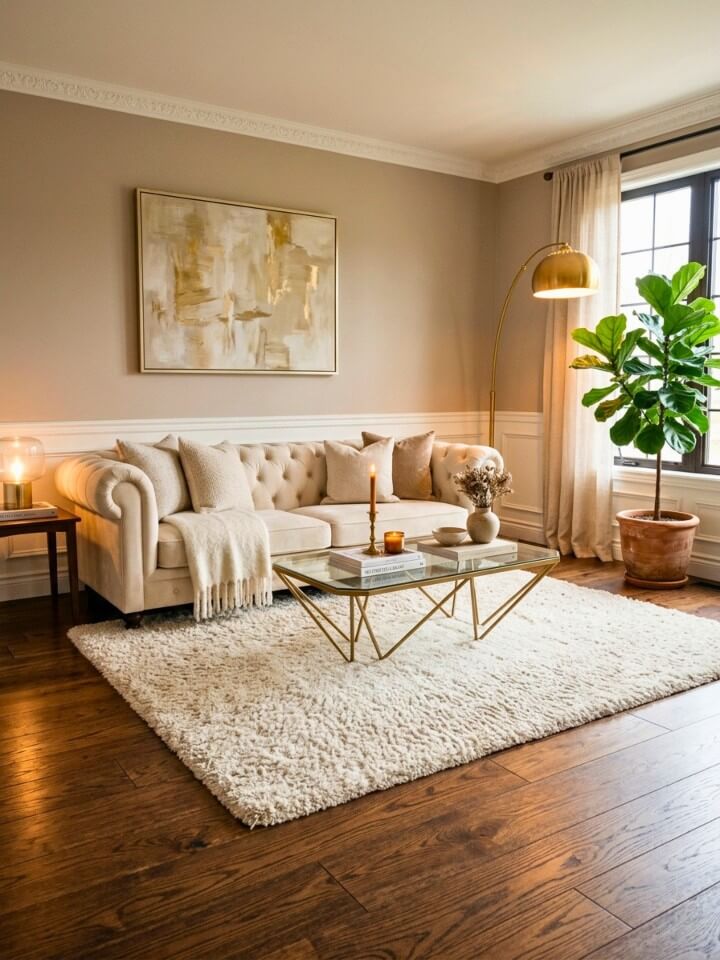
Few floors carry quiet confidence the way dark brown hardwood does. The grain alone adds texture — each plank tells a slightly different story without needing help from the room around it.
Pair with warm whites or cream walls — yellow or beige undertones complement the wood best. Cool whites create a flat, disconnected feel. Test samples in your actual room; morning and evening light tell completely different stories.
For furniture, go lighter: linen sofas, pale oak side tables, soft gray upholstery. An 8×10 rug grounds the seating area. Use warm bulbs between 2700K–3000K to draw out the wood’s reddish undertones. Felt pads under every furniture leg are non-negotiable — dark floors show scratches visibly.
2. Contemporary Contrast with Dark Floors
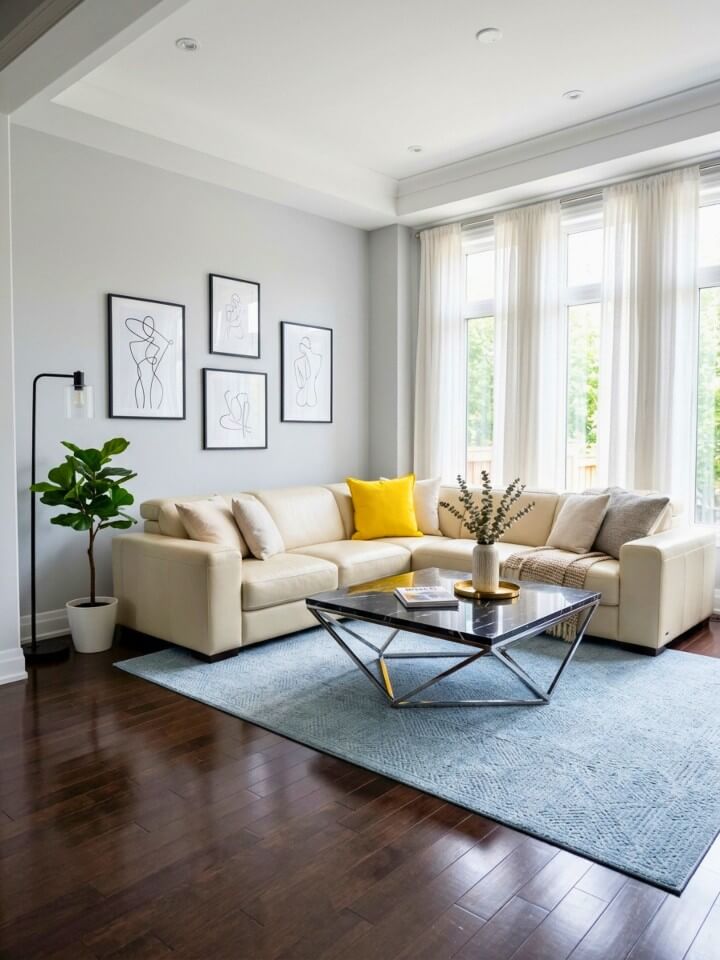
The moment a cream sofa meets a dark brown floor, everything snaps into focus. That contrast is the engine of contemporary design — and the floor does most of the work.
Keep walls light and uncluttered: light gray or warm white gives the room breathing room without competing. Stick to three colors total — floor, walls, and one accent tone carried through cushions or a throw.
Choose furniture with clean lines. A glass or white-top coffee table keeps the center visually open. Avoid heavy skirts or carved legs entirely. One large canvas on the main wall creates a focal point — scale matters here. A small frame on a large wall simply disappears.
3. Rustic Warmth Done Right
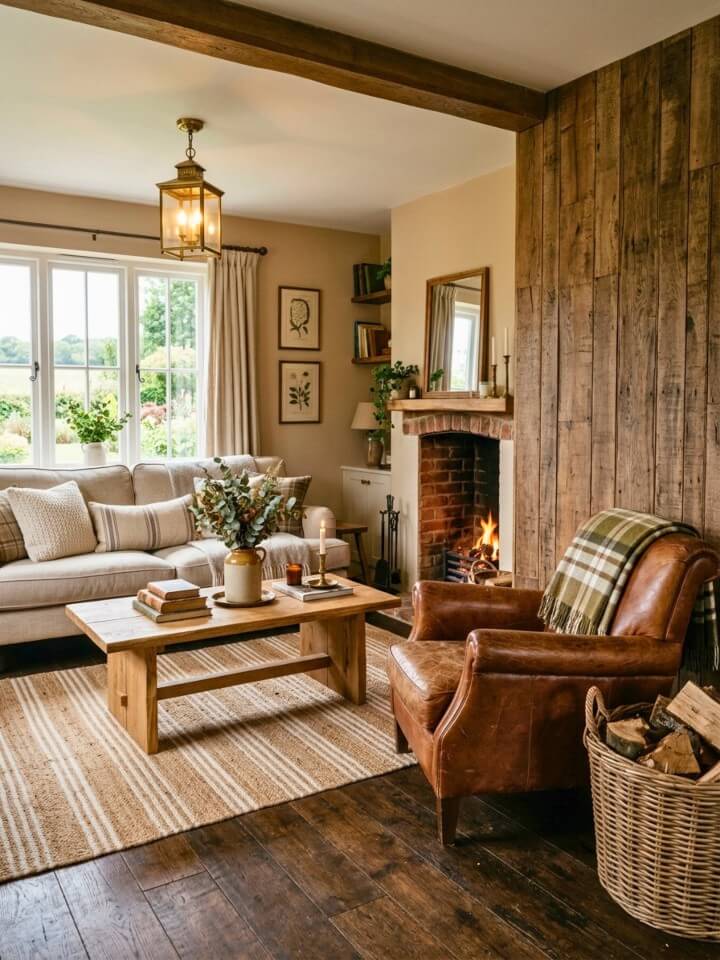
Natural materials and dark floors don’t need styling tricks — they do the work themselves. Leather ages beautifully alongside dark hardwood; both develop character over time.
Stay earthy with color: warm beige, muted olive, and burnt sienna sit comfortably together. Bright whites break the cohesion that makes rustic spaces feel so settled — avoid them here. A kilim or tribal-pattern rug adds visual warmth and softens the floor without feeling forced.
For furniture, thrift stores and antique markets often yield more authentic pieces than anything bought new. Slight variation between pieces is what separates a genuinely rustic room from a staged one.
4. Layered Textures for a Luxurious Feel
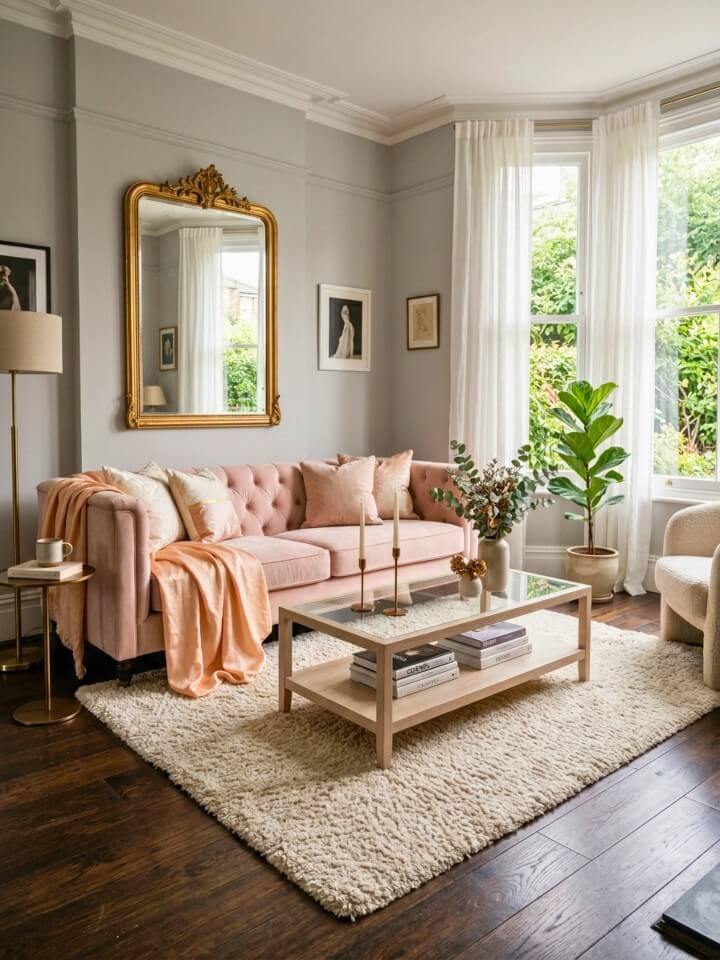
Some rooms feel rich before you notice why. Usually, texture is doing that work — not color, not price.
Start with a thick wool rug, then layer a smaller flat-weave over it for depth without color noise. For upholstery, velvet in warm taupe or dusty rose adds sheen without brightness; linen cushions beside it contrast in texture, not tone.
Hang curtains ceiling-height in off-white linen — floor-length always reads more intentional. Finish with a brass lamp, a ceramic bowl, a woven throw. The mistake most people make is adding everything at once. Start with the rug and sofa, then add one element at a time.
5. Minimalist Modern Living with Dark Floors
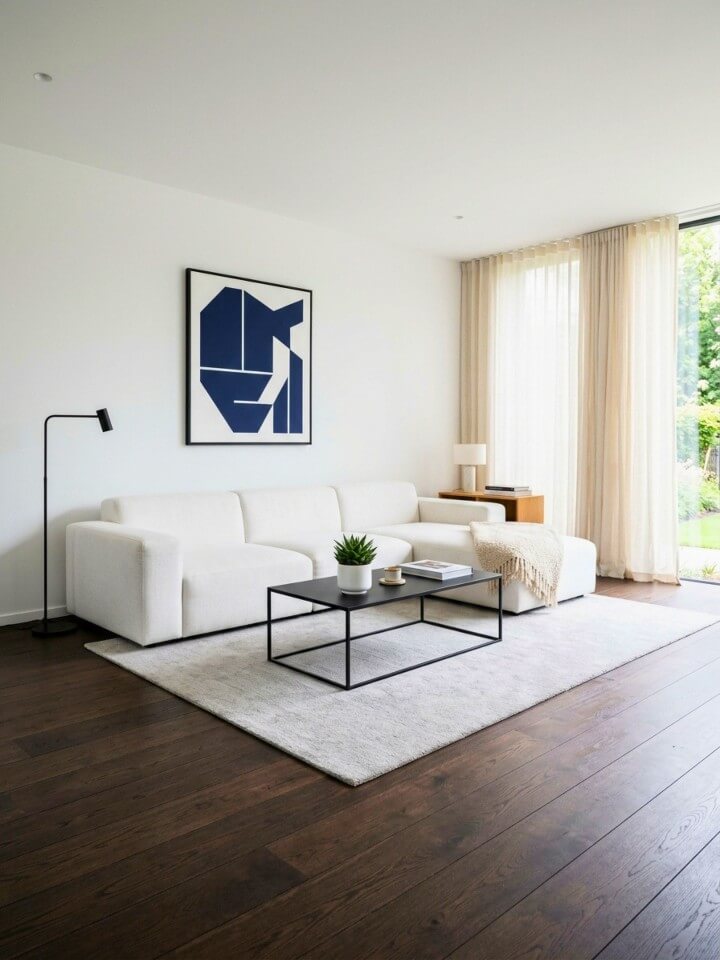
White walls do something precise in this style — they extend the space visually while letting the floor claim all the visual weight. The contrast alone means the room needs very little else.
Each furniture piece sits against the floor like a gallery object. Keep it that way: avoid small decorative items. One ceramic vase reads as intentional; three objects in a row reads as uncertainty.
Choose a single low-pile rug in mid-tone gray or warm beige — subtle texture only. Natural light is essential here. Sheer curtains or bare windows prevent heaviness. Minimalism is about editing, not adding — the real question is what you’re willing to remove. For smaller spaces where editing matters even more, these adorable small bedroom dresser ideas show how storage and scale can work together without visual clutter.
6. Earthy Bohemian Vibes
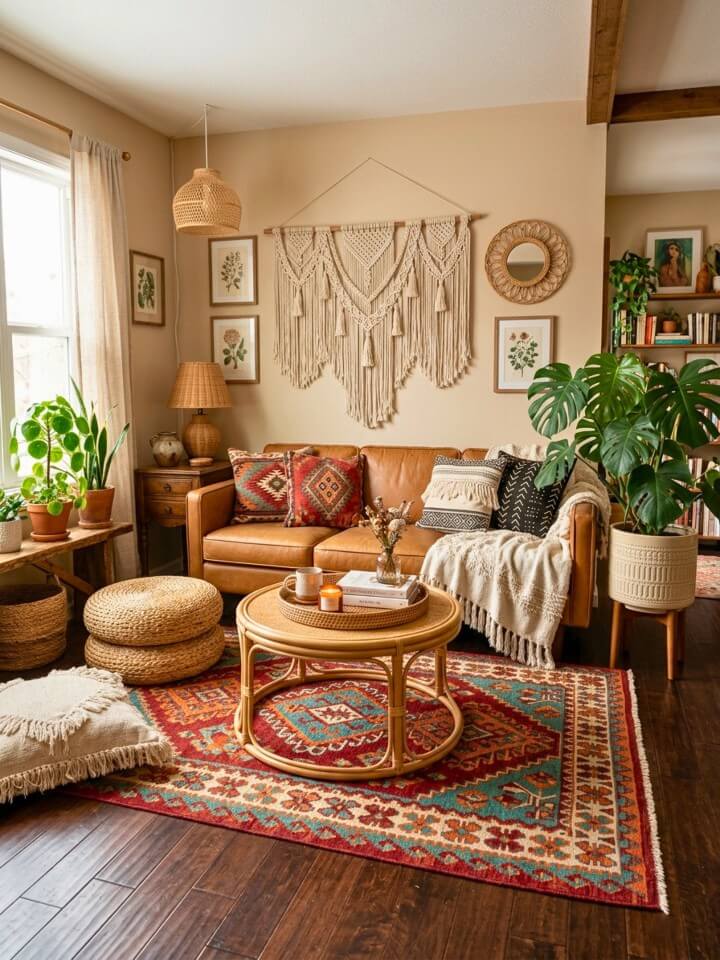
Without a grounded base, layered bohemian styling tips into clutter fast. That’s where dark floors earn their place — as the stable anchor beneath everything else.
Natural materials work best near the floor: rattan chairs, jute rugs, low wooden furniture all connect visually to the wood beneath. For pattern mixing, vary the scale — a large geometric rug beneath smaller patterned cushions works because the eye reads them at different distances.
Pick one warm dominant color — terracotta, saffron, or deep teal — and repeat it in at least three places. Start with the rug, one key furniture piece, and one wall element. The room will tell you what it still needs.
7. Classic Monochrome Harmony
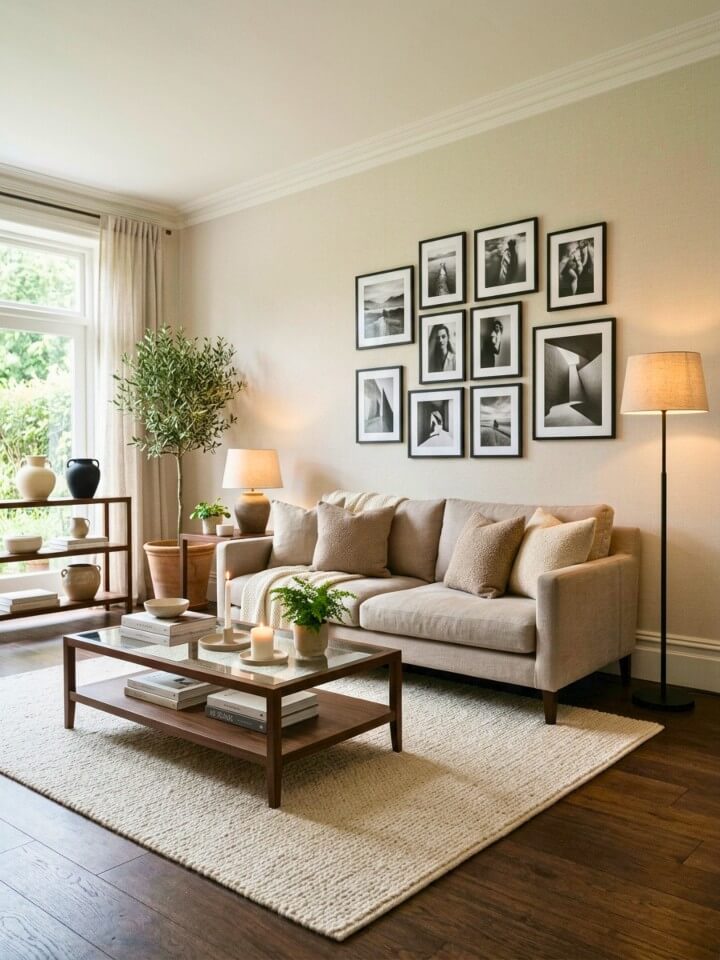
Staying within one tonal family — beige, taupe, cream, warm white — doesn’t mean boring. It means letting texture create the interest that color normally provides.
The floor sits at the deep end of that tonal range and gives the palette its anchor. Without it, an all-neutral room feels washed out and directionless. With it, the palette has somewhere to start.
A rough linen sofa beside a smooth ceramic lamp beside a chunky knit throw — each surface catches light differently. Matte and sheen work particularly well together here. One carefully chosen accent prevents sterility: a dark green plant, a piece of warm art. It shouldn’t dominate — just make you pause for a moment, then move on.
8. Warm Industrial Loft Style
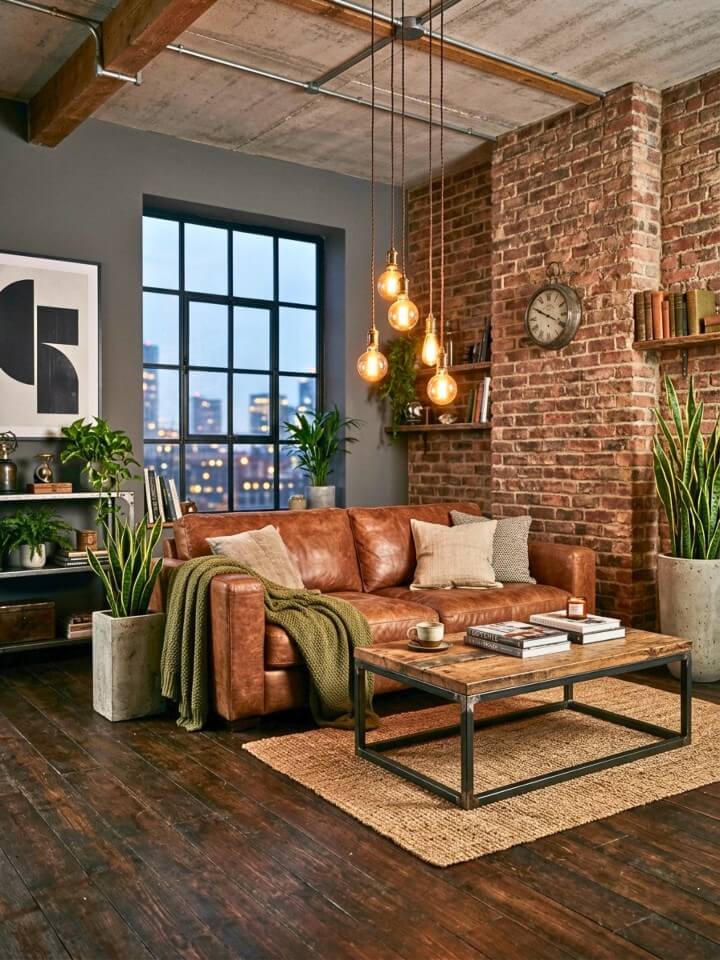
Honest use of materials — showing what things are made of rather than hiding it — is what industrial style is actually about. It isn’t about making a home feel like a warehouse.
Hardwood brings unexpected warmth to this aesthetic. Wood and brick share something: both are natural, aged materials that coexist without either pretending to be something it isn’t. The core material trio is leather, metal, and reclaimed wood. Edison-style bulbs in warm tones reinforce the palette without overpowering it.
Comfort is the practical challenge. A large wool rug warms the floor immediately. A soft throw over the leather sofa adds livability without visual contradiction. Raw materials look strong — soft elements make them worth living with.
9. Scandinavian Simplicity on a Dark Brown Floor Living Room
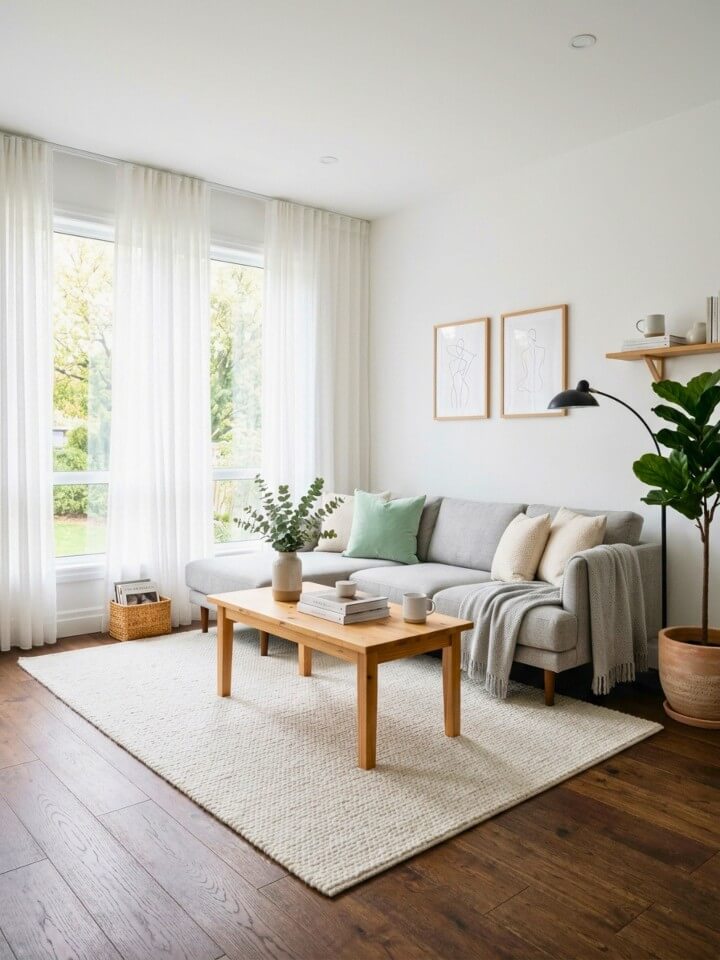
Scandinavian design developed in a climate with very little natural light. Every principle in it — light walls, minimal furniture, natural materials — exists to make the most of what light there is.
Against white walls and pale wood furniture, a deep floor creates contrast that makes the room feel more spacious, not less. The eye reads boundaries more clearly. There’s always warmth in these interiors too — through wood, textiles, muted color. The floor provides exactly that without adding visual complexity.
Every piece should justify its place. One large-leaf plant in a simple ceramic pot adds organic shape without disrupting the calm. Keep window treatments light — the floor needs daylight to show its best qualities. For a brighter seasonal version of this look, beautiful spring home decor ideas can help you add freshness without crowding the room.
10. Glamorous Entertaining Space
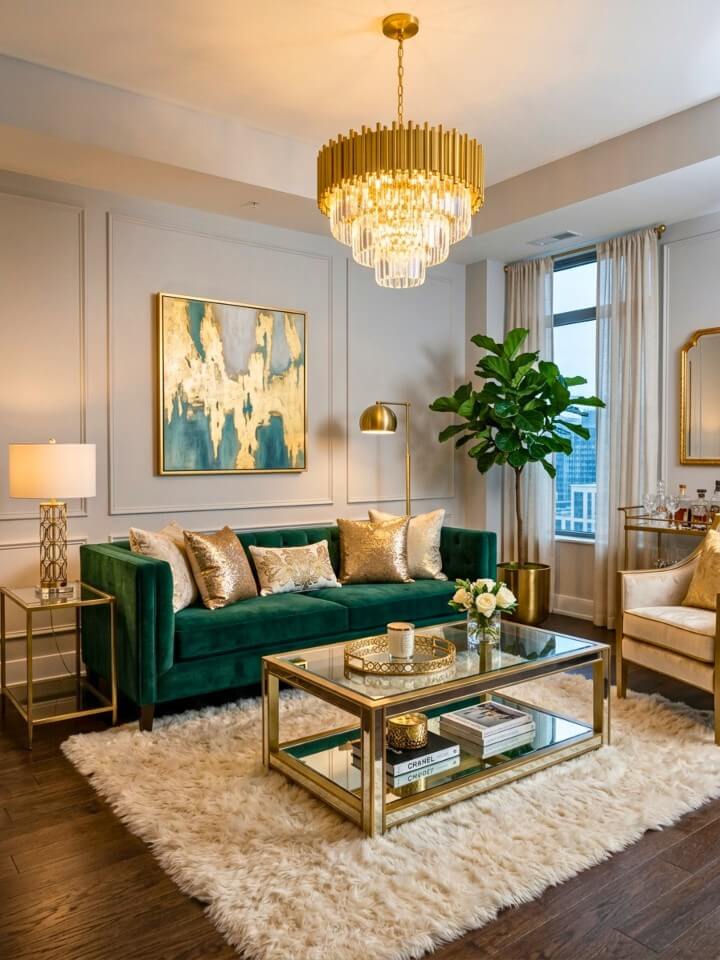
A room built for entertaining needs to perform — feel special when guests arrive, and hold up through an evening of actual use. The floor sets that tone before anyone sits down.
Rich, deep hardwood absorbs light rather than reflects it, creating a moodier atmosphere than pale floors allow. Velvet sofas in jewel tones — navy, emerald, burgundy — sit beautifully against it. Mirrored side tables add reflected light without lightening the palette.
Arrange seating in two or three conversation zones rather than one large circle. For lighting: a chandelier on a dimmer, wall sconces at eye height, candles on the coffee table. Overhead lighting alone kills atmosphere. Layered light sources create the quality that makes a room feel like an occasion.
11. Coastal-Inspired Comfort
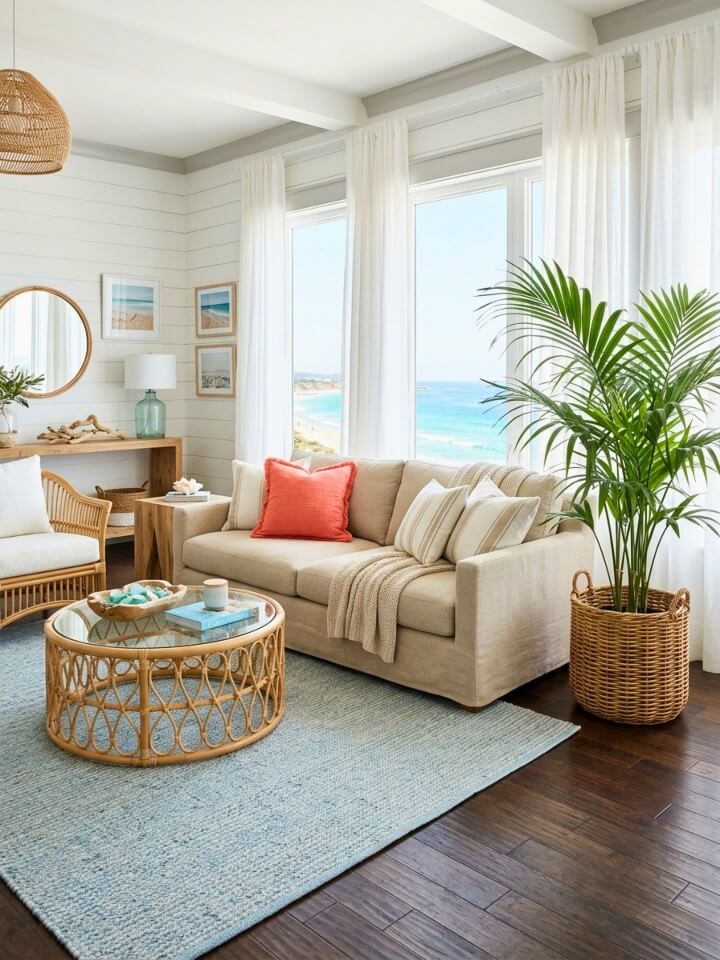
Skip the nautical clichés — rope accents, anchor motifs, shells in a bowl. The better coastal approach is subtler, and the floor is where it starts.
Soft blue, sandy beige, and warm white are the right trio. They reference the coast without illustrating it. Avoid bright navy or turquoise — those push the palette into themed territory. Natural linen or cotton furniture keeps the room airy. Wicker or rattan adds organic texture. Jute rugs sit comfortably between the floor and lighter furniture.
Sheer curtains or bare windows are non-negotiable — natural light gives coastal rooms their freshness. In a dim room, the whole aesthetic collapses.
12. Vintage Charm with Modern Touches
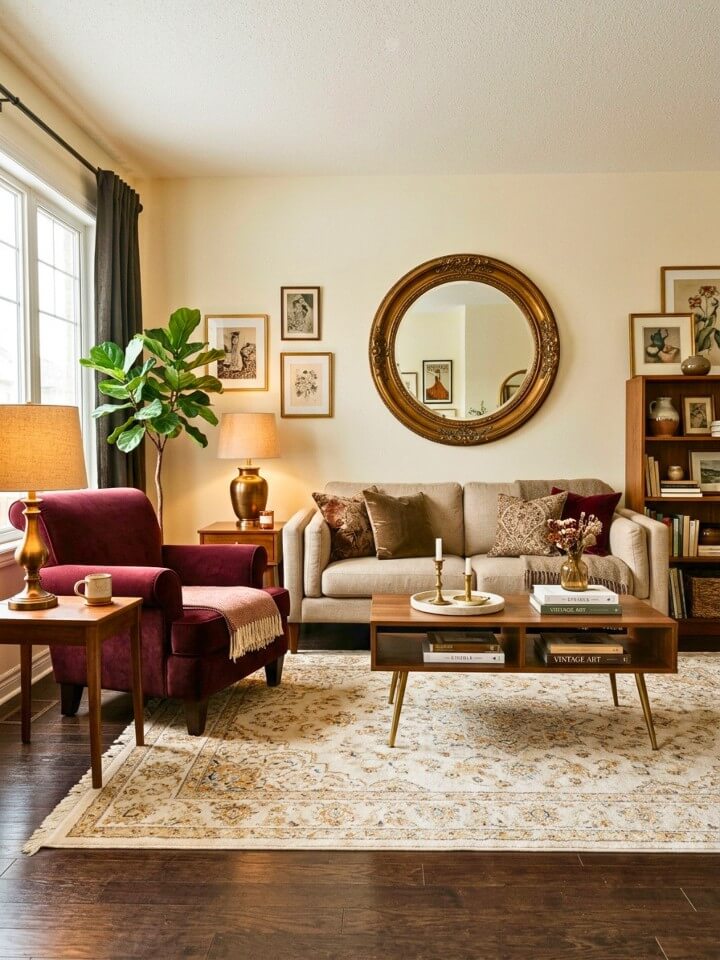
Most rooms tip too far in one direction — either a museum of old things or a space where one antique sits awkwardly among flat-pack furniture. Hardwood floors happen to bridge both worlds convincingly.
Old and new furniture both look deliberate on dark wood. The floor provides enough visual richness that neither style needs to overcompensate. Let the ratio do the work: two-thirds vintage, one-third contemporary tends to hold better than an even split.
A richly patterned vintage-style rug ties both worlds together more effectively than any other single element. Throws in dusty rose, aged gold, or muted sage echo the vintage pieces without replicating them. The effect should feel collected over time, not assembled in an afternoon.
13. Urban Chic Minimalism
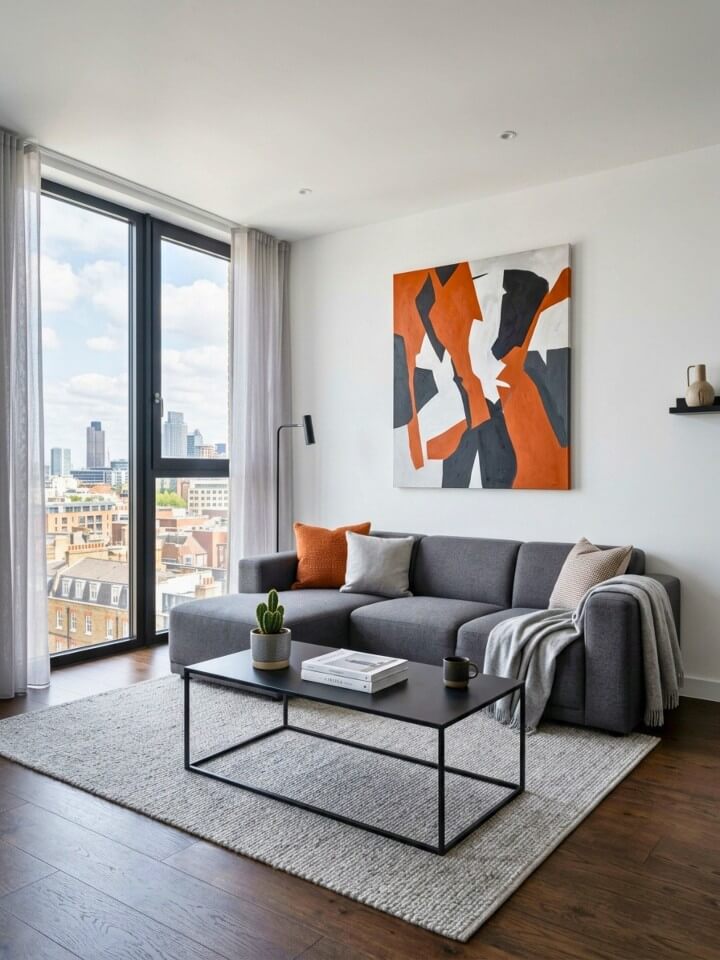
Sharper than Scandinavian, cooler than industrial — urban chic runs on clean edges, harder surfaces, and deliberate tension between comfort and restraint. The floor is often the only element with genuine warmth.
That warmth is what prevents white walls and sparse furniture from feeling clinical. It also absorbs light in a way pale floors don’t, creating a moodier, more intentional atmosphere. One sofa, one coffee table, one side table — often genuinely enough. Hidden storage reduces the need for additional pieces.
Metal and glass accents suit this style better than wood accessories. Large-scale abstract art on the main wall provides the focal point. The room should feel built around it.
14. Cozy Cabin Retreat
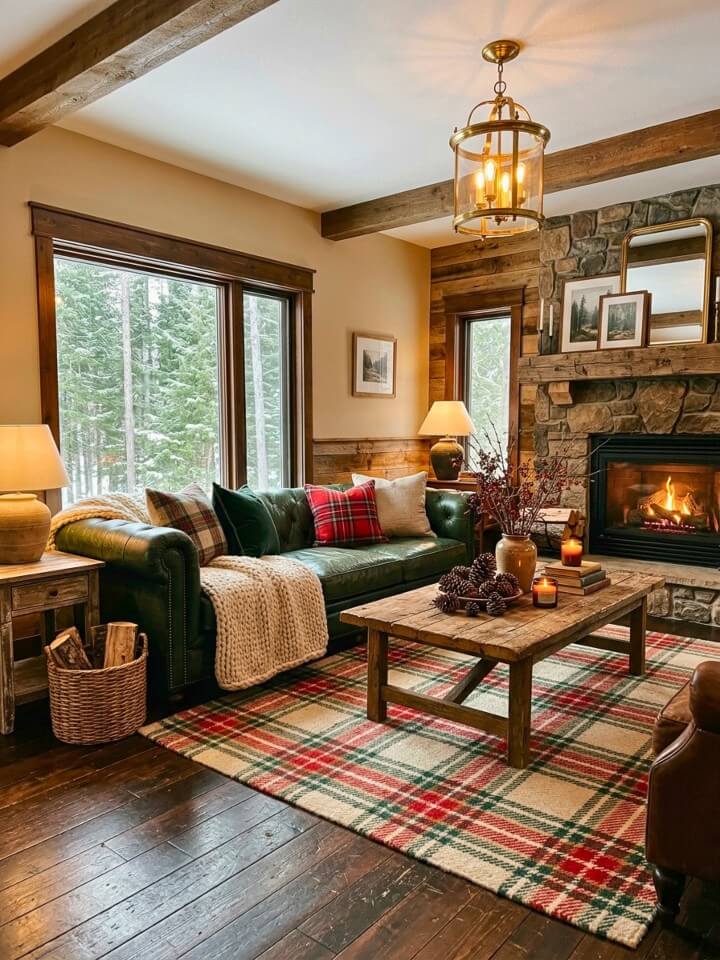
Before a single piece of furniture is in place, the floor is already doing its job — communicating warmth at a level that’s more psychological than visual.
Build on that foundation with chunky wool rugs, knitted throws, and cushions in deep earthy tones. Choose overstuffed sofas in warm neutrals over sleek low-profile designs. Solid wood coffee tables, linen armchairs, rough-hewn side tables — these communicate comfort without trying too hard. Avoid anything that looks too new or too perfect.
For lighting, layer table lamps, candles, and firelight rather than relying on overhead fixtures. The floor absorbs overhead light and reflects warmer, lower-level sources — that shift is what makes the room transform at evening.
15. Artistic Expression Zone
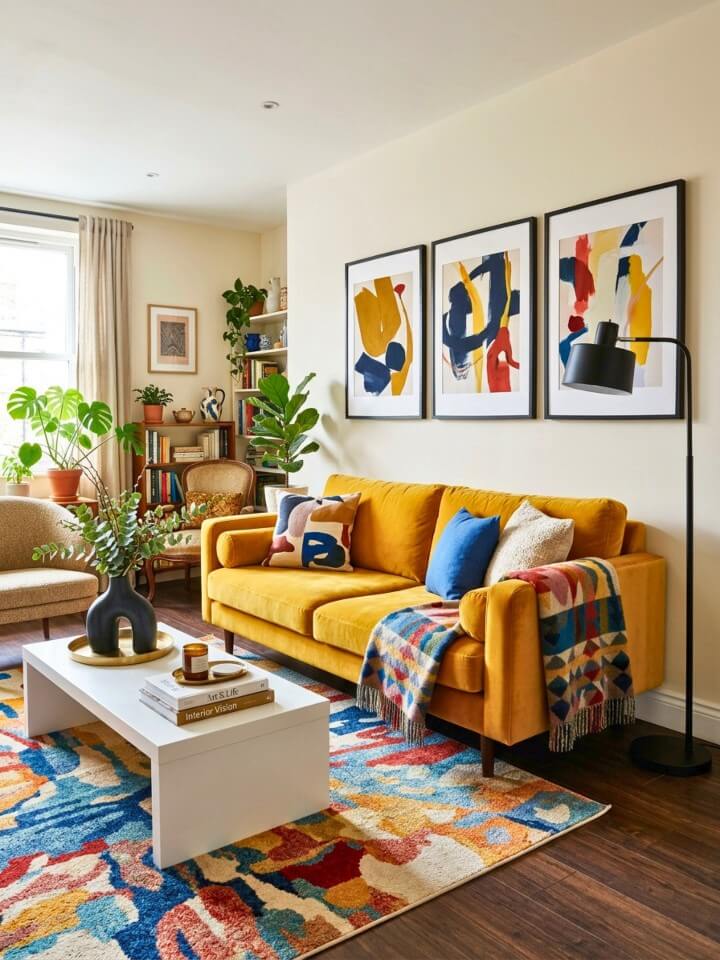
A room built for personal expression operates by different rules. Cohesion matters less than conviction — and the floor’s job is to hold everything together without asserting itself.
Visual complexity that would overwhelm a lighter floor gets absorbed here. The weight of dark hardwood grounds even the most eclectic collection. Start with the artwork, not the furniture. Choose one or two pieces with genuine presence, then select furniture that creates space for them rather than competing.
Pick one color from the artwork and repeat it in at least two other places — a cushion, a ceramic piece, a plant pot. That repetition creates cohesion without matching. The room reads as intentional rather than accidental.
16. Modern Farmhouse Dark Brown Floor Living Room
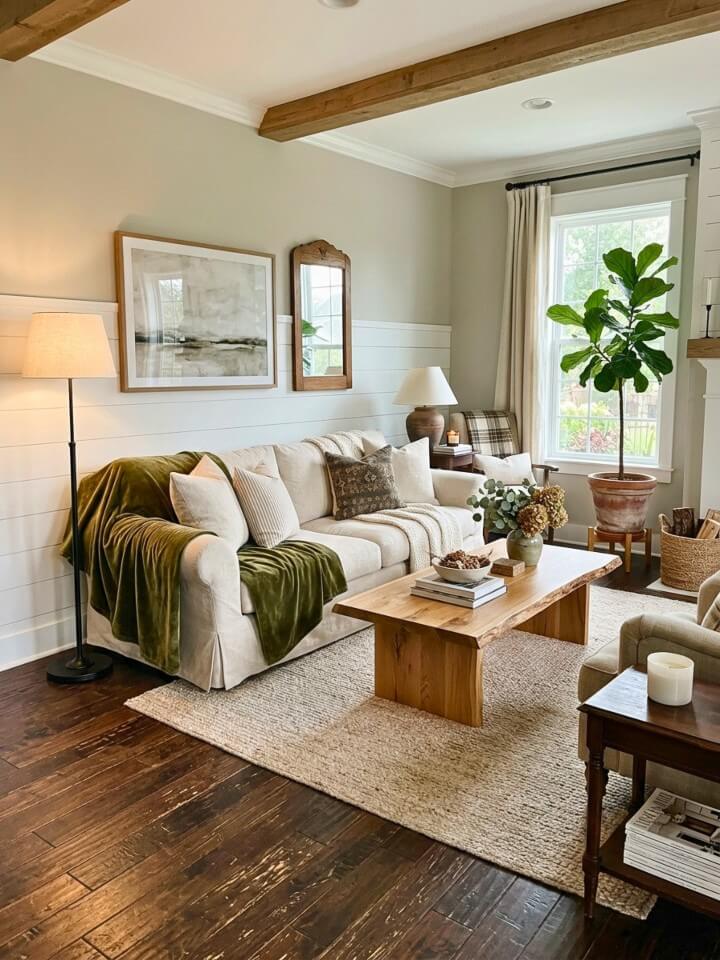
At its worst, this style is shiplap and a word on the wall. At its best, it’s a warm, functional interior where restraint and character coexist — and the floor is where that balance begins.
White or off-white walls reflect light and contrast cleanly with the wood. Choose sturdy, simple furniture: a slipcovered linen sofa, a solid wood coffee table with visible grain, open shelving with a curated mix of functional and decorative objects.
Two or three well-chosen accessories — woven baskets, ceramic vessels, vintage textiles — add character without tipping into theme. The rooms that work best look genuinely used: a throw left on the sofa, books stacked unevenly. That slight imperfection is the design.
17. Sleek Black-and-White Contrast
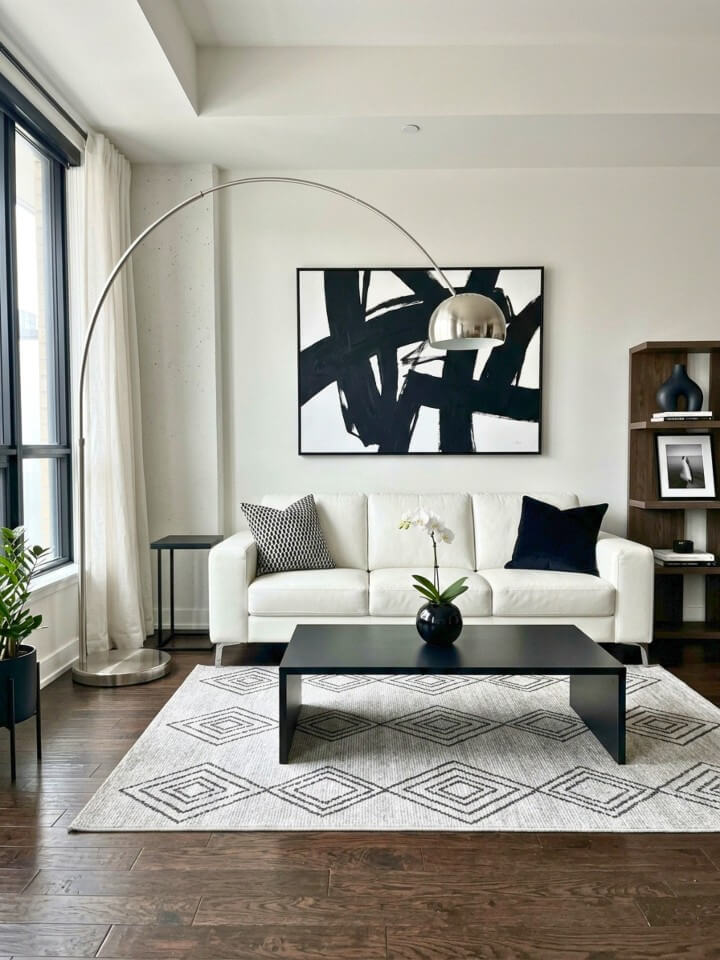
A strictly monochrome room can feel like a concept rather than a home — too intentional, slightly uncomfortable to be in. Wood grain, natural variation, and warm undertones fix that.
The floor reads as dark without being black, and that distinction matters more than it seems. Rather than committing entirely to one tone per element, mix: a cream sofa with black cushions, a white rug with a dark geometric border. Geometric patterns add energy without introducing color.
With only two tones available, texture becomes the primary design variable — matte walls beside glossy side tables, rough linen beside smooth ceramics. The floor’s grain adds depth that a flat surface simply cannot.
18. Tropical Oasis at Home
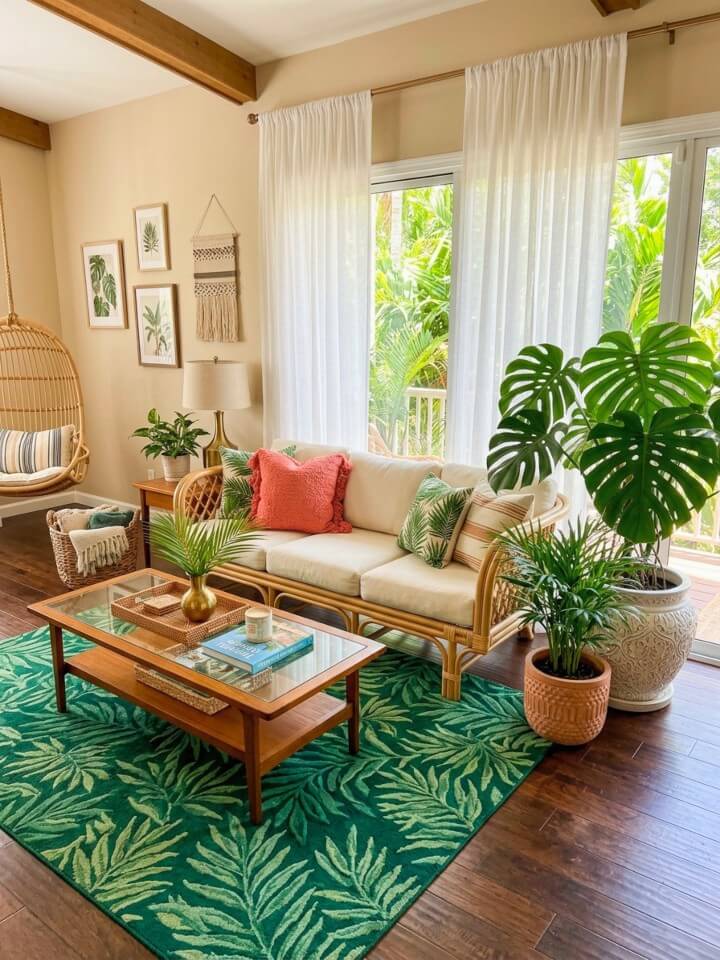
Plants are structural elements here, not accessories. A large fiddle-leaf fig or bird of paradise anchors the room the way a sofa would. Trailing plants on shelves, clusters near windows — layering green at different heights creates the density that defines the style.
Against deep brown wood, vivid green foliage creates one of the most naturally satisfying color combinations in any interior. Choose rattan, cane, and natural wood furniture over upholstered pieces — they breathe visually. Keep fabrics simple: natural cotton or linen in warm white or sand.
For color beyond green, use terracotta, mustard, or coral in small doses — a cushion, a pot, a throw. One accent color repeated in three places is enough.
19. Elegant Minimalist Neutrals in a Dark Brown Floor Living Room
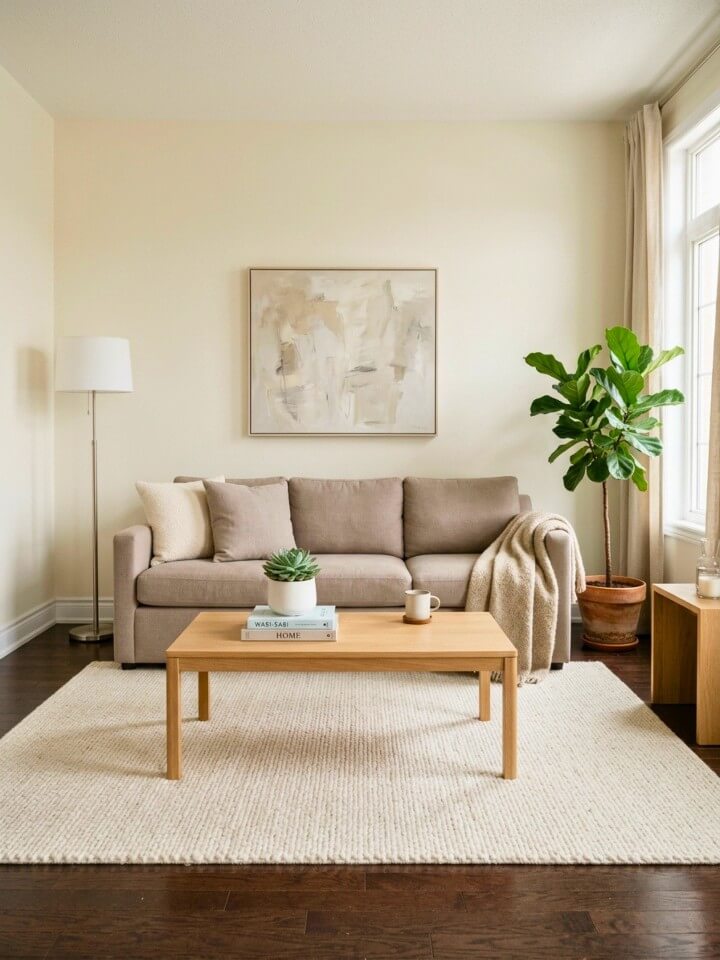
Three distinct tonal values — deep floor, mid-tone furniture, light walls — give the eye somewhere to travel without introducing color. Most neutral rooms fail by compressing those values until everything flattens. The floor prevents that.
Layer within the palette: a cream sofa with a taupe throw, a jute rug beneath a lighter wool one, linen curtains beside a matte ceramic lamp. Metallic accents — brass lamp base, copper bowl — add dimension without color.
The floor also stabilizes warmth as light shifts throughout the day. Morning reads warmer, afternoon reads cooler — the wood stays constant when the rest of the palette would otherwise drift.
20. Warm Metallic Accents That Complement Deep Wood Tones
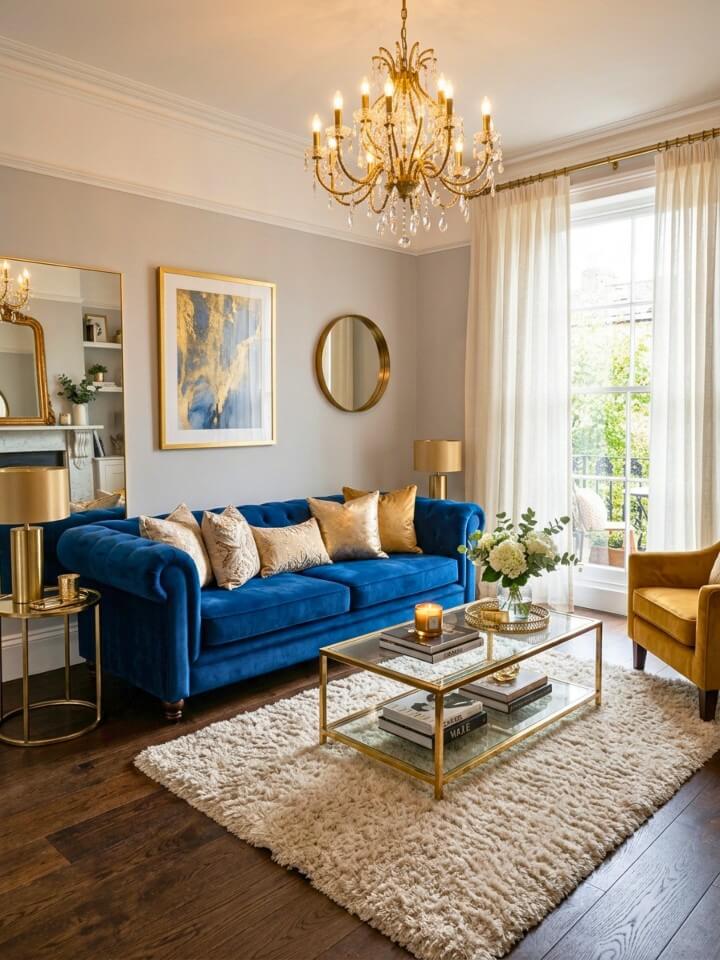
Gold, brass, and bronze share undertones with dark brown hardwood — both pull toward amber and red rather than blue and gray. That tonal alignment is why the combination feels natural rather than forced. Silver and chrome fight it.
Brushed finishes suit this pairing better than polished ones. Distribute metals rather than clustering them — one near the entrance, one mid-room, one near the window. Each catches light differently. This triangulation prevents any area from feeling overworked.
Balance richness with restraint. A single large neutral rug grounds everything and provides visual rest between the floor and the room’s upper half. Without it, the room risks trying too hard.
21. Vibrant Jewel Tones
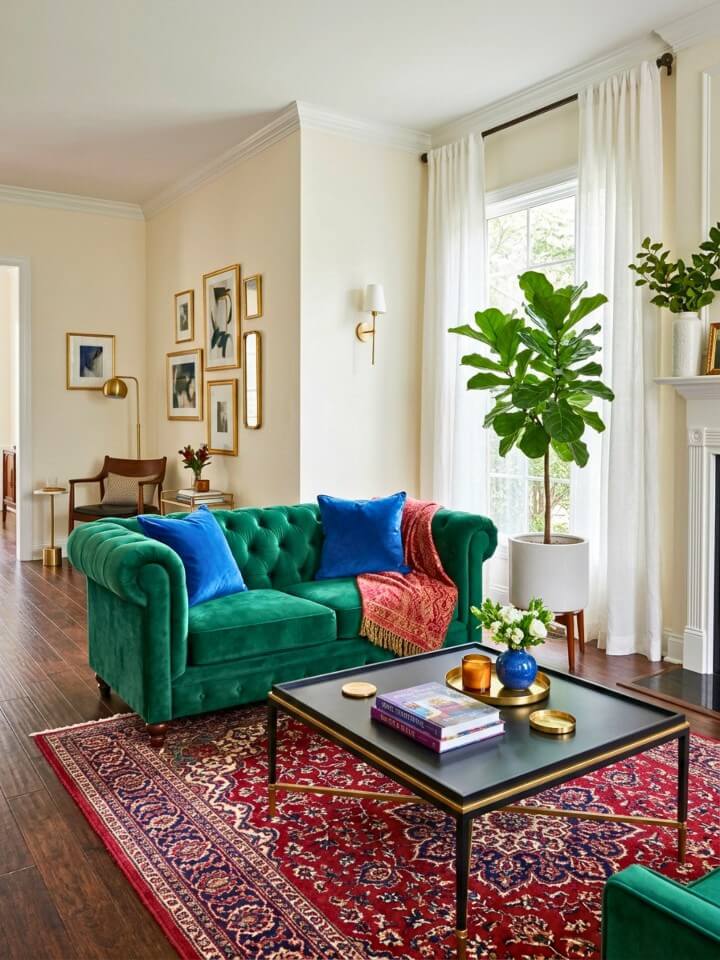
Emerald, sapphire, ruby, amethyst — jewel tones are among the most demanding colors to use. Most flooring either clashes with them or disappears beneath them. Deep hardwood does neither.
Light floors reflect jewel tones unpredictably, amplifying intensity. This floor absorbs some of that energy, letting colors read as rich rather than overwhelming. Use one jewel tone as the dominant color, one complementary secondary, and keep everything else neutral. The neutrals in between are what allow each color to register separately.
For fabric, velvet makes jewel tones extraordinary — the pile catches light at multiple angles, creating tonal variation that makes a single color appear almost luminous.
22. Minimalist Gray Accents
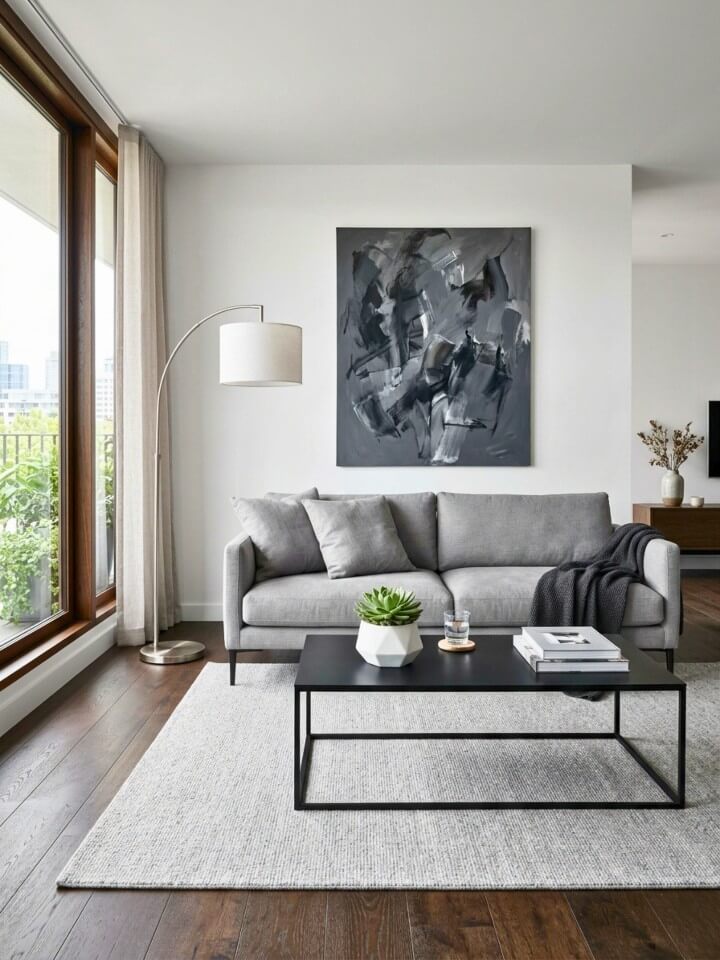
Warm grays — those with beige or purple undertones — work with dark hardwood. Cool grays with blue or green undertones fight it. Always test paint samples against the actual floor; what reads warm in a showroom can read cold against certain wood tones.
Build the palette in tonal steps: mid-warm gray sofa, slightly lighter rug, lighter still walls. That graduation prevents flatness. Natural textures — linen, wool, raw wood — add warmth gray alone can’t provide. One wooden element connects the palette back to the floor below.
Every successful gray room needs one warm anchor at eye level: a mustard cushion, terracotta pot, or warm-toned artwork. The floor provides warmth below; the accent completes it above.
23. Bold Pattern Play in a Dark Brown Floor Living Room
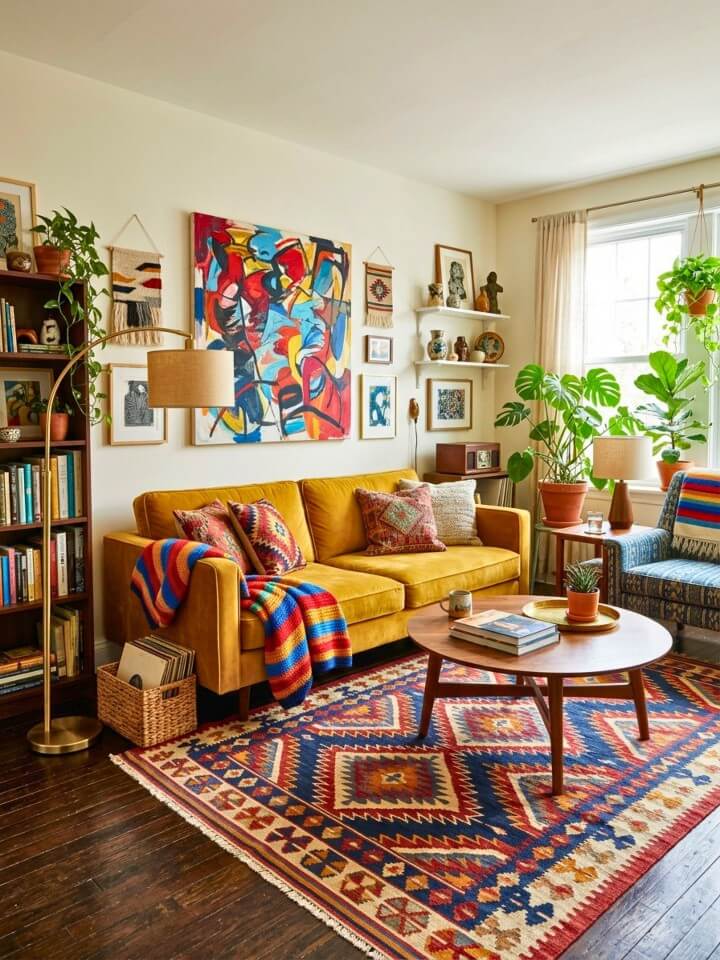
Patterns of different scales coexist. Patterns of the same scale compete. A large geometric rug beneath small-scale patterned cushions creates layered interest — the eye reads them at different distances. Three pattern scales maximum gives the room room to breathe.
Multiple patterns also need one shared color thread running through all of them. That thread is what makes a room read as intentional rather than assembled from unrelated pieces. The floor sits outside this thread without disrupting it — dark enough to recede, warm enough to support whatever palette sits above.
Keep walls plain. Warm white, soft cream, or a muted tone pulled from one of the patterns. Plain walls give the eye somewhere to recover.
24. Serene Pastel Retreat
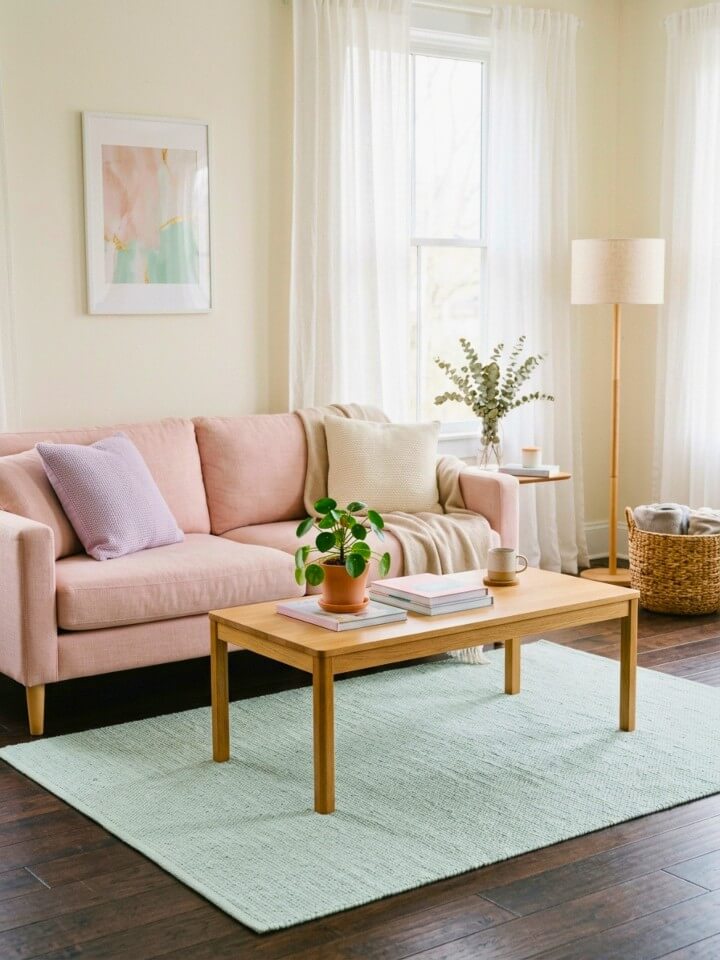
Against light floors, pastels tend to disappear — their values are already close to white. Against deep hardwood, the same colors gain definition. Blush pink reads as blush pink. Soft sage reads clearly as green. The contrast lets soft colors exist at full effect without losing their gentleness.
Material quality prevents the room from reading as childish. Pastel velvet reads as adult; cheap polyester doesn’t. One pastel sofa in good fabric beside neutral accessories reads as sophisticated. A neutral rug — off-white, warm sand, or light gray — between the floor and pastel furniture creates a tonal bridge that keeps the contrast from feeling abrupt.
25. Classic Library Elegance
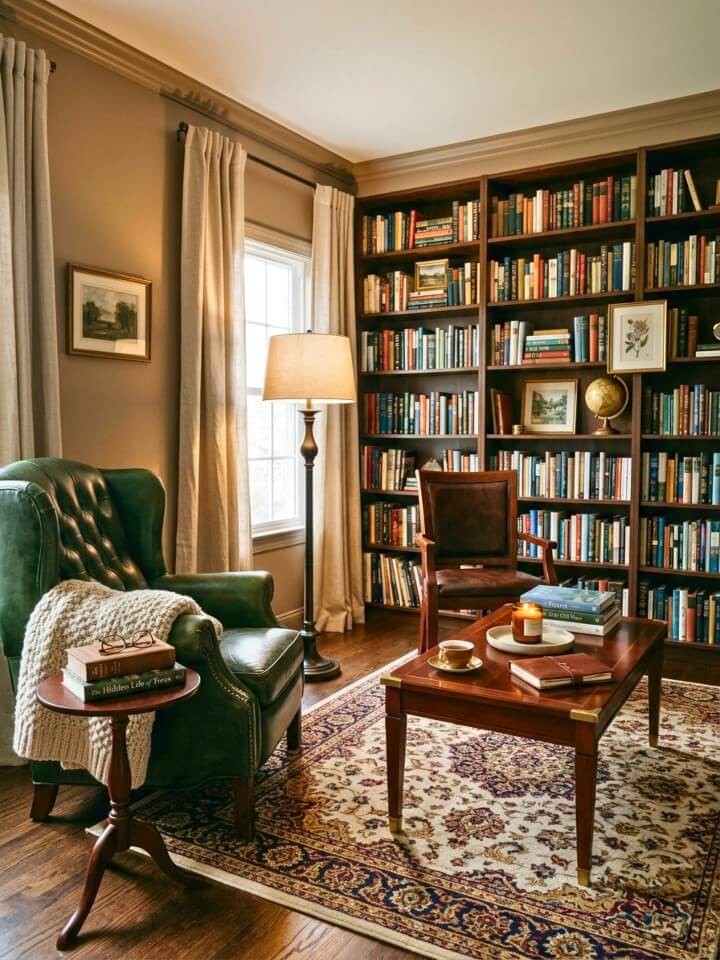
There’s a reason the most photographed library interiors almost universally feature dark floors. Warm book spines overhead and deep wood underfoot create a quality of containment — the room feels complete in a way lighter floors rarely produce.
Floor-to-ceiling shelving on even one wall establishes character immediately. Books don’t need perfect organization — slight variation with occasional objects between volumes looks more genuine. Choose leather armchairs or deep sofas in dark green, burgundy, or warm navy; these connect to the book-spine palette in a way neutrals don’t.
A Persian-style rug ties the floor to the furniture. Warm directional lighting is non-negotiable — cool overhead light destroys the atmosphere instantly.
26. Eclectic Statement Space
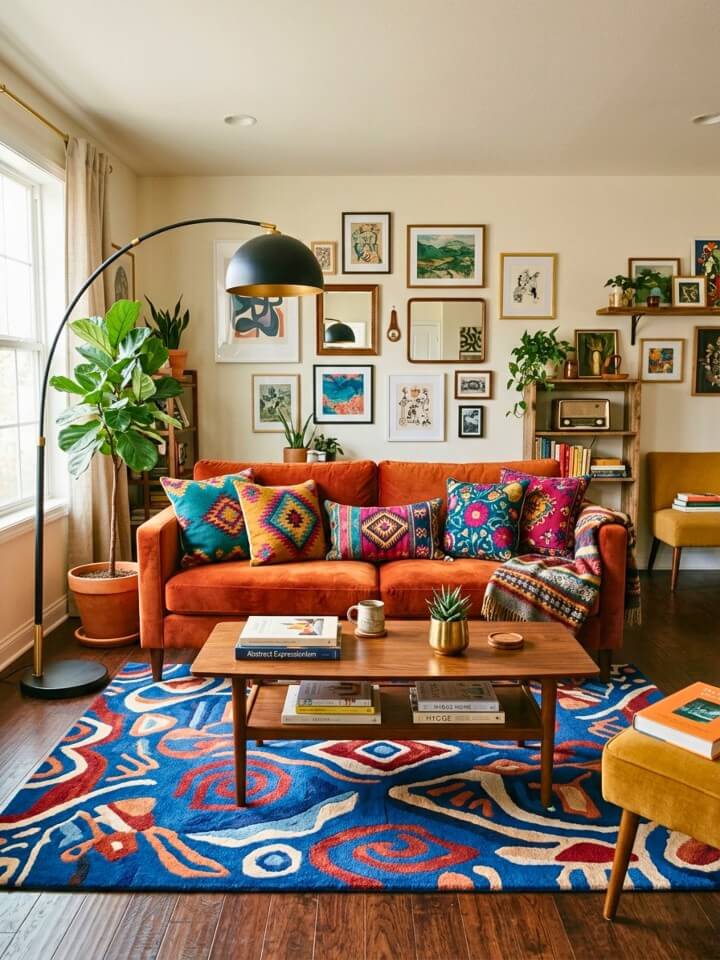
Genuine eclecticism has an internal logic, even when it isn’t immediately obvious. Everything sitting on the same floor surface creates a visual relationship by default — that shared ground is one layer of what holds an eclectic room together.
Start with one anchor piece — a sofa, rug, or significant artwork — that establishes the room’s tonal center. Everything else should relate to that anchor in at least one way: color, material, period, or scale. The relationships don’t need to be obvious. They need to exist.
The practical skill is knowing when to stop. When the room feels busy rather than layered, remove something rather than adding. The best eclectic rooms look like they could hold one more thing — but didn’t.
FAQs About Dark Brown Floor Living Rooms
Getting the details right matters as much as the big decisions. Here are the most searched questions about dark brown floor living rooms — answered honestly, without the usual decorating advice fluff.
Do Dark Brown Floors Make a Small Living Room Look Smaller?
Not necessarily. The size perception depends more on wall color and furniture scale than the floor itself. Light walls, low-profile furniture, and good natural light can make a small room with dark floors feel surprisingly open. The key is keeping the upper half of the room — walls, curtains, and furniture — consistently light and uncluttered.
What Paint Colors Work Best With Dark Brown Hardwood Floors?
Warm whites, soft creams, and light greiges work best. Look for paint shades with yellow or beige undertones rather than cool blue-based whites. Colors like warm ivory, oat, and pale taupe complement dark hardwood without creating harsh contrast. Always test paint samples directly against your floor in both natural and artificial lighting before making a final decision.
How Do You Keep Dark Brown Floors From Showing Too Much Dust and Scratches?
Dark floors show dust and fine scratches more visibly than lighter options. A matte or satin finish hides surface scratches better than high-gloss. Regular dry mopping with a microfiber cloth controls dust effectively. Felt pads under all furniture legs prevent scratching. In high-traffic areas, a well-placed rug does more protective work than any floor treatment alone.
Can Dark Brown Floors Work in a Living Room With Low Natural Light?
Yes — with the right approach. Avoid dark wall colors entirely. Stick to warm whites and add layered artificial lighting — floor lamps, table lamps, and wall sconces at different heights. Mirrors placed opposite windows amplify whatever natural light exists. The goal is compensating with warm artificial light rather than fighting the floor’s natural depth.
Should Area Rugs Match or Contrast With Dark Brown Floors?
Contrast works better than matching. A rug too close in tone to the floor disappears visually and loses its purpose. Light neutrals — cream, warm gray, soft beige — define the seating area clearly. Patterned rugs work well too, provided they contain at least one light or mid-tone color. Size matters equally — too small a rug makes the seating arrangement look unanchored.
Conclusion:
Dark brown floors don’t ask for much. Give them the right light, a few considered pieces, and some breathing room — they handle the rest. The dark brown floor living room ideas in this guide aren’t rules. They’re starting points. Your living room doesn’t need to look like anyone else’s version of beautiful. It just needs to feel like yours.
One thing every room on this list shares — the floor was never the problem. It was always the foundation. Stop working around your dark floors and start working with them. That single shift in thinking changes everything about how a room comes together.