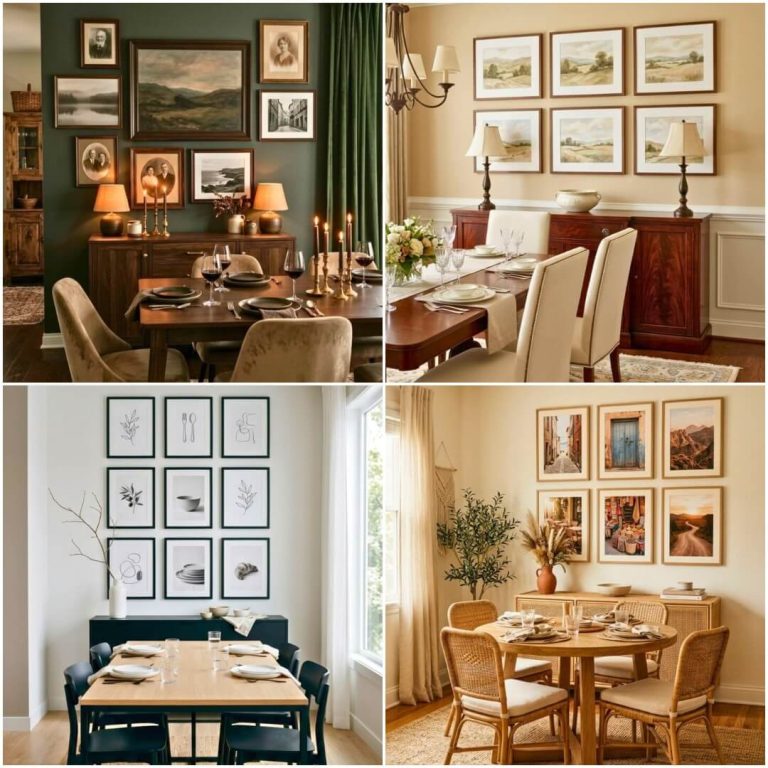
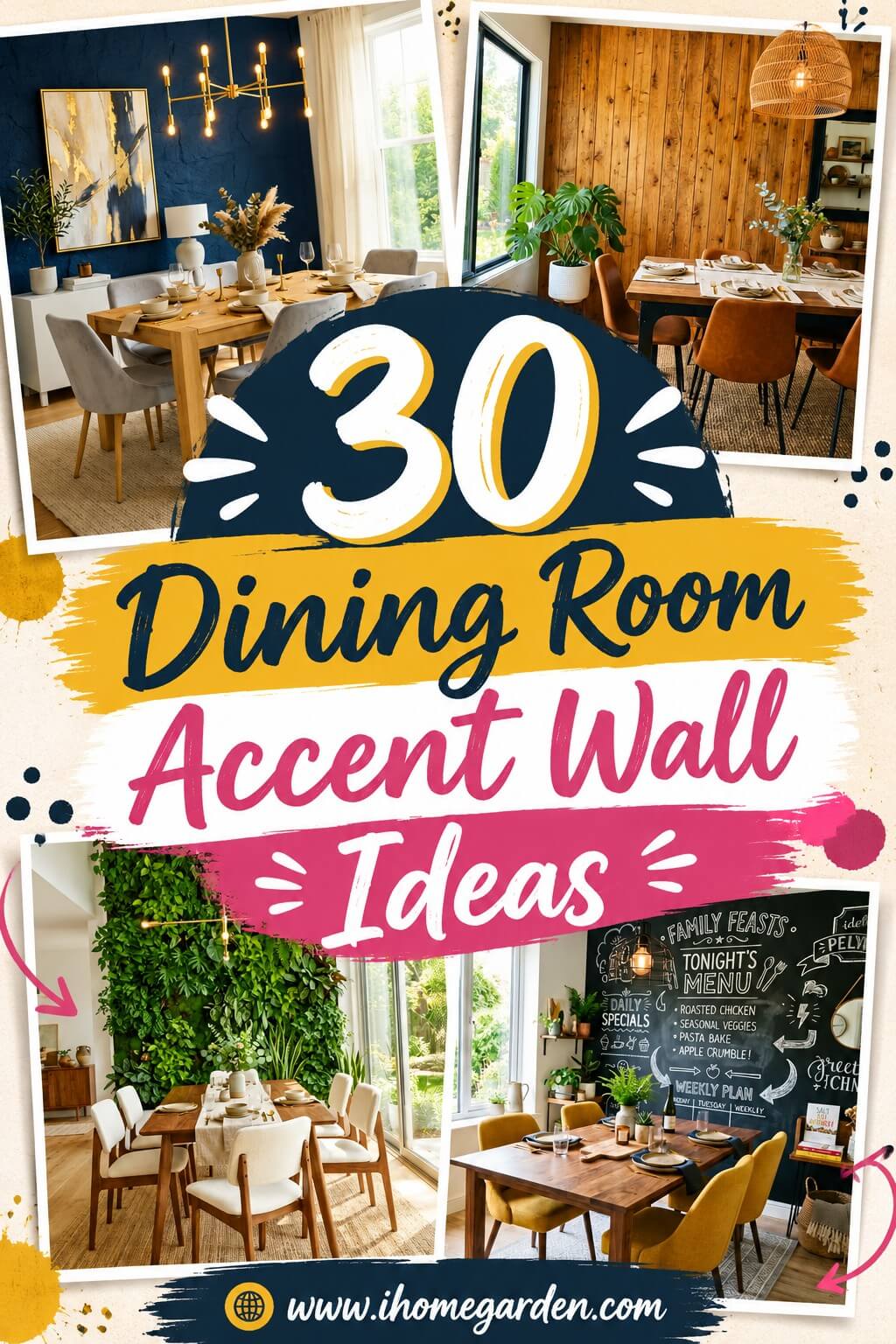
30 Dining Room Accent Wall Ideas That Look Expensive (But Aren’t)
The wall behind your dining table works harder than any other surface in your home. People stare at it for an hour at a time, three times a day, while they eat, talk, and scroll through their phones. A blank one is a missed opportunity, which is exactly why I pulled together these 30 eye-opening dining room accent wall ideas after redoing my own four times and helping friends avoid the mistakes I made along the way. Some of these cost under fifty bucks and a Saturday afternoon. Others run into four figures and need a contractor. A few are renter-friendly. A handful are dramatic enough that your in-laws will mention them every visit for the next decade.
1. Deep Navy or Forest Green Paint Wall
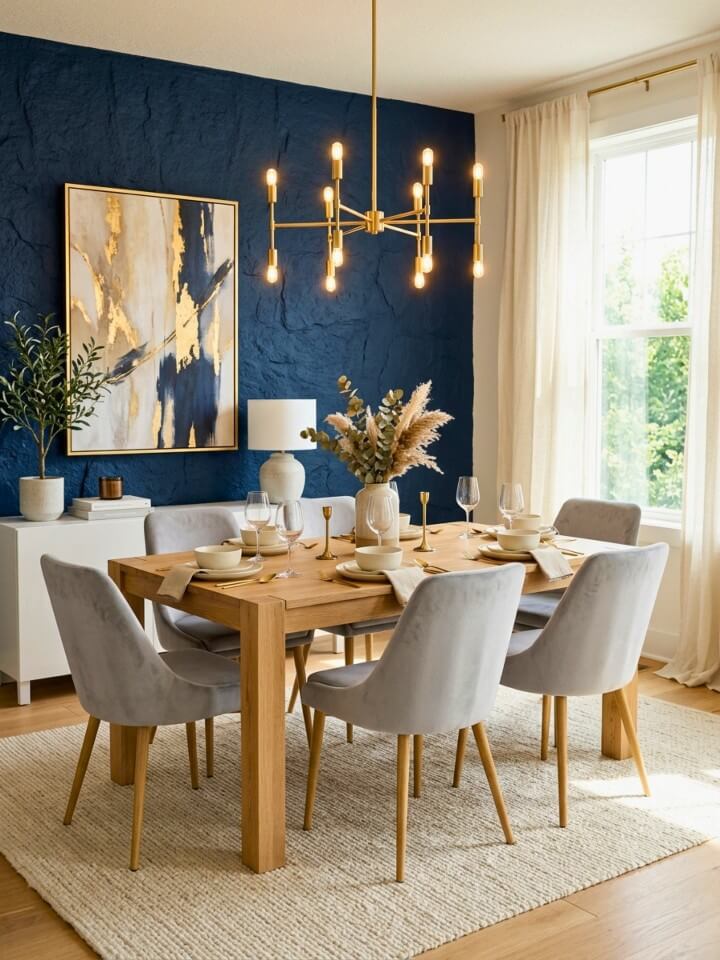
A saturated dark wall is the cheapest way to make a dining room feel intentional instead of accidental. My pick after testing seven samples was Benjamin Moore Hale Navy, but Sherwin-Williams Pewter Green and Farrow & Ball Studio Green pull off the same trick.
The Sample-Pot Rule Nobody Tells You
Buy the $8 sample. Paint a 2-foot square. Then look at it three times — morning, noon, and after dark with your overhead light on. Navy especially shifts almost black under warm 2700K bulbs, which surprises people. Total cost runs $40–$90 for a single wall using one gallon plus a quart of primer.
2. Grasscloth Wallpaper for Quiet Texture
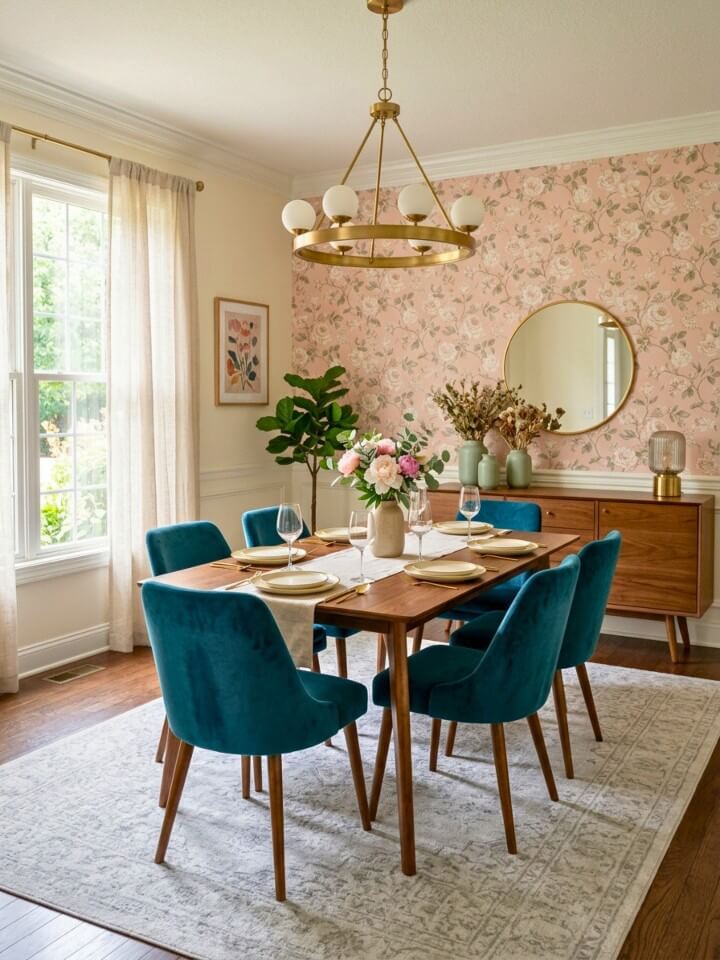
Flat paint photographs well but feels lifeless in person. Grasscloth — woven sisal, jute, or hemp on a paper backing — catches candlelight in a way paint never will.
Heads up: Grasscloth shows seams. Every single one. If that bothers you, you’ll hate it. If you read it as “handmade character,” you’ll love it.
York Wallcoverings and Phillip Jeffries are the industry standards. Renters should look at Spoonflower’s peel-and-stick versions for around $5 per square foot. A professionally hung accent wall runs $400–$900 depending on square footage and pattern match. DIY drops that to roughly $150–$250 in materials but expect a full Saturday and some salty language.
3. Shiplap — Without the Farmhouse Cliché
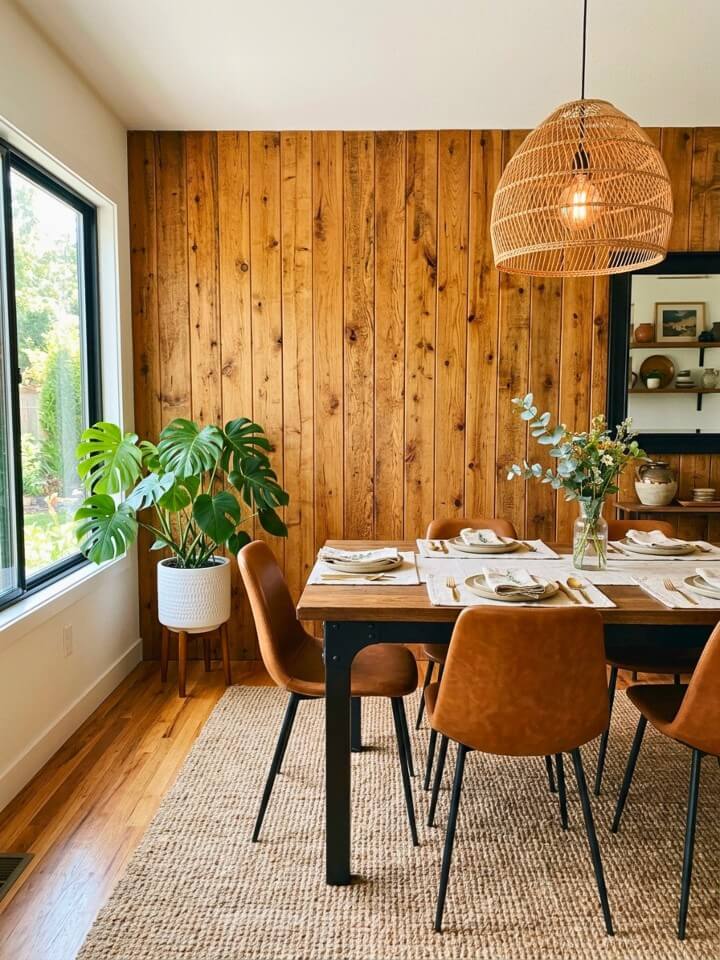
Explore fresh dining room accent wall ideas with real pricing, honest tips, and styles for every home. Shiplap got branded as a Joanna Gaines thing, but painted in something other than white it stops reading farmhouse and starts reading architectural. Charcoal shiplap behind a walnut table is genuinely striking.
- Materials for a 10-foot wall: roughly $120–$180 in primed pine boards from a big-box store, plus $25 in nails and caulk.
- Skills needed: A miter saw helps but isn’t required. A jigsaw and patience work fine.
- Skip it if: Your walls aren’t reasonably flat. Shiplap exaggerates every bow and dip, and you’ll see the gaps from across the room.
4. Limewash for Old-World Depth
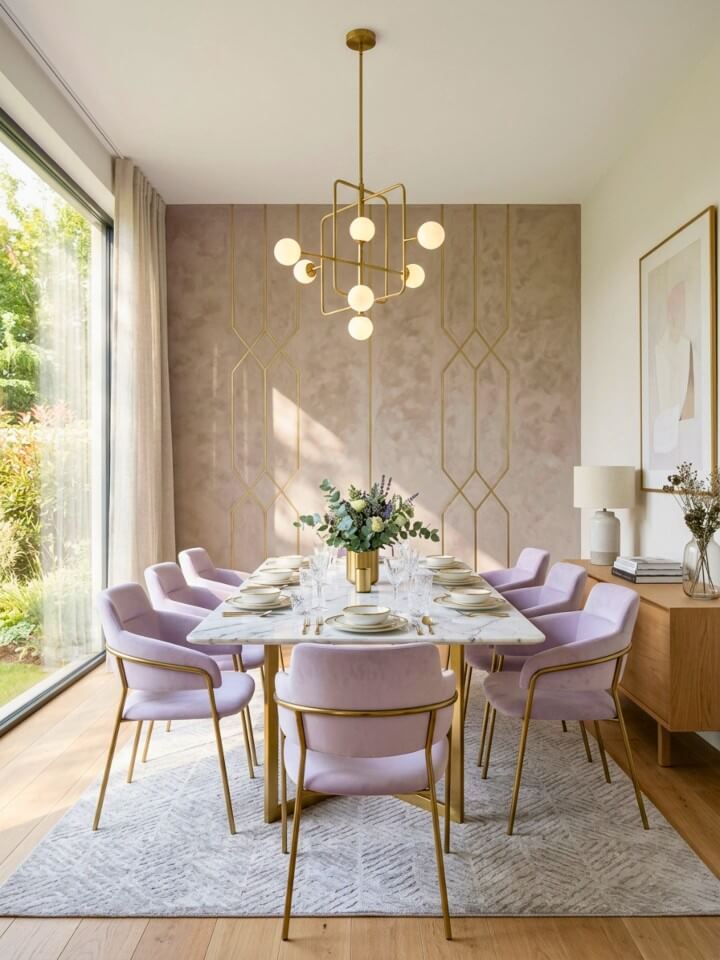
Limewash is mineral paint that dries with cloudy, mottled variation — think Tuscan villa, not suburban builder-grade. Portola Paints and Bauwerk Colour are the names people in design circles actually use. Romabio is the easier-to-find option at most independent paint stores.
Why I’d Recommend This for A Dining Room Specifically
The cloudy finish hides imperfections beautifully and reads as expensive even on a budget wall. Expect $80–$140 for the paint plus a $20 masonry brush — you cannot apply limewash with a roller and get the right look. Total time for one wall: about three hours including drying between coats.
5. A Real Gallery Wall (Not the Pinterest Grid)
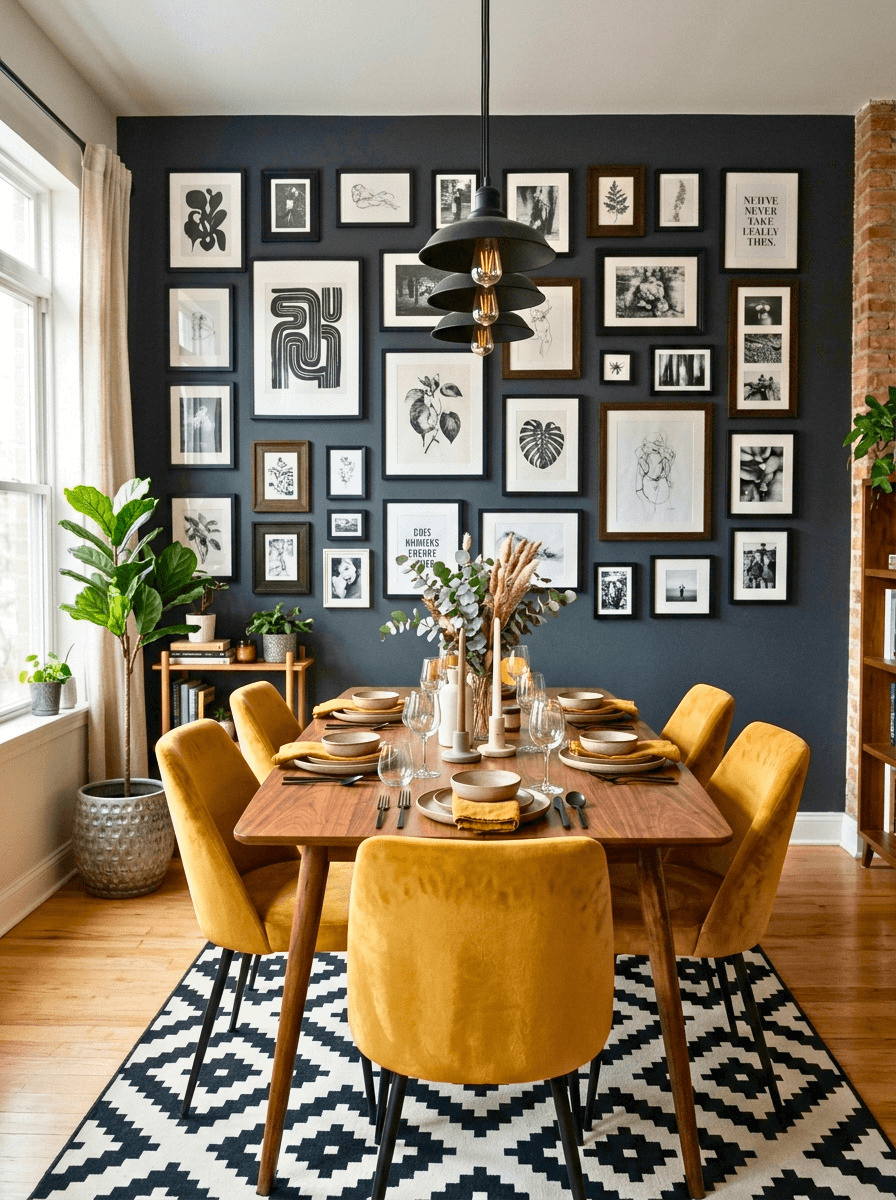
The symmetrical 3×3 grid of identical frames is over. What works now is asymmetry — mixing frame sizes, orientations, and even a few unframed canvases or textiles.
The trick is to lay everything flat on the floor first and shuffle until the spacing feels balanced but not rigid. Tape paper templates to the wall before you put a single nail in drywall.
What to Actually Hang
Mix personal photos with one or two larger anchor pieces. Etsy and Society6 sell good prints in the $30–$80 range. A solid 8-piece gallery wall costs $200–$500 including frames from Michaels with their constant 50% off coupon.
6. Antiqued or Smoked Mirror Panels
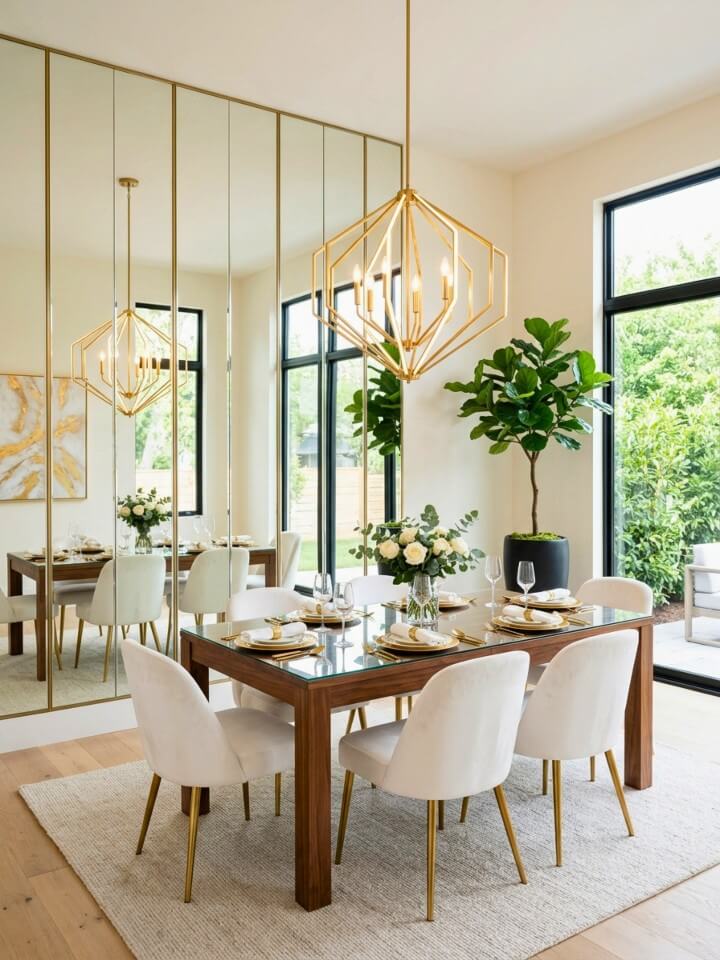
Plain mirror walls scream 1987. Antiqued mirror — the kind with intentional cloudy mottling — adds the brightness you want without the dated gym vibe.
Custom panels from a local glass shop run $25–$45 per square foot installed. For a budget version, large antiqued mirrors from West Elm or HomeGoods leaned against the wall look almost as good for a fraction of the price.
Best Paired With: A single pendant light positioned so the reflection doubles the glow at dinner. Avoid direct overhead recessed lighting — it bounces back harsh and unflattering. Ask me how I know.
7. Real Brick Veneer (Not the Faux Foam Stuff)
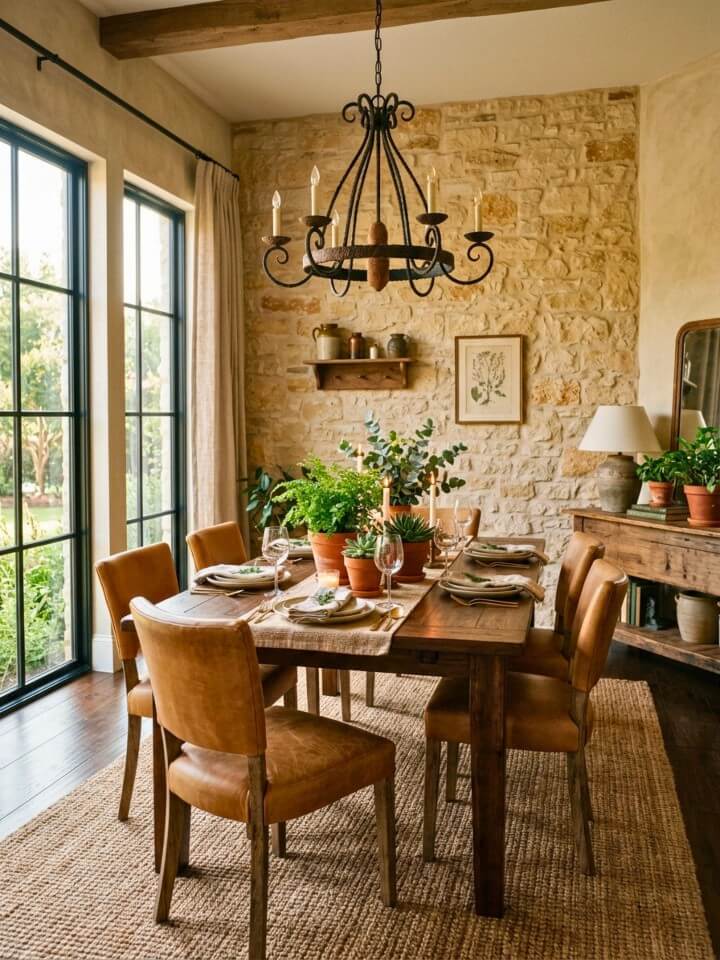
Thin brick veneer is actual kiln-fired brick sliced to half-inch thickness. It installs with mortar like tile and looks identical to a structural brick wall because it essentially is one.
Brands worth looking at: Old Mill Brick and Glen-Gery. Expect $7–$12 per square foot for materials, plus mortar and a wet saw rental ($60/day).
Why Skip the Foam Panels
Foam “brick” panels look fine in photos and fake in person. Your guests will notice within thirty seconds. If budget is the issue, a smaller real-brick area behind a buffet beats covering a whole wall in foam.
This is a weekend project for two people, not a one-day job. Plan accordingly.
8. Color Blocking With Painter’s Tape
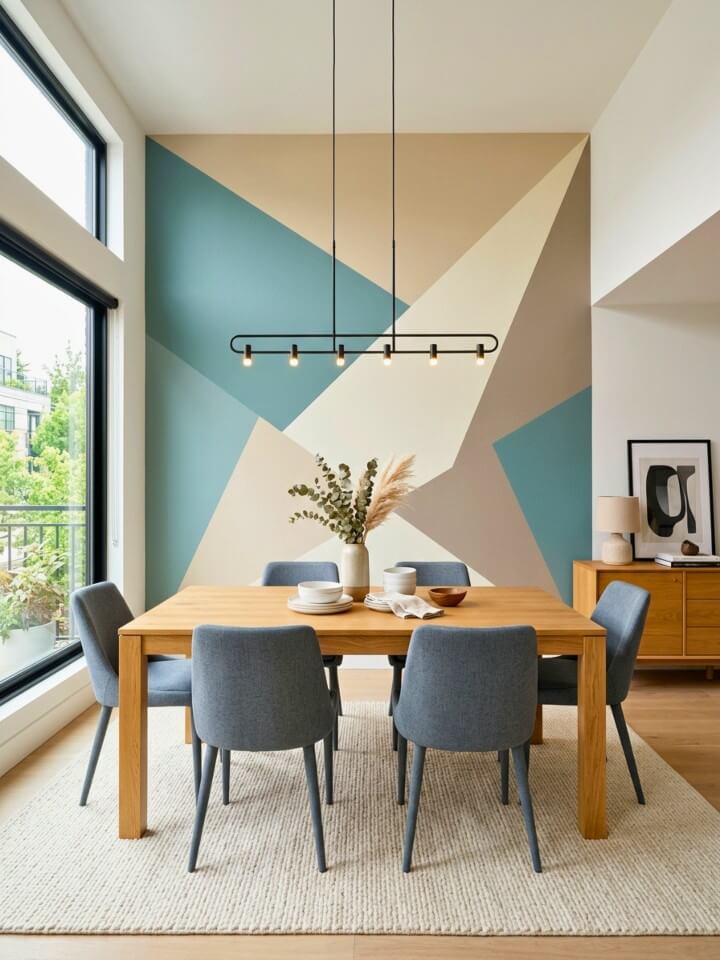
An accent wall in dining room spaces adds instant drama without touching the rest of your home. Two-tone walls with a clean horizontal line at chair-rail height or a geometric shape painted behind the table look custom but cost almost nothing.
The whole secret is FrogTape (not the cheaper blue stuff — it bleeds) and a level. Burnish the tape edge hard with a credit card before painting.
Combinations that Actually Work
- Warm white on top, terracotta on the bottom third
- Soft cream with a painted arch in clay or olive behind the table
- Pale pink with a sharp burgundy rectangle as a “fake headboard” behind the buffet
Total cost stays under $60 for paint and tape if you already own brushes. Time investment is one evening plus drying.
Explore More: Beautiful Picture Wall Ideas for Your Dining Room
9. Built-In Plate Rack or Open Shelving
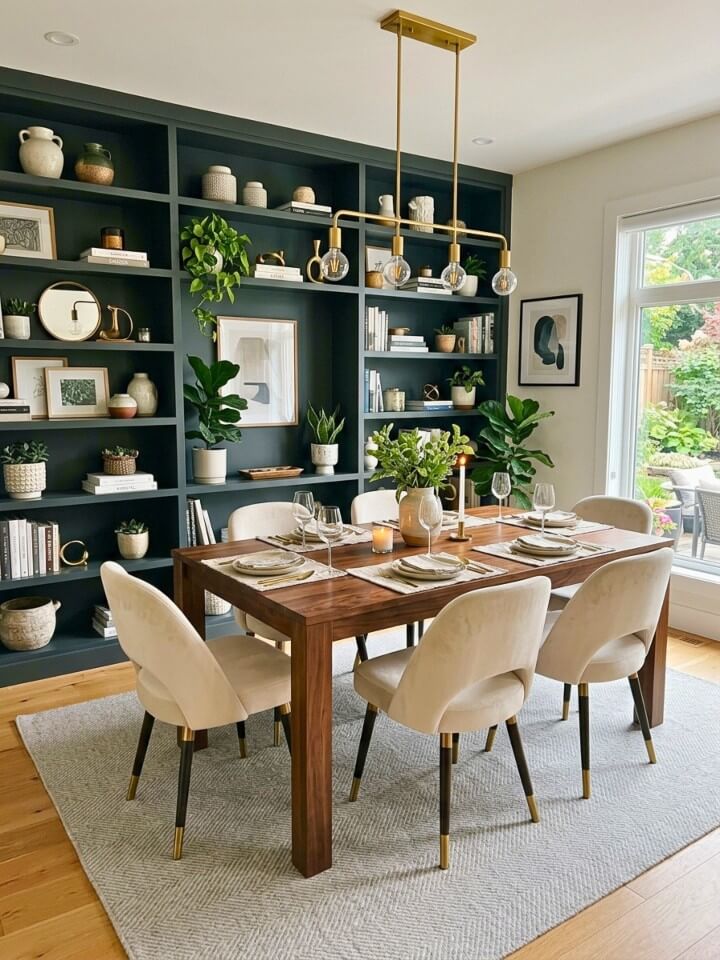
This one earns its keep because it’s storage masquerading as decor. A pair of floating oak shelves running the length of the wall holds your everyday dishes, a few cookbooks, and whatever ceramics you’ve collected.
- Budget version: Two 48-inch solid oak shelves from Home Depot with hidden brackets — roughly $90 total.
- Built-in version: Custom plate rack with vertical dividers from a local carpenter — $600–$1,400 depending on wood and finish.
The styling rule I follow: leave 40% of the shelf empty. Crammed shelves read as clutter, not collection. Rotate seasonal pieces in and out instead of cramming everything on at once.
10. Hand-Painted Mural (Hire It Out)
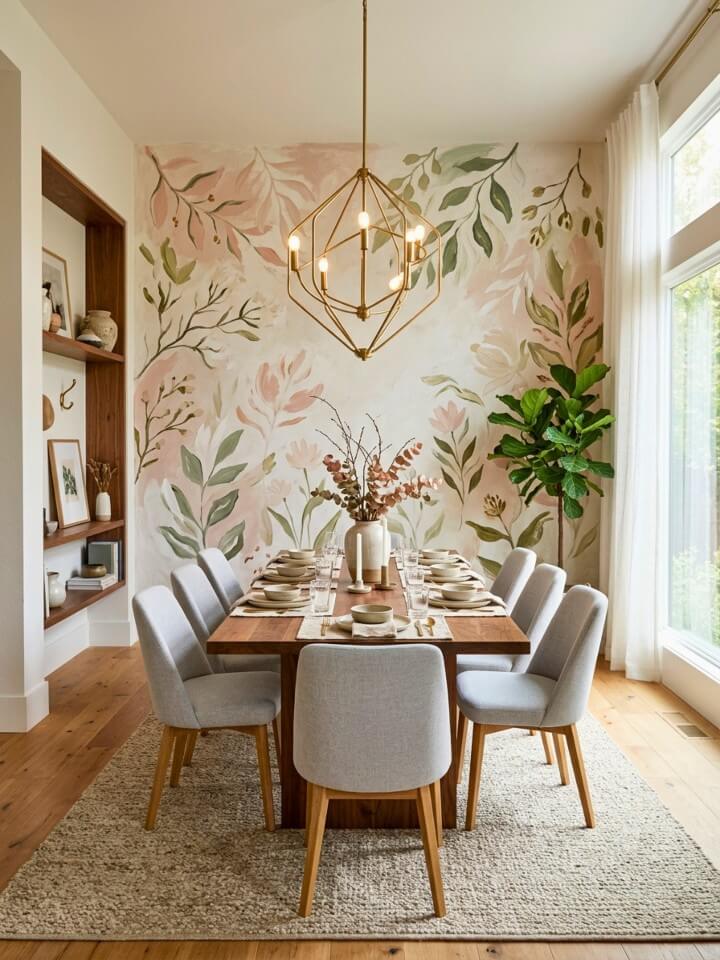
A custom mural is the one idea here where I genuinely recommend not DIY-ing unless you’ve painted before. A mediocre mural is worse than no mural.
Local muralists charge $400–$1,500 for a dining room wall depending on complexity and their experience level. Find them on Instagram by searching your city plus “muralist” — most post portfolios and rates openly.
What to Commission
Loose botanical washes, abstract landscapes, and chinoiserie-style branches age well. Anything too literal (a specific cityscape, a portrait) gets old fast and is hard to live with at every meal for the next decade. Keep the palette to three or four colors that pull from your existing furniture.
11. Fabric-Upholstered Wall Panels
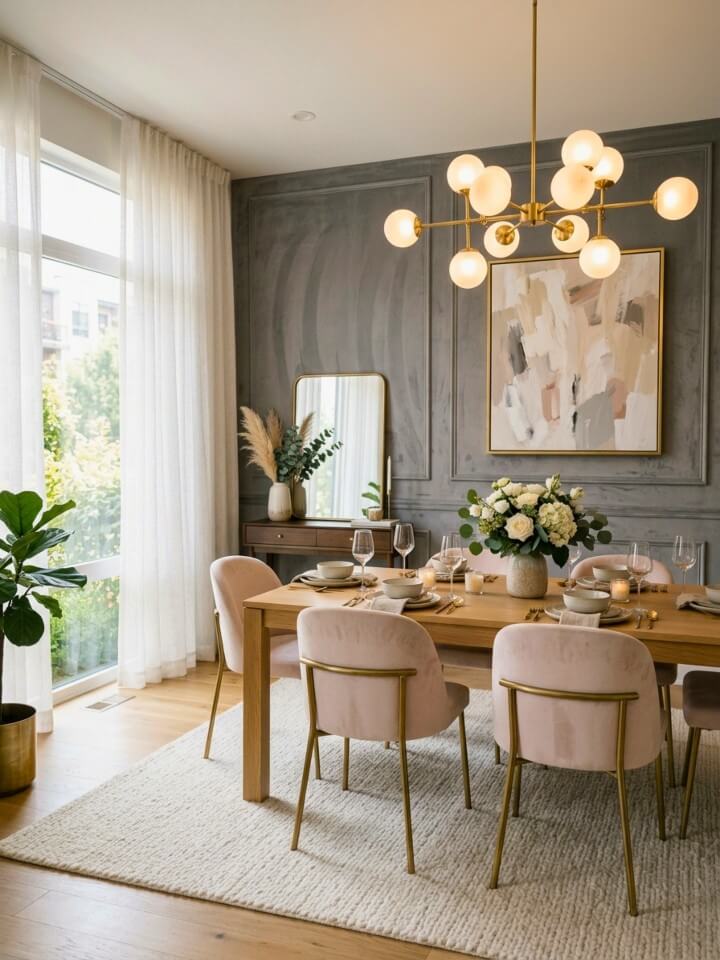
Upholstered walls sound fussy until you eat in a room with one. The acoustic difference alone is worth it — no more echoey clatter when six people are talking over dinner.
Pre-made panels from companies like Tensentric or Audimute run $80–$200 each and install with French cleats. The DIY route uses ½-inch plywood, batting, and fabric stapled tight on the back, which drops the cost to about $40 per panel.
Fabrics that Hold up To Real Life
Performance linen and indoor-outdoor velvet from Crypton clean with soap and water. Skip silk, light cotton, and anything labeled “dry clean only” unless you’ve never spilled red wine in your life. Which is to say: skip them.
12. Chalkboard Wall – But Make It Adult
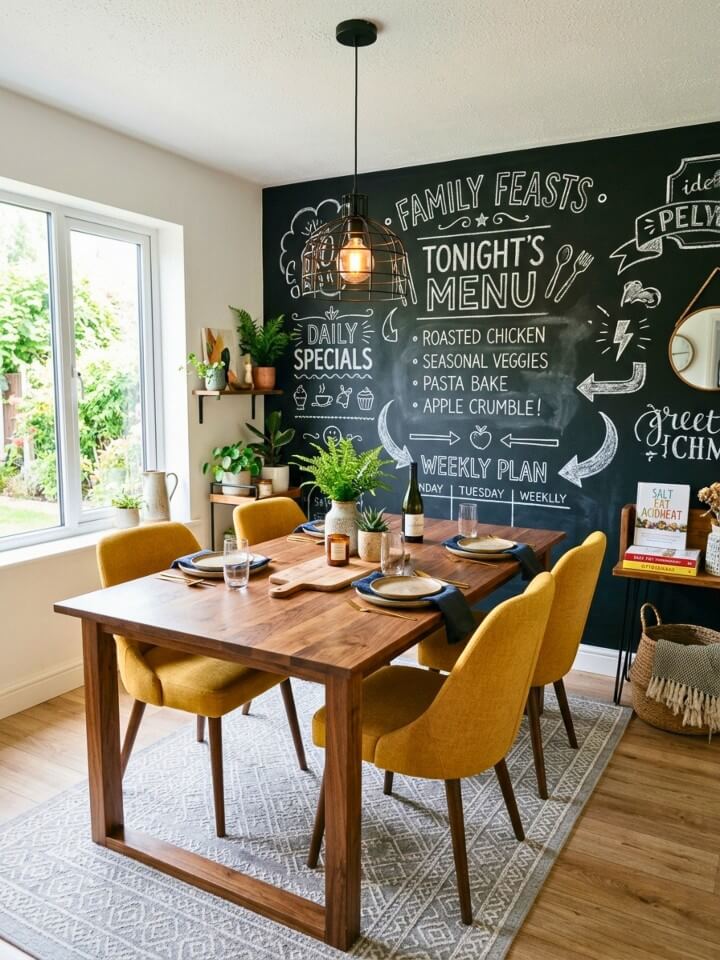
The chalkboard wall got a bad rap because people kept drawing stick figures on them. Done right, it’s actually one of the most flexible accent walls you can install.
Rust-Oleum chalkboard paint runs about $20 per quart and covers around 100 square feet. Two coats minimum. Let it cure 72 hours before you write on it, then “season” the surface by rubbing the side of a chalk stick across the whole thing and wiping it down.
What to write: the dinner menu when friends come over, a running grocery list, the kids’ weekly schedule. What not to write: inspirational quotes in cursive. Just don’t.
13. Vertical Garden With Real Plants
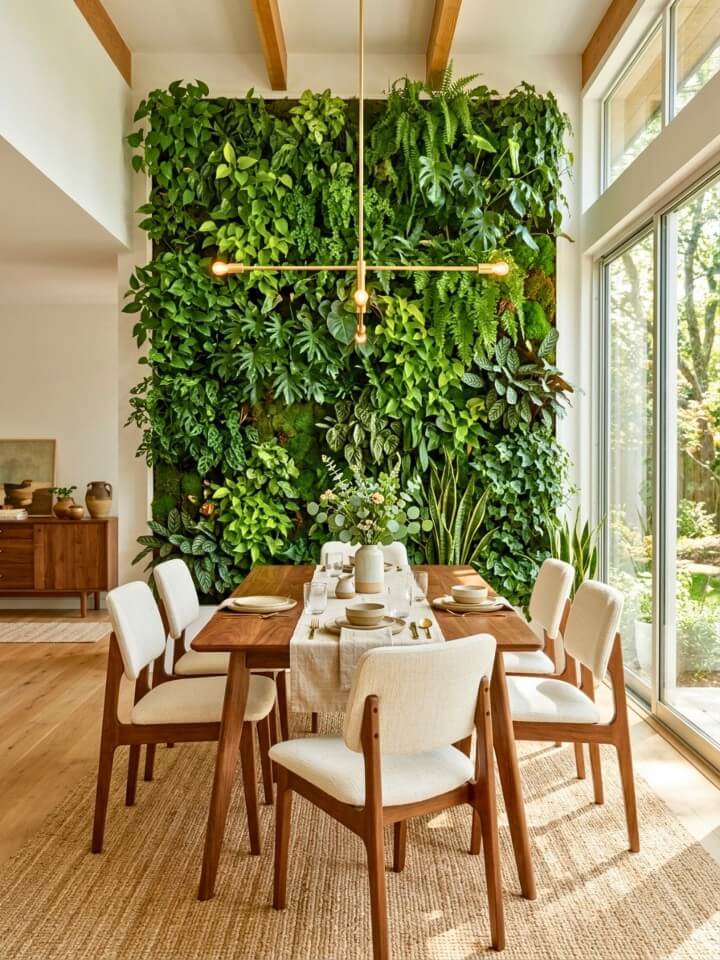
A modern dining room accent wall blends bold color, clean texture, and lighting that actually works. Living plant walls look incredible in magazines and die in real dining rooms because nobody plans for the watering. Be honest with yourself before committing.
If you have a south or east-facing window within six feet of the wall, you can grow pothos, philodendron, and ferns successfully. North-facing? You’ll need grow lights, which cost $80–$150 and look industrial unless you hide them well.
The Lazy Person’s Version
Wall-mounted planters from Greenstalk or Lechuza include self-watering reservoirs you fill once every two weeks. Stick to one plant species for a clean look — mixing four different vines turns into visual chaos within two months as they grow at different rates.
14. Brushed Brass or Copper Sheet Wall
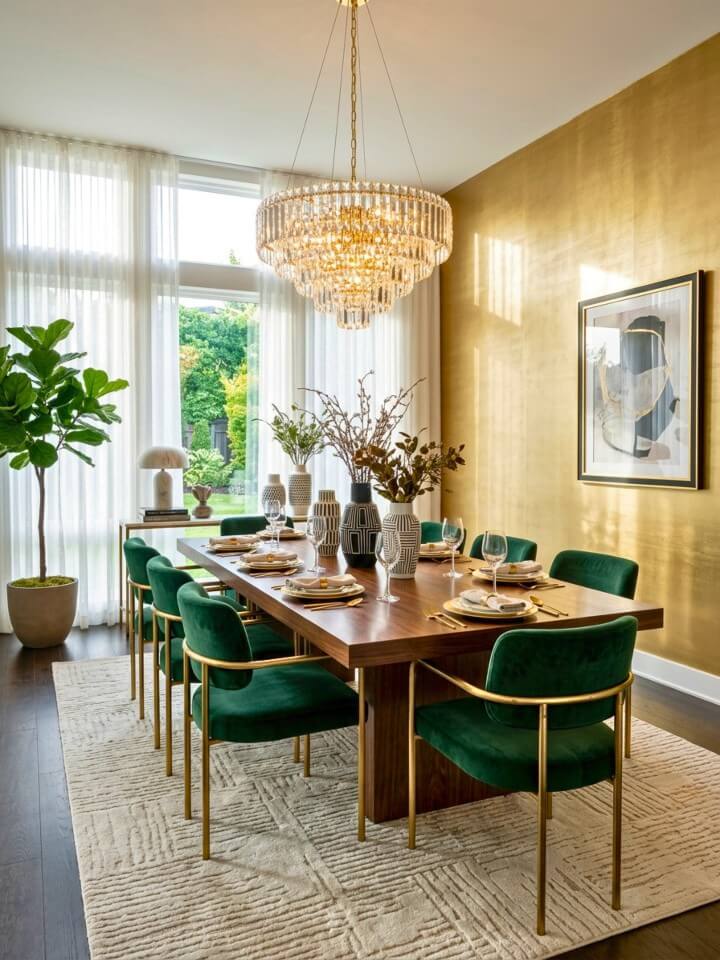
Hammered metal sheets behind a buffet look like something from a high-end restaurant and cost surprisingly little. Online metal suppliers like OnlineMetals sell 4×8 sheets of brushed brass for $180–$320.
Mount them with construction adhesive plus a few finish nails along the edges. Wear gloves — the cut edges will slice you open.
The aging question: Raw brass develops a patina over a few years. Lacquered brass stays bright forever. Decide which look you want before ordering, because there’s no going back without sanding the whole thing down.
This works best on a smaller accent area — maybe 4×6 feet behind a sideboard — rather than a full wall, where it starts feeling like a commercial kitchen.
15. Board and Batten With a Modern Twist
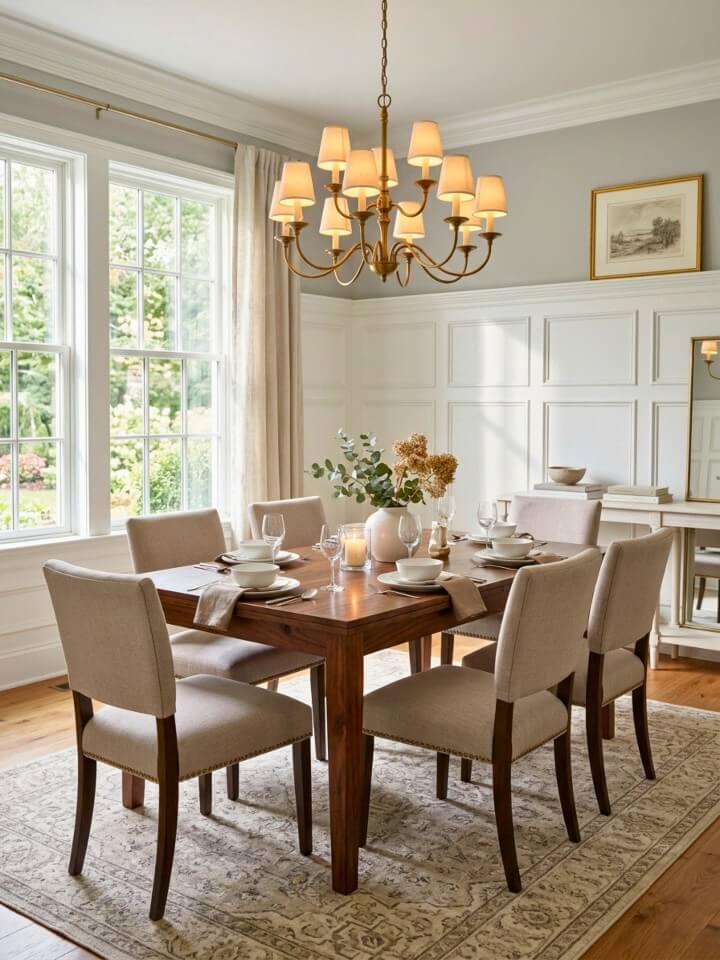
Traditional board and batten splits the wall horizontally with painted panels on the bottom. The updated version runs battens floor-to-ceiling in a tighter spacing — every 12 inches instead of the usual 16 — for a more graphic, almost paneled look.
Materials per 10-Foot Wall:
- Primed 1×3 pine boards: $35
- Construction adhesive and brad nails: $15
- Caulk for seams: $8
- Paint for whole wall in one color: $45
Total under $110, takes one Saturday with a nail gun. The single most important step: caulk every seam where batten meets wall. Skipping this is the difference between “looks built-in” and “looks like trim glued to a wall.”
16. Dramatic Charcoal or Black
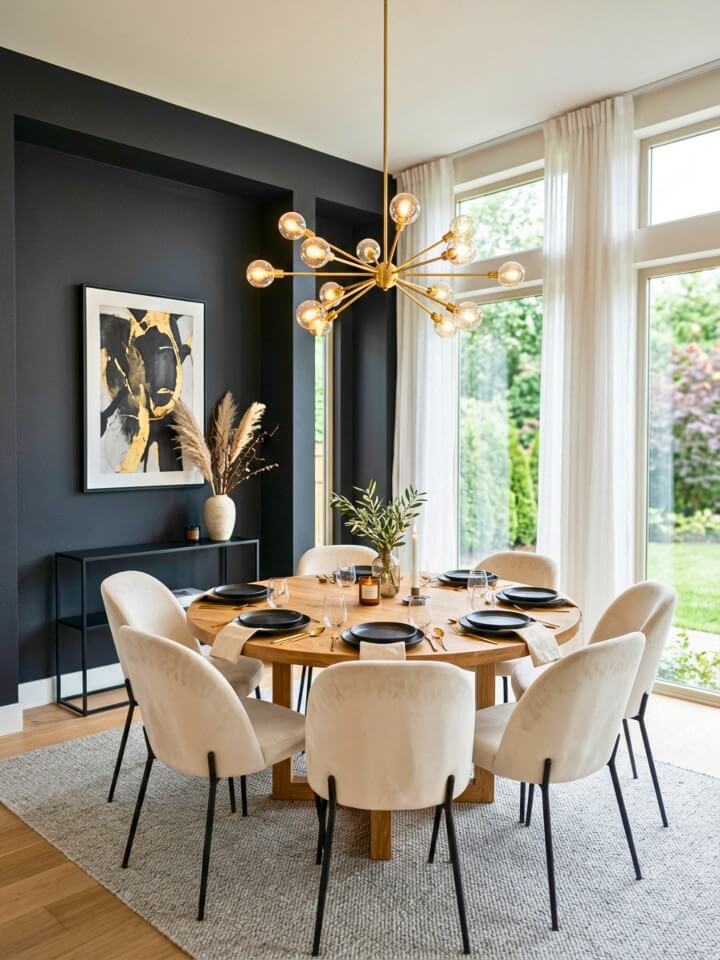
Going truly dark on a dining wall changes the rules of the whole room. Light fixtures glow harder. Brass hardware suddenly looks like jewelry. White dishes on the table pop like they’re spotlit.
The Lighting Math Nobody Mentions
Dark walls absorb roughly 80% of the light hitting them, compared to about 15% for white walls. You’ll need to compensate. Plan on at least one of these:
- A pendant rated for at least 800 lumens above the table
- Wall sconces flanking the buffet
- A floor lamp in the corner for ambient fill
Without that, the room turns into a cave at night. Sherwin-Williams Tricorn Black and Benjamin Moore Soot are the two blacks designers reach for most.
17. Patterned Cement or Encaustic Tile
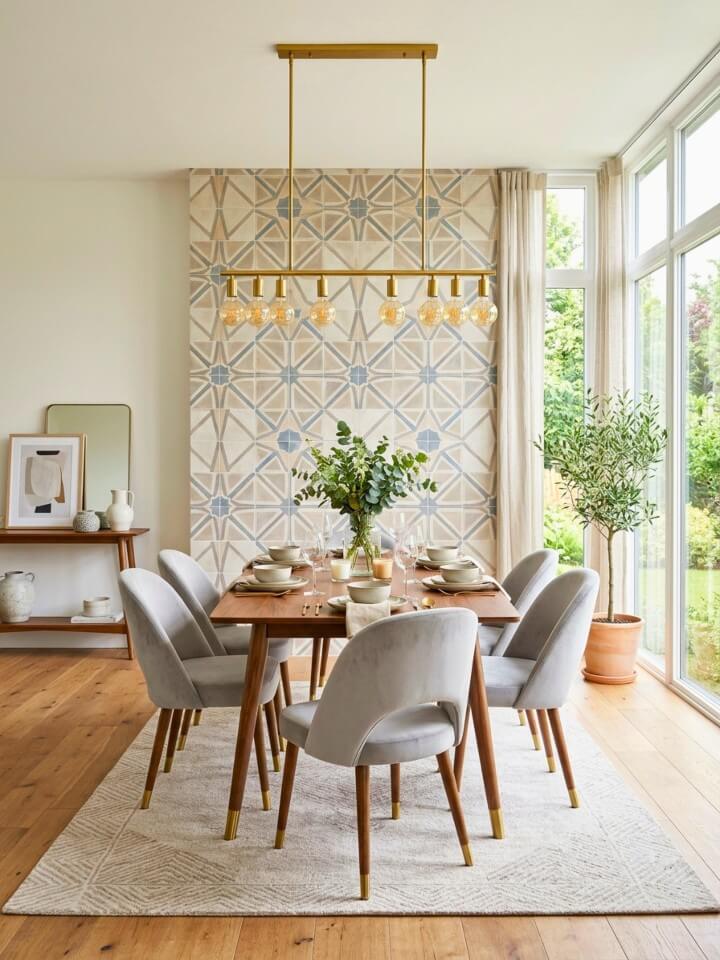
A tiled accent wall sounds intense but actually solves a real problem in dining rooms: the wall behind where people lean back in their chairs. Tile wipes clean, paint doesn’t.
Cement tiles from Cle, Zia, or Bedrosians range from $8–$25 per square foot. Encaustic patterns work especially well because the design draws the eye without needing additional art on the wall.
Installation Reality Check: This is not a beginner DIY project. Cement tile is heavy, needs sealing before grouting, and shows every uneven cut. Budget $400–$800 for a tile installer for a small accent area, or commit a full weekend plus learning curve if doing it yourself.
18. Reclaimed Barn Wood – Sourced Honestly
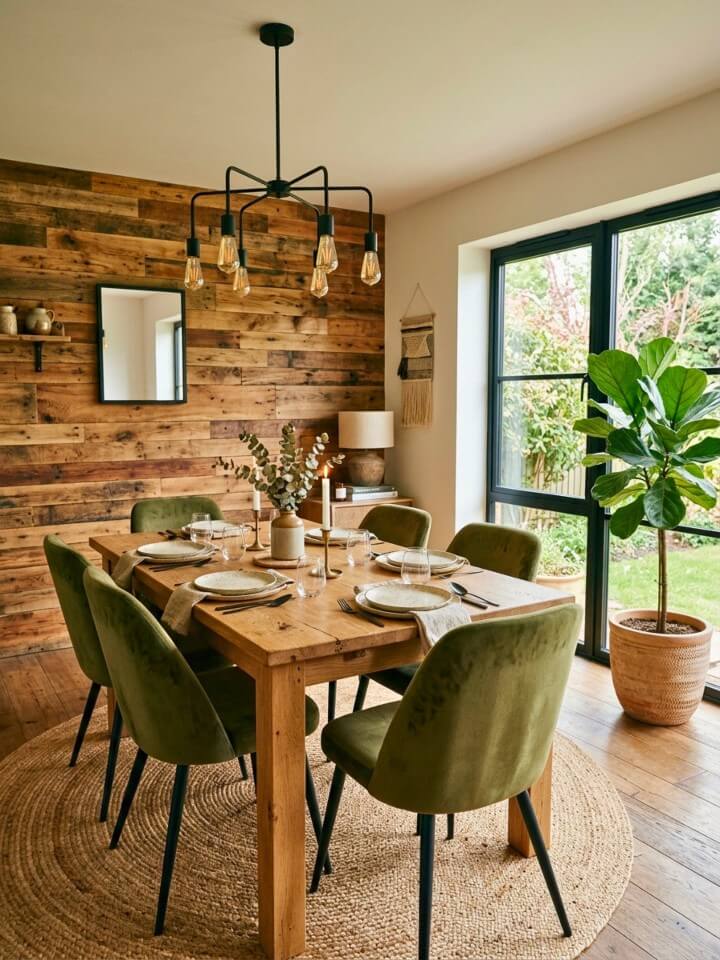
Real reclaimed wood has texture, nail holes, and color variation you can’t fake. The problem is that “reclaimed” became a marketing word for wood that was made yesterday and roughed up with a wire brush.
How to Tell the Real Thing
- Mixed wood species in one batch (not all pine)
- Actual square nail holes, not drilled fakes
- Varied board widths from 4 to 8 inches
- A back side that looks rough and unfinished, not factory-smooth
Local salvage yards and Facebook Marketplace beat retail every time — expect $4–$7 per square foot versus $12–$18 at chains. Brush it with a dry wire brush before installing to knock loose debris and prevent splinters during dinner.
19. Ombré Painted Effect
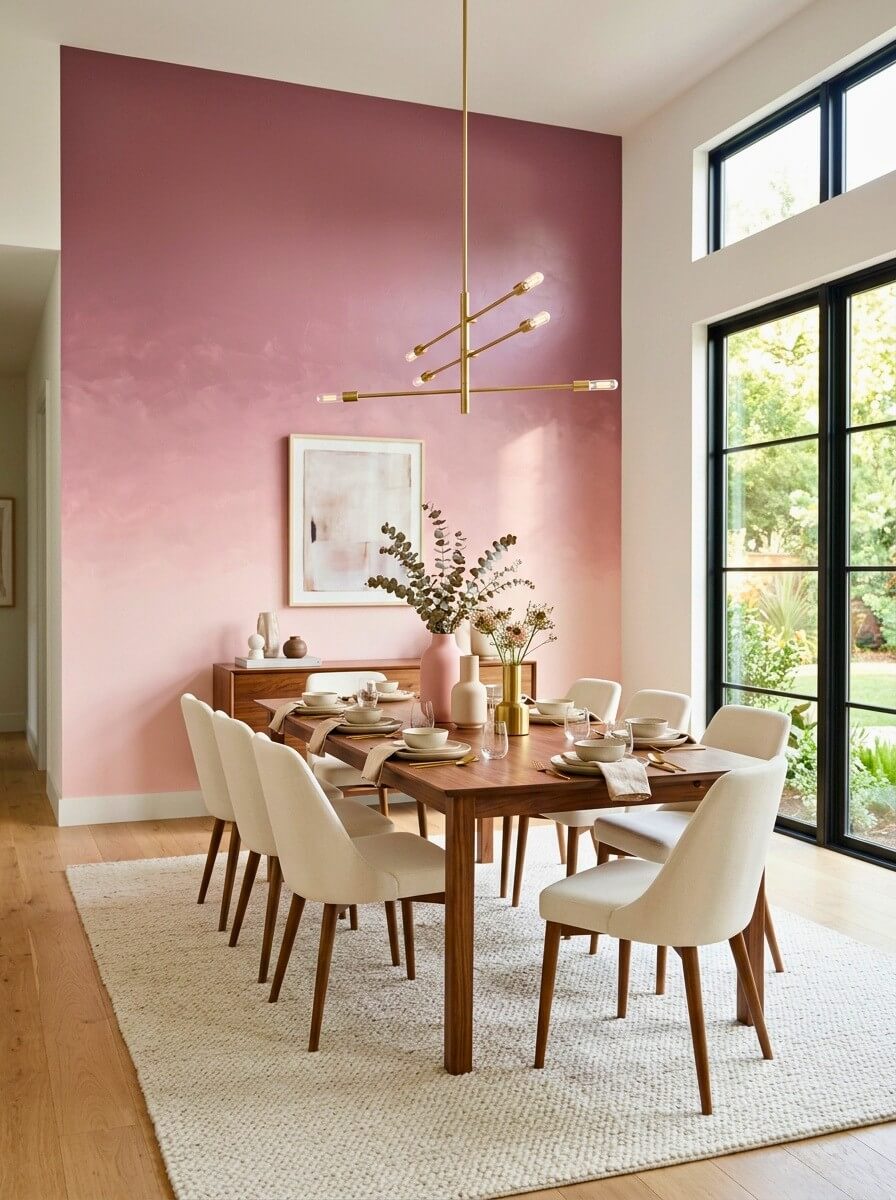
Ombré done badly looks like a kid’s bedroom. Done well, it looks like the wall is glowing. The difference is in the blend.
Start with three shades from the same paint strip — the lightest at the top, the deepest at the bottom. Paint each band with about 6 inches of overlap into the next color, then blend the overlap with a dry, clean brush in long horizontal strokes while everything’s still wet.
The whole project costs around $60 for three sample-size quarts of paint plus a few brushes. Plan two hours and don’t take breaks mid-blend — paint dries faster than you think, and once it’s set, the seam between colors becomes visible.
20. Vertical Wood Slat Wall
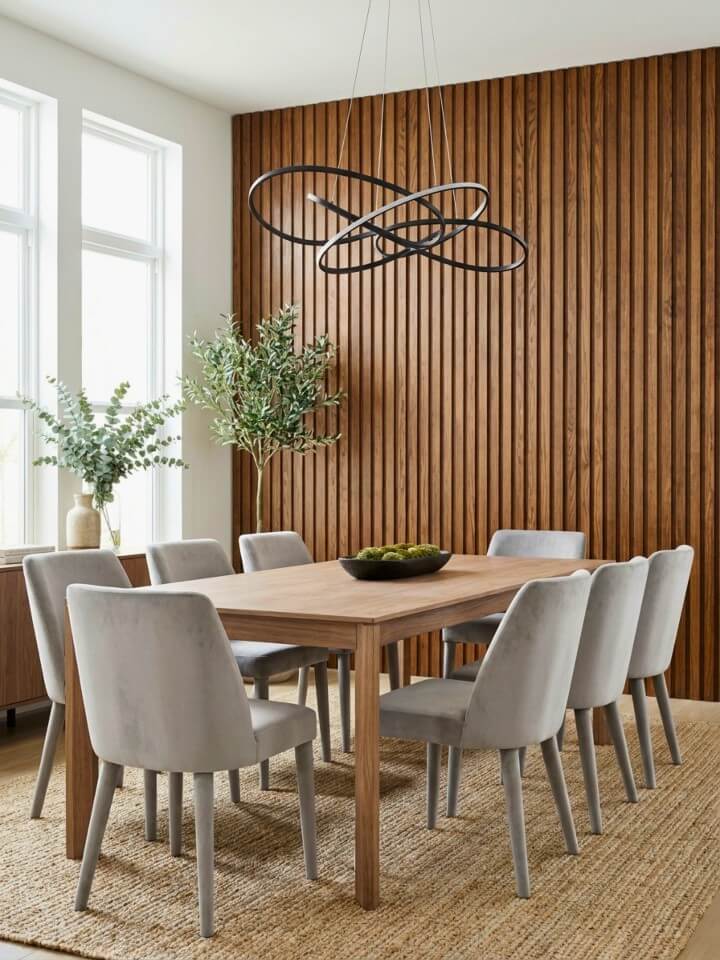
Slat walls are everywhere right now because they actually deliver — they add texture, hide imperfect drywall, and make ceilings look taller without renovation.
Two Ways to Do This:
The kit route: Companies like Naturewall and Slat Wall Solutions sell pre-finished oak or walnut slat panels for $25–$60 per square foot. Click together, mount with adhesive and screws. A 10×8 wall runs $1,800–$3,500 installed.
The DIY route: Rip 1×2 pine or oak strips, paint or stain them, and mount each one individually with a nail gun against a painted black backer. Material cost drops to roughly $300 for the same wall, but plan a full weekend and expect to recalculate spacing at least once when the math doesn’t work out at the corner.
21. Floating Walnut Shelves With Lighting
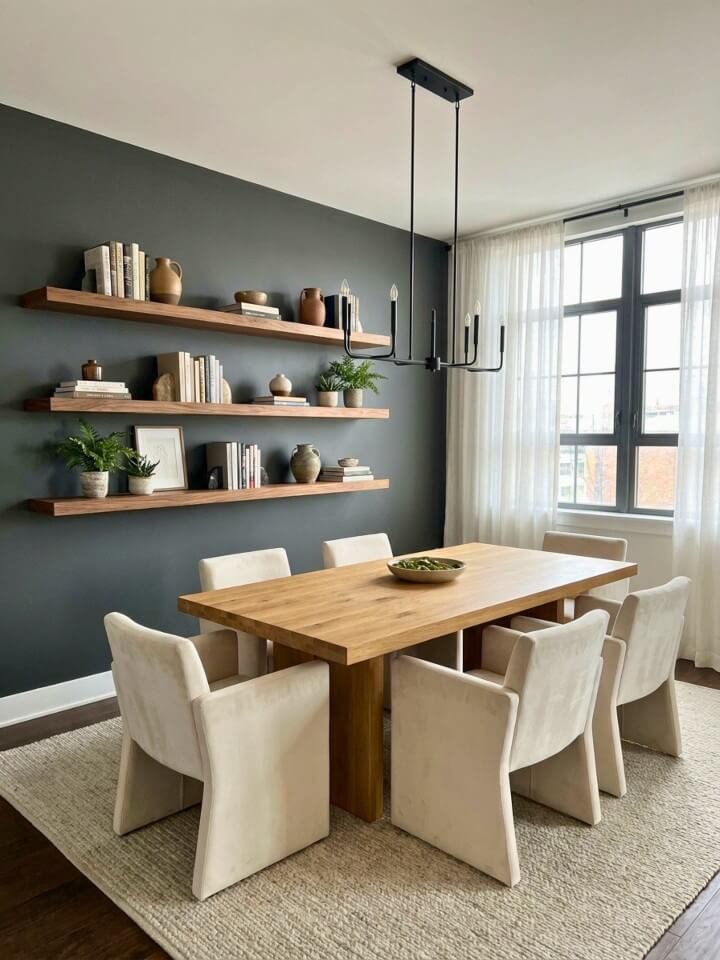
Pick the right accent wall for dining room style, square footage, and how often you really host. A pair of floating shelves with LED strips tucked underneath turns a dead wall into something that looks like a furniture showroom after sunset.
Solid walnut shelves from Etsy makers cost $80–$160 each in standard lengths. Add a $25 plug-in LED strip from Govee with a remote dimmer, and you have warm uplight on the ceiling and downlight on whatever you’ve styled below.
Styling that Doesn’t Look Try-Hard
Three to five objects per shelf. Vary the heights. Include one thing that’s clearly used — a stack of cookbooks, a wooden bowl, a vintage decanter — so it doesn’t read as a furniture-store display. Resist the urge to fill every inch.
22. 3D Geometric Wall Panels
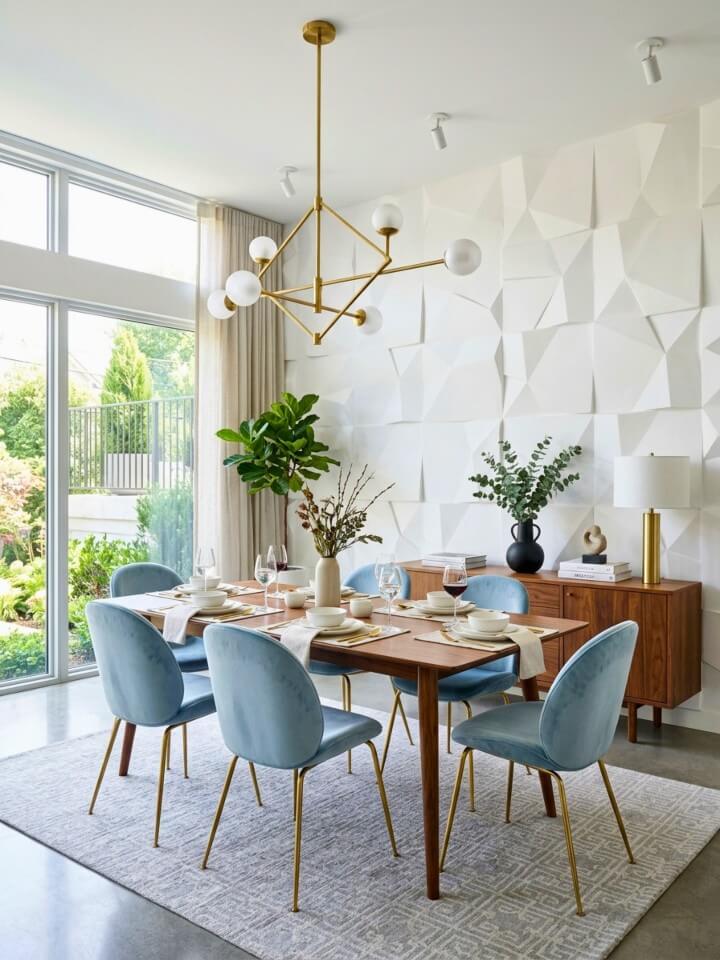
PVC or MDF panels with sculpted patterns create shadow play that changes throughout the day. The effect is genuinely architectural, but quality varies wildly.
What to Look for When Buying:
- MDF panels over PVC — they paint better and feel more substantial
- Pattern repeats at least every 12 inches so seams blend
- Matte finish, not glossy (gloss kills the shadow effect)
- Minimum ¾-inch depth — anything shallower looks flat under normal light
Decorative Ceiling Tiles and Wall Panels Mart are two suppliers with consistent quality. Budget $6–$14 per square foot. Paint the panels the same color as the rest of the wall behind them for a tone-on-tone look that designers charge real money to recreate.
23. Oversized Statement Clock or Single Art Piece
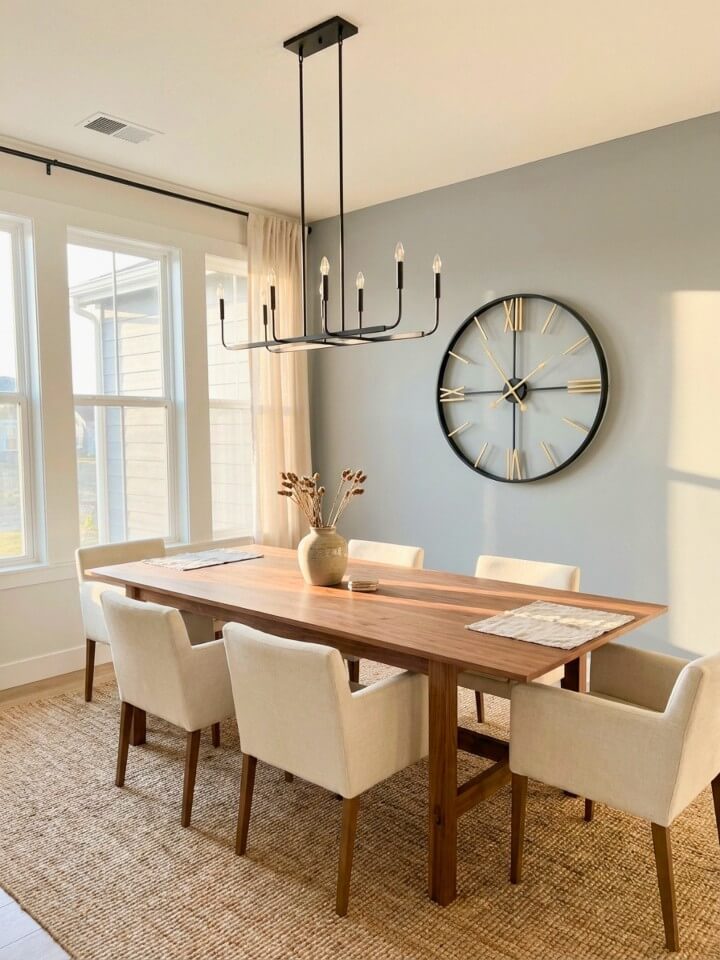
One large object on a wall beats ten small ones almost every time. The math is simple: the human eye wants a focal point, and a 48-inch clock or 36×48 painting gives it one.
The Sizing Rule Most People Get Wrong
The artwork or clock should fill roughly two-thirds the width of whatever furniture sits below it. A 60-inch buffet wants a 40-inch piece above it, not a 24-inch one. The undersized art floating in space is the single most common decorating mistake I see in dining rooms.
Saatchi Art and 20×200 sell original and limited-edition pieces from $200–$2,000. For clocks, Karlsson and Newgate make the modernist options that don’t look like they came from a hotel lobby.
24. Two-Tone Painted Stripes
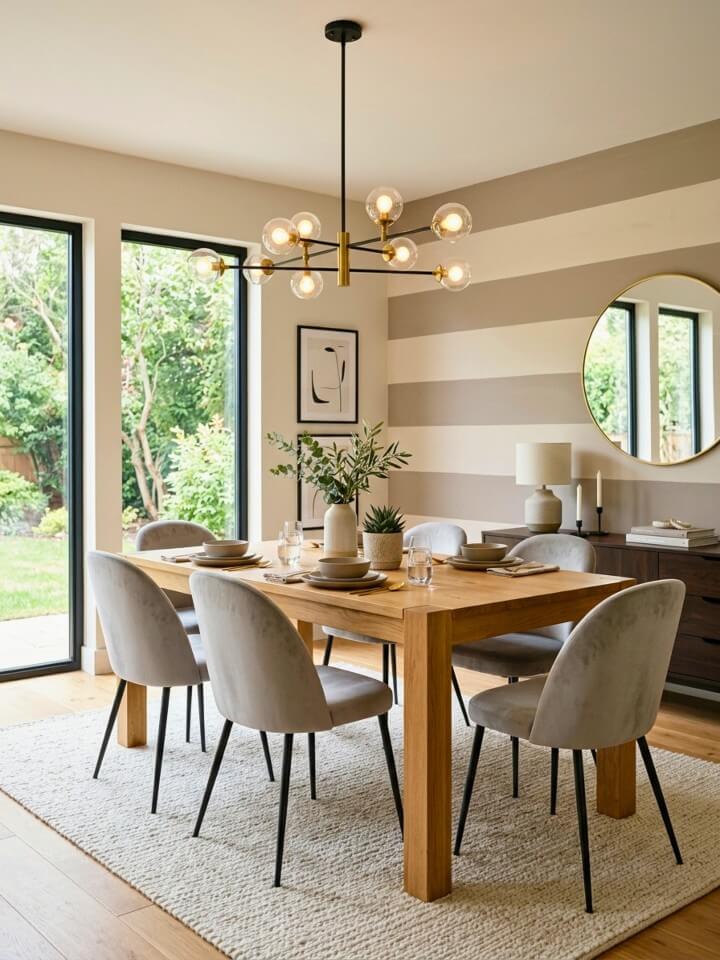
Wide horizontal stripes (12 inches or wider) elongate a room. Wide vertical stripes raise the ceiling. Pinstripes do neither — they just look busy.
Three combinations that consistently work:
- Warm white with mushroom-taupe stripes
- Pale sage with deeper sage
- Cream with terracotta
The technique: Paint the whole wall the lighter color first. Once dry, mark stripe positions with a laser level (a $30 Bosch one is plenty accurate). Tape with FrogTape, burnish edges with a credit card, then paint the darker stripes. Pull tape while paint is still slightly wet for clean lines.
Total project cost runs $50–$80 and takes one full day including drying between coats.
25. Leaning Decorative Ladder
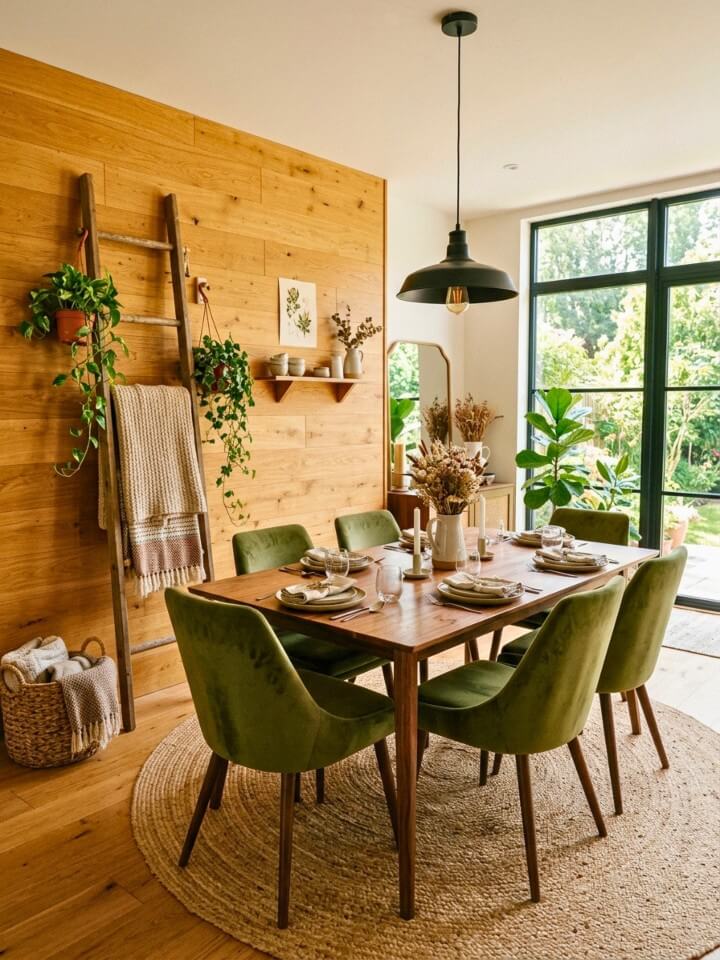
A wooden ladder propped against the wall is the rare decor trick that costs almost nothing and reads as intentional rather than cheap.
Old wooden orchard ladders from antique shops run $40–$120. Architectural salvage yards are gold mines. If buying new, look for ones with actual weight and patina — IKEA’s version is fine but obviously new.
One warning: Secure the top of the ladder to the wall with a small L-bracket and screw. An unsecured ladder will eventually get bumped by a chair or a kid, and a falling ladder onto a dinner table is not a story you want to tell.
Drape one throw blanket or hang two small framed pieces. More than that and it goes from “styled” to “where do I put this stuff.”
26. Industrial Black Pipe Shelving
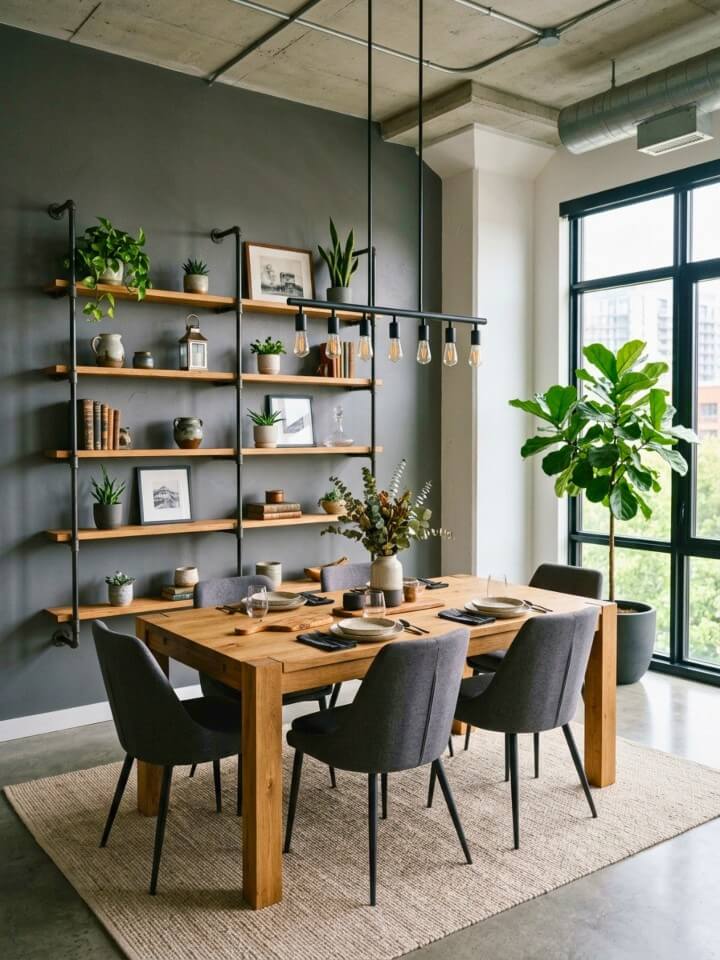
Black iron pipe shelving has a specific look — part loft, part workshop — that works best in dining rooms with concrete floors, exposed beams, or large windows. In a traditional space, it reads costume-y.
Building It Yourself
Home Depot sells the fittings (flanges, elbows, nipples) individually. For a three-shelf unit spanning 4 feet wide:
- 6 floor flanges
- 12 short pipe nipples for vertical sections
- 3 reclaimed wood boards, roughly 1-inch thick
Total around $180–$240 depending on wood. Pre-built kits from Etsy and Amazon run $250–$450 and save you a trip to the plumbing aisle. Wash all pipes with degreaser before assembly — they ship coated in oil that will stain everything it touches.
27. Stenciled Statement Wall
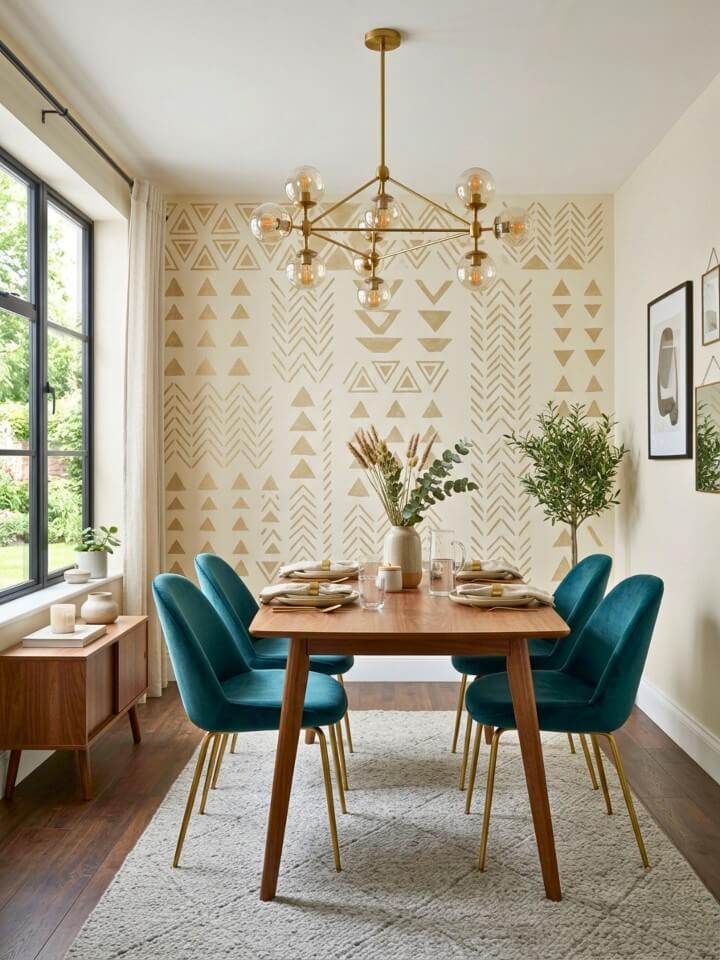
A dining room feature wall turns ordinary meals into the kind guests remember and ask about later. Stencils sit in a strange middle zone — cheaper than wallpaper, more time-consuming than paint, and capable of looking either incredible or like a craft project that got away from someone.
The difference comes down to stencil quality and patience. Cutting Edge Stencils and Royal Design Studio make Moroccan, floral, and geometric patterns on durable mylar that holds up to repeated use. Expect $40–$70 per stencil.
Three Things that Separate Good from Amateur:
- Use a stencil brush with stiff bristles, not a roller
- Offload almost all paint onto a paper towel before each application — too much paint bleeds under the stencil
- Wipe the back of the stencil after every few repeats
Total time for a feature wall: roughly 8–12 hours spread across a weekend.
28. Backlit Wood or Acrylic Panels
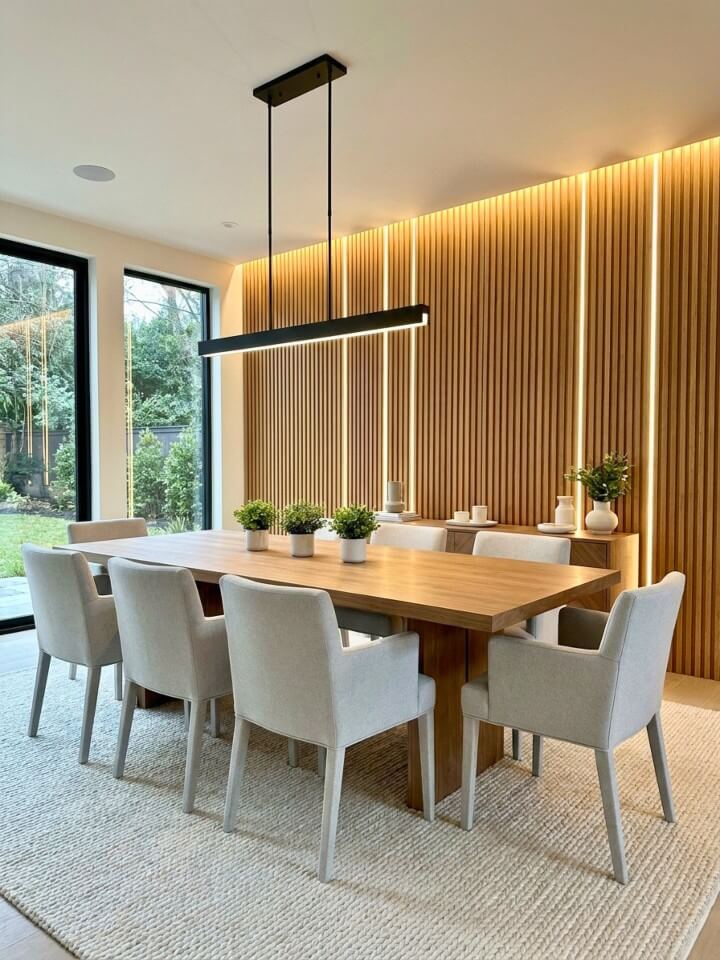
Backlit panels are the move when you want a wall that genuinely surprises people. The effect is restaurant-quality and not as complicated as it looks.
The basic build: mount LED strip lights (Philips Hue or Govee, around $50) directly to the wall in a grid pattern. Install ½-inch standoff brackets at the corners. Mount slatted wood, perforated metal, or frosted acrylic panels on the standoffs so light leaks through and around the edges.
What Works as The Front Panel
Slatted oak — warm, modern, hides the strip lights cleanly. Perforated steel — industrial, dramatic shadow patterns. Frosted acrylic — smooth, contemporary, glows uniformly. Whatever you choose, the standoff gap should be at least 1.5 inches or the light bleeds in distracting hot spots.
Total project budget: $300–$700 depending on panel material.
29. Monochrome Saturated Color
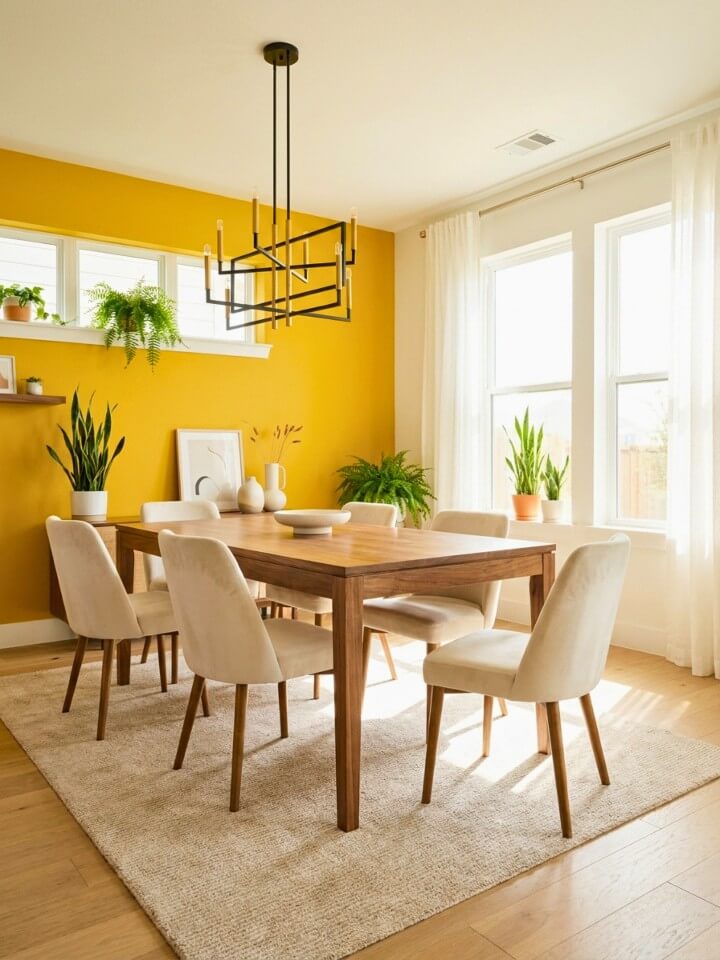
Painting all four walls — plus the ceiling and trim — the same saturated color sounds insane until you see it done. The effect is enveloping in a way an accent wall can never achieve.
Burgundy, deep mustard, oxblood, and forest green are the colors that work for dining specifically. They flatter skin tones under candlelight, which matters more than people realize when you’re staring at the same faces across a table.
What This Is Not For
Open floor plans where the dining room flows into a kitchen or living room. The monochrome treatment needs to be contained in its own enclosed space to work — otherwise it looks like one room got attacked by a paint can.
Budget about $120 for two gallons plus primer. Skip the accent wall entirely and commit.
30. Removable Peel-and-Stick Wallpaper
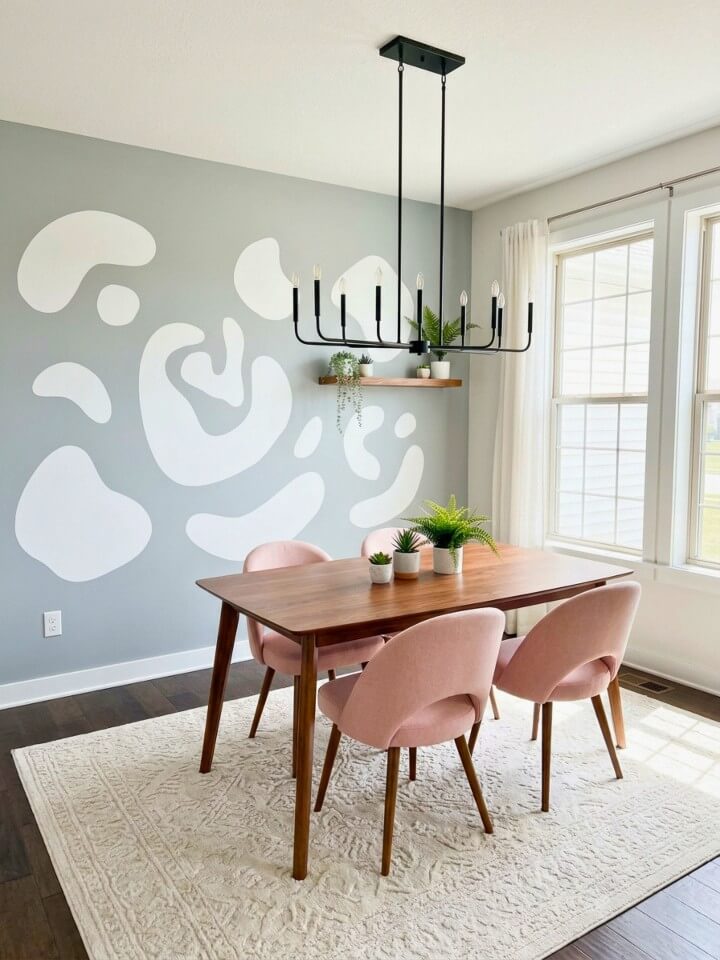
Renters have been winning at accent walls for the last few years, and the rest of us are starting to catch up. Peel-and-stick has gotten genuinely good — not the cheap vinyl from a decade ago.
Tempaper, Chasing Paper, and Spoonflower lead the category. Patterns run $5–$8 per square foot, which puts a single accent wall around $150–$300.
The Application Secrets Nobody Mentions:
- Wash the wall with TSP cleaner first and let it dry completely overnight
- Two people make it ten times easier — one peels, one smooths
- Use a felt-edged squeegee, never a credit card (it scratches the surface)
- Mistakes are forgiving — you can lift and reposition within the first 20 minutes
Removal years later? Genuinely pulls off clean with no residue if the wall was properly primed before application.
Frequently Asked Questions About Dining Room Accent Walls
Before you grab a paint roller or click “buy” on that wallpaper, a few practical questions tend to come up. Below are the ones readers ask most often — the kind of details that decide whether your accent wall ages well or starts annoying you in six months.
Which Wall Should You Actually Pick as The Accent Wall?
Choose the wall your eye lands on first when you walk into the room. Usually that’s the wall opposite the main entry or the one behind your buffet. Skip walls broken up by large windows or multiple doorways.
Will an Accent Wall Hurt My Home’s Resale Value?
Bold colors and bold wallpaper can slow down a sale if buyers can’t see past them. Removable peel-and-stick options, neutral paint, or classic wood paneling stay safe. Anything you can undo in a weekend won’t hurt resale.
Do Accent Walls Work in Small Dining Rooms?
Yes, but the rules flip. Dark colors actually make small rooms feel intimate rather than cramped, while busy patterns can overwhelm. Stick to one statement element — either color or texture or pattern — never all three at once.
How Do I Coordinate an Accent Wall with An Existing Dining Set?
Pull one color directly from your dining chairs, rug, or wood tones and use a deeper or lighter version on the wall. Matching exactly looks flat. Echoing a tone you already own ties everything together naturally.
What Kind of Lighting Works Best with A Dark or Textured Accent Wall?
Layer three light sources: a pendant over the table, wall sconces or a buffet lamp nearby, and warm bulbs rated 2700K to 3000K. Dark walls absorb light, so plan on roughly 30% more brightness than a white room.
Conclusion:
Most people remodel a kitchen for resale and a bathroom for guests. The dining wall gets done for one reason: you. It’s the backdrop to ordinary Tuesday dinners and the one your nephew will remember from holidays twenty years from now.
Pick something you’d still want to look at after the novelty wears off in month three. Skip the trend that’s everywhere on Pinterest right now — it won’t be there in 2028. The walls that age best are the ones chosen quietly, by someone who wasn’t trying to impress anyone except the people already sitting at the table.