25 Best Dining Room Picture Wall Ideas and Expert Tips
That blank wall above your dining room buffet is not just empty space — it is an opportunity you eat next to every single day. These 25 gorgeous dining room picture wall ideas will change the way you see that wall forever. Most people leave it bare for months, unsure where to start, and end up staring at nothing while sharing meals with people they love. A well-planned picture wall changes that completely.
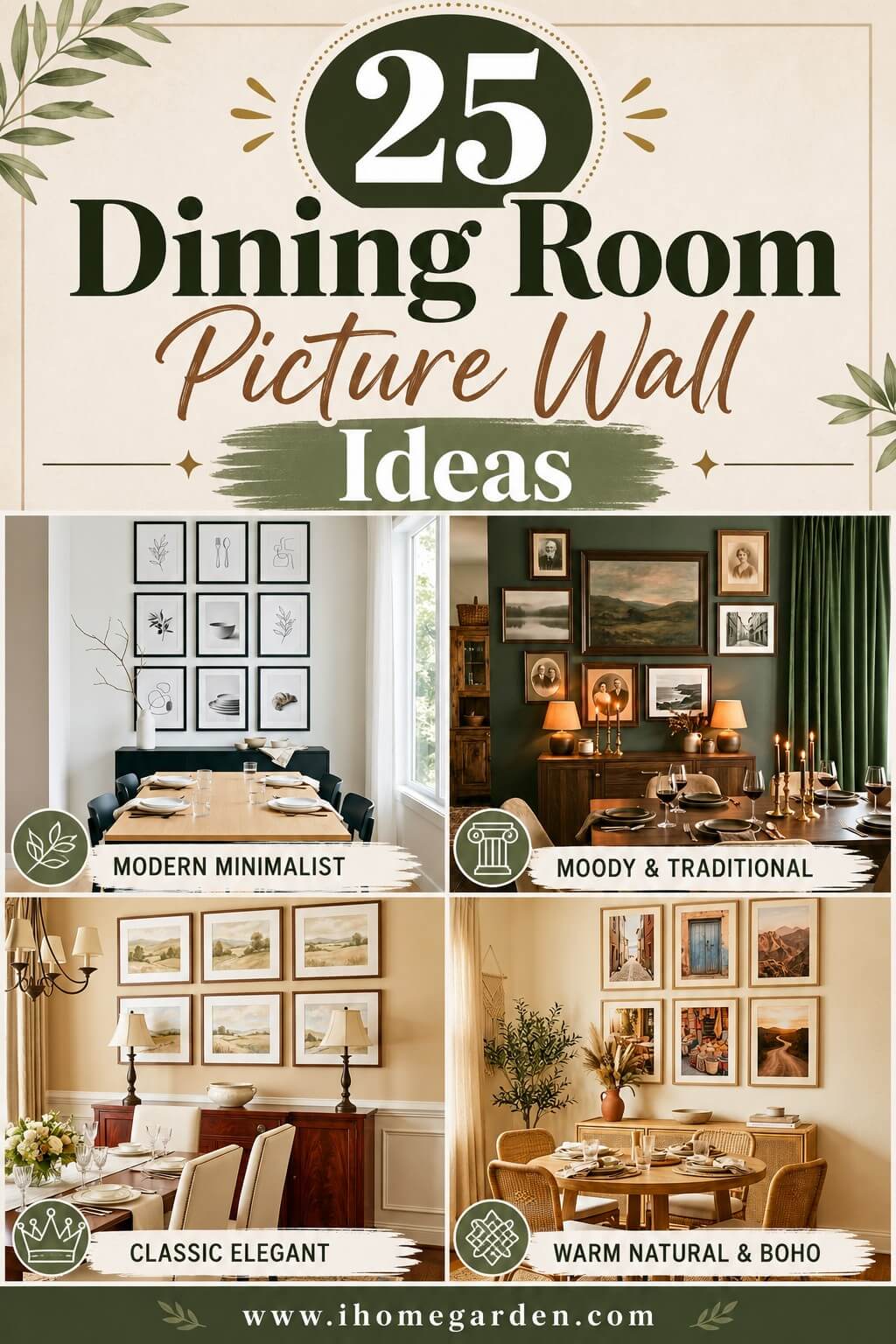
It gives the room a personality, makes guests feel something the moment they walk in, and turns an ordinary dining space into a place worth lingering. The good news is you do not need a designer budget or a decorator’s eye to pull it off. You just need the right ideas and a little direction — practical, real-world inspiration you can actually use this weekend.
1. Create a Family Photo Gallery Above the Sideboard
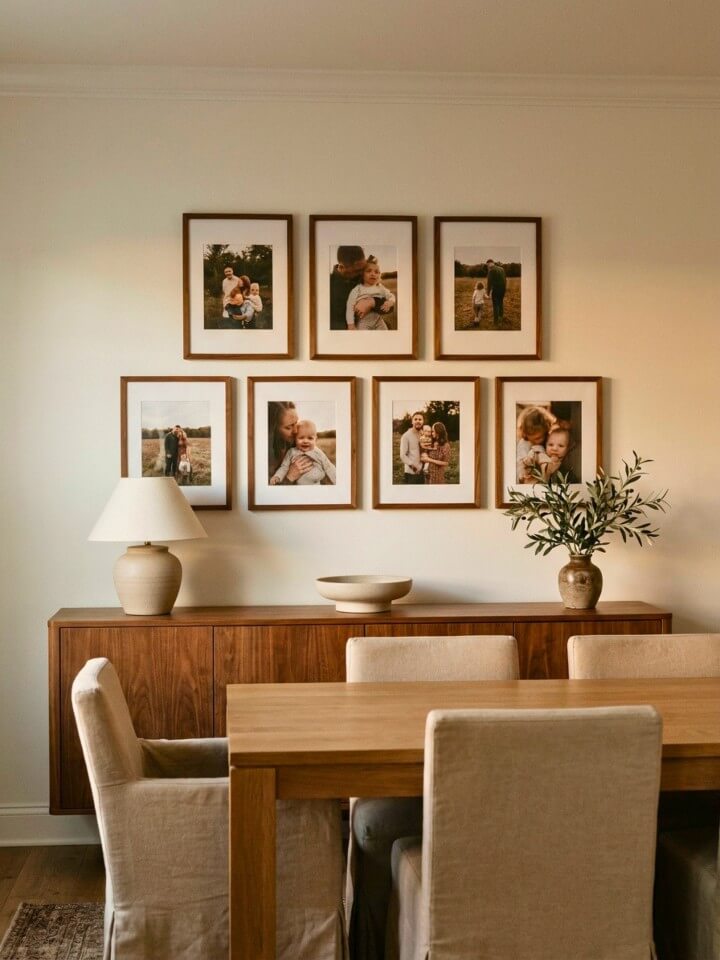
A family photo gallery above the sideboard makes your dining room feel warm, personal, and lived-in. Pick five to seven favorite photos and print them in consistent sizes like 5×7 or 8×10. Matching frames keep the display neat — black frames suit modern rooms, warm wood frames work well in farmhouse spaces, and white frames brighten airy dining rooms. Hang the bottom row six to eight inches above the sideboard so the wall and furniture feel connected. Before hammering any nails, tape paper cutouts on the wall to plan your layout and avoid unnecessary holes.
Pro Tips:
- Use the same filter or print tone for all photos so the gallery feels cohesive
- Odd numbers like five or seven frames look more natural than even groupings
- Keep frames within the width of the sideboard so the display feels balanced
2. Mix Framed Art and Mirrors for a Bright Wall Display
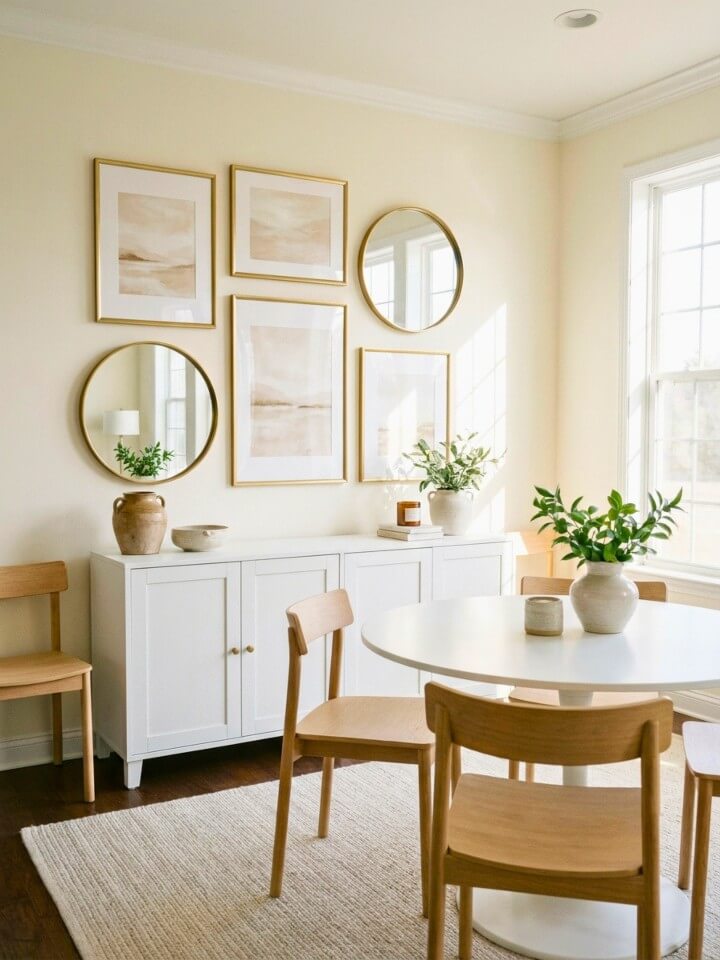
Mixing framed art with one or two mirrors makes your dining room feel brighter and more open, especially in spaces with limited natural light. Start with two or three art prints — botanical illustrations, abstract pieces, or simple line drawings work well — then add one round or arched mirror to break up the rectangular shapes. Place this display across from a window so the mirror reflects daylight during meals and bounces dining room lighting in the evening. This combination works beautifully in modern, transitional, and glam dining rooms where you want a wall that feels both stylish and functional.
Quick Tips:
- Choose a mirror that is at least 50 percent larger than your art prints so it anchors the display
- Arched and round mirrors work better than square ones because they contrast rectangular frames nicely
- Keep all frames in the same finish — gold, black, or wood — so the mix feels intentional not random
3. Use Black Frames for a Clean Modern Dining Room Picture Wall
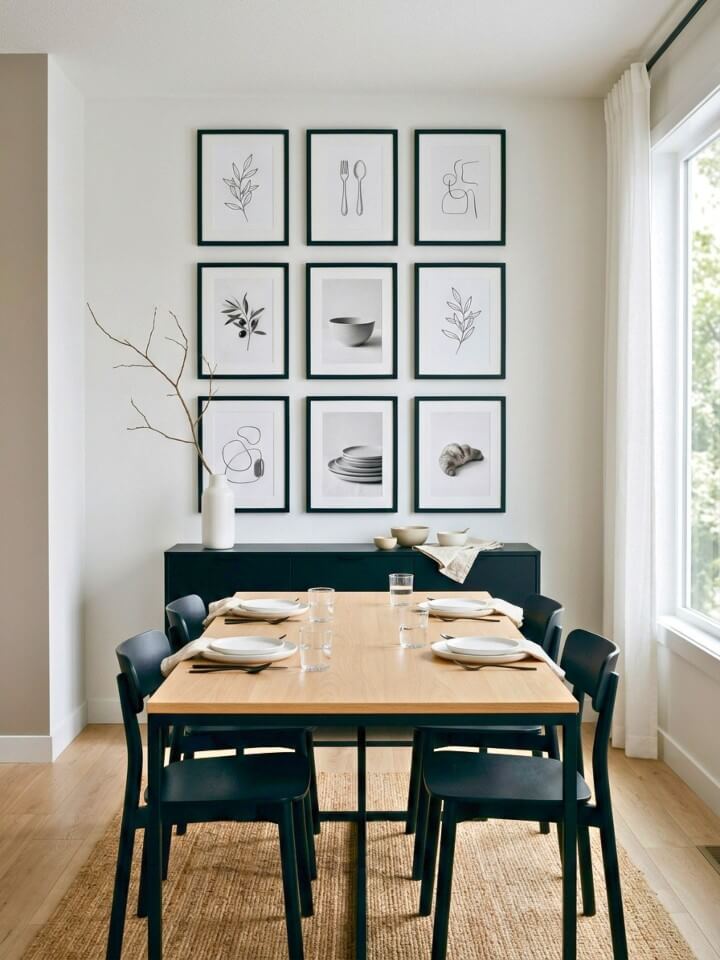
Black frames work with almost any wall color, art style, or furniture because they give a dining room picture wall a clean, sharp finish without feeling heavy. Fill them with soft watercolor prints, simple line drawings, food photography, or black-and-white family photos for the best contrast. Hang them in a neat grid above your dining table or buffet, keeping two to three inches of equal spacing between each frame so the display looks calm and planned. Use a level and tape measure to get the spacing right because uneven gaps are the most common mistake with grid layouts.
Things to Keep in Mind:
- Stick to one or two art themes — mixing too many styles inside black frames makes the wall feel busy
- Matte black frames feel more modern while glossy black frames lean more traditional
- White or cream mats inside the frames add breathing room and make the artwork stand out more
4. Build a Rustic Display With Wood Frames
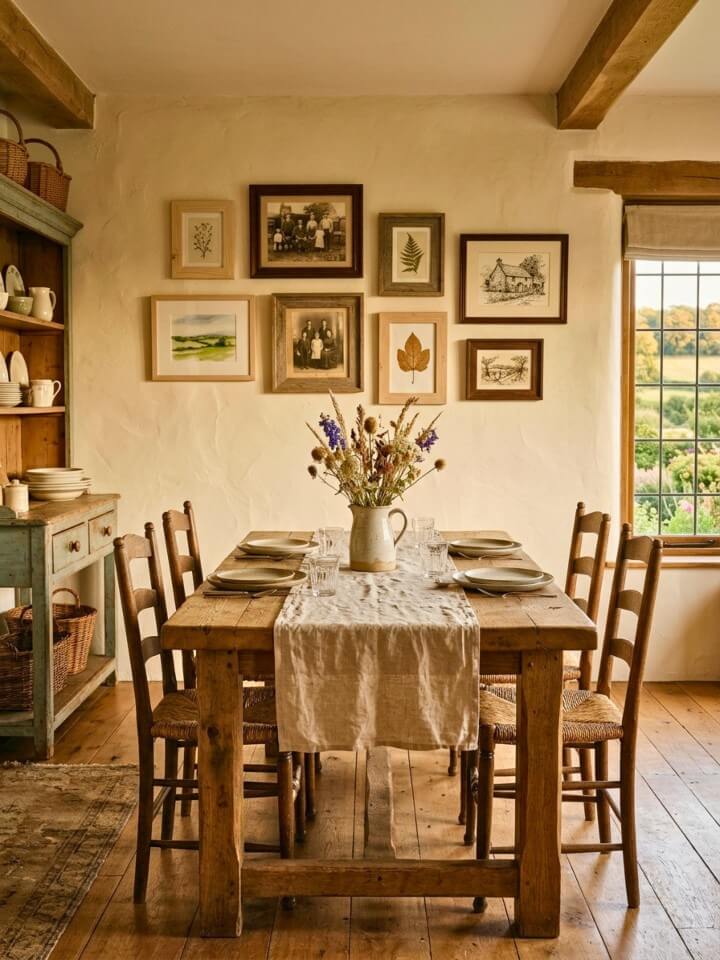
Wood frames bring natural warmth to a dining room that makes the space feel relaxed and genuinely comfortable. Choose oak, walnut, pine, or weathered finishes depending on your furniture tone — lighter frames suit bright rooms while darker walnut frames work well with deep-colored walls or dark wood tables. Fill them with family photos, countryside landscapes, vintage botanical sketches, or soft nature prints. Hang the display above a farmhouse table, near a hutch, or along a shiplap wall. Style the sideboard below with a small plant, candle, or ceramic piece so the whole area feels complete.
Before You Hang:
- Mixing two similar wood tones adds depth without making the wall look mismatched
- Avoid glossy or modern art inside wood frames — keep the content as natural as the frames themselves
- Weathered or whitewashed frames work especially well in cottage and coastal dining rooms
5. Hang Food and Botanical Prints for a Cozy Dining Space
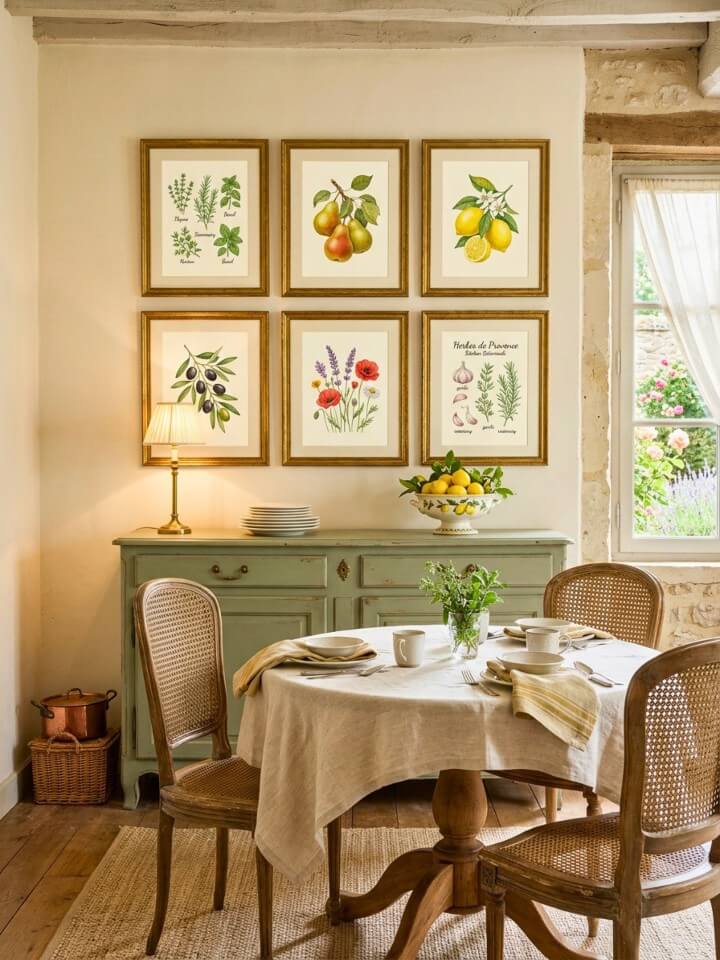
Food and botanical prints suit a dining room perfectly because they feel charming and welcoming without being too personal for guests. Look for prints featuring herbs, citrus fruit, vegetables, wildflowers, or vintage kitchen sketches. Classic botanical illustrations are widely available as affordable prints and bring a timeless character that modern graphic prints often lack. Frame them in wood for farmhouse rooms, white for coastal or Scandinavian spaces, or antique gold for French country and traditional dining rooms. Hang the display above a buffet or bar cart and add soft warm lighting nearby to make this wall a true focal point.
What Works Best:
- Stick to a consistent color palette across all prints so the display feels curated not random
- Odd-numbered groupings of three or five prints look more relaxed and natural on the wall
- A simple picture light mounted above the display adds warmth and draws attention to the artwork in the evening
Recommended for You: Charming Cape Cod Kitchen Ideas
6. Style a Symmetrical Layout Around a Buffet Table
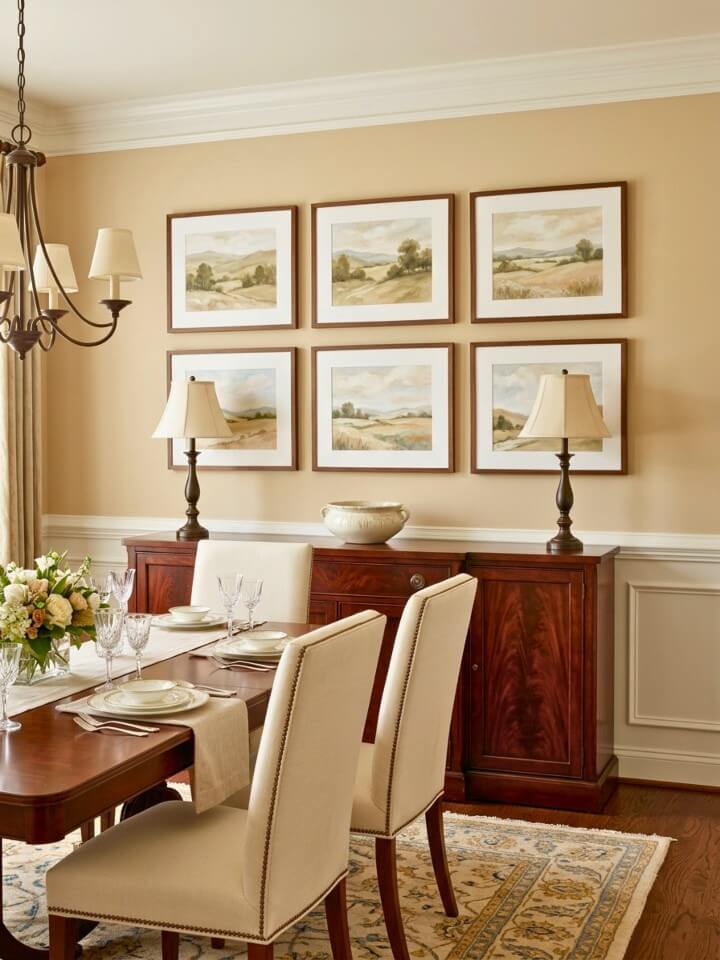
A symmetrical picture wall around a buffet table gives your dining room a tidy, balanced look that feels calm during meals and gatherings. Choose four, six, or eight frames in the same size and hang them in even rows with equal spacing between each piece. Soft landscapes, simple sketches, or muted art prints work best so the display does not compete with serving pieces on the buffet below. Measure carefully before hanging because even one frame slightly off center can throw the whole display out of balance and make the wall feel unplanned.
Designer Tips:
- Always start from the center and work outward so both sides stay perfectly even
- Use the same mat color across all frames to tie the display together visually
- Leave at least six inches of wall space on each side of the outermost frame so the display does not feel cramped
7. Create a Balanced Look With Frames Above Your Buffet
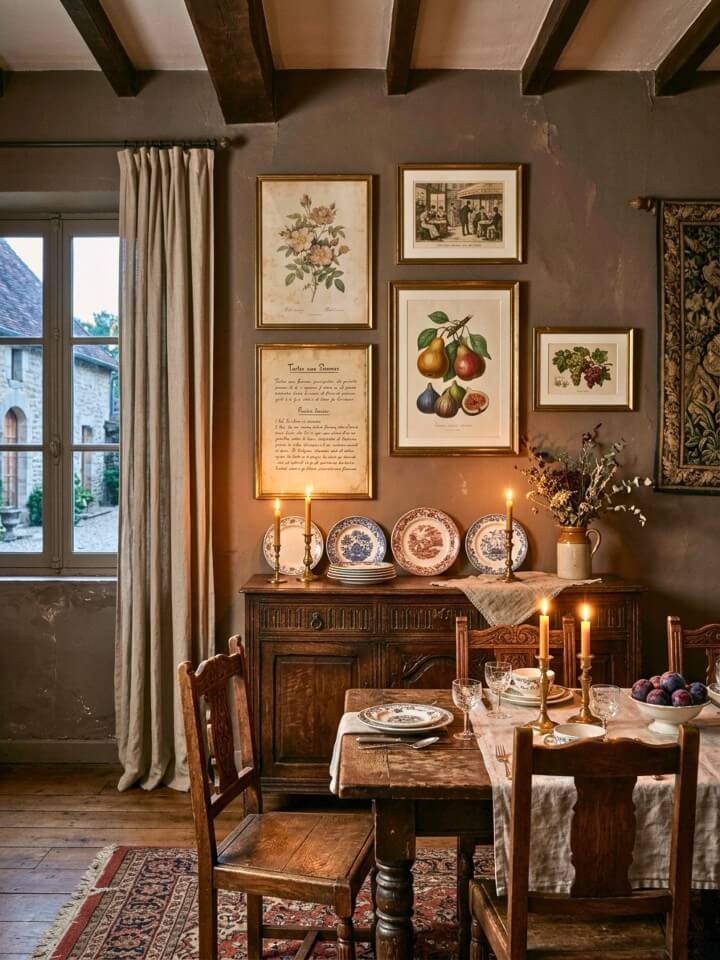
Vintage dining prints bring character and history to a dining room, making a newer space feel collected and layered over time. Look for antique-style fruit art, cafe scenes, old recipe prints, or faded botanical artwork and place them in aged wood or brass frames for an authentic feel. Hang them near a china cabinet, above a sideboard, or on the wall closest to the dining table. The worn, faded quality of vintage prints pairs beautifully with candle holders, patterned dishes, and warm wood furniture already in the room.
Smart Choices:
- Check thrift stores, estate sales, and online marketplaces for genuine vintage prints at affordable prices
- Aged brass and dark wood frames enhance the old-world feel better than modern black or white frames
- Mixing two or three different vintage themes — fruit, botanicals, cafe scenes — adds depth without looking cluttered
8. Design a Small Picture Wall for a Breakfast Nook
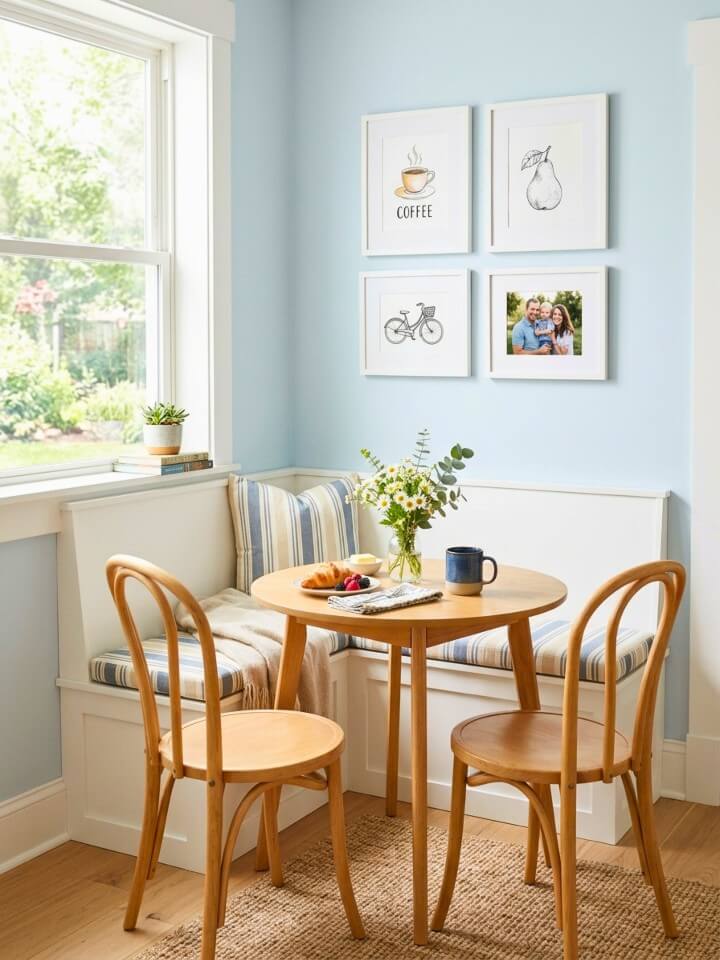
A small picture wall in a breakfast nook makes the corner feel planned and cozy instead of forgotten. Choose three to five small frames and hang them close enough together so they read as one cohesive group rather than random individual pieces. Family snapshots, coffee prints, fruit art, or simple line drawings all work well in this casual setting. Place the display above a bench, small round table, or corner banquette so it feels visually connected to the seating below and gives the nook its own distinct personality.
Keep in Mind:
- Keep all frames within the width of the table or bench below so the display feels anchored
- Smaller frames in the 4×6 or 5×7 range suit nook walls better than oversized pieces
- Tight two-inch spacing between frames makes a small grouping feel intentional and complete
9. Use Oversized Frames for a Bold Dining Room Statement
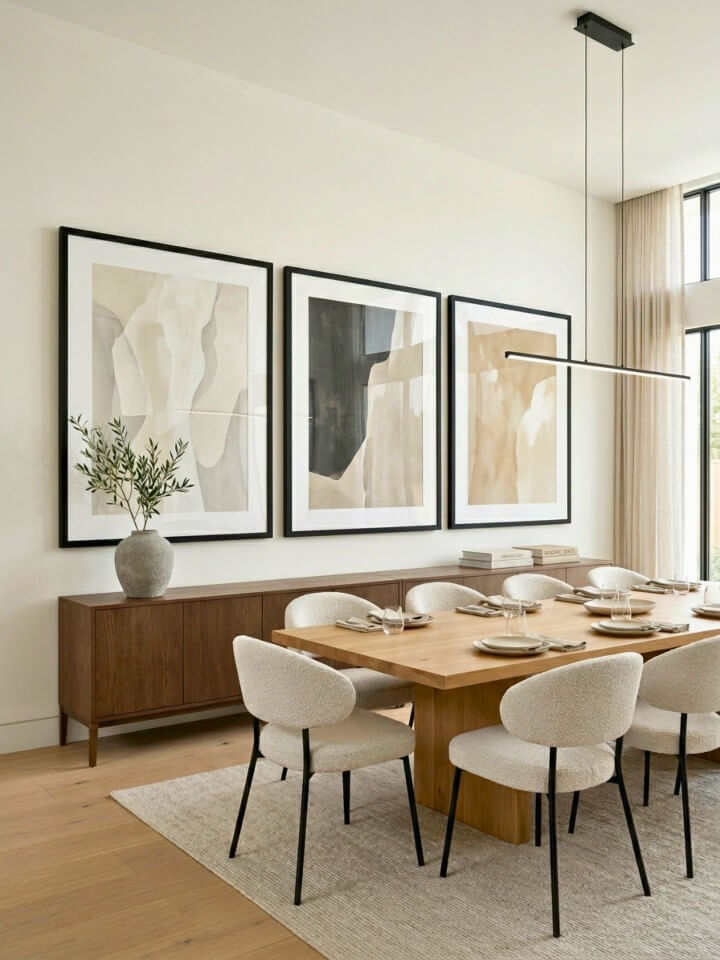
Oversized frames give a dining room picture wall a strong, confident focal point without needing many pieces to fill the wall. Pick two or three large prints such as abstract art, black-and-white photography, or soft landscape prints and hang them above the dining table or long buffet. Keep the frames simple and thin so the scale feels clean and commanding rather than heavy and overwhelming. This approach works especially well in larger dining rooms where a small gallery wall would get lost and the space needs one strong visual statement to feel complete.
Designer Tips:
- Stick to one consistent frame style across all oversized pieces so the display feels deliberate
- Leave at least three to four inches of spacing between oversized frames so each piece has room to breathe
- Choose artwork with colors already present in your rug, curtains, or chair upholstery to tie the room together
10. Pair Picture Ledges With Layered Art in Your Dining Room
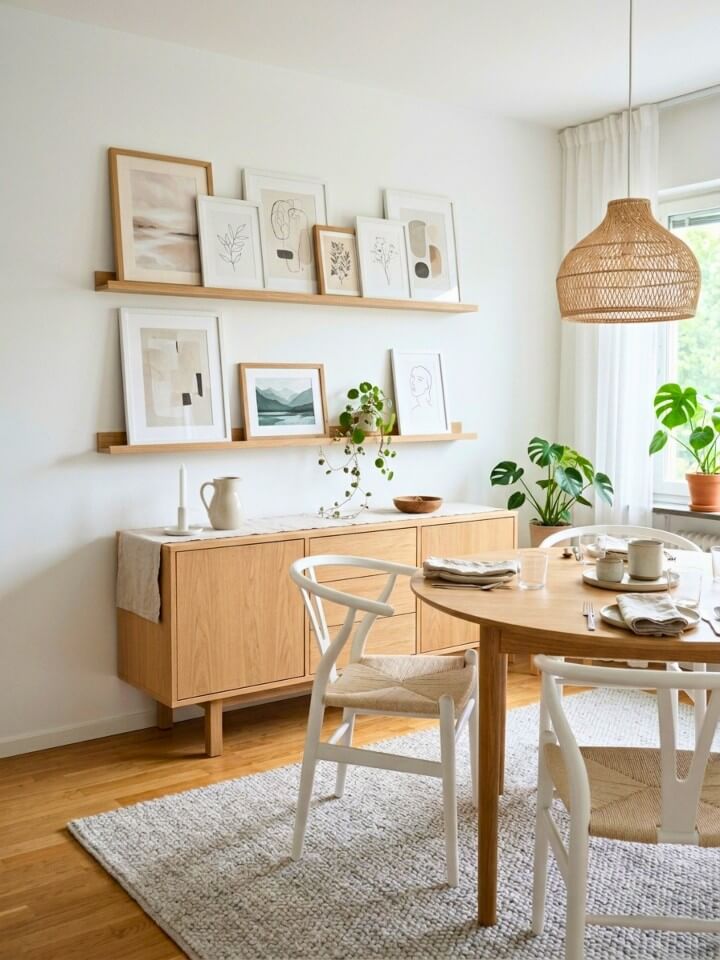
Picture ledges let you change your dining room wall art anytime without making new holes or repainting the wall. Install one or two slim ledges above a buffet, bench, or small dining table and layer framed prints in different sizes along the shelf. Add a small vase, candle, or tiny plant between frames to create depth and make the display feel like a styled moment rather than just a row of pictures. This approach suits casual dining rooms and open-plan homes where flexibility and a relaxed personal feel matter more than a perfectly fixed layout.
What Works Best:
- Layer larger frames at the back and smaller ones in front for a natural sense of depth
- Swap prints seasonally — florals in spring, warm landscapes in fall — without any tools or wall damage
- Keep ledge accessories minimal so the artwork stays the main focus and the shelf does not feel cluttered
11. Frame Travel Photos for a Personal Dining Room Wall
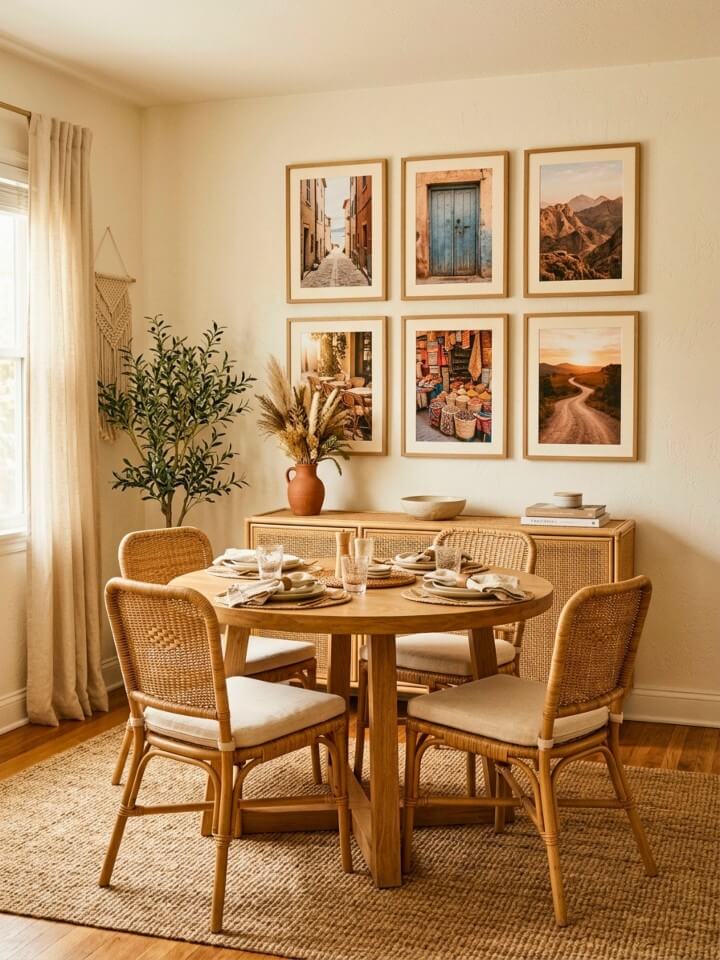
Travel photos make a dining room feel personal and full of good memories without turning the wall into clutter. Choose a few favorite destinations, print the photos in the same tone, and place them in matching frames for a clean, cohesive look. Black-and-white prints work beautifully in modern dining rooms while warm color photos feel right at home in boho or rustic spaces. Hang them above a sideboard, bar cabinet, or dining bench so guests can enjoy them during meals and naturally start conversations about the places they see on the wall.
Quick Tips:
- Print all travel photos in the same finish — matte or glossy — so the display looks consistent and intentional
- Group photos by destination or trip so the wall tells a story rather than feeling like a random collection
- Add a small map print or city sketch to the mix for extra personality and visual interest
12. Use Matching Mats for a Polished Gallery Wall
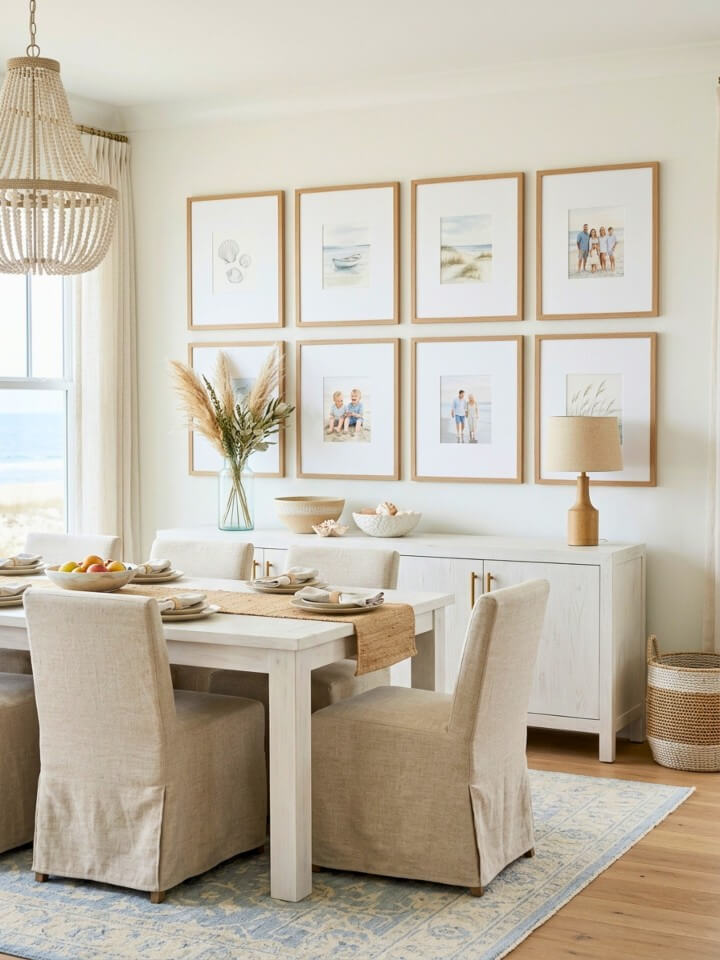
Matching mats are one of the simplest ways to make a dining room gallery wall look clean, calm, and professionally planned even when the pictures inside are all different. Use wide white or cream mats around family photos, art prints, or sketches and place them in simple wood, black, or gold frames. This works best above a buffet, console table, or long dining room wall where even spacing is easy to maintain. The extra border that a mat provides gives each picture breathing room and stops the display from feeling too busy or crowded.
Things to Keep in Mind:
- Choose mats that are at least two inches wide so they give each piece enough visual breathing room
- Stick to one mat color across all frames — mixing white and cream mats together can look unintentional
- Wide mats make small prints look more substantial and important on a large dining room wall
13. Moody Dining Room Picture Wall With Dark Frames
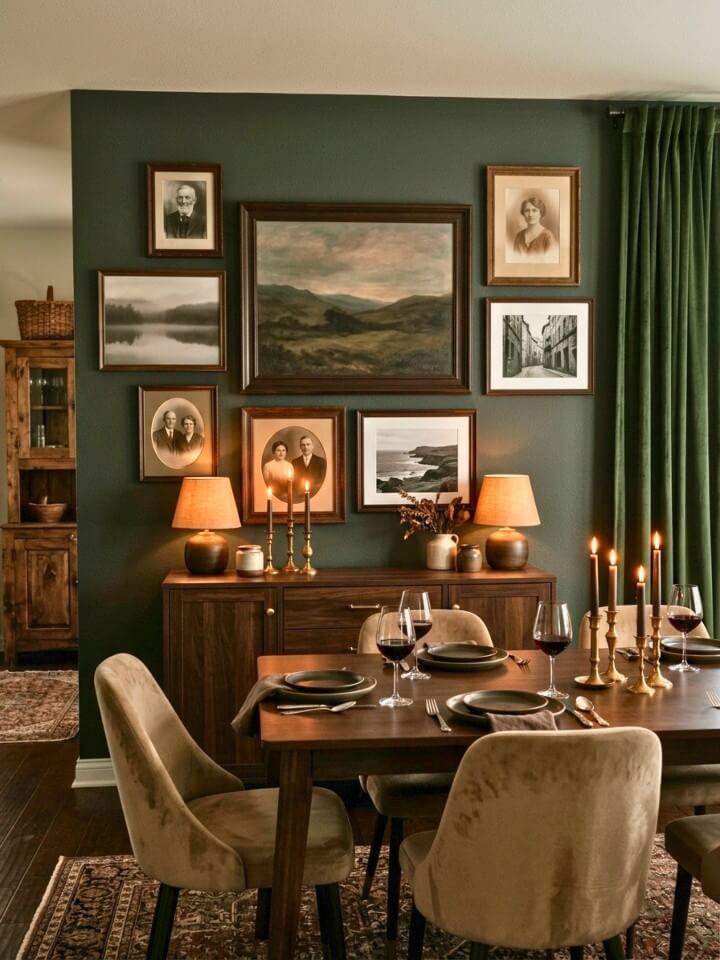
Dark frames can make a dining room feel rich, cozy, and deeply inviting especially when paired with warm lighting and deeper wall colors. Choose charcoal, espresso, or black frames and fill them with muted landscapes, vintage portraits, or black-and-white photography for a grounded, dramatic look. Hang the display above a dark wood dining table, sideboard, or painted accent wall to reinforce the moody atmosphere. This idea works best when the rest of the room supports it with brass accents, candles, soft fabric chairs, and warm overhead lighting that makes the whole space glow during evening meals.
Smart Choices:
- Pair dark frames with warm amber lighting rather than cool white bulbs to keep the mood inviting not gloomy
- Muted and desaturated artwork suits dark frames better than bright colorful prints
- A deep wall color like navy, forest green, or charcoal behind dark frames creates a layered, dramatic look that feels intentional
14. Hang Plate-Inspired Art for a Classic Dining Look
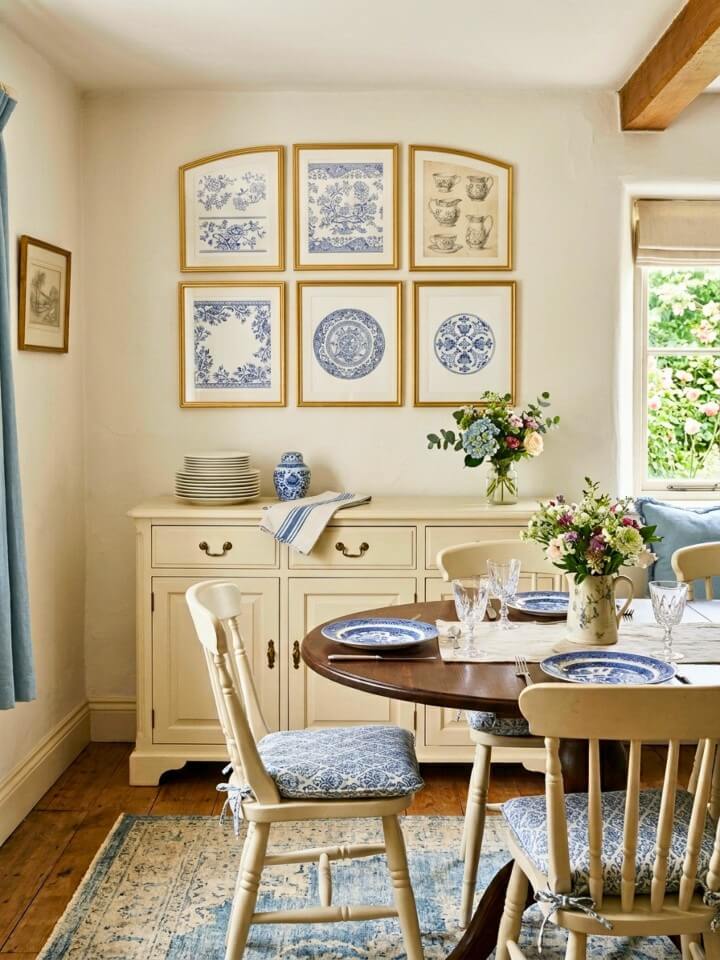
Plate-inspired art gives your dining room a classic, collected look without the hassle of actually mounting real plates on the wall. Choose prints featuring blue-and-white patterns, floral borders, antique china sketches, or simple round designs and frame them in thin wood or gold frames for an elegant finish. Place them above a buffet, china cabinet, or small dining table to visually connect the wall art to your tableware and dining accessories below. This style feels especially at home in traditional and cottage dining rooms where layered patterns and classic details are already part of the overall look.
Before You Hang:
- Arrange round and rectangular frames together to mimic the variety of a real plate wall without the installation challenges
- Blue and white is the most classic color combination for this style but soft green and cream works equally well
- Keep frame styles consistent — mixing too many different frame profiles makes plate-inspired art look less refined
15. Build a Minimal Display With Neutral Prints
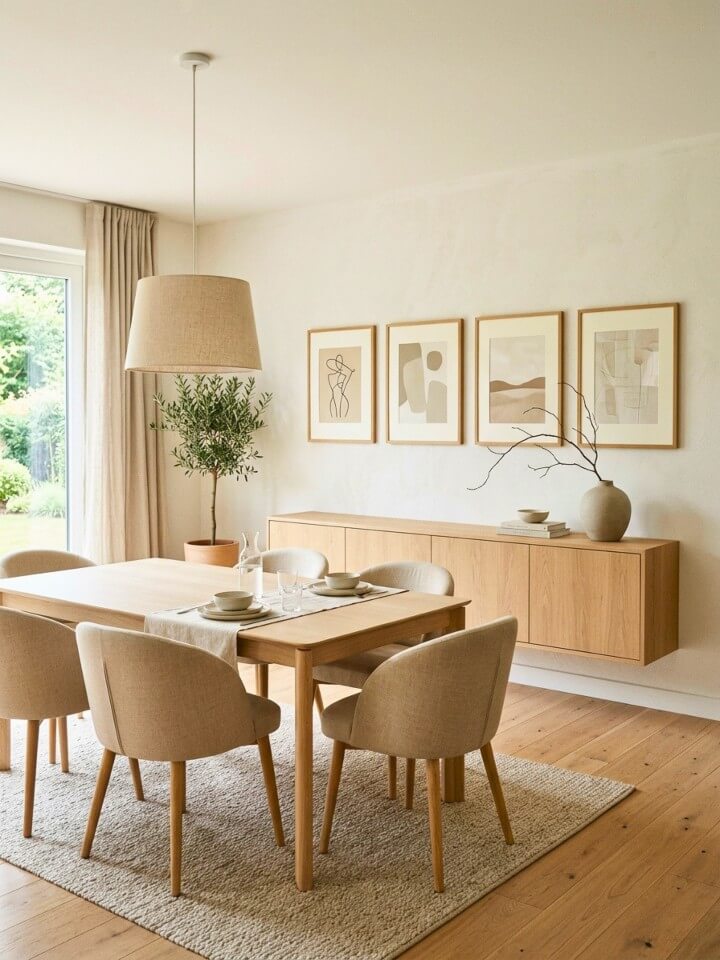
A minimal picture wall with neutral prints keeps the dining room feeling calm and uncluttered while still giving the wall a finished, intentional look. Pick soft beige, cream, gray, or taupe artwork and use slim frames with generous spacing between each piece so nothing feels crowded. Abstract shapes, simple line drawings, and quiet landscape prints all work beautifully above a modern dining table or low sideboard. The goal is a wall that adds visual interest without demanding attention — something that feels complete and settled rather than loud or decorative for the sake of decoration.
Keep in Mind:
- Less is more with this style — three well-chosen pieces look stronger than seven mediocre ones
- Choose frames in the same slim profile so the display feels consistent and deliberately restrained
- Stick to artwork with minimal detail and soft tonal contrast so the wall stays calm from across the room
16. Add a Picture Wall Around a Dining Room Mirror
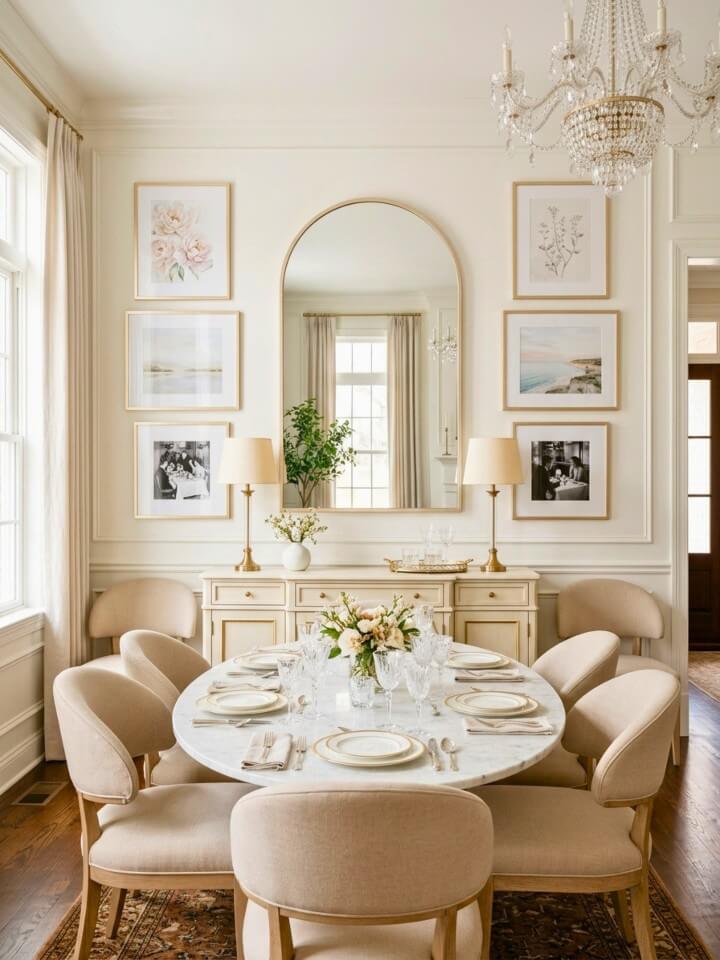
A picture wall built around a central mirror gives your dining room more personality while making the space feel brighter and more open at the same time. Start with one mirror in the center as your anchor piece, then hang smaller framed photos or art prints around it with even spacing. The mirror does the practical work of reflecting light while the surrounding frames add warmth and visual interest. This combination works especially well in dining rooms that feel a little dark or plain and need one strong wall moment to bring the whole space together.
Designer Tips:
- Choose a mirror that is noticeably larger than the surrounding frames so it reads as the clear focal point
- Keep all frames in the same finish as the mirror — gold, black, or wood — for a pulled-together look
- Place the mirror at eye level first and then build the frame arrangement around it rather than the other way around
17. Use Gold Frames for a Warm, Elegant Look
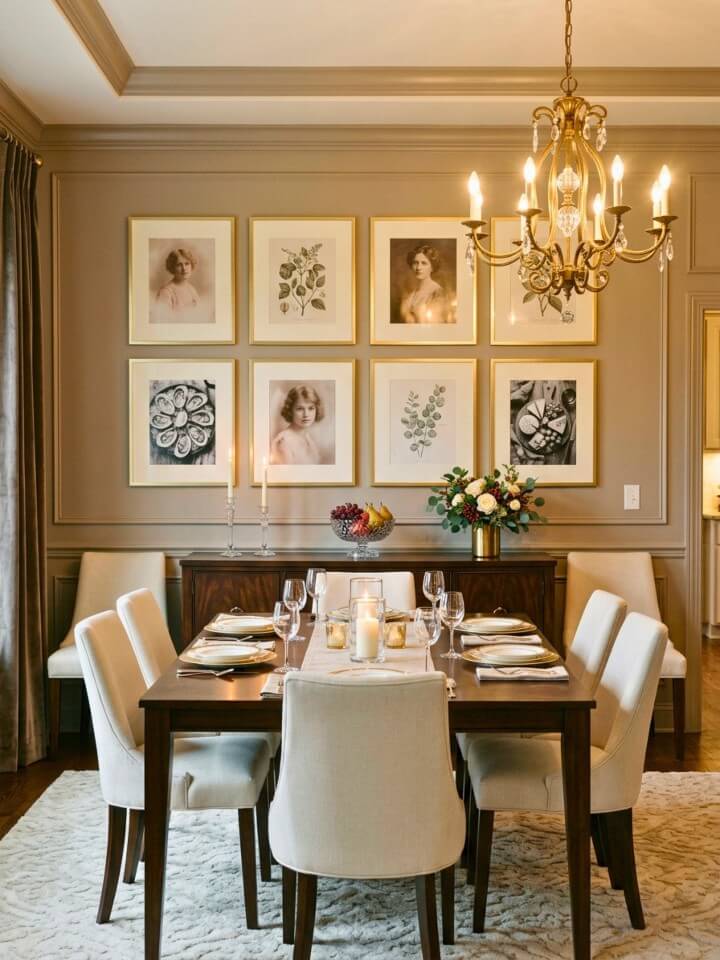
Gold frames bring a quiet warmth to a dining room picture wall that makes even simple artwork feel more considered and special. Choose thin gold frames for a clean modern look or aged brass frames if your dining room leans more vintage and layered in style. Fill them with soft portraits, botanical prints, food art, or black-and-white photos and hang them above a buffet or on the main wall near the dining table. Gold frames catch the light beautifully during evening meals and work especially well when the room already has warm lighting, glassware, and candles on the table.
What Works Best:
- Thin gold frames suit modern and transitional rooms while chunkier ornate frames work better in traditional spaces
- Mix gold frames with cream or ivory mats to soften the look and add elegance without extra cost
- Warm white walls make gold frames glow while cool gray walls can make them look slightly flat and dull
You Might Also Enjoy: 30 Stylish Kitchen Ideas for a Single Wide Trailer
18. Seasonal Dining Room Picture Wall You Can Refresh
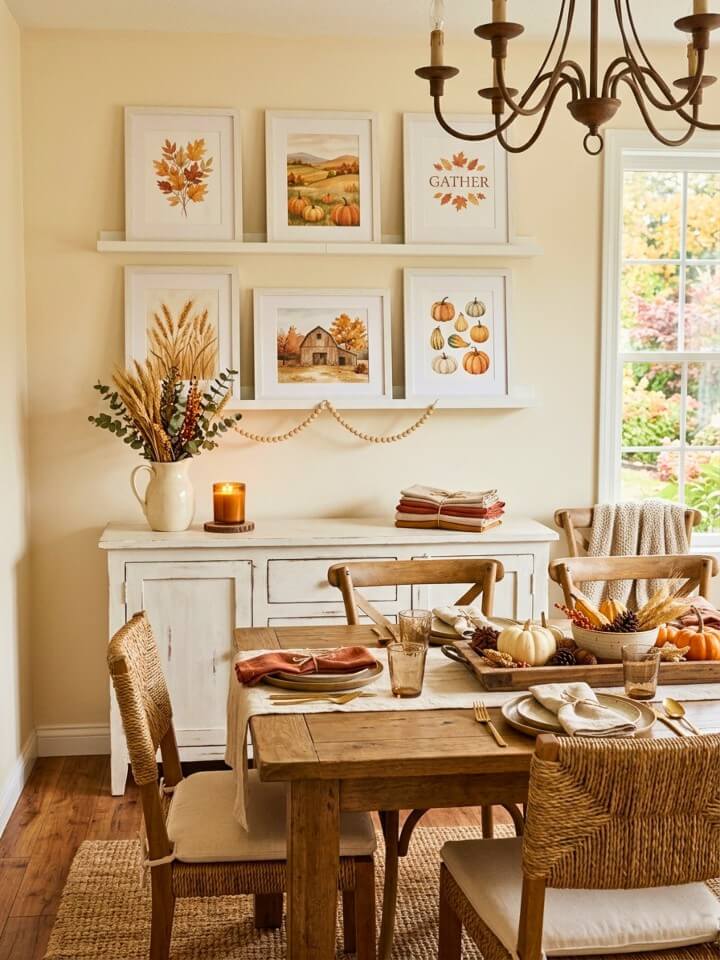
A seasonal picture wall keeps your dining room feeling fresh and current throughout the year without requiring a full redecoration every few months. Use picture ledges or easy-open frames so you can swap prints quickly and without any tools or wall damage. Try soft florals in spring, coastal and beach art in summer, warm leaf and harvest prints in fall, and simple quiet landscapes during winter months. Place the display above a buffet, breakfast nook, or small dining table where seasonal updates feel natural and connect easily to your changing table decor below.
Smart Choices:
- Buy a small collection of prints for each season upfront so swapping takes minutes not hours of searching
- Easy-open clip frames are the most practical option for seasonal changes because no tools are needed
- Store off-season prints flat in a simple portfolio folder to keep them safe and crease-free between rotations
19. Hang Black-and-White Photos for Timeless Style
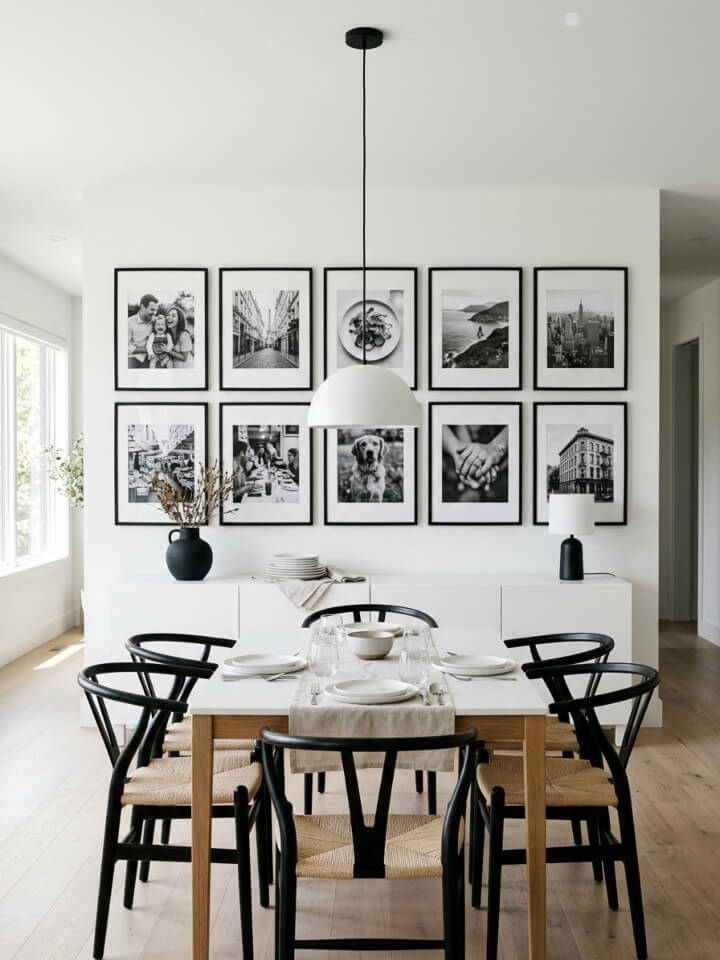
Black-and-white photos give a dining room picture wall a timeless, settled quality that works with almost every color palette and furniture style. Print family photos, city scenes, food photography, or travel shots in the same black-and-white finish and place them in matching black, white, or natural wood frames for a consistent look. Hang them in a clean grid above the dining table or sideboard and keep the spacing even throughout. The beauty of this approach is that it never goes out of style and works just as well in a newly decorated dining room as it does in a space that has stayed the same for years.
Things to Keep in Mind:
- Print all photos with the same contrast level so light and dark tones stay consistent across the entire display
- A grid layout works best for black-and-white photos because the uniform structure complements the simple color palette
- Add one or two photos with strong graphic compositions — shadows, architecture, patterns — to give the display visual variety without adding color
20. Style a Picture Wall Above a Dining Bench
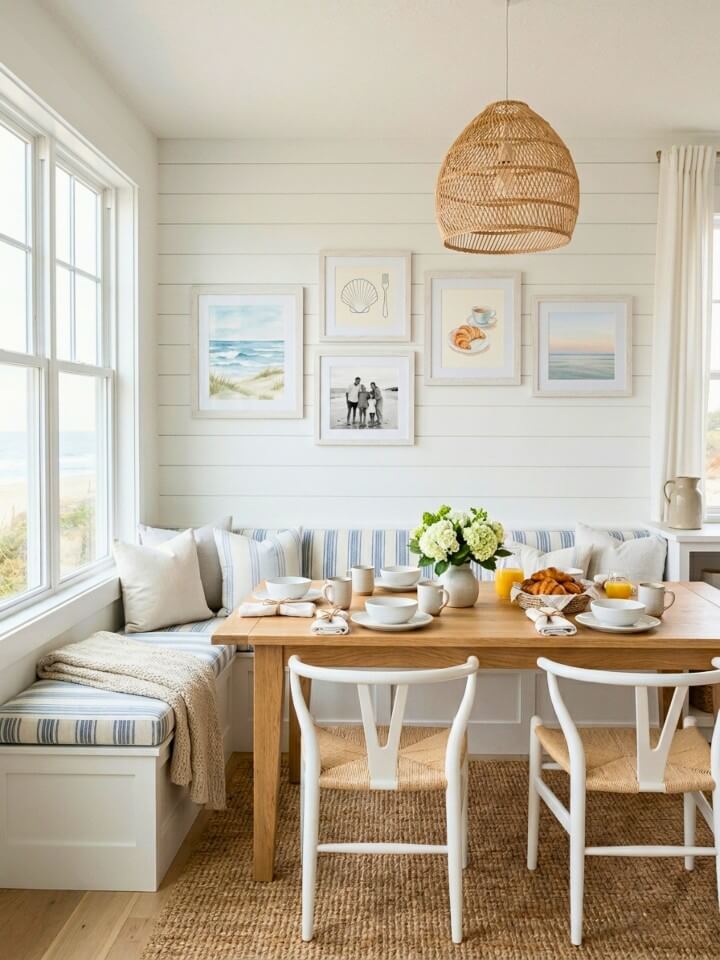
A picture wall above a dining bench pulls the seating area together and makes it feel like a deliberately designed space rather than an afterthought. Choose frames that stay within the width of the bench so the display feels visually connected to the furniture below rather than floating randomly on the wall. Mix family photos, food prints, or soft landscape art in wood or white frames for a look that feels inviting and easy to live with every day. This works especially well with banquettes, built-in benches, and casual dining corners where the wall and seating need to work as one cohesive unit.
Before You Hang:
- Keep the lowest frame at least eight inches above the bench so nothing gets bumped or knocked during meals
- Stay within the bench width on both sides — frames that extend too far beyond the furniture look unanchored
- Use lighter frame colors above a bench to keep the seating area feeling open and comfortable rather than closed in
21. Create a Picture Wall With Mixed Frame Sizes
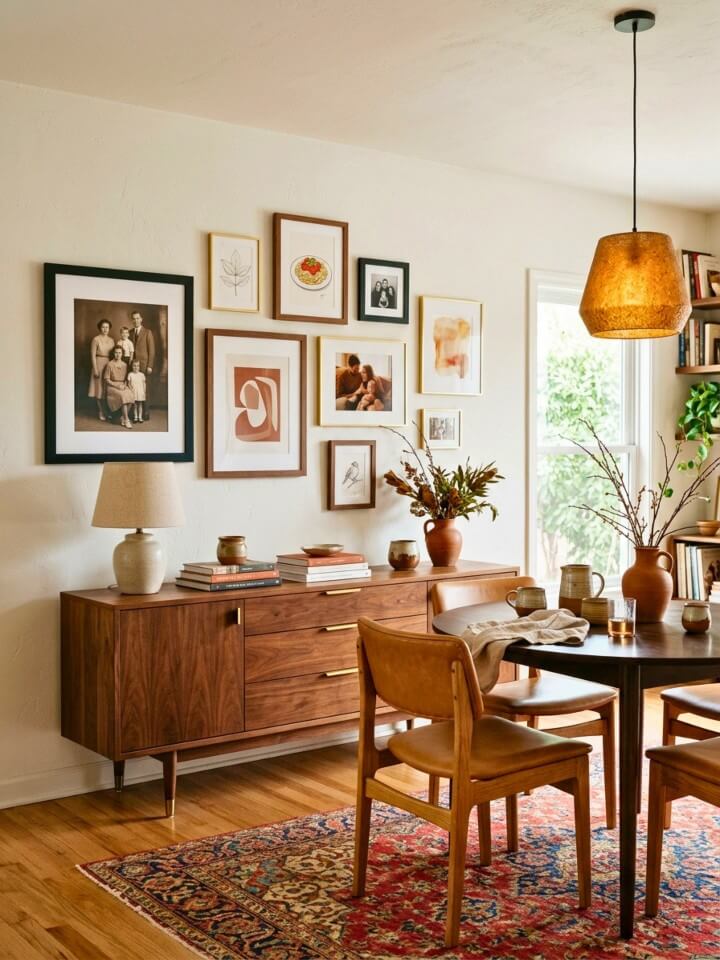
A picture wall with mixed frame sizes gives your dining room a relaxed, collected look that feels personal and genuinely interesting rather than store-bought and predictable. Start with one large frame as the anchor piece, then build outward by adding medium and small frames around it in a loose organic shape. Keep the art content within a similar color palette so the different sizes feel connected rather than chaotic. This approach works best above a buffet, console, or wide dining table wall where there is enough horizontal space to let the arrangement breathe and develop naturally.
Pro Tips:
- Lay the entire arrangement on the floor first and photograph it before transferring it to the wall
- Keep the largest frame slightly off center for a more relaxed and collected feel
- Use one consistent frame finish — wood, black, or gold — across all sizes so variety in size does not become visual chaos
22. Hang Abstract Art for a Modern Dining Room Picture Wall
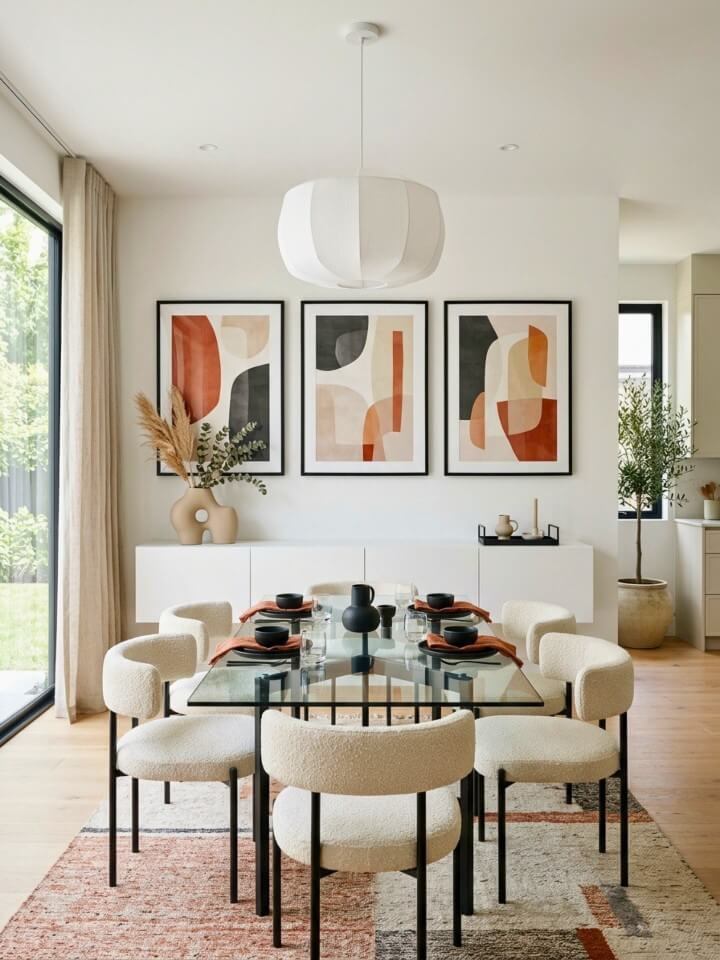
Abstract art gives a dining room a sophisticated modern feel without making the wall look overly formal or decorated. Choose two or three prints with colors already present in your chairs, rug, curtains, or table setting so the art feels connected to the rest of the room rather than randomly placed. Keep the frames slim and simple so the artwork itself stays the clear focus of the display. Hang the pieces above the dining table, sideboard, or on a large blank wall that needs movement and energy without the formality of traditional landscape or portrait art.
Quick Tips:
- Choose abstract prints with at least one color pulled directly from your existing furniture or textiles
- Odd numbered groupings of two or three pieces feel more dynamic than a single large abstract print alone
- Avoid abstract art with very busy or aggressive compositions in a dining room — softer movement and muted tones work better in a space meant for relaxed meals
23. Use Landscape Prints for a Calm Dining Wall
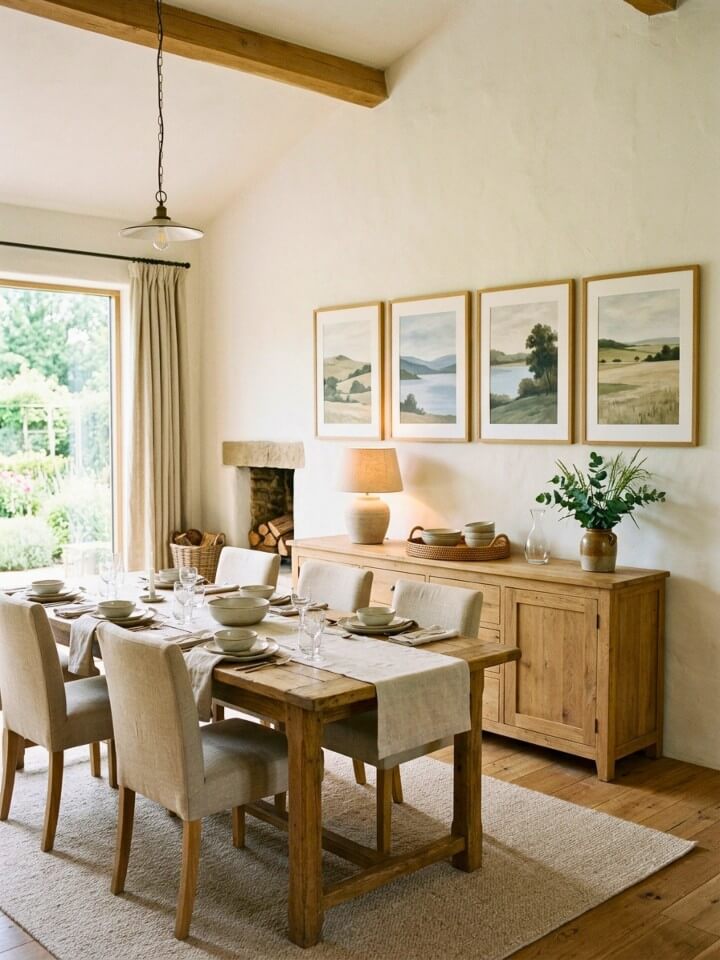
Landscape prints make a dining room feel open, peaceful, and easy to sit in for long meals and slow conversations. Choose soft fields, quiet water views, gentle hills, woodland scenes, or garden landscapes and frame them in wood, black, or white depending on your existing furniture style. Hang them above a buffet, dining bench, or long table wall where they can serve as a quiet focal point that does not demand attention but always feels pleasant to look at. The calming quality of landscape art makes it one of the most universally comfortable choices for a dining room wall.
Designer Tips:
- Choose landscapes with a consistent horizon line across multiple prints so the display feels visually connected
- Soft morning and golden hour tones in landscape prints add warmth to a dining room better than cool blue or midday tones
- Wide horizontal landscape prints suit long buffets and dining tables better than tall vertical compositions
24. Build a Cozy Cottage Picture Wall With Soft Colors
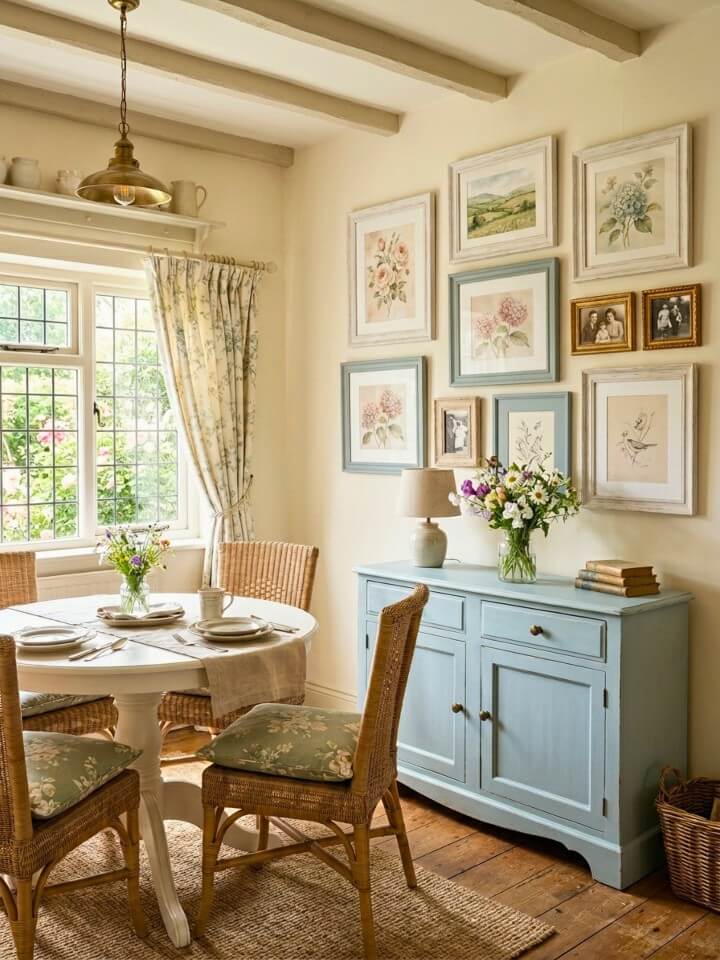
A cottage picture wall built around soft colors makes the dining room feel gentle, warm, and deeply comfortable in a way that harder palettes simply cannot achieve. Choose floral prints, faded landscapes, small family photos, or vintage style sketches in cream, sage, dusty blue, or blush tones that feel quiet and easy on the eye. Use whitewashed wood, light oak, or antique gold frames to keep the overall look soft and unhurried. Place the wall above a round dining table, breakfast nook, or painted sideboard and pair it with woven chairs and simple linen table settings for a complete cottage feel.
Things to Keep in Mind:
- Avoid bright saturated colors in this style — faded and slightly muted prints always look more authentically cottage
- Whitewashed wood frames are the single most effective frame choice for achieving a genuine cottage feel
- Mixing florals with one or two landscape prints adds variety without breaking the soft color palette
25. Personalized Artwork for a Warm Dining Room Wall
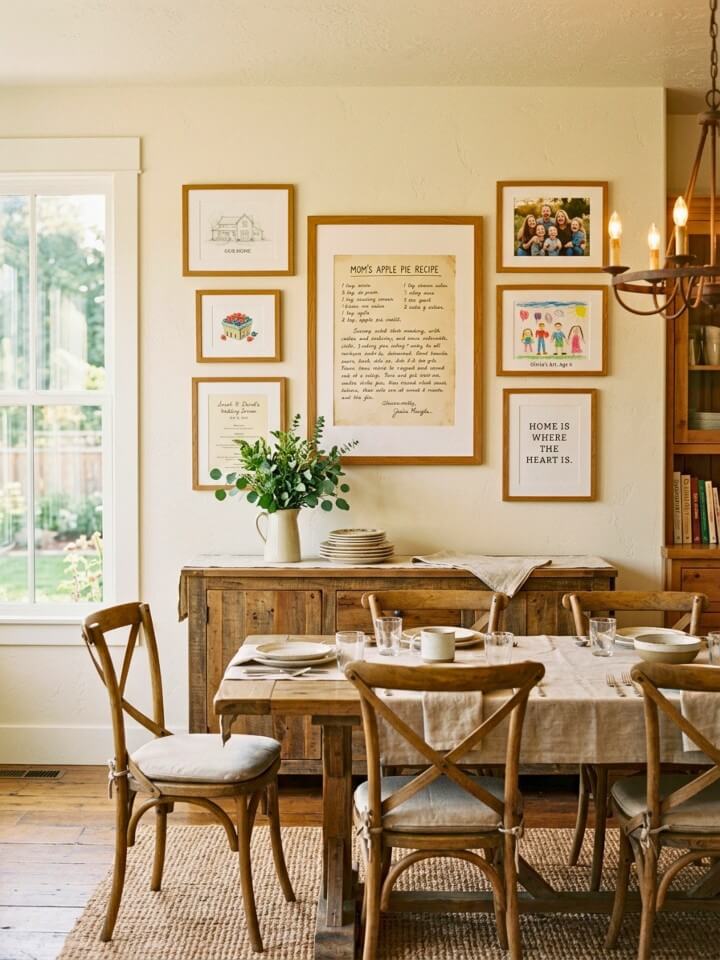
Personalized artwork makes a dining room feel like it genuinely belongs to the people who live there rather than a staged or decorated space. Frame a handwritten family recipe, a simple sketch of your home, a wedding menu, children’s artwork, or a meaningful quote in a style that matches your existing frames and room aesthetic. Place it above a buffet, near a bar cabinet, or at the center of a larger gallery wall where it naturally draws the eye and starts conversation among guests. Even one personalized piece among a collection of prints is enough to give the whole wall heart and meaning.
Keep in Mind:
- Place the personalized piece at eye level and near the center of the display so it gets the attention it deserves
- Frame children’s artwork in the same quality frames as everything else so it feels celebrated not casual
- One strong personalized piece has more impact than several smaller personal items scattered across the wall
Common Mistakes to Avoid
A great picture wall comes down to the details. Here are the most common mistakes people make in dining rooms and how to avoid them before you hang a single frame.
1. Hanging Everything Too High
This is the single most common picture wall mistake. Most people hang frames too high because it feels like the art needs more breathing room, but it actually disconnects the display from the furniture below. The center of your main frame or gallery arrangement should sit roughly at eye level, around 57 to 60 inches from the floor. Above a buffet or sideboard, the bottom frame should hang no more than six to eight inches above the furniture surface.
How to Fix It:
- Measure 57 inches from the floor and mark it lightly with a pencil as your center guide
- Always hang art in relation to the furniture below, not the ceiling above
- Step back and check from across the room before committing to any nail holes
2. Using Frames That Are Too Small for the Wall
Small frames on a large dining room wall look timid and unfinished. A common mistake is buying frames that feel right in the store but disappear once they are on the wall. If your dining table or buffet is wide, your picture wall needs to match that scale or it will look like an afterthought.
How to Fix It:
- The total width of your picture wall should cover at least two thirds of the furniture width below it
- When in doubt go slightly larger — a display that feels almost too big usually looks exactly right on the wall
- Use paper cutouts taped to the wall to test scale before buying any frames
3. Inconsistent Spacing Between Frames
Uneven gaps between frames make an otherwise good picture wall look rushed and unplanned. This is especially noticeable in grid layouts where consistent spacing is the whole point of the arrangement. Even a half inch difference between gaps is visible from across the room.
How to Fix It:
- Use a tape measure for every single gap — do not eyeball spacing on a grid layout
- Cut small cardboard spacers in your chosen gap width and use them as guides while hanging
- Two to three inches between frames is the most reliable spacing for most dining room gallery walls
4. Mixing Too Many Frame Styles
Using too many different frame colors, profiles, and finishes on one wall creates visual noise that makes the display feel accidental rather than intentional. Black frames, gold frames, thick wood frames, and thin white frames all on one wall pull the eye in too many directions at once.
How to Fix It:
- Stick to one frame finish across the entire display — wood, black, white, or gold
- If you want variety, change the frame size not the finish
- Two complementary finishes like black and gold or wood and white can work but three or more rarely do
5. Skipping the Planning Step
Going straight to the wall with a hammer and nails without planning the layout first is the fastest way to end up with a wall full of unnecessary holes and a display that never quite looks right. Most picture wall mistakes happen in the first five minutes before any real thought goes into placement.
How to Fix It:
- Trace each frame onto paper, cut out the shapes, and tape them to the wall before hanging anything
- Photograph the paper layout and live with it for a day before committing
- Mark nail positions directly on the paper cutouts so transferring to the wall is quick and accurate
6. Ignoring the Furniture Below
A picture wall does not exist on its own — it works with the furniture beneath it. Ignoring the sideboard, buffet, or bench below and treating the wall as a completely separate space is a mistake that makes both the wall and the furniture look disconnected and unplanned.
How to Fix It:
- Style the surface below the picture wall with a few simple objects like a vase, candle, or small plant
- Keep the picture wall width within the furniture width so everything feels like one cohesive unit
- Choose art colors that echo something already on the furniture surface or in the room
7. Overcrowding the Wall
More frames does not always mean a better display. Overcrowding a dining room picture wall makes the space feel busy and restless, which is the opposite of what a dining room should feel like. A wall that is too full leaves no room for the eye to rest.
How to Fix It:
- When the layout feels complete, consider removing one piece and see if the wall looks stronger
- Leave at least two to three inches between every frame and more around the outer edges of the display
- A few well chosen pieces always outperform a crowded wall full of average ones
FAQs About Dining Room Picture Walls
Hanging art sounds simple until you are standing in front of a blank wall with a hammer in your hand and no idea where to start. These questions come up again and again from homeowners who want their dining room picture wall to look intentional, balanced, and right — not just filled. Here are honest answers to the details most decoration guides never bother to explain.
1. How Do I Choose Art That Matches My Dining Room Paint Color?
Start by pulling one or two colors from your wall paint and looking for artwork that contains those same tones. You do not need an exact match — artwork that shares the undertone of your wall color is enough. Warm beige walls pair well with earthy prints while cool gray walls suit blue, green, or black and white artwork naturally.
2. Should All Frames on a Picture Wall Be the Same Size?
Not necessarily. Same size frames work best for grid layouts and symmetrical displays above buffets. Mixed sizes create a more relaxed and collected feel that suits casual and eclectic dining rooms. The key is to keep one element consistent — either the frame finish, mat color, or art theme — so the different sizes still feel like one cohesive display.
3. How High Should a Picture Wall Be in a Dining Room?
The center of your picture wall or main frame should sit at average eye level, roughly 57 to 60 inches from the floor. Above a buffet or sideboard, leave six to eight inches between the furniture surface and the bottom frame. This keeps the wall display visually connected to the furniture rather than floating awkwardly in the middle of the wall.
4. What Kind of Art Works Best Above a Dining Table?
Food prints, botanical illustrations, landscape art, and family photos are the most popular choices above a dining table because they feel personal without being distracting during meals. Avoid very busy or aggressive abstract art directly above the table since it can feel overwhelming in a space meant for relaxed conversation and comfortable dining experiences.
5. How Many Frames Should a Dining Room Picture Wall Have?
There is no fixed rule but three to nine frames work well for most dining rooms. Smaller walls and breakfast nooks look best with three to five frames while larger dining room walls can handle seven to nine pieces comfortably. The display should cover roughly two thirds of the wall width above your furniture so scale matters more than the exact number of frames.
Conclusion:
A dining room picture wall does not need to be complicated or expensive to look good. The right frames, a little planning, and art that feels personal to your home are all it really takes. Whether you go with a clean grid of black frames above a buffet or a loose mix of family photos and botanical prints above a bench, the goal is the same — a wall that makes the room feel finished and worth sitting in. Start with one idea from this list, take your time with the layout, and the rest will come together naturally.